25 Bohemian Living Room Ideas That Feel Layered Without Looking Like a Mess
A bohemian living room is supposed to look collected and lived-in, like every piece came from a different place and a different time and somehow all ended up working together. That is the goal. The reality of most boho living rooms is that they either look genuinely beautiful and layered or they look like someone went to a home decor market and bought everything on every table. The difference between the two is not budget. It is restraint, proportion, and the small decisions about what stays and what goes. These 25 ideas focus on the layering principles that make a boho living room feel intentional and warm rather than busy and chaotic.
1. Anchor Rug Selection
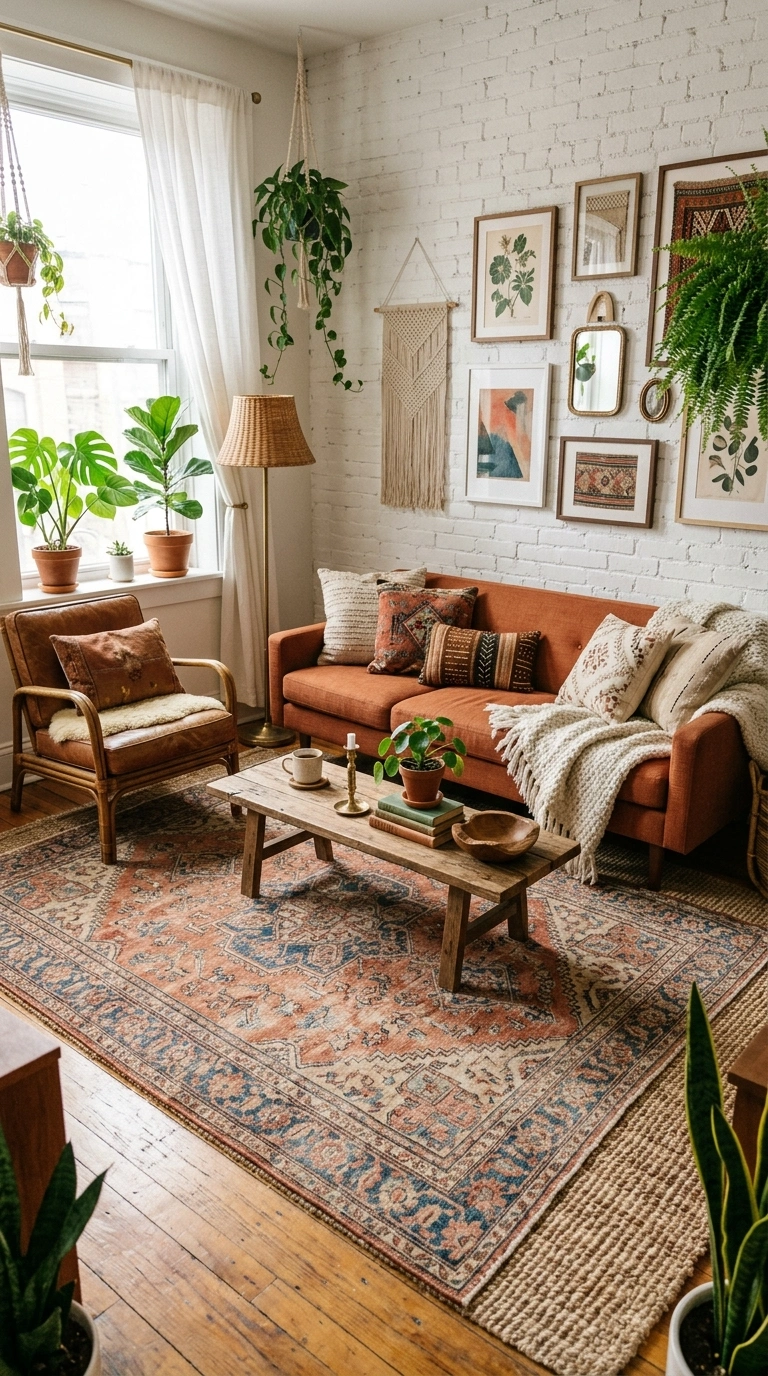
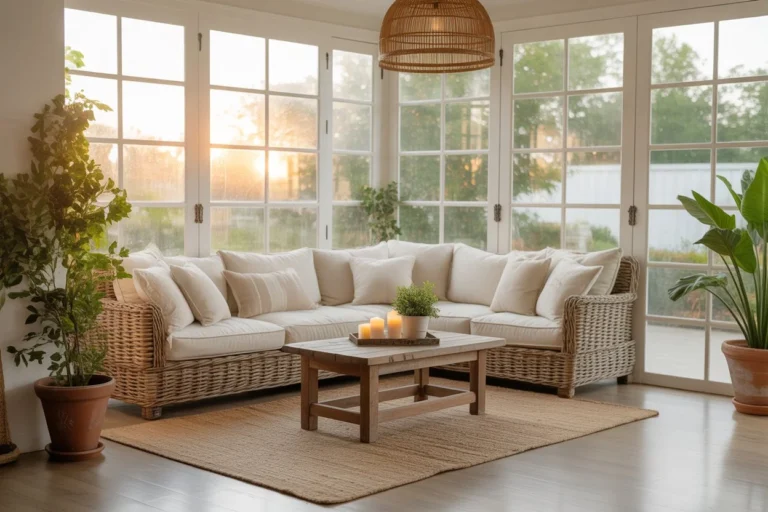
Every layered boho living room needs a single large rug that anchors the seating arrangement and sets the color palette for the rest of the room. A vintage or vintage-look Persian rug, a Moroccan Beni Ourain in warm cream with charcoal lines, a colorful kilim with faded muted tones, or a large jute rug as a neutral base all work depending on how much pattern you want underfoot. The anchor rug should be large enough that the front legs of the sofa and chairs sit on it, which defines the seating zone as one cohesive area. The colors and patterns in this rug set the palette that everything else in the room coordinates with, so choose it first.
2. Low Profile Seating
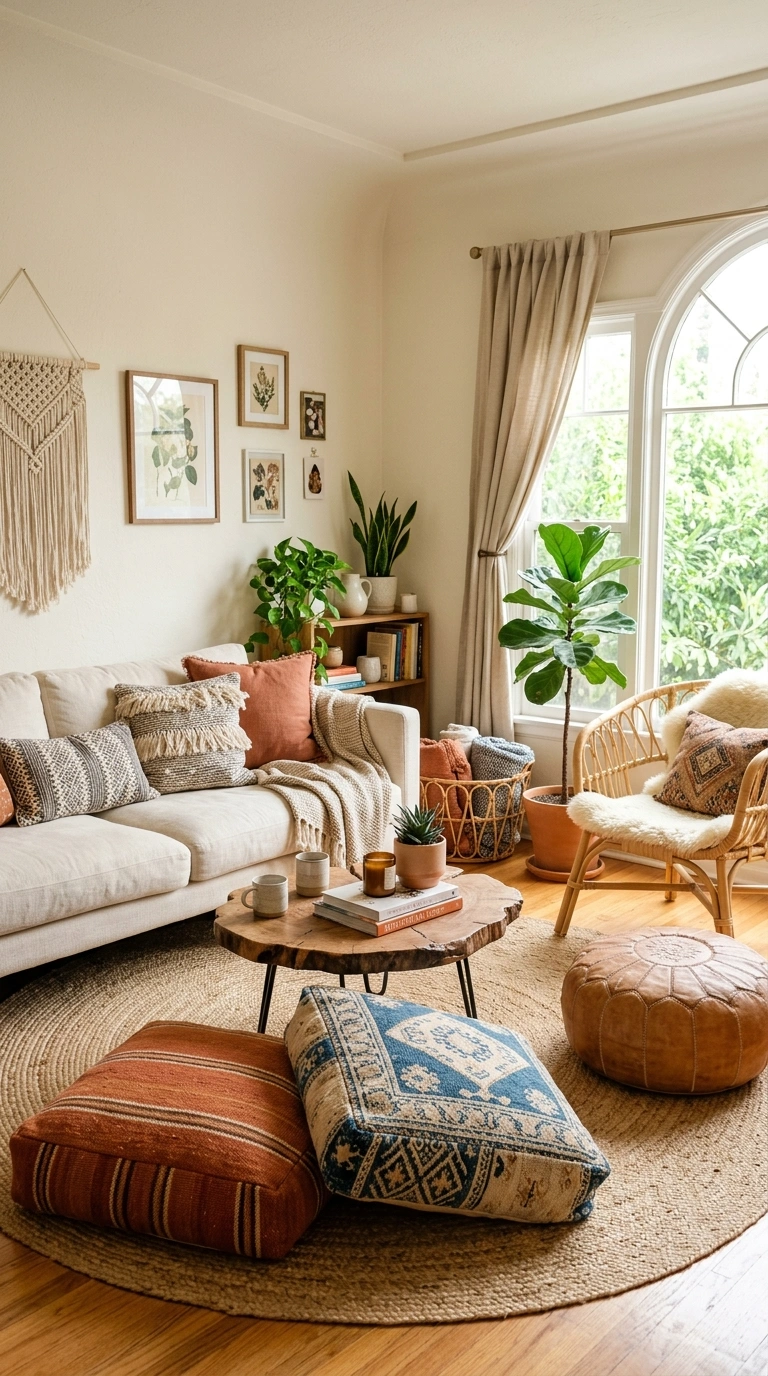
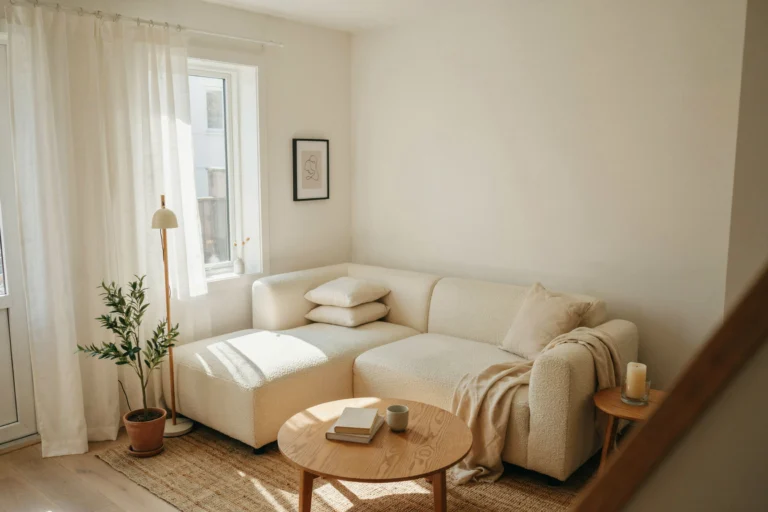
Boho living rooms typically use lower seating heights than standard living rooms, which creates a more relaxed, casual, ground-level feeling. A low-profile sofa, floor cushions in a reading corner, a pair of poufs beside the coffee table, or a low wooden daybed with pillows all contribute to the casual, unhurried quality the aesthetic depends on. The lower seating makes the ceiling feel higher by contrast and creates more visual space above the furniture line for plants, art, and other decorative elements. Mix seating types rather than using a single matched set: a sofa, a vintage armchair, a floor cushion, and a pouf together read as more collected than four identical chairs.
3. Natural Fiber Coffee Table
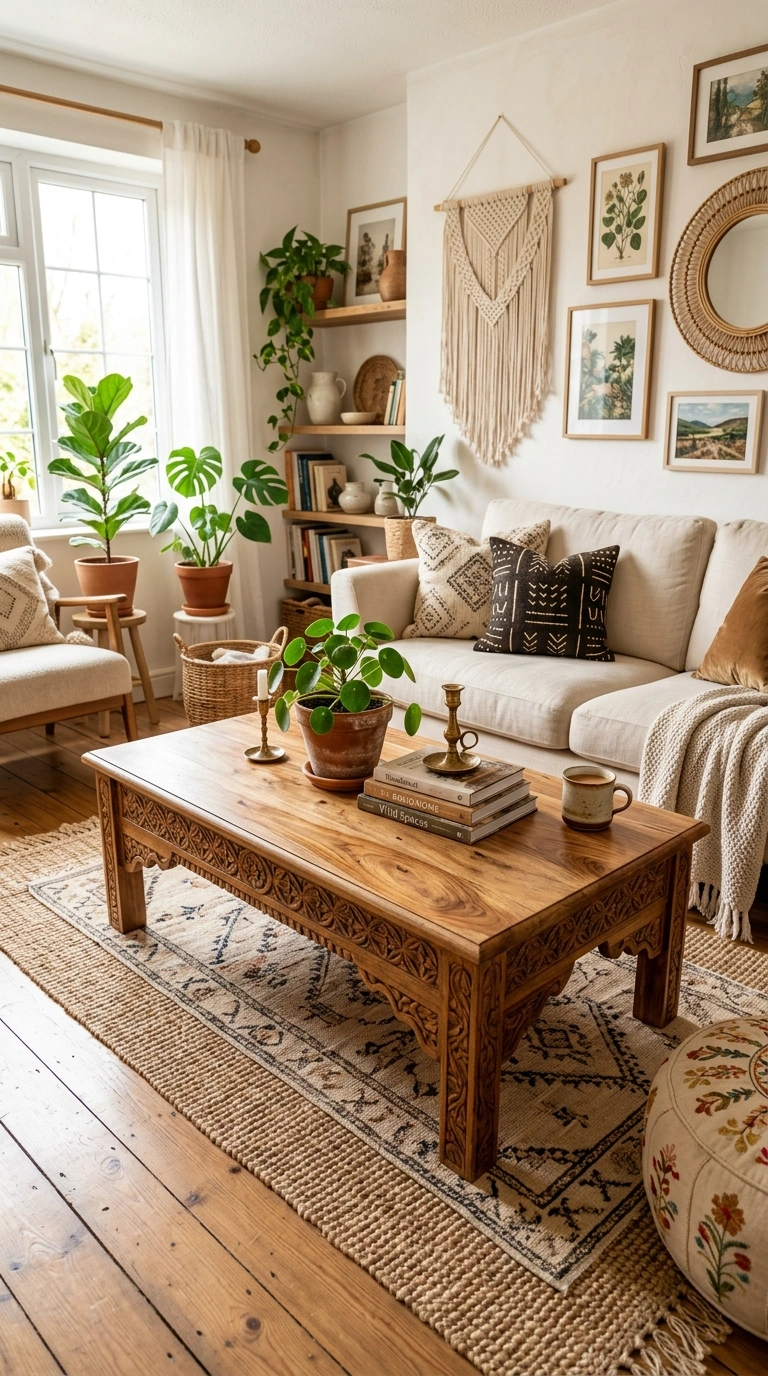
A coffee table in a natural material, rattan, reclaimed wood, carved mango wood, or a vintage trunk repurposed as a table, adds the organic handmade quality that boho design depends on at the center of the seating area. The coffee table is one of the most visible and most-used surfaces in any living room, and a natural material table communicates the boho aesthetic immediately. Avoid glass and chrome tables which read as too modern and too polished for the relaxed organic quality the room is building. A round or oval shape softens the center of the room more than a rectangular one.
4. Layered Throw Pillows
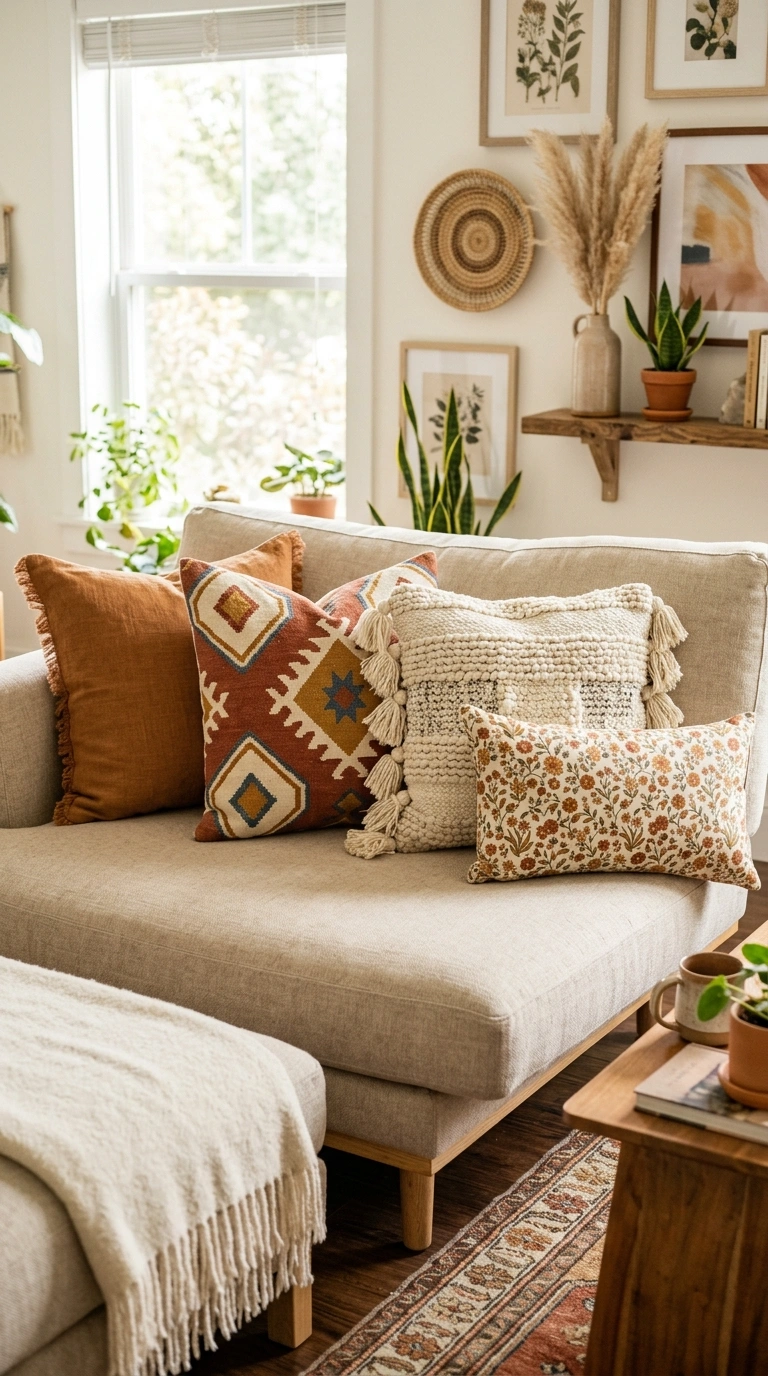
The pillow arrangement on the boho sofa is where the layering either works or collapses into chaos. The successful version uses three to five pillows in coordinating colors but varied patterns and textures: one solid in a warm neutral, one in a bold print that references the rug, one in a textured weave, one in a smaller complementary print, and perhaps one in a contrasting velvet. The colors should pull from the anchor rug palette. The unsuccessful version stacks eight or ten pillows in competing colors and patterns until the sofa looks like a pillow store. Edit the pillow collection until each one feels necessary and the total reads as curated rather than accumulated.
5. Woven Pendant Light
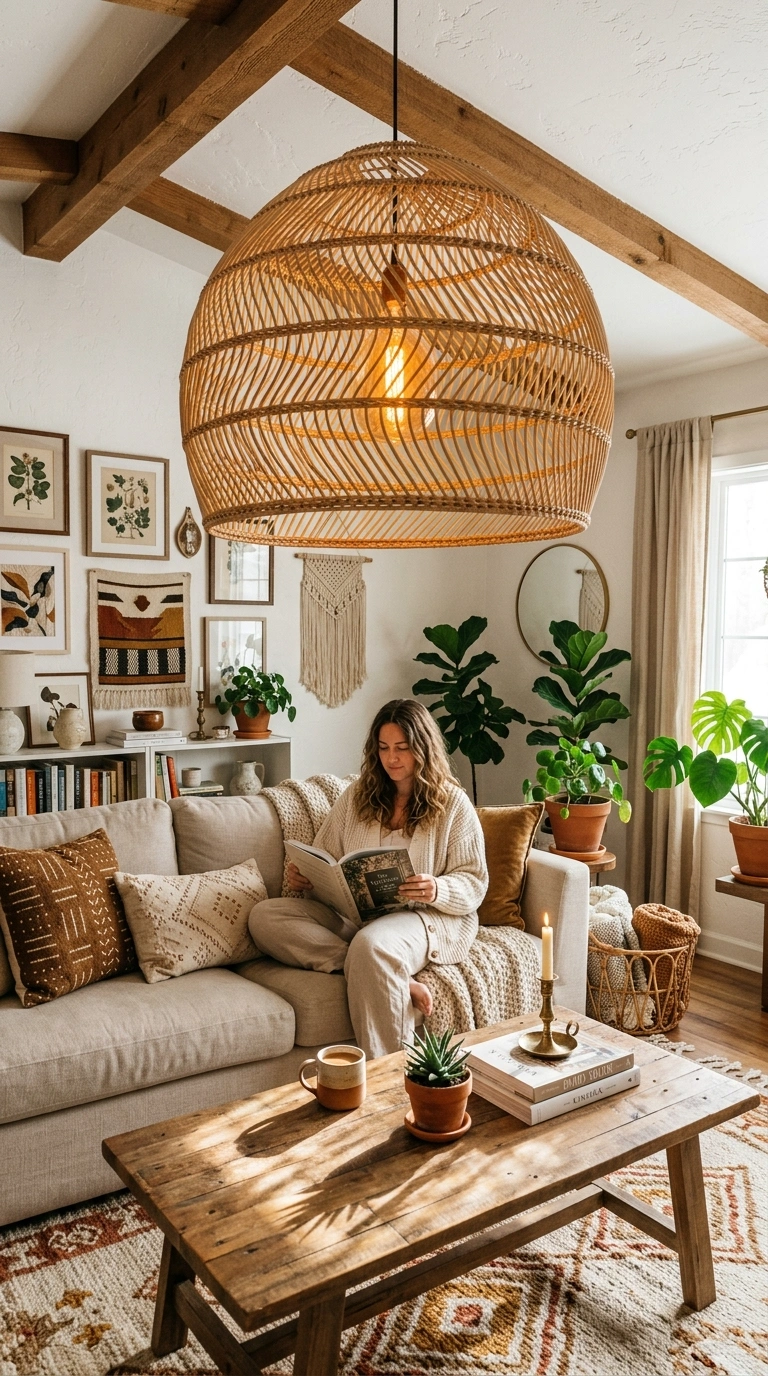
A large woven pendant light in rattan, bamboo, seagrass, or macrame hung above the coffee table or in the center of the living room introduces the natural handmade texture that boho design loves in a high-impact location. The pendant light fills the visual space overhead that most living rooms leave empty and creates a dappled, filtered light quality that glass or metal pendants cannot match. The woven texture of the shade casts warm patterns on the surrounding surfaces when lit, which adds atmospheric warmth in the evenings. Choose a pendant substantial enough to read as a real design feature rather than a small undersized accessory.
6. Plant Collection Arrangement
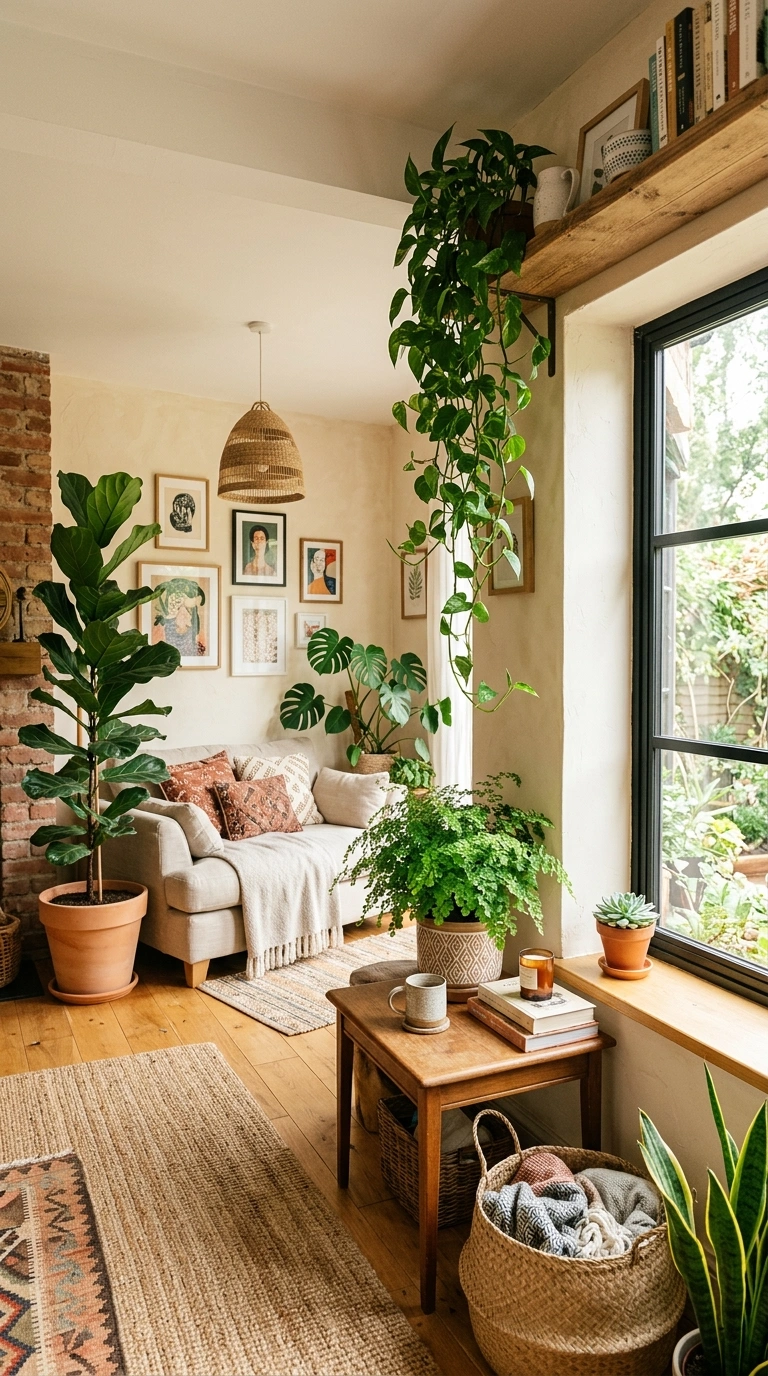
Plants are essential to the boho living room but the cluttered version comes from too many small plants in random pots scattered across every surface. The layered version uses plants at different heights with deliberate placement: one tall statement plant in a substantial pot on the floor, one trailing plant from a high shelf or hanging planter, one medium plant on the coffee table or a side table, and perhaps one small plant on the windowsill. Four plants total at four different heights reads as a curated indoor garden. Fifteen small plants jammed onto every ledge reads as a greenhouse that has gotten out of hand.
7. Vintage Furniture Mix
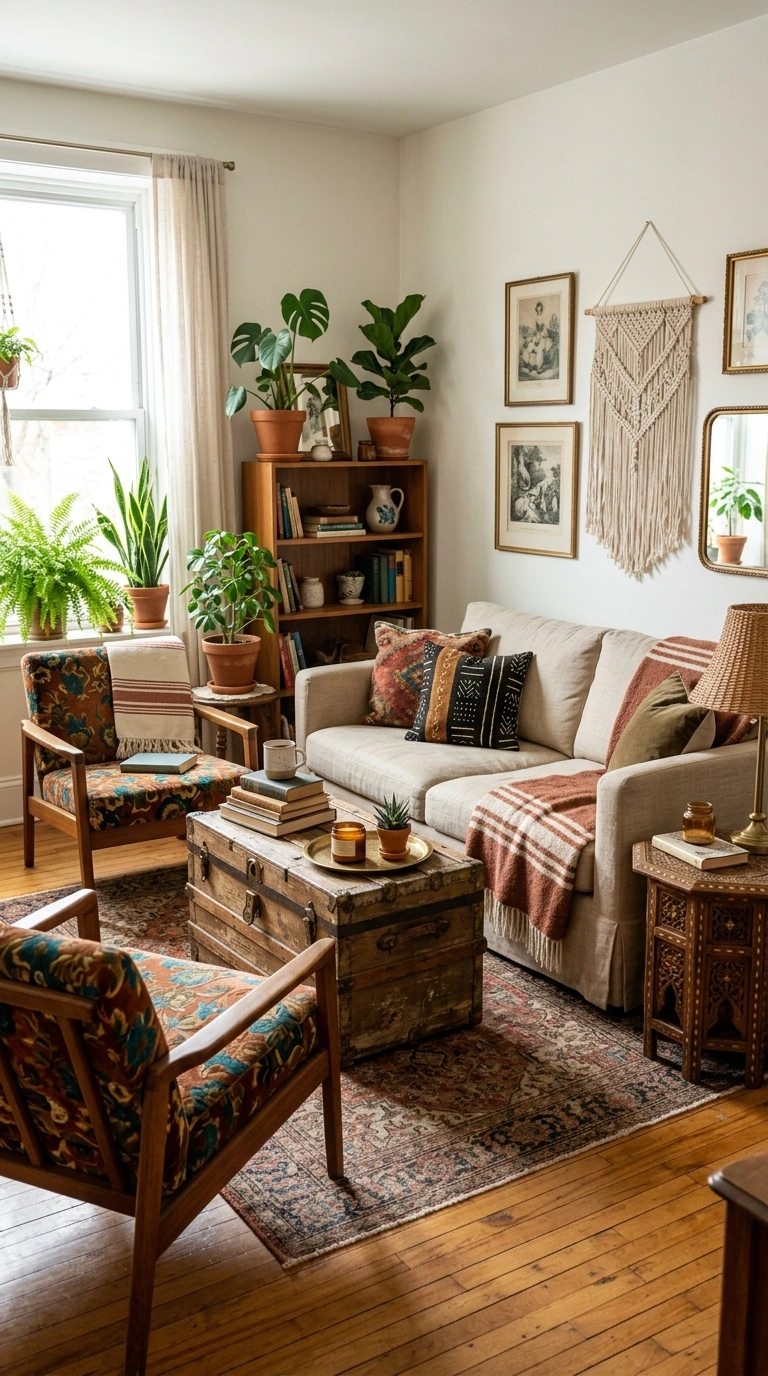
Mixing furniture from different eras and sources is what gives a boho living room its collected quality. A vintage armchair reupholstered in a current fabric beside a new sofa, a Moroccan side table beside a mid-century bookshelf, an antique trunk used as a coffee table beside a rattan accent chair, all create the sense that the room was assembled over time from meaningful individual pieces rather than bought as a matched set from a single store. Source individual pieces from vintage shops, estate sales, and online marketplaces. The mix is what communicates personality.
8. Macrame Wall Hanging
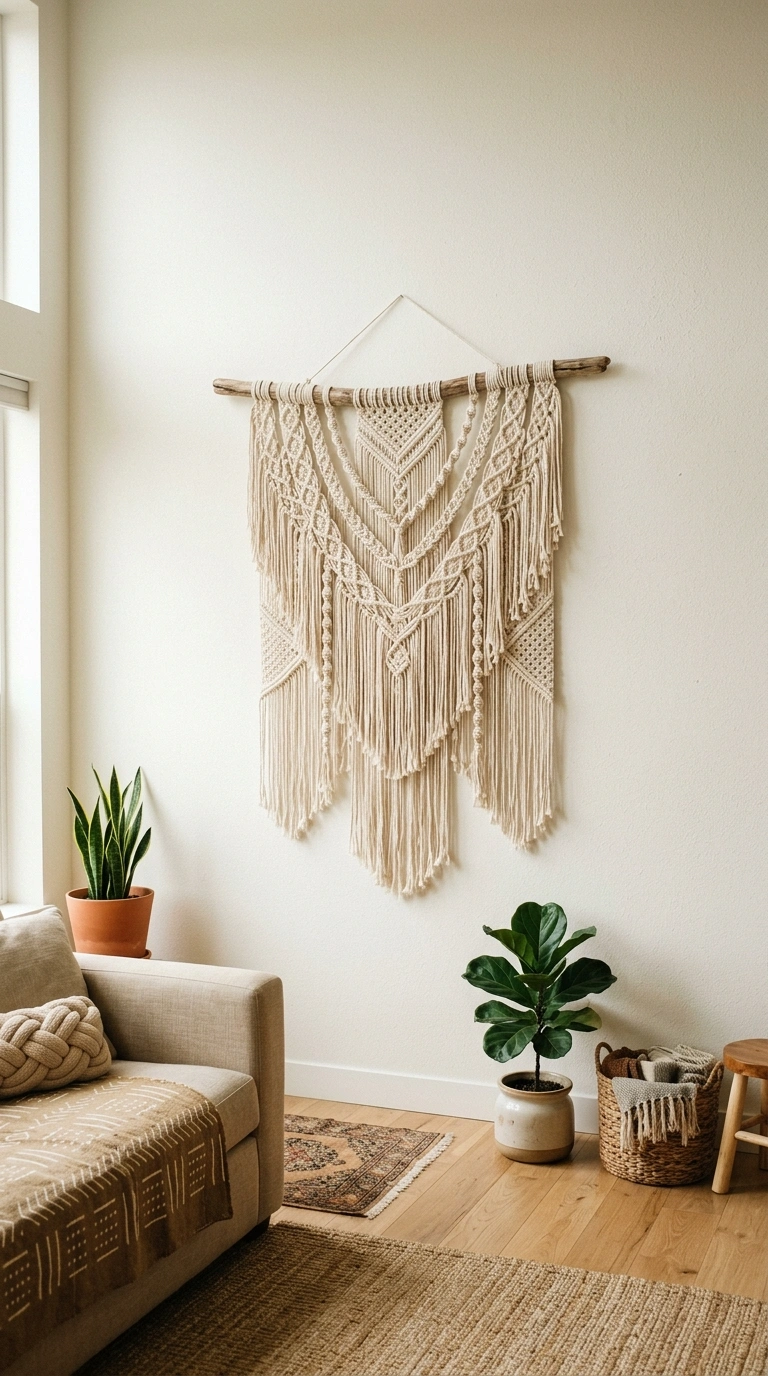
A single substantial macrame wall hanging on the largest empty wall provides the textile art element that defines boho design. The macrame should be genuinely substantial in scale, at least thirty inches wide, so it reads as a significant art piece rather than a small craft accessory. Natural undyed cotton cord in off-white or cream reads as more sophisticated than brightly dyed versions. Hang the macrame as the primary feature on its wall with significant empty space around it rather than crowding it with other elements. One confident macrame piece makes more impact than three smaller ones competing on the same wall.
9. Warm Layered Lighting
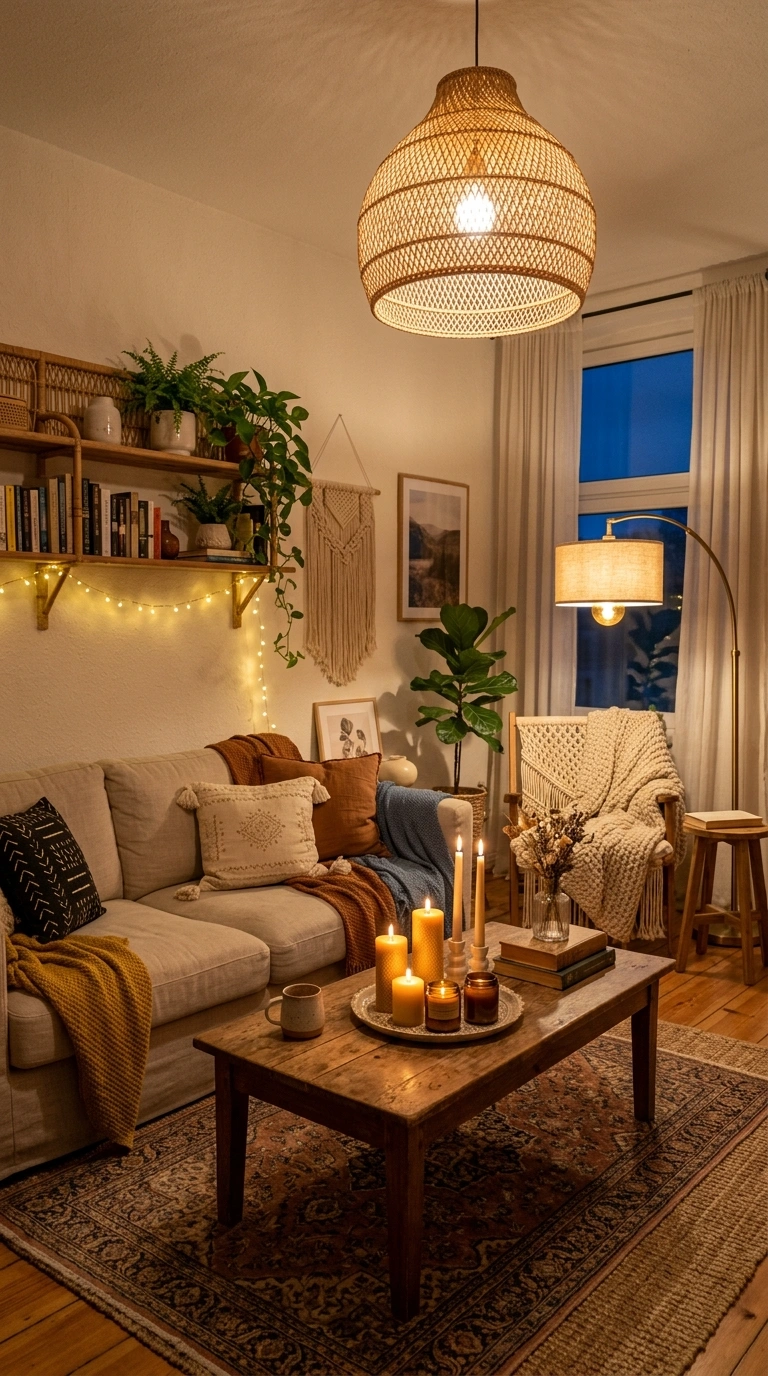
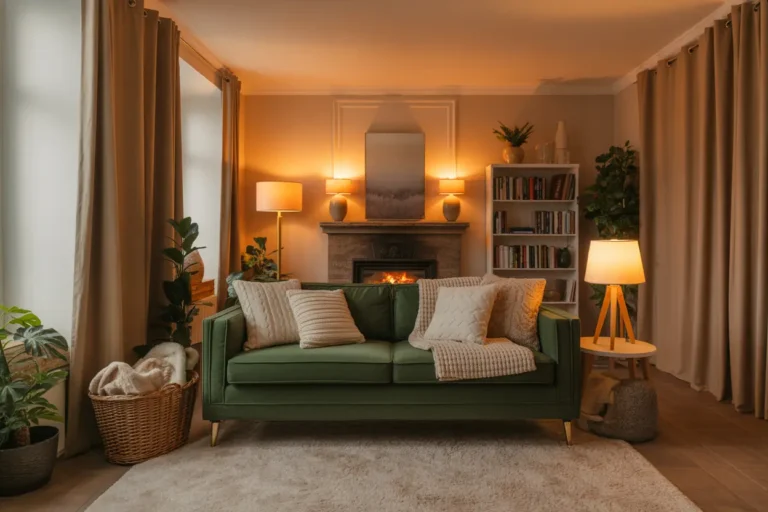
A boho living room needs multiple light sources at different heights to create the warm, dimensional quality the aesthetic depends on. The woven pendant provides overhead filtered light. A floor lamp beside the reading area provides task light. A string of warm fairy lights draped across a shelf or wound around a plant provides gentle ambient sparkle. A candle cluster on the coffee table provides the lowest, warmest light. Together these layers create the atmospheric quality that a single overhead fixture cannot. The same principles of warm layered lighting and curated natural materials work across all room types, including bohemian bathroom designs where the warmth and restraint balance in a similar way.
10. Gallery Wall Collection
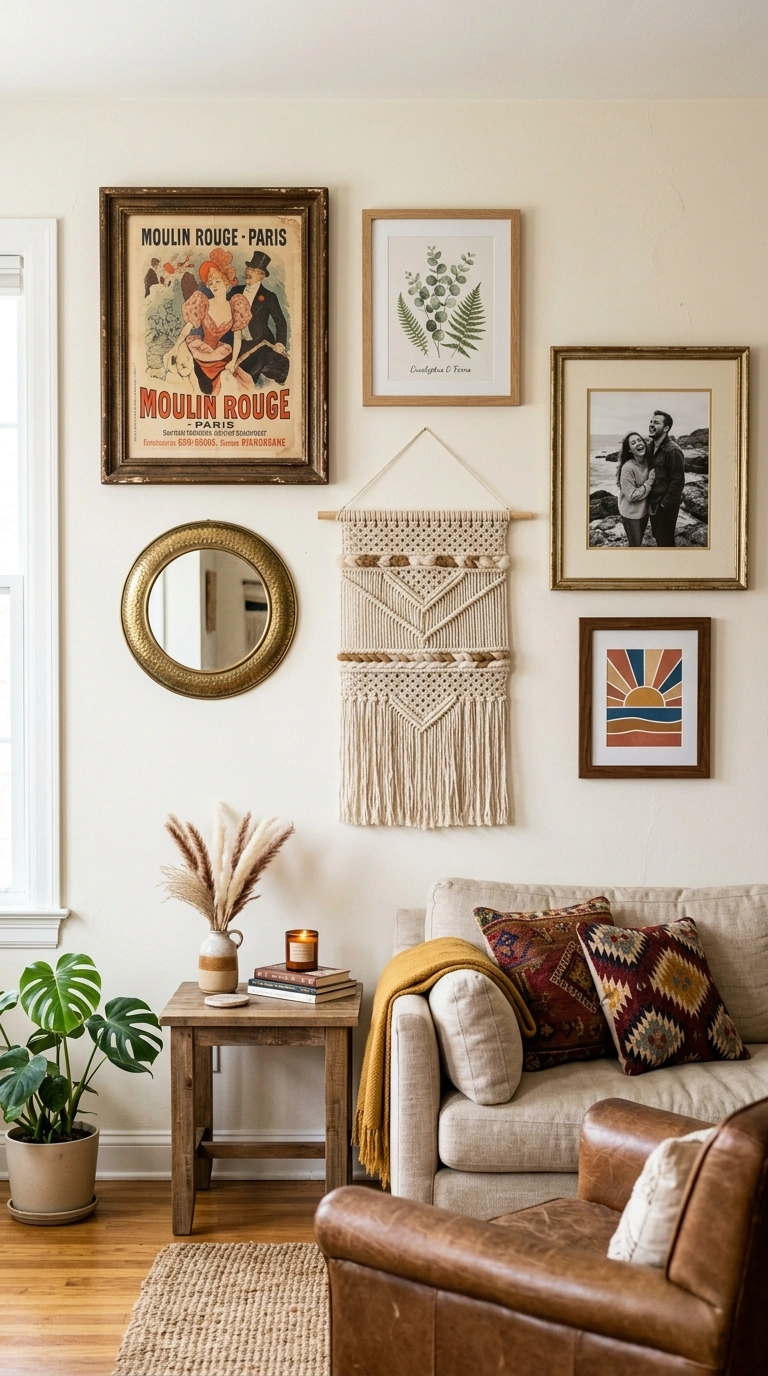
A boho gallery wall on the wall behind the sofa or on a large empty wall displays a curated mix of art, photographs, small mirrors, woven pieces, and found objects that together tell a visual story about the person who lives in the room. The successful boho gallery wall mixes frame sizes, frame finishes, and content types: a large framed photograph beside a small mirror beside a woven textile beside a vintage poster beside a dried flower arrangement. The variety is what communicates the boho quality. Keep the colors loosely coordinated and the spacing between pieces consistent for an arrangement that reads as curated rather than random.
11. Woven Baskets for Storage
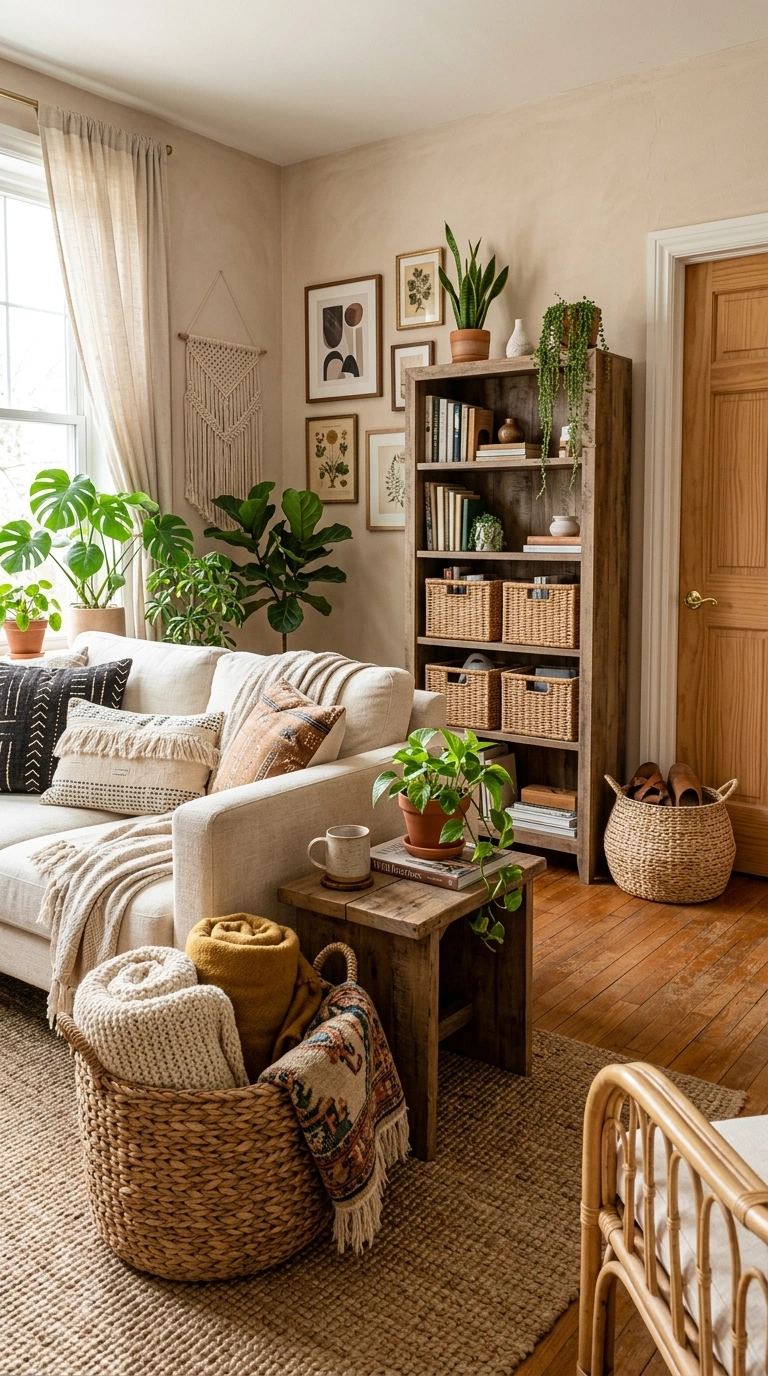
Natural fiber baskets in woven rattan, seagrass, cotton rope, and jute provide visible storage that doubles as decoration throughout the boho living room. A large floor basket beside the sofa holds throw blankets. A set of shelf baskets on the bookcase holds small items out of sight. A basket beside the front door holds keys and daily carry items. The natural texture and warm color of woven baskets add to the organic material palette while solving the practical storage problems that every living room has. Use baskets in consistent materials for the most cohesive look across the room.
12. Vintage Persian Rug Layer
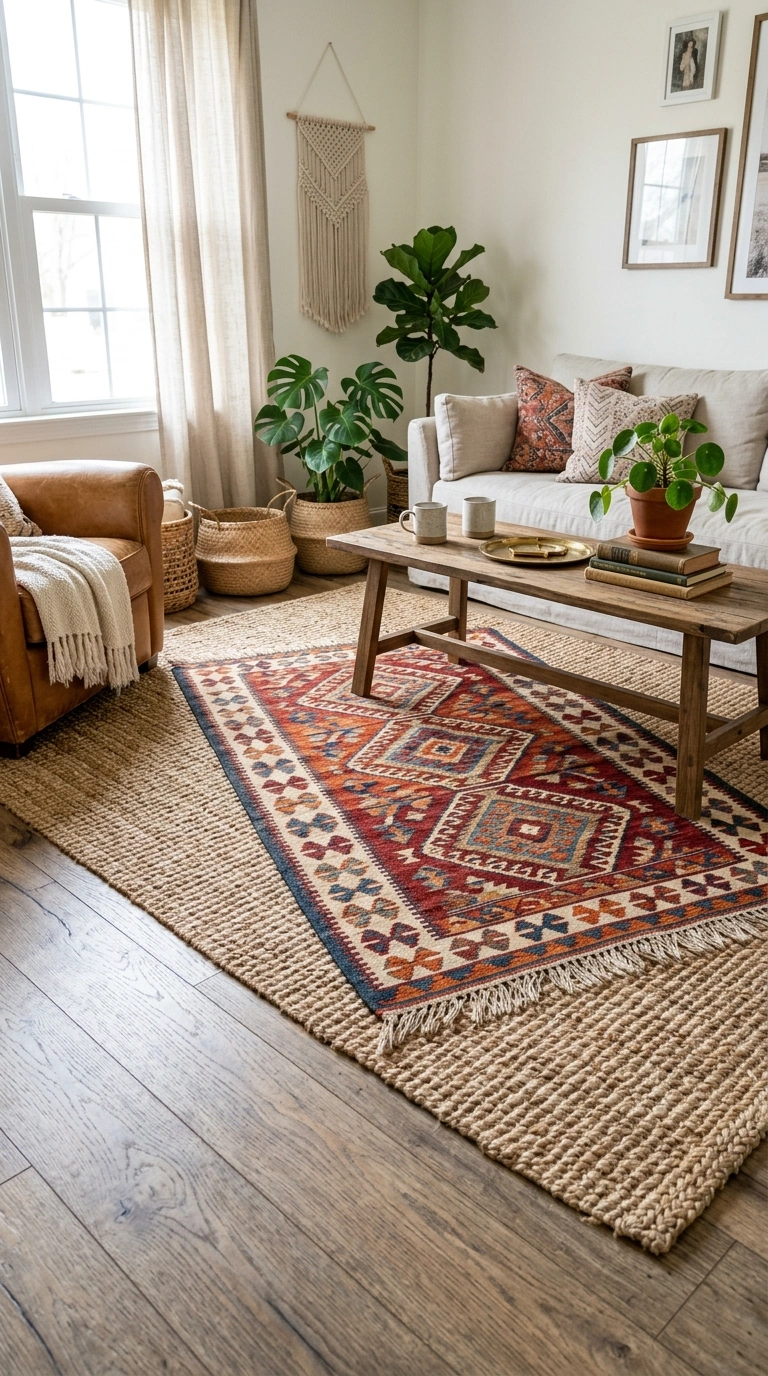
Layering a smaller vintage rug on top of the larger anchor rug is one of the most distinctly boho styling techniques and adds visual richness and texture to the floor. The layered rug should be smaller and in a complementary palette to the anchor rug beneath it. Position it slightly off-center or angled for a casual unstudied look rather than centering it perfectly, which reads as too deliberate for the relaxed boho aesthetic. The layering adds depth to the floor in the same way that layered pillows add depth to the sofa.
13. Rattan Accent Chair
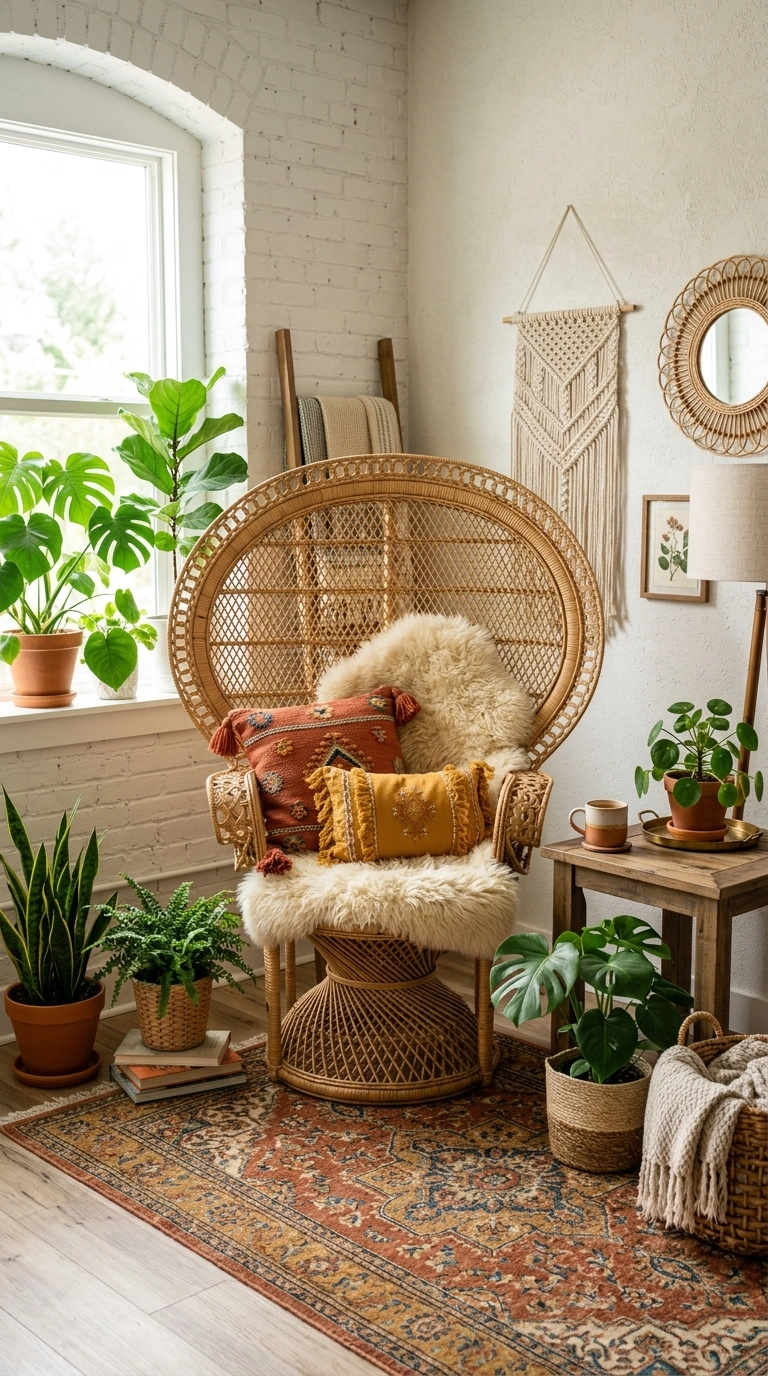
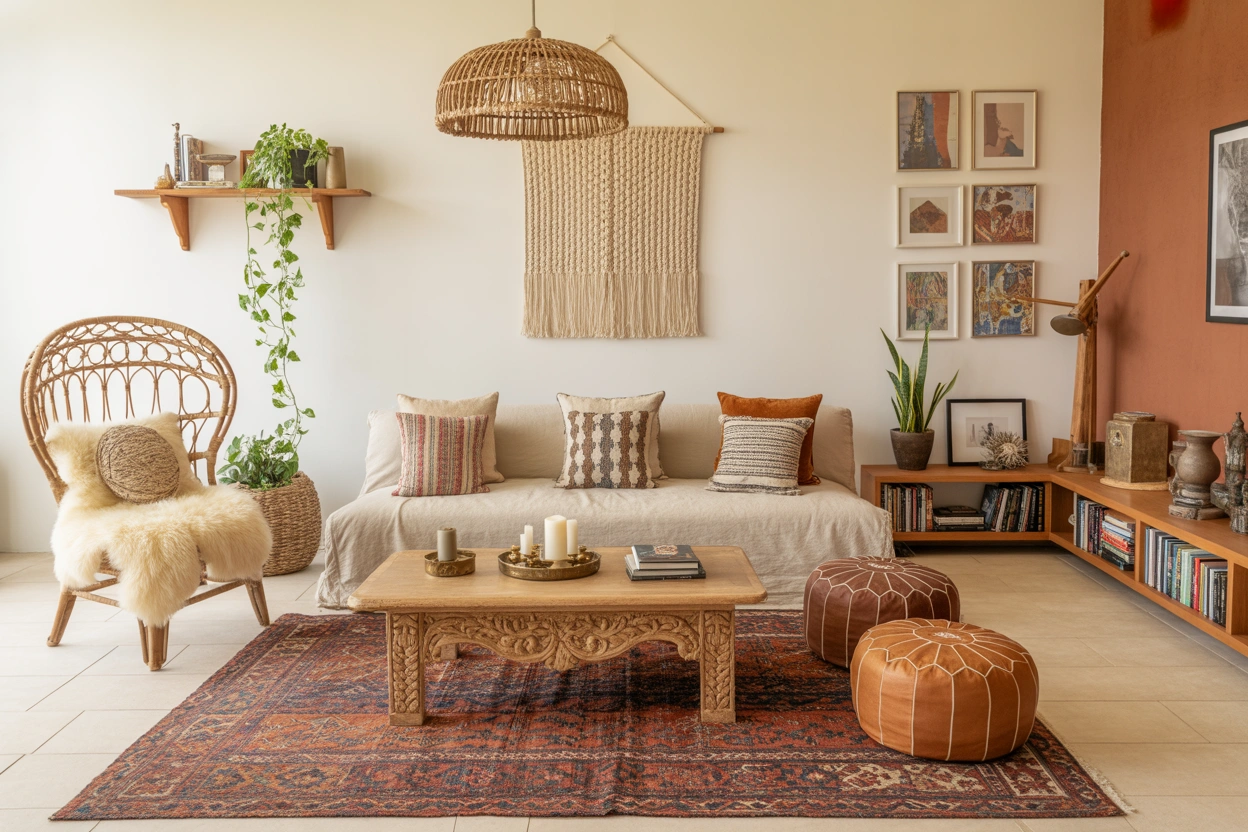
A rattan accent chair, whether a peacock chair, a simple rattan armchair, or a hanging rattan egg chair suspended from the ceiling or a stand, introduces one of the most recognizable boho furniture pieces in a single substantial element. The natural woven texture and warm tone of rattan reads as immediately boho. Pair the rattan chair with a sheepskin throw and a few cushions for comfort and additional textile layering. The rattan chair works as a statement piece that communicates the boho aesthetic on its own, which means the rest of the room can be simpler without losing the overall direction.
14. Floor Cushion Seating
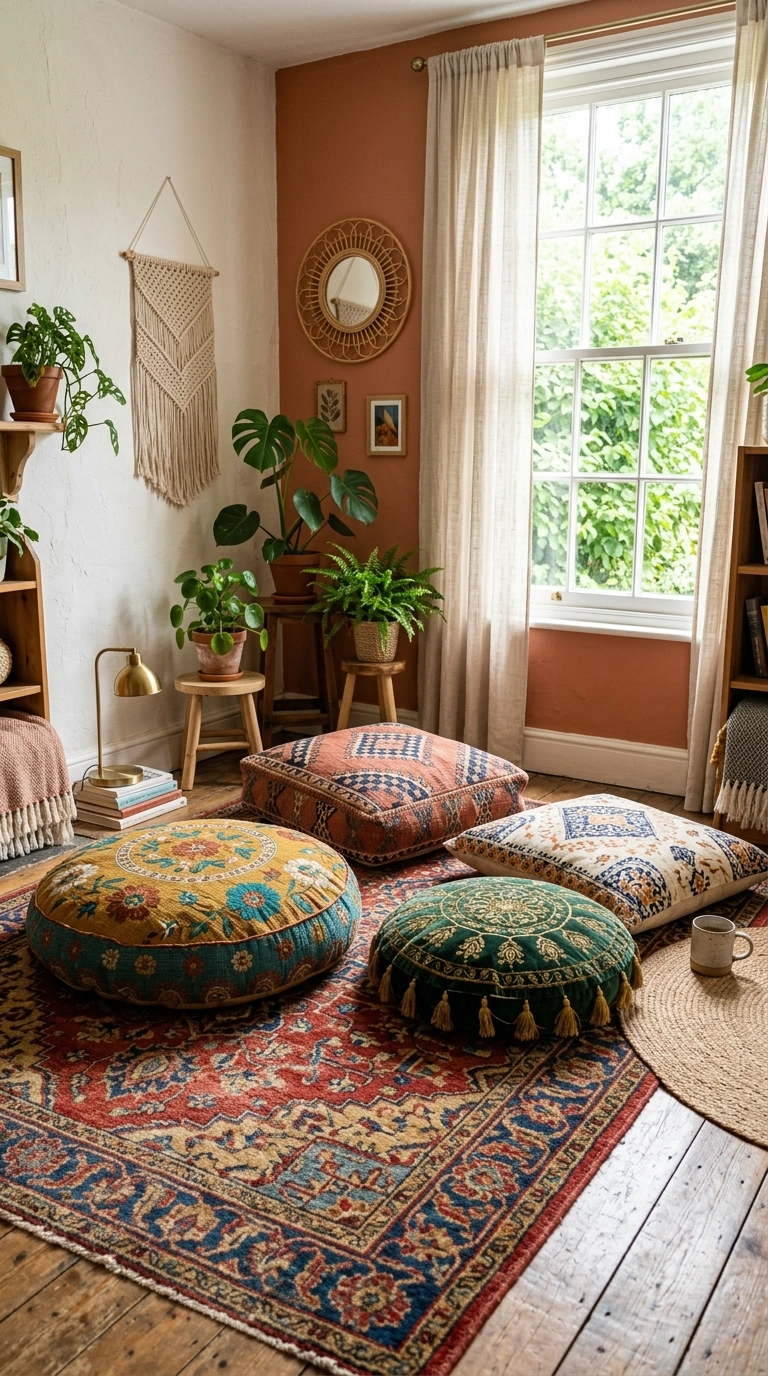
A cluster of large floor cushions in a corner of the living room, on a thick rug, provides casual overflow seating and establishes the ground-level relaxed quality that boho living rooms aim for. Choose floor cushions in substantial sizes, at least twenty-four inches square, in durable fabrics that can handle actual sitting. Cover them in a mix of prints and solids that coordinate with the room’s palette. Stack them when not in use or arrange them in a loose circle for casual gatherings. The floor seating zone reads as the most casual and the most distinctly boho area of the room.
15. Natural Wood Shelving
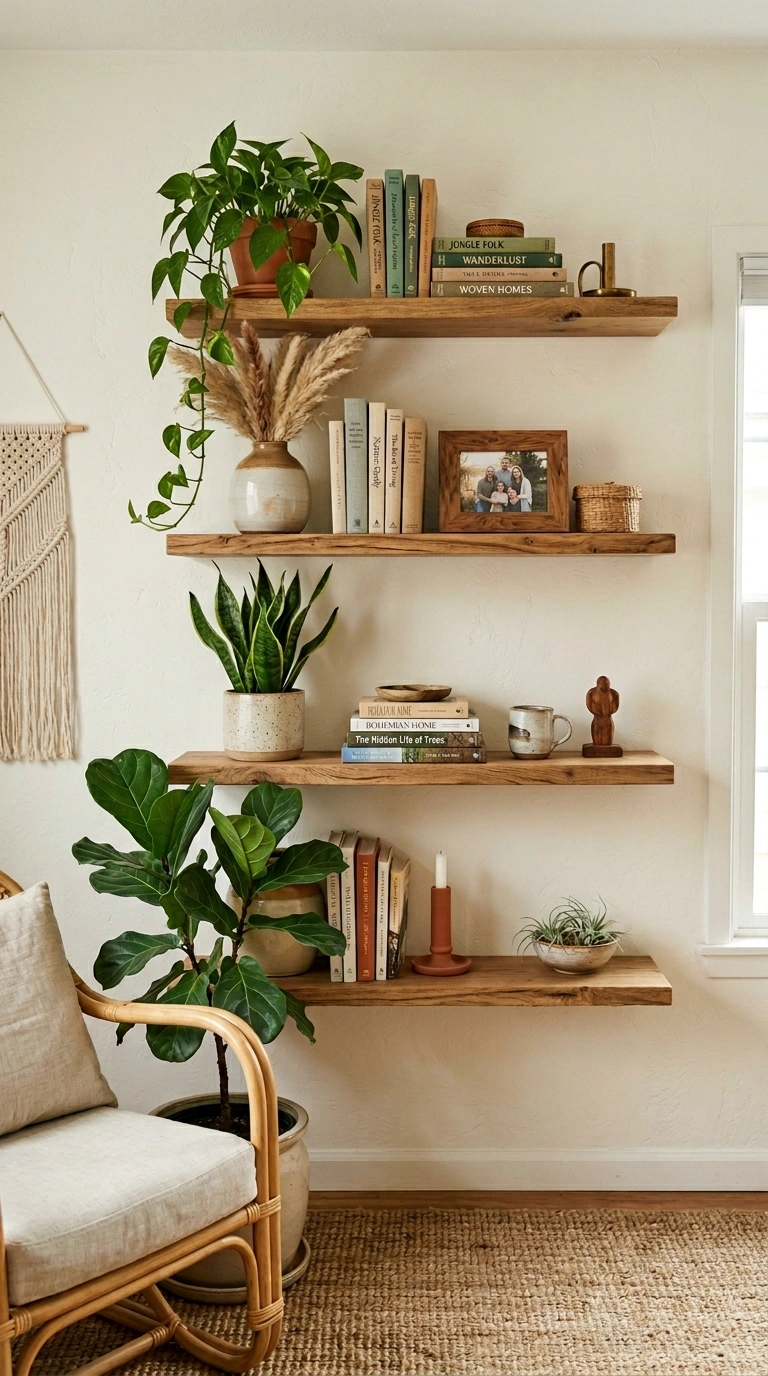
Open wooden shelving on a living room wall holds books, plants, ceramics, and small decorative objects in a display that is both functional storage and styled decoration. Natural wood shelves in warm tones, whether floating shelves, a freestanding bookcase, or wall-mounted brackets with solid wood planks, add the warm organic material quality the boho room depends on. Style each shelf with a combination of books arranged both vertically and horizontally, a plant, and one or two decorative objects, with deliberate breathing room between groupings so the display reads as curated rather than packed.
16. Warm Earthy Wall Color
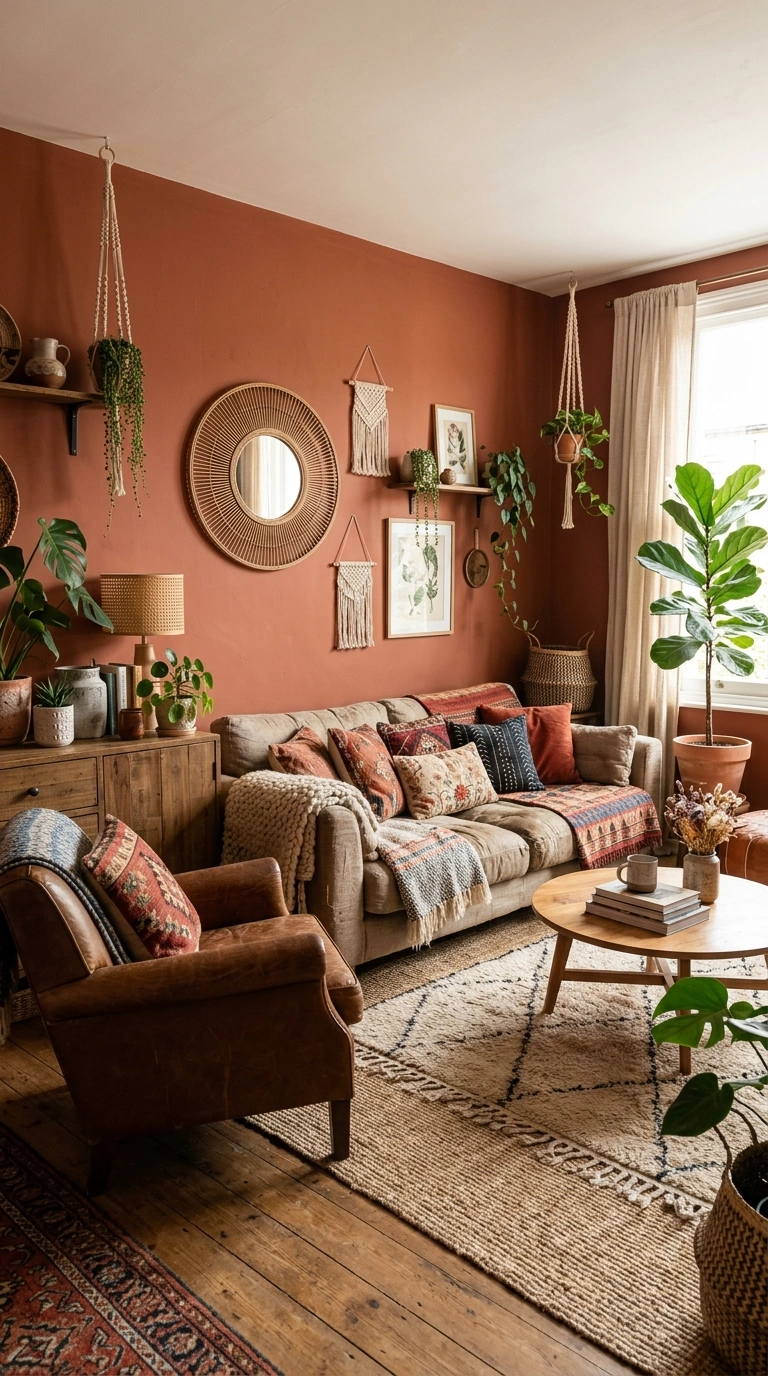
A warm earthy wall color grounds the boho living room and creates the enveloping quality that white walls cannot achieve for this aesthetic. Warm terracotta, dusty clay, soft sage, warm cream with a yellow undertone, or a muted dusty pink all suit boho interiors because they reference the natural world and provide a warm backdrop for the layered textiles and natural materials. Paint all four walls for the most enveloping effect, or paint a single feature wall if the full room feels like too much. The warm wall color is what gives the boho elements warmth to register against.
17. Textile Wall Art
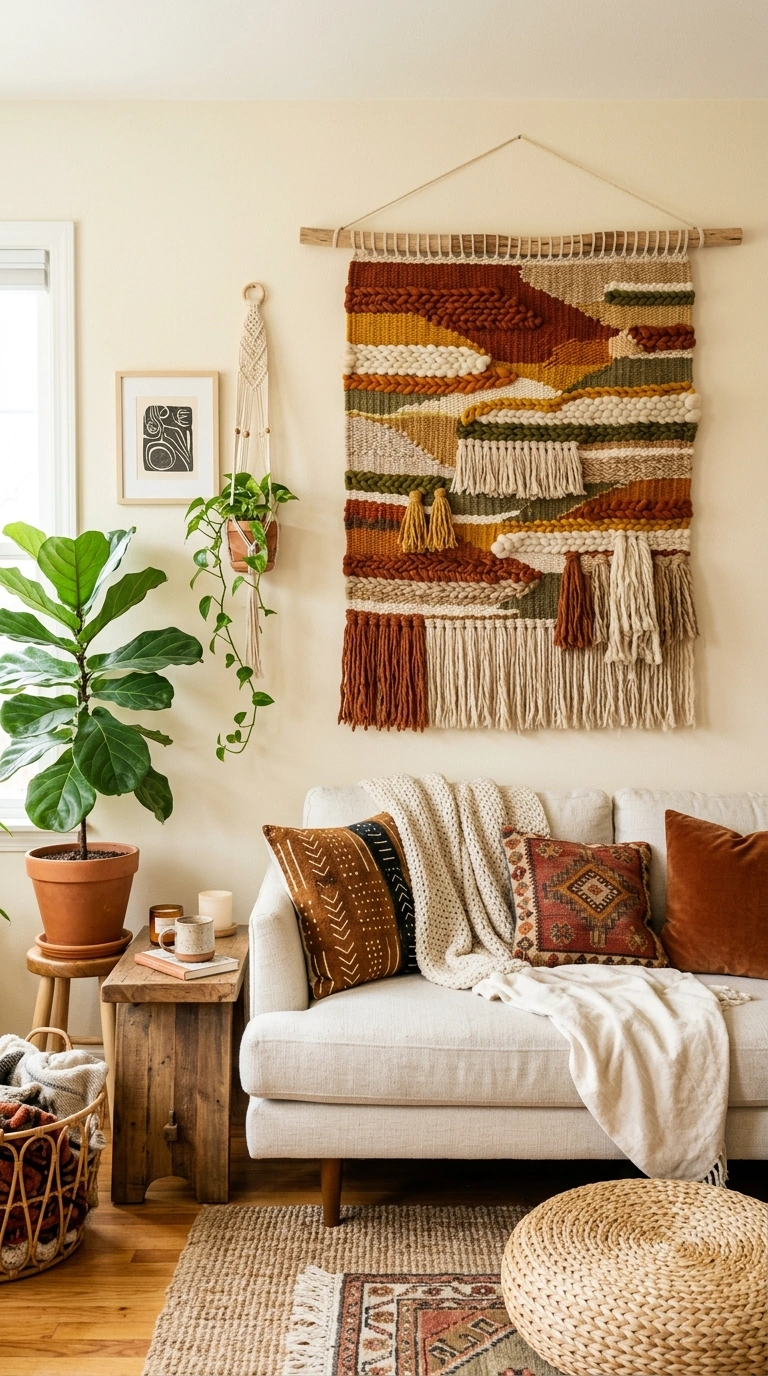
Woven wall hangings, textile tapestries, vintage fabric panels mounted in frames, and embroidered pieces hung on the wall introduce the handmade textile quality that is central to the boho aesthetic. These textile pieces add warmth and dimensional texture that flat printed art cannot match. A large woven tapestry on the wall behind the sofa, a vintage textile panel above the mantle, or a series of small embroidered hoops in a loose cluster on a side wall all work depending on the scale of the room. The textiles should read as genuine handmade pieces rather than mass-produced reproductions.
18. Candle Cluster Detail
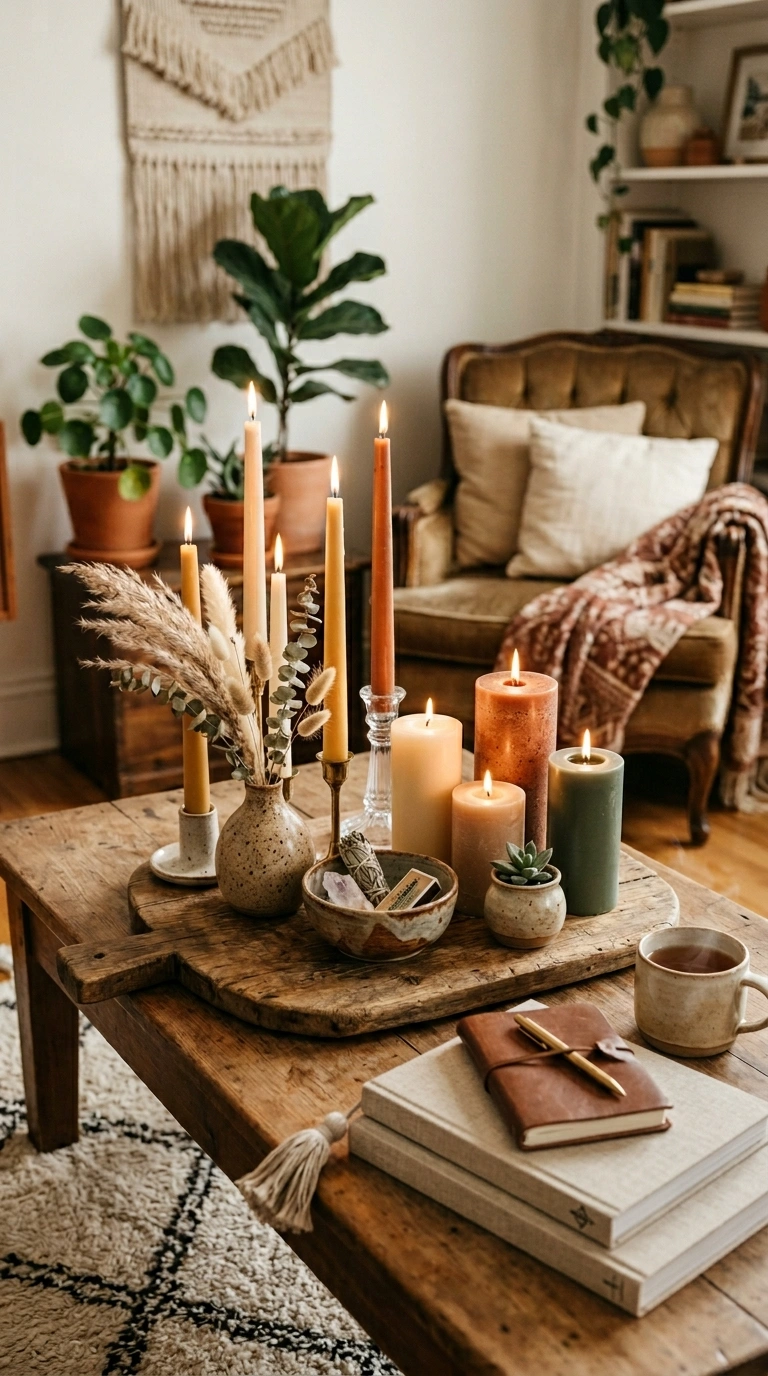
A cluster of candles in varied heights and vessels on the coffee table, the mantle, or a large tray on the floor creates warm atmospheric light in the evenings and a styled visual moment during the day. Mix candle types: pillar candles on a wooden board, a few tea lights in small ceramic holders, and one or two candles in beautiful glass or clay vessels. The combination of different candle forms reads as collected and spontaneous. Keep the scents consistent across the grouping, warm sandalwood, cedar, or vanilla, so the overall fragrance blends rather than competing.
19. Sheepskin or Fur Throw
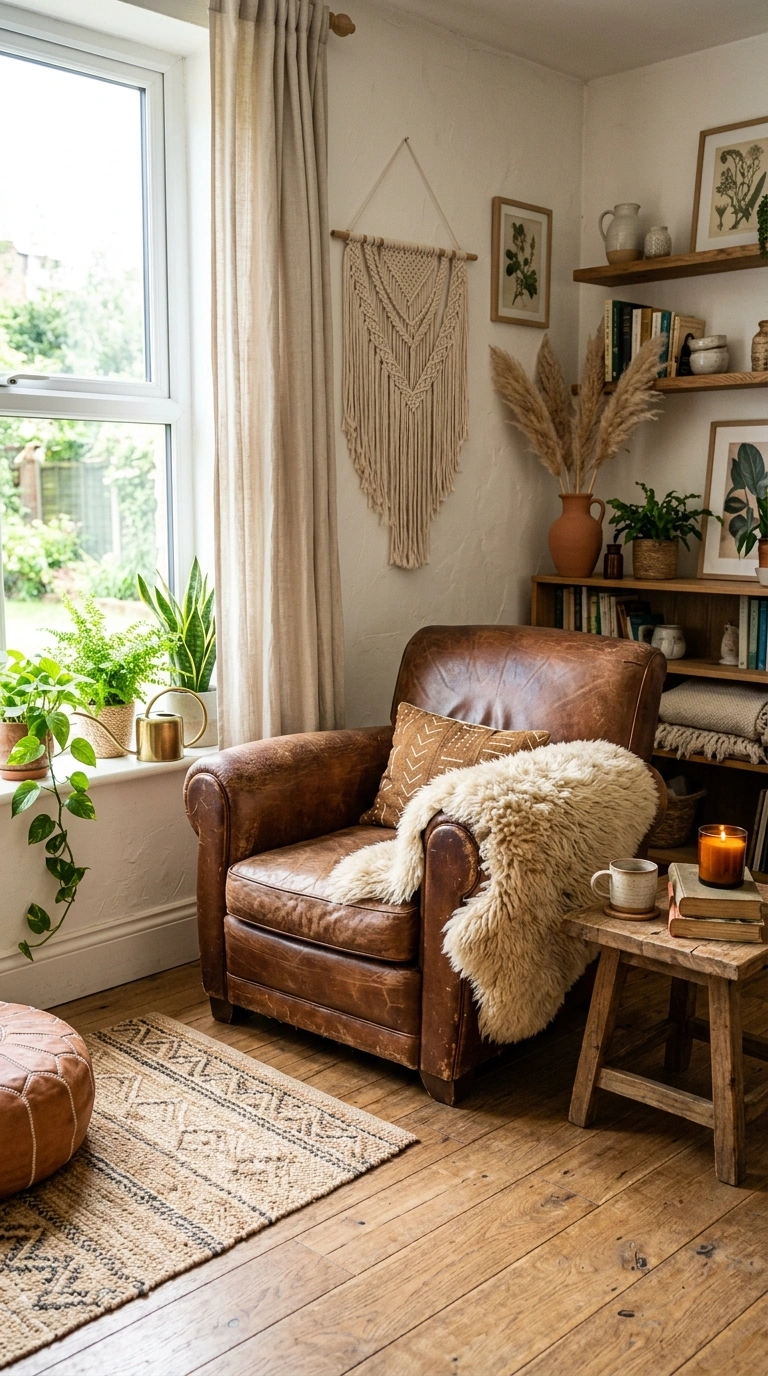
A natural sheepskin or faux fur throw draped over a chair, the sofa arm, or on the floor beside the coffee table adds the softest and most luxurious texture in the boho material palette. The fluffy organic texture contrasts beautifully with the harder woven materials elsewhere in the room and adds a visual invitation to sit and stay. Natural cream or warm white sheepskins suit most boho palettes. Drape them casually rather than placing them perfectly, since the relaxed drape is part of what makes them read as boho rather than as styled luxury.
20. Moroccan Pouf Seating
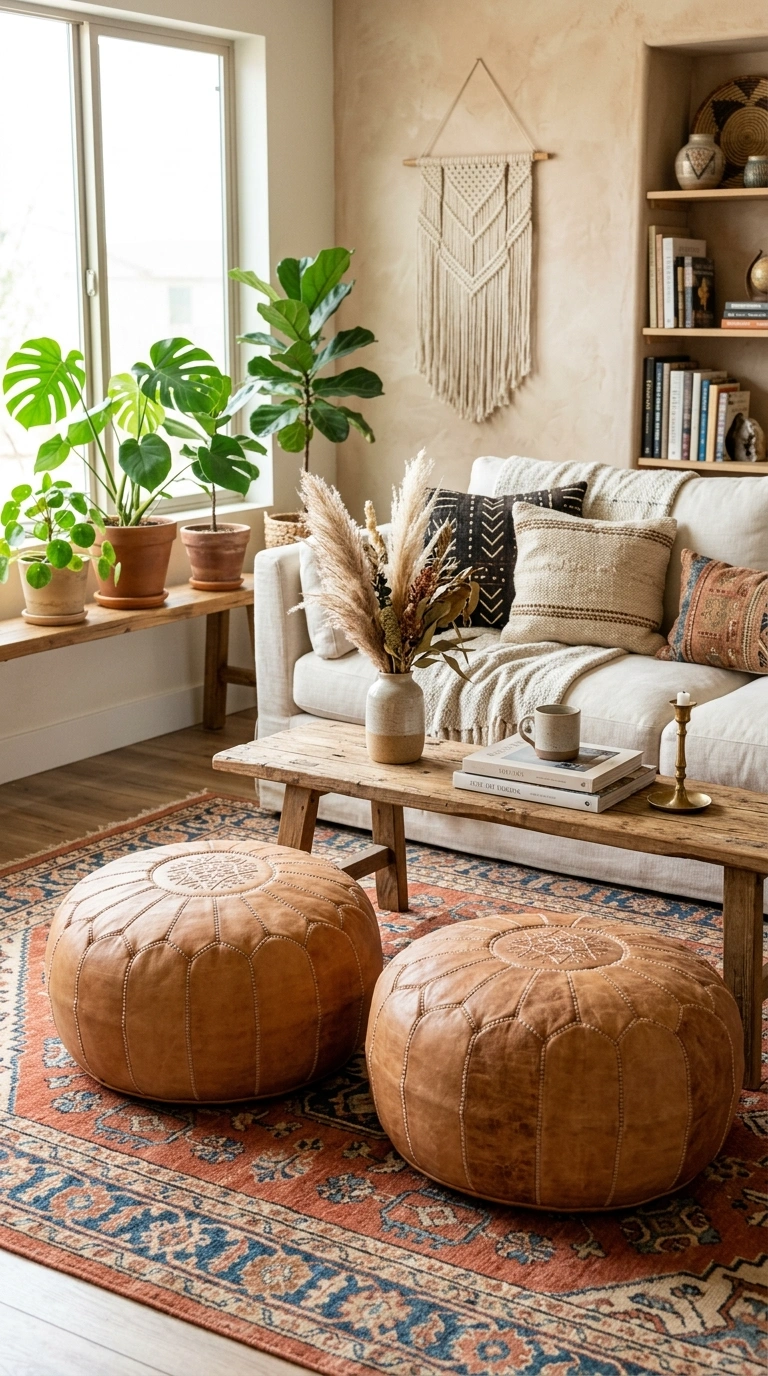
One or two leather or woven poufs positioned beside the coffee table provide extra seating, footrest function, and a distinctly boho accessory in a single small piece. Moroccan leather poufs in natural tan, warm brown, or white with embroidered details are the most traditional option. Cotton or jute woven poufs in neutral tones suit a more pared-back boho look. The pouf should be firm enough to actually sit on and at a comfortable height relative to the coffee table. One substantial pouf makes more impact than two small ones.
21. Boho Bookshelf Styling
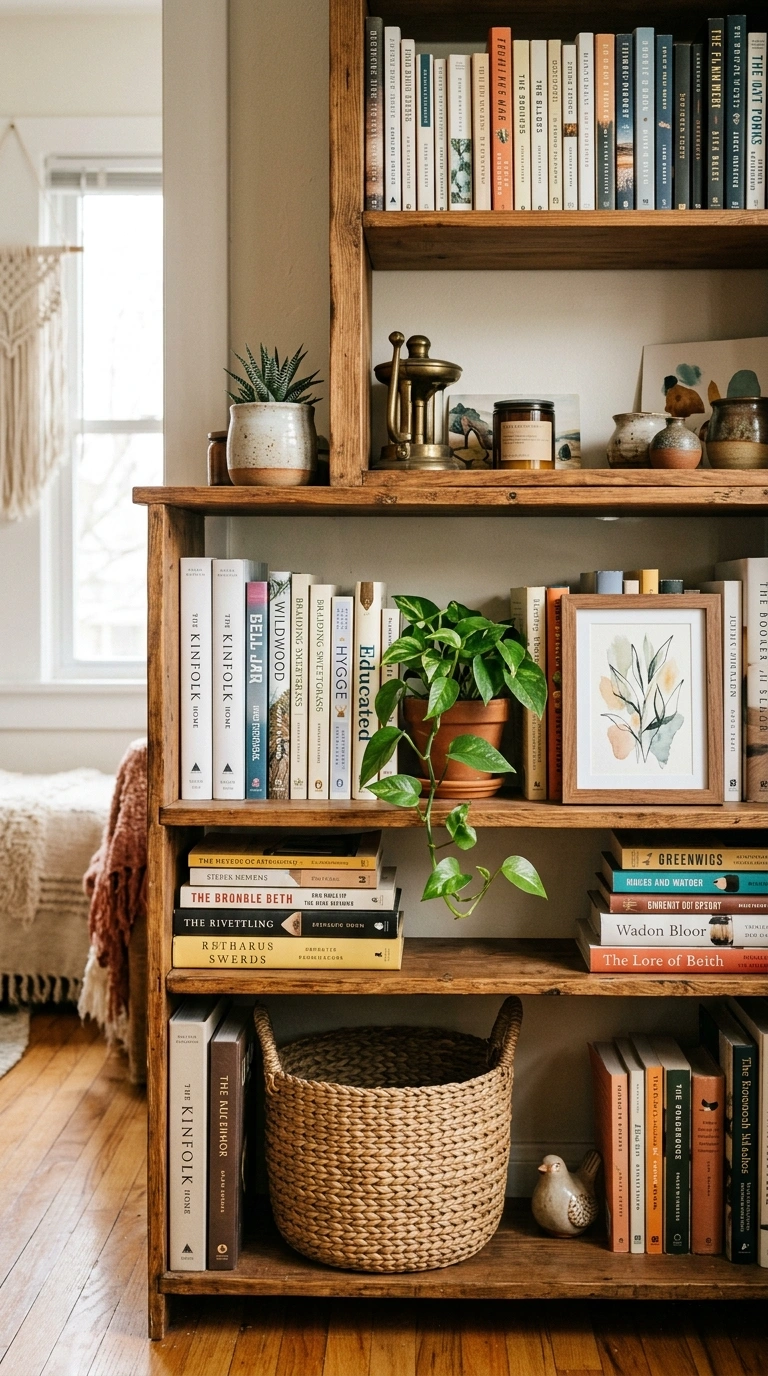
The bookshelf in a boho living room is styled differently from a minimalist or traditional bookshelf. Mix books arranged vertically with horizontal stacks used as platforms for small objects. Tuck a small plant between book groupings. Lean a small piece of art face-out against the books. Add a single brass object, a ceramic vessel, a woven basket, or a small photograph between sections. The variety of objects and the loose arrangement reads as collected and personal rather than designed. The bookshelf should look like someone who actually reads and actually lives in the room put it together over time. Similar collected styling also works beautifully in bohemian bedroom setups where the shelves and surfaces carry the same personal curated quality.
22. Draped Fabric Detail
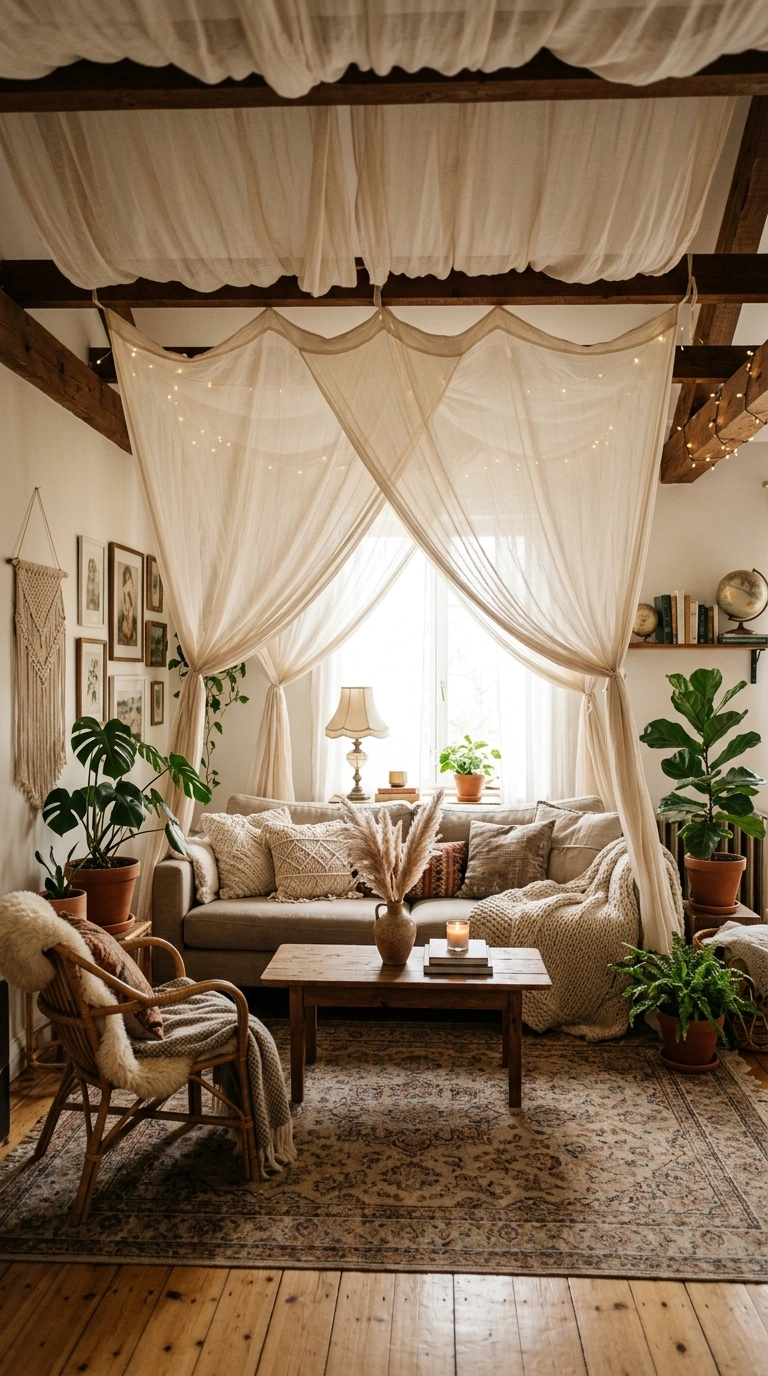
A length of light fabric draped over a curtain rod, hung from the ceiling above the seating area, or used as a canopy above a daybed introduces a flowing, romantic quality that hard architecture cannot provide. Use sheer cotton voile, lightweight muslin, or thin linen in a warm natural tone. The draped fabric adds a suggestion of a tent or a festival canopy that is deeply associated with the boho aesthetic. Keep the draping loose and generous rather than tight and precise. The fabric should look like it fell into place rather than was carefully arranged.
23. Personal Travel Objects
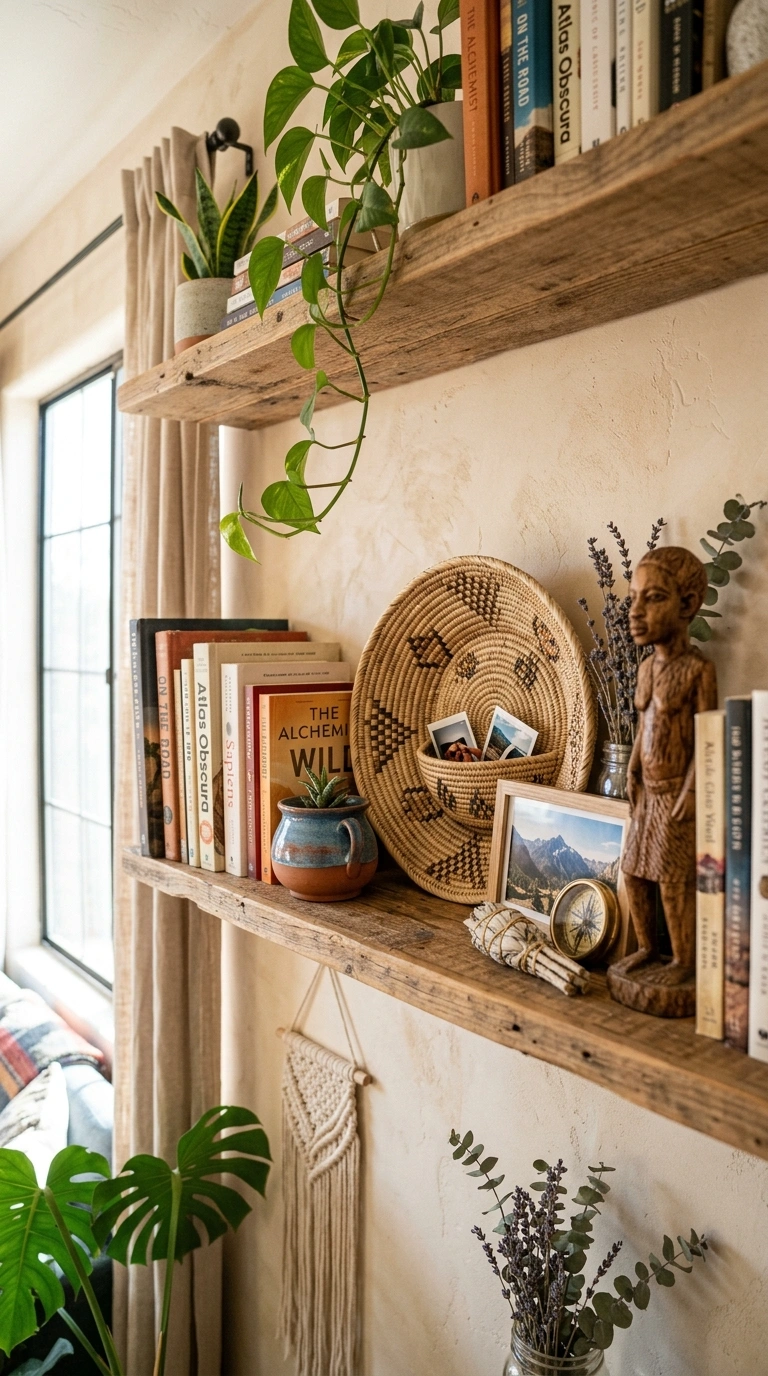
A curated collection of objects from travel, a small ceramic from a market abroad, a woven basket from a different country, a piece of art picked up at a local gallery during a trip, displayed on a shelf or the coffee table gives the boho living room its most authentic quality: the sense that the room reflects an actual life lived with curiosity and intention. These personal objects cannot be purchased as a set from a home store and their one-of-a-kind quality is what gives the room its personality. Display them among the books and plants so they integrate into the room rather than appearing as a separate collection.
24. Record Player Station
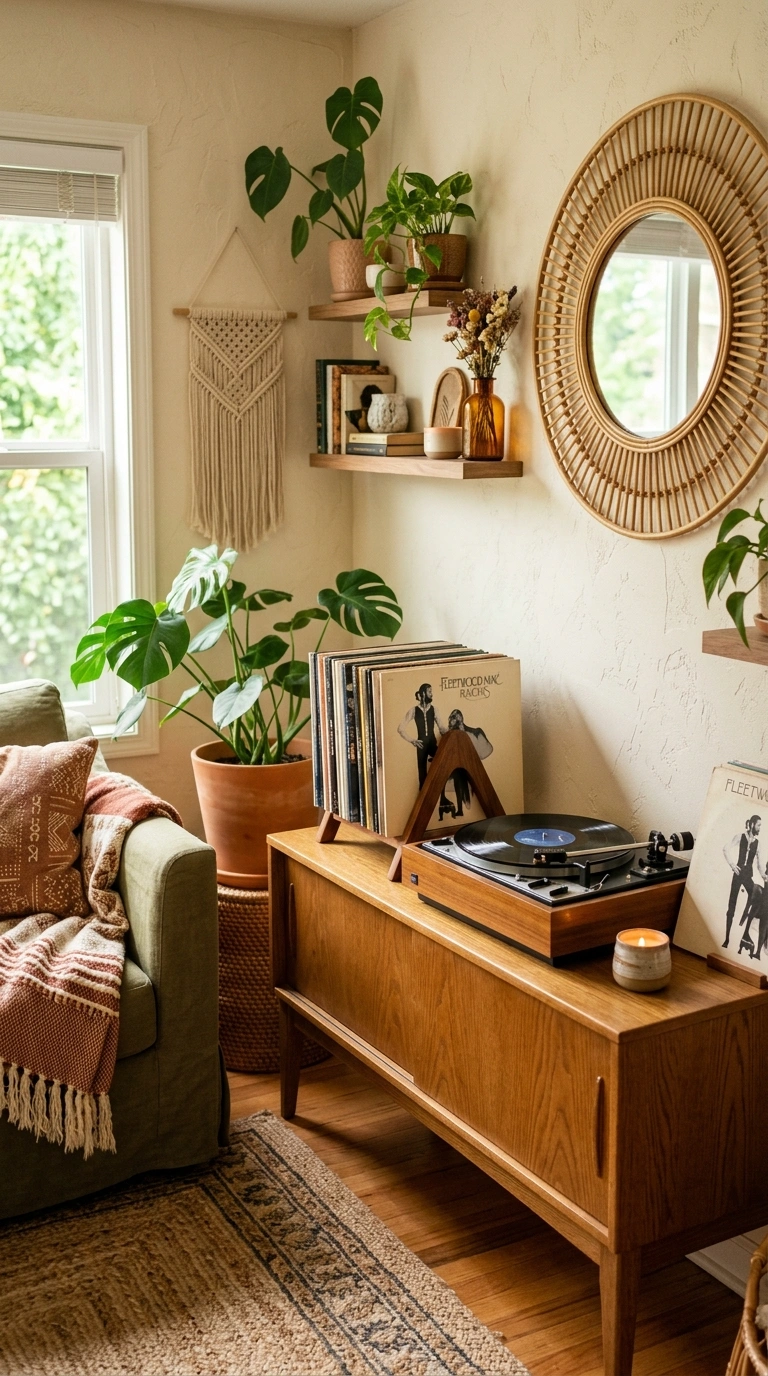
A vintage or current record player set up on a console table or a low shelf in the living room adds both a functional music station and a distinctly boho lifestyle detail. The ritual of choosing a record, placing it on the turntable, and dropping the needle creates a deliberate analog experience that suits the handmade, tactile quality of the boho aesthetic. Display a small curated selection of records beside the player. The combination of the player, the visible records, and the warm analog music quality adds an atmospheric layer that a Bluetooth speaker alone cannot match.
25. Restraint Above All
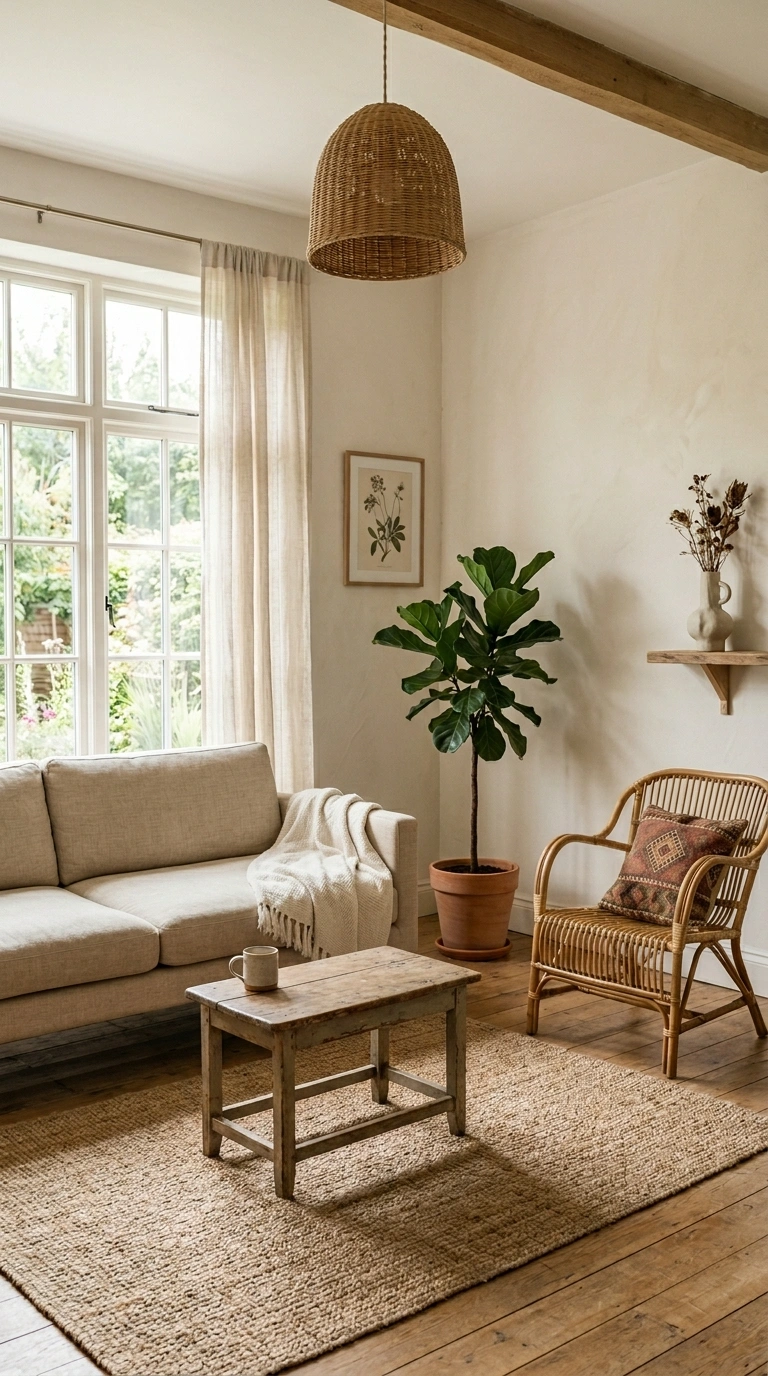
The single most important rule of a boho living room that feels layered without looking like a mess is restraint in the layering itself. Every pattern, every texture, every plant, every object needs to earn its place by genuinely contributing to the overall composition. When in doubt about whether to add another element, the answer is almost always to leave it out and let the existing elements breathe. A boho living room with fifteen carefully chosen elements arranged with room between them will always look more considered and more beautiful than one with fifty elements crowded together. The same discipline of restraint within a warm layered aesthetic makes the difference in cozy living room designs where the warmth comes from considered choices rather than accumulated volume.
A bohemian living room that feels genuinely layered and intentional is built on an anchor rug, a limited palette of warm natural materials, a curated mix of furniture and textiles, and the discipline to stop adding elements before the room tips from styled to stuffed. Choose the pieces that genuinely speak to you, give each one room to register, and the result is a living room that looks like it was assembled by a real person over real time rather than decorated all at once.