18 Luxury Living Room Ideas That Wow Every Guest
Walk into certain living rooms, and you feel it immediately — something about the space just feels right. The proportions, the light, the way the furniture sits. It is not always the most expensive room in the house. Sometimes it is a small apartment with a very good eye behind the styling. That feeling is achievable without hiring a decorator or spending a small fortune, and that is what this article is about. These 18 ideas focus on the things that genuinely make a living room feel elevated and impressive — not trends that will look dated in two years, but choices that have staying power and make guests stop and look around the moment they walk in.
1. Choose a Focal Point
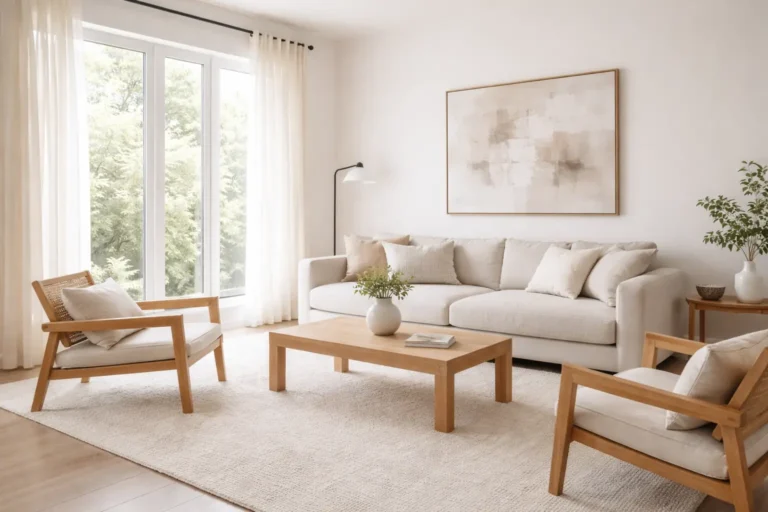
Every great living room is designed around a focal point — the first thing your eye goes to when you walk in. In many homes, this is the fireplace, a large window, or a prominent wall. If your room does not have a natural focal point, create one. A large piece of art, a statement mirror, or a beautifully styled shelving unit can all serve this purpose. Arrange your furniture to face or acknowledge the focal point rather than pointing in random directions. The sofa should generally face it, with chairs angled toward it as well. This gives the room a sense of orientation and intention, making it feel professionally arranged rather than assembled by chance.
2. Invest in One Hero Sofa
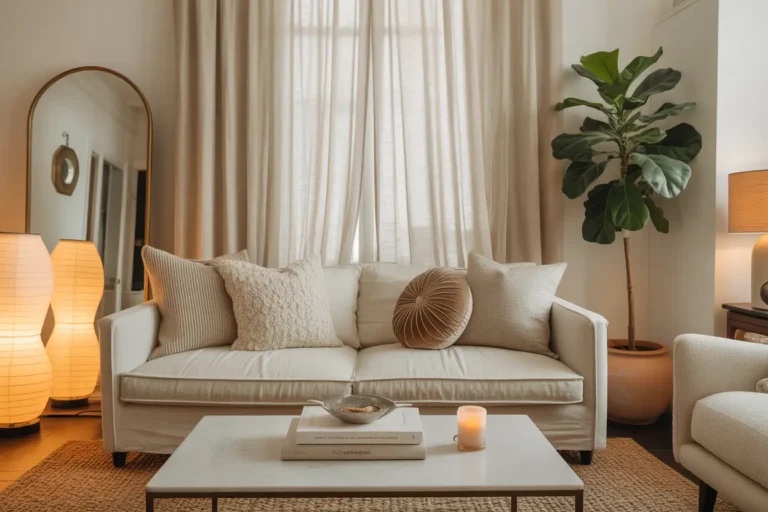
If there is one piece of furniture worth spending money on in a living room, it is the sofa. A well-made sofa in a quality fabric sets the tone for everything else. Neutral colors — warm white, oatmeal, soft gray, or camel — are the most versatile and tend to look more expensive than bold patterns. Look for deep seats, solid wood frames, and down-wrapped cushions if your budget allows. A sofa that fits the scale of the room is important — too small and it will look lost, too large and the room will feel cramped. A good sofa can last fifteen or more years with proper care, so it is one of the best long-term investments you can make in your living space.
3. Layer Lighting Sources
Rooms lit only by overhead light feel harsh and flat. A layered lighting scheme uses three types of light: ambient (the general overhead light), task (lamps used for reading or working), and accent (decorative lighting that highlights art, shelves, or architectural details). In a luxury living room, all three are present. Add a table lamp on each end table, a floor lamp beside a chair, and consider recessed lighting or a dimmer on the ceiling fixture. Wall sconces flanking a fireplace or shelving unit add a finished look. Using warm-toned bulbs throughout — 2700K to 3000K — keeps the room feeling warm and inviting rather than clinical.
4. Install Custom Drapes
Floor-to-ceiling drapes in quality fabric are one of the most dramatic upgrades a living room can receive. They add height, warmth, and texture all at once. Linen, velvet, and thick cotton are all suitable for a luxury look. Mount the rod as high as possible — ideally at the ceiling line — and hang panels long enough to puddle slightly on the floor or just graze it. Choose a color that is close to the wall tone for an elegant, seamless look, or go one to two shades deeper for subtle contrast. Ready-made panels can work well if they are the right length and weight. The difference between cheap, thin curtains and proper, heavy ones is one of the most immediately noticeable quality signals in any living room.
5. Use Large-Scale Art
Art is one of the most powerful tools in a room, and going large is almost always better than going small. A single oversized painting or framed print above a sofa or fireplace anchors the room and communicates confidence in the decor choices. The art does not need to be original or expensive. Large art prints are available from many online retailers at modest prices. Abstract works, large landscape photography, and oversized botanical or architectural prints all work well in living rooms. Choose something that speaks to you personally rather than just matching the pillows. Art should feel like a choice, not a furniture accessory. A large, meaningful piece instantly makes a room feel curated and personal.
6. Add Architectural Trim
Adding trim to walls — whether crown molding, picture rail molding, or board-and-batten paneling on the lower half of a wall — gives a room architectural character that furniture alone cannot provide. Board-and-batten is one of the most popular options because it is relatively inexpensive, dramatic in effect, and can be completed as a weekend DIY project. Paint it the same color as the wall for a tonal, modern look, or choose white over a colored wall for a classic feel. Even simple crown molding at the ceiling line changes how a room reads. These details signal craftsmanship and permanence, which are two qualities deeply associated with luxury in home design.
7. Choose Quality Over Quantity
A living room with fewer, better pieces nearly always looks more elegant than one packed with lots of average items. When it comes to furniture, accessories, and decor, restraint is one of the most effective luxury tools available. Instead of filling every surface and corner, choose carefully and leave space for the eye to rest. A beautiful side table with one lamp, one plant, and one book looks far more considered than the same table covered in random objects. Apply this principle throughout the room — edit ruthlessly, keep only what is genuinely attractive or meaningful, and resist the urge to fill empty space just because it exists. Spaciousness itself is a sign of luxury.
8. Incorporate Natural Materials
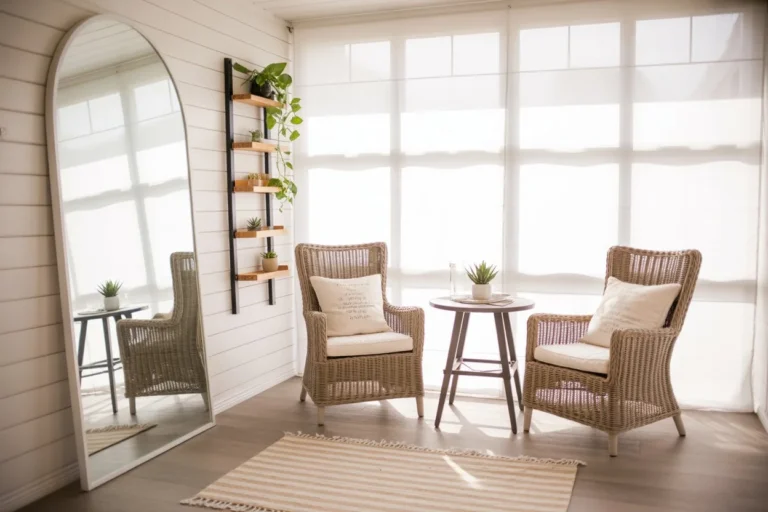
Natural materials bring a richness to a room that synthetic alternatives rarely replicate convincingly. Marble, genuine wood, stone, rattan, linen, wool, and leather all have tactile and visual qualities that elevate a space. This does not mean everything needs to be expensive. A marble-topped coffee table, a rattan chair, a wooden bowl on the coffee table, and a linen throw are all modest additions that collectively create a room with real material depth. Mix different natural materials at different scales — rough and smooth, hard and soft — for a layered, high-end feel. A room built around natural materials feels grounded and authentic in a way that is hard to achieve with entirely manufactured alternatives.
9. Style a Console Table
A console table behind the sofa or against a wall is an excellent opportunity for intentional styling. Use it to anchor the space between the sofa and a wall, or to create a visual layer between the living room and an entryway. Style the surface with a mix of heights — a tall lamp on one end, a medium-height vase in the middle, and a small object like a candle or a plant on the lower end. Hang a mirror or a piece of art above it to tie the arrangement together vertically. A well-styled console table gives guests something polished to look at from every seat in the room. Keep the surface from becoming a drop zone for mail and keys by doing a quick daily tidy.
10. Use a Tray to Anchor Objects
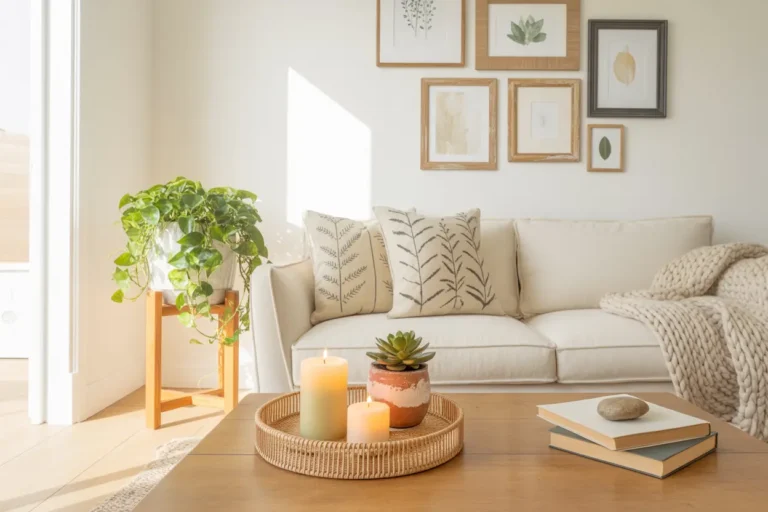
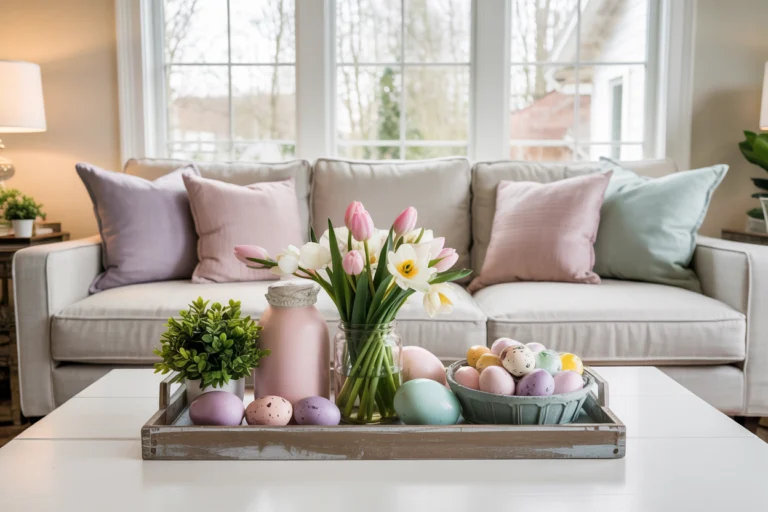
A decorative tray on the coffee table or ottaman is a simple styling technique that makes a significant difference. It creates a defined zone for a group of smaller objects — a candle, a small plant, a stack of books, a decorative object — and prevents the surface from looking cluttered. Without a tray, the same objects tend to drift around and look random. A wooden tray, a lacquer tray, or a woven tray all work depending on the room’s style. Choose one that is large enough to contain a meaningful grouping but not so large it dominates the table. This is one of those small techniques that interior stylists use constantly and that makes a room look more designed with almost no effort.
11. Add a Statement Chair
An accent chair that stands apart from the rest of the seating adds personality and breaks up visual monotony. This is often called a statement chair, and it is usually different from the sofa in color, texture, or shape. A velvet chair in a jewel tone next to a neutral sofa creates a focal moment. A wicker or rattan chair alongside modern upholstery creates an interesting material contrast. An upholstered wingback chair in a different but complementary fabric adds a classic touch. The statement chair gives guests a preferred seat to head toward and gives the room a layered, designed quality. Place it at an angle to the main seating rather than directly across to make the arrangement feel natural and inviting.
12. Hang Mirrors Thoughtfully
A large, well-placed mirror does several things simultaneously — it enlarges the room visually, reflects natural light, and acts as a decorative piece in its own right. In a living room, a large mirror above the fireplace is the classic choice. A leaning mirror in a corner or alongside a window is another option that is less formal but equally impactful. Choose a frame style that complements the room — a gilded frame works in traditional or maximalist spaces, while a simple black, white, or natural wood frame suits modern or minimalist rooms. Avoid placing a mirror where it will reflect something unattractive, like a cluttered corner or a blank wall. The reflection should double what is best about the room.
13. Curate a Book Collection
Books are one of the most overlooked luxury decor tools in a living room. A well-arranged bookshelf or a coffee table stack of curated books signals taste, curiosity, and permanence. Arrange books on shelves by color or by size for a more visual effect, and mix them with small plants, candles, and objects. On the coffee table, a small stack of three to five books with visually appealing covers gives the room a lived-in, intellectual quality that feels authentic. Look for coffee table books on art, architecture, travel, food, or design — these are widely available at library sales and secondhand stores for a dollar or two. The right books say something about the person who lives there.
14. Use a Neutral Base Palette
Luxury rooms almost universally start with a restrained base palette. This does not mean the room needs to be all white — it means the dominant colors are calm, harmonious, and not competing with each other. A warm putty wall with cream upholstery, natural wood tones, and touches of black creates a sophisticated neutral scheme. Taupe with sage and warm white is another combination that consistently reads as elegant. The payoff of a neutral base is that accent colors and textures stand out clearly and deliberately, and the room never feels busy or dated. Once you have your neutral foundation established, you can introduce personality through pillows, art, and accessories without risking the overall elegance of the space.
15. Add Fresh or Dried Florals
Fresh flowers or high-quality dried botanical arrangements add life and natural beauty to a living room in a way that is hard to replicate with any manufactured decor item. A vase of fresh stems on the coffee table or console table makes a room feel cared for and alive. If fresh flowers are not practical for budget or maintenance reasons, dried pampas grass, dried cotton stems, dried eucalyptus, or olive branches in a simple vase work beautifully and last for months. Choose a vase that works with the room — a chunky ceramic for a natural, earthy feel, a clear glass cylinder for something modern, or a brass-toned vase for a warmer, more traditional look. Even a single large dried stem in a tall vase can be striking.
16. Keep Cables Hidden
One of the most telling signs of a well-cared-for living room is the absence of visible cables. Power cords running along the floor, TV cables hanging down a wall, and phone chargers draped over furniture all work against any elegant decor scheme. Take an afternoon to cable-manage. Run TV cables through a wall channel cover (a simple adhesive plastic channel available at hardware stores for under ten dollars). Use velcro cable ties behind media consoles and entertainment units. Install power outlets higher up on the wall behind mounted TVs. Wrap excess cable in a clip or tie. When all the functional elements are neatly contained, the decorative elements you have worked on are free to shine without distraction.
17. Add a Cocktail Ottoman
Swapping a traditional coffee table for a large upholstered ottoman is a luxurious and practical change. A tufted velvet ottoman, a smooth leather option, or a clean linen cube all add softness and warmth to the center of the seating area. You gain footrest space, extra seating when guests visit, and a surface for a tray when needed. Choose an ottoman large enough to be in proportion to the sofa — for a large sofa, a round or rectangular ottoman at least 36 to 48 inches across works well. Style the top with a tray holding a candle and a few books, which keeps the surface looking finished while still being functional. It is one of the most practical luxury upgrades available.
18. Edit and Rotate Decor Seasonally
One thing that characterizes truly well-kept luxury spaces is that they are never static — they are curated and refreshed thoughtfully over time. Set a habit of rotating and editing your decor every season. Swap out throw pillow covers for warmer or cooler tones depending on the time of year. Replace the botanical arrangement on the coffee table with something seasonal. Move a painting from one room to another for a fresh perspective. Store decor that has been out for a long time and bring back something that has been packed away. This practice keeps the room feeling considered and current without requiring new purchases. It also prevents visual fatigue from seeing the same arrangement for too long.
Conclusion
Making a living room feel genuinely impressive is not about buying the most expensive pieces. It is about lighting, proportion, material quality, and the confidence to edit. Start with the ideas here that feel most aligned with your space, and build from there. The rooms that stop guests in their tracks are usually the ones where someone thought carefully — not spent recklessly.