25 Small Apartment Ideas That Look High-End
Living in a small apartment doesn’t mean settling for a space that feels cramped or bland. Some of the most beautifully styled homes are also some of the smallest. The difference between an apartment that looks thoughtfully put together and one that doesn’t often comes down to a handful of specific choices, not the size of the space or the size of your wallet. A few well-placed pieces, some adjustments to how you use light and color, and a willingness to edit down what you own can shift the entire feeling of a room. These twenty-five ideas come from real styling principles used in apartments of all sizes, and most of them can be done without spending much at all.
1. Hang Curtains High
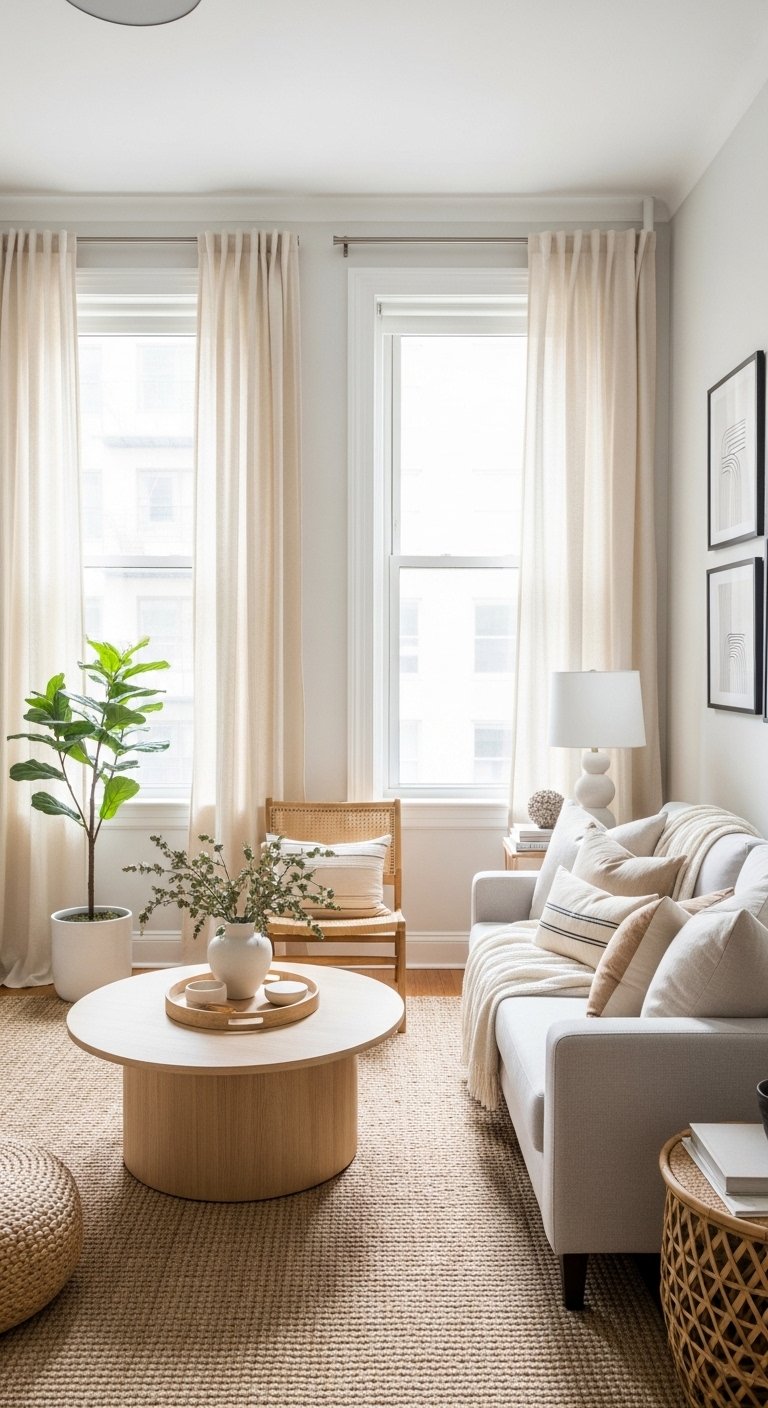
One of the fastest ways to make a small room feel taller is to hang curtain rods close to the ceiling rather than just above the window frame. This is a trick that interior designers rely on constantly because it creates the visual impression of height even when the ceiling is standard or low. The curtain panels should be long enough to just skim the floor or pool slightly, never short or floating above it. Floor-length curtains that start near the ceiling frame the window and the whole wall beautifully. You don’t need expensive fabric either. Simple linen or cotton curtains in off-white, cream, or soft gray look polished and let light through without feeling heavy. The whole effect is a room that feels more spacious and considered, and it costs less than most other decor upgrades you could make.
2. Use a Large Mirror
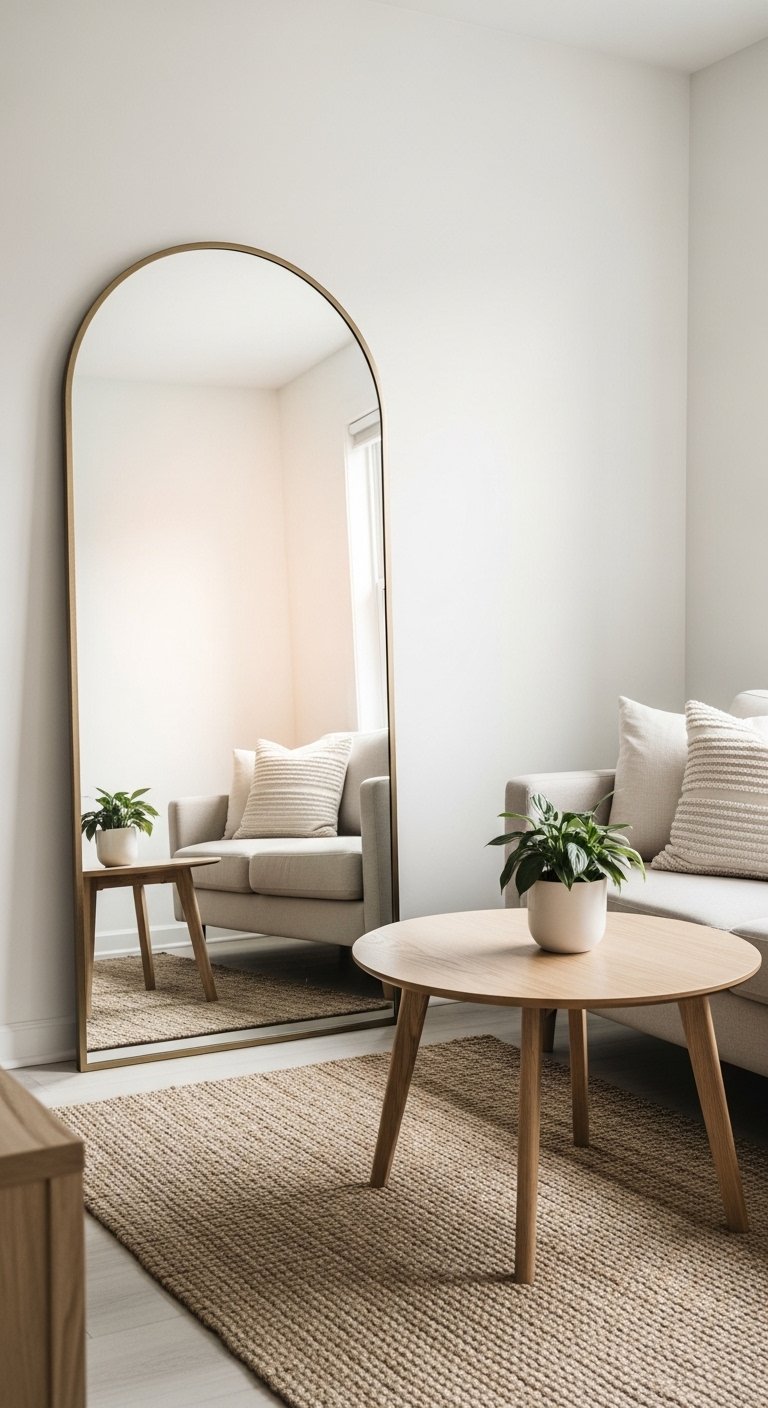
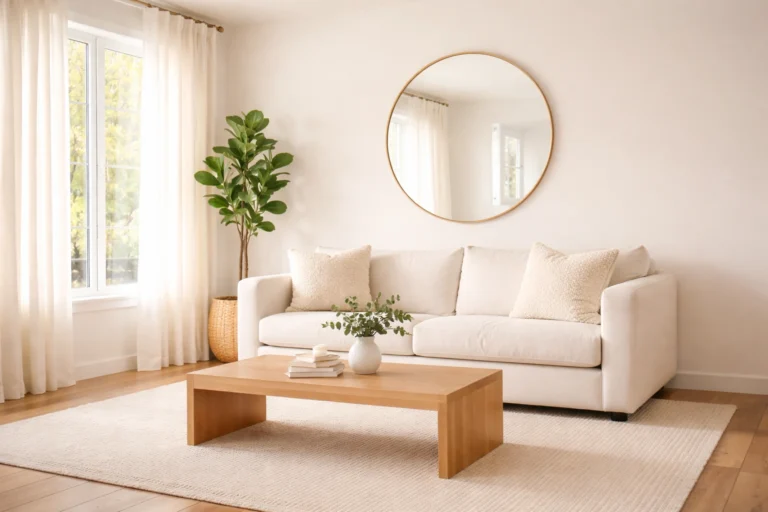
A well-placed large mirror does more work in a small apartment than almost any other single item. It reflects light, making the room feel brighter without any additional light source, and creates the convincing illusion of more depth and space. An arched mirror leaned against a wall, a round mirror above a console table, or a full-length mirror hung on the back of a door all work extremely well. The frame matters too. Thin metal frames in brass or black look current and elevated. Chunky ornate frames can look dated unless your whole space leans vintage intentionally. If budget is tight, IKEA has several large mirror options that look far more expensive than they are. The key is going large rather than medium. A small or medium mirror does almost none of what a large one does for the space.
3. Stick to a Neutral Palette
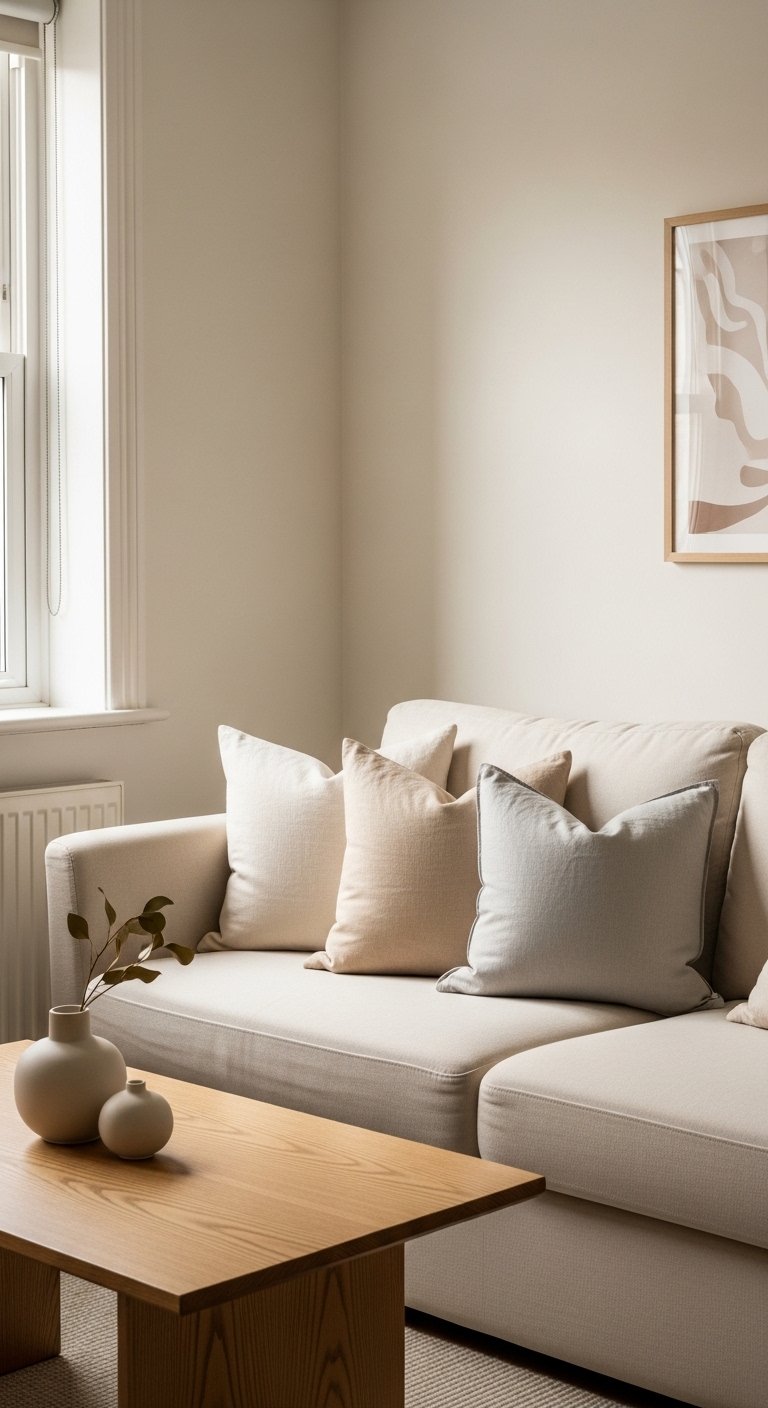
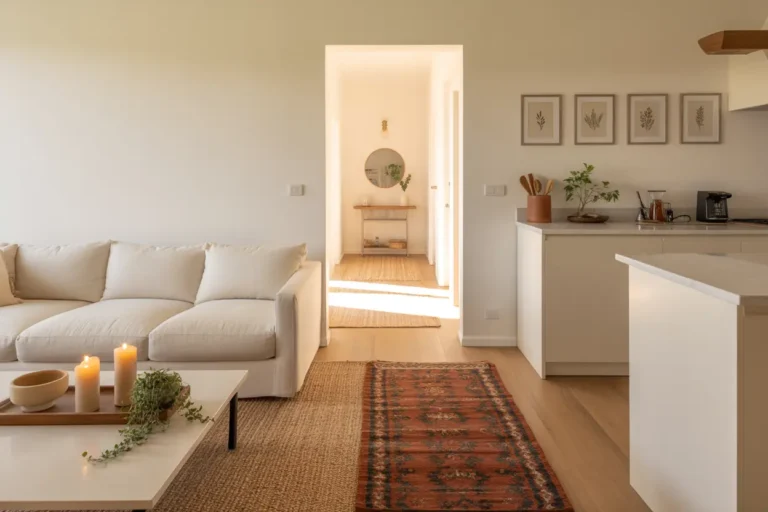
Rooms that look high-end almost always share one characteristic: a cohesive, restrained color palette. In a small apartment, this matters even more because visual clutter from too many competing colors makes a space feel chaotic and smaller than it is. A neutral base of whites, creams, warm grays, and natural wood tones creates a calm, unified backdrop that makes everything in the room look more intentional. Within that neutral base, you can introduce one or two accent colors through cushions, art, or a single piece of furniture. The restraint is what makes it feel expensive. If every piece of furniture is a different color and style, the eye doesn’t know where to land. A simple, calm palette gives the room a sense of order that reads as tasteful and put-together.
4. Add Crown Molding
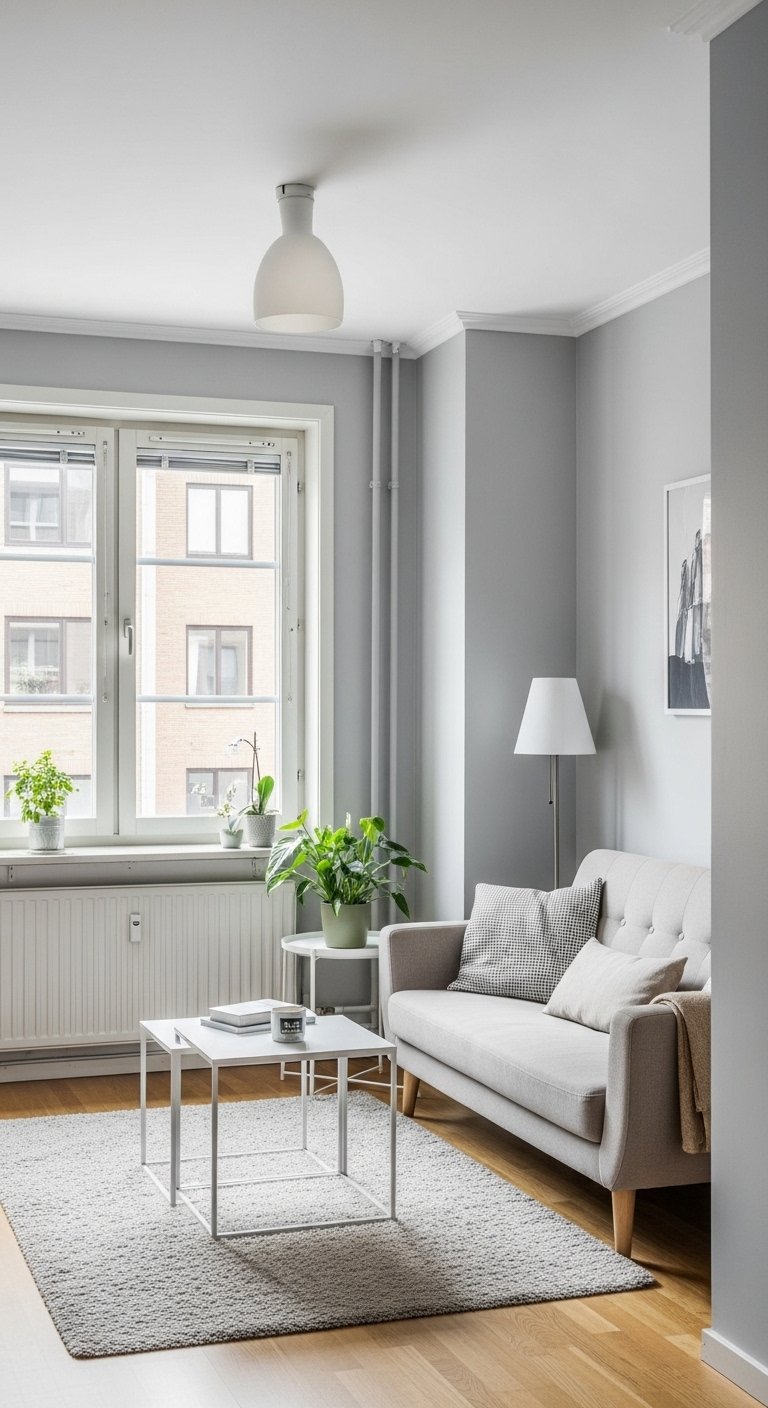
Crown molding is something most people associate with older or more formal homes, but peel-and-stick crown molding is now widely available and adds a genuinely upscale architectural detail to any apartment without requiring tools or landlord approval. Running it along the ceiling-to-wall joint in a main living space or bedroom immediately makes the room feel more finished and built-out. Paint it the same color as your walls for a subtle, modern effect, or go white against a colored wall for a more traditional look. The cost for a standard room is usually around twenty to forty dollars for the molding strips and the paint touch-up. It’s one of those changes that people notice and can’t quite identify, which is usually the sign of a genuinely good design detail. Guests will assume you chose a nicer apartment, not that you spent an afternoon with adhesive strips.
5. Invest in One Good Sofa
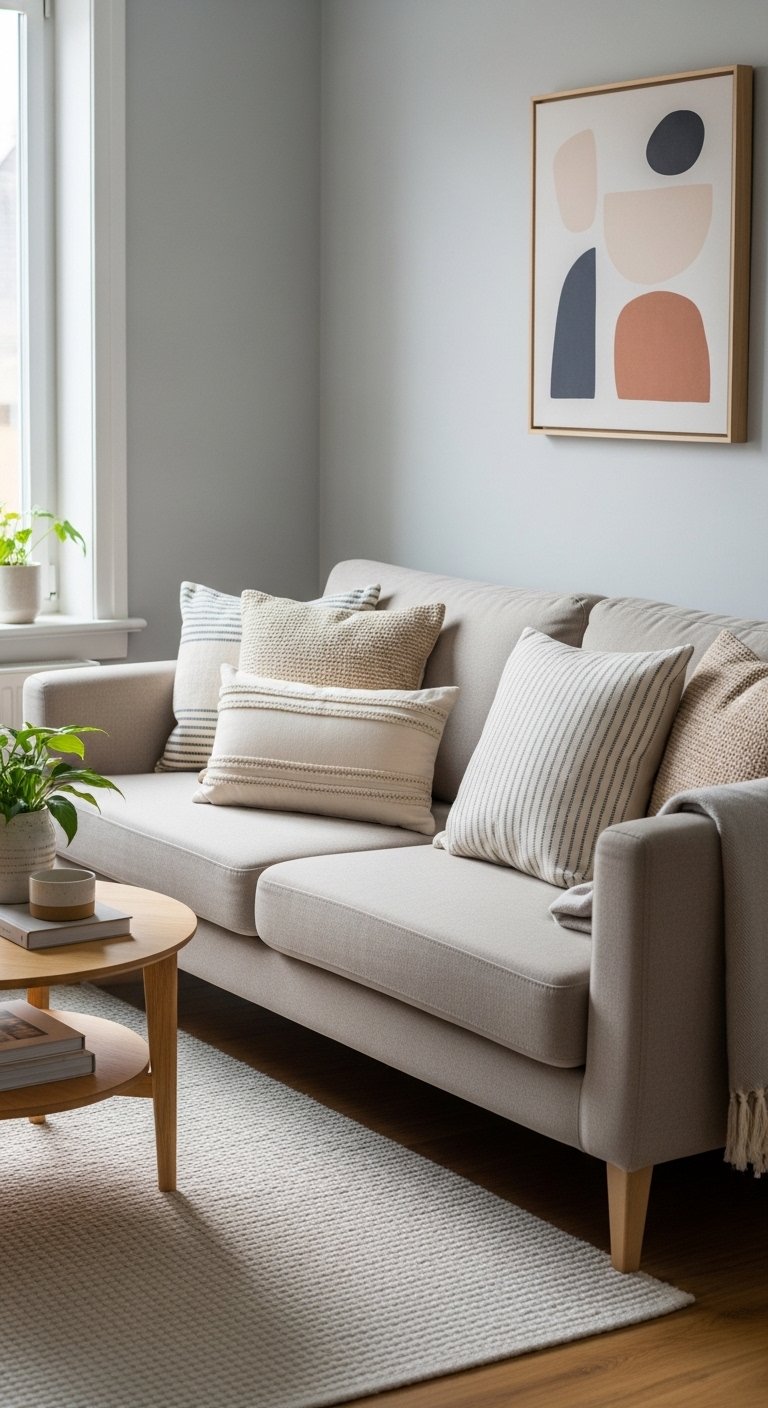
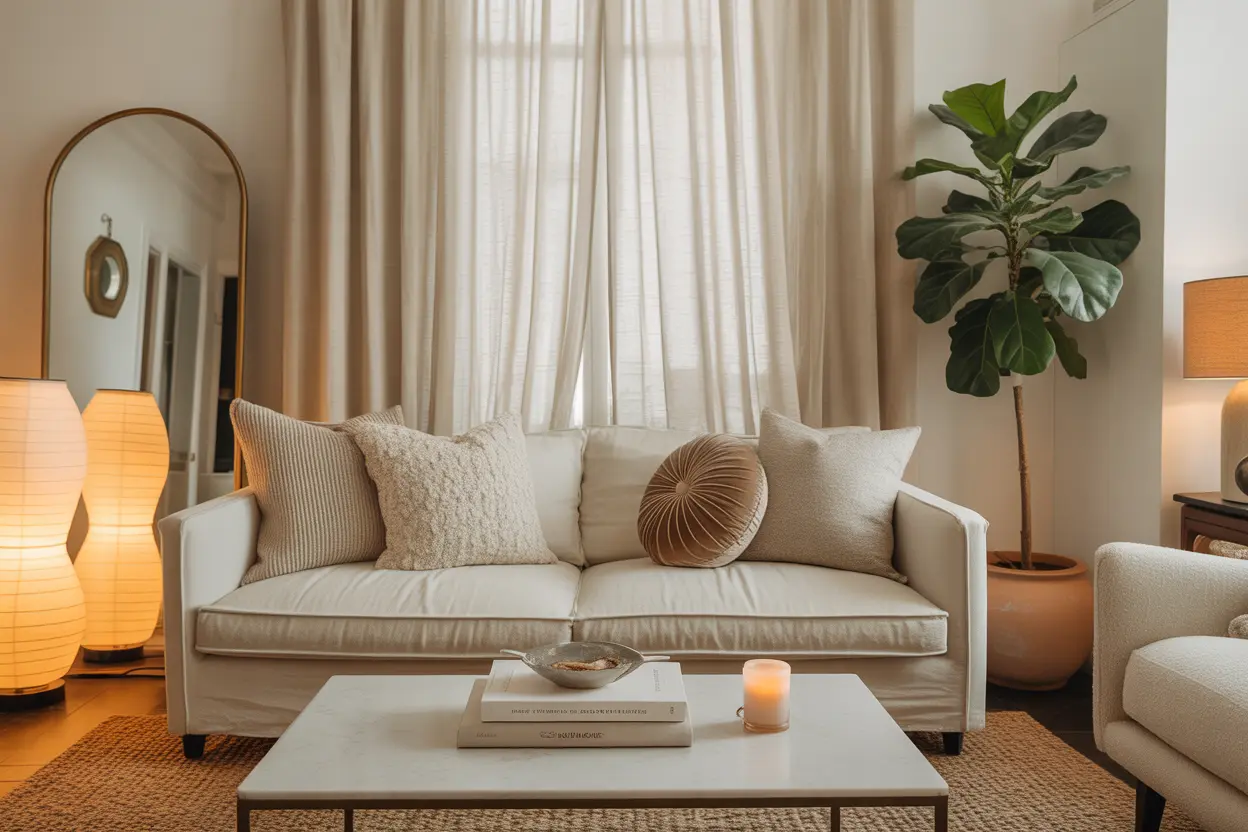
In a small apartment, your sofa is probably the largest piece of furniture in the room, which means it carries the most visual weight. A sofa that looks cheap or worn drags down everything else around it, no matter how well the rest of the space is styled. If there’s one piece worth spending more on, this is it. Look for a sofa in a neutral tone, cream, oatmeal, charcoal, or warm gray, with clean lines and good cushion structure. Sofas with legs rather than a base that sits on the floor look lighter and less bulky in smaller rooms. If a new sofa is out of budget, a well-fitted slipcover in a quality fabric can genuinely transform the look of an existing one. Pair it with cushions in slightly different textures, linen next to velvet, and the overall effect is rich-looking without the price tag.
6. Create a Gallery Wall
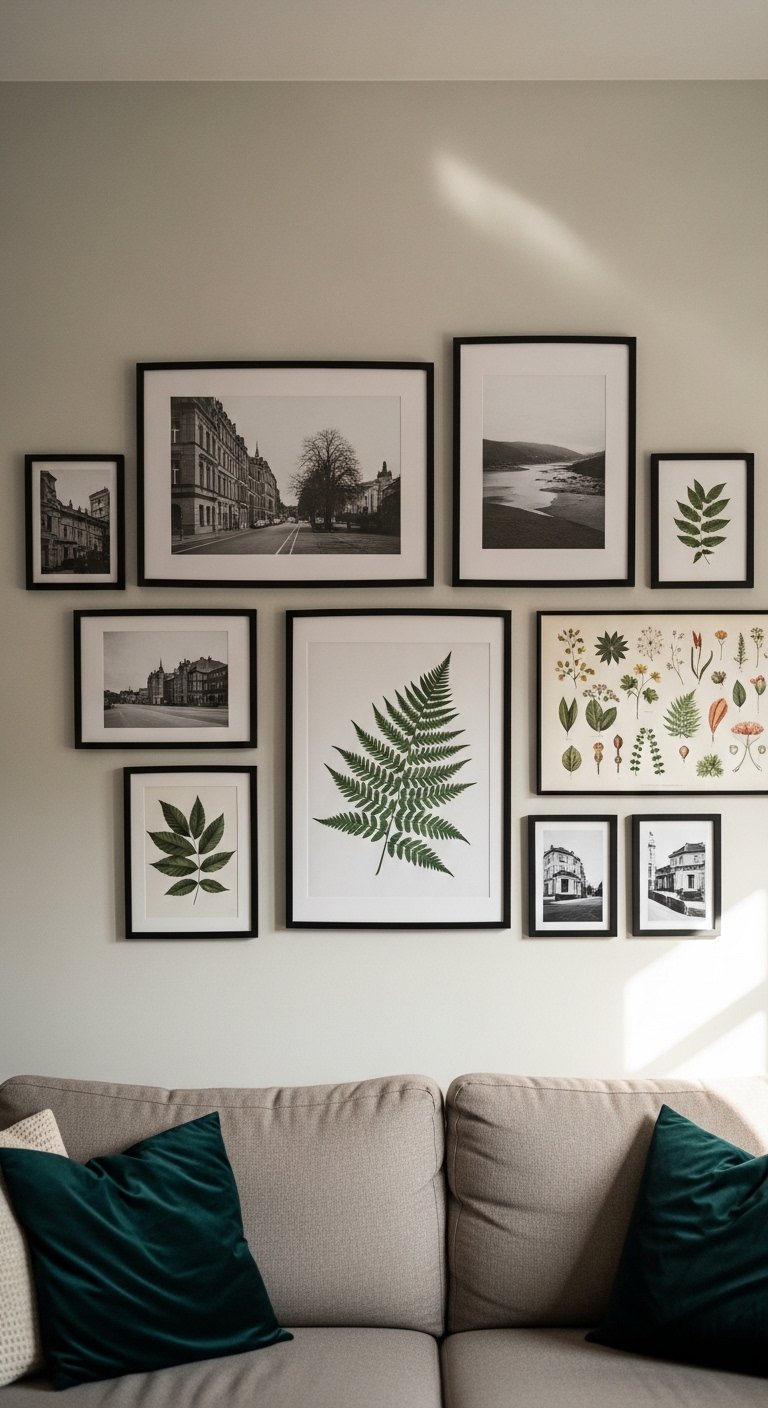
A gallery wall done well can be the visual centerpiece of an entire room without costing very much. The key to making it look intentional rather than random is to pick a consistent frame style or color and vary the art rather than the frames. Black metal frames in different sizes with black-and-white photography, botanical prints, or abstract art look genuinely sophisticated. You can print art at home or use free downloadable prints from sites like Unsplash and have them printed at a local print shop for a few dollars each. Plan the arrangement on the floor before hammering any nails, and consider using paper templates taped to the wall to test the layout. The wall should feel like a considered collection, not a random assortment. Done right, a gallery wall creates a point of interest that gives the room personality and makes it look like someone with real taste lives there.
7. Use Warm Lighting Only
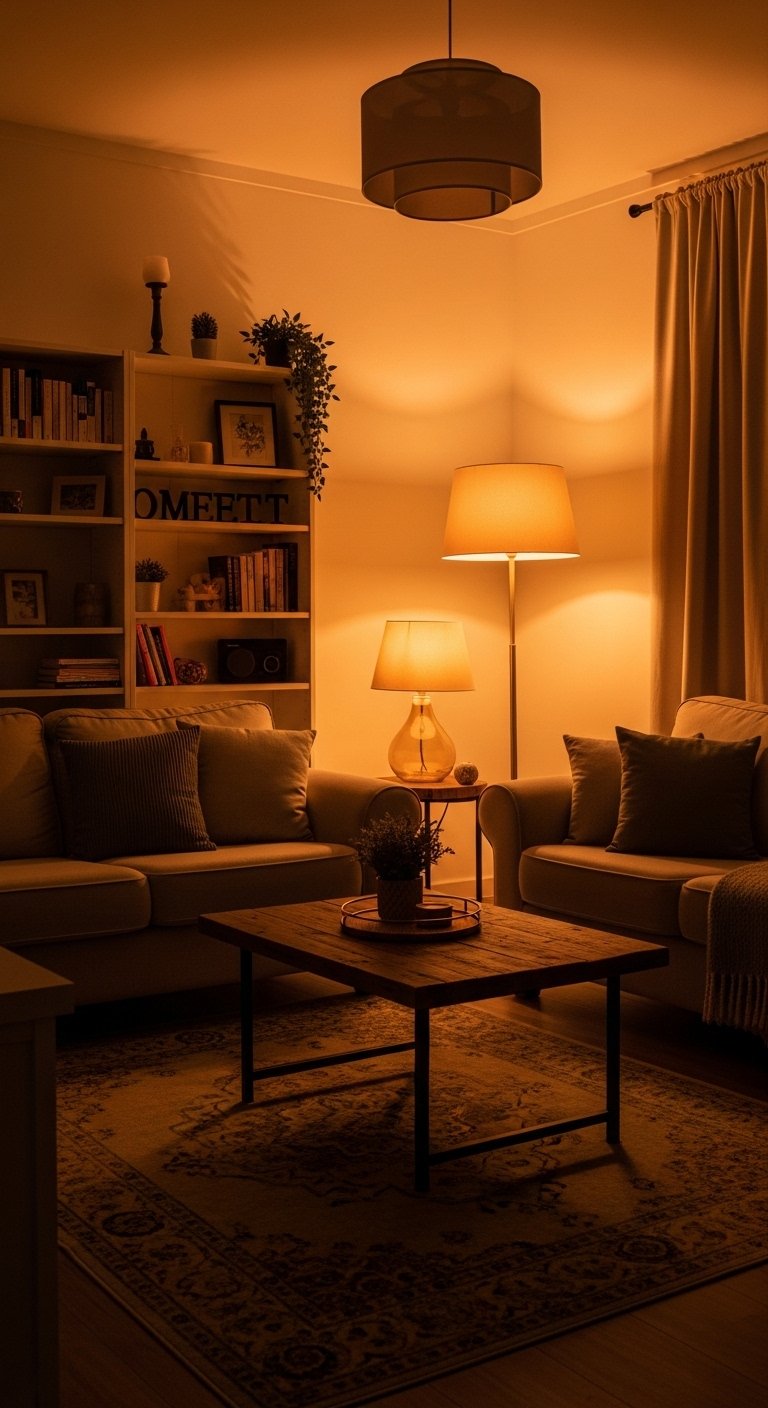
Lighting temperature makes an enormous difference in how a space feels, and it’s one of the most commonly overlooked factors in apartment styling. Cool or bright white light makes a space feel clinical and flat. Warm light in the 2700K to 3000K range makes the same room feel cozy, rich, and inviting. Swap out any cool-toned bulbs in your apartment for warm ones throughout every fixture. Then layer light sources rather than relying on a single overhead light. A floor lamp in one corner, a table lamp on a side table, and a small lamp on a bookshelf creates a warm, layered glow that overhead lighting alone can’t replicate. This is exactly what hotels and upscale restaurants do to create atmosphere. The bulbs cost almost nothing, and the effect is immediate and dramatic.
8. Decorate with Books
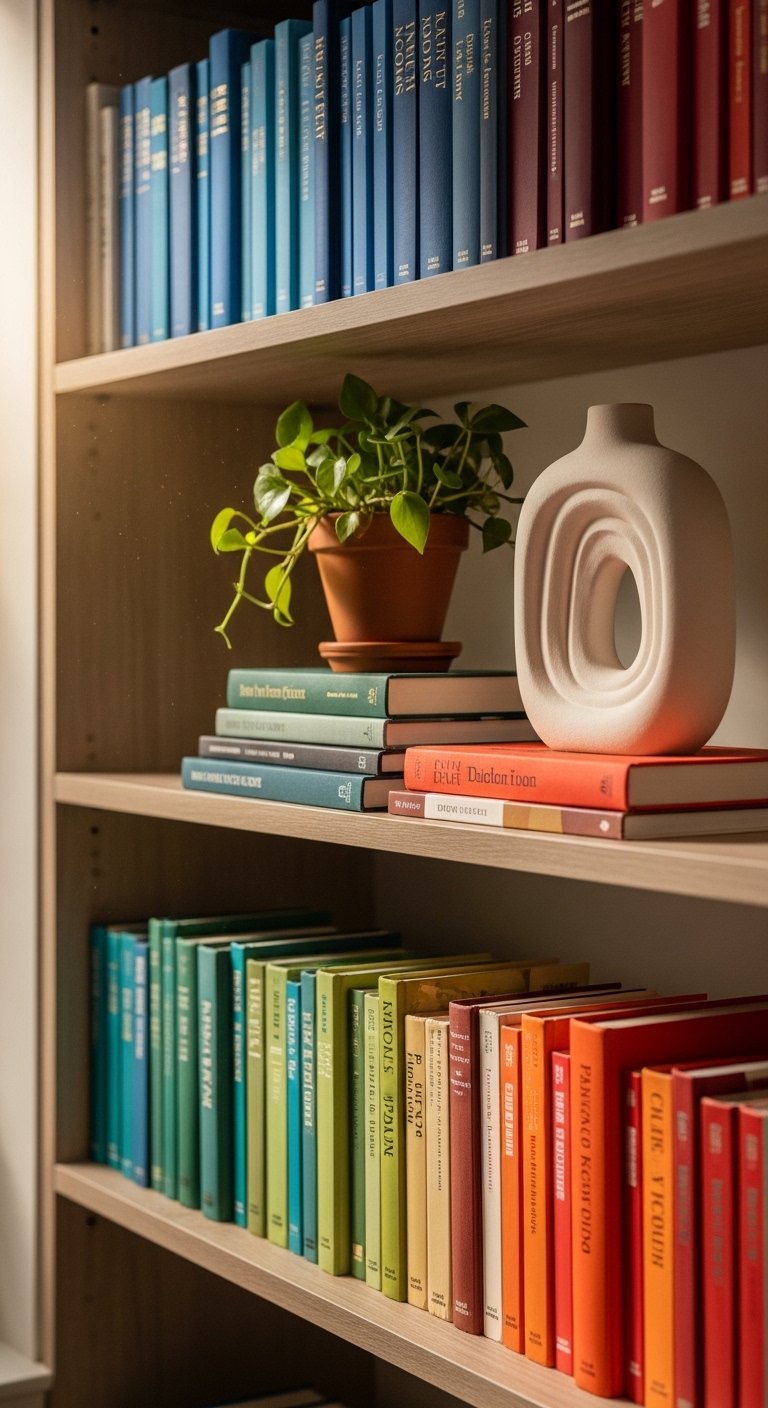
Books used as decor is one of the most genuinely elegant and budget-friendly styling approaches. A well-organized bookshelf with books arranged by color, height, or subject looks like a thought-out design element rather than just a storage solution. Stacking a few coffee table books on a tray on your coffee table adds visual interest and texture. Leaning a large format art or photography book against a shelf wall between objects adds dimension. Used bookstores and thrift shops often have beautiful coffee table books on art, travel, and design for one to three dollars each. Unlike most other decorative items, books also serve a real purpose and communicate something about the person who lives there. An apartment with beautiful books on display always feels more cultured and interesting than one without.
9. Add Real Plants
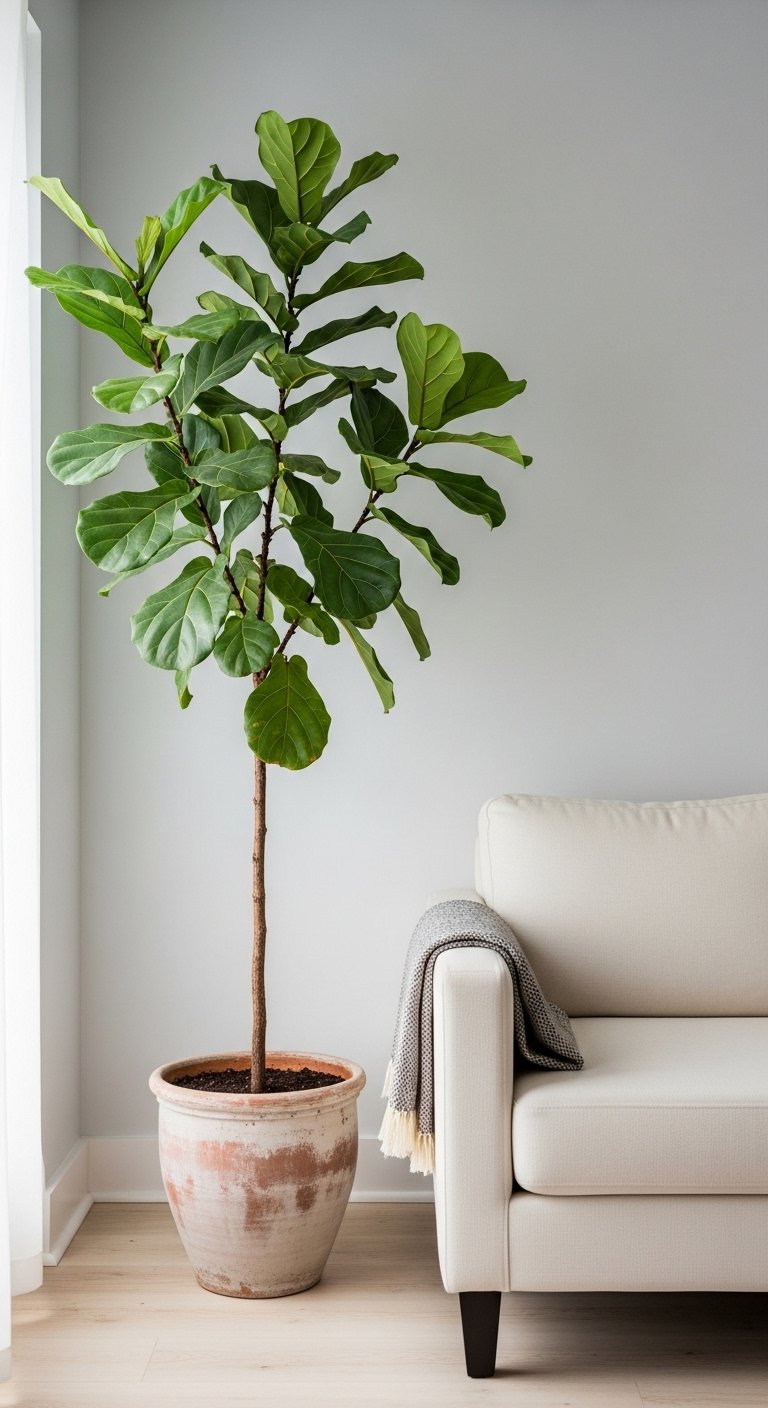
A living plant does something that a faux plant simply cannot. It changes slightly over time, responds to its environment, and has an organic irregularity that reads as genuinely alive. In a small apartment, one or two statement plants can be more effective than a dozen small ones scattered around. A large fiddle-leaf fig, a monstera, or a tall olive tree in a simple ceramic or terracotta pot creates a sculptural, hotel-lobby quality in a corner or beside a sofa. If natural light is limited in your apartment, pothos, zz plants, and snake plants thrive in low light and are very difficult to kill. Plants also improve air quality and bring natural color into rooms that might otherwise feel flat or lifeless. A single well-placed plant in a great pot is worth more visually than several small plants in plastic nursery containers.
10. Upgrade Your Hardware
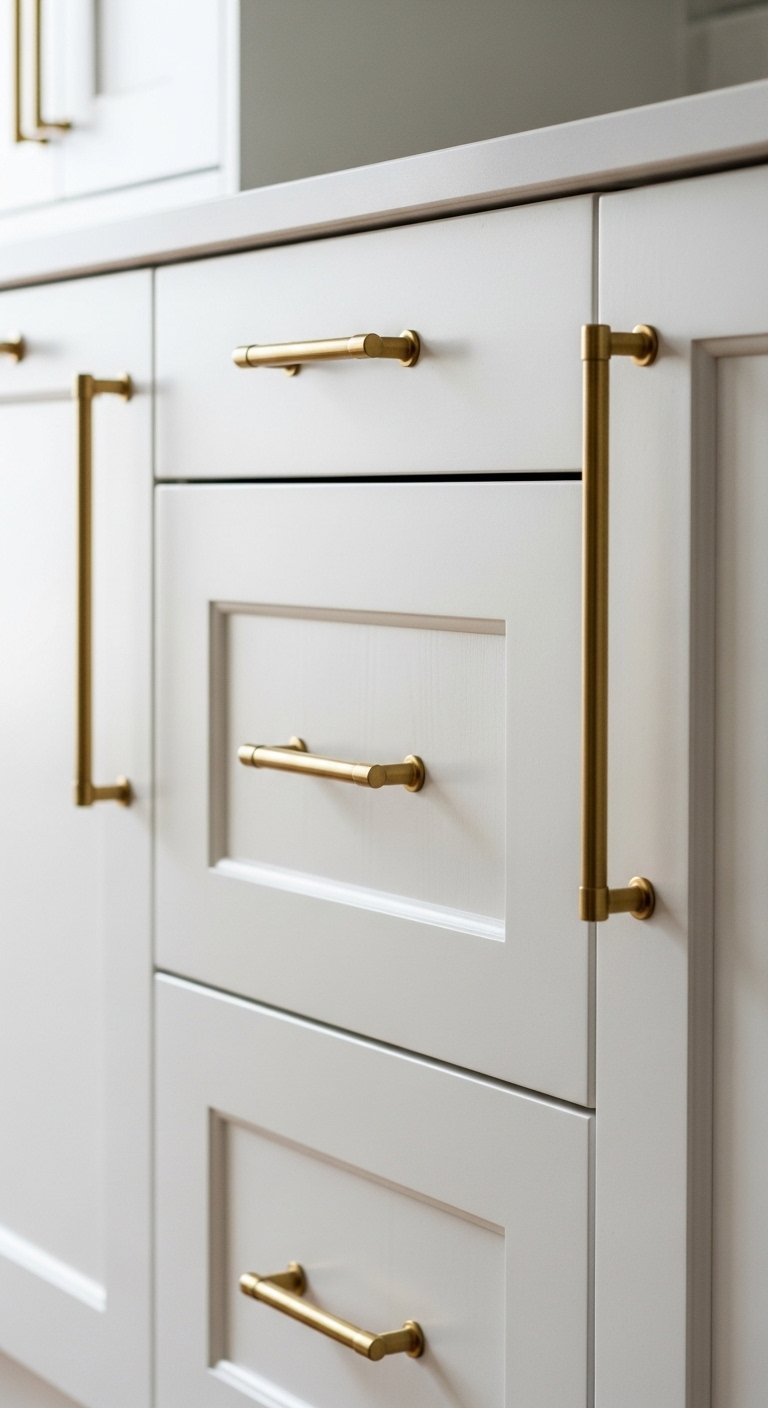
Cabinet handles and drawer pulls are one of the smallest and most cost-effective changes you can make to dramatically improve the look of a kitchen or bathroom. Standard apartment hardware is usually cheap, thin, and generic-looking. Replacing it with brushed brass, matte black, or unlacquered bronze hardware can make the same cabinetry look completely different and far more considered. A set of drawer pulls for a standard kitchen cabinet run costs anywhere from twenty to sixty dollars depending on quantity and style, which is inexpensive compared to most other updates. You keep the originals and reinstall them when you leave if your lease requires it. This is one of those changes that seems minor until you do it and then can’t imagine going back. The hardware is literally what you touch every day, and nice hardware feels noticeably better in your hand.
11. Style Your Bathroom Counter
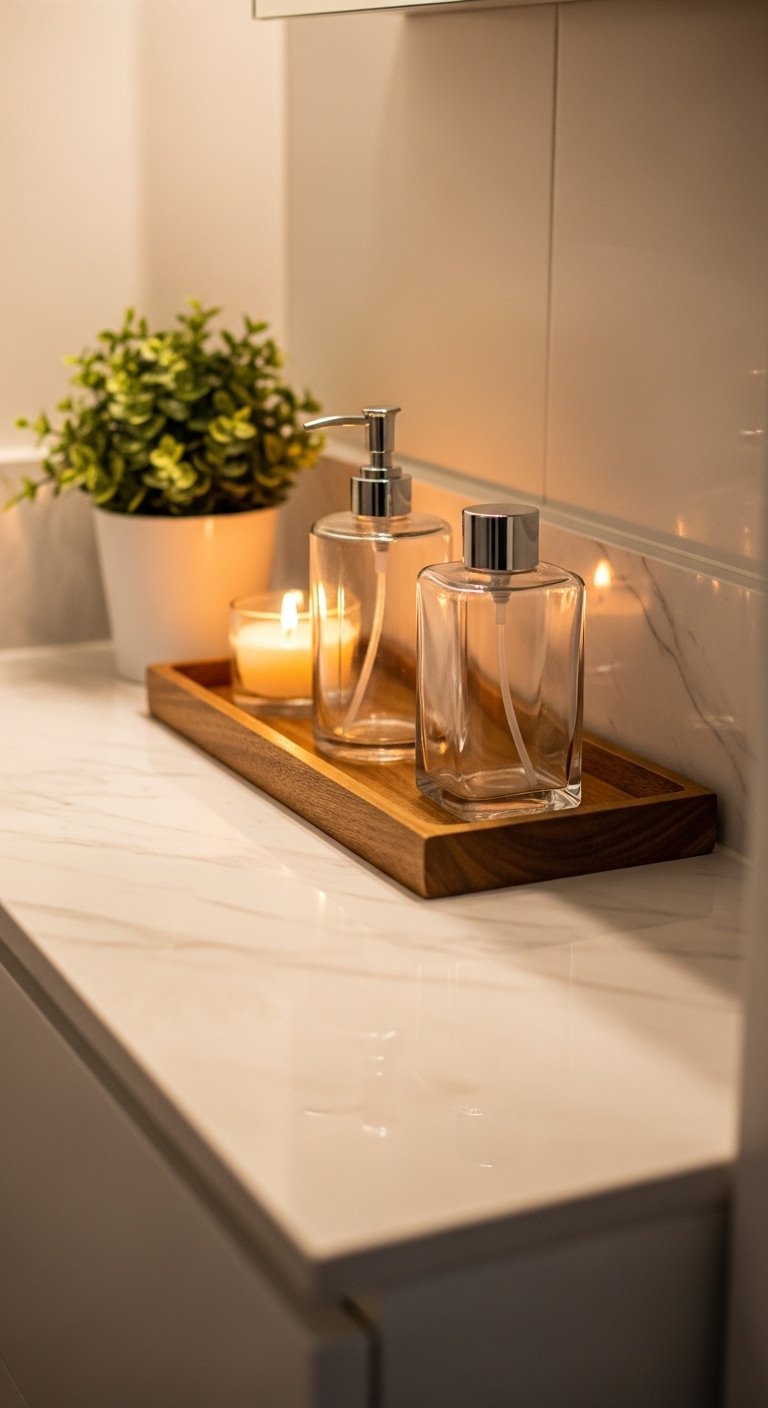
Bathrooms in small apartments are often an afterthought in terms of styling, but a well-arranged bathroom counter sends a signal that the whole apartment is cared for. Clear away everything that doesn’t need to live on the counter and replace it with a small tray holding a few well-designed bottles of hand soap, lotion, and perhaps a small candle. Decant your everyday products into simple glass or ceramic dispensers. The visual difference between a counter full of brightly labeled plastic bottles and a simple tray with uniform, elegant containers is significant. Add a small plant like a pothos or air plant if there’s enough light, and replace a basic bath mat with one in a nicer material or texture. Guests notice bathrooms more than any other room in an apartment, and a styled one feels genuinely luxurious even in a very small space.
12. Lean Art Instead of Hanging It
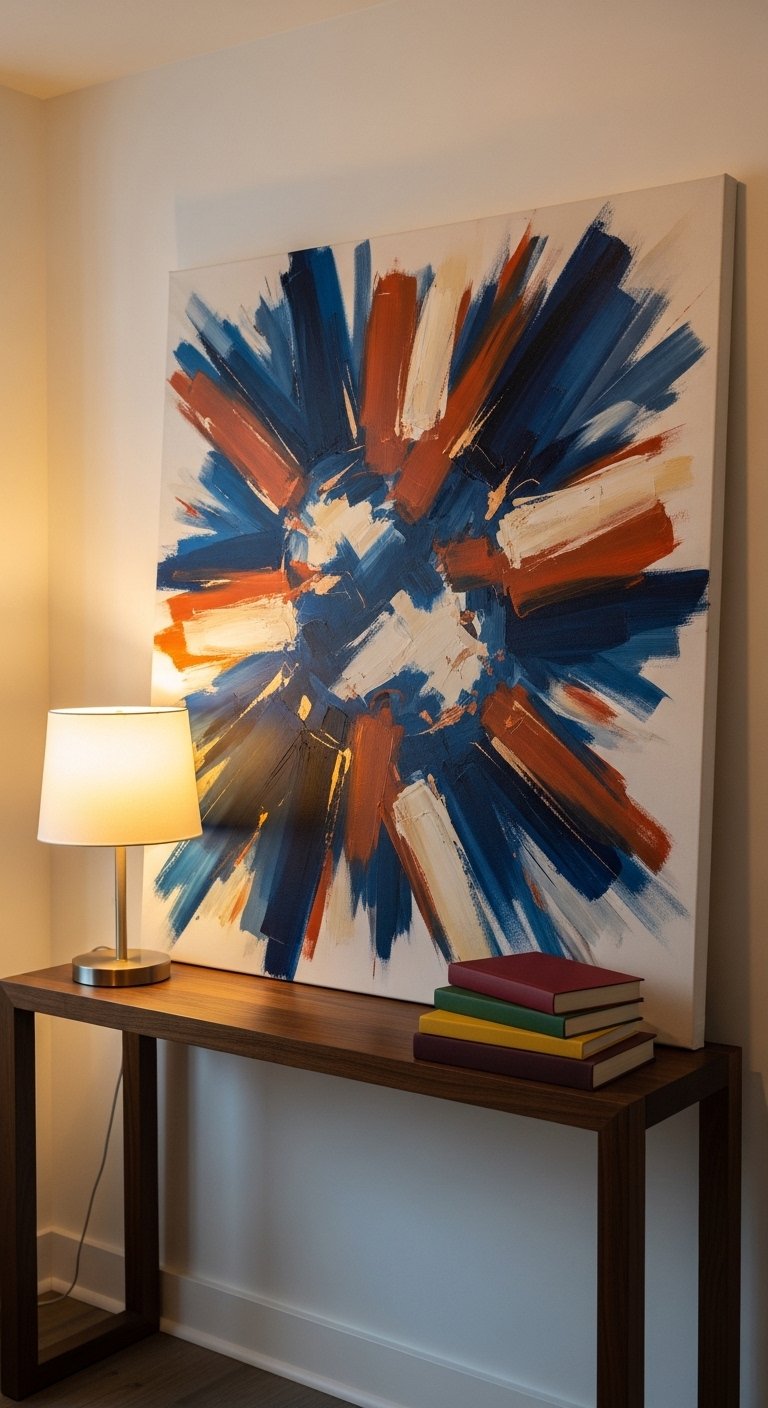
Leaning large pieces of art against the wall rather than hanging them is a styling approach that looks intentional, relaxed, and high-end at the same time. It’s a technique used constantly in interior design photography because it feels collected and casual rather than rigid and formal. A large canvas or framed print leaned against a wall behind a console table, on a bookshelf, or on the floor along a wall in a bedroom creates an effortlessly styled look. You can layer smaller frames in front of larger ones to add depth. This approach also makes it easy to change things around without leaving holes in the wall, which is ideal for renters. It works especially well with oversized pieces that would look awkward or heavy if hung on the wall in a small space.
13. Declutter Aggressively
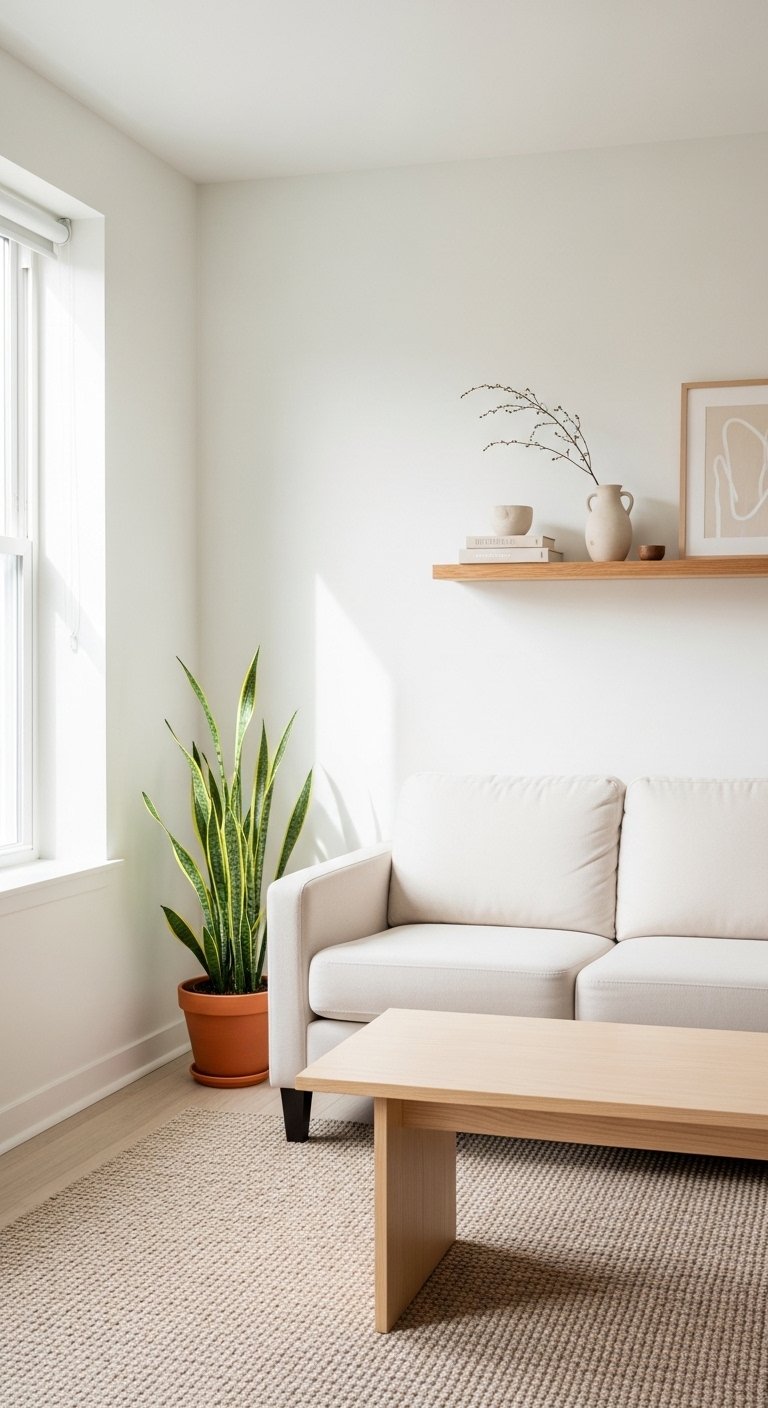
No styling trick or piece of furniture will make a small apartment look high-end if it’s cluttered. The single most effective thing you can do for the appearance of your space costs nothing: remove what doesn’t need to be there. High-end spaces, whether in magazines or real homes, always share a quality of edited-ness. Every object that remains has earned its place. Go through each surface and each shelf and ask honestly whether each item adds something visually or serves a daily function. What’s left should be organized and intentionally arranged. Hidden storage is your friend in a small apartment. Baskets with lids, ottomans with storage, furniture with drawers, all of these keep daily-use items out of sight. A room where the eye has space to rest and things aren’t competing for attention automatically reads as more refined.
14. Try Limewash Paint
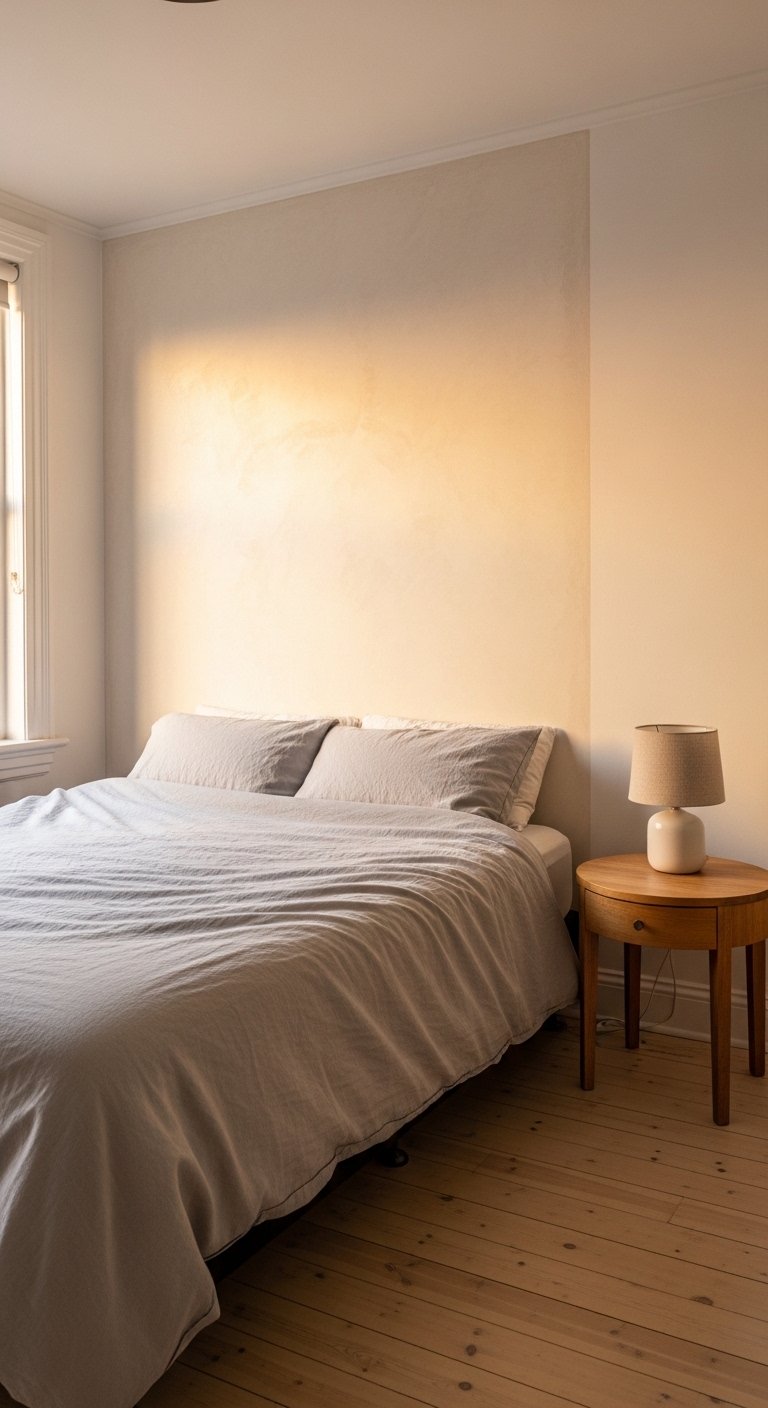
Limewash paint creates a textured, aged, slightly mottled finish on walls that looks genuinely expensive and artisanal. It’s far more interesting than flat latex paint and requires no special technique to apply. Products like Portola Paints Lime Wash or Roman Clay finishes are available at most major home improvement stores and go on with a standard brush or roller. The result is a wall that looks like it belongs in a Tuscan villa or a carefully designed boutique hotel. Warm whites, soft taupes, and dusty sage greens in this finish work especially well in small spaces because the texture adds depth without adding visual weight. If you’re renting, check whether you can repaint or whether your landlord might allow it given you’ll repaint back when you leave. The cost per room is very reasonable and the transformation is striking.
15. Use a Statement Light Fixture
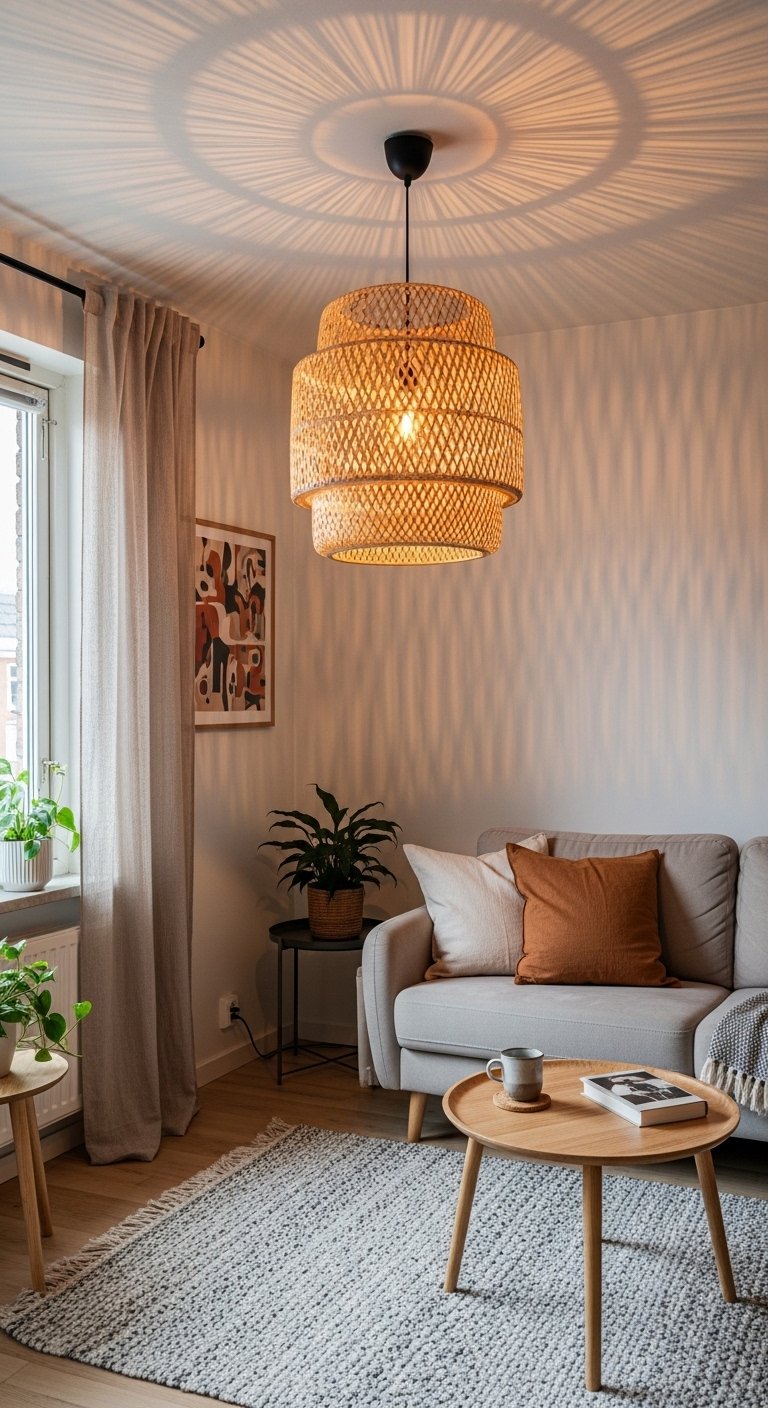
The light fixture in a room is often overlooked, but it sits right at eye level when you look up and shapes the entire tone of the space. A basic ceiling fan or a cheap drum shade fixture makes a room feel like a generic rental. Replacing it or covering it with a more intentional fixture, a rattan pendant, a sculptural globe light, or a simple cluster of pendant lights on a canopy, immediately makes the room feel designed rather than default. Many stylish pendant lights can be found for under fifty dollars, and installation is usually as simple as screwing in a bulb if you use a swag hook kit that plugs into an existing outlet. The fixture change doesn’t require an electrician for plug-in versions and takes less than thirty minutes. For a small apartment, one great fixture in the main living area or bedroom makes a noticeable difference.
16. Add Architectural Interest
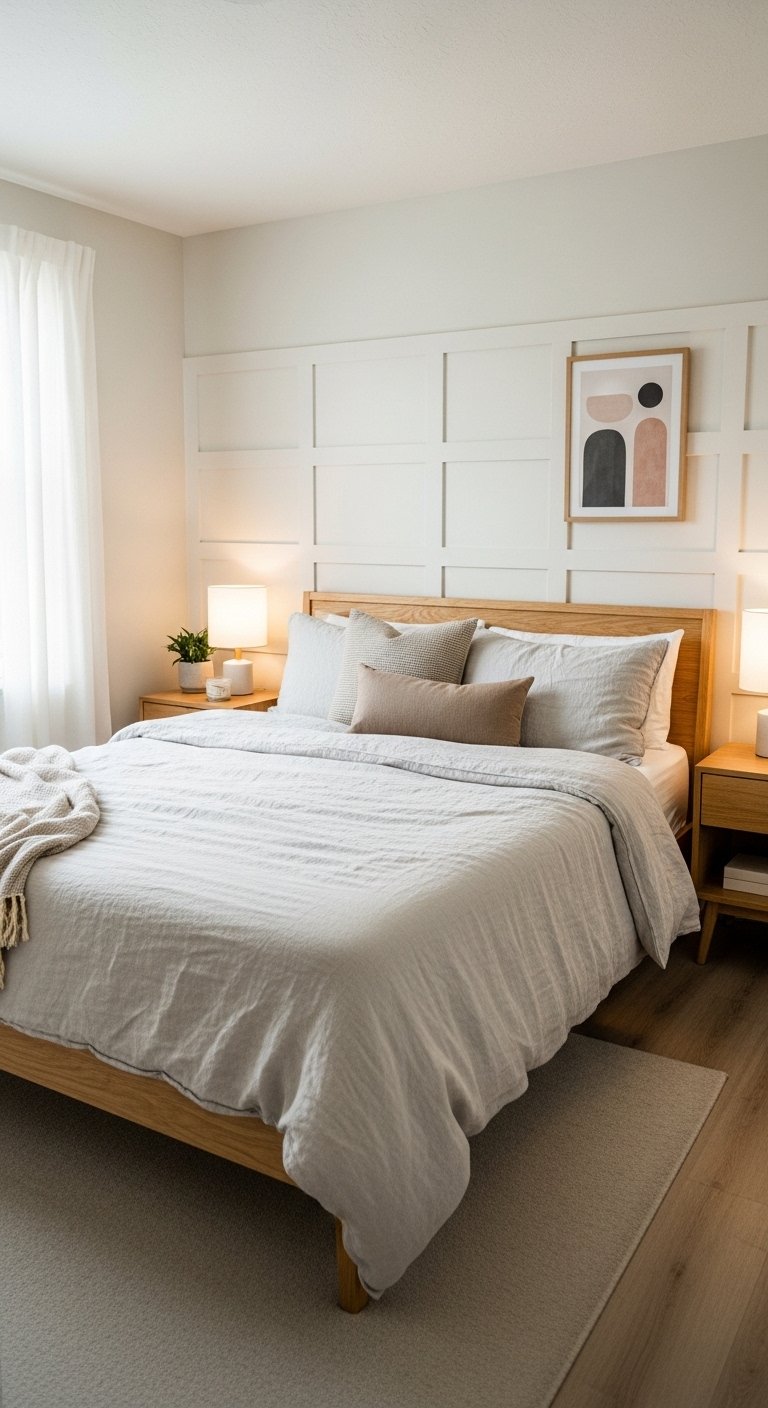
Rooms in most apartments are just four flat walls with nothing visually interesting happening on them. Adding even a simple architectural detail creates a sense that the space was thoughtfully designed. Peel-and-stick board and batten panels, wainscoting trim, or shiplap-style wall planks can be applied to one wall as an accent and removed without damage when you leave. These treatments add dimension, depth, and a texture that flat paint simply cannot provide. A board-and-batten accent wall in a bedroom behind the bed creates the effect of a built-in headboard wall that looks custom and curated. Paint it the same color as the room for a subtle, tonal effect or go a shade deeper for contrast. The materials are affordable at home improvement stores and the installation is manageable as a weekend DIY project.
17. Invest in Quality Bedding
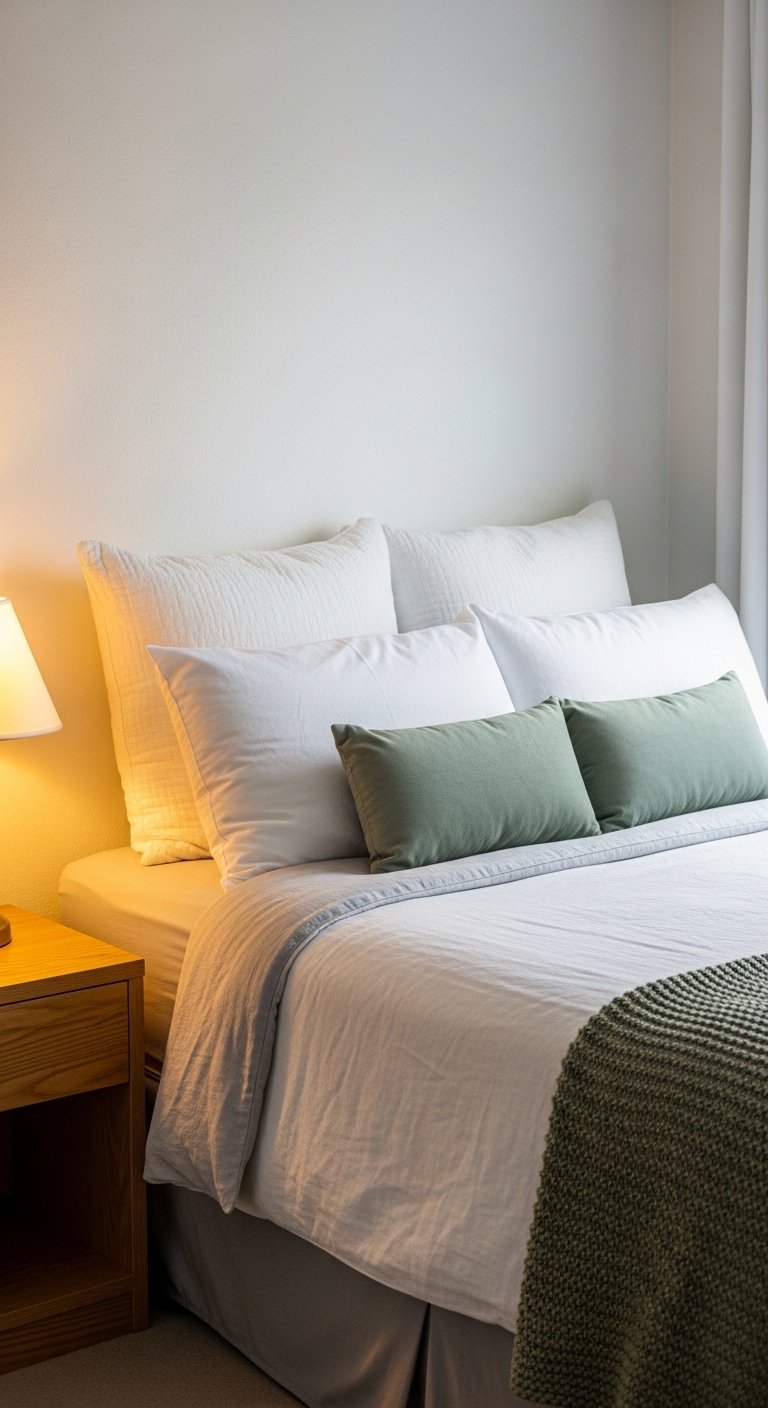
The bedroom is where you spend more time than any other room, and the bed is the largest visual element in it. Good bedding has a transformative effect on the look of a bedroom that goes far beyond comfort. Look for bedding with a high thread count cotton or a linen-blend in simple, solid neutral tones. White, warm ivory, soft gray, or muted sage green all photograph beautifully and look clean and elevated. Layer a duvet or comforter with a linen throw folded at the foot and a mix of cushions in slightly different textures. The hotel bed look, with neatly arranged pillows and a crisp, well-ironed duvet, signals care and quality to anyone who walks into the room. You don’t need designer brands. Many discount bedding brands offer beautiful options that wash well and hold their shape.
18. Float Furniture Off the Walls
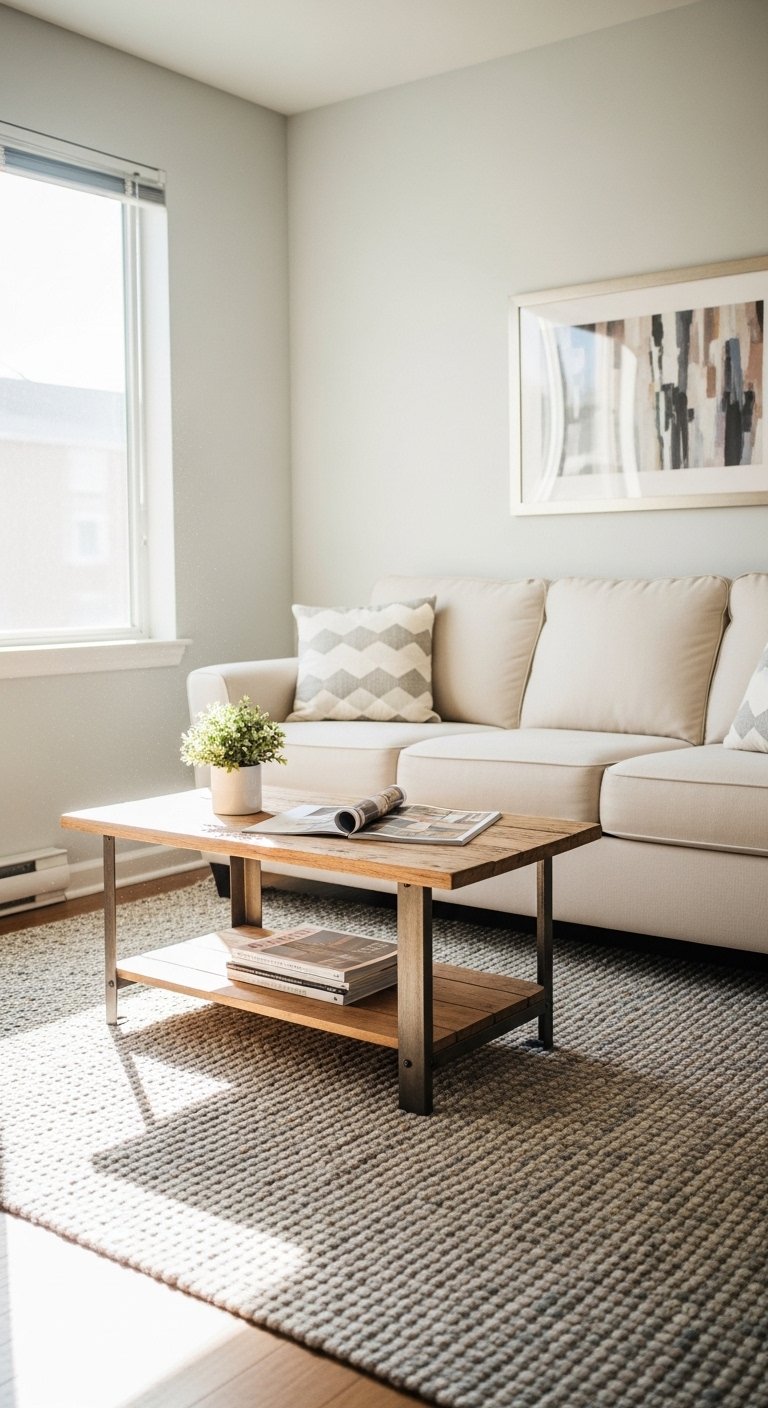
A common mistake in small apartments is pushing all the furniture against the walls in an attempt to create more central floor space. Counterintuitively, floating furniture a few inches away from the walls and grouping it to create conversation areas makes a room feel larger and more intentional. Pulling a sofa away from the wall by even six to twelve inches creates a sense of depth behind it. A rug placed under the front legs of the sofa and chairs anchors the grouping and defines the living zone. This kind of intentional furniture arrangement is something you see in well-designed spaces consistently. The room feels like it was planned rather than assembled. It also makes cleaning easier, since a broom or vacuum can actually reach the walls without having to move furniture every time.
19. Use Matching Storage
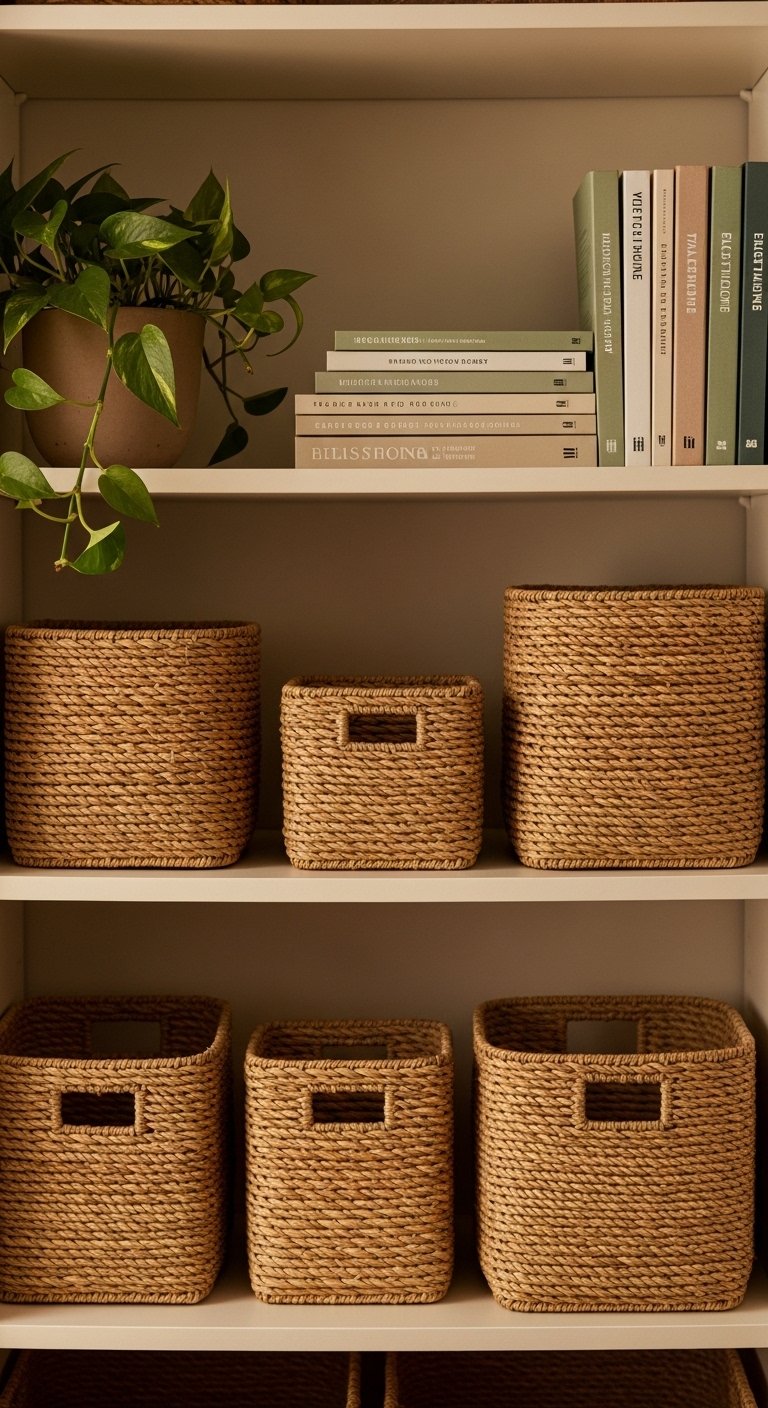
One of the visual hallmarks of a high-end space is uniformity in storage. When every basket, box, and bin on a shelf is a different color and material, the overall effect is chaotic even if everything is technically organized. Choosing a set of matching storage baskets or boxes in the same material and tone throughout a room immediately makes shelves and closets look more ordered and curated. Natural seagrass baskets, linen-covered boxes, or simple black wire bins all work well and are available affordably at most home stores. When books, folded textiles, or miscellaneous items live in matching containers, they stop looking like clutter and start looking like they belong. This is one of the smallest changes with one of the biggest visual payoffs, especially on open shelving or in living rooms with visible storage.
20. Add a Console Table
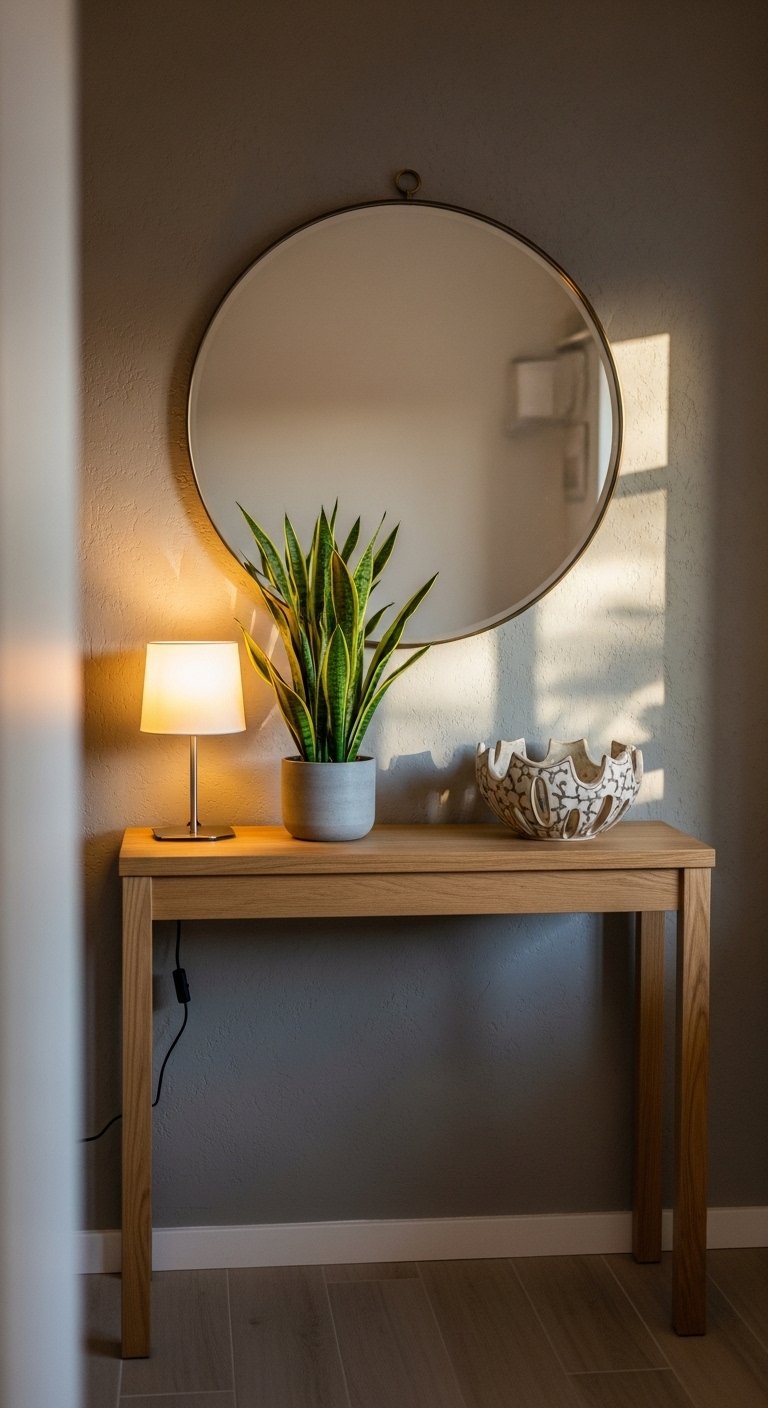
A console table in an entryway or against a wall in the living room serves multiple purposes. It gives you a surface for keys, mail, or everyday objects that would otherwise end up scattered on counters. It creates a dedicated zone for styling, a lamp, some books, a small plant, a decorative bowl, that makes the space feel like it was designed rather than just arranged. In a small apartment, a slim console table works best because it takes up minimal floor space while offering a lot of styling and storage potential. Pair it with a mirror above it and the combination becomes a design feature in its own right. Affordable console table options are available at IKEA, Target, and World Market, and they can be dressed up considerably with thoughtful styling on and around them.
21. Try Textured Throw Pillows
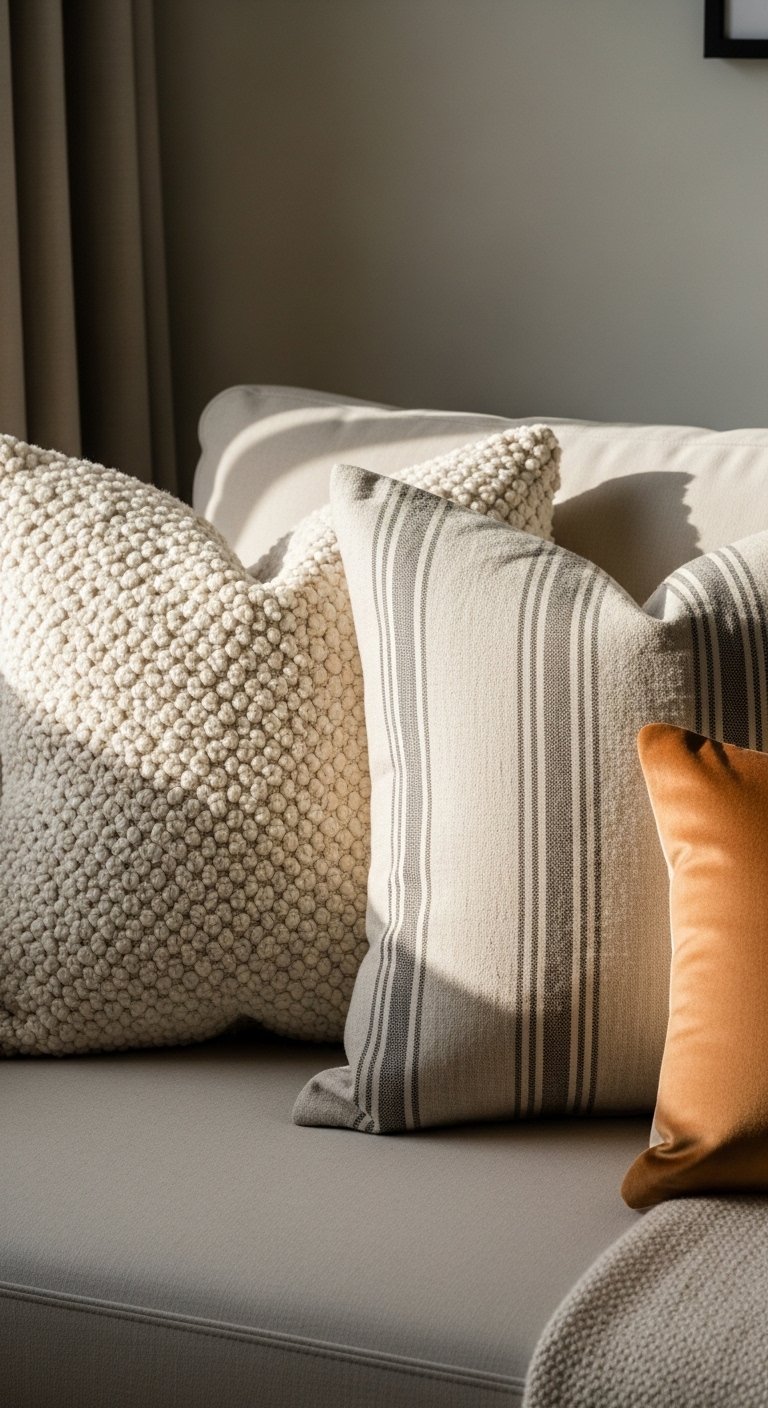
Cushions and throw pillows are the most affordable and easily changed element in a room, and they make more of an impact than most people realize. Swapping out basic polyester pillow covers for ones in velvet, boucle, linen, or embroidered cotton adds tactile richness that reads as expensive without being expensive at all. The key is choosing covers that work together in tone even if they vary in texture and pattern. A sofa with a mix of a solid velvet cushion, a subtle stripe linen cushion, and a textured woven cushion in the same color family looks far more styled than a matched set in a uniform fabric. Vary the sizes too, a large square pillow, a medium rectangular one, and a smaller accent. This kind of layering is exactly what stylists do on set and in showrooms to make sofas look inviting and rich.
22. Keep Counters Clear
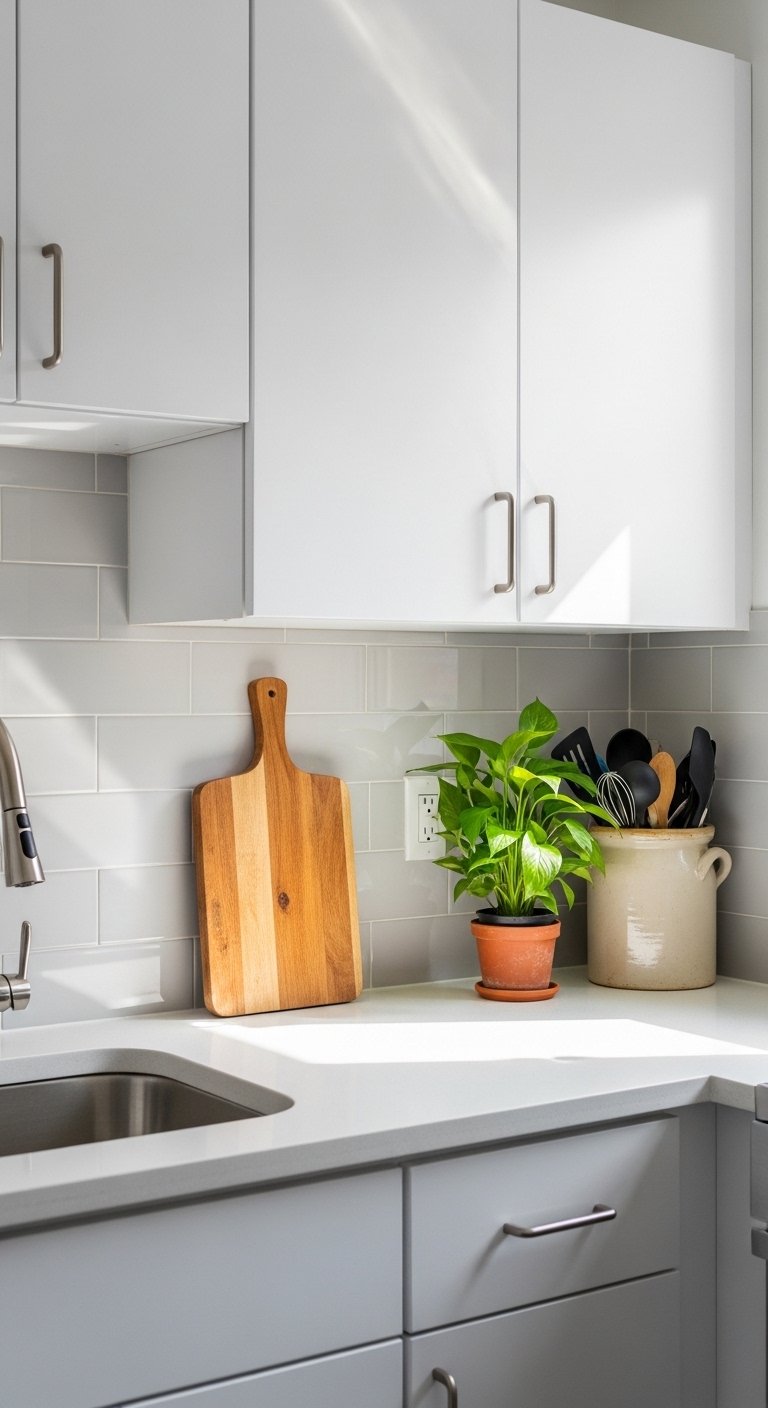
Clear kitchen counters are one of the most effective signals of a well-maintained, considered home. In small apartments where counters are often limited anyway, a cluttered counter makes the kitchen feel cramped and stressful. The goal is to keep only what you use every single day on the counter, coffee maker, toaster if used daily, perhaps a knife block, and store everything else. A beautiful countertop with one or two well-styled items, a small plant, a wooden cutting board leaned against the backsplash, a ceramic crock with cooking utensils, looks intentional and clean in a way that a cluttered counter never will. This requires discipline and sometimes creative storage solutions, but the payoff in how your kitchen looks and feels every day is worth the effort.
23. Frame Your Windows
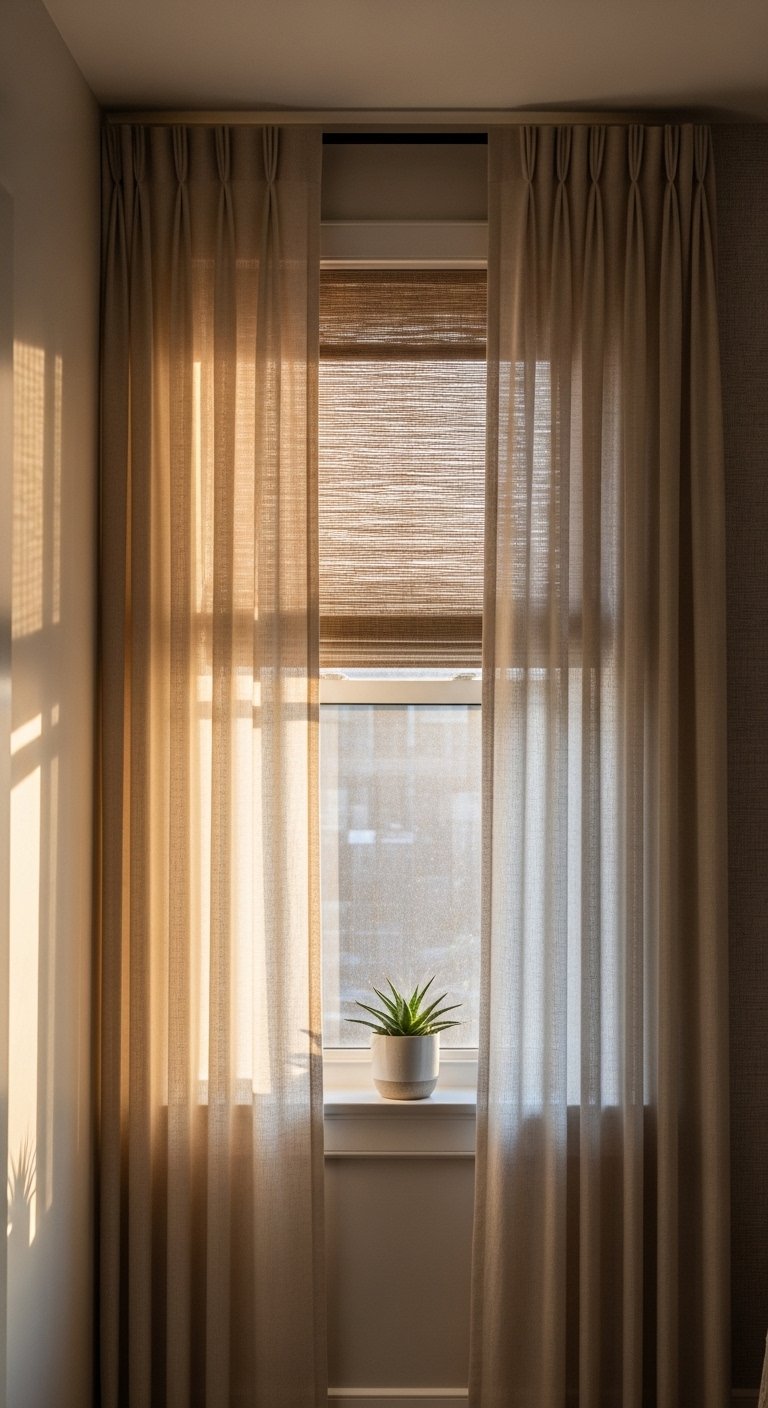
Most apartment windows are completely bare or have a basic, cheap blind installed. Adding a simple but attractive window treatment frames the window and gives the room a finished quality it otherwise lacks. Roman shades in linen or cotton, wooden blinds, or simple woven shades all look elevated compared to a standard white plastic blind. If budget is a concern, even a tension rod with a sheer panel on either side of an existing blind costs very little and changes how the window reads in the room. When windows are framed well, they look like a design feature rather than just a functional opening. Layering a sheer curtain with a blackout panel behind it gives you flexibility for light control while looking polished from both inside and outside the apartment.
24. Scent the Space
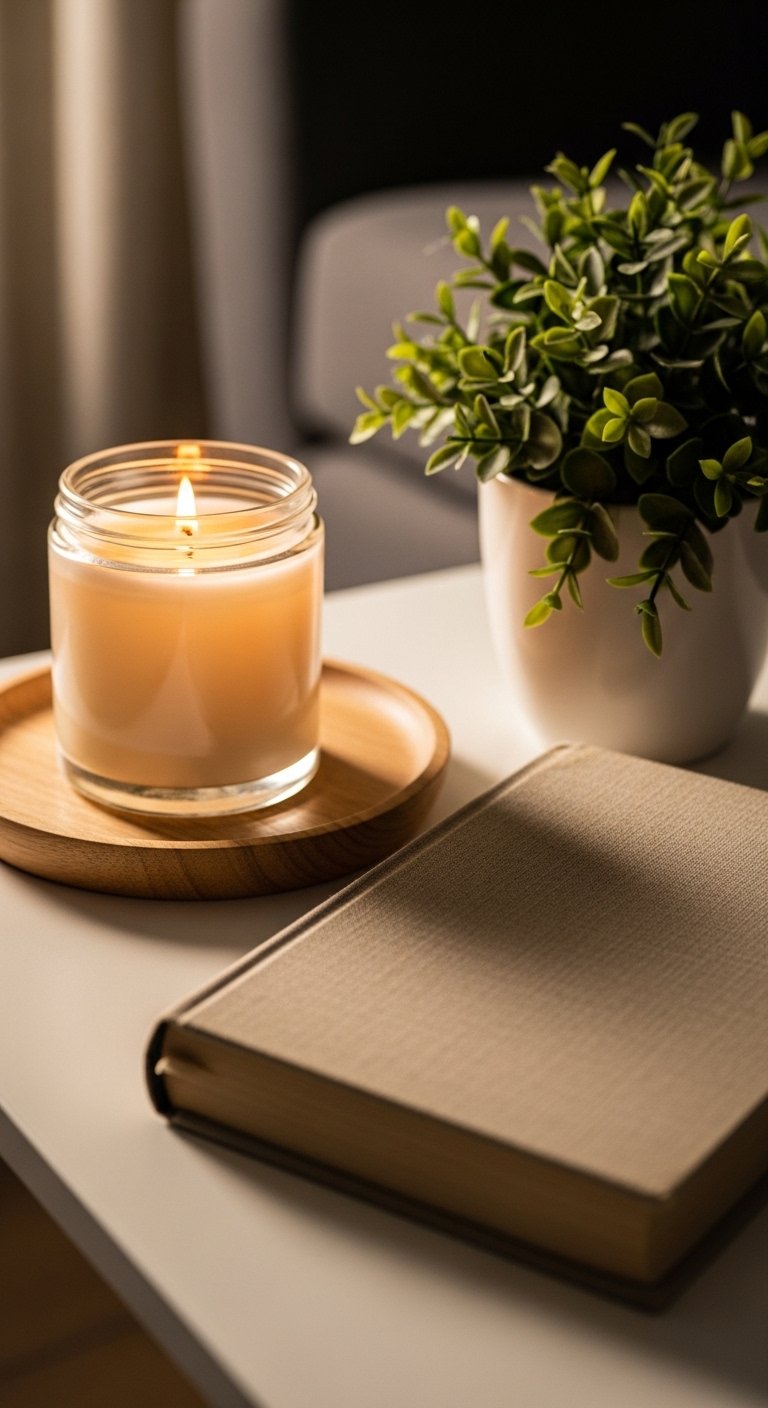
The way a home smells is something visitors register almost immediately, even if they can’t consciously identify it. A space that smells clean and pleasant feels more curated and welcoming than one that doesn’t. A quality candle or diffuser with a simple, clean scent, fresh linen, sandalwood, eucalyptus, or warm vanilla is an affordable way to add a sensory dimension to your apartment that photographs can’t capture, but guests always notice. Keep scents subtle and consistent throughout the space rather than layering competing fragrances in different rooms. A single, well-chosen scent that becomes associated with your home is part of its identity and contributes to the overall impression of thoughtfulness and care. This is one of the most underrated and low-cost ways to make any apartment feel more luxurious.
25. Edit and Rearrange Seasonally
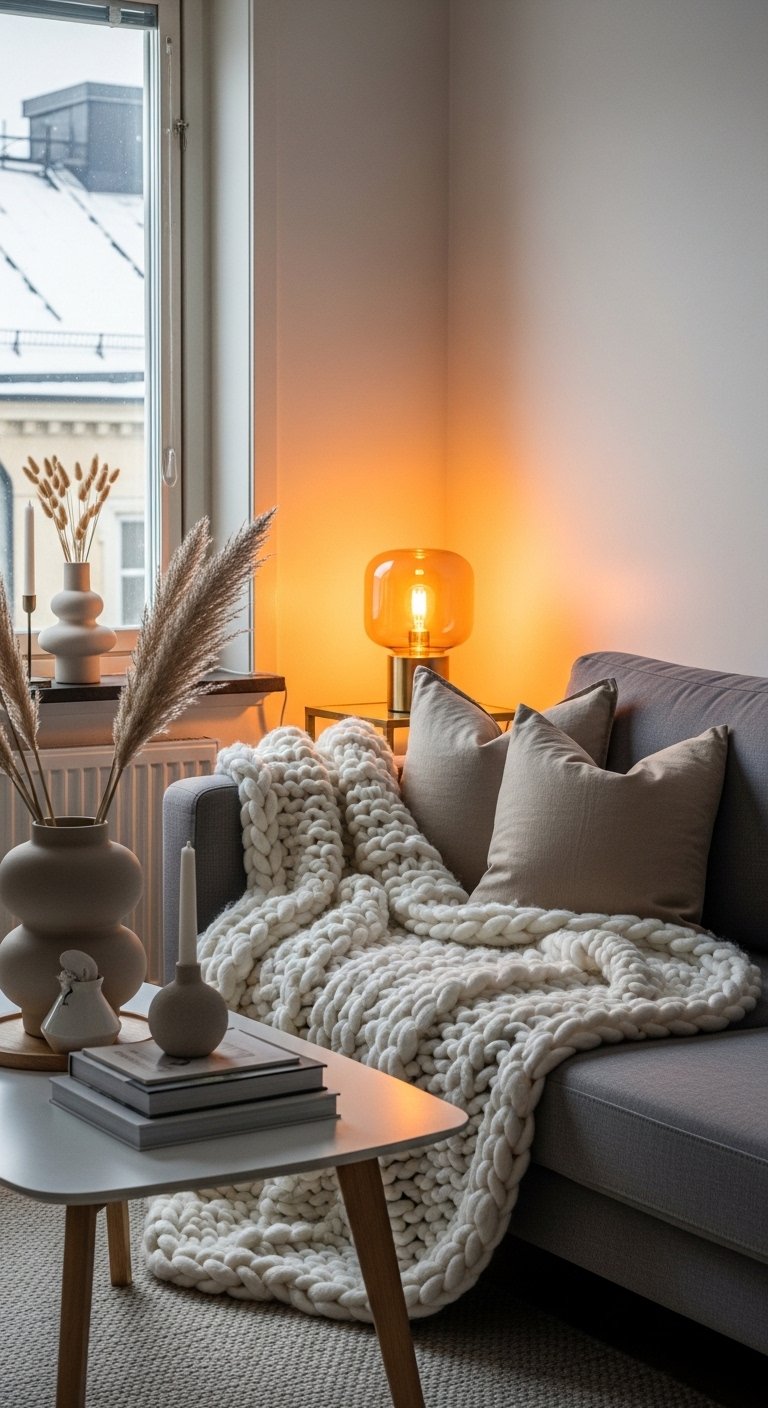
The apartments that consistently look high-end aren’t necessarily the ones with the most expensive furniture. They’re the ones that get regular attention and editing. Taking time a few times a year to rearrange furniture, swap out textiles for ones that suit the season, remove things that no longer work, and add one or two new, carefully chosen pieces keeps a small space from feeling stale or accumulated. This seasonal refresh doesn’t require spending money. Moving a plant from one room to another, swapping a summer linen throw for a heavier knit one in winter, rotating art from storage to the walls, these small acts of curation maintain the feeling that the space is looked after and intentional. A room that evolves slightly with the seasons always feels more alive and considered than one that never changes.
Conclusion
Making a small apartment look high-end is less about spending money and more about making deliberate choices. Most of these ideas cost very little or nothing at all. The common thread across all of them is intentionality: choosing what stays, where things go, and how light, texture, and color work together. Start with the ideas that feel most doable in your specific space and build from there. Small apartments styled with care are often more charming and comfortable than larger ones with no thought put into them.