17 Creative Easter Table Decoration Ideas Your Guests Will Love
There is something really satisfying about sitting down at a table that someone put real thought into. Easter dinner is one of those meals where the table itself feels like part of the celebration — the colors, the flowers, the little details that guests notice and comment on. But setting a beautiful table doesn’t have to mean spending hours on it or buying a bunch of new things. Most of these easter table decoration ideas for home use items you likely already own or can put together quickly. Some take ten minutes. Some can be set up the day before. All of them will make your guests feel like you went the extra mile, even when you really didn’t.
1. Layered Place Settings
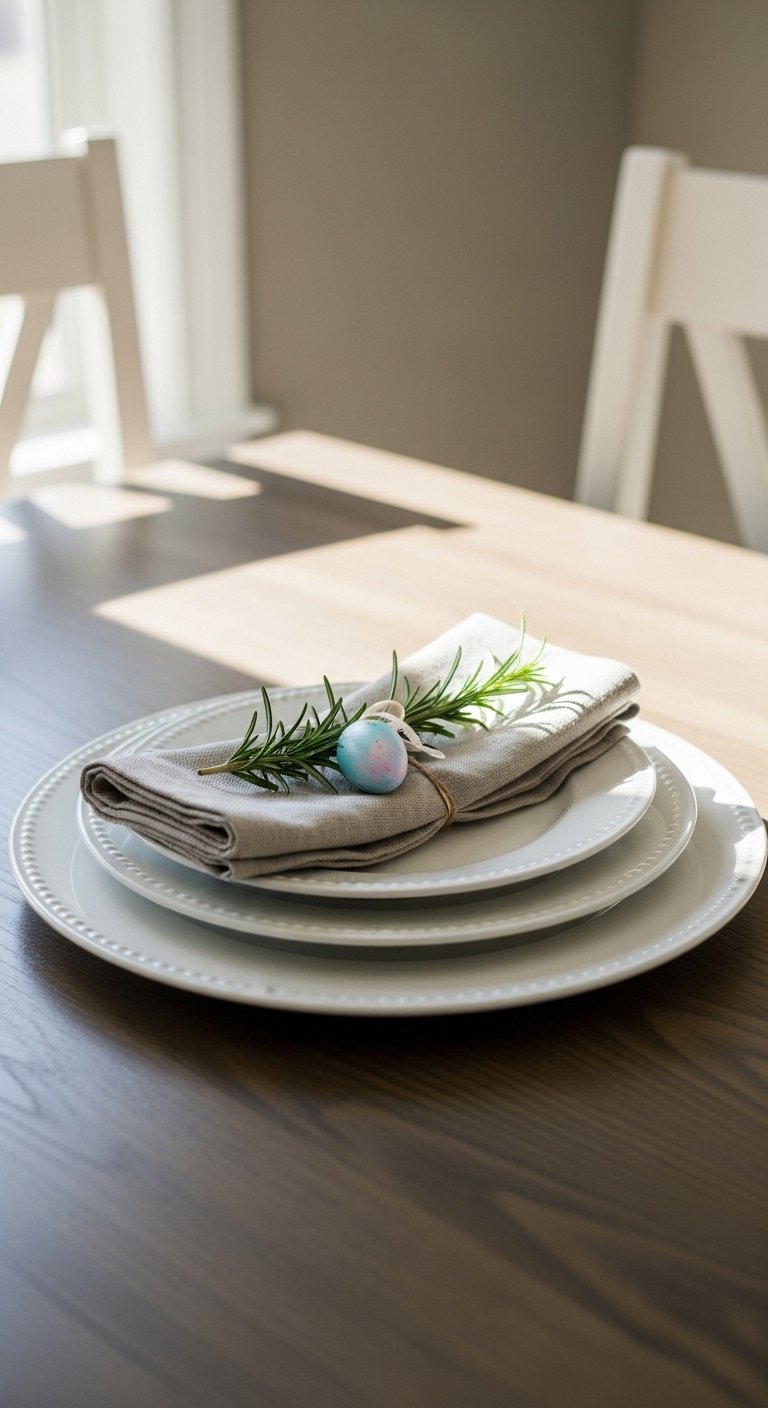
One of the easiest ways to make a table look polished is to layer the place settings rather than keeping them flat. Start with a simple charger plate in white, gold, or natural wood tone. Stack a dinner plate on top, then a salad plate or small bowl on top of that. Add a cloth napkin folded into a simple shape and placed either on top of the stack or to the side with utensils. The layered look adds visual depth and a sense of occasion without requiring any new purchases if you already have different sized plates at home. Finish each place setting with a small decorative touch — a sprig of fresh rosemary, a single flower, or a tiny chocolate egg set on top of the napkin. This one detail tells your guests that you thought about them, and it makes the table feel like it belongs in a magazine.
2. Floral Runner

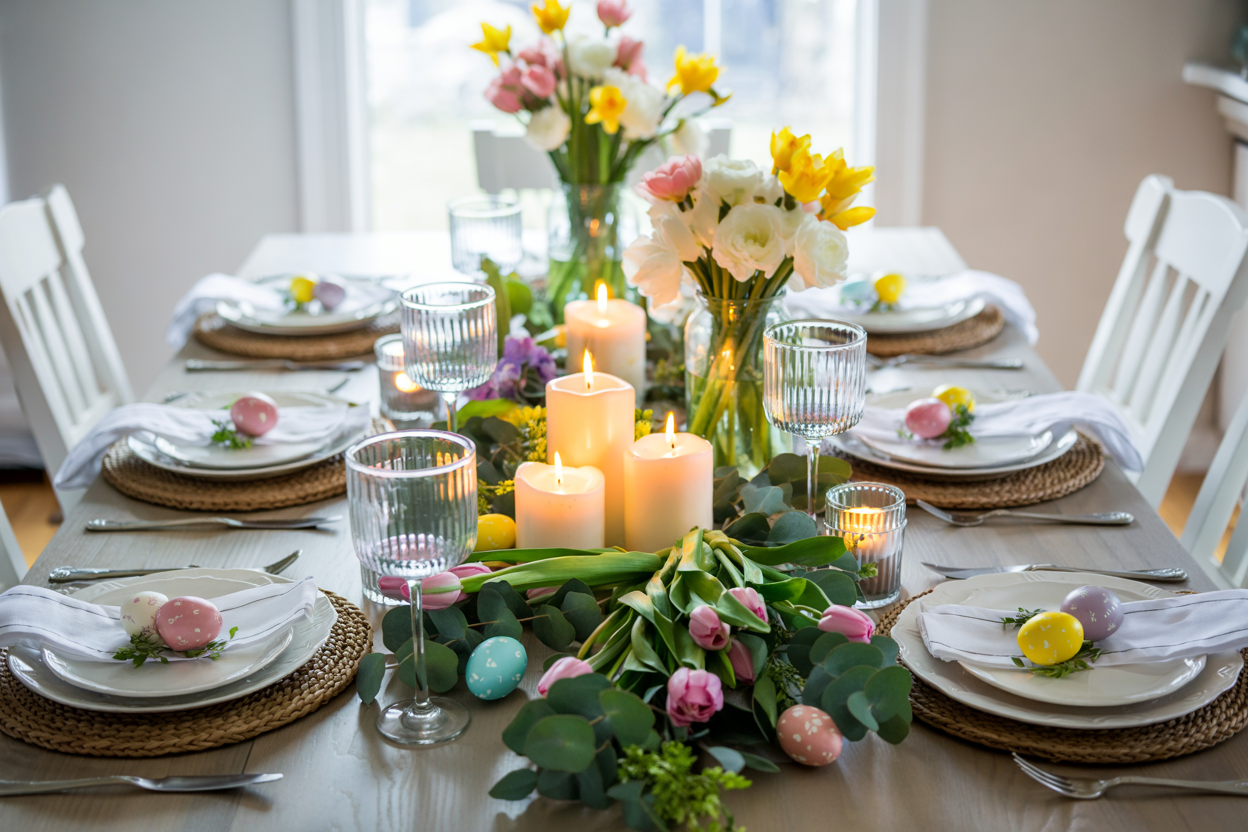
Instead of a traditional table runner made from fabric, try creating a loose, natural runner made entirely from flowers and greenery. Lay a strip of faux or fresh greenery — eucalyptus, fern fronds, or ivy — down the center of the table. Then tuck in cut flower heads at intervals: roses, ranunculus, tulips, or whatever you can find that’s in season. You don’t need stems — just the heads nestled into the greenery. Add a few pastel Easter eggs scattered between the flowers to tie in the holiday theme. The whole look is lush and flowing without being formal. Fresh flowers will last for several hours on the table before wilting, which is usually more than enough time for Easter dinner. If you prefer something that can be set up the day before, faux greenery and silk flowers work just as well and look nearly identical in photographs.
3. Egg Place Cards

Place cards that double as a small take-home gift are always a hit with guests. For Easter, use small hollow chocolate eggs or real hard-boiled eggs as place cards. For chocolate eggs, tie a small card with the guest’s name written on it to the egg using a thin pastel ribbon. For real eggs, use a fine-tip marker to write each guest’s name directly on the egg in neat lettering. Set each egg on a small egg cup or nestle it inside a tiny nest made from natural raffia. Place it on top of the folded napkin at each seat. Guests appreciate the personal touch, and kids especially love finding an egg with their name on it. This is a small detail that costs almost nothing but adds a lot of warmth to the table.
4. Mason Jar Flower Vases

A cluster of small mason jars filled with flowers is one of the most charming and budget-friendly table centerpiece options for Easter. Use jars in different sizes — the standard pint, the wide-mouth quart, and the small jelly jar all look great together. Fill each one with a different type of spring flower: one with yellow daffodils, one with pink tulips, one with white ranunculus. Group them together in the center of the table in a loose cluster rather than a straight line. Wrap the outside of each jar with a bit of twine or a thin ribbon in a pastel color if you want to dress them up slightly. This centerpiece is inexpensive, easy to put together, and the imperfect, mismatched look of the different jars gives the table a relaxed, welcoming feel that works really well for a family Easter dinner.
5. Napkin Ring Alternatives

Napkin rings are a small detail that can make a big difference in how a table looks. Instead of standard metal or plastic rings, try some creative alternatives for Easter. Wrap each napkin with a short length of twine and tuck a small wildflower or sprig of greenery under it. Or fold a strip of cardstock into a ring, write a guest’s name on the front, and use it as both a napkin ring and a place card. Another option is to use a short length of wide pastel ribbon tied into a simple bow around each napkin. All three options are inexpensive and can be customized to match the rest of your table’s color scheme. The napkin ring is often the last thing people think about when decorating a table, but when it’s done well, guests definitely notice.
6. Candle Centerpiece with Eggs

Candles always make a dining table feel more special, and they work especially well for Easter dinner. For a simple but effective centerpiece, group three pillar candles of different heights together on a wooden board or a shallow tray. Surround the base of each candle with a handful of small pastel Easter eggs, a bit of faux moss, and a few flower heads. Use candles in white or cream rather than strong colors so they don’t compete with the pastel eggs and flowers. Light them just before guests sit down so the table is glowing when everyone comes to the table. If you’re concerned about open flames near children, battery-operated LED pillar candles look nearly identical to real ones at the table and are completely safe. The warm light they give off makes the whole table feel cozy and festive.
7. Spring Branch Centerpiece

Tall branches in a wide-mouth vase create a dramatic centerpiece that draws the eye without crowding the table. For Easter, use branches with natural buds just opening, or buy pre-flowering branches from a florist. Place them in a tall clear vase with a handful of marbles or river stones at the bottom to hold them upright. Hang small pastel paper eggs from the branches using thin ribbon in three or four different lengths so the eggs hang at different heights. You can cut simple egg shapes from cardstock, decorate them with watercolor or colored pencil, and punch a small hole at the top for the ribbon. The whole centerpiece has an airy, open quality that lets guests see across the table easily, which makes conversation easier — something that’s often overlooked when planning centerpieces for a seated dinner.
8. Bread Basket Display

If you’re serving bread or rolls with Easter dinner, turn the bread basket itself into a decorative element on the table. Use a wicker or rattan basket lined with a pastel cloth napkin or a linen tea towel. Arrange the rolls in the basket before guests sit down, and tuck a small sprig of fresh rosemary or thyme into the corner of the lining for a fragrant finishing touch. Place the basket in the center of the table or near one end where it’s easy for everyone to reach. The combination of the natural basket, the soft linen liner, and the fresh herbs makes even a simple bread basket look like it was styled. This is the kind of detail that takes two extra minutes but contributes a lot to the overall feel of the table.
9. Color-Coordinated Table Linens

One of the most effective ways to pull an Easter table together is to commit to a simple color palette for all of your linens. Choose two or three colors that work well together — for example, white tablecloth with pale yellow napkins and a mint green table runner, or a natural linen tablecloth with blush pink napkins. When all the linens share a coordinated color story, even a minimal centerpiece looks intentional and well-designed. You don’t need to buy matching sets — mixing different textures in the same color family actually looks more interesting than a perfectly matched set. Layer a linen tablecloth with cotton napkins and a burlap runner for a farmhouse-style look, or keep everything in fine cotton for something a bit more elegant. The linens set the tone for the whole table, so it’s worth thinking about before you build anything else.
10. DIY Floral Napkin Fold

A napkin folded into a flower shape is a small, show-stopping detail that impresses guests without requiring any special skills. The tulip fold is one of the easiest: fold a square cloth napkin in half diagonally to make a triangle, then fold the two bottom corners up to the top point. Fold the bottom edge up about a third of the way, then tuck the napkin into a tall glass or ring it with a napkin band to hold its shape. The pointed top looks like a tulip in bloom. Another simple option is the fan fold: accordion-fold the napkin lengthwise into even pleats, then pinch the bottom half together and fan the top half open like a flower. Place it flat on the plate. Both folds work with cloth napkins and take less than a minute per setting once you’ve practiced once or twice.
11. Eggshell Bud Vases

A row of eggshell bud vases along the center of the table is one of those ideas that seems fussy but is actually quite easy to pull off. Crack the tops off raw eggs carefully, clean out the shells, and fill each one partway with water. Then tuck a single small flower stem into each shell — hyacinth sprigs, a small violet, or a single grape hyacinth all fit perfectly. Set each eggshell upright in a small egg cup or nestle it in a bed of natural raffia in a shallow tray. Line several of them down the center of the table with a few small pastel eggs placed between them. The scale is small and sweet, which makes it especially nice for an intimate Easter brunch or a table for children. Replace the water every day to keep the flowers fresh if you set it up the day before the meal.
12. Personalized Menu Cards

Printed or handwritten menu cards at each place setting give the table a formal, thoughtful touch that guests genuinely appreciate. For Easter dinner, write out the meal — appetizers, main dish, sides, and dessert — on a small card and place it on or beside each plate. You can print simple cards at home using a word processor and pastel cardstock, or write them by hand with a fine-tip marker or calligraphy pen. Decorate the corner of each card with a small hand-drawn egg or flower if you want something a little more personal. Even a simple typed menu card elevates the experience of sitting down to a holiday meal. It signals that the meal was planned and considered, which is a nice thing to communicate to your guests before the food even arrives.
13. Tiered Stand Centerpiece

A tiered serving stand — the kind usually used for desserts or afternoon tea — makes a surprisingly beautiful Easter centerpiece when filled with non-food items. Fill the tiers with a mix of small decorative items: speckled eggs on the bottom tier, small potted succulents or flower heads on the middle tier, and a single candle or a tiny bunny figurine on the top tier. The height of the tiered stand draws the eye upward and gives the table a focal point. Because it’s elevated, it doesn’t block guests’ sightlines across the table the way a wide, flat centerpiece would. This works especially well on a round table where a tall centerpiece is visible from every seat. After Easter, the stand can be used year-round for serving or as a kitchen counter organizer.
14. Lemon and Greenery Table Accent

For an Easter table that leans more toward a spring garden feel than a traditional pastel setup, consider using lemons, limes, or other small citrus fruits as part of the decor. Scatter them loosely down the center of the table alongside sprigs of rosemary, mint, and small white or yellow flowers. The bright yellow of the lemons reads as spring without being overtly Easter-specific, and the herbs add a fresh fragrance that makes the whole dining room smell wonderful. This look works especially well for an outdoor Easter brunch or a more casual family lunch. It’s also incredibly easy — just buy a bag of lemons and trim a few herbs from your garden or a potted herb plant on your windowsill. The result looks lush and intentional without requiring any floral arranging skills at all.
15. Children’s Easter Activity Table

If you’re hosting Easter dinner with kids in attendance, consider setting up a small side table or section of the main table specifically for them, with a few activities built right into the place settings. Cover that section of the table with a simple paper tablecloth that kids can draw on. Set a small cup of crayons at each seat. Place a small bag of sidewalk chalk or a mini coloring book at each child’s spot as a party favor. Set a small basket of Easter candy or a decorated egg next to each plate. Kids who have something to do while adults are talking are much happier at the table, and parents appreciate not having to entertain them throughout the whole meal. This kind of setup takes about fifteen minutes and makes the dinner noticeably more relaxed for everyone.
16. Floating Flower Bowl

A wide, shallow bowl filled with water and floating flower heads makes a beautiful and very simple Easter centerpiece that works for both formal dinner tables and casual brunch spreads. Use a large ceramic bowl or a clear glass one so guests can see into it. Fill it halfway with water and add a handful of floating candles in small tea light holders designed for water. Then scatter fresh flower heads on the surface — roses, gardenias, camellias, or any full flower with a flat base works well. Add a few floating petals in a complementary color for more coverage. The finished bowl looks tranquil, elegant, and like it took a lot more effort than it did. Place it in the center of the table and light the candles just before guests sit down. The reflection of the candlelight on the water is especially pretty once it gets dark outside.
17. Spring Herb Pot Favors

A small potted herb placed at each guest’s seat serves double duty — it’s both a table decoration and a take-home favor. Choose herbs that are in season and easy to grow, like basil, mint, thyme, or rosemary. Buy small starter plants from a garden center and repot them into simple terracotta pots if you want a more polished look. Tie a short length of twine around each pot and attach a small tag with the guest’s name and a brief note about how to care for the herb at home. Arrange the pots down the center of the table in a loose row, alternating herbs with a few small decorative eggs or flowers between them. The green color of the herbs against the neutral table adds freshness without being overwhelming. Guests love taking something living home with them, and it’s a practical and thoughtful alternative to candy or other traditional party favors.
Final Thoughts
A beautiful Easter table doesn’t require a florist, a big budget, or a lot of prep time. Most of these ideas can be pulled together in an afternoon with things you already have or can pick up at a grocery store. The goal is simply to make your guests feel welcome and to give the meal a sense of occasion. Start with one or two ideas that feel manageable and build from there. Your table will look wonderful, and more importantly, everyone sitting around it will feel glad to be there.