22 Kitchen Storage Ideas That Solve the Most Frustrating Problems
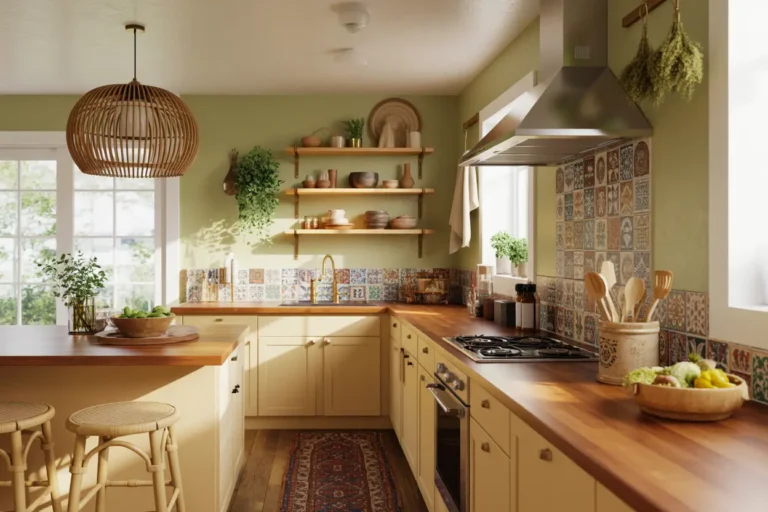
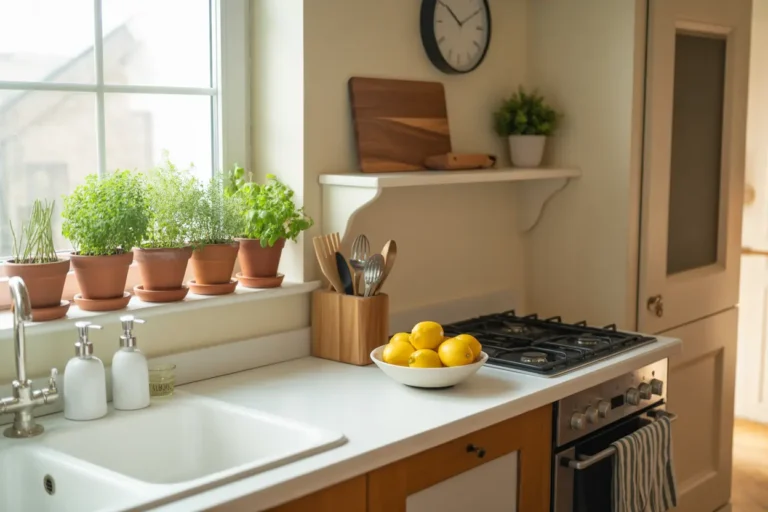
Most kitchen storage problems are not actually about a lack of space. They are about a lack of system. The same kitchen that feels like it has no room for anything can hold significantly more when the space it already has is used properly. The area above the cabinets goes unused. The back of cabinet doors holds nothing. The inside of drawers is a single undivided layer of chaos. The counter collects things that would be better stored elsewhere. Every one of these frustrations has a specific and often inexpensive solution. These 22 ideas address the most common kitchen storage problems directly and give each category of kitchen item its own logical, accessible home.
1. Deep Drawer Inserts
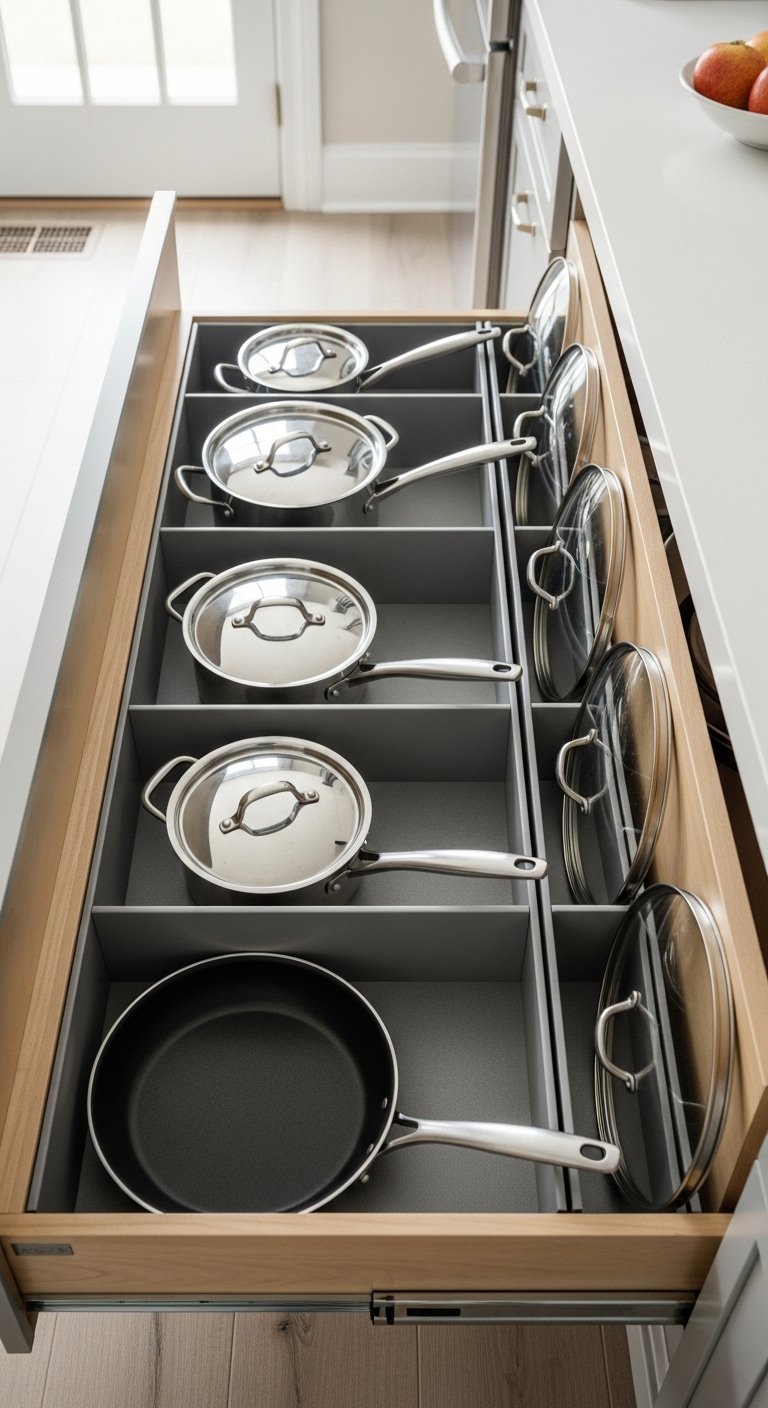
Kitchen base cabinets with wide, deep drawers are among the most useful storage spaces in the kitchen but are almost always organized poorly. Items stack on top of each other, smaller things get buried under larger ones, and reaching anything at the back requires moving everything in front. A set of custom or adjustable deep drawer inserts, divided into sections by material or category, transforms these drawers from a frustration into the most functional storage in the kitchen. Pots and pans lie flat in individual sections with their lids beside them. Spice jars stand upright in labeled rows at the front of a drawer. Cooking utensils lie in parallel grooves, each in its own slot, readable at a glance. The insert itself holds everything in position when the drawer opens and closes so nothing migrates to the back or piles up unevenly. Properly organized deep drawers reduce kitchen prep time noticeably because every tool is found immediately.
2. Pull-Out Cabinet Organizers
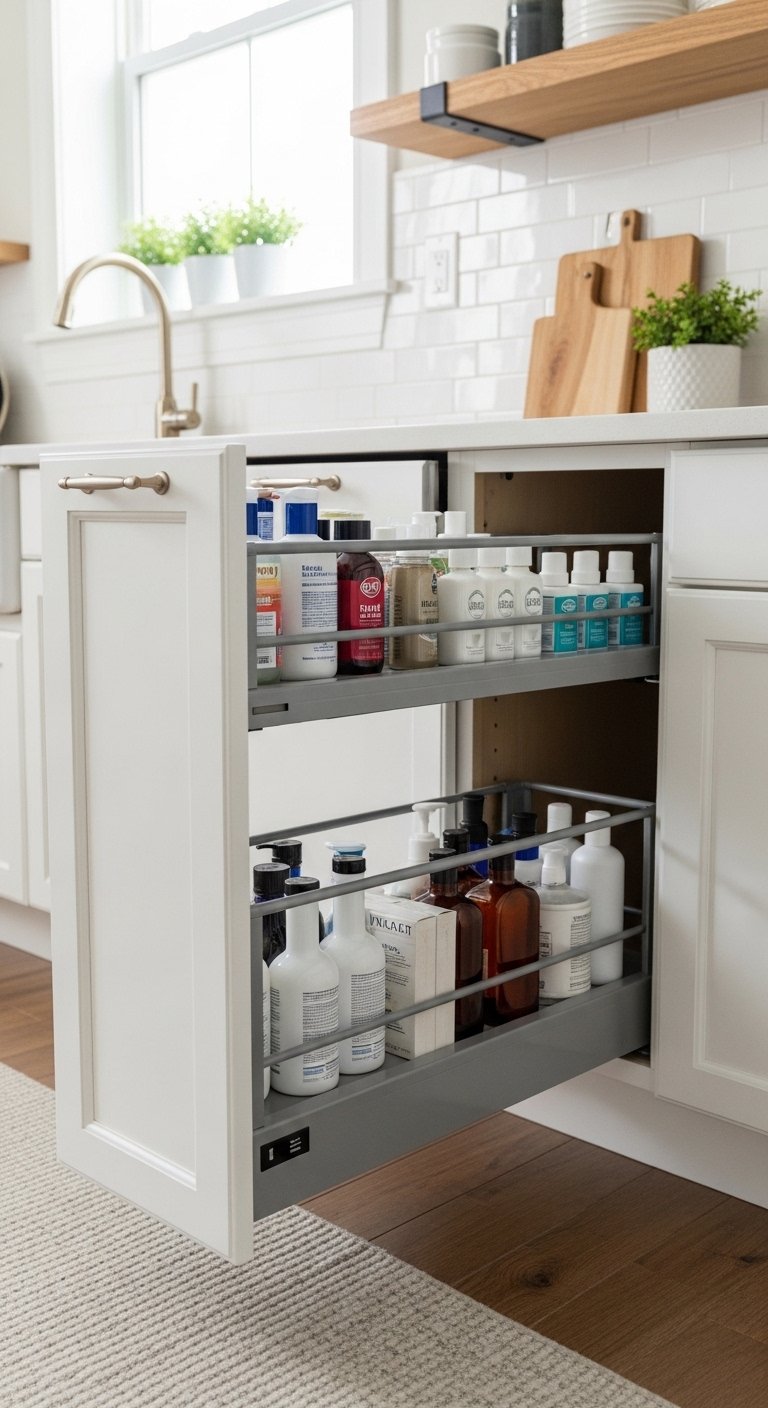
Standard kitchen base cabinets have a single open interior where items are pushed in from the front and the back half becomes an inaccessible dead zone. A pull-out drawer organizer installed inside the cabinet converts the full depth of the cabinet into usable, accessible space by bringing everything to the front when the organizer is extended. Items stored at the back of the pull-out are just as easy to reach as items at the front since the entire interior slides toward you. Install two pull-outs in a single cabinet, one above the other, and the cabinet effectively holds twice as many items as it did before while remaining fully navigable. Pull-out organizers are available in standard cabinet widths from kitchen organization retailers and most install on simple runner hardware without requiring professional installation. This is one of the most transformative kitchen storage upgrades available for the cost.
3. Vertical Lid Storage
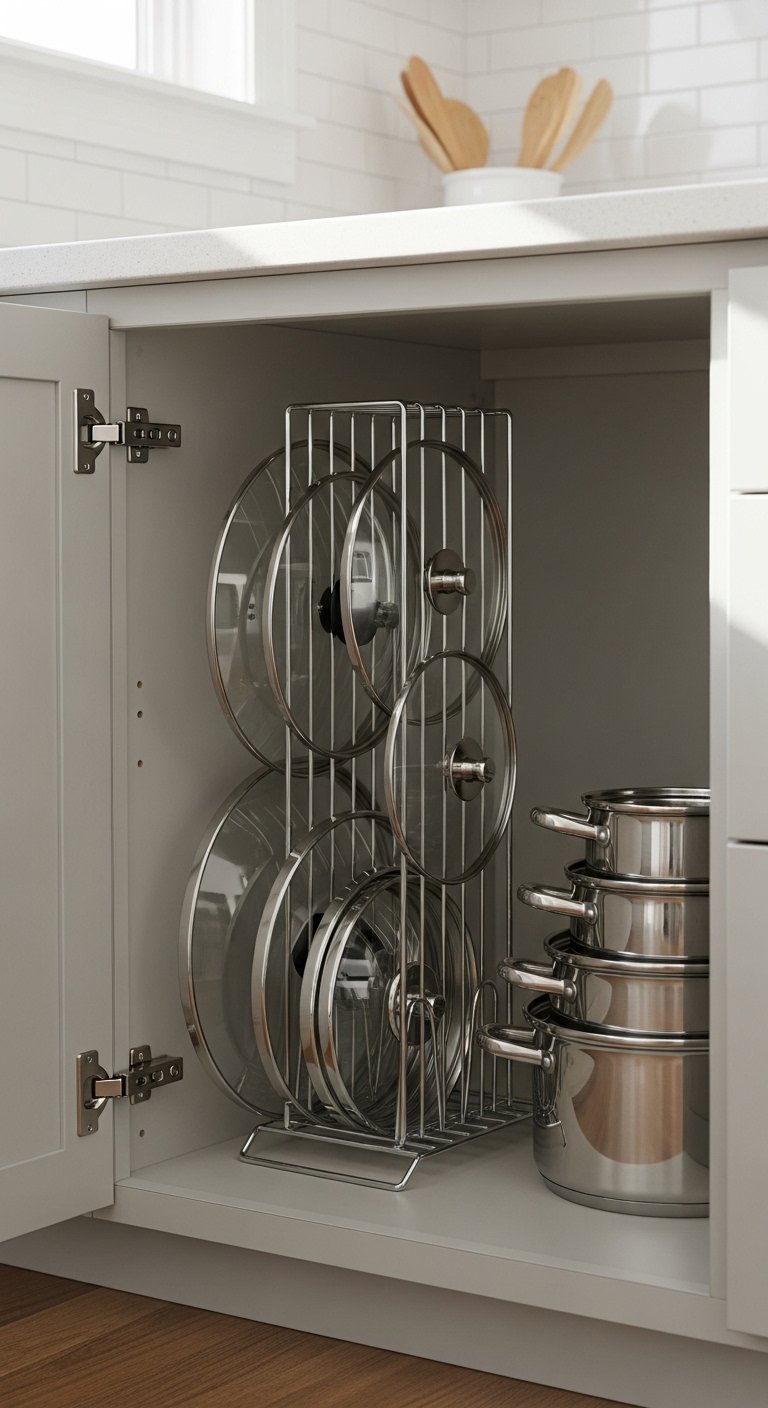
Pot lids are one of the most universally frustrating kitchen storage problems. They do not stack cleanly, they fall over when stood upright without support, and they take up a disproportionate amount of cabinet space relative to their actual volume. A vertical lid organizer inside a base cabinet, whether a purchased wire rack with individual slots or a tension rod arrangement that creates slots between the rods, stores each lid standing upright separately so every lid is individually accessible without lifting or moving anything else. The pot bodies store on a separate shelf or in a separate section of the cabinet beside or below the lid rack. The whole system makes finding the right lid a one-second task rather than a reorganization project. The same vertical storage approach works for baking sheets, muffin tins, wire racks, and cutting boards when applied in the same base cabinet.
4. Corner Cabinet Lazy Susan
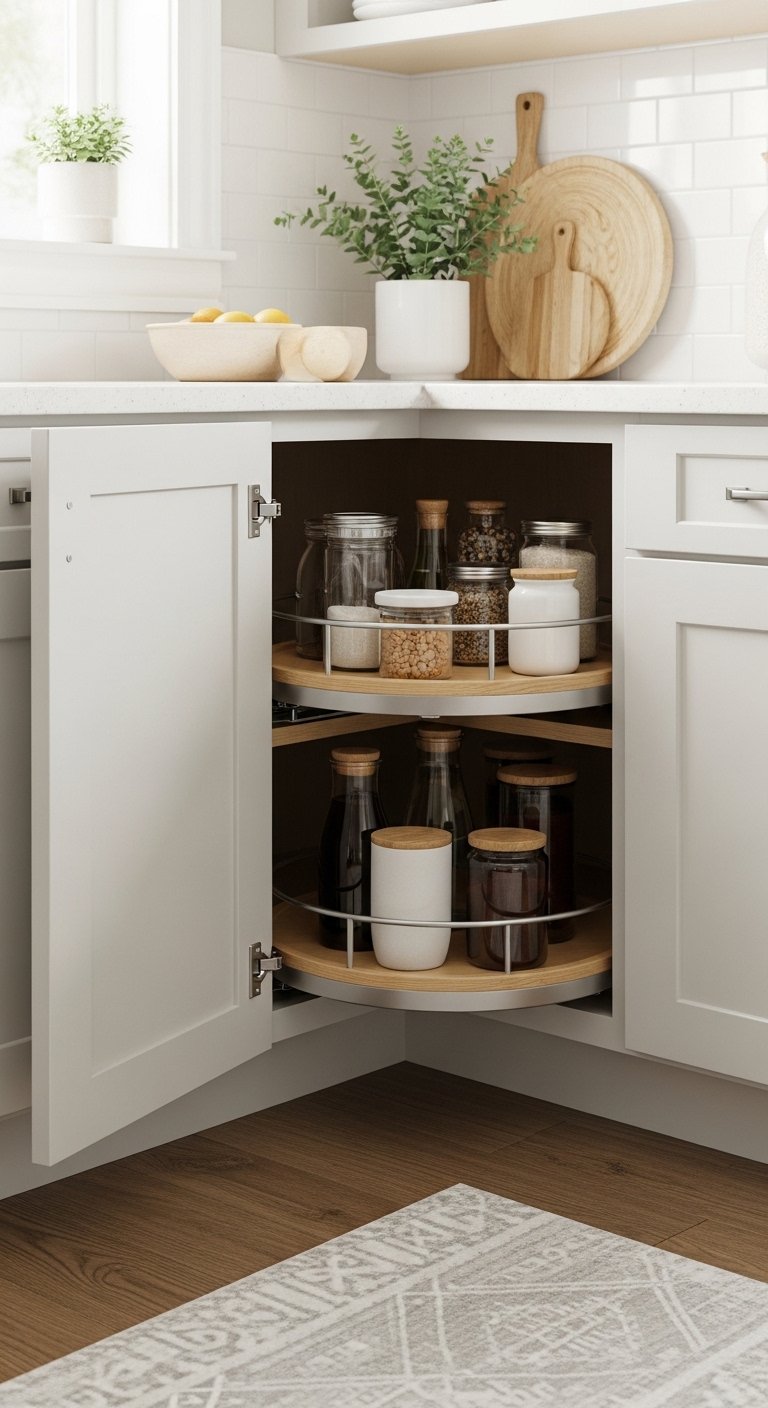
Corner base cabinets are notoriously difficult to use efficiently. The deep, angled interior makes the back sections almost unreachable and most of what gets stored in a corner cabinet eventually migrates to the back and gets forgotten. A lazy Susan turntable, either a full rotating shelf unit designed to fit the corner cabinet or a simple round turntable placed on the existing shelf, brings everything to the front with a spin and makes the full depth of the corner cabinet genuinely accessible. A two-level lazy Susan unit in a corner cabinet can hold as much as a standard two-shelf base cabinet while remaining completely usable. Replace the standard fixed shelves of a corner cabinet with a rotating unit and the corner goes from being the most frustrating cabinet in the kitchen to one of the most efficient storage spots in the room.
5. Magnetic Knife Strip
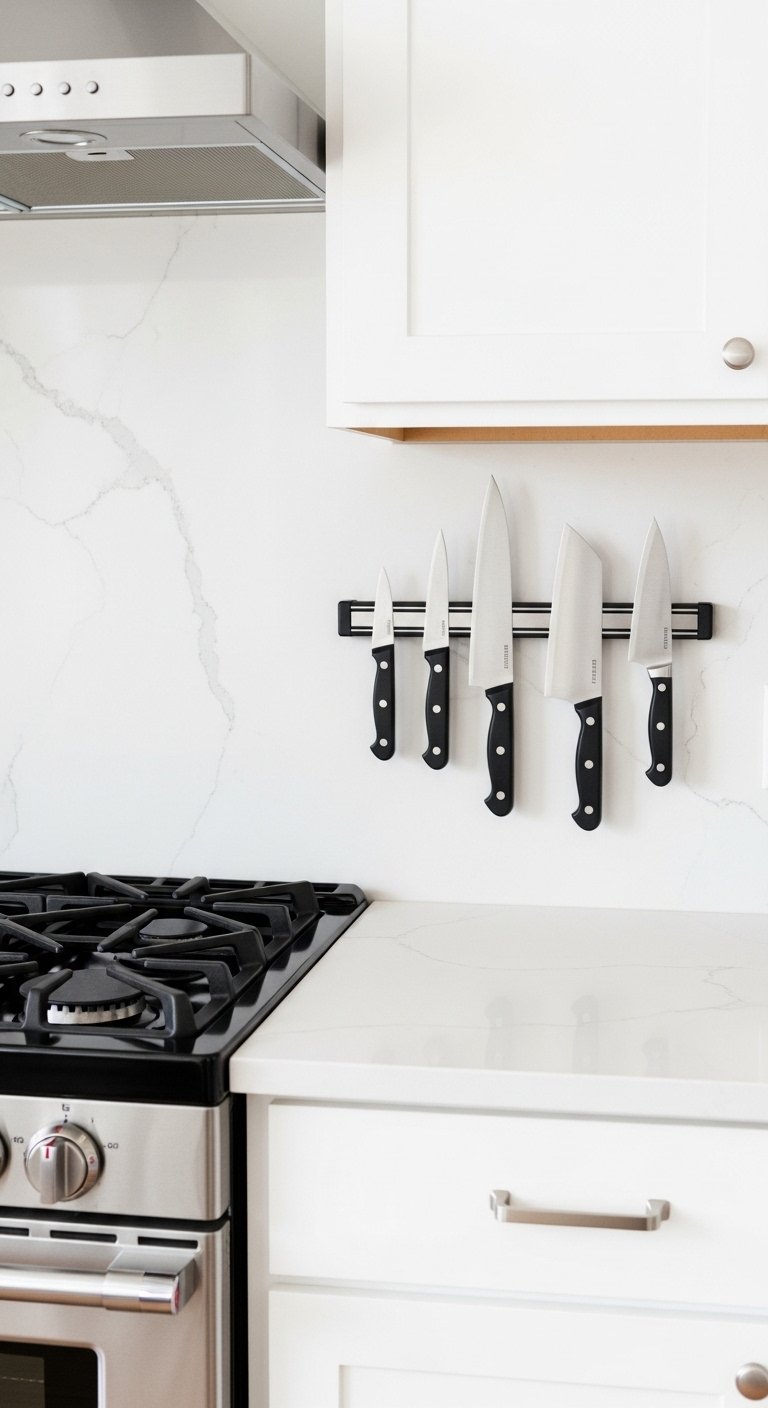
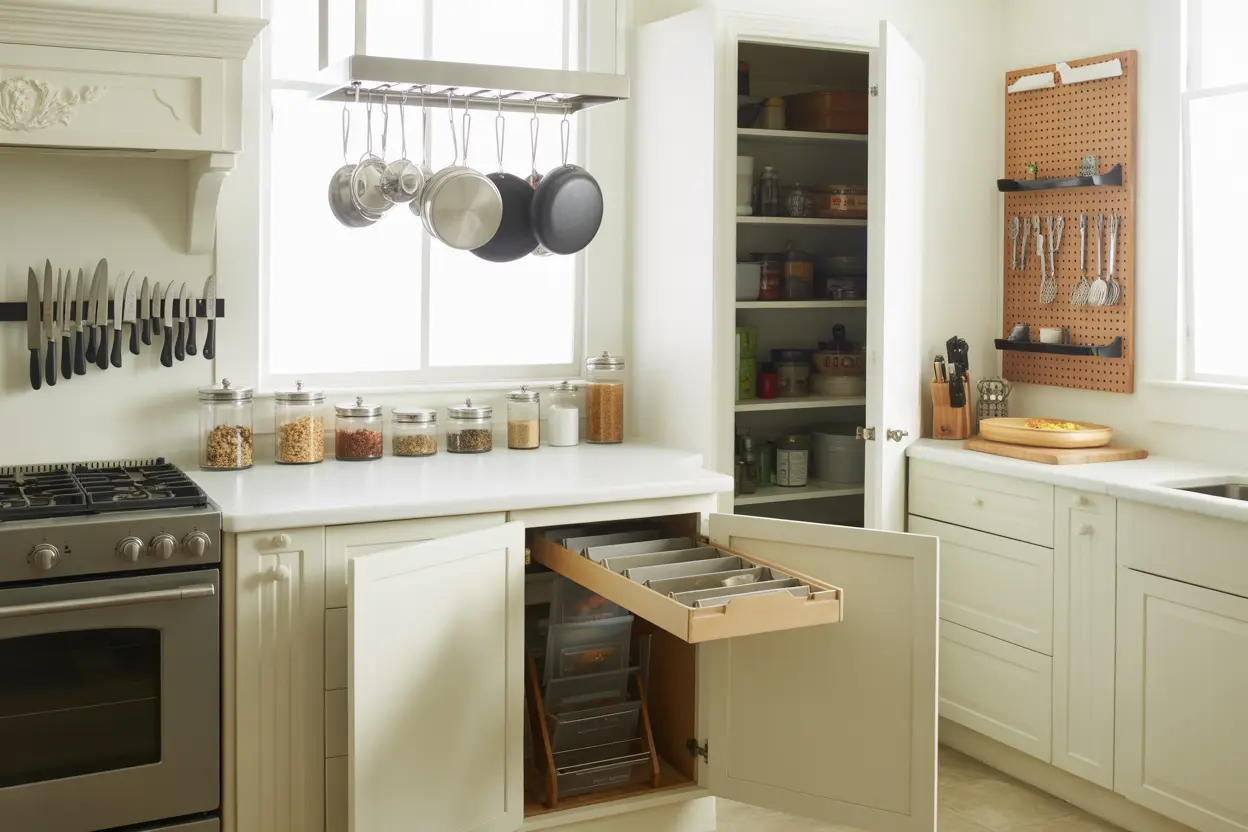
A knife block takes up a significant amount of valuable counter space in a kitchen where counter real estate is already limited, and knives stored in a block are not particularly easy to see or select quickly. A magnetic knife strip mounted on the wall beside the stove or on the side of an upper cabinet holds the full knife collection visible, accessible, and safely stored with blades away from hands in a format that takes up zero counter space. The strip itself is slim enough to fit in gaps between other wall-mounted items and can hold eight to twelve knives in a single row. Beyond knives, a magnetic strip also holds metal tools like a can opener, kitchen shears, a vegetable peeler, and a cheese grater, keeping all the metal tools that would otherwise rattle around in a drawer in an organized, visible, wall-mounted format instead.
6. Pantry Door Organizer
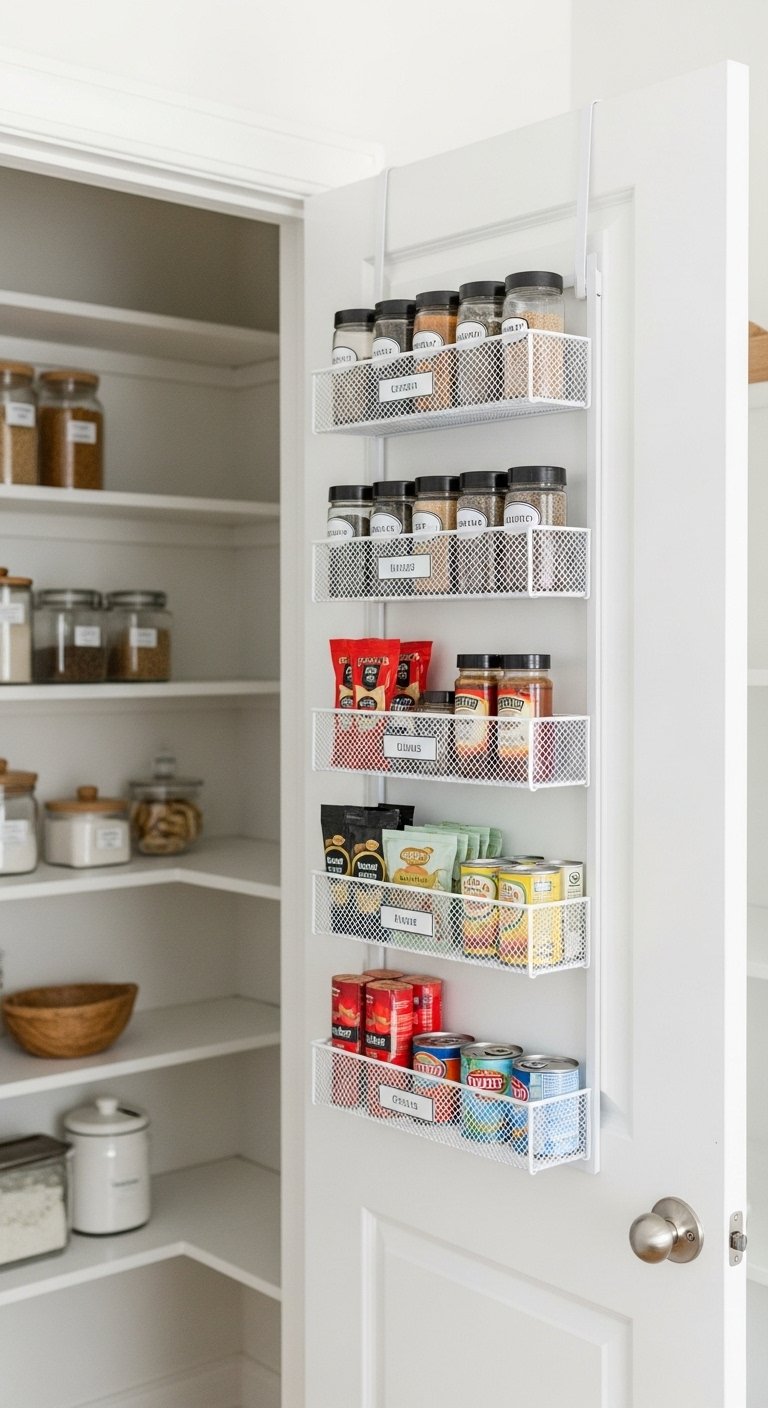
A pantry cabinet or closet door is one of the most underused storage surfaces in a kitchen. An over-the-door organizer with multiple shelves or pockets installed on the inside of a pantry door holds a substantial quantity of small pantry items, spice jars, condiment packets, canned goods, snack bags, and bottle caps, in a visible and accessible format on a surface that was previously doing nothing at all. The deeper wire shelf versions hold full-size pantry jars and bottles. The pocket versions hold flatter items like packets, foil, and bags. A combination organizer with both shelves and pockets covers the full range. The organizer hooks over the door with no screws and is fully adjustable and removable at any time. A well-chosen pantry door organizer can hold the equivalent of one full cabinet shelf worth of items in a location that required no space allocation from the existing kitchen footprint.
7. Under-Shelf Hanging Baskets
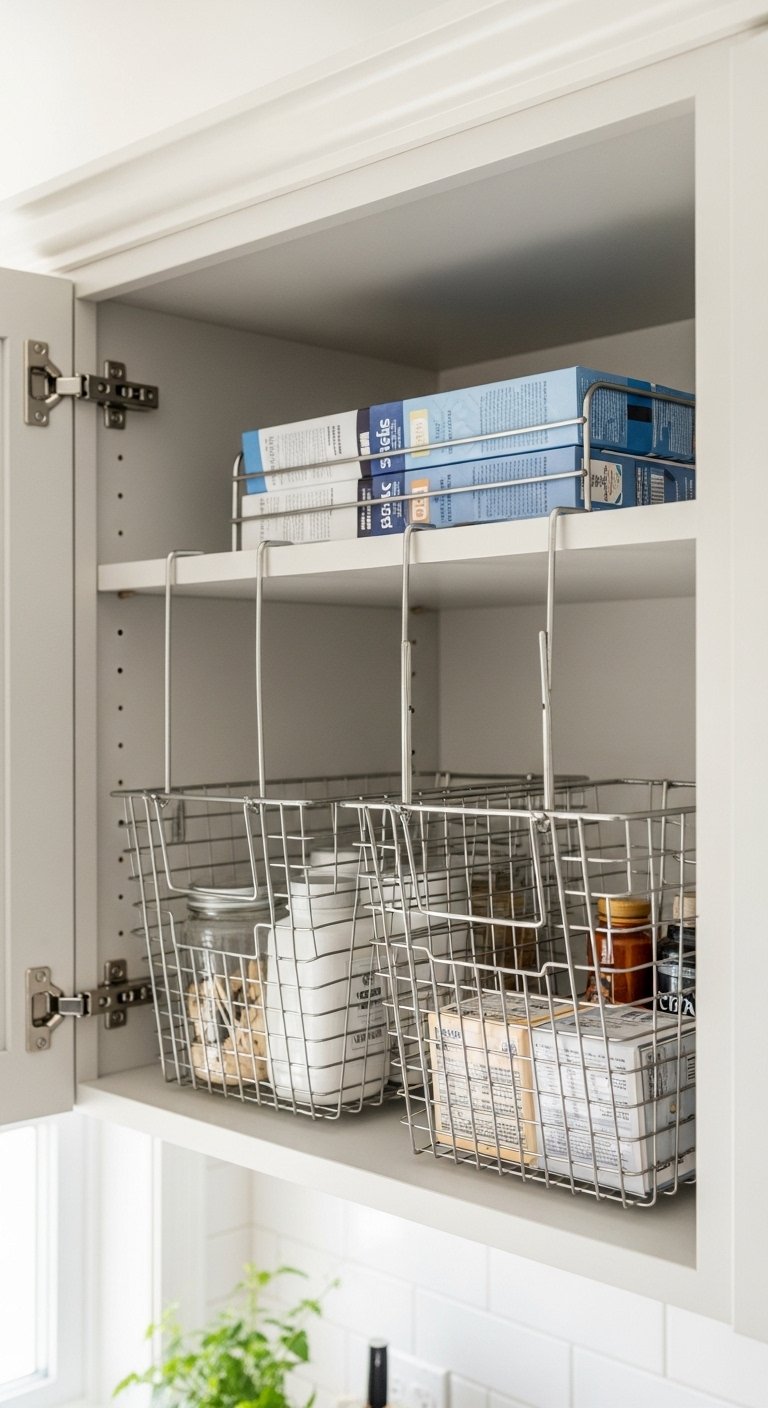
Clip-on wire or bamboo baskets that hang from the underside of a fixed cabinet shelf add a full extra storage level beneath the shelf without taking up any of the shelf surface above. These under-shelf baskets are installed by hooking their frame over the front and back edges of an existing shelf and hanging from that grip without any screws or installation. Use them inside upper cabinets to hang small items below the main shelf, which gives the items on the main shelf more vertical clearance and creates a secondary storage area below them. Use them in the pantry to hang snack bags, produce nets, or small baskets of packets below the main canned goods shelf. A single under-shelf basket converts dead vertical space inside a cabinet into functional storage for a cost of under ten dollars per basket.
8. Refrigerator Side Magnet System
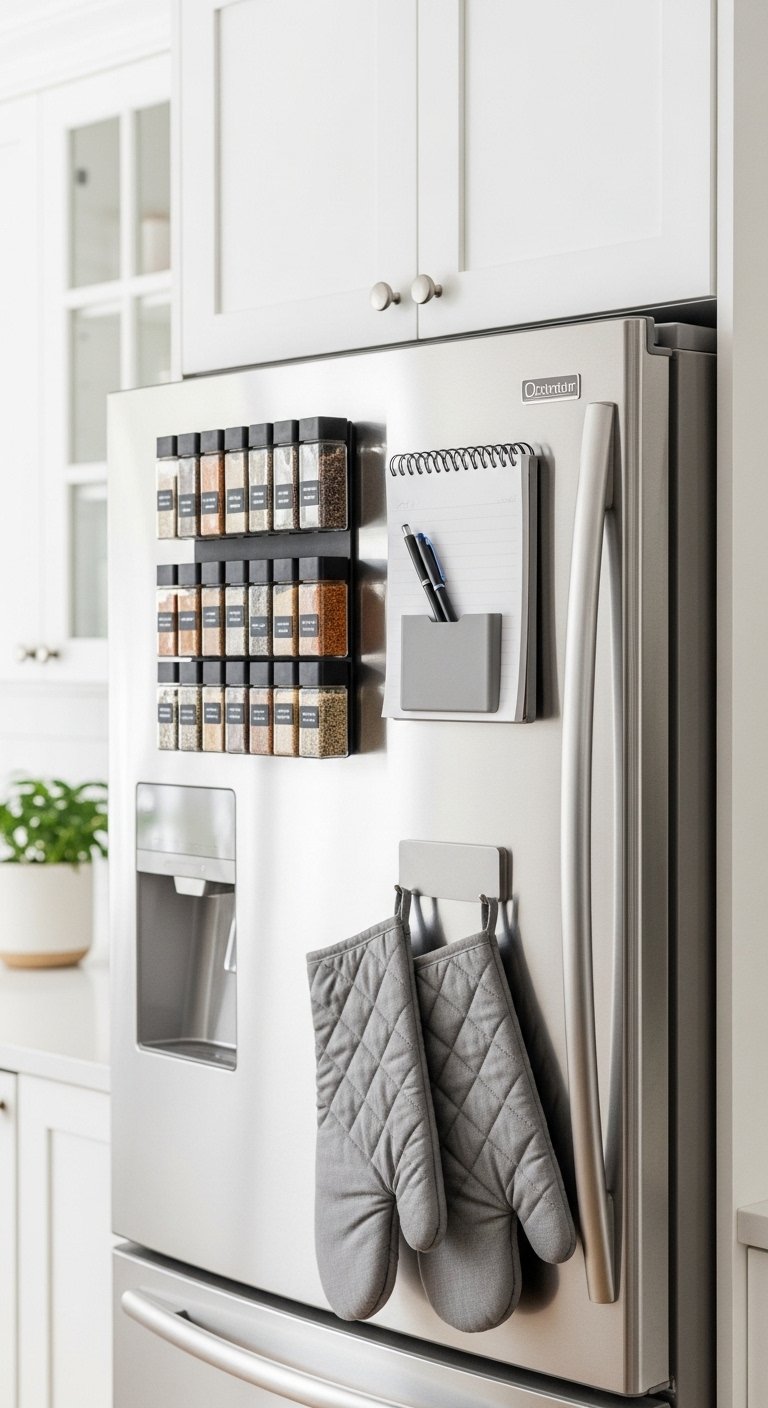
The side of the refrigerator is a blank, magnetic surface that most kitchens leave completely unused. A system of magnetic accessories installed on the refrigerator side, a magnetic notepad and pen holder for the grocery list, magnetic spice containers for the most frequently used spices, a magnetic paper towel holder, and a magnetic hook rail for oven mitts and a dish towel, turns this surface into a fully functional kitchen station. Everything mounted this way requires no wall drilling and the entire system can be rearranged or removed instantly. The refrigerator side is particularly useful for the grocery list and the pen since they are naturally used in the kitchen when something runs out. Having the list on the refrigerator side rather than stuck to the front means it does not interfere with the clean look of the refrigerator door.
9. Stacked Pot System
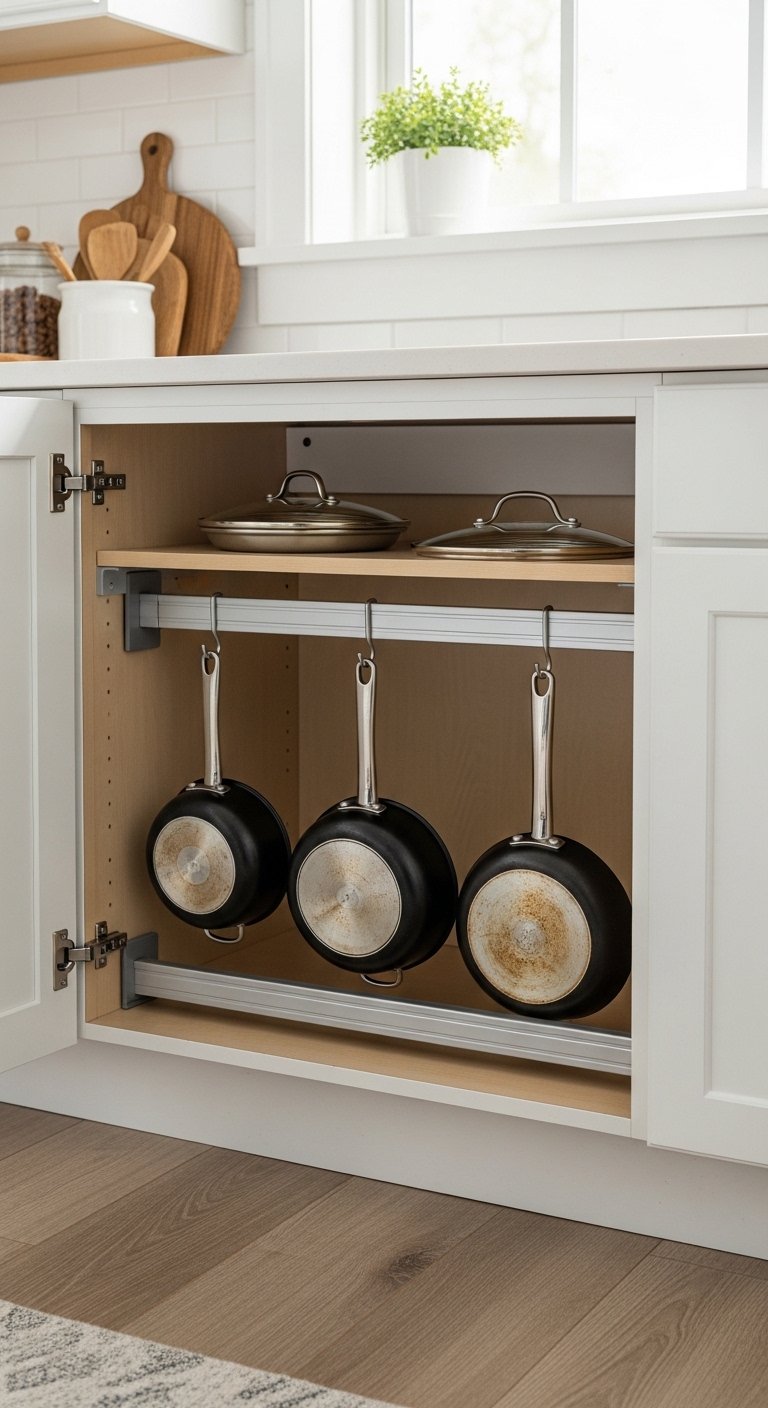
Pots and pans that do not nest or stack efficiently waste cabinet space at a rate that is immediately apparent once you try to organize them. Switching to a set of cookware specifically designed for compact stacking, where the pots nest completely inside each other with their lids stored separately in a vertical rack, can reclaim an entire cabinet’s worth of storage space. If replacing the cookware is not practical, pot protectors, felt or silicone pads placed between stacked pieces, allow existing pots to be stacked more aggressively without scratching, which lets you fit more in the same space. A simple horizontal pot rack with hooks installed inside a base cabinet holds pots hanging from their handles in a row rather than stacked flat, which makes each pot individually accessible without lifting anything else off it.
10. Labeled Canister System
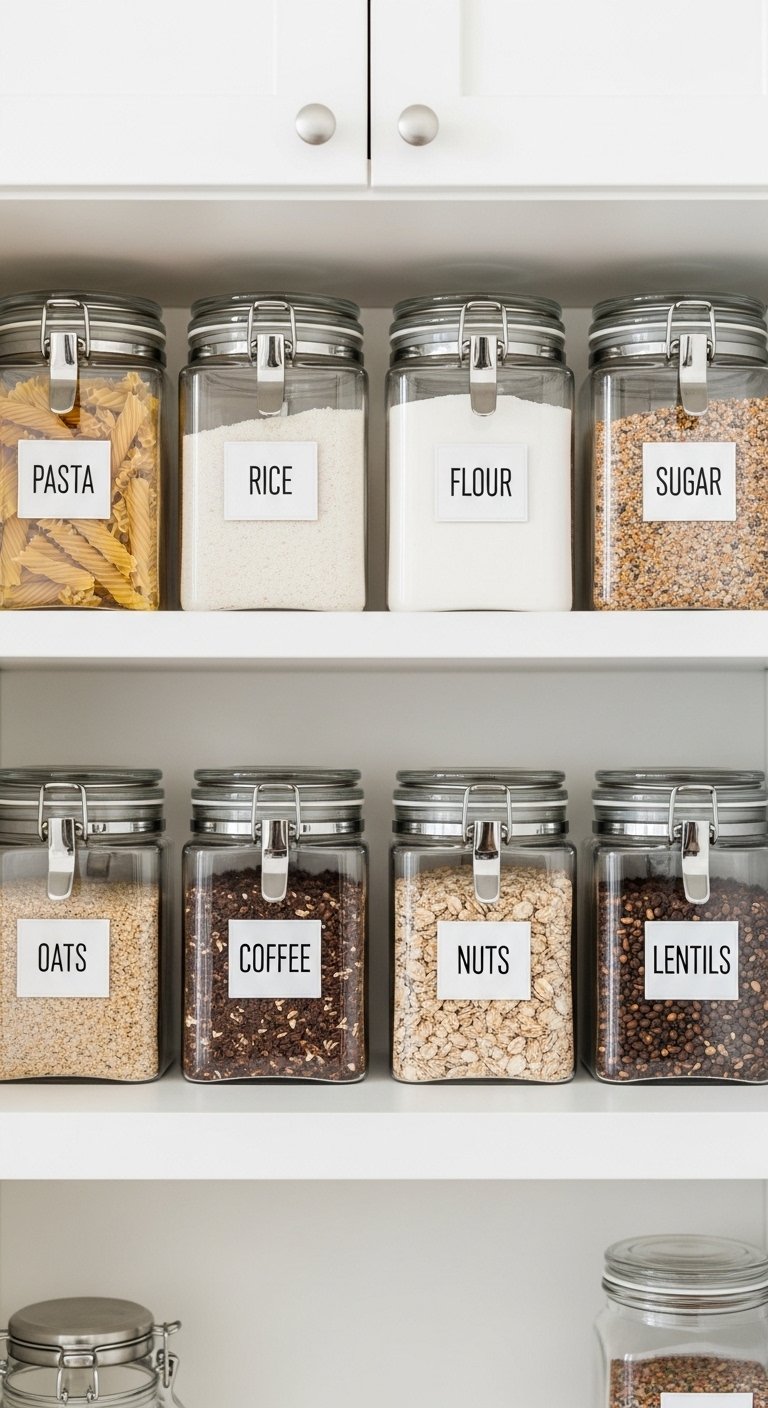
A matched set of canisters in a uniform size and material used for dry goods storage on the counter or in the pantry brings two benefits simultaneously: it uses space more efficiently than the original packaging and it makes the storage area look significantly more organized and intentional. Dry goods like pasta, rice, flour, sugar, oats, coffee, and nuts take up less shelf or counter space when stored in square canisters rather than in their original bags and boxes because the square shape eliminates the gaps that round containers and irregular packaging create when lined up together. Label each canister clearly on the front with a label maker for a clean, uniform result. A set of eight square canisters on a pantry shelf holds a week’s worth of dry goods in roughly half the visual space and with three times the organizational clarity of the same goods in their original packaging.
11. Hanging Pot Rail
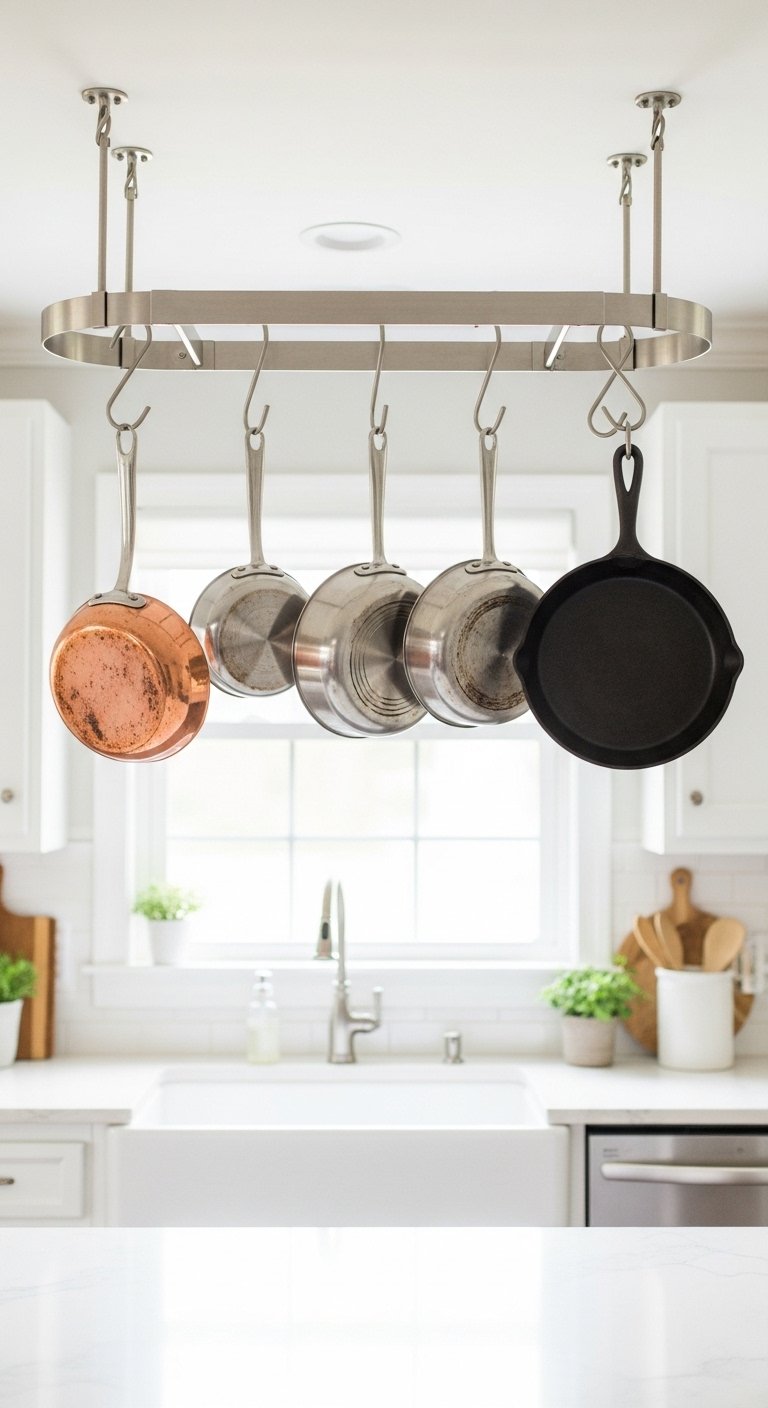
A pot rail, whether mounted on the wall beside the stove or suspended from a ceiling-mounted bracket above an island or a counter run, removes the largest and most space-consuming items from kitchen cabinets and hangs them in overhead space that would otherwise be unused. A well-loaded pot rail holding six to eight pots, pans, and lids frees up the equivalent of two full base cabinet shelves for other storage. The pots become more accessible for cooking since they are visible and reachable without opening any cabinet door. The kitchen also gains a working kitchen aesthetic from the display of real cookware that no amount of decorative styling can replicate. Install the rail on wall studs for a wall-mounted version, or use a ceiling-suspended rail above an island with the appropriate ceiling anchors rated for the weight of a full collection of cookware.
12. Drawer Knife Block Insert
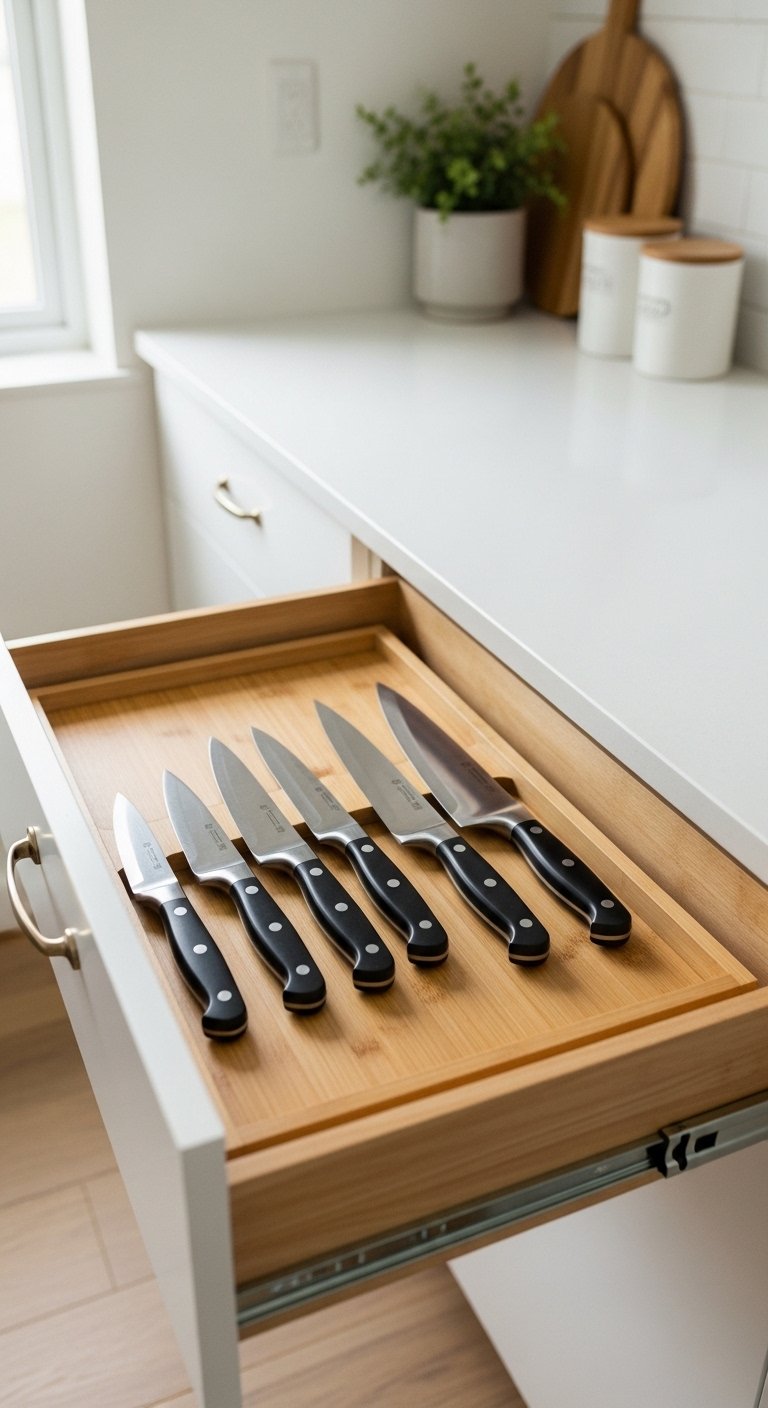
A knife block insert designed to fit inside a kitchen drawer stores the entire knife collection flat, handles forward, in a dedicated drawer section that keeps blades protected and makes selection fast. This eliminates the counter knife block entirely and returns that counter space to the prep area. The insert holds knives in individual angled slots that position each knife handle at the front of the drawer for easy grip. It also protects knife edges from the abrasion of contact with other drawer contents, which is a genuine advantage over loose knife storage in a drawer without any holder. A full set of kitchen knives in a drawer block insert takes up roughly the same footprint as a single drawer section while making the most dangerous tools in the kitchen safer, more organized, and more accessible simultaneously.
13. Cabinet Top Basket Row
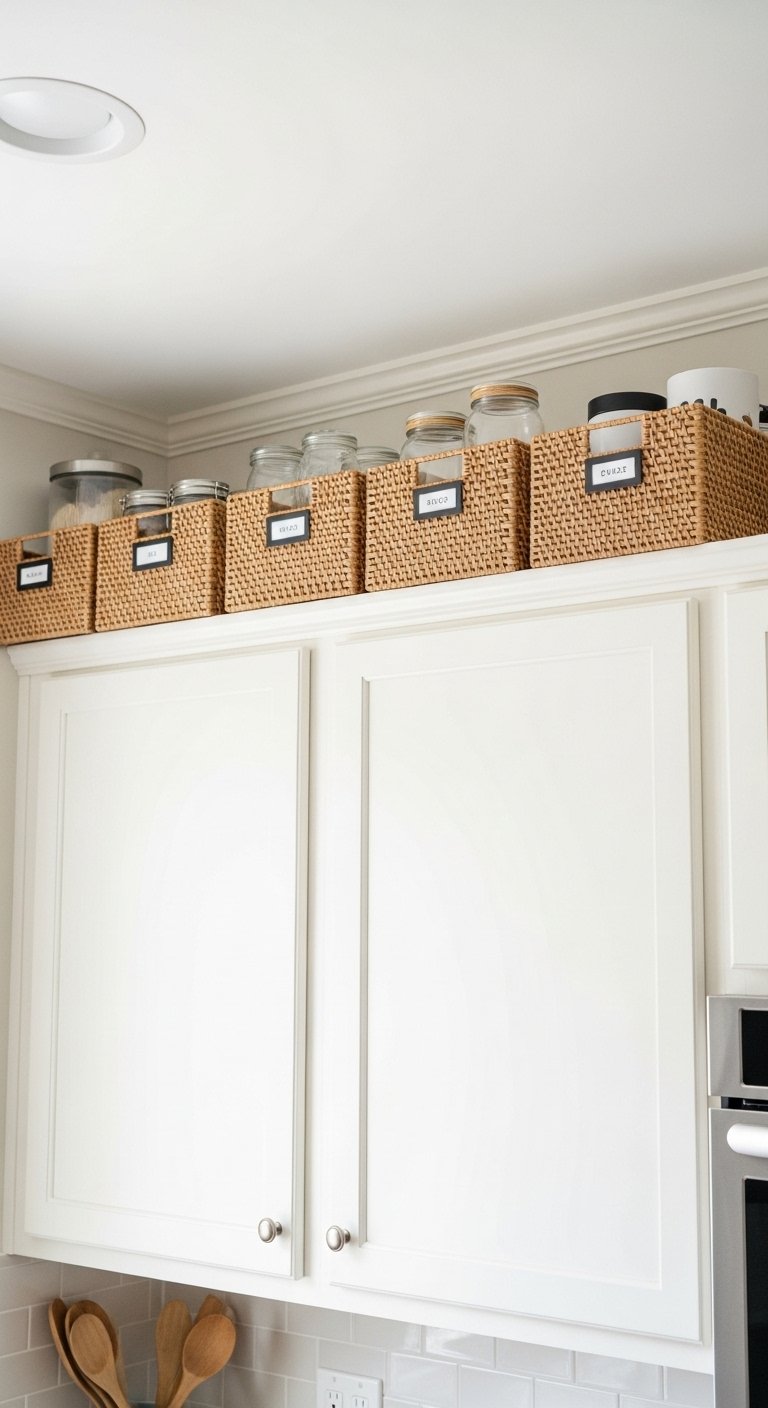
A row of baskets or bins placed on top of the upper kitchen cabinets holds items that are used infrequently, large appliances that do not fit in a cabinet, extra pantry stock, and other items that need storage but do not need to be within daily reach. The top of the upper cabinets is at or near ceiling height in most kitchens and is genuinely accessible for the occasional retrieval of items stored there, especially with a simple step stool. Using matching baskets in the same material and size creates a clean, organized appearance for the top of the cabinet run that reads as a deliberate design feature from below rather than an overflow dumping ground. Label each basket on the front or on a tag so the contents are identifiable without pulling the basket down to check. The storage capacity added by a full row of baskets above the upper cabinets is substantial.
14. Tray Vertical Organizer
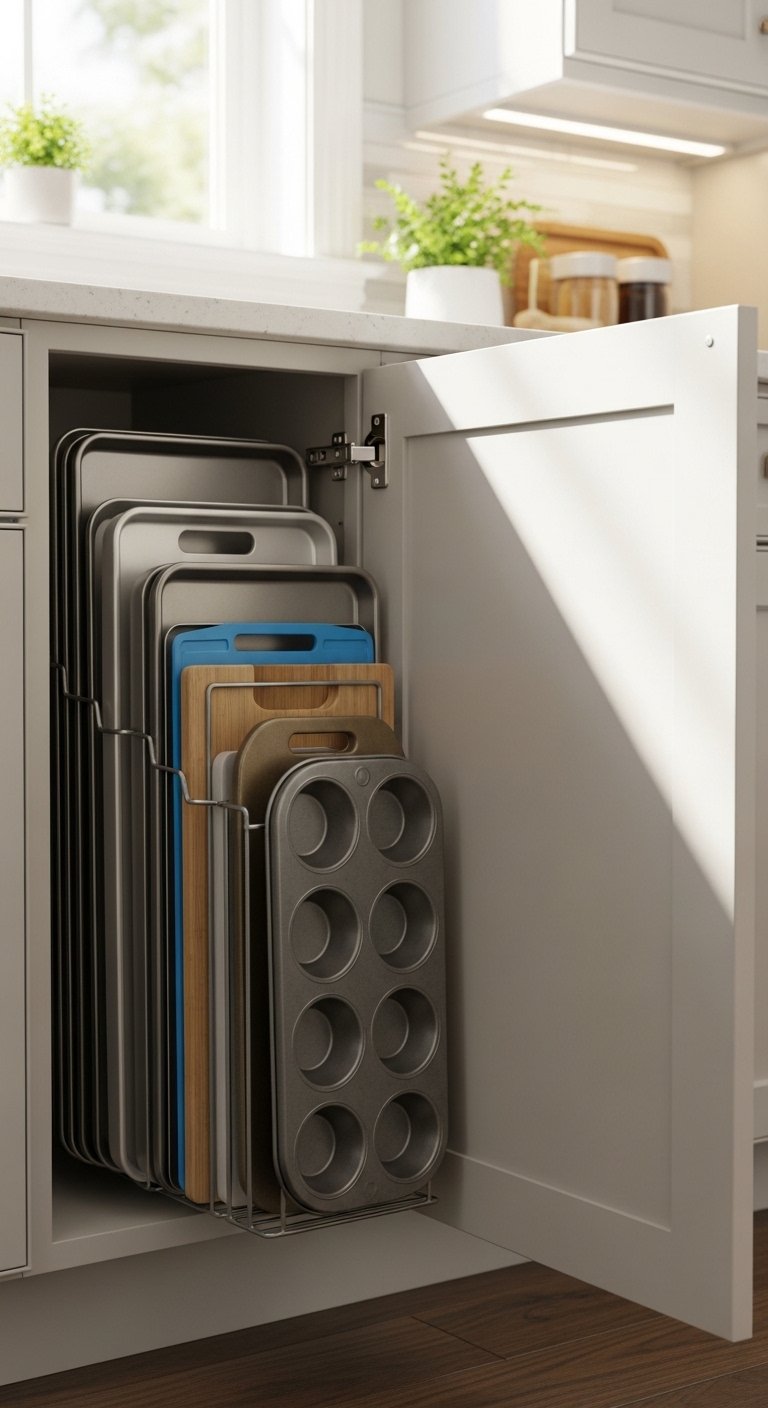
Baking trays, sheet pans, muffin tins, pizza stones, and wire cooling racks are among the most difficult kitchen items to store because they are flat, heavy, and tend to pile into unstable stacks that require lifting everything to access a single item from the bottom. A vertical tray organizer, either a purpose-built insert or a file holder adapted to the kitchen, stores these items standing upright like books on a shelf. Each item is individually accessible with a single motion: grip and lift. The same cabinet that held three miserable stacked baking sheets now holds six or eight items standing neatly in a row. Install the organizer in a base cabinet beside the oven where it makes sense to store baking equipment. The vertical arrangement also gives a clear view of what is available without any digging or reorganization of the stack.
15. Spice Drawer Insert
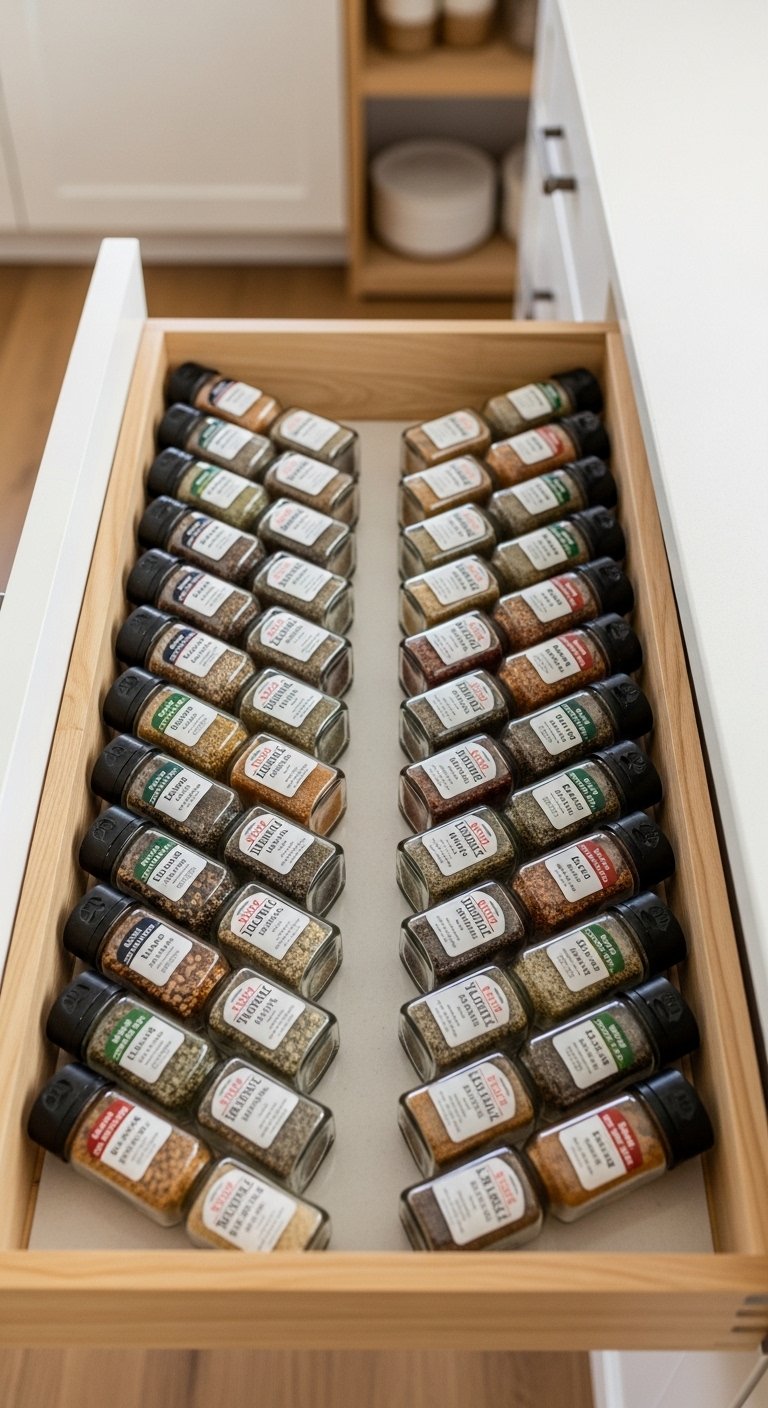
A drawer insert specifically designed for spice storage, with angled rows of individual jar-sized slots that hold each spice jar at an angle with the label facing upward, turns any standard kitchen drawer into the most efficient spice storage system available. The label on every jar is visible at once from above when the drawer is open, which makes finding any spice a single glance rather than a retrieval mission through a cabinet full of bottles where only the front row is visible. The drawer format also keeps the spice collection away from the heat of the stove, which is where spices are most commonly stored in a cabinet and where heat and light gradually degrade their quality. A twenty-four jar spice drawer insert holds a comprehensive spice collection in a single drawer and costs under twenty-five dollars in most versions.
16. Under-Sink Pull-Out
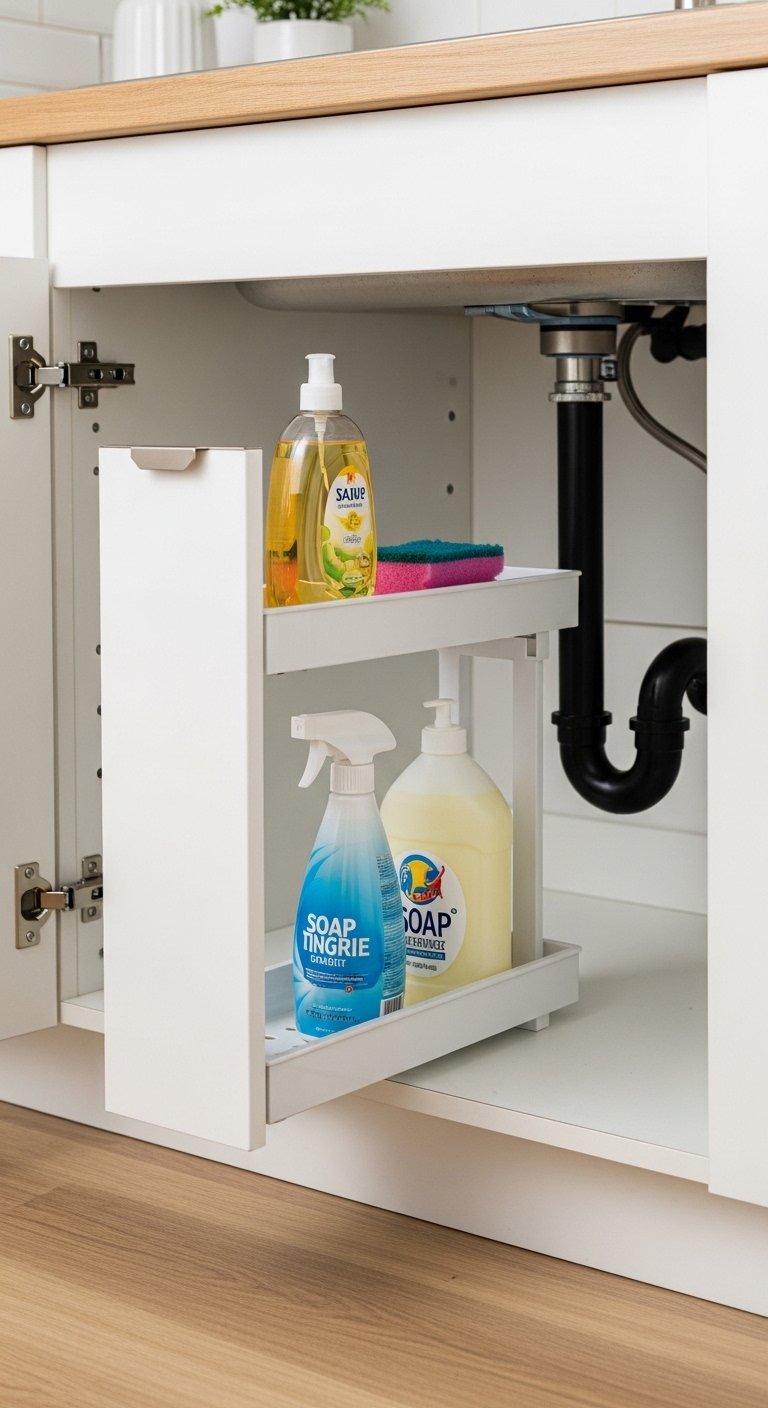
The under-sink cabinet in a kitchen is almost universally the most poorly organized storage in the room. The drain pipe and garbage disposal create obstacles that make standard shelves ineffective and most of what gets stored there ends up in an unnavigable pile. A pull-out organizer designed to accommodate the plumbing obstacles, with an adjustable or split middle section that works around the pipe, converts the under-sink cabinet into a functional two-level storage space. The pull-out slides the full cabinet content toward you when opened, making items at the back just as accessible as those at the front. Use the upper level for frequently reached items like dish soap, a spare sponge, and cleaning spray, and the lower level for less frequently needed supplies like large soap refills and cleaning cloths. The organization of the under-sink cabinet makes the whole kitchen run more smoothly because those supplies are now quickly findable.
17. Wall-Mounted Recipe Holder
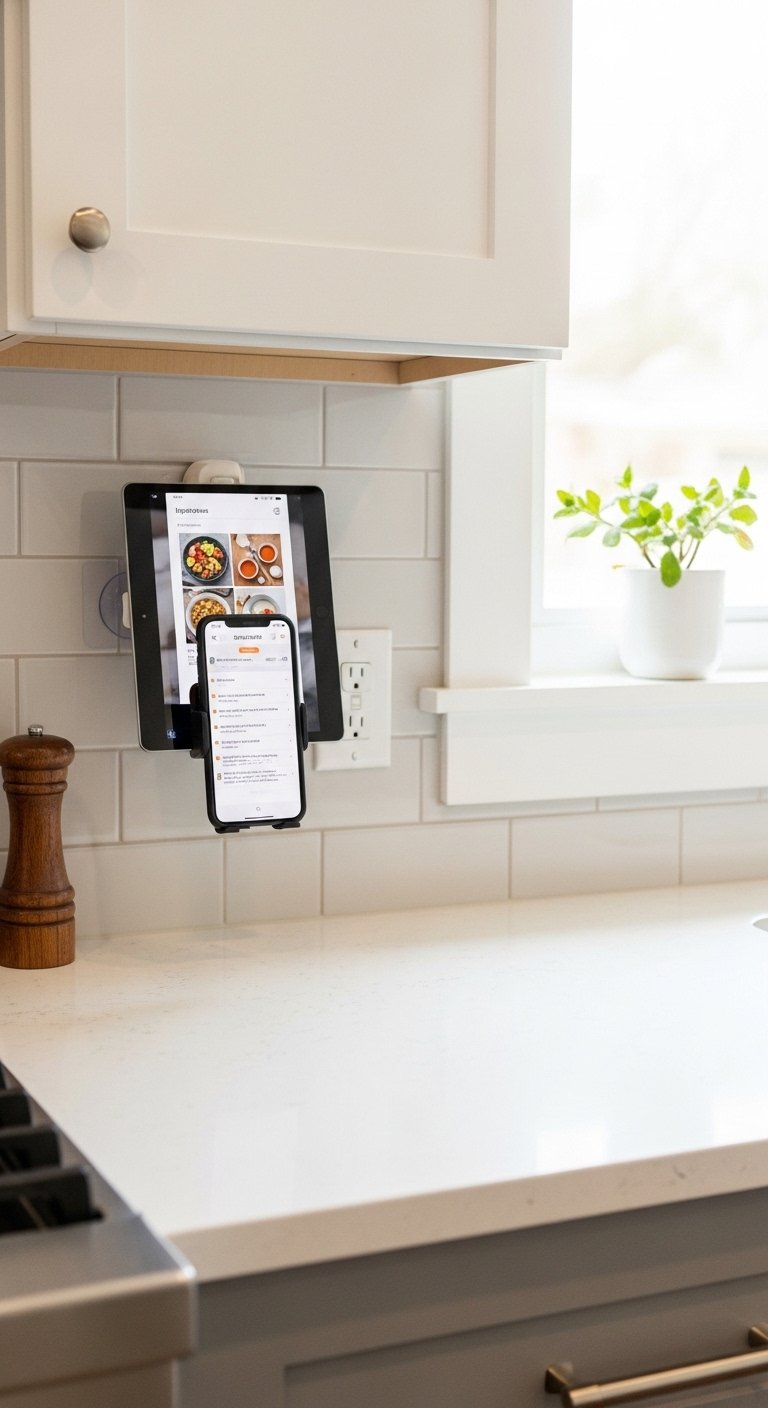
A wall-mounted or suction cup-mounted recipe holder attached to the wall or the cabinet face above the stove holds a phone, tablet, or printed recipe at eye level during cooking without occupying any counter space. This solves the specific and frustrating problem of propping a phone against something on the counter, having it fall repeatedly during cooking, and losing your place in the recipe at the worst possible moment. A simple adjustable holder in a slim format that folds flat when not in use takes up no practical counter or cabinet space and makes following a recipe while cooking significantly less stressful. Choose one in a finish that coordinates with the kitchen hardware and it reads as a deliberate and functional kitchen accessory rather than a gadget. Mount it beside rather than directly above the stove to keep it away from steam and splatter.
18. Expandable Cabinet Shelf
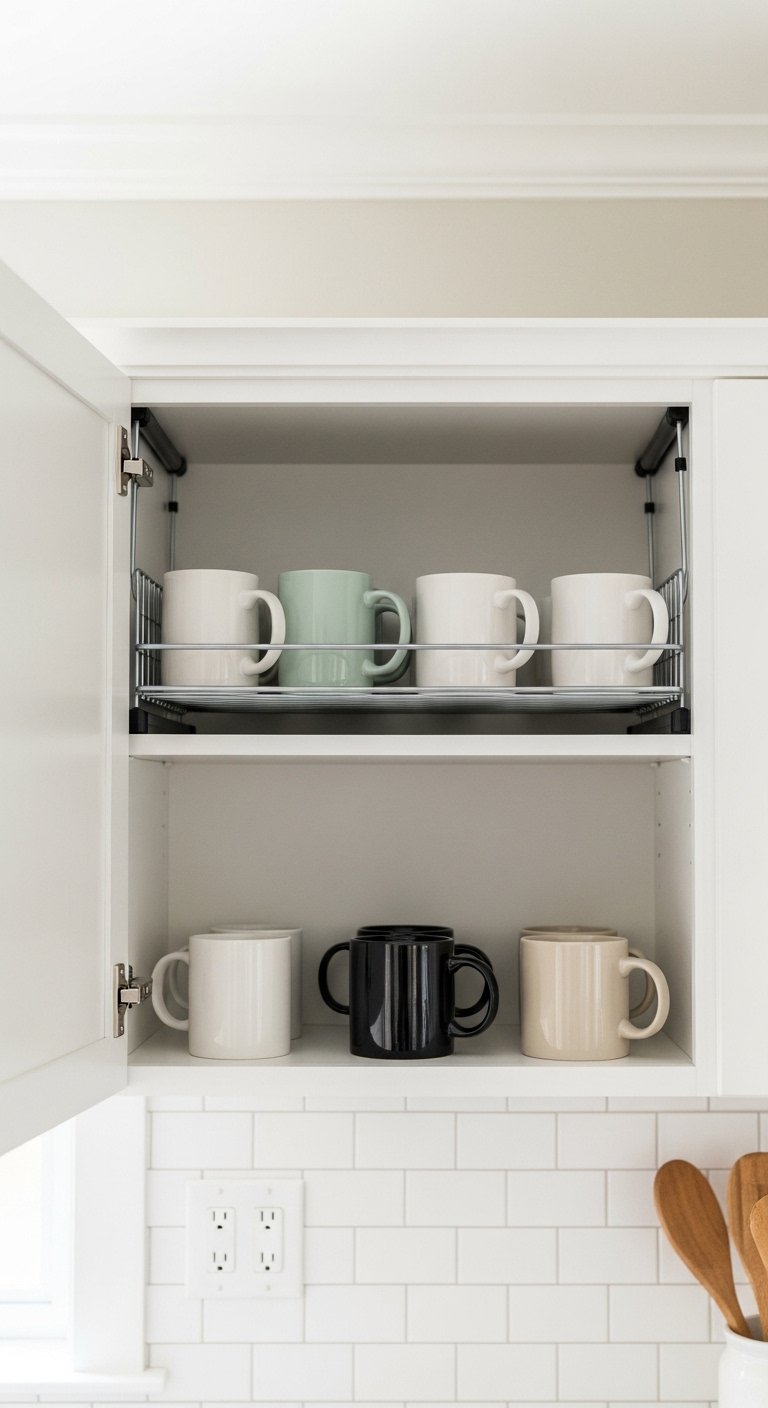
An expandable shelf riser placed inside an upper or lower kitchen cabinet adds a second level of storage within the existing cabinet space, allowing two rows of items to coexist at different heights where previously only one flat row was possible. The standard upper cabinet shelf height is generous enough in most kitchens to hold two rows of standard glasses, mugs, or canned goods when a riser elevates the back row above the front. The riser itself is a simple Z-shaped or stepped metal or wire frame that sits on the shelf and creates a second tier. No installation is required: the riser sits on the existing shelf surface and can be repositioned or removed at any time. A single expandable shelf riser inside a cabinet roughly doubles the number of items that shelf can hold and costs under fifteen dollars for a standard size.
19. Pegboard Kitchen Station
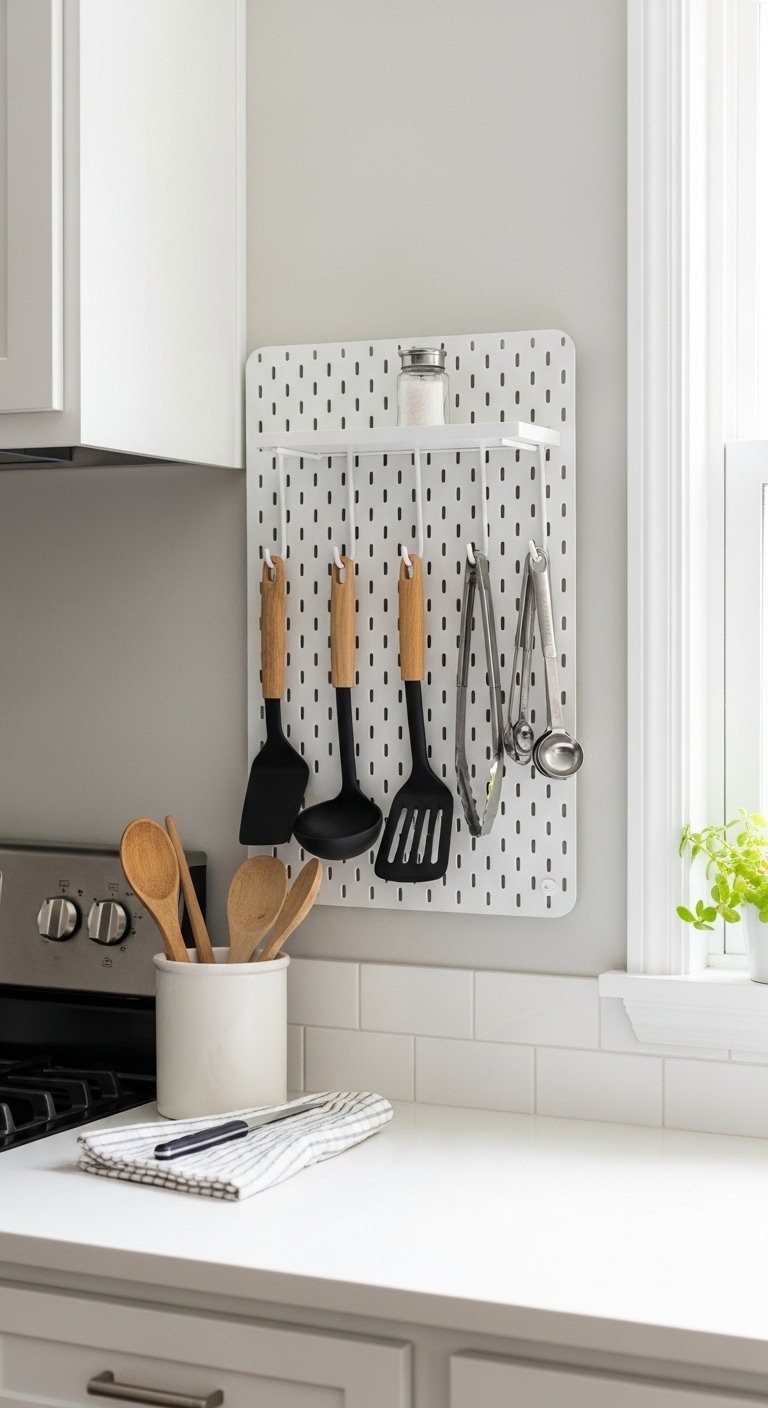
A kitchen pegboard installed on an empty wall section near the stove or prep area creates a customizable, flexible storage system that holds utensils, small tools, spice jars, small shelves, and any other kitchen item that can hang from a hook. The pegboard surface can be rearranged entirely whenever the kitchen layout or the collection of tools changes, since every hook is removable and repositionable without any additional holes in the board. Paint the pegboard the same color as the surrounding wall for a subtle, integrated look, or leave it in a natural wood tone for a warm, utilitarian aesthetic. A twenty-four by thirty-six inch pegboard section can hold more kitchen tools than a full drawer while keeping everything visible and immediately accessible. The key to a pegboard that looks styled rather than chaotic is assigning a specific hook to each item and returning everything to its hook consistently.
20. Jar and Bottle Rack
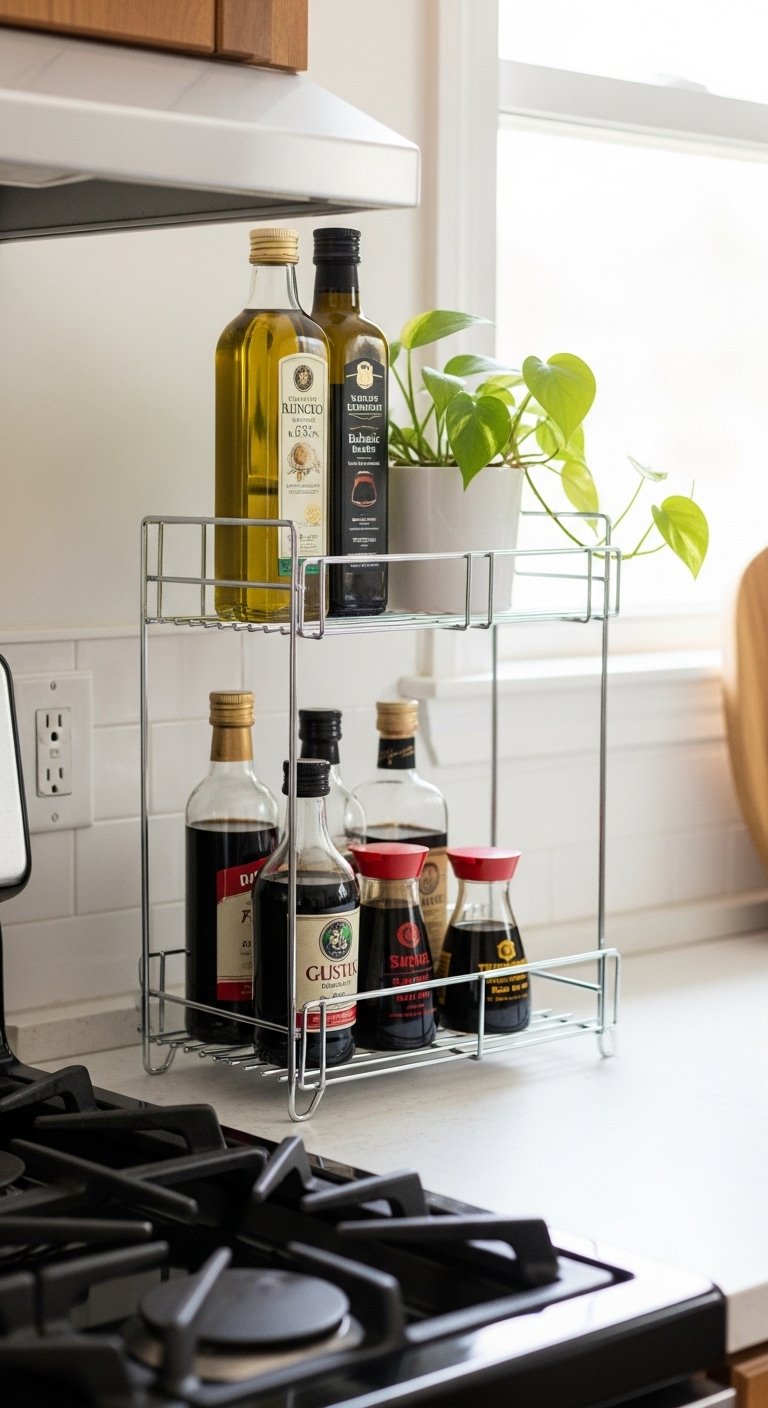
A wall-mounted or freestanding jar and bottle rack beside the stove or on the counter near the cooking area holds cooking oils, vinegars, soy sauce, Worcestershire sauce, and other frequently used liquid condiments in a visible, organized format that removes them from the cabinet entirely. When cooking oils and frequently used condiments are stored in a cabinet, they require a separate retrieval step each time they are needed. When they are visible and at hand beside the stove, reaching for them is as natural as reaching for a cooking spoon. A simple tiered rack in a wire or wood format holds four to eight bottles in a small footprint. Label the rack sections if multiple bottles of similar appearance are stored together. Keep the rack stocked with only the condiments used regularly rather than using it as general bottle storage, which keeps it purposeful rather than cluttered.
21. Bin System for Pantry
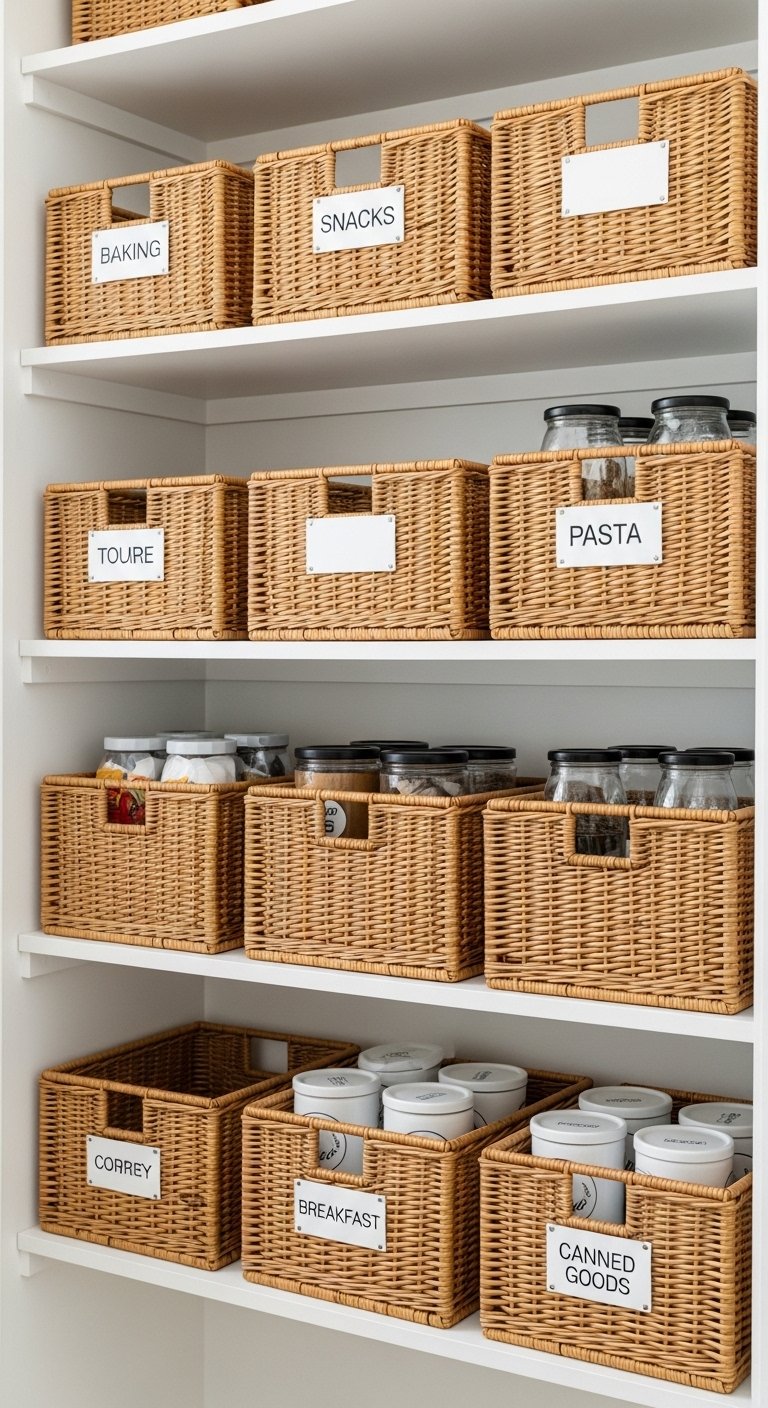
A pantry organized with labeled bins rather than loose products on open shelves is significantly easier to navigate, to restock, and to maintain over time. Assign a bin to each category of pantry item: one for baking supplies, one for canned goods, one for snacks, one for pasta and grains, one for breakfast items, one for condiments that do not fit in the door. When a bin needs restocking, the whole bin comes out, goes to the store with you conceptually as a complete category check, and returns to its position. Because each bin has a label on the front, anyone in the household can find what they need without searching and can return items to the correct location without asking. Wire pull-out bins, clear plastic bins with open fronts, and natural wicker baskets all work for this system. The choice of material determines whether the pantry looks functional or styled.
22. Decant and Label Everything
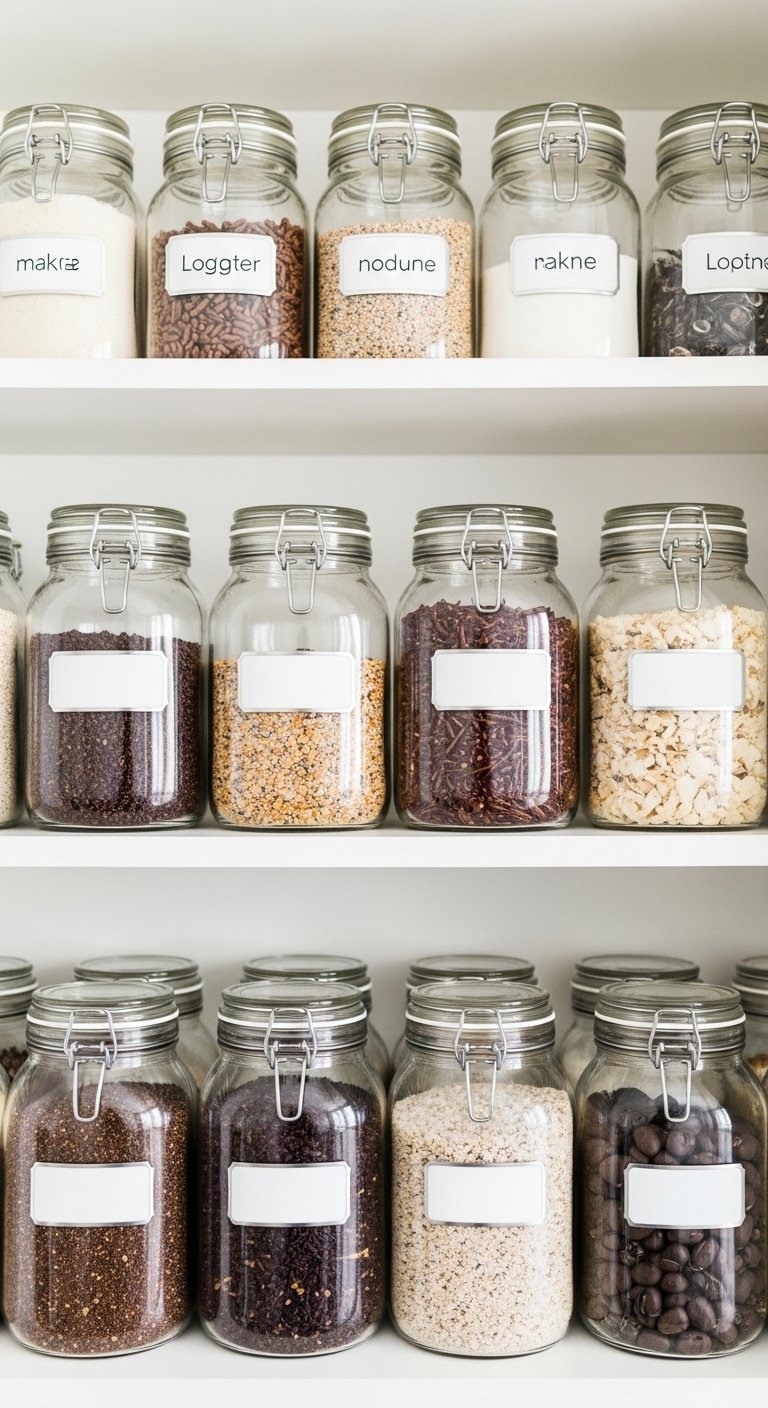
The simplest and most universally effective kitchen storage improvement available is decanting all dry goods from their original packaging into uniform, labeled storage containers and throwing away the packaging. Original bags, boxes, and pouches are inefficient in shape, difficult to close properly after opening, hard to see inside without pulling them out, and genuinely unattractive on any shelf. Uniform square or round containers in the same material, whether glass, clear acrylic, or ceramic, allow the same amount of food to occupy roughly half the shelf space of the original packaging while making every item visible and identifiable at a glance. Label each container on the front with the contents and the date it was filled so the oldest stock is used first. A fully decanted and labeled pantry shelf is one of those kitchen transformations that photographs well, functions better than before, and maintains itself with very little daily effort.
The most organized kitchens are not the ones with the most storage. They are the ones where everything that needs a home has been given one that makes sense. Pick the two or three frustrations that cost you the most time and energy in your current kitchen and start there. The rest follows naturally.