19 Sewing Room Ideas That Stay Organized and Easy to Work In
A sewing room has a specific set of requirements that general craft rooms and home offices do not share. The cutting table needs to be at the right height for standing work. The sewing machine needs a stable surface at the right height for seated work. The fabric needs to be visible and accessible without being piled in an unnavigable heap. The thread collection needs to be organized by color and accessible without leaving the chair. The ironing station needs to be within reach of the machine. And somehow all of this needs to fit into what is often one of the smallest rooms in the house. These 19 ideas address the specific layout, storage, and organization challenges that sewing rooms face, with practical solutions that keep the space functional and genuinely easy to work in session after session.
1. Dedicated Cutting Table Height
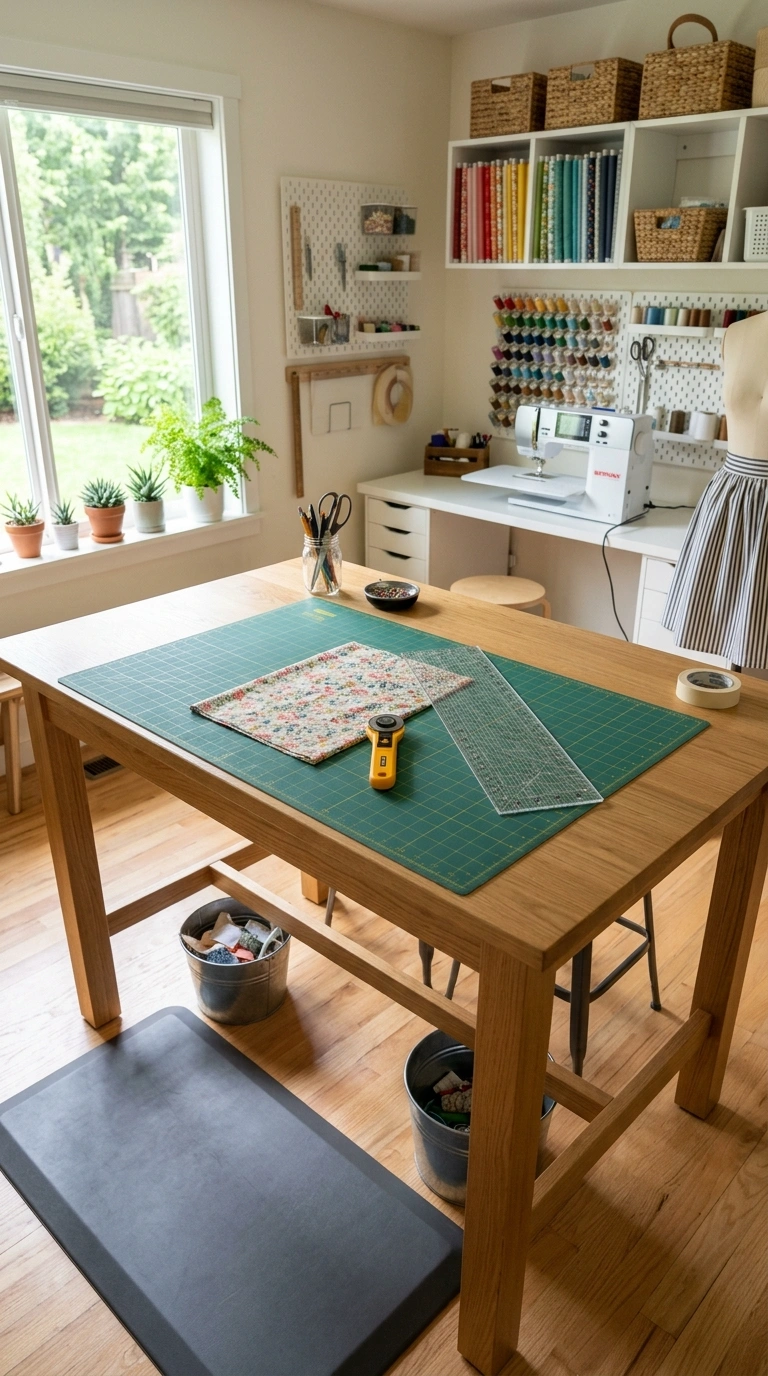
The cutting table is where fabric preparation happens and the height of this table determines whether cutting sessions cause back pain or not. The ideal cutting height for most adults is between 36 and 38 inches, which is counter height rather than standard desk height. This allows the user to stand upright while cutting without bending over the surface. A standard desk at 30 inches forces the user to lean forward for extended cutting sessions, which causes back and shoulder strain. If a dedicated cutting table is not available, a set of bed risers under the legs of a standard table raises it to the correct height. The table should be at least 36 inches deep and as wide as the room allows for working with larger fabric pieces.
2. Machine Station at Desk Height
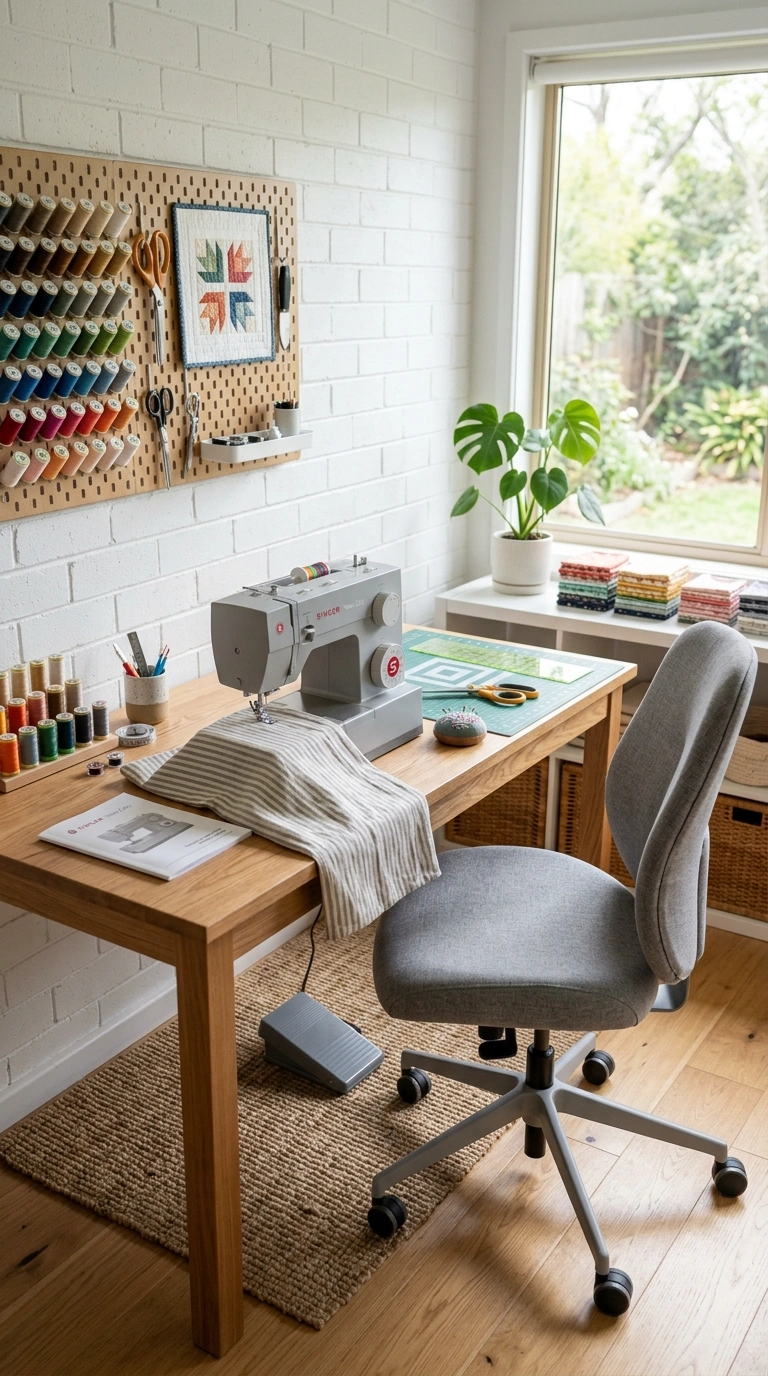
The sewing machine station should be at standard desk height, approximately 28 to 30 inches, so the user can sit in a proper chair with feet flat on the floor and elbows at roughly ninety degrees while guiding fabric through the machine. A table that is too high forces the shoulders up. A table that is too low requires hunching forward. The machine station needs a stable surface that does not vibrate or shift during high-speed sewing. A solid wood table, a dedicated sewing cabinet, or a heavy desk all work. Avoid lightweight folding tables that bounce and shift with the machine vibration.
3. Thread Storage Display
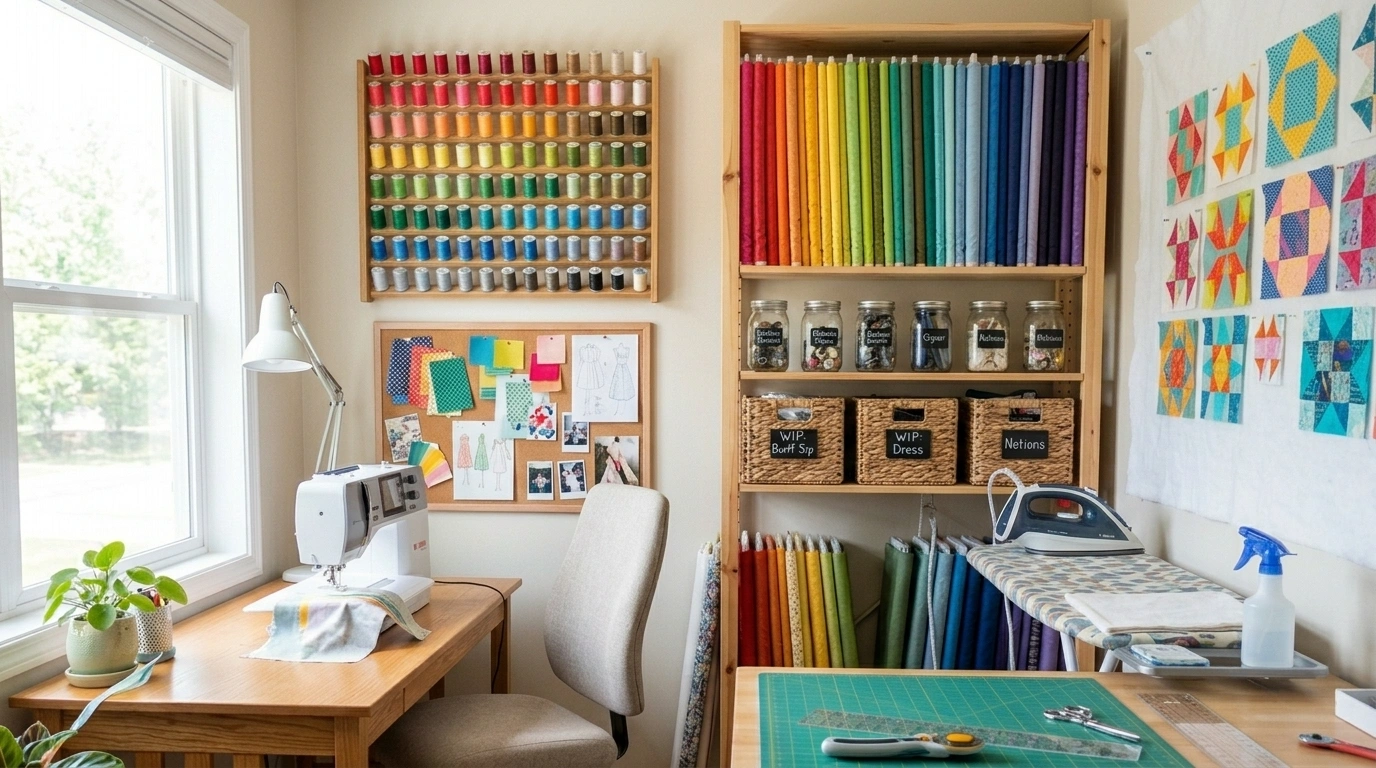
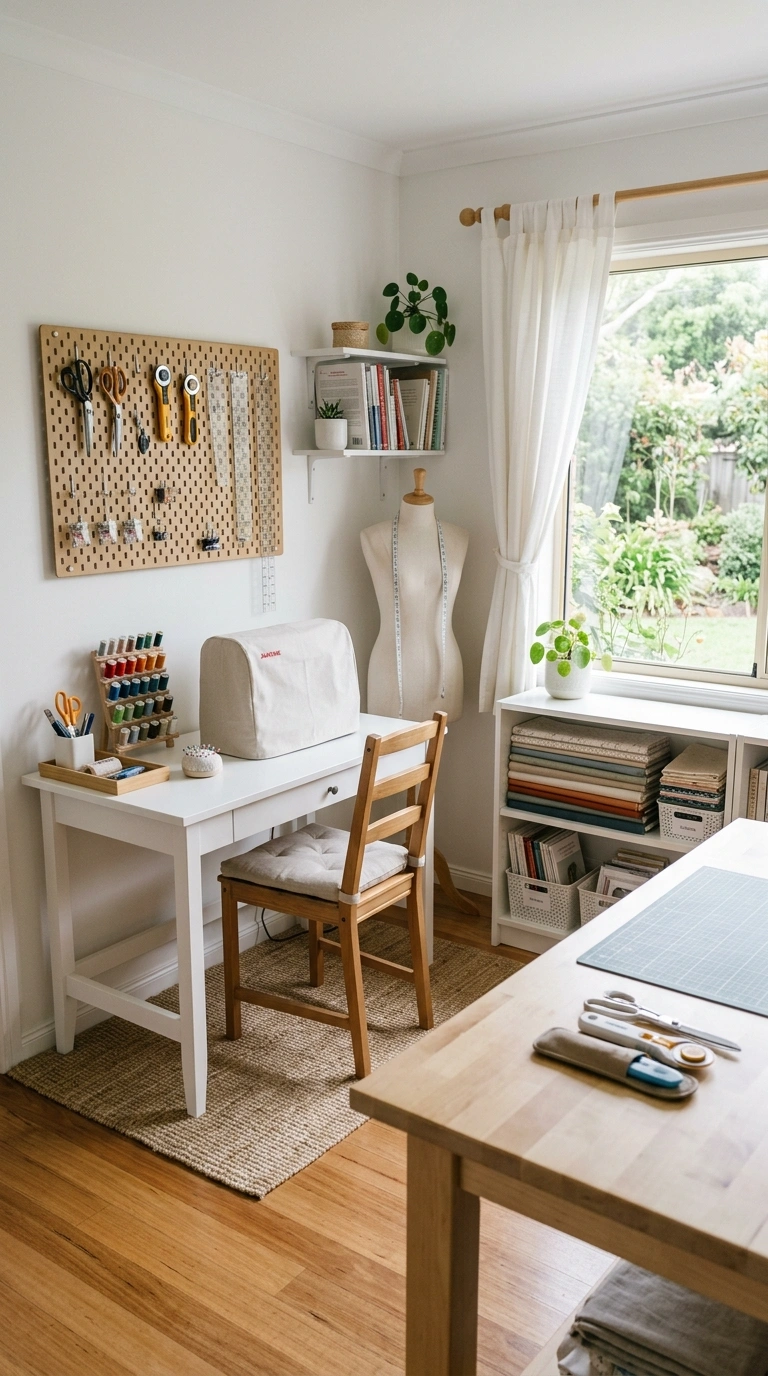
A thread storage system that displays the full thread collection by color, either on a wall-mounted thread rack, on a revolving thread tower, or in a clear drawer organizer, makes color selection instant and turns the thread collection into a visual feature of the room. Wall-mounted thread racks that hold sixty or more spools in a visible color-sorted arrangement are the most efficient use of space and the most attractive display option. The thread rack should be mounted within arm’s reach of the machine so color changes do not require leaving the chair. A well-organized thread display is one of the most satisfying visual elements in any sewing room.
4. Fabric Storage System
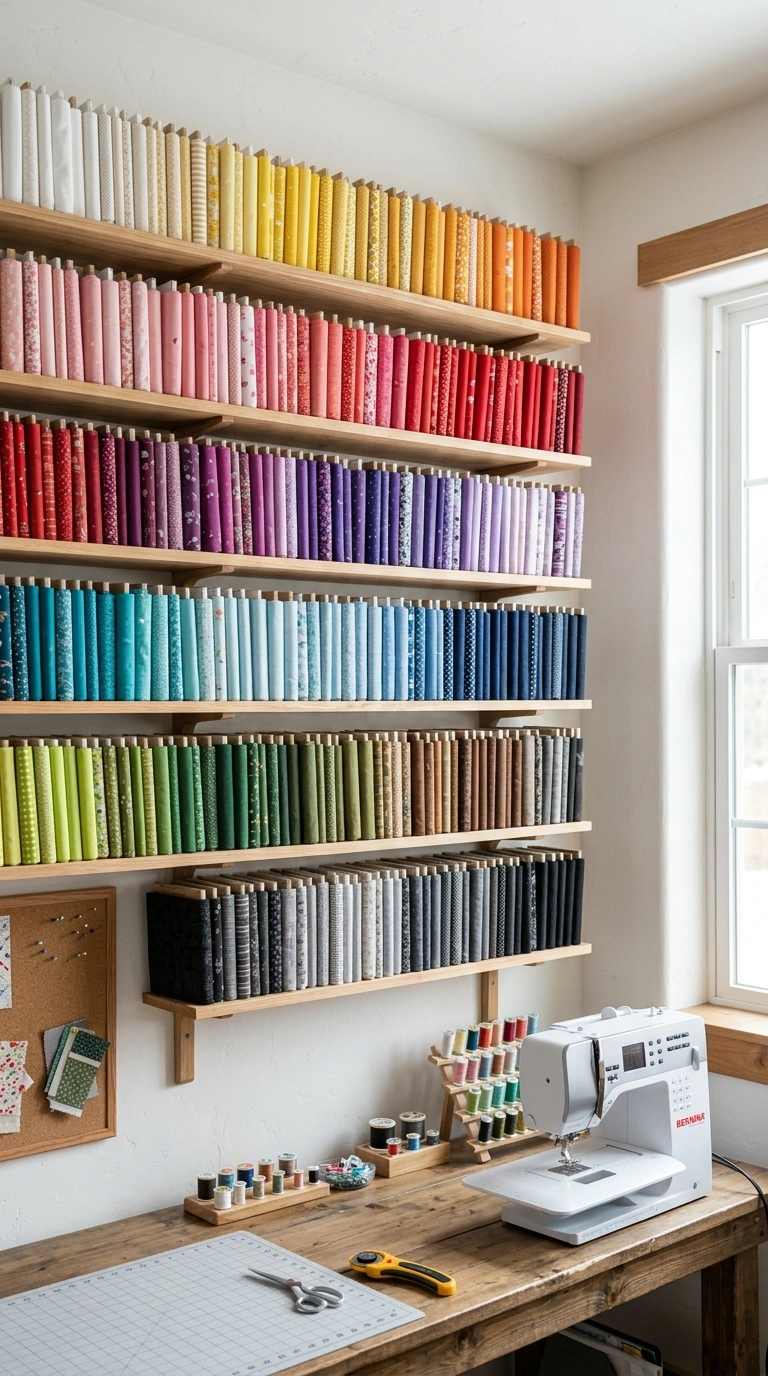
Fabric storage is the single biggest organizational challenge in most sewing rooms because fabric accumulates faster than it gets used and the collection quickly outgrows any basic storage arrangement. The most effective fabric storage uses open shelving where fabrics are folded around standard-sized boards, like mini bolts, and stored upright so the cut edge and the color are visible from the front. This is significantly more efficient than stacking fabric in piles where only the top fabric is visible. Sort by color family for easy visual scanning. A set of open shelves dedicated entirely to the fabric collection, organized by color, transforms fabric storage from a frustration into the room’s most colorful and inspiring feature.
5. Good Task Lighting
Proper task lighting at the sewing machine is critical because detailed stitch work requires focused light directly on the needle area. The standard overhead room light creates shadows on the machine surface that make precise work difficult. A dedicated adjustable task lamp beside or clamped to the machine table, with a daylight-temperature bulb in the 5000K to 6500K range, provides the clear shadowless light that sewing demands. The daylight temperature is important because it renders fabric colors accurately, which matters when matching thread colors and working with color-critical projects. The same principle of dedicated task lighting for detailed work applies across all creative and functional spaces, including cozy home offices where the quality of the desk lamp significantly affects the work experience.
6. Pressing Station Nearby
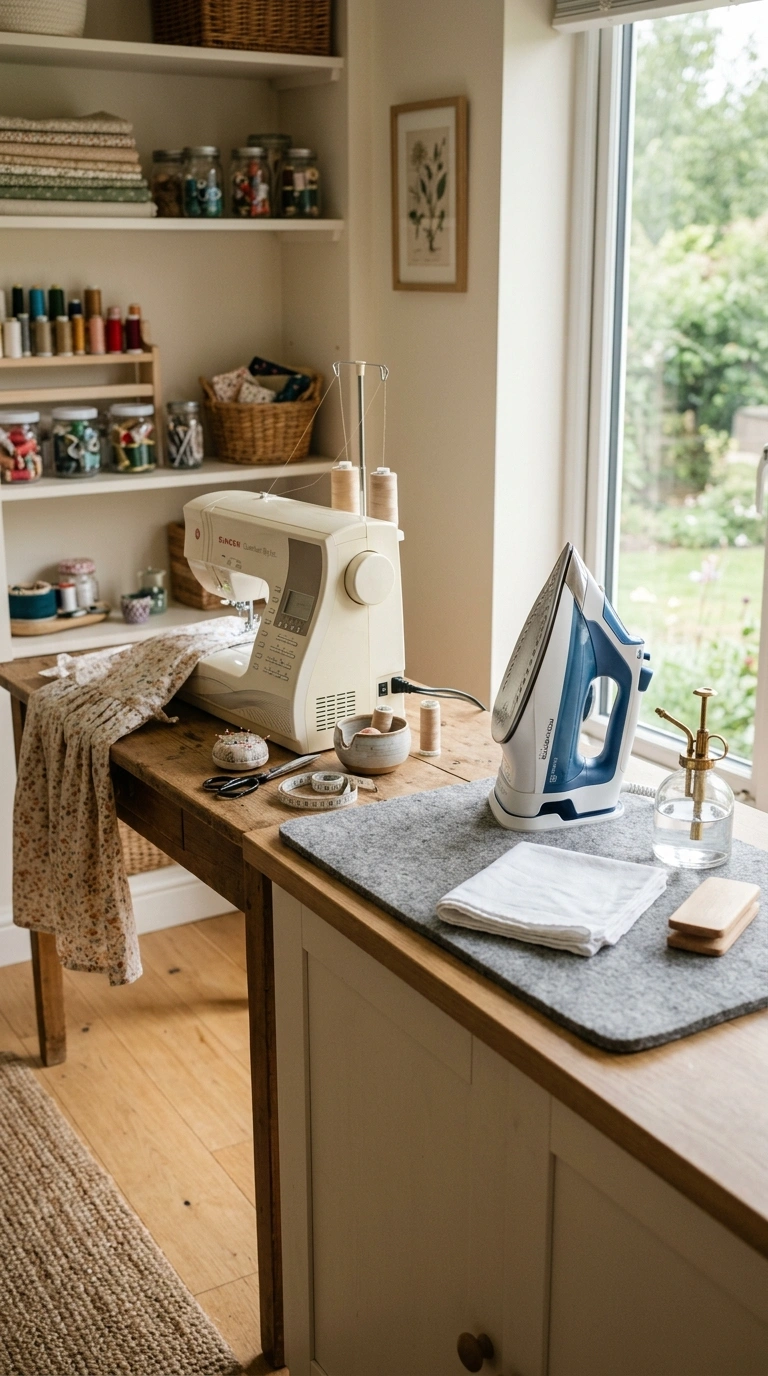
The ironing or pressing station should be positioned within a few steps of the sewing machine since pressing seams between construction steps is one of the most frequent movements in any sewing session. A full-size ironing board that folds out near the machine, a small tabletop pressing mat beside the machine, or a wall-mounted drop-down ironing board that folds flat when not in use all work depending on the room’s size. The pressing station should include the iron, a small spray bottle of water, a pressing cloth, and a sleeve board for small detail pressing. When the pressing station is nearby, seams get pressed when they should. When it is in another room, pressing gets skipped and the quality of the work suffers.
7. Pin and Notion Organizer
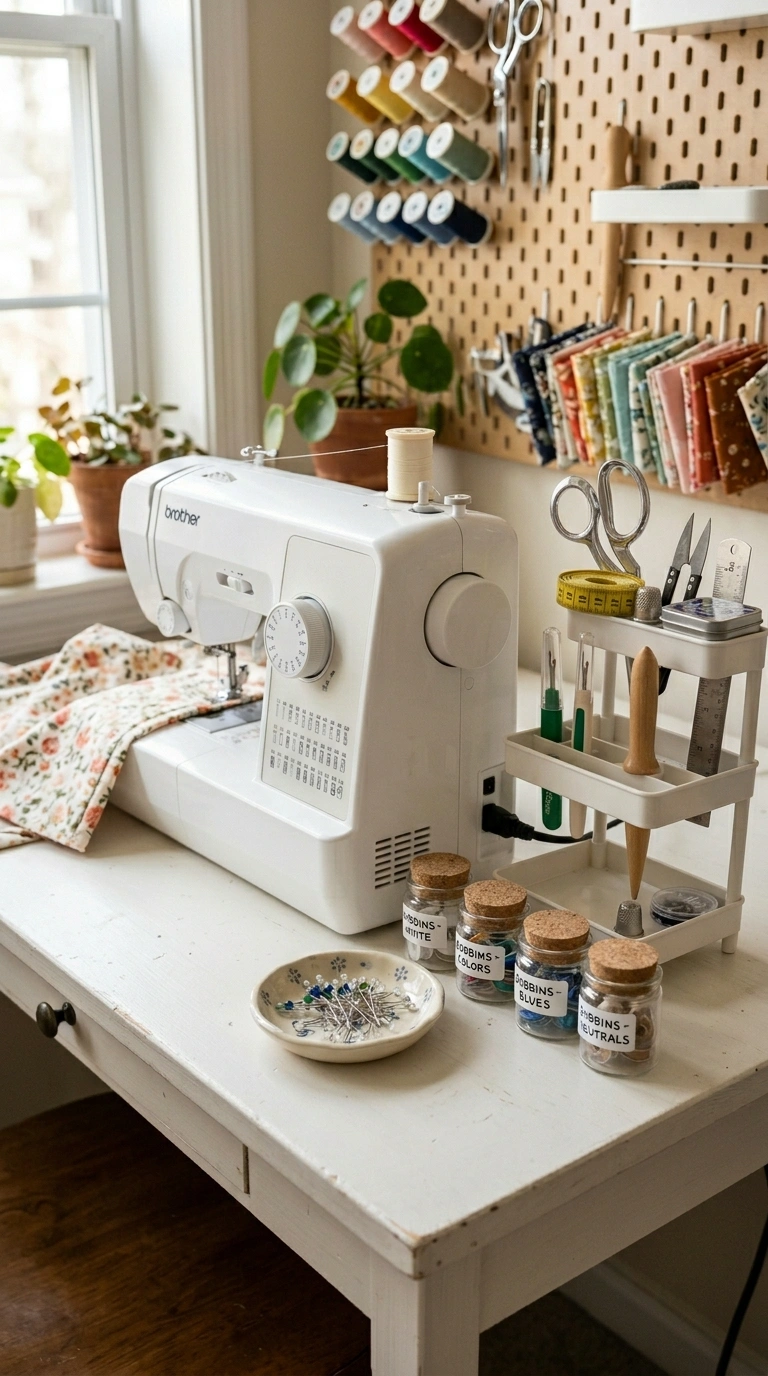
Small sewing notions, pins, needles, seam rippers, measuring tape, scissors, marking tools, bobbins, and small hardware, need organized accessible storage at the machine station. A small tiered organizer, a set of labeled jars, or a pegboard section with hooks and small containers all keep notions visible and within reach. The organized notions station prevents the time lost searching through a drawer for a specific tool mid-project. A magnetic pin dish on the machine table keeps pins contained and easy to retrieve. A small labeled jar for each category of notion makes restocking simple and keeps the collection from becoming a tangled pile.
8. Pattern Storage Method
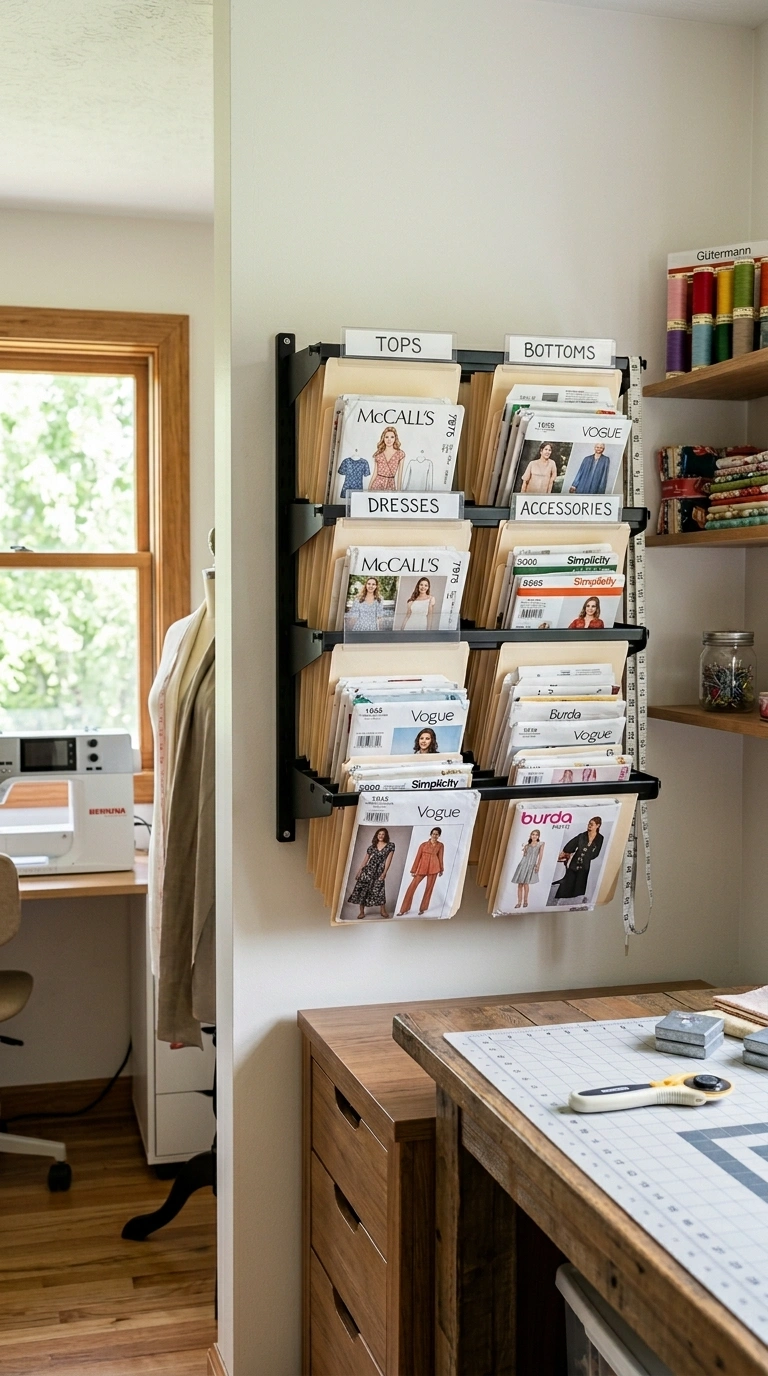
Sewing patterns, whether commercial tissue patterns, PDF printed patterns, or self-drafted patterns, need organized storage that makes each pattern findable without searching through a pile. File commercial patterns in a hanging file system organized by garment type: tops, bottoms, dresses, accessories. Store PDF patterns in clear labeled envelopes in a binder or filing box. Self-drafted patterns in larger formats can be rolled and stored in labeled tubes or in a wide flat file drawer. The pattern storage system should make it possible to find any specific pattern within about thirty seconds, which is the threshold where the organizational system genuinely saves time versus searching.
9. Design Wall Surface
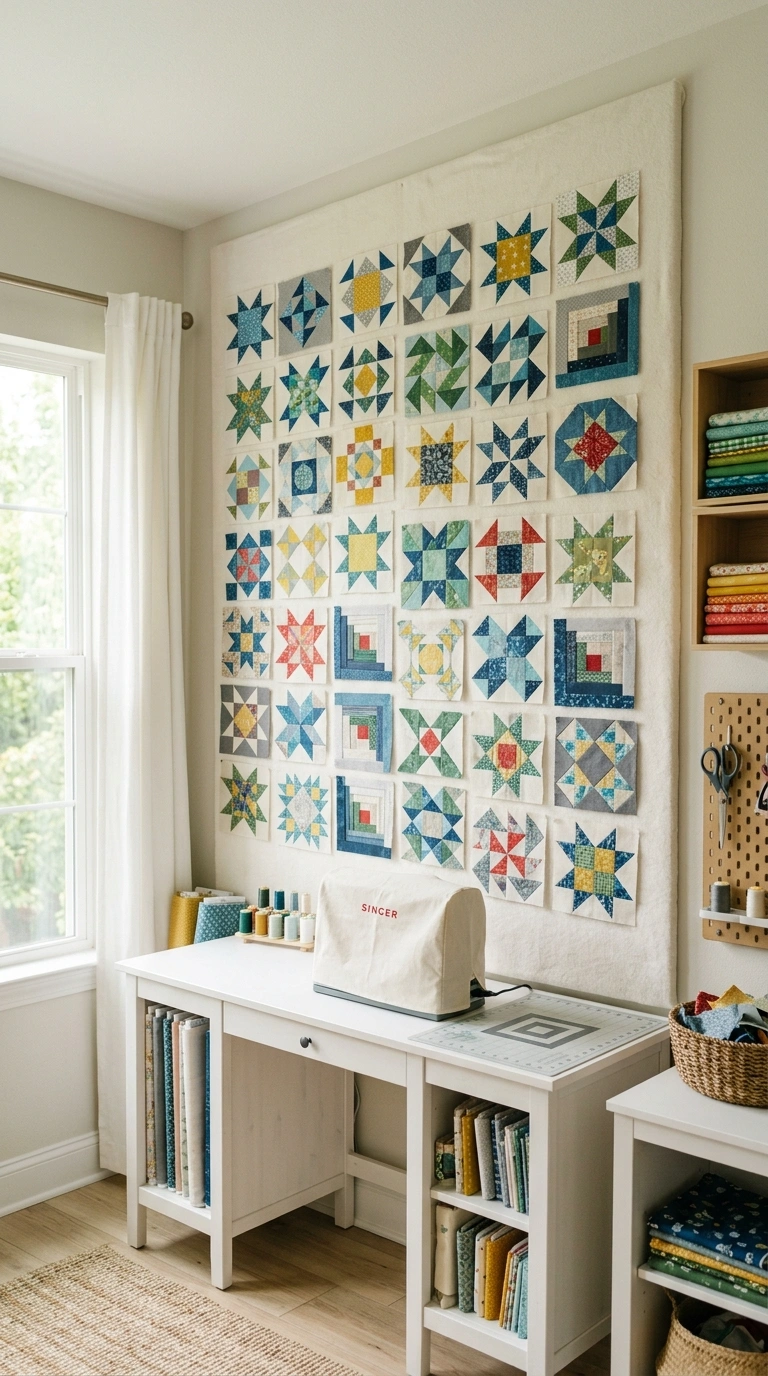
A design wall, a section of wall covered in flannel, felt, or batting material that fabric pieces temporarily stick to without pins, allows the sewist to view quilt blocks, garment pieces, or fabric combinations from a distance before committing to construction. The design wall is particularly valuable for quilters and for anyone working with pattern placement or color arrangement. Mount a large piece of cotton batting or flannel on a wall at eye level using tacks or a tension curtain rod system. The fabric pieces adhere to the surface through friction and can be rearranged without pinning. A design wall of at least four by four feet is useful for most projects.
10. Comfortable Sewing Chair
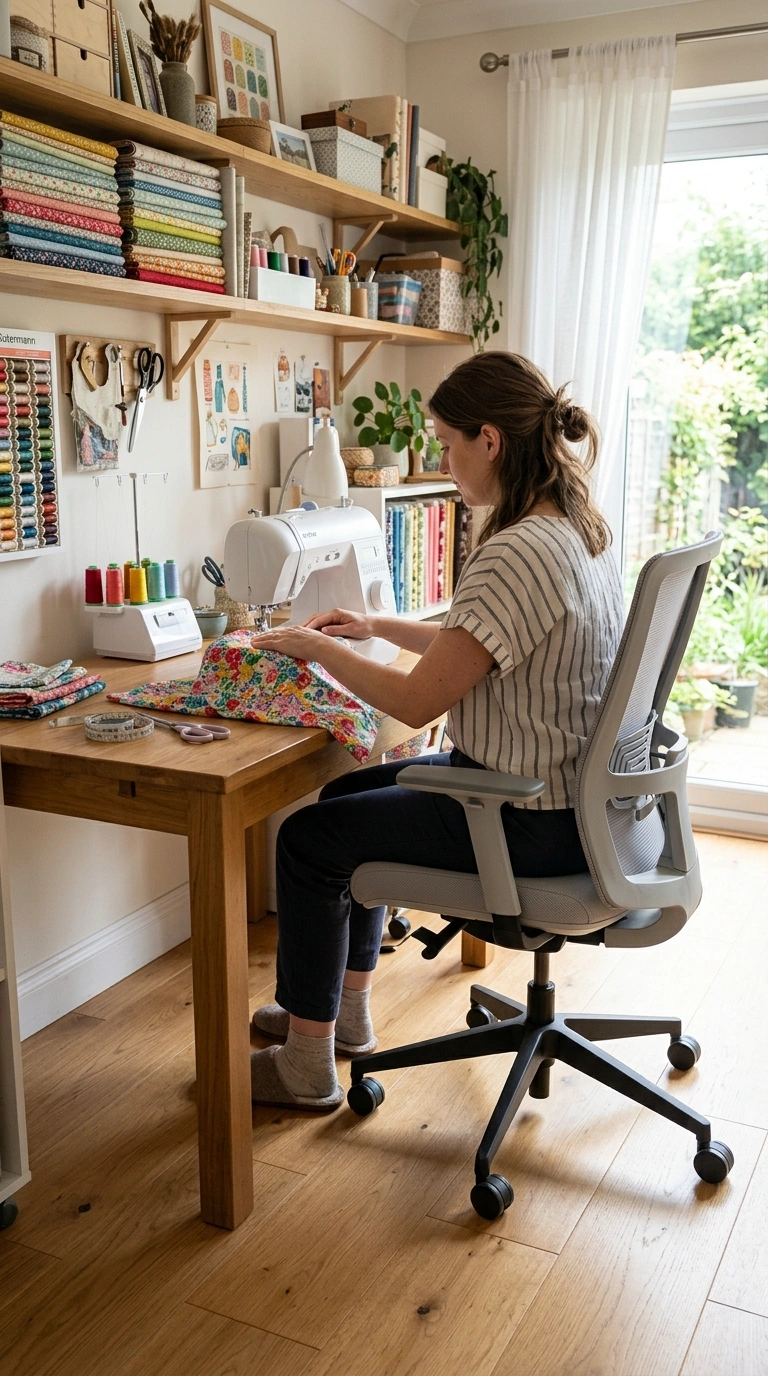
Hours of seated sewing require a chair that provides proper back support, adjustable height, and a comfortable seat that does not create pressure points during long sessions. A standard kitchen chair is typically the wrong height and lacks the adjustability that extended sewing sessions need. An adjustable office chair with proper lumbar support, set to the correct height for the sewing table, is the most functional option. Choose a chair that rolls smoothly between the machine station and the nearby pressing station. The chair is one of those invisible investments that affects every sewing session without being noticed until it is wrong.
11. Bobbin Organization System
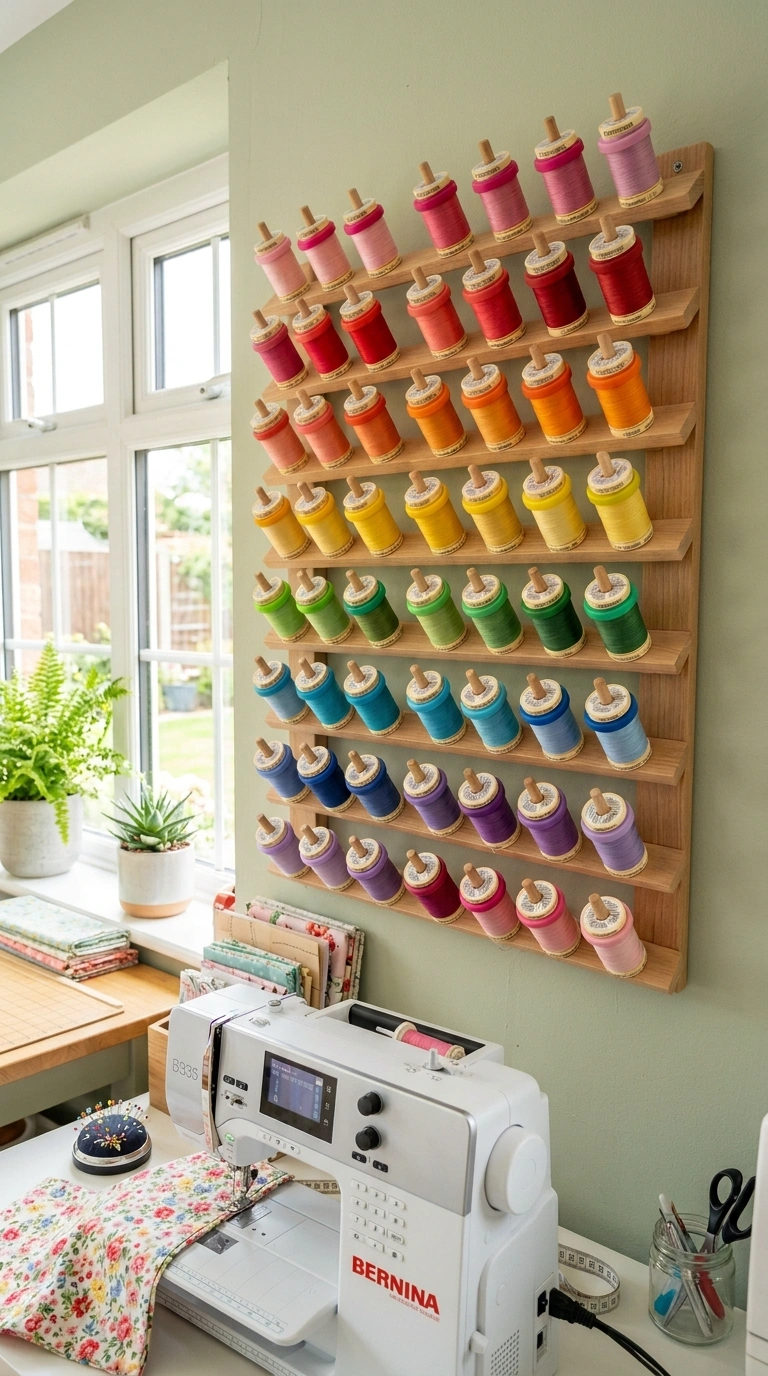
Loose bobbins scattered in a drawer or tangled in a bag are one of the most persistent small frustrations in any sewing room. A dedicated bobbin storage system, whether a bobbin box with individual compartments, a bobbin tower that stacks bobbins vertically, or a set of bobbin rings that clip wound bobbins to their matching thread spools, keeps every bobbin identifiable and accessible. Matching each wound bobbin to its corresponding thread spool is the most efficient system since it eliminates the step of winding a new bobbin when changing thread colors. Store the bobbin-and-spool pairs in the thread rack together.
12. Wall-Mounted Ruler Rack
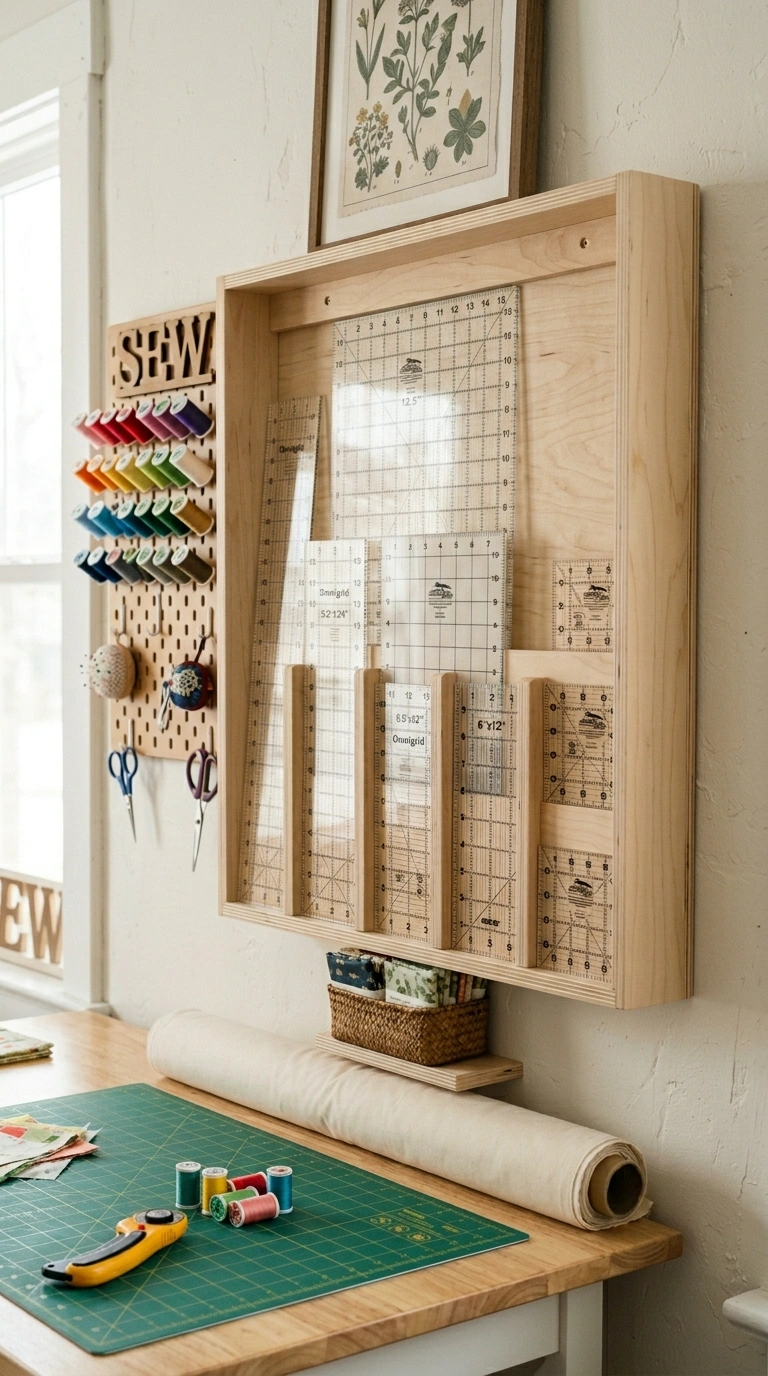
Quilting rulers, cutting mats, and long measuring tools are awkward to store flat in a drawer because of their length and are easily damaged when stacked under other items. A wall-mounted rack specifically designed for quilting rulers holds them vertically in individual slots where they are visible, protected, and accessible. Mount the ruler rack on the wall near the cutting table for immediate access during cutting sessions. The rack also displays the rulers as a visual element, since the clear acrylic and the ruled markings have a graphic quality that adds a designed detail to the sewing room wall.
13. Scrap Fabric Management
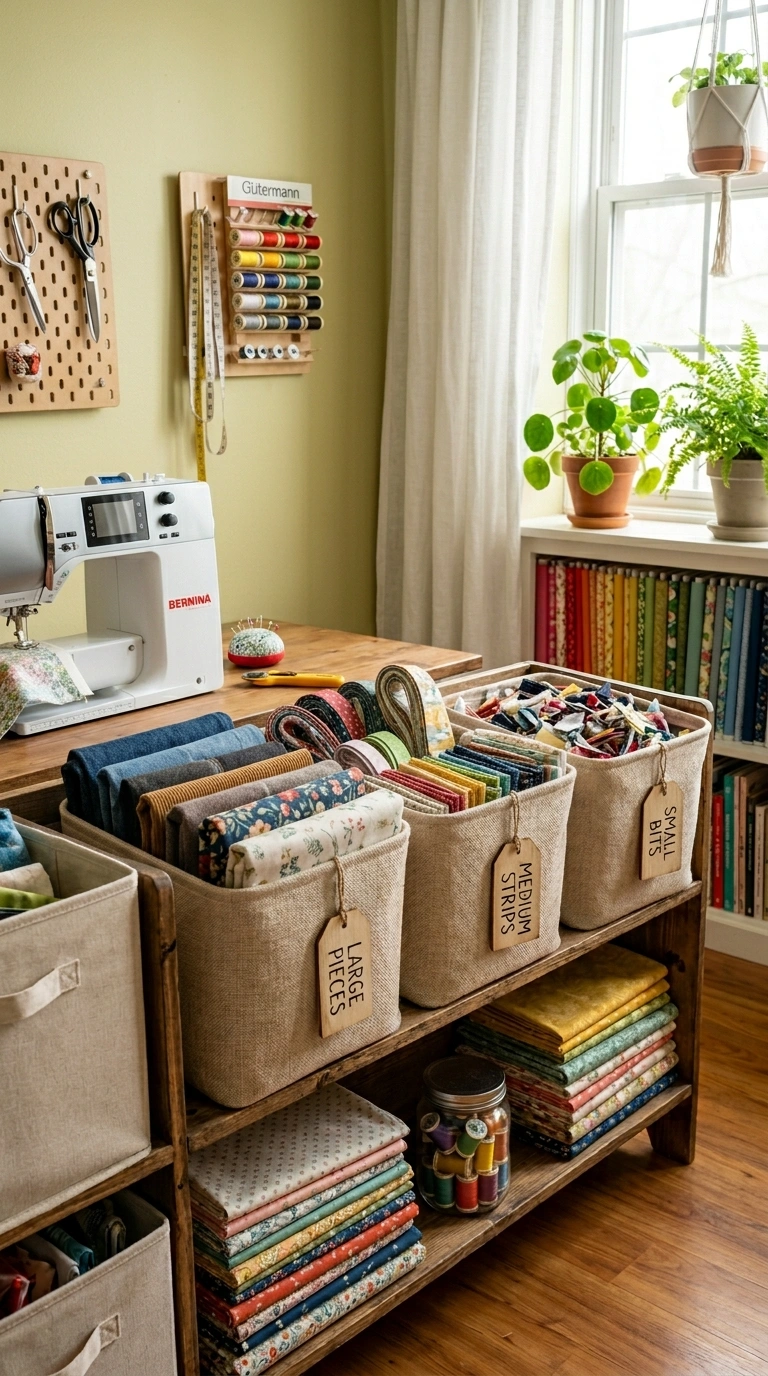
Fabric scraps accumulate rapidly in any active sewing room and quickly become a disorganized mass that takes up disproportionate storage space. An effective scrap management system sorts scraps by size into labeled bins: large pieces suitable for small projects in one bin, medium strips useful for bindings and small patchwork in another, and tiny pieces suitable only for stuffing or textile art in a third. Keeping only genuinely useful scrap sizes and composting or donating the rest prevents the scrap collection from overwhelming the organized fabric storage. A regular monthly scrap sort keeps the system manageable.
14. Inspiration Board Display
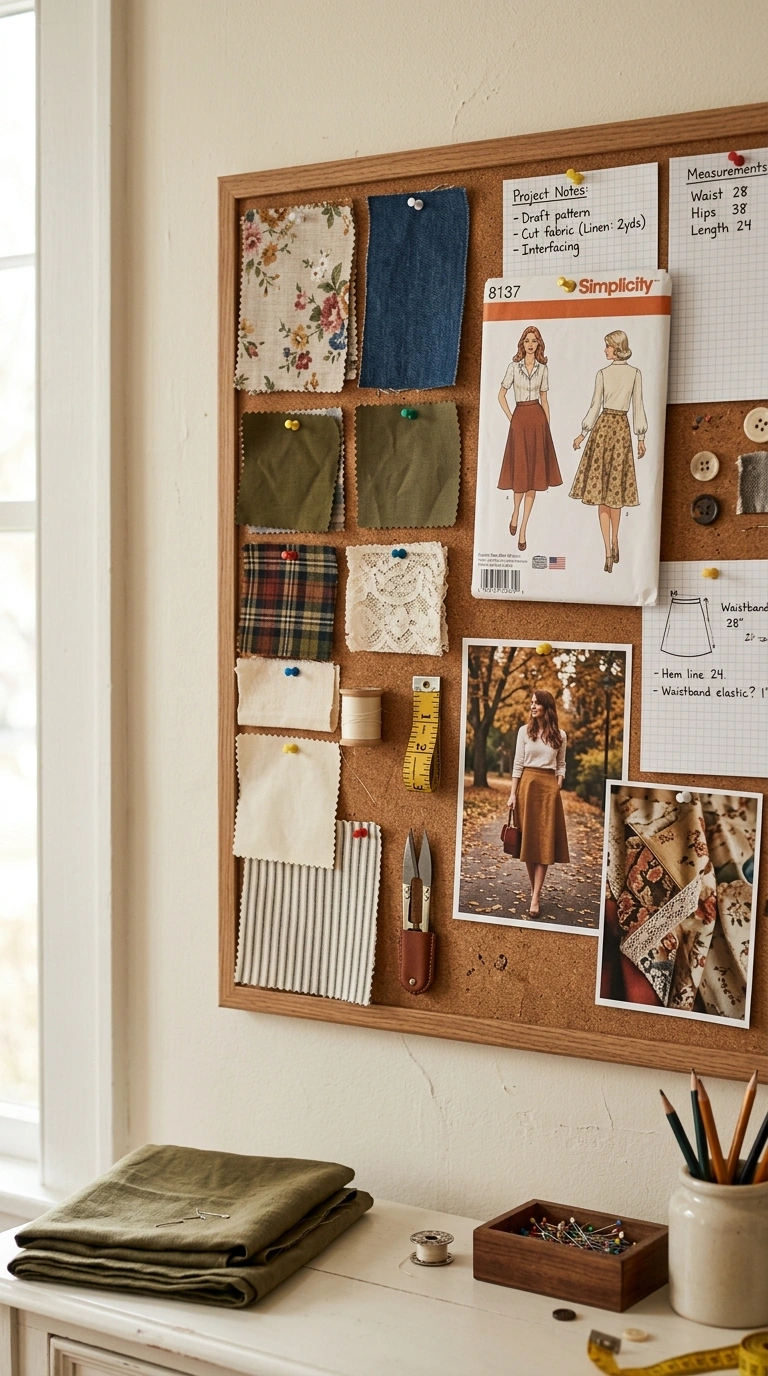
A pinboard, corkboard, or magnetic board on the sewing room wall holds current project inspiration, fabric swatches, pattern sketches, color palette references, and design ideas in a visible and easily updated display. The board keeps the current project’s reference material at eye level rather than buried in a folder on a phone or a computer. Pin the specific fabric swatches for the current project, the pattern envelope or sketch, any reference photographs, and notes about construction steps. Update the board when the current project changes. The inspiration board also adds a colorful and personal visual element to the room.
15. Good Music or Podcast Setup
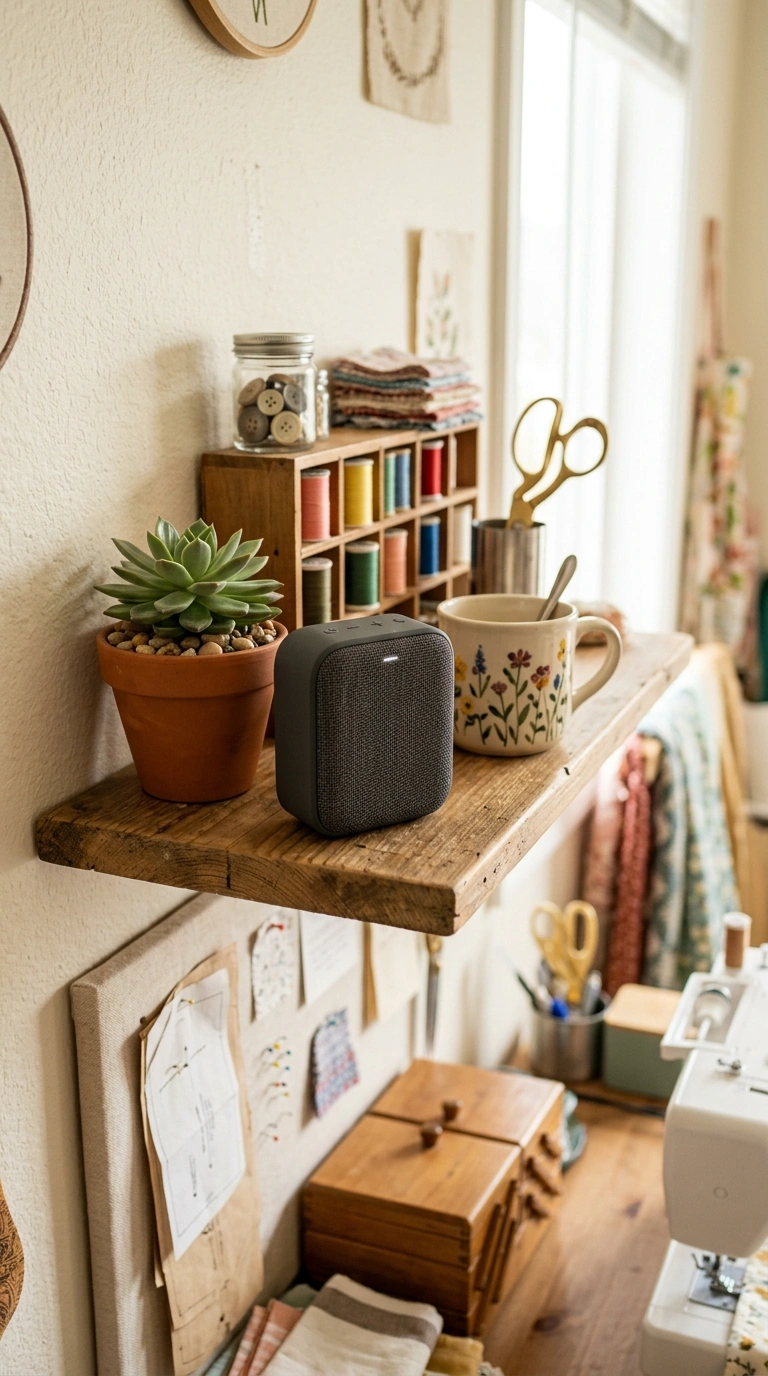
A small Bluetooth speaker in the sewing room provides background audio during sewing sessions, which makes the hours of detailed work pass more pleasantly and helps maintain focus during repetitive tasks like cutting and straight stitching. Position the speaker where the audio fills the room without being directionally loud. Sewing podcasts, audiobooks, and music playlists are the most common audio companions for sewing sessions. The speaker should be small enough to be visually unobtrusive and positioned out of the way of fabric and cutting activities. For a similar approach to creating a warm productive atmosphere through audio, the home gym guide covers how the right sound setup transforms a functional room into one you genuinely enjoy using.
16. Natural Light Positioning
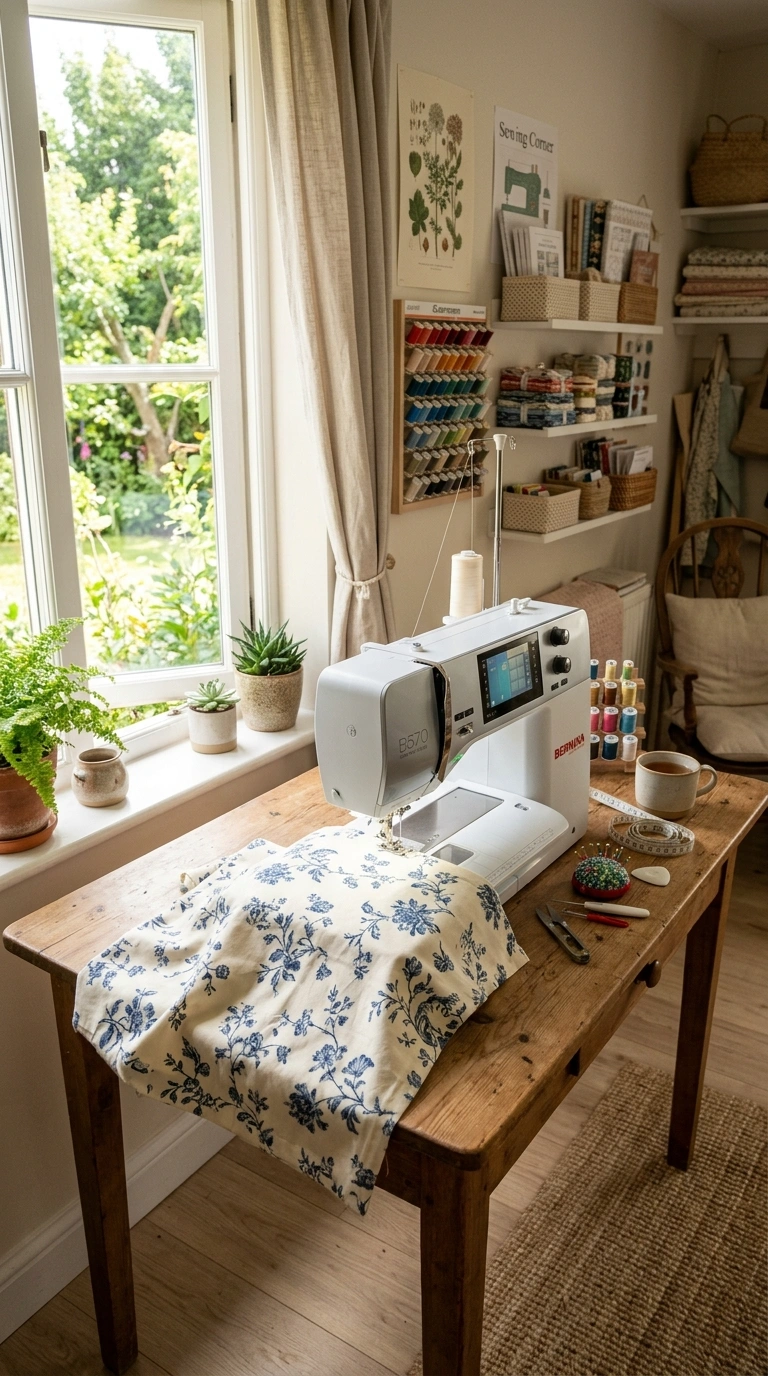
Position the primary sewing machine so the natural light from the nearest window falls on the machine from the left side for right-handed sewists, or from the right for left-handed sewists. This positioning ensures the strongest natural light illuminates the needle area and the fabric being guided through the machine without the sewist’s body casting a shadow on the work surface. If the room layout does not allow ideal window positioning, supplement with a strong daylight-temperature task lamp positioned to replicate the effect. The quality of light at the machine directly affects eye strain, color accuracy, and the precision of detailed work.
17. Vertical Storage Priority
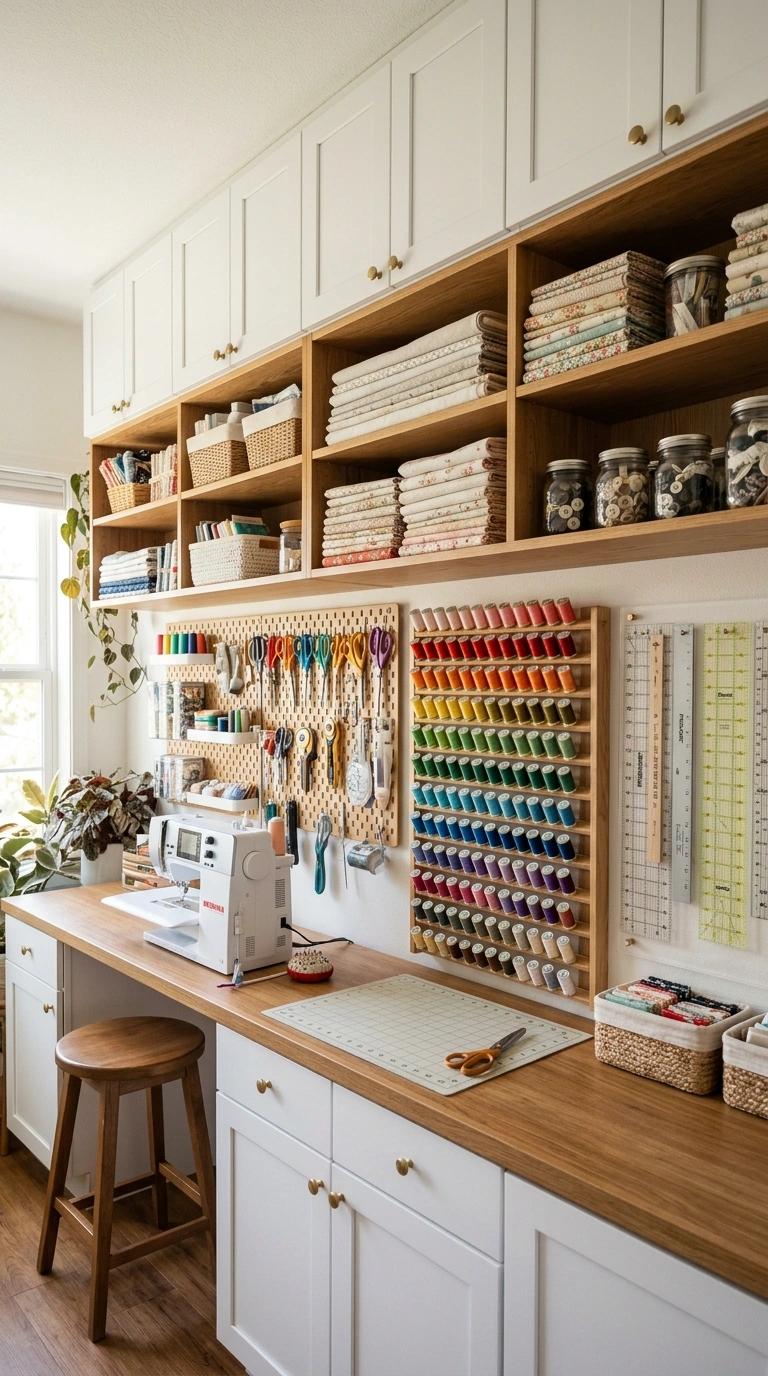
Sewing rooms are typically small, which means vertical storage, using the wall space from counter height to ceiling, is essential for fitting the full inventory of supplies into the room. Wall-mounted shelves, wall-mounted thread racks, pegboard organizer panels, wall-mounted ruler racks, and overhead cabinets all use vertical space that the floor footprint leaves no room for. Install shelving on every available wall at heights from eye level to near the ceiling. The least frequently used items go highest. The most frequently used items stay within arm’s reach of the primary work stations.
18. Project Basket System
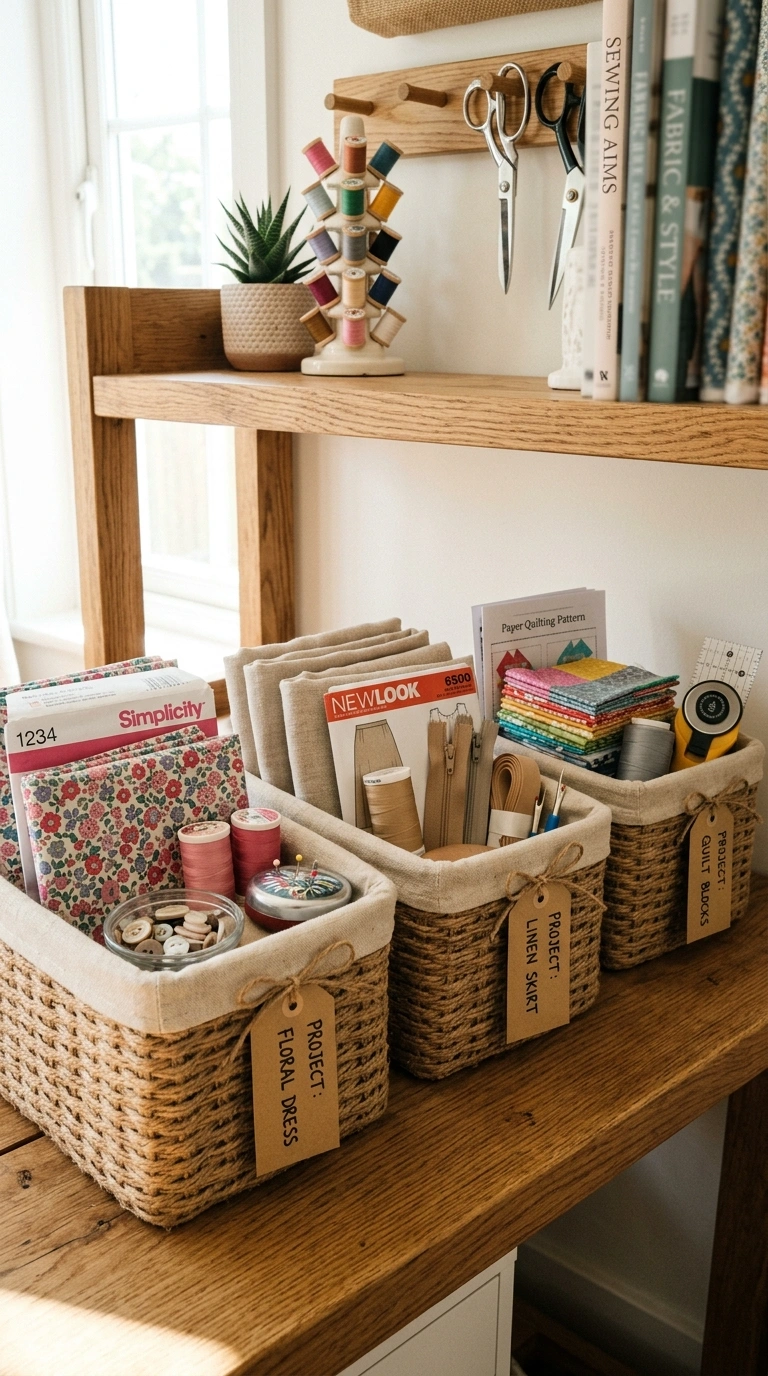
A set of baskets or bins, each dedicated to a specific current project, keeps the pieces, pattern, notions, and reference materials for each in-progress project contained as a single unit rather than scattered across the room. When switching between projects, the current basket goes back on the shelf and the next project’s basket comes out. The basket system prevents the mixing of pieces from different projects, which is one of the most common sources of sewing room chaos. Label each basket with the project name and keep a maximum of three or four active project baskets at any time to prevent the system from becoming overloaded.
19. End-of-Session Reset
The most organized sewing room stays organized because of a simple end-of-session reset habit: before leaving the room after each sewing session, return tools to their designated spots, fold or put away fabric that is not part of the active project, sweep or vacuum thread and fabric bits from the floor, and clear the cutting table surface. The reset takes three to five minutes and ensures the room is ready for the next session without the discouraging sight of yesterday’s mess. The reset habit is what allows all the organizational systems to actually function over time rather than gradually degrading into the chaos that most sewing rooms eventually fall into without maintenance.
A sewing room that stays organized and easy to work in is built on the right table heights, good lighting, visible and accessible storage for every category of supply, and the daily habit of resetting the room after each session. The organizational systems create the infrastructure and the daily reset maintains it. Pick the ideas that address the biggest frustrations in your current setup and implement those first. The room will tell you what to fix next.