20 Home Gym Ideas That Make Your Workout Space Genuinely Motivating
Most home gyms feel like a compromise. They are a corner of a garage with a barbell on the floor, or a spare bedroom with a treadmill that has become an expensive clothes rack. The workout happens grudgingly when it happens at all, because the space itself does not feel like a real gym. A home gym that genuinely works is one where the space has been designed to support the actual workout rather than just store the equipment. The flooring handles the impacts. The lighting creates energy. The layout makes the workout flow naturally. The atmosphere feels motivating rather than depressing. These 20 ideas cover the practical and the atmospheric decisions that transform a room with equipment in it into a home gym that you actually want to train in.
1. Proper Rubber Flooring
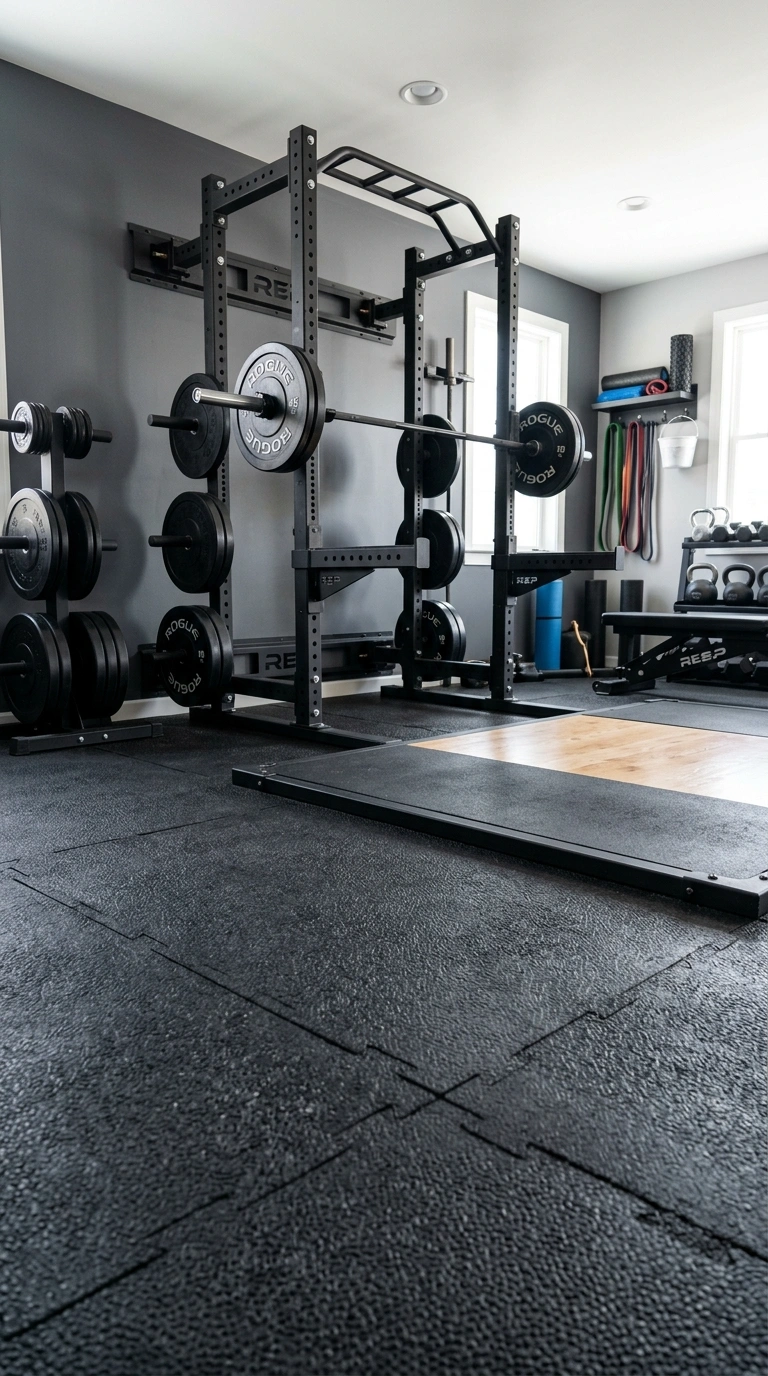
The flooring is the foundation of any serious home gym and the wrong floor limits what exercises can be done safely. Interlocking rubber floor tiles, available in standard gym thicknesses of three-eighths to three-quarters of an inch, provide the shock absorption needed for dropped weights, the grip needed for dynamic movements, and the durability to handle heavy equipment without damage. Rubber flooring also protects the floor beneath it from the scratches and dents that barbells and dumbbells inevitably cause. Cover the full workout area rather than just the area directly under equipment, since the workout involves movement across the floor. Choose tiles in black or a dark gray for the most gym-like appearance.
2. Mirror on Main Wall
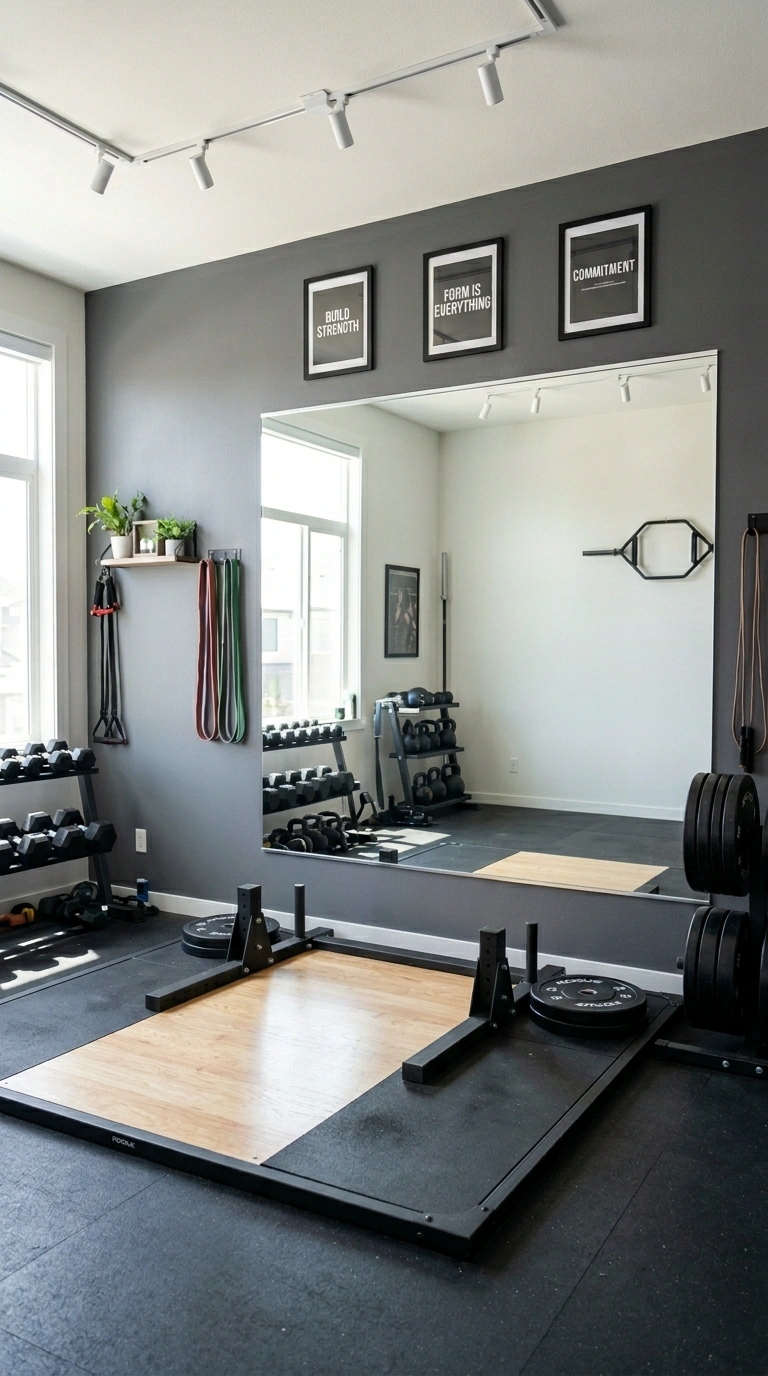
A large wall mirror on the wall facing the primary lifting or exercise position serves the genuine function of form checking during lifts and movements. The mirror allows the lifter to see their posture, alignment, and depth during squats, deadlifts, and other compound movements without needing a training partner to provide feedback. The mirror also makes the room feel larger by reflecting the available space, which is particularly valuable in smaller home gyms. Mount the mirror from about twelve inches above the floor to at least six feet high for full standing visibility. A single large continuous mirror reads as more gym-like than a collection of smaller mirrors.
3. Equipment Layout Planning
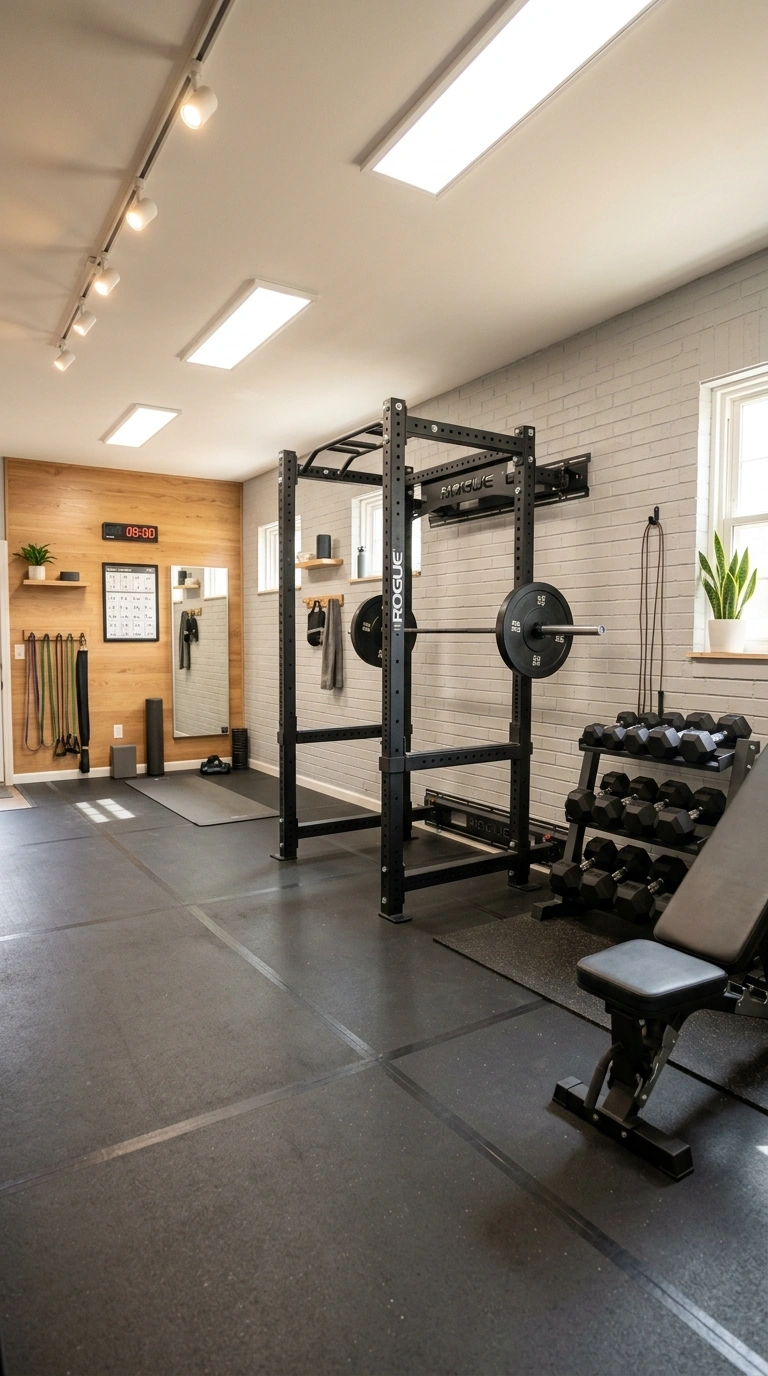
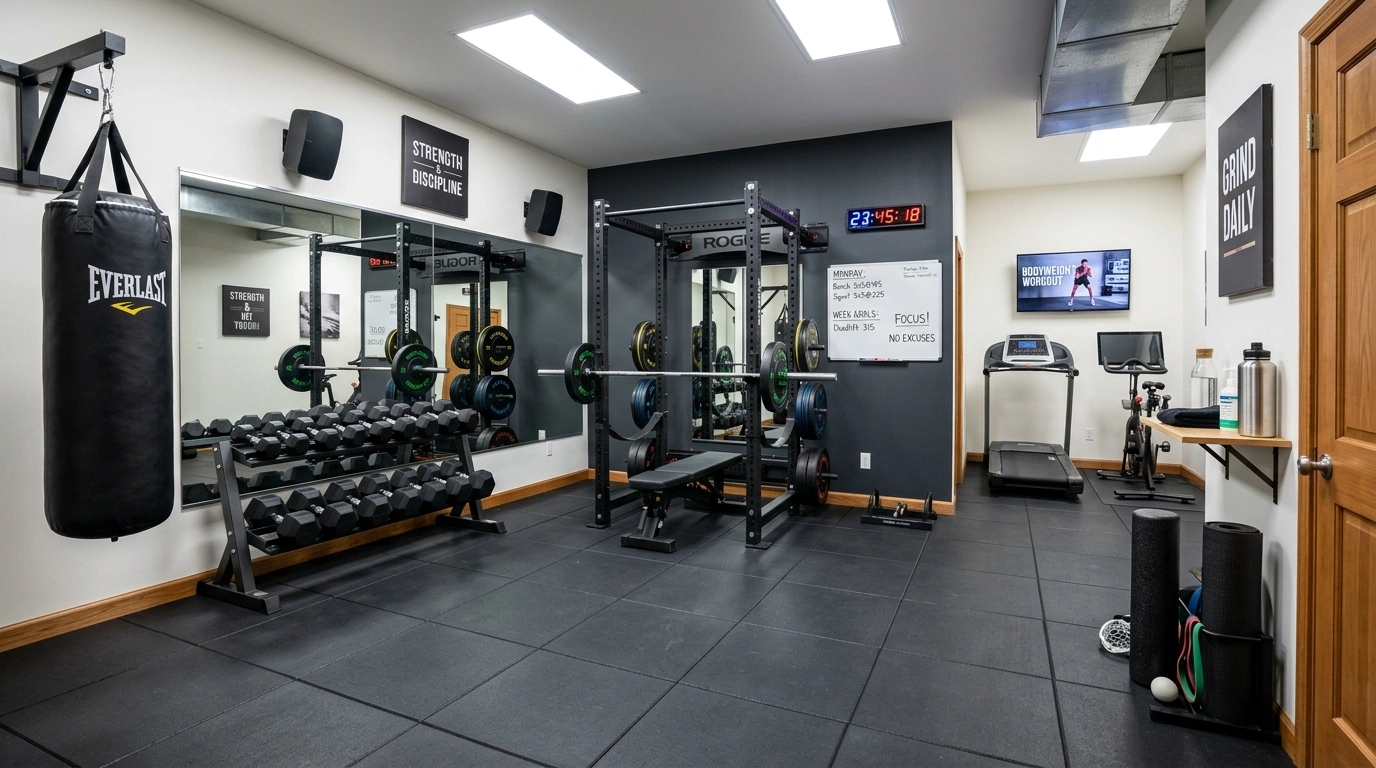
The layout of equipment in a home gym should follow the natural flow of a typical workout rather than placing equipment randomly wherever it fits. The primary lifting station, a squat rack or a power cage, anchors the room as the main feature. Dumbbells and a bench are positioned nearby for accessory work between sets. Cardio equipment sits along one wall where the user faces either a mirror, a window, or a screen. Floor space for stretching and bodyweight work remains clear and unobstructed. The layout should allow movement between stations without climbing over or around equipment. Plan the layout on paper before moving heavy equipment into the room.
4. Ventilation and Airflow
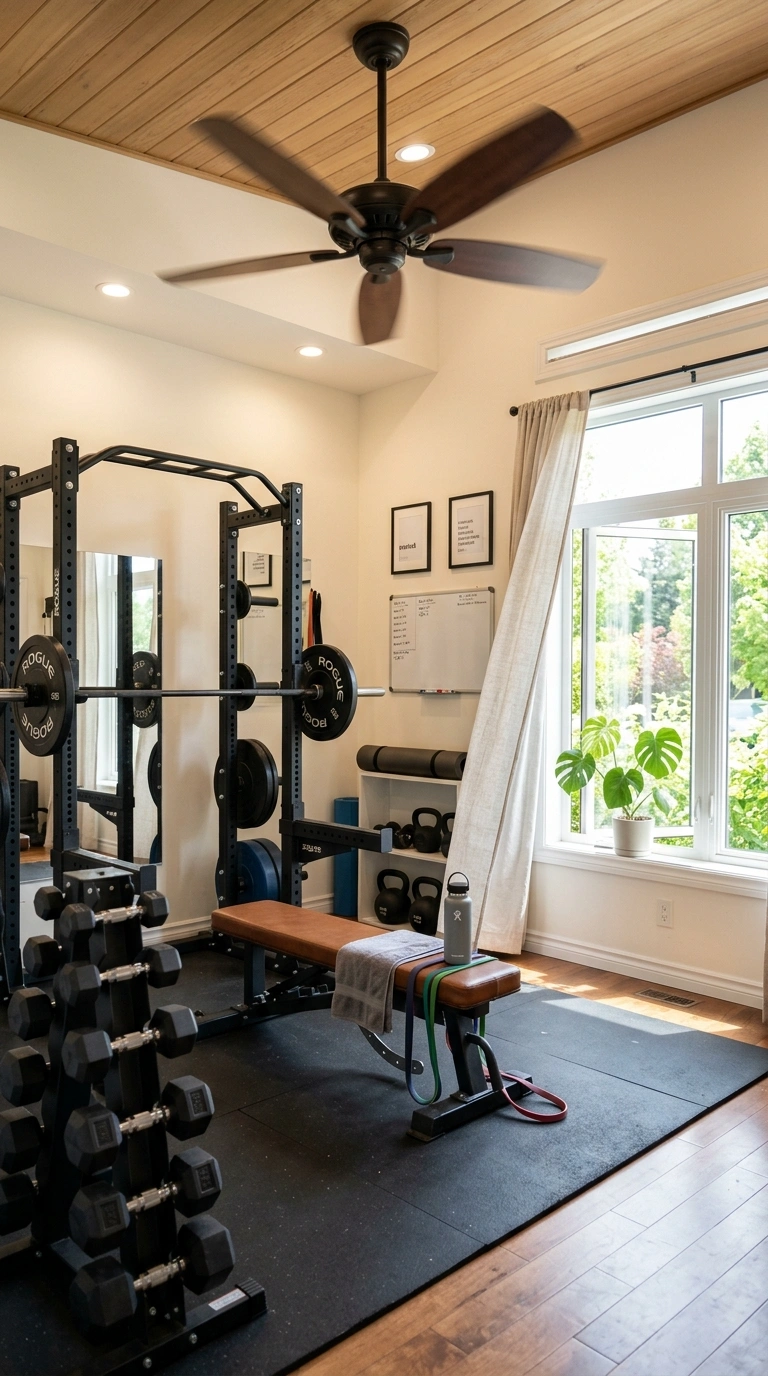
A home gym generates significant body heat and humidity during intense training, and a room without adequate ventilation becomes uncomfortably hot and humid within minutes. A ceiling fan provides constant air circulation during training. An open window provides fresh air exchange. A portable fan positioned to blow across the primary workout zone provides direct cooling. For garage gyms, a large floor fan or an open garage door provides the airflow that enclosed rooms lack. Air conditioning is the most comfortable option for indoor home gyms in warm climates. The ventilation is as important as the equipment for maintaining workout intensity and duration.
5. Energizing Light Quality
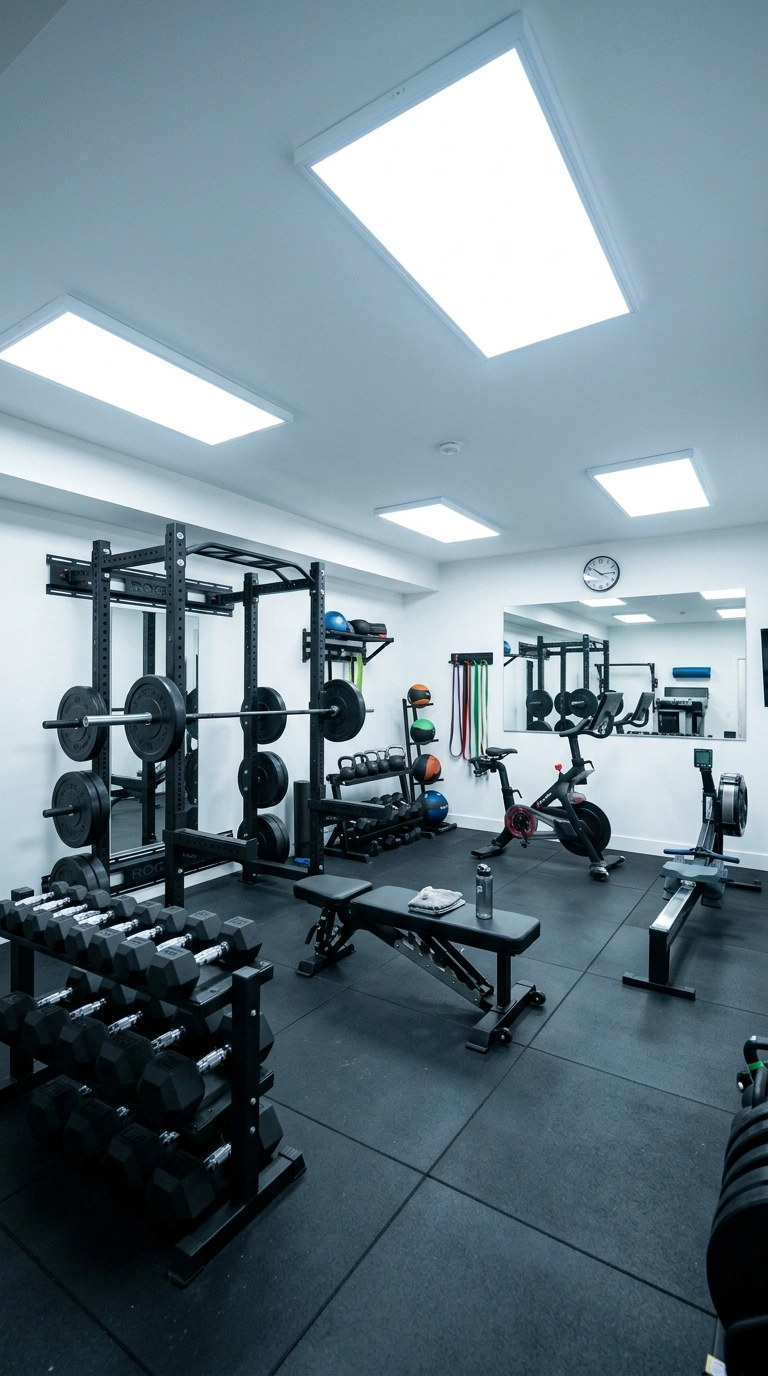
The lighting in a home gym should create energy and focus rather than the calm atmosphere that bedrooms and living rooms aim for. Bright overhead lighting in the 4000K to 5000K range, which is cooler and brighter than residential warm lighting, creates the energizing quality that commercial gyms use. If the room has a single dim overhead fixture, replace it with multiple bright LED panels or a track lighting system that illuminates the full room evenly without shadows. The bright, slightly cool lighting signals that the room is for performance rather than relaxation, which subtly shifts the mindset when entering.
6. Sound System Setup
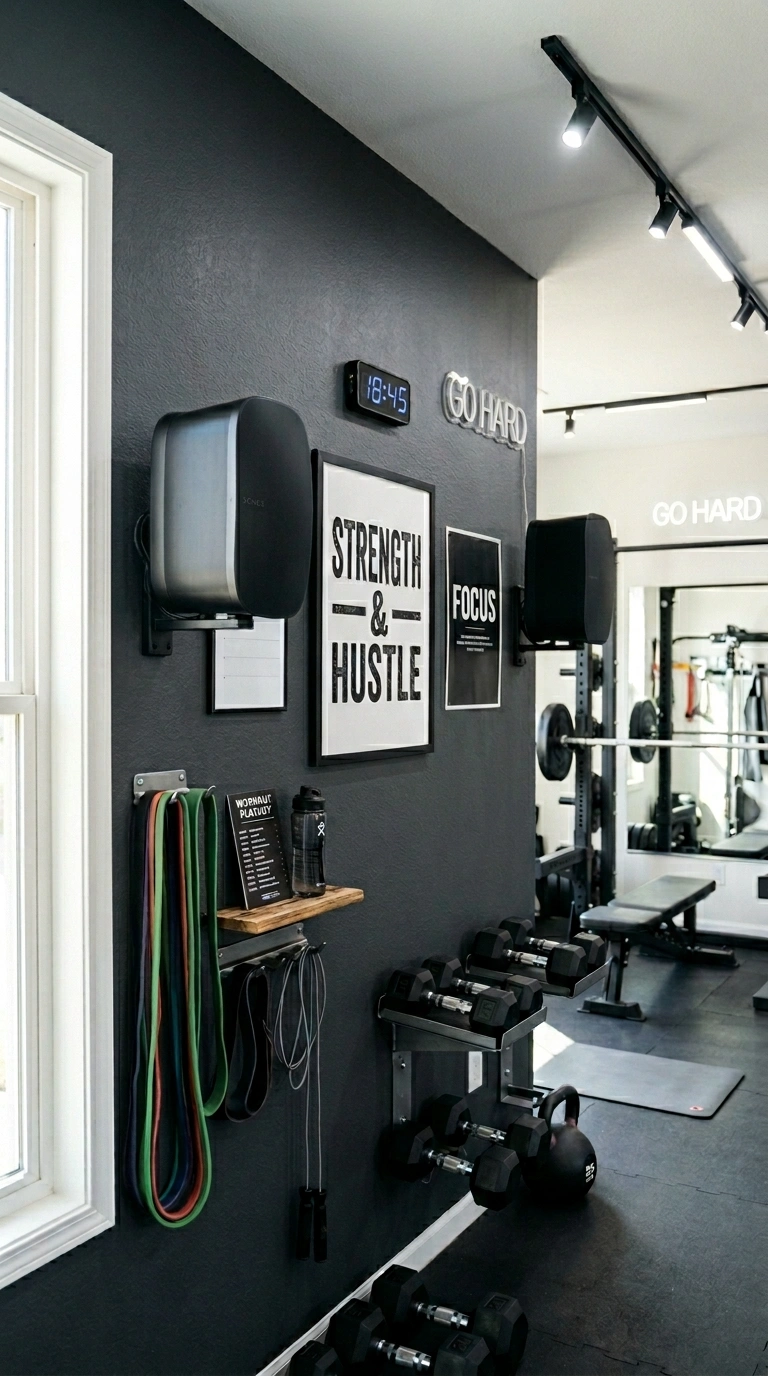
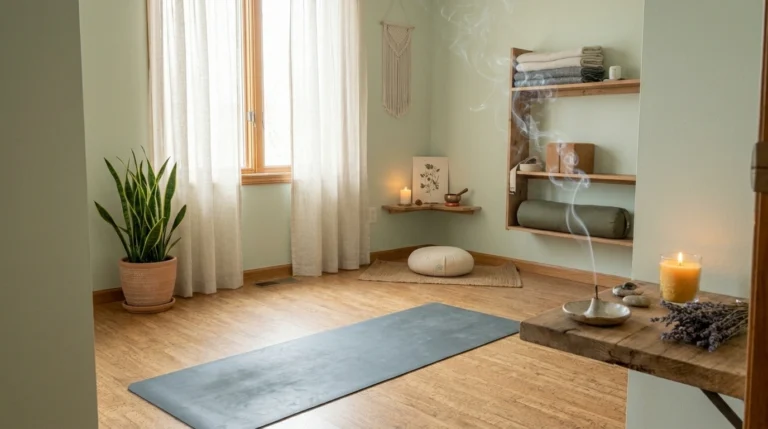
Music is one of the most consistent performance enhancers in any workout, and a home gym with a quality sound system makes the training experience significantly better than one with a phone speaker balanced on a shelf. A pair of small but quality Bluetooth speakers mounted on the wall or a single waterproof gym-rated speaker provides adequate volume and audio quality for high-energy playlists. Position the speakers to fill the room evenly rather than blasting from one direction. The ability to play music at any volume without disturbing neighbors or family members is one of the genuine advantages of a home gym over a commercial one. The same approach to room atmosphere through sound also applies to creating motivation in dedicated yoga practice spaces where the audio environment is equally important for a completely different kind of training.
7. Storage Wall System
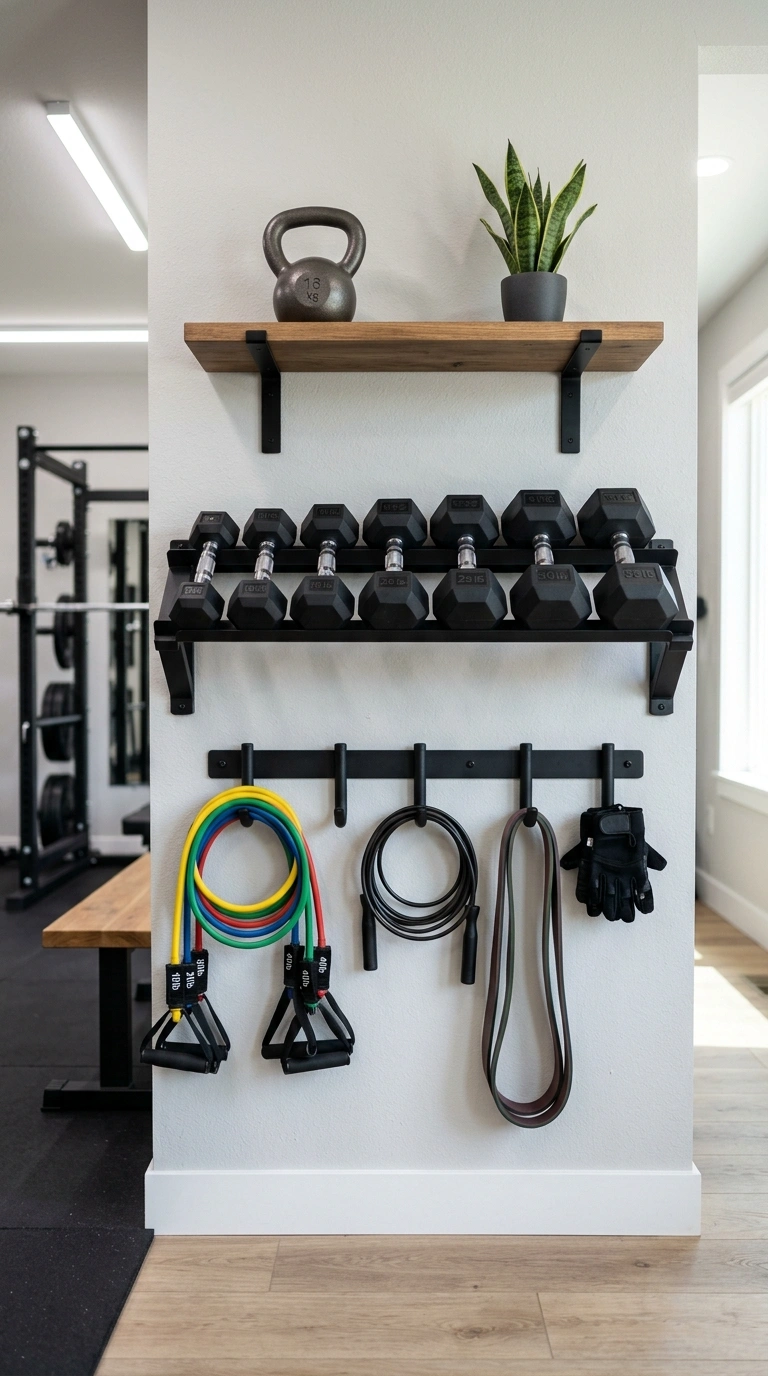
A wall-mounted storage system for dumbbells, kettlebells, resistance bands, jump ropes, and smaller accessories keeps the floor clear and the equipment organized. A wall-mounted dumbbell rack, a set of hooks for resistance bands, a shelf for kettlebells, and a small basket for jump ropes and smaller items together create a complete equipment storage wall that keeps everything visible and accessible. The organized storage wall also displays the equipment as a motivating visual, since seeing the full collection of available tools encourages using them. Floor-standing racks work as well but consume valuable floor space that wall-mounted solutions preserve.
8. Personal Best Board
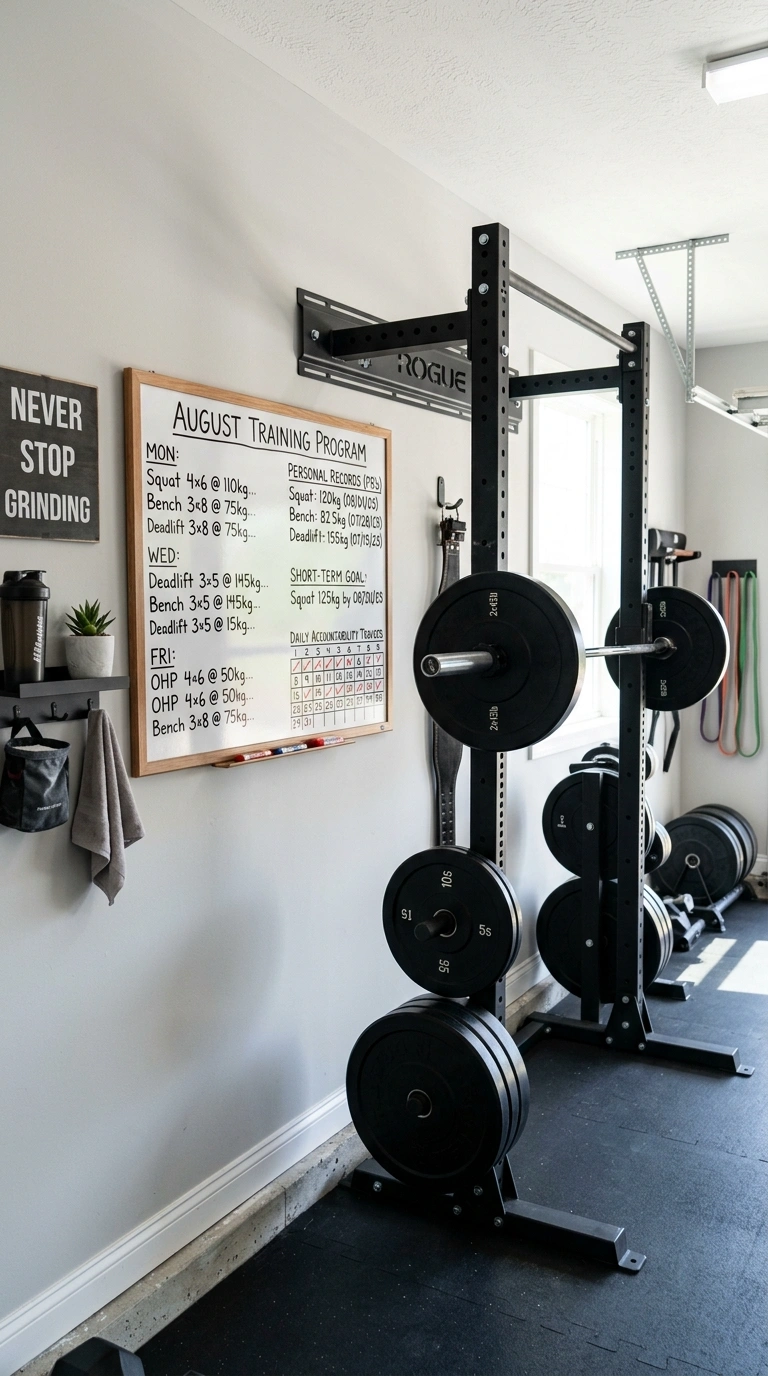
A small whiteboard or chalkboard mounted on the gym wall for tracking personal records, current programs, and training goals provides a visual reference that keeps the workout focused and progressive. Write the current training program for the week, the personal records for the main lifts, and the current short-term goal. The board is updated after each session when a record is broken or a program progresses. The visual tracker provides accountability and a small daily motivation that a training log stored in a phone app does not match, since the board is visible every time you walk into the gym.
9. Heavy Bag Mount
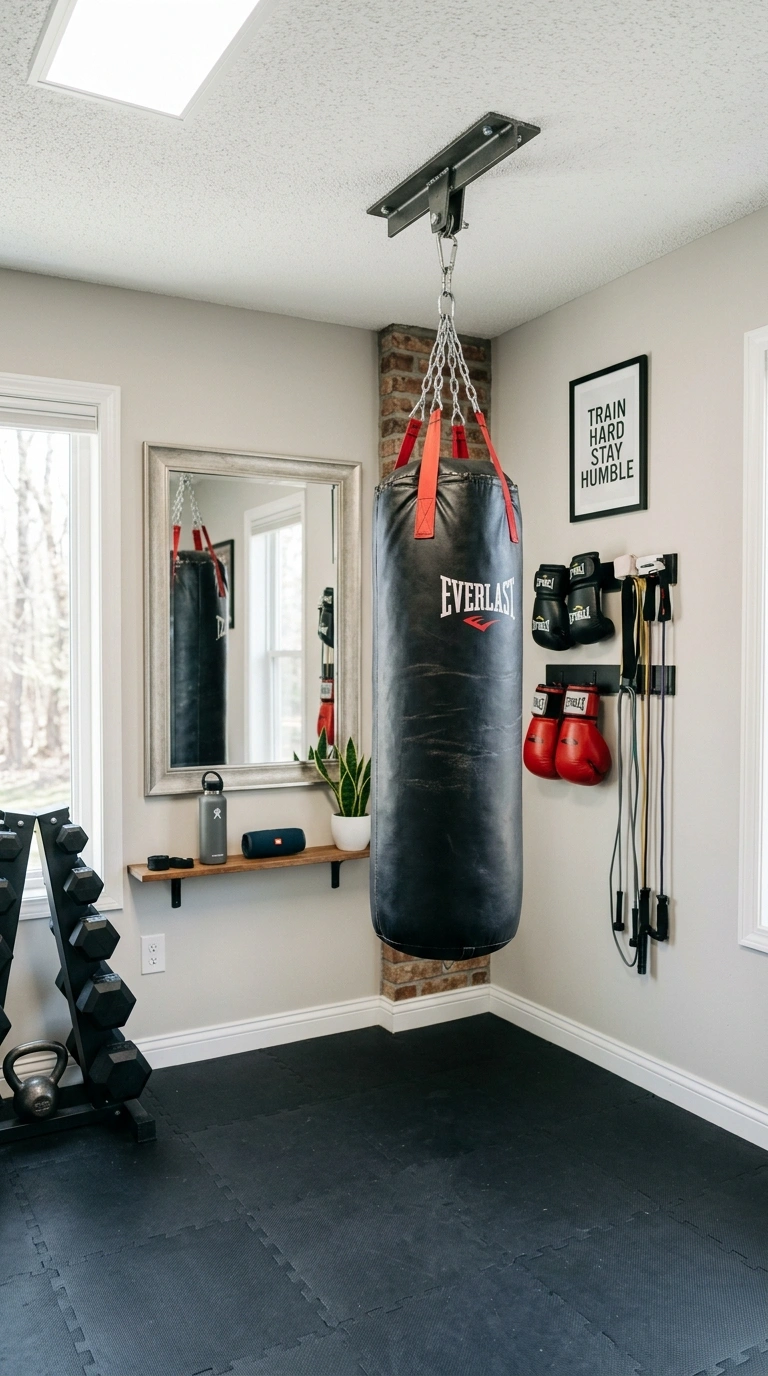
A heavy punching bag mounted from the ceiling, a wall bracket, or a freestanding frame adds a high-intensity cardiovascular and stress-relief option that traditional gym equipment does not provide. Hitting a heavy bag elevates the heart rate rapidly, develops upper body endurance, and provides the specific psychological satisfaction of physical impact that running and cycling cannot match. A ceiling-mounted bag requires a secure structural mount rated for the bag’s weight and the dynamic force of impact. A freestanding bag base works in rooms where ceiling mounting is not possible. The heavy bag also adds a substantial visual element that makes the room feel like a serious training space.
10. Television or Screen
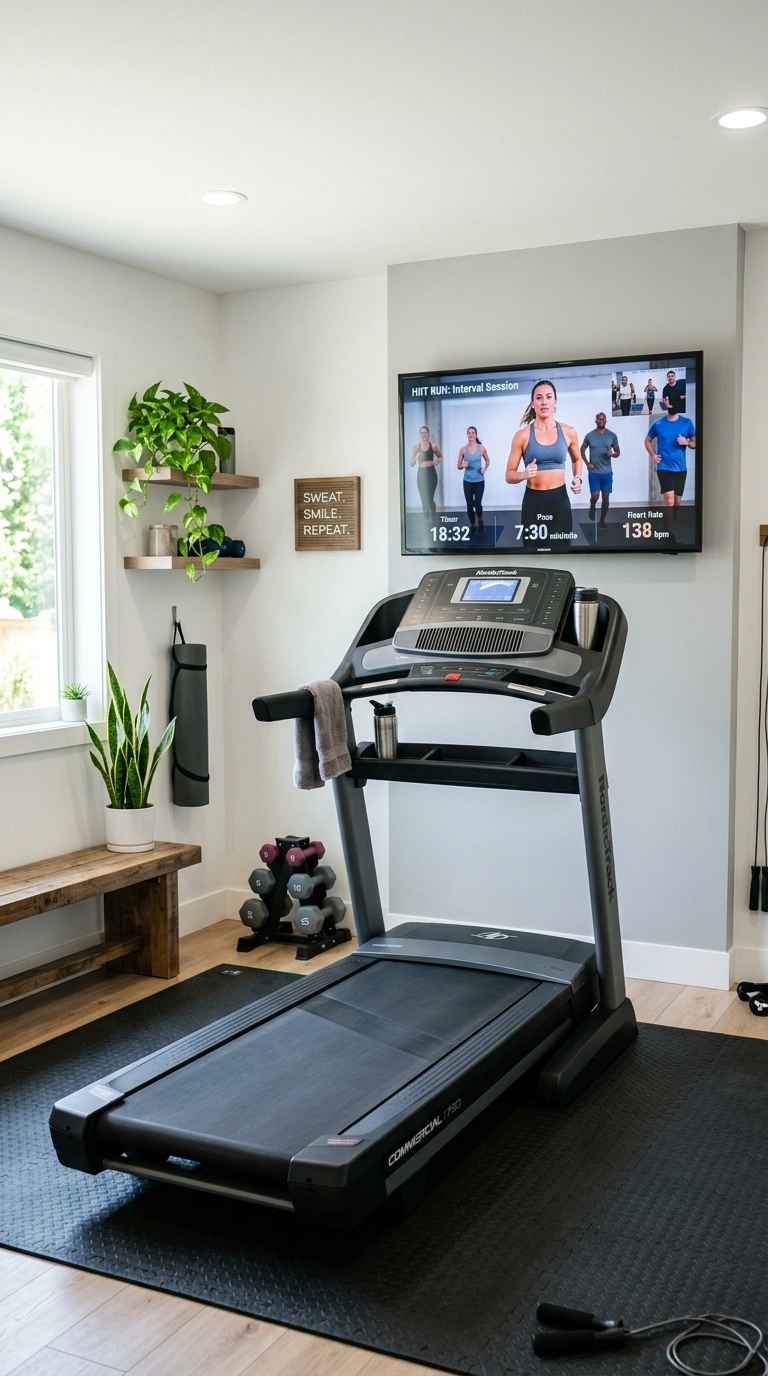
A wall-mounted television or a tablet on a stand in the home gym provides access to training videos, virtual classes, and entertainment during cardio sessions. Position the screen at eye level from the primary cardio position, whether that is a treadmill, a bike, or a rowing machine. The screen makes longer cardio sessions significantly more sustainable by providing visual engagement during what would otherwise be extended monotonous effort. A smart television with streaming access provides unlimited training content, from guided workouts to technique videos to high-energy training playlists.
11. Quality Barbell Setup
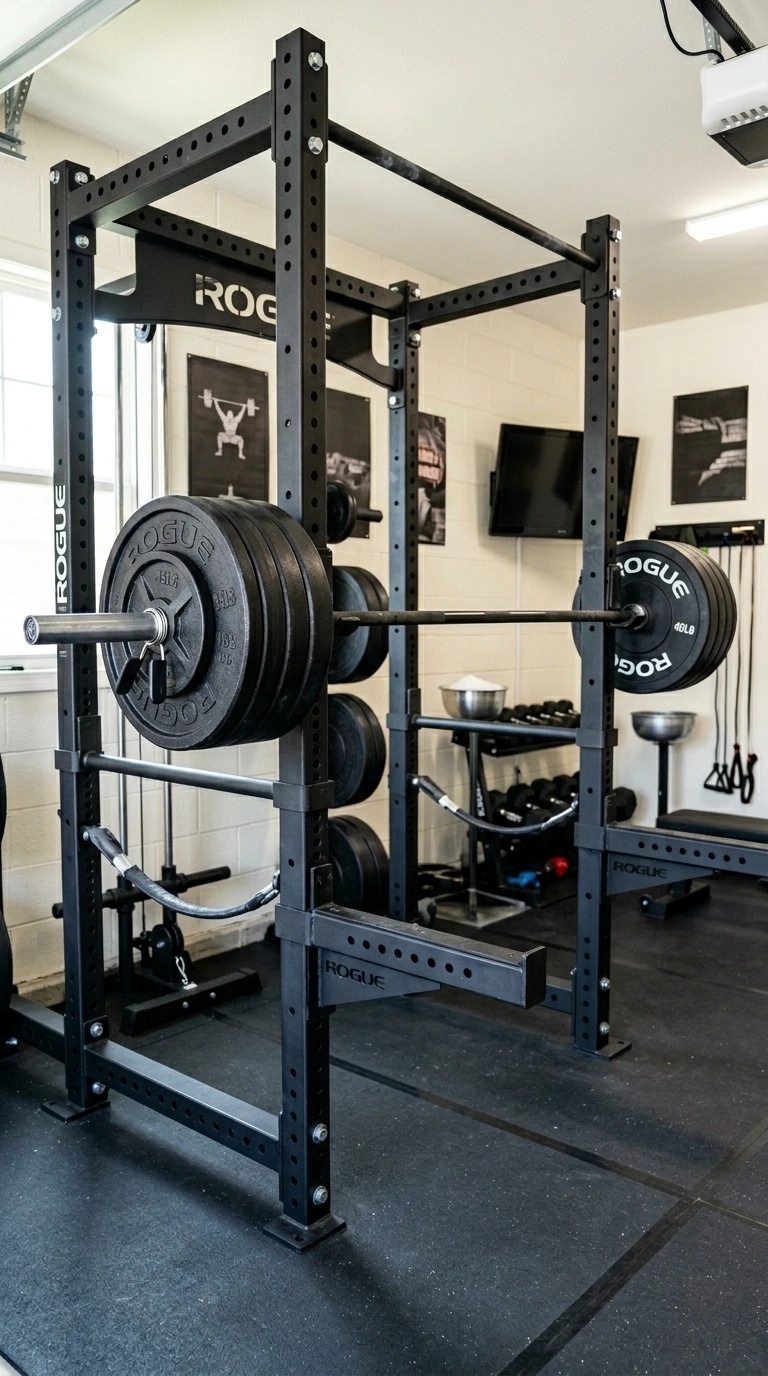
For lifters who use a barbell for compound movements, investing in a quality Olympic barbell and a proper squat rack or power cage is the most important equipment decision. A cheap barbell bends, wobbles, and lacks adequate knurling for a secure grip. A quality Olympic barbell spins smoothly, holds up to heavy loads, and develops character with use rather than deteriorating. The squat rack should have safety pins or straps set at the correct height for safe solo lifting. The barbell and rack together form the core of a serious home gym around which all other equipment is secondary.
12. Stretching and Recovery Zone
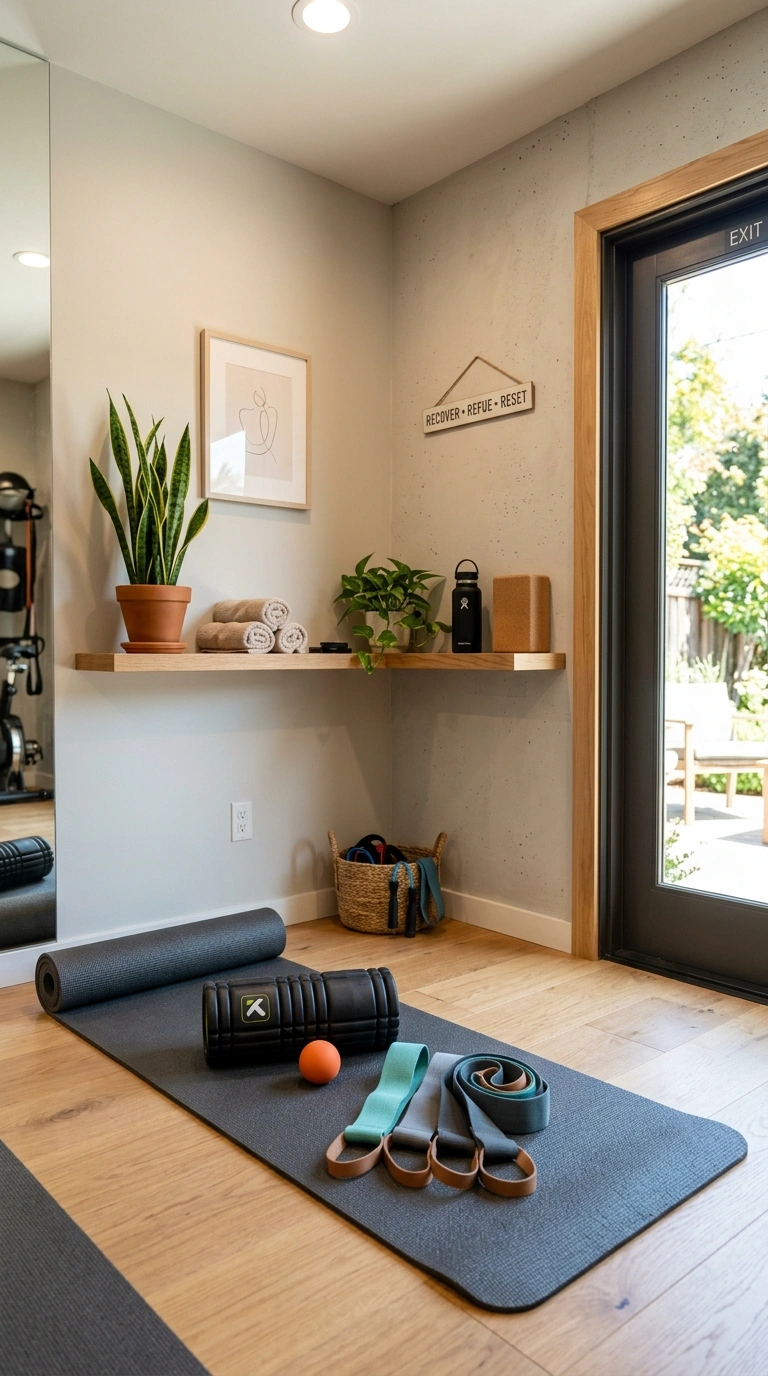
A designated area in the home gym for stretching, foam rolling, and post-workout recovery, separate from the main lifting area, encourages the recovery work that most people skip when the workout is over. A thick yoga mat or a section of softer flooring, a foam roller, a lacrosse ball, and a set of stretch bands define the recovery zone. Position it where the cooldown happens naturally after training, near the door or in a corner that is passed on the way out. The dedicated zone makes recovery feel like a natural final step rather than an extra obligation. The same principles of creating a dedicated calm zone within a functional space also work in organized sewing rooms where different zones within the same room serve different functions of the overall workflow.
13. Motivational Wall Detail
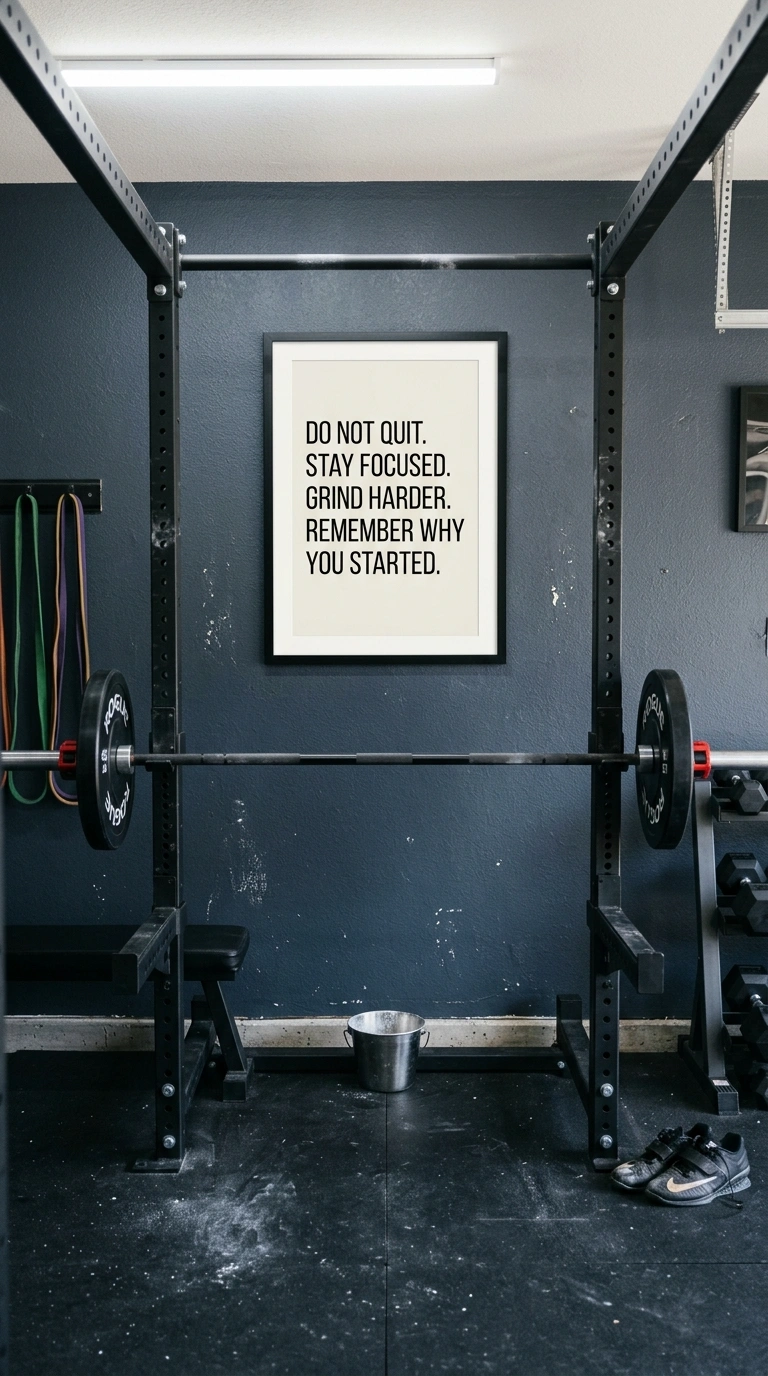
A single motivational element on the gym wall, a simple printed quote in a clean frame, a large text decal on the wall, or even just a single word like WORK or DAILY painted directly on the wall, provides a visual anchor during hard sets. The motivational element should be simple and personal rather than a generic mass-produced gym poster. One well-chosen phrase that means something specifically to you has more impact than a wall covered in generic fitness slogans. Position it where your eyes naturally land during the hardest moments of the workout, typically directly ahead of the primary lifting position.
14. Garage Gym Insulation
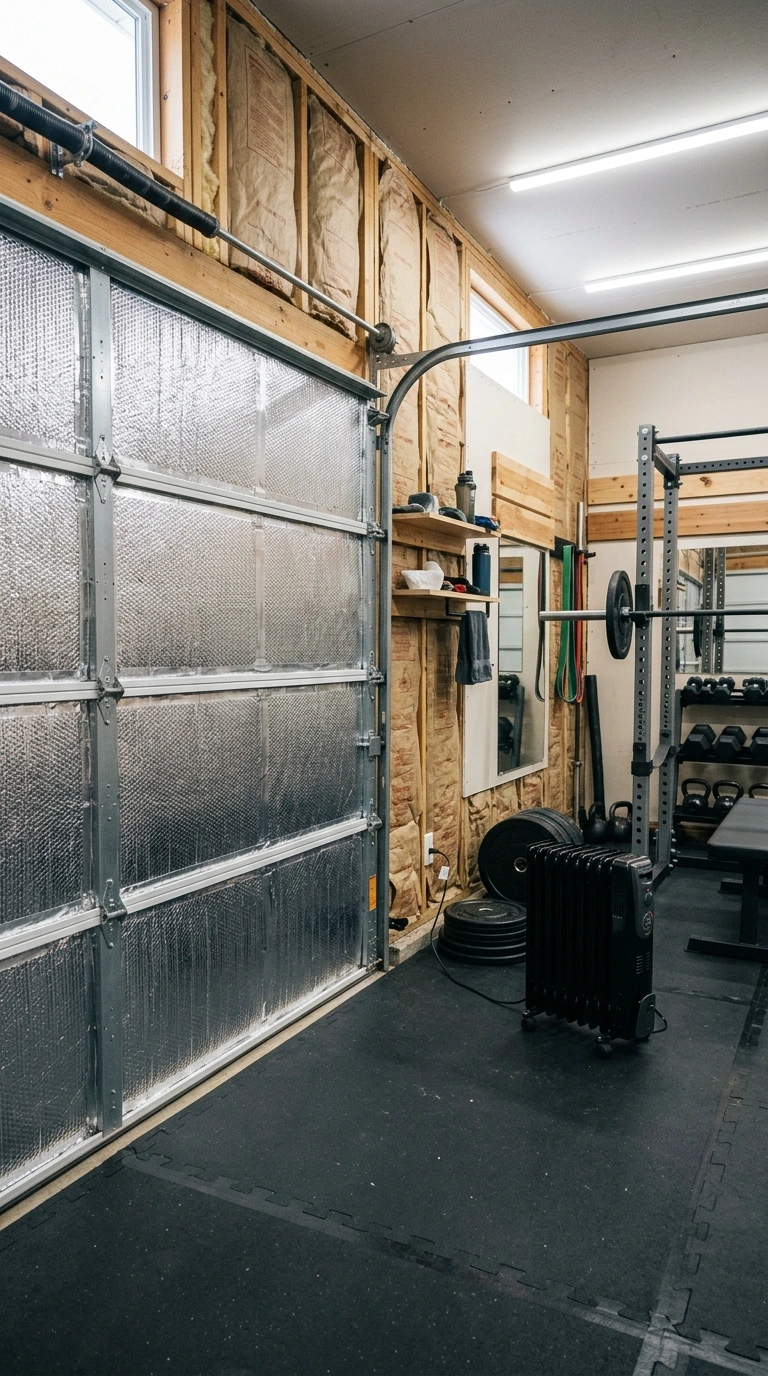
For garage gyms, proper insulation transforms an unusable seasonal space into a year-round training facility. Insulate the garage door with a reflective insulation kit, which typically costs under fifty dollars and installs in a single afternoon. Insulate the walls and ceiling if possible. A small space heater for winter and a fan or portable air conditioner for summer handle the temperature extremes that insulation alone cannot fully manage. The insulation also provides a small sound-dampening benefit that reduces the transmission of dropped weights and loud music to the rest of the house.
15. Towel and Water Station
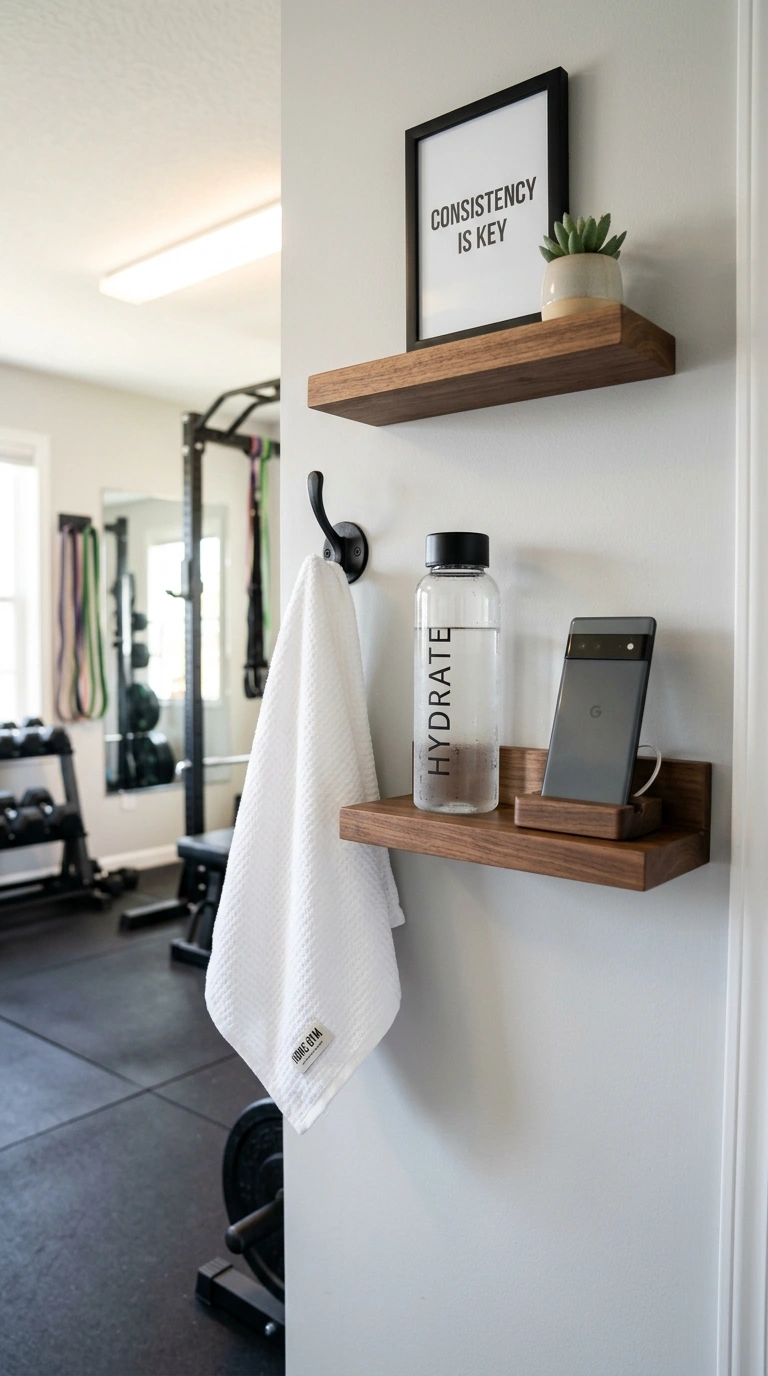
A small station near the entrance of the home gym with a hook for a clean towel, a water bottle, and a small shelf for a phone and earbuds provides the daily necessities within reach without requiring a trip to the kitchen mid-workout. The station should be stocked before the workout begins so nothing interrupts the session once it starts. A simple wall-mounted hook, a small shelf, and a designated water bottle that lives in the gym create a complete station that costs almost nothing and improves the daily workout experience meaningfully.
16. Clock or Timer Display
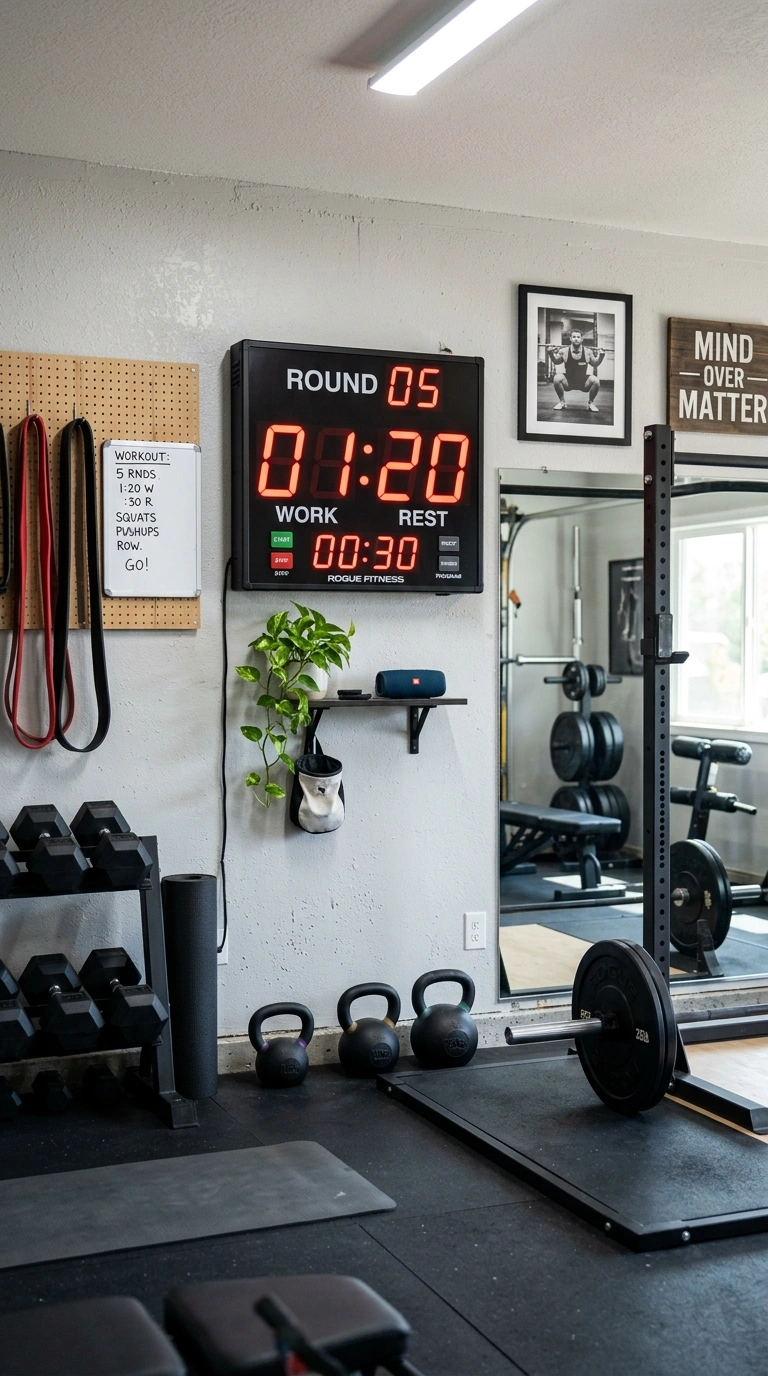
A large visible clock or a training timer on the gym wall provides time reference for rest intervals, timed sets, and overall session duration without reaching for a phone. A dedicated interval timer with programmable work and rest periods is particularly useful for circuit training, HIIT sessions, and timed strength sets. Mount the timer where it is visible from the primary workout positions. The timer’s presence encourages structured rest intervals rather than the gradual rest-creep that happens when rest periods are not tracked, which keeps the workout focused and time-efficient.
17. Painted Feature or Accent
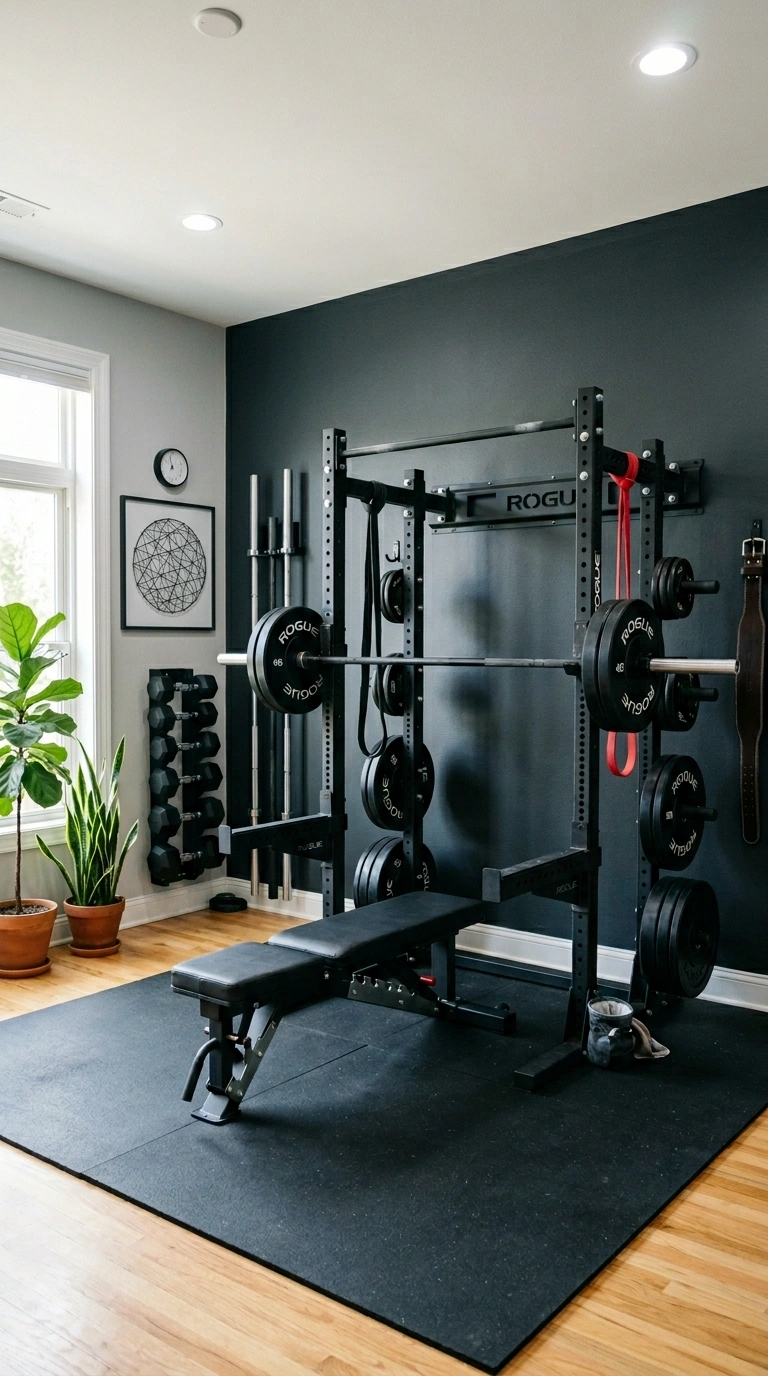
A painted accent wall, a bold color stripe at eye height, or a simple color change on one wall gives the home gym a visual identity that a plain white or bare concrete room lacks. Dark charcoal, deep navy, warm brick red, or matte black on the wall behind the squat rack creates a visual backdrop that makes the training area feel intentional rather than improvised. The color should create energy: darker bold tones for intensity, bright tones for motivation. Avoid pale pastels which read as residential rather than athletic. The paint costs very little and changes the character of the room significantly.
18. Equipment Cleaning Station
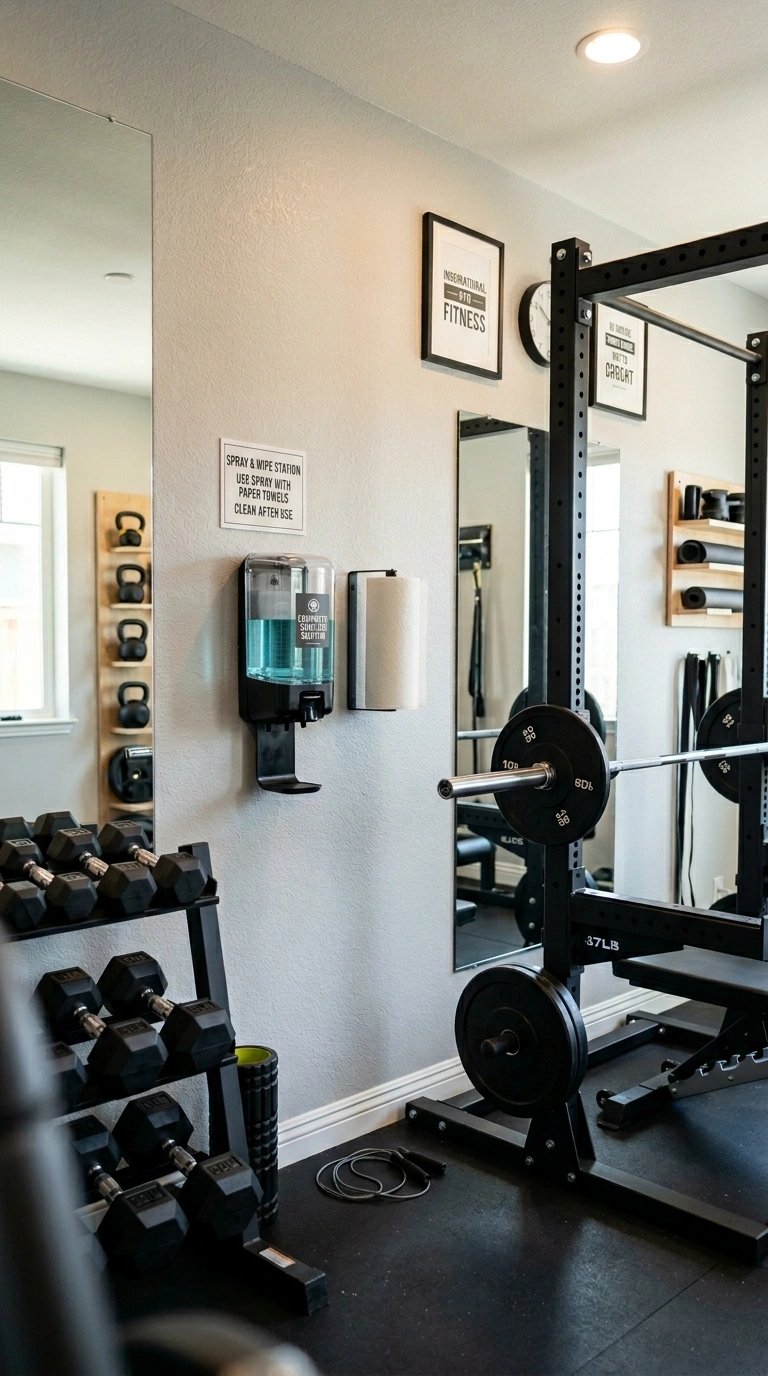
A small mounted dispenser of gym wipe solution and a roll of paper towels or a stack of small clean cloths positioned near the equipment provides the cleaning routine that keeps the home gym hygienic and the equipment maintained. Wipe down equipment after each session, clean the floor weekly, and maintain the rubber flooring with appropriate rubber floor cleaner monthly. The cleaning station makes the habit easy and visible. A home gym that is clean and well-maintained feels like a genuine training facility. One that is dusty and neglected feels like a storage room that happens to have weights in it.
19. Gym Bag Hook System
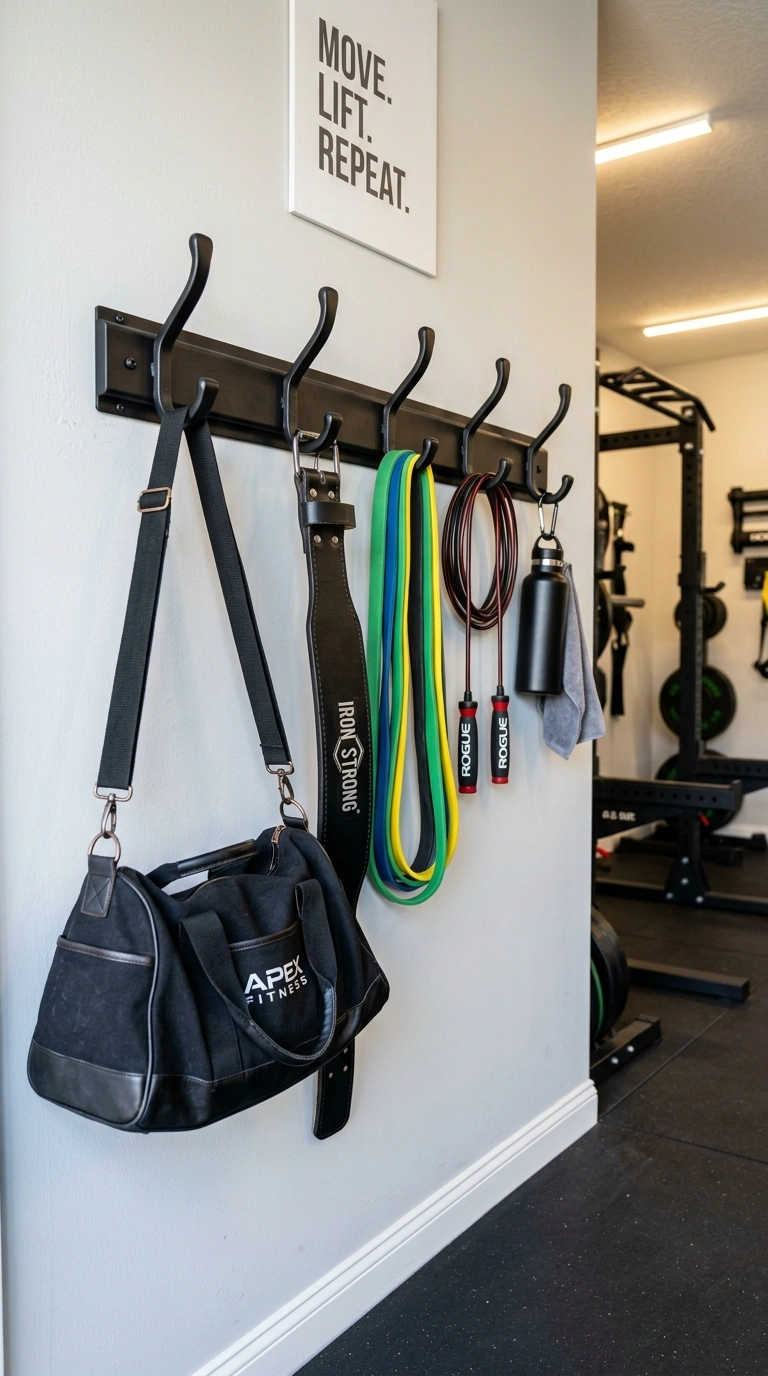
A simple row of heavy-duty hooks on the wall near the gym entrance holds the gym bag, resistance bands, jump rope, lifting belt, and other accessories that need to be grabbed and returned between sessions. The hook system keeps the floor clear and the accessories visible and accessible. Assign each hook to a specific item so everything has a permanent home. The hooks mounted on the wall read as a deliberate organizational feature rather than as a random collection of items hung wherever they fit.
20. Make It Genuinely Yours
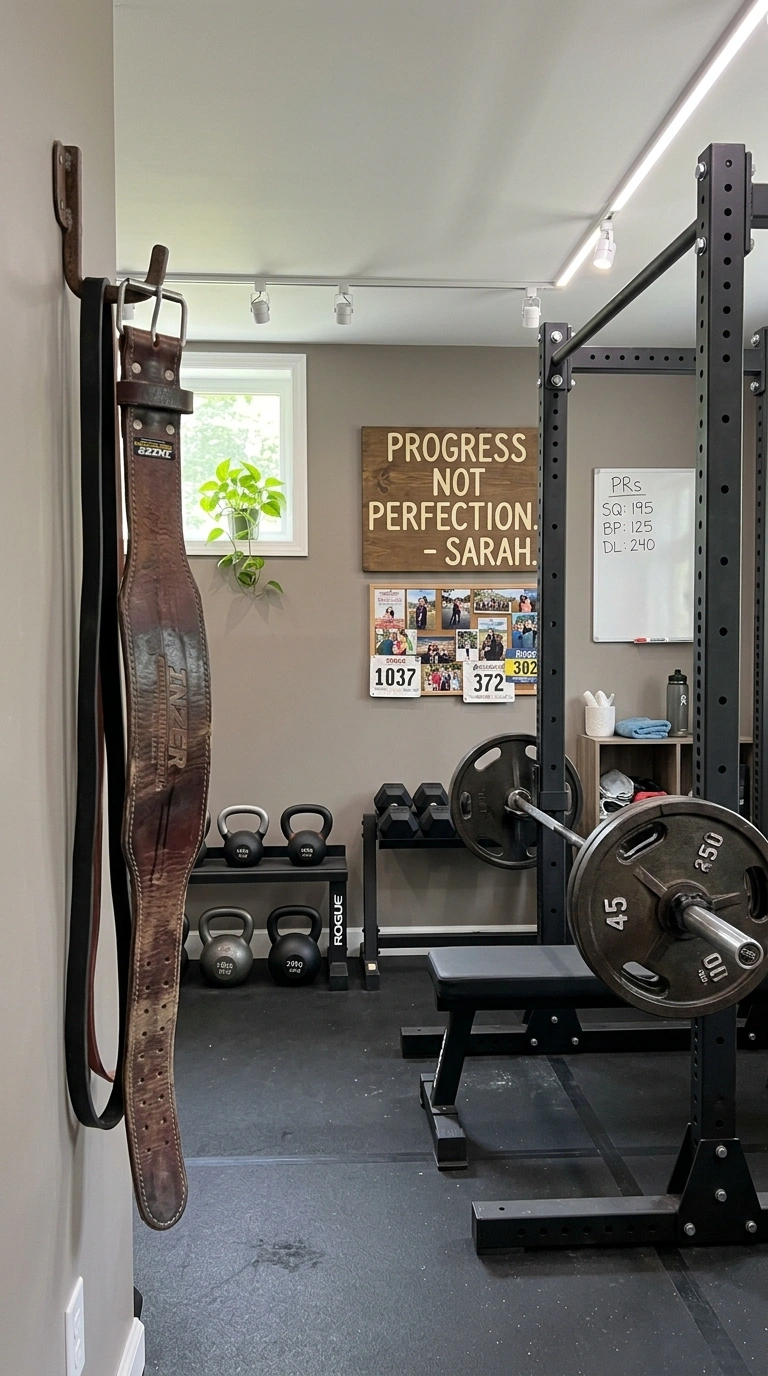
The home gym that gets used consistently is the one that feels genuinely personal rather than like a generic commercial gym replica. The specific equipment choices, the music, the wall detail, the temperature preference, and the layout should reflect how you actually train rather than how a gym marketing photograph suggests you should train. A powerlifter’s home gym looks different from a boxer’s, which looks different from a yoga practitioner’s, which looks different from a general fitness enthusiast’s. Build the gym for your actual training rather than for an imagined ideal, and the room will become a place you genuinely prefer to train in rather than one you use only when getting to a commercial gym is not practical.
A home gym that feels less like a compromise starts with proper flooring, adequate lighting, and a layout that supports the actual workout flow. From there, the sound system, the ventilation, the recovery zone, and the small personal touches transform the room from a collection of equipment into a training environment that genuinely motivates daily use. Build it around how you actually train, maintain it with the same care you would expect from a commercial gym, and the home gym becomes a space you choose rather than one you settle for.