23 Minimalist Living Room Ideas That Stay Warm and Genuinely Livable
A minimalist living room has a reputation problem. Most people picture a white room with a single uncomfortable sofa and nothing on the walls, a space that looks good in a magazine but feels cold and uninviting in real life. That version of minimalism is not the one that actually works for daily living. The minimalist living rooms that people genuinely want to spend time in are the ones where the simplicity creates calm rather than emptiness, where the fewer pieces in the room are warmer and more considered than the many pieces they replaced, and where the space feels restful rather than bare. These 23 ideas focus on the warm side of minimalism, the materials, the proportions, and the small decisions that keep a simple living room feeling like a home rather than a showroom.
1. Warm Neutral Wall Color
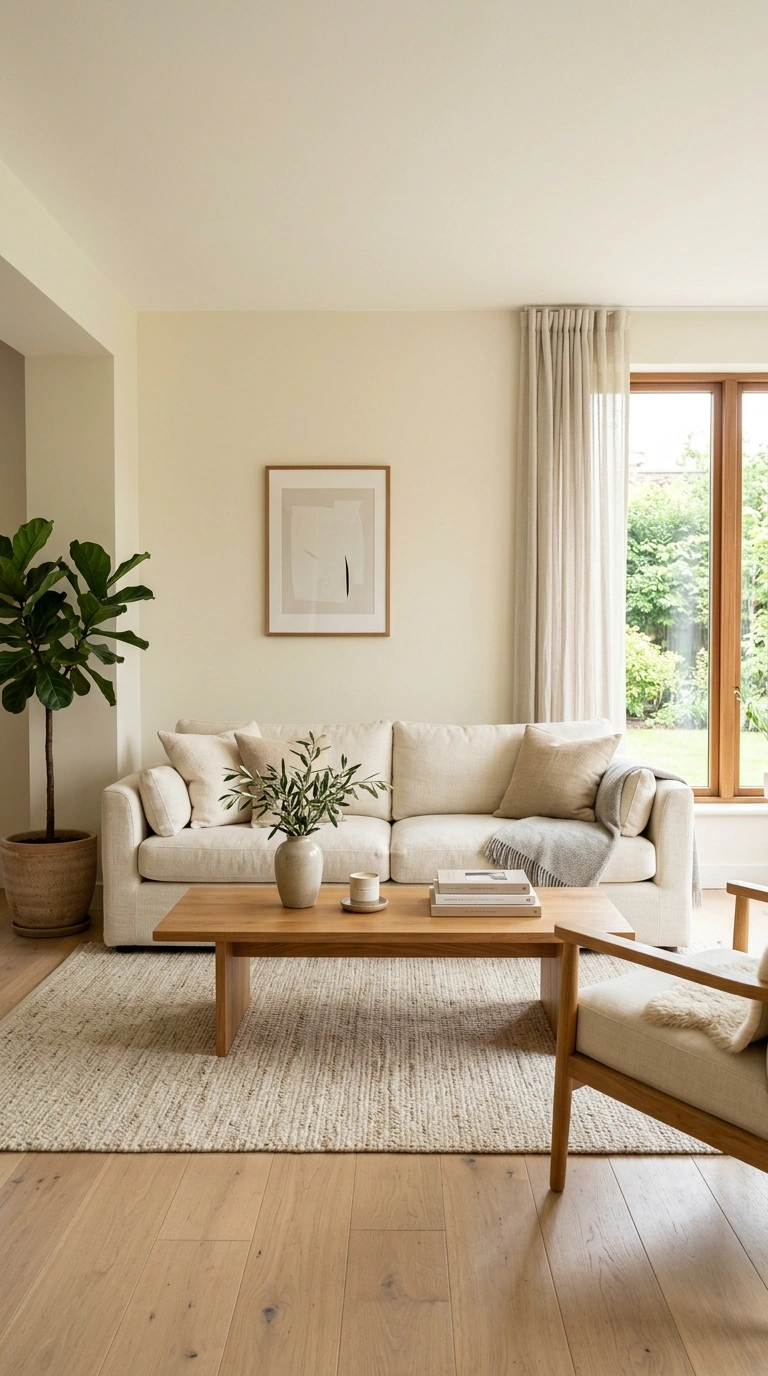
The wall color in a warm minimalist living room should be a warm neutral rather than a cold white. A warm cream with a slight yellow undertone, a soft greige that sits between gray and beige, a gentle sand tone, or a warm white that reads as creamy rather than clinical all provide the quiet backdrop that minimalism needs without the cold flat quality that pure bright white creates. The warm wall color makes everything in front of it look warmer and more inviting by association. Paint all four walls in the same warm neutral for the most unified and restful result. The walls should recede visually rather than calling attention to themselves.
2. Quality Over Quantity Sofa
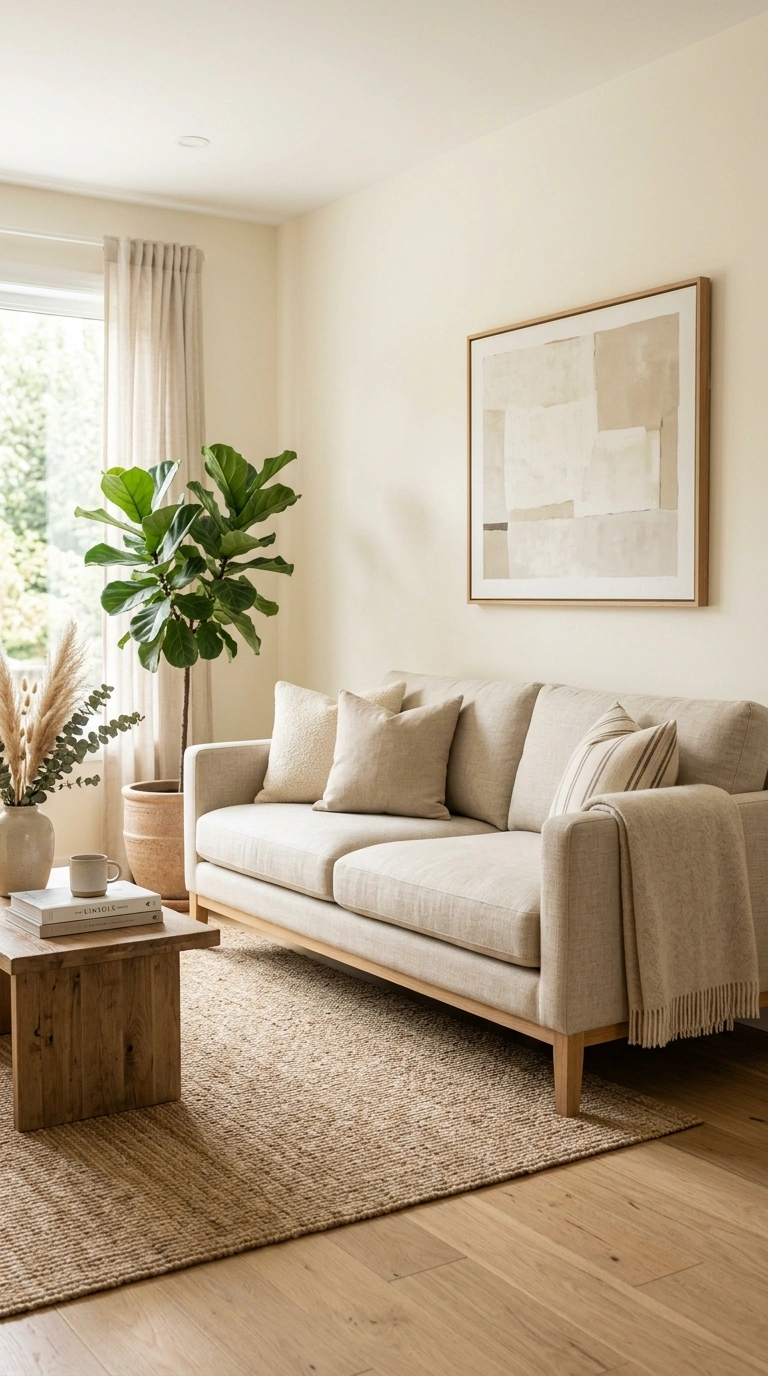
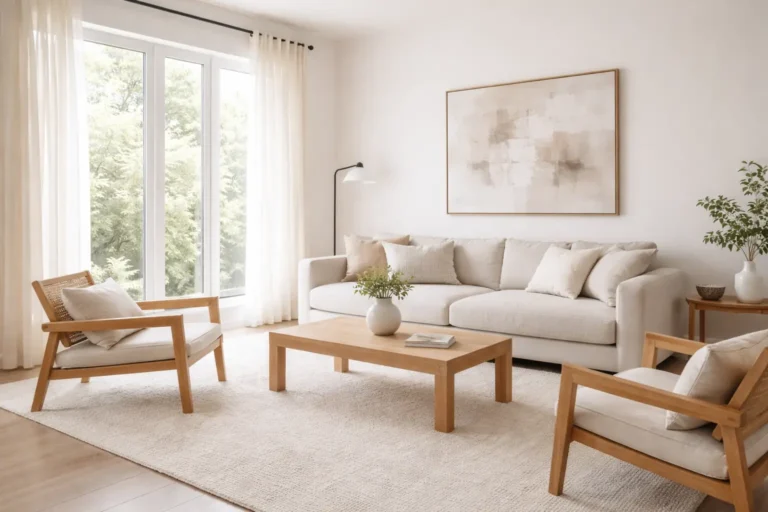
In a minimalist living room, the sofa is often the only major piece of seating, which means its quality matters enormously. A well-made sofa in warm natural upholstery, oatmeal linen, warm bouclé, soft cream wool, or warm cognac leather, becomes the room’s centerpiece and its primary source of physical and visual warmth. The investment in a quality sofa pays back in comfort, appearance, and longevity in ways that a cheap sofa surrounded by additional cheap pieces cannot match. Choose a sofa with clean simple lines, proper seat depth for comfortable lounging, and a warm upholstery that invites sitting down rather than just looking at.
3. Natural Wood Coffee Table
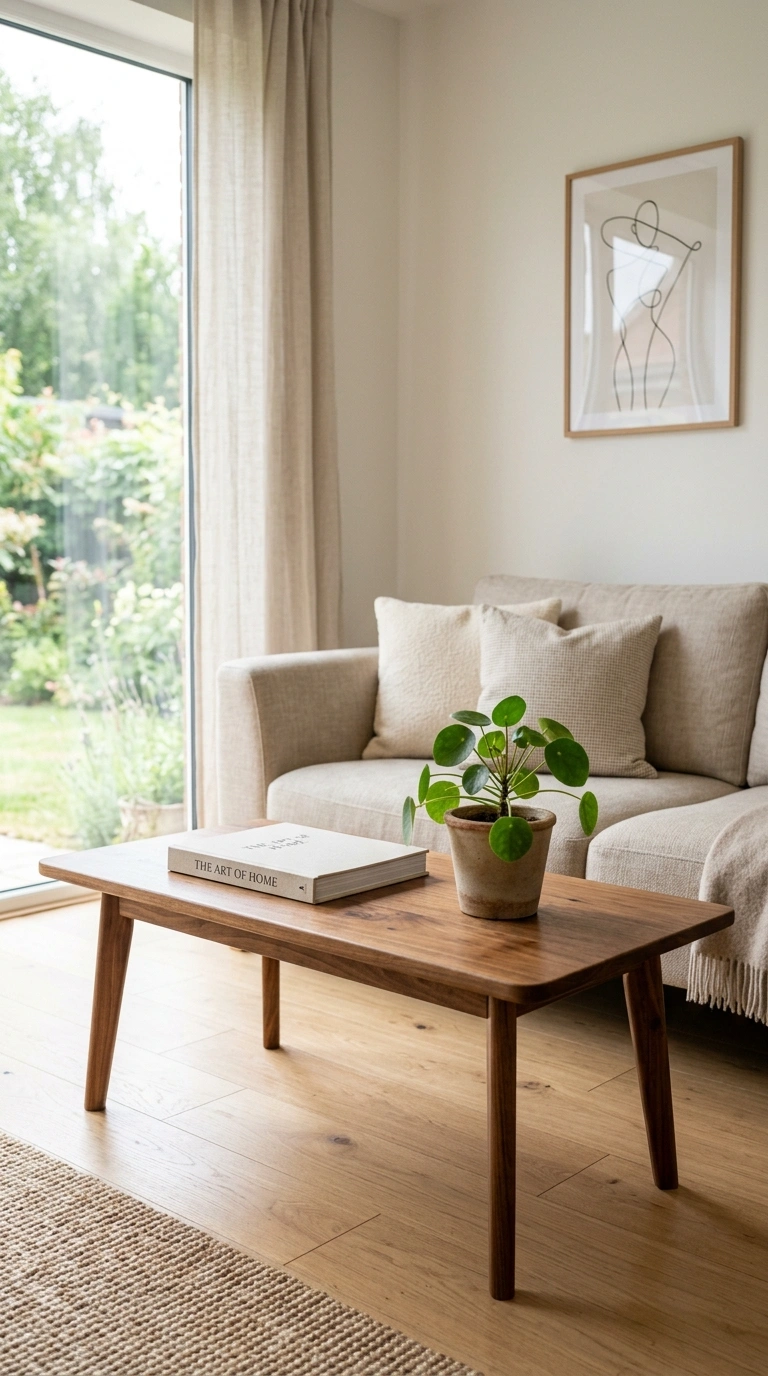
A coffee table in natural warm wood, whether solid walnut, light oak, warm ash, or reclaimed timber, introduces the organic warmth that a minimalist living room depends on to prevent coldness. The visible grain, the warm color, and the slight imperfections of natural wood add life and character that glass, metal, or lacquered surfaces cannot provide. Choose a coffee table with a simple clean shape that suits the minimal aesthetic and that provides genuine function: a real surface for books, a mug, a plant, and the daily small objects that living rooms accumulate.
4. Single Statement Rug
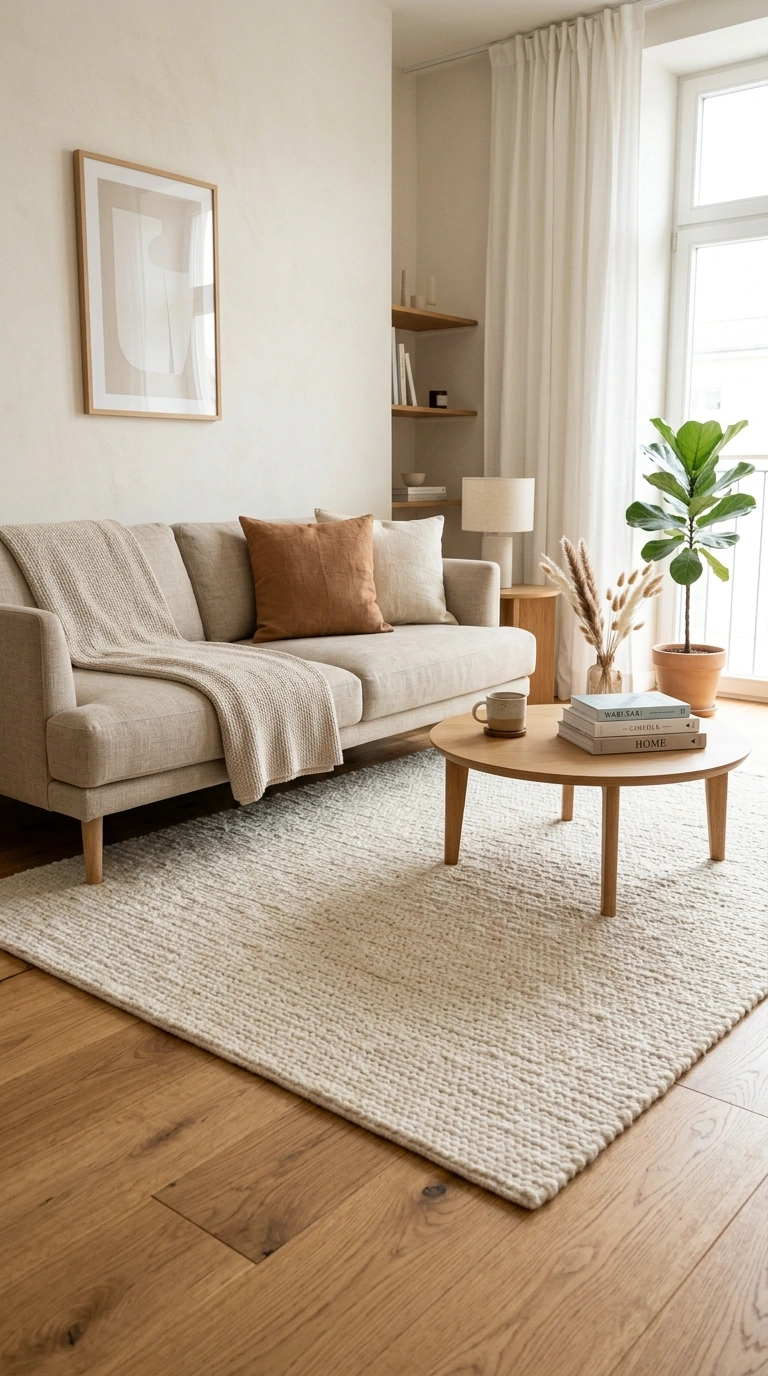
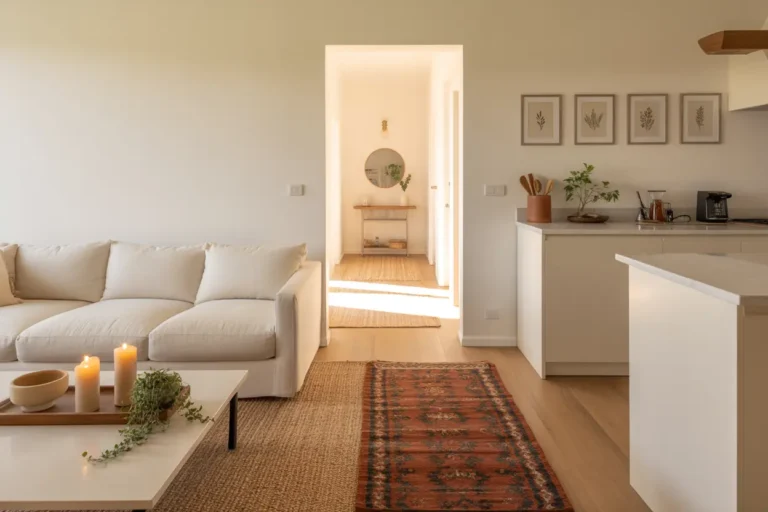
A single area rug in a warm neutral tone anchors the seating arrangement and adds the soft layer underfoot that hard floors need in a minimalist room. A warm cream wool rug, a natural jute rug, a muted flat-weave in warm tones, or a simple tone-on-tone textured rug all add warmth without the visual complexity that patterned rugs introduce. The rug should be large enough that the front legs of the sofa sit on it, which visually connects the seating to the floor and defines the living zone as a cohesive area. A minimalist room with a warm rug feels inhabited. The same room without the rug feels like a furniture showroom.
5. Warm Layered Lighting
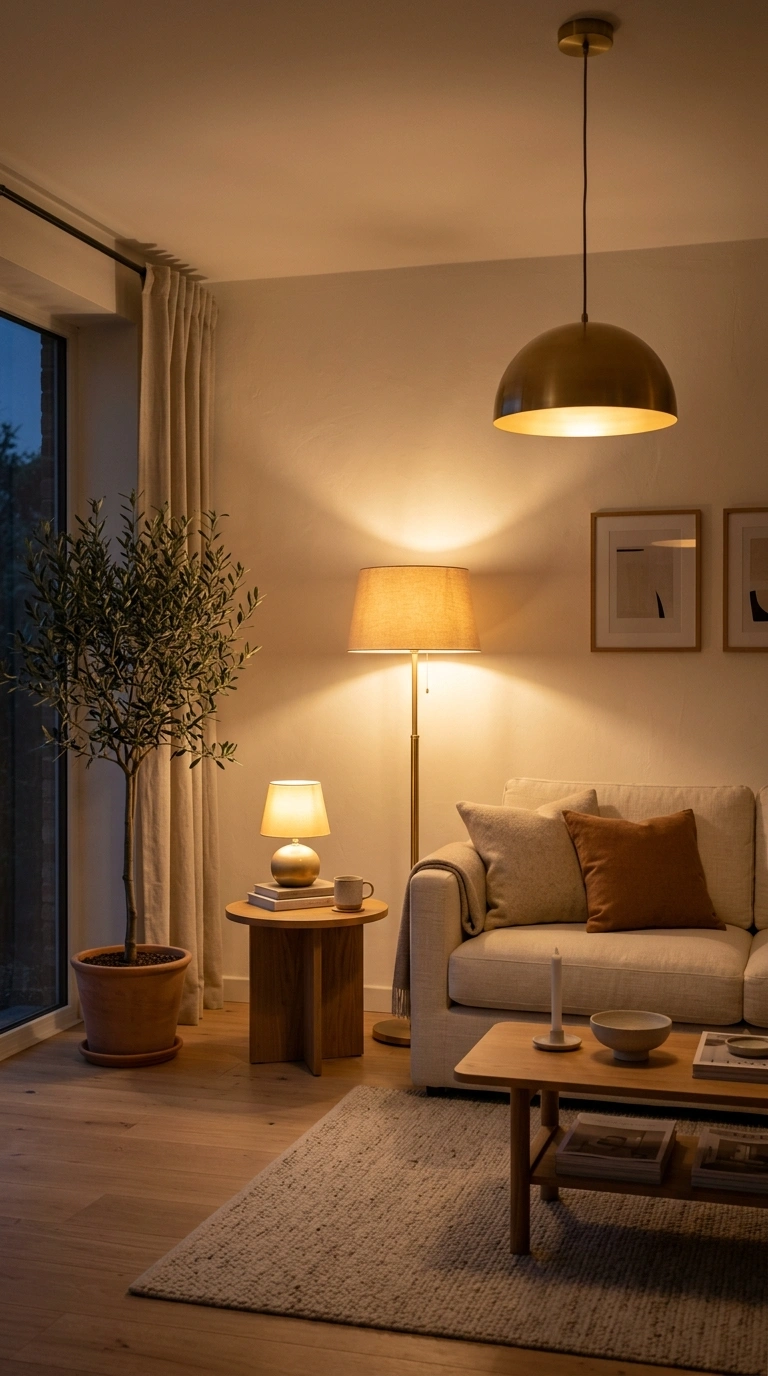
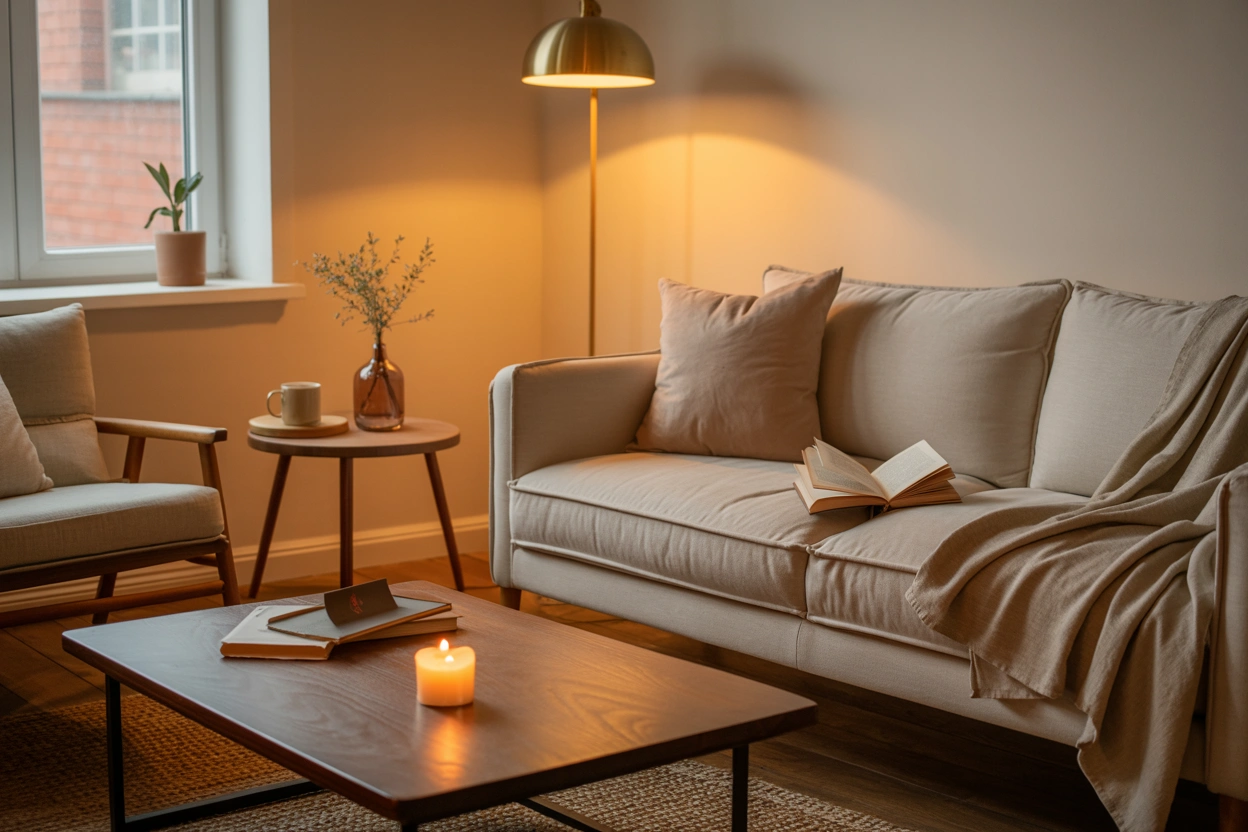
A minimalist living room needs warm layered lighting to feel inviting rather than clinical. A single bright overhead fixture creates the flat, even illumination that reads as institutional rather than residential. Replace the overhead with a warm pendant or flush mount on a dimmer, add a floor lamp beside the sofa in a warm brass or natural wood finish, and include a small table lamp on a side table. The three light sources at different heights create dimension and warmth that a single source cannot. Use warm bulbs in the 2700K to 3000K range throughout. The warm lighting is what makes a sparse room feel cozy rather than stark. The same principles of warm layered lighting creating atmosphere apply across rooms, as covered in the cozy living room ideas guide where lighting is the primary warmth driver.
6. Limited Pillow Arrangement
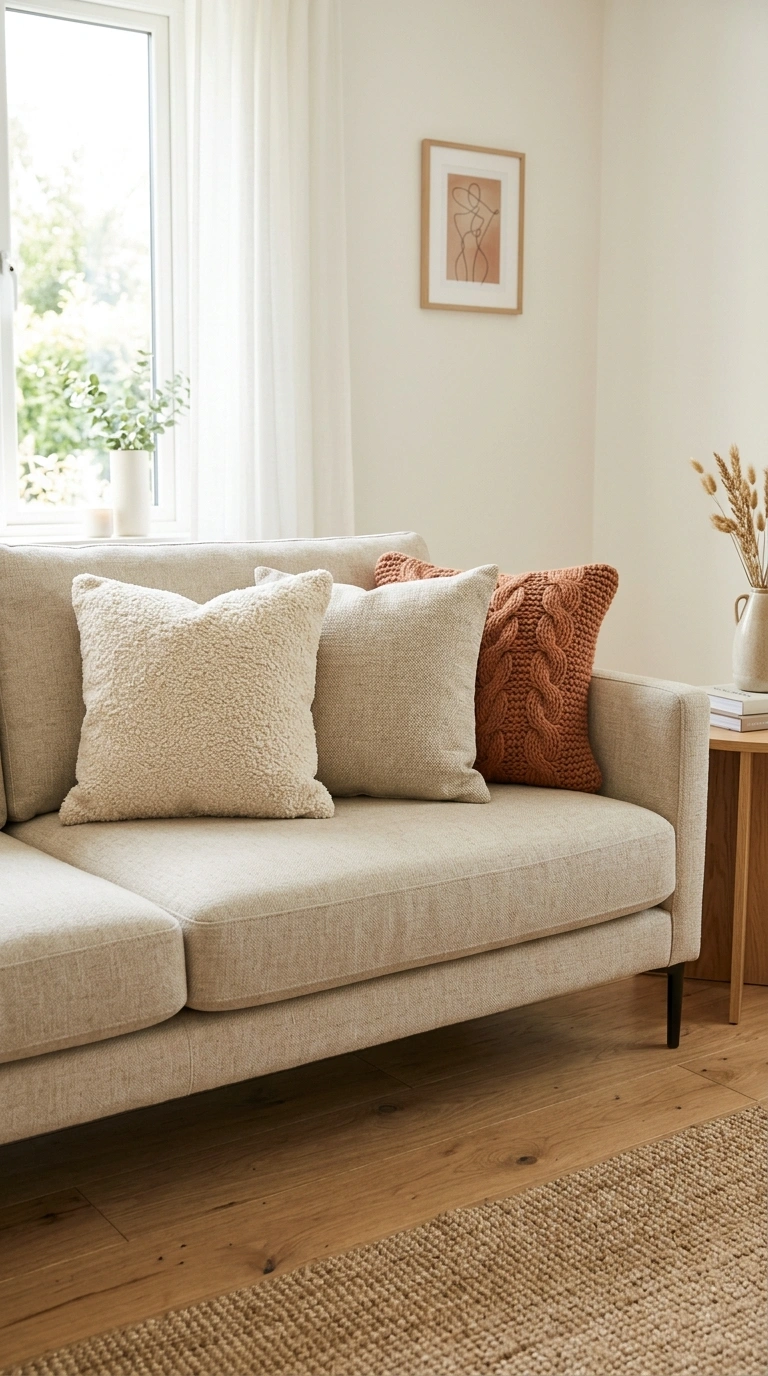
A minimalist sofa needs fewer pillows than a traditional one, but it still needs some. Two or three pillows in warm coordinating tones, one solid textured, one slightly different in tone, and perhaps one in a subtle natural pattern, provide the soft comfortable quality that an empty sofa lacks. The limited number means each pillow reads as a considered choice rather than as part of a crowd. Choose pillows in substantial warm fabrics: wool, linen, bouclé, or a chunky knit in cream or warm tones. The pillow arrangement should make the sofa look inviting rather than either bare or overstuffed.
7. Floating Shelves Minimal Styling
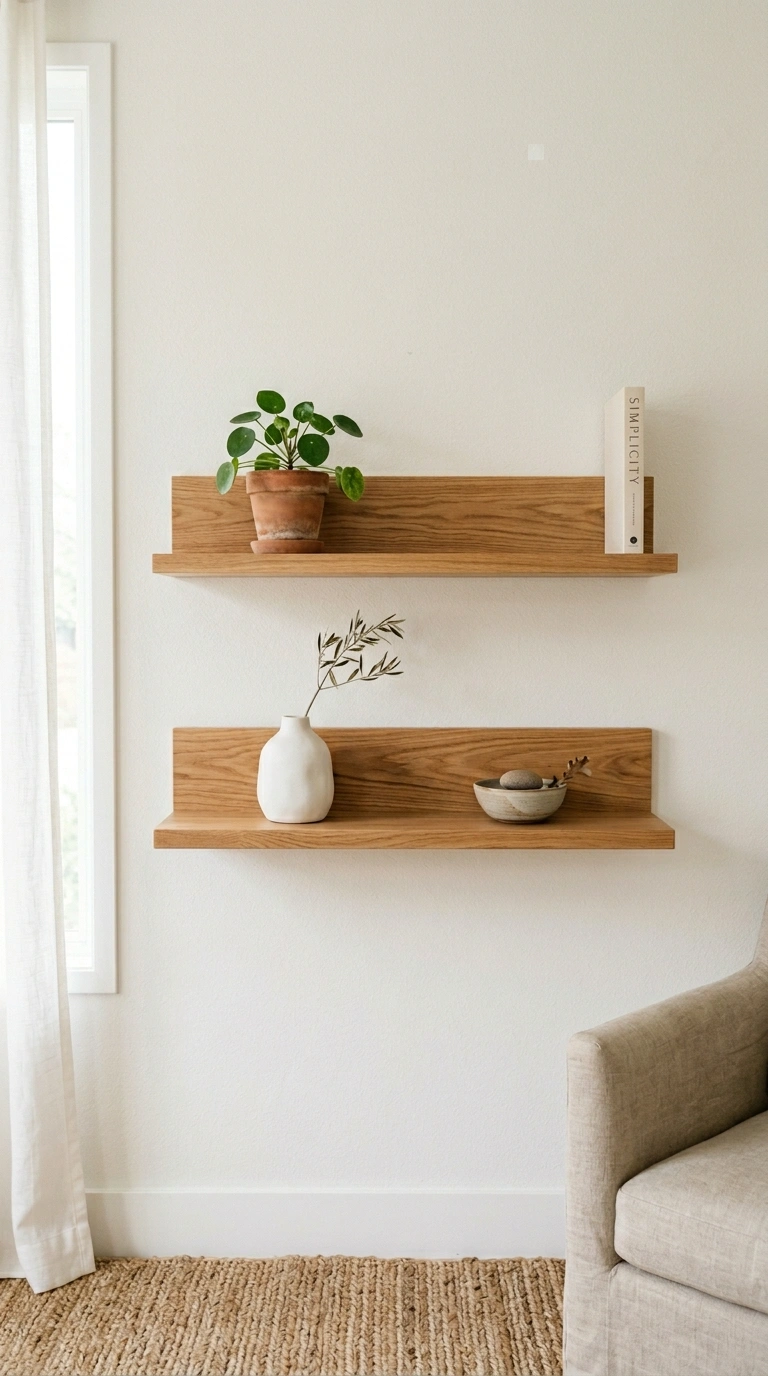
One or two floating shelves on the wall beside or above the sofa hold a curated display of two or three objects: a small plant, a single ceramic vessel, and one book or small piece of art. The shelves provide the visual content that completely bare walls lack while maintaining the simplicity the aesthetic requires. The key is leaving significant empty space on each shelf. A floating shelf that is two-thirds empty reads as minimalist and intentional. A floating shelf that is fully loaded reads as storage rather than styling. Choose shelves in a warm material, natural wood or a warm painted finish, that suits the wall color.
8. One Statement Art Piece
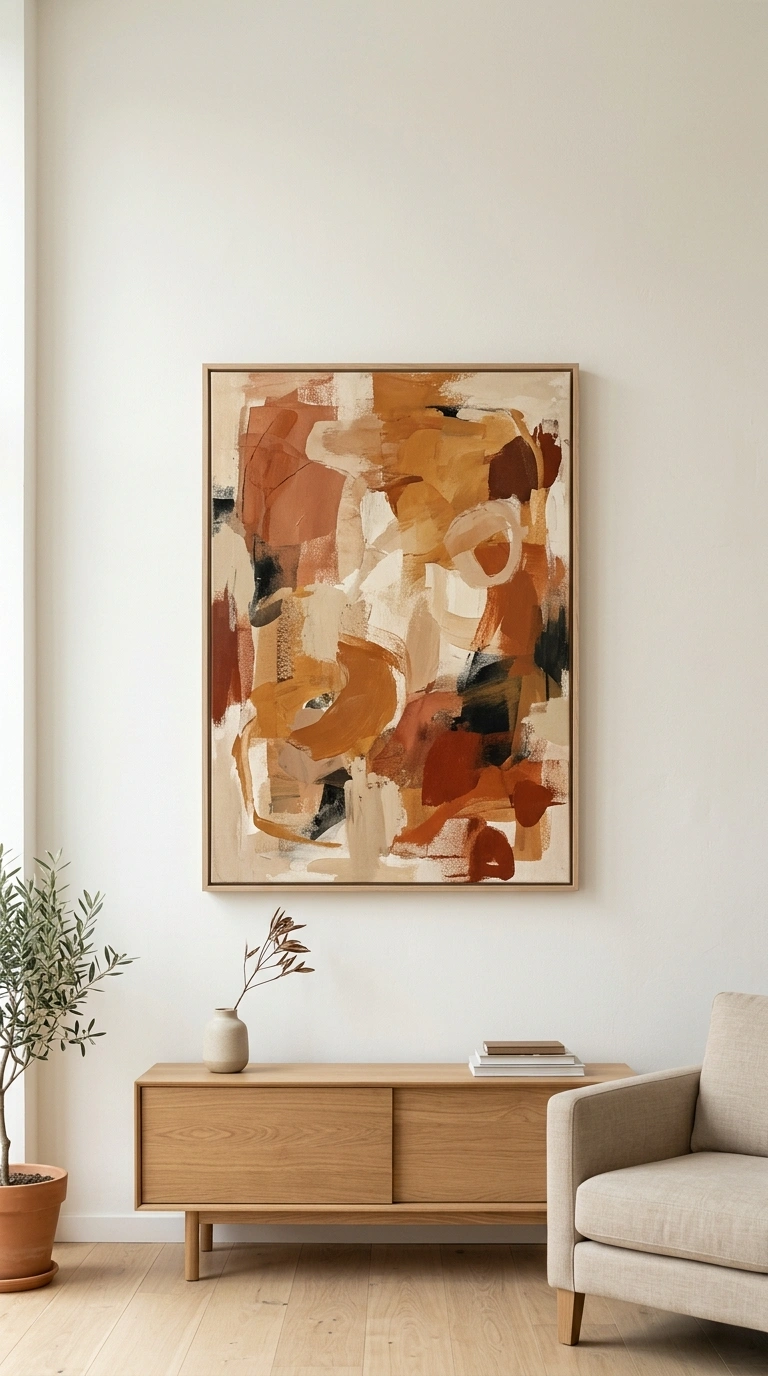
A single large piece of art on the main wall, rather than a gallery wall of many smaller pieces, provides the visual content a minimalist living room needs in the most concentrated and powerful way possible. The single piece should be genuinely beautiful and personally meaningful rather than a generic print chosen to fill the space. A large abstract in warm earth tones, a single striking photograph, a textured artwork in natural materials, or a simple line drawing in a substantial frame all work depending on taste. The empty wall space around the single piece is what gives it presence and allows it to breathe.
9. Hidden Storage Solutions
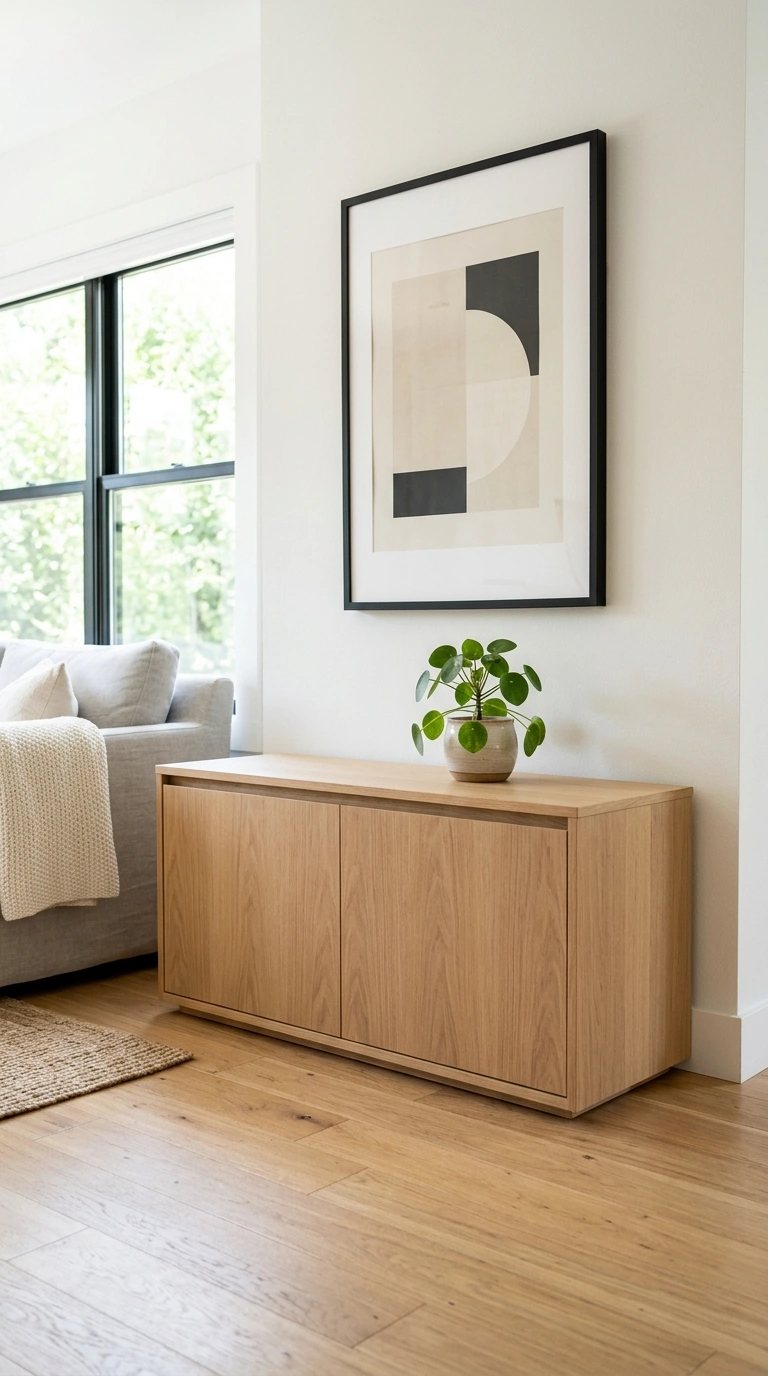
Minimalist rooms look minimal because the clutter is managed, and the clutter is managed because the storage is designed into the room rather than visible on every surface. A media console with closed doors, a coffee table with concealed drawers, a side table with a lower shelf that holds a basket, and built-in cabinets along one wall all provide the storage that a living room genuinely needs without displaying the contents. The hidden storage is what allows the visible surfaces to stay clean and the room to maintain its calm quality day after day rather than just for photographs.
10. Single Large Plant
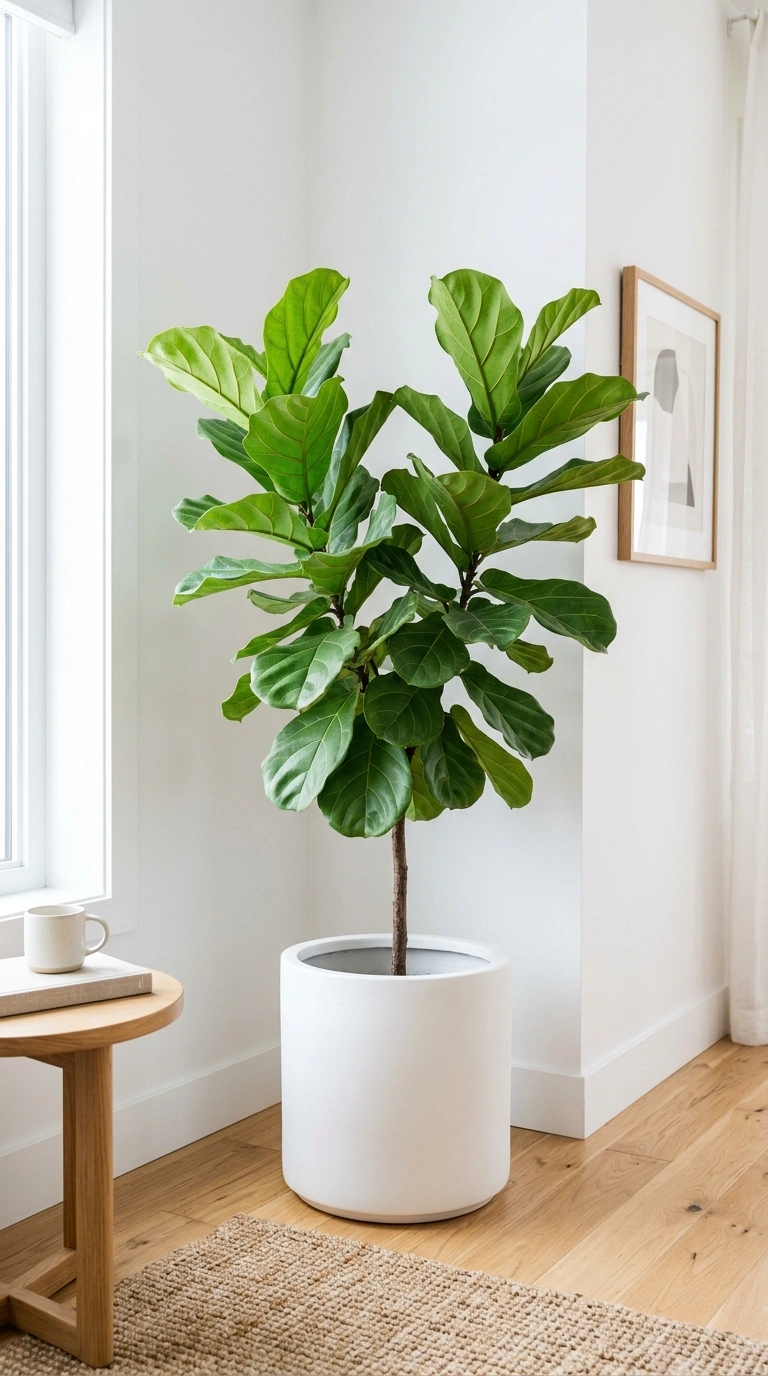
One large statement plant in a substantial simple pot provides the living organic element that prevents a minimalist room from feeling sterile. A tall fiddle-leaf fig, a large snake plant, a mature monstera, or a bird of paradise in a matte white, matte black, or warm ceramic pot becomes a sculptural element that adds height, green color, and the gentle living quality that manufactured objects cannot provide. A single large plant reads as more minimal and more impactful than several small plants scattered across multiple surfaces, which tends to read as clutter rather than as a design choice.
11. Warm Throw Blanket
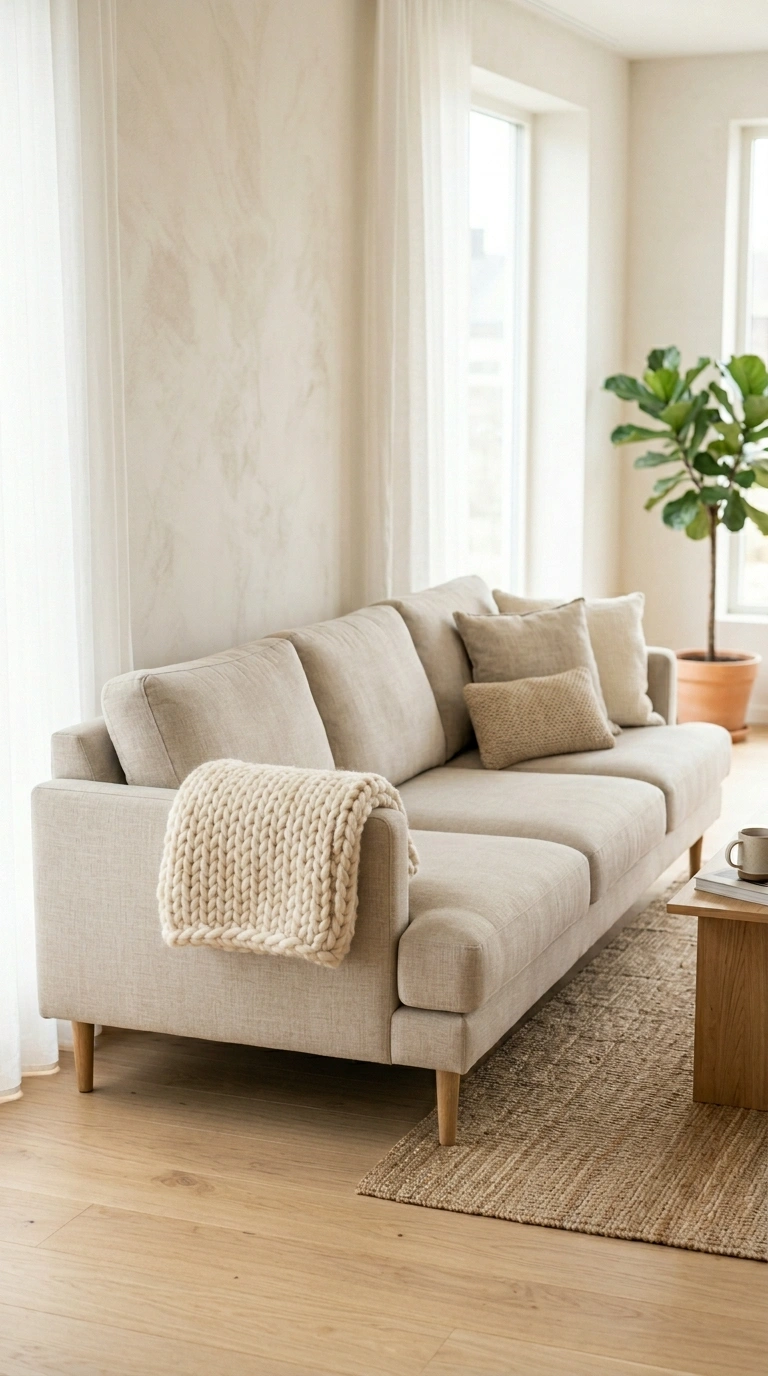
A single quality throw blanket draped casually over the sofa arm or folded across the back adds the soft, inviting, lived-in quality that a bare sofa lacks. The throw signals that the sofa is for actual sitting and relaxing rather than just for looking at. Choose a throw in a warm natural fiber, chunky cream knit, soft oatmeal wool, warm camel cashmere blend, or a textured linen in a muted warm tone. The single throw is one of the smallest and most effective elements for making a minimalist living room feel warm rather than sparse.
12. Clean Window Treatment
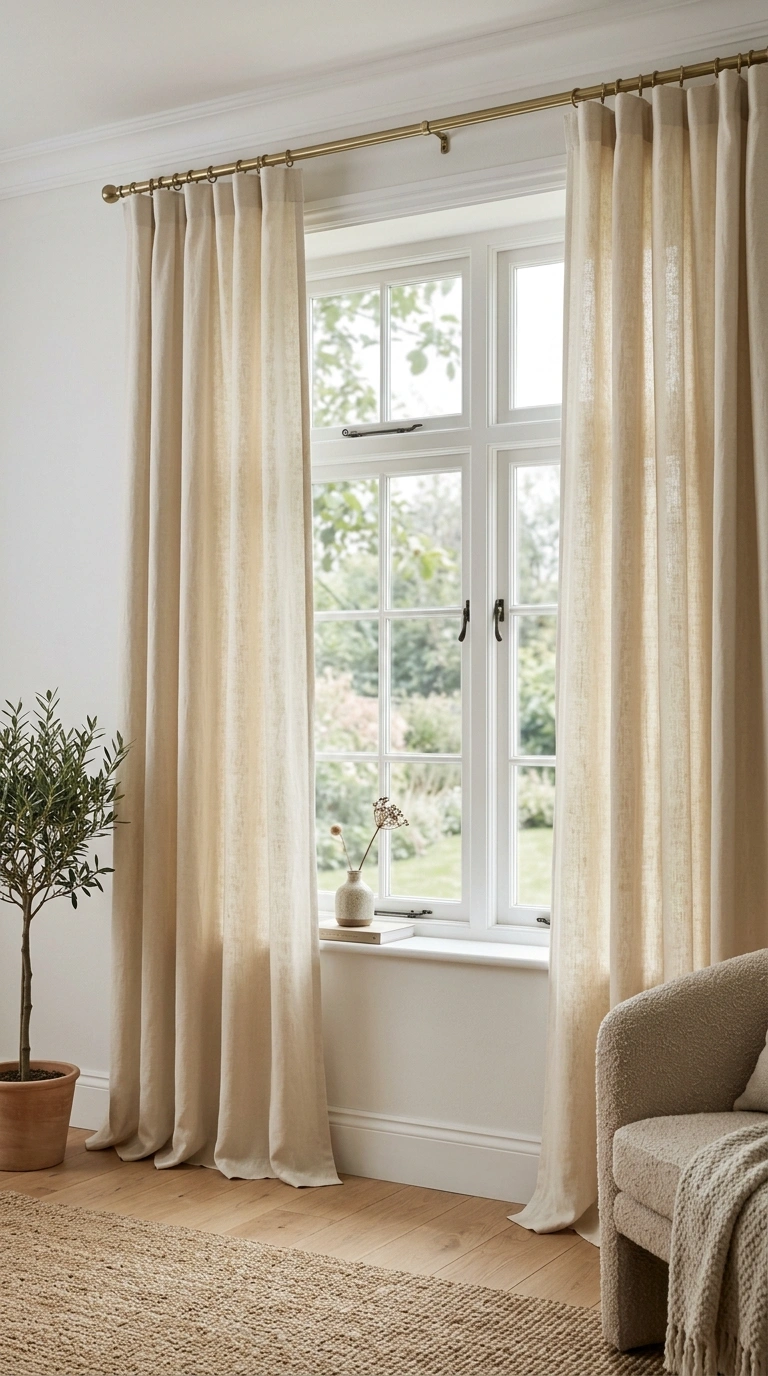
A simple window treatment in a warm natural fabric, floor-length linen panels in warm cream or oatmeal, hung from a slim metal or wooden rod near the ceiling, provides the soft frame that bare windows lack while maintaining the clean lines that minimalism requires. The curtains should be full enough to drape softly when open and long enough to just kiss the floor. Avoid elaborate curtain hardware, heavy drapery, or layered treatments which read as traditional rather than minimal. The simple linen panel is one of the most reliably warm minimalist window treatments because the natural fabric softens the light and the room simultaneously.
13. Decluttered Surfaces Rule
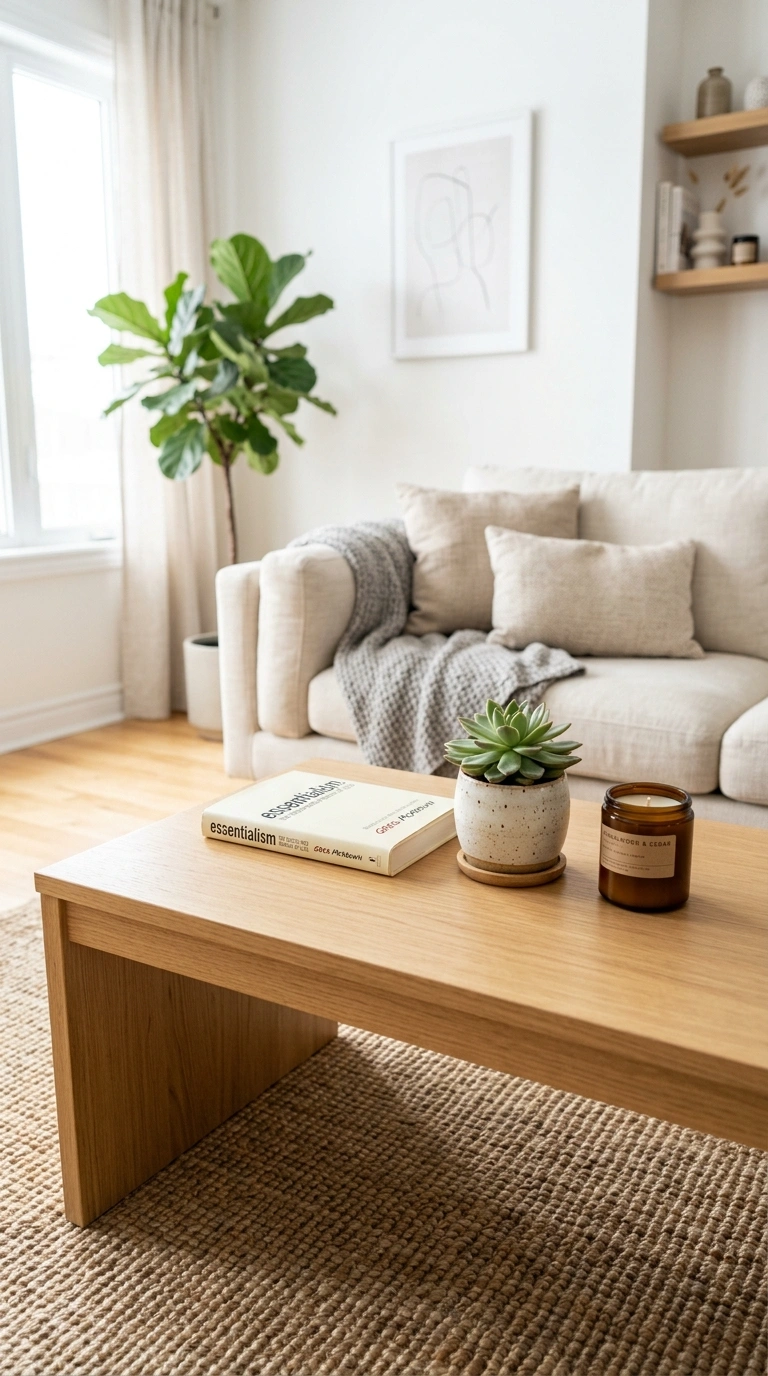
The most important visual characteristic of a minimalist living room is that every surface in the room has significant empty space. The coffee table holds one or two objects and is otherwise clear. The side tables hold a lamp and nothing else. The shelves are mostly empty. The floor is completely clear except for furniture and the plant. This does not mean the room has nothing in it. It means the objects that are present have room around them to register individually rather than being lost in a crowd. Each piece reads as a deliberate choice because there is nothing competing with it for attention.
14. Matte and Organic Finishes
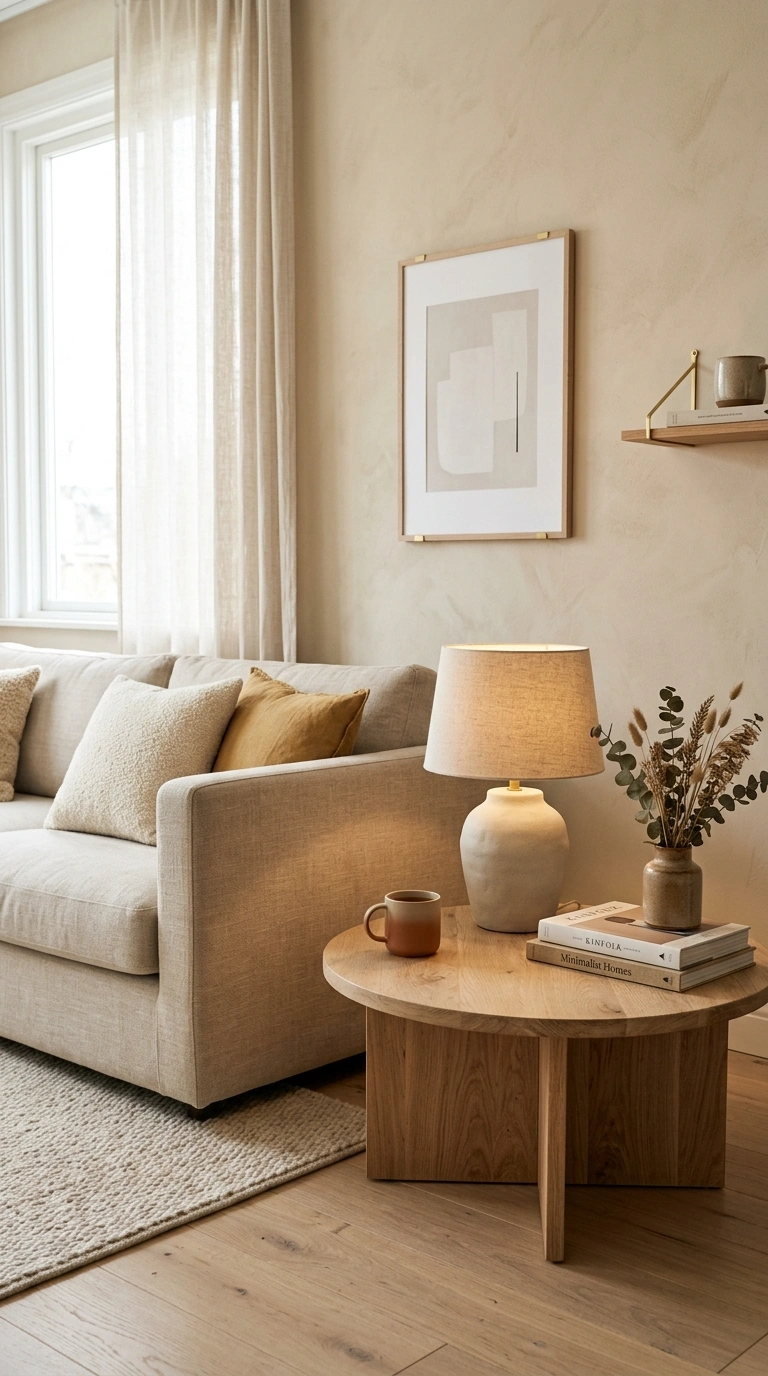
The material finishes in a minimalist living room should lean toward matte and organic rather than glossy and manufactured. Matte ceramic rather than polished metal. Brushed brass rather than chrome. Linen rather than satin. Honed stone rather than polished marble. The matte surfaces absorb light softly rather than reflecting it sharply, which creates the calm, quiet visual quality that minimalism depends on. The organic quality of the finishes adds the natural warmth that prevents the room from feeling like an appliance store where everything is sleek and shiny.
15. Small Side Table Only
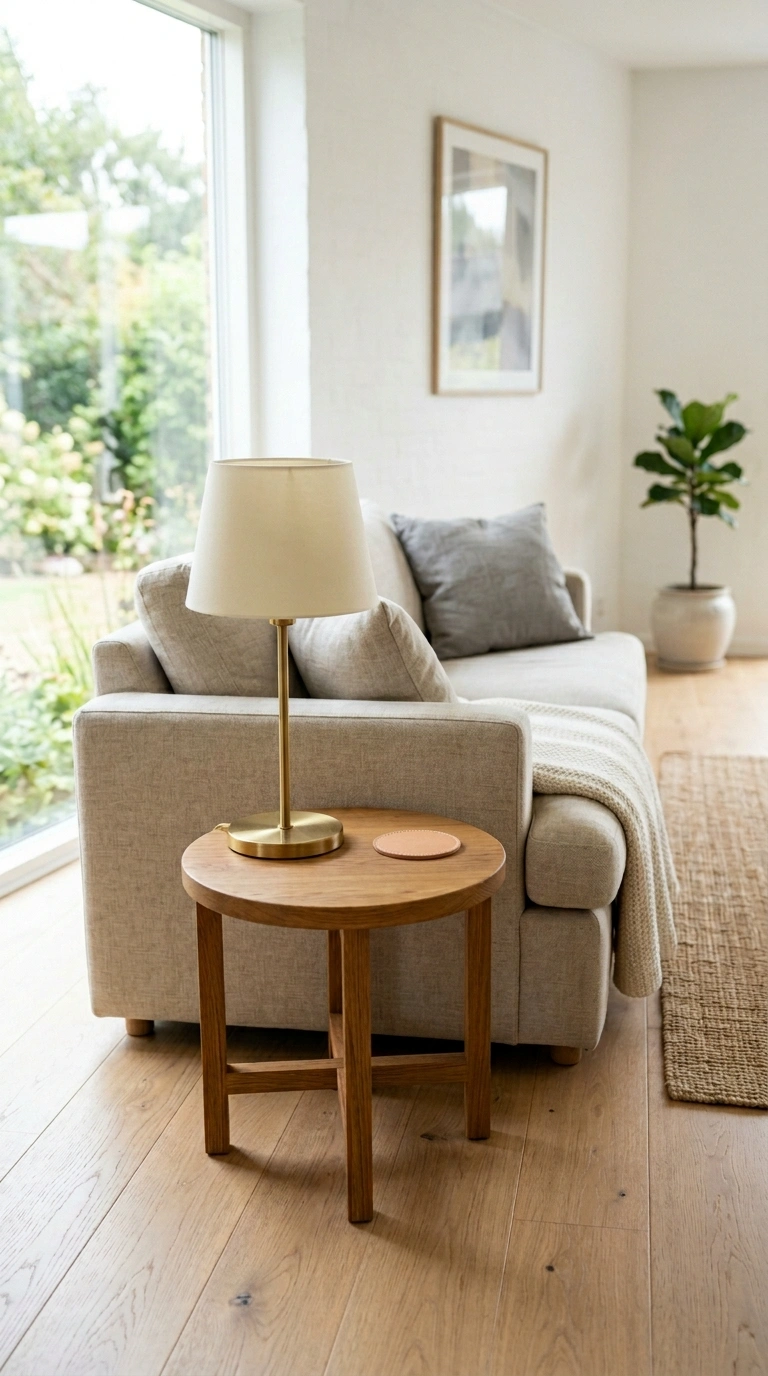
In a minimalist living room, side tables should be small, simple, and limited to one beside the sofa or one at each end. A simple round wooden table, a small metal and wood C-table that slides beside the sofa arm, or a natural stone pedestal table all work. The side table holds a lamp and perhaps a small coaster, nothing more. The small footprint of the table keeps the floor space open and the sightlines clear. Larger side tables or multiple tables add visual weight that the minimal aesthetic does not need.
16. Warm Wood Floor Visible
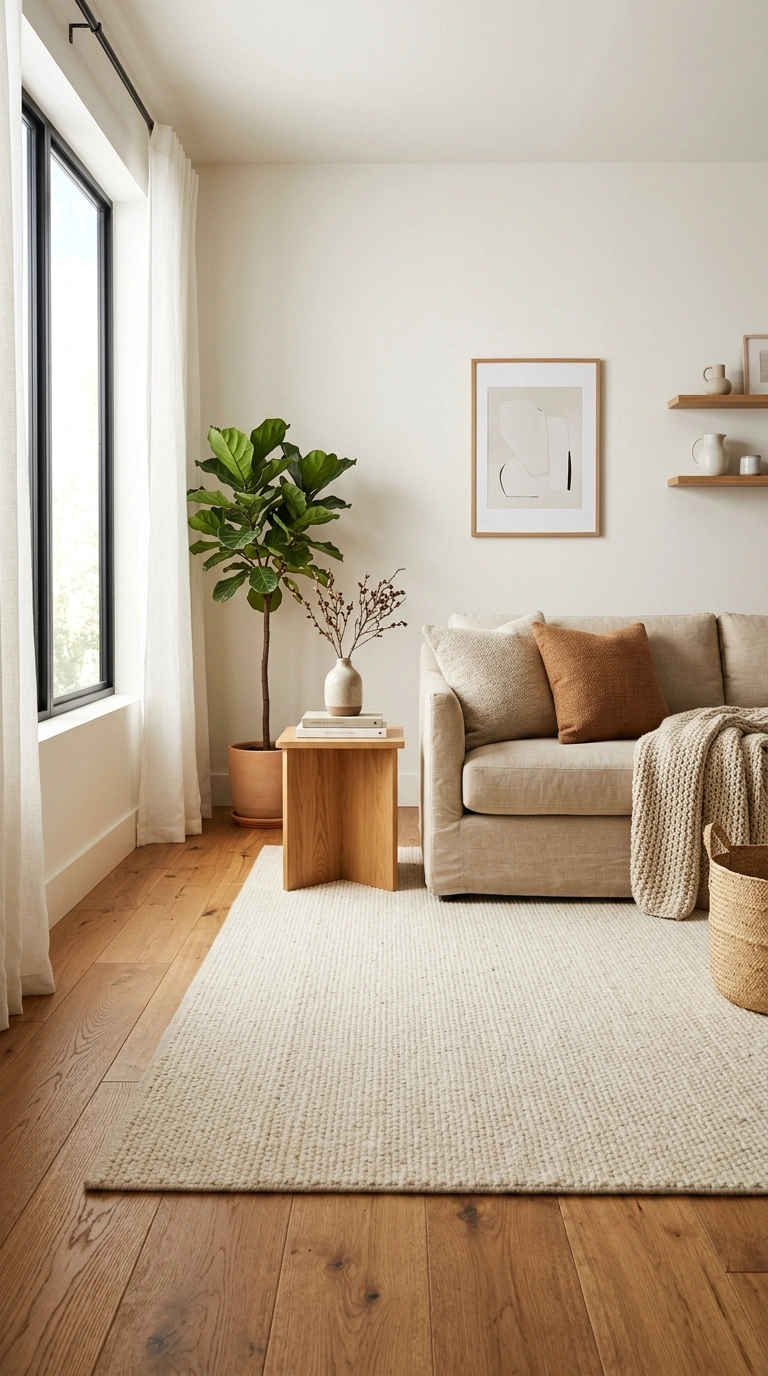
If the living room has warm wood floors, letting the floor show rather than covering it entirely with a rug allows the natural warmth of the wood to contribute to the room’s palette. The visible wood floor between the rug edge and the walls grounds the room in warm natural material and adds the organic quality that white or gray tile floors lack. If the existing floor is cold tile or gray concrete, a large warm-toned rug covering most of the floor substitutes the warmth that the hard floor cannot provide.
17. Consistent Material Palette
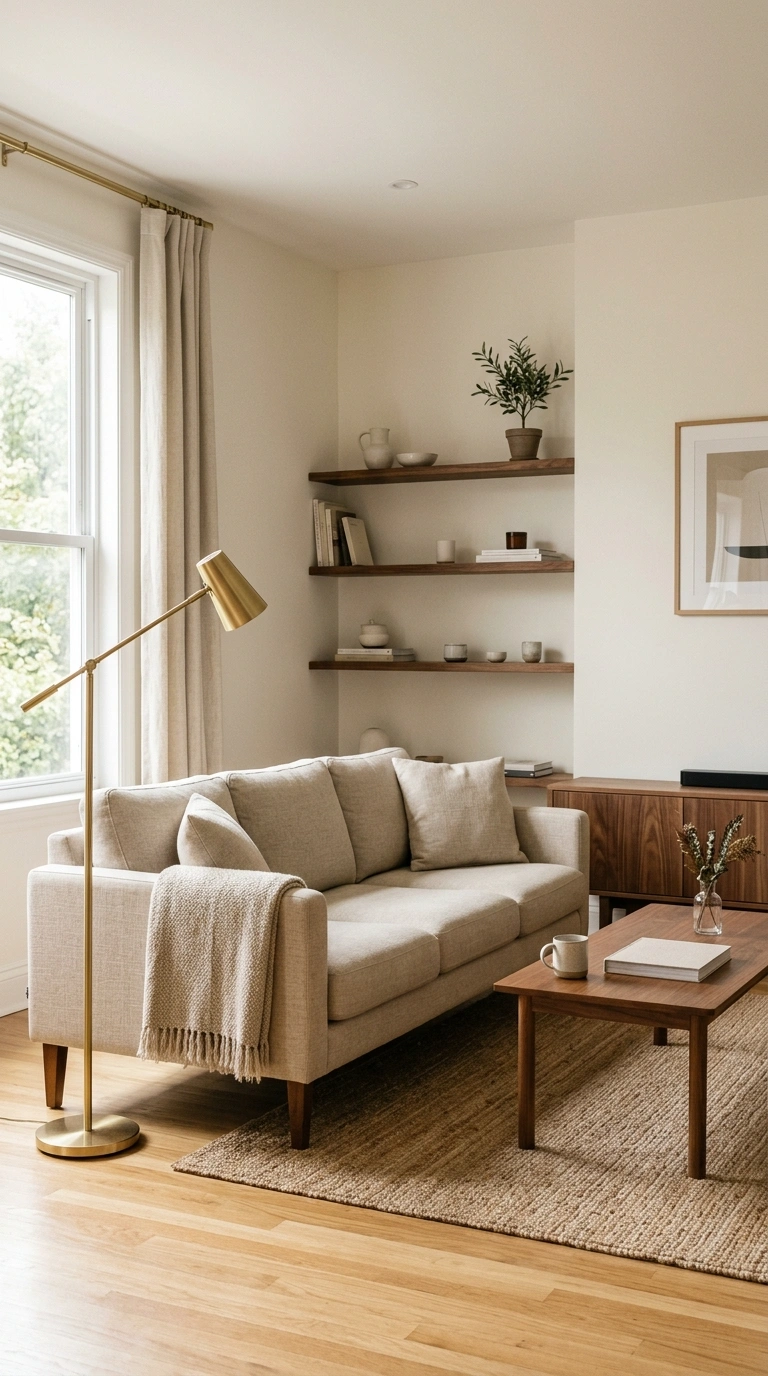
A minimalist living room looks most cohesive when the material palette is limited to three or four materials used consistently throughout the room: warm wood, warm neutral fabric, one metal finish, and one organic texture. The coffee table, the shelves, and the side table all in the same warm wood. The sofa and the curtains in the same warm linen. The lamp and the hardware in the same warm brass. The rug and the throw in the same organic texture. The consistency is what gives the room its calm, edited quality. More than four or five competing materials creates visual noise that undermines the minimal atmosphere. The same discipline of a consistent material palette also creates calm in organic modern bathroom designs where the limited material selection is the foundation of the aesthetic.
18. Negative Space as Design
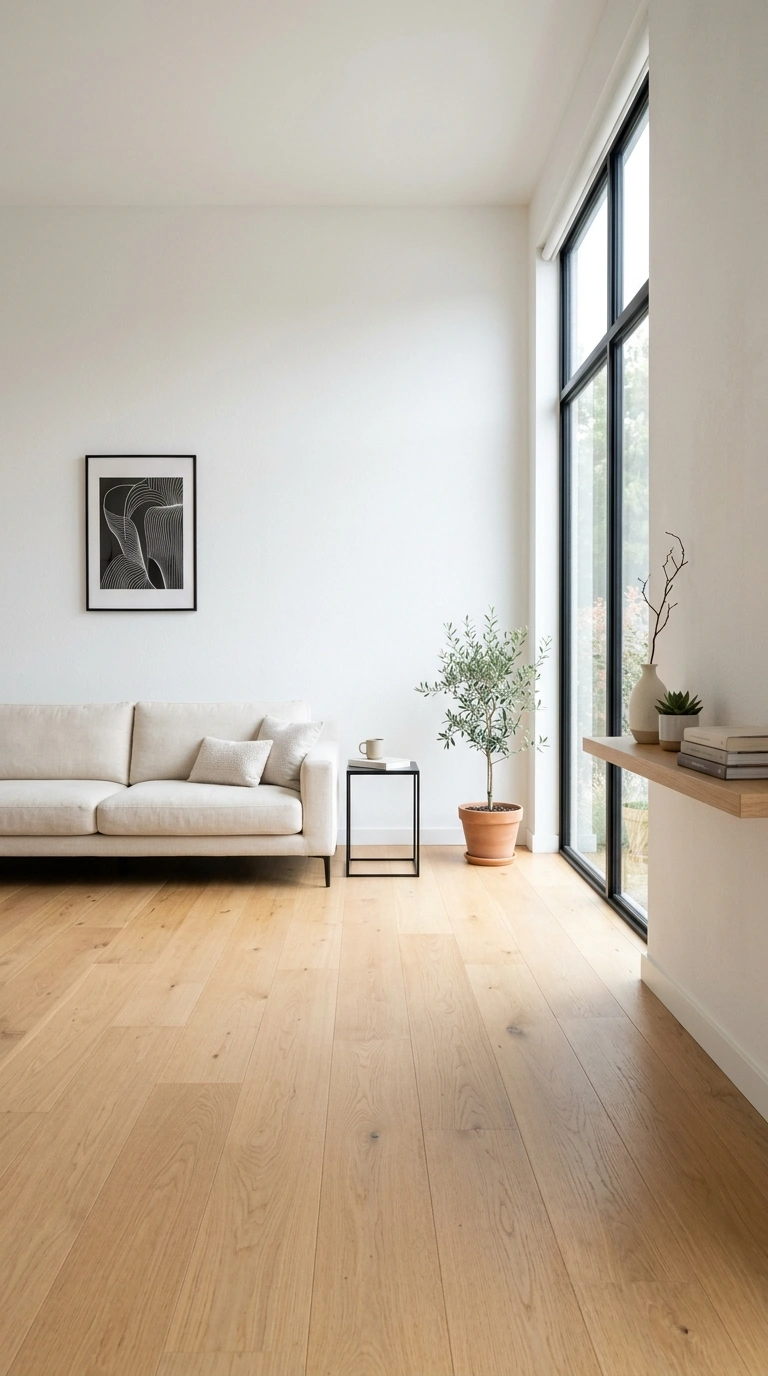
The empty space in a minimalist living room is not a problem to be solved. It is the design itself. The gap between the sofa and the wall. The clear floor between the seating and the window. The empty portion of the shelf. The undecorated wall beside the art piece. These empty spaces are what allow each element in the room to breathe and register clearly. Filling the empty space with additional objects would not improve the room. It would undermine the entire purpose of the minimal design. The empty space should be protected as deliberately as the objects are chosen.
19. Warm Metal Accent Choice
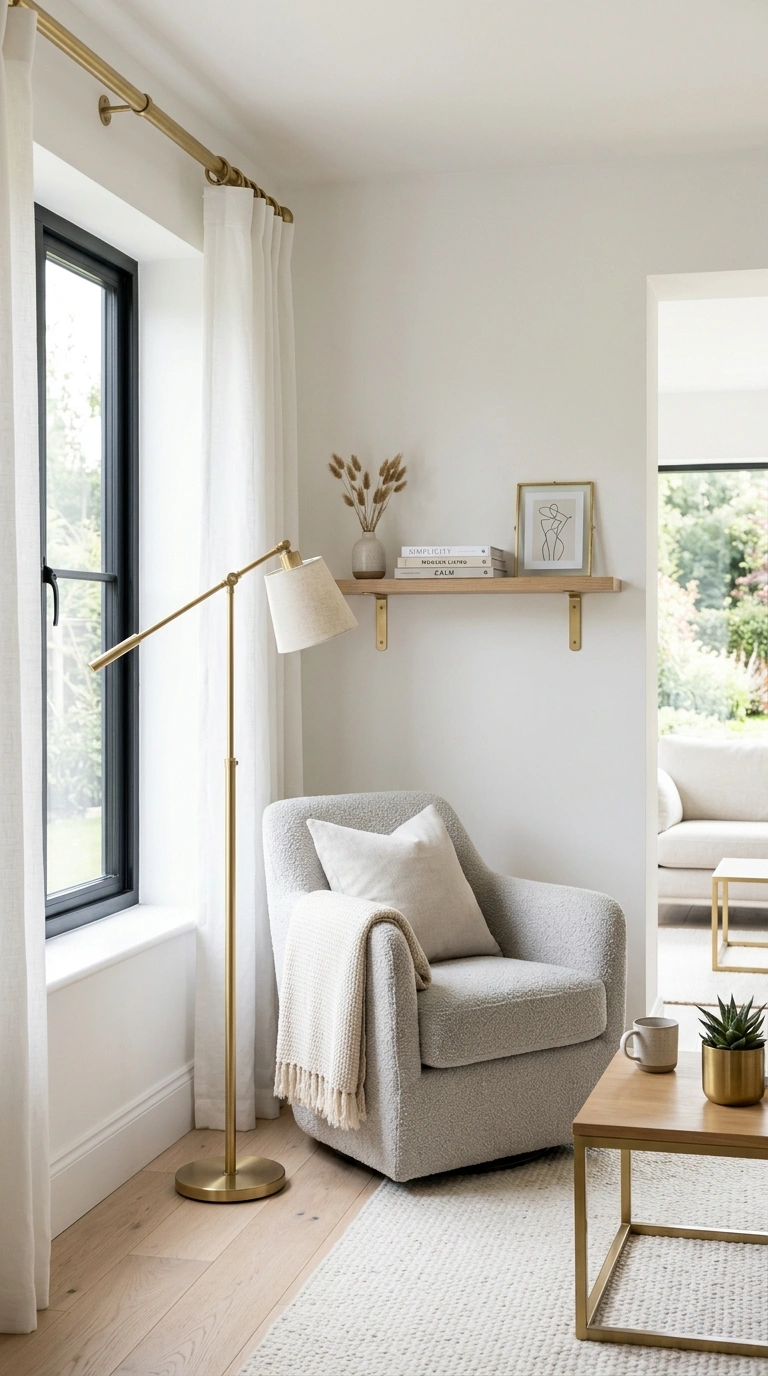
The metal finish used in a minimalist living room should be warm rather than cool. Brushed brass, warm gold, oil-rubbed bronze, or matte black all add warmth and visual weight that cool chrome and polished nickel lack. Use the warm metal finish consistently across the room: the lamp base, the curtain rod, the shelf brackets, and any small hardware should all match. The consistent warm metal creates a subtle connecting thread across the room that ties the individual elements together without being visually loud.
20. No Visible Cord Clutter
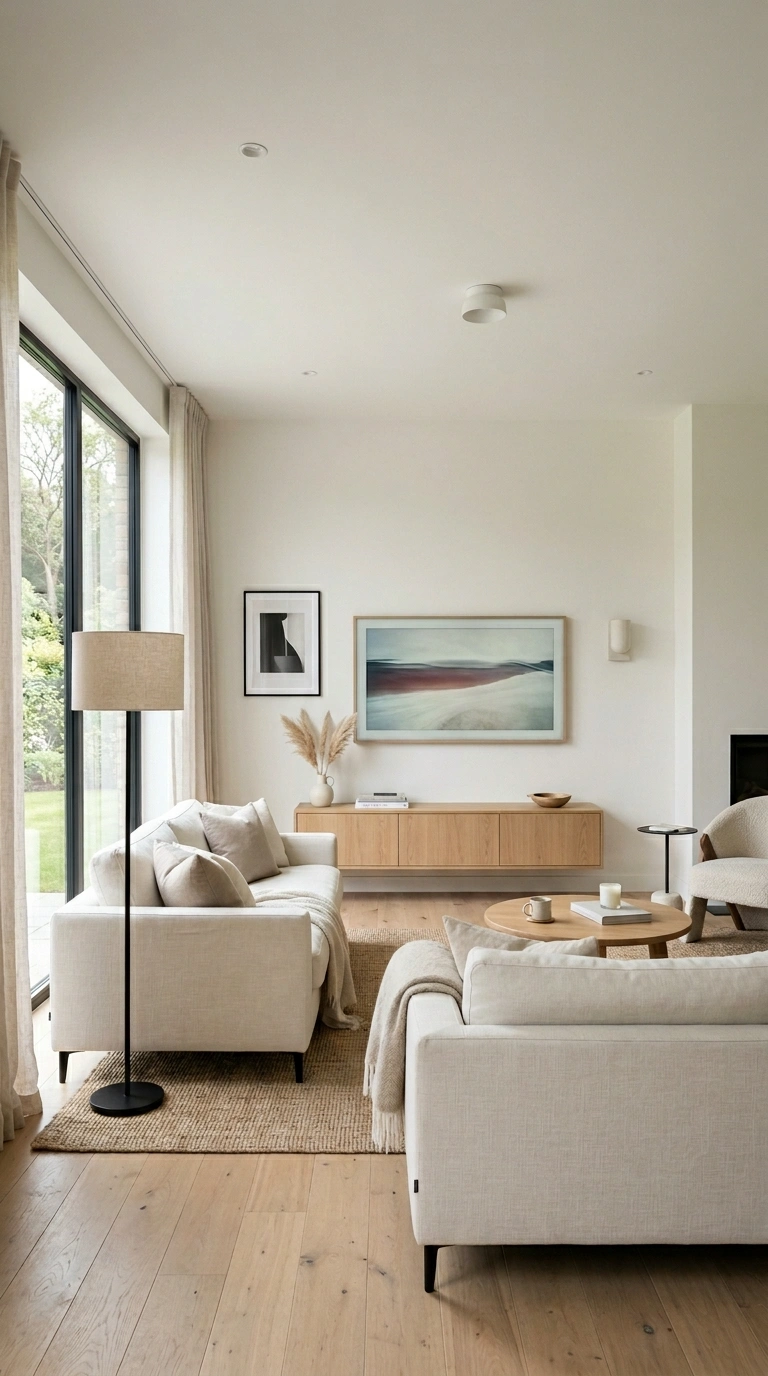
Visible cables and cords running across floors and walls immediately undermine the clean visual quality that minimalism depends on. Route television cables through the wall or hide them in a cable raceway painted to match the wall color. Use wireless lamps where possible or route lamp cords behind furniture. Charge devices in a closed drawer or behind the media console rather than on visible surfaces. The invisible cord management is one of those unseen details that makes an enormous difference in whether a minimalist room actually looks minimal or merely sparsely furnished.
21. Edit Seasonally Refresh
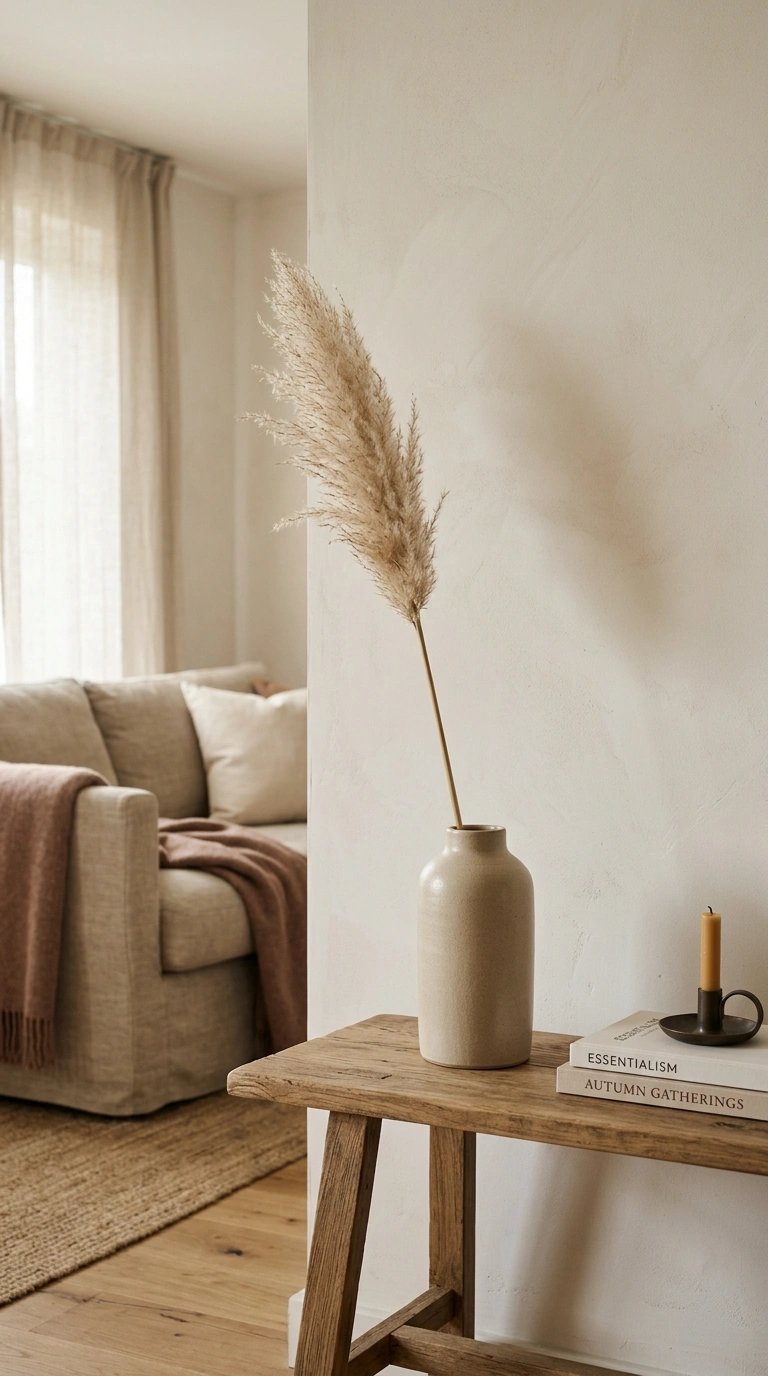
A minimalist living room benefits from a small seasonal edit where one or two elements are swapped to reflect the changing time of year. A lighter throw blanket for summer and a heavier wool one for winter. A branch of fresh spring flowers replaced by a stem of dried fall grasses. A lighter pillow cover swapped for a richer warmer one. The seasonal edit keeps the room feeling alive and current without adding objects. It replaces rather than accumulates, which maintains the minimal quality while preventing the room from feeling static month after month.
22. Evening Mood Lighting
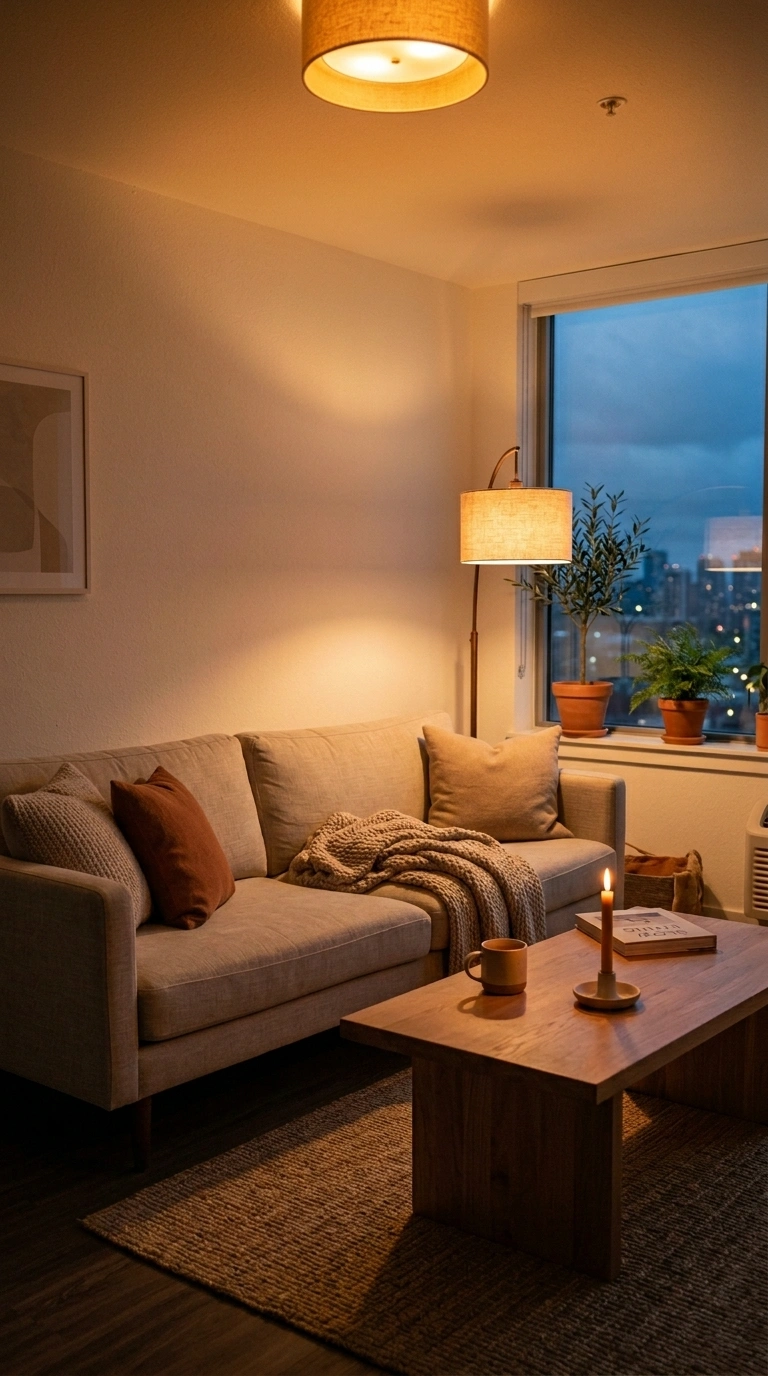
The character of a minimalist living room changes dramatically between daylight and evening, and the warm evening lighting is what makes the room feel cozy rather than dark and empty when the sun goes down. Dim the overhead light to a low warm glow. Turn on the floor lamp and the table lamp. Light a single candle on the coffee table. The warm pools of light create a dimension and warmth that the daytime version of the room, lit evenly by natural light, does not have. The evening lighting is often when the minimalist living room is at its most beautiful and most inviting. For broader guidance on how different color tones and lighting create mood across rooms, the living room color schemes guide covers palette and lighting combinations in detail.
23. Live In It First
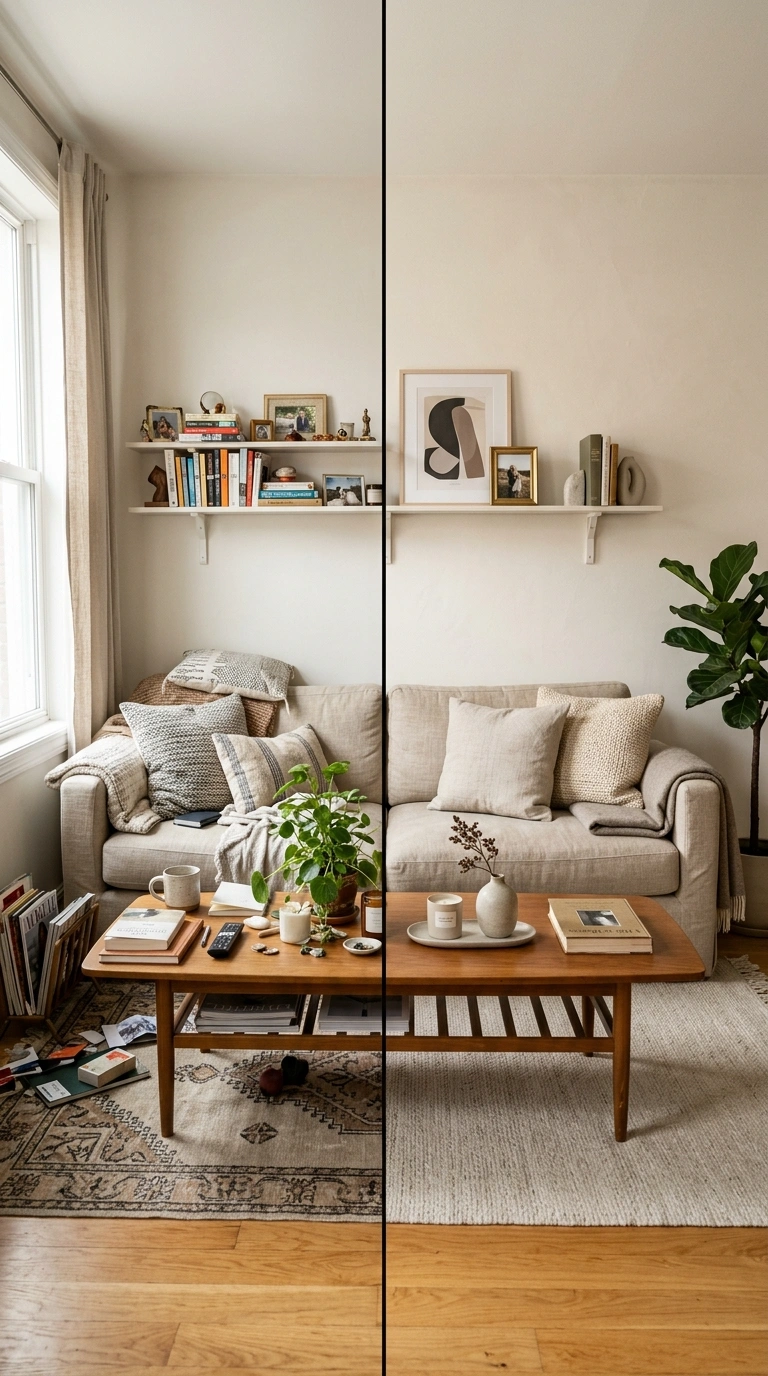
The most effective approach to creating a minimalist living room is not to start with an empty room and add selectively. It is to start with the room as it is, remove everything that does not genuinely contribute to how you live in the space, and then assess what remains. The pieces that survive the edit are the ones the room actually needs. This approach produces a room that is minimal and personal rather than minimal and generic, because the remaining items are the ones that matter to the specific person living there. For a deeper exploration of how the cozy minimalist crossover works across multiple rooms, the cozy minimalist guide covers the principles that keep warmth present even as objects are removed.
A minimalist living room that stays warm and genuinely livable is built on warm materials, warm lighting, and the discipline to let empty space be a feature rather than a problem. The simplicity creates calm when every remaining piece is chosen for both beauty and genuine daily use. Start by removing what does not contribute, keep what genuinely makes the room feel like home, and the minimalism that results will be warm rather than cold.