18 Yoga Room Ideas That Make Practice at Home Feel Genuinely Peaceful
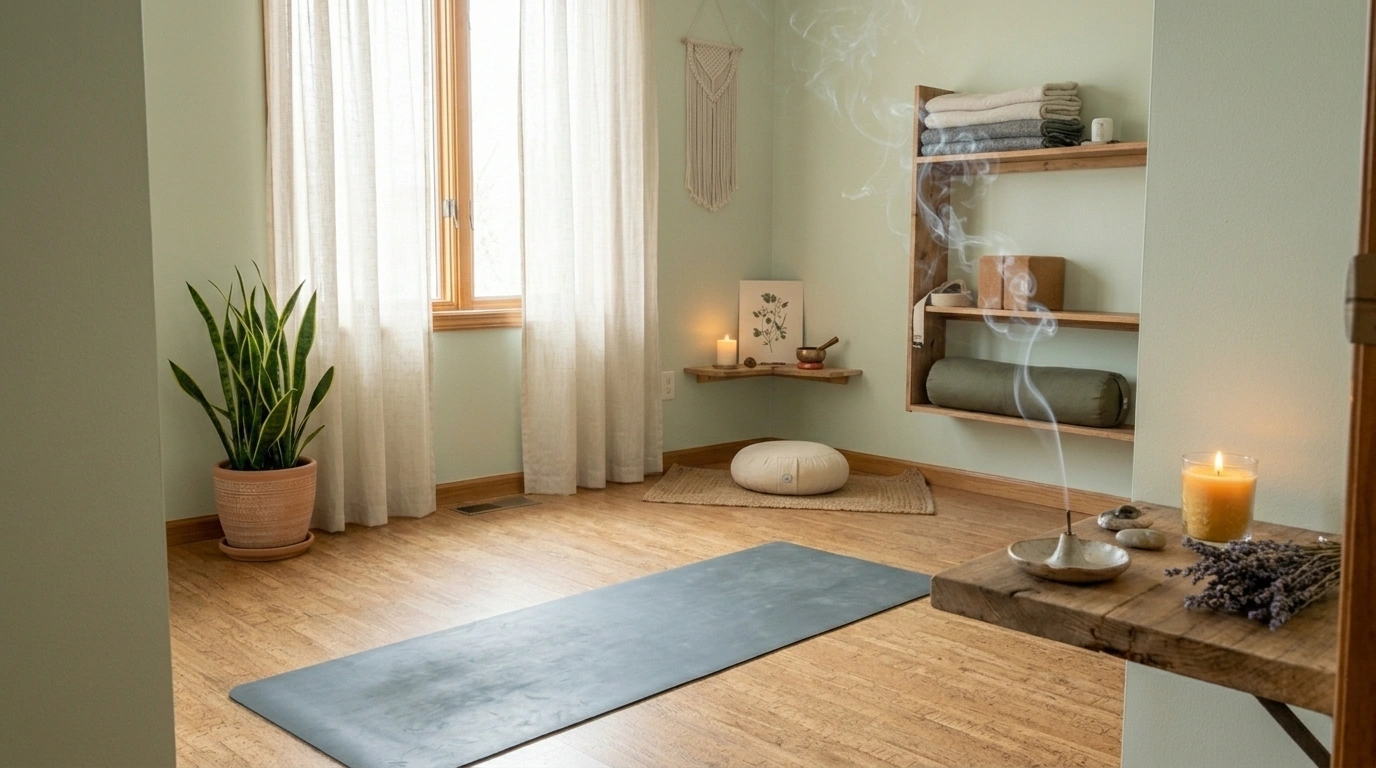
A home yoga room is not just a room where you do yoga. It is a room that makes you want to do yoga. That distinction matters because the hardest part of a home practice is not the practice itself. It is the daily decision to walk into the room and begin. A yoga room that feels genuinely peaceful, that is visually calm, physically comfortable, and slightly separated from the rest of the house, makes that daily decision easier because the room itself invites the practice rather than requiring willpower to start. These 18 ideas cover the flooring, the lighting, the scent, the sound, and the small design details that together create a home yoga space that genuinely supports a regular practice rather than one that simply has a mat on the floor.
1. Clear Empty Floor Space
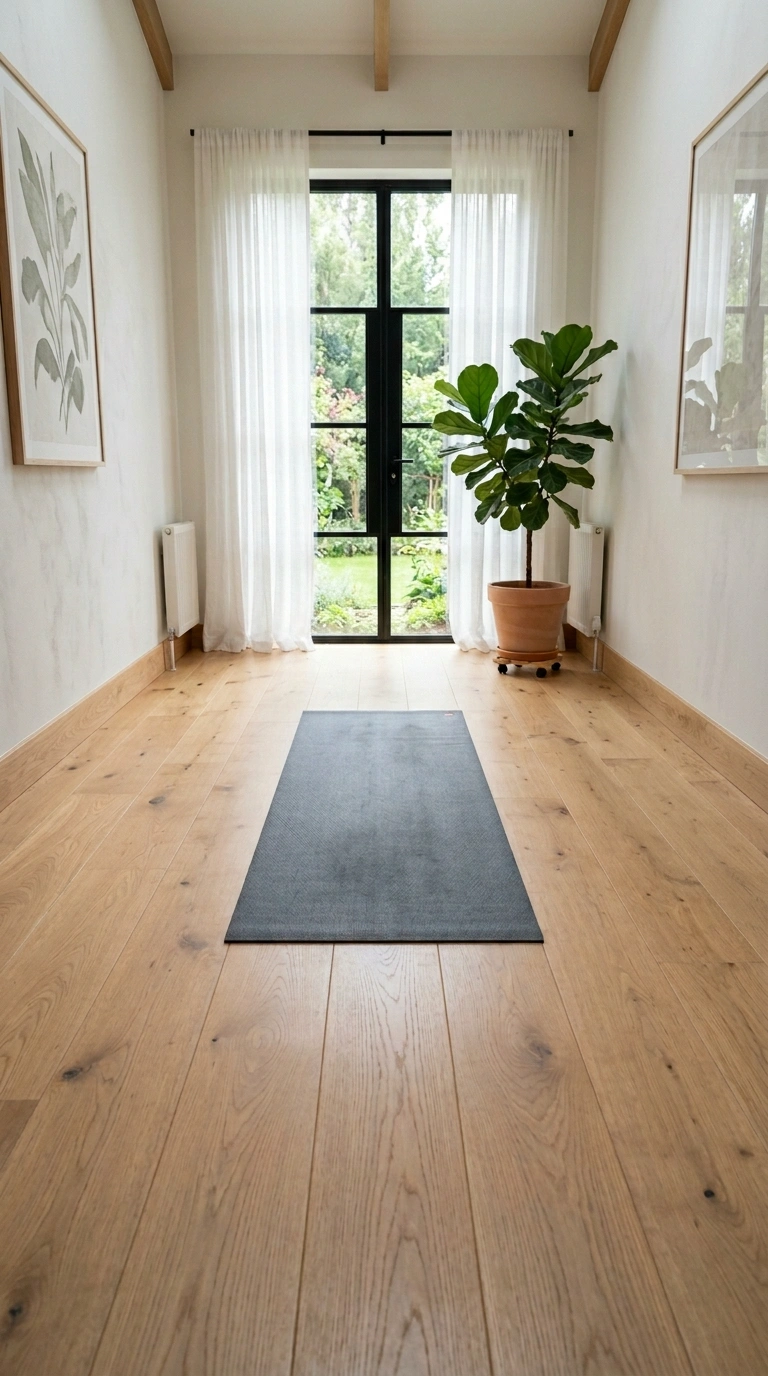
The most important feature of a yoga room is enough clear floor space for a full mat with room to extend arms and legs in every direction without hitting a wall or a piece of furniture. This means the room needs to be genuinely empty rather than a room with furniture pushed to the sides. A minimum of eight by eight feet of clear floor space accommodates a standard yoga mat with adequate movement room around it. Wider is better for practices that include lateral movement. The empty floor is the design feature. Resist the temptation to fill it with furniture or decorative objects that would need to be moved before every practice, since anything that creates a setup step before practicing is an obstacle to daily consistency.
2. Proper Flooring Surface
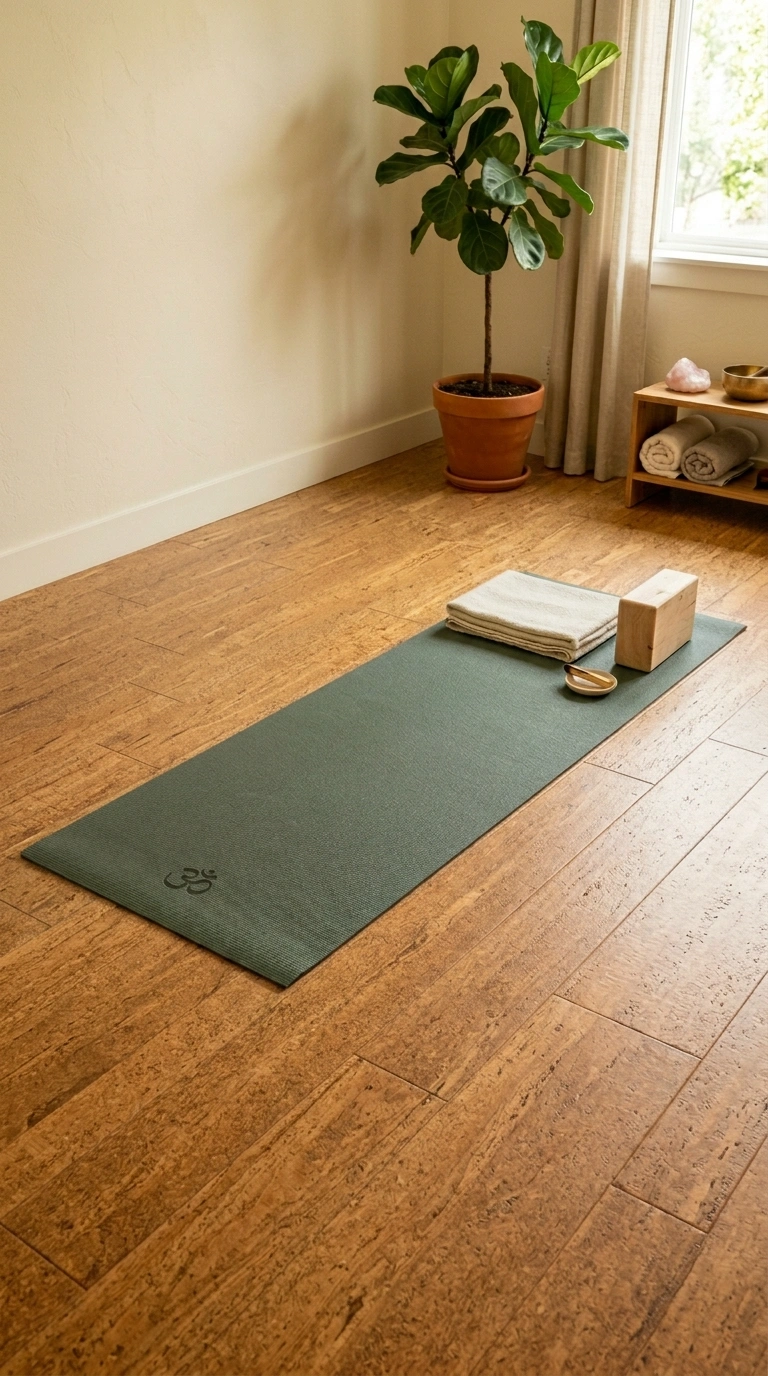
The flooring under the yoga mat matters more than most people realize. A hard tile or concrete floor, even under a good mat, transmits cold and hardness through the mat during floor poses and savasana. A wooden floor is warmer and slightly more forgiving. A cork floor is the ideal yoga room surface because cork is naturally warm, slightly cushioned, slip-resistant, and antimicrobial. If replacing the flooring is not practical, a large thick yoga mat or a set of interlocking foam floor tiles placed under the standard yoga mat provides the cushioning and warmth that hard floors lack. The flooring should feel comfortable for lying flat on the back without any mat at all, since that is the test of whether it is genuinely suitable for yoga practice.
3. Natural Light Priority
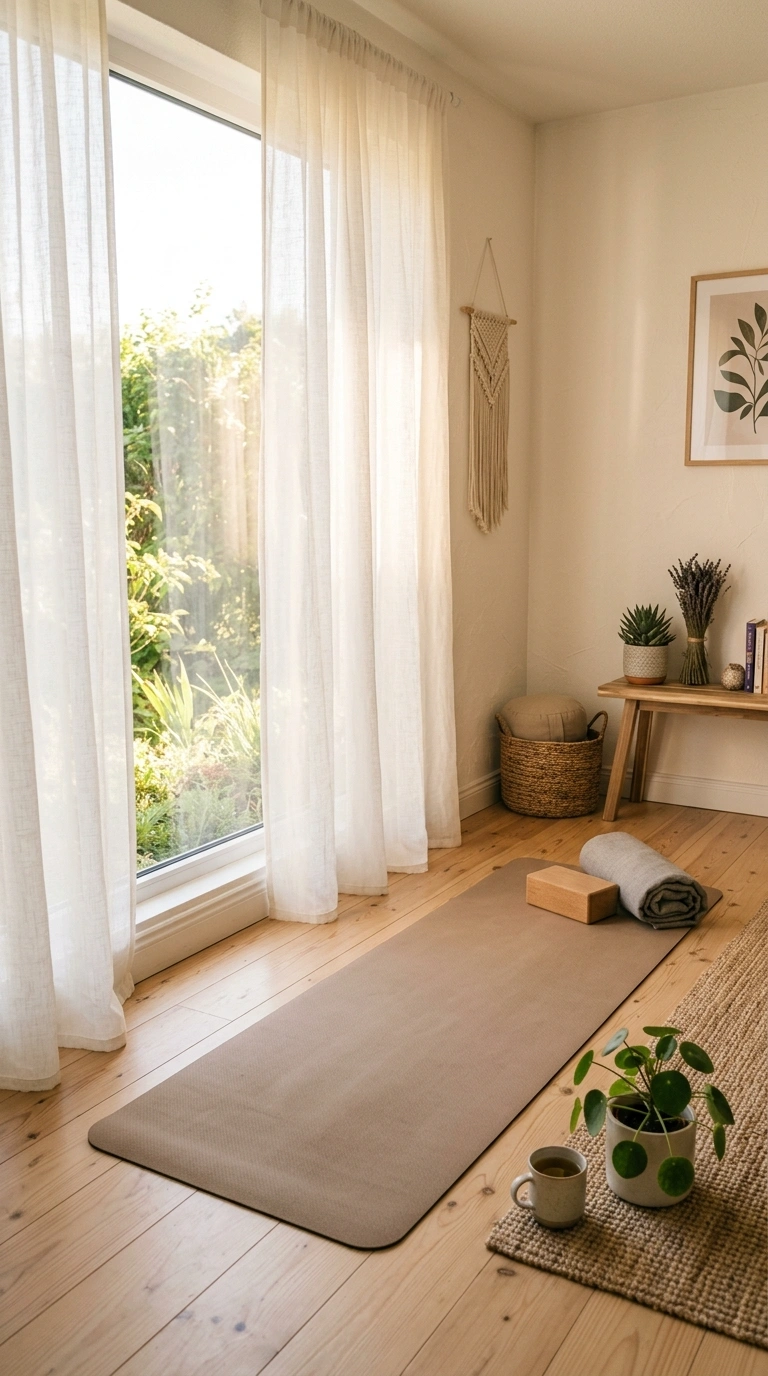
Natural light is the most beneficial light for yoga practice because it changes through the session, provides genuine warmth, and connects the practitioner to the time of day and the weather outside. Position the yoga space near a window or in a room with good natural light. A sheer curtain or a linen shade filters the light softly without blocking it, preventing harsh direct sun during certain times while maintaining the overall brightness and warmth. Morning practice in east-facing natural light and evening practice in west-facing golden light both provide beautiful and calming conditions. A room with no natural light can work but requires careful artificial lighting to compensate.
4. Warm Dimmable Lighting
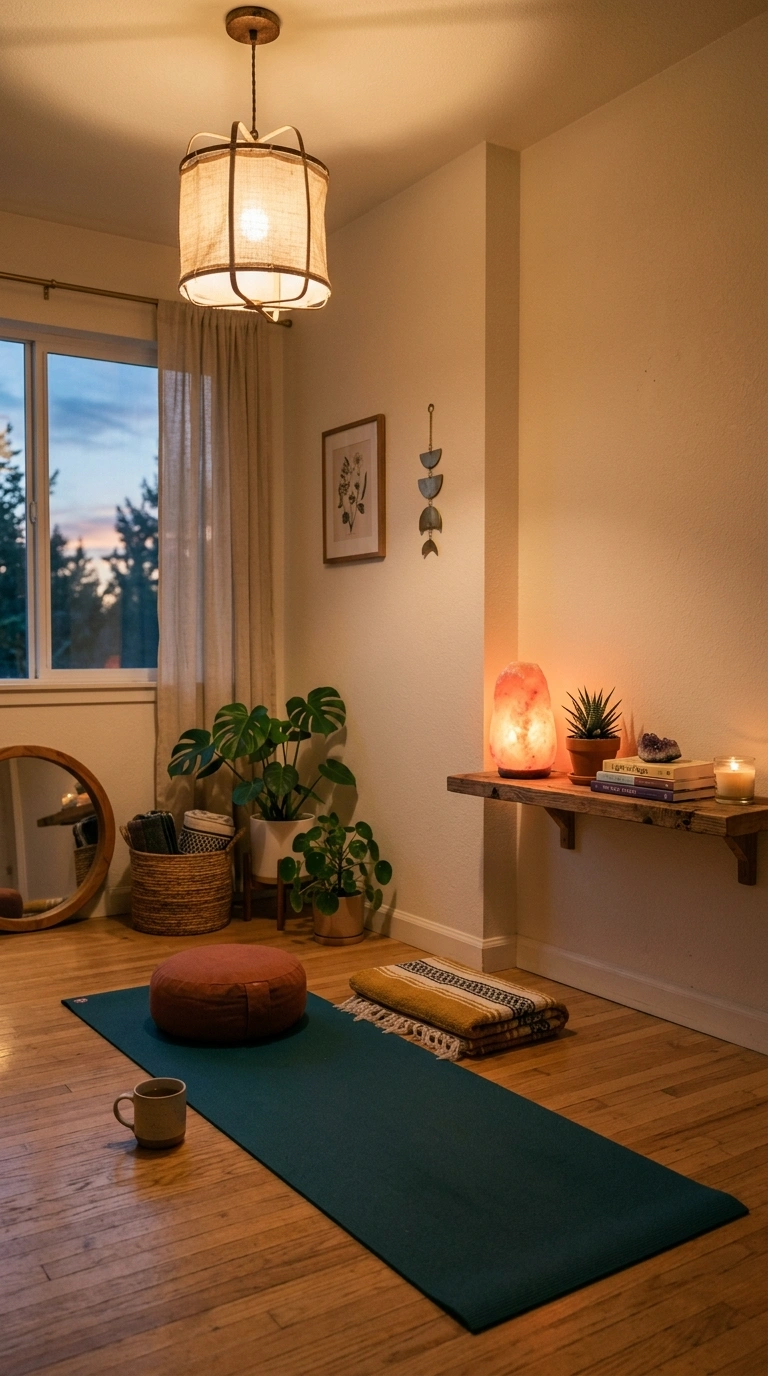
For early morning and evening practices when natural light is limited, warm dimmable artificial lighting provides the calm atmospheric quality the practice needs. Install a dimmer on the main light fixture so the room can shift between functional brightness for active sequences and soft ambient light for meditation and savasana. Use warm-toned LEDs in the 2200K to 2700K range for the most calming quality. Avoid cool-toned or bright overhead fluorescent lighting which creates a clinical gym quality that works against the peaceful atmosphere. A small salt lamp on a shelf or in a corner provides a warm orange glow that is particularly beautiful during evening practice.
5. Calming Wall Color
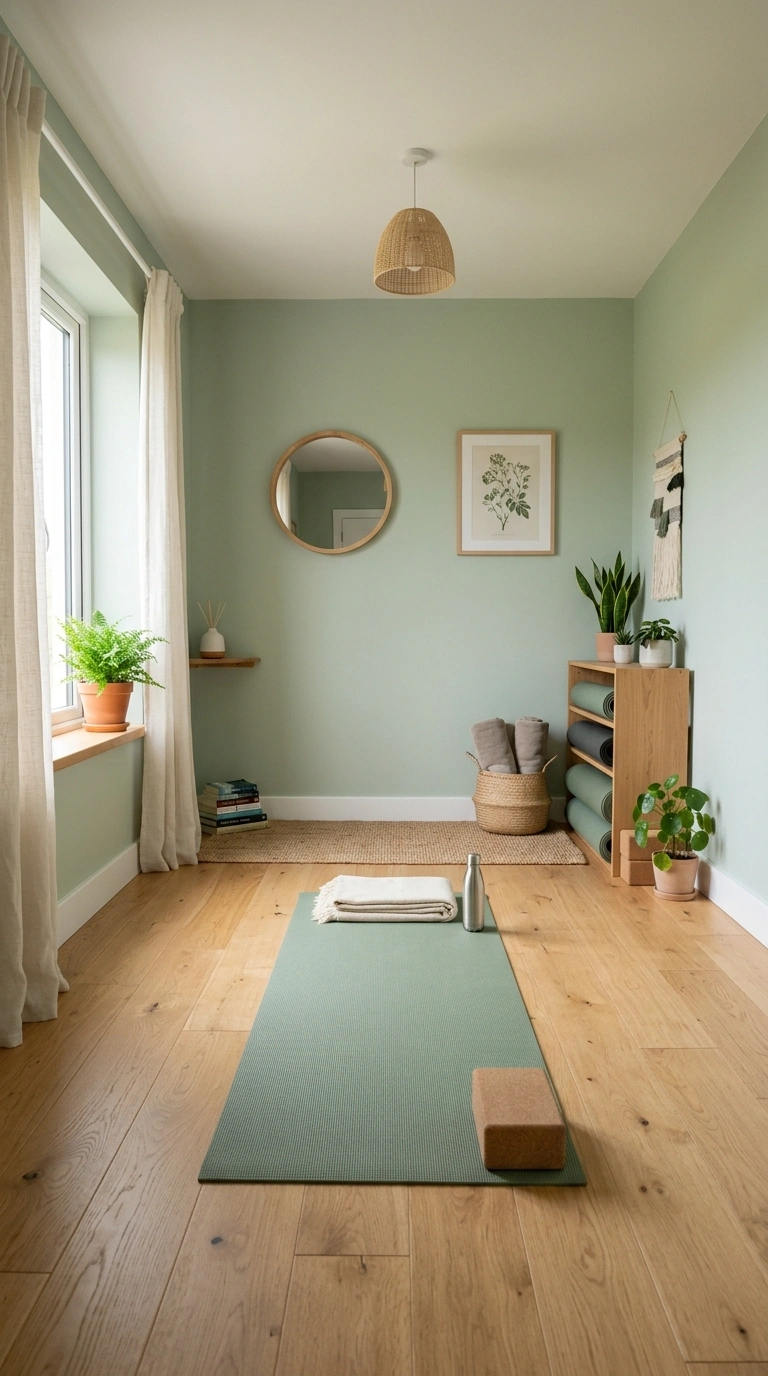
The wall color in a yoga room should support calm focus rather than stimulate or distract. Soft warm white, pale sage, muted sky blue, warm cream, or barely-there lavender all create a quiet backdrop that supports the inward focus of practice. Avoid bright colors, bold patterns, or anything visually stimulating on the walls. The walls should recede rather than demand attention. Paint all four walls in the same calming tone for the most enveloping and consistent effect. If natural wood or stone is visible on a wall, let that natural surface contribute its organic warmth rather than painting over it. The same principles of calming natural tones creating a peaceful room also apply to earthy bathroom designs where the muted palette supports a similar quality of daily ritual.
6. Minimal Wall Decoration
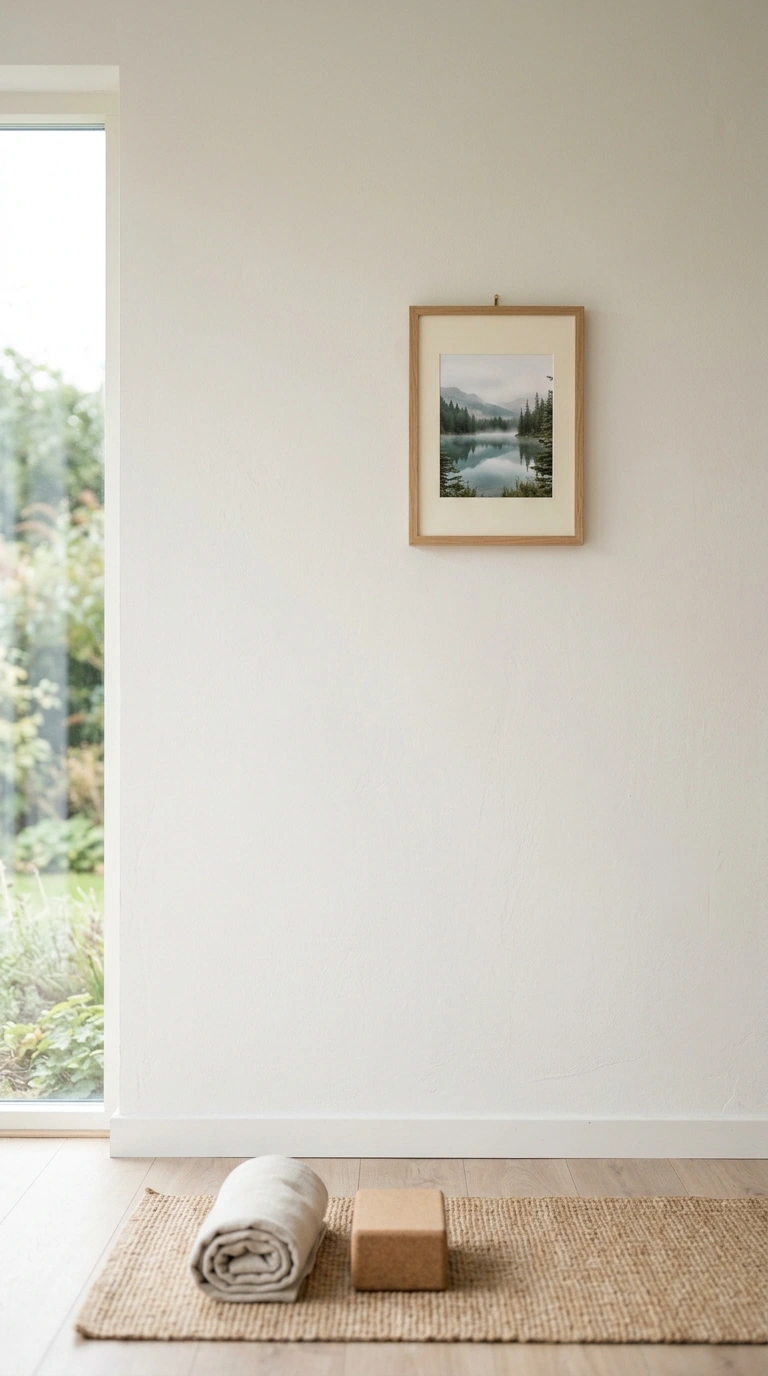
A yoga room benefits from visual simplicity on the walls. One small piece of meaningful art, a single shelf with a candle and a plant, or a small collection of stones on a ledge is enough. The visual content of the room should support the practice rather than competing with it for attention. A single beautiful object on one wall provides a gentle focus point for seated meditation. The remaining walls should be calm and unadorned. The emptiness of the walls is a design choice, not a deficiency. It signals that the room is for internal experience rather than for visual consumption.
7. Natural Material Elements
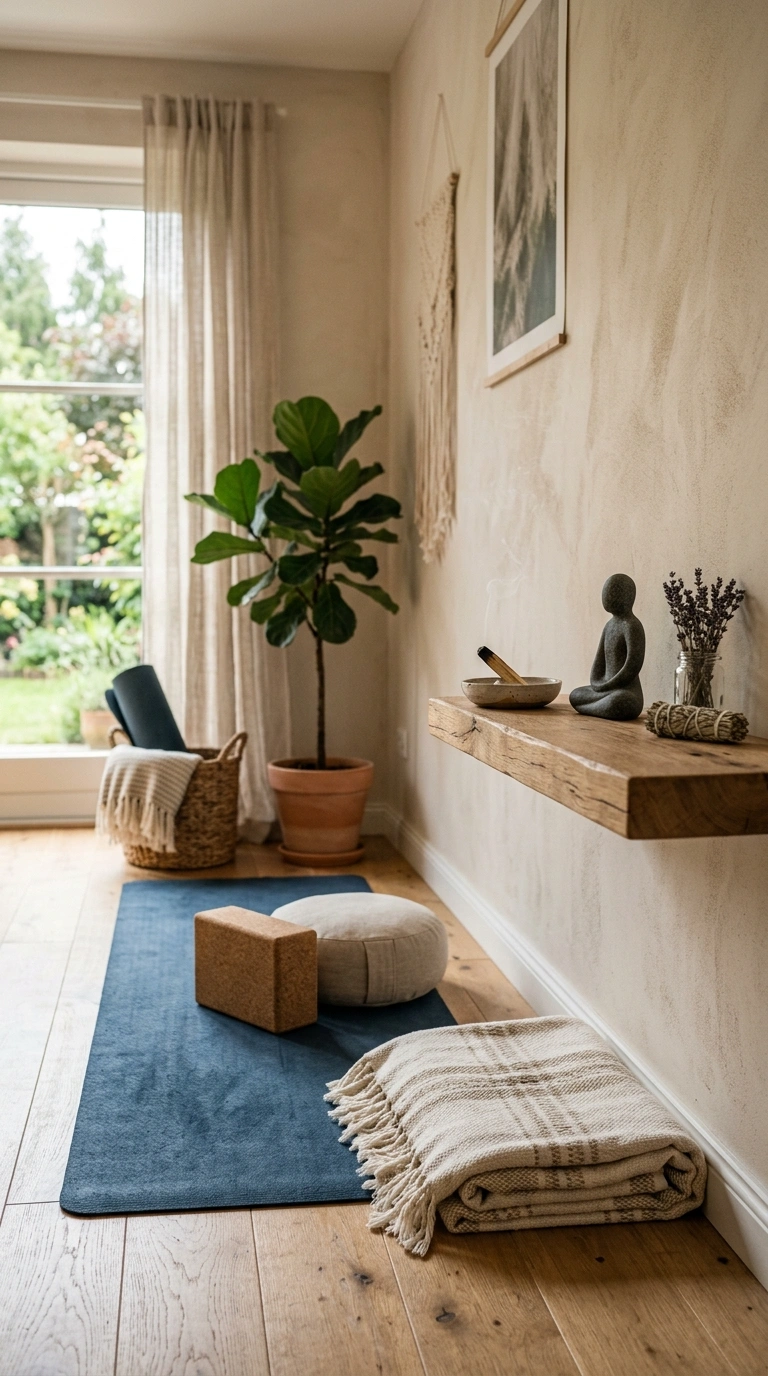
The materials in a yoga room should reference the natural world: warm wood, natural stone, woven cotton, linen, cork, and ceramic rather than plastic, metal, or synthetic materials. The natural materials provide organic warmth and a connection to the earth that supports the grounding quality yoga practice aims for. A wooden shelf, a stone sculpture, a woven cotton blanket folded beside the mat, a ceramic incense holder, and a cork block all contribute to the natural material palette. Each object in the room should feel good in the hands and look genuinely natural rather than manufactured.
8. Props Storage Solution
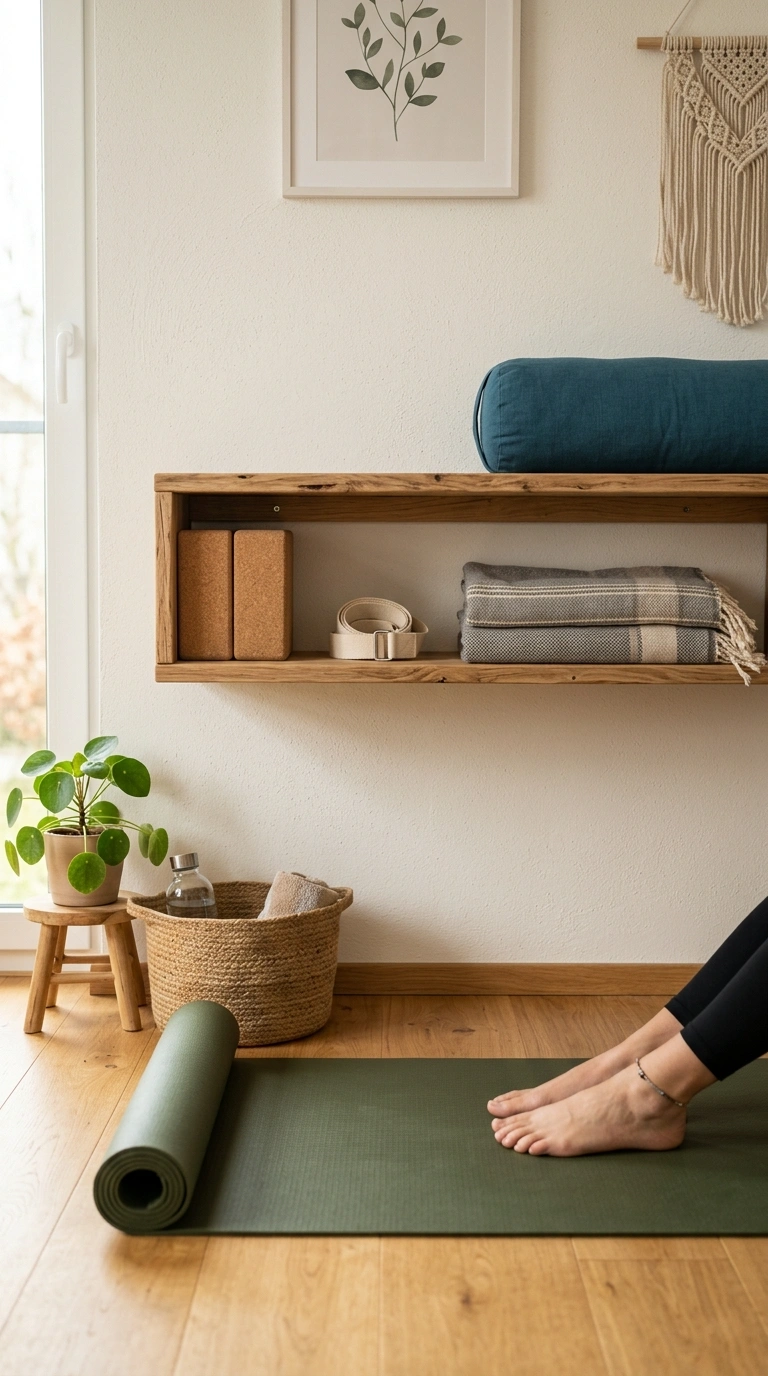
Yoga props, blocks, straps, bolsters, blankets, and extra mats, need a dedicated storage location that keeps them organized, accessible, and out of the clear floor space. A simple open shelf mounted on the wall, a small cabinet in the corner, or a dedicated cubby system holds the props within arm’s reach of the mat position without encroaching on the practice space. Arrange the props neatly and consistently so they are ready to use without searching. The organized prop storage is part of the room’s visual calm and contributes to the sense that the room is maintained for genuine regular practice.
9. Scent for Atmosphere
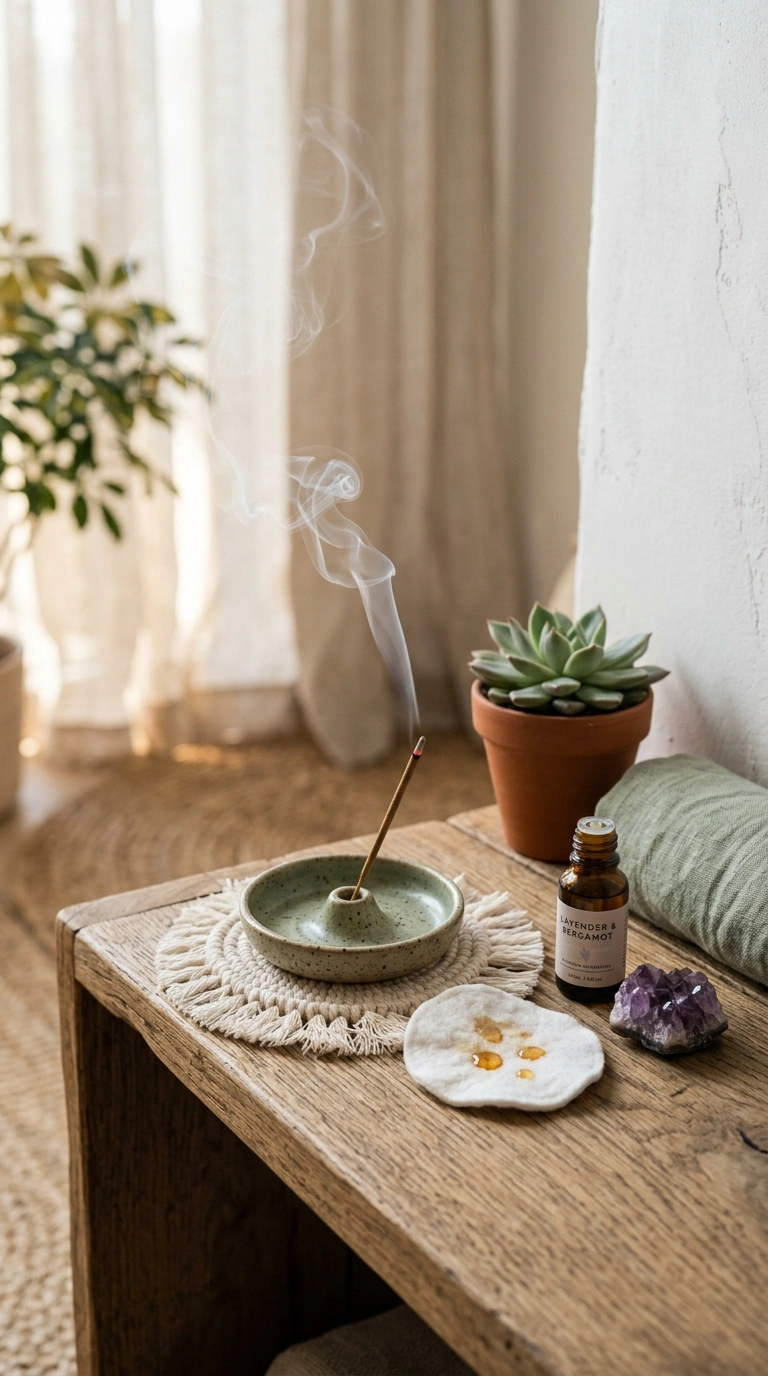
A gentle scent in the yoga room adds an atmospheric layer that visual elements alone cannot provide. A small incense stick, a few drops of essential oil on a cotton pad, a reed diffuser in a natural scent, or a scented candle lit before practice all introduce the olfactory quality that triggers the mental transition into practice mode. Sandalwood, frankincense, lavender, palo santo, and eucalyptus are all traditionally associated with yoga and meditation spaces. The scent should be barely noticeable after a few minutes in the room rather than overwhelming, since strong scents interfere with deep breathing rather than supporting it.
10. Sound Environment Control
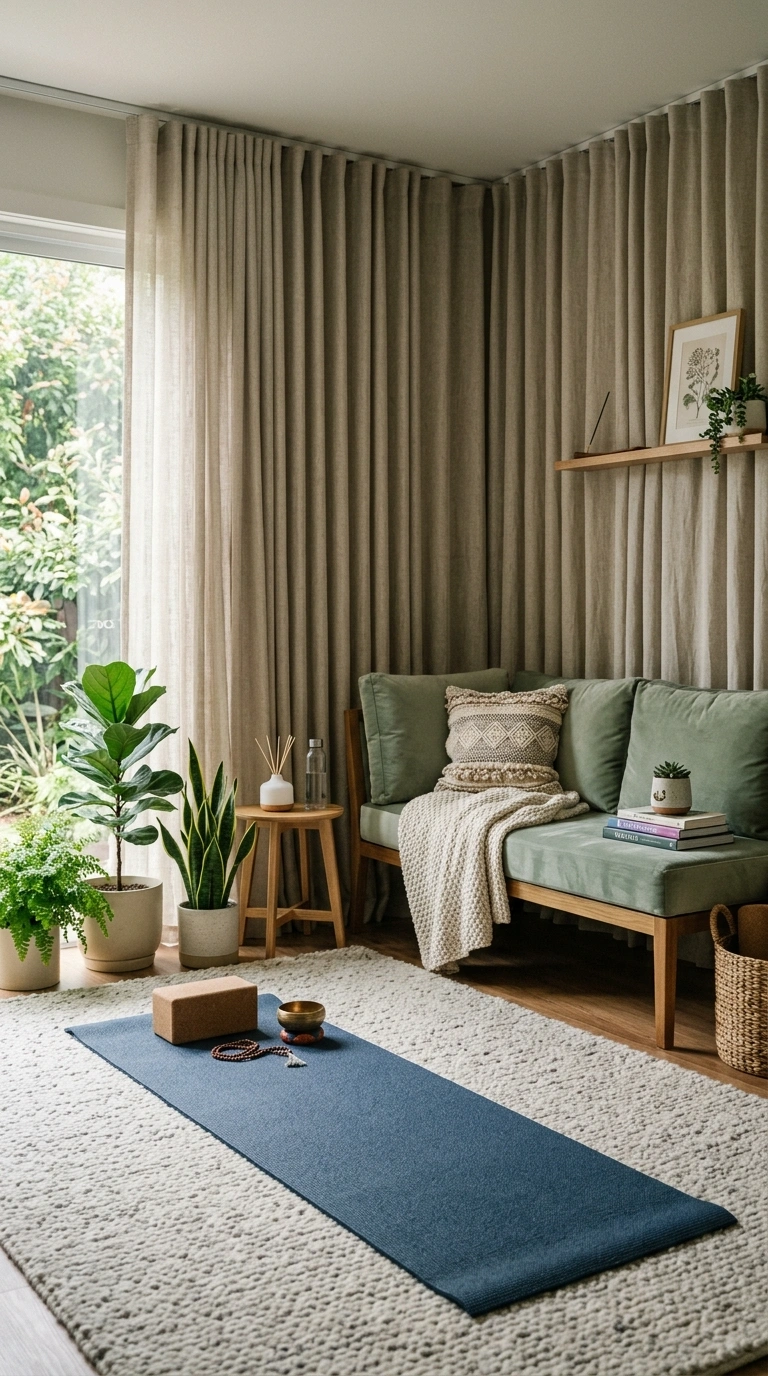
The sound environment of a yoga room is as important as the visual one. If the room shares walls with a noisy part of the house, the kitchen, the television, the street, consider how to manage the sound intrusion. A white noise machine or a small speaker playing soft ambient sound masks household noise effectively. A thick rug, soft curtains, and upholstered elements in the room absorb sound reflections and create a quieter acoustic environment. If the room is naturally quiet, the silence itself becomes part of the practice. If it is not, managing the sound is a critical design decision.
11. Mirror Optional Decision
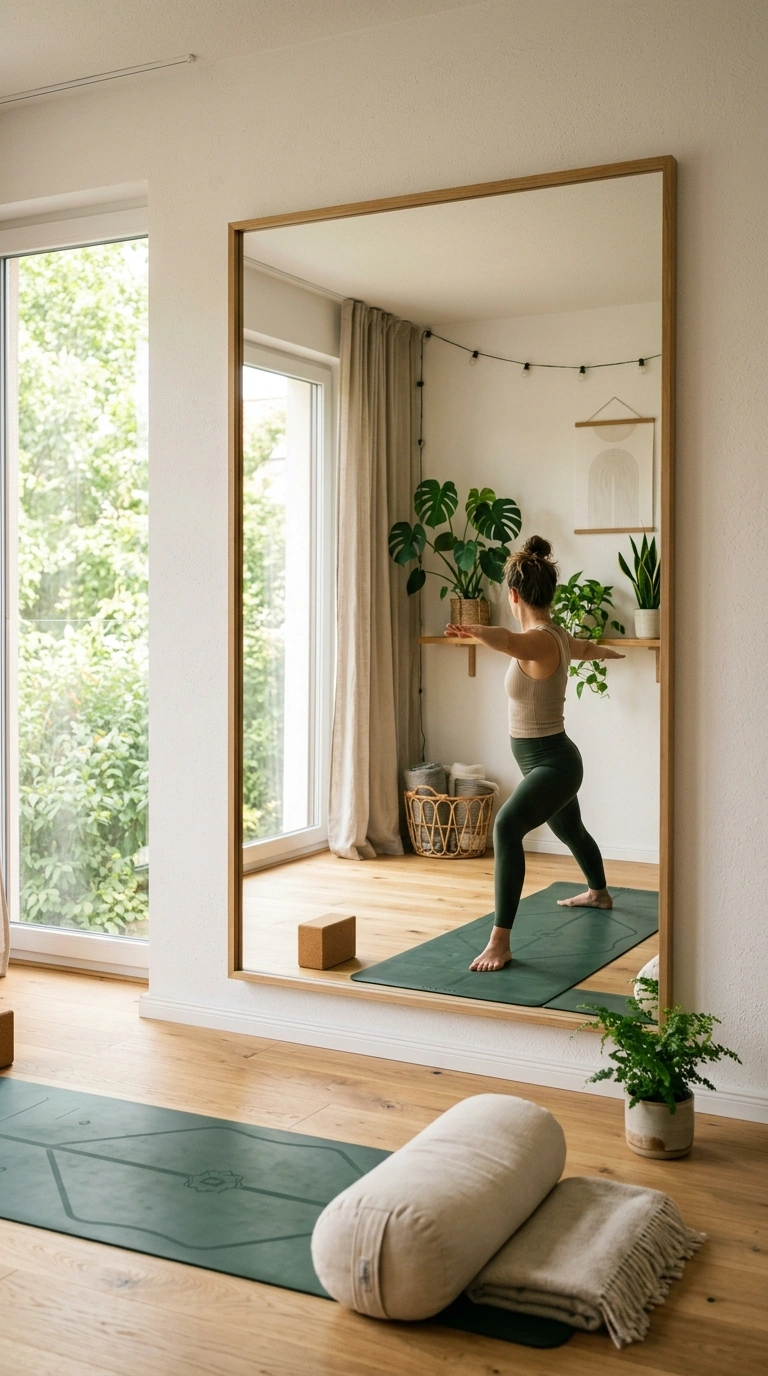
A full-length mirror in a yoga room is a personal preference that divides practitioners. Some find the mirror essential for checking alignment and maintaining form. Others find it distracting because it encourages external focus when the practice is meant to cultivate internal awareness. If you include a mirror, position it where it can be used during standing poses but where it does not dominate the room or catch the eye during seated and floor work. If you choose not to include one, the blank wall where it would have been contributes to the visual simplicity of the room.
12. Single Plant Presence
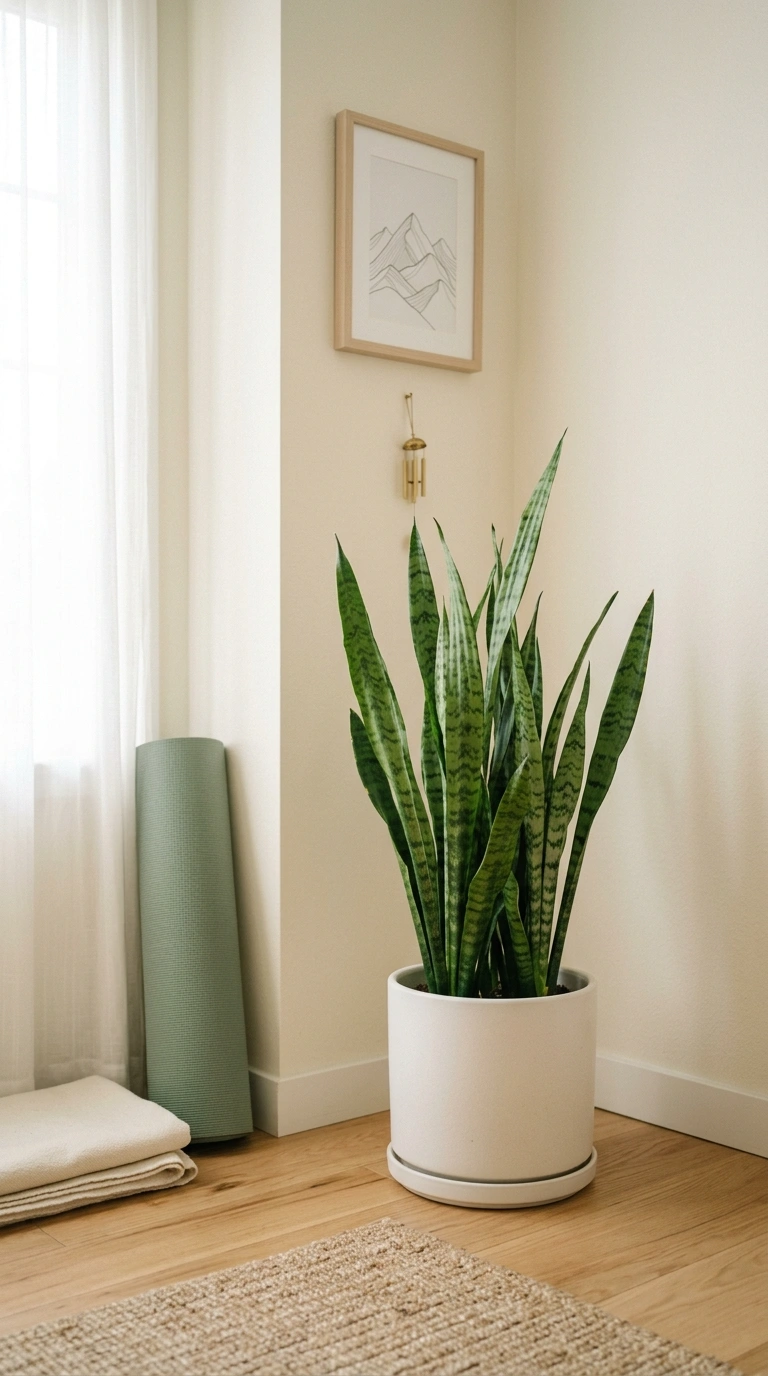
A single living plant in the yoga room adds the organic life quality that the practice philosophically values. A tall snake plant in a corner, a small peace lily on the shelf, or a pothos trailing from a high position all work depending on the room’s light conditions. The single plant provides a gentle living focal point without the visual busy-ness that multiple plants can create. The plant should be healthy and well-maintained since a dying or neglected plant communicates the opposite of the calm intentional atmosphere the room aims for.
13. Temperature Comfort
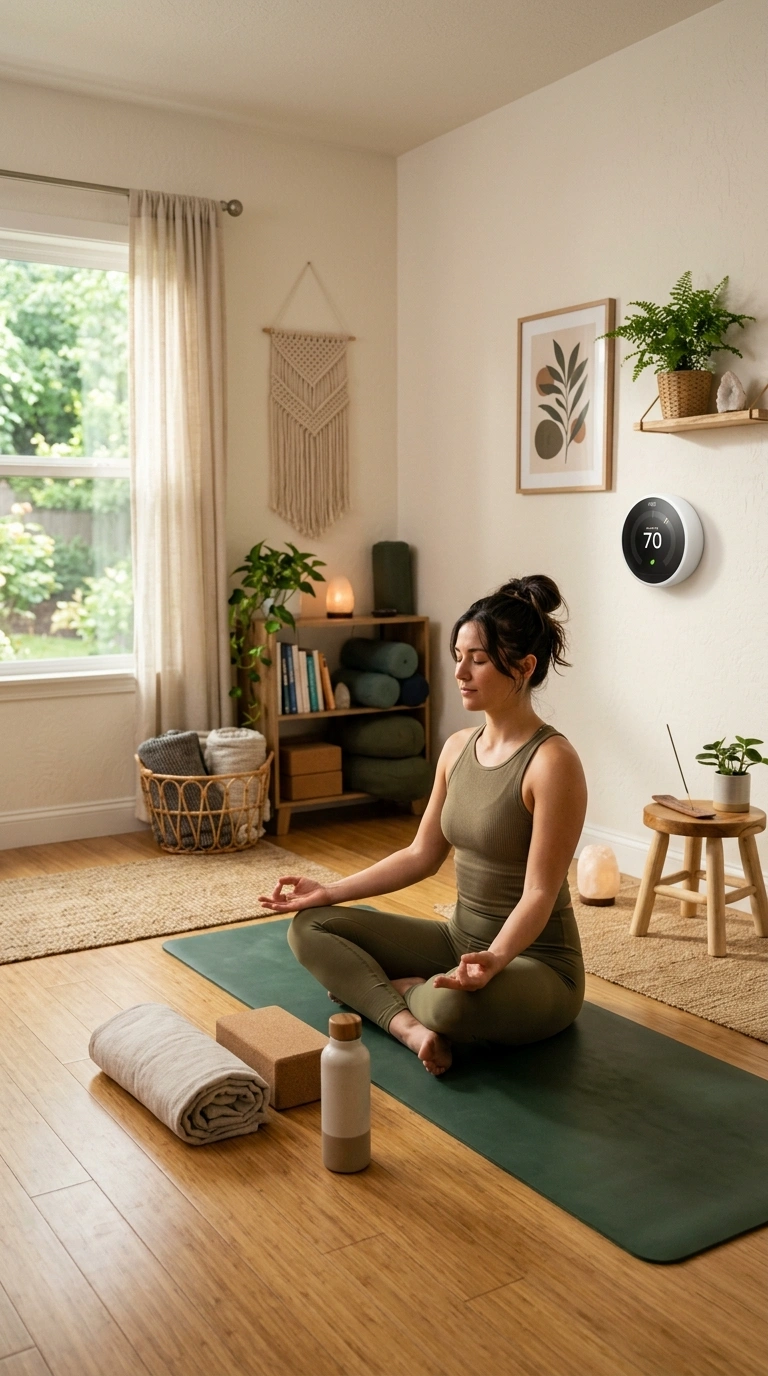
The temperature of the yoga room affects the practice more than most other design factors. A room that is too cold makes muscles tight and the body reluctant to move through the full range of motion. A room that is too warm makes the practice exhausting rather than energizing. The ideal yoga room temperature for a standard vinyasa practice is between 68 and 72 degrees Fahrenheit. For a warmer practice, up to 80 degrees can work. A small space heater that can warm the room before practice begins, or a fan for cooling during warmer months, gives the practitioner control over the conditions. Ensure the heating or cooling source is quiet enough not to interfere with the practice.
14. Meditation Corner Setup
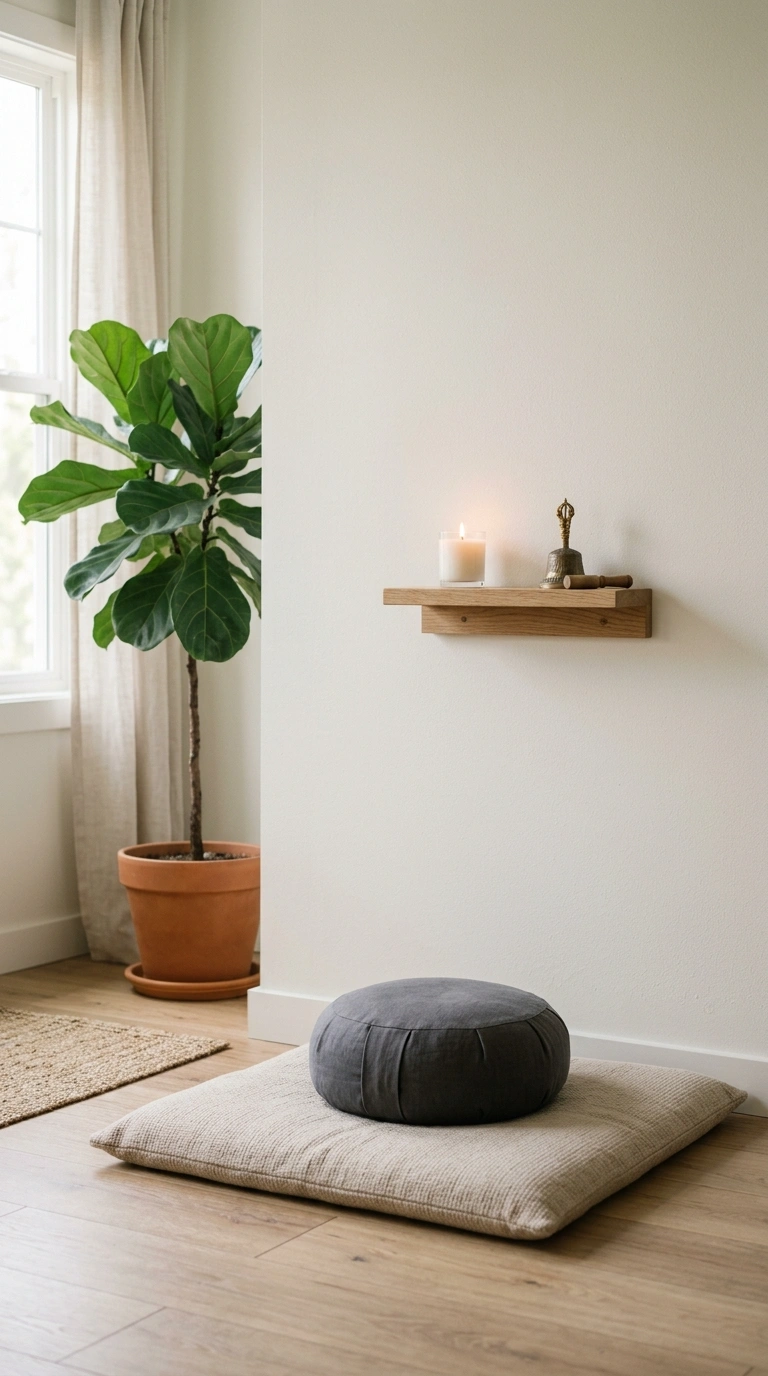
A small dedicated corner of the yoga room with a meditation cushion, a small altar or shelf, and a candle creates a specific seated meditation zone within the larger practice space. The meditation corner gives the room a secondary function beyond physical practice and provides a visual anchor for the contemplative aspect of yoga. A zafu cushion on a zabuton mat, a small wooden shelf holding a candle and one or two meaningful objects, and perhaps a small bell or singing bowl together create a complete meditation station. The corner should face a calm wall rather than a window to minimize visual distraction during seated practice.
15. Curtain or Screen Divider
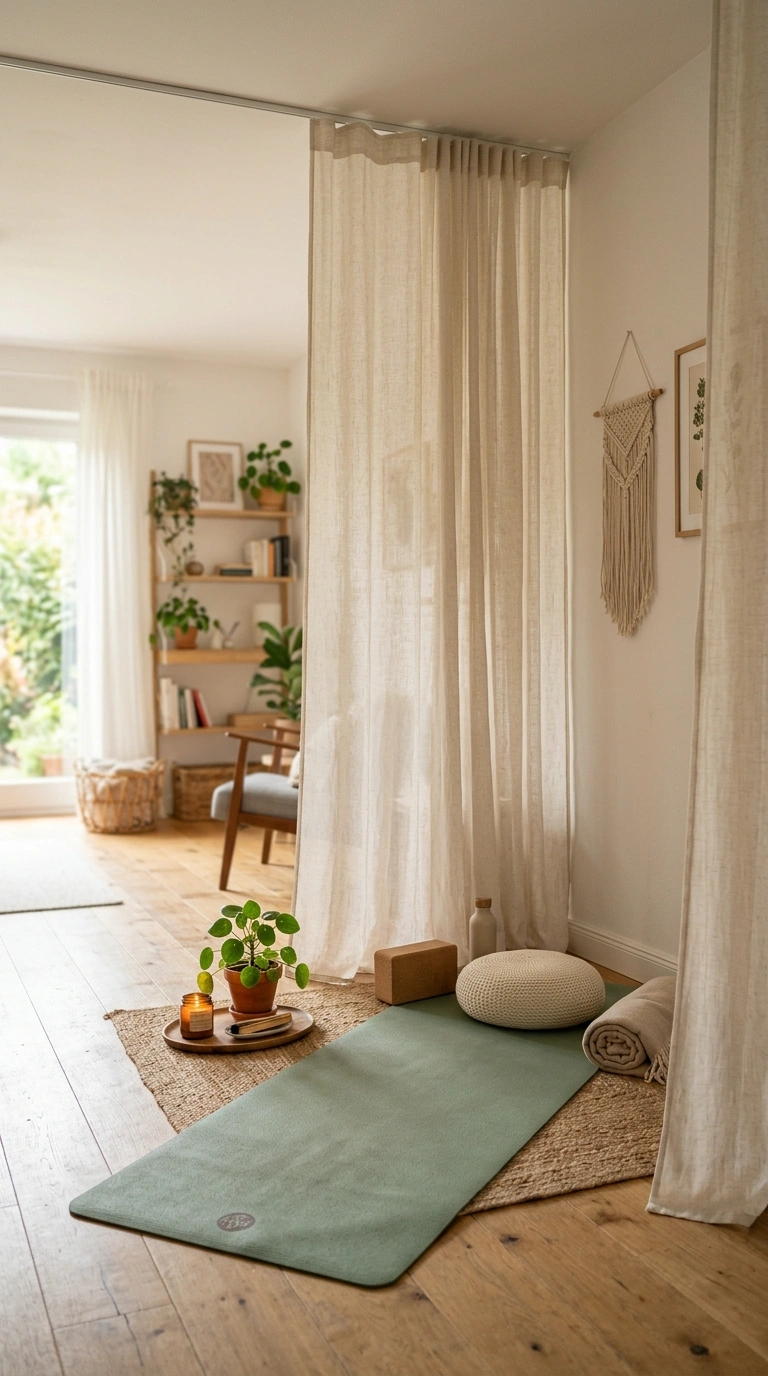
If the yoga space is part of a larger room rather than a dedicated room with a door, a curtain, a folding screen, or a sheer fabric divider creates a visual and psychological boundary between the practice space and the rest of the room. The divider signals the transition into the practice zone and provides the sense of enclosure that an open room layout lacks. A simple sheer linen curtain on a ceiling-mounted track drawn around the practice area creates a soft canopy that transforms a corner of a living room or bedroom into a dedicated yoga space. The curtain can be drawn back when the space is not in use for practice.
16. Bluetooth Speaker Position
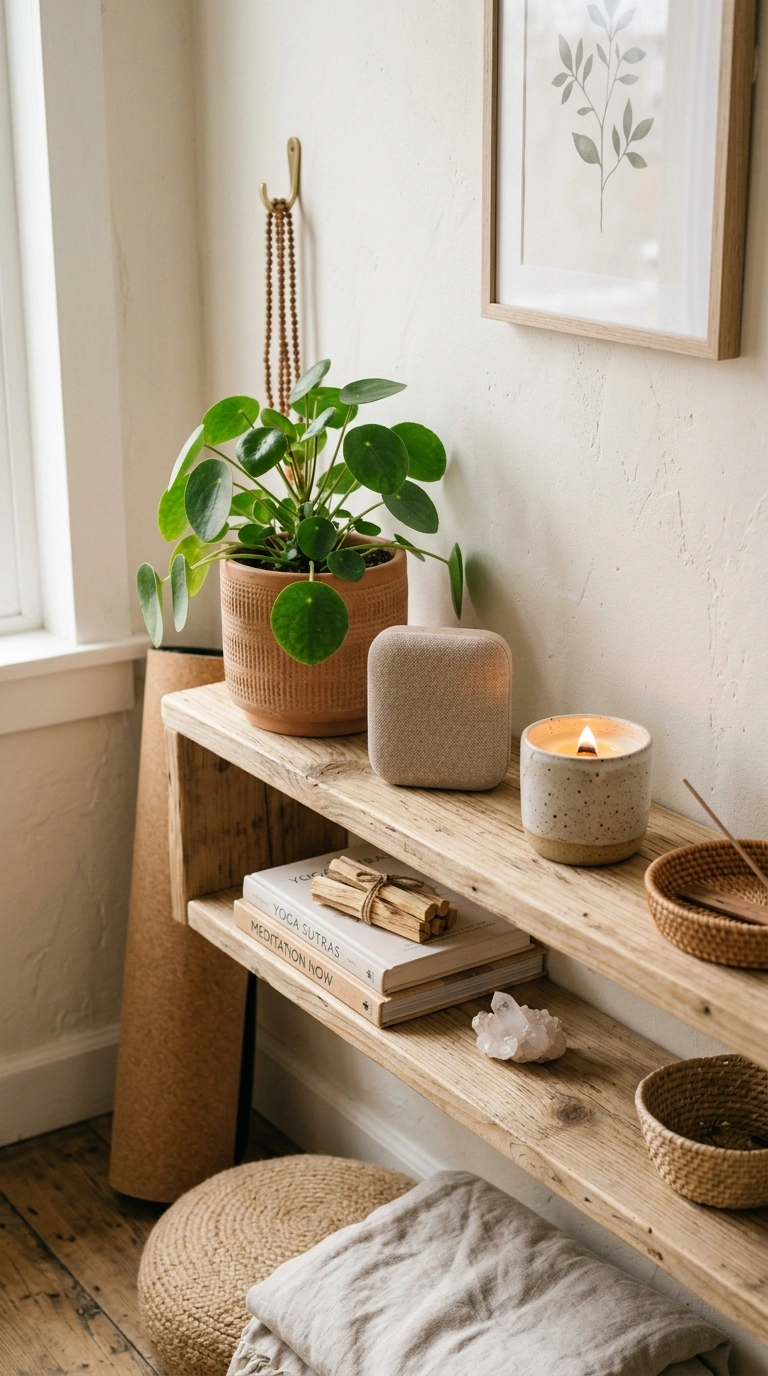
A small Bluetooth speaker positioned on a shelf in the yoga room allows the practitioner to play guided practices, meditation music, or ambient sound during the session. The speaker should be small enough to be visually unobtrusive and positioned at a height where the sound fills the room evenly rather than coming from a single directional source. A speaker placed on a high shelf or mounted near the ceiling distributes sound more evenly than one placed on the floor beside the mat. The speaker should blend into the room’s aesthetic rather than standing out as a piece of technology. The same approach to creating warm focused atmosphere through sound and lighting also applies in cozy home office designs where the background audio contributes significantly to the room’s quality.
17. Morning Ritual Station
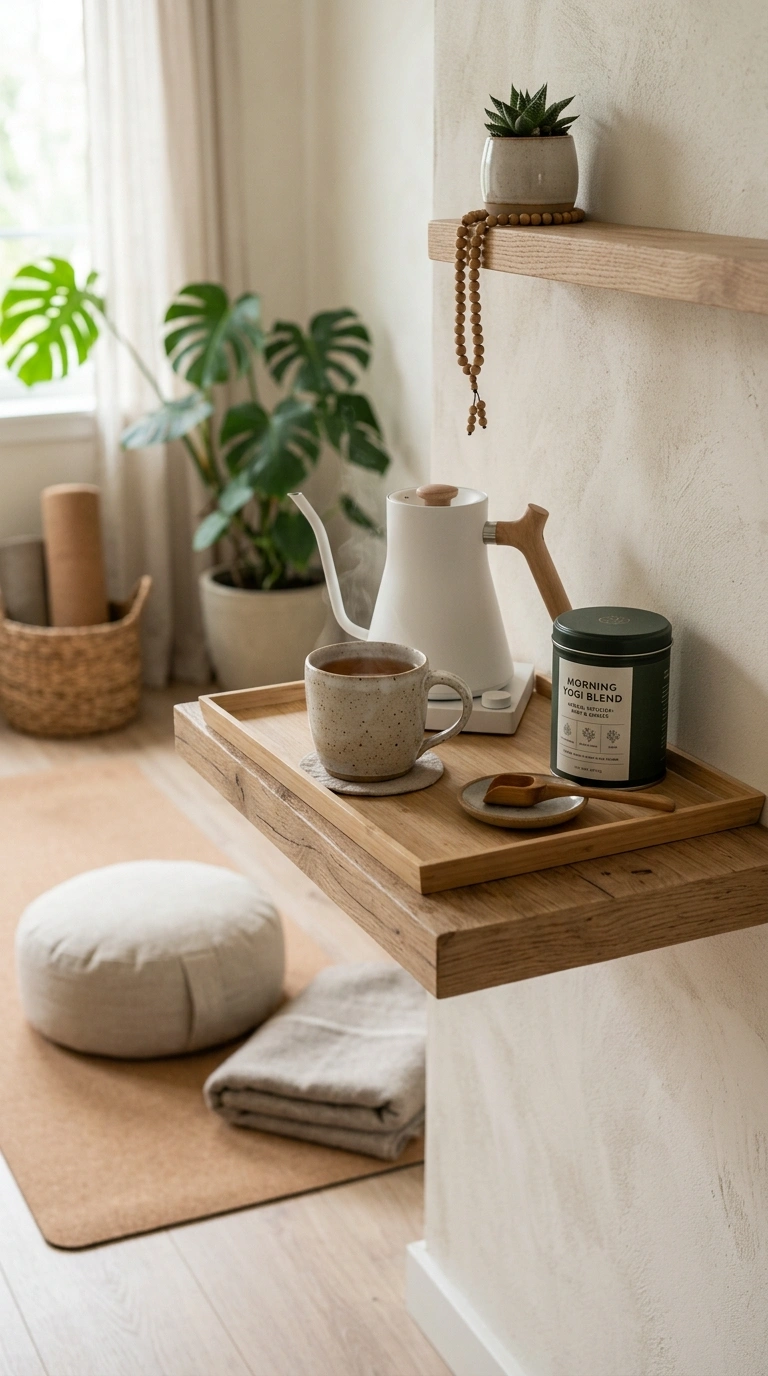
A small area beside the practice space holding a kettle, a cup, and a tin of herbal tea creates a pre-practice ritual that supports the transition from waking up to stepping onto the mat. Making a cup of warm tea, sipping it slowly, and then beginning the practice gives the morning a gentle structure that jumping straight from bed to mat does not have. The tea ritual is not a delay tactic. It is a deliberate transition that prepares the mind and warms the body for the practice ahead. A small tray with the kettle, the cup, and the tea on a shelf beside the practice space keeps the ritual simple and contained.
18. Daily Practice Invitation
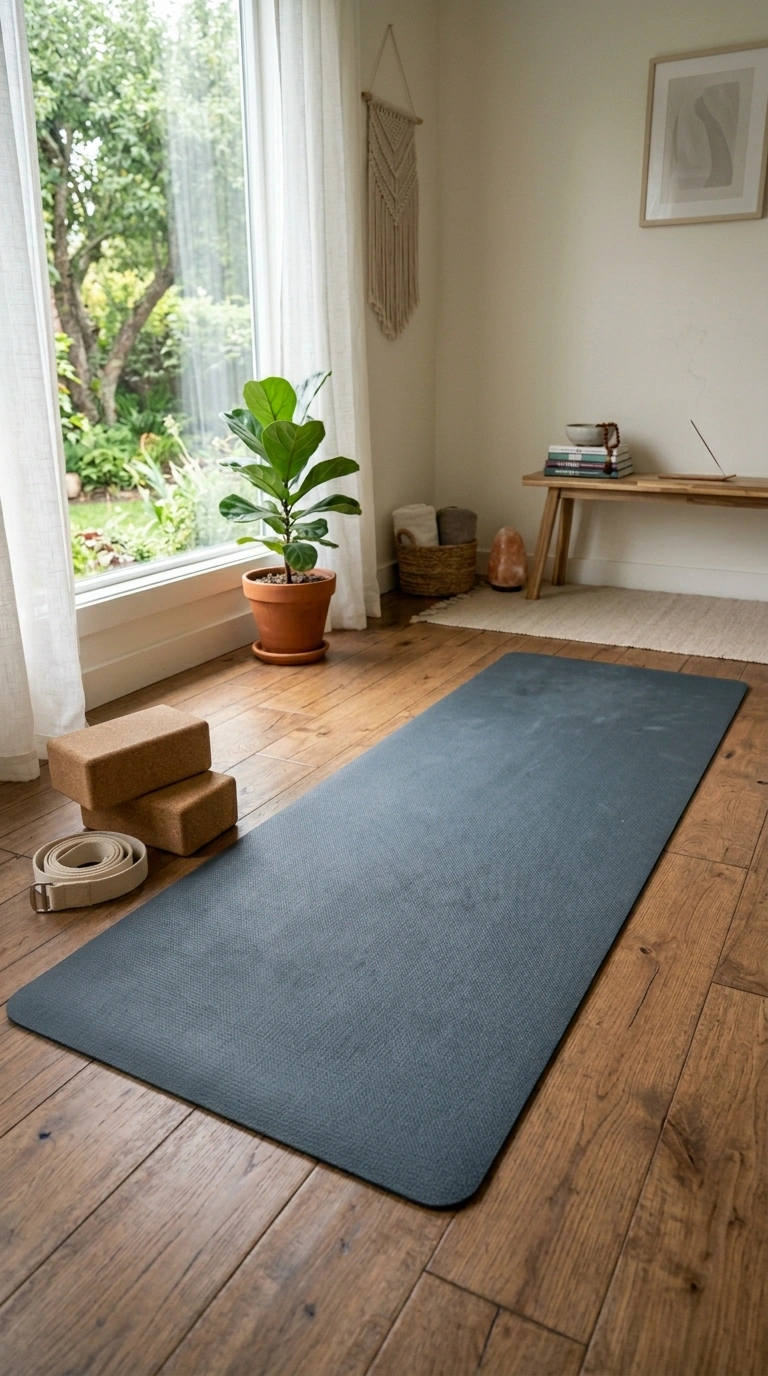
The single most important design decision for a yoga room is making it ready for practice at all times. The mat should be laid out permanently rather than rolled up in a closet. The blocks and strap should be beside the mat rather than stored away. The light should be ready to dim. The scent should be easy to activate. Every setup step that is eliminated between the decision to practice and the first breath on the mat increases the likelihood that the practice actually happens. A yoga room that is always ready is a yoga room that gets used. A yoga room that requires five minutes of setup before every session is a yoga room that gradually gets abandoned.
A yoga room that makes practice feel genuinely peaceful is built on clear empty floor space, proper flooring, warm natural light, calming colors, natural materials, and the discipline to keep the room ready for practice at all times. The room does not need to be large or expensive. It needs to be empty, calm, and always ready. When the room itself invites the practice, the practice happens naturally.