21 Boho Nursery Ideas That Feel Soft and Naturally Layered
A boho nursery takes the warm, layered, naturally textured quality of bohemian design and softens it for a baby’s room. The usual boho boldness, the strong patterns, the deep colors, the accumulated layers, needs to be gentled into something quieter and more restful for a space where a baby sleeps and grows. The result, when done well, is a nursery that feels warm, organic, and softly layered without the visual noise that a fully adult boho room can carry. The natural materials are the same: warm wood, rattan, linen, and cotton. The palette is the same warm earthy family. But the intensity is dialed down to a level that supports calm and rest rather than stimulation and energy. These 21 ideas cover how to achieve the boho nursery quality at the right gentle intensity for a baby’s room.
1. Rattan Crib Statement
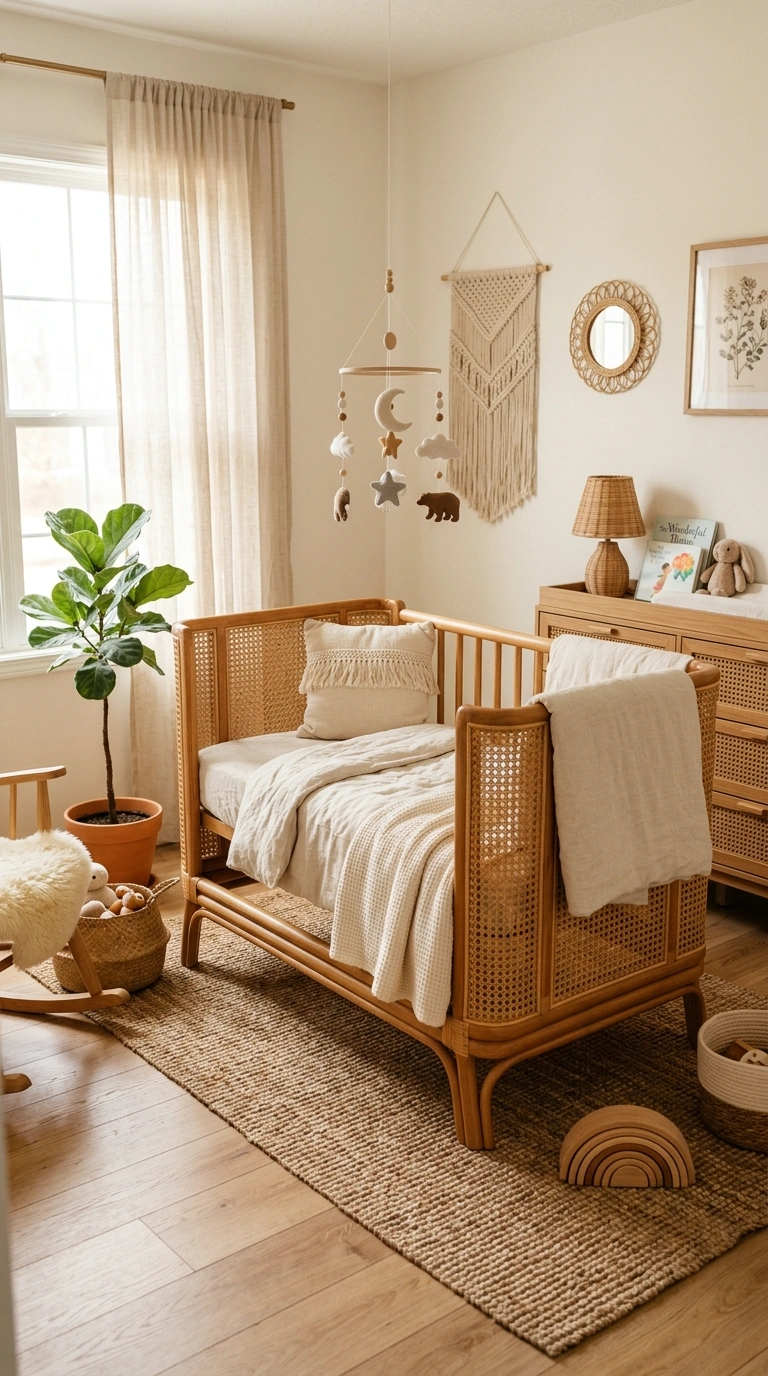
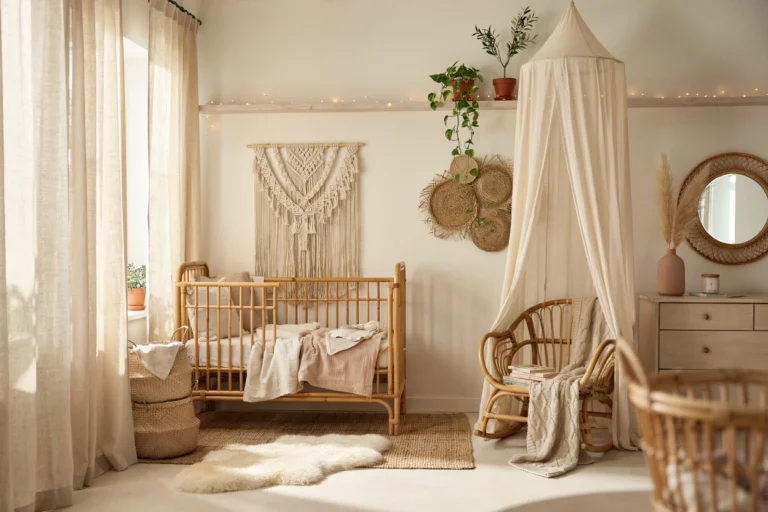
A rattan or cane-paneled crib establishes the boho direction from the nursery’s most central piece of furniture. The woven natural texture of the rattan immediately reads as bohemian and organic, and the warm honey tone of natural rattan sets the material palette for everything else in the room. Rattan cribs are available from several nursery furniture manufacturers in styles that meet current safety standards. The rattan crib against a warm cream or soft sage wall creates the foundational boho nursery moment that the rest of the room builds upon. Pair it with linen bedding in natural tones for the softest possible boho crib composition.
2. Macrame Wall Hanging
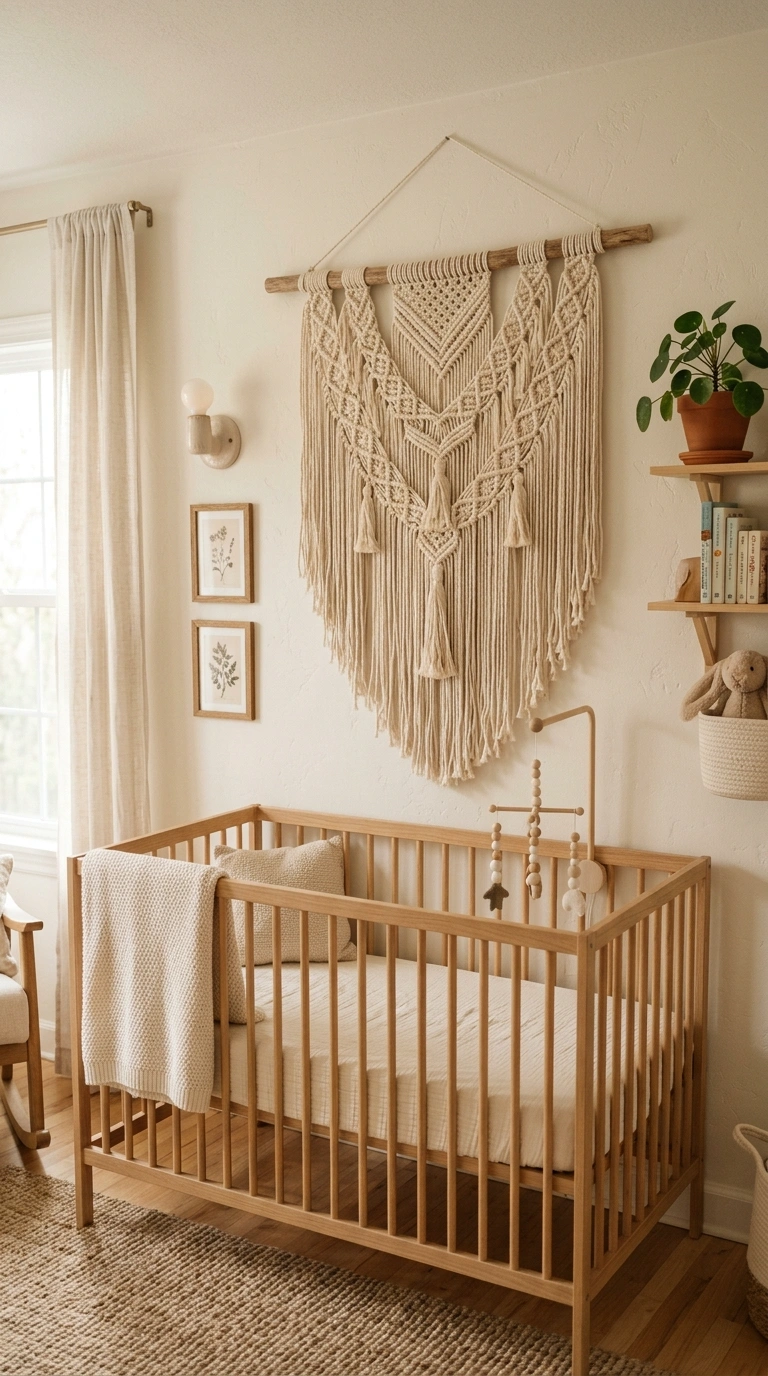
A single substantial macrame wall hanging in natural undyed cotton hung on the wall behind or beside the crib adds the signature boho textile art element at the most visible location in the nursery. The macrame should be large enough to read as a genuine design feature, at least twenty-four inches wide, and positioned where it serves as the primary wall decor for the crib zone. Natural undyed cotton in cream or off-white reads as the most universally soft and nursery-appropriate macrame option. Hang it securely and ensure no loose threads or fringe hang low enough for the baby to reach from the crib.
3. Warm Earthy Color Palette
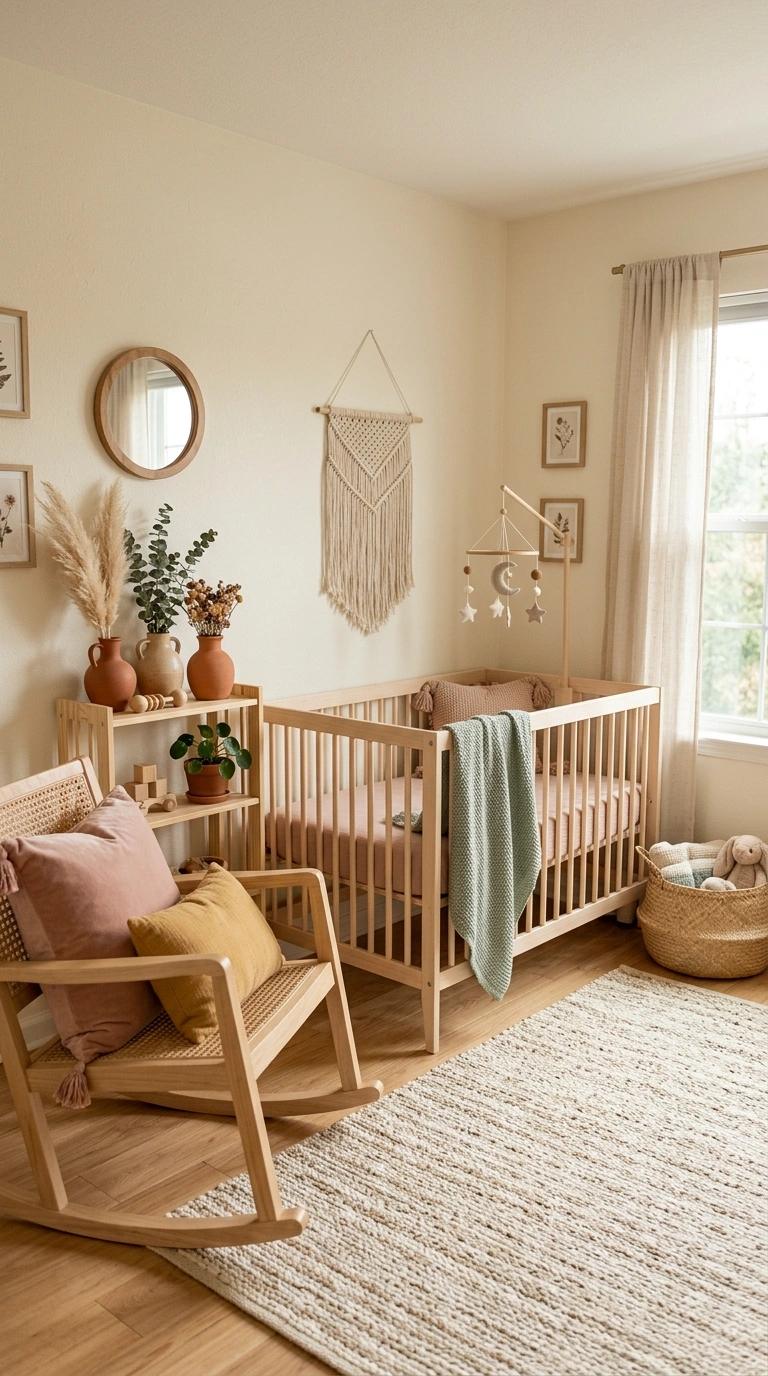
The boho nursery palette should be the soft, muted version of the standard boho earth tones. Warm cream instead of bright white. Dusty blush instead of bold pink. Soft sage instead of deep green. Warm clay instead of bright terracotta. Muted mustard instead of bold yellow. The softened palette provides the boho warmth and earthiness without the visual intensity that fully saturated tones carry. The muted quality is what keeps the nursery feeling restful rather than stimulating, which is the critical distinction between a boho living room and a boho nursery.
4. Layered Natural Fiber Rug
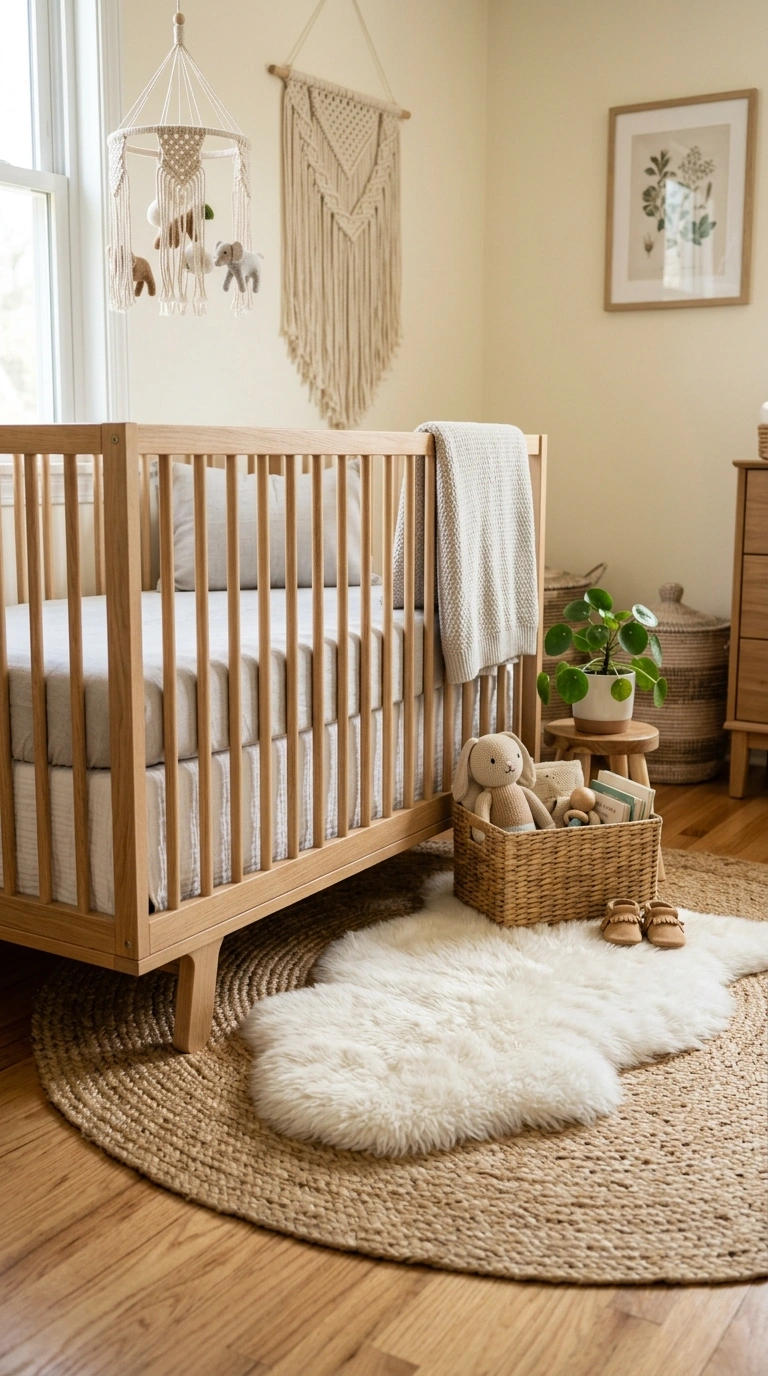
A natural fiber rug, warm jute, soft cotton, or a gentle wool, in the nursery’s main floor area provides the soft organic layer underfoot that supports the boho aesthetic and the baby’s developmental floor time. Layer a smaller softer rug, a sheepskin or a small cotton rug, on top of the larger natural fiber rug beside the crib for additional softness where the baby is lifted and laid down most frequently. The layered rug treatment is a signature boho technique that adds textural depth to the floor in the same way layered textiles add depth to the bed.
5. Woven Basket Storage Set
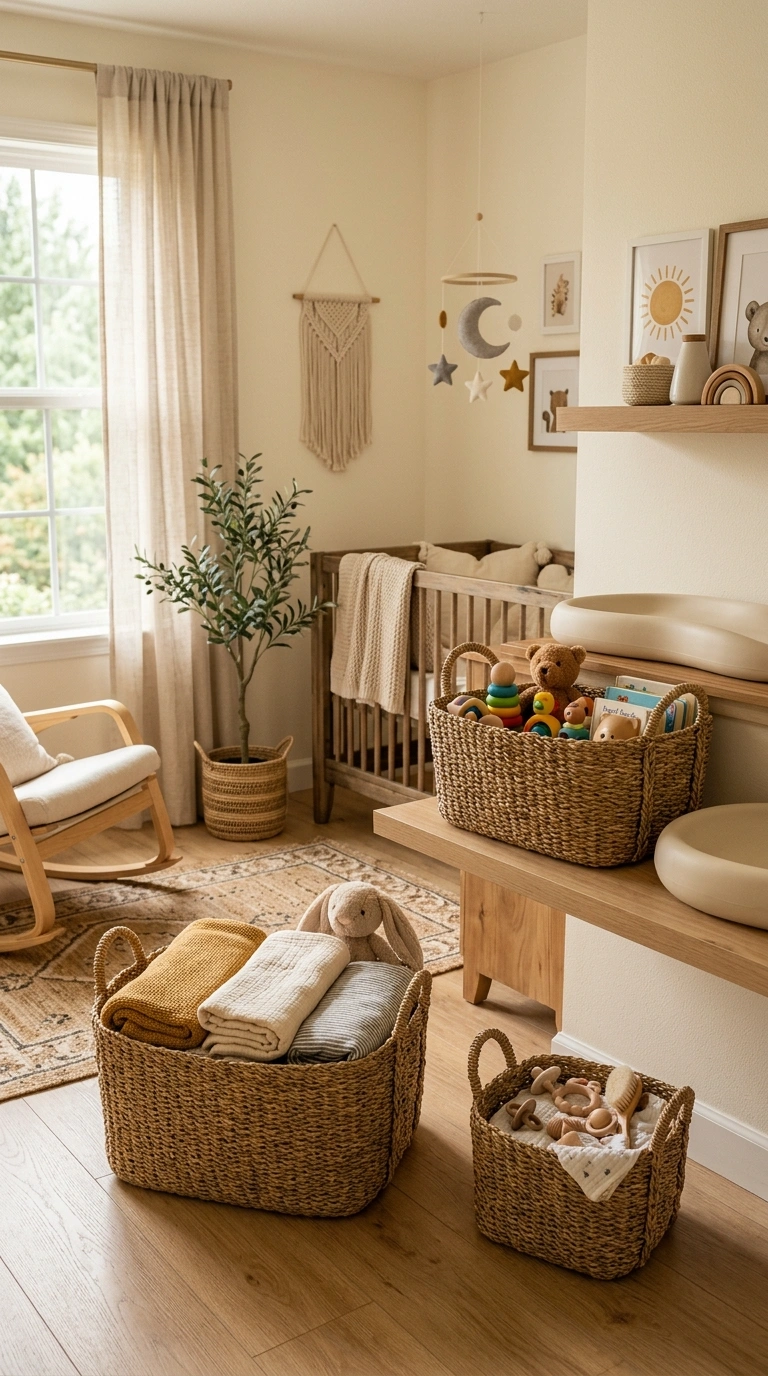
A coordinated set of woven baskets in natural seagrass, cotton rope, or rattan provides the visible storage that the boho nursery needs for blankets, toys, clothing, and the daily supplies that accumulate in any nursery. The natural woven texture of the baskets adds to the organic material palette and the visible storage keeps the room organized while displaying the contents as part of the decor. Use matching or coordinating baskets in different sizes: a large floor basket for blankets, medium baskets on shelves for toys, and small baskets on the dresser for tiny items.
6. Dried Pampas Grass Detail
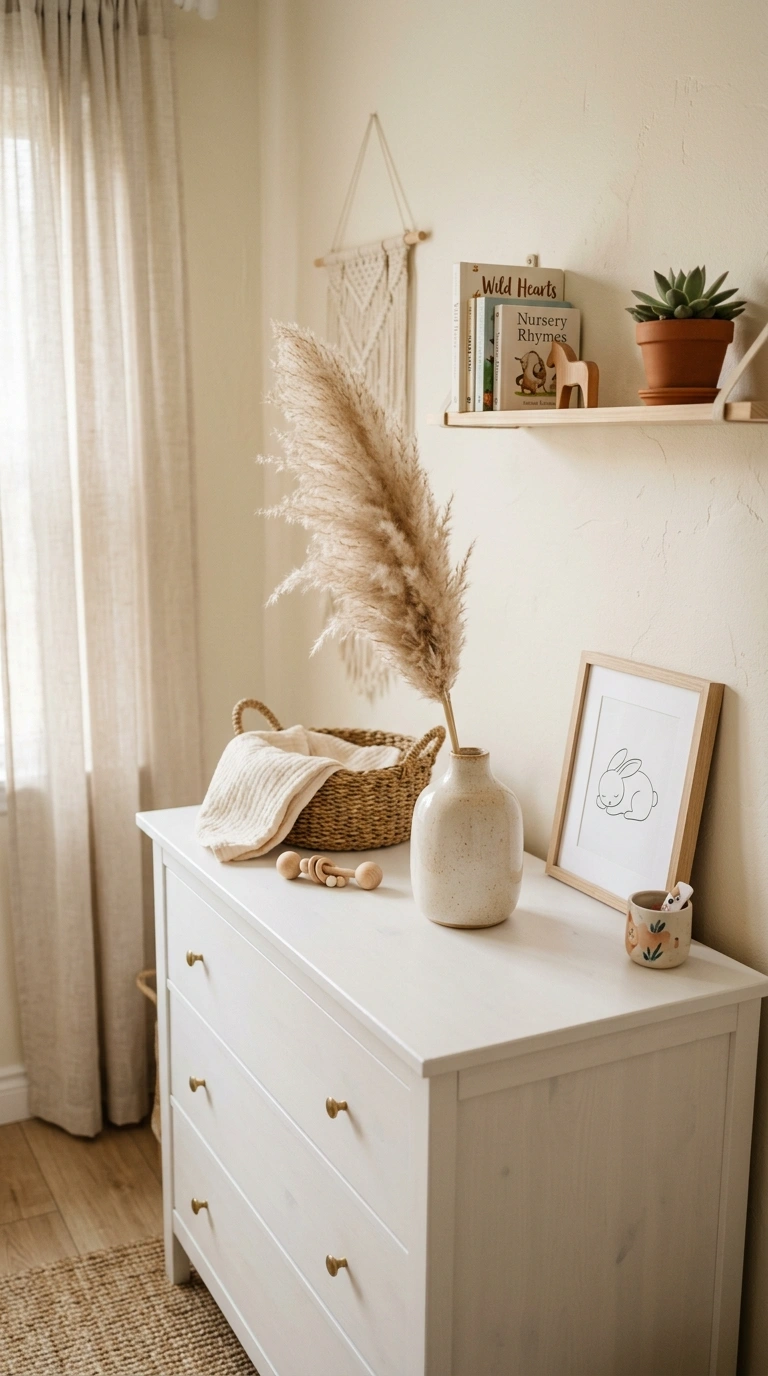
A single stem or a small bundle of dried pampas grass in a warm ceramic vase placed on the dresser, a shelf, or the floor in a corner adds the soft, feathery natural texture that is one of the most recognizable boho design elements. The natural cream color of pampas grass suits the nursery palette perfectly and the dried material requires zero maintenance. Position the pampas grass where the baby cannot reach it and where it does not shed onto the crib area. A single substantial stem in a beautiful vase reads as more designed and more intentional than a large overflowing bouquet.
7. Canopy or Tent Corner
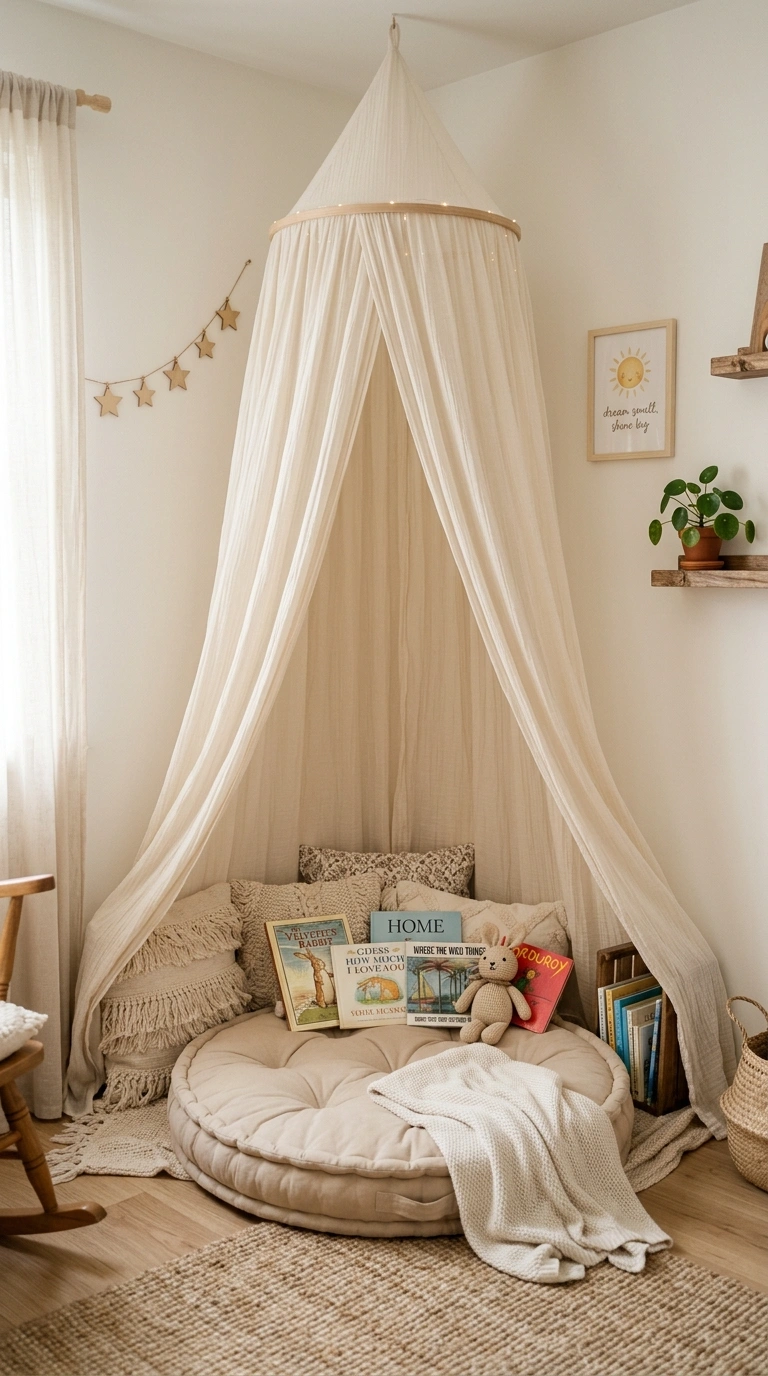
A fabric canopy draped from the ceiling above a reading corner, or a small cotton tent in the corner of the nursery, creates an enclosed, protected, fairy-tale quality that babies and young children are naturally drawn to. The canopy or tent becomes the nursery’s coziest zone and provides a distinct area within the room for quiet play, reading, and settling. Use lightweight natural cotton or sheer muslin in a warm cream or blush tone. The canopy should be securely mounted and positioned away from the crib to avoid any safety concerns during sleep.
8. Boho Textile Bedding Mix
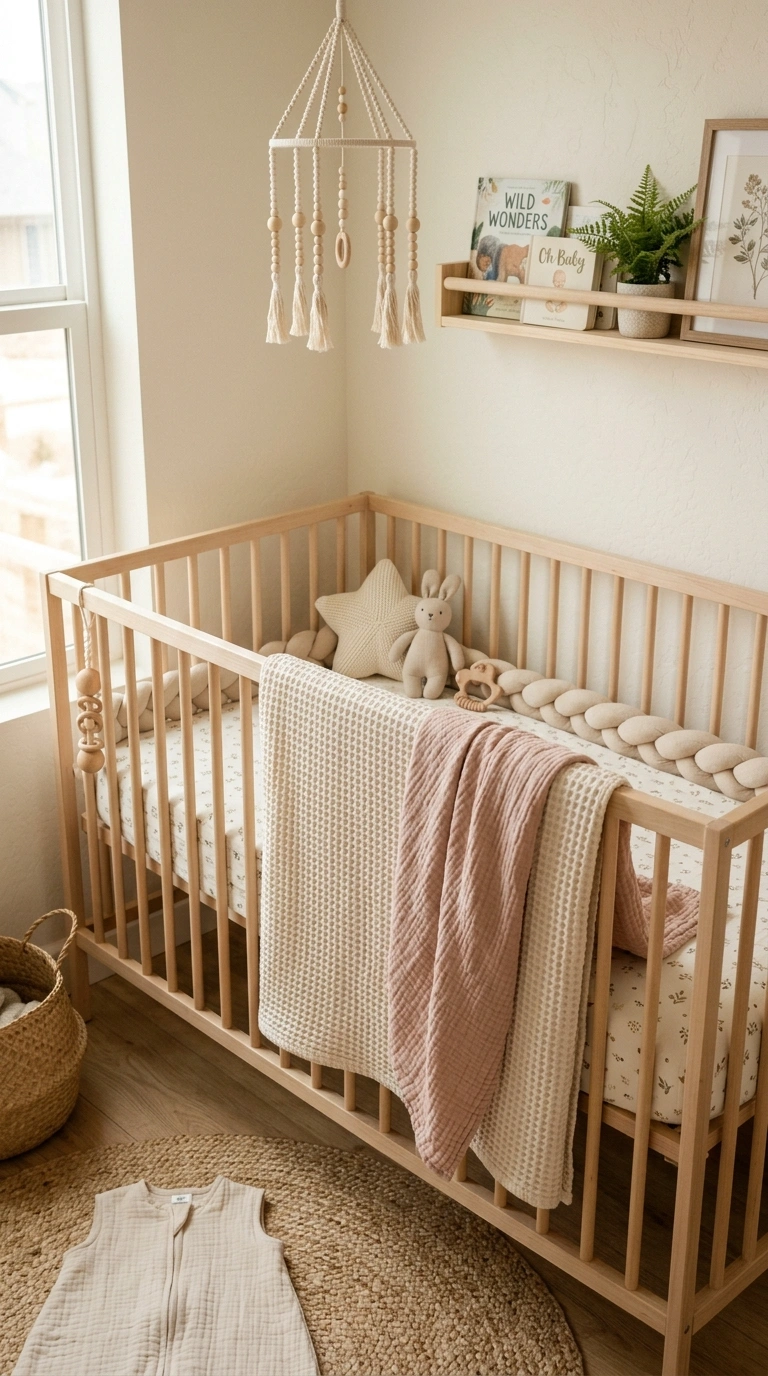
The boho crib bedding mixes two or three soft coordinating textiles rather than using a single matched set. A muslin crib sheet in a subtle print, a waffle-weave cotton blanket in warm cream, and a light gauze swaddle in a coordinating tone together create the layered quality that defines boho bedding at a gentle nursery-appropriate intensity. The mix should stay within a tight warm palette so the varied textiles read as coordinated rather than chaotic. Keep the textures soft and the patterns subtle since the bed is where the baby spends the most time and needs the most visual calm. The same principle of mixing textures within a tight palette also works in boho bedroom designs for adults where the pattern mixing is bolder but the coordination principle is the same.
9. Wooden Mobile Above Crib
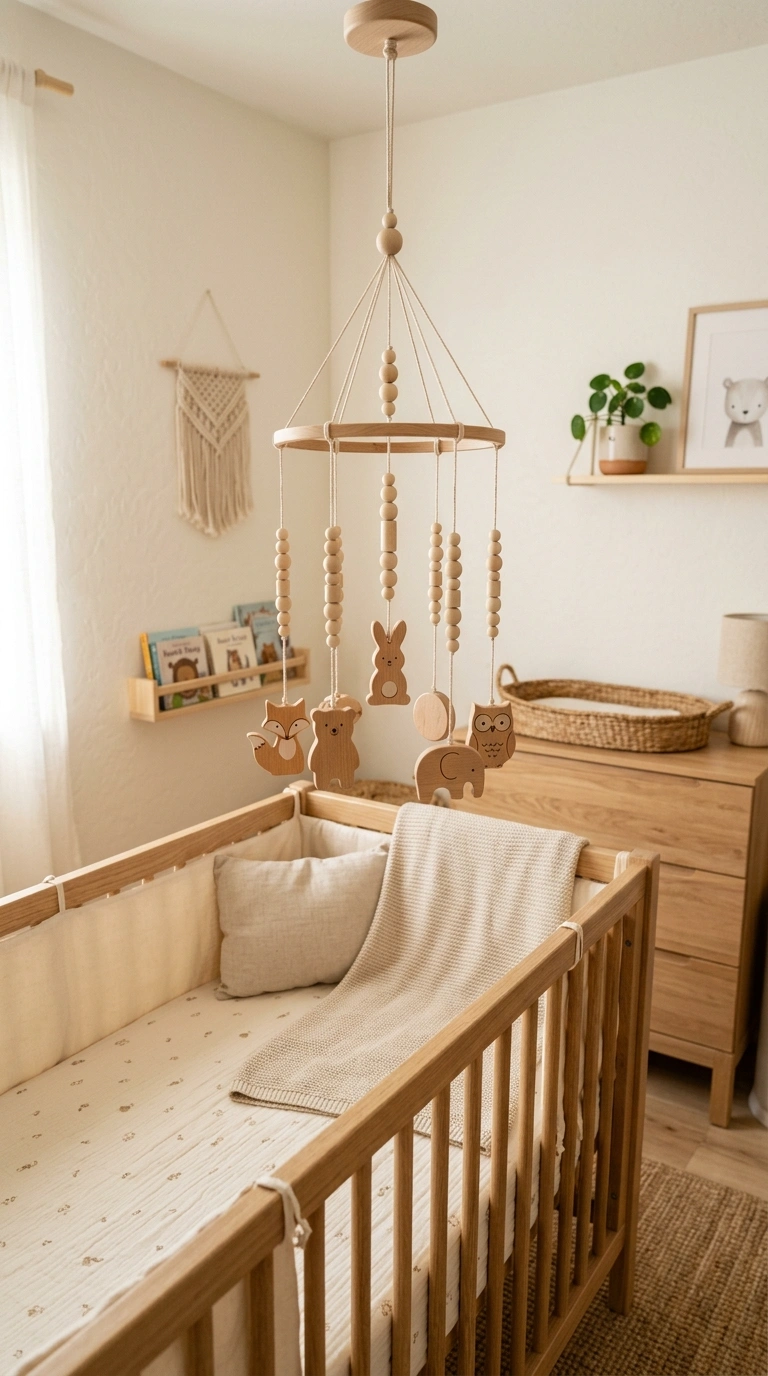
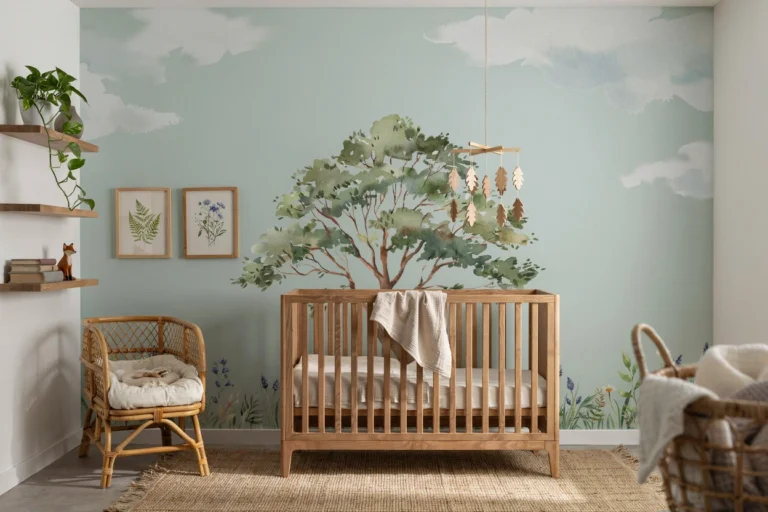
A mobile made from small wooden shapes, whether wooden beads, small wooden animals, wooden stars, or simple wooden discs, suspended from a wooden ring or branch above the crib provides the overhead visual stimulation the baby needs in the most organic boho-appropriate format. The natural wood of the mobile matches the rattan crib and the wood furniture and extends the natural material palette to the overhead zone. The gentle movement of the wooden shapes in air currents provides the visual engagement that supports the baby’s developing focus and tracking skills.
10. Potted Plant Shelf Display
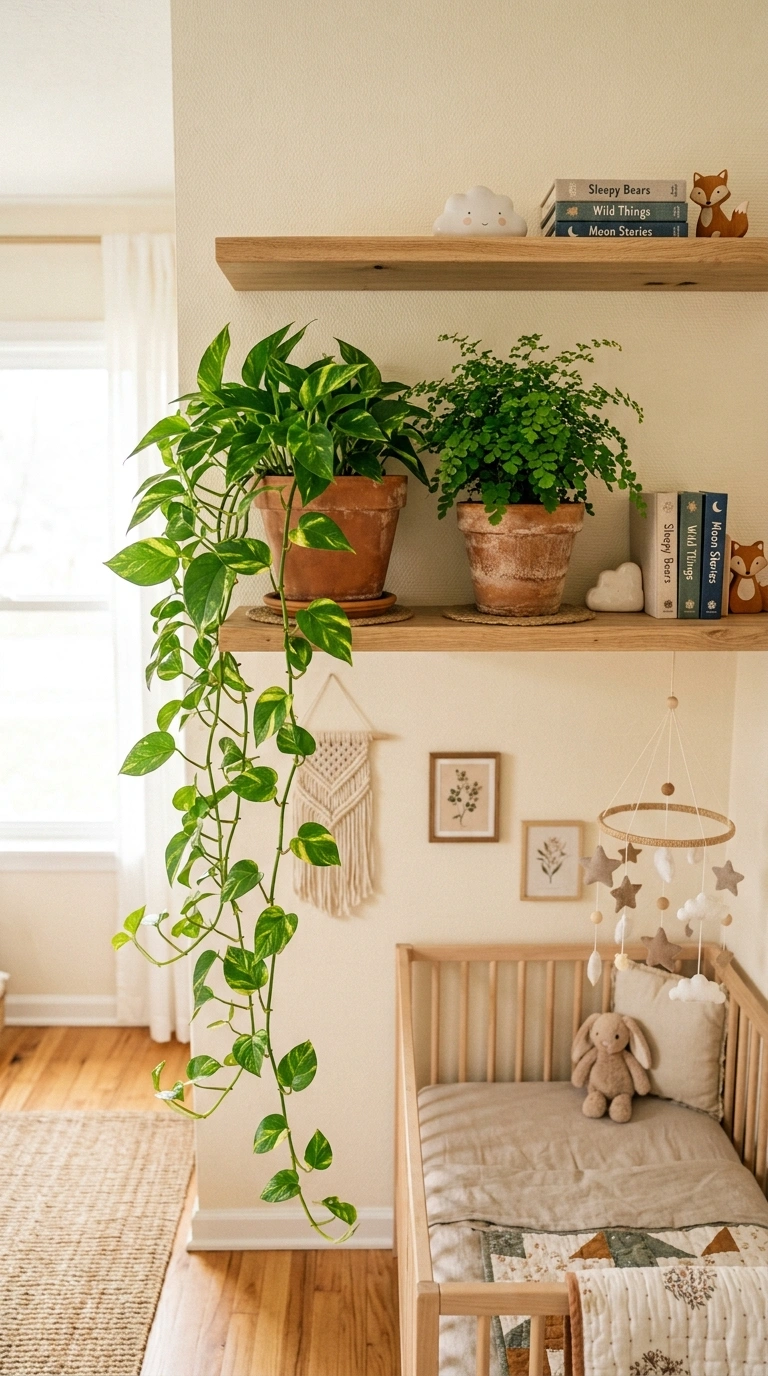
A small shelf in the nursery holding one or two small potted plants in warm ceramic pots adds the living green element that connects the boho nursery to the natural world. Choose plants that are non-toxic to babies and position them on a high shelf completely out of reach. A small trailing pothos, a tiny fern, or a small succulent in a warm terracotta or cream pot all suit the boho nursery palette. The living plants add the organic quality that manufactured decorations cannot replicate and the small display becomes one of the nursery’s most charming design moments.
11. Woven Wall Basket Display
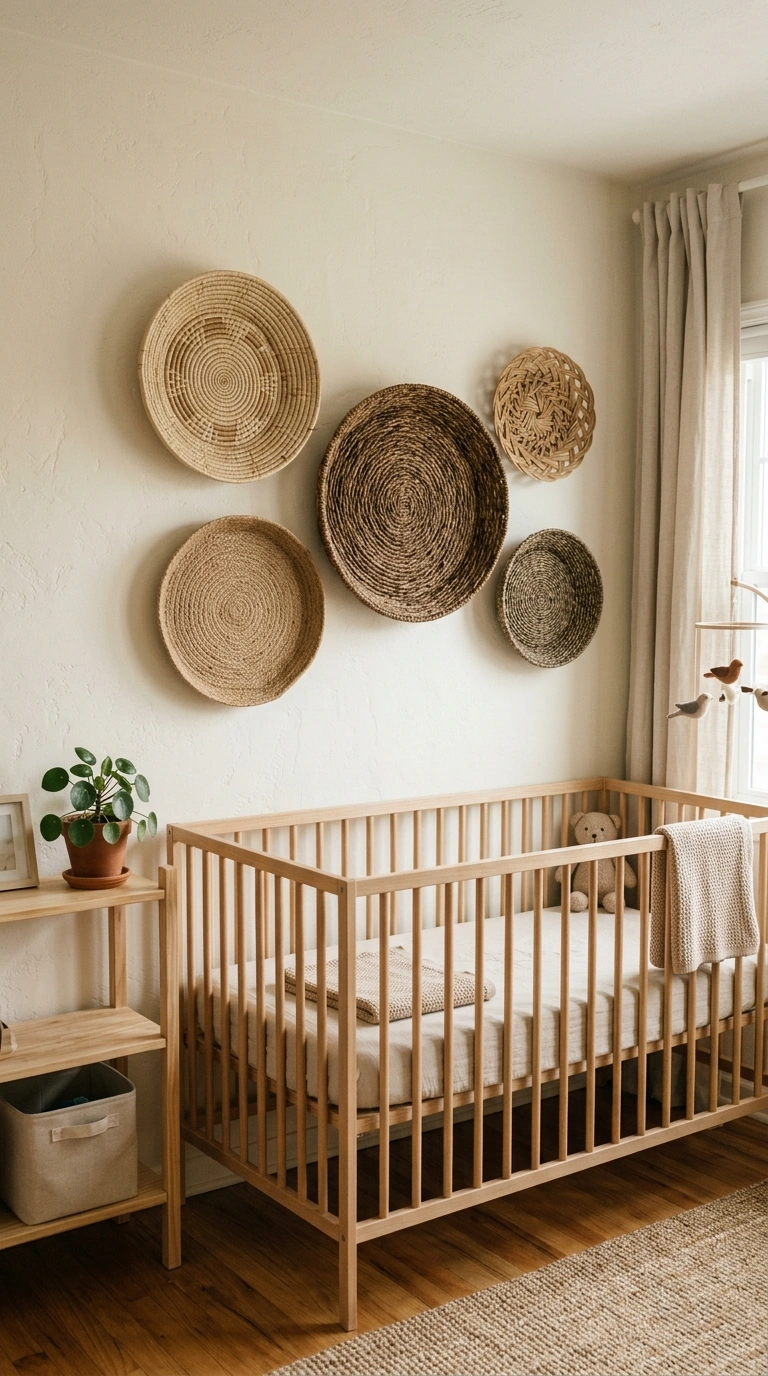
A collection of flat woven baskets in different sizes and natural tones hung on the wall as art creates a textural display that is distinctly boho and uniquely three-dimensional. The baskets add circular organic shapes and natural fiber texture to the wall without the weight of framed art or the visual complexity of patterned wallpaper. Group three to five baskets in an organic arrangement above the dresser, beside the crib, or on any large empty wall. The varied sizes and subtle pattern differences within the group create visual interest while the consistent natural material keeps the arrangement cohesive and soft.
12. Warm Linen Curtains
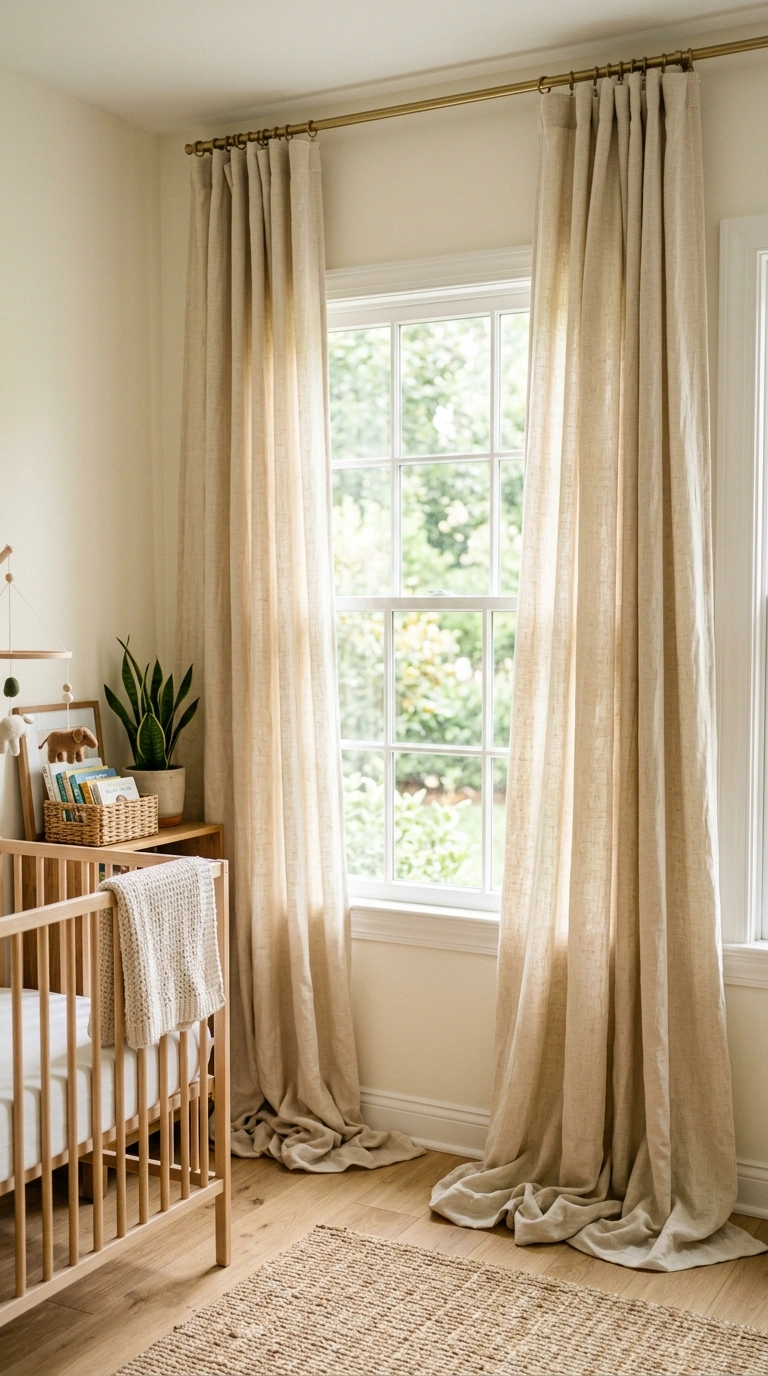
Full-length linen curtain panels in warm cream, undyed natural, or soft blush hung from a simple rod near the ceiling add the flowing soft textile element that every boho nursery needs for both light control and visual warmth. The linen should be heavyweight enough to dim the room for naps but not so heavy that the room feels dark during waking hours. The natural rumple of linen reads as organic and gently bohemian without being sloppy. Hang the curtains as close to the ceiling as possible and let them pool slightly on the floor for the most generous boho proportion.
13. Fringe or Tassel Detail
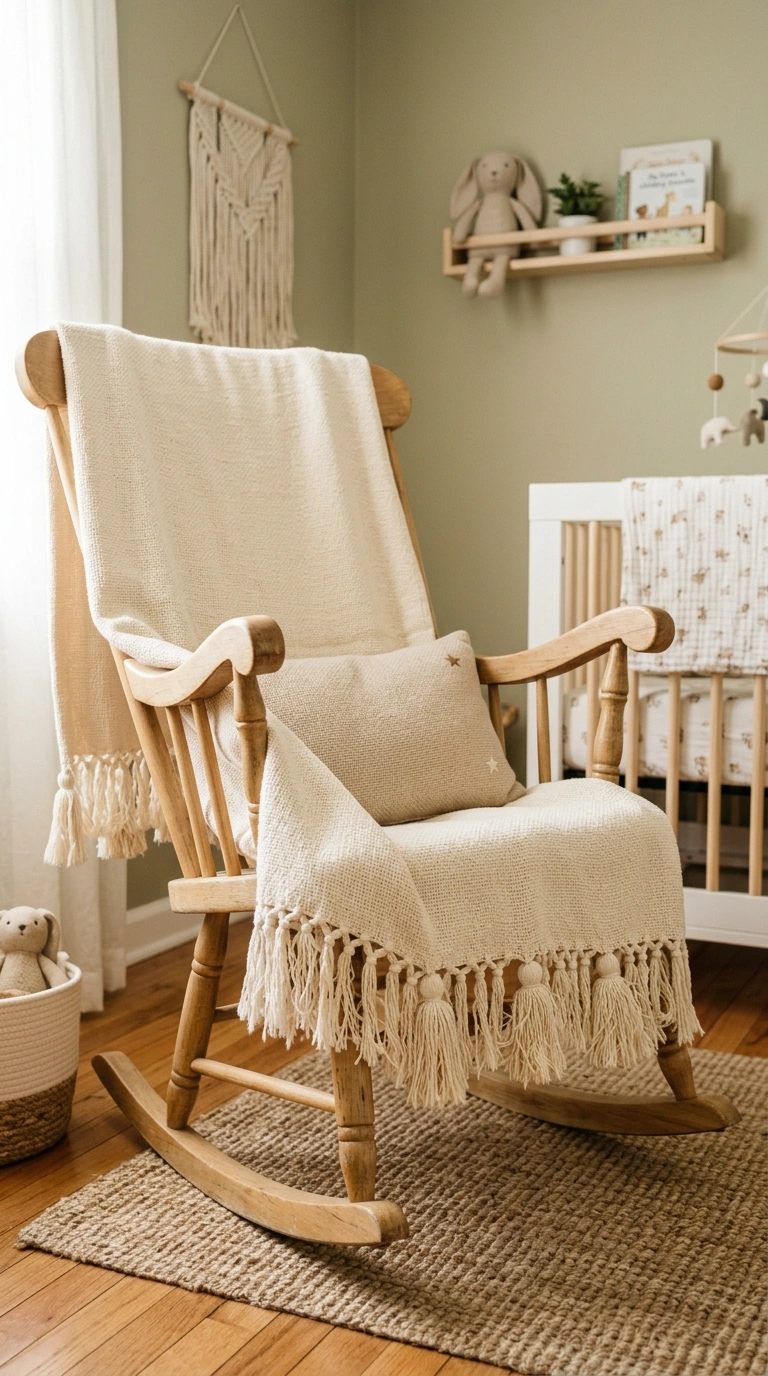
A small fringe or tassel detail on a blanket edge, a pillow corner, a curtain hem, or a garland across a shelf adds the signature boho textile detail at a gentle nursery-appropriate scale. The dangling threads add subtle movement and a slightly unfinished quality that suits the relaxed boho aesthetic. Use fringe in natural undyed tones rather than in bright colors for the most nursery-appropriate version. Apply the fringe to one or two textiles rather than to every item in the room, since selective use makes the fringed pieces feel like deliberate choices rather than a blanket stylistic rule.
14. Dreamcatcher or Fiber Art
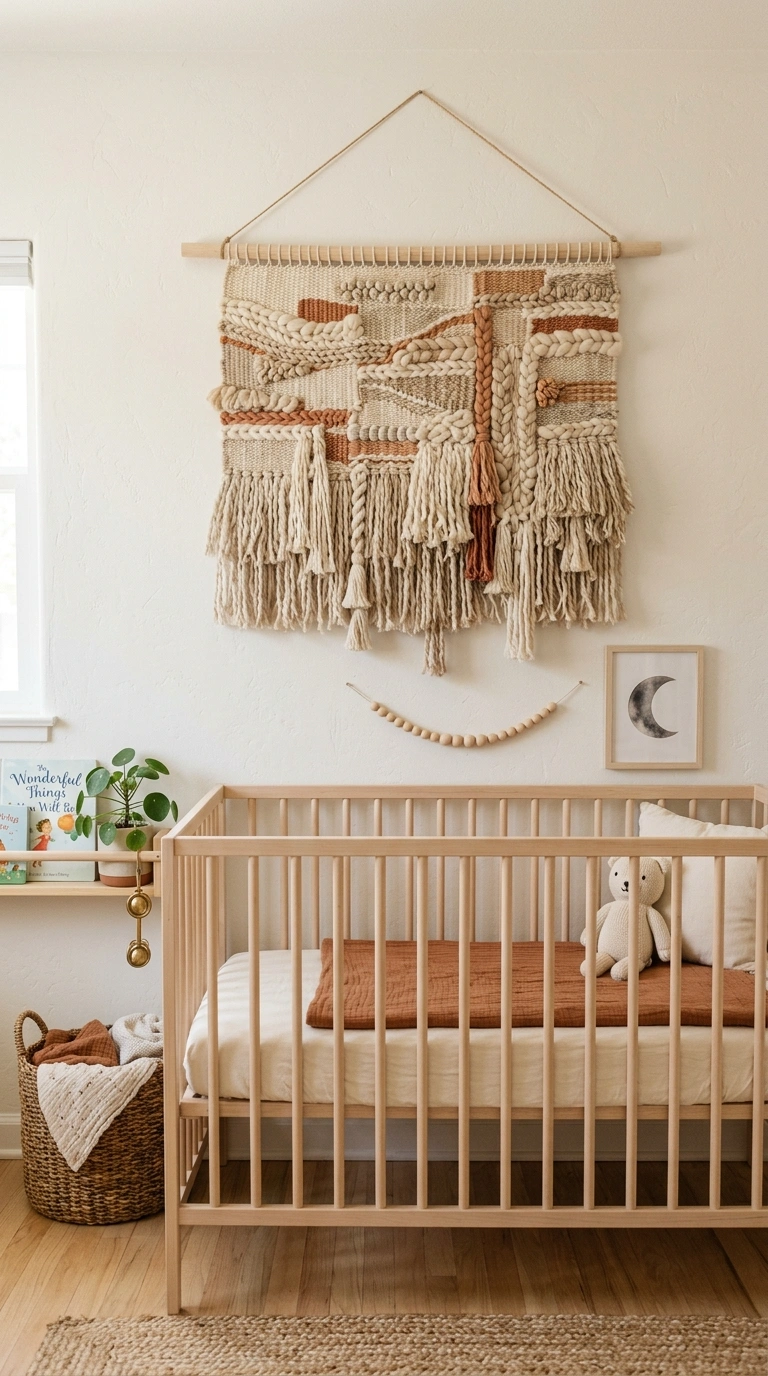
A handmade dreamcatcher, a small piece of woven fiber art, or a yarn wall hanging above the crib or on a side wall adds the handmade textile quality that is central to the boho aesthetic. Choose a piece in natural undyed fibers with gentle texture rather than bright colors. The handmade quality of the piece, the slight irregularities, the visible knots, the natural fiber variation, is what gives it the boho character that manufactured decorations lack. Position it as the primary art piece on its wall with generous empty space around it so it reads as a deliberate feature rather than one of many competing elements.
15. Round Rattan Mirror
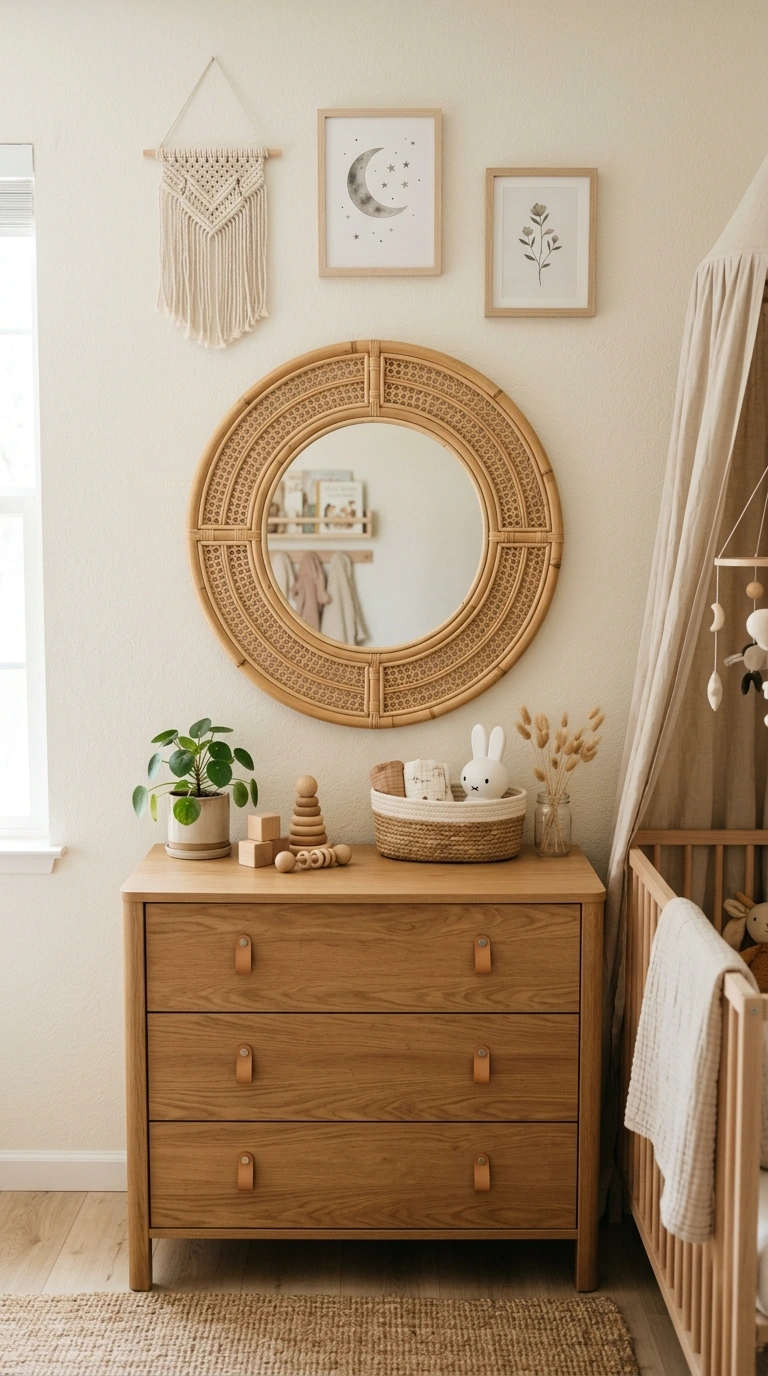
A round mirror with a natural rattan or woven fiber frame hung on the nursery wall above the dresser or beside the rocking chair adds both a functional mirror and a decorative boho element in a single piece. The circular shape provides a soft geometric counterpoint to the rectangular furniture and the woven frame contributes to the natural material palette. Size the mirror at about twenty-four to thirty inches in diameter for the most proportionate wall presence. The mirror also reflects natural light around the room, which adds brightness to the softer boho palette.
16. Cozy Knit Throw
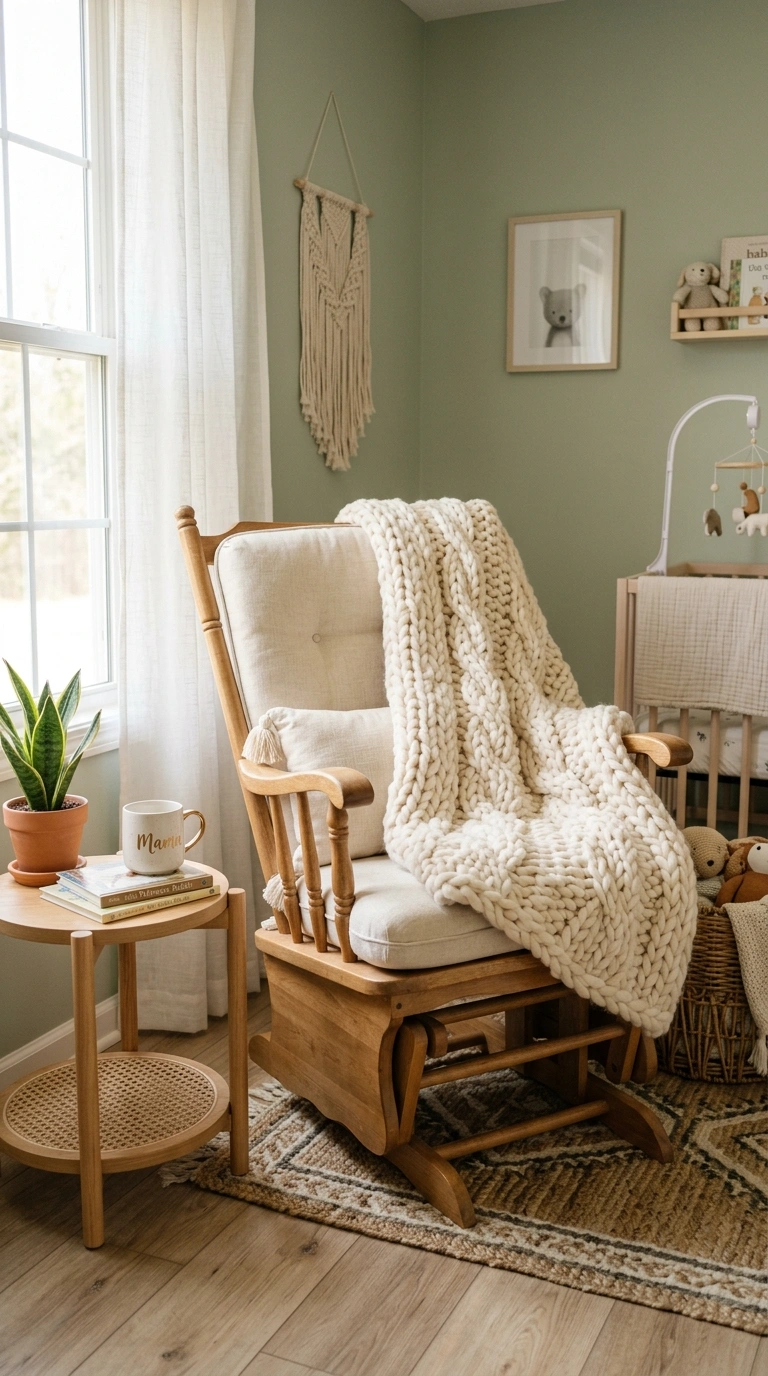
A chunky knit throw blanket in warm cream, soft blush, or natural undyed wool draped over the rocking chair or folded on a shelf adds the soft, touchable, genuinely cozy element that makes the nursing corner of the nursery feel warm and inviting. The knit throw serves the practical purpose of warmth during nighttime feedings and the design purpose of adding the textural variety that the boho nursery depends on. Choose a substantial weight that feels genuinely warm and comforting rather than a thin decorative throw that does not provide real warmth.
17. Low Wooden Bookshelf
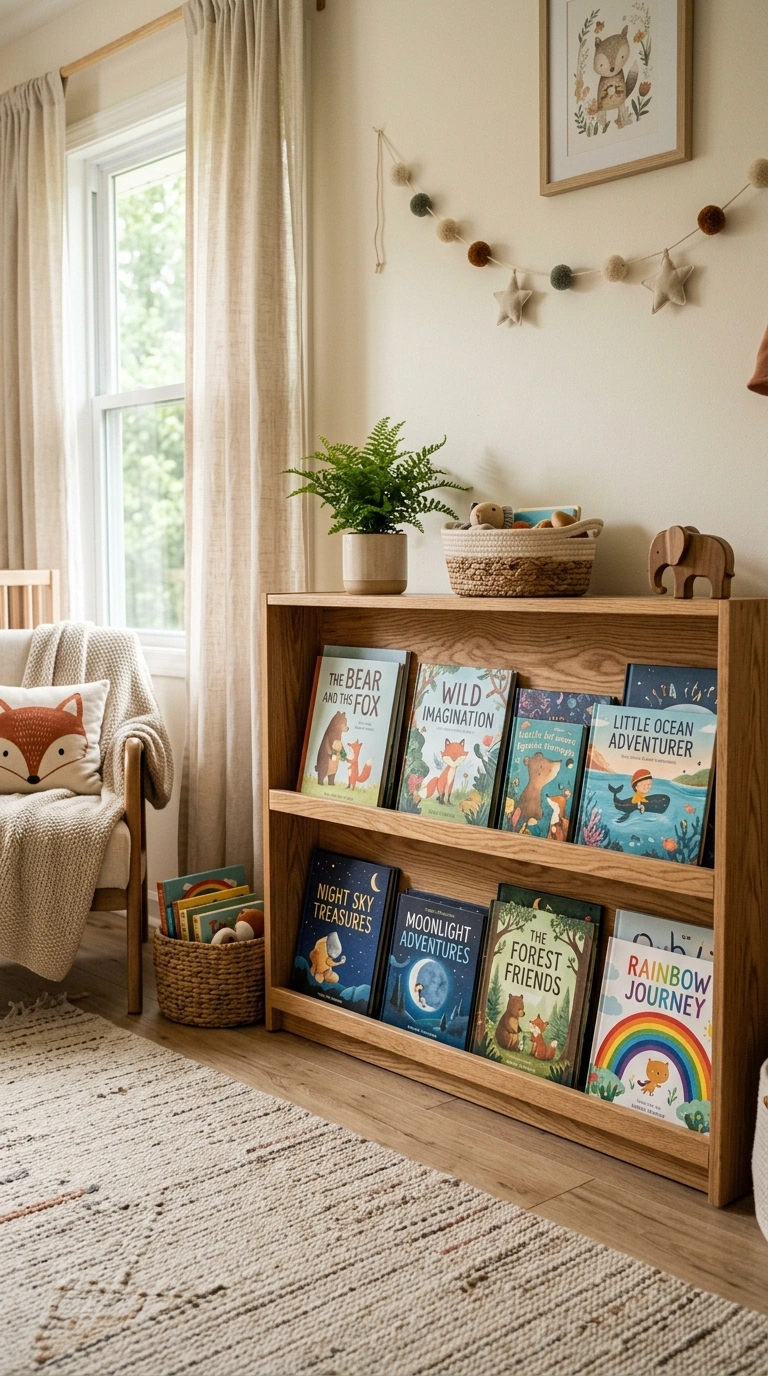
A low wooden bookshelf in natural warm wood, positioned at floor level or slightly above, holds children’s books with their covers facing forward so the illustrated covers become part of the room’s decor. The forward-facing display makes books visually accessible and interesting from the earliest age and turns the bookshelf into a colorful, changing display wall at the baby’s developing eye level. Choose a bookshelf in a natural wood finish that coordinates with the rattan and wood furniture throughout the nursery.
18. Terracotta Accent Touches
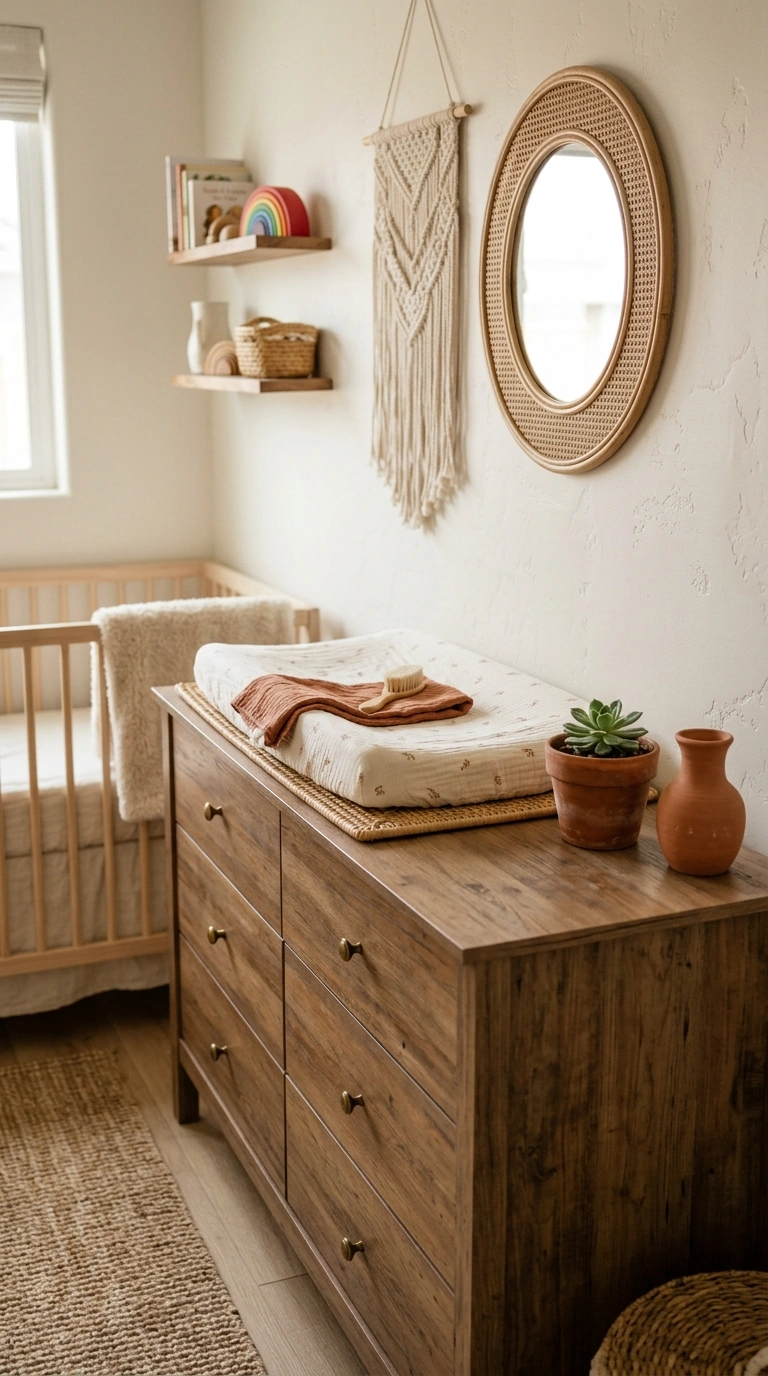
Small terracotta elements, a terracotta pot for a plant, a small terracotta vase on the shelf, or a terracotta-toned ceramic piece on the dresser, add the warm earthy orange-red tone that is distinctly boho and that complements the warm cream, sage, and natural tones of the nursery palette. The terracotta adds the warmest and most grounding tone available in the earthy palette and prevents the nursery from feeling too cool or too neutral. Use terracotta in small contained amounts rather than as a dominant color to keep the room feeling soft rather than strongly colored.
19. Sheepskin Soft Layer
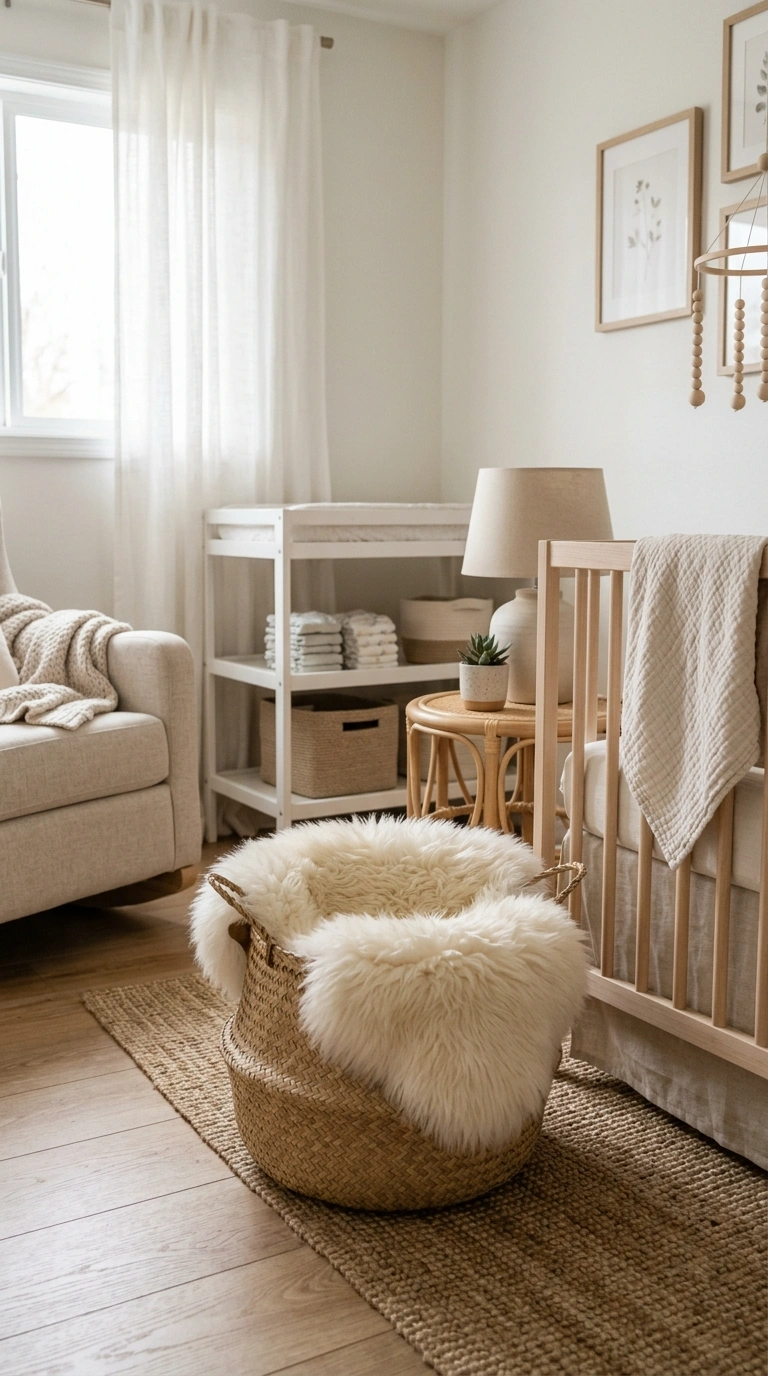
A small sheepskin or faux sheepskin placed on the floor beside the crib, on the rocking chair seat, or in a woven basket adds the softest and most luxurious texture available in the boho nursery. The fluffy organic texture contrasts with the harder woven and wooden surfaces and adds the ultimate softness at the spots where the baby is held, nursed, and settled. The natural cream or warm white of sheepskin suits the nursery palette and the tactile softness is appreciated by both the baby and the parent during the long hours spent in the nursery.
20. Warm String Light Glow
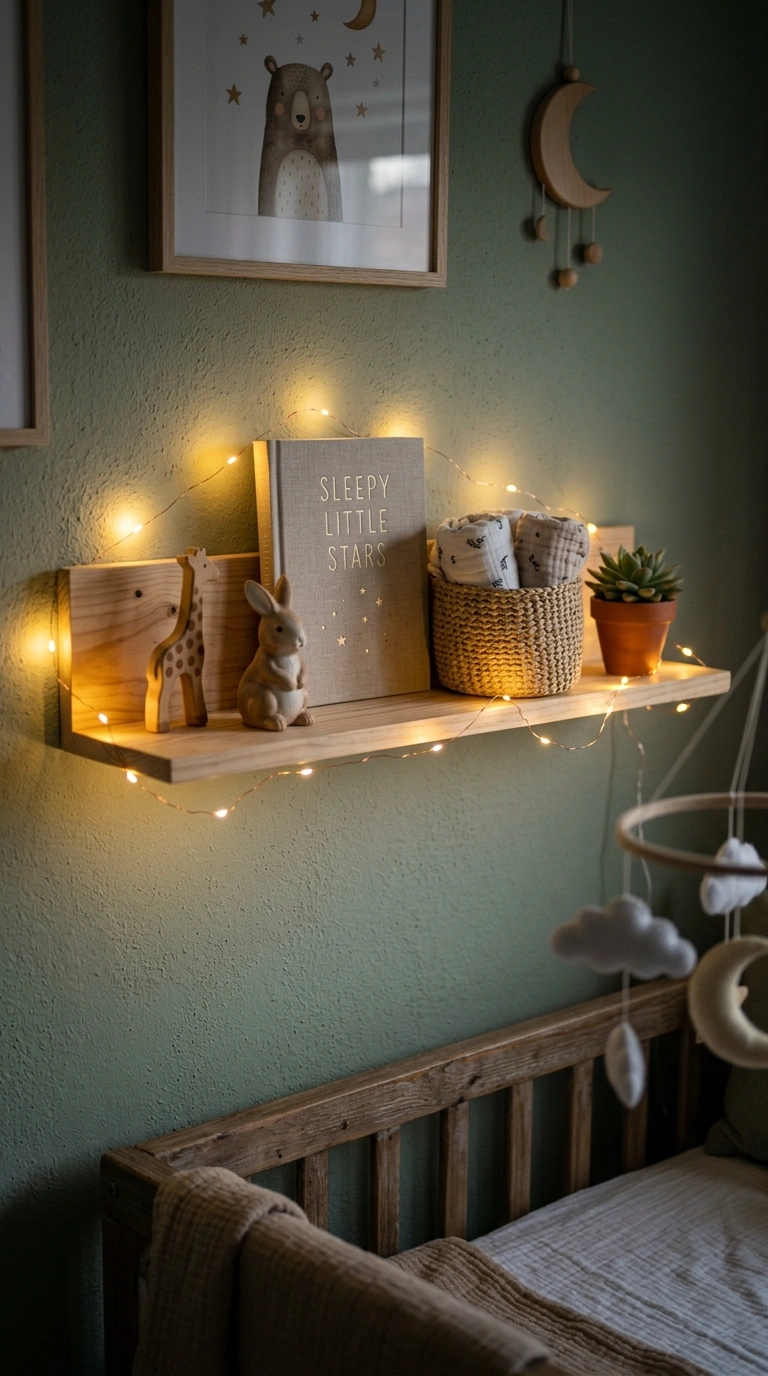
A string of warm white fairy lights wound along a high shelf, draped behind sheer curtains, or placed in a glass jar on the dresser adds a gentle warm glow to the nursery that standard lighting cannot match. The fairy lights provide the softest possible light quality and create a magical, slightly enchanted atmosphere in the nursery during evening settling and nighttime feedings. Use battery-operated lights to avoid cord safety concerns and keep the lights high and out of the baby’s reach. The warm glow from fairy lights is one of the most atmospheric and most beloved nursery lighting elements.
21. Gentle Restraint Always
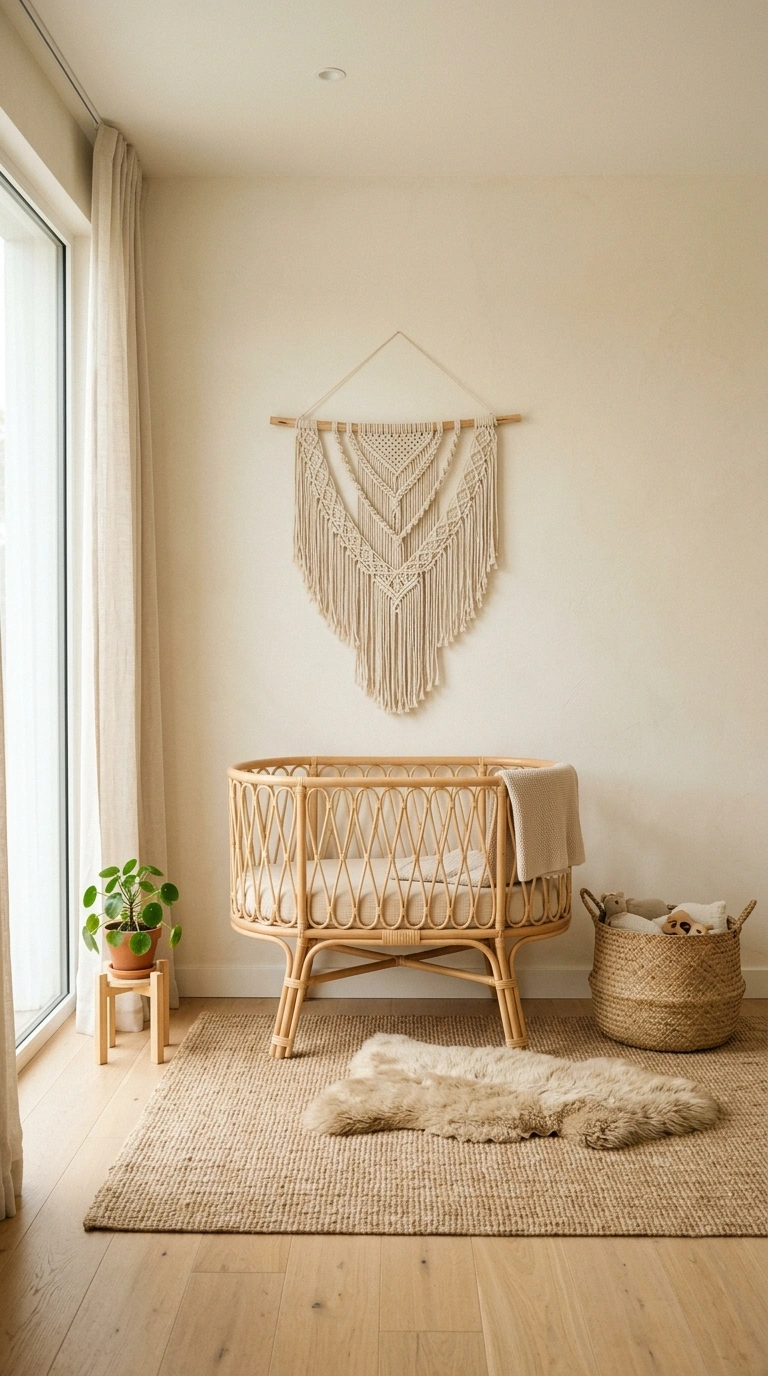
The most important principle for a boho nursery that feels soft rather than cluttered is gentle restraint in every layering decision. The boho quality comes from the warm natural materials and the organic textures rather than from accumulating many decorative objects. A rattan crib, a macrame wall hanging, a woven basket, a sheepskin, and a small plant together establish the boho aesthetic completely. Adding a dreamcatcher, a canopy, pampas grass, fringe details, and a basket wall display on top of those elements starts to push the nursery toward visual noise. Choose the boho elements that matter most to you and let the warm cream walls and the simple surfaces between them provide the calm that a baby’s room needs above all else. For another gentle nursery approach with a different botanical direction, the wildflower nursery ideas guide covers floral themes that create similar softness through a different design language.
A boho nursery that feels soft and naturally layered succeeds when the bohemian elements are chosen for their warmth and texture rather than accumulated for their quantity. The rattan, the linen, the macrame, the warm wood, and the woven baskets provide the boho character. The muted palette, the restrained decoration, and the generous empty space between elements provide the calm. Together they create a nursery that feels like a gentle, warm, naturally beautiful room that a baby can grow into for years.