30 Simple Home Decor Ideas for a Fresh, Updated Look
Sometimes a home does not need a full renovation. It just needs a second look. The rooms you walk past every day without really seeing them, the entryway that has become a drop zone, the living room arrangement that has not changed since you moved in, the kitchen counter that is always a little too cluttered, those are the rooms that usually respond the fastest to small, deliberate changes. This collection of 30 home decor ideas covers every major room in the house. Some ideas take an afternoon. Some take twenty minutes. A few will require a small budget, but most cost nothing more than time and a willingness to move things around. Start with one room, one idea, and see where it goes.
1. Entryway Statement
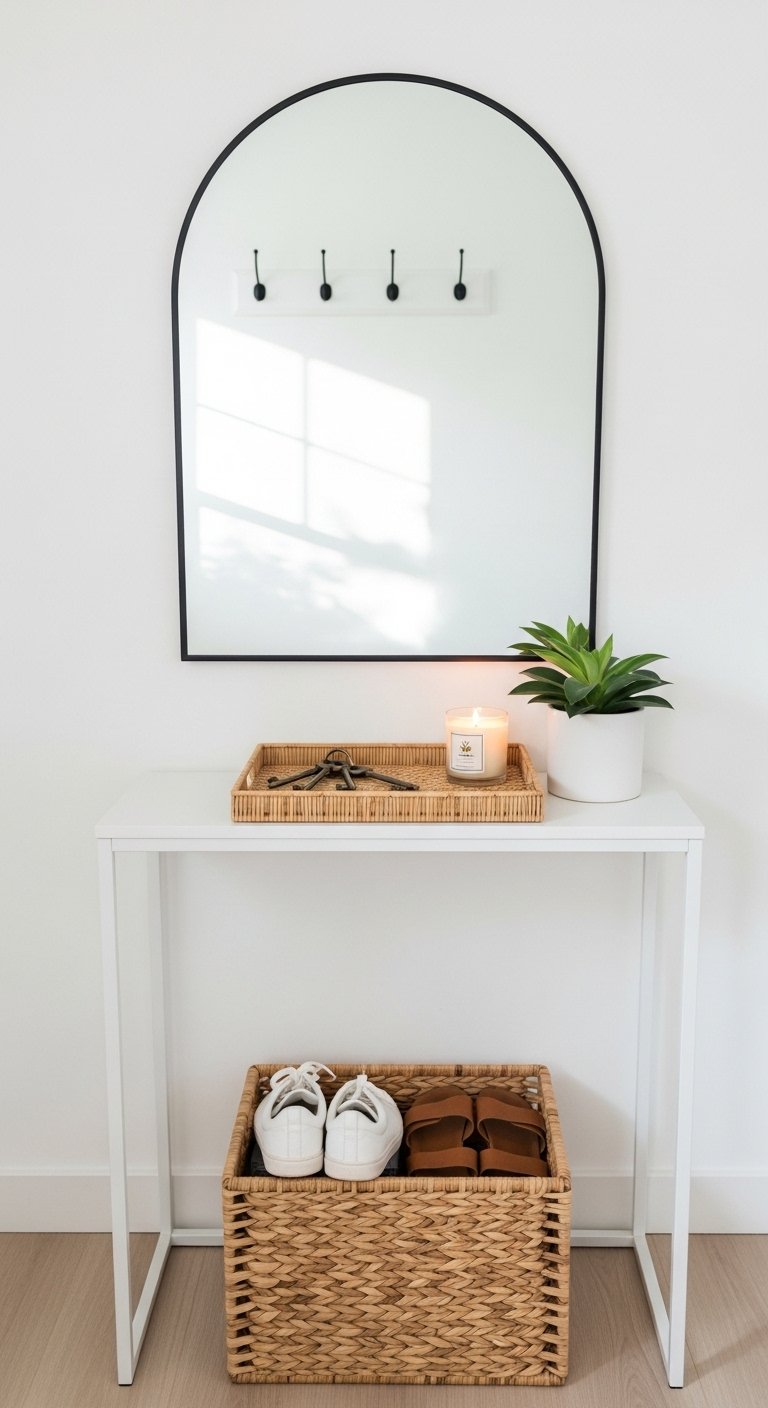
The entryway is the first thing you see when you come home and the first thing guests see when they arrive. It sets the tone for everything beyond it, which means that even small improvements here have an outsized effect on how the whole home feels. If the entryway is small, a mirror is the single most effective addition. It makes the space feel twice the size, gives you somewhere to check your appearance before leaving, and adds a decorative element that can anchor a console table or a shelf below it.
A narrow console table in the entryway, even a very slim one, gives the space a reason to be there beyond just being the place where shoes land. Style the top of it with a tray for keys and mail, a small plant or candle, and one decorative object. Add hooks on the wall above or beside it for bags and coats. A small basket below for shoes keeps the floor visually clear. An entryway that is organized and styled makes coming home feel like arriving at an actual destination rather than just opening a door.
2. Living Room Layout
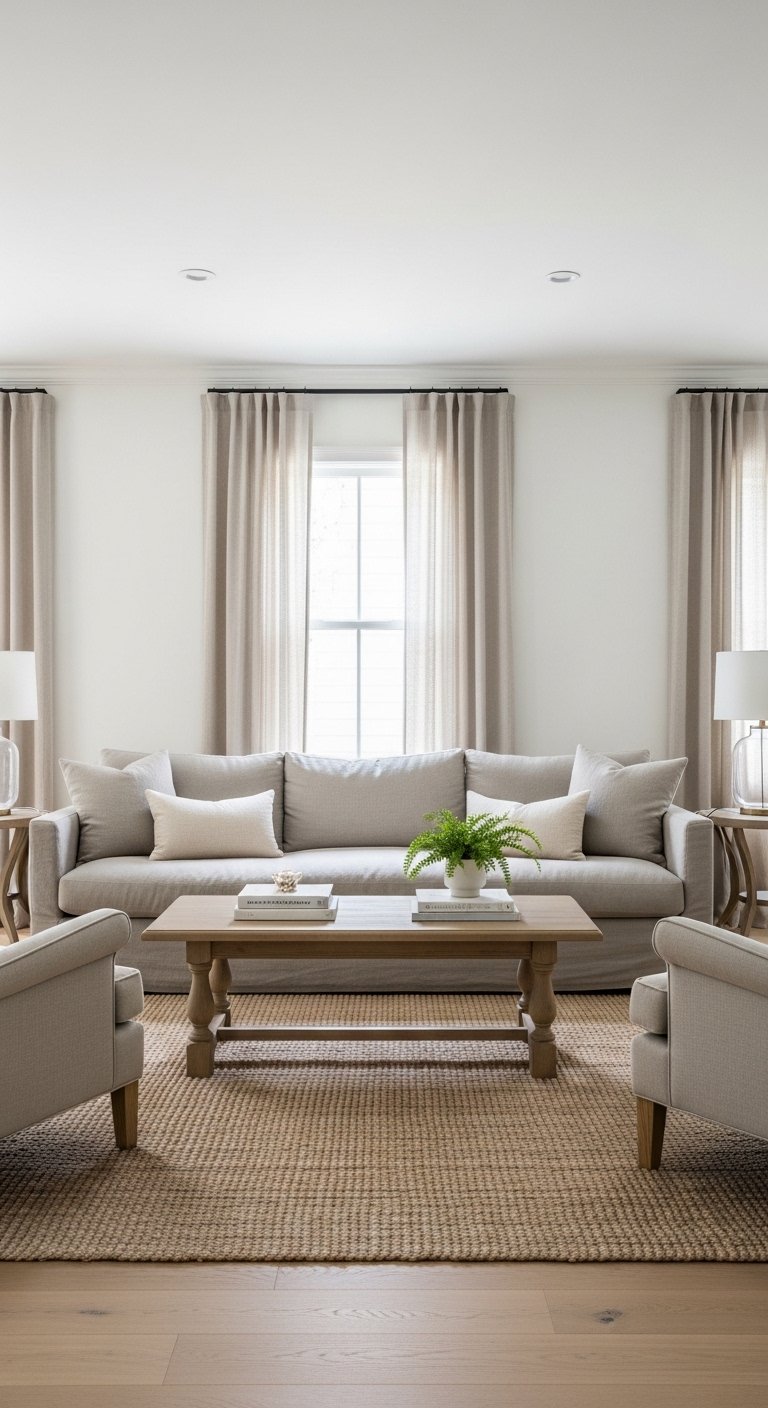
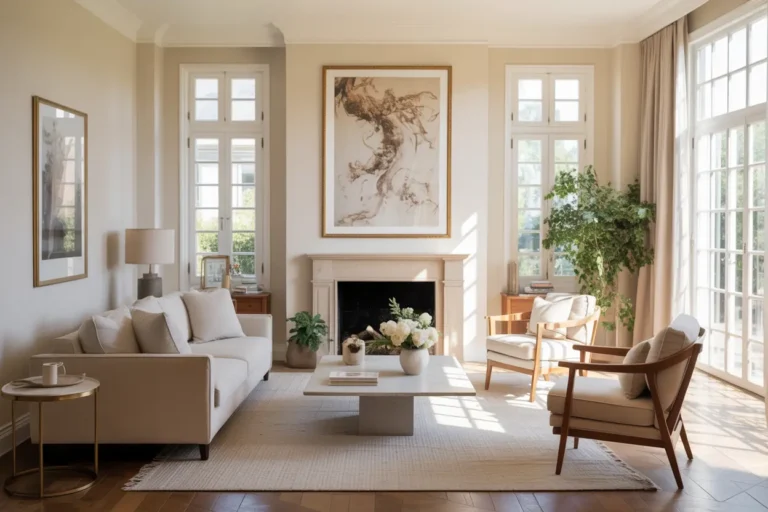
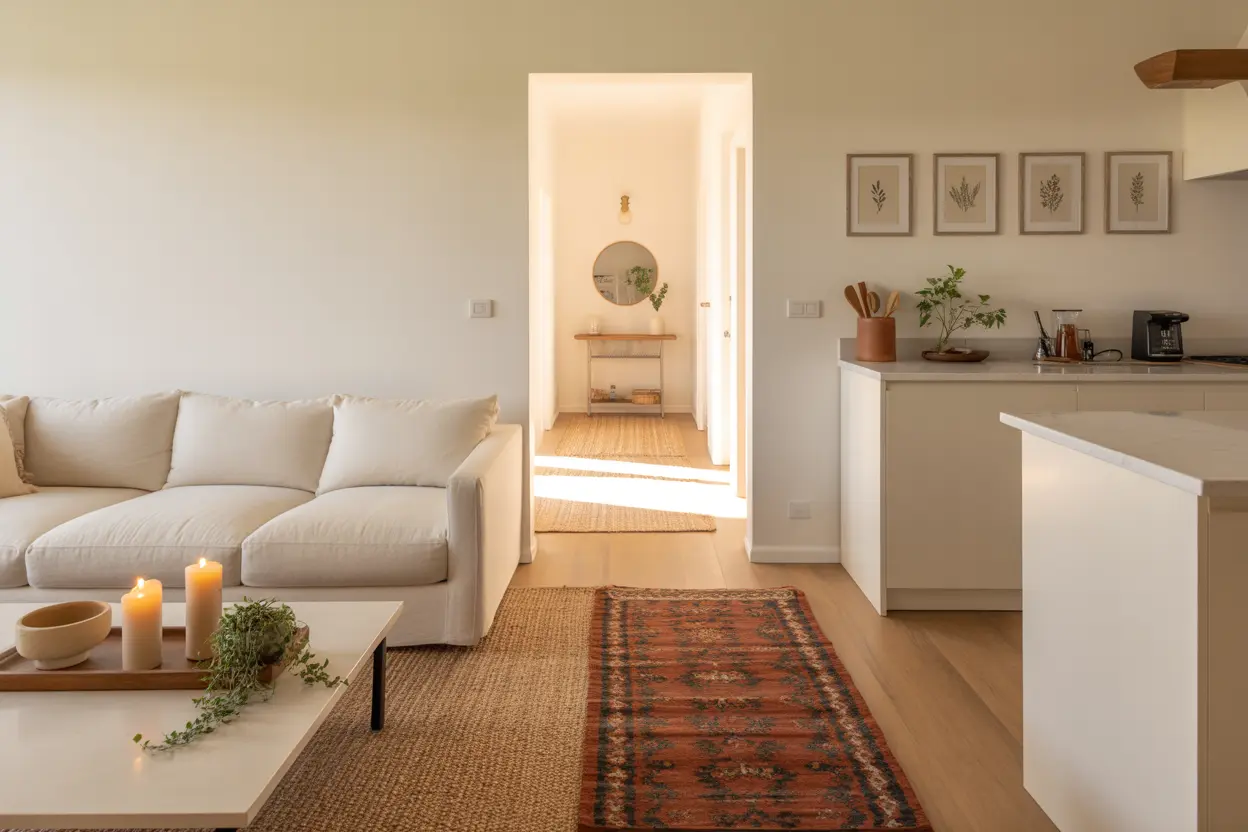
The arrangement of furniture in a living room determines how the room feels to be in more than almost any other factor, including color and decor. The most common layout mistake is pushing all the furniture against the walls, which creates a cold, waiting-room quality. Pulling seating in toward the center of the room, even by a foot or two, makes the grouping feel more intimate and conversational.
The rug anchors the seating group and defines the conversation area. It should be large enough that the front legs of all major seating pieces sit on the rug. If the rug is too small, the furniture floats and the room lacks cohesion. Position the sofa facing the room’s main focal point, whether that is a fireplace, a television, a large window, or a gallery wall, and angle secondary seating to face the primary seating rather than the wall. Rearranging your living room costs nothing and frequently makes a bigger difference than any piece of new decor would.
3. Kitchen Counter Edit
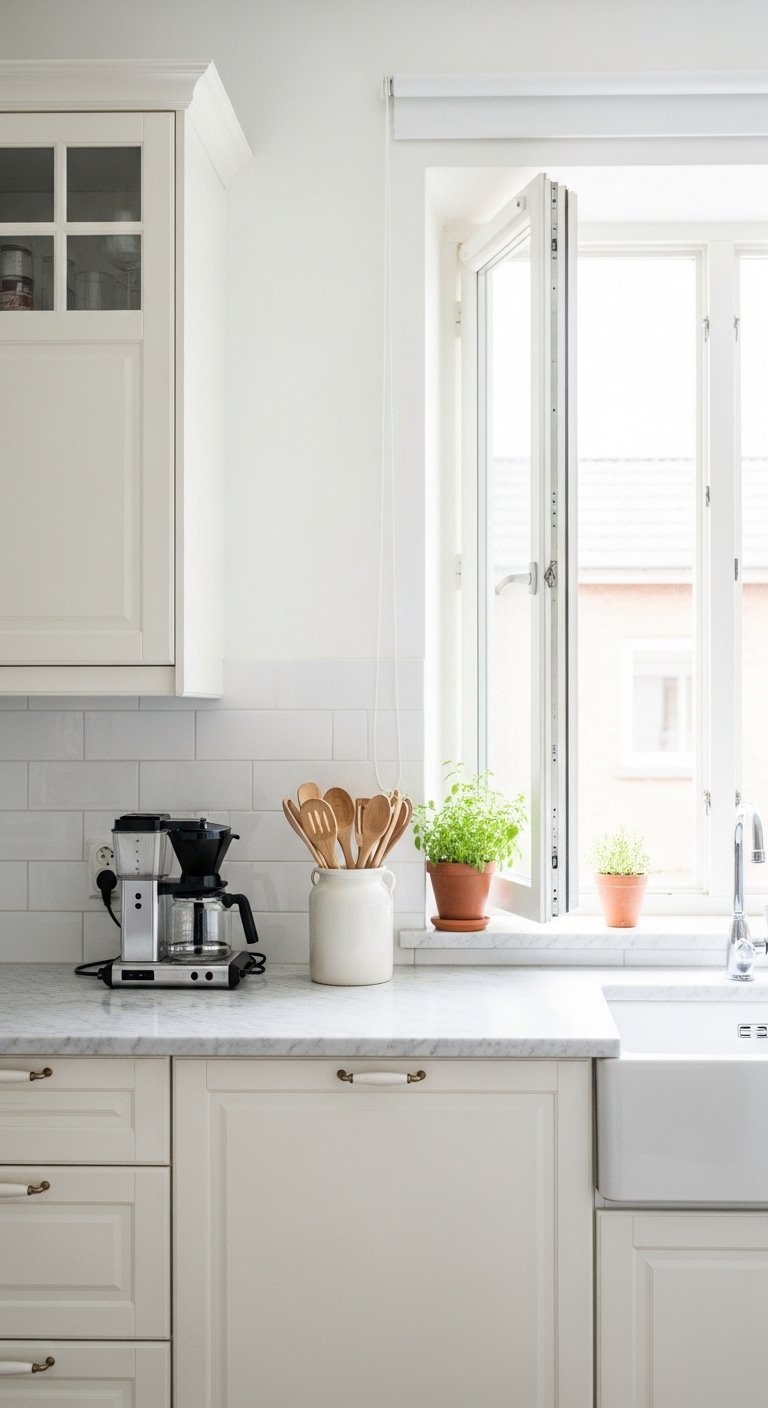
Kitchen counter clutter is one of the most common complaints in home decorating because counters attract objects like magnets and the accumulated result is a surface that looks busy and disorganized no matter what else you have done to make the kitchen look nice. The most effective approach is a complete clearance: remove everything, wipe the counters down, and only put back what is genuinely used every single day.
The objects that earn their counter space are the ones used daily: the coffee maker, the toaster if you use it every morning, a knife block, a small dish for daily supplements or keys. Everything else belongs in a cabinet or a drawer. The counters that remain can then be lightly styled: a small herb plant in a window, a ceramic jar for wooden spoons, a fruit bowl if fruit is always present. The difference between a carefully edited counter and an accumulation counter is dramatic and it makes the kitchen easier to use as well as better to look at.
4. Bathroom Spa Styling
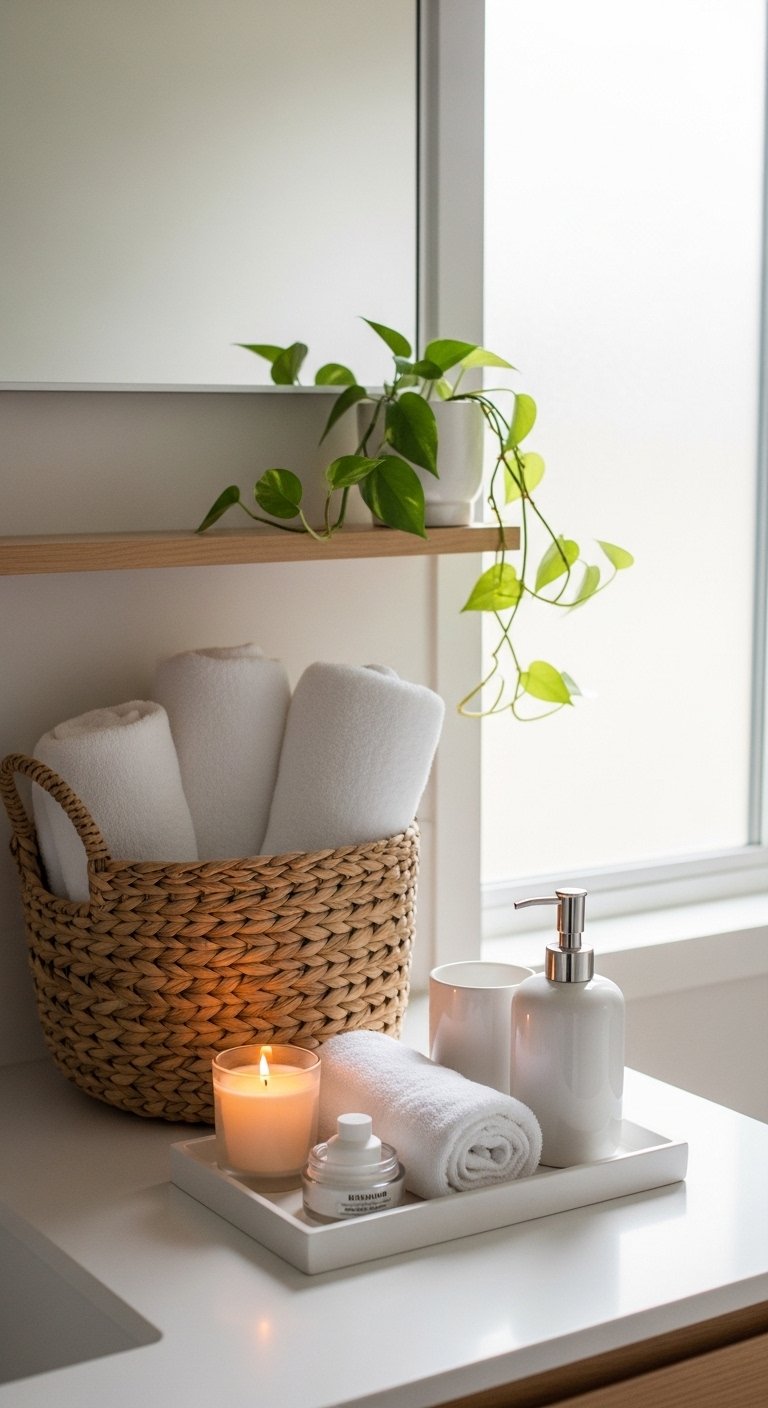
A bathroom that feels like a retreat rather than just a utility room is achievable without renovating anything. The changes that matter most are textiles and organization. Replace any old, thin towels with thick, generously sized ones in a single neutral color. Fold and display them on a towel ladder or rolled in a basket rather than hung haphazardly on a bar. A bath mat in a softer material than the usual flat cotton makes the floor feel more considered.
Clear the counter of everything that does not need to be visible. Put daily products in a basket or a tray with a low side so they are accessible but contained. Add one or two plants that tolerate humidity: pothos, a small fern, or an air plant on a shelf. A candle, a small stone or shell, and a single bud vase with a flower or a eucalyptus stem are enough to make the bathroom feel intentional. These small objects cost almost nothing but shift the space from purely functional to quietly pleasurable.
5. Open Shelving Display
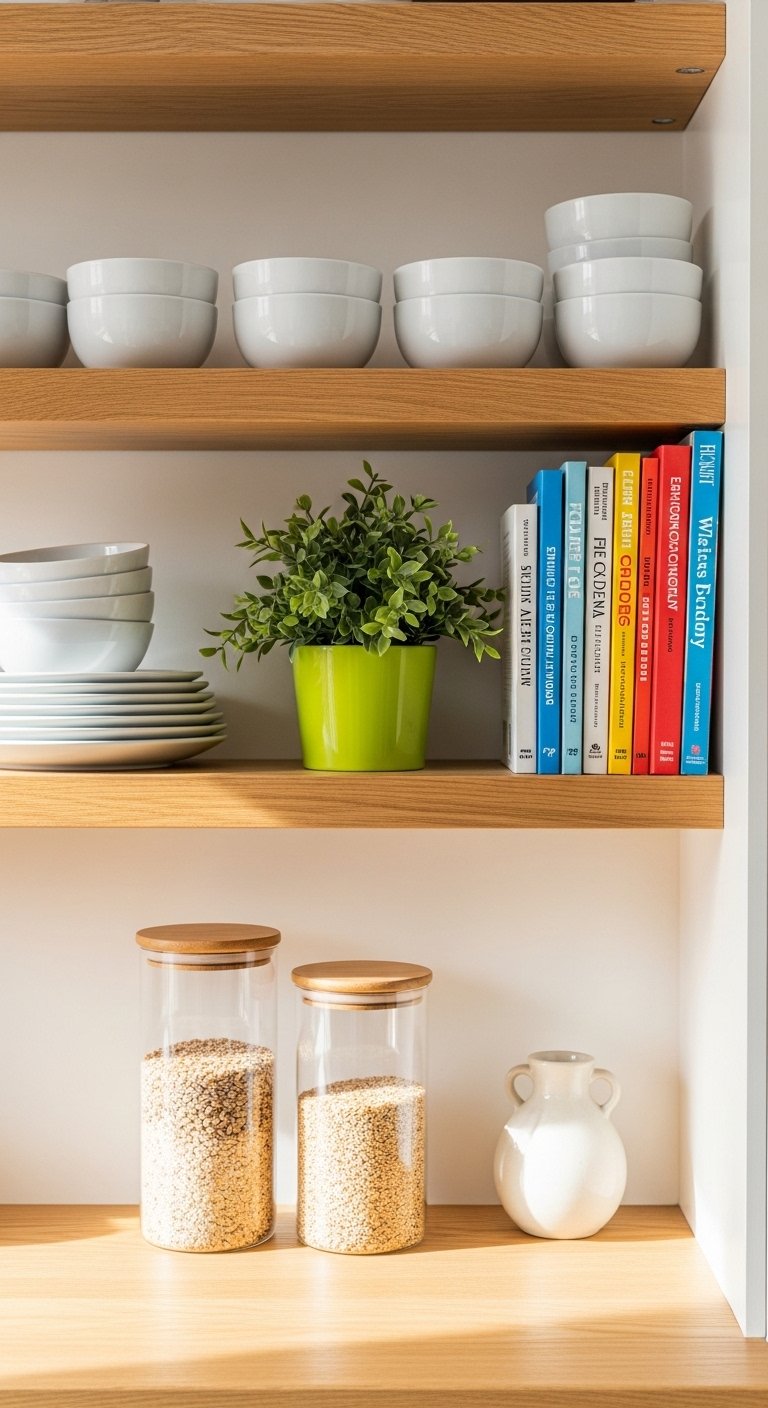
Open shelving in a kitchen, living room, or home office is an opportunity to display things that are genuinely beautiful while keeping them accessible. The challenge with open shelves is that everything on them is always visible, which means the shelves need to be maintained and the contents need to be edited. Objects that belong on open shelves are things you use regularly or things that look good: everyday dishes, nice glasses, a few cookbooks, small plants, attractive storage jars.
The styling principle for open shelves is the same as for any vignette: vary the height, use odd numbers in groupings, mix textures and materials, and leave some deliberate negative space rather than filling every inch. A row of matching storage jars, a stack of cookbooks with a plant at the end of the row, and a small ceramic piece between the functional items is a classic combination that looks organized and considered at the same time. Edit the shelves every few months to prevent accumulation.
6. Indoor Plant Collection
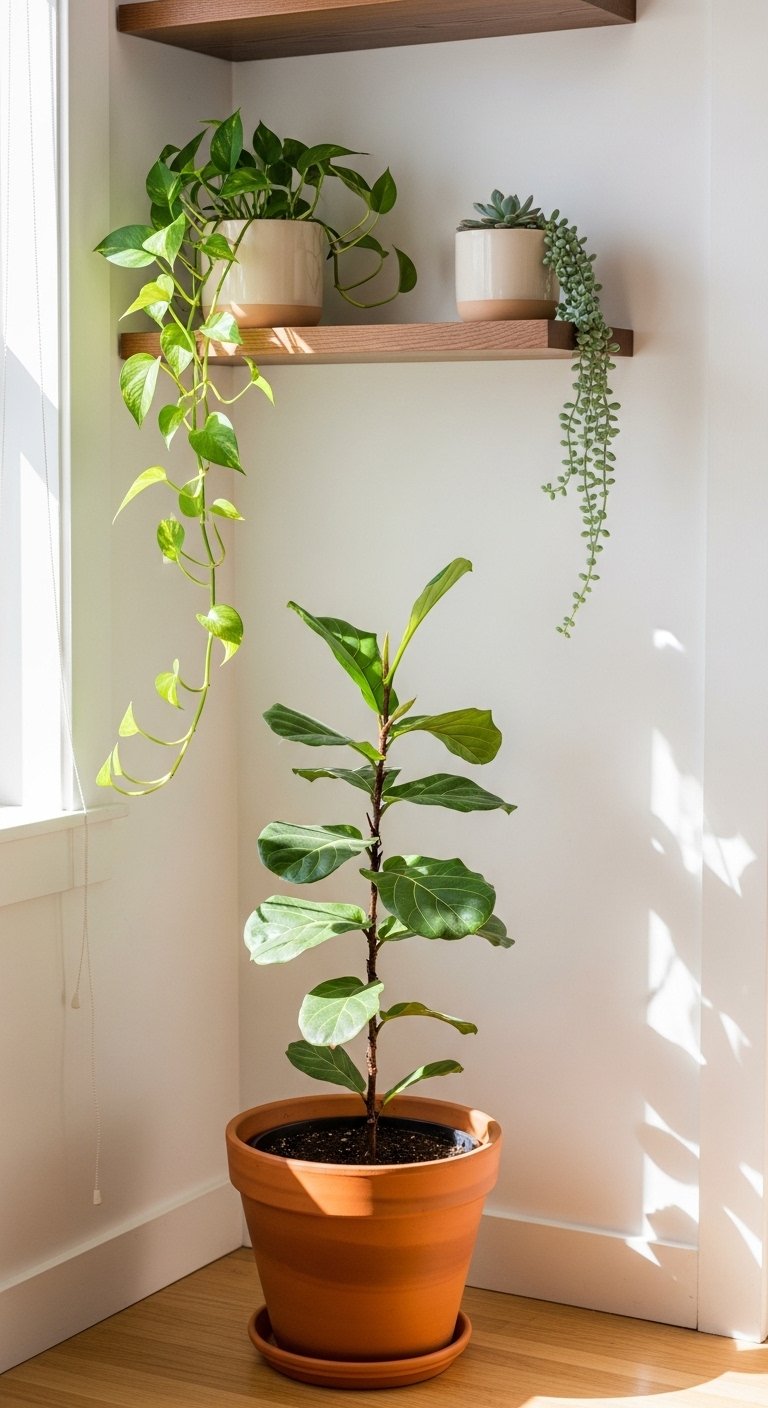
Adding more plants to a home is one of the most reliable ways to make it feel more alive and cared for. The effect is cumulative: one plant is nice, three plants in the same room start to create atmosphere, and five or more create an environment that feels genuinely lush and intentional. The key to a plant collection that looks styled rather than accumulated is to group plants of different sizes and leaf shapes together while using coordinating pots in a limited palette.
Low-light tolerant plants are the most practical choice for homes that do not have abundant natural light: pothos, snake plants, ZZ plants, peace lilies, and cast iron plants are all forgiving and look beautiful. Place the tallest plants on the floor in the corners of rooms, medium-sized plants on shelves and side tables, and small trailing plants on higher shelves where they can cascade downward. Grouping plants at different heights in the same area creates the most visually impressive plant display.
7. Throw Blanket Styling
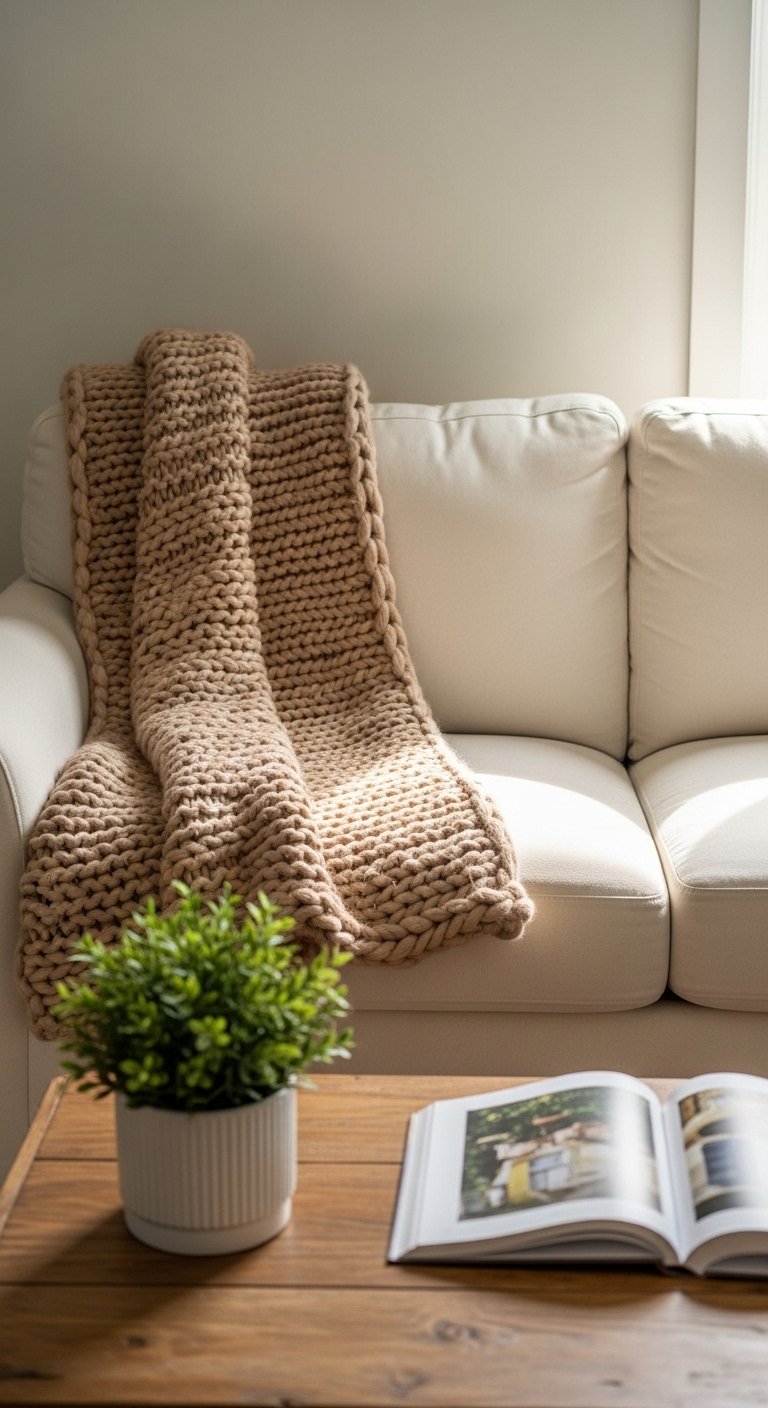
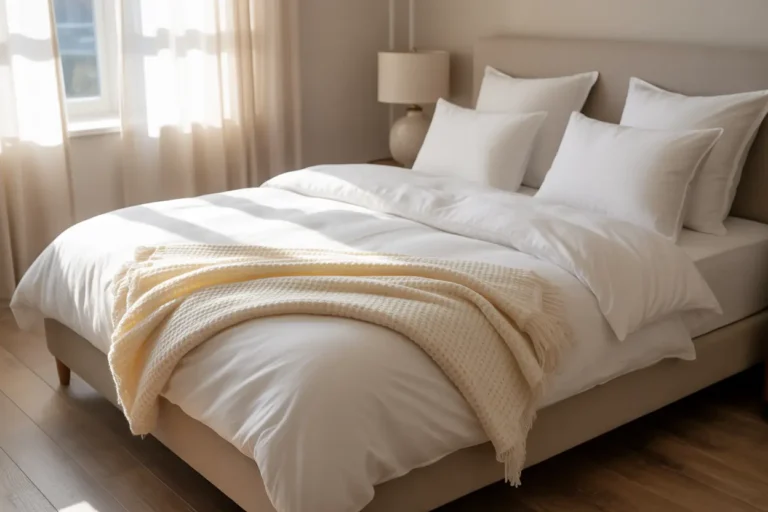
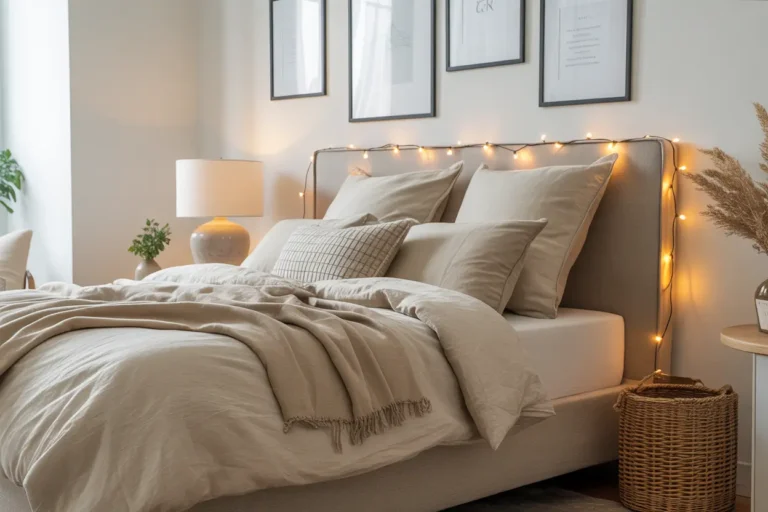
A throw blanket is one of the most versatile and inexpensive styling tools in a home. On a sofa, it softens the silhouette of the furniture and adds a layer of color or texture that an upholstered sofa alone cannot provide. On a bed, it adds the layered look that makes bedding appear considered and inviting. On a bedroom chair or ladder, it signals that the space is for comfort and relaxation.
The key to a throw that looks styled rather than just thrown is in how it is placed. On a sofa, drape it over one armrest with the lower half pooled slightly on the cushion rather than folded in a perfect square. On a bed, fold it in thirds lengthwise and lay it across the lower third of the mattress. On a chair, drape it over the back with one end hanging longer than the other. The casually imperfect placement is what reads as intentional styling rather than a blanket that got left on the furniture.
8. Window Treatment Upgrade
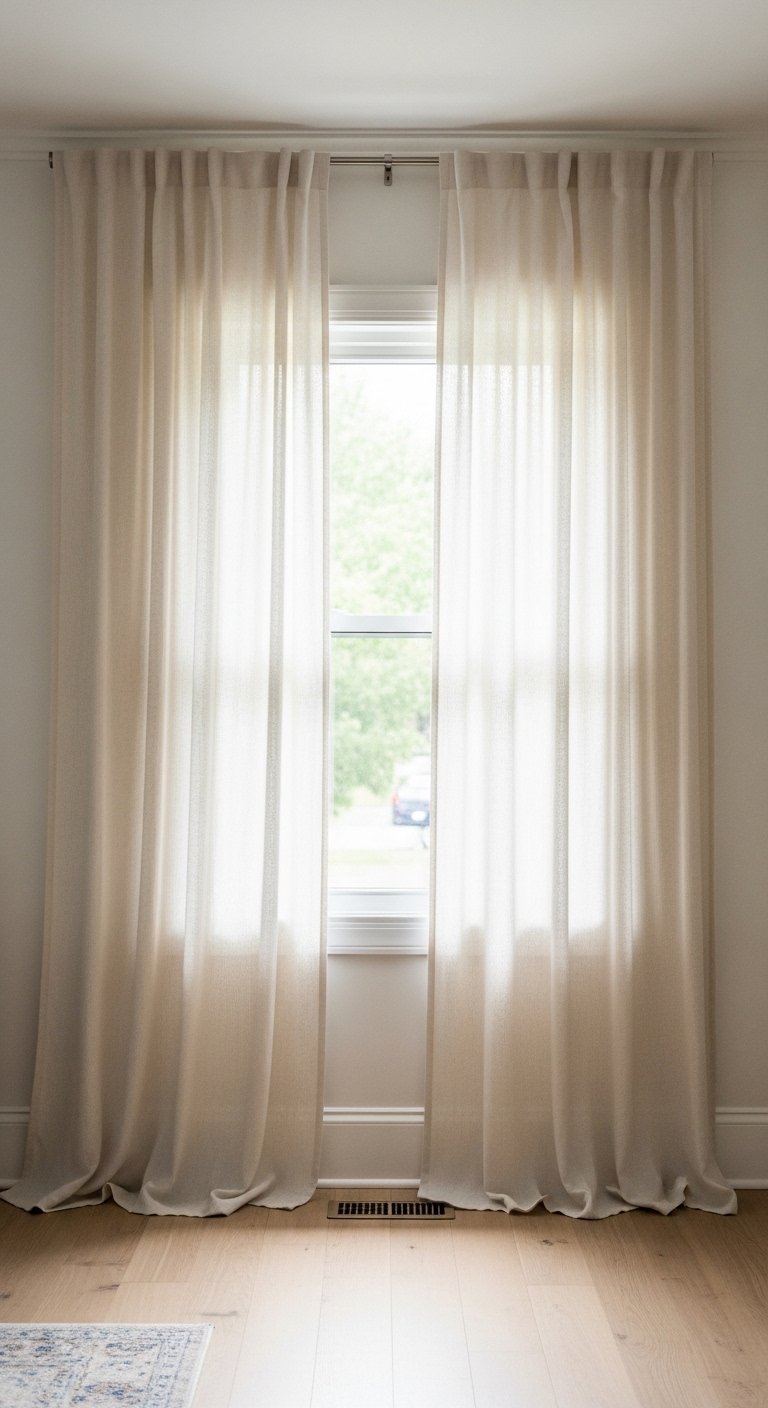
Window treatments have more impact on the overall feel of a room than most people account for. Curtains that are too short, too narrow, or hung at the wrong height can undermine an otherwise well-styled room. The standard fix: hang the rod as high as possible, as close to the ceiling line as the architecture allows, and use panels that are long enough to touch or slightly puddle on the floor. This single change makes almost every room feel taller and more finished.
The fabric weight and color determine the quality of light in the room during the day. Sheer or semi-sheer curtains in a warm white or oatmeal color filter sunlight beautifully without blocking it. Lined curtains in a heavier fabric give better light control and sound absorption, which matters in a bedroom. Roller blinds in a natural linen weave are a clean, modern alternative to curtains that works especially well in kitchens and bathrooms where fabric can feel overly formal.
9. Accent Chair Update
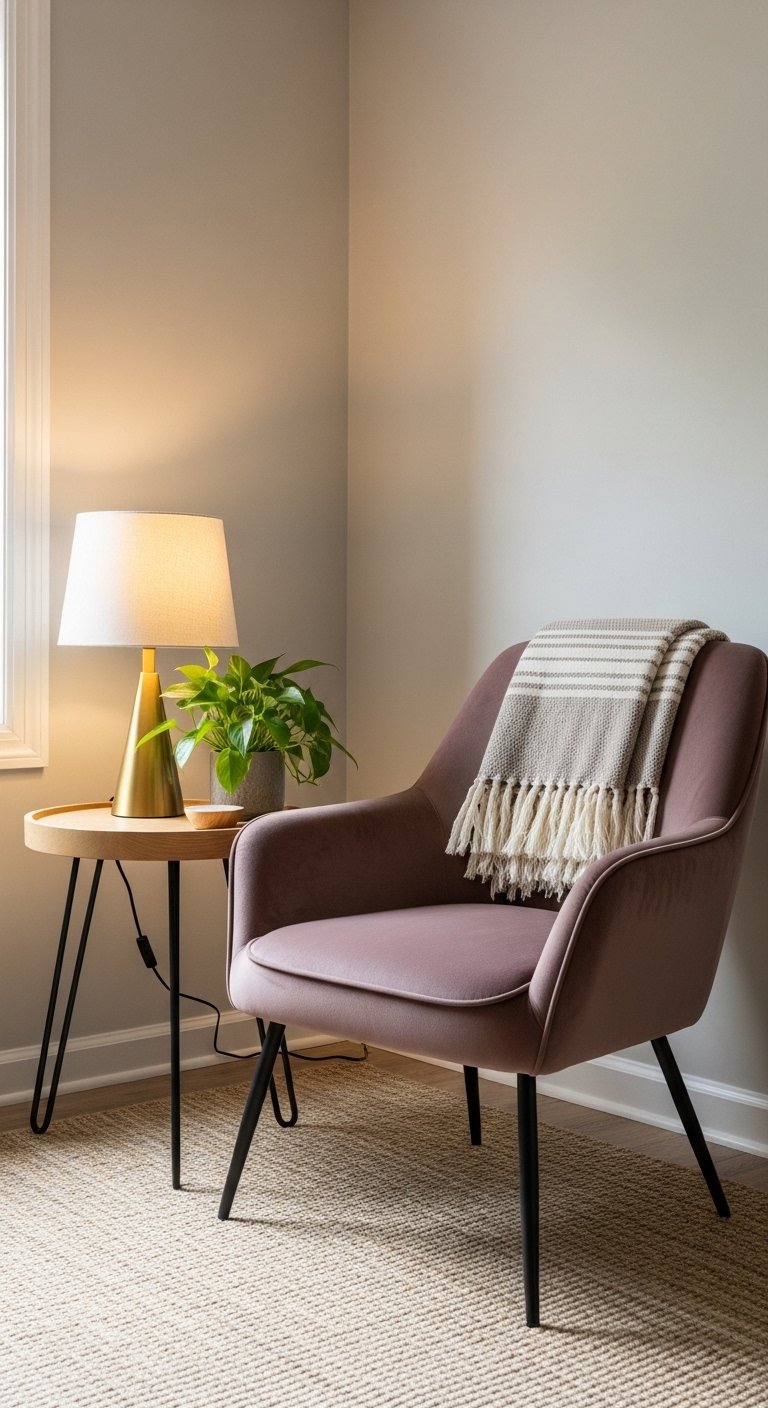
An accent chair in a living room or bedroom is a small piece of furniture with a large decorative purpose. Unlike a sofa, which tends to be neutral and stay for years, an accent chair can be bolder in color, more specific in style, and changed out more easily when you want to update the room’s direction. A chair in a deep velvet, a graphic pattern, or an interesting silhouette becomes the visual focal point that makes the whole room feel more considered.
If a new chair is not in the budget, updating an existing one is achievable. Reupholstering a chair with a simple seat cushion in a new fabric is a manageable DIY project. Adding a throw and a pillow in a coordinating color immediately changes how a plain chair reads in a room. Position the accent chair at an angle rather than parallel to the wall so it reads as part of the seating group rather than just a piece of furniture parked against the side. The angle makes it feel like an invitation.
10. Vase and Stem Styling
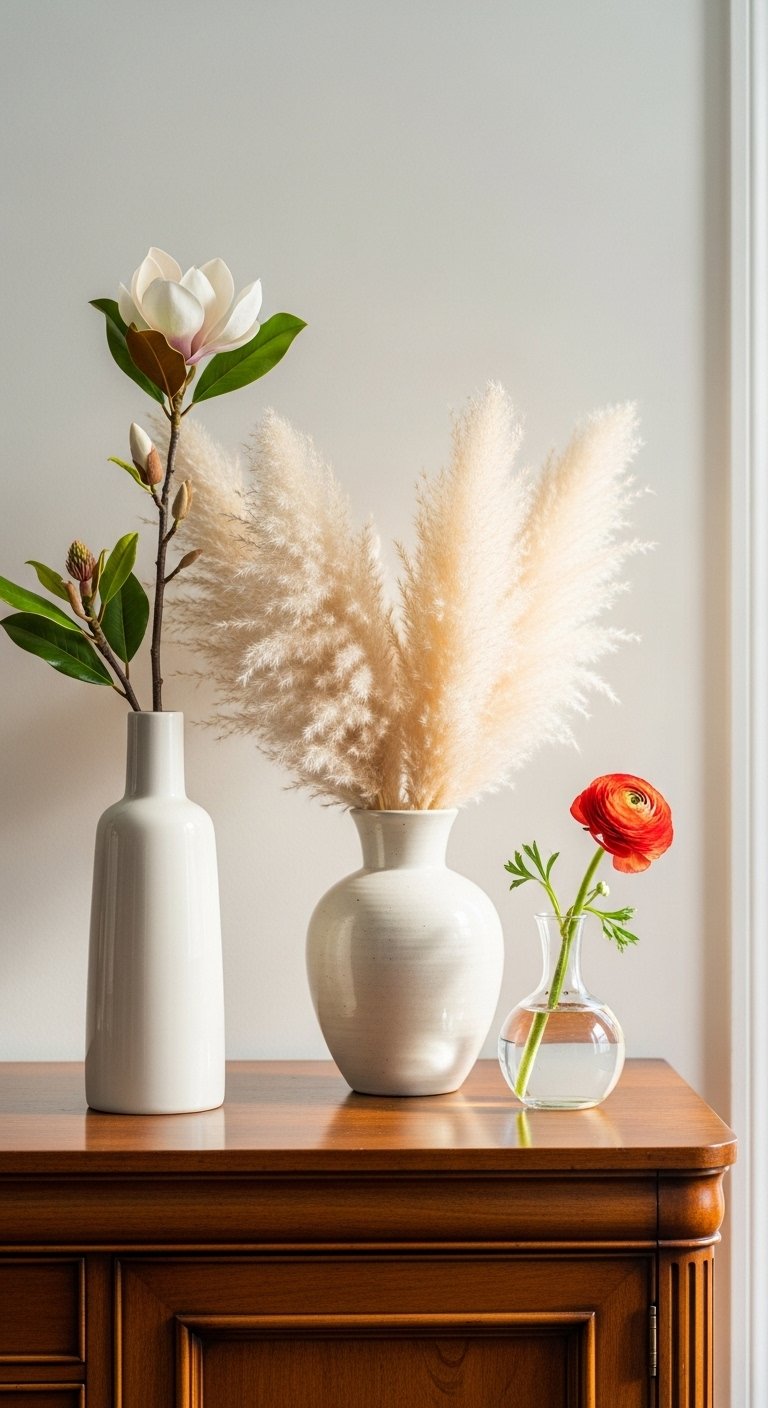
A single well-chosen vase with the right stem or branch in it is one of the most efficient forms of home decor because it adds height, organic shape, and life to any surface with minimal visual weight. The trick is in the proportion: the stem or branch should be roughly one and a half to two times the height of the vase for a classic, balanced look. A low vase is most effective with a full, round flower arrangement. A tall, narrow vase is most effective with a single dramatic stem or a few long branches.
Dried pampas grass, cotton branches, eucalyptus, magnolia leaves, and cherry blossom branches are all excellent choices for long-lasting vase arrangements that do not require weekly replacement. For fresh flowers, single-stem flowers like tulips, ranunculus, and simple poppies look more intentional than mixed bunches in most home settings. Place styled vases at different heights throughout the room: one tall vase on the floor in a corner, a medium vase on the coffee table, a bud vase on a windowsill.
11. Dining Table Centerpiece
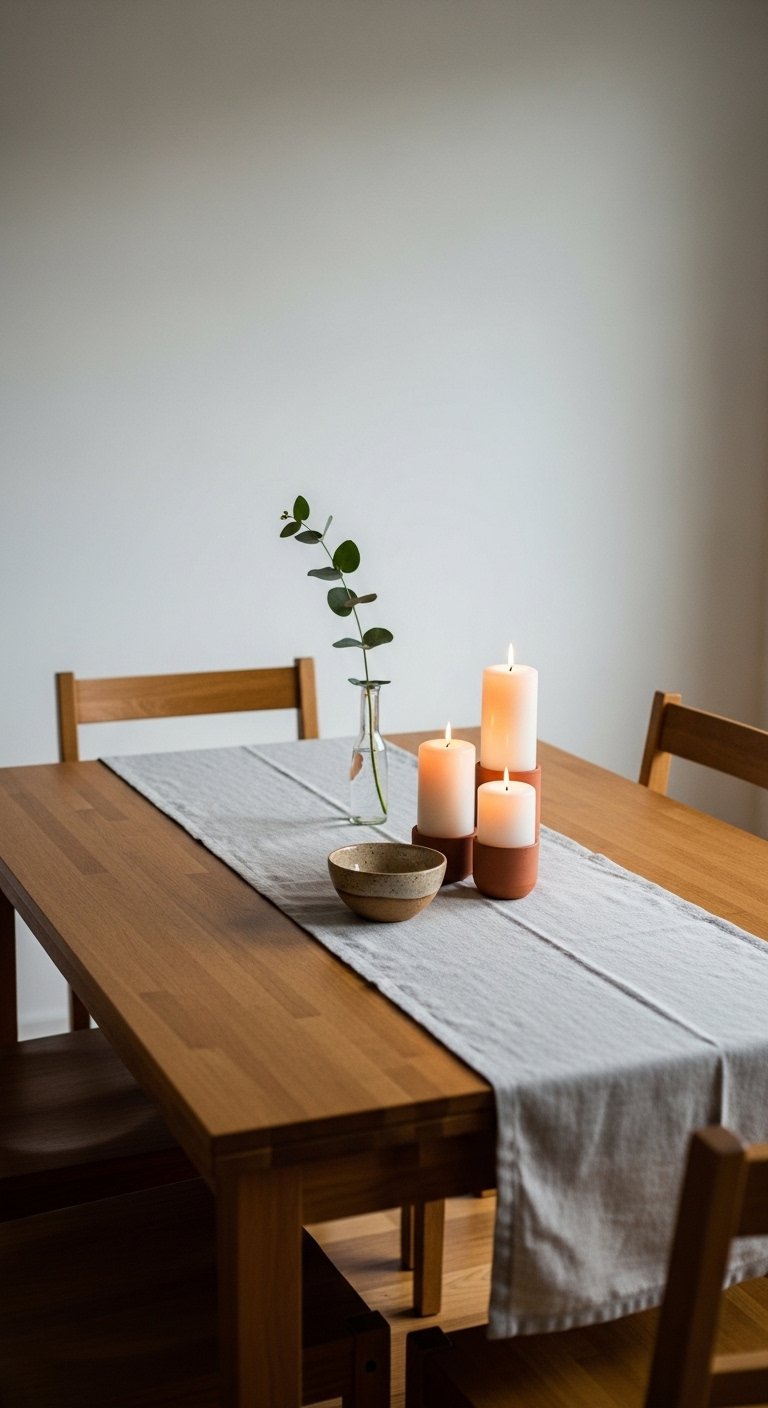
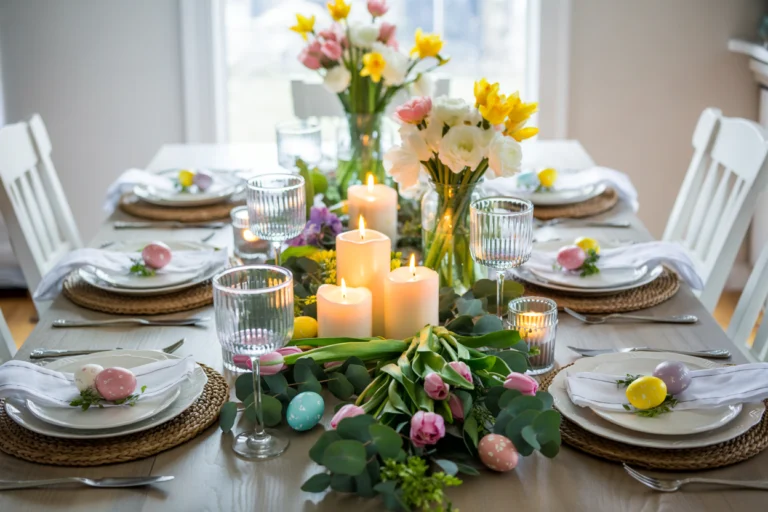
A dining table without a centerpiece looks unfinished even when the table itself is beautiful. The centerpiece does not need to be elaborate or floral. Some of the most effective dining table centerpieces are the simplest: a long wooden board or a piece of slate running down the center of the table with a few candles in varying heights, a small plant, and a bowl of fruit or a decorative object.
The key is that the centerpiece should not block eye contact across the table when people are seated. Keep the tallest elements below about twelve inches in height or choose very tall, slim candles that do not create a visual wall. A runner of linen or a piece of natural cotton running the length of the table underneath the centerpiece objects grounds the whole arrangement and defines the centerpiece zone without competing with it. Seasonal updates to the centerpiece, swapping summer flowers for autumn gourds or winter greenery, keep the dining room feeling current throughout the year.
12. Painted Front Door
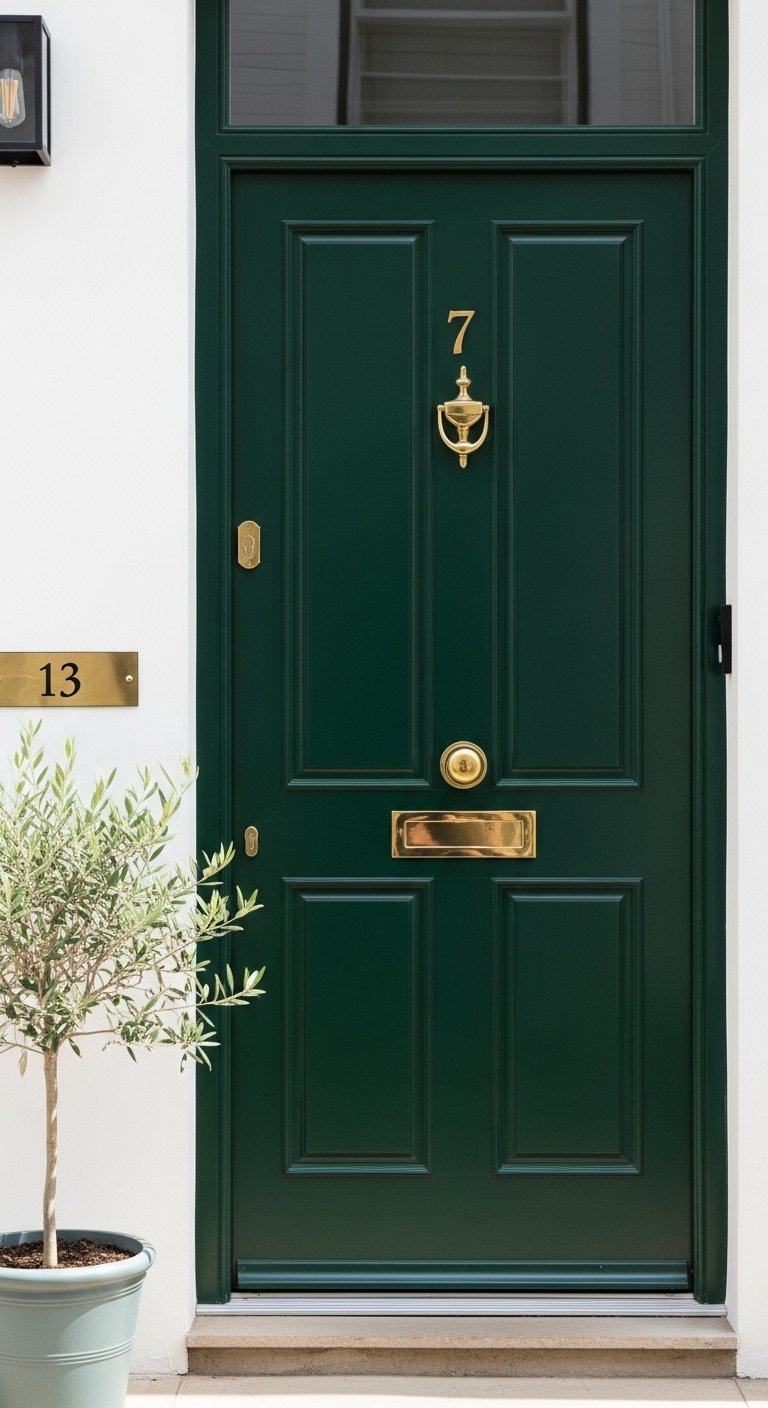
The front door is the face of the house and painting it a considered, slightly unexpected color is one of the most impactful exterior changes you can make. Black is a perennial classic that makes any house look sharper and more deliberate. Deep navy blue suits traditional architecture beautifully. A warm sage green has been one of the most popular choices for several years running because it suits a wide range of exterior color schemes and has a welcoming, natural quality.
Prepare the door properly for the best result: remove it from the hinges if possible to paint it flat, or at minimum tape off the glass and hardware carefully. Sand any rough areas, prime bare wood, and use an exterior paint formulated specifically for doors because it needs to withstand temperature changes, direct sun, and repeated opening and closing. New hardware, a bold door knocker, or a simple house number plate in a coordinating finish completes the update. A freshly painted front door with matching hardware immediately elevates the whole exterior of the home.
13. Bookcase Styling Refresh
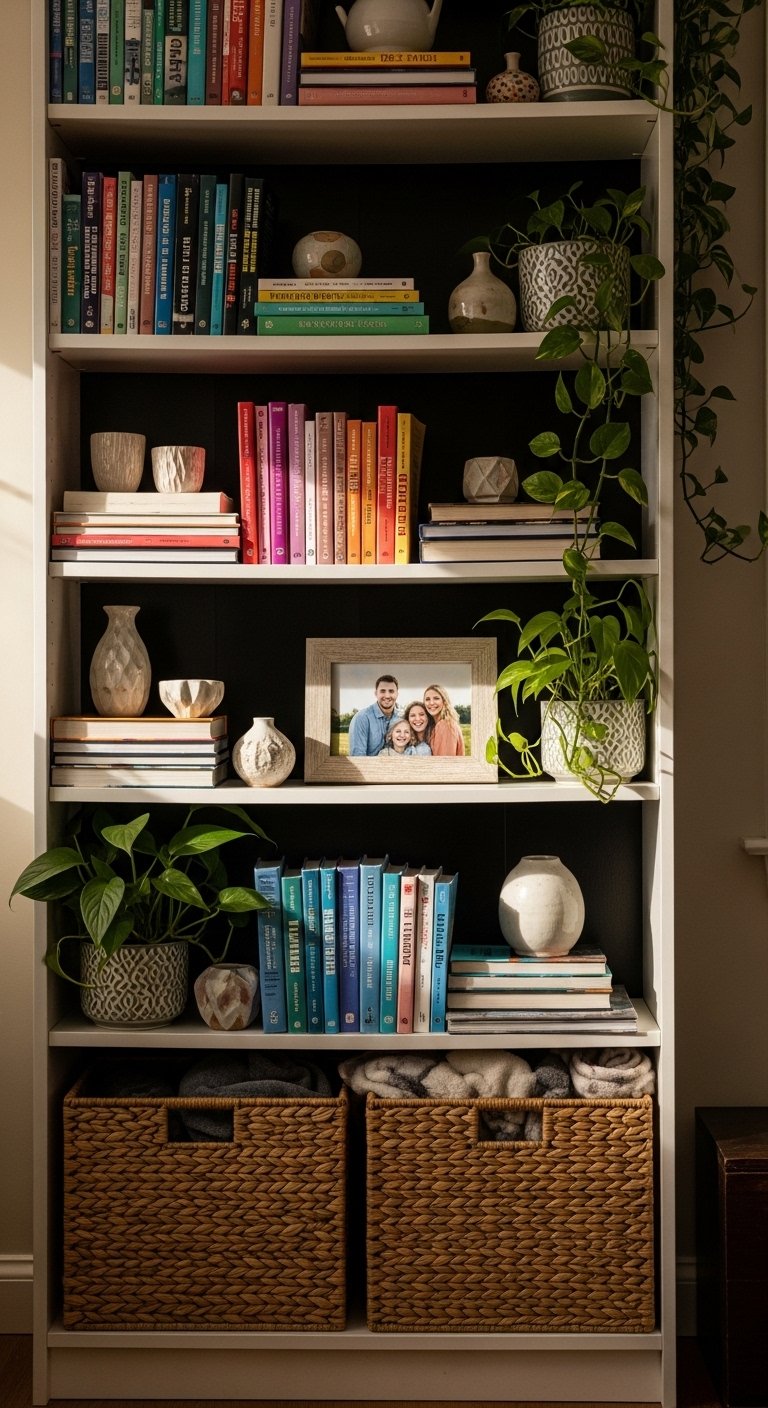
Most bookcases in homes are underutilized as decorating opportunities because the books are arranged purely by size or subject and the spaces between them are left empty or filled randomly. A styling refresh does not mean removing the books. It means treating the books as one design element among several and using the remaining space more thoughtfully.
The process starts with grouping books by color family for a few shelves, which creates a visual sense of organization that is both beautiful and easy to maintain. Horizontal book stacks create platforms for objects. Small plants, framed photos facing forward, a candle, a small sculpture, a woven basket for remotes or supplies, these all belong on a styled bookshelf when placed intentionally. The overall shelf should have a sense of visual rhythm: not crowded, not sparse, with clear groupings and deliberate negative space between them.
14. Bathroom Shelf Vignette
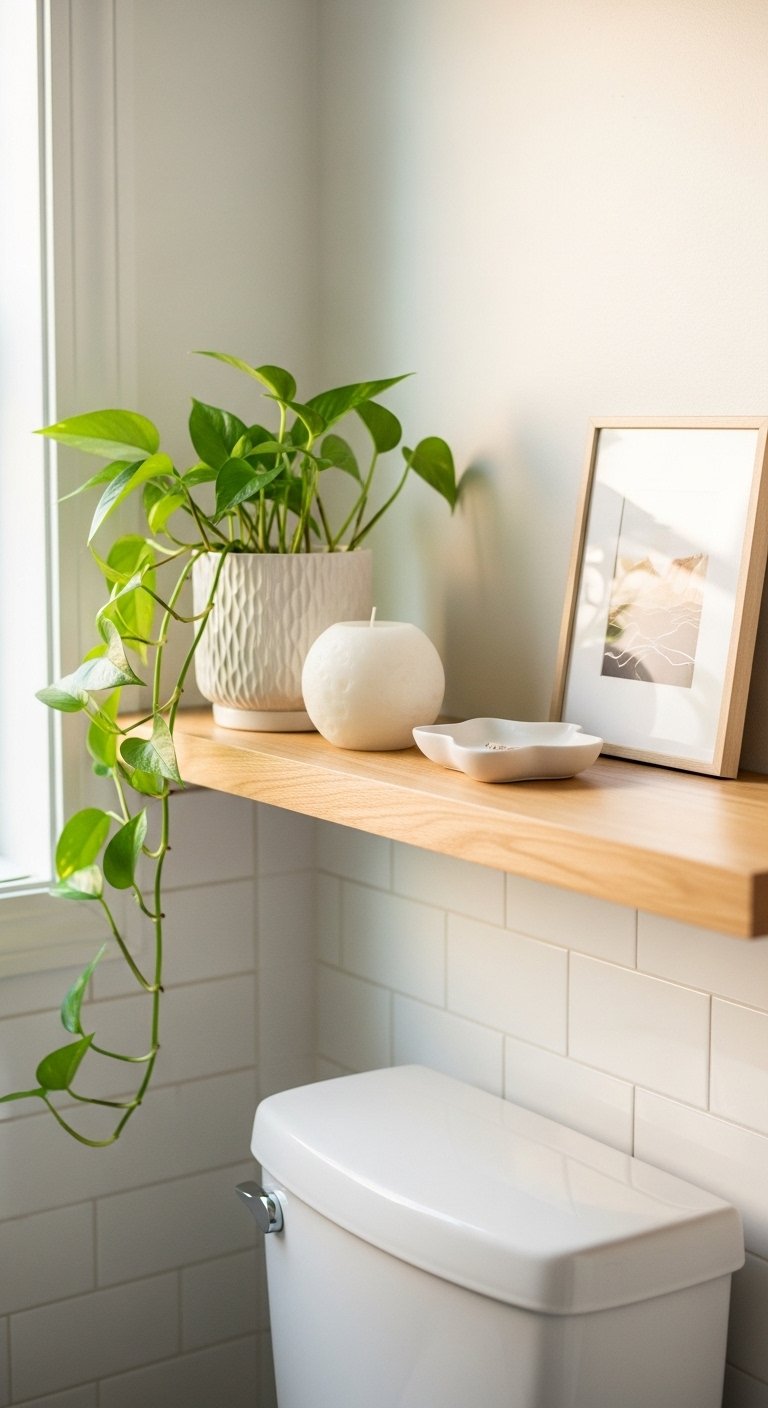
A bathroom shelf or the space above a toilet is often overlooked as a decorating opportunity, but styling it well makes the bathroom feel significantly more finished. A small grouping of objects here creates an intentional moment in a room that is otherwise purely functional. The most effective combination is: a small plant, one or two height-varied objects like a candle and a ceramic piece, and an optional small framed print leaned against the wall rather than hung.
Keep the objects cohesive in palette: all white ceramics with a green plant; all natural materials with a dried flower; a mix of matte black and natural rattan. Avoid using the bathroom shelf as a storage area for extra toilet paper or cleaning supplies; those belong in a cabinet. The shelf should be purely decorative and deliberately edited. Wiping it down and refreshing it once a month keeps the bathroom feeling clean and considered rather than forgotten.
15. Pendant Light Swap
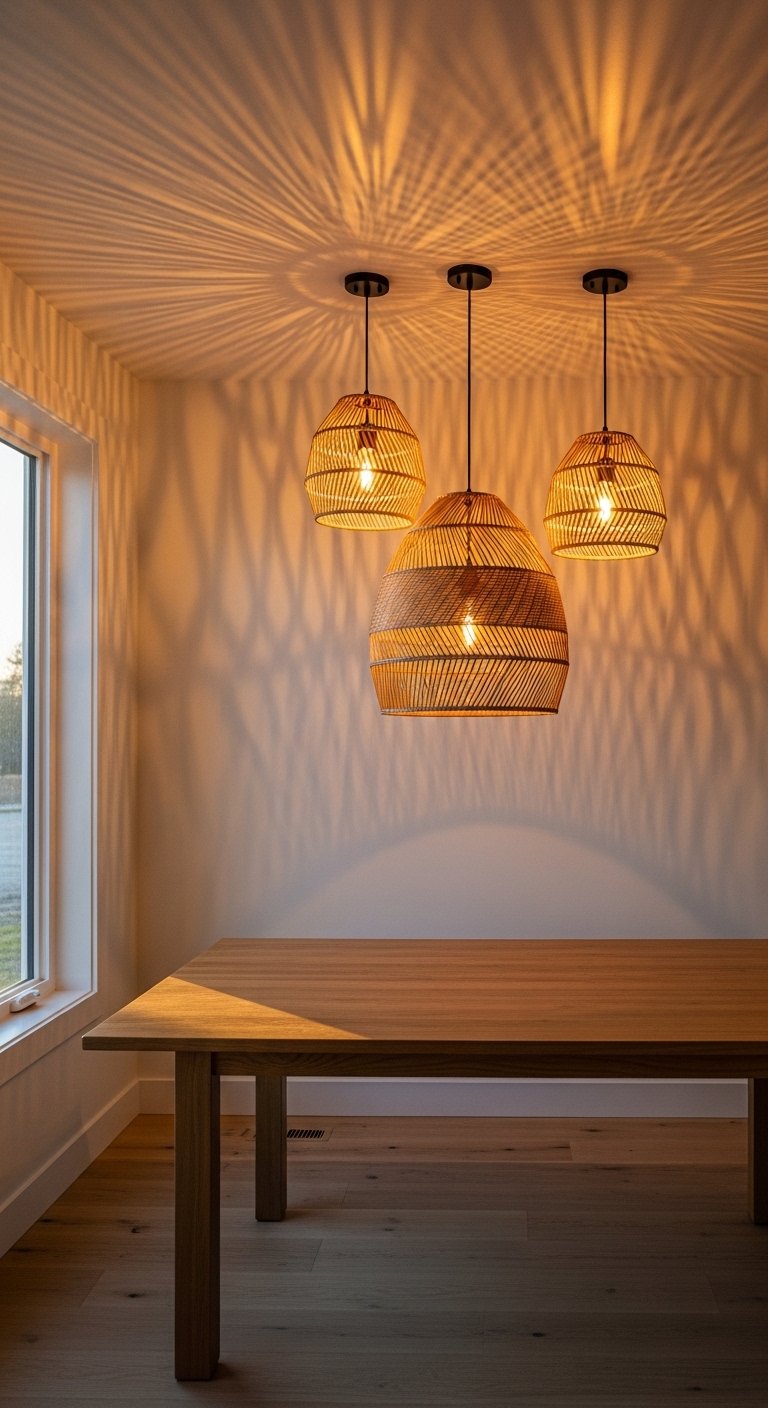
The pendant light in a kitchen, dining room, or entryway has a huge effect on both the function and the aesthetic of the space because it is one of the most visually prominent objects in those rooms. Swapping out a dated or generic pendant light is a significant upgrade that can be done as a DIY project by anyone comfortable turning off a circuit breaker and following basic wiring instructions, or quickly and inexpensively by a handyman.
Woven rattan pendants have become classic for a reason: they cast beautiful warm shadow patterns on the walls and ceiling and suit a wide range of interior styles. Black metal cage pendants have a clean, industrial-modern quality. Ceramic or glass pendants in organic shapes feel more artisan and eclectic. Over a kitchen island or a dining table, grouping two or three pendants at slightly different heights creates a more interesting look than a single light. Make sure the new pendants hang at the right height: about 30 to 36 inches above a dining table surface is standard.
16. Staircase Gallery
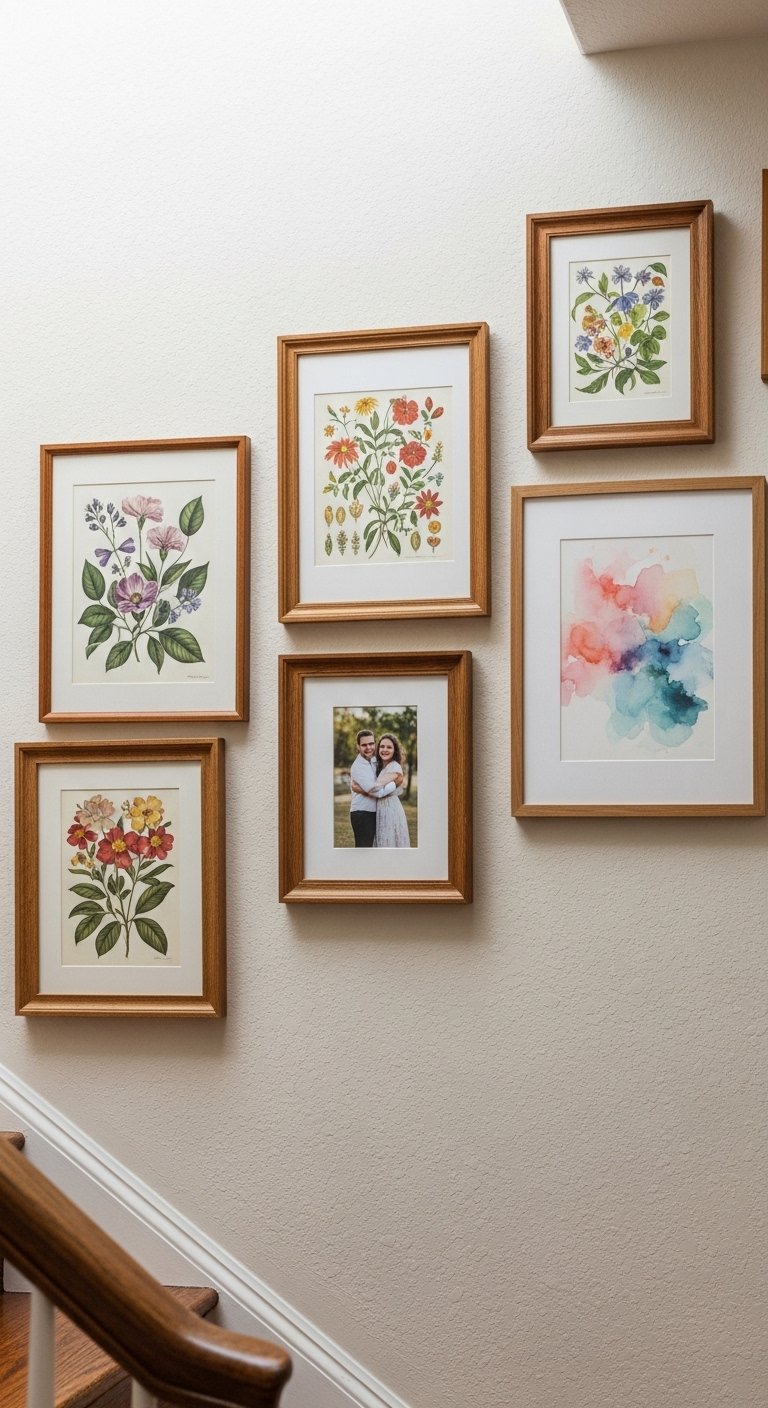
The wall running alongside a staircase is one of the most underused gallery wall locations in a house. It is long, narrow, and has an inherent diagonal direction from the stairs that actually makes arranging art on it easier than on a flat wall: you simply follow the angle of the stair nosing with the top edges of the frames, keeping them consistently staggered as they go up.
A staircase gallery works best when it mixes different frame sizes while keeping a consistent frame finish. Frames in the same material, all black, all natural wood, all white, look intentional even when the art inside them is varied. Family photos, small prints, simple abstract watercolors, and botanical illustrations all coexist well together. Allow about two to three inches between frames, keep the overall grouping centered vertically on the wall as it rises, and use a level on each frame before committing. A staircase gallery is the kind of project that looks like it has always been there once it is done.
17. Kitchen Backsplash Tile
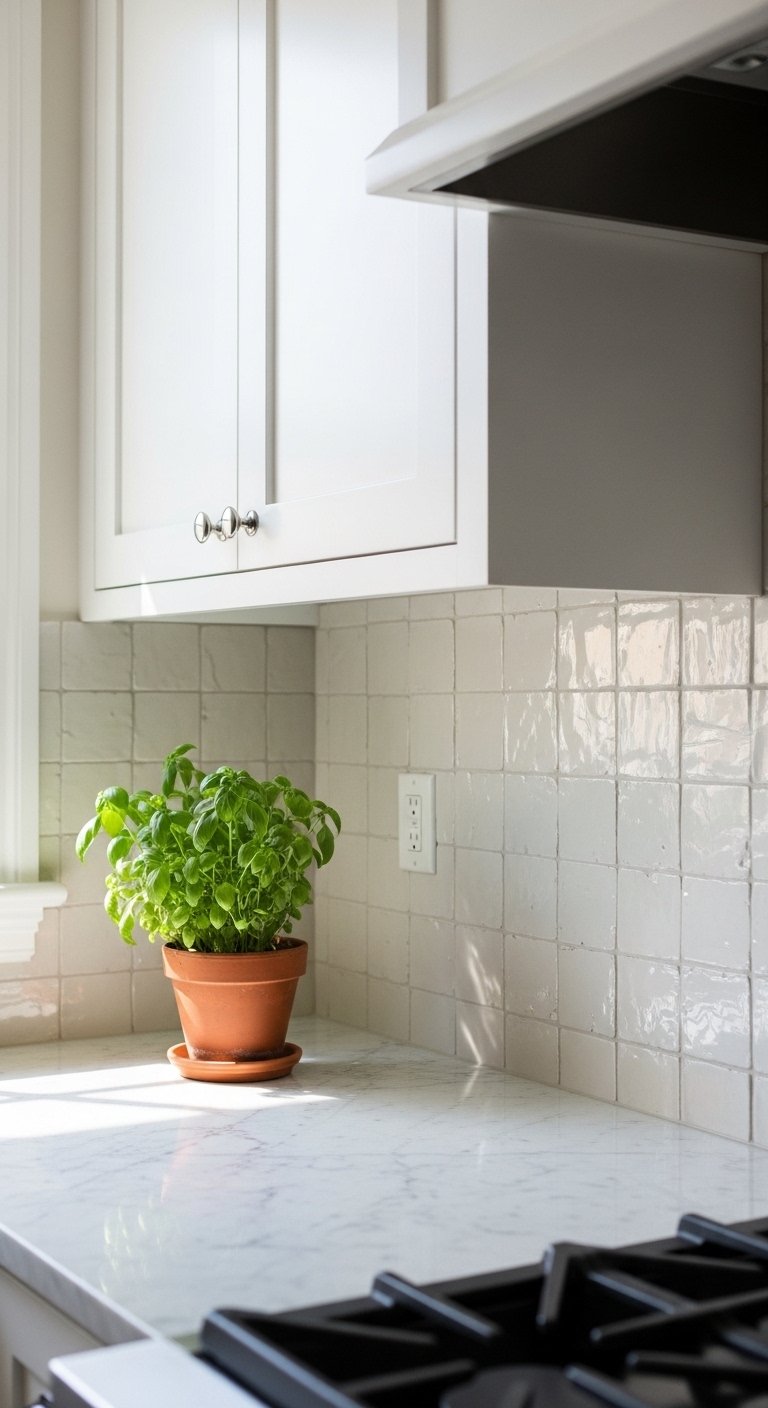
A kitchen backsplash is one of the rooms most visually prominent surfaces, and updating it is a project that dramatically changes the character of the kitchen without touching the cabinets or appliances. Classic subway tile in white or off-white is a perennial choice because it suits almost every kitchen style and reflects light well. Zellige-style handmade tile in off-white or warm stone has a slightly imperfect, artisan quality that adds more texture and depth.
For a budget-friendly alternative to traditional tile, peel-and-stick backsplash panels have improved significantly in quality and come in styles that are difficult to distinguish from real tile at normal viewing distances. They are renter-friendly and removable, which makes them especially worth considering if you rent or simply want the option to change your mind later. Install them on a clean, grease-free surface for the best adhesion, and use a level to keep the pattern straight from the very first piece.
18. Laundry Room Update
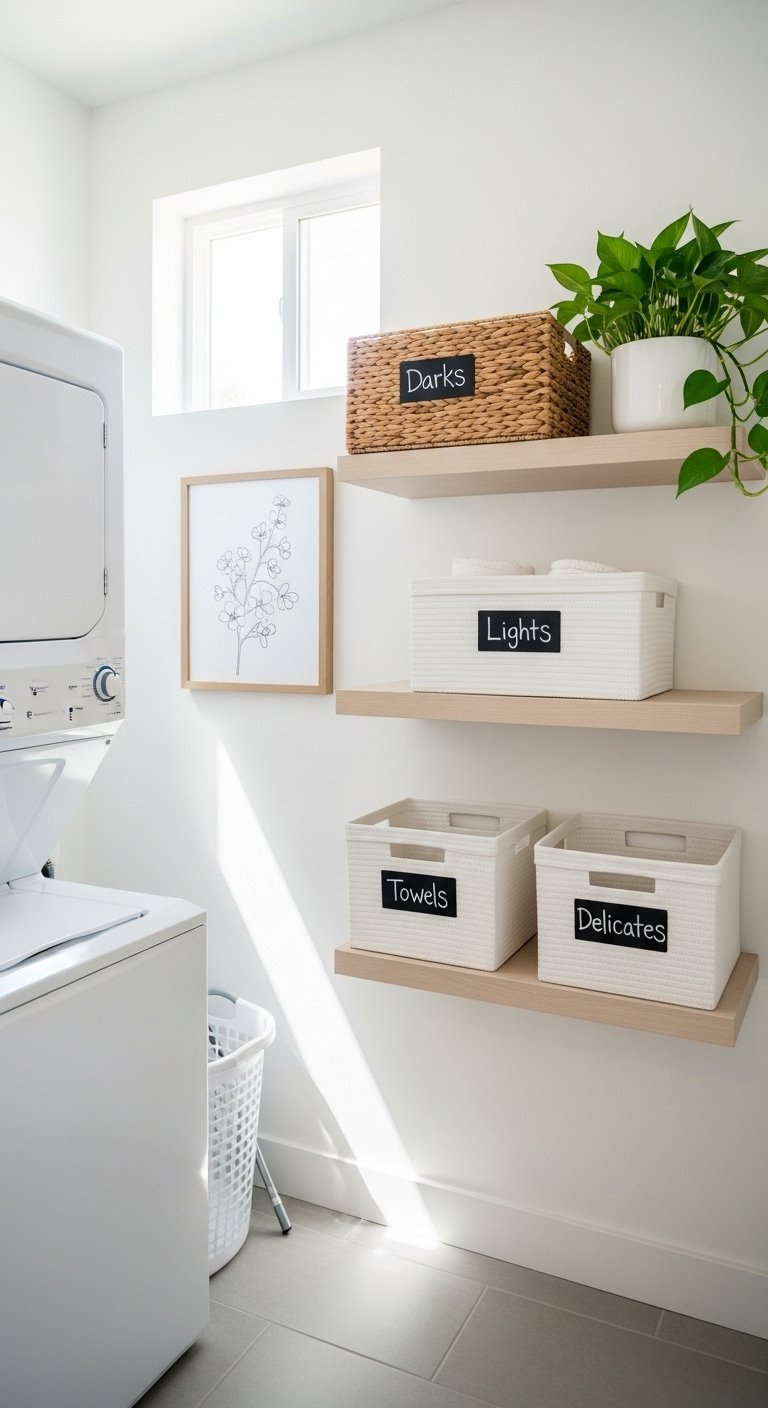
The laundry room is one of the most neglected rooms in a home from a decorating perspective, which is a shame because it is also one of the most heavily used rooms. Adding simple organization and a few aesthetic touches to a laundry room changes daily chore experience in ways that are real and cumulative. Start by organizing supplies in matching containers or baskets on a shelf above the washer and dryer. Label them clearly with a chalk marker or a simple printed label.
Paint the walls if they have never been painted or have been painted a forgettable color. A warm white, a soft sage, or even a cheerful deep color works in a small laundry room because the paint cost and time investment are minimal. Add a framed print, a small plant on a shelf, and a hook for the ironing board and fabric bags. A laundry room that looks cared for makes the work that happens in it feel slightly less tedious, which is a worthwhile trade for an afternoon of effort.
19. Home Office Styling
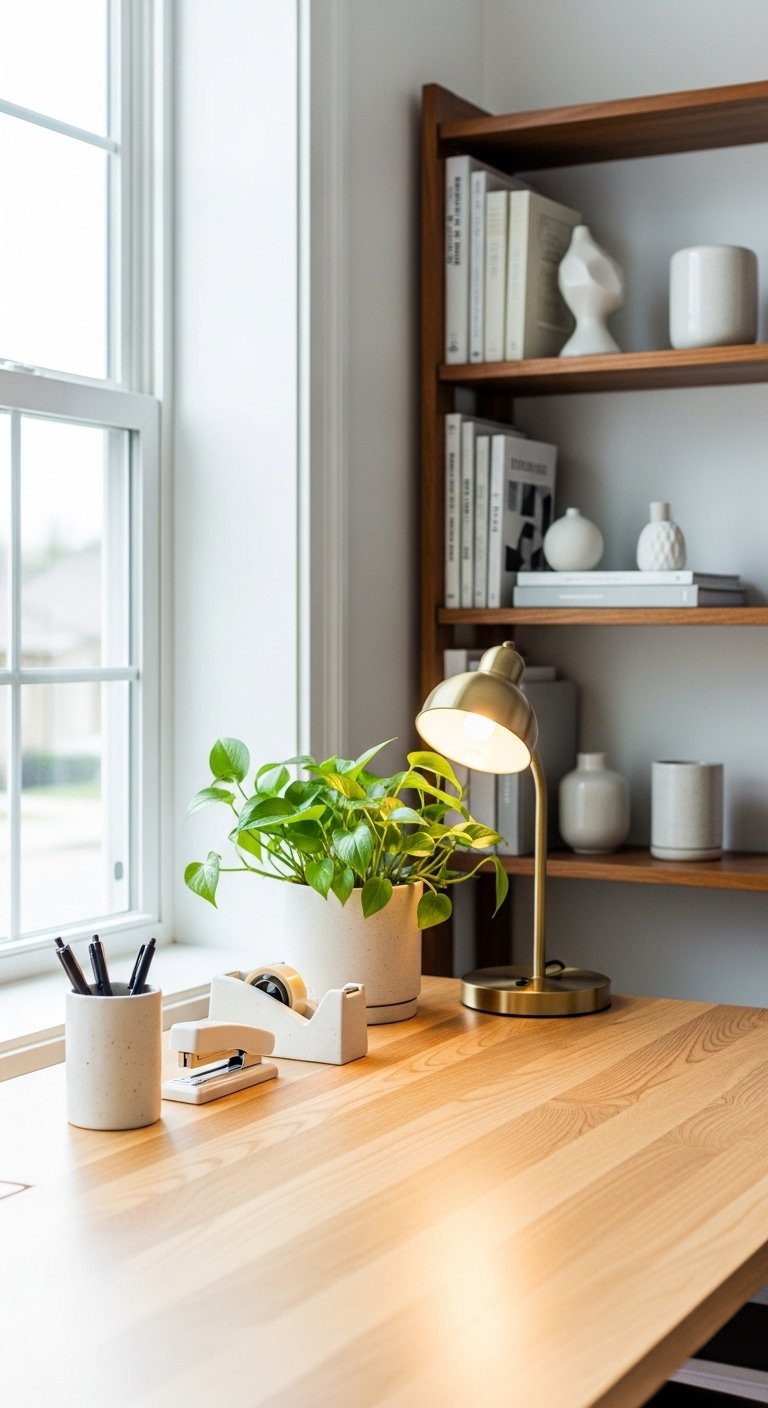
A home office that looks good is easier to work in than one that does not, and the changes that make the biggest difference in a home office are about organization and visual calm rather than expensive furniture. A clean, uncluttered desk surface allows for more focused work. Coordinating desk accessories, a ceramic pen holder, a matching stapler and tape dispenser, a neutral mouse pad, all in the same finish or color family, give the workspace a polished quality that improves daily.
Position the desk to face a window if possible for natural light, or face a wall that has something worth looking at: a piece of art, a well-styled shelf, or a small plant grouping. A comfortable, supportive chair is worth investing in more than almost any other home office element because it affects your physical comfort and focus during every work session. A floor plant in the corner and a desk lamp with warm light complete the picture of a workspace that is both functional and pleasant to spend time in.
20. Mudroom Organization
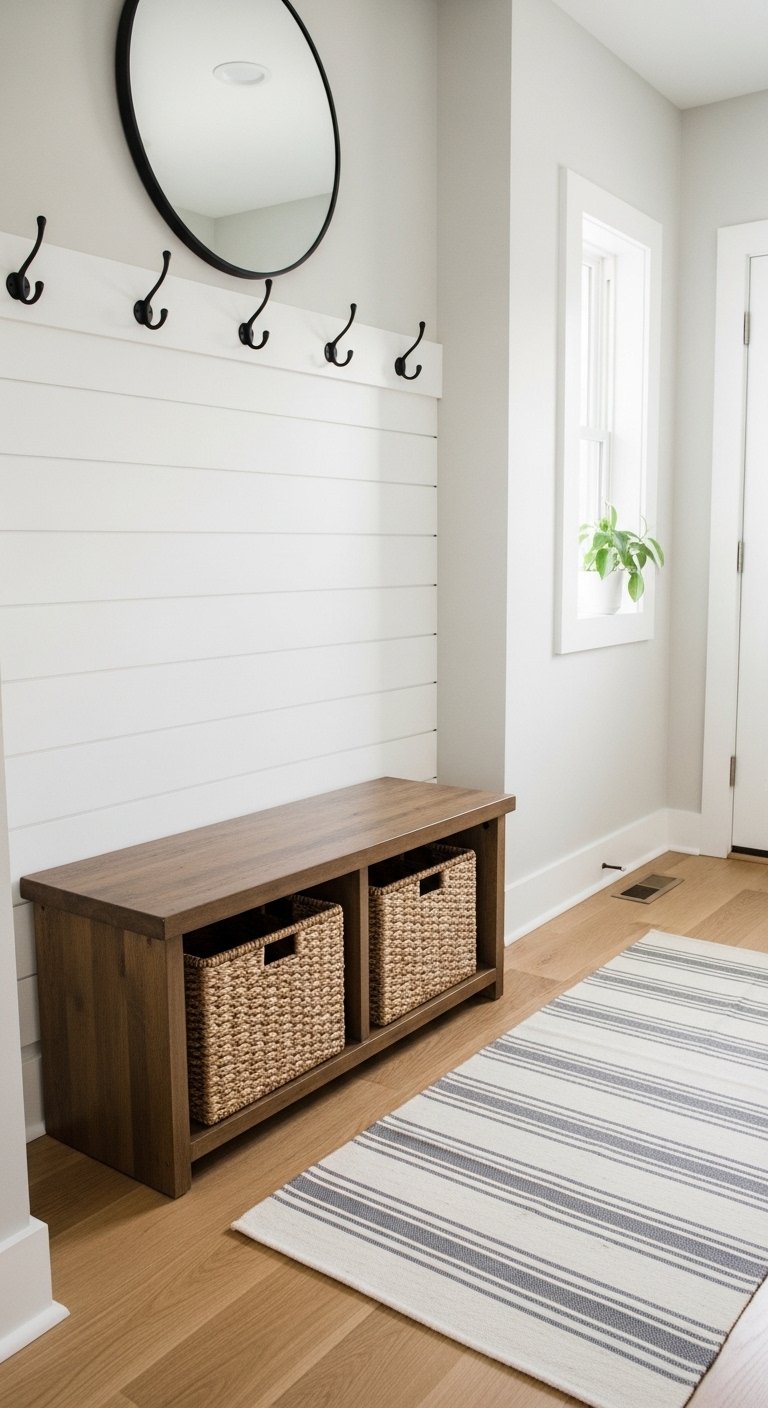
A mudroom or an entryway storage area that is genuinely organized stops the spread of clutter into the rest of the house more effectively than any other organizing intervention. The basic system needs four things: hooks for bags and coats at an accessible height, a bench or seat for putting on and taking off shoes, a bin or tray for shoes below the bench, and a place for mail, keys, and small daily items near the door.
The aesthetic part comes from making these functional elements look coordinated. Hooks in matching finishes, baskets of the same material for shoes and seasonal items, a small framed mirror or print above the bench, and a runner or mat that defines the space all work together to make the mudroom feel designed rather than just equipped. Seasonal rotations, swapping out winter boot bins for spring umbrella storage, keep the space organized and relevant throughout the year.
21. Outdoor Patio Refresh
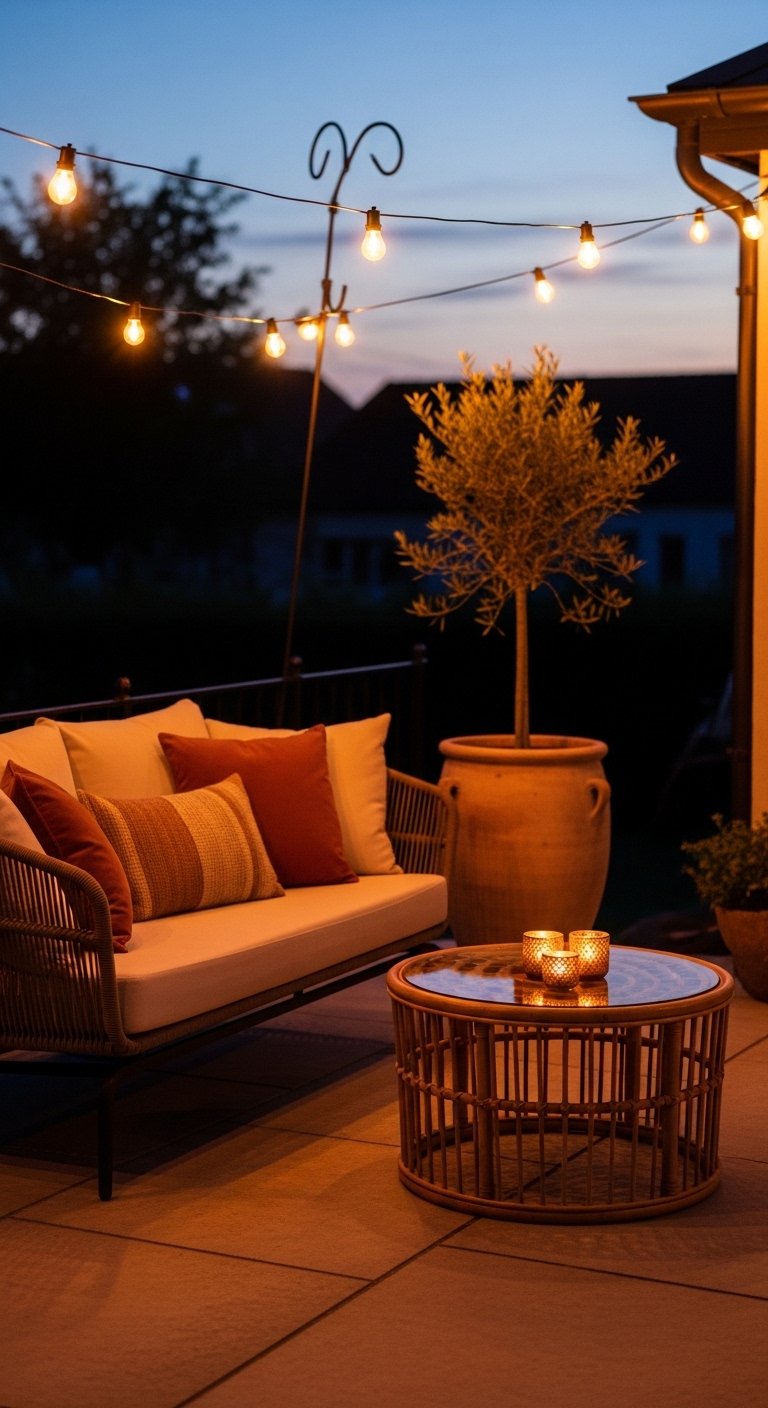
An outdoor patio or balcony that is treated like a real room rather than just an outside storage area becomes one of the most-used spaces in the home during warm months. The key is bringing the same attention to comfort and aesthetics that you would give an interior room. A weather-resistant outdoor rug defines the seating area and adds color and pattern. Outdoor cushions in UV-resistant fabric make seating genuinely comfortable rather than just usable.
String lights hung along a pergola, fence, or draped between two hooks are the single most transformative evening addition to an outdoor space. The warm glow changes the entire atmosphere of the patio after dark and extends the usable hours of the space significantly. Add a side table for drinks and a few outdoor plants in pots to complete the picture. Even a very small balcony with a single chair, a side table, a plant, and string lights above becomes a genuinely inviting outdoor destination.
22. Hallway Makeover
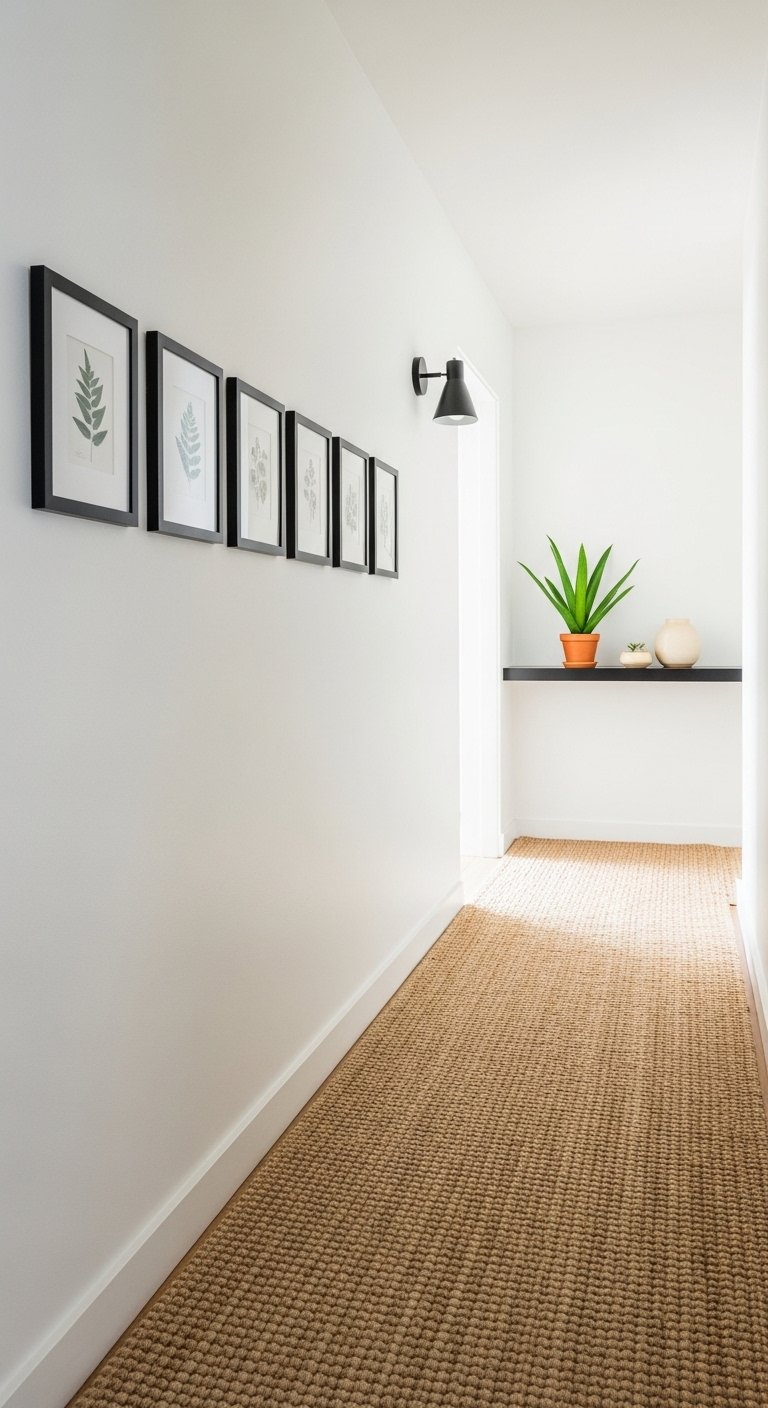
Hallways are often treated as purely transitional spaces with no decorating attention given to them at all, which means they frequently look like the least-finished parts of a home. A few targeted changes make a dramatic difference. A runner rug along the length of the hallway adds warmth and color and reduces noise. A series of framed prints hung in a consistent line at eye level gives the wall something to say.
If the hallway is very narrow, keep the wall art tight and vertical rather than wide and horizontal. A single row of matching small frames hung at the same height with consistent spacing looks clean and intentional. A wall-mounted shelf at one end for a plant and a small decorative object adds a moment of visual interest that makes reaching the end of the hallway feel worthwhile. Good lighting is essential in hallways since they often lack natural light: a sconce or two mounted on the walls is more effective and space-efficient than a floor lamp.
23. Fireplace Mantel Styling
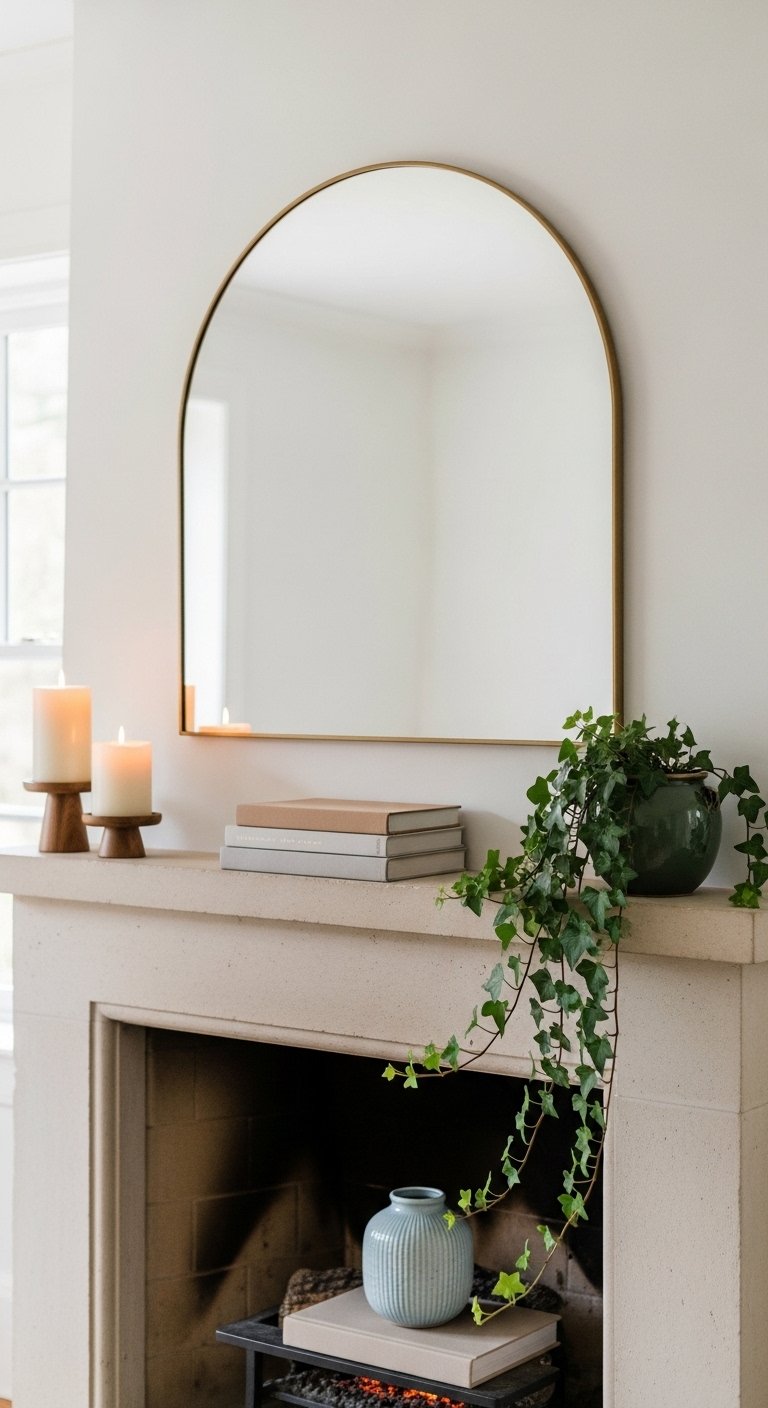
The fireplace mantel is one of the most naturally focal wall positions in a home, and styling it well has a cascading effect on how the whole living room reads. The classic approach is to build the arrangement around a central vertical element: a large mirror, an oversized piece of art, or a tall architectural object. Everything else on the mantel relates to that center piece by framing it, echoing it, or responding to it.
The objects on a mantel should vary in height and material but stay within a cohesive palette. A pair of candles on one side, a plant on the other, a small ceramic piece in the center front, and a stack of books flat against the wall with an object on top is a classic arrangement that works reliably. Edit the mantel seasonally to keep it feeling fresh: a wreath and greenery in winter, a simple branch of spring blossoms, dried grasses in late summer. The mantel that changes with the season always feels more alive than the one that stays the same all year.
24. Kids Room Update
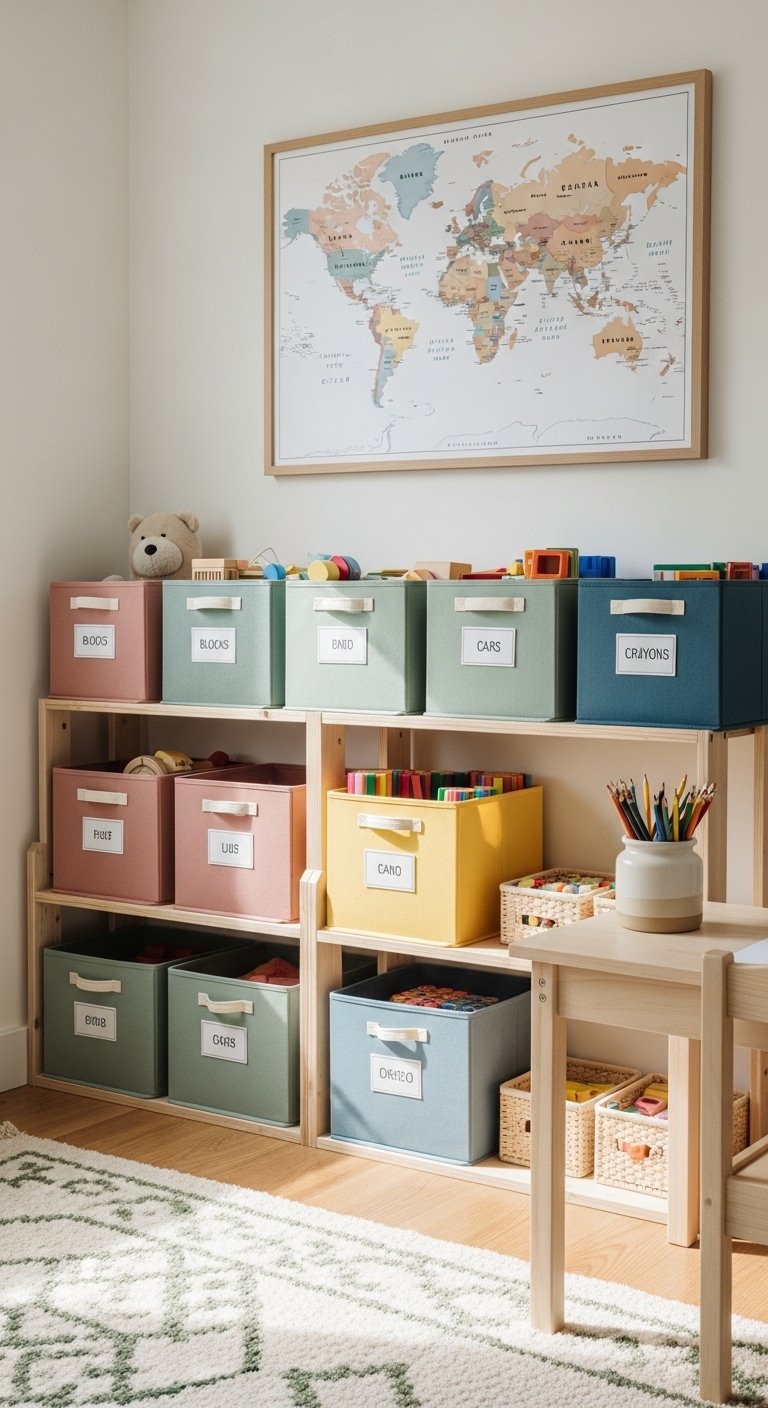
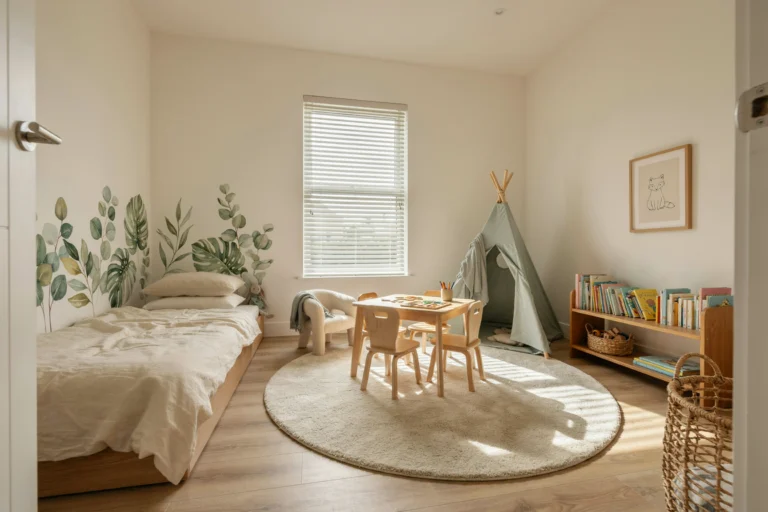
A child’s room benefits from the same decorating principles as any other room: good lighting, clear organization, and enough visual calm that the space feels restful for sleep while still being engaging and personal for play. The most useful single upgrade in most children’s rooms is a proper organization system for toys, books, and supplies that the child can actually use independently. Open bins, low shelves, and labeled baskets keep the floor clear and reduce the daily cleanup friction significantly.
Wall decor in a child’s room should reflect the child’s actual interests rather than generic nursery prints. Framing artwork that the child has made themselves is both decorative and meaningful. A world map, a poster of their favorite animals, a chalkboard wall panel for drawing, these are all personal and engaging. Keep the main color palette calm enough for sleep, using bolder colors as accents in the decor rather than the wall paint. A children’s room that balances function, personal identity, and calm is a genuinely good space to grow up in.
25. Ceiling Color
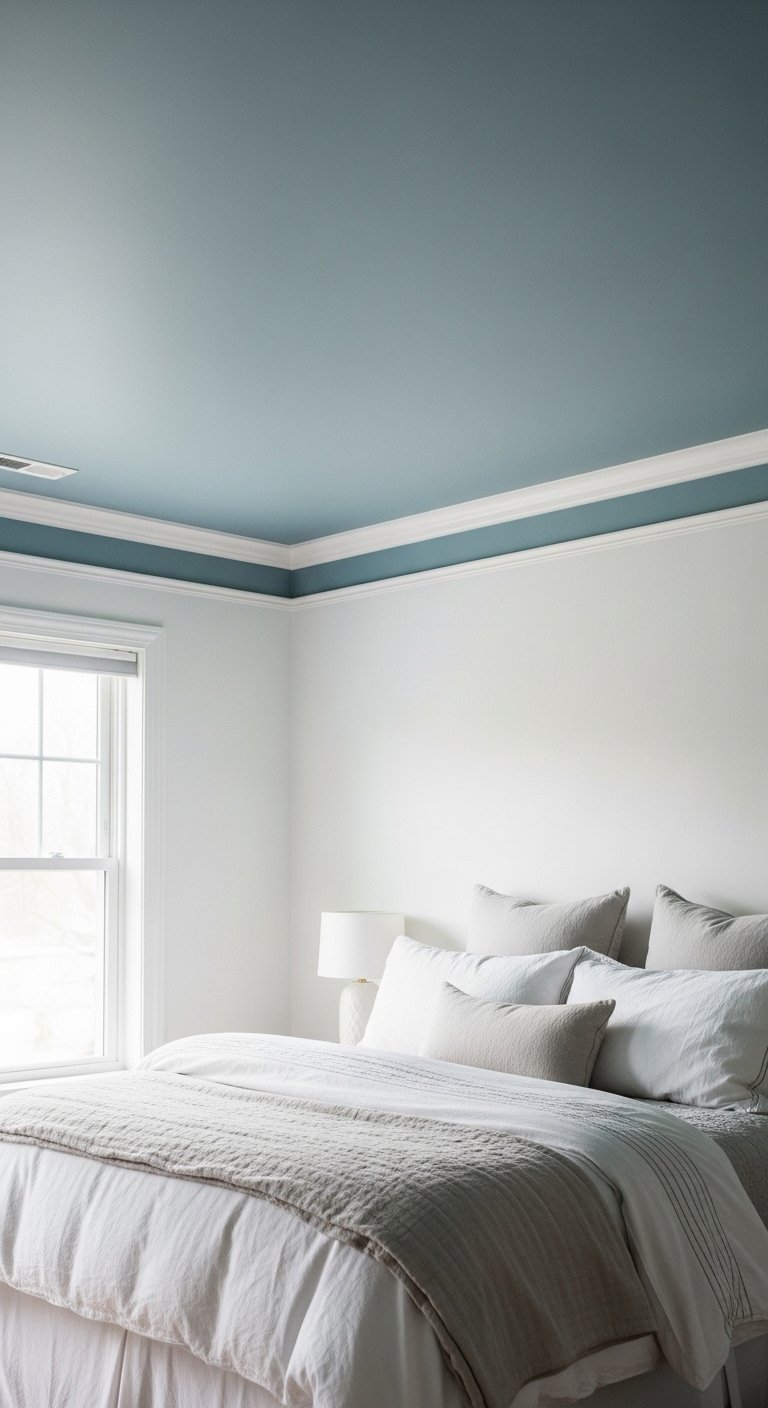
Painting the ceiling a color other than white is a technique that interior designers use to add architectural interest and a sense of depth to a room without changing a single piece of furniture or decor. The most common approach is to paint the ceiling two or three shades darker than the wall color, which makes the room feel like a jewel box: intimate, cocooning, and sophisticated. In a bedroom, this deepens the sense of enclosure that makes for good sleep. In a living room, it makes the space feel more dramatic and considered.
A softer version of this idea is to paint the ceiling the same color as the walls in a deep, saturated tone and only leave the trim white. This creates a continuous color envelope that is especially effective in small rooms because it removes the visual boundary between wall and ceiling that can make a low-ceilinged room feel smaller. Sky blue on a bedroom ceiling is a classic that creates a light, airy feeling without fully committing to a non-white ceiling. Whatever color you choose, using the same brand and finish as the walls ensures the colors read as cohesive when viewed together.
26. Herb Wall in Kitchen
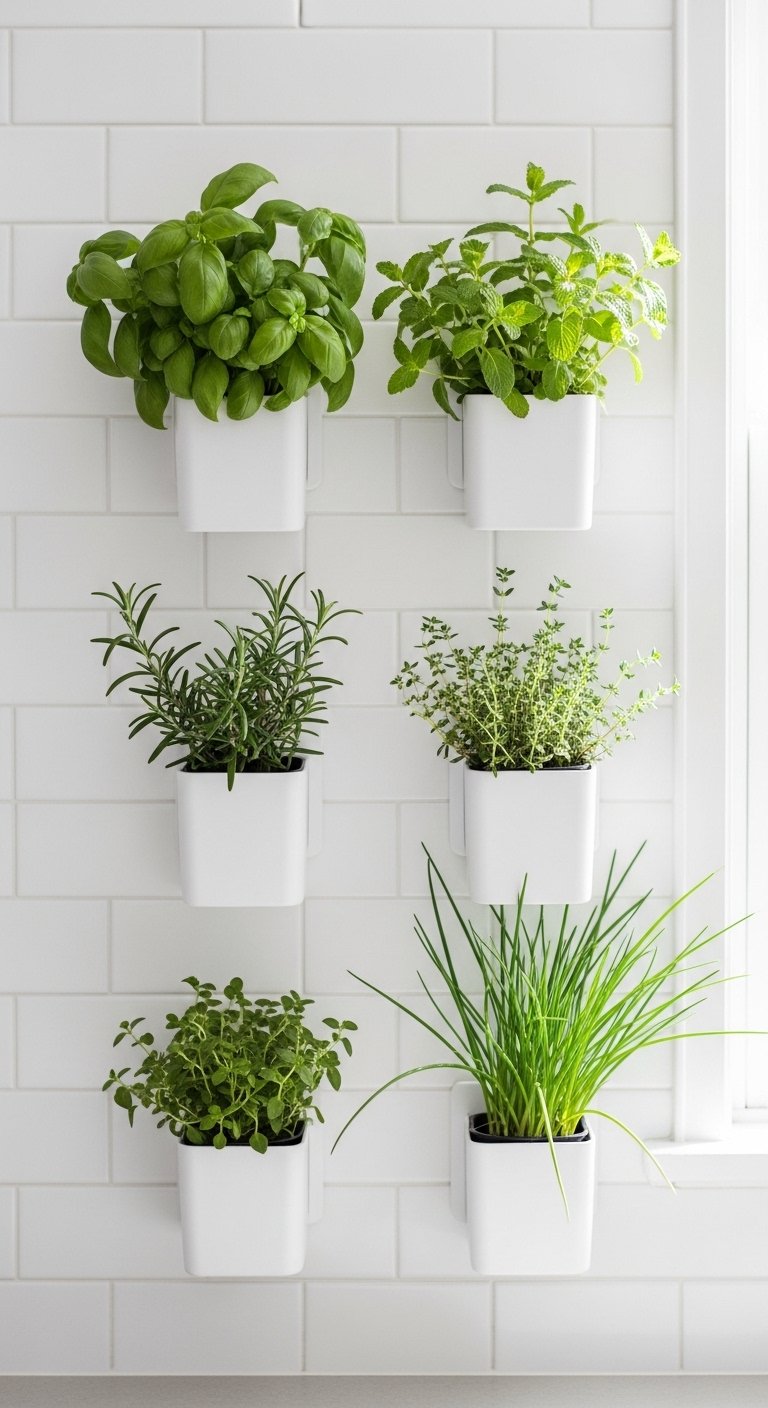
A small wall-mounted herb garden in a kitchen is both functional and beautiful, and it takes up almost no counter or floor space. Mounted planters or small wall-hung wooden frames with individual pot holders allow you to grow a selection of herbs directly on the kitchen wall near a window. Basil, mint, rosemary, thyme, chives, and parsley are the most practical choices for kitchen use.
The visual effect of a herb wall is immediate and organic. The green of living plants against a white or neutral kitchen wall has a freshness that no art print can replicate, and the herbs themselves change and grow over time. Use matching planters for a clean look or mix terracotta and ceramic for a more eclectic feel. Position the wall garden close enough to your cooking workspace that you can actually reach it while cooking. A kitchen that smells like fresh herbs and has living plants on the wall is a genuinely pleasant place to spend time.
27. Textured Throw Pillows
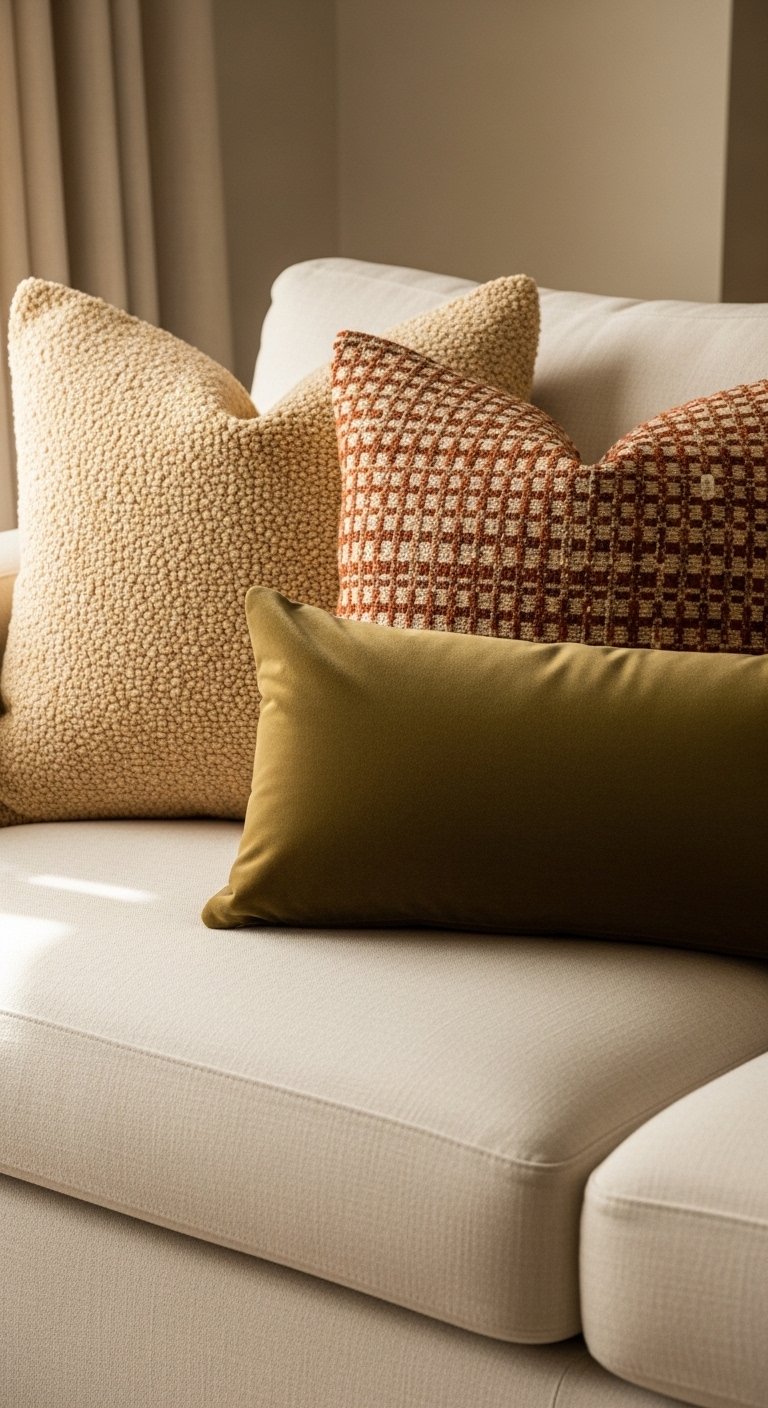
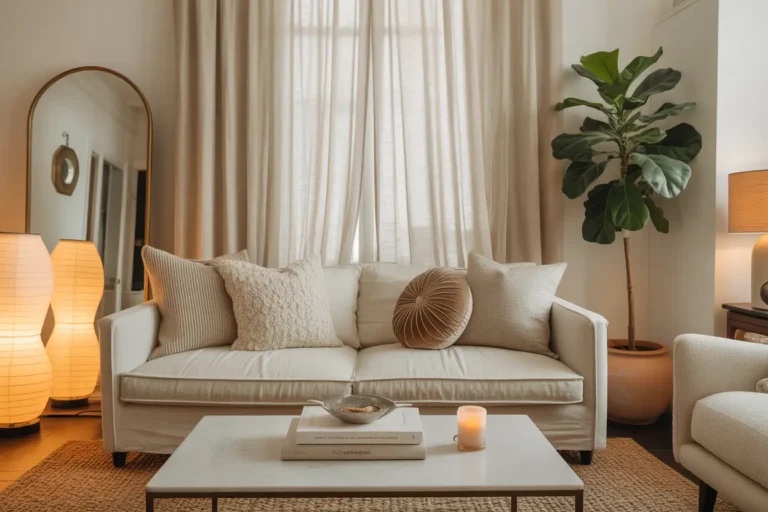
Textured throw pillows are among the most cost-effective ways to update the look of a living room or bedroom because they change the perceived quality of the furniture they sit on. A sofa that looks dated or plain immediately reads as more curated when it has two or three pillows in interesting textures: a boucle in cream, a woven cotton in natural and rust, a velvet in deep olive or midnight blue.
The most effective pillow arrangements mix textures within a consistent color palette rather than mixing colors across plain textures. Three pillows in the same color family but different materials look far more intentional than three different colors all in plain cotton. Vary the sizes as well: one larger square behind and one smaller rectangle or lumbar in front gives a more layered, considered look than all pillows being the same size. Seasonally rotating the pillows, lighter linens for summer, heavier velvets for winter, keeps the room feeling current without any major change in color scheme.
28. Vintage Finds Integration
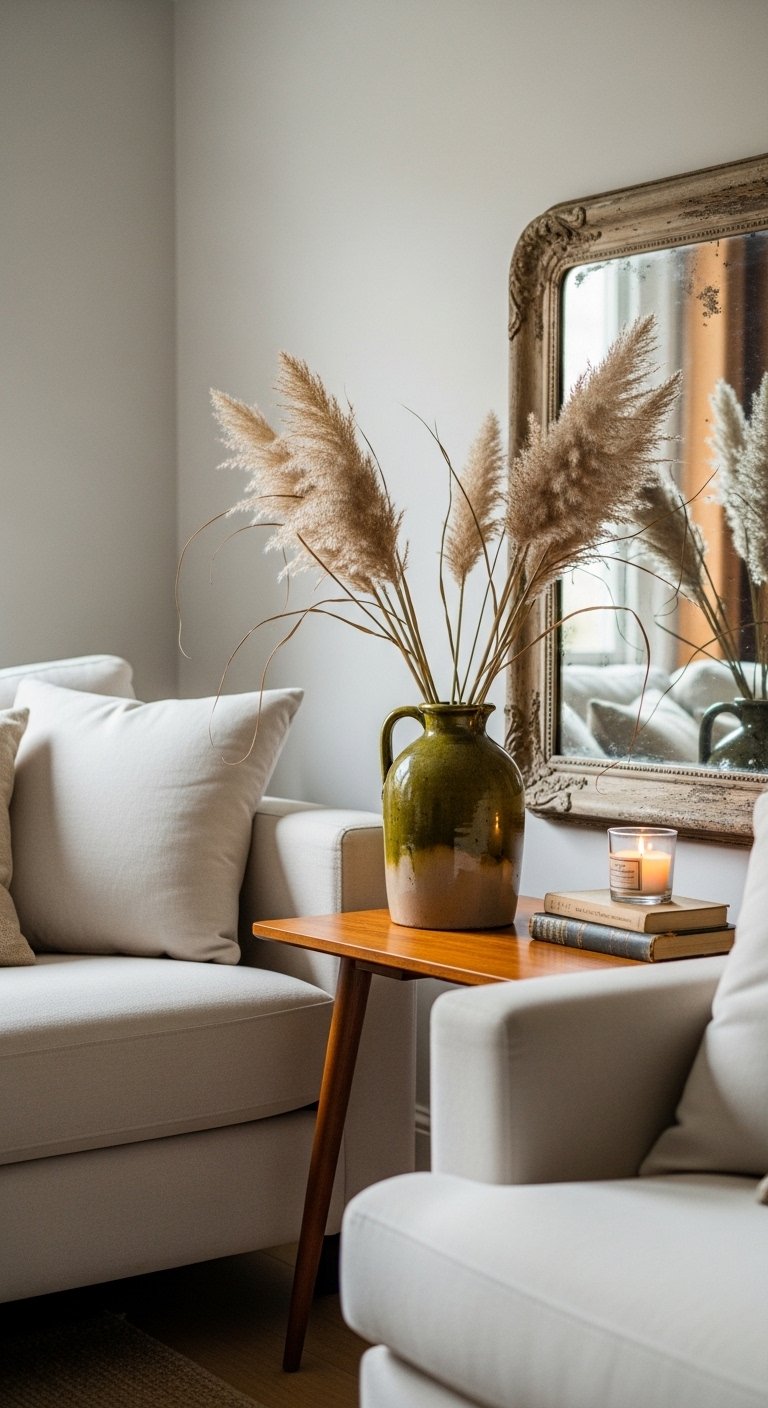
Mixing a few genuinely vintage pieces into a modern home is one of the most effective ways to give a space personality that purely contemporary furniture cannot provide. The vintage piece does not need to be perfect or pristine. A slightly worn antique mirror, a mid-century side table with a different base than what is currently popular, a ceramic jug with an interesting glaze, a small oil painting with no particular provenance: these objects carry a history and a handmade quality that new mass-produced items do not.
The rule for integrating vintage successfully is that the vintage piece should feel intentional rather than forgotten. Style it in a considered way: the antique mirror above a clean-lined console table. The mid-century side table paired with a modern sofa. The ceramic jug holding dried pampas in a minimalist corner. The contrast between old and new is what creates visual interest. A room with nothing but new furniture has no story. A room with a few well-chosen old pieces mixed in has texture, history, and a sense that someone thoughtful lives there.
29. Fabric Storage Baskets
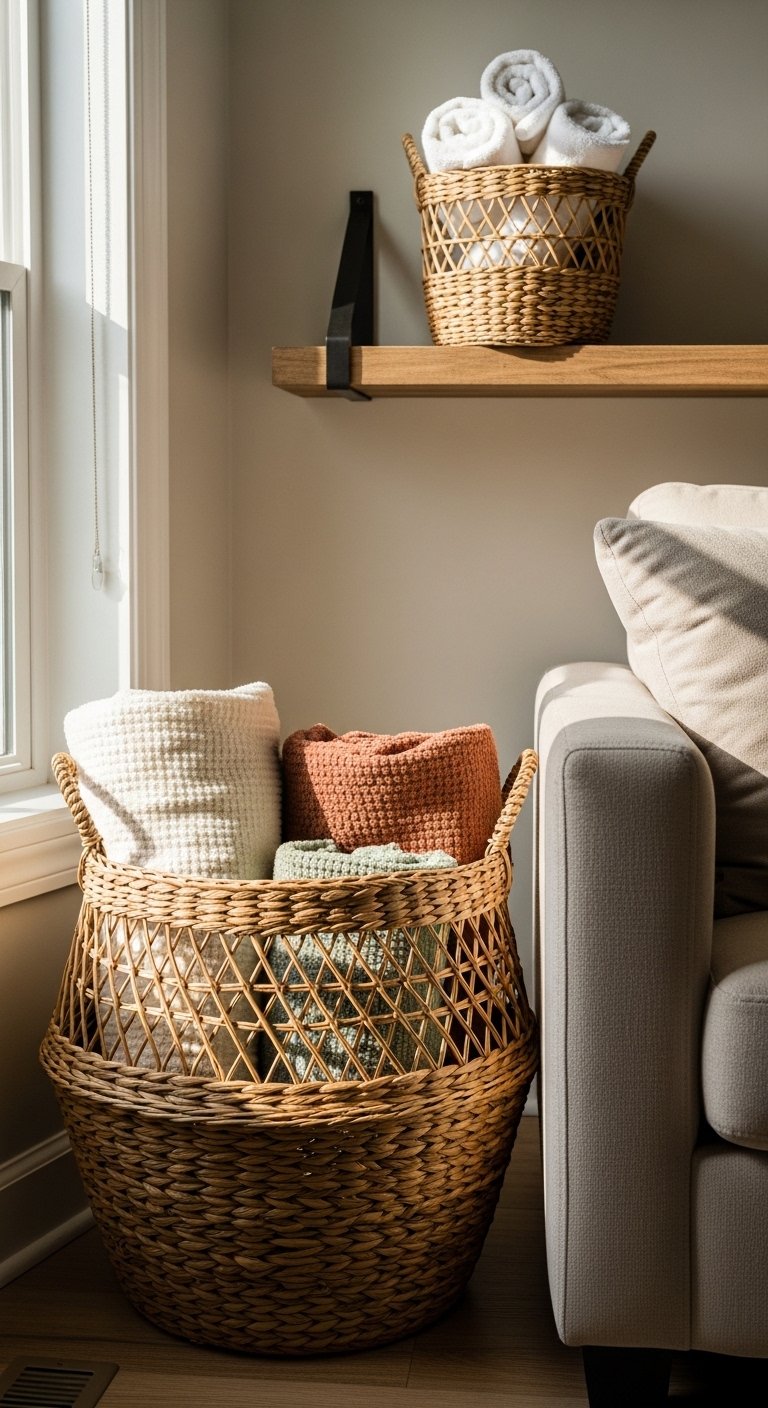
Storage baskets that look good are one of the most practical home decor investments available because they solve a real problem while also improving the appearance of the room. Open-weave baskets in natural materials like seagrass, jute, rattan, and water hyacinth conceal clutter in living rooms, bedrooms, bathrooms, and children’s rooms while adding organic texture that suits almost every decorating style.
In a living room, a large basket beside the sofa for blankets keeps the room looking tidy without requiring them to be folded and put away. In a bathroom, a basket of rolled towels on a shelf makes the room look more like a hotel. In a children’s room, low open baskets that kids can access themselves make toy cleanup independent and achievable. In a bedroom, a basket under the vanity or beside the dresser for laundry keeps the floor clear. Size the baskets to actually fit what goes in them, and choose a material and color that coordinate with the rest of the room’s palette.
30. Seasonal Decor Rotation
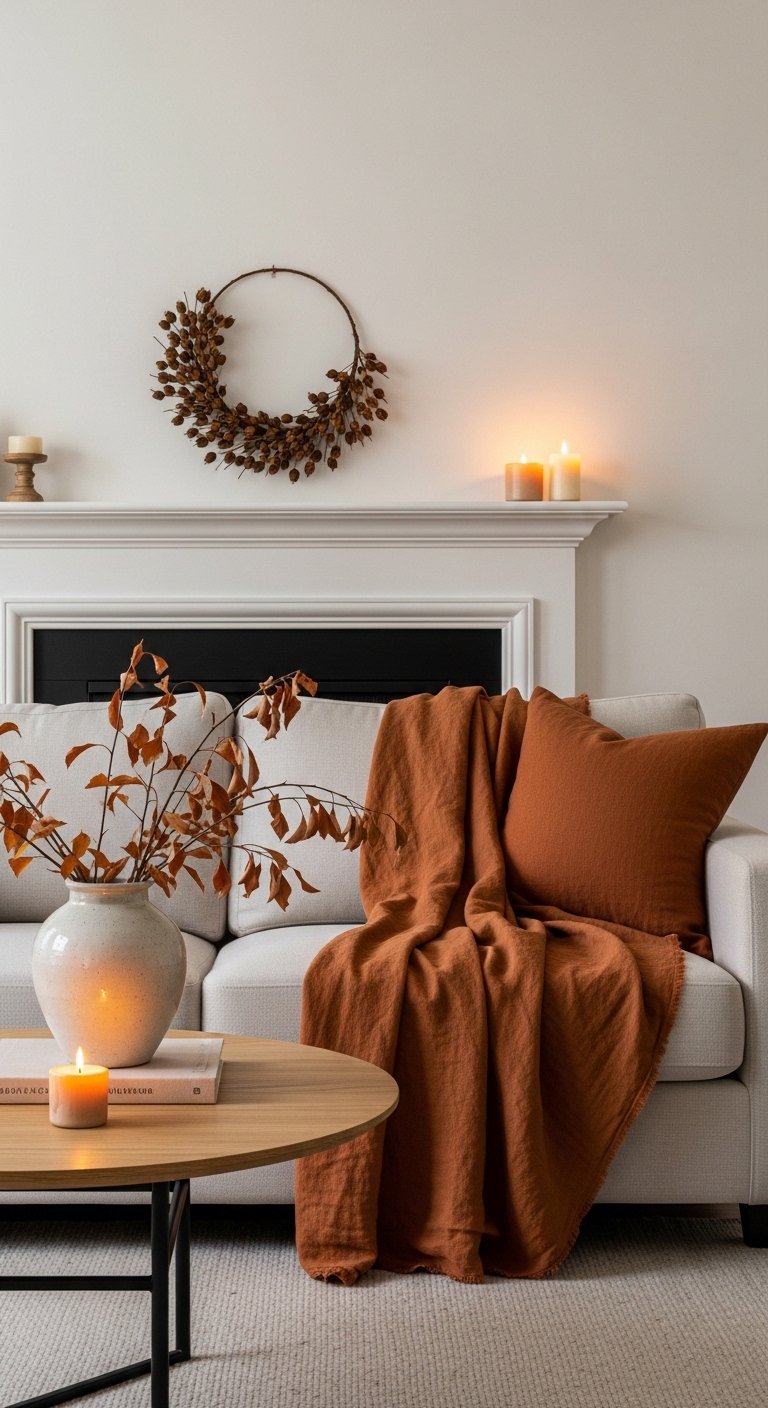
The homes that always feel fresh and alive are usually the ones where the decor is updated seasonally rather than remaining static year-round. Seasonal rotation does not mean buying all new things four times a year. It means having a small collection of interchangeable elements that you cycle through: a winter candle scent that gives way to a spring floral; autumn-toned throw pillows that come out in October and are replaced by light linens in April; a wreath on the front door that changes with the season; a vase of seasonal branches or flowers that marks where the year is.
The practical approach is to store off-season decor in labeled bins or boxes so that rotating is genuinely easy rather than a major undertaking. Keep the seasonal collection small enough to store without frustration: five to ten pieces per season is usually enough to make the home feel changed. Seasonal decor rotation connects the home to the actual rhythm of the year and creates a sense of anticipation each season that makes familiar spaces feel renewed.
Conclusion
Refreshing a home does not require a renovation budget or a full weekend commitment. It requires attention: to what a room looks like, to how it feels to be in, and to what small changes would make the biggest difference. Pick the rooms that bother you most, try one idea from this list in each one, and notice what happens. The best home decor is the kind that makes daily life feel a little bit better, and that is completely achievable at any budget and in any home.