21 Kitchen Organization Ideas Under $100 That Change Everything
Kitchen organization does not need to be a full weekend project or an expensive overhaul. Some of the most impactful changes you can make take under an hour and cost less than a takeout order. The real problem in most kitchens is not a lack of space but a lack of system. Things get put back in the wrong spot, identical items get bought twice because the first one got buried, and the whole kitchen gradually shifts toward chaos until cooking in it starts to feel like a chore. These 21 ideas give every kind of kitchen item its own proper home without costing much. A few of them are completely free. None of them cost more than a hundred dollars total. Start with whatever feels most disorganized in your kitchen right now and go from there.
1. Lazy Susan Turntable
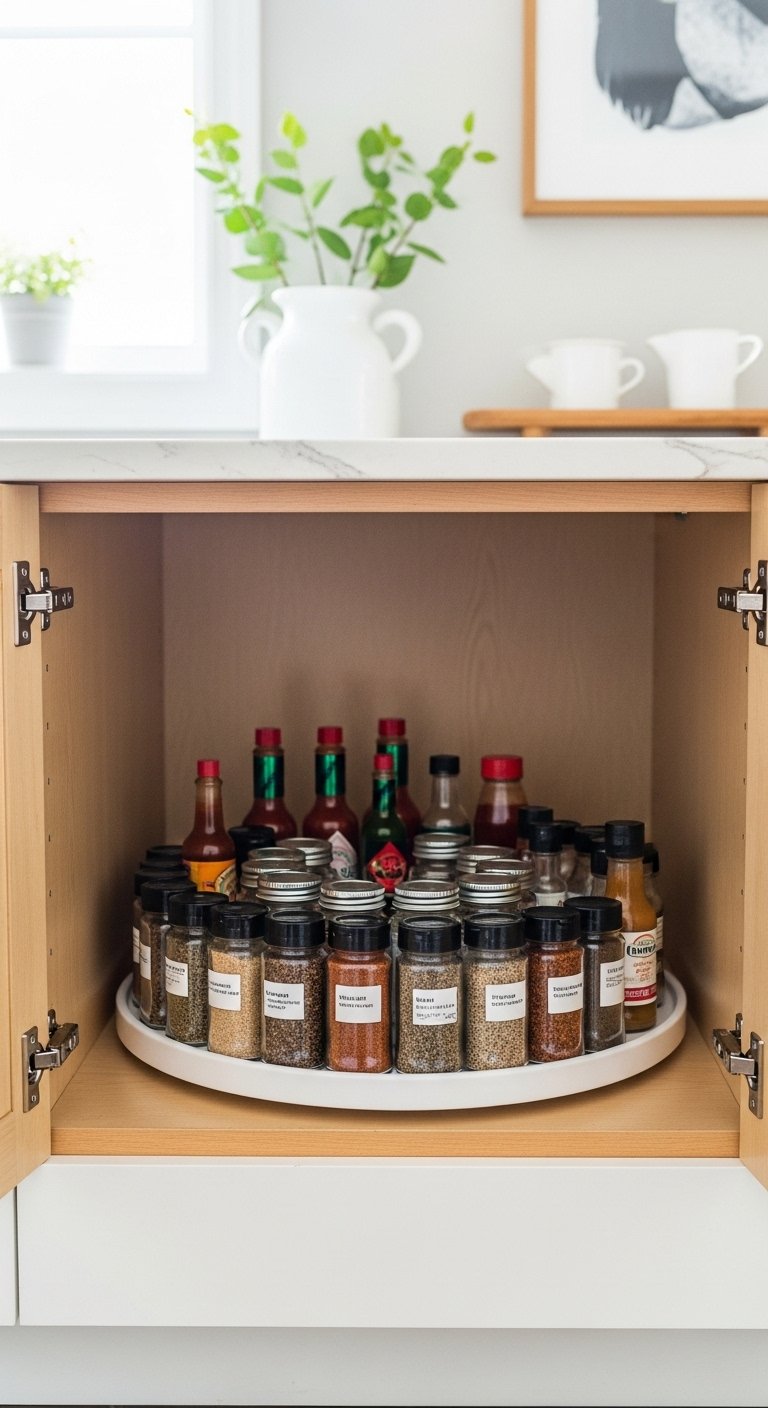
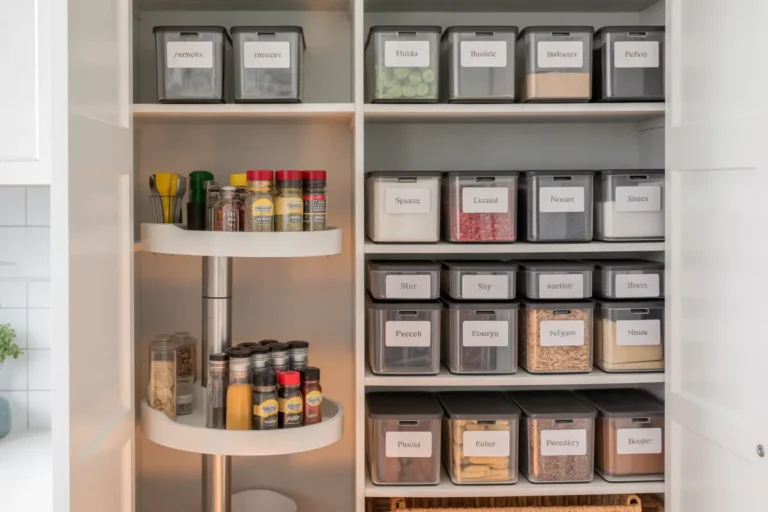
A lazy Susan turntable placed inside a cabinet or on a pantry shelf is one of those small purchases that makes a disproportionate difference in how usable your storage actually is. Instead of having to reach past rows of bottles and jars to get to something at the back, everything on the turntable rotates forward with a simple spin. This works especially well for spices in a deep cabinet, for oils and vinegars, for condiment bottles in the pantry, or for canned goods that tend to get pushed to the back and forgotten. Most lazy Susans are available for under fifteen dollars and come in various diameters to fit different shelf sizes. Measure your shelf depth before buying to make sure the turntable will spin freely without hitting the cabinet door. A two-tiered version gives you even more capacity in the same footprint.
2. Drawer Dividers
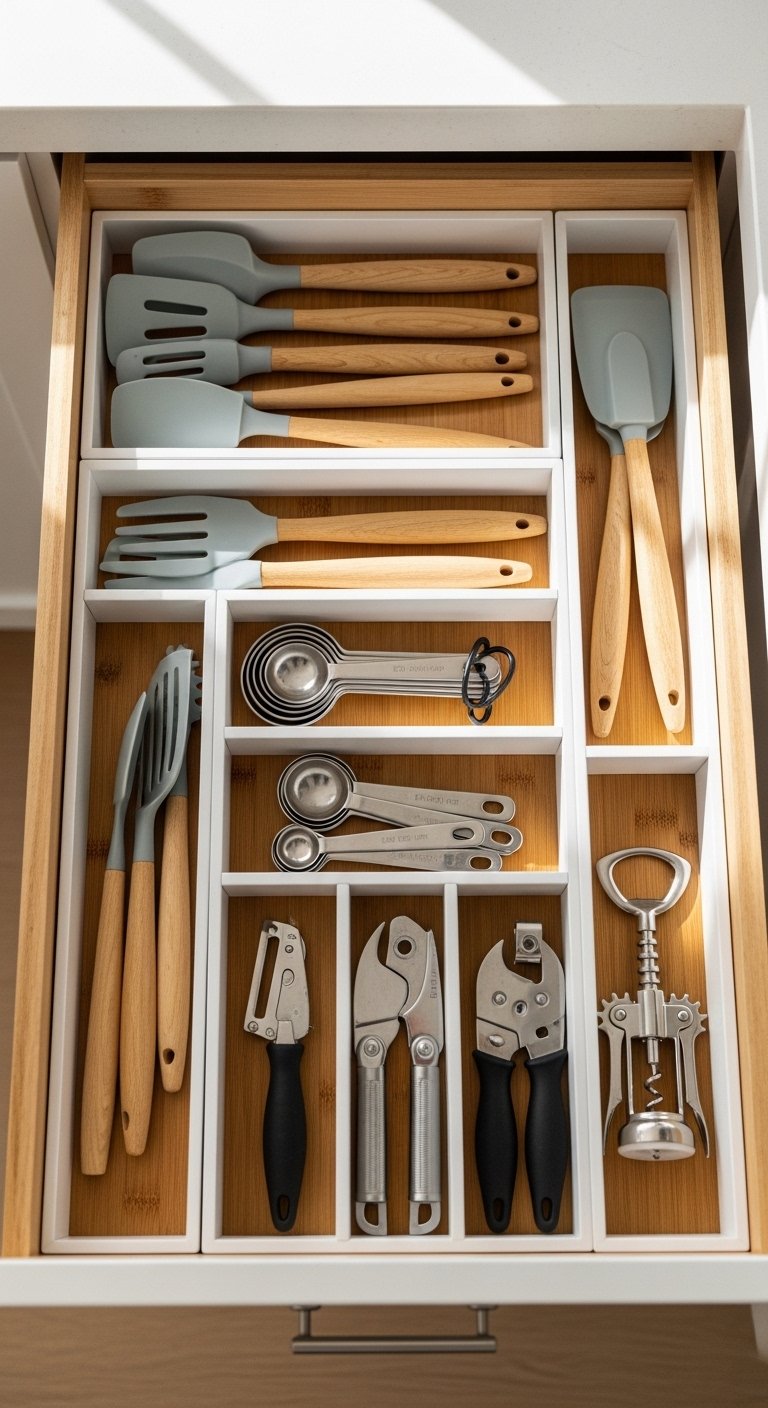
Kitchen drawers, especially the junk drawer and the utensil drawer, tend to become chaotic over time because nothing has a defined spot. Everything slides around when the drawer opens and closes, and finding anything requires rummaging through the whole thing. A set of adjustable drawer dividers that can be configured to fit your specific drawer dimensions fixes this immediately. Most drawer divider sets can be expanded or contracted to fit any standard drawer width without any tools or adhesive. Assign each section a category: large utensils, small utensils, measuring tools, bottle openers, and so on. Once everything has a section, putting things back in the right place becomes the default rather than something you have to think about. Drawer dividers cost between ten and twenty-five dollars for a set and the difference in the drawer is immediate from the first time you open it.
3. Stackable Can Rack
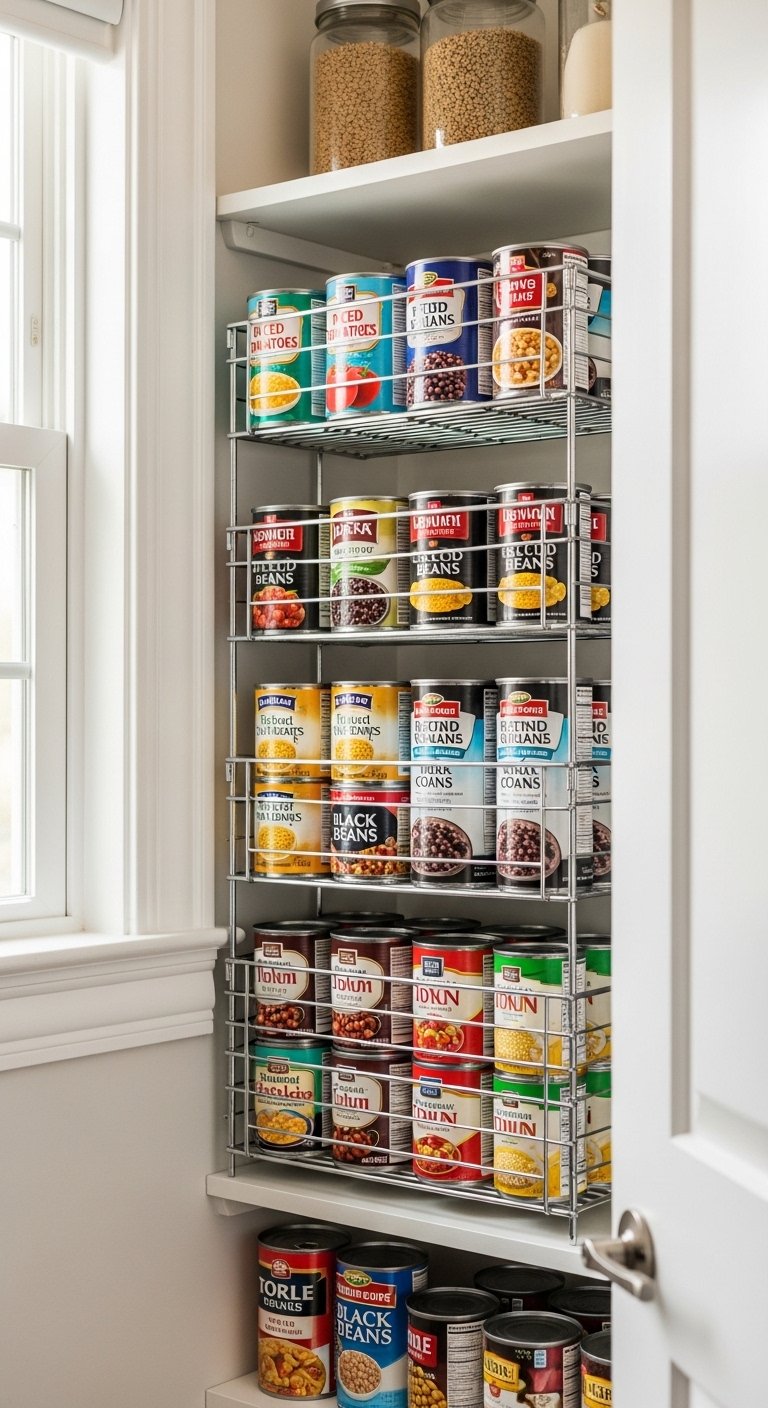
A stackable can organizer or can dispenser placed in the pantry shelf lets you store canned goods in a rotating first-in, first-out system where the oldest cans move forward automatically as you take from the front. This solves two common pantry problems at once: cans piling up in unstable stacks that fall over, and older cans getting forgotten at the back of the shelf until they expire. Most can organizer racks are modular and can be stacked or connected in rows to accommodate however many cans you typically keep on hand. They also free up significant shelf space since cans stored in a rack take up less horizontal area than the same cans arranged in a single flat row. Look for racks made from wire or clear plastic so you can easily see what you have without pulling anything out.
4. Tension Rod Dividers
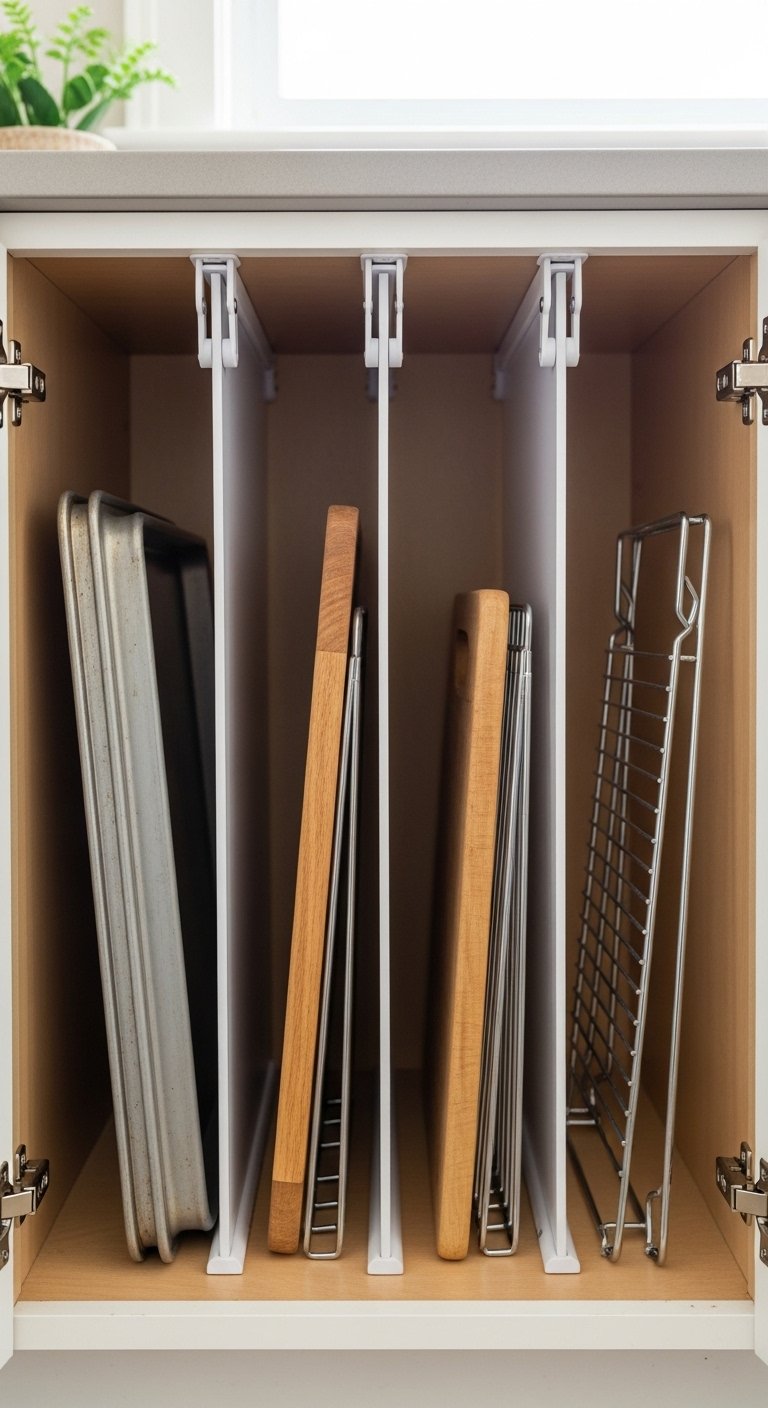
A simple spring-loaded tension rod placed vertically inside a cabinet transforms a single open shelf into two storage zones without any permanent installation. This works especially well in a base cabinet where you want to store baking sheets, cutting boards, and pan lids standing upright rather than stacked flat. Place two or three tension rods vertically across the width of the cabinet to create slots that hold each item separate and easy to grab. The rods stay in place with spring pressure alone and leave no marks on the cabinet interior. This is an excellent solution for renters or anyone who prefers not to install permanent hardware. A pack of tension rods costs under ten dollars and can be repositioned anytime. The same rods also work under the sink cabinet to create a hanging area for spray bottles by their trigger handles.
5. Labeled Pantry Bins
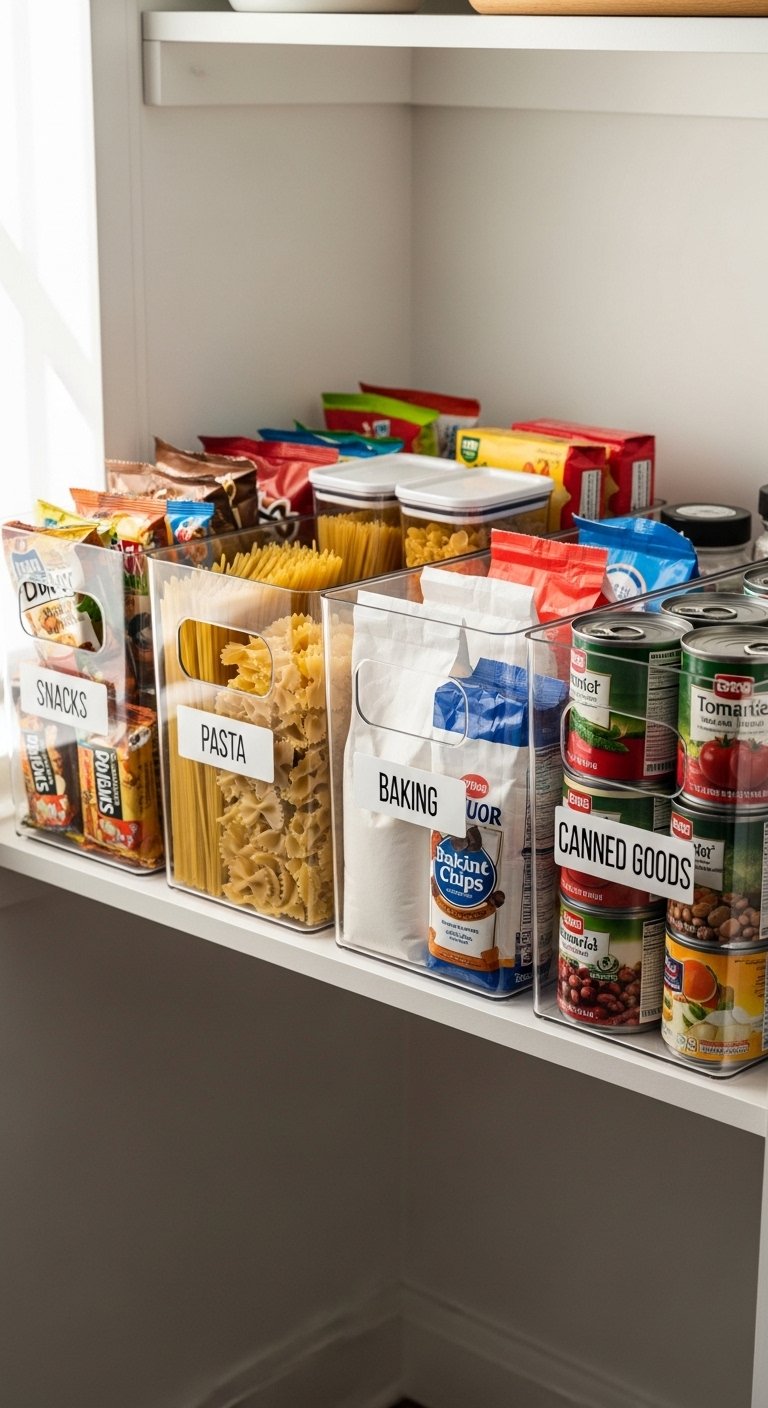
Clear pull-out bins or baskets placed on pantry shelves with labels on the front turn a chaotic pantry into a system that stays organized with almost no effort. Group similar items together into categories like baking supplies, snacks, canned goods, breakfast items, and pasta and grains, then assign a labeled bin to each category. When items have a clearly marked home, they tend to get put back correctly even by other household members who did not set up the system. Clear bins let you see at a glance when something is running low without pulling the bin out. Solid bins with labels give a cleaner, more styled look but require you to open or pull them out to check inventory. A set of four to six clear pull-out pantry bins typically costs between twenty and forty dollars and genuinely changes how a pantry functions on a daily basis.
6. Sink Cabinet Organizer
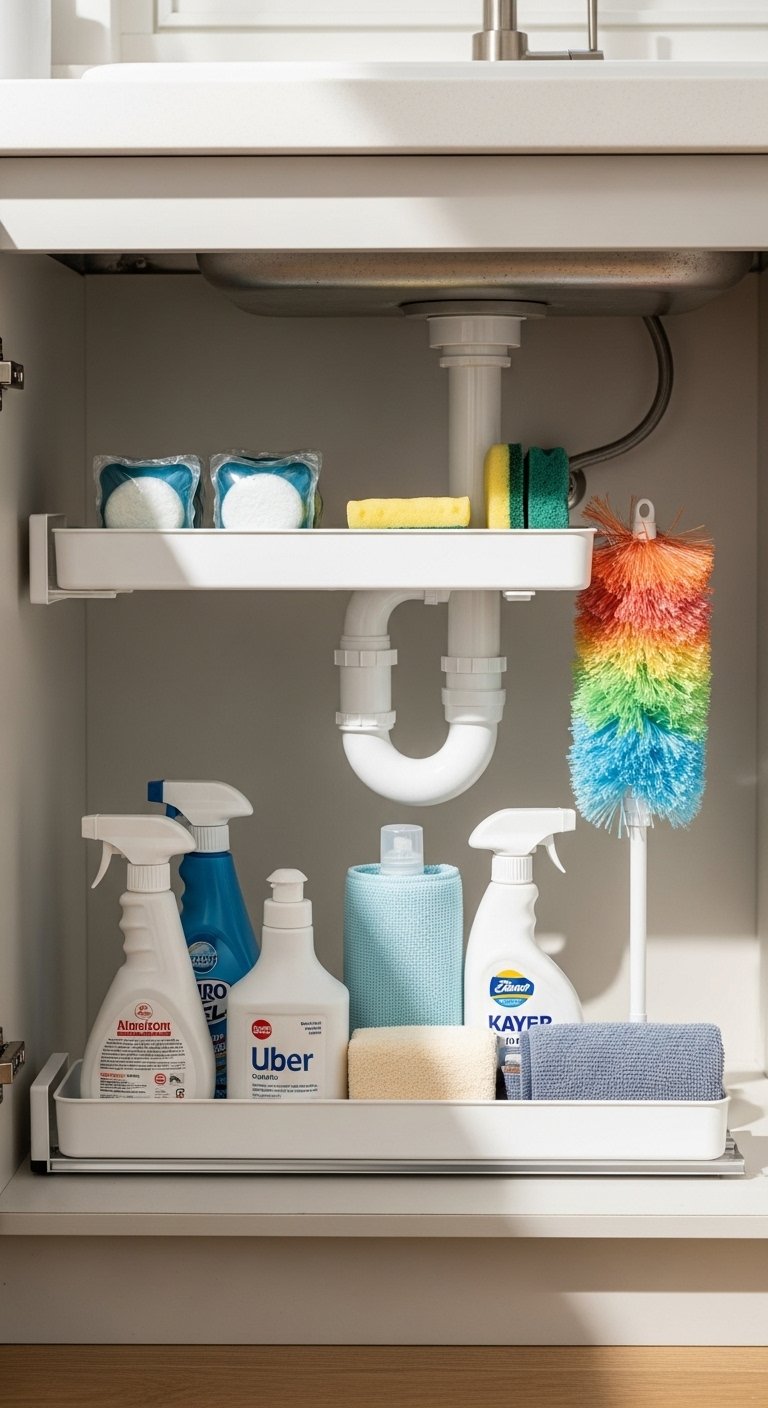
The cabinet under the kitchen sink is one of the most universally disorganized spots in any kitchen. It has to accommodate a drain pipe and often a garbage disposal, which creates awkward dead space that is difficult to use well. An under-sink organizer, specifically designed to work around the plumbing, makes use of this space without fighting the obstacles. Look for a two-tier sliding organizer with an adjustable middle section that accommodates the pipe. This type of organizer typically gives you twice the usable space of the open cabinet by lifting items on the upper tier above the lower items. Use the lower level for bulkier items like large dish soap refills or extra sponge packs, and the upper tier for items you reach for more frequently like hand soap, scrub brushes, and dish pods.
7. Pot Lid Organizer
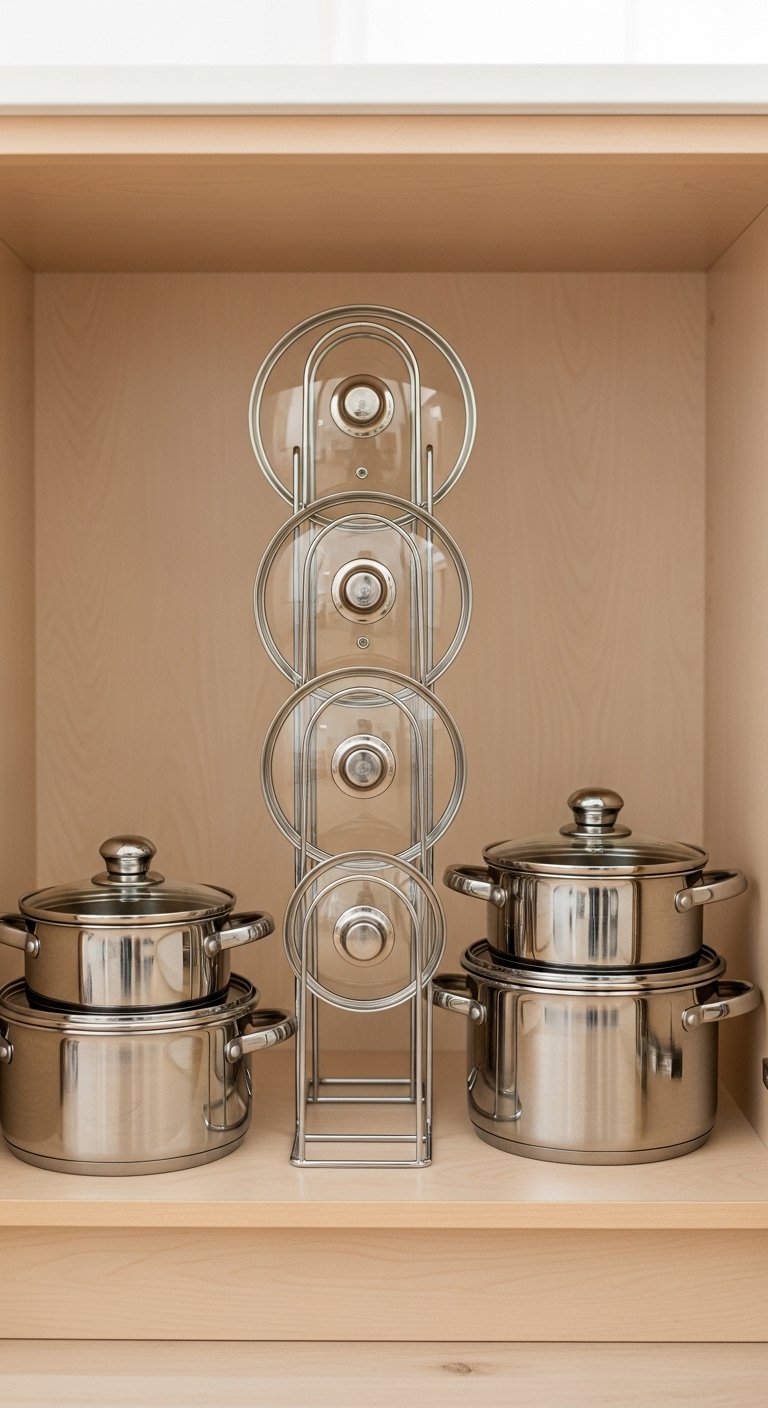
Pot lids are one of the most frustrating things to store in a kitchen because they are not stackable, they fall over when you try to stand them upright, and they take up a huge amount of cabinet space relative to their actual volume. A simple pot lid organizer, either a rack that holds lids upright in slots or a tension rod system inside a cabinet, solves this immediately. A wire lid rack placed inside a base cabinet holds six to eight lids standing vertically in their own slot, completely eliminating the lid avalanche that happens when a single stacked pile shifts. The same cabinet can then hold the matching pots on the shelf below or beside the rack. Pot lid organizers are available for under twenty dollars and install without tools in most base cabinets. Some versions attach to the inside of the cabinet door, which keeps the interior shelf entirely free.
8. Fridge Organization Bins
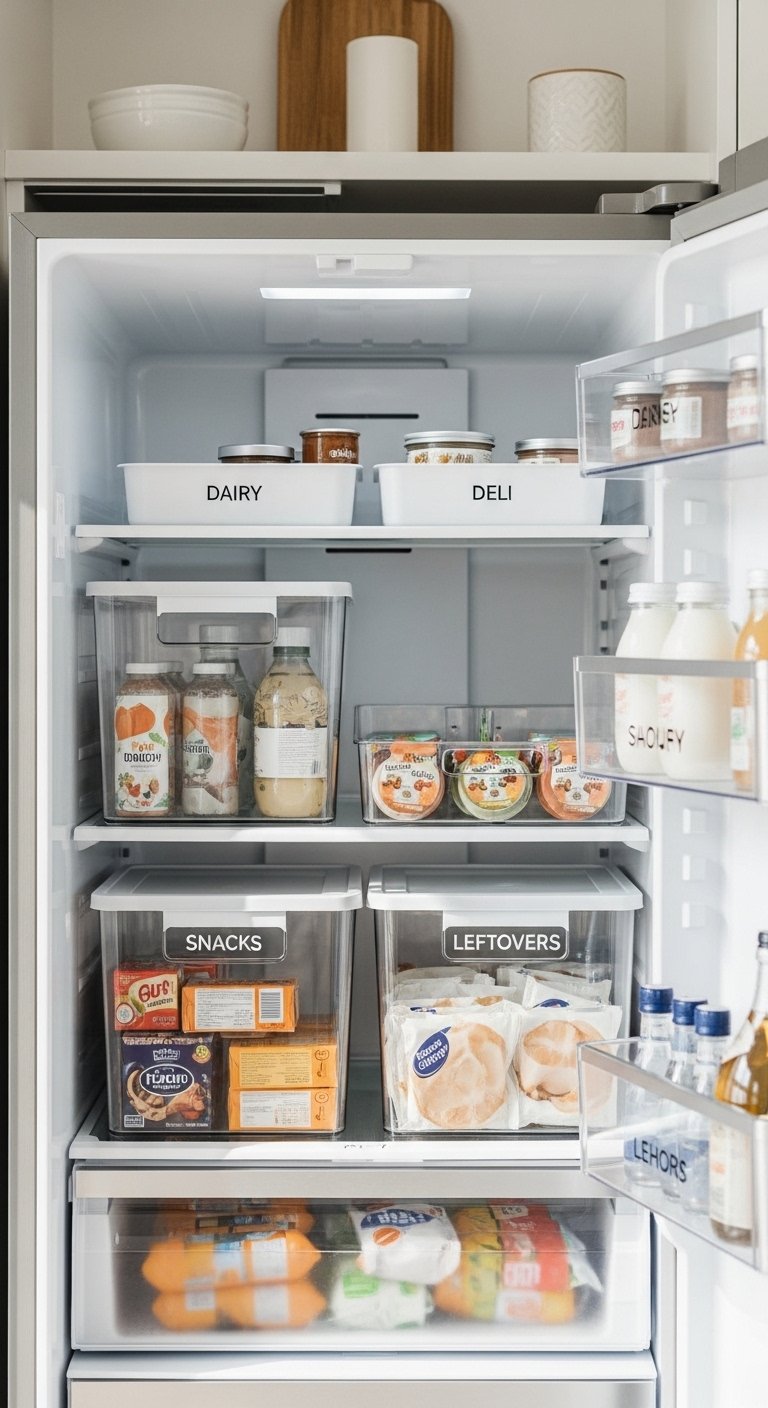
A refrigerator that is not organized tends to waste a surprising amount of food because items get pushed to the back and forgotten until they spoil. Dedicating clear bins to specific zones inside the fridge, one for dairy, one for deli items, one for condiments that do not fit in the door, one for ready-to-eat snacks, creates a simple system that makes everything visible and reachable. Clear bins with open fronts work best because you can slide them out to reach items at the back without removing everything in front. Label the front of each bin so household members know where things belong and where to look when they are looking for something. A set of four to six fridge organizer bins typically costs between twenty and thirty-five dollars and can reduce food waste noticeably within the first few weeks of use.
9. Wall-Mounted Paper Towel
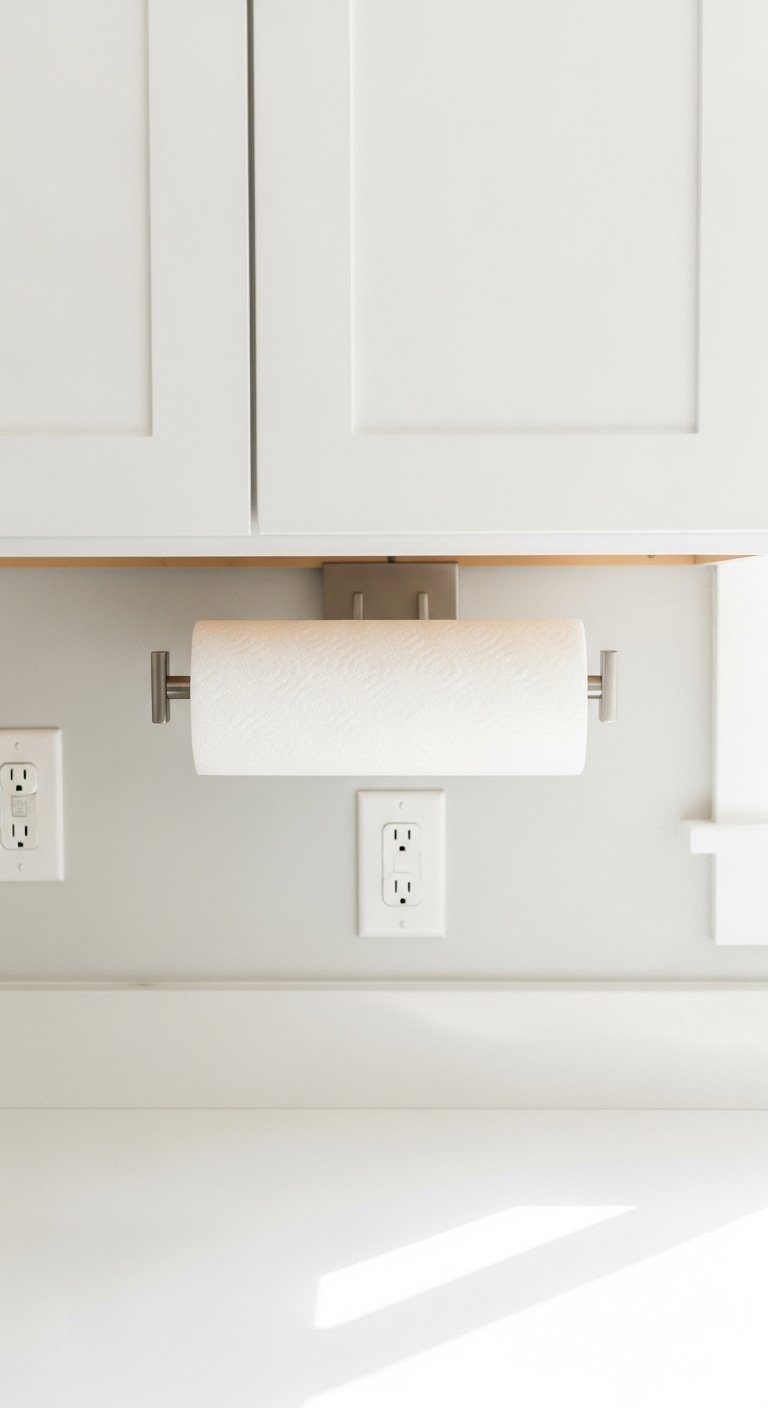
Moving the paper towel roll from the counter to the wall is a small change with a real impact in a kitchen where counter space is limited. A simple wall-mounted paper towel holder attached under the upper cabinets or on an empty wall section beside the sink removes the roll from the counter entirely and puts it exactly where you reach for it most often. Most wall-mount holders use two small screws and can be installed in under ten minutes. Under-cabinet mounted versions are especially convenient because they position the roll directly above the main work area. Look for a holder with a simple one-handed tear bar so you can pull off a sheet without the whole roll spinning off the holder. This is one of those changes that is so small it seems trivial until you actually do it and then wonder why you waited.
10. Dish Rack Upgrade
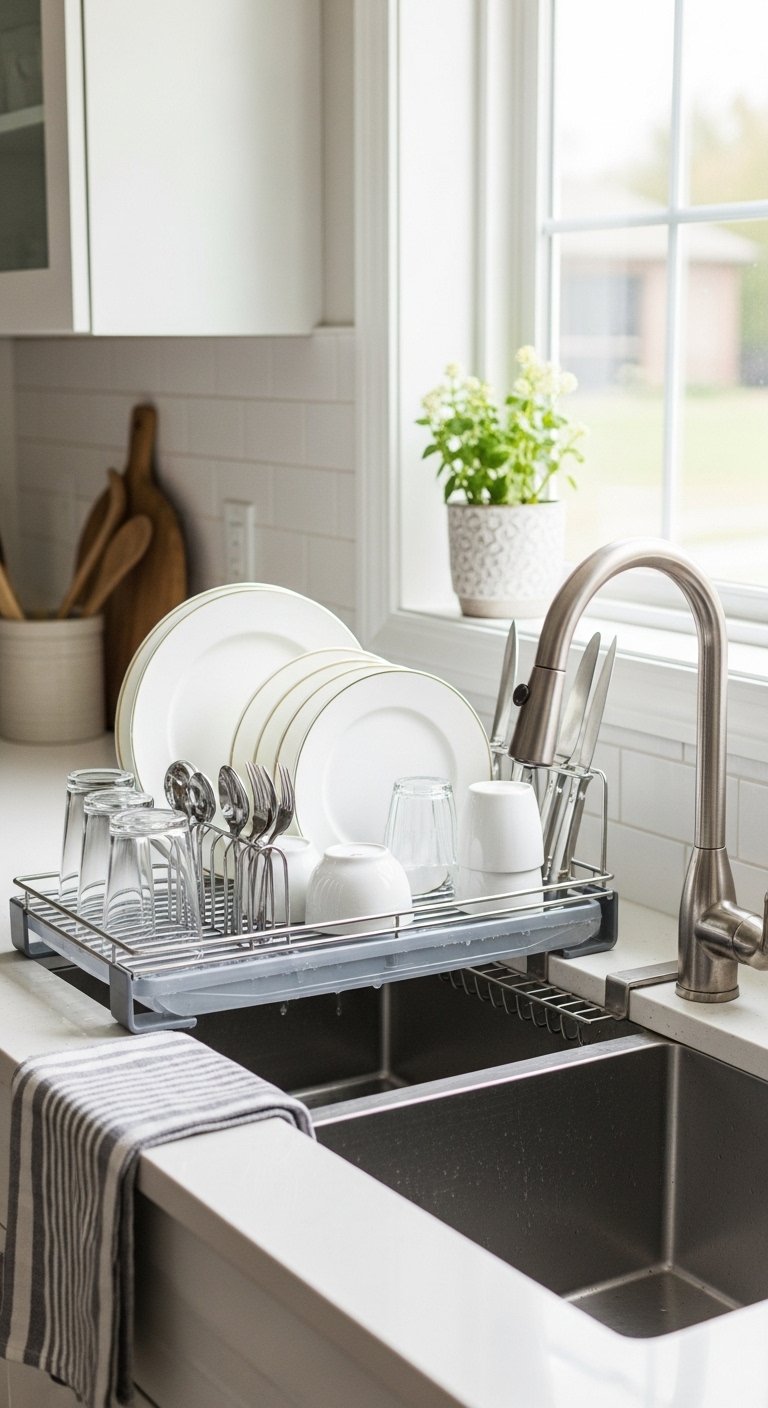
A poorly designed or worn-out dish rack sitting on the counter beside the sink is a constant visual source of clutter in a small kitchen. Upgrading to a better-designed rack that is the right size for your space and actually drains properly makes a real difference. Look for a compact or slim rack with a draining tray that routes water directly to the sink rather than pooling on the counter. Some good options include over-the-sink racks that sit directly over the basin and free up the counter completely, collapsible racks that fold flat and store in a cabinet when not in use, or low-profile drying mats with hidden drainage channels that look much tidier than a traditional rack. The right dish rack reduces counter clutter, dries dishes efficiently, and looks much more intentional than a standard wire rack piled with dishes and dripping water.
11. Baking Sheet Rack
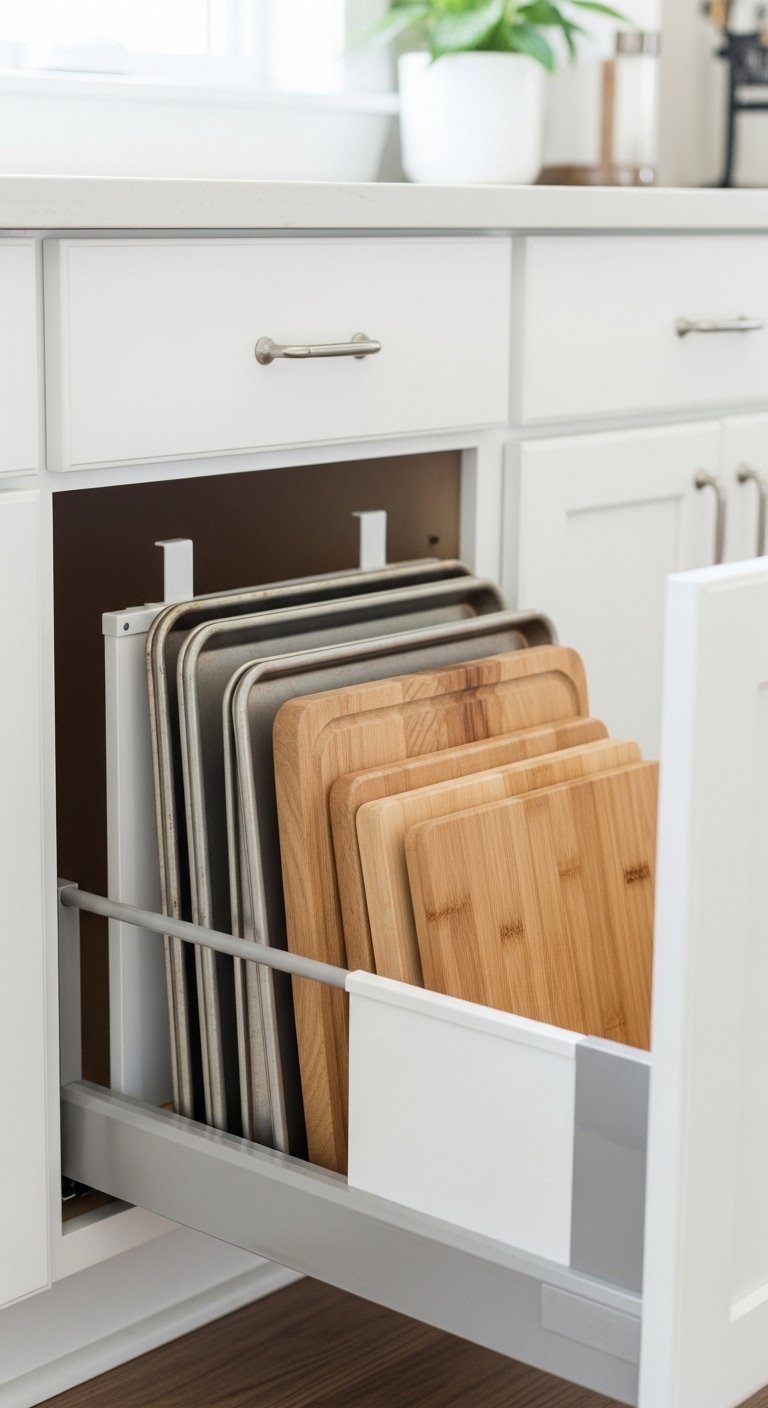
Baking sheets, cooling racks, muffin tins, and cutting boards are among the most awkward items to store in a kitchen cabinet because they are flat, heavy, and tend to slide around in stacks that are difficult to access. A simple vertical file organizer or a dedicated baking sheet rack installed inside a base cabinet stores these items standing upright like files in a filing cabinet, making each piece individually accessible without disturbing the others. This can be a purchased insert designed specifically for this purpose, or simply a tension rod arrangement inside the cabinet. The difference in usability is significant. Pulling out a single baking sheet becomes a one-second task instead of a balancing act where three other pans slide and scrape across the cabinet floor. This kind of organizer costs under twenty dollars and immediately improves one of the most frustrating storage situations in any kitchen.
12. Pegboard for Utensils
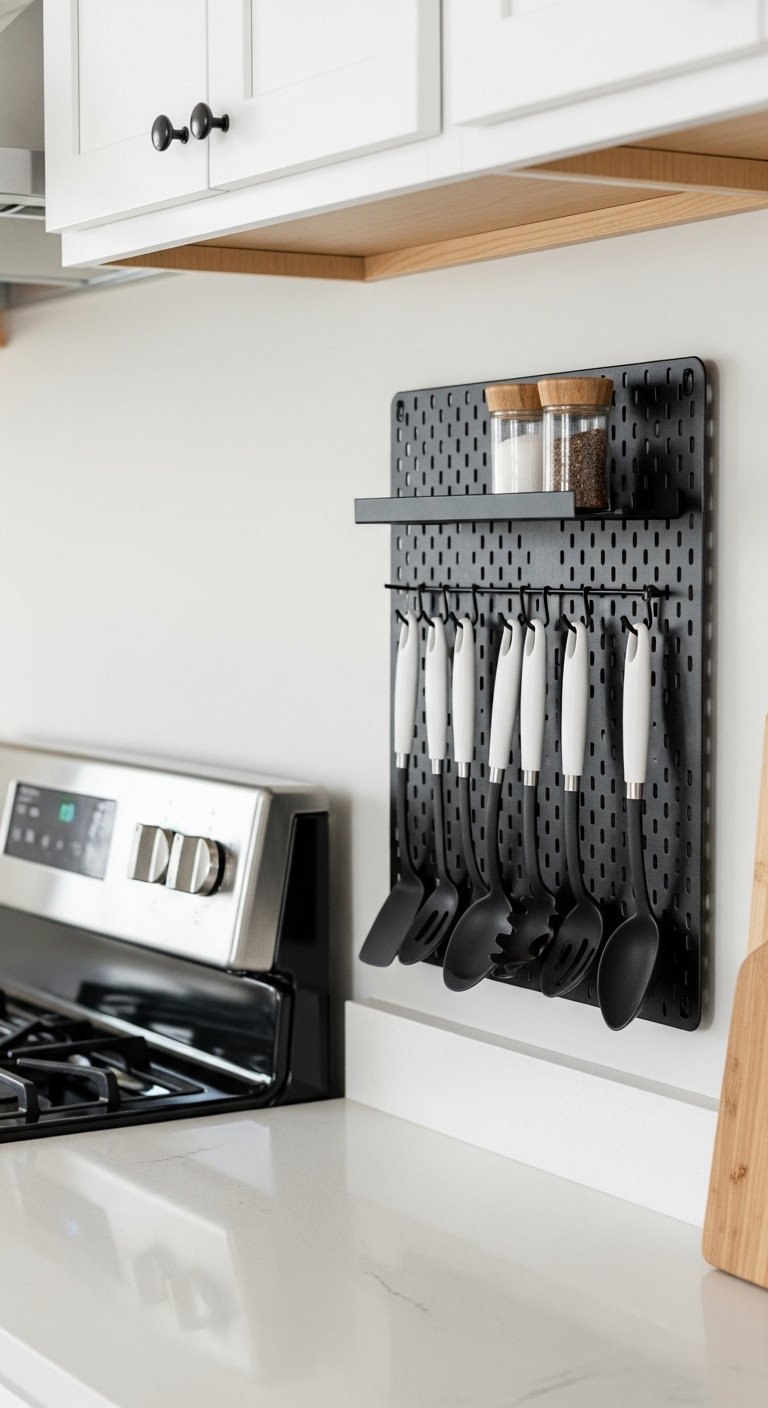
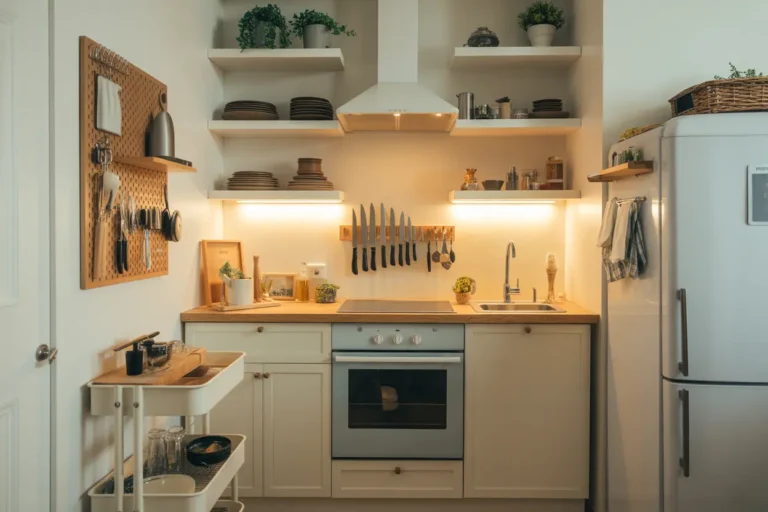
A small section of pegboard installed on a kitchen wall, even just a twelve-by-twenty-four-inch panel, provides enough hanging storage for a full set of kitchen utensils, a few small tools, and some lightweight accessories. This takes all of those items out of a drawer or off the counter and puts them on the wall where they are easy to see and grab without digging. Paint the pegboard to match the wall for a more subtle look, or leave it in a natural wood tone or matte black for a more utilitarian aesthetic that suits the kitchen. Assign a hook for each item and the whole system stays organized because each piece has one specific place it belongs. This is a more permanent and intentional version of a utensil crock and works especially well in kitchens where the counter beside the stove is too narrow for a crock but you need quick access to cooking tools.
13. Produce Hanging Basket
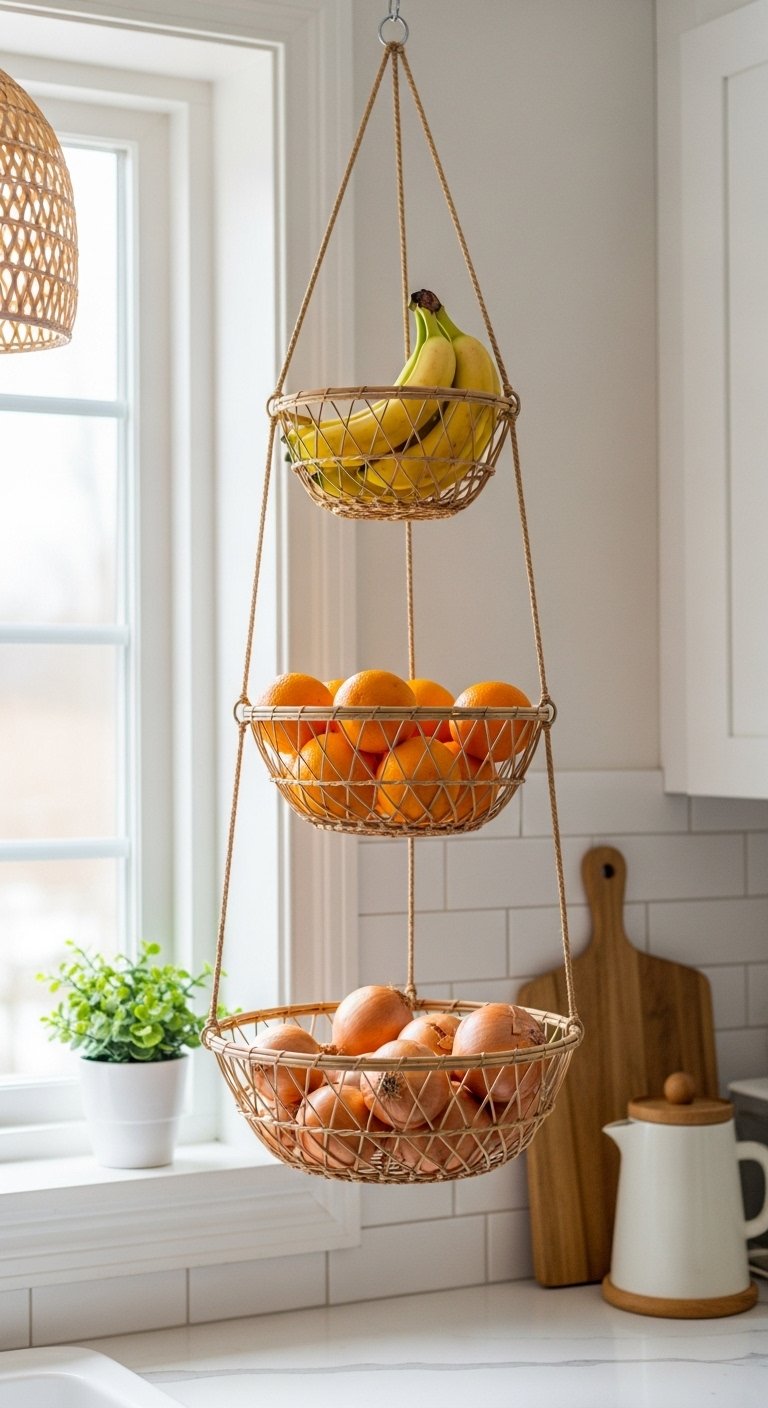
A tiered hanging produce basket suspended from the ceiling or mounted on the wall holds fruit, vegetables, garlic, onions, and bread in a way that frees up counter space while keeping perishables at room temperature where they belong rather than in the refrigerator. Most fruits and many vegetables last longer at room temperature when they have good air circulation, which a hanging basket provides naturally. A three-tier hanging basket holds a lot of produce in a very small footprint, and the tiered design lets you see everything on each level at a glance. Look for baskets made from wire or woven rattan that allow airflow through the sides. Hang it near a window or in a well-ventilated spot away from direct heat from the stove. A hanging basket costs between fifteen and thirty-five dollars and adds a lived-in, market-kitchen quality to the room.
14. Stackable Cookware Set
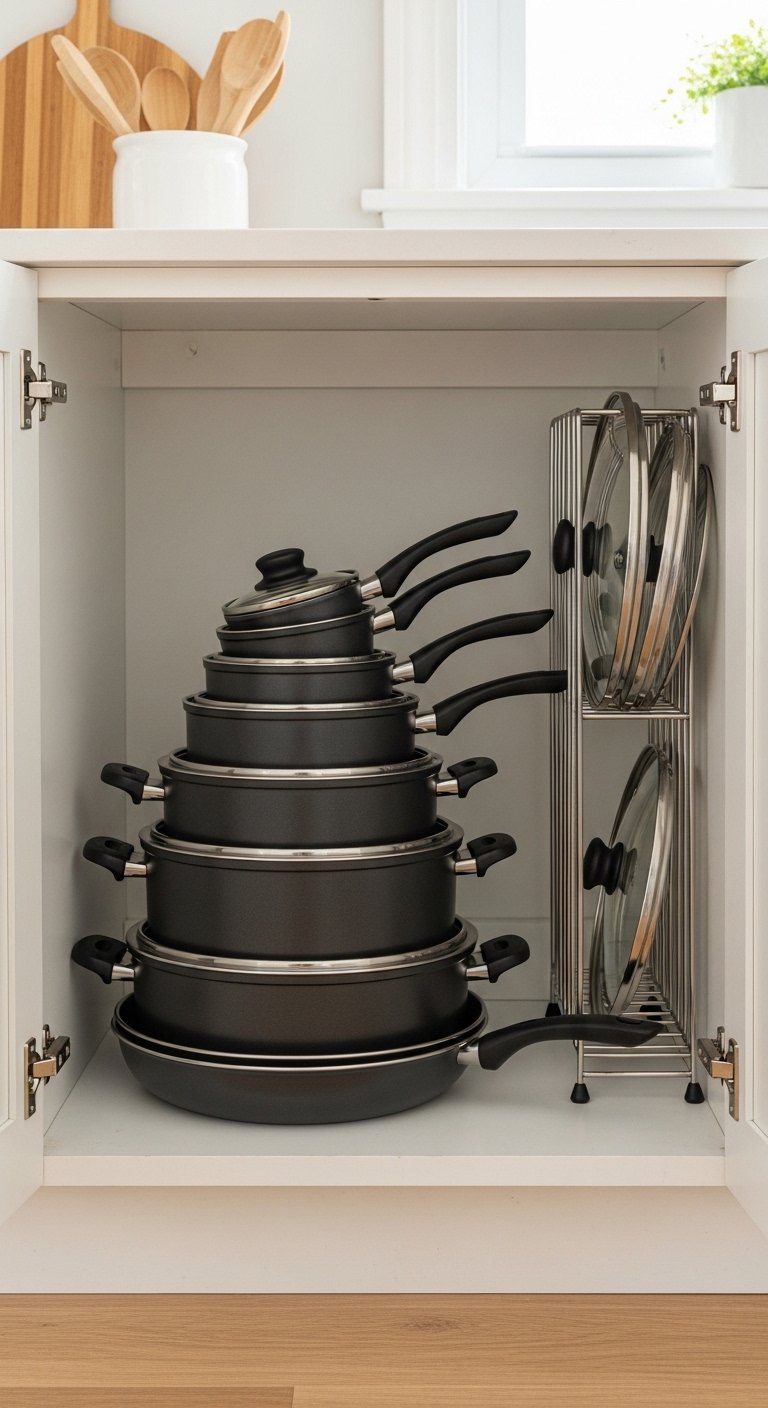
If your pots and pans situation is chaotic because of mismatched sizes with non-nesting shapes, investing in a set designed specifically to stack neatly inside each other can reclaim an entire cabinet’s worth of space. Cookware sets designed for compact storage typically nest completely flat, with removable or interchangeable lids that stack independently. This means a five- or six-piece set takes up roughly the same cabinet space as two or three regular pots. This is a slightly larger purchase than most other organization ideas, but it is one where the impact is immediately and permanently felt every time you open the cabinet. Look for sets that include a range of sizes that match how you actually cook rather than buying the largest set available. Fewer well-chosen pieces that stack well will always function better in a small kitchen than a large set that does not.
15. Command Hook Variety
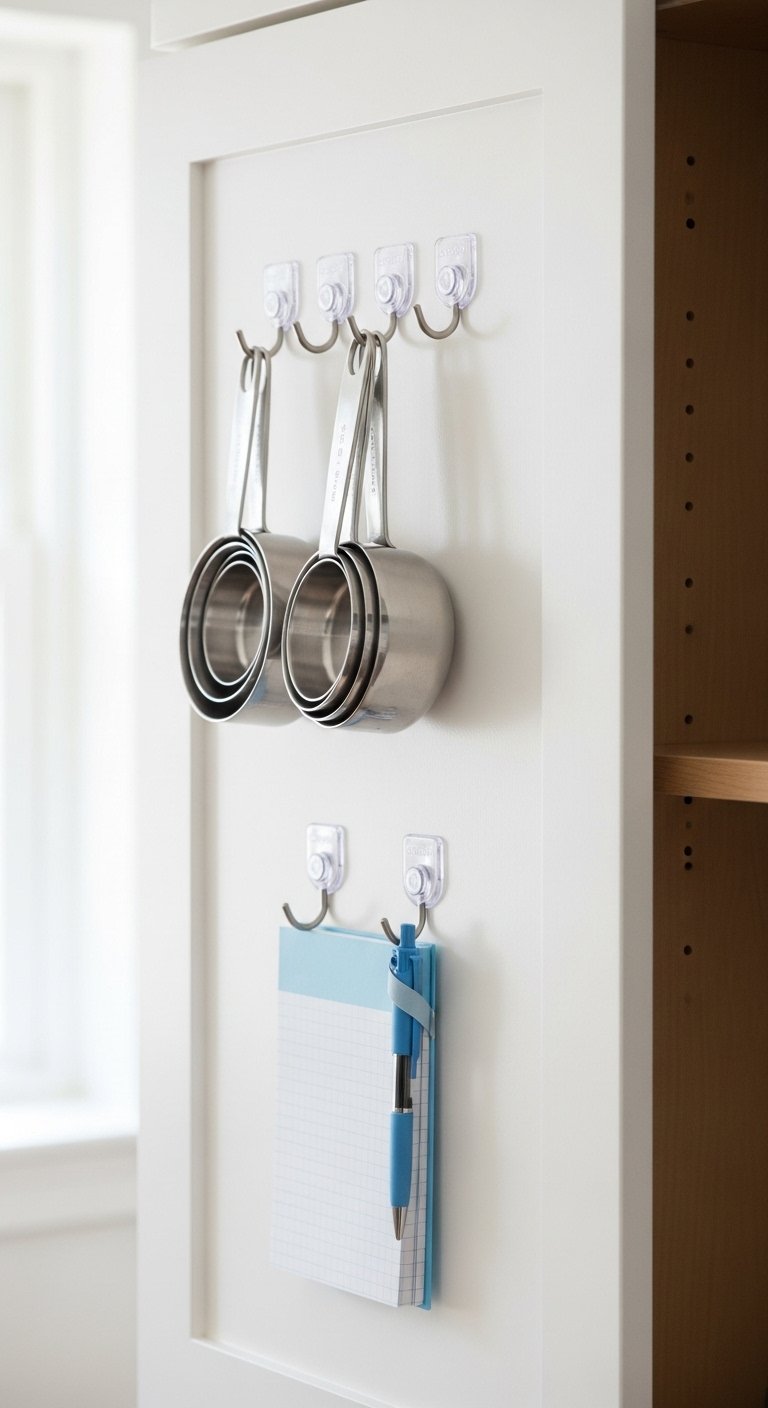
Command strips and hooks have become one of the most genuinely useful organization tools for kitchens because they hold a surprising amount of weight, leave no wall damage when removed, and can be placed exactly where you need them without any tools or hardware. Use them inside cabinet doors to hold measuring cups, a small notepad and pen, or a cleaning brush. Mount a row of hooks on the side of a cabinet or the wall to hold aprons, oven mitts, or reusable shopping bags. Add a hook inside the pantry door for frequently used small gadgets. The newer versions of these hooks hold significantly more weight than the early versions, and the large clear hooks are nearly invisible on most wall surfaces. A variety pack of different sizes typically costs under fifteen dollars and gives you enough hooks to solve multiple small organization problems at once.
16. Clear Spice Jars Set
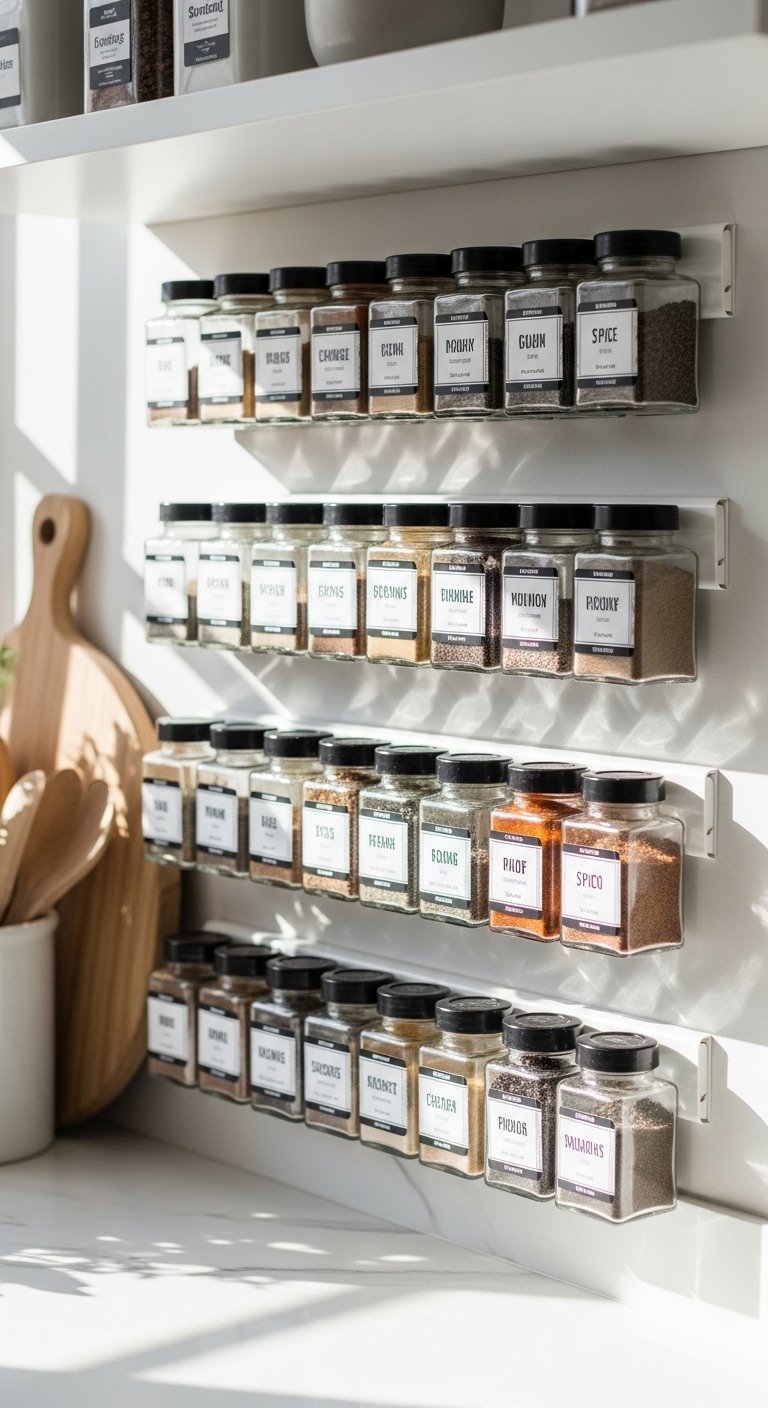
Replacing an assortment of mismatched spice jars and half-full grocery store bottles with a uniform set of clear glass spice jars immediately makes any spice storage look organized and intentional. When all the jars are the same size and shape, they stack or line up more efficiently and you can read the labels without moving everything around. Decant your spices into the new jars, apply consistent labels either from a label maker or from a printed label set, and arrange them alphabetically or by use category. A set of thirty uniform spice jars typically costs between twenty and forty dollars online. Pair them with a wall-mounted rail, a tiered shelf insert inside a cabinet, or a simple drawer insert to keep them visible and in order. This is one of those changes that looks dramatic in a before-and-after comparison because the visual shift from chaos to order is so immediate and complete.
17. Over-Fridge Shelf
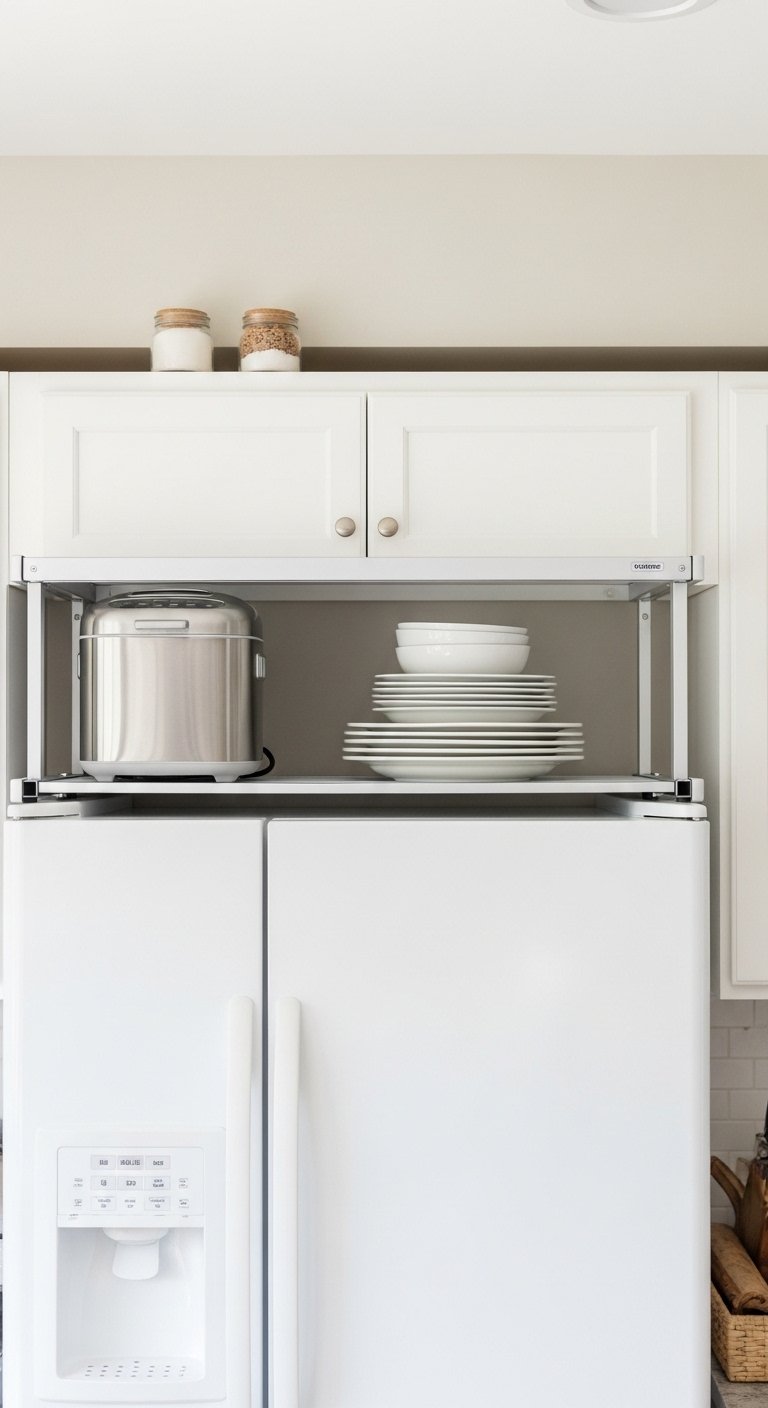
The space above the refrigerator is one of the most consistently underused areas in any kitchen. It is awkward to reach but absolutely usable for items you do not need often, like a bread maker, an extra set of serving platters, seasonal baking equipment, or a small collection of rarely used specialty appliances. Adding a simple shelf above the fridge, either a freestanding unit designed to sit on top of the refrigerator or a wall-mounted shelf at that height, makes this space genuinely useful rather than just a dust collector. A freestanding over-fridge shelf is the easier option since it requires no installation. Look for one that is the same width as your refrigerator or slightly narrower so it sits cleanly on top without overhanging too far. Most options cost under thirty dollars and can hold ten to fifteen pounds of rarely used kitchen items.
18. Refrigerator Magnetic Strips
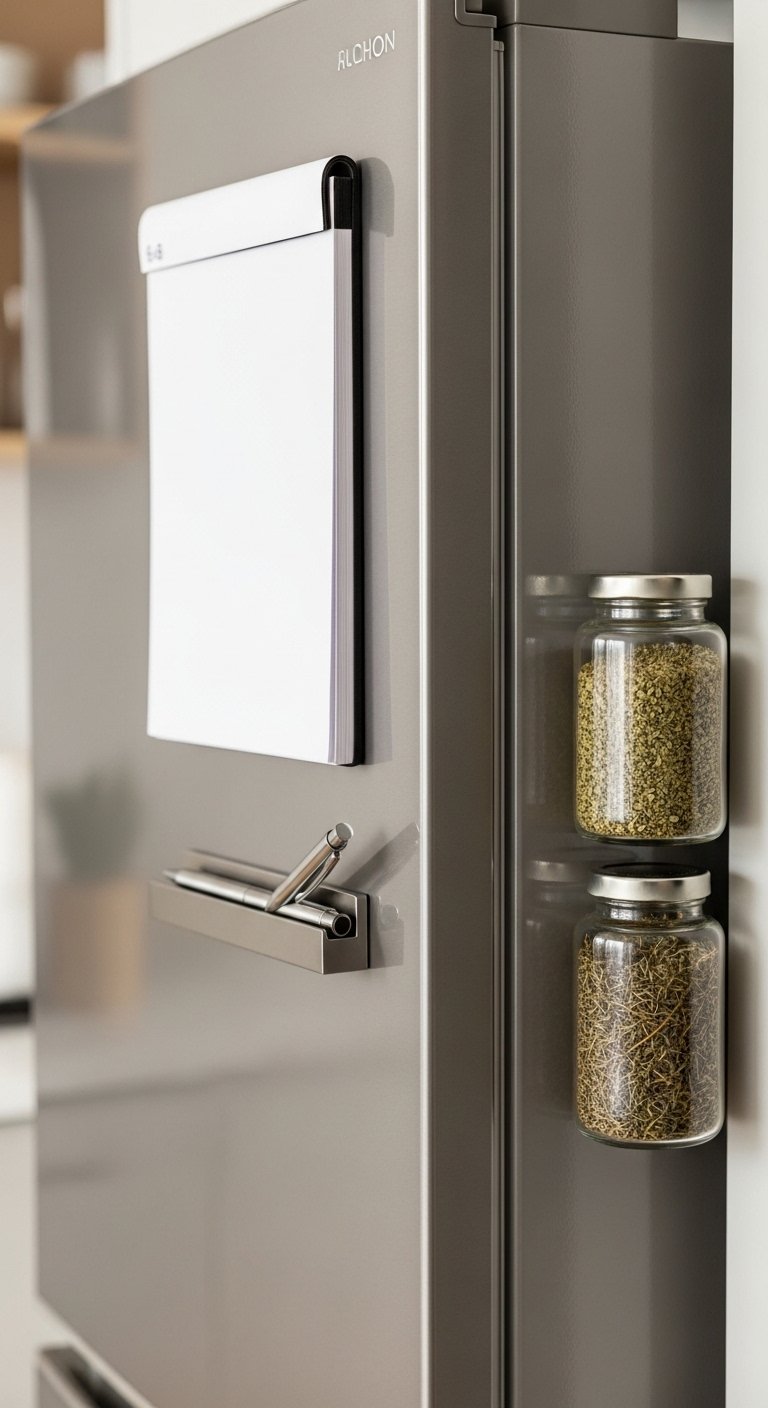
The side of the refrigerator is usually blank and completely underused, but in a small kitchen it can function as a magnetic wall for notes, grocery lists, photos, and small magnetic containers holding cooking herbs, small tools, or condiment packets. Adhesive magnetic strips or small magnetic shelves that attach to the fridge side are available from kitchen storage retailers and many online shops. A simple magnetic notepad and pen holder on the side of the fridge means your shopping list is always where you write things down: in the kitchen, when you run out of something. Magnetic spice containers on the fridge side are another popular option, though they work best for spices that you use very frequently since they are less accessible than a dedicated spice rack near the stove. The side of the fridge is free real estate that most kitchens never use.
19. Collapsible Colander
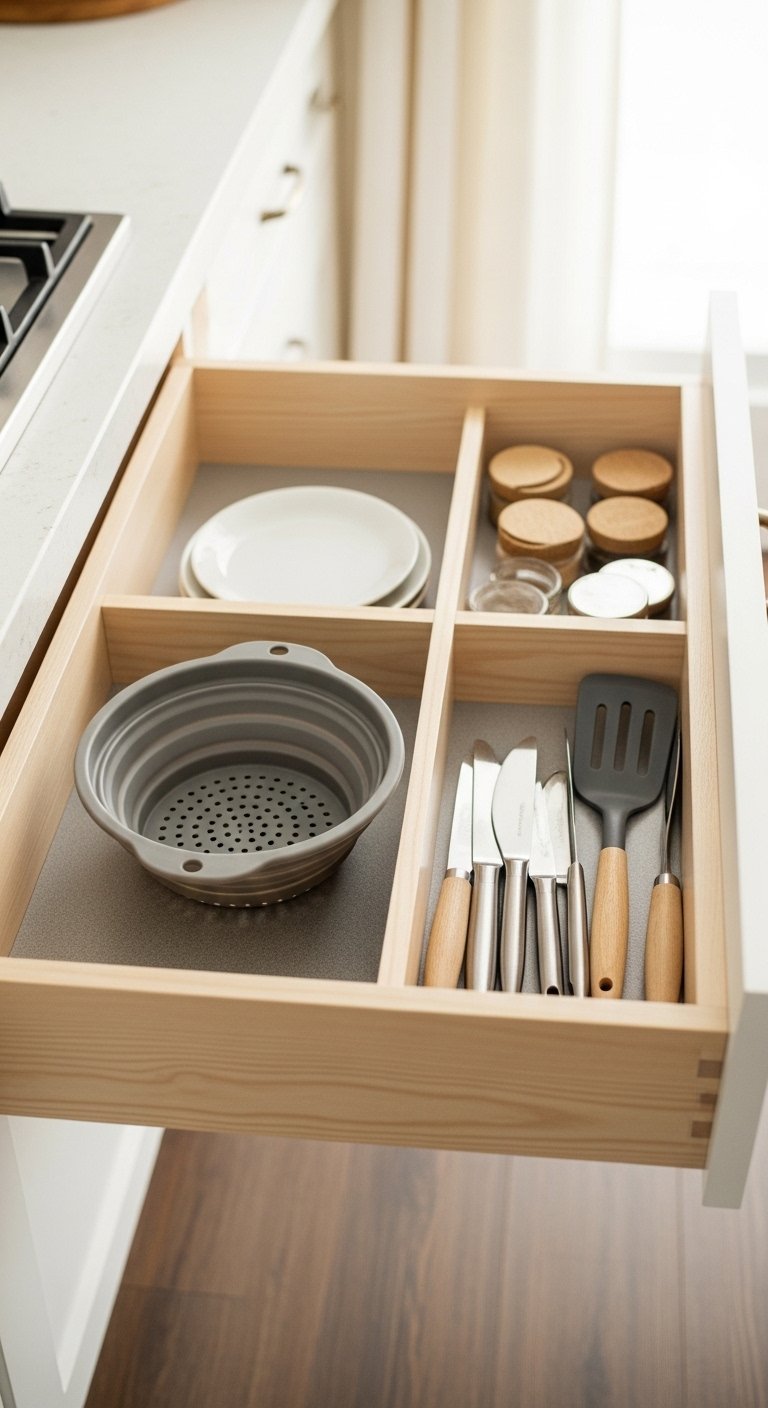
A full-size colander takes up a lot of cabinet or counter space for something that gets used briefly and then needs to be stored somewhere for the rest of the week. A collapsible silicone colander compresses to a fraction of its expanded height when not in use, letting it store flat in a drawer or a lower cabinet shelf alongside cutting boards and flat tools. The silicone material is heat resistant, easy to clean, and holds up to regular use without deforming. This is the kind of kitchen tool swap that might seem minor but pays off in cabinet space every day. The same principle applies to collapsible mixing bowls, collapsible dish racks, and collapsible measuring cups. In a small kitchen where every inch of storage is accounted for, swapping bulky fixed-shape tools for collapsible versions is one of the simplest ways to recover storage space without getting rid of useful tools.
20. Label Everything Consistently
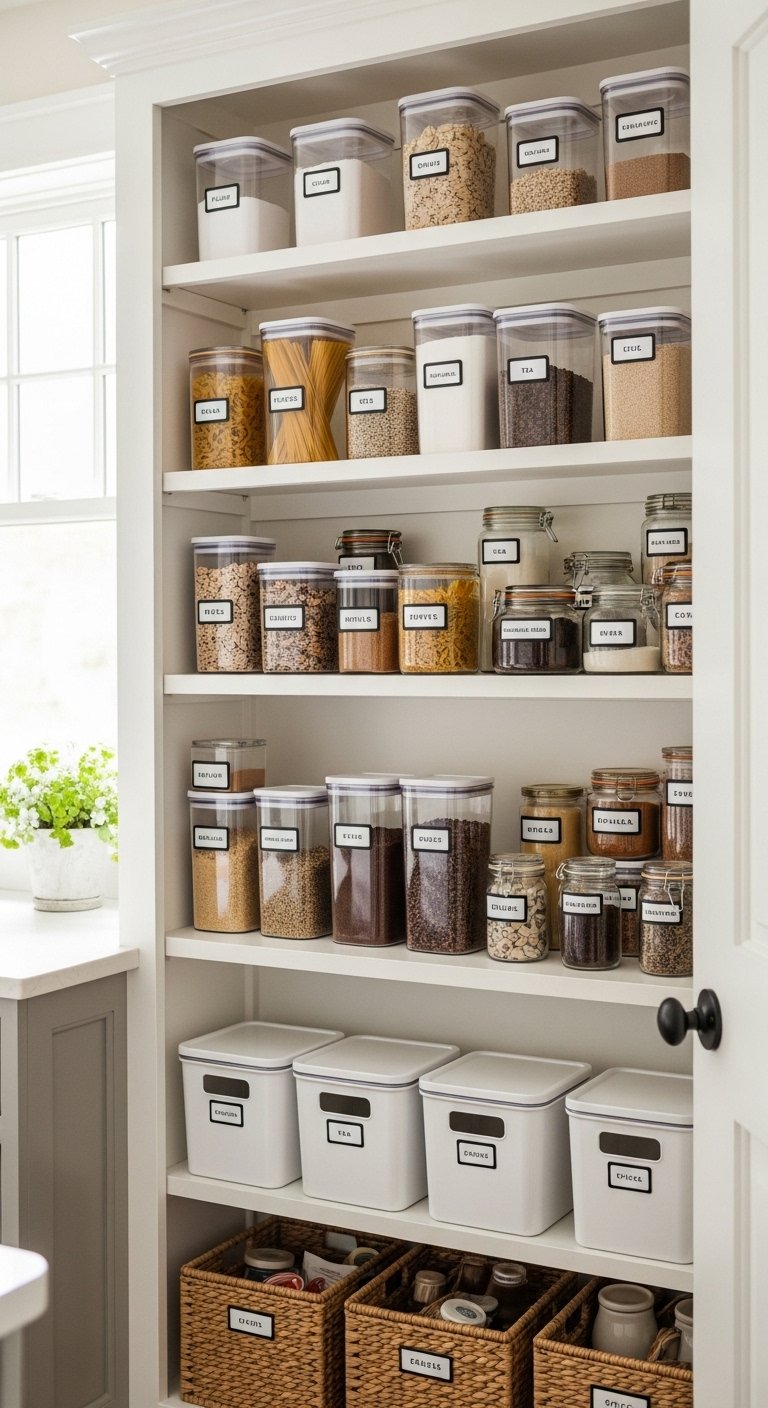
A label maker is one of the most useful organizational investments you can make for a kitchen and it costs under twenty-five dollars for a basic model. Labeling the fronts of pantry bins, the lids or fronts of matching storage containers, the edges of cabinet shelves indicating what belongs there, and the sides of spice jars creates a system that maintains itself because everyone who uses the kitchen knows where things belong and where to return them. Consistent labels also help you notice quickly when something is running low since an empty labeled container is much more visible than a bare shelf spot. The key is applying labels consistently in one session rather than gradually over time, since a mix of labeled and unlabeled items creates a half-organized look that is more confusing than no labels at all. Set aside one afternoon to label the entire kitchen at once and the system becomes intuitive very quickly.
21. Tiered Cabinet Shelf
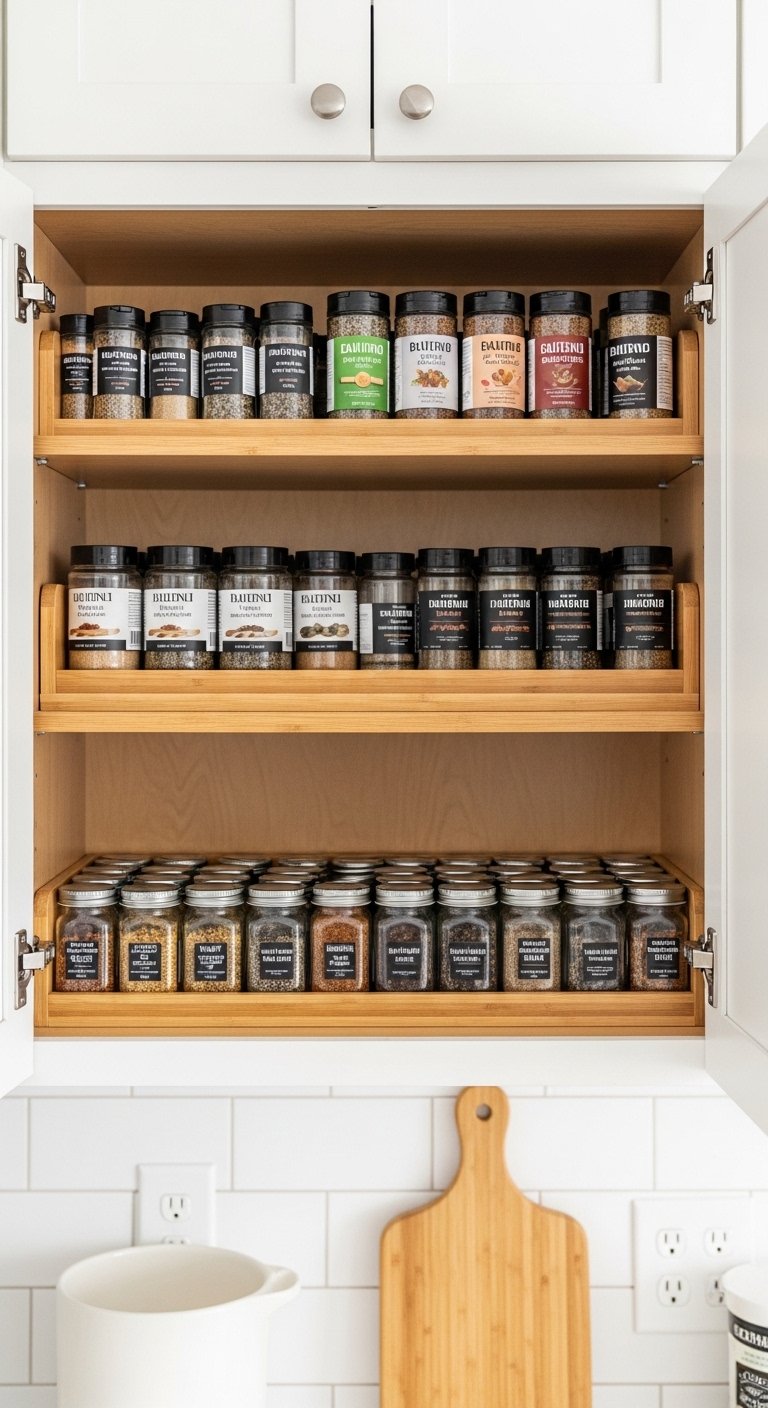
A tiered shelf riser placed inside a cabinet, particularly an upper cabinet, lets you use the full height of the cabinet by stacking two rows of items at different heights rather than one flat row with wasted air space above it. Standard cabinet shelf height is usually generous enough to hold two rows of standard-height items like mugs, canned goods, or spice jars, but without a riser, the back row is hard to see and reach. A tiered riser lifts the back row by three to four inches so both rows are visible and accessible without any rearranging. These risers are available in bamboo, wire, and coated metal and typically cost between fifteen and twenty-five dollars. They work in pantry cabinets for canned goods, in upper cabinets for mugs and glasses, and in spice cabinet arrangements where you want everything visible at a glance without multiple rows blocking each other.
Good kitchen organization is less about buying more stuff and more about giving everything a defined place. Pick the three spots in your kitchen that drive you the most crazy and fix those first. Once those work well, the rest of the kitchen usually follows.