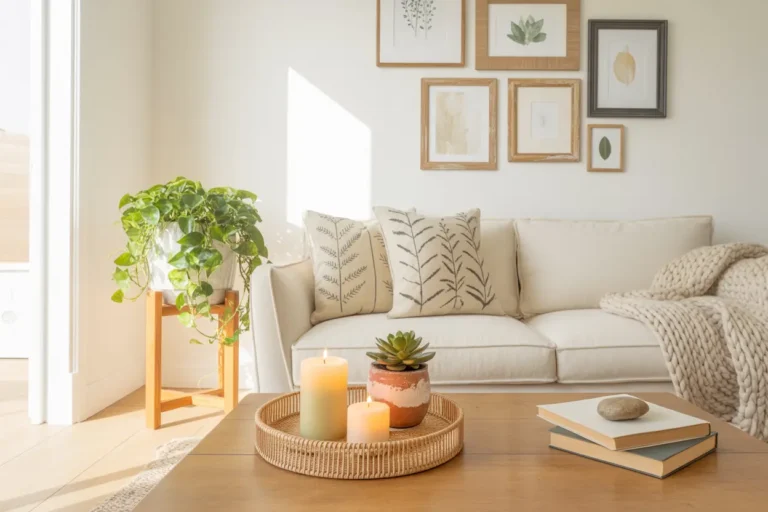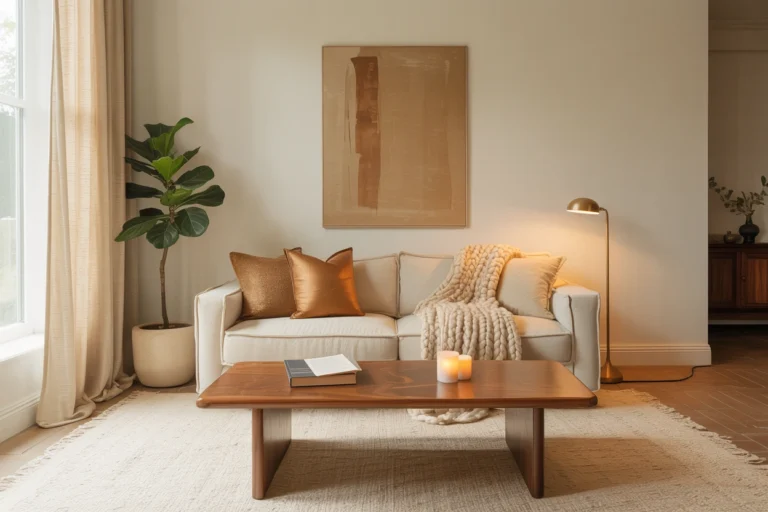
23 Small Living Room Ideas That Make Tight Spaces Feel Bigger
A small living room can feel like a challenge every time you walk into it, especially when it has to serve as a lounging spot, an entertainment area, and sometimes a workspace all at once. But the rooms that photograph well and feel genuinely comfortable on a daily basis are often not the largest ones. They are the ones where someone has made deliberate choices about scale, placement, and what to leave out. These 23 ideas cover the full range of what makes a small living room work better, from furniture choices to wall treatments to lighting. Some you can do this weekend. A few take a little more planning but make an enormous difference in how the room feels and functions.
1. Sofa Against Wall
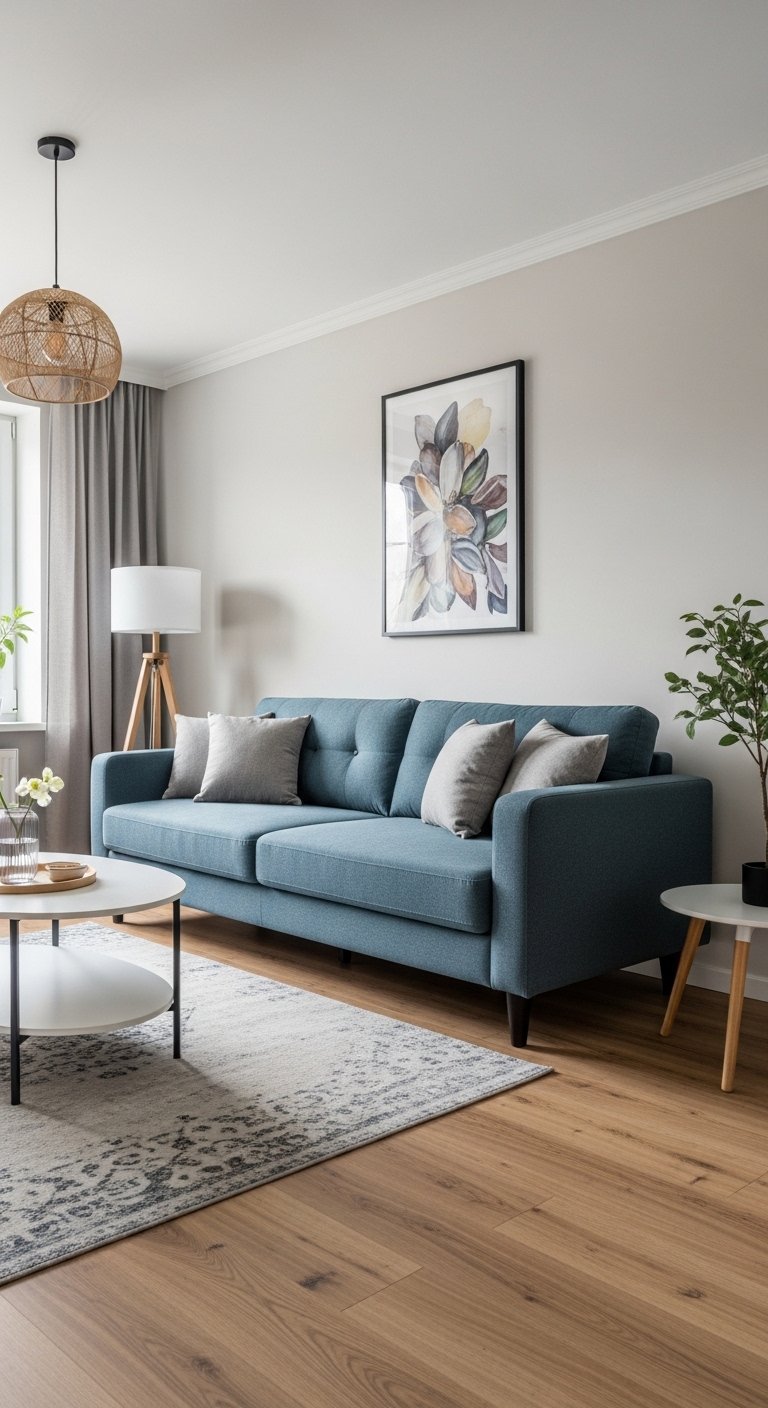
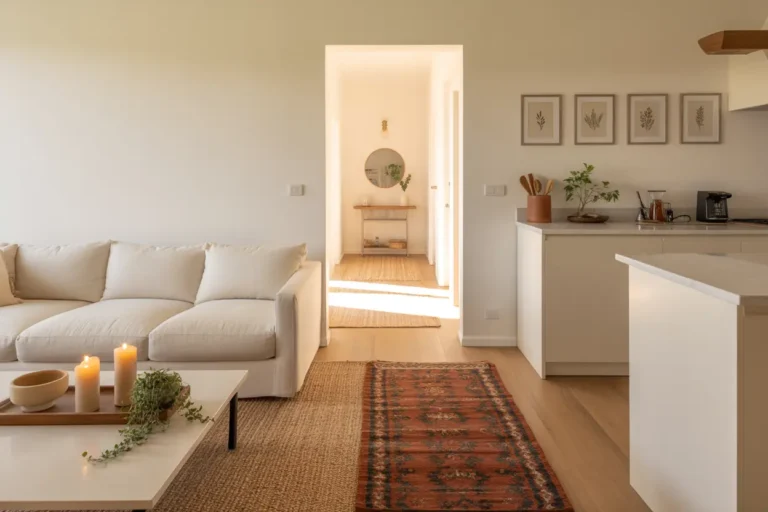
One of the first instincts in a small living room is to float the sofa in the middle of the room to create an apparent conversation zone. In a small room, this usually makes things worse. Pushing the sofa against the wall clears the central floor area and makes the room feel more open, which is almost always the priority when space is limited. The freed-up floor space gives the eye more unobstructed travel across the room, which is what creates the perception of more space. It also allows for better traffic flow from one part of the room to another, which a floating sofa regularly interrupts. This does not mean every piece of furniture needs to hug the wall, but anchoring the largest single piece, the sofa, against the longest wall is the best starting point for small living room layouts in most cases.
2. Light Sofa Upholstery

The sofa is typically the largest piece of furniture in a living room and therefore the single biggest influence on how the room’s color palette reads. A dark sofa in a small room tends to dominate the space and can make the room feel smaller than it is. A light-colored sofa in cream, warm white, pale gray, or a natural linen tone recedes visually and allows the eye to move past it more easily. This makes the room feel less cramped even when the physical dimensions have not changed. Light sofas also respond well to afternoon natural light, warming with the sun in a way that dark upholstery cannot. If a very light sofa feels impractical, slipcovers in a washable light linen are a good alternative that can be swapped out when needed.
3. Large Single Rug
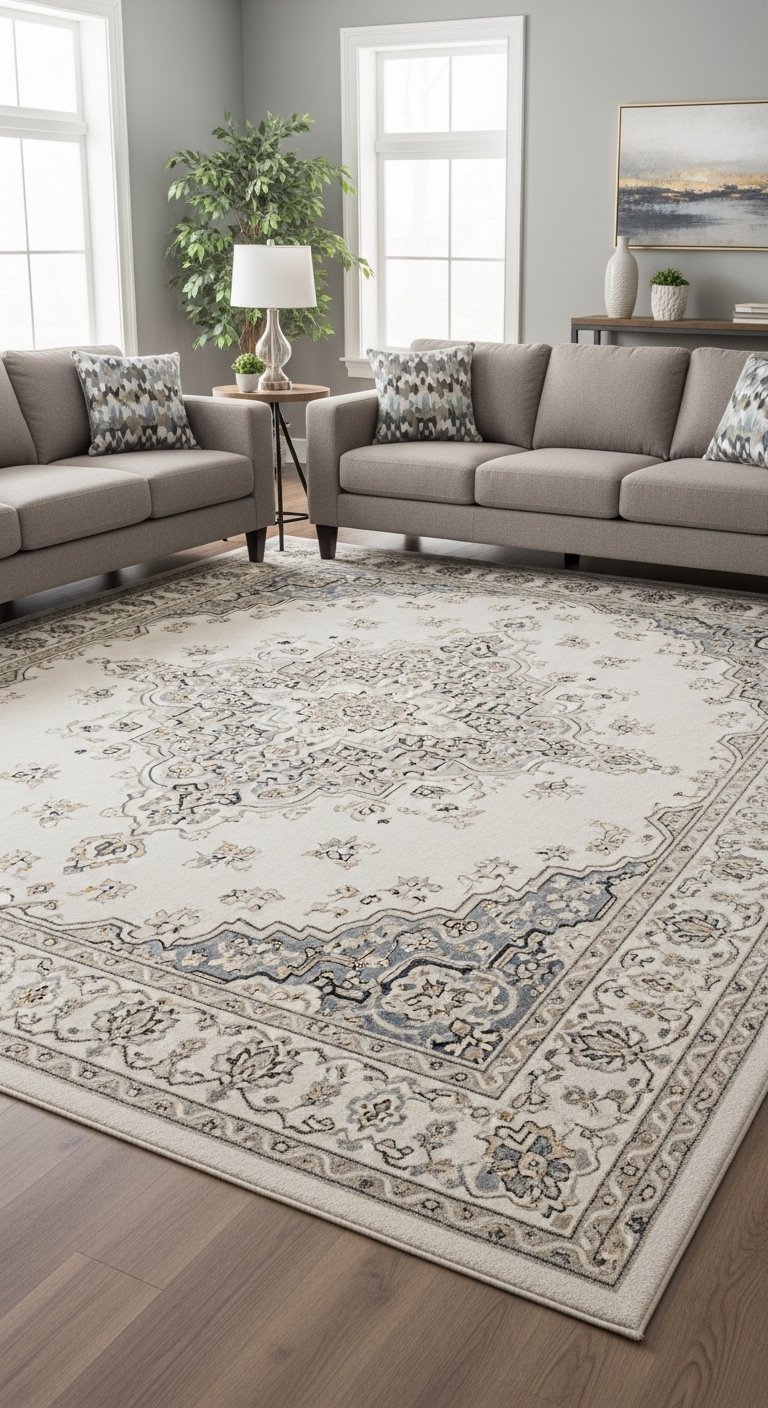
In a small living room, a rug that is too small floats awkwardly in the center of the space and makes the room feel choppy and disconnected. A large rug that extends under the front legs of all the main seating pieces, or under all four legs if the room allows, ties the furniture together into a unified zone and makes the living area read as one cohesive space rather than several pieces sitting randomly on a floor. The rug should be large enough that there is roughly twelve to eighteen inches of bare floor visible between the edge of the rug and the walls. This framing effect makes the rug look correctly proportioned and actually makes the floor, and the room, feel more spacious than a rug that either goes wall to wall or sits too small in the center.
4. Mirrors Opposite Windows
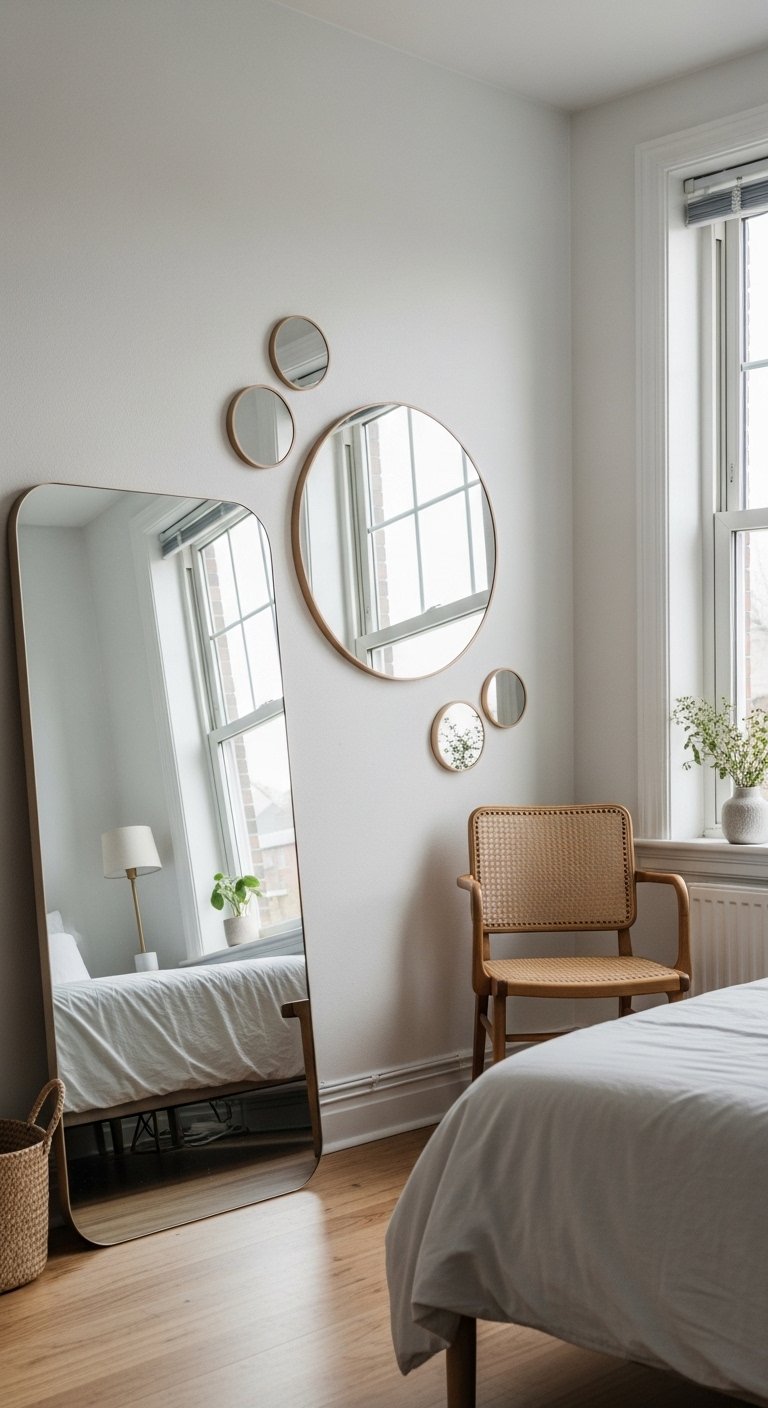
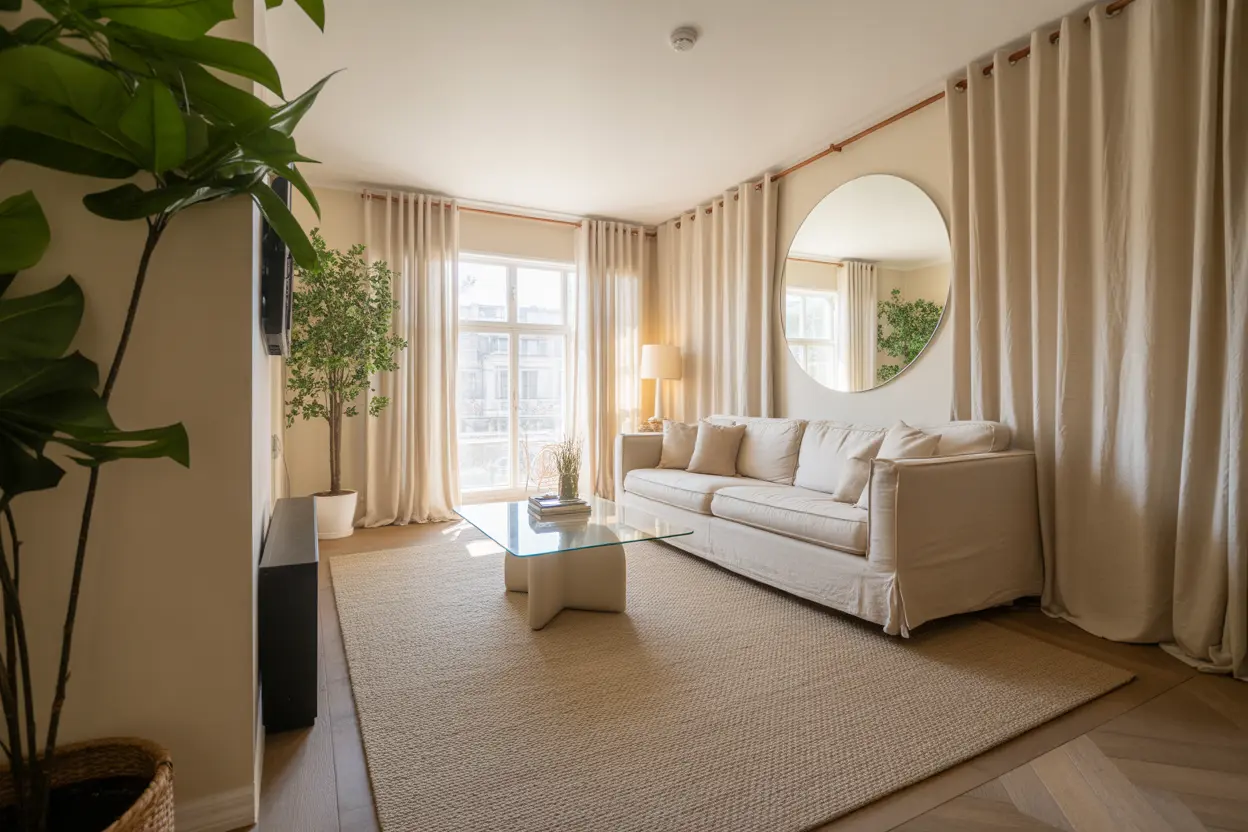
A large mirror placed on the wall directly opposite the main source of natural light reflects that light back across the room, effectively doubling the apparent brightness and creating a visual depth that makes the room feel significantly larger than its actual dimensions. This is one of the oldest tricks in interior design and one of the most reliable. The mirror creates the impression of a second window or a second room beyond the wall, which breaks the sense of enclosure that small rooms can create. Choose a mirror with a simple frame that complements the room’s style rather than competing with it. A full-length mirror leaning against the wall, a large round mirror on the main wall, or a collection of smaller mirrors at different heights all work well depending on the room’s layout.
5. Multi-Use Coffee Table
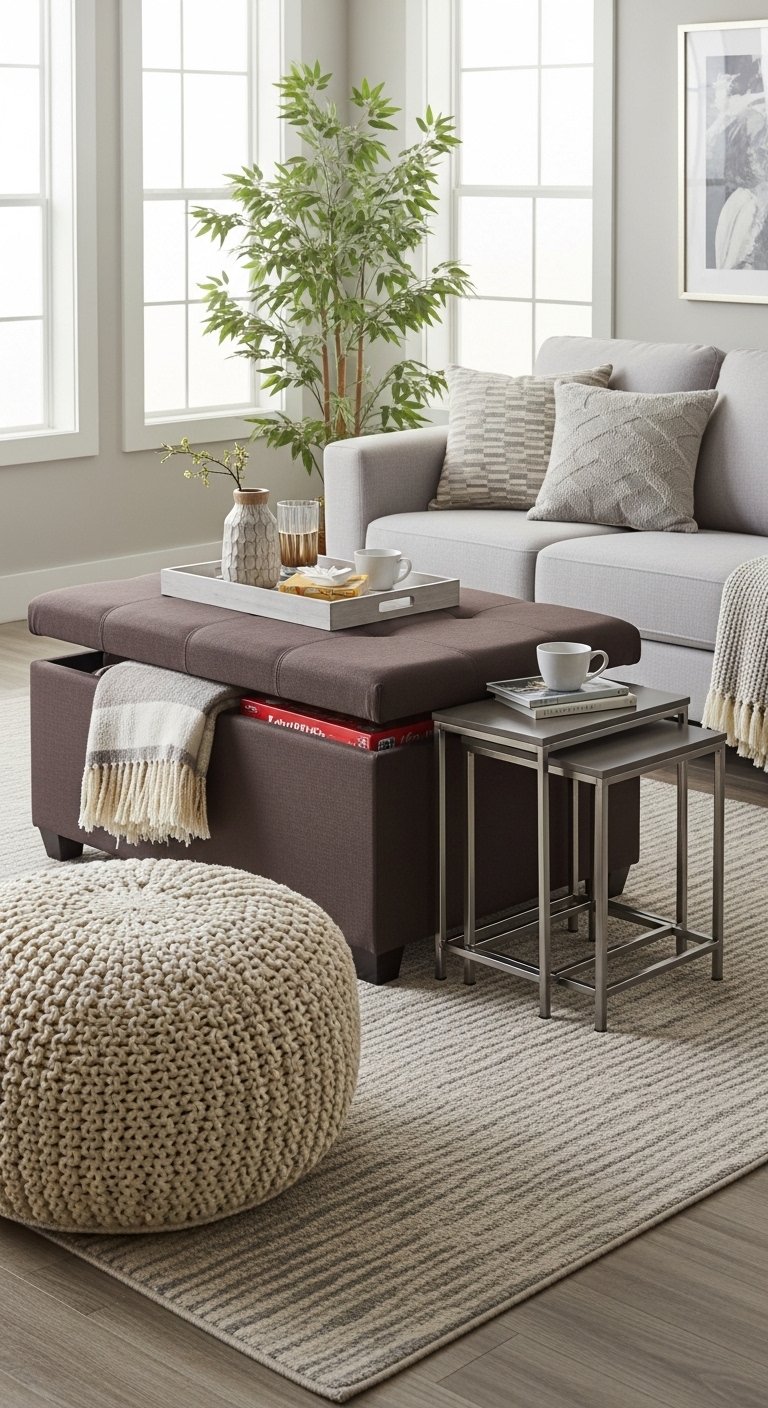
A standard coffee table takes up a significant amount of floor space in a small living room. Replacing it with a multi-use option, whether a large pouf that doubles as a seat, a storage ottoman that opens to hold blankets and games, or a nesting table set that can spread out when needed and stack away when not, frees up visual and physical floor space without sacrificing function. Ottoman coffee tables with a flat top and internal storage are especially effective in small living rooms because they serve three purposes simultaneously: seating, surface, and storage. Top the ottoman with a tray to create a stable flat surface for drinks and books. A set of nesting tables in slim metal or glass is another excellent option since the smaller tables can tuck under the larger one when not in use.
6. Floor-to-Ceiling Curtains
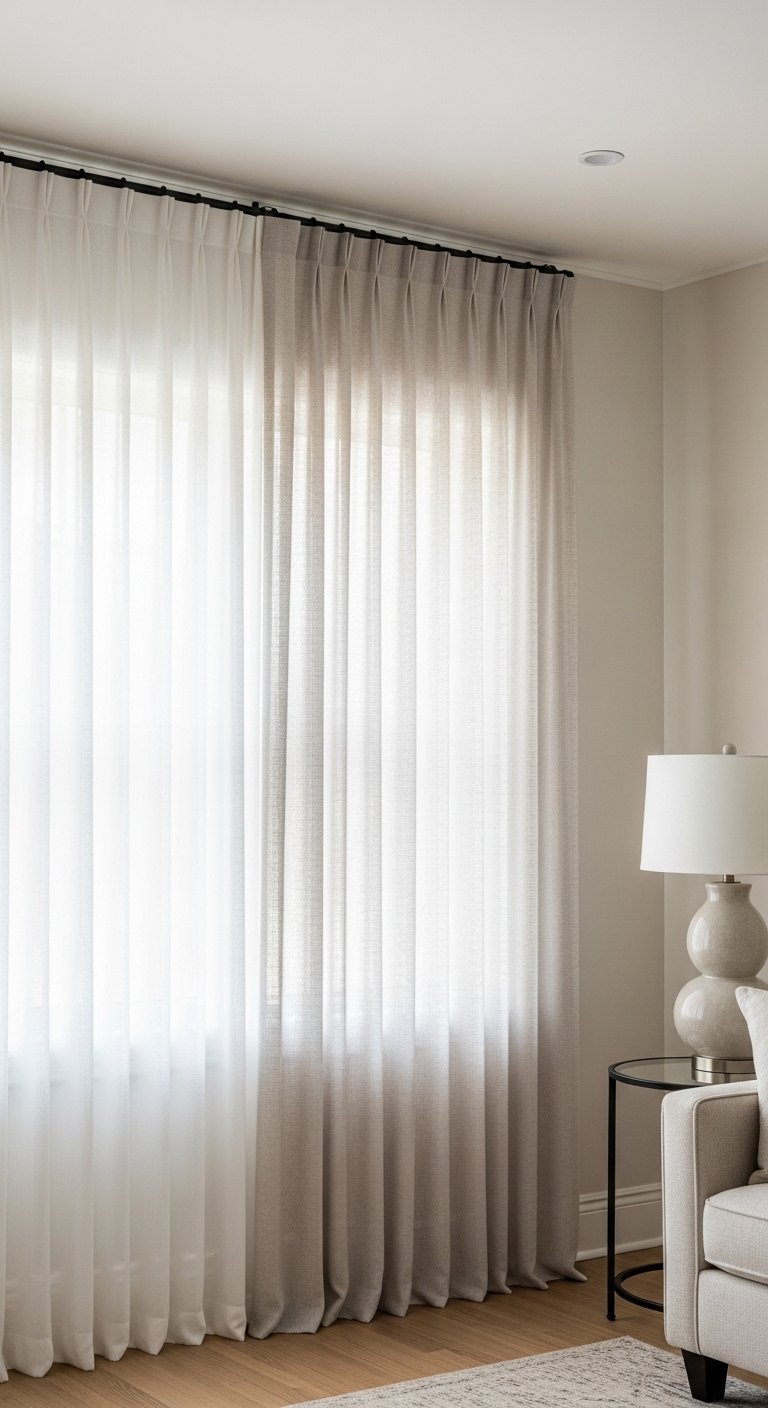
Hanging curtains from a rod positioned as close to the ceiling as possible, regardless of where the actual window frame sits, and letting them fall all the way to the floor creates a strong vertical line that draws the eye upward and makes the ceiling feel considerably higher than it is. This is one of the most effective visual tricks in a small living room. The long unbroken line of the curtain panel from ceiling to floor creates a sense of height that a curtain hung just above the window frame and stopping at sill height cannot approach. Use a light, neutral-toned fabric that does not absorb too much light, since a dark or heavy curtain at this height can have the opposite effect and make the room feel heavy and enclosed. Sheer or semi-sheer panels in a warm white or natural linen tone work particularly well.
7. Built-In Shelving Units
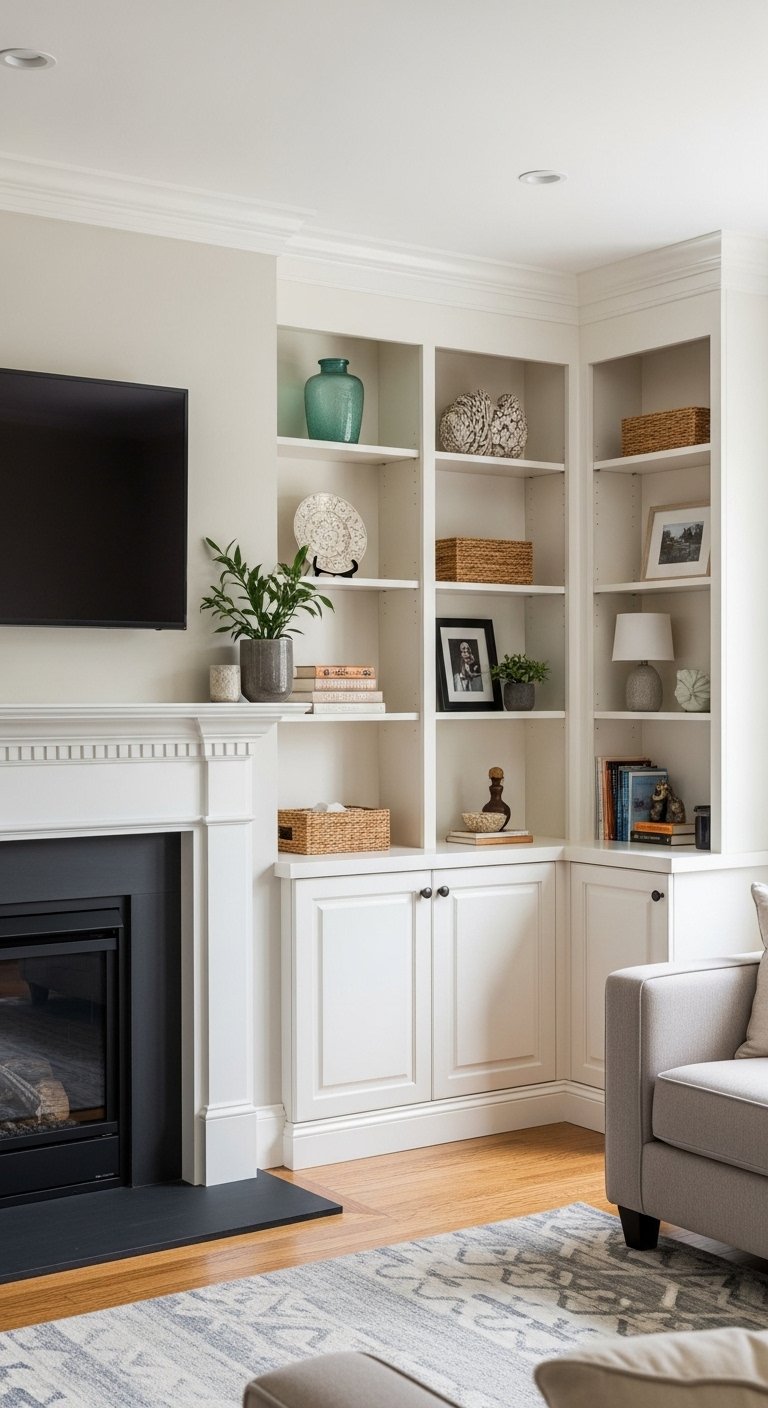
Built-in shelving flanking a fireplace, a television, or an entire wall transforms awkward alcoves and dead corners into the most organized and visually impactful storage in the room. In a small living room, built-ins are superior to freestanding bookcases because they do not protrude into the room and they use the full height of the wall rather than stopping at a standard bookcase height. The eye reads the wall as a complete designed element rather than a wall with furniture in front of it, which makes the room feel more intentional and architecturally complete. Built-in shelving can be a DIY project using adjustable shelf brackets and painted MDF, or a more finished built-in look using furniture-grade plywood with face-frame trim.
8. Armless Accent Chairs
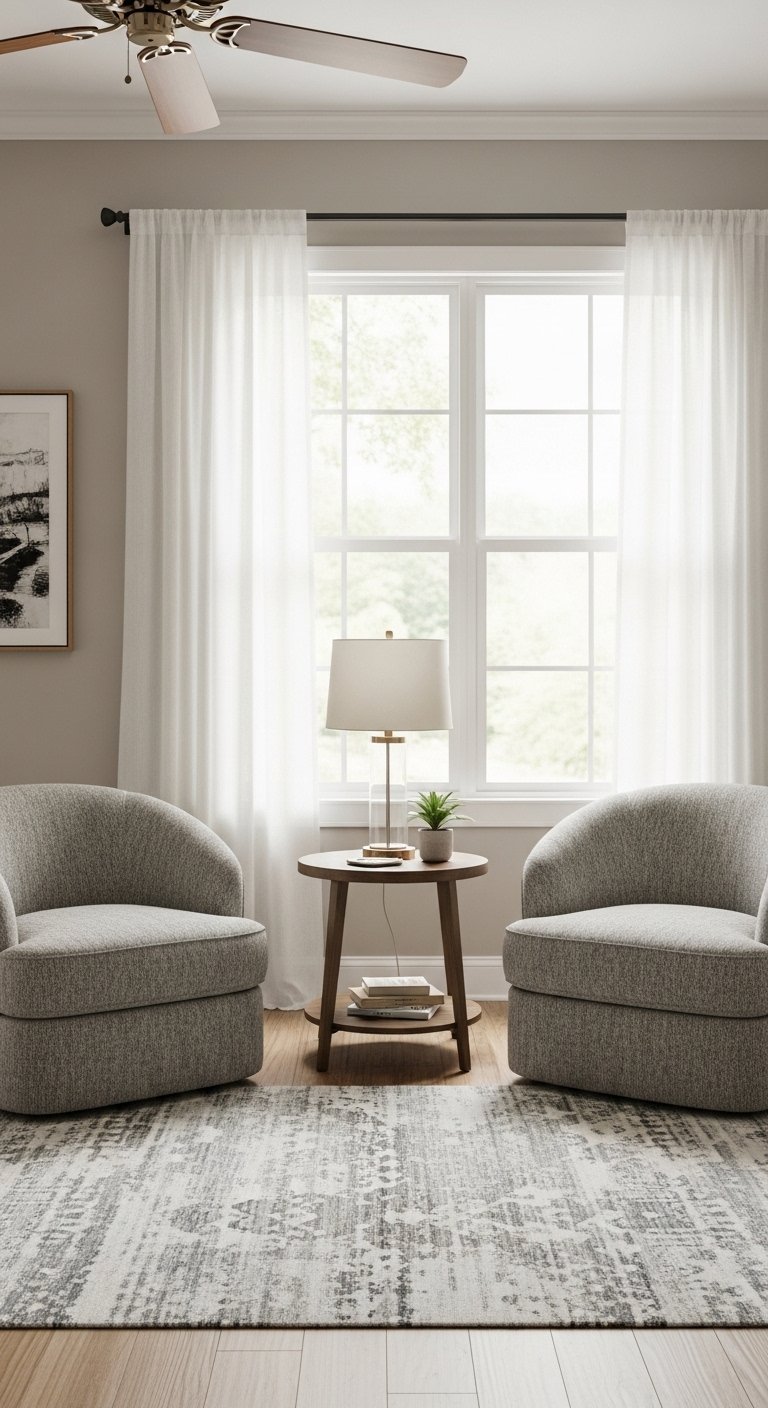
Standard armchairs take up considerably more floor space than their seating footprint alone, because the arms project out on both sides and create dead zones that nothing else can occupy. Switching to armless accent chairs or slipper chairs in a small living room gives you the seating capacity of full chairs at a much smaller spatial cost. An armless chair takes up roughly thirty percent less floor space than an equivalent armed chair while providing nearly the same amount of actual seating comfort. This is especially useful in rooms where you need two seating options beyond the main sofa but cannot afford the floor space of two full armchairs. Pair two armless chairs across from the sofa with a small side table between them for a complete conversational arrangement that fits comfortably in most small living rooms.
9. Transparent Furniture
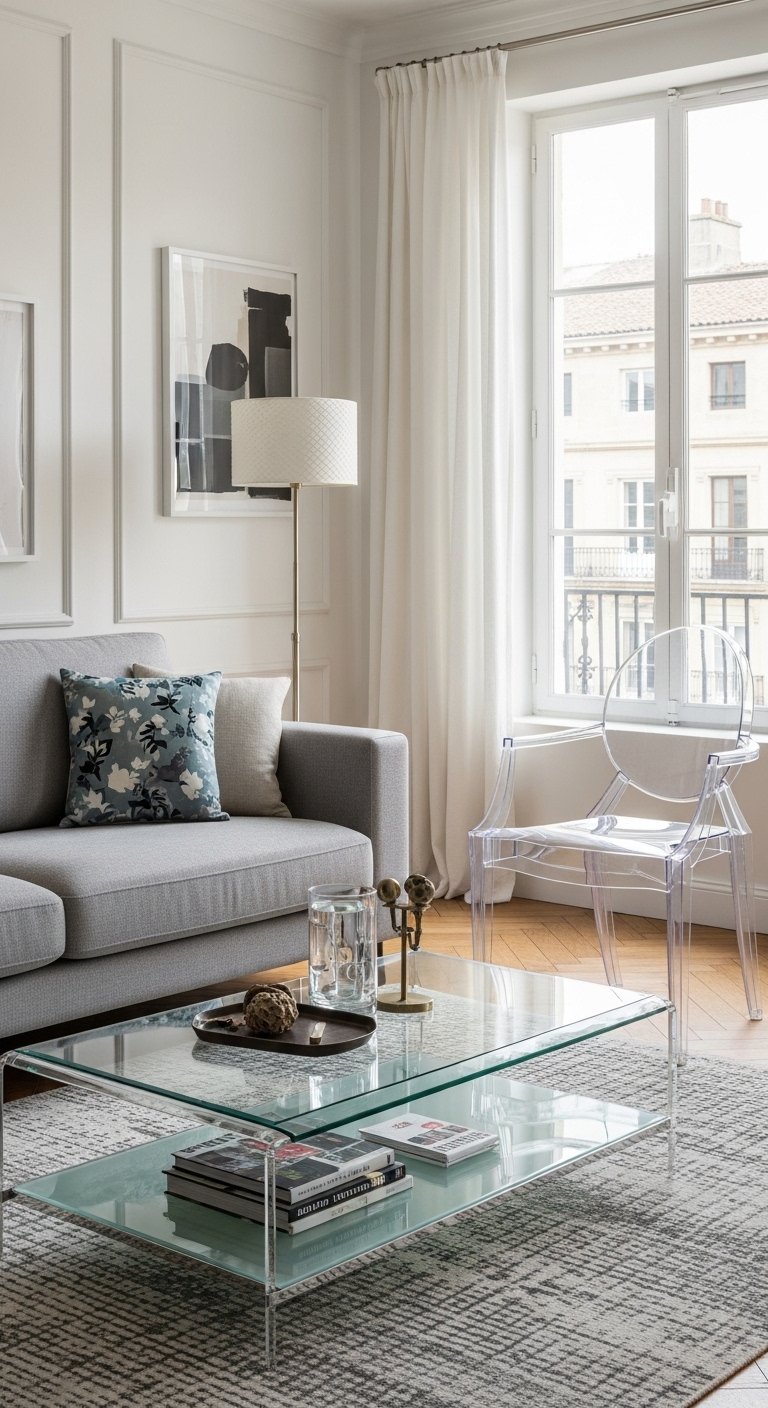
A glass-top coffee table, an acrylic side table, or clear acrylic accent chairs allow the eye to pass through them as if they were not there, which keeps the floor visible and the room feeling open even when it is fully furnished. This is the living room application of the same transparent furniture principle that works in small bedrooms: physically present objects that take up minimal visual space. A glass-top coffee table over a patterned rug allows the full rug pattern to show beneath it, which keeps the floor as a visual element rather than covering it with a solid surface. Pair transparent furniture with warmer, more solid pieces for balance, since too much transparent furniture can feel cold and clinical rather than airy and open.
10. Vertical Wall Storage
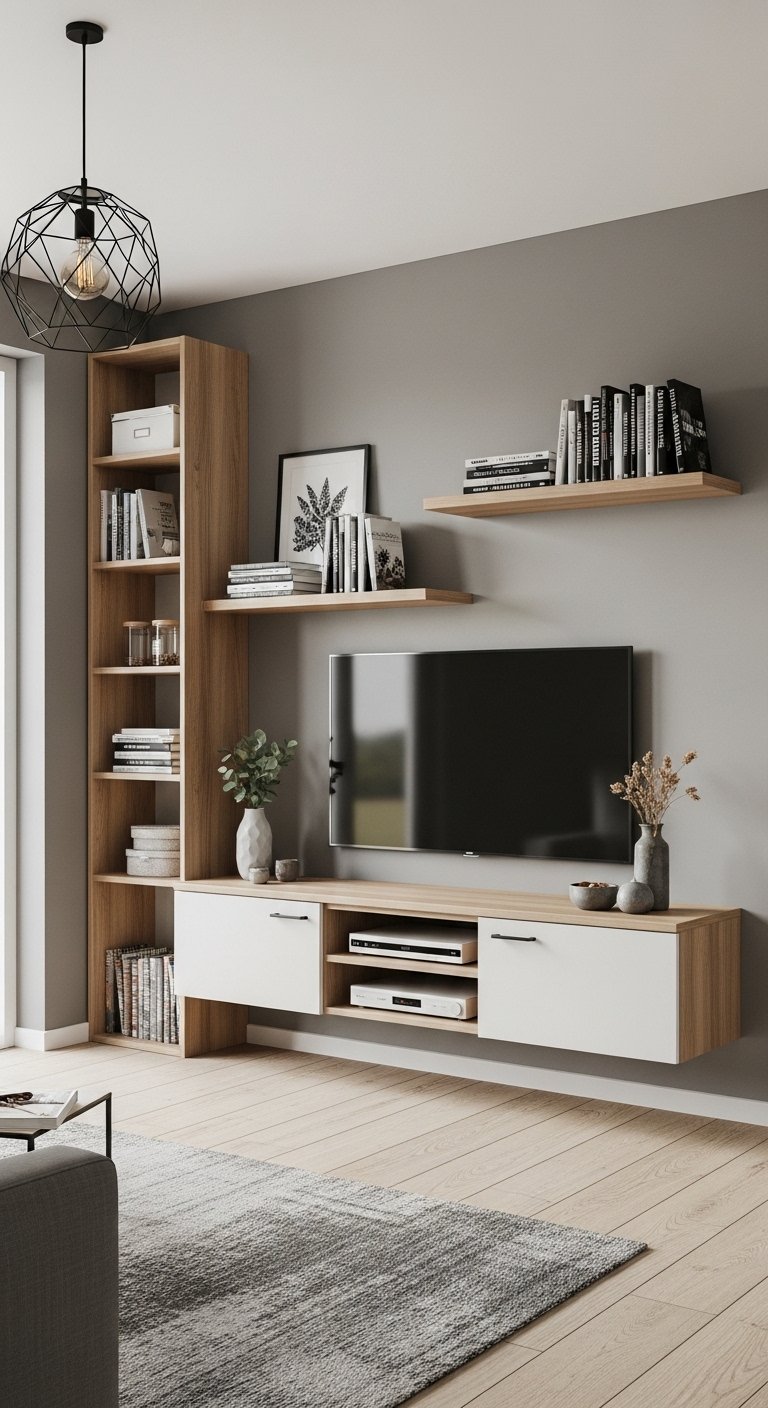
When floor and horizontal surface space is at a premium in a small living room, the wall is where the storage needs to go. Tall bookshelves that reach close to the ceiling, wall-mounted media units that lift the television and storage off the floor, floating shelves at various heights, and wall-mounted cabinets all move storage off the floor and onto the walls where it does not reduce the room’s usable area. The floor space freed up by wall storage makes the room easier to move through and easier to keep clean, both of which contribute to how spacious and functional the room feels. In a small living room, even a single floor-level cabinet replaced by a wall-mounted equivalent creates a noticeable improvement in how the room feels to occupy.
11. Monochromatic Walls
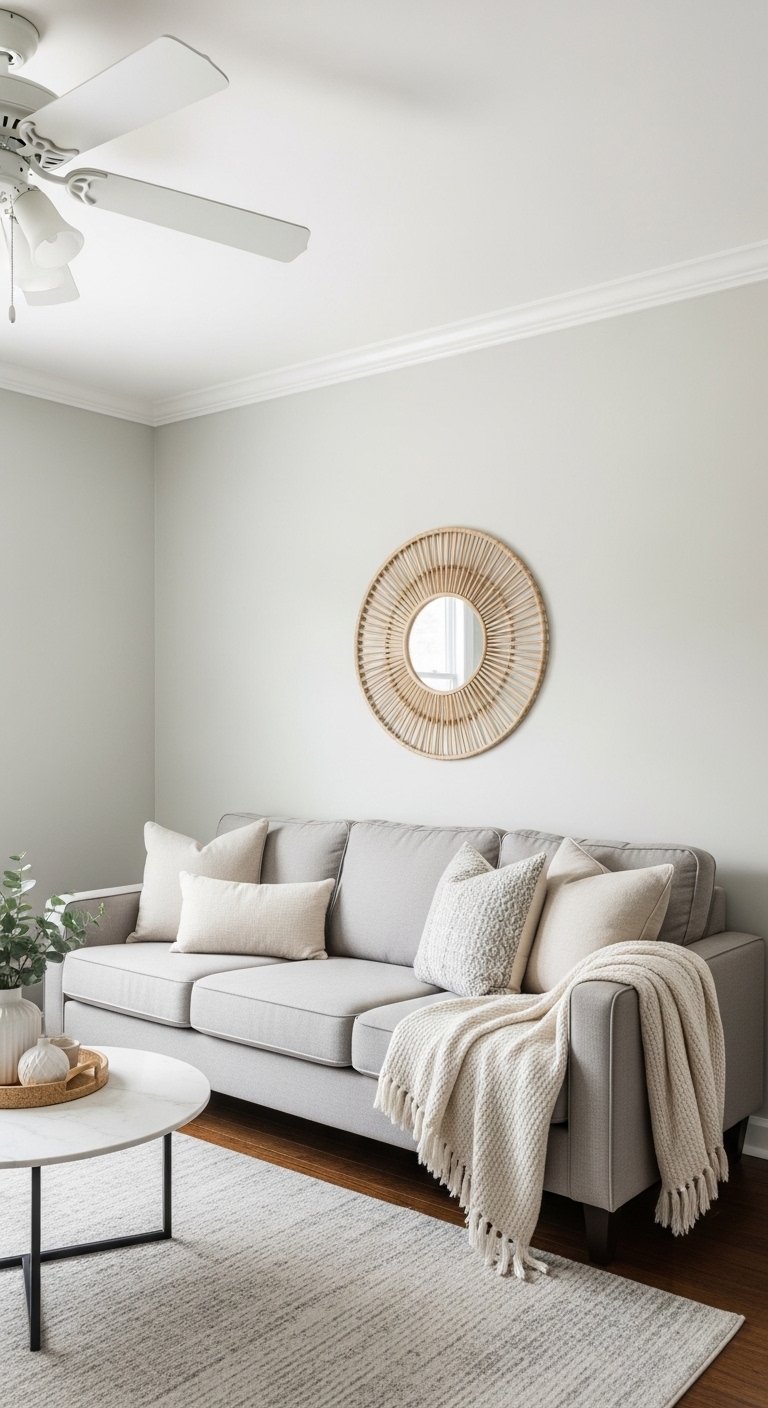
Painting the walls and ceiling in the same color, or in very closely related tones, is a powerful technique for making a small living room feel larger because it removes the horizontal line where the wall color ends and the ceiling color begins. That line, in most rooms painted with white ceilings and colored walls, visually defines the top limit of the room and can make low ceilings feel even lower. When the wall and ceiling share a tone, the eye reads the whole enclosed space as continuous, which makes the room feel more volumetric and less bounded. Choose a light, warm tone for the most open result. A soft warm white, a very light sage, or a barely-there warm gray applied from floor to ceiling creates a seamlessly enveloping room that feels much more generous than the actual measurements suggest.
12. Slim Media Console
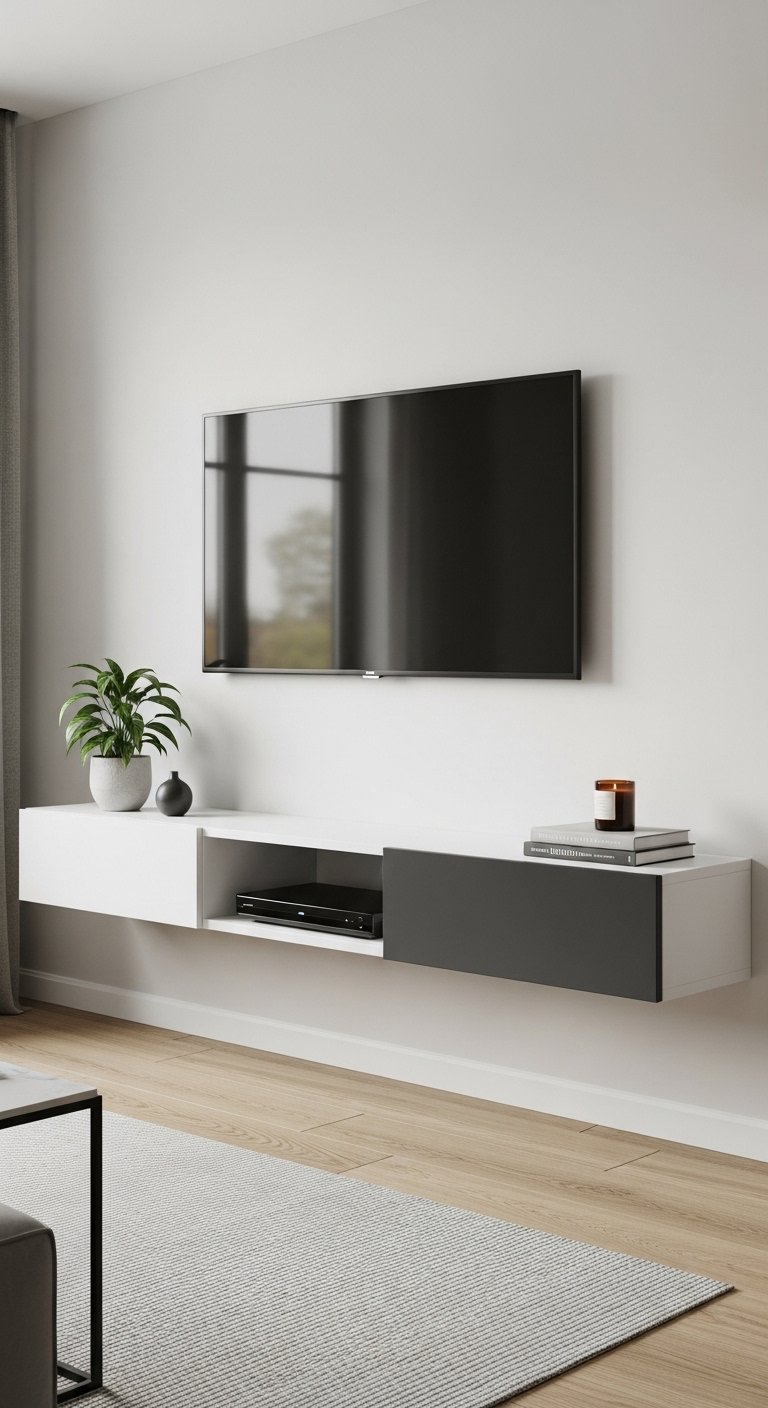
A full-height entertainment unit with deep shelving takes up both floor space and wall area in a small living room. Replacing it with a low, slim media console that holds only the essentials keeps more wall visible above and more floor visible beside it. The combination of visible wall and visible floor creates the visual breathing room that small living rooms need. Mount the television on the wall above the console rather than sitting it on top, which frees up the console surface and also positions the screen at a better viewing height for most seating arrangements. Style the console top with a plant, a candle, and a few books rather than filling it with electronics and cables, which keeps the room looking clean and intentional rather than utilitarian.
13. Strategic Accent Lighting
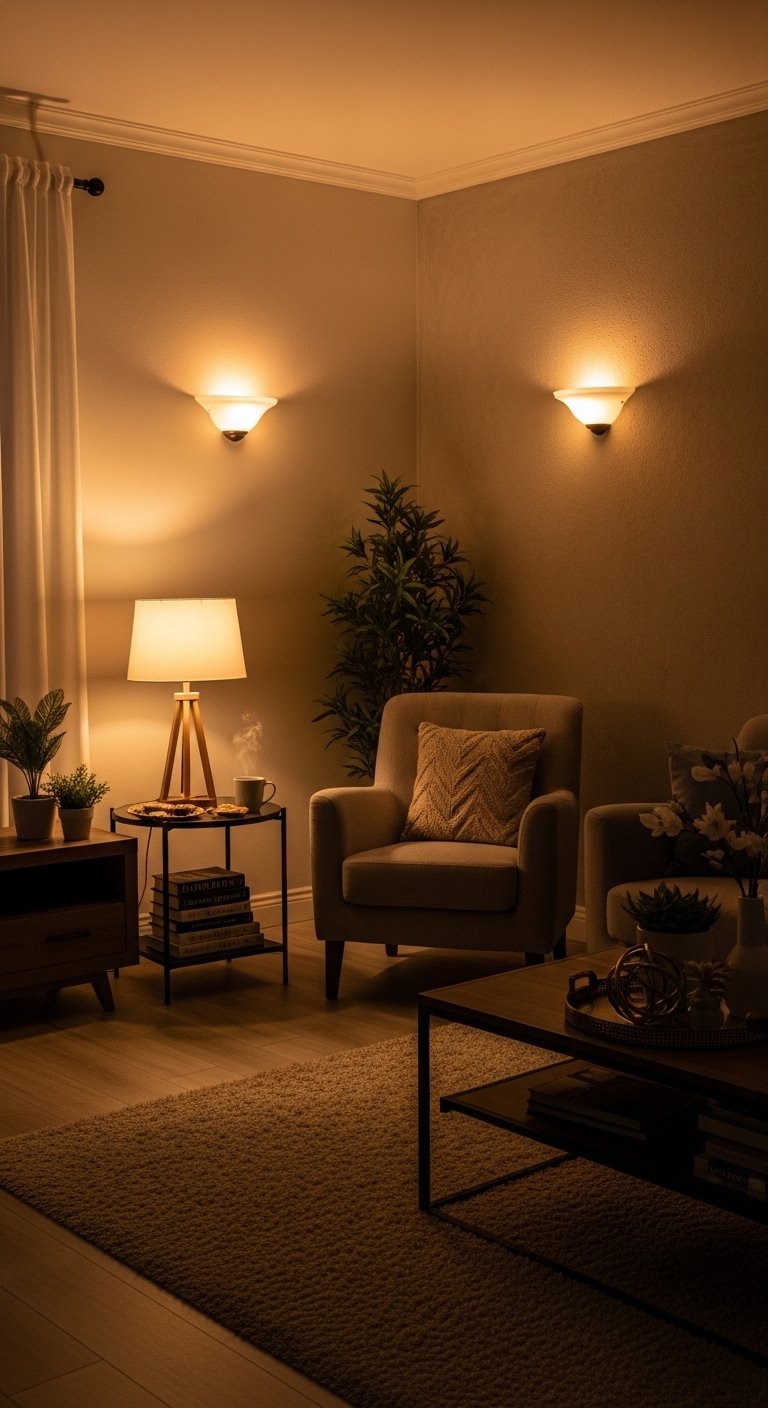
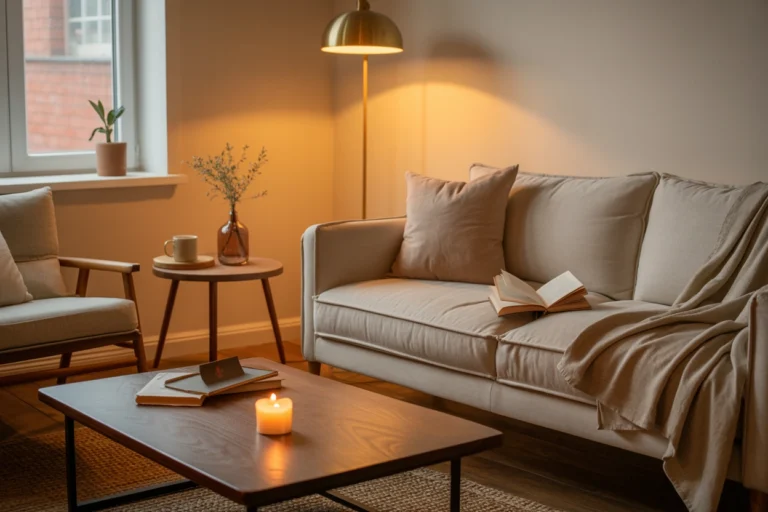
Overhead lighting in a small living room lights the space evenly but flatly, which can make the room feel like a stage rather than a welcoming space. Adding accent and ambient lighting from multiple lower sources, floor lamps, table lamps, and wall sconces at different heights, creates layered light that makes the room feel more dimensional and more intimate. The pools of warm light from lower sources create areas of interest that draw the eye around the room, which makes the room feel more expansive than flat overhead light can achieve. Position a floor lamp in a corner to throw light up the wall and across the ceiling. Add a table lamp on each end table beside the sofa. These layers create a living room that feels designed for habitation rather than illumination.
14. Leggy Furniture Choices
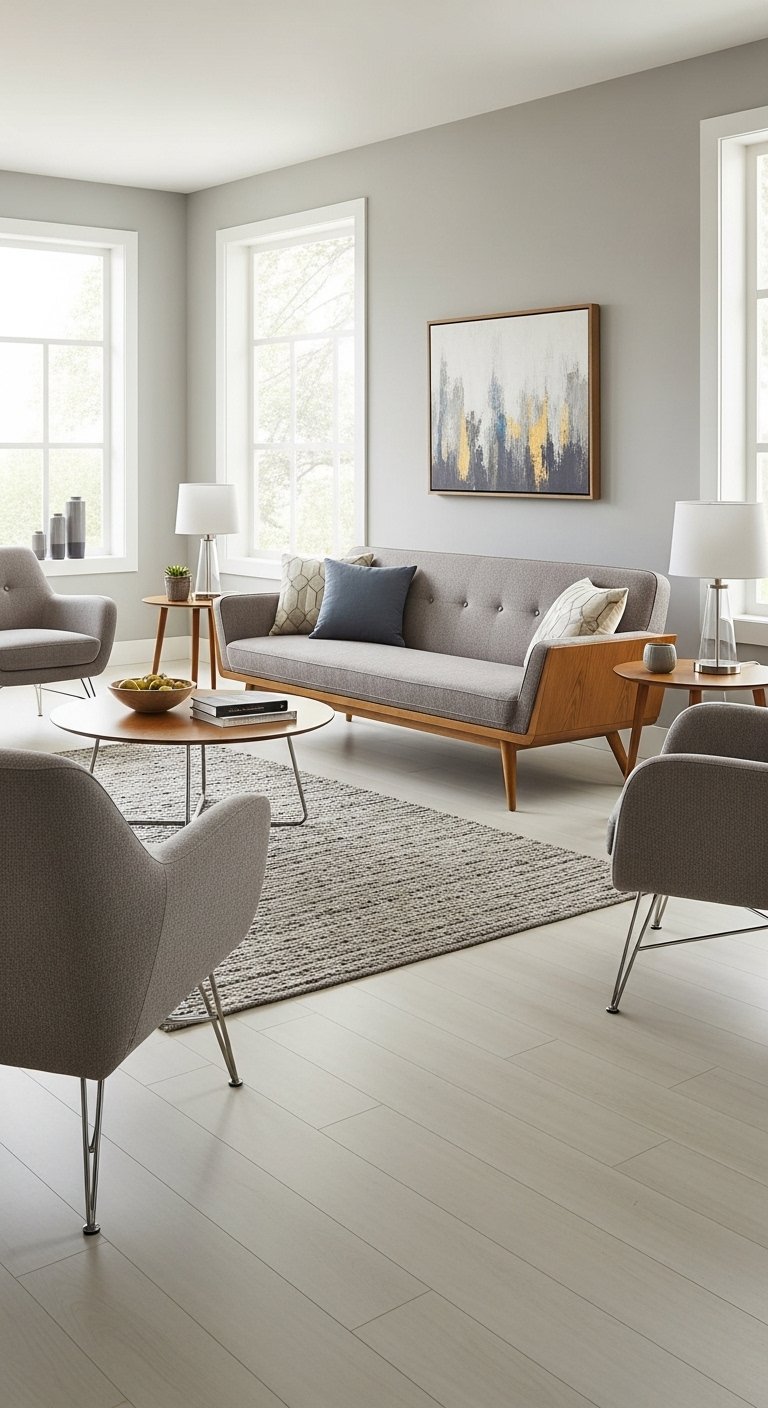
Furniture that sits close to the floor hides the floor and makes a small living room feel lower and heavier. Furniture on legs that show a gap between the seat cushions and the floor does the opposite. Visible floor beneath furniture creates continuity of the floor surface across the room, which makes the floor appear larger and the room feel more open. Look for sofas on visible legs rather than on a skirted base, side tables on hairpin or tapered legs rather than on a solid block base, and accent chairs on a visible wooden or metal frame. Even a few inches of visible floor beneath a sofa makes a significant perceptual difference to how generous the floor area appears. This is a subtle change but one that designers rely on consistently in small space work.
15. Pale Wood Flooring
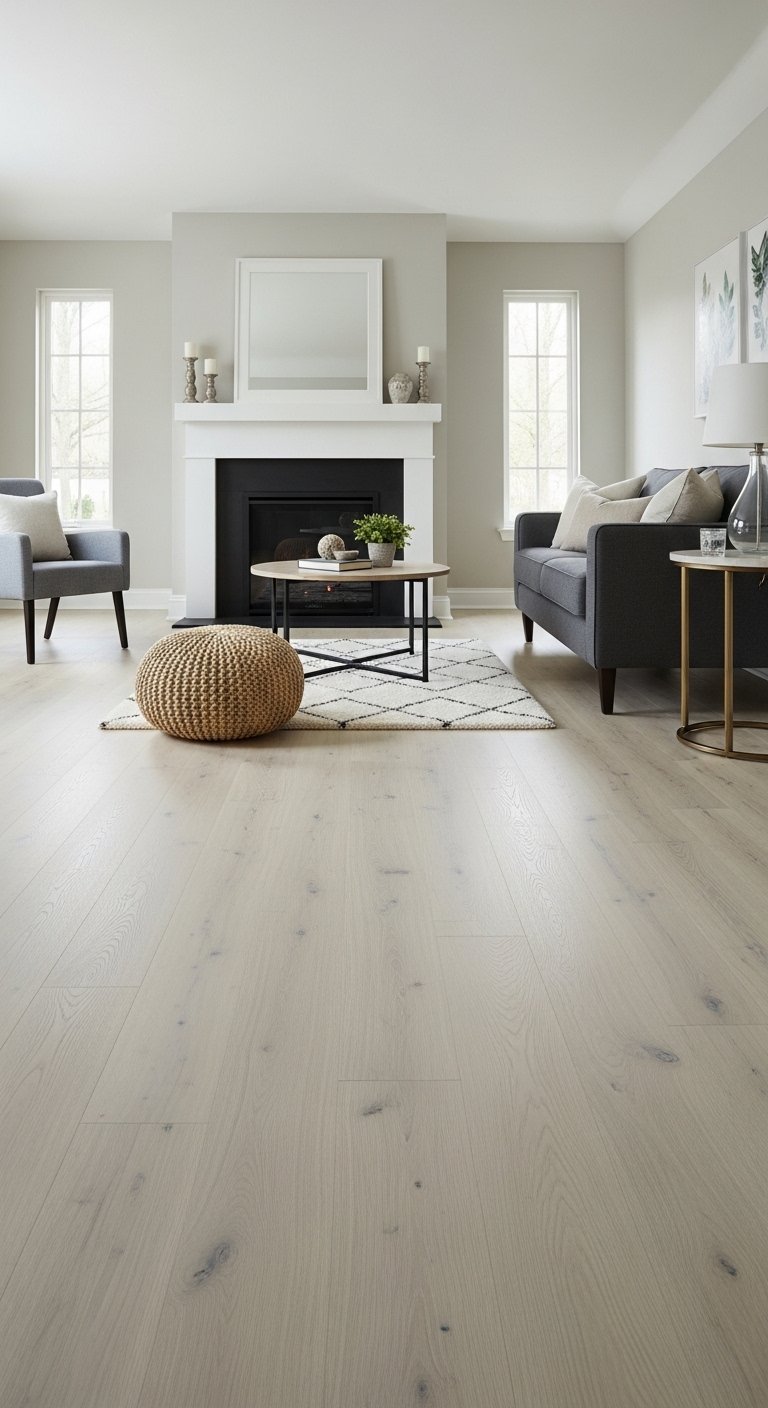
Light-toned hardwood or engineered wood flooring in a pale oak, ash, or maple tone makes a small living room feel larger by reflecting light upward and providing a continuous, uninterrupted surface that the eye reads as spacious. Dark flooring absorbs light and can make an already small room feel enclosed. Very light or whitewashed wood tones go further by reflecting both natural and artificial light in a way that contributes to the room’s overall brightness. If replacing flooring is not practical, a large pale-toned area rug over existing flooring achieves a similar effect by covering the darker floor with a lighter surface that reflects more light and makes the room feel airier. The rug acts as a visual substitution for the floor color when it covers the majority of the visible floor area.
16. Declutter Aggressively
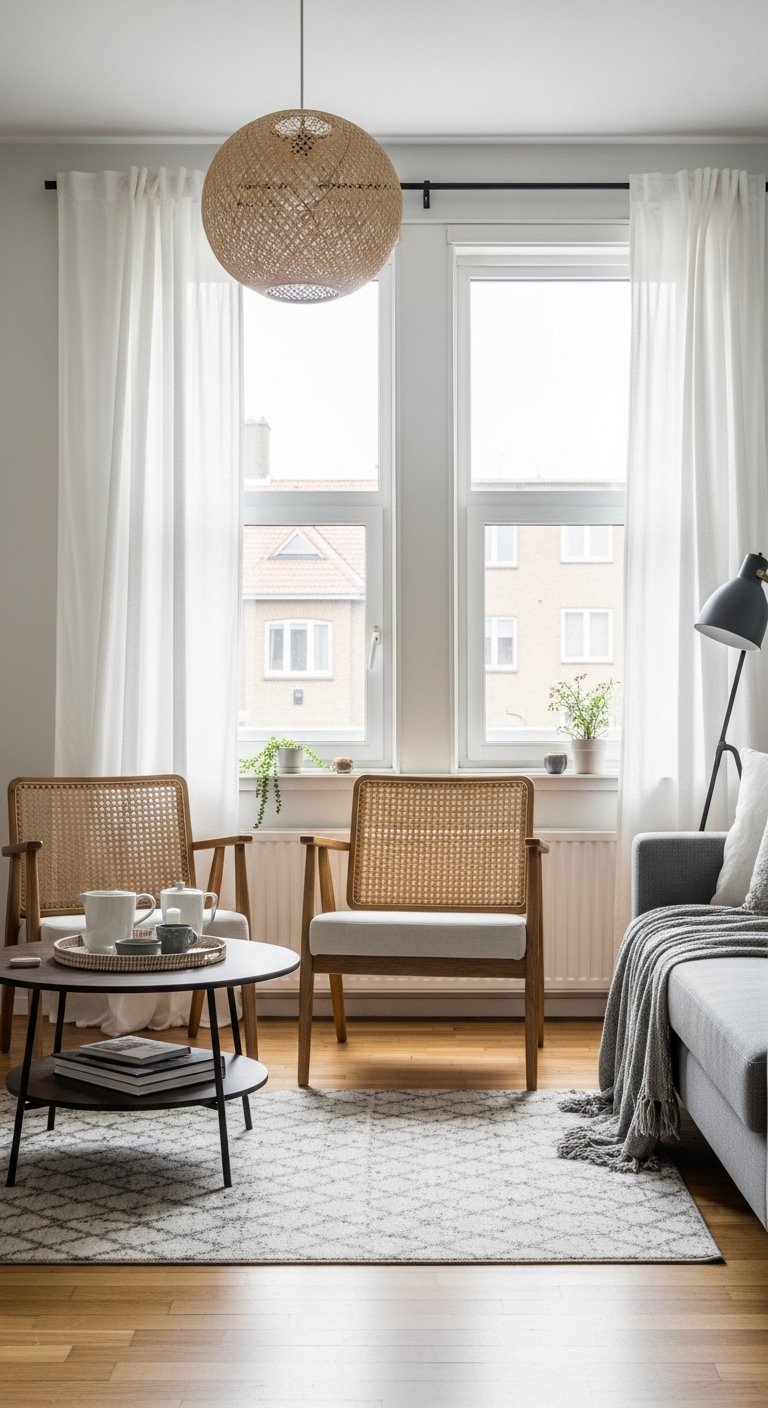
A small living room tolerates clutter less than any other room in the home. Each extra object on a surface, each pile of things that has accumulated on the floor or on a shelf, reduces the apparent space of the room measurably. Going through the living room and removing everything that does not genuinely need to be there, items that have accumulated through habit rather than intention, is the fastest and cheapest way to make a small living room feel larger. Once the excess is removed, take a fresh look at what remains and give each object a specific place where it belongs. Things left out should be there because they are used daily or because they add genuine beauty to the room. Everything else belongs in storage. The discipline of maintaining this standard is what keeps a small living room feeling spacious.
17. Sofa Table Behind
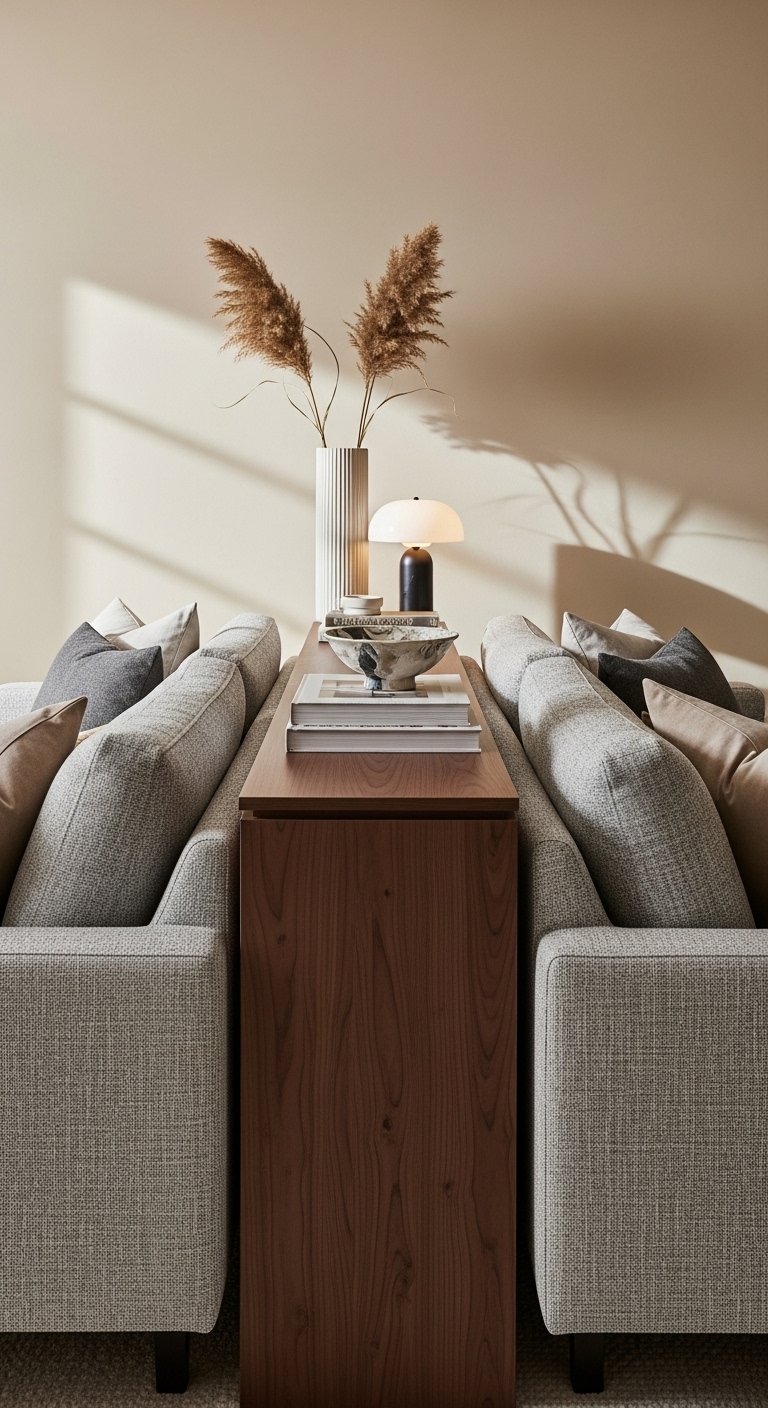
Placing a slim console table directly behind the sofa, between the sofa back and the wall, creates a surface without using any additional floor space beyond what the sofa already occupies. A sofa table placed this way serves as a landing spot for lamps, plants, books, and decorative items while keeping the floor area of the room completely clear. It also adds a layer of visual depth to the sofa zone by creating a surface at a height between the sofa cushions and the ceiling, which breaks up what can otherwise be a visually flat expanse of sofa back and wall. Style the sofa table with a small lamp on each end, a plant in the center, and a few books or candles for a complete and layered look.
18. Picture Rail Groupings
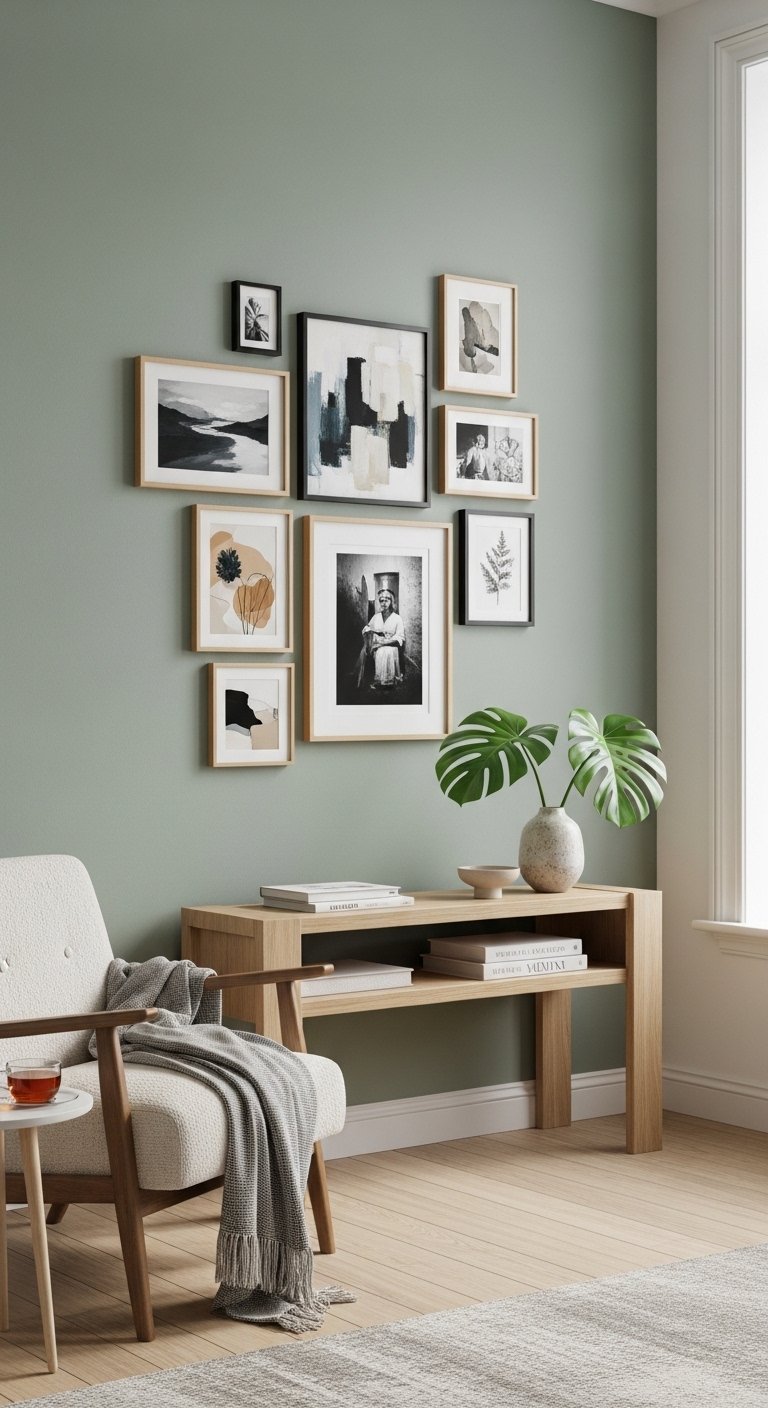
Hanging a small grouping of art pieces in a tight cluster on one wall, rather than spreading individual pieces at wide intervals around the room, creates a single strong focal point that draws the eye to one place rather than pulling it around the room in multiple directions. In a small living room, too many separate art elements hung on different walls creates visual noise that makes the room feel busier and smaller. One confident grouping on the main wall, sized and positioned to anchor the seating arrangement, gives the room a clear visual center without the clutter of distributed art. Keep the grouping well within the boundaries of the furniture below it, generally no wider than the sofa or the main piece it is above, for the most balanced and considered result.
19. Pocket Doors or Sliders
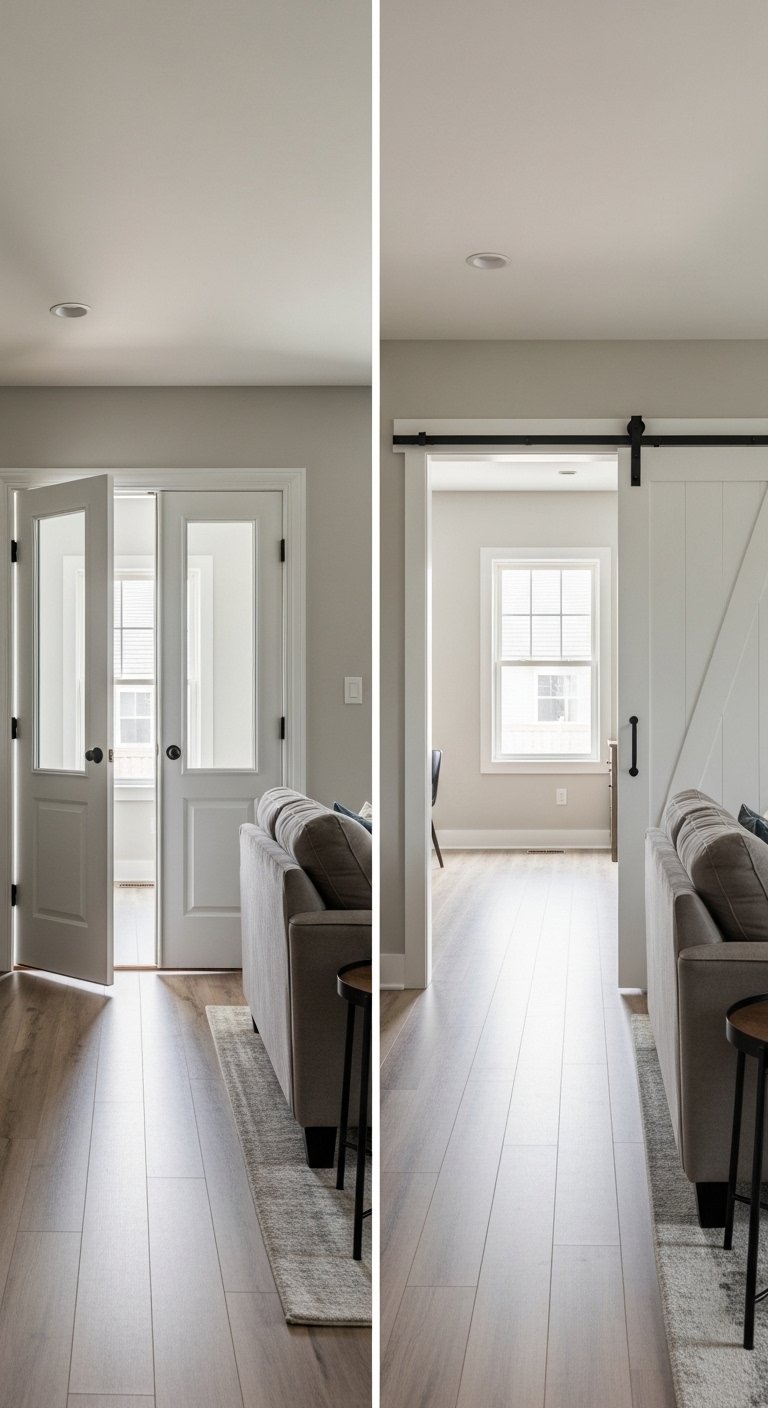
Standard hinged doors that swing into a small living room consume floor space every time they open. Replacing them with pocket doors that slide into the wall or barn-style sliding doors that move along the wall face eliminates this spatial cost entirely. The floor area that a door swing consumes can be significant in a room with multiple doorways, and removing that constraint makes a real difference to how freely the room can be arranged. Pocket door installation requires opening the wall to create the pocket cavity, which is a more involved project, but sliding barn doors mounted on a wall-face track are a simpler alternative that achieves the same result with less structural work. Both options also tend to look more considered and intentional than standard doors in a designed living room.
20. Vertical Striped Wallpaper
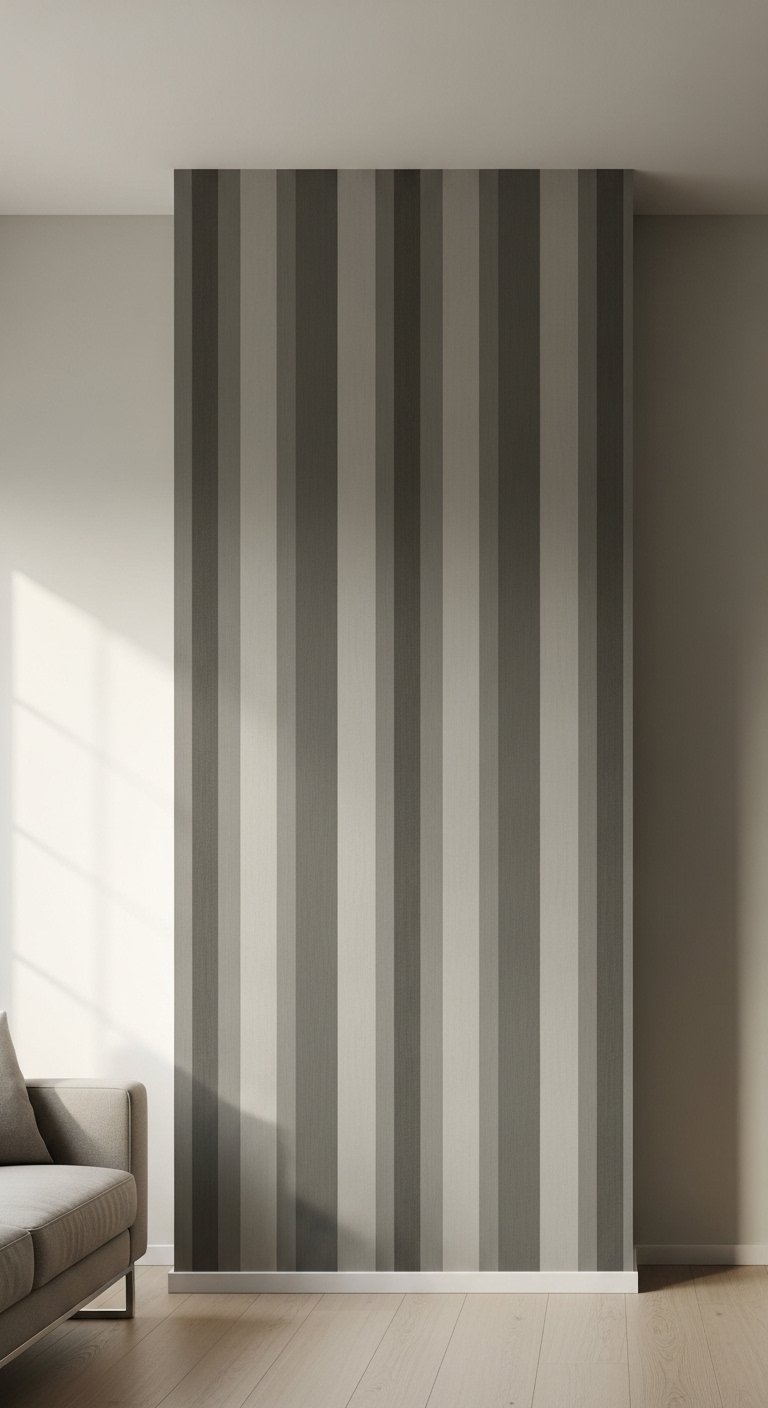
Vertical stripes on a wall create an upward visual movement that makes the ceiling feel higher in the same way that vertical stripes in clothing create a lengthening effect. In a small living room, a wallpaper or painted stripe treatment on the main wall with narrow vertical lines in a tonal combination, very close in value rather than high contrast, adds height to the room while also adding a layer of textural interest that plain paint does not provide. Keep the stripe subtle rather than bold for the most architectural effect. A tonal stripe where the two colors are within one or two shades of each other, such as a warm white and a barely darker cream, reads as texture at a distance and is especially effective when the same tone is carried onto the ceiling.
21. Edit the Bookshelf
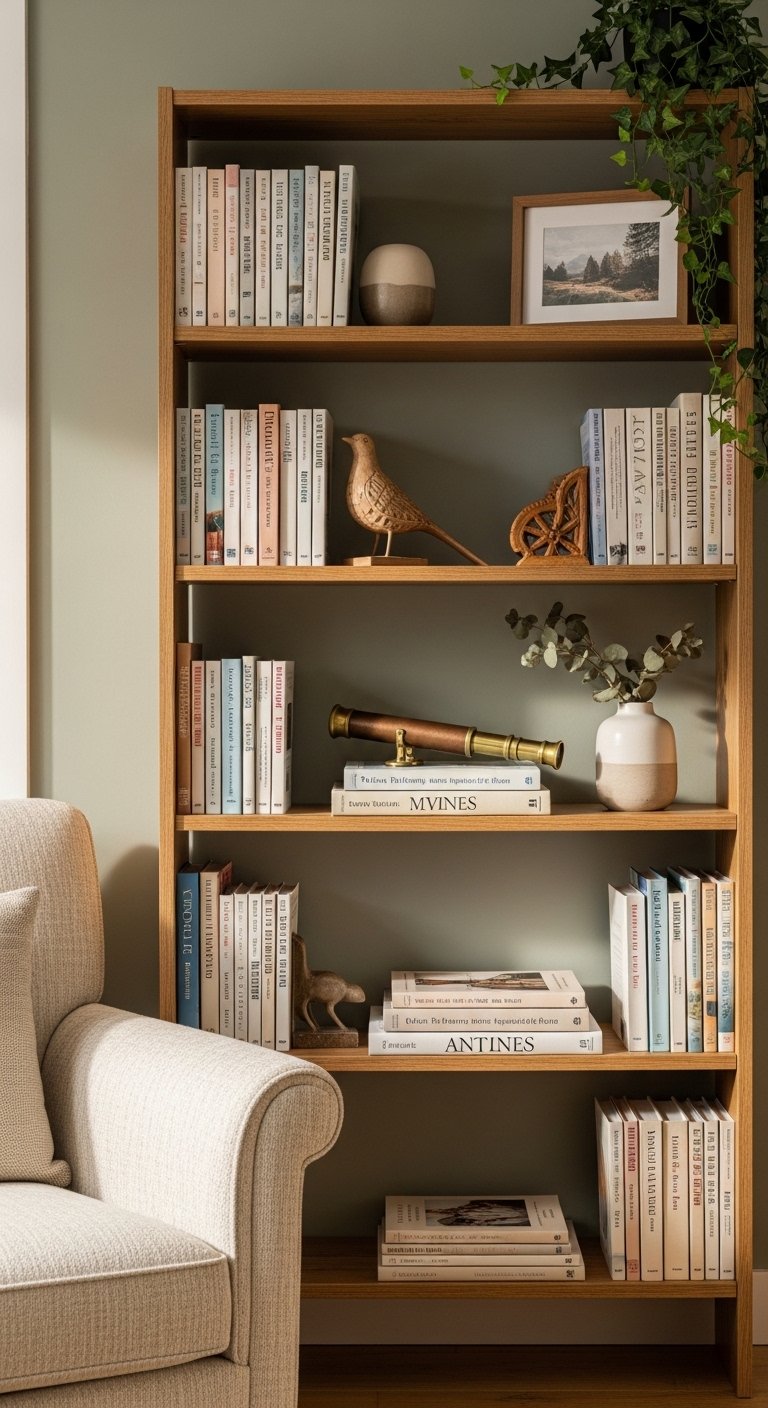
A bookshelf in a small living room that is stuffed to capacity with books, objects, cables, and miscellaneous items becomes a source of visual clutter rather than a design feature. Editing the shelf down to a curated selection, removing perhaps half the books and leaving intentional space between the remaining objects, transforms it from a problem into a focal point. Leave every third section of the shelf partially or fully empty. Use the remaining space for a plant, a candle, or a single framed piece. Stand books in groups of five or six rather than running them continuously across the full width of the shelf. This editing approach applies to any storage surface in a small living room: the goal is to keep surfaces from feeling overloaded, which is what makes a small room feel smaller.
22. Zone With Lighting
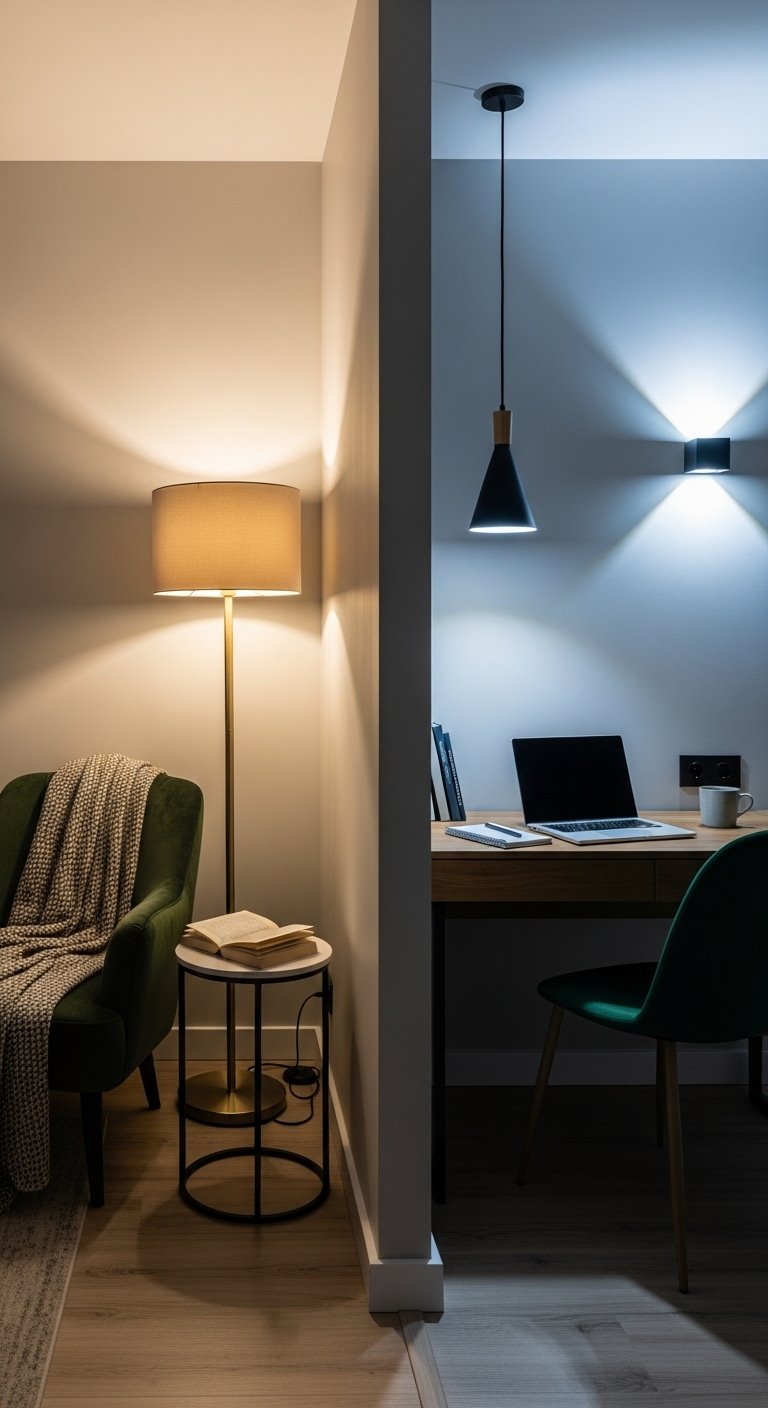
In a small living room that serves multiple purposes, using lighting to create visual zones rather than physical dividers keeps the room open while still creating distinct functional areas. A floor lamp positioned beside a reading chair creates a dedicated reading zone without any physical boundary. A pendant light or a table lamp over a small desk area in the corner signals that area as a workspace separate from the main seating zone. The different light sources, each at a different height and with a different quality of light, create perceptible boundaries between the zones without any walls, screens, or furniture arrangement changes required. This is especially effective in small living rooms that also contain a dining area or a workspace, where clear visual separation matters but physical separation is not possible.
23. Pare Back Accessories
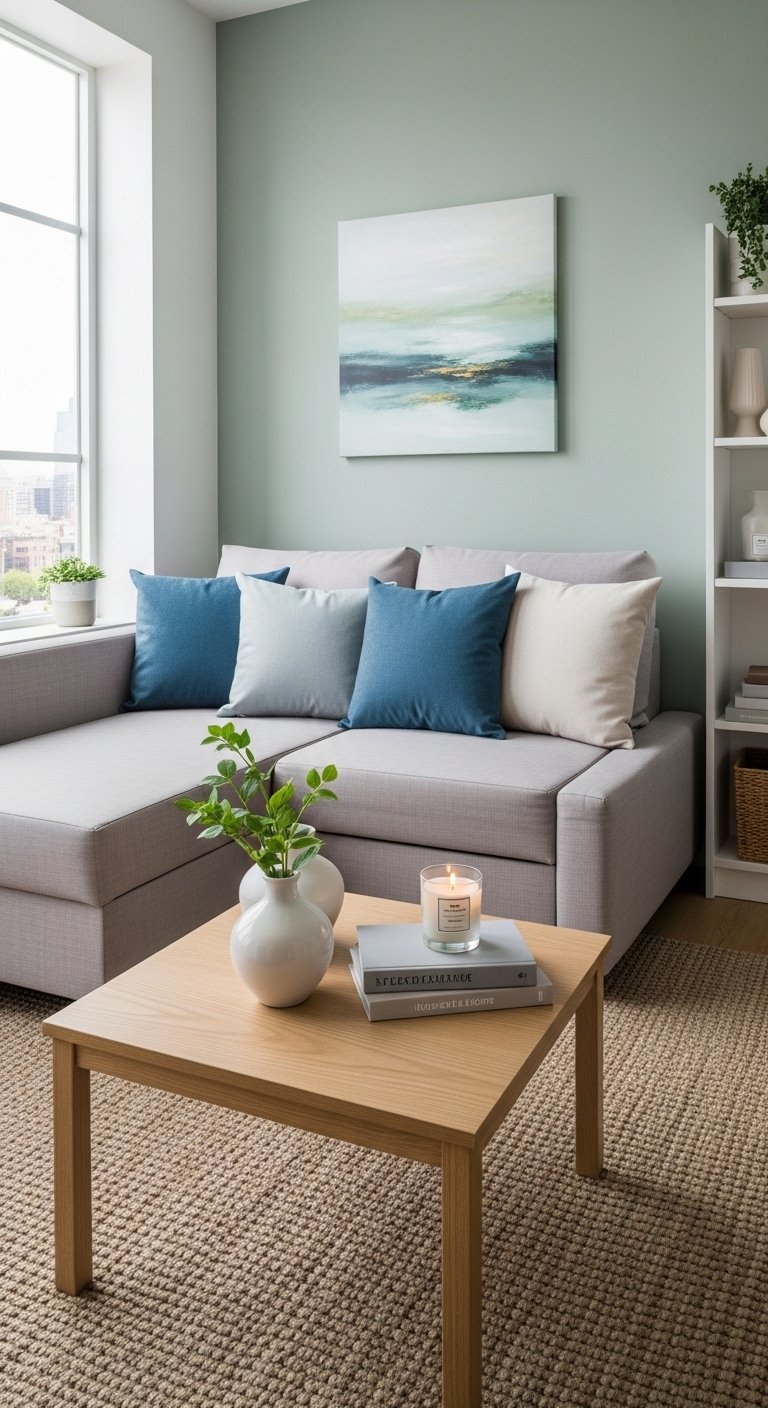
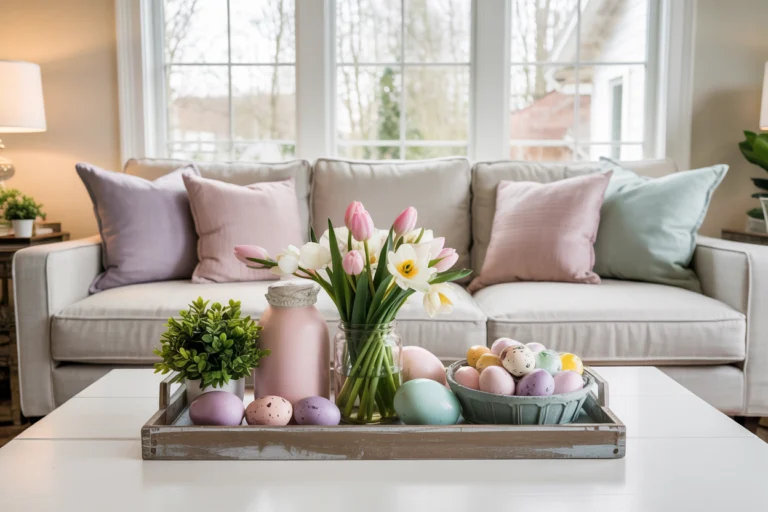
Small living rooms look their best when the number of accessories, decorative objects, throw pillows, candles, trays, and tabletop items is kept to a minimum. The temptation is to fill every surface with something attractive, but in a small room this creates visual noise that makes the space feel cramped rather than warm. A better approach is the rule of three: no more than three objects grouped together on any single surface, and at least one surface in the room left completely clear. The empty surfaces create breathing room that allows the eye to rest and the mind to register the space as generous rather than crowded. Choose the accessories that you genuinely love most and give them enough space to be seen properly, rather than competing with a dozen other things for attention.
A small living room just needs a bit more intention than a larger one. Make decisions about what stays and what goes, keep the floor as clear as possible, and let the light do the rest. Most small living rooms have more potential than their owners realize.