19 Yellow Kitchen Ideas That Feel Cheerful Without Looking Childish
Yellow is the most cheerful kitchen color and the one most likely to go wrong. The difference between a yellow kitchen that feels warm and welcoming and one that feels like a children’s playroom comes down to the specific shade of yellow, the amount of yellow used, and what the yellow is paired with. Bright lemon yellow on every wall reads as overwhelming and juvenile. Warm buttery yellow on a single accent wall paired with warm cream and natural wood reads as sophisticated and genuinely cheerful. The shade, the proportion, and the pairing are everything. These 19 ideas cover the specific yellows that work in adult kitchens, the proportions that keep the cheerfulness from becoming chaos, and the material pairings that ground the yellow in genuine warmth rather than candy-store brightness.
1. Warm Buttery Yellow Walls
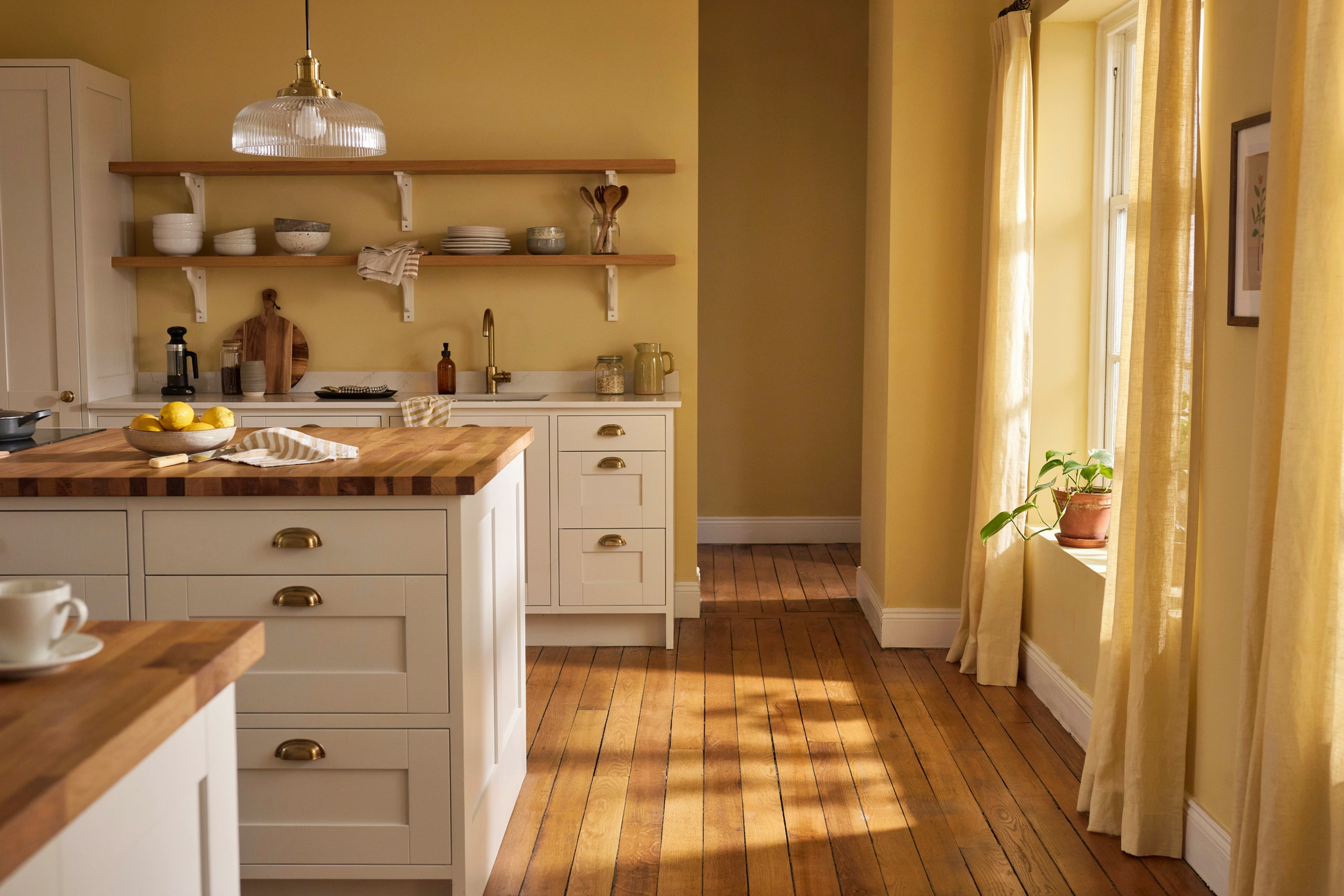
The most universally successful kitchen yellow is a warm buttery tone that sits between golden and cream, sometimes called aged butter or soft saffron in paint collections. This muted warm yellow provides the cheerful quality without the bright acidic edge that primary yellow carries. Warm buttery yellow on the kitchen walls creates a room that feels like it is filled with sunshine even on overcast days. The warm base prevents the yellow from reading as childish because the sophistication is in the warmth rather than the brightness. Test the specific shade in the actual kitchen under both natural and artificial light, since yellow is one of the most light-sensitive colors and changes dramatically between morning and evening.
2. Mustard Cabinet Statement
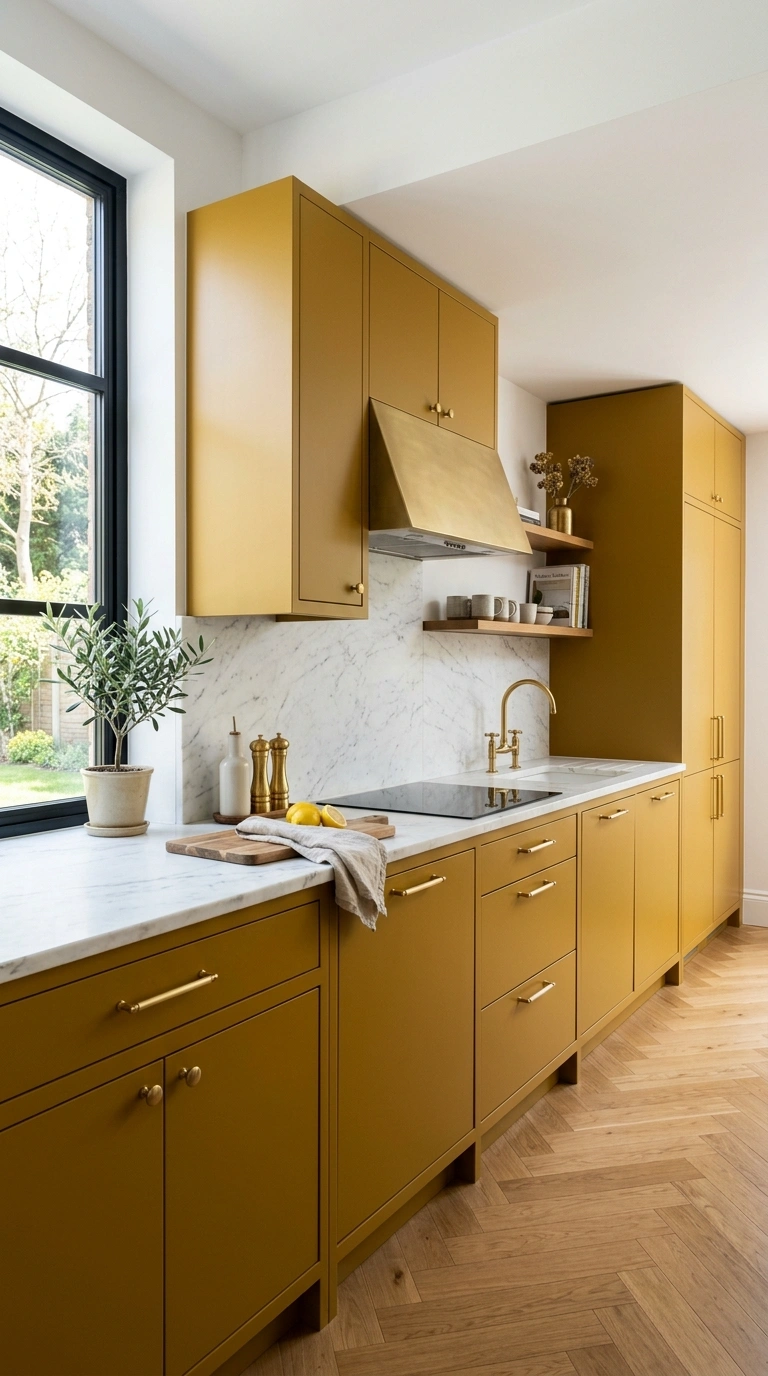
Mustard yellow cabinets create one of the most distinctive and most grown-up yellow kitchen looks because mustard sits at the intersection of yellow, brown, and gold, which gives it the depth and the complexity that brighter yellows lack. Mustard reads as a fashion color rather than a nursery color, which is what keeps it sophisticated in a kitchen context. Pair mustard cabinets with warm white walls, a white or marble counter, and brass hardware for the most refined result. The mustard works on both lower cabinets with white uppers and as a full cabinet color in kitchens with adequate natural light.
3. Yellow Backsplash Contained
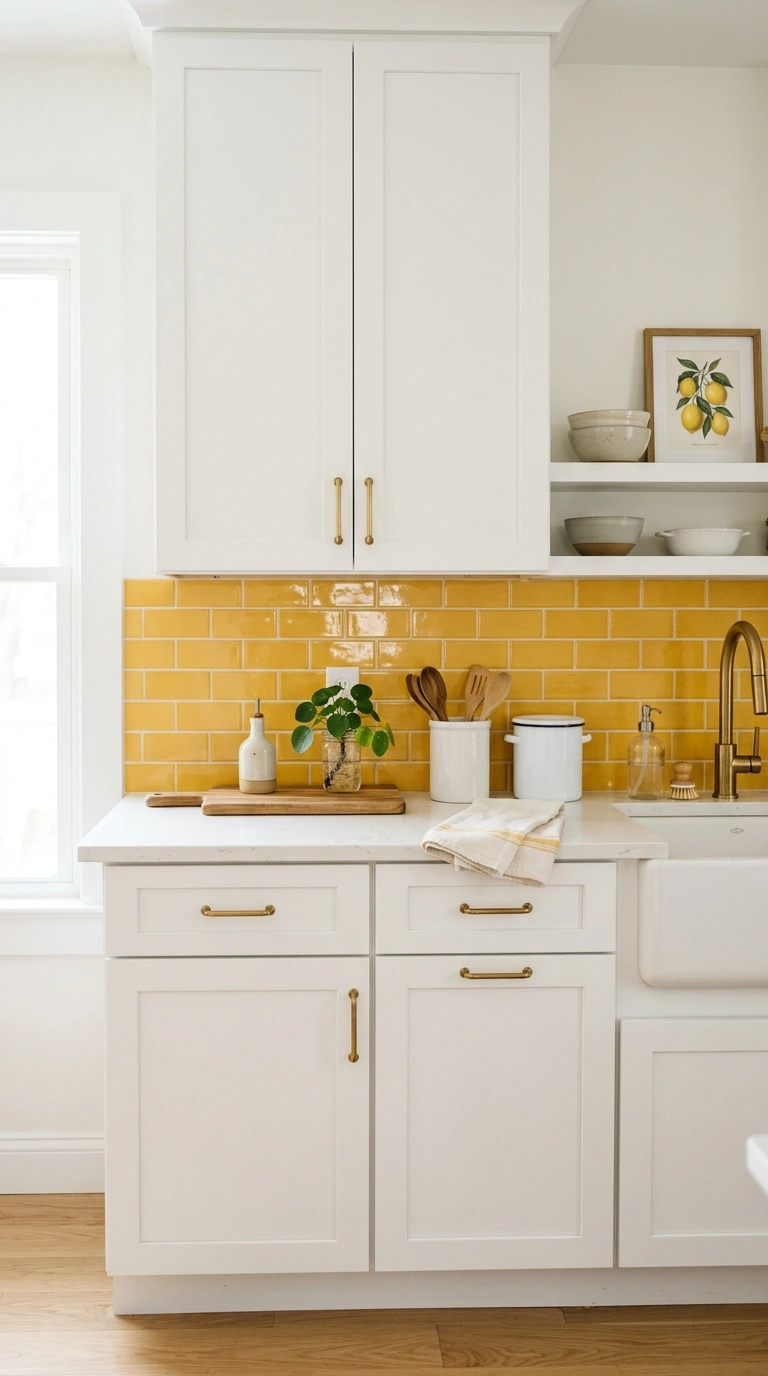
A yellow tile backsplash behind the stove or across the main work wall introduces the cheerful color in a contained band at eye level that adds personality without dominating the room. Yellow subway tile, warm yellow ceramic tile, or patterned tile with yellow as one of several tones all work. The backsplash application means the yellow is between the counters and the upper cabinets, which frames it in a defined zone. Keep the surrounding cabinets and counter in neutral tones so the yellow backsplash reads as a deliberate feature rather than as one of many competing colors.
4. Single Accent Wall Application
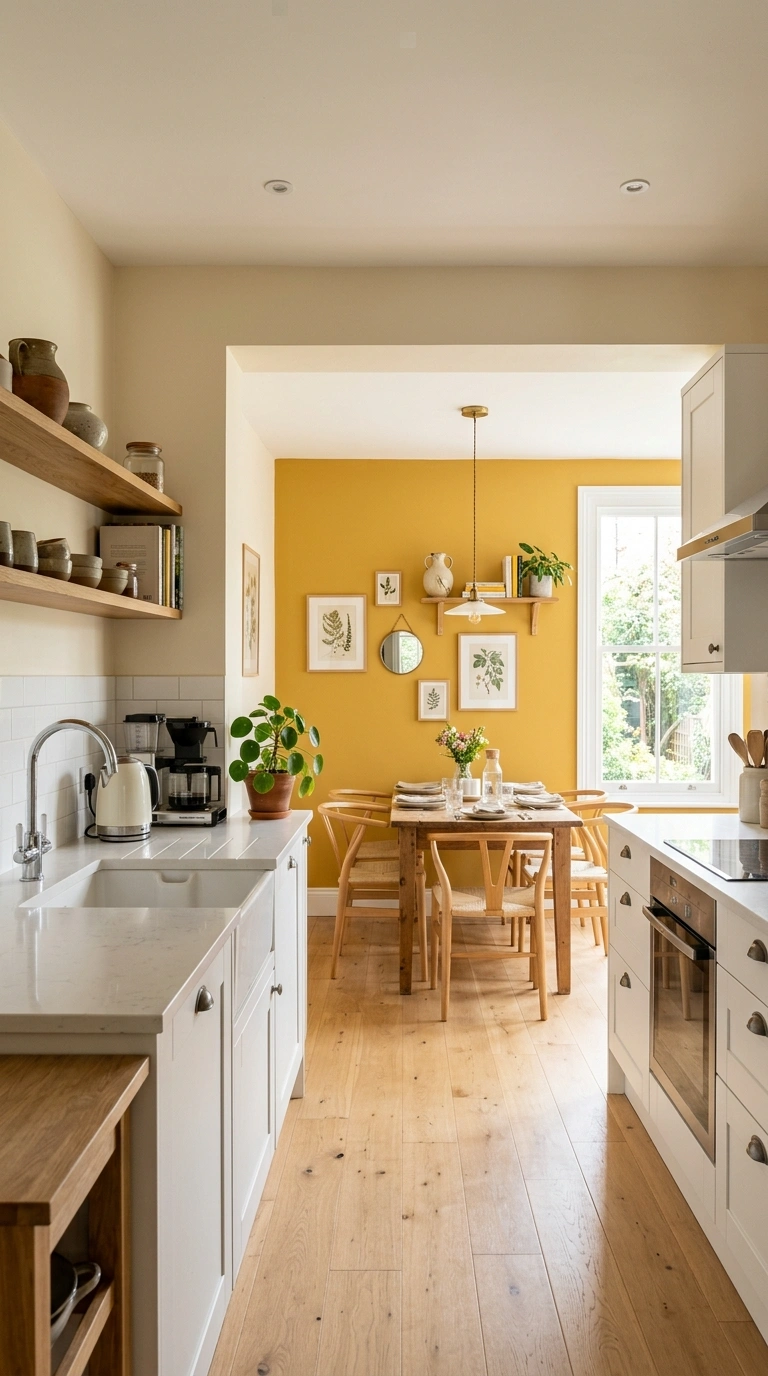
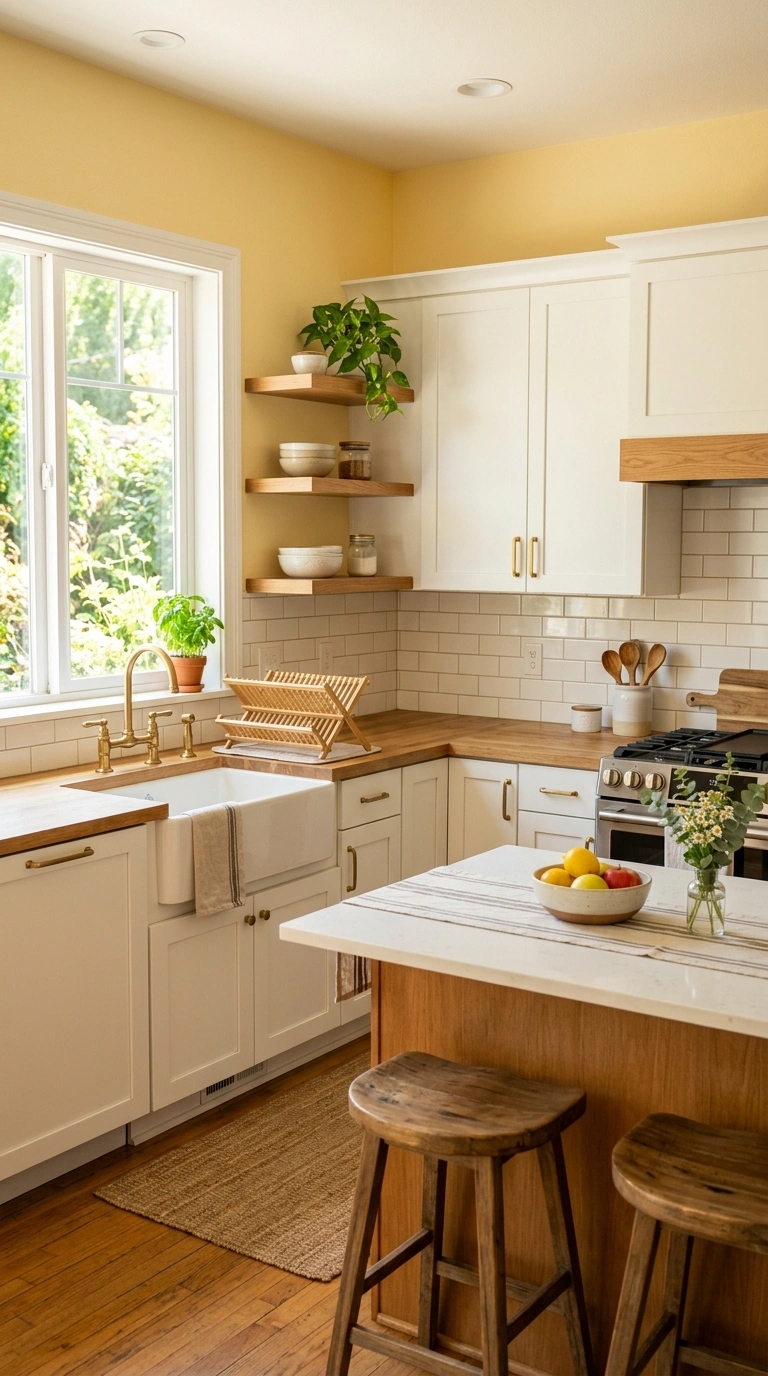
Painting a single kitchen wall in a warm yellow while keeping the remaining walls in warm cream or white provides the cheerful color in a contained application that reads as a deliberate design accent rather than an all-yellow commitment. The accent wall works best on the wall behind the dining area, the wall visible from the main entry, or the wall that catches the most natural light. The yellow accent wall adds the warmth and personality of yellow to the kitchen without the risk of the color feeling overwhelming in a full four-wall application. For a broader understanding of how accent colors work in different rooms, the black cabinet kitchen guide covers how strong single-color applications create impact through contrast rather than through saturation.
5. Yellow and Gray Palette
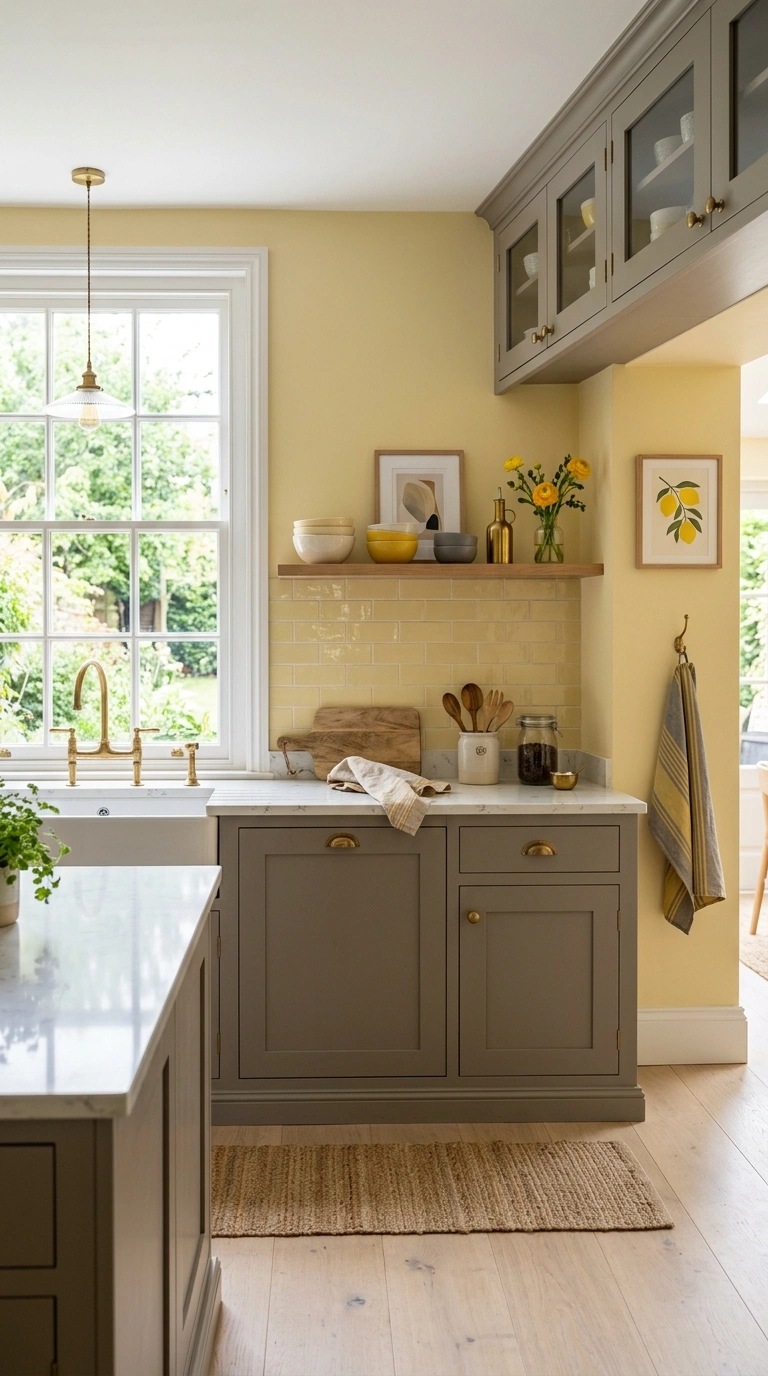
Yellow and gray is a classic pairing where the warmth of the yellow and the coolness of the gray balance each other into a sophisticated neutral-meets-cheerful palette. A warm gray on the cabinets with a soft yellow on the walls, or yellow accessories against a gray kitchen backdrop, creates a grown-up combination that avoids both the severity of all-gray and the brightness of all-yellow. Choose a warm gray rather than a cool one so the gray complements rather than fights the yellow. Add warm wood and brass accents to keep the palette from feeling cold.
6. Yellow Front Door Kitchen View
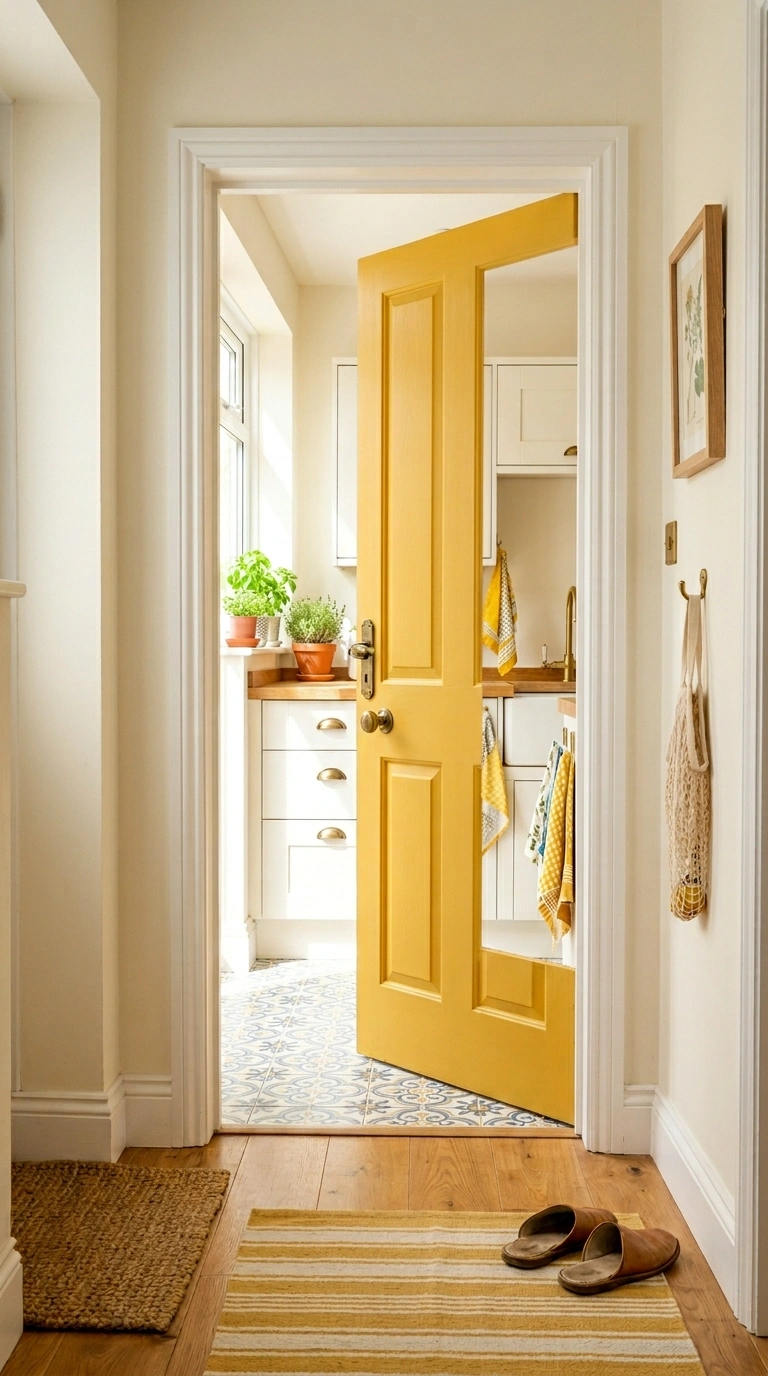
For homes where the kitchen is visible from the front entrance, a yellow front door or a yellow door leading into the kitchen creates a cheerful first impression that signals the warm kitchen beyond. The yellow door serves as a contained color accent that introduces the yellow theme before the kitchen itself is fully visible. A saturated warm yellow on a door against white or cream walls creates a strong welcoming focal point that works as both architecture and color accent.
7. Yellow Pendant Light Feature
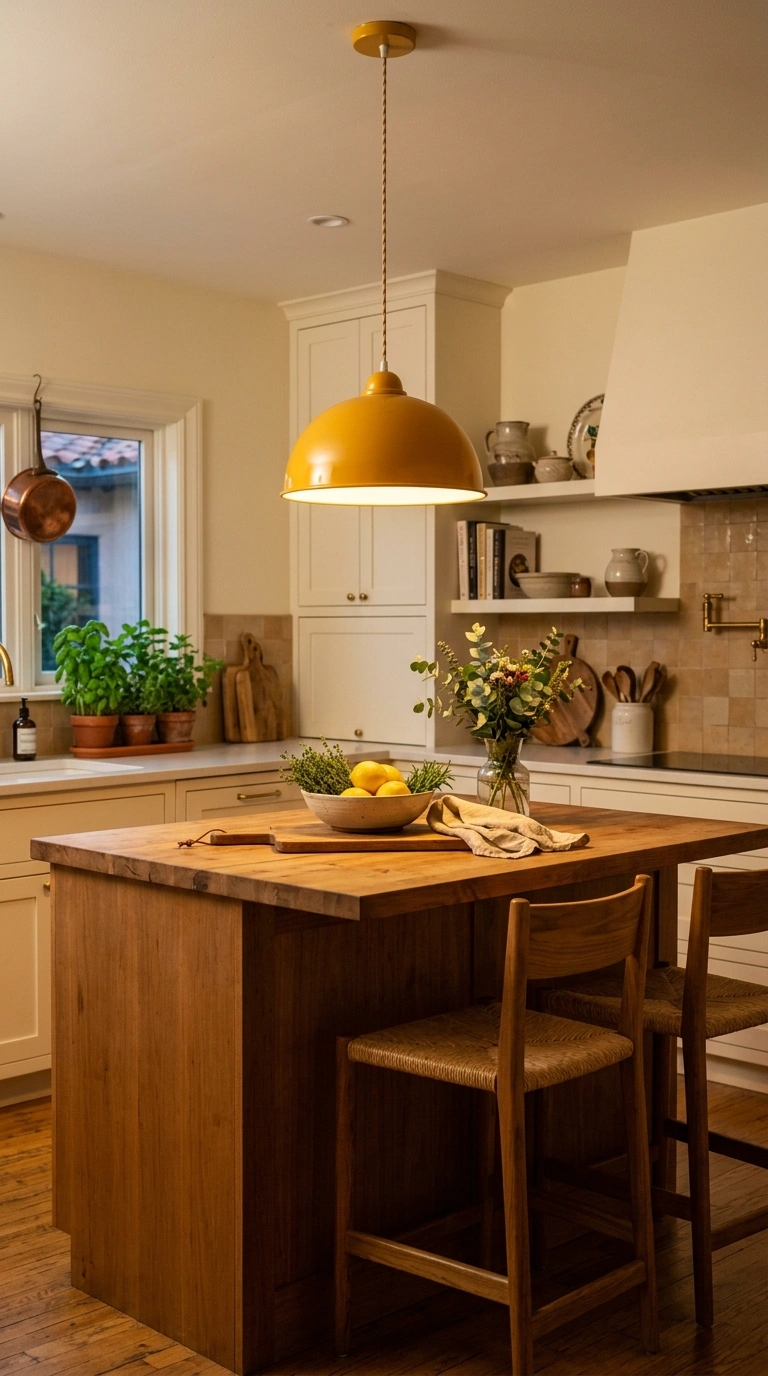
A yellow pendant light or a pendant with a yellow interior shade hung above the kitchen island or the dining table introduces the yellow color through a single overhead element that casts warm golden-toned light onto the surfaces below. The yellow pendant adds cheerful color at ceiling height where it illuminates and colors the room simultaneously. A simple dome pendant with a yellow interior, a yellow glass globe, or a translucent yellow fabric shade all work depending on the kitchen’s style. The pendant is one of the most contained and most impactful ways to introduce yellow to a kitchen.
8. Natural Wood With Yellow
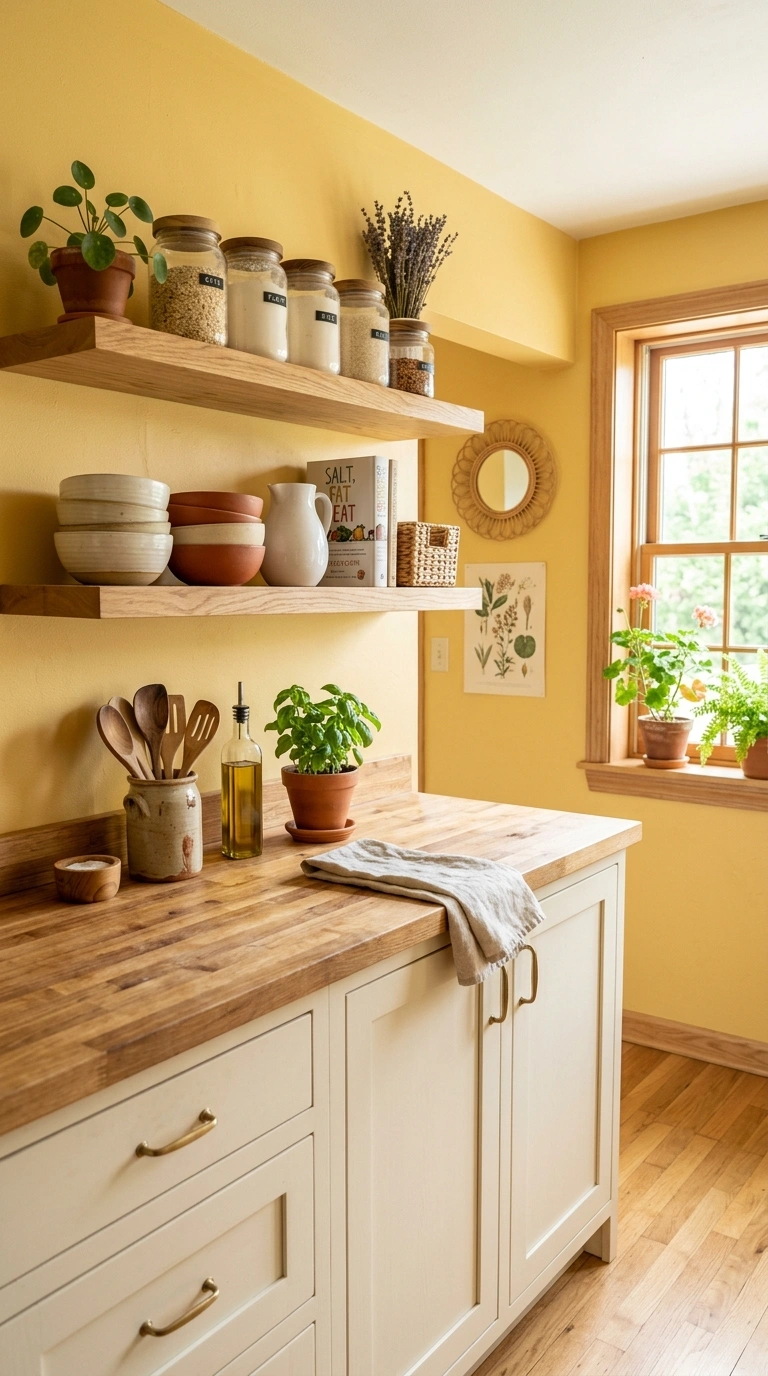
Natural warm wood paired with yellow creates the most organically cheerful kitchen palette because both materials reference the natural world, sunlight and timber, in a combination that feels inherently warm. A butcher block counter, natural wood open shelves, a warm wood dining table, or a natural wood island top all complement yellow walls or yellow cabinets with organic warmth that manufactured surfaces cannot provide. The wood adds the grounding quality that keeps the yellow from floating into brightness without an anchor.
9. Yellow and White Classic
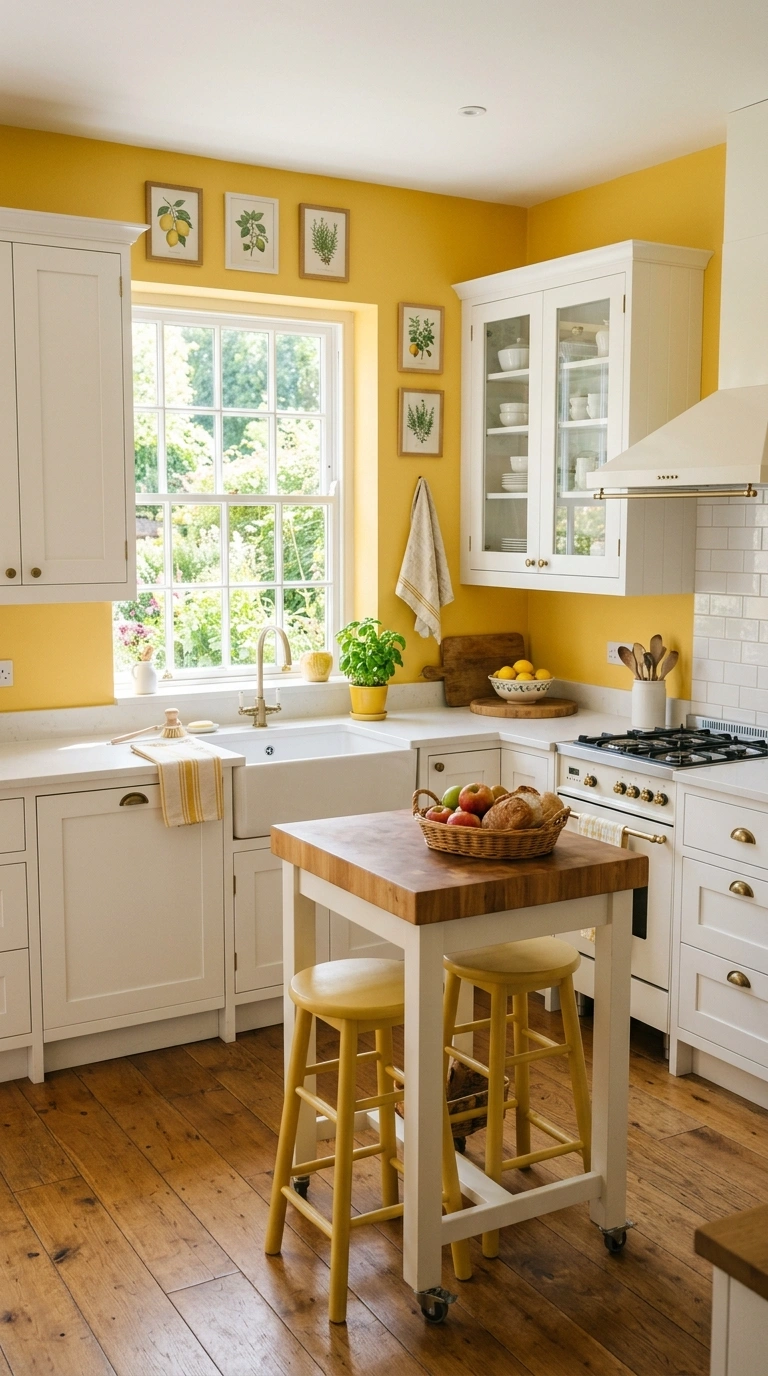
The simplest and most reliably cheerful yellow kitchen pairs warm yellow with clean warm white. Yellow walls with white cabinets, yellow cabinets with white walls, or a yellow backsplash with white surroundings all create the sunny, clean quality that makes yellow kitchens appealing. The white provides the brightness and the breathing room that prevents the yellow from feeling heavy, while the yellow provides the warmth and personality that all-white kitchens lack. Keep the white warm rather than cool so the combination reads as sunny rather than clinical.
10. Muted Golden Kitchen Tone
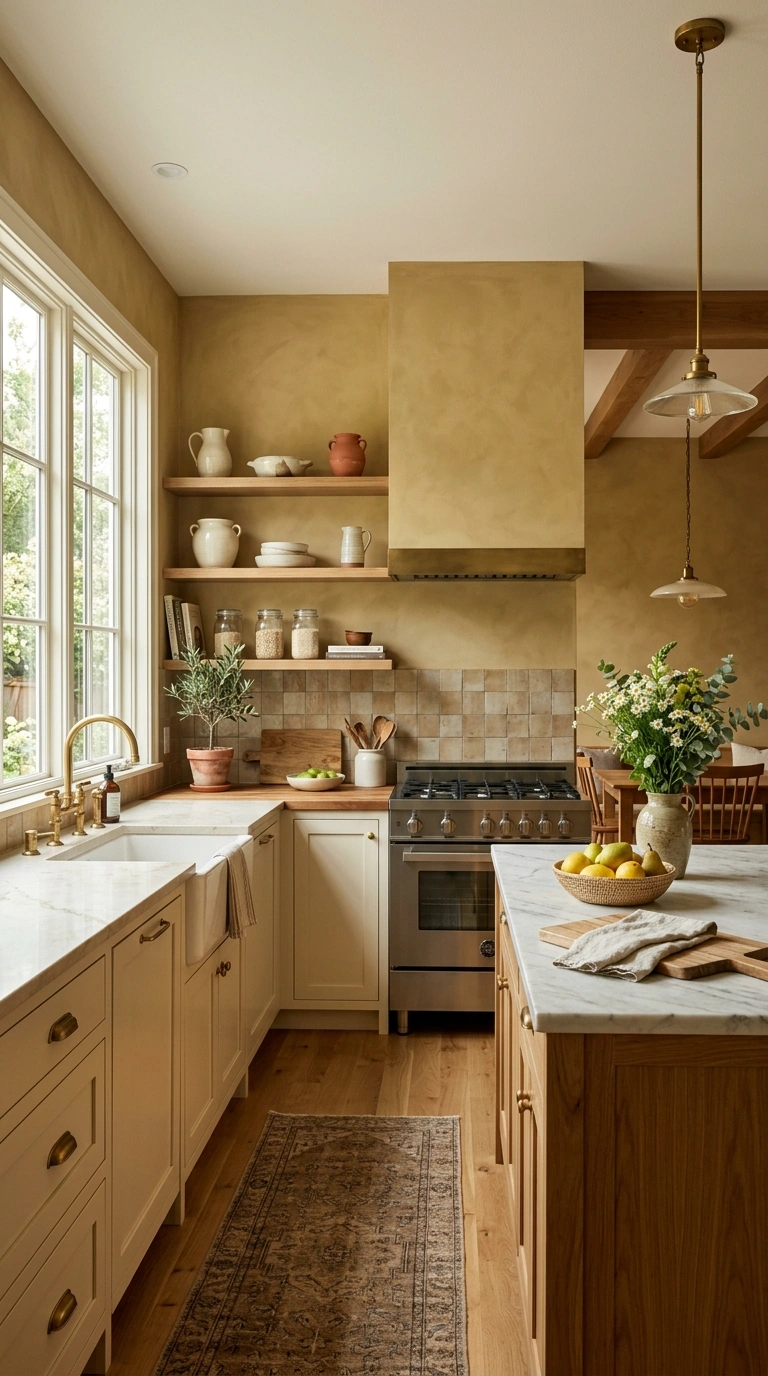
For kitchens that want the warmth of yellow without the obvious brightness, a muted golden tone, essentially yellow mixed with brown and a touch of gray, provides the warm quality without the cheerful punch. This golden kitchen tone works on walls, cabinets, or both and reads as sophisticated rather than playful. Think aged gold rather than lemon. The muted golden tone works particularly well in kitchens with warm wood floors, brass fixtures, and stone counters, creating a cohesive palette of warm earth tones where the yellow ancestry is felt rather than seen obviously.
11. Yellow Accessories Gradual
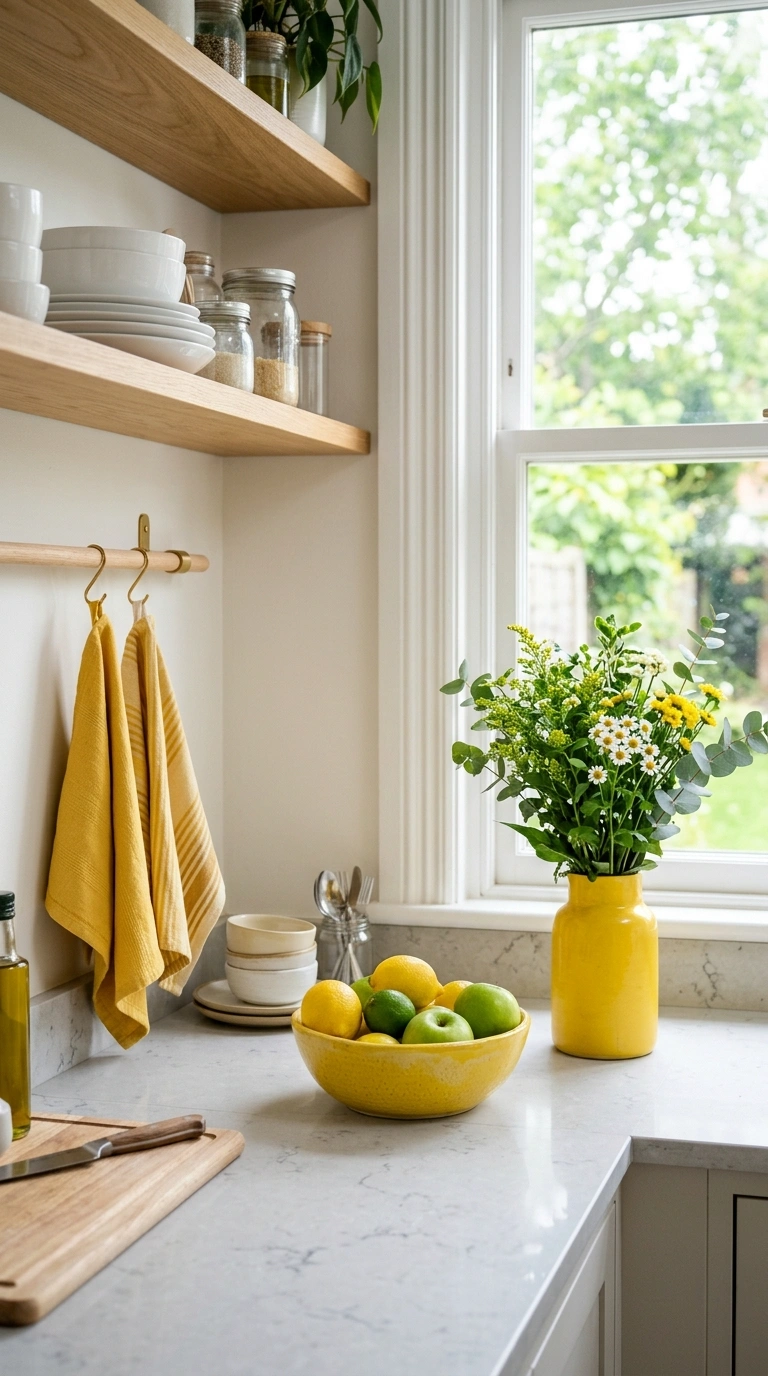
For anyone uncertain about committing to yellow paint or yellow cabinets, introducing yellow through accessories first tests the color in the space without any permanent commitment. A yellow ceramic fruit bowl, yellow hand towels, a yellow runner rug, yellow canisters on the counter, or a yellow vase with flowers all introduce the color gradually. Start with one or two yellow accessories and add more if the color feels right in the space. The gradual approach prevents the regret that sometimes follows a full-commitment yellow paint job and allows the homeowner to find the exact right amount of yellow for their specific kitchen.
12. Yellow Kitchen Island Only
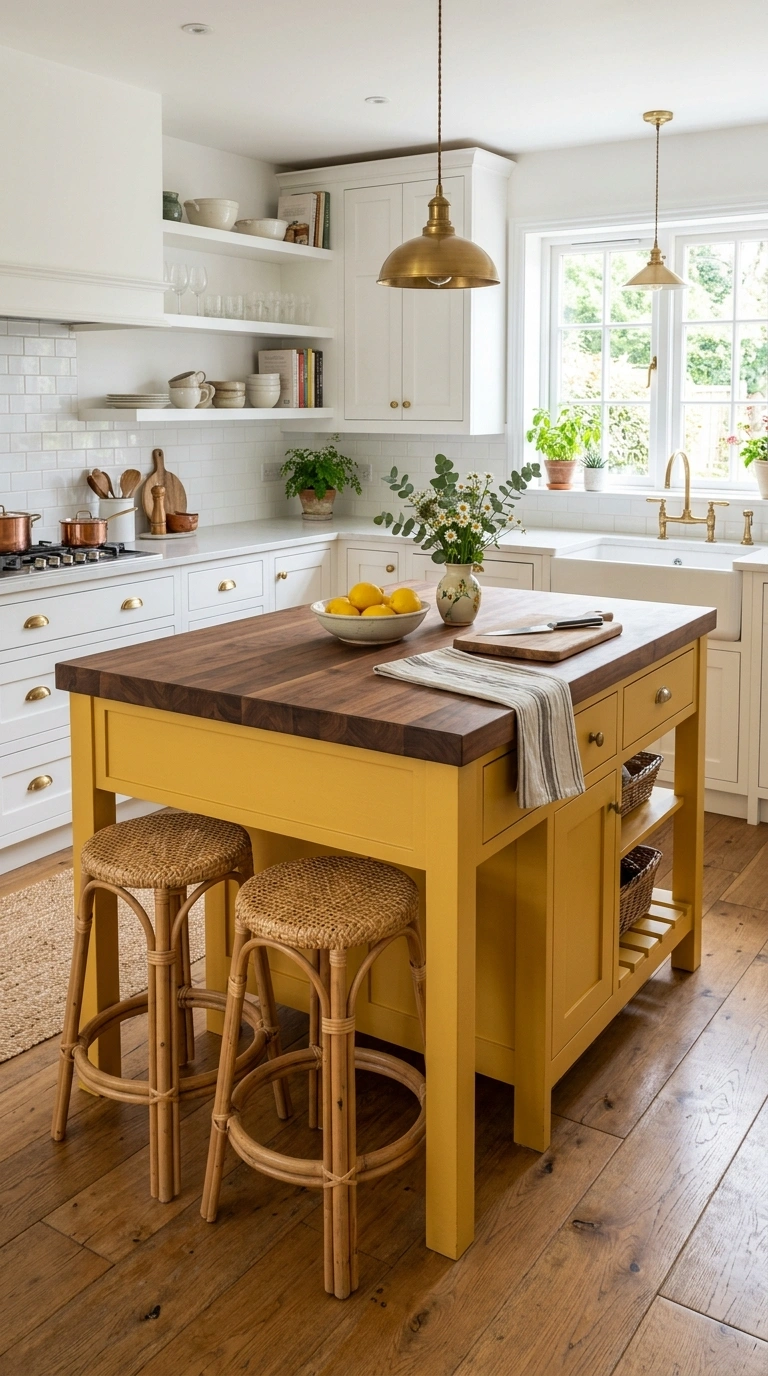
Painting just the kitchen island in a warm yellow while keeping the perimeter cabinets and walls in neutral tones creates a contained yellow statement that makes the island the visual centerpiece of the kitchen. The yellow island against white or cream surroundings reads as a piece of painted furniture, which gives it a more grown-up and more considered quality than yellow applied across every surface. Top the yellow island with a white or warm marble counter and add brass hardware for the most refined result.
13. Warm Yellow With Green
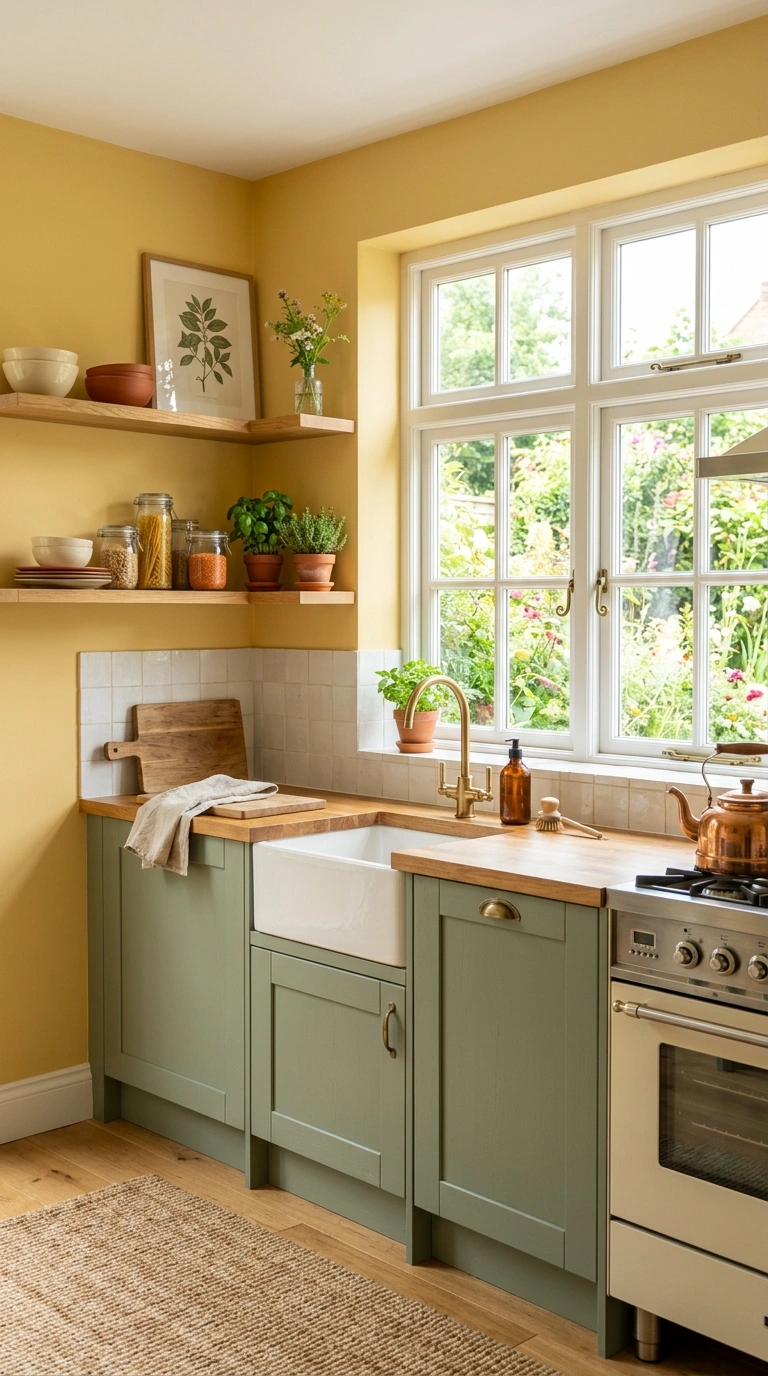
Yellow and green is a natural pairing, think sunlight and foliage, that creates a fresh, garden-like kitchen quality. Warm yellow walls with sage green cabinets, yellow accessories in a green-themed kitchen, or a yellow and green tile backsplash all reference the natural world in a way that feels organic rather than designed. The combination reads as particularly fresh and alive compared to yellow paired with neutral tones. Add warm wood and white elements to keep the palette from feeling too saturated.
14. Vintage Yellow Kitchen Charm
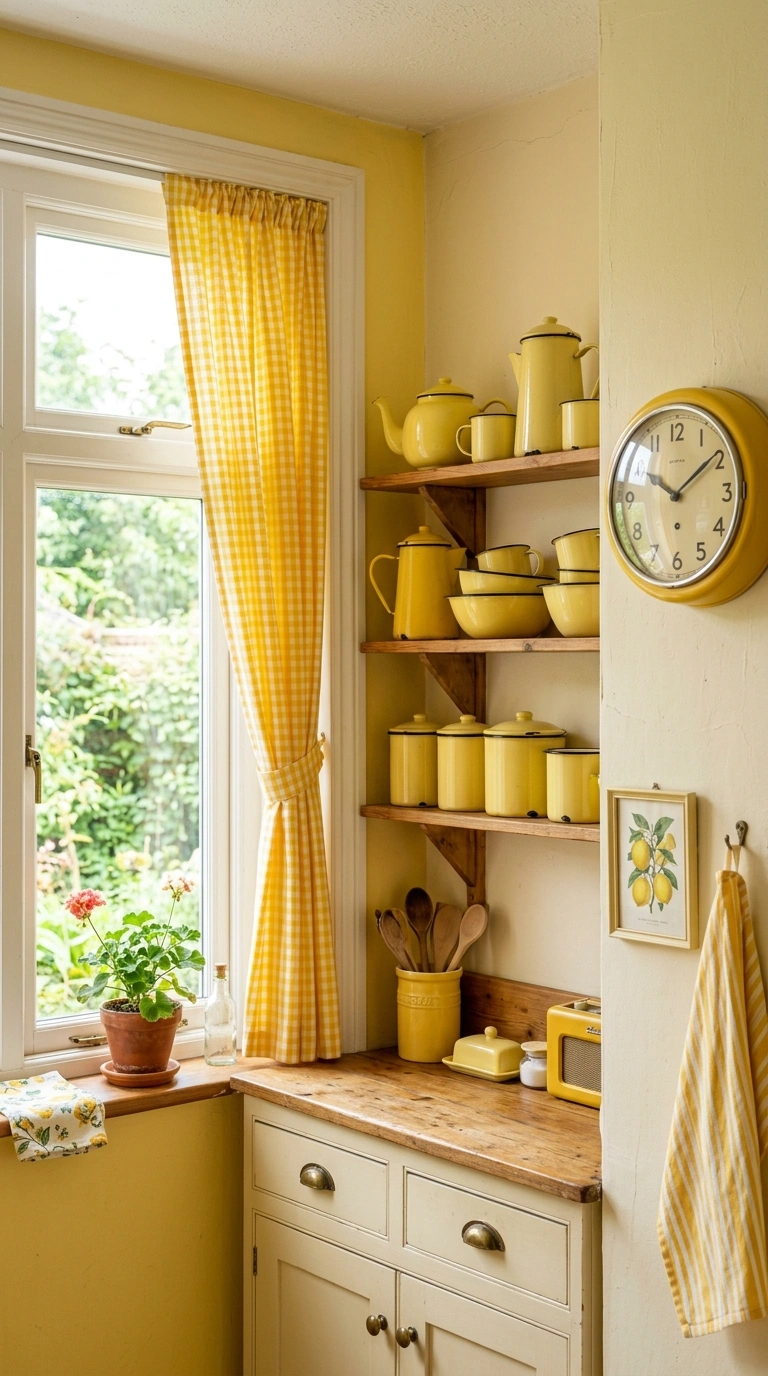
Yellow has a strong association with vintage and retro kitchen design, particularly the warm golden yellows and the creamy pale yellows that were popular in kitchens from the 1940s through the 1960s. Leaning into this vintage association with period-appropriate accessories, a vintage yellow enamelware collection, retro-style yellow canisters, a vintage yellow clock, or yellow gingham curtains, creates a nostalgic warmth that modern yellow kitchens sometimes lack. The vintage yellow kitchen reads as charming and intentional rather than trendy, which gives it lasting appeal that purely modern yellow applications may not have.
15. Yellow Tile Floor Statement
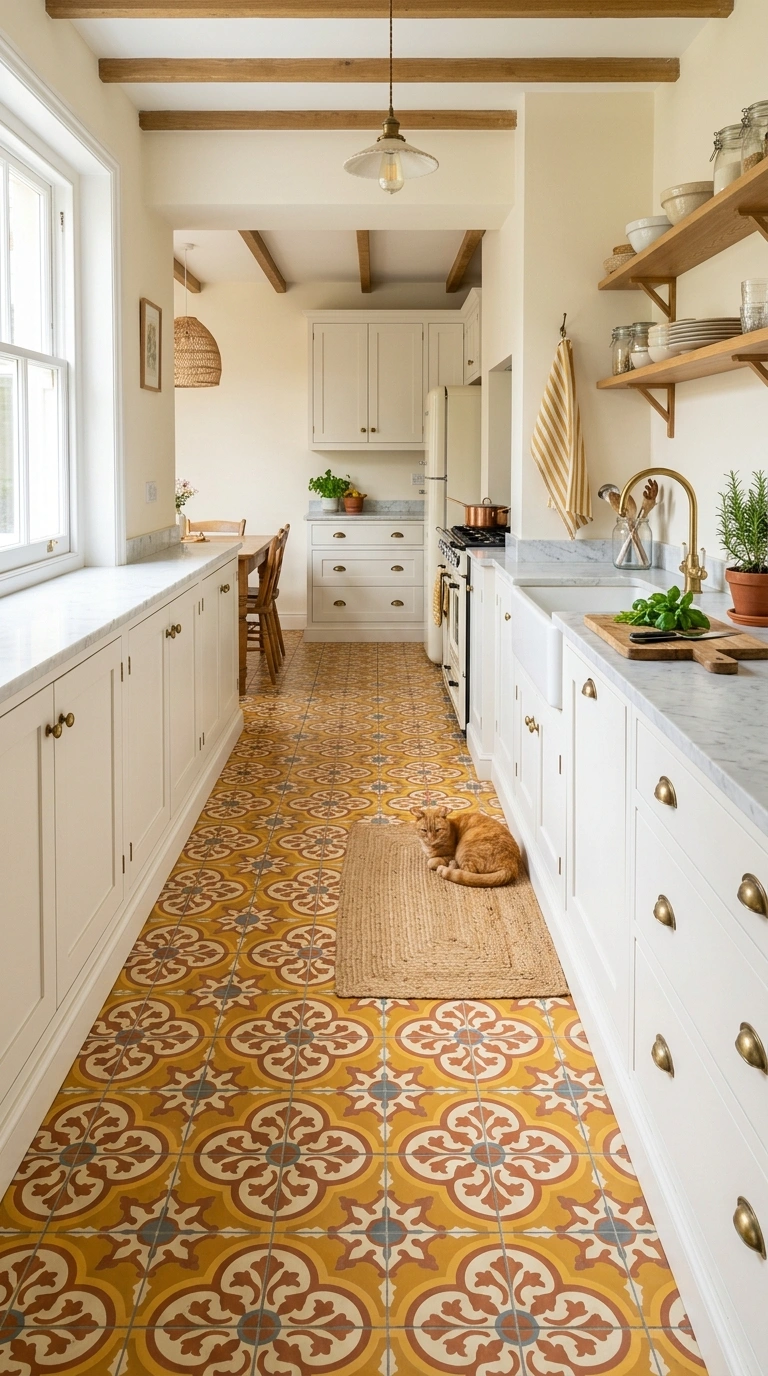
A yellow-toned tile floor, whether a warm golden encaustic pattern, a sunflower-toned ceramic, or a warm yellow-and-white checkered pattern, introduces the color from below in a way that grounds the kitchen in warmth while keeping the walls and cabinets free for neutral tones. The yellow floor reads as a bold design choice that makes the kitchen feel unique and personally styled. Pair the yellow floor with warm white cabinets and walls so the floor is the clear visual star. The floor application is one of the most unexpected yellow kitchen ideas and one of the most memorable when executed well.
16. Sunshine Window Treatment
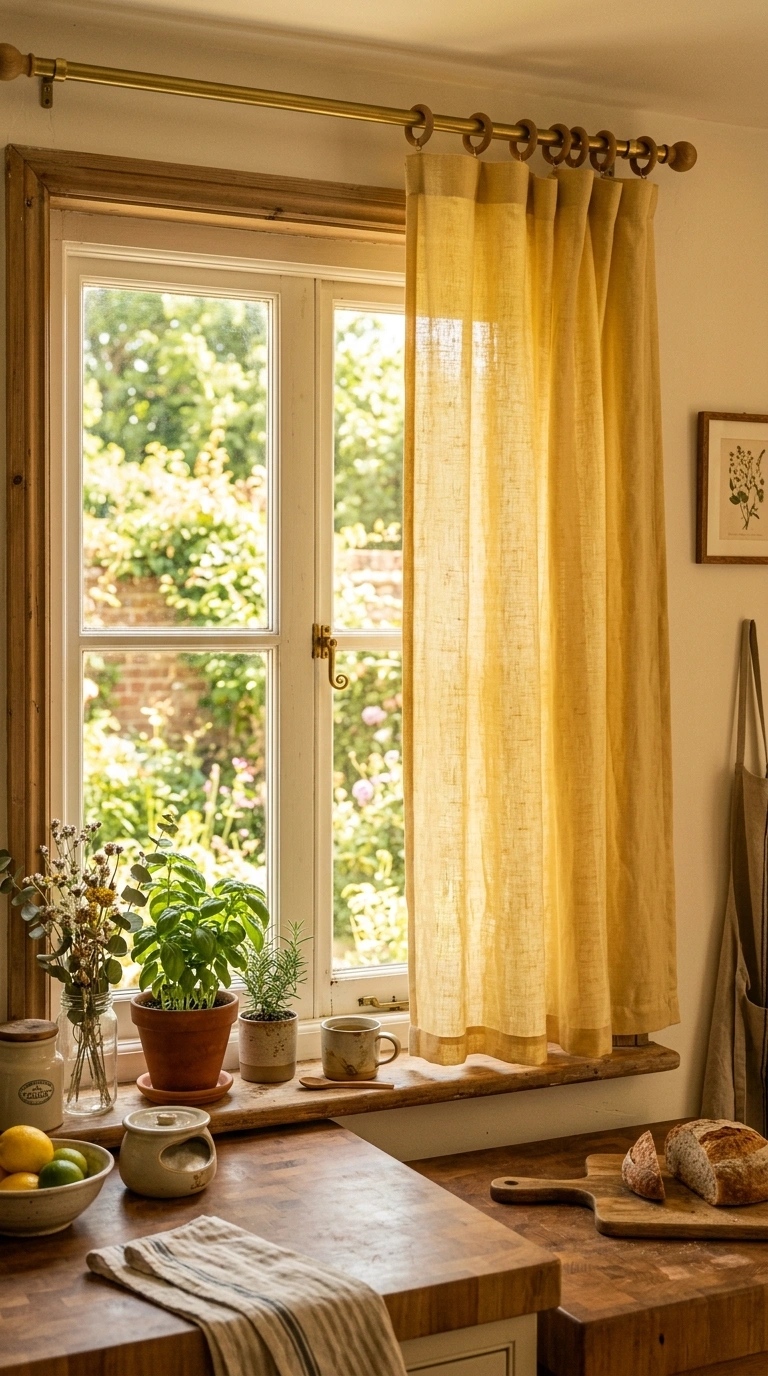
A sunny yellow curtain or Roman shade at the kitchen window adds the warmth and the cheerful color through a textile that can be changed easily if the color does not work. The yellow window treatment filters natural light with a warm golden tone that colors the entire kitchen subtly. A simple linen or cotton panel in warm buttery yellow is the most reliably attractive option. The yellow window treatment paired with white walls and natural wood creates a kitchen that genuinely feels like a sunny morning even on a cloudy day.
17. Yellow Range or Appliance
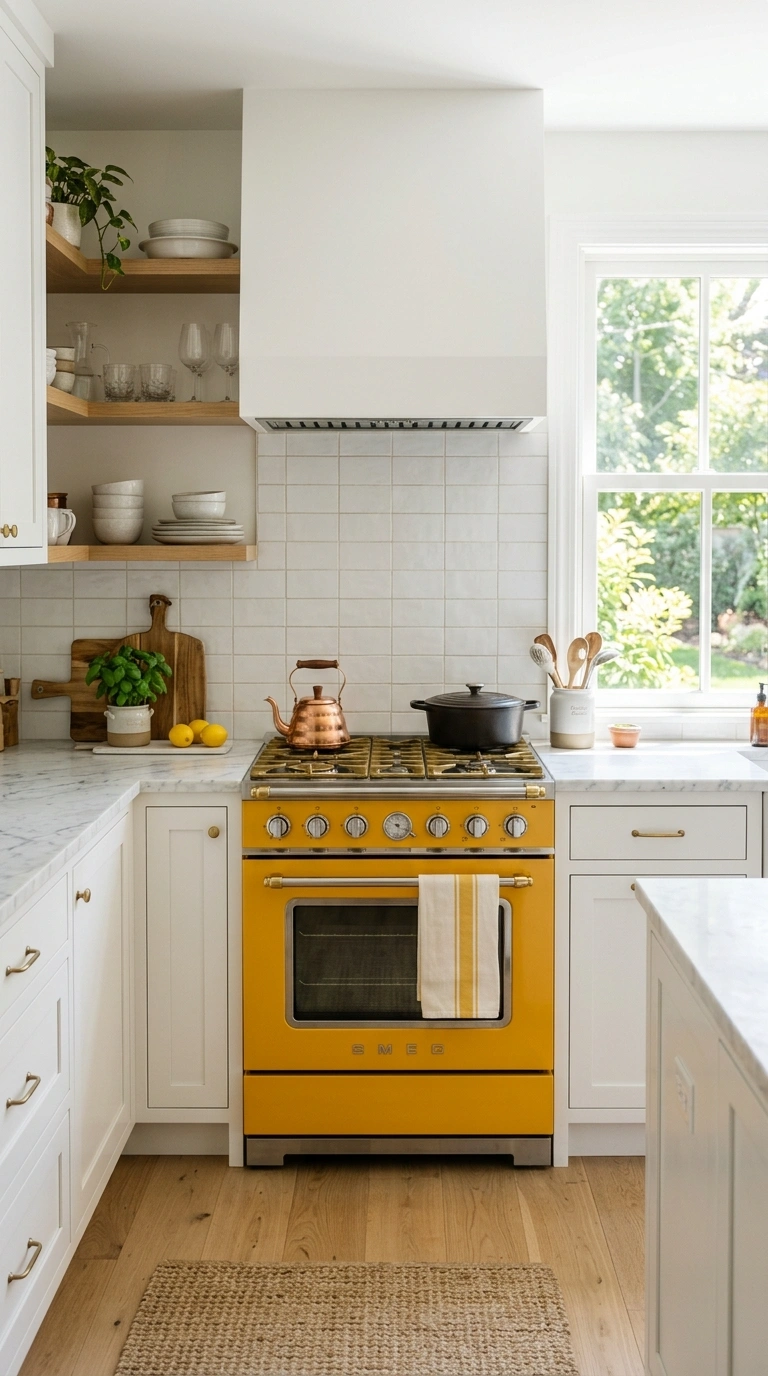
A yellow range, a retro-style yellow refrigerator, or a yellow kitchen mixer as the single statement appliance introduces bold yellow through a functional item that also serves as the room’s visual focal point. Vintage-inspired ranges and refrigerators in warm yellow are available from several specialty manufacturers and create the strongest single yellow moment available in a kitchen. The yellow appliance works best against neutral surroundings where it can be the sole color star rather than competing with other yellow elements for attention.
18. Yellow Under-Cabinet Detail
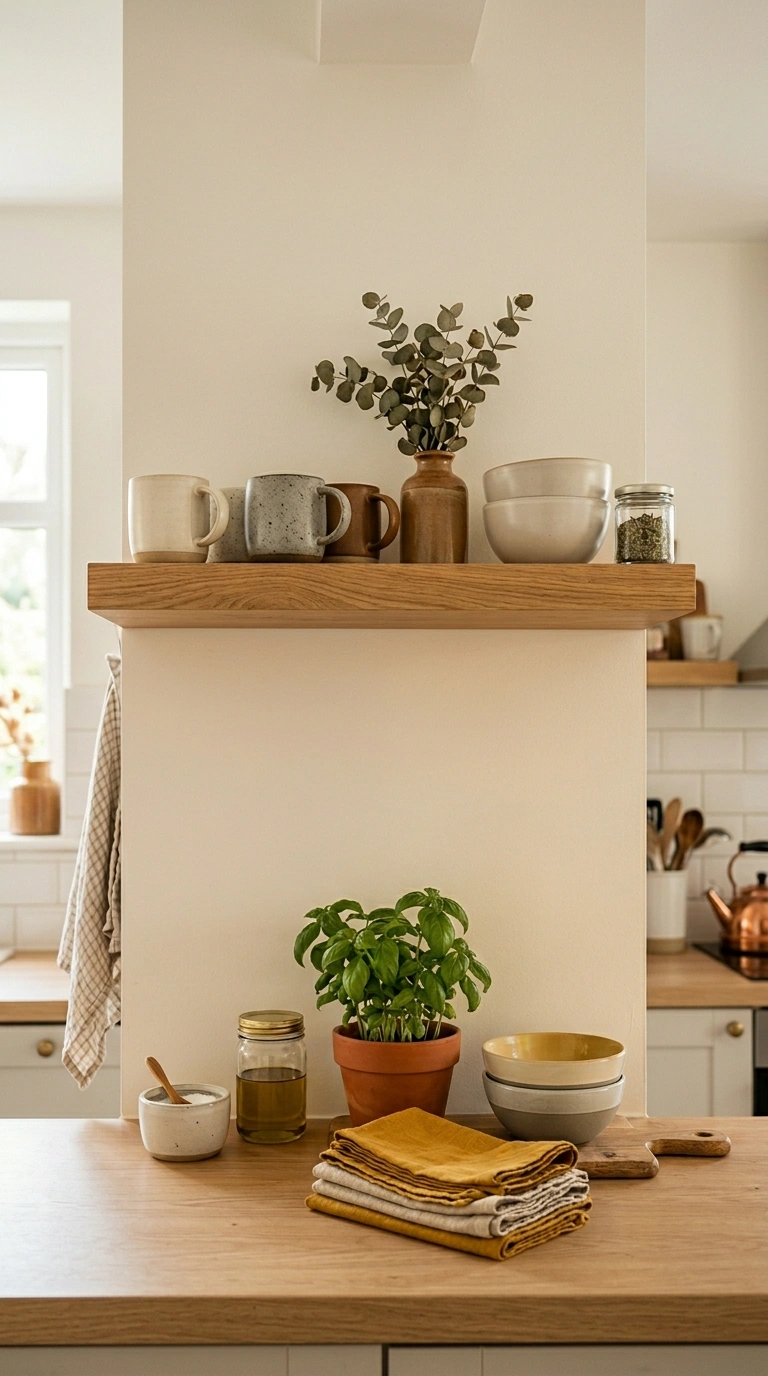
A subtle yellow application on the underside of open shelves or on the back wall behind open shelving introduces the color in a small hidden location that catches the eye without dominating the room. The yellow underside of a shelf reflects warm golden tones onto the objects below, which gives the shelf display a warm quality that white undersurfaces cannot provide. This small detail is invisible when looking at the kitchen from a distance but adds a warm surprise when noticed up close, which is the kind of layered design detail that makes a kitchen feel genuinely considered.
19. Right Yellow Wrong Yellow
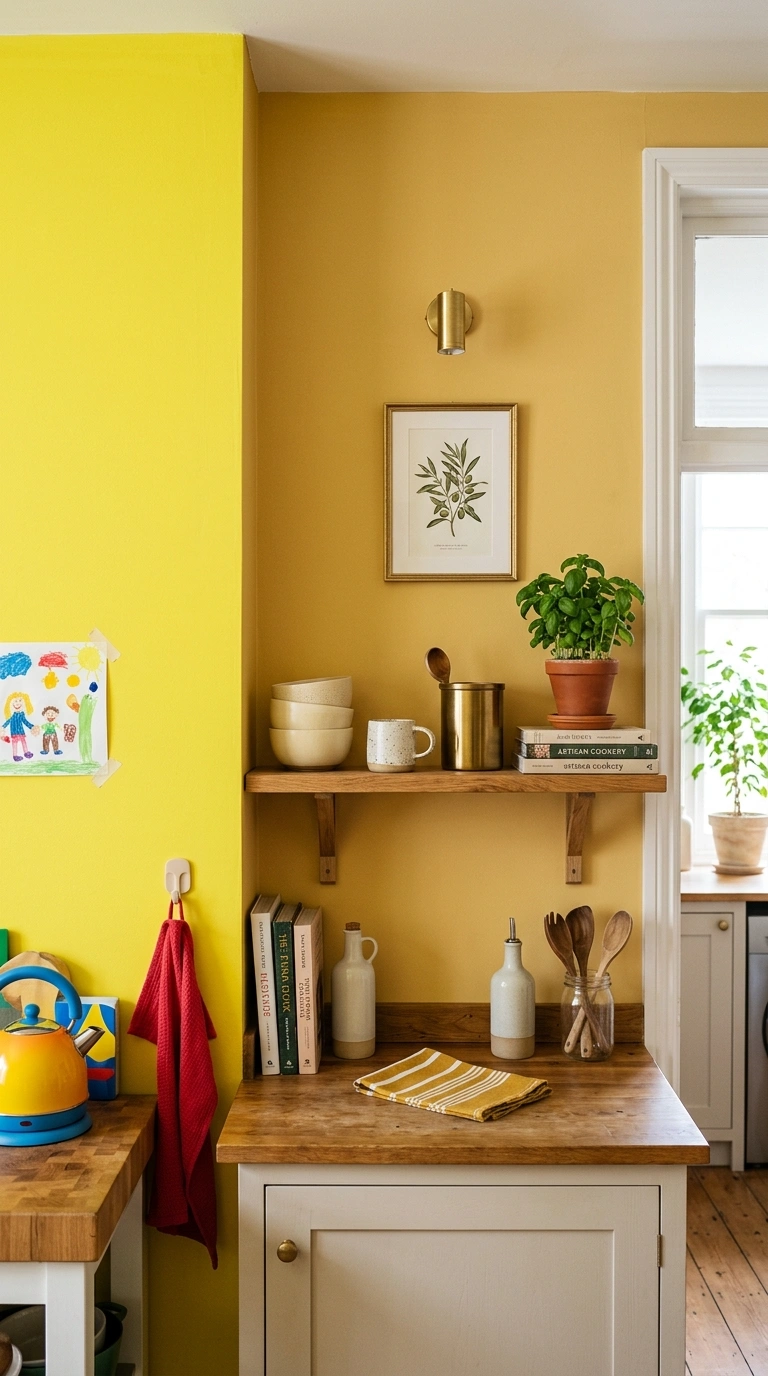
The difference between a yellow kitchen that feels cheerful and one that feels childish is almost entirely the specific shade of yellow. The wrong yellows for adult kitchens are: primary yellow with no warmth, neon or fluorescent yellow, cool lemon yellow with green undertones, and any yellow that reads as bright paint rather than as warm light. The right yellows are: warm buttery yellow, soft saffron, muted golden, warm ochre, aged gold, and any yellow that makes you think of warm afternoon sun rather than of a school bus. Test the shade on a large sample area rather than relying on a small paint chip, since yellow changes more dramatically at full-wall scale than almost any other color. For guidance on bold color confidence across other rooms, the black worktops guide covers how another strong design choice succeeds through commitment to the right shade and the right pairings.
A yellow kitchen that feels cheerful without looking childish starts with the right shade of yellow, a warm buttery or golden tone rather than a bright primary one. From there, the proportion matters: yellow on one or two surfaces paired with neutral warmth around it reads as confident. Yellow on everything reads as overwhelming. And the pairings, warm white, natural wood, brass, and warm gray, are what ground the yellow in genuine warmth rather than letting it float into candy-bright territory.