22 Black Kitchen Cabinet Ideas That Look Sophisticated, Not Dark
Black kitchen cabinets are one of the most dramatic and most misunderstood design choices in kitchen design. Done well, they create a kitchen that looks sophisticated, grounded, and genuinely elegant. Done poorly, they create a kitchen that feels like a cave. The difference comes down to three things: the finish of the black, what is paired with the black, and how much light the kitchen has to work with. A matte black cabinet with a warm white counter, brass hardware, and a bright window reads as designed and confident. The same black cabinet with a dark counter, dark hardware, and a small window reads as oppressive. These 22 ideas cover the specific pairings, finishes, and design decisions that keep black cabinets on the sophisticated side of the line rather than the dark side.
1. Matte Black Finish Choice
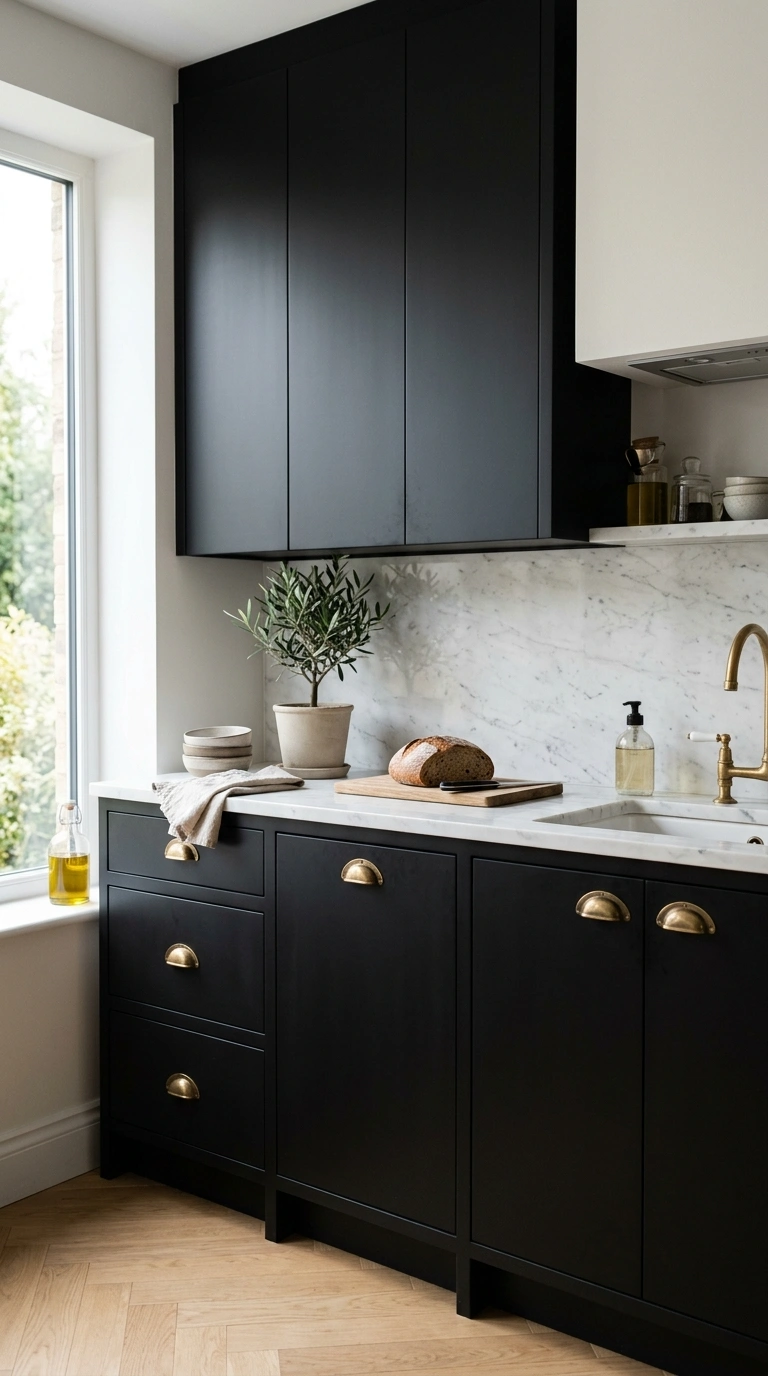
The finish of the black matters as much as the color itself. Matte black absorbs light softly and reads as contemporary and sophisticated. High-gloss black reflects light sharply and can read as either sleek or cheap depending on the quality of the cabinet. Satin black sits between the two with a subtle sheen that is the most versatile finish for most kitchen styles. For the most universally sophisticated result, choose matte or satin black rather than high-gloss. The matte surface also hides fingerprints and minor marks better than gloss, which is a genuine practical consideration in a kitchen where cabinet fronts are touched dozens of times daily.
2. White Counter Balance
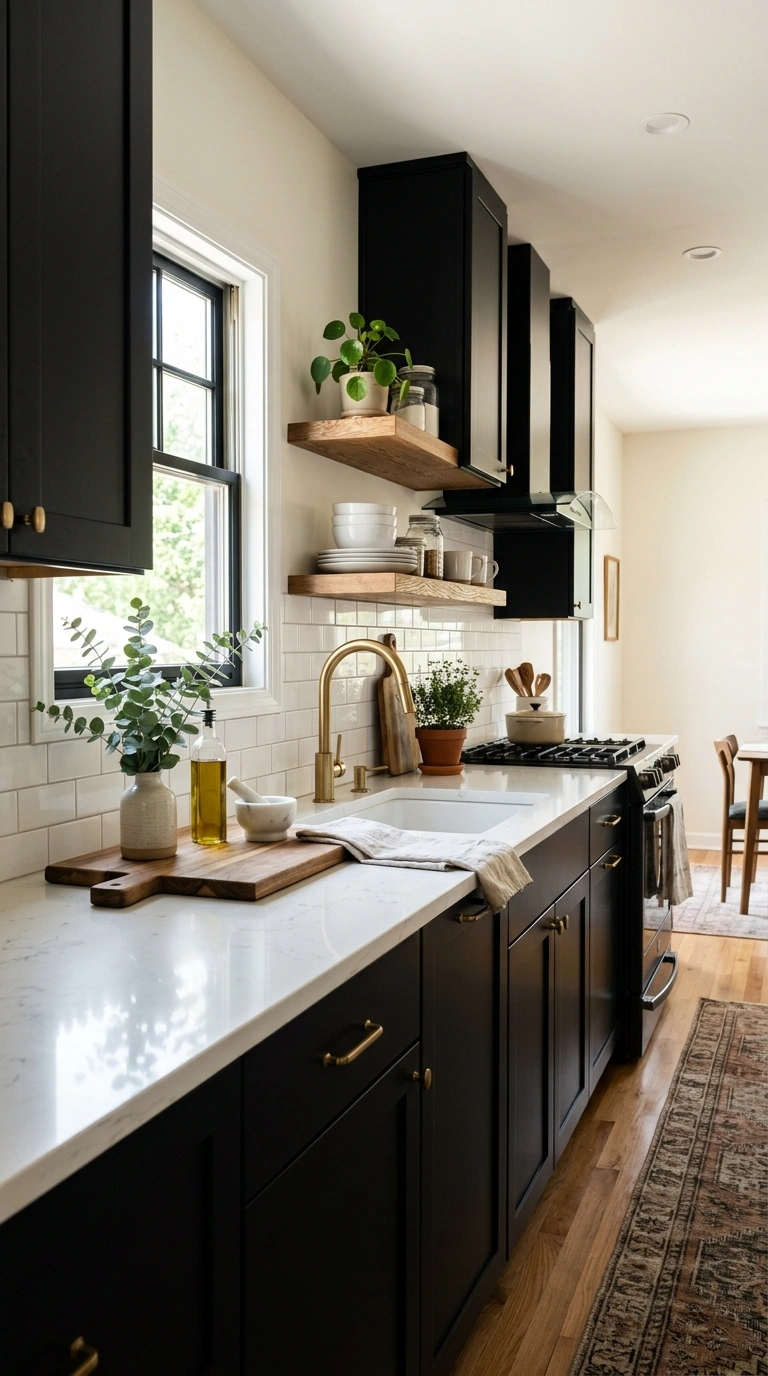
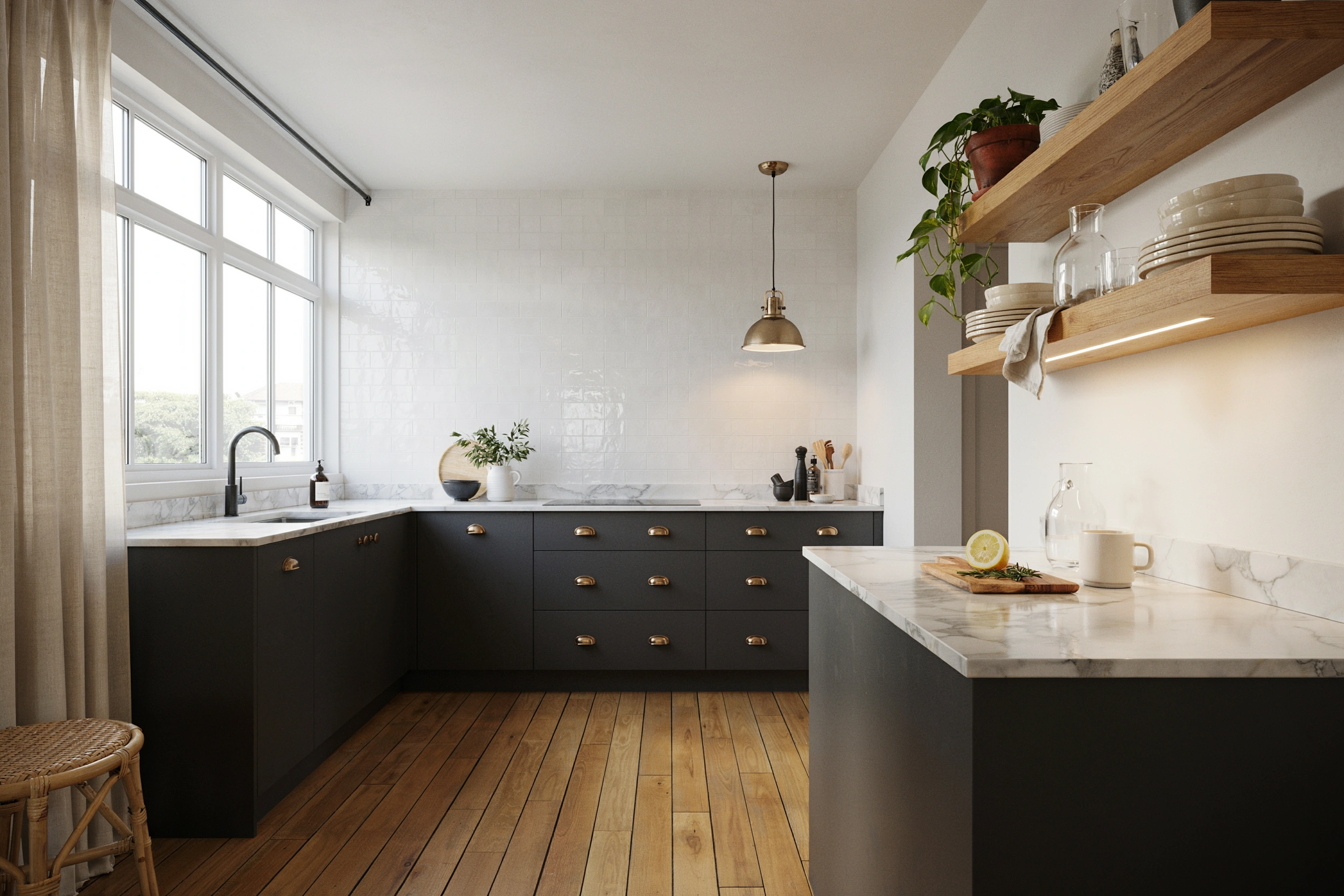
The most reliable pairing with black cabinets is a white or near-white counter surface that provides the brightness and contrast the dark cabinets need to avoid feeling heavy. White marble, white quartz, or a warm white solid surface on top of black cabinets creates a clear visual break that keeps the eye moving between dark and light rather than settling into an unrelieved dark mass. The white counter also functions as a bright work surface that is easier to see food on during prep than a dark counter would be. Choose a white with warm undertones rather than a cool blue-white for the most welcoming result.
3. Brass Hardware Warmth
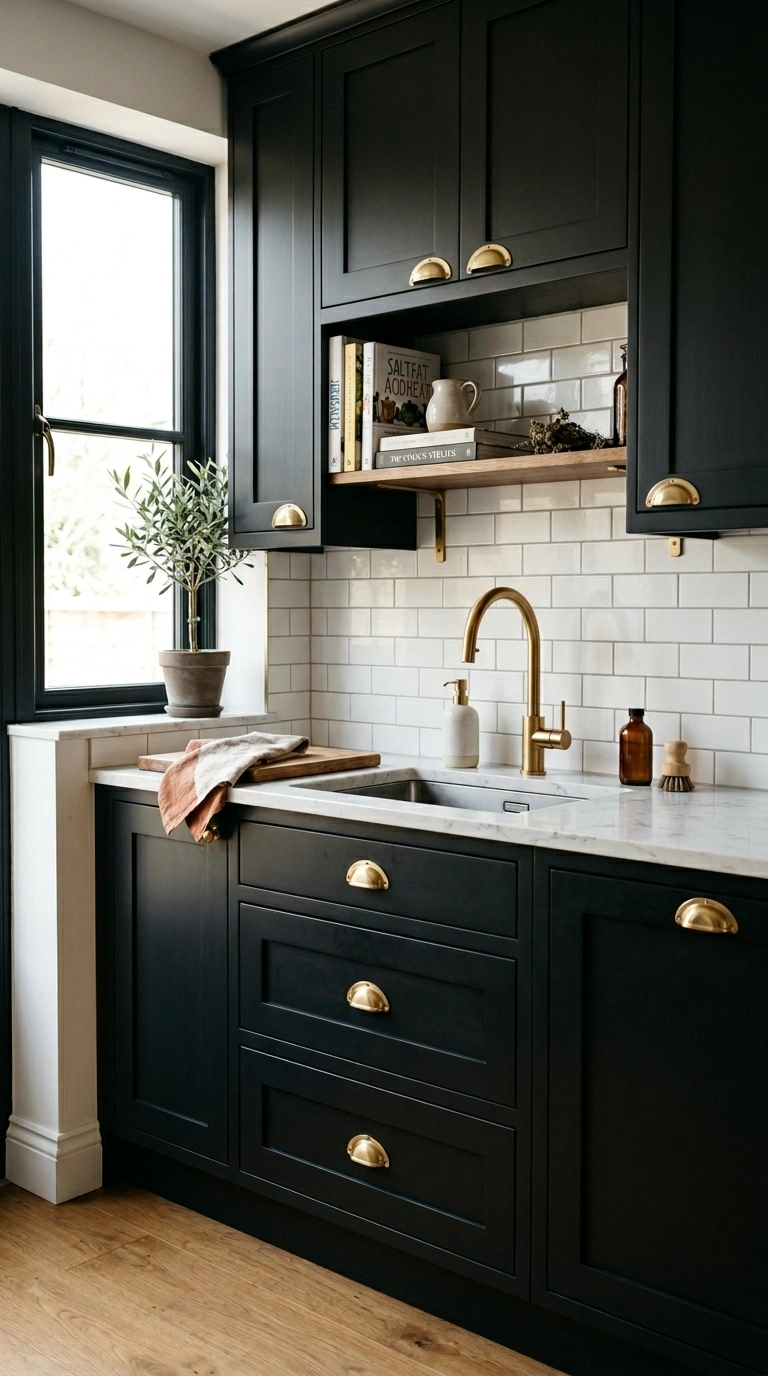
Brushed brass or warm gold hardware on black cabinets adds the metallic warmth that prevents the black from feeling cold or industrial. The warm brass against matte black is one of the most sophisticated material pairings in current kitchen design and creates the kind of visual richness that chrome or brushed nickel against black cannot match. Use brass for the cabinet pulls, the faucet, and any exposed hinges for a consistent metallic story across the kitchen. The brass also catches available light and creates small warm glowing accents across the dark cabinet surfaces. The same principle of warm metallic accents providing warmth against dark surfaces applies across all dark-toned rooms, as covered in the living room color schemes guide where brass with dark tones is a consistently sophisticated pairing.
4. Black Lower Cabinets Only
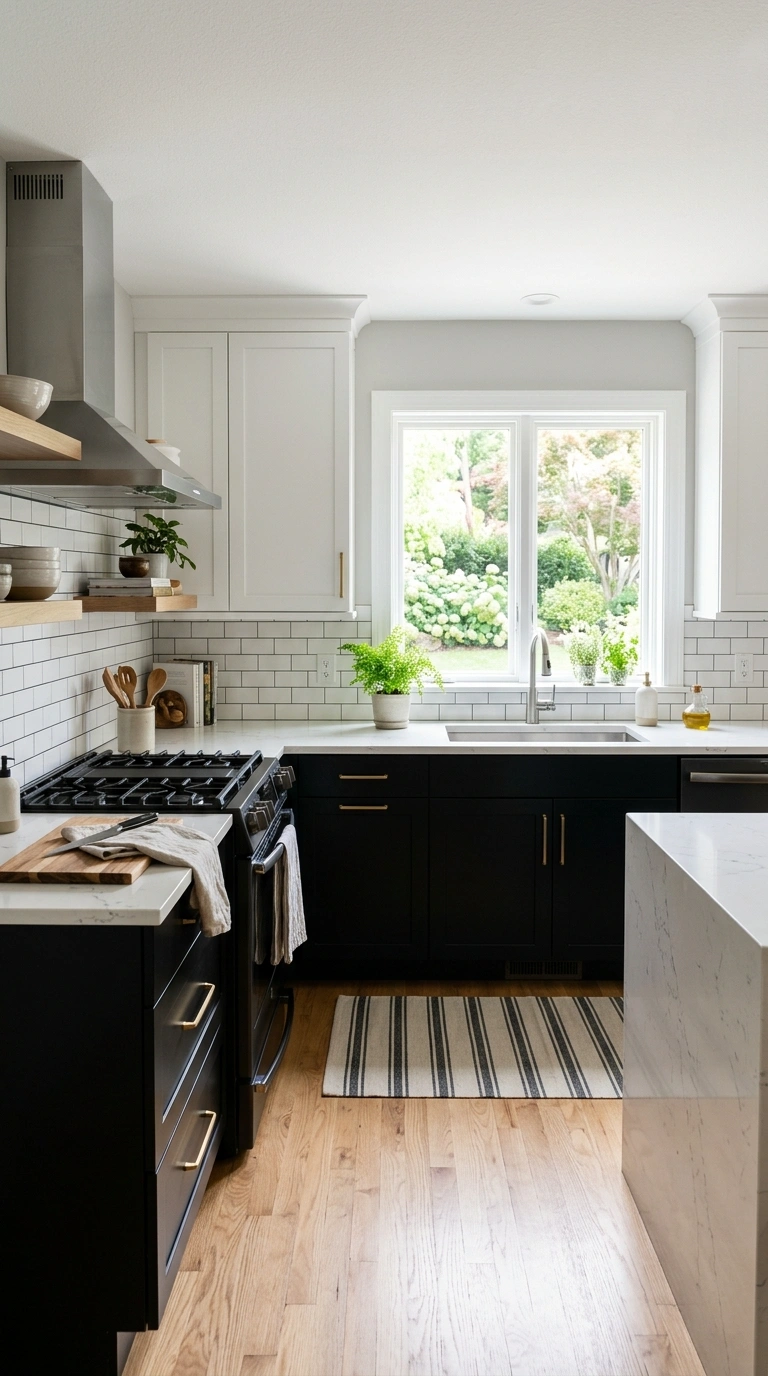
For kitchens where full black cabinets feel like too much darkness, painting only the lower cabinets in black while keeping the upper cabinets in white or a warm light color creates a two-tone kitchen that grounds the bottom of the room in black while keeping the upper visual field light and bright. The two-tone approach is the most popular way to incorporate black cabinets because it provides the sophisticated drama of black without the all-dark enclosure that full black kitchens can create. The darker lower cabinets also hide the daily wear and cooking splashes that light lower cabinets show immediately.
5. Open Shelving Substitute
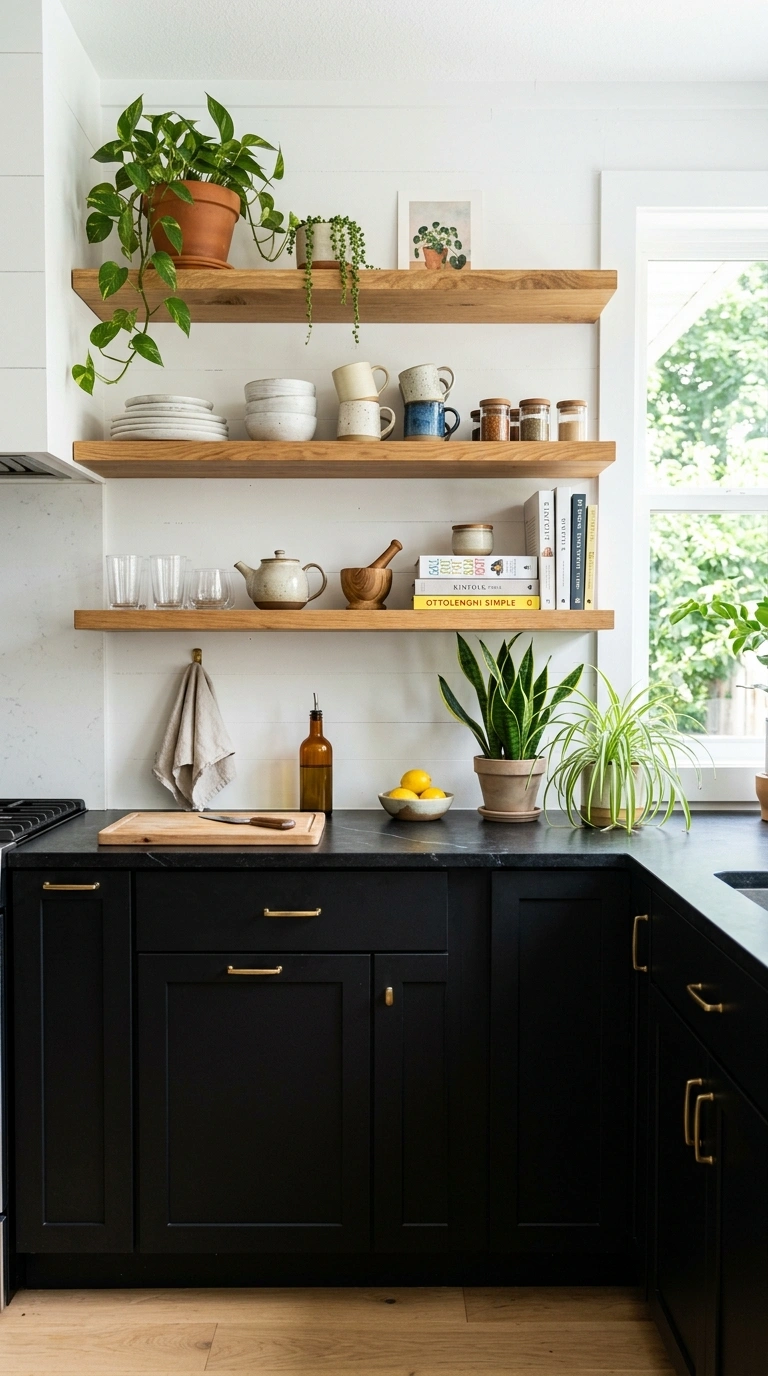
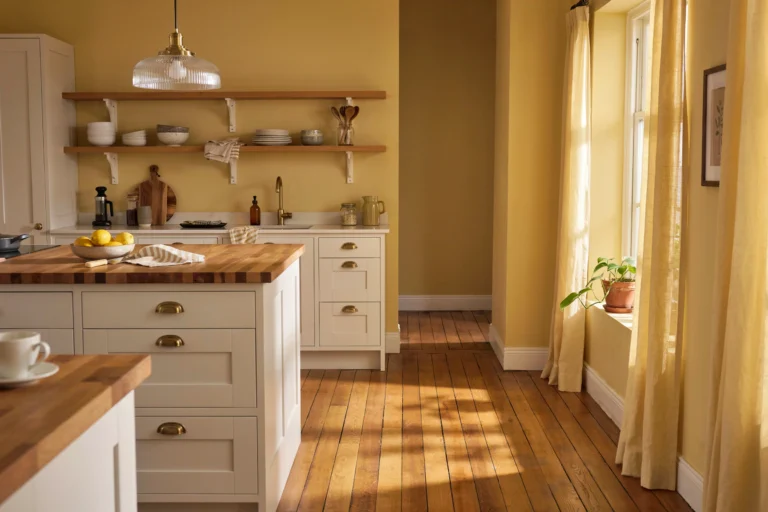
Replacing some or all of the upper cabinets with open shelving in natural wood creates visual breathing room above the black lower cabinets that closed upper cabinets would block. The open shelves display dishes, glasses, plants, and small decorative objects against the kitchen wall, which adds visual content and warmth while keeping the upper portion of the kitchen feeling open and light. The warm natural wood of the shelves provides organic contrast to the black cabinets below. This approach works particularly well in smaller kitchens where full upper and lower black cabinets would make the room feel significantly smaller.
6. White Subway Tile Backsplash
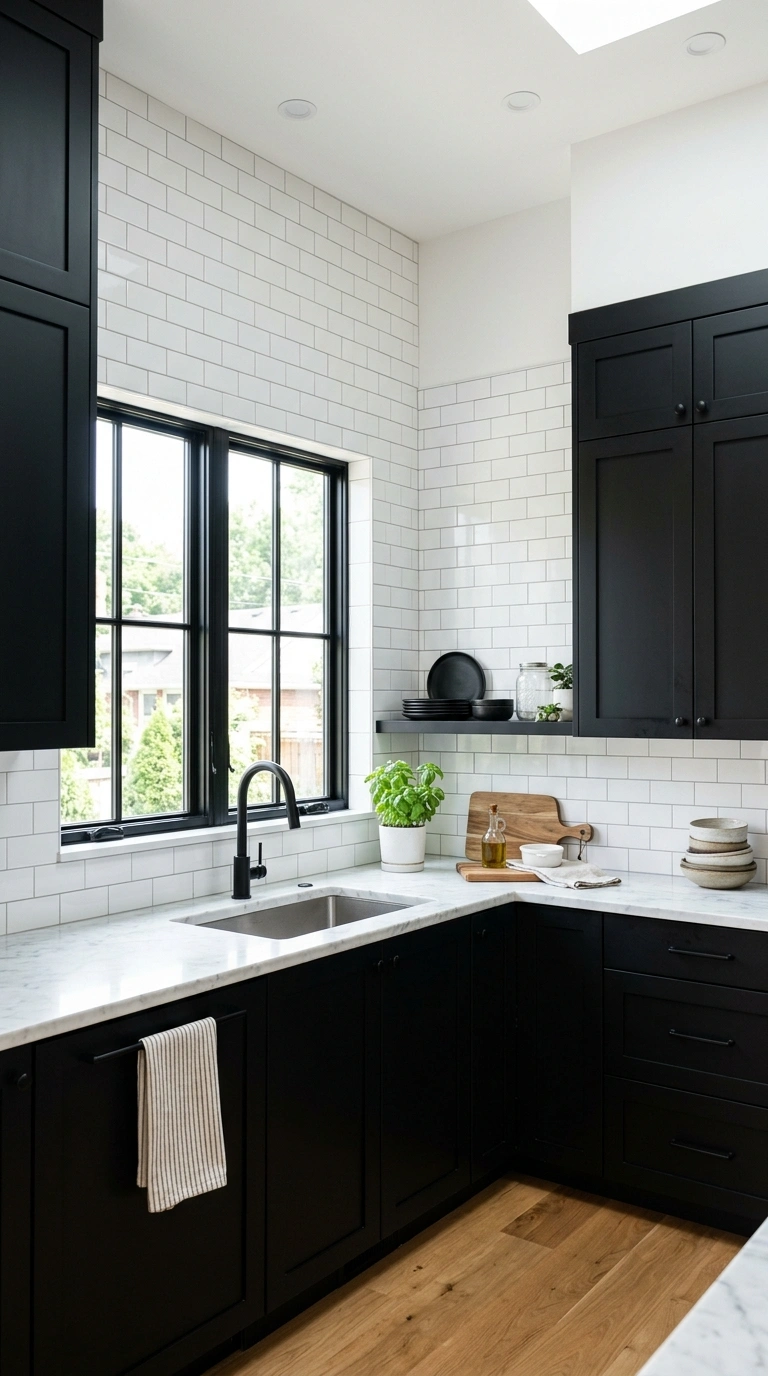
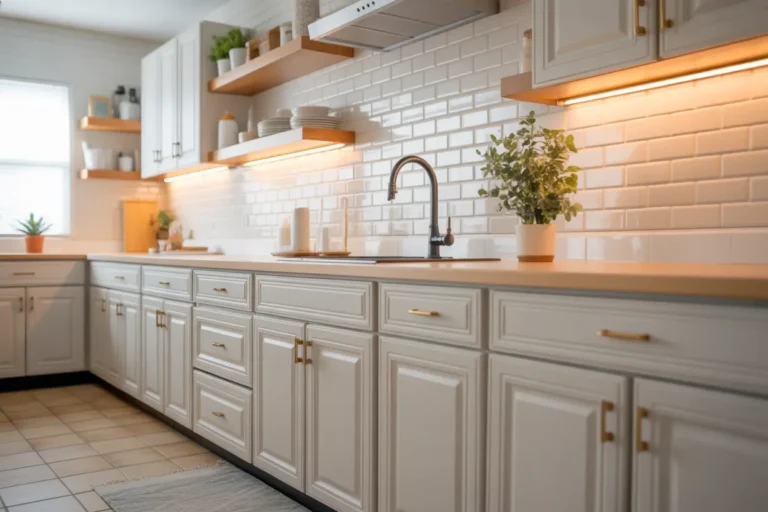
A white subway tile backsplash between the black lower cabinets and the upper wall creates a bright horizontal band of light at eye level that breaks up the dark surface and provides visual relief. The classic subway tile pattern in white with warm gray or white grout is the most reliably effective backsplash pairing for black cabinets because the white tile is bright enough to contrast strongly and the traditional pattern is classic enough to suit any kitchen style. Run the tile from the counter to the bottom of the upper cabinets or to the ceiling for the most continuous bright surface.
7. Natural Light Requirement
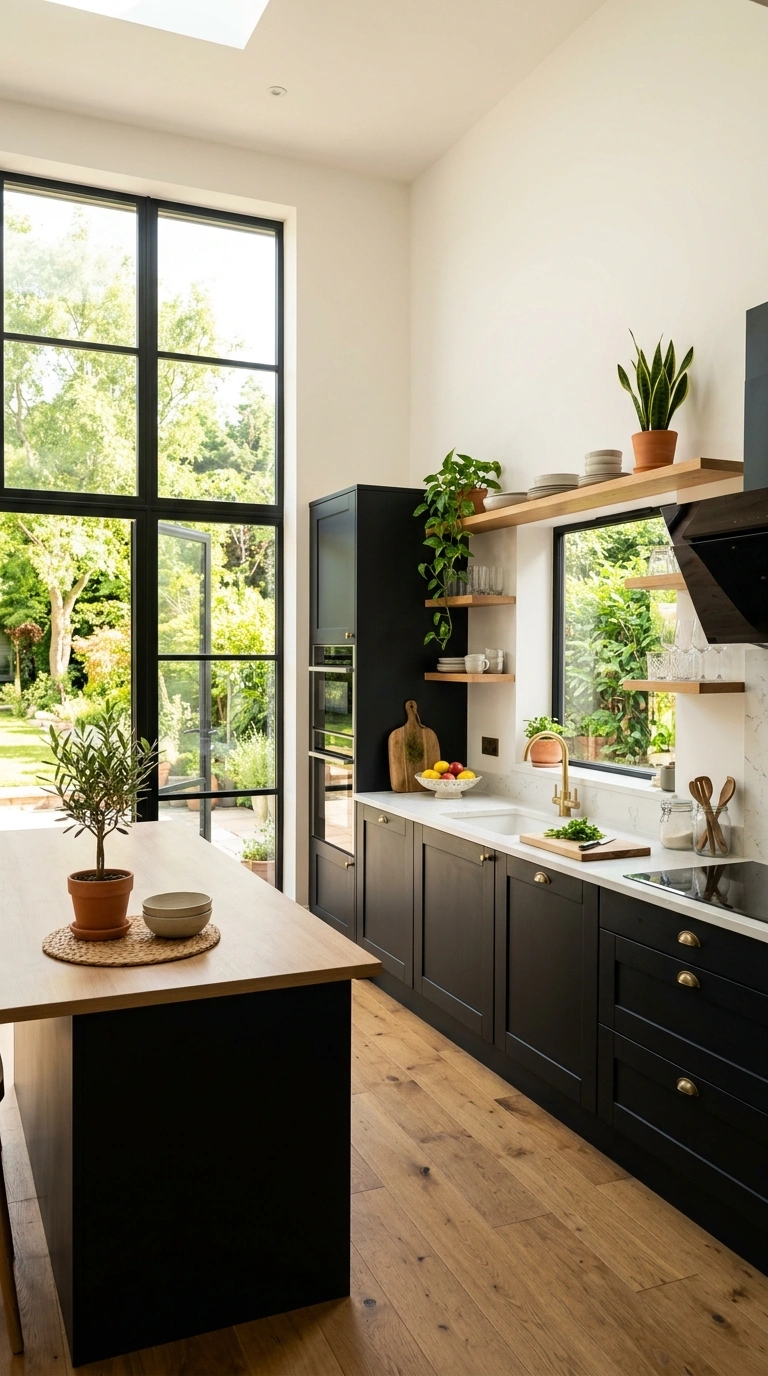
Black cabinets need more natural light than light cabinets to avoid feeling oppressive. A kitchen with large windows, a skylight, or an open connection to a brightly lit adjacent room can handle full black cabinets comfortably. A small kitchen with a single small window will struggle to keep black cabinets from feeling heavy regardless of how well the other elements are paired. Before committing to black cabinets, assess the natural light honestly: spend time in the kitchen at different times of day and evaluate whether the available light is sufficient to keep the room feeling open with dark surfaces absorbing rather than reflecting the light.
8. Glass Front Cabinet Doors
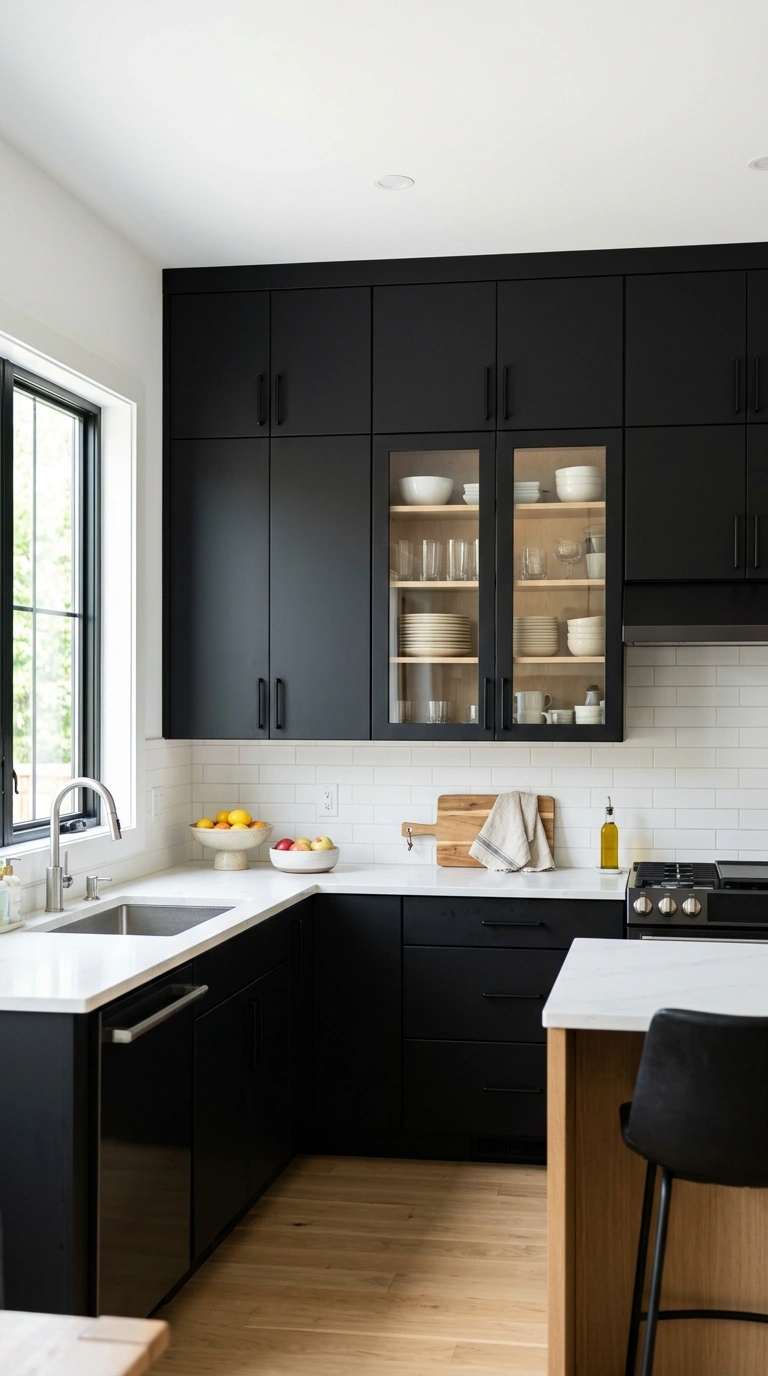
Replacing some solid black cabinet doors with glass-front versions breaks up the continuous dark surface and creates visual windows into the cabinet interior where the lighter colors of dishes and glasses are visible. The glass-front cabinets add lightness and visual variety to the upper cabinet run without leaving the contents fully exposed on open shelves. Choose clear glass rather than frosted for the most effective light-letting quality. Two or three glass-front doors in a run of otherwise solid black cabinets provides the visual break without losing the coherent dark-cabinet aesthetic.
9. Warm Wood Floor Pairing
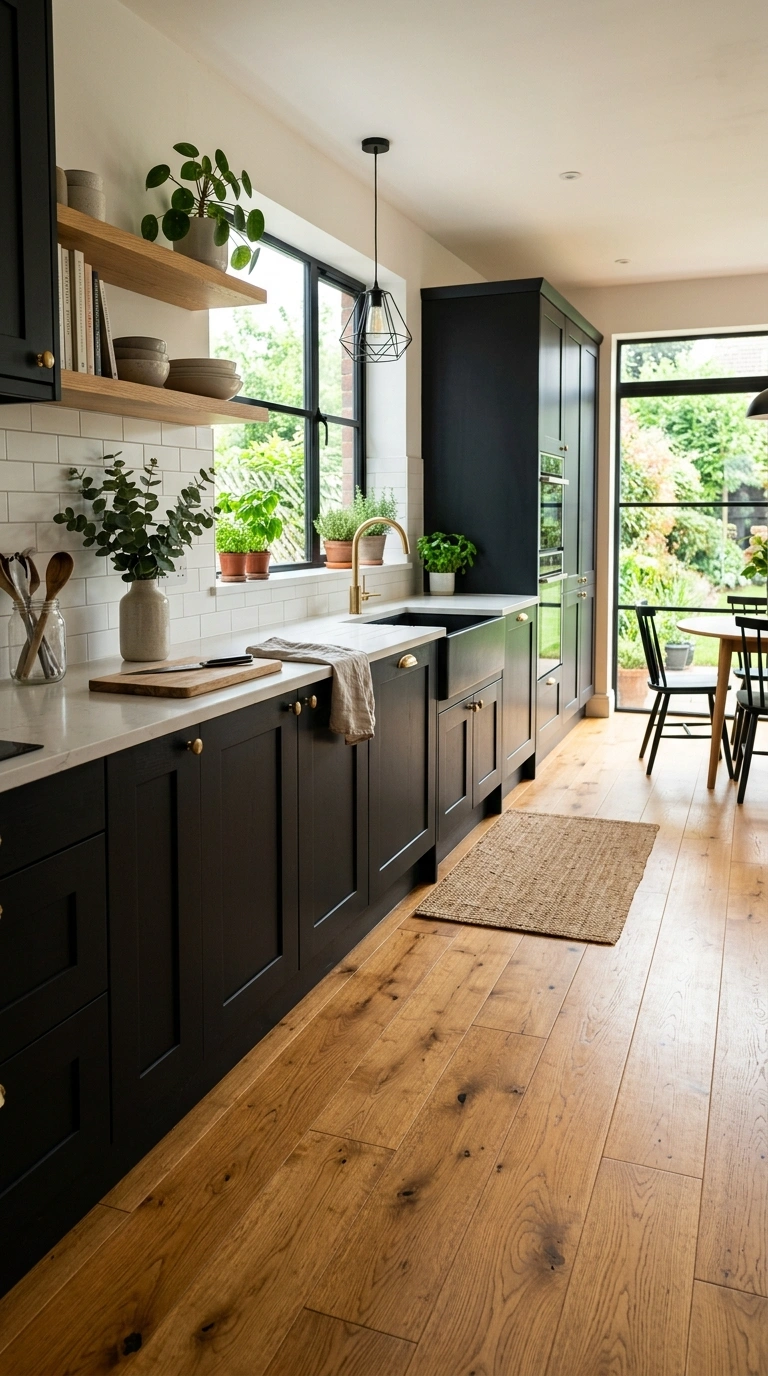
The floor in a kitchen with black cabinets should be warm and light enough to provide visual relief from below. A warm medium-toned hardwood floor, warm honey oak, medium walnut, or a warm engineered wood, provides the organic warmth underfoot that complements the sophisticated black above. Avoid dark floors with dark cabinets, which creates an all-dark envelope that makes the kitchen feel like a dark box. The warm wood floor grounds the kitchen naturally and adds the organic element that manufactured black surfaces lack.
10. Under-Cabinet Lighting Essential
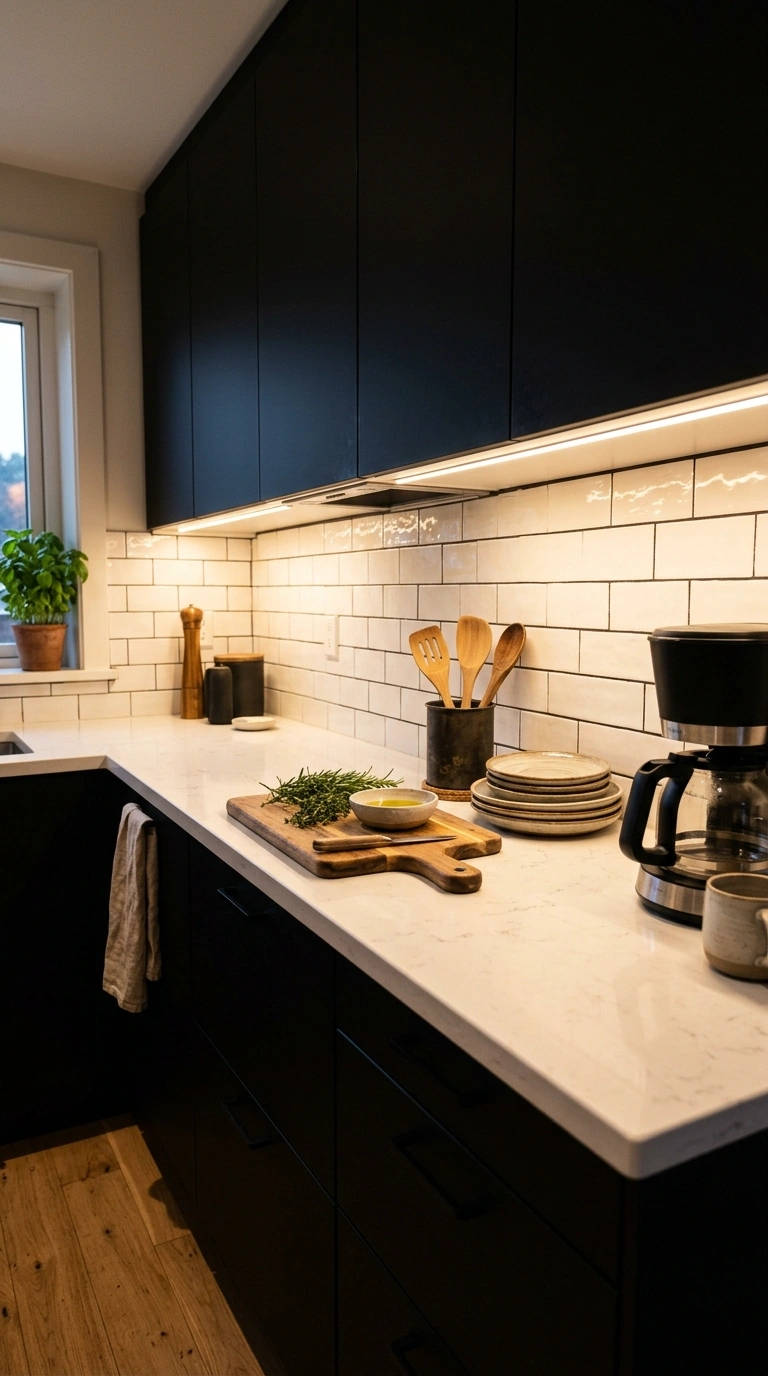
Under-cabinet lighting is not optional in a kitchen with black cabinets. The dark surfaces absorb light that white cabinets would reflect, which means the counter surfaces can be significantly darker without supplemental lighting. LED strip lights installed under the upper cabinets illuminate the counter below with warm focused light that makes food prep easier and the kitchen brighter. Use warm-toned LEDs in the 2700K to 3000K range for the most welcoming quality. The under-cabinet lighting also creates a warm glow along the counter edge that reads as designed and atmospheric, especially in the evening when the overhead lights are dimmed.
11. Black Island White Perimeter
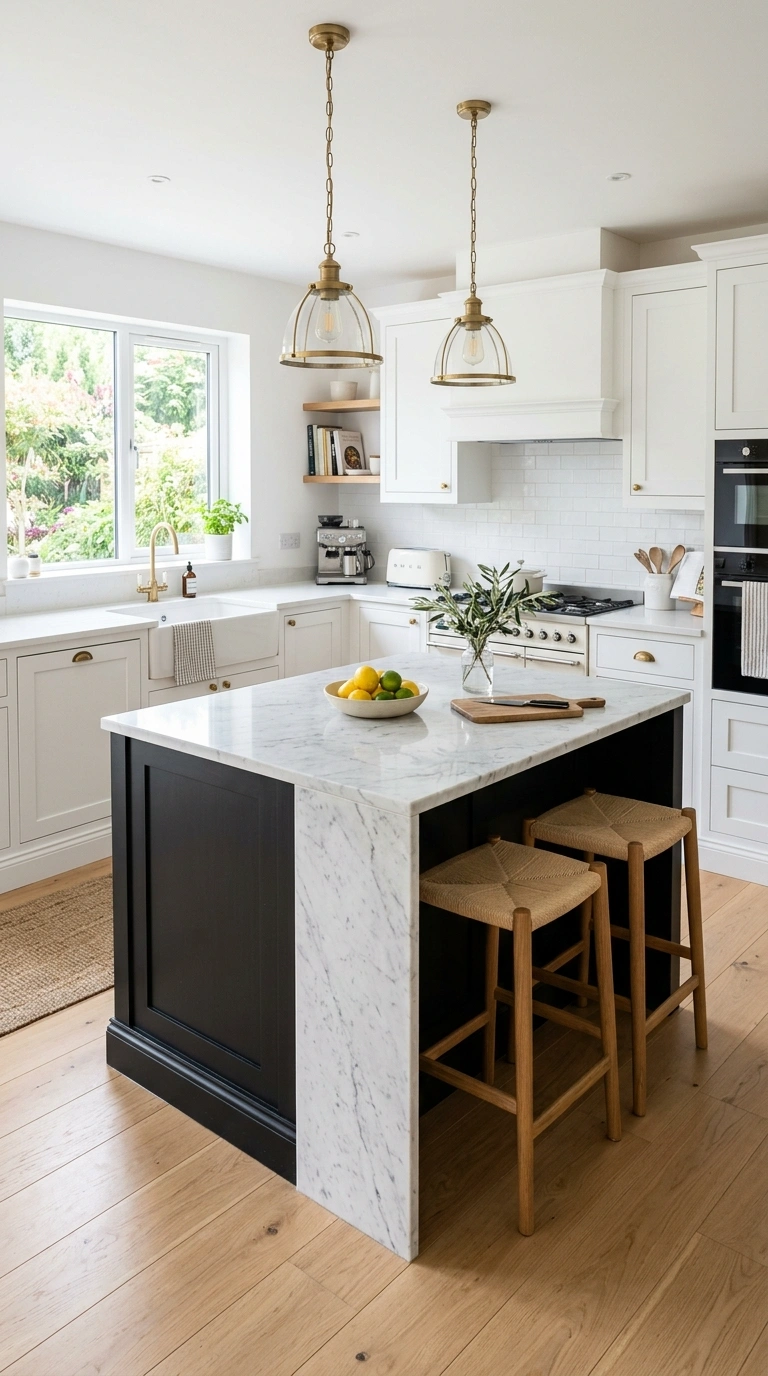
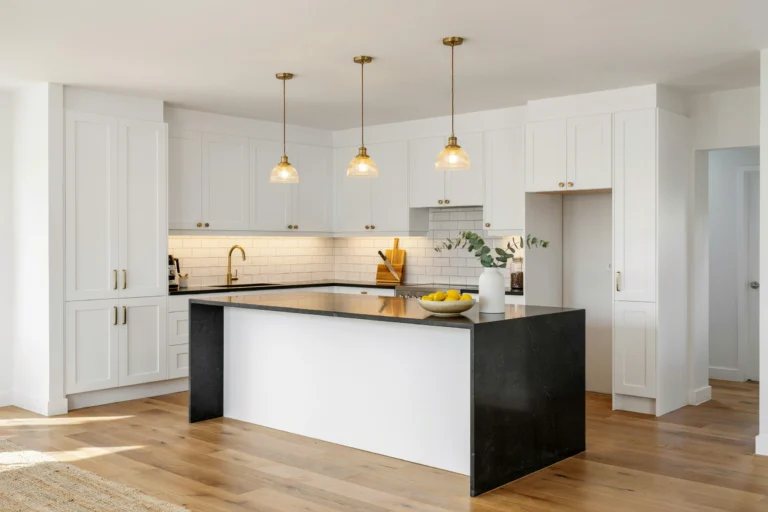
A kitchen with white perimeter cabinets and a black island creates the dramatic contrast that makes the island the visual centerpiece of the room while keeping the surrounding kitchen bright and open. The black island stands out against the white surroundings like a piece of furniture, which gives it a more substantial and more considered quality than a white island that blends into white cabinets. Top the black island with a white or warm marble counter and add warm brass hardware to match the perimeter cabinets for a cohesive but contrasting composition.
12. Textured Black Finish
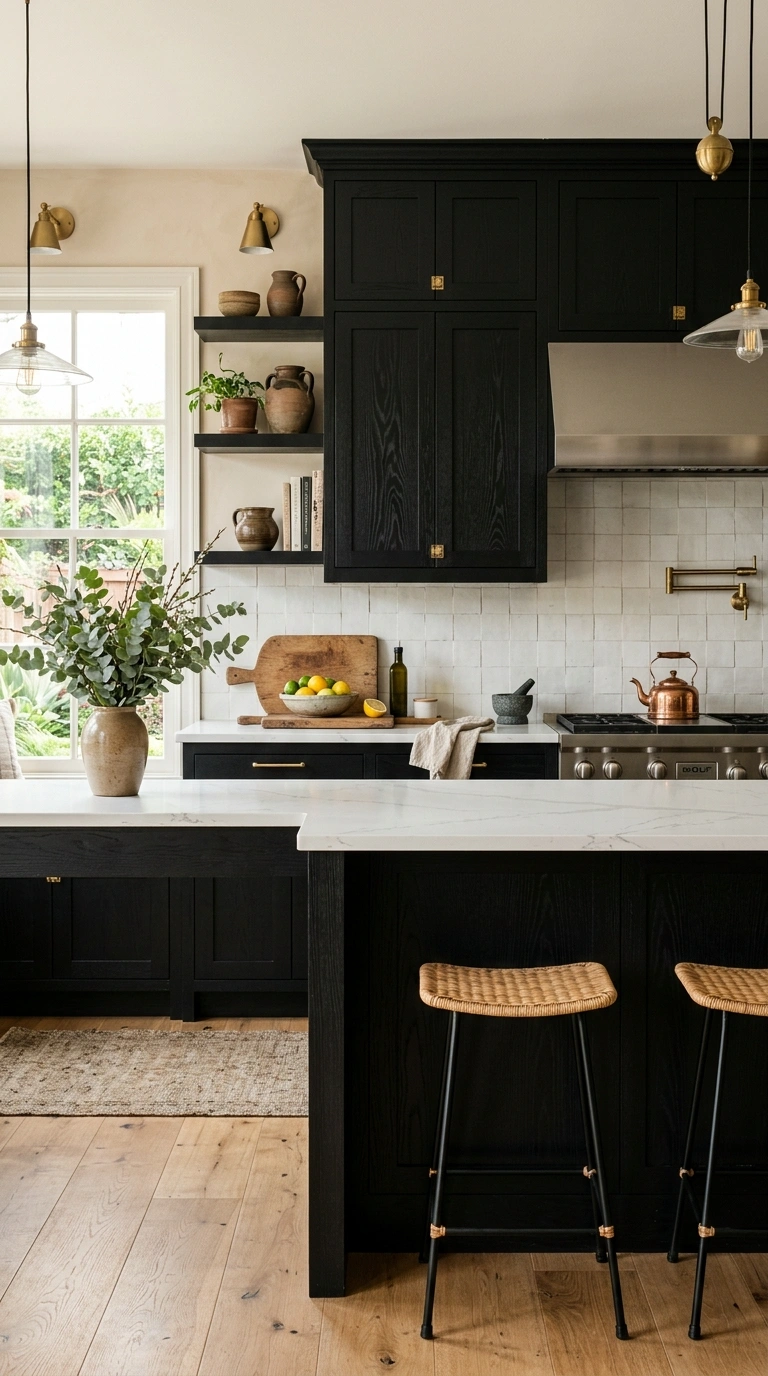
A textured black finish on the cabinet fronts, whether a lightly grained wood stained black, a matte black with subtle texture, or a black cabinet with visible brushstroke marks from hand painting, adds dimensional interest that flat smooth black lacks. The texture catches light at different angles and creates subtle visual movement across the cabinet surface that prevents the dark color from reading as flat and dead. The textured finish also tends to hide fingerprints and wear better than a perfectly smooth surface, which is a practical benefit in a working kitchen.
13. White Ceiling Brightness
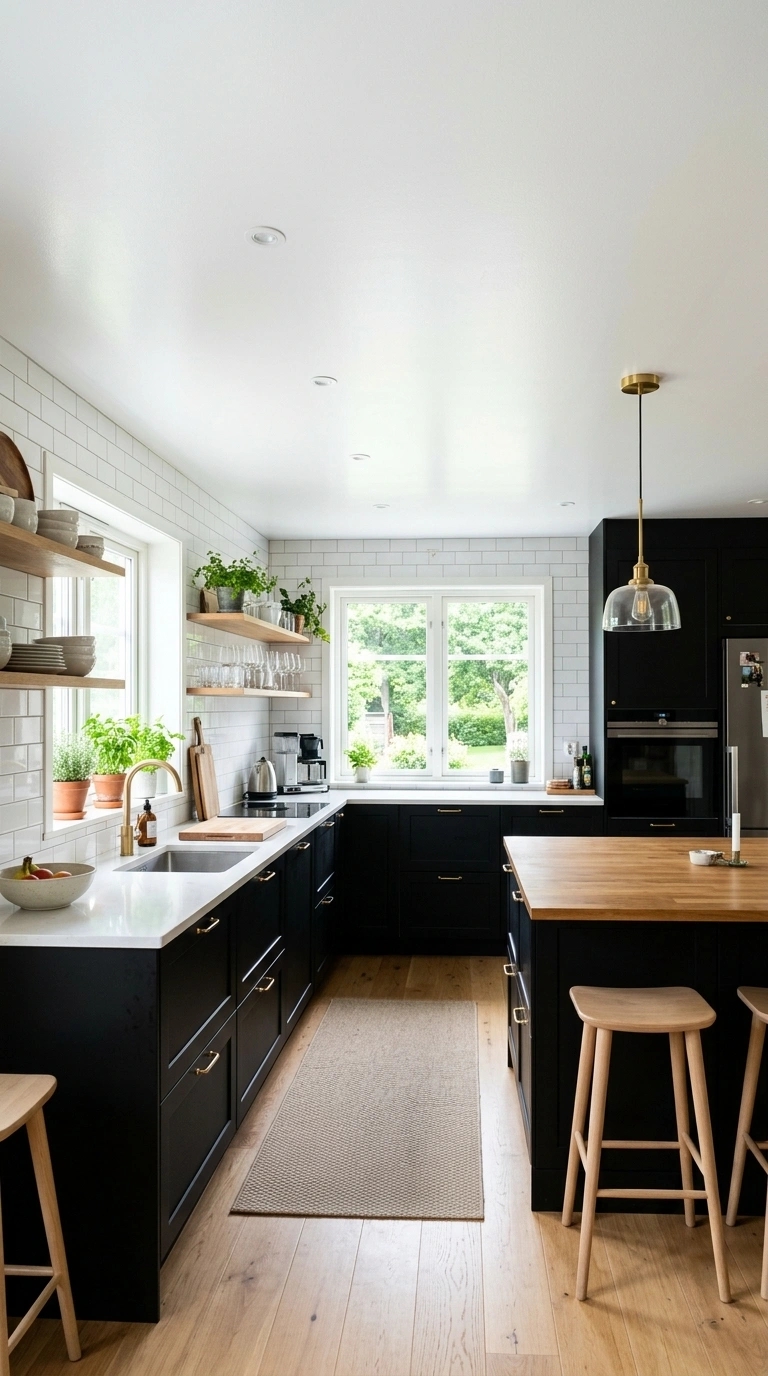
In a kitchen with black cabinets, the ceiling should always remain white or very light to maintain the brightest possible overhead surface. A dark ceiling combined with dark cabinets pushes the visual weight of the room downward and creates a genuinely oppressive feeling that even excellent lighting cannot fully overcome. The white ceiling reflects the overhead light back into the room and provides the visual counterweight that the dark cabinets below need. Consider a bright white rather than a warm cream on the ceiling for maximum reflective brightness in the kitchen.
14. Minimal Upper Cabinets
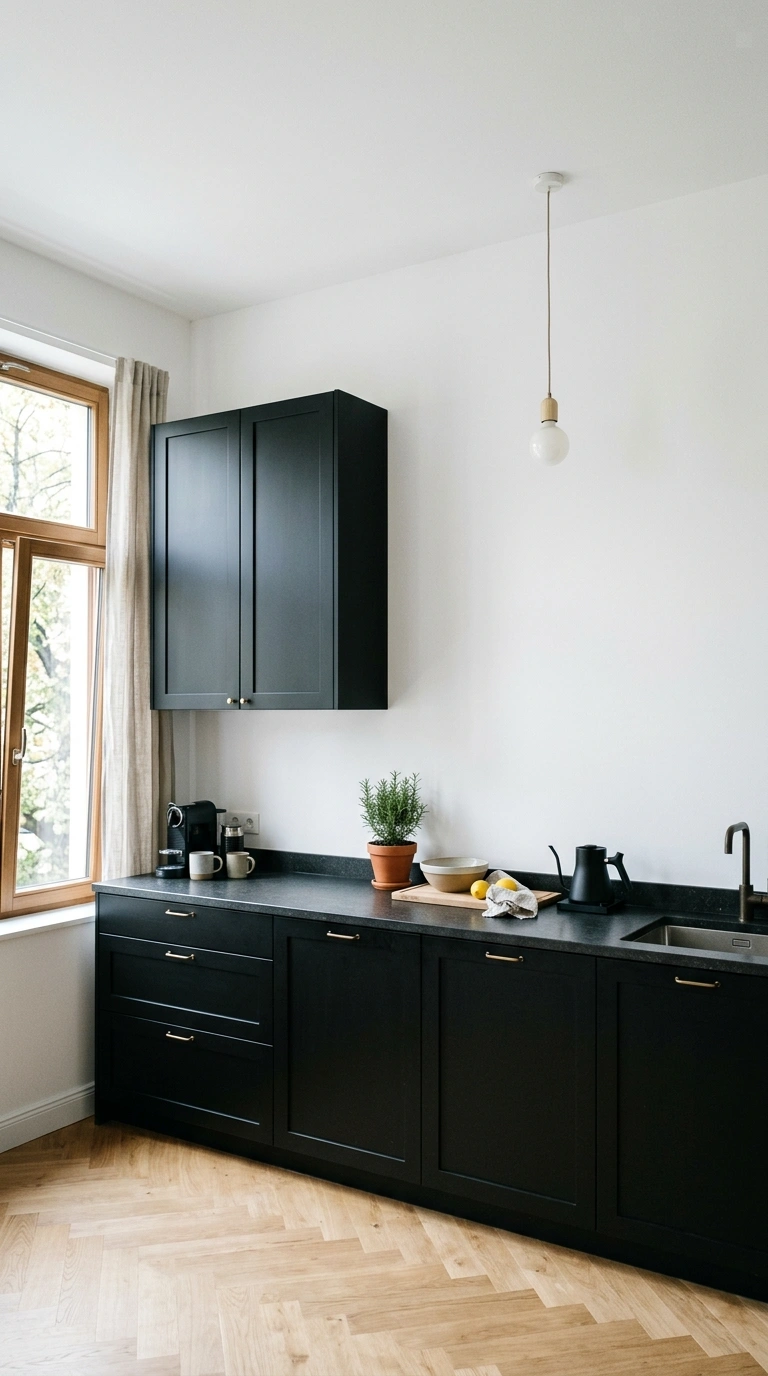
Reducing the number of upper cabinets to the functional minimum and leaving more wall space open, either as bare painted wall, as open shelving, or as a window, keeps the upper portion of the kitchen feeling open and prevents the all-dark feeling that continuous upper and lower black cabinets can create. A kitchen needs less upper cabinet storage than most people assume when the lower cabinets and drawers are well organized. Evaluate what the upper cabinets actually hold and consider whether some of those items could move to lower cabinet drawers, freeing the upper walls for openness and light.
15. Warm Accent Color Detail
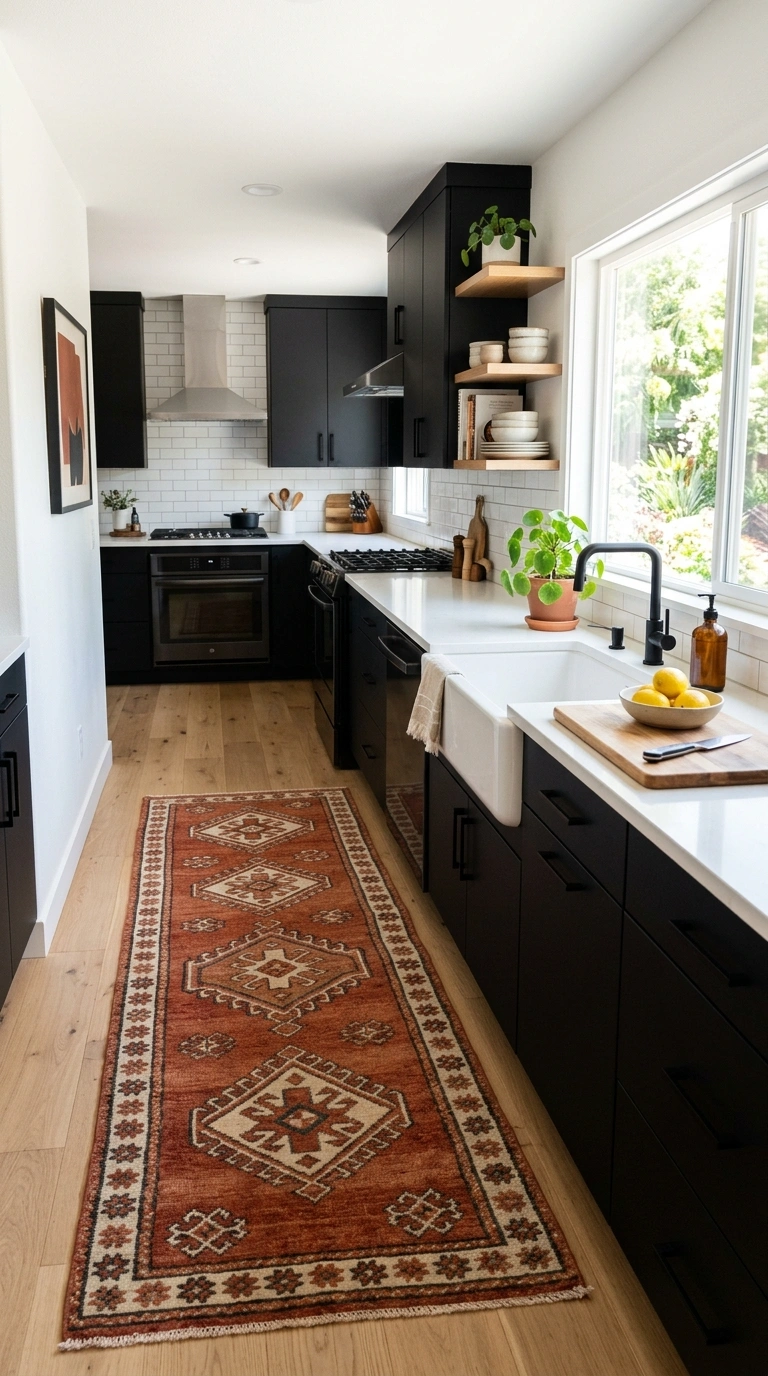
A small warm accent color introduced through accessories and textiles in a black kitchen adds the life and personality that an all-black-and-white palette can lack. A warm rust-toned runner rug, terracotta pottery on the counter, warm amber glass pendant lights, deep green plants, or a few warm wooden accessories each introduce color and warmth without competing with the sophisticated black-and-white foundation. Keep the accent color to a single warm tone used consistently rather than multiple colors that would create visual noise against the already strong black cabinets.
16. Black Cabinet Door Style
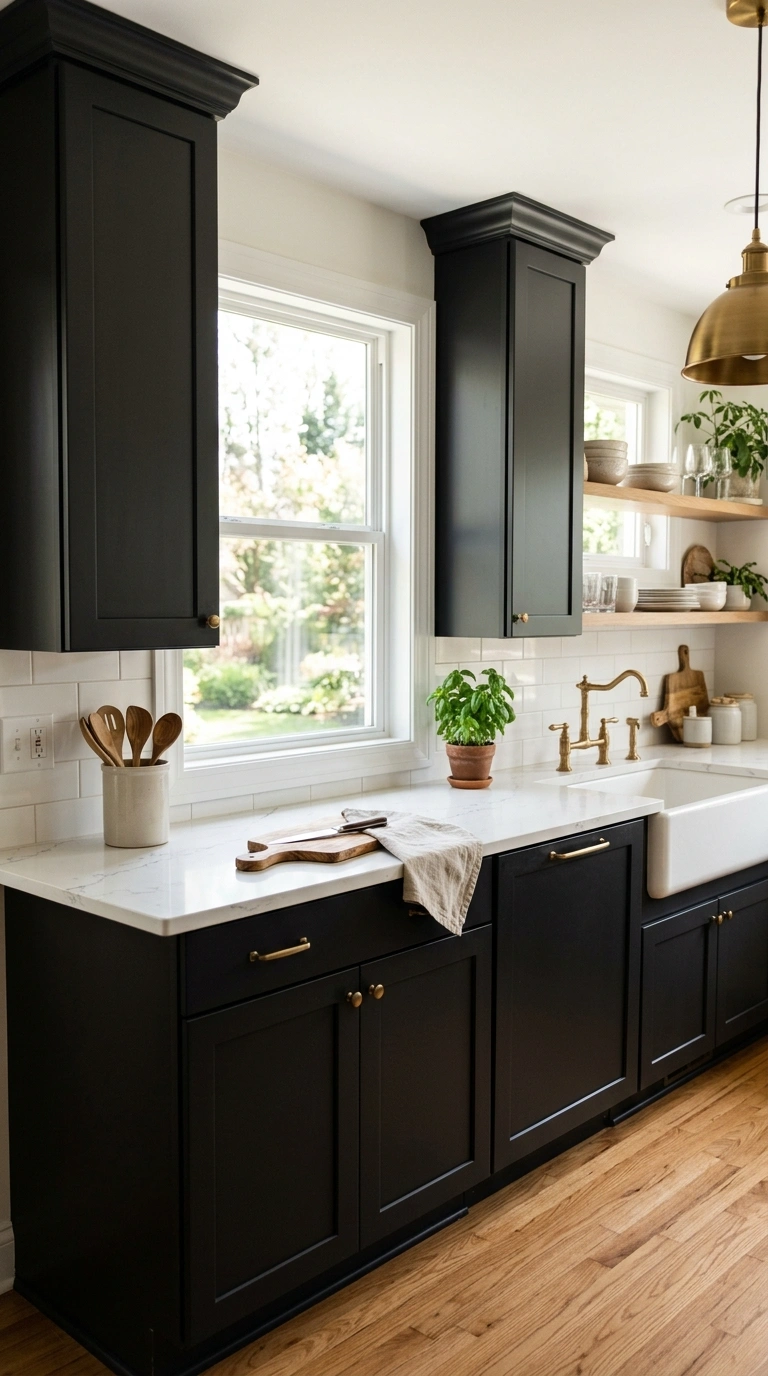
The door style of the black cabinets significantly affects how formal or casual the kitchen reads. Flat-front slab doors in matte black read as the most modern and minimal. Shaker-style doors in matte black read as transitional and versatile, suiting both modern and traditional kitchens. Raised-panel doors in black read as formal and traditional. The flat-front slab is currently the most popular choice for black cabinets because the clean lines suit the contemporary aesthetic that most black kitchen designs target. Choose the door style that matches the rest of the home’s design language.
17. Matte Black Appliances Match
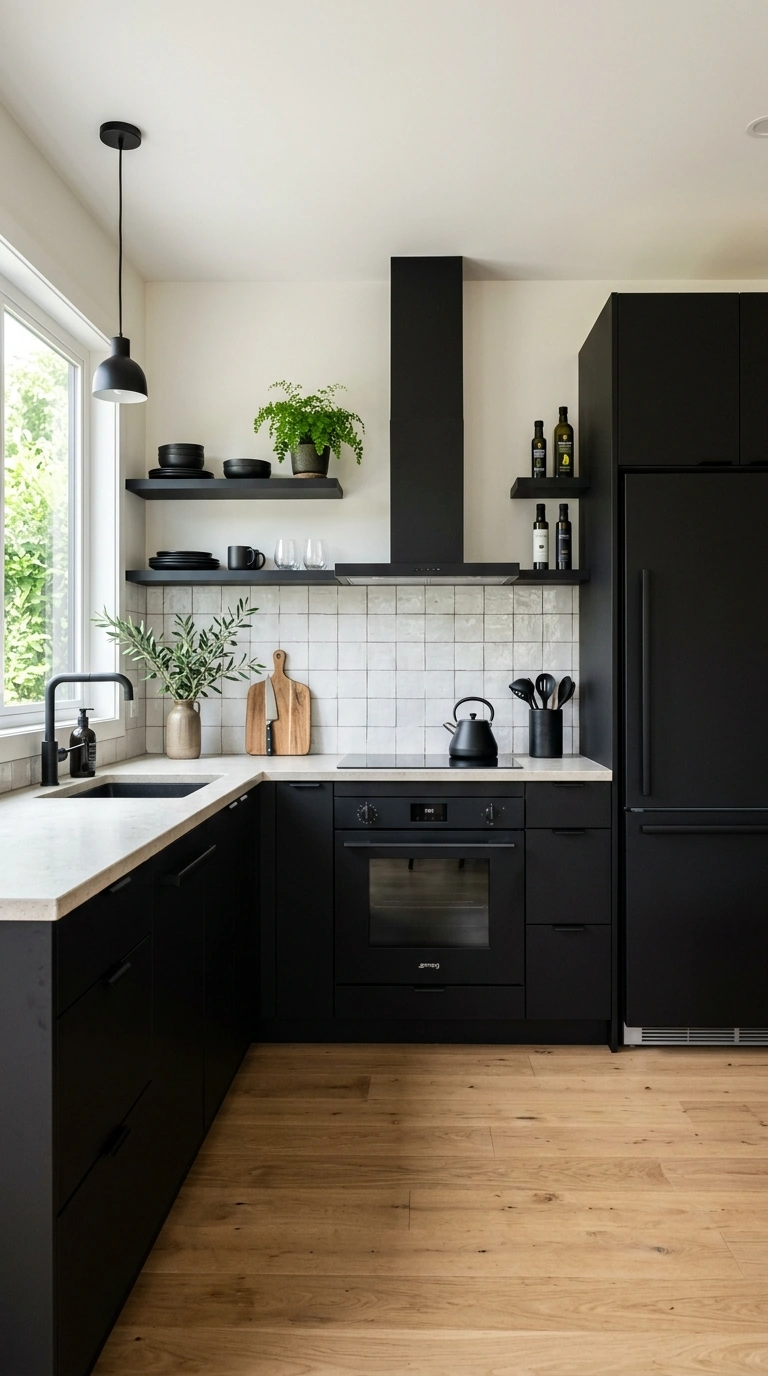
Matte black appliances, now widely available from most major manufacturers, integrate seamlessly into a black cabinet kitchen and create a cohesive all-dark lower visual field that reads as intentional and designed. The matching matte finish between cabinets and appliances eliminates the visual disruption that stainless steel or white appliances create when placed within a run of black cabinets. If the existing appliances are stainless steel and replacement is not practical, the mix of stainless and black still works as long as the stainless surfaces are treated as deliberate metallic accents rather than mismatches.
18. Black Cabinet Paint Choice
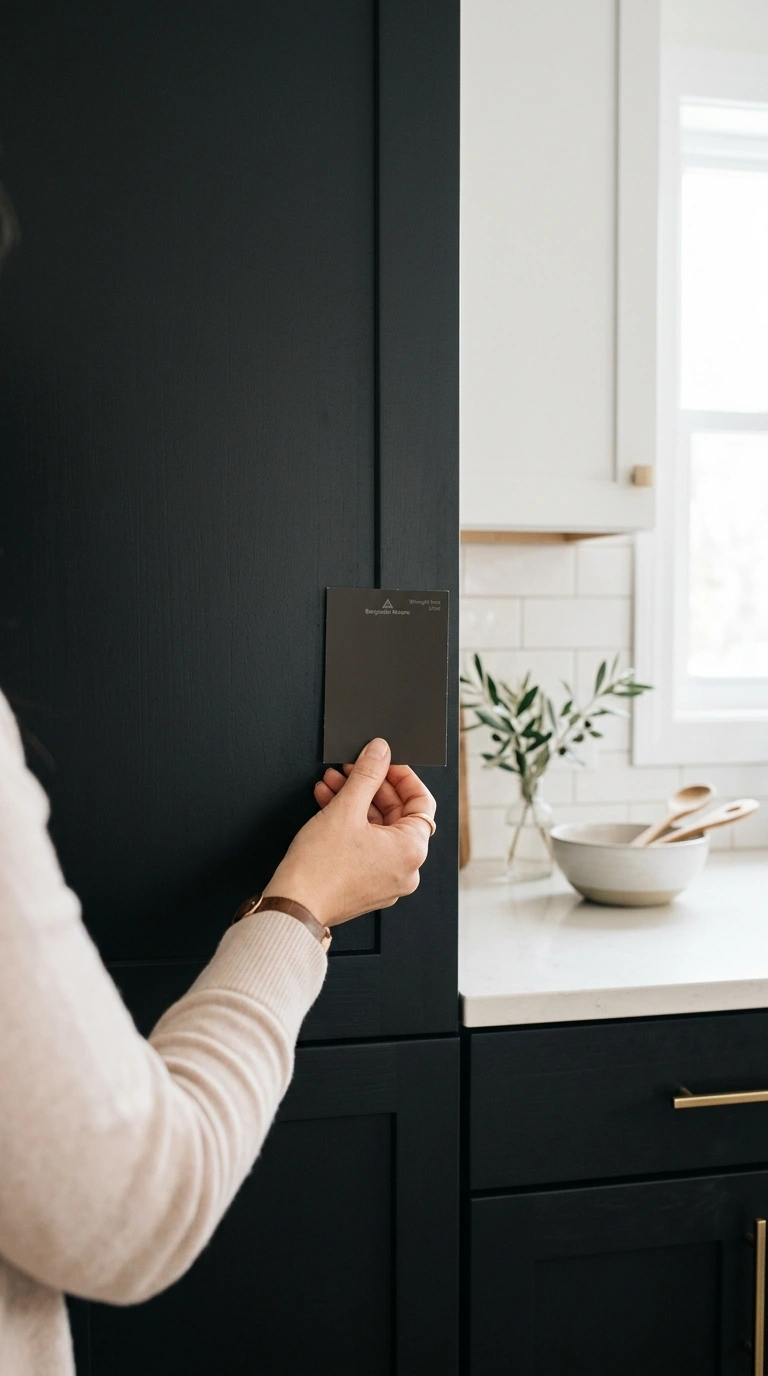
The specific shade of black used on the cabinets makes a subtle but meaningful difference. A pure absolute black reads as the most dramatic and the most modern. A soft black with warm undertones, sometimes called off-black or almost-black in paint chip terminology, reads as slightly warmer and more forgiving than true black. A black with charcoal or very dark gray undertones reads as slightly softer and works well in kitchens with less natural light. Test the specific black paint in the actual kitchen under both natural and artificial light before committing, since subtle differences in undertone become significant at the scale of a full cabinet run.
19. Black and White Tile Floor
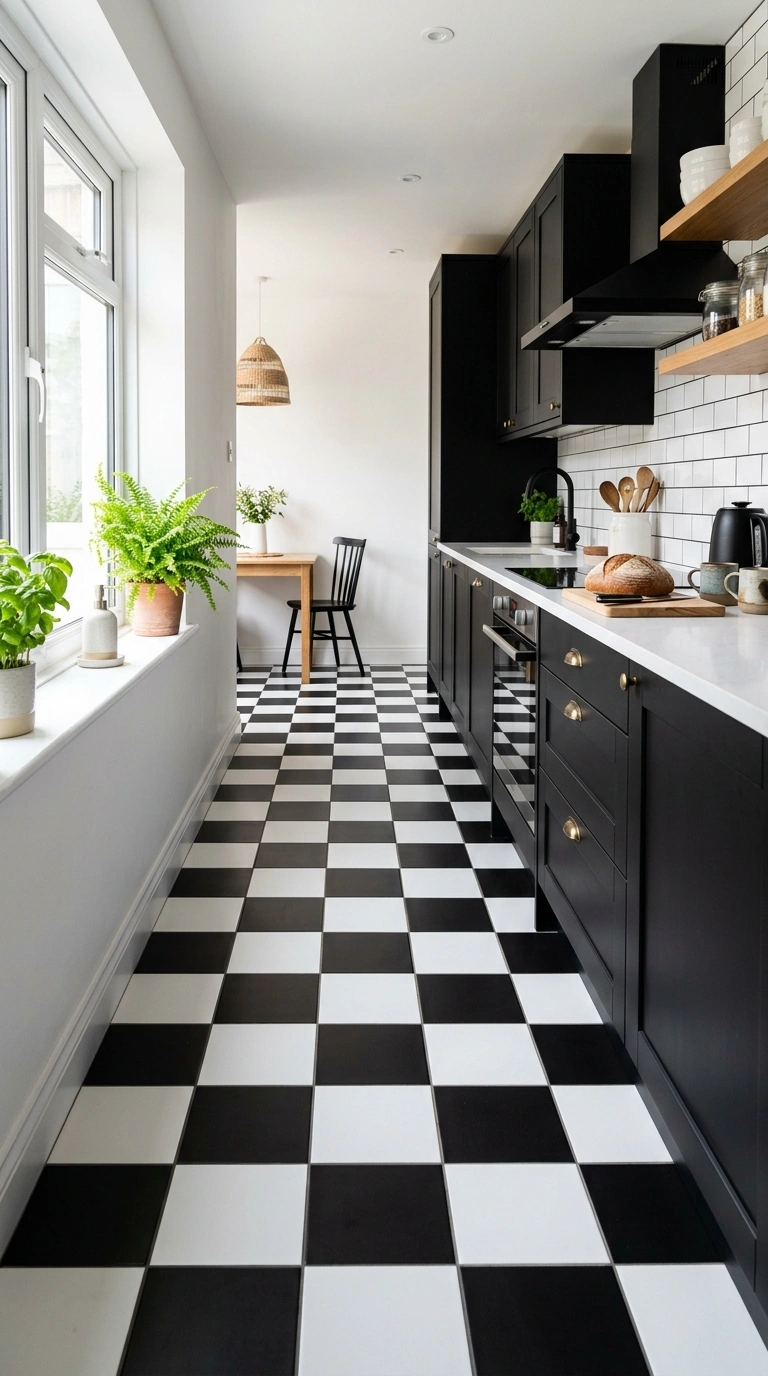
A black and white checkered or patterned tile floor in a kitchen with black cabinets ties the black of the cabinets to the floor and creates a cohesive design story throughout the vertical range of the kitchen. The white in the floor pattern provides the brightness that an all-dark floor would lack, while the black in the pattern connects visually to the cabinets above. A classic black and white checkered pattern, a hexagon tile with scattered black accents, or a patterned encaustic tile in black and white all work depending on the kitchen’s style.
20. Dining Nook Contrast
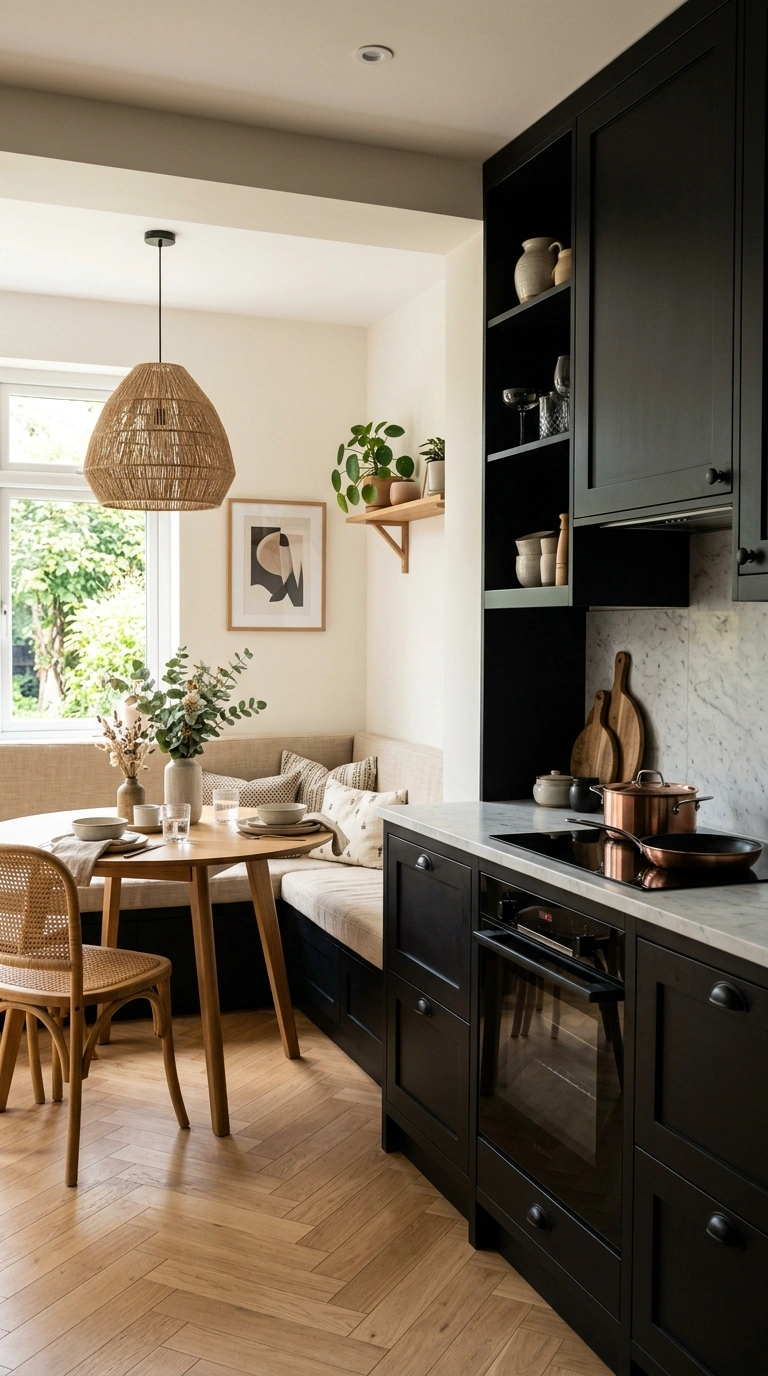
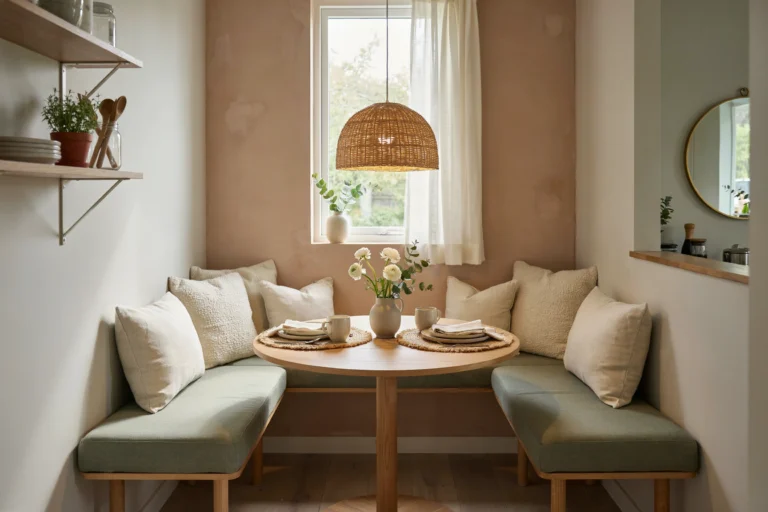
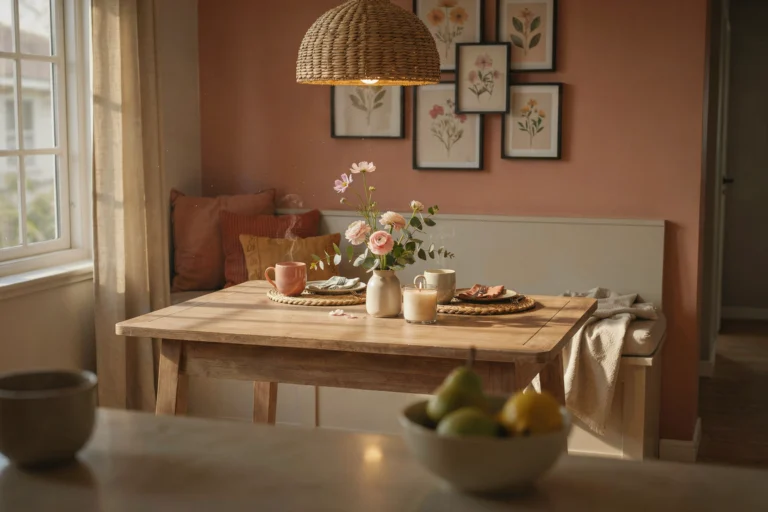
If the kitchen includes a breakfast nook or an eat-in dining area, keeping that area in lighter warmer tones than the black cabinets creates a visual and functional transition from the cooking zone to the eating zone. A warm wood table, light-toned bench cushions, and a bright pendant light over the dining area provide visual relief from the black cabinets and make the eating area feel welcoming rather than heavy. The contrast between the dramatic black cooking zone and the warm light dining zone creates a kitchen with two distinct moods in one room. The same approach to creating visual separation between kitchen zones also applies in small kitchen layouts where different zones within the same room need to feel distinct.
21. Seasonal Styling on Black
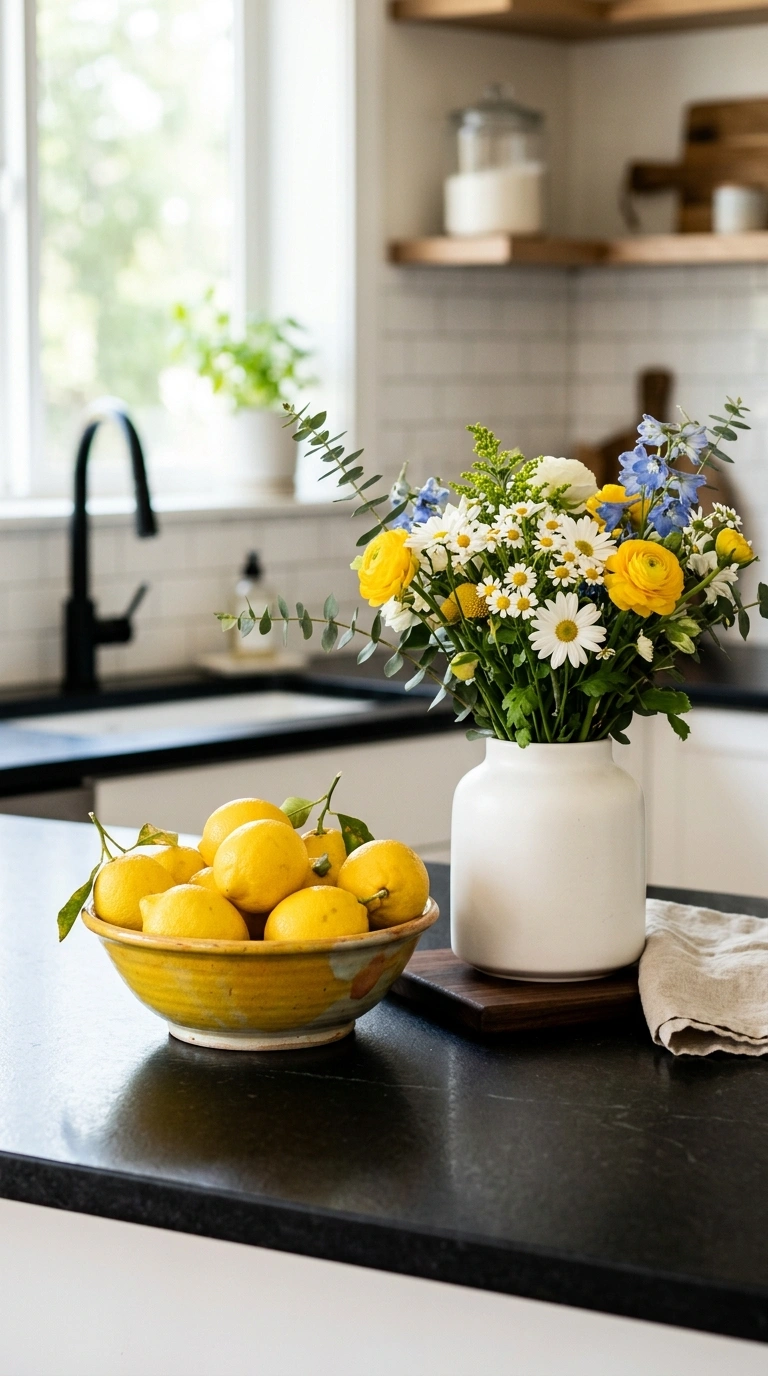
Black cabinets and counters serve as a dramatic backdrop that makes seasonal styling elements pop more visually than they would against white or neutral surfaces. A bright ceramic bowl of lemons on a black counter, a vase of white flowers against a black backsplash, warm amber candles on a dark surface, all read as more vivid and more impactful against the dark background than against a light one. Use the dark surfaces as a stage for small rotating seasonal displays that change the kitchen’s personality throughout the year without any permanent changes to the design.
22. Commit to the Contrast
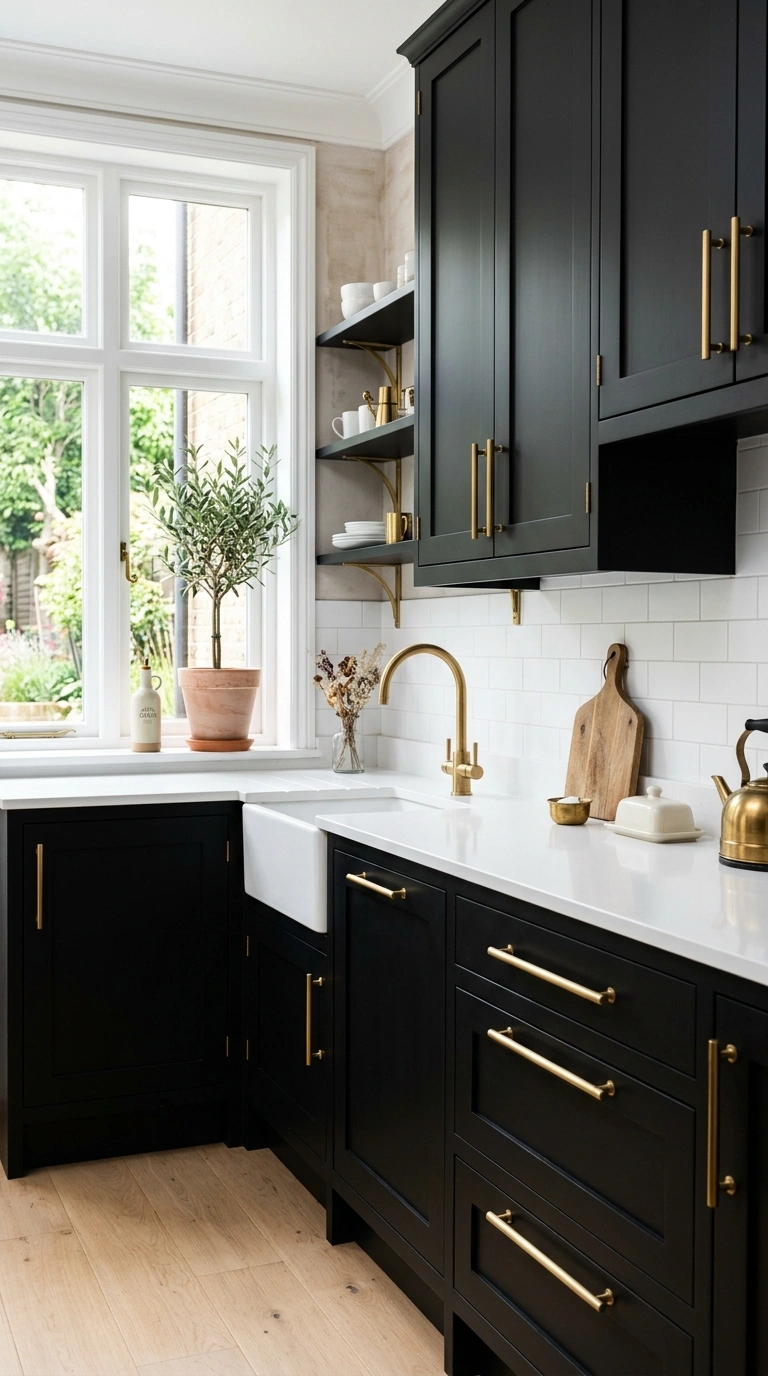
The single most important principle for black kitchen cabinets that look sophisticated rather than dark is committing fully to the contrast between the black and its counterparts. The black should be genuinely black rather than a timid dark gray. The white counter should be genuinely bright rather than a heavy off-white. The brass hardware should be genuinely warm rather than a safe brushed nickel. The contrast between the dark and the light elements is what creates the sophisticated tension that makes black kitchens look designed. Half-measures, a slightly dark gray instead of black, a slightly off-white instead of white, produce a kitchen that looks indecisive rather than sophisticated. For a connected design approach using black alongside other bold tones, the black worktops guide covers how black surfaces pair with different cabinet and wall colors for equally striking results.
Black kitchen cabinets look sophisticated when they are balanced with genuine brightness from counters, backsplash, and natural light, warmed with brass hardware and natural wood, and committed to fully rather than approached timidly. The black needs contrast to read as a deliberate design choice rather than a dark accident. Provide that contrast with white, warm metals, and natural materials, and the black cabinets become the most sophisticated element in the kitchen.