20 Green Bathroom Ideas That Work in Any Light or Layout
Green is one of the most versatile colors a bathroom can take on. It reads as natural, calm, and slightly more interesting than the standard white or gray most bathrooms default to. The challenge is that green covers an enormous range, from pale sage to deep forest to bright emerald, and the wrong green in the wrong light can feel cold, clinical, or simply off. The right green in any bathroom comes down to matching the shade to the light the room actually gets and to the layout you are working with. These 20 ideas cover the full spectrum of green bathroom approaches and give specific guidance on which shades and applications work in which conditions, whether your bathroom has a sunny window, no natural light at all, or anything in between.
1. Sage Green Painted Walls
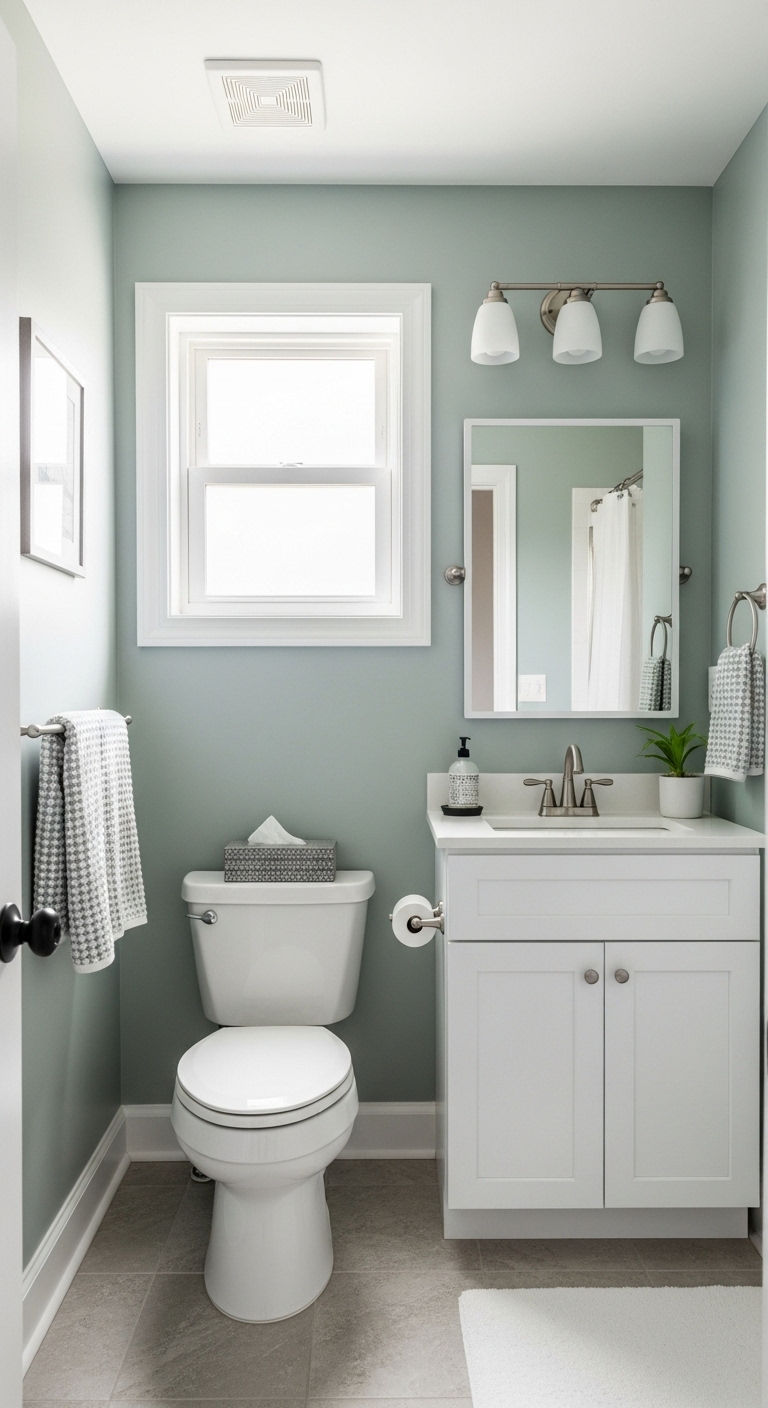
Sage green is the most universally flattering green for bathroom walls because it reads as soft and natural in almost any light. In a bathroom with a north-facing window or no window at all, sage green leans slightly cooler and reads more gray-green, which keeps the room feeling fresh rather than warm. In a south or west-facing bathroom with stronger daylight, the same sage green warms slightly and takes on more yellow undertones, which gives the room an organic, sun-warmed quality. Look for sage greens with a slight gray base rather than highly saturated greens, since the muted version is more forgiving across different lighting conditions and pairs more easily with white fixtures and natural materials.
2. Deep Forest Green Tile
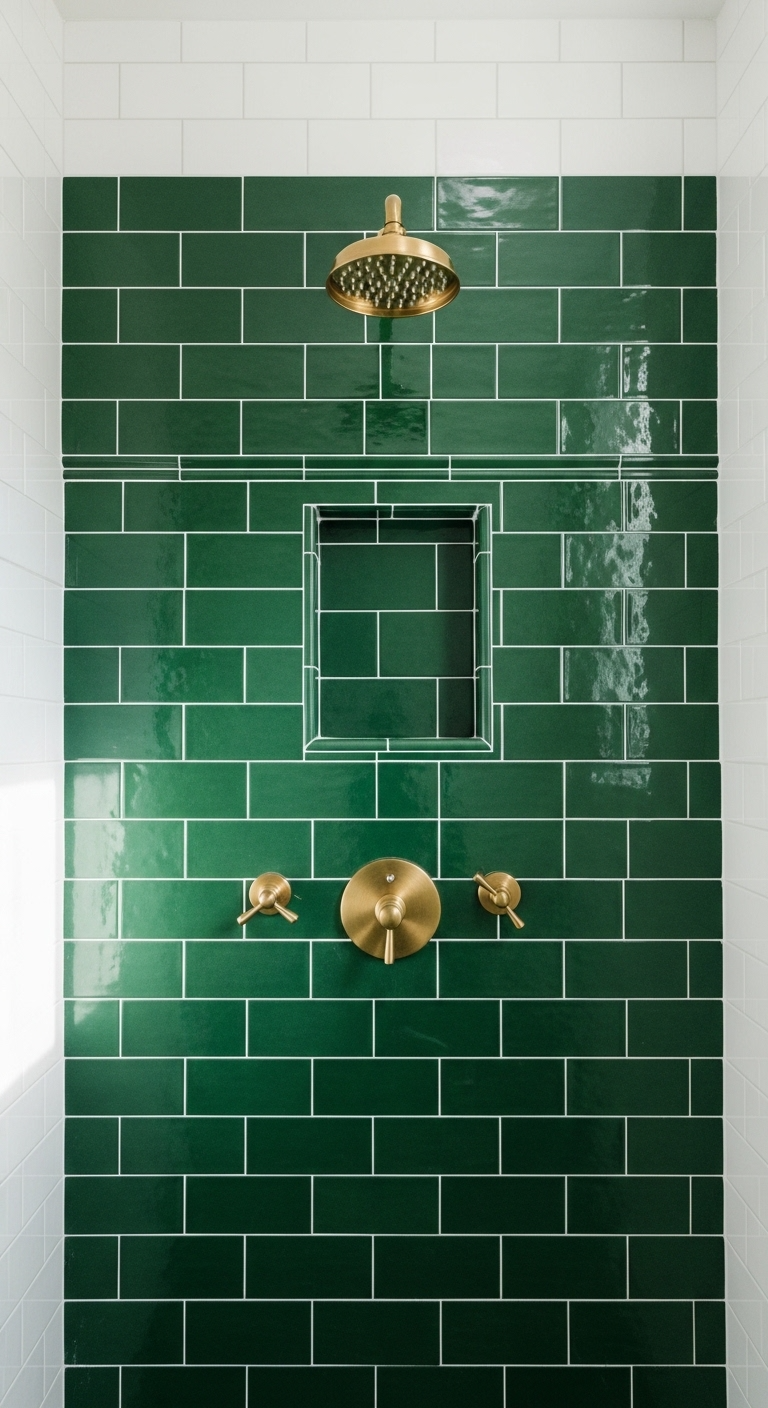
Forest green tile, particularly in a small format like subway or square mosaic, makes a strong statement on a bathroom wall or in a shower without overwhelming the space when used with restraint. The depth of forest green works particularly well in bathrooms with good natural light, where the daylight catches the surface and reveals the richness of the color. In a bathroom with limited light, deep forest green tile can feel heavy on a full wall, so consider using it on just a feature wall, behind the vanity, or in a shower niche rather than across the entire room. Pair forest green tile with brass or aged gold hardware for a particularly sophisticated combination.
3. Mossy Green Vanity
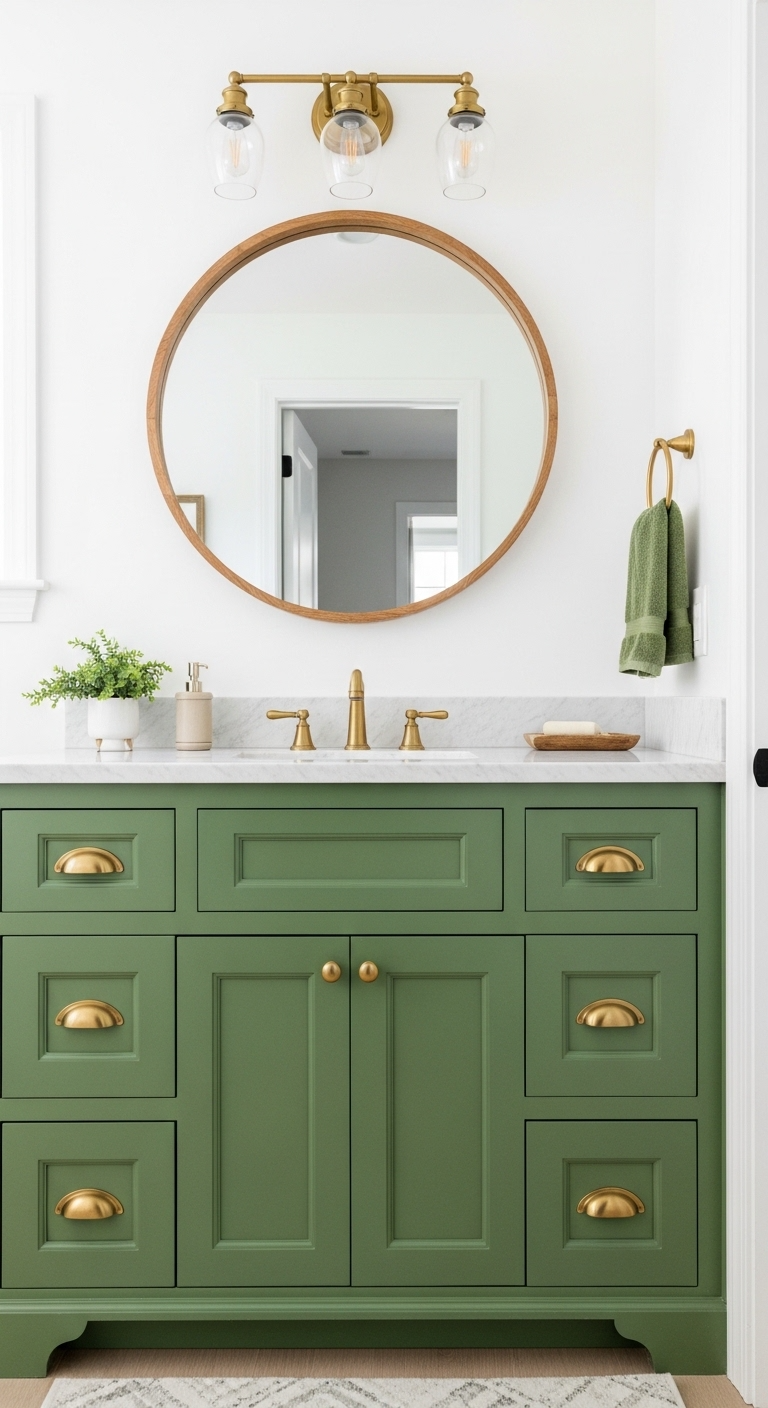
A bathroom vanity painted in a warm mossy green creates a strong centerpiece in the room without committing the walls to a green palette. The vanity becomes the visual anchor and the walls can stay in a neutral white or cream that lets the green vanity stand out. Mossy green has more yellow in it than sage and reads as warmer and more grounded, which suits bathrooms where the rest of the materials, the floor, the counter, the hardware, lean toward warm tones. Repaint an existing vanity with a chalk paint or cabinet paint in mossy green for under thirty dollars in materials and a single weekend’s work.
4. Green Tile Backsplash Strip
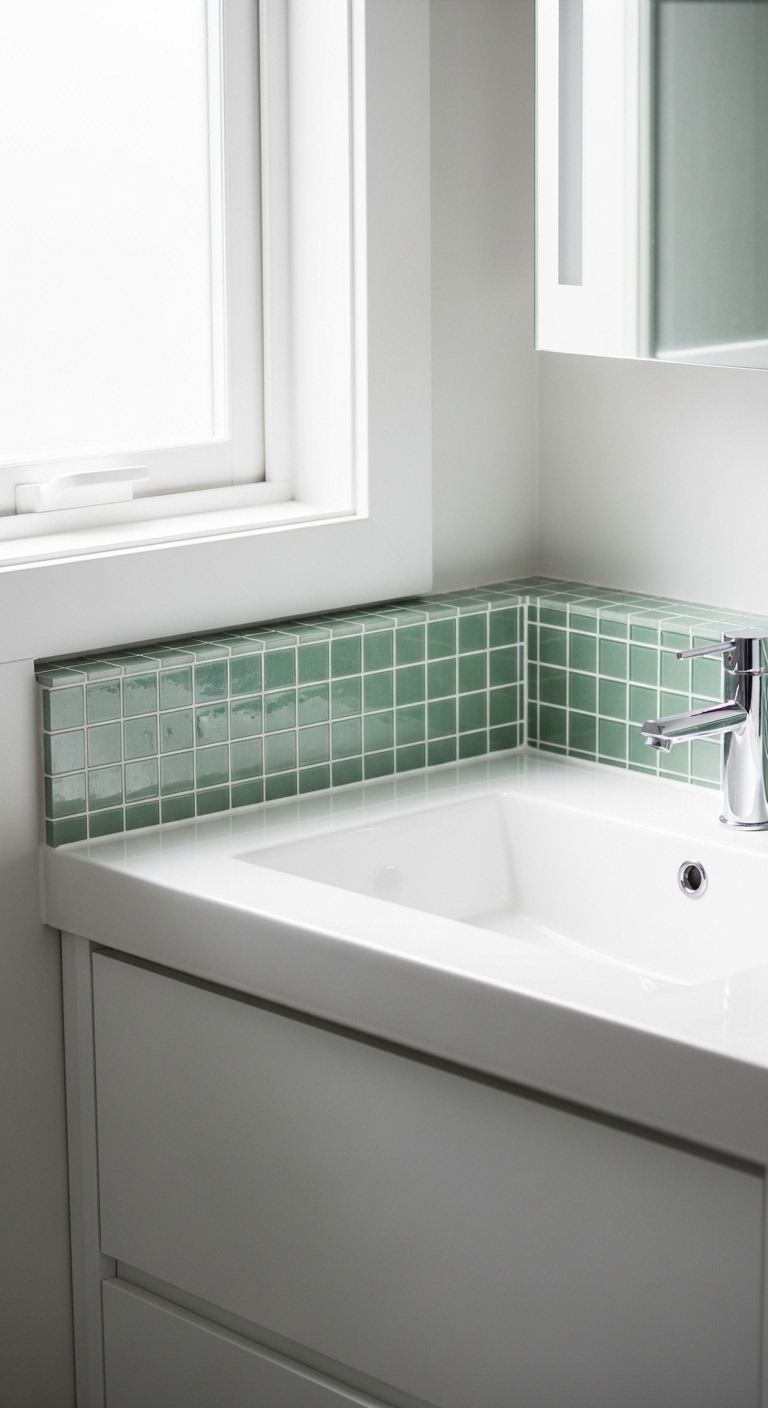
A narrow strip of green tile used as a backsplash behind the vanity, rather than tiling an entire wall, introduces green to the bathroom in a controlled and very accessible way. The backsplash strip sits behind the sink at counter height and adds a defined band of color and pattern that becomes a focal point of the vanity area. Use small format green tiles, perhaps 2 by 2 inch squares or a narrow horizontal subway, for the most visual texture in a small area. This works particularly well in bathrooms where painting the walls or installing a feature wall feels like too much of a commitment, since the tile strip is contained and easy to integrate with existing materials.
5. Olive Green Bathroom Walls
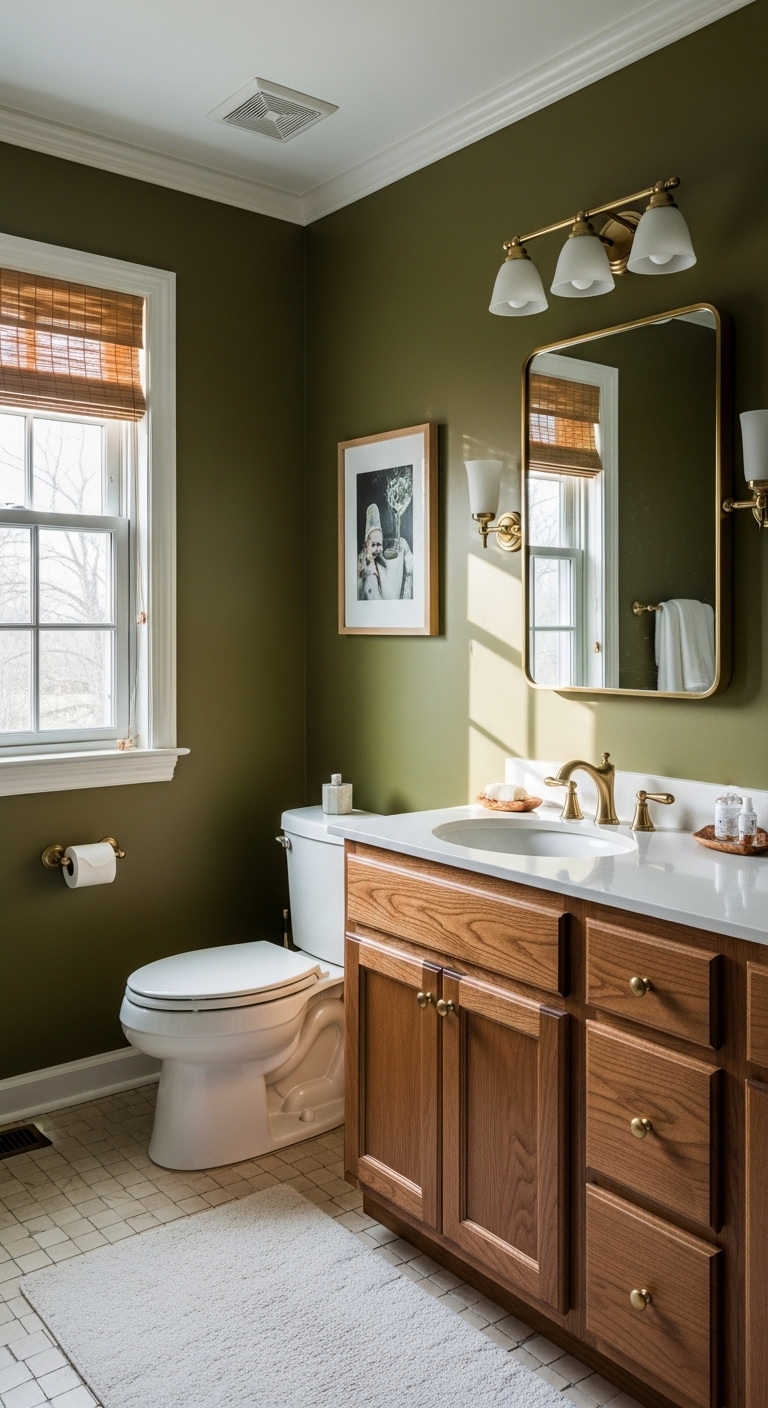
Olive green is the warmest and most yellow-leaning green available for bathroom walls, and it suits bathrooms with warm afternoon light or in homes with a vintage or rustic aesthetic particularly well. The depth of olive green walls creates an enveloping quality that makes the bathroom feel like a designed room rather than a utility space. Olive green works best with warm wood vanities, brass or aged gold hardware, and warm-toned natural stone. It can feel heavy in a small windowless bathroom, so use it in bathrooms with at least some natural light or with very warm and bright artificial lighting to keep the room feeling open.
6. Mint Green for Light Bathrooms
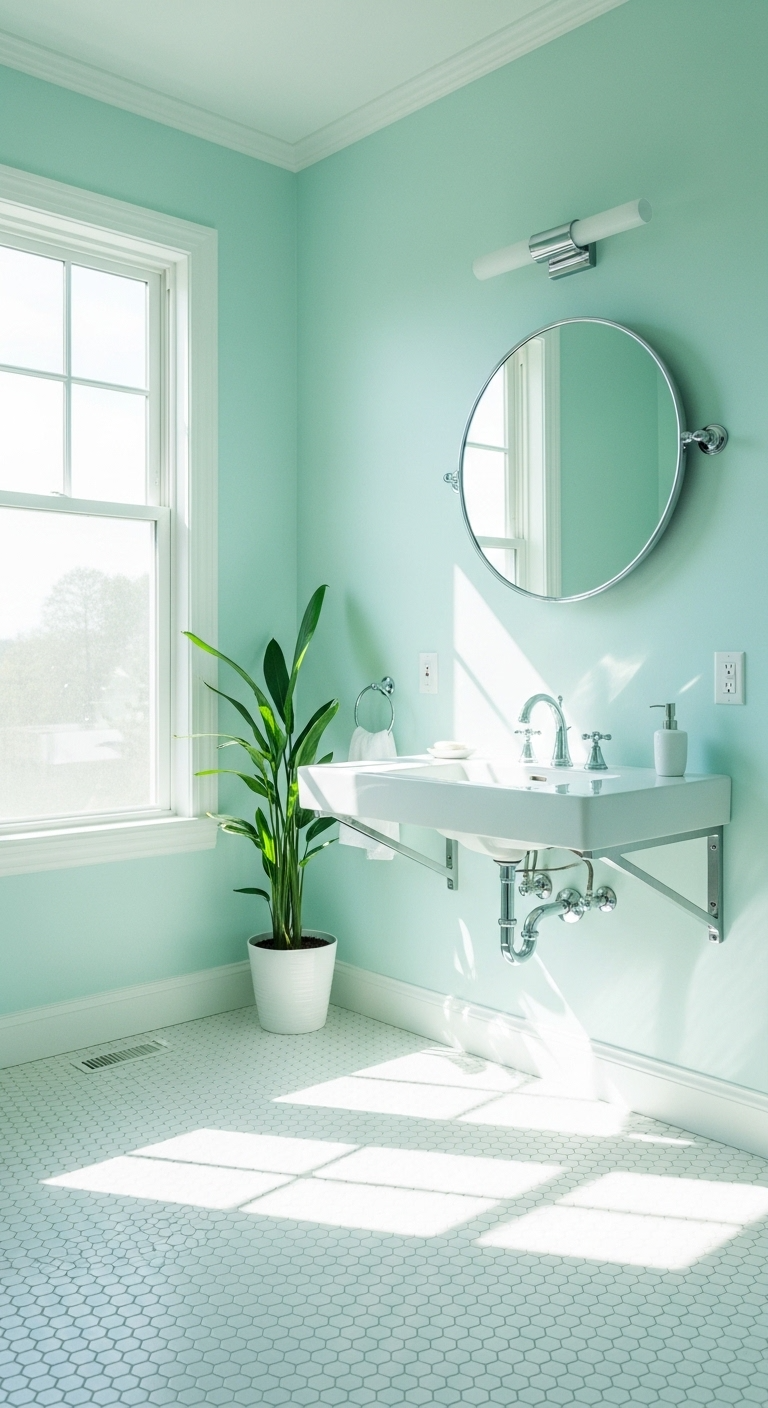
Mint green, the lighter and slightly cooler version of pale green, works particularly well in bathrooms that get strong direct sunlight that would wash out a sage green and leave it feeling pale and faded. The slight blue-green undertone of true mint reads as crisp and fresh in bright light rather than washed out. Mint green walls paired with white fixtures and chrome hardware create a clean, slightly retro feeling that suits both vintage-style bathrooms and modern ones. Avoid mint green in low-light bathrooms where it can read as washed out and slightly cold without the daylight to give it life.
7. Hunter Green Wainscoting
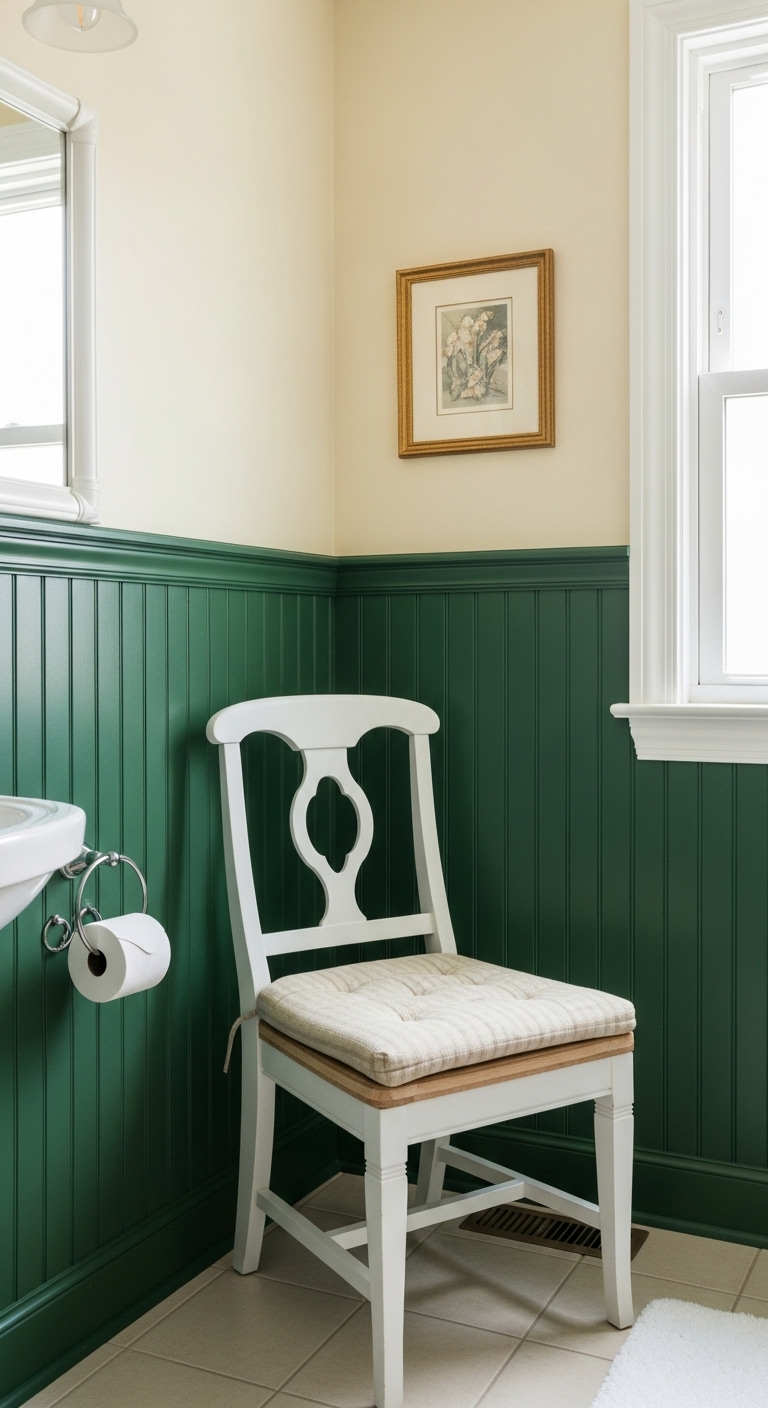
Hunter green wainscoting installed on the lower half of bathroom walls, with a contrasting white or warm cream paint above, creates a traditional two-tone treatment that adds depth and architectural character without making the room feel too dark. Hunter green is rich and saturated enough to make a real statement on the lower wall while the lighter color above keeps the upper room feeling open. This treatment works in bathrooms of any size because the green is contained to a defined area. Pair hunter green wainscoting with warm brass hardware, a marble-look counter, and warm-toned floor tile for a rich traditional bathroom palette.
8. Green Patterned Wallpaper
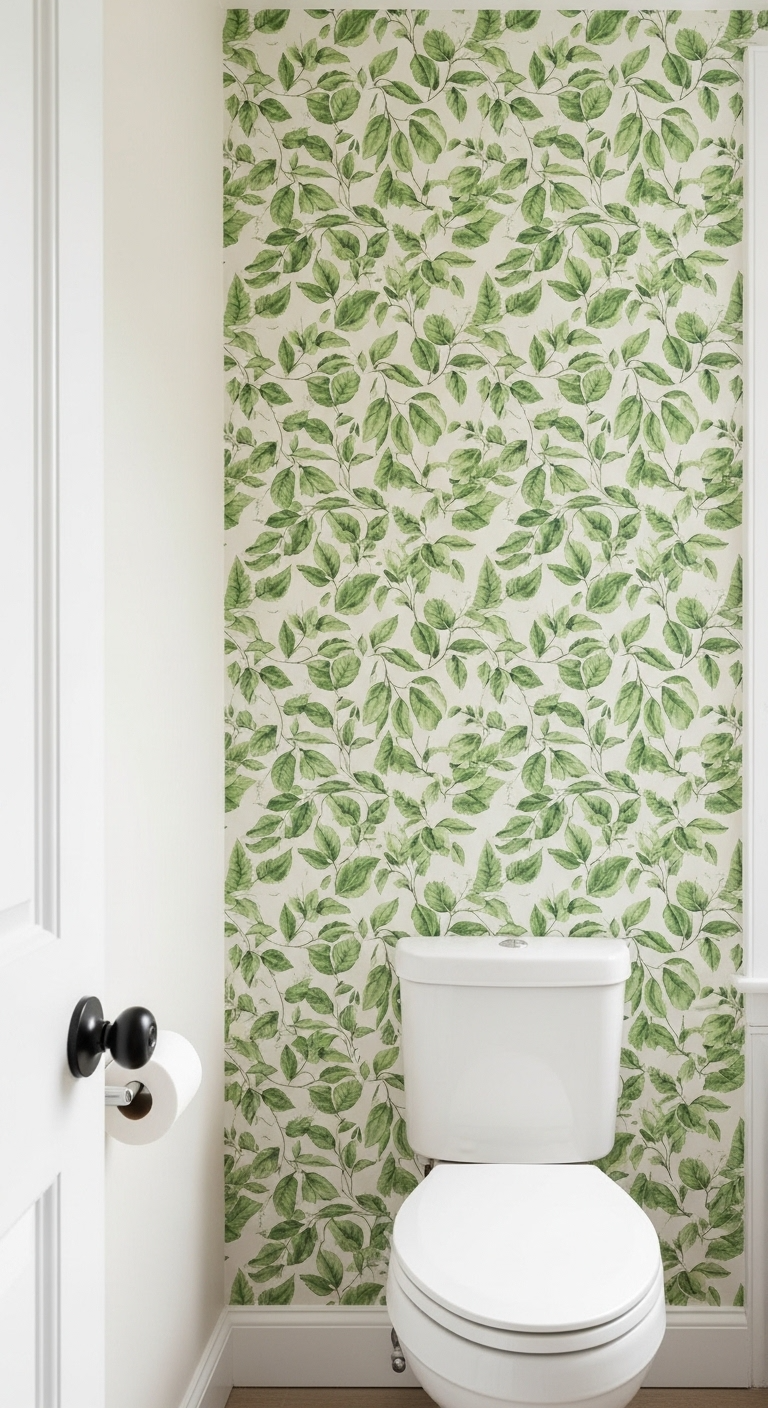
A green botanical or geometric wallpaper applied to a feature wall, the wall above the wainscoting, or behind the toilet, adds pattern and color in a controlled way that suits bathrooms of any size. Botanical prints with green leaves on a cream or white background work particularly well because the white background keeps the wallpaper from feeling heavy in low light. Saturated all-green prints work better in bathrooms with good natural light. Peel-and-stick wallpapers make this approach especially accessible since they install without paste and remove cleanly later. The same principle of bringing layered warmth and intentional materials into a room also applies to warm and inviting home bar setups — both spaces benefit from one strong patterned moment paired with quieter surroundings.
9. Eucalyptus Green Cabinets
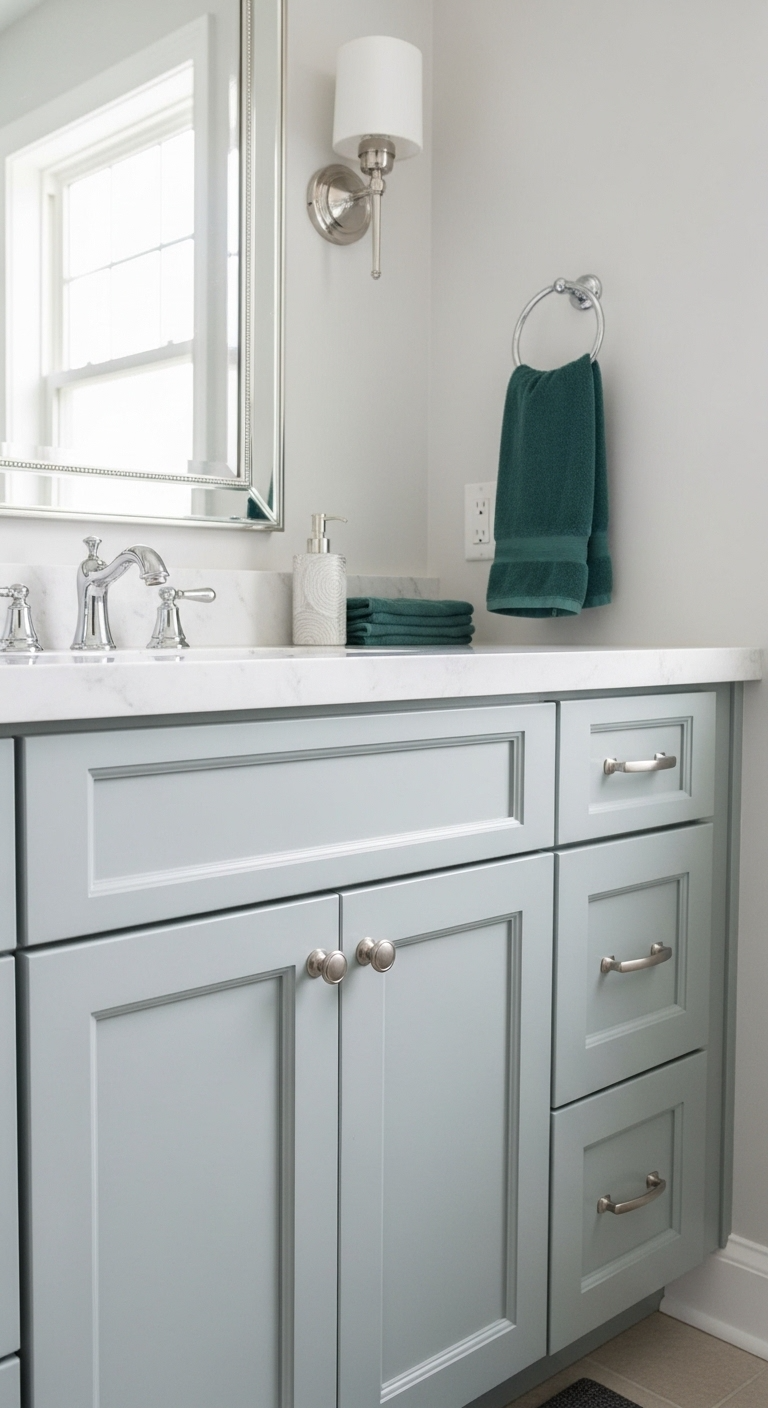
Eucalyptus green, the cool and slightly silvery shade of green found in the eucalyptus plant itself, works beautifully on bathroom cabinets and reads as fresh and natural without leaning toward stark mint or heavy forest tones. The silvery quality of eucalyptus green pairs particularly well with chrome or brushed nickel hardware and white marble or marble-look counters. The shade also has a slightly aged or weathered quality that suits both modern and traditional bathroom styles. Eucalyptus green cabinets work well in bathrooms with cooler natural light from north-facing windows where warmer greens can read as muddy.
10. Emerald Green Accents
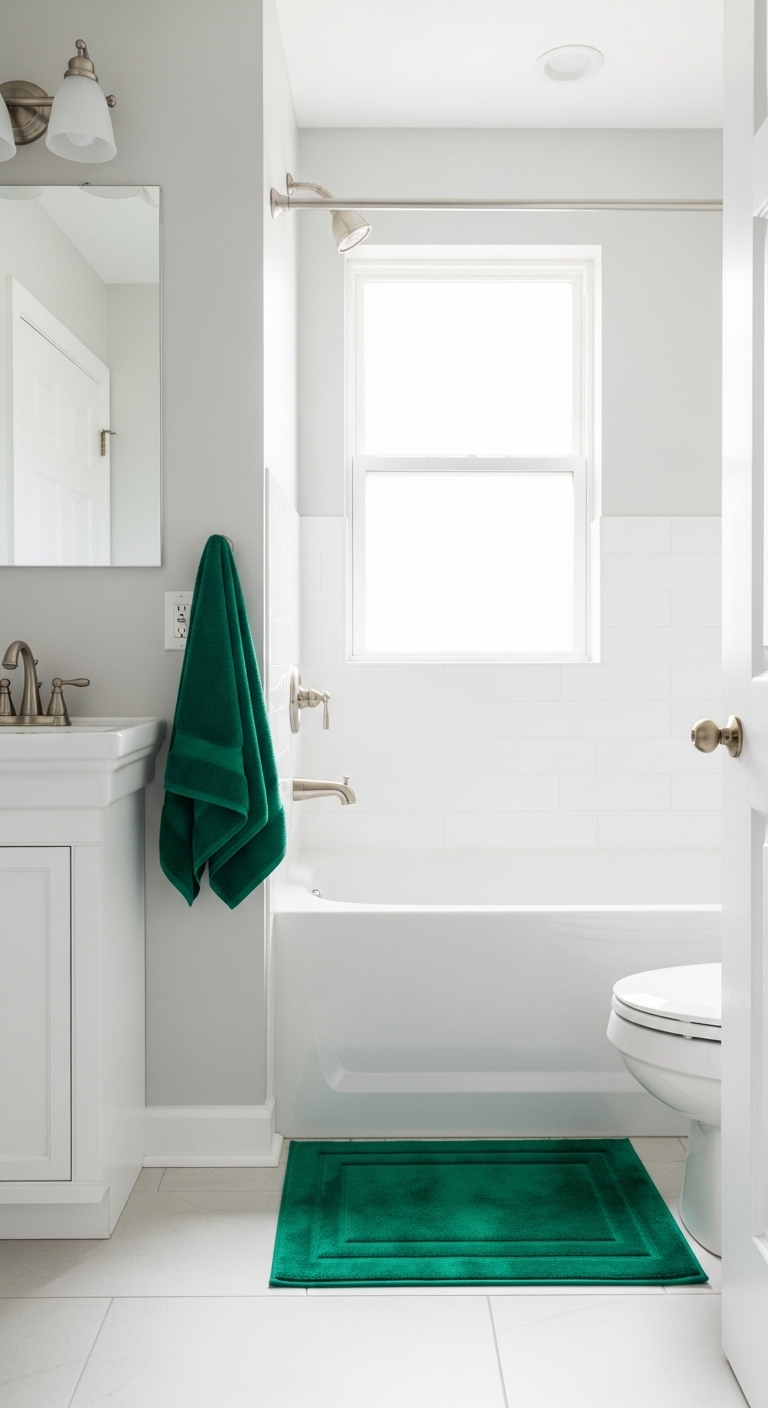
Bright emerald green works best as an accent color rather than a wall or cabinet color, since the saturation can feel overwhelming in a fully green bathroom. A single piece of emerald green tile in a otherwise neutral bathroom, an emerald green hand towel, an emerald velvet bath mat, or a single emerald-toned art piece on the wall, brings a jewel-like richness to the bathroom without committing the room to the saturated tone. Emerald accents work particularly well in bathrooms with a primarily white or warm cream palette where the bright green stands out as a deliberate color moment.
11. Green and White Stripe
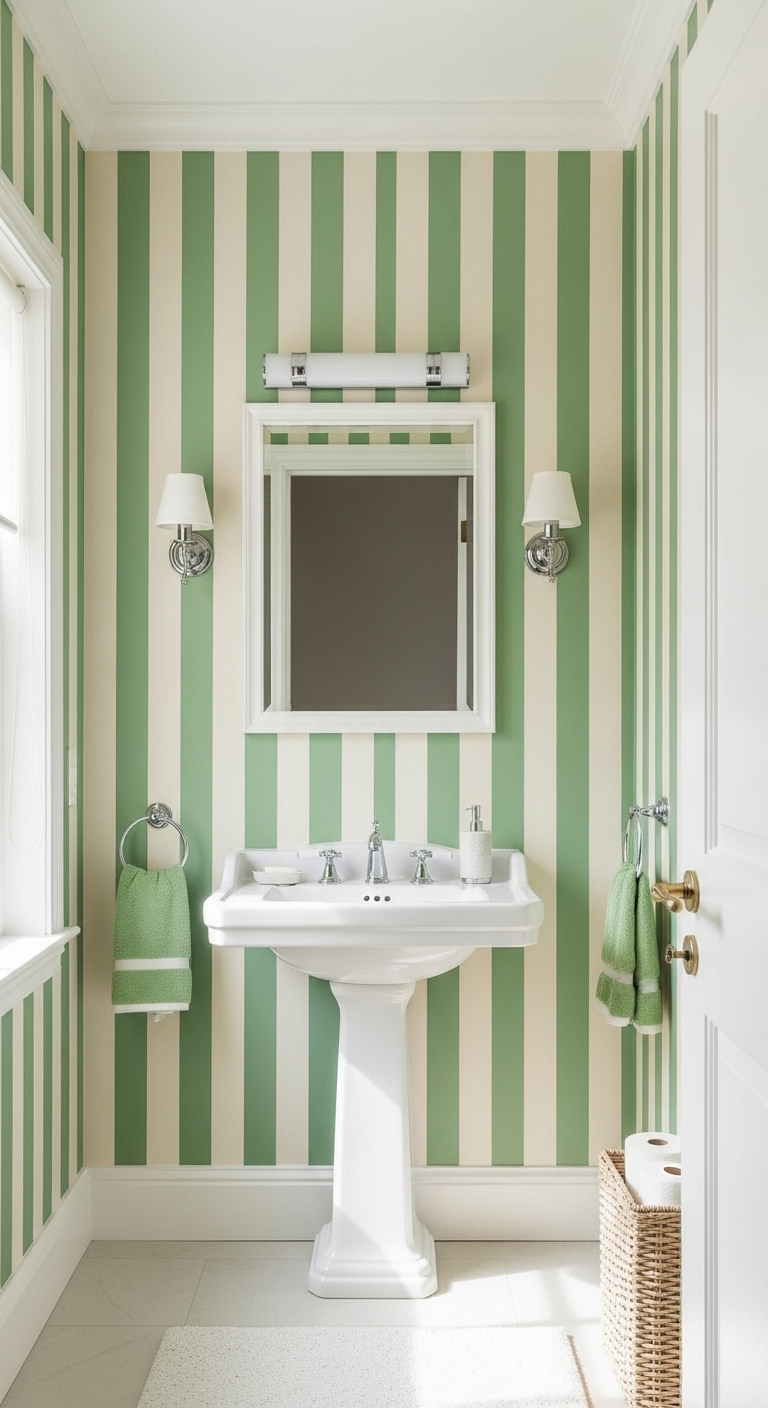
A green and white striped wallpaper, painted stripe pattern, or tile arrangement creates a fresh classic bathroom look that has been popular in coastal and traditional bathroom design for decades. The white stripes break up the green and prevent it from feeling heavy, which means even a deeper green can be used effectively in a stripe pattern where the same color on a solid wall would feel overwhelming. Vertical stripes make a small bathroom feel taller. Horizontal stripes make a narrow bathroom feel wider. Choose the orientation based on what your specific bathroom needs visually.
12. Green Marble Counter
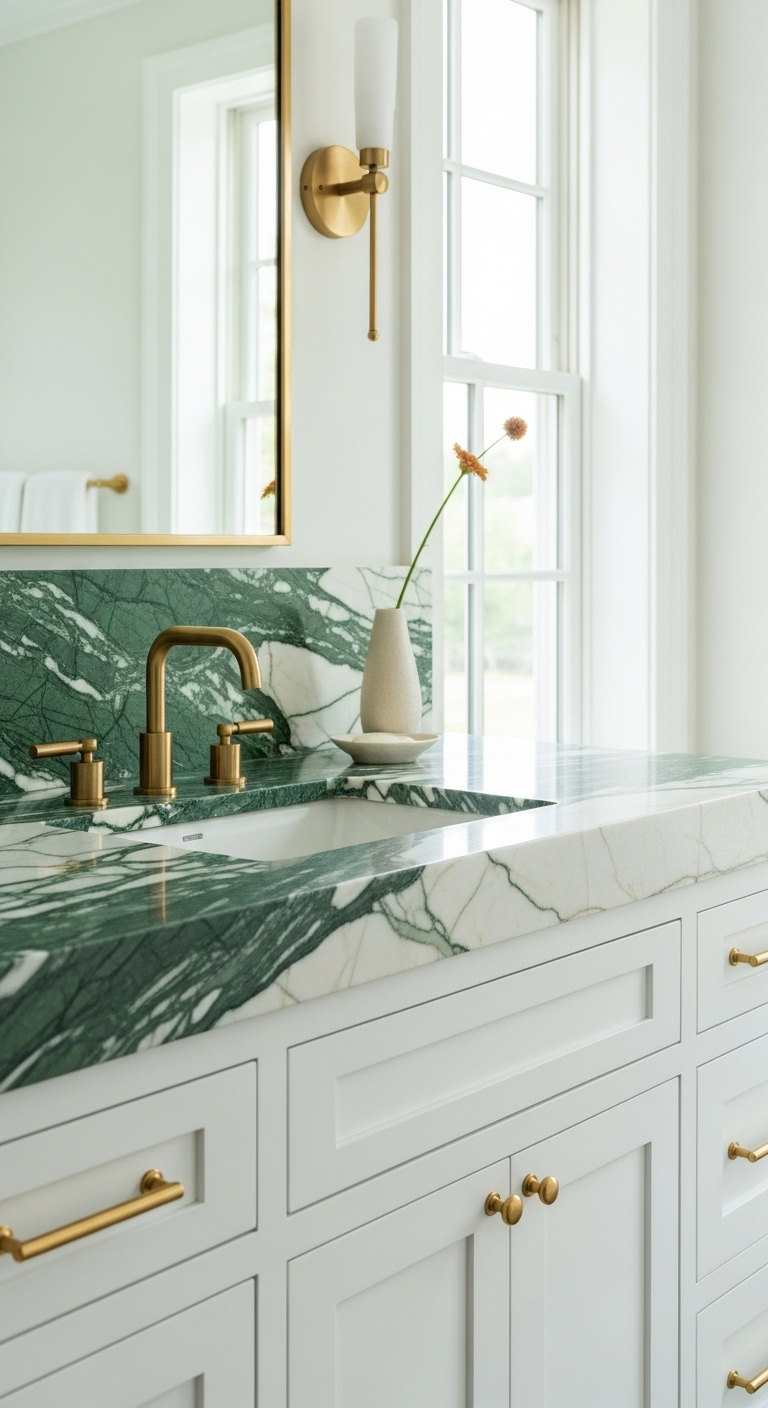
A green marble counter, whether genuine green marble or a green-veined alternative like quartzite or porcelain slab, makes a strong statement in a bathroom without requiring any other green elements in the room. The natural movement of green veining through a marble slab creates a one-of-a-kind surface that becomes the visual centerpiece of the vanity. Pair a green marble counter with white or cream walls and brass or aged gold hardware for the most striking and balanced result. Green marble works particularly well in larger bathrooms where the slab can be appreciated as a feature, since the pattern and color are too dramatic for the very small bathrooms where they would dominate everything else in the room.
13. Green Painted Ceiling
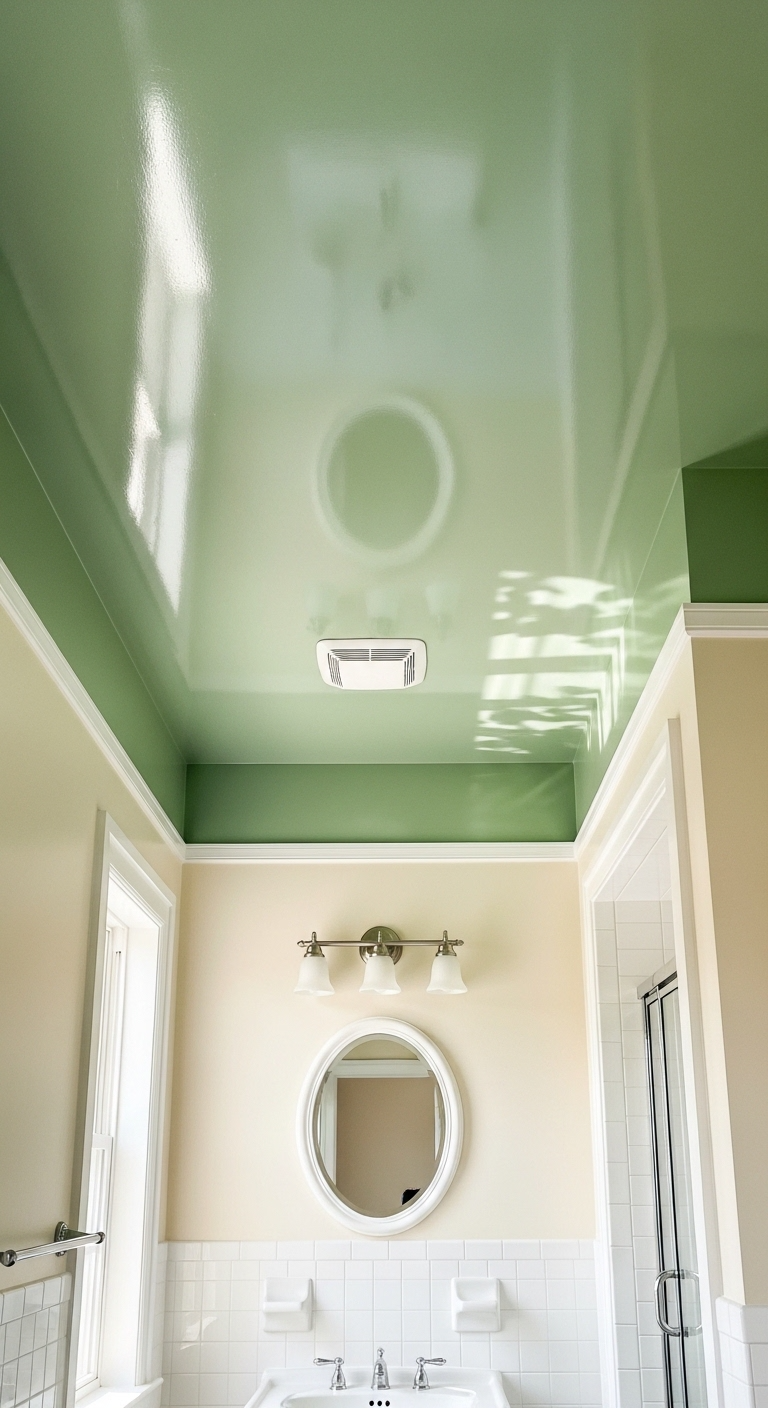
Painting just the bathroom ceiling in a green tone, leaving the walls in a neutral cream or white, creates an unexpected and surprisingly effective use of green that reads as sophisticated and unique. The green ceiling acts as a soft canopy over the room and reflects subtle green tones onto the white walls below, giving the whole bathroom a fresh, garden-like quality. This works particularly well in bathrooms with good natural light, since the ceiling color shows up most clearly when bright light from below illuminates it. Use a soft sage or eucalyptus green for this technique rather than a deep saturated tone, which can feel oppressive overhead.
14. Green Plant Collection
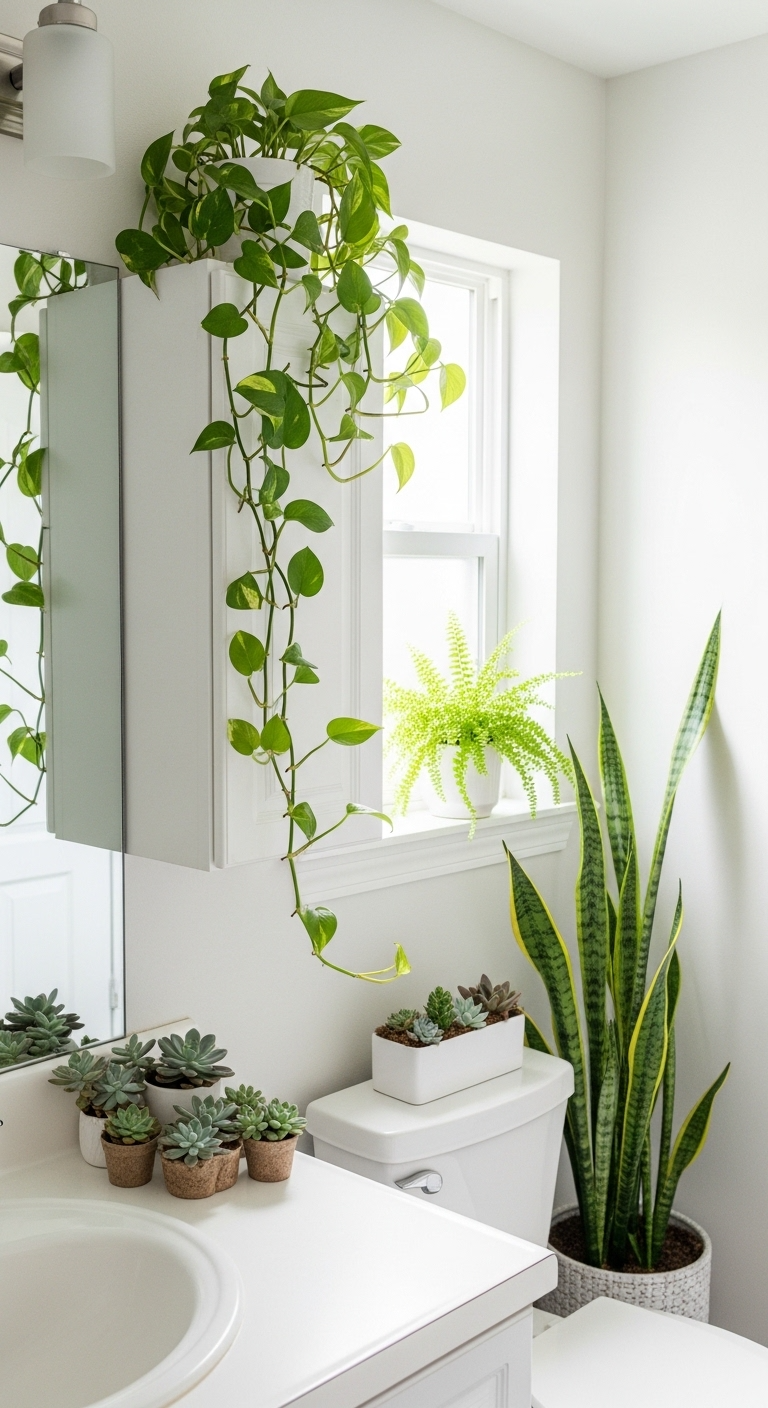
A collection of living green plants throughout the bathroom is the most natural and reliable way to introduce green into the room, and it works in any bathroom regardless of the wall color or layout. A trailing pothos on top of the medicine cabinet, a small fern on the windowsill, a snake plant beside the toilet, and a small cluster of succulents on the vanity counter together create a layered green presence that reads as genuinely organic rather than decorative. Bathrooms with high humidity actually suit many tropical plants particularly well, which means the bathroom plant collection often thrives where plants in drier rooms struggle.
15. Sage Green Vanity
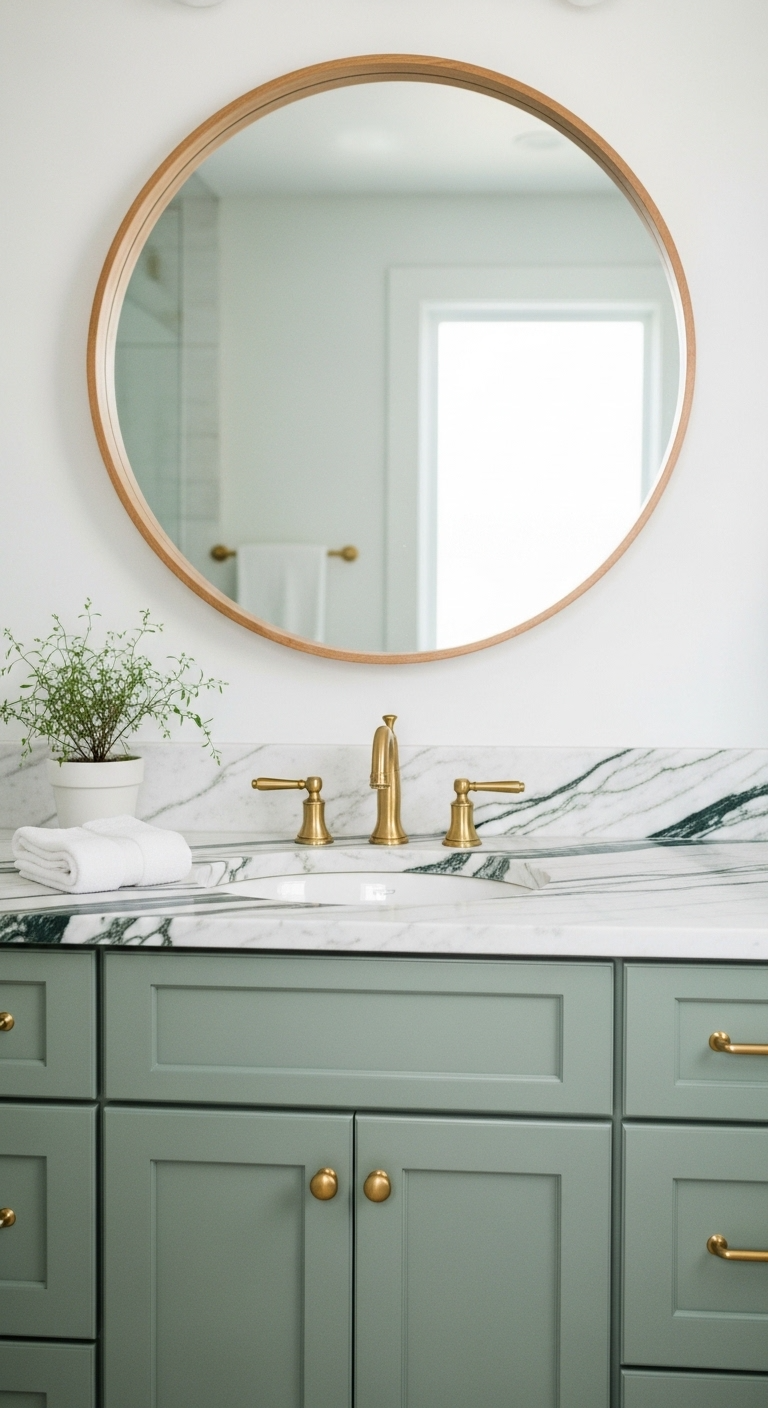
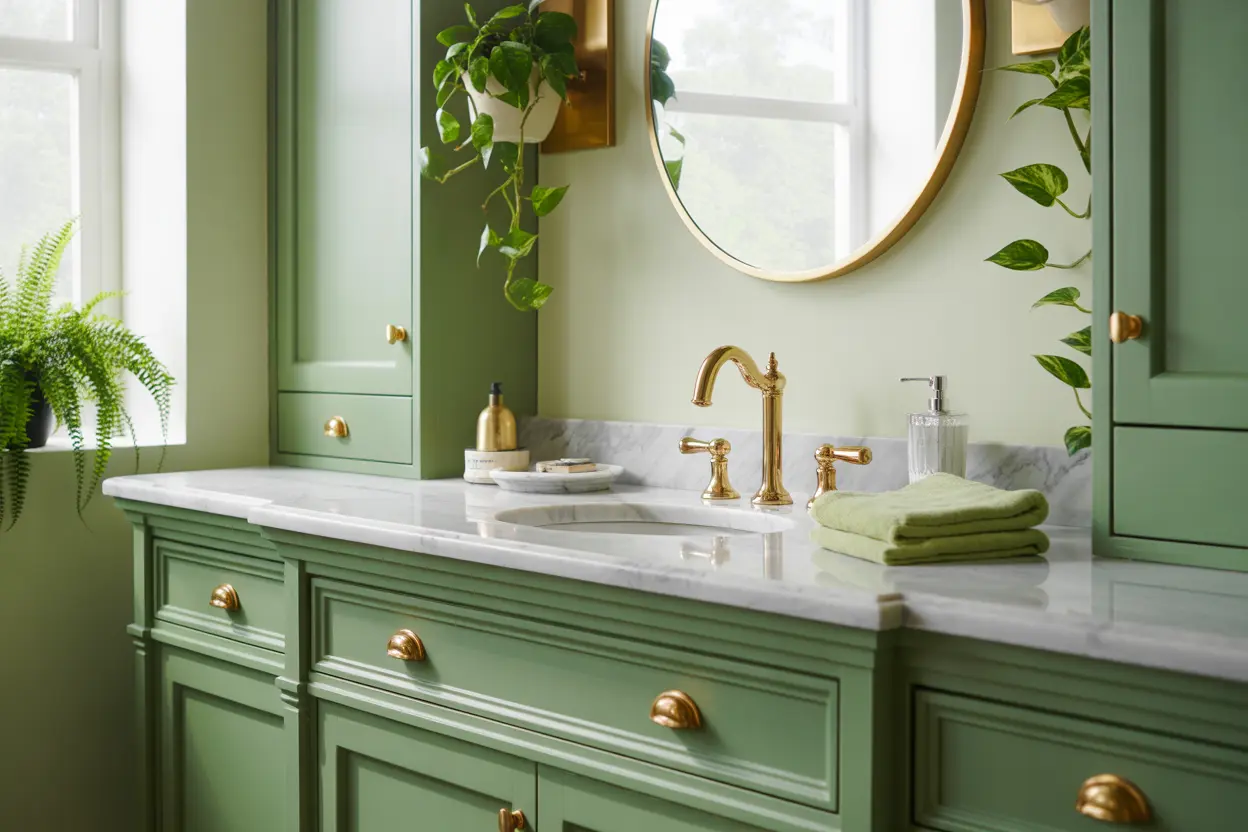
A sage green vanity is one of the most popular green bathroom features in current design because the muted soft green pairs effortlessly with white walls, marble counters, and brass or chrome hardware. Sage green vanities work in almost any bathroom layout and lighting condition because the shade itself is so forgiving. Repainting an existing wood or laminate vanity with a chalk paint or cabinet paint in sage green is a weekend project that costs under fifty dollars in materials and transforms the bathroom dramatically. Pair the sage green vanity with white walls and a single piece of green-veined marble or quartz for the counter top.
16. Green Tiled Shower Floor
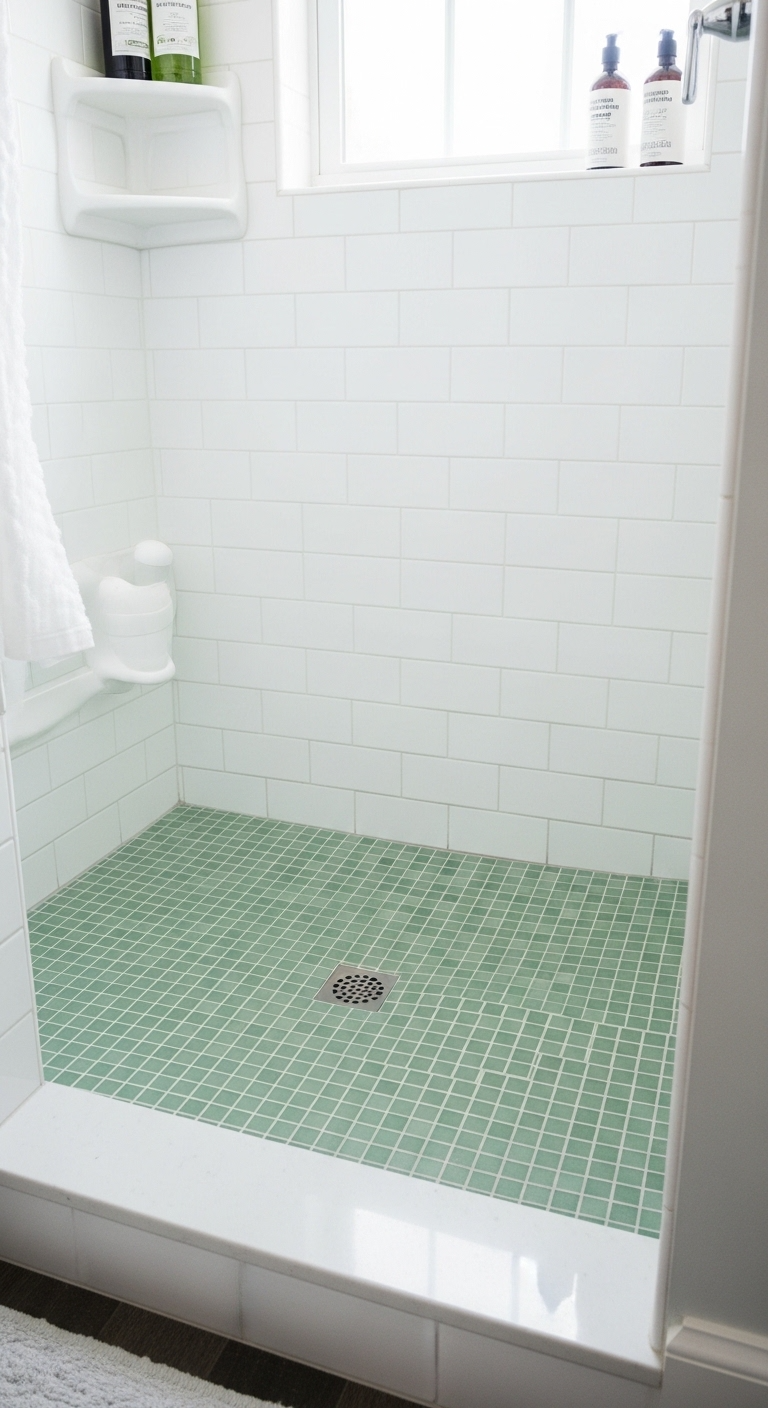
A small format green tile, like a 1 by 1 inch square mosaic in a soft sage or muted forest green, used specifically on the shower floor while the rest of the shower stays in white tile, creates a subtle green moment that is contained to one specific area. The shower floor is one of the most overlooked design opportunities in any bathroom, and a colored tile here adds personality without dominating the room visually. The small format also provides better grip than larger tiles, which makes the green tile floor both attractive and practically functional. This works in any size bathroom because the colored area is contained to the shower itself.
17. Light Sage Walls Plus Brass
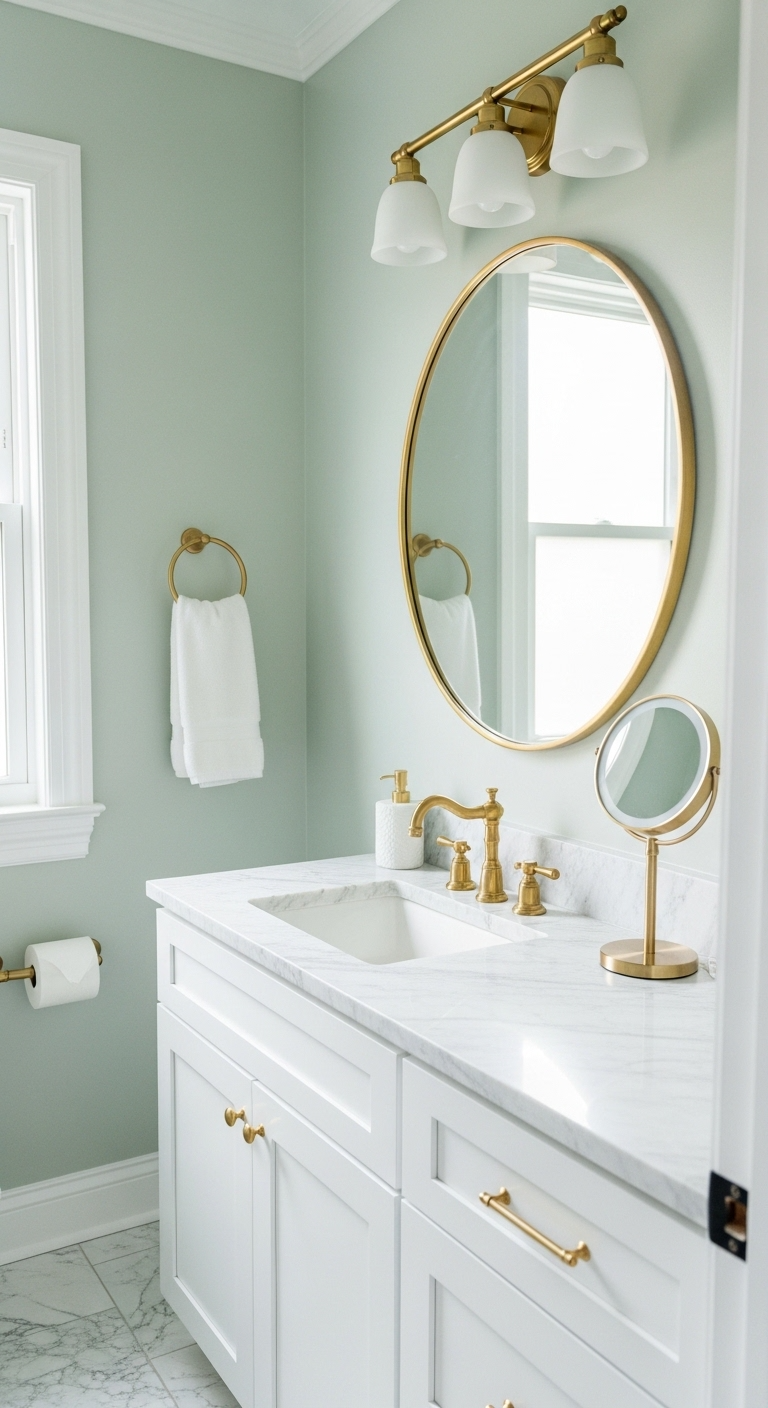
The combination of light sage green walls with brass hardware, a brass faucet, brass towel bars, brass cabinet pulls, and a brass-framed mirror, is one of the most reliably elegant bathroom palettes in current design. The cool natural quality of sage green and the warm metallic tone of brass balance each other beautifully and create a bathroom that feels both fresh and rich at the same time. This palette works in any bathroom size and any light condition because the sage is light enough to work in low-light spaces and the brass adds warmth and richness regardless of the room’s natural light. Add white marble accents and natural wood elements to complete the palette.
18. Dark Green Half Bath
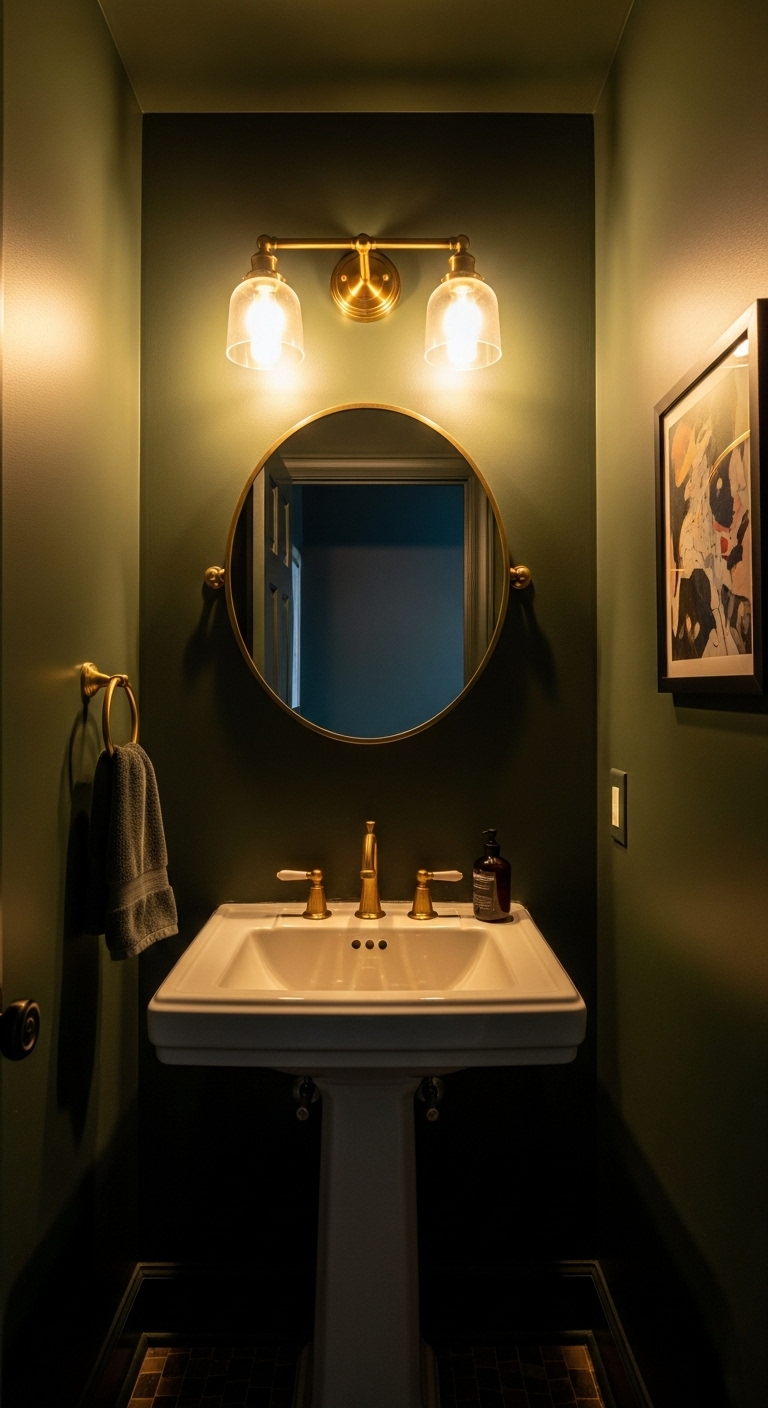
A small powder room or half bath is the ideal place to use a deeper, more saturated green that would feel overwhelming in a full bathroom. The small size of a powder room means the rich color creates an intimate jewel-box quality rather than a heavy oppressive one, especially when paired with good lighting and a bright contrasting fixture or two. Dark forest green or hunter green walls in a powder room with a white pedestal sink, brass fixtures, and a single piece of art look genuinely sophisticated and create a memorable moment in the home. Use a paint with some sheen to catch what light is available.
19. Green Patterned Floor Tile
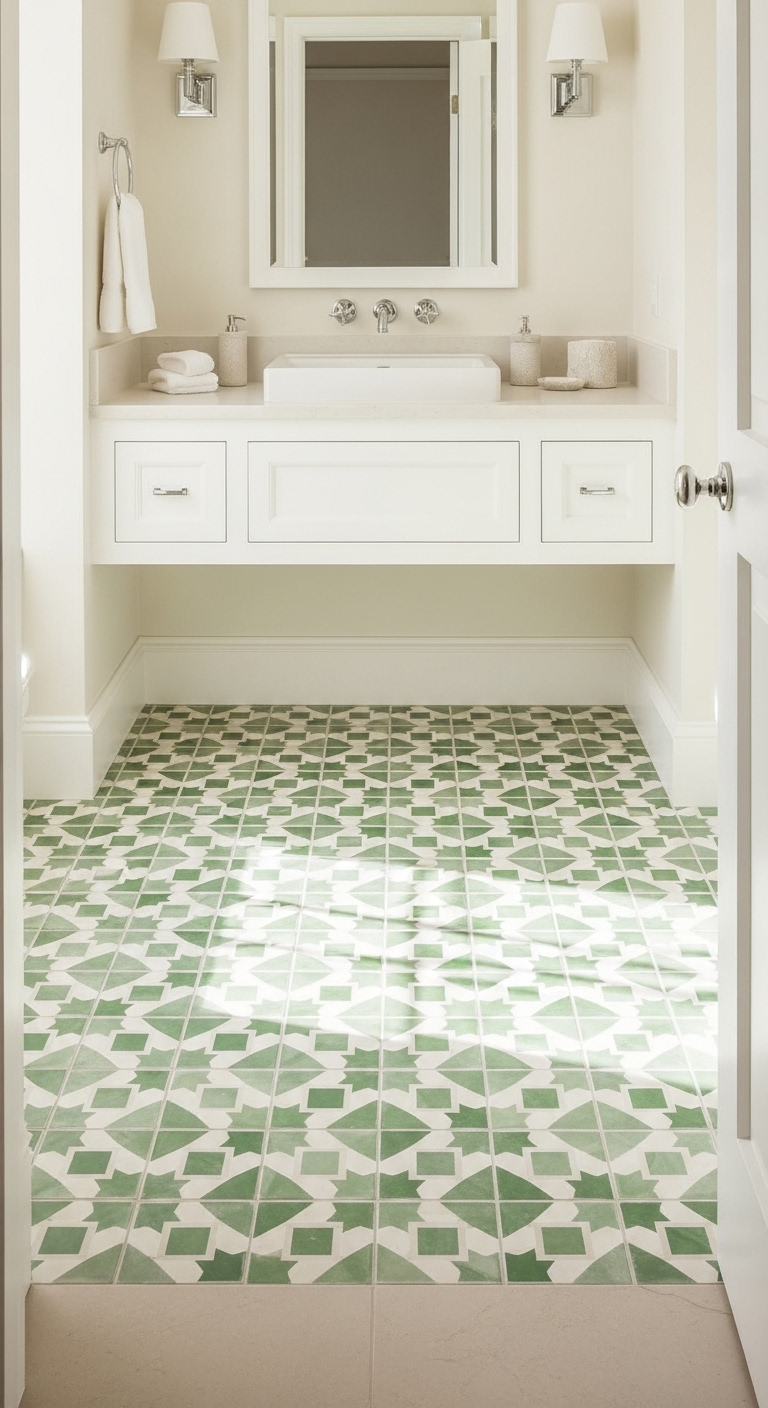
A patterned floor tile featuring green as one of the colors, perhaps a vintage encaustic-style tile with green and cream geometric patterns or a small mosaic with hints of green among other neutral tones, brings green into the bathroom from below in a way that grounds the entire room. The floor sits below eye level and the pattern reads as a foundation for the rest of the bathroom design. Patterned floor tiles work particularly well with simple white walls and a minimal vanity, since the floor becomes the most decorative element in the room and the rest can stay quiet.
20. Green Towels and Accessories
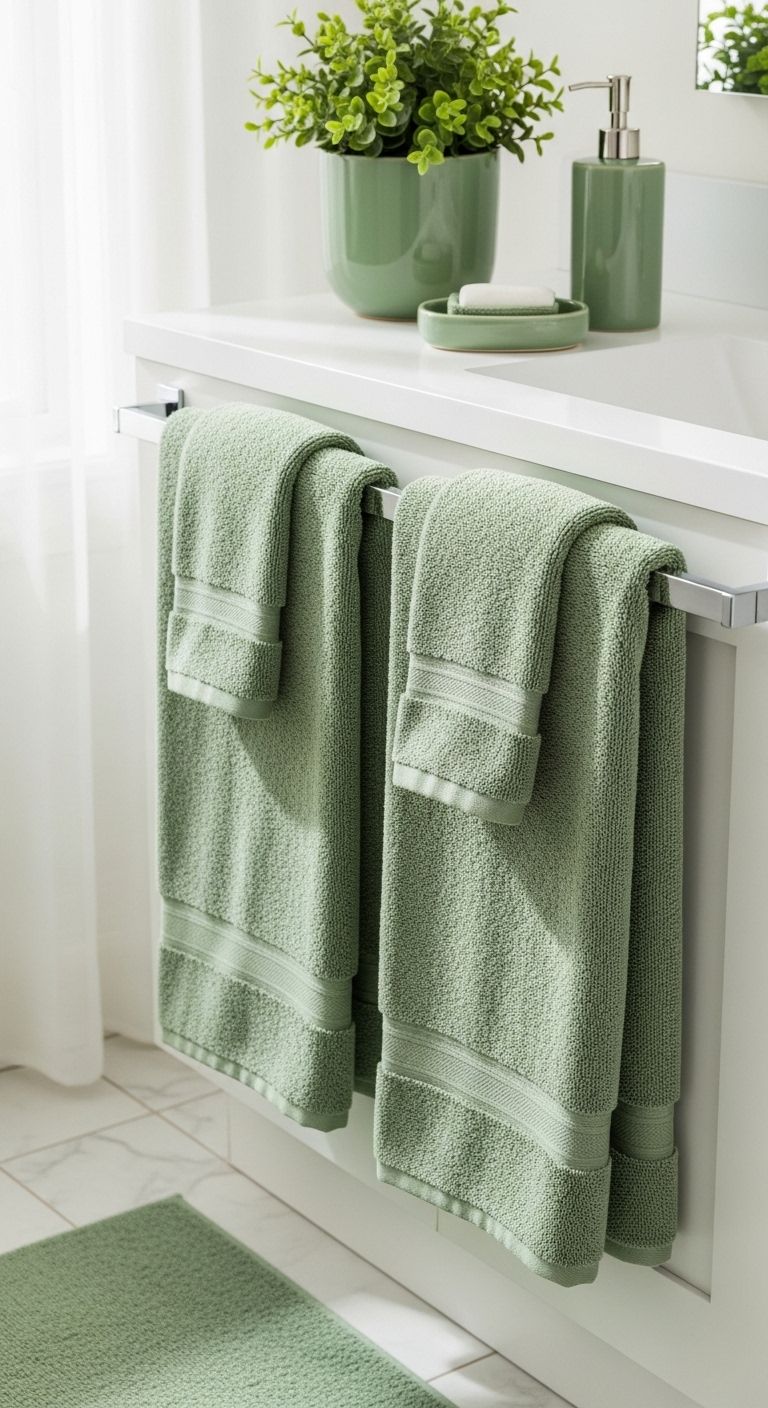
For the lowest-commitment way to introduce green to a bathroom, a coordinated set of green towels, a green bath mat, a small green plant, and a green ceramic soap dispenser bring the color into the room through textiles and small objects rather than permanent surfaces. This approach works in rentals, in bathrooms where the existing fixtures cannot be changed, or as a way to test whether you genuinely want green in the bathroom before committing to paint or tile. Choose towels in a sage, eucalyptus, or muted forest green tone rather than bright kelly green for the most sophisticated and adaptable look. The accessories can be swapped out seasonally if you want to rotate the bathroom palette without doing any actual decorating work.
Green works in any bathroom when the shade is matched to the light and the application is matched to the layout. Start by considering how much natural light your bathroom actually gets and choose the green that suits those conditions, then decide whether you want green to be a primary feature or a supporting one. The right green in the right place makes a bathroom feel calmer, more natural, and genuinely more designed.