18 Earthy Bathroom Ideas That Bring Nature Into a Modern Home
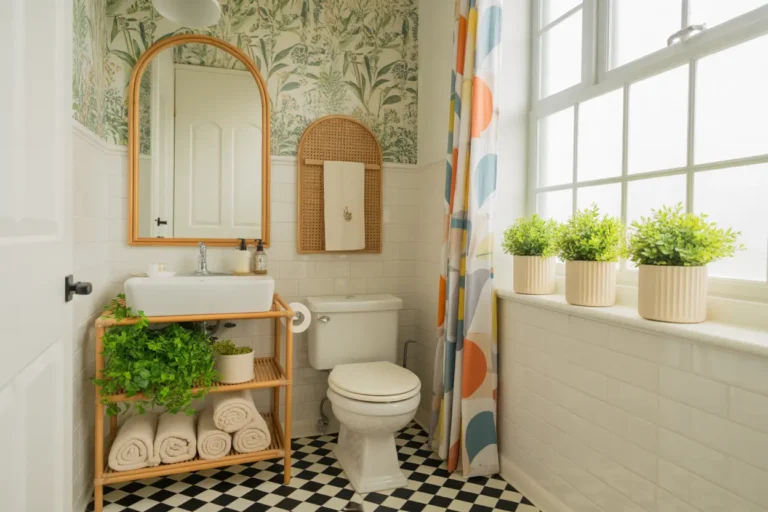
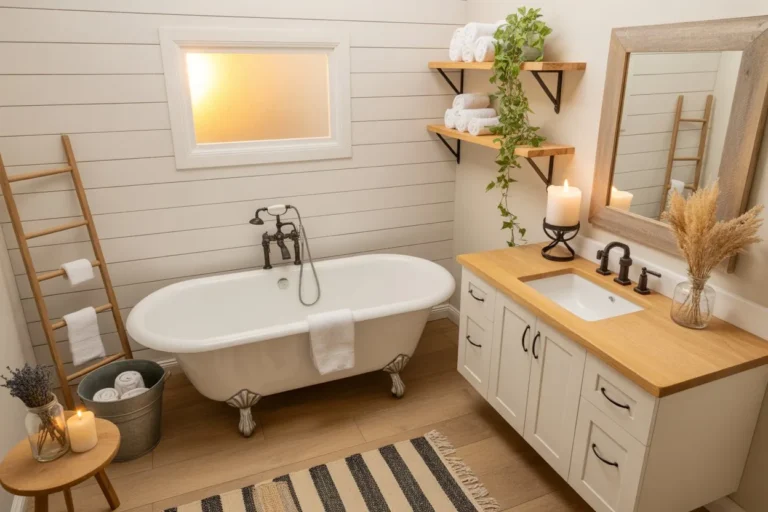
An earthy bathroom connects a modern home to the natural world through materials, colors, and textures that feel genuine rather than decorative. The distinction is important: an earthy bathroom is not a rustic cabin bathroom with log walls and deer antlers. It is a modern bathroom where the surfaces and objects have been chosen because they come from the natural world, where the color palette draws from soil, stone, water, and foliage, and where the overall feeling is grounded and warm rather than bright and clinical. These 18 ideas cover the full range of earthy approaches, from the easiest surface-level styling to the more committed material choices that change how the bathroom feels at a fundamental level.
1. Warm Stone Floor Tile
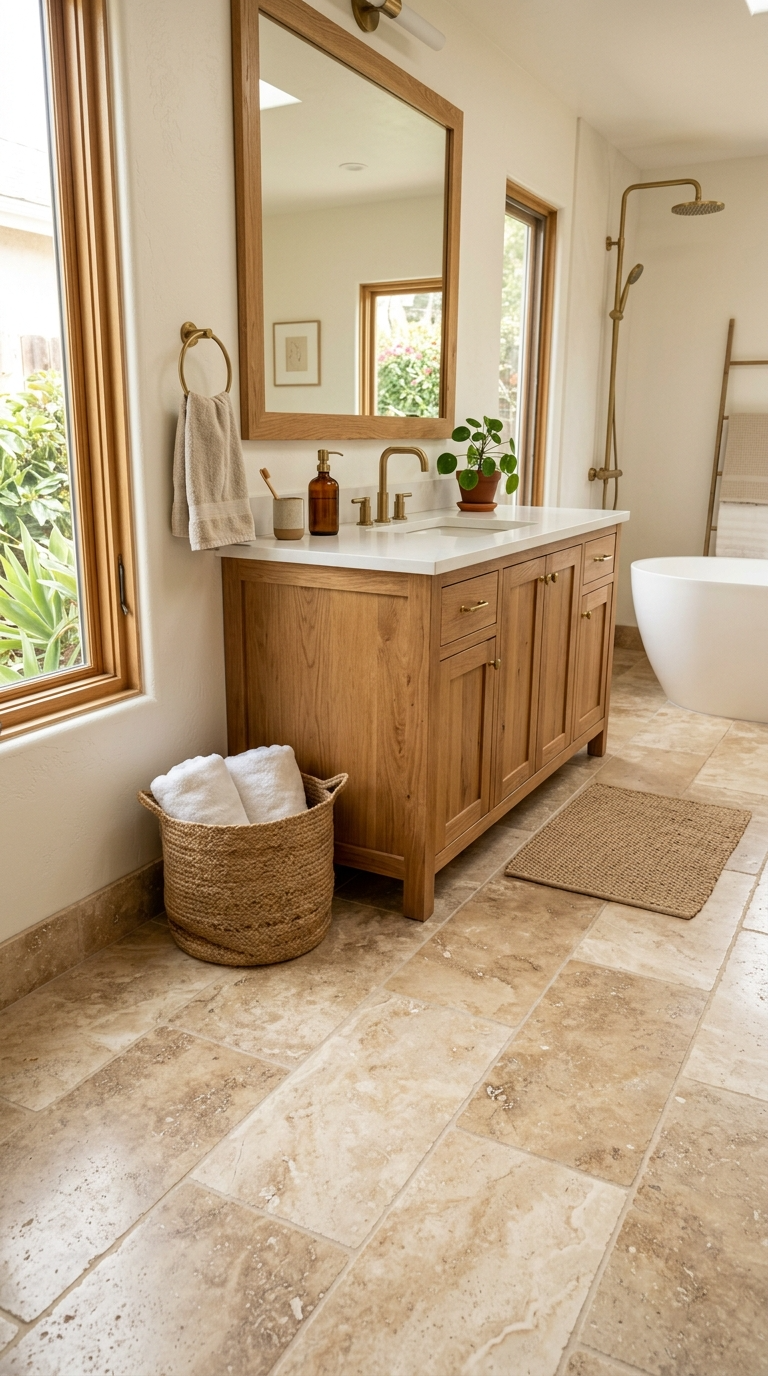
Natural stone or stone-look porcelain tile in warm tones, travertine, sandstone, warm limestone, or slate, immediately grounds a bathroom in the natural world. The color variation between individual tiles, the slight textural differences in the surface, and the visible geological character of real stone all contribute to the earthy quality that manufactured tile cannot quite replicate. For budgets that cannot accommodate real stone, porcelain tiles printed to look like travertine or limestone have improved significantly in recent years and capture much of the same visual warmth. Use large format tiles for the most open floor feel and keep the grout color close to the tile color for a continuous natural surface.
2. Terracotta Accent Surfaces
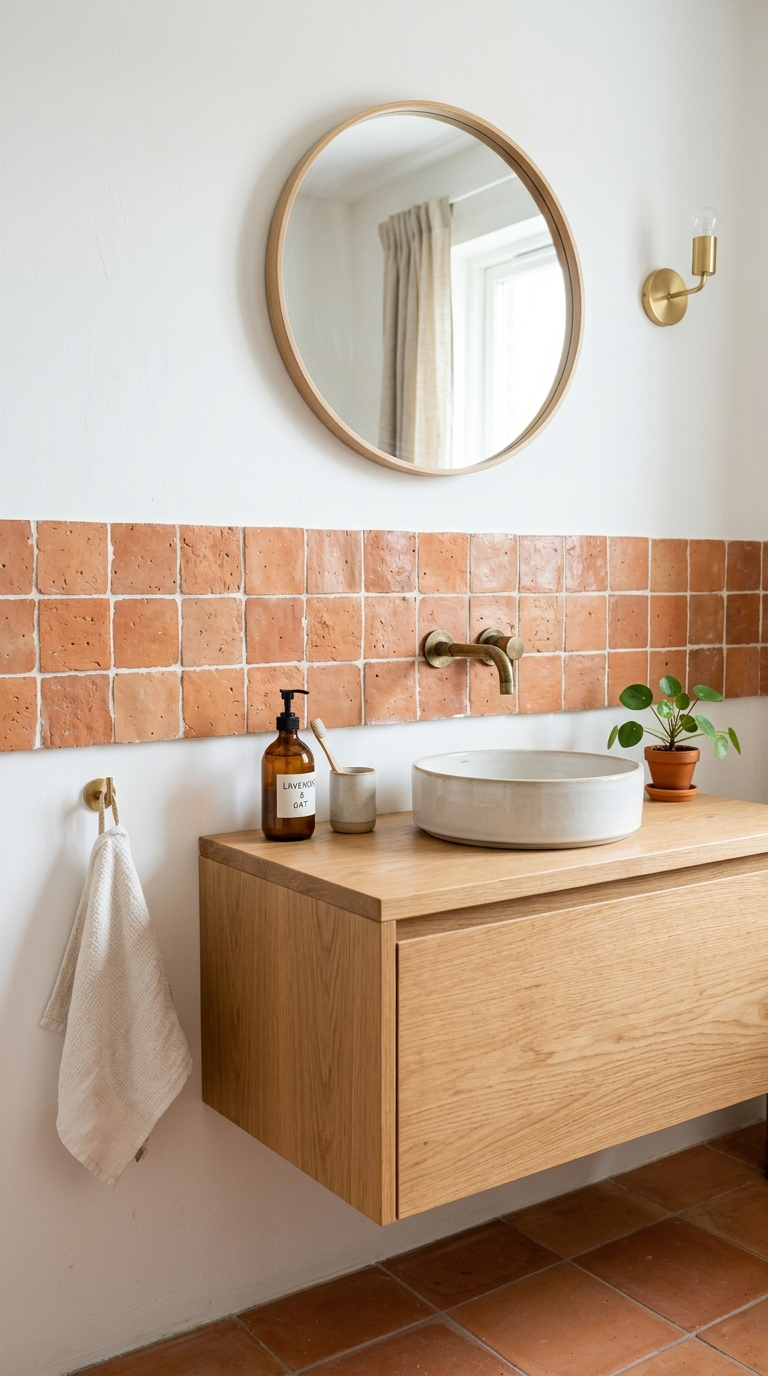
Terracotta, the warm orange-red fired clay material used in tiles, pots, and decorative objects for centuries, is one of the most distinctly earthy materials available in a bathroom. Terracotta floor tiles, a terracotta backsplash strip behind the vanity, or even just a terracotta soap dish and plant pot on the counter all introduce the warm clay quality that defines the earthy palette. The natural variation in terracotta color, from warm orange to deep brick red, adds visual richness to any surface it appears on. Seal terracotta tiles properly for bathroom use since the porous natural material absorbs water without a protective treatment.
3. Warm Wood Vanity
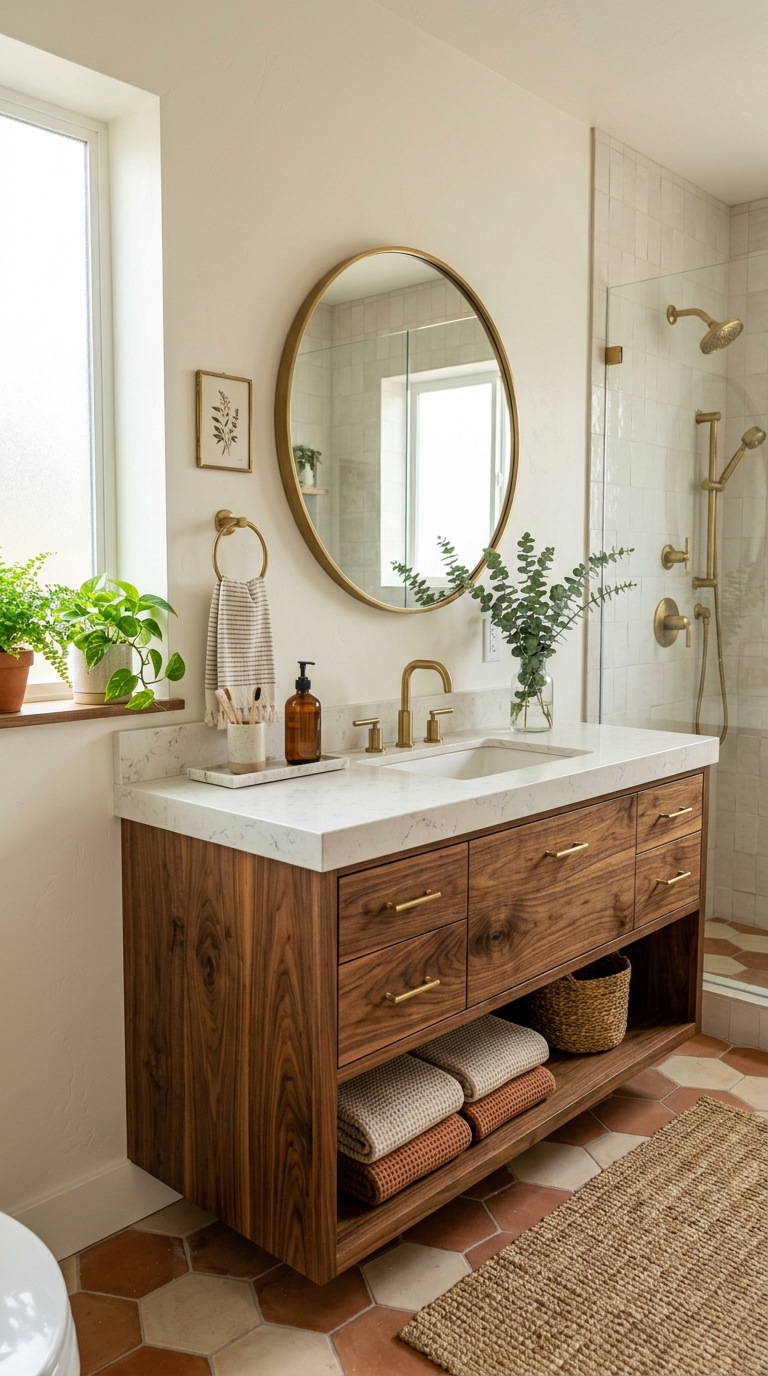
A bathroom vanity in warm natural wood, whether solid walnut, oak, teak, or a warm-stained cabinet, brings the warmth and grain of real timber into the bathroom in the most visible and substantial way possible. The vanity is the largest piece of furniture in most bathrooms and its material quality sets the tone for everything around it. A natural wood vanity against white or warm cream walls reads as earthy and grounded without any additional styling. Pair it with a natural stone counter and brass hardware for a complete earthy material palette that suits modern bathrooms without tipping toward rustic.
4. Earth Tone Paint Colors
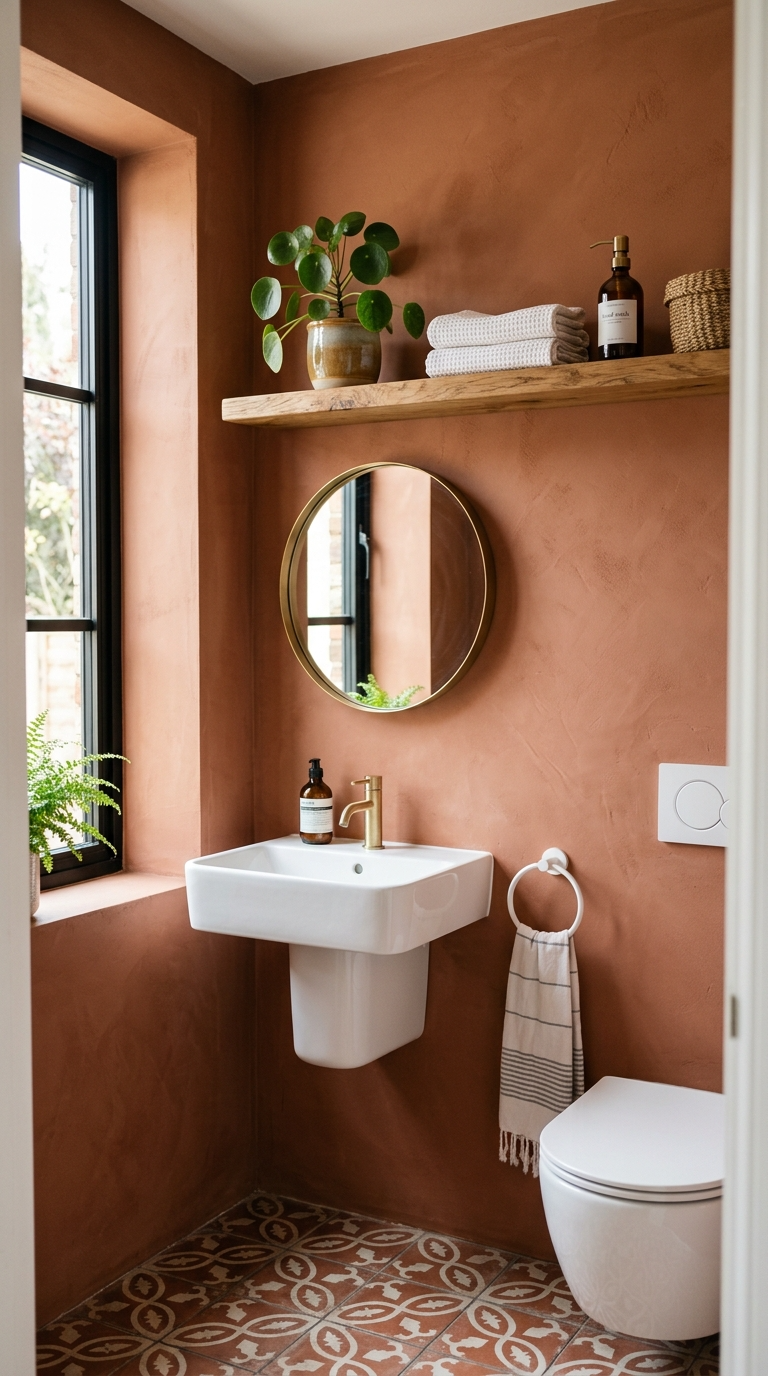
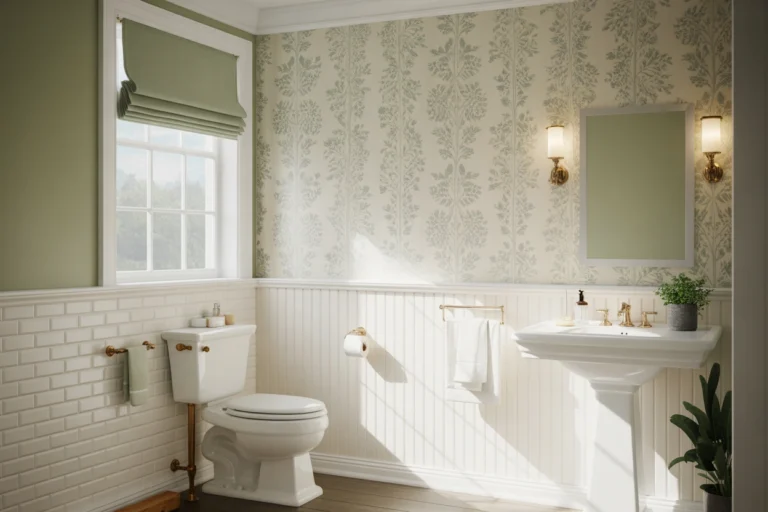
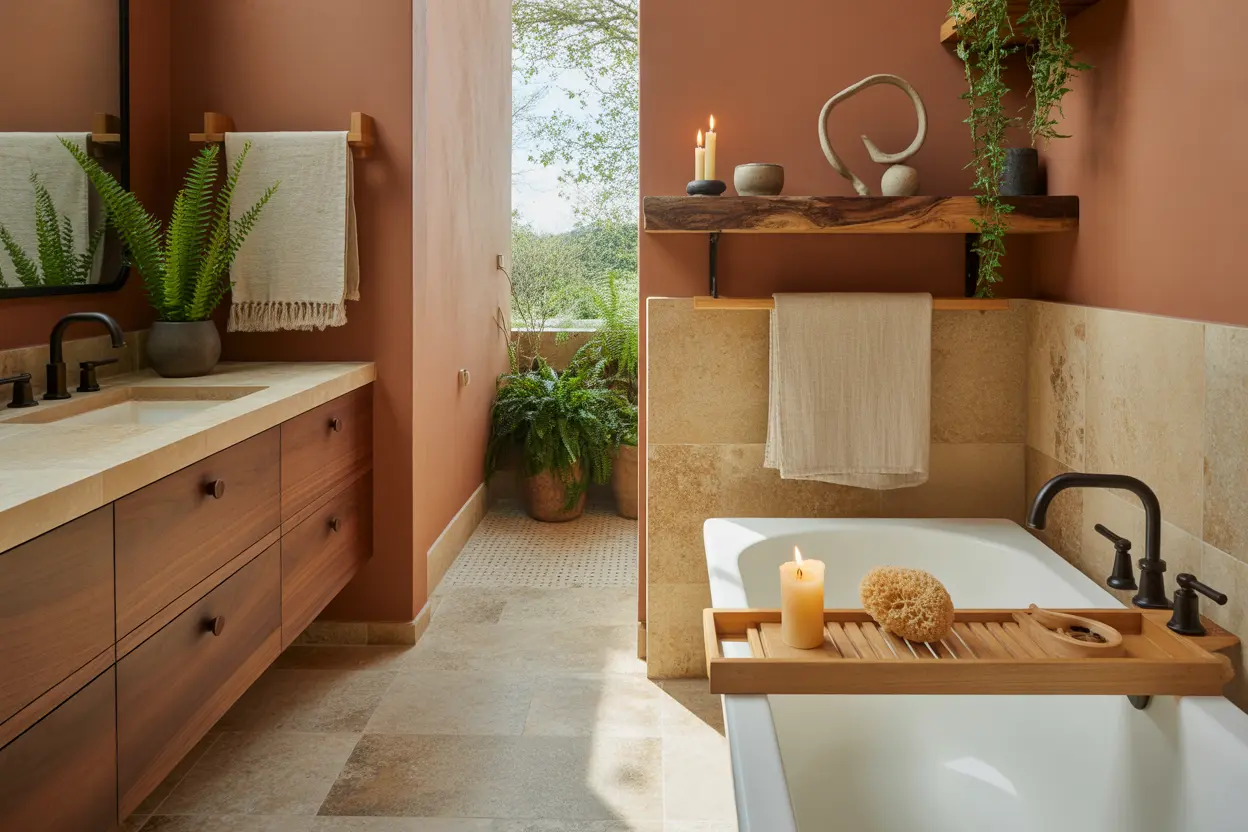
The wall color in an earthy bathroom should reference the natural world directly: warm terracotta, soft clay, dusty sage, warm mushroom, deep olive, or sandy cream. These colors all appear in nature and read as organic rather than manufactured when used on bathroom walls. Earth tones also respond beautifully to natural light, warming in afternoon sun and deepening in the evening under warm artificial lighting. Apply the earthy color to all four walls for a fully enveloping effect, or to a single feature wall with the remaining walls in a warm white or cream for a softer introduction.
5. Natural Stone Counter
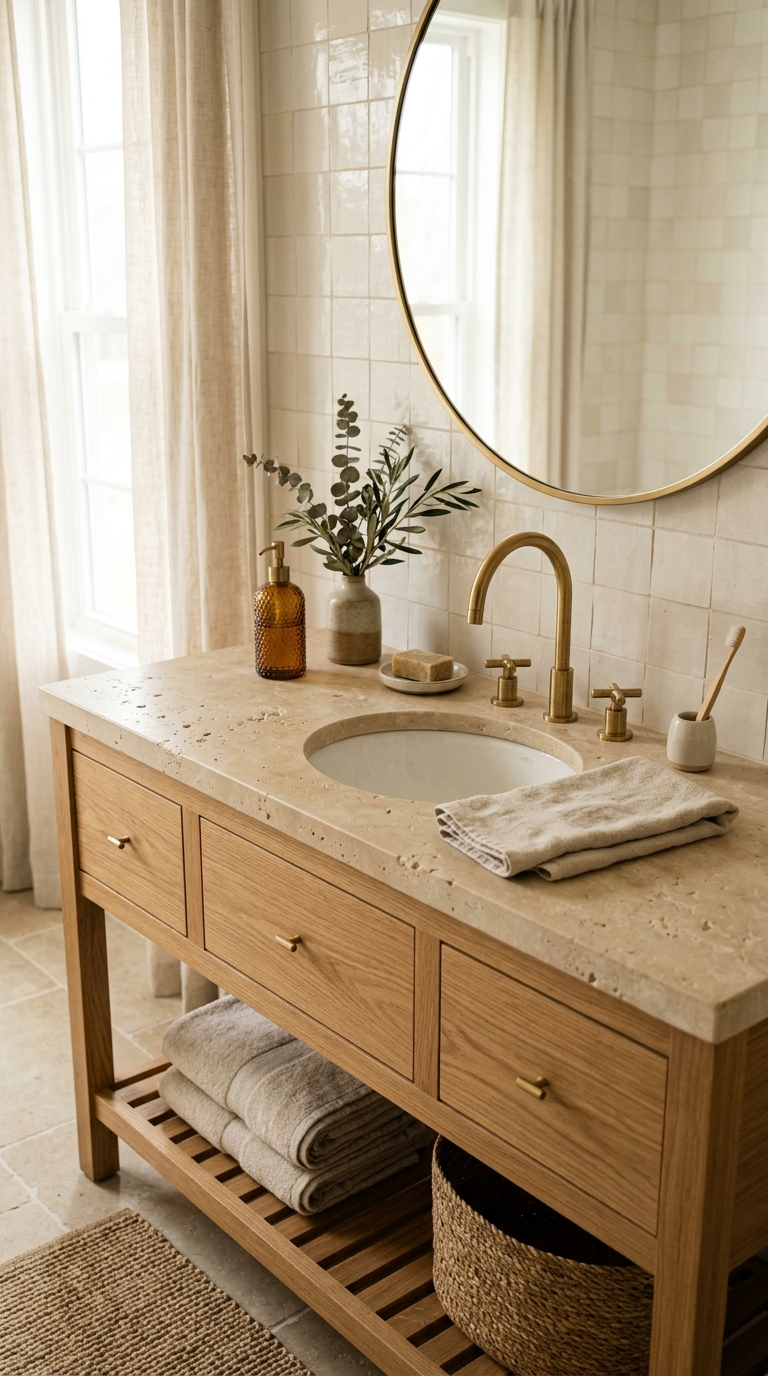
A natural stone counter, whether marble, soapstone, limestone, or quartzite, brings a geological quality to the vanity that engineered surfaces cannot match. Each slab is unique, with its own pattern of veining, color variation, and surface texture, which gives the bathroom a one-of-a-kind quality that reinforces the earthy character. Honed finishes, slightly matte rather than polished, suit the earthy aesthetic better than highly glossy finishes since the matte surface reads as more natural and organic. The stone counter becomes one of the main visual touchpoints in the bathroom and its character deepens with use over time.
6. Woven Natural Fiber Accessories
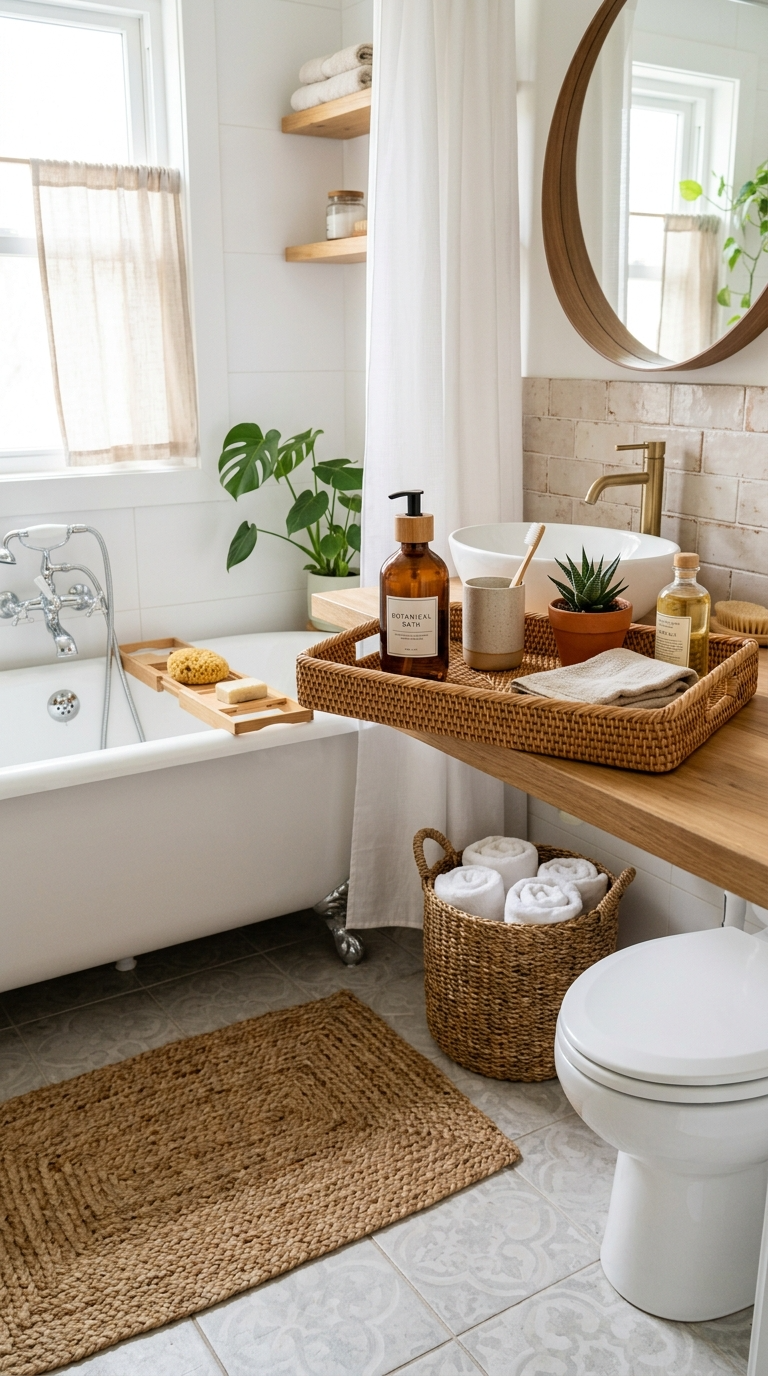
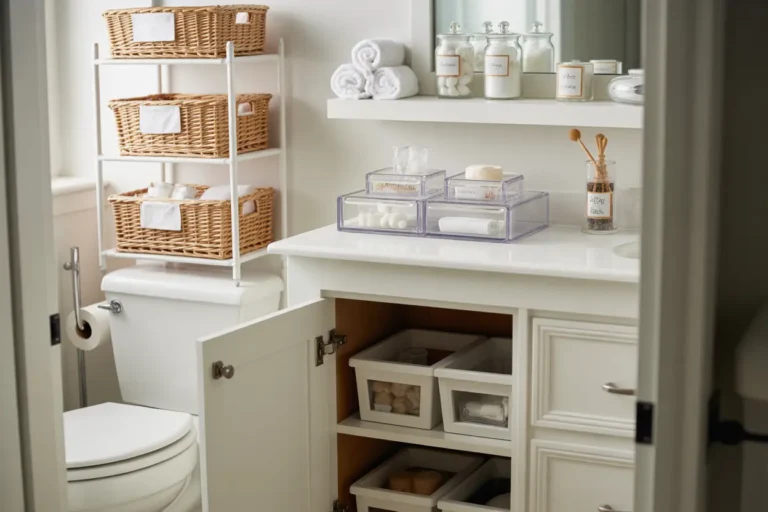
Woven baskets, rattan trays, seagrass storage containers, and jute bath mats all bring organic woven texture into the bathroom in the most accessible and least expensive way possible. The natural fibers introduce a handmade quality and a warm color palette that complements stone, wood, and ceramic surfaces. A woven rattan tray on the vanity counter, a seagrass basket beside the toilet for spare rolls, and a thick jute bath mat in front of the tub together establish a consistent natural fiber presence across the bathroom without requiring any installation.
7. Matte Black Hardware
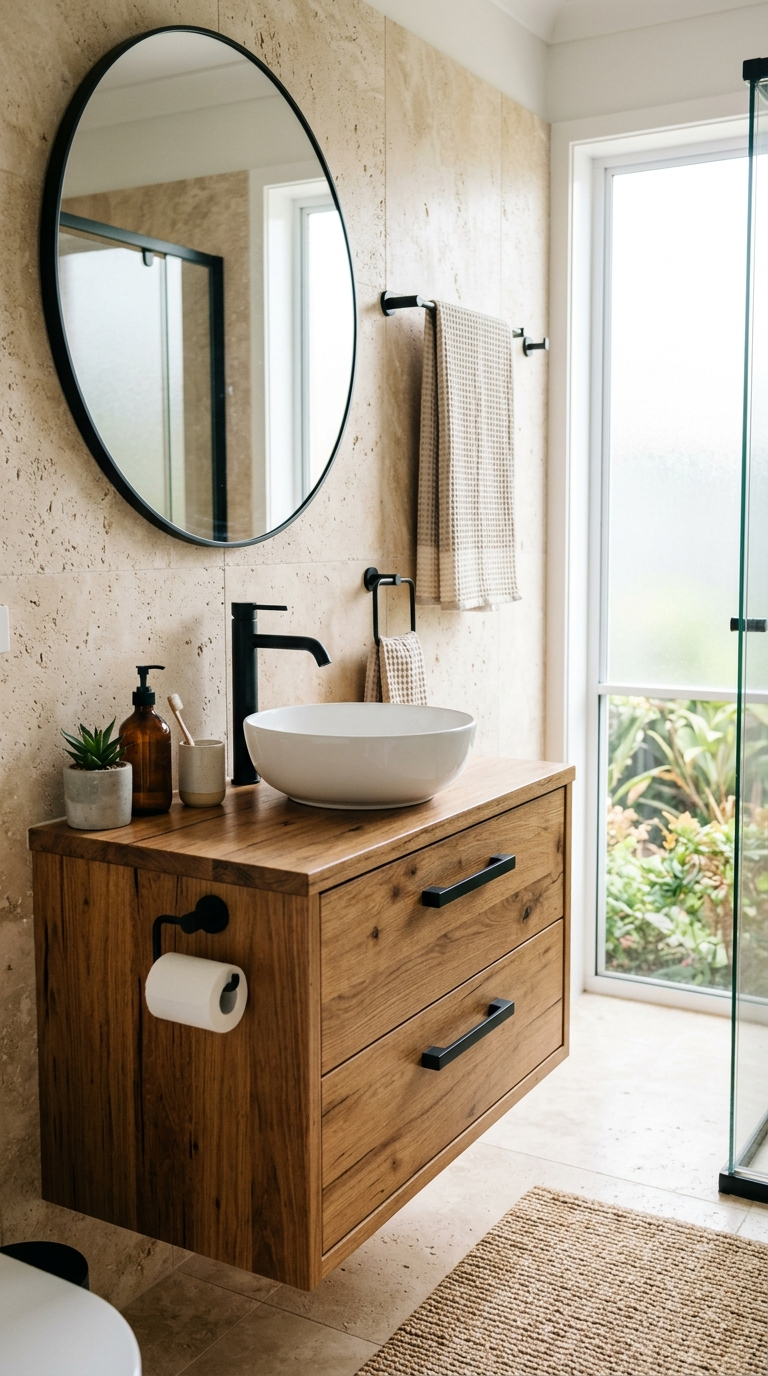
Matte black hardware, faucets, towel bars, cabinet pulls, and shower fixtures, provides the strong contrast that earthy bathrooms need to avoid looking too soft. The dark matte finish reads as grounding and substantial against warm wood, natural stone, and earth-toned walls. Black hardware also photographs well and maintains a contemporary quality that prevents the earthy bathroom from drifting toward rustic or country. The combination of matte black hardware with warm natural materials is one of the most current and reliably attractive bathroom palettes in modern design.
8. Concrete-Look Surfaces
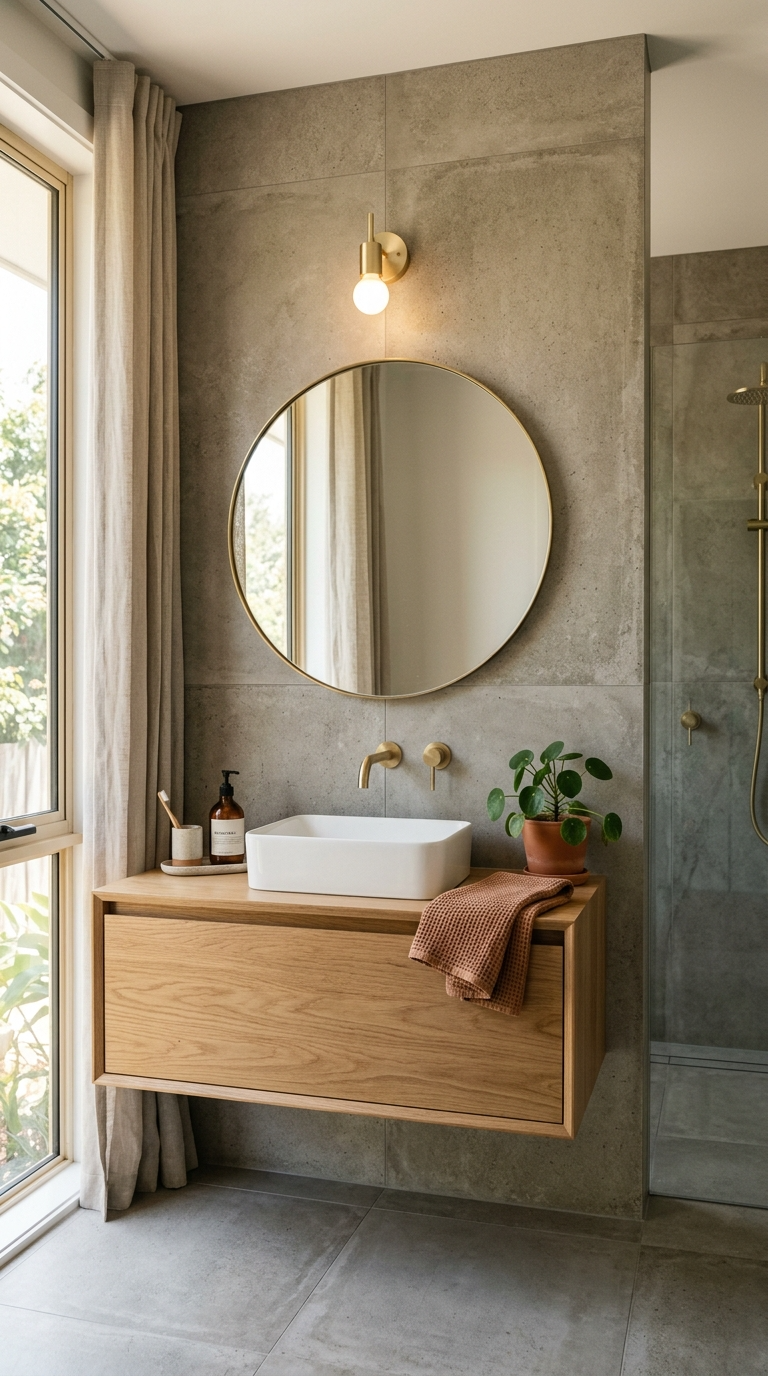
Concrete, whether real poured concrete or a concrete-look porcelain tile or paint finish, brings an earthy industrial quality that sits between natural stone and modern minimalism. The neutral gray of concrete pairs well with warm wood and terracotta and provides a cool counterpoint to the warmer elements. Concrete-look porcelain tile on the floor or a single feature wall gives the visual quality without the complications of real concrete in a wet environment. Concrete-look finish paints are also available for vanity tops and wall surfaces and create a convincing effect at minimal cost.
9. Living Plant Collection
10. Raw Edge Timber Shelf
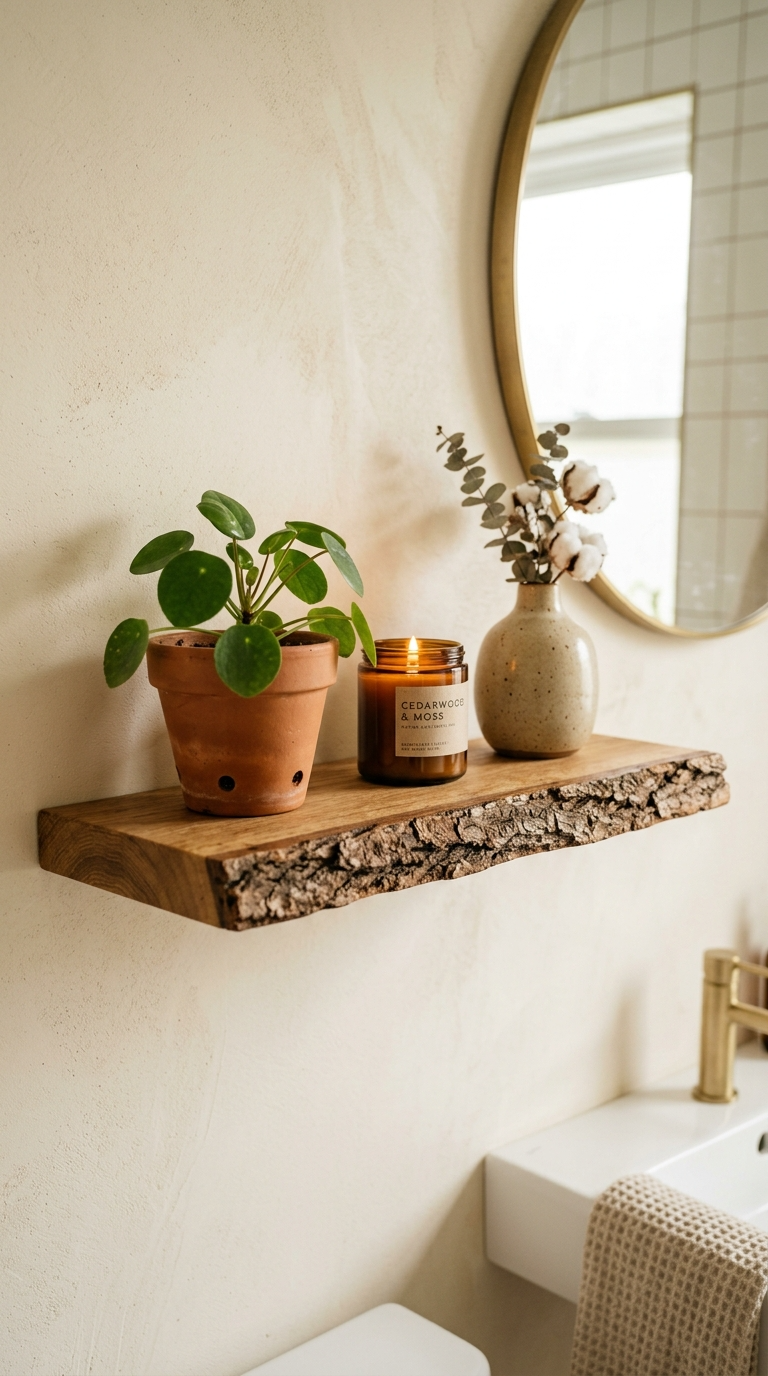
A single floating shelf cut from a raw-edge or live-edge timber slab, with the natural bark edge preserved on the front, brings a sculptural natural element to the bathroom wall. The shelf holds a few styled items, a plant, a candle, and a small ceramic, while functioning as a piece of art in its own right. The raw edge references the tree the timber came from and reads as genuinely natural in a way that perfectly cut and finished shelves cannot. Mount it on hidden brackets so the shelf appears to float. A single raw-edge shelf above the toilet or beside the vanity makes an immediate earthy impact.
11. Pebble Accent Detail
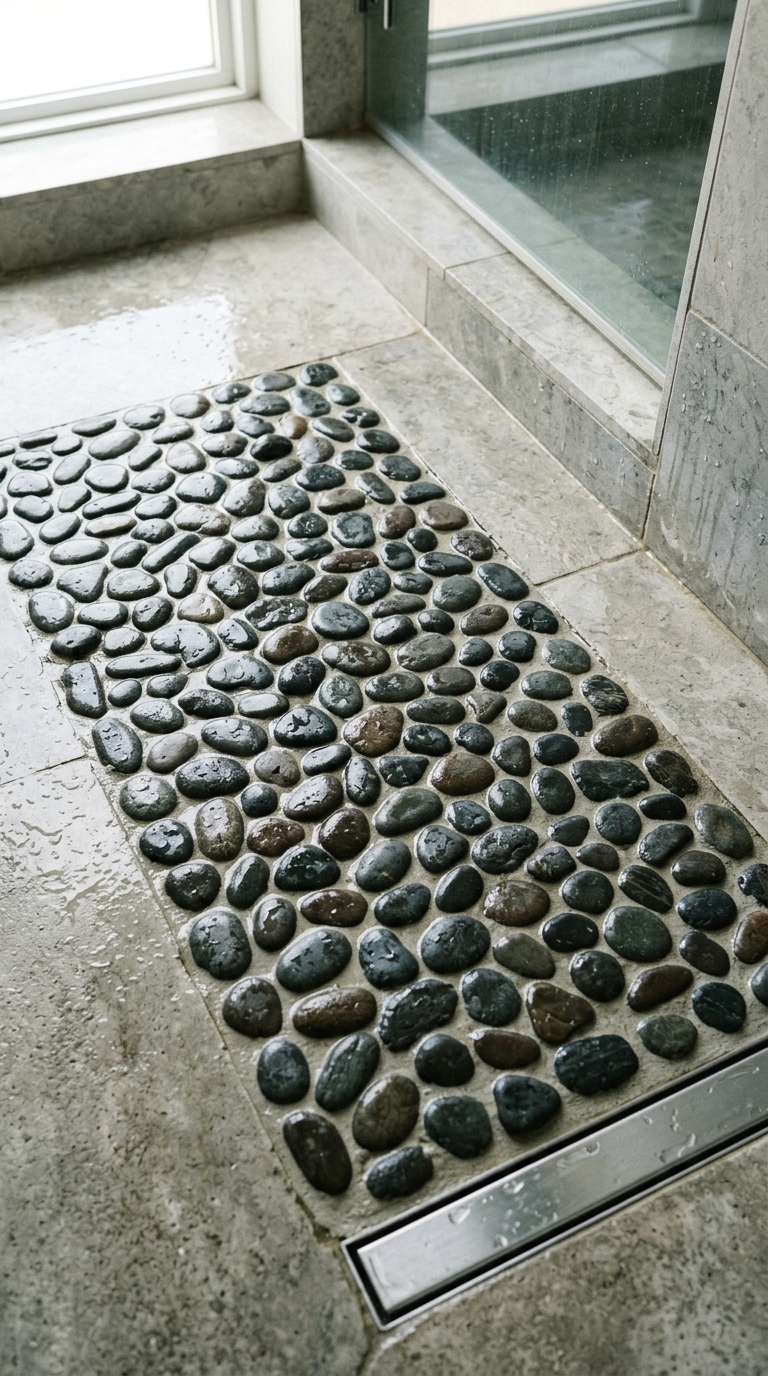
Smooth river pebbles set in a section of the shower floor, in a recessed niche, or as a border around the tub base add a tactile natural element that references riverbeds and shorelines. The pebbles provide a slight reflexology effect underfoot in the shower and catch and disperse water naturally. Choose pebbles in dark gray, warm brown, or muted natural tones rather than bright white or polished decorative stones. The variation in size and color among real pebbles is what gives the surface its organic character.
12. Linen Textiles Throughout
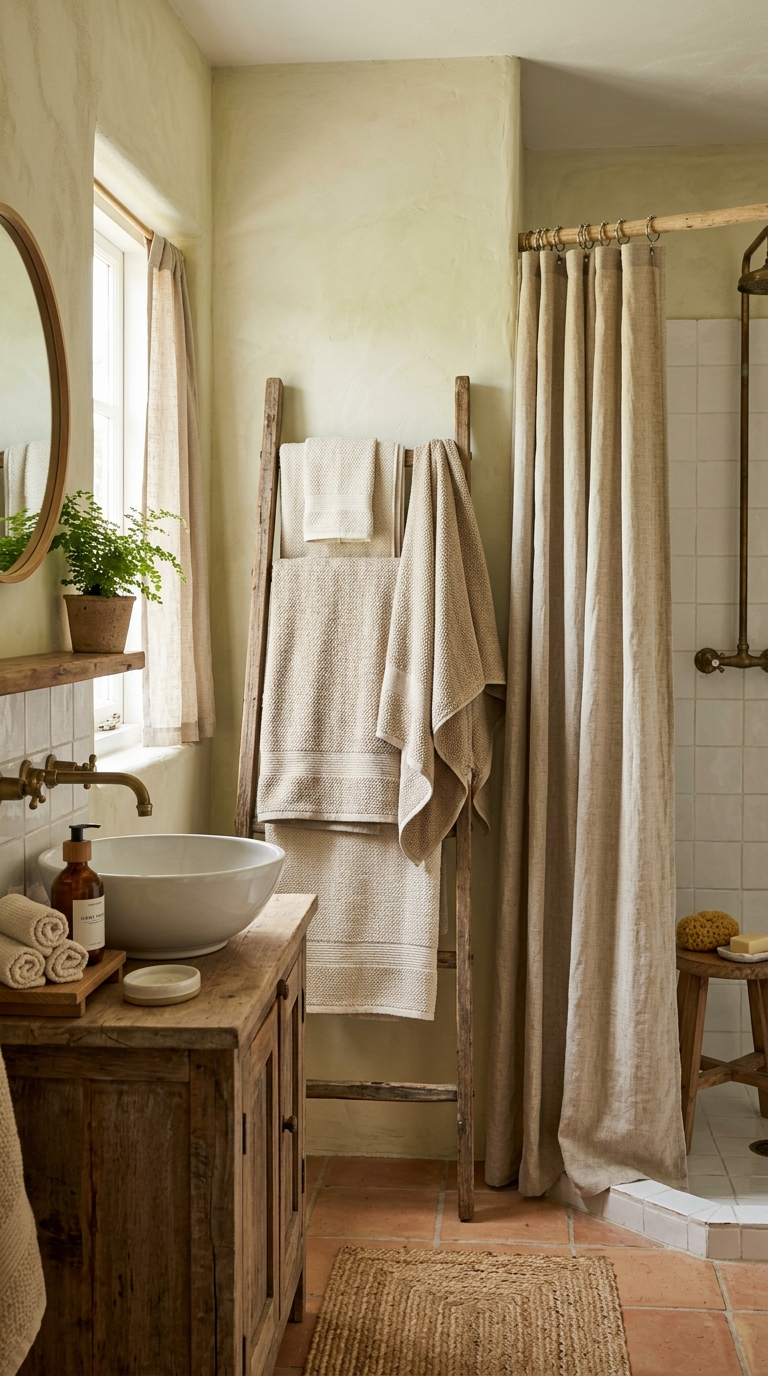
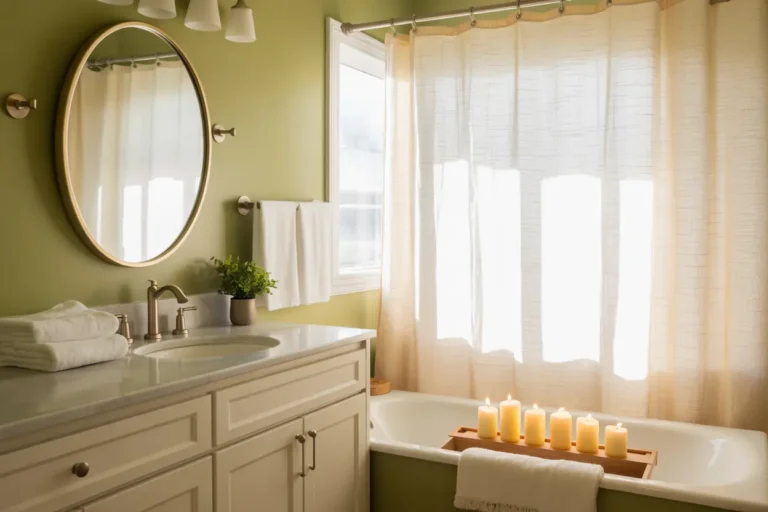
Linen towels, a linen shower curtain, and linen hand towels in undyed natural tones, warm cream, oatmeal, or natural flax, bring soft organic texture into the bathroom that manufactured terry and synthetic fabrics cannot match. Linen has a flat, slightly textured surface that improves with every wash and develops the gentle rumpled quality that reads as naturally beautiful. The undyed natural color of raw linen suits the earthy palette perfectly and creates a quiet uniform textile layer across the bathroom that does not compete with stronger material elements like stone and wood.
13. Open Shelf Styling
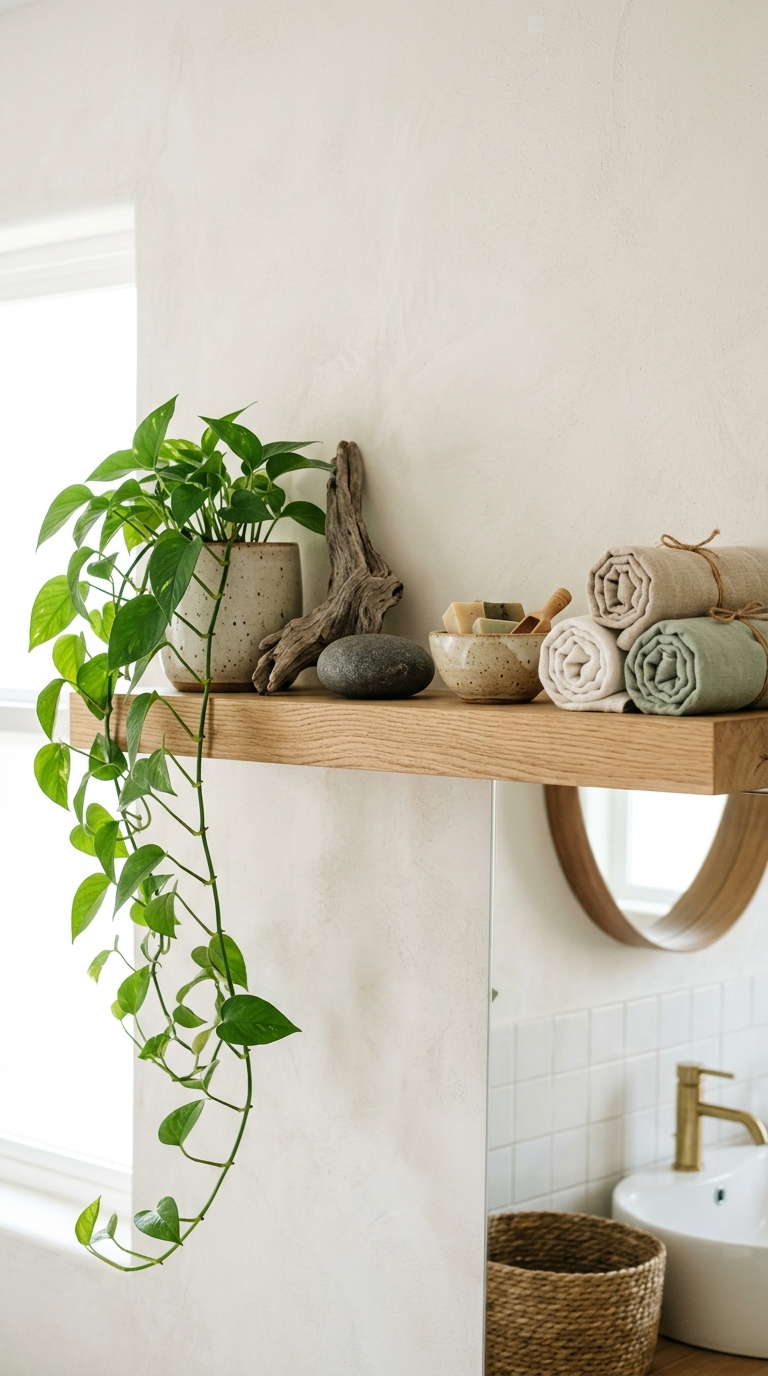
Open shelves displaying a curated mix of natural objects, a piece of driftwood, a smooth river stone, a small ceramic in an earthy glaze, alongside functional items like rolled towels and a plant, create a styled moment that reads as a small natural museum. The combination of found natural objects and everyday bathroom items on the same shelf is what gives earthy bathrooms their particular character. Edit the display regularly so it stays curated rather than accumulating clutter. A single well-styled open shelf makes more impact than three full ones.
14. Warm Ambient Lighting
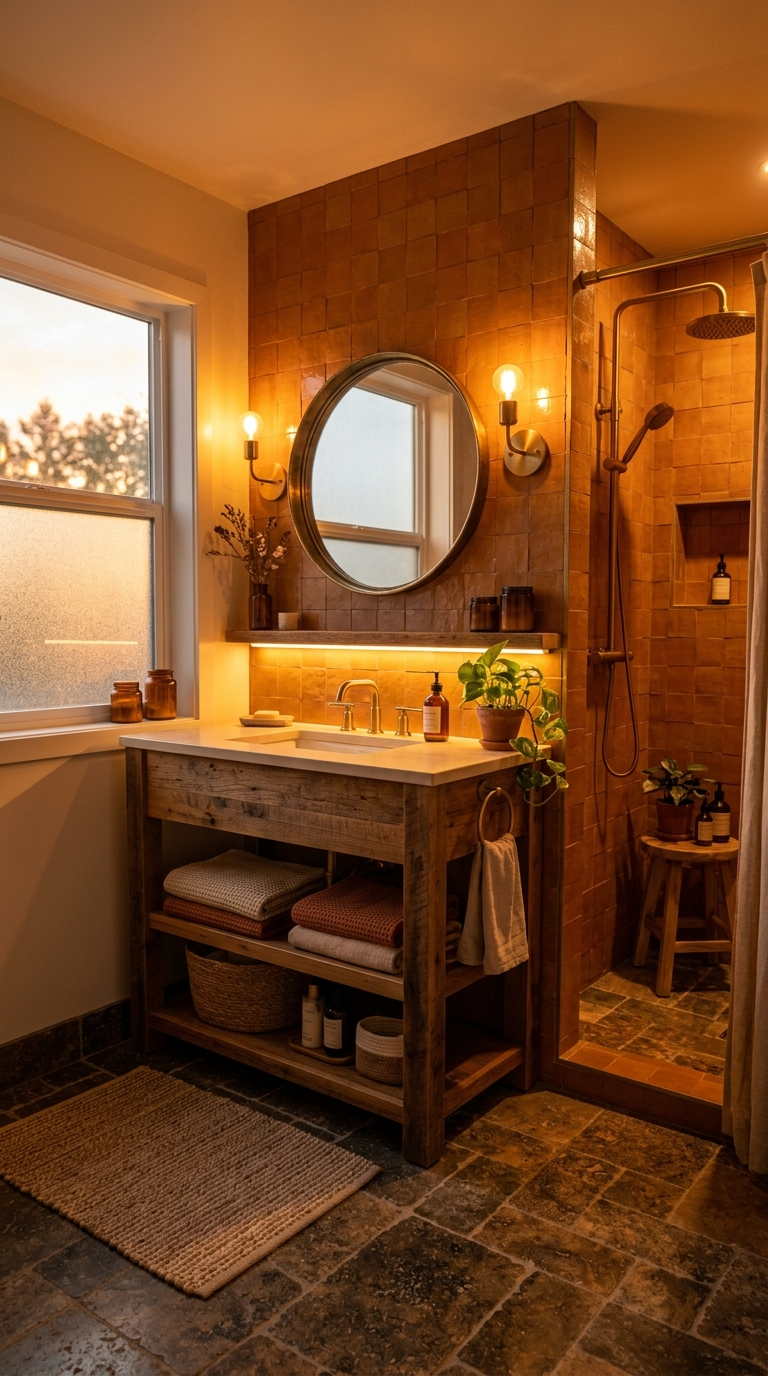
Earthy bathrooms depend on warm lighting to bring their material palette to life. Cool-toned lighting flattens the warm tones of wood, stone, and terracotta and makes the room feel clinical rather than natural. Switch all bathroom bulbs to warm LEDs in the 2200K to 2700K range for the most flattering and earthy light quality. Add a small accent light, a candle, or a dimmer to create layered lighting that shifts the room from functional daylight mode to atmospheric evening mode. The warm light is what makes the natural materials glow.
15. Handmade Ceramic Accessories
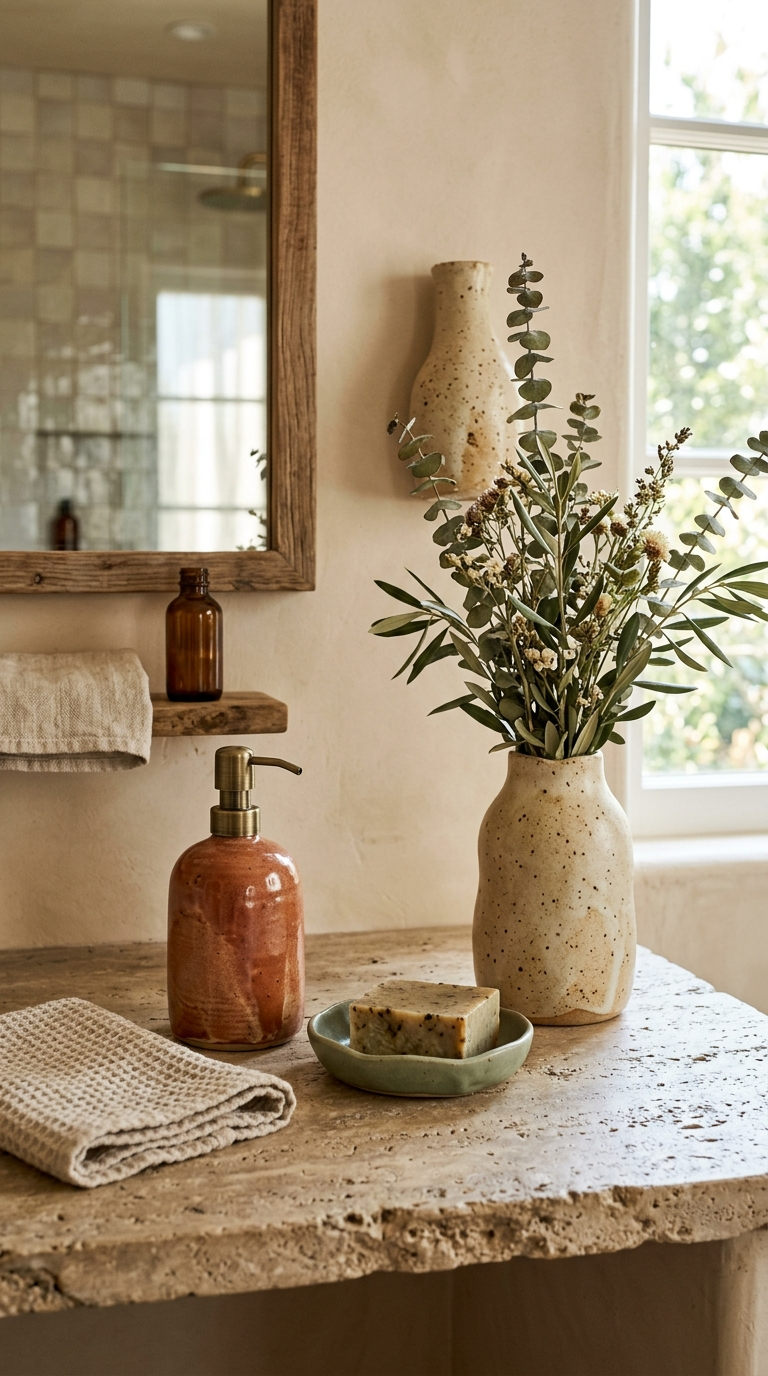
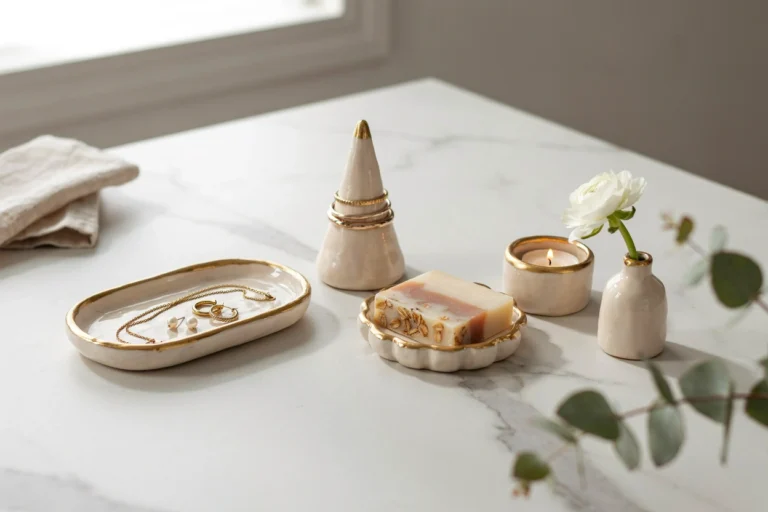
Hand-thrown or handmade-look ceramic accessories, a soap dispenser, a toothbrush holder, a small dish, a vase, bring the human touch of the potter’s hand into the bathroom. Each piece is slightly different, with subtle irregularities in shape and glaze that distinguish it from factory-made alternatives. Choose ceramics in earthy glazes: warm terracotta, deep brown, muted sage, sandy cream, or a partially unglazed finish that shows the raw clay beneath. The handmade quality reinforces the earthy character of the bathroom in a way that even well-designed manufactured accessories cannot fully match.
16. Natural Scent Element
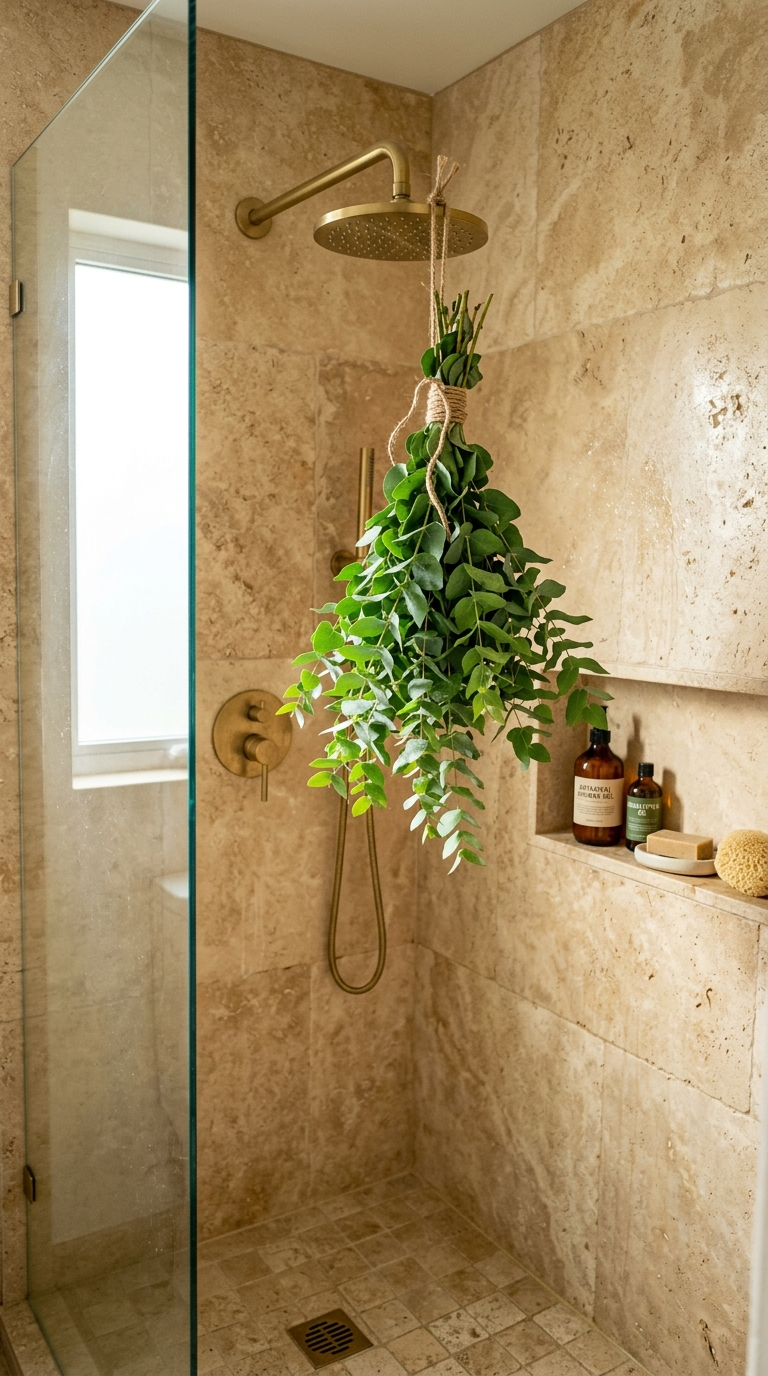
The scent of a bathroom is part of its earthy character. A small bundle of dried eucalyptus hung from the shower head, a cedar wood soap bar on the counter, a beeswax candle with a natural warm scent, or a small reed diffuser with an essential oil blend of cedarwood and bergamot all introduce a natural scent that complements the visual earthy palette. Avoid synthetic fragrances that conflict with the natural quality of the room. The scent should feel like a quiet part of the room rather than an announcement.
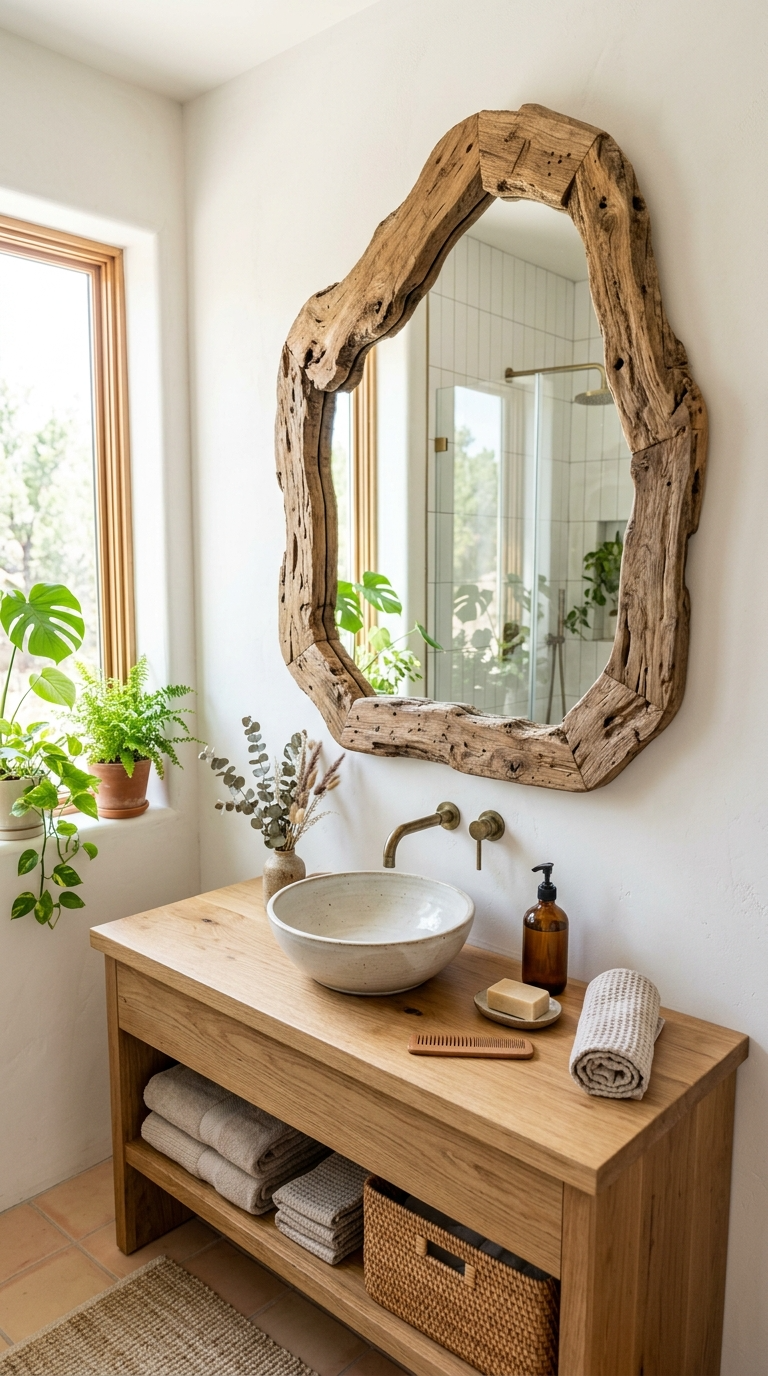
17. Organic Shape Mirror
18. Bathing Ritual Setup
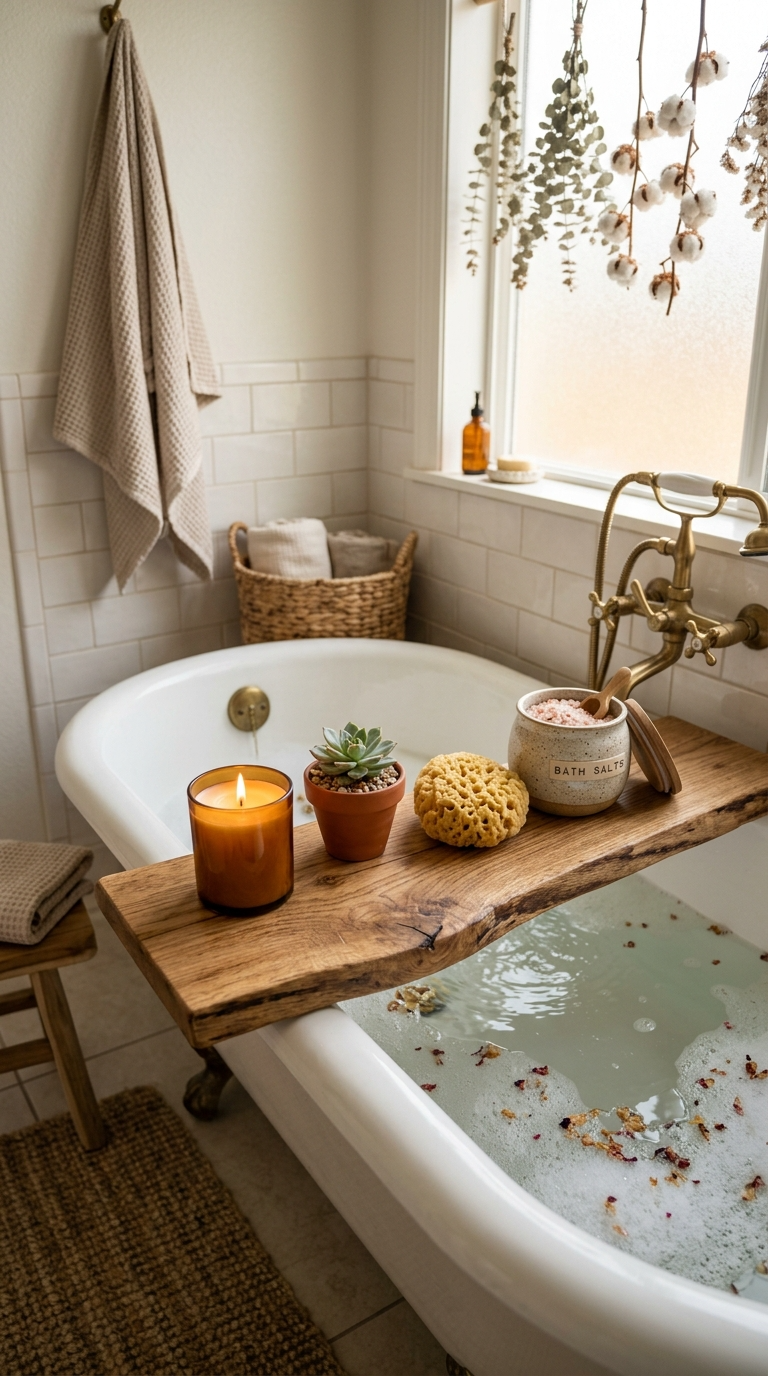
An earthy bathroom is best completed by creating a small ritual staging area beside the tub or shower. A wooden bath tray across the tub holding a beeswax candle, a small plant, a natural sponge, and a jar of bath salts in a ceramic vessel turns the daily bath into a quiet natural ritual rather than a quick utility wash. The staging area signals that the bathroom is a place for genuine well-being rather than just hygiene. The ritual quality is what distinguishes an earthy bathroom from a bathroom that simply uses natural materials; it shifts the room from a designed space into a lived experience.
An earthy bathroom does not require a full renovation or an unlimited budget. It requires intentional decisions about materials, colors, and the small details that connect a modern room to the natural world. Start with the changes that affect the largest surfaces, the floor, the walls, the vanity, and layer in the smaller elements from there. The cumulative effect of genuine natural materials in a well-lit bathroom is a room that feels fundamentally different from the standard white-and-chrome alternative.