19 Organic Modern Bathroom Ideas That Blend Warmth With Clean Lines
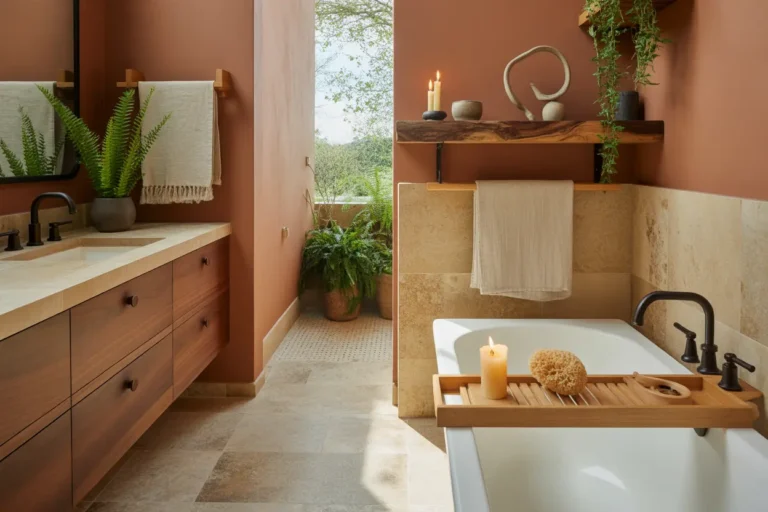
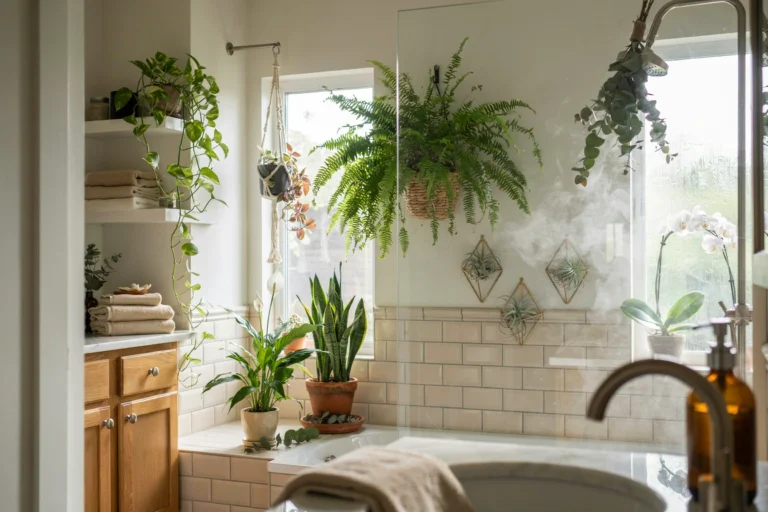
Organic modern is what happens when you take the clean lines and functional clarity of modern design and warm them with the materials and textures of the natural world. The result is a bathroom that feels both current and genuinely comfortable, with none of the coldness that fully modern bathrooms sometimes have and none of the visual clutter that fully natural bathrooms can accumulate. The balance is in the proportions: modern simplicity as the foundation with organic materials layered in as the warmth. These 19 ideas show how to achieve that balance in a real bathroom without it tipping too far in either direction.
1. Clean-Lined Wood Vanity
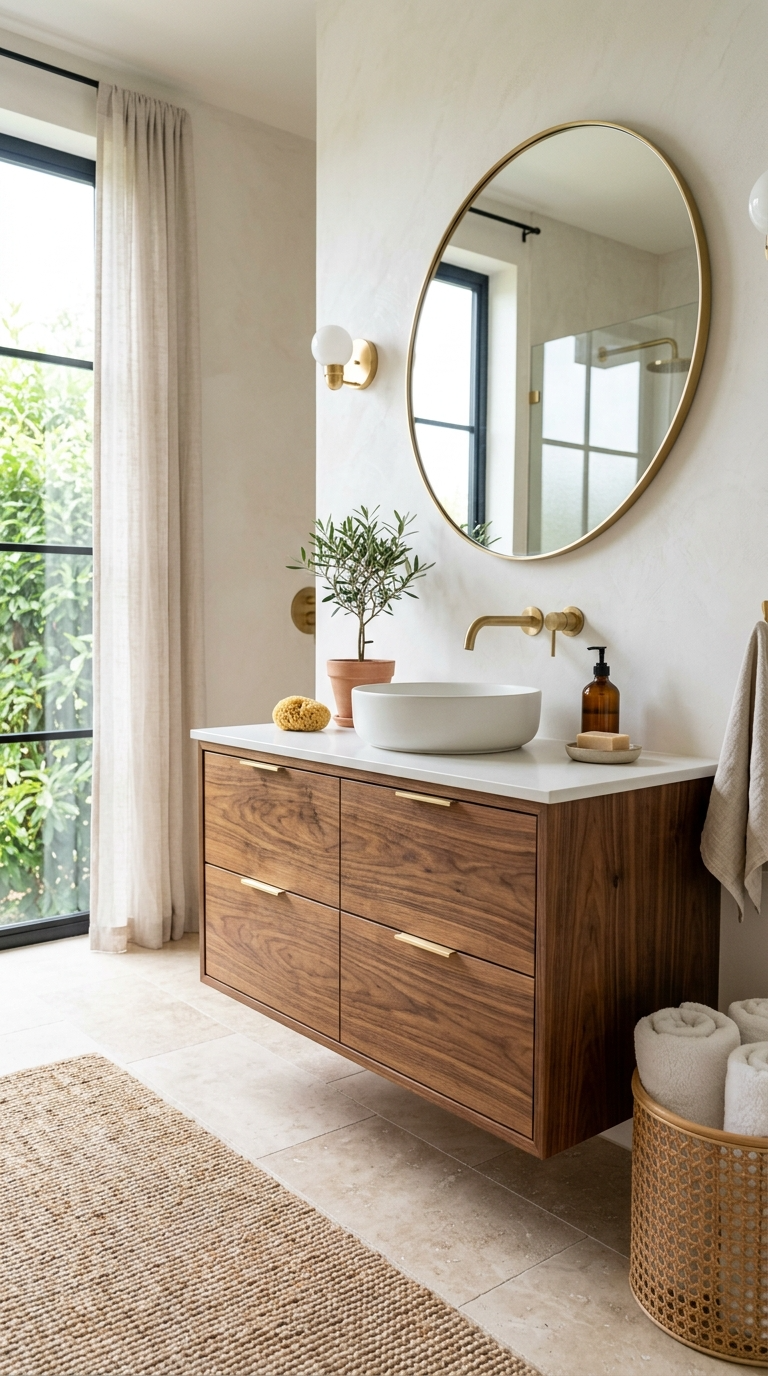
The organic modern vanity is defined by the contrast between its clean, simple shape and the warmth of its natural wood material. Look for vanities with flat-front drawers, simple slab doors, and minimal hardware in a solid warm-toned wood like walnut, white oak, or teak. The clean lines read as modern. The visible wood grain and natural color read as organic. The combination is the essence of the organic modern aesthetic. Avoid overly rustic or distressed wood finishes which push the vanity toward farmhouse rather than organic modern. The wood should look well-made and intentional rather than deliberately weathered.
2. Matte White Fixtures
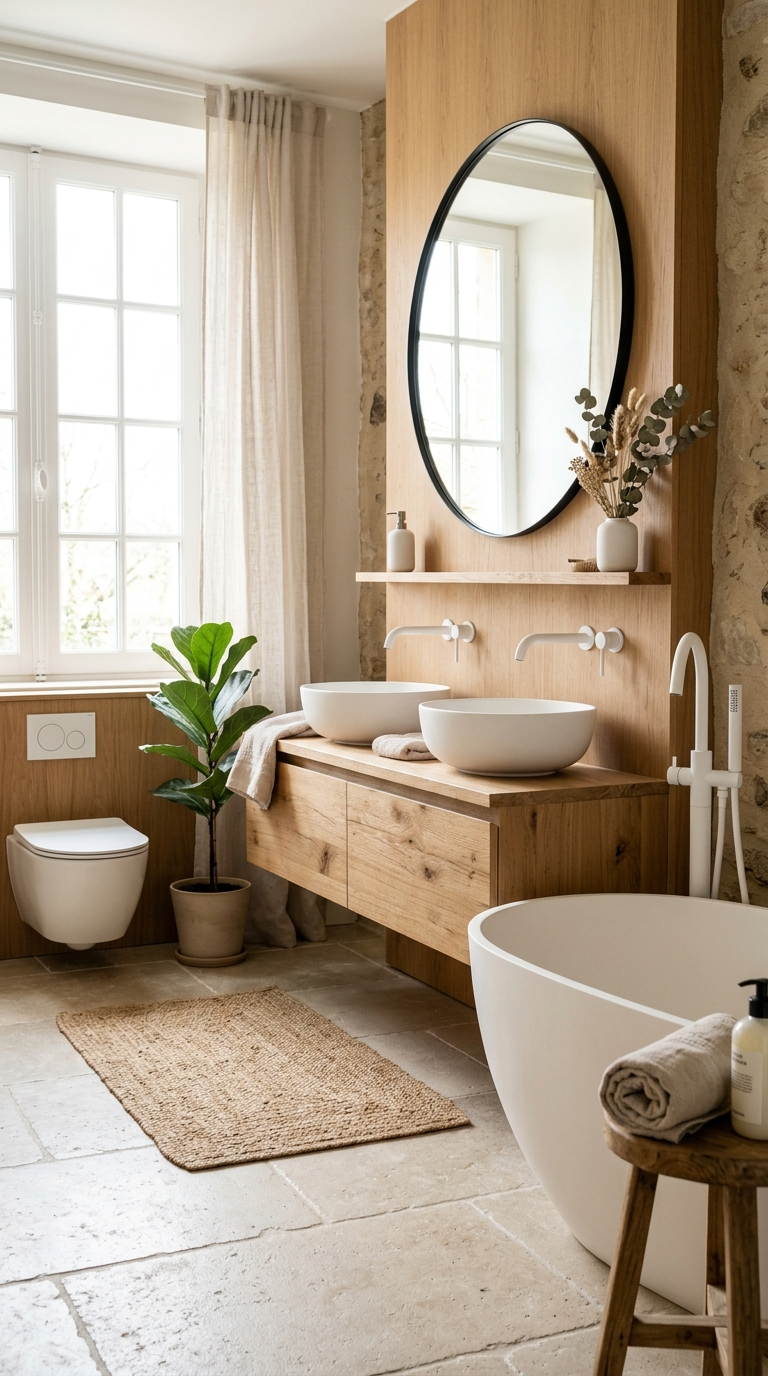
Matte white bathroom fixtures, the toilet, the tub, the sink, provide the clean modern foundation that the organic elements are layered against. The matte finish, rather than traditional glossy ceramic, reads as more contemporary and pairs particularly well with natural wood and stone. Matte white has a softer, more organic quality than glossy white and absorbs rather than reflects harsh light. In an organic modern bathroom, the matte white fixtures are the neutral canvas that allows the warmer natural materials to stand out.
3. Honed Natural Stone
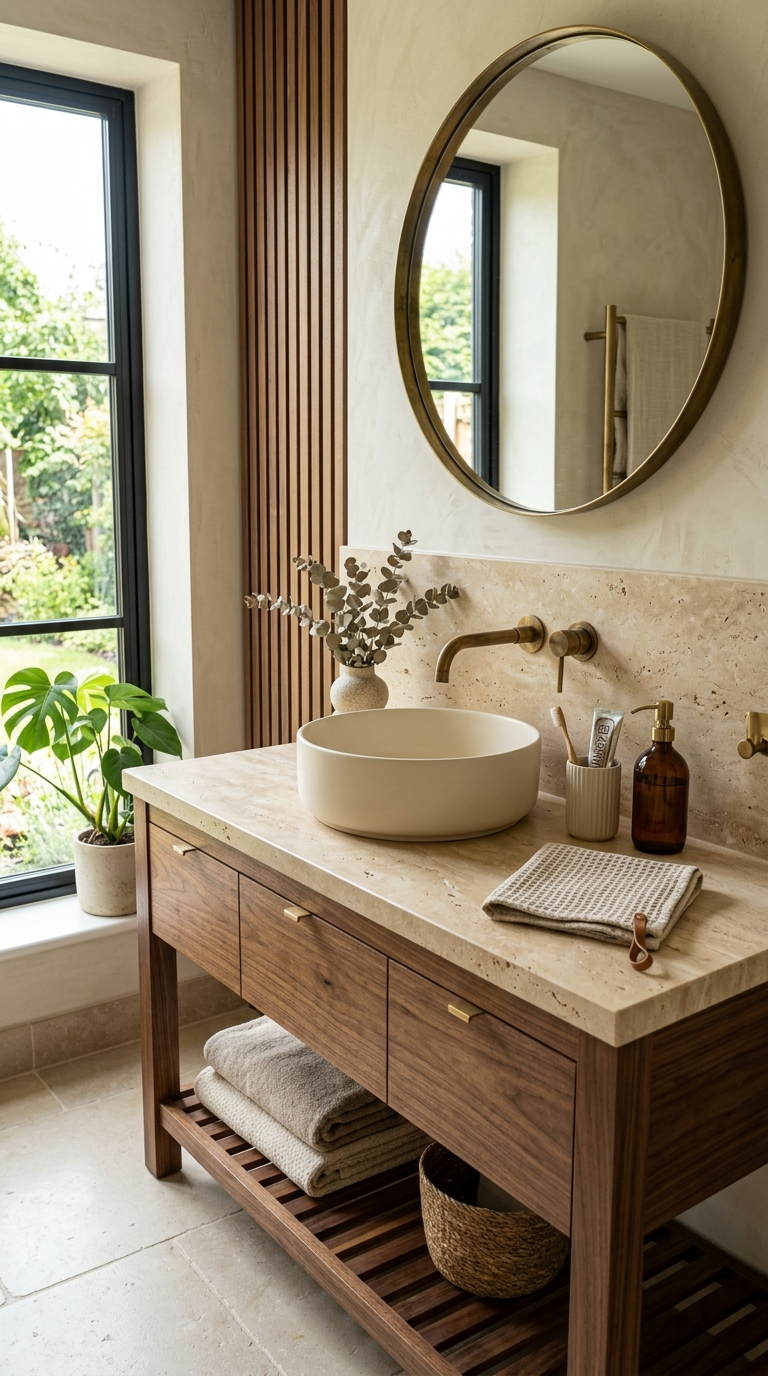
Honed stone, where the surface is finished to a soft matte rather than a high polish, bridges the gap between modern and organic perfectly. The stone reads as natural because it is genuinely stone. The honed finish reads as modern because the matte surface is cleaner and more contemporary than polished marble which can read as traditional. Honed limestone in warm cream, honed travertine in sandy beige, or honed marble in soft white with minimal veining all suit the organic modern palette. Use honed stone on the counter, the floor, or a shower feature wall for the most substantial material impact.
4. Neutral Earth Palette
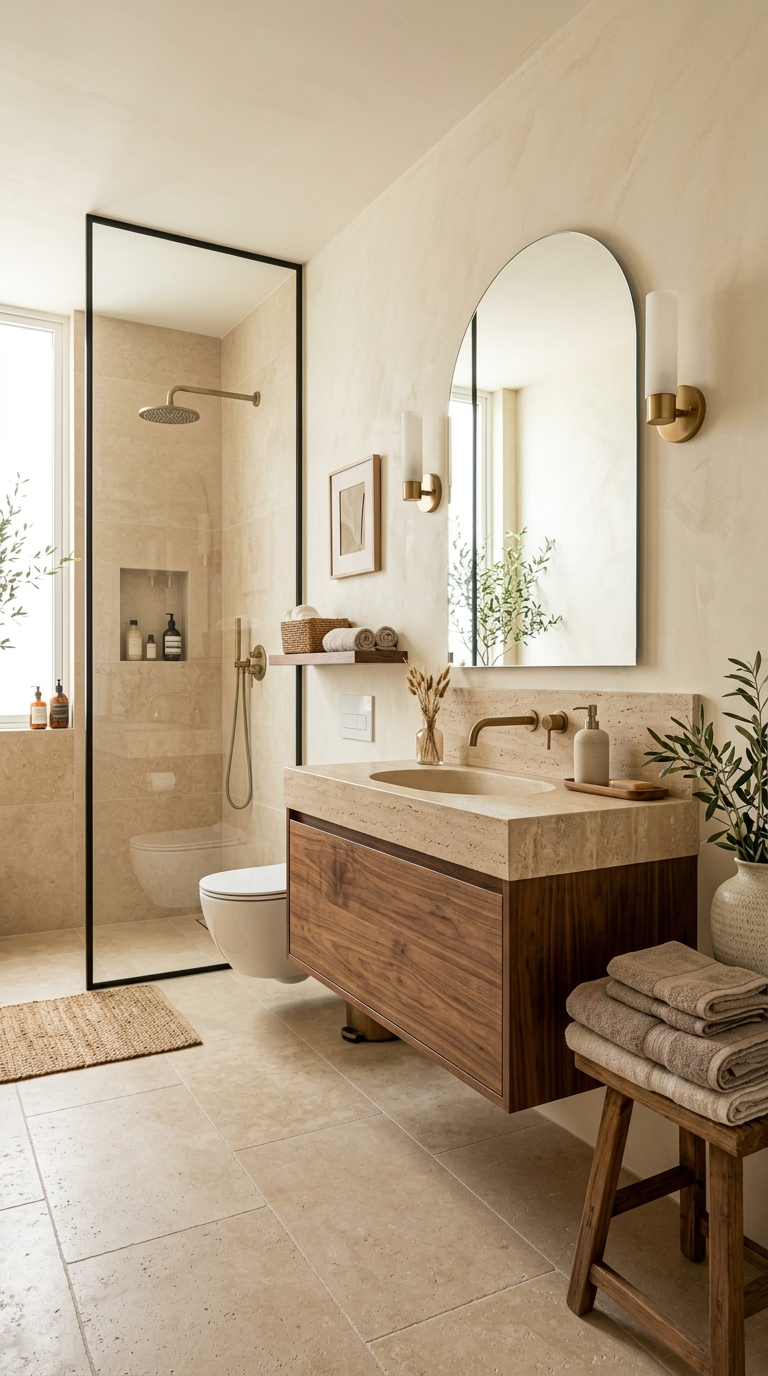
The organic modern color palette stays in a tight range of neutral earth tones: warm white, sandy cream, mushroom gray, warm taupe, soft clay, and natural wood tones from honey to walnut. The palette avoids both the stark whites of fully modern design and the deep saturated earth tones of fully rustic design, sitting comfortably between the two. This narrow neutral range is what gives organic modern bathrooms their calm, edited quality. Accent color comes from the materials themselves rather than from painted surfaces: the warm tone of the wood, the veining in the stone, the green of a living plant.
5. Simple Organic Pendant
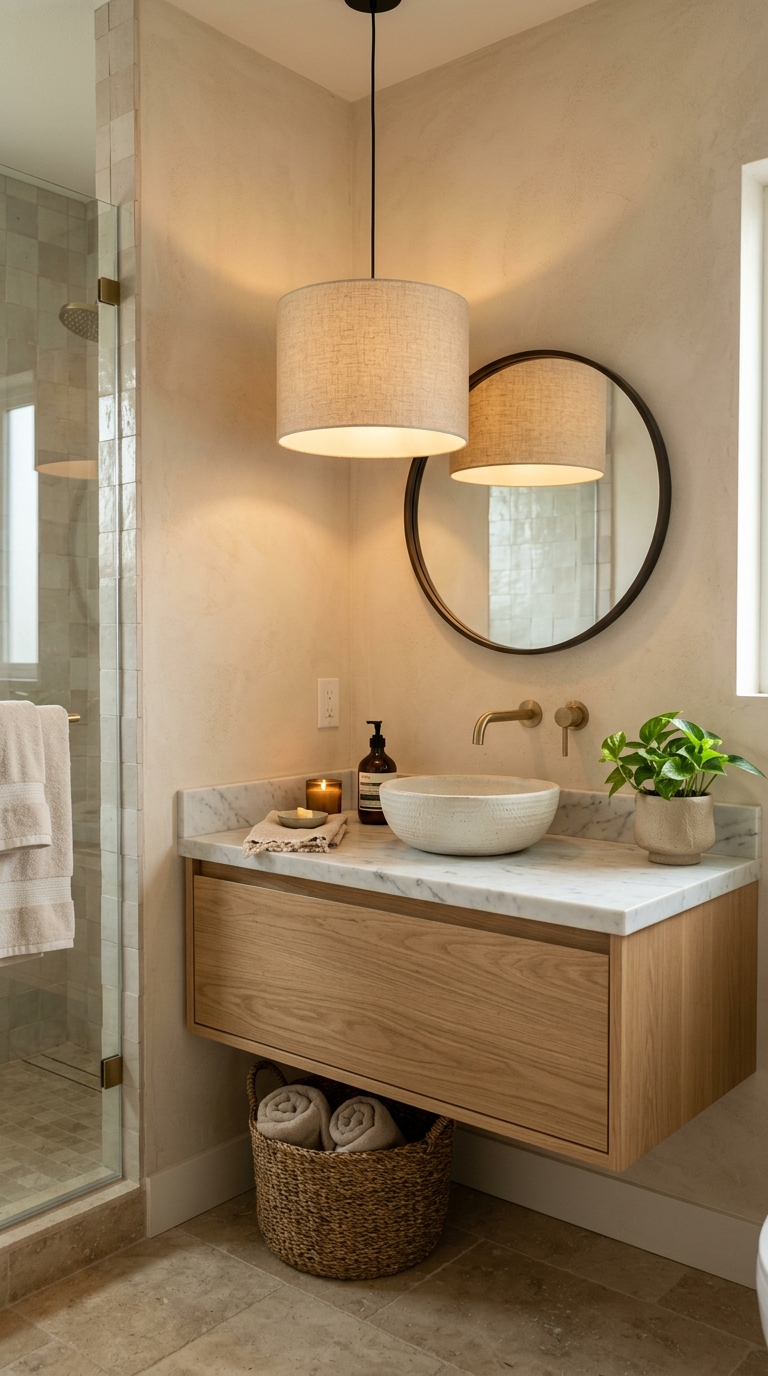
A pendant light in a natural material, a simple linen drum shade, a single handblown glass globe, a minimal clay or concrete pendant, hung above the vanity, adds one organic element overhead without making a heavy statement. The pendant should be simple enough to read as modern and natural enough to read as organic. Avoid woven rattan pendants, which can push the bathroom toward boho rather than organic modern. A simple cylinder or globe shape in a natural material is the sweet spot.
6. Freestanding Tub Focus
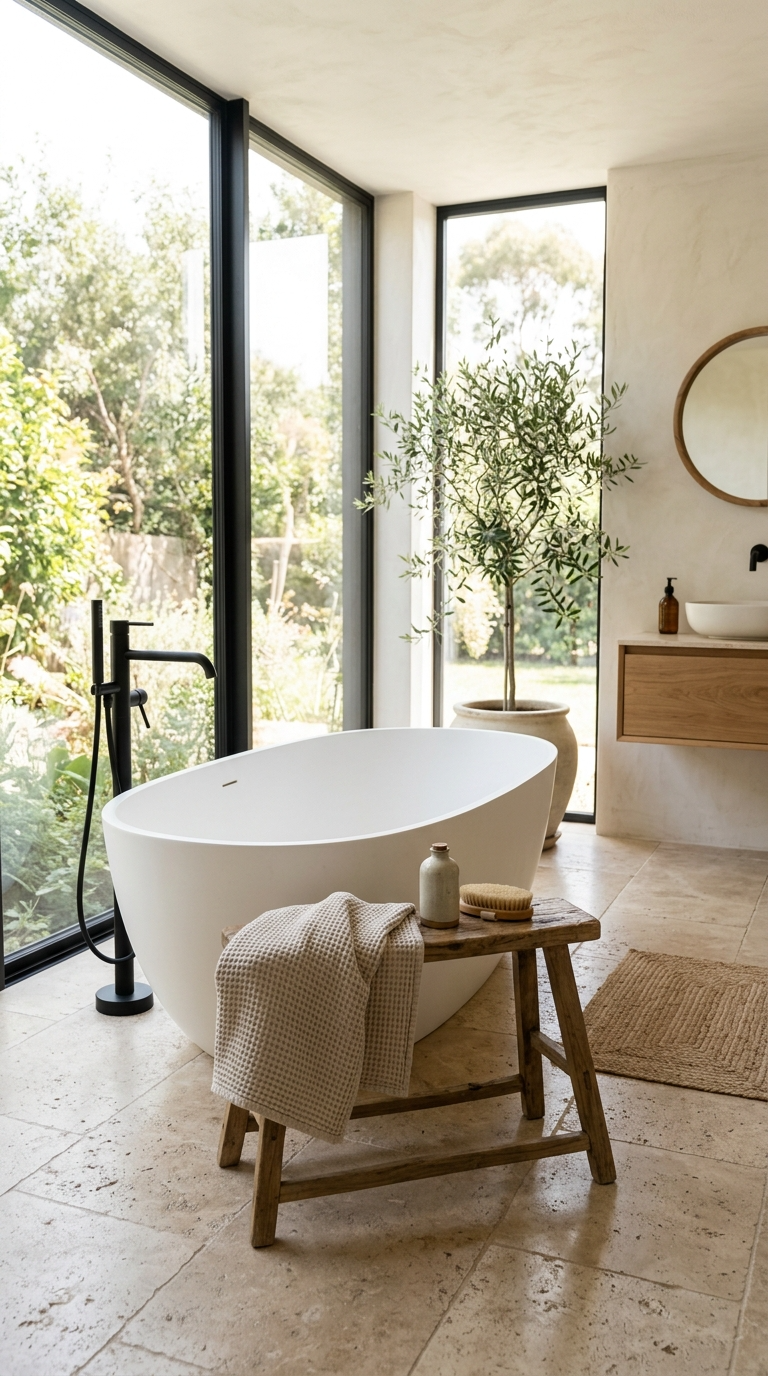
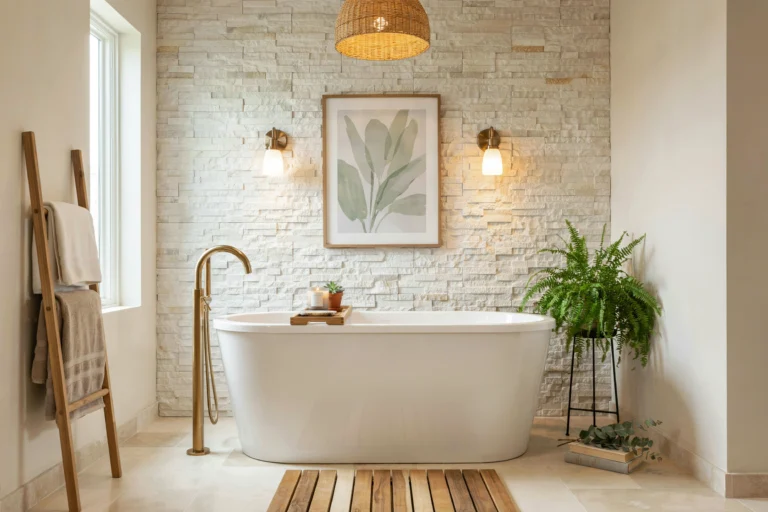
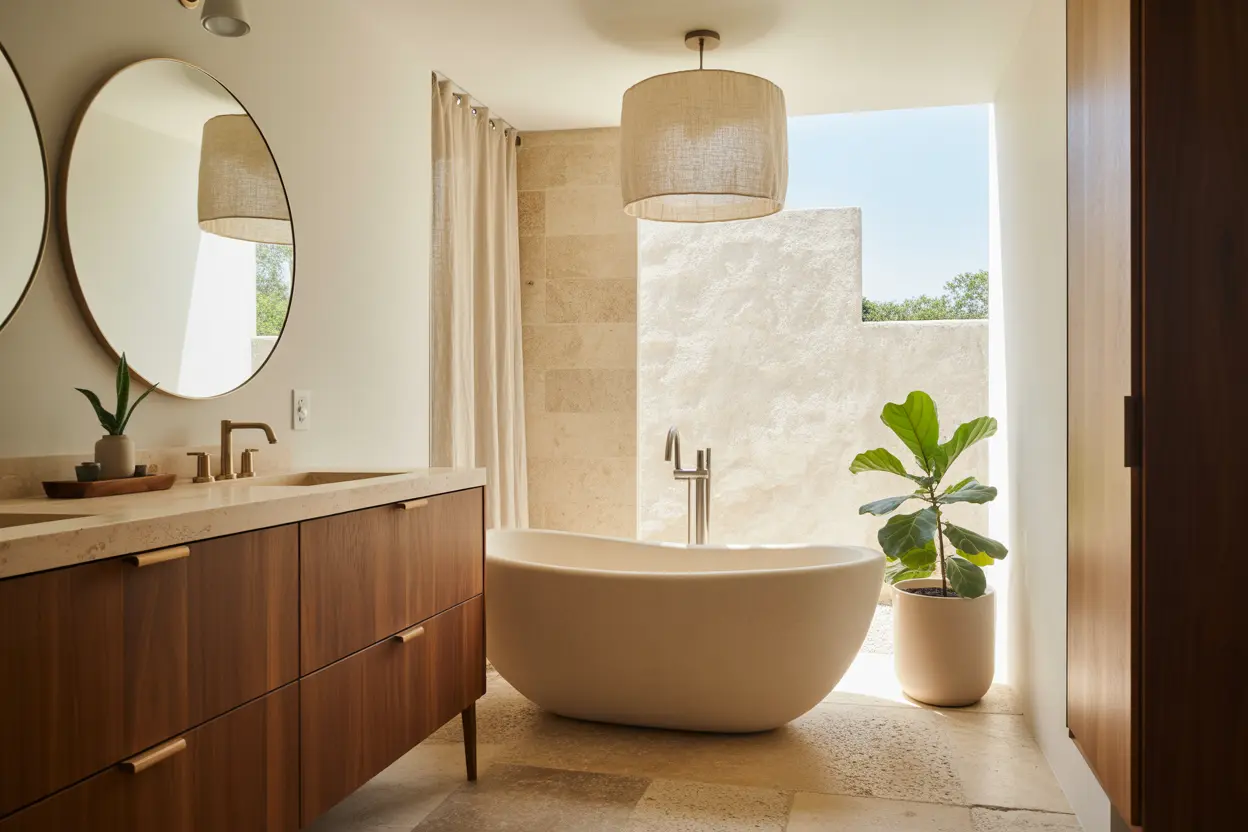
A freestanding tub in a simple, clean shape, whether in matte white, in concrete-look composite, or even in a warm natural stone, becomes the sculptural centerpiece of an organic modern bathroom. The clean shape references modern design, while the material, especially in matte or textured finishes, references the organic side. Position the tub as a clear focal point with space around it rather than pushed against a wall. The freestanding placement gives the tub the breathing room that makes it read as a designed object rather than just a fixture.
7. Brass Fixture Accent
8. Minimal Vanity Display
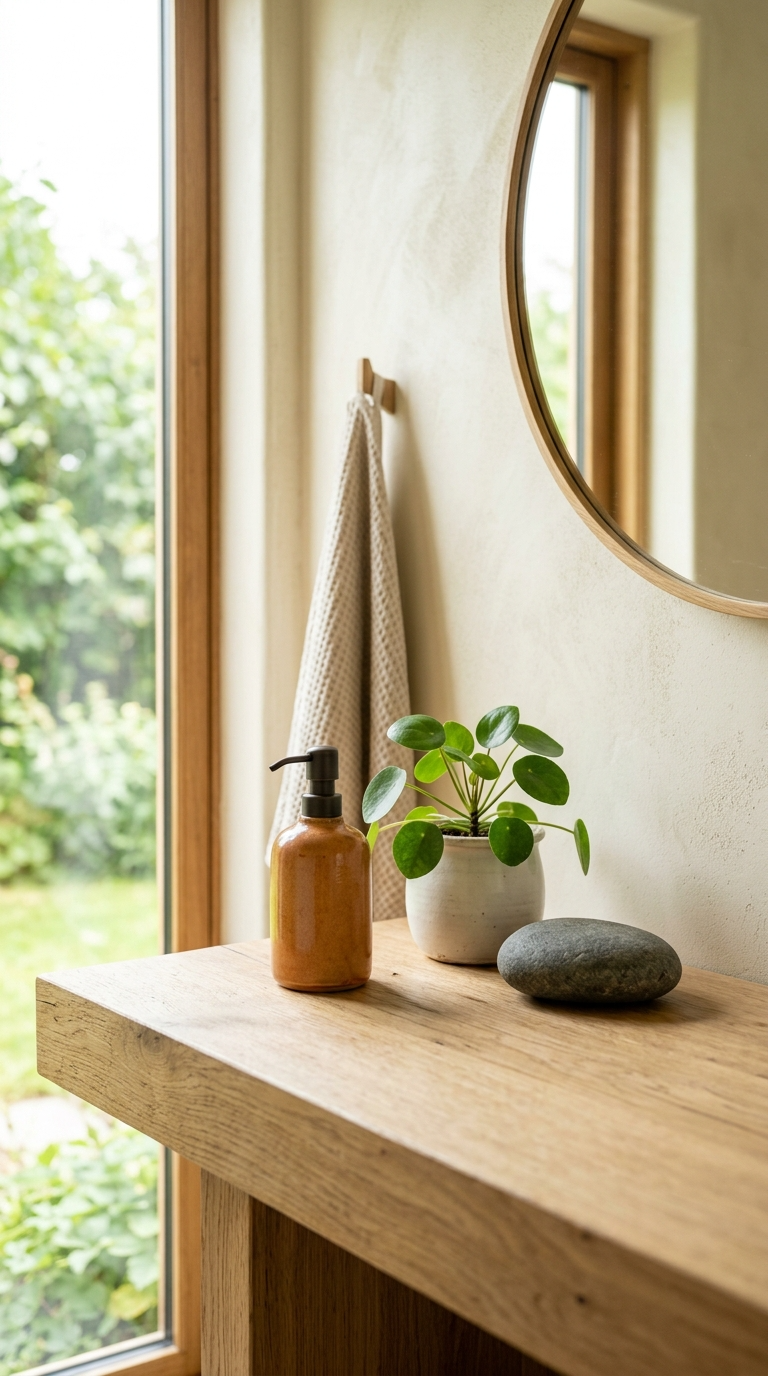
The organic modern vanity counter should hold very few items, each one carefully chosen for both function and visual quality. A single ceramic soap dispenser in a warm earthy glaze, a small plant in a simple pot, and one beautiful object, a smooth river stone, a small piece of driftwood, a handmade ceramic dish. The minimal display is what distinguishes organic modern from the more layered and accumulated look of fully organic or boho design. The empty counter space reads as modern; the natural quality of the items that remain reads as organic.
9. Concrete-Look Shower Wall
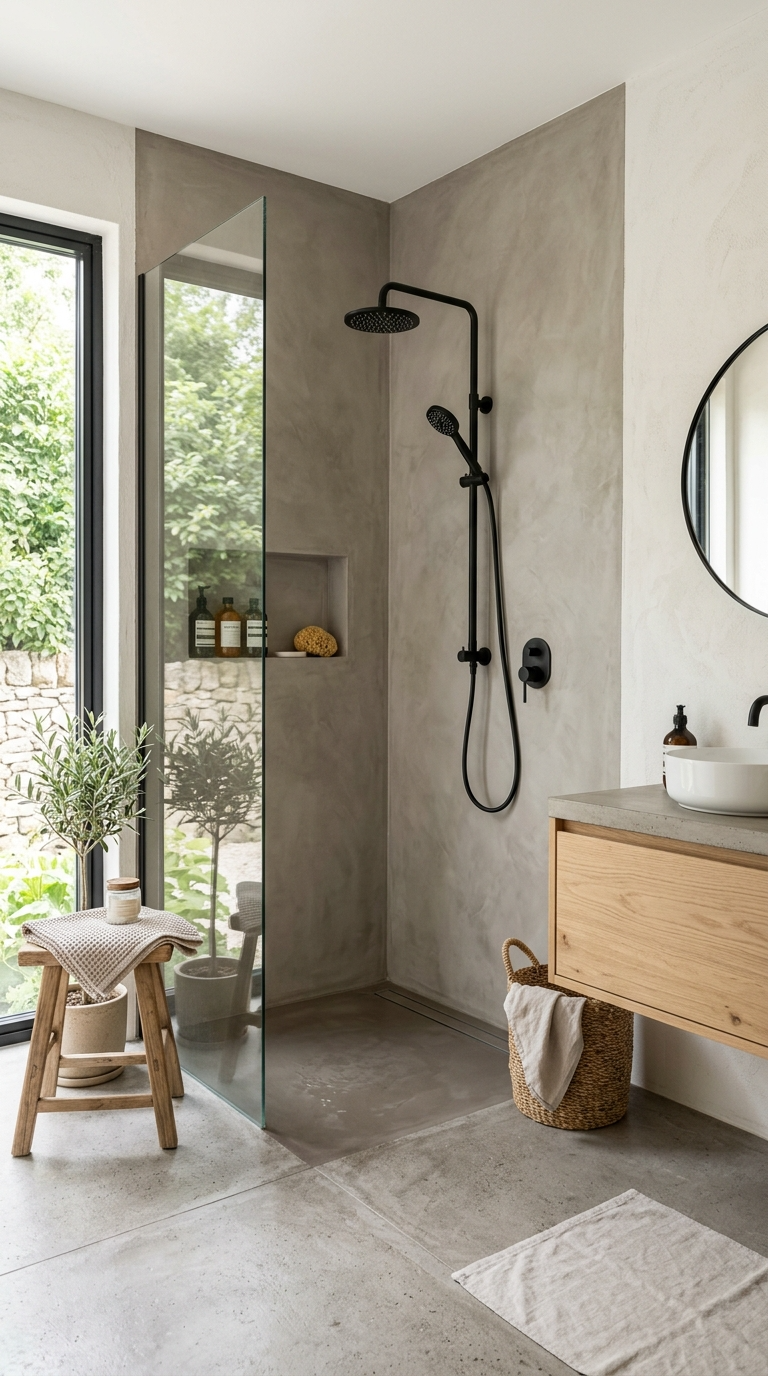
A shower wall finished in a concrete-look porcelain panel or a micro-cement plaster creates a seamless, groutless surface that reads as both modern and earthy at the same time. The continuous surface without tile joints is what gives it the modern quality. The warm gray tonality and the slight textural variation are what give it the organic warmth. Concrete-look shower panels are available in large format porcelain and as micro-cement coatings that apply directly over existing surfaces. Either option produces a shower wall that suits the organic modern aesthetic perfectly.
10. Warm Wood Ceiling Detail
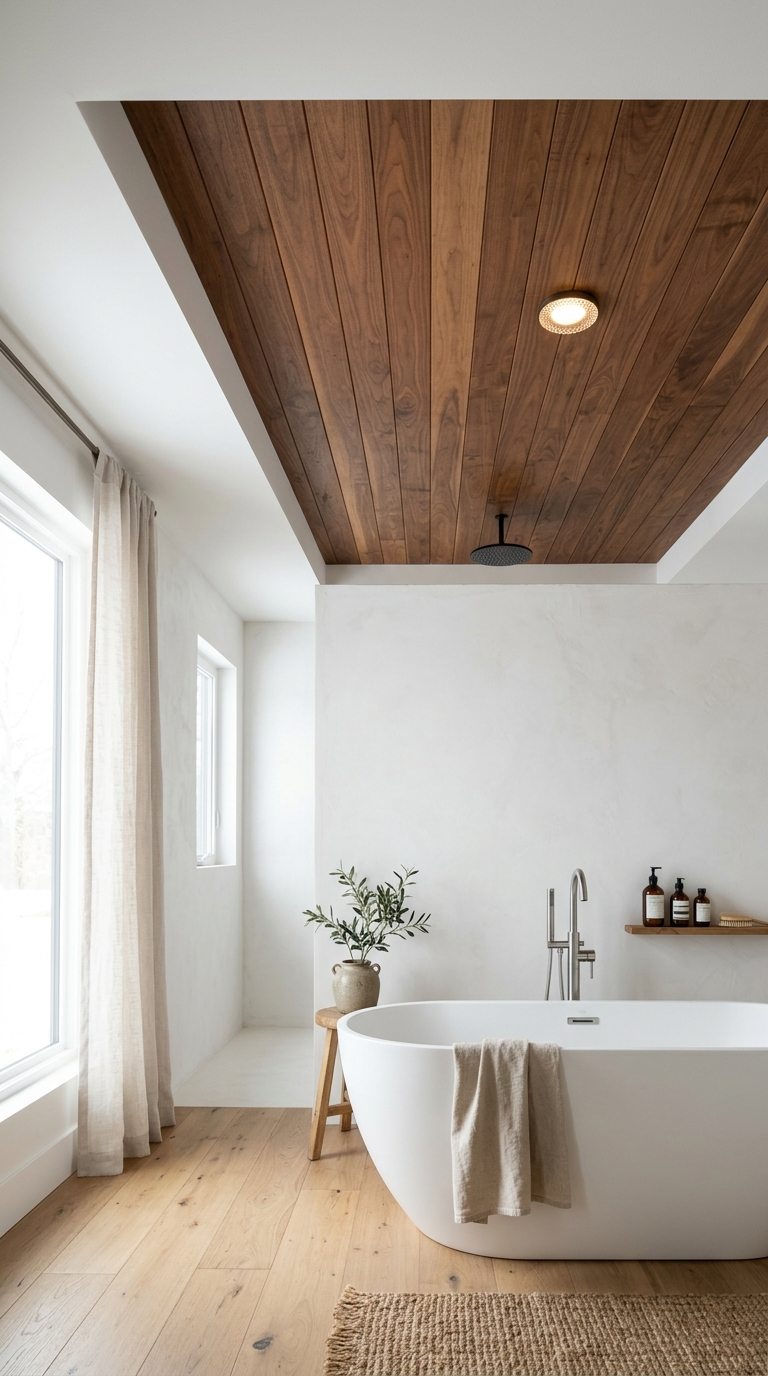
A section of warm wood paneling on the bathroom ceiling, perhaps just the section above the tub or the shower, adds an unexpected organic warmth overhead that grounds the room. The wood ceiling reads as a deliberate design choice rather than as a structural element, which keeps it in the modern category while the material itself provides the organic warmth. Use a smooth, well-finished plank in a warm walnut or white oak rather than a rough or distressed board. Seal it properly for the bathroom moisture environment.
11. Organic Shape Bath Accessories
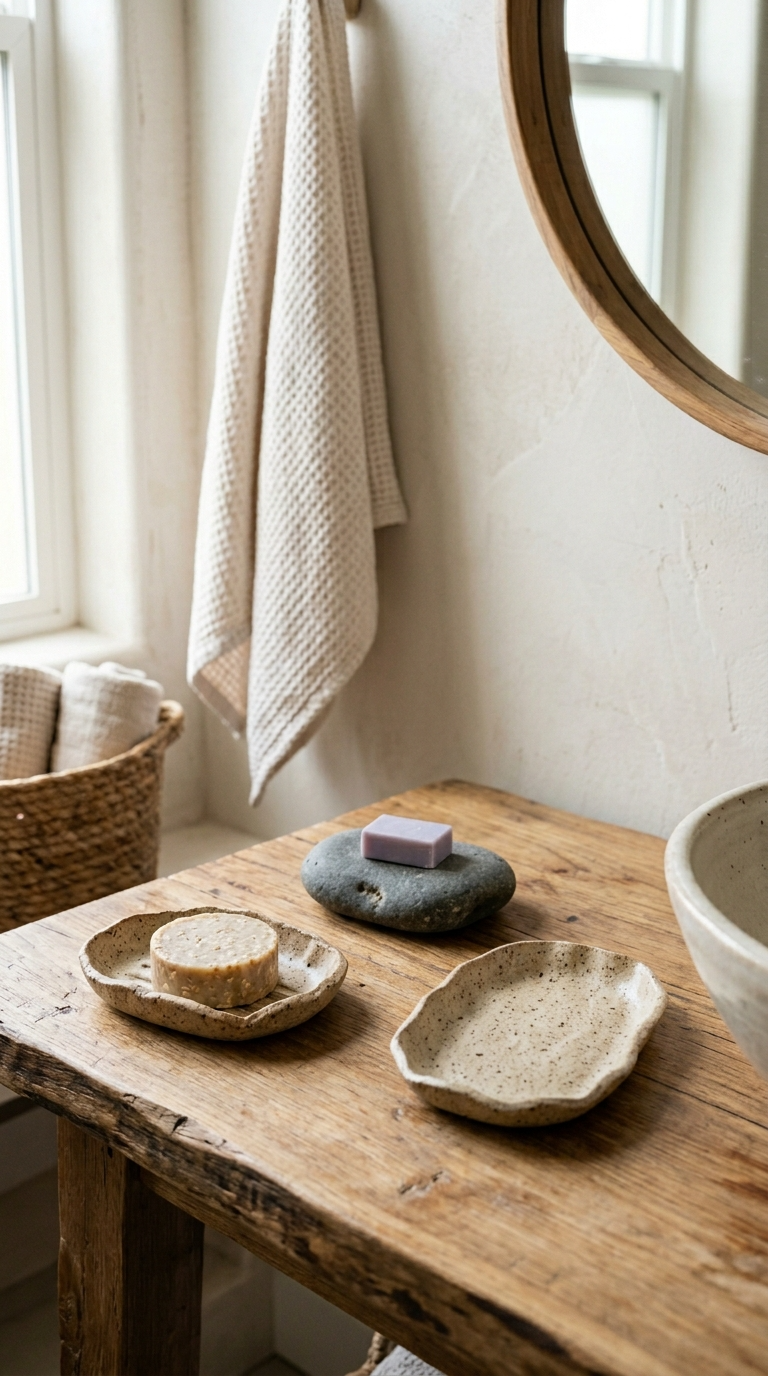
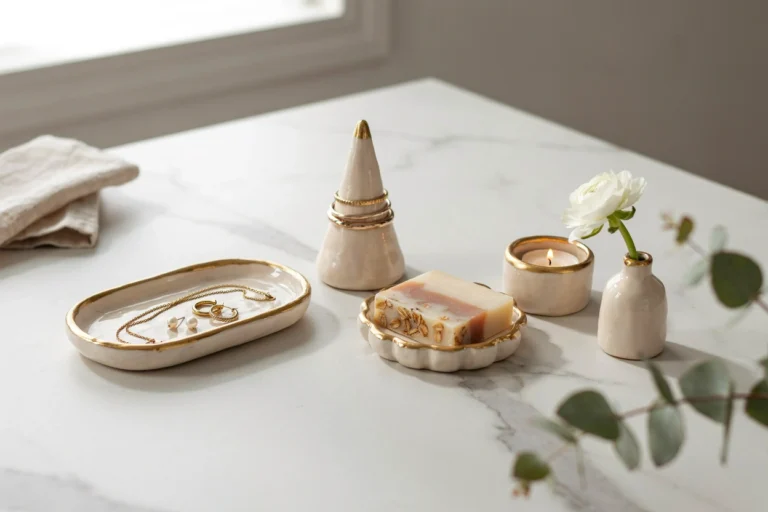
Accessories in organic irregular shapes, an asymmetric soap dish, a hand-formed clay tray, a stone soap holder shaped by water rather than by machine, introduce the natural irregularity that distinguishes organic from purely modern. The accessories should feel found rather than manufactured, even if they were actually purchased from a pottery studio or a home store. The slight imperfection of organic shapes is what brings warmth to the clean modern lines of the fixtures and surfaces around them.
12. Single Large Plant
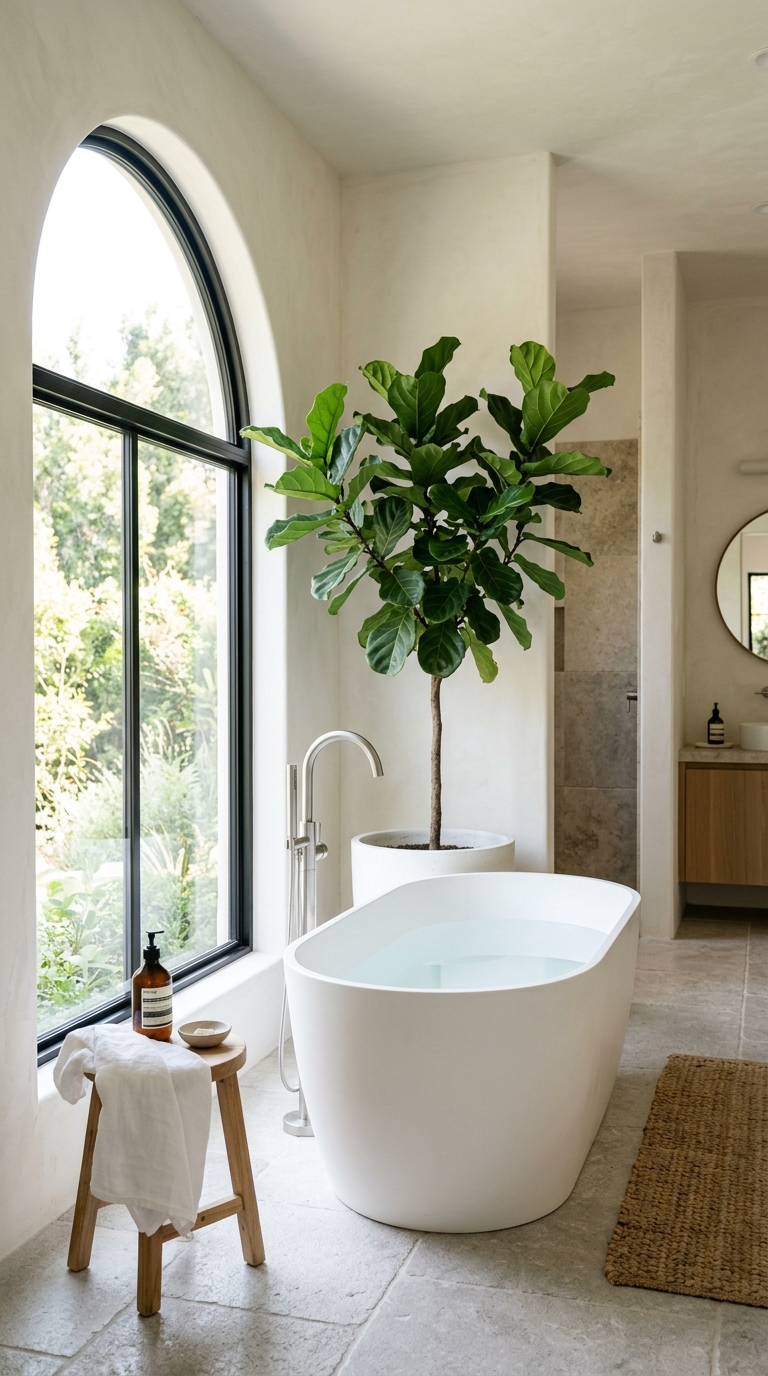
One large statement plant in a substantial simple pot is the organic modern approach to bathroom greenery. Unlike the boho approach which layers multiple plants across every surface, organic modern uses a single plant with enough visual presence to read as a design element on its own. A tall fiddle-leaf fig in a matte white or concrete-look pot, a large bird of paradise beside a window, or a substantial fern on a clean pedestal stand all work. The single plant provides the living organic element without cluttering the modern simplicity of the room.
13. Textured Wall Section
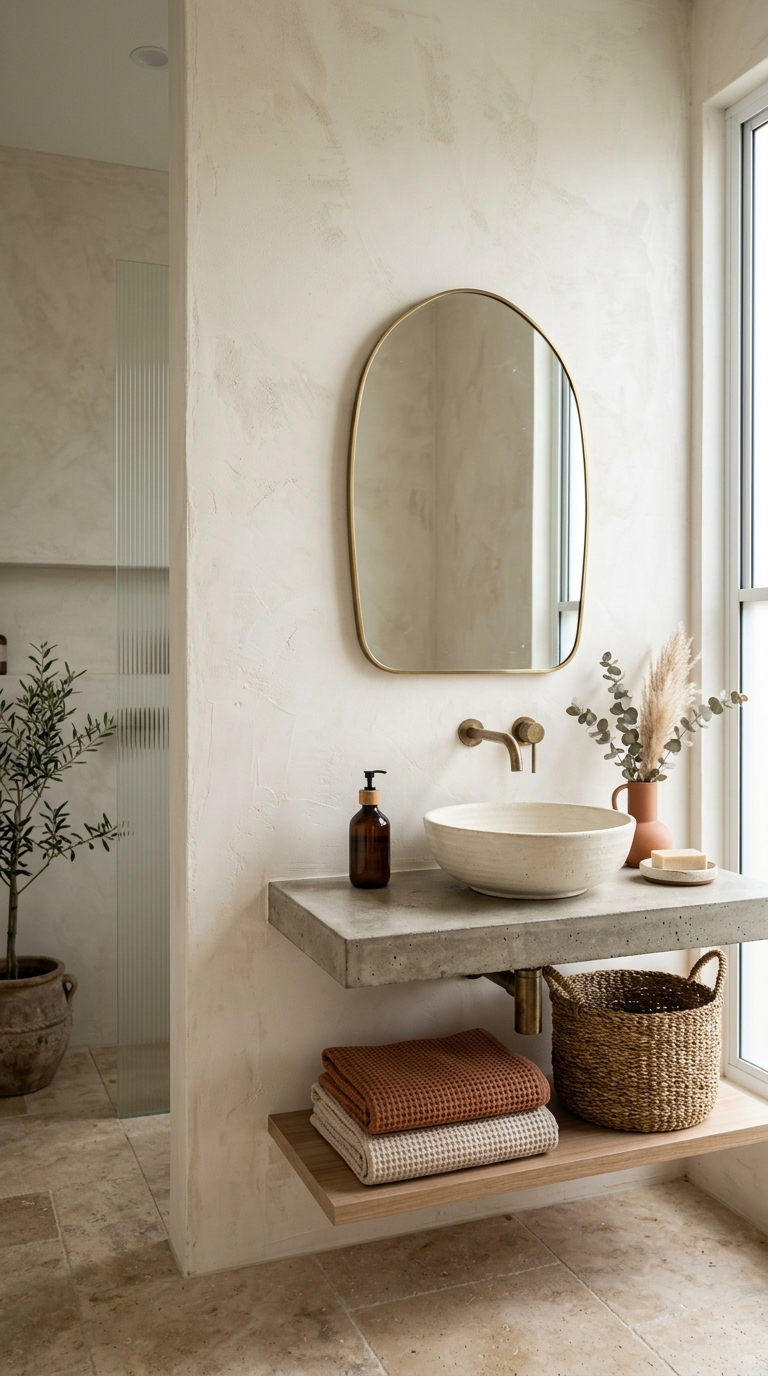
A section of textured wall, a limewash paint finish, a natural plaster treatment, or a concrete skim coat, applied to one feature wall provides dimensional visual interest that flat paint alone cannot achieve. The texture catches light differently across the day and adds the kind of depth and warmth that organic modern depends on. Limewash in warm white or soft cream suits the organic modern palette particularly well and can be applied over standard painted drywall as a finish treatment. The subtle texture becomes one of the defining visual elements of the bathroom.
14. Simple Linen Curtain
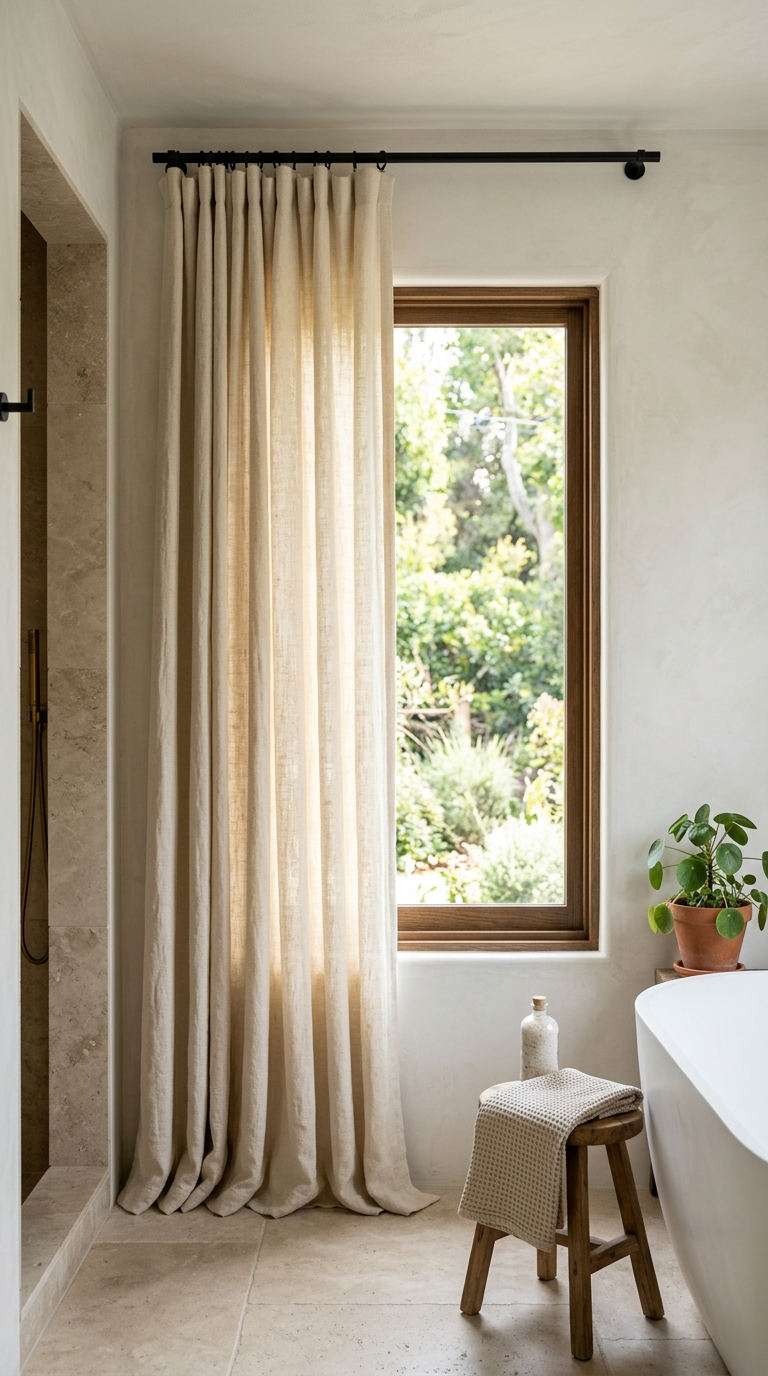
A single panel of heavy natural linen at the bathroom window, hung from a simple metal rod close to the ceiling, adds a soft organic textile element that balances the hard surfaces of the stone, ceramic, and wood. The linen should be in an undyed natural tone or warm white and should hang full-length to the floor for the most modern proportion. The slight natural rumple of linen reads as organic without being sloppy. Keep the curtain treatment simple, a single panel on a clean rod, rather than layered treatments which read as more traditional than modern.
15. Round Mirror Choice
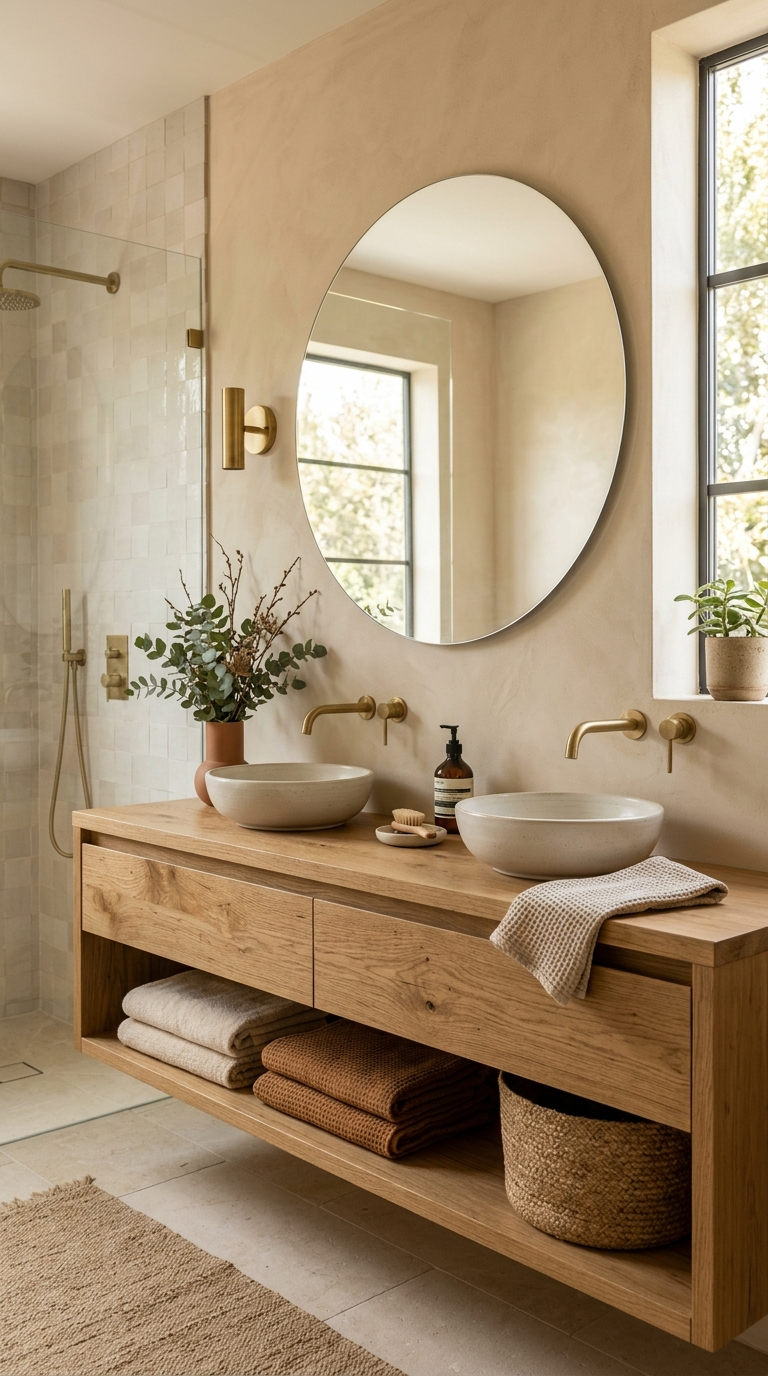
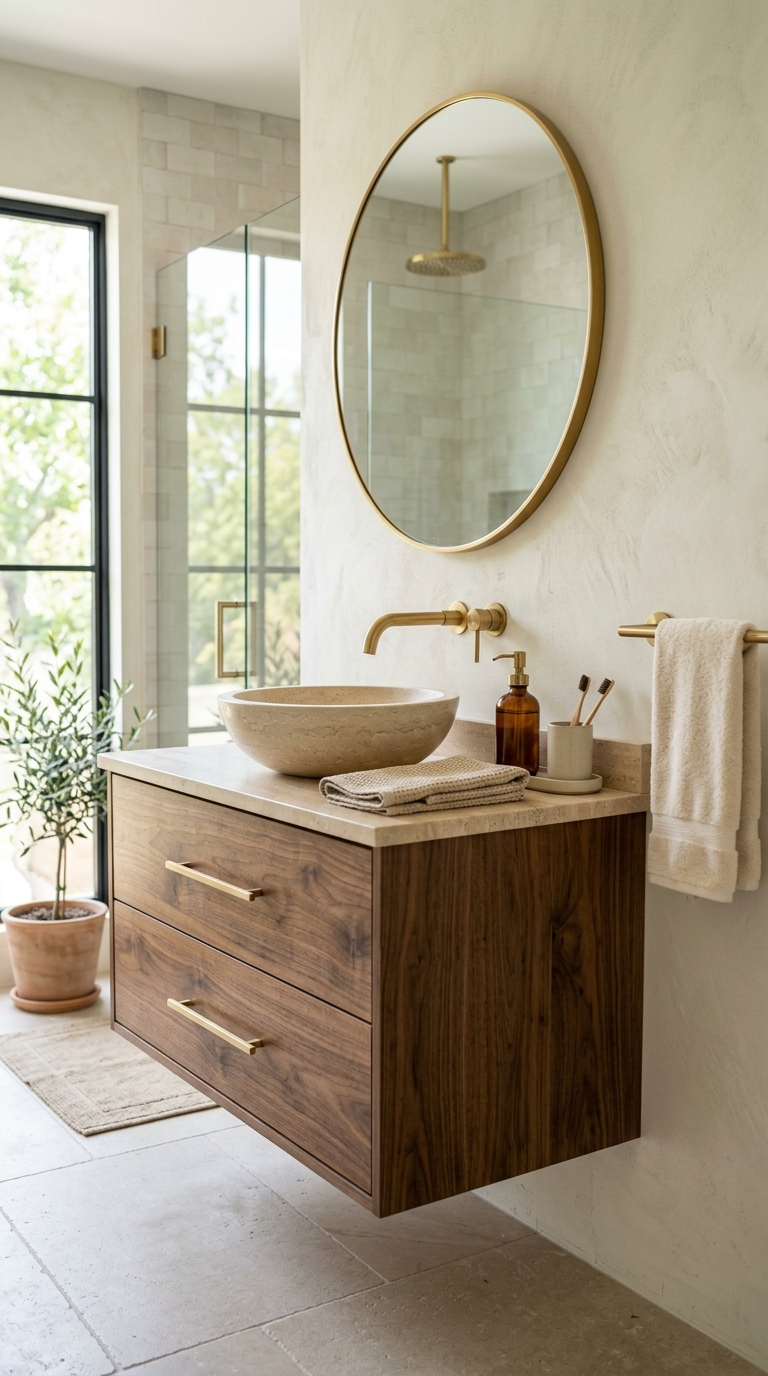
A round mirror above the vanity provides a soft geometric counterpoint to the rectangular lines that dominate most bathrooms. The circular shape reads as more organic than a standard rectangle while remaining clean and modern in its simplicity. A round mirror with a thin brass frame or a frameless circle both suit the organic modern aesthetic. Size the mirror appropriately for the vanity, at least twenty-four to thirty inches in diameter for standard vanities, so it reads as a confident design choice rather than an undersized accessory.
16. Matte Tile Finishes
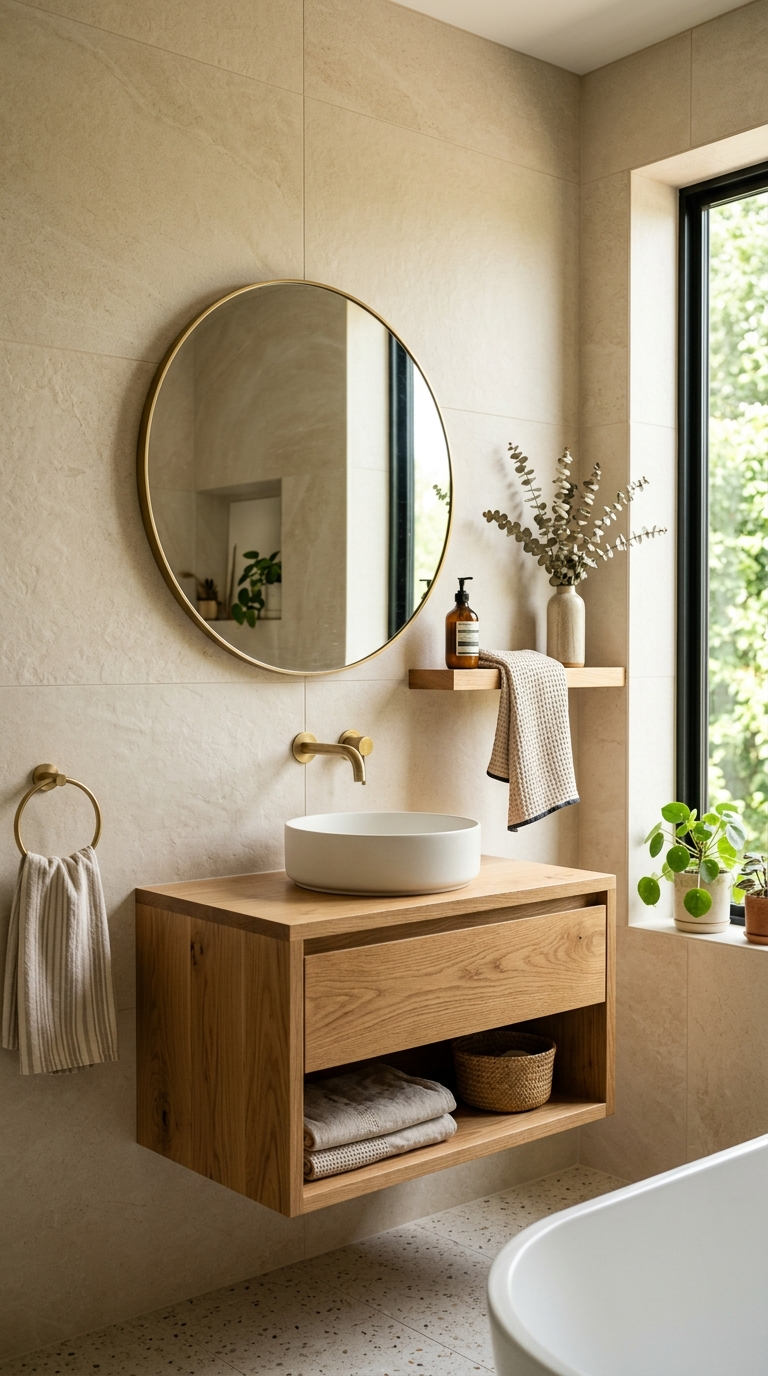
Where tile is used in an organic modern bathroom, matte or satin finishes read as more natural and contemporary than glossy finishes. Matte tile absorbs light rather than reflecting it sharply, which creates a softer, more tactile quality on the wall or floor. Matte porcelain in large format, matte ceramic subway tile, or matte natural stone all provide the right surface quality. The absence of gloss is a small but meaningful distinction that separates organic modern from the traditional glossy tile bathrooms that the aesthetic is positioned against.
17. Warm Towel Display
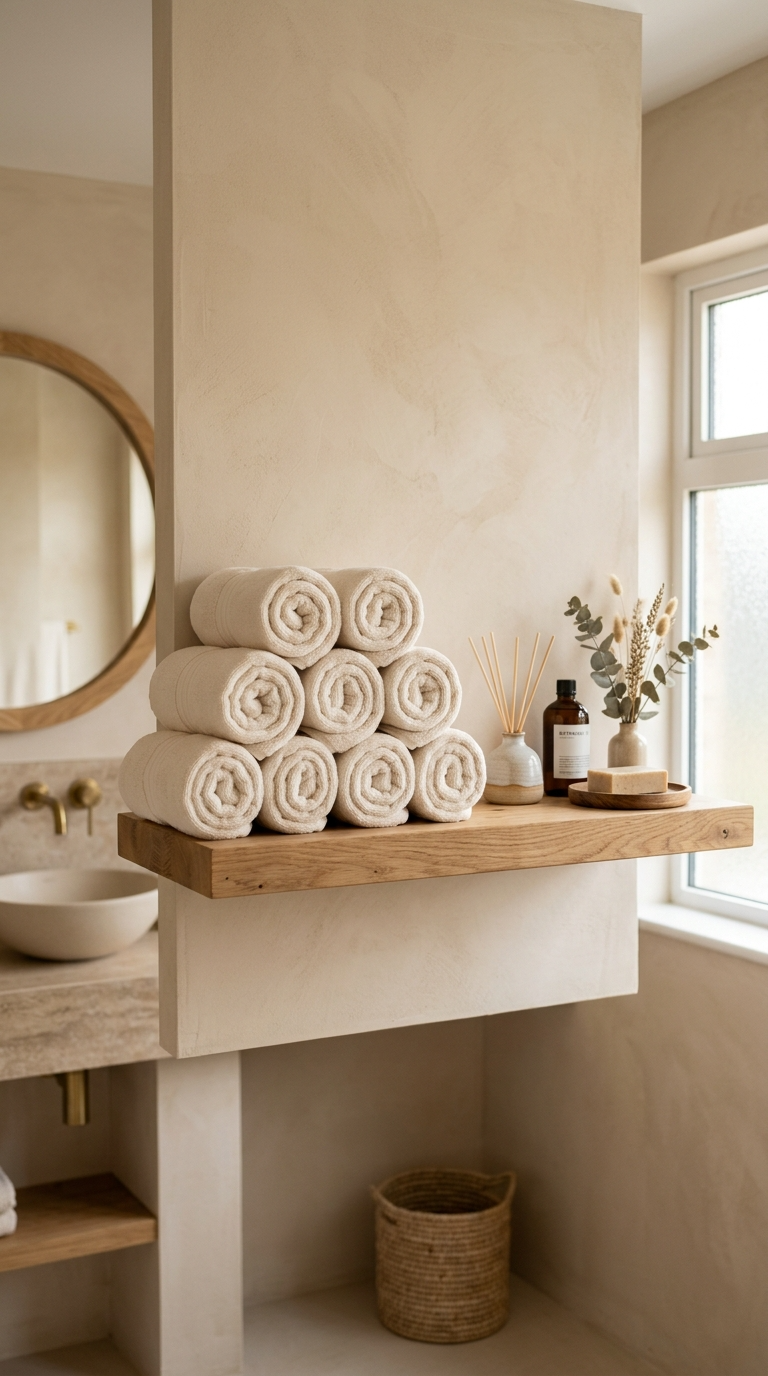
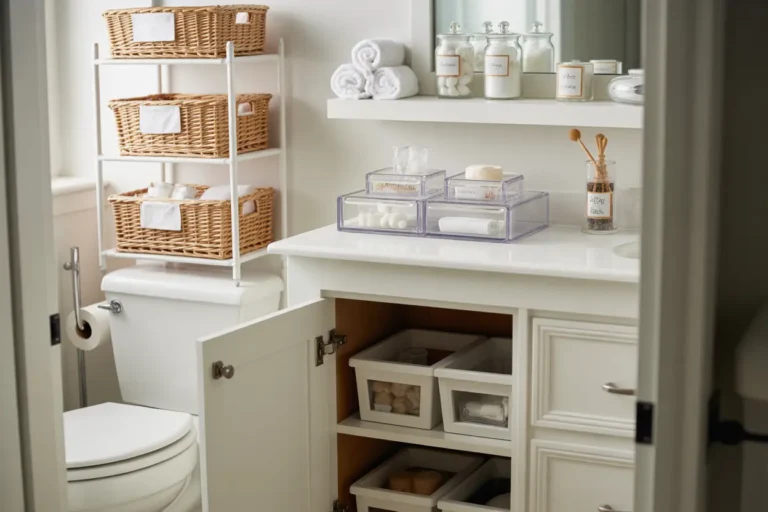
A display of folded or rolled towels in warm natural tones, oatmeal, soft cream, warm clay, or undyed natural linen, on an open shelf or in a simple basket adds the soft element that balances the harder materials in the room. The towels should be in a single coordinated tone rather than mixed colors, since the consistency reads as modern while the warm natural color reads as organic. Roll the towels for a spa-like display or fold them in a minimal neat stack. The towel display becomes part of the bathroom’s visual content rather than just functional storage.
18. Restraint as Principle
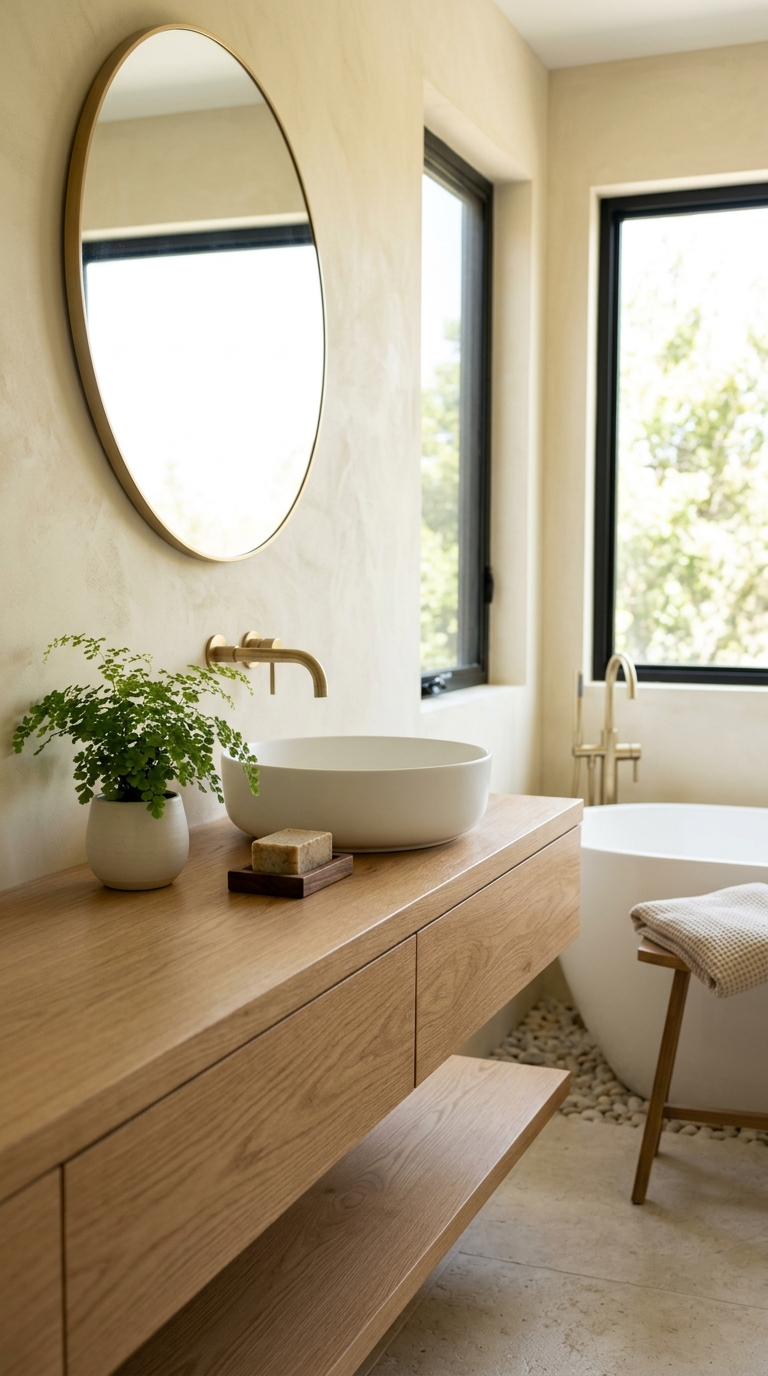
The single most important principle in organic modern bathroom design is restraint. The aesthetic depends on doing less with more considered materials rather than accumulating many decorative elements. Every surface, every object, and every material in the bathroom should earn its place through both visual quality and genuine function. When in doubt about whether to add something, the answer in an organic modern bathroom is almost always to leave it out. The empty space, the clean counter, the single plant rather than many, the quiet wall rather than the busy one, these are what make the organic quality read as modern rather than as cluttered.
19. Seasonal Natural Rotation
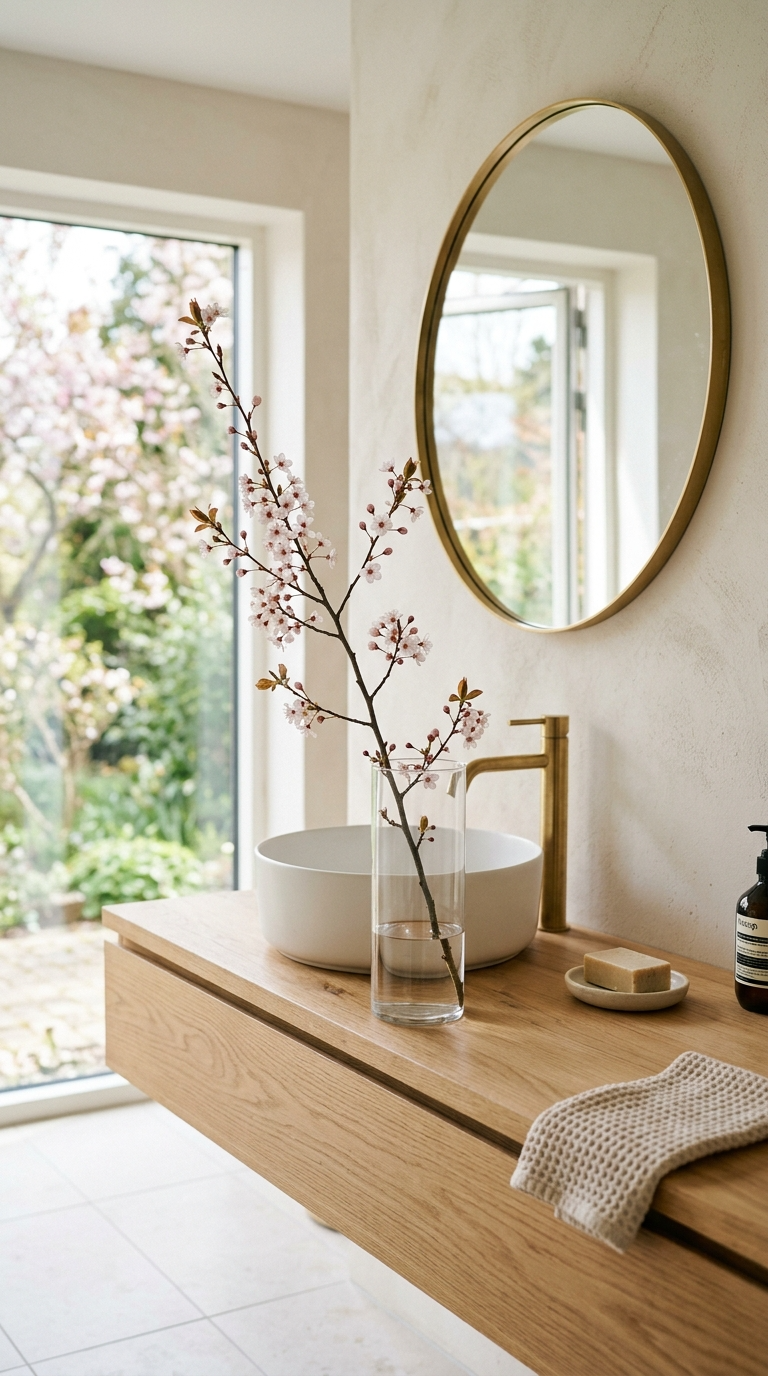
Organic modern is a design direction that rewards restraint and material quality over accumulation. The warmth comes from the natural materials themselves, the stone, the wood, the plants, the warm light, rather than from layered styling and decorative additions. Choose genuinely beautiful natural materials for the biggest surfaces, keep the lines clean and simple, and let the materials do the atmospheric work.