21 Retro Bathroom Ideas That Capture Vintage Style Without Feeling Old
Retro is one of the easiest design directions to get wrong in a bathroom. Lean too far into the period and the bathroom starts looking like a museum exhibit or a movie set. Lean too far into the modern and the retro elements feel like accidents rather than intentions. The bathrooms that pull off real vintage charm without looking dated are the ones where the period elements feel chosen rather than inherited, and where modern fixtures and finishes are mixed in to keep the room functioning for actual current life. These 21 ideas show how to balance the two so the bathroom reads as charming and confident rather than as a room that simply has not been updated in decades.
1. Black and White Floor
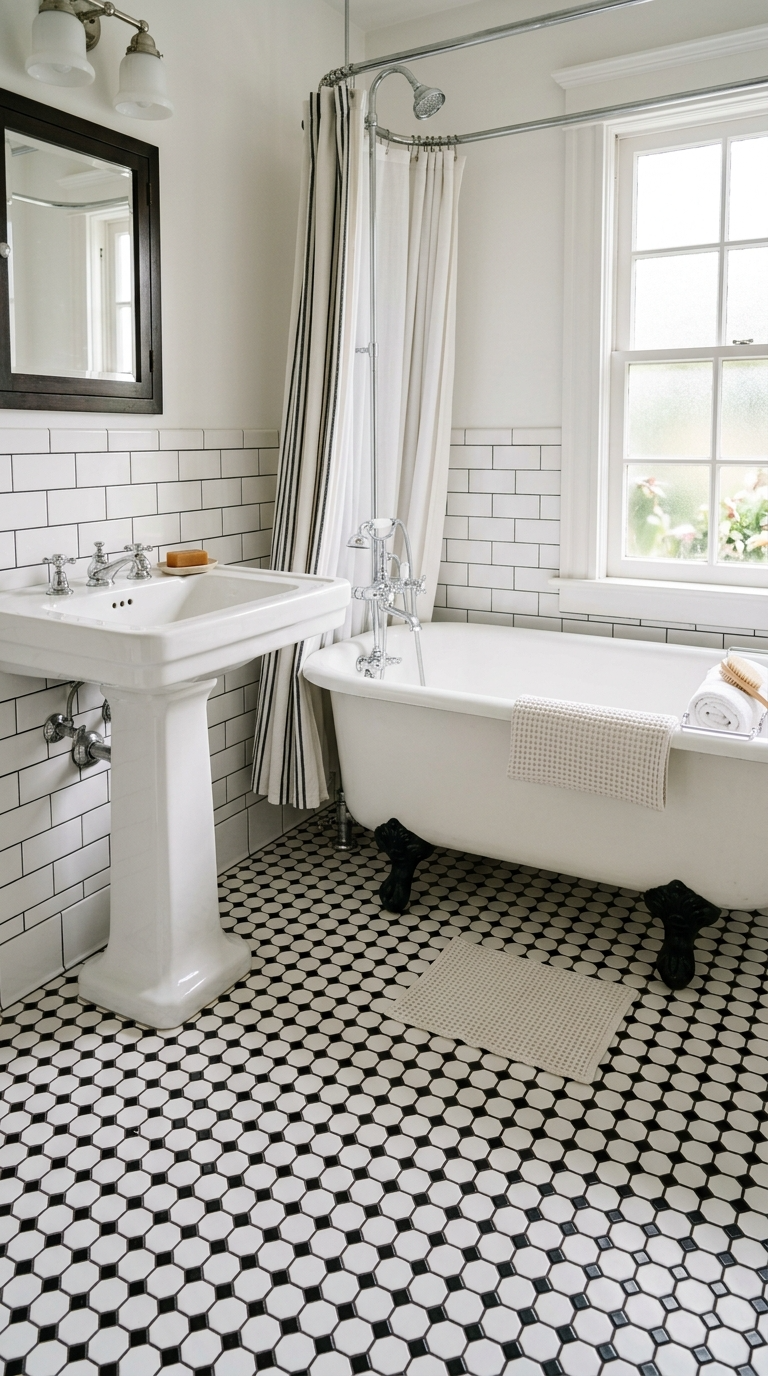
A black and white tile floor in a hexagon, basketweave, or simple checkerboard pattern is one of the most enduring retro bathroom features and one of the most reliably elegant. The pattern reads as classic rather than dated because it has been continuously fashionable across multiple decades. Hexagon tiles in white with scattered black accents are particularly forgiving and suit both small and large bathrooms. Pair the patterned floor with simple modern fixtures rather than competing period-correct fixtures, since the floor pattern is strong enough to carry the retro reference without help. The combination of a vintage-style floor with current fixtures is what keeps the bathroom looking deliberate rather than untouched.
2. Pedestal Sink Choice
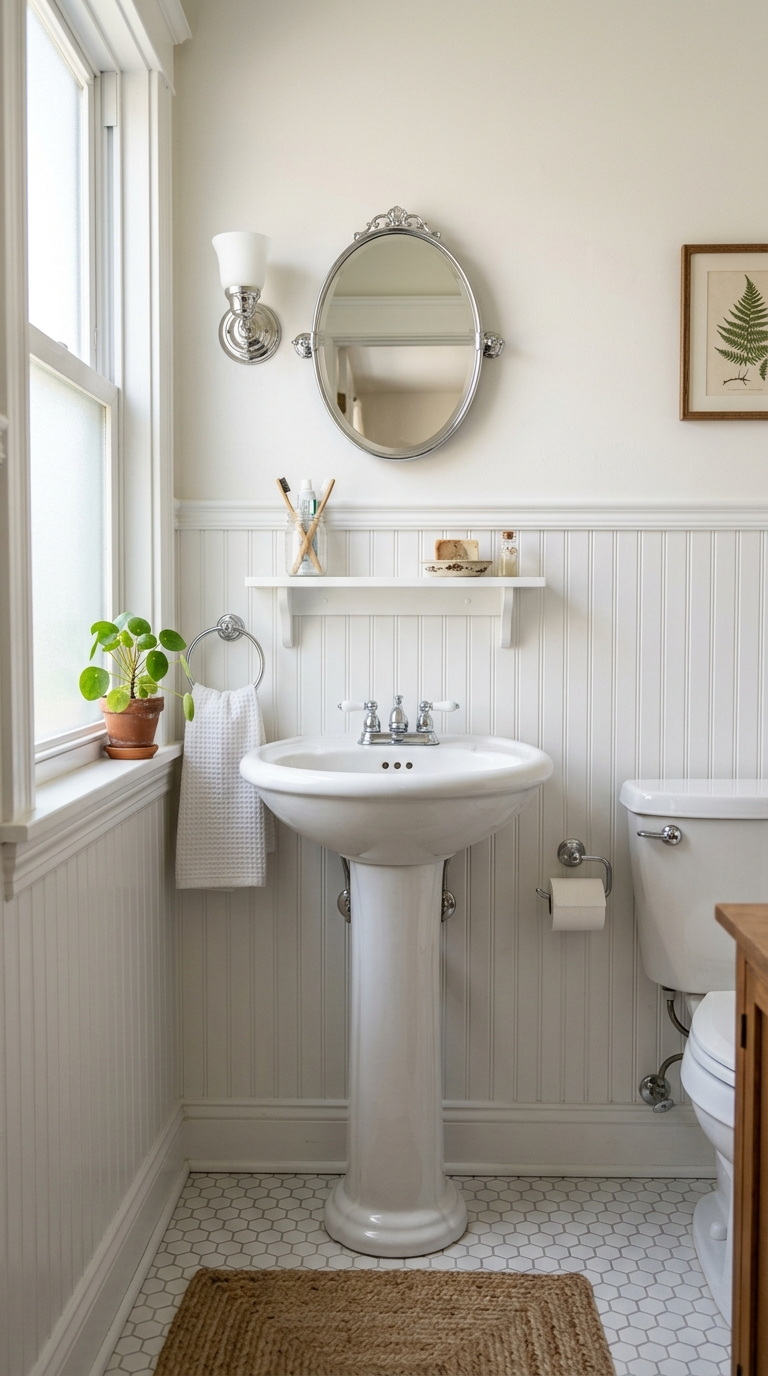
A pedestal sink is one of the most distinctly vintage bathroom fixtures and remains one of the most beautiful options for small bathrooms or powder rooms. The exposed white ceramic, the slim profile, and the absence of bulky cabinet storage below give the bathroom an open, airy quality that modern vanities cannot replicate. Pair the pedestal sink with a small wall-mounted shelf or medicine cabinet for the storage that the pedestal cannot provide. Choose a pedestal sink in a clean classic shape rather than an overly ornate Victorian style, which can tip the bathroom toward costume rather than confident retro. The clean pedestal works in both traditional and modern bathroom contexts.
3. Subway Tile Refresh
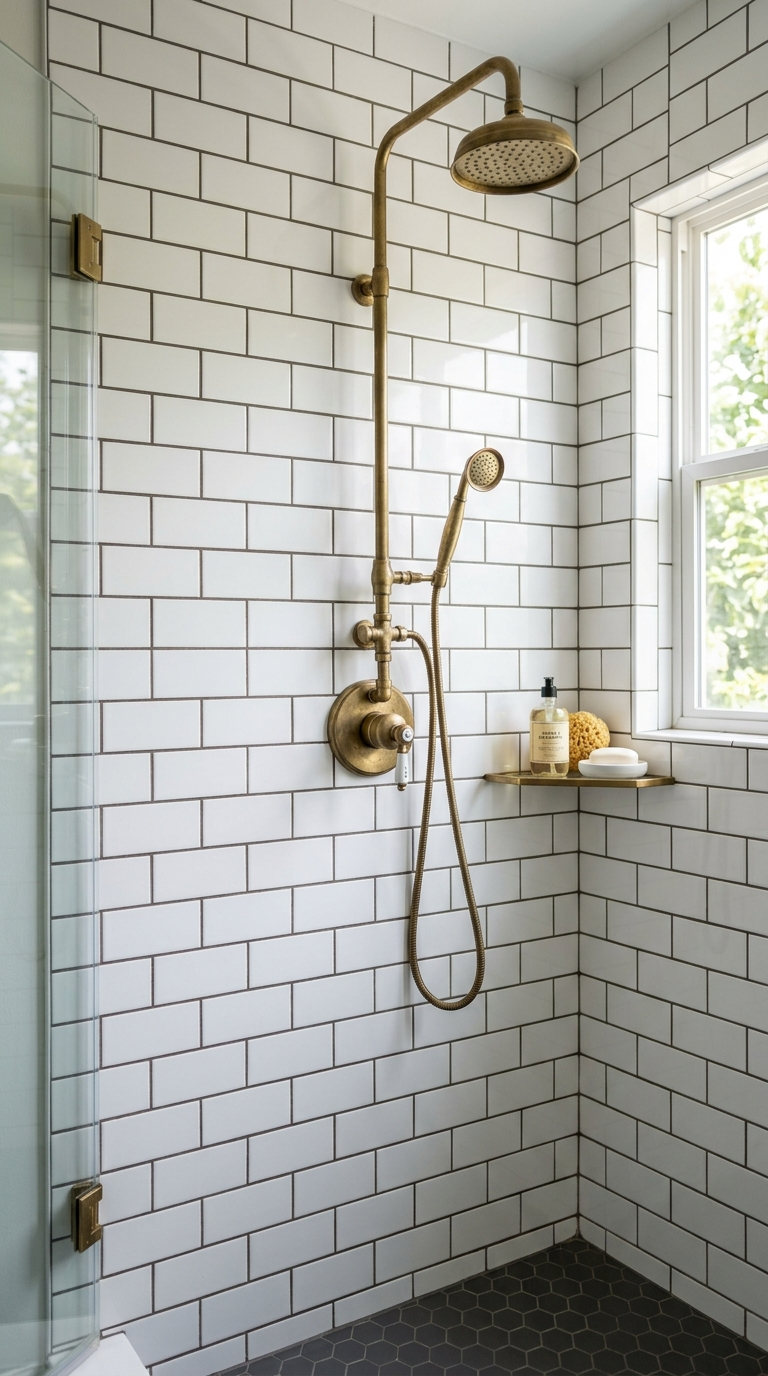
White subway tile in the standard horizontal brick pattern has been continuously used in bathrooms for over a century. The continuity is what makes it work as a retro reference without looking dated. Pair classic subway tile with a contrasting grout color, soft gray or warm charcoal, to define the tile pattern more strongly than the standard white-on-white treatment. Run the subway tile from floor to ceiling in the shower and at least to chair-rail height on the surrounding walls. The combination of subway tile with current fixtures and lighting reads as timeless rather than dated, which is what good retro design aims for.
4. Clawfoot Tub Statement
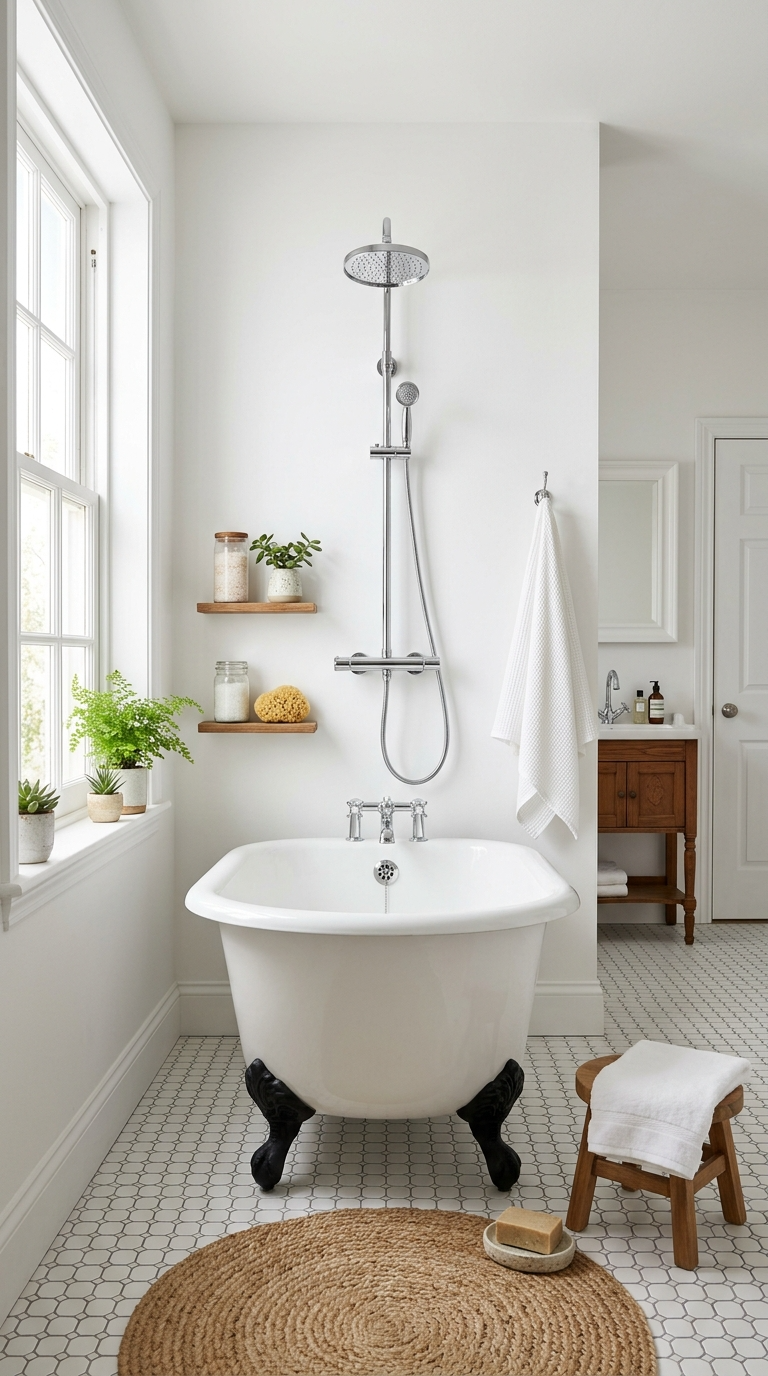
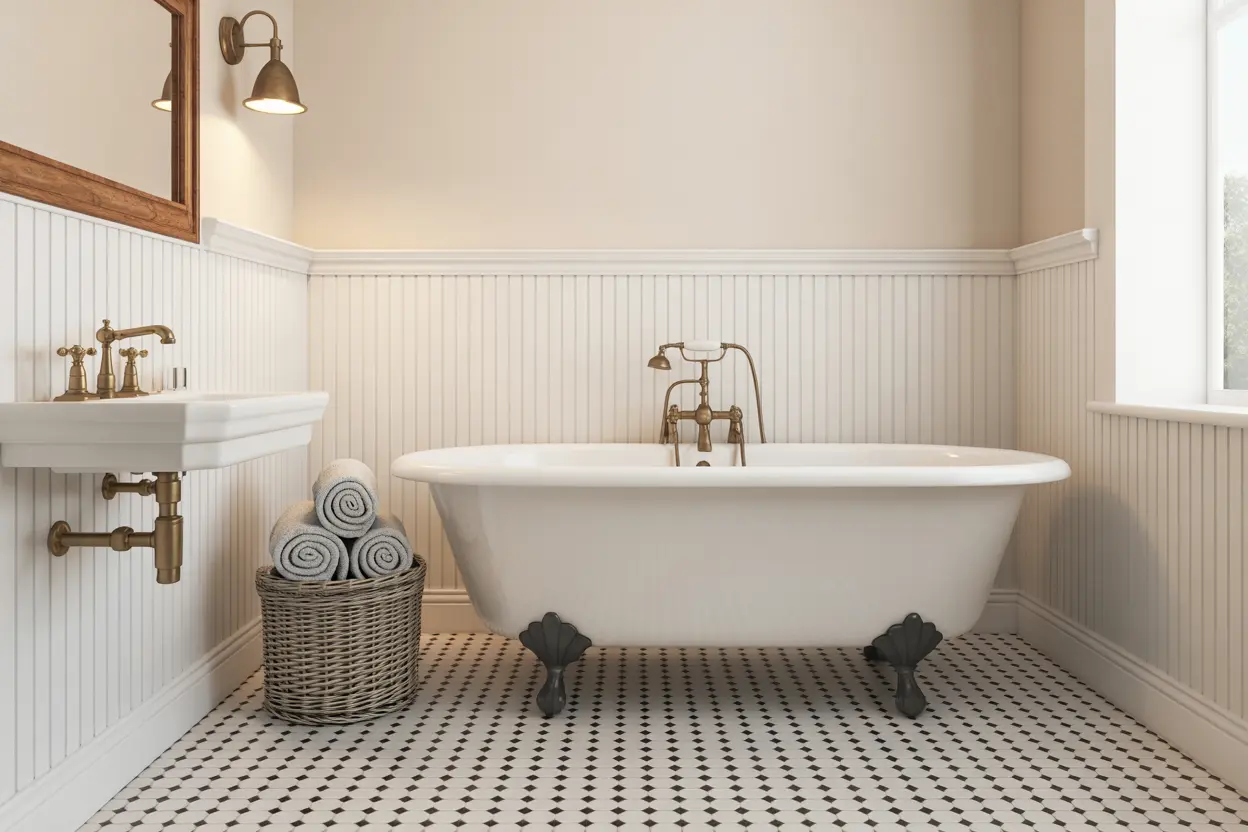
A clawfoot tub is the most dramatically vintage bathroom fixture available and remains one of the most beautiful. A freestanding white tub with cast iron feet in either traditional brass or modern matte black creates the focal point of the bathroom by itself. Pair the tub with simple modern fixtures, an exposed thermostatic shower fixture in chrome or matte black, rather than reproductive Victorian hardware that can push the bathroom toward costume territory. The clawfoot tub against simple white walls and a current floor reads as a confident vintage statement rather than a complete period restoration.
5. Patterned Cement Tiles
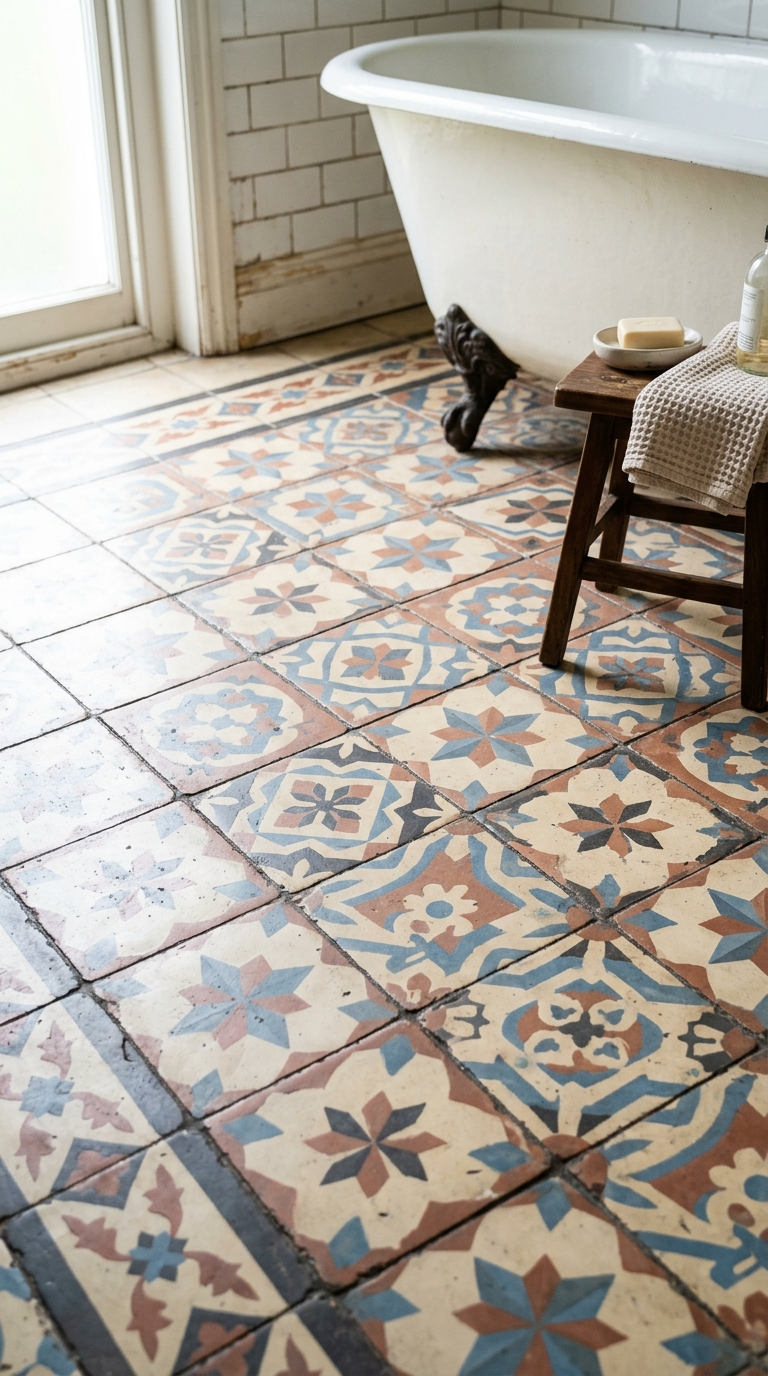
Encaustic cement tiles in geometric or floral patterns, particularly in palettes of warm cream, soft blue, deep navy, and faded terracotta, bring the visual richness of early twentieth century European bathrooms into a current room. The patterns are bold but in muted aged colors that read as historic rather than loud. Use cement tiles on the bathroom floor, in a shower niche, or as an accent strip behind the vanity rather than across every surface. The contained application is what keeps the strong pattern from overwhelming the room while still delivering the visual impact of the historic tile work.
6. Brass Hardware Mix
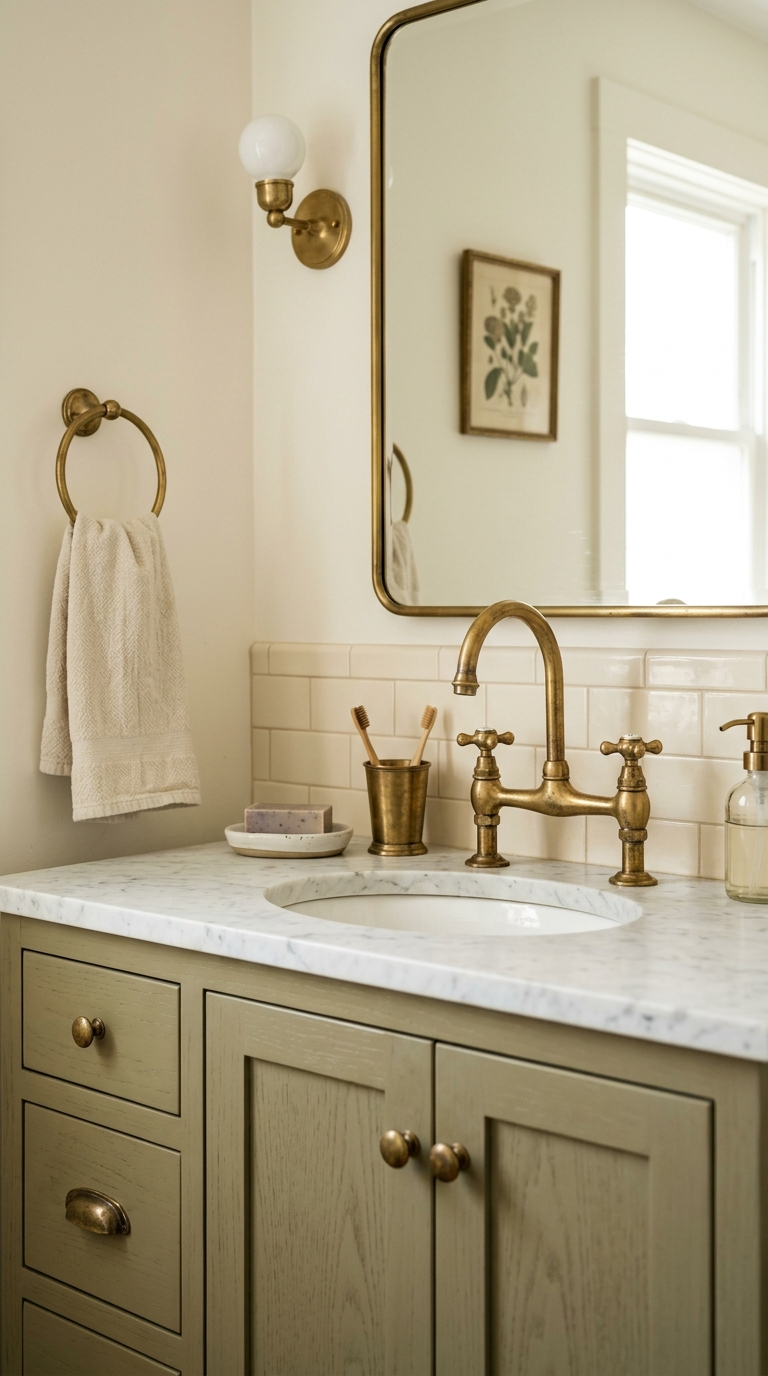
Unlacquered brass hardware develops a natural patina over time and is the most authentically vintage metal finish available for a bathroom. New brass hardware looks bright and slightly garish. Brass hardware that has been used for ten years has the warm aged glow that distinguishes a real vintage bathroom from a recently styled one. If you cannot wait for the natural patina, distressed brass and antique brass finishes from current manufacturers approximate the aged look immediately. Use brass for the faucet, the towel bars, the cabinet pulls, and the small fittings, all in matching finish for the most cohesive result. The same brass-with-warm-materials approach also works in sage green bathroom designs where the brass adds warmth to the cool natural color of the green.
7. Vintage Style Light Fixture
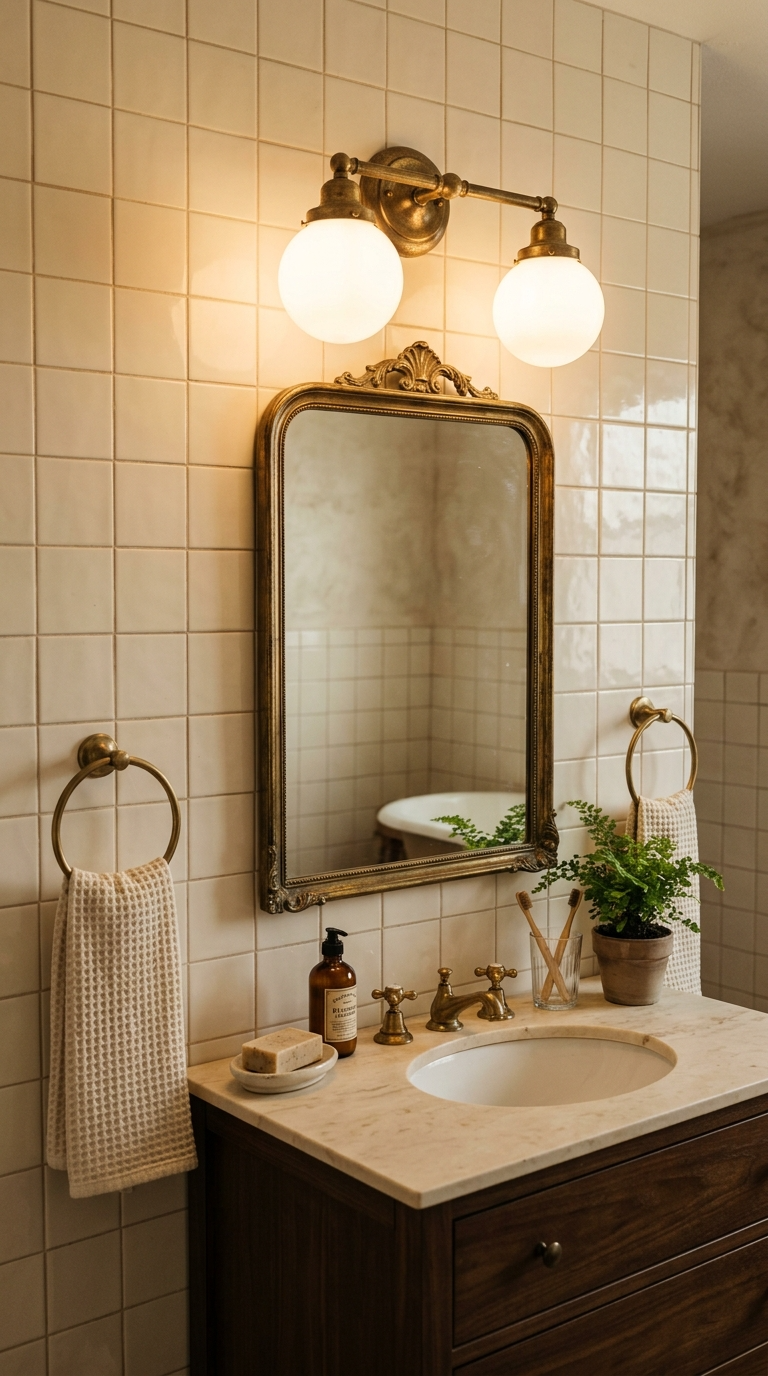
A vintage-style lighting fixture above the vanity, an exposed bulb sconce, a small milk glass shade, an aged brass two-light bar, signals period style without committing the whole room to a vintage restoration. Look for fixtures with simple shapes and warm finishes rather than highly ornate Victorian or art deco designs, which tend to date the bathroom to a specific narrow period. The simpler vintage shapes read as classic across multiple decades, which is what gives them the timeless quality that makes them work in current bathrooms. Use warm bulbs in the 2700K range for the most flattering light quality.
8. Curtained Sink Skirt
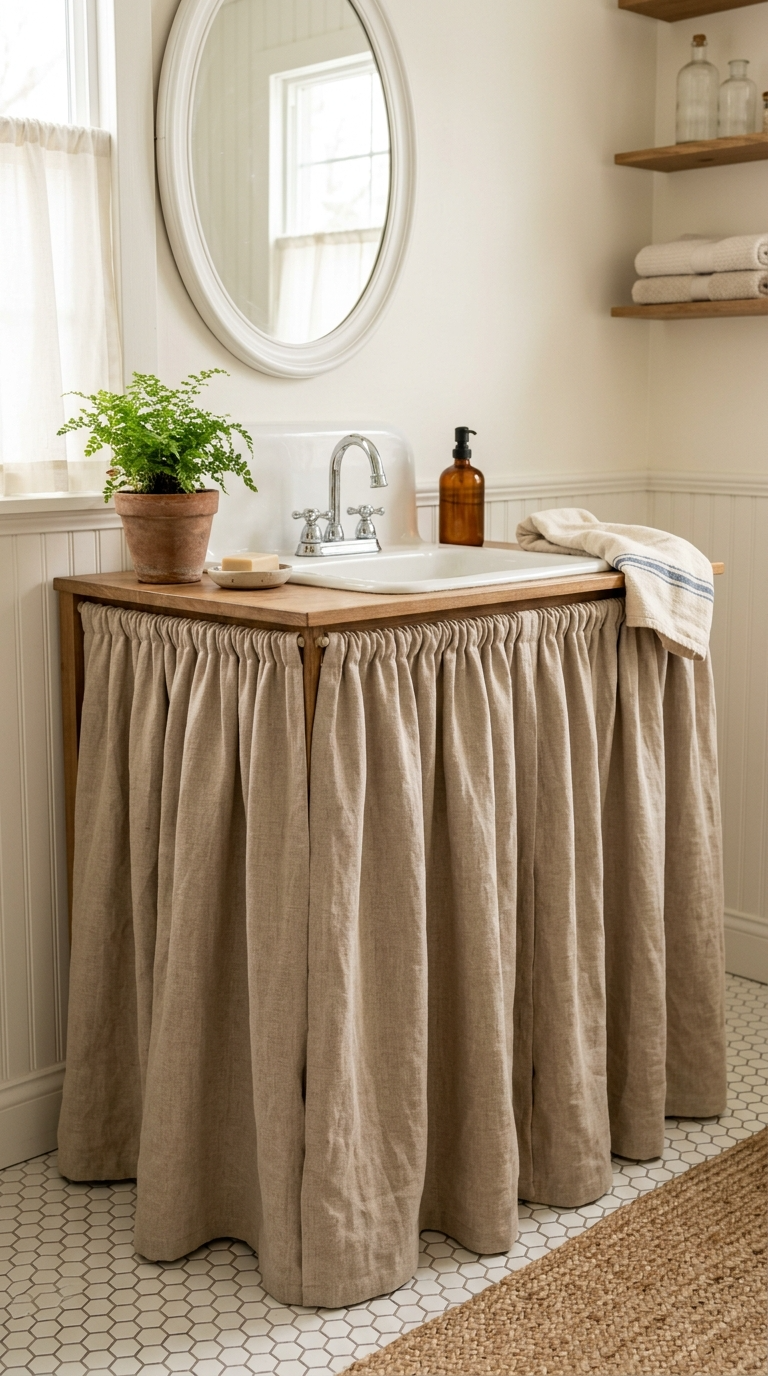
A fabric skirt around the base of an old-style sink or a vintage-style vanity hides plumbing and adds a soft textile element that hard modern vanities lack. The skirt can be made from a warm linen, a vintage floral fabric, or a simple striped cotton in colors that suit the bathroom palette. The fabric softens the vertical hard lines of the sink area and creates a slightly old-fashioned charm that suits cottage, traditional, and confident retro bathroom styles. Avoid overly fussy or frilly fabric treatments which can push the bathroom into costume territory; a simple gathered linen skirt in a neutral color reads as charming.
9. Small Print Wallpaper
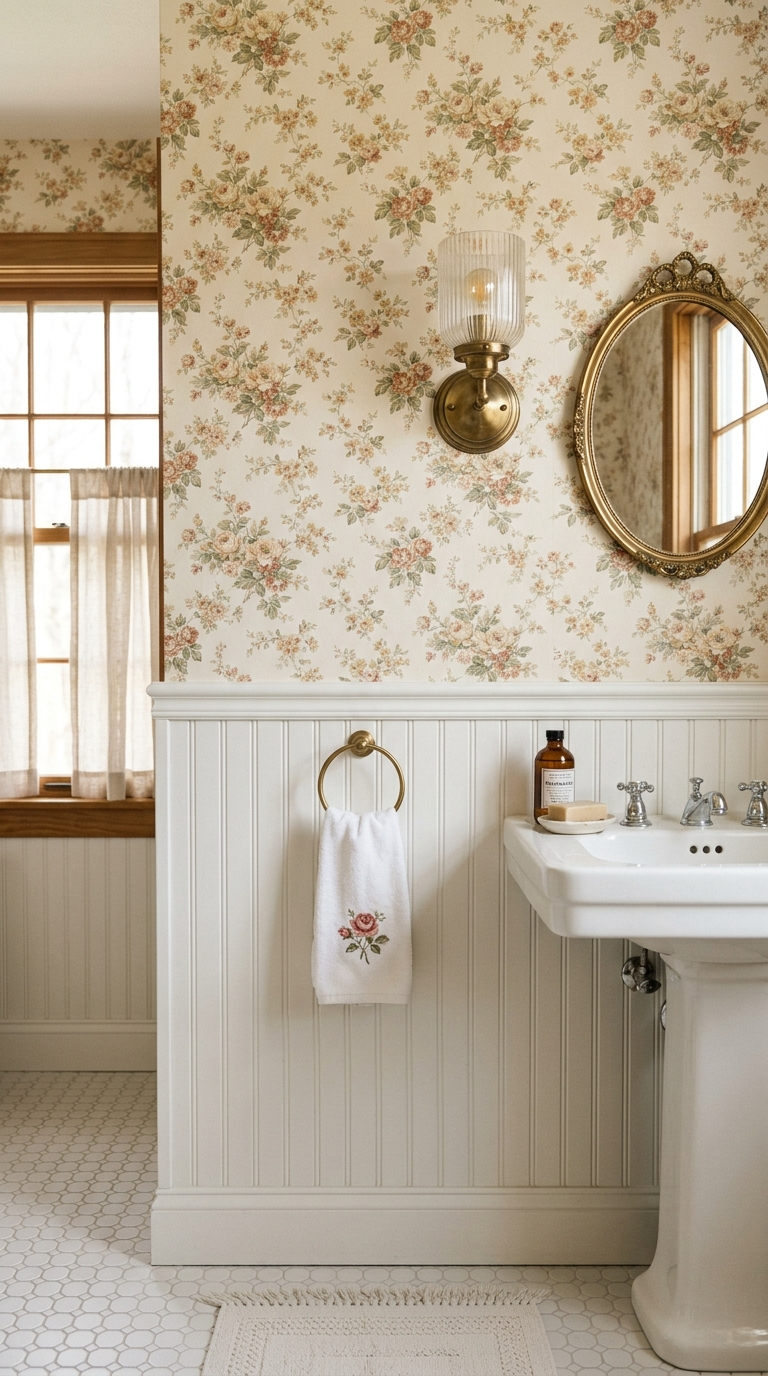
A small repeating print wallpaper in a vintage-influenced design, a small floral, a tiny geometric, a delicate stripe, applied to the upper half of the bathroom walls above wainscoting, brings authentic period character to the room. Choose a print in muted historic colors rather than bright contemporary versions of vintage patterns, which often miss the mark on the actual period feeling. Modern peel-and-stick wallpapers in vintage prints make this approach accessible without permanent installation. Pair the patterned upper wall with painted or beadboard wainscoting below for a complete two-part wall treatment that reads as authentically period.
10. White Wainscoting
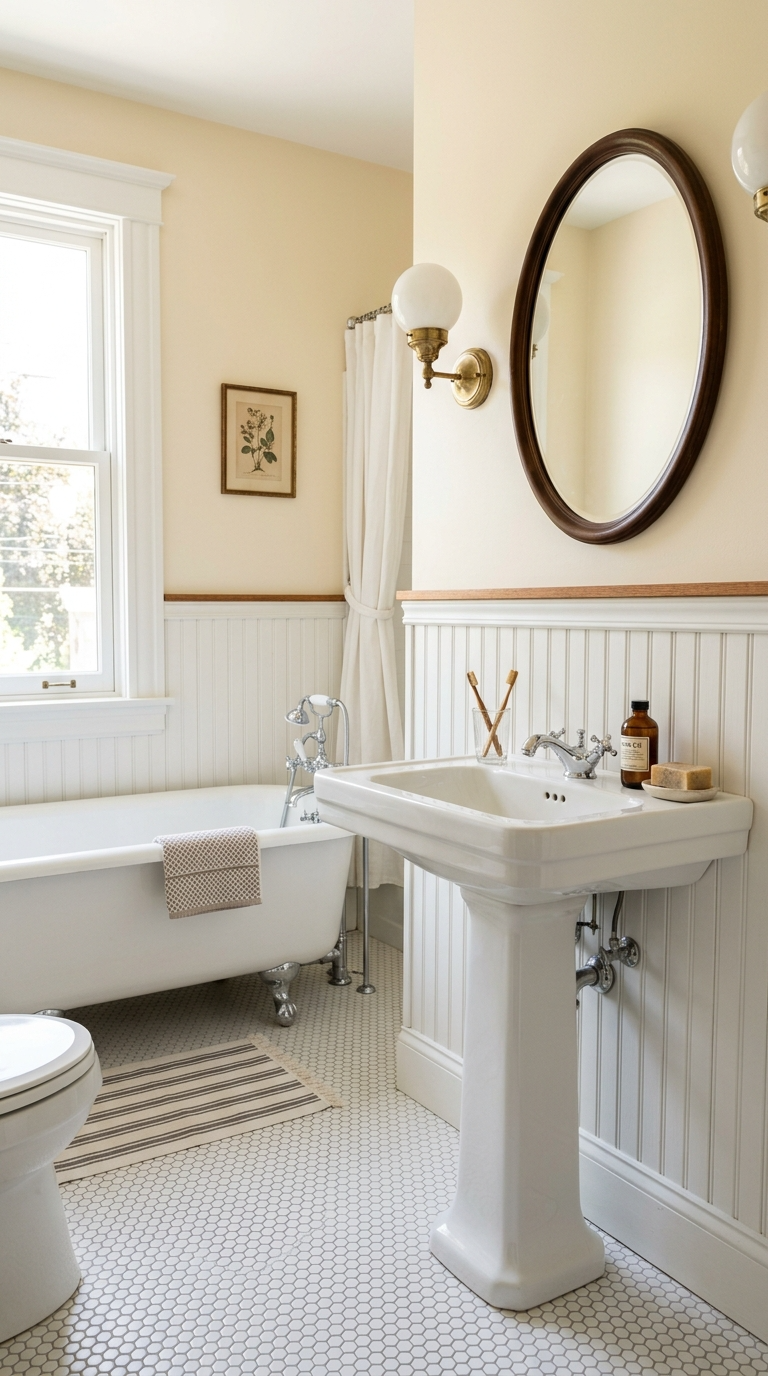
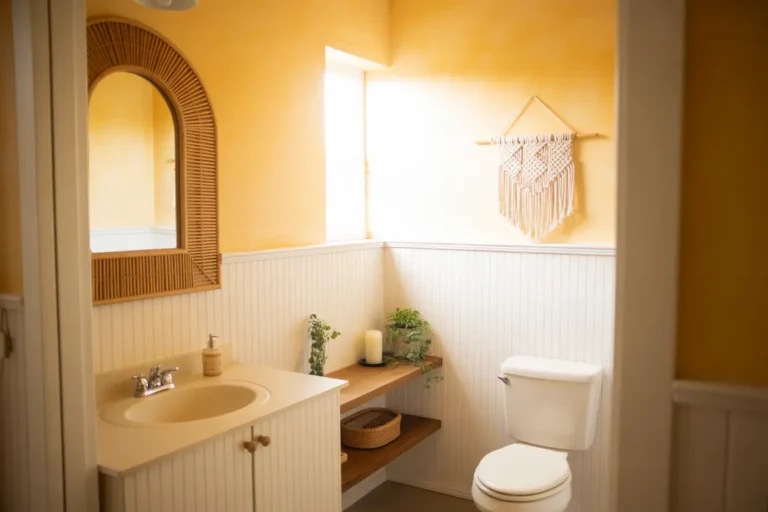
White painted beadboard wainscoting installed to chair-rail height on the bathroom walls is one of the most reliably vintage architectural details and one that suits bathrooms across multiple period styles. The wainscoting adds dimensional texture and a fresh white element that prevents darker wall colors above from feeling heavy. Pair white wainscoting with a wallpapered or painted upper wall, a chair rail trim cap, and warm flooring below. The combination of wainscoting plus a different upper wall treatment is what creates the layered period quality that distinguishes a real vintage bathroom from a modern one with simply applied paint.
11. Vintage Mirror Choice
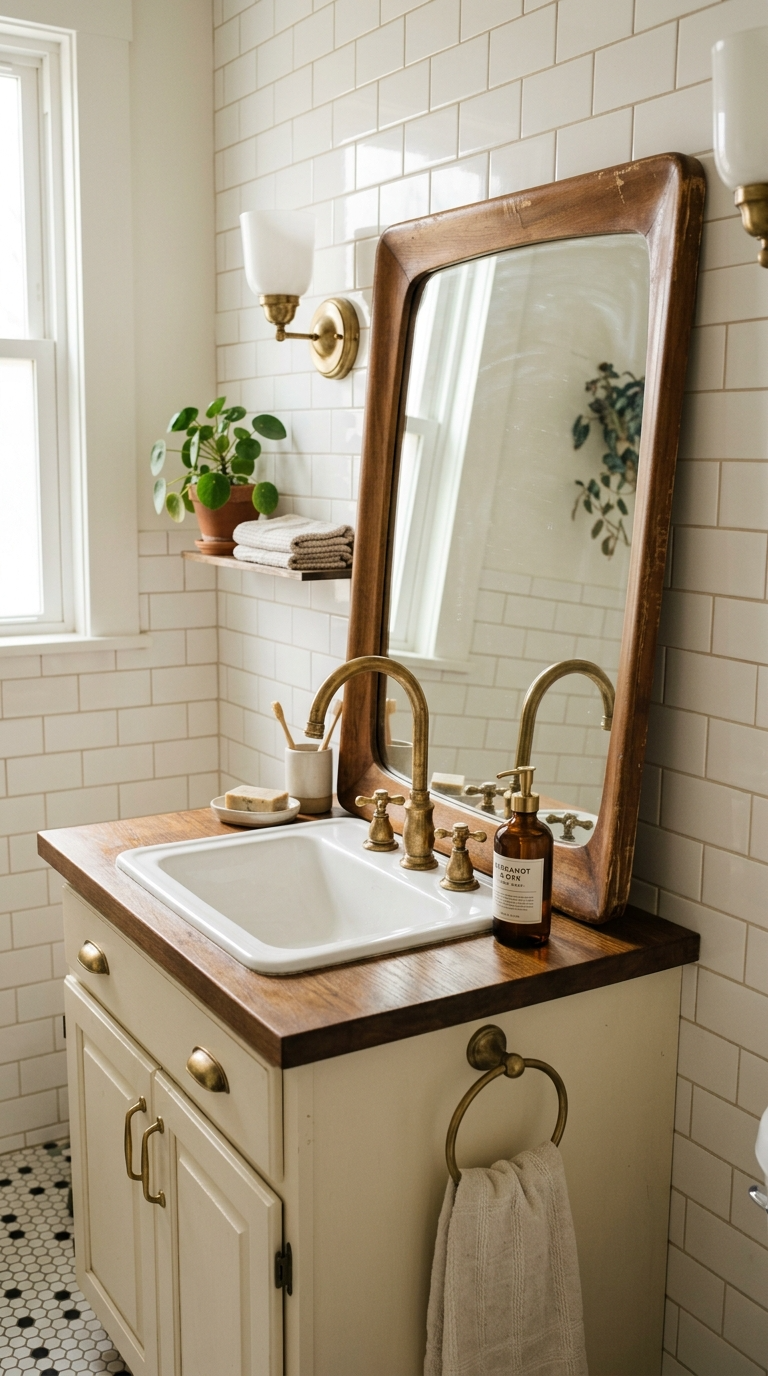
A vintage or vintage-style mirror above the vanity, a wood-framed mirror with curved corners, an aged gilt frame, a milk glass framed mirror, immediately gives the vanity wall period character. Even a single vintage mirror in an otherwise modern bathroom shifts the room toward retro confidently. Look for mirrors with frame proportions that feel substantial rather than thin and cheap. The frame finish should coordinate with the bathroom hardware: warm brass mirror frame with brass fixtures, dark wood frame with darker hardware, gilt frame with brass or gold. A leaning vintage mirror on a vanity counter is even more relaxed and reads as collected rather than installed.
12. Apothecary Storage Jars
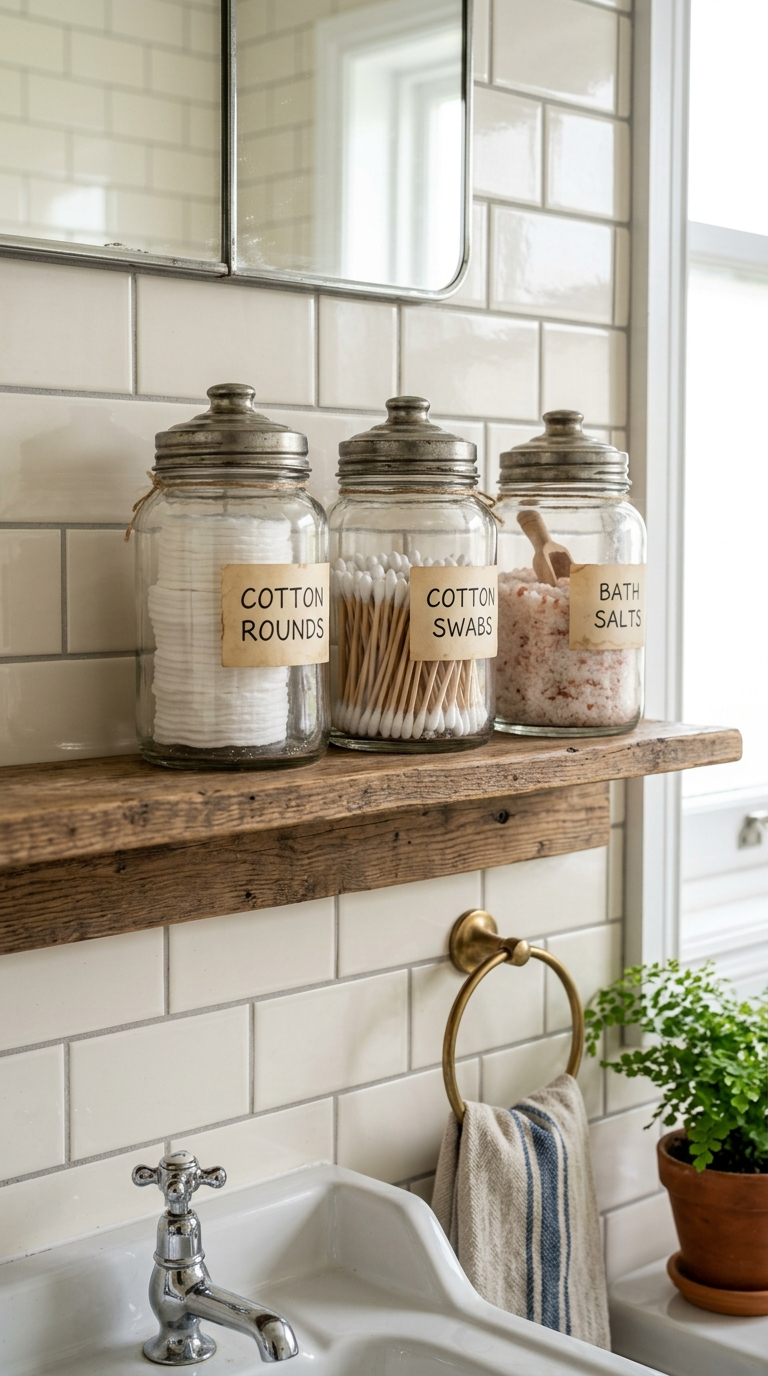
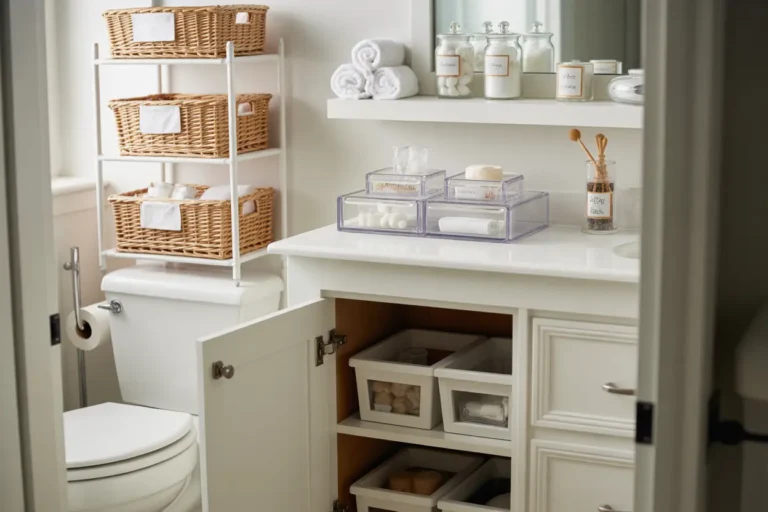
Old apothecary jars, glass storage canisters with metal lids, or vintage medicine bottles displayed on the bathroom shelf or vanity counter add authentic period detail at a very low cost. Source actual vintage versions from antique shops, estate sales, and online vintage sellers, or use simple new clear glass apothecary-style jars from current home stores. Fill them with cotton rounds, cotton swabs, bath salts, or sea sponges for both display and practical function. A row of three or four matching apothecary jars on a shelf reads as historically accurate and adds the slight seriousness that distinguishes a vintage bathroom from a casual cottage one.
13. Marble Counter Surface
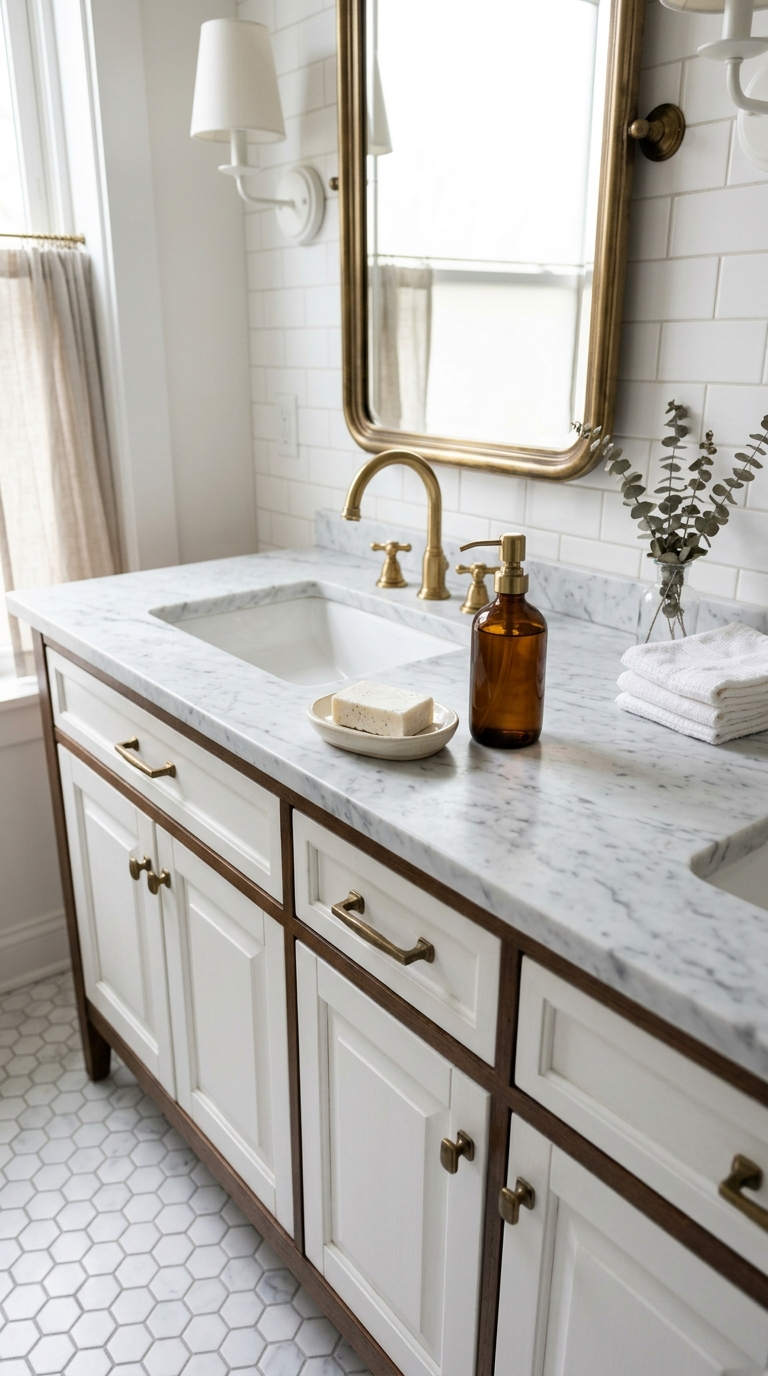
Marble has been used in bathroom counters for over a century and remains one of the most authentically vintage and most beautiful options available. A real marble counter, particularly in honed rather than polished finish, develops natural patina with use that gives the bathroom genuine character over time. Carrara marble in soft gray and white, statuario marble with bolder veining, and warm cream marbles all suit retro bathroom designs. The character of natural stone is part of what gives a vintage bathroom its weight and substance, qualities that engineered surfaces cannot quite replicate.
14. Mid-Century Color Tile
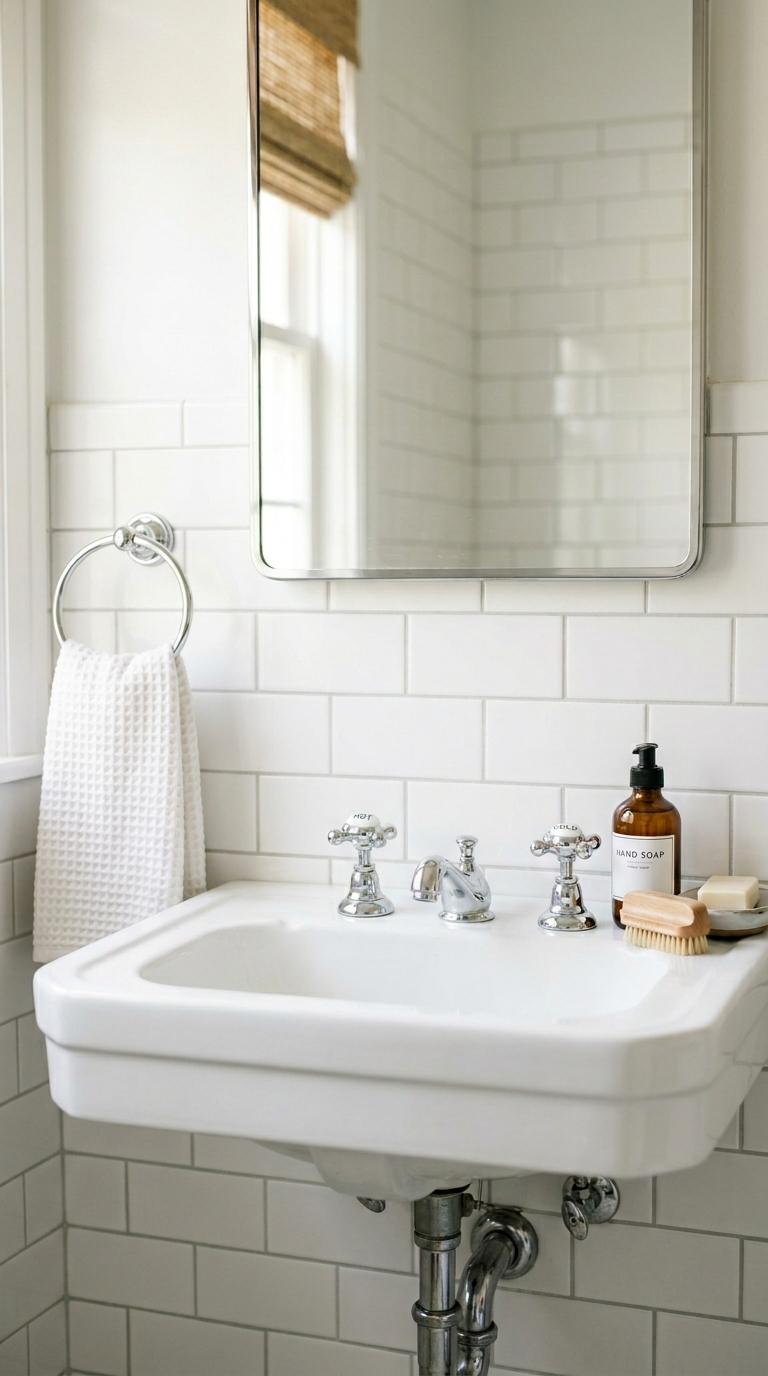
For bathrooms aiming at mid-century rather than earlier vintage, soft pastel tiles in pink, mint, sage, or pale yellow read as authentically retro to the 1950s and 1960s. The trick is keeping the saturation soft and the application restrained: a pale pink tile on the walls of a small bathroom paired with white fixtures and brass hardware reads as confident vintage. The same pink tile saturated to a brighter shade or applied across every surface tips the bathroom into accidental costume. Use the period color on one defined area, the wall behind the tub, the lower wall wainscoting, the shower interior, rather than across the whole room.
15. Vintage Style Hardware
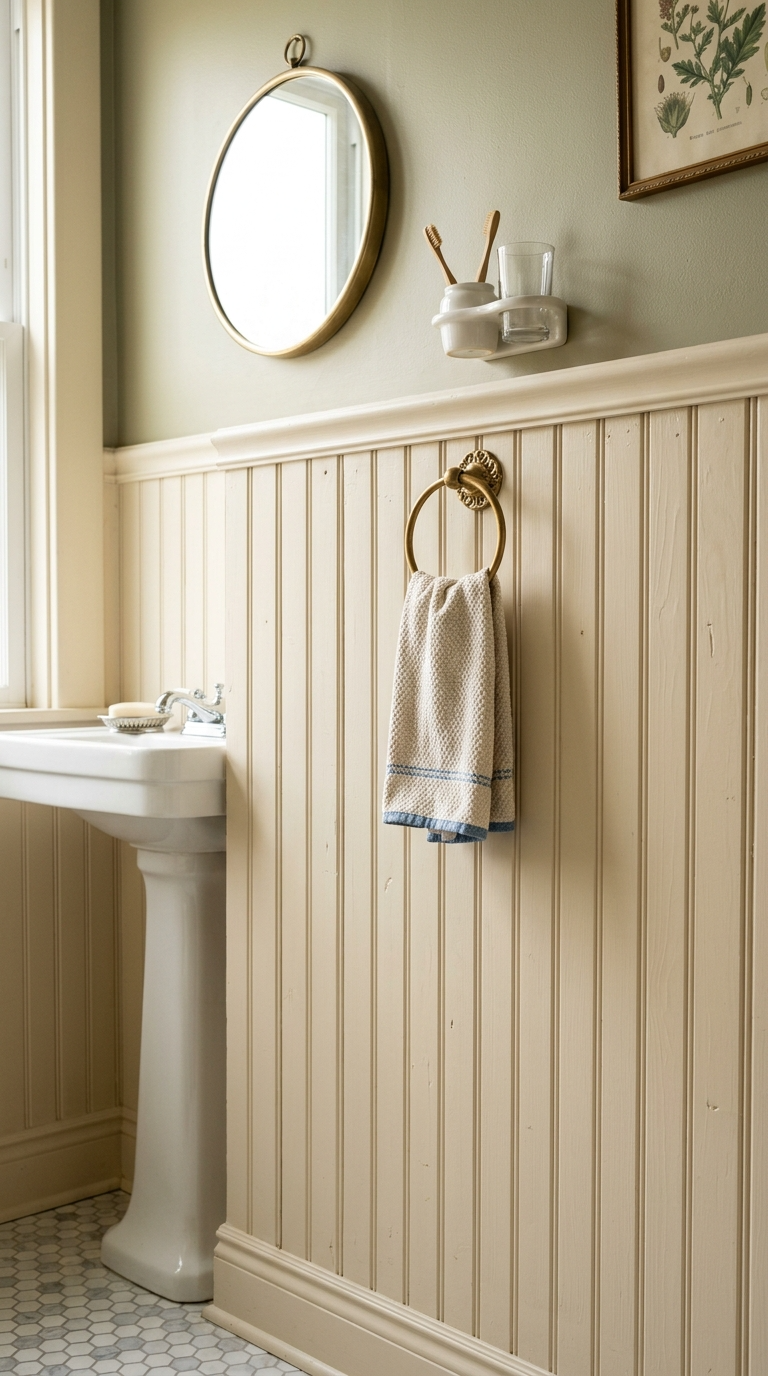
Cross-handle faucets, porcelain lever handles with cold and hot labels, exposed-thermostatic shower fixtures with traditional shapes, all signal period bathroom hardware while still functioning with modern plumbing. Choose hardware in classic shapes rather than overly ornate Victorian reproductions. The simplest cross-handle white porcelain faucets in chrome or brass read as authentically classic across multiple decades. Pair vintage-style hardware with current fixtures, a clean modern toilet, a properly functioning modern shower system, so the bathroom looks period without sacrificing daily reliability.
16. Tongue and Groove Walls
Vertical tongue-and-groove paneling on the bathroom walls, painted in a soft white, warm cream, or muted period color, adds authentic architectural character that flat painted drywall lacks. The vertical lines of the paneling create dimensional texture and reference the actual construction methods of older bathrooms. Apply tongue-and-groove paneling from floor to ceiling in a powder room, or to chair-rail height in a larger bathroom with a different treatment above. Seal the paneling with a moisture-resistant paint suitable for bathroom humidity. The result reads as a real period bathroom rather than a recently styled approximation.
17. Rolled Vintage Towels
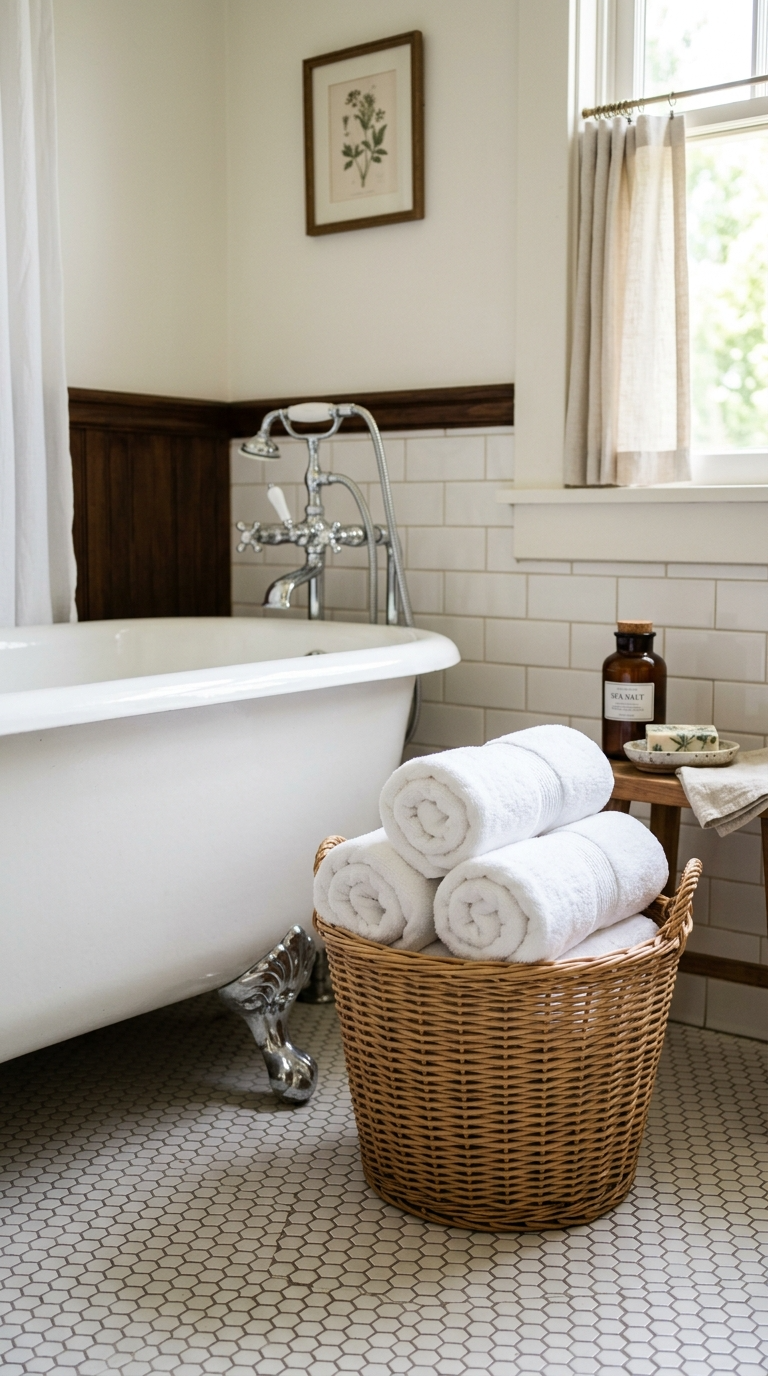
A neat stack of rolled white towels in a vintage-style basket, a wooden tray, or on an open shelf gives the bathroom the spa-meets-period quality that the best retro bathrooms have. Use white towels for the cleanest authentically classic look. Roll them tightly and consistently for a presentation that signals attention to detail. The towels become part of the room’s visual content rather than just functional supplies. A simple vintage wicker basket holding rolled towels beside the tub adds both styled storage and authentic period reference at the same time.
18. Period Floor Vent
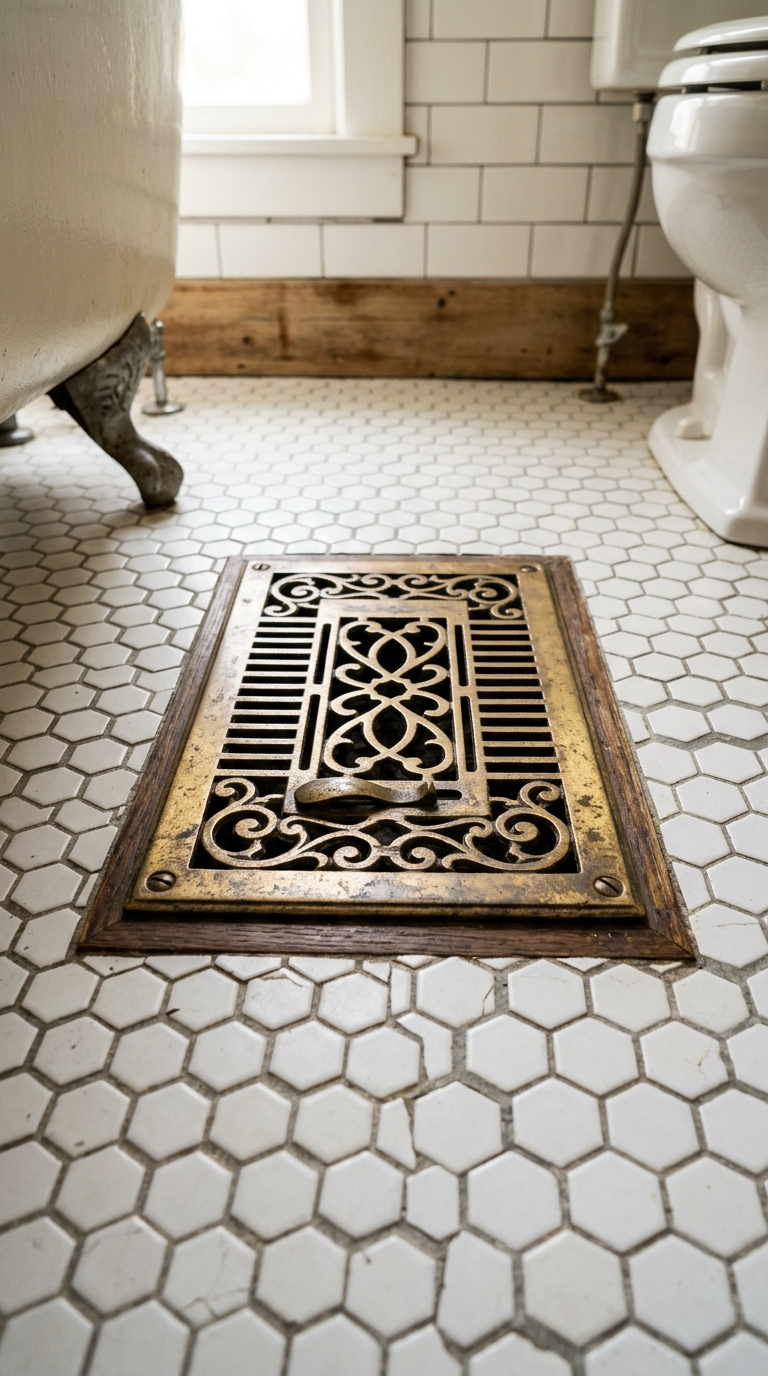
The small detail of a vintage-style cast iron or brass floor vent register in place of the standard modern white plastic vent grille is one of those changes that nobody notices consciously but that reads as authentic to the period quality of the bathroom. Cast iron and brass registers in vintage patterns are widely available from period restoration suppliers and standard plumbing supply houses. The replacement takes minutes and costs very little, but the small detail signals throughout the room that period authenticity has been considered down to the smallest hardware. The same attention to small period details also applies to warm cozy bathroom designs where small thoughtful additions distinguish a designed bathroom from a generic one.
19. Vintage Towel Bar Style
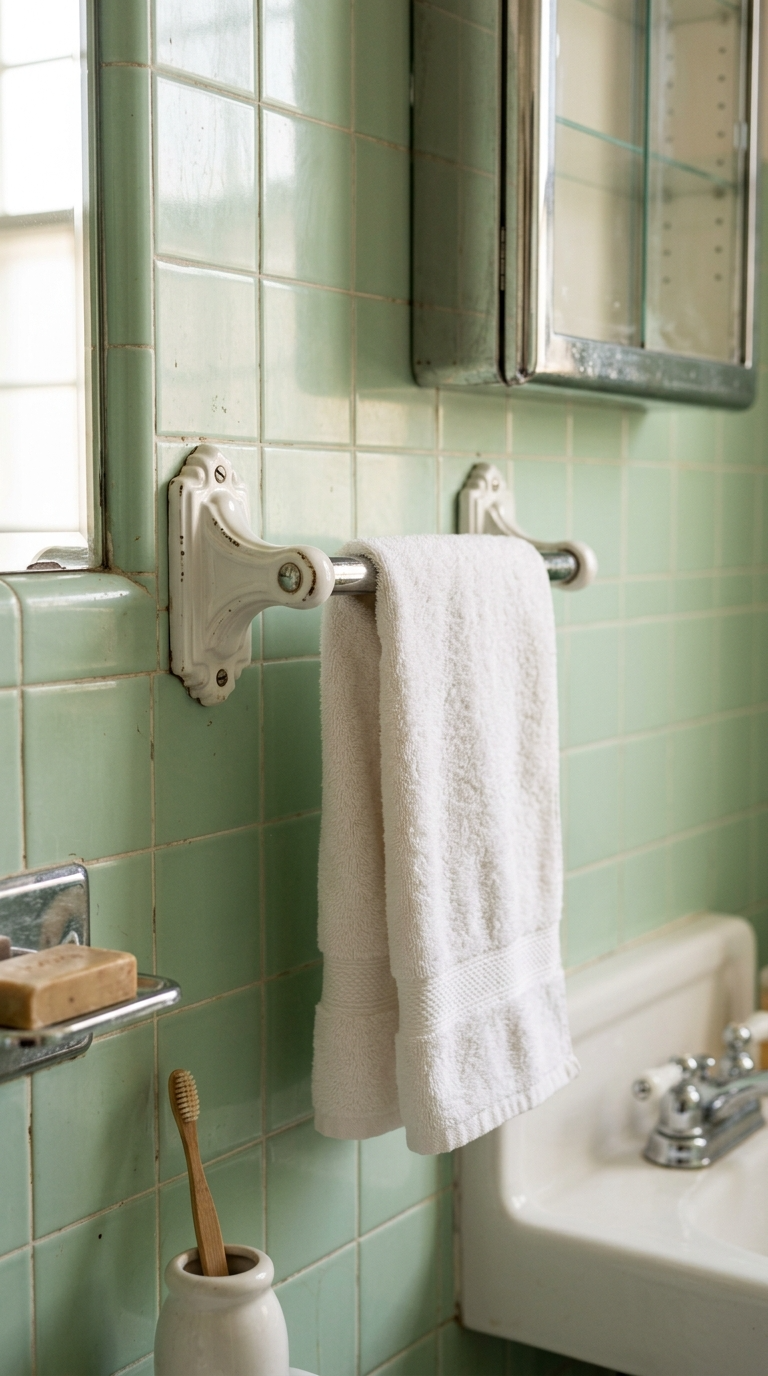
A simple chrome or brass towel bar in a classic shape, with porcelain or glass mounting brackets, references vintage bathroom hardware without committing to a full period restoration. The combination of metal bar and decorative ceramic brackets is a hardware detail that has appeared in bathrooms for over a century and reads as both authentic and timeless. Coordinate the towel bar with the rest of the bathroom hardware in matching finish and bracket style. A row of three matching towel bars in this style on the wall provides genuinely useful towel storage while contributing a small but reliable period detail.
20. Restraint With Period Pieces
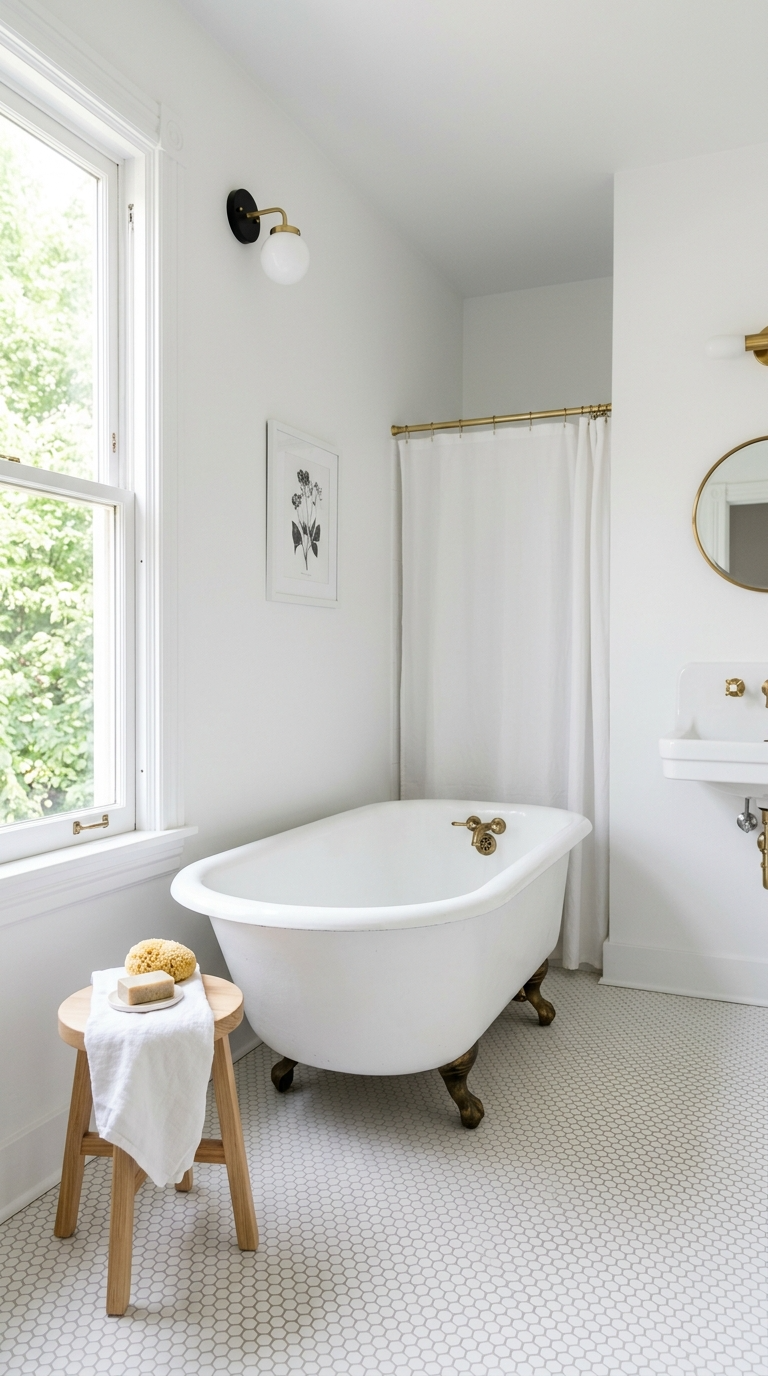
The single most important rule of confident retro bathroom design is restraint with the period elements themselves. A bathroom with one or two strong vintage features, the patterned floor, the clawfoot tub, the marble vanity, surrounded by clean simple modern surfaces reads as designed and intentional. The same bathroom with vintage everything, vintage tile, vintage fixtures, vintage hardware, vintage wallpaper, vintage accessories, all together, reads as a museum exhibit or a movie set. Choose the period elements that matter most to you and let them be the stars while the rest of the bathroom stays quiet.
21. Modern Function Always
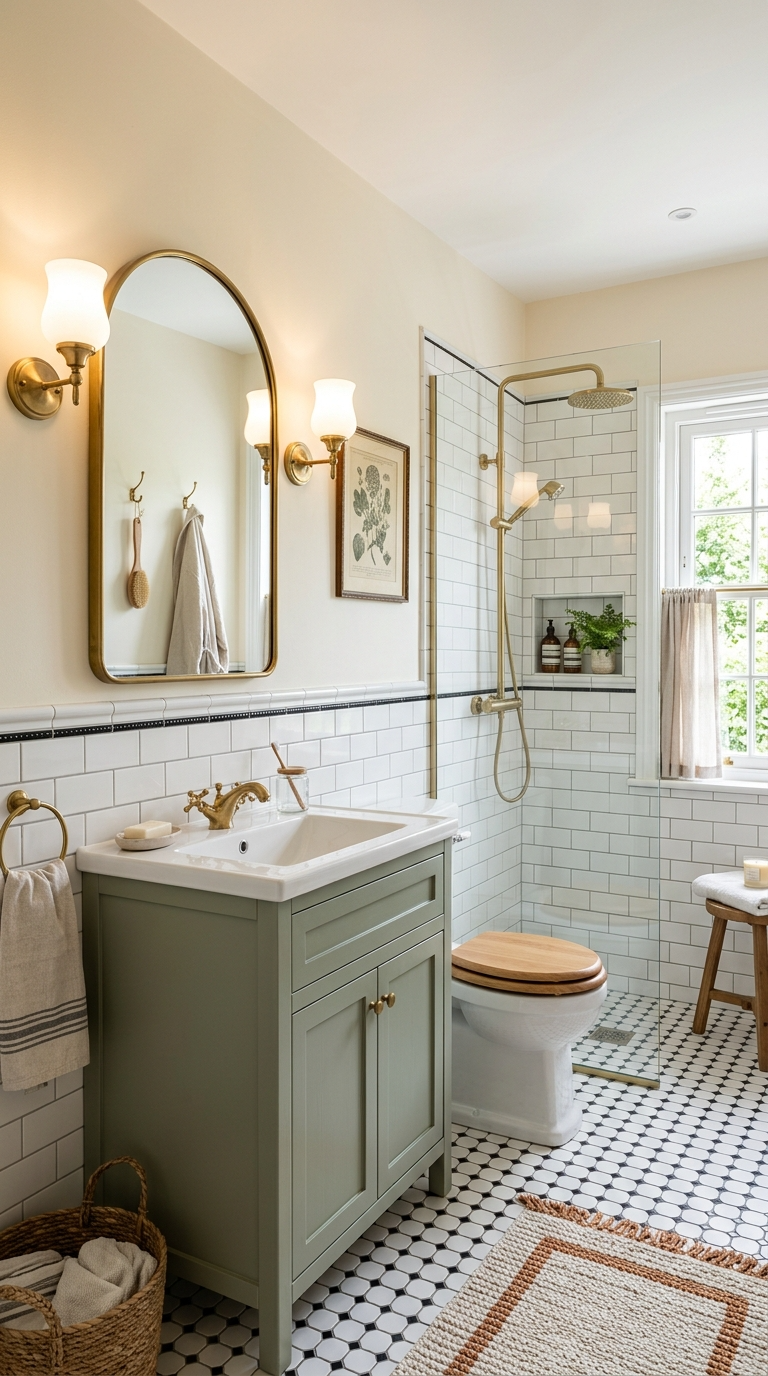
Real retro charm only works when the bathroom genuinely functions for current daily use. A vintage-style bathroom with poor lighting, weak water pressure, an old toilet that runs constantly, and a shower that does not drain properly reads as neglected rather than charming. Combine the period style with modern plumbing, modern lighting capacity, modern ventilation, and modern fixtures that perform reliably. The bathroom should look vintage but work like new. This balance is what distinguishes a confidently retro bathroom from one that simply has not been updated in decades, and it is the difference that matters most for actually living with the room every day.
A retro bathroom that pulls off vintage charm without looking dated is built on selected period elements paired with current fixtures, modern function, and restraint in the period references themselves. Choose the vintage features that genuinely speak to you, mix them with simple current surfaces and reliable modern systems, and the result is a bathroom that feels both timeless and confidently of the present rather than stuck in the past.