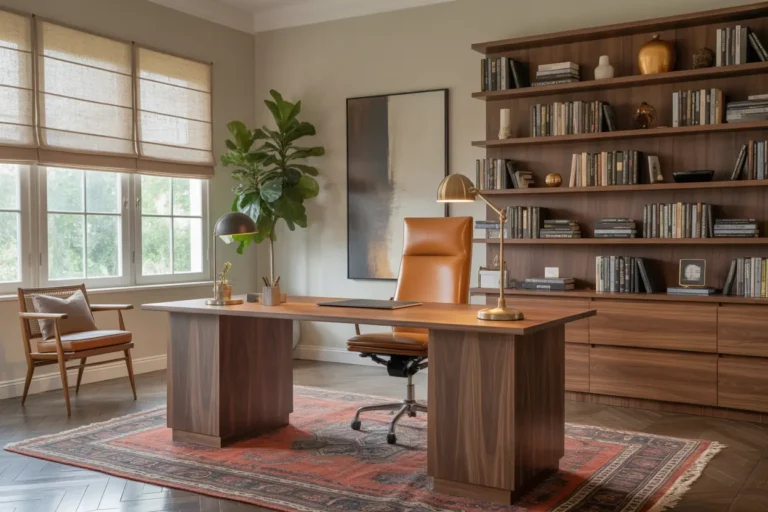
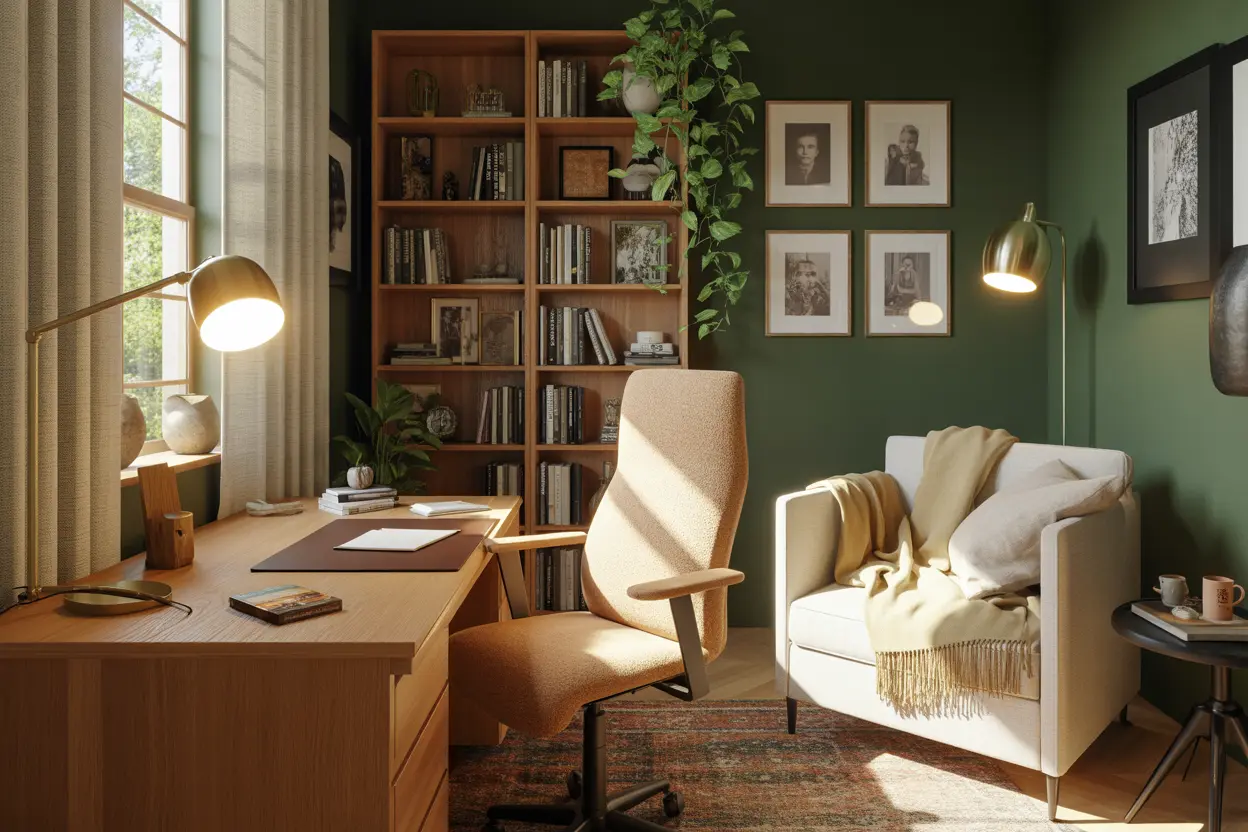
20 Cozy Home Office Ideas That Make Work Feel Less Like Work
A home office that feels cozy is not the same as one that feels sloppy or distracting. Cozy in a workspace means warm lighting rather than harsh overhead fluorescent. It means materials that feel good to be around for hours, rather than surfaces that look clean but feel cold. It means the small details, a blanket on the reading chair, a candle on the shelf, a mug that you actually enjoy drinking from, that make the room feel like a place you chose to be rather than a place you have to be. These 20 ideas cover the practical decisions and the small styling touches that transform a functional workspace into one that genuinely makes work feel less like a chore.
1. Warm Desk Material
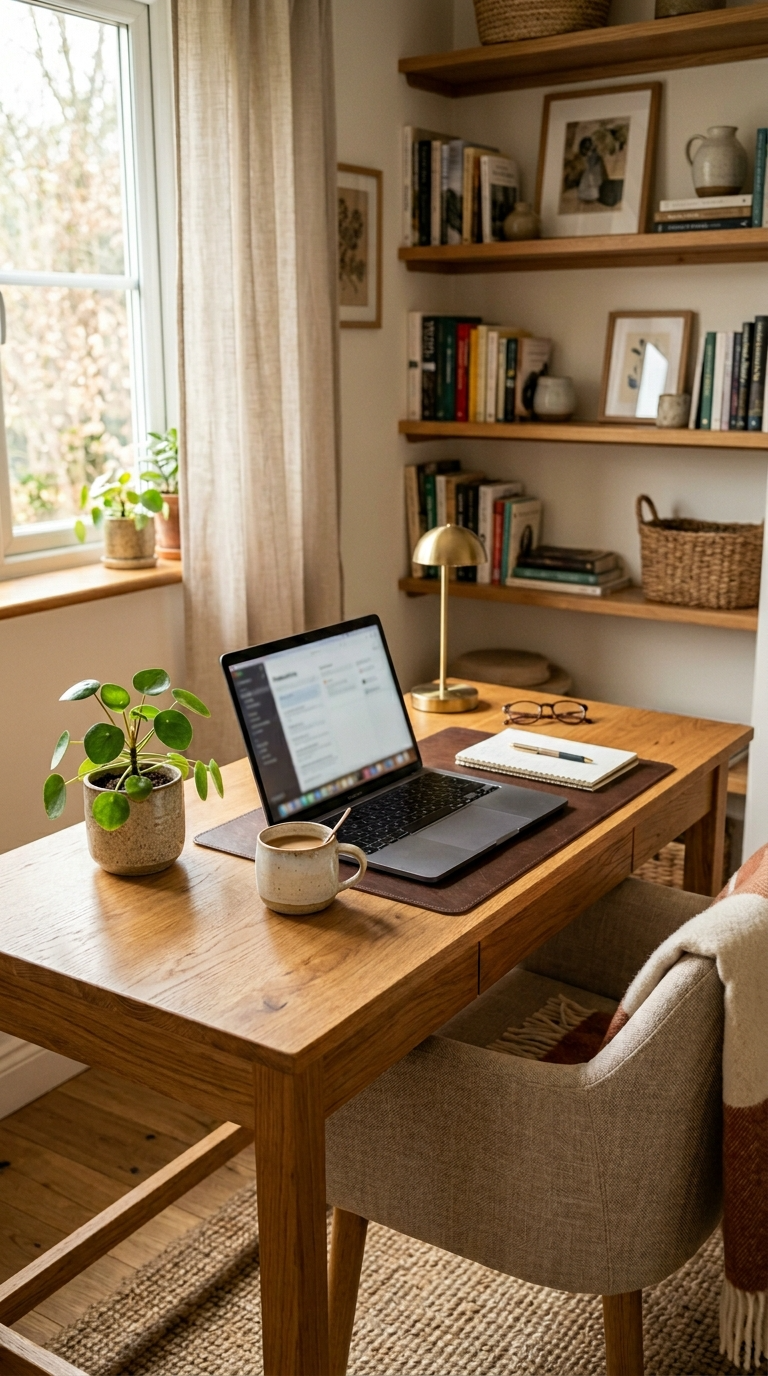
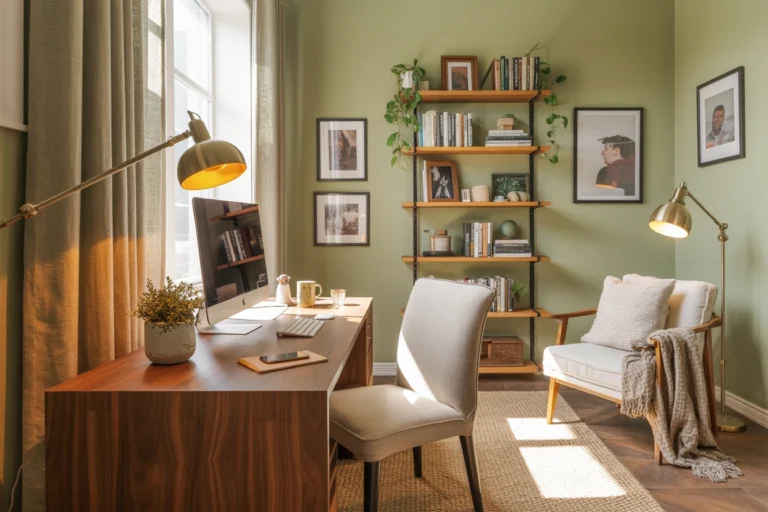
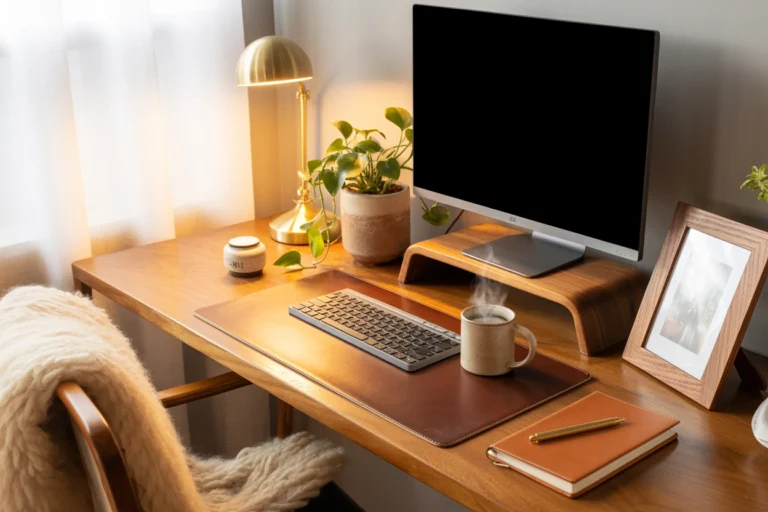
The desk is the surface you spend more time looking at and touching than any other in the office. A warm natural wood desk in walnut, oak, or a warm-stained pine feels fundamentally different under the hands than a cold glass, metal, or white laminate surface. The visible grain, the warmth of the wood to the touch, and the way natural wood holds warm light all contribute to the cozy quality of the room from its most central piece. If replacing the desk is not practical, a warm leather desk mat or a large wooden tray covering most of the surface achieves a meaningful portion of the same tactile effect.
2. Genuinely Comfortable Chair
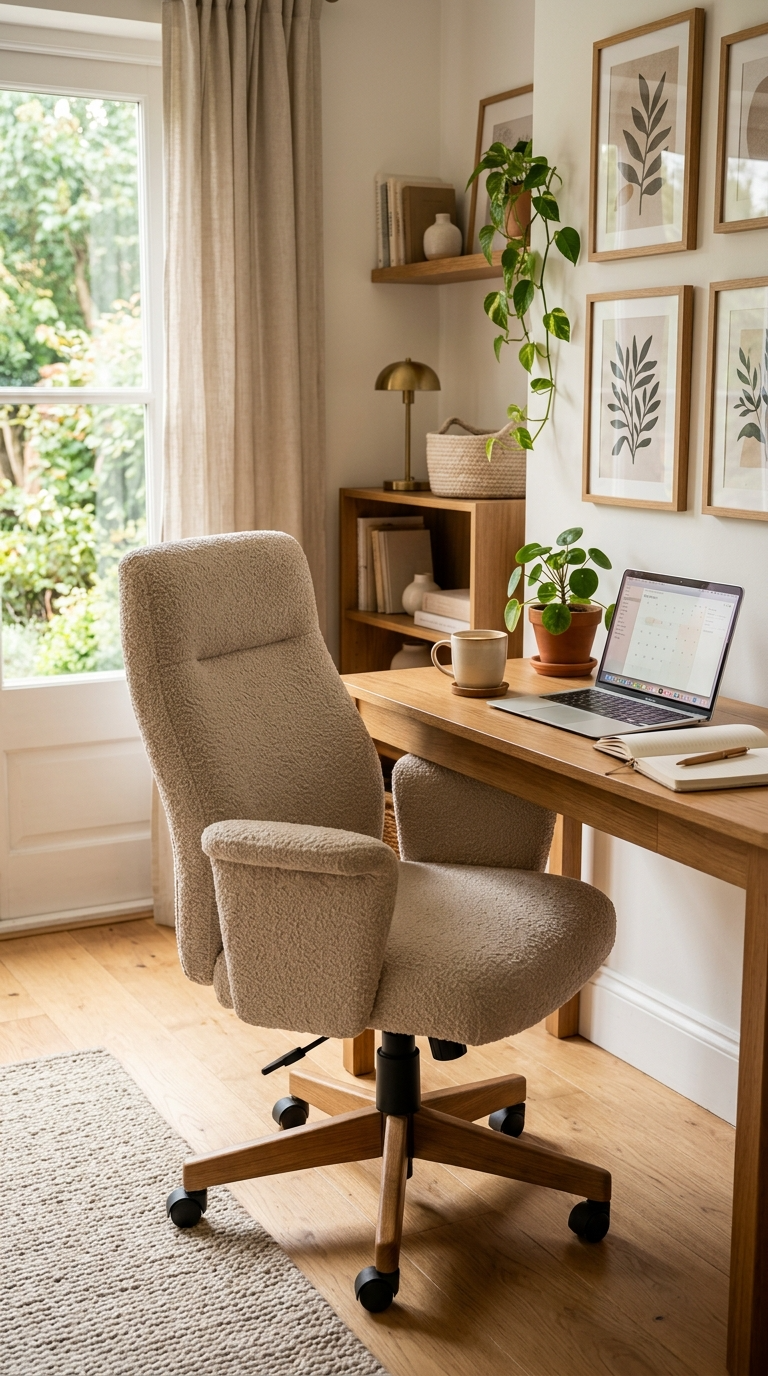
Cozy starts with a chair that genuinely supports the body over a full day of sitting. A chair that looks soft but has no lumbar support will leave you sore and distracted by midafternoon. Look for an ergonomic chair with proper back support and adjustable features, then choose one with residential-feeling upholstery: warm cognac leather, oatmeal linen, boucle, or a soft wool blend rather than the standard mesh or corporate fabric. The upholstery is what makes the chair read as part of a cozy room rather than as borrowed from a corporate office. The comfort underneath is what makes it work for eight hours.
3. Warm-Toned Lighting
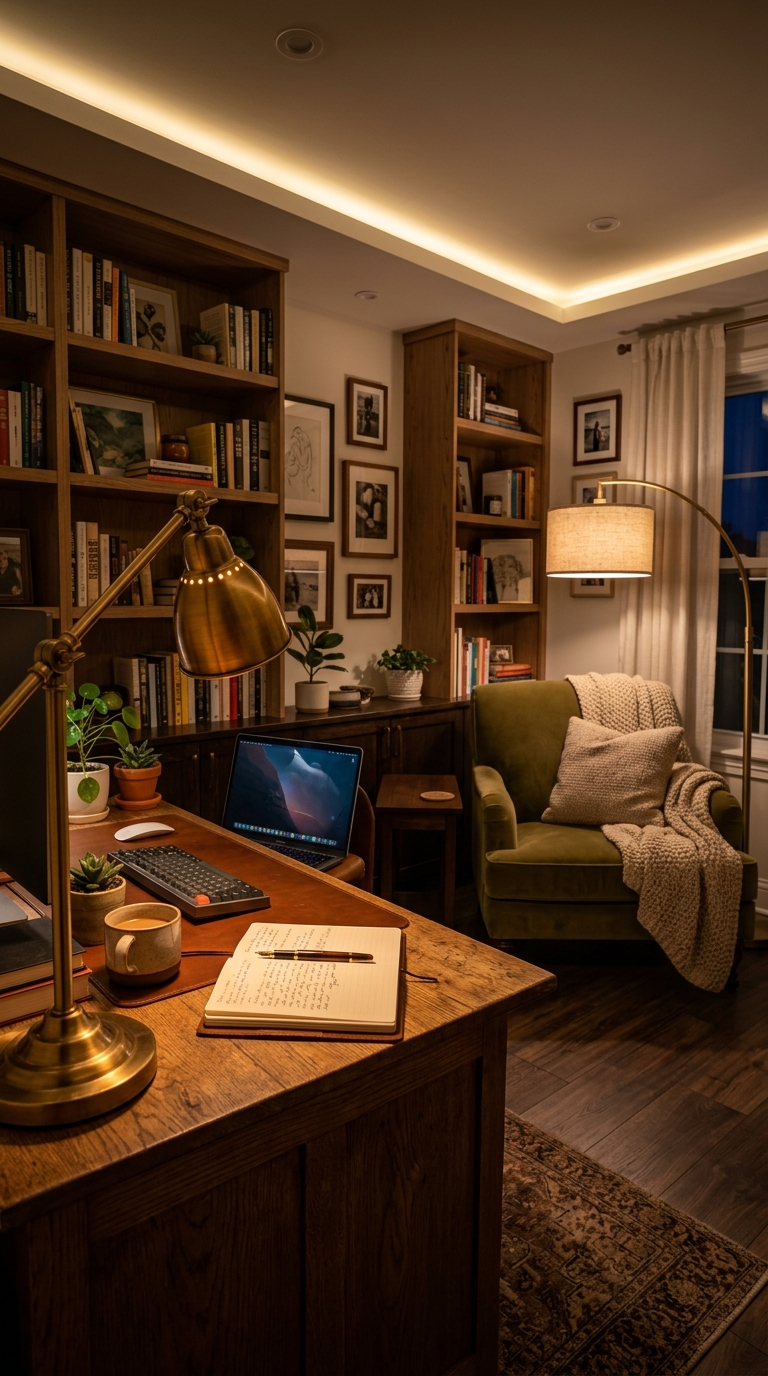
The biggest single contributor to office coziness is the light quality. Cool-toned overhead lights, even bright ones, create a flat clinical atmosphere that is the opposite of cozy. Switch every bulb in the office to warm LEDs in the 2700K to 3000K range for a golden quality that makes the room feel welcoming throughout the day. Add a second layer of light: a brass or warm-toned desk lamp for focused work, and a floor lamp beside a reading chair for ambient warmth. The combination of warm ambient overhead light with warm focused task light creates the layered lighting that feels genuinely cozy rather than flat.
4. Soft Textile Layer
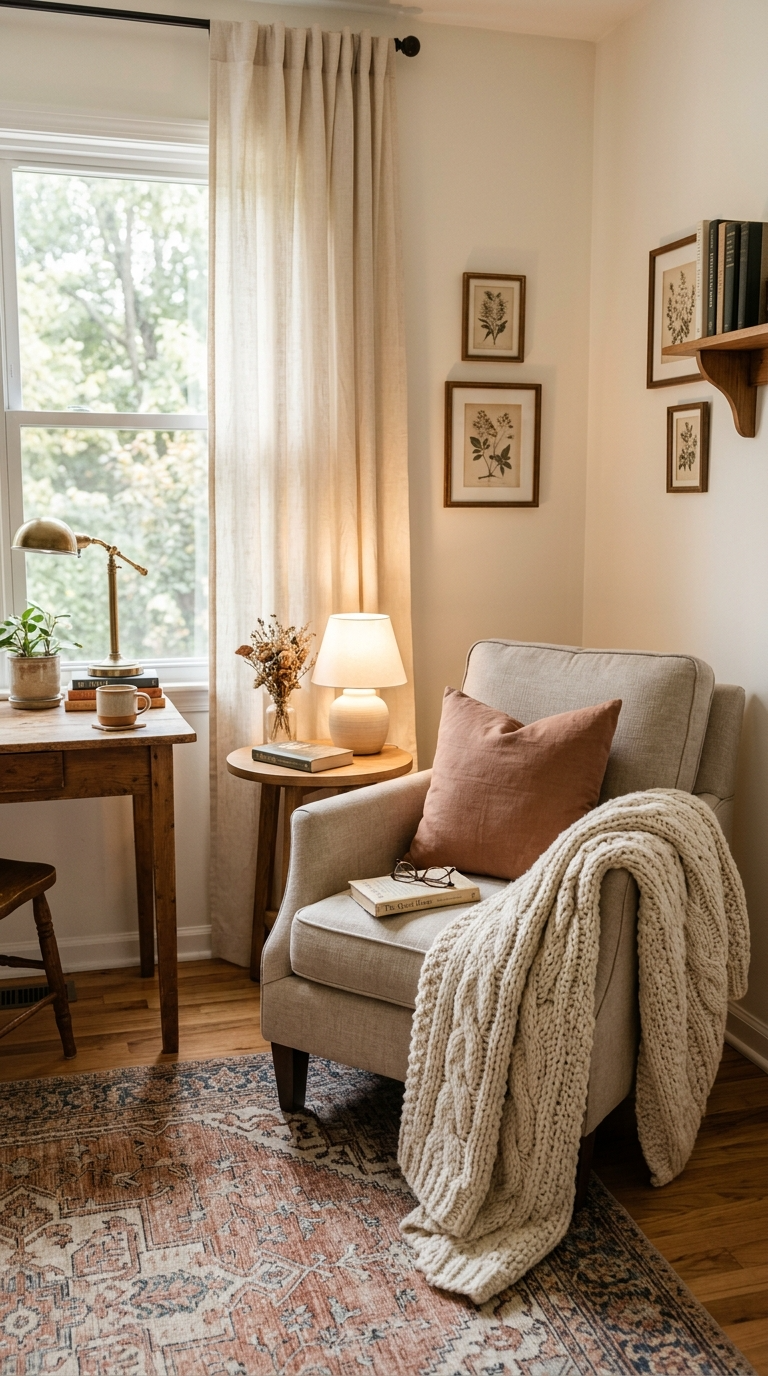
Hard surfaces dominate most home offices: the desk, the monitor, the floor, the walls. Adding soft textiles, a throw blanket on the reading chair, a warm area rug under the desk and chair, a set of curtains at the window in a warm fabric, introduces the tactile softness that makes a room feel cozy rather than clinical. Choose textiles in warm neutral tones that suit the office palette: oatmeal, cream, warm gray, dusty sage, or a muted blush. The textiles do not need to be elaborate. A single substantial wool throw and a quality area rug change the warmth of the room more than most people expect.
5. Plants in the Workspace
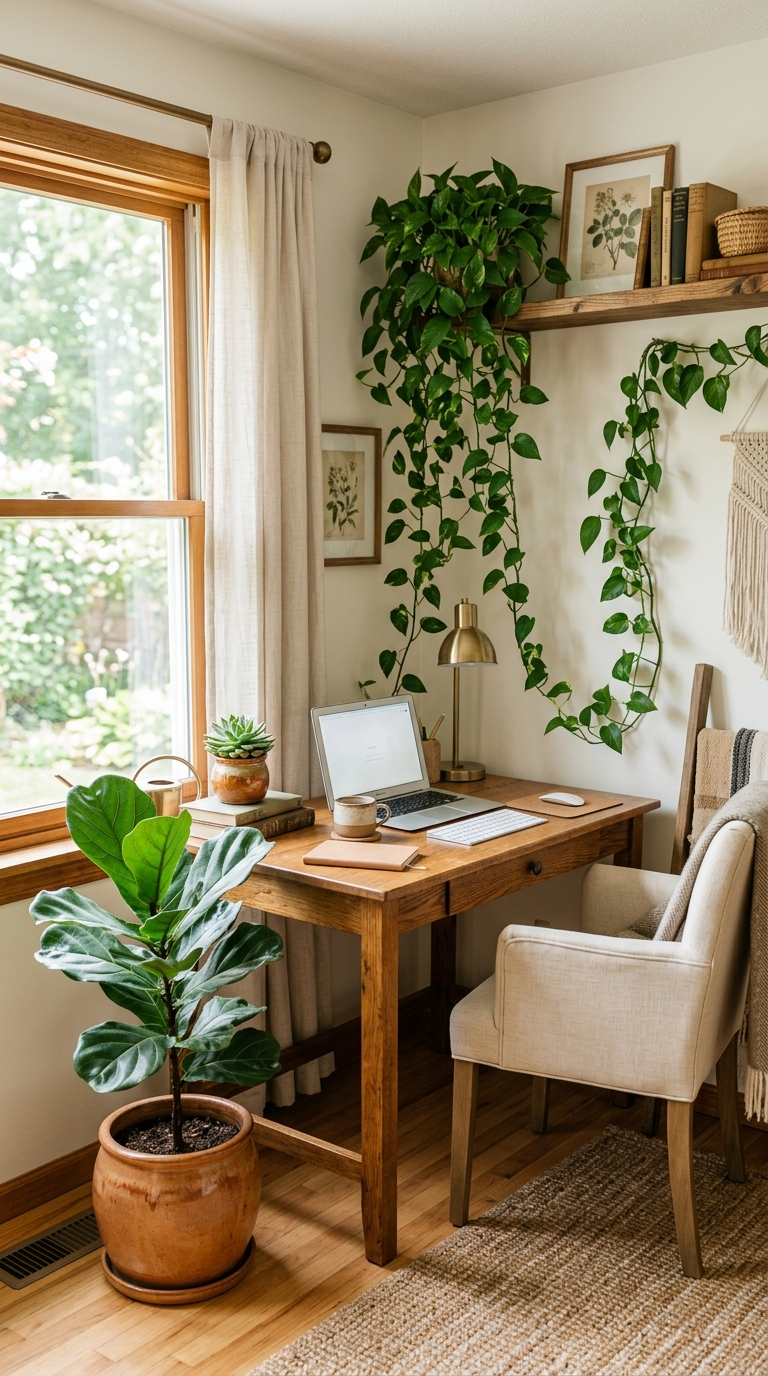
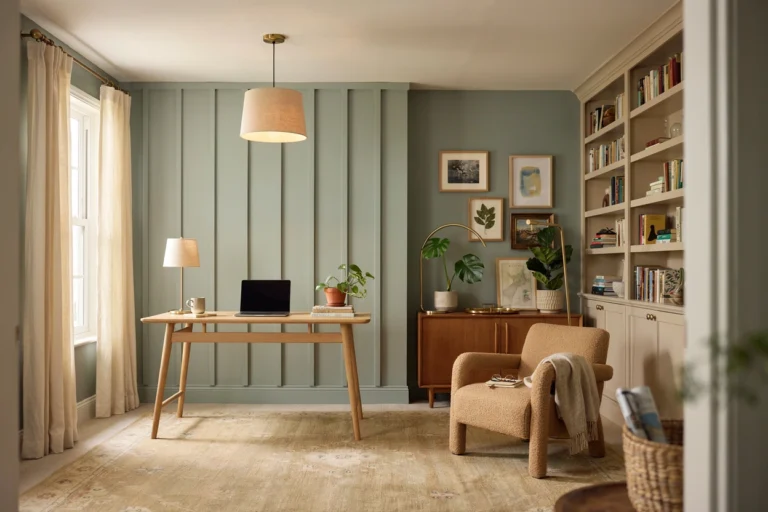
Living plants bring a quality of organic warmth and gentle visual movement to a home office that no manufactured decor can replicate. A large floor plant beside the desk, a trailing pothos on a high shelf, a small succulent collection on the windowsill, or a single statement plant in the corner all add the living green element that makes the office feel inhabited rather than just decorated. Plants also provide natural rest points for the eyes during breaks from screen work. Choose species that suit the office light conditions and that you will actually maintain, since a dying plant communicates the opposite of cozy.
6. Personal Art Selection
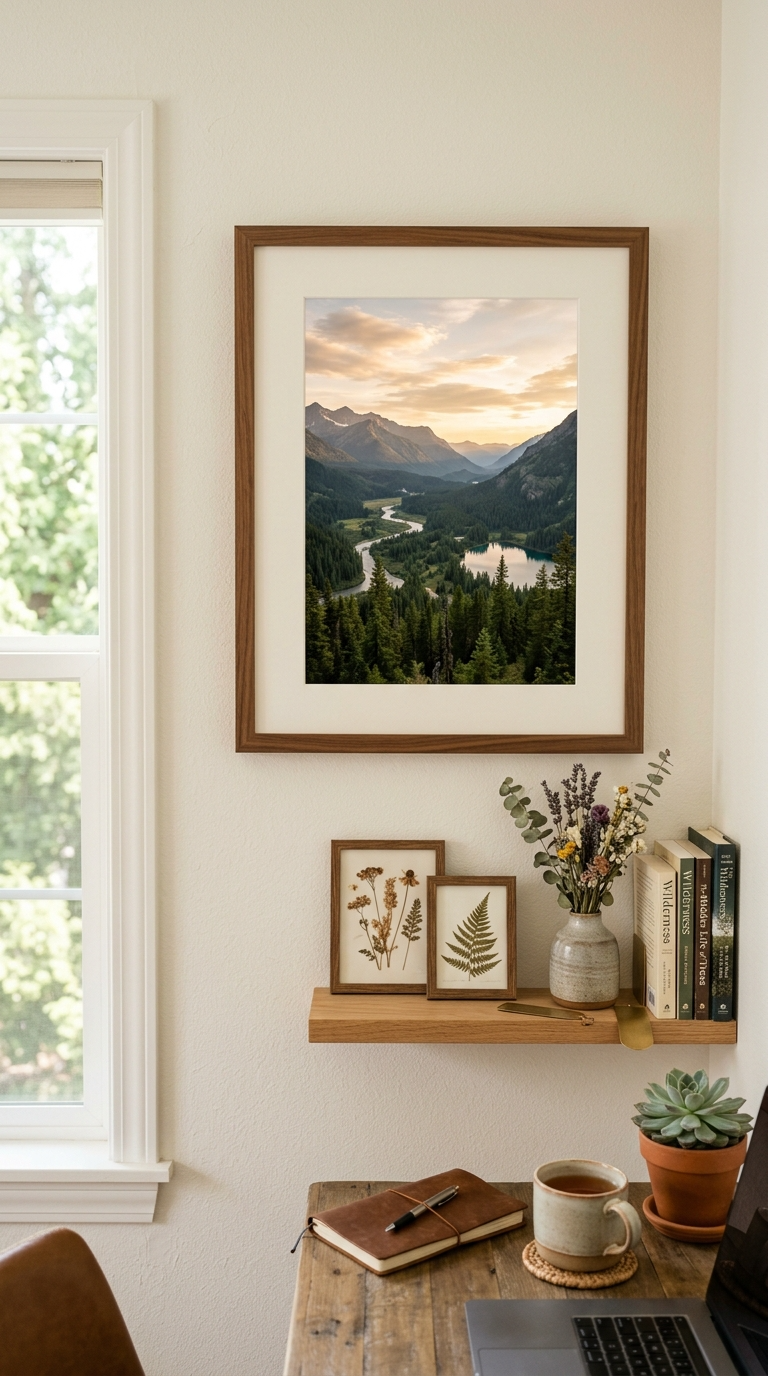
The art on the office walls has more emotional impact than art elsewhere in the home because you spend extended uninterrupted time looking at it during the workday. Choose art that genuinely makes you feel calm and focused rather than generic prints bought to fill the wall. A landscape photograph from a meaningful trip, an abstract in warm earth tones, a botanical illustration, a piece by a local artist, or a small collection of personal photographs all contribute more to the cozy quality of the office than any amount of generic wall filler. Position the main piece opposite the desk where your eyes rest during natural breaks. The same principles of personal meaningful styling also apply to creating a reading nook that pulls you away from your phone where the wall art provides a calming visual rest point during reading.
7. Reading Chair Corner
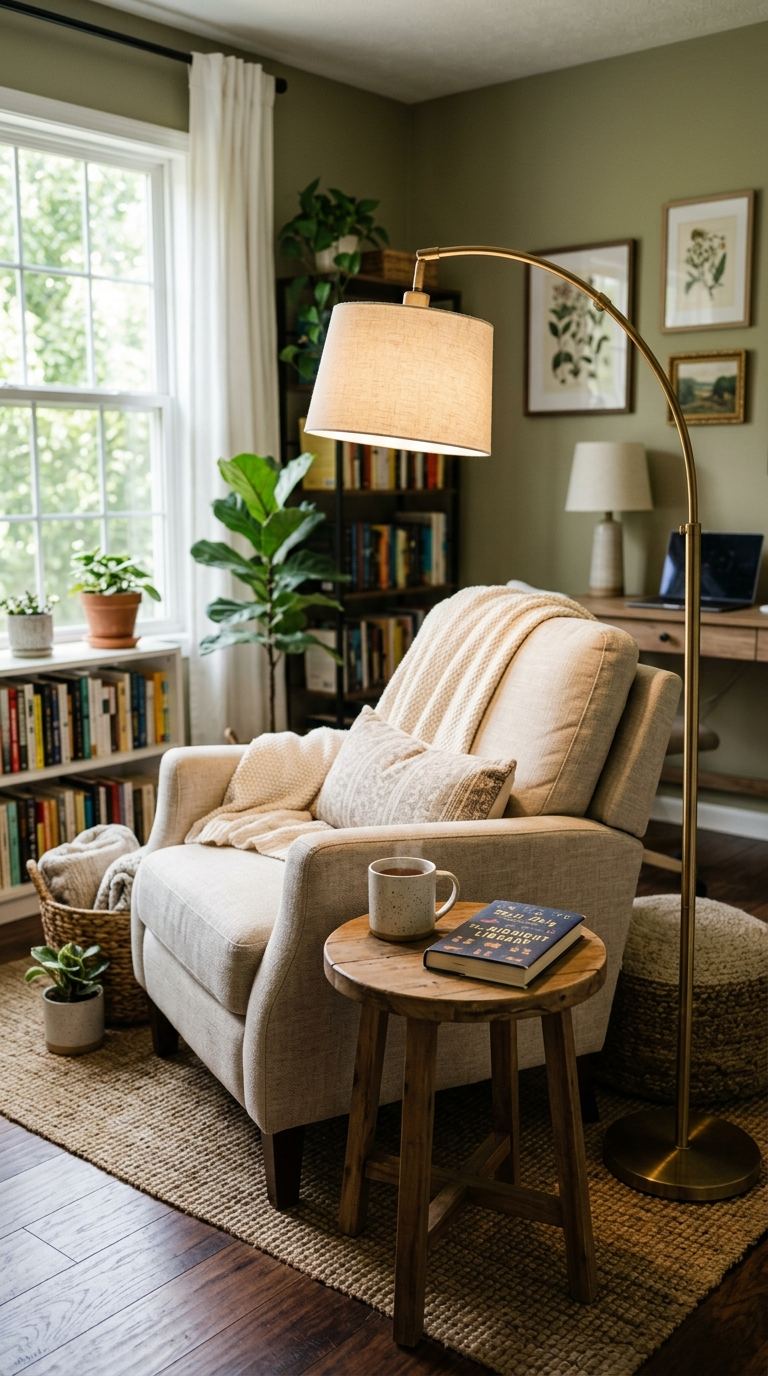
A single comfortable armchair in a corner of the office, with a small side table and a floor lamp, gives the room a second mode that is softer and more relaxed than desk work. The chair becomes the spot for reading, for taking phone calls without staring at the monitor, for thinking through a problem away from the screen, or for the brief breaks during the workday that genuinely improve focus and energy. The reading chair also visually warms the office significantly since it introduces a large upholstered element that balances the hard surfaces of the desk area. Choose a chair you would genuinely want to sit in during a long afternoon.
8. Candle on the Shelf
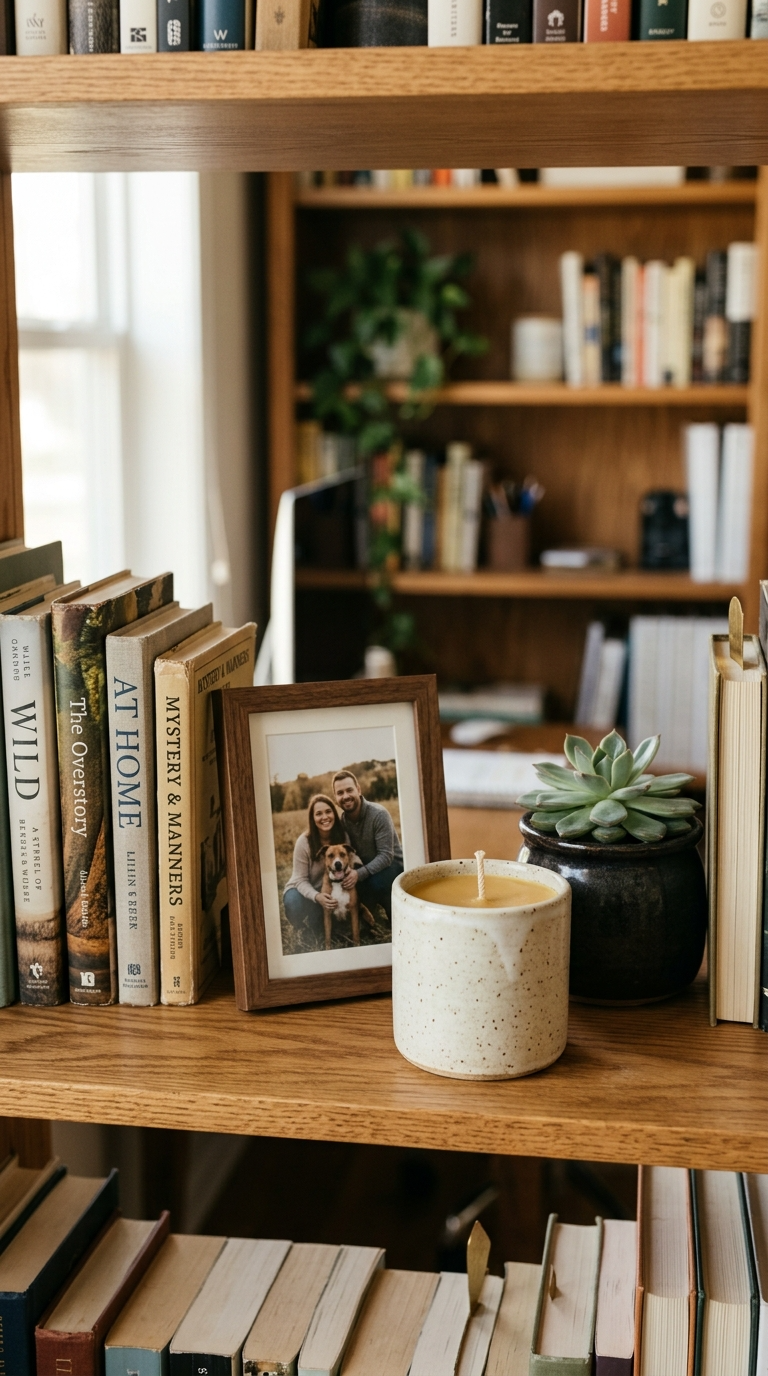
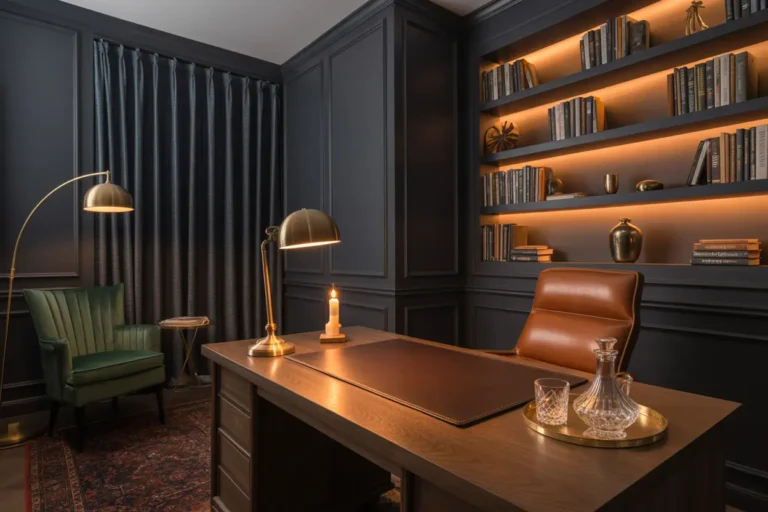
A single candle on the office shelf or desk surface adds both a small visual styling detail and, when lit, a warm scent and the softest possible light quality that makes the room feel immediately more intimate. Choose a candle in a scent that does not overpower the workspace: warm sandalwood, clean cedar, soft vanilla, or a light herbal blend all work. The candle does not need to be lit all day. Lighting it for the first thirty minutes of the morning work session or during a focused afternoon block creates a small ritual that signals the transition into work mode. The visual presence of a beautiful candle on the shelf contributes even when unlit.
9. Warm Wall Color
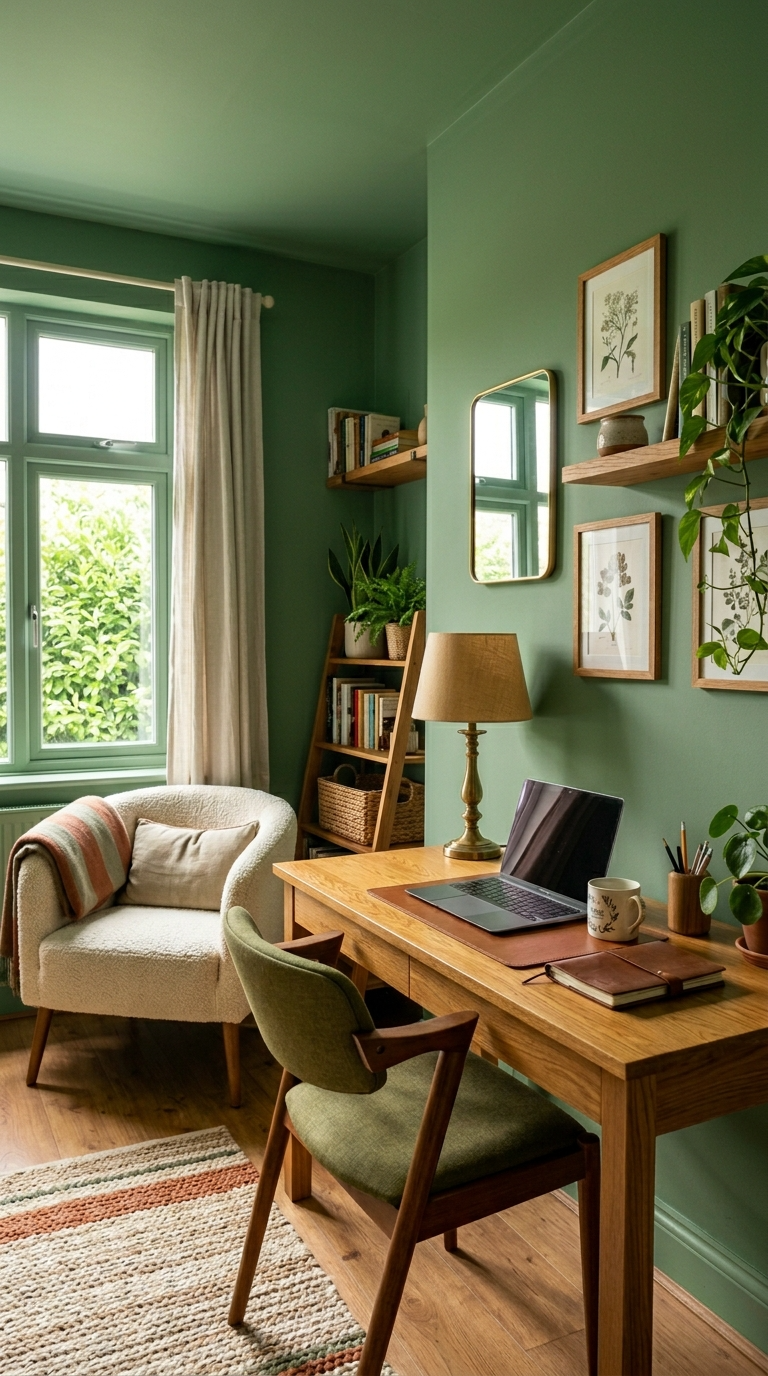
A warm wall color wrapping the office, soft sage, warm clay, dusty blush, warm cream with enough yellow to glow, or a deep muted blue, creates an enveloping quality that bright white walls cannot achieve. The warm walls make the room feel like a destination rather than a utility space. If painting the whole room feels like too much, a single warm accent wall behind the desk changes the video call background and the daily visual experience of the workspace significantly. The wall color also affects how video calls look to other people, which is a small but real professional consideration.
10. Quality Coffee or Tea Setup
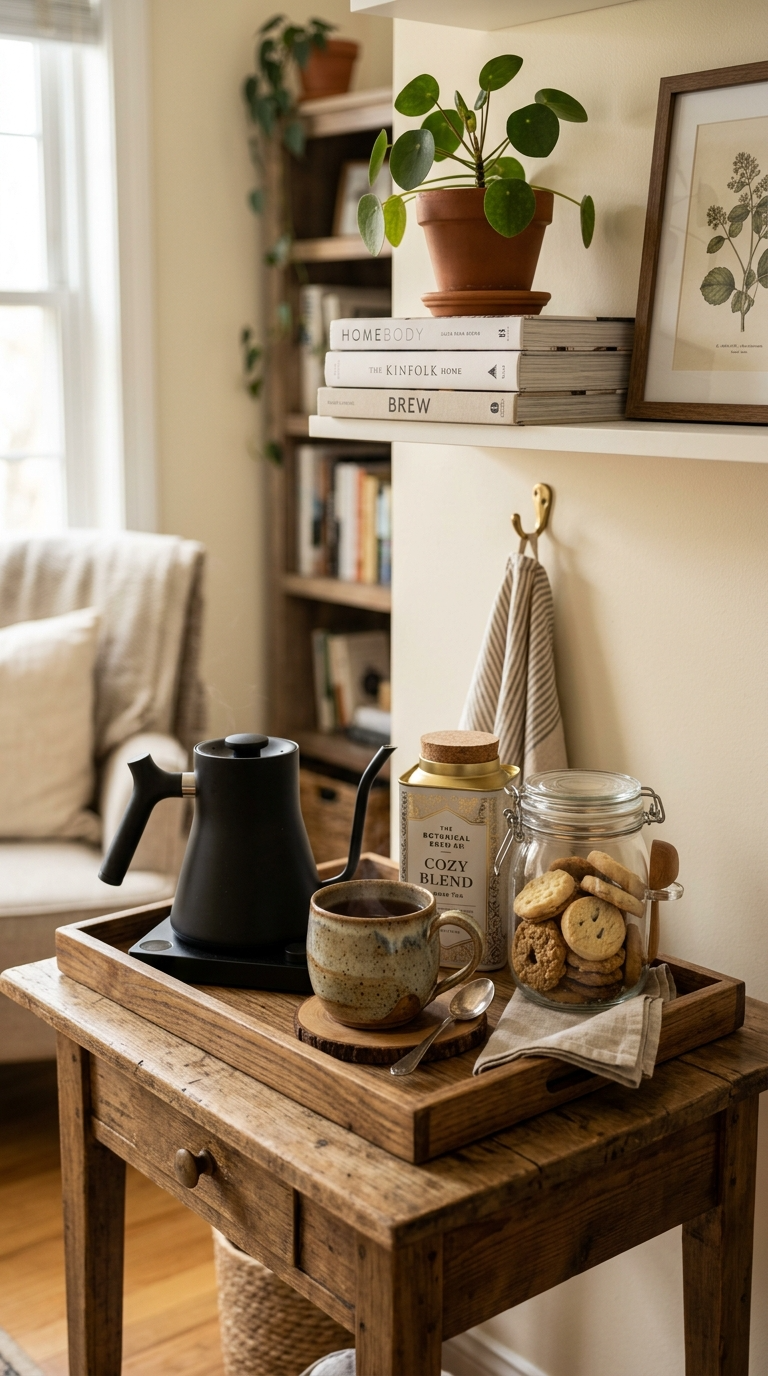
A small dedicated coffee or tea station in the office, even just an electric kettle, a single mug you love, and a tin of good tea or a small coffee setup, means you can make a hot drink without leaving the room and breaking the work focus. The setup signals that the office is designed for real extended use rather than quick visits. The mug itself matters: a beautiful handmade ceramic, a vintage cup with character, or a favorite mug that feels good in the hand, contributes a small daily pleasure that adds up over weeks and months of working from home.
11. Bookshelf Warmth
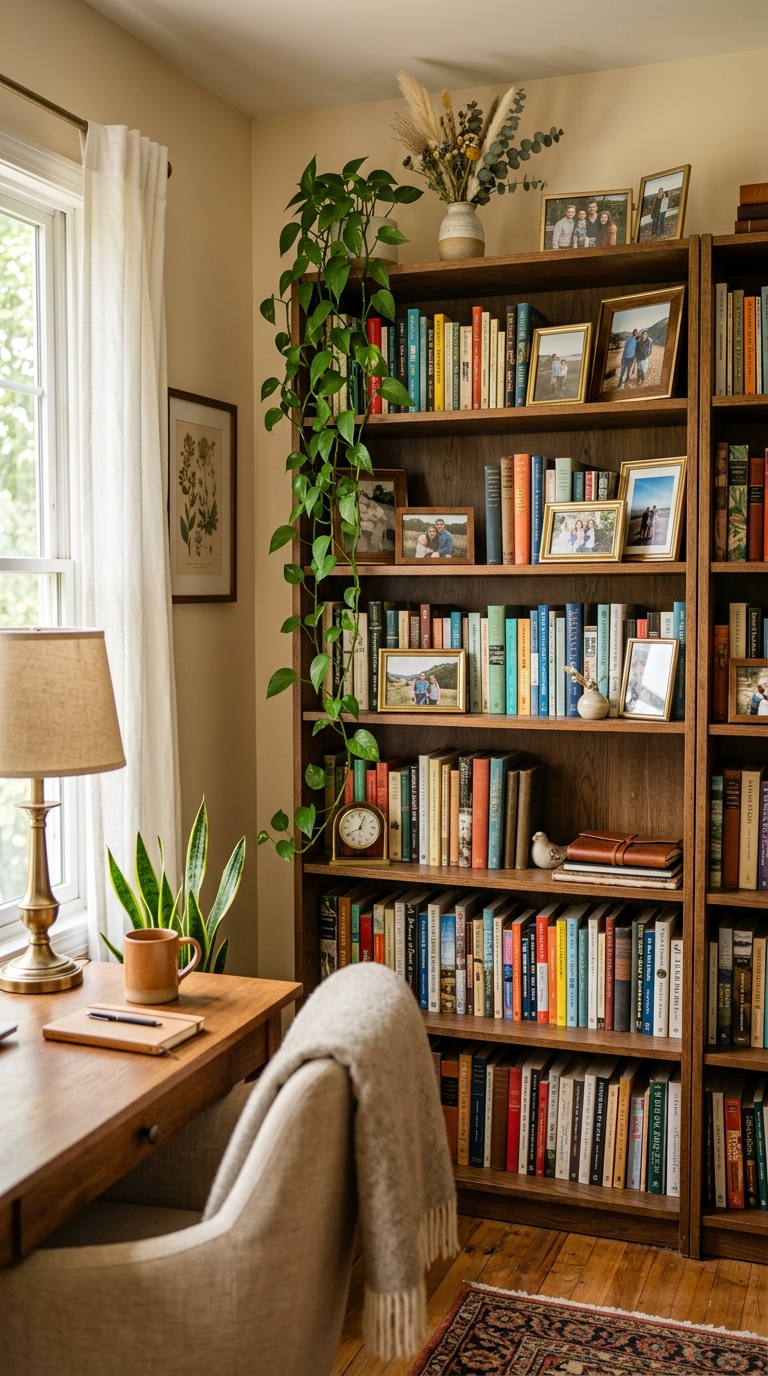
A bookshelf in the office, whether a full wall of built-ins or a single freestanding bookcase, adds the visual warmth and intellectual character that books bring to any room. The varied colors of book spines, the mixed heights and widths, and the small personal objects displayed among the books all contribute to the cozy, lived-in quality of the space. Style the shelves with a mix of books arranged with some intention, framed photographs, small ceramics, a plant, and one or two personal objects that mean something to you. The bookshelf becomes a background of warmth and character that is visible during every work session.
12. Warm Area Rug
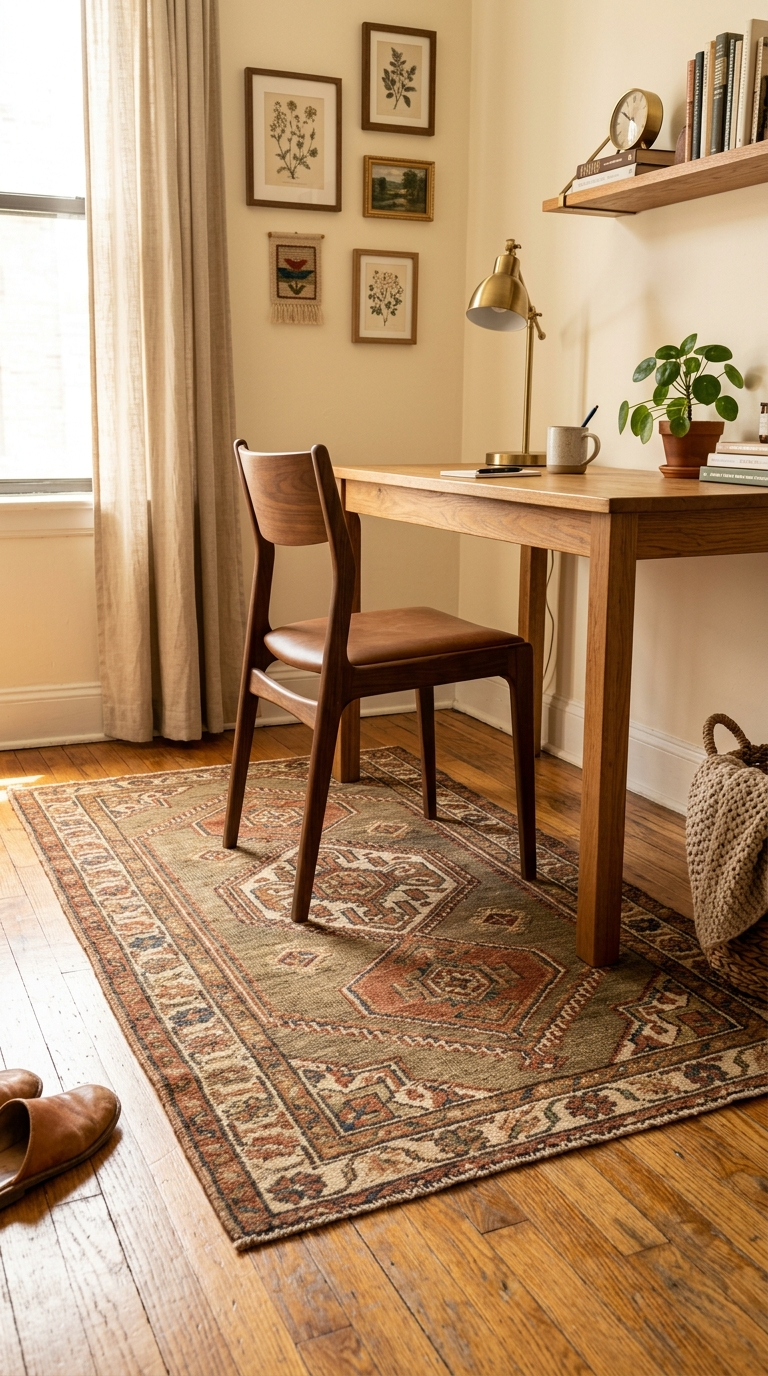
A warm area rug under the desk and chair anchors the workspace visually and adds softness underfoot that hard floors lack. Choose a rug substantial enough that the desk and the front legs of the chair both sit on it. A vintage Persian, a simple flat-weave wool in a warm neutral, or a natural jute rug all suit a cozy office depending on the aesthetic. For rolling office chairs, use a flat-weave or low-pile rug that allows the chair to roll smoothly. The rug defines the work zone as a specific warm area within the room and adds both visual and physical comfort.
13. Warm Window Treatment
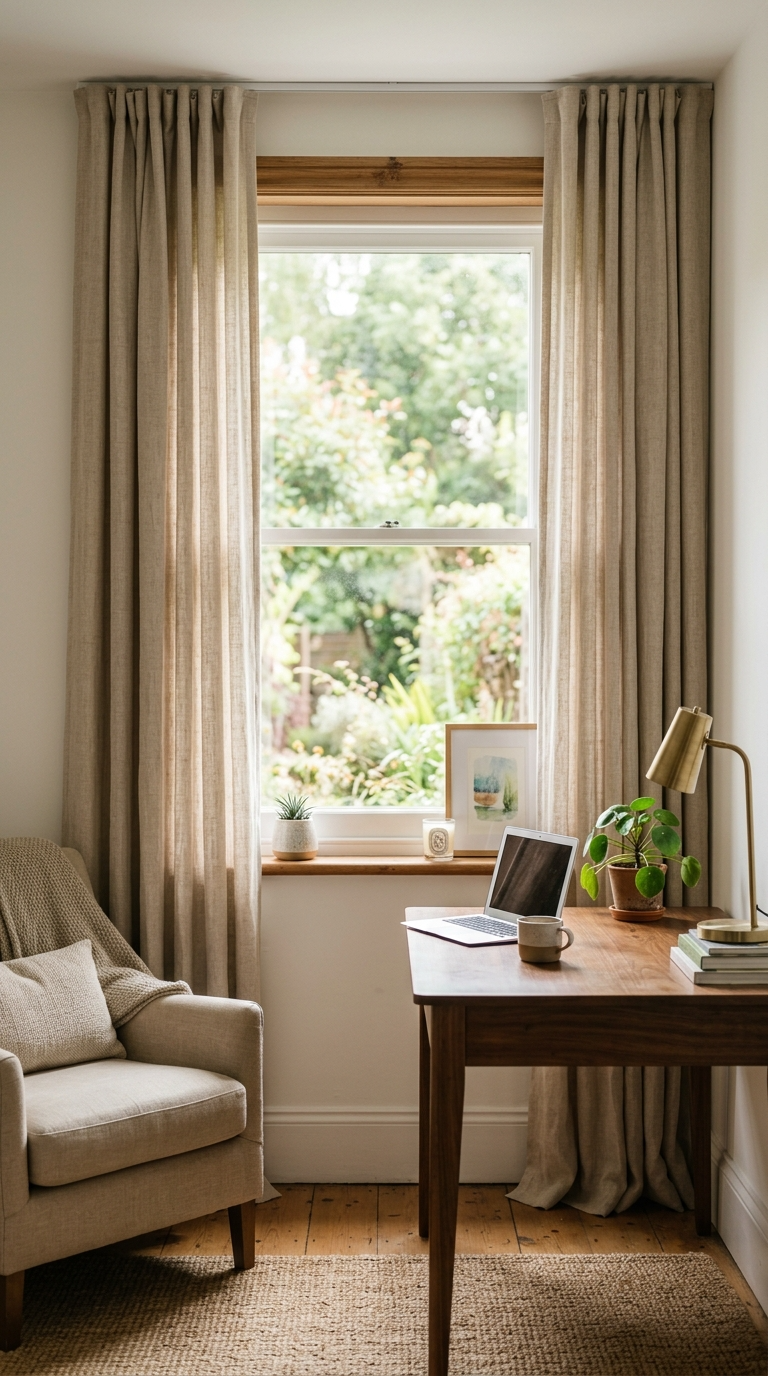
Heavy curtains in a warm fabric, linen, cotton, or a soft wool blend, frame the office windows and add a significant textile element that softens the room. The curtains filter natural light gently during bright hours and provide a warm visual frame that bare windows lack. Hang them from ceiling height to the floor for the most generous proportion, which also makes the windows appear taller. Choose a warm neutral: oatmeal, soft cream, warm gray, or a color pulled from the accent wall. The same approach to warm window treatments creates a similar cozy effect in styled living rooms where the curtain fabric sets the warm tone for the rest of the room.
14. Personal Photo Display
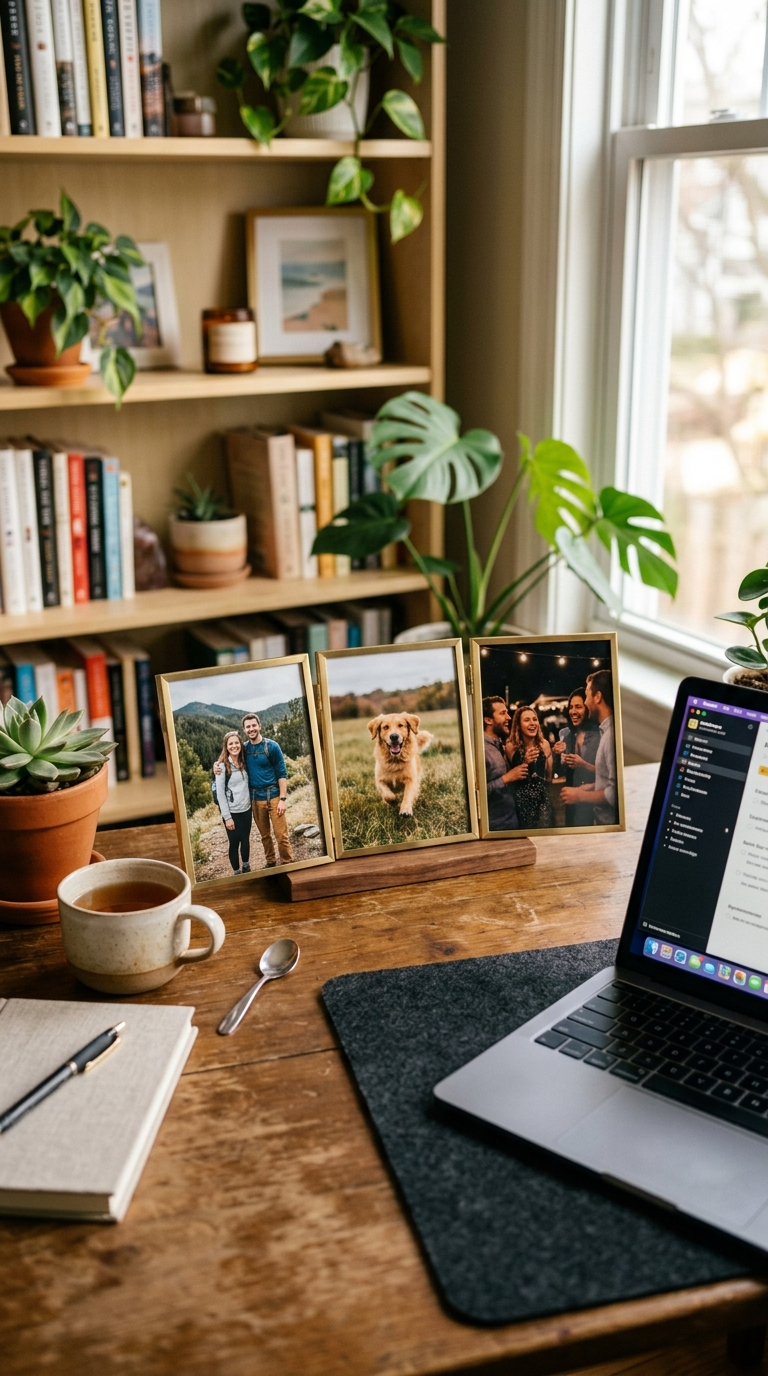
A small display of personal photographs on the desk, the bookshelf, or the wall, framed simply and positioned where they catch the eye during natural breaks in work, adds the emotional warmth that generic decor cannot provide. Three or four photographs in coordinating frames, showing people and moments that genuinely matter, make the office feel like the room of a real person rather than a generic workspace. Position them where you naturally look when pausing between tasks so they serve as small daily reminders of the life happening beyond the work.
15. Warm Desk Accessories
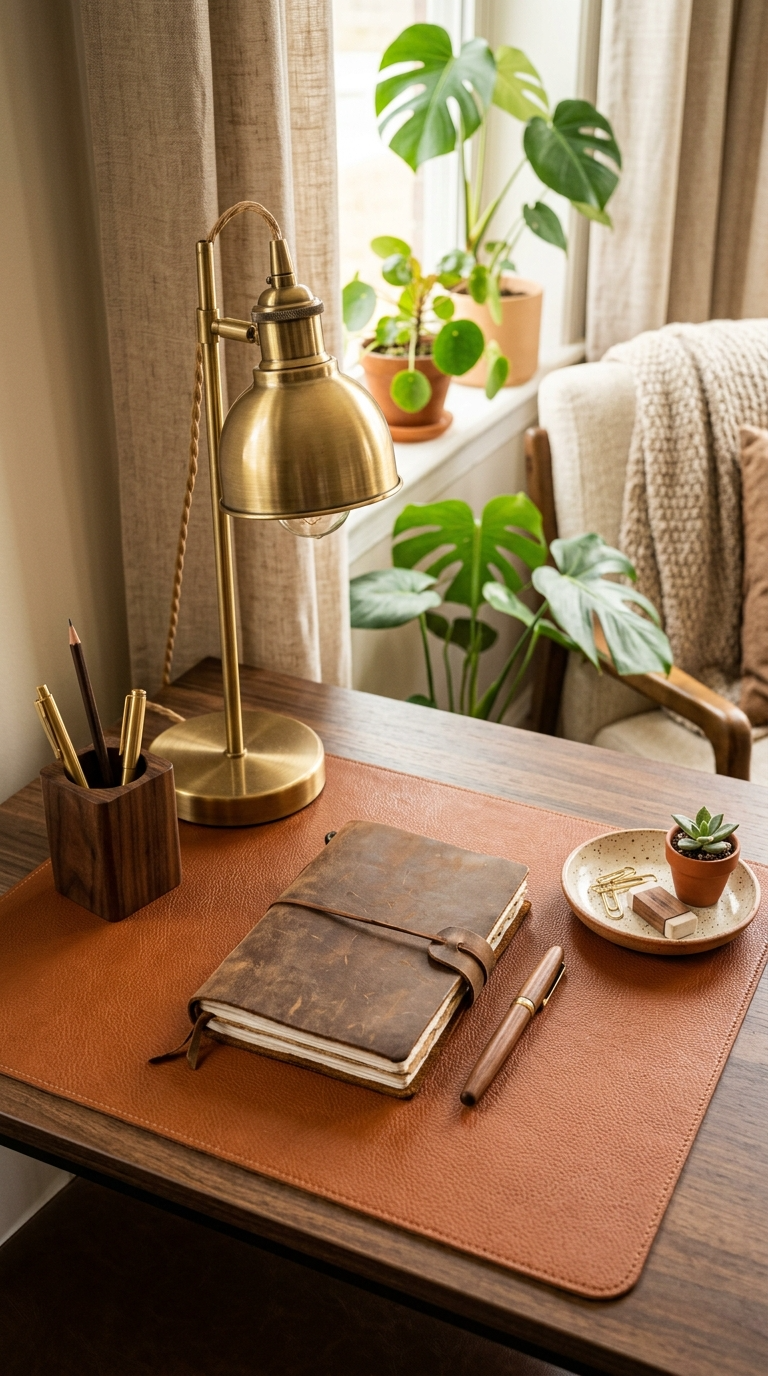
The objects that live on the desk surface have outsized impact on how the office feels because they are in direct view during every minute of work. Quality warm-toned accessories, a leather mouse pad, a wooden pen holder, a brass desk lamp, a small ceramic dish for clips, a beautiful notebook rather than a generic notepad, signal care and intention. Choose accessories in coordinated warm finishes: leather with brass, walnut with brushed gold, matte ceramic with warm wood. The cumulative effect of well-chosen desk accessories is an office that feels considered and personal.
16. Background Music Setup
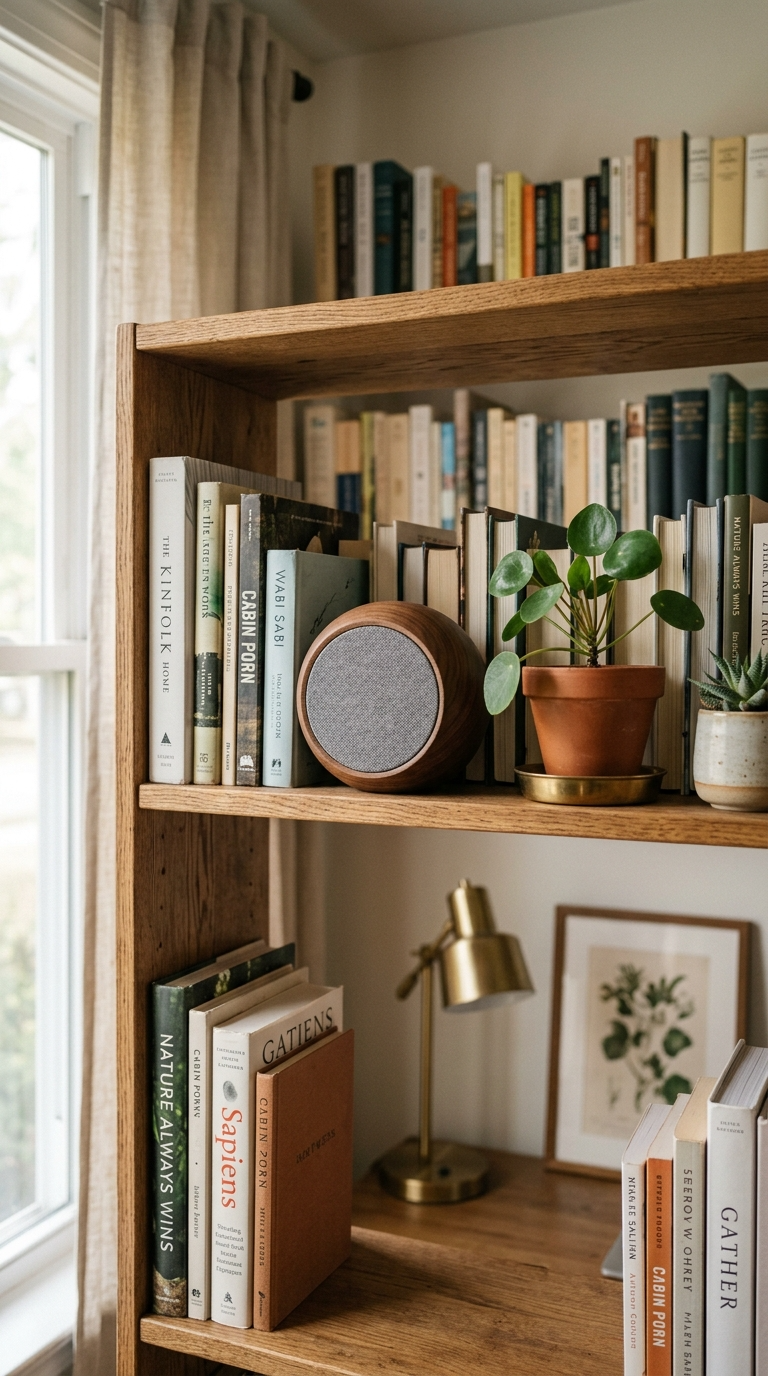
A small Bluetooth speaker in the office playing quiet background music or ambient sound during work adds an atmospheric quality that silence and household noise cannot provide. The speaker should be tucked into the bookshelf or placed on a side table where it reads as part of the room’s design rather than as a piece of technology. Warm instrumental music, ambient electronic, acoustic folk, lo-fi beats, or gentle classical all work depending on personal preference and the type of work being done. The background music fills the room with a warm consistent atmosphere that makes the working hours feel less like isolation and more like a chosen retreat.
17. Scented Room Element
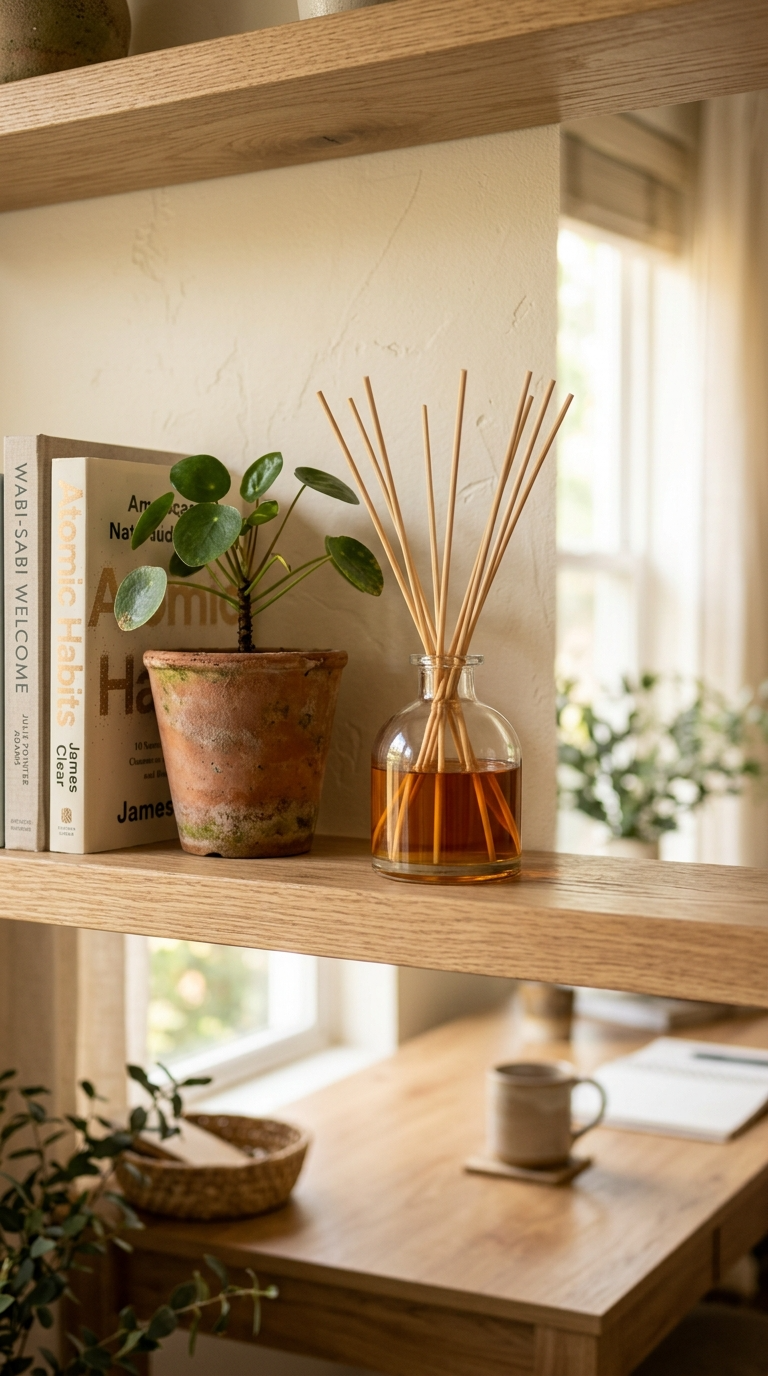
The scent of a home office contributes to its cozy quality in a way that is easy to overlook but consistently impactful. A reed diffuser on the bookshelf, a small essential oil diffuser, or a scented candle used occasionally during focused work sessions all introduce a warm olfactory layer that makes the room feel more complete. Choose scents that are warm but not overwhelming: cedarwood, sandalwood, bergamot, light vanilla, or a fresh eucalyptus. The scent should be noticeable when entering the room and barely noticeable after a few minutes, which means the intensity is right for a work environment.
18. Footrest Under Desk
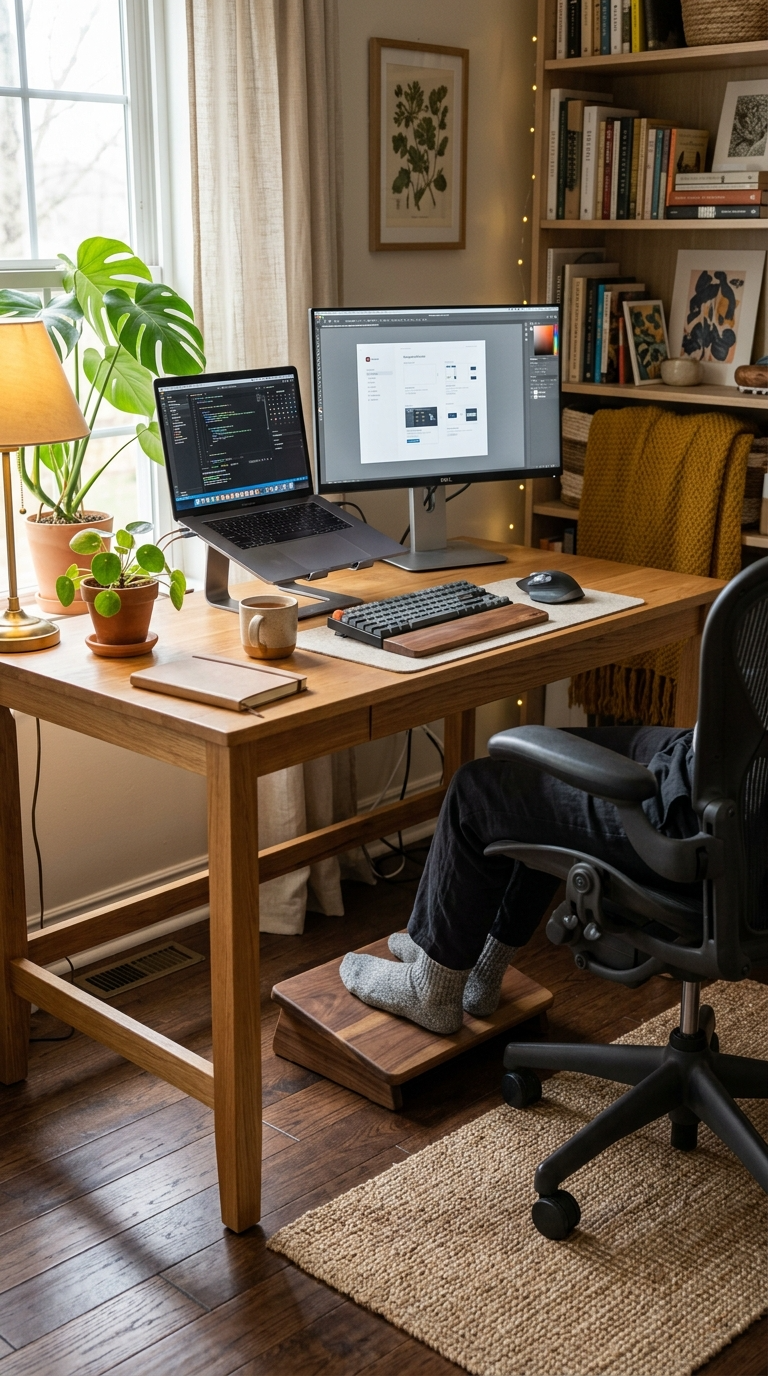
A small footrest or an upholstered ottoman tucked under the desk provides a place to rest the feet during long work sessions and changes the sitting posture in a way that reduces lower back strain over a full day. Beyond the ergonomic benefit, the footrest adds a small physical comfort that makes the desk feel like a place designed for genuinely long use. A wooden footrest, a small leather pouf, or a simple upholstered stool all work. The footrest is one of those small additions that makes a measurable daily difference in physical comfort without being visible to anyone else.
19. End-of-Day Reset Ritual
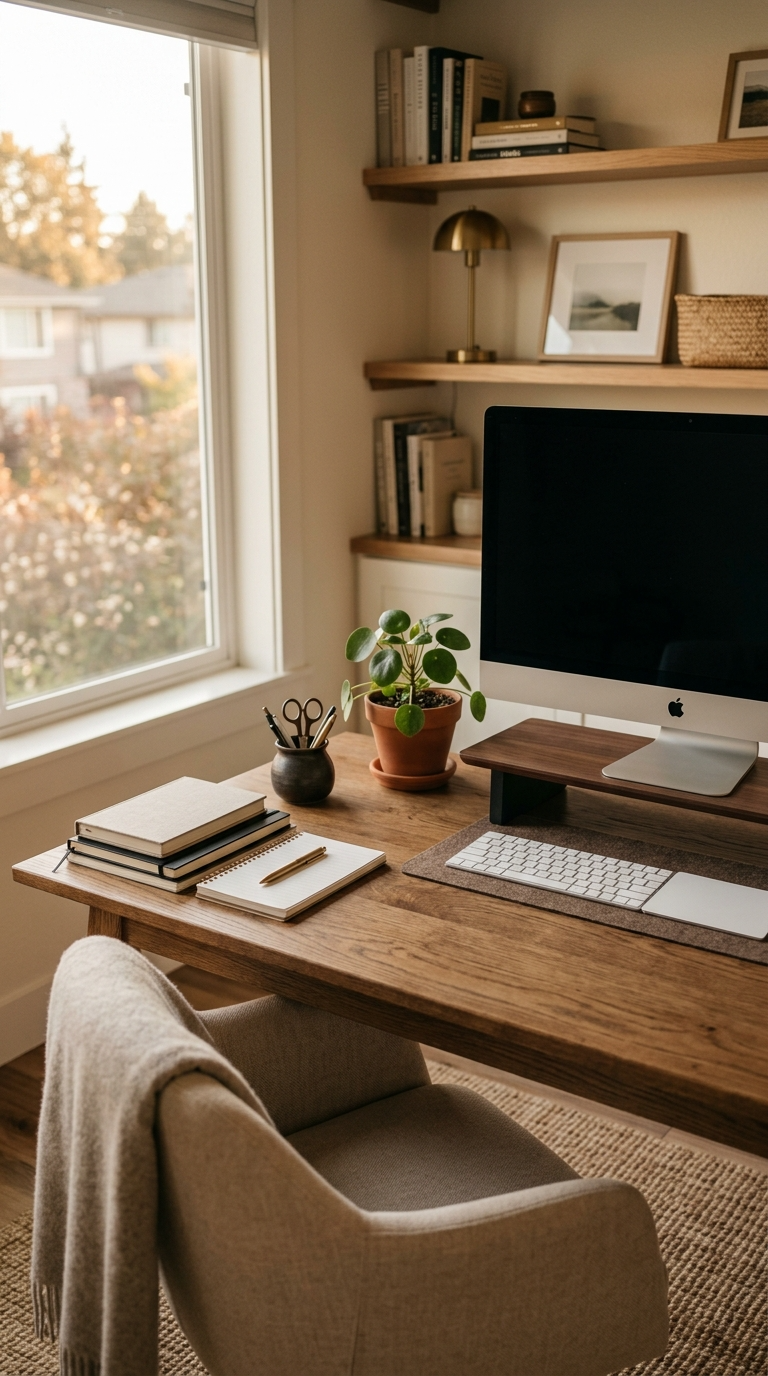
A cozy office stays cozy because it is maintained with a simple daily reset. At the end of each workday, return the notebooks to their place, take the empty coffee mug to the kitchen, organize the day’s papers, and clear the desk surface so the office is ready and inviting the next morning. The reset takes two or three minutes and ensures the office looks like the styled, warm, intentional space it was designed to be rather than a tired version of itself. The daily reset is what allows all the other cozy investments to actually show up morning after morning.
20. Distinct Work Boundary
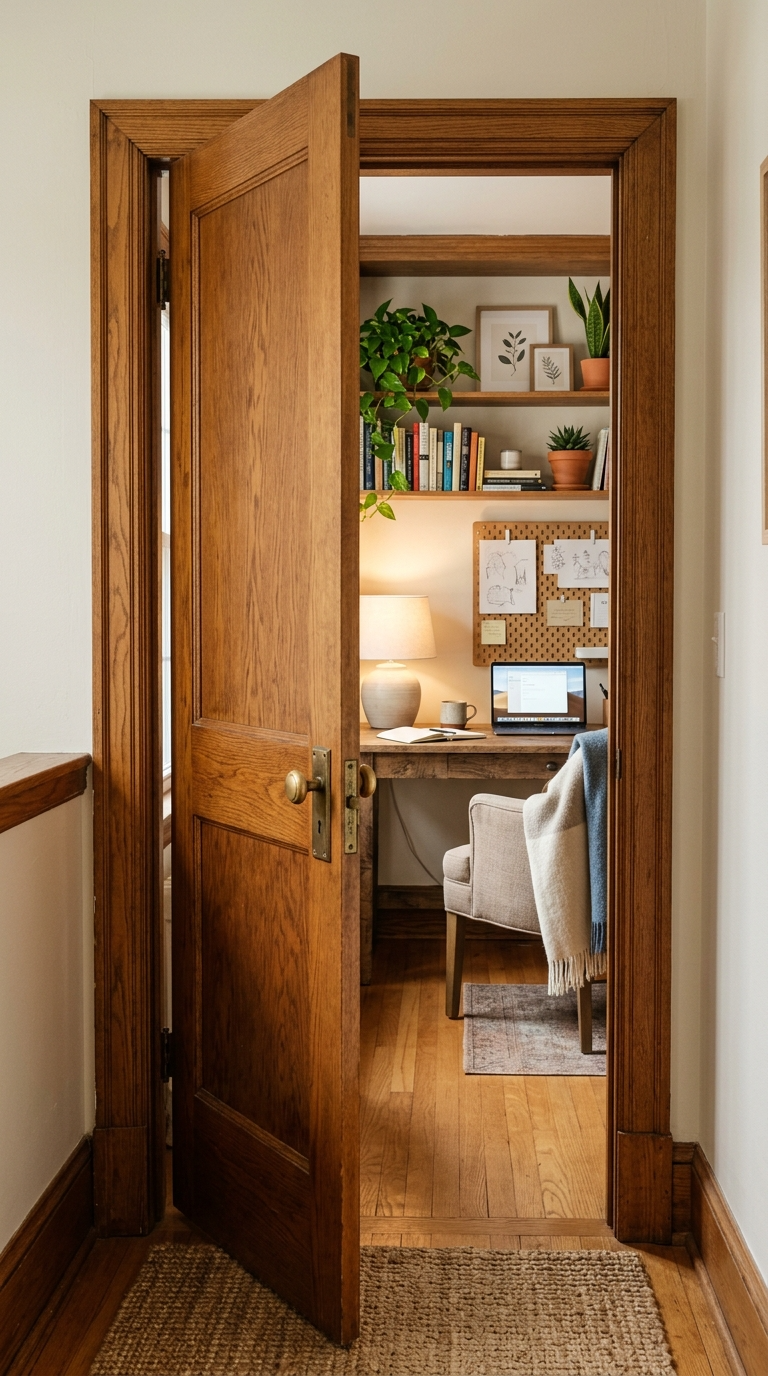
The coziest home office is one where work begins and ends clearly. The room should have a physical boundary, a door, a screen, a curtain, that signals entry into work mode and exit from it. When work is over, close the office door, draw the curtain, or simply walk away and leave the room fully behind. The boundary is what prevents the cozy office from becoming a place that is always-on, which is the quickest way to make any workspace feel less like a retreat and more like a trap. The cozy quality depends on the room being a place you choose to enter rather than a place that follows you everywhere. For a more styled and design-focused approach to the same working-from-home challenges, the moody office decor guide covers atmospheric approaches to creating a workspace with real character.
A cozy home office is not about making the workspace so comfortable that you stop working. It is about making the environment pleasant enough that the working hours feel genuinely sustainable rather than endured. Warm light, comfortable seating, natural materials, small personal touches, and a simple daily maintenance habit together create a room where work feels less like a chore and more like a chosen part of a good day.