22 Stylish Home Office Ideas That Stay Genuinely Functional
A chic home office has to do two things at the same time, and that is harder than it sounds. It has to look genuinely beautiful, since you spend several hours a day in the room and the visual quality of the space affects how you feel during work. And it has to function reliably, since the moment style starts working against function, you stop using the office and end up working from the couch. The offices that get this balance right are the ones where every stylish decision also serves a real practical purpose. The desk that looks beautiful is also at the right height. The chair that suits the room is also genuinely comfortable for eight hours. The art on the wall is also at the right distance not to fatigue your eyes. These 22 ideas all hit both targets together rather than choosing between them.
1. Statement Desk Choice
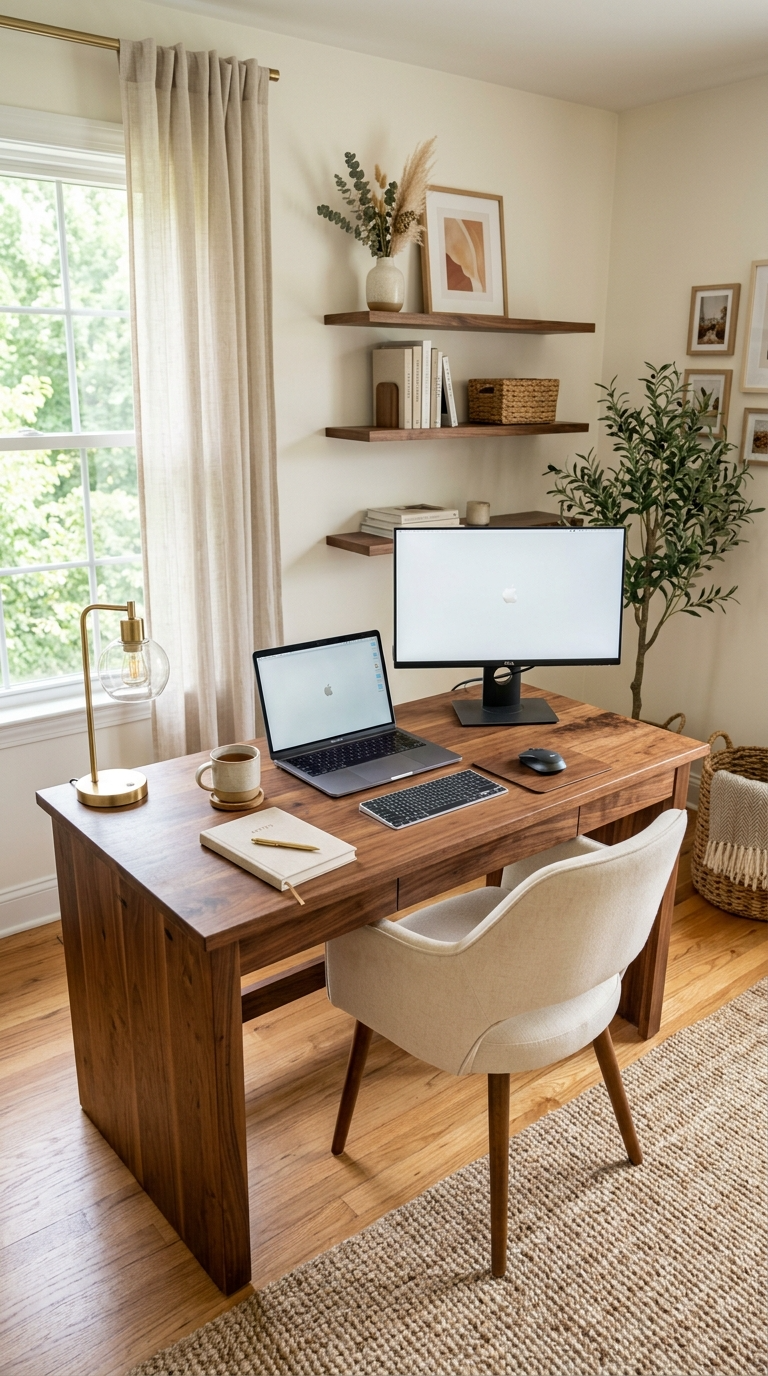
The desk is the most-used and most-photographed object in any home office, so the choice of desk has more visual and functional weight than almost anything else in the room. Look for a desk that has both presence and proper proportions for actual work: at least forty-eight inches wide for a single monitor setup, sixty inches or more for a dual monitor configuration. Solid wood desks with visible grain, marble-topped desks with sculptural bases, and clean modern desks in walnut or oak with metal legs all read as chic without sacrificing any function. Avoid trendy small writing desks that look beautiful in photos but cannot accommodate a laptop, monitor, notebook, and coffee cup at the same time.
2. Quality Office Chair
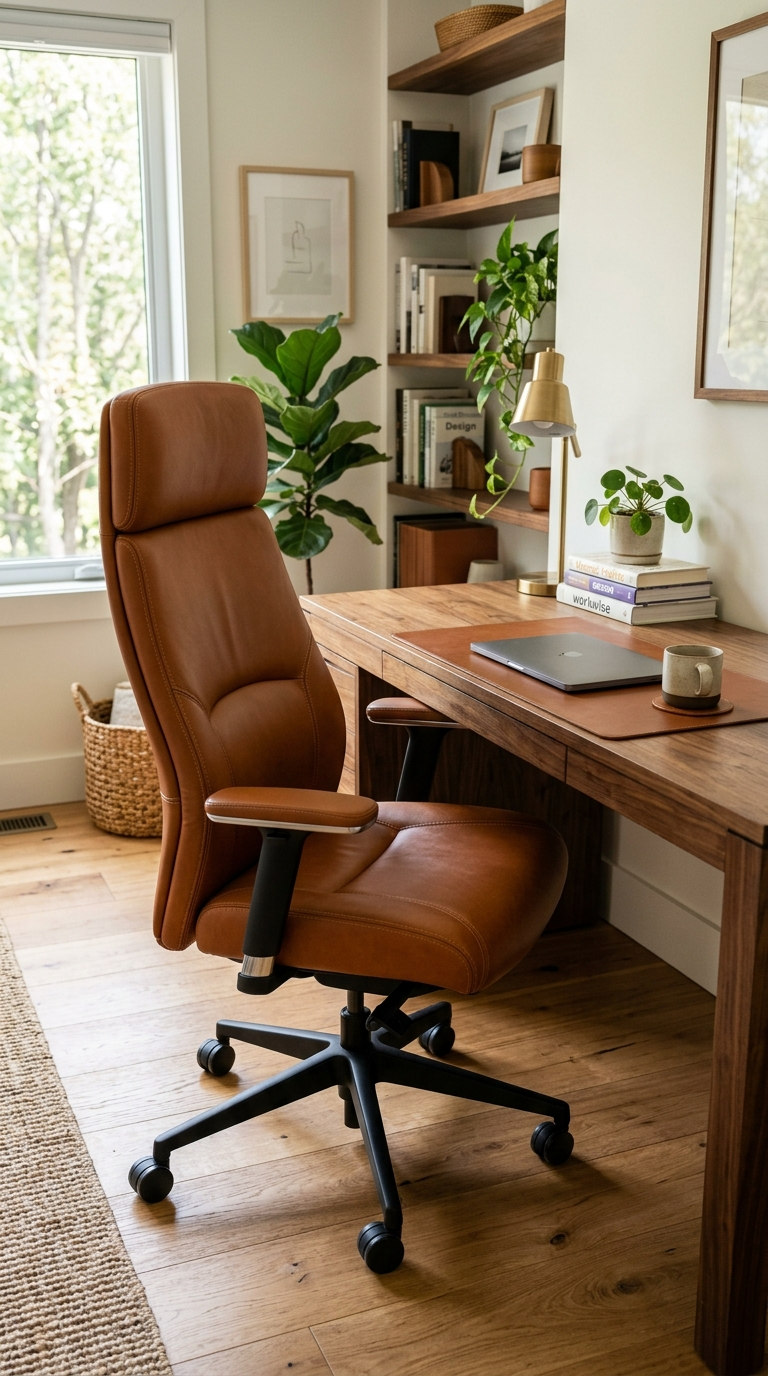
The single most important purchase in any home office is a genuinely good office chair. A chair that looks beautiful but does not properly support the back, or that lacks the adjustability needed for an eight-hour workday, becomes an obstacle to actually getting work done. Premium ergonomic chairs are widely available in upholstered finishes that read as residential rather than corporate, with leather, wool, or boucle upholstery options that suit a chic home office aesthetic. Look for chairs with adjustable seat height, lumbar support, armrest height, and seat depth. The cost of a quality chair feels significant up front and pays back every working day for years.
3. Layered Lighting Setup
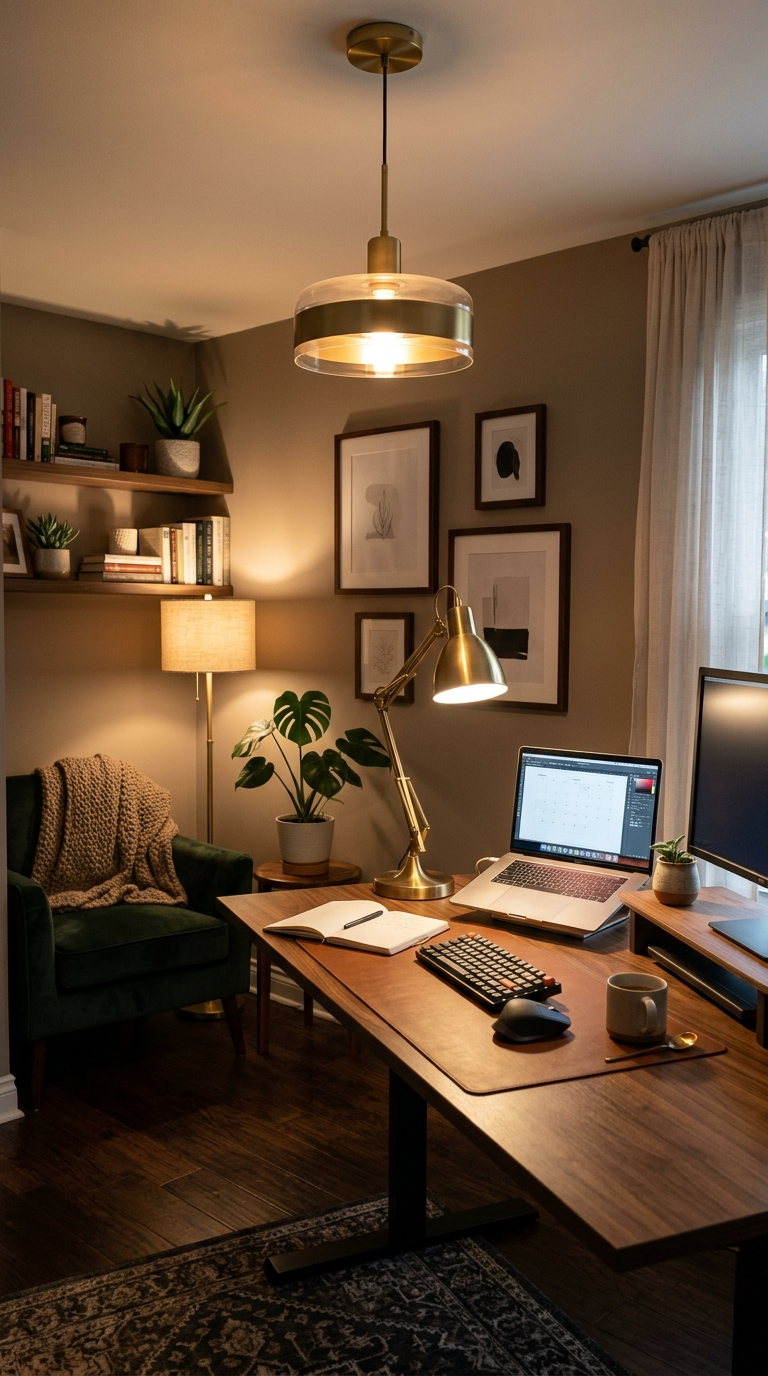
A chic home office requires three distinct layers of light: ambient overhead light for general illumination, task light directly on the work surface, and accent lighting that adds atmosphere during darker hours. Overhead light alone leaves the desk in shadow and creates eye strain over a long day. Task lighting alone leaves the rest of the room dark and depressing. The combination of all three creates a space that is genuinely pleasant to work in throughout the day. Use warm-toned LEDs in the 3000K range for the most flattering office lighting, slightly cooler than living spaces but still significantly warmer than typical fluorescent office lighting.
4. Beautiful Office Art
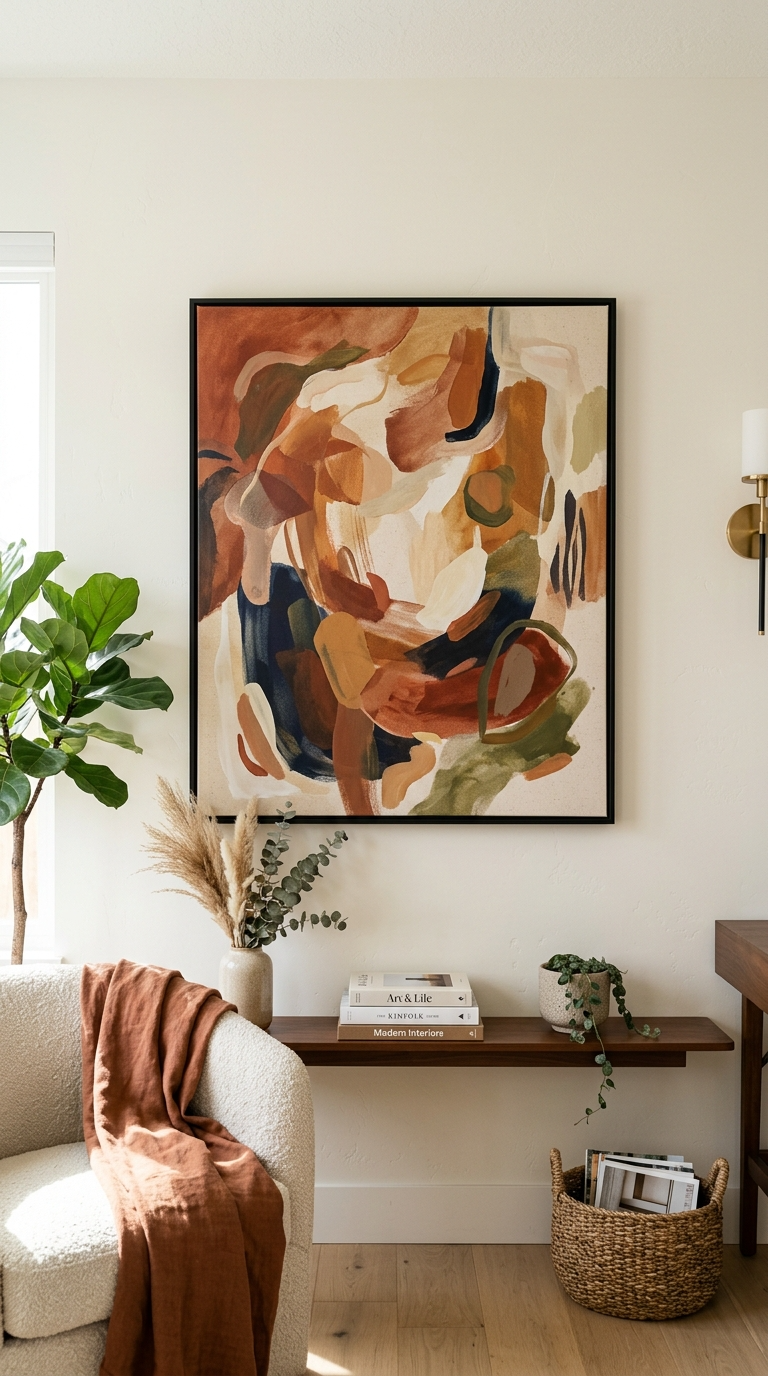
The art on the office walls has more impact than art elsewhere in the home because you spend several uninterrupted hours looking at it. Choose art that you genuinely want to look at over and over rather than pieces that simply fill the wall. A single large piece of art opposite the desk gives the eyes a calm rest point during natural breaks in work. A small gallery arrangement on the side wall adds visual interest without competing with the work surface. Avoid hanging anything visually busy or overstimulating directly behind the desk where it will compete with the work itself. The best office art is calm, well-composed, and rewards repeated viewing.
5. Real Plant Presence
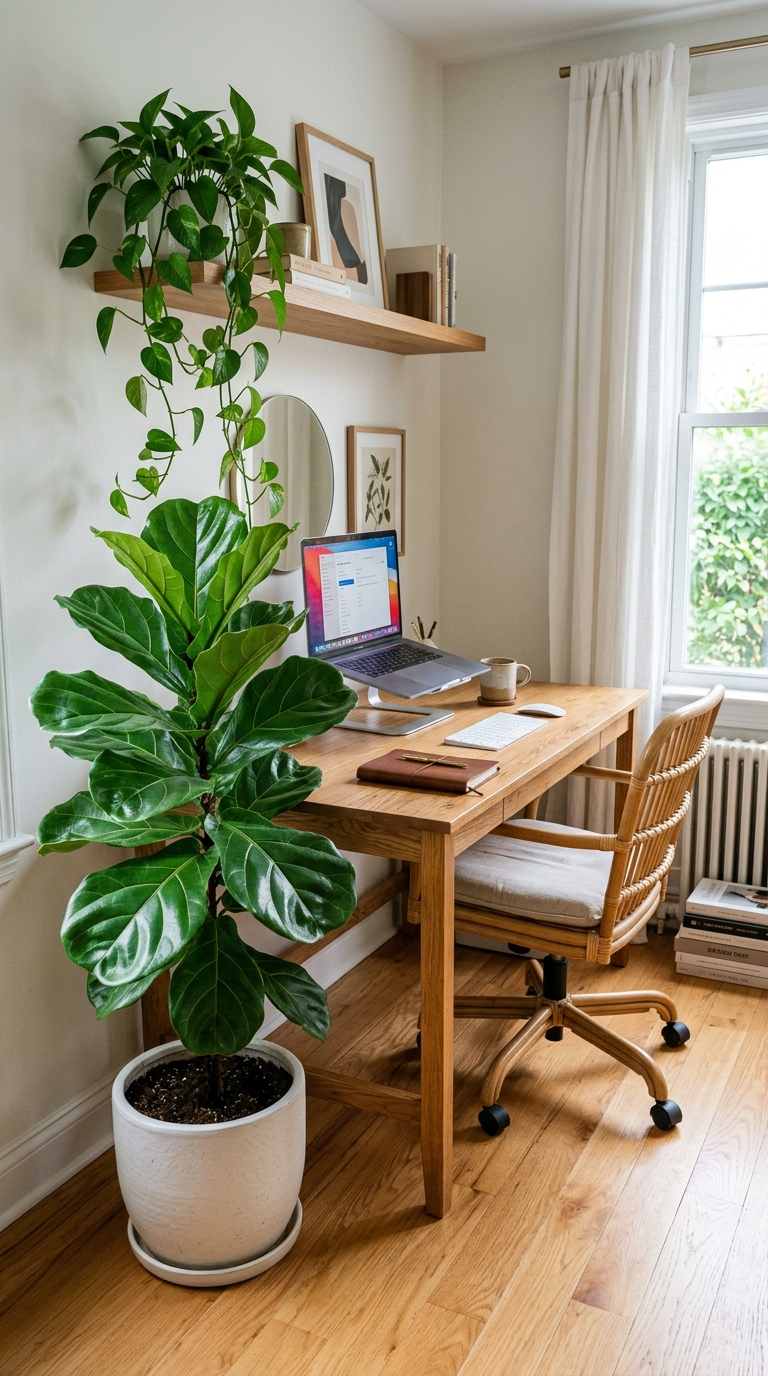
Living plants in a home office contribute measurable benefits, improved air quality, lower stress levels during work, and a small visual detail that introduces something organic and changing into an otherwise static room. A large floor plant beside the desk, a trailing pothos on a high shelf, a small fiddle-leaf fig in a corner, or a row of small succulents on the windowsill all work depending on the available light. The plants should look healthy and actively growing rather than slowly declining, which means choosing species that match the office light conditions. A neglected dying plant signals the opposite of chic and well-cared-for.
6. Curated Bookshelf Wall
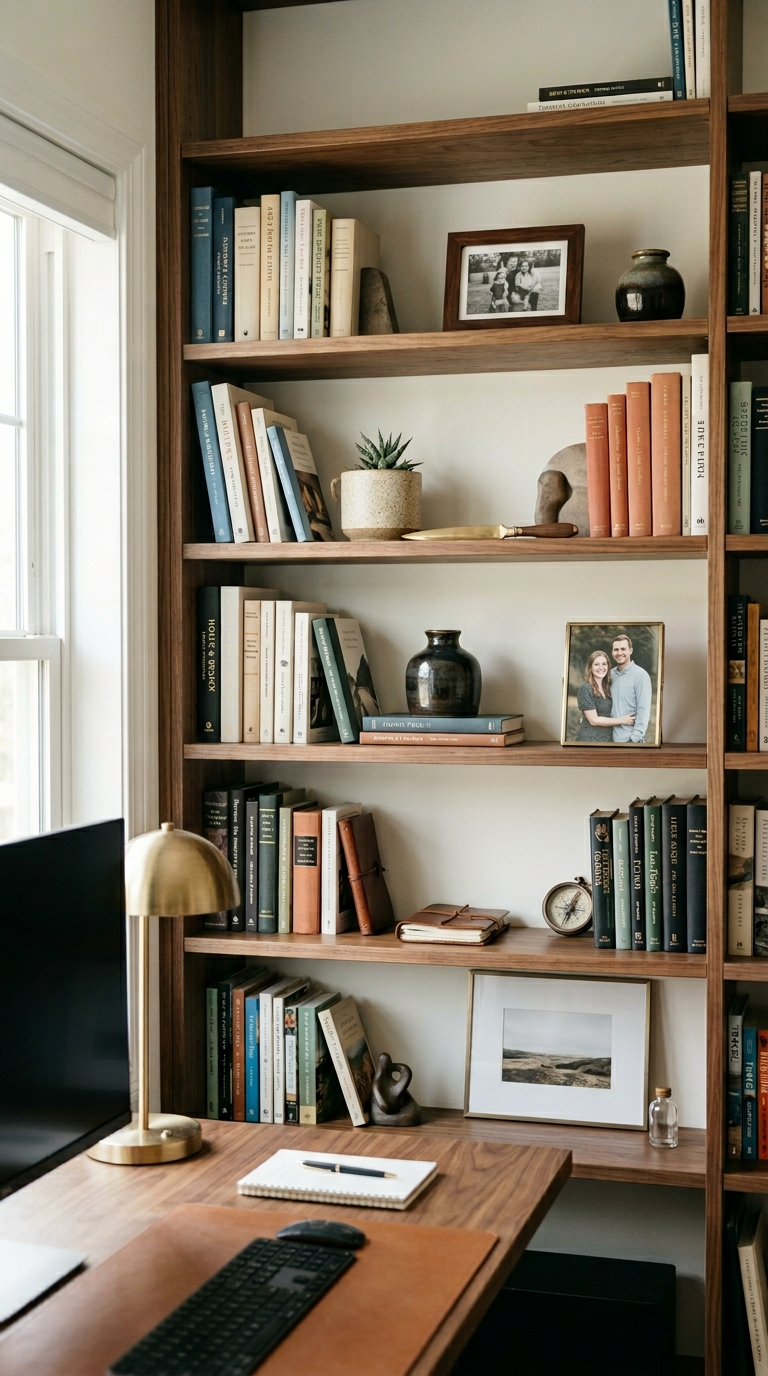
A bookshelf wall behind or beside the desk turns the office into something that resembles a writer’s study or a private library, both of which read as significantly more chic than a generic workspace. The shelves hold books arranged with some intention, mixed with framed photographs, small ceramic objects, and a few personal items that signal a real person works here. Avoid filling the shelves wall to wall with books with no visual breathing room: the chic version has space between the categories, with horizontal stacks and small objects breaking up the vertical lines of the spines.
7. Linen Roman Shades
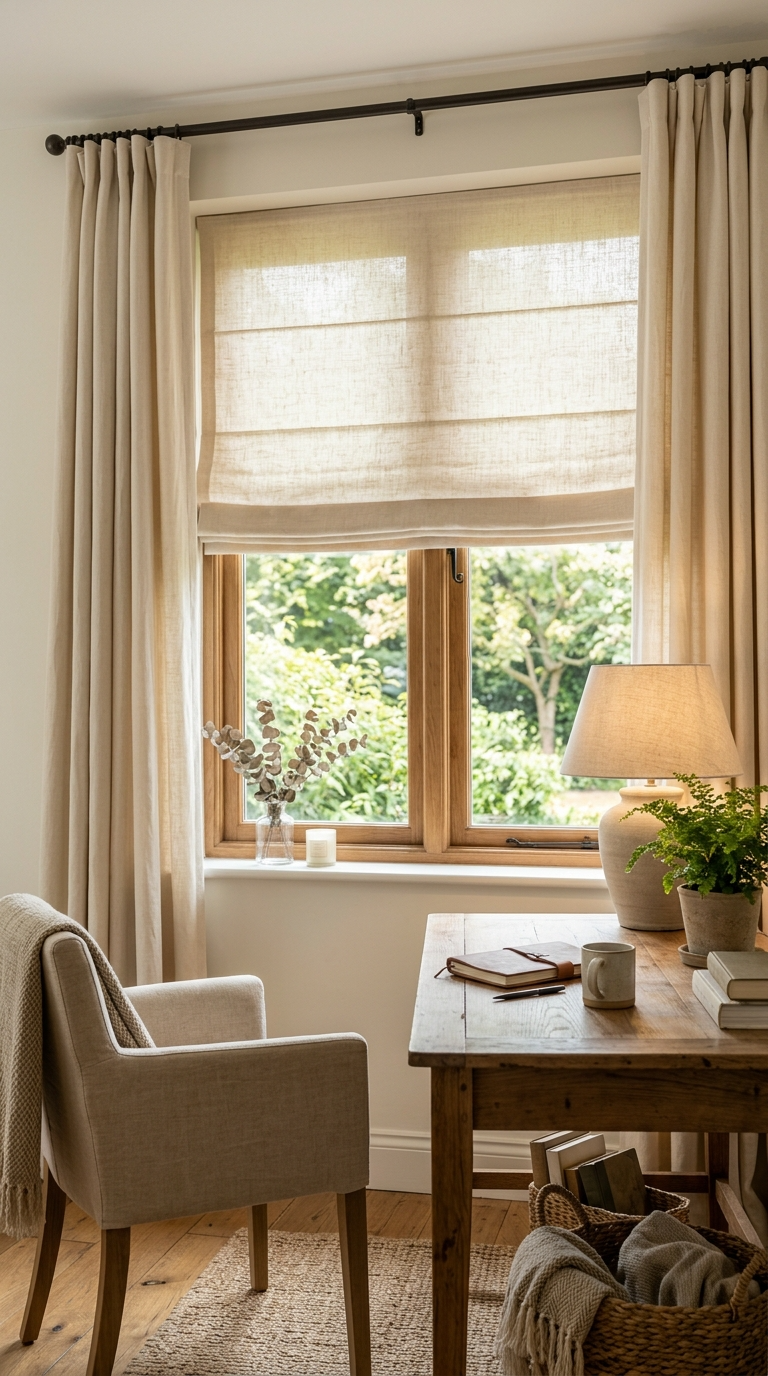
The window treatment in a chic home office sets a quiet, refined tone that hard plastic blinds or vinyl shades cannot match. Linen Roman shades in a warm cream or soft natural tone filter daylight beautifully and adjust easily for the time of day. The fabric reads as residential and considered rather than commercial. Pair the shades with simple curtain panels in a complementary linen for a fully softened window treatment, or use the shades alone for a cleaner more minimal look. The fabric also helps with sound absorption in a video-call-heavy office, which is a small but meaningful practical benefit alongside the visual one.
8. Beautiful Cable Management
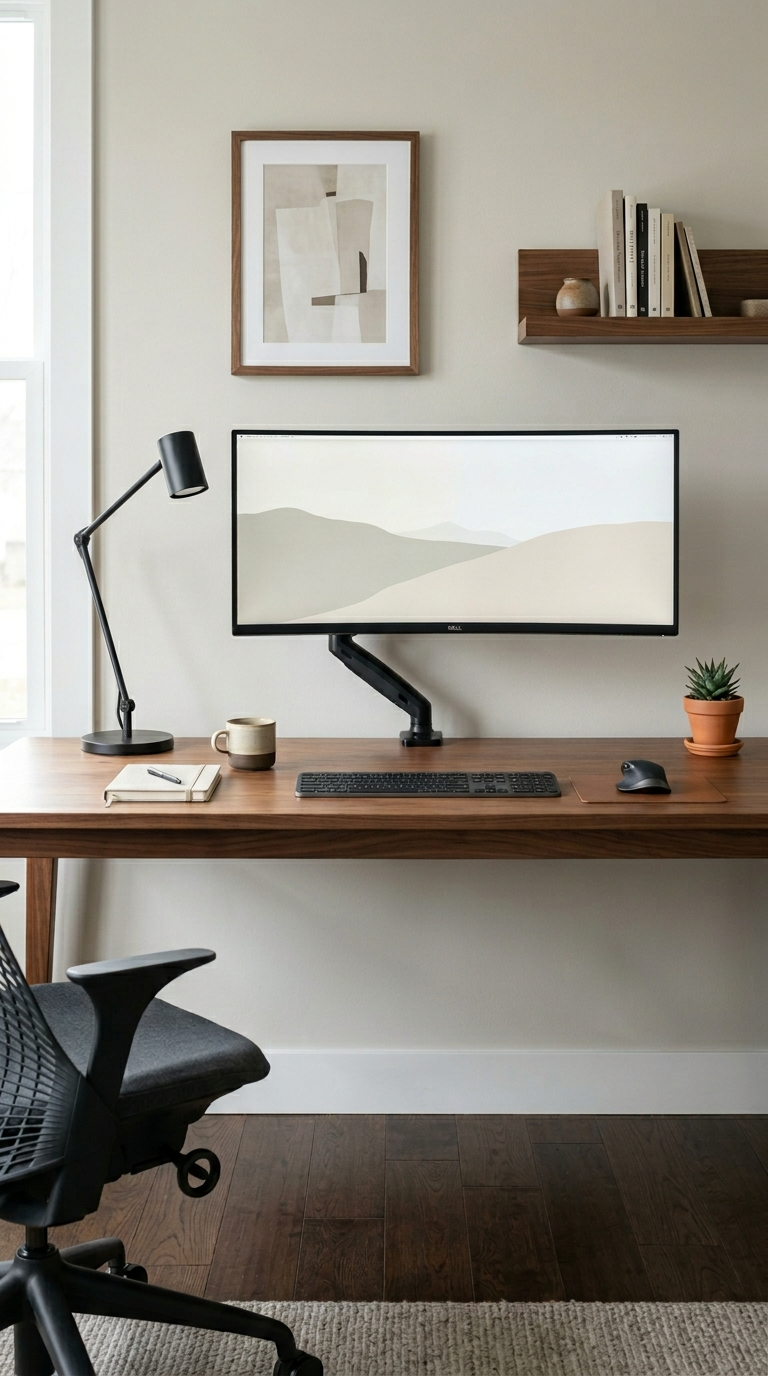
The single biggest enemy of a chic home office is visible cable clutter. Power cords, monitor cables, charging wires, and peripheral cables snake across the floor and behind the desk in ways that undermine the entire visual story of the office. Cable management trays mounted under the desk, cable raceways along the wall, in-desk grommets that route cables down through the surface, and simple zip-tied cable bundles all hide the necessary mess. A few hours of cable management at setup pays back forever in how the office looks, and the result reads as genuinely designed rather than improvised.
9. Quality Desk Accessories
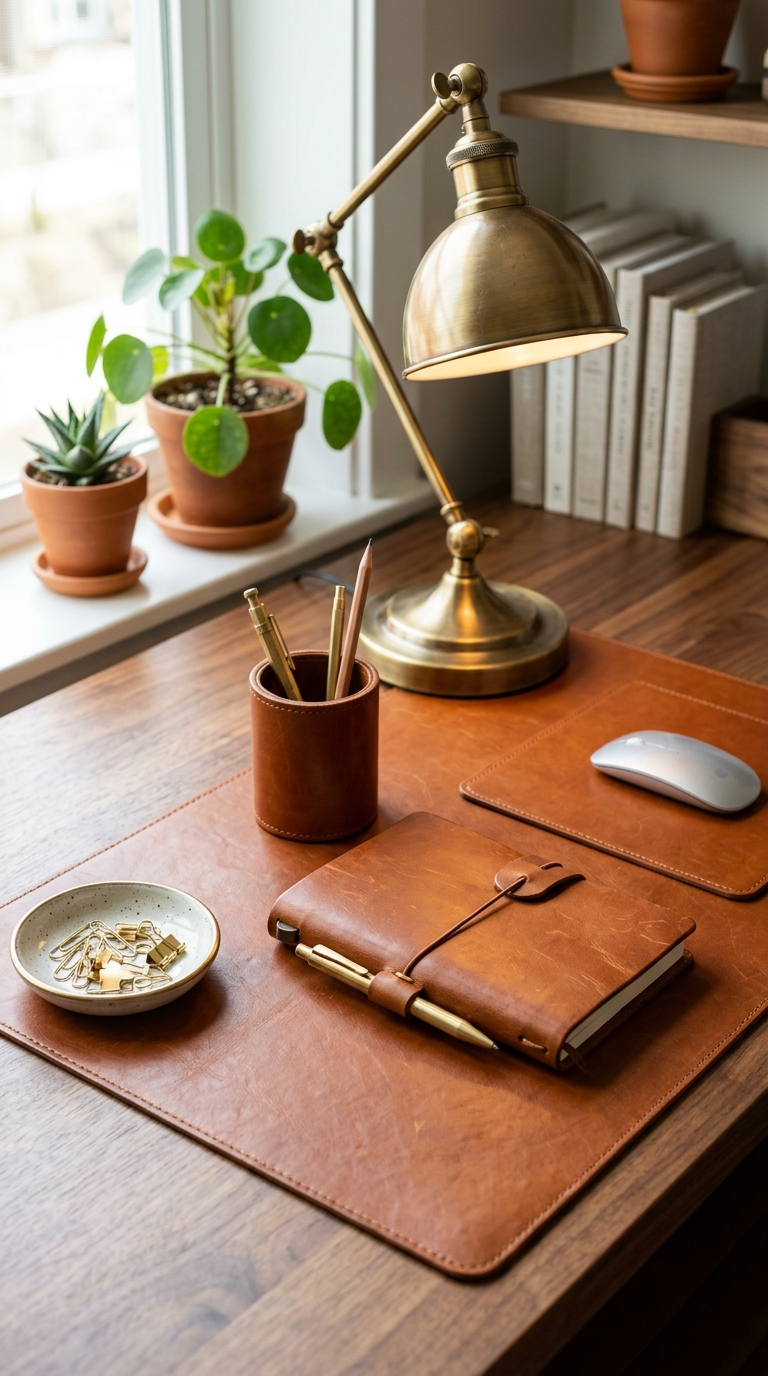
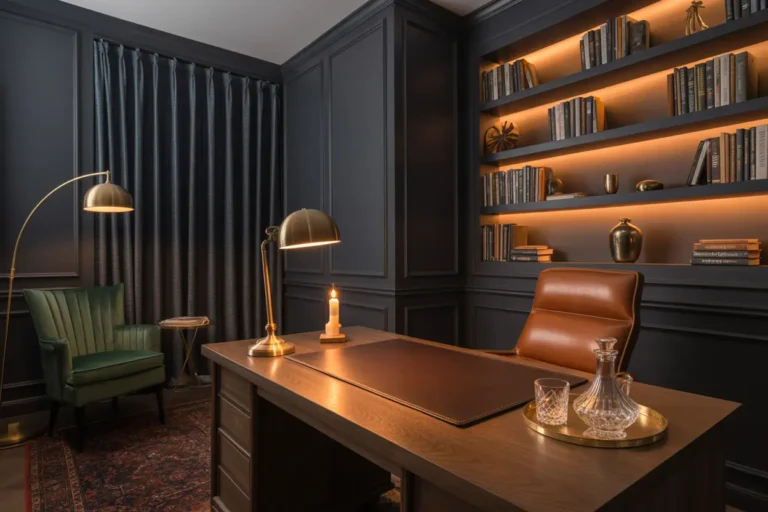
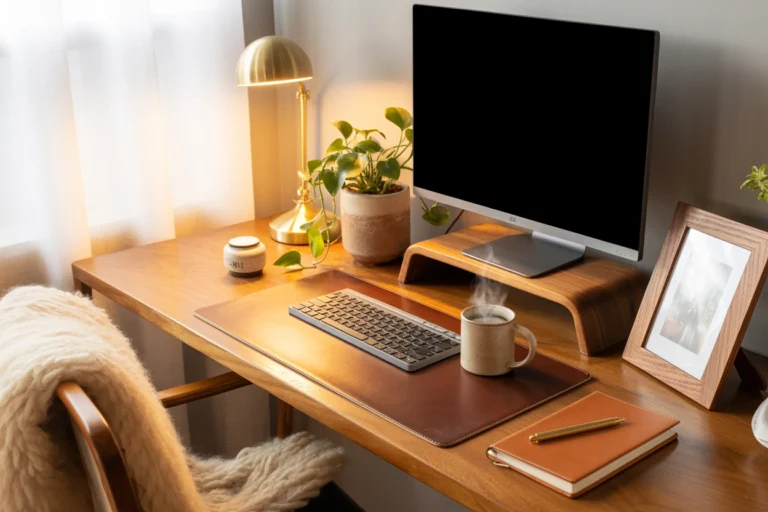
The objects on the desk surface itself have outsized impact on how chic the office feels because they are visible at every glance during work. Quality desk accessories, a leather mouse pad, a brass desk lamp, a beautiful pen holder, a small ceramic dish for paper clips, a real notebook rather than a plastic notepad, signal that the desk is treated with the care of a real workspace rather than a temporary setup. Choose accessories in coordinated finishes: brass with leather, walnut with brushed nickel, matte black with marble. The cumulative effect of well-chosen desk accessories is significant.
10. Wall Behind Desk Detail
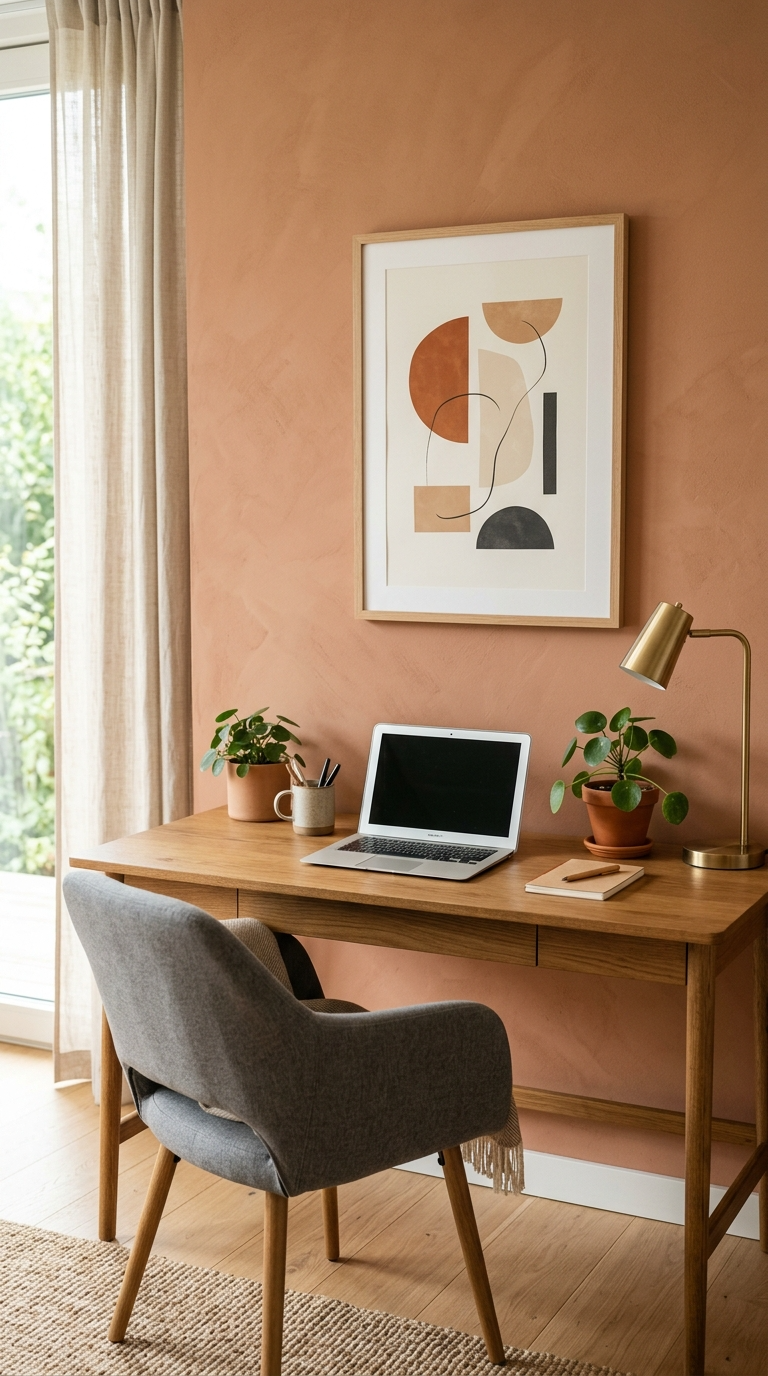
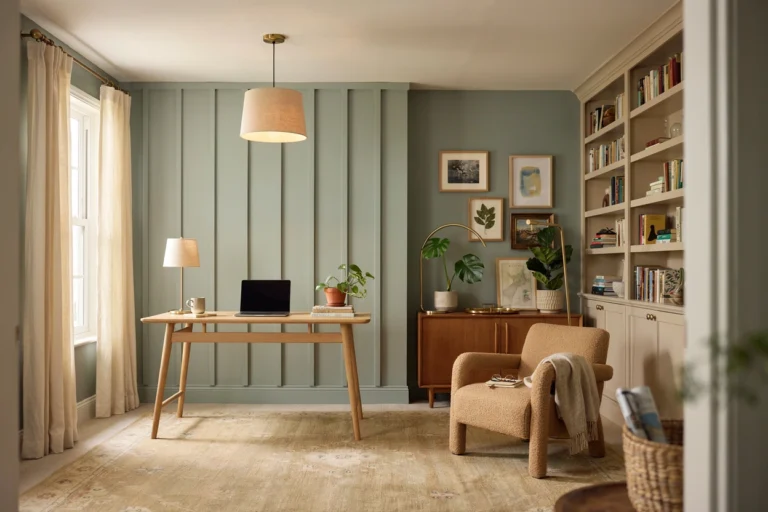
The wall directly behind the desk is what shows up in every video call and what you face every time you sit down to work. Treating this wall with intention, whether through paint color, wallpaper, paneling, or a single large piece of art, transforms the office immediately. A soft sage, dusty blush, or warm clay paint color creates an enveloping backdrop that flatters the desk and the person sitting at it. A subtle textured wallpaper adds quiet visual interest. Wood paneling adds warmth and architectural character. Whatever the choice, the intentional wall reads on every video call and during every work session. The same principle of one strong feature wall also works in cozy living room setups where a single wall treatment anchors the rest of the room.
11. Real Ergonomic Setup
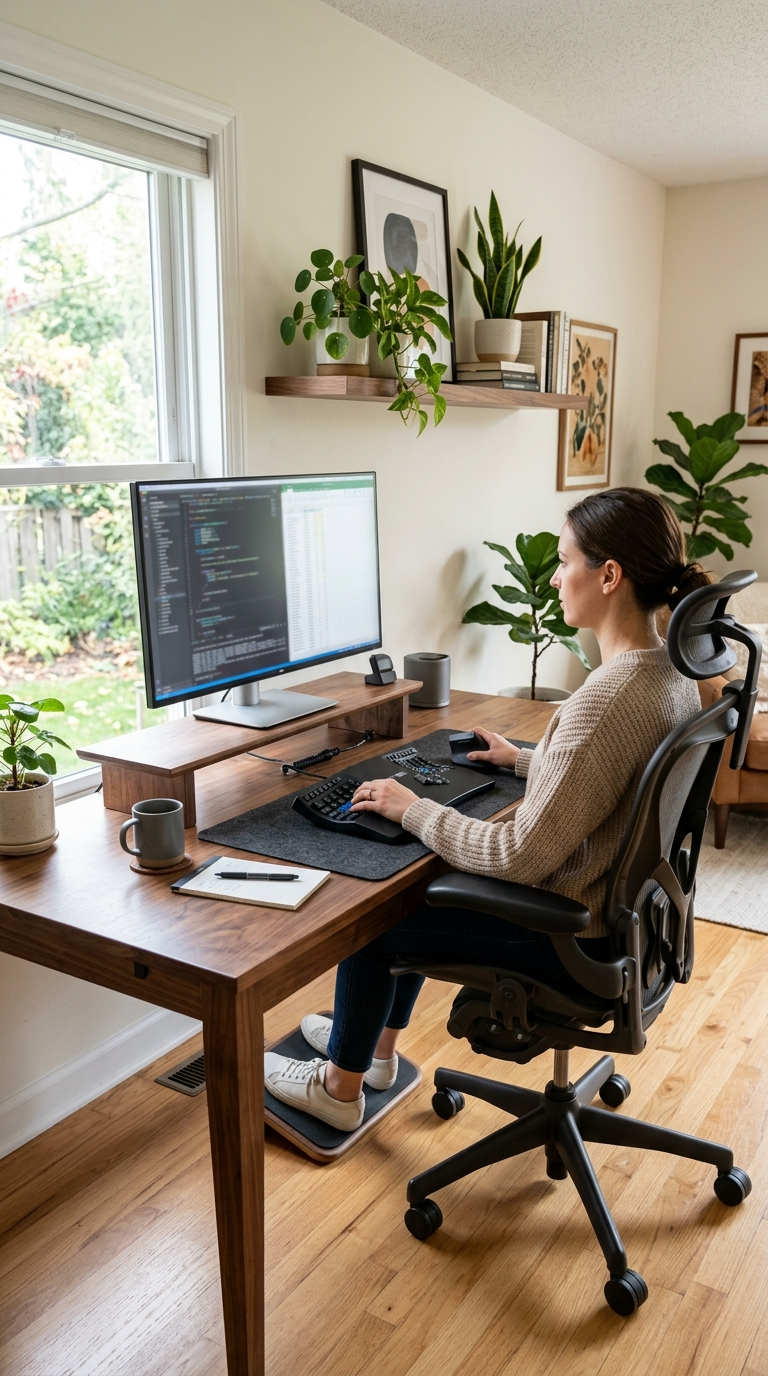
Chic and ergonomic are not opposites. The most beautiful home offices are also the ones where the monitor is at eye level, the keyboard is at elbow height, and the chair properly supports the back over an eight-hour day. A monitor stand or an adjustable monitor arm raises the screen to the right height and clears desk space at the same time. A keyboard tray or proper desk depth keeps the keyboard at the correct distance. The visible cleanliness of a properly arranged ergonomic setup actually contributes to the chic quality of the office, since every component is in its right place rather than scattered improvisationally.
12. Hidden Storage System
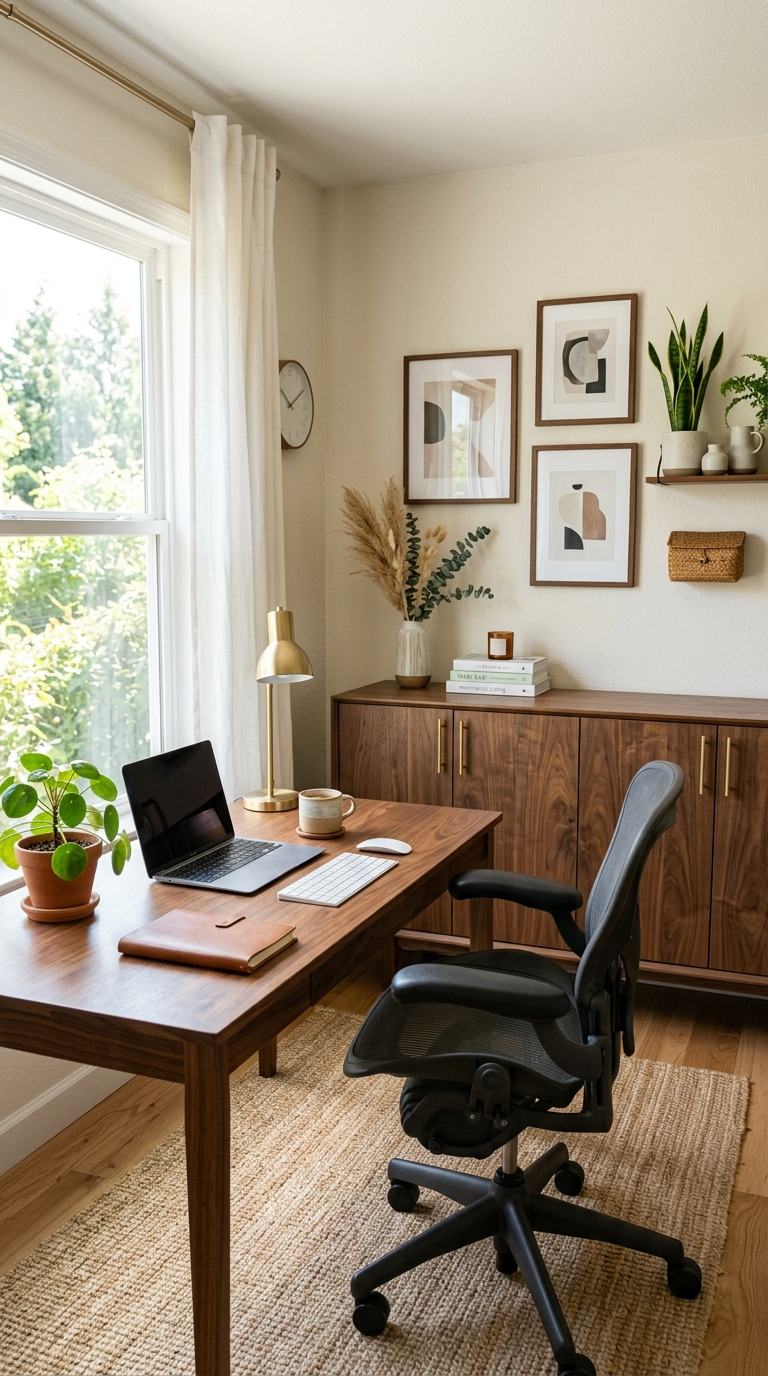
Open shelving and bookshelves are part of the chic home office aesthetic. But the supplies that nobody wants to see on display, the printer paper, the tangle of cables and adapters, the stack of mailing labels, the spare batteries, all need a place to live that is functional but not visually present. A closed credenza behind the desk, a lower cabinet under the bookshelves, or a separate small storage cabinet handles the office supply overflow that would otherwise spread across the desk. Hidden storage is what allows the visible parts of the office to stay clean and styled.
13. Single Reading Chair
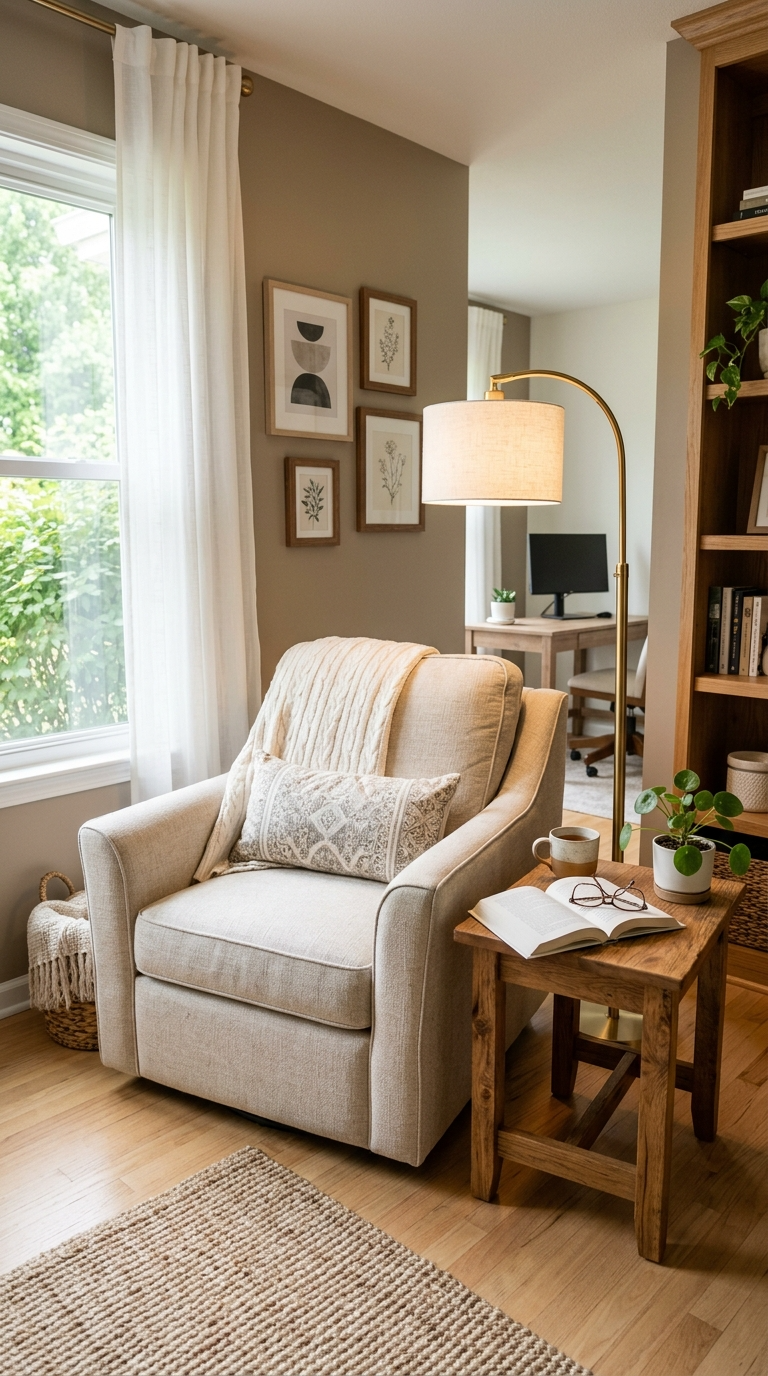
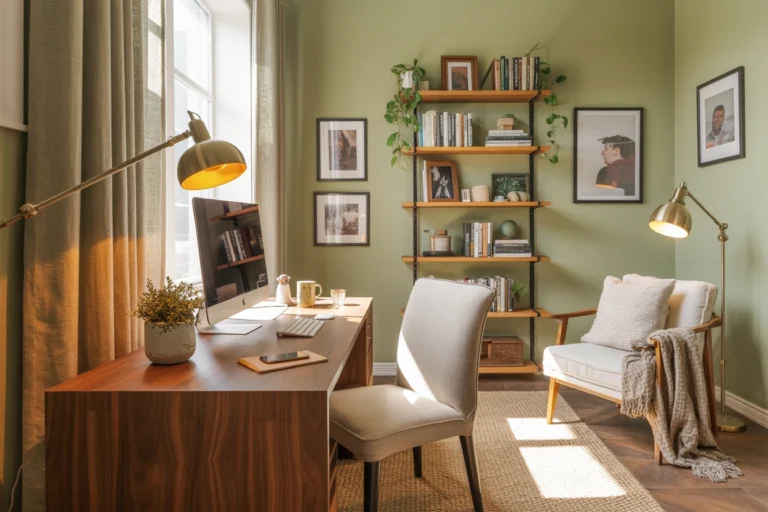
A single comfortable reading chair positioned in the corner of the office, with a small side table and a floor lamp, gives the room a second mode beyond the work mode at the desk. The reading chair becomes the spot for reading, for taking phone calls without staring at the monitor, for thinking through a problem away from the screen, or for the brief breaks during the workday that genuinely improve focus. The chair adds significant visual warmth to the office and signals that the room is a place for thinking and not just typing. For more on creating dedicated reading spots that work well in a study or office corner, the 22 reading nook ideas guide covers small-scale comfortable seating arrangements in detail.
14. Floor Rug Anchoring
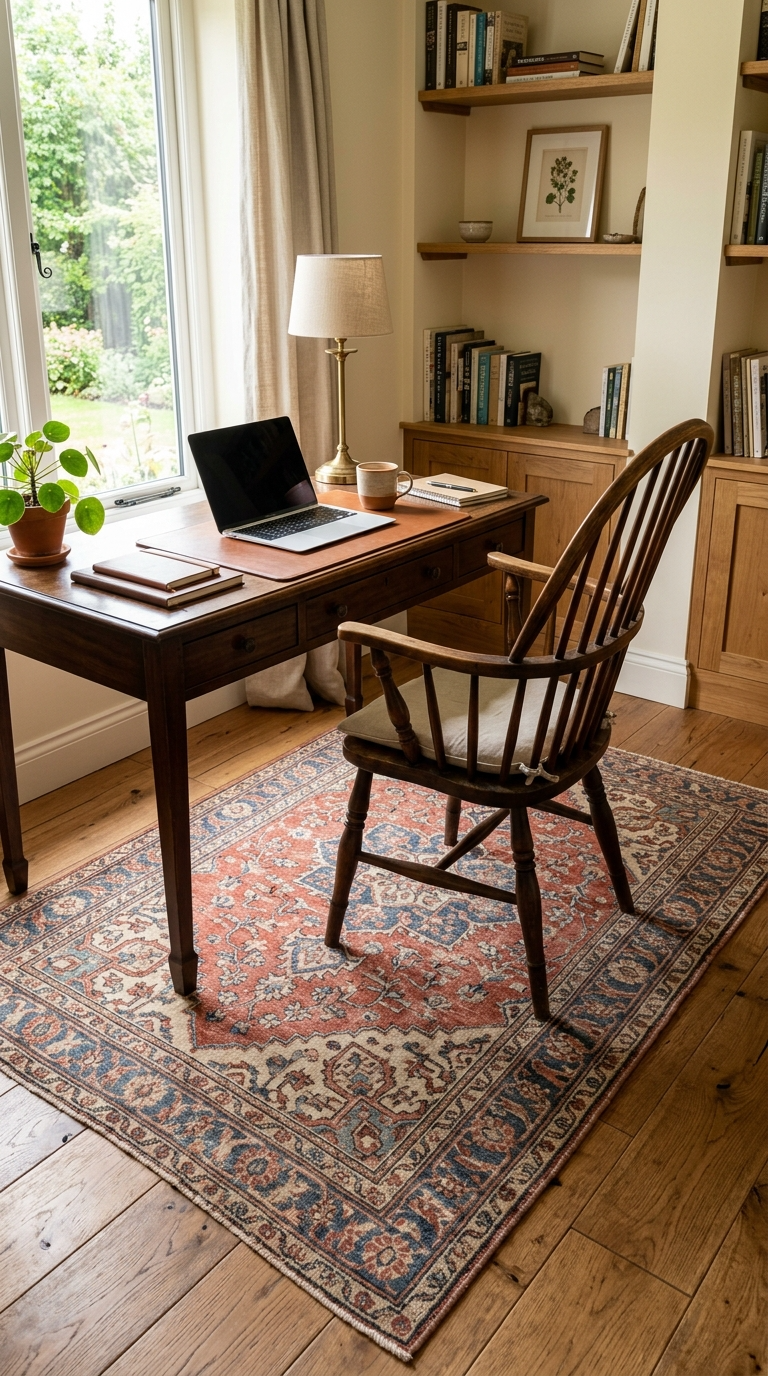
A real area rug under the desk and chair anchors the office visually and adds a softness underfoot that hard floors lack. Choose a rug substantial enough that the desk and the front legs of the chair both sit on it, which defines the workspace as a complete zone within the larger room. A vintage Persian, a simple natural fiber rug like jute or sisal, or a flat-weave wool rug all work depending on the office aesthetic. Avoid plush high-pile rugs under rolling chairs since the wheels do not roll smoothly on them. A flat-weave or low-pile rug allows the chair to roll while still providing the visual anchor.
15. Beautiful Notebook Stack
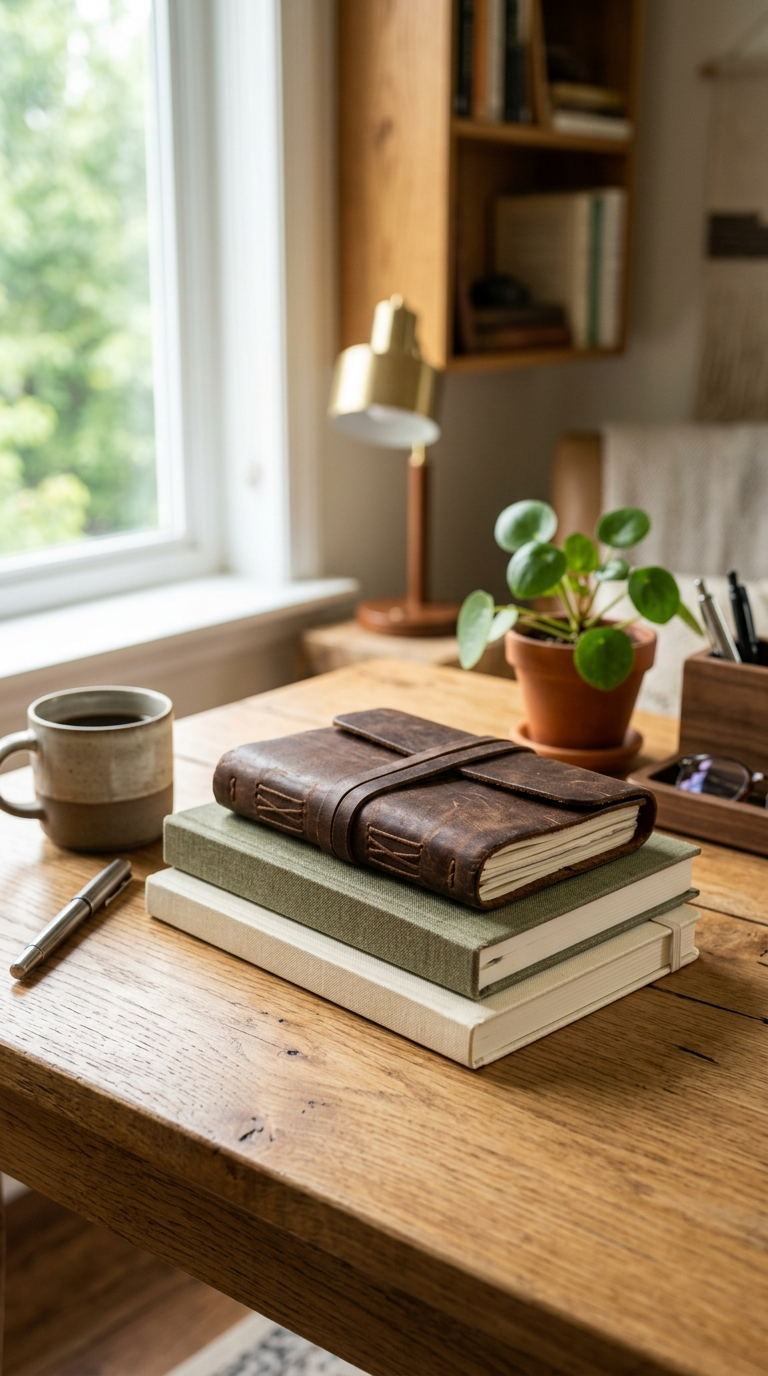
A small stack of two or three real notebooks with quality covers, a leather portfolio, a hardcover journal, a beautiful art book, on the desk surface signals that the office is for thinking and writing rather than just clicking. The visual contribution is small but the daily reinforcement is real. Choose notebooks with covers that suit the office aesthetic: warm leather, linen-bound covers, or simple black or kraft paper for a more minimal style. The notebooks should be ones you actually use rather than purely decorative ones, so they accumulate the small marks and folded corners that signal genuine use.
16. Custom Wall Calendar
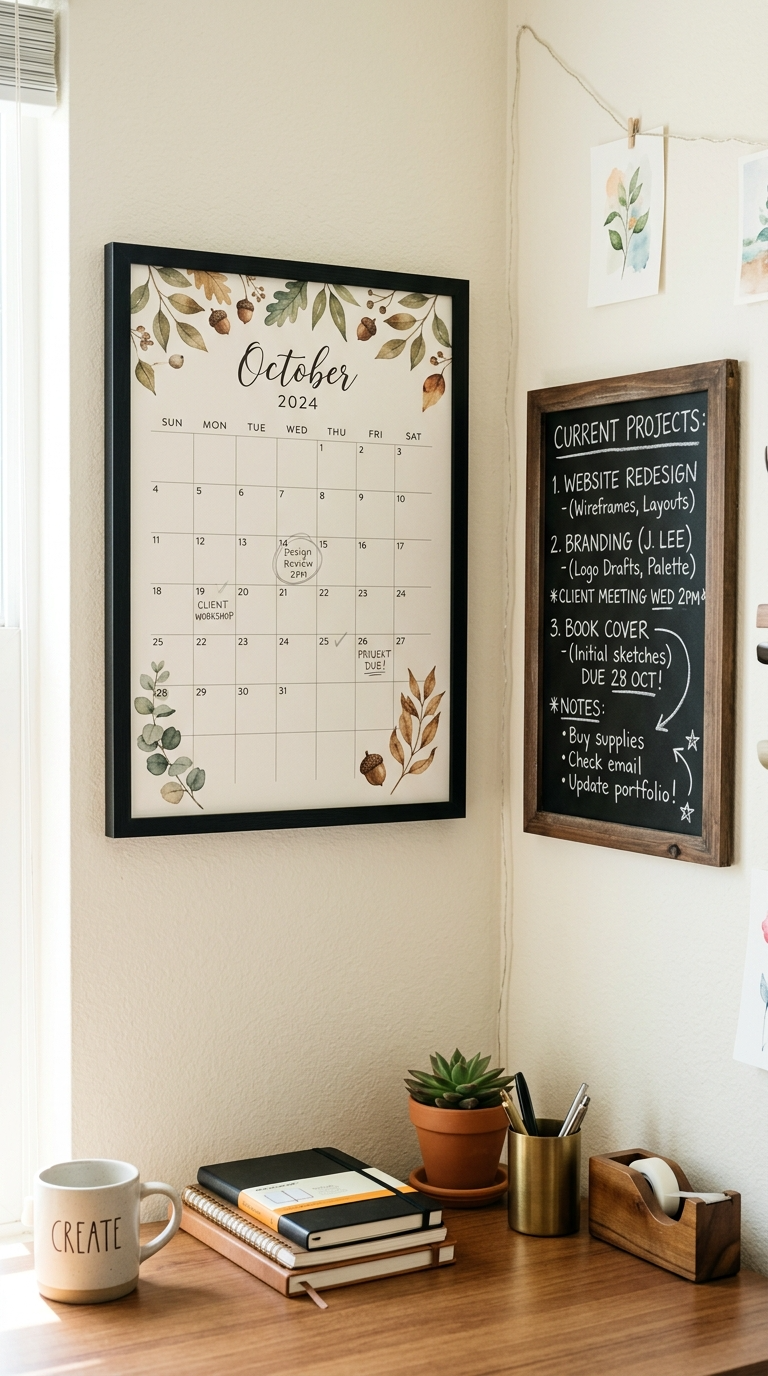
A wall calendar, planning board, or large dry-erase board mounted on a wall in the office adds a useful planning surface and a strong visual element at the same time. A beautiful calendar in a simple wood frame, a vintage chalkboard with the current month written cleanly, or a custom corkboard organized with the current projects all serve real planning purposes while adding visual interest. Avoid the standard plastic calendars and corporate-looking project boards: the chic version uses materials and finishes that suit the rest of the room. The calendar also reduces dependence on screens for time and project orientation, which is a small but meaningful daily benefit.
17. Desk Lamp Detail
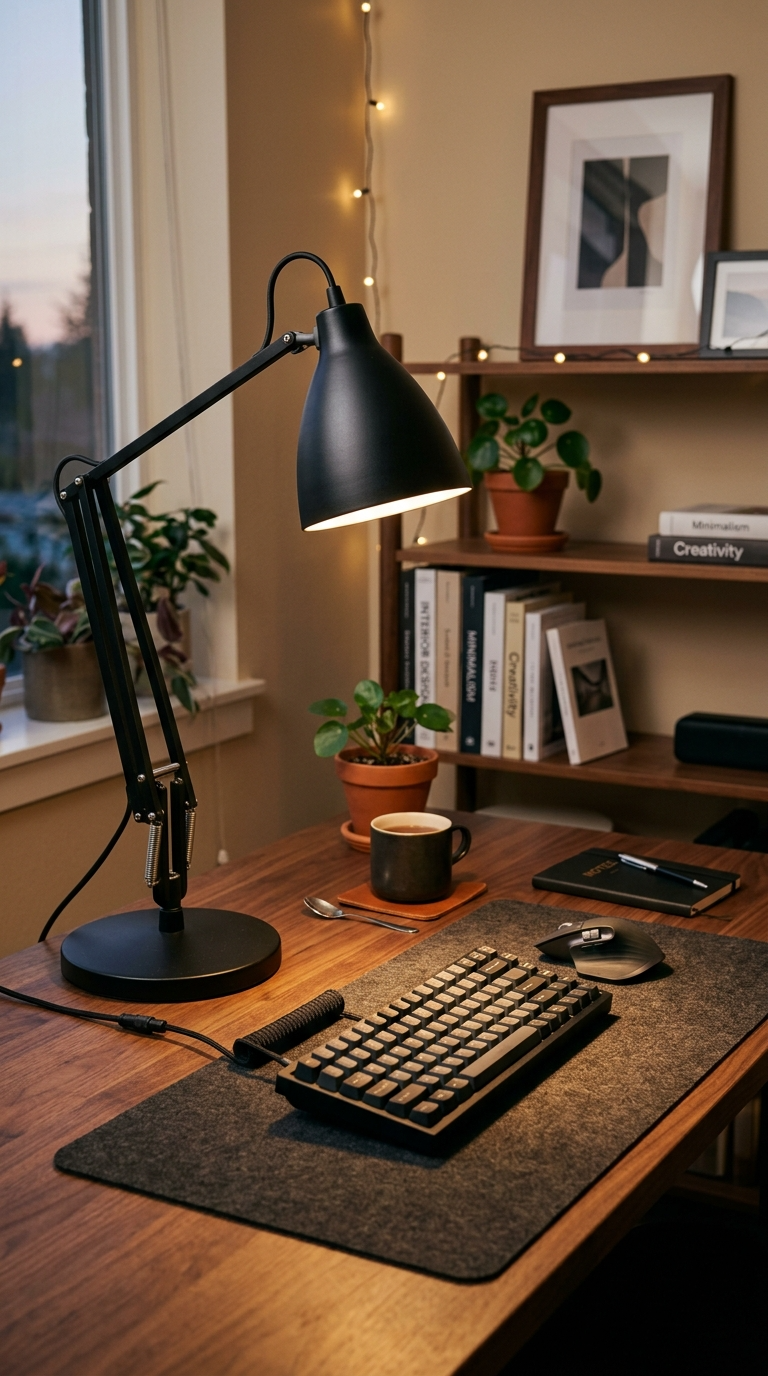
A dedicated desk lamp beside the keyboard provides focused task lighting that the overhead light cannot match. The lamp also functions as a key piece of styled desk furniture: a beautiful brass lamp, a sculptural matte black lamp, or a vintage industrial-style lamp all add personality to the desk while serving the genuine practical purpose of illuminating the work surface. Look for lamps with adjustable arms or shades so the light can be aimed precisely. Use a warm bulb in the 2700K to 3000K range. The lamp on the desk is one of those small details that immediately separates a styled office from a generic one.
18. Sculptural Bookends
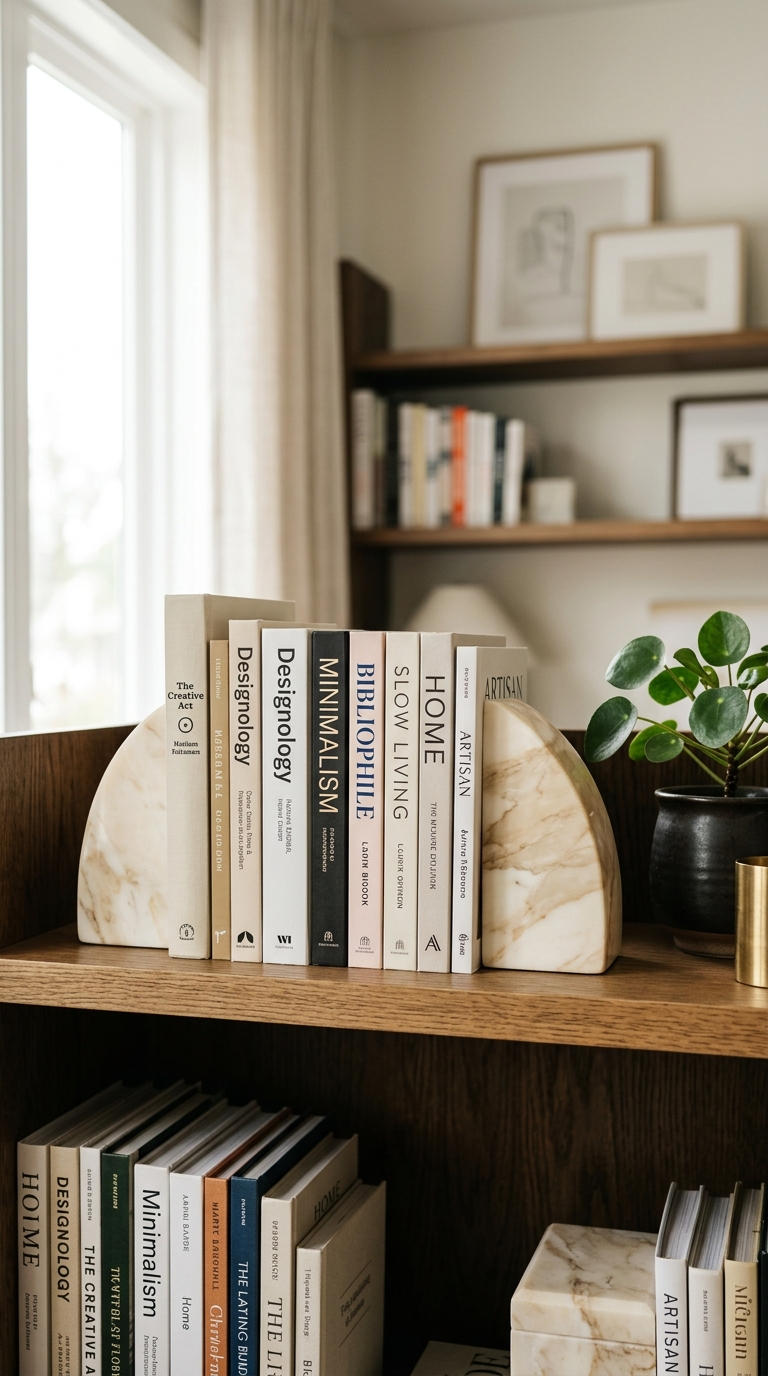
Sculptural bookends on the bookshelf or the credenza add a small detail of intention and craft to the office. Marble bookends, brass animal-shaped bookends, vintage stone bookends, or hand-thrown ceramic bookends all serve as functional book containment and as small pieces of art on the shelf. Choose bookends that are visually substantial enough to hold their own against the books they support, and that suit the rest of the office material palette. A pair of beautiful bookends turns a row of books on a shelf into something that looks deliberately curated rather than simply stored.
19. Hidden Cord Outlet
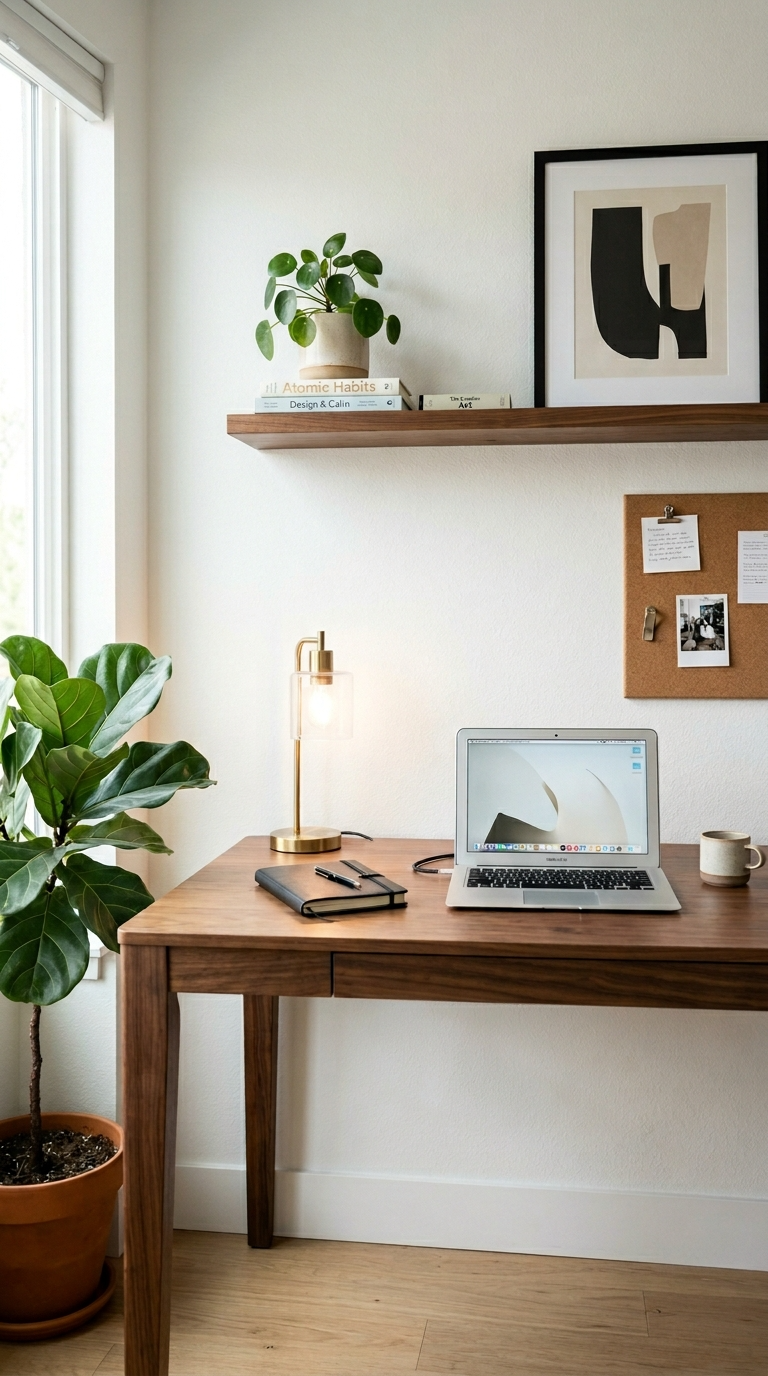
A clean white wall with a power cord snaking down from a desk lamp or monitor immediately undermines the visual quality of the office. Wall outlets installed at desk height, behind the desk where they are hidden, or floor outlets routed through the rug, eliminate the visible cord problem entirely. Even simple plastic cord covers painted to match the wall color make a meaningful difference. This is one of the small details that distinguishes a chic home office from a stylish-but-imperfect one. The work involved is modest but the visual payoff is significant and permanent.
20. Personal Object Display
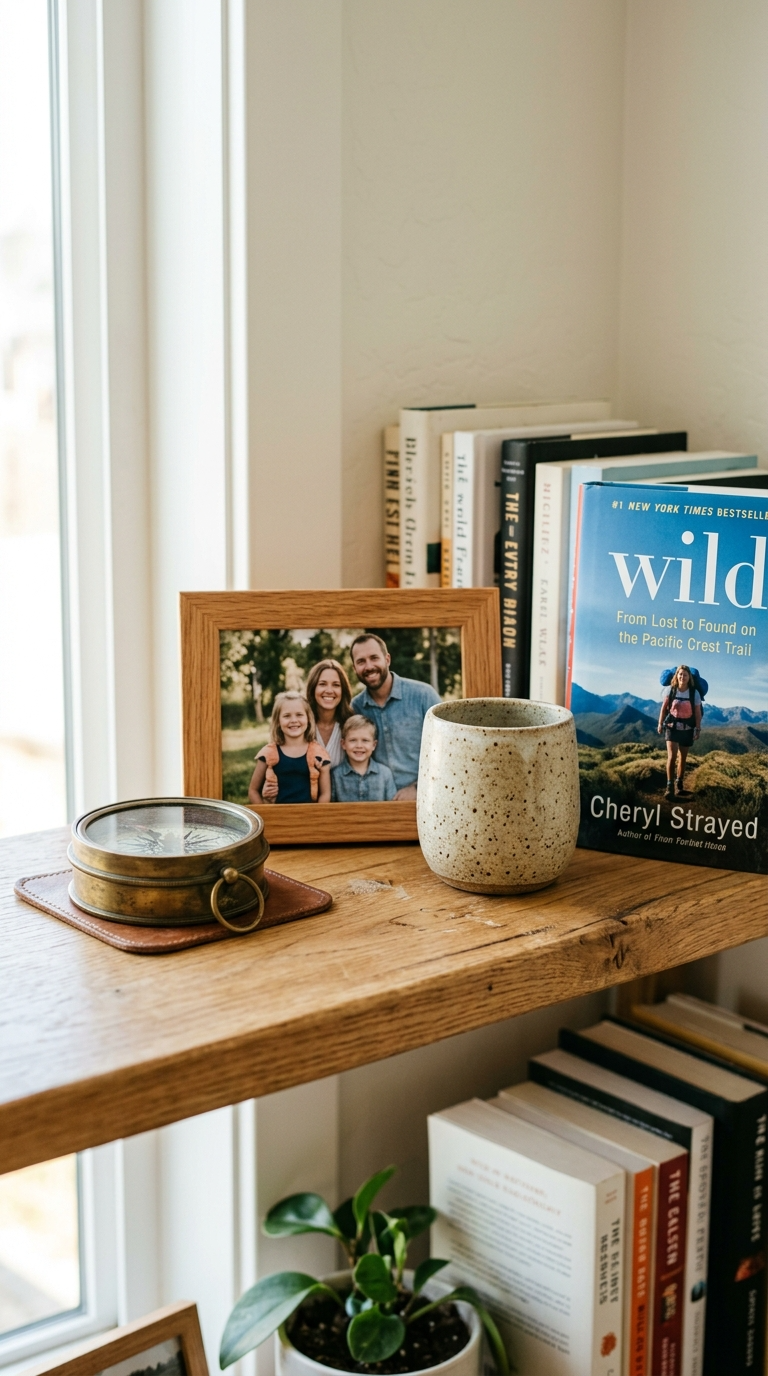
A small display of personal objects on the desk or on a nearby shelf, a vintage object inherited from a grandparent, a small piece of art made by a child, a meaningful book, a single travel object, signals that a real person works in the office rather than a generic professional. The personal touches are what distinguish a beautiful but anonymous office from one that reflects the specific person who works there. Limit the display so it remains a curated detail rather than dominating the space. Two or three meaningful objects displayed thoughtfully has more impact than a dozen scattered ones.
21. Real Working Surface
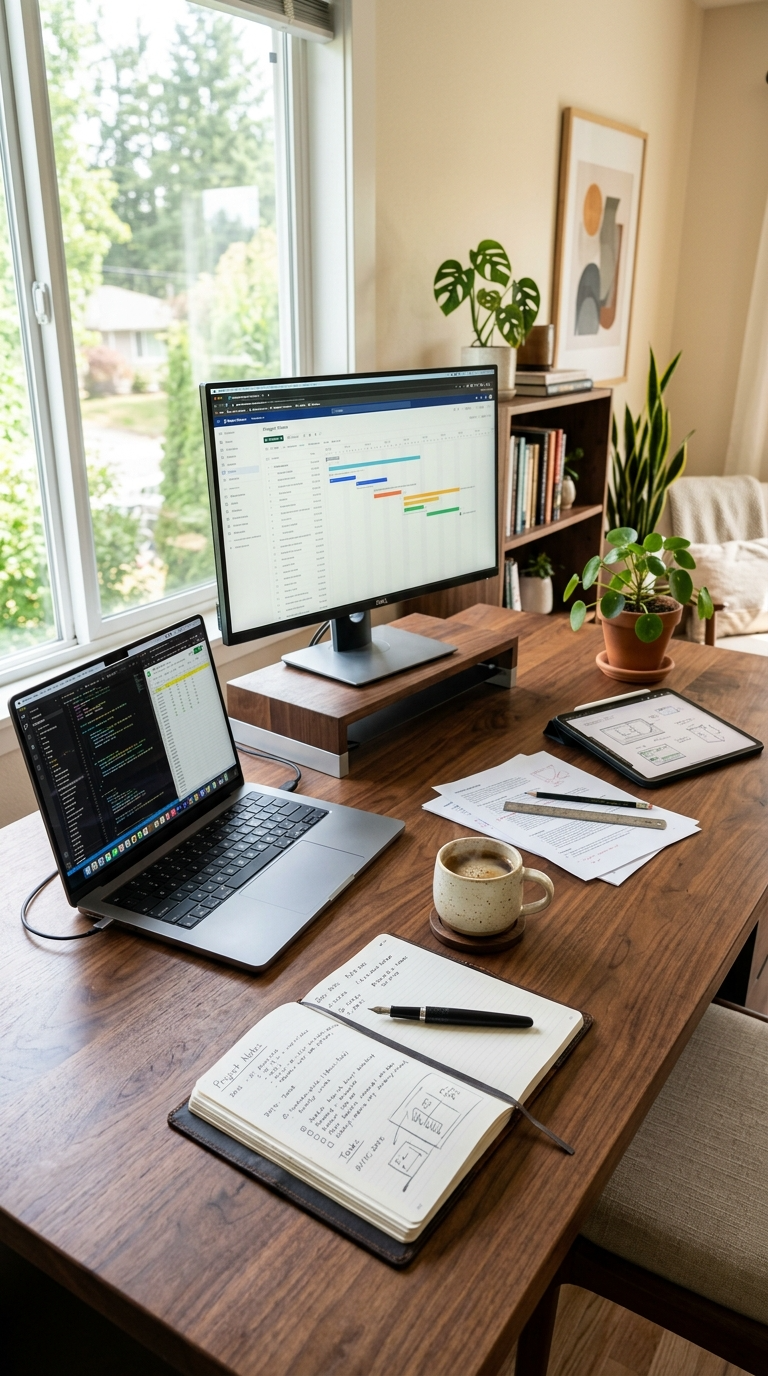
A desk surface that is genuinely usable for work, large enough to accommodate the laptop, an external monitor, a notebook, a coffee cup, and a small task at the same time, is the foundation of a chic and functional home office. Stylish small desks that cannot hold a real workday’s worth of materials force the work to spread to other surfaces, which undermines both the function and the visual quality of the room. Plan the desk size based on actual work needs: a writer needs different desk real estate than a designer, who needs different surface than a video editor. The right desk size is the one that fits your actual work.
22. Simple Daily Reset
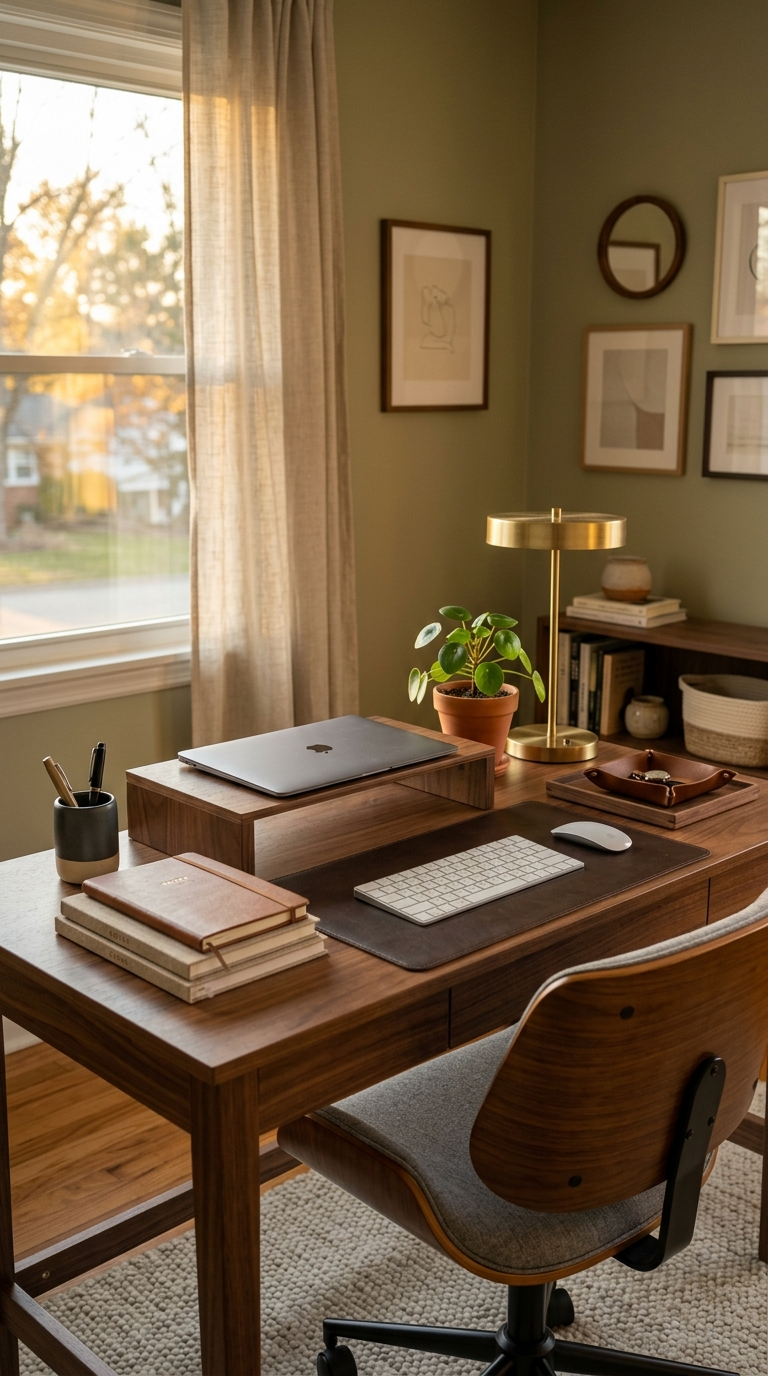
The most chic home office in the world stops looking chic by Wednesday afternoon if it is not maintained. A simple two-minute reset at the end of every workday, putting the notebooks back in place, returning the empty coffee cup to the kitchen, organizing the day’s papers into the appropriate file or pile, and returning pens to the holder, makes the office look styled and ready for work every morning. The reset takes very little time but produces an office that consistently looks like the photograph version of itself rather than a worn-down weekday version. This habit is what allows all the other styling decisions to actually show up day after day. A chic home office is not built on a single dramatic feature. It is built on a series of considered decisions that together produce a space that looks beautiful and works reliably. The right desk, the right chair, the right lighting, the right art, the right small details, all maintained with a simple daily habit. Pick the choices that most affect both how the office looks and how it functions for your actual work, and start there.