22 Bathroom Wallpaper Ideas That Add Personality Without Tile Work
Wallpaper has had a complicated relationship with bathrooms for a long time. The old version, paper that peeled at the seams within months from the moisture, gave wallpaper a bad reputation in any wet room. Modern bathroom wallpaper is a different product entirely. The vinyl-coated and peel-and-stick options now available handle bathroom humidity well, install in an afternoon without paste, and remove cleanly without damaging the walls underneath. The result is that wallpaper has become one of the most accessible ways to add personality to a bathroom that has tile and fixtures you cannot or do not want to replace. These 22 ideas cover the full range of bathroom wallpaper applications, from subtle textures to bold patterns, and the practical considerations that make each one work.
1. Single Feature Wall
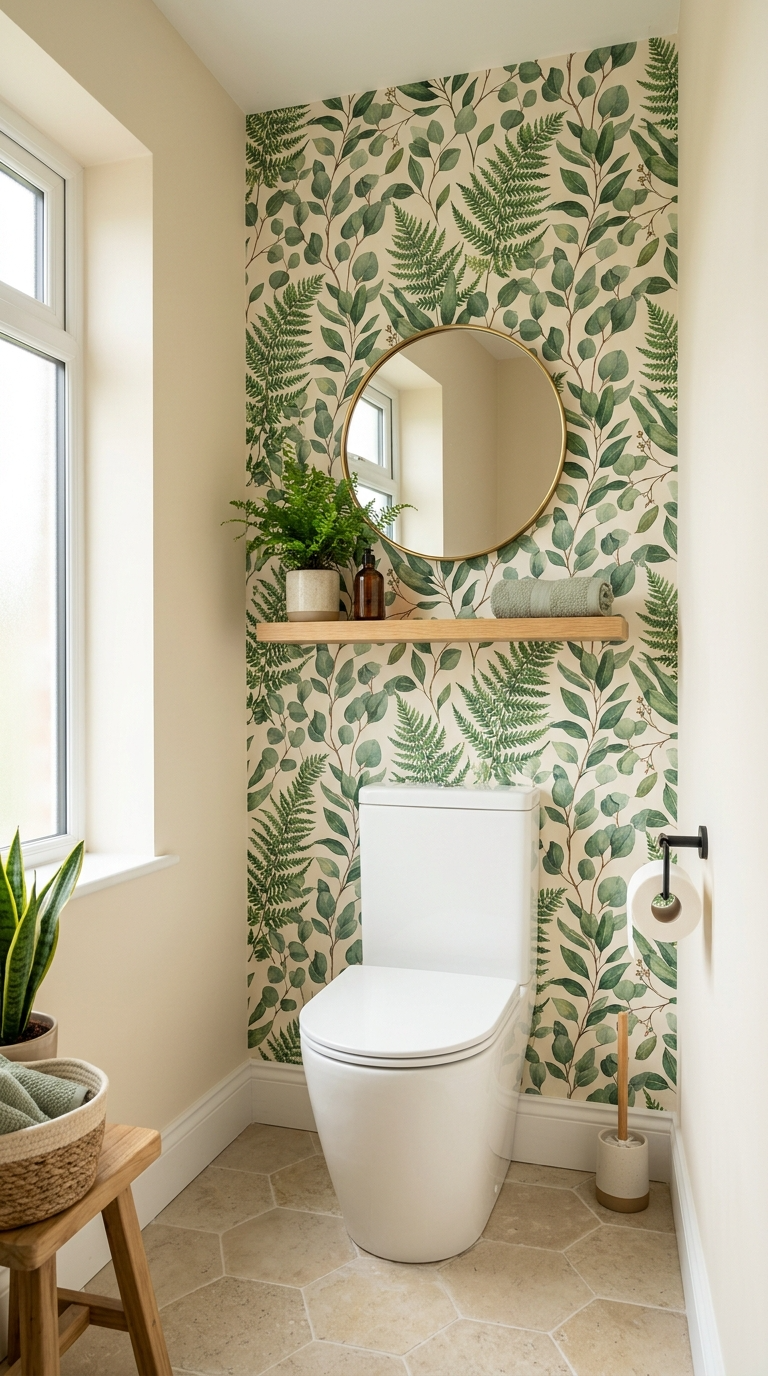
The most accessible bathroom wallpaper application is a single feature wall, usually the wall opposite the door, the wall behind the toilet, or the wall behind the tub. The contained application means a single roll of wallpaper is often enough, the installation takes a single afternoon, and the visual impact of the patterned wall against the surrounding plain walls reads as a deliberate design choice. Choose the wall that gets seen most often or the one that currently has the least visual content. The feature wall works particularly well in bathrooms where tiling extends partway up the walls, since the wallpaper sits above the tile and takes over from the tile line upward.
2. Botanical Print Approach
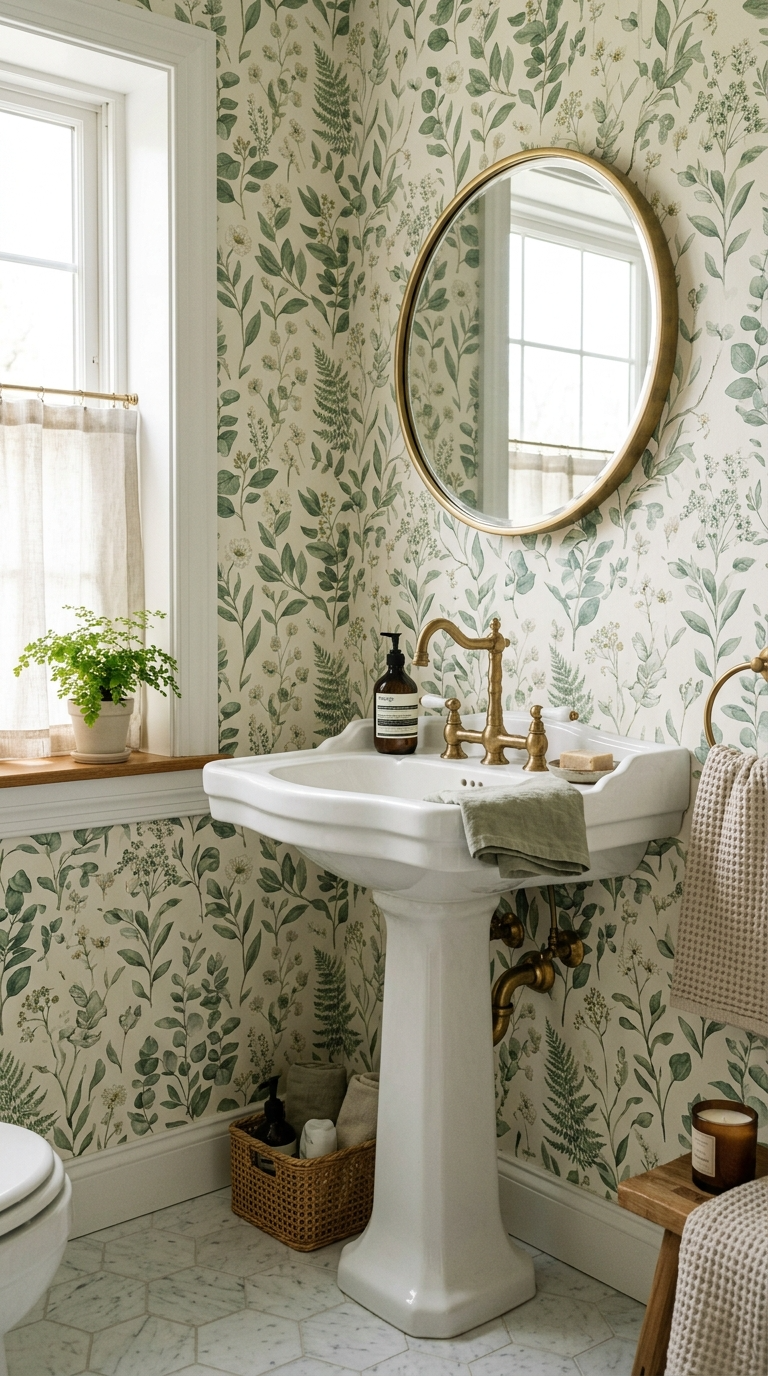
Botanical wallpapers featuring leaves, branches, or flowers in muted natural colors are among the most reliably successful bathroom wallpaper choices because the natural imagery suits the spa-like quality that most people want in a bathroom. Look for botanical prints in soft cream backgrounds with green, sage, or muted earthy foliage rather than highly saturated tropical prints which can age out quickly. The botanical print also pairs beautifully with plants in the bathroom itself, creating a coherent natural theme between the wallpaper and the living plants. Modern peel-and-stick botanical wallpapers come from many specialty manufacturers at varying price points.
3. Subtle Grasscloth Texture
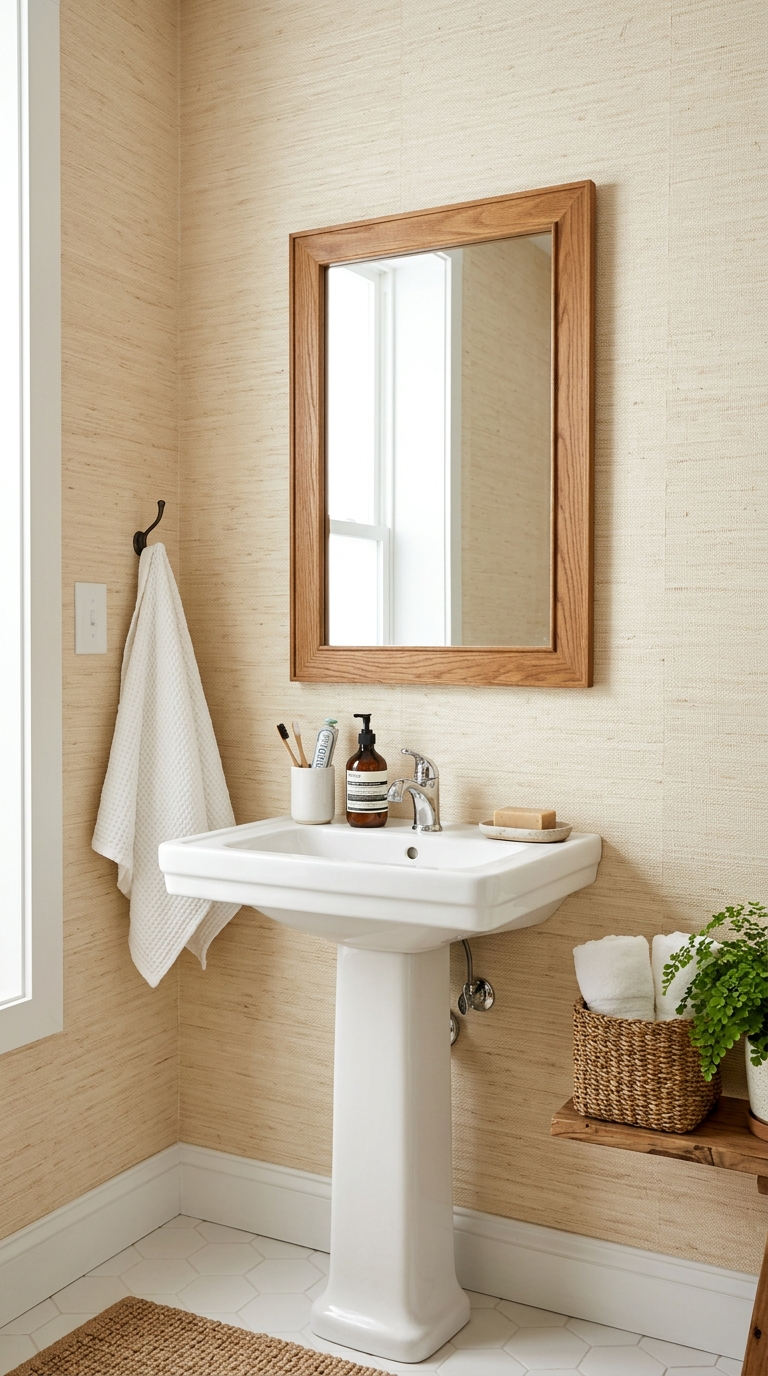
Grasscloth-look wallpaper, whether actual grasscloth or a vinyl printed to look like woven natural fibers, adds quiet textural interest to a bathroom without committing to a strong pattern. The subtle texture catches light differently across the day and gives the walls a depth that smooth painted walls cannot achieve. Grasscloth in warm cream, soft sage, or muted blue tones suits both modern and traditional bathrooms. The vinyl versions handle bathroom moisture better than actual woven grasscloth, which makes them the more practical choice for the typical bathroom environment. Apply grasscloth to all four walls for a fully enveloping effect or to a single feature wall for a contained accent.
4. Geometric Pattern Choice
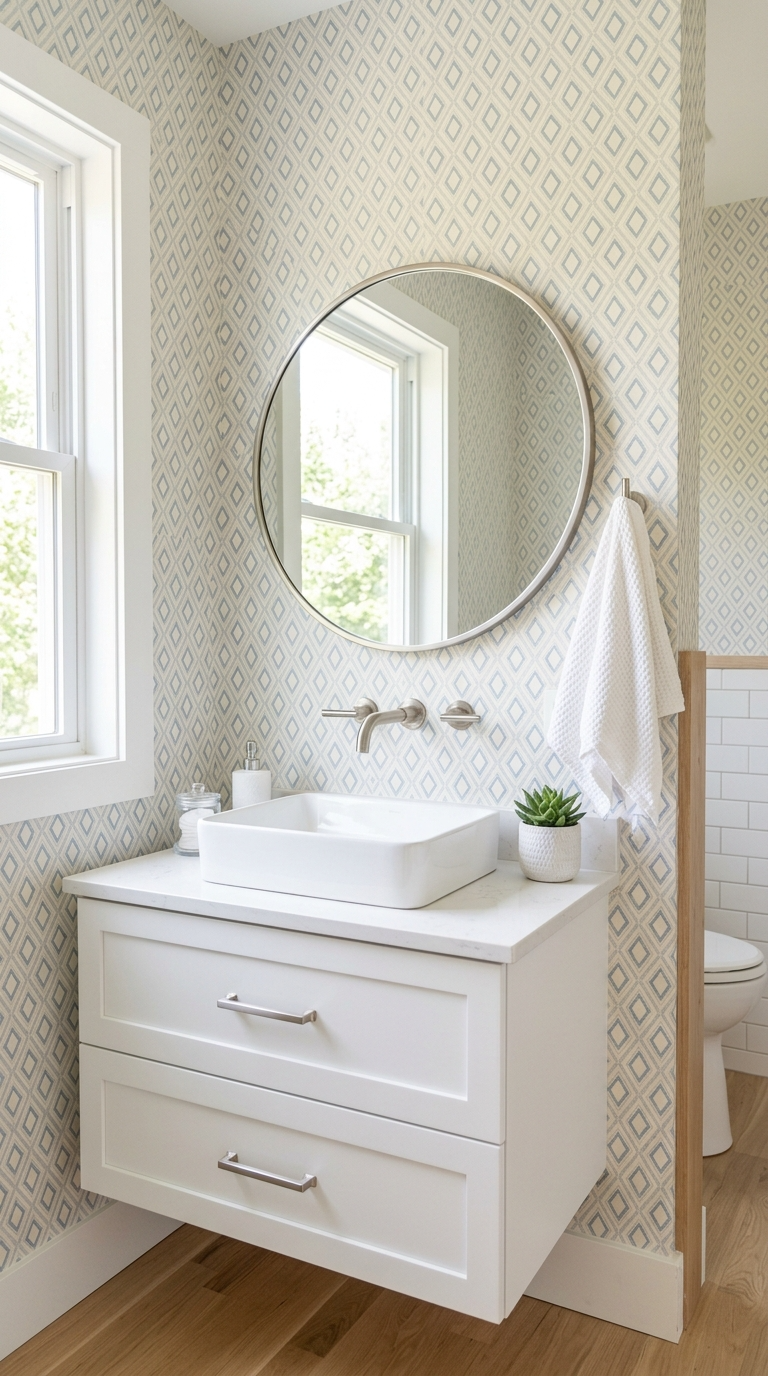
Geometric wallpapers in clean simple shapes work particularly well in bathrooms because the architectural quality of geometric patterns suits the structural feeling of the room. A simple stripe, a diamond pattern, a hexagon repeat, or a small grid all add visual interest without the busy quality that complex patterns can have in a small space. Choose geometric patterns in muted tones, soft cream and gray, sage and white, or warm cream and dusty blush, rather than high-contrast bold versions. The muted geometry reads as sophisticated rather than overwhelming.
5. Powder Room Drama
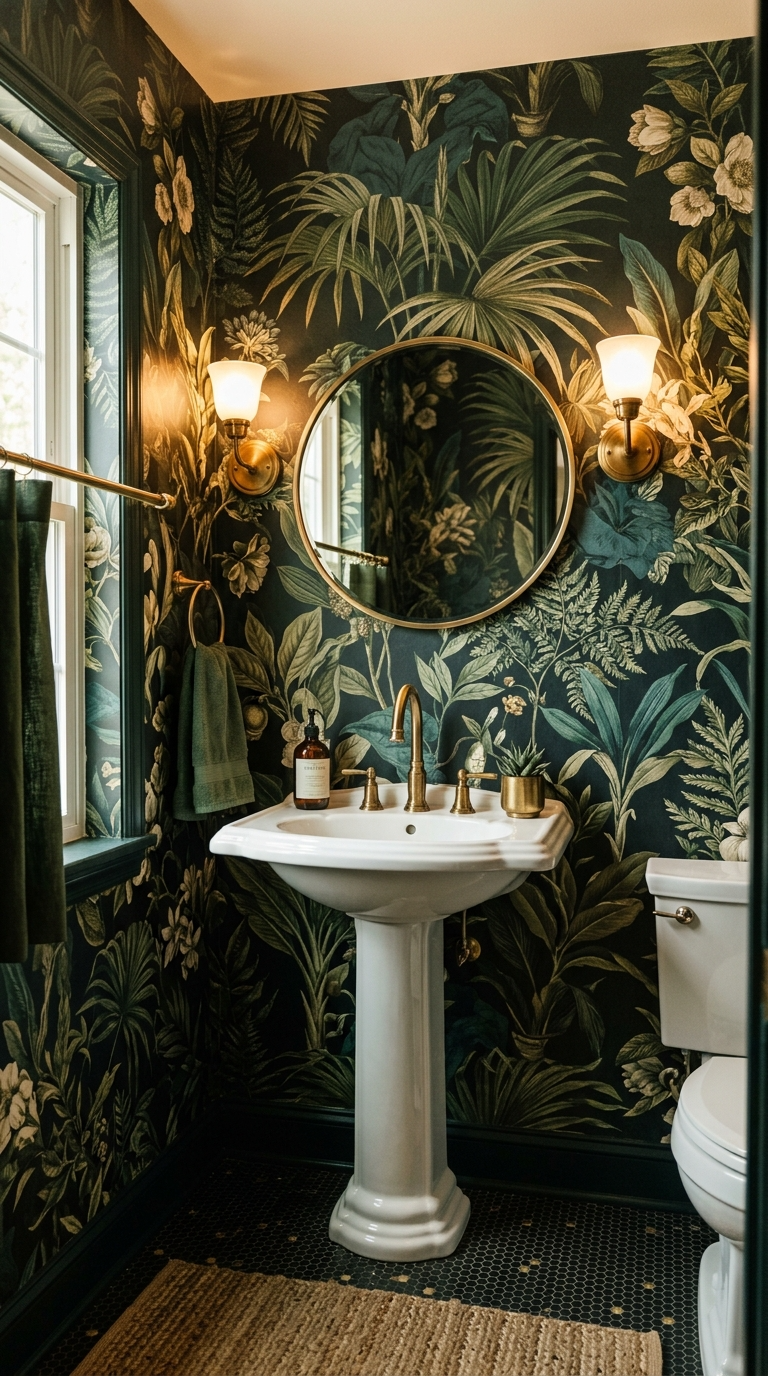
A small powder room or half bath is the ideal place for a more dramatic wallpaper that would feel overwhelming in a full bathroom. The small size of a powder room means the bold pattern creates an intimate jewel-box quality rather than a heavy oppressive one. Floral murals, dark moody patterns, large-scale graphic designs, or saturated colors all work in powder rooms because the room is used for short visits rather than long stays. A bold powder room wallpaper becomes one of the most memorable details in the home and the kind of design moment that visitors comment on. The same principle of bold contained color also applies to sage green bathroom designs where the small powder room can take a deeper sage that would be heavy in a larger space.
6. Wallpaper Above Wainscoting
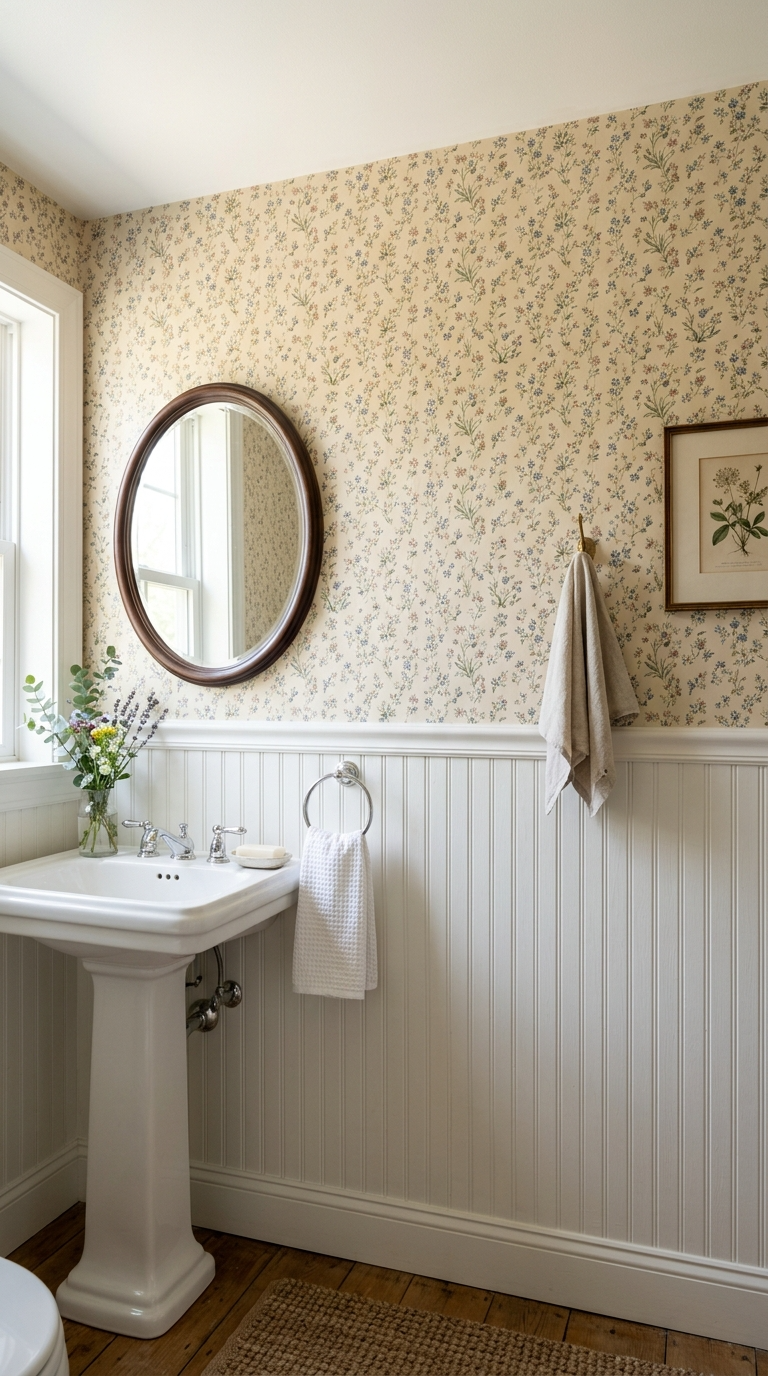
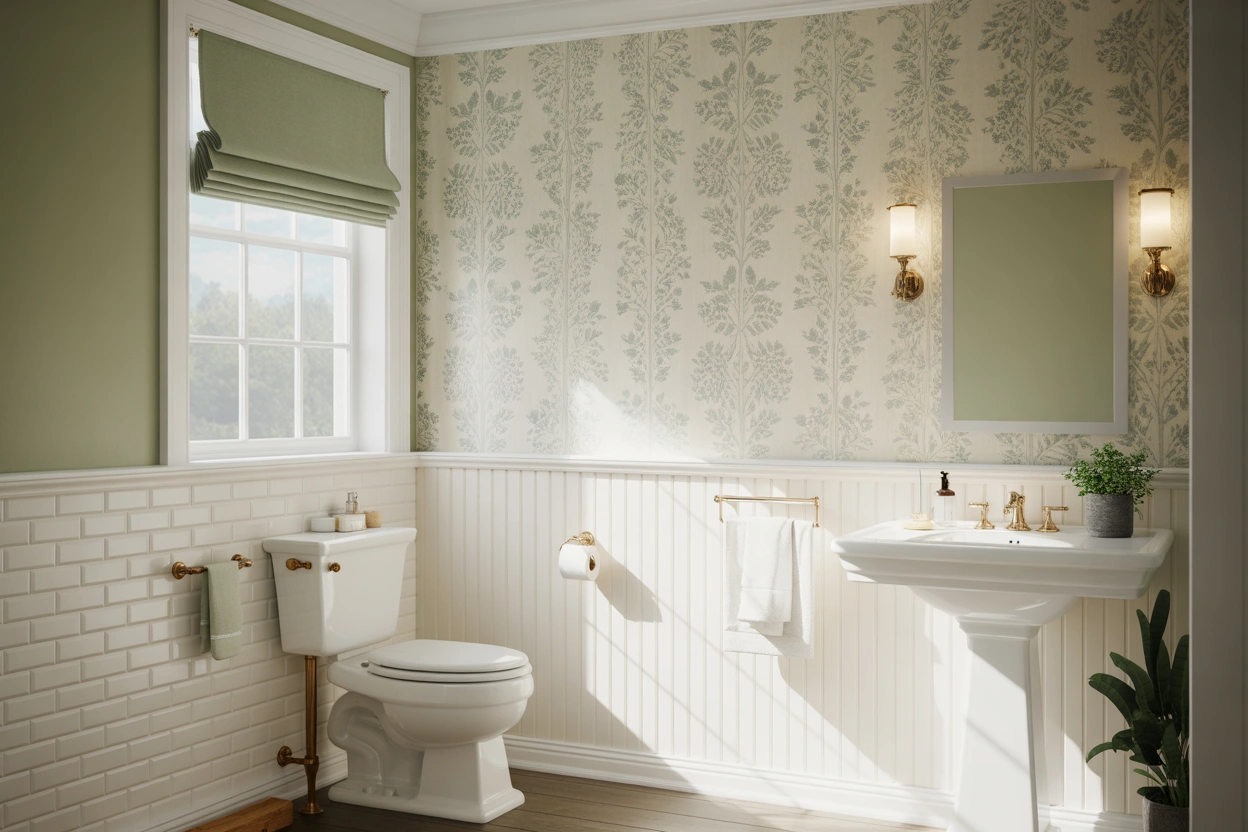
Wallpaper applied to the upper half of bathroom walls above existing or newly installed wainscoting creates a classic two-part wall treatment that has been popular in bathroom design for over a century. The painted wainscoting at the lower level handles the area where moisture and splashing are most common, while the wallpaper above provides the pattern and personality. Use beadboard wainscoting in a clean white paint with a chair rail cap, then apply the wallpaper above. The combination reads as architecturally considered and appropriate for the bathroom environment.
7. Peel-and-Stick Renter Friendly
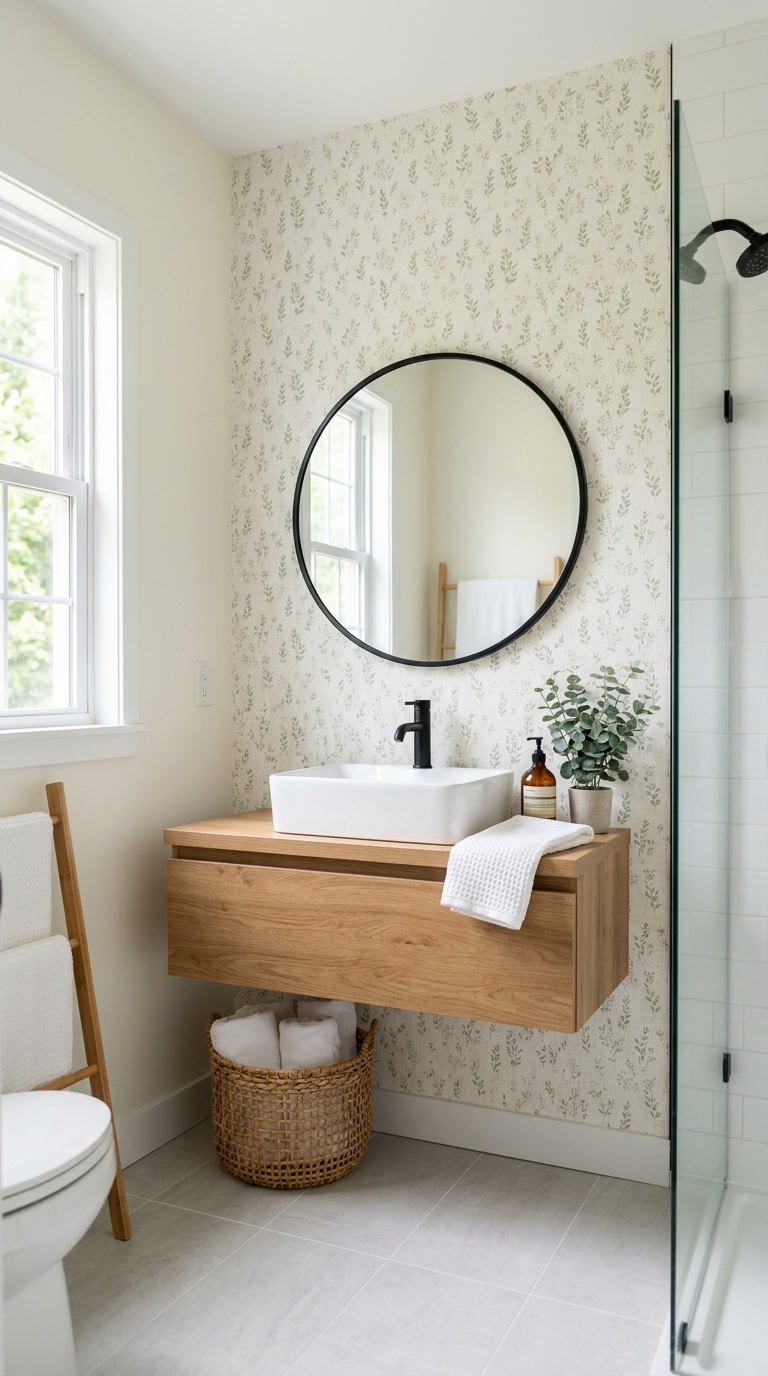
For renters who cannot install permanent wallpaper, modern peel-and-stick wallpapers achieve essentially the same visual result with full reversibility. Apply the peel-and-stick wallpaper directly to clean walls, smooth out air bubbles with a credit card, and trim the edges with a sharp utility knife. When it is time to move out or change the look, the wallpaper peels away cleanly without damaging the wall surface beneath. The quality of peel-and-stick wallpapers has improved significantly in recent years, and the better options are nearly indistinguishable from traditional pasted wallpaper in their finished appearance. Look for peel-and-stick versions specifically rated for bathroom moisture conditions.
8. Small Print for Small Rooms
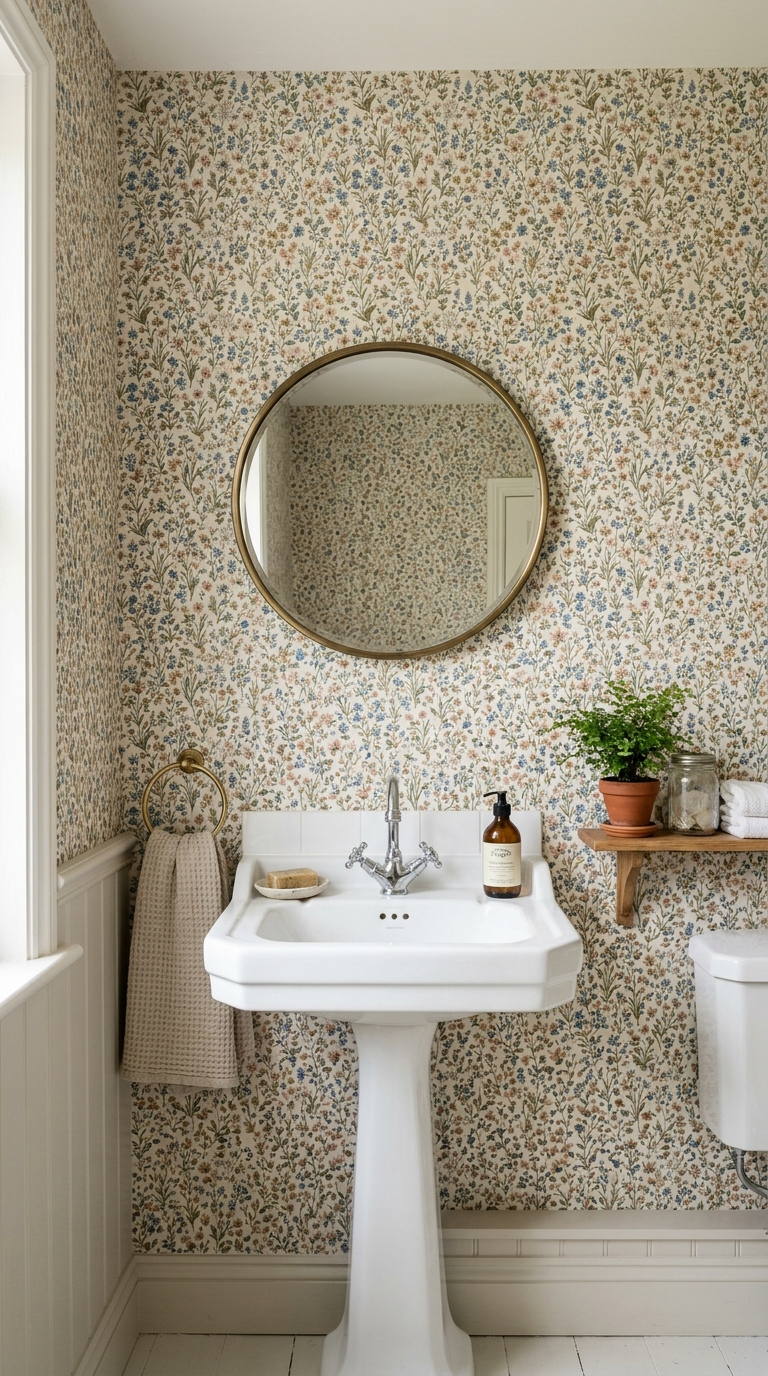
Small format prints with tight repeating patterns work better in small bathrooms than large-scale prints with widely spaced motifs. The small repeat creates visual texture from a distance while remaining manageable in a tight space. A delicate small floral, a tiny geometric, a subtle textile-look print, or a muted small paisley all add personality to a small bathroom without overwhelming the limited wall area. Save large-scale prints for larger bathrooms where the pattern has room to read fully without competing with the bathroom fixtures.
9. Bold Floral Statement
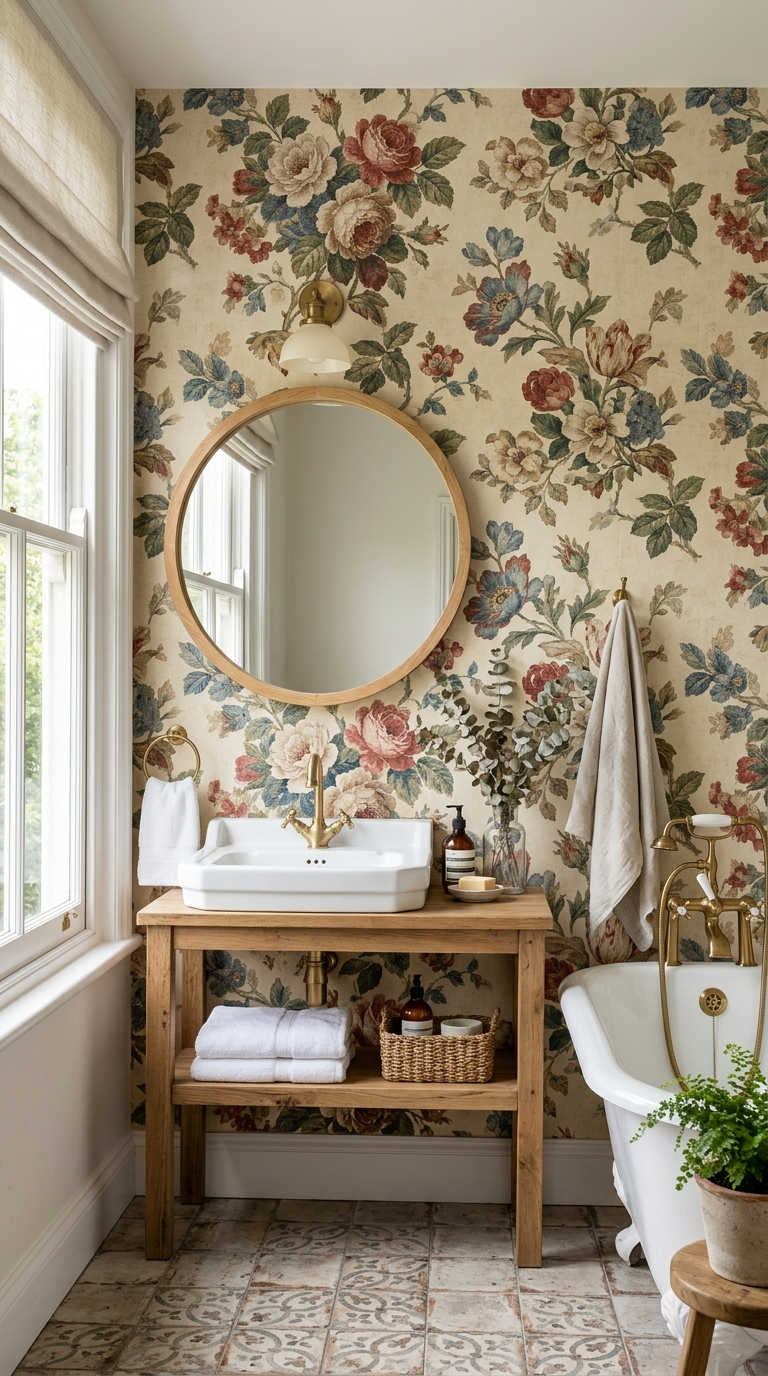
For bathrooms that can handle a strong design statement, a bold large-scale floral wallpaper applied to a feature wall makes the kind of confident impression that subtle prints cannot. Look for florals in muted heritage palettes rather than bright contemporary versions: faded reds, dusty blues, soft cream backgrounds, deep navy with cream florals. The bold pattern works best as a contained feature rather than across all four walls, and pairs effortlessly with simple white fixtures and natural wood accents that let the wallpaper be the visual centerpiece.
10. Toile Pattern Tradition
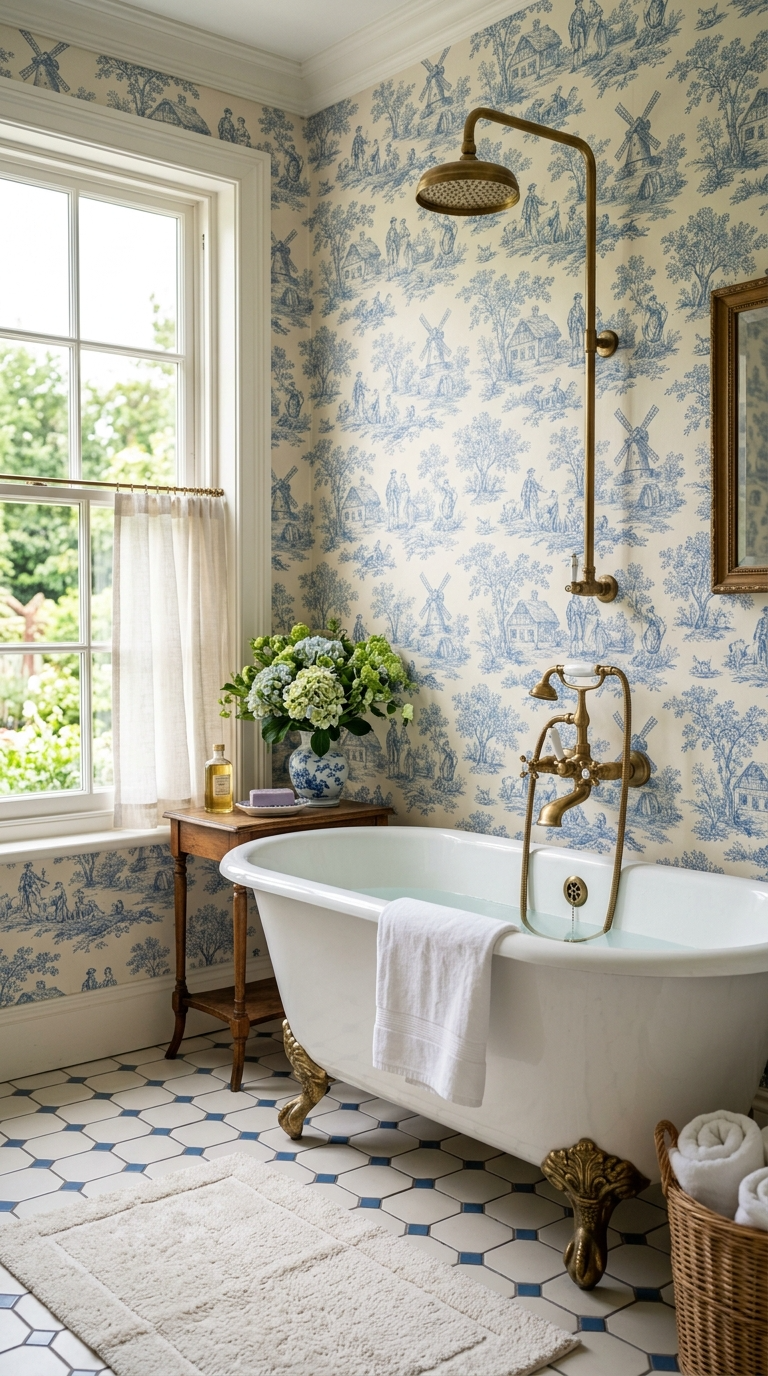
Toile wallpaper, the traditional French printed pattern showing pastoral scenes in a single color on a cream background, brings a distinctly traditional character to a bathroom that other wallpaper styles cannot match. Toile in soft blue, warm red, deep green, or muted black on cream all work depending on the bathroom palette. The detailed pattern reads as period-appropriate for traditional bathrooms with clawfoot tubs, pedestal sinks, and vintage hardware. Toile applied to all four walls creates an enveloping classic feel; toile on a single feature wall provides a more restrained reference to the traditional style.
11. Vertical Stripe Effect
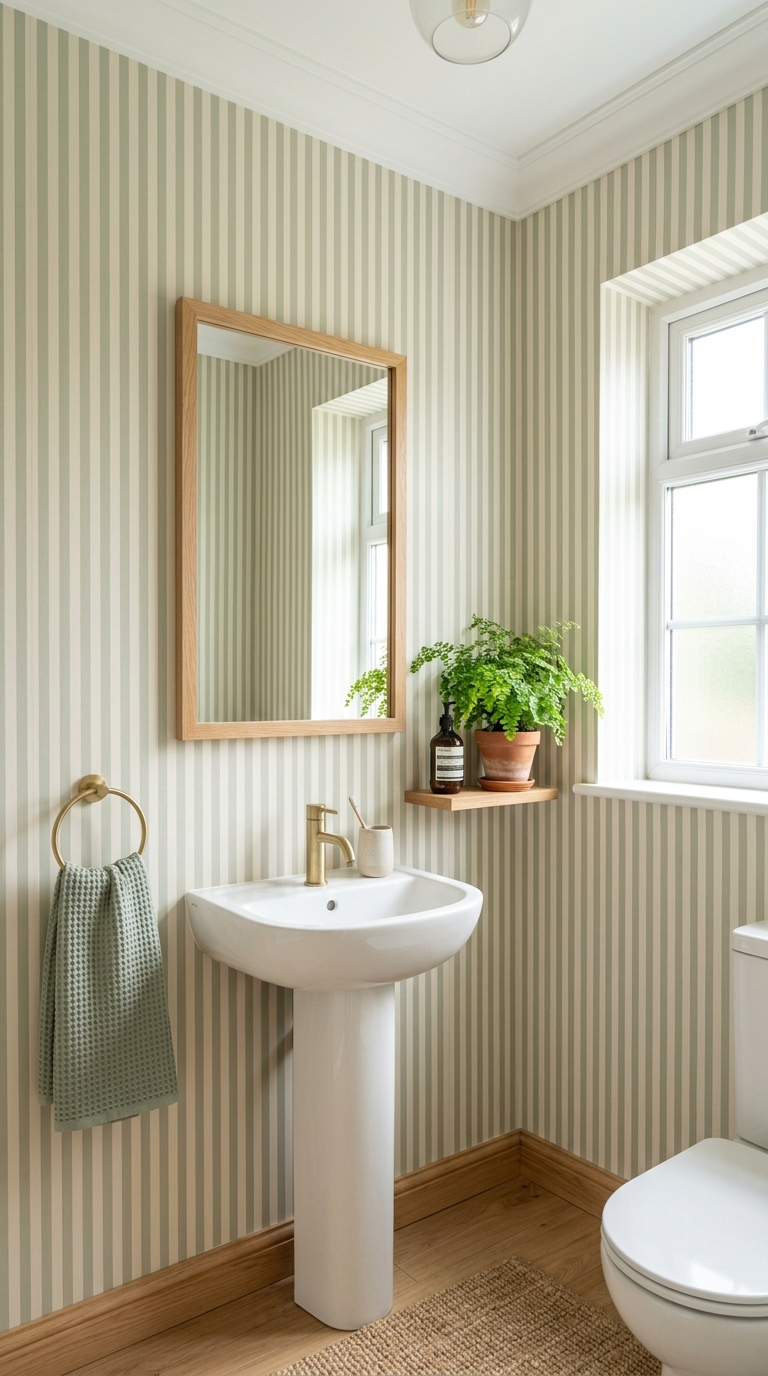
Vertical striped wallpaper creates strong upward visual lines that make bathroom walls feel taller, which is particularly useful in small bathrooms or bathrooms with low ceilings. Choose stripes in a soft cream-and-natural-tone palette rather than high-contrast versions: cream and sage, cream and dusty blue, cream and warm gray. The width of the stripe matters: narrow stripes read as quietly textured, wider stripes read as more graphic. The vertical orientation paired with floor-to-ceiling installation gives the impression of a taller room than the actual ceiling height.
12. Damask Pattern Refinement
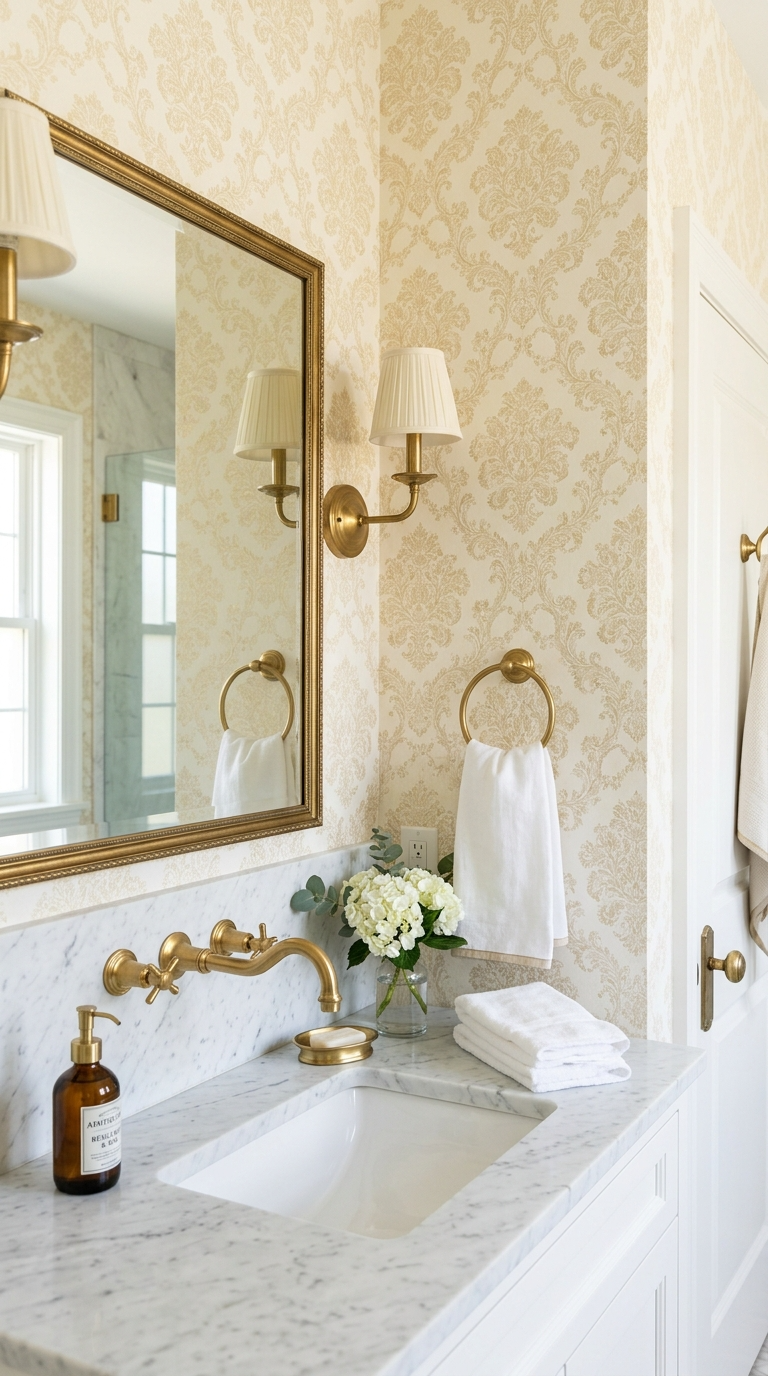
Damask wallpaper with its traditional ornate floral and foliage repeats brings refined classical character to a bathroom. The pattern was originally a textile design and translates beautifully into wallpaper that suits traditional, transitional, and even some modern bathroom styles. Choose damask in a tonal palette where the pattern and background are close in color, soft gold on cream, pale gray on white, dusty pink on warm cream, for the most sophisticated result. High-contrast damasks can feel heavier than the tonal versions. The pattern works particularly well in larger bathrooms where the scale of the repeat has room to read fully.
13. Watercolor Wash Effect
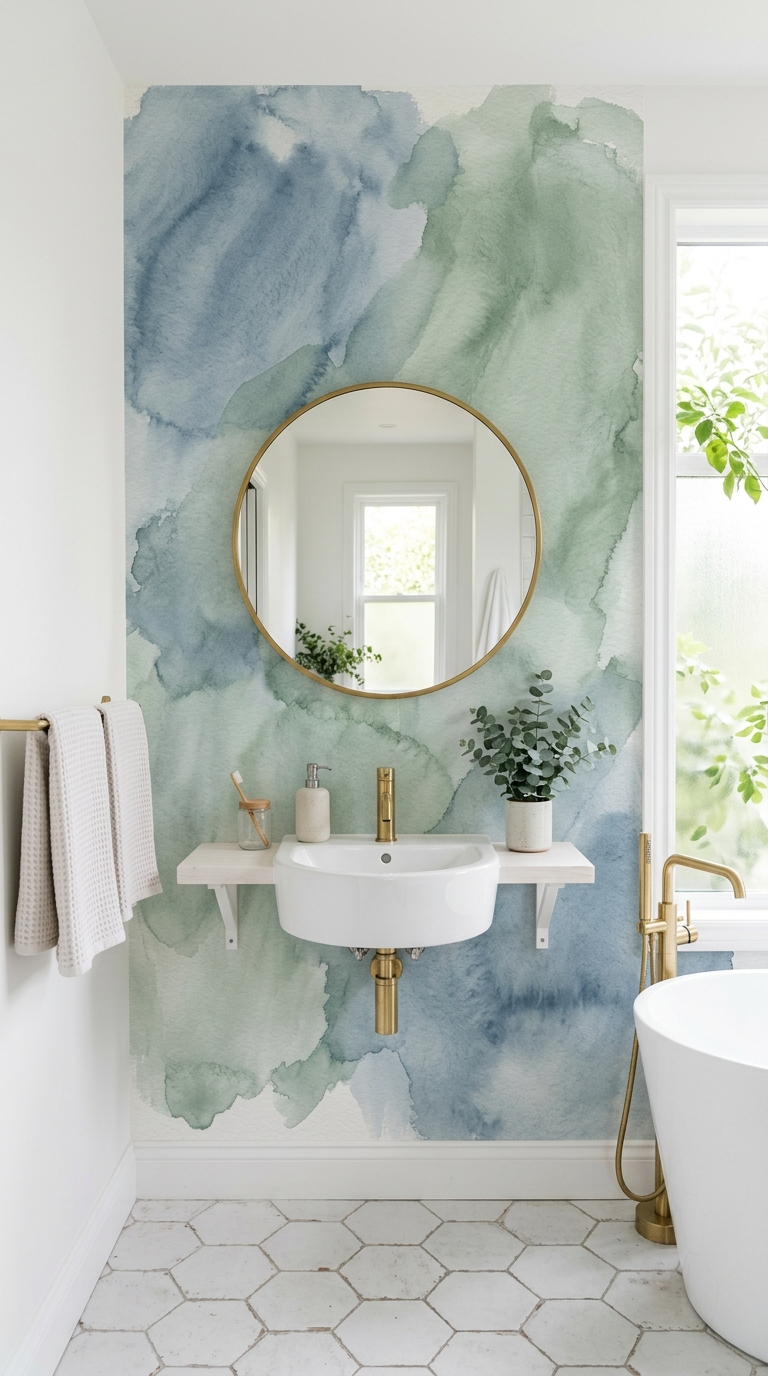
Wallpapers printed to look like watercolor washes, where soft brushstrokes of color blend across the surface in painterly patterns, bring artistic quality to a bathroom that traditional pattern wallpapers cannot. Watercolor effects in soft sage, dusty blue, warm cream, or muted blush all work as bathroom wallpaper. The painterly quality reads as one-of-a-kind even though the wallpaper is mass-produced, which gives the bathroom a custom artistic feel. Apply watercolor wallpaper to a feature wall for a contained artistic moment, or to all four walls for a fully enveloping atmospheric effect.
14. Vintage Reproduction Print
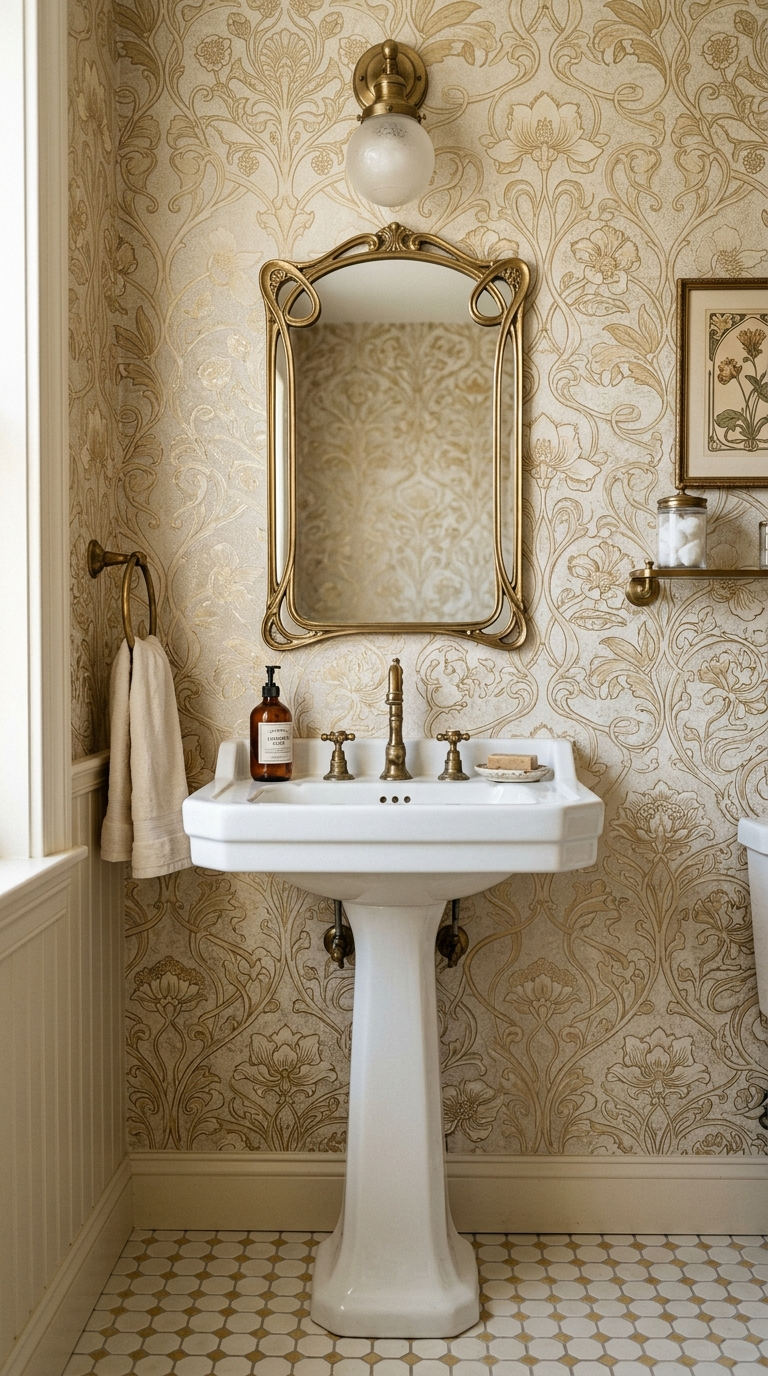
Wallpaper companies offering reproductions of historic vintage prints provide access to authentic period patterns that are no longer made in their original form. Victorian florals, Art Nouveau organic patterns, mid-century geometric prints, and 1930s prints all represent specific historical periods and bring period character to a bathroom. The historical accuracy of reproduction prints reads as deliberate and confident rather than generic. Pair vintage reproduction wallpaper with period-appropriate fixtures and hardware for the most coherent result, or mix it with current fixtures for a more eclectic approach.
15. Tropical Without Cliche
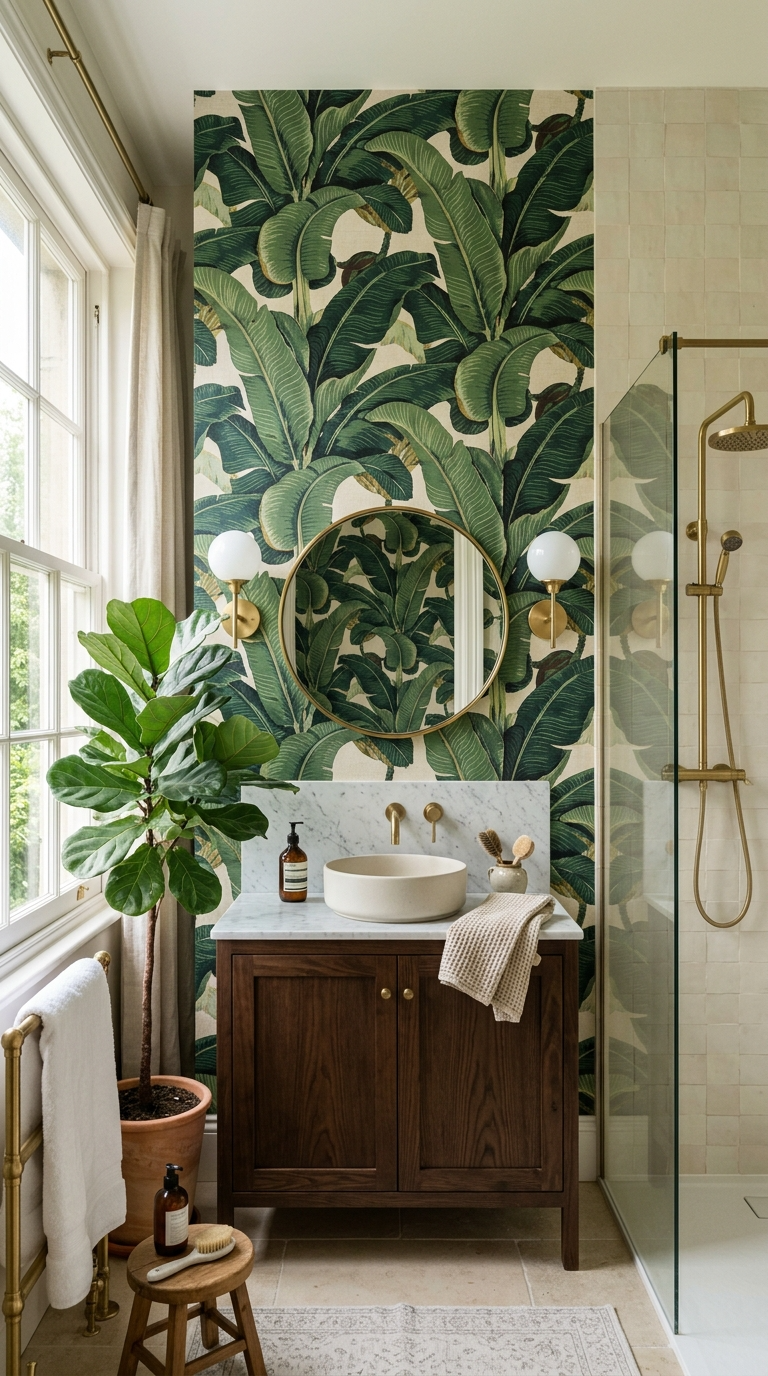
Tropical wallpapers can easily tip into cliche, but the well-designed versions avoid the obvious palm-and-flamingo imagery in favor of more sophisticated botanical interpretations. Look for tropical wallpapers featuring detailed botanical illustrations of specific plants, in muted natural colors rather than bright cartoon versions. Banana leaves in deep green on cream, illustrated palm fronds in soft sage on white, or detailed orchid prints in muted tones all work without feeling like a tiki bar. The sophisticated tropical print pairs beautifully with white fixtures, brass hardware, and warm natural wood for a refined island-influenced bathroom.
16. Animal Pattern Restraint
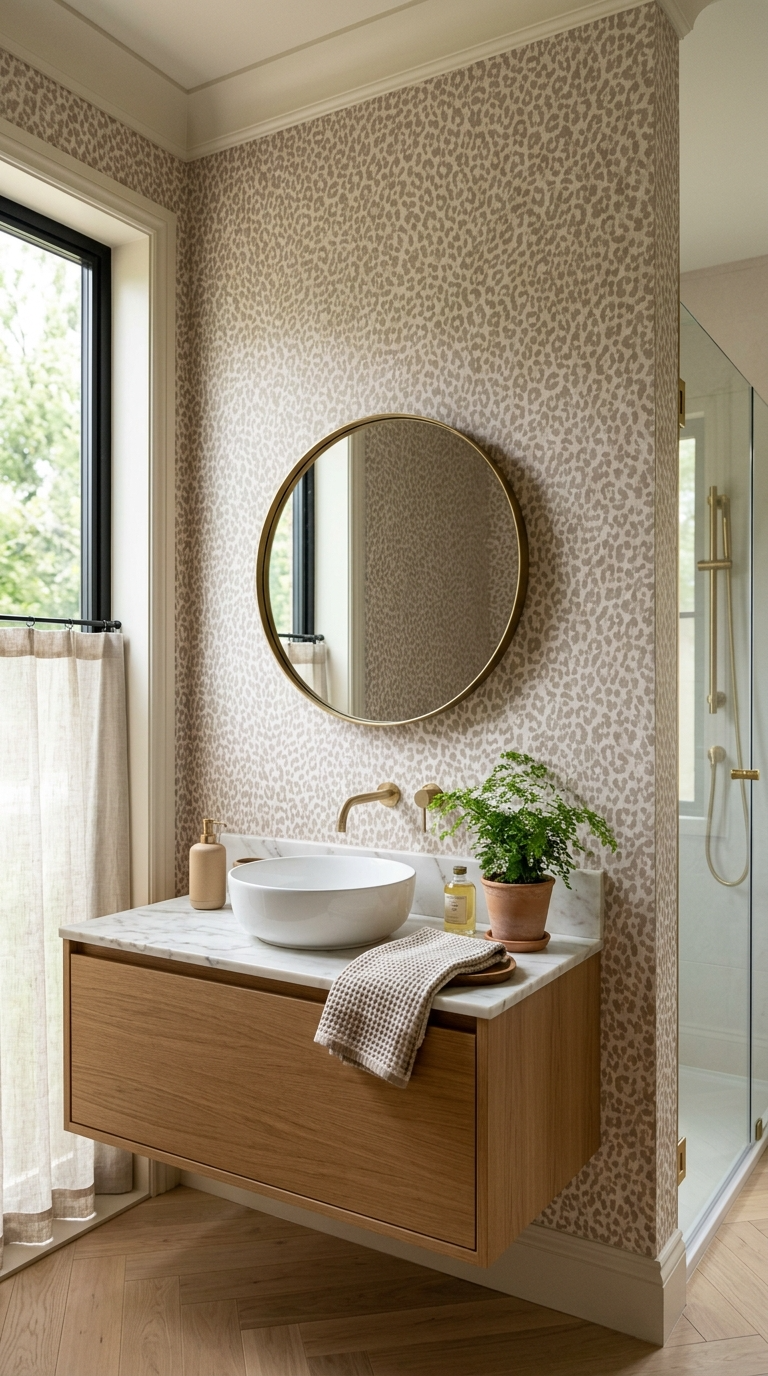
Animal print wallpapers, leopard, zebra, and similar patterns, work in a bathroom only when used with significant restraint. A single feature wall in a tonal animal print, where the pattern and background are close in color, can add a distinctly chic moment to a bathroom. The same animal print across all four walls in a high-contrast version typically tips the bathroom into accidental costume territory. If you want animal print, keep it contained, keep the colors muted, and keep the rest of the bathroom quiet so the wallpaper can be the single confident statement.
17. Solid Texture Wallpaper
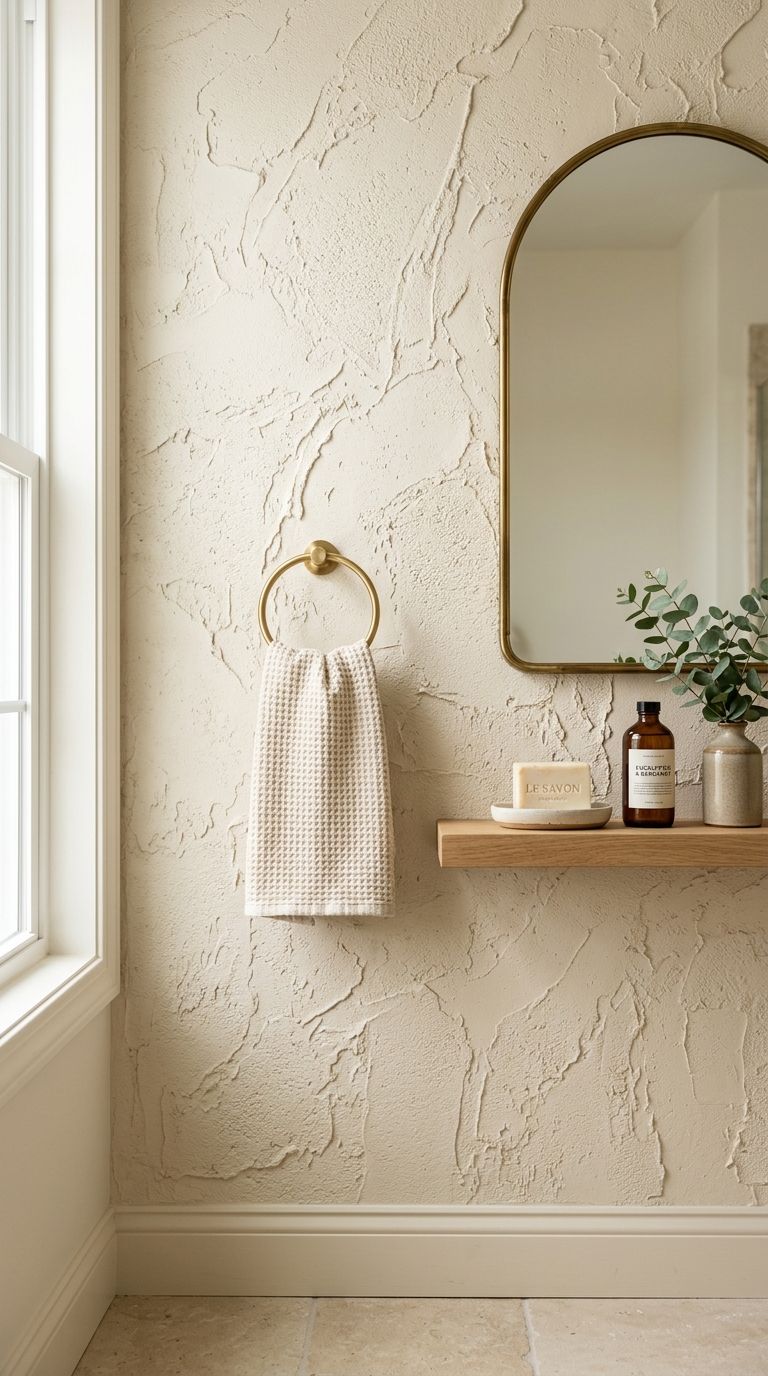
Solid color wallpapers with significant surface texture, embossed papers, faux leather looks, faux concrete, faux plaster textures, add dimensional interest to bathroom walls without any pattern at all. The texture provides the visual content that pattern would otherwise provide, while the solid color keeps the room quiet and easy to live with over time. Faux plaster wallpapers in warm cream tones suit organic modern bathrooms; faux leather in warm cognac suits more traditional bathrooms; faux concrete in soft gray suits modern minimal bathrooms. The textural wallpaper provides character without committing to any pattern that might age out quickly.
18. Mural Statement Wall
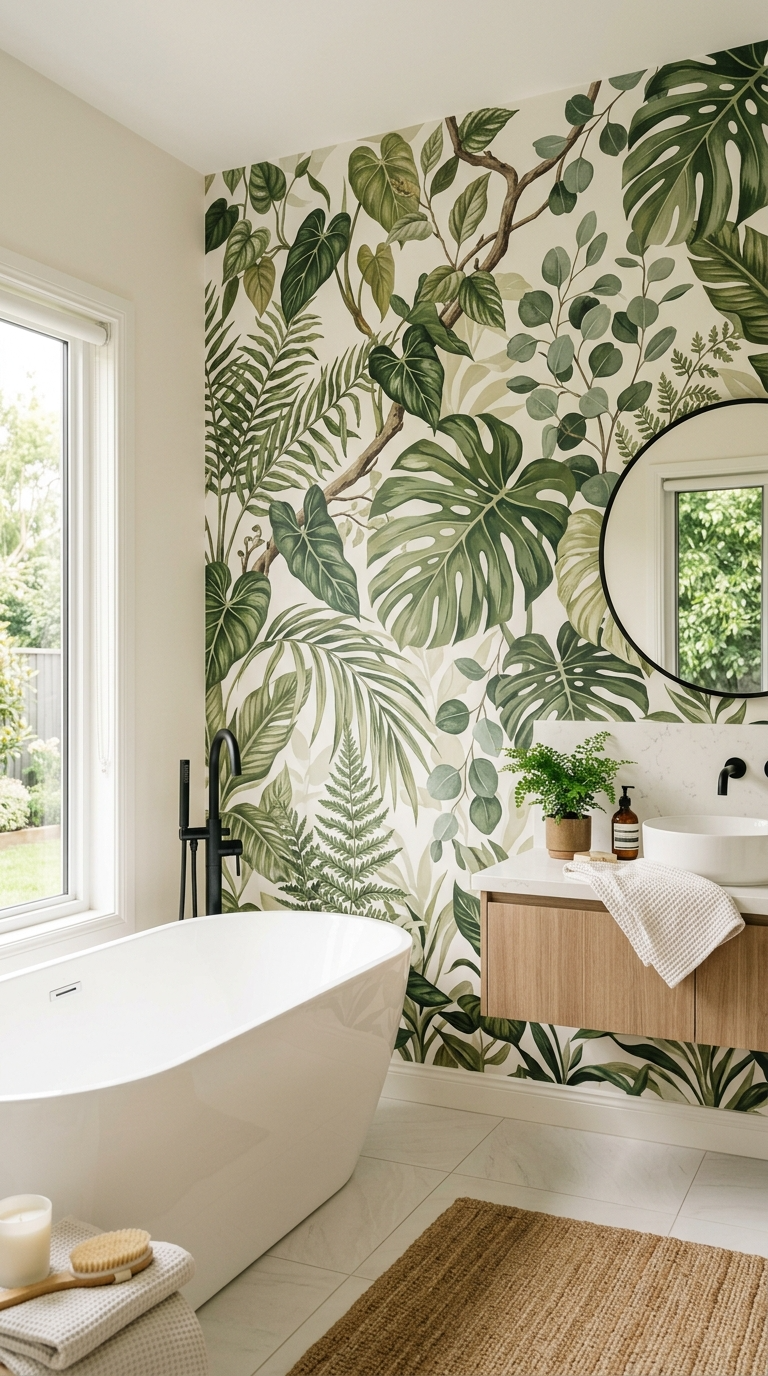
Wallpaper murals, large-scale single images that span the entire wall as one continuous picture rather than a repeating pattern, create the most dramatic single statement available in a bathroom. Botanical murals showing detailed leaves and branches across the wall, landscape murals showing distant scenes, and abstract murals with painterly washes all work depending on the bathroom aesthetic. The mural functions as both wallpaper and as art, eliminating the need for separate framed pieces on the walls. Apply the mural to a single wall as a focal point and keep the surrounding bathroom quiet so the mural reads clearly.
19. Pattern Mix With Tile
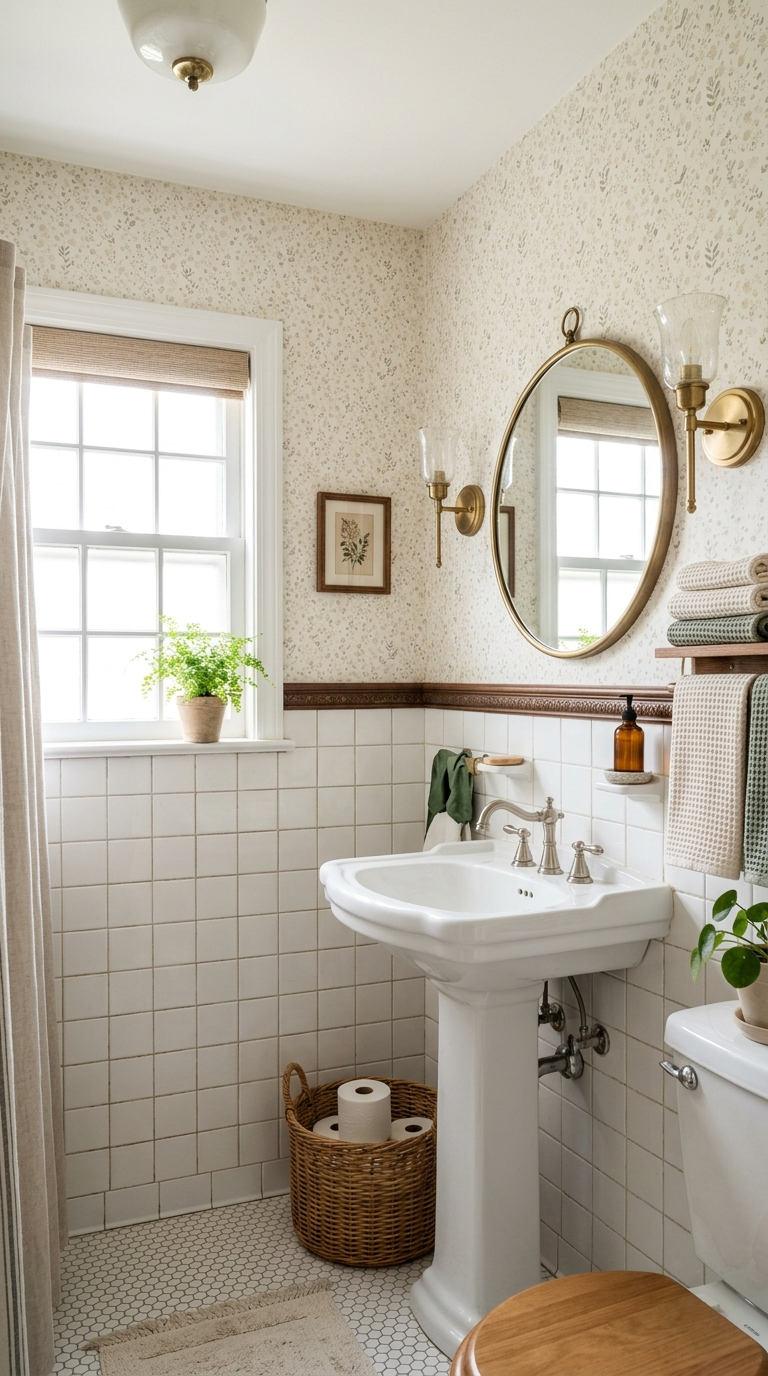
For bathrooms where existing tile cannot or should not be replaced, choosing wallpaper that complements rather than competes with the tile is the key to a cohesive result. Match the tile color to a tone in the wallpaper, use the wallpaper to introduce a pattern that the tile lacks, or use the wallpaper to soften a strong tile color with a quieter pattern around it. The wallpaper and tile should read as a deliberate combination rather than as separate decisions made independently. This approach allows existing dated tile to be reframed by new wallpaper in ways that make the whole bathroom feel updated.
20. Coordinating Roman Shade
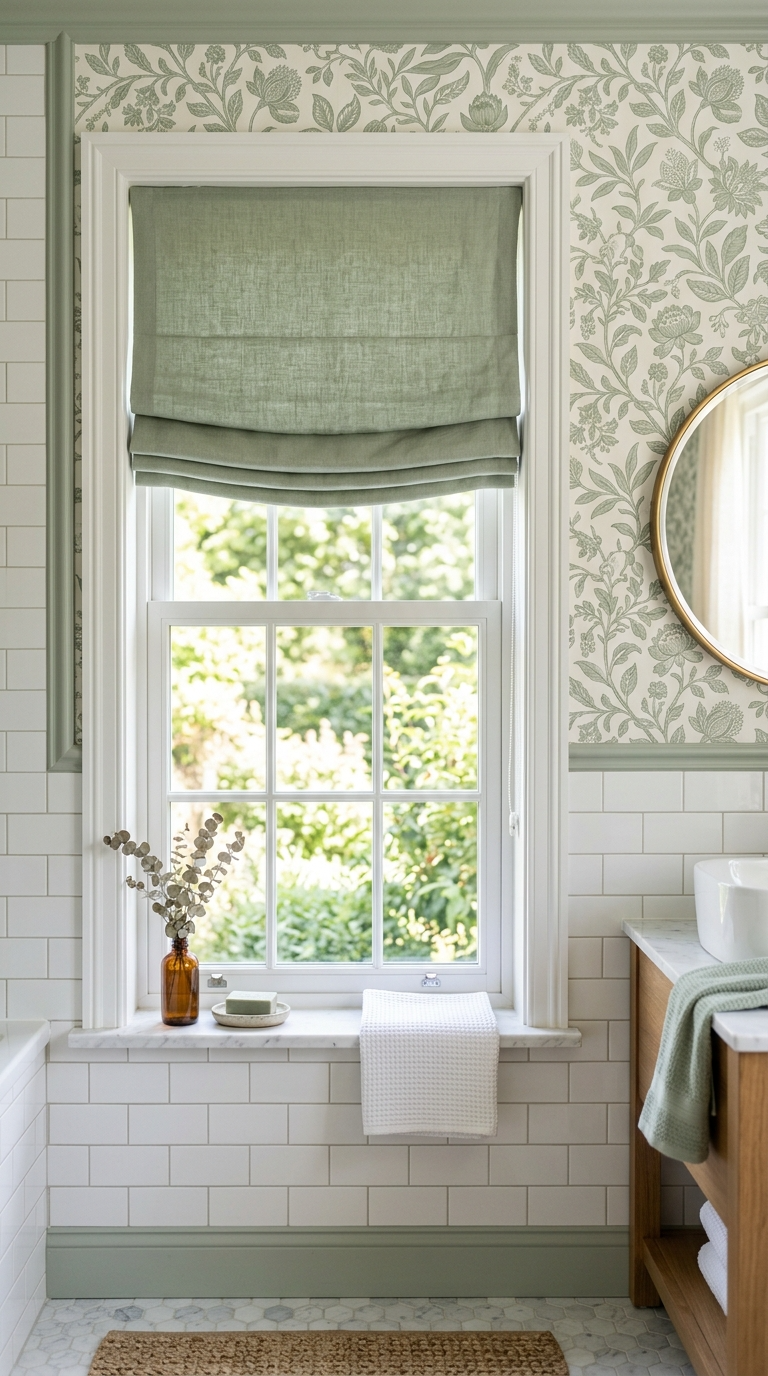
A Roman shade in a fabric that picks up one of the colors in the bathroom wallpaper completes the design story by bringing the wallpaper palette to the window. The coordinating textile element pulls the room together visually and signals deliberate styling rather than separate decisions. Look for a fabric in a solid color drawn from the wallpaper, or a complementary print in a smaller scale than the wallpaper itself, since two competing patterns at full intensity can fight for attention. The same approach to coordinating textiles and wall surfaces also works in green bathroom designs at any scale where the textiles tie the green palette together across the room.
21. Bathroom Ceiling Application
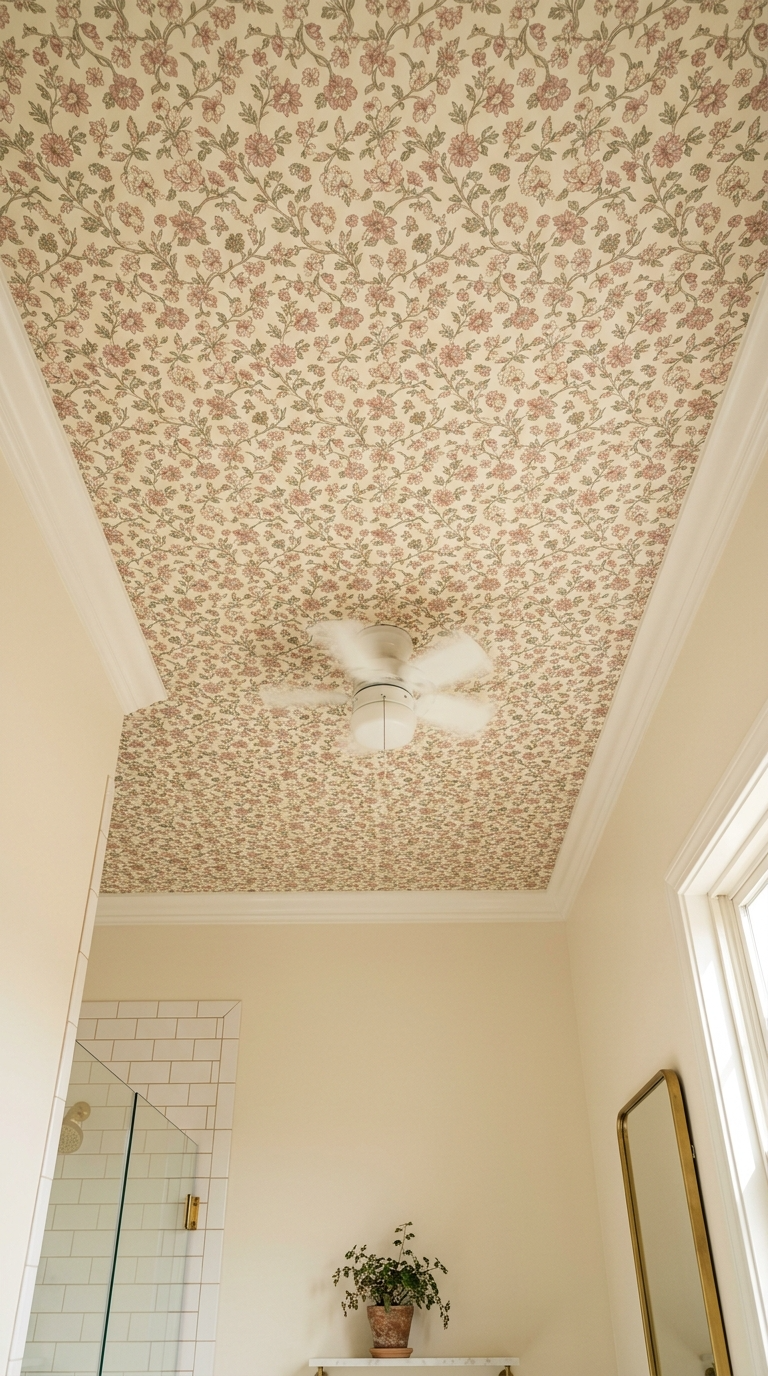
For an unexpected wallpaper application, the bathroom ceiling provides a contained area that can take a bolder pattern than the walls because it is seen less continuously. A patterned ceiling in a powder room or even a full bathroom adds an unexpected design moment that surprises visitors and creates a small daily moment of pleasure for residents. Choose a ceiling wallpaper in a pattern that complements the wall color or pattern below, and avoid heavy dark patterns that can feel oppressive overhead. Light backgrounds with subtle patterns work best on ceilings.
22. Practical Moisture Notes
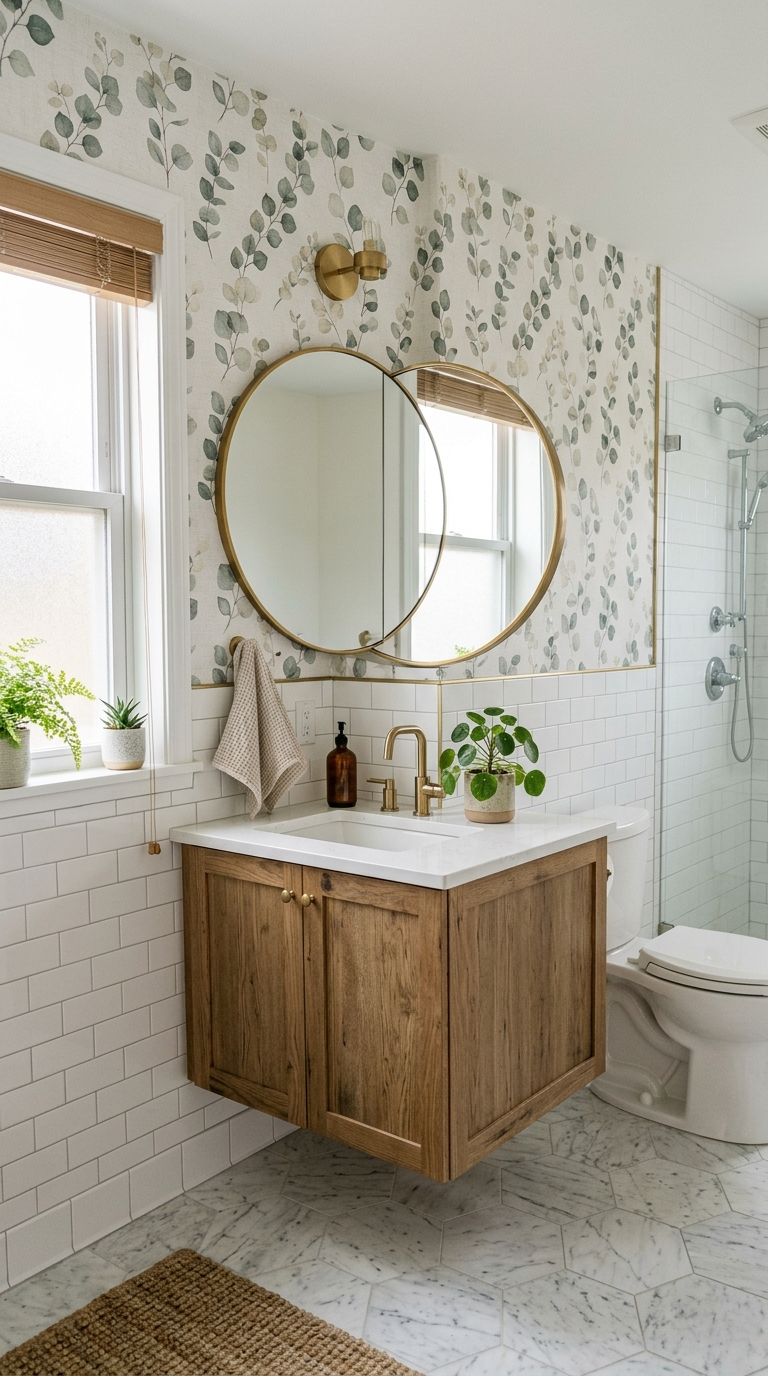
The single most important practical consideration for bathroom wallpaper is moisture management. Vinyl-coated wallpapers, peel-and-stick options designed for bathroom use, and properly sealed traditional wallpapers all handle bathroom humidity well. Avoid uncoated paper wallpapers in any bathroom that has a shower or bath. Apply wallpaper to walls that are not directly exposed to splashing water; the wall above the toilet, the wall opposite the shower, the upper portion of walls above tile or wainscoting all work well, while the wall directly beside the shower is risky for any wallpaper. Run the bathroom fan during showers and ensure proper ventilation to extend the life of any wallpaper installation.
Wallpaper in a bathroom is no longer the risky proposition it used to be. Modern materials handle the moisture, modern application methods make the installation accessible, and modern designs offer the personality that tile alone cannot match. Choose the application that suits your specific bathroom and your tolerance for boldness, and the wallpaper transforms the room in ways that no amount of accessory styling can replicate.