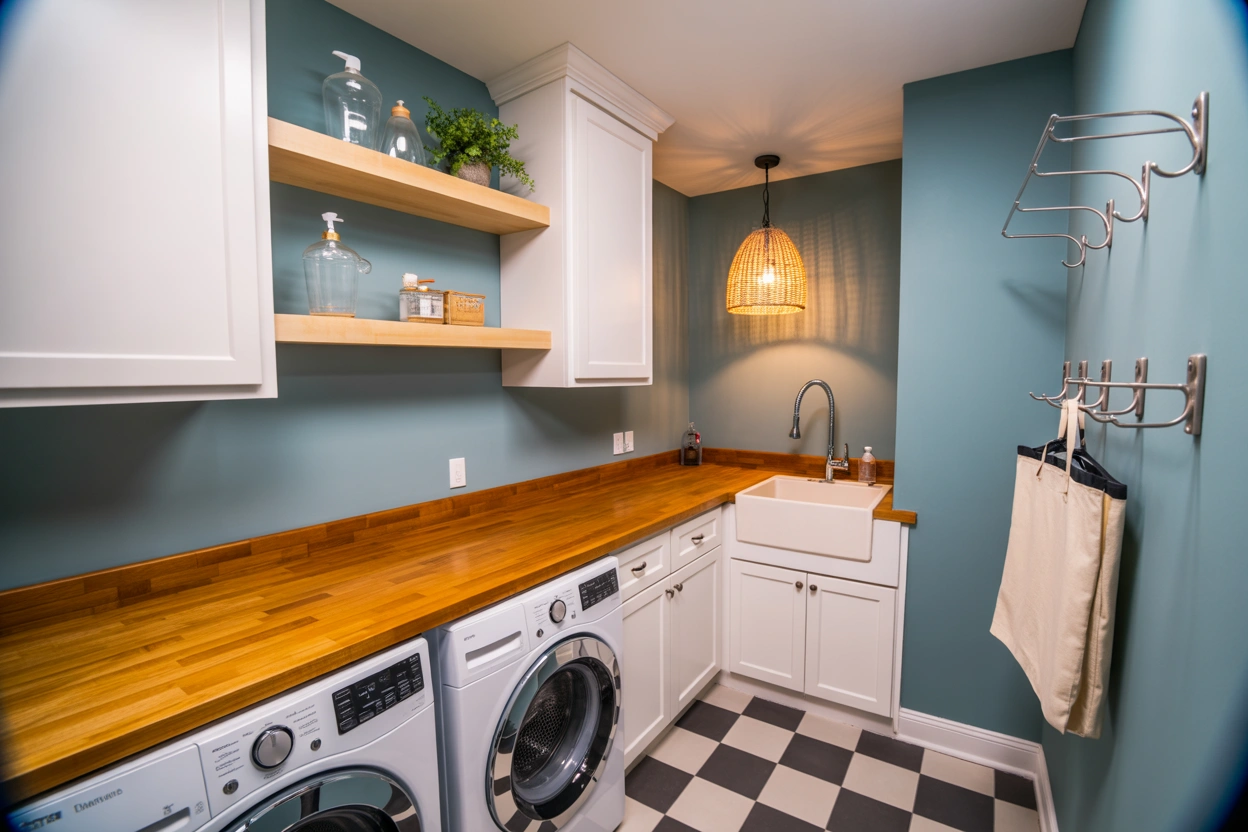
23 Laundry Room Ideas That Make a Chore Room Feel Like a Real Room
The laundry room is one of the most consistently neglected rooms in most homes. It tends to be a small utility space with the washer, the dryer, a single shelf above them, and very little else. The result is a room that nobody enjoys spending time in, which is a real problem because everyone has to spend some time there every week. The laundry rooms that genuinely improve the experience of doing laundry are the ones treated as actual rooms, with the same attention to lighting, materials, and styling that any other room receives. The investment is modest because the room is small. The payback is felt every single time the laundry gets done. These 23 ideas cover the full range of changes that turn a generic chore room into a space that is both functional and genuinely pleasant to be in.
1. Real Wall Color
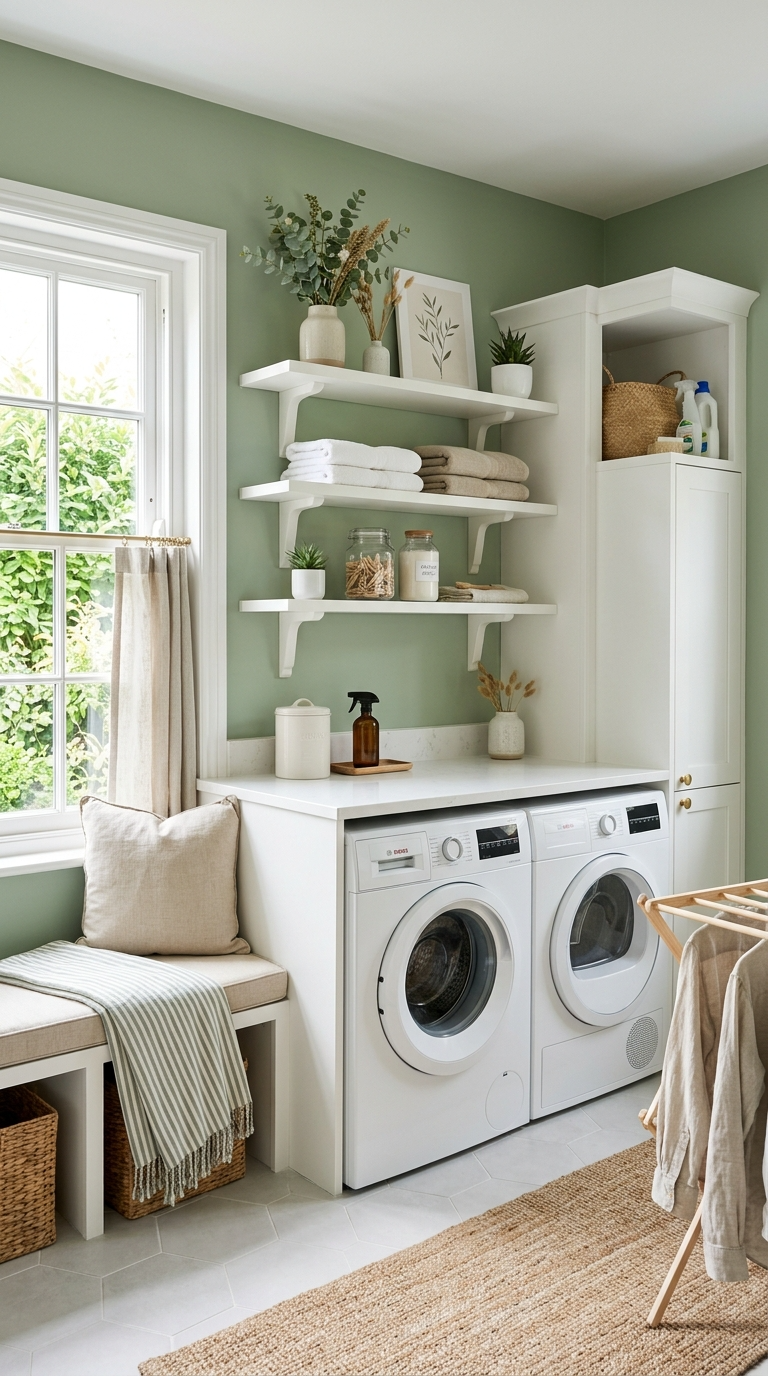
The single most impactful change to most laundry rooms is painting the walls a real color rather than the default builder white that they typically come in. A soft sage, a muted blue, a warm cream, a dusty blush, or a clean current white in a paint with some character all transform the laundry room atmosphere immediately. The room becomes a designed space rather than a utility closet. Use a paint that handles humidity well, since laundry rooms experience moisture cycles from running washers and dryers. A satin or eggshell finish is more durable than flat paint and resists the small marks that accumulate in a working laundry room.
2. Counter Above Machines
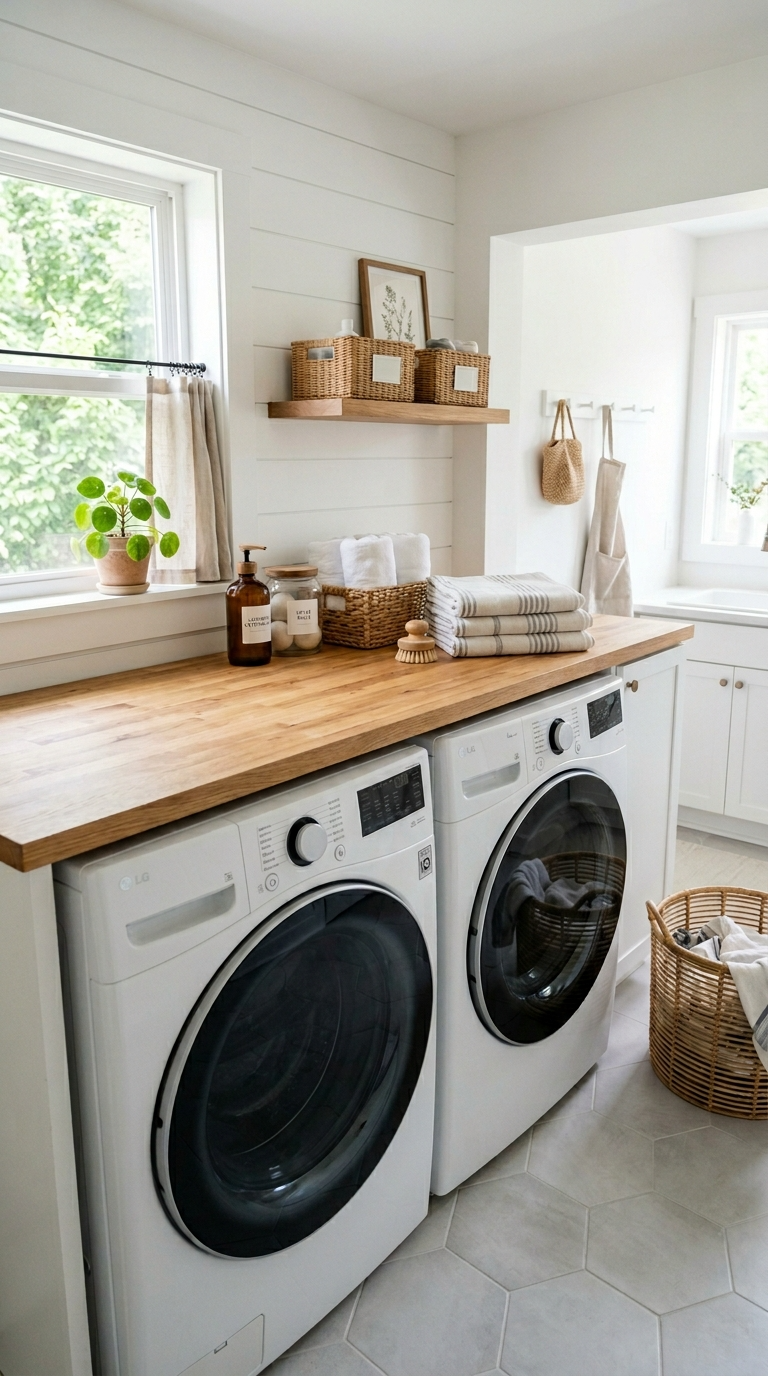
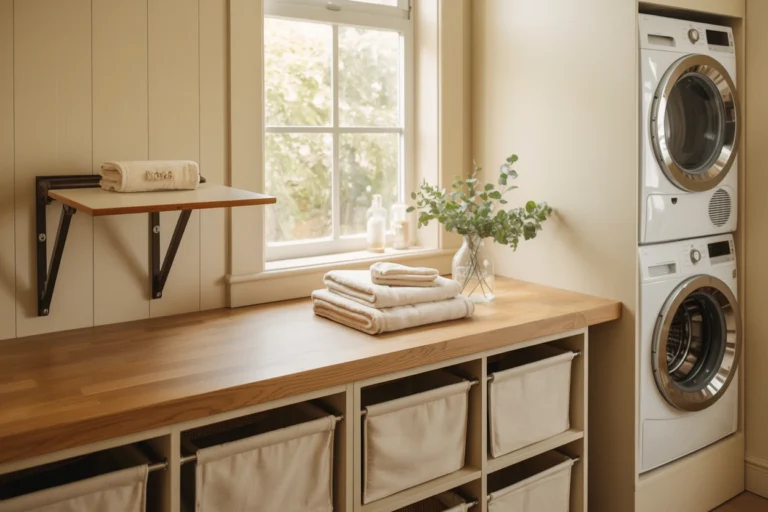
Installing a continuous counter surface across the top of front-loading washers and dryers turns two separate appliances into a single unified work surface for folding, sorting, and stain treating. The counter top can be plywood with a stained or painted finish, butcher block in warm wood, or a simple solid surface or laminate. The continuous surface reads as built-in custom cabinetry rather than as separate appliances pushed against each other. The practical benefit is significant: a real folding surface at proper counter height makes laundry work dramatically easier than folding on the bed or balancing piles on a small bench.
3. Upper Cabinet Storage
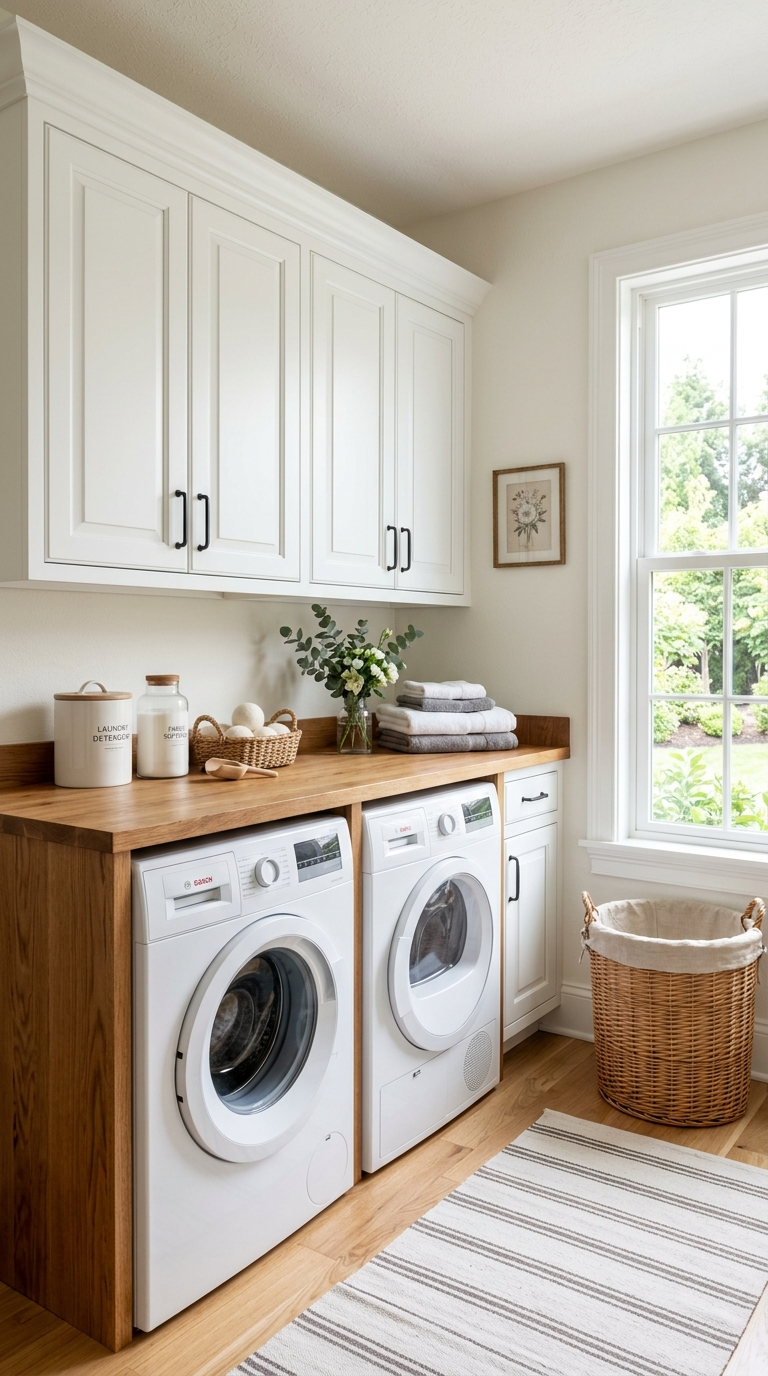
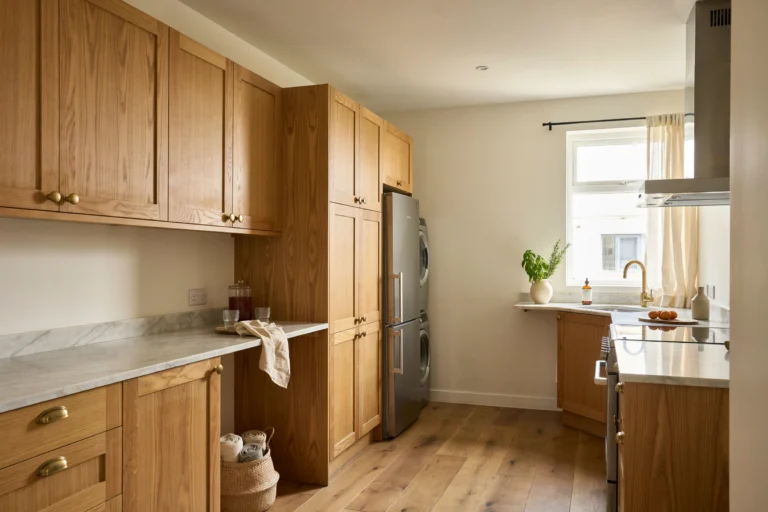
Upper cabinets installed above the washer and dryer provide enclosed storage for laundry supplies, cleaning products, extra household items, and the things that need to live in the laundry room without showing on open shelves. Match the cabinet style and finish to the rest of the home for visual coherence: white shaker cabinets in a traditional home, flat-front modern cabinets in a contemporary home, painted color cabinets in a more bold design. The closed storage keeps the visible parts of the laundry room clean while accommodating the genuine inventory that a working laundry room needs.
4. Open Shelf Display
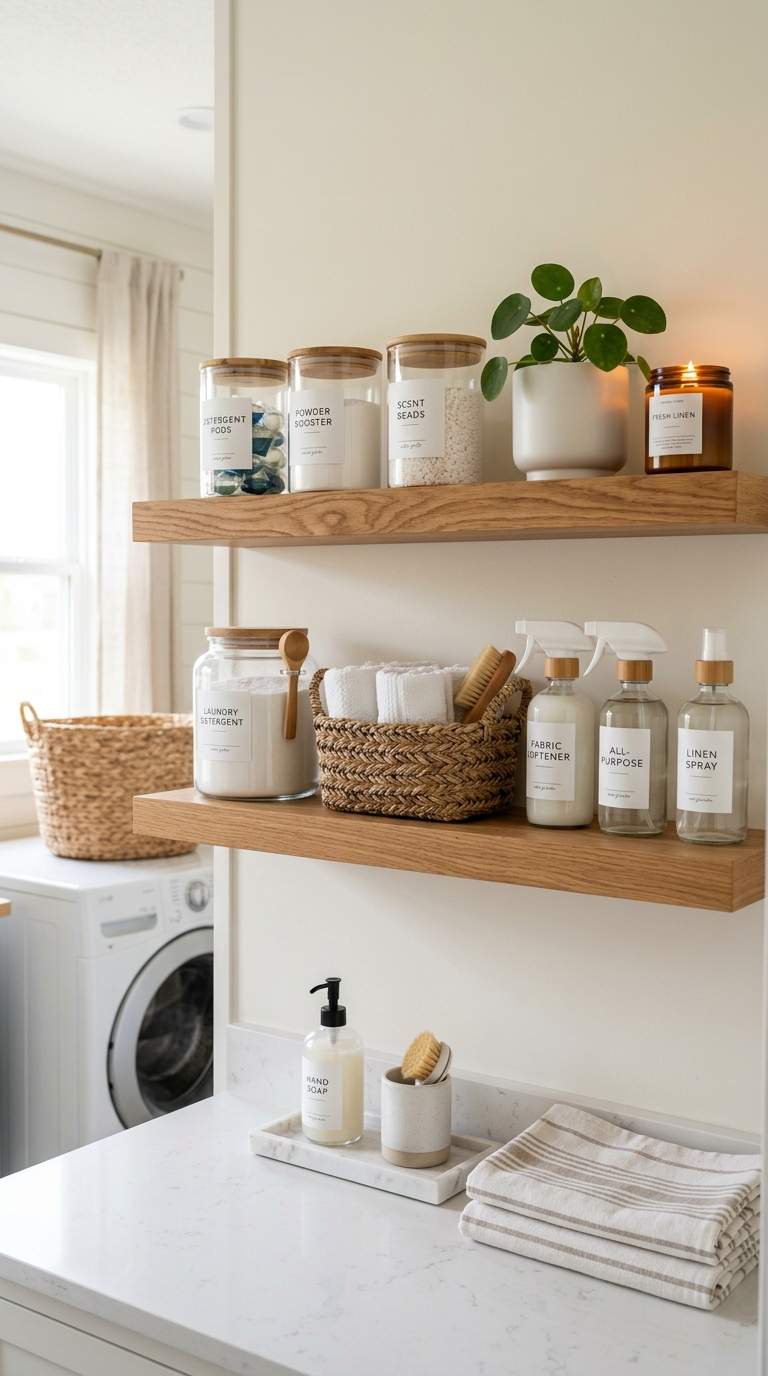
A single open shelf or two installed above the counter or beside the cabinets provides display space for items that improve the room’s appearance: matched detergent containers, a small plant, a candle, decorative jars holding clothes pins, and other small styled items. The open shelf signals that the laundry room is decorated rather than purely utility, and the items on it reinforce the aesthetic. Keep the open shelf curated and avoid letting it become overflow storage for everything that does not fit elsewhere.
5. Decanted Detergent Jars
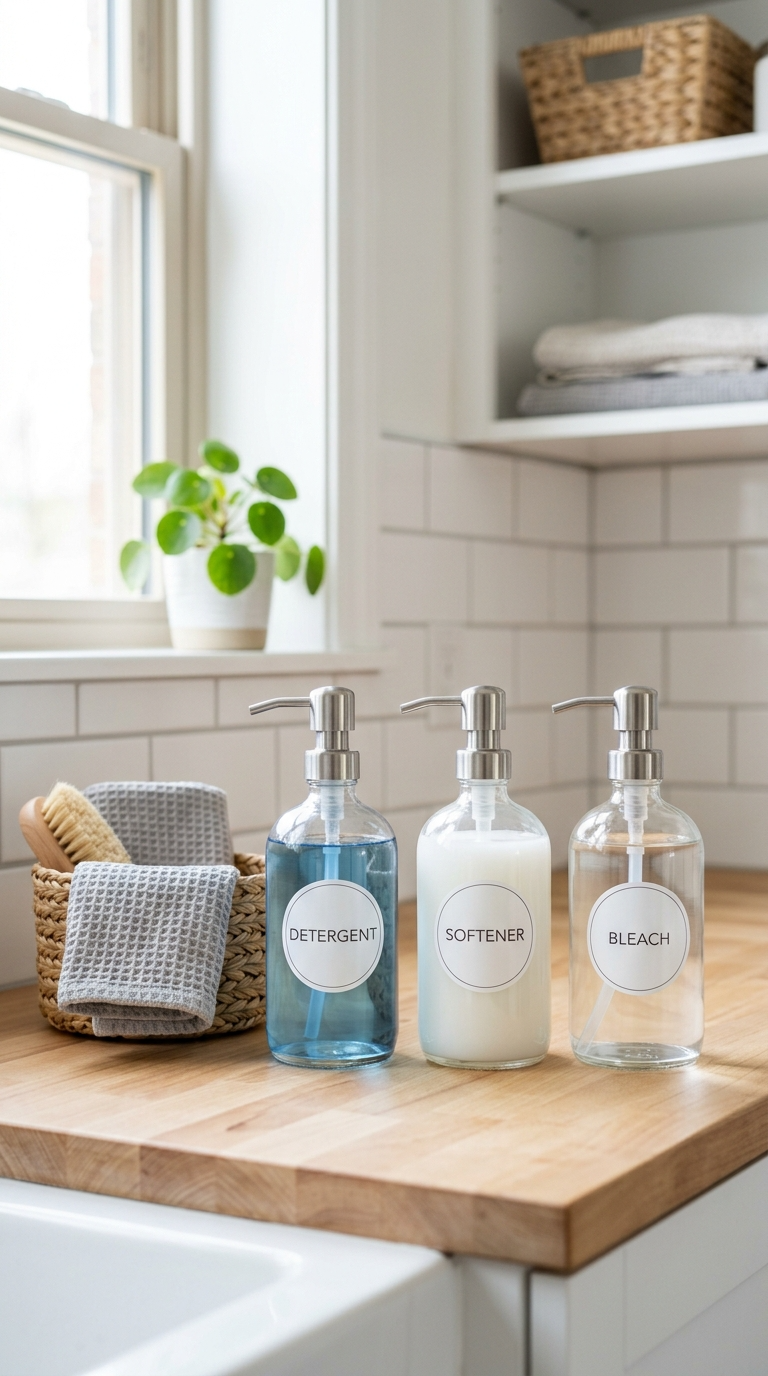
Replacing the original branded detergent and cleaning product packaging with matching glass or ceramic dispensers transforms the visible laundry supplies from cluttered marketing imagery into a coordinated styled detail. Decant liquid laundry detergent into a clear glass dispenser with a simple spout or pump. Decant powder detergent into a ceramic or glass canister. Apply simple white labels to each vessel so the contents are clear. The matching vessels read as a deliberate design decision rather than as the chaos of original packaging.
6. Hanging Drying Rack
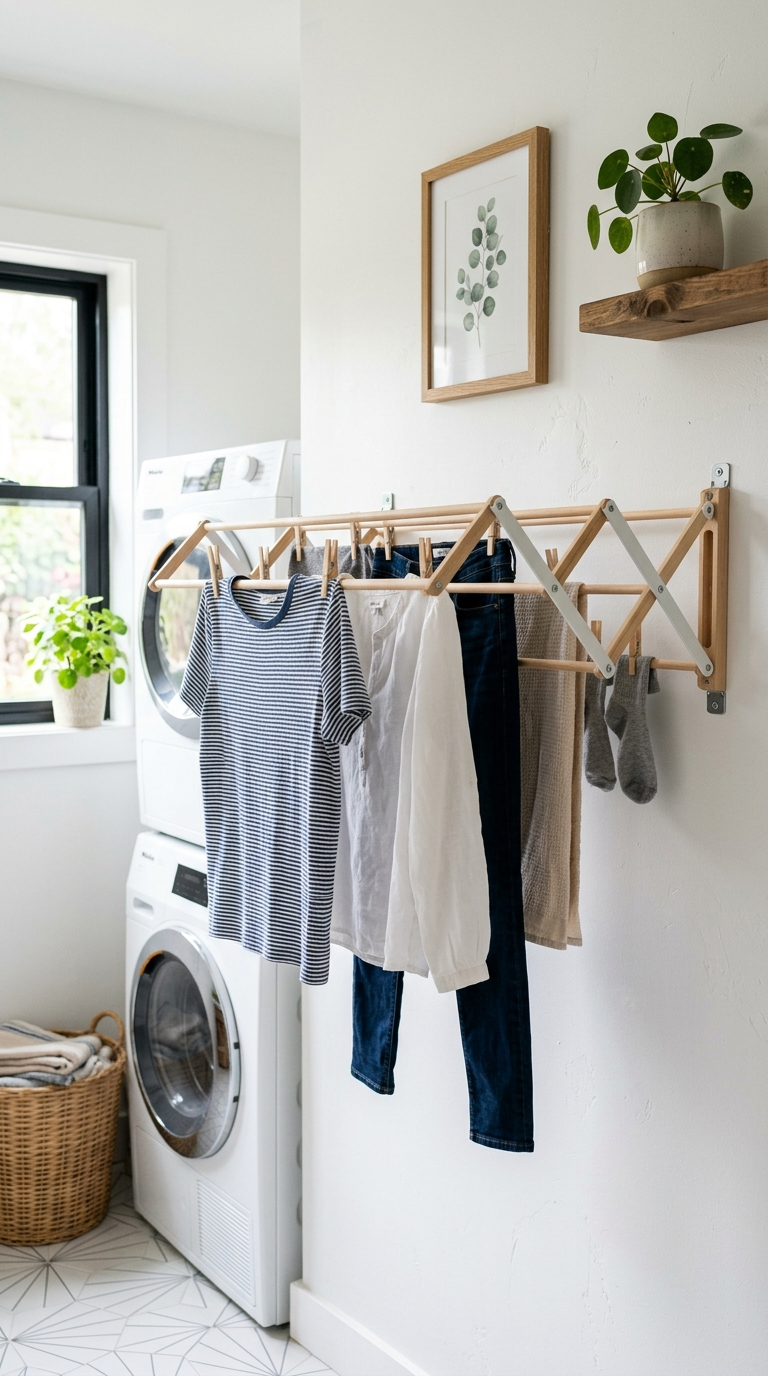
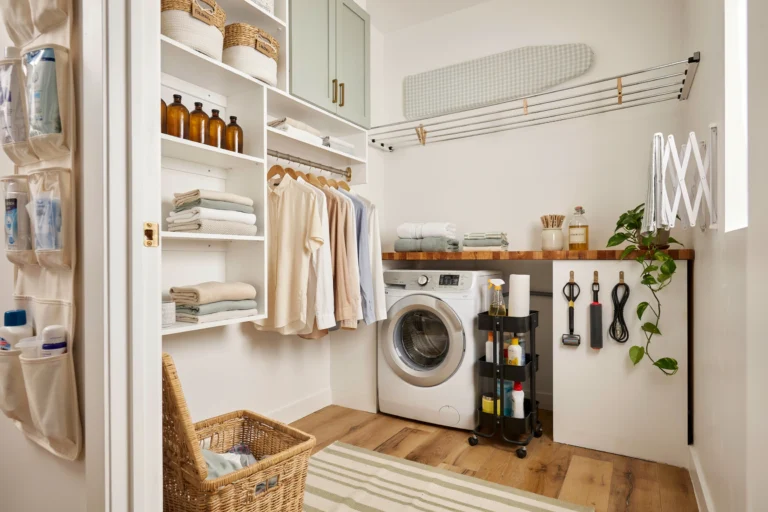
A wall-mounted folding drying rack or a freestanding drying rack provides space for air-drying delicate items without taking up the floor space when not in use. Wall-mounted versions fold flat against the wall when retracted and extend out only when actively drying clothes, which suits small laundry rooms particularly well. Freestanding accordion-style racks fold into a compact form for storage. Either option means delicate items can air-dry properly rather than being damaged in the dryer or draped over chair backs throughout the house.
7. Proper Task Lighting
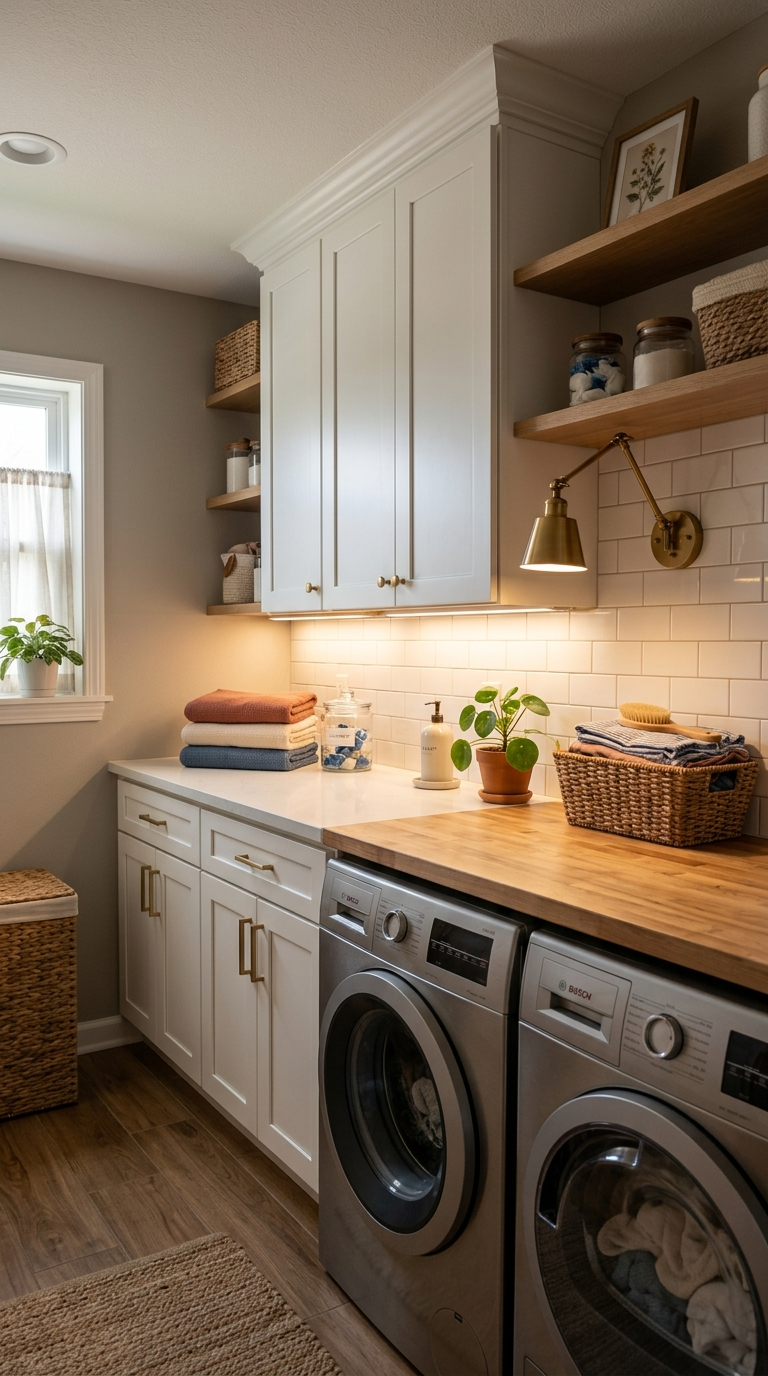
Most laundry rooms are illuminated by a single overhead fixture that creates harsh shadows across the work surfaces. Adding under-cabinet lighting above the counter, a small task light over the folding area, or a series of small recessed lights distributed across the ceiling provides the kind of even illumination that makes laundry work easier and the room more pleasant to be in. Use warm-toned LEDs in the 3000K range for a flattering quality of light. Good lighting alone can transform the experience of doing laundry from a chore in a dim closet to a manageable task in a bright considered room.
8. Sink Addition
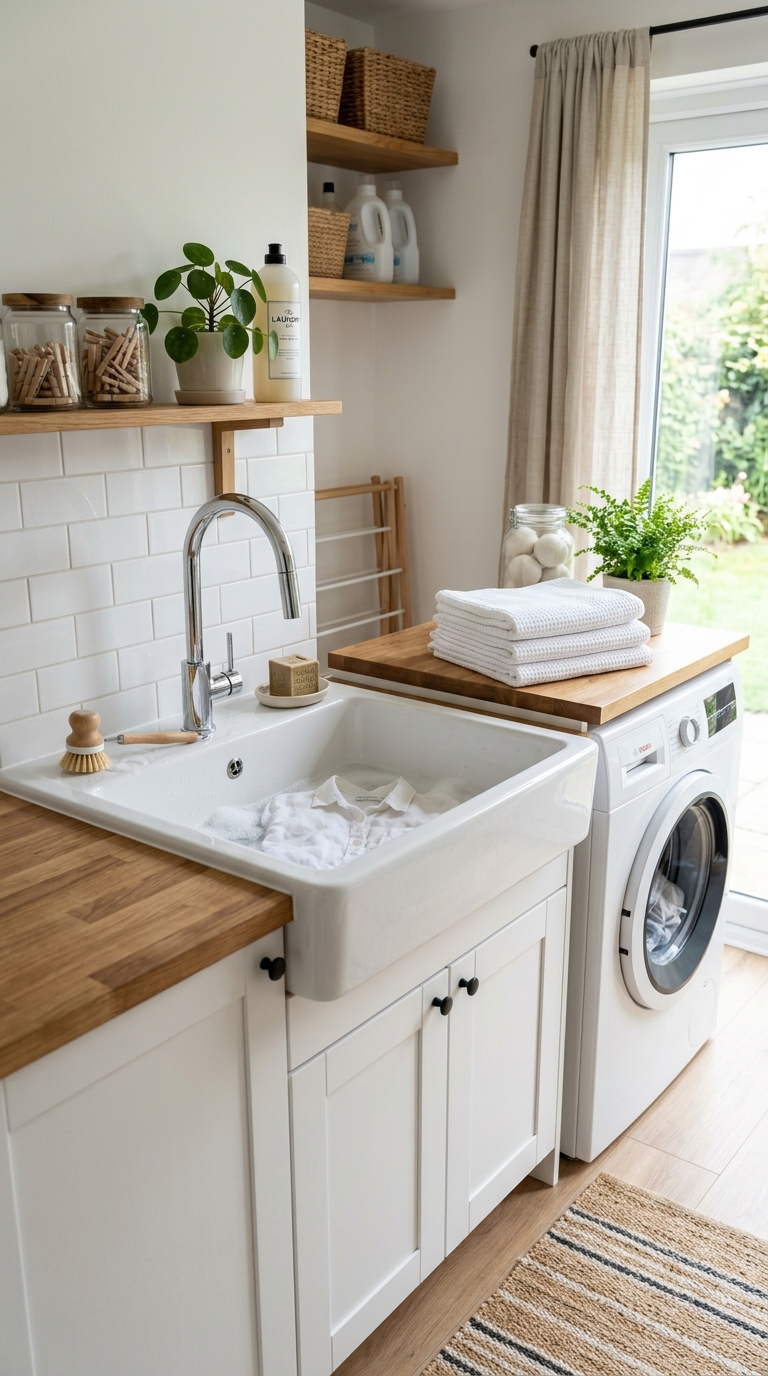
A laundry sink, also called a utility sink, installed in the laundry room provides a dedicated spot for hand-washing delicates, treating stains, soaking items, and the dozens of small water-related tasks that come up in a working household. A laundry sink also handles the overflow from gardening, art projects, or pet washing that otherwise ends up in the kitchen sink. Choose a deep sink with a simple gooseneck faucet for the most flexible function. The sink can be installed in a small base cabinet for additional storage below, which makes it serve double duty in a small laundry room.
9. Floor Tile Choice
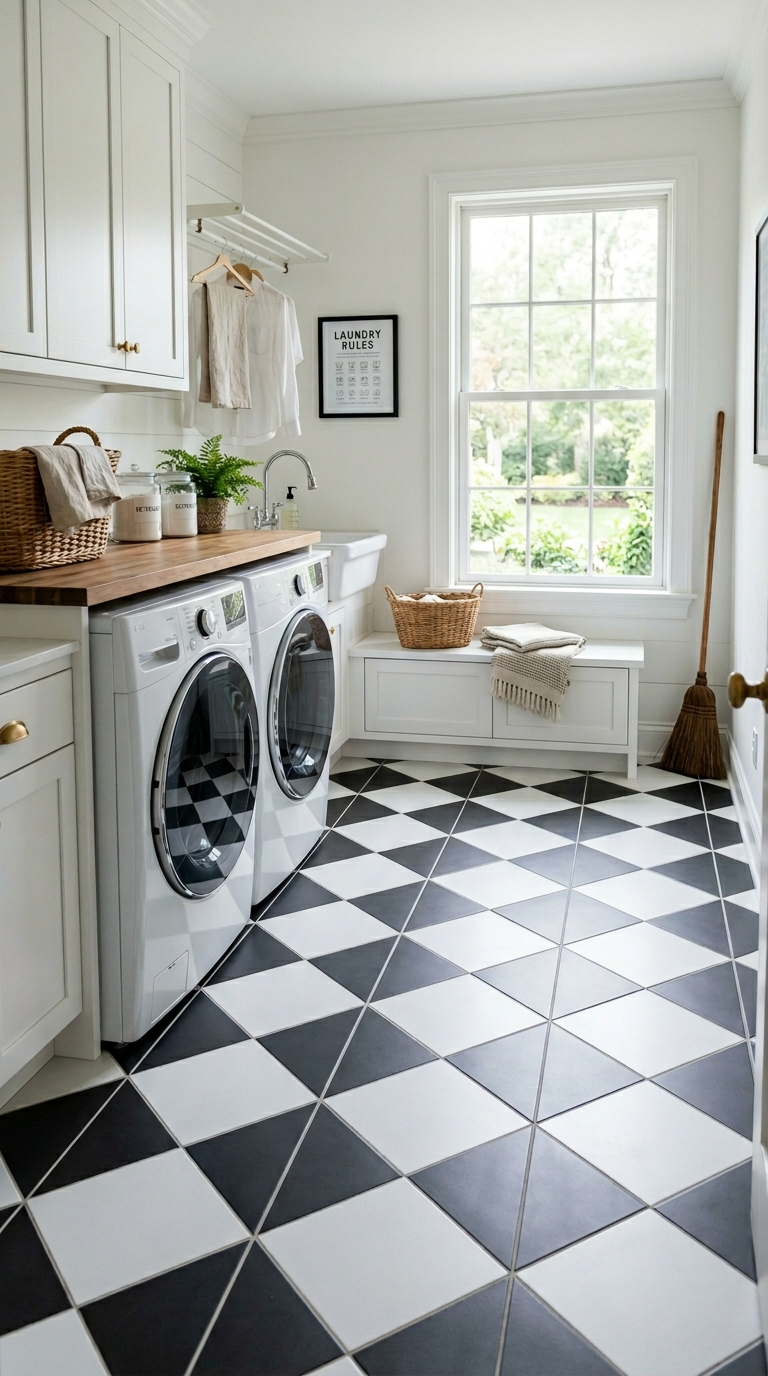
The floor of the laundry room handles a lot: spilled water, dropped clothes, the wear of frequent walking, occasional appliance leaks. A durable waterproof floor surface, porcelain tile, vinyl plank, or sealed concrete, holds up to the conditions while contributing to the visual quality of the room. Choose floor tile in a pattern or color that elevates the laundry room beyond pure utility: a black-and-white checkerboard pattern, a subtle hexagon mosaic in cream and gray, a warm terracotta-look porcelain. The floor is one of the largest visible surfaces in the laundry room and a deliberate floor choice immediately makes the room feel more designed. The same approach to deliberate floor choice also benefits bathroom wallpaper accent walls where the floor pattern can complement the wall pattern for a complete coherent design.
10. Folding Station Setup
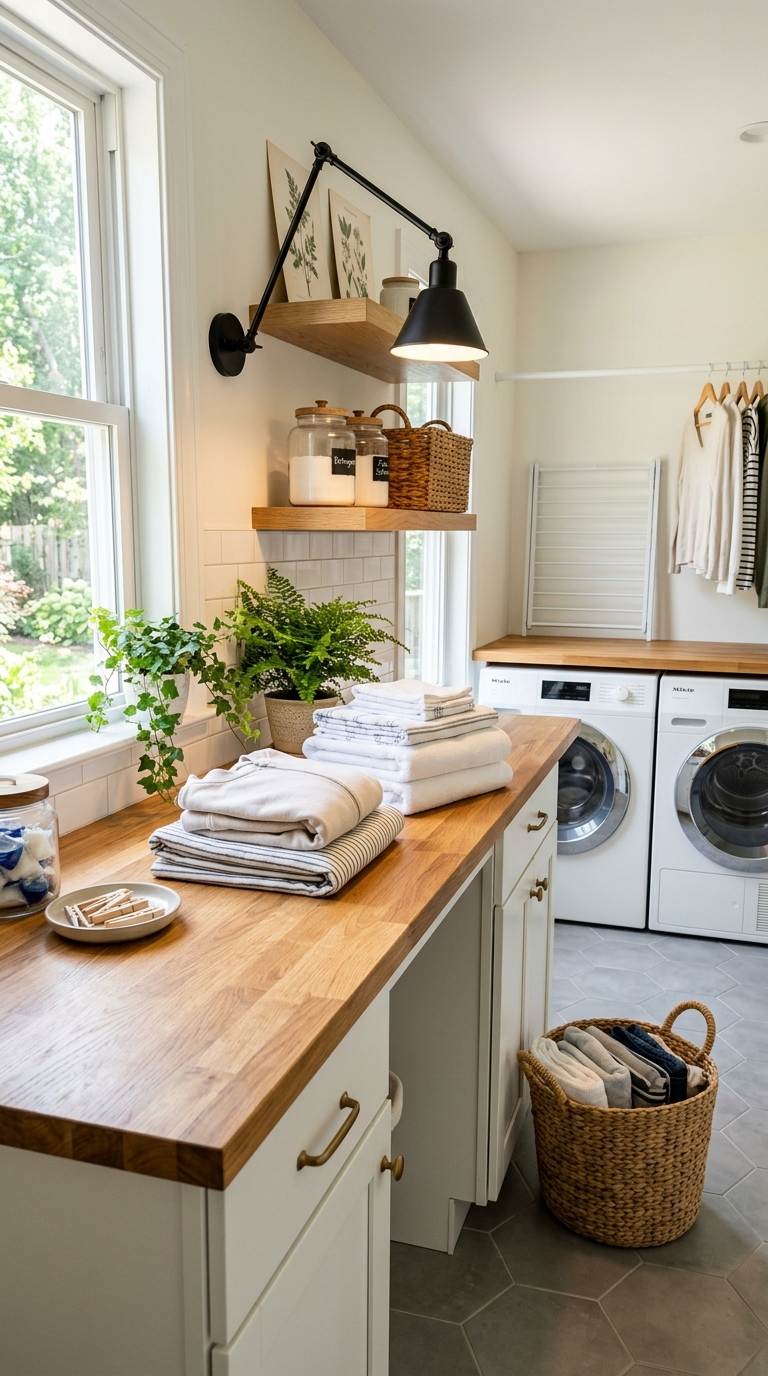
A dedicated folding station with sufficient counter space, good lighting overhead, and a small basket or bin for sorted items beside it turns the folding step from a frustrating obstacle into a reasonable task. The station should be at proper counter height, around thirty-six inches, so folding does not require bending uncomfortably. Position it where the natural workflow of taking clothes from the dryer to the folding surface is straightforward. A small stool nearby provides occasional seating for longer folding sessions. The station genuinely changes how the work feels.
11. Iron and Board Storage
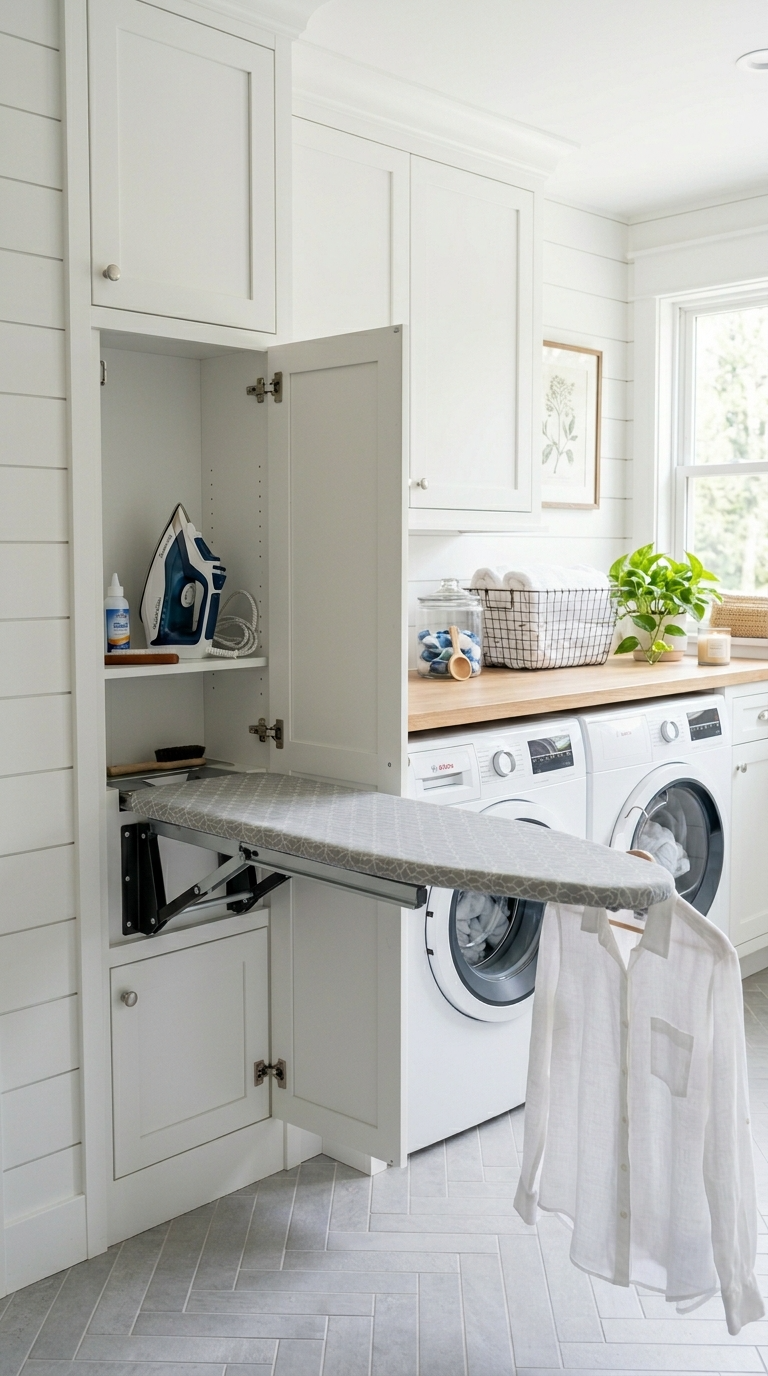
An ironing board and iron need somewhere to live that is accessible but not always visible. A wall-mounted ironing board cabinet, where the board folds out from a vertical cabinet on the wall, is the most space-efficient solution and keeps the ironing equipment hidden when not in use. A door-mounted ironing board attached to the back of a cabinet door is another compact solution. A simple full-size board can be stored in a tall narrow cabinet beside the dryer, or hung from a hook on the wall. Whatever the storage solution, the ironing equipment should not be lying on the floor or leaning against the wall in plain view.
12. Pull-Out Hampers
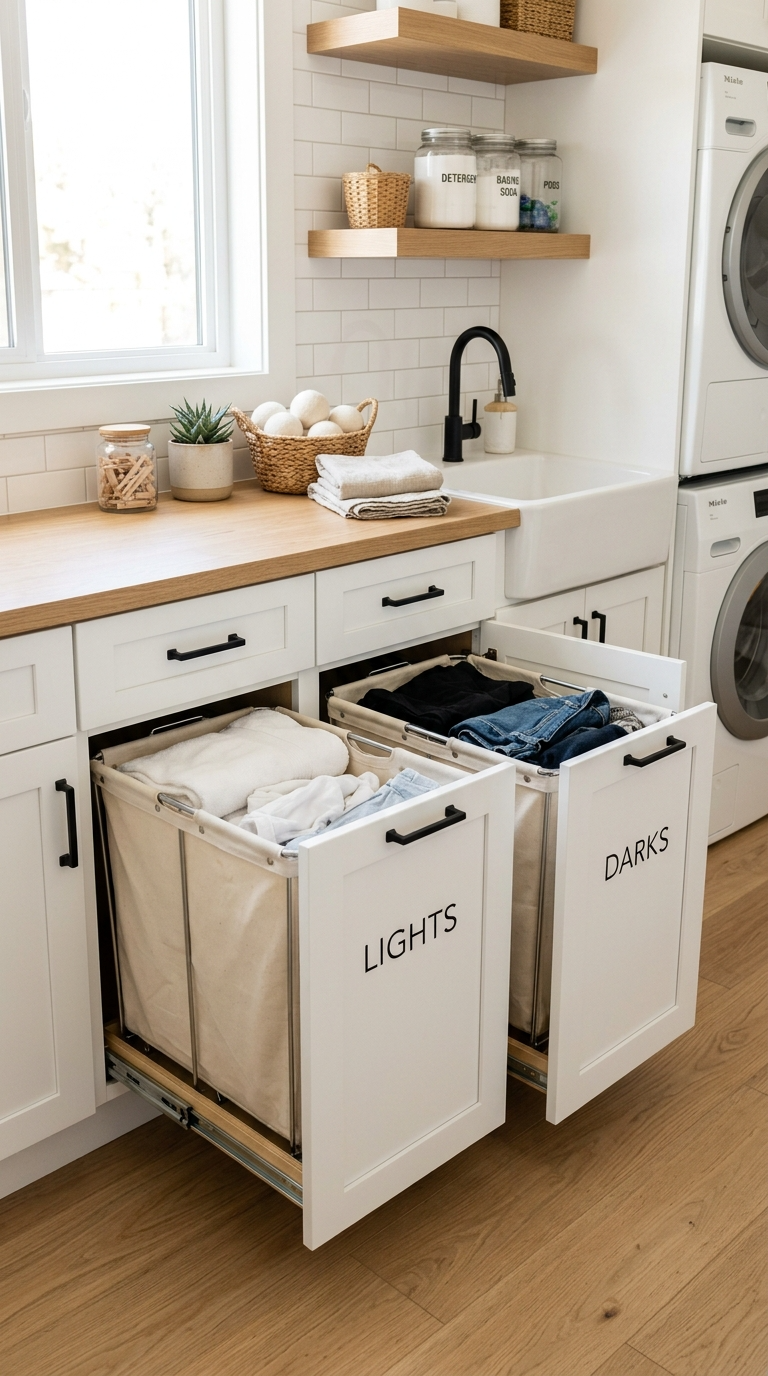
Pull-out laundry hampers installed in a base cabinet sort dirty laundry directly at the source rather than requiring a separate sorting step before washing. Two or three hampers in a single cabinet allow sorting by color, by family member, or by wash type. The pull-out mechanism keeps the hampers hidden behind cabinet doors when not in use and accessible for loading and emptying when needed. The integrated sorting system removes one of the most common laundry frustrations and makes the actual washing step much more efficient.
13. Wall-Mounted Hooks
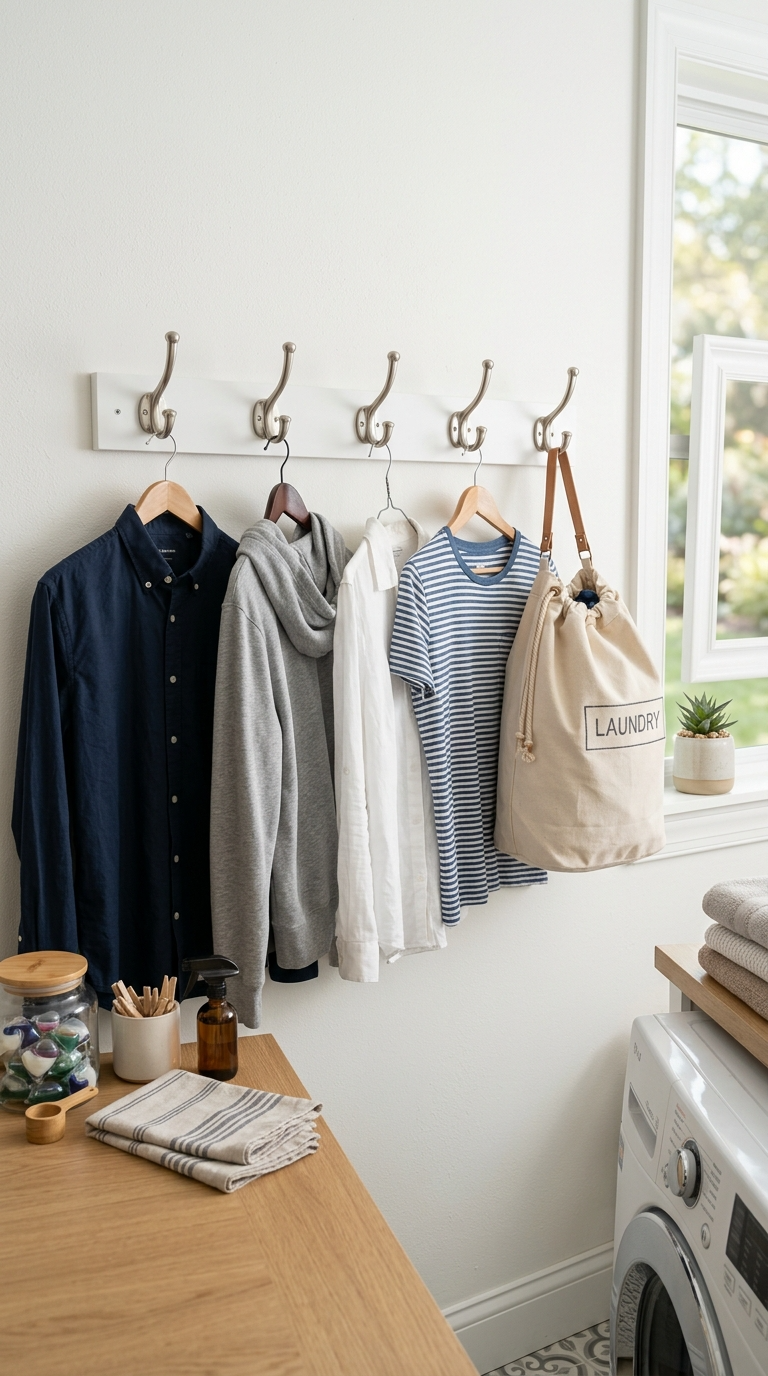
A row of hooks mounted on a wall in the laundry room holds items that need to hang during processing: shirts straight from the dryer that should not be folded, items that need air-drying after stain treatment, the laundry bag waiting to be sorted. Wall-mounted hooks at standard hook height add a layer of practical function and a visual detail at the same time. Choose hooks in a finish that coordinates with the rest of the room hardware for visual coherence. Even a simple row of five hooks adds significant practical capacity to a working laundry room.
14. Pet Washing Station
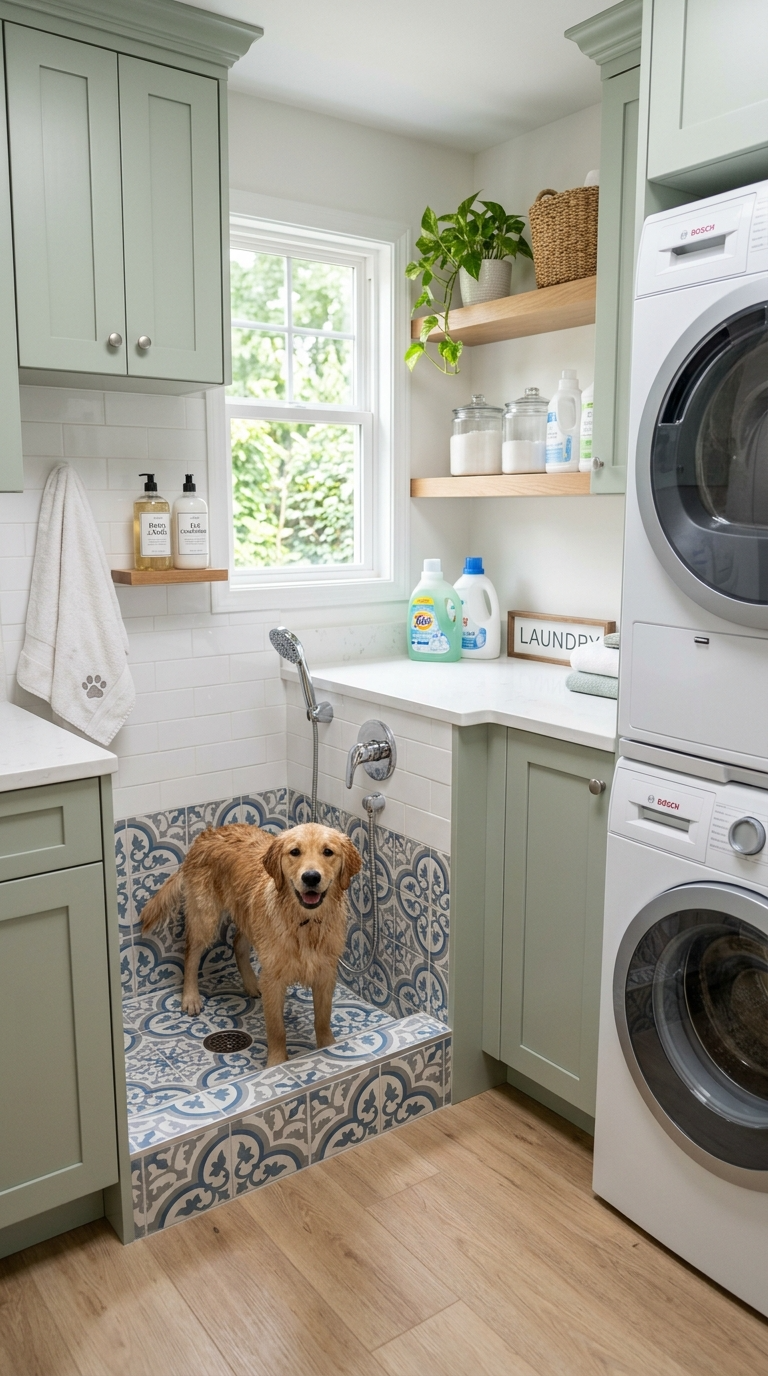
For households with dogs or cats that need regular washing, a small pet washing station integrated into the laundry room, a built-in low shower for dogs, or a deep utility sink sized for the pet, eliminates the need for the bathtub upstairs. The pet washing function fits naturally with the laundry room since the room already handles wet textiles and has waterproof flooring and walls. The dedicated pet washing zone keeps pet hair and dirt contained to the laundry room rather than spreading through the rest of the house. This is a more involved addition but transforms the practicality of the room significantly.
15. Pendant Light Detail
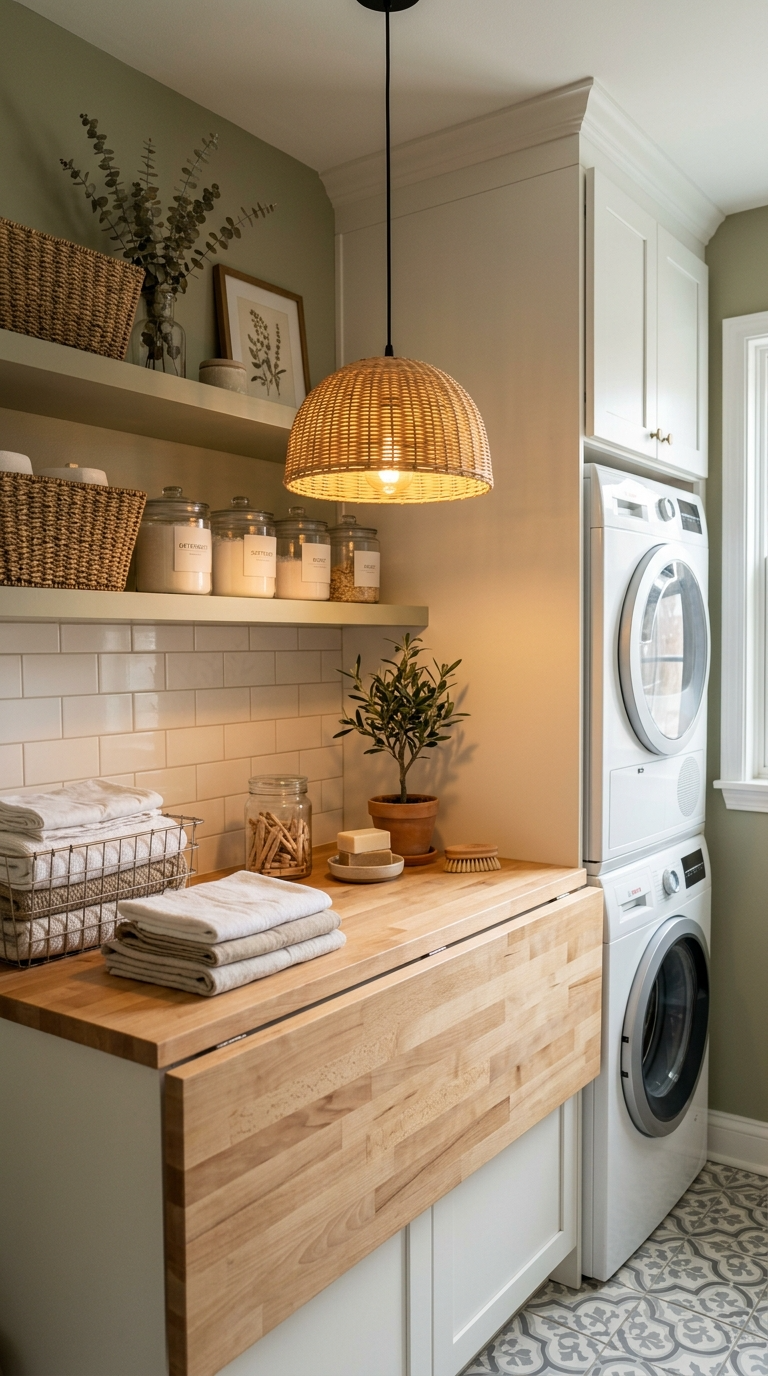
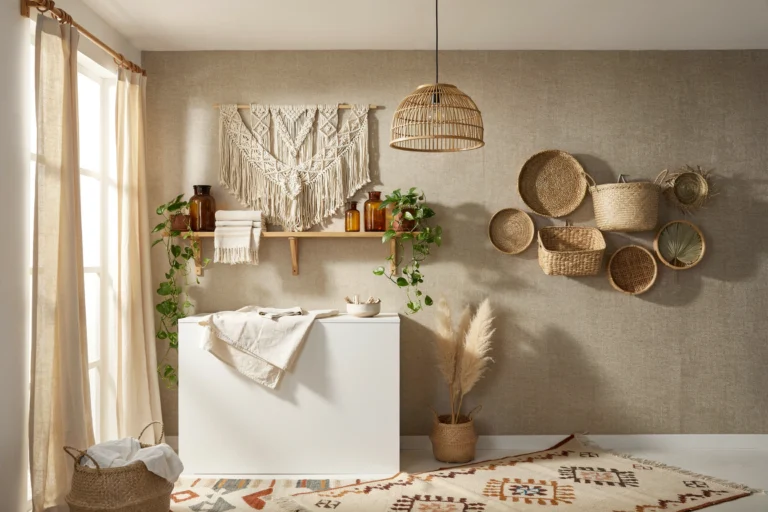
A pendant light hanging above the folding counter, in addition to the overhead ambient lighting, adds a small but meaningful decorative detail that signals the laundry room is treated as a real designed room. Choose a pendant in a style that suits the rest of the home: a small woven rattan dome, a simple matte black cone, an aged brass pendant. The pendant provides task light directly over the work area and adds the kind of styled element that distinguishes a laundry room from a utility closet. Use a warm bulb in the 2700K to 3000K range for a flattering quality of light.
16. Window if Possible
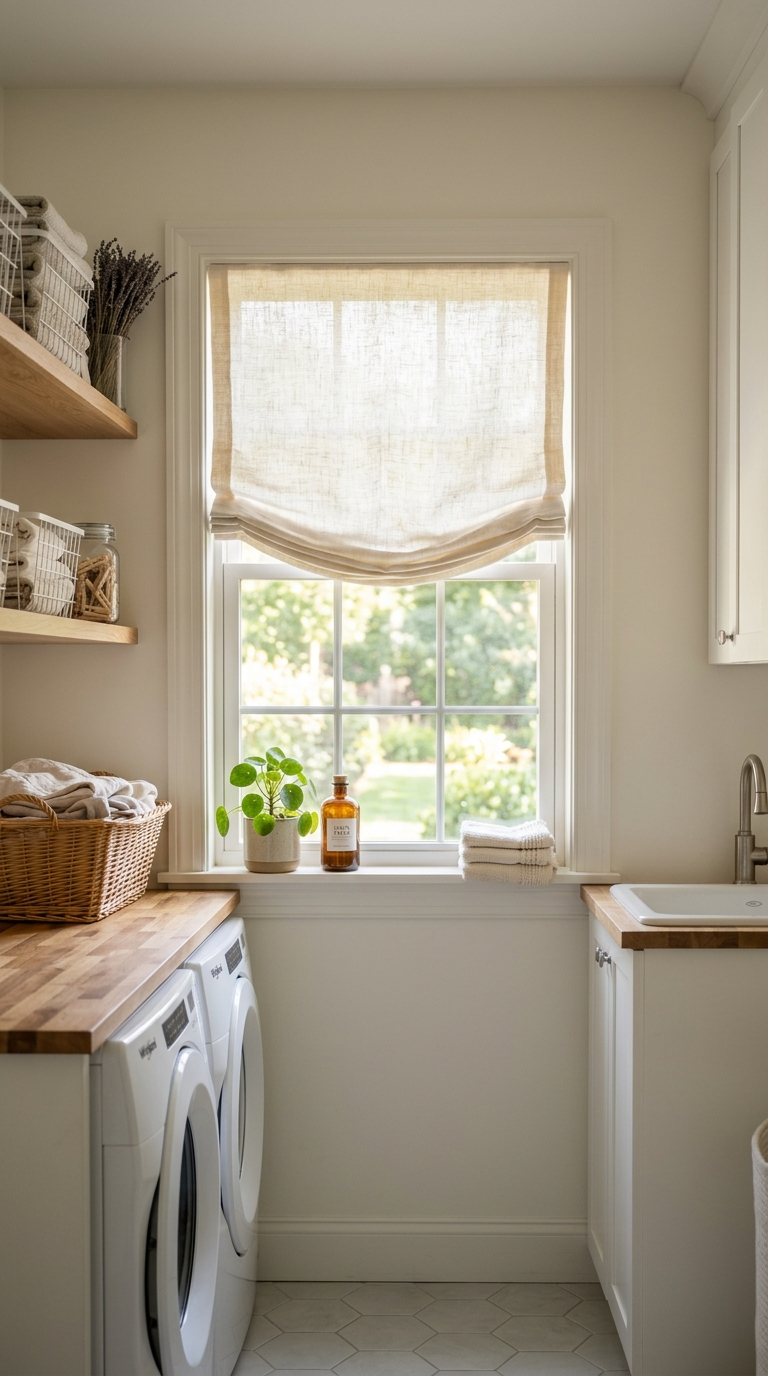
If the laundry room has a window, treat it as the asset it is. A simple linen Roman shade or a sheer curtain panel filters daylight beautifully and turns the laundry room into a space with natural light during the day. If the laundry room does not have a window, consider whether a small high window can be added during a renovation. Natural light in a laundry room significantly improves the experience of using the space, since you spend time there in daylight hours doing tasks that benefit from clear visibility. The window also provides a view that breaks up the visual interior of the room.
17. Wallpaper or Pattern
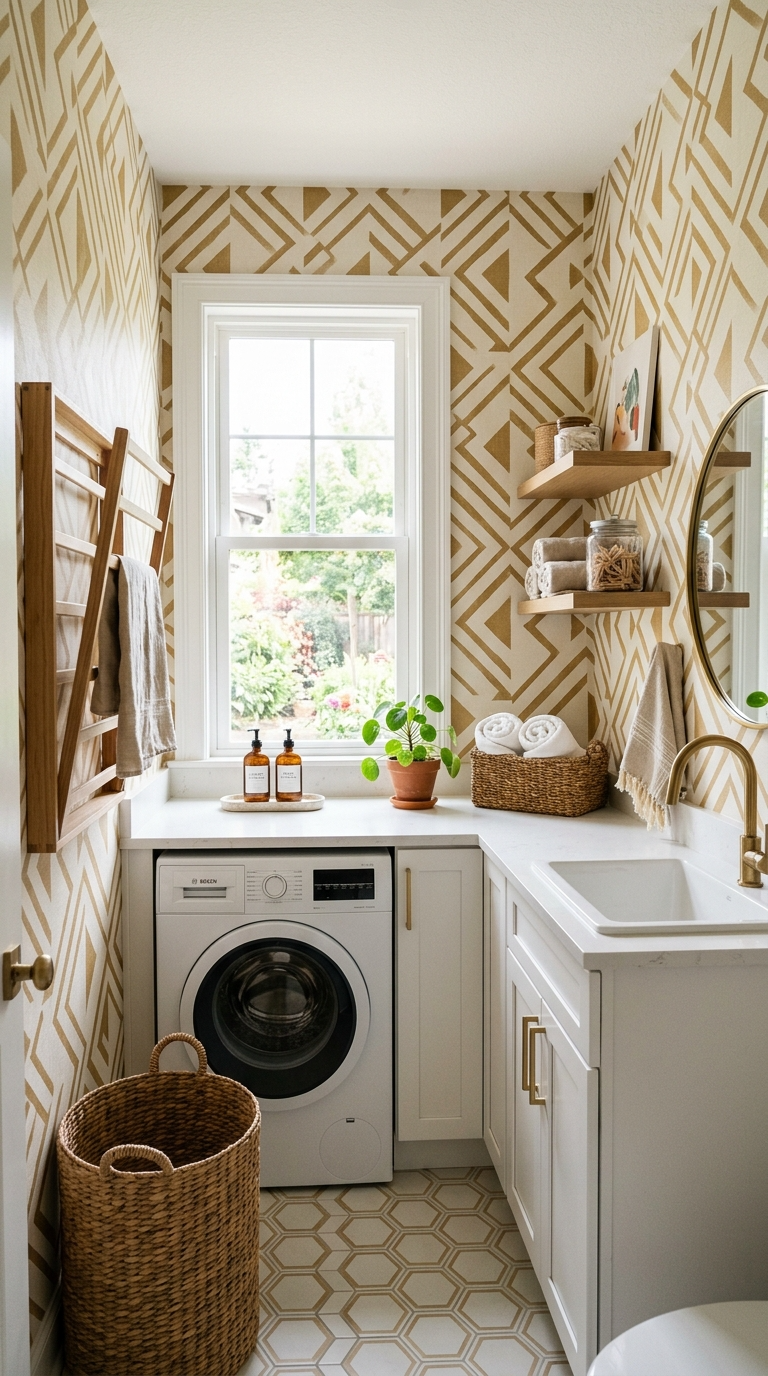
A small laundry room is one of the best places in the home to use a bold pattern wallpaper because the small size of the room contains the pattern in a way that does not overwhelm the household. A bold floral, a graphic geometric, a bright stripe, or a sophisticated pattern in muted tones all work depending on the rest of the home’s aesthetic. Apply the wallpaper to all four walls or to a single feature wall depending on how strong you want the pattern to read. Choose moisture-resistant wallpaper rated for use in humid environments, since laundry rooms experience regular humidity from running appliances.
18. Functional Folding Bench
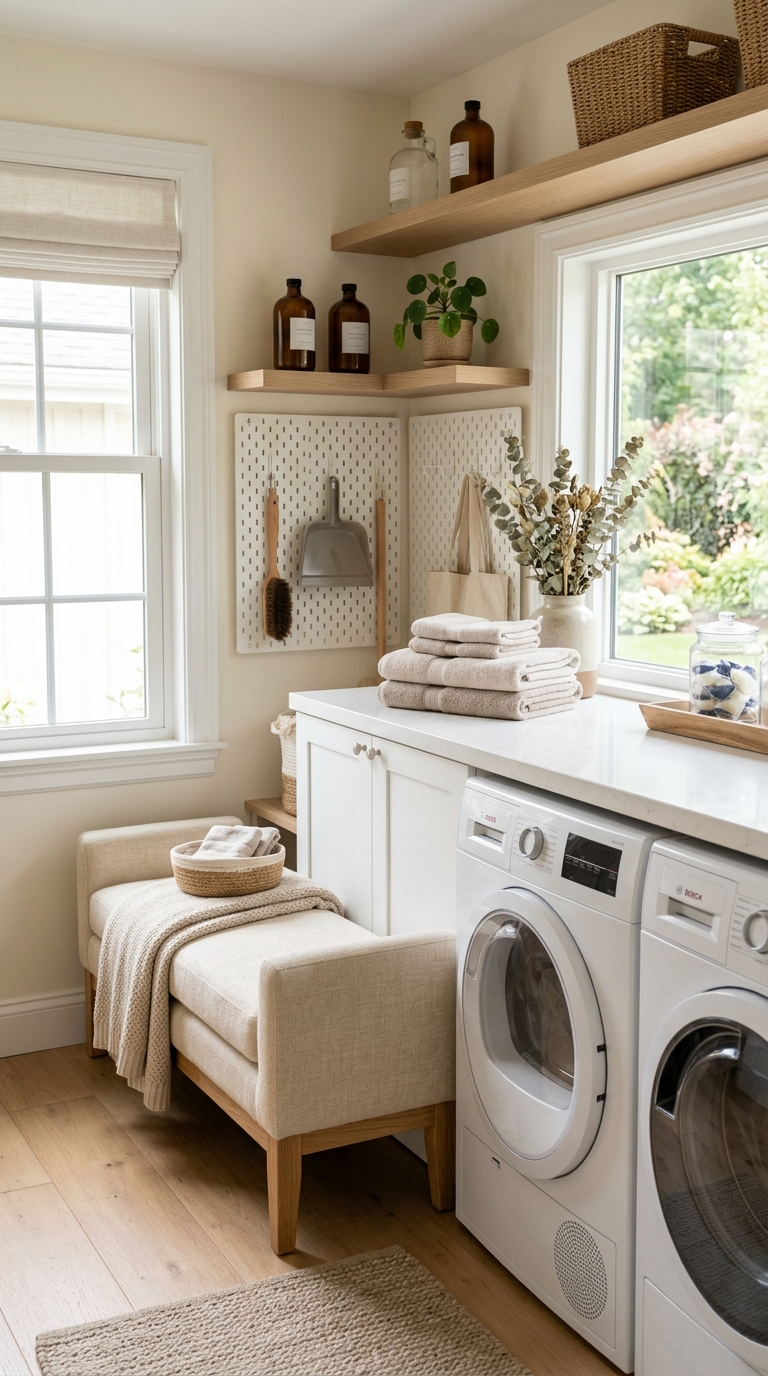
A small bench beside or near the laundry room provides occasional seating for taking off shoes, sorting through clothes, or just sitting briefly during longer laundry sessions. The bench can also hold a basket of laundry waiting to be processed, or serve as a temporary folding surface for awkward items. Choose a bench in a material that suits the room: a simple wooden bench, a small upholstered ottoman, or a vintage stool depending on the aesthetic. The bench adds both function and visual interest in a single piece.
19. Magnetic Strip for Lint Tools
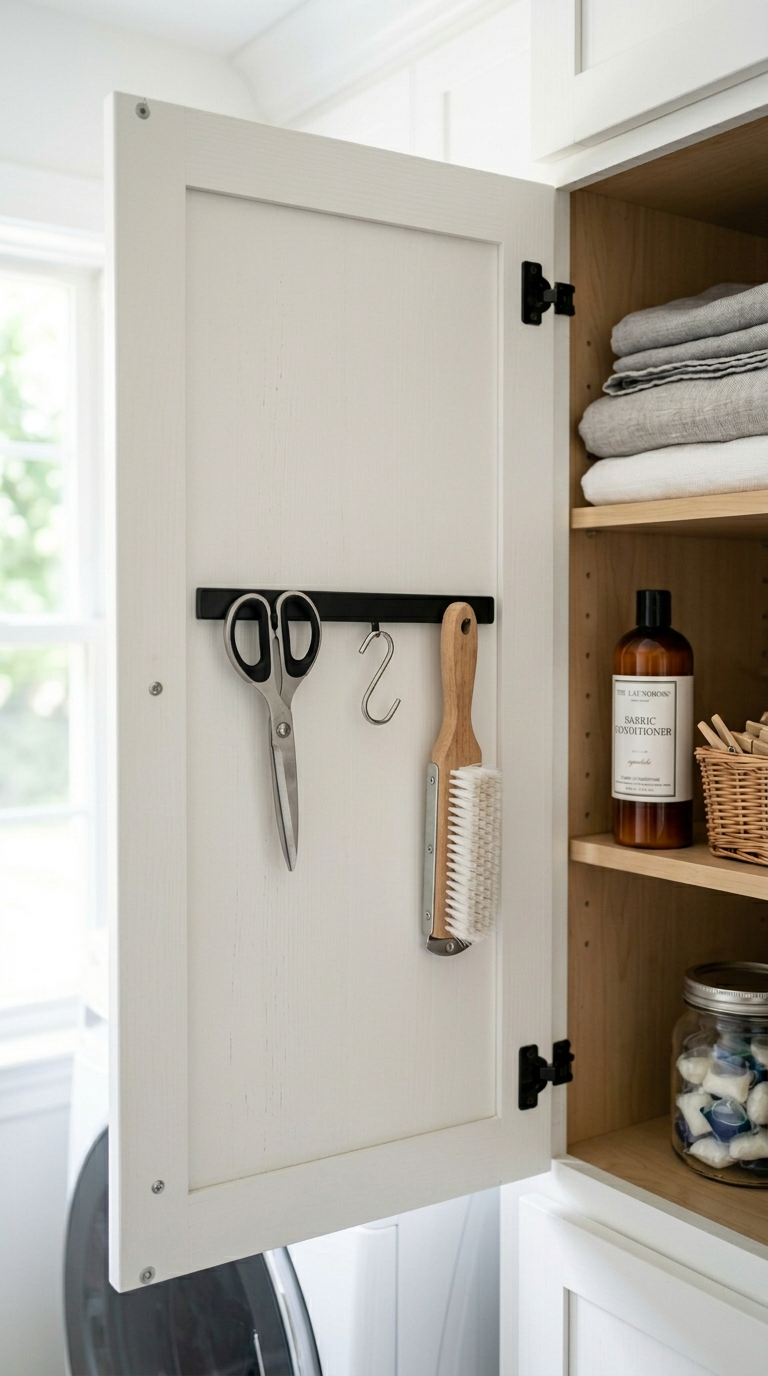
A small magnetic strip mounted inside a cabinet or on the wall holds the small metal tools that come up in laundry work: scissors for cutting tags, lint roller refills, small hooks for hanging items, the lint brush. The magnetic strip keeps these tools organized and visible rather than scattered across the counter or buried in a drawer. Mount the strip somewhere accessible during the natural flow of laundry work, near the folding counter or beside the washer. The small detail signals attention to the actual practical needs of the room.
20. Plants for Air Quality
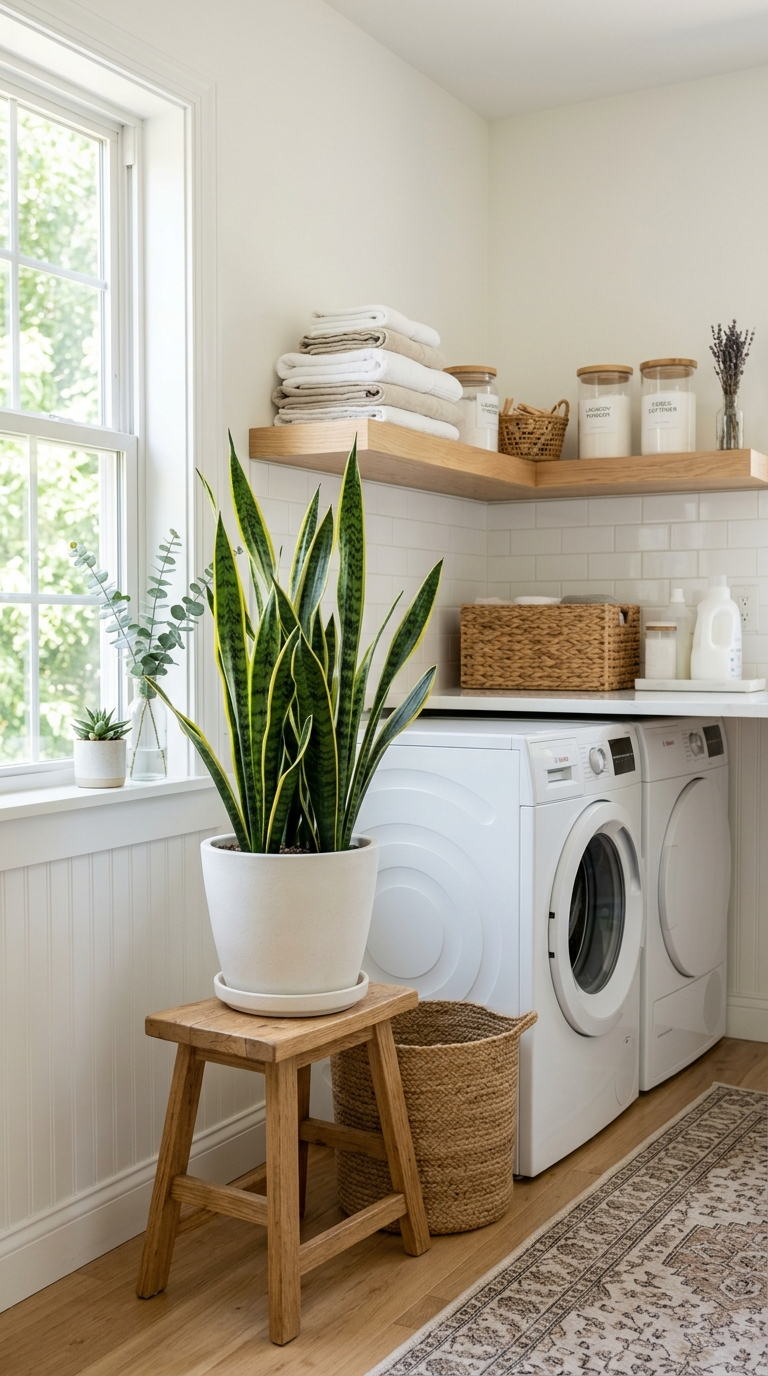
A small plant or two in the laundry room adds living warmth and potentially helps with the indoor air quality that laundry chemicals can compromise. A pothos on a high shelf where it can trail, a snake plant on the floor in a corner, or a small fern beside the window all work depending on the available light. The plants soften the visual hardness of the appliances and contribute to making the room feel like an actual living space rather than a pure utility area. Choose plants that tolerate the specific conditions of the laundry room: humidity from the appliances, occasional drafts from the dryer vent, and whatever light is available.
21. Paint the Door
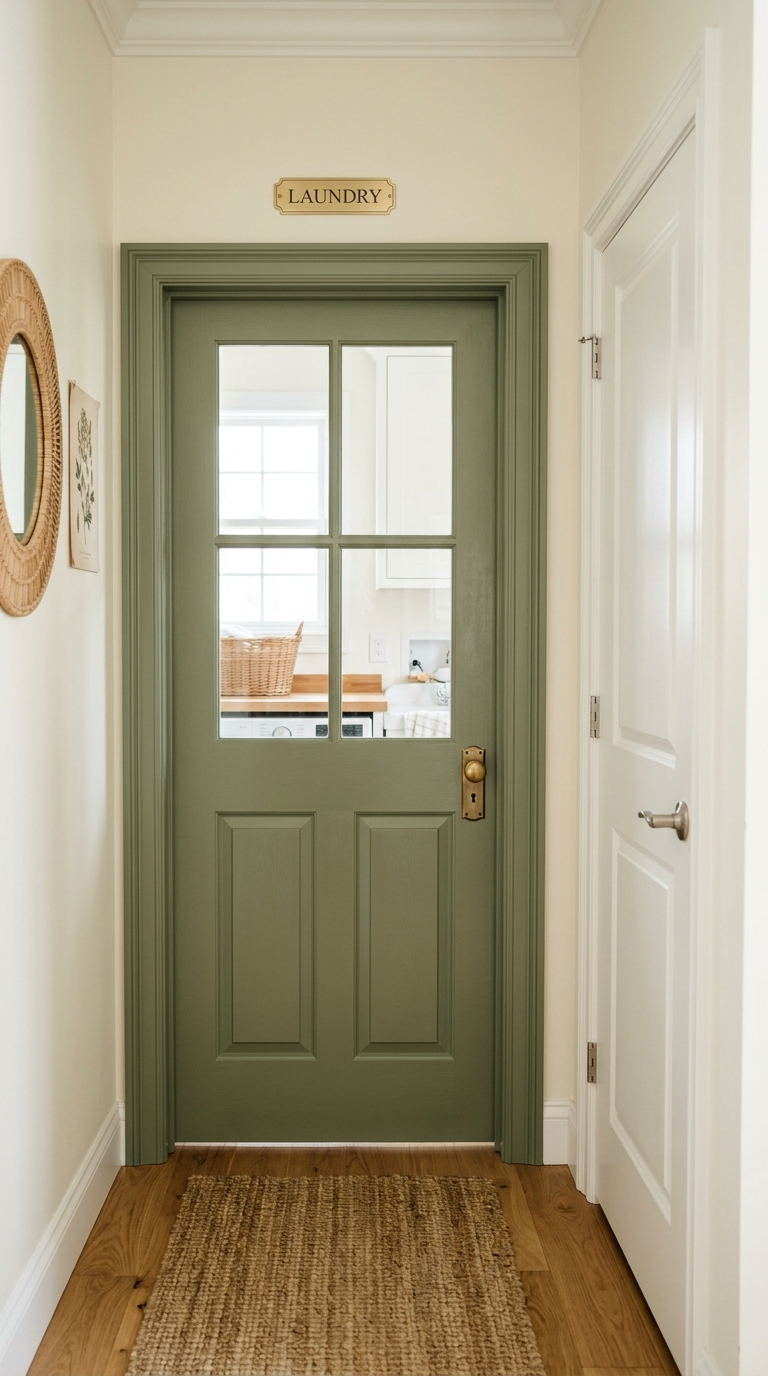
For a small commitment-free design moment, painting the laundry room door in a contrasting color, a deep navy, a warm sage, a rich burgundy, while keeping the rest of the home doors in their existing color, signals that the laundry room is a deliberately designed space. The door is the first thing you see when approaching the room, and a colored door changes the atmosphere of the entire space immediately. The contained application means the rest of the home is not affected by the color choice. This is one of the simplest ways to make the laundry room feel like a real room rather than a service space.
22. Coordinated Laundry Baskets
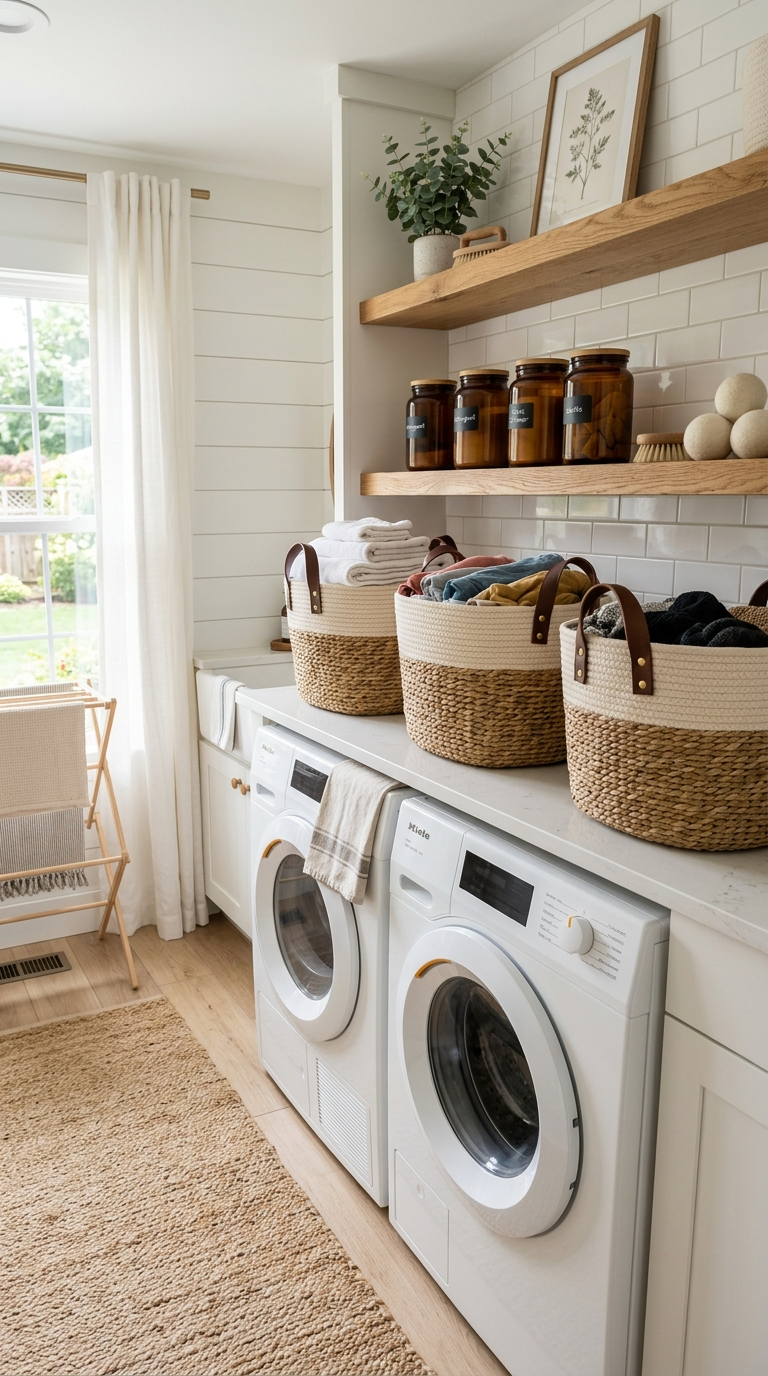
Replacing mismatched plastic laundry baskets with a coordinated set of natural fiber baskets, woven cotton rope, seagrass, or natural canvas with leather handles, transforms the visible storage in the laundry room from generic utility to styled decoration. Use matching baskets even if they hold different categories of items, since the consistent material and finish creates visual unity. The baskets also tend to be more durable than basic plastic versions and look better with age rather than worse. Even three or four matching baskets significantly improves the visual quality of the laundry room.
23. Make It Truly Yours
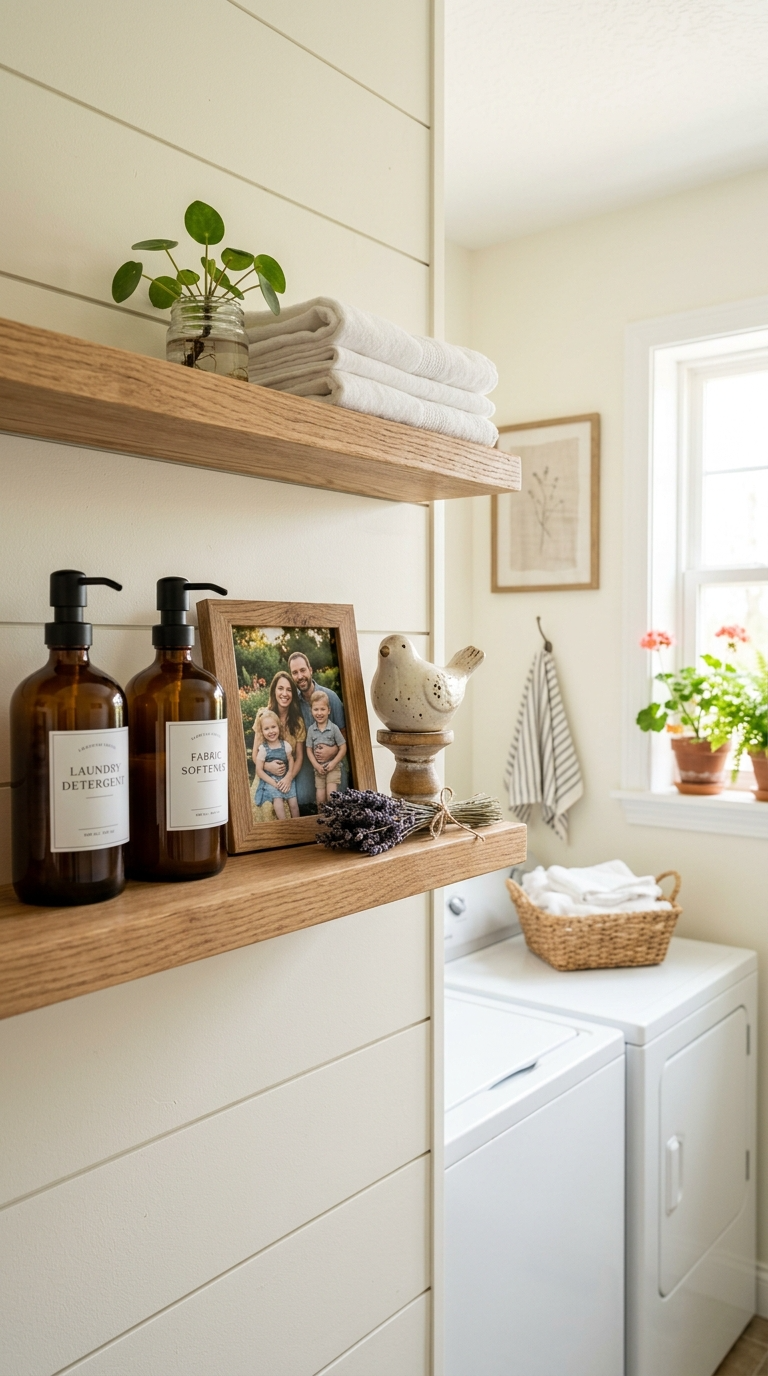
The laundry room rewards personal touches in ways that more public rooms in the home do not. A small framed family photograph, a sentimental object from childhood, a piece of art that you love but did not have a place for elsewhere, all find natural homes in the laundry room and turn the chore room into a space that reflects the household. The personal touches signal that the room is loved rather than merely tolerated, which actually makes spending time there more pleasant. The single small detail that means something specifically to you contributes more than a dozen generic decorative elements.
A laundry room can be one of the most pleasant small rooms in the home if it is treated like a real room rather than a chore closet. The investment in proper lighting, deliberate finishes, considered storage, and small styled details is modest because the space is small, but the daily improvement is felt every time the laundry gets done. Choose two or three of these ideas that address what bothers you most about your current laundry room and start there.