

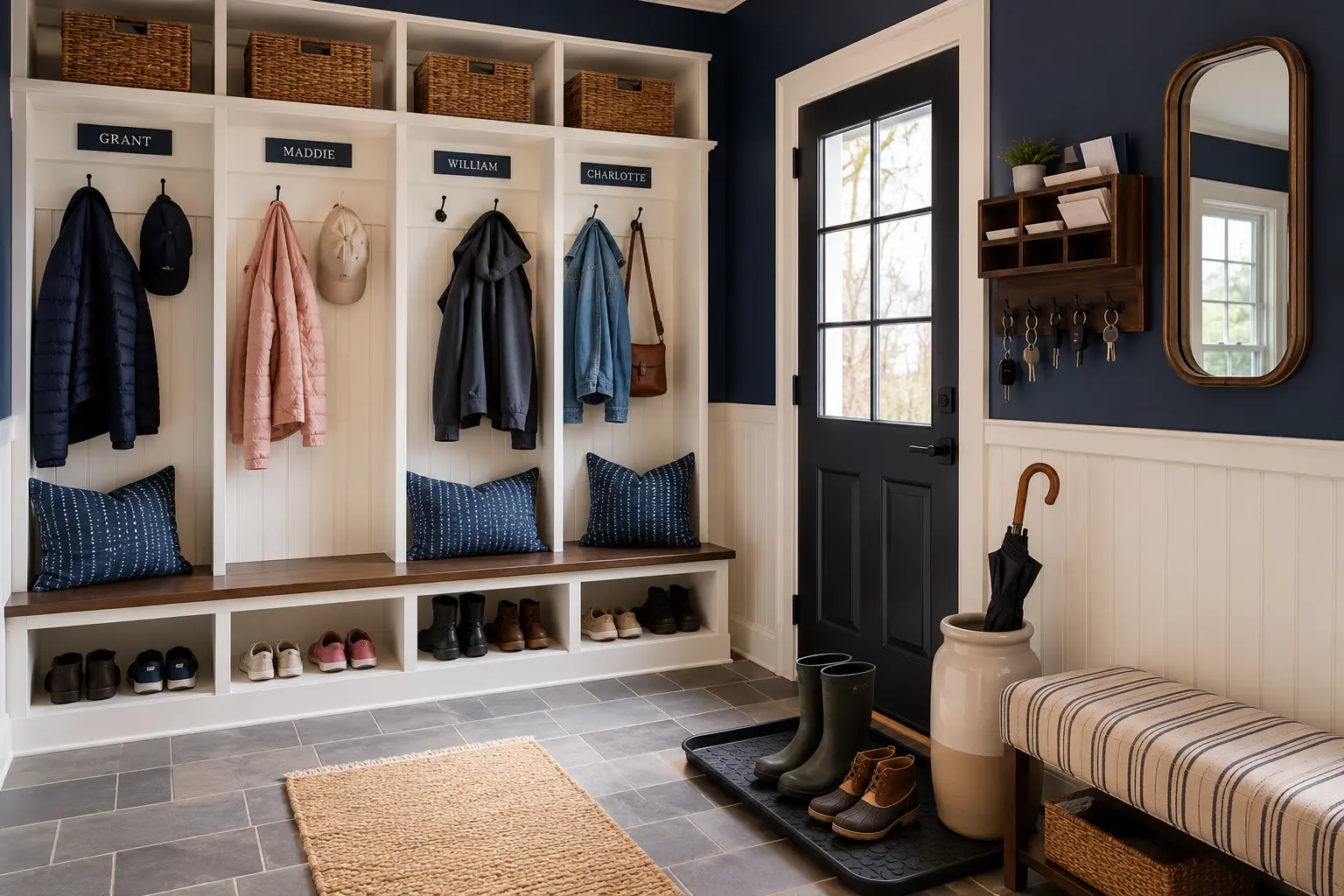
22 Mudroom Ideas That Solve the Daily Pile of Coats and Shoes
The mudroom is the room that takes the worst of the outdoors so the rest of the house does not have to. Wet coats, dirty shoes, dripping umbrellas, backpacks, dog leashes, keys, and the general chaos of arriving and departing all funnel through this one small space multiple times a day. Most mudrooms fail because they do not have enough hooks, enough shoe storage, or enough system to handle the volume. The result is a pile of coats on the bench, shoes kicked into a heap, and a floor that is perpetually dirty. These 22 ideas fix the most common mudroom failures with specific, practical solutions that keep the space organized through actual daily use rather than just for the photograph taken the day it was finished.
1. Individual Cubbies System
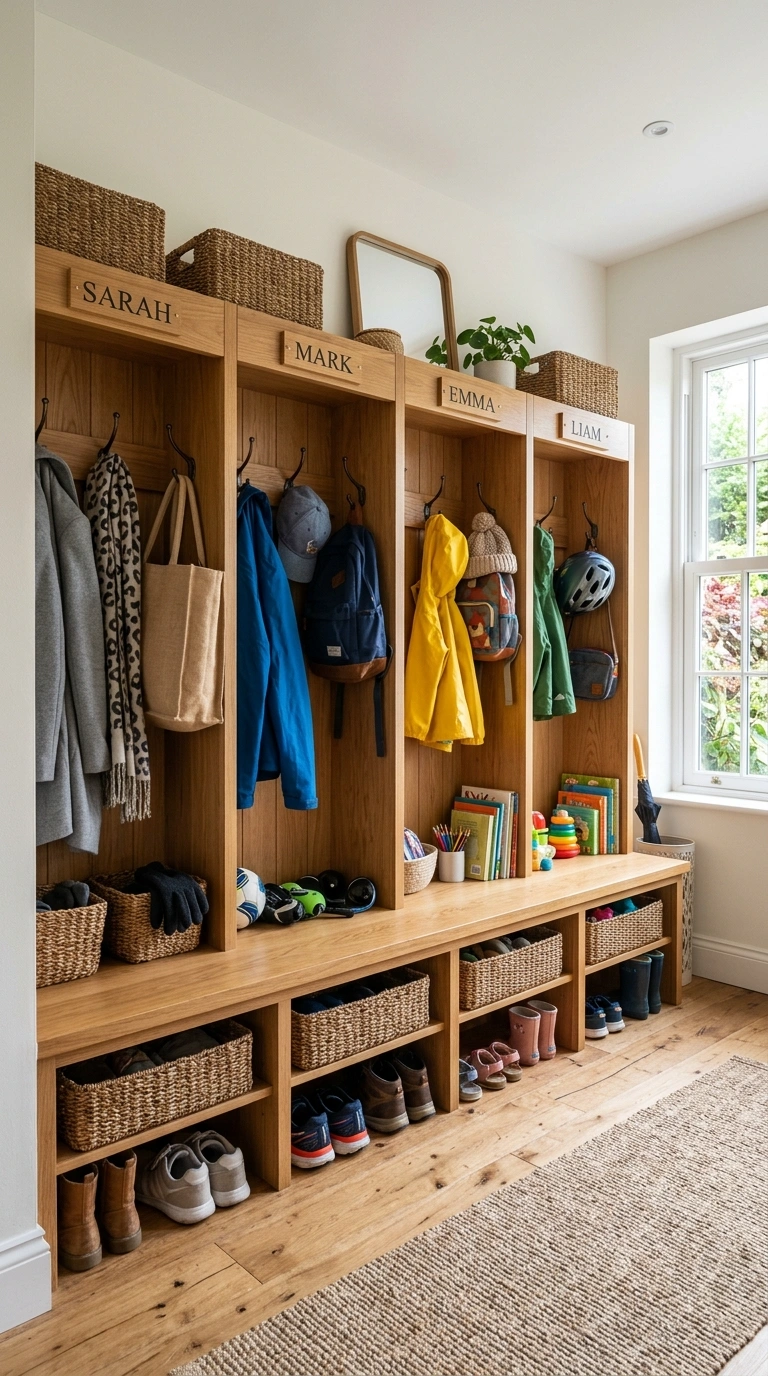
The single most effective mudroom layout gives every family member their own dedicated cubby section with a hook for coats, a shelf above for hats and bags, a bench seat for sitting while putting on shoes, and a bin or shelf below for shoes. When every person has a specific vertical zone in the mudroom that belongs only to them, the responsibility for keeping it organized becomes clear and the pile-up of communal chaos is replaced by individual accountability. Label each cubby with the person’s name for the youngest members of the household. The individual cubby system works whether the mudroom is a full room, a wide hallway, or a single closet.
2. Built-In Bench Seating
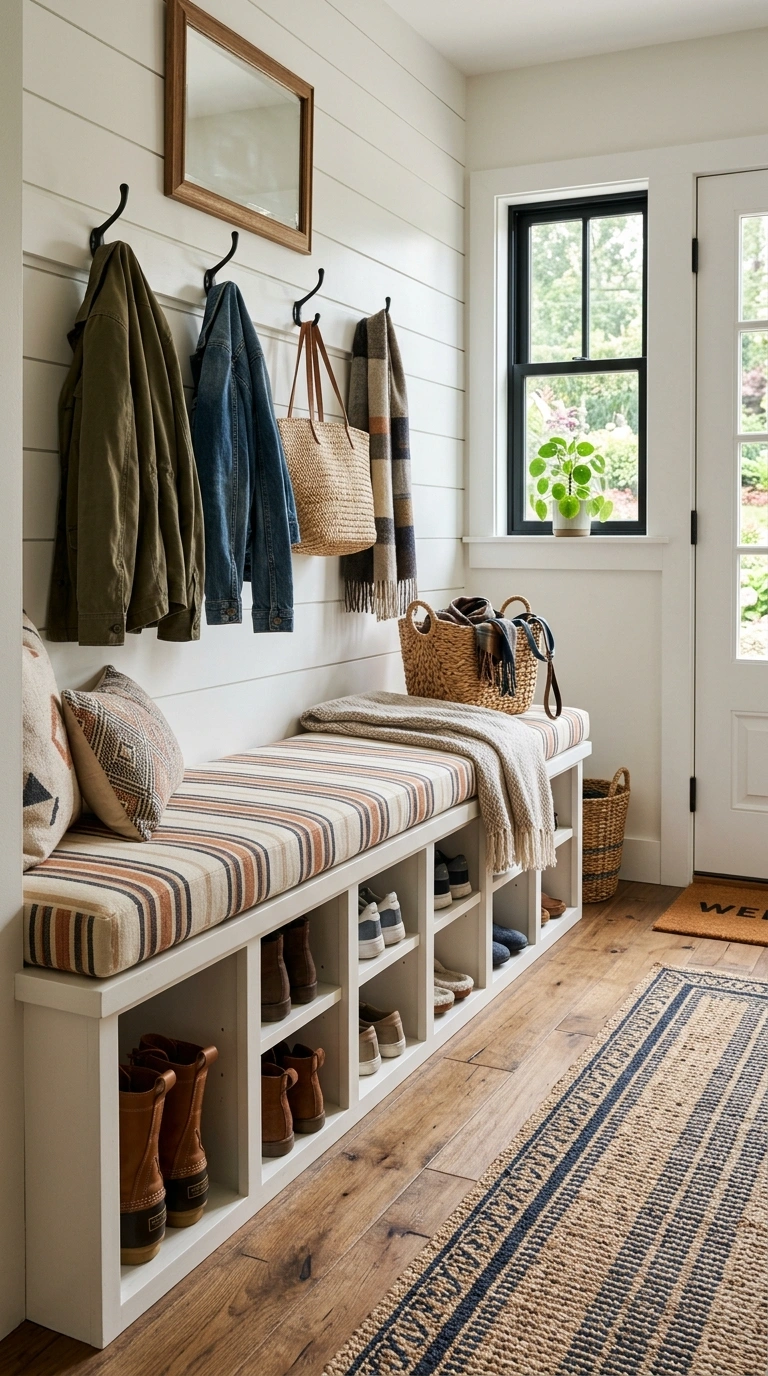
A built-in bench along one wall of the mudroom provides a genuine sitting surface for pulling on boots and tying shoes, which is the specific action that causes most mudroom floor chaos when people try to do it standing up and leaning against the wall. The bench should be at standard seat height, about eighteen inches, and deep enough to sit on comfortably, about fifteen to eighteen inches front to back. Build storage below the bench with either open shelves for shoe bins or closed cabinet doors to hide the shoe collection. The bench top can be a simple wooden slab, a cushioned upholstered surface for comfort, or a durable painted surface that wipes clean easily.
3. Adequate Hook Quantity
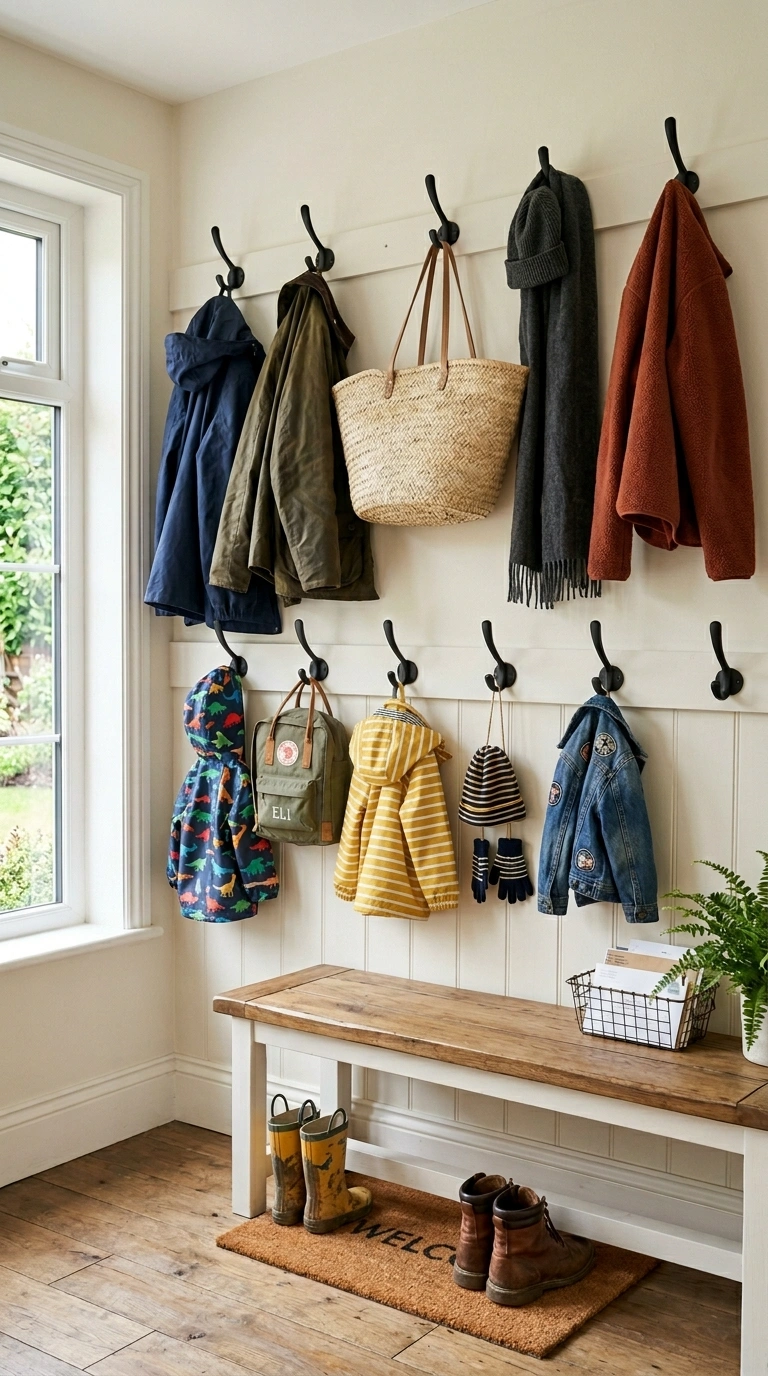
Most mudrooms fail on hooks because they have too few. The minimum number of hooks for a functional mudroom is two per person who uses the space regularly, one for the everyday coat and one for a bag, scarf, or secondary item. A family of four needs at minimum eight hooks, and twelve is better to accommodate visitors and seasonal items. Install hooks at two heights: adult height at about sixty inches from the floor and kid height at about forty inches for younger children who cannot reach the higher hooks. Choose hooks in a coordinated metal finish, matte black, brushed nickel, or oil-rubbed bronze, that suits the rest of the room.
4. Durable Flooring Choice
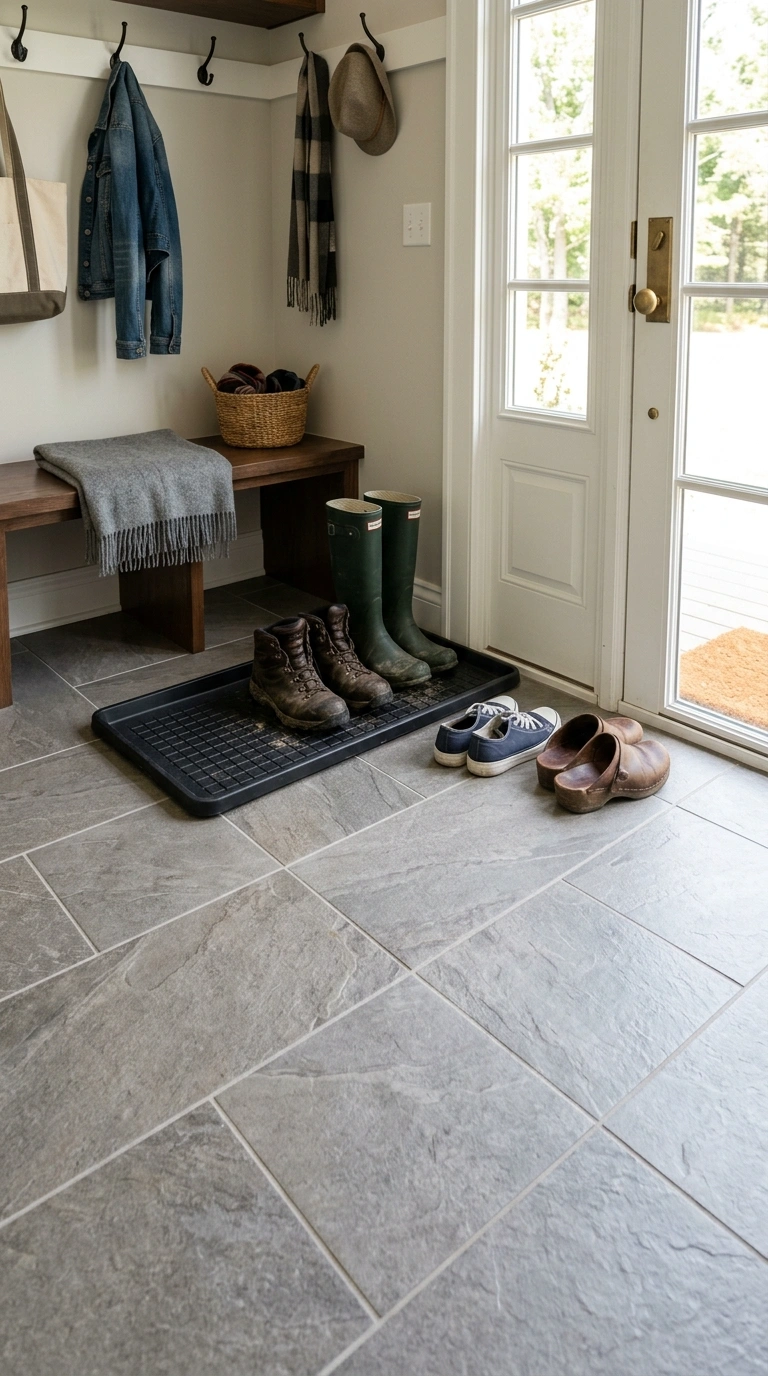
The mudroom floor takes more abuse than any other floor in the home and the wrong flooring choice makes the room look dirty no matter how often it is cleaned. Porcelain tile, natural slate, sealed concrete, or luxury vinyl plank in a stone or tile look all handle mud, water, salt, and heavy foot traffic without damage. Avoid real hardwood in the mudroom since the constant moisture cycles will warp and damage the surface over time. Choose a flooring color and pattern that hides dirt between cleanings: medium tones with some variation are significantly more forgiving than solid white, solid dark, or perfectly uniform surfaces.
5. Open Shelf Above Hooks
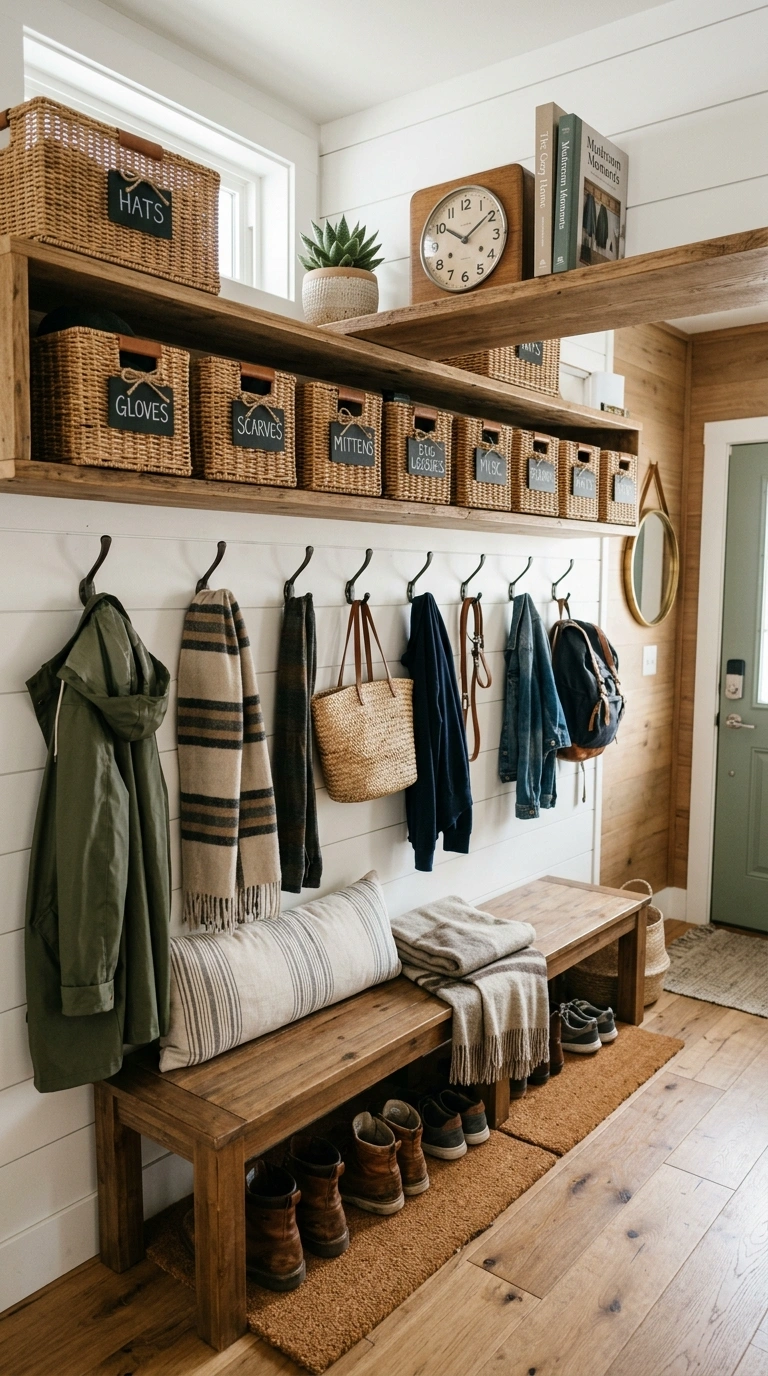
An open shelf mounted on the wall above the coat hooks provides a dedicated landing zone for items that do not hang: hats, sunglasses, gloves, dog treats, the small daily carry items that would otherwise end up on the bench or the floor. The shelf should run the full length of the hook rail for visual continuity and be deep enough to hold a small basket, about eight to ten inches. Style the shelf with a combination of labeled baskets for loose items and a few small decorative elements to keep the mudroom from reading as purely utilitarian.
6. Shoe Storage Below Bench
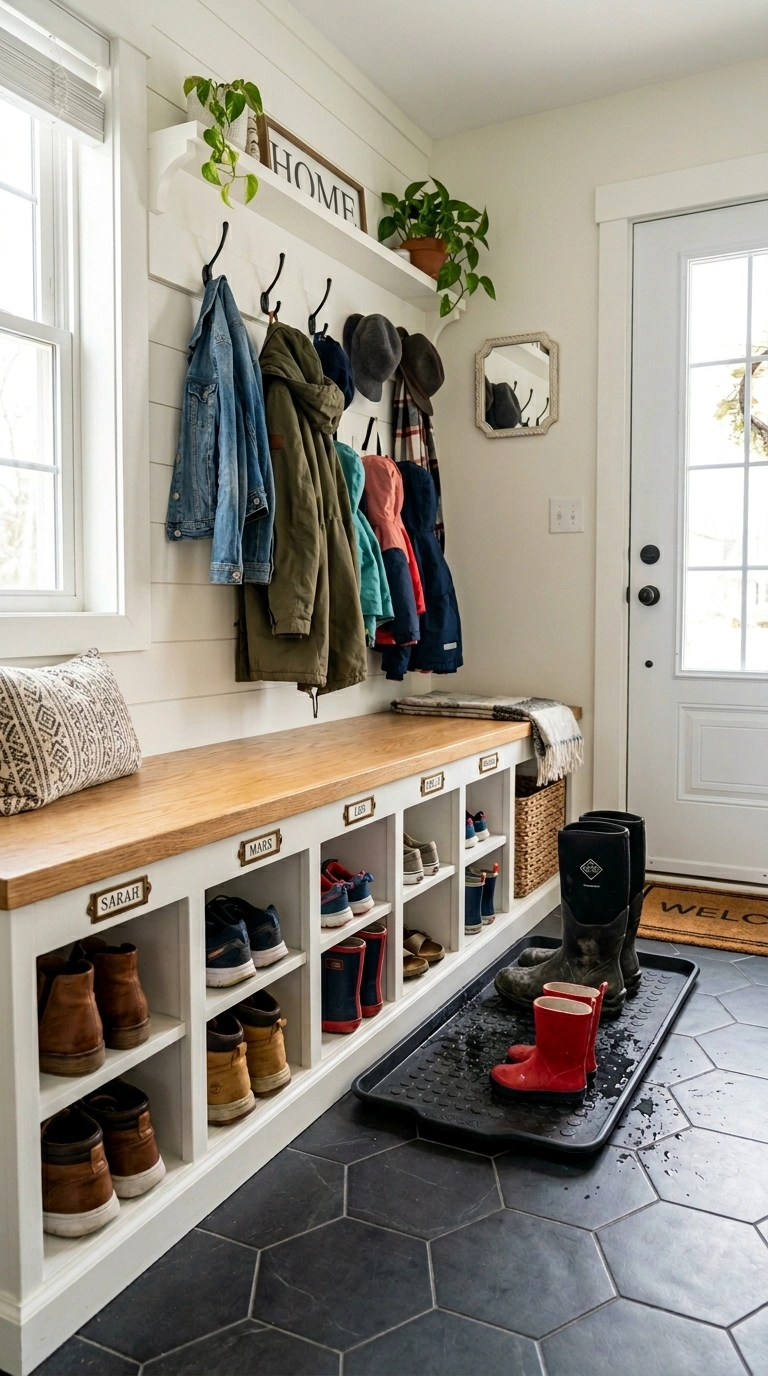
Shoes are the single largest source of mudroom clutter because each family member accumulates multiple pairs in active rotation and the shoes tend to pile up rather than being stored in any organized way. Open cubbies below the bench, one per person, sized to hold two or three pairs of shoes each, keep the shoes contained and off the floor. Alternatively, a boot tray, a shallow waterproof tray that holds shoes and boots in a defined zone while catching drips and dirt, contains the mess without requiring cubbies at all. Label each shoe cubby for younger family members. The shoe storage is the single detail that most determines whether a mudroom stays organized or collapses into a heap. The same principle of giving every category of item its own specific home applies throughout the house, as covered in cozy living room organization ideas where the same discipline keeps larger rooms feeling warm and tidy.
7. Drop Zone Basket Set
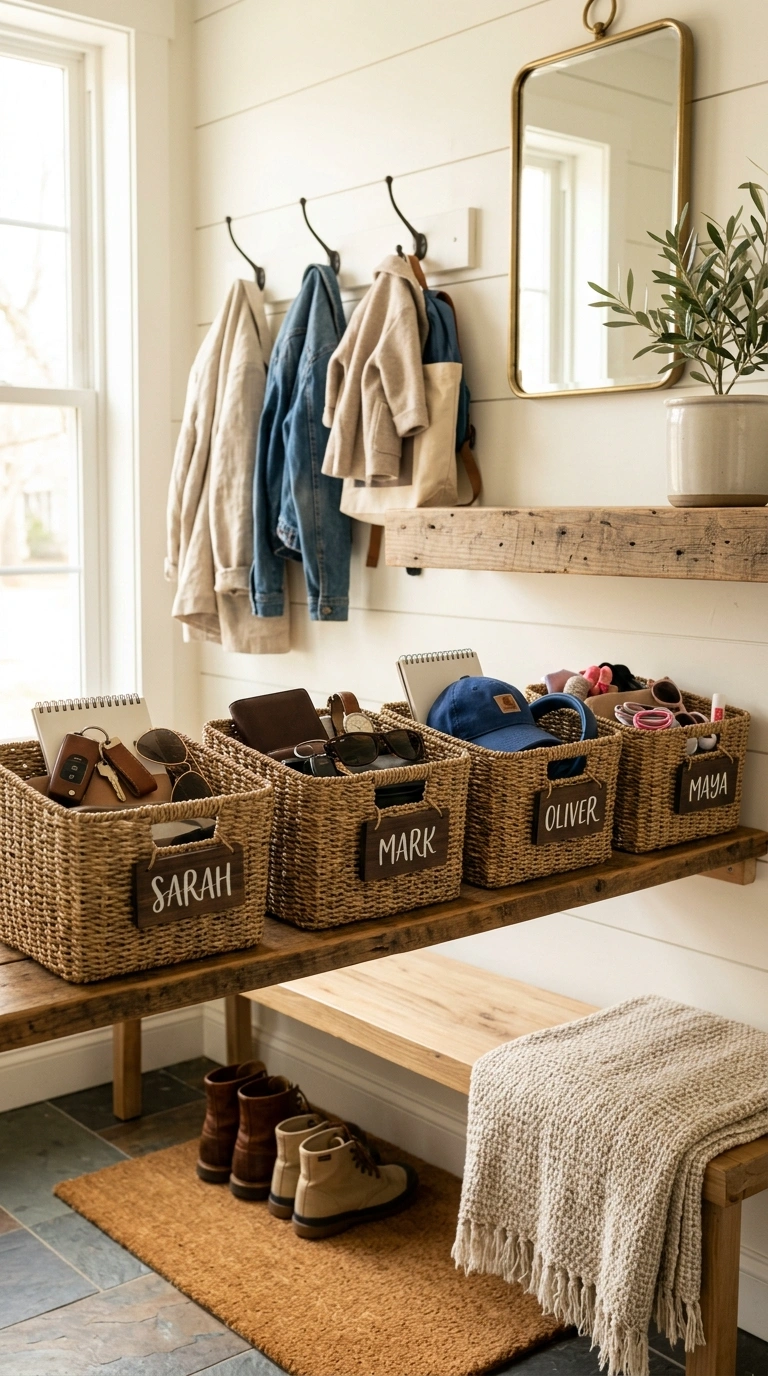
A set of matching baskets on the mudroom shelf or in the cubbies, one per family member, holds the daily small items that would otherwise scatter across the house: keys, wallet, phone, sunglasses, small toys, hair ties, dog leash. Each person drops their daily items into their own basket when entering and retrieves them when leaving. The basket system is one of the simplest and most effective mudroom habits available. Use matching baskets in a consistent natural fiber for visual uniformity and label each basket clearly for the household members who need the reminder.
8. Coat Closet Conversion
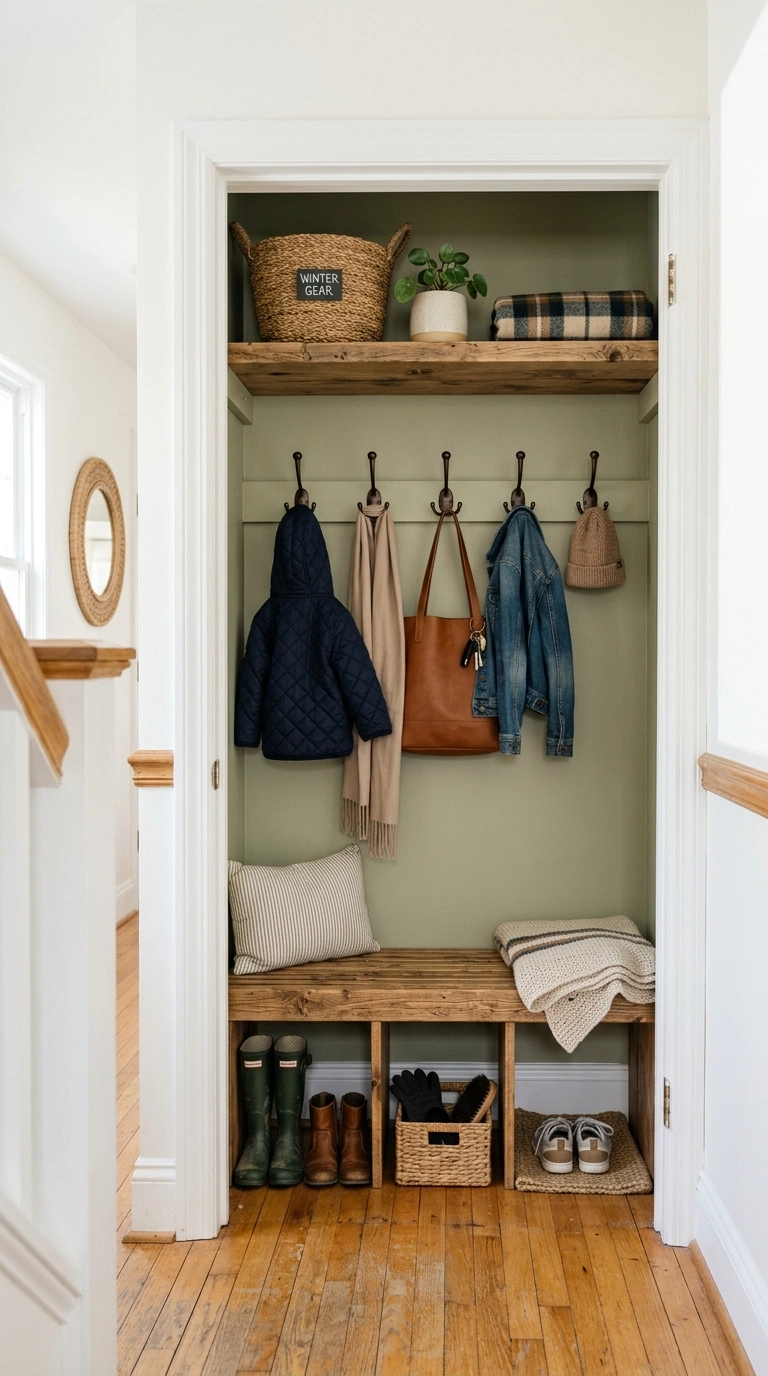
For homes that have a small coat closet near the entry rather than a dedicated mudroom, converting the closet into an open mudroom station by removing the closet door and installing hooks, a bench, and shoe storage inside the closet frame creates a functional mudroom in the footprint of an existing closet. Remove the door and the existing closet rod. Install a row of hooks on the back wall, a small bench or low shelf at the bottom, and an overhead shelf for seasonal items. Paint the inside of the closet a fresh clean color or a warm accent tone that makes the alcove feel designed rather than improvised.
9. Wainscoting Wall Protection
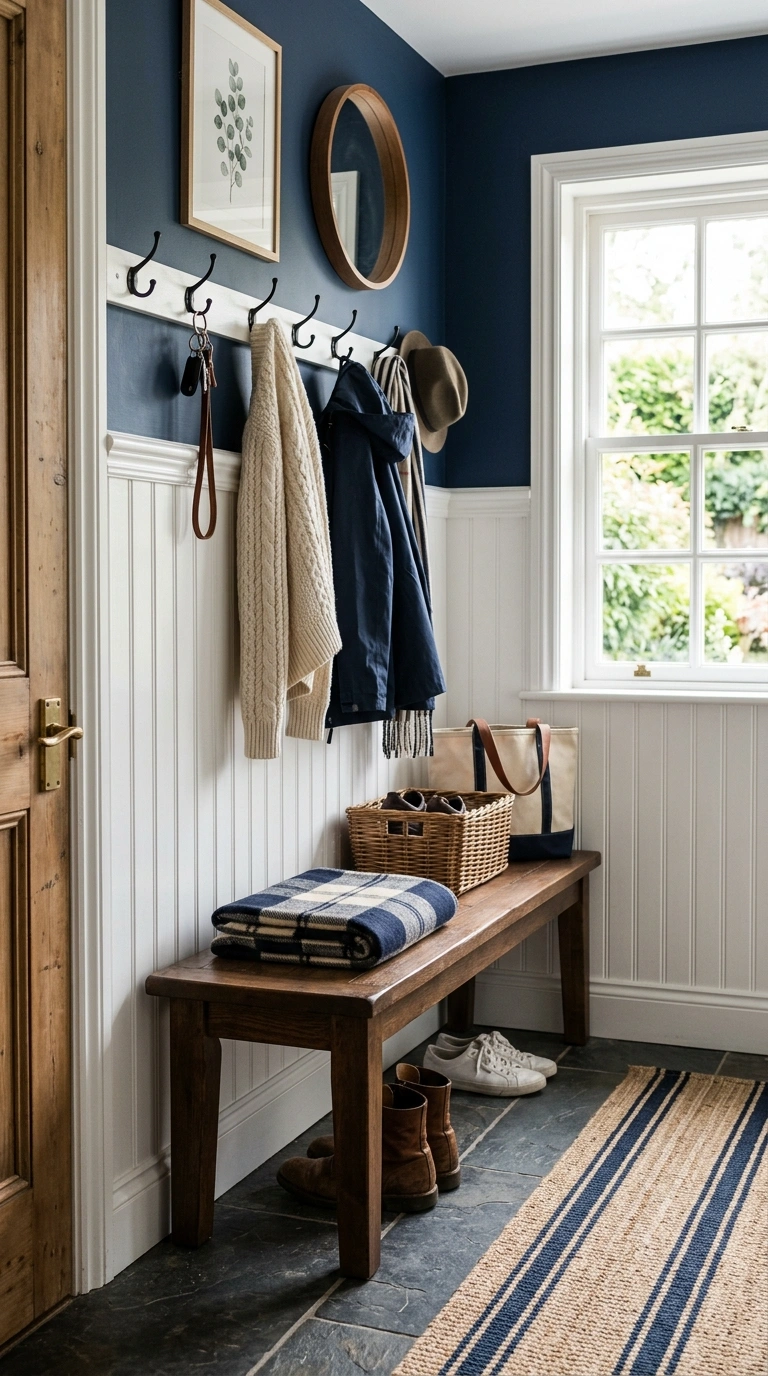
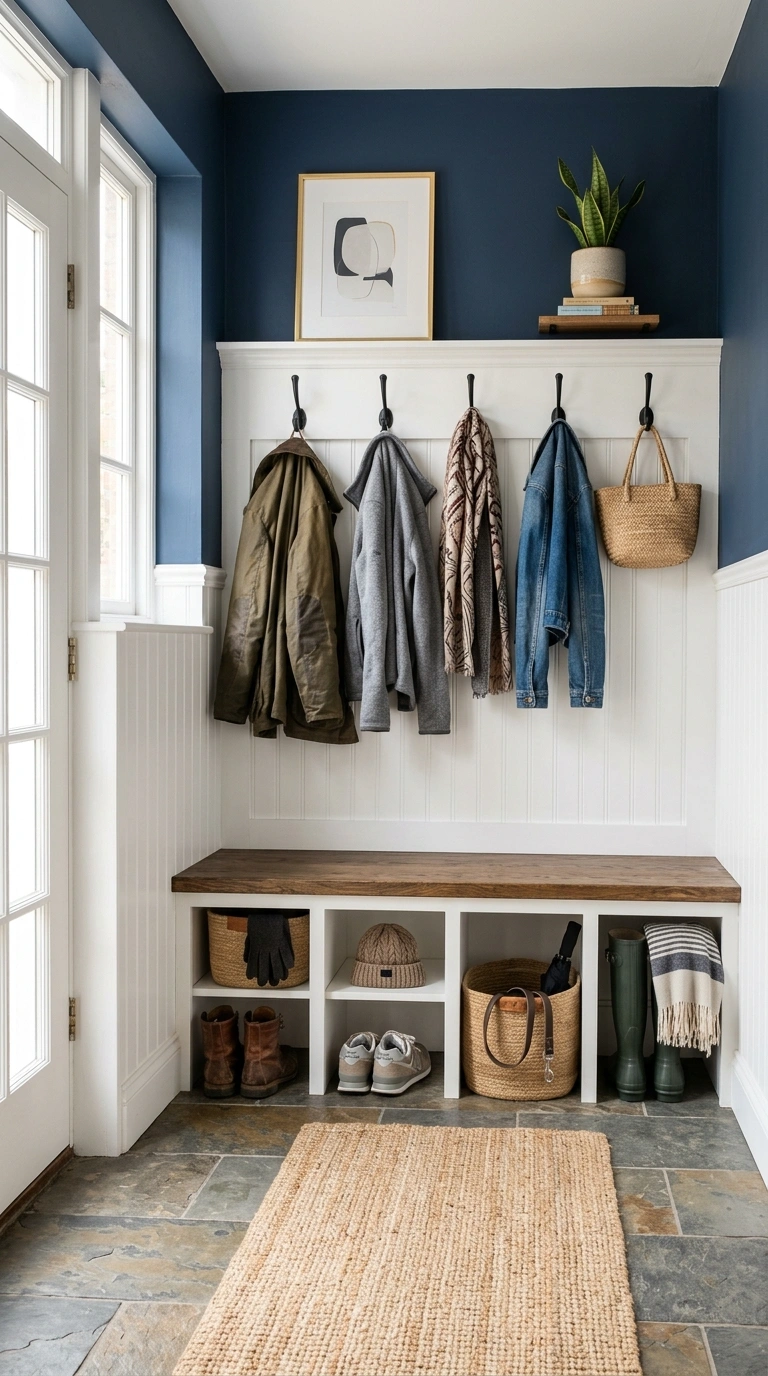
The mudroom walls take a beating from coats brushing, shoes scuffing, and bags bumping against the surface multiple times daily. Beadboard wainscoting or simple flat-panel wainscoting installed to bench height protects the lower wall from damage and adds architectural character that makes the mudroom feel designed rather than purely functional. Paint the wainscoting in a durable semi-gloss paint that wipes clean easily. The wall above the wainscoting can be painted in a contrasting or complementary color for a classic two-tone treatment that also looks good in the mudroom.
10. Key and Mail Station
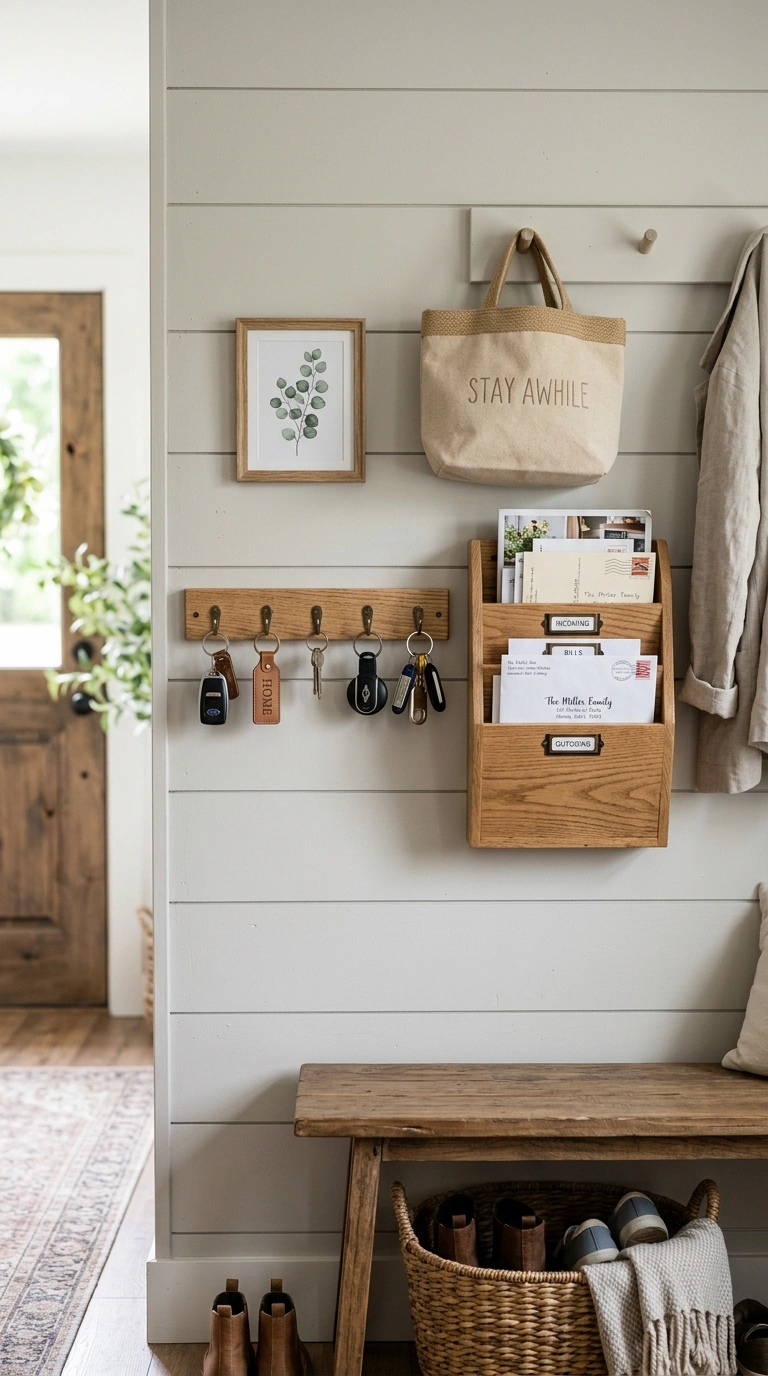
A dedicated spot for keys, mail, and daily papers prevents these small items from spreading across every surface in the house. A small wall-mounted key rack with four to six hooks handles keys. A wall-mounted mail sorter with two or three vertical slots handles incoming mail, outgoing mail, and papers that need action. Position both at a convenient height near the entry point so the habit of using them is natural rather than an extra step. The key and mail station is one of those small organizational details that prevents the daily chaos from starting before you even get past the front door.
11. Pegboard Organization Wall
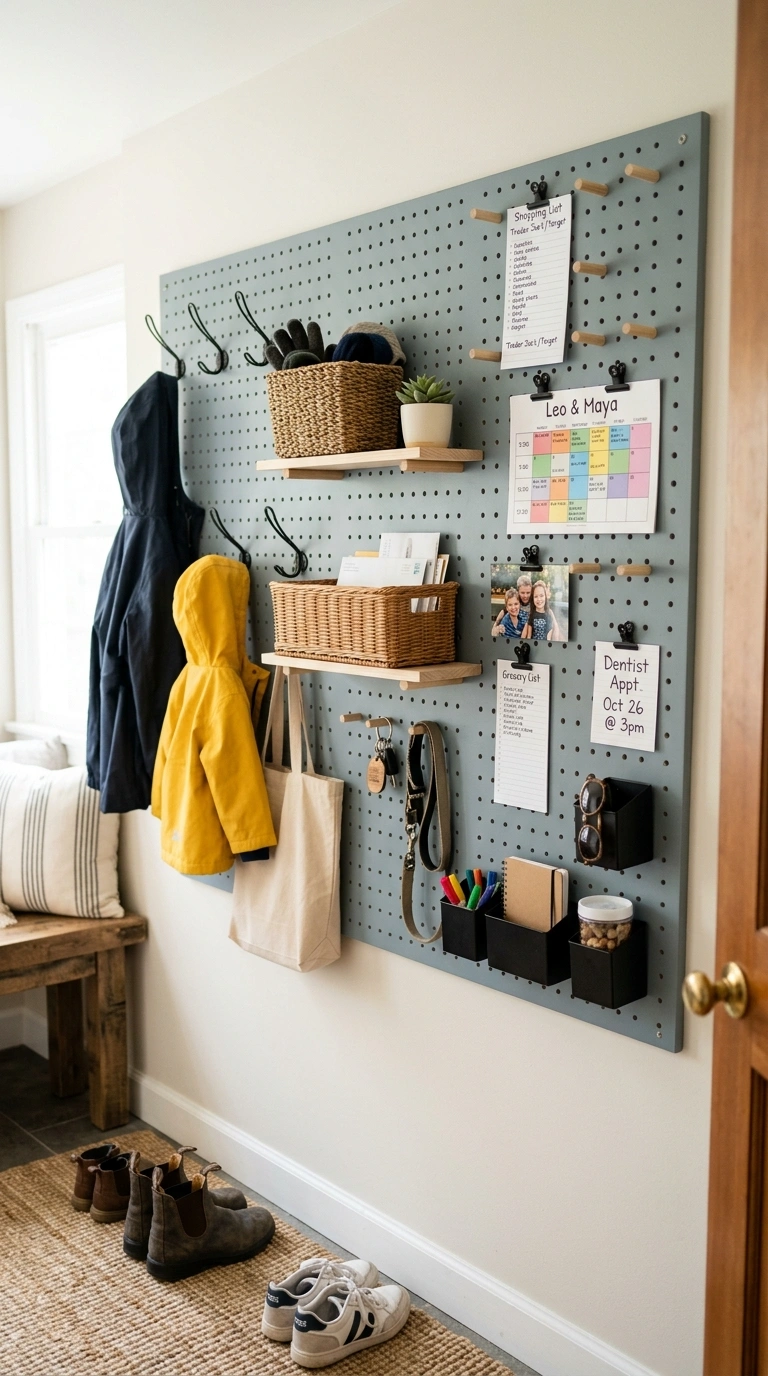
A section of painted pegboard mounted on the mudroom wall creates a flexible, reconfigurable storage system that adapts to changing family needs. Hang hooks for coats and bags, small shelves for baskets, and clips for notes and reminders. The pegboard can be rearranged entirely whenever the family’s storage needs change, since every hook is removable and repositionable without any new holes in the wall. Paint the pegboard in the same color as the surrounding wall for a subtle integrated look, or in a contrasting color for a more graphic feature.
12. Tall Locker Format
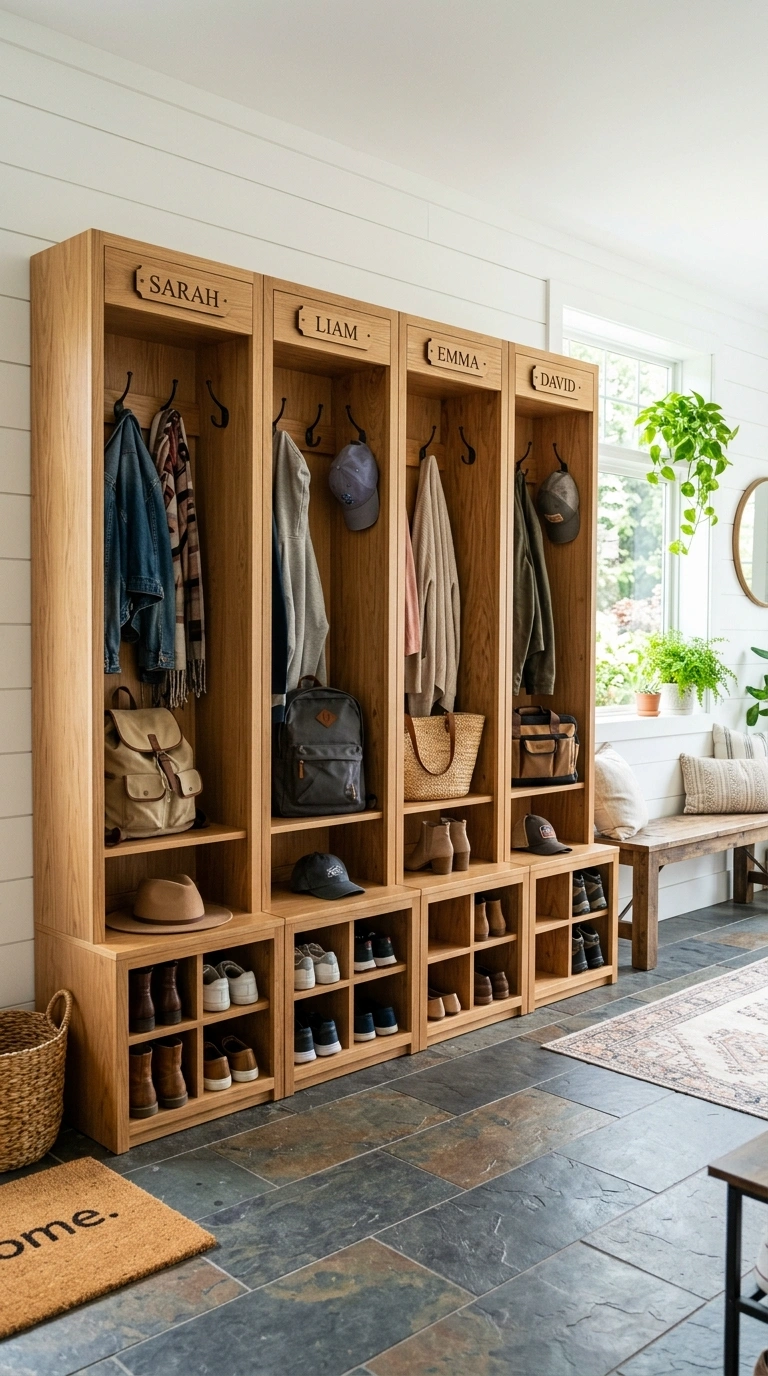
Full-height lockers, whether open or with doors, give each family member a complete vertical storage zone from floor to ceiling. The locker format includes a hook section for hanging coats at the top, a shelf for bags and accessories in the middle, and shoe storage at the bottom, all in a single contained column. Individual lockers with doors hide the contents completely and keep the mudroom looking clean even when the individual storage zones are messy inside. Open lockers without doors provide faster access but require the contents to be kept visually organized since everything is on display.
13. Dog Washing Station
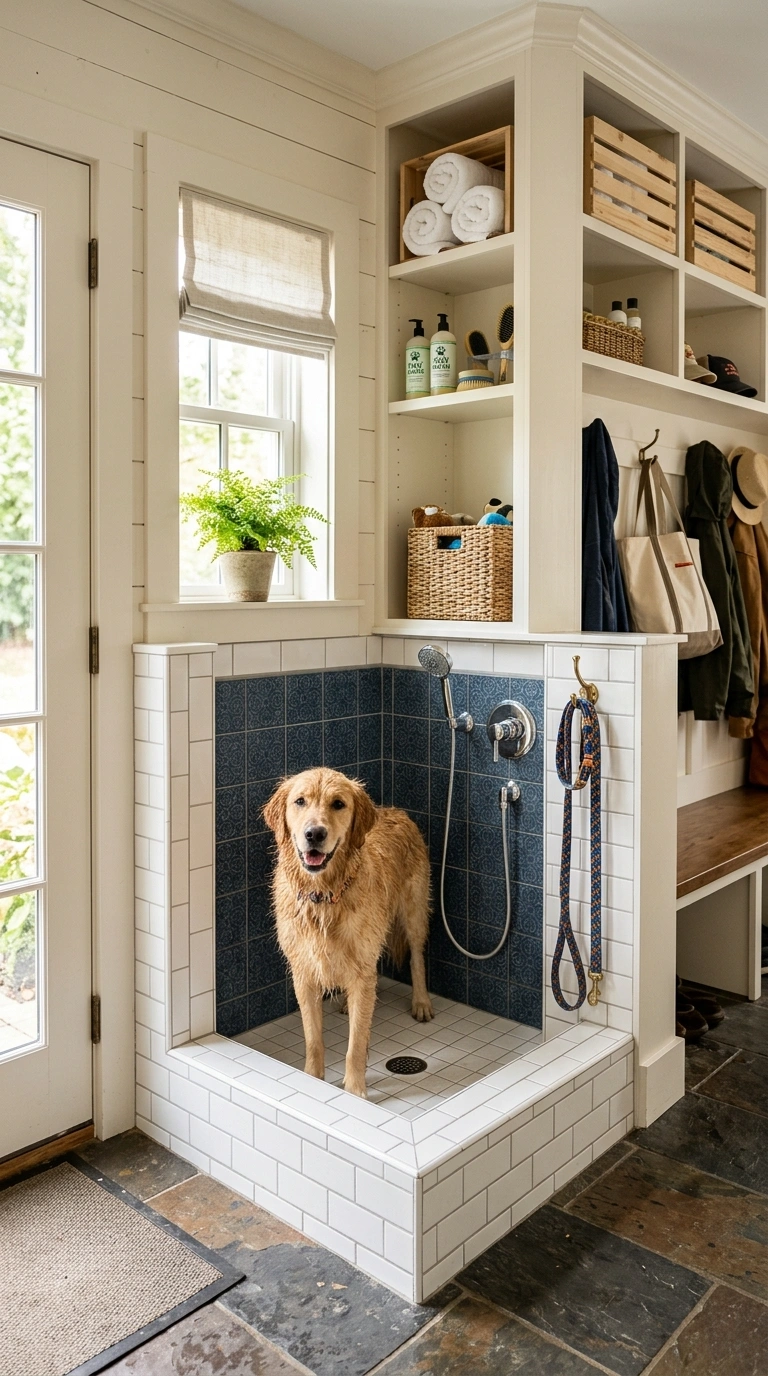
For households with dogs, a small dog washing station in the mudroom, whether a built-in low shower, a deep utility tub at a comfortable height, or a simple hose hookup with a drain, prevents muddy paws and wet dog from tracking through the rest of the house. The dog wash is one of the most-valued mudroom features for dog owners because it solves the specific problem of a dirty dog at the door in a permanent, convenient way. Include a hook for the leash and a small shelf for dog towels and shampoo beside the wash station for a complete dog entry system.
14. Seasonal Rotation System
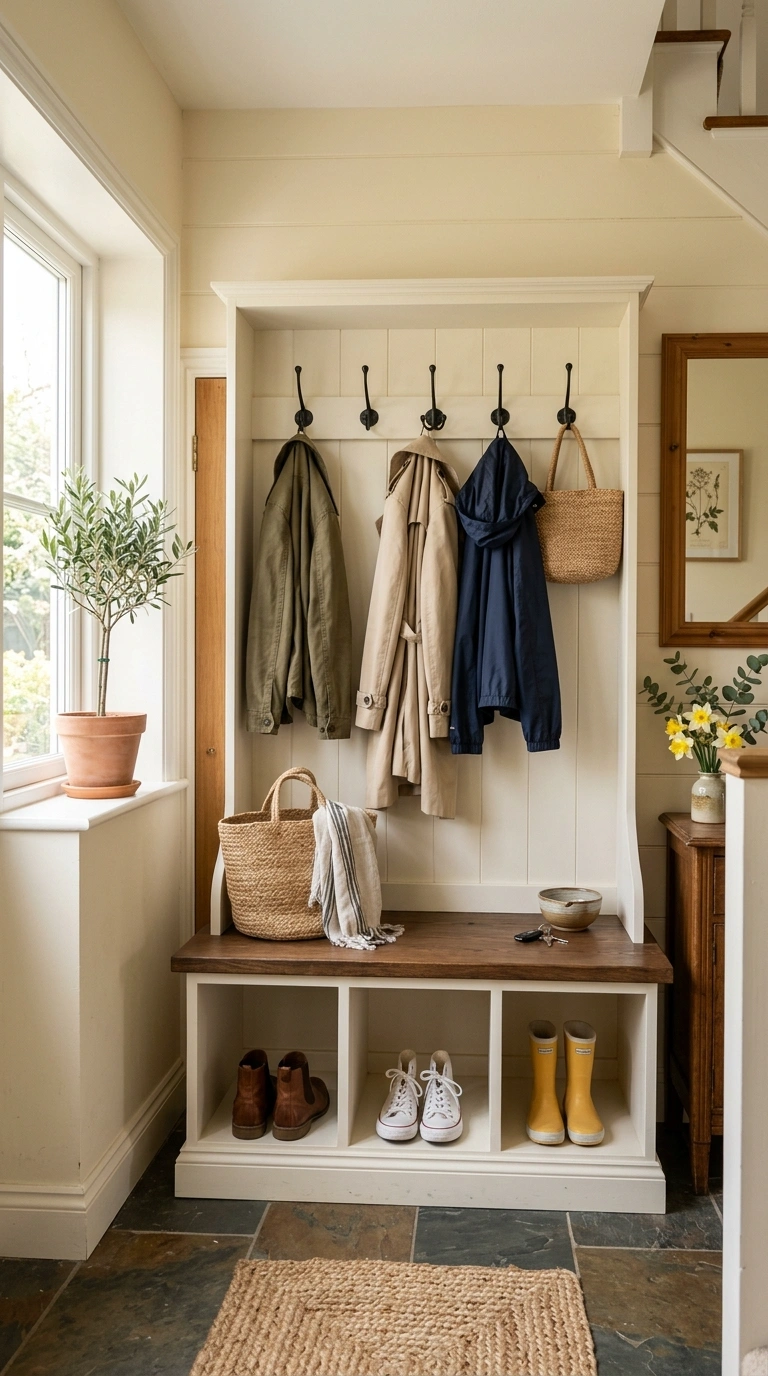
A mudroom that tries to hold all seasons at once, winter boots, rain jackets, summer hats, fall scarves, becomes overcrowded immediately. A seasonal rotation system where only the current season’s items stay in the mudroom and the off-season items are stored elsewhere, in a hall closet, a basement bin, or an attic, keeps the mudroom manageable and organized year-round. Rotate the contents at the change of each season, bringing out the winter gear when the cold arrives and storing it when spring starts. The rotation means the mudroom only needs to hold about a quarter of the total family outerwear at any time.
15. Umbrella Stand or Holder
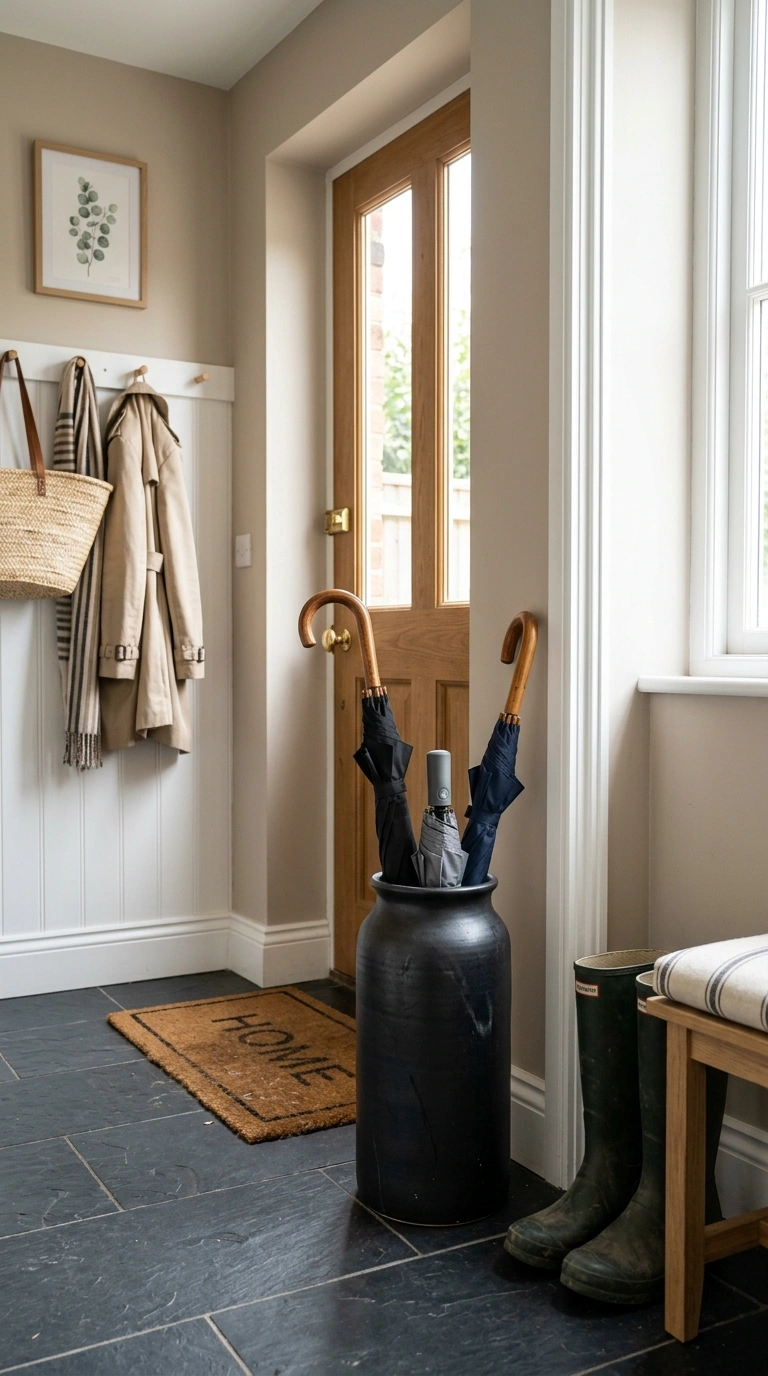
A dedicated umbrella holder, whether a standalone floor stand, a wall-mounted hook, or a section of the boot tray, keeps wet umbrellas from being dumped on the bench or leaned against the wall where they drip onto the floor and fall over. A classic ceramic or metal umbrella stand in the corner of the mudroom costs very little and solves one of the most annoying small mudroom problems. Choose a stand that matches the room’s material palette and that can hold at least three to four umbrellas without tipping over when loaded.
16. Bench Cushion Detail
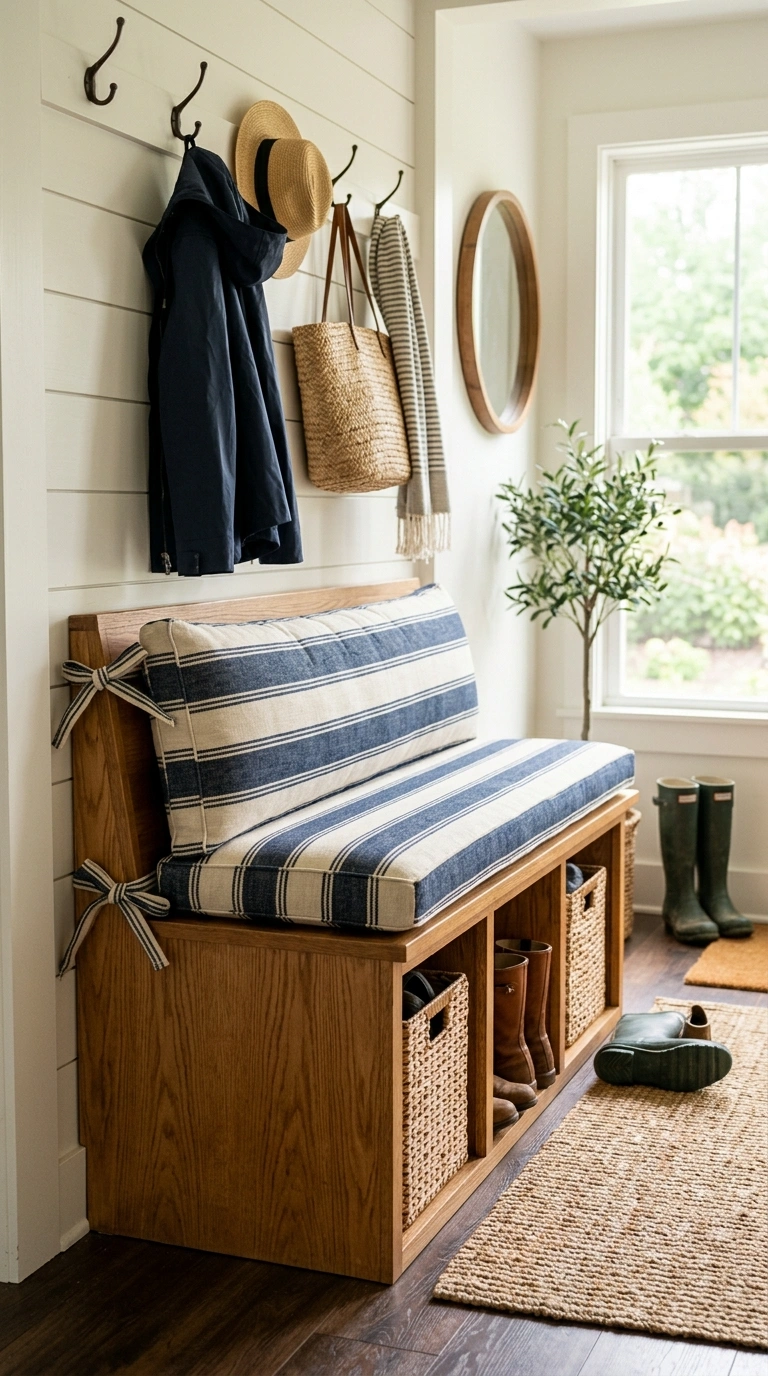
A bench cushion on the mudroom bench adds comfort for the sitting and shoe-tying that the bench is designed for, and adds a styled textile element that keeps the mudroom from feeling purely utilitarian. Choose a cushion in a durable, washable fabric in a warm tone that suits the room. A simple ties-on cushion in a neutral linen, a patterned cotton in a warm stripe, or a durable indoor-outdoor fabric all work. The cushion should be removable for regular washing since the mudroom bench surface gets genuinely dirty from daily use.
17. Mirror at Exit
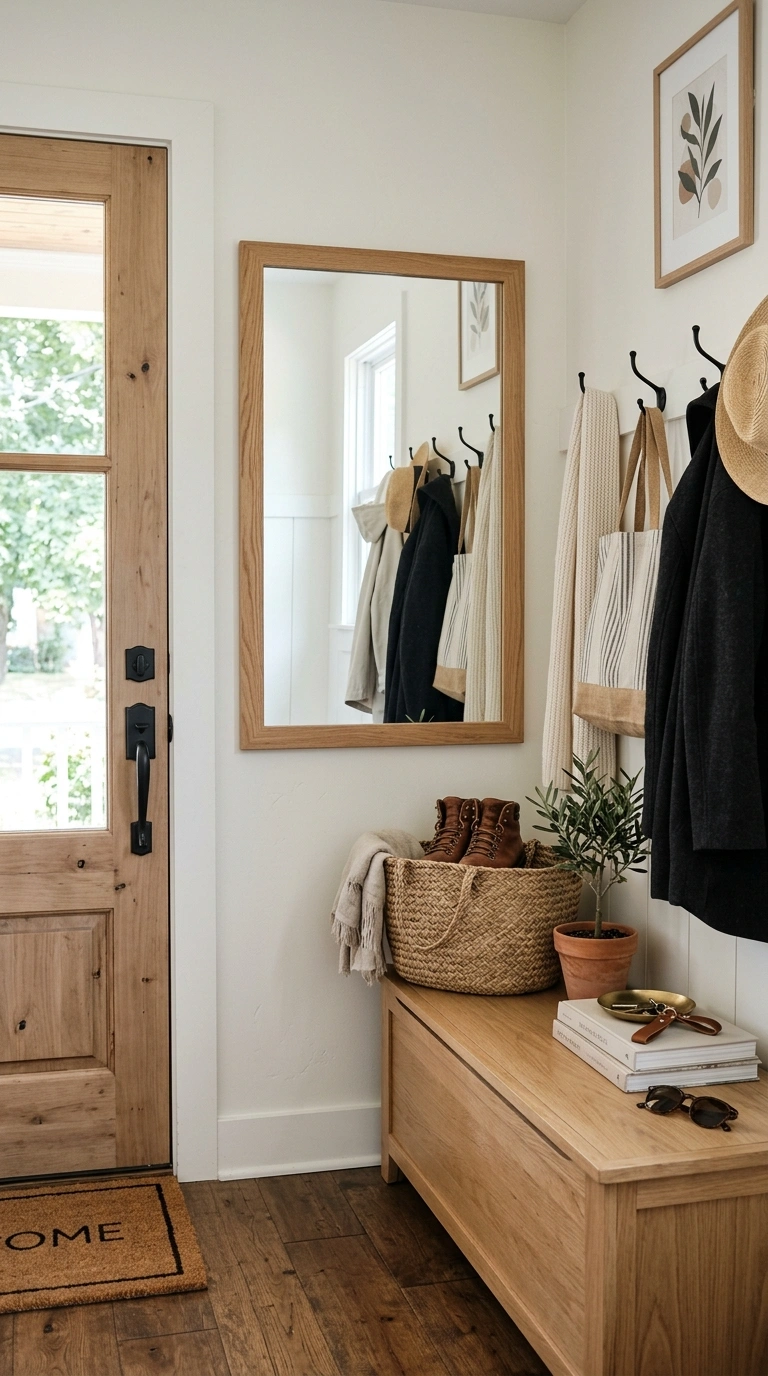
A mirror positioned near the mudroom exit, either on the wall opposite the bench or on the back of the door, gives everyone a final check before leaving the house. The mirror also adds a visual design element that makes the mudroom feel more like a real room and less like a storage closet. A simple rectangular mirror in a wood or metal frame, sized appropriately for the wall, serves the practical function while contributing a small finishing touch to the mudroom design.
18. Backpack Hook Rail
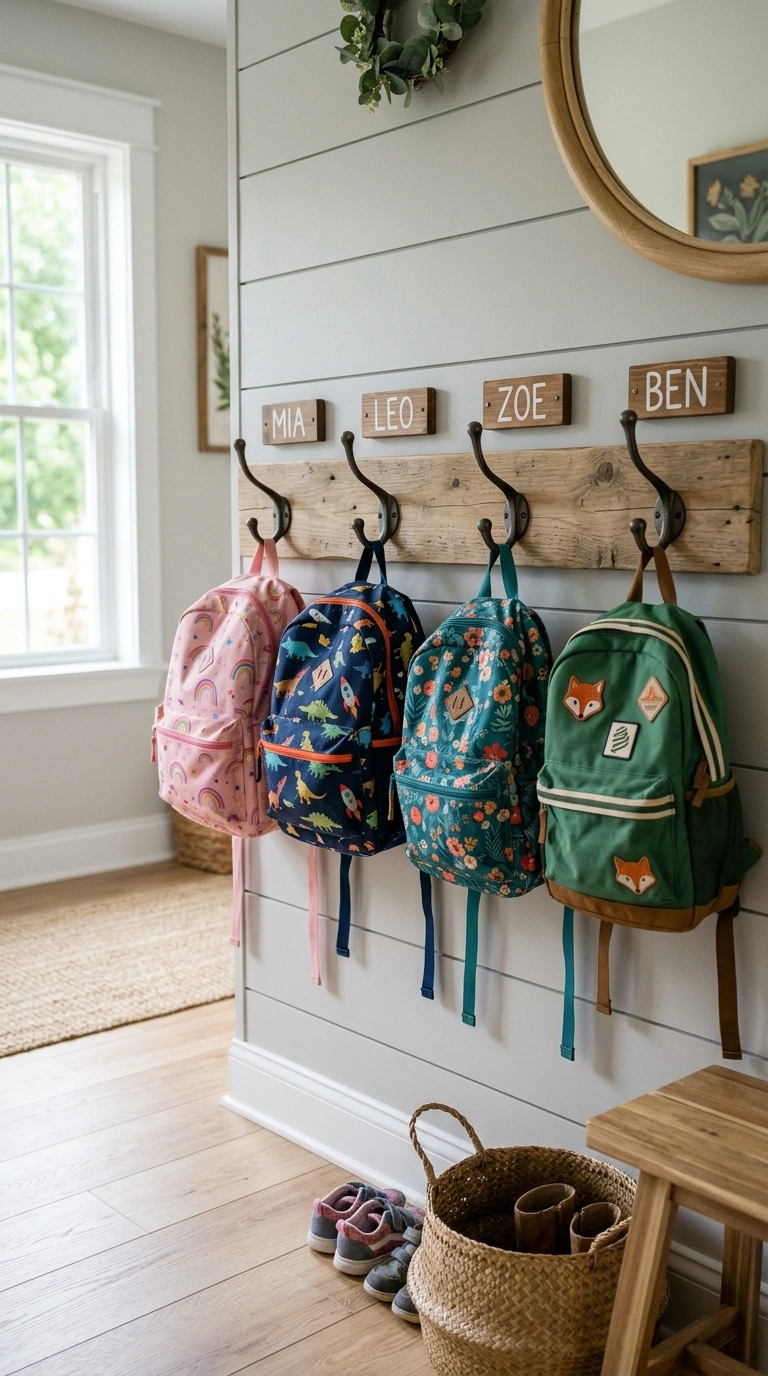
For families with school-age children, a dedicated hook rail for backpacks at kid-accessible height prevents the daily pile of backpacks on the floor that most families deal with. Mount a simple row of three to four hooks at about thirty-six to forty inches from the floor on the wall below the adult coat hooks or on the side wall of the cubby section. The backpack hooks should be sturdy enough to hold a full loaded school bag without pulling from the wall. Each hook labeled with the child’s name creates a system that even young children can maintain independently.
19. Small Bench Side Table
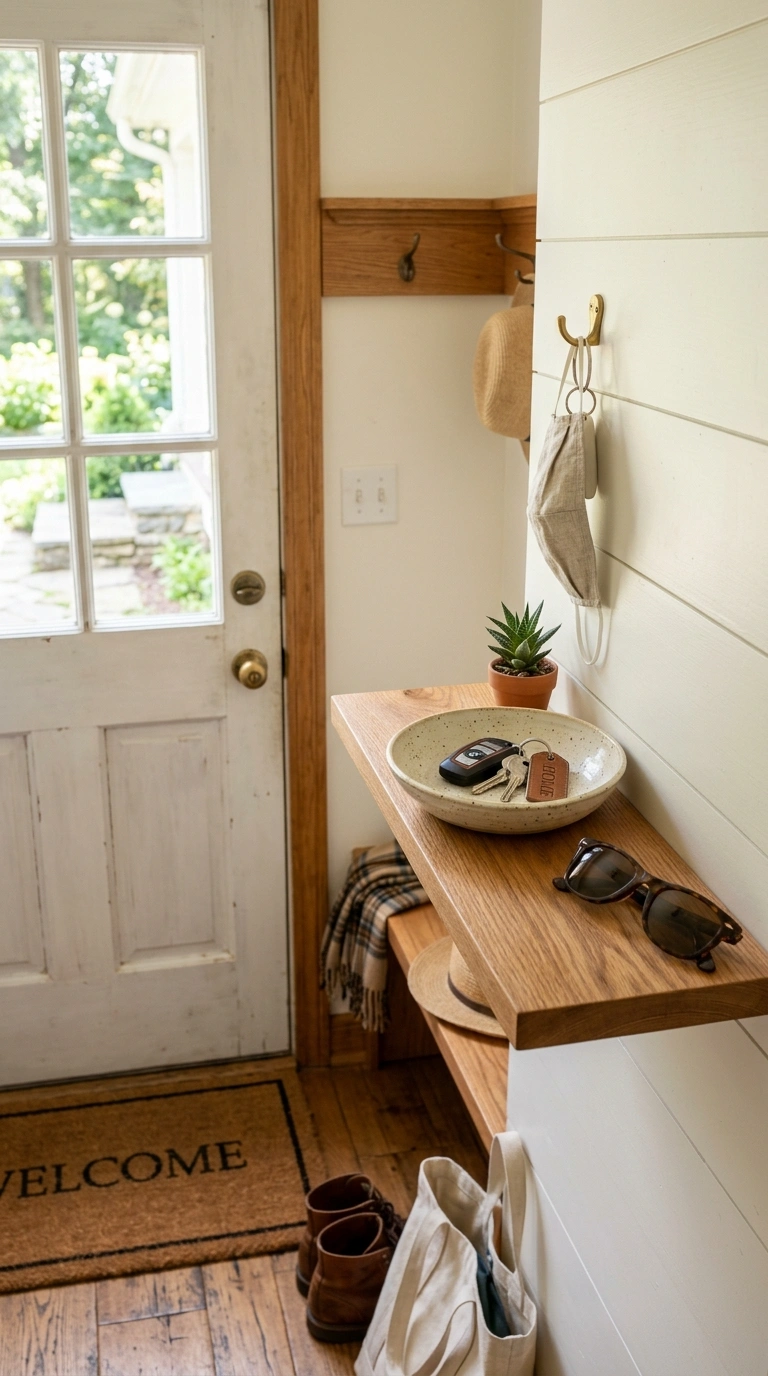
A small narrow table or a wall-mounted shelf at hand height near the exit holds the last few items that get grabbed on the way out: car keys, sunglasses, the dog leash. The table or shelf should be narrow enough not to block the walkway, about eight to ten inches deep, and positioned at the most natural reaching point during the exit sequence. A small bowl or tray on the surface corrals the loose items and prevents them from sliding off or spreading across the surface. This small detail prevents the morning scramble for keys that adds unnecessary stress to the daily departure.
20. Warming Rack for Wet Gear
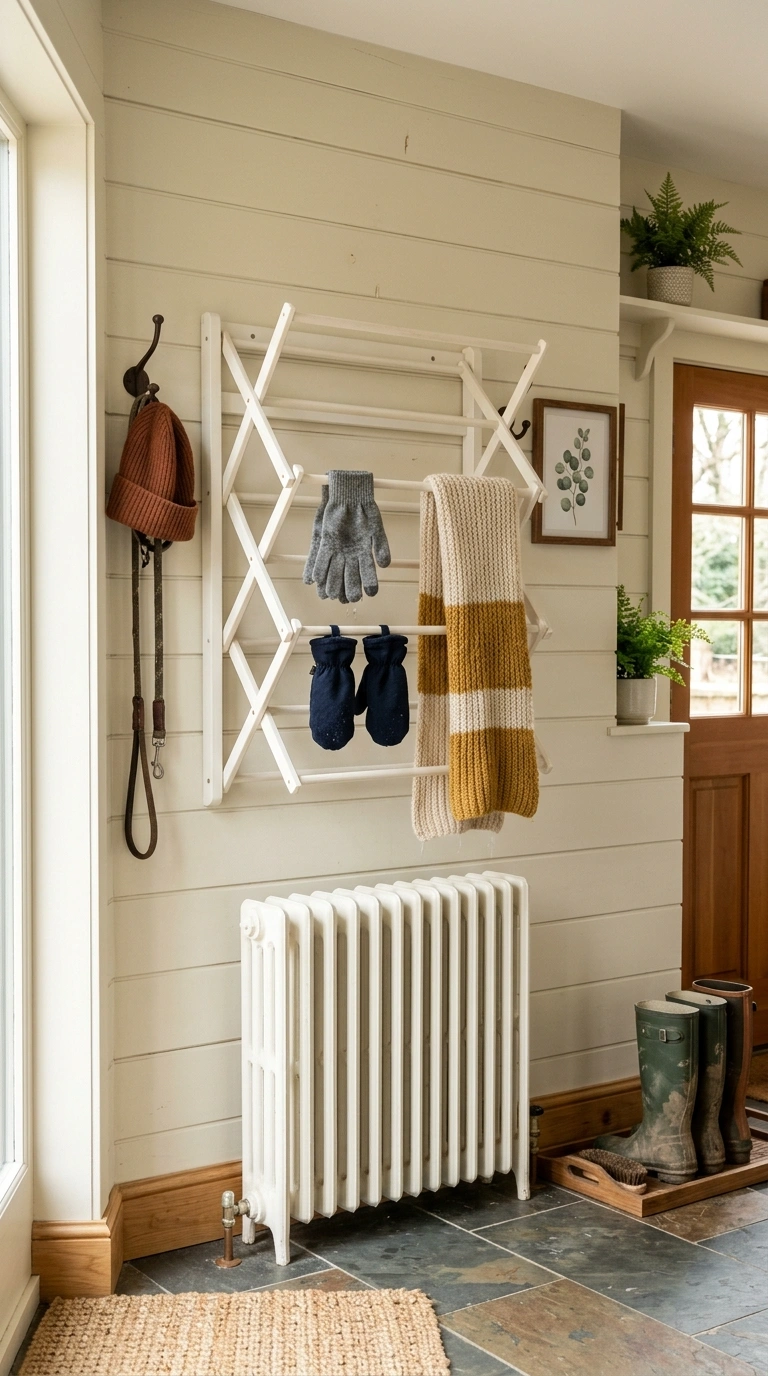
A wall-mounted or freestanding drying rack in the mudroom provides a dedicated spot for wet hats, gloves, scarves, and other items that cannot be hung on a hook to dry. The rack keeps wet items off the bench and the floor while allowing them to air dry properly rather than staying damp in a pile. A simple folding accordion rack mounted on the wall extends out when needed and folds flat when not in use. Position it near a heat source if possible so the wet items dry faster. In a mudroom used by an active family in a wet climate, the drying rack is one of the most practically valuable fixtures available.
21. Real Wall Color
A mudroom painted in a real color rather than builder white immediately reads as a room that was designed rather than ignored. A soft sage, a warm navy, a muted terracotta, a dusty blue, or even a confident black on the upper walls above the wainscoting gives the mudroom personality and signals that the space is treated as a genuine room in the home. The wall color should coordinate with the adjoining rooms for visual flow but can be more assertive than the main living spaces since the mudroom is a transition space rather than a primary living area.
22. Daily Maintenance Habit
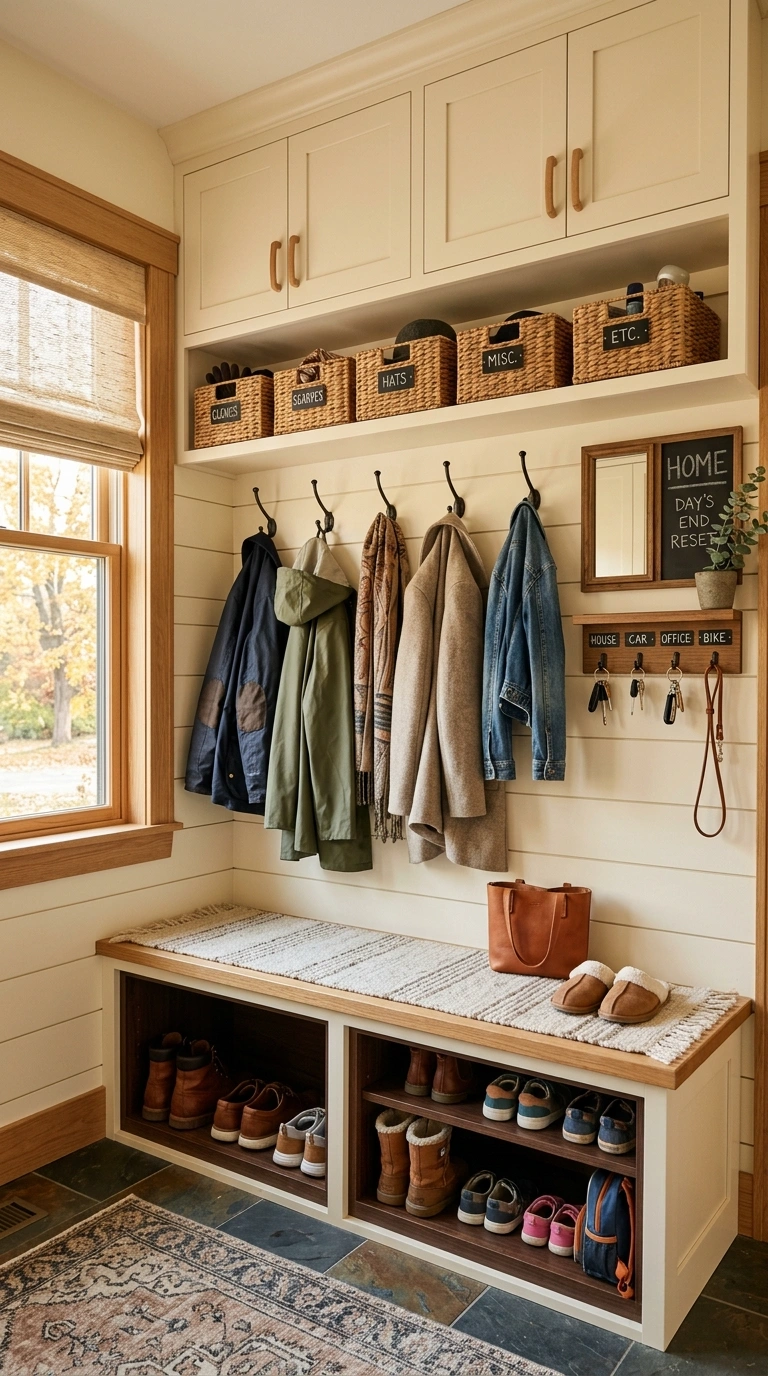
The most beautifully designed mudroom in the world stops working if nobody puts things back where they belong. A daily thirty-second reset, shoes into the cubbies, coats on the correct hooks, loose items into the baskets, keys on the hook rail, maintains the system that the design created. The reset is fastest and easiest when done immediately upon arriving home rather than as a separate organizing session later. Teach the habit to every family member, including the youngest ones. The daily reset is the smallest investment of time with the largest payoff for a mudroom that consistently looks and functions the way it was designed to.
A mudroom that solves the daily pile of coats and shoes is built on individual storage zones, adequate hooks, proper shoe containment, and the daily habit of using the system. The design creates the infrastructure and the habit maintains it. Pick the ideas that solve the specific frustrations in your current entry situation and build the system around those solutions first. The styling details follow once the functional foundation is solid.

