

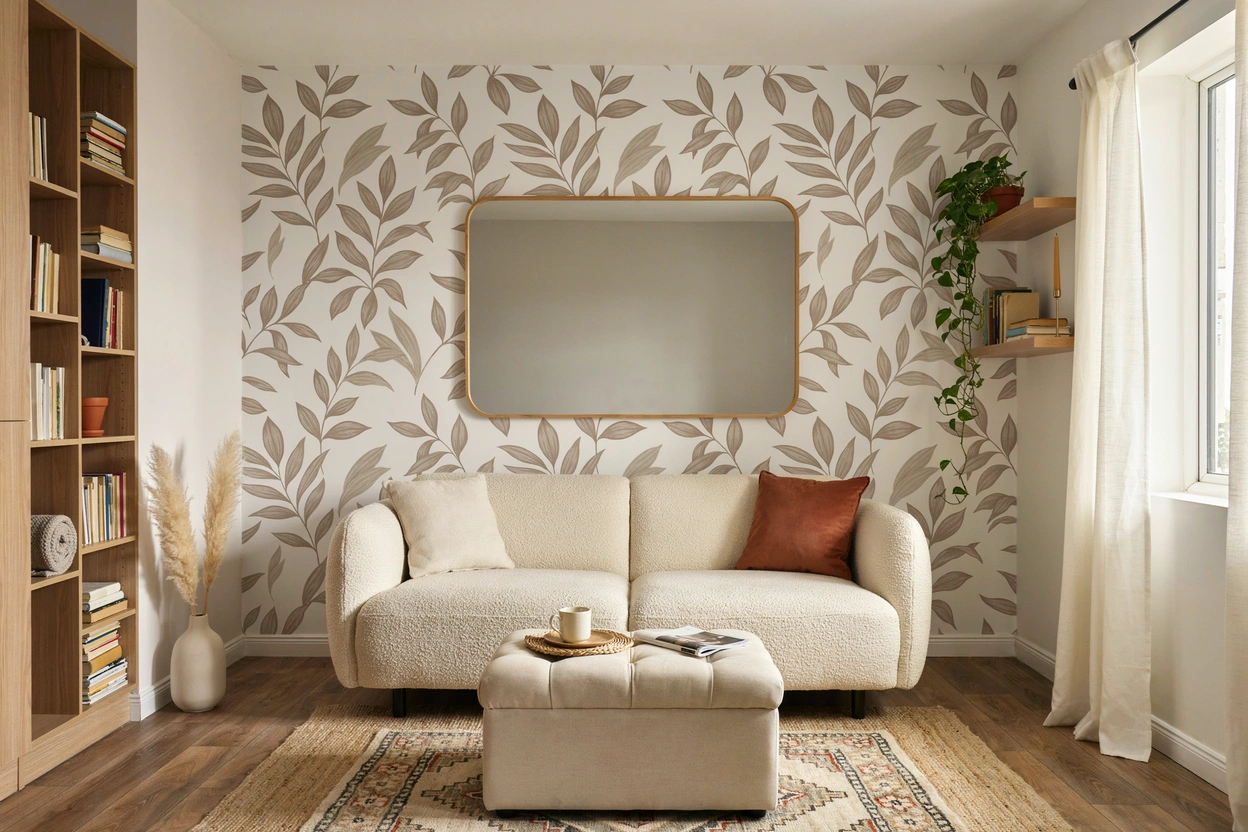
21 Small Apartment Room Ideas for Making Every Room Work Harder
Small apartments have real challenges but also real charm. When you know how to work with the space instead of against it, even a tiny studio can feel like a real home. The trick is picking pieces that pull double duty, adding smart storage in unused corners, and using tricks that make small rooms feel bigger without knocking down walls.
This list has 21 small apartment room ideas that work in real apartments of every layout. Some are five dollar peel and stick fixes. Others are furniture pieces worth investing in for years. Every idea includes real pros and cons plus notes on what works for renters versus owners. Pick the ones that fit your apartment and your lifestyle right now.
1. Peel Stick Accent Wall
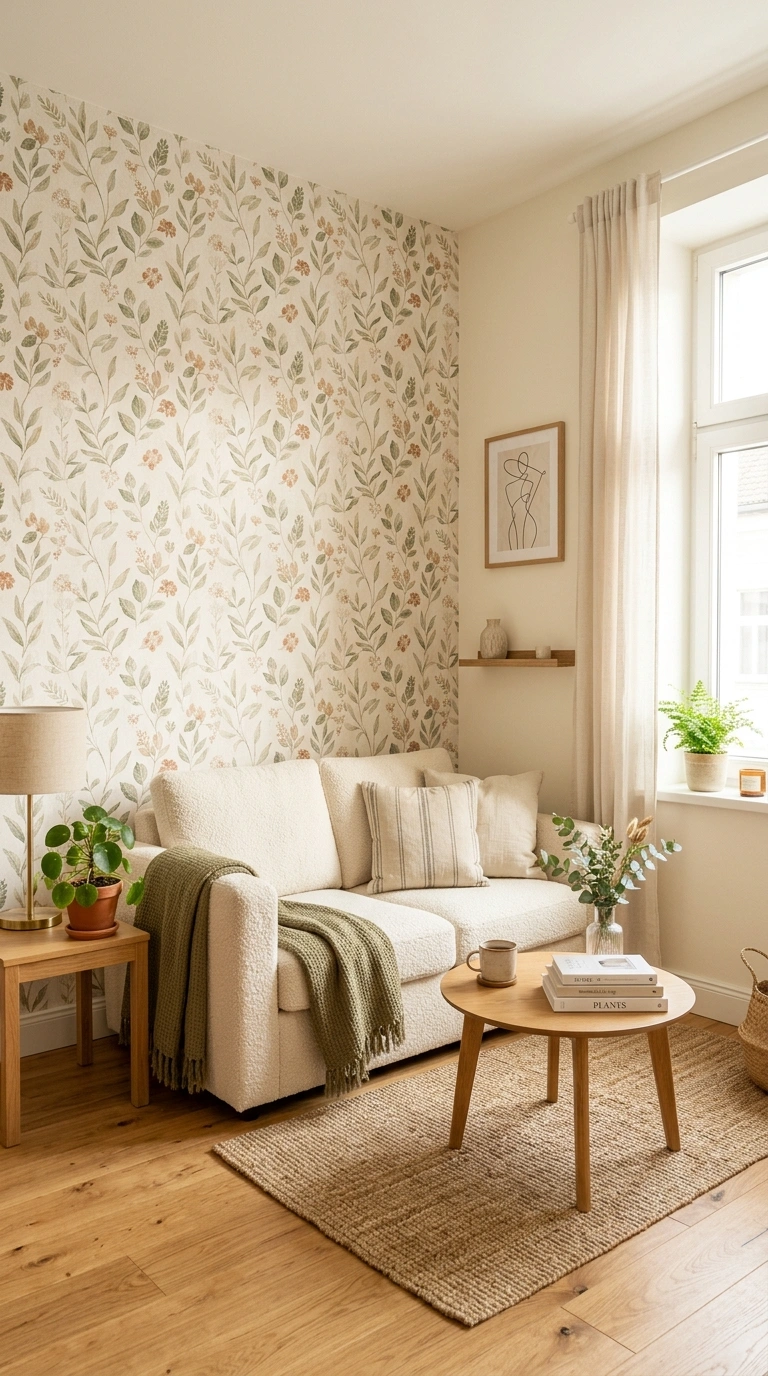
A peel and stick wallpaper accent wall gives your small apartment a real design moment without needing to paint or damage walls. This is one of the most impactful renter friendly upgrades.
Buy peel and stick wallpaper from Anewall, Chasing Paper, or Amazon for eighty to two hundred dollars per wall. Choose one accent wall in your living room or bedroom. Botanical prints, subtle geometric patterns, and grasscloth textures all work for most spaces.
Pros: Removable without damaging walls, perfect for renters. Big visual impact in a single afternoon of work. Sets the whole tone for the room with just one wall.
Cons: Peel and stick wallpaper does not adhere well to textured or freshly painted walls. Test a small area first. Cheap wallpaper fades or lifts within a year, so buy quality brands only. Some peel and stick wallpapers leave adhesive residue when removed years later. Test removability if you plan to be there long. Also busy patterns overwhelm small rooms fast. Choose calm neutral patterns for peaceful vibes. Panels arrive rolled and need careful alignment during install. Watch tutorial videos first to avoid mistakes.
2. Tension Rod Divider
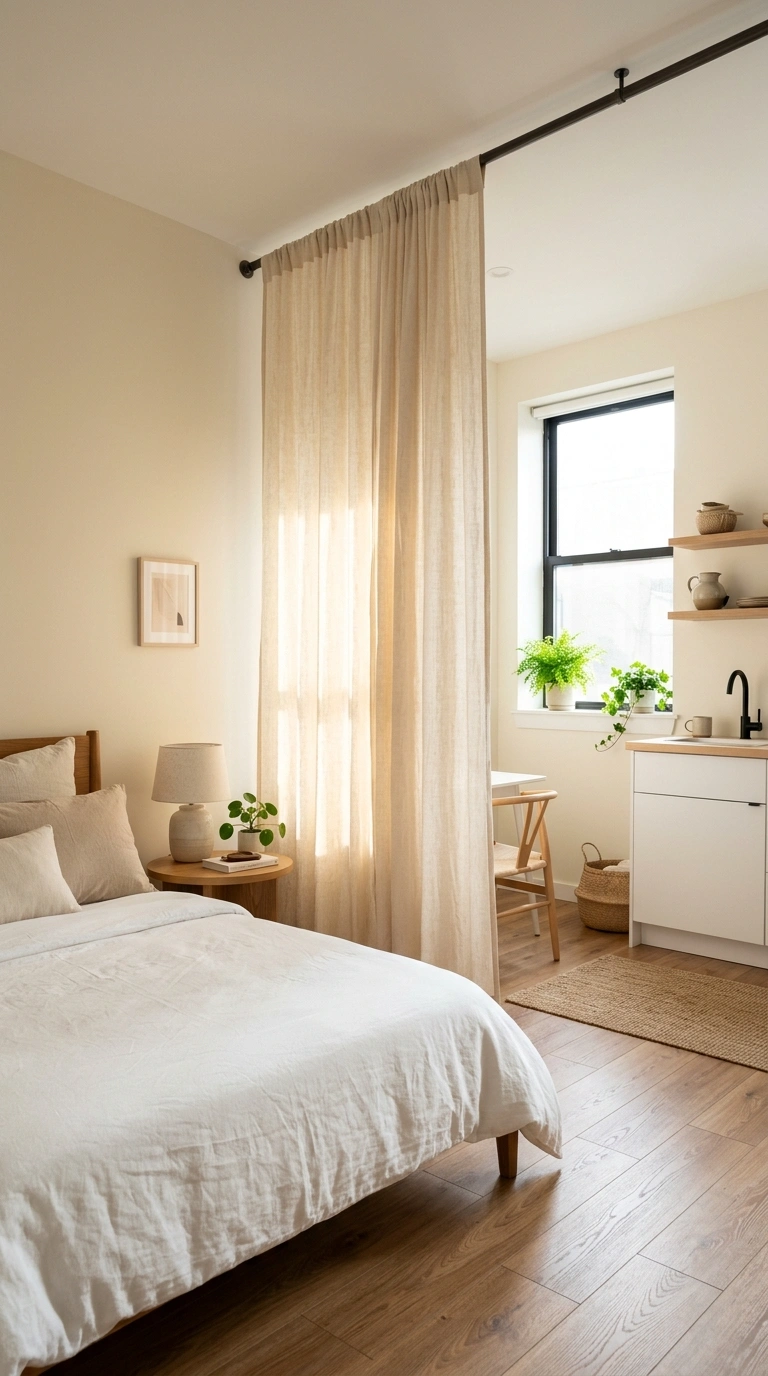
A tension rod strung with a curtain divides a studio apartment or open room into functional zones. This is the cheapest way to create separate areas without building walls.
Buy a strong tension rod rated for ten to fifteen pounds and a heavy curtain for fifty to one hundred dollars total at Amazon or IKEA. Hang across a doorway or between two walls to create a private bedroom nook or a hidden storage zone.
Pros: Creates real privacy in an open apartment layout. Cheapest possible room divider option. Easy to install with no drilling required.
Cons: Tension rods slip over time under curtain weight, especially with sheer or heavy fabrics. Choose the strongest rod you can find. Curtains block visual airflow and can make small rooms feel smaller. Use lighter fabrics like linen for less closed off feel. Also curtains collect dust and pet hair quickly, needing monthly washing. Not soundproof at all, so noise still travels between divided zones. Best for visual privacy only, not for actual noise reduction. Choose neutral colors so the divider blends with the walls rather than becoming a bold focal point.
3. Sofa Bed Combo
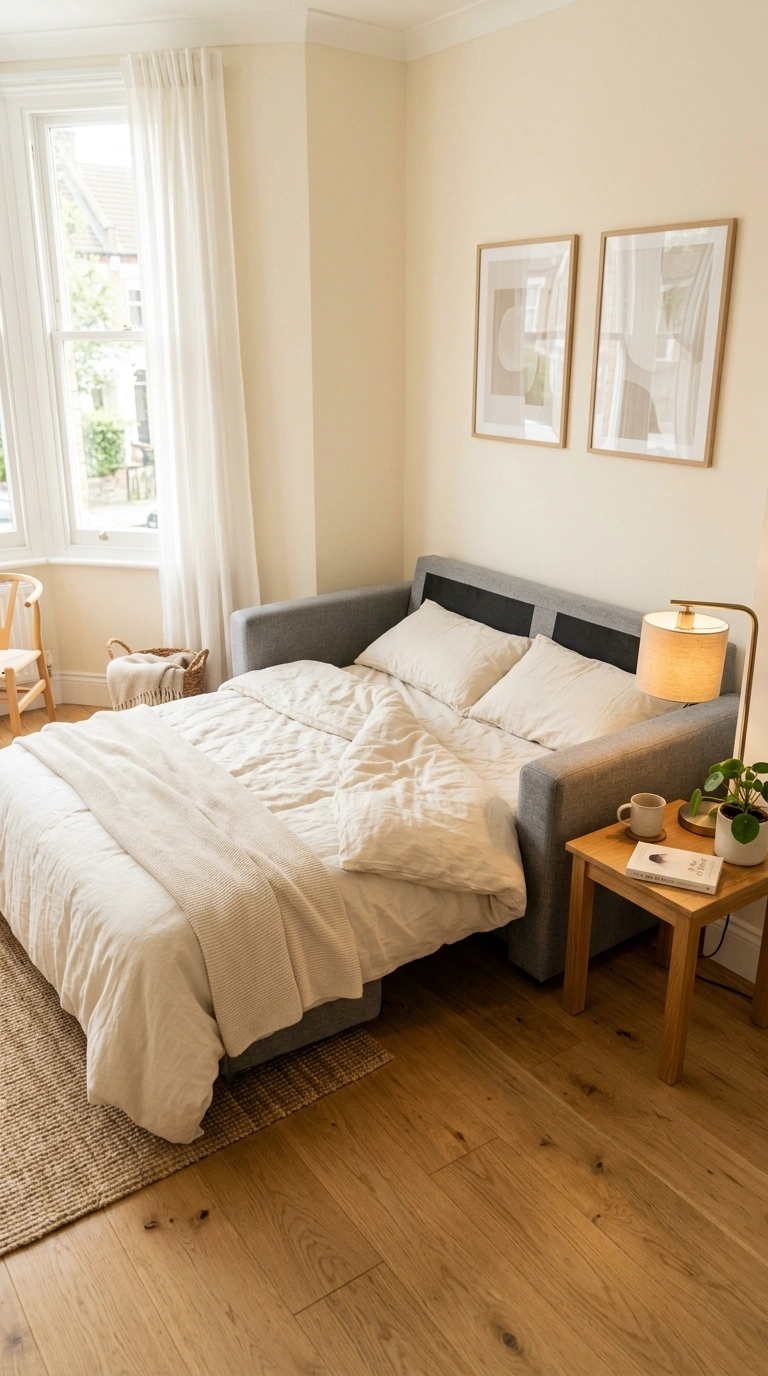
A quality sofa bed serves double duty as living room seating and a guest bed. This is one of the smartest furniture investments for small apartments that need to host occasional guests.
Buy a real sofa bed from West Elm, IKEA, or Wayfair for six hundred to fifteen hundred dollars. Look for options with real mattresses inside, not just a fold out cushion setup. Queen size fits most guests comfortably.
Pros: Doubles the function of the same floor space. Perfect for studio apartments or one bedroom apartments with occasional guests. Modern designs look like real sofas, not obvious sleeper couches.
Cons: Sofa beds are heavier and more expensive than standard sofas. Cheap sofa beds have thin mattresses that hurt guest backs. Look for options with real memory foam or spring mattresses inside for real comfort. Also opening the bed takes floor space every night. Not great for very tiny apartments where the bed cannot fit unfolded. Some sofa beds have squeaky metal frames that annoy sleeping guests. Test the frame stability before buying. Also complex mechanisms can break over time, requiring replacement of the whole piece.
4. Wall Fold Down Desk
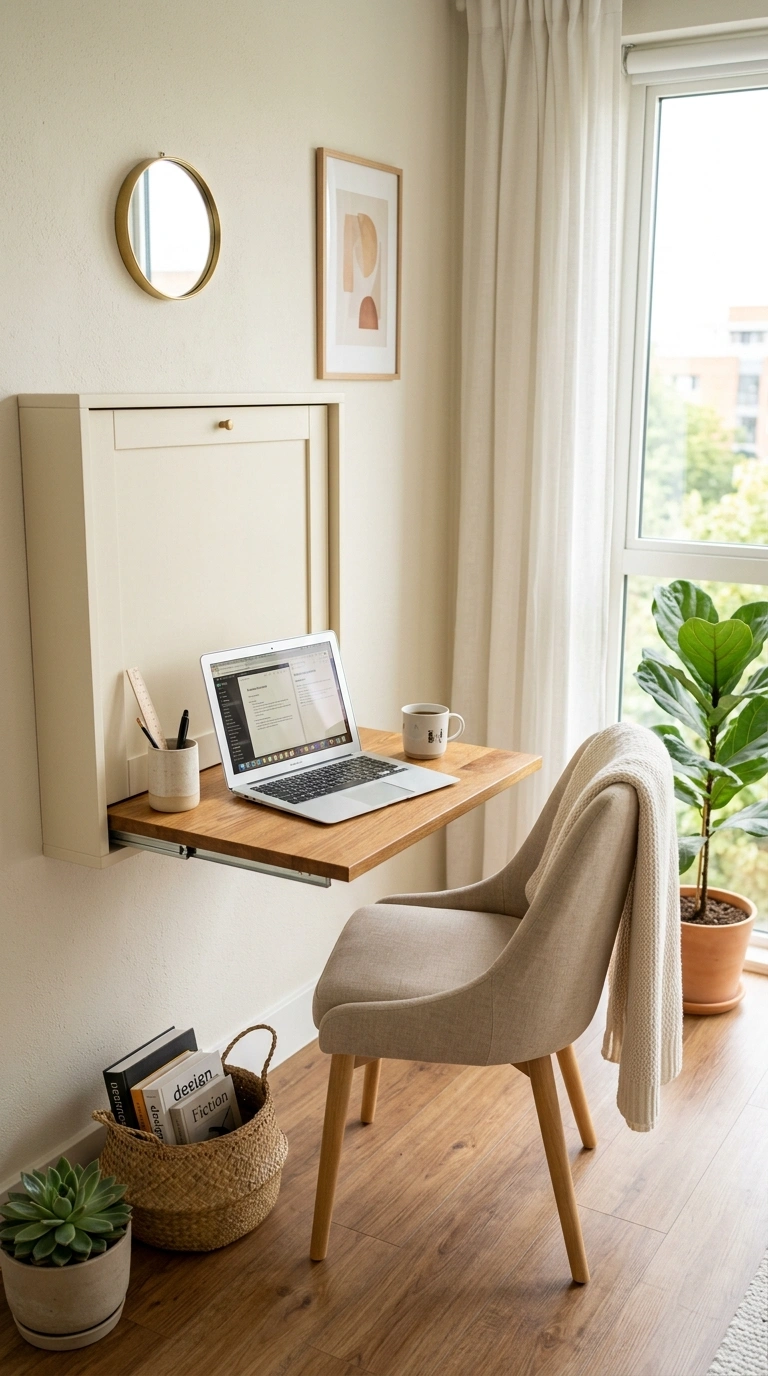
A wall mounted fold down desk gives you a workspace that disappears when not in use. Perfect for small apartments that need to double as home offices.
Buy a wall mounted fold down desk from IKEA, Amazon, or Wayfair for one hundred to two hundred and fifty dollars. Look for models with built in storage inside the folded up cabinet for pens, papers, and small office supplies.
Pros: Uses zero floor space when folded up. Perfect for studio apartments or bedrooms doubling as offices. Storage inside keeps office supplies organized and hidden.
Cons: Requires mounting into wall studs, which some rentals do not allow. Also fold down desks have small surface areas, usually only about thirty by twenty inches. Not great for multi monitor setups or spread out projects. Cheap fold down desks have wobbly support brackets that cannot hold heavy laptops well. Look for solid metal support hardware. Also frequent folding wears out hinges over time. Look for warranty coverage for at least two years. Some models require the wall to have specific stud spacing that may not exist in older buildings.
5. Vertical Bookshelf
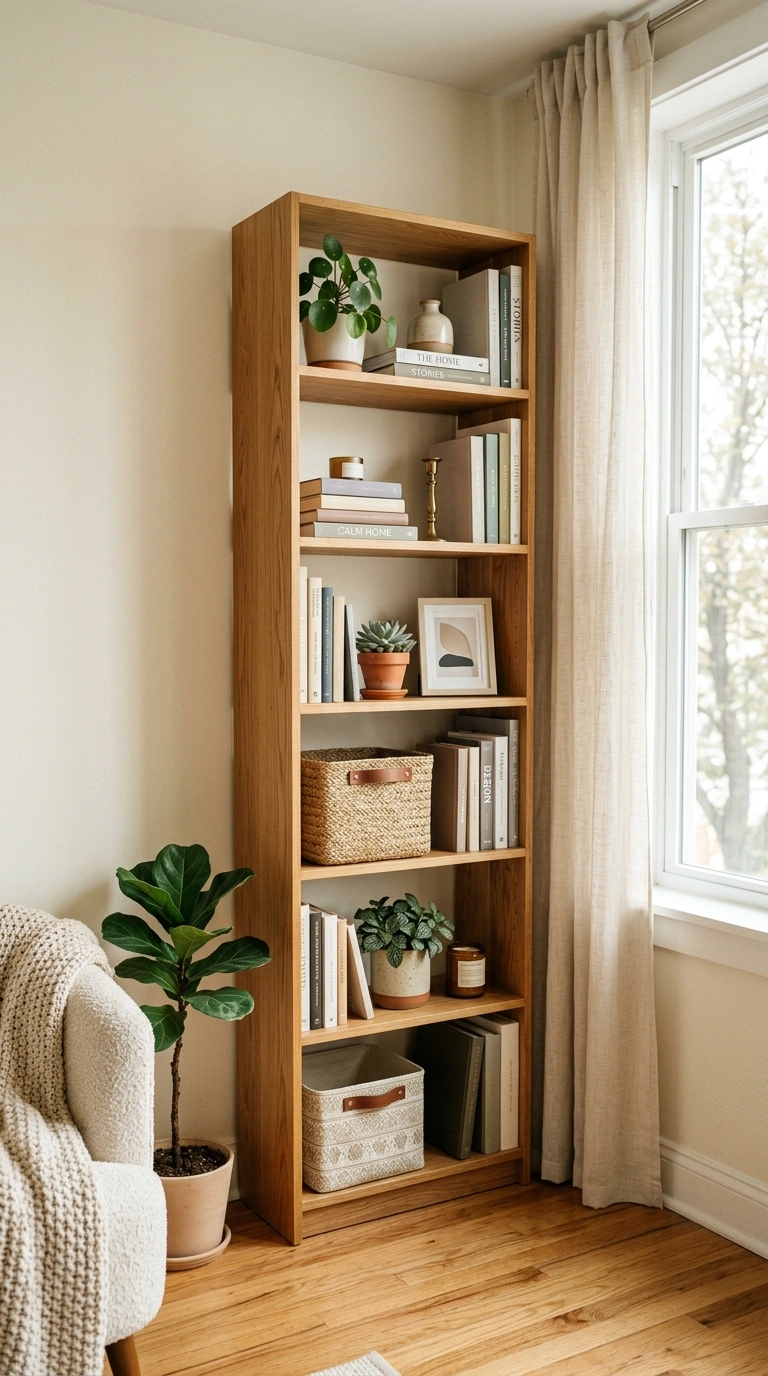
A tall skinny vertical bookshelf uses the height of your apartment without eating floor space. This is one of the smartest storage moves for small living rooms and bedrooms.
Buy a tall narrow bookshelf about twelve inches wide and seventy inches tall for eighty to two hundred dollars at IKEA, Target, or Amazon. Look for shelves that anchor to the wall for safety, especially in earthquake zones or homes with kids.
Pros: Massive storage in a small footprint. Draws eyes up and makes ceilings feel taller. Great for books, small decor, and organized storage bins.
Cons: Tall bookshelves tip easily if not anchored to the wall properly. Always use anti tip straps. Cheap particle board shelves sag under book weight over time. Look for solid wood or reinforced construction for real durability. Also very narrow shelves cannot hold wider items like binders or large books. Measure item widths before buying. Some tall bookshelves look wobbly even with wall anchors, so avoid overloading top shelves with heavy items. Store heavy books on lower shelves for stability. Perfect for renters since most tall bookshelves come with wall anchoring hardware.
6. Under Bed Rolling Bins
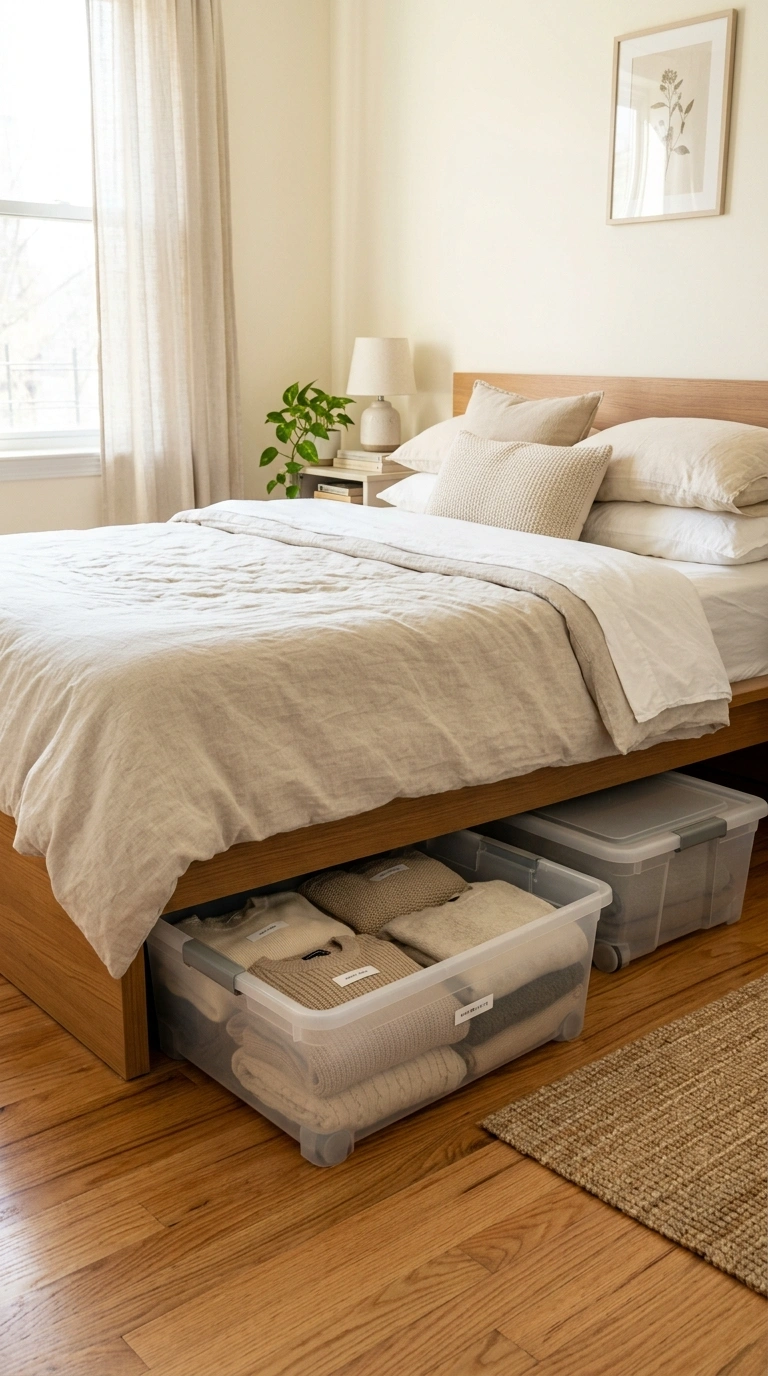
Rolling storage bins that slide under your bed use previously wasted space for real storage. Perfect for off season clothes, extra bedding, or bulky items.
Buy fabric or plastic rolling storage bins from IKEA, Target, or Amazon for twenty to fifty dollars each. Look for bins with lids and sturdy wheels. Choose sizes that fit your specific bed clearance, usually six to twelve inches tall.
Pros: Uses wasted under bed space efficiently. Rolling wheels make access easy without heavy lifting. Great for storing items you rarely need but want to keep close.
Cons: Only works with beds tall enough to fit bins underneath. Platform beds and floor beds have no clearance. Also cheap plastic bins crack under heavy weight over time. Look for reinforced construction rated for at least twenty pounds. Fabric bins can absorb pet dander or dust, making them unusable for allergy sufferers. Choose plastic instead for allergy friendly storage. Wheels on carpeted floors are hard to roll smoothly. Consider bins that just slide rather than roll for carpet situations. Watch for bins that get pushed too far under and become hard to reach.
7. Command Gallery Wall
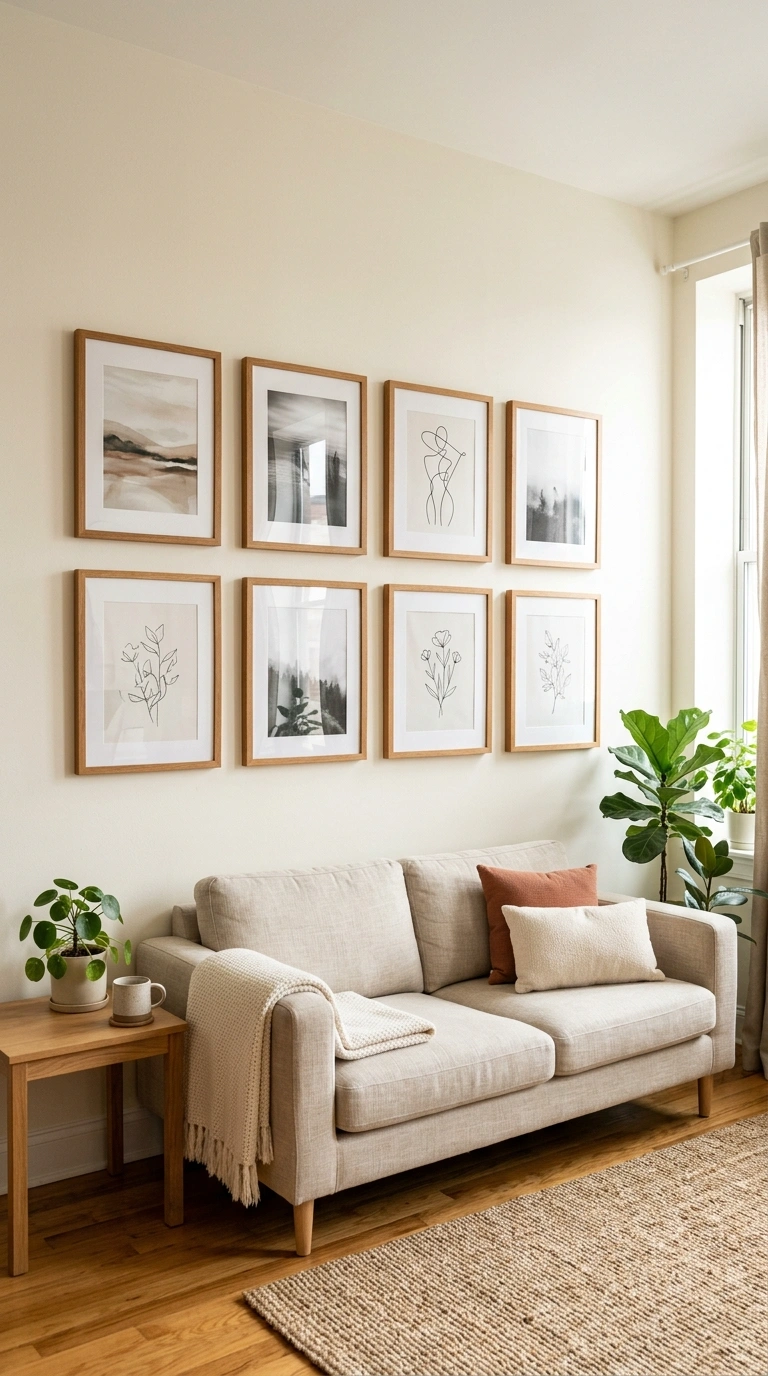
A gallery wall using command strips instead of nails gives you renter friendly wall art without any drilling. Perfect for apartment dwellers who want to personalize walls without losing security deposits.
Buy command picture hanging strips for fifteen to twenty five dollars per pack at Amazon or Target. Combine with affordable framed art from IKEA, Target, or Etsy for total gallery cost around one hundred to three hundred dollars for eight to twelve pieces.
Pros: No drilling or wall damage, perfect for rentals. Easy to rearrange whenever you want. Command strips hold up to sixteen pounds each with proper technique.
Cons: Command strips fail on textured walls, freshly painted walls, or in humid rooms. Test one strip before hanging expensive art. Also frames slowly slip down walls over months due to gravity, especially heavier ones. Check and readjust every few months. Cheap command strips lose adhesion over time. Look for genuine 3M brand for real quality. Removing command strips requires slow careful pulling to avoid ripping paint. Watch tutorial videos on proper removal technique before installing. Some frames are too heavy for command strips regardless of the pack rating.
8. Storage Ottoman Table
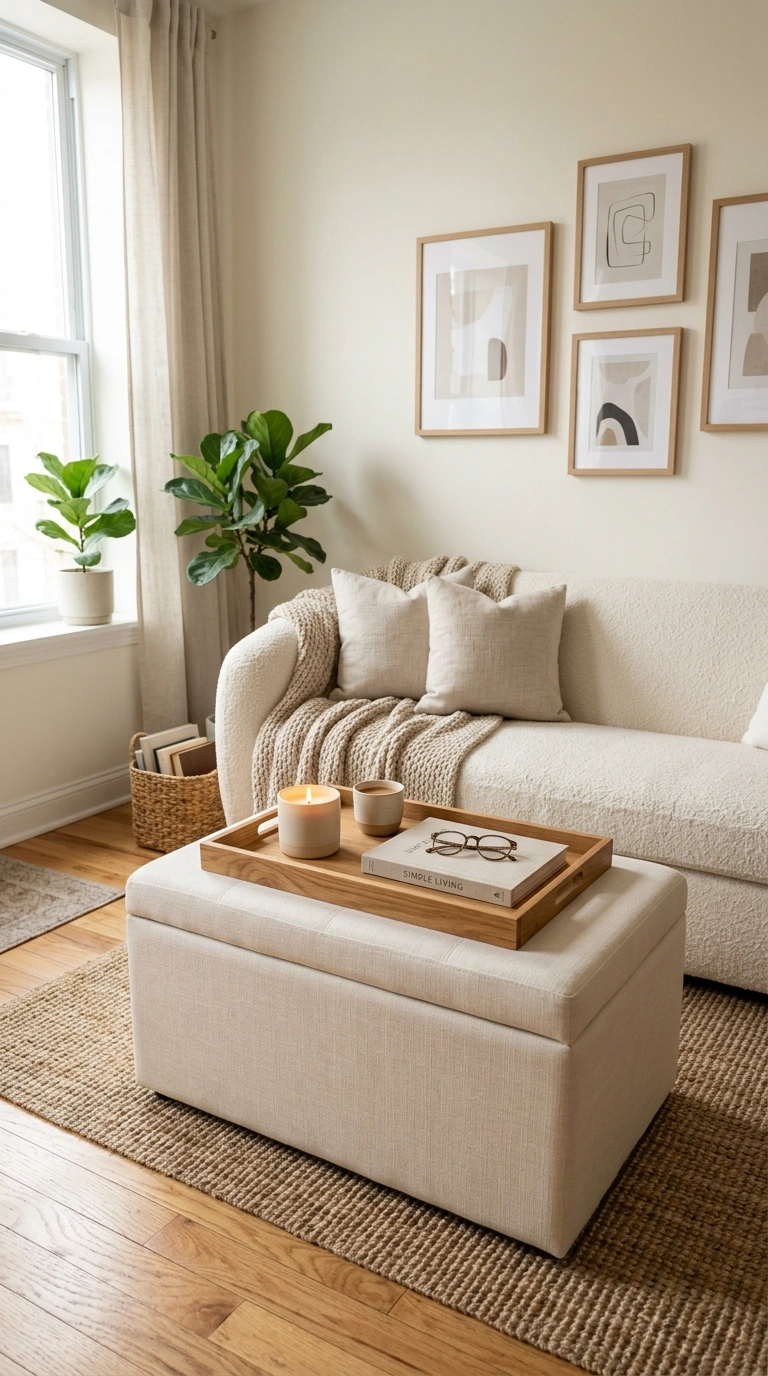
A storage ottoman with a hinged top doubles as a coffee table, footrest, extra seating, and hidden storage. This is one of the most functional pieces for small apartments.
Buy a storage ottoman about thirty by twenty inches from Target, Wayfair, or Amazon for one hundred and fifty to three hundred dollars. Look for models with soft close hinges and a sturdy top that supports drinks and books.
Pros: Serves multiple functions in one piece. Hidden storage keeps blankets, remotes, and small items organized. Great for small living rooms where every piece needs to earn its space.
Cons: Cheap ottomans have thin lids that break under weight. Look for reinforced construction rated for at least three hundred pounds. Also fabric tops stain easily from spills. Choose leather or removable washable covers. Some ottomans are too tall for coffee table use, blocking your view of the TV. Measure for the right height, usually eighteen to twenty inches. Also very shallow storage inside limits usefulness. Look for deep storage compartments at least twelve inches deep for real functional use. Storage ottomans often become forgotten storage since items are hidden.
9. Rolling Island Cart
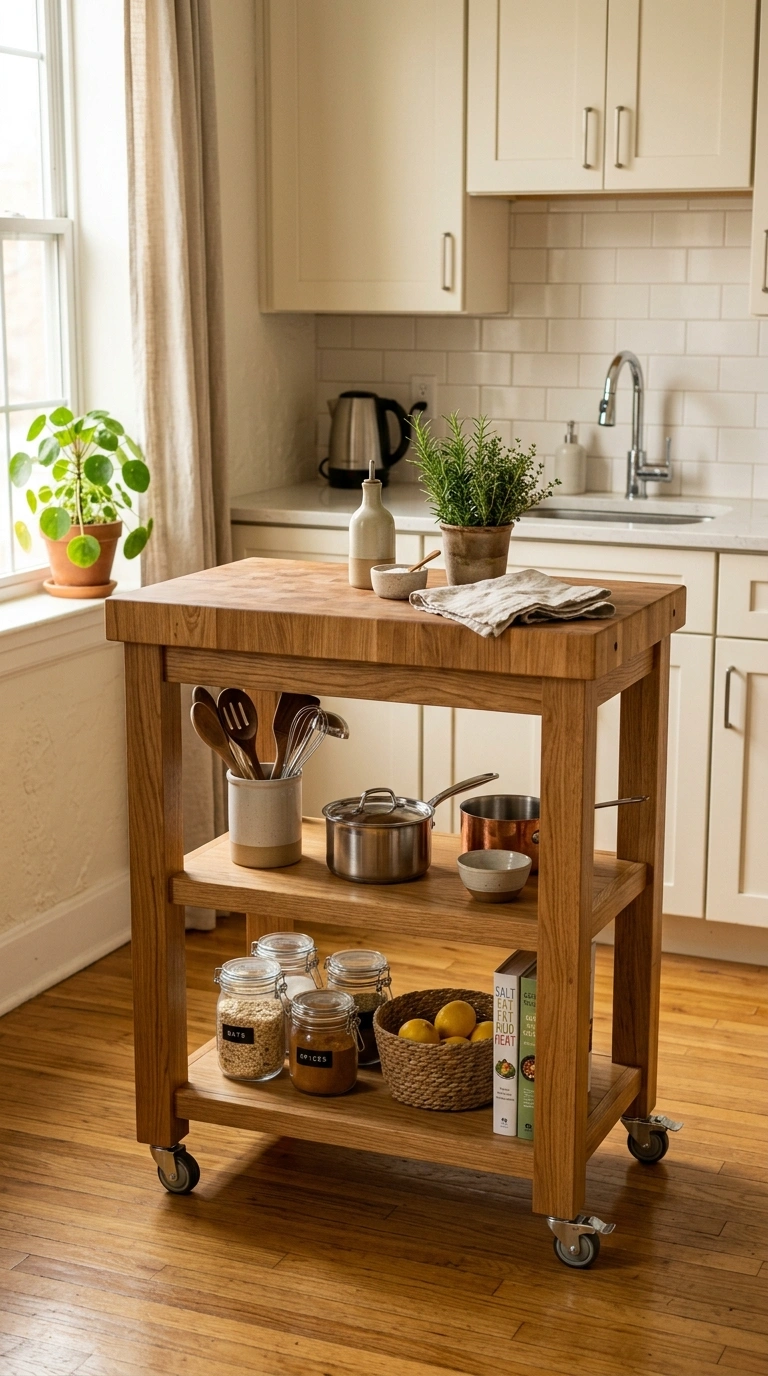
A rolling kitchen island cart gives you extra counter space, storage, and mobility in small apartment kitchens. Perfect for kitchens without built in islands.
Buy a rolling kitchen cart from IKEA, Target, or Amazon for one hundred to three hundred dollars. Look for wood or stainless steel construction with two shelves below the counter surface. Butcher block tops are especially versatile for cooking prep.
Pros: Adds counter and storage in kitchens with limited built in space. Rolls out for cooking prep, back into a corner when not needed. Doubles as a bar cart or serving area for entertaining.
Cons: Rolling carts take floor space, at least eighteen by twenty five inches. Not great for very tiny kitchens. Also cheap carts wobble under active cooking prep. Look for solid construction rated for real chef use. Wheels can scratch hardwood floors over time. Add felt pads or use rubber wheels. Some carts have shelves too shallow for standard cookware. Measure your pans and pots before buying. Bumping the cart hard while rolling can spill items on the top surface. Use trays or containers to keep contents secure during moves.
10. Over Toilet Shelf
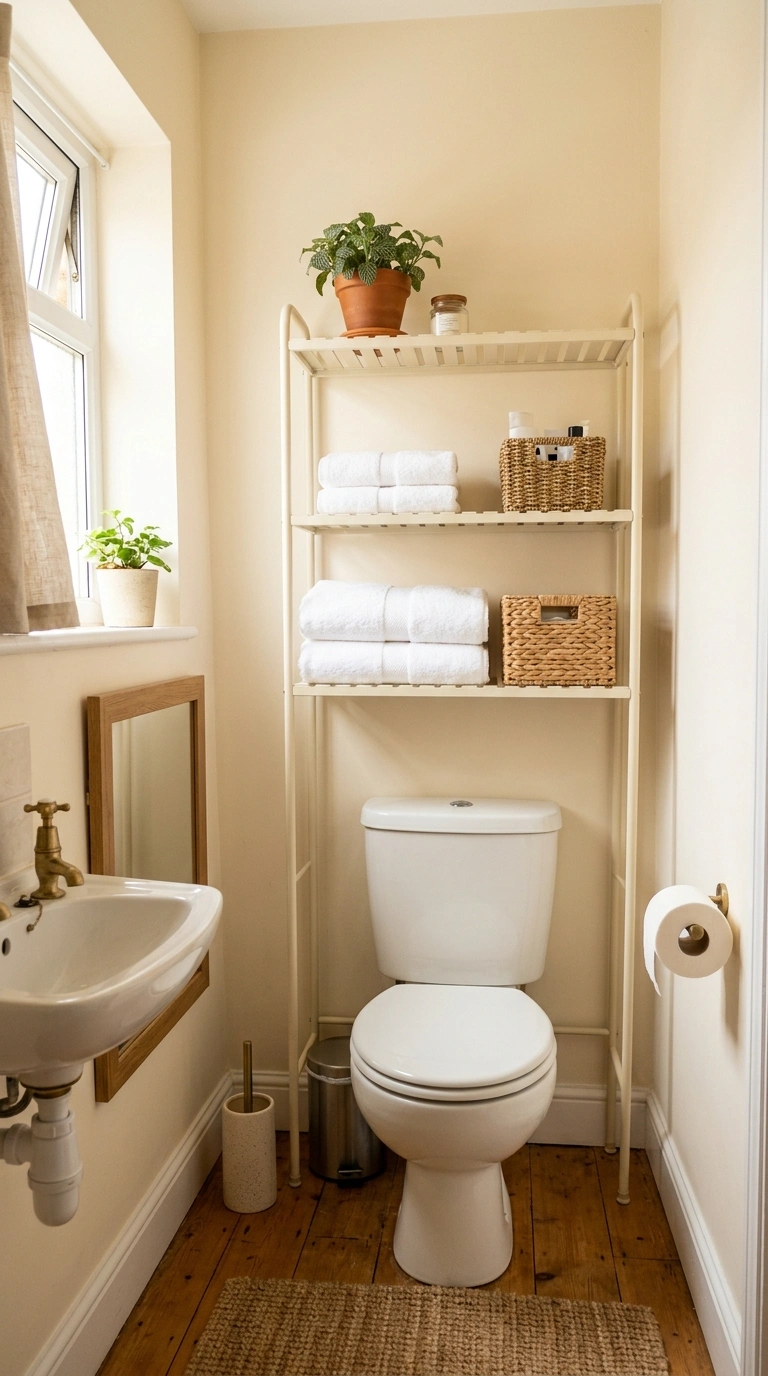
An over the toilet shelf system uses previously wasted bathroom space for real storage. This is one of the smartest small bathroom upgrades possible.
Buy an over the toilet shelf unit from Target, Amazon, or IKEA for fifty to one hundred and fifty dollars. Look for units with three shelves and a footprint that clears your toilet tank. Choose materials rated for bathroom humidity.
Pros: Adds massive storage in a spot most people ignore. Perfect for extra toilet paper, towels, and toiletries in small bathrooms. No wall drilling required for most models.
Cons: Cheap over toilet shelves wobble or tip over time. Look for units with sturdy metal frames and adjustable feet for stability. Some shelves have narrow depths that cannot hold larger bathroom items. Measure your bath supplies first. Also open shelves show all your bathroom items, which some people find cluttered looking. Use pretty baskets or containers to hide items. Wooden shelves warp in humid bathrooms without proper sealing. Choose metal or plastic construction for real longevity. Also very tall units can look overwhelming in small bathrooms with low ceilings.
11. TV Wall Mount
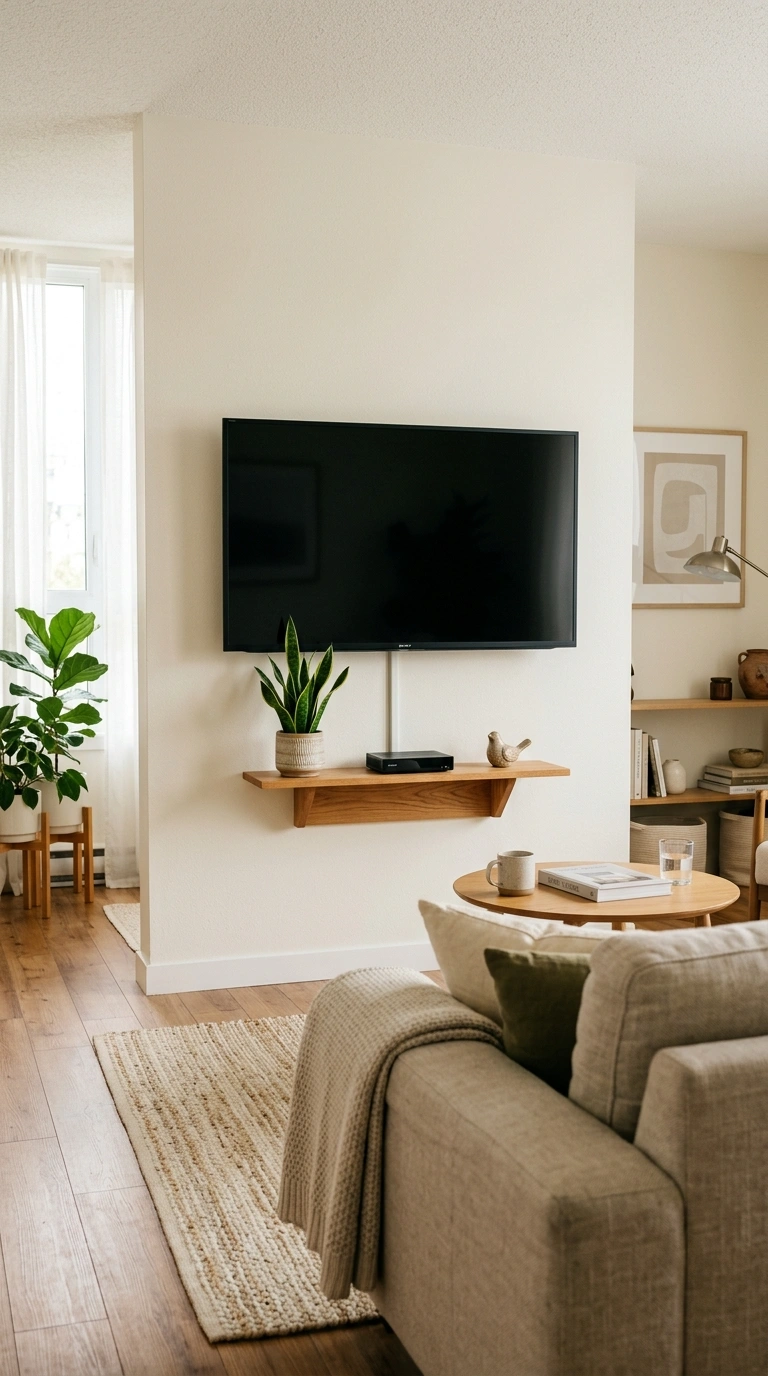
Mounting your TV to the wall instead of using a bulky TV stand frees up significant floor space in small living rooms. This is a huge visual and functional upgrade.
Buy a wall mount from Amazon, Best Buy, or Home Depot for thirty to one hundred dollars depending on TV size. Add a small floating shelf or media console below for cable boxes and gaming consoles. Total setup around one hundred to three hundred dollars.
Pros: Frees up floor space by eliminating bulky TV stands. Modern minimalist look. Adjustable mounts let you angle the TV for optimal viewing from anywhere in the room.
Cons: Requires drilling into wall studs, which some rentals do not allow. Also cables need to be hidden behind the wall or in cord covers for a clean look. Cheap mounts sag under heavy TV weight over time. Look for mounts rated well above your TV weight for safety. Some TVs have specific mount hole patterns that need matching mount hardware. Verify compatibility before buying. Also wall mounts commit your TV to one wall location. Cannot easily rearrange the room after installation. Best for permanent layouts where you know the TV position.
12. Sofa Backing Mirror
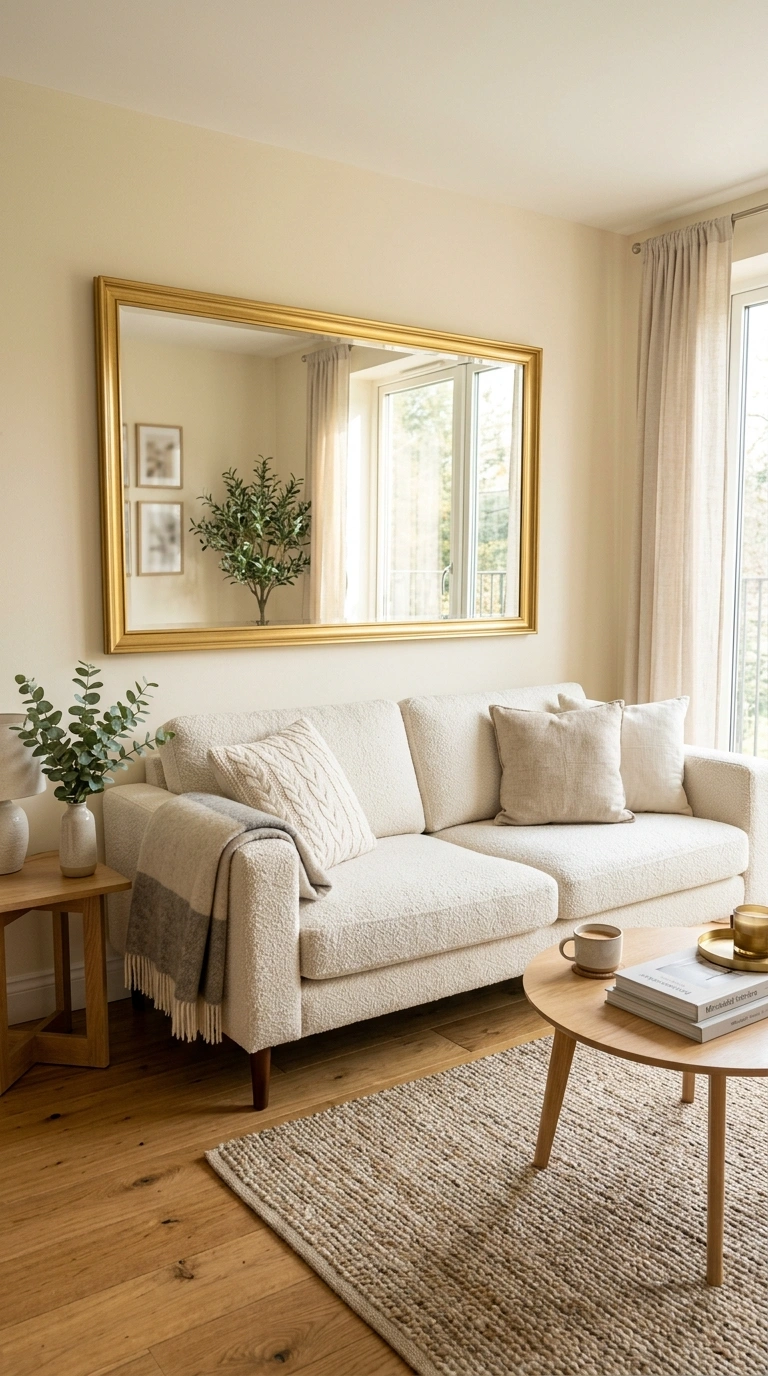
A large mirror hanging above your sofa reflects light and doubles the visual space of small living rooms. This is one of the oldest small space tricks and still one of the best.
Buy a large horizontal mirror about forty by twenty four inches for one hundred to three hundred dollars at Target, HomeGoods, or Amazon. Hang above your sofa at about eight inches above the back cushions. Choose warm gold or matte black frames.
Pros: Makes small living rooms feel twice as big. Reflects natural light around the room. Doubles as decorative wall art with the right frame style.
Cons: Large mirrors are fragile during shipping. Unpack carefully. Also mirrors can create bright glare from windows across the room, causing eye strain. Test placement first. Cheap mirrors have thin frames that break easily. Look for solid construction. Frame styles date quickly, so choose classic shapes over super trendy styles. Also mirrors reflect any messy areas of your apartment directly, so keep the reflected zone tidy. Very heavy mirrors need proper wall anchor systems for safety. Mount into studs whenever possible, especially above where people sit.
13. Nesting Side Tables
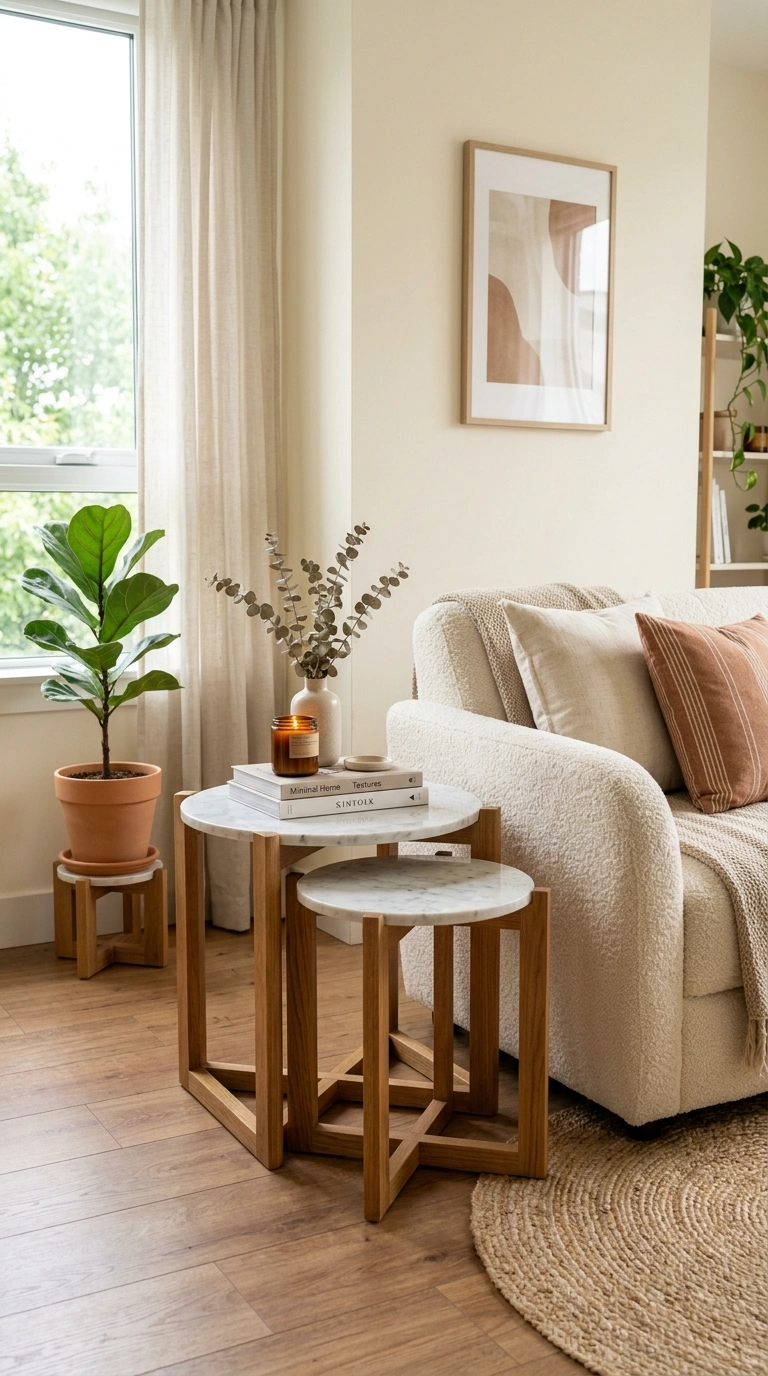
A pair of nesting side tables give you flexible surface space that spreads out for parties or nests together to save floor space daily. Great for small living rooms with limited floor room.
Buy a matching set of two or three nesting tables from CB2, West Elm, or Amazon for one hundred and fifty to four hundred dollars per set. Look for slim frames and round or oval tops for the softest look.
Pros: Flexible surfaces that adapt to different needs. Store together when not needed. Extra surfaces available for parties or extra guests. Great space saving furniture design.
Cons: Nesting tables often have wobbly frames that shift under weight. Test stability before buying. The smaller tables in the set are so light they slide around on hardwood, requiring felt pads. Cheap nesting tables have short lifespans since the small tables get lifted and moved constantly. Look for real solid construction. Also glass topped nesting tables show every fingerprint and smudge, requiring frequent wiping. Metal or wood tops are lower maintenance. Not all sets can be used together for one large surface, so verify tops can align if that matters to you.
14. Peel Stick Backsplash
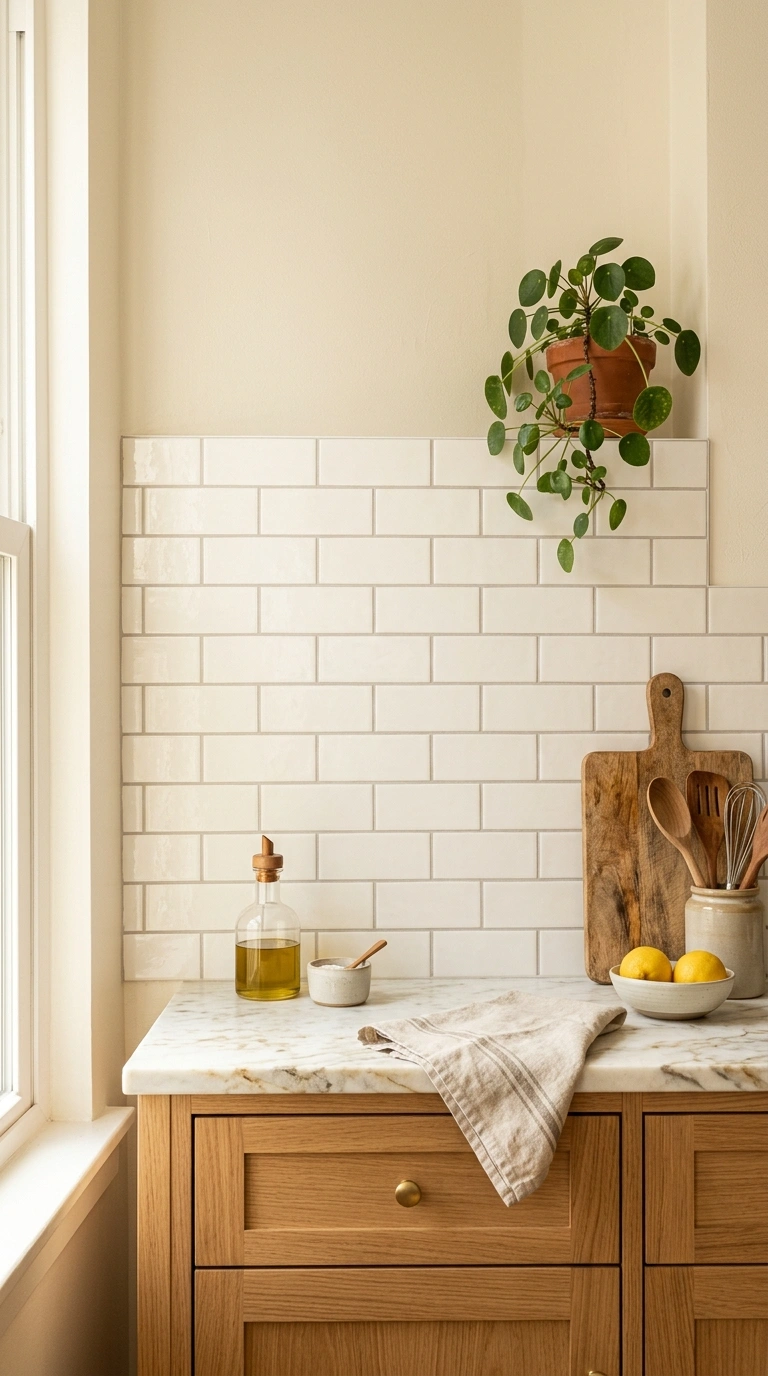
Peel and stick backsplash tiles give apartment kitchens a real designed look without any permanent renovation. This is one of the biggest impact updates for renters.
Buy peel and stick backsplash tiles from Smart Tiles, StickTiles, or Amazon for six to twelve dollars per sheet. Look for realistic subway, marble look, or geometric patterns. Total kitchen backsplash cost usually thirty to eighty dollars.
Pros: Very affordable big kitchen impact. Removable when you move out. Wipes clean like real tile. Installation takes just a few hours with basic tools.
Cons: Cheap peel and stick tiles look plastic in person. Spend a bit more per sheet for real quality realistic finishes. Also tiles do not adhere well behind stoves where heat and grease build up. Skip that area or use metal tiles rated for heat. Some peel and stick tiles leave residue when removed. Test one small area first. Corners and edges require careful cutting for a clean look. Use sharp scissors or a utility knife. Also imperfect wall surfaces show through peel and stick tiles. Fill nail holes and clean thoroughly before installing for the best final look.
15. Layered Area Rugs
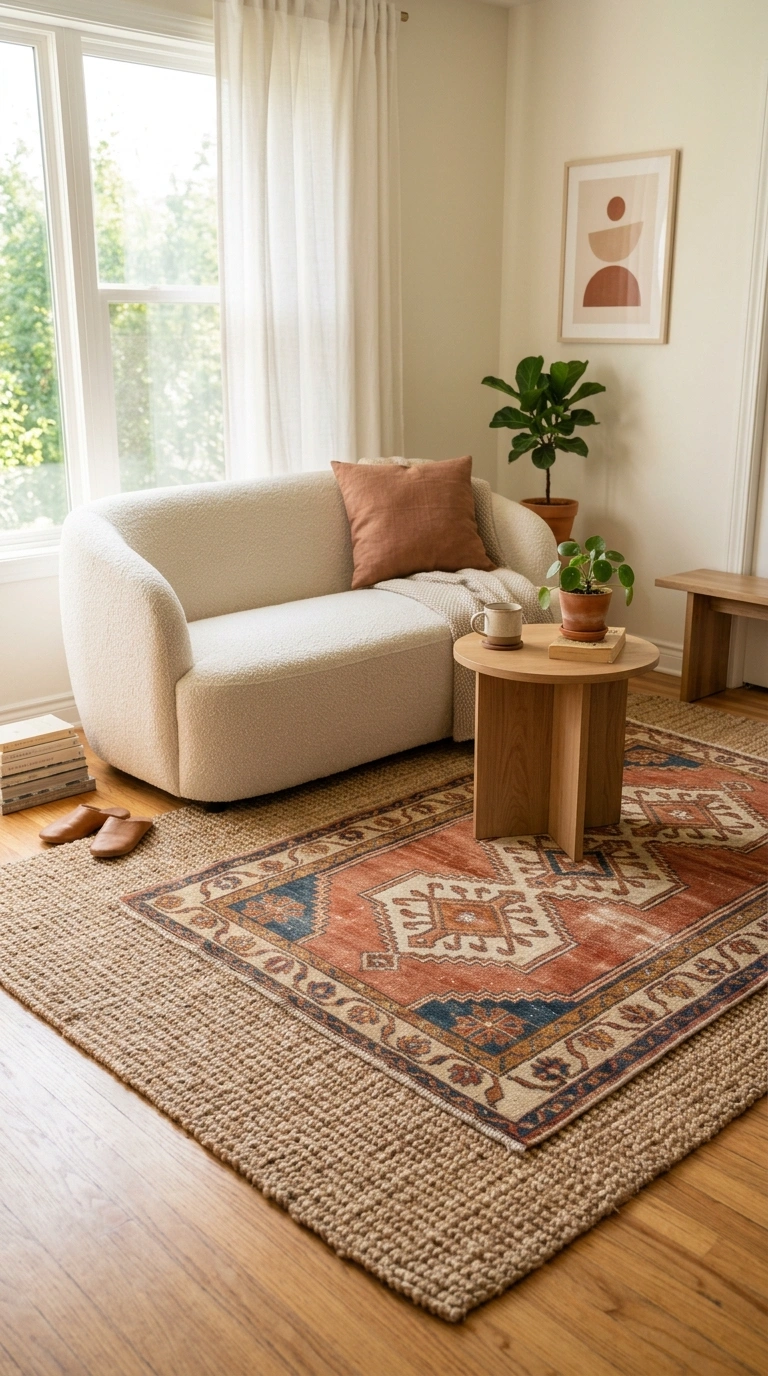
Layering two area rugs, one bigger with a smaller patterned rug on top, adds visual interest and hides plain builder grade apartment floors. This trick makes small apartments feel warmer.
Buy a big natural jute or sisal rug about eight by ten feet for one hundred to three hundred dollars at Amazon or Wayfair. Layer a smaller patterned kilim or vintage look rug on top, around three by five feet for fifty to two hundred dollars.
Pros: Adds warmth and visual character to plain apartment floors. Hides ugly builder grade carpet or worn hardwood. Very effective at defining zones in studio apartments.
Cons: Layered rugs can shift and slide over each other, creating tripping hazards. Use rug pads between layers for stability. Also multiple rugs collect more dust and pet hair than single rugs, requiring more frequent vacuuming. Some rugs are too thick to layer without looking bulky. Choose flat weave rugs for the base layer. Cheap rugs shed heavily for weeks. Vacuum daily until settled. Layered rugs also collect crumbs and small items between layers that are hard to clean out. Lift and shake regularly for cleanliness.
16. Bar Stool Dining
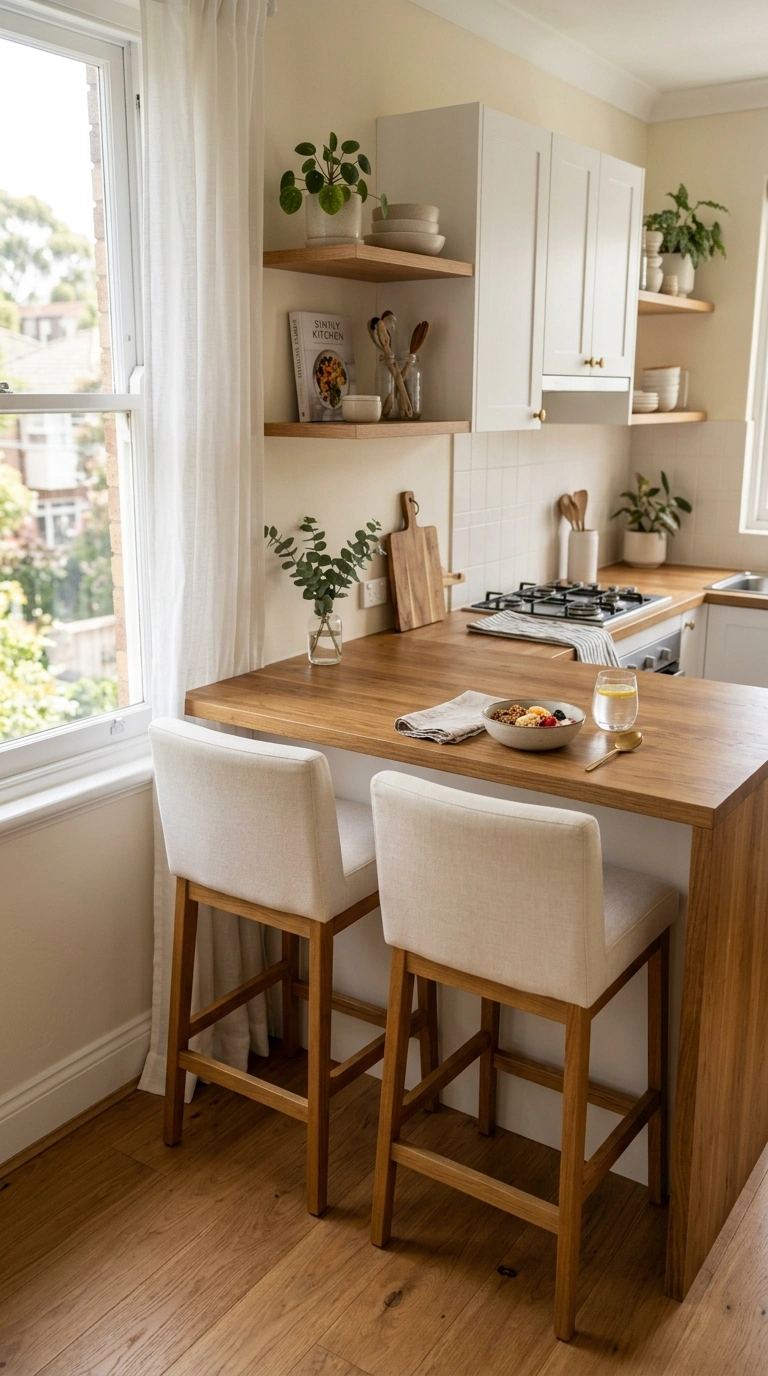
Using bar stools at a counter instead of a full dining table saves huge amounts of floor space in small apartments. Perfect for studios or one bedroom apartments without dedicated dining rooms.
Buy matching bar stools with cushioned seats for one hundred to two hundred and fifty dollars per stool at CB2, West Elm, or Amazon. Use existing kitchen counters, breakfast bars, or install a small floating counter for seating.
Pros: Saves floor space compared to full dining sets. Great for single people or couples without kids. Doubles as extra seating for cocktail parties.
Cons: Bar height counters are not comfortable for long dinners. Also cheap bar stools have wobbly bases that tip easily. Look for stools with wide sturdy bases for stability. Some bar stools without back support cause back pain during longer meals. Choose stools with real back support if you eat at the counter often. Not ideal for entertaining more than two to three people. Kids find bar stools scary or dangerous to climb. Not great for young families. Best for single people, couples, or roommate households who prefer casual eating spaces.
17. Floating Wall Shelves
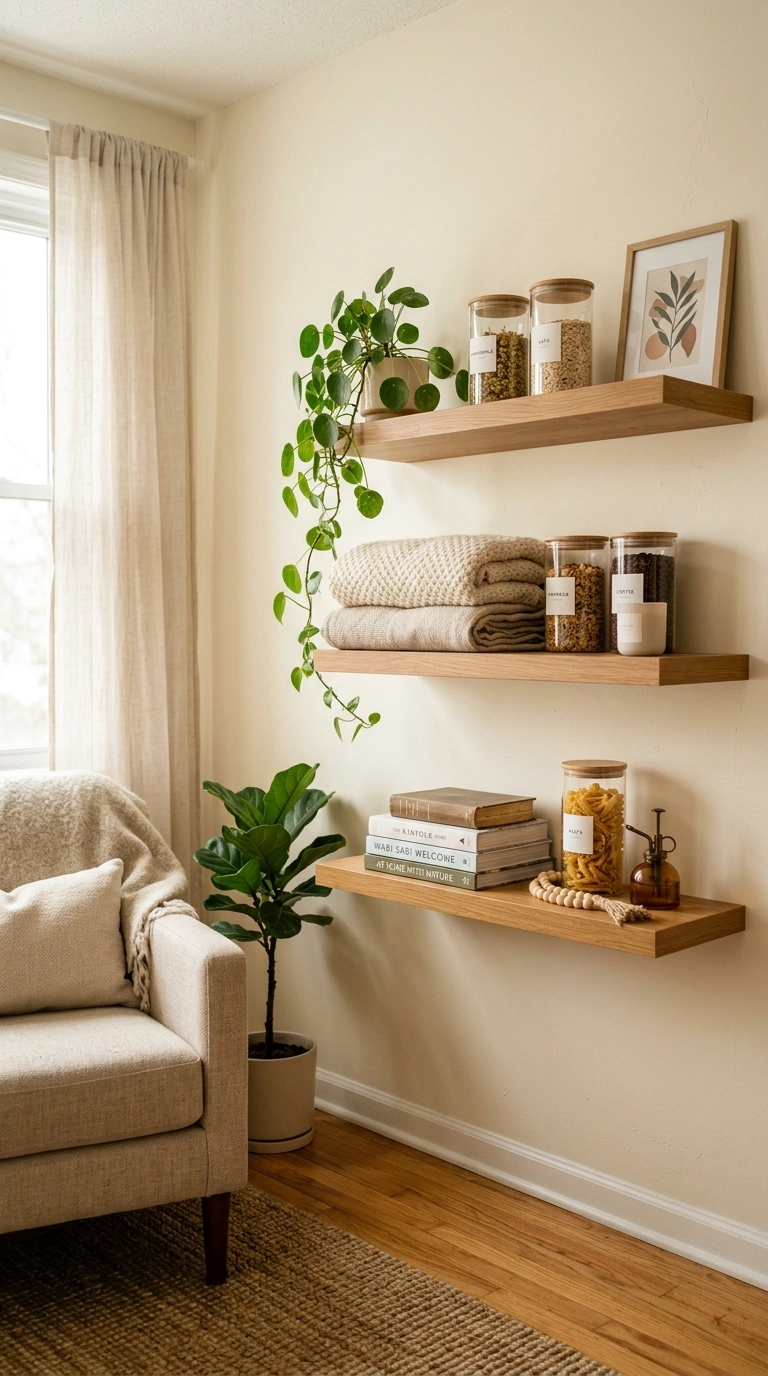
Floating wall shelves add real storage without eating floor space in small apartments. Perfect for bathrooms, kitchens, living rooms, and bedrooms.
Buy floating shelves from IKEA, Target, or Amazon for twenty to sixty dollars per shelf depending on length. Look for shelves rated for at least twenty pounds. Install into wall studs for real stability with heavier items.
Pros: Massive storage that uses vertical wall space. Modern clean look. Very affordable at twenty dollars per shelf.
Cons: Requires drilling into walls, which many rentals do not allow. Also cheap floating shelves sag under heavy weight or come loose from walls. Look for solid metal bracket construction. Some floating shelves are too shallow for real function, usually only four to six inches. Measure your intended items before buying. Also shelves without wall stud mounting are limited to lighter items only, not books or heavy vases. Wall anchors work but not as securely as stud mounting. Painted shelves show every scratch and mark quickly. Wooden shelves are more forgiving of daily use over years.
18. Curtain Closet Cover
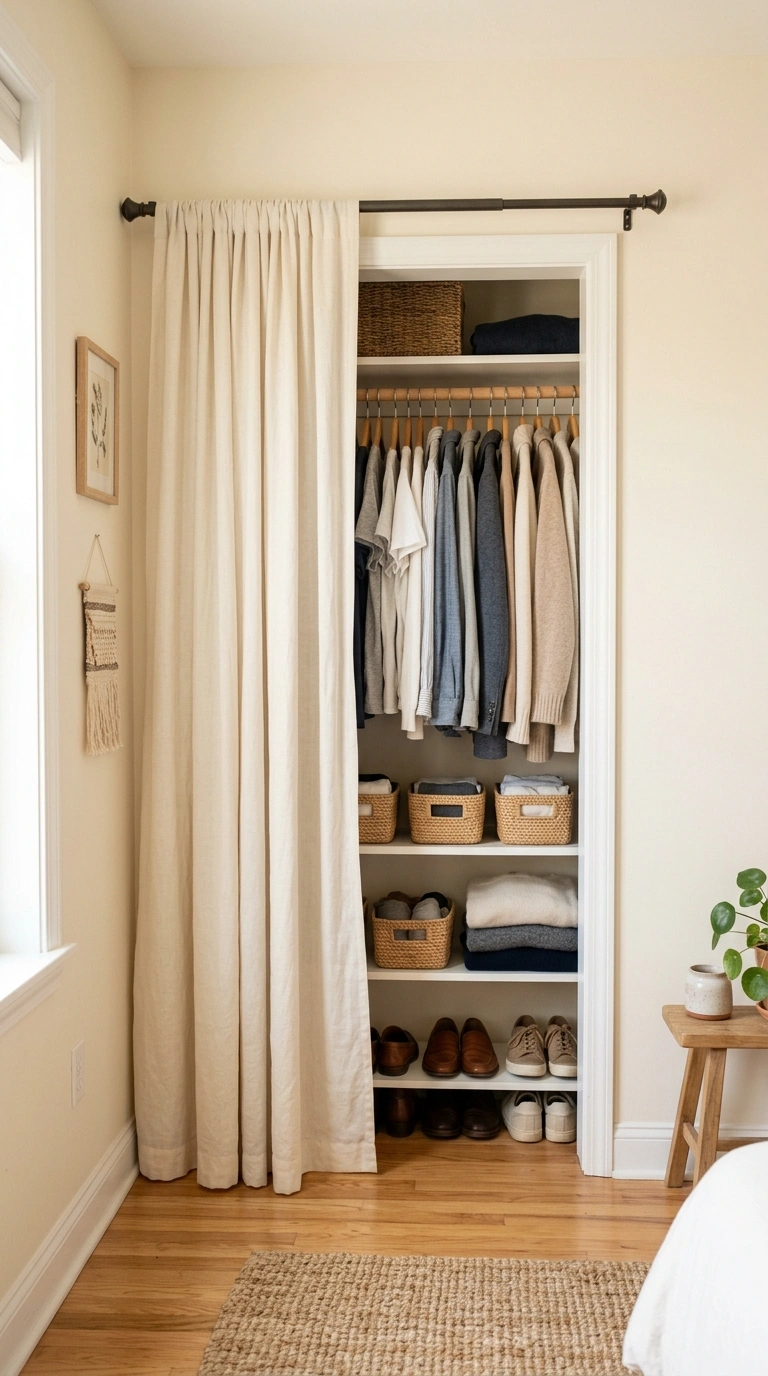
Replacing bulky closet doors with a soft curtain saves swing space and updates the look of an older apartment. This is a smart renter friendly closet upgrade.
Buy a curtain rod and heavy fabric curtain for forty to eighty dollars at Amazon or IKEA. Choose linen or cotton in neutral colors for the calmest look. Total setup takes about thirty minutes with basic tools.
Pros: Saves the swing space bifold or accordion doors need. Softens the look of a plain closet. Very affordable renter friendly upgrade.
Cons: Curtains do not hide messy closets as well as solid doors. Keep the closet contents organized to look through the curtain. Also fabric collects dust and pet hair, requiring monthly washing. Cheap curtains fade in sunlight over time. Look for UV rated fabrics for real longevity. Some HOAs and landlords restrict removing closet doors. Check your lease before starting. Also stored closet doors need to be safely kept for move out, which takes garage or basement space. Also curtains do not block sound or air flow like solid doors, so allergen or smell issues from closet contents may transfer to the room.
19. Hanging Plant Corner
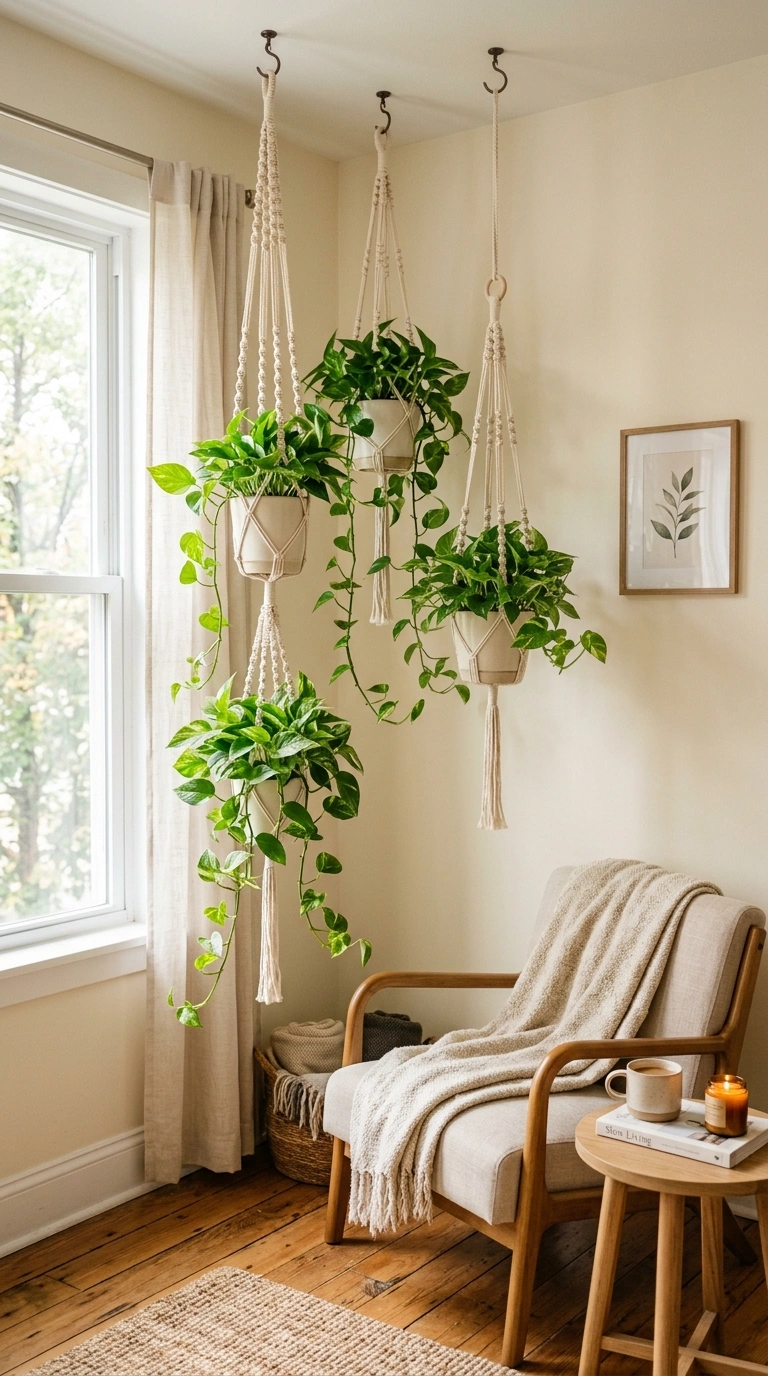
Hanging plants from ceiling hooks in a corner adds greenery without using floor or table space. Perfect for small apartments where every horizontal surface is precious.
Buy small hanging planters and ceiling hooks for twenty to fifty dollars total. Choose easy indoor plants like pothos, spider plant, or string of hearts. Hang two or three plants at different heights for the most beautiful look.
Pros: Adds greenery without eating floor space. Great for apartments with high ceilings. Trailing plants add beautiful vertical interest to corners.
Cons: Ceiling hooks require drilling into ceiling joists for real safety. Not for renters with strict no drilling rules. Also plants above head height are hard to water without a step stool. Choose easy care plants that need less watering. Some hanging plants drip when watered, requiring floor protection. Use trays with drainage catches. Cheap plastic hanging pots crack over time from sun and heat. Look for real ceramic or plastic rated for outdoor use for real longevity. Overwatered hanging plants can drip and stain floors or furniture below. Water carefully and let drain properly.
20. Corner Reading Nook
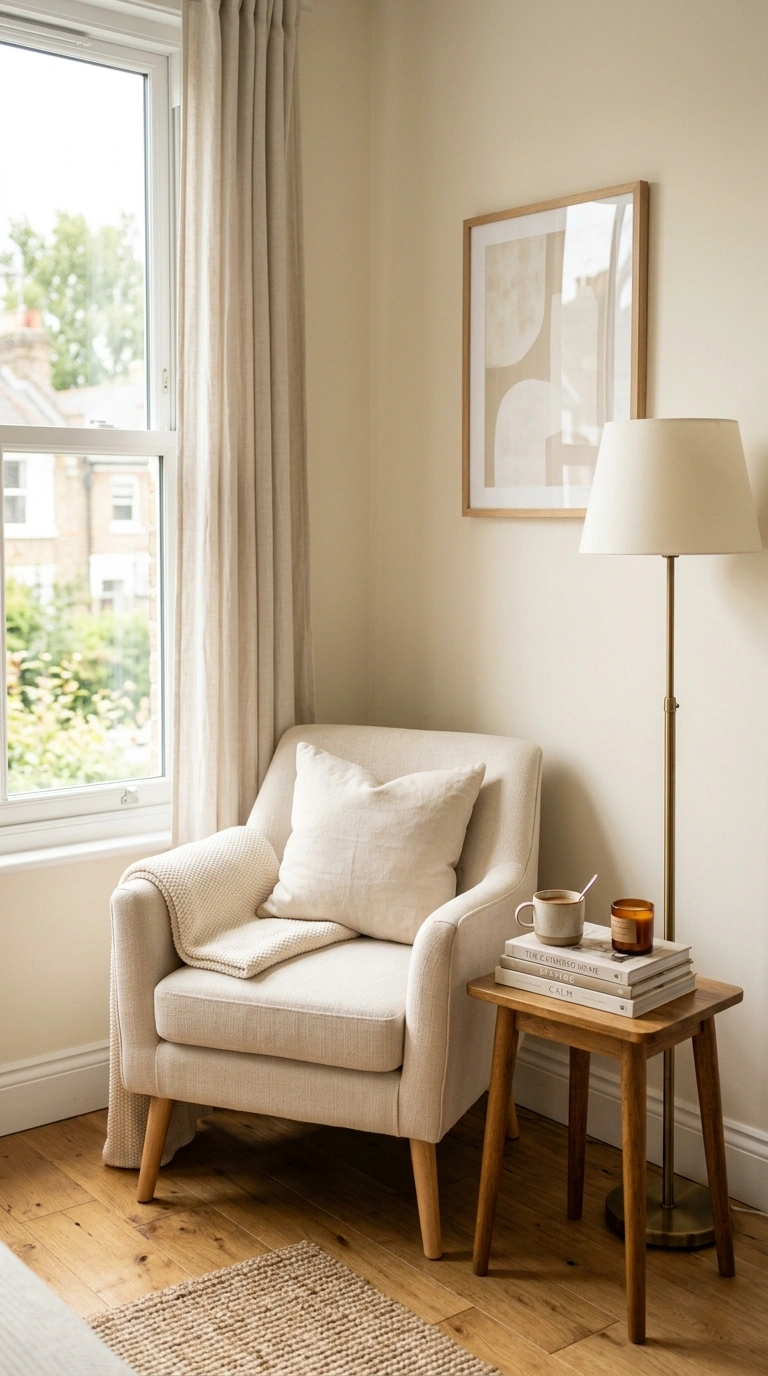
A small reading chair tucked into a corner creates a peaceful spot for reading and quiet time. This uses awkward corner space that might otherwise sit empty.
Buy a small accent chair from Wayfair, Amazon, or IKEA for two hundred to five hundred dollars. Look for slim profile designs that fit in tight corners. Add a small side table and floor lamp for a full reading nook feel.
Pros: Uses previously wasted corner space. Creates a designated quiet spot in busy apartments. Doubles as extra seating for guests when needed.
Cons: Small corner chairs are less comfortable than full sized chairs. Test comfort before buying. Also cheap accent chairs wear out quickly under daily use. Look for solid frame construction. Some corner chairs have deep seats that push short people back too far. Test seat depth before ordering. Requires floor space of at least three by three feet for the chair plus foot room. Not great for very tiny studios. Corner chairs can look isolated if the rest of the room is not styled with them. Include a small rug and lamp to make the nook feel intentional.
21. Wall Mount Bedside
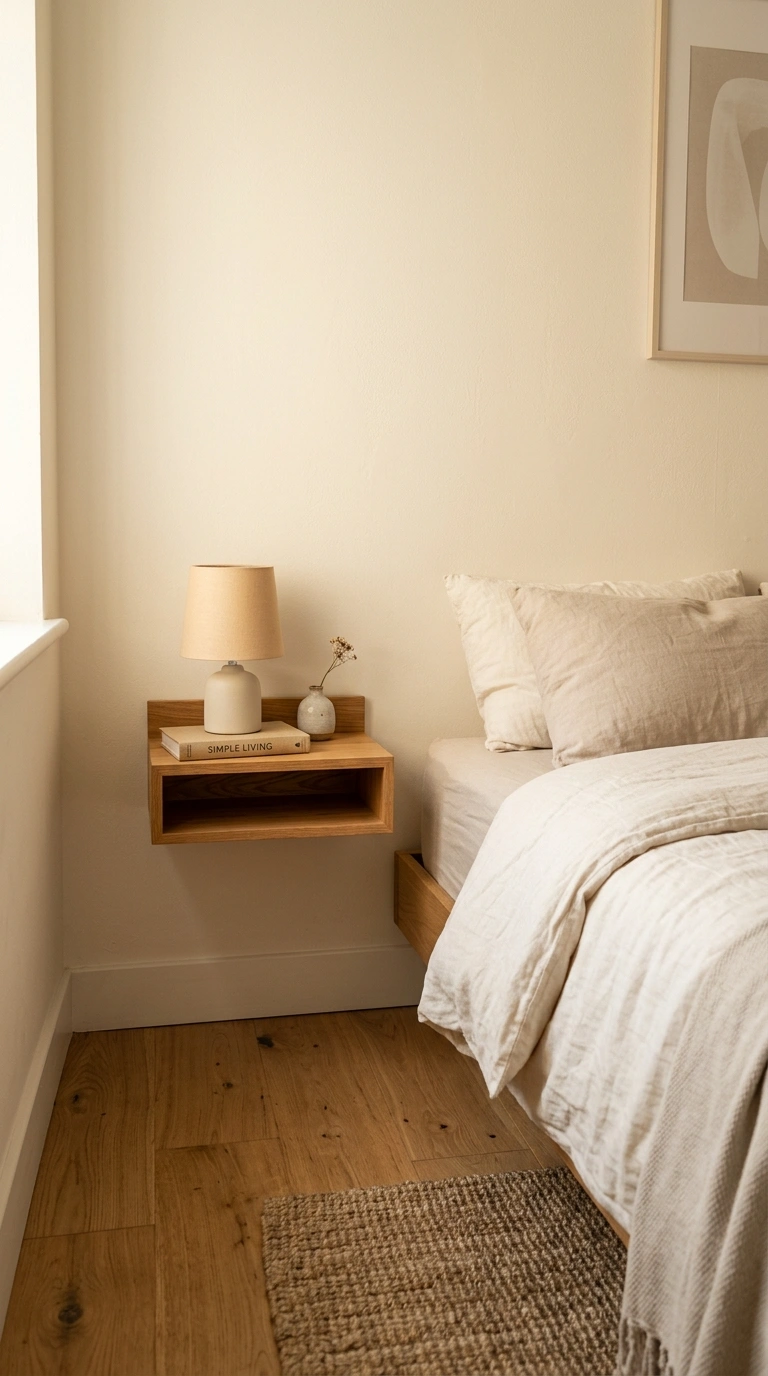
A wall mounted bedside shelf replaces a full bedside table, saving floor space in small bedrooms. Perfect when floor space is tight beside the bed.
Buy a floating wall shelf about twelve inches wide for twenty to fifty dollars at IKEA or Amazon. Install at bed height, usually about twenty six inches from the floor. Add a small clip on light or wall mount lamp above for reading.
Pros: Uses zero floor space. Keeps essentials like phone, glasses, and book within reach. Modern minimalist look.
Cons: Floating shelves have limited surface area, usually just enough for a phone and one small item. Not great for people who keep multiple items bedside. Also requires drilling into wall studs for real weight support. Not for renters with strict no drilling policies. Cheap shelves come loose over time from wall vibrations during sleep. Look for solid mounting hardware. Some floating shelves are too shallow for lamps or larger items. Measure carefully. Also without floor storage, there is nowhere to hide charging cords or extra items. Plan cord management before installing. Best for minimalists who only keep essentials bedside.
Final Thoughts
Small apartment living is all about picking the right pieces for your specific space and lifestyle. You do not need to try every idea on this list. Start with one or two changes that solve your biggest daily annoyances. A wall mount TV frees up living room floor space, a storage ottoman hides blankets, and floating shelves add real function without eating floor room. Small changes compound over time to make even a tiny apartment feel like a well designed real home.

