15 Modern Dog Feeding Station Ideas That Look Beautiful
A dedicated dog feeding station is one of the smartest small upgrades you can make in your home. When your dog has a proper feeding spot, meal times feel more organized and the floor stays cleaner. Loose kibble and water spills stop happening in the middle of your kitchen. A good feeding station also keeps dog food storage neat.
This list has 15 dog feeding station ideas with real pros and cons for each. Some are simple additions you can add in an afternoon. Others are custom built ins for serious dog lovers who want a permanent solution. Every idea works with different dog sizes from tiny yorkies to huge great danes. Pick the one that matches your kitchen layout and your dog’s daily routine.
1. Built In Cabinet Bowls
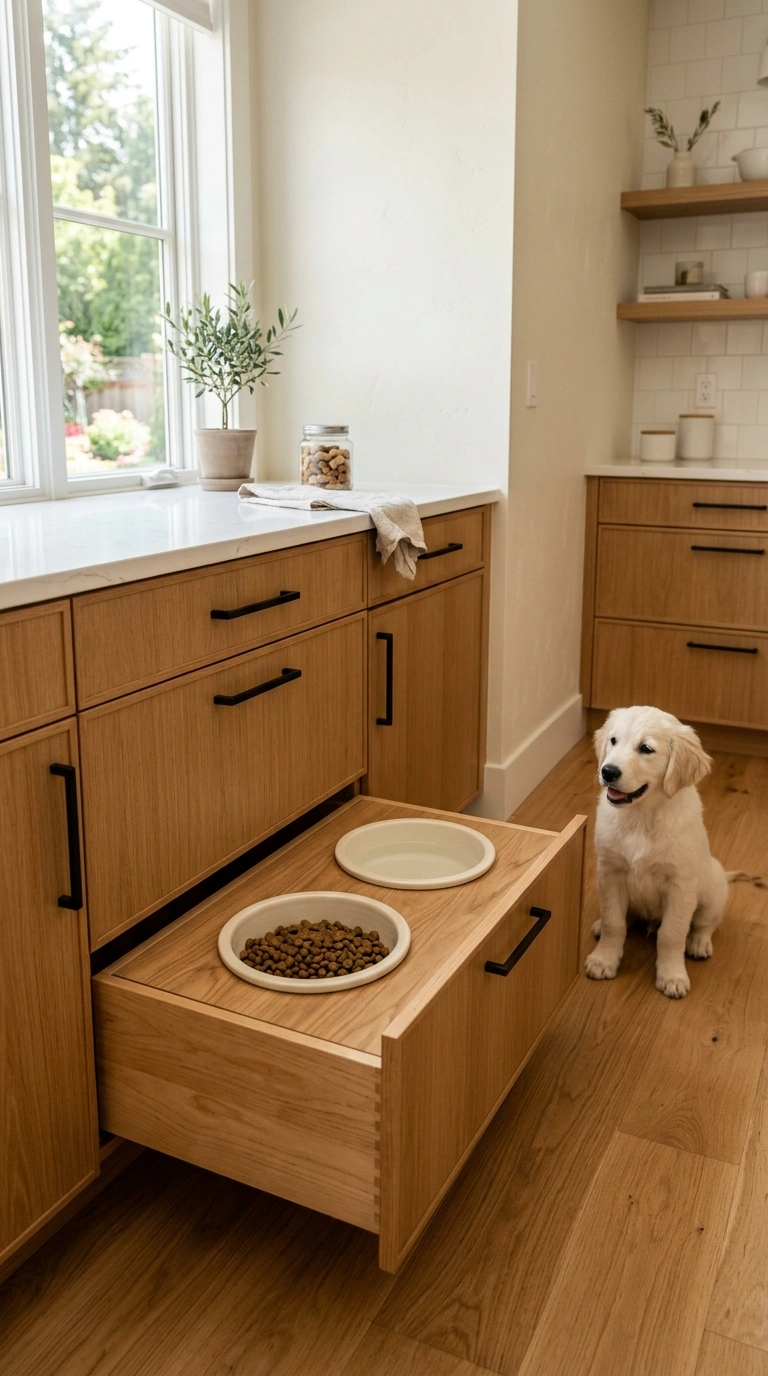
A built in cabinet with recessed bowls creates the cleanest most permanent dog feeding station possible. The bowls sit flush into a cabinet drawer or shelf, keeping food off the floor and out of the way.
Hire a carpenter to build a custom cabinet with recessed bowl cutouts for four hundred to nine hundred dollars. Or DIY with an existing cabinet by cutting bowl sized holes in a shelf and dropping in ceramic bowls. Total DIY cost around eighty to one hundred and fifty dollars.
Pros: Looks completely built in and matches your kitchen cabinets. Bowls stay in one spot and cannot be knocked over. Great for multi dog households since bowls have designated positions.
Cons: Requires actual cabinet space, not great if your kitchen is already tight on storage. Cannot easily change bowl sizes as dogs grow or age. Cleaning underneath the recessed bowls requires lifting them out. Cheap DIY cuts can look rough. Sand and finish edges properly for a professional look. Also bowls sitting inside cabinets can trap moisture that leads to mold over time. Check under the bowls monthly and dry any wet spots. Best for long term dog homes where the cabinet space commitment makes sense.
2. Toe Kick Pull Out
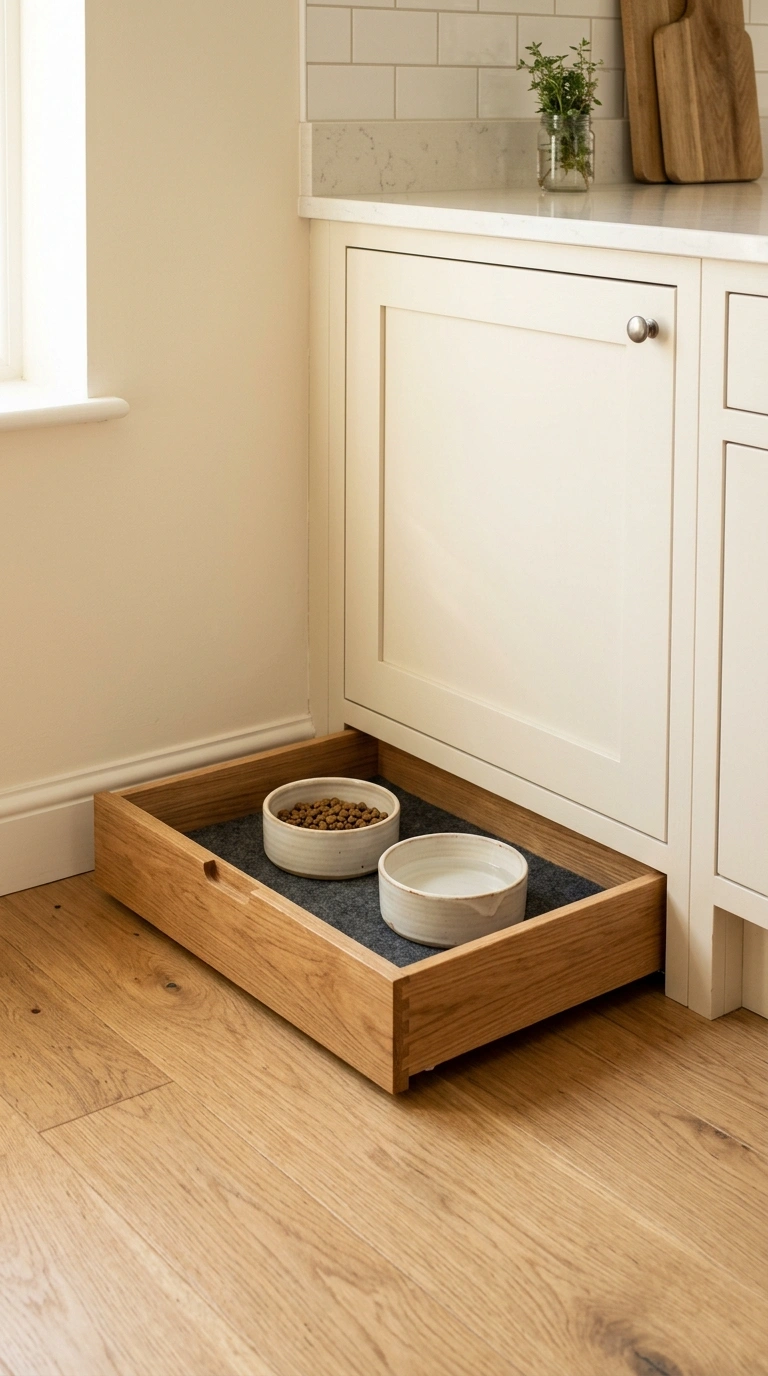
A pull out toe kick drawer at the bottom of your kitchen cabinets holds your dog’s bowls out of sight but easily accessible. This uses the wasted space at the very bottom of cabinets.
Install a toe kick pull out drawer kit from Rev A Shelf or Hafele for one hundred to two hundred dollars. The drawer slides out with a foot tap to reveal your dog’s bowls, then slides back flush with the cabinet toe kick.
Pros: Bowls completely hidden when not in use. Foot activated opening means your hands stay free for cooking. Perfect for kitchens where you do not want dog bowls always visible.
Cons: Only works if your cabinets have accessible toe kick space, usually four to six inches tall. Not great for very large dogs who need bigger bowls. Cheap toe kick drawers stick or jam over time. Look for smooth ball bearing slides for real quality. Also some dogs get confused when their bowls disappear into the cabinet between meals. May need training to get used to the movement. Toe kick drawers hold small bowls only, limiting food portion size. Best for small to medium dogs eating less than two cups per meal.
3. Wall Mounted Feeder
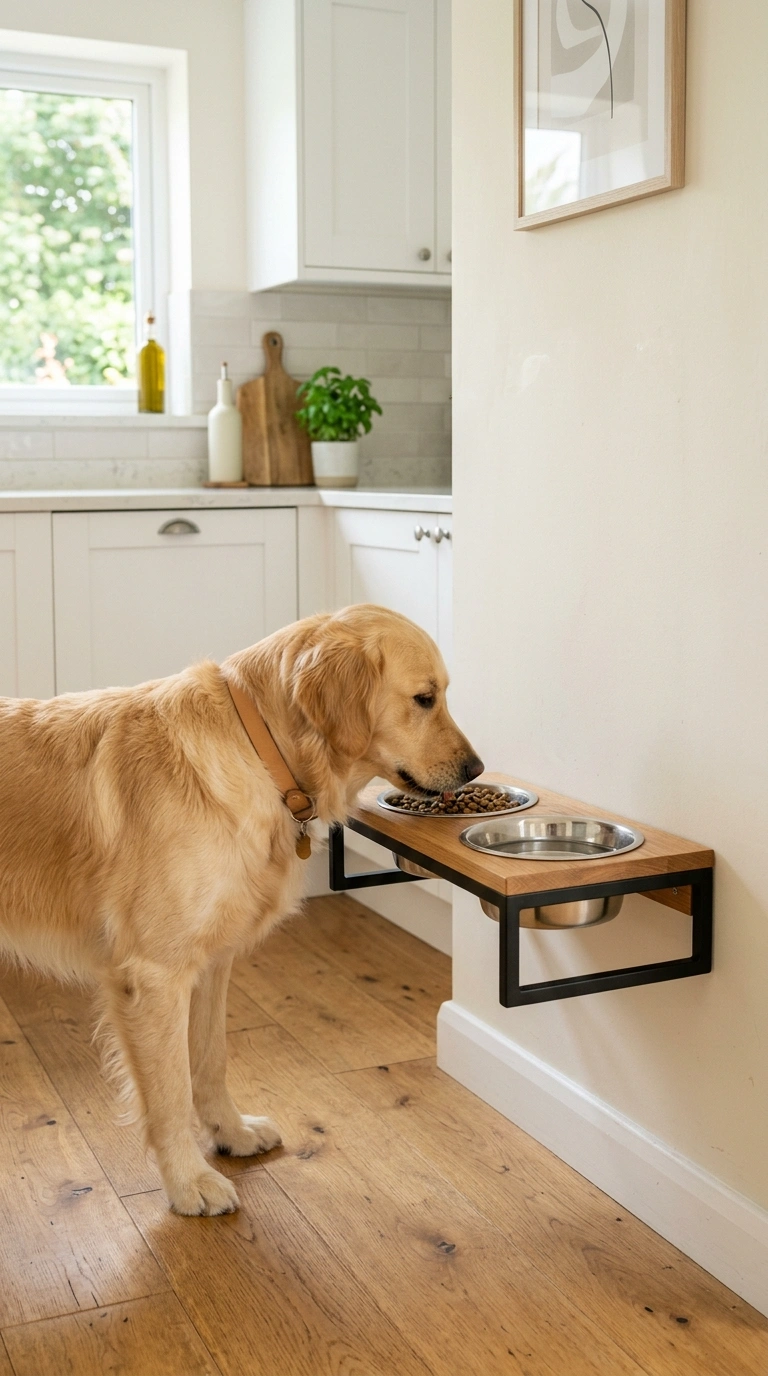
A wall mounted raised feeder gets your dog’s bowls off the floor completely. This is especially good for tall dogs whose necks strain from bending down to floor level bowls.
Buy a wall mount pet feeder from Amazon or Chewy for fifty to one hundred and fifty dollars. Look for adjustable height options that adapt as your dog grows. Mount into wall studs for real safety with heavy bowls.
Pros: Perfect ergonomic height for tall breeds like great danes or greyhounds. Reduces neck strain and helps with digestion. Keeps bowls totally off the floor away from other pets or crawling babies.
Cons: Requires drilling into wall studs, which limits renter installations. Also wall mounts do not adjust easily once installed, so grown dogs may need a new install. Cheap wall feeders shift or wobble over time as bowls get bumped. Look for solid metal brackets rated for real weight. Some raised feeders can cause bloat in certain deep chested breeds. Check with your vet about whether raised feeding is right for your specific dog. Best for tall dogs who need the ergonomic height, not for all dogs universally.
4. Corner Under Counter
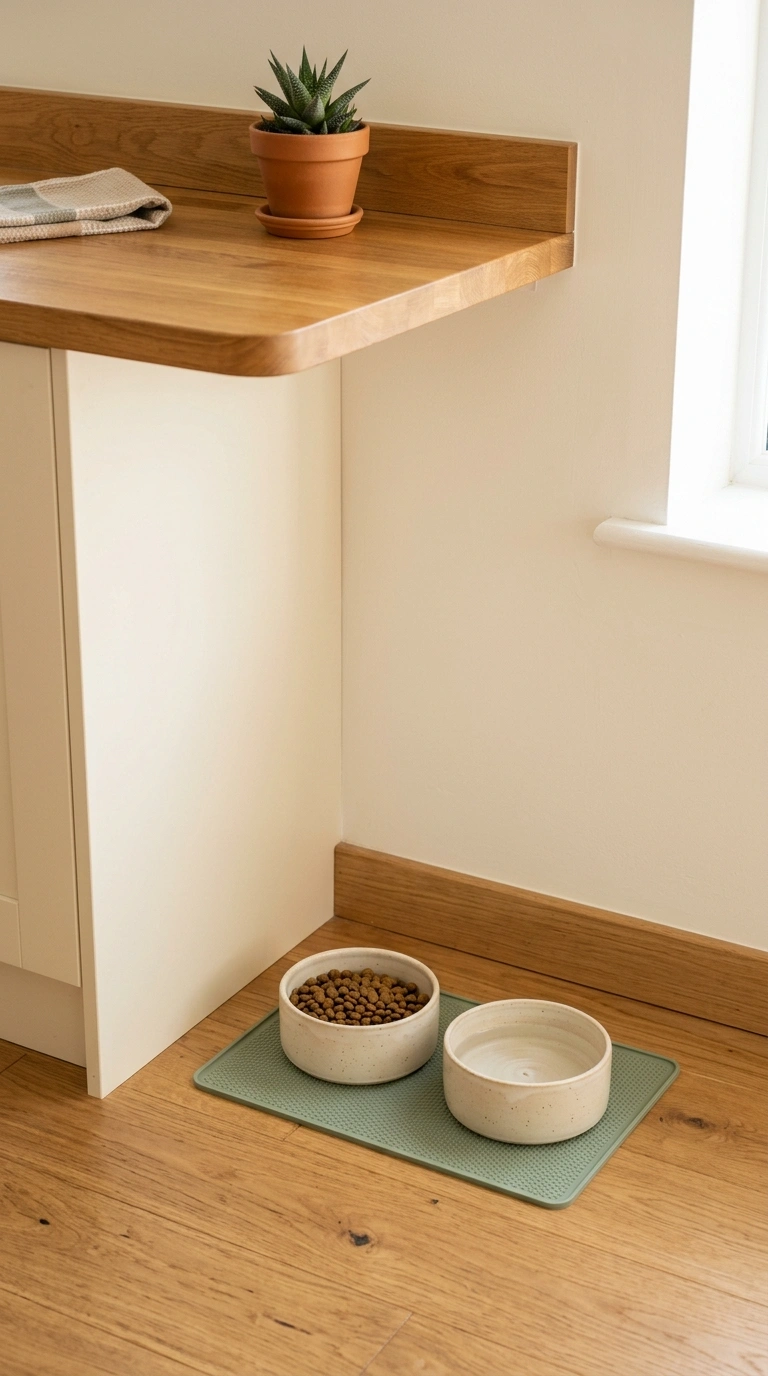
Setting up your dog’s feeding station in a corner under your kitchen counter uses previously wasted corner space. This tucks bowls out of the main walking paths.
Use the corner space with a small feeding mat and matching bowls. Around fifty to one hundred and fifty dollars for a good mat, bowls, and small storage bin. Position bowls parallel to the wall for the cleanest look.
Pros: Uses wasted corner space. Keeps bowls out of the way in busy kitchens. Contains water spills to one designated corner area.
Cons: Dogs eating in corners can feel trapped and become defensive around food. Watch behavior carefully. Also corner setups collect dust and food crumbs more than open areas. Sweep and mop weekly. Cheap floor mats slide around during meals. Look for rubber backed non slip options. Some dogs also refuse to eat in cramped corners, especially larger breeds. Match the corner size to your dog’s comfort level. Really large dogs may need more open floor space to feel relaxed while eating.
5. Farmhouse Wood Stand
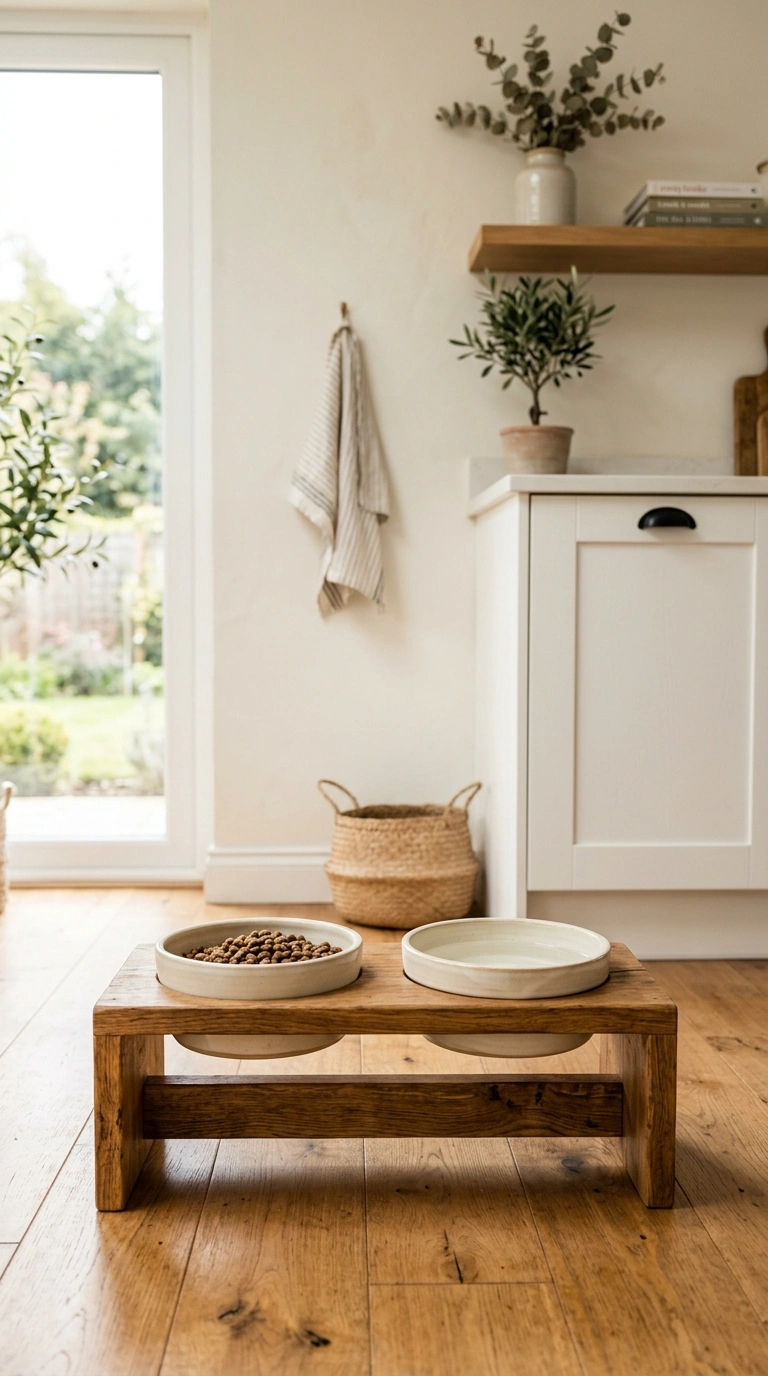
A rustic wooden raised feeder stand adds warm farmhouse charm to your dog feeding zone. This is one of the prettiest ways to display dog bowls.
Buy a wooden feeder stand from Etsy or Amazon for eighty to two hundred dollars. Look for solid wood construction with cutouts for ceramic or stainless steel bowls. Choose the height that matches your dog’s shoulder measurement for proper ergonomics.
Pros: Beautiful natural wood look that adds character to your kitchen or mudroom. Wood is much warmer than plastic or metal. Doubles as decor even when bowls are empty.
Cons: Real wood absorbs water spills and can warp over time. Wipe up water immediately and use sealed wood options only. Cheap pine stands crack under bowl weight after a year. Look for solid hardwood construction like oak or walnut for real durability. Also wood stands cannot go in the dishwasher for cleaning like metal or plastic options. Hand wash weekly. Some wood finishes chip from dog claws or kibble scraping. Choose durable food safe finishes for real longevity. Best for design conscious dog owners who want a pretty setup.
6. Ceramic Bowl Duo
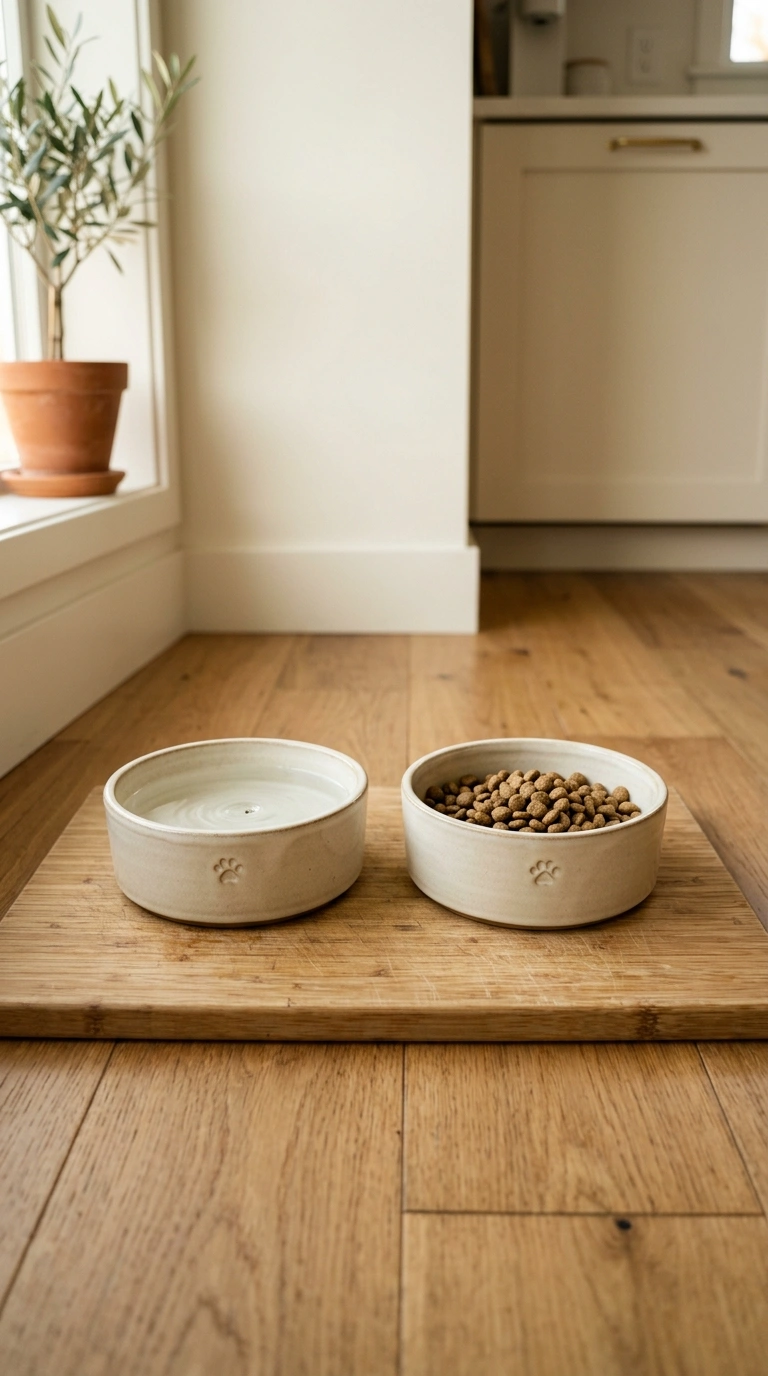
A pair of matching ceramic dog bowls on a simple wooden or stone base creates a clean minimalist feeding station. Ceramic is one of the healthiest materials for dog bowls.
Buy matching ceramic dog bowls from Crate and Barrel, Amazon, or Etsy for twenty to sixty dollars per bowl. Place on a bamboo cutting board or piece of marble for a styled look. Total setup around fifty to one hundred dollars.
Pros: Ceramic resists bacteria better than plastic bowls. Heavy weight keeps bowls from sliding during meals. Beautiful pieces come in many colors to match your kitchen.
Cons: Ceramic bowls crack or chip if dropped on hard floors during cleaning. Handle carefully. Some ceramic glazes contain lead or cadmium in cheap versions from overseas. Look for FDA approved food safe glazes only. Also ceramic bowls cannot handle temperature extremes like putting boiling water in a cold bowl. This can crack the ceramic. Wash by hand with warm soapy water for longest life. Very heavy bowls can hurt if dropped on toes. Choose reasonably sized bowls that are easy to lift and clean regularly.
7. Puzzle Slow Feeder
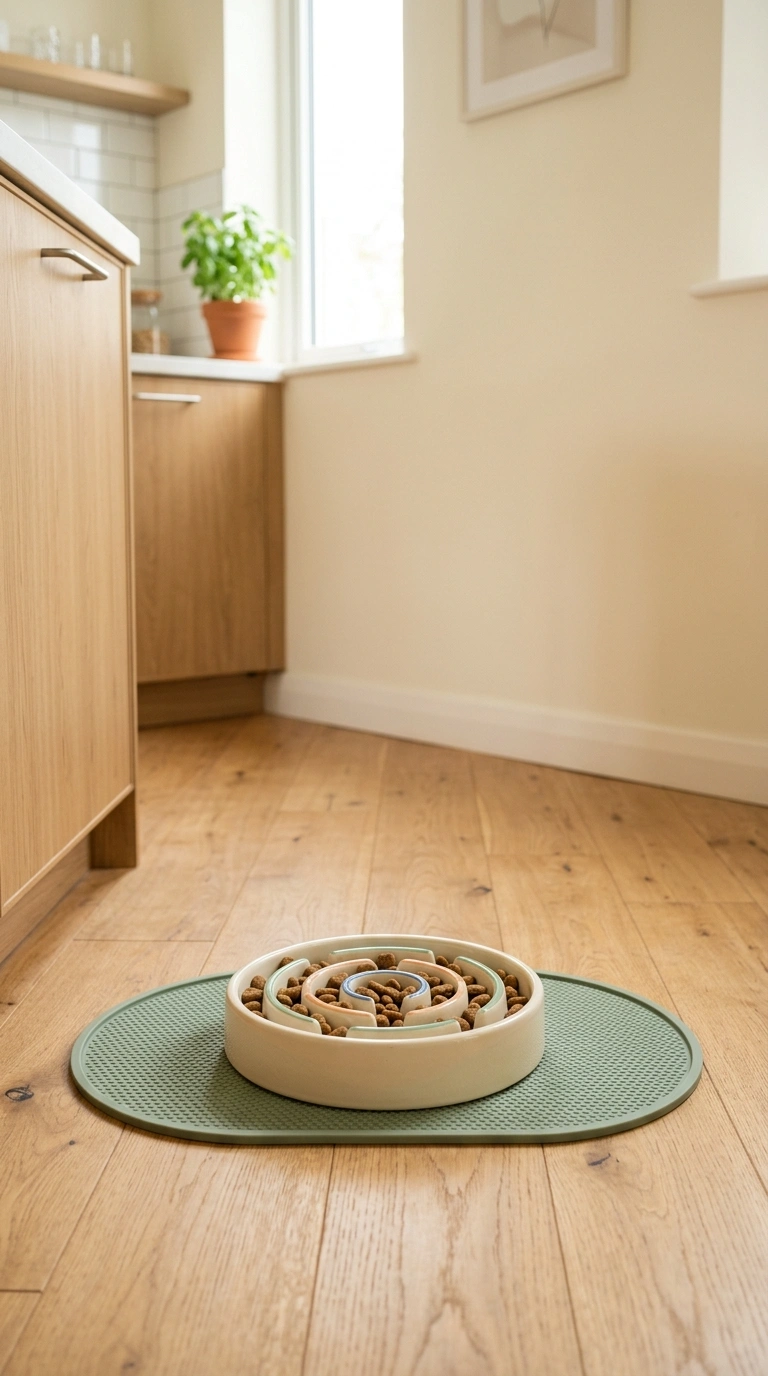
A puzzle slow feeder bowl is designed with raised ridges and mazes that force your dog to work for their food. This slows down fast eaters and provides mental stimulation.
Buy a puzzle slow feeder from Outward Hound, Amazon, or Chewy for fifteen to forty dollars. Choose difficulty level appropriate for your dog. Beginner puzzles have simple maze patterns, while advanced ones require more problem solving.
Pros: Prevents bloat and vomiting from eating too fast. Provides mental stimulation that tires dogs. Extends meal time from thirty seconds to fifteen minutes for fast eaters.
Cons: Some dogs get frustrated with puzzle bowls and give up eating. Start with easy patterns and work up. Cheap plastic puzzle bowls have sharp edges that can cut dog tongues. Look for smooth safe edges. Deep puzzle patterns are hard to clean thoroughly. Use a scrub brush weekly to remove trapped food debris. Not for dogs with dental issues or missing teeth who cannot chase food into deep grooves. Also very determined dogs figure out puzzles quickly, defeating the slow feeding purpose. May need to rotate to harder puzzles as your dog learns.
8. Storage Bin Beside
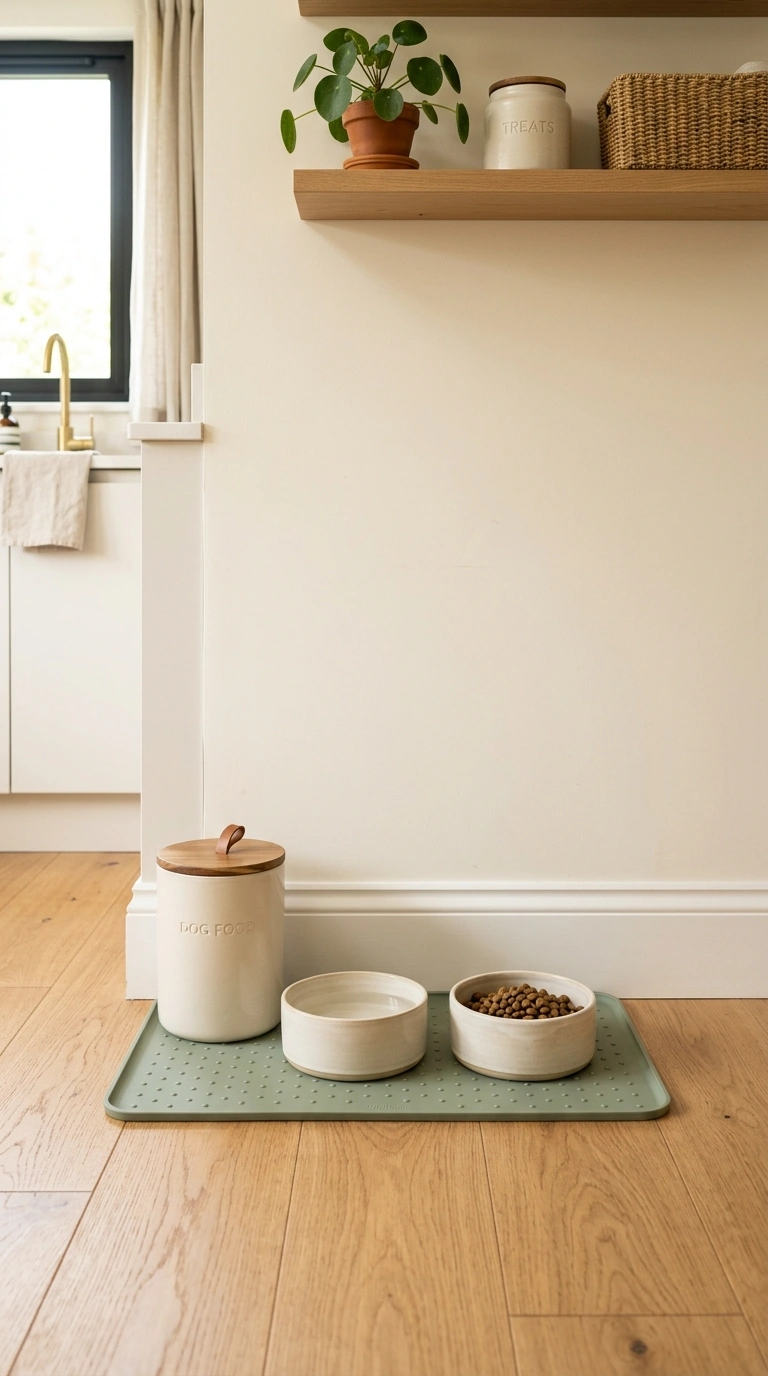
A dedicated dog food storage bin placed right beside the feeding station keeps kibble fresh and always accessible. Way better than storing kibble in the original bag.
Buy an airtight pet food storage container from IRIS, Vittles Vault, or Amazon for twenty five to sixty dollars. Choose a size that holds your full kibble bag with room to spare. Look for wheels for easy moving.
Pros: Keeps kibble fresh much longer than paper bags. Airtight seal prevents pantry moths and mice. Easy scoop access makes feeding faster. Wheels allow easy movement for cleaning.
Cons: Storage bins take floor space beside the feeding station, at least twelve by eighteen inches. Not great for tiny kitchens. Cheap plastic bins can crack over time from heavy kibble weight. Look for reinforced HDPE construction. Some bins have flimsy lid seals that let air in, defeating the purpose. Look for real airtight silicone gaskets. Also do not transfer new kibble on top of old kibble at the bottom of the bin. Empty completely, wash, and refill each time for freshness. Rotates old food out first with every refill cycle.
9. Rubber Feeding Mat
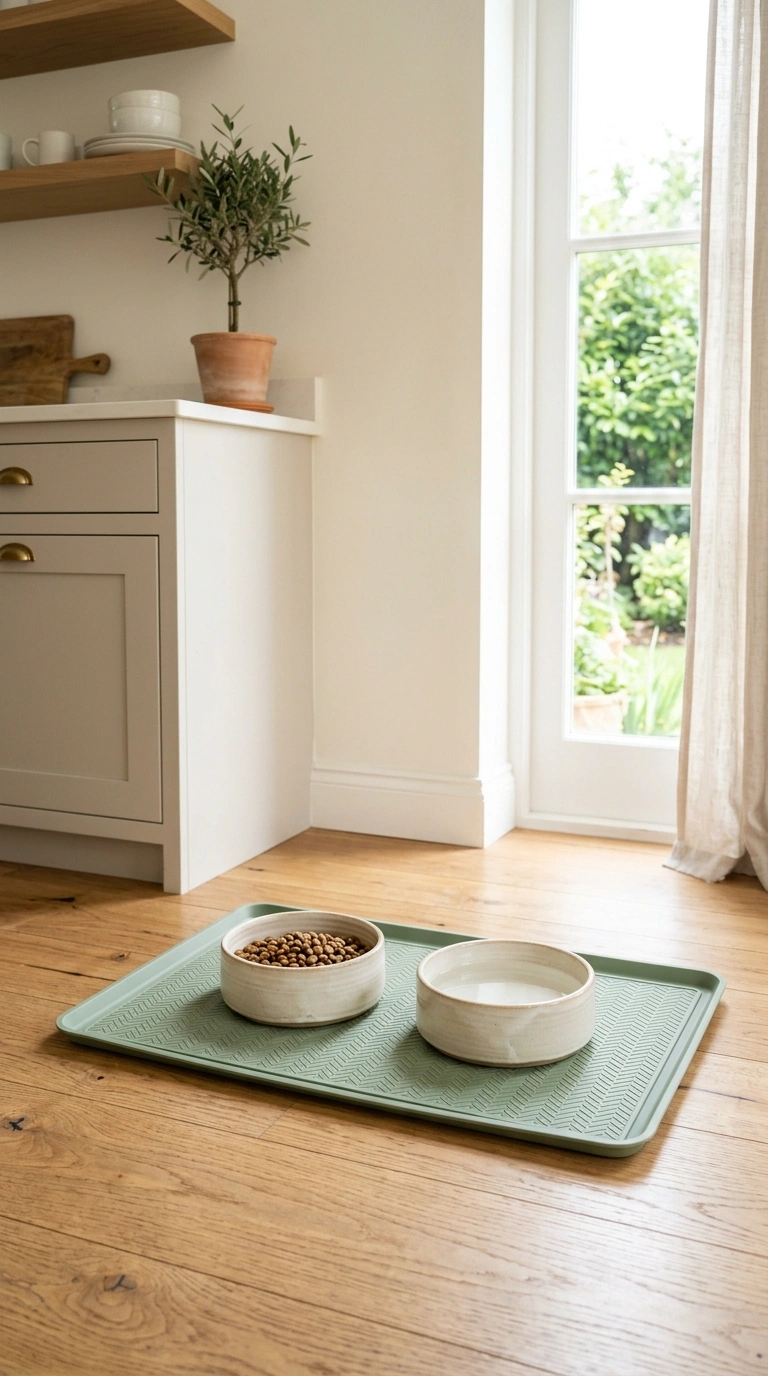
A large rubber feeding mat placed under your dog’s bowls catches spilled kibble and water. This is one of the smallest upgrades with a huge daily impact.
Buy a silicone or rubber feeding mat for fifteen to forty dollars at Chewy, Amazon, or PetSmart. Choose a mat about twenty four by sixteen inches for medium dogs, larger for big breeds. Look for raised edges to catch water spills.
Pros: Contains kibble spills and water messes to one spot. Wipes clean in seconds. Protects floors from stains and scratches. Cheap and easy to swap when worn out.
Cons: Some dogs push the mat around during meals. Look for mats with grippy bottoms that stay in place. Cheap rubber mats develop cracks and holes within six months. Choose thicker silicone options for real durability. Also flexible mats trap dirt in the corners of the raised edges. Wash weekly with soap and water. Certain mat materials retain dog food smells over time. Replace every year for a fresh smelling setup. Not all mats fit under all bowl setups, so measure your bowl footprint before buying.
10. Fountain Water Setup
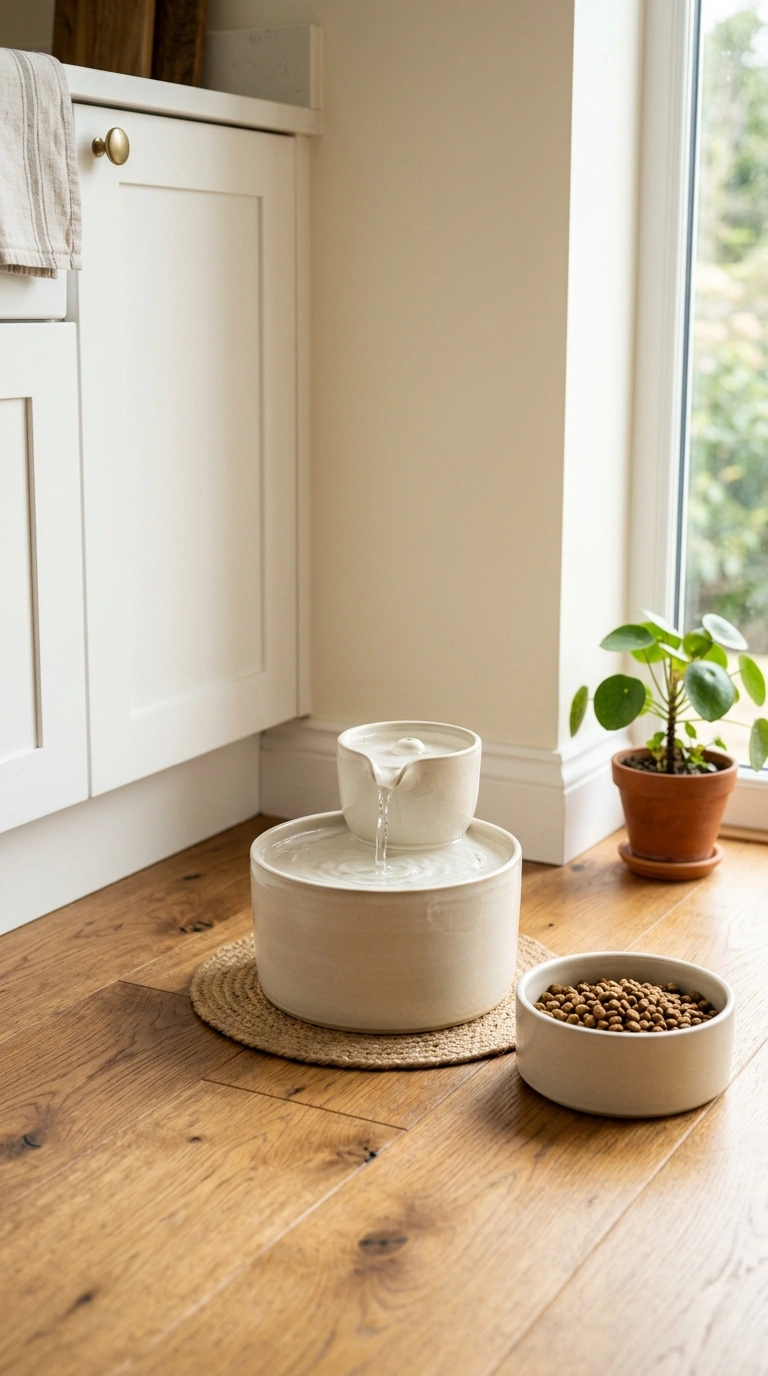
A pet water fountain provides constant fresh flowing water that dogs prefer over still bowls. This encourages more drinking and cleaner water quality.
Buy a ceramic or stainless steel pet fountain for forty to one hundred and twenty dollars at Chewy or Amazon. Look for models with replaceable filters and BPA free construction. Refill every three to five days.
Pros: Fresh flowing water encourages dogs to drink more, especially picky drinkers. Filters keep water cleaner than bowls that stagnate. Perfect for warm weather when dogs need extra hydration.
Cons: Fountains use electricity, requiring an outlet nearby. Also cheap fountains have loud pump noises that annoy dogs and owners. Look for silent motor options. Filters need replacing every one to two months, adding ongoing cost. Some dogs are scared of moving water and refuse to drink from fountains. Introduce slowly with treats. Water spills around fountains can damage hardwood floors over time. Use a mat underneath. Fountains also need weekly deep cleaning to remove biofilm buildup from the pump area. More maintenance than simple bowls.
11. Adjustable Height Stand
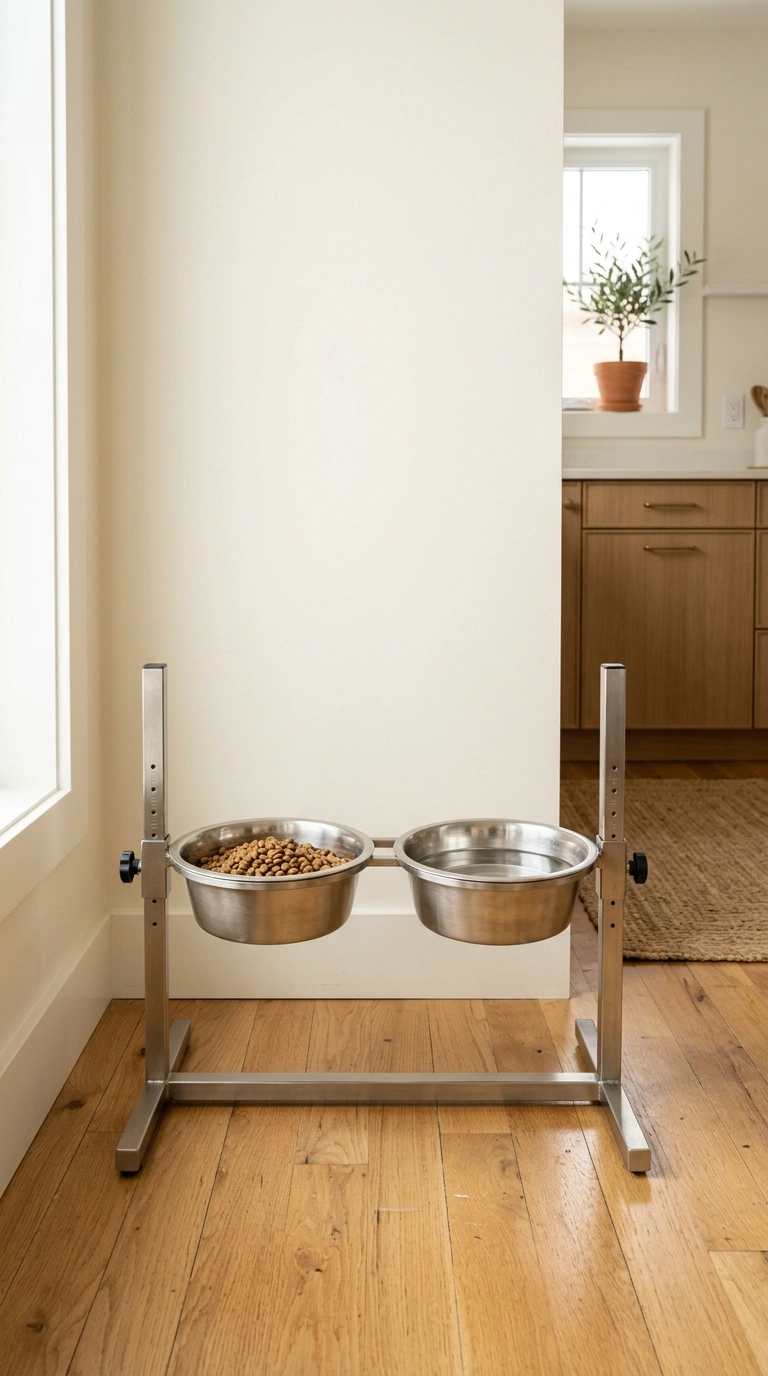
An adjustable height raised feeder stand grows with your dog and adapts as they age. The height changes with a simple knob or lever mechanism.
Buy an adjustable feeder from Amazon or Chewy for sixty to one hundred and fifty dollars. Choose one with multiple height positions from four to sixteen inches. Look for stainless steel construction for real longevity.
Pros: Adapts as puppies grow into adult dogs without buying multiple feeders. Also adjusts for senior dogs who need lower heights as flexibility decreases. Great long term investment for growing dogs.
Cons: Adjustable mechanisms can wobble or slip under active eating. Look for locking mechanisms that hold firm. Cheap adjustable feeders have wobbly bases that tip during meals. Test stability before buying. Also plastic parts on adjustable feeders break more than solid metal. Choose all metal construction. Some vets recommend against raised feeders for certain deep chested breeds prone to bloat. Check with your vet first before switching to any raised feeding setup. Best for tall dogs and puppies with growing height needs.
12. Rolling Feed Cart
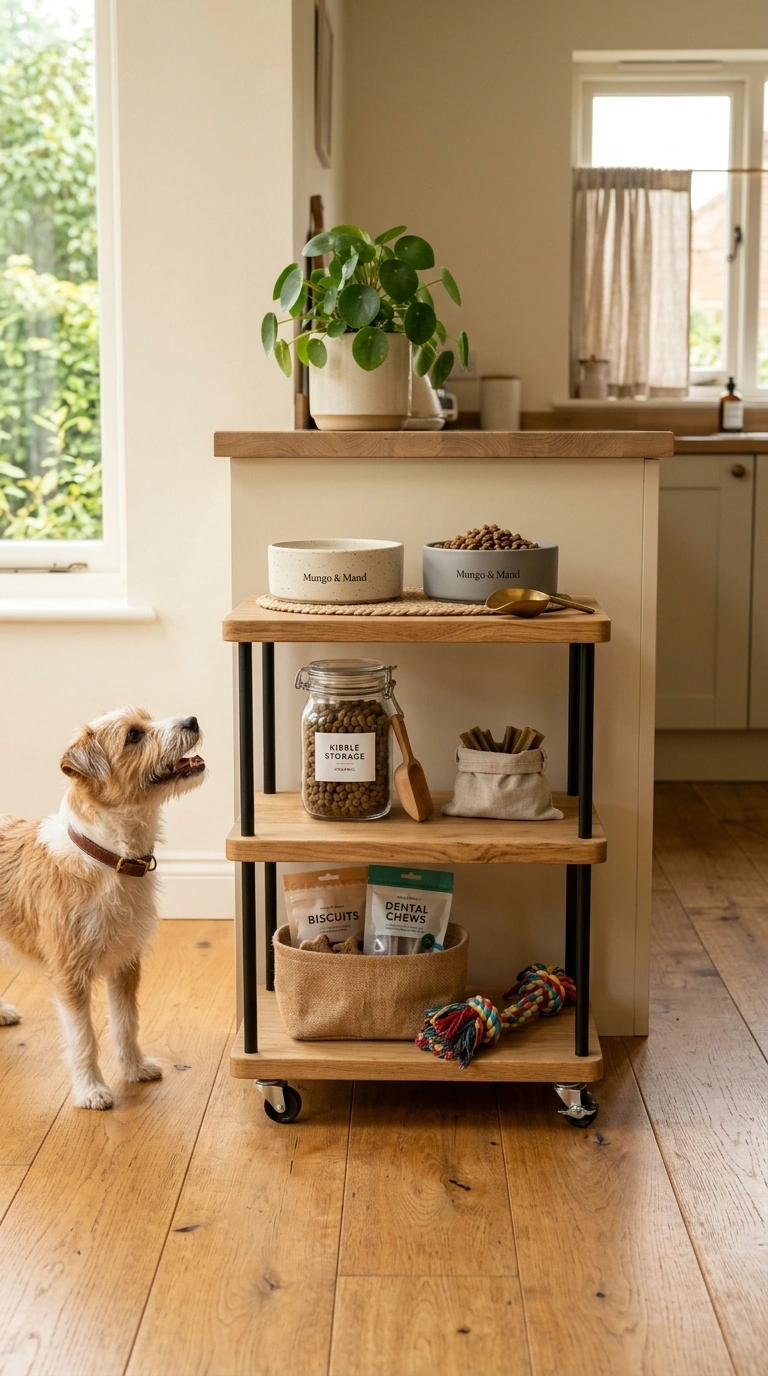
A small rolling cart dedicated to dog feeding supplies keeps everything mobile and organized. Great for households with dogs who eat in different rooms.
Buy a two or three tier rolling cart from IKEA or Amazon for forty to one hundred dollars. Use the top tier for bowls, middle tier for kibble container, and bottom for treats and supplements. Wheels let you move the whole setup easily.
Pros: All feeding supplies stay together in one mobile unit. Roll to the kitchen for meal prep or to a designated dining spot for the dog. Great flexibility for changing routines.
Cons: Rolling carts take significant floor space, about eighteen by twenty inches minimum. Not great for very small apartments. Cheap carts have wheels that lock in place, making them hard to move over rugs or thresholds. Look for larger wheels that handle terrain changes. Also open shelves show dog food and supplies clearly, which some homeowners find messy looking. Style with matching cream or grey bins to hide items. Some dogs get anxious when their feeding station moves around. Best for dogs comfortable with routine changes.
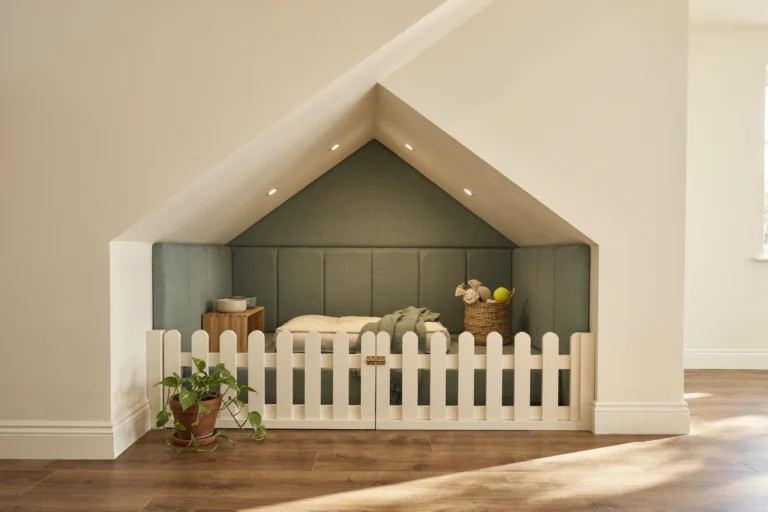
13. Under Stair Feed Zone
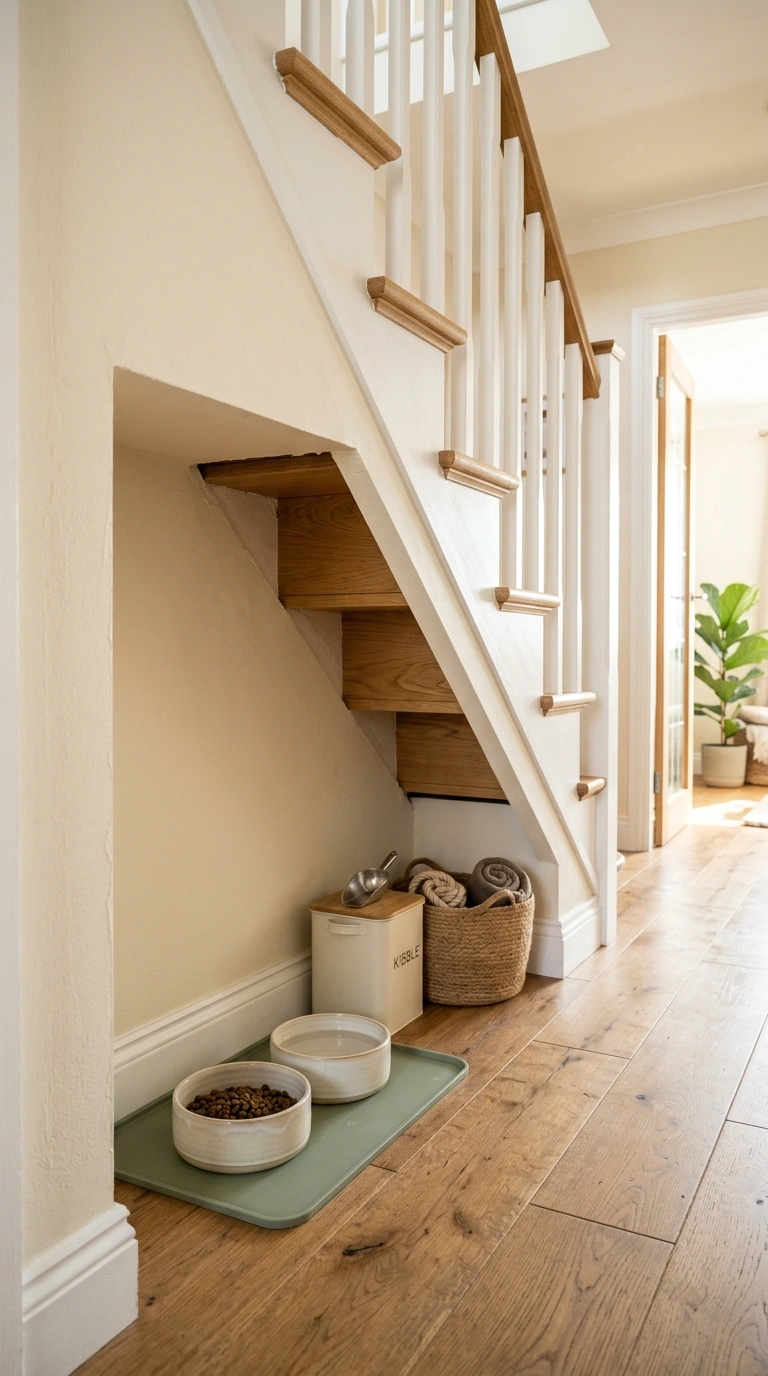
Setting up your dog feeding station inside an under stair nook keeps food and water contained in one tucked away spot. This works great in homes with staircases in main living areas.
Use an existing under stair area with a small feeding mat, bowls, and a storage bin. Around eighty to one hundred and fifty dollars for a complete setup. Add a small basket for treats and a hook for the leash nearby.
Pros: Uses previously wasted space for real function. Keeps feeding zone out of main walking paths and kitchen work areas. Dogs enjoy the enclosed feeling many under stair spots provide.
Cons: Requires an accessible under stair space with enough height for your dog to comfortably eat standing. Not for tall breeds if the under stair area has low ceilings. Also under stair spaces can feel enclosed and trap food smells. Add ventilation if possible. Some dogs feel trapped eating in enclosed spaces and refuse. Watch your dog’s response. Cleaning inside tight under stair spaces is harder than open areas. Use easy wipe surfaces and slim brooms. Best for medium to small dogs comfortable with cozy spots.
14. Mudroom Corner Setup
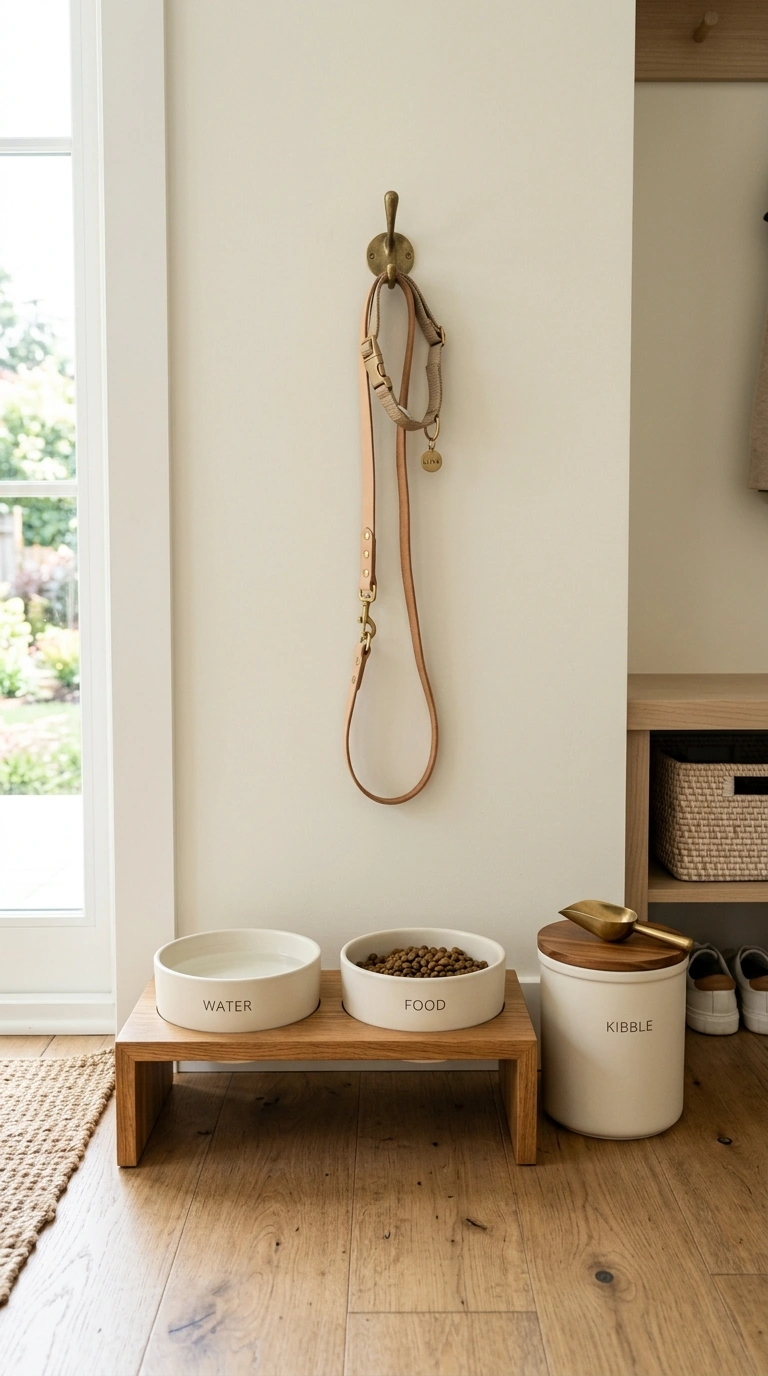
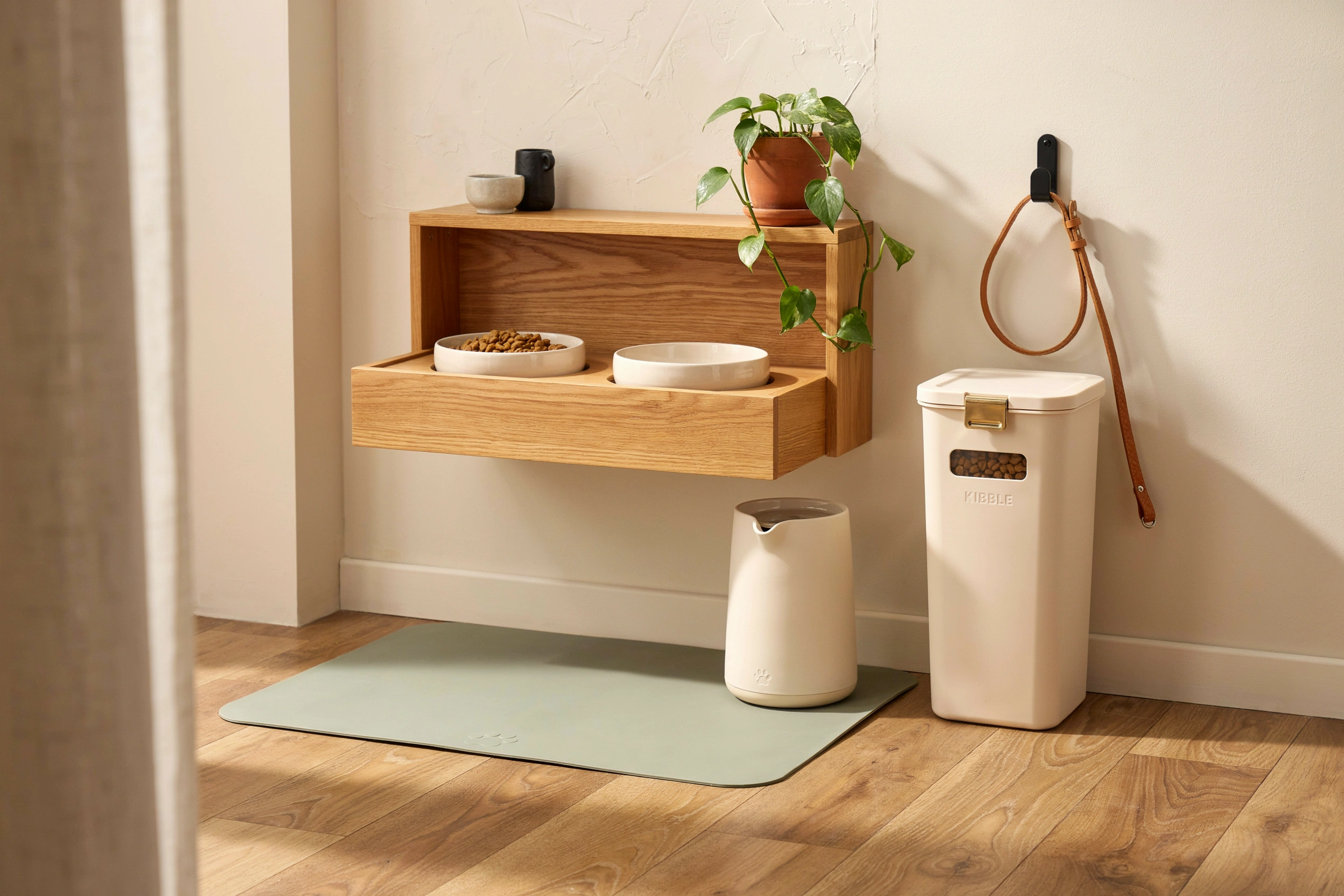
A dedicated dog feeding corner in your mudroom keeps food and water messes off main living areas. This is one of the smartest layouts for messy eaters or drinkers.
Use a mudroom corner with a raised feeder stand, water fountain, and food storage bin. Around one hundred and fifty to three hundred dollars for a complete organized setup. Add a small hook nearby for the leash and treat container.
Pros: Keeps all dog stuff contained to the mudroom. Easy to sweep and mop the tile or vinyl floors common in mudrooms. Perfect for messy eaters or drinkers who splash water everywhere.
Cons: Requires a dedicated mudroom, which not all homes have. Also mudrooms can be far from where dogs actually spend time, requiring them to travel for meals. Some cheap mudroom setups feel like storage areas rather than pretty feeding zones. Style with matching bowls and pretty storage bins. Also mudrooms with cold tile floors can be uncomfortable for dogs to stand on while eating. Add a small rug or mat for warmth. Best for homes with dedicated mudroom spaces near garage or side door entries.
15. Personalized Name Bowls
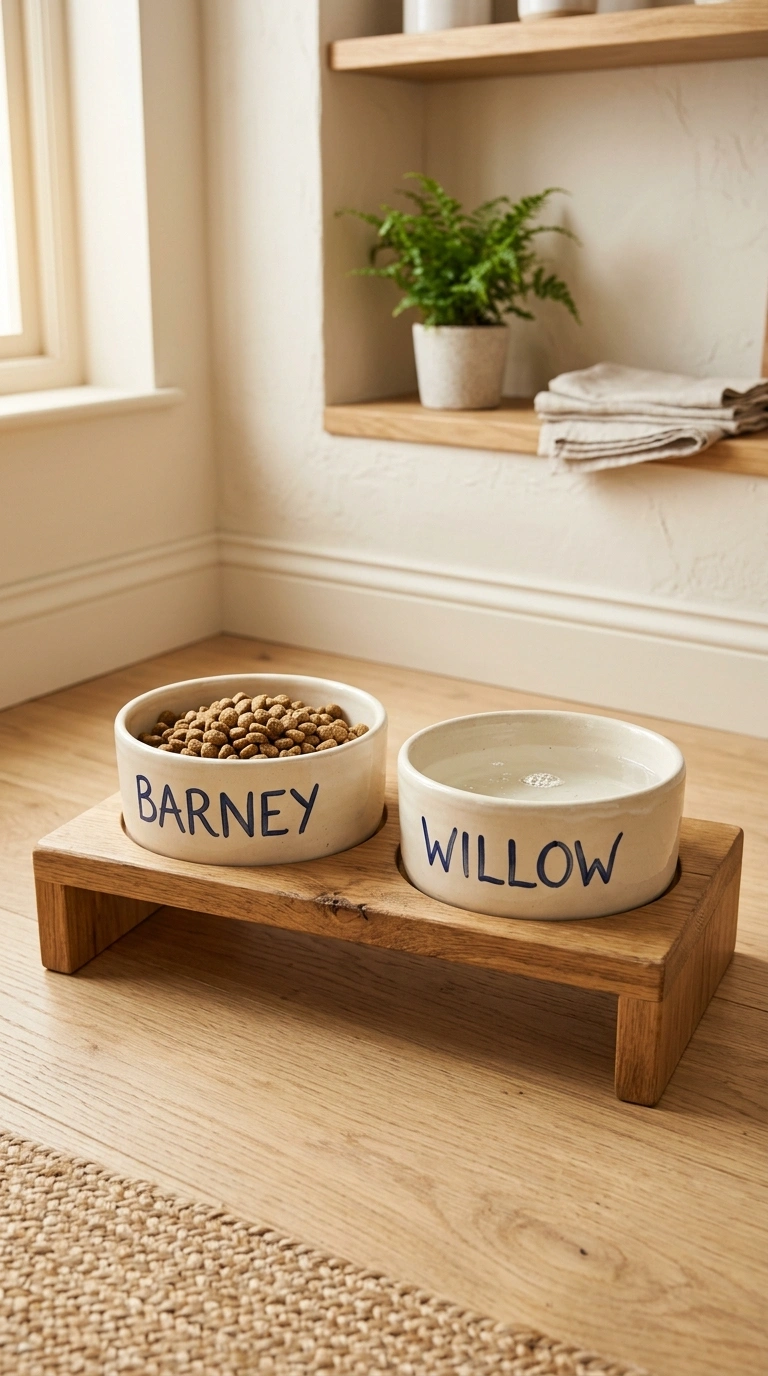
Custom personalized bowls with your dog’s name on them add real charm to any feeding station setup. This works especially well in multi dog households where each pup needs their own bowl.
Buy custom pet bowls with your dog’s name from Etsy for twenty five to sixty dollars per bowl. Ceramic bowls with the name painted on the side look most upscale. Choose colors that match your kitchen or feeding zone decor.
Pros: Prevents multi dog confusion over which bowl belongs to whom. Sweet personal touch that celebrates each dog. Great gift idea for dog parents.
Cons: Custom bowls take one to two weeks to make and ship. Not great if you need bowls immediately. Cheap paint on ceramic wears off in the dishwasher within a year. Hand wash only for real longevity. Also personalized bowls cannot be reused for future pets since names are specific. Some paint types contain lead or unsafe chemicals in cheap versions. Verify pet safe food grade paint before buying. Buy from reputable pet safe pottery sellers only. Best small extra touch for dog parents who love pretty personal decor pieces.
Final Thoughts
The right dog feeding station makes daily life smoother for both you and your pup. You do not need a fancy custom built cabinet to make meal time better. Even a simple feeding mat and raised stand can change how your dog eats and how clean your floors stay. Start with your dog’s specific needs first, whether that is slowing down fast eating or reducing neck strain. Then pick the setup that fits your kitchen or mudroom space.