17 Under Stair Dog Space Ideas With Real Pros and Cons
The space under your staircase is one of the most creative spots to build a dedicated dog nook. Most under stair areas sit empty or hold random storage, but this tucked away corner is actually the perfect size for a cozy dog retreat. Dogs love enclosed dens, and the sloped ceiling of an under stair space naturally feels like a comfortable little cave to them.
This list has 17 under stair dog space ideas with real pros and cons for each setup. Some are simple weekend projects like adding a cushion and gate. Others are full custom builds worth planning for. Every idea works with different dog sizes and different family budgets. Pick the ones that fit your dog’s personality and your home’s under stair dimensions.
1. Custom Built Dog Nook
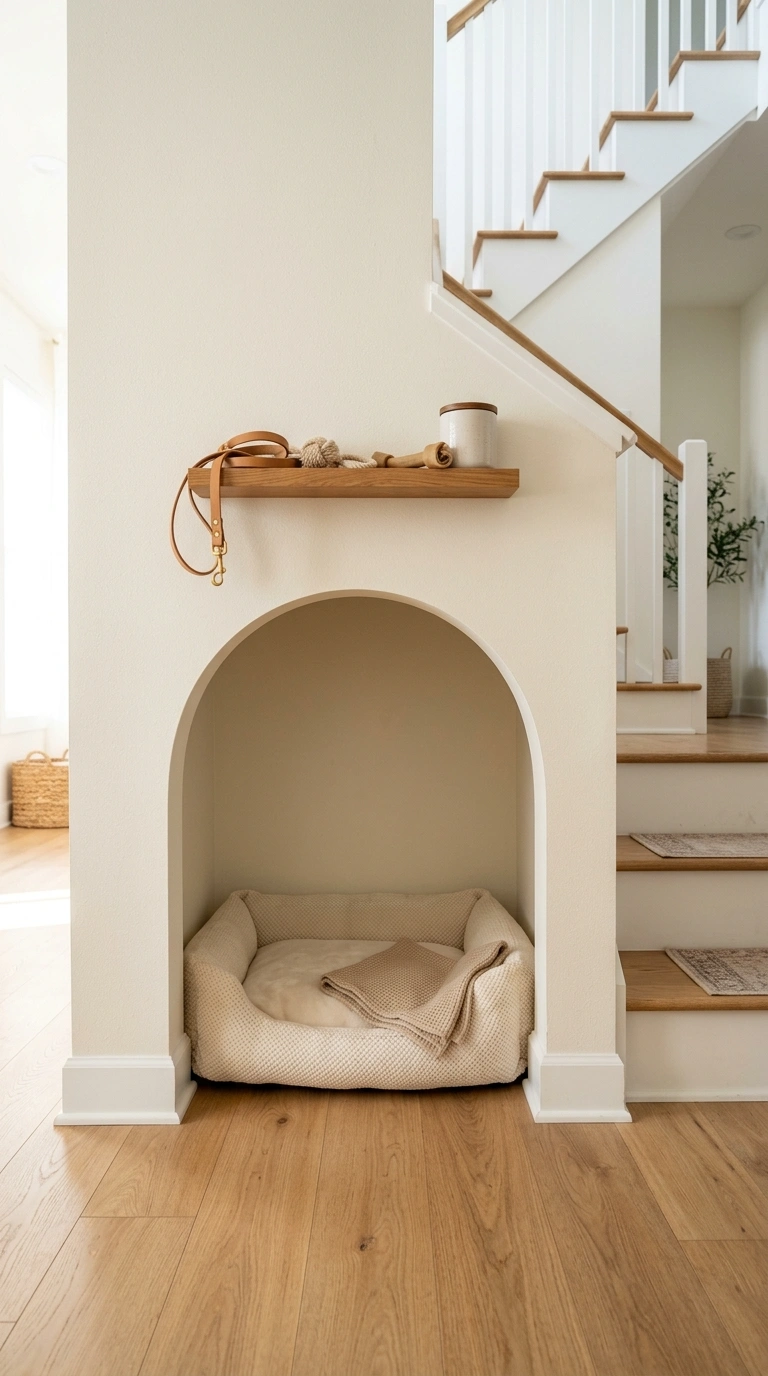
A fully custom built dog nook carved into your under stair space is the most beautiful and functional option. This means framing out the opening, installing a soft interior, and giving your dog a real dedicated room that feels part of the home.
Hire a carpenter for a custom build costing three hundred to eight hundred dollars depending on size. Or DIY the framing yourself with plywood, cushioned walls, and a small door for one hundred and fifty to three hundred dollars in materials at Home Depot.
Pros: Looks completely built in and part of your home design. Dog gets a real quiet space to retreat during storms or when guests visit. Can include storage above for leashes, toys, and food.
Cons: Once built, the space is locked in for that use. Cannot easily change if your dog grows too big or you no longer have the pet. Custom builds require careful measurement since under stair spaces vary widely. Cheap builds without proper ventilation trap heat, making the space uncomfortable in summer. Add a small vent or leave openings for air flow. Very small dogs may find the space too big and feel anxious in the open area. Match nook size to dog size for the best comfort.
2. Simple Cushion Setup
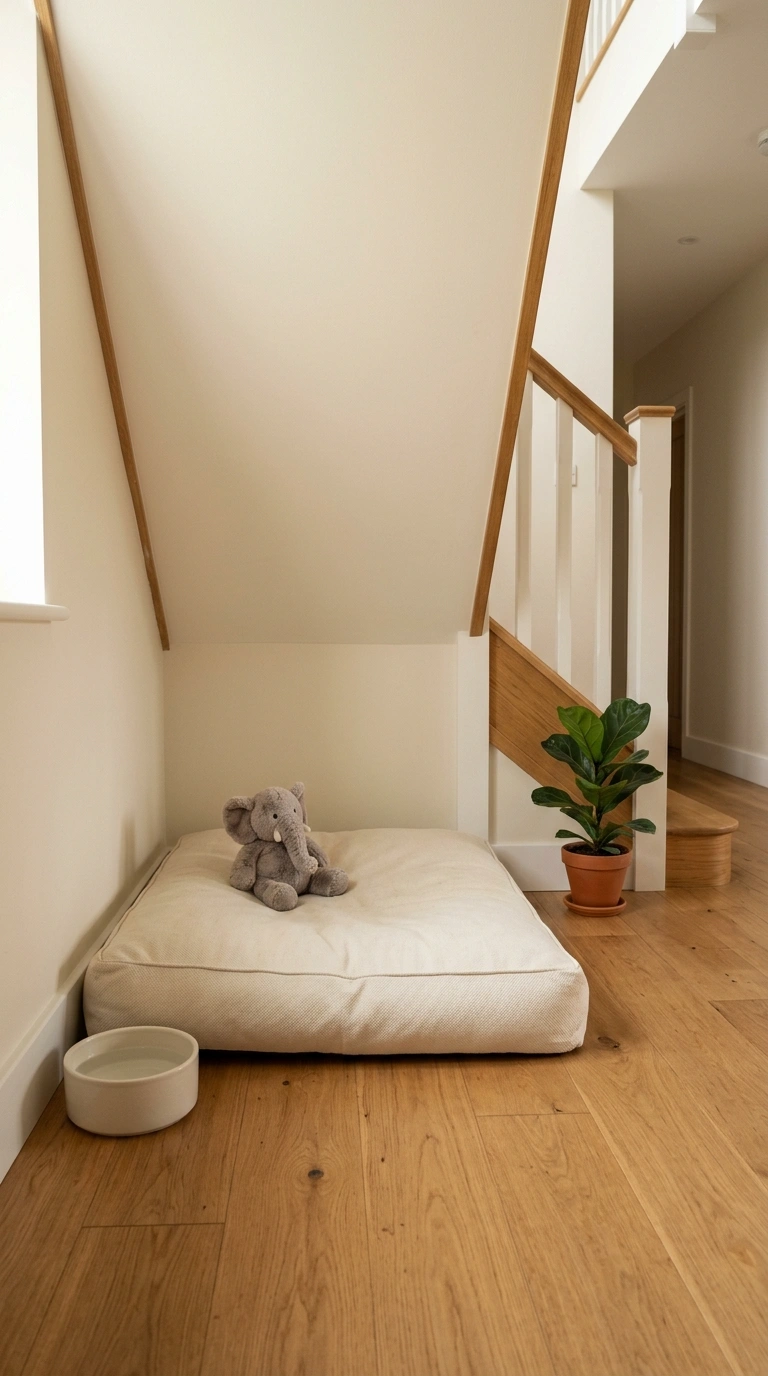
The simplest under stair dog space is just a comfortable cushion placed in the existing space. No building or renovation needed. Just add a soft bed and some daily essentials.
Buy a large orthopedic dog bed from Chewy, Costco, or Amazon for fifty to one hundred and fifty dollars. Add a small water bowl beside the bed and one favorite toy. Total setup cost around eighty to two hundred dollars.
Pros: Zero building required. Great for renters or anyone who wants a quick weekend setup. Easy to reverse or change if your dog does not use the space.
Cons: The space looks unfinished without proper walls or trim. Dust and pet hair collect in exposed under stair corners quickly. Vacuum weekly to keep clean. Also without a proper gate or door, other pets, kids, or roommates may disturb your dog’s rest. Some dogs prefer more enclosed dens and may reject an open under stair area. Watch your dog’s response before investing in a bigger custom build. Best as a starter setup to see if your dog even wants an under stair space at all.
3. Sliding Door Enclosure
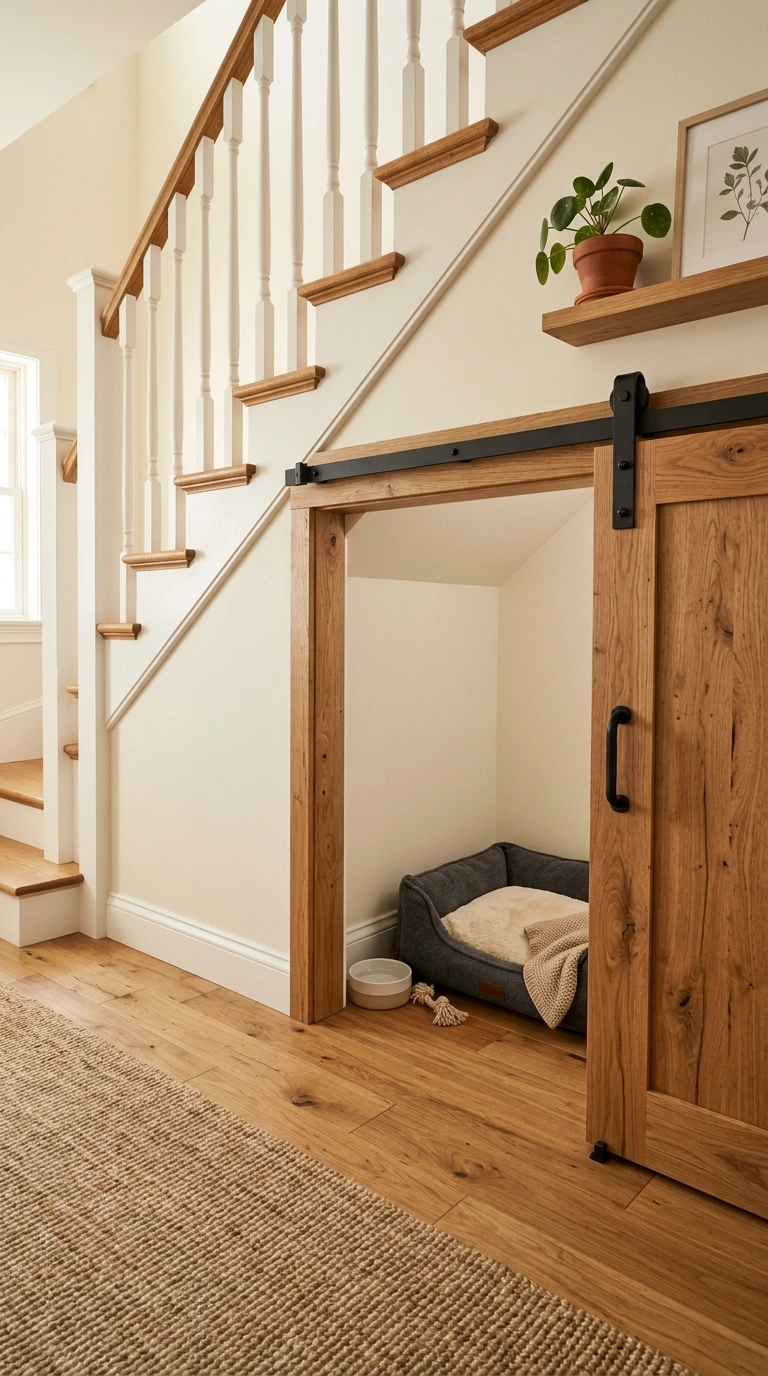
A small sliding door on the front of your under stair dog space lets you close it off for privacy or leave it open for daily access. This works better than a swinging door in tight hallways.
Buy a small barn door style sliding door kit for one hundred to two hundred dollars at Home Depot or Amazon. Choose a solid wood door with a small window or ventilation slats. Total install with door and hardware around one hundred and fifty to three hundred dollars.
Pros: Adds real privacy for your dog during storms or noisy events. Saves swing space in tight hallways. Looks polished and finished from the outside.
Cons: Sliding doors need track space on the wall beside the opening, which some layouts do not allow. Cheap sliding hardware sticks or jumps the track. Look for smooth ball bearing hardware for real quality. Solid doors block airflow, so add ventilation slats or a small grille. Some dogs get anxious with the door closed if not slowly introduced. Practice closing the door for short periods with treats first. Also very heavy sliding doors can hurt small dogs if they get pushed by the door during closing.
4. Padded Wall Panels
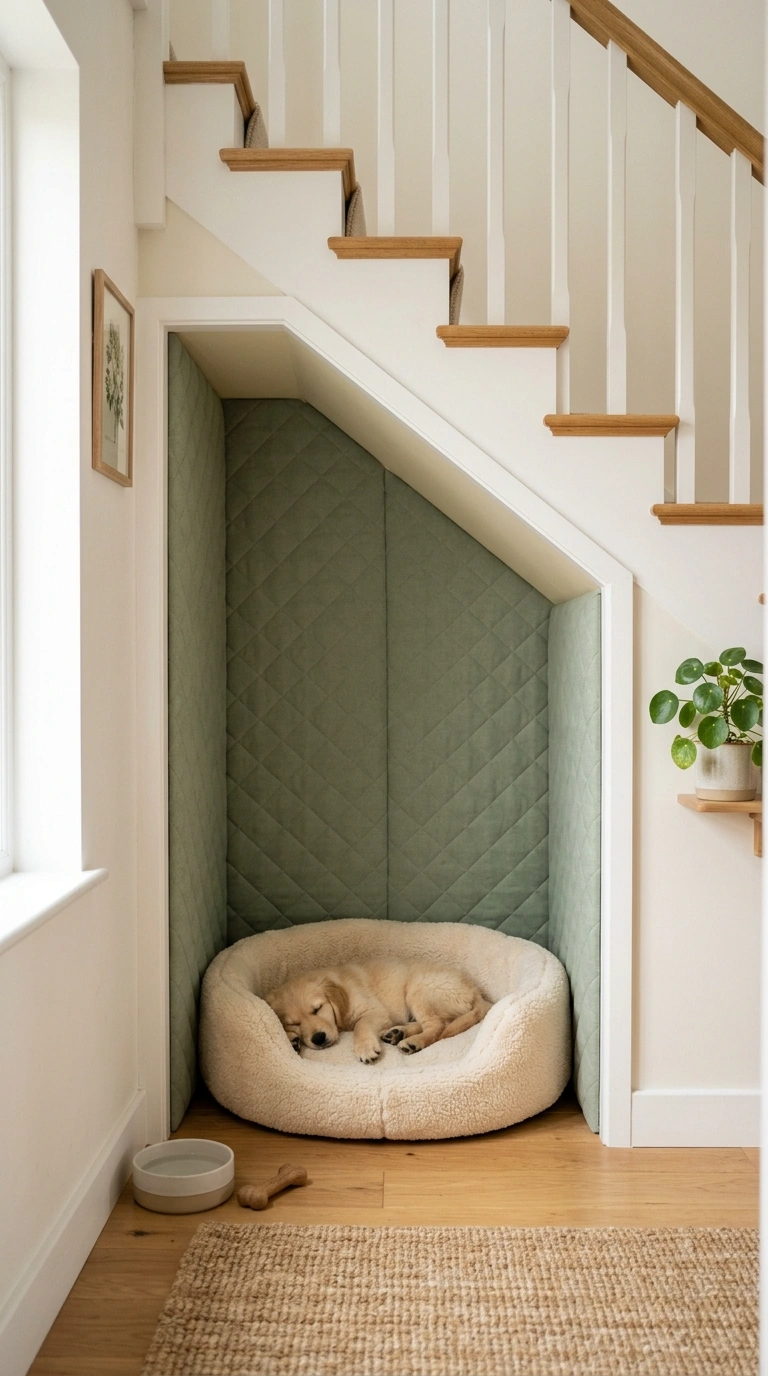
Adding padded fabric panels to the inside walls of your under stair dog nook makes it feel like a real bedroom for your pup. The soft walls also cushion any bumps and keep the space warm.
Buy foam board and cover with soft fleece or canvas fabric for a DIY setup costing thirty to sixty dollars. Or buy pre made padded pet panels from Amazon for eighty to one hundred and fifty dollars. Attach to walls with removable adhesive strips.
Pros: Makes the space feel cozy and safe for dogs who love enclosed dens. Reduces noise from other rooms so your dog can rest peacefully. Easy to remove if you no longer want the setup.
Cons: Fabric wall panels attract pet hair and dander quickly. Vacuum weekly with an upholstery attachment. Some dogs chew on soft walls, especially puppies. Not great for teething dogs under one year old. Cheap panels compress flat within a few months of use. Look for high density foam for real cushioning that lasts. Also panels can develop musty smells if the space has poor ventilation. Air out weekly by removing panels temporarily.
5. Feeding Zone Inside
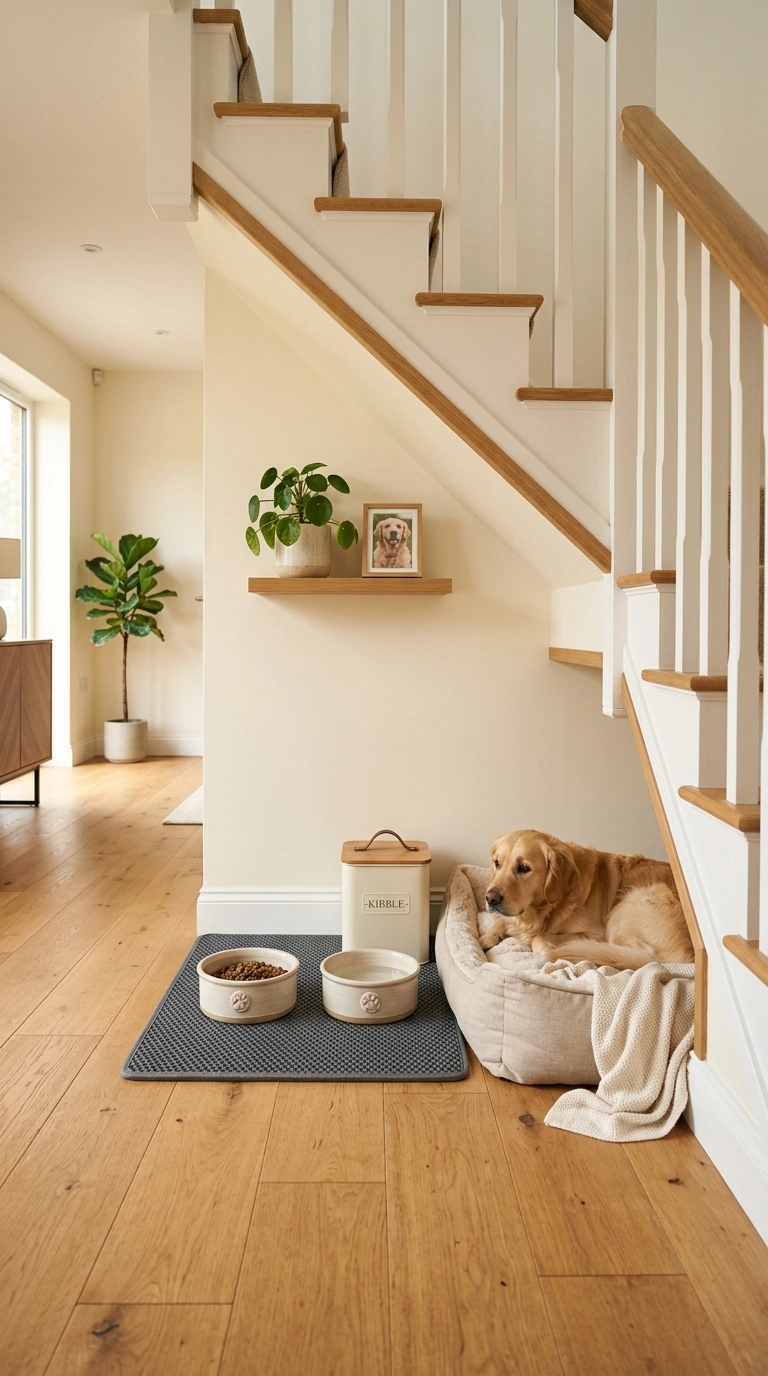
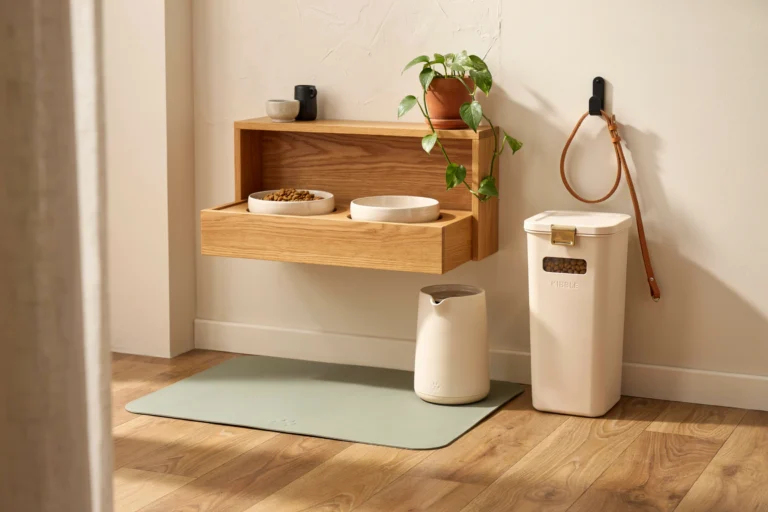
Setting up your dog’s feeding station inside the under stair space keeps food and water contained in one spot. This works especially well if you want kibble and water bowls out of the main living areas.
Add two ceramic or stainless steel bowls on a small mat for kibble and water. Around thirty to seventy dollars for a matching bowl set at Amazon or Chewy. Include a small storage bin nearby for kibble bags.
Pros: Keeps food and water messes contained in one dedicated spot. Easy to sweep and mop within the small under stair space. Great for households with multiple dogs who need separate feeding areas.
Cons: Feeding inside a small space can make dogs feel trapped while eating, causing anxiety in some. Watch your dog’s behavior around meals. Also spilled water inside the under stair area can damage the flooring over time. Use a waterproof mat under bowls. Cheap feeding mats slide around during meals. Look for rubber backed non slip options. Some dogs also carry kibble out of the space to eat elsewhere, creating messes throughout the house. Only certain dogs adapt to eating in enclosed spots.
6. Toy Basket Corner
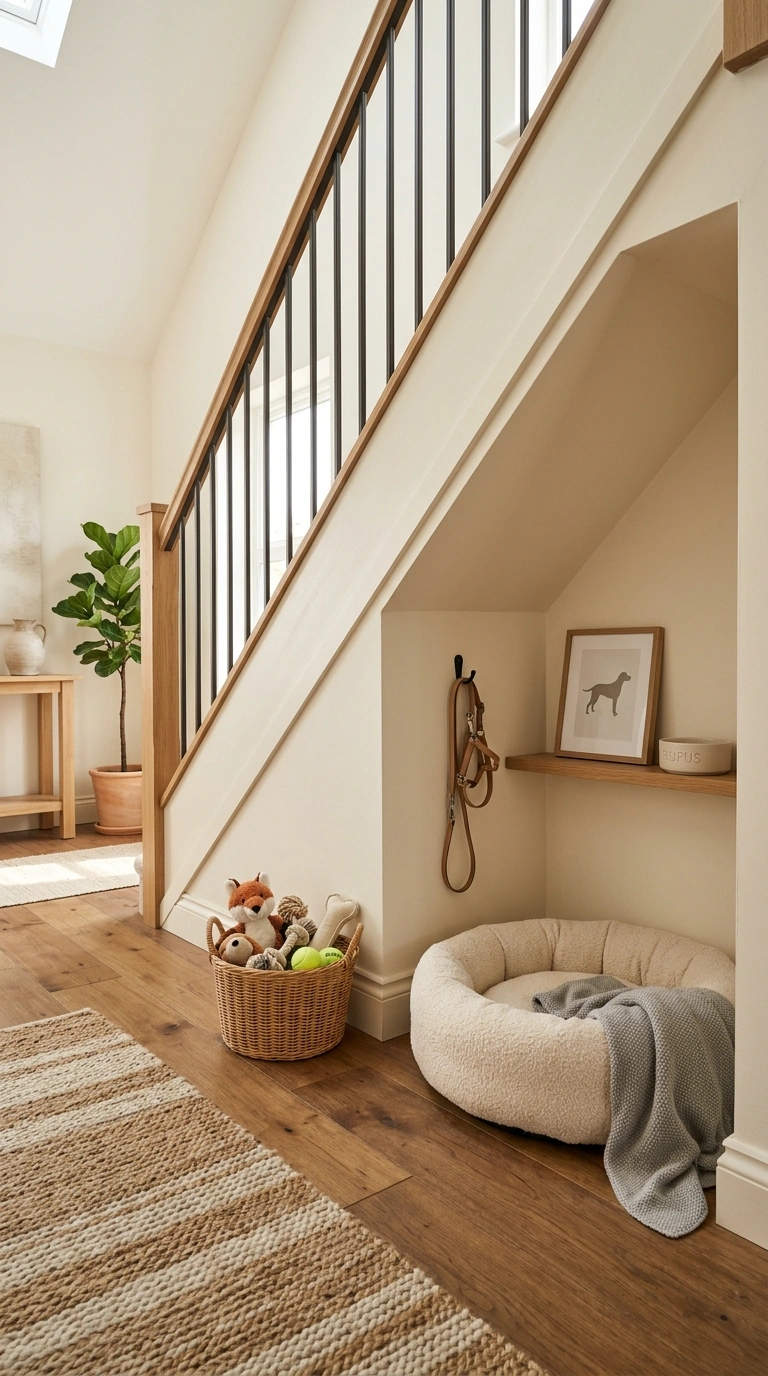
A small woven basket in the corner of the under stair dog space holds your dog’s favorite toys within easy reach. This keeps toys off your living room floor and gives your dog a designated play spot.
Buy a soft woven basket about twelve inches across for twenty to forty dollars at Target or HomeGoods. Fill with your dog’s rotating favorite toys, about five to eight at a time. Rotate weekly to keep interest fresh.
Pros: Contains toy clutter to one designated spot. Teaches dogs where their toys belong. Easy to grab and toss for play sessions. Doubles as pretty decor even when full.
Cons: Some dogs pull all toys out at once, defeating the organized look. Baskets need weekly reorganizing. Cheap woven baskets fray from dog chewing or pulling. Look for tightly woven construction that dogs cannot damage easily. Also baskets can hold hidden allergens like old kibble crumbs and pet dander. Wash or replace every six months. Some dogs never engage with basket stored toys since they cannot see them until reaching in. Face the basket opening toward your dog for best visibility and interest.
7. Baby Gate Front
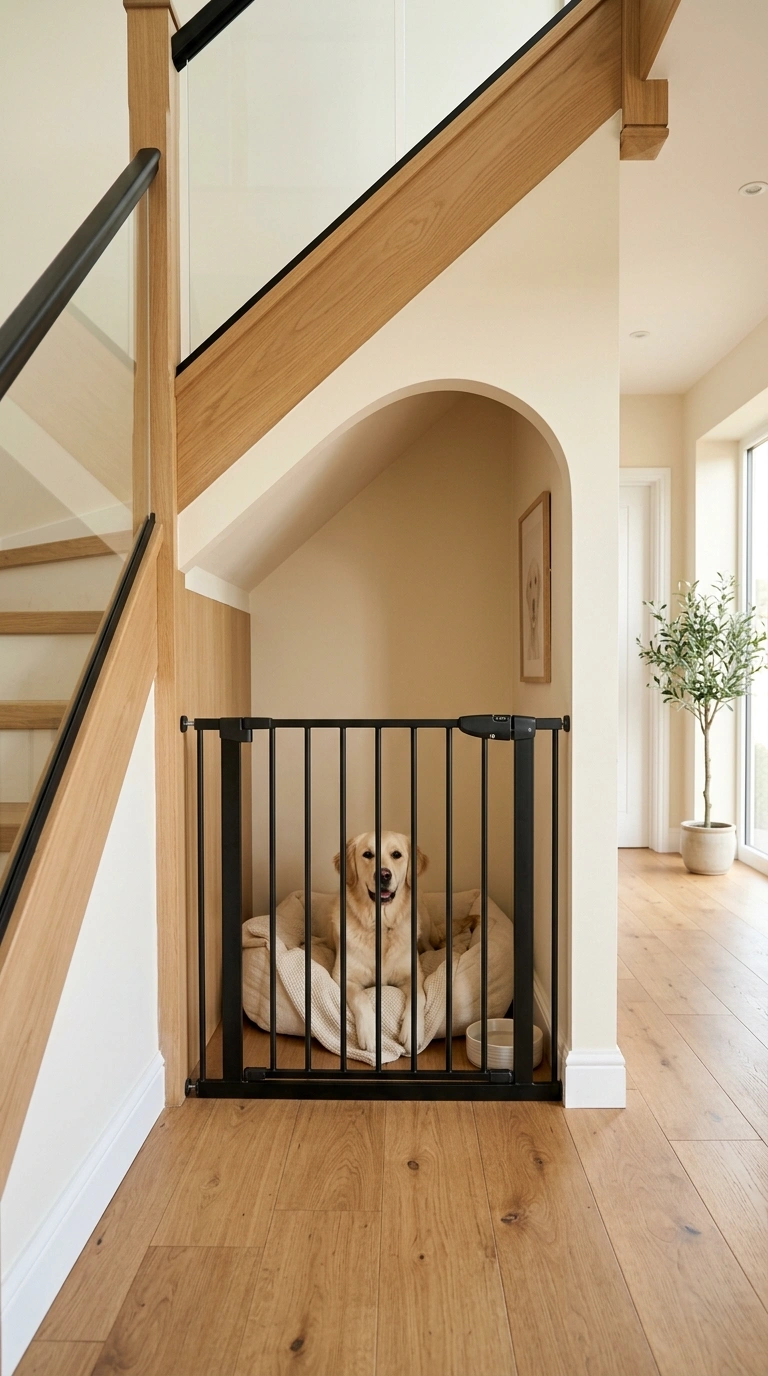
A baby gate across the front of your under stair dog space gives your dog visibility to the rest of the house while keeping them safely contained. This is one of the most flexible under stair dog options.
Buy a pressure mounted or hardware mounted baby gate for thirty to eighty dollars at Amazon, Target, or Home Depot. Choose a gate that fits the exact width of your under stair opening. Look for gates with small door openings for hands free access.
Pros: Contains dog while still letting them see and hear the household. Great for anxious dogs who feel calmer with visual contact. Easy to install and remove for renters. Works with young puppies too.
Cons: Pressure mounted gates fall down easily if dogs push against them hard. Use hardware mounted gates for real security. Also baby gates can look tacky in modern homes. Look for stylish wood or matte black gates for better aesthetics. Some dogs learn to jump or climb over gates within a few weeks. Choose taller gates around thirty six inches high for real security. Certain dog breeds also chew on wooden gate slats. Metal gates hold up better against determined chewers.
8. Wooden Fence Front
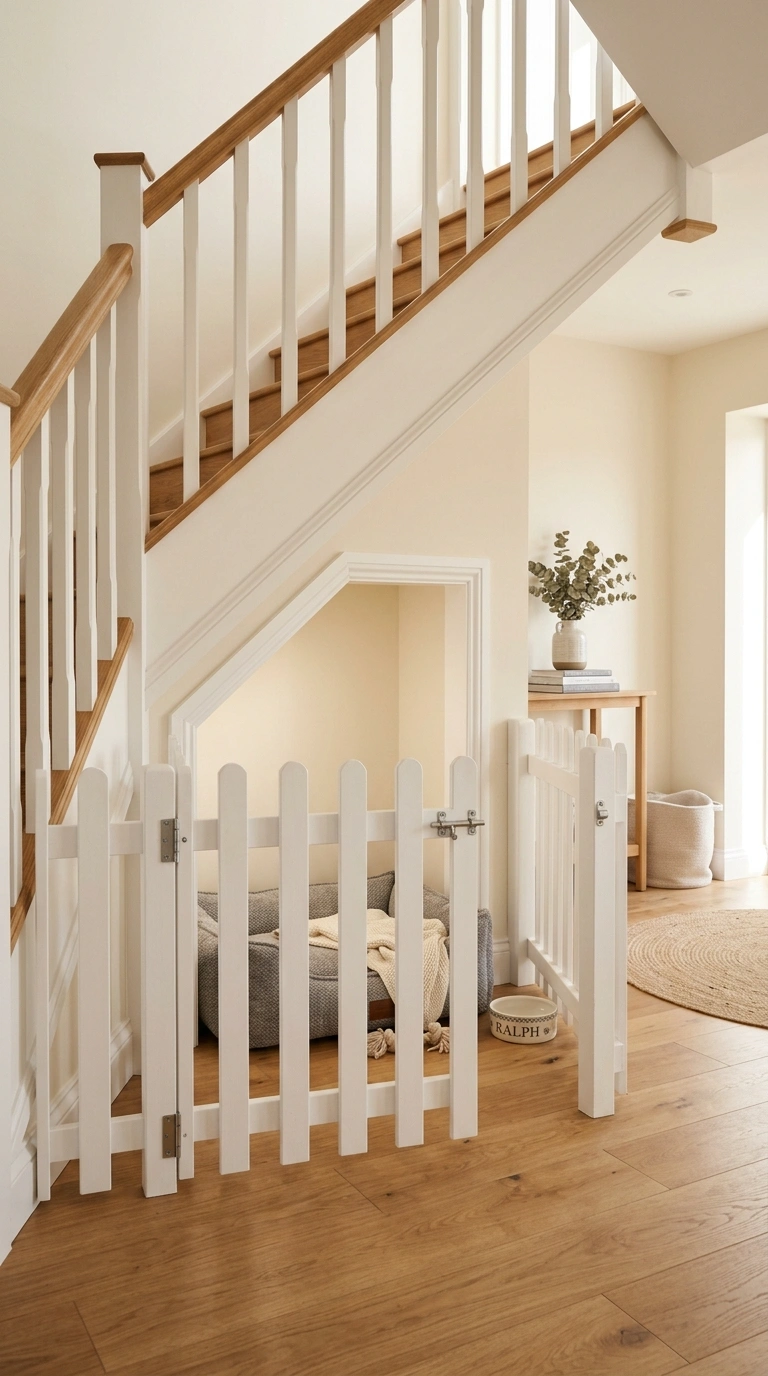
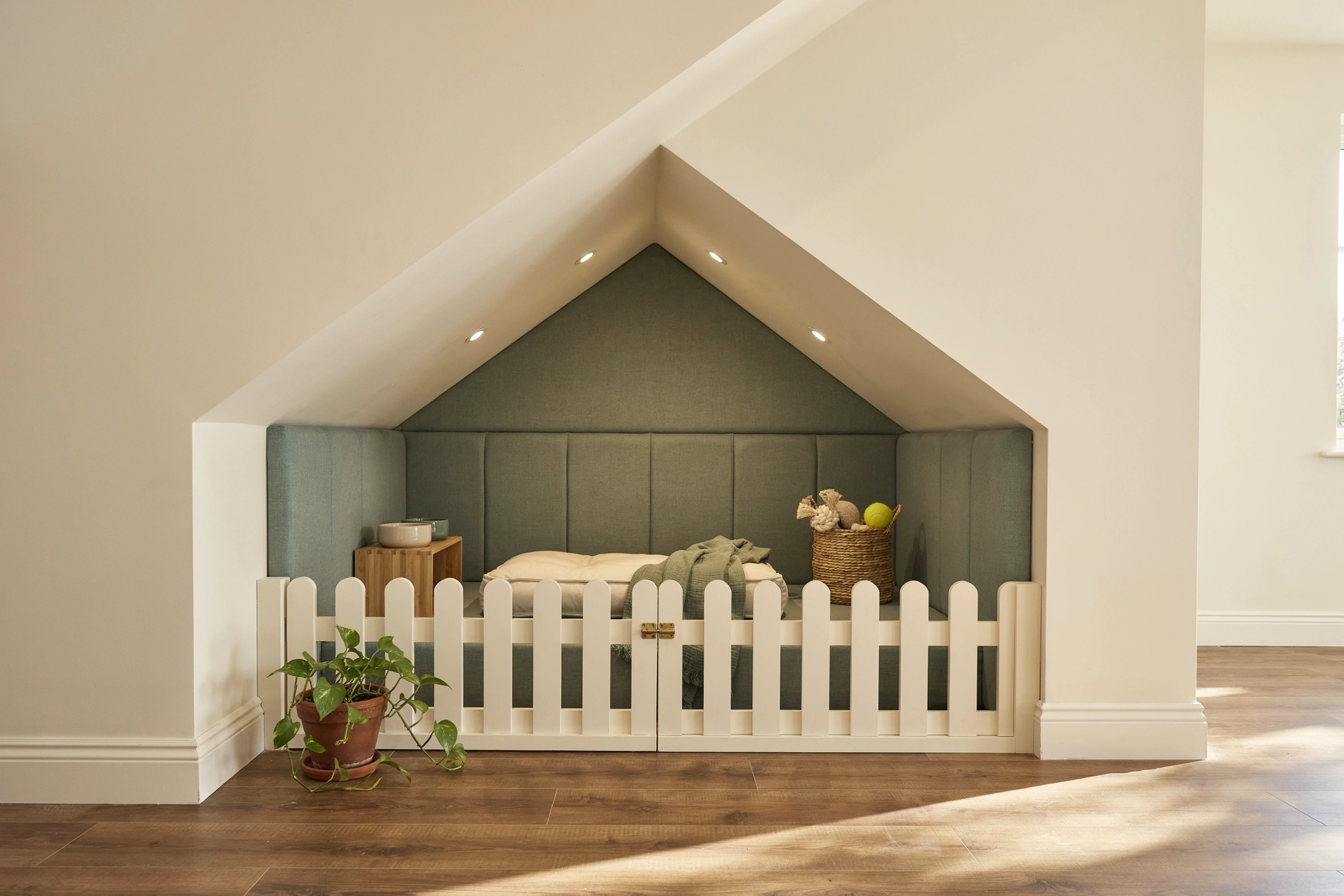
A cute picket fence style wooden front on your under stair dog space looks more like a decorative farmhouse feature than a pet enclosure. This adds real charm to the whole space.
Build a small picket fence panel from cedar wood strips and a small gate. Around fifty to one hundred dollars in materials at Home Depot. Or buy pre made pet enclosure panels from Etsy for one hundred to two hundred dollars.
Pros: Adds beautiful farmhouse charm that most pet enclosures lack. Custom fits your exact opening width. Also gives dogs visibility while containing them safely.
Cons: Wooden fences with vertical slats can trap small dog paws or heads if spacing is wrong. Keep slats no wider than two inches apart. DIY builds require basic carpentry skills and safe finishing to avoid splinters. Cheap wood chips or scratches easily from dog claws. Choose harder woods like oak or maple for real durability. Also outdoor style fences can look off in modern minimalist homes. Best in farmhouse, cottage, or eclectic style homes where the rustic look fits with the overall design.
9. Luxurious Cushion Bed
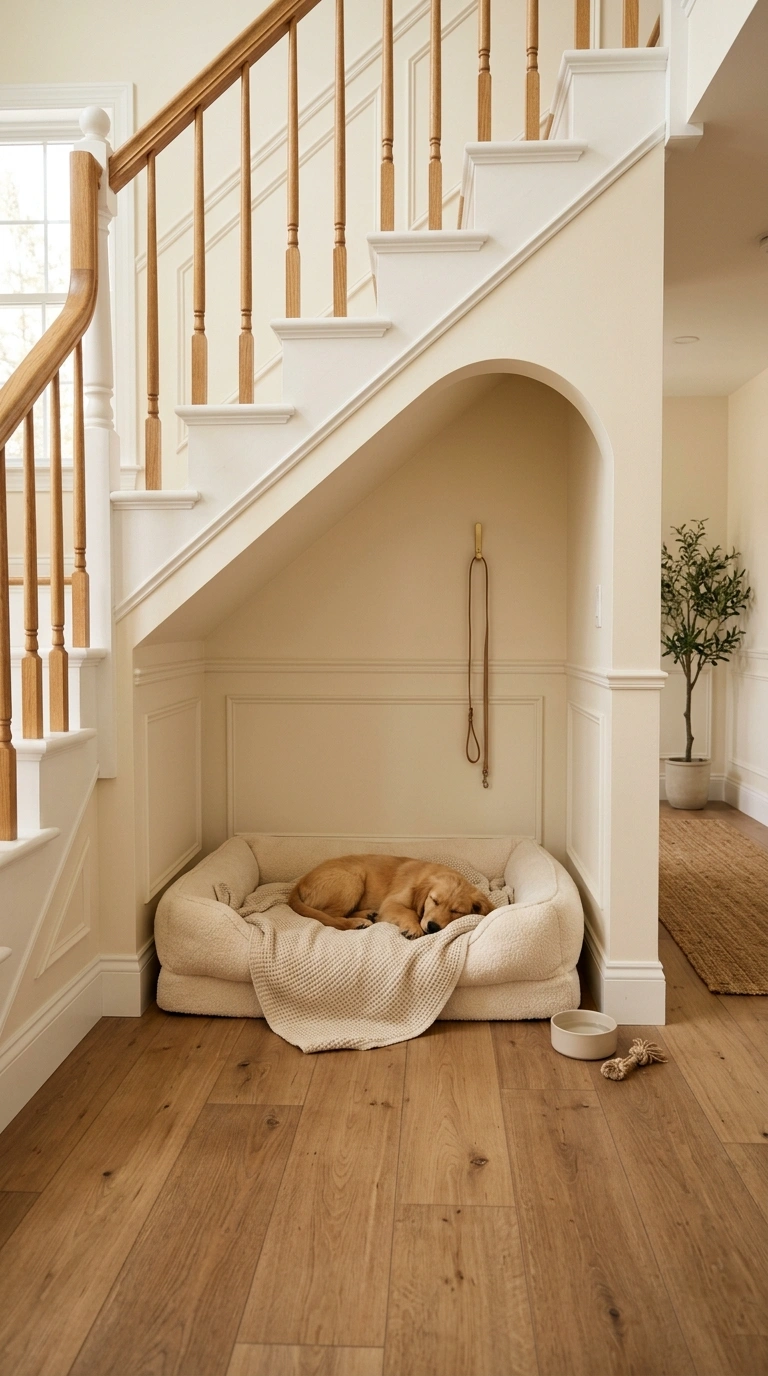
A truly luxurious dog bed inside your under stair space makes it feel like a five star pet retreat. This goes beyond basic bedding into real spa comfort territory.
Buy a memory foam dog bed with a washable cover for one hundred to three hundred dollars at Chewy, PetSmart, or Amazon. Look for orthopedic support if your dog is over five years old. Add a soft cotton blanket on top for extra warmth.
Pros: Amazing comfort for aging or arthritic dogs. Reduces joint pain and improves sleep quality. Washable covers make cleaning easy. Doubles as pretty decor for the visible space.
Cons: Expensive investment compared to basic beds. Cheap memory foam flattens within six months of daily use. Spend at least one hundred and fifty dollars for real quality that lasts. Some dogs also refuse memory foam because they cannot dig or fluff it up. Watch your dog’s preference before investing. Large luxury beds may not fit smaller under stair spaces, so measure carefully first. Also memory foam retains dog smell more than other materials, requiring frequent cover washing to stay fresh.
10. LED Puck Lighting
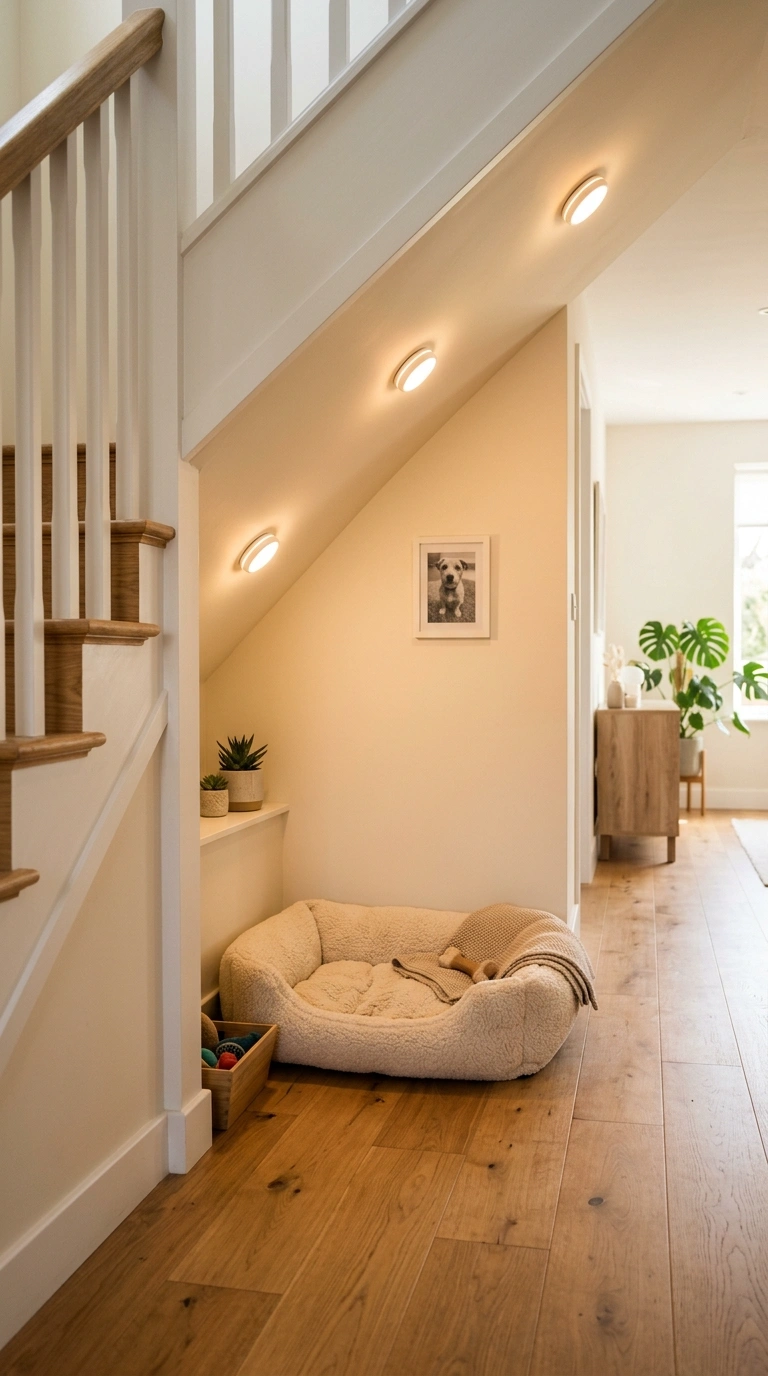
Adding small LED puck lights inside your under stair dog space gives your dog gentle nighttime lighting and lets you easily check on them at night. This one small addition makes a huge difference.
Buy battery operated LED puck lights from Amazon or Home Depot for twenty to forty dollars for a pack of three. Stick to the sloped ceiling with adhesive strips. Choose warm white bulbs at 2700K to 3000K for a cozy glow.
Pros: Helps anxious dogs feel calmer at night. Lets you easily check on your dog without turning on overhead lights that disturb the whole house. Cordless design is safe for chewing dogs.
Cons: Battery operated puck lights need battery changes every two to six months depending on use. Consider hardwired options for less maintenance. Cheap puck lights emit blue light that can disrupt your dog’s sleep cycle. Look for warm color temperature options specifically. Also some dogs are startled by the on off click of tap activated lights. Choose motion activated or app controlled options for silent operation. LED strips work even better for wider spaces but require more installation effort.
11. Water Fountain Corner
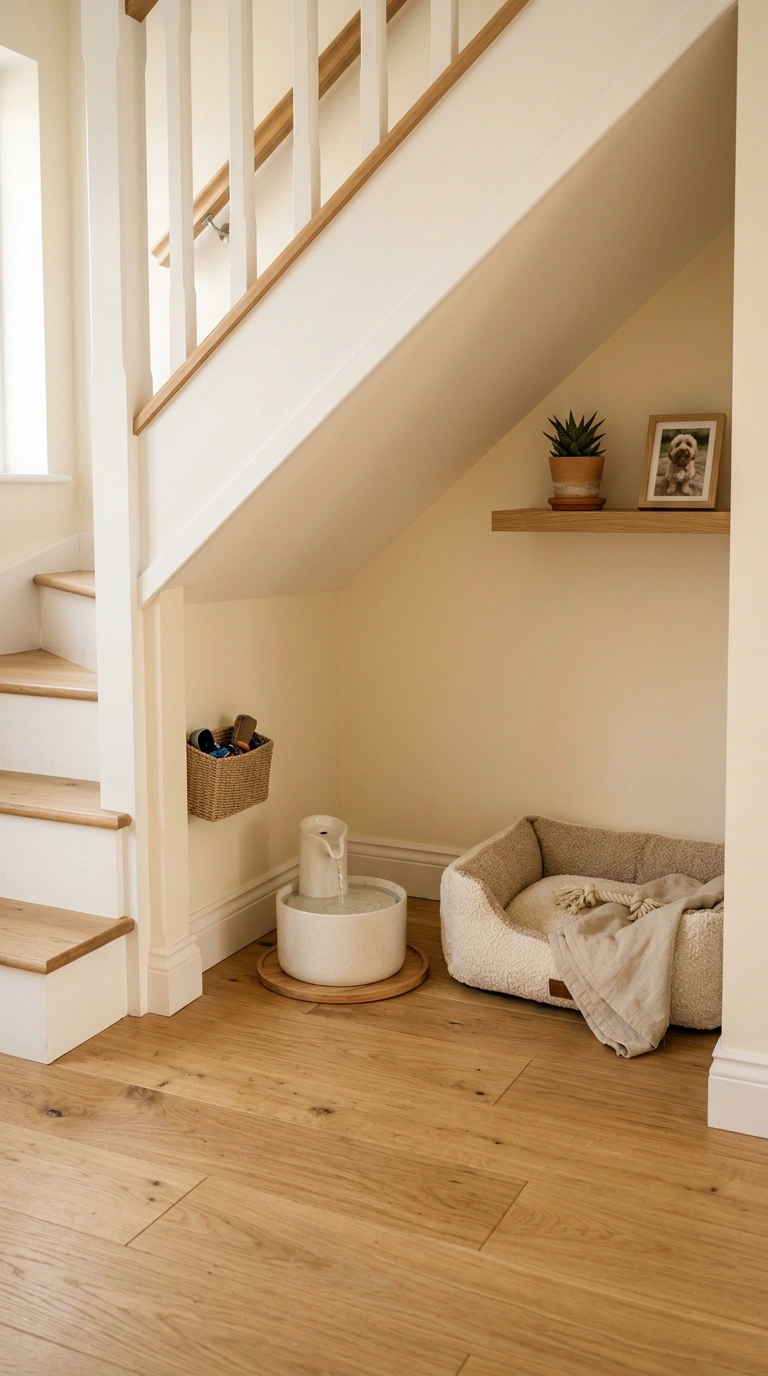
A pet water fountain in the corner of your under stair dog space gives your dog constant access to fresh flowing water. This encourages more drinking and is way cleaner than a still water bowl.
Buy a ceramic or stainless steel pet water fountain from Chewy or Amazon for forty to one hundred dollars. Look for options with replaceable filters for the cleanest water. Refill the reservoir every three to five days.
Pros: Fresh flowing water encourages dogs to drink more, especially picky drinkers. Ceramic and stainless models are healthier than plastic since they resist bacteria. Filters remove impurities.
Cons: Water fountains need daily cleaning of the pump and weekly filter changes. Cheap fountains have loud pump noises that annoy dogs. Look for silent motor options. Also fountains use electricity, requiring an outlet nearby the under stair space. Not great for spaces without power access. Some dogs are scared of the moving water and refuse to drink from fountains. Introduce slowly by turning on the pump only when your dog approaches. Water spills around fountains can damage flooring. Use a waterproof mat underneath.
12. Dog Photo Gallery
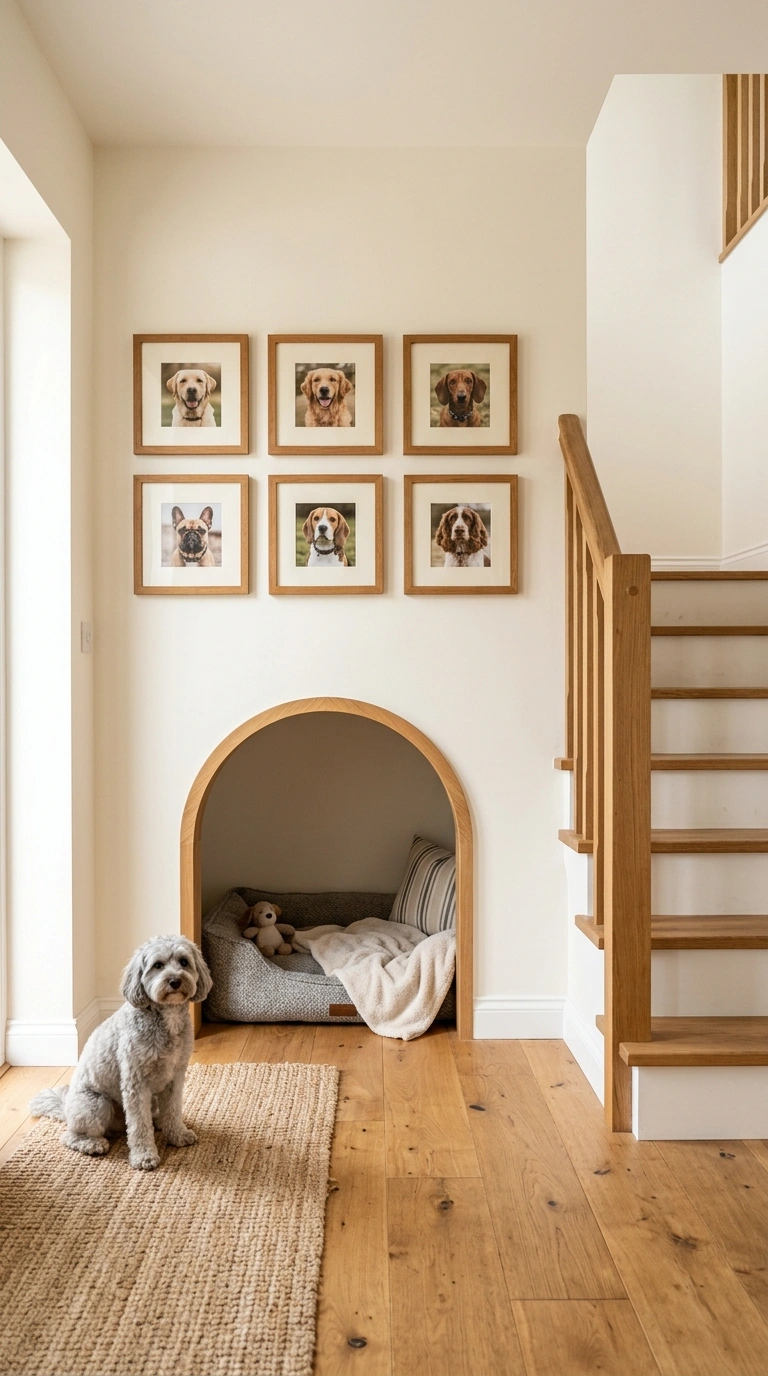
A small gallery wall of framed photos of your dog on the wall inside or above the under stair space adds a sweet personal touch. This turns the pet space into a real design feature.
Buy small matching picture frames for eight to fifteen dollars each at Michael’s or Target. Include six to nine framed dog photos, professional pet portraits, or fun candid shots. Total cost around sixty to one hundred and fifty dollars.
Pros: Adds real personal charm to a pet space that could otherwise look bland. Great conversation piece for visitors. Celebrates your dog and their special corner of the home.
Cons: Frames near pet spaces need to be securely mounted so wagging tails or jumping dogs cannot knock them off. Use command strips or wall anchors. Cheap frames can shatter if pulled down by dog activity, creating glass hazards. Choose acrylic front frames for pet family safety. Also dog photos in busy patterns can feel cluttered. Keep the gallery simple with matching frames and evenly spaced layout. Rotate photos every year or two to include newer moments and keep the display feeling fresh over time.
13. Vinyl Plank Flooring
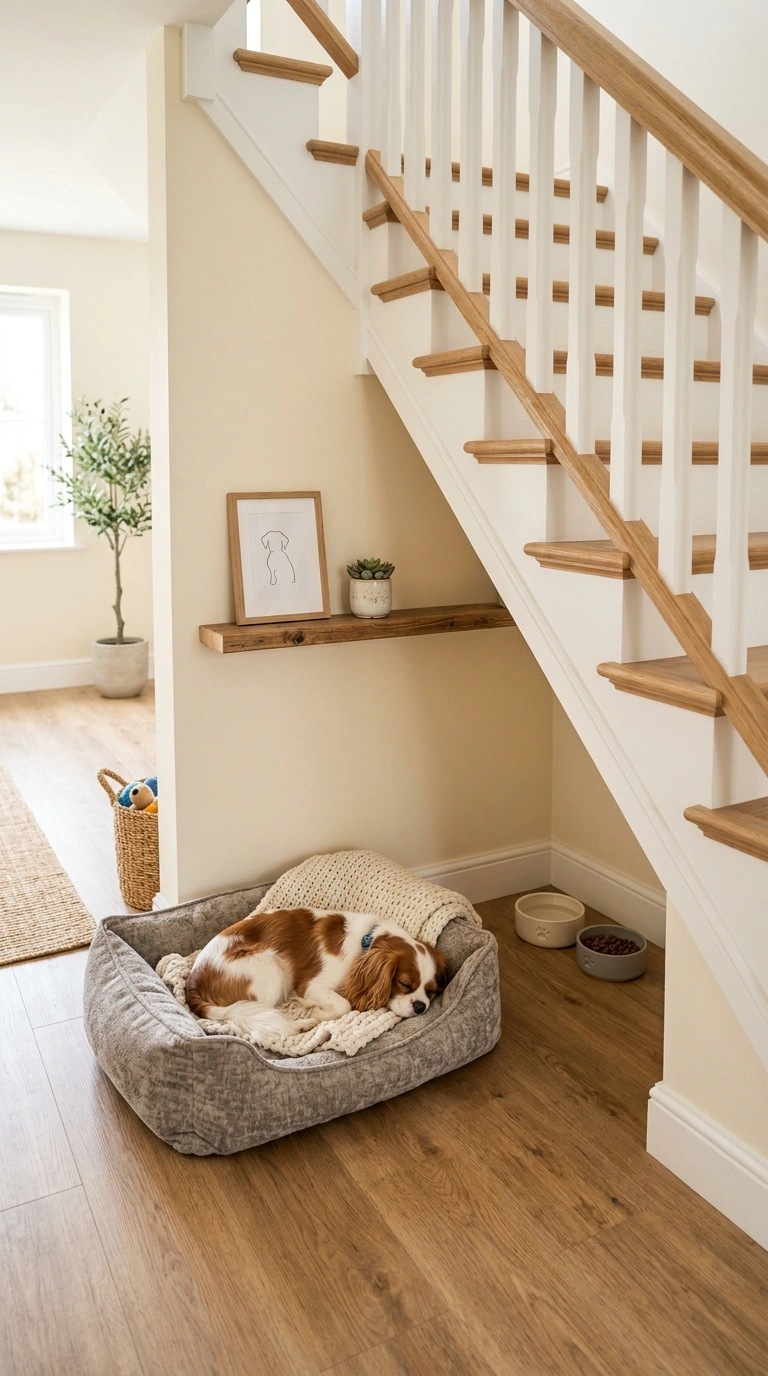
Installing waterproof vinyl plank flooring inside your under stair dog space protects the floor from water spills, muddy paws, and accidents. This is way easier to clean than carpet.
Buy waterproof luxury vinyl plank flooring from Home Depot, Lowes, or Amazon for two to five dollars per square foot. For a typical under stair area, expect twenty to fifty dollars in total materials. Install with click lock connections in an afternoon.
Pros: Waterproof surface handles all pet messes. Easy to wipe clean with a mop and pet safe cleaner. Warm underfoot compared to tile. Lasts for many years with minimal wear.
Cons: DIY vinyl plank install requires basic tools and patience for the click lock system. Cheap vinyl planks scratch easily from dog claws. Look for scratch rated options for pet homes. Also vinyl over concrete can trap moisture from below, causing mold over time. Add a vapor barrier first in basement under stair areas. Some vinyl planks emit mild chemical smells for the first few weeks after installation. Air out the space thoroughly before letting dogs use it. Great long term flooring solution for dedicated pet spaces.
14. Cotton Curtain Cover
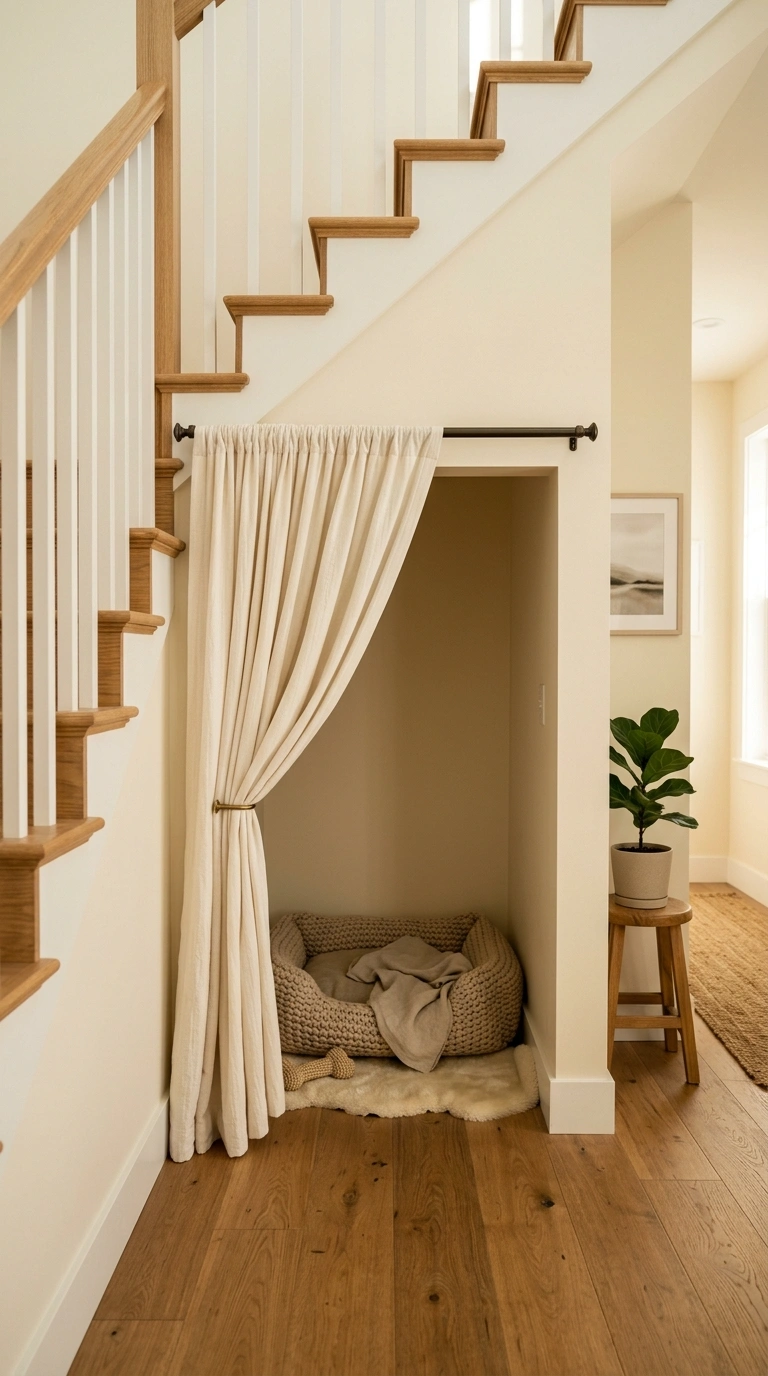
A soft cotton curtain hung across the front of the under stair dog space gives you a beautiful renter friendly way to close off the area. Way easier than installing a door.
Buy a natural cotton or linen curtain in cream or warm sage for twenty to forty dollars at Target or Amazon. Hang from a small tension rod at the top of the opening. Total setup around thirty to sixty dollars including rod and curtain.
Pros: No drilling required, perfect for renters. Curtains allow air flow better than solid doors. Easy to wash when they get dirty. Adds soft textile texture that looks intentional.
Cons: Curtains do not block noise like solid doors do. Not ideal for dogs anxious about household sounds. Some dogs paw or chew at hanging fabric, damaging curtains over time. Watch your dog’s response. Cheap tension rods slip and fall down under repeated use. Look for adjustable rods rated for the actual curtain weight. Also fabric attracts pet hair and dander quickly, requiring monthly washing. Choose machine washable materials only. Great starter solution to test if your dog uses the under stair space at all before committing to a door.
15. Storage Bench Above
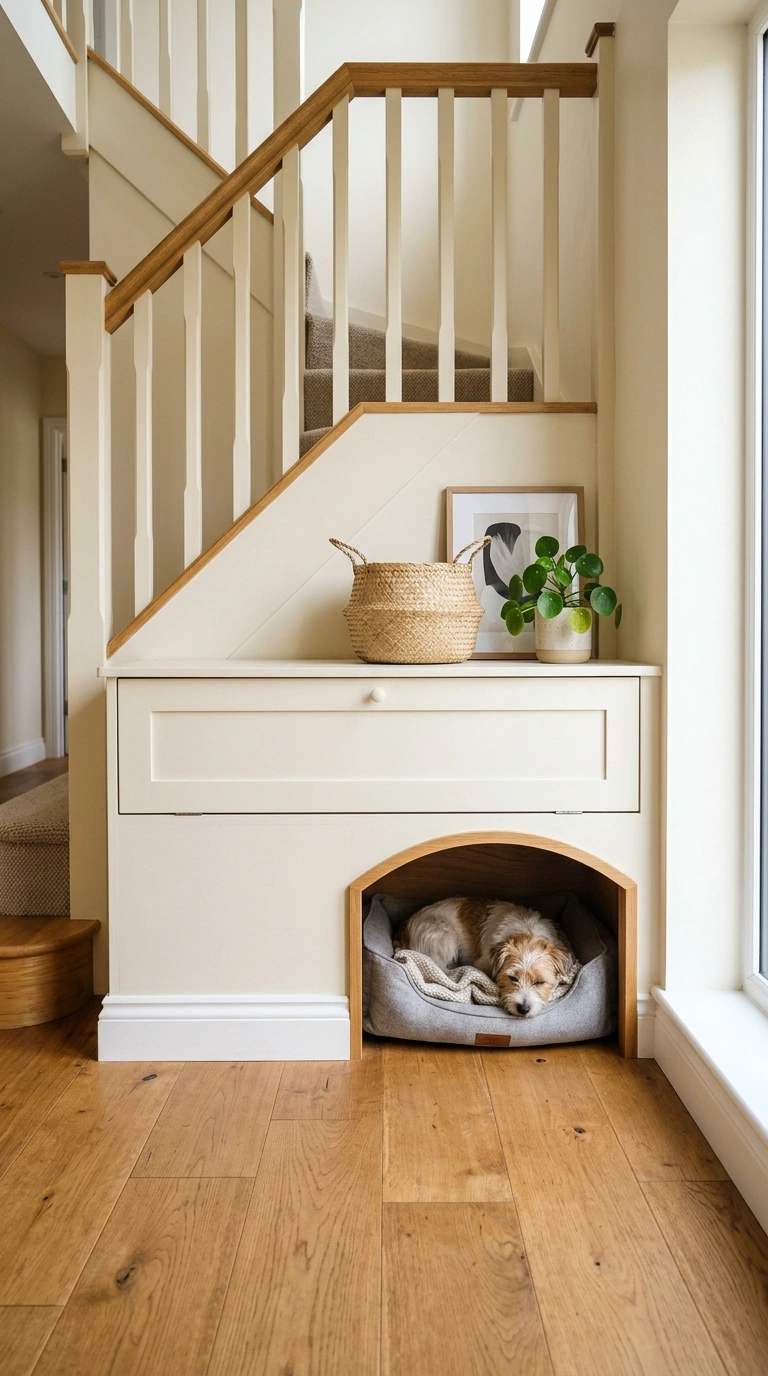
Adding a storage bench directly above your under stair dog space combines pet function with human function. The bench provides seating and hidden storage for dog supplies.
Build or buy a storage bench with a lift up top about thirty six inches wide. Around one hundred and fifty to three hundred dollars at Target, Wayfair, or IKEA. Store leashes, harnesses, poop bags, and grooming supplies inside where they are easy to grab.
Pros: Doubles function of the same space. Great seating spot for putting on shoes before dog walks. Keeps dog supplies organized and out of sight.
Cons: The bench takes up space above the dog nook, which some open under stair designs cannot support. Make sure the structure is strong enough to hold seated adults plus storage. Cheap benches have thin lids that snap under adult weight. Look for reinforced construction rated for at least three hundred pounds. Also benches with old dog food inside can develop musty smells. Clean out monthly to keep fresh. Dog toys inside the bench can be forgotten quickly since they are hidden. Rotate stored toys with visible ones weekly.
16. Cooling Mat Base
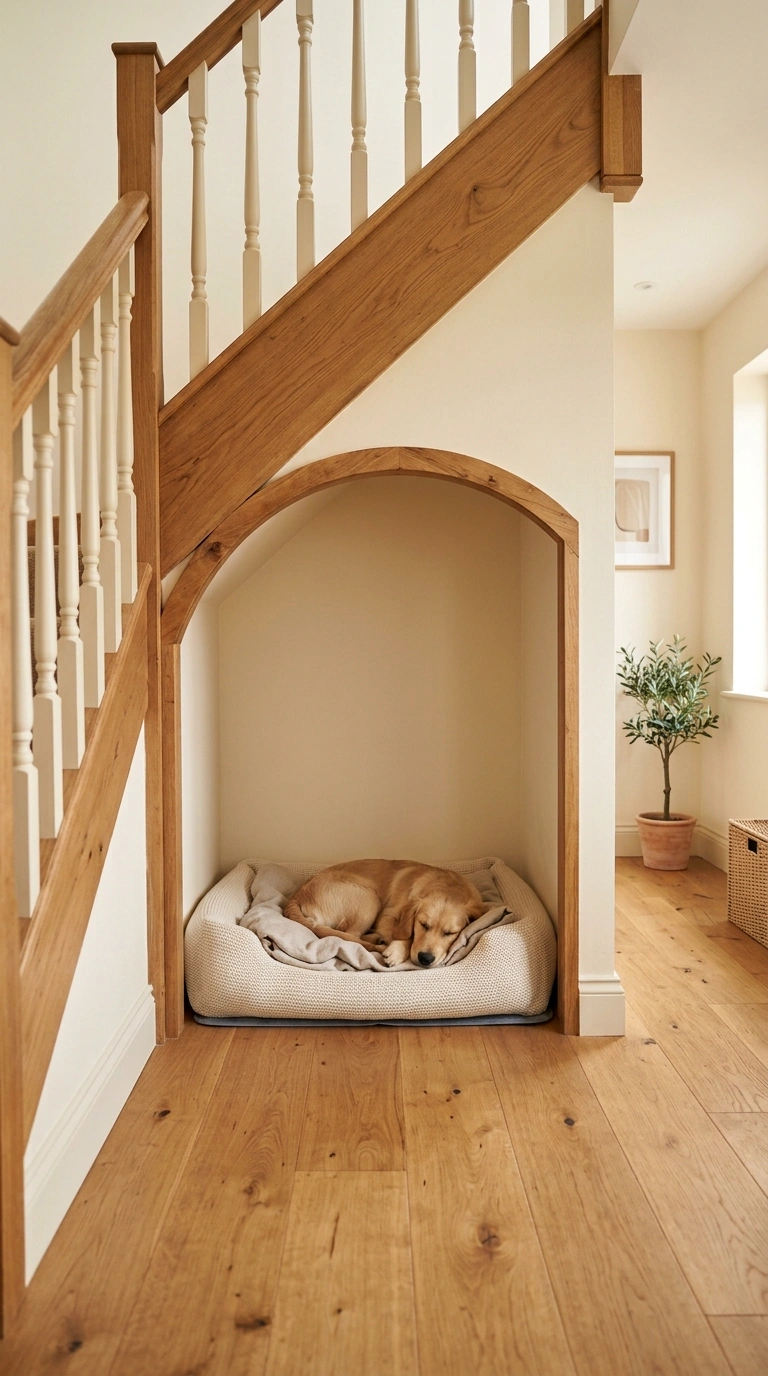
A cooling gel mat placed inside your under stair dog space helps keep your dog comfortable during hot summer months. Under stair spaces without air conditioning can get warm.
Buy a self activating pressure cooling mat for pets from Chewy or Amazon for thirty to eighty dollars. Look for pet safe non toxic gel filling. Place on top of a regular bed for combination comfort.
Pros: Keeps dog comfortable during hot weather without needing to run more AC. Self cooling means no plugs, batteries, or freezing needed. Works instantly when dog lies on it.
Cons: Cooling mats only stay cool for about two to three hours before needing rest time to recharge. Not great for very long naps. Cheap mats have thin plastic covers that puncture from dog claws. Look for reinforced covers designed for pets specifically. Some dogs refuse to lie on cooling mats because they feel too cold at first. Introduce slowly and let dog choose to use it. Also cooling gel inside cheap mats can be toxic if dog chews and swallows. Verify pet safe gel formulations before buying. Best for warm summer months only.
17. Framed Portrait Wall
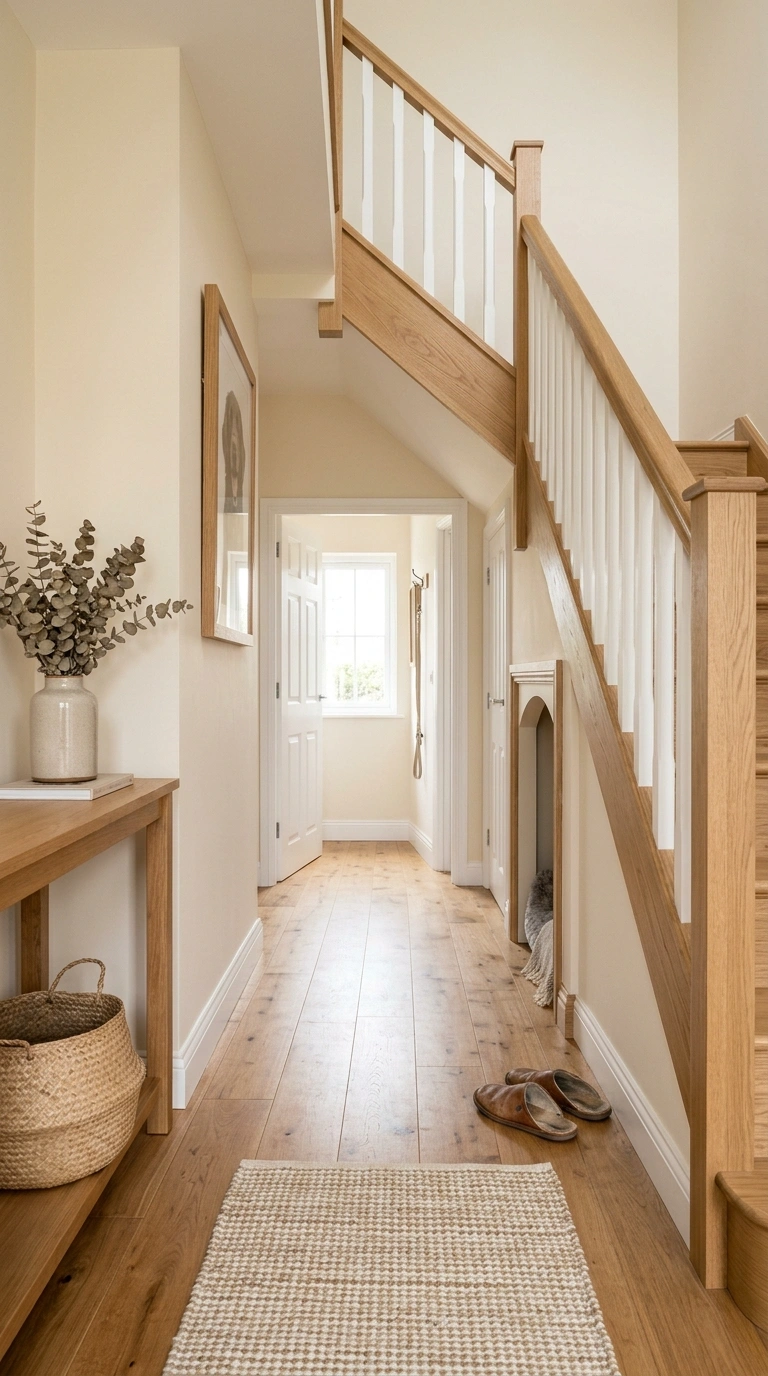
A single large framed portrait of your dog hanging above the under stair space entrance turns it into a celebrated part of your home decor. This is more of a statement than a small photo gallery.
Commission a custom pet portrait from Etsy for fifty to two hundred dollars, or use a favorite photo printed on canvas from Shutterfly for thirty to eighty dollars. Frame in a warm oak or brass frame for the most upscale look. Hang directly above the dog space entrance.
Pros: One statement piece looks more curated than multiple small photos. Adds real charm to the pet space entrance. Feels like art rather than casual decor.
Cons: Custom portraits take weeks to complete, so plan ahead. Cheap canvas prints fade in direct sunlight within a year or two. Choose UV protective coatings for real longevity. Also very large portraits can look overwhelming in small hallways. Match portrait size to available wall space, usually eighteen to twenty four inches across works well. Frames near pet spaces need secure mounting to prevent damage from tail wags or bouncing dogs. Use wall anchors rated for the total weight plus safety margin.
Final Thoughts
An under stair dog space works best when it matches your dog’s personality and your home’s exact layout. Start with a simple cushion setup to see if your dog even wants a den style spot before investing in custom builds. Some dogs love enclosed spaces while others prefer open floor beds. Watch your pup’s behavior for a few weeks before committing to bigger renovations. A well designed under stair dog space becomes a real favorite corner for both of you.