25 Bathroom Storage Ideas That Solve the Clutter Problem for Good
Bathroom clutter has a way of appearing overnight and refusing to leave. One day the counter is clear and the next it is covered in bottles, brushes, and things that were just placed there temporarily and never moved. The problem is almost never a lack of space. It is a lack of system. Every item in a bathroom needs a specific place that it lives and goes back to. When that system exists, the bathroom stays organized with almost no effort. When it does not, the entropy wins every time. These 25 ideas give every category of bathroom item its own designated home and use every available inch of bathroom space, including several areas that most bathrooms waste completely.
1. Under-Sink Organizer
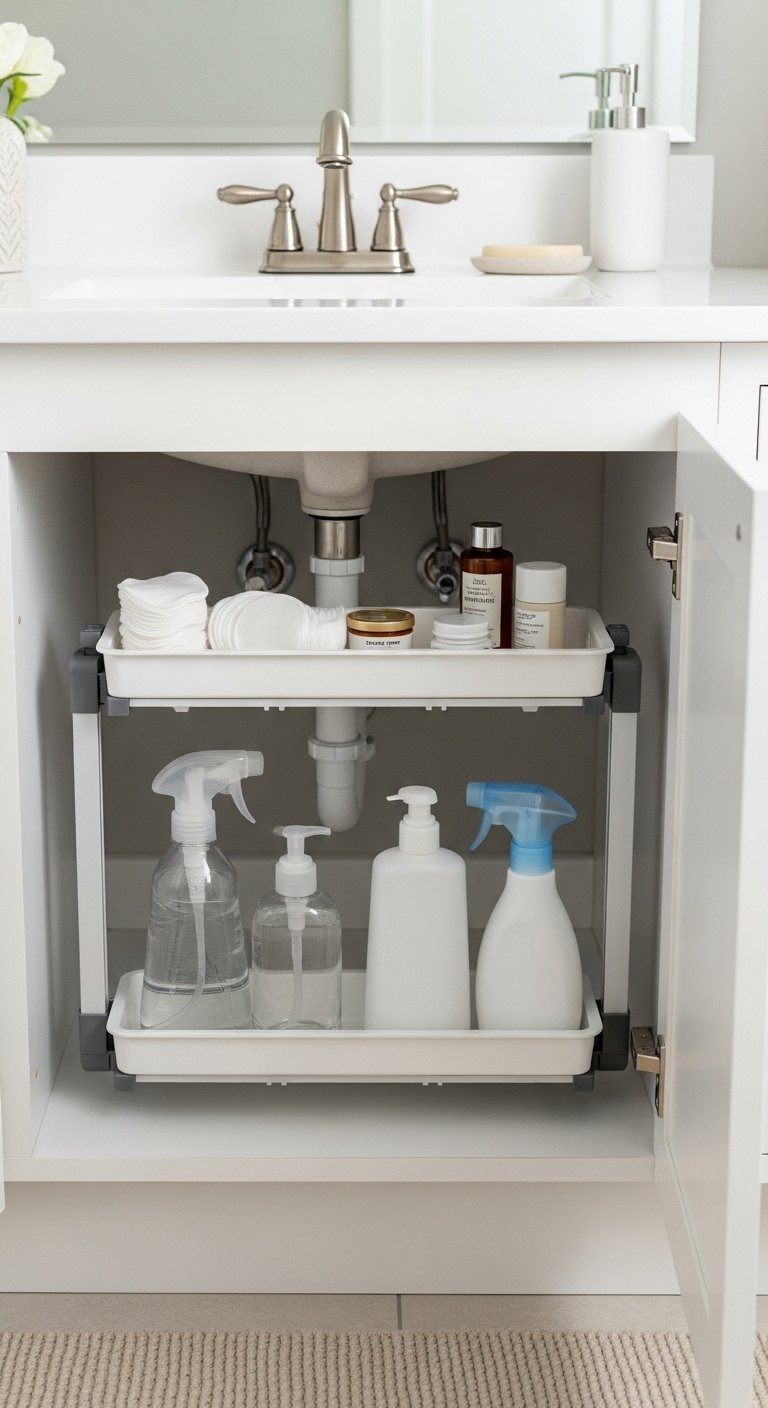
The cabinet under the bathroom sink is one of the most consistently disorganized spaces in any home. The drain pipe and the plumbing connections create awkward dead zones and most people simply push things in around the obstacles without any real system. A two-tier under-sink organizer specifically designed to work around the plumbing doubles the usable storage by lifting items on an upper tray above the ones on the lower level. Look for a version with an adjustable middle section that accommodates the drain pipe without cutting into the organizer. Use the lower level for larger, bulkier items like extra shampoo bottles and cleaning supplies, and the upper level for items you reach for regularly like cotton rounds, hair ties, and small tools. The investment is under twenty-five dollars and the transformation in how much the under-sink cabinet can hold and how easily you can find things in it is immediate.
2. Over-Toilet Tower
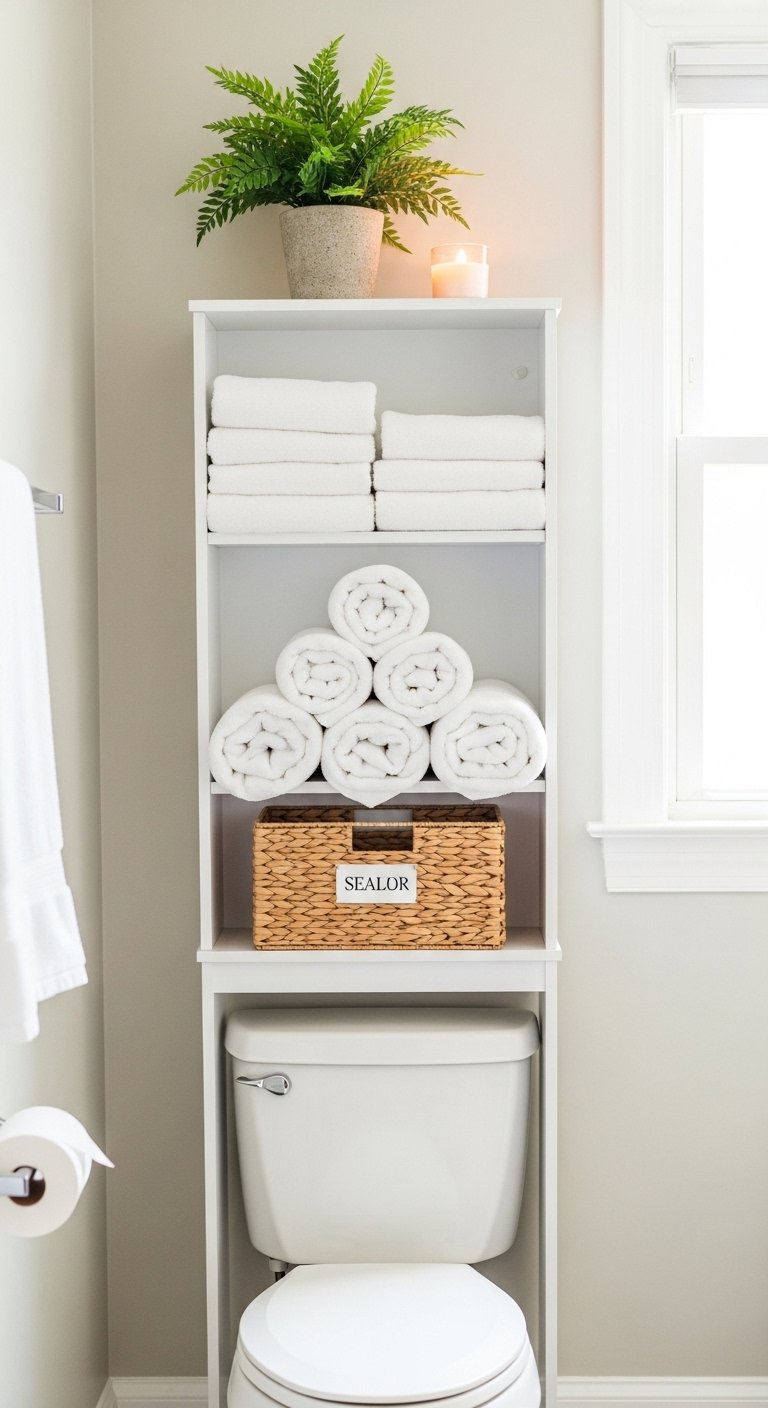
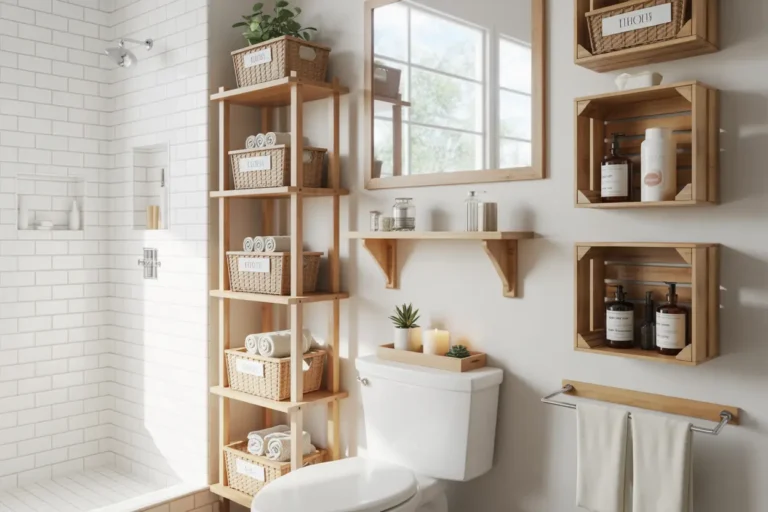
The wall space above the toilet is one of the most underused areas in a standard bathroom. An over-toilet storage tower that stands on the floor behind the toilet and extends up the wall with shelves, cabinets, or a combination of both uses this vertical space efficiently without requiring any wall installation. Style the shelves with a combination of functional and attractive items: labeled baskets for toilet paper and hygiene products on the lower shelves, and rolled towels, a small plant, and a candle on the higher, more visible ones. A freestanding over-toilet unit requires no drilling and can be repositioned or removed completely without leaving any marks. Most well-designed units in this category hold a significant amount of bathroom inventory in a footprint that was previously doing nothing at all.
3. Magnetic Strip for Tools
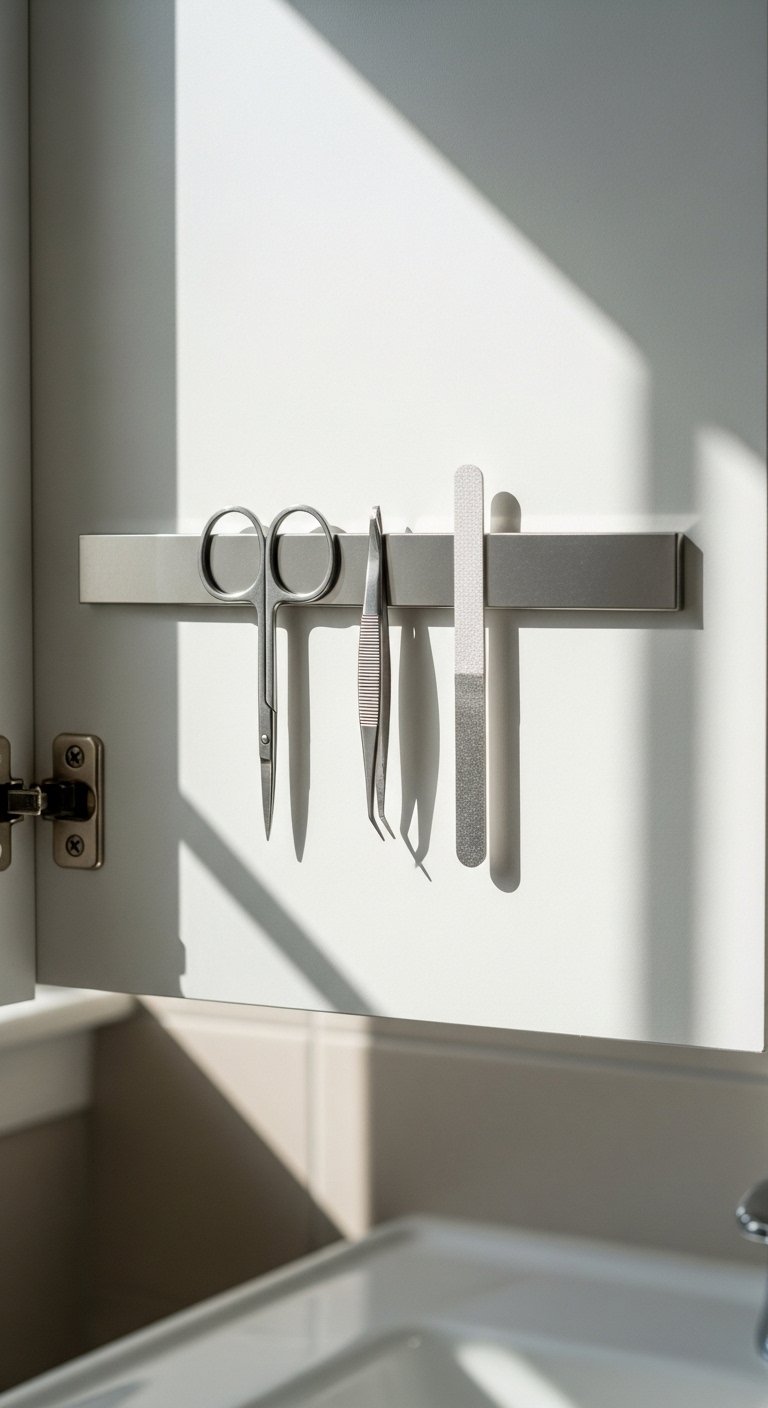
A small magnetic strip mounted inside a bathroom cabinet door, on the side of the medicine cabinet, or in a bathroom drawer holds metal tools like nail scissors, tweezers, bobby pins, and nail files magnetically so they are visible at a glance and retrievable without digging through a drawer. This is an application of the same concept that works for kitchen knife storage and it is equally effective in a bathroom context. Magnetic strips are available very inexpensively and mount with two small screws or with strong adhesive. In a bathroom drawer that previously held a collection of small metal tools jumbled together at the bottom, a magnetic strip mounted to the inside face of the drawer keeps everything organized vertically and makes every tool findable at a glance. The same strip on the inside of a medicine cabinet door frees up shelf space while keeping tools accessible.
4. Drawer Dividers Inside
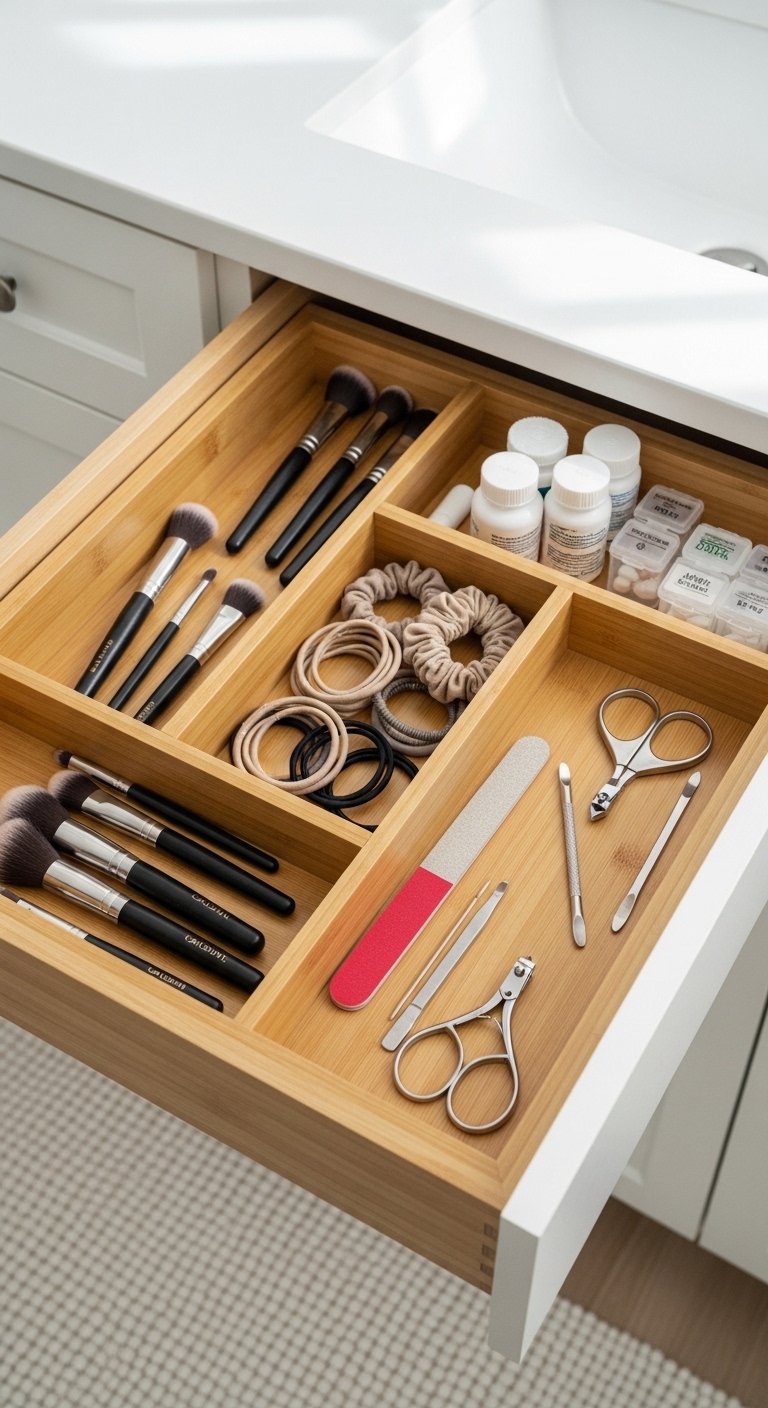
Bathroom drawers, like kitchen drawers, tend to become chaotic because nothing has a designated position and everything slides around with each open and close. A set of adjustable bamboo or plastic drawer dividers installed inside bathroom drawers creates individual sections for each category of item: hair tools in one section, makeup in another, nail care in a third, daily medications in a fourth. Once the sections exist, the natural human tendency is to put things back in the right spot because the sections make it obvious where that spot is. The difference between an organized bathroom drawer with sections and an unorganized one is one of those changes that sounds small but makes the daily experience of using the bathroom genuinely more pleasant. Drawer dividers cost under fifteen dollars for a full set.
5. Shower Niche Addition
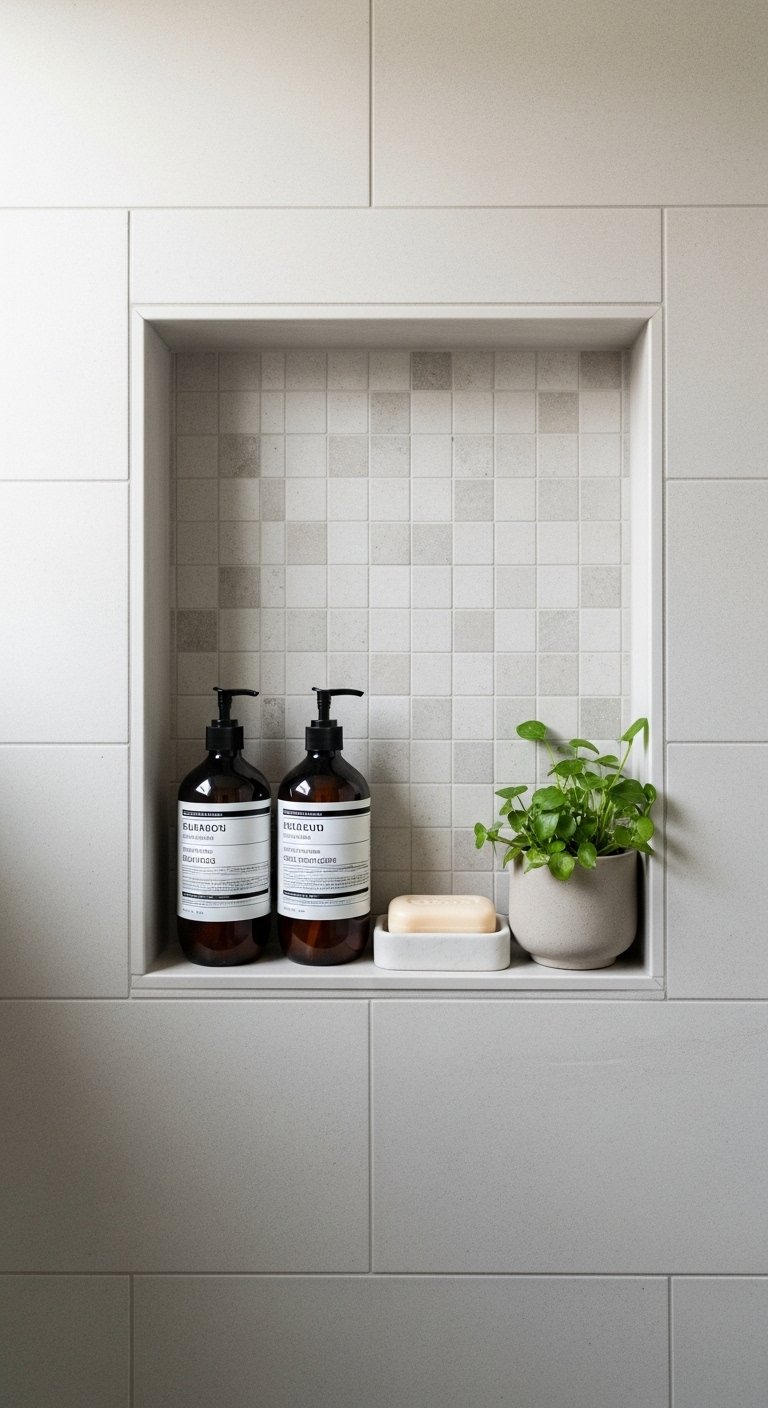
A recessed shower niche, built into the wall of the shower between the studs, creates permanent, flush-mounted storage for shampoo, conditioner, body wash, and soap without any caddy protruding into the shower space. A niche tiled to match the shower walls disappears into the design and reads as an architectural detail rather than an afterthought. Building one during a renovation is straightforward since it simply requires opening the wall cavity between two studs, framing the niche, waterproofing it, and tiling it to match the surround. If a built-in niche is not possible, a recessed niche insert, a pre-framed unit that installs between studs with less construction work, is a middle option that achieves a similar clean result. Both options eliminate caddy clutter permanently and give the shower a clean, custom appearance.
6. Cabinet Door Organizers
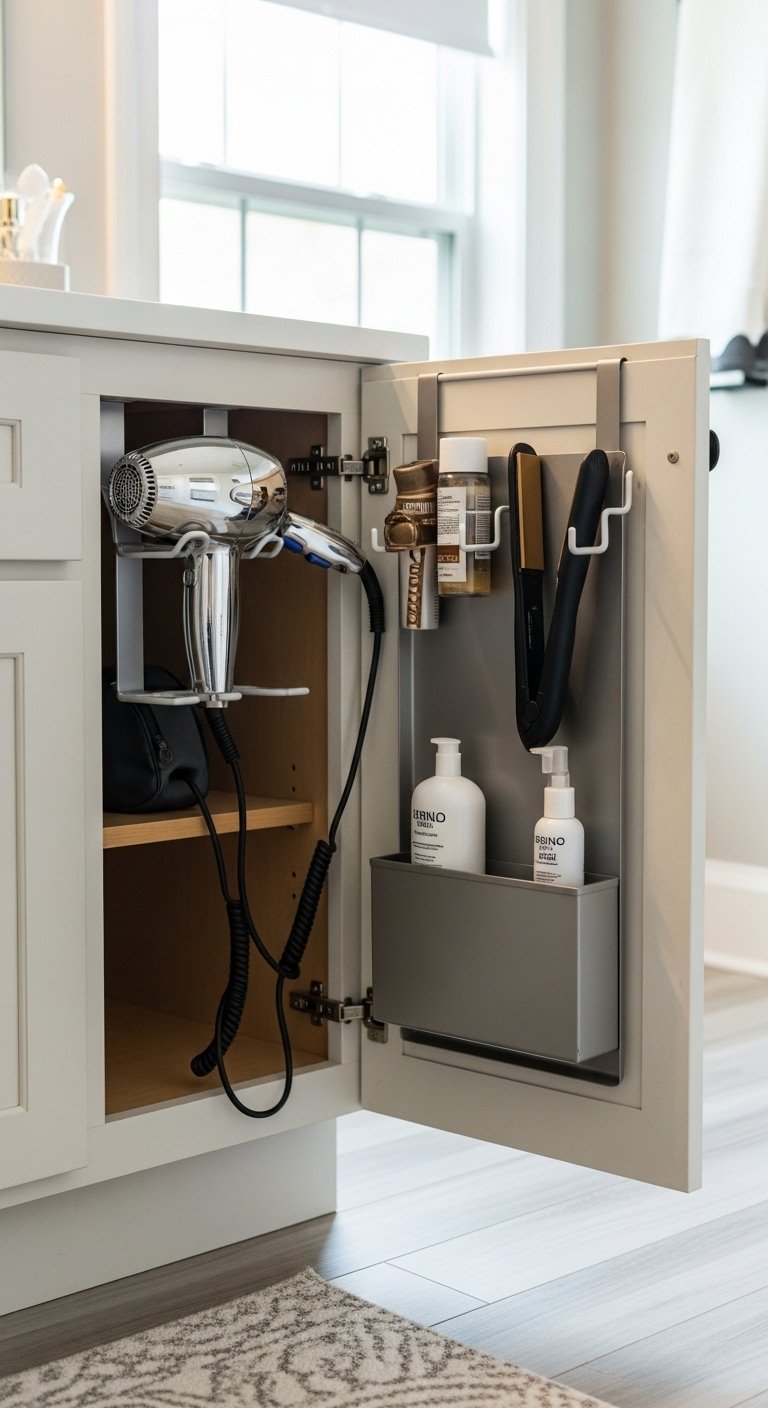
The inside faces of bathroom cabinet doors are consistently overlooked as storage surfaces. An over-the-door organizer, a mounted hair tool holder, a set of small adhesive hooks, or a narrow pocket organizer installed on the inside of a cabinet door adds storage capacity in a location that is completely invisible when the door is closed. Use the inside of the vanity cabinet door for a blow dryer holder and a flat iron rest, the inside of the medicine cabinet door for a magnetic tool strip and small product packets, and the inside of any linen cabinet door for a shoe-pocket organizer repurposed for small bathroom supplies. Each of these additions requires minimal or no tools and makes the cabinet door a functional part of the storage system rather than a wasted surface.
7. Stackable Clear Bins
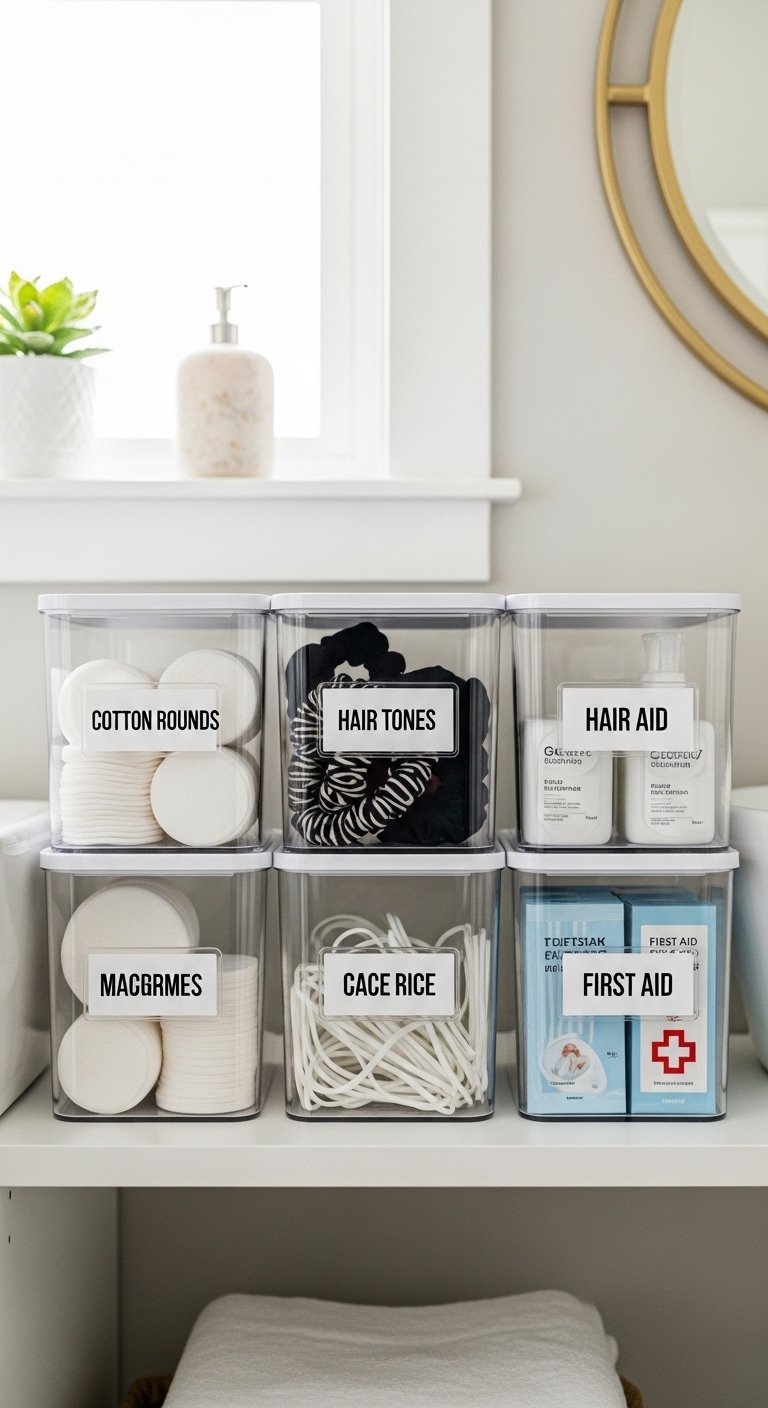
Clear stackable bins used in drawers, on shelves, and under the sink make bathroom inventory immediately visible without requiring any digging. When you can see everything, you know exactly what you have and what you are running low on, which prevents the common problem of buying duplicates of things you already have because the original got pushed to the back of a cabinet. Clear bins with open fronts are the easiest to access since you can slide them out to reach things at the back. Label the front of each bin with its contents for an extra layer of organization that makes the system self-maintaining. A set of four to six clear bathroom bins costs between fifteen and thirty dollars and provides a container for every category of bathroom inventory from hair care to makeup to first aid items.
8. Towel Hooks vs. Bars
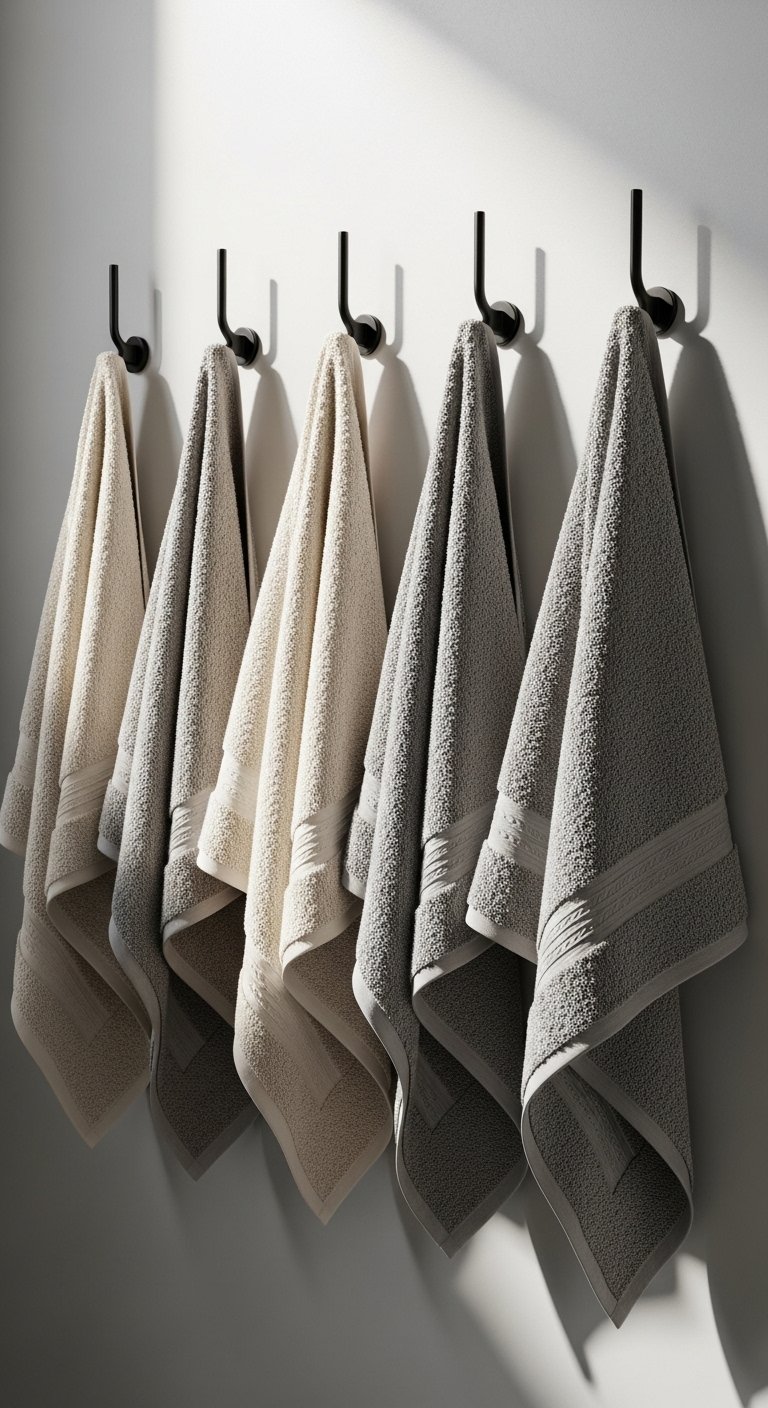
Traditional towel bars hang towels in a flat, single layer that looks neat when the towel is dry and perfectly folded but feels like a constant chore to maintain. A row of hooks, either installed on the wall, mounted on the back of the door, or placed on a freestanding rack, is a more realistic and functional solution for everyday towel storage because it accommodates towels in the way people actually use them: by grabbing and hanging rather than folding and spreading. Each person in the household gets their own hook rather than a section of a bar, which prevents the pile-up of towels in an overlapping mass. A simple row of three to five hooks on an empty wall section costs under fifteen dollars and holds as many towels as a standard bar while being significantly more practical to use.
9. Labeled Mason Jars

Clear mason jars or simple glass apothecary jars used on a bathroom shelf or the vanity counter hold cotton balls, cotton swabs, hair ties, bobby pins, and other small miscellaneous items in a way that keeps them visible, accessible, and organized. The clear glass means you can see exactly what is in each jar and how much you have left without removing anything. Labels applied to the front of each jar, either from a label maker or from a handwritten paper label, make the system intuitive for everyone in the household. A row of three or four labeled glass jars on a small shelf beside the sink is both a practical storage solution and a genuinely attractive bathroom detail. Glass jars are widely available very cheaply or can often be repurposed from kitchen pantry or food storage that is no longer needed.
10. Floating Corner Shelf

Bathroom corners are reliably underused in most layouts. A small floating corner shelf installed high on the wall in the corner above the toilet or the tub adds a display and storage surface in a location that was previously doing nothing. Install it at a height where it is visible and accessible but out of the way of daily movement through the bathroom. Style it with a small plant, a candle, and one or two personal items rather than using it as an overflow storage surface for products. A corner shelf that looks attractive and holds a few intentional items is more valuable to the overall feel of the bathroom than the same space used as extra shelf storage for bottles. Most corner shelves install with two to four wall anchors and cost under twenty-five dollars.
11. Medicine Cabinet Upgrade
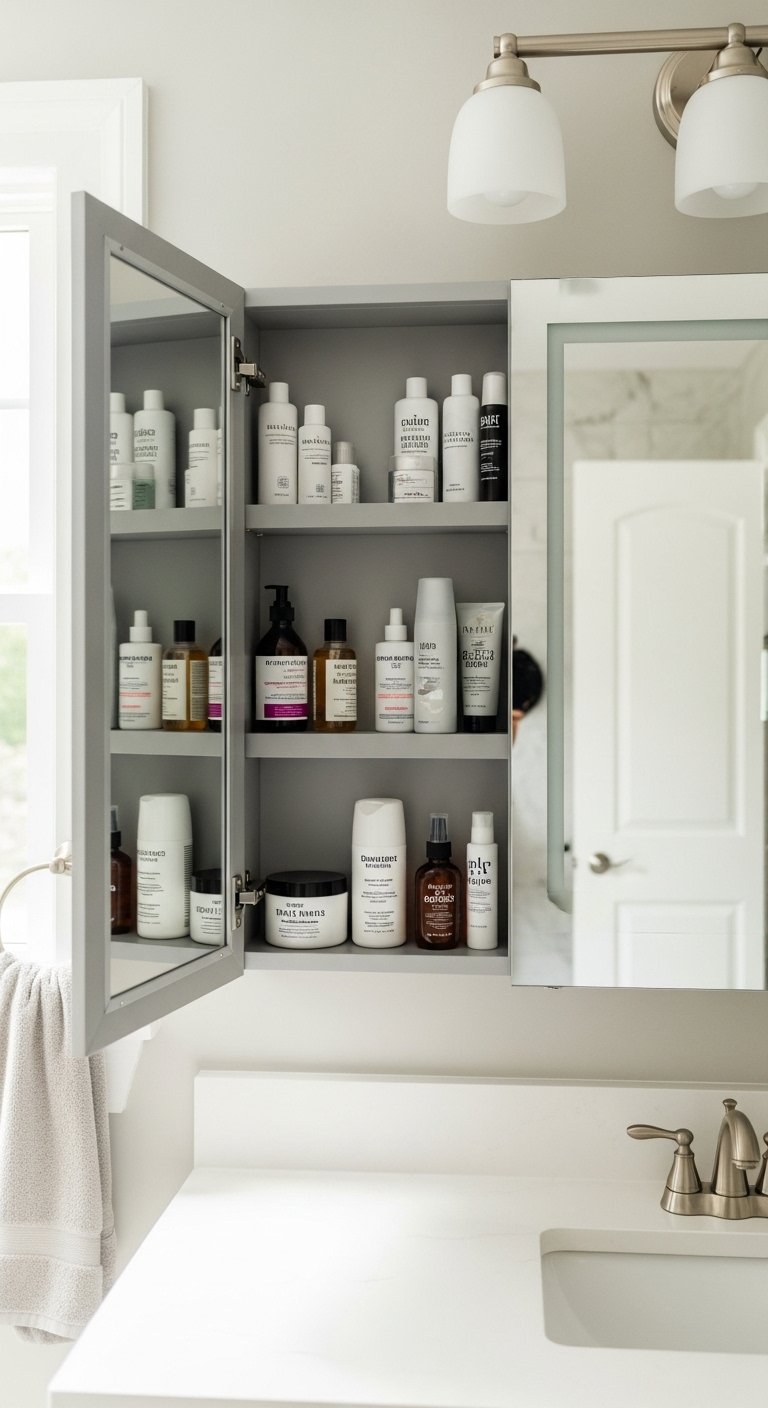
A medicine cabinet, or the installation of one where there was only a flat mirror before, adds a significant amount of hidden storage directly behind the mirror at the vanity. This is one of the most space-efficient storage solutions in any bathroom because it uses the wall cavity rather than protruding into the room and stores items behind the mirror that would otherwise live on the vanity counter or in a cabinet below. A standard recessed medicine cabinet holds several shelves’ worth of daily medications, skincare products, and grooming tools completely out of sight and within arm’s reach of the sink. Keep the shelves organized with small bins or dividers and edit the contents regularly so the cabinet holds only current items. An organized medicine cabinet makes the counter below it dramatically easier to keep clear.
12. Pull-Out Cabinet Drawers
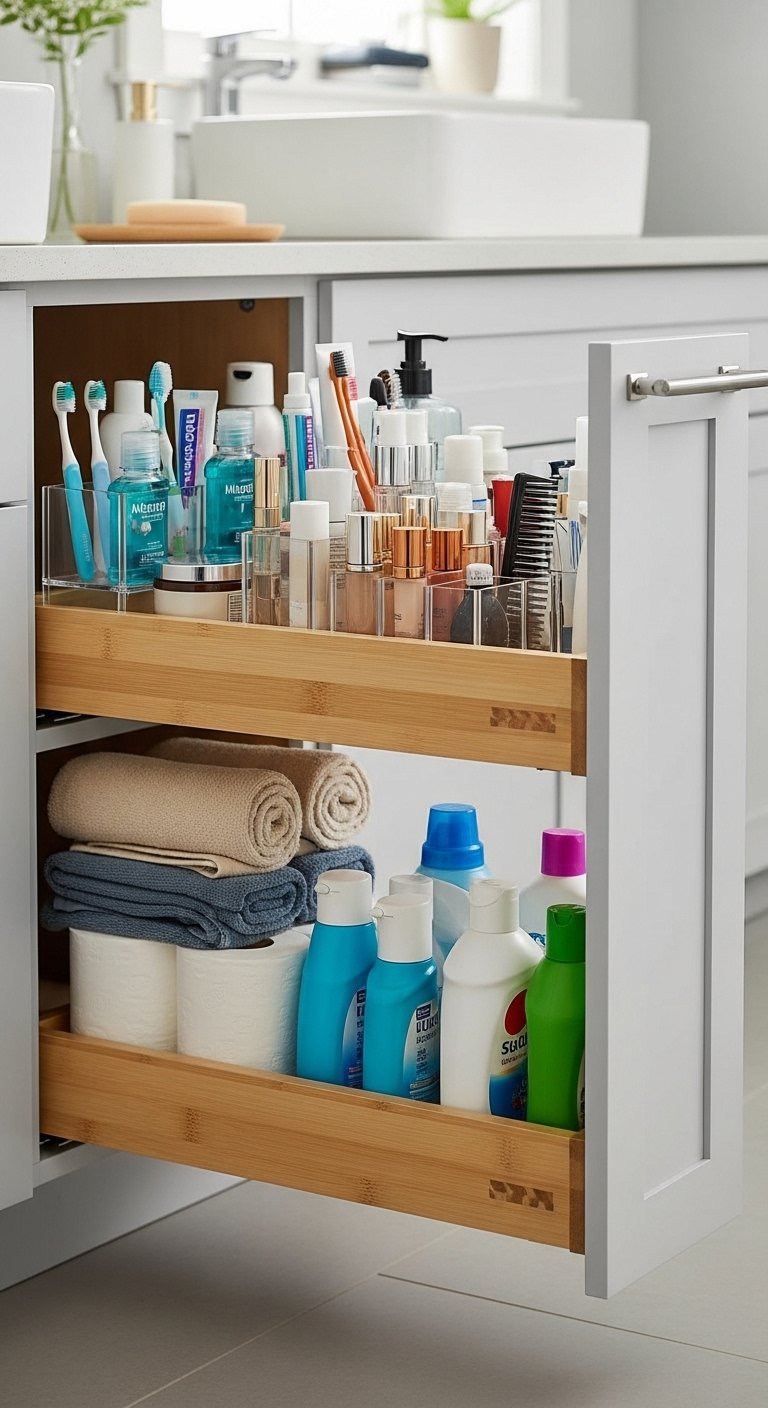
A standard bathroom base cabinet often has a single open shelf or two fixed shelves that make efficient use of the full depth of the cabinet nearly impossible. Items get pushed to the back and lost, and accessing the back of the cabinet requires removing everything in front. Pull-out drawer inserts, available in a range of widths to fit standard cabinet interiors, slide out to bring the full depth of the cabinet to you rather than requiring you to reach into the back. Install two or three in a single cabinet and the entire interior becomes accessible without any digging or rearranging. Pull-out inserts do not require cabinet modification. They sit on the existing shelf and slide on their own runners. Most sets of two or three pull-out cabinet organizers cost between twenty and forty dollars.
13. Shower Shelf on Rod
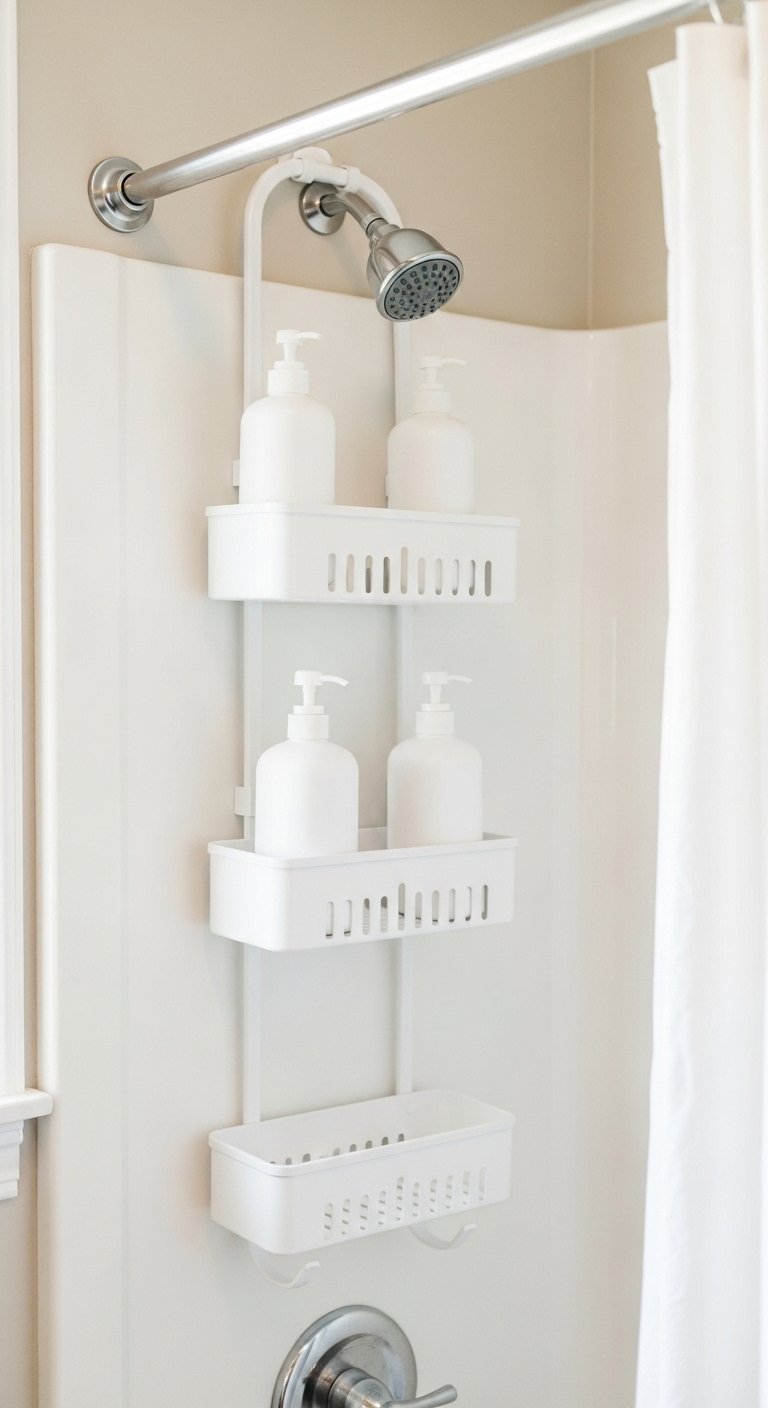
A shower shelf that clamps onto the shower rod or hangs from a tension rod at a convenient height in the shower creates a level of bathroom storage that is completely separate from the existing tile and walls. These clip-on shelf systems hold several caddies of products and can be repositioned to any height on the rod without tools. They are fully removable, which makes them ideal for rentals, and can hold a surprising number of shampoo, conditioner, and body wash bottles without any wall involvement at all. Look for a clip-on shelf with a rust-resistant finish and a drainage hole in the base of each level so water does not pool on the shelf surface. Style the shelf with matching or coordinating bottles for the cleanest visual result inside the shower.
14. Back-of-Door Pocket

A clear plastic or fabric pocket organizer hung over the back of the bathroom door is one of the highest-density storage solutions available for a small bathroom. A standard twenty-four-pocket organizer holds hair products, makeup, lotions, nail tools, medications, and dozens of other small bathroom items in individual labeled pockets that are visible and accessible without opening any drawers or cabinets. The over-door hook requires no installation, and the weight of a full pocket organizer is easily supported by a standard door. For a more attractive version of the same concept, look for fabric pocket organizers in a linen or cotton material with an open-top basket format rather than clear plastic pockets. These hold somewhat fewer items but look significantly more intentional and styled when the bathroom door is open.
15. Towel Bar on Cabinet
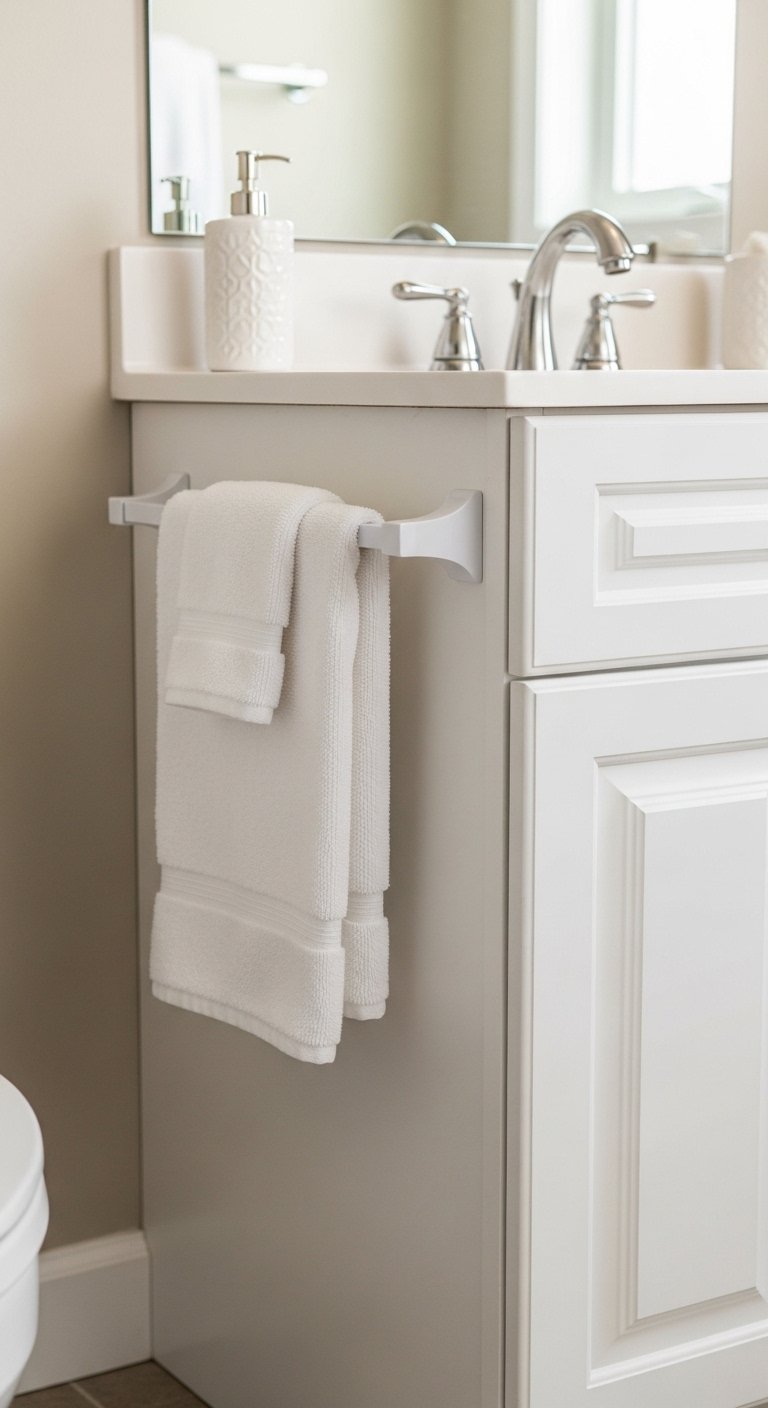
If the bathroom walls are already at capacity with existing fixtures and there is no clear wall space for an additional towel bar, mounting a small towel bar or a row of hooks directly on the side face of a cabinet or a vanity using surface-mount hardware is a practical alternative. The side face of a vanity unit or a linen cabinet is typically a flat, accessible surface that receives no use at all in most bathrooms. A small bar or a set of two hooks mounted here holds hand towels at a convenient height beside the sink without requiring any new wall holes in a location that is already occupied. This is also a useful technique in a rental where wall installation may not be permitted, since mounting hardware to a piece of furniture rather than the wall does not constitute permanent modification of the property.
16. Labeled Basket System

A system of labeled baskets used in the linen closet, under the sink, on open shelves, or in any bathroom storage location turns a disorganized collection of bathroom inventory into an instantly navigable system. Assign a basket to each category: a basket for hair care, a basket for skincare, a basket for first aid, a basket for cleaning supplies, a basket for backup products. Label each basket clearly on the front so anyone in the household can find what they are looking for and return it to the correct location. When a basket runs low, you know exactly what to restock and where it goes when it comes back from the store. The basket system works at any scale and in any storage furniture from open shelving to deep cabinets to the floor of a linen closet.
17. Tray for Countertop
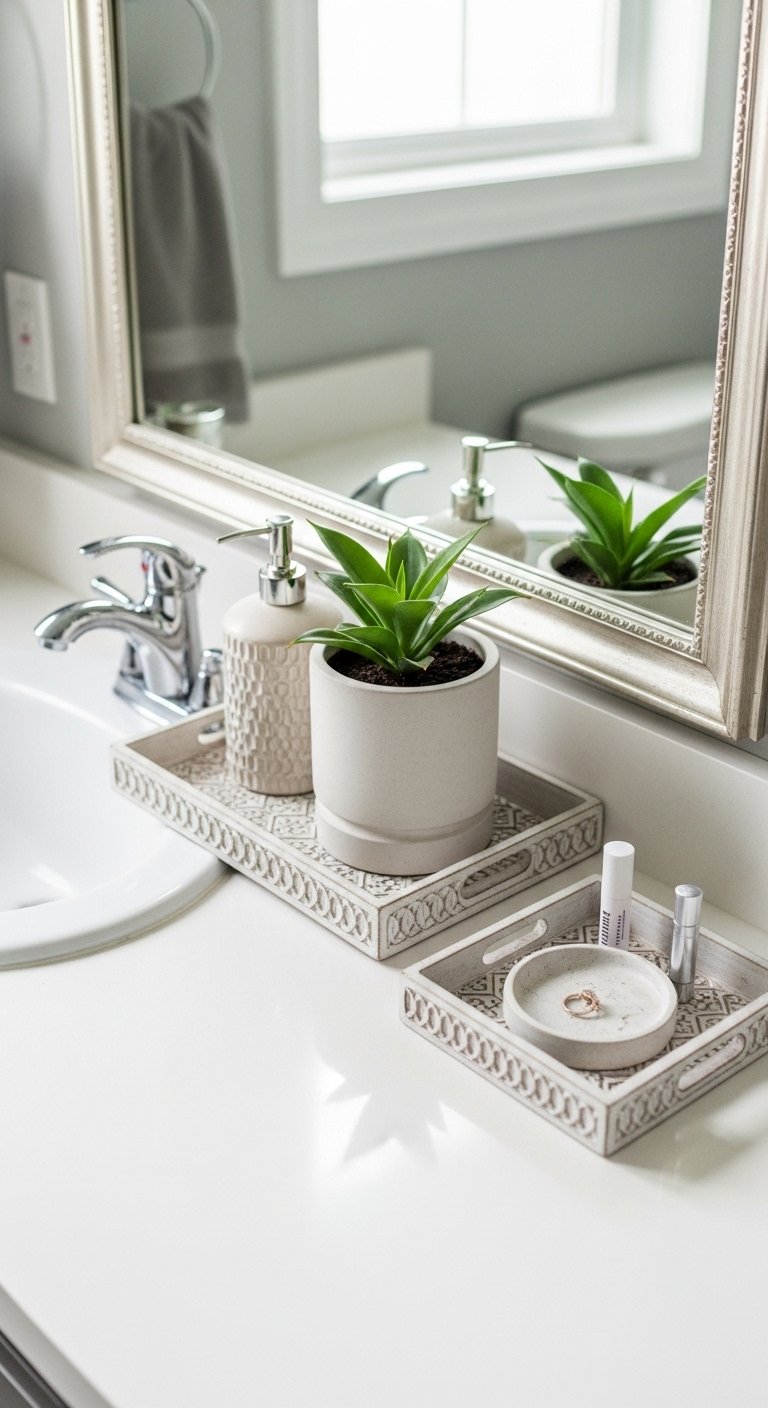
A bathroom counter without a tray system collects objects in a random, gradually expanding pile. A counter with a tray or two uses the same objects but organizes them into defined zones that look intentional and stay that way with much less effort. Place a medium tray near the sink for daily-use items: the soap dispenser, a hand lotion, and one or two items that genuinely need to be within immediate reach. Place a second smaller tray or a decorative dish for items like jewelry or a hair clip that get set down temporarily and have a tendency to spread across the whole counter without a container. The trays do not add storage in a literal sense, but they create visual and physical boundaries that keep the counter from becoming a general landing zone for everything that gets carried into the bathroom.
18. Hanging Cosmetic Organizer
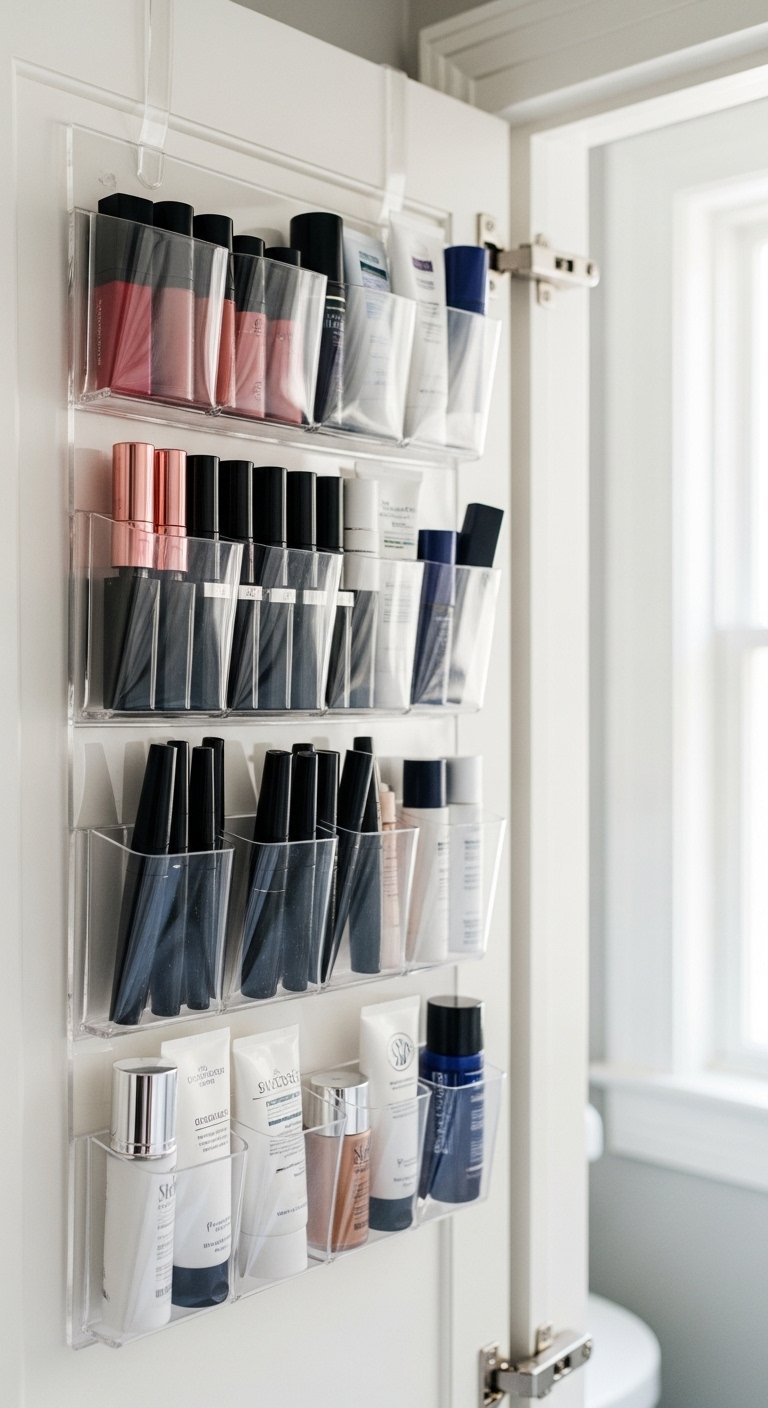
A hanging cosmetic organizer, the type that attaches to the back of a cabinet door or to a wall-mounted hook, keeps makeup and skincare products organized and visible in a way that drawer storage cannot match. When products are stored flat in a drawer, they are difficult to see and tend to get buried as the drawer fills. A hanging organizer with clear compartments of various sizes displays products facing outward at eye level, which makes finding a specific item fast and prevents the accumulation of duplicates. These organizers are available in clear acrylic, fabric with open pockets, and plastic panel versions with adjustable compartments. Most can be adapted to hold skincare products on one side and makeup on the other, effectively replacing multiple drawers of storage in a slim, visible format that uses the back of a cabinet door.
19. Stacked Towel Display

A neat stack of rolled or folded towels displayed openly on a shelf, in a basket, or on a ladder rack is both a storage solution and a decorative element that immediately makes a bathroom look more like a spa or hotel bathroom. Rolling towels rather than folding them allows more to fit in the same space and creates a cylindrical display that shows the end of the towel rather than the folded edge, which looks softer and more intentional. Stack rolled towels vertically in a basket or horizontally in a row on a shelf. Keep the color palette consistent, all white, all the same neutral tone, or a very simple two-color combination that reads as coordinated rather than random. The open display of clean, consistently presented towels turns storage into decor and makes the most-used items in the bathroom into a visual feature.
20. Vertical Toilet Paper Holder
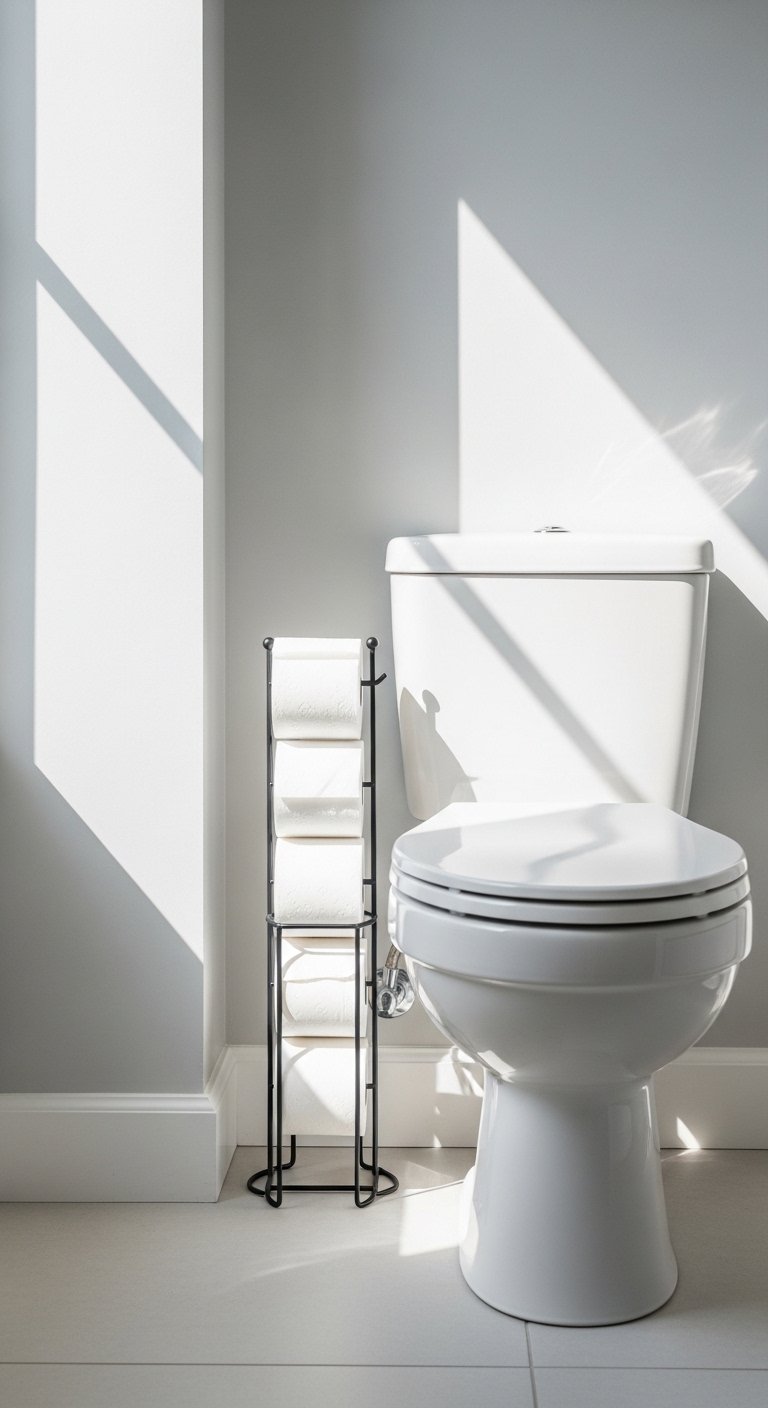
A freestanding floor-standing toilet paper holder that holds four to six extra rolls vertically beside the toilet keeps backup toilet paper organized and accessible without needing a cabinet or a shelf. This is a small but genuinely practical piece of bathroom storage that solves a problem that most bathrooms deal with poorly, finding a place to store the backup rolls that is out of the way but reachable when needed. Most freestanding toilet paper storage units cost under twenty-five dollars in slim profiles that fit easily between the toilet and the wall or beside the vanity. In a brushed nickel, matte black, or natural wood finish that coordinates with existing hardware, a toilet paper holder becomes a small but intentional detail in the bathroom rather than a practical afterthought.
21. Shower Shelf Caddy Rail
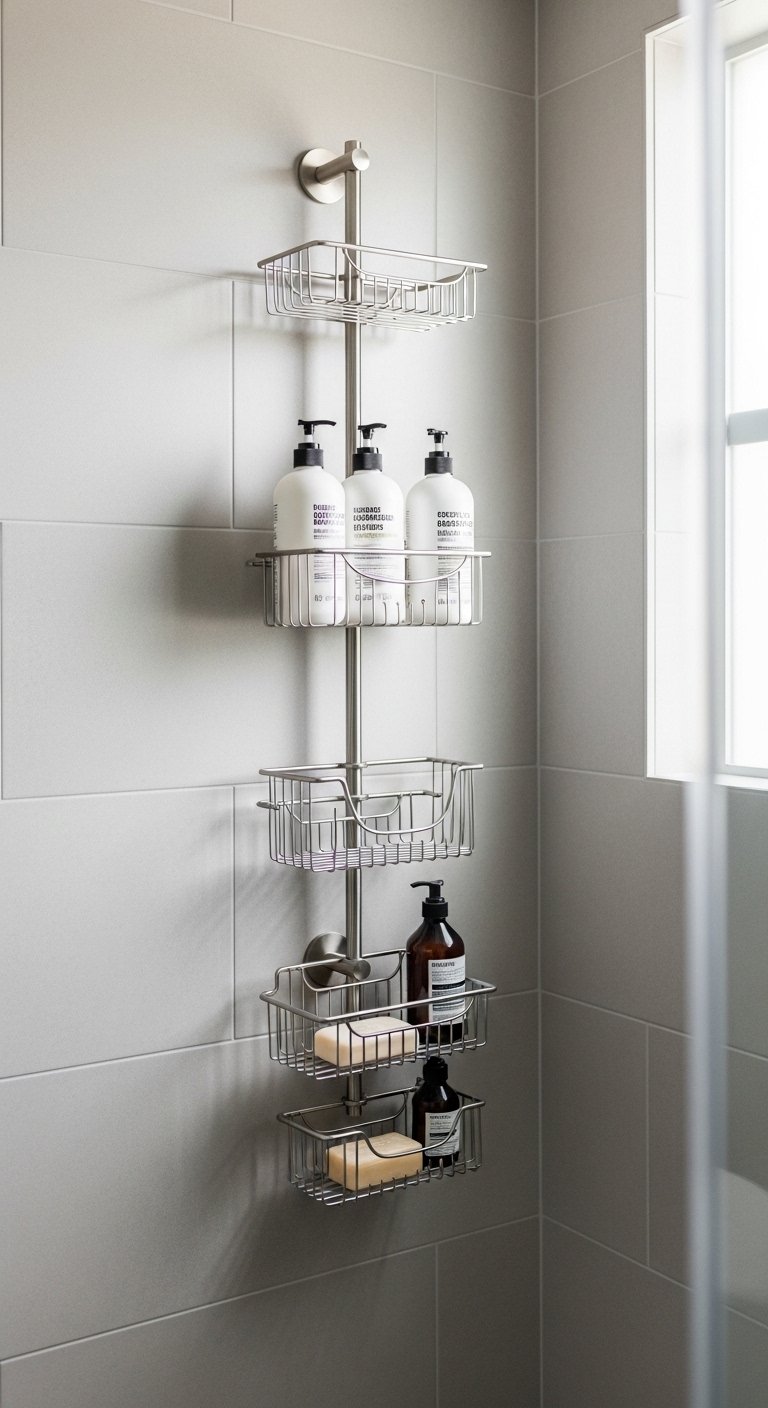
A stainless steel wall-mounted shower rail with multiple adjustable caddies is a permanent and clean-looking solution to shower storage that can be installed in any shower with accessible wall studs. The rail mounts to the wall in two points and the individual caddies clip onto the rail at any position, allowing you to adjust the height and number of storage spots based on the products you use and the height of the people using the shower. Each caddy drains freely since the bottom is a wire mesh that allows water to run off. The entire system looks streamlined and intentional compared to a tension caddy or a hook caddy, and because the individual caddies can be removed and cleaned easily the system stays hygienic over time. This is a modest investment that serves the shower permanently.
22. Mirrored Cabinet Addition

Adding a mirrored wall cabinet beside or above the existing vanity, where space allows, adds both storage and reflected light to the bathroom in a single installation. The mirrored exterior of the cabinet contributes to the visual openness of the room by reflecting light and creating a sense of depth, while the interior of the cabinet holds a significant number of daily-use items behind a surface that reads as a clean mirror rather than a cabinet door. In a bathroom where the medicine cabinet is already full and the under-sink cabinet is at capacity, adding a second small mirrored cabinet to an available wall section is often the most efficient way to add meaningful storage without making the room feel more crowded.
23. Declutter Ruthlessly First
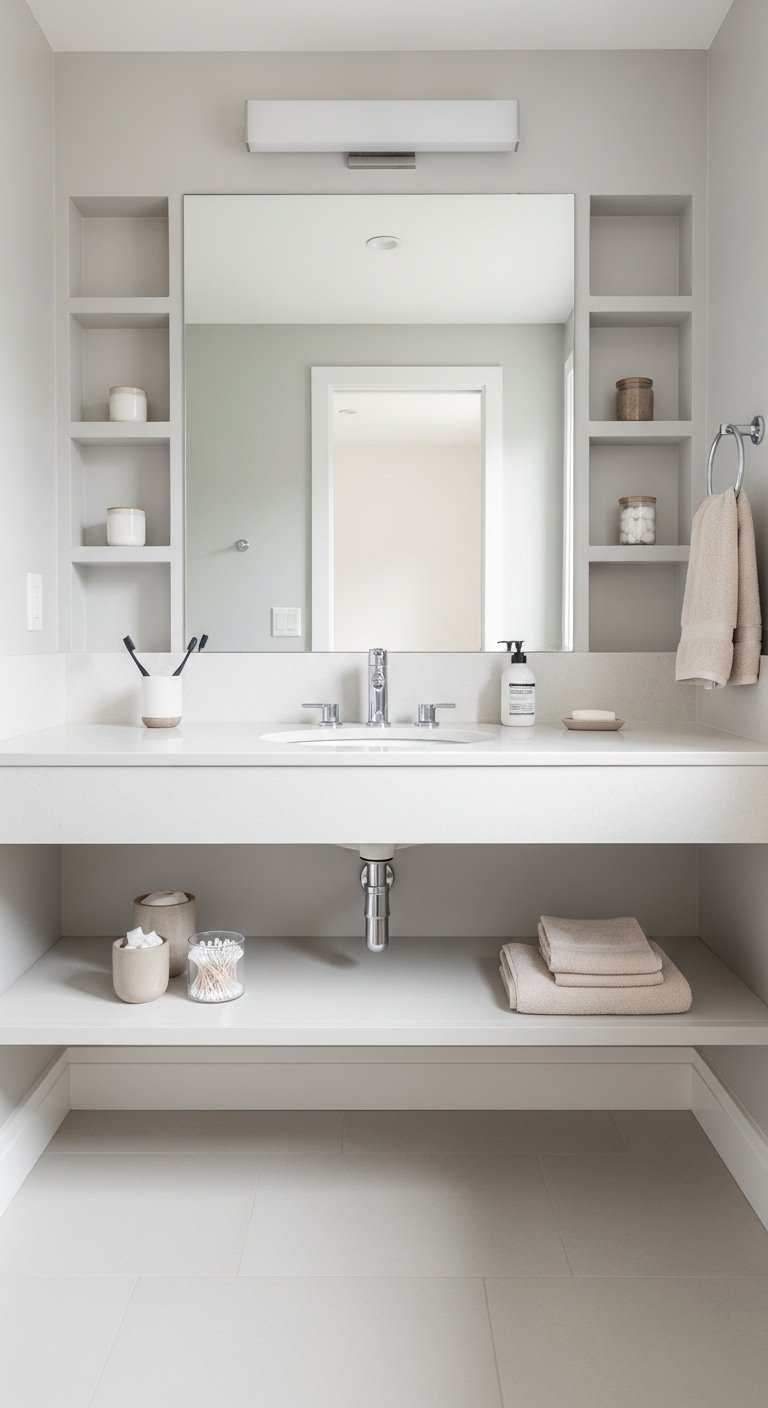
Before adding any new storage system to a bathroom, going through every item currently in the room and removing anything that is expired, empty, no longer used, or does not belong there is the most important step. Most bathrooms contain a surprisingly large number of products that are kept out of habit rather than use, expired medications, half-empty bottles of things that were not liked, duplicate items from promotional sets, and items that drifted in from other rooms. Removing these items before installing any new storage means the new system is sized for what actually needs a home rather than for the accumulated inventory of years of gradual addition. This step is free and it almost always reveals that the bathroom has more than enough storage for its actual current contents.
24. Bin Under Each Sink
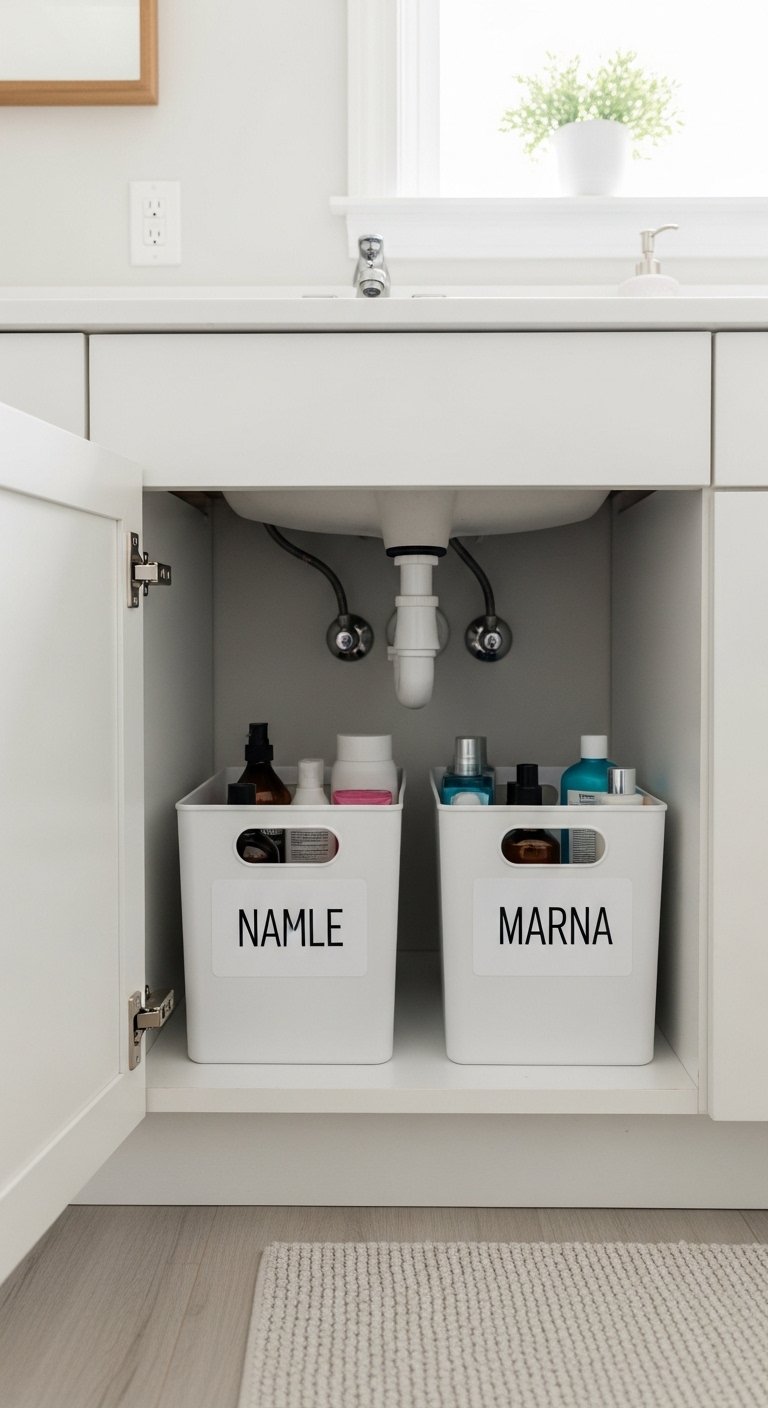
In a double-sink bathroom or a bathroom where the under-sink cabinet is shared between multiple people, assigning one specific bin to each person and placing it under their respective sink creates a completely clear system for whose products are whose and where everything belongs. Each person pulls their bin out, uses what they need, and returns the bin. The cabinet floor remains organized and neither person’s products encroach on the other’s space. Label the bins clearly with each person’s name. Even in a single-sink bathroom, using two or three clearly labeled bins for different categories of products, one for daily use items, one for backup stock, one for hair care, works the same way and keeps the under-sink cabinet organized with minimal daily effort.
25. Weekly Reset Habit
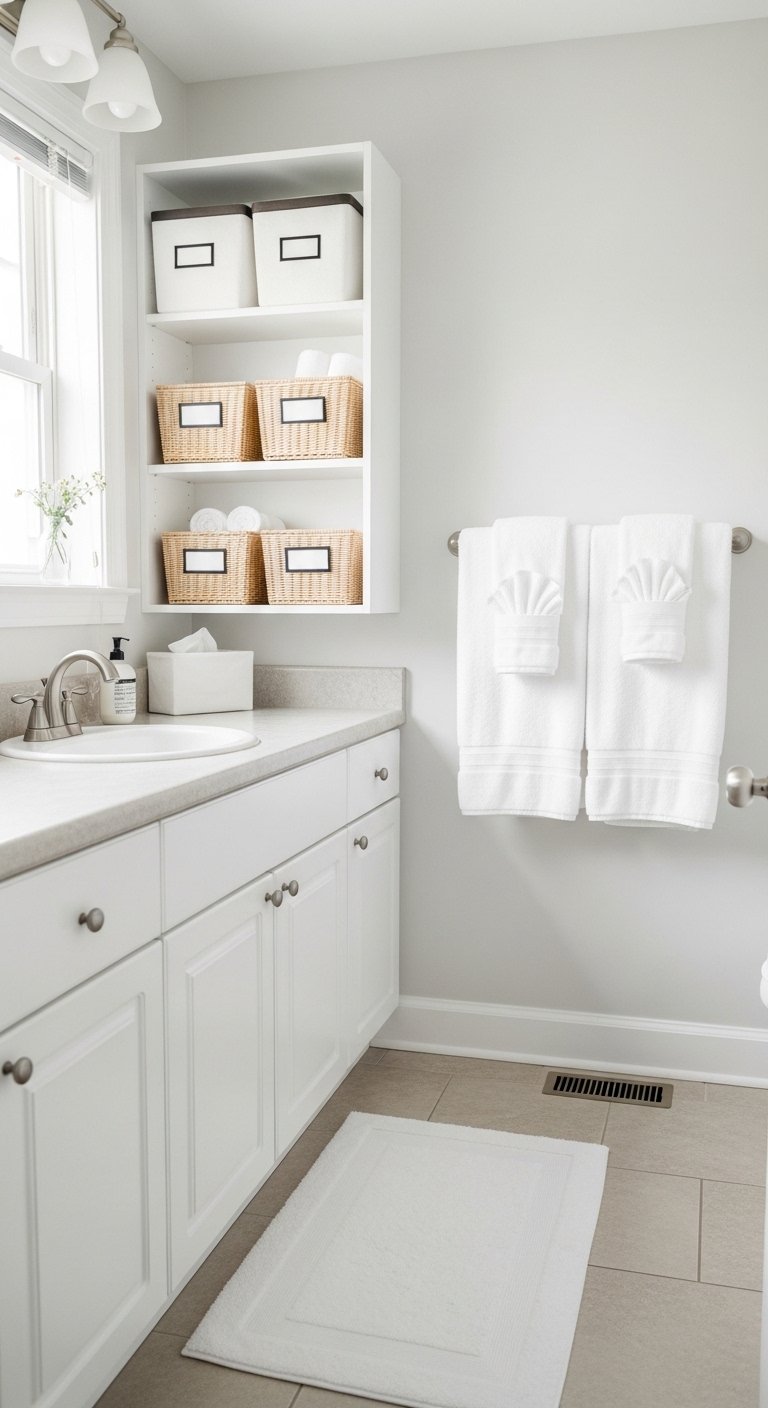
The most reliable bathroom storage solution is not a new cabinet or a new organizer. It is the habit of a weekly reset. Once a week, every item in the bathroom that has drifted out of its place goes back to where it belongs, the counter gets cleared and wiped down, anything that is empty or expired gets discarded, and the towels and bath mats get changed. This fifteen-minute habit maintains the organization created by every other idea on this list. Without it, even the best-organized bathroom gradually returns to clutter over a period of weeks. With it, every other storage system stays effective and the bathroom remains genuinely organized rather than periodically clean. A good storage system makes the weekly reset easy. The weekly reset makes the good storage system last.
The best bathroom storage system is the one that makes it easier to put things back than to leave them out. When everything has a specific home that is convenient to use, the bathroom stays organized naturally rather than requiring constant effort to maintain.