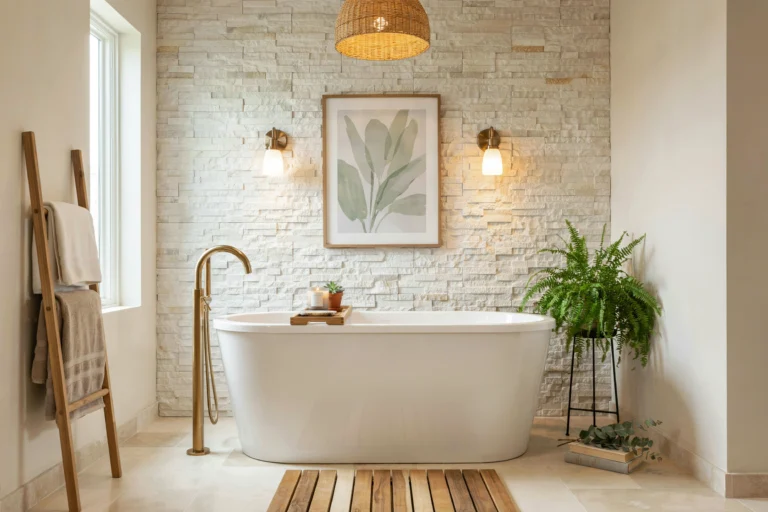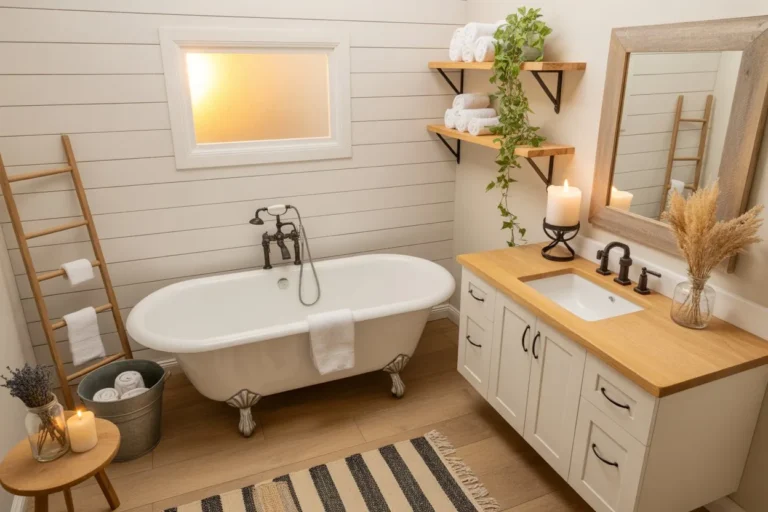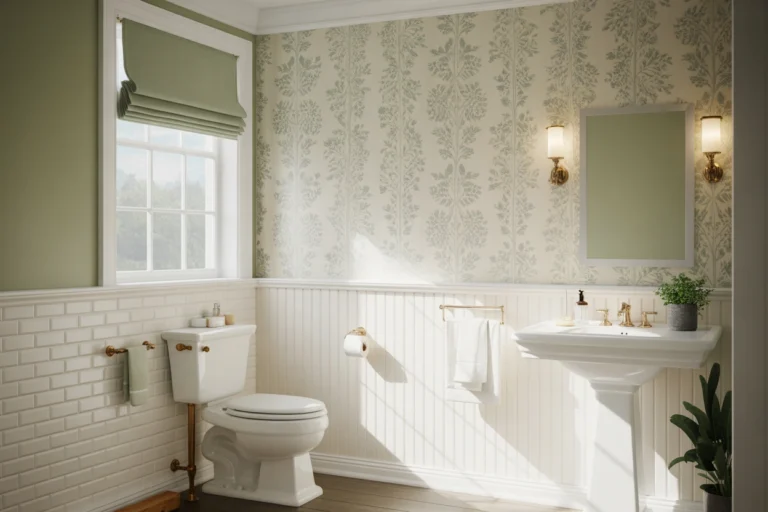
21 Small Bathroom Ideas That Make a Tiny Space Feel Much Bigger
Most small bathrooms have the same problem. They feel tight and cluttered before you even add a single thing to them, and every object you bring in makes it a little worse. But the size of a bathroom has less to do with how it feels than most people think. A small bathroom that is well lit, properly organized, and styled with a bit of intention can feel genuinely spacious compared to a larger one that has been set up poorly. These 21 ideas work with what you have. None of them require gutting the room or spending a lot of money. They are practical, direct, and effective in real bathrooms of every size and shape.
1. Large Format Floor Tiles

One of the most reliable ways to make a small bathroom floor feel larger is to use fewer, bigger tiles rather than more, smaller ones. When a floor has many small tiles, the grout lines create a busy visual grid that chops the floor into segments, which makes the space feel smaller. A large format tile in a light neutral tone, something like a twelve-by-twenty-four-inch or even an eighteen-by-eighteen-inch stone-look or concrete-look tile, lets the eye travel across the floor without interruption. This single change can make the floor read as significantly larger than it is. For the most open effect, lay large tiles on the diagonal rather than in a standard grid alignment. The angled layout pushes the visual lines toward the corners of the room, which makes the floor appear wider in both directions.
2. Frameless Glass Shower
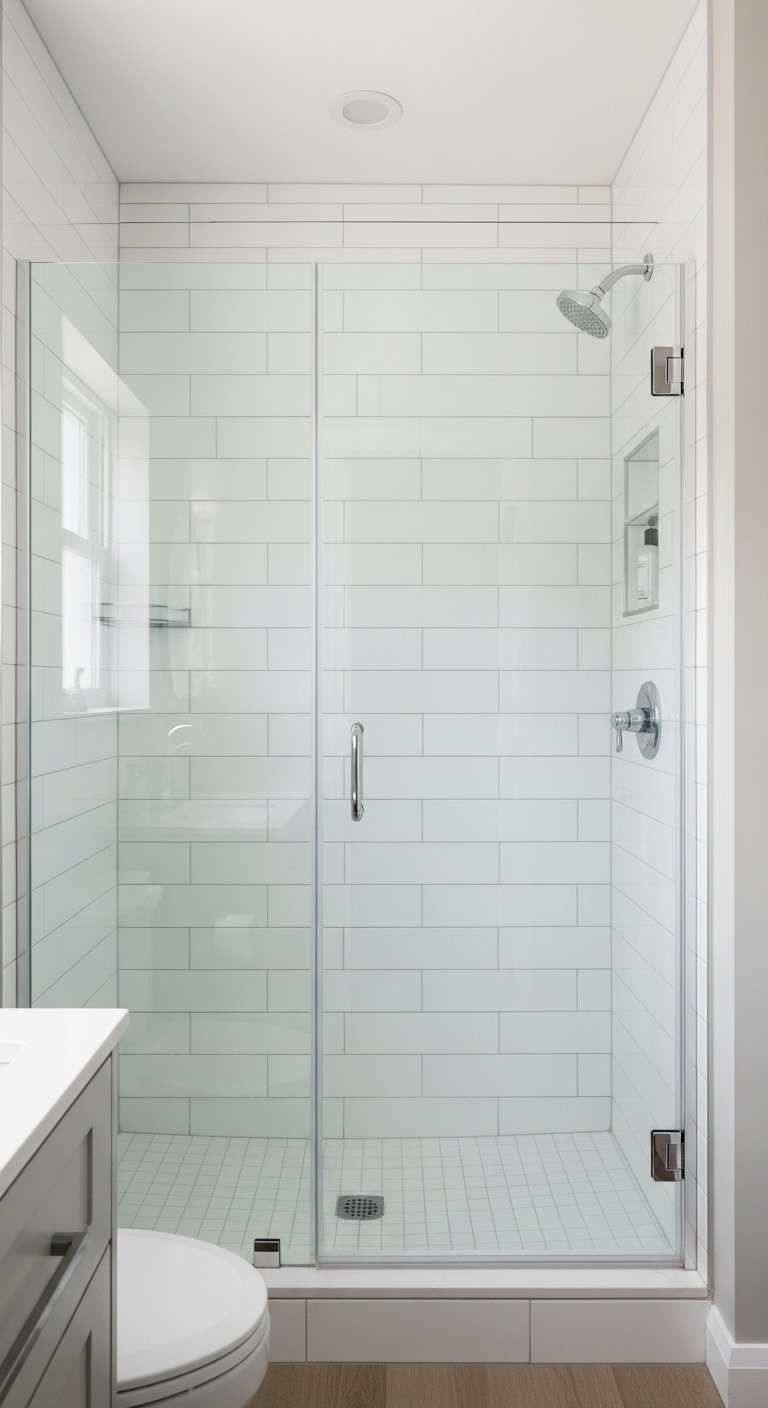
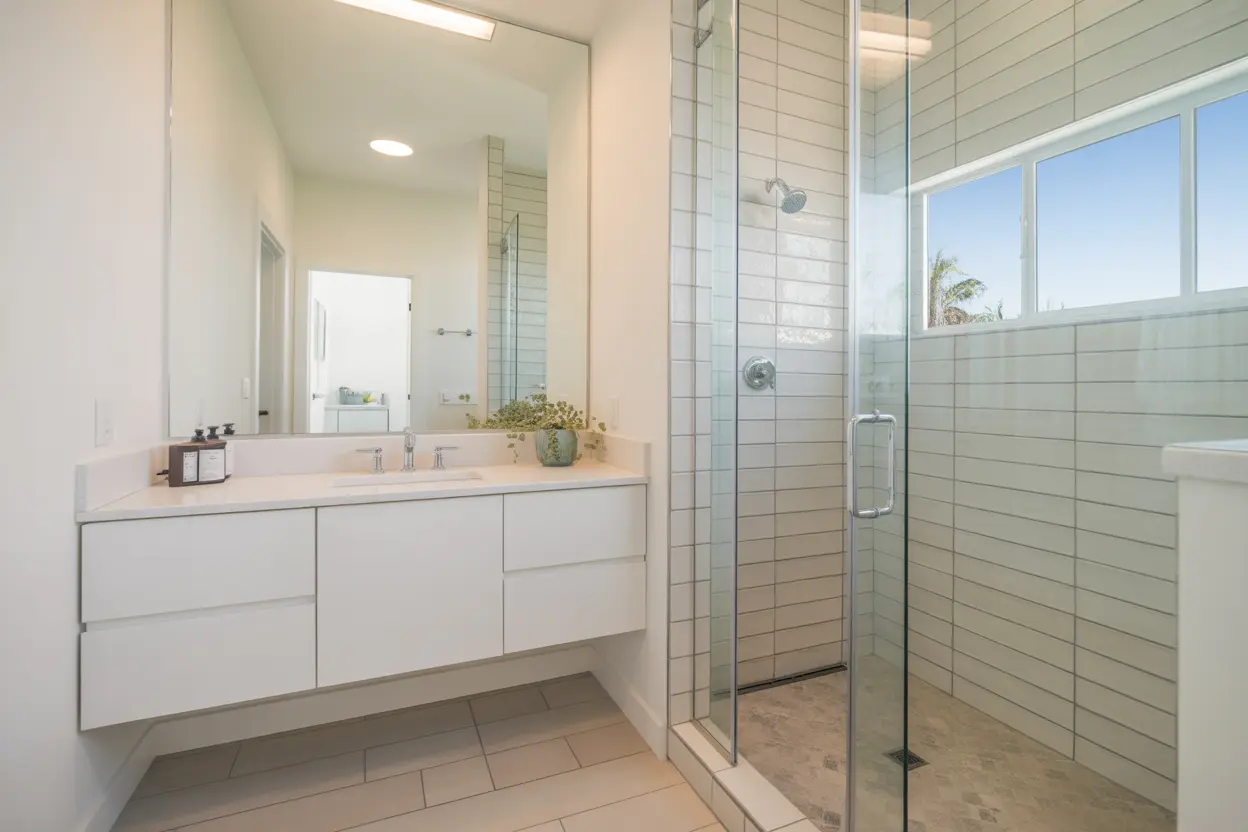
A shower enclosed in frameless glass is one of the most effective things you can do to open up a small bathroom. Metal-framed shower enclosures, even ones with thin profiles, create a visual boundary that divides the room into the shower zone and the rest of the bathroom. A frameless glass enclosure, or a simple glass shower screen rather than a full enclosure, removes that boundary entirely. The eye travels through the glass to the back wall of the shower, which makes the bathroom feel like one continuous space rather than two cramped ones. In a very small bathroom, even a single frameless glass panel replacing a shower curtain rod and curtain creates a noticeably more open feeling. The glass also keeps the wall tile or feature wall visible at all times, which means any decorative investment in the shower wall pays off visually even from outside the shower.
3. Wall-Mounted Toilet
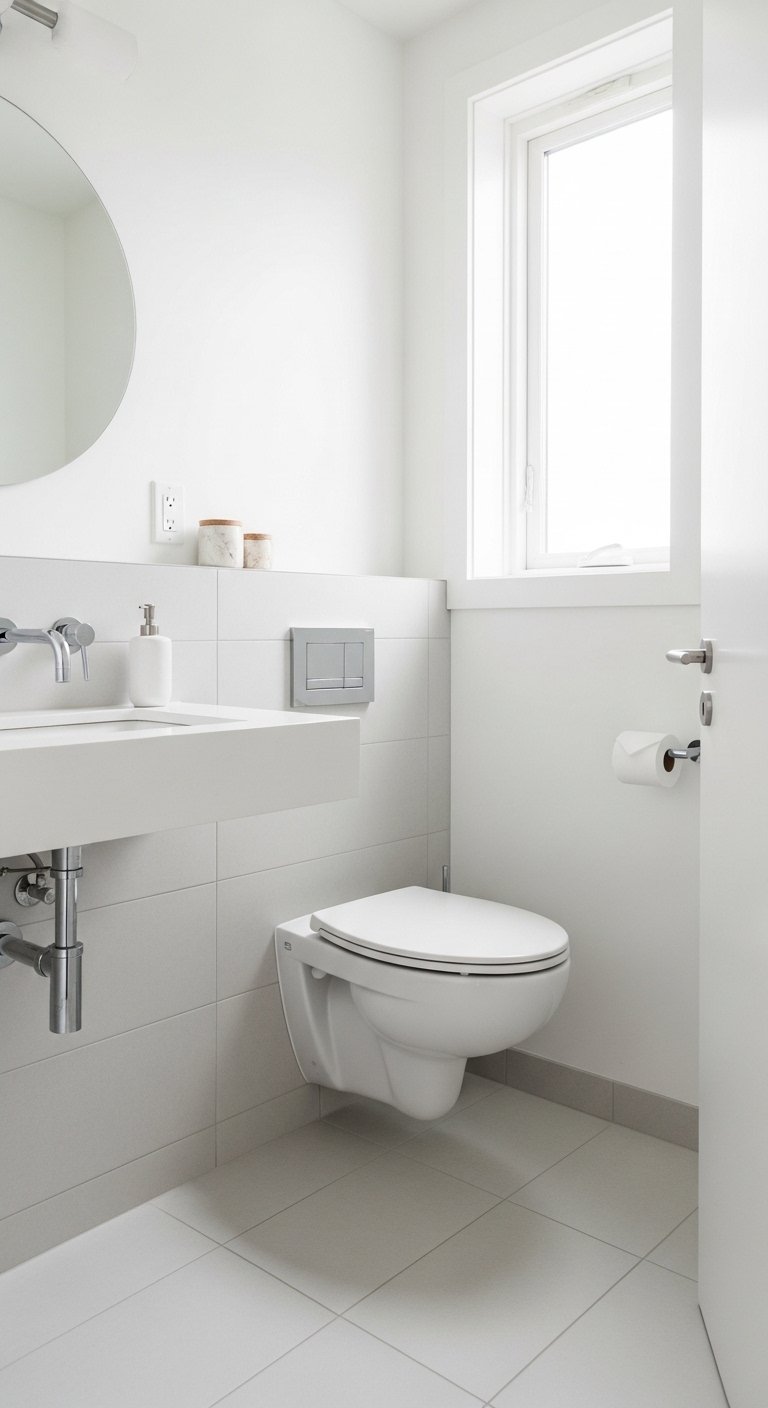
A wall-mounted toilet, sometimes called a floating toilet, has its tank hidden inside the wall and its bowl suspended above the floor with no visible base touching the ground. This creates an unbroken view of the floor beneath the toilet, which does for the bathroom floor what slim furniture legs do for a living room floor: it makes the floor appear to continue rather than ending at a piece of furniture. The visual effect is a more open, airy room with more apparent floor space. Wall-mounted toilets require a carrier frame to be installed inside the wall during construction or renovation, which makes them a more involved project than standard toilets. However, they also make the floor around the toilet significantly easier to clean, which is a practical benefit worth mentioning alongside the visual one.
4. Floating Vanity Installation
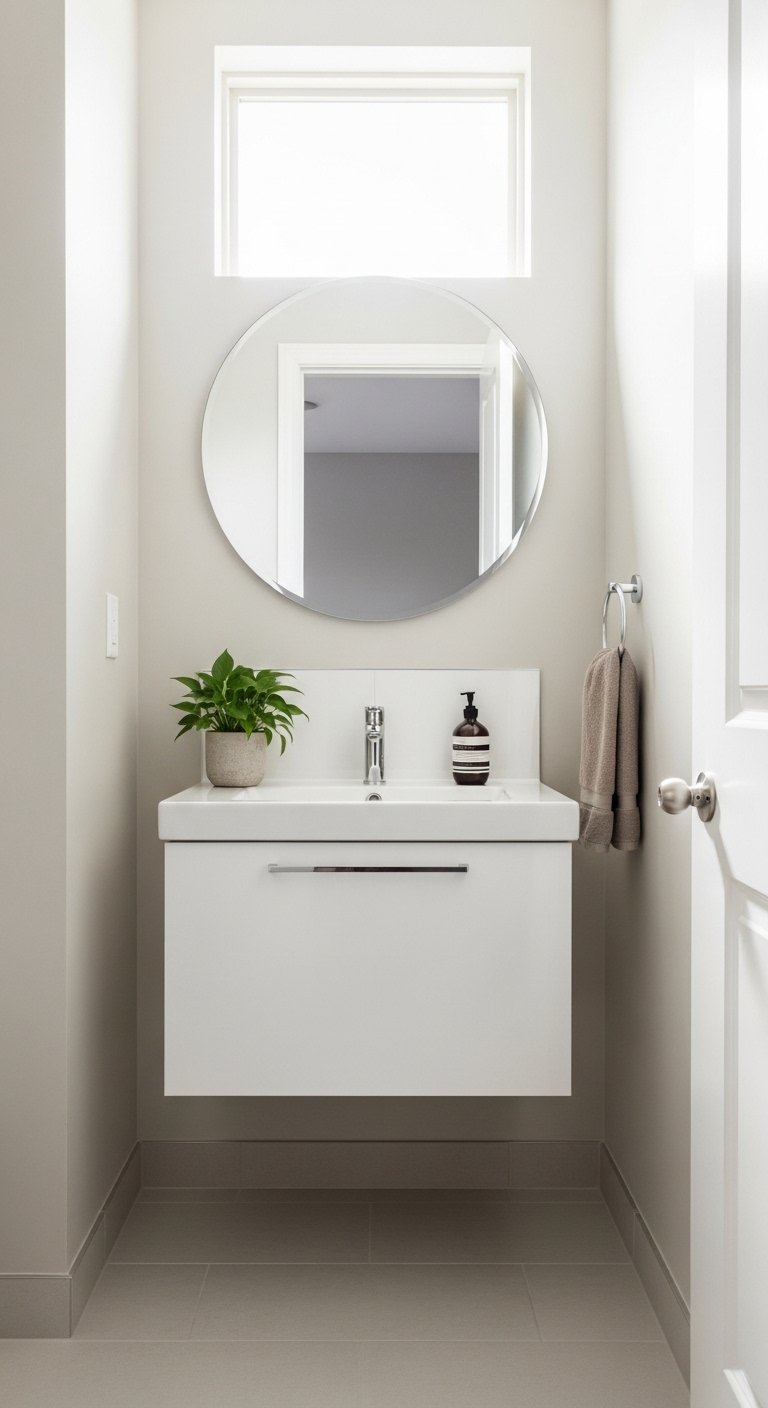
A floating or wall-mounted vanity that leaves the floor visible beneath it has the same space-opening effect as a wall-mounted toilet. When the floor runs continuously under all the fixtures in a small bathroom rather than being blocked by cabinet bases and toilet bases, the room reads as having more square footage than it actually does. A floating vanity also makes the floor much easier to mop and clean, since there are no bases or feet to work around. Most floating vanities are available in slim depth options, some as shallow as fourteen inches from wall to face, which is a meaningful space saving in a bathroom where inches matter. Style the vanity top simply with just a hand soap, a small plant, and one or two everyday items to keep the surface clean and the room looking open.
5. Large Wall Mirror
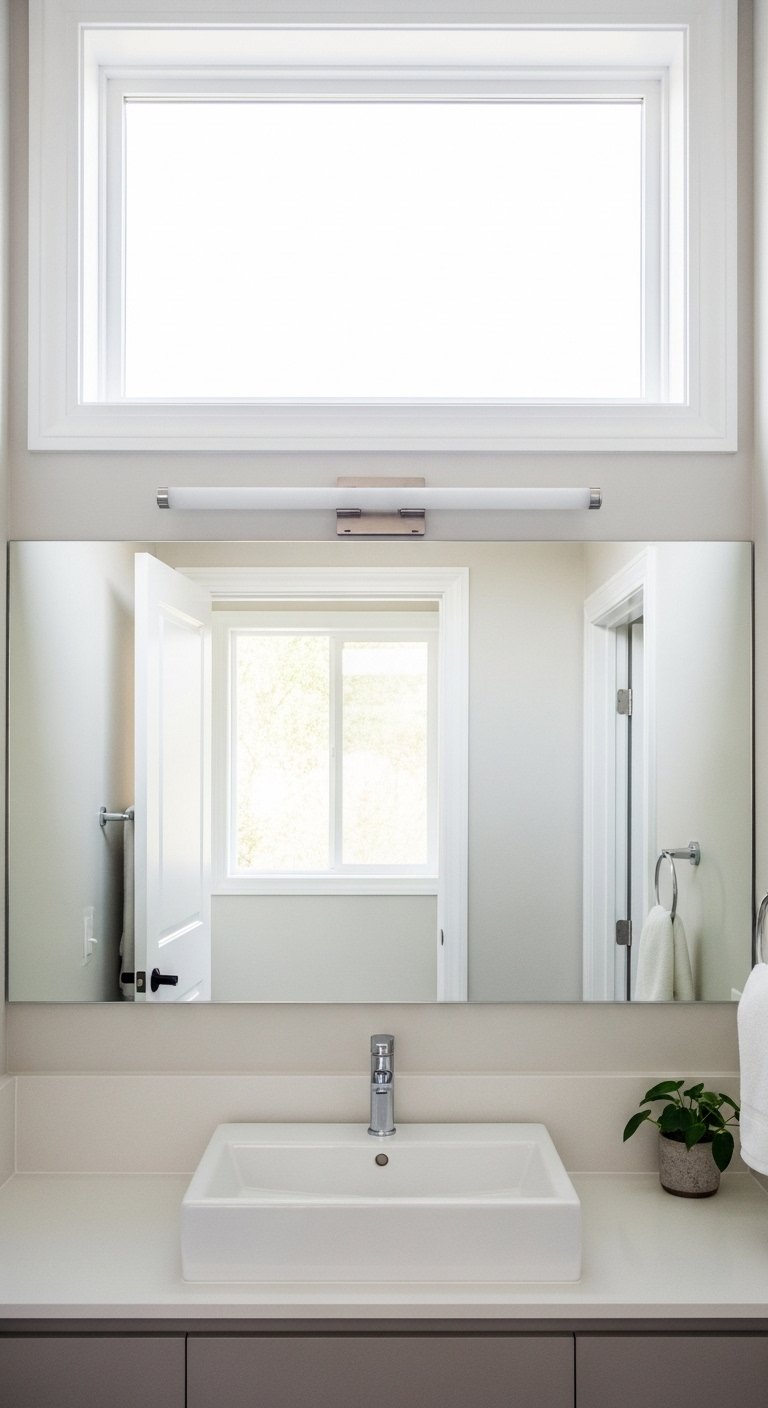
A mirror that covers most or all of the wall above the vanity, rather than a small round or rectangular mirror centered above the sink, doubles the visual depth of the bathroom and reflects both natural and artificial light across the room. In a small bathroom, a full-width mirror above the vanity is one of the most impactful changes you can make without touching the plumbing or the tile. It makes the room feel twice as wide by creating the impression of a second identical room beyond the glass. For a bathroom with a window, position the mirror so it reflects the window and the natural light coming through it. A frameless mirror looks the most seamless and open. A mirror with a thin metal frame in a warm tone is a close second and adds a subtle design detail without intruding on the openness.
6. Light and Neutral Tiles
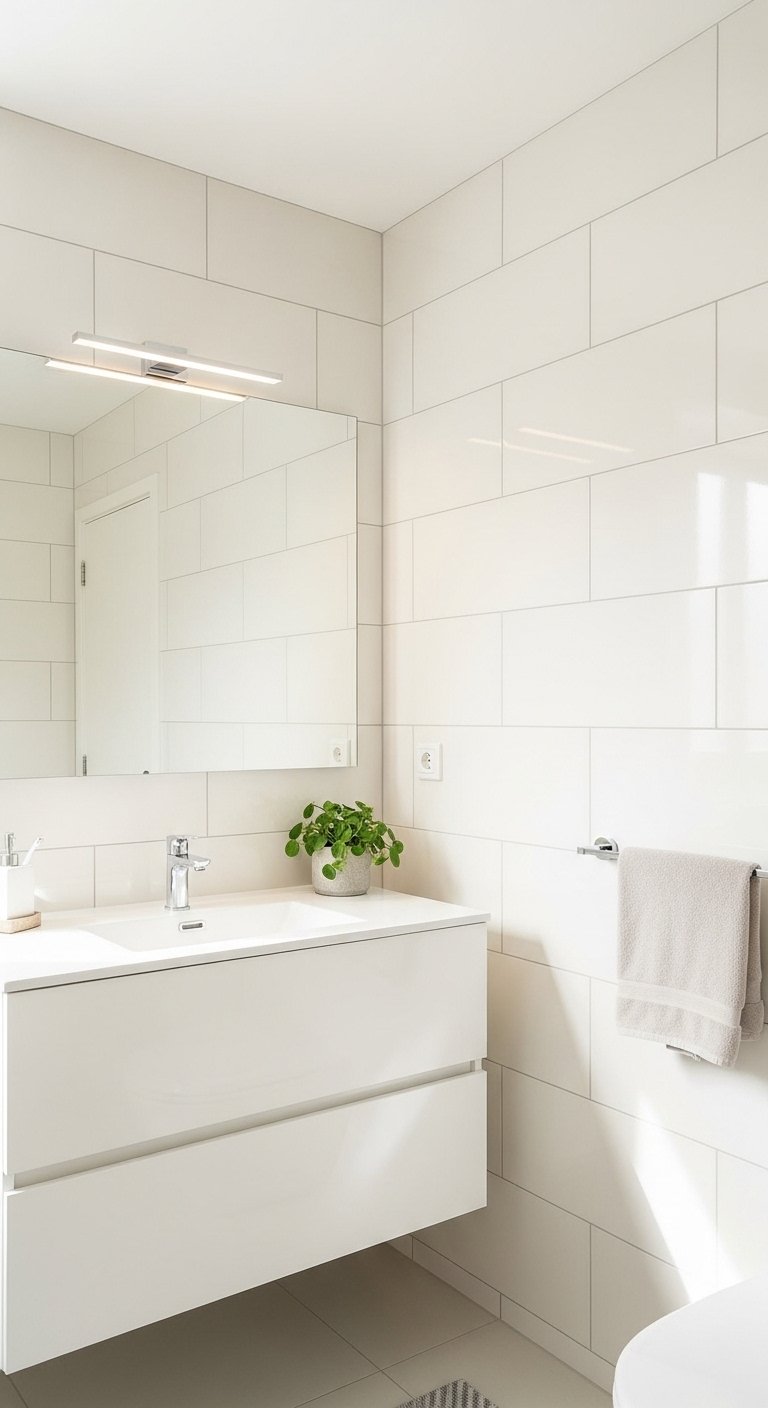
Dark tile in a small bathroom absorbs light and makes the walls feel closer together. Light tiles in a soft neutral tone, warm white, pale gray, cream, or barely-there sage, reflect light and keep the eye moving across the surface rather than stopping at it. This is most important on the walls, since wall tiles are the largest visible surface in most bathrooms. For the most open result, choose a tile in a large format and a light tone with a slight sheen rather than a fully matte finish. The subtle gloss picks up light from the fixture above and from any natural light in the room and distributes it gently across the wall. Even a bathroom with no natural light will feel brighter with light reflective tiles than with dark matte ones. Keep the grout color close to the tile color so the grout lines blend in rather than dividing the surface.
7. Recessed Storage Niche
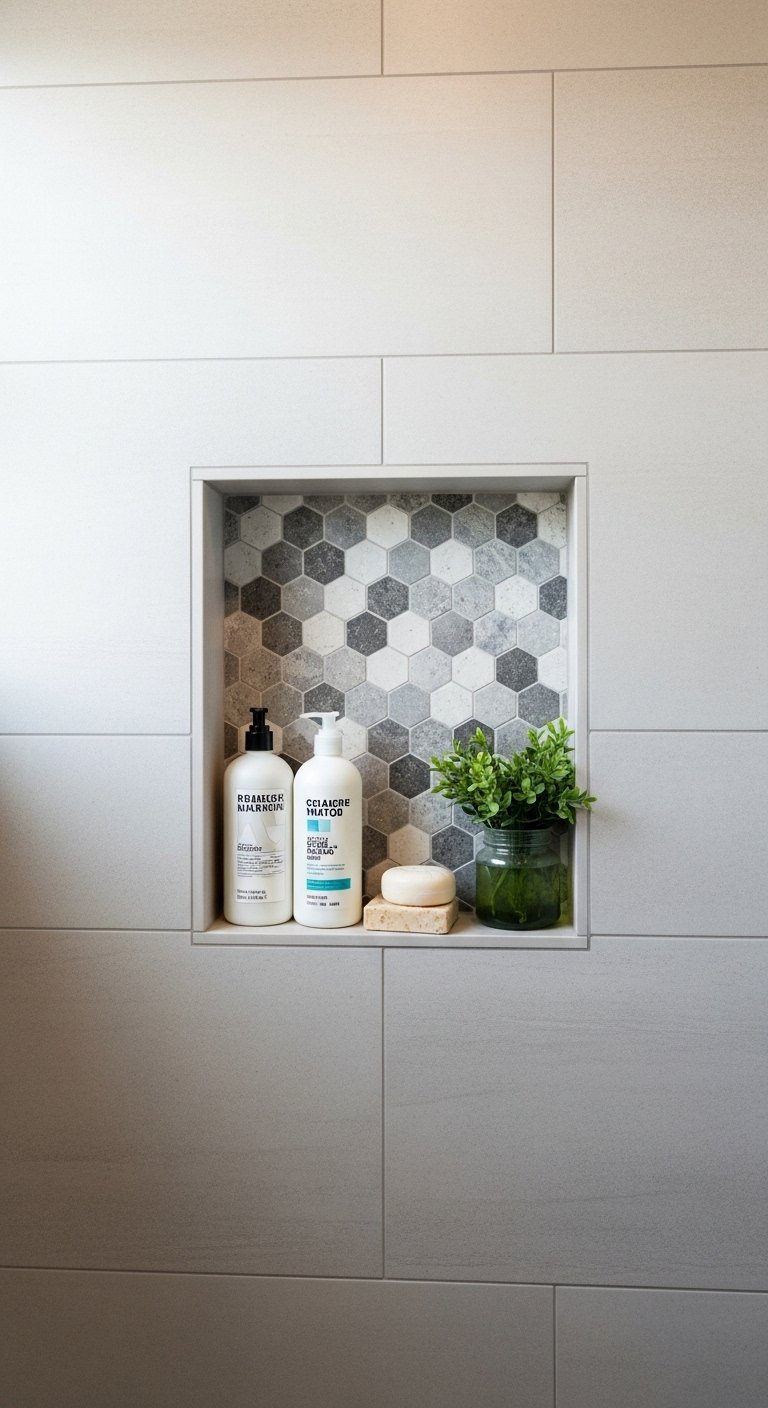
A recessed storage niche built into the wall of the shower or between the studs on a bathroom wall creates storage without projecting anything into the room. Standard surface-mounted shelves and corner caddies hang into the bathroom space and create visual clutter as well as reducing the usable area of the shower or the room. A tiled niche that sits flush with the wall surface holds shampoo, soap, and other shower items completely out of the way while contributing a clean, architectural detail to the shower design. Even a single niche in the shower wall removes the caddy from the space and immediately makes the shower look more finished and more spacious. In the main bathroom, a recessed niche beside the toilet or between the vanity and the wall can hold toilet paper, small items, or decorative objects without any protrusion into the room.
8. Towel Bar Over Door

The back of the bathroom door is one of the most consistently underused storage areas in a small bathroom. An over-the-door towel bar or hook rail mounted on the back of the door holds multiple full-size towels without using a single inch of wall space. This is especially valuable in bathrooms where the walls are already occupied by the vanity, the toilet, and the shower or tub, leaving little room for a standard towel bar. Over-the-door organizers require no tools and no installation and can be removed completely without any wall damage, making them one of the best options for rental bathrooms as well as permanent ones. Look for a bar that holds at least two towels and has a hook or two above for hand towels or robes. The towels stay accessible and the walls stay clear.
9. Pocket Door Replacement
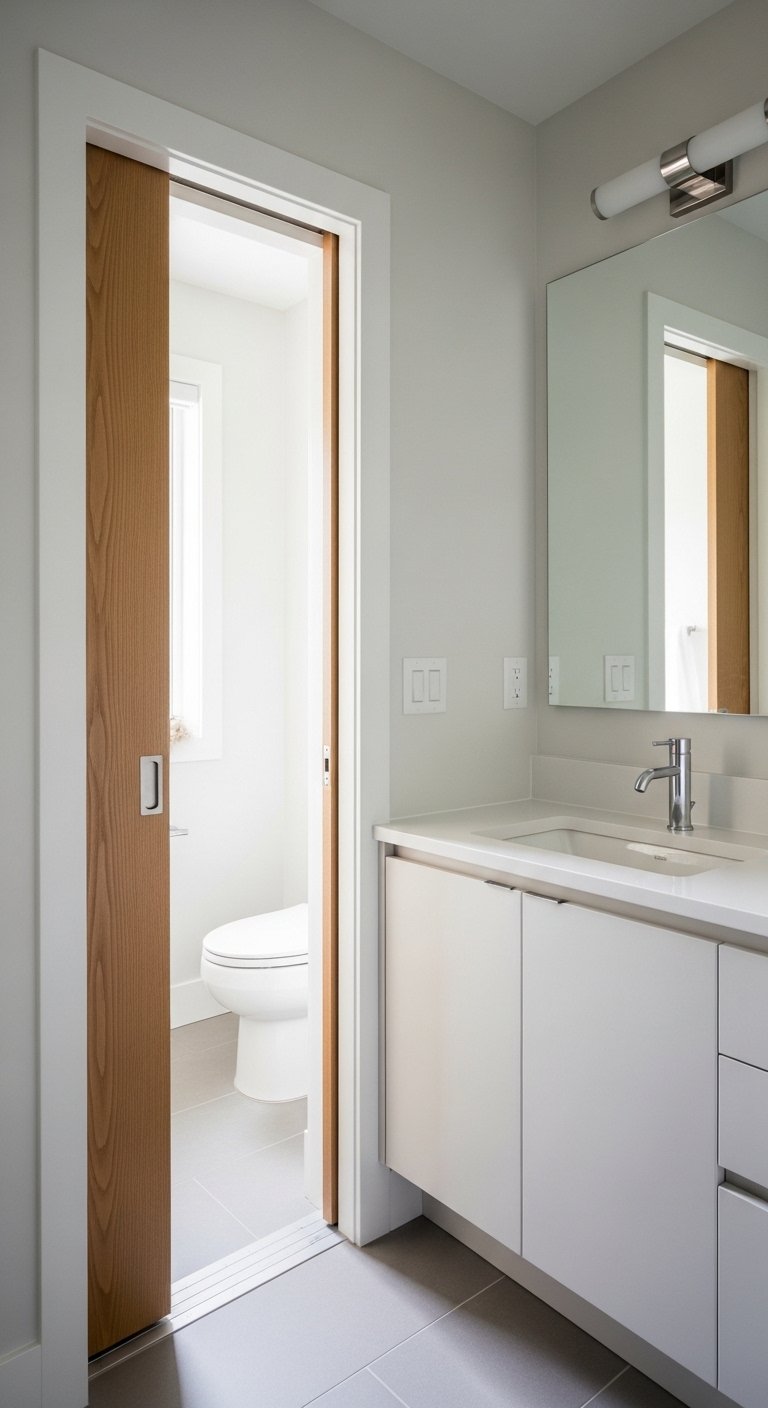
A standard bathroom door that swings into the room takes up the floor space of its full swing arc, which in a small bathroom can be a significant fraction of the total usable area. Replacing it with a pocket door that slides into the wall eliminates that floor area completely and makes the bathroom easier to navigate, especially in a very small space where a swinging door can bump against the toilet or the vanity. Pocket door installation involves opening the wall to create the cavity for the door to slide into, which is more involved than a simple door swap. However, the floor space returned by removing the door swing can genuinely change how a small bathroom functions day to day. A barn-style sliding door mounted on the wall face is a simpler alternative that removes the floor swing without requiring wall work, though it does require clear wall space beside the door opening.
10. Vertical Subway Tiles
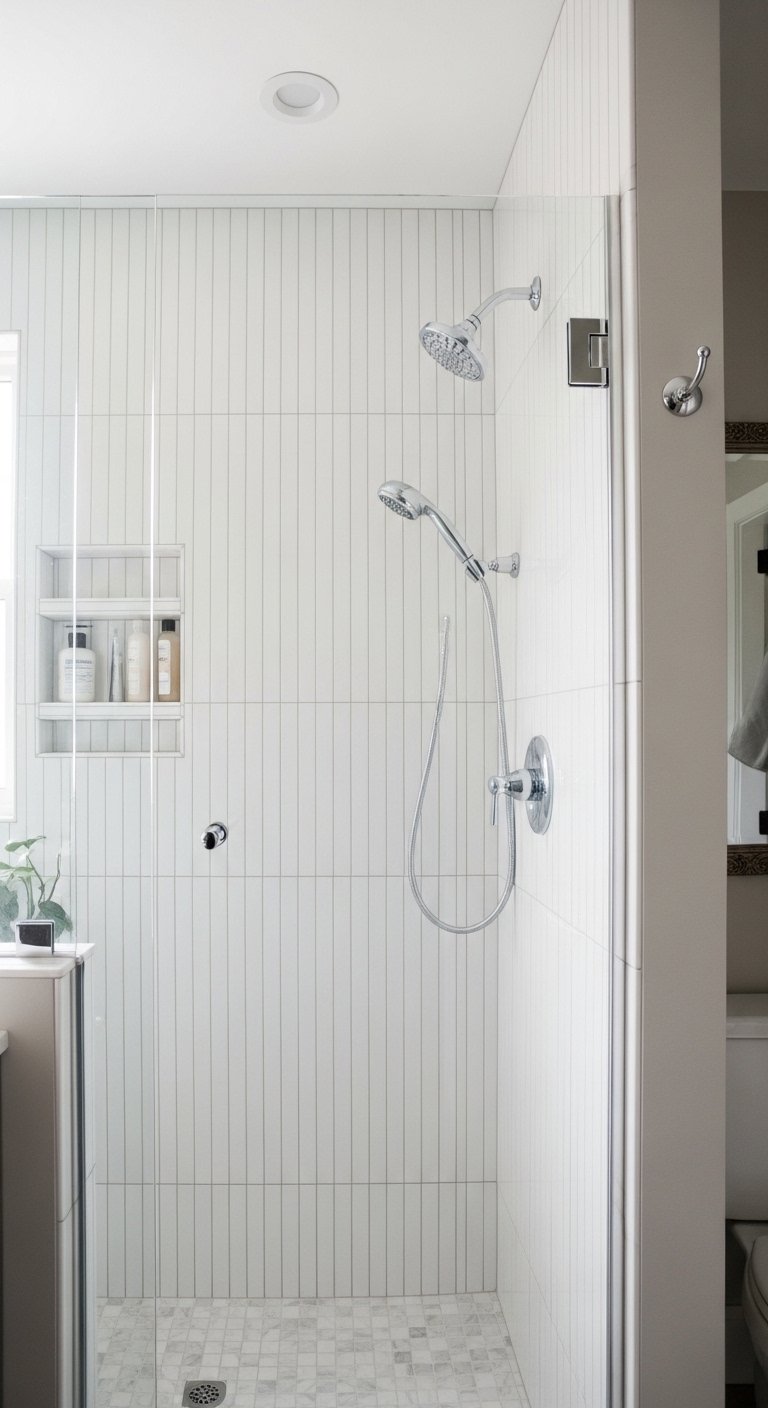
Subway tiles installed vertically rather than in the standard horizontal brick pattern create strong upward visual lines that make bathroom walls feel taller and the room feel more spacious. The horizontal brick pattern is classic and appealing, but in a very small bathroom it can reinforce the sense of the walls pressing inward. Vertical installation of the same tile pushes the eye upward instead, which makes the ceiling feel higher by comparison and the room feel less enclosed. This works particularly well in a shower, where the vertical lines draw the eye from the floor to the ceiling and create an unbroken upward rhythm. Use a grout color that is very close to the tile color for the cleanest version of this look. Minimal grout contrast lets the vertical lines read more clearly than a contrasting grout that draws equal attention to the horizontal breaks between tiles.
11. Glass Shelf Instead
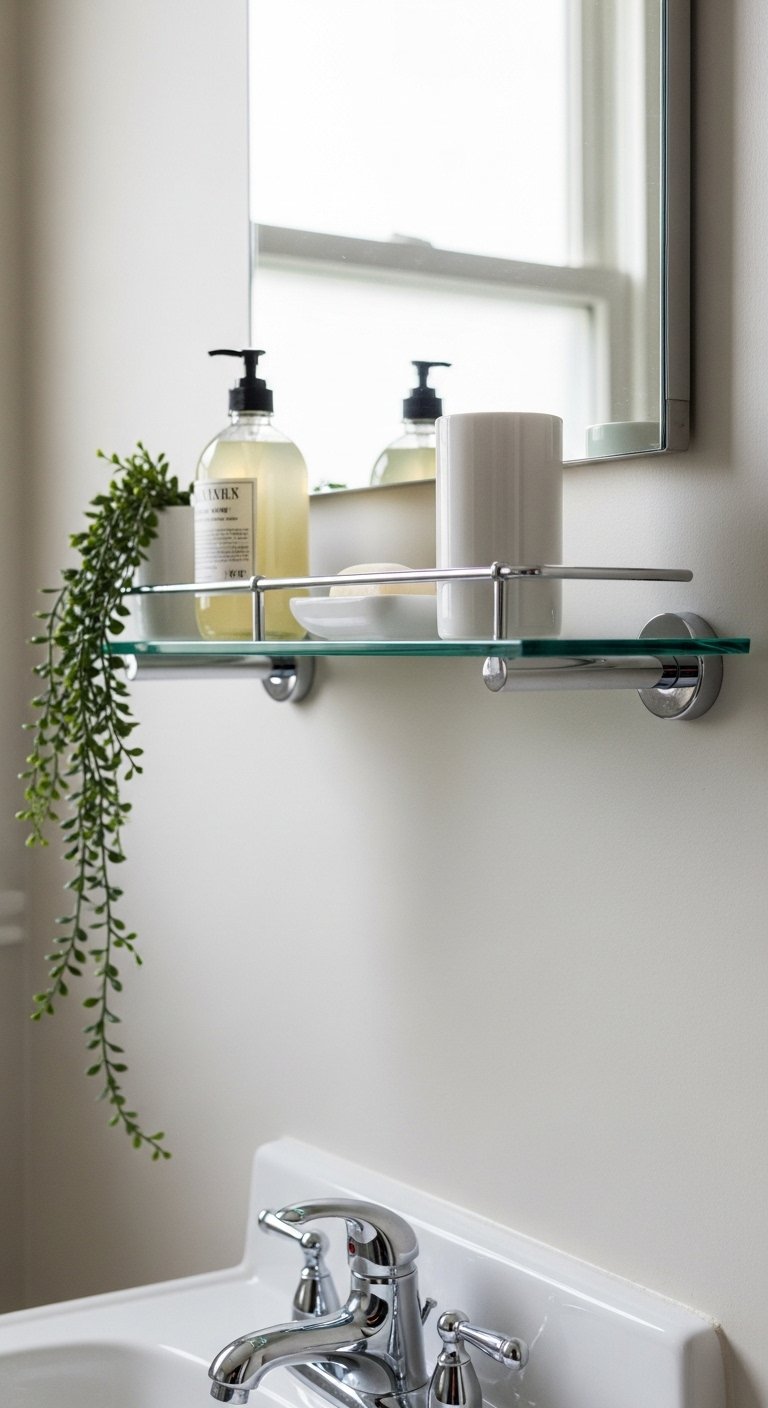
Replacing a wooden or metal bathroom shelf with a glass version, or adding a glass shelf where no shelf existed before, keeps storage visible and accessible without adding visual weight to the wall. A wooden shelf in a small bathroom reads as a solid block on the wall that divides the space. A glass shelf in the same location reflects light and allows the wall behind it to show through, which keeps the wall feeling continuous rather than interrupted. Glass shelves are available in various thicknesses and sizes and mount with simple polished or brushed metal brackets that add almost nothing to the visual weight of the installation. Style the glass shelf with just a few items, a hand soap, a small plant, and one or two objects, rather than crowding it with everything that needs a surface. A lightly styled glass shelf contributes openness even in the tightest bathrooms.
12. Matching Towel Colors
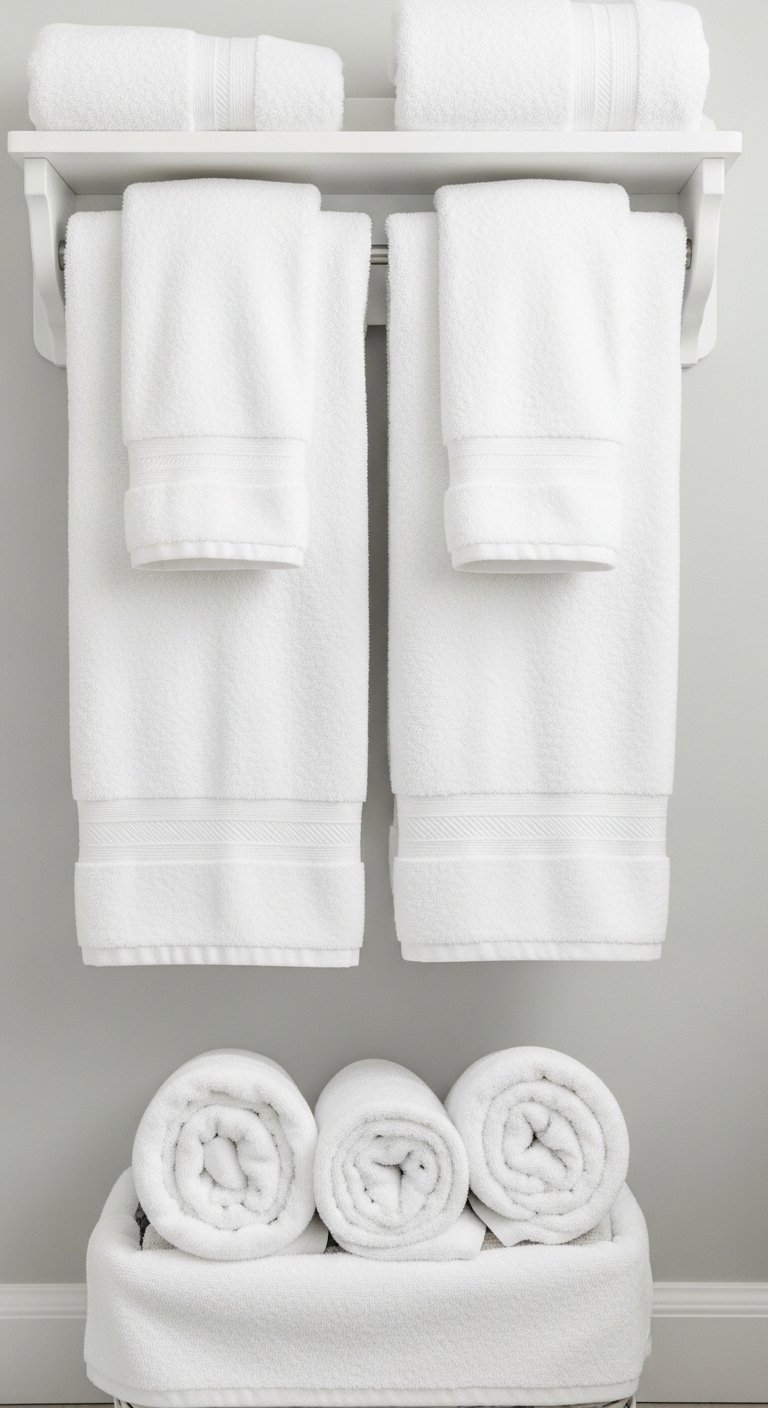
This is a free idea that takes about two minutes and makes a visible difference. Mismatched towels in different colors, patterns, and thicknesses create visual noise in a small bathroom that adds to the sense of clutter even when everything is technically organized. Switching to a set of towels in the same color, or in two coordinating tones that work together, immediately makes the bathroom look more controlled and more spacious. White, soft gray, warm cream, and natural beige are all good choices because they also reflect light rather than absorbing it. Keep the full-size bath towels and the hand towels in the same color family and fold or roll them consistently before displaying or hanging them. The consistency alone makes the bathroom look more like a designed space and less like a room full of miscellaneous things.
13. Corner Shower Unit
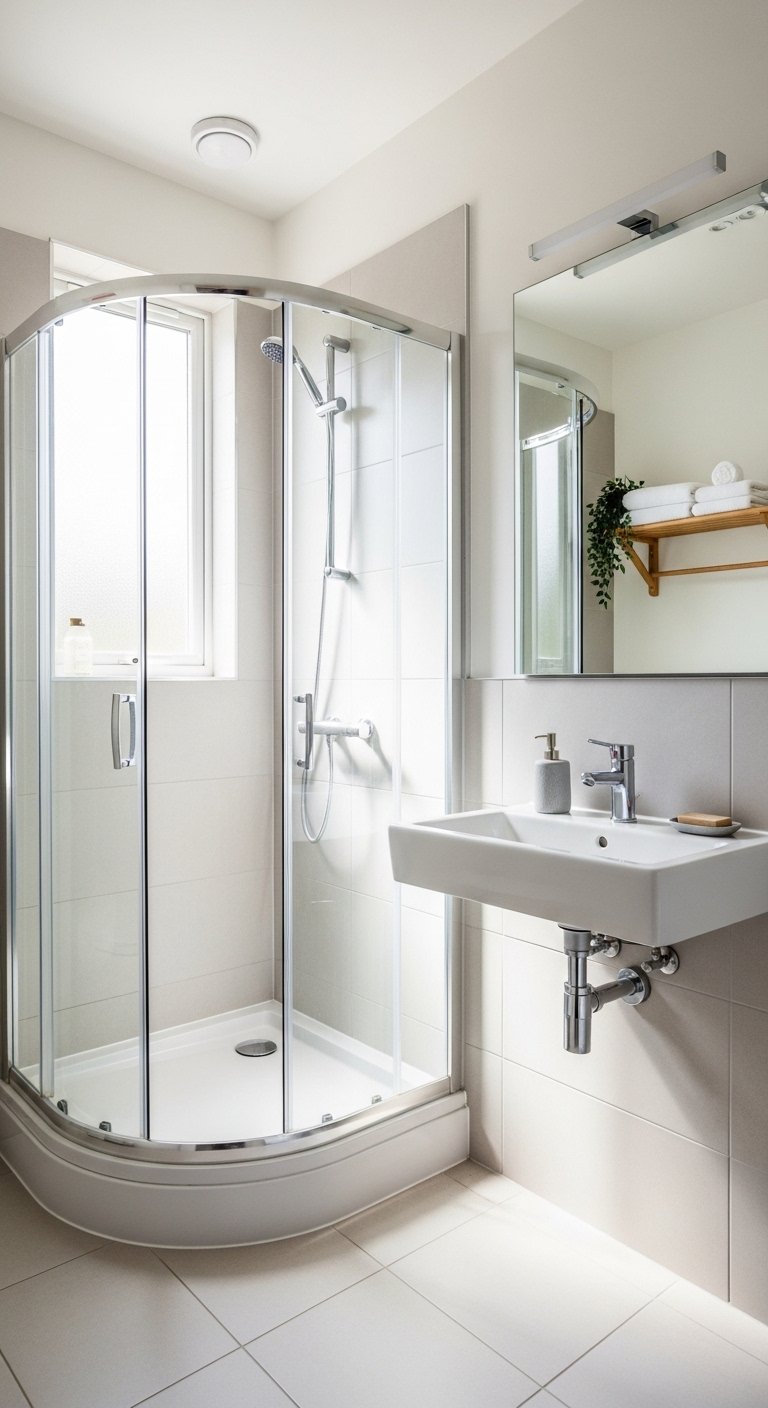
In a small bathroom that has a tub and a separate shower, or in a bathroom that is being planned from scratch, a corner shower unit makes significantly better use of the available floor space than a standard rectangular shower fitted into the middle of a wall. Corner units use the ninety-degree angle of the room as two of their walls, which means they fit tightly into a space that would otherwise be underused while leaving the center of the bathroom open. Curved-front corner shower enclosures are particularly effective because the curved face removes the sharp corner protrusion and keeps the bathroom easier to move through. Square corner enclosures with a pivot or sliding door also work well and tend to be less expensive than custom curved options. Either way, the floor plan of the bathroom opens up considerably compared to a shower placed along one wall.
14. Bright White Ceiling
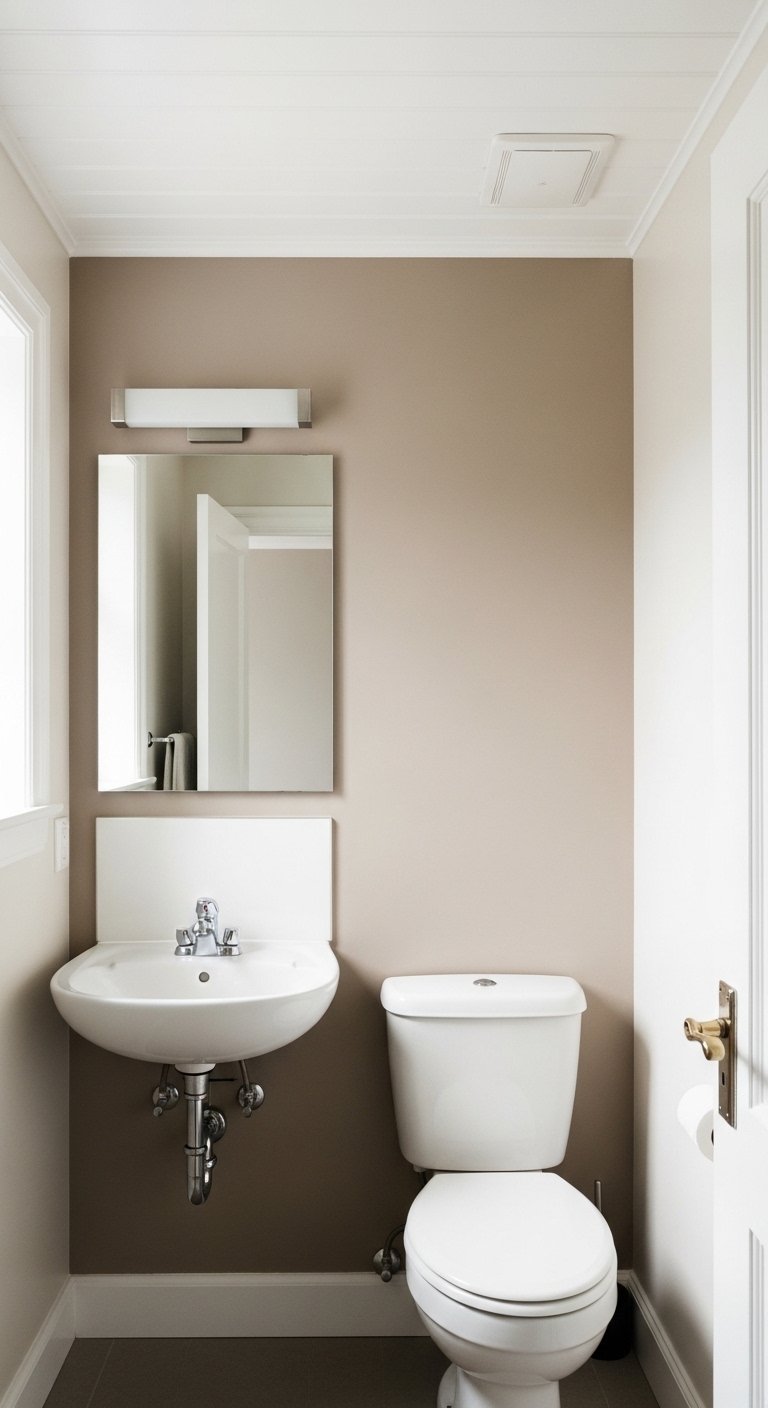
In a small bathroom with a mid-tone or dark ceiling, painting the ceiling a bright, clean white makes the room feel immediately taller and more open. Ceilings in bathrooms often get painted in whatever color was on the walls at the time of the last renovation and can end up in a shade that brings the ceiling down visually. A fresh bright white on the ceiling, especially when combined with light-toned walls, creates a clean break that adds perceived height to the room. Use a paint rated for bathrooms or a semi-gloss finish that resists moisture and can be wiped clean. If the bathroom already has a white ceiling but it has yellowed over time, a fresh coat of a clean white makes a meaningful difference even if the color is technically the same. The freshness alone reads as brightness.
15. Single Pendant Light

A pendant light hung over the vanity area rather than a standard flushmount ceiling fixture drops the light source closer to the vanity surface where it is most useful and creates a more interesting visual arrangement than a flat overhead disk. In a small bathroom, a simple pendant in a clean shape, a small globe, a minimal cone shade, or a simple exposed bulb on a braided cord, adds a designed quality to the room that standard bathroom light bars and flushmount fixtures cannot achieve. A pendant also draws the eye to a specific point rather than simply illuminating the whole ceiling, which creates a sense of intention and destination in the room. Choose a warm-toned bulb in the two thousand to twenty-seven hundred Kelvin range for the most flattering and welcoming bathroom light quality.
16. Slim Freestanding Cabinet

A slim freestanding storage cabinet placed beside the toilet or in an unused corner of a small bathroom adds significant storage without requiring any installation or wall work. Many freestanding bathroom cabinets are available in depths as shallow as nine or ten inches, which fits into spaces that would otherwise be dead zones beside fixtures or in narrow wall sections. Look for one with a combination of open shelving and closed cabinet doors so you can display a few items while keeping others out of sight. A cabinet in a light color, white, natural wood, or a soft painted tone, reads as less heavy in a small space than a dark one. Use the open shelves for attractive items like rolled towels, a small plant, and a candle, and use the closed sections for items that are functional but not particularly attractive.
17. Extend Tile Into Ceiling
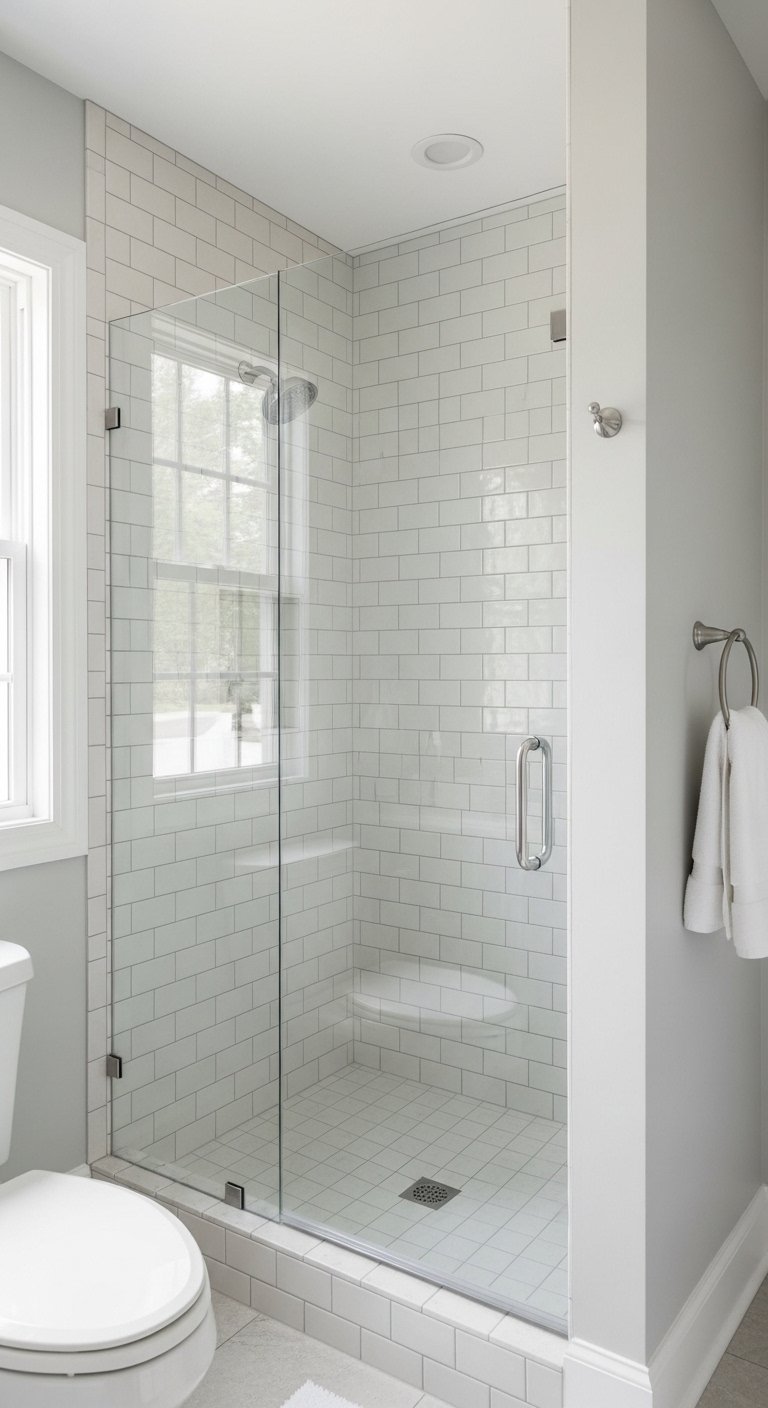
Running wall tile from the floor all the way up the wall and onto the ceiling, particularly inside the shower or on the main feature wall, removes the horizontal boundary between the wall and the ceiling and makes the room feel significantly taller. The uninterrupted tile surface carries the eye from the floor to the ceiling without stopping, which creates a sense of height and enclosure that actually works in favor of the space rather than against it. This works best with a light-toned tile in a clean simple format, subway, large format, or small mosaic. The technique is used frequently in high-end bathroom design and looks expensive even when the tile itself is modest in price. It is a particularly effective treatment inside the shower, where the floor-to-ceiling tile creates a complete tiled room within a room.
18. Declutter the Vanity Top
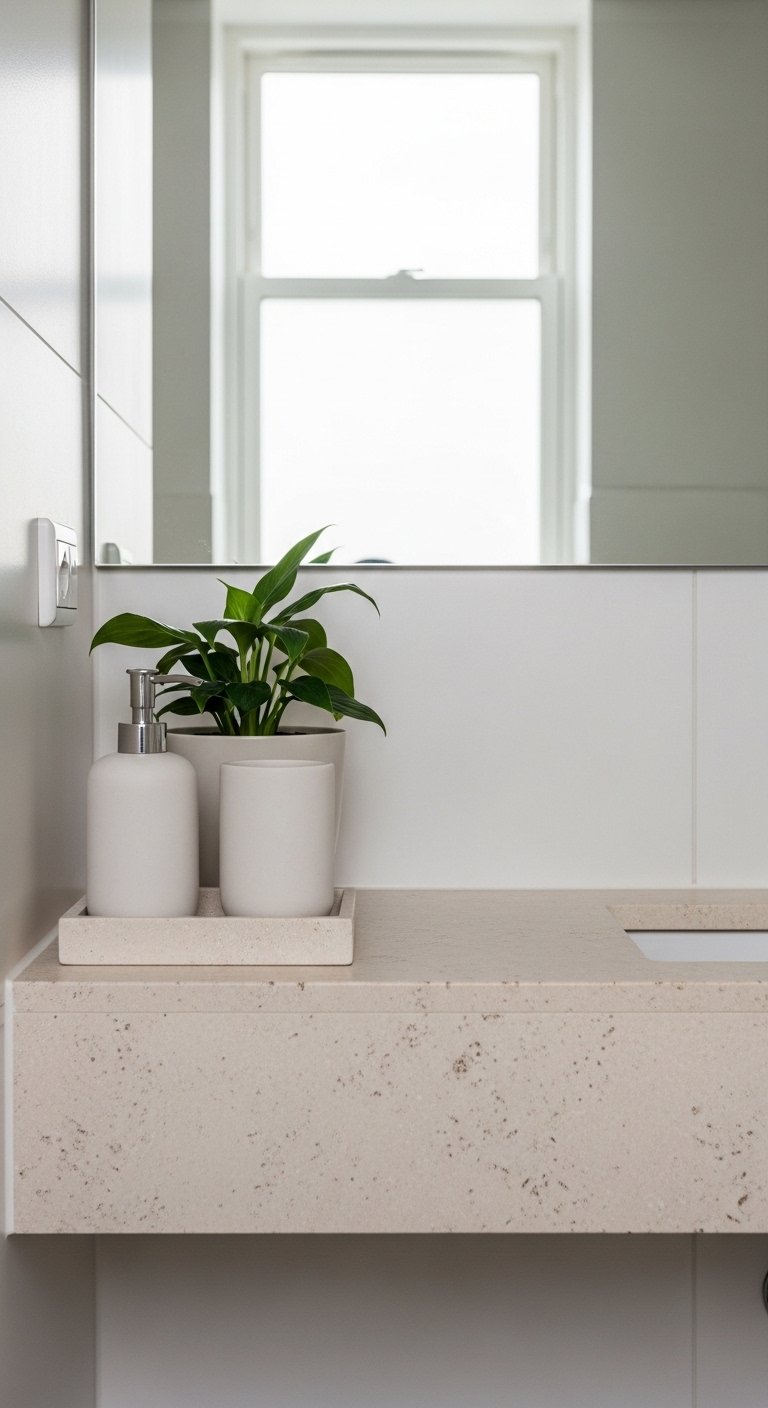
A vanity top covered in bottles, containers, cotton balls, and miscellaneous items shrinks the bathroom visually before anything else has a chance to. In a small bathroom, the vanity counter is one of the most visible surfaces in the room and keeping it as clear as possible makes a dramatic difference in how spacious the bathroom feels. Move everything that does not need to be out permanently into the cabinet below or into a drawer. What remains on the counter should be limited to the soap dispenser, a small plant or a single candle, and one or two daily-use items that are genuinely attractive enough to display. Transfer liquid soap, lotion, and other regular items into matching dispensers so even the things that have to stay out look intentional. A clear, organized vanity top is the fastest free change in a small bathroom.
19. Warm Accent Lighting

A bathroom that relies only on overhead lighting or a standard vanity bar tends to feel flat and overly bright, which actually makes a small bathroom feel more clinical and less generous than it is. Adding a secondary warm light source, a small plug-in sconce on the wall beside the mirror, a battery-operated LED strip behind the mirror for a subtle halo effect, or a simple table candle on the edge of the tub, creates a layered lighting quality that makes the room feel more dimensional and more welcoming. Warm light in a bathroom also creates a more flattering environment for getting ready, which makes the daily experience of using the room noticeably better. Even a single warm amber candle on the side of the tub elevates the bathroom atmosphere in the evening in a way that overhead lighting alone cannot.
20. Coordinated Accessories
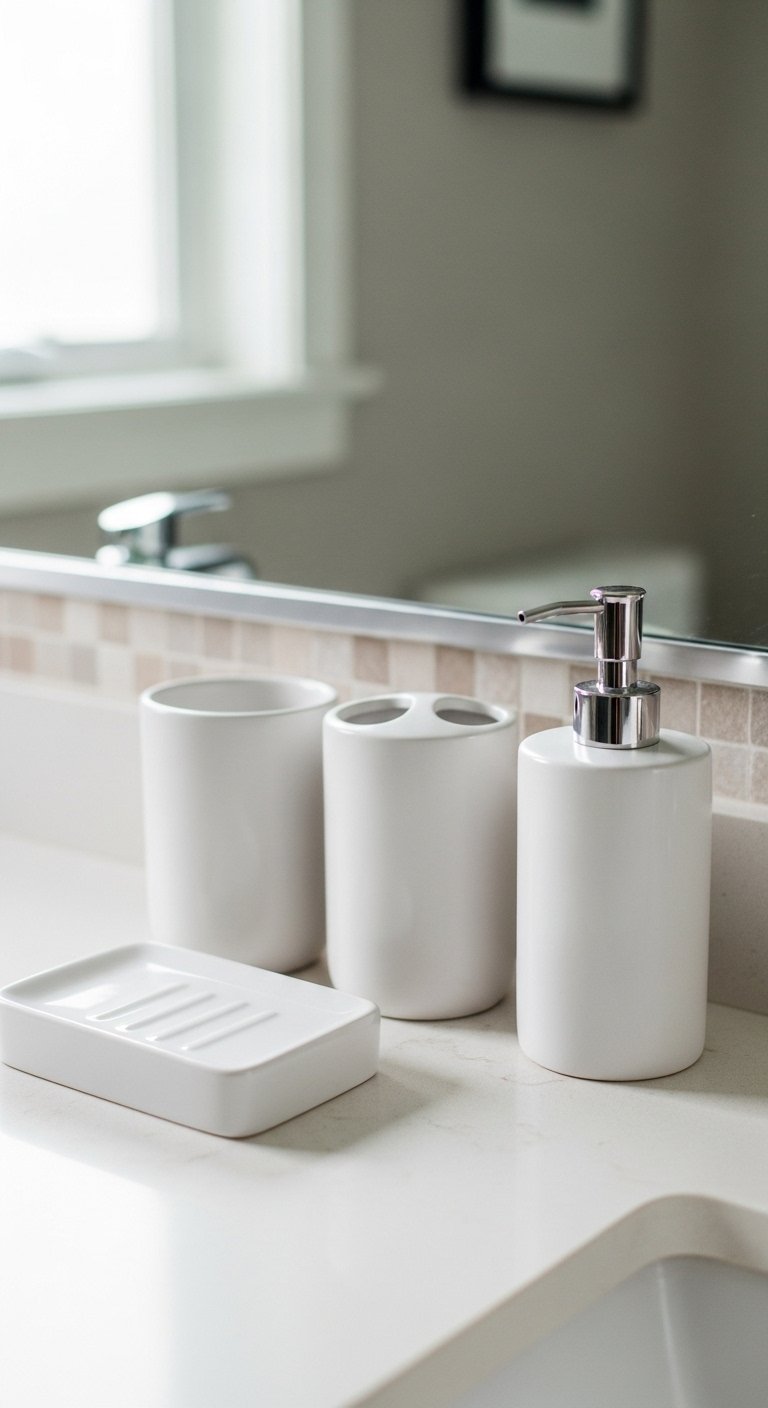
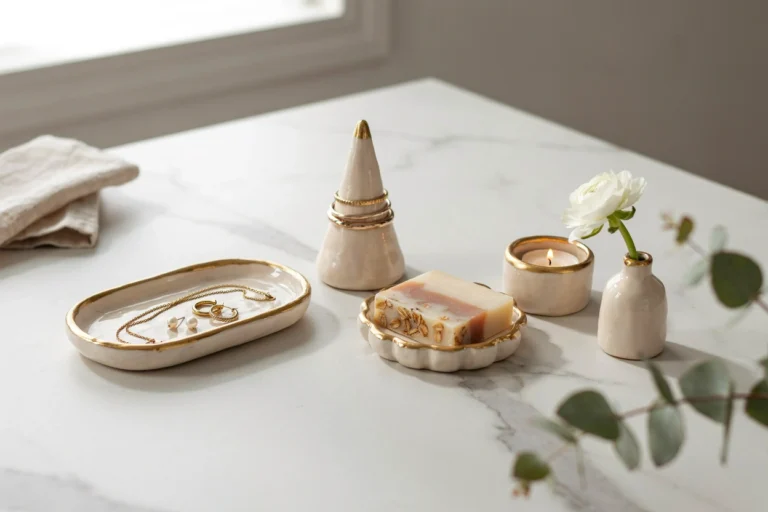
Random or mismatched bathroom accessories, the soap dish, the toothbrush holder, the dispenser, the tissue cover, make even a clean bathroom look disorganized. Switching to a coordinated set, even an inexpensive one in matching ceramic, glass, or brushed metal, immediately pulls the room together and makes it look more intentional. The matching quality signals that someone made a deliberate decision about how the bathroom looks rather than accumulating items over time from different sources. Choose a set in a finish that coordinates with your existing fixtures. If your faucet and towel bars are brushed nickel, look for accessories in the same finish. If the room is predominantly white ceramic and natural materials, a set in white ceramic or natural stone reads as designed and considered. Most basic accessory sets cost under thirty dollars and the improvement is immediate.
21. Natural Light Maximizing
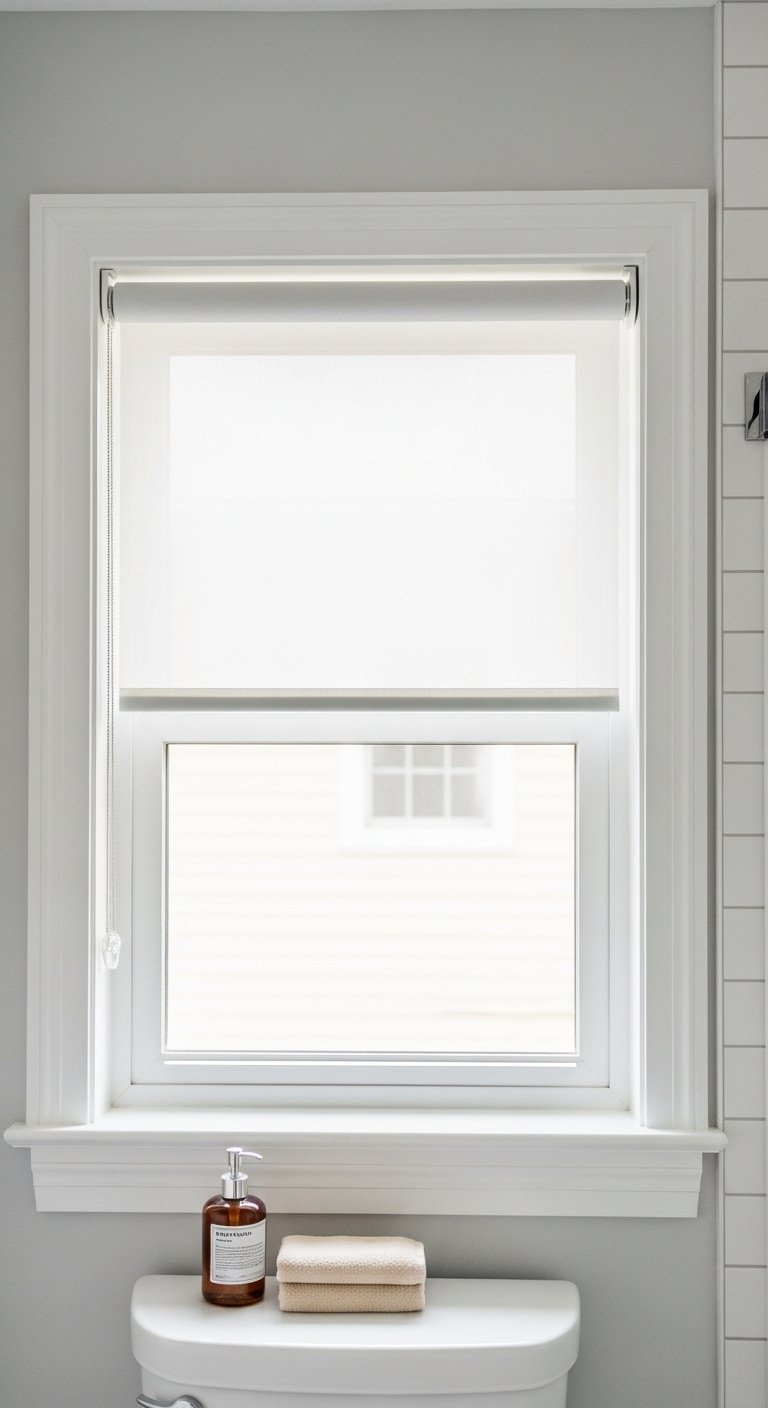
Whatever natural light exists in a small bathroom should be protected and maximized rather than covered up. If there is a window, keep the treatment as simple and as light as possible. A frosted glass window needs no treatment at all since it already provides privacy while transmitting the maximum amount of daylight. A clear glass window can be fitted with a simple cotton or sheer roller shade that pulls up completely when privacy is not needed. Avoid heavy curtains or roman shades in dark fabrics on bathroom windows since they absorb the light rather than allowing it to fill the room. If the bathroom has no natural light, maximize the artificial light with warm, bright bulbs in every fixture and a clean, reflective surface on the walls to distribute that light as widely as possible across the room.
The size of a bathroom is fixed. How it feels is not. Most of these ideas cost very little and a few cost nothing at all. Start with the ones that address the biggest frustration in your specific bathroom and build from there.