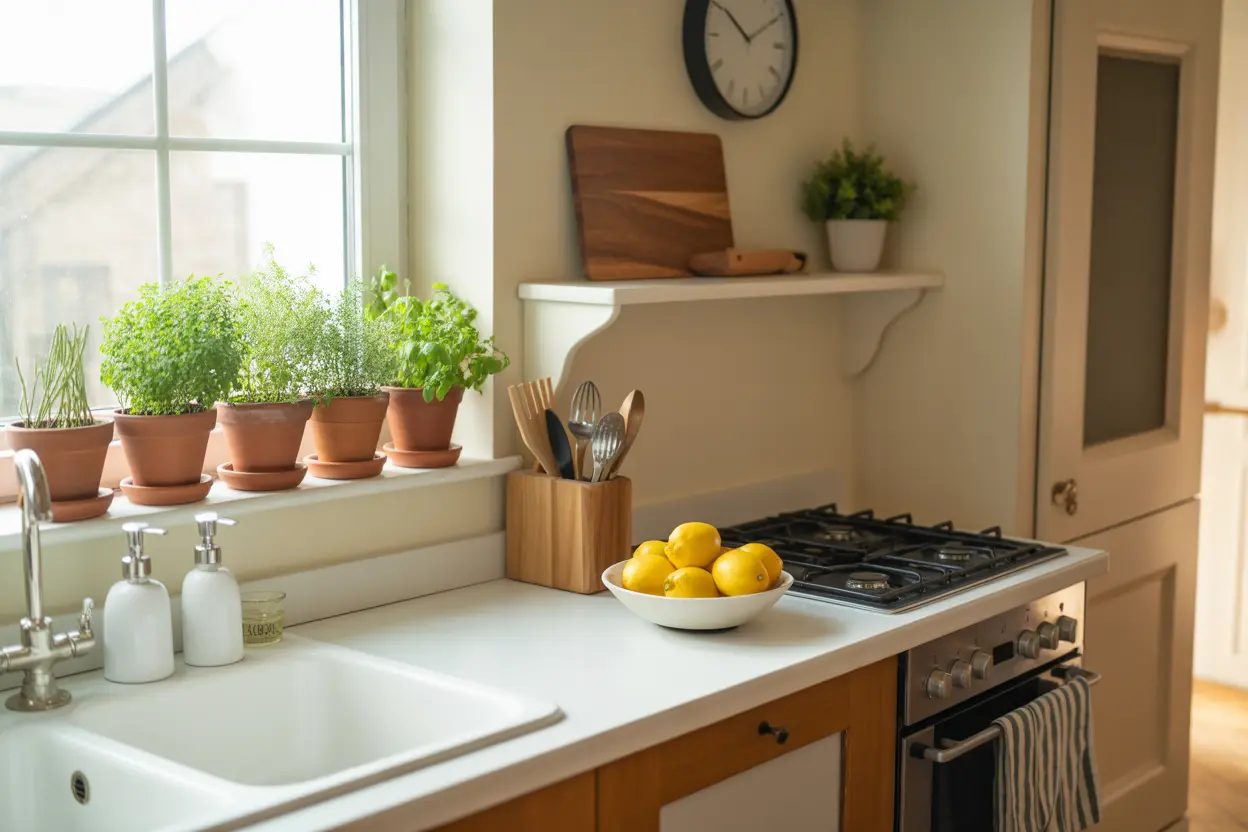
20 Kitchen Decor Ideas Under $50 That Make a Real Difference
Walk into a kitchen that feels good and it is rarely because of the granite countertops or the designer appliances. It is almost always because of the small things: the way the light falls on the counter, the plant on the windowsill, the matching dish towels folded over the oven handle, the jar of wooden spoons beside the stove. These details cost almost nothing and they are what separate a kitchen that feels cared for from one that simply functions. Every idea in this list costs under fifty dollars. A handful cost nothing at all. None of them require tools, a contractor, or a weekend project. They are things you can do today and notice immediately.
1. Herb Pots on Windowsill
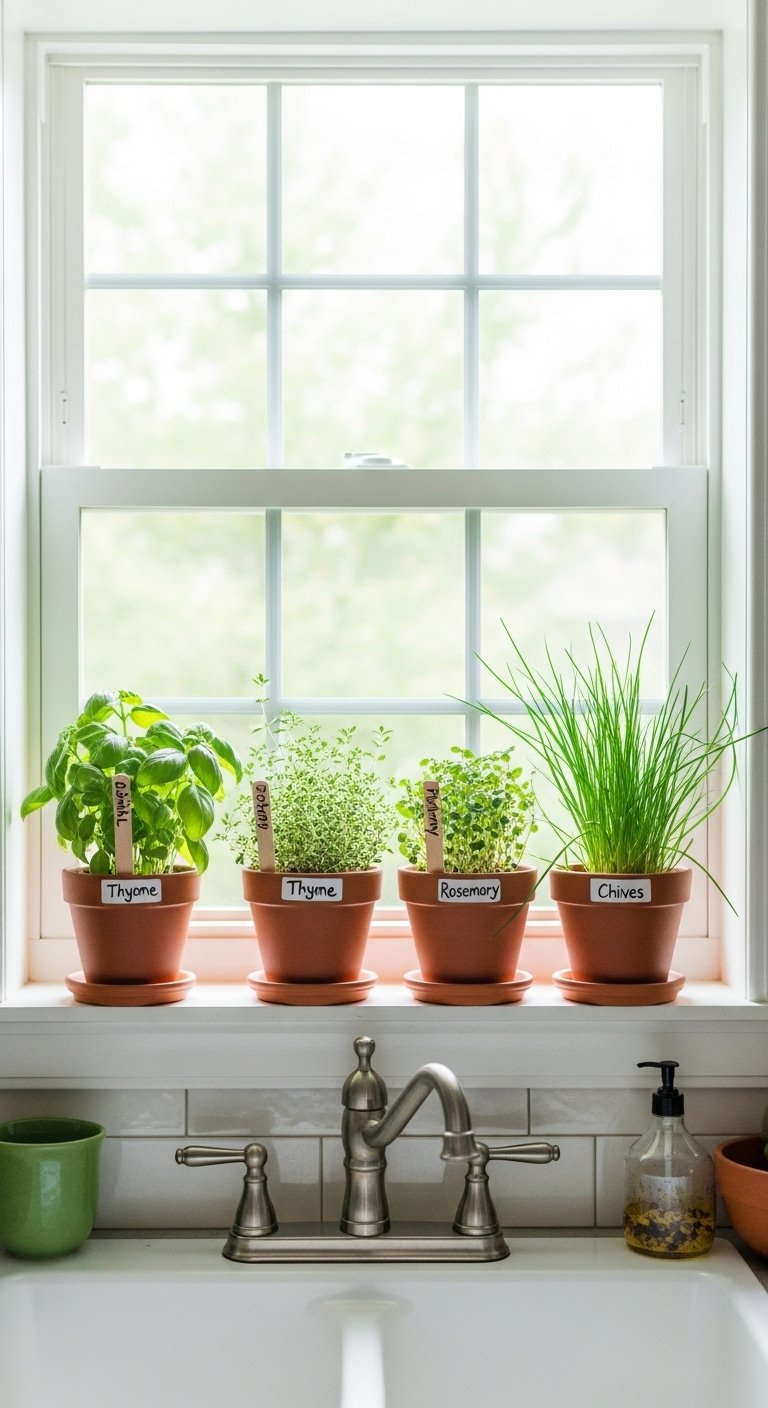
A row of small herb pots on the kitchen windowsill is one of those additions that improves the kitchen in several ways at once. It adds a living green element to a room that is otherwise full of hard, reflective surfaces. It provides fresh herbs for cooking that are genuinely better than dried versions in most applications. And it creates a visual detail in the window that is warm and personal in a way that no purchased decor item quite matches. Use matching small terracotta pots for the cleanest look, or a variety of small ceramic pots in a consistent color family for something a little warmer and more collected. Basil, thyme, rosemary, chives, and mint all grow happily on a sunny kitchen windowsill and need only regular watering and occasional harvesting to stay productive. Label each pot with a small wooden stick for a detail that is both practical and charming.
2. New Dish Towels Set
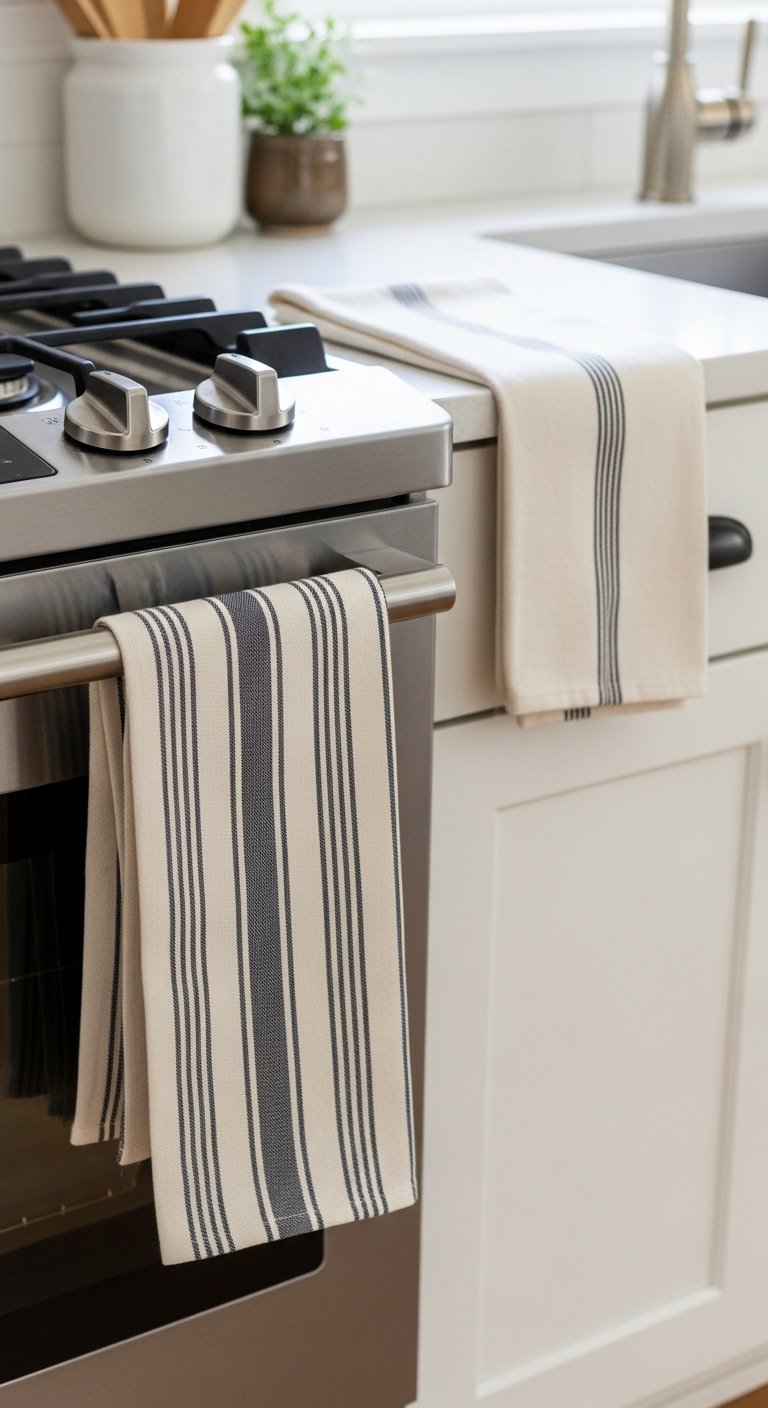
Replacing old or mismatched dish towels with a fresh set in a coordinating color or pattern is one of the simplest and most immediate kitchen refreshes available for almost no money. Dish towels are visible every time the oven handle is used, every time someone dries their hands, and every time they are folded on the counter. Old, faded, or mismatched ones create a low-level visual noise that adds to the sense of a kitchen that has not been thought about recently. A new set of three or four towels in matching cotton or linen, whether a simple stripe, a solid color in a warm tone, or a small repeating print, signals that the kitchen is cared for and considered. Hang one from the oven handle, fold one on the counter beside the sink, and keep the others in a drawer for rotation. A good set of kitchen towels costs under twenty dollars.
3. Wooden Utensil Crock
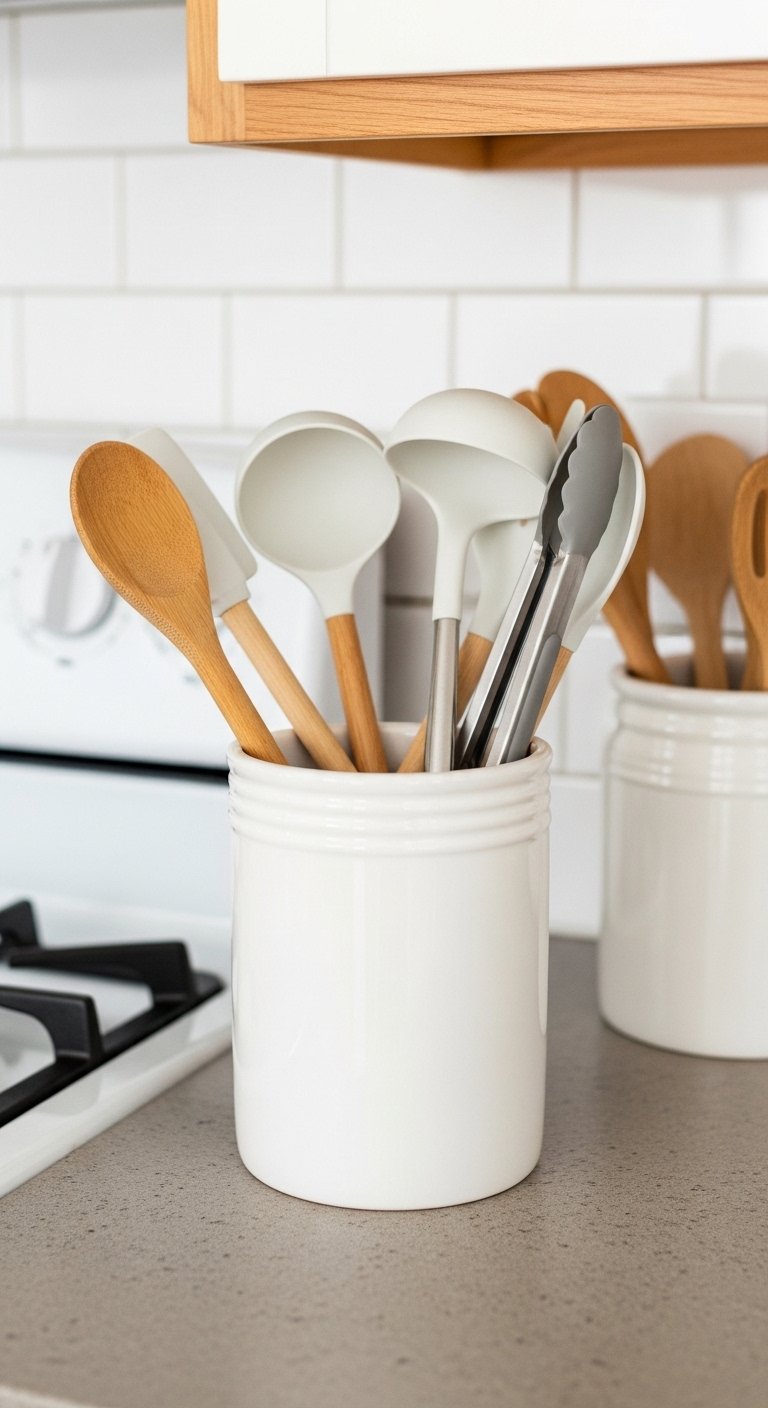
Moving the everyday cooking utensils from a drawer to a countertop crock beside the stove makes them more accessible during cooking and adds a warm visual element to the counter at the same time. The right crock matters: a simple ceramic, stoneware, or wooden vessel in a neutral tone that suits the kitchen’s palette reads as a deliberate decor choice rather than a practical container. Fill it with the utensils you genuinely reach for during cooking: a wooden spoon, a spatula, a ladle, a pair of tongs, and one or two other everyday tools. Keep the crock edited so it holds only what is used regularly rather than becoming a general receptacle for every kitchen tool you own. A well-chosen, appropriately filled utensil crock is one of those kitchen details that food bloggers and interior stylists put in almost every kitchen photograph because it simply looks right. A good ceramic crock costs under fifteen dollars.
4. Simple Fruit Bowl
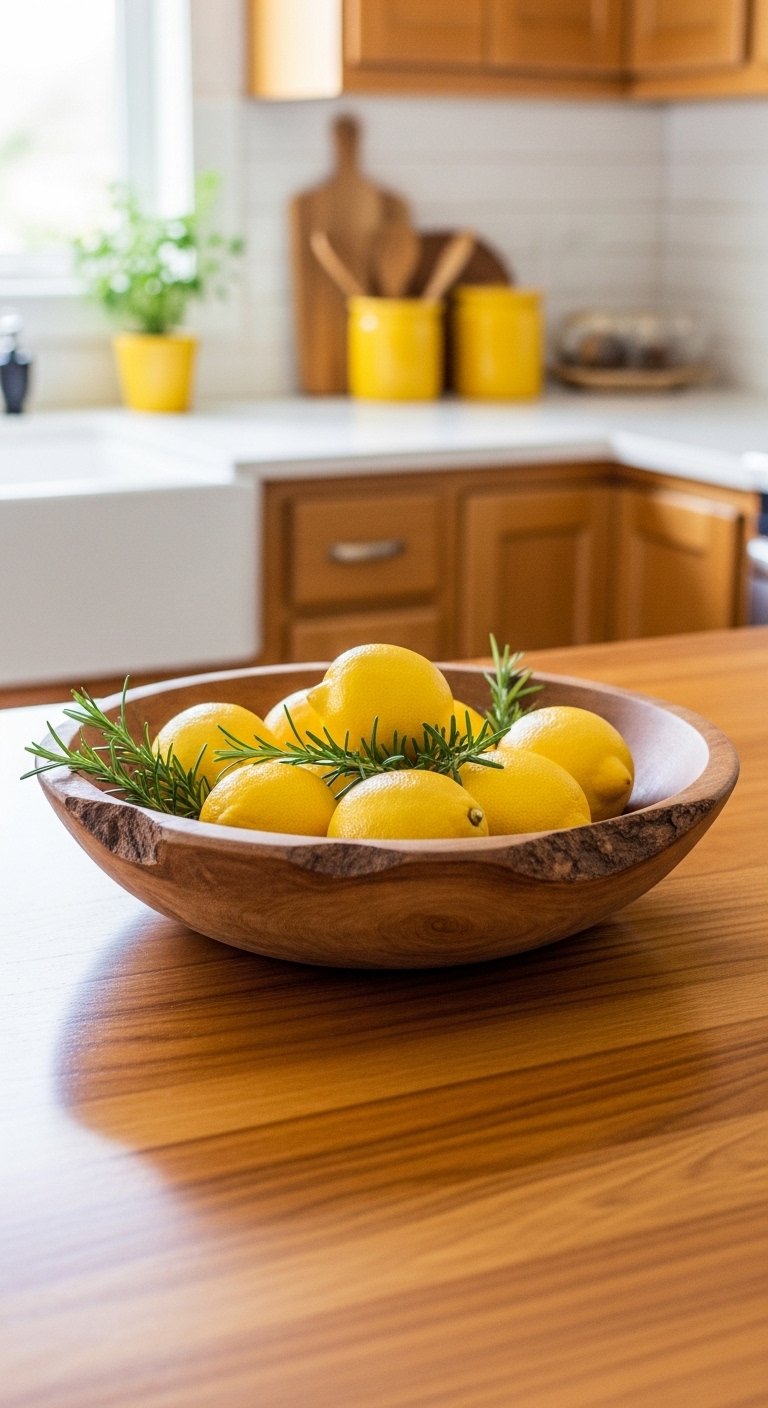
A fruit bowl on the kitchen counter or dining table is one of those decor elements that works in every kitchen style from minimal to cottage because it combines genuine practicality with a warm, natural visual presence. The right fruit bowl is important: one that is the correct scale for the counter or table it sits on, made from a material that suits the kitchen’s palette, and filled with real fruit rather than artificial versions. A wide ceramic bowl in a warm earthy tone, a simple wooden bowl with a low profile, or a wire bowl in matte black all work well depending on the surrounding aesthetic. Fill it with whatever fruit is in season and replace it as it is eaten. The combination of the bowl itself and the changing seasonal fruit makes the counter look alive and used in a way that purchased decor cannot replicate. A simple ceramic or wooden fruit bowl costs under twenty dollars.
5. Matching Storage Canisters
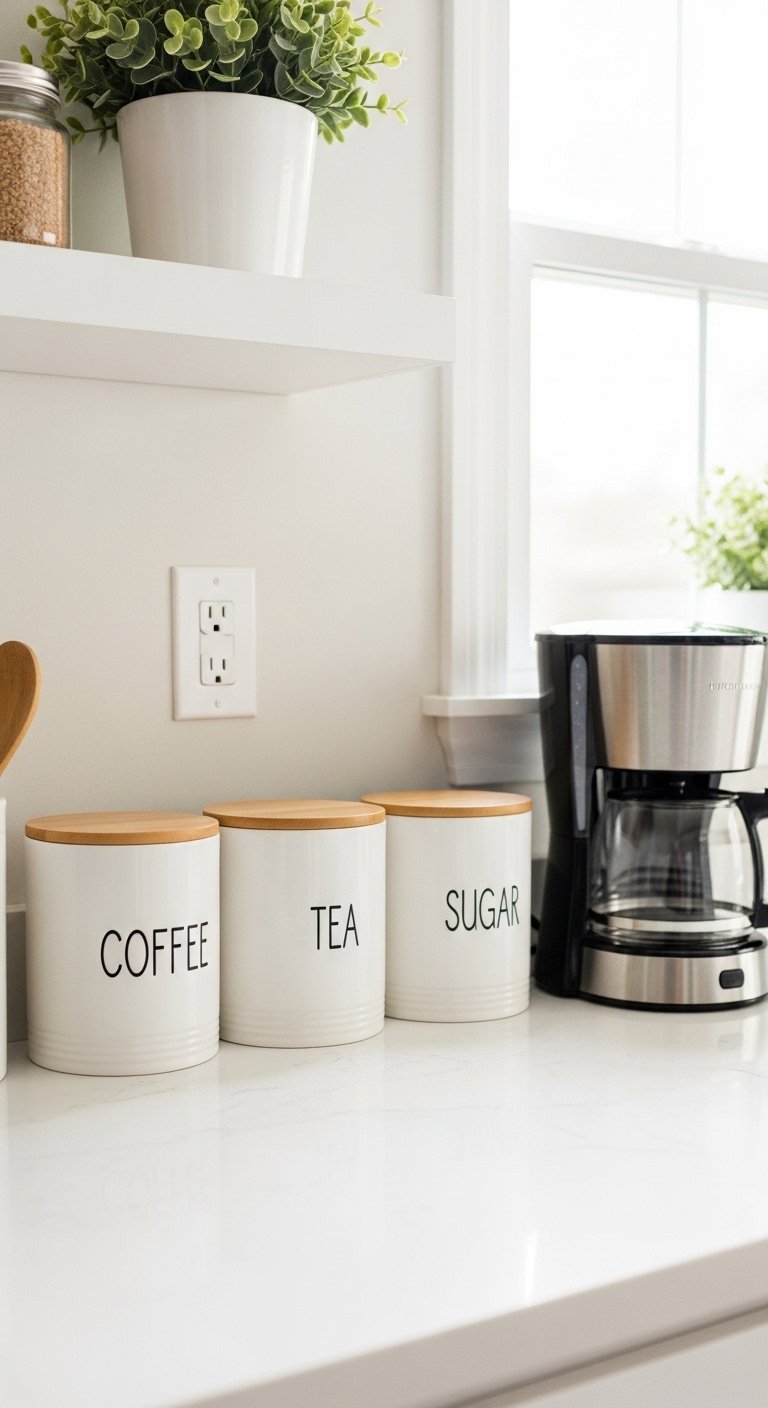
A set of three or four matching storage canisters on the kitchen counter for coffee, tea, sugar, and flour transforms the counter from a surface with random items on it to one that looks thoughtfully arranged. The matching quality of the canisters is what does most of the work: even inexpensive versions in a consistent material and color create visual order and a sense of intention that mismatched containers, however practical individually, cannot achieve. Ceramic canisters in white or a warm neutral, glass canisters with bamboo lids, or simple tin canisters in a matte finish all work well. Label the contents clearly on the front for both practical and visual clarity. A set of three coordinated canisters on a counter beside the coffee maker creates a small styled station that looks like a deliberate design decision and costs under thirty dollars for most basic sets.
6. Woven Placemat Set
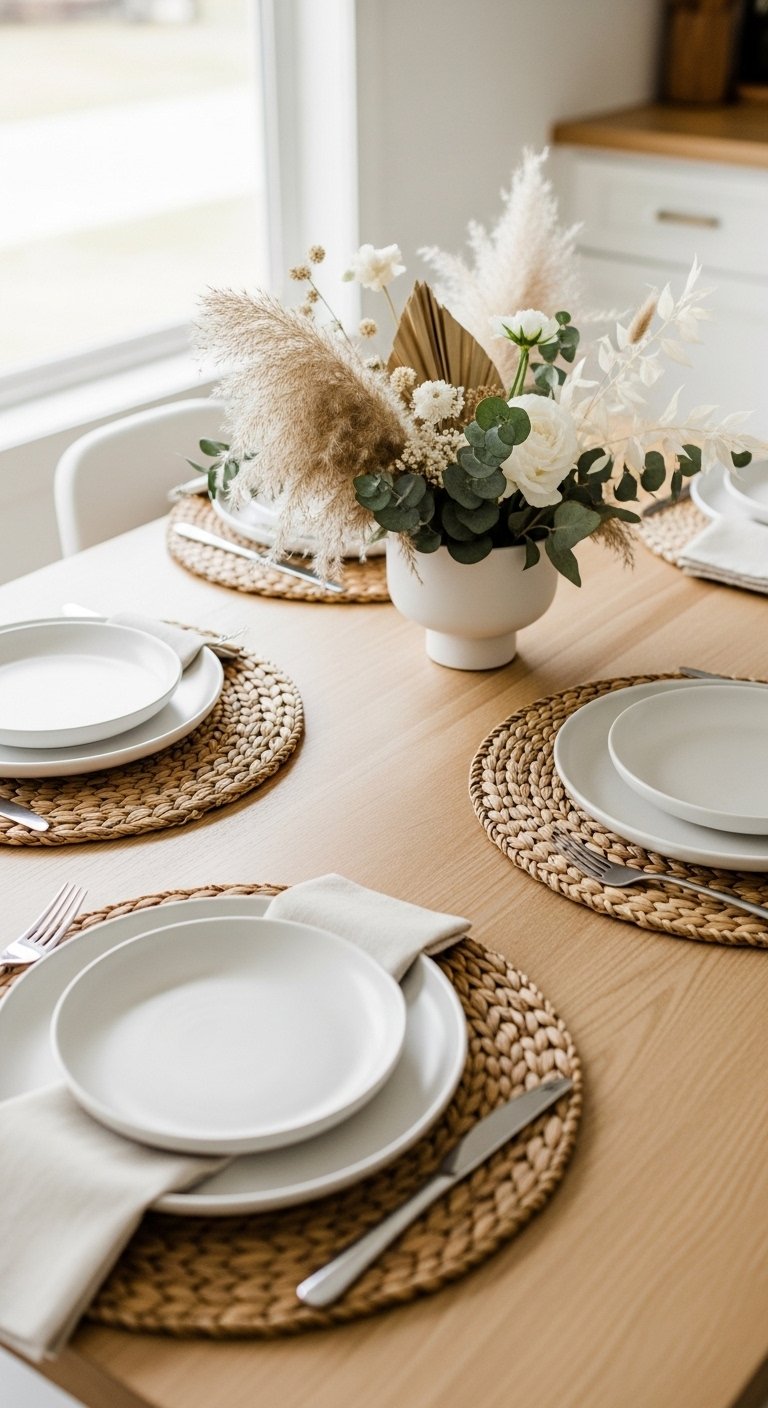
Replacing plain or worn placemats with a new set in a natural woven material, jute, seagrass, bamboo, or a woven cotton in a warm tone, adds texture and warmth to the dining or kitchen table for a very low cost. Woven natural fiber placemats have an organic quality that plastic and synthetic fabric versions cannot match and they suit a wide range of kitchen and dining styles from farmhouse to modern organic. A set of four matching placemats on a kitchen or dining table immediately makes the table look styled and ready for use rather than empty and overlooked. Use them daily rather than keeping them for special occasions since the daily presence of woven texture on the table surface contributes to the ongoing atmosphere of the kitchen rather than being stored away between uses. A set of four natural woven placemats typically costs between fifteen and twenty-five dollars.
7. Small Potted Plant
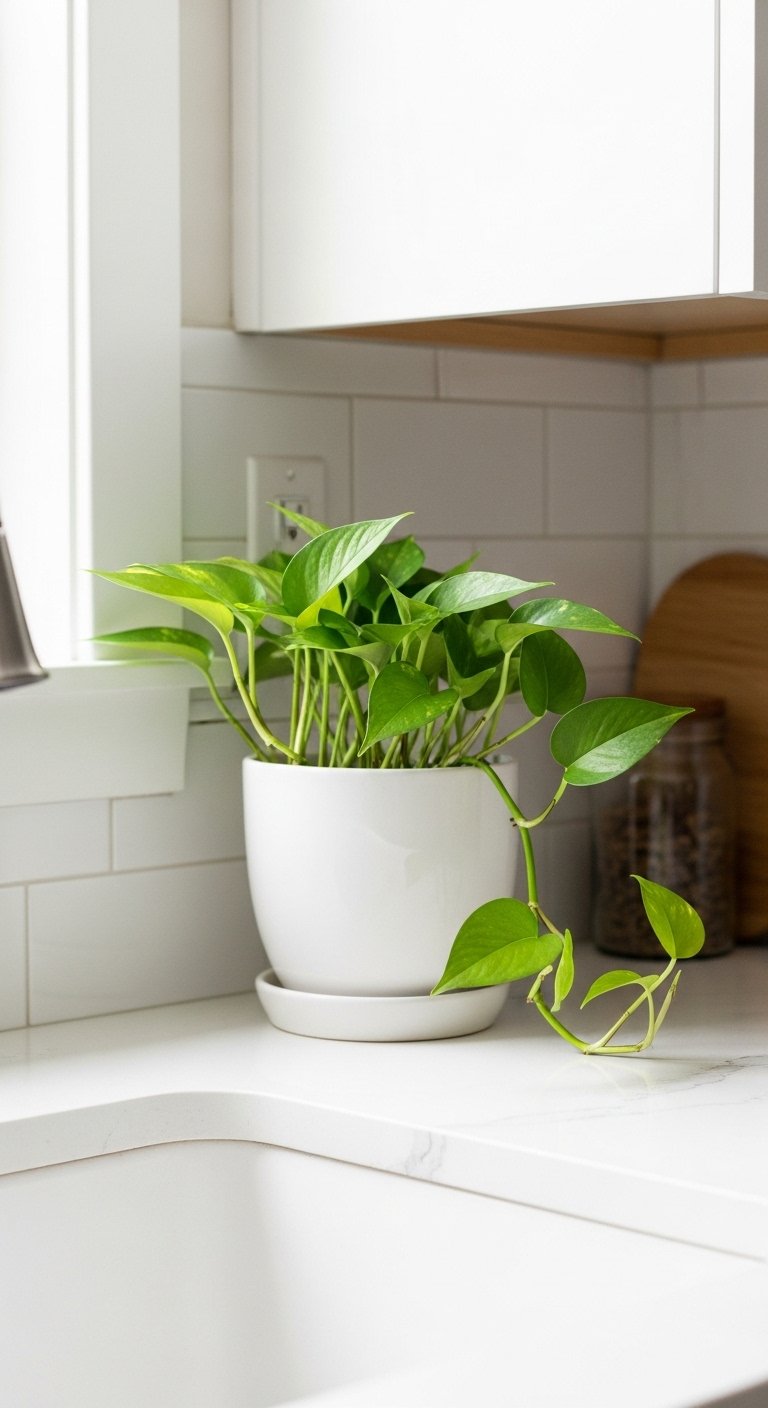
A single well-chosen potted plant placed in a visible spot in the kitchen, on the counter beside the sink, on a shelf above the stove, or on the table in the eating area, adds a quality of living warmth that no manufactured kitchen accessory can fully replicate. The choice of plant matters: something that handles the specific conditions of the kitchen location well. A pothos trails nicely from a shelf and tolerates low light. A small fiddle-leaf fig or a compact citrus tree makes a strong statement beside a window. A peace lily tolerates low light and high humidity near the sink. A row of small succulents on a sunny windowsill needs very little maintenance. The plant does not need to be large or expensive to have an effect. A single four-inch pot of trailing ivy in a simple white ceramic pot beside the kitchen sink costs a few dollars and changes the quality of the view from the sink entirely.
8. New Cabinet Handles
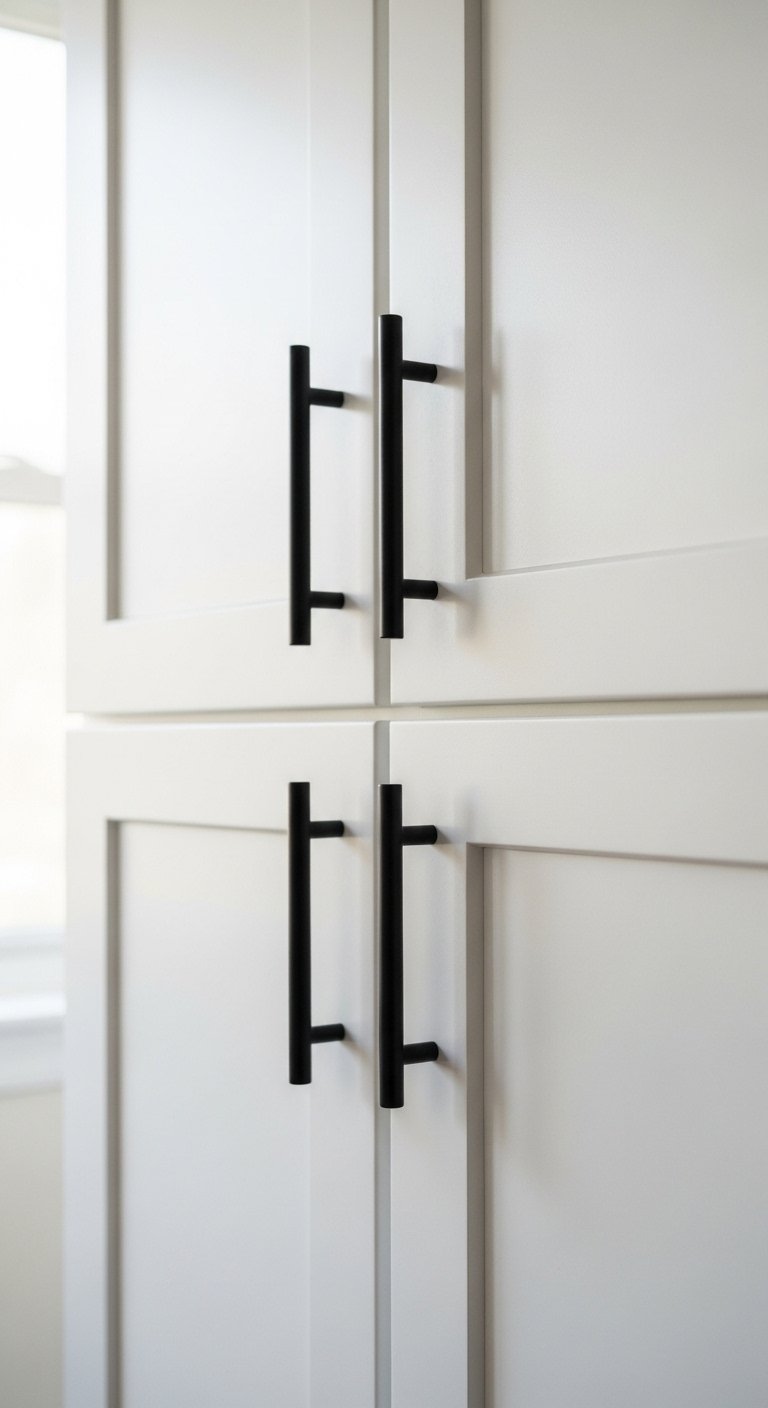
Replacing cabinet knobs and pulls is one of the cheapest and highest-impact kitchen updates available. Old or builder-grade hardware in a worn or dated finish makes even clean, functional cabinets look tired. New hardware in a current finish, matte black bar pulls, brushed gold knobs, simple ceramic pulls in white or a warm color, brushed nickel ring pulls, brings the whole cabinet arrangement forward by several years in terms of how it reads visually. Measure the existing hole spacing before ordering to confirm compatibility. Most standard cabinets use either a single centered hole for a knob or a standard 3.75-inch or 5-inch center-to-center spacing for a pull. A complete set of cabinet hardware for an average kitchen costs between thirty and fifty dollars when ordered online and the installation requires only a screwdriver and about forty-five minutes. Combined with the same finish used in towel bars and faucet hardware, it creates a cohesive metal palette across the whole kitchen.
9. Cork Board for Notes
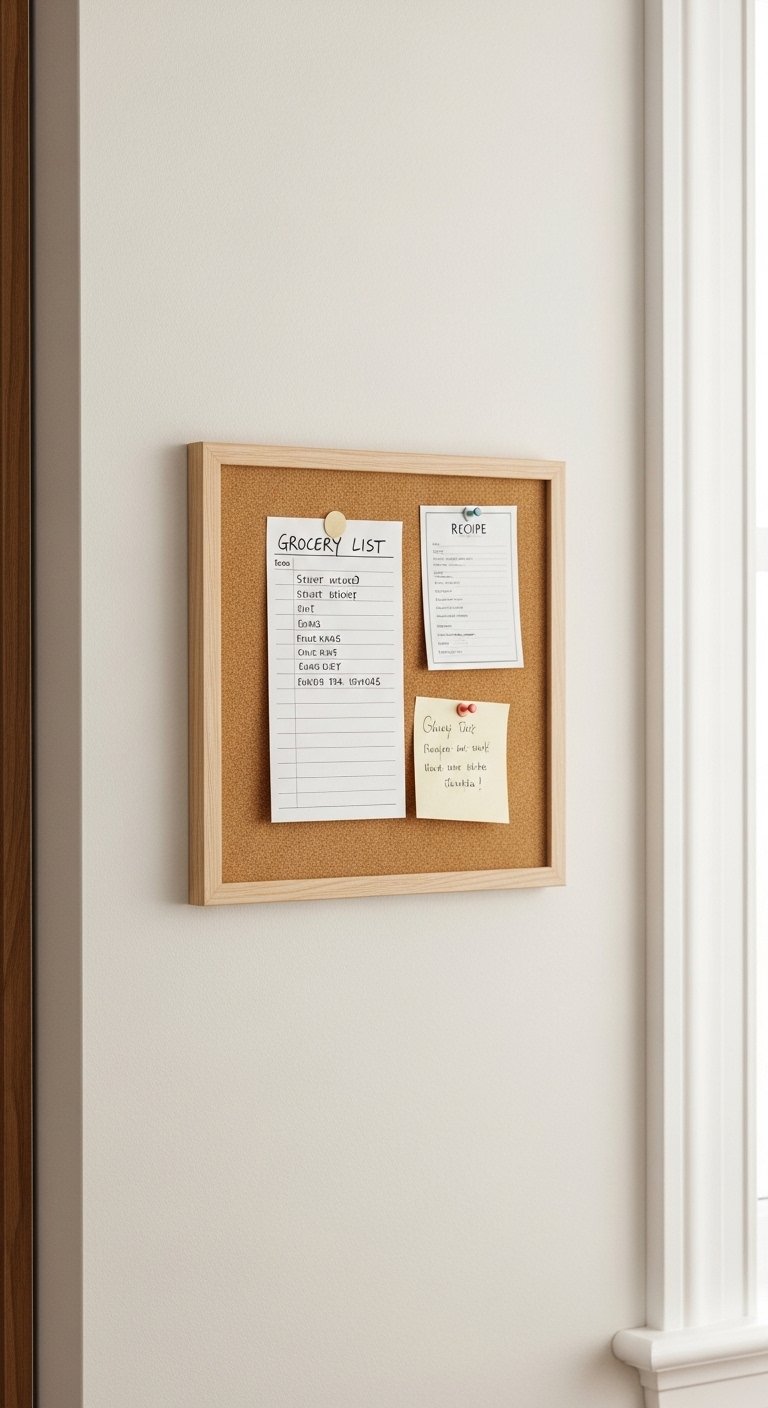
A small cork board mounted on the kitchen wall or inside a cabinet door provides a dedicated home for the grocery list, takeout menus, kids’ drawings, upcoming events, and the daily domestic notes that tend to accumulate on the refrigerator door in a chaotic way. By consolidating all of these items onto one defined surface, the refrigerator door is freed up for its actual function and the kitchen gains a communication hub that looks intentional rather than disorganized. Choose a cork board in a simple wooden or thin metal frame that suits the kitchen’s aesthetic. Mount it at a height where all household members can see and use it comfortably. A small cork board framed in natural wood or painted in a color that suits the kitchen wall costs under fifteen dollars and solves the perpetual problem of notes being scattered across multiple surfaces.
10. Glass Jar Pantry Labels
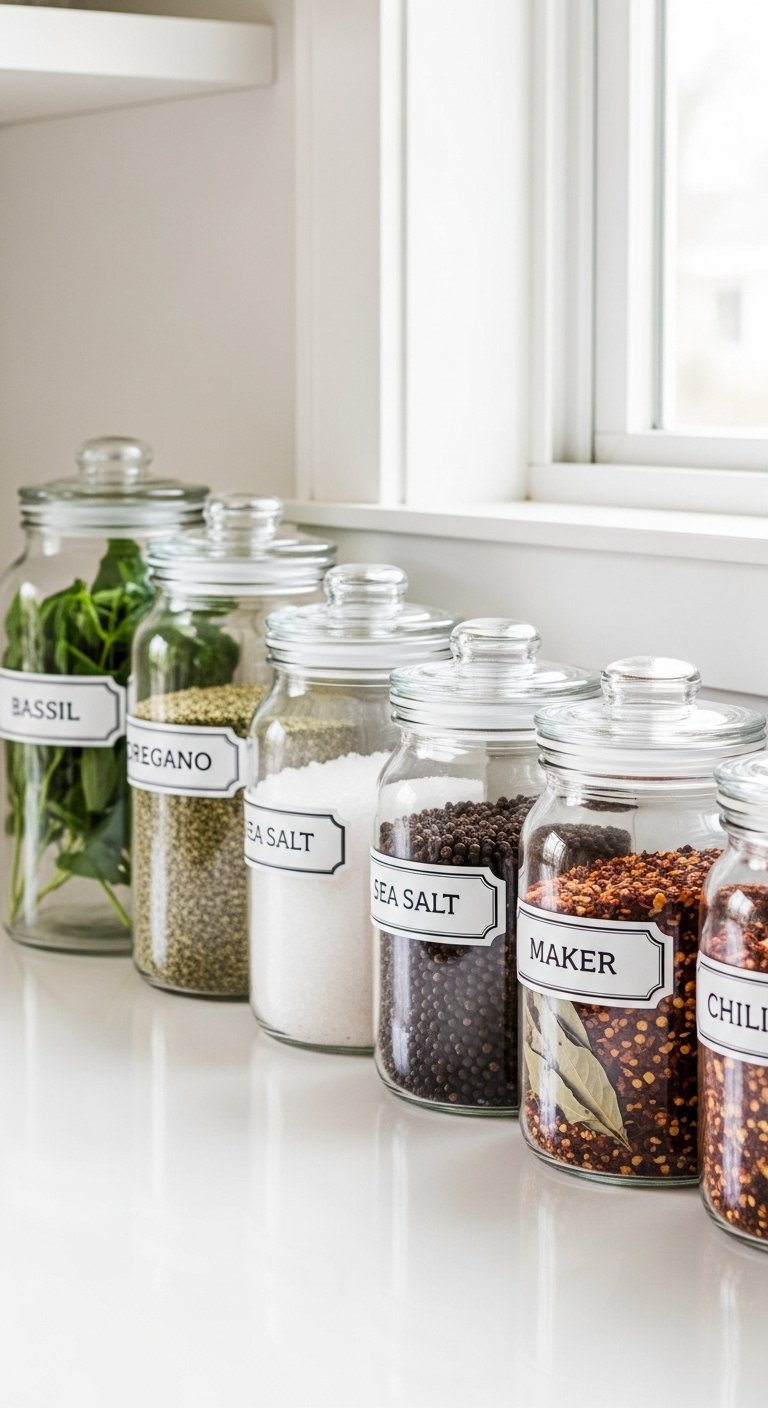
Transferring dried herbs, spice mixes, bulk grains, and other pantry staples into clear glass jars and labeling each one with a consistent, clean label transforms the pantry shelf or the kitchen counter from a collection of branded packaging in various sizes into a calm, organized display where everything is identifiable at a glance. The glass allows the contents to be seen, which means you know when something is running low without opening anything. The consistent labels, whether from a label maker, a set of printed adhesive labels, or simple handwritten kraft paper labels, create visual unity across the shelf. The jars themselves can be repurposed pasta sauce or jam jars that are already in the kitchen, which means this idea can be executed for the cost of the labels alone. The visual effect of a shelf of matching labeled glass jars is immediate and significant.
11. Lemon or Lime Bowl
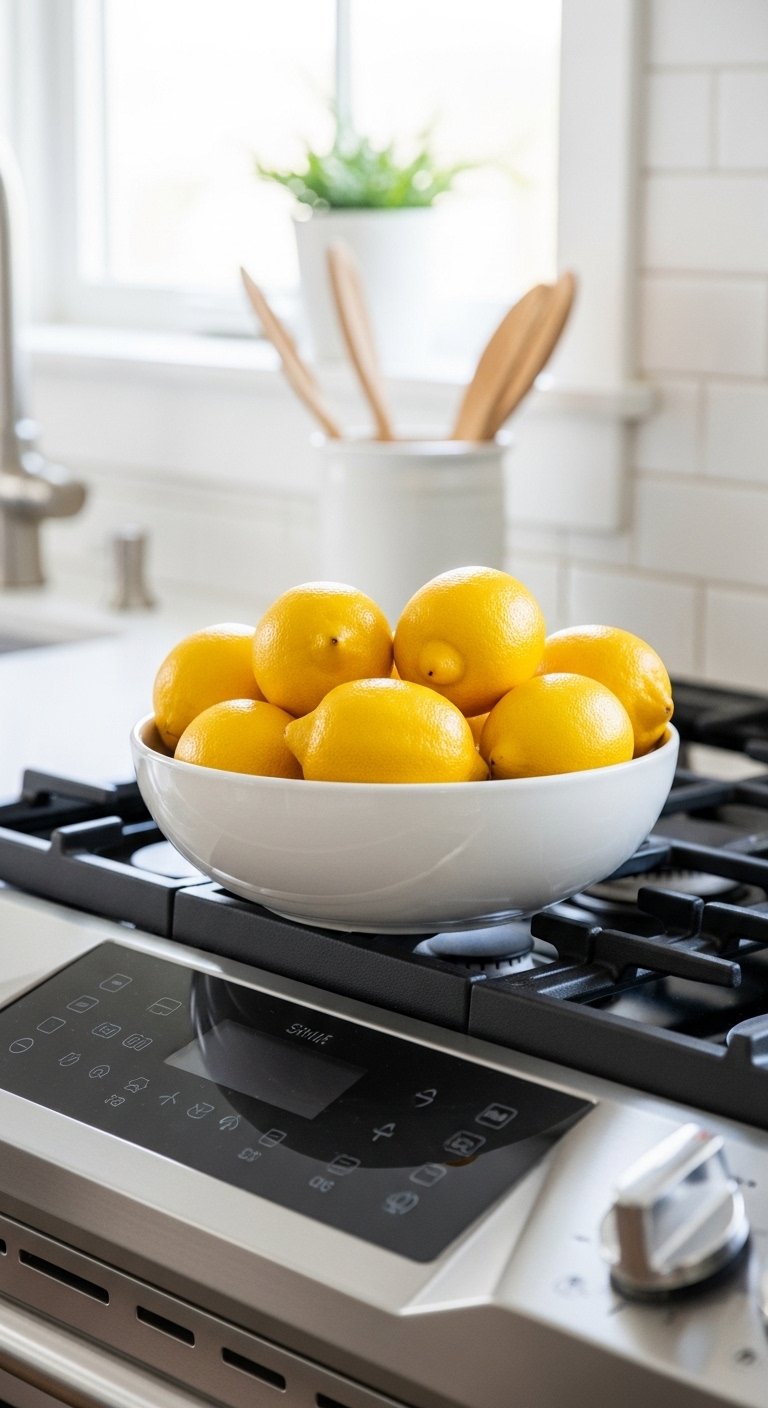
A simple white ceramic bowl filled with fresh lemons or limes placed on the kitchen counter is one of those styling details that costs almost nothing and looks good in every kitchen regardless of its style or size. The bright, clean yellow of lemons or the vivid green of limes against a white bowl creates a natural color moment on the counter that catches the eye and makes the kitchen feel fresh and cared for. Beyond the visual contribution, the bowl of citrus is genuinely practical: lemons are used in cooking, cleaning, and drinks on a regular basis and having them visible and accessible on the counter means they get used rather than being forgotten at the back of the refrigerator. Replace them as they are used and the bowl is always a fresh, current kitchen detail rather than a static one. The bowl and fruit together cost under ten dollars.
12. Kitchen Chalkboard Wall Decal
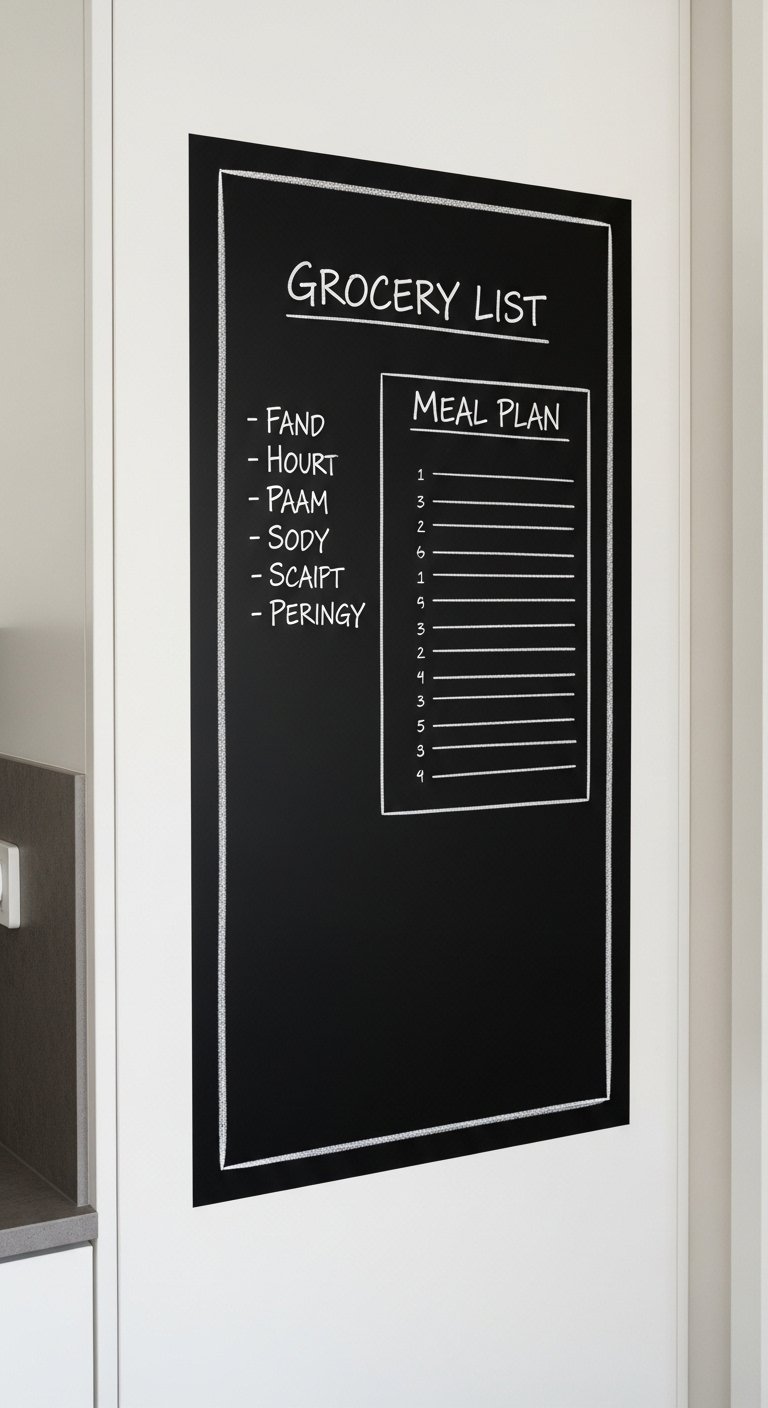
A removable chalkboard wall decal applied to the kitchen wall, the side of the refrigerator, or the inside of a cabinet door creates a writable surface for grocery lists, meal plans, daily notes, and kitchen reminders without any permanent painting or installation. Modern chalkboard decals apply to smooth surfaces with a peel-and-stick backing and create a convincing chalkboard surface that works with regular chalk or chalk markers. Remove them cleanly when no longer needed or when moving. In a rental kitchen or a kitchen where painting is not practical, a chalkboard decal on the wall near the pantry or beside the refrigerator adds a functional and visually warm detail that makes the kitchen feel more like a working, lived-in space than a purely functional room. Season the surface by rubbing chalk sideways across the full area before first use for the cleanest writing experience.
13. Vintage-Look Cutting Board
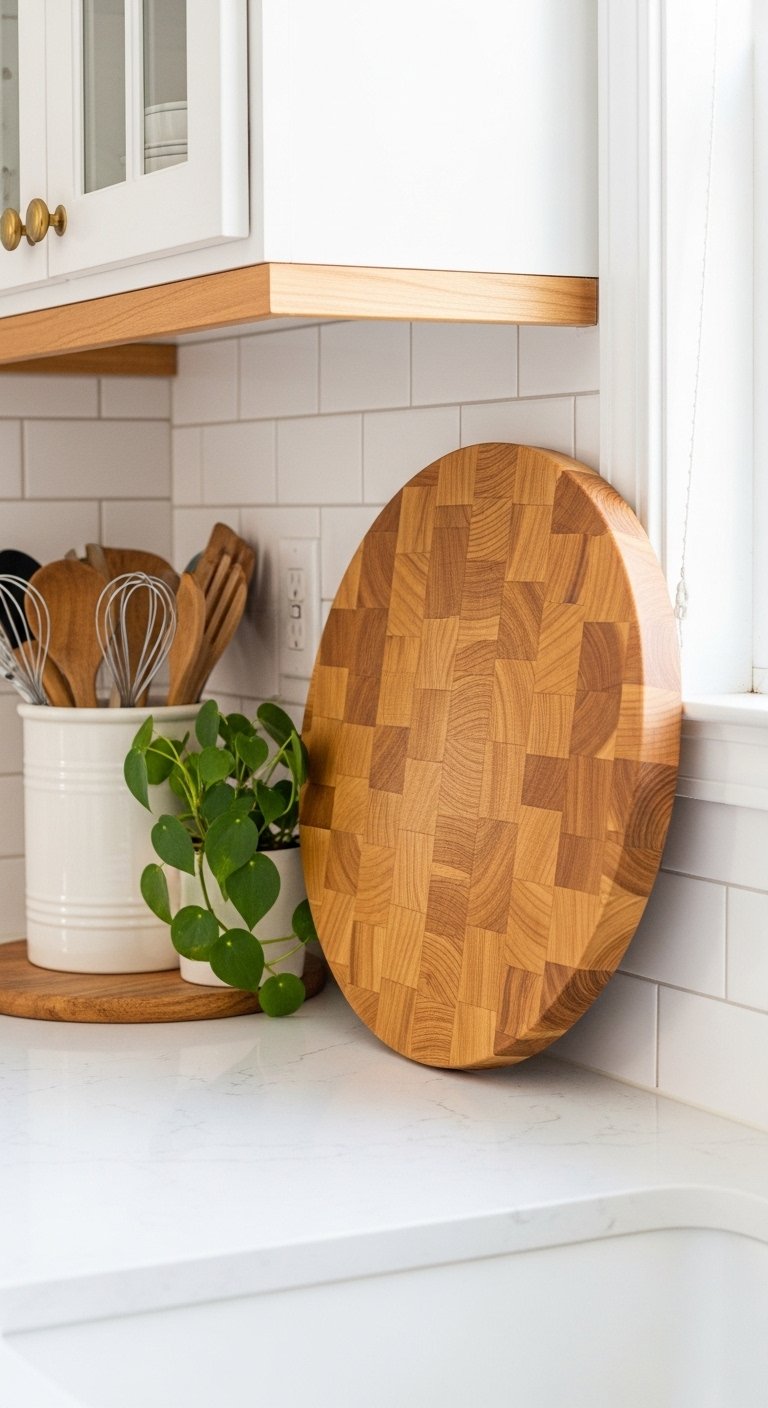
A thick, well-made wooden cutting board in a warm honey or natural color displayed propped against the kitchen backsplash when not in active use adds a genuine material warmth to the counter that few other single objects can achieve for the same price. The grain and color of solid wood, the slight irregularity of a board that has been used and oiled, and the simple honest presence of a real tool sitting in a visible position on the counter all contribute to the kitchen atmosphere in a quiet but consistent way. Choose a board in end-grain or edge-grain hardwood for the most attractive appearance and the best cutting surface. Round boards, rectangular boards, and boards with a simple carved handle all work well as counter display pieces. A good solid wood cutting board that doubles as a counter display costs between fifteen and forty dollars and lasts for many years with proper oiling and care.
14. Peg Rail for Tea Towels
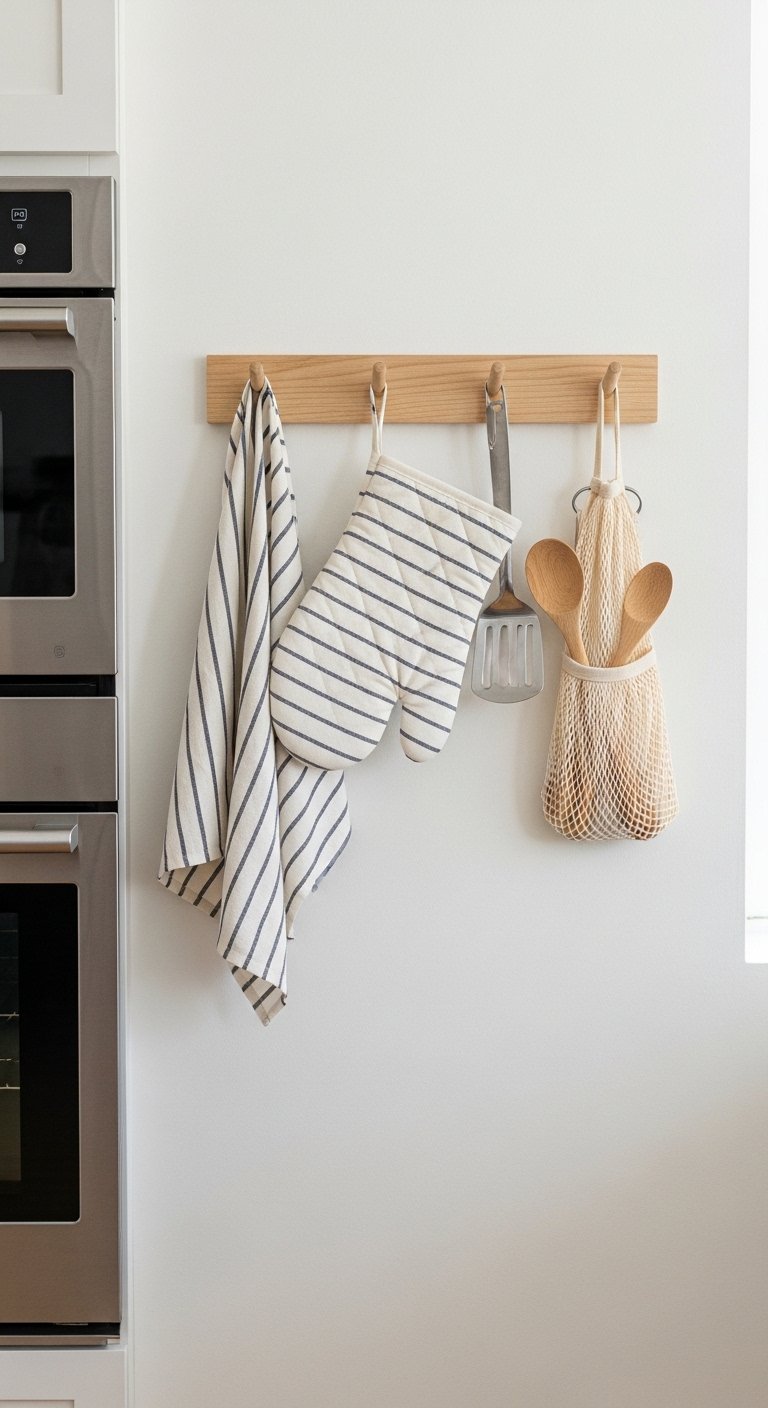
A small wooden shaker-style peg rail mounted on the kitchen wall beside the stove or the sink provides dedicated hooks for tea towels, an oven mitt, a small basket, and any other items that are used regularly enough to warrant being out and accessible rather than stored away in a drawer. The peg rail format, with its evenly spaced turned wooden pegs, has a warm, cottage-kitchen quality that suits a wide range of kitchen styles from rustic farmhouse to clean modern when the rail is kept simple and the finish is appropriate to the room. A peg rail with four to six pegs holds everything that currently gets looped over the oven handle, the cabinet door, or left on the counter beside the sink in a dedicated, organized format that also looks more intentional than any of those alternatives. A simple four-peg wooden rail costs under twenty dollars.
15. Printed Recipe Card Display
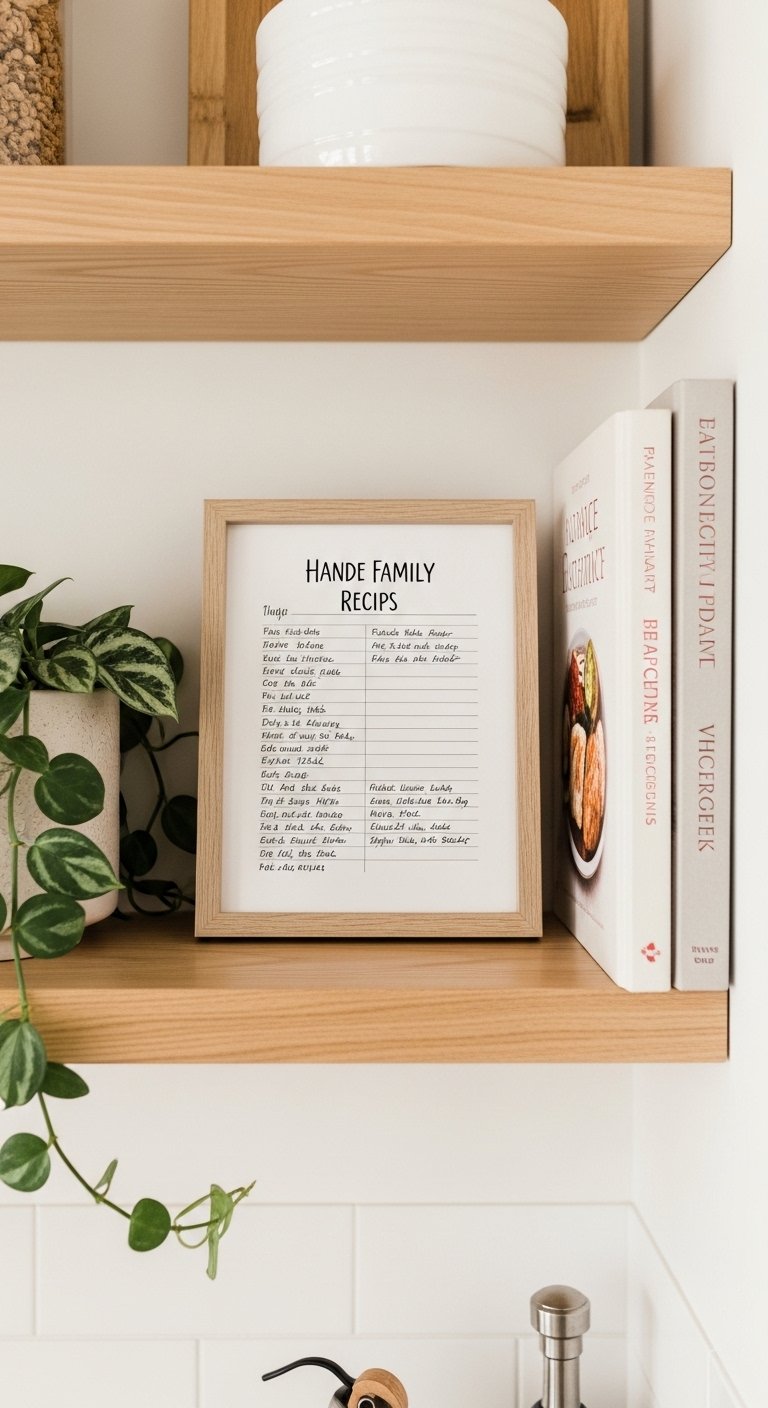
A small framed print of a handwritten or illustrated recipe, a vintage cooking illustration, or a simple food-related quote placed on the kitchen shelf, the counter, or the wall adds a personal and warm detail to the kitchen that contributes to its character without requiring any significant spend. Print a family recipe in a simple format on card stock, frame it in a small wooden frame, and place it on the kitchen shelf where it can be seen from the table or the main cooking position. An illustrated print of a seasonal fruit or vegetable, a vintage botanical of a culinary herb, or a simple typographic print of a food-related phrase all work equally well. A printed and framed kitchen print in a standard small size costs under ten dollars including the frame, and the personal quality of a family recipe or a favorite food illustration adds a warmth and specificity to the kitchen that generic wall decor cannot.
16. Colorful Sponge Holder
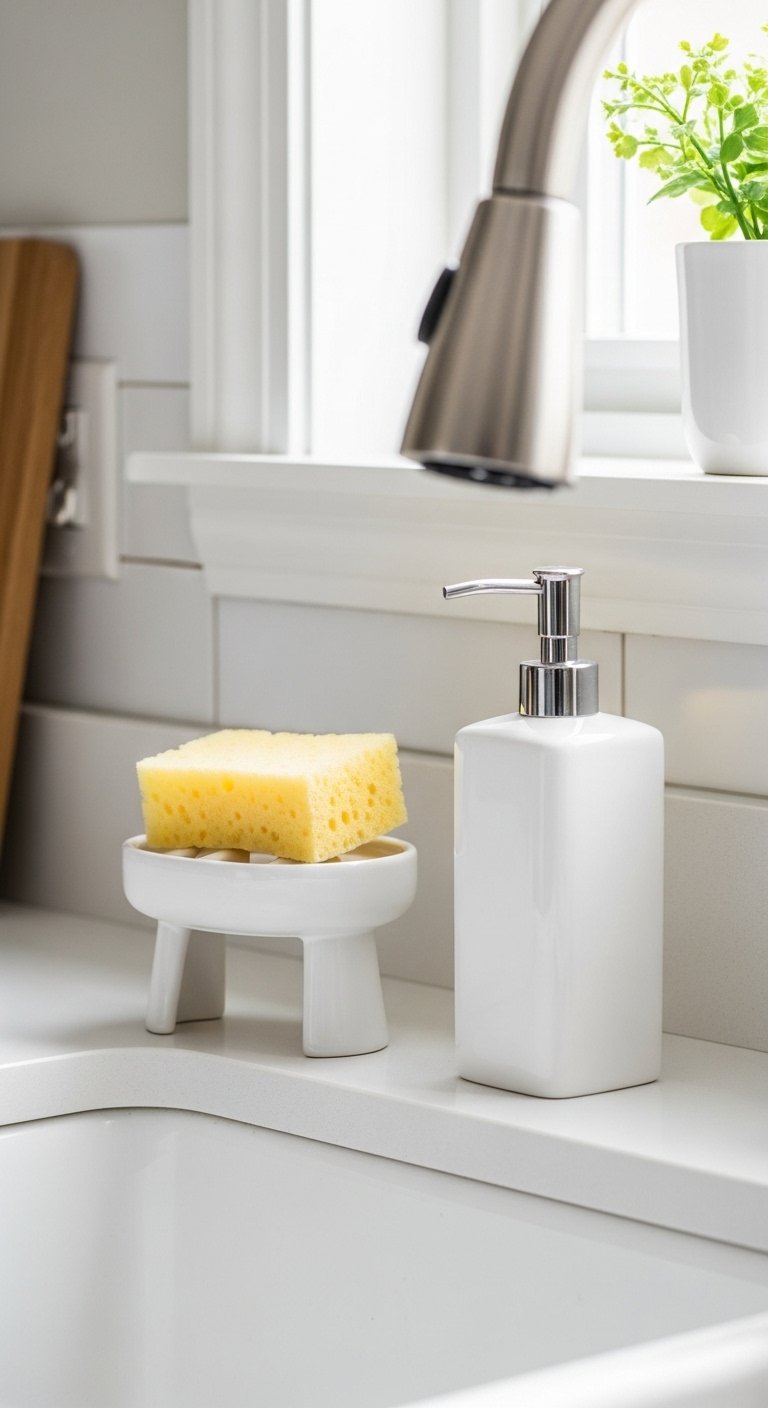
This sounds like a very small detail, and it is. But a clean, attractive sponge holder beside the kitchen sink is one of those consistently overlooked styling opportunities that costs almost nothing and makes a visible difference to the tidiness of the most-used area of the kitchen. A waterlogged sponge sitting flat on the counter beside the sink spreads water, stays wet, and looks like something that was just set down temporarily and forgotten. A simple ceramic or stainless steel sponge holder that elevates the sponge above the counter surface and allows it to drain and dry properly is both more hygienic and more visually tidy. Choose a holder in a material and finish that coordinates with the other kitchen accessories. A ceramic one in a warm neutral or a matte black one in a modern kitchen both cost under ten dollars and improve the look of the sink area immediately.
17. Matching Soap Dispensers
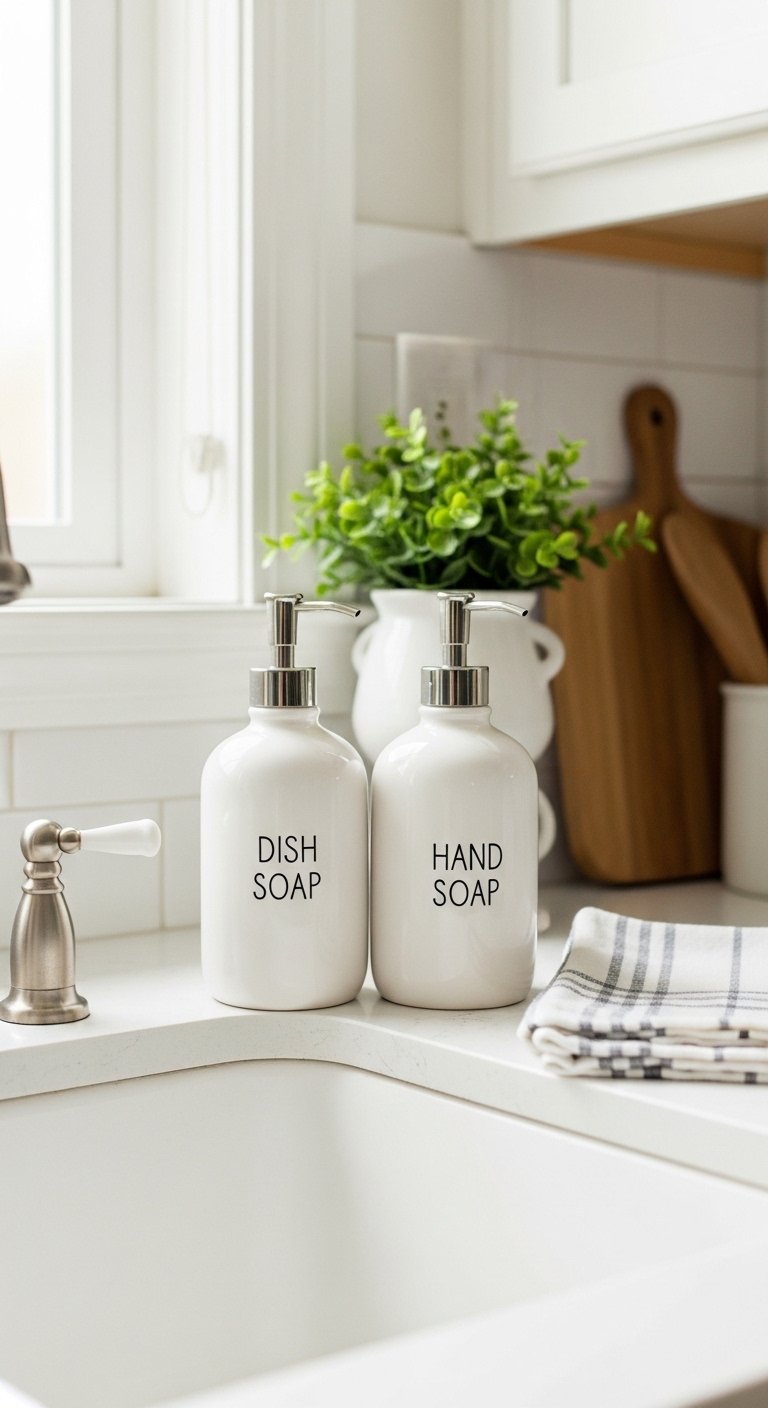
A matched pair of ceramic or glass dispensers, one for dish soap and one for hand soap, placed beside the kitchen sink replaces the original branded plastic bottles with something that looks like a design decision rather than a purchase from the cleaning aisle. The original bottles, with their bright labels and generic plastic pumps, are among the most visually disruptive items on any kitchen counter because they sit in one of the most visible spots in the room and contribute nothing to the kitchen’s aesthetic. A simple white ceramic pump dispenser or a clear glass bottle with a matte gold or chrome pump top holds the same soap in a vessel that reads as part of the kitchen rather than as packaging. Refill it from a larger economy-size bottle to keep the cost of the soap itself low. A pair of matching soap dispensers costs under twenty dollars and improves the sink area immediately.
18. Simple Wall Clock
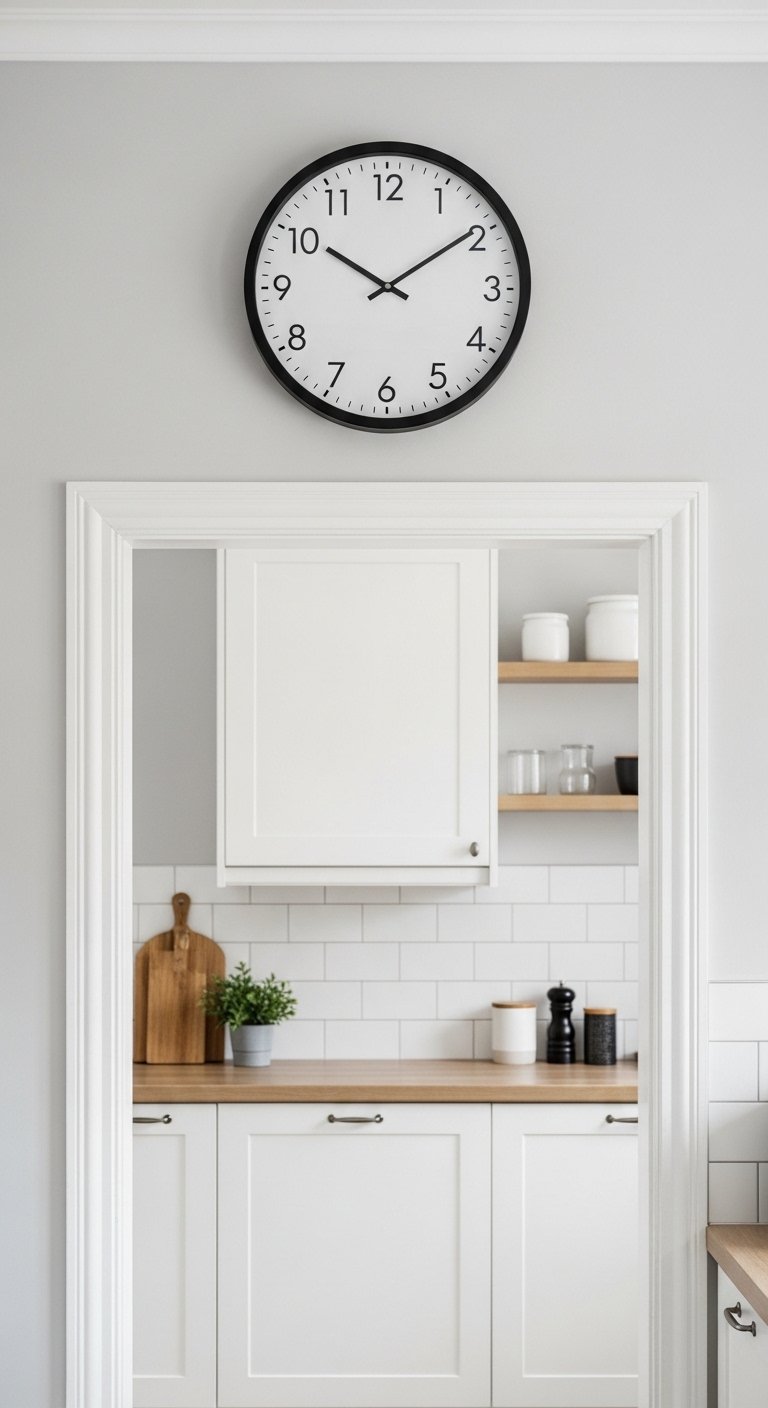
A wall clock in the kitchen is both practical and decorative in a way that most kitchen decor items are not, since it is genuinely consulted during cooking and meal planning rather than simply looked at. A large, clean-faced clock in a simple style, a round face with Roman or bold numerals in a natural wood, matte black, or warm metal frame, reads as an intentional design element in the kitchen rather than just a timekeeping device. Place it on the wall visible from the main cooking position so it can be consulted without walking across the kitchen or reaching for a phone. A simple, well-proportioned kitchen wall clock in a clean style costs under twenty-five dollars for most standard sizes and suits kitchens from modern to traditional without requiring any other changes to make it look appropriate. The clock’s presence makes the kitchen feel more like a real room and less like a purely functional one.
19. Floating Shelf Vignette
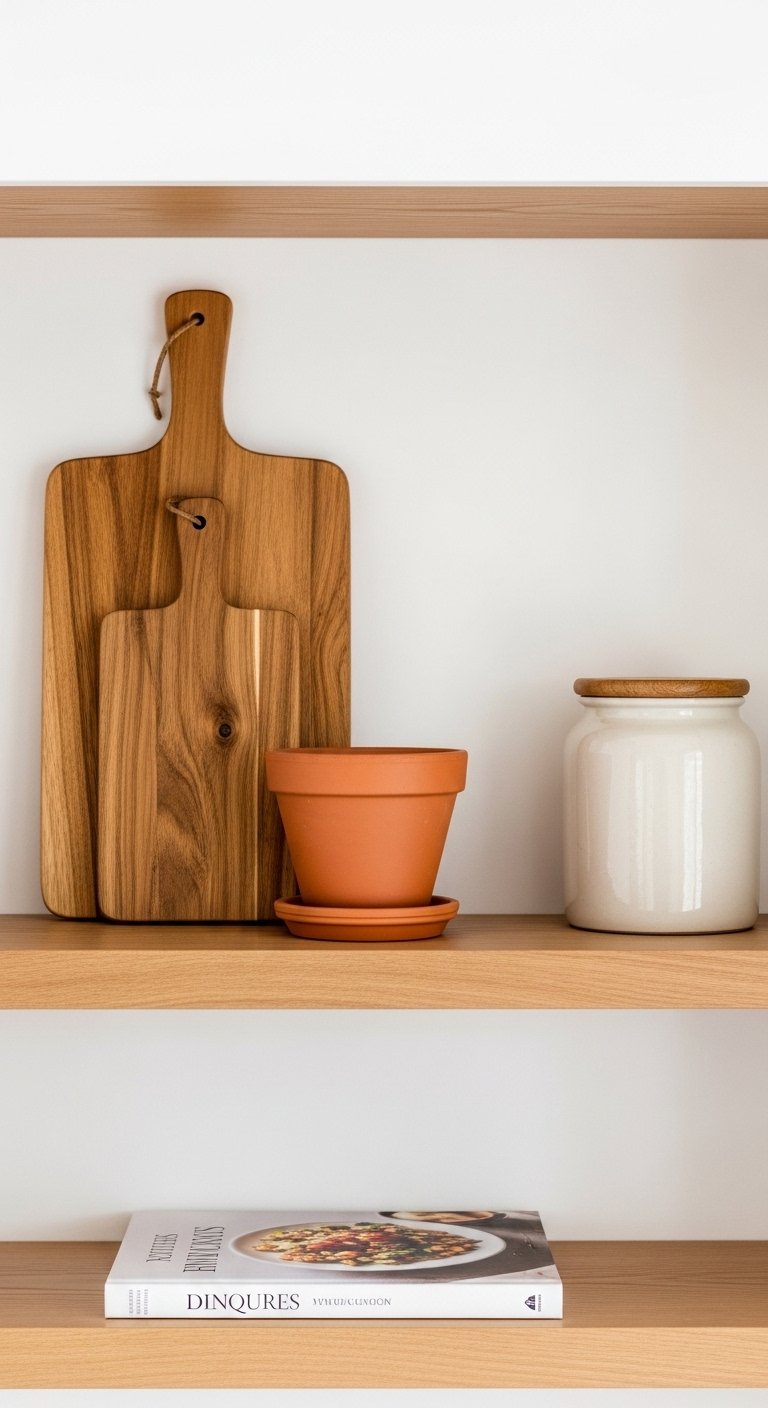
A single floating shelf installed on an empty kitchen wall, or an existing shelf that has never been styled with intention, becomes a design feature when it is arranged as a deliberate vignette rather than simply used as overflow storage. The classic kitchen shelf vignette combines one or two practical items with one or two purely decorative ones and leaves some breathing room between the objects so each one registers individually. A wooden cutting board leaned upright at the back, a small potted herb in a terracotta pot, a simple ceramic jar, and one cookbook stacked flat as a base creates a complete shelf moment that looks styled without looking designed. Keep the shelf edited: five or six objects maximum with clear space between them. Remove anything that does not contribute to the overall warmth and character of the arrangement and replace it with something that does.
20. Kitchen Table Centerpiece
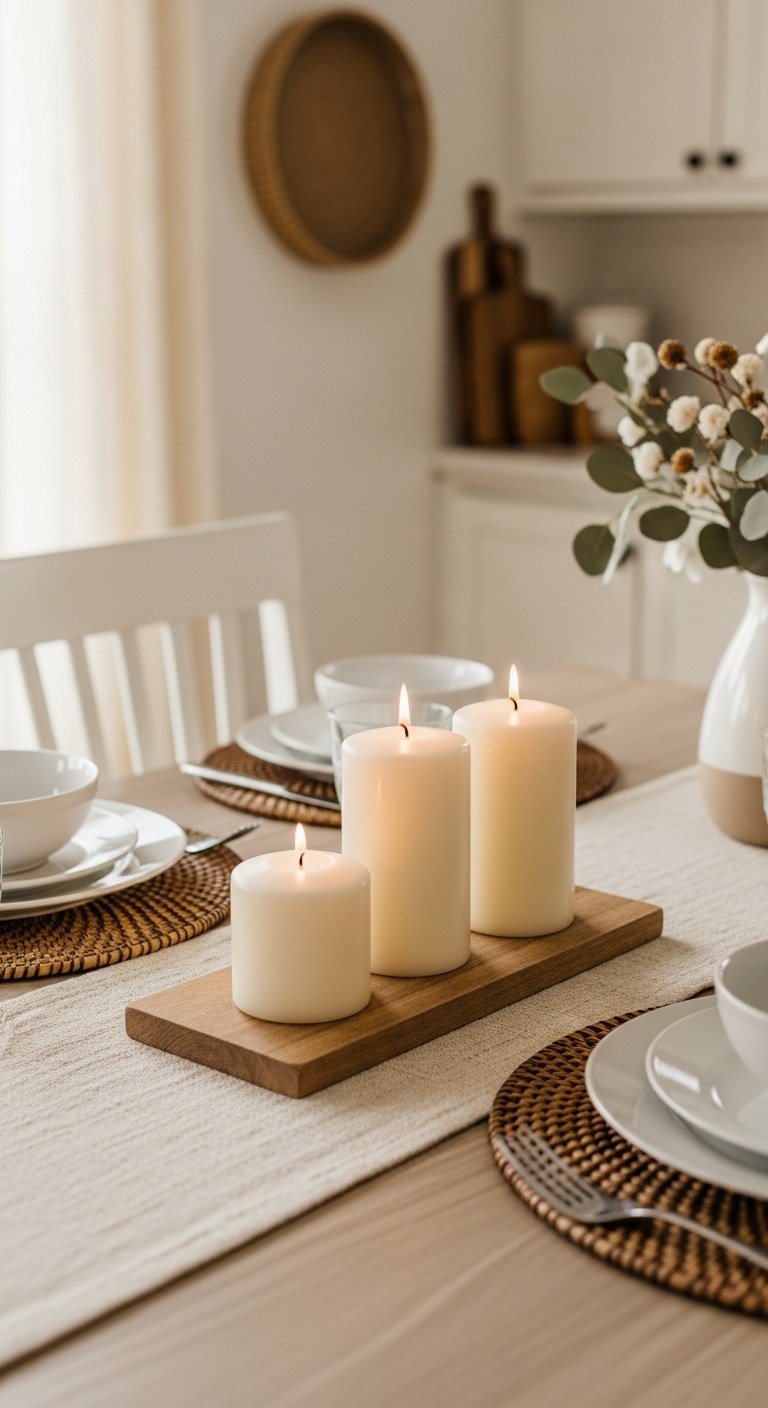
A simple centerpiece on the kitchen or dining table, changed seasonally to keep the kitchen feeling fresh and current, costs almost nothing and makes the table look like a place where someone is glad to sit down. The centerpiece does not need to be elaborate. A small ceramic bowl with a few lemons, three candles on a wooden board, a jam jar of whatever is growing in the garden at the moment, a small potted plant on a saucer, or even a single large pillar candle on a flat stone all work as kitchen table centerpieces that are warm, natural, and appropriately modest in scale for a working kitchen table. Keep it to one side of the table rather than centered on a large table where it blocks conversation across the table. Refresh it every few weeks to match the season and the centerpiece becomes one of those kitchen details that guests notice and comment on without being able to explain exactly why the kitchen feels so welcoming.
A kitchen that looks good does not need expensive appliances or a renovation. It needs a few deliberate decisions about what goes on the counter, how the tools are stored, and what the light feels like. Most of those decisions cost under ten dollars each. Start with whatever bothers you most about the kitchen right now and fix just that.