21 Bathroom Shelf Ideas That Add Storage Without Taking Floor Space
Bathroom storage has a particular constraint that other rooms do not. The floor space is almost always limited and almost always already accounted for by the toilet, the vanity, and the tub or shower. There simply is no room for new floor furniture. The solution is to look up. Walls, doors, corners, and the space above fixtures are all storage opportunities that most bathrooms waste completely. These 21 shelf ideas use vertical and overlooked space to add genuinely useful storage without taking a single square foot of floor away from the existing layout. Some are simple installations. A few are completely freestanding. All of them solve the bathroom storage problem at the source.
1. Floating Wall Shelves
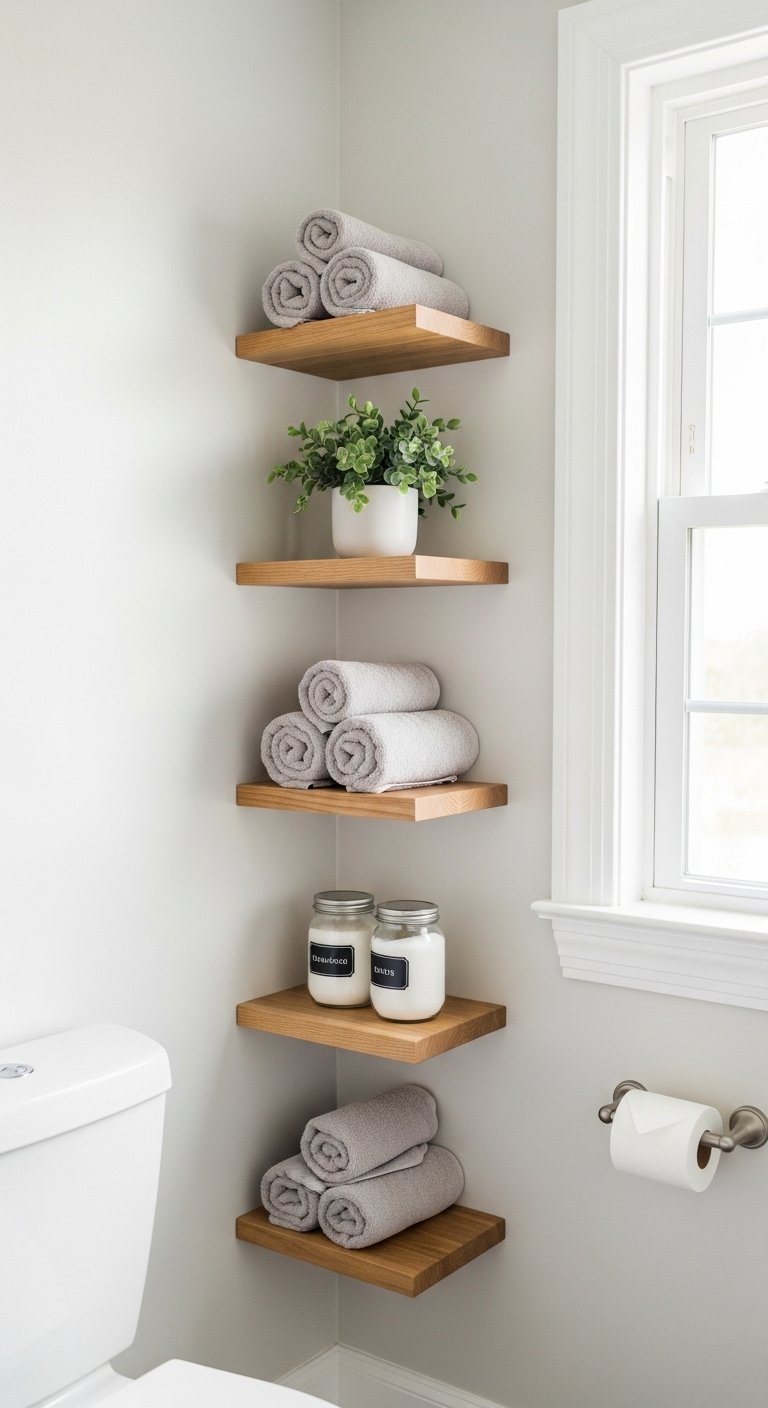
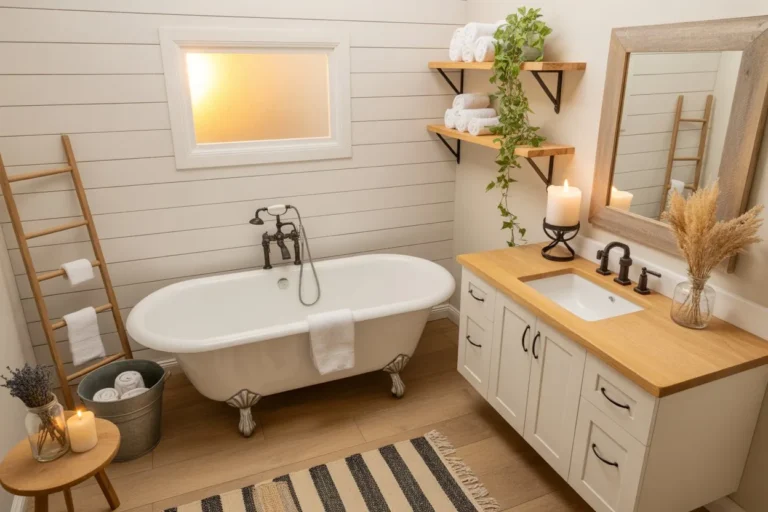
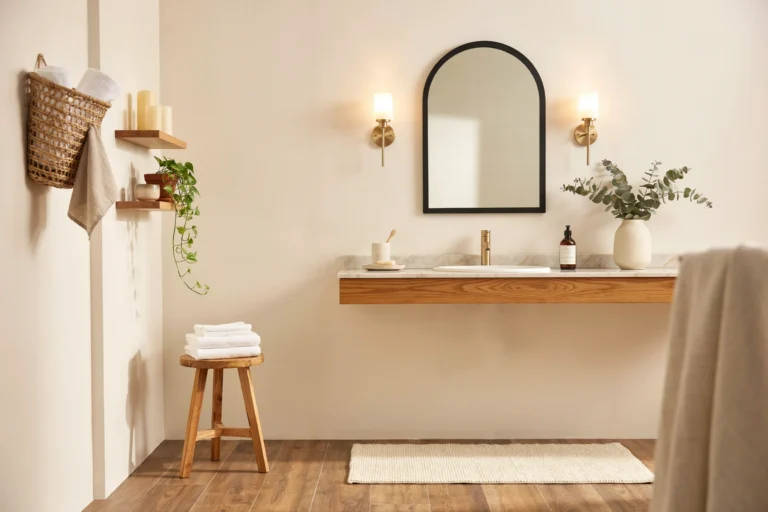
Two or three simple floating shelves installed on an empty bathroom wall, either beside the toilet or above the vanity, add a functional storage and styling surface in a location that was previously bare. The shelves install with hidden brackets that disappear into the back of the shelf board, creating a clean visual line where the shelf appears to float on the wall. Style each shelf with a mix of practical and decorative items: rolled towels, a small plant, a candle, a labeled jar of cotton rounds, and one or two simple ceramic pieces. A trio of floating shelves in natural wood or painted white costs between thirty and sixty dollars total and adds the equivalent of a small cabinet’s worth of storage in a footprint that takes nothing from the floor.
2. Over-Toilet Shelving Unit
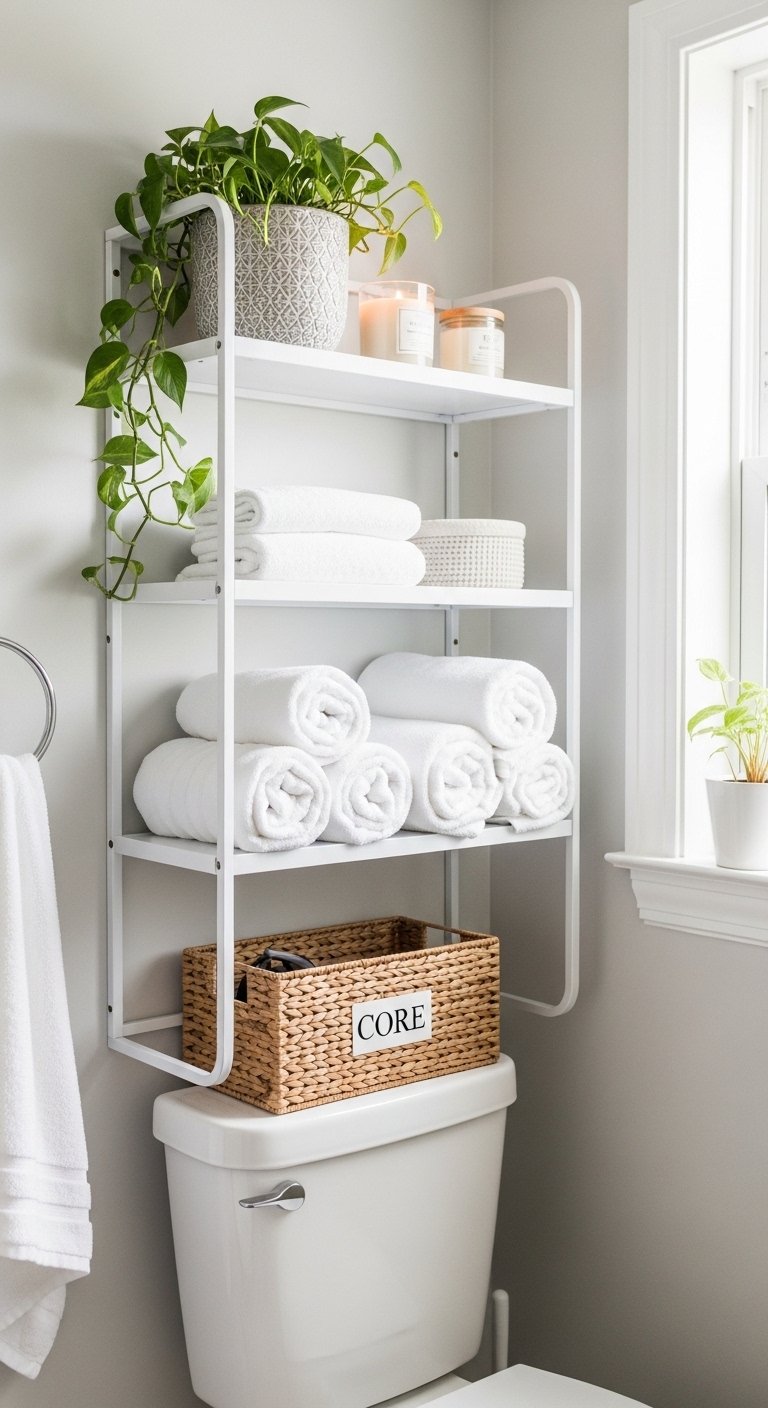
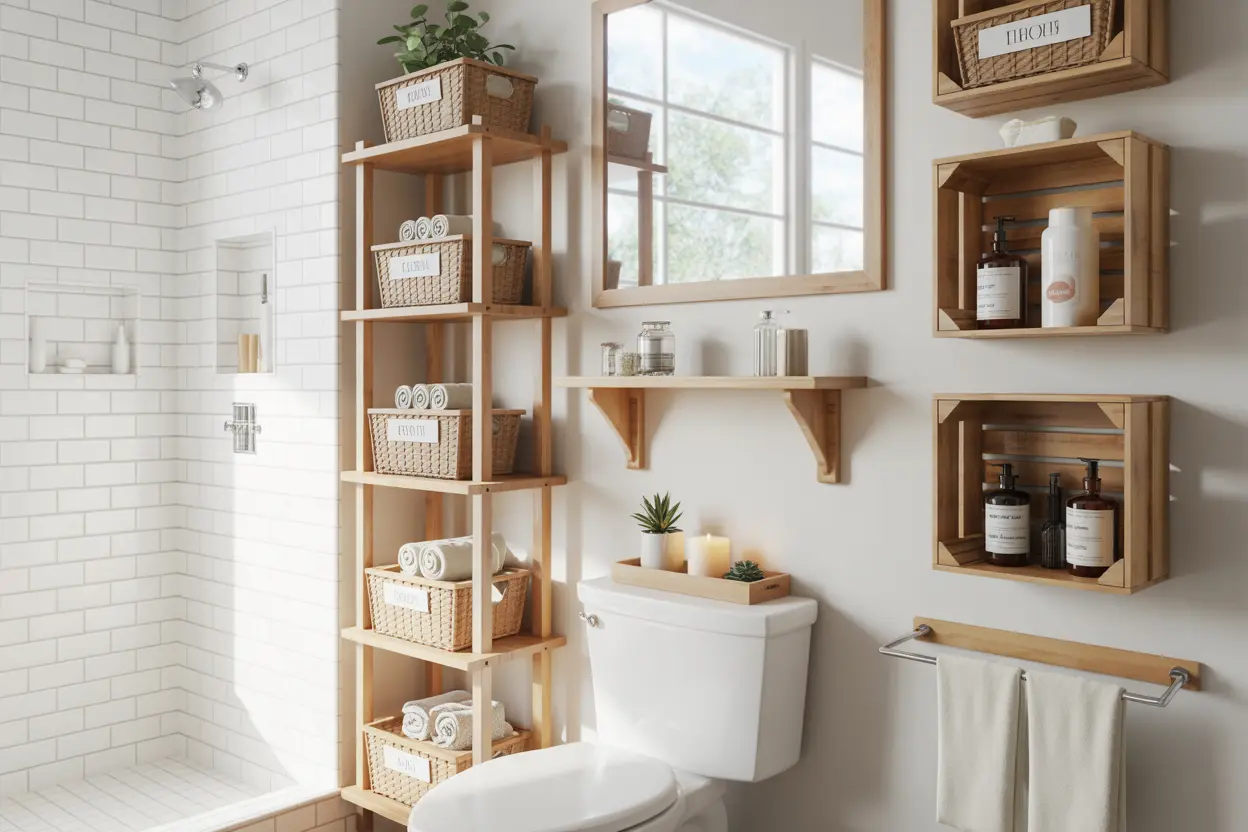
A freestanding over-toilet shelving unit straddles the toilet from the floor to about head height, with shelves above the toilet tank that use the otherwise wasted vertical space directly over one of the largest fixtures in the room. These units typically have three or four shelves that hold rolled towels, baskets of toiletries, plants, and decorative items in a vertical arrangement that makes the toilet area look more designed and provides significant new storage. Most over-toilet units cost between thirty and sixty dollars and require no installation or wall attachment. They sit on the floor behind the toilet and can be repositioned or removed at any time.
3. Recessed Niche Shower
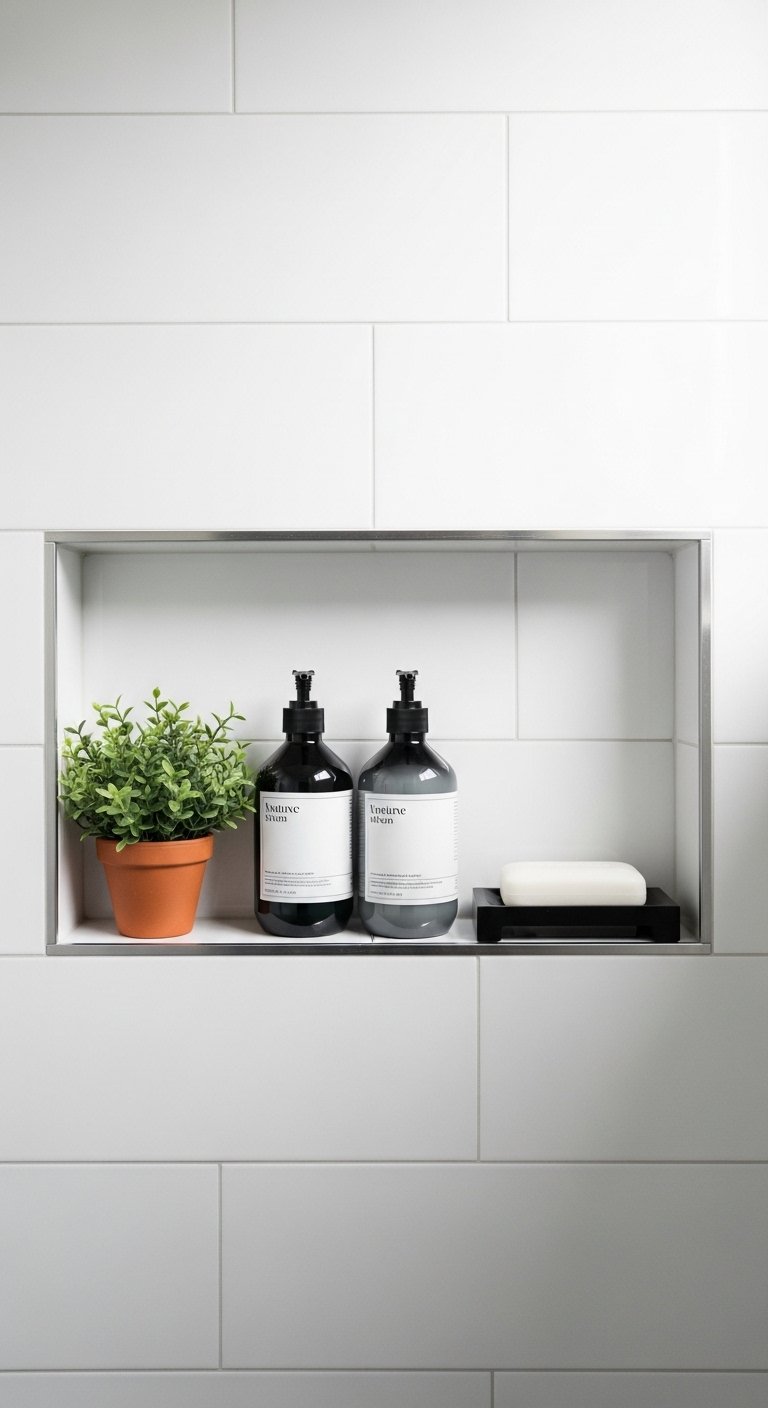
A tiled recessed niche built into the shower wall during construction or renovation creates a permanent flush-mounted storage spot for shampoo, conditioner, body wash, and soap that does not project into the shower space. The niche tiles to match the surrounding shower walls so it disappears into the design as an architectural detail rather than reading as added-on storage. A single niche eliminates the need for a tension caddy or wire shower rack entirely and makes the shower look custom and finished. For an existing shower without a niche, a recessed niche insert that fits between studs is a less involved installation that achieves a similar visual result.
4. Glass Corner Shelves
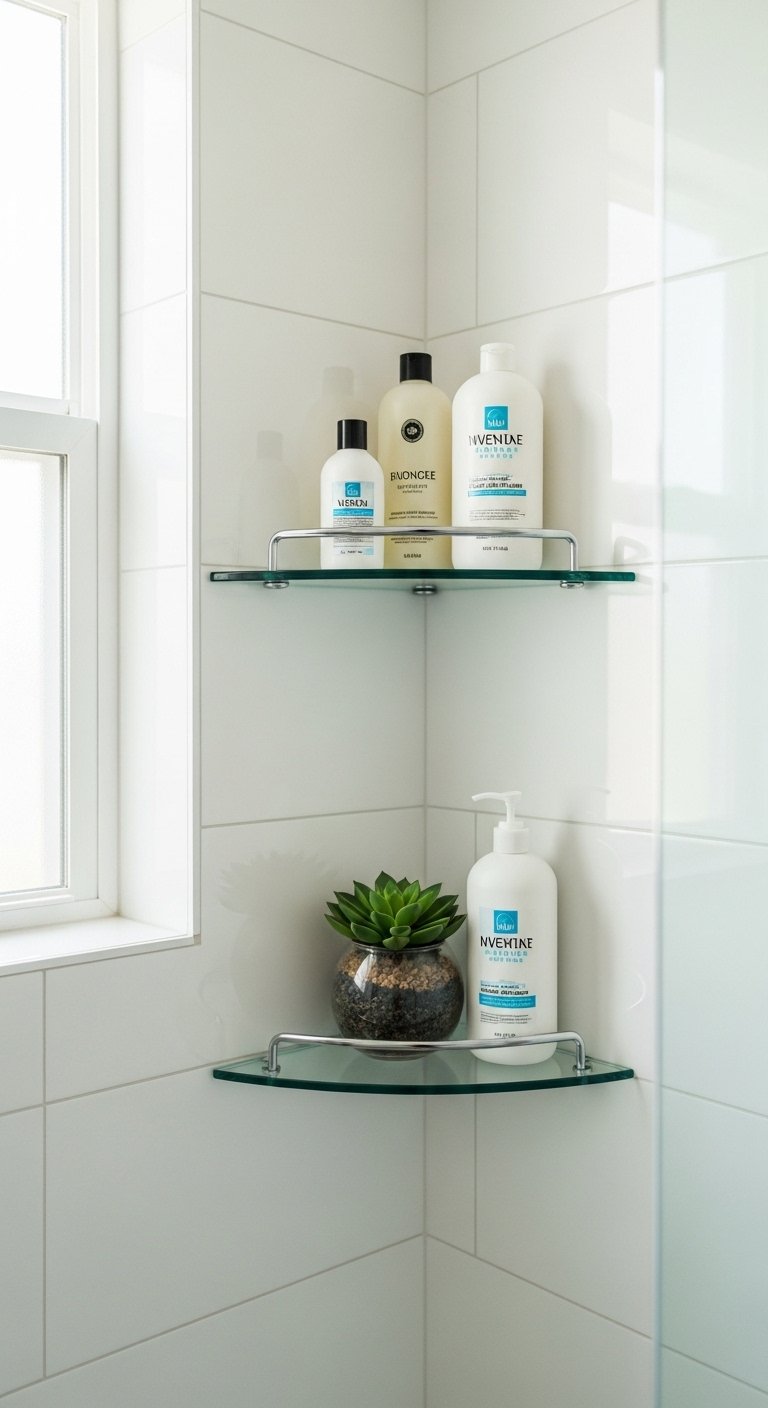
Small triangular glass shelves installed in the corners of the shower or beside the vanity hold soap, shampoo, or small decorative items in a location that would otherwise be unused. The glass material allows light to pass through the shelf and the wall behind it to remain visible, which keeps the corner from feeling visually heavy or interrupted. Glass corner shelves install with simple chrome or brass brackets in either two or three-shelf configurations. A set of three corner shelves typically costs under twenty dollars and uses the inherently unused dead space of a room corner that would otherwise be entirely wasted.
5. Ladder Style Shelf
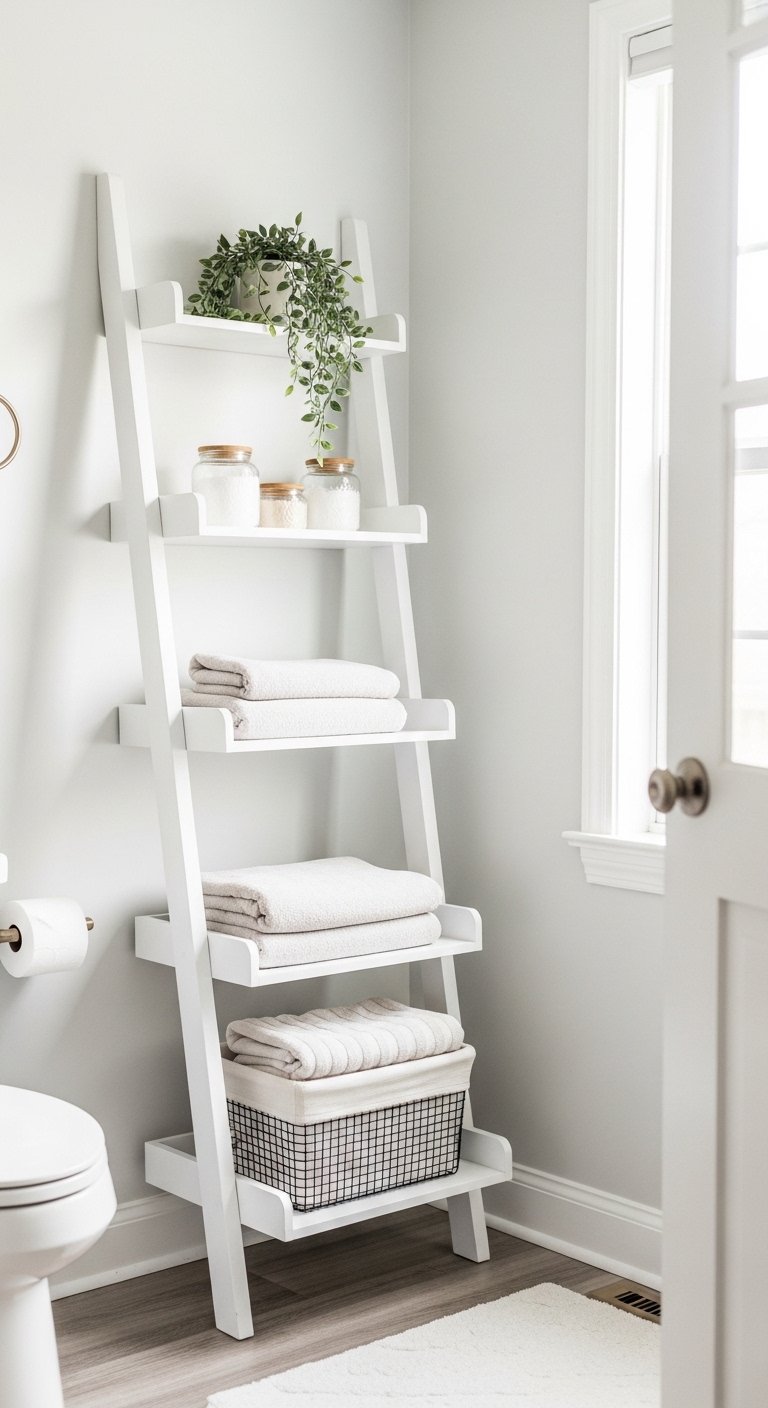
A leaning ladder shelf, sometimes called a ladder bookcase but equally suitable for bathroom use, leans against the wall with progressively wider shelves toward the bottom and narrower ones toward the top. The leaning angle gives it a relaxed, less formal presence than a straight bookcase and the staggered shelf widths create visual interest. Use the wider lower shelves for towels and larger storage baskets and the narrower upper shelves for small decorative items and jars. A leaning ladder shelf in white-painted or natural wood typically costs between forty and eighty dollars and adds significant tiered storage with no wall installation required.
6. Built-In Wall Niche
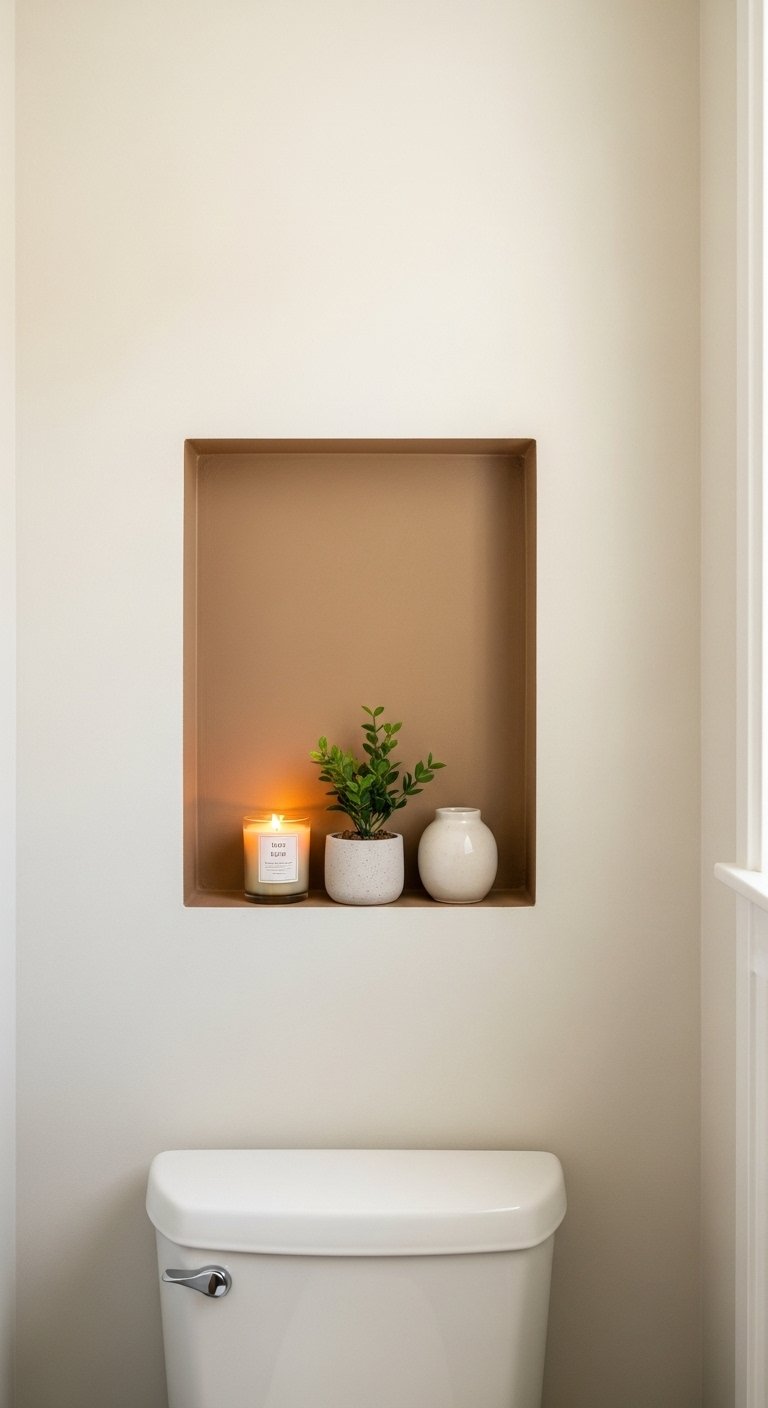
A built-in recessed wall niche outside the shower, perhaps beside the toilet or between the vanity and the wall, creates a flush wall feature that holds toilet paper rolls, candles, or styled decorative items in a location that adds to the room rather than projecting into it. A built-in niche during renovation requires opening the wall between two studs, framing the recess, and finishing the interior with paint or wallpaper to suit the bathroom design. The result is a deliberate architectural detail that reads as designed rather than added on. Niches like this can be styled with a small grouping of objects to function as a display feature as well as practical storage.
7. Slim Wall Cabinet
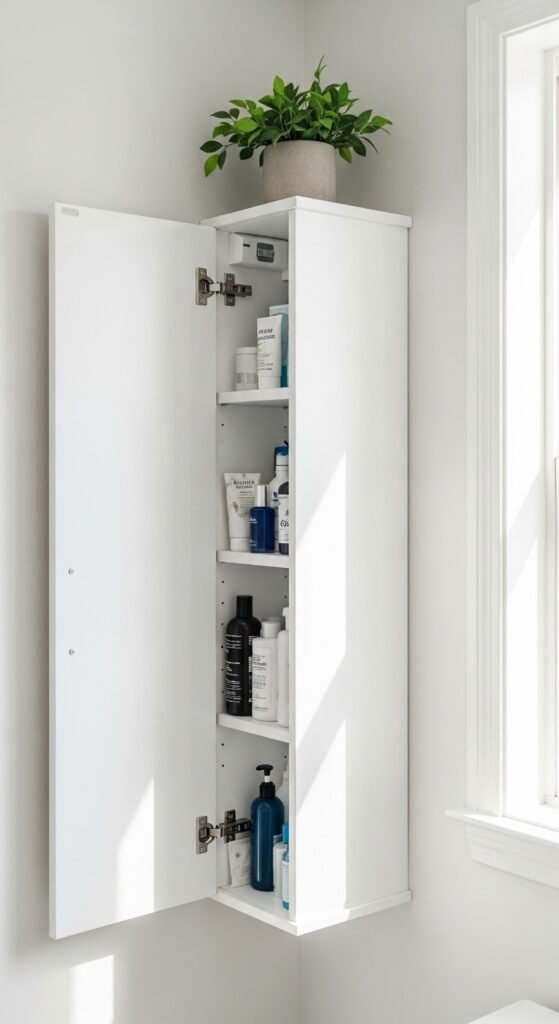
A slim wall-mounted cabinet installed in an empty bathroom wall section adds enclosed hidden storage at chest or eye level without consuming any floor space. Look for cabinets in slim depths of four to six inches so they project minimally into the room. Mirrored cabinet doors add reflective light and apparent depth to the room beyond the storage function. Match the cabinet finish to other bathroom hardware for the most cohesive result. A slim wall cabinet typically costs between forty and one hundred dollars and adds the equivalent of a full vanity cabinet section worth of storage on a previously unused wall. For more complete bathroom storage and styling solutions, the 24 small bathroom decor ideas guide covers the full range of approaches that work in tight spaces.
8. Pegboard Wall System
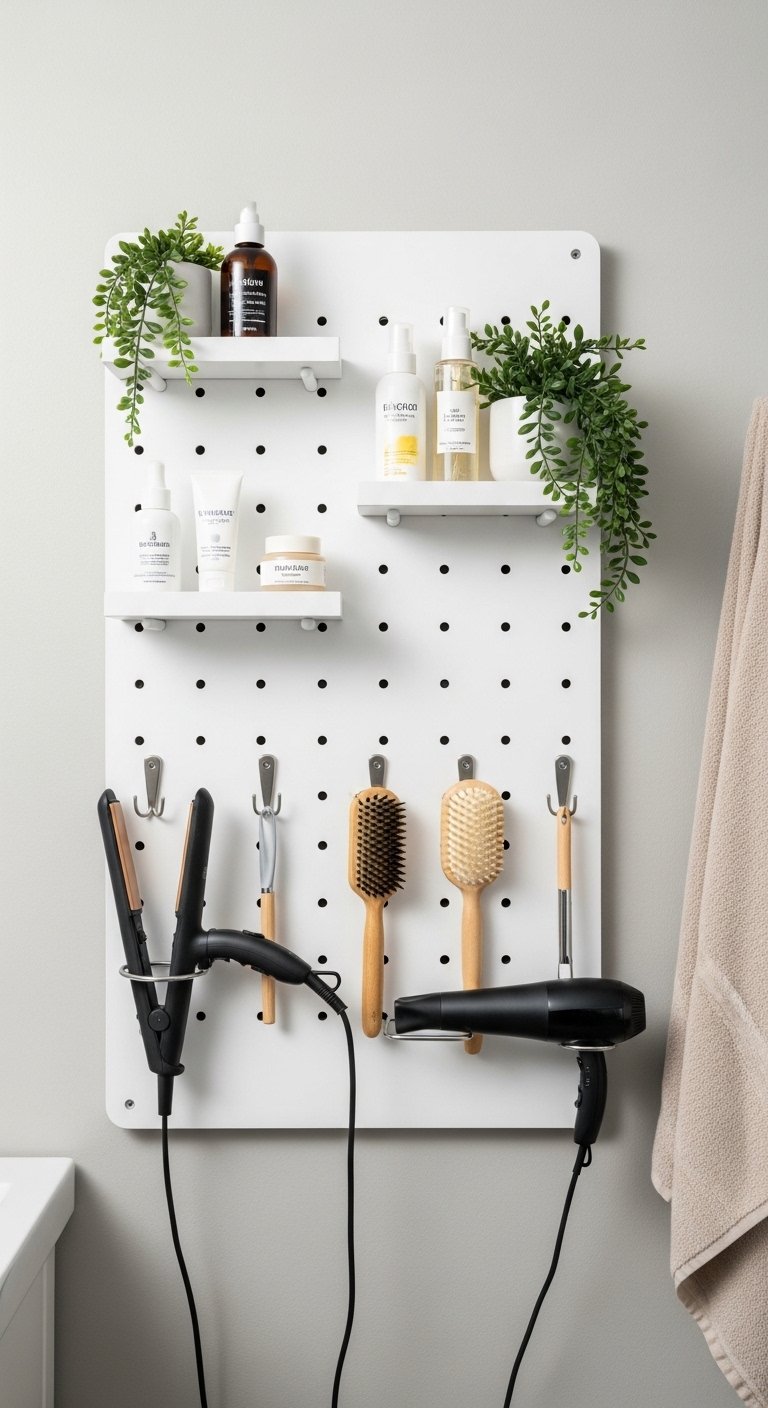
A pegboard panel installed on a kitchen or bathroom wall creates a flexible, customizable storage system with hooks and small shelves that can be repositioned at any time. Paint the pegboard in a color that matches or complements the wall behind it for a subtle, integrated look, or leave it in a natural wood tone for a warm utility feel. Use the hooks to hold a hair dryer, a flat iron in a holder, brushes, and small tools that would otherwise live in a drawer. Add small shelves to the pegboard for skincare products, candles, or a small plant. A pegboard wall system costs under thirty dollars in materials and uses the entire wall surface for storage without any furniture footprint.
9. Behind Door Organizer
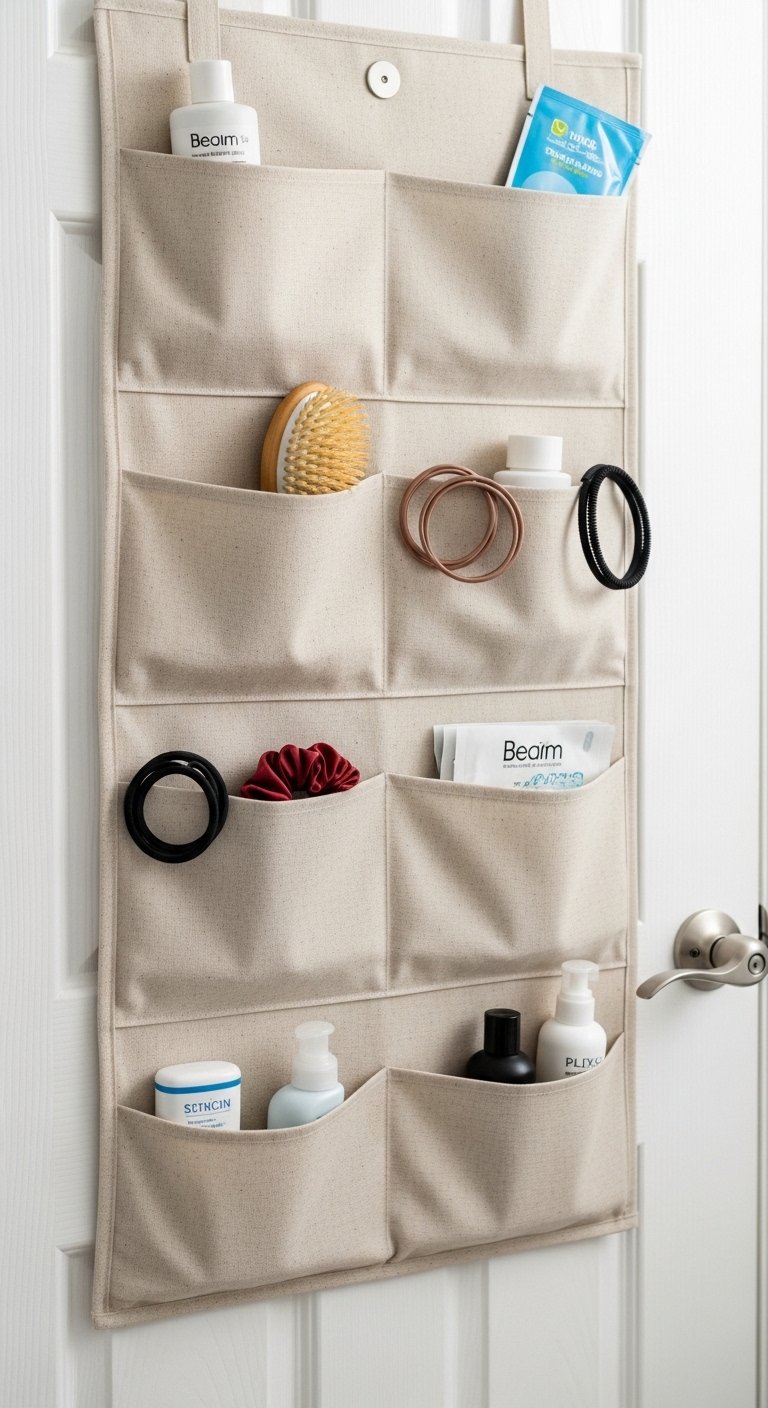
The back of the bathroom door is one of the most consistently underused storage surfaces in any bathroom. An over-the-door organizer with multiple shelves or pockets installed on the inside face of the door holds a substantial quantity of small bathroom items, hair products, makeup, lotions, nail tools, and medications, in a visible accessible format on a surface that was previously doing nothing at all. The organizer hooks over the door with no installation and is fully removable. A pocket organizer in fabric or clear plastic typically holds twenty or more individual items in a slim format that takes up no room space at all when the door is closed.
10. Floor-to-Ceiling Tower
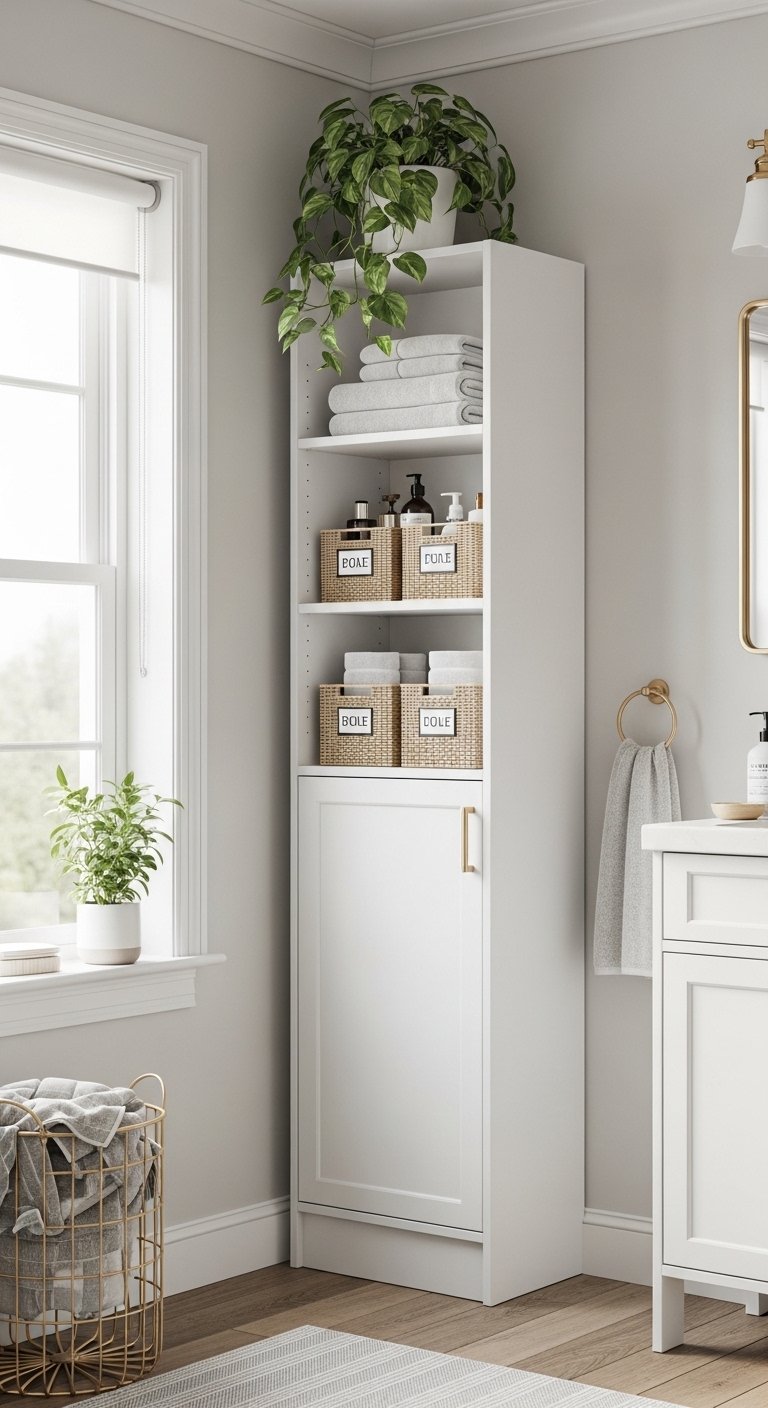
A tall freestanding storage tower that extends from the floor nearly to the ceiling uses the full vertical height of the bathroom for storage rather than stopping at standard cabinet height. The footprint of a floor-to-ceiling tower is roughly the same as a standard wider freestanding cabinet, but it holds significantly more because of the additional height. Look for slim profile towers about ten to twelve inches deep that fit between fixtures or in narrow wall sections. Style the upper shelves with attractive items that are visible from across the room and use the lower closed sections for the items that need to be hidden. A tall storage tower costs between fifty and one hundred dollars.
11. Toilet Tank Tray
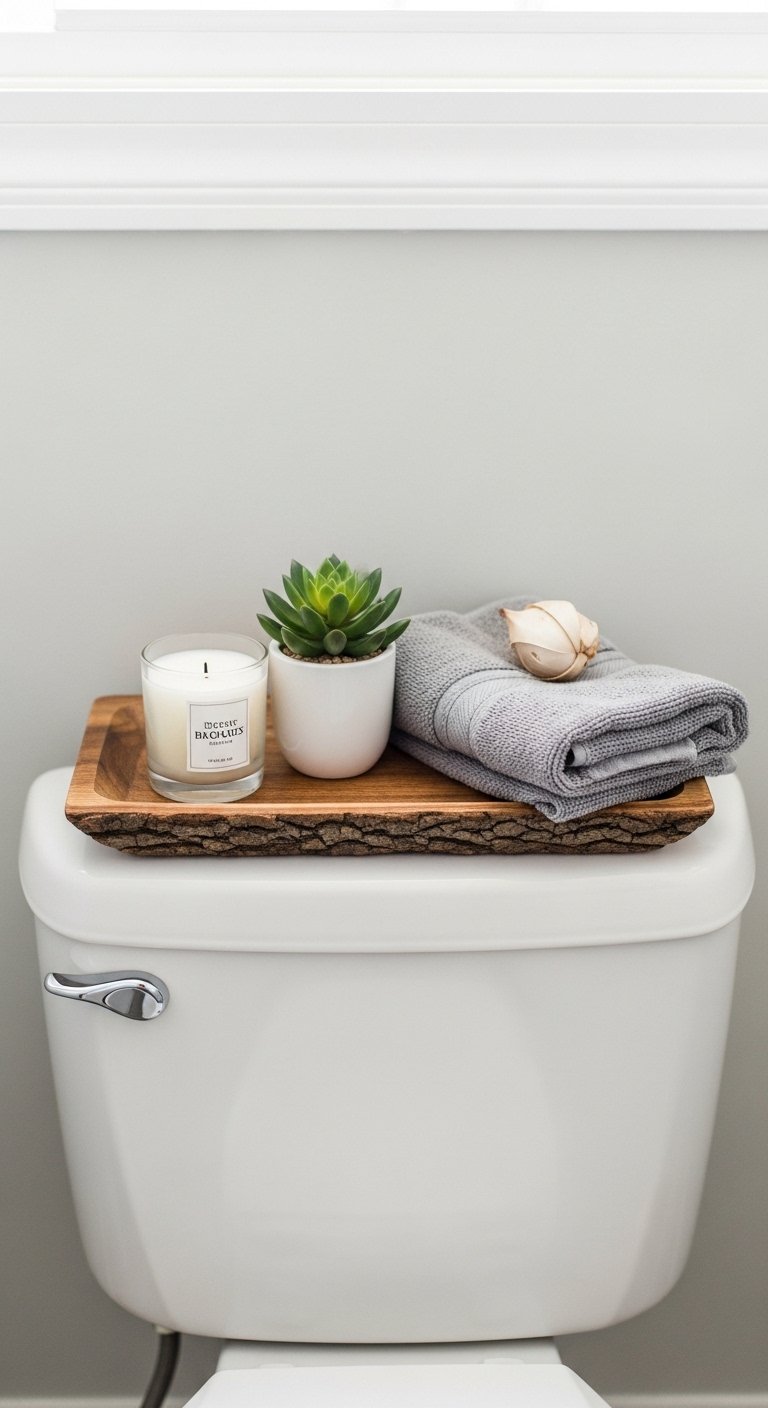
A simple wooden or metal tray placed on top of the toilet tank turns the otherwise wasted surface into a small styled display zone holding a candle, a small plant, a folded hand towel, and one or two decorative items. The tray contains the items as a single visual unit rather than letting them sit randomly on the tank, and the surface above the toilet becomes a styled detail rather than empty visual space. Choose a tray in a material and finish that suits the bathroom’s overall palette. A natural wood tray costs under fifteen dollars and creates a complete styled vignette above the toilet that reads as deliberate design rather than improvised storage.
12. Under-Sink Pull-Outs
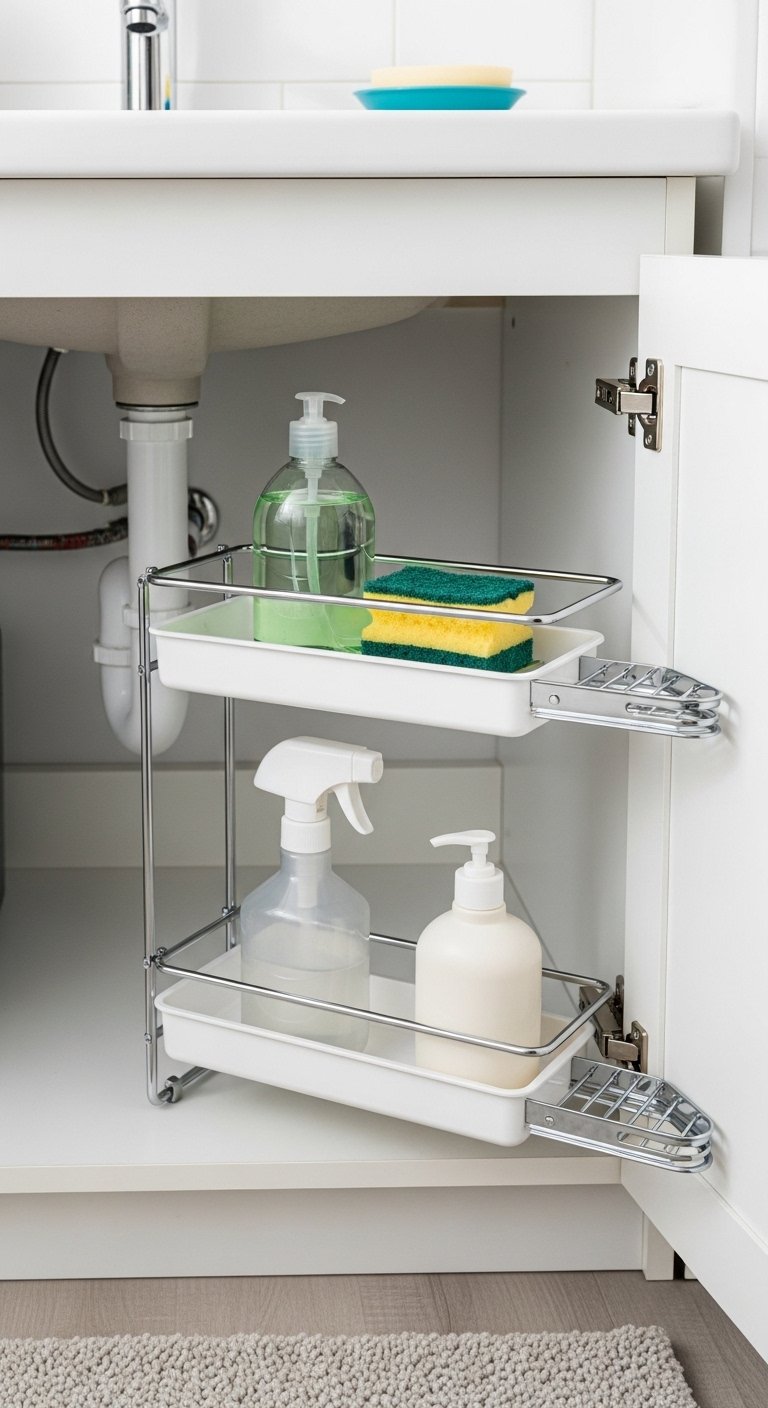
Pull-out organizers installed inside the under-sink cabinet convert the awkward space around the plumbing into accessible organized storage. Most under-sink cabinets have a single open shelf or two fixed shelves that make using the full depth nearly impossible. A pull-out organizer slides toward you when the door is opened, bringing items from the back to the front automatically. Two-tier versions designed to work around the drain pipe double the usable storage compared to the original cabinet. Most under-sink pull-out systems cost between twenty and fifty dollars and significantly improve one of the most universally disorganized spaces in any bathroom.
13. Cabinet Door Inside
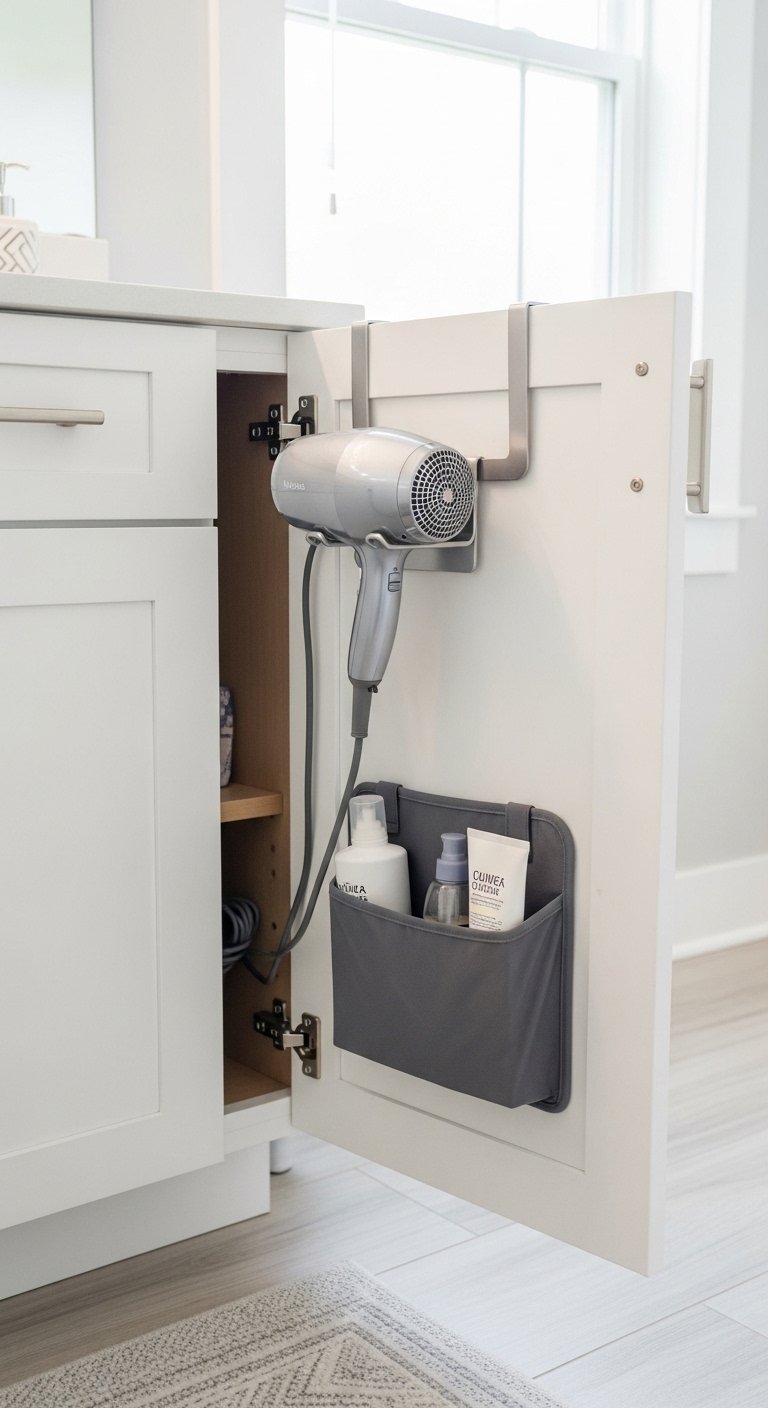
The inside faces of bathroom cabinet doors are entirely unused storage surfaces in most bathrooms. Adhesive hooks, magnetic strips, narrow shelves, and over-door pocket organizers all attach to the inside of cabinet doors without affecting the cabinet interior storage. Use the inside of the vanity door for a hair dryer holder. Use the inside of the medicine cabinet door for a small magnetic strip holding tweezers and nail scissors. Use the inside of a linen cabinet door for a row of small bins for product packets. Each cabinet door interior can hold the equivalent of a full small drawer’s worth of organized small items.
14. Recessed Medicine Cabinet
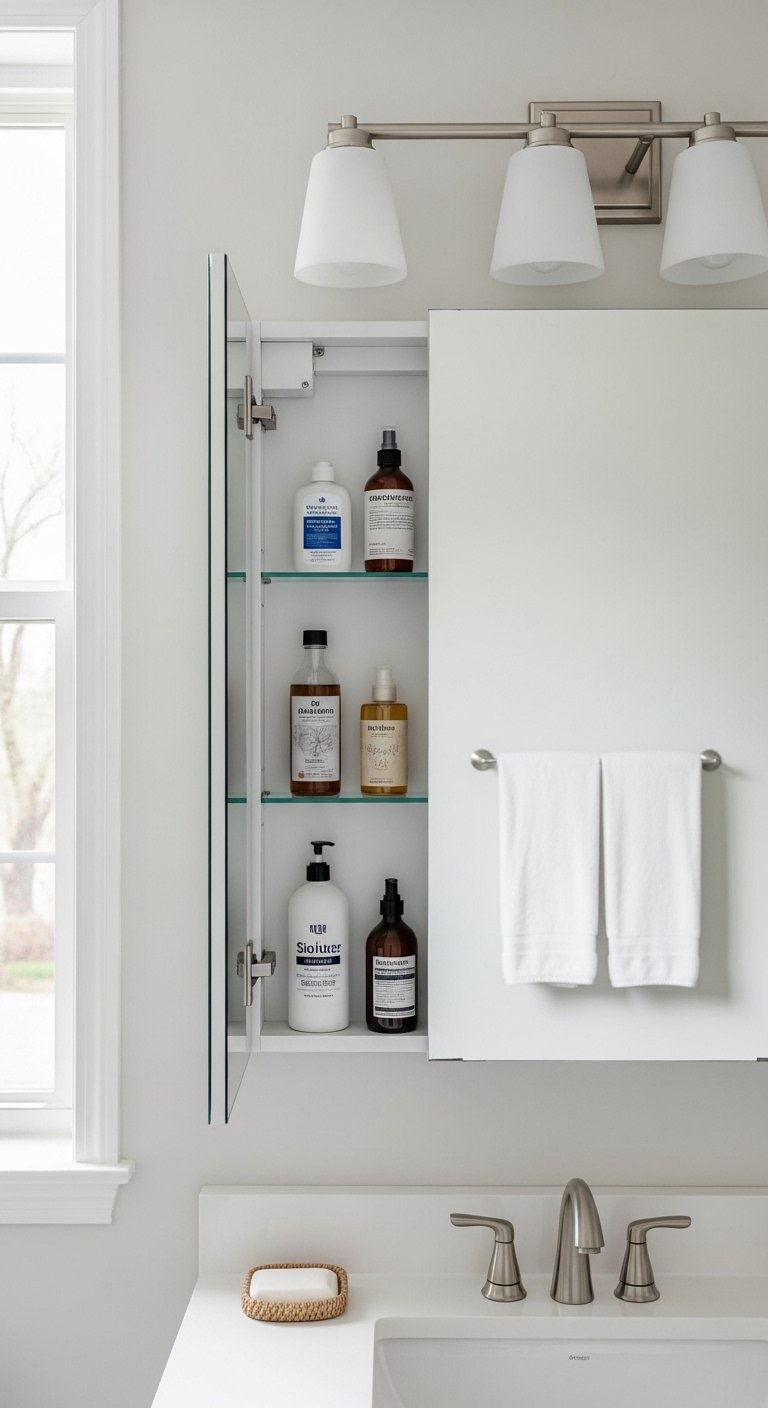
A recessed medicine cabinet installed in the wall above the vanity uses the wall cavity rather than projecting into the room, which means the cabinet adds significant storage capacity without taking up any floor or counter space. The mirrored exterior door also functions as the bathroom mirror, which means the cabinet replaces the mirror rather than adding to it. Three or four interior shelves hold daily medications, skincare products, and grooming tools completely out of sight and within arm’s reach of the sink. A recessed medicine cabinet typically costs between sixty and one hundred fifty dollars and is one of the most space-efficient storage solutions available in any bathroom.
15. Wall Hook Rail
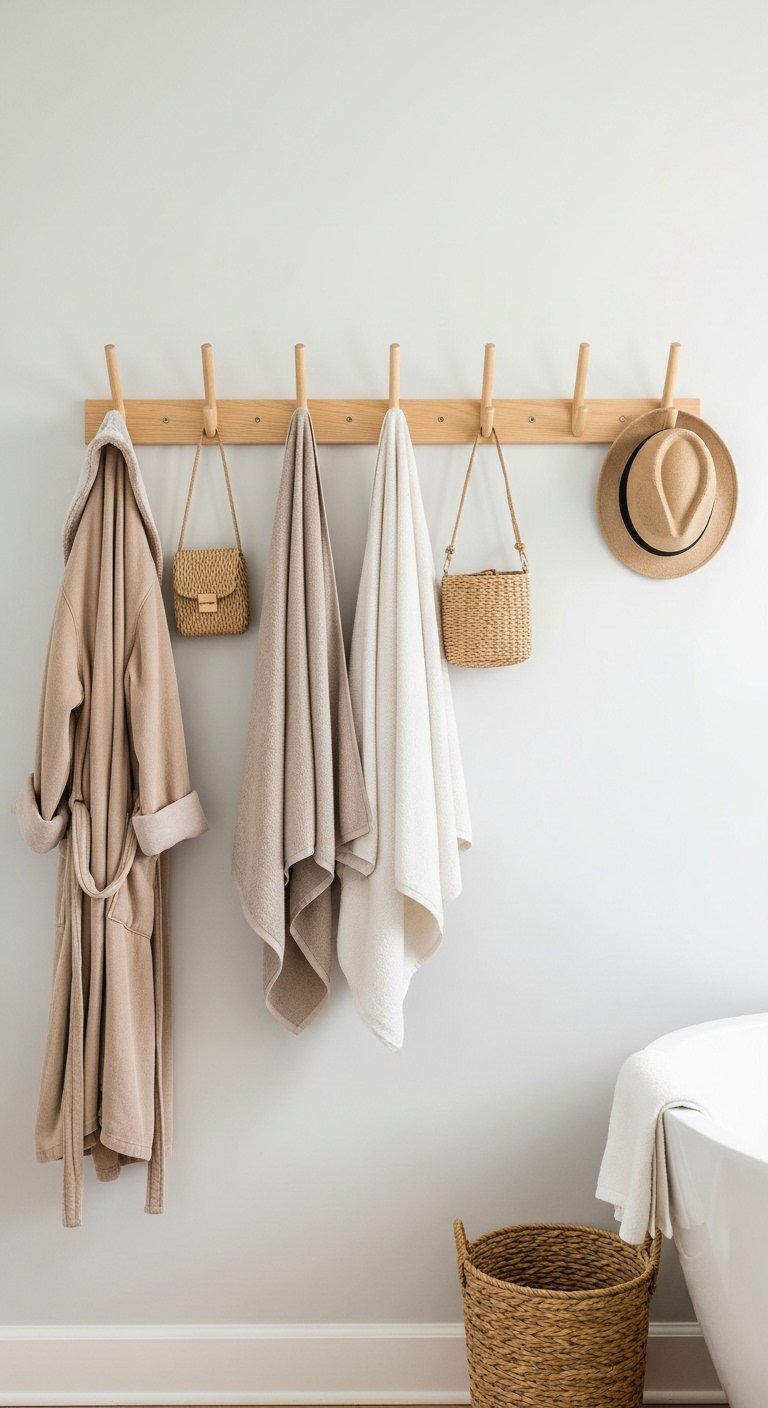
A simple wall hook rail with three to five hooks mounted at chest or shoulder height holds towels, robes, and bags in a vertical-friendly format that takes up no floor space and adds a small design moment to the wall. Each hook holds a different item and the row of hooks creates a clean linear visual element on what would otherwise be empty wall space. Hooks in a coordinated finish across the bathroom contribute to the room’s overall material story. A wall hook rail with five hooks costs under twenty dollars and provides genuinely useful daily storage in a previously unused wall location.
16. Inside Shower Niche
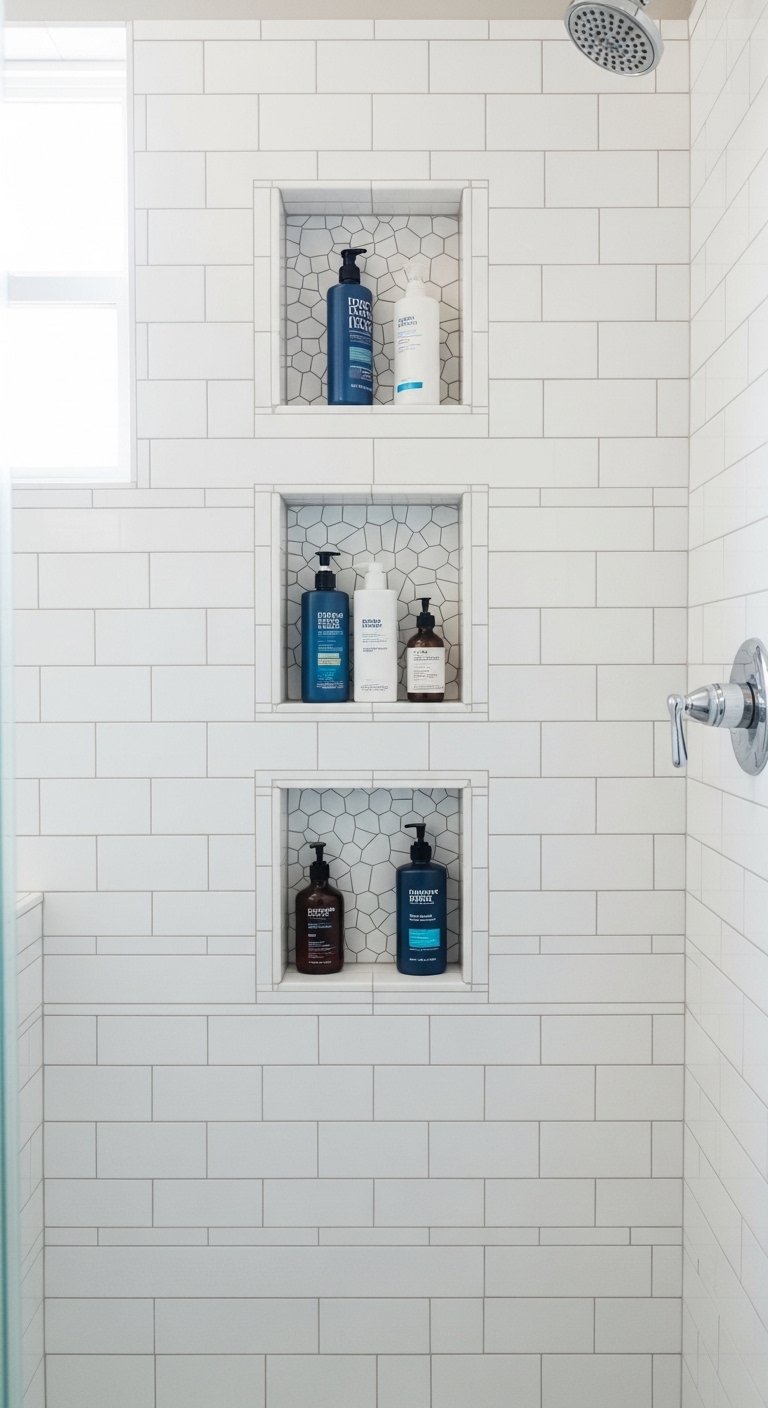
Inside the shower itself, a single recessed niche or a series of stacked smaller niches at different heights creates dedicated storage for shower products that does not protrude into the shower space and does not require any caddy that can rust or fall. Tile the niche to match the surrounding shower walls so it reads as part of the original shower design rather than added storage. A multi-niche arrangement at different heights, one at standing height for shampoo and conditioner, one lower for body wash and a soap bar, looks particularly considered and provides specific spots for each category of product. Recessed shower niches turn shower storage into an architectural feature.
17. Floating Vanity Shelf
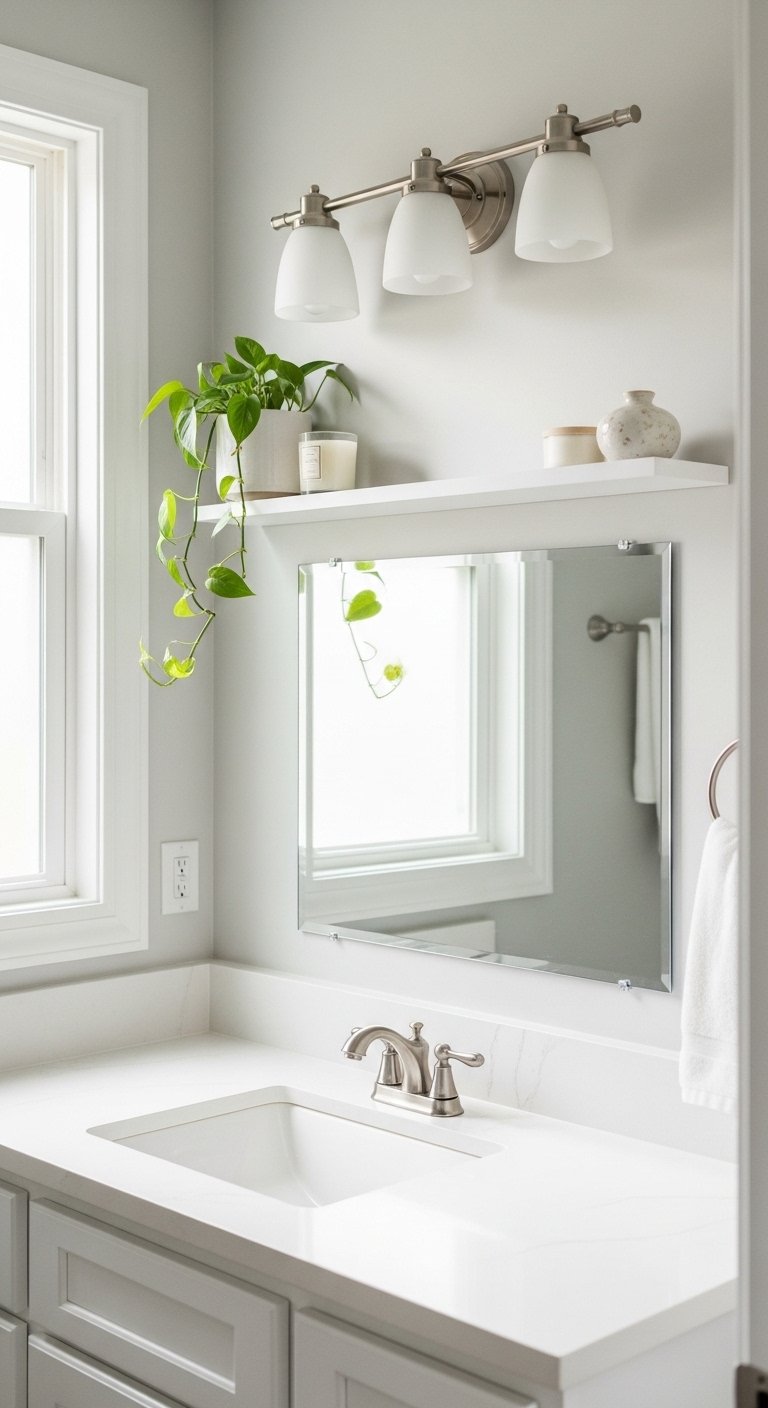
A single floating shelf installed directly above the vanity mirror and below the ceiling adds a display surface for plants, candles, and decorative items in space that was previously empty above the mirror. The shelf creates a frame above the vanity that gives the whole vanity wall a more designed, architectural feel. Style the shelf with two or three simple objects, a small plant, a candle, and one ceramic piece, rather than overloading it. A simple wooden or painted shelf with hidden brackets costs under twenty dollars and uses the empty wall above the mirror for both decoration and a small amount of display storage.
18. Shelf Behind Toilet
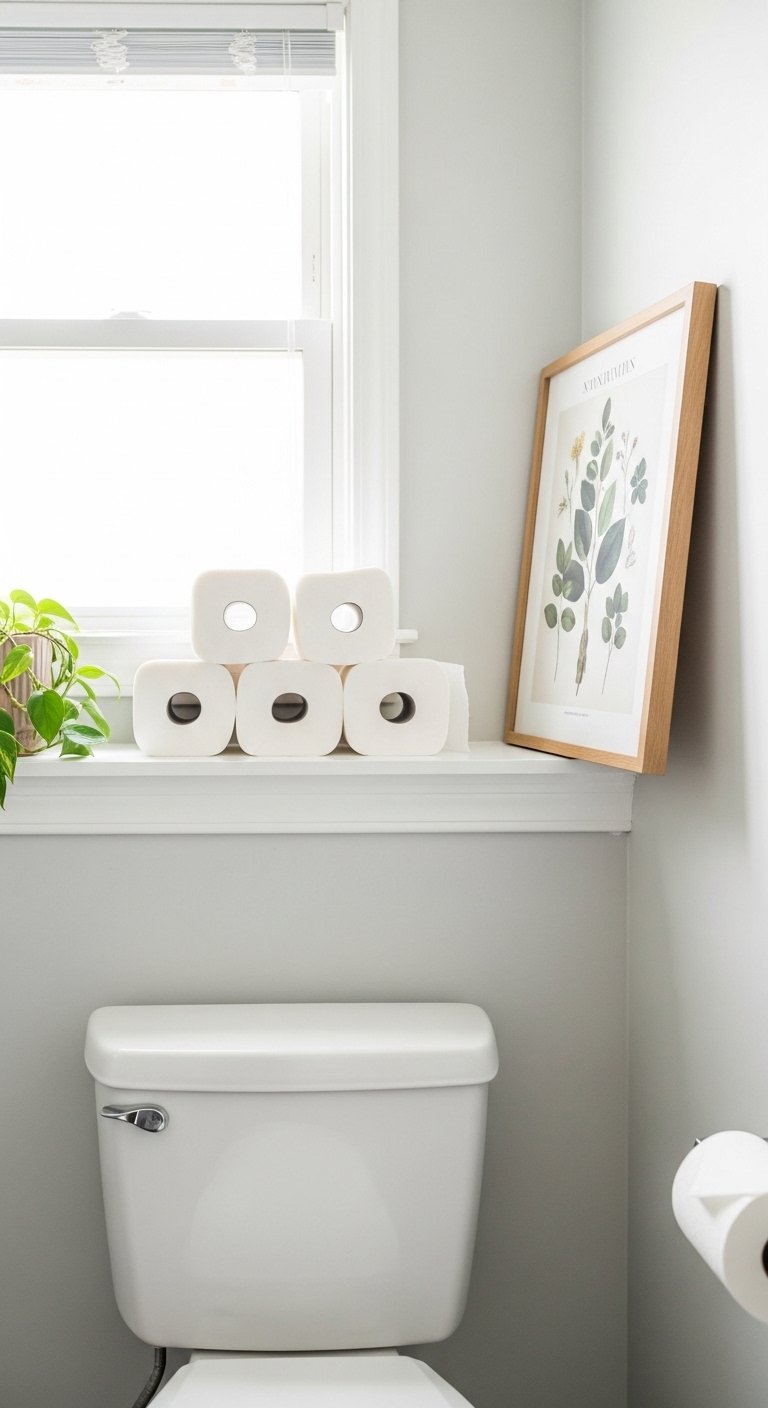
A wide horizontal shelf installed on the wall behind the toilet at about head height holds backup toilet paper, a small plant, a framed print, and decorative items in a location that is visible across the bathroom and that frames the toilet area as a designed zone rather than just a fixture. The shelf does not need to be deep, four to six inches is plenty for most bathroom items. Match the shelf material to other wood elements in the room or paint it to match the wall for a subtle integrated look. A simple shelf installed behind the toilet costs under fifteen dollars and turns one of the most overlooked walls in any bathroom into useful styled storage.
19. Triple-Tier Shower Caddy
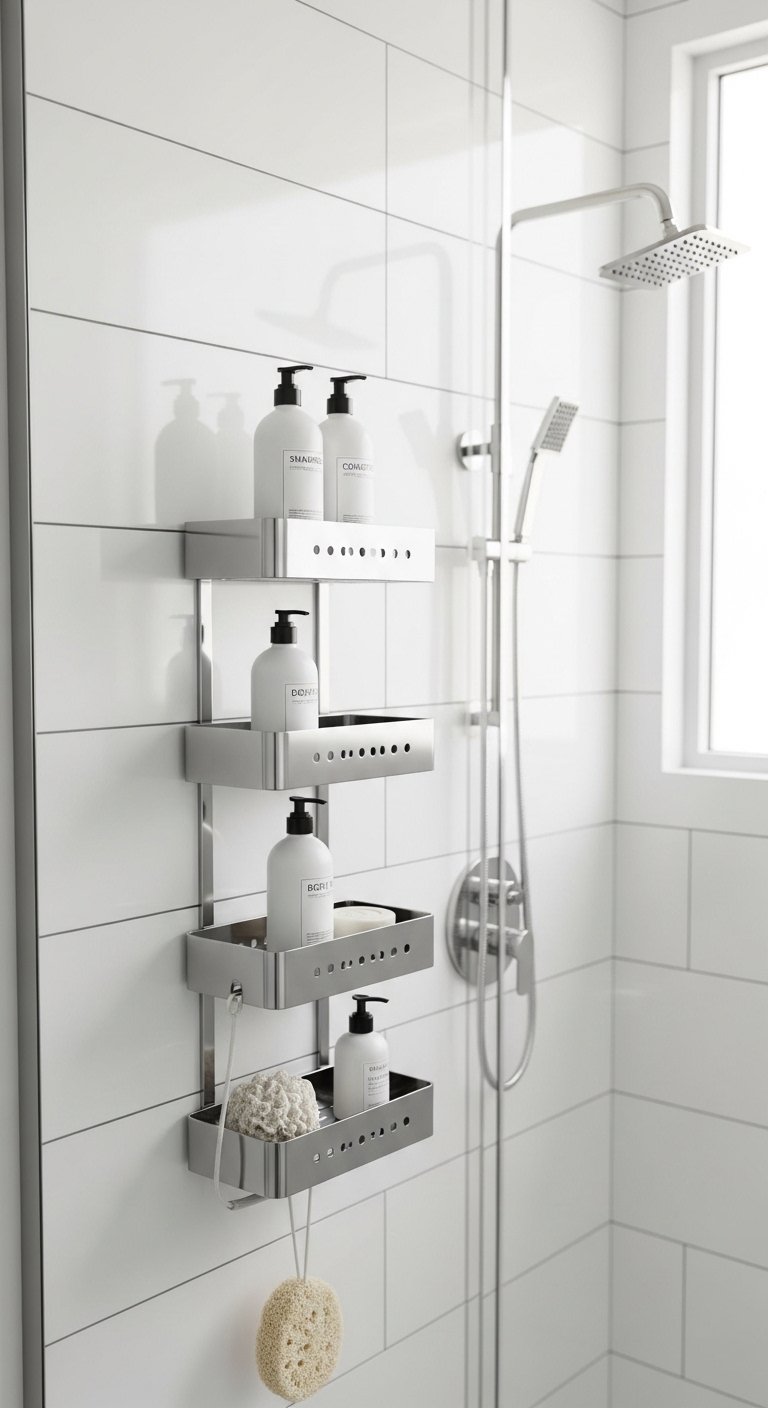
A wall-mounted three-tier shower caddy or a permanent rail system installed inside the shower replaces the standard tension rod caddy with a more substantial and styled storage solution that holds significantly more product without any wobble or rust. Stainless steel or coated wire caddies in three tiers hold a complete shower product collection on a single column, with drainage holes in each level so water does not pool. The fixed installation reads as a built-in feature rather than a temporary accessory. A good quality three-tier caddy costs between twenty and fifty dollars and improves the function and appearance of the shower simultaneously.
20. Stacked Stone Shelf
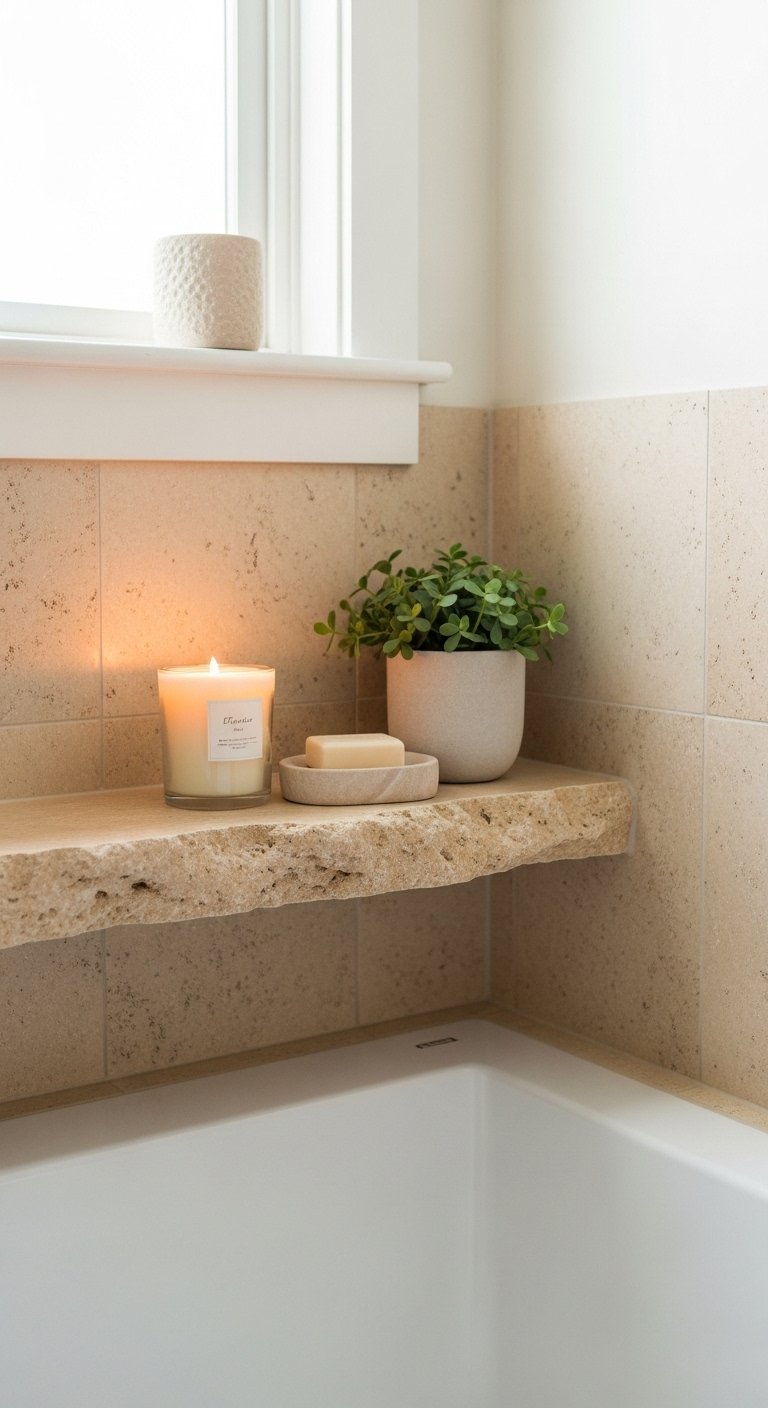
A natural stone or stone-veneer floating shelf installed on a bathroom wall or above the tub adds a unique textural and material element to the bathroom in addition to its storage function. Natural stone has a permanence and visual weight that wood and metal shelves cannot match, and a stone shelf in a warm gray, sandy beige, or limestone tone suits a wide range of bathroom styles. Use the stone shelf for a small grouping of styled items, a candle, a plant, and a soap dish, that benefit from the textural backdrop of the stone behind them. A small stone or stone-veneer shelf costs between thirty and seventy dollars depending on the material.
21. Stacked Crate Shelves
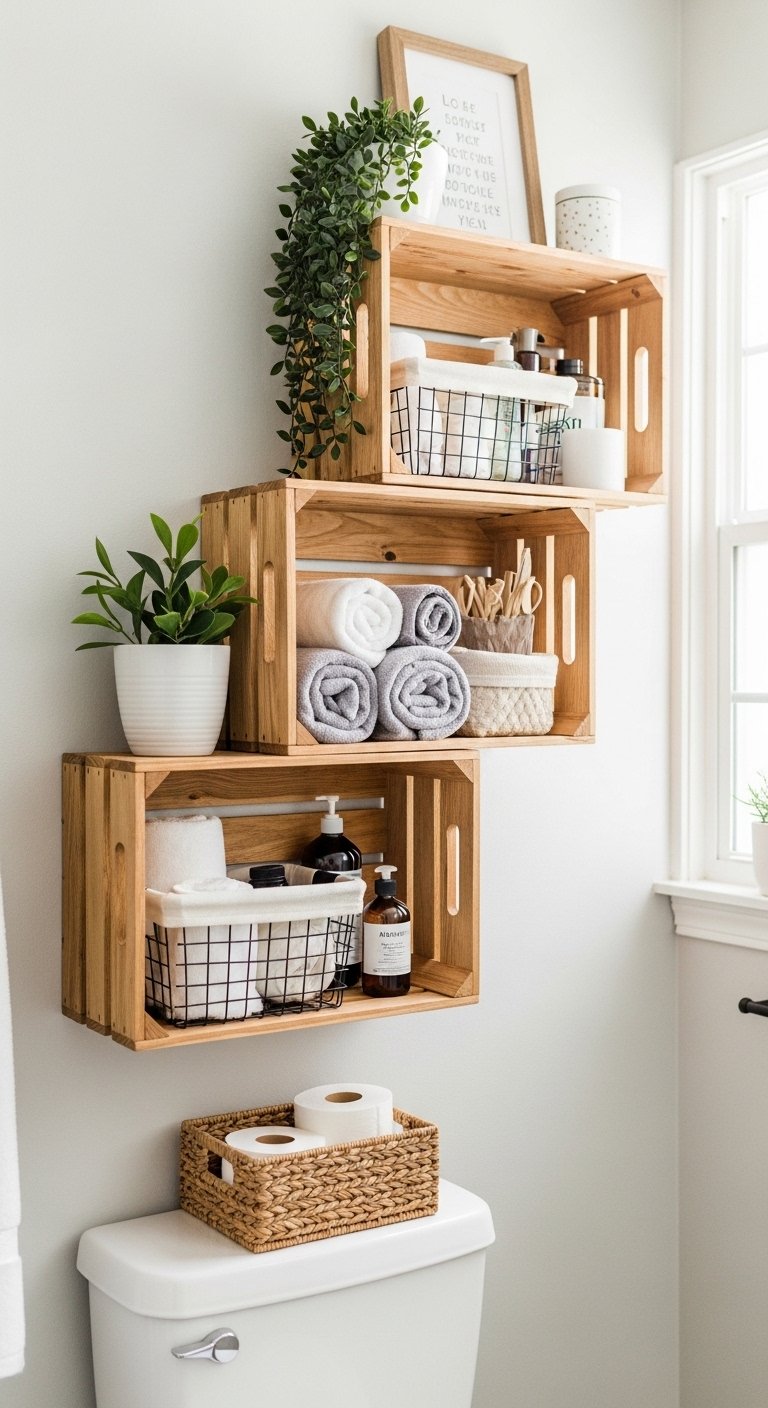
Wooden crates mounted on the wall in a stacked or staggered arrangement create unique cubby-style shelves that add storage and a rustic visual element to the bathroom. The interior of each crate functions as a cubby for towels, baskets of toiletries, or styled decorative items. Crates can be left in their natural wood finish, painted in a cottage color, or sealed with a clear coat to suit the bathroom’s aesthetic. Mount three crates in a staggered arrangement on the wall above the toilet or beside the vanity for a custom-looking storage feature that costs very little and adds a distinct character to the room. Each crate typically costs under ten dollars at craft stores. For complementary affordable updates that work alongside crate shelving, see the 18 bathroom ideas under fifty dollars guide for more low-cost styling solutions.
Bathroom storage problems are almost always solvable without losing any floor space. The walls, the corners, the inside of the cabinet doors, and the space above the fixtures are all opportunities that most bathrooms never use. Pick the two or three locations in your bathroom that currently waste the most space and start there.