21 Home Bar Ideas That Feel Warm and Genuinely Inviting
A home bar that feels good to sit at is a different thing from a bar that simply looks impressive in photos. The best ones have a quality of warmth that draws people in and keeps them there long after the first drink. That warmth comes from a combination of the right lighting, materials that feel substantial rather than glossy, and a level of curated detail that signals someone actually uses the space rather than just maintaining it. None of these ideas requires a basement renovation or a sports-bar budget. They cover everything from a single styled bar cart in a small apartment to a full built-in setup in a dedicated room. All of them lean toward the inviting end of the spectrum rather than the showy one.
1. Warm Wood Bar Front
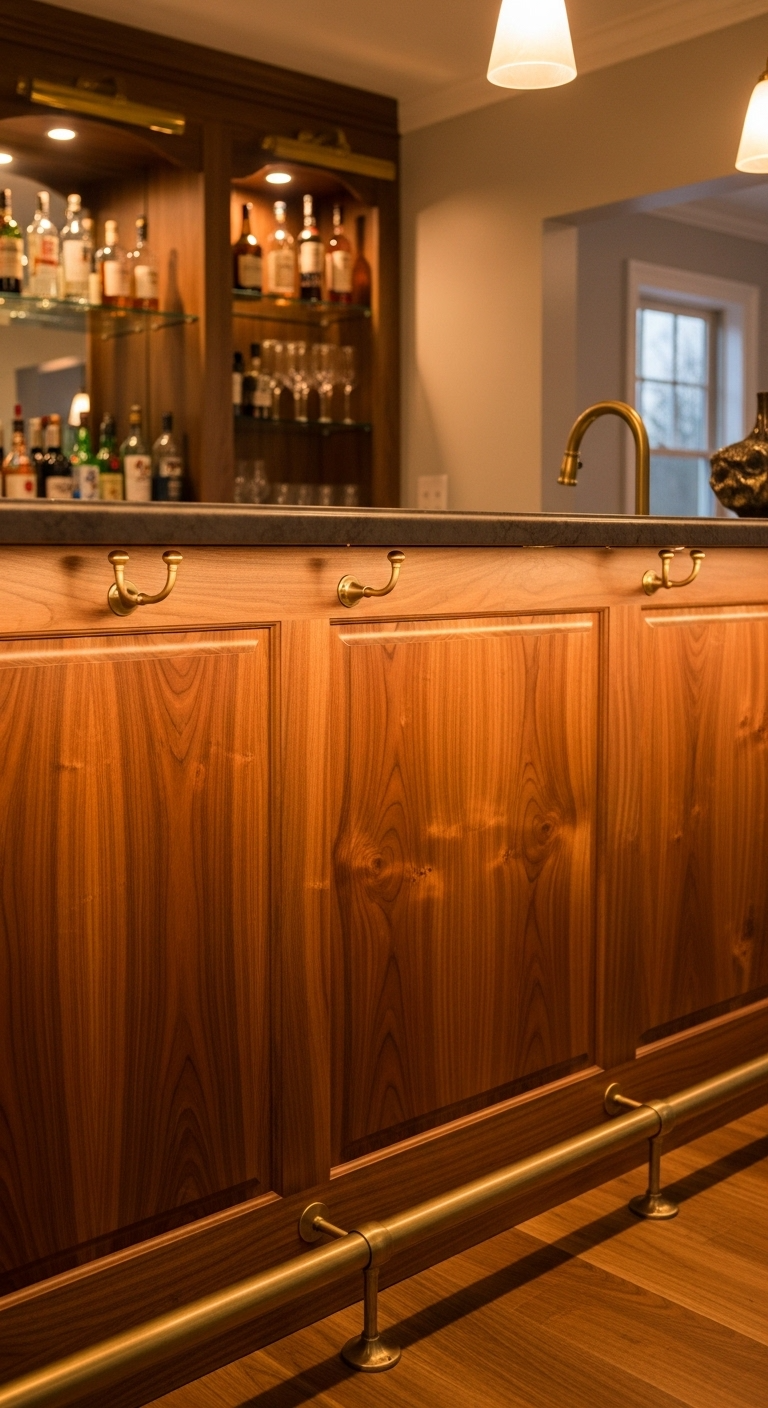
The face of a bar, the visible front panel where people stand or sit while drinks are made, has more impact on the warmth of the whole space than almost any other surface. A clean white painted face reads as functional and slightly clinical. A natural wood face, whether reclaimed barn wood, walnut, or warm-toned oak, immediately gives the bar the quality of a real piece of furniture rather than a built-in cabinet. The visible grain, the slight color variation across the planks, and the depth that wood holds in low evening light all contribute to the bar feeling like a destination in the room. Even a simple plywood front clad in wood veneer panels achieves much of this effect at a modest cost.
2. Backlit Liquor Display
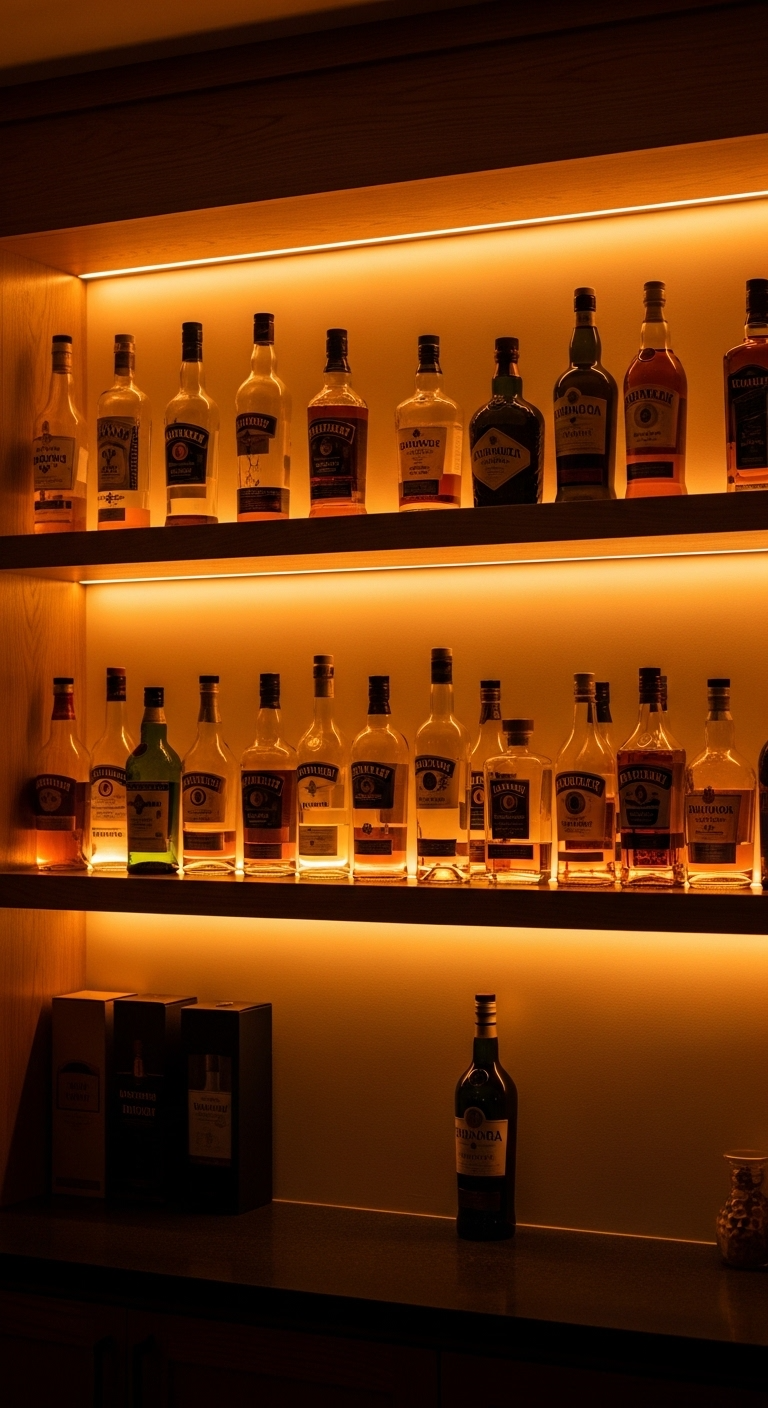
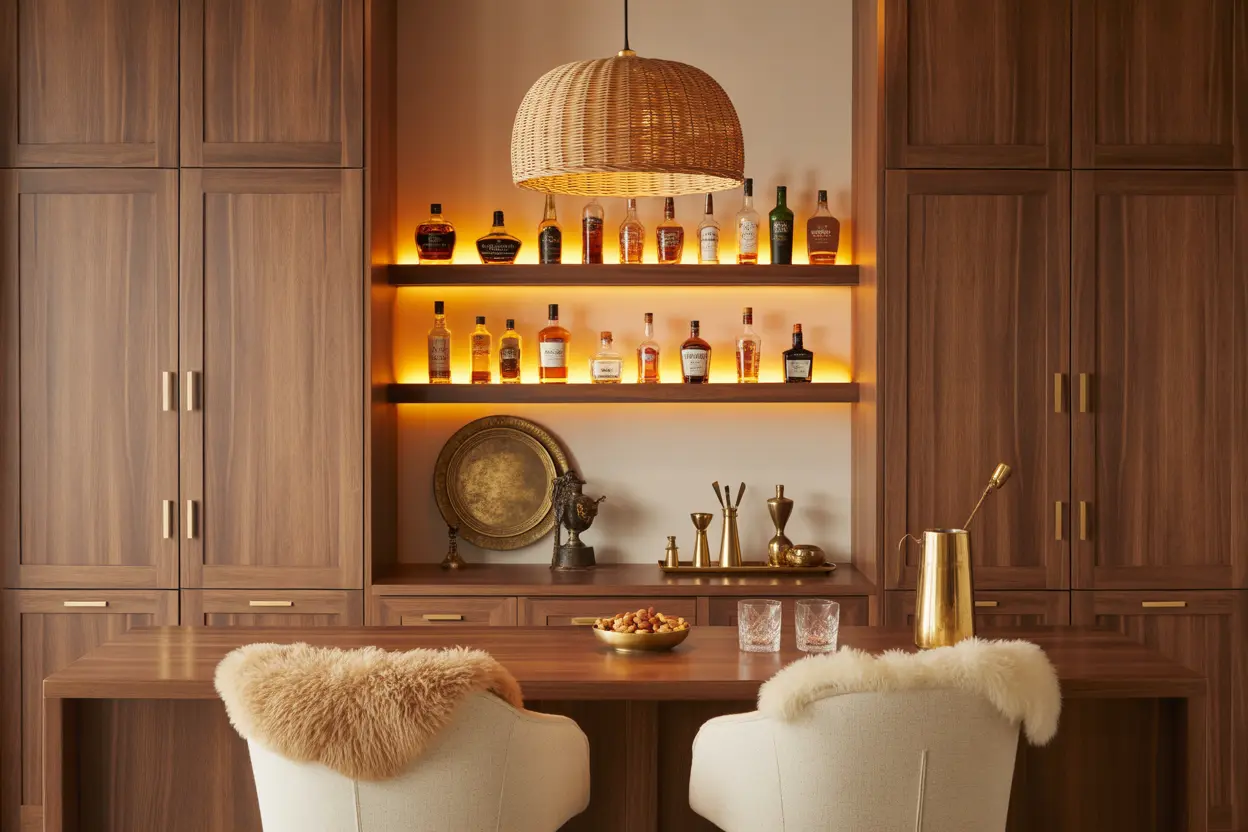
The shelves behind the bar are the most photographed and looked-at surfaces in any home bar setup. Adding warm LED strip lighting hidden behind the front edge of each shelf, throwing light backward onto the bottles and the wall, creates a glowing display that turns the bottles themselves into the visual feature. The light catches the amber, gold, and clear tones of the bottles in a way that makes even an ordinary collection look genuinely beautiful. Use warm white LEDs rather than cool ones for the most flattering color rendering. Most strip light kits are inexpensive, run on a low-voltage adapter that plugs into a standard outlet, and install with adhesive backing in under an hour.
3. Counter Bar Stools
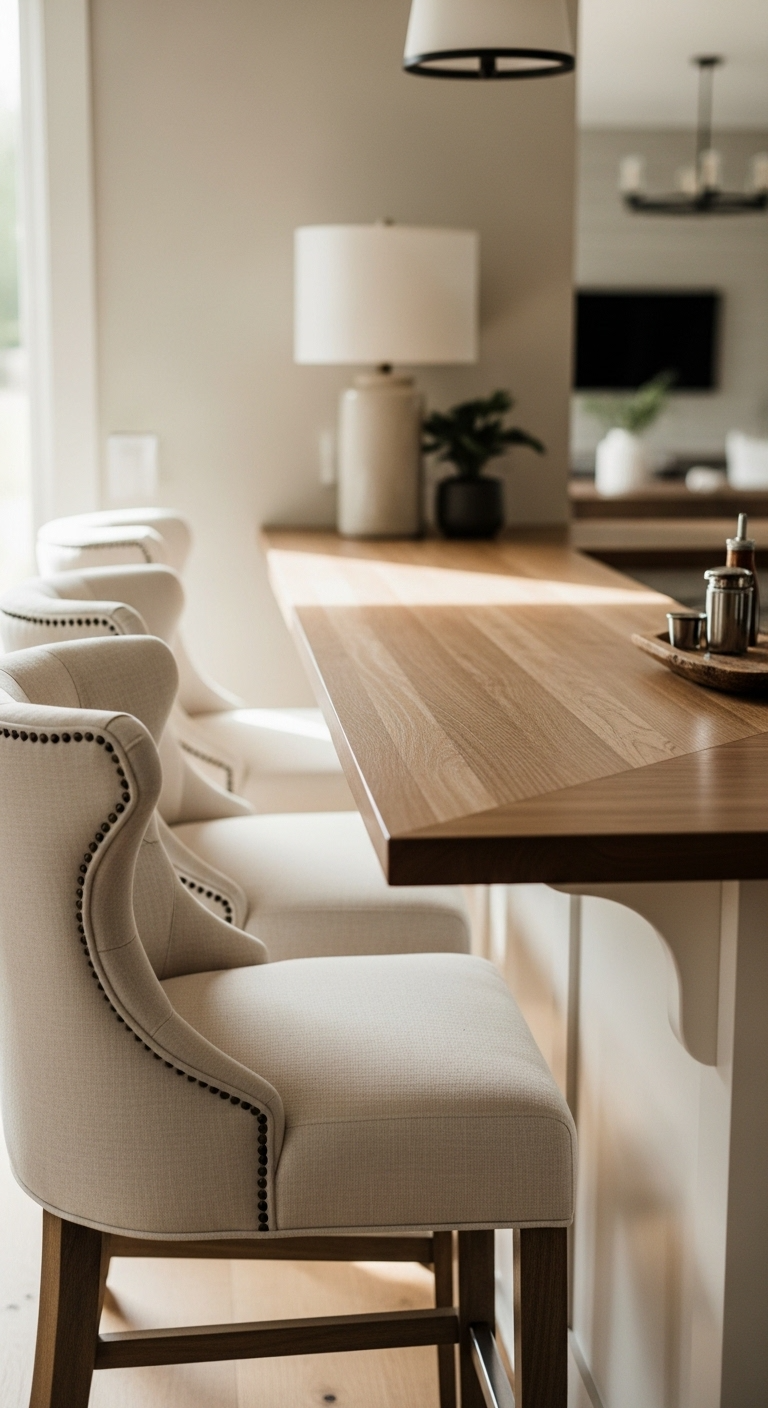
Bar stools are the most-used seating at any home bar and the comfort and visual quality of the stools genuinely affects how often people actually sit at the bar versus standing nearby. Look for stools with a real seat back rather than backless stools, since the back support changes how comfortable the stool is over a longer evening. Upholstered seats in leather, linen, or boucle in a warm neutral tone read as more inviting than hard wood or metal seats. The scale matters too: counter-height stools are roughly 24 to 26 inches at the seat for a standard 36-inch counter, while bar-height stools are 28 to 30 inches for a 42-inch bar. Match the height to your bar surface for the most comfortable fit.
4. Bar Cart Setup
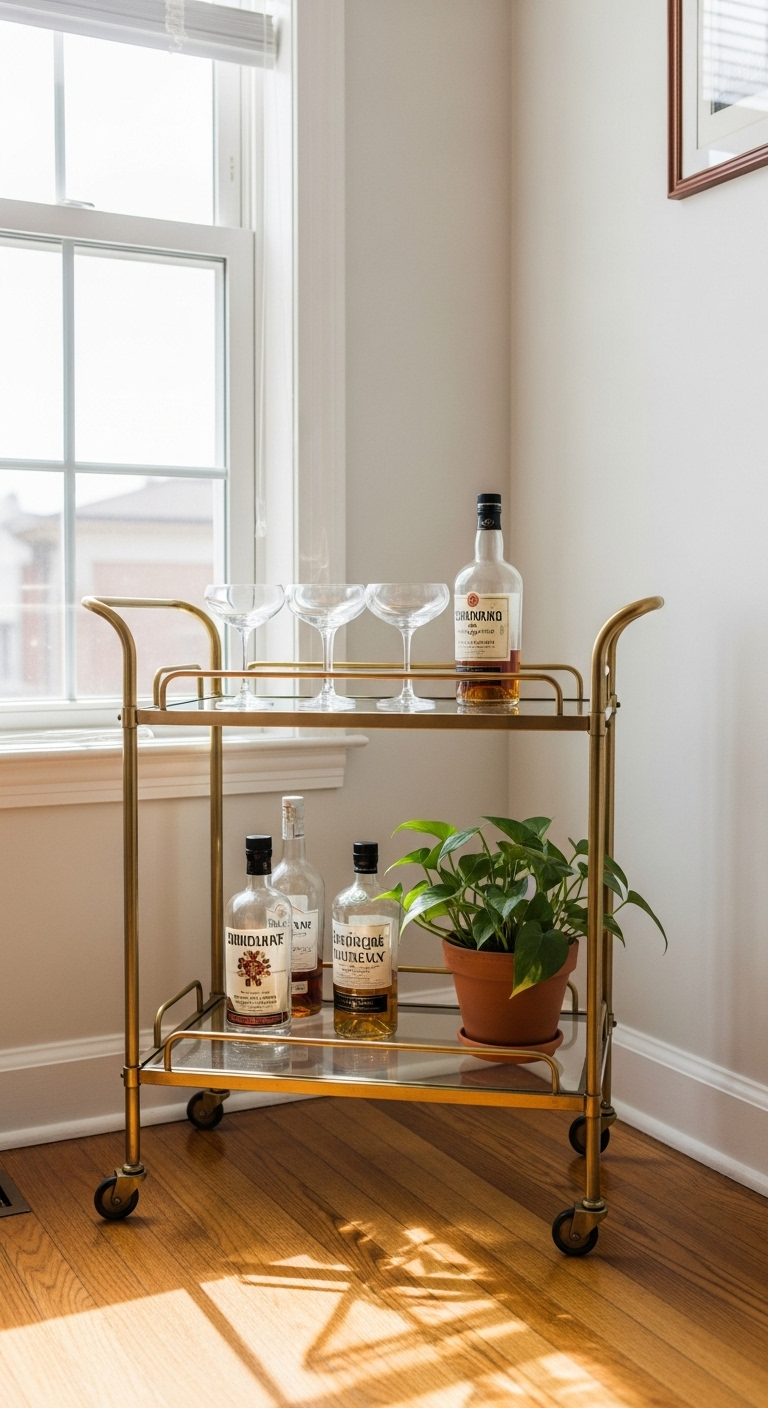
For a small space or a home that does not have room for a built-in bar, a well-styled bar cart provides almost all the same function in a fraction of the footprint. A two-tier or three-tier rolling cart in brass, black metal, or natural wood holds bottles on the lower shelves and glassware on the top, plus a small tray for cocktail tools and garnishes. The cart can be rolled to where guests are gathered and rolled back against the wall when not in use. Style the top with a single bottle of something you actually drink, two or three glasses, a small plant or herb in a pot for fresh garnishes, and a folded linen napkin for a complete styled vignette that costs almost nothing beyond the cart itself.
5. Pendant Lighting Above
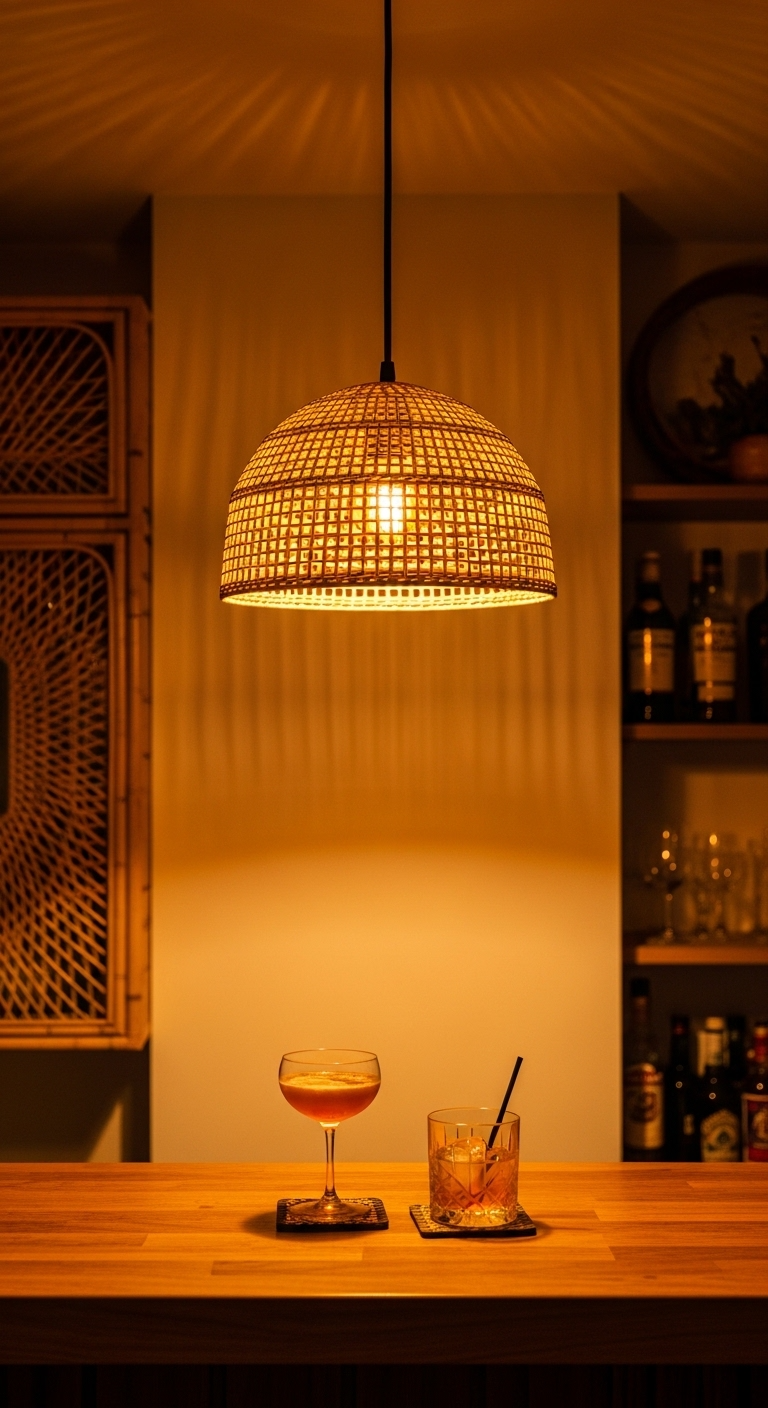
A pendant light hung directly above the bar counter changes the entire atmosphere of the space in the evening. Overhead room lighting illuminates the bar evenly but flatly. A focused pendant creates a pool of warm light over the bar surface that pulls people toward the bar and makes drinks, hands, and conversation feel more intimate. Choose a pendant in a material that reads as warm: a rattan or natural fiber shade, an aged brass dome, or a small wooden cone. Hang it about 30 to 36 inches above the bar surface for the most flattering height. A pendant on a dimmer makes the bar genuinely versatile across different times and occasions.
6. Open Shelf Liquor
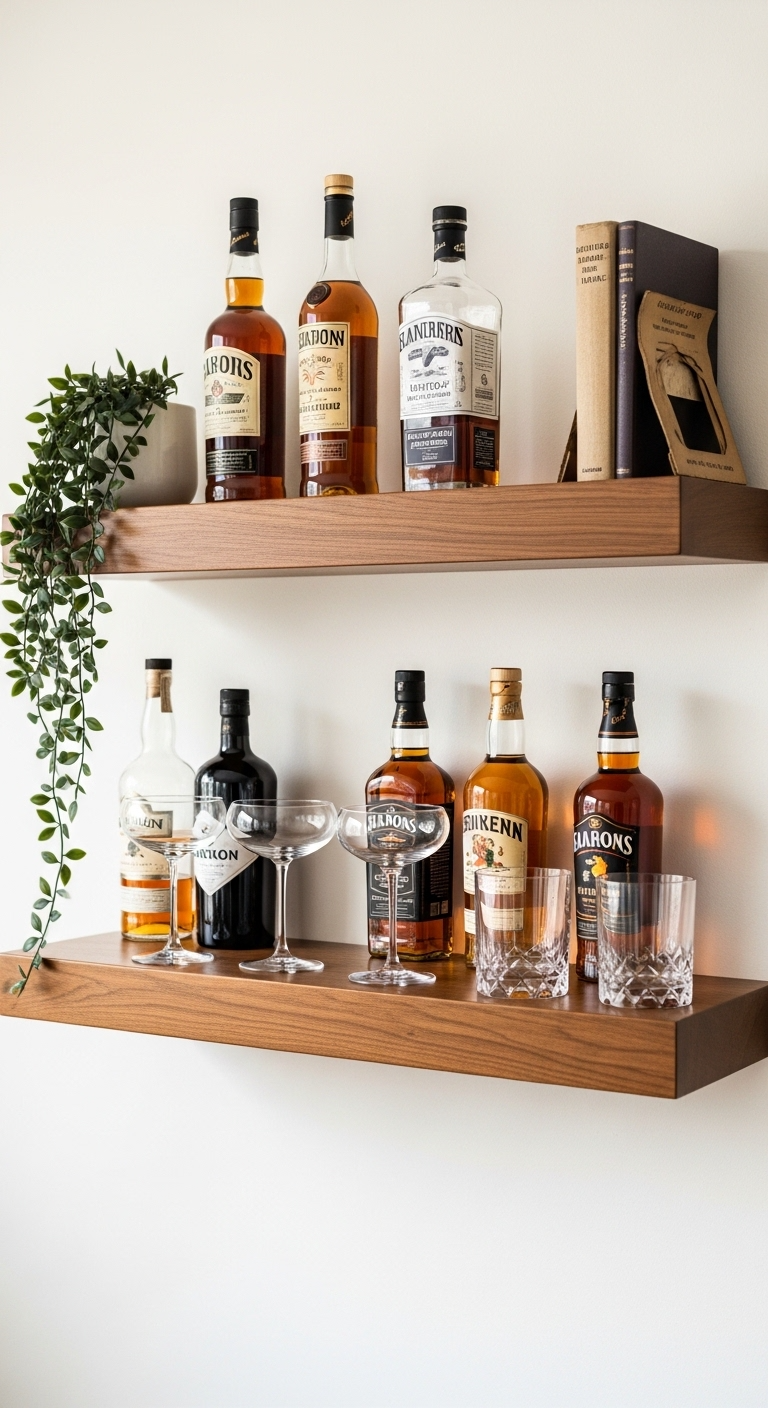
Open wall shelves displaying liquor bottles, glassware, and small decorative objects feel more inviting and lived-in than closed cabinets. Closed cabinetry hides the collection and reads as utility storage. Open shelves turn the collection into part of the room’s character. Use solid wood floating shelves in a warm tone, or thin metal-frame shelves with wooden tops, mounted on the wall behind the bar. Style each shelf with a mix of bottles arranged by height, two or three different glasses, a small plant, and one or two non-bottle decorative pieces like a vintage book or a small ceramic. The visual rhythm of bottles, glass, and small objects reads as a styled display rather than a bottle storage rack.
7. Dark Moody Wall
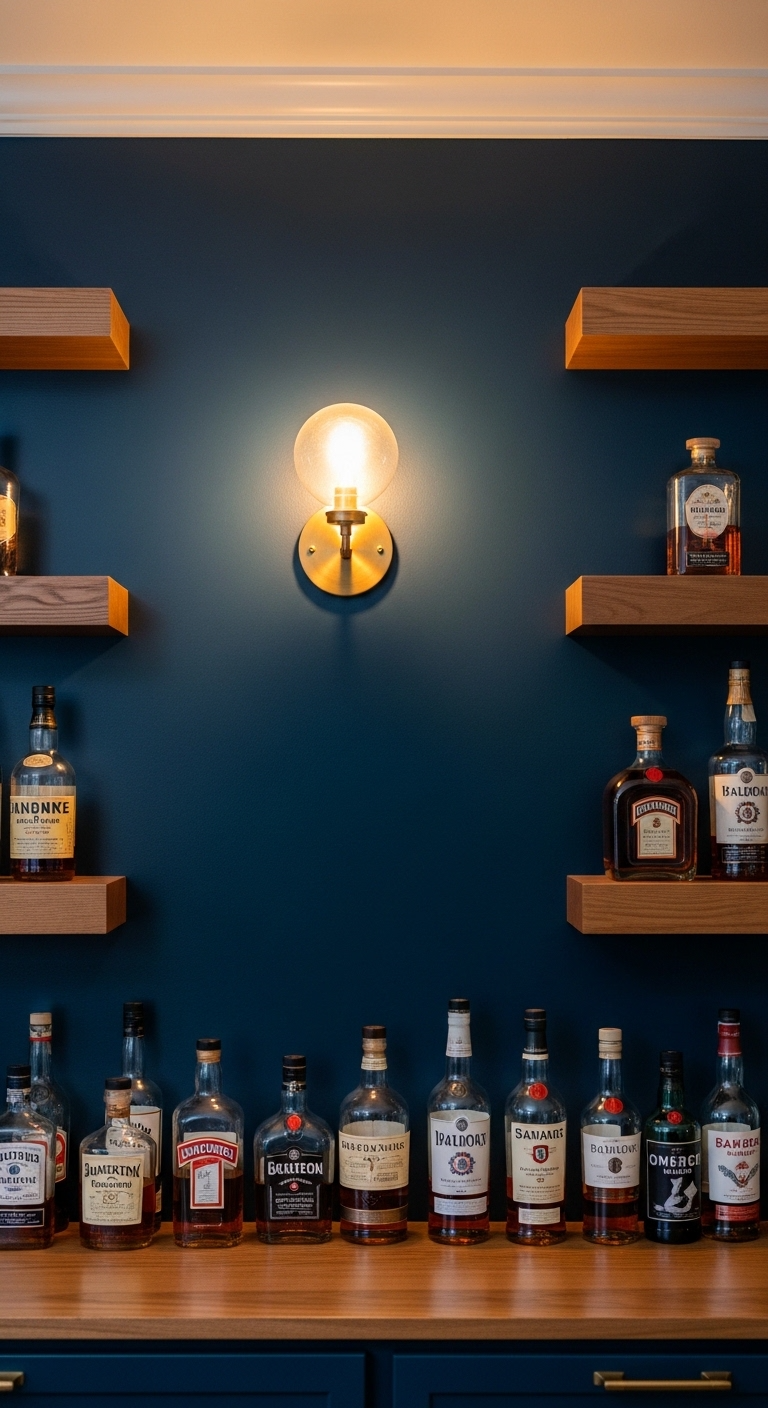
A dark accent wall behind the bar creates depth and atmosphere that lighter walls cannot provide. Painting the wall directly behind the liquor shelves in a deep navy, a warm charcoal, a forest green, or a rich burgundy makes the bottles and glassware stand out dramatically against the moody backdrop. The dark wall also makes the warm glow of any bar lighting feel richer and more intimate. Use a paint with a slight sheen or eggshell finish to catch the light and avoid a flat dead-looking surface. The contrast between the dark wall and the warm wood of the bar front is one of the most reliably attractive combinations in residential bar design.
8. Vintage Mirror Behind
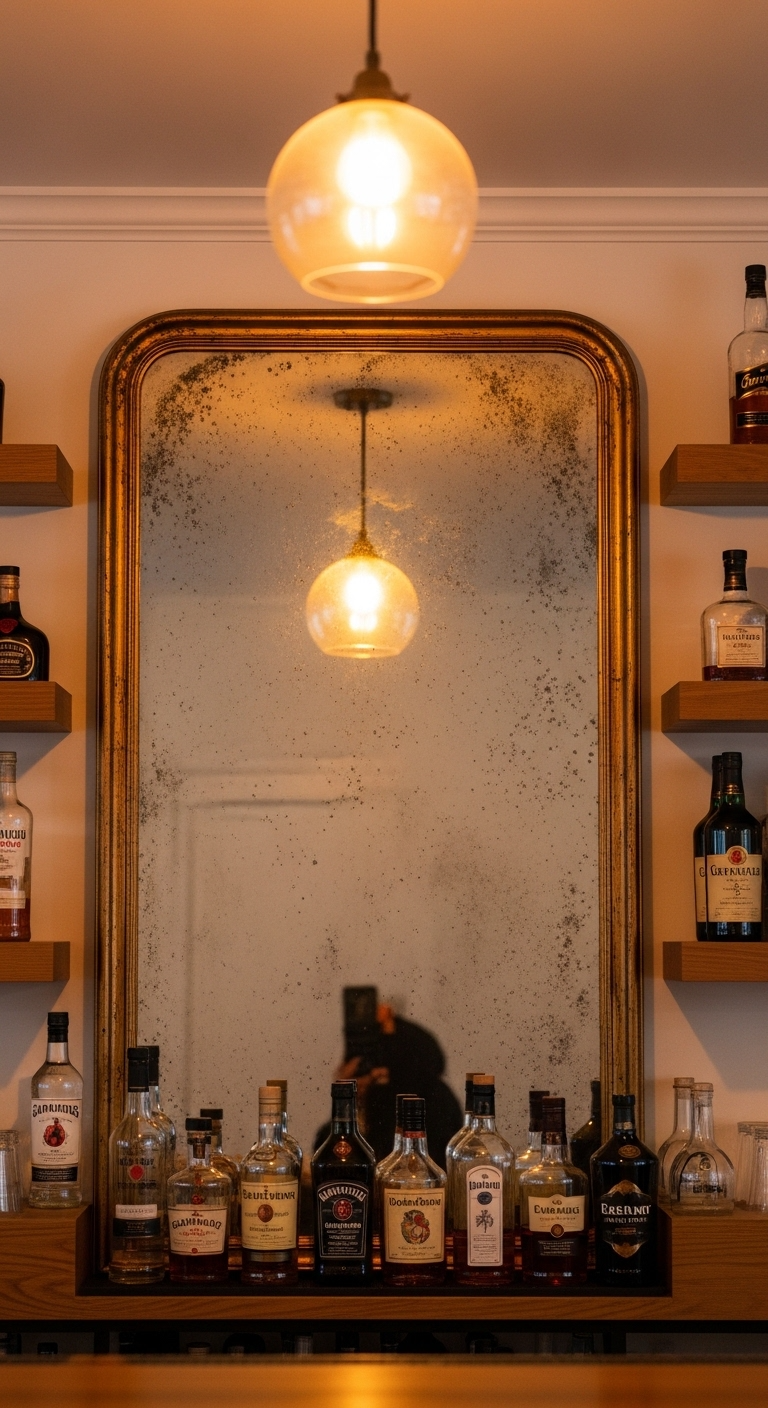
A large antique-look mirror mounted on the wall behind the bar shelves bounces light around the space and creates the impression of more depth behind the bar than actually exists. The mirror also reflects the bottles and glassware on the shelves, effectively doubling the visual presence of the collection. Mirrors with a slightly aged or foxed quality, where small spots and discoloration in the silvering give the mirror a vintage character, suit a warm home bar particularly well. The combination of an aged mirror, warm wood shelves with backlit bottles, and a styled bar front in a deep tone creates a complete visual story that reads as a real bar built over time.
9. Glassware Display Rack
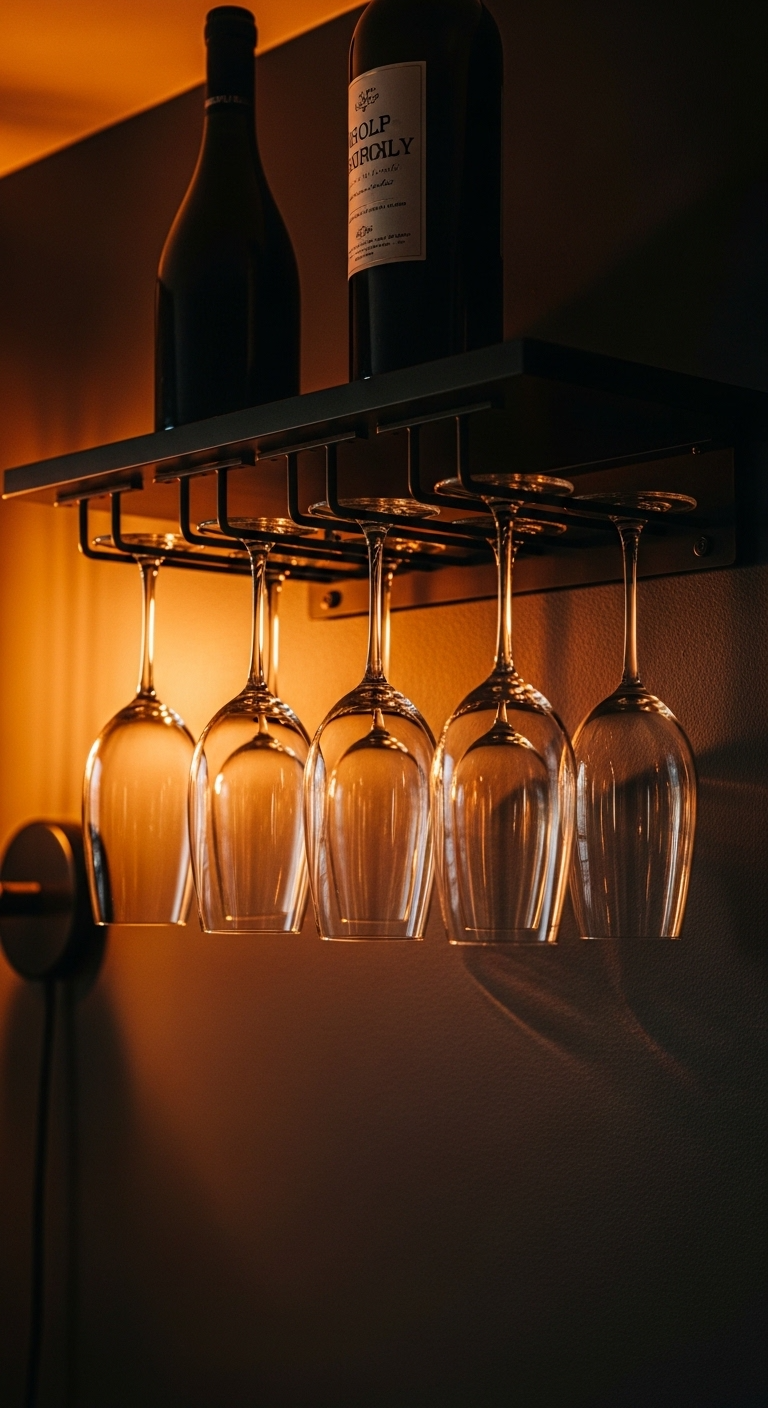
A wall-mounted glassware display rack, either a wine glass rack with stems hanging down or a horizontal rack holding rocks glasses and tumblers, contributes both function and visual interest to the bar wall. Hanging glassware reads as a working bar where the tools are out and ready rather than a styled display where everything is hidden. The reflective quality of clean glassware catches both the warm pendant light above and the backlight from the shelf lighting, creating small points of light that animate the wall. Look for racks in matte black or aged brass in a finish that coordinates with the rest of the bar hardware.
10. Cozy Bar Stool Cushions
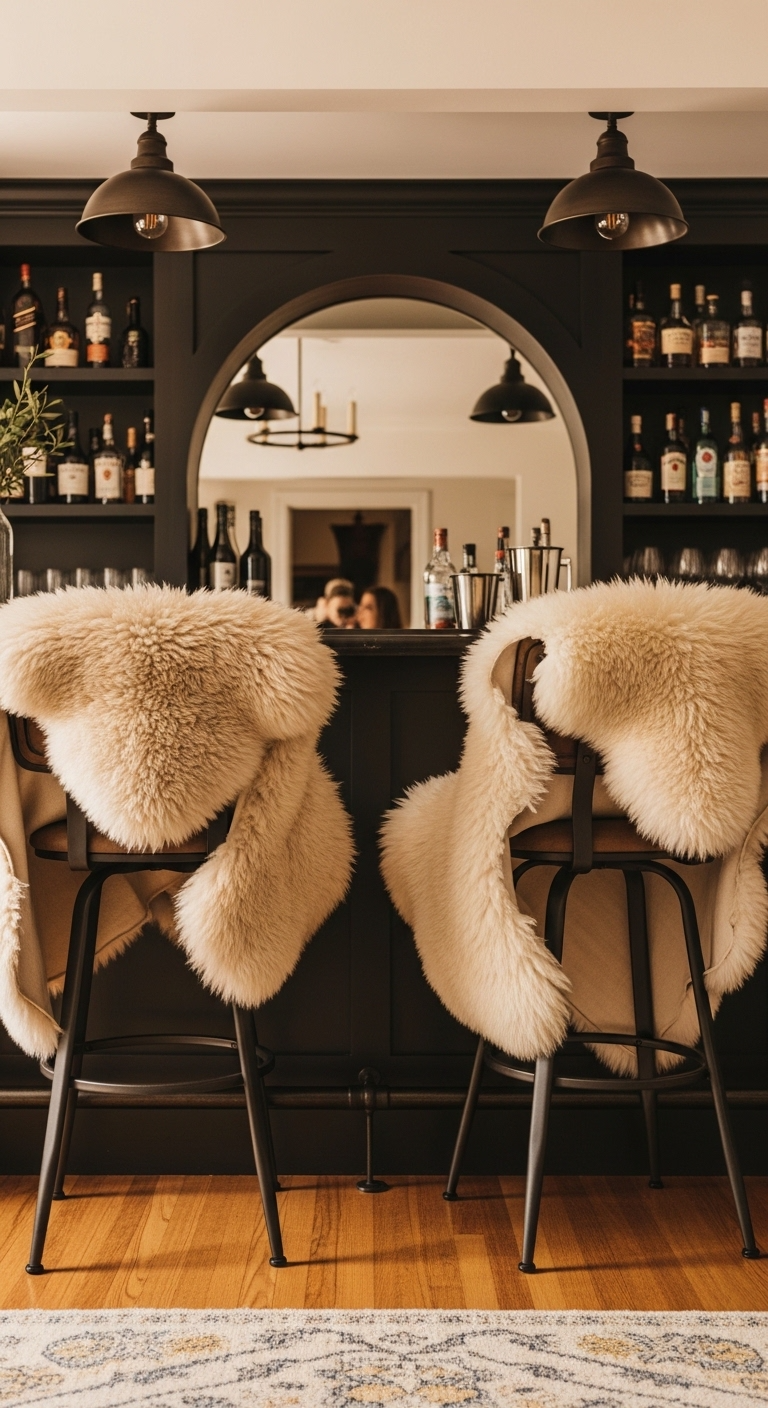
A small upholstered cushion or sheepskin draped over each bar stool seat softens the visual hardness of metal or wood stools and makes them genuinely more comfortable for longer sitting. Natural sheepskin in a warm cream or oatmeal tone is one of the most universally flattering bar stool toppers and instantly shifts the bar from a hard utility space to a cozy gathering spot. Linen seat cushions tied to the stool legs with simple ribbons work in a more refined or traditional bar setting. The cushions or sheepskins also add a tactile invitation that signals the stools are meant to be sat in rather than just looked at.
11. Built-In Wine Storage
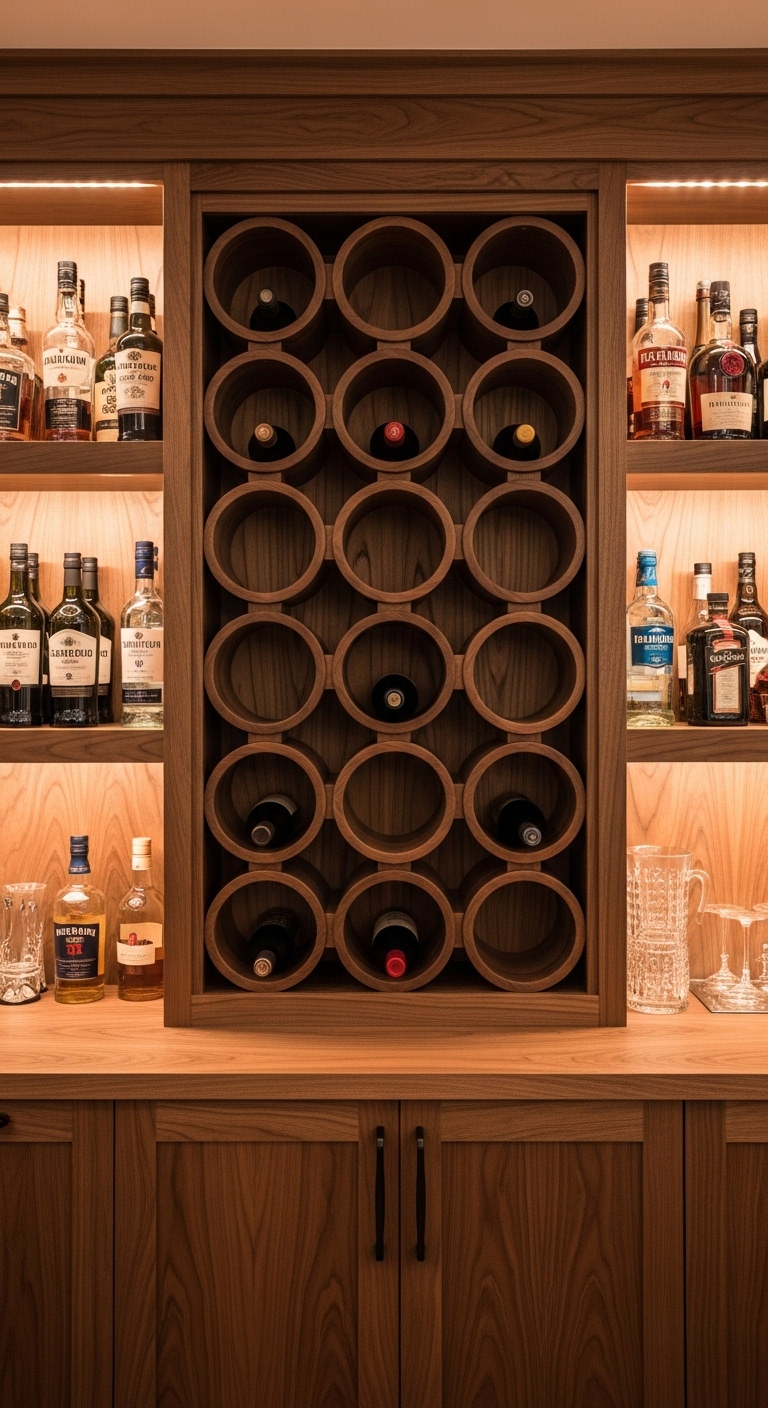
A built-in wine rack integrated into the bar back wall or the side of a kitchen island uses vertical space efficiently while creating a dramatic visual feature. A grid of cylindrical wine cubbies, a row of horizontal slots, or a custom angled wine display all work depending on the design language of the room. Solid wood wine storage in a warm walnut or oak suits a warm home bar particularly well and pairs beautifully with the warm wood of the bar front. For a more compact alternative, a simple countertop wine rack holding six to twelve bottles uses far less space while adding the same visual element. The cozy material palette also extends nicely to warm-toned bathroom decor elsewhere in the home, where similar warm wood and ambient lighting principles create the same inviting quality.
12. Live Edge Bar Top
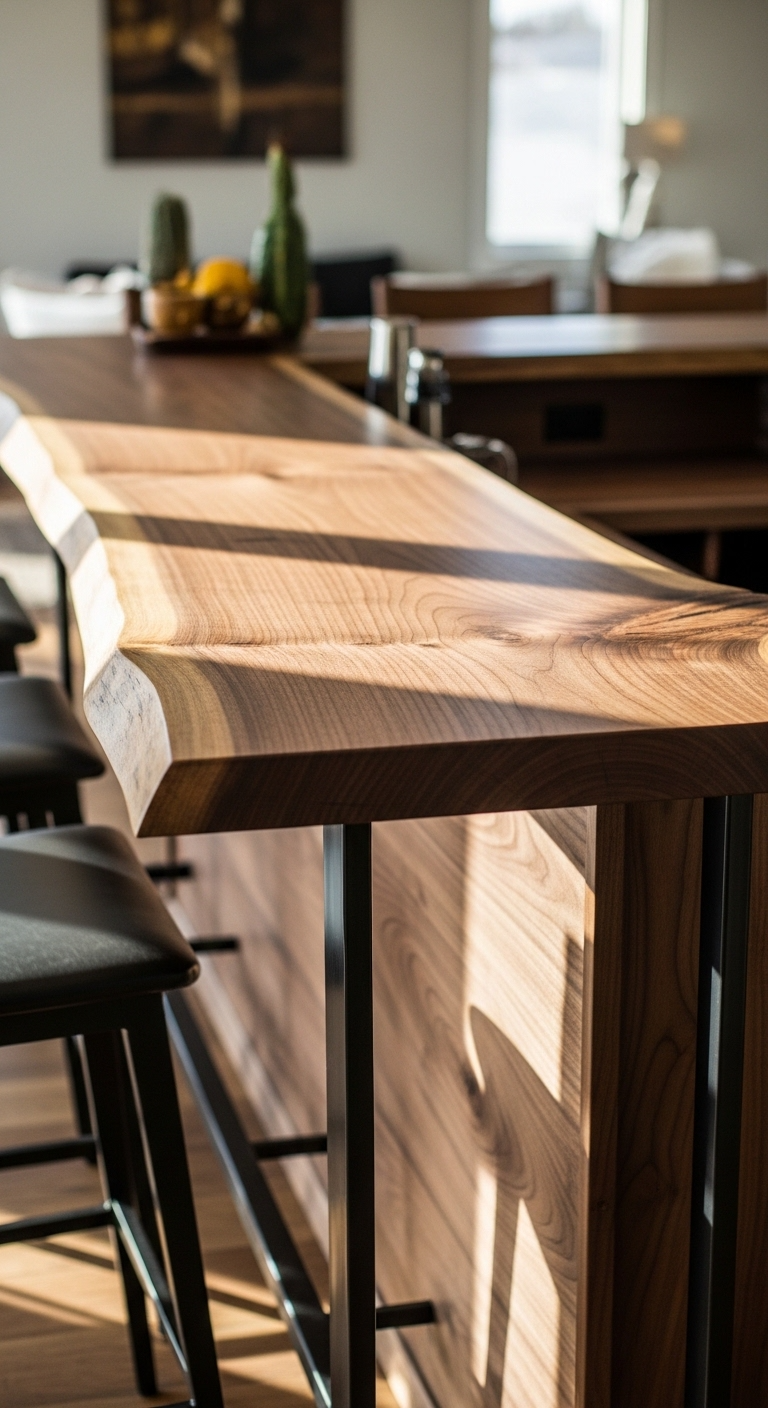
A live-edge wooden bar top, where the original organic edge of the tree is preserved along the front face of the slab, brings a sculptural natural element to the bar that rectangular cut counters cannot replicate. The irregular curve of the live edge, the visible knots and grain variations, and the warmth of the wood itself make the bar surface feel like a piece of art as much as a functional counter. Walnut, white oak, and elm are common choices for live-edge bar tops because they finish beautifully and hold up to regular use. A live-edge slab on simple metal or wooden legs makes a complete bar in a small home or a finished basement without any surrounding cabinetry.
13. Bar Tools Display
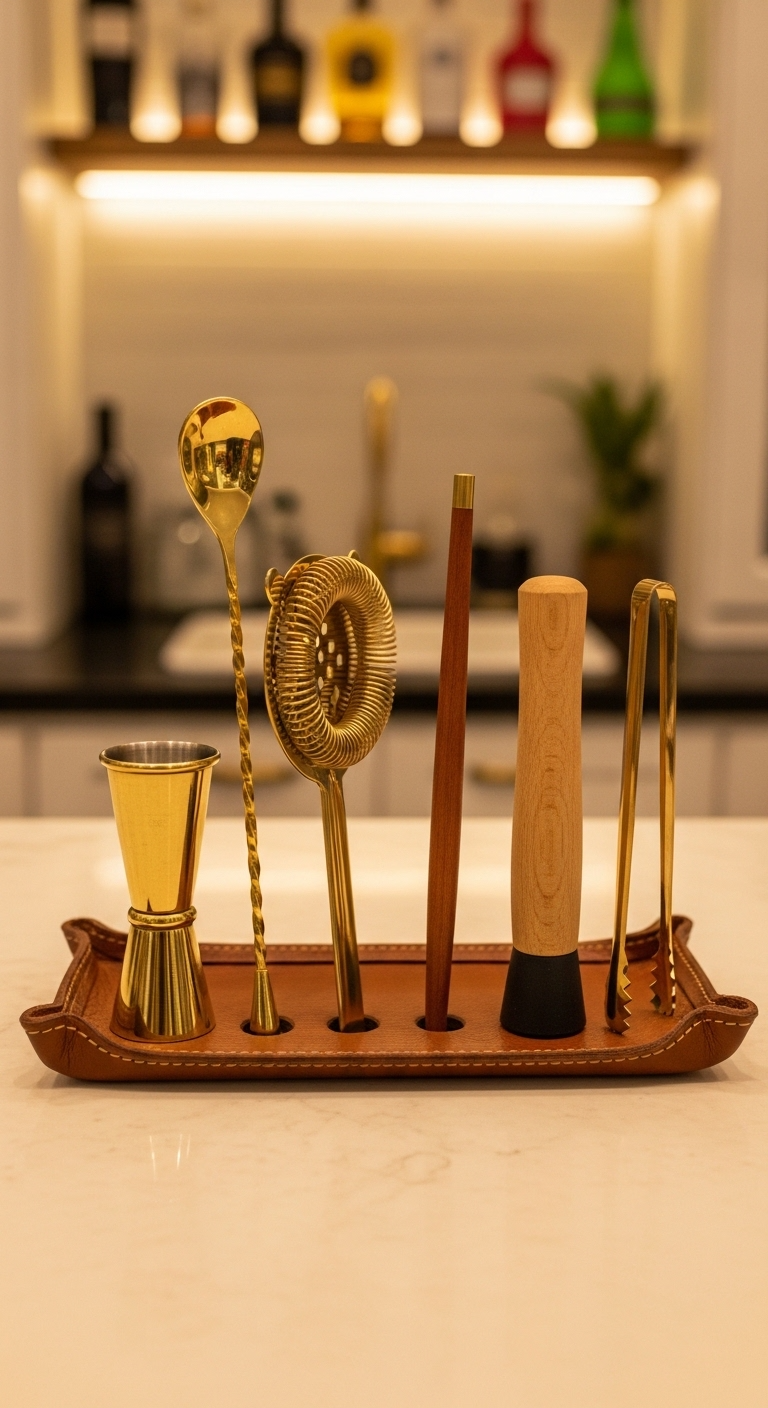
A small leather or wooden tray on the bar surface holding the everyday cocktail tools, a jigger, a strainer, a bar spoon, a muddler, and a small pair of tongs, signals that the bar is genuinely used and adds a styled detail to the work surface. Quality bar tools in brushed brass, matte black, or copper read as intentional decor rather than just utilitarian equipment. Group them on a small board or tray rather than letting them spread across the counter. A wooden cocktail stick holder beside the tools adds a useful and visually warm detail. The bar tools display becomes a small vignette that makes the bar look like the well-equipped working space it actually is.
14. Cocktail Bitters Lineup
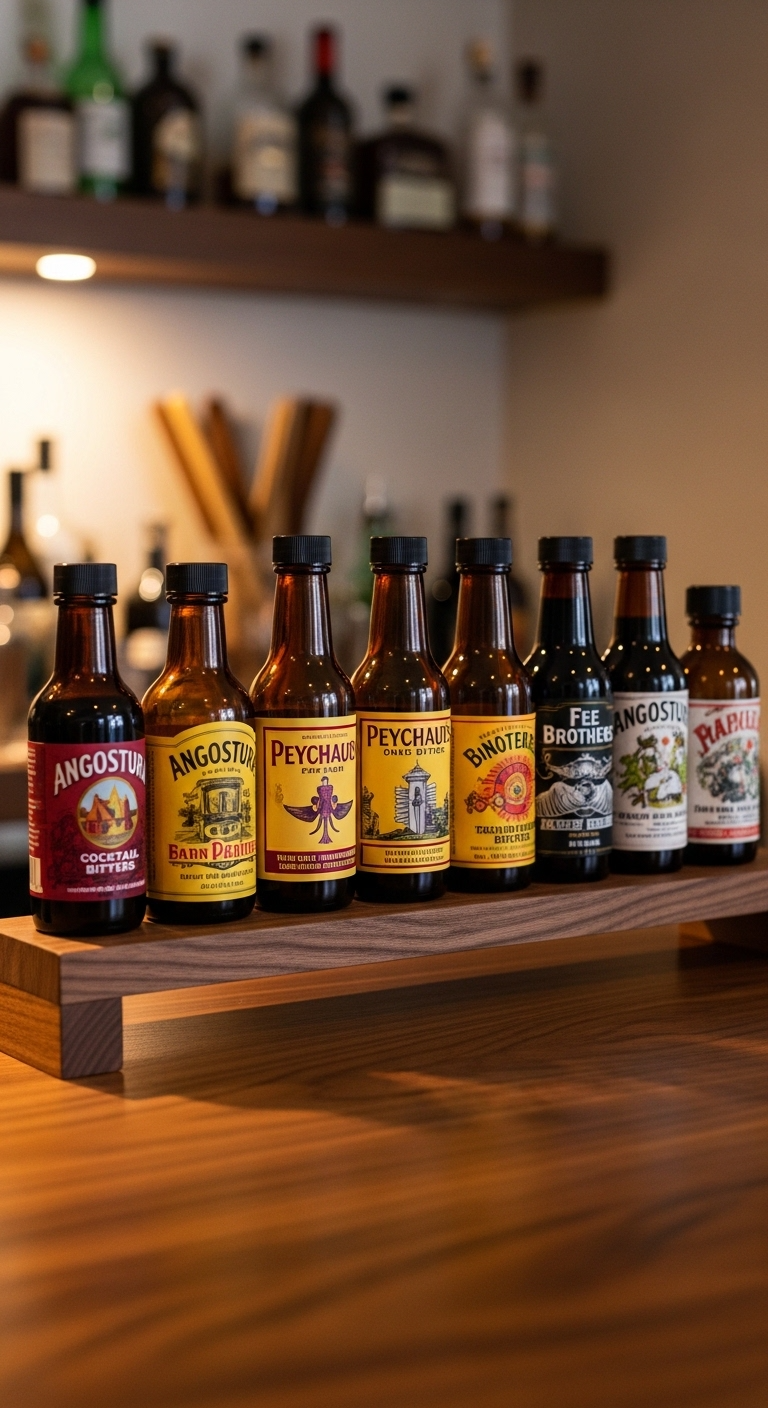
A neat row of small cocktail bitters bottles displayed on a narrow shelf or on the bar surface itself adds visual interest and signals a well-stocked bar in a single small detail. Bitters bottles tend to have particularly attractive labels and shapes, and a row of six to eight different bitters arranged in a line catches the eye in a way that larger liquor bottles do not. Use a small wooden bitters holder or simply line them up on a shallow ledge. Beyond the visual contribution, having multiple bitters on hand actually expands the range of cocktails you can make significantly, which makes this small display both decorative and genuinely functional.
15. Vintage Books and Glassware
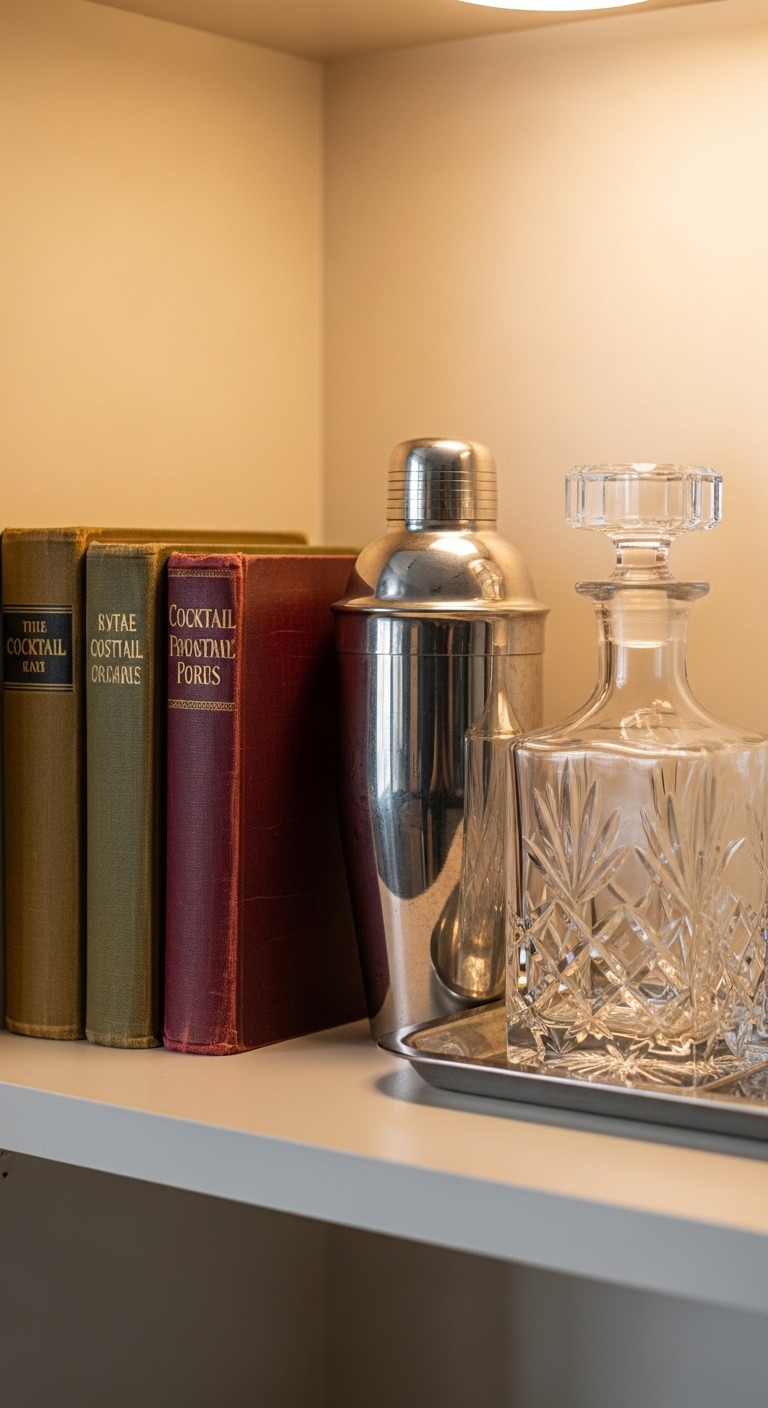
A small stack of vintage cocktail books or bartending guides, displayed open or upright beside the glassware, adds an intellectual warmth to the bar that signals craft and care rather than just storage. Vintage editions of classic cocktail books are widely available at secondhand bookstores for very little money and the cloth or leather covers in faded earth tones suit the warm bar aesthetic perfectly. Pair them with a piece of vintage glassware, an antique shaker, an old ice bucket, or a single beautiful vintage decanter, for a vignette that reads as a collected, considered bar setup rather than a single shopping trip.
16. Subtle Bar Music Setup
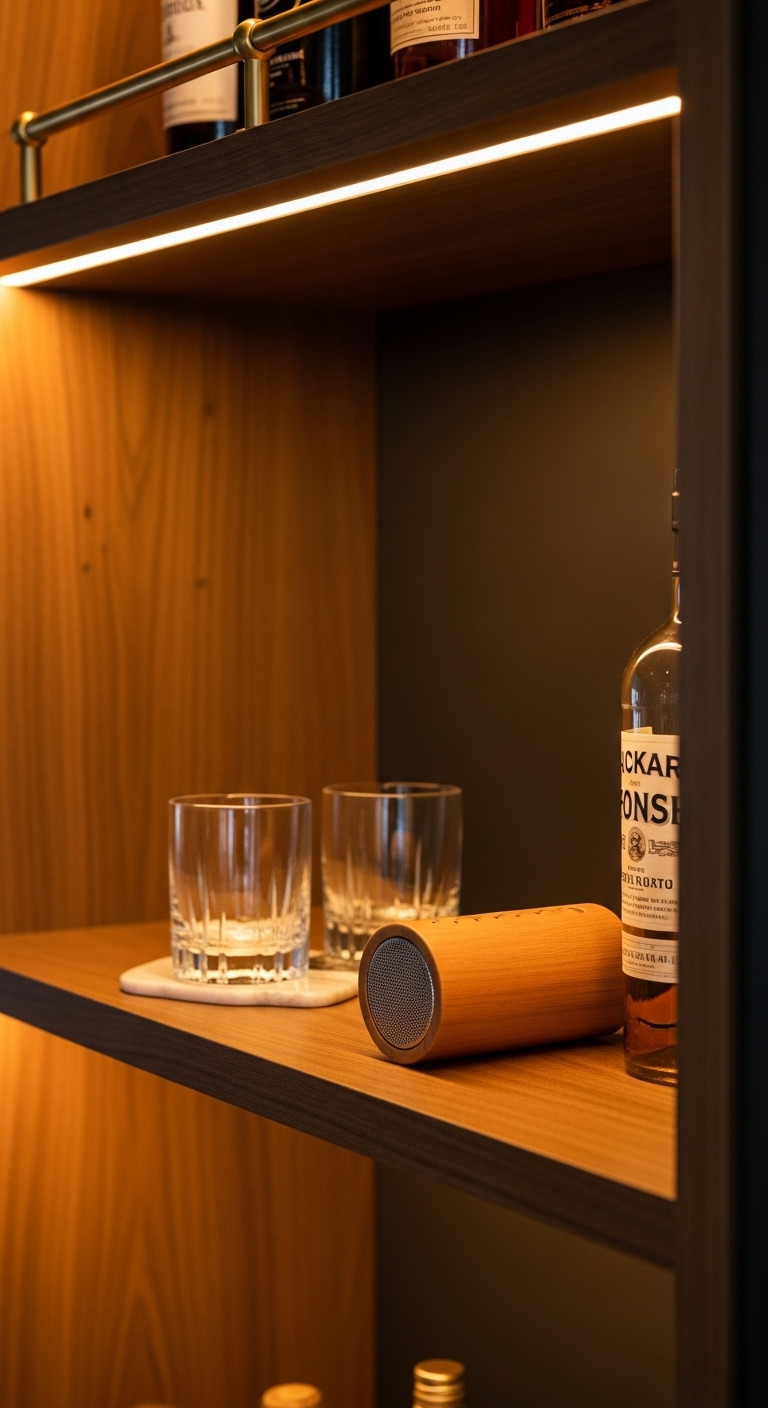
A small Bluetooth speaker or a record player tucked into the bar shelves or on a side ledge contributes to the atmosphere of the bar in a way that no visual element can quite replicate. Music transforms a space, and the home bar specifically benefits from the kind of warm, low-volume background music that fills the room without dominating it. A small but quality speaker in a warm wood or fabric finish reads as part of the bar’s design rather than as a piece of technology. The visual contribution is small but the atmospheric one is real, and a bar with appropriate background music feels noticeably more like a real bar than a silent one.
17. Brass Bar Hardware
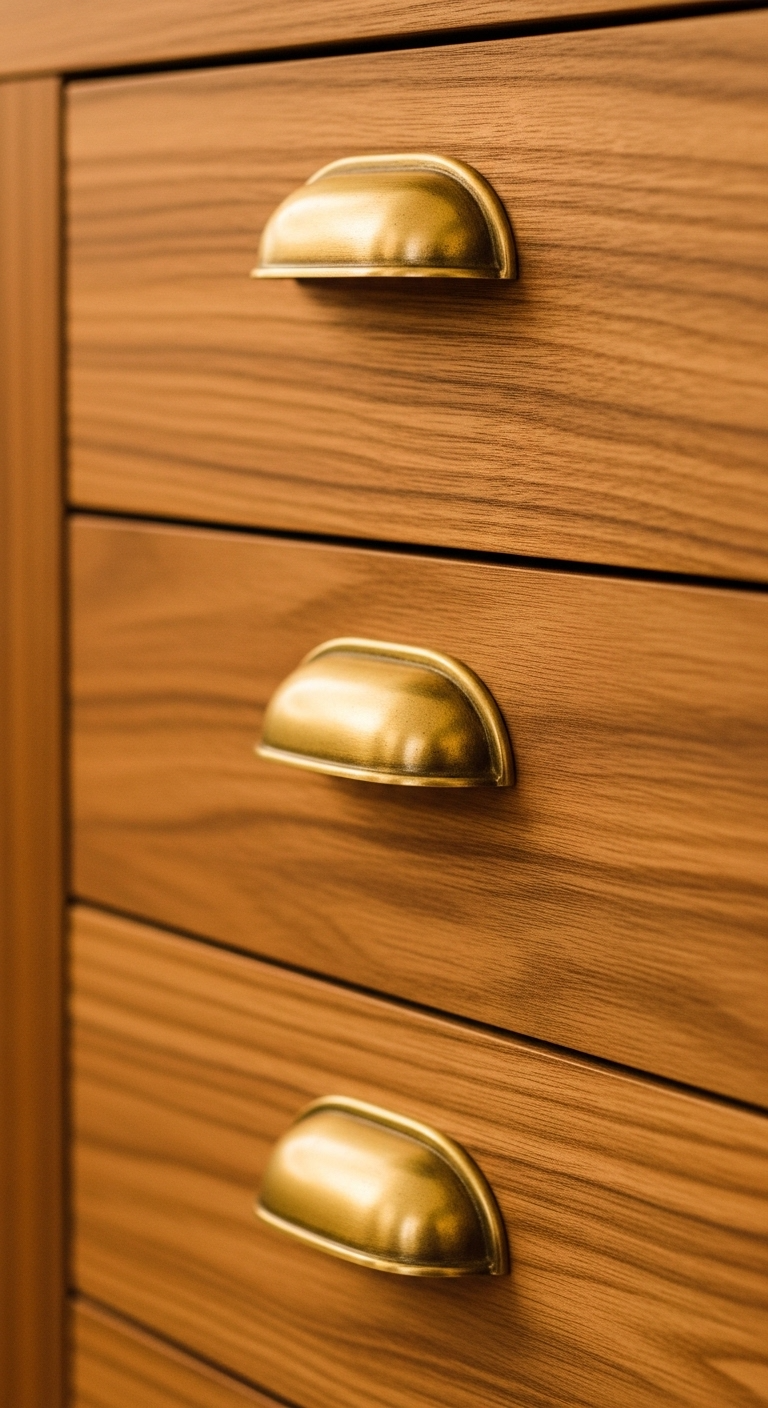
Brass and aged brass hardware on the bar cabinets and drawers, the pulls, the handles, the small fittings, contributes a warm metal note to the bar that brushed nickel and chrome cannot match. Unlacquered brass is the most authentic choice and develops a natural patina with handling that gives it character over time. Lacquered brass keeps its bright finish but lacks the character of aged brass. Either way, brass against warm wood and a dark wall creates one of the most reliably elegant bar palettes in residential design. Mix brass with leather seating, linen napkins, and warm wood for a complete material story.
18. Bar Stool Foot Rail
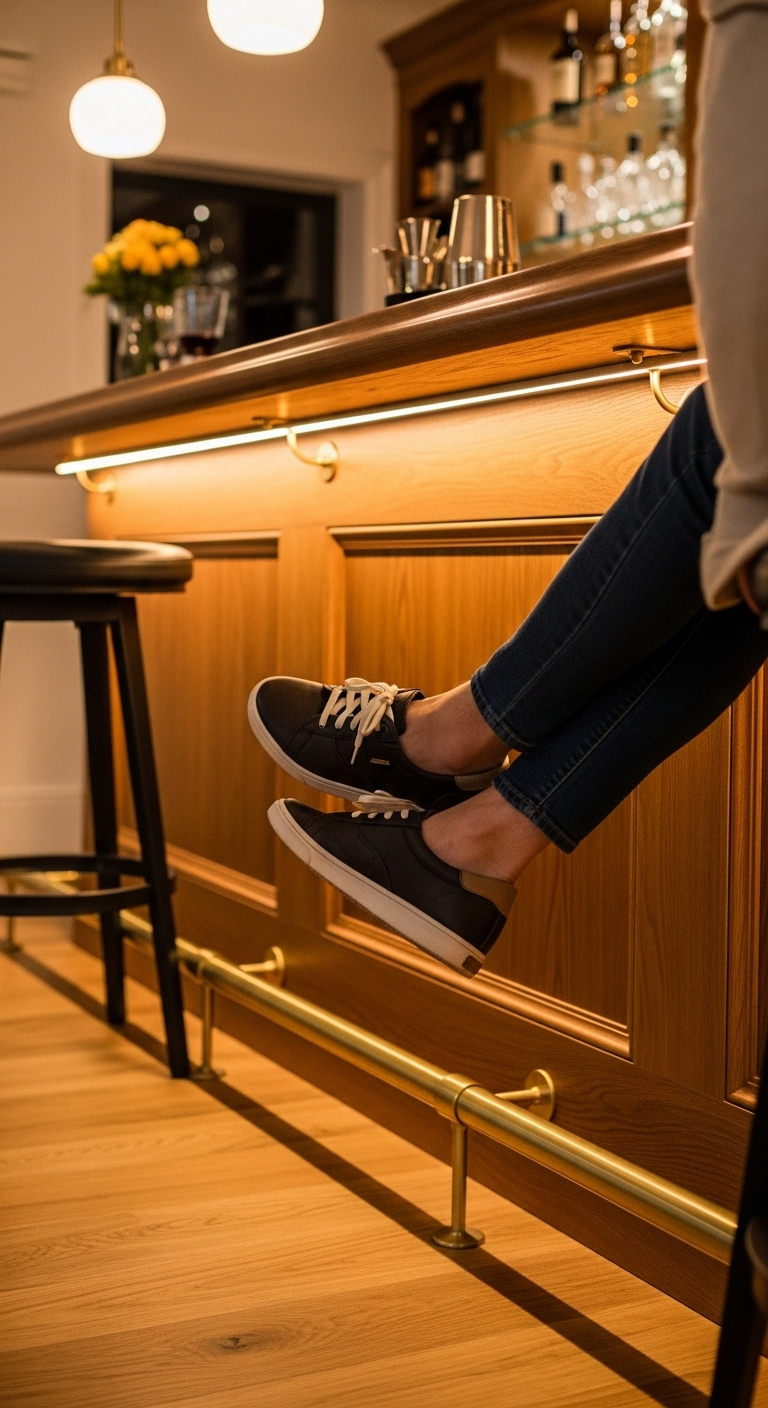
A horizontal foot rail along the front of the bar at about ten to twelve inches off the floor adds a small but genuinely useful detail that makes sitting at the bar more comfortable over a long evening. A foot rail provides a place to rest the feet that takes pressure off the lower back and changes the experience of sitting on a tall stool. Use a simple round metal rod, a brass tube, or a wooden dowel mounted on small brackets that attach to the bar front. The foot rail also reads visually as a real bar detail rather than a counter that happens to have stools at it. This is one of those small features that signals authentic bar design.
19. Curated Liquor Selection
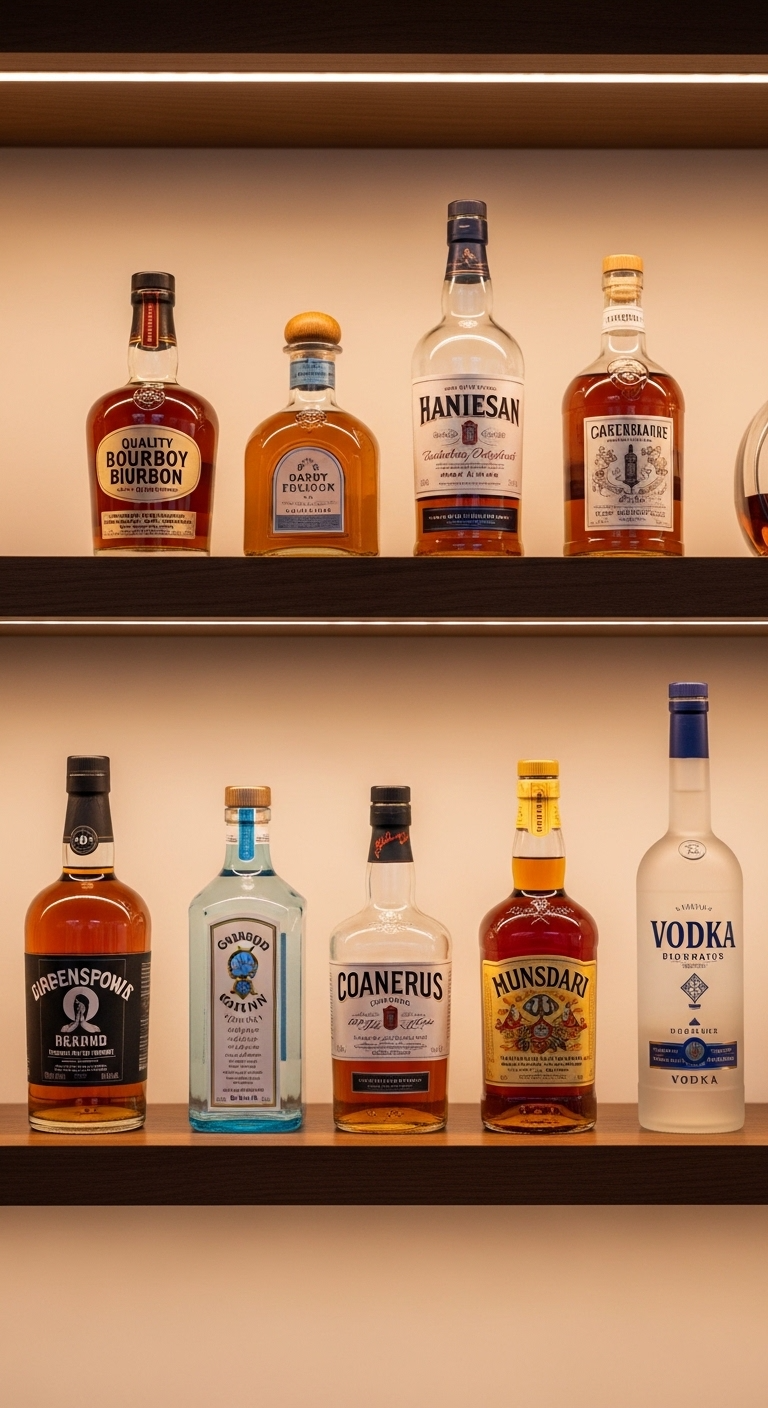
A liquor collection that is genuinely curated rather than indiscriminately accumulated reads as more refined and considered than a bar packed with bottles. A focused collection of one quality bourbon, one good gin, one tequila, one rum, one vodka, and a few liqueurs you actually use covers the vast majority of cocktails anyone is likely to make at home. The bottles you choose to display tell a story about your taste, and a smaller, more deliberate collection often looks more sophisticated than a wall of every bottle ever purchased. Rotate the selection occasionally based on what you genuinely enjoy drinking.
20. Layered Warm Lighting
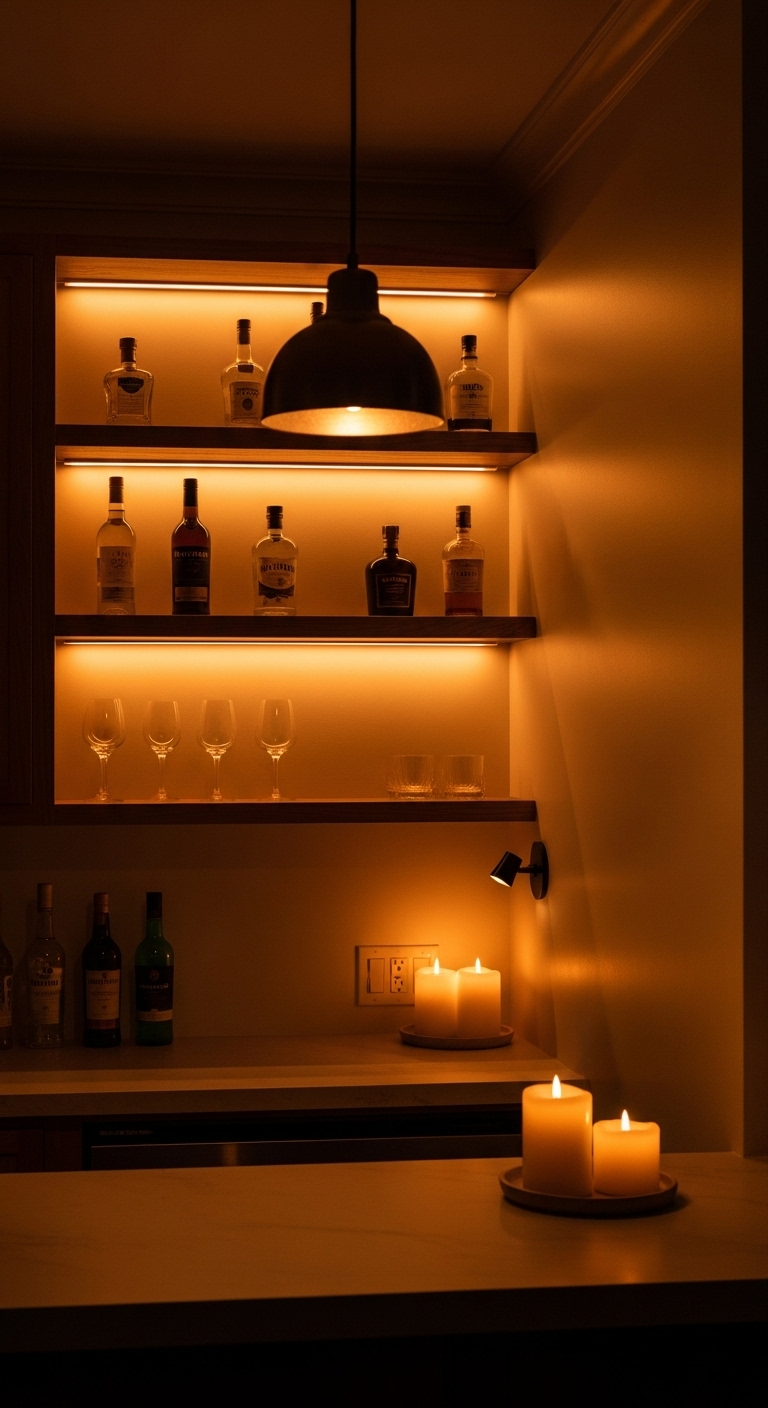
A bar that relies only on overhead room lighting feels like a kitchen counter that happens to have bottles on it. Adding multiple layered light sources, the pendant above the bar, the strip lights behind the shelves, a small accent light in a corner, and perhaps a candle or two on the bar surface itself, creates the dimensional warm light that gives a bar its atmospheric quality. Each light source adds a different layer of warmth and the cumulative effect is a bar that feels like a destination rather than a transit point. Use warm bulbs in the 2200K to 2700K range across all the light sources for the most flattering and consistent atmospheric result.
21. Bar Snack Bowl Display
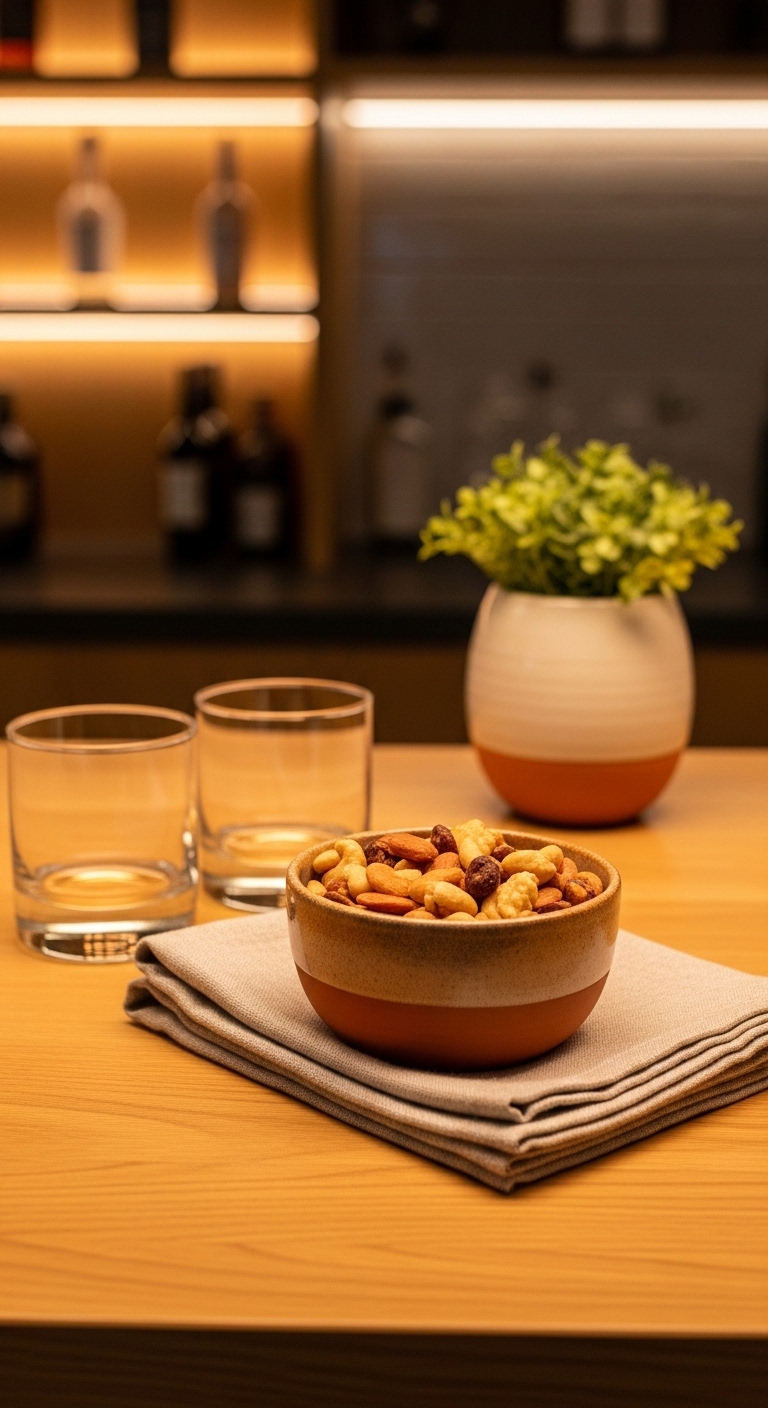
A small ceramic or wooden bowl on the bar holding nuts, olives, or pretzels signals that the bar is set up for actual hospitality rather than just self-serve drinking. The snack bowl is a small but visually warm detail that completes the bar setup and gives guests something to reach for naturally. Use a beautiful bowl rather than a plain one since the bowl itself becomes part of the bar’s styling. A handmade ceramic in a warm earthy tone or a small wooden bowl with a smooth finish both work well. Combined with the other inviting touches, the snack bowl is the small detail that turns the bar from a styled space into a genuine entertaining one. For more on creating warm, inviting spaces throughout the home, the principles in our green bathroom ideas guide cover similar approaches to layered lighting and natural materials that work across different rooms.
A home bar that feels warm and inviting is built one detail at a time, the lighting, the materials, the small styling decisions that signal real care. Most of these ideas cost relatively little and the cumulative effect is a bar that genuinely draws people in instead of one that simply impresses them in photographs.