22 Small Breakfast Nook Ideas That Make Any Corner Feel Like a Real Dining Spot
A breakfast nook does not require a large kitchen or a dedicated alcove to work. It requires a corner, a wall, or even just a window with enough floor space for a small bench and a narrow table. The smallest kitchens in the smallest apartments can accommodate a breakfast nook when the dimensions are right and the furniture is chosen for the actual space rather than for the ideal version of it. The nook does not need to seat six. It needs to seat two or three comfortably, with enough table surface for plates and mugs and enough warmth to make sitting there feel genuinely better than eating at the kitchen counter. These 22 ideas focus specifically on small-space nook solutions that create a real dining spot from what would otherwise be wasted floor area.
1. Corner Bench L-Shape
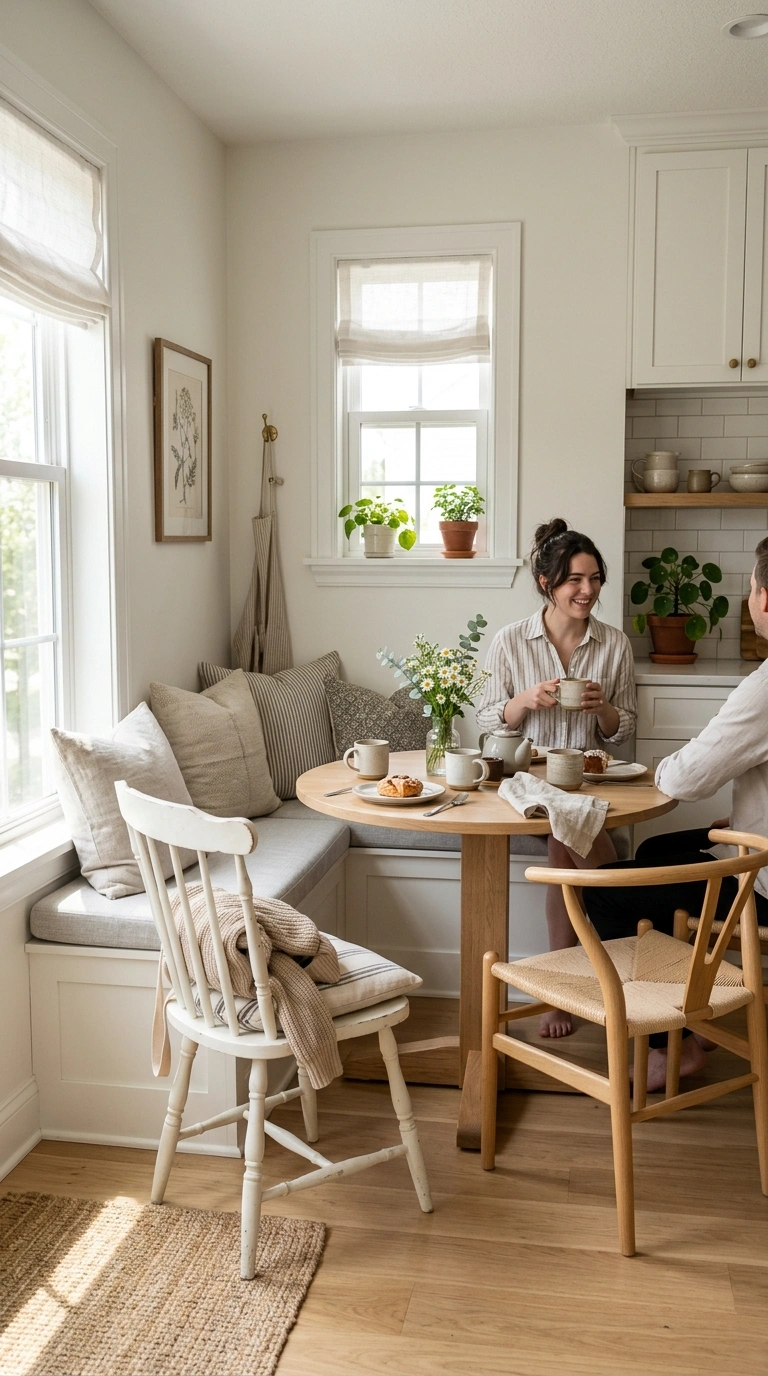
An L-shaped bench built into a corner creates the most seating in the least floor space because the bench uses the two walls as the back support rather than requiring freestanding chairs that stick out into the room. The bench wraps around the corner, a small table sits in front of it, and one or two chairs or stools complete the opposite side. The L-shape comfortably seats three to four people in a space that a standard table and four chairs could not fit into. Build the bench at standard seat height of eighteen inches with a seat depth of sixteen to eighteen inches for comfortable sitting. The corner walls provide the back support that the bench itself does not need to include.
2. Window Seat Nook
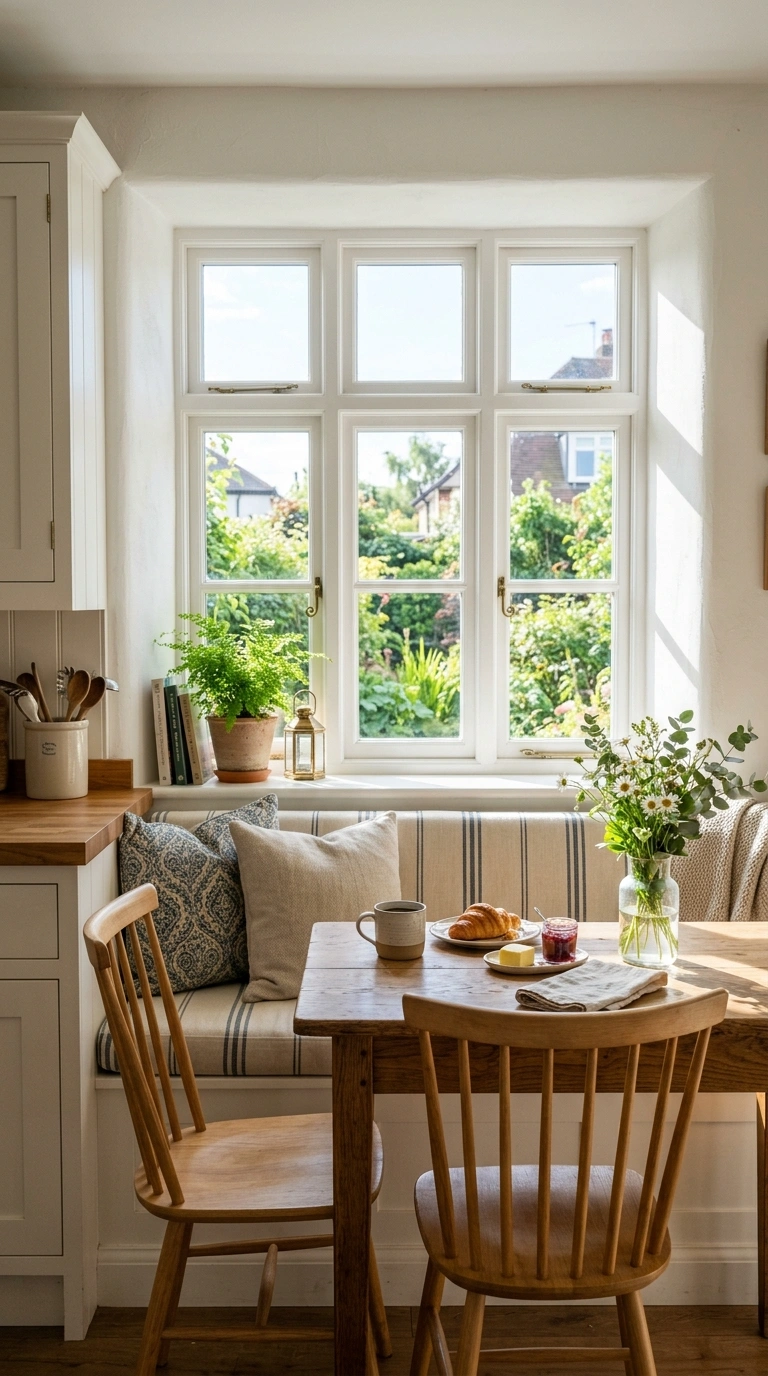
If the kitchen has a window on one wall, building a bench directly under the window creates a breakfast nook that faces the natural light and uses the window wall as both a structural support and a source of warm daylight during morning meals. The window seat bench should be the full width of the window and deep enough for comfortable sitting. Position a narrow table in front of the bench and add one or two chairs on the opposite side facing the window. The natural light streaming across the table during breakfast creates the warm quality that makes the nook feel like a destination rather than a table pushed against a wall.
3. Floating Shelf as Table
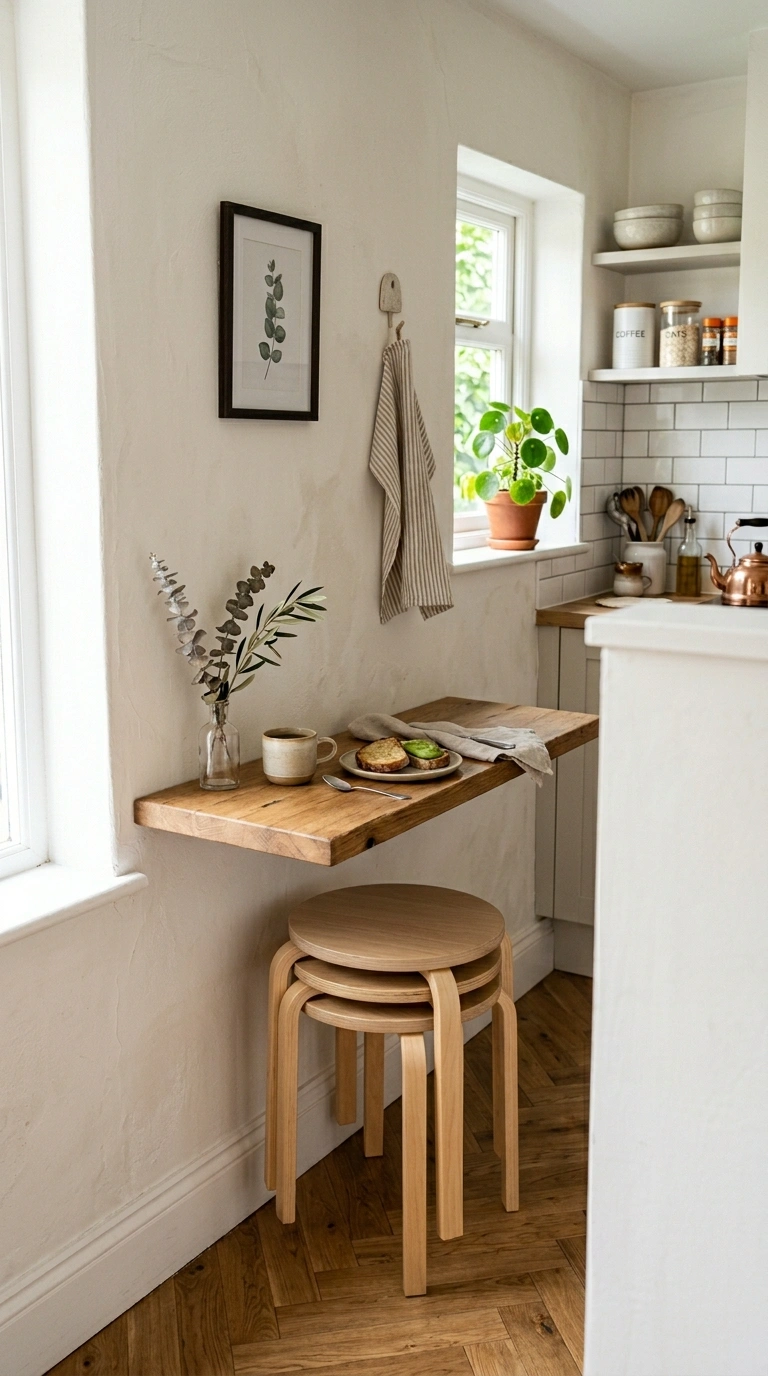
In the smallest kitchens where a freestanding table would block the walkway, a wall-mounted floating shelf at table height, about thirty inches from the floor, creates a narrow dining surface that takes up zero floor space when empty. Mount the shelf on the wall at the edge of the kitchen, position two small stools underneath, and the breakfast nook exists only when the stools are pulled out. When the meal is done, the stools tuck under the shelf and the walkway is clear. The shelf should be at least ten inches deep and at least thirty-six inches wide to hold two plates and two mugs comfortably.
4. Banquette Single Wall
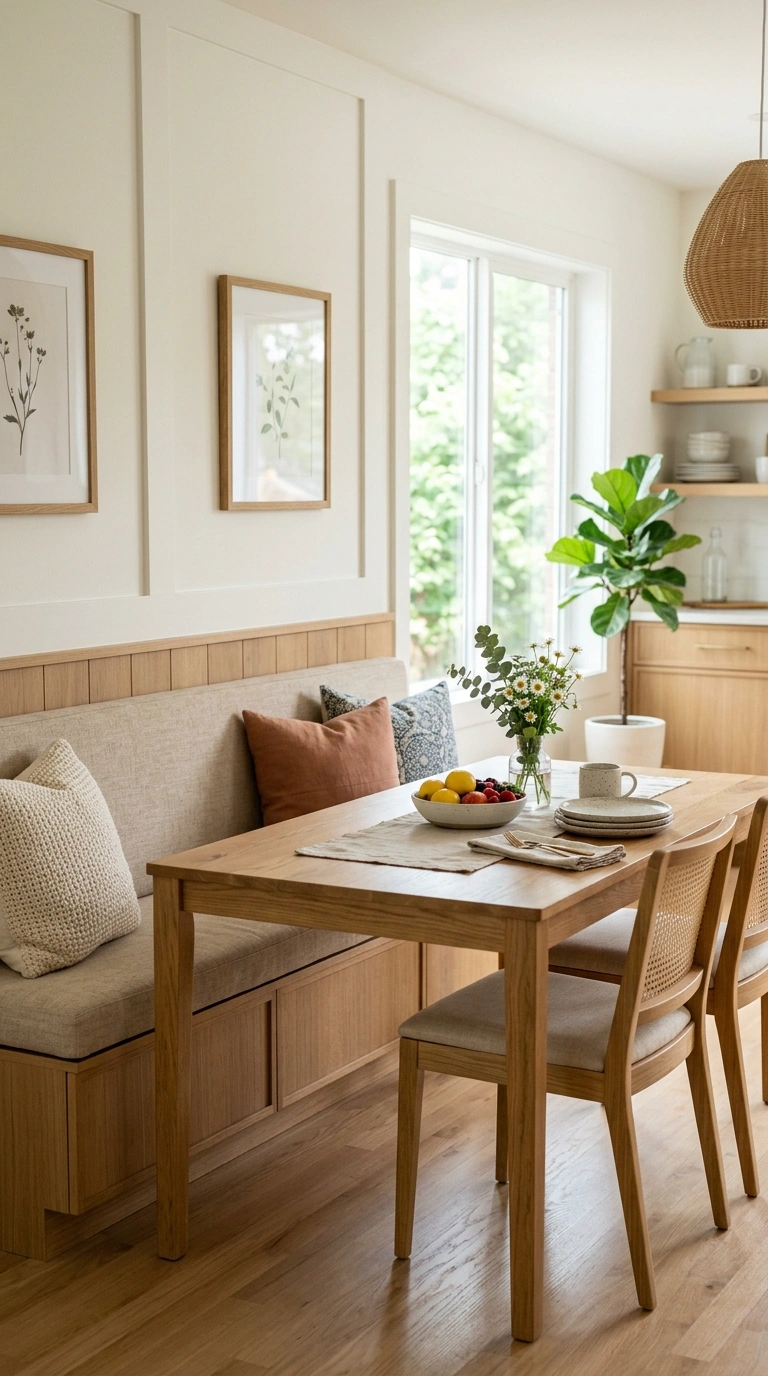
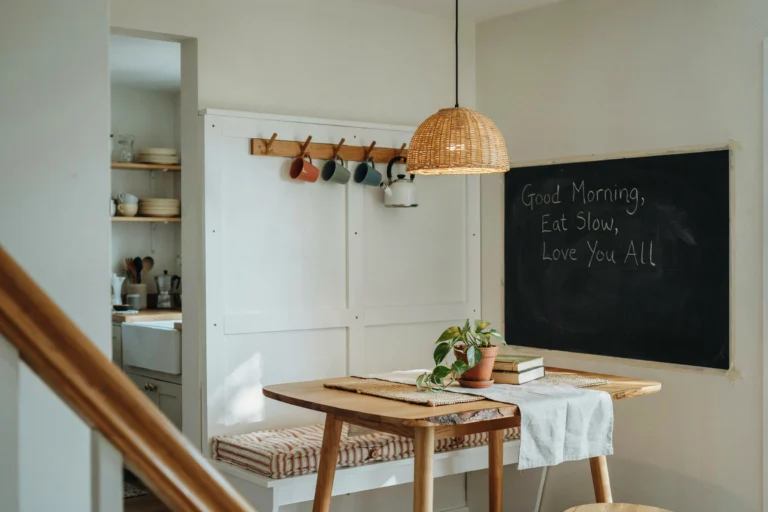
A single straight bench built against one wall with a table in front of it and chairs on the opposite side creates a banquette-style nook that fits along any wall in any kitchen. The single-wall banquette is less space-efficient than the corner L-shape but works in kitchens where no corner is available. The bench should be the same width as the table for a clean visual line. Upholster the bench seat with a washable cushion in a warm tone for comfort during longer meals. The banquette format reads as designed and intentional rather than as a table pushed against a wall with chairs. For more ideas on maximizing small kitchen layouts, the small kitchen ideas guide covers space-saving strategies that complement the breakfast nook.
5. Round Table Space Saver
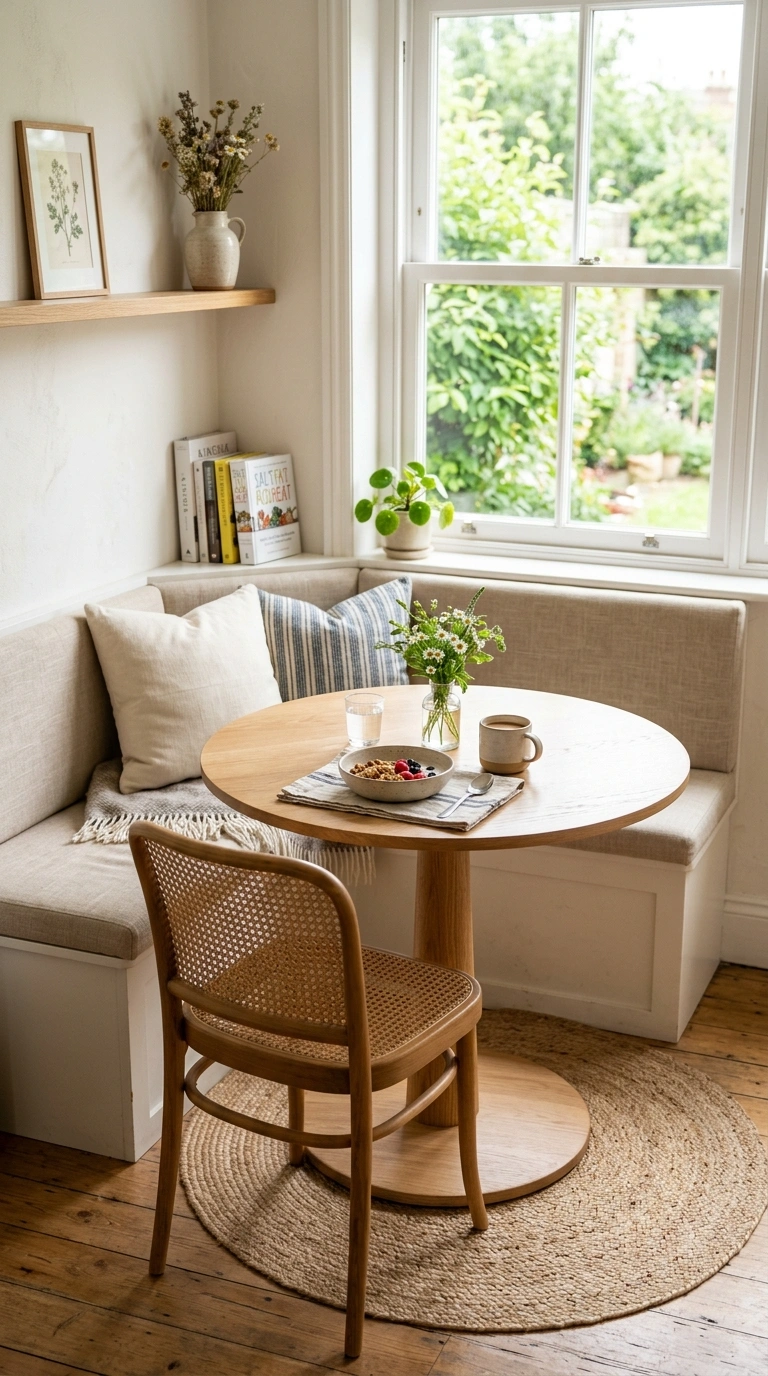
A round table takes up less visual and physical space than a rectangular one in a small breakfast nook because it has no sharp corners that catch on passersby or stick out into the walkway. A round table of thirty to thirty-six inches in diameter comfortably seats two to three people and fits into a corner nook with a bench behind it and a single chair in front. The circular shape also creates a more intimate conversation quality than a rectangular table because all diners face each other at equal distance. Choose a round pedestal table rather than a four-legged one since the pedestal base allows more legroom and easier sliding in and out of the bench.
6. Built-In Storage Bench
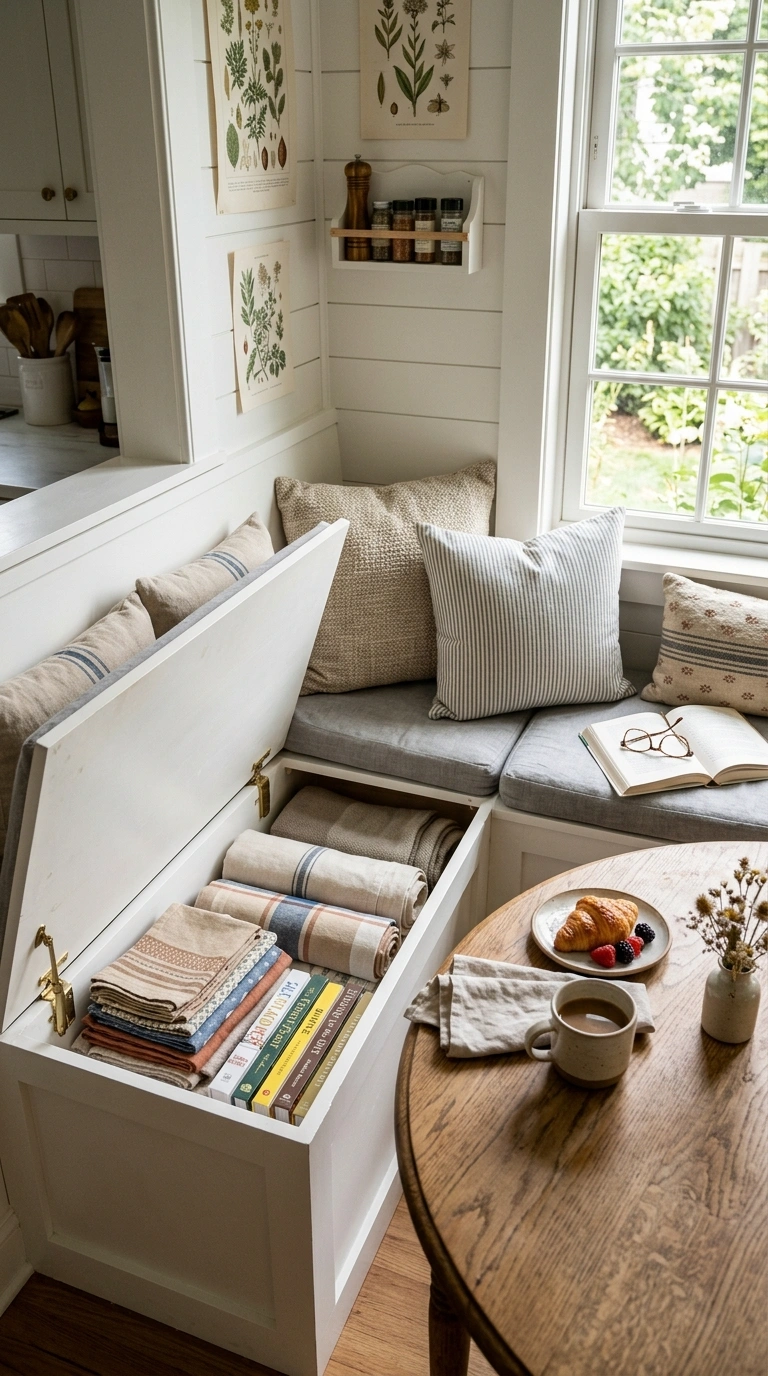
A breakfast nook bench with a hinged seat that opens to reveal storage inside solves two problems simultaneously: seating and storage. The bench holds linens, cookbooks, small appliances, or other kitchen items that would otherwise need cabinet space. The storage bench is particularly valuable in small kitchens where every cubic inch of storage matters. Build the bench box with a piano hinge on the seat so it lifts easily. Add a slow-close mechanism to prevent the lid from slamming on fingers. The storage bench costs only slightly more to build than a solid bench and provides significant additional kitchen storage in a footprint that was already allocated to seating.
7. Fold-Down Table Option
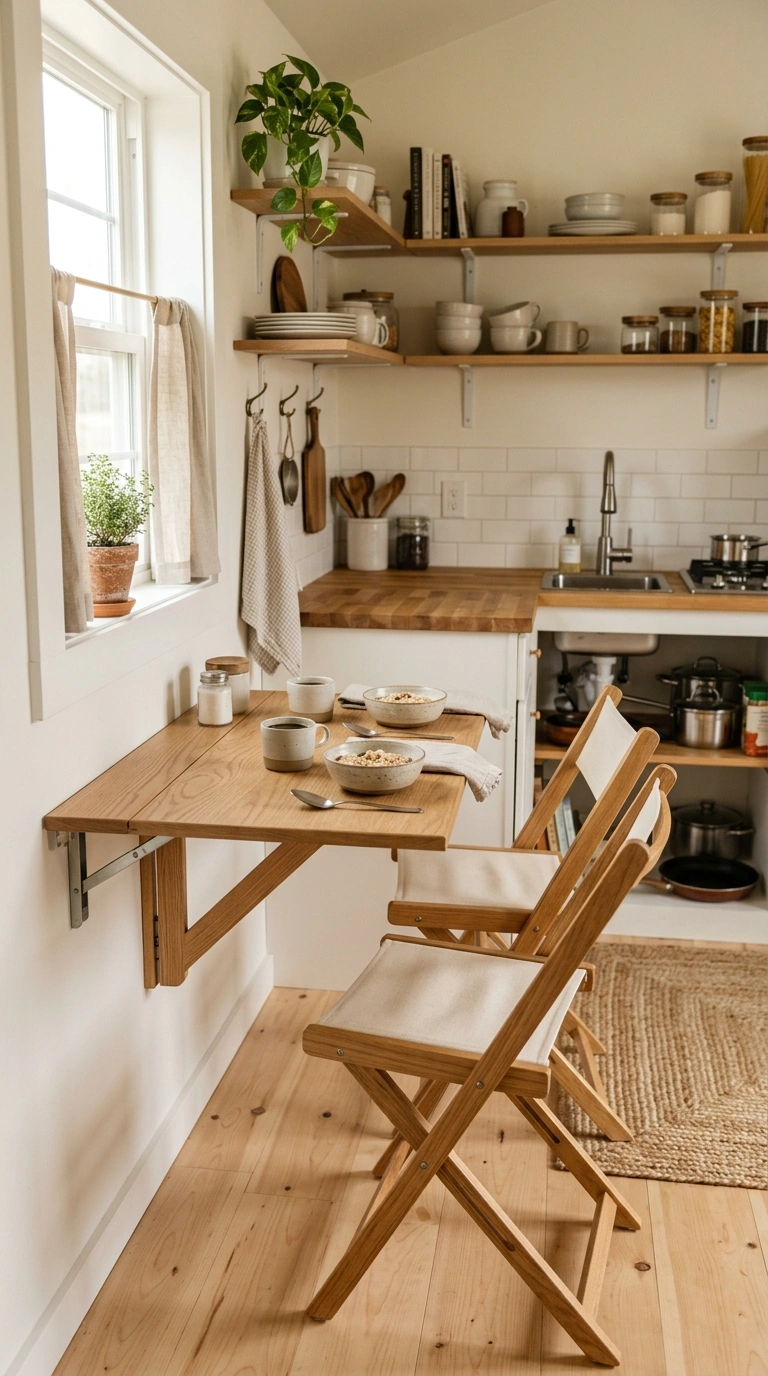
A fold-down table mounted on the wall with a hinge creates a breakfast surface that exists only when needed and folds flat against the wall when not in use. The fold-down table is the most extreme space-saving breakfast nook option and works in kitchens where even a small permanent table would block the flow. Mount the table at standard dining height on a sturdy wall bracket with a locking mechanism that holds it level when deployed. A fold-down table of twenty-four by thirty-six inches provides enough surface for two people to eat comfortably. Pair it with two folding chairs or two wall-mounted fold-down seats for a fully collapsible breakfast nook.
8. Peninsula Nook Extension
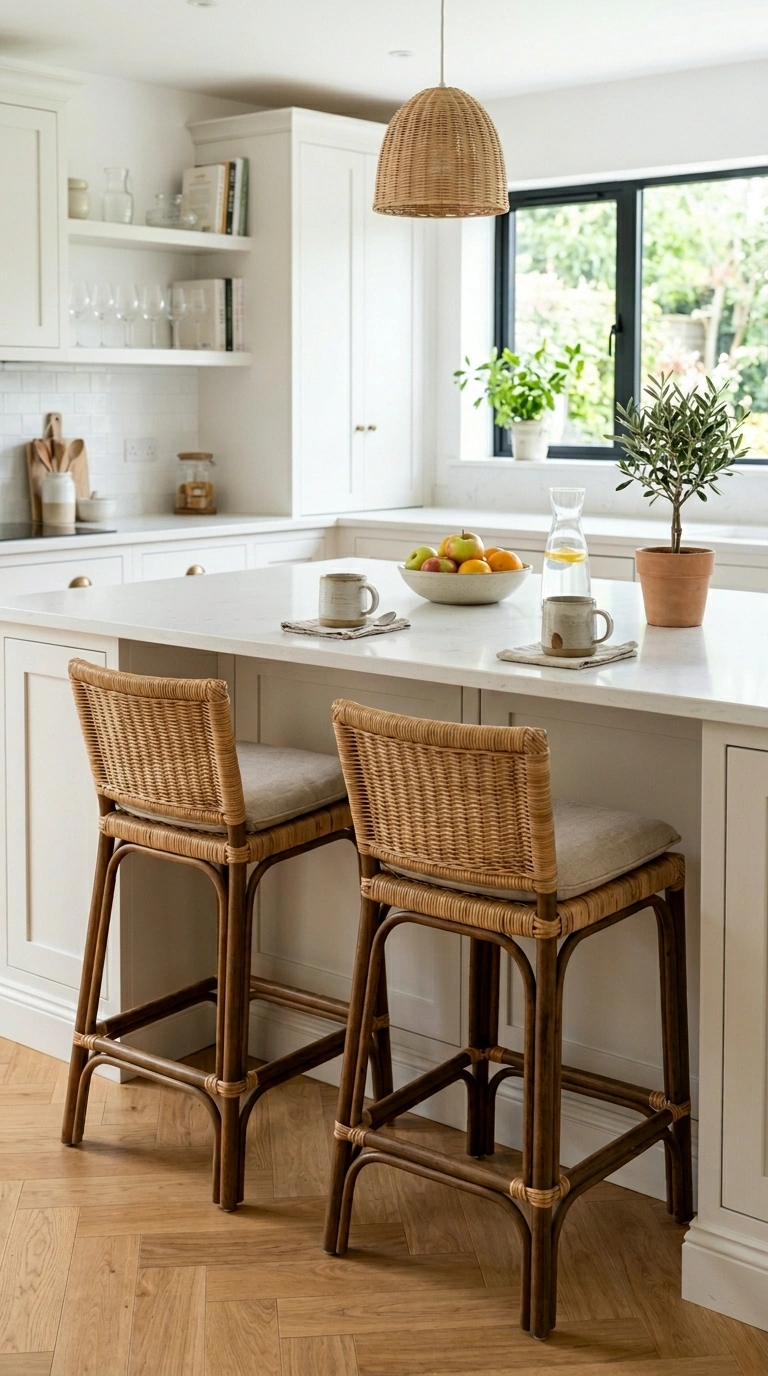
If the kitchen has a peninsula or a short countertop section that extends from the wall, adding two stools on the outside creates an instant breakfast nook without building or installing anything. The peninsula functions as the table surface, and the stools provide the seating. The eating side of the peninsula should overhang at least twelve inches to provide knee clearance for the stools. Counter-height stools for a standard thirty-six-inch counter, or bar-height stools for a forty-two-inch bar-height counter, complete the setup. This is the easiest and most cost-free breakfast nook option for kitchens that already have a peninsula.
9. Narrow Table Against Wall
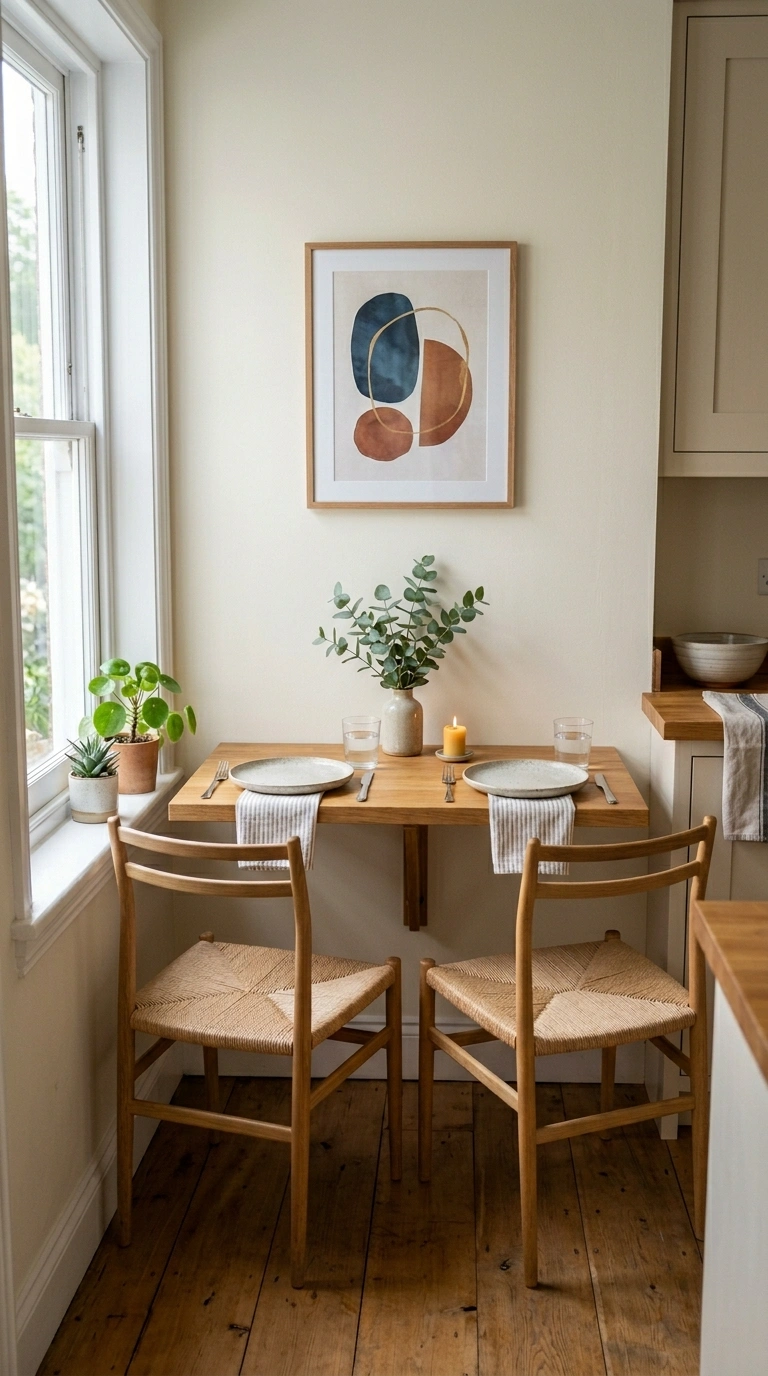
A narrow table, fourteen to eighteen inches deep, positioned against a wall with two chairs on the open side creates a breakfast nook in a space too narrow for a standard dining table. The narrow depth keeps the table from projecting too far into the kitchen while providing enough surface for two place settings side by side. A narrow console table, a wall-mounted ledge, or even a repurposed narrow desk can serve as the nook table. The wall behind the table becomes the visual backdrop for the nook and can be treated with art, a small shelf, or a mirror to make the narrow eating area feel more designed.
10. Bay Window Built-In
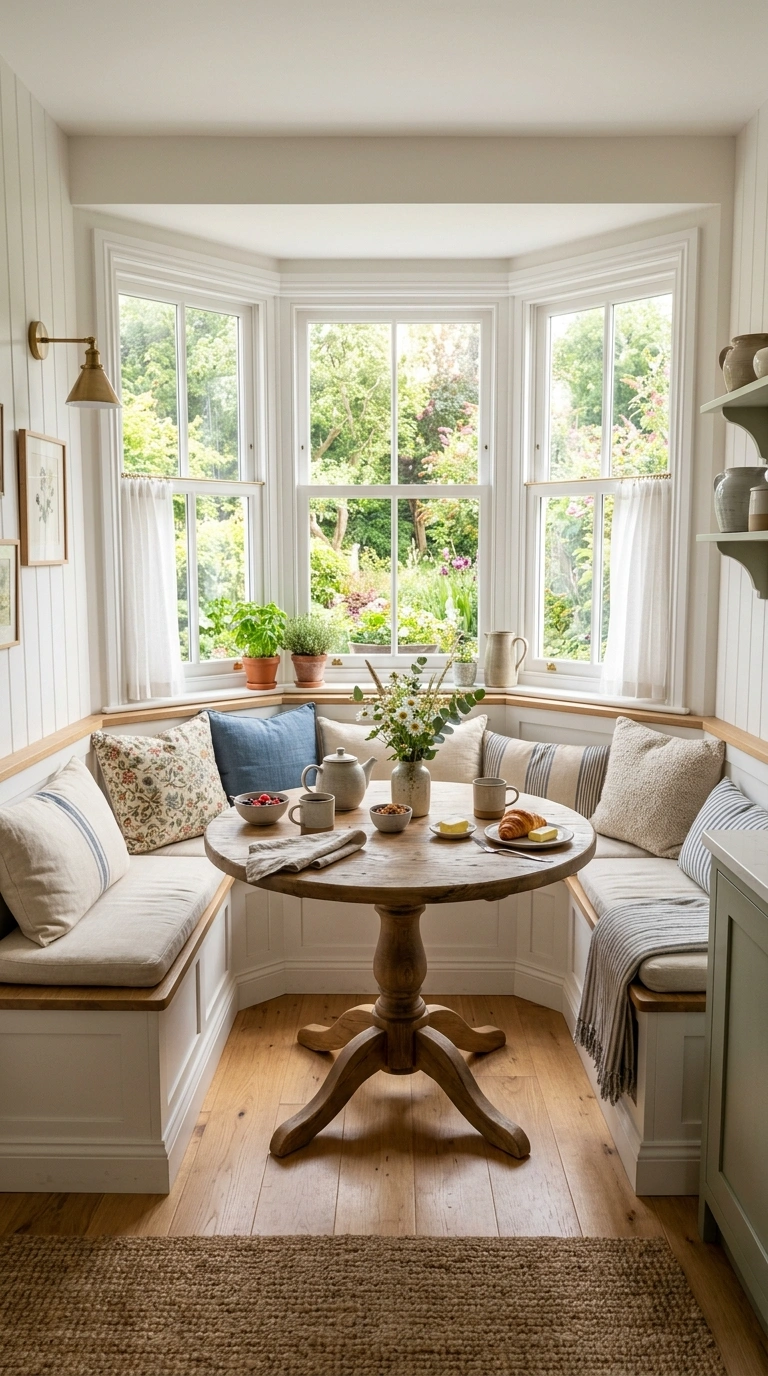
A bay window or a protruding window alcove provides the ideal architectural frame for a built-in breakfast nook because the window creates a natural three-sided enclosure that defines the nook as a separate zone from the kitchen. Build a continuous bench around the inside perimeter of the bay, position a table in the center, and the nook seats four to five people in a space that feels like a dedicated dining alcove rather than part of the kitchen floor. The natural light from the bay window makes the nook the brightest and warmest spot in the kitchen, which is exactly where people want to sit in the morning.
11. Bench With High Back
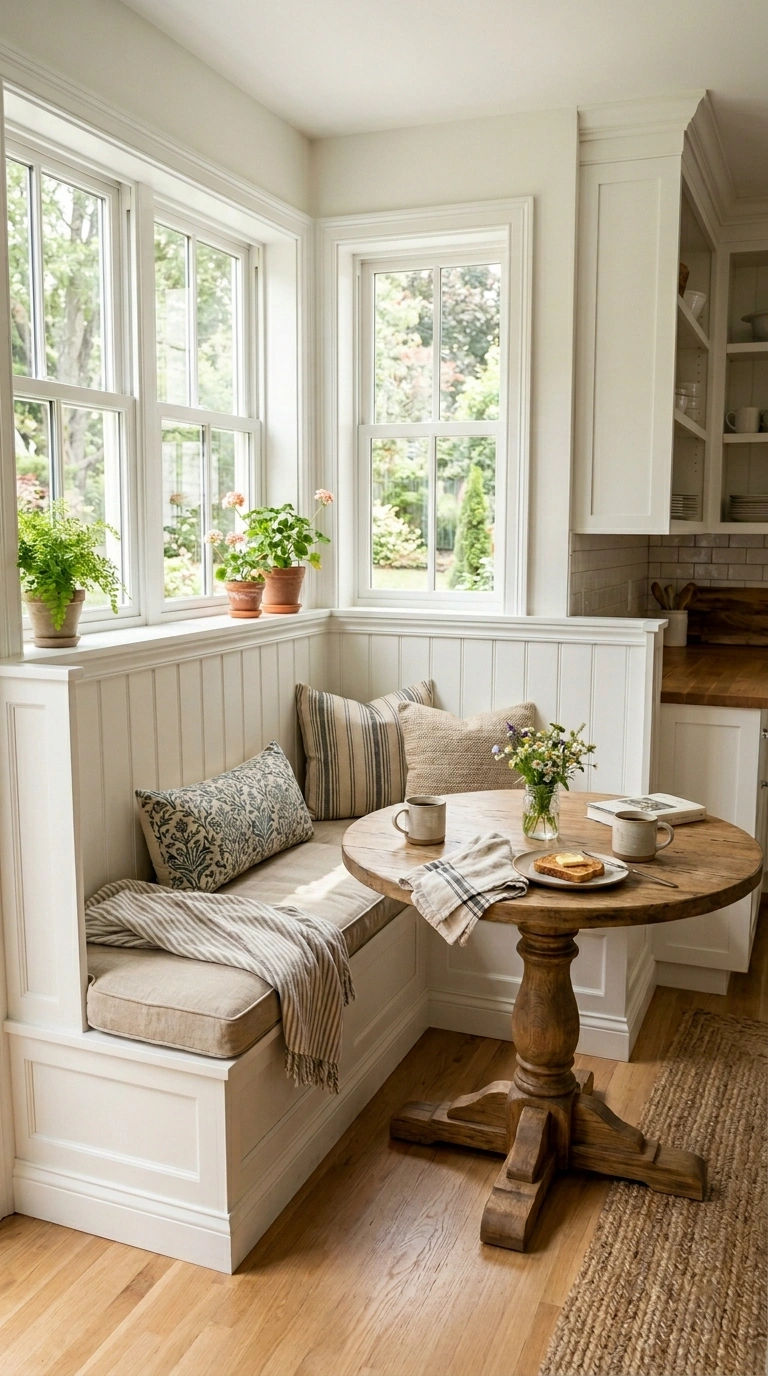
A bench with a high back, whether built-in or freestanding, creates a sense of enclosure and privacy that a low backless bench cannot achieve. The high back defines the nook as a separate zone within the kitchen and provides a comfortable surface to lean against during longer meals. A bench back height of thirty-six to forty-two inches provides genuine support and visual separation. Upholster the back with a cushion that matches the seat for a complete, designed look. The high-back bench transforms a simple eating spot into a space that feels like a proper dining booth in a restaurant.
12. Under-Stair Nook Setup
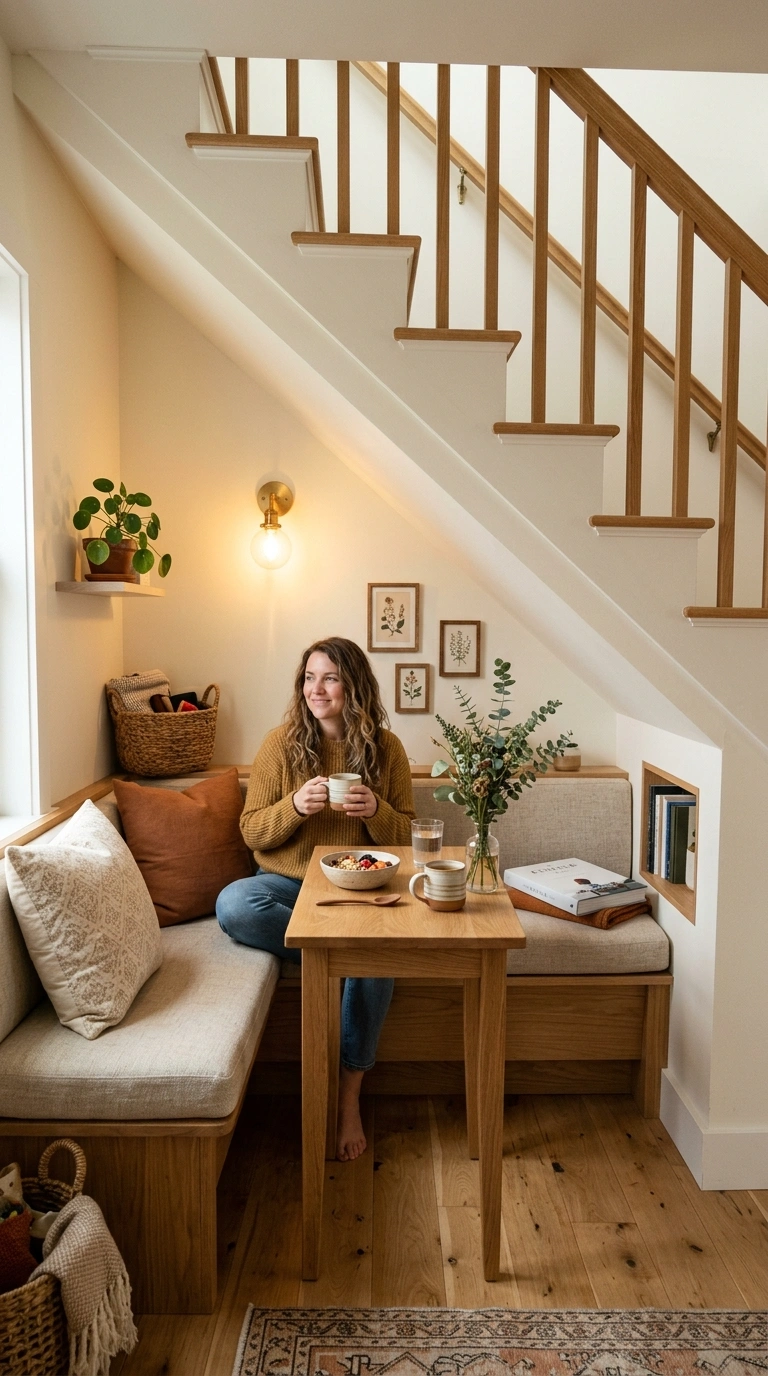
The triangular space under a staircase, which is typically wasted or used as a closet, can be converted into a surprisingly charming breakfast nook. A small bench or chair fits under the lower section of the stairs, and a narrow table fits in front of it. The angled ceiling of the staircase creates an intimate, cave-like quality that makes the small nook feel protected and cozy rather than cramped. Add a small pendant light or a wall-mounted sconce to illuminate the nook properly since the stair structure blocks overhead light. The under-stair nook is one of the most unexpected and most charming small-space dining solutions available.
13. Two-Person Cafe Setup
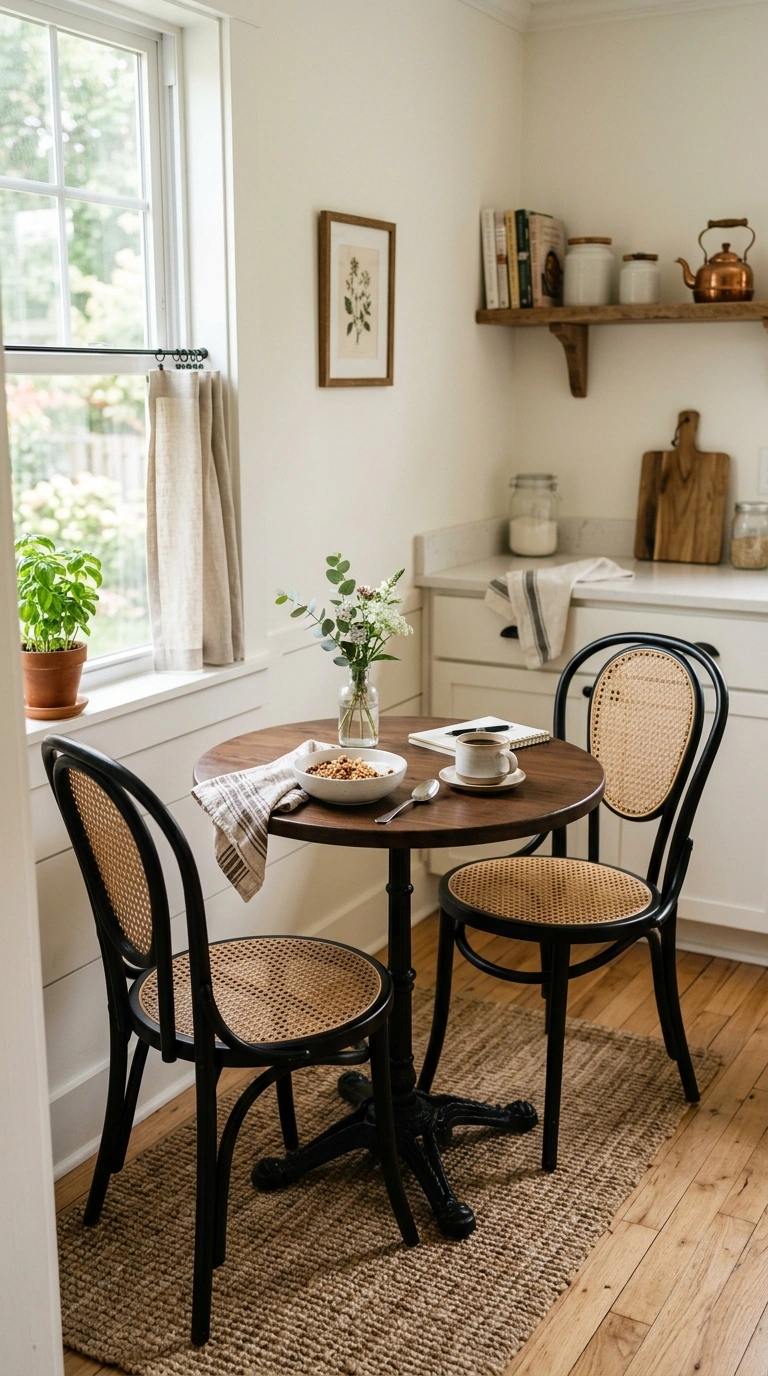
A small round cafe table of twenty-four to thirty inches in diameter with two lightweight chairs creates a breakfast nook sized specifically for two people in a kitchen corner or beside a window. The cafe setup does not try to seat four or accommodate dinner parties. It provides a dedicated spot for two people to eat breakfast together every morning, which is the actual daily use case for most breakfast nooks. The small footprint fits into even the tightest kitchens. A bistro table with two cafe chairs in warm natural materials reads as deliberately charming rather than as a table that is too small for the household.
14. Booth-Style Facing Benches
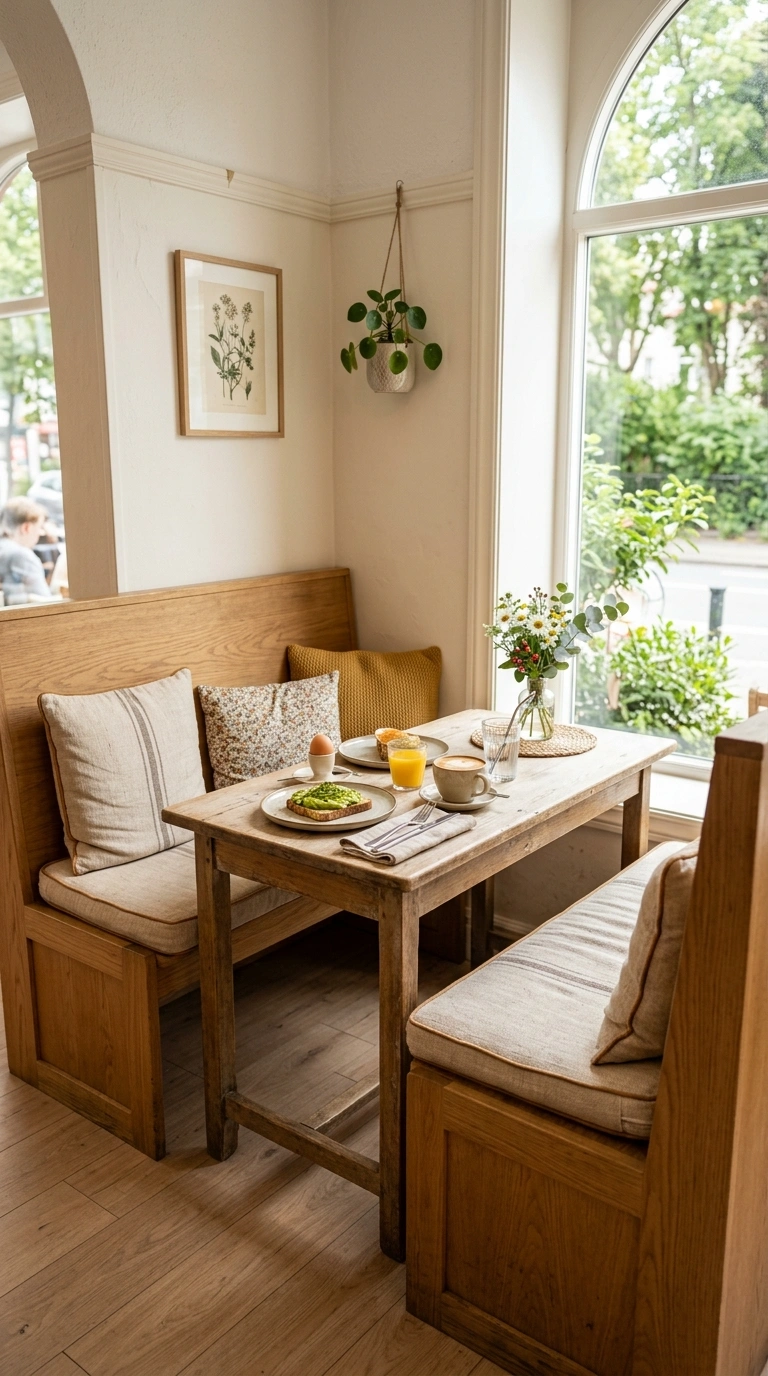
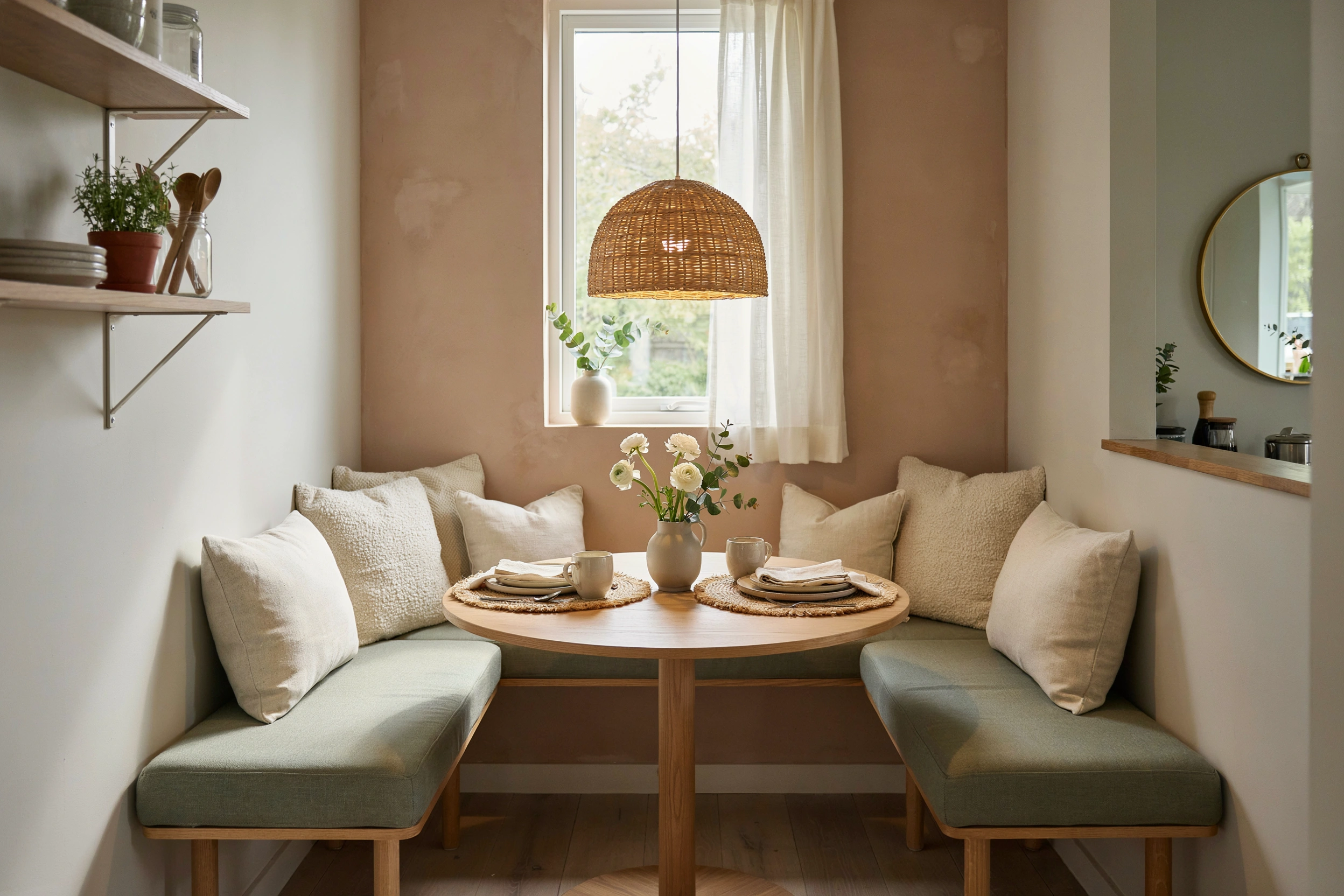
Two benches facing each other with a table between them create a restaurant booth format that provides maximum seating in minimum space. The booth format is particularly space-efficient because the benches tuck under the table when not occupied, and the table is fixed rather than surrounded by chairs that need room to be pulled out. Build two benches at matching heights and depths, position a table between them at a width that allows comfortable sitting on both sides, about thirty to thirty-six inches, and the booth seats four in a footprint barely larger than the table itself.
15. Kitchen Island End Nook
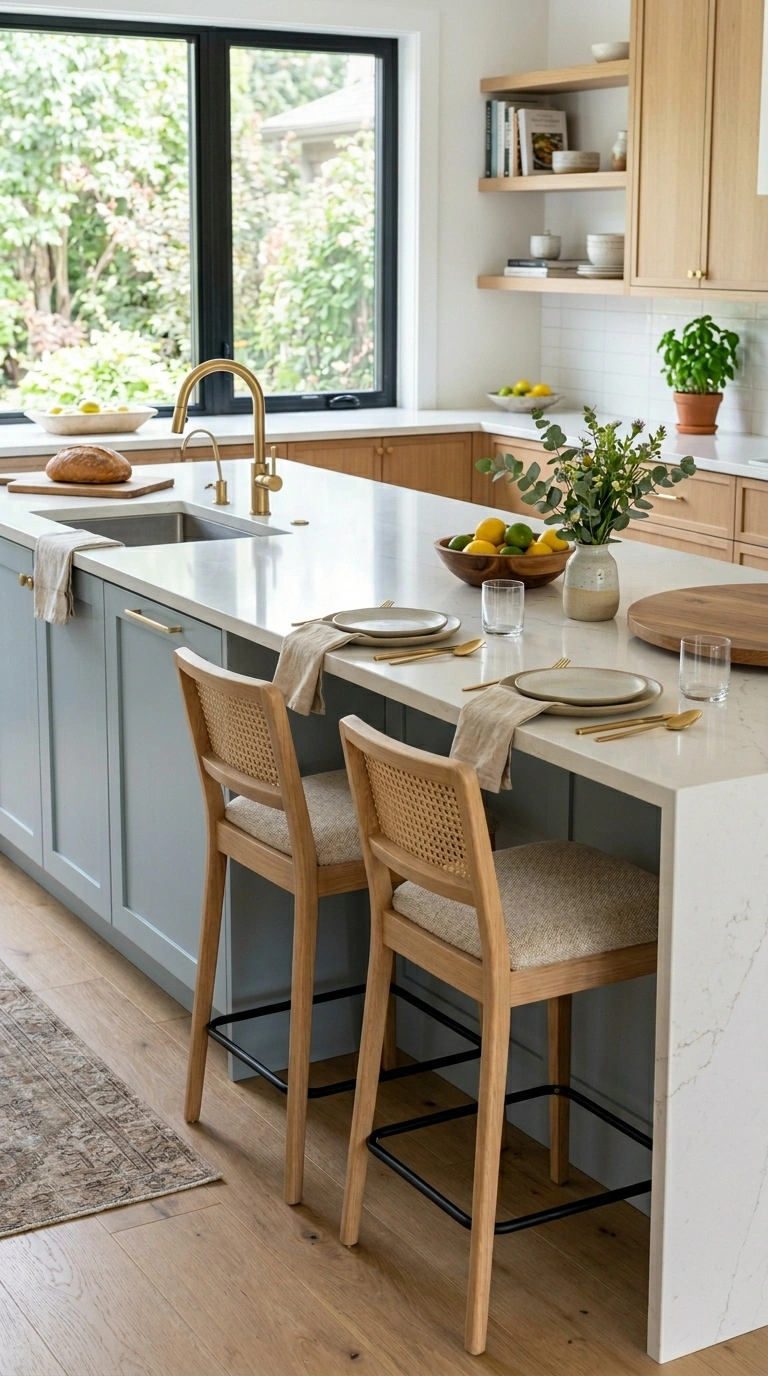
If the kitchen has an island, extending one end of the island by eighteen to twenty-four inches and adding a bench or two stools at the extension creates a breakfast nook attached to the island rather than requiring separate floor space. The nook shares the island structure so no additional furniture is needed in the room. The island end extension should be at standard table height rather than counter height for more comfortable seated eating. This works particularly well in open kitchens where the island already anchors the room and the nook extension adds a dedicated eating function without adding visual clutter.
16. Wall-Mounted Bench Fold
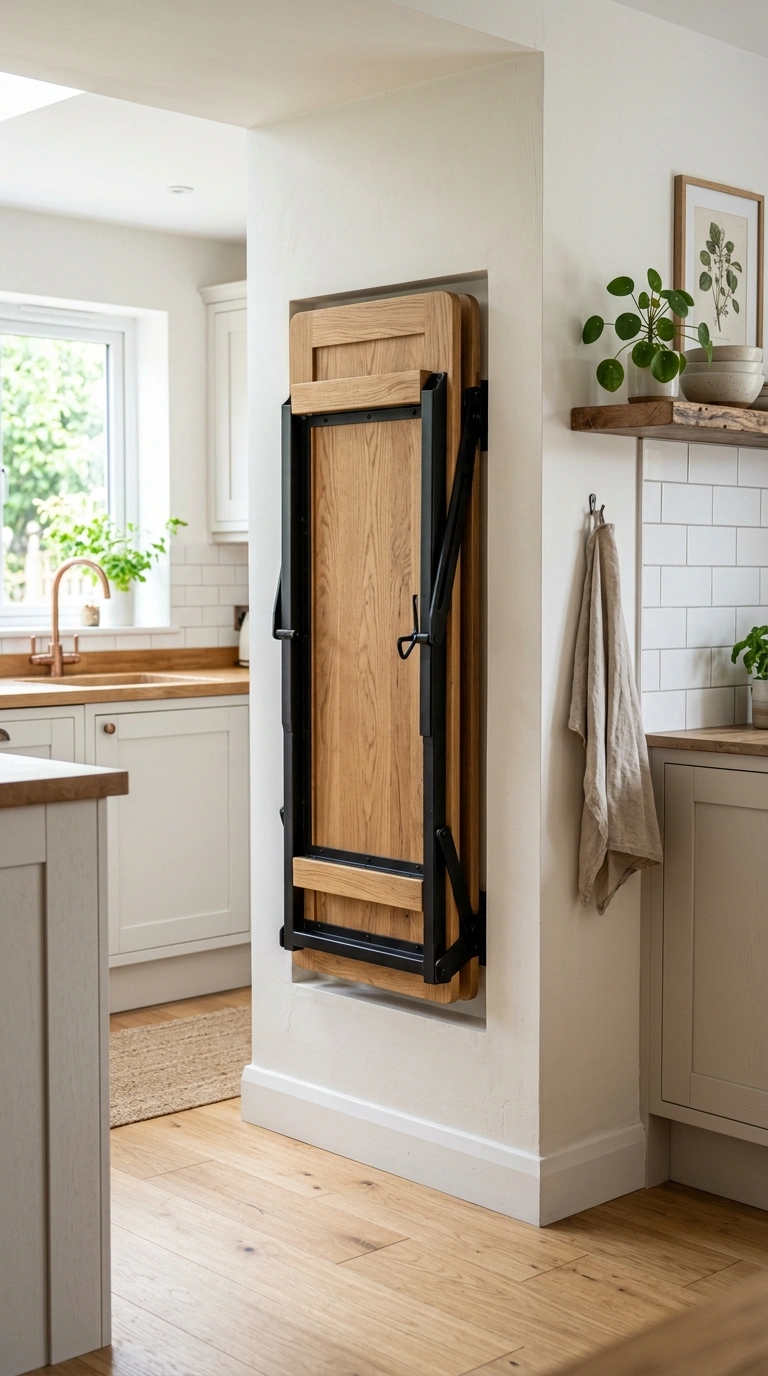
A wall-mounted bench that folds down from the wall, similar to a Murphy bed mechanism but at seat height, provides seating only when needed and folds flat against the wall when the floor space is required for other purposes. The fold-down bench paired with a fold-down table creates a fully collapsible breakfast nook that completely disappears when not in use. This is the ultimate solution for kitchens where the breakfast nook floor space doubles as a walkway or a work zone during non-meal hours. The mechanism should be sturdy enough for daily use and simple enough to deploy in seconds.
17. Tall Skinny Pub Table
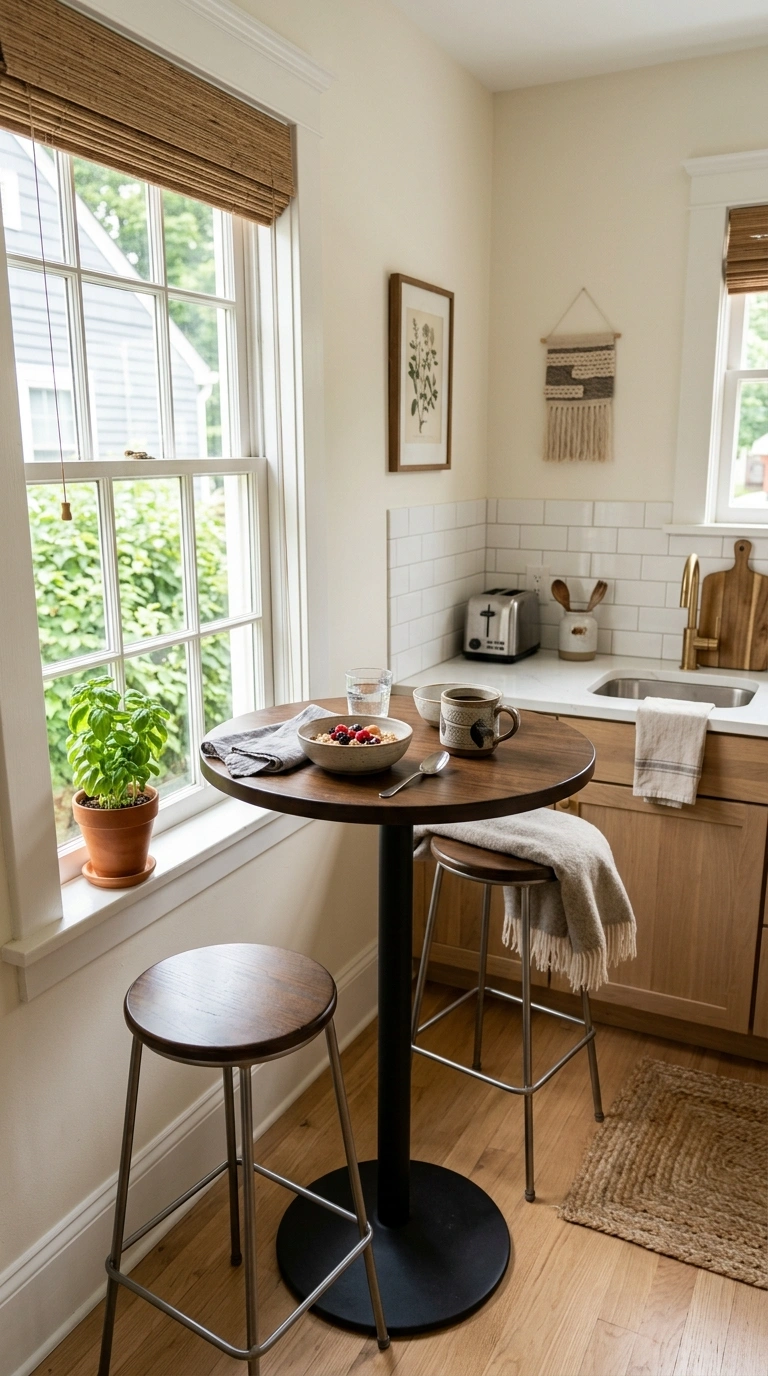
A tall pub-height table, about forty-two inches high, paired with two bar stools creates a breakfast nook with a smaller footprint than a standard-height setup because tall stools have smaller seats and narrower profiles than regular chairs. The pub-height format also creates a casual, social quality that standard dining height lacks. A round pub table of twenty-four inches in diameter with two slim bar stools fits into almost any kitchen corner. The elevated height also provides a better view out of the kitchen window, which improves the morning coffee experience in kitchens where the window is positioned higher on the wall.
18. Cushioned Window Ledge
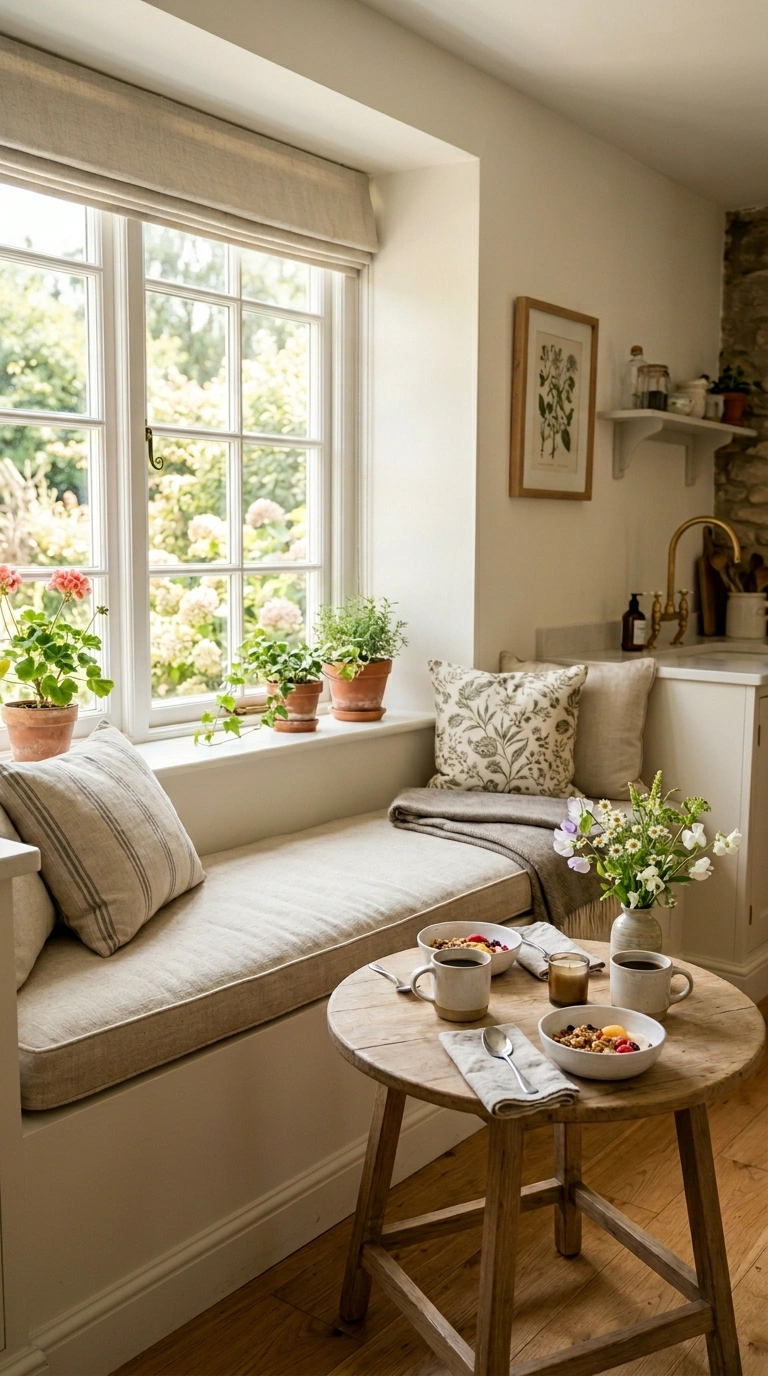
A deep window ledge or a wide window frame, if the ledge is at least twelve inches deep and at the right height, can serve as a minimal built-in bench for a tiny breakfast nook. Add a custom cushion to the ledge, position a small table in front, and the window itself becomes the seating. This works only when the ledge is genuinely deep enough for sitting and at a height between fifteen and twenty inches from the floor. The result is a nook that uses the architecture that already exists rather than adding any furniture to the room, which is the ultimate small-space strategy.
19. Alcove or Niche Setup
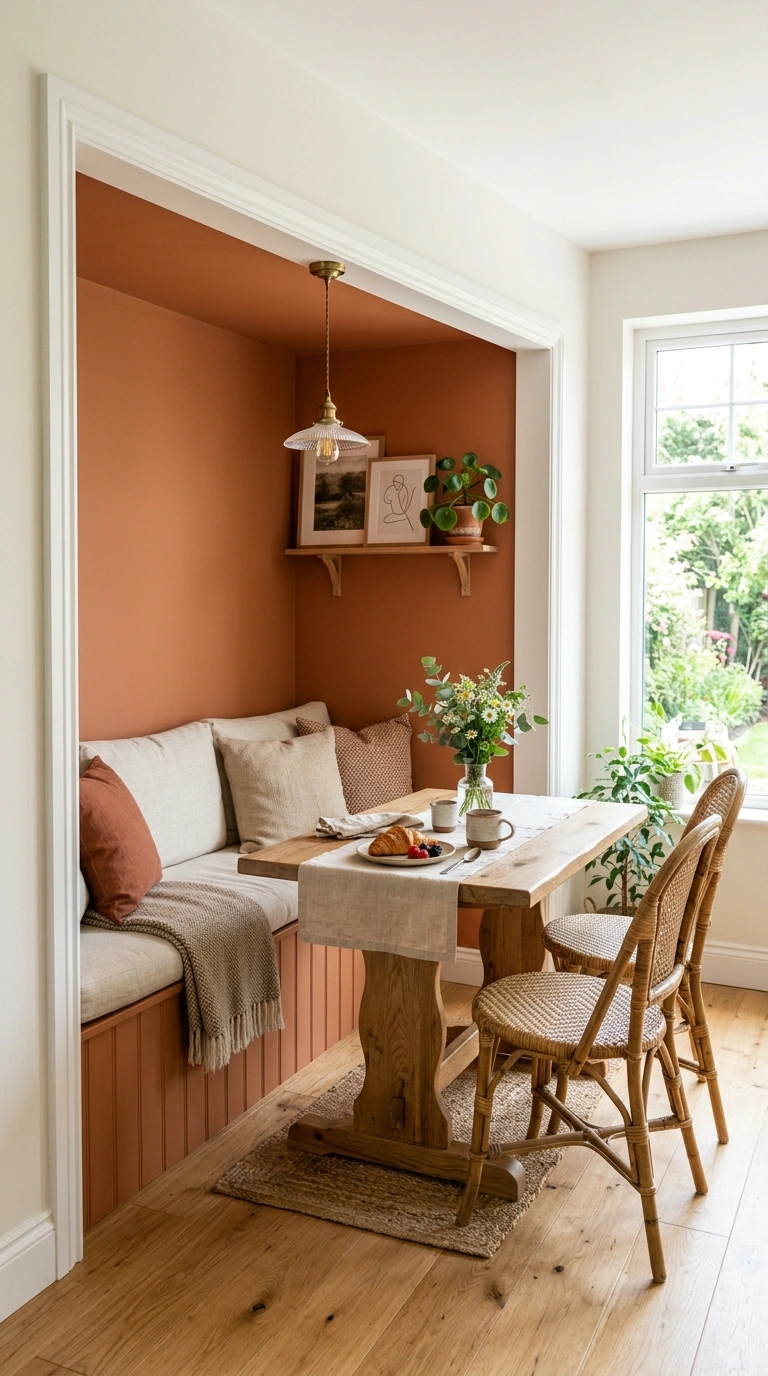
A recessed wall alcove, a niche left by a removed closet, or a gap between two cabinets all provide ready-made enclosures for a tiny breakfast nook. Build a bench into the recess, add a small table that fits the width, and the nook is contained within the existing architecture rather than projecting into the kitchen floor space. The recessed format creates the intimate enclosed quality that makes a small nook feel like a dedicated dining spot rather than a table wedged into a leftover gap. Paint the inside of the alcove in a warm accent color or wallpaper it for a designed focal point.
20. Bench Along Peninsula
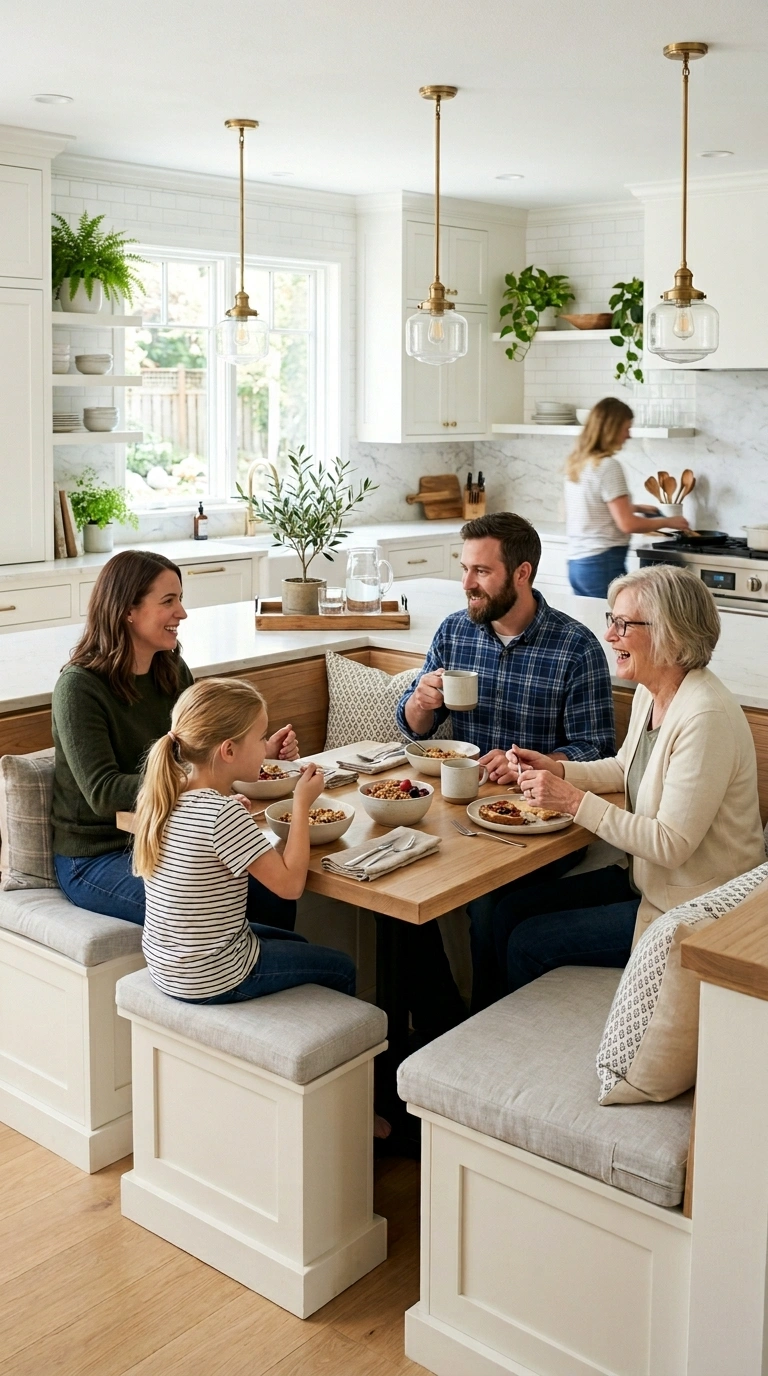
If the kitchen has a peninsula that extends from the wall, building a bench along the outside of the peninsula creates a breakfast nook that shares the peninsula as its table surface on one side and the bench as its seating on the other. The bench runs parallel to the peninsula and the diners sit facing the kitchen rather than facing a wall. This uses the peninsula more effectively by making both sides functional, the inside for kitchen prep and the outside for eating, without requiring any additional table in the room.
21. Mirror to Double Space
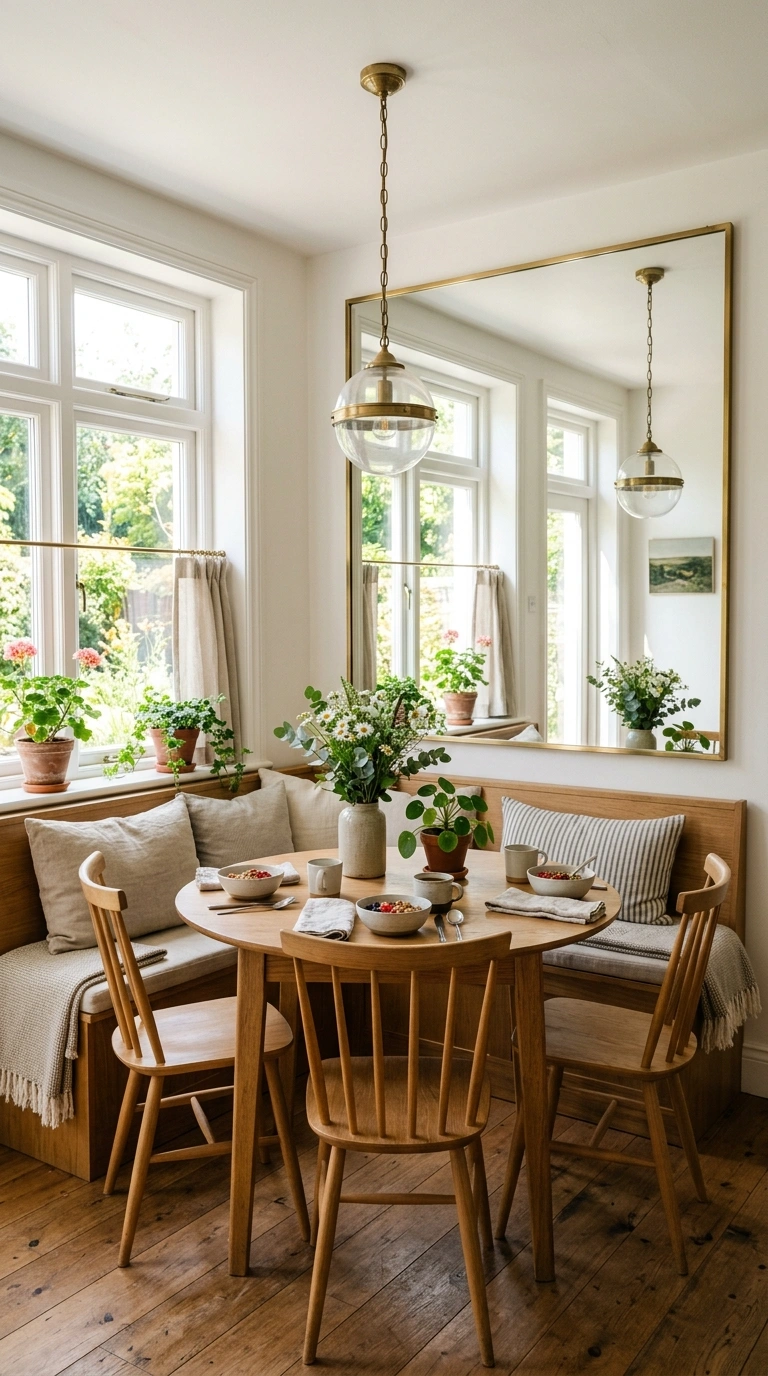
A large mirror mounted on the wall behind a small breakfast nook visually doubles the perceived size of the eating area by reflecting the table, the window light, and the space back into itself. The mirror is one of the most effective visual tricks for making any small space feel larger than its actual dimensions. Choose a mirror large enough to span most of the wall behind the nook, at least thirty-six inches wide, and position it at a height that reflects the table surface and the window for maximum effect. The reflected light from the mirror also brightens the nook, which makes it feel more open and more inviting.
22. Make It Feel Separate
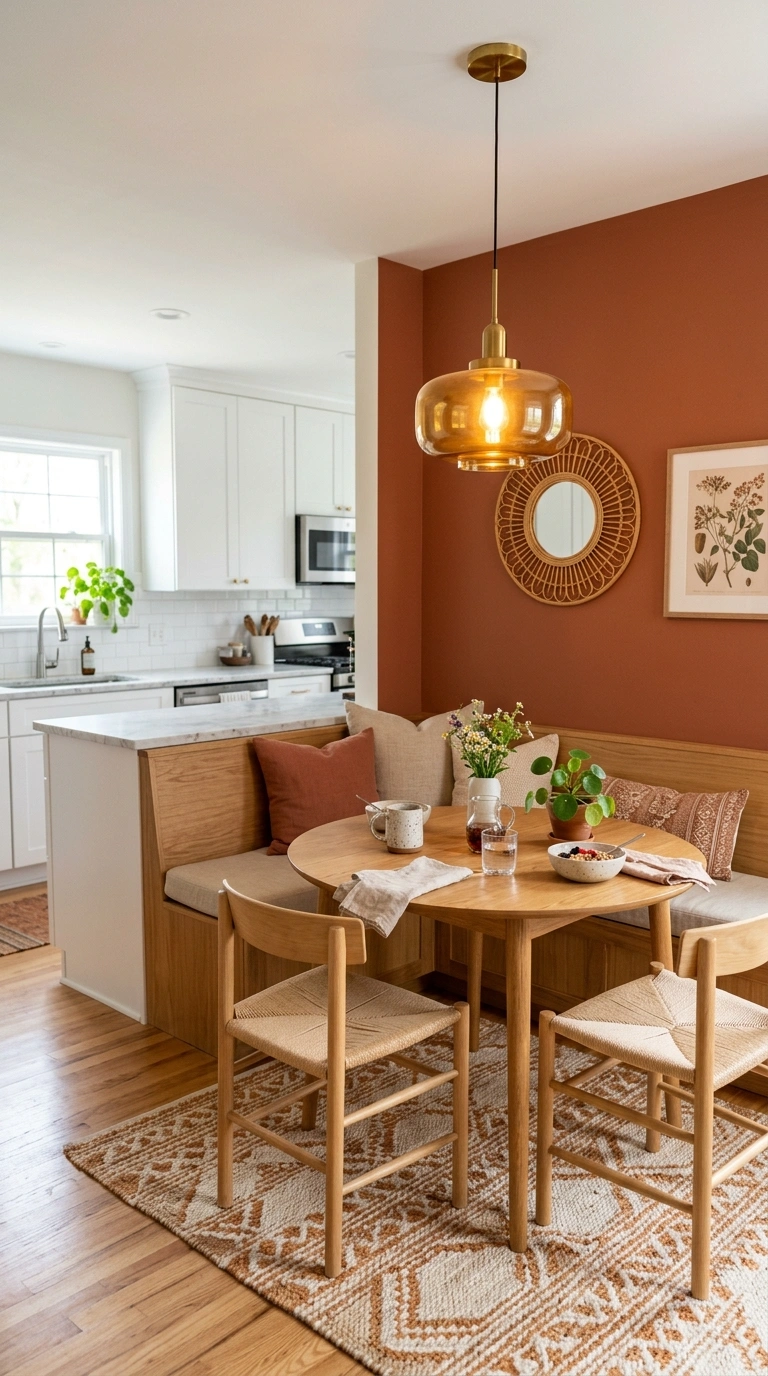
The single most important quality of a successful small breakfast nook is that it feels like a separate dining zone rather than just a table squeezed into the kitchen. The separation comes from visual cues: a different wall treatment behind the nook, a pendant light directly above the table, a rug or mat defining the floor zone, cushions on the bench that match each other but differ from the kitchen palette, or even just a different paint color on the nook wall. These visual boundaries tell the brain that this is a distinct zone for sitting, eating, and being together rather than an extension of the kitchen work surface. That perceived separation is what turns a small bench and table into a genuine breakfast nook. For atmospheric styling approaches that make a breakfast nook feel warm and inviting, the cozy breakfast nook guide covers lighting, textiles, and the sensory details that make the nook a morning destination.
A small breakfast nook does not need much space. It needs a corner, a bench or a ledge, a narrow table, and the visual cues that tell the eye this is a dining spot rather than an afterthought. Start with the available space, choose the format that fits it most efficiently, and add the small styling details that make the nook feel like a destination. Even the smallest nook, used every morning, becomes one of the most valued spots in the home.