18 DIY Breakfast Nook Ideas That Anyone Can Build on a Weekend Budget
A breakfast nook does not require a contractor, a large budget, or advanced carpentry skills to build. The simplest versions use furniture you already own or can find inexpensively, arranged with intention in a corner of the kitchen. The more involved versions use basic lumber, a few screws, and a single afternoon of work to produce a built-in bench that looks custom. These 18 DIY ideas range from the zero-tools-required furniture arrangements to the simple weekend builds that produce genuinely impressive results. All of them create a functional and attractive breakfast nook for a fraction of the cost of a custom-built version, and most can be completed in a single day.
1. Simple Box Bench Build
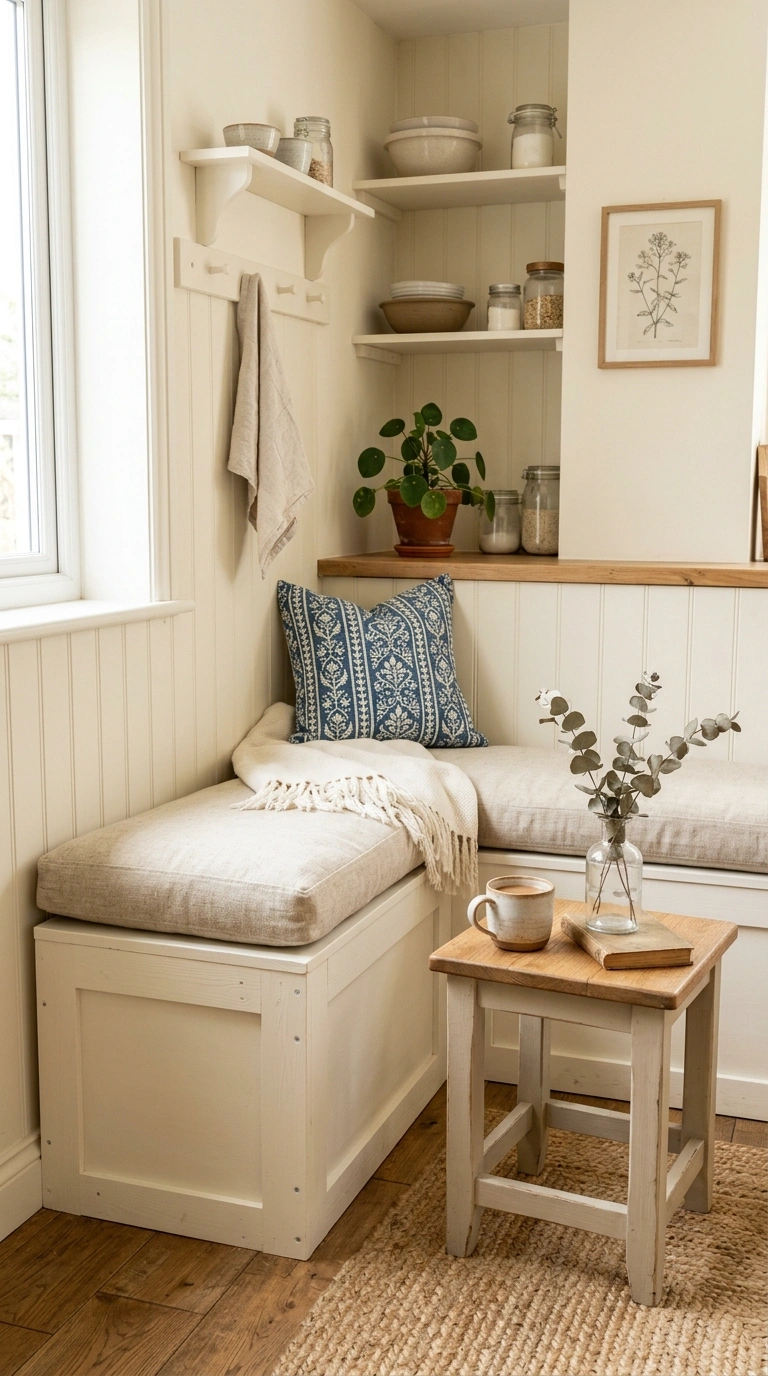
The simplest built-in bench is a basic wooden box: four sides of plywood or standard lumber screwed together with a top surface as the seat. Cut two side panels, a front panel, and a back panel to the desired dimensions, screw them together to form a rectangular box, and add a flat seat board on top. Standard bench dimensions are eighteen inches high, sixteen inches deep, and whatever width fits the wall. Sand, prime, and paint the bench to match the kitchen. The total cost in materials is typically under fifty dollars and the build takes about two hours with basic tools. Add a cushion on top for comfort and the bench is complete.
2. IKEA Kallax Bench Hack
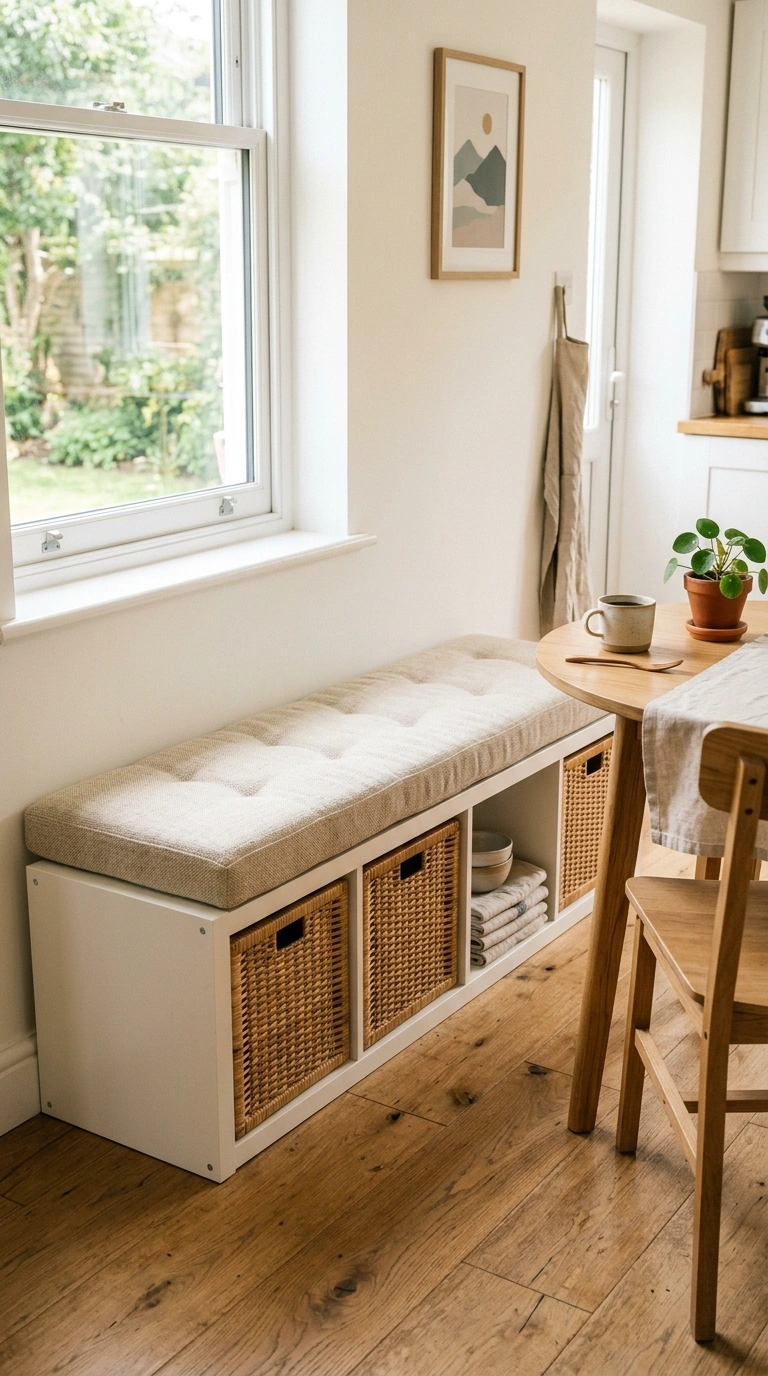
An IKEA Kallax shelf unit laid on its side at bench height creates an instant breakfast bench with built-in cubby storage in each compartment. The Kallax in the two-by-four cube format provides a bench of approximately thirty inches high by nearly sixty inches long. Add legs from IKEA or from a hardware store to raise it to the correct eighteen-inch seat height if needed. Place a long cushion on top, add woven baskets in the cubby openings for storage, and the bench is complete. The Kallax bench hack costs under a hundred dollars and requires minimal assembly beyond the standard Kallax build.
3. Repurposed Bookshelf Bench
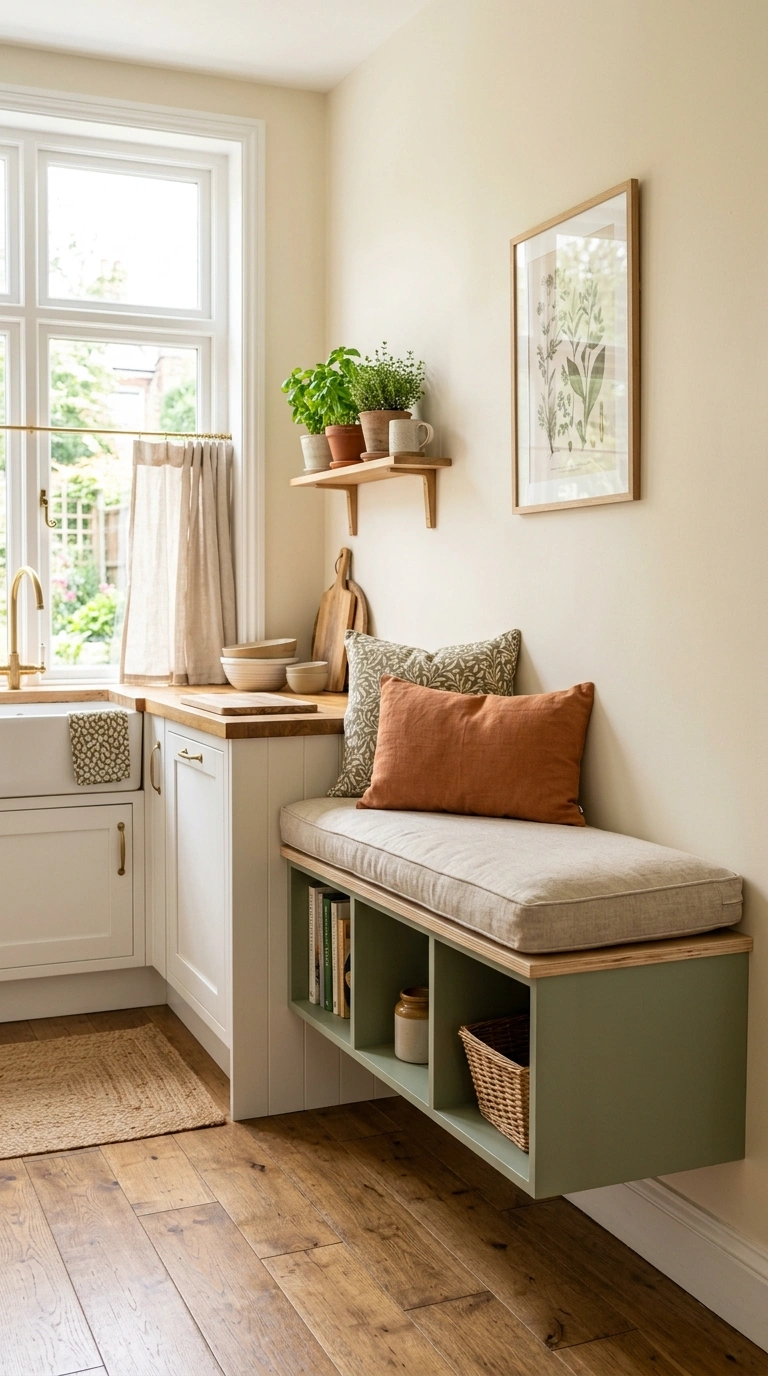
A short bookshelf laid on its side and secured to the wall creates a bench with built-in shelving in the same way the Kallax hack does but with whatever bookshelf you already own or can find at a thrift store. Secure the shelf to the wall with L-brackets so it does not shift when sat on. Add a plywood seat board cut to fit the top surface if the shelf structure is not strong enough to sit on directly. Paint the entire unit in a warm color, add a cushion, and the bookshelf becomes a bench that looks built-in. This approach works with almost any sturdy low bookshelf.
4. Church Pew Conversion
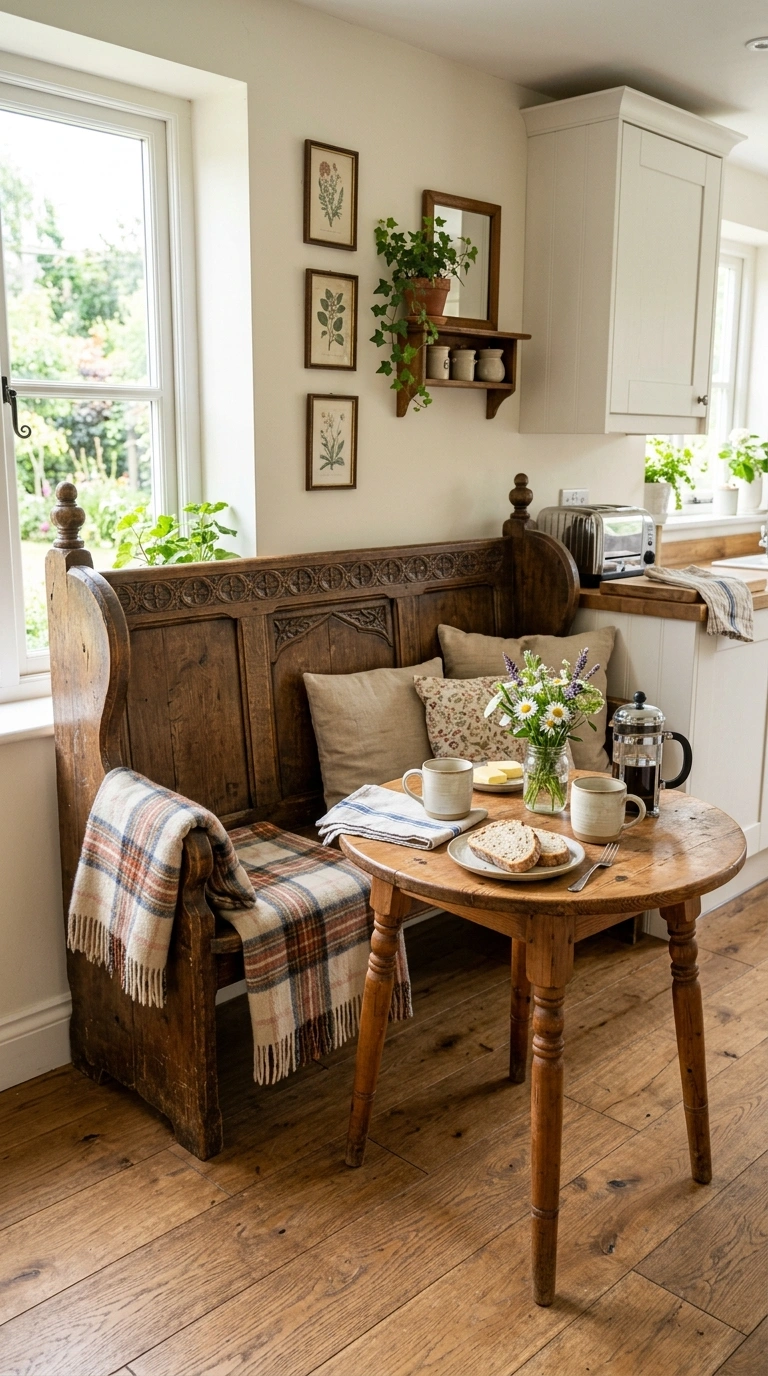
A vintage church pew, sourced from an architectural salvage shop, an antique store, or an online marketplace, provides an instant breakfast bench with the kind of character and patina that new builds cannot match. The high back of a church pew creates the enclosure that makes a nook feel like a proper dining booth. Position the pew against the wall, add a small table in front, and the breakfast nook has the charm of a hundred-year-old piece of furniture at its center. Sand and refinish the pew if needed, or leave the original finish for maximum character. The church pew breakfast nook is one of the most photographed and most charming kitchen features available. For the atmospheric styling that makes a church pew nook feel warm, the cozy breakfast nook styling guide covers cushions, lighting, and textiles in detail.
5. Corner Banquette from Boards
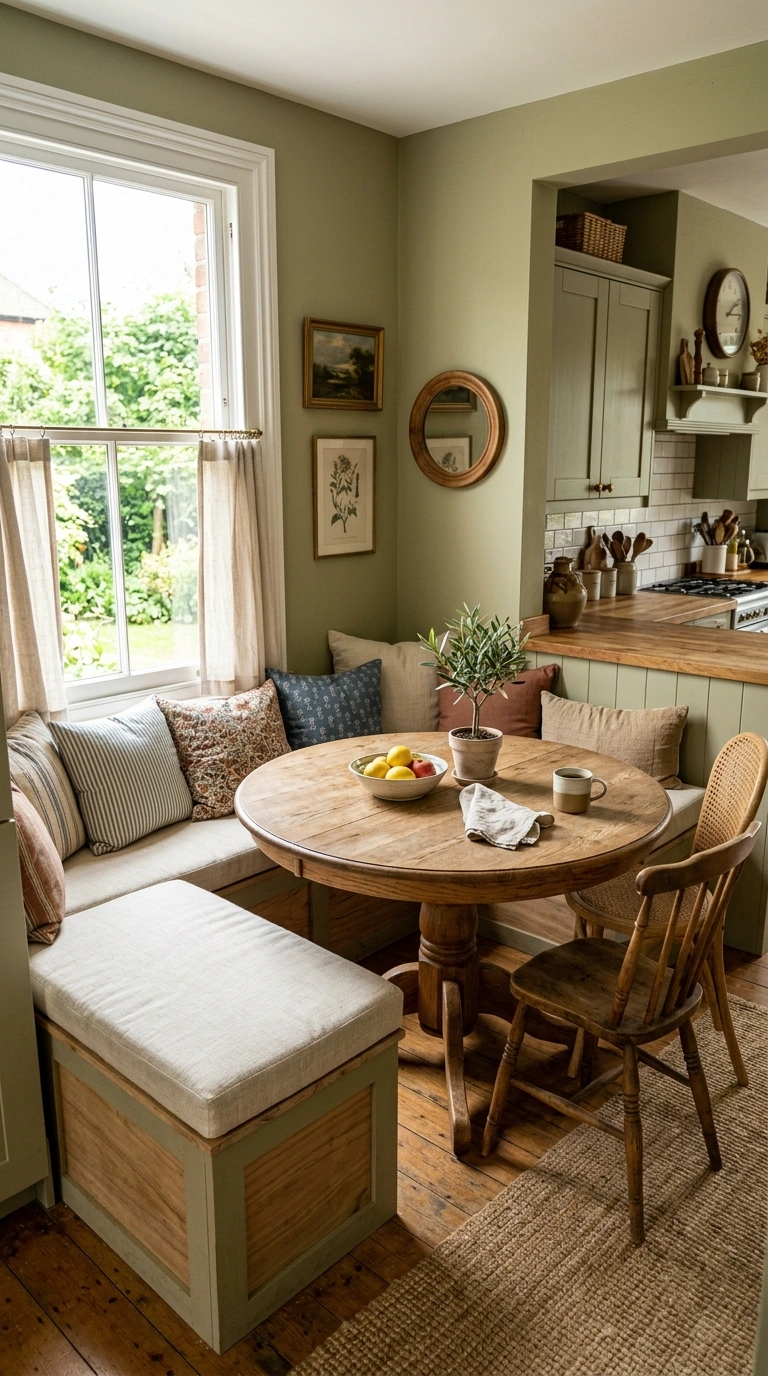
A corner banquette built from two simple box benches joined at a right angle creates the classic L-shaped breakfast nook that custom kitchen designers charge thousands for. Build two separate box benches as described in idea one, each sized to fit one wall of the corner. Join them at the corner with screws through the inside edges. Add a continuous seat board across the top of both benches for a seamless seat surface. The corner joint is the only slightly tricky part and a simple right-angle connection works fine when both benches are secured to the walls with L-brackets. Paint the entire unit, add cushions, and the result looks custom-built.
6. Pallet Bench Rustic
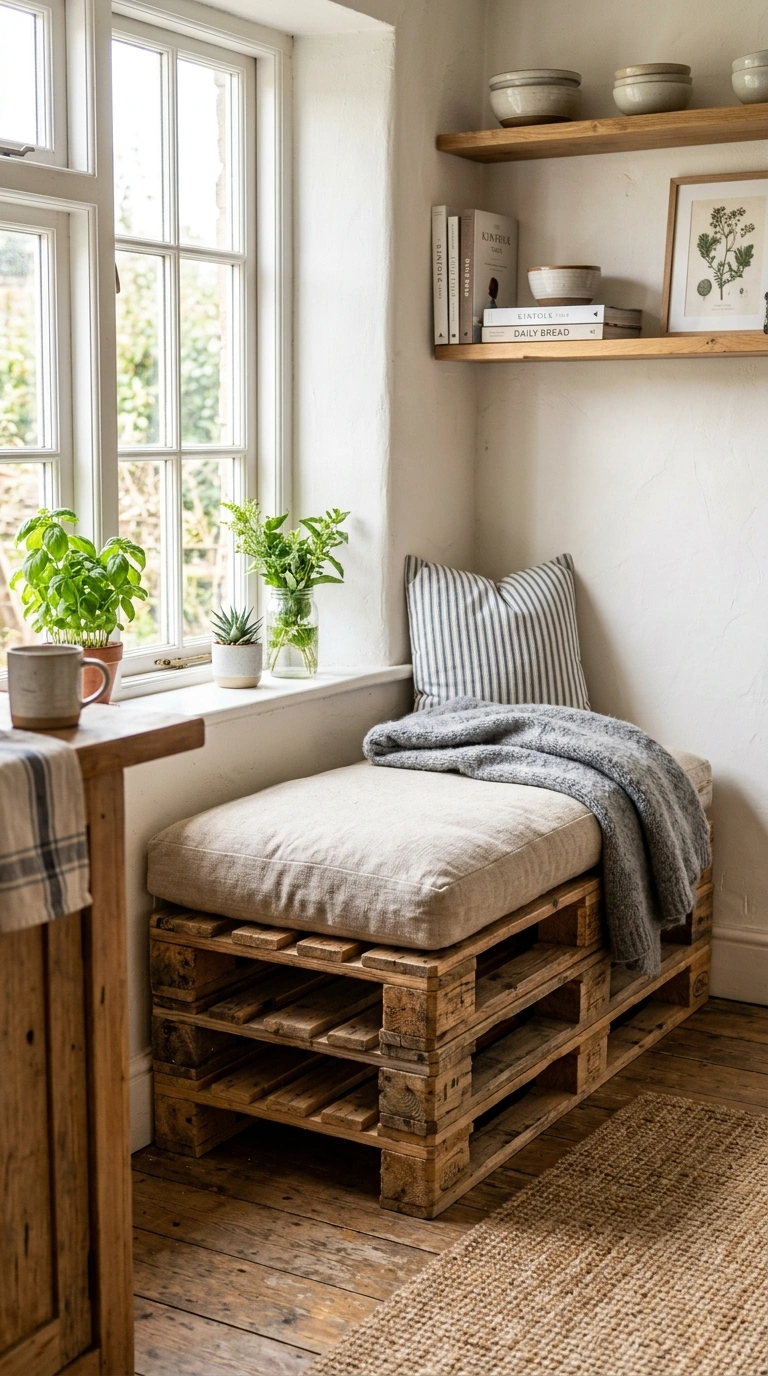
Two wooden pallets stacked on top of each other and secured together create a rustic bench at approximately the right seat height. Sand the top surface smooth to prevent splinters, seal with a clear polyurethane or paint in a warm color, and add a thick cushion for comfort. The pallet bench has a rough, industrial charm that suits farmhouse and rustic kitchen aesthetics. Source pallets from local businesses for free and the bench costs essentially nothing in materials. The double-stacked height of two standard pallets is about twelve inches, which is slightly low for a standard bench but works with a thick cushion on top or a shorter table.
7. Storage Ottoman Seating
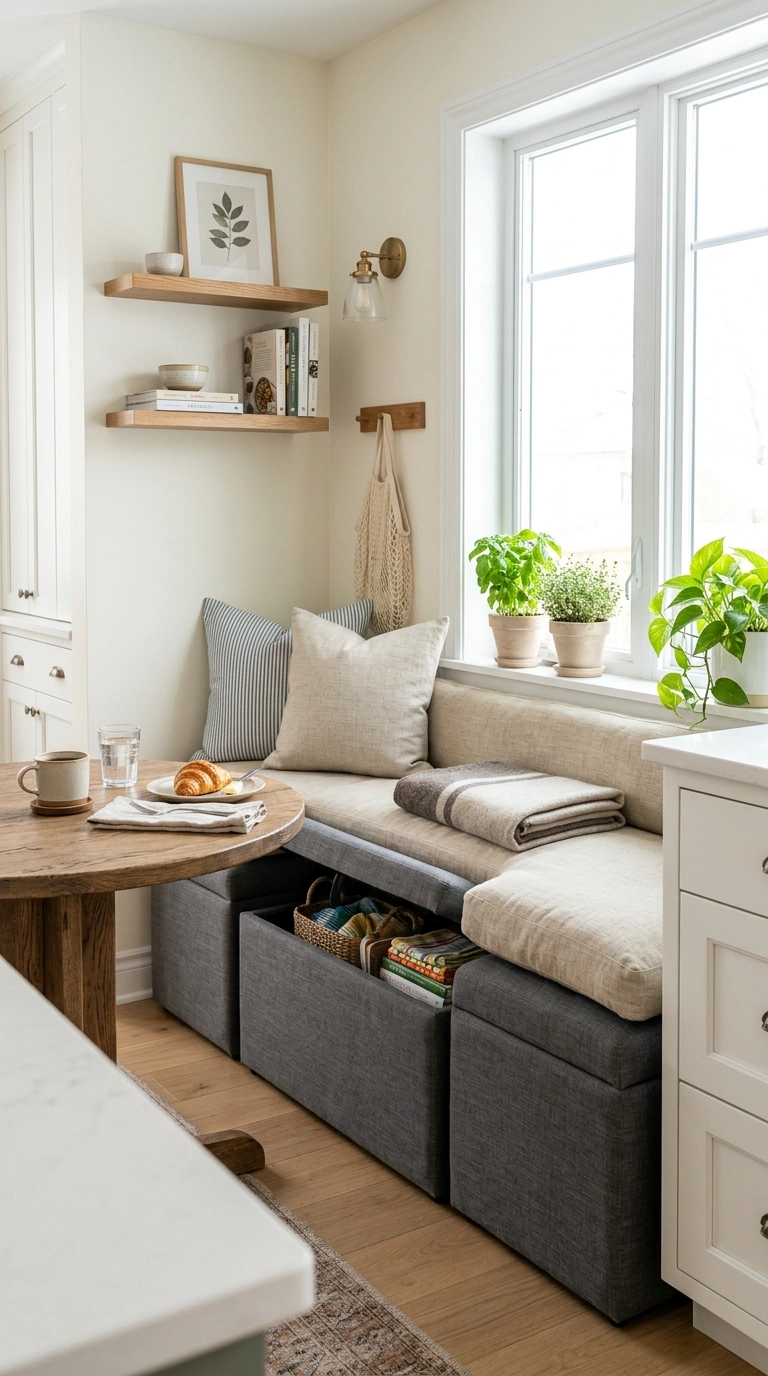
Two or three storage ottomans arranged beside a wall with a small table in front create an instant breakfast nook with built-in storage and comfortable cushioned seating, all without any building required. The ottomans provide soft seating that standard benches lack and the hinged tops open to store linens, cookbooks, or kitchen supplies. Choose square ottomans in a matching set for the most bench-like appearance. Position them in a row against the wall so they read as a continuous bench rather than as separate pieces. This is the fastest and most tool-free breakfast nook option available.
8. Crib Bench Upcycle
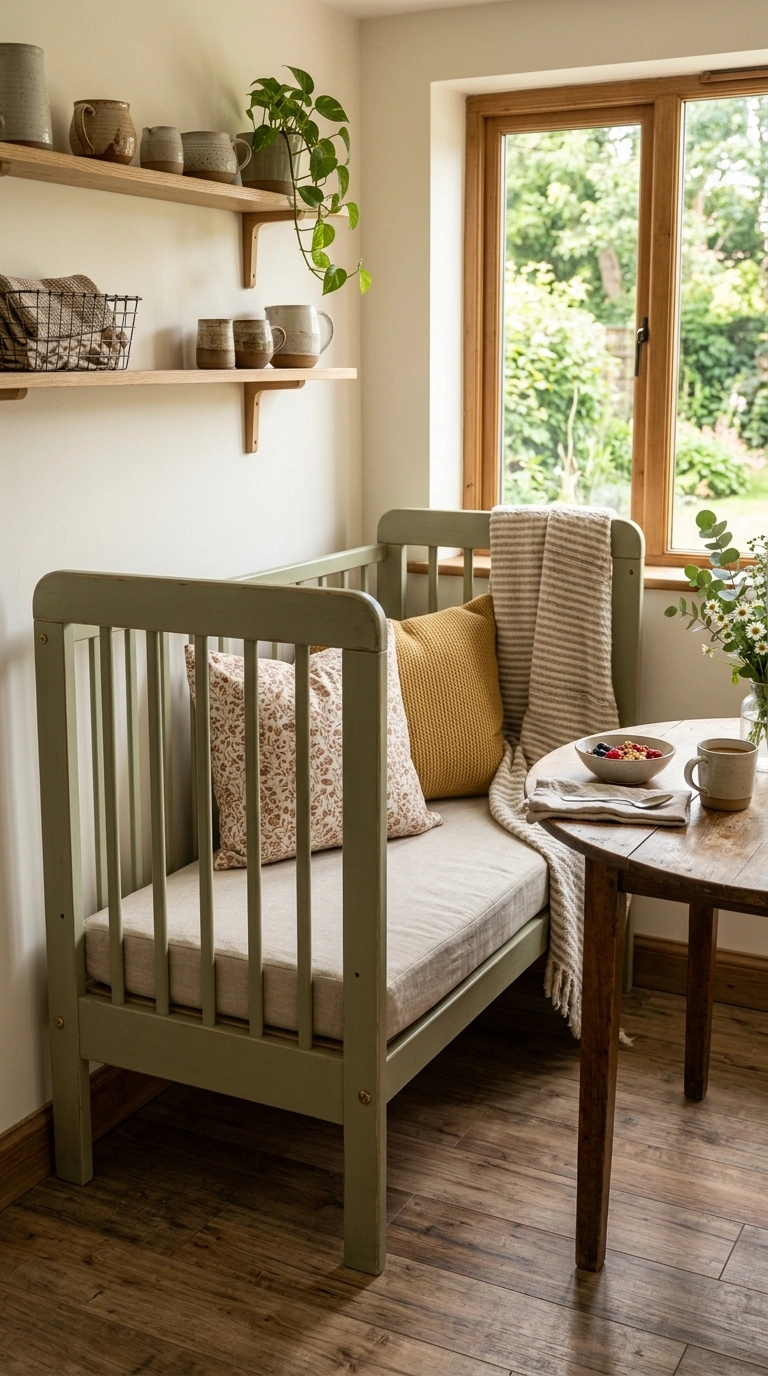
A baby crib that has been outgrown can be converted into a breakfast bench by removing one long side rail and using the remaining three sides as the bench back and arms. The crib mattress support becomes the seat surface with a cushion added on top. Cut the legs to bench height if needed. Paint the entire unit in a warm kitchen color and add pillows against the remaining rails as back cushions. The crib bench upcycle gives a sentimental piece of baby furniture a second life in the kitchen and produces a bench with the kind of railing detail that custom benches charge extra for.
9. Plywood Corner Seat Build
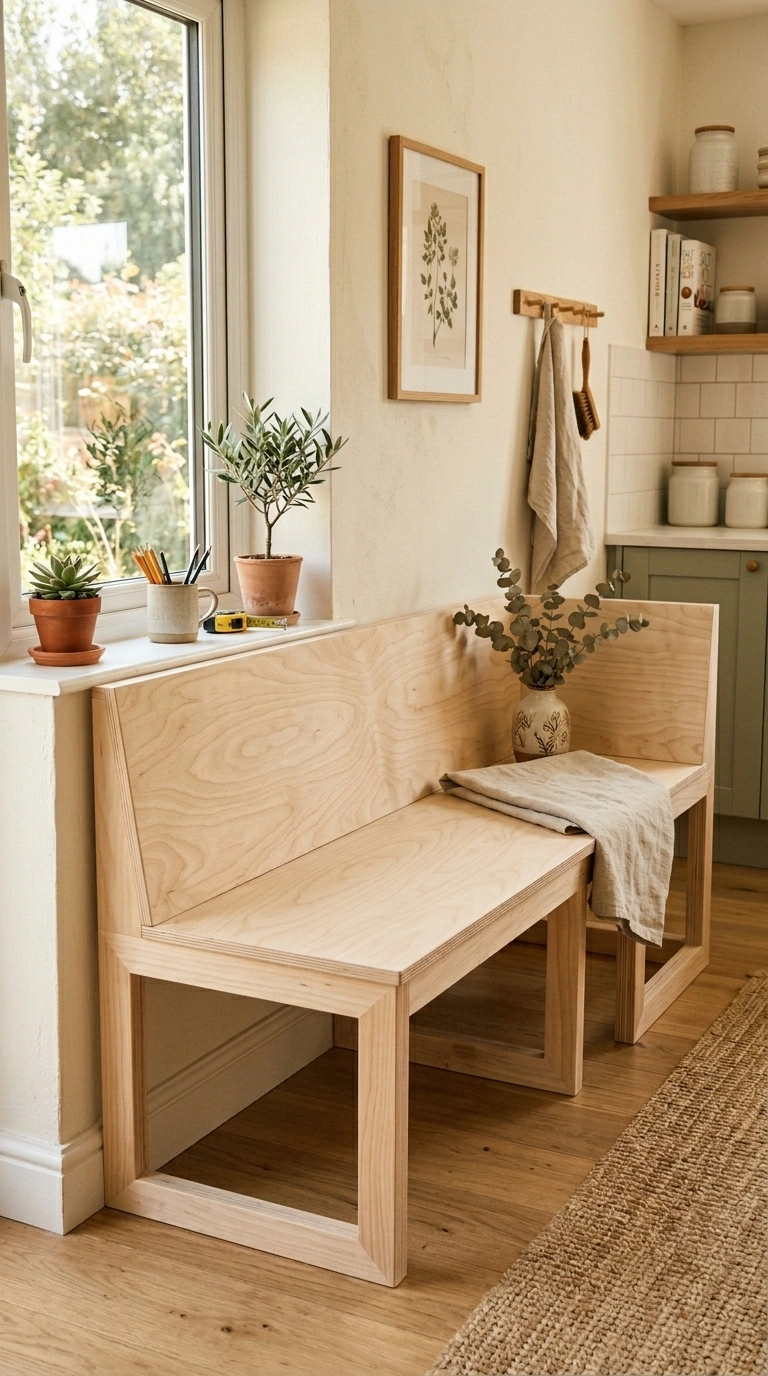
A sheet of three-quarter-inch plywood, cut into five pieces, two sides, a front, a bottom, and a seat top, and screwed together creates a sturdy corner bench box for under thirty dollars in materials. The plywood construction is stronger than particleboard and paints well with primer and a quality paint. Round the exposed edges with sandpaper for a finished look. The plywood bench can be built to any custom dimension, which means it fits the exact corner of the specific kitchen rather than requiring the kitchen to accommodate a standard furniture size.
10. Existing Bench Restyle
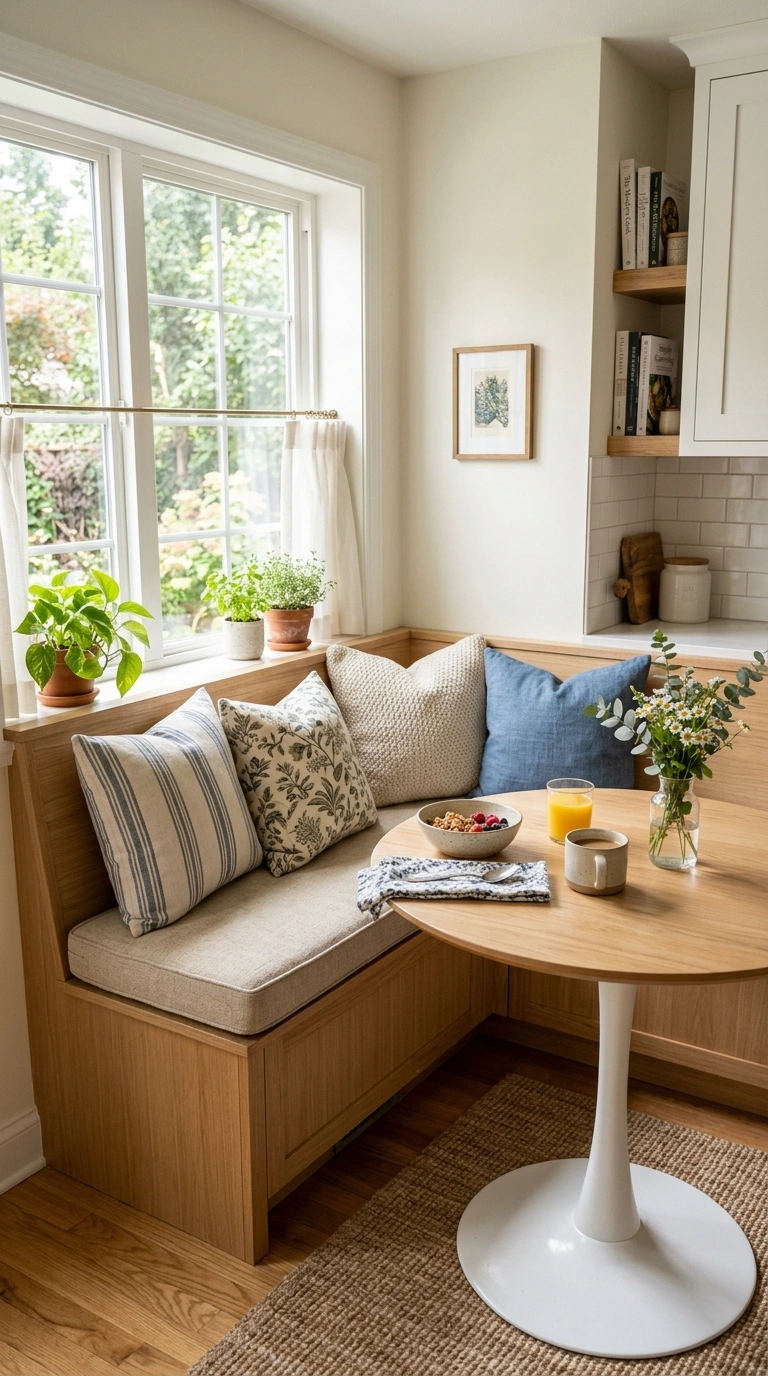
If the kitchen already has a bench, a dining bench, an entryway bench, or even a piano bench, restying it as a breakfast nook bench costs nothing in construction and requires only repositioning and adding soft elements. Move the bench to the kitchen corner, add a thick cushion, place a table in front, and add back pillows against the wall. The restyle approach recognizes that the bench itself is the least important part of a breakfast nook. The cushion, the table, the lighting above, and the wall treatment behind are what make it feel like a genuine nook rather than just a bench in the kitchen.
11. Headboard as Bench Back
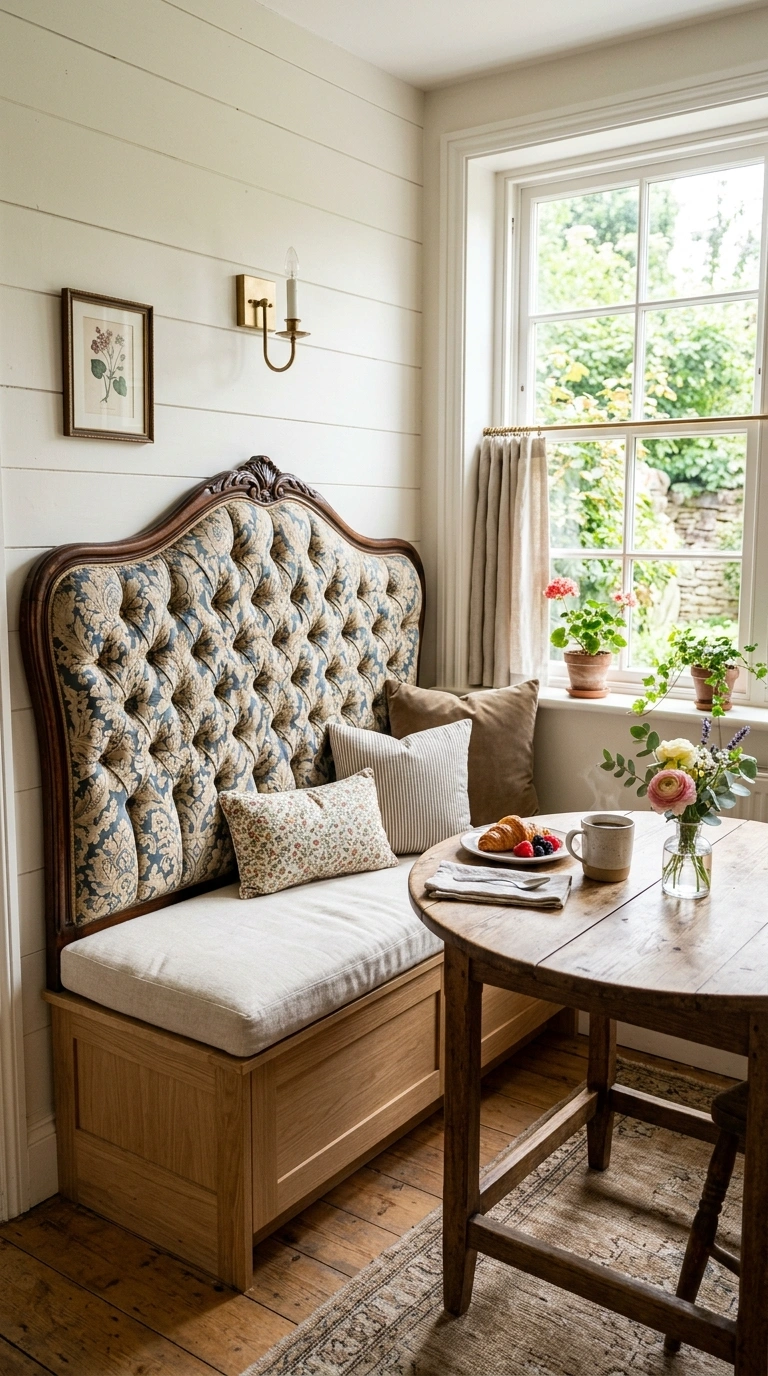
A vintage or repurposed headboard mounted on the wall behind a simple bench creates an instant high-back booth effect that makes the nook feel like a proper enclosed dining spot. The headboard provides the architectural presence and the visual enclosure that a flat wall behind a bench lacks. Mount the headboard at the correct height so it functions as a back rest for people sitting on the bench below. An upholstered headboard adds softness and comfort. A wooden headboard adds character and vintage charm. Either way, the headboard transforms a basic bench into a feature.
12. Floating Bench Minimal Build
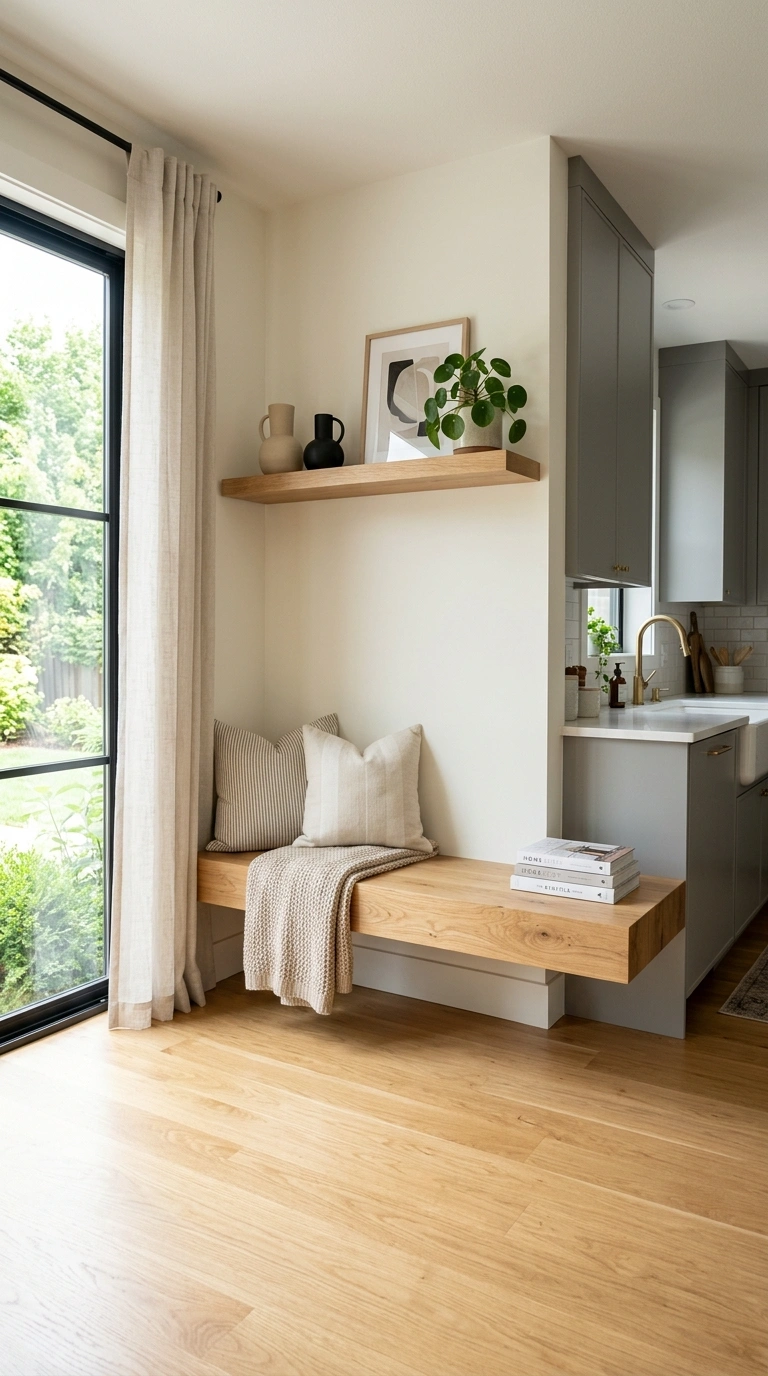
A floating bench is a simple plank mounted to the wall with heavy-duty concealed shelf brackets, with no legs touching the floor. The floating bench looks clean and modern, makes the floor easy to sweep underneath, and creates the appearance of a built-in custom installation for the cost of a plank and a few brackets. Use a solid wood plank or a laminated plywood panel at least one and a half inches thick for adequate strength. Install three or four heavy-duty concealed brackets rated for the expected load. The floating bench suits modern and minimalist kitchens where legs and boxes on the floor would read as too heavy.
13. Cushion Sewing Project
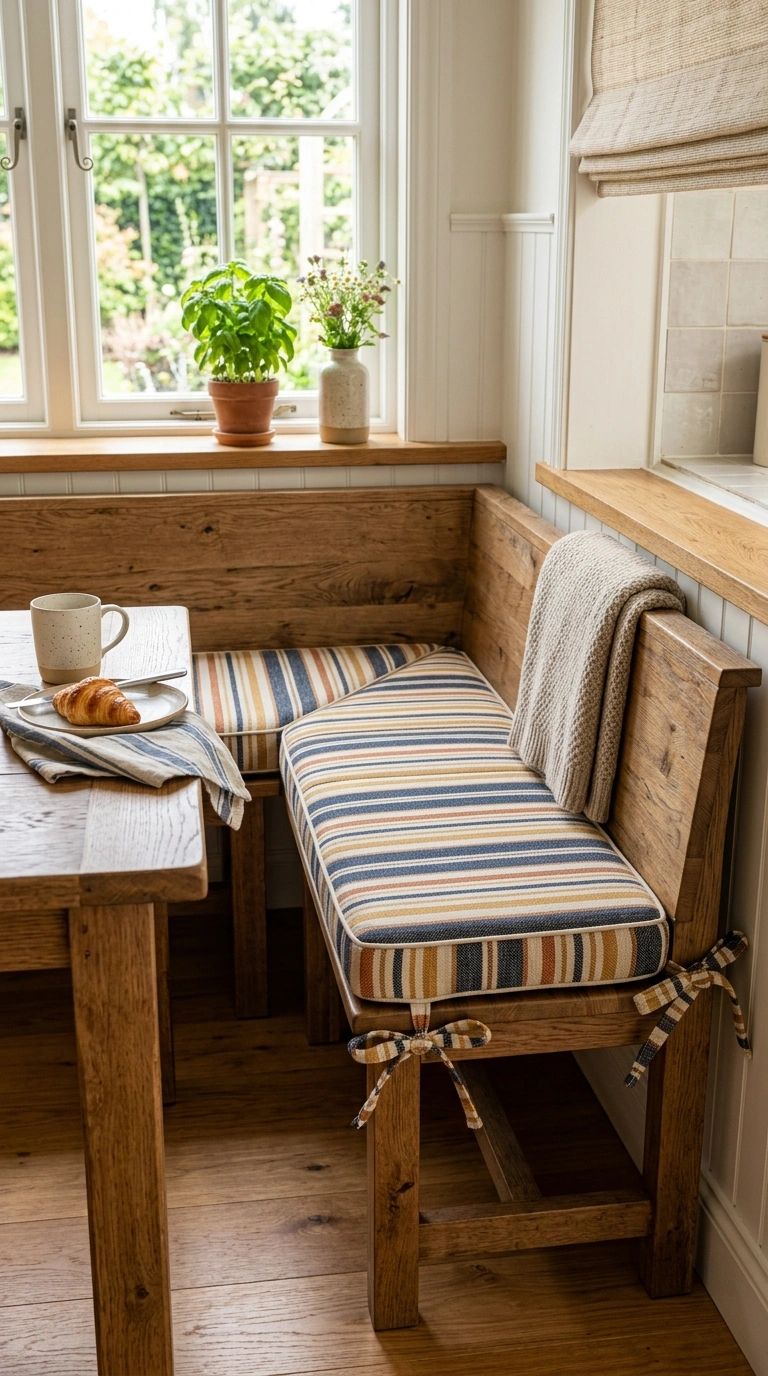
A custom bench cushion is one of the simplest and most impactful sewing projects for anyone with basic sewing skills. Purchase a piece of three-inch high-density upholstery foam cut to the bench dimensions, wrap it in batting, and sew a fitted cover from a durable washable fabric. Add ties at the corners to secure the cushion to the bench. The custom cushion fits perfectly because it is made for the specific bench, which off-the-shelf cushions rarely do. The fabric choice personalizes the nook with a color or pattern that matches the kitchen palette. Total cost is typically under forty dollars for foam, batting, and fabric.
14. Peg Rail Above Nook
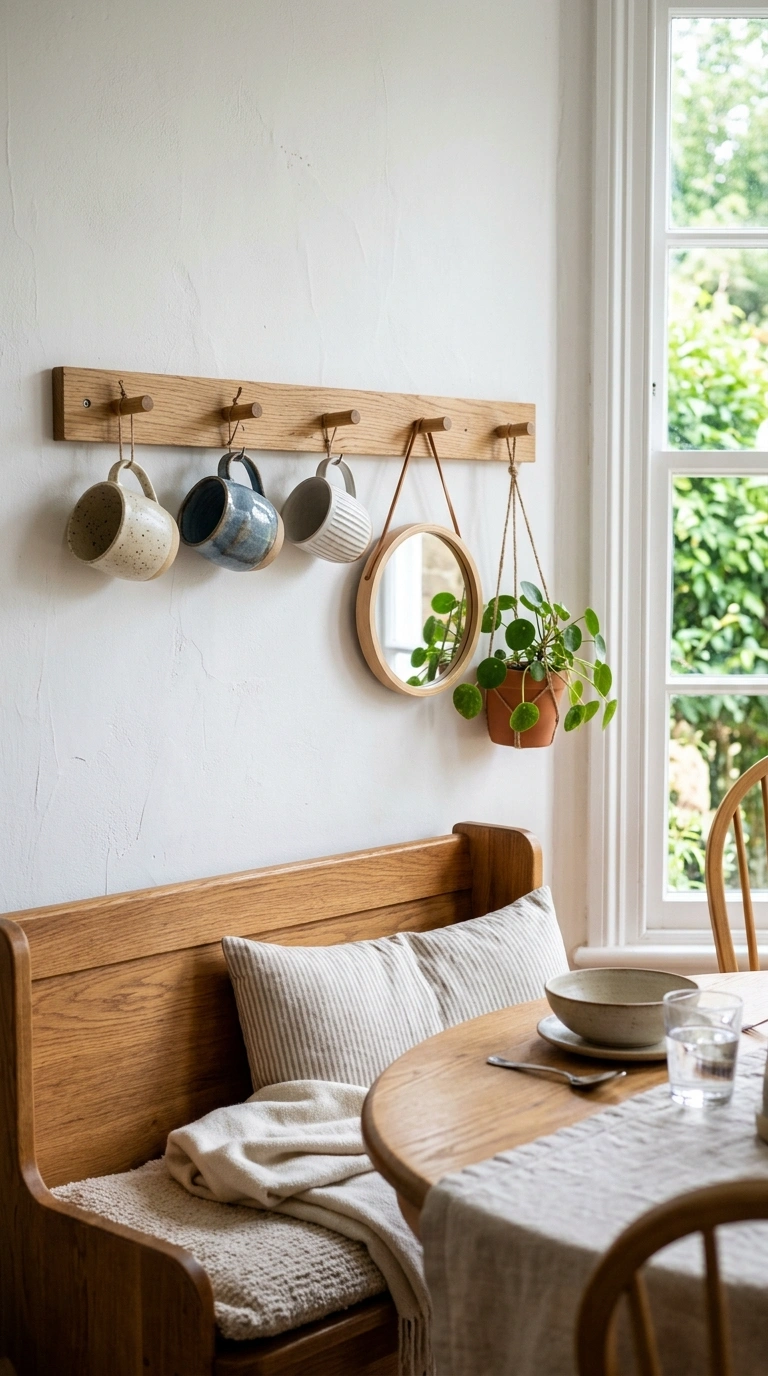
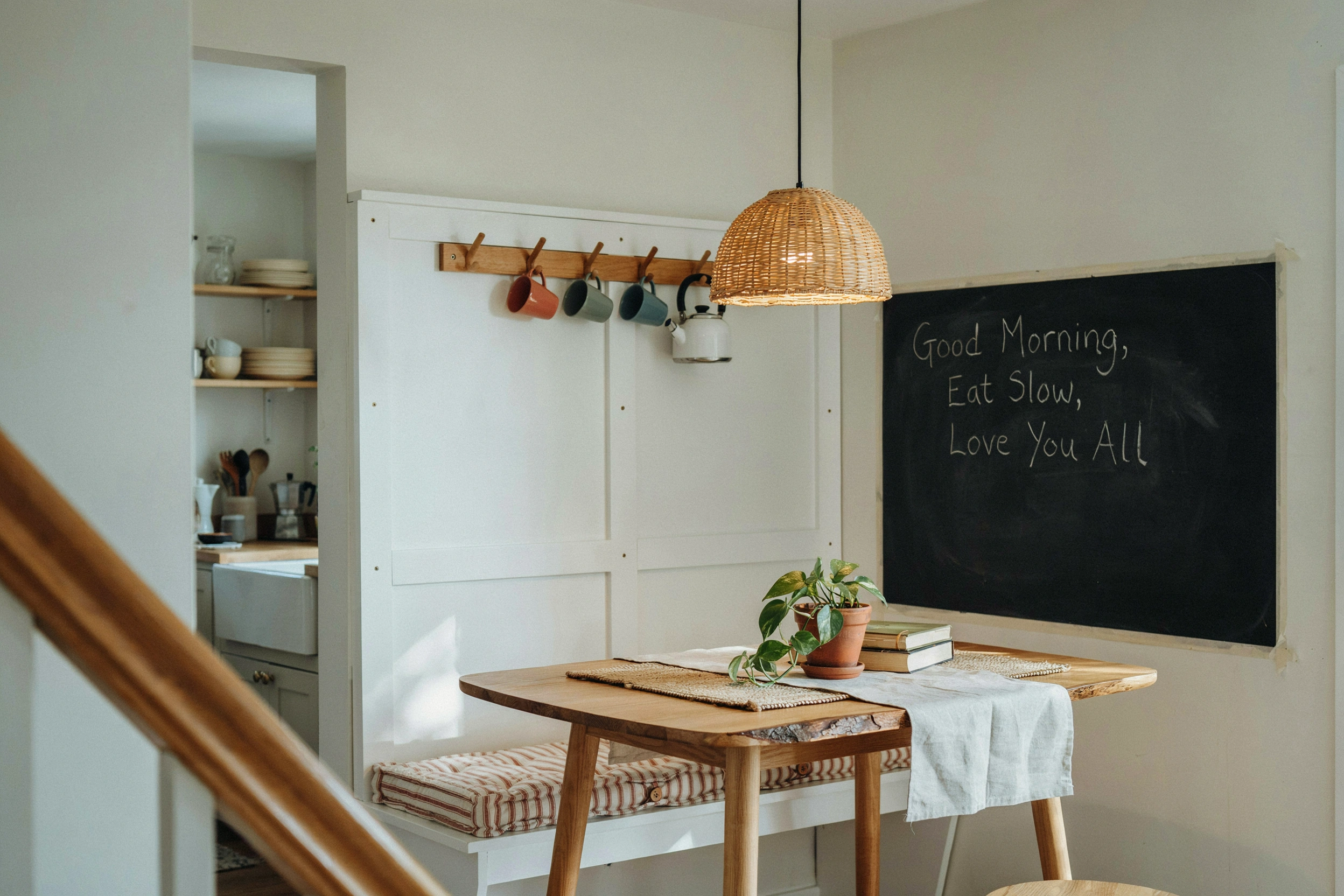
A simple wooden peg rail mounted on the wall above the nook bench provides hooks for hanging mugs, small plants in hanging pots, a small mirror, or decorative items that add personality to the nook wall. The peg rail costs under fifteen dollars, installs in minutes with a drill and three screws, and adds both function and charm. Use it to hang the morning coffee mugs at arm’s reach from the bench, which keeps them visible and accessible while adding the warm, collected quality that hanging mugs on display communicate.
15. Chalkboard or Blackboard Wall
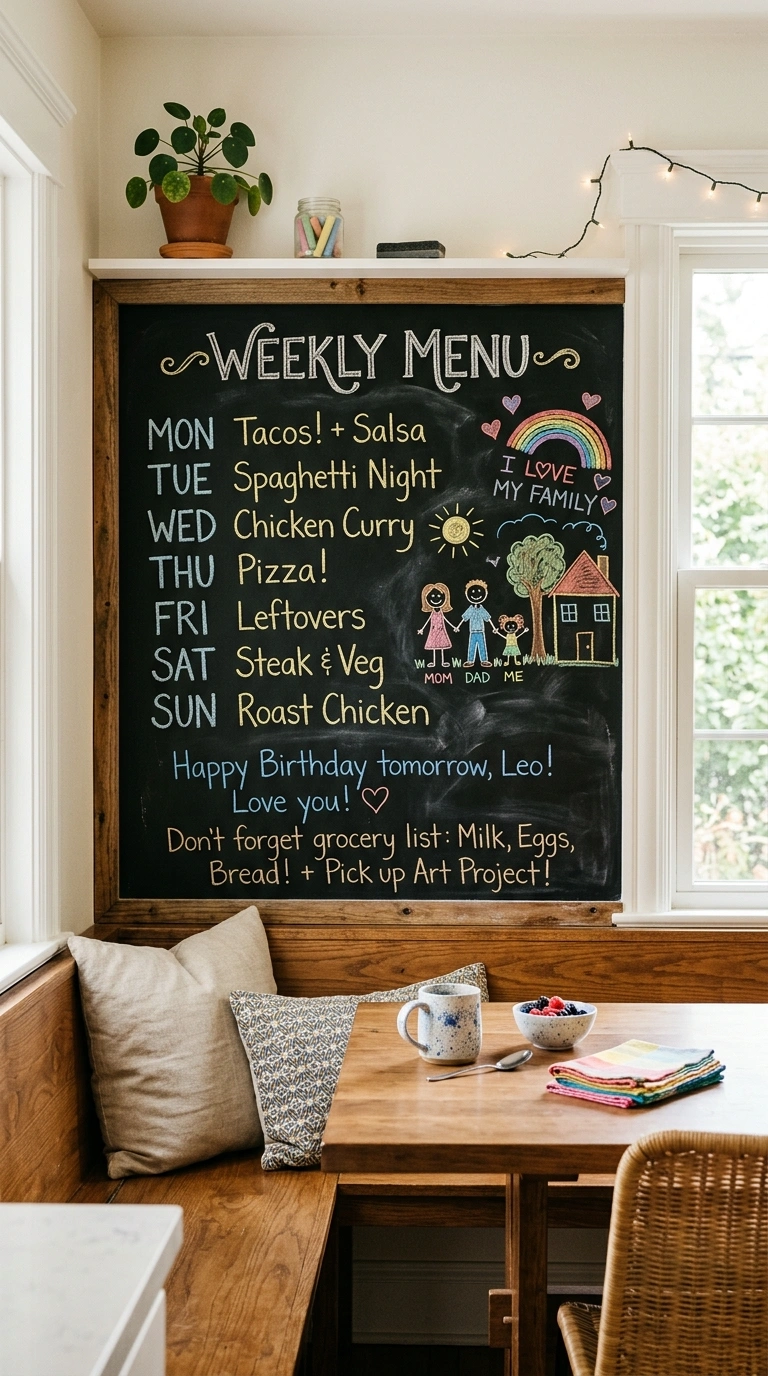
Painting the wall behind the breakfast nook with chalkboard paint creates a surface for family messages, grocery lists, weekly menus, or children’s drawings that changes daily and keeps the nook wall alive with actual household content. The chalkboard wall costs under twenty dollars in specialty paint and creates a unique, personal feature wall that no amount of purchased art can replicate. The practical daily use of the chalkboard, writing tomorrow’s lunch menu, leaving a morning message for a family member, gives the nook a functional personality beyond just eating.
16. Pendant Light DIY Install
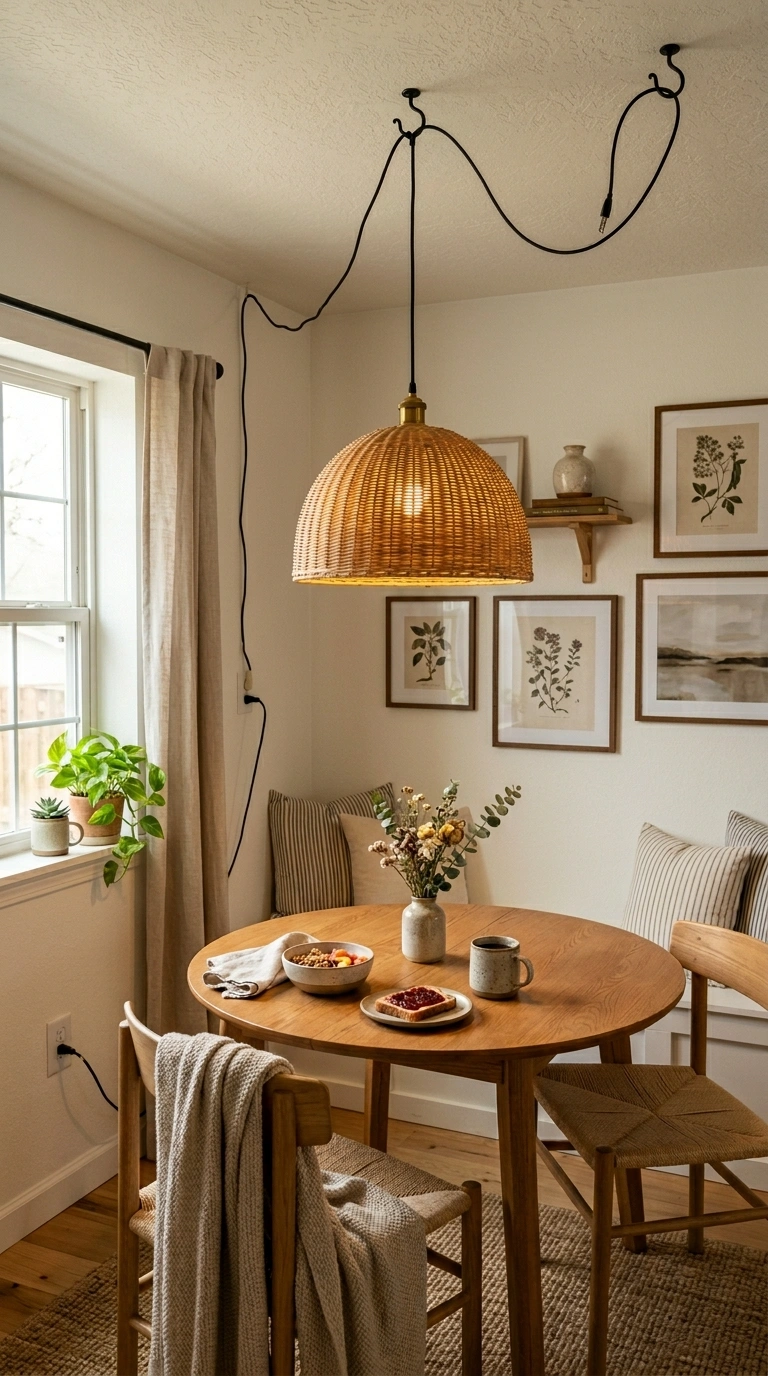
Installing a pendant light directly above the breakfast table is one of the highest-impact nook upgrades and can be done as a DIY project by anyone comfortable with basic electrical work. A plug-in pendant with a swag cord is the easiest option since it requires no electrical wiring, just a ceiling hook and a nearby outlet. A hardwired pendant requires turning off the breaker and connecting wires, which is straightforward for those with basic experience. Choose a pendant in a warm material, woven rattan, brass, or a simple linen shade, and hang it approximately thirty inches above the table surface. The pendant transforms the nook from a corner of the kitchen to a defined dining zone with its own dedicated light. For more on how to choose and style a breakfast nook that looks finished, the small breakfast nook ideas guide covers visual separation techniques that make any nook feel like a real dining spot.
17. Table Runner Quick Style
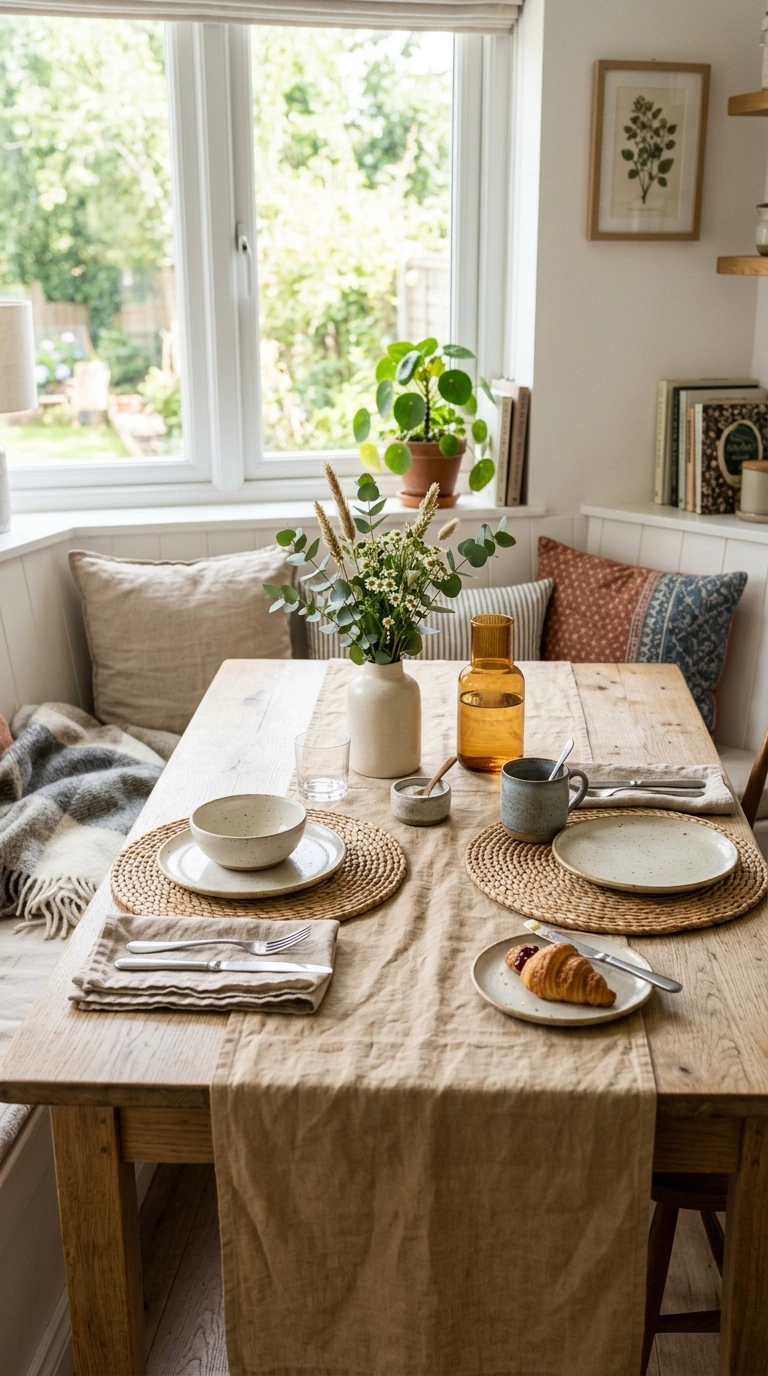
A simple table runner on the breakfast nook table is one of the fastest and cheapest ways to make the nook look styled and intentional. A warm linen runner, a simple cotton stripe, or a woven jute runner down the center of the table adds color, texture, and the signal that someone has put thought into the table. The runner costs under fifteen dollars, requires no tools, and instantly changes the nook from a bare table to a styled one. Change the runner seasonally for an easy refresh: a lighter cotton in summer, a warmer wool in winter.
18. Weekend Full Nook Build
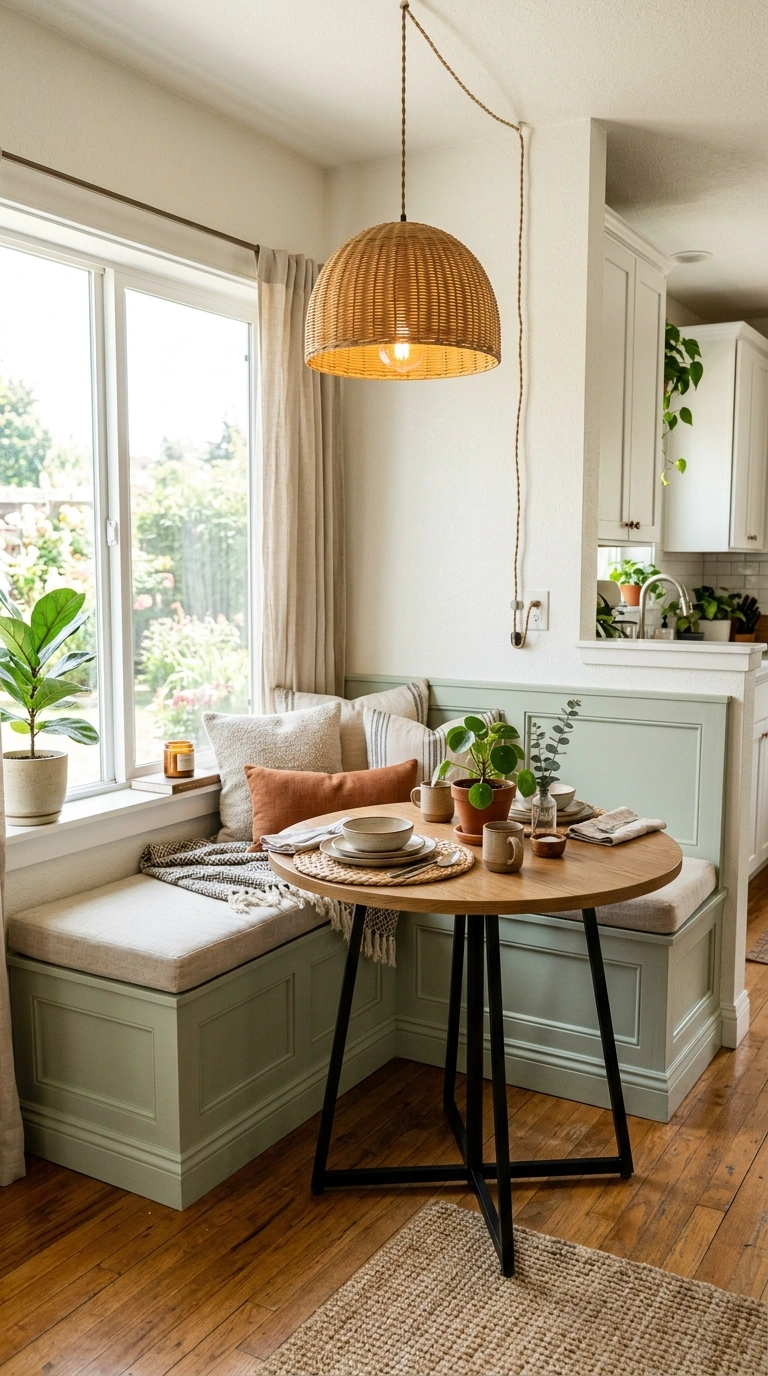
A complete breakfast nook built from scratch over a single weekend combines several of the individual projects above: build the box bench on Saturday morning, paint it Saturday afternoon, let it dry overnight, add the cushion and the table Sunday morning, install the pendant light Sunday afternoon, and style the nook with placemats, a plant, and a runner by Sunday evening. The total cost for all materials, lumber, paint, cushion foam and fabric, a small table, and a plug-in pendant, is typically between one hundred fifty and three hundred dollars depending on the table and the pendant chosen. The result is a complete custom breakfast nook built in one weekend for a fraction of the cost of a professional installation.
The best DIY breakfast nook is the one that gets built and used rather than the perfect one that stays on a saved ideas board forever. Start with whatever space and budget you have, build the simplest bench that fits, add a cushion and a table, and start eating breakfast there tomorrow morning. The upgrades, the pendant light, the cushion upgrade, the wall treatment, can happen over the following weekends. The nook gets better with each addition, but it starts working the moment you sit down in it for the first time.