22 Best Plants for Bathrooms That Survive Humidity and Shade
Most bathroom plants die because the plant was wrong for the conditions rather than because the bathroom was wrong for the plant. A bathroom is actually one of the best environments in the house for certain species because the humidity from daily showers replicates the tropical conditions those plants evolved in. The problem is that most bathrooms also have limited natural light, which eliminates many of the lush tropical plants that would otherwise love the humidity. The bathroom plants that genuinely thrive are the ones that tolerate both high humidity and low to moderate light, which is a specific combination that not every houseplant can handle. These 22 ideas cover the specific plants that work, where to put them, and how to keep them healthy in the unique conditions a bathroom provides.
1. Pothos Golden Trailer
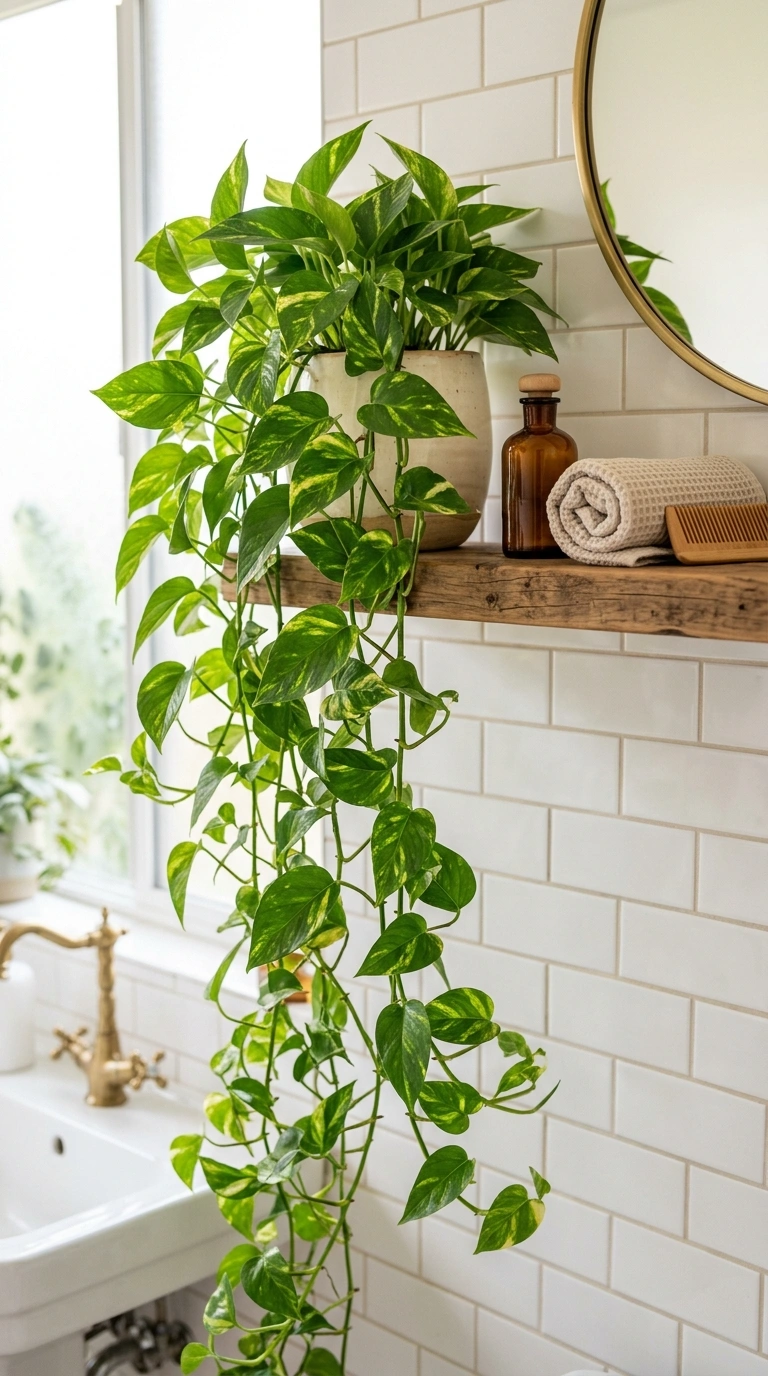
Golden pothos is the single most reliable bathroom plant available because it tolerates low light, thrives in humidity, grows quickly, and is nearly impossible to kill through neglect. The trailing vines grow several feet long over a season and look beautiful cascading from a high shelf, trailing down from a wall-mounted planter, or growing along a shower rod. Pothos tolerates the inconsistent watering that bathroom placement sometimes involves and actually grows more vigorously in the humid air near a shower than in the drier air of a living room. The golden-green variegated leaves brighten a dim bathroom corner, and the trailing growth adds the organic cascading quality that makes a bathroom feel like a tropical retreat.
2. Boston Fern Lush Display
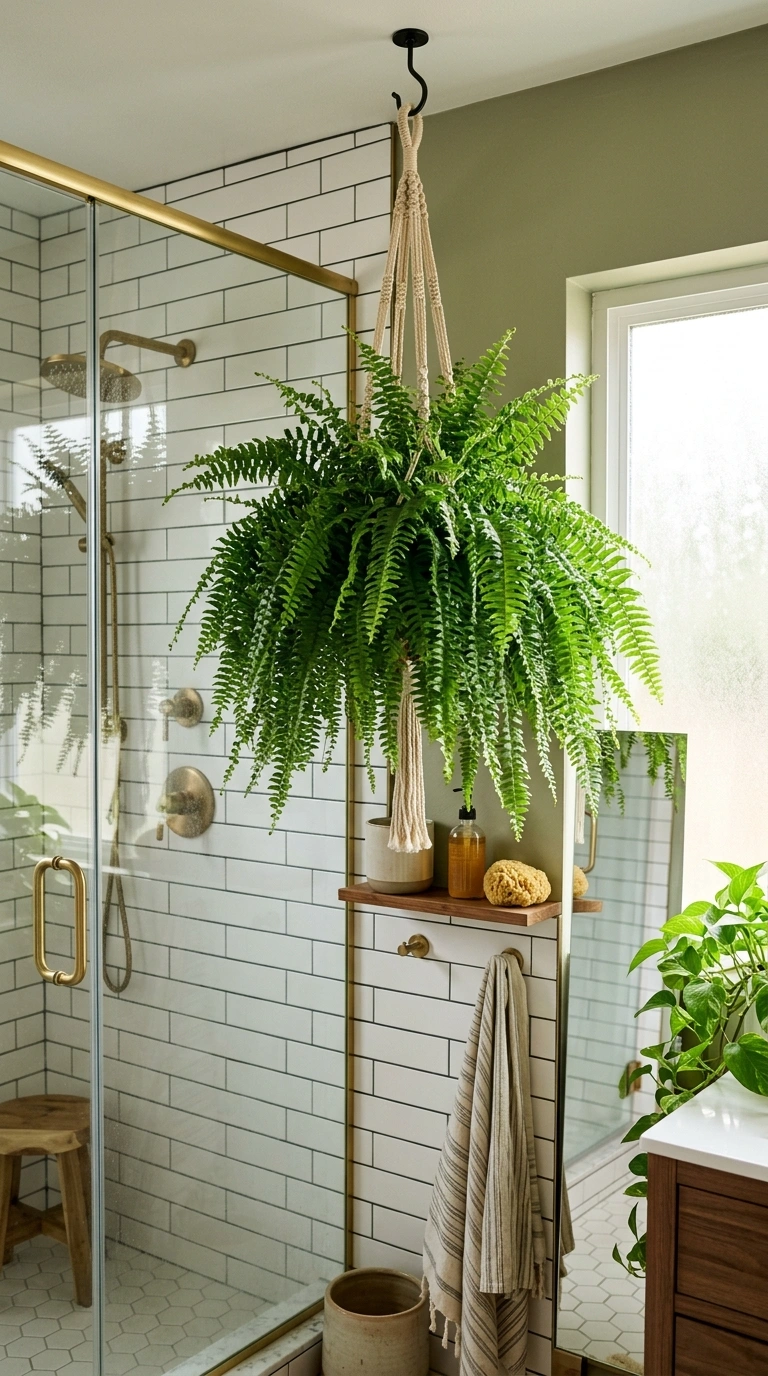
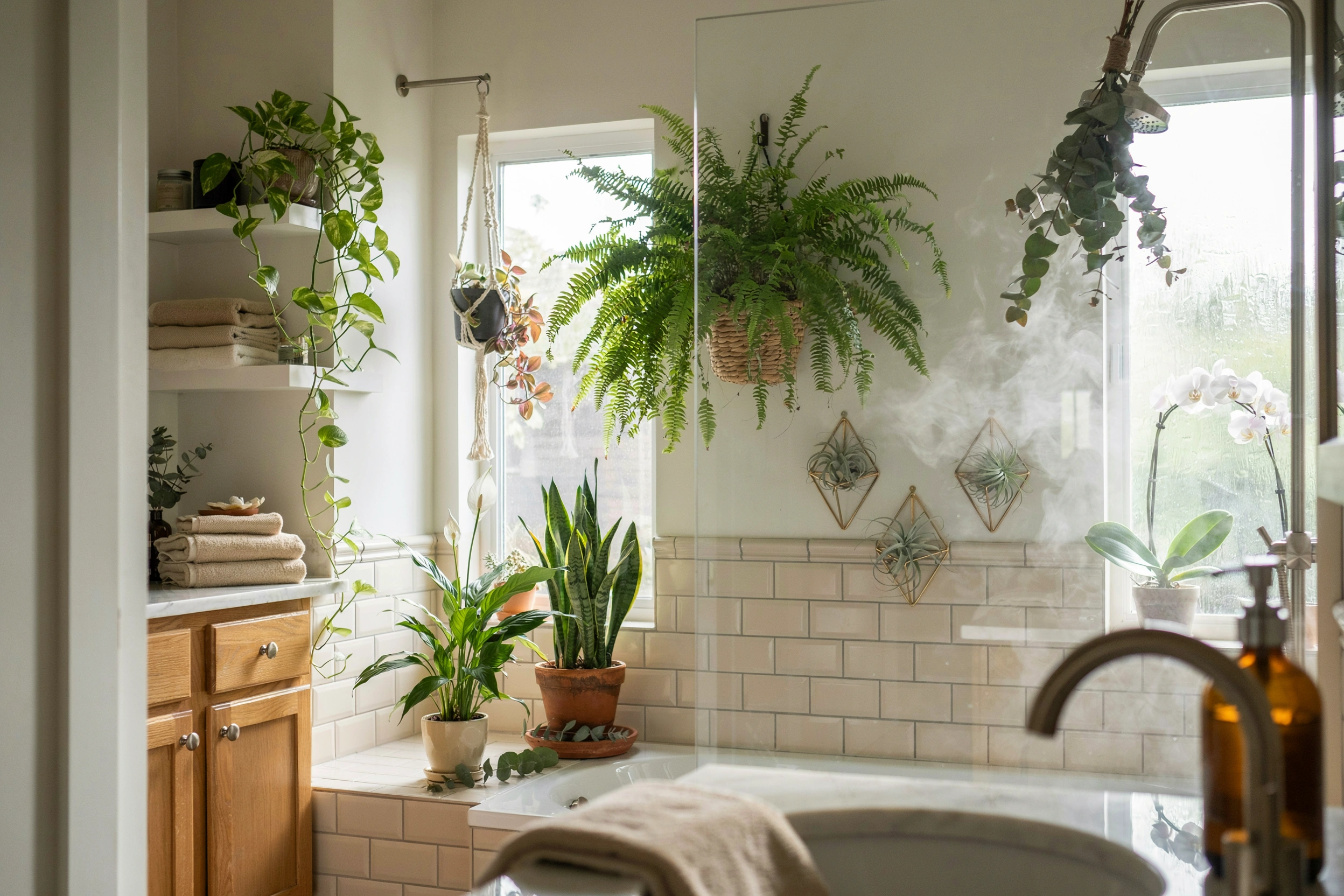
The Boston fern is the classic bathroom plant because its natural habitat is the humid, shaded floor of tropical forests, which is essentially what a humid bathroom with indirect light replicates. A large Boston fern in a hanging planter beside the shower or on a high shelf creates a lush, full, dramatically green display that few other plants can match in a bathroom environment. The fern needs consistent moisture but not soggy soil, which the bathroom humidity helps maintain between waterings. Mist the fronds occasionally or simply let the shower steam do the work. The Boston fern rewards bathroom placement with healthier, fuller growth than it produces in drier rooms.
3. Snake Plant Low Maintenance
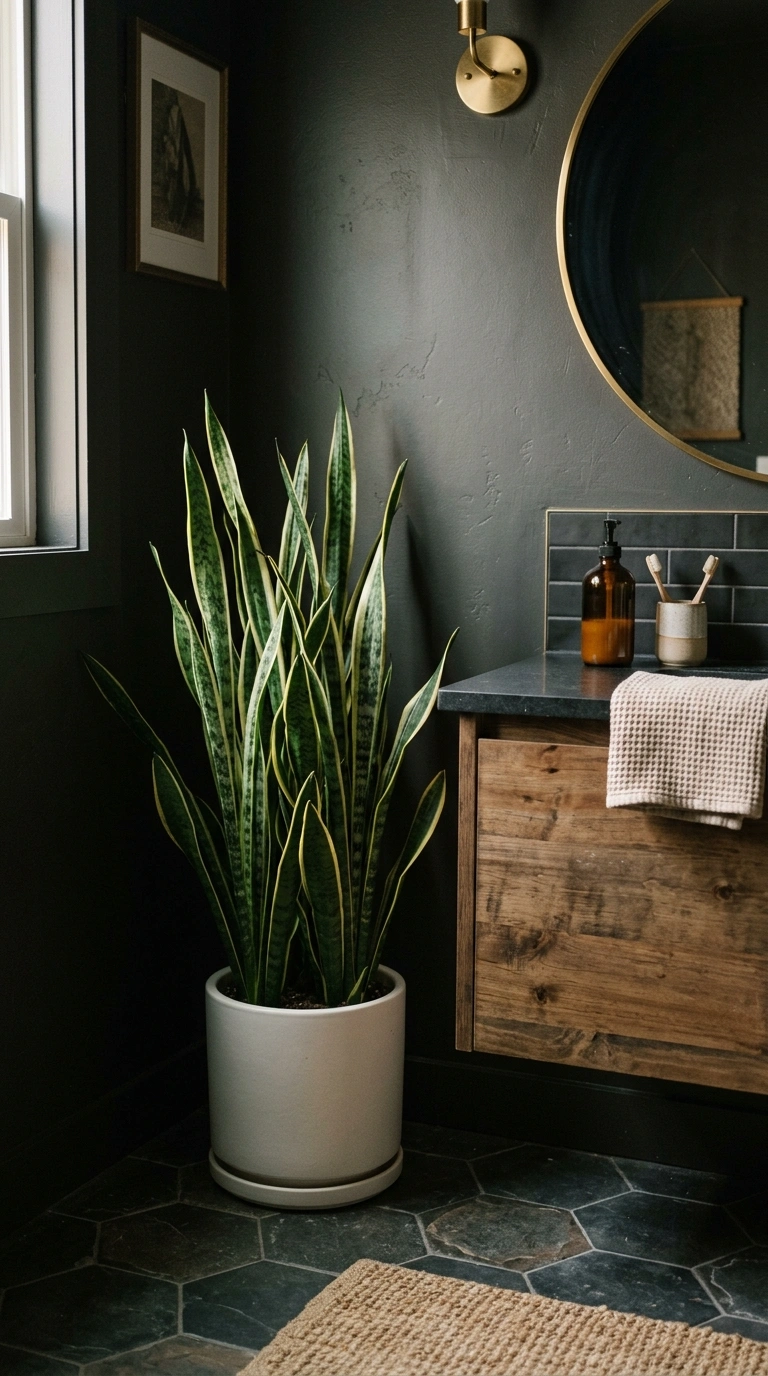
The snake plant is the best choice for bathrooms with very little natural light because it tolerates shade better than almost any other common houseplant. The upright architectural form of the snake plant adds a sculptural quality that trailing and bushy plants do not provide. A tall snake plant on the bathroom floor beside the vanity or on a low shelf adds vertical green without requiring any trailing space. The snake plant also tolerates irregular watering, which makes it ideal for bathrooms that are used less frequently, like guest bathrooms, where regular watering might be forgotten for days or weeks at a time.
4. Spider Plant Hanging Setup
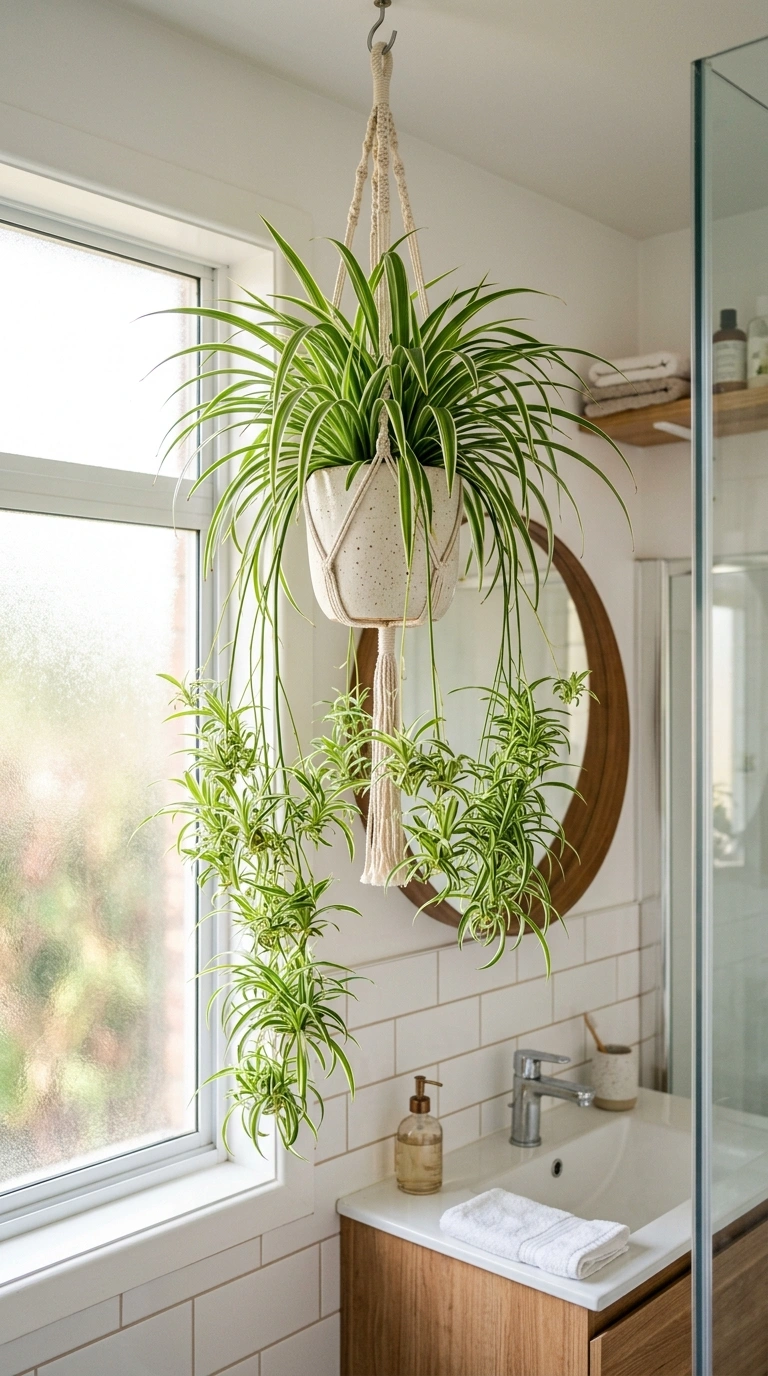
The spider plant produces cascading baby plantlets on long arching stems that look particularly beautiful when displayed in a hanging planter in a bathroom. The dangling plantlets add a layered, three-dimensional quality to the bathroom that tabletop plants cannot achieve. Spider plants tolerate low to moderate light and actually prefer the consistent humidity that a bathroom provides over the drier air of most rooms. Hang the spider plant from a ceiling hook near the window or from a wall bracket at head height where the cascading babies have room to dangle freely without being brushed during daily use.
5. Peace Lily Flowering Beauty
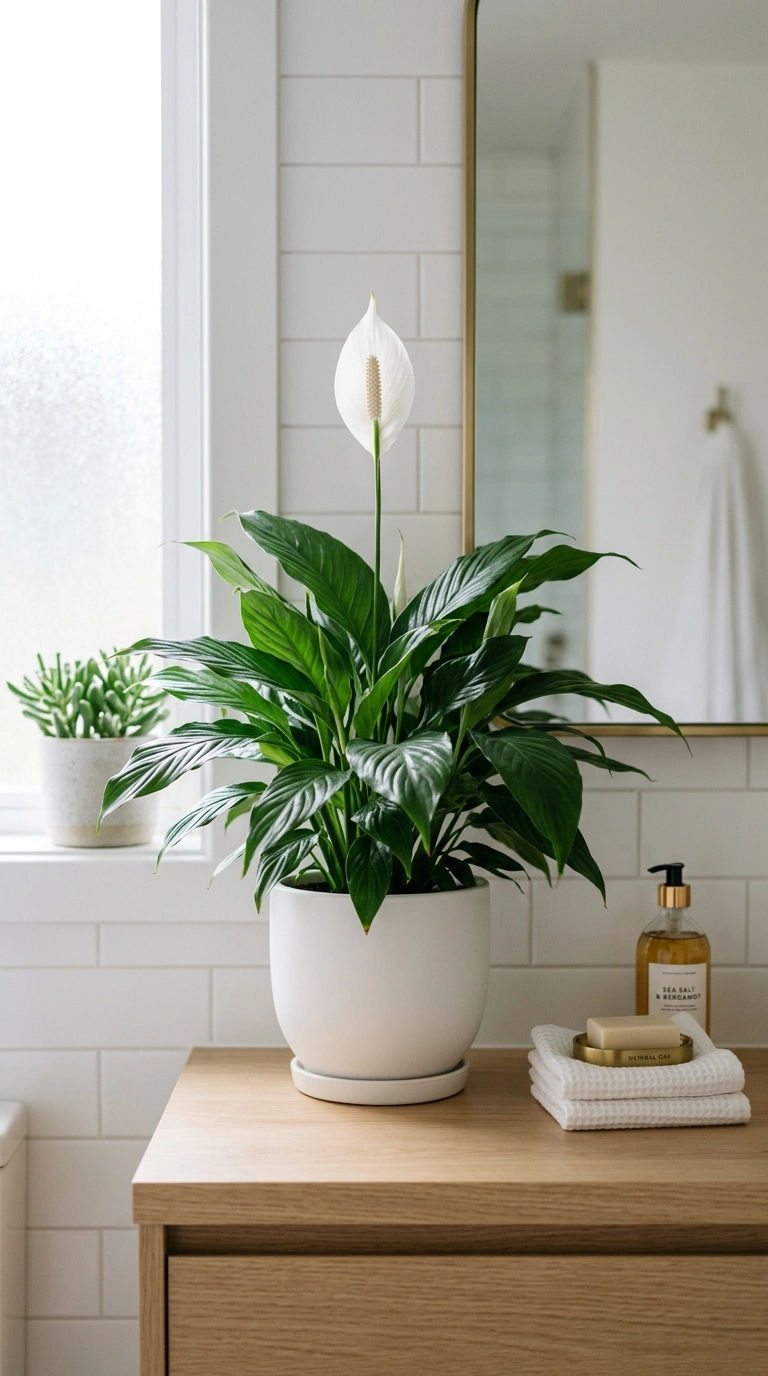
The peace lily is one of the few flowering plants that tolerates both low light and high humidity, which makes it one of the only options for adding white blooms to a bathroom environment. The glossy dark green leaves and the elegant white flower spathes create a refined, calming presence that suits bathroom aesthetics particularly well. Place the peace lily on the vanity counter, on a shelf, or on the floor beside the tub where it receives indirect light. The peace lily also provides a practical air-purifying benefit, filtering common bathroom air contaminants. Water when the top inch of soil dries out and the plant will reward the consistent humidity with more frequent flowering than it produces in drier rooms.
6. ZZ Plant Indestructible Choice
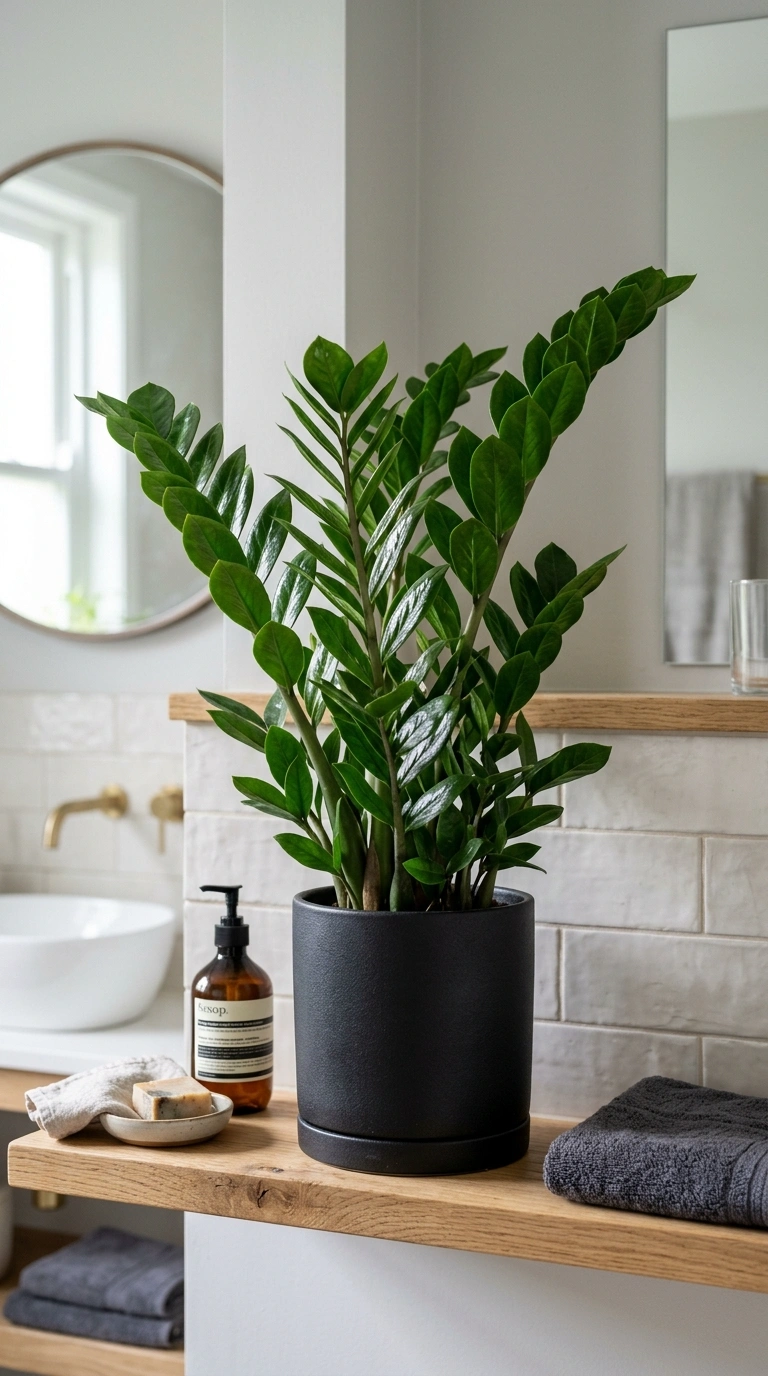
The ZZ plant is genuinely difficult to kill, which makes it the best option for bathrooms where every other plant has previously died. The glossy dark green leaves grow on upright stems and look modern and architectural in a simple pot on the vanity or on a shelf. The ZZ plant tolerates very low light, irregular watering, and the temperature fluctuations that bathrooms experience between hot showers and cool overnight hours. If you have tried other plants in your bathroom and they have all died, the ZZ plant is the one to try next. It thrives on the kind of benign neglect that most bathroom plant owners unintentionally provide.
7. Eucalyptus Shower Bundle
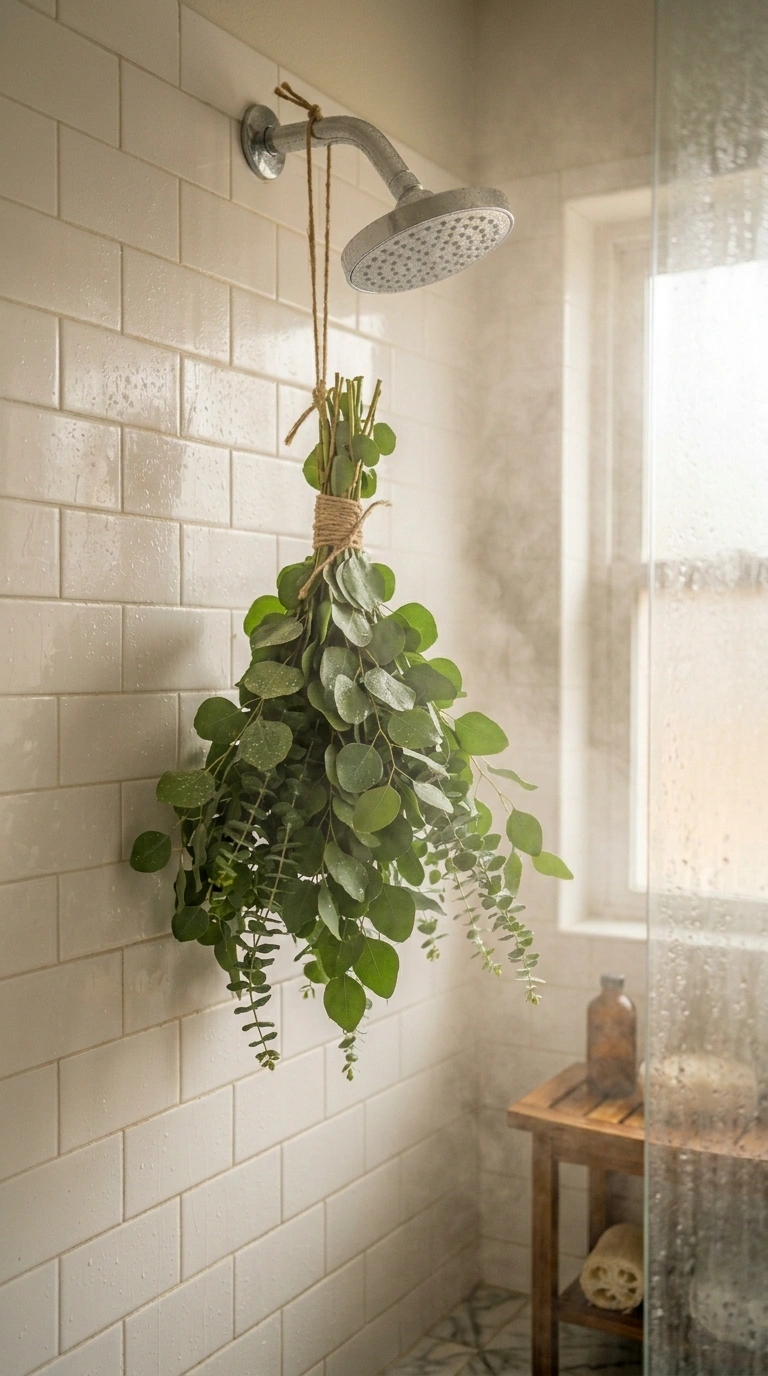
A bundle of fresh eucalyptus tied with twine and hung from the shower head or the shower rod releases its natural essential oils when activated by hot steam, filling the shower with a spa-like scent that no candle or diffuser can replicate. The eucalyptus is not technically a potted plant but it is the most impactful single green element you can add to a bathroom for under five dollars. Replace the bundle every two to three weeks as the leaves dry and lose their scent. The eucalyptus bundle is the fastest way to transform a basic shower into something that feels like a genuine spa experience. The same approach to natural aromatic elements creating atmosphere works throughout earthy bathroom designs where natural scent is part of the overall sensory design.
8. Air Plants No Soil Needed
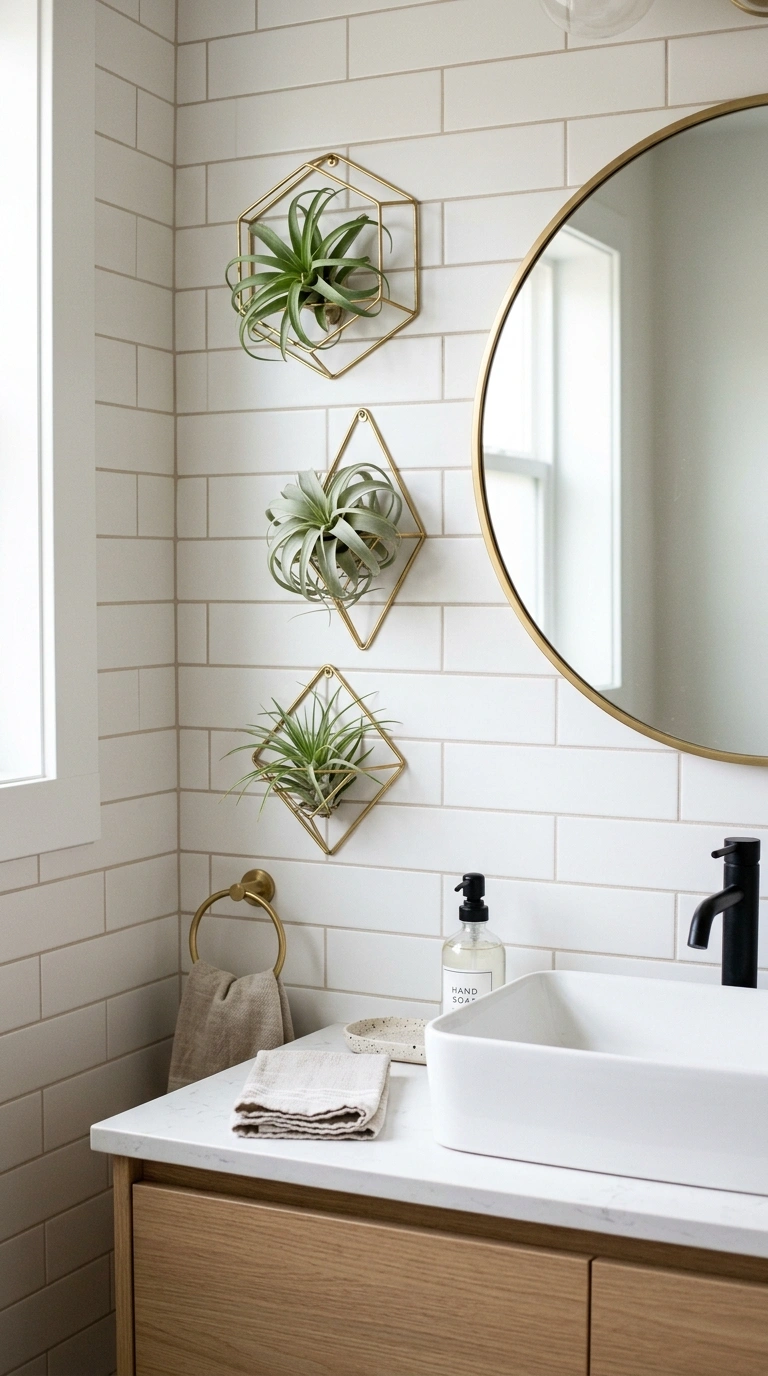
Air plants, tillandsias, require no soil at all and absorb moisture directly from the air, which makes them uniquely suited to bathrooms where the shower steam provides their primary water source. Display air plants in small geometric holders mounted on the wall, in a shallow dish on the vanity, or nestled into a piece of driftwood on a shelf. The unusual sculptural forms of air plants add a modern, slightly alien quality that traditional potted plants do not have. Mist them once or twice a week in addition to the ambient shower moisture, or soak them in water for twenty minutes weekly if the bathroom is not used daily.
9. Philodendron Heartleaf Trail
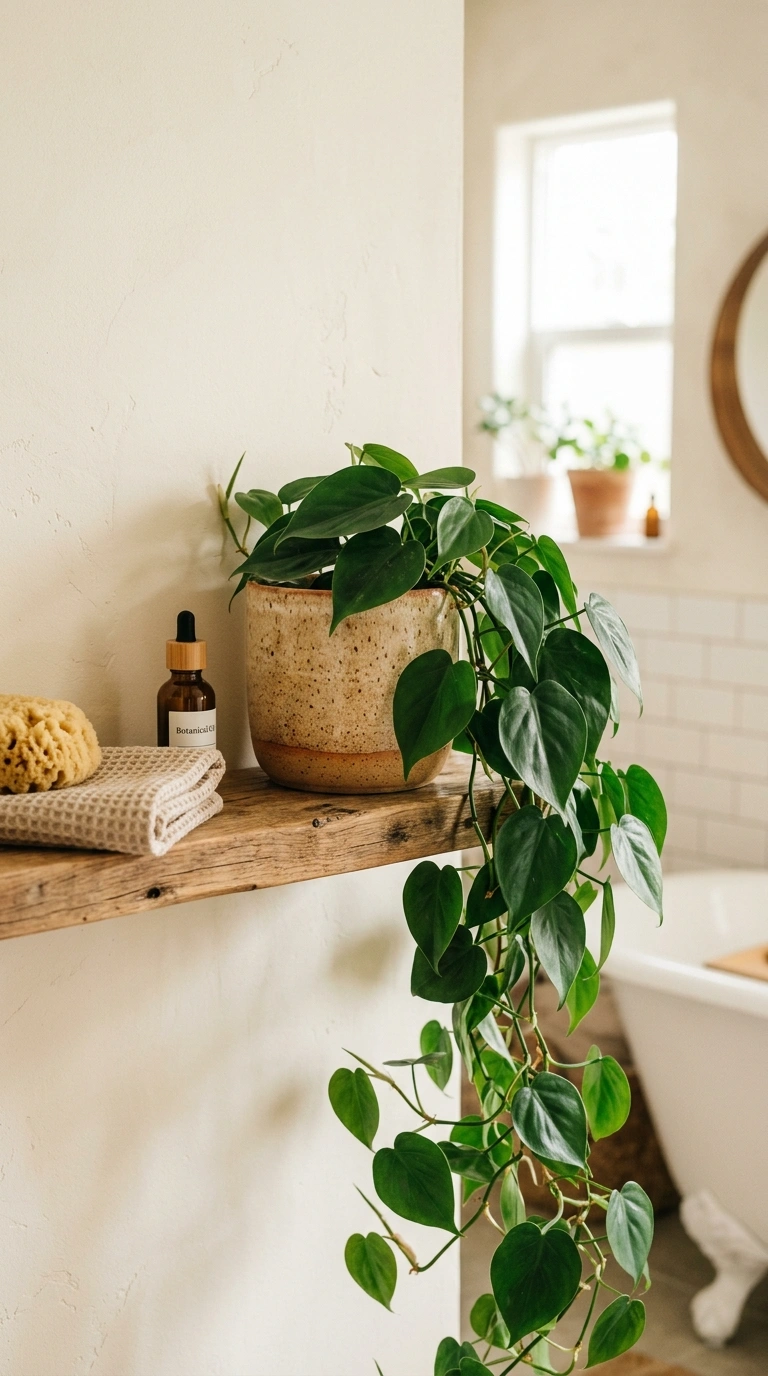
The heartleaf philodendron is a close relative of the pothos with slightly more elegant heart-shaped leaves and a similar trailing growth habit that suits bathroom shelves and hanging planters. The philodendron tolerates low light and humidity well and grows quickly enough to produce visible trailing growth within a few weeks of placement. The dark green heart-shaped leaves look more refined than the variegated pothos and suit bathrooms with a more minimal or sophisticated aesthetic. Train the trailing vines along a shelf edge, a mirror frame, or a window frame for a controlled green border effect.
10. Orchid Elegant Statement
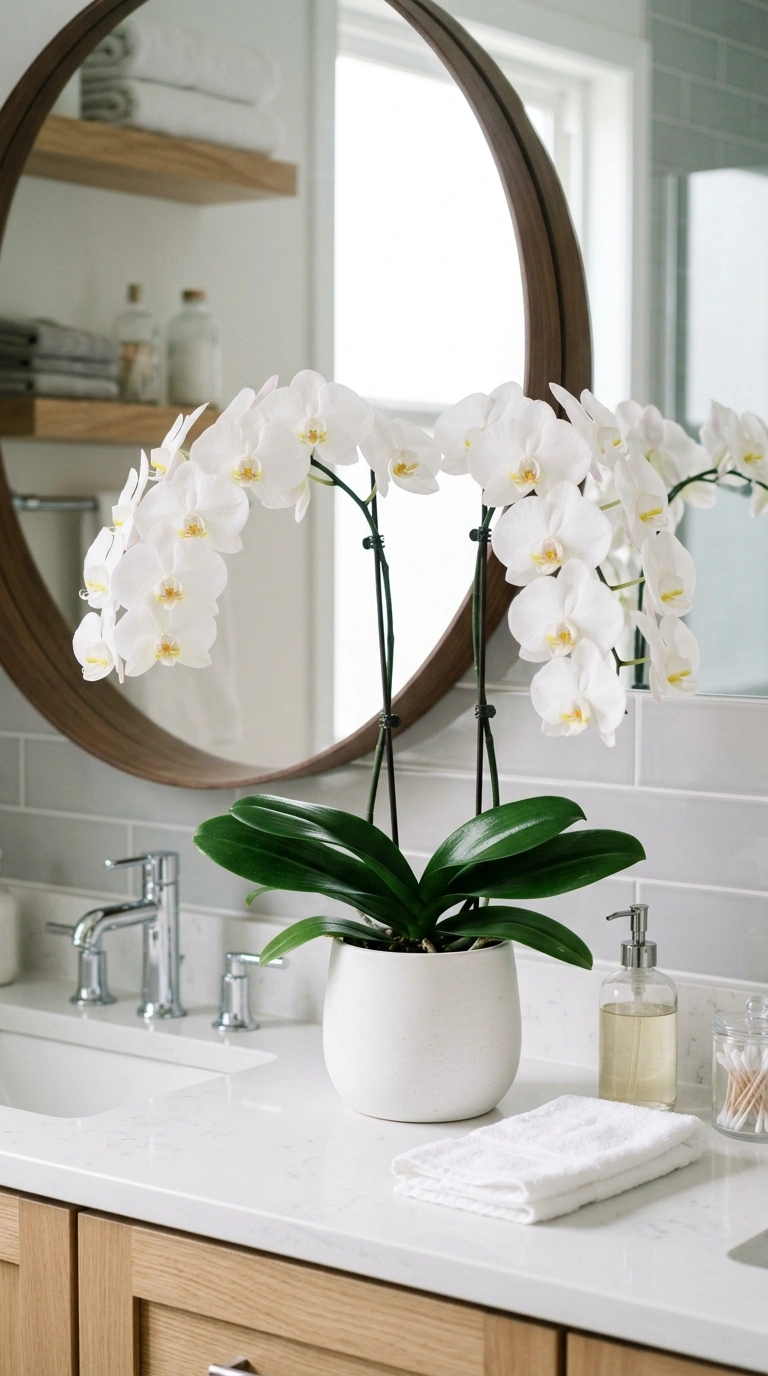
Orchids thrive in the humid conditions of a bathroom and produce their dramatic blooms more reliably when they receive consistent humidity rather than the dry air of most living rooms. A phalaenopsis orchid in a simple ceramic pot on the vanity counter or on a small shelf adds an elegant flowering element that no other bathroom plant can match. Orchids need indirect bright light, so position them near a window rather than in a dark corner. Water sparingly, allowing the roots to dry between waterings, and the bathroom humidity will provide the consistent moisture the aerial roots need. An orchid in bloom on the vanity transforms the entire bathroom aesthetic for weeks at a time.
11. Calathea Prayer Plant Pattern
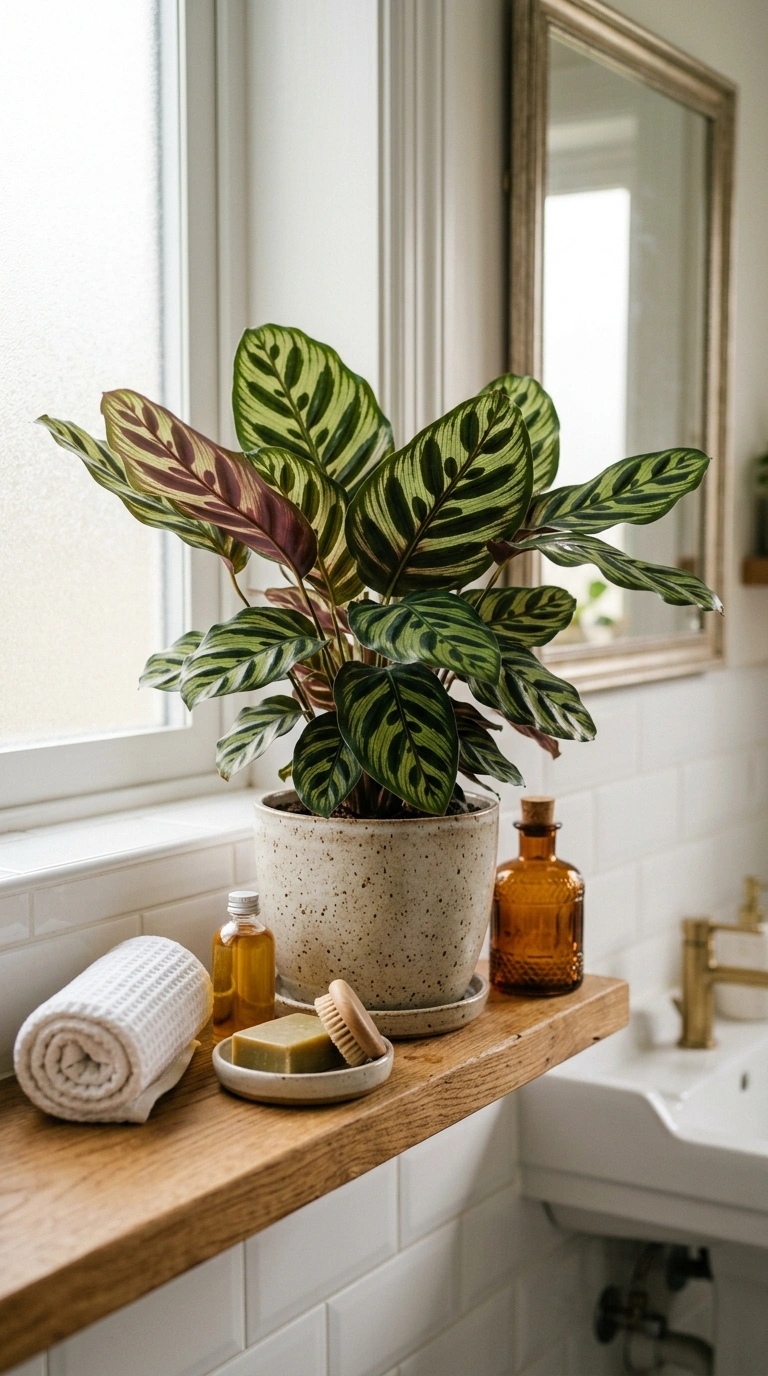
Calathea plants feature dramatically patterned leaves with stripes, spots, and contrasting colors that add visual complexity beyond simple green. The calathea is native to tropical forest floors where humidity is high and light is filtered, which makes the bathroom an ideal home. The leaves fold up at night, which is the prayer plant behavior that gives the family its common name, and open again in the morning, adding a small daily living movement to the bathroom. Calatheas are slightly more demanding than pothos or snake plants, preferring consistent moisture and warm temperatures, but the bathroom provides both naturally.
12. Aloe Vera Window Plant
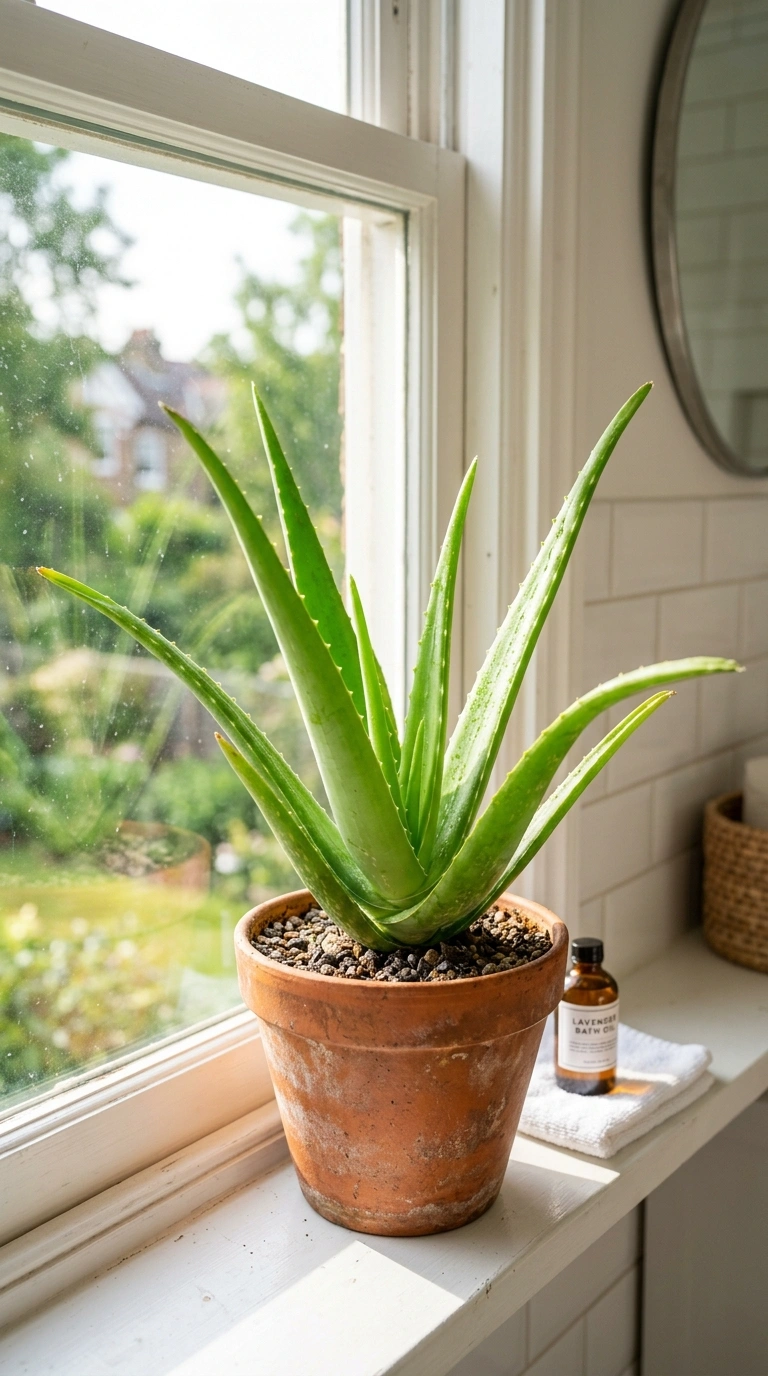
Aloe vera is a practical bathroom plant because it provides both visual greenery and a functional benefit: the gel inside the leaves soothes minor burns, skin irritation, and razor bumps, all of which tend to happen in the bathroom. Position the aloe on a sunny bathroom windowsill where it receives at least four hours of direct light daily. Aloe tolerates the humidity of a bathroom but needs the soil to dry completely between waterings, so use a pot with drainage and a well-draining succulent soil mix. A healthy aloe on the windowsill is one of those plants that earns its space through both visual beauty and genuine daily usefulness.
13. Staghorn Fern Wall Mount
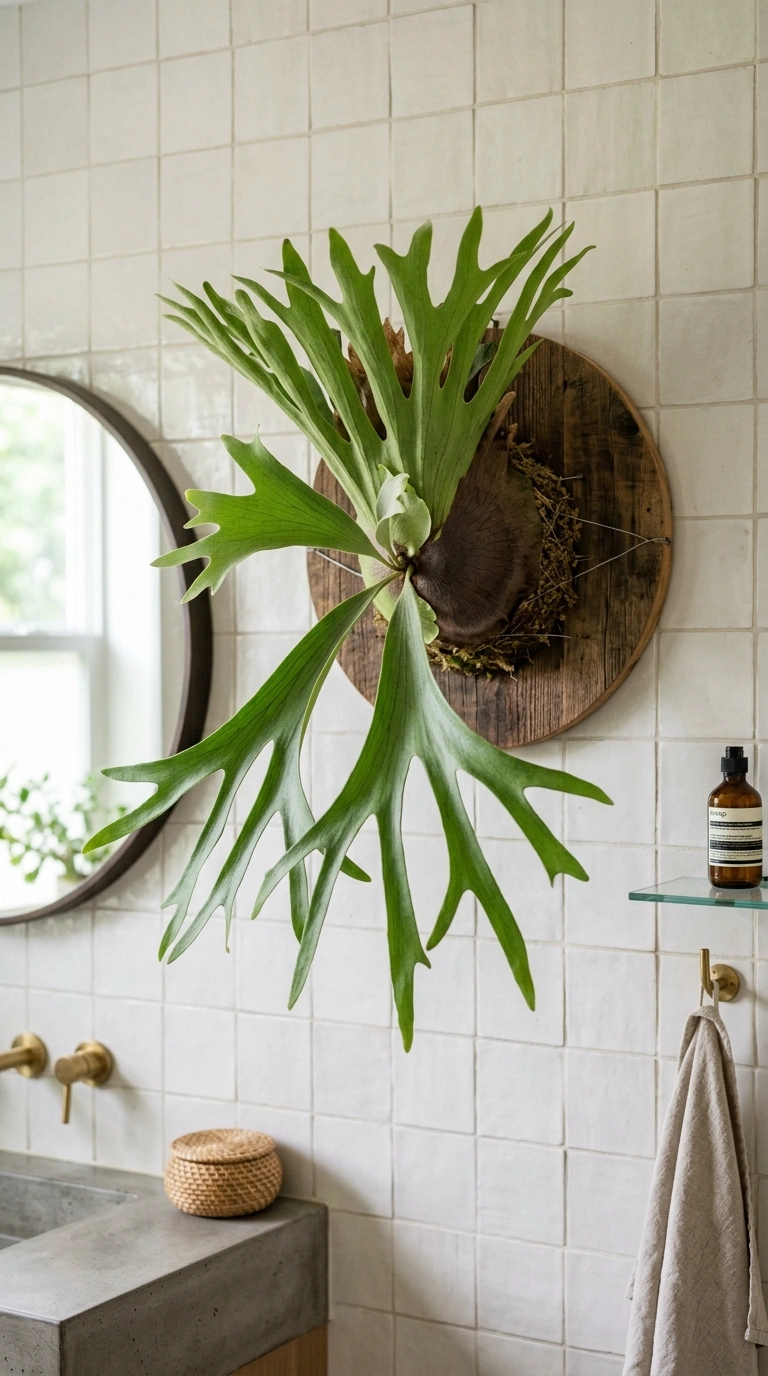
A staghorn fern mounted on a wooden board and hung on the bathroom wall creates one of the most dramatic and unique plant displays available in any room. The staghorn fern is native to tropical environments where it grows attached to trees rather than in soil, and it thrives in the humidity of a bathroom. Mount the fern on a wooden board with sphagnum moss behind the root ball, hang the board on the wall near the shower where it receives humidity and indirect light, and mist it several times a week. The sculptural antler-shaped fronds grow larger over time and the mounted fern becomes a genuine living art piece.
14. Cast Iron Plant Dark Corner
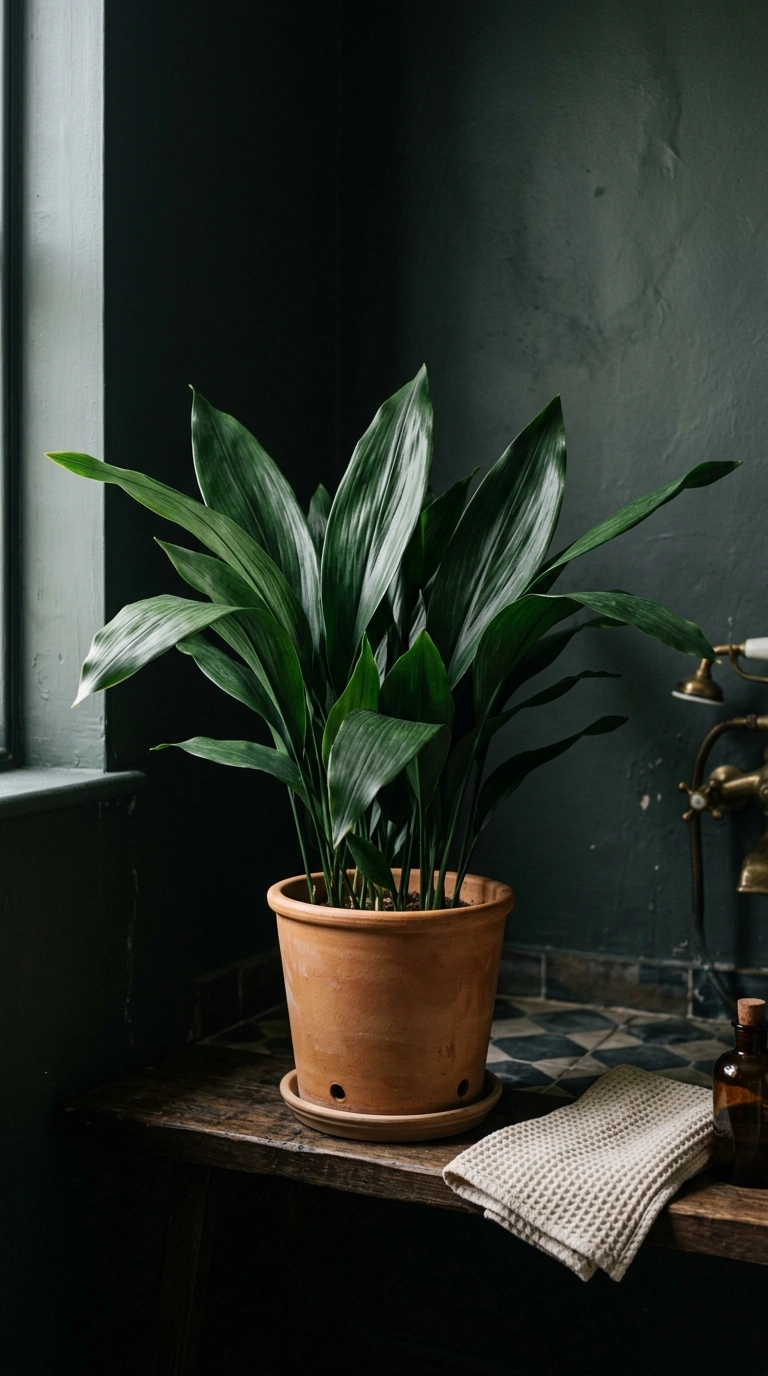
The cast iron plant, aspidistra, earned its common name by being virtually indestructible. It tolerates very low light, drought, temperature fluctuations, and neglect, which makes it the ideal choice for the darkest bathroom corners where no other plant would survive. The wide, dark green leaves grow in an upright clumping form that looks clean and architectural in a simple pot. The cast iron plant does not produce flowers or dramatic trailing vines, but its reliable year-round green presence in a dark corner provides the organic quality that the bathroom would otherwise lack entirely.
15. Bamboo Lucky Addition
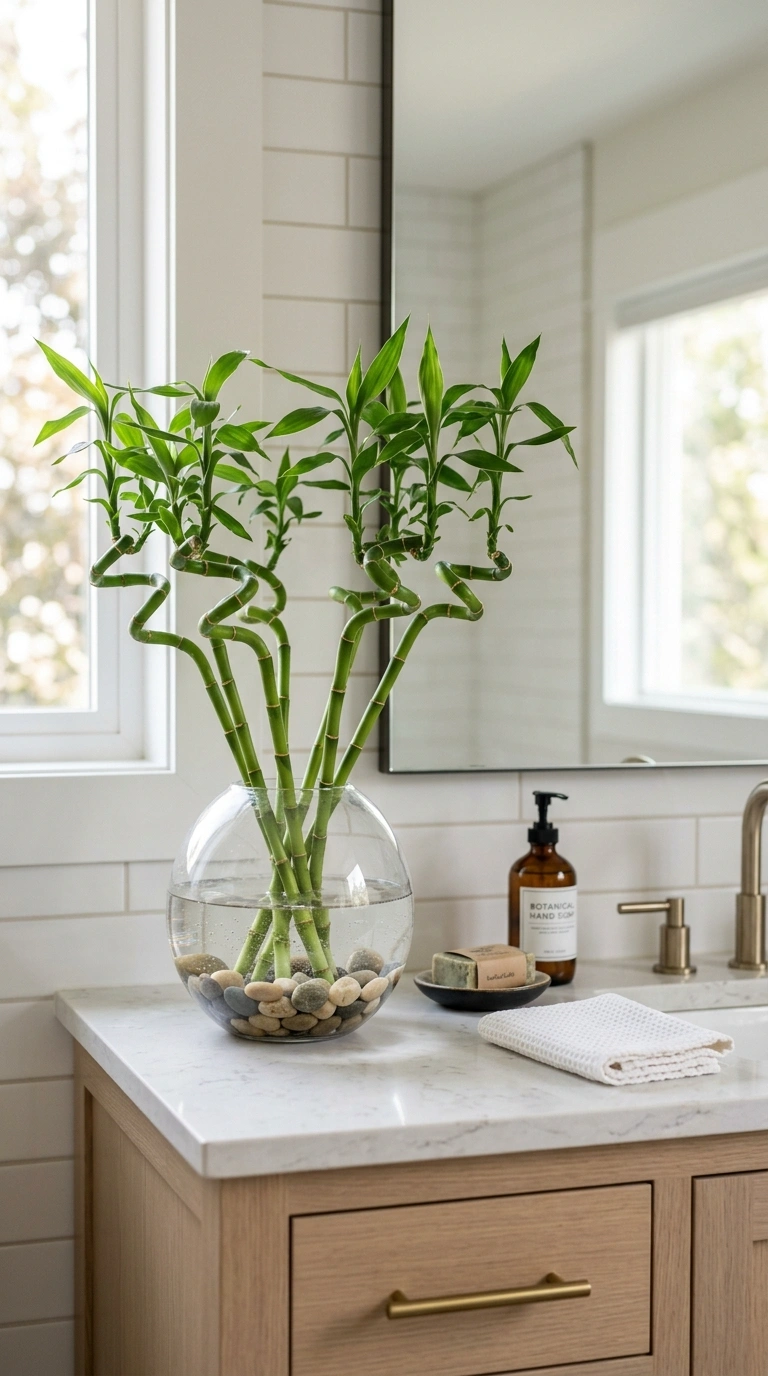
Lucky bamboo, which is actually a dracaena rather than true bamboo, grows in water without any soil and adds a zen quality to bathroom surfaces that suits modern and minimalist bathroom aesthetics. Place a few stalks of lucky bamboo in a clear glass vase filled with water and pebbles on the vanity counter, a shelf, or the back of the toilet. Change the water every one to two weeks to keep it fresh. Lucky bamboo tolerates low light and the humid bathroom environment and can live for years with minimal care. The sculptural stalks in the glass vase add a clean, calming presence that suits spa-like bathroom designs.
16. Ivy English Cascading
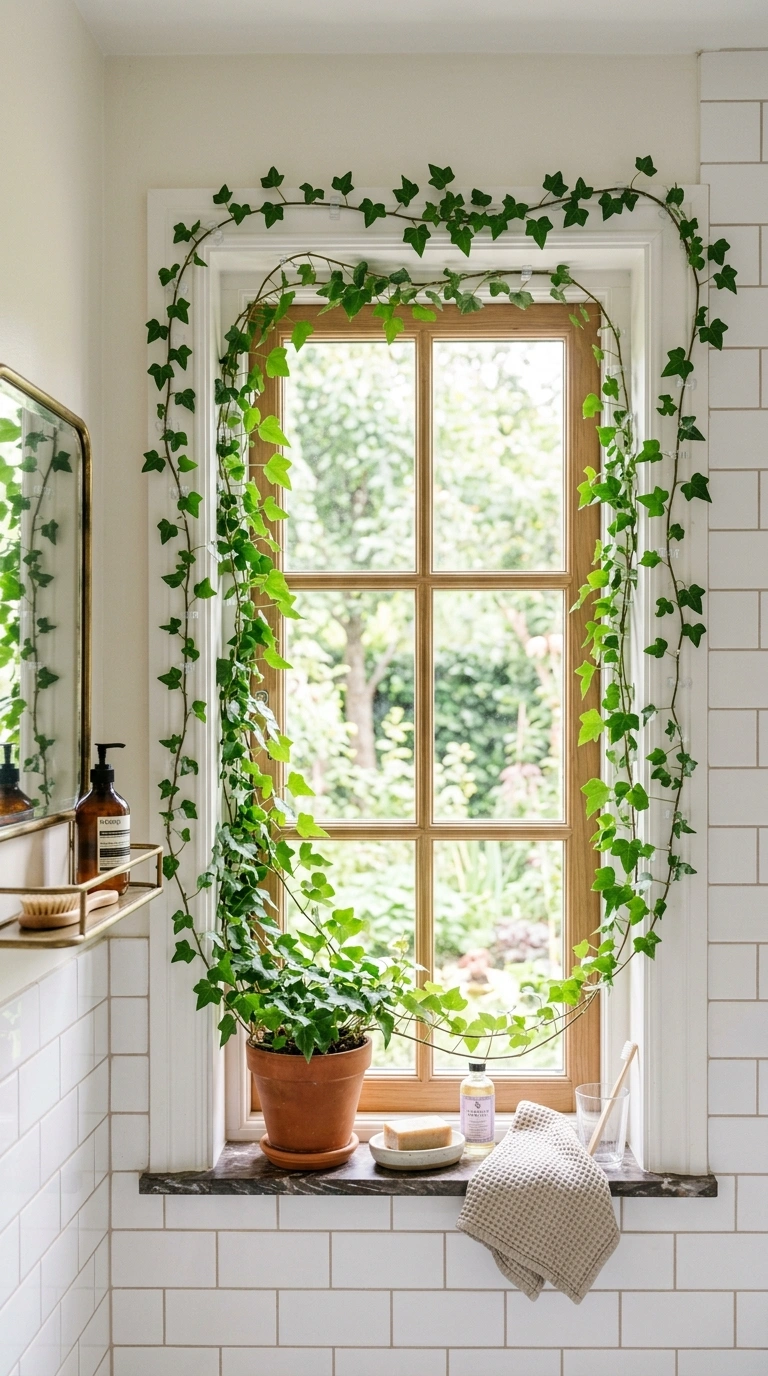
English ivy produces long cascading vines with classic small pointed leaves that look elegant trailing from a high bathroom shelf, along a window frame, or from a hanging planter. Ivy tolerates low to moderate light and prefers the cooler temperatures and higher humidity that bathrooms often provide. The growth rate in a humid bathroom is typically faster than in drier rooms, which means the trailing vines lengthen visibly over weeks. Train the vines along a shelf edge, a mirror surround, or a curtain rod for a controlled green border that frames the bathroom architecture.
17. Succulent Sunny Windowsill
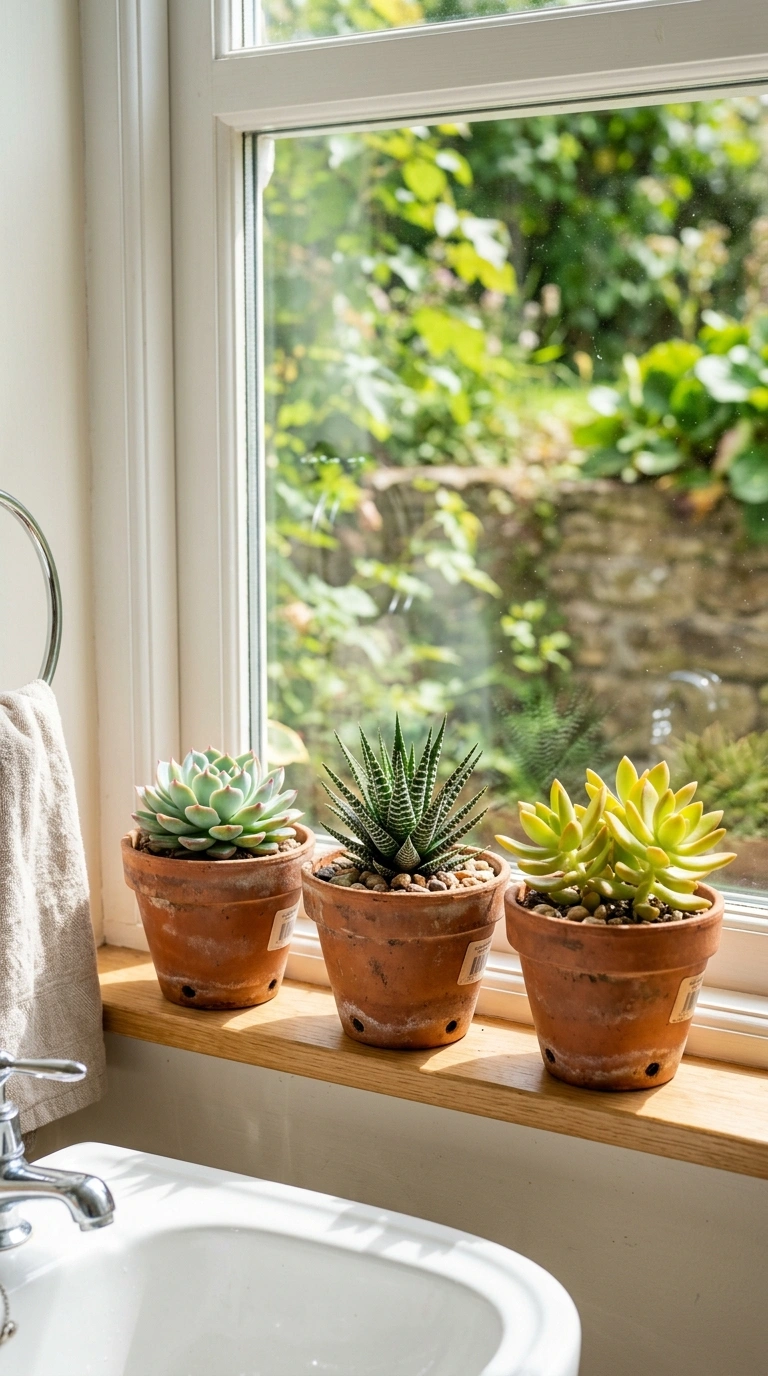
Succulents need more light than most bathroom plants but work well in bathrooms with a bright sunny window. Small succulents in a row on a bright bathroom windowsill add sculptural variety and the unusual shapes and colors that green tropical plants lack. Choose echeveria, haworthia, or small aloe varieties for the most reliably successful bathroom windowsill succulents. The key is ensuring the window provides at least four hours of direct sunlight daily and that the succulents are potted in well-draining soil that does not stay wet. Succulents that sit in constantly moist soil will rot, so proper drainage is more important in the humid bathroom than in any other room.
18. Moss Bath Mat Living
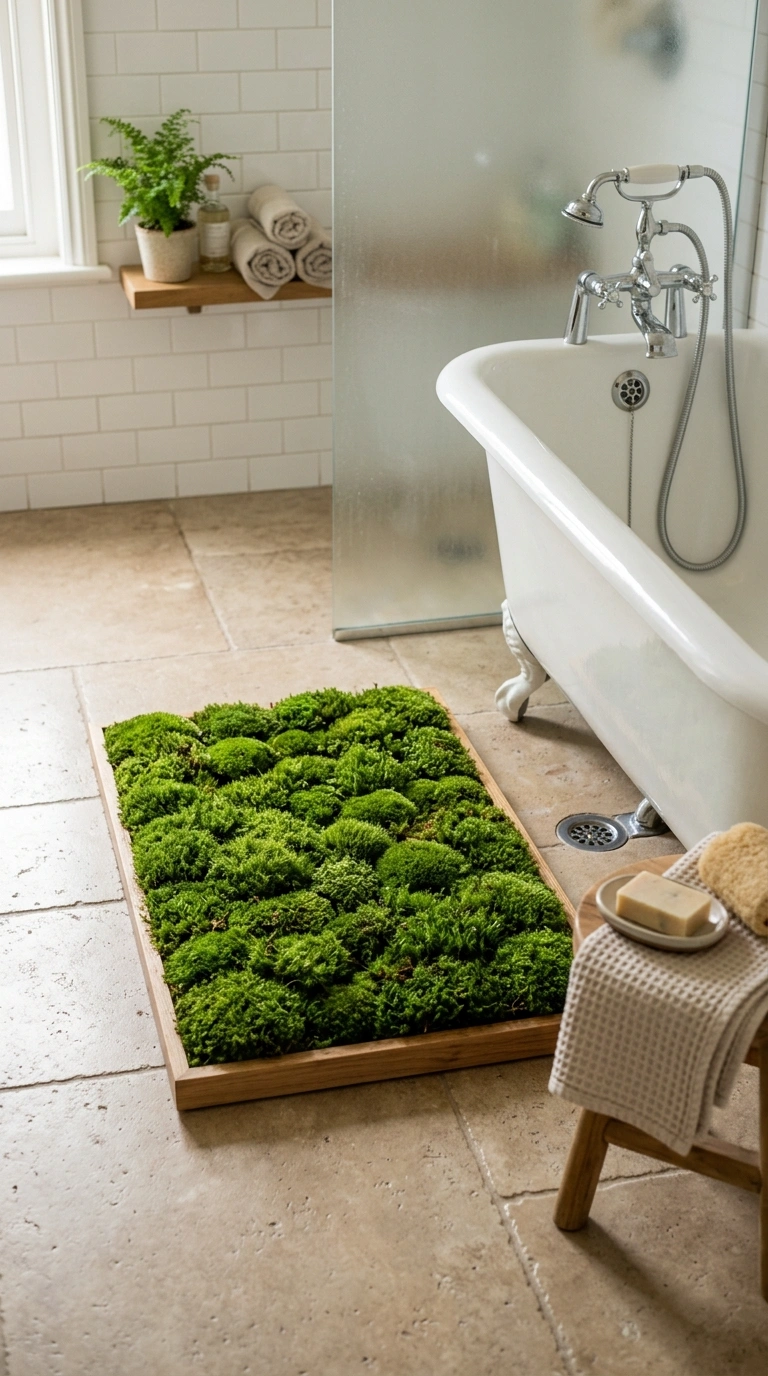
A living moss bath mat made from preserved or live moss in a frame provides a genuine connection to nature underfoot that no manufactured mat can replicate. Step out of the shower onto a surface of soft, cool, living moss rather than a cotton mat. Living moss mats require regular misting to stay alive and prefer the humidity of a bathroom, but they need adequate indirect light to maintain their green color. Preserved moss mats require no watering but do not grow or change over time. Either version adds the most dramatic and tactile plant element available in a bathroom.
19. Herb Plant Practical Use
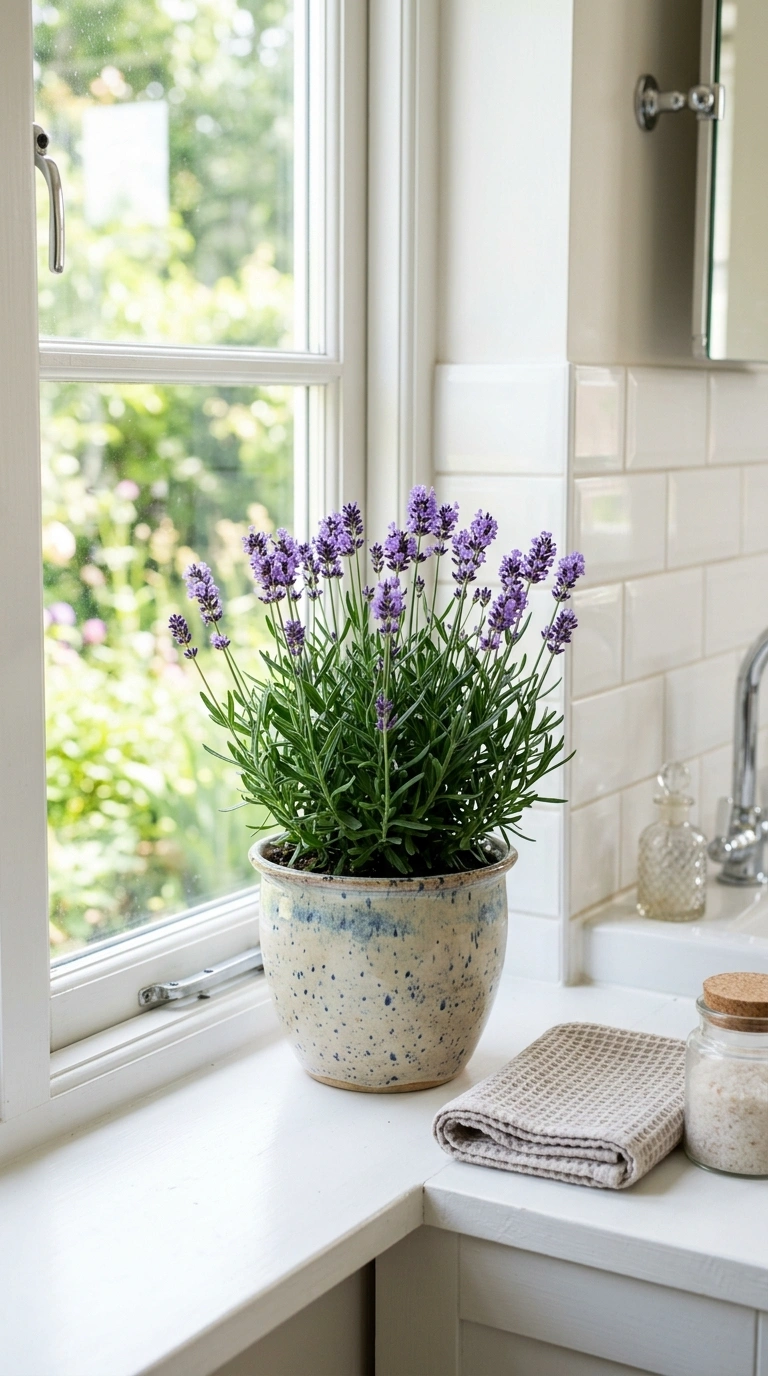
A small herb plant on a bright bathroom windowsill provides both the visual green element and a practical aromatic benefit. Fresh lavender releases its calming scent in the steamy air after a shower. Fresh mint adds freshness to the bathroom atmosphere. Fresh rosemary provides an herbaceous clean quality. The herbs need a sunny bathroom window to thrive but the bathroom humidity keeps them healthier than the dry air of most rooms. The small herb pot adds the same kind of living, functional green quality to the bathroom that kitchen herb gardens add to the kitchen.
20. Fern Maidenhair Delicate
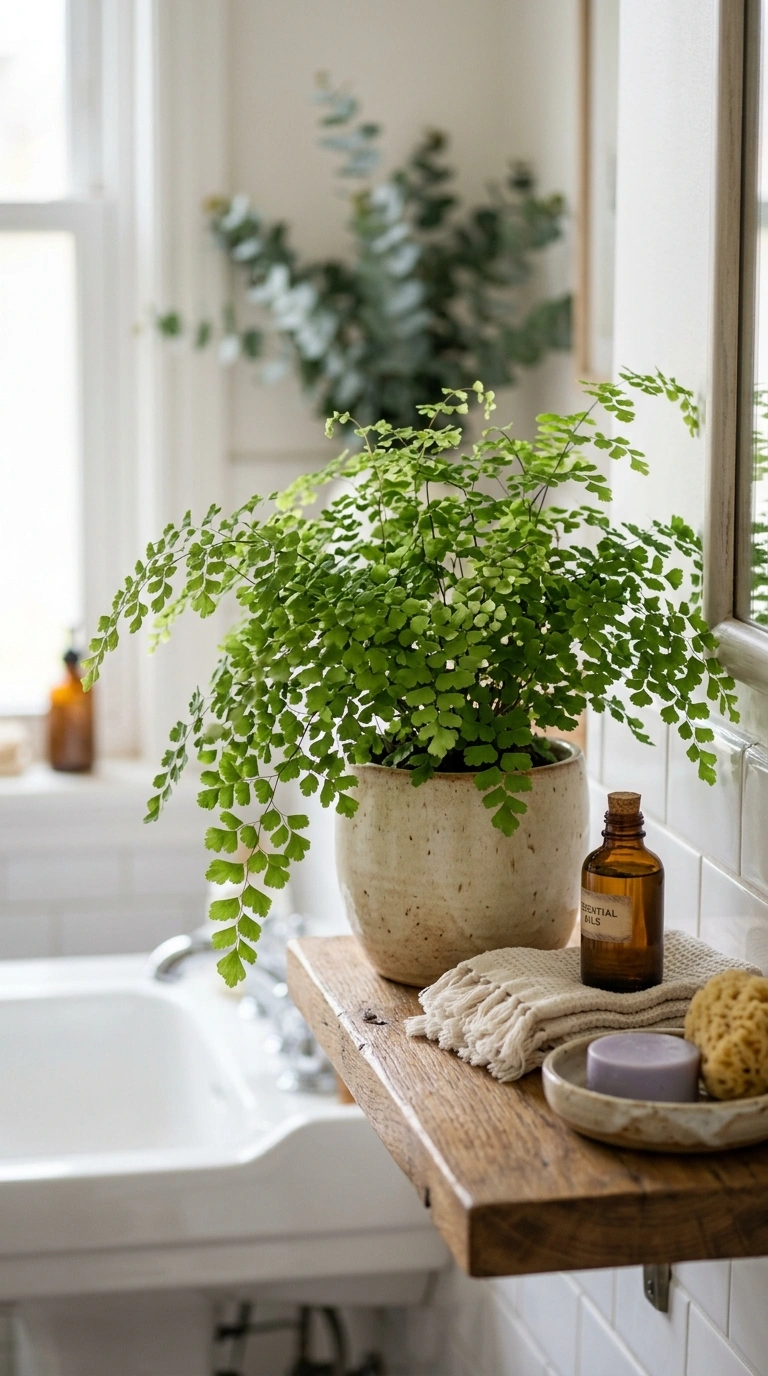
The maidenhair fern has the most delicate and the most beautiful foliage of any bathroom plant, with tiny fan-shaped leaves on thin wiry stems that move gently in any air current. The maidenhair fern is notoriously difficult to grow in dry rooms because it demands constant humidity and consistent moisture, but a bathroom provides both naturally. Position the maidenhair fern on a shelf near the shower where it receives indirect light and consistent steam. Keep the soil consistently moist but not soggy. When a maidenhair fern thrives, it is one of the most stunning and rewarding plants in the home. The lush delicate foliage adds the same kind of gentle natural beauty that defines the plant-forward approach in boho bathroom designs where living green is a central design element.
21. Plant Grouping Arrangement
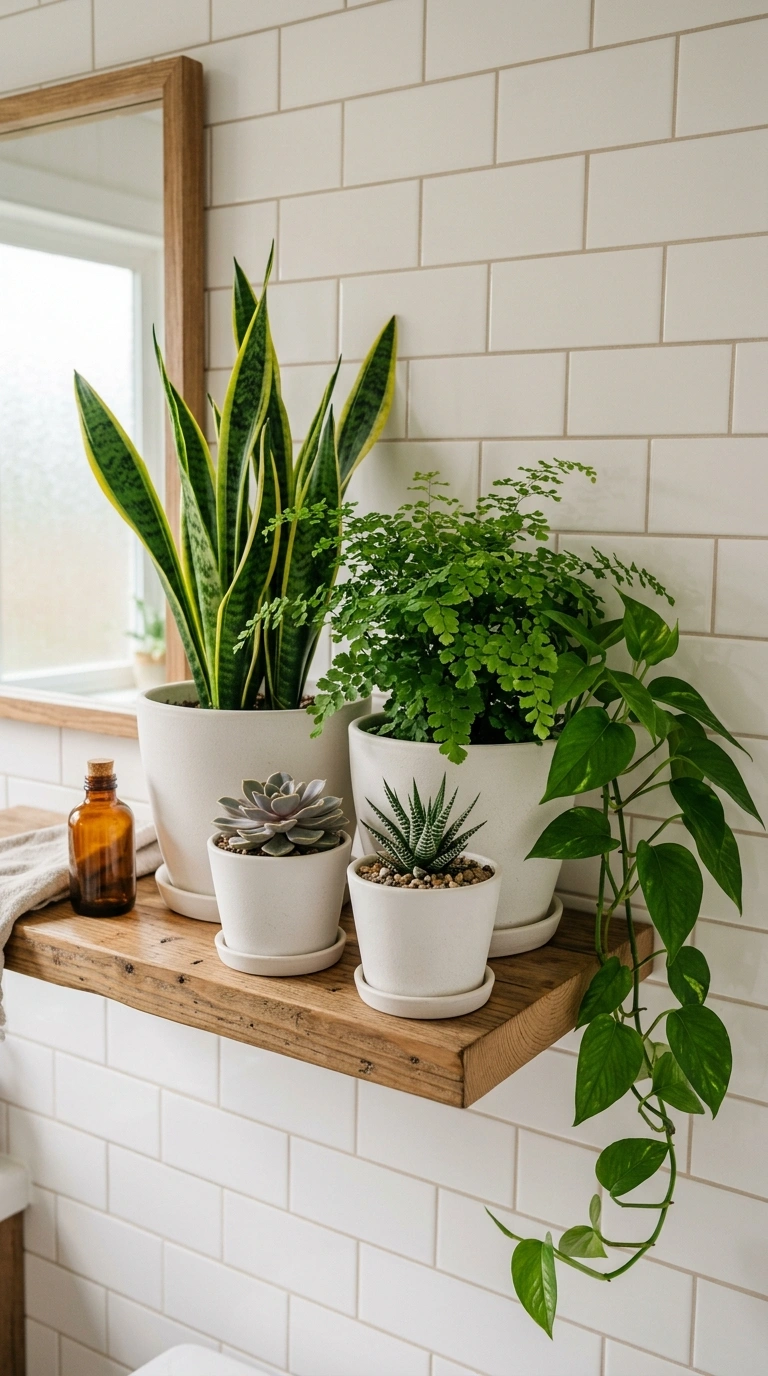
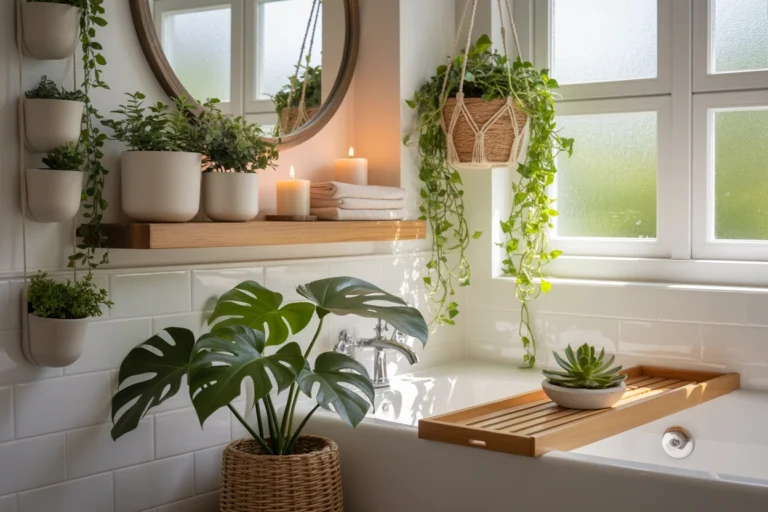
A grouping of three to five plants in varied sizes arranged together on a bathroom shelf, the vanity counter, or a small plant stand creates a mini indoor garden that reads as a deliberate design feature rather than a single random pot. Group the plants with the tallest in the back and the shortest in the front, with trailing plants at the edge where they can cascade over the shelf or counter lip. Choose plants with different leaf shapes and textures for visual variety: a tall snake plant, a medium bushy fern, a trailing pothos, and a small succulent together create a layered composition. Keep the pots in a coordinating style for the most cohesive display.
22. Seasonal Rotation System
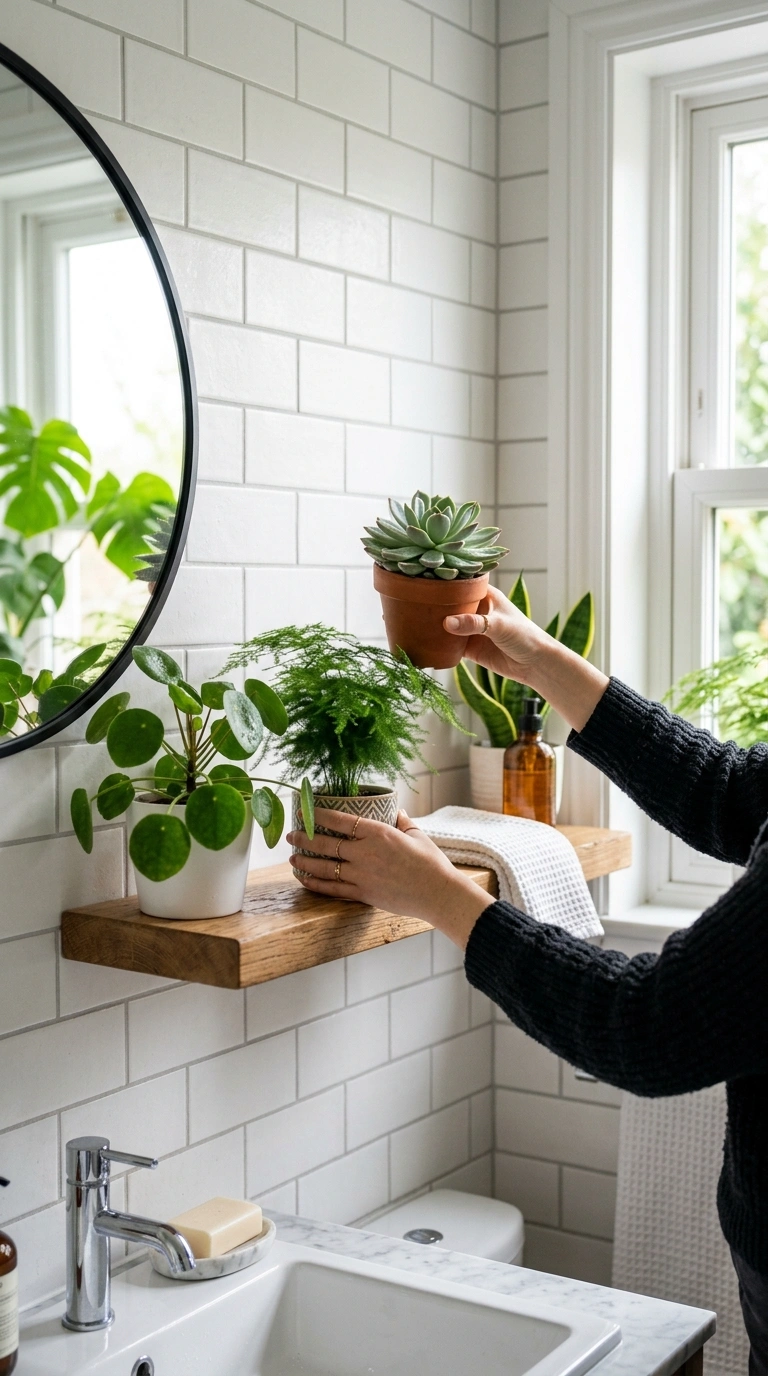
Rather than expecting every bathroom plant to thrive permanently in the same position, a seasonal rotation system moves plants between the bathroom and other rooms in the house to give each plant a recovery period in brighter light. Move the low-light tolerant plants like pothos and snake plants into the bathroom for a few months, then rotate them to a brighter room while a different set moves in. The rotation keeps all the plants healthier over time and allows the bathroom to feature different green arrangements throughout the year. The rotation also provides the opportunity to experiment with different plants in the bathroom conditions and learn which species do best in the specific light and humidity of your bathroom.
Bathroom plants that genuinely thrive are the ones chosen for the specific conditions the bathroom provides: humidity and limited light. Pothos, ferns, snake plants, and peace lilies are the most reliable starting points. Position them where they receive adequate indirect light and where the shower steam reaches them naturally. The bathroom does most of the care work through its built-in humidity. The plants do the design work by adding the living organic quality that no manufactured decoration can replicate.