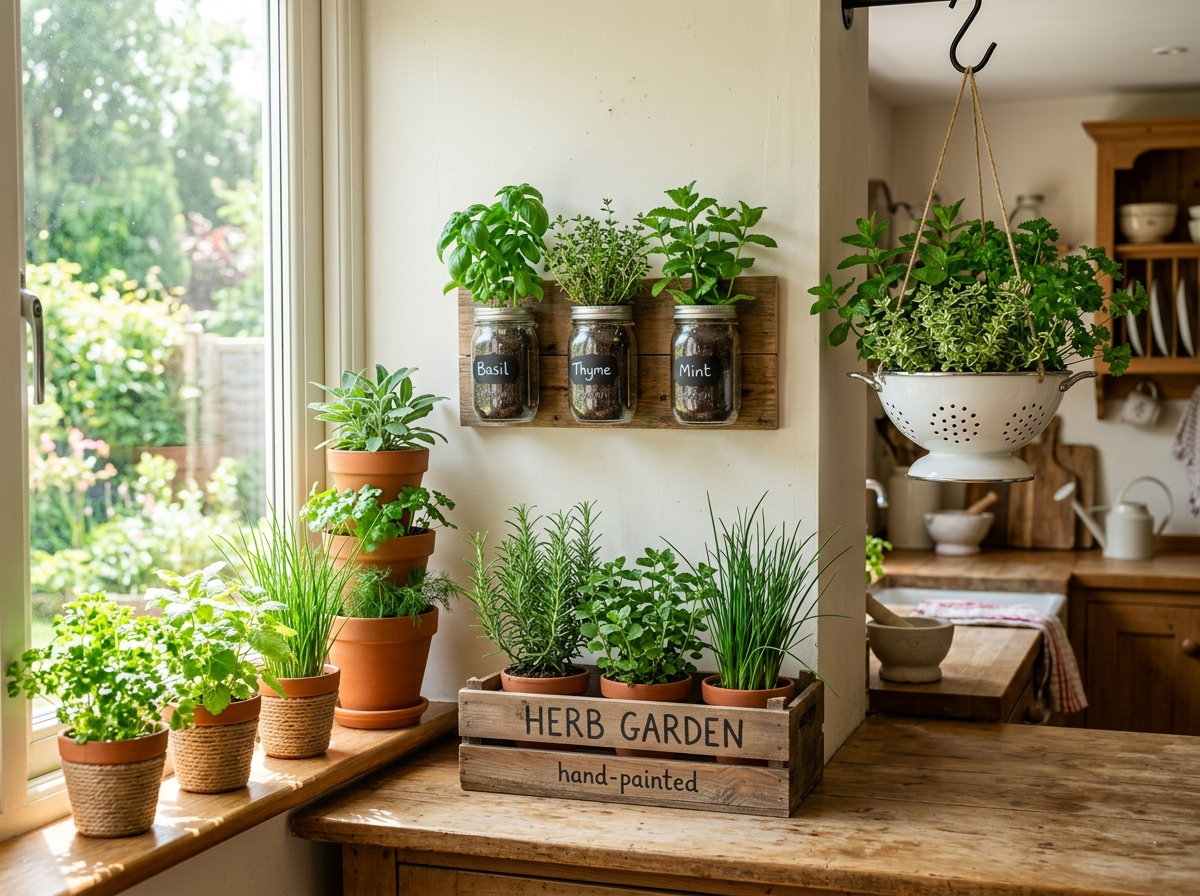
22 Herb Garden Design Ideas That Double as Real Decor
A herb garden can be purely functional, a few pots of basil and thyme on the kitchen counter, clipped regularly and replaced when they get leggy. Or it can be a genuine design feature that adds warmth, green life, and character to a kitchen, a patio, a balcony, or a garden while also producing the herbs you actually cook with. The herb gardens that work as real decor are the ones where the containers, the arrangement, and the small styling details have been chosen with the same intention as any other piece of home decor. These 22 ideas cover the design side of herb gardening, from the most minimal kitchen setup to a full outdoor herb garden that reads as a landscaped feature.
1. Matching Pot Collection
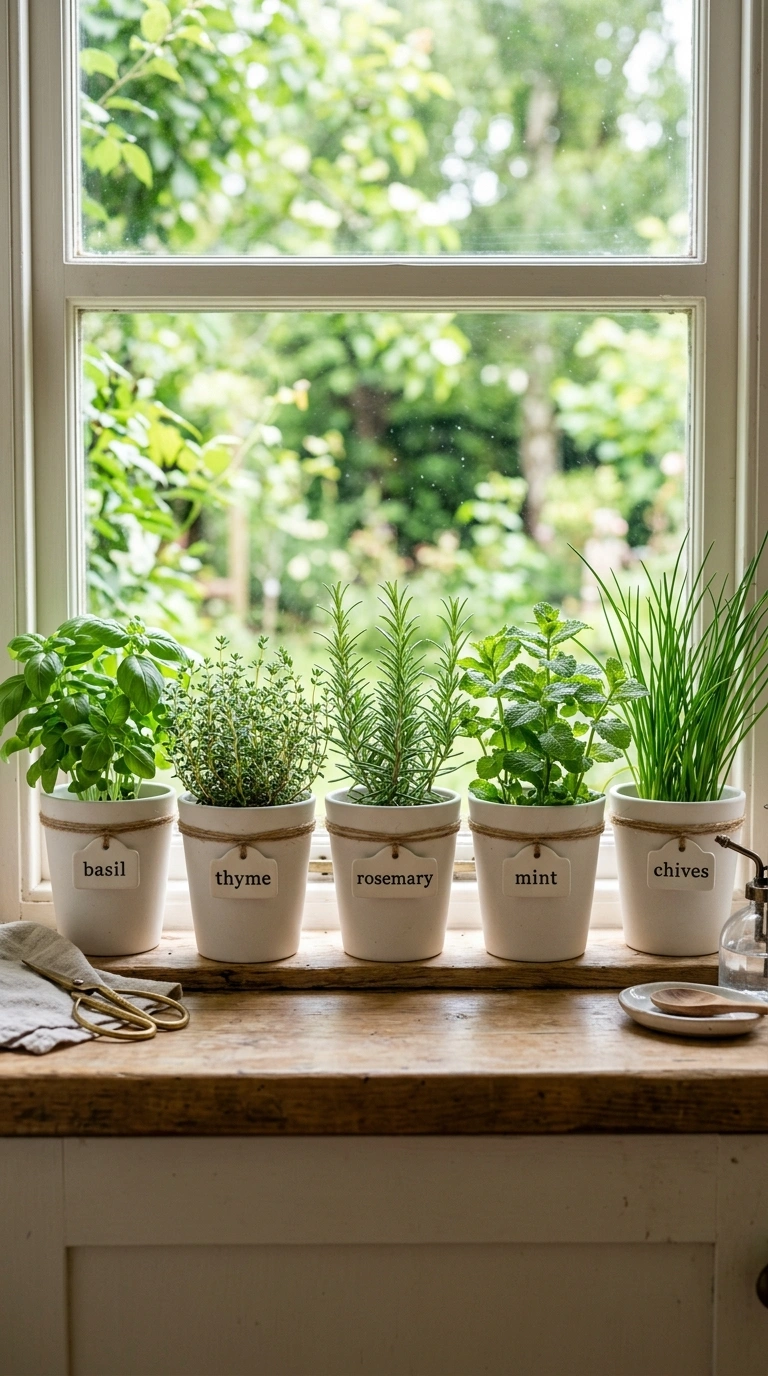
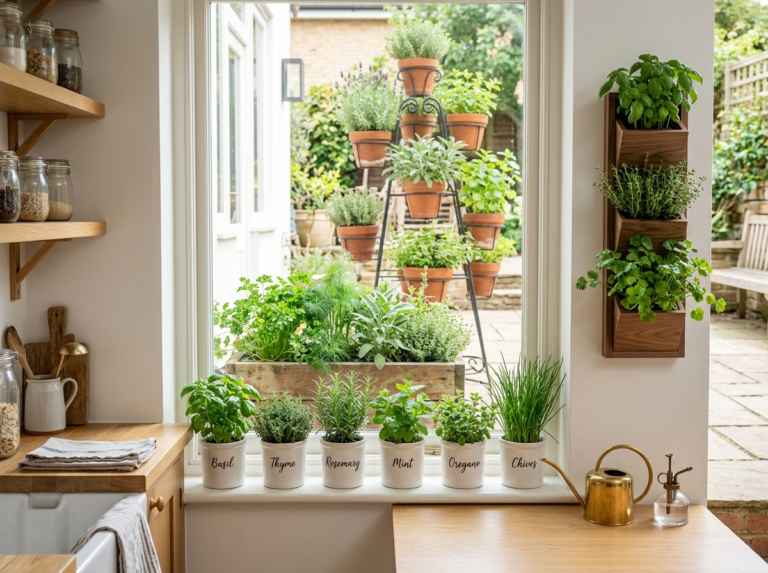
The simplest way to make a herb garden look designed rather than haphazard is to use matching pots. A row of five identical terracotta pots, a set of matching white ceramic pots, a collection of the same matte black pots, or a group of identical wooden boxes all create visual consistency that makes the herb garden read as a curated arrangement rather than a random collection of whatever containers were available. The matching pots provide the uniformity and the different herb plants growing in them provide the variety. Label each pot consistently with the same style of label for a complete, organized look.
2. Kitchen Shelf Display
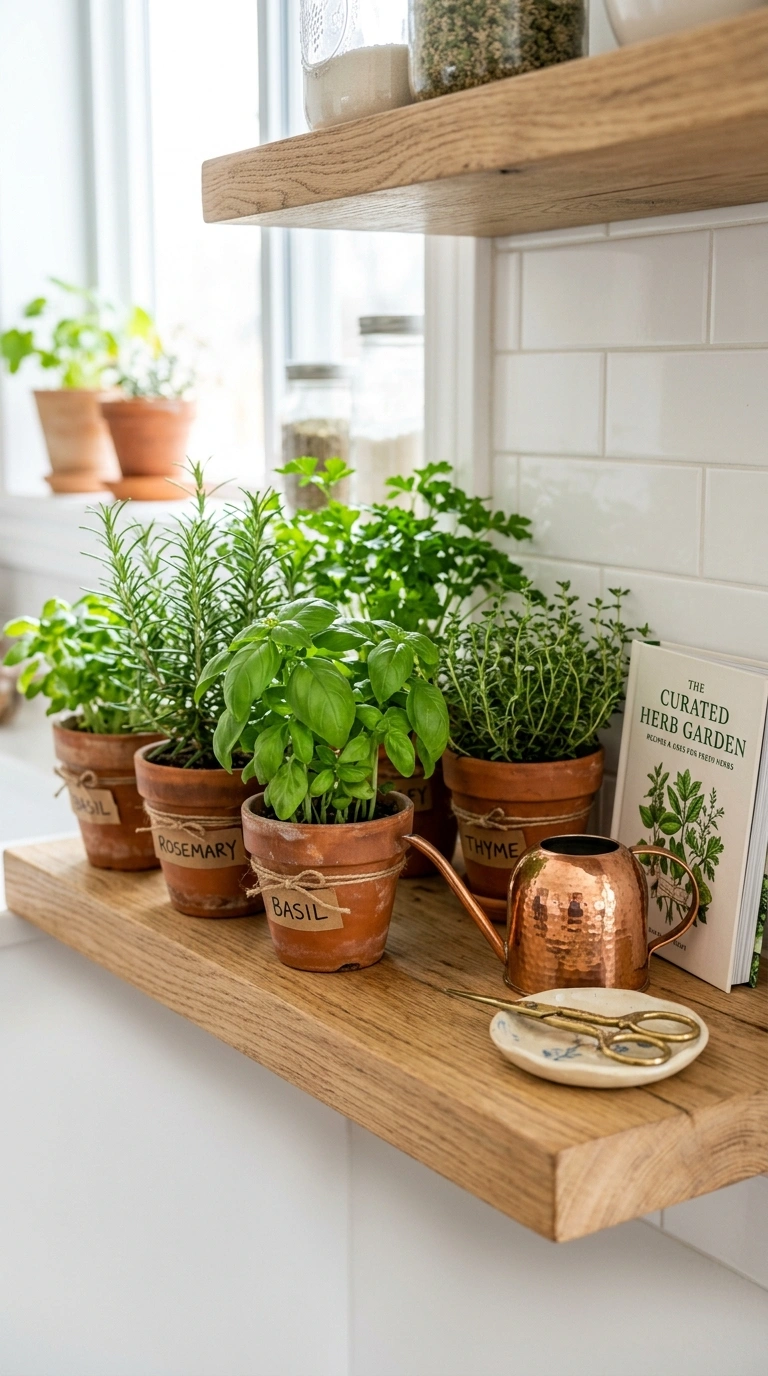
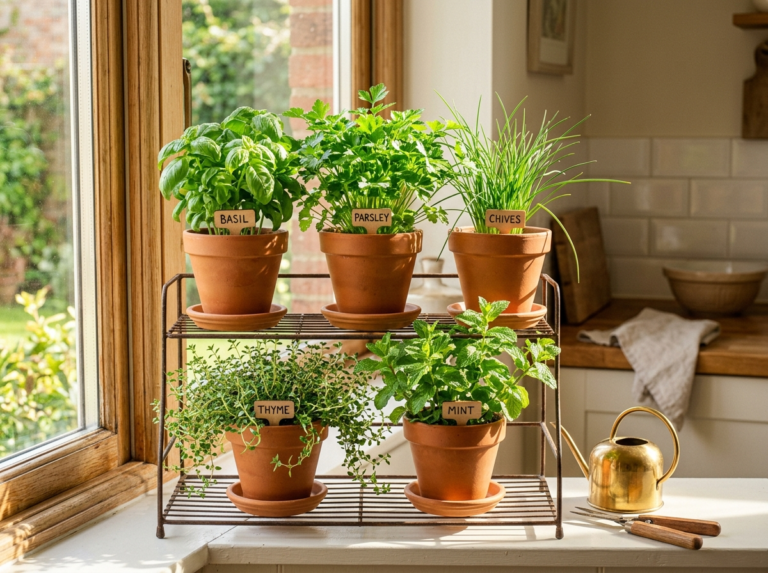
A dedicated kitchen shelf positioned near the window, styled specifically as a herb display shelf, turns the herbs from a functional growing project into a genuine kitchen design feature. The shelf should hold the herb pots alongside a few complementary objects: a small watering can, a pair of garden scissors, a ceramic dish for harvested clippings, and perhaps a small cookbook about cooking with herbs. The combination of functional herb growing equipment and styled accessories on a single shelf reads as both a working herb station and a designed kitchen moment. The same approach to mixing functional and styled objects on a single shelf works throughout the kitchen, as covered in the indoor herb garden guide which covers the practical growing side in detail.
3. Vertical Wall Garden
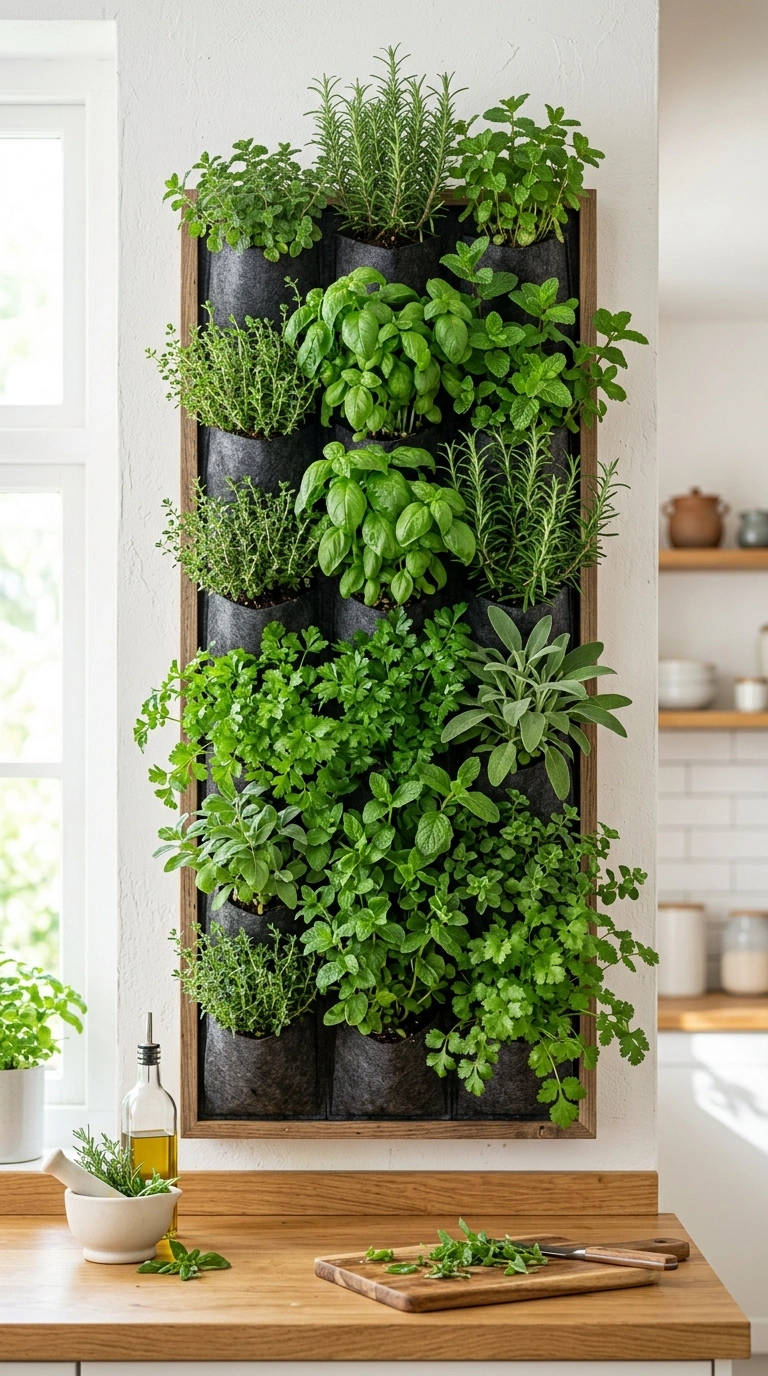
A wall-mounted vertical herb garden, whether a living wall panel, a set of wall-mounted planters, or a custom-built frame with planting pockets, turns a blank kitchen or patio wall into a green living feature. The vertical format uses no floor or counter space and creates a dramatic visual impact that flat counter arrangements cannot match. Choose a wall that receives adequate light and install a simple drip irrigation system or water by hand with a small watering can. A vertical herb wall beside the stove or the outdoor cooking area keeps the herbs at a convenient harvesting height while making a strong design statement.
4. Terracotta Pot Grouping
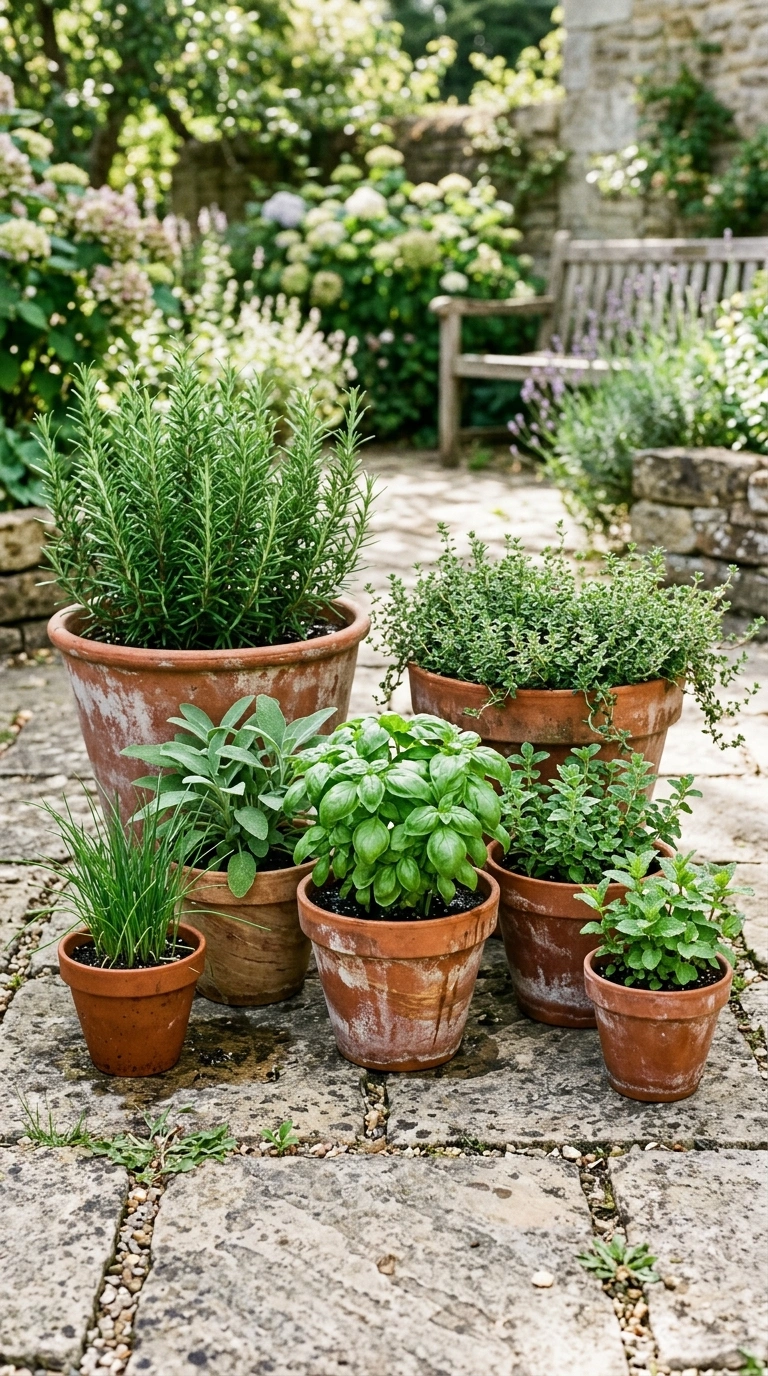
A grouping of terracotta pots in different sizes arranged on a kitchen counter, a patio step, or a garden bench creates the warm, organic, slightly imperfect quality that the terracotta material naturally provides. The natural variation in terracotta color between pots, the slight irregularities in shape, and the white mineral deposits that appear with regular watering all contribute to a warm, lived-in quality that plastic and manufactured containers cannot match. Group the pots in odd numbers, three, five, or seven, for the most natural-looking arrangement. The different sizes create visual rhythm that a row of identical pots does not have.
5. Outdoor Spiral Design
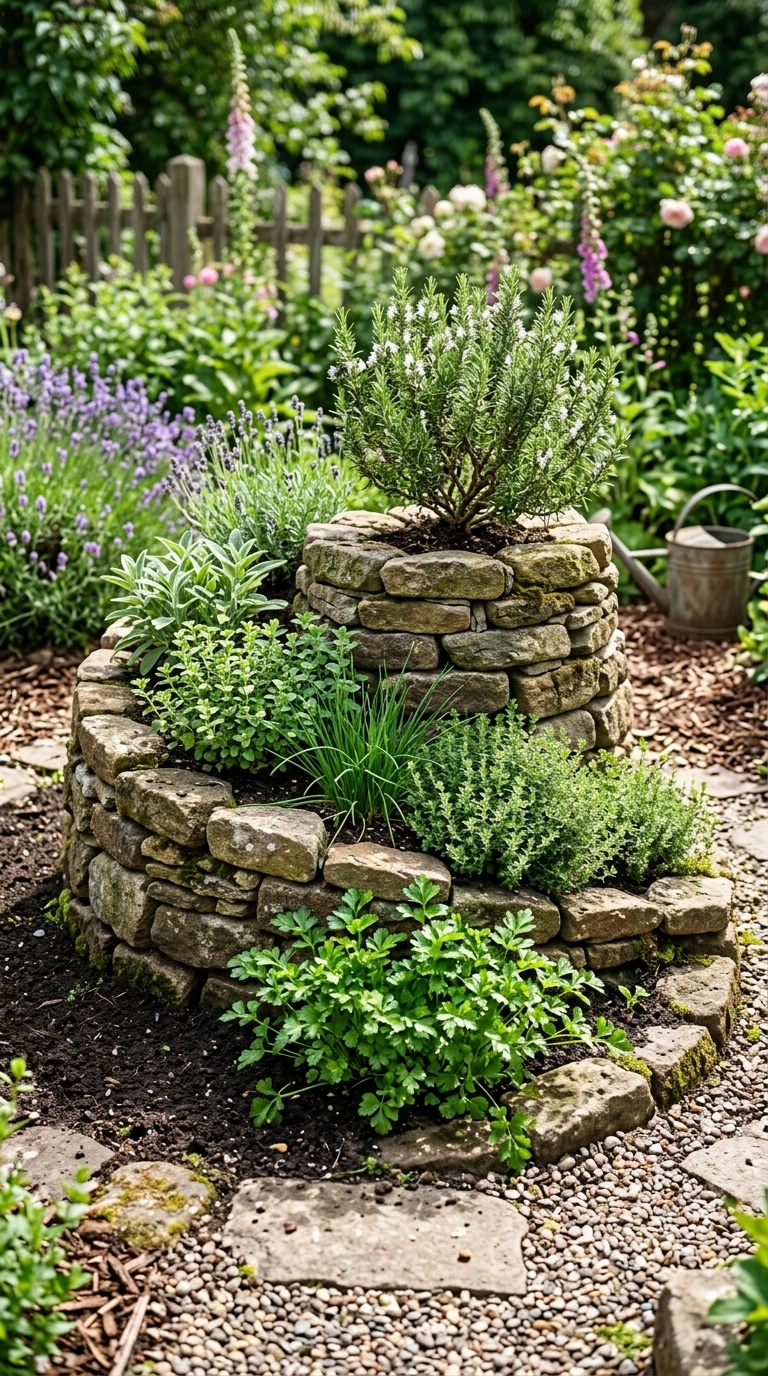
A spiral herb garden built from stacked stones, bricks, or concrete blocks in a gradually ascending spiral creates a striking landscape feature that also provides multiple growing conditions in a single structure. The top of the spiral is the driest and warmest, suited to Mediterranean herbs like rosemary, thyme, and oregano. The bottom is the coolest and most moist, suited to parsley, cilantro, and chives. The spiral shape naturally guides the eye from the base to the top and creates a sculptural garden element that looks designed and intentional from every angle. A spiral herb garden of four to five feet in diameter is compact enough for a small garden or a corner of a patio.
6. Window Box Outdoor Charm
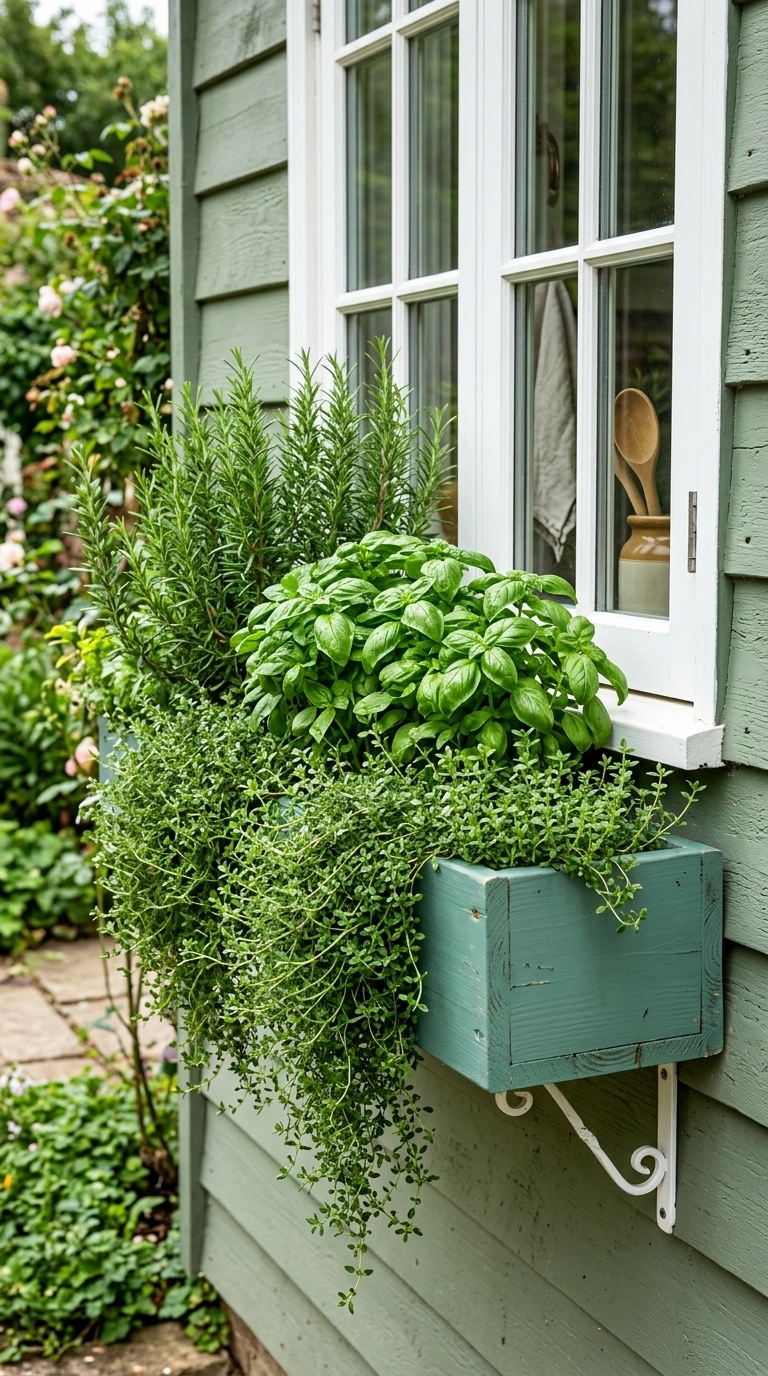
Window boxes mounted below kitchen windows, dining room windows, or any south-facing window give the exterior of the home the charming cottage quality of visible growing herbs while keeping the herbs accessible through the window for easy harvesting. Paint the boxes to complement the exterior trim color for the most designed result. Plant a mix of herbs with varied heights and textures: tall rosemary at the back, bushy basil in the middle, and trailing thyme at the front to spill over the edge. The combination of heights and textures creates a lush, layered look in a contained rectangular format.
7. Labeled Kitchen Station
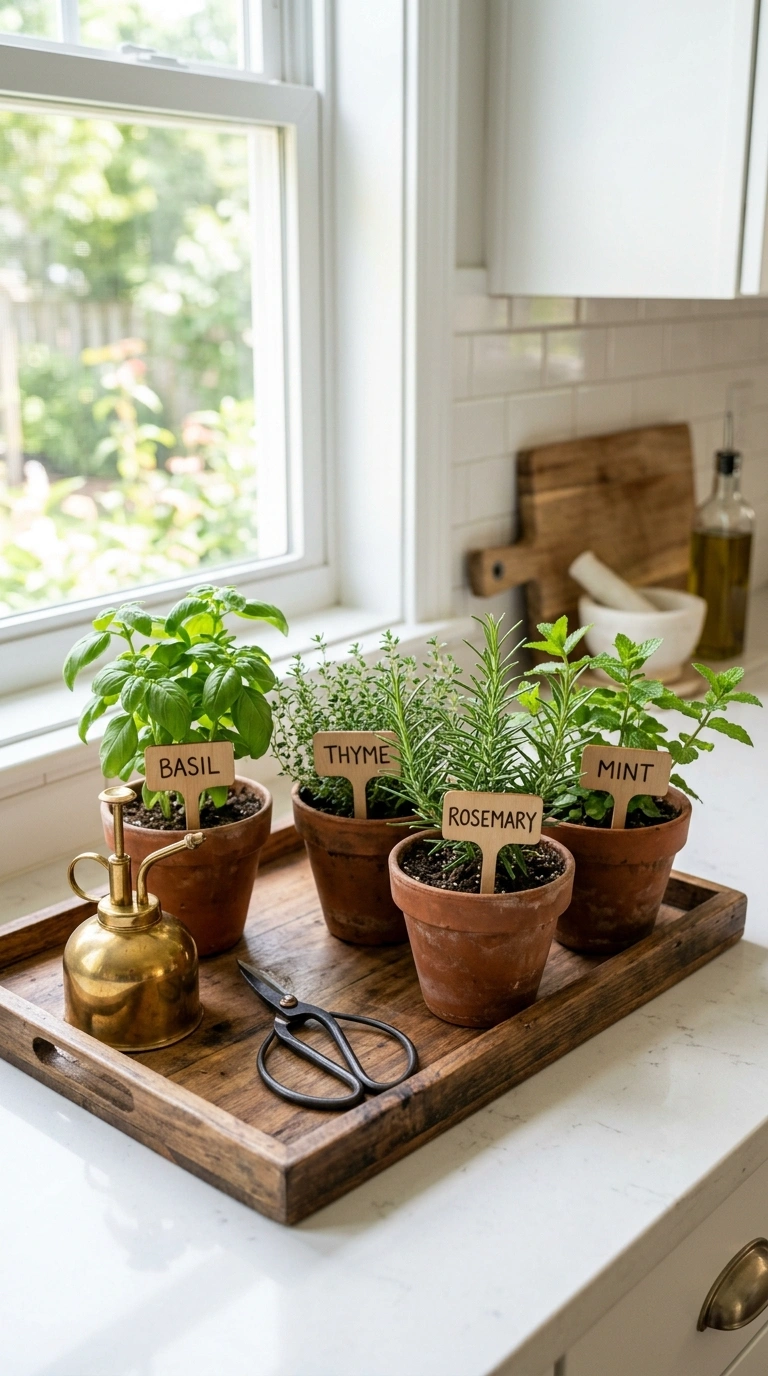
A complete herb station on the kitchen counter, including the herb pots, a small watering can, a pair of herb scissors, a ceramic dish, and consistent labels on every pot, reads as a designed functional station rather than a casual collection of plants. The station becomes a small vignette on the counter that signals a kitchen used by someone who cooks with genuine care and intention. Position the station near the main cooking area so the herbs are within arm’s reach during food preparation. Keep the styling clean and the accessories minimal so the station reads as a working tool rather than a decorative display.
8. Raised Bed Layout
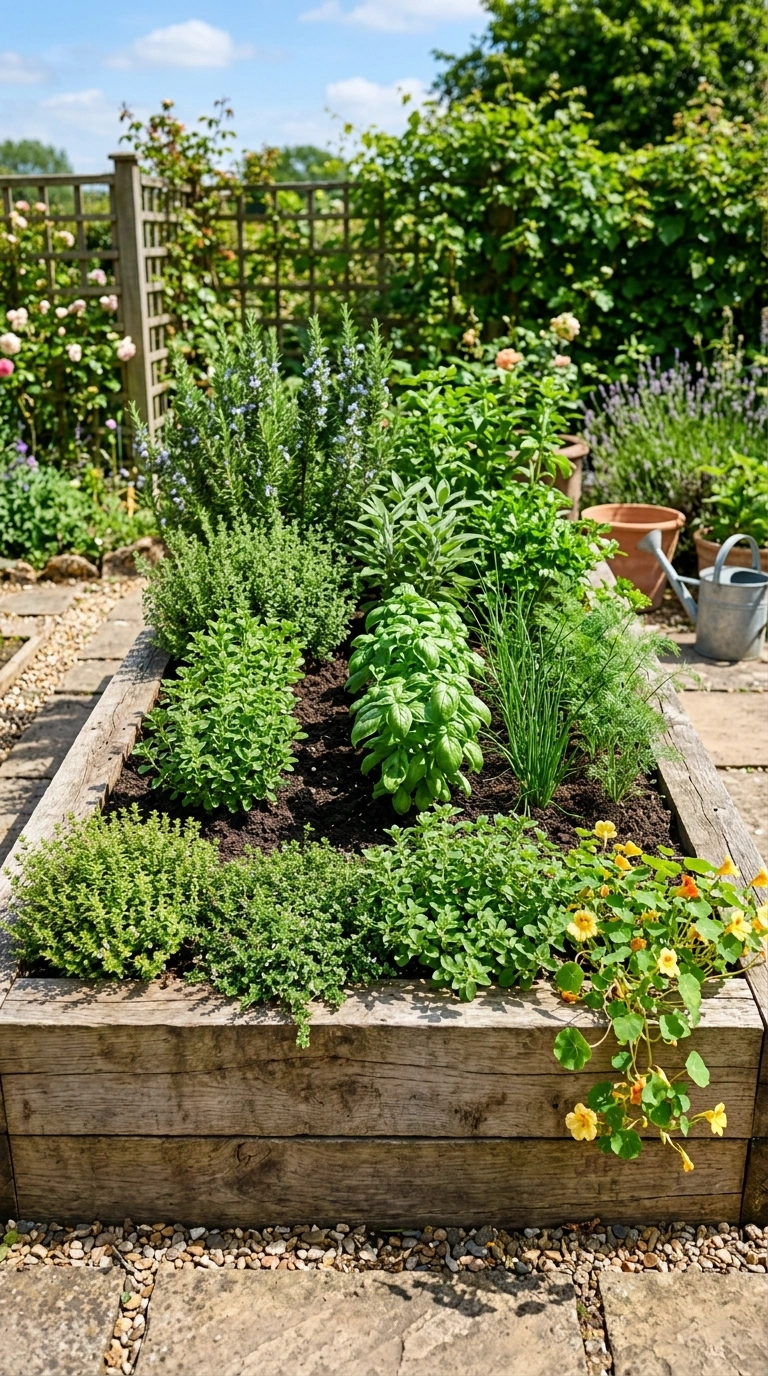
A raised herb bed built from timber, stone, or brick in a simple rectangular or square format creates a dedicated outdoor growing space that reads as a permanent garden feature rather than a temporary project. Position the raised bed in the sunniest spot available and fill with a quality raised bed mix enriched with compost. Plant the herbs in a deliberate layout: taller herbs like rosemary and sage at the back, medium herbs like basil and parsley in the middle, and low spreading herbs like thyme and oregano at the front edges. The layered planting creates visual depth that flat single-height planting does not have.
9. Hanging Tier System
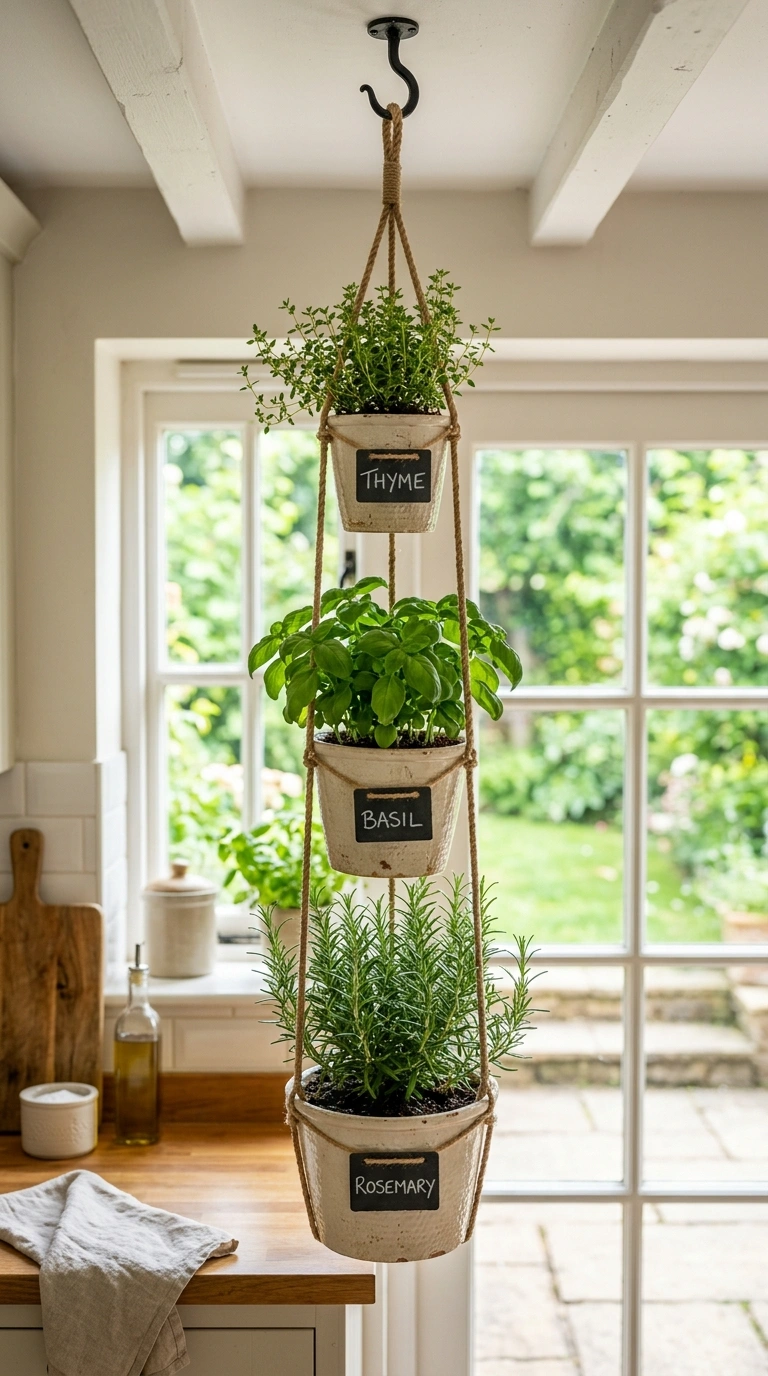
A three-tier hanging planter system suspended from a ceiling hook, a porch beam, or a strong wall bracket holds three levels of herbs in the vertical space above a counter, a table, or a porch floor. The tiered system puts the herbs at different heights, which creates visual interest and keeps each level accessible for watering and harvesting. Plant the most frequently used herbs on the lowest tier for easiest access. The hanging tier system works particularly well in kitchens with limited counter space and on small apartment balconies where floor space is at a premium.
10. Stone Trough Planter
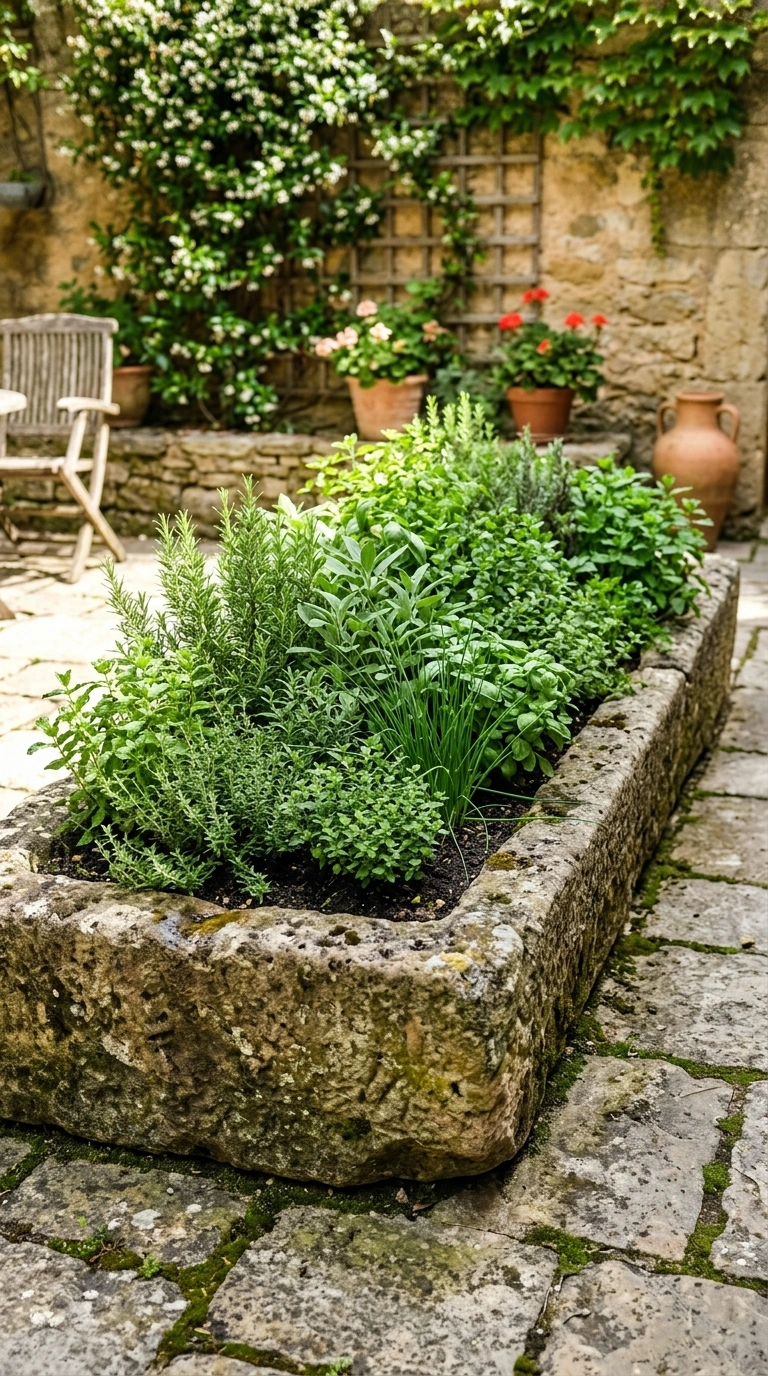
A long shallow stone trough, whether genuine carved stone or a concrete replica, planted with a row of herbs creates a heavy, permanent-feeling herb garden that reads as a serious landscape element. The stone material has a weight and solidity that lighter planters cannot match, and the natural surface ages beautifully with moss and mineral deposits over time. Position the stone trough on a patio, a garden path, or at the entrance to the kitchen garden. Plant a mix of herbs that will grow together attractively over the season, allowing them to soften the stone edges with their growth.
11. Color Coordinated Pots
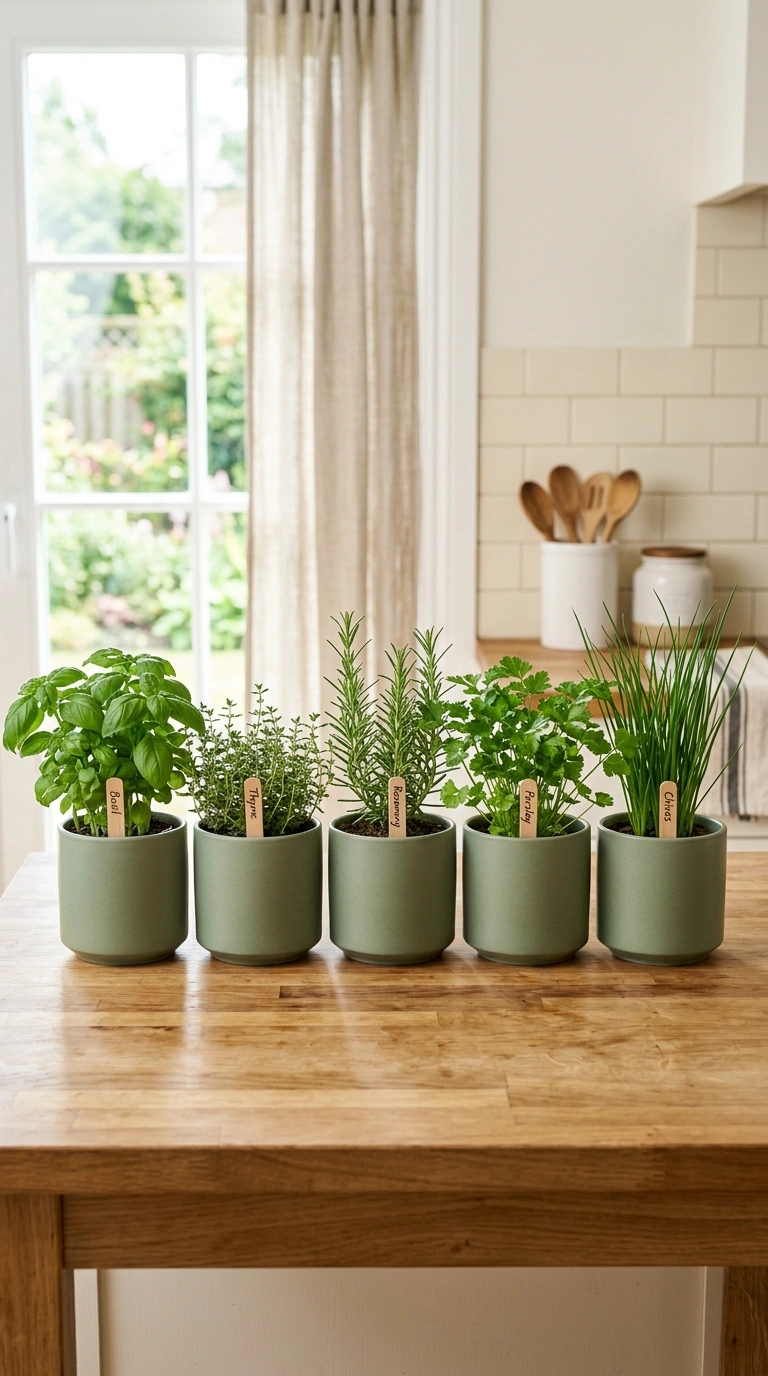
Choosing herb pots in a single coordinated color, whether all sage green, all warm terracotta, all matte white, or all charcoal, creates visual unity across the herb garden that random pot colors cannot achieve. The single-color pot collection makes the green herbs themselves the visual variety while the containers provide the calm consistent base. This approach works on a windowsill, a shelf, a counter, a patio, or any arrangement where multiple pots are visible together. The color should suit the surrounding space: terracotta in a warm kitchen, matte white in a modern kitchen, sage green in a cottage-style setting.
12. Companion Herb Planting
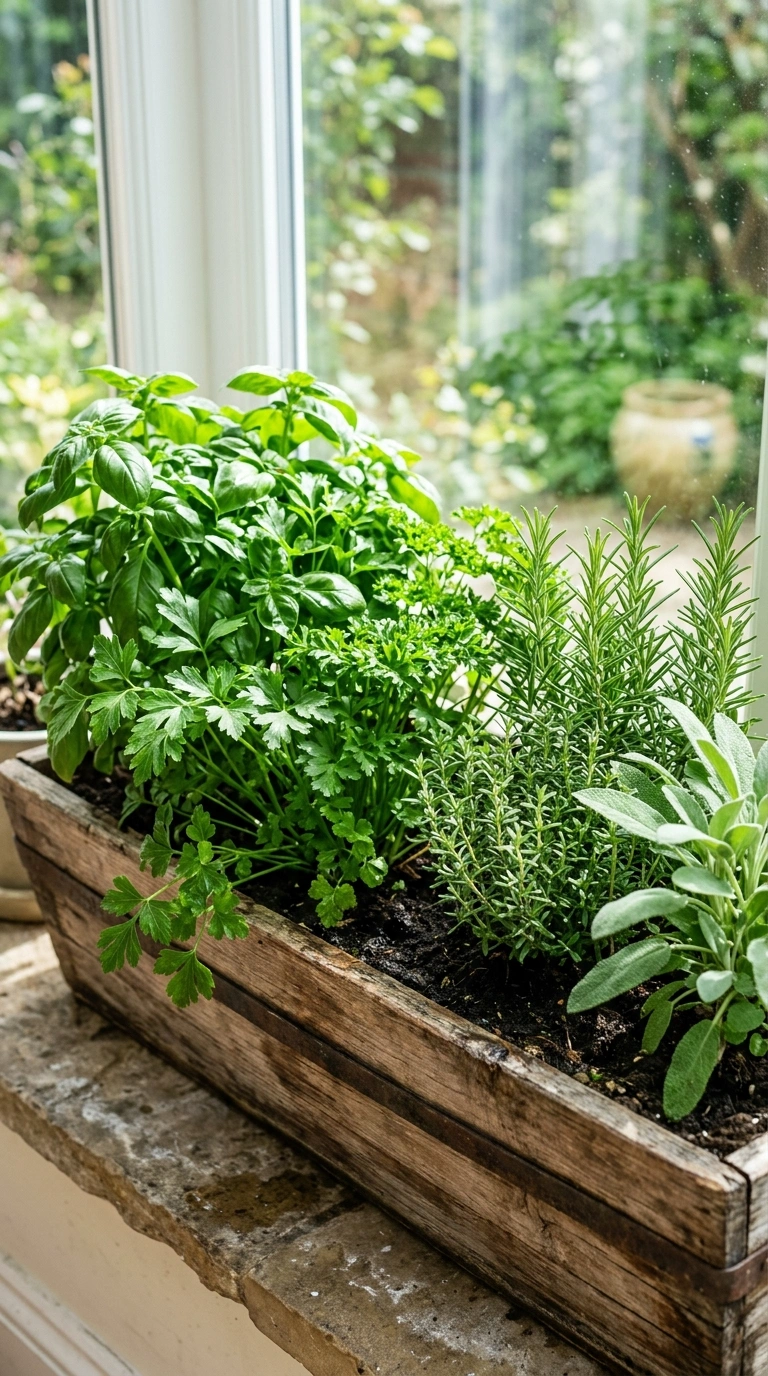
Certain herbs grow better when planted beside specific companions, and using this knowledge creates a herb garden that is both smarter and more attractive. Basil and parsley grow well together and create a nice height contrast. Rosemary, thyme, and sage share similar water and light needs and look beautiful as a Mediterranean trio. Mint should always be alone since it crowds out everything. Planting compatible herbs together in shared containers creates lush, full arrangements that look more like intentional garden design than single-herb pots growing in isolation.
13. Outdoor Path Border
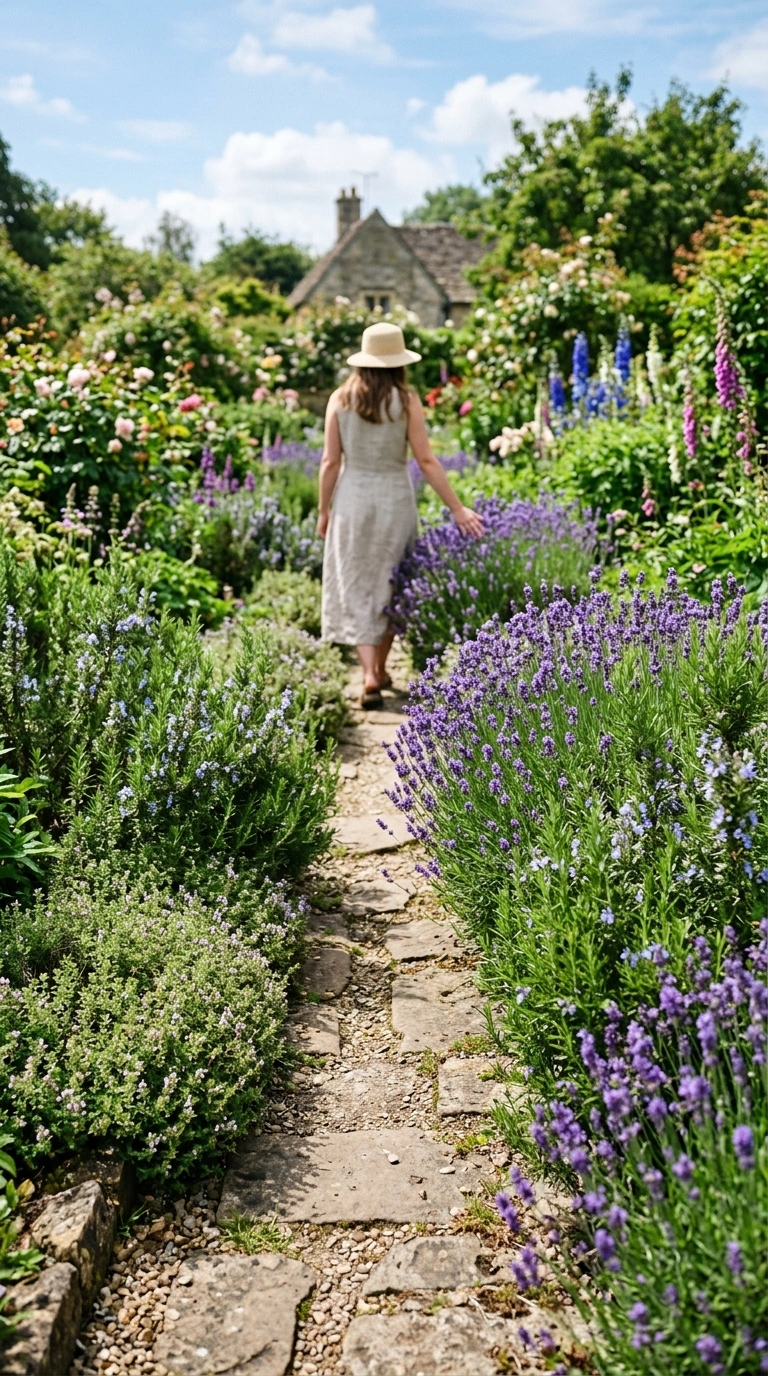
Planting herbs as a border along a garden path, the edge of a patio, or beside the front walkway creates a fragrant, practical, and visually beautiful edging that is released when brushed against while walking. Lavender, rosemary, thyme, and sage are all excellent path border herbs because they are hardy, aromatic when touched, and maintain attractive forms through the growing season. The herbs soften the hard edges of the path or patio material and create the kind of casual abundant planting that makes a garden feel generous and well-loved.
14. Wooden Ladder Display
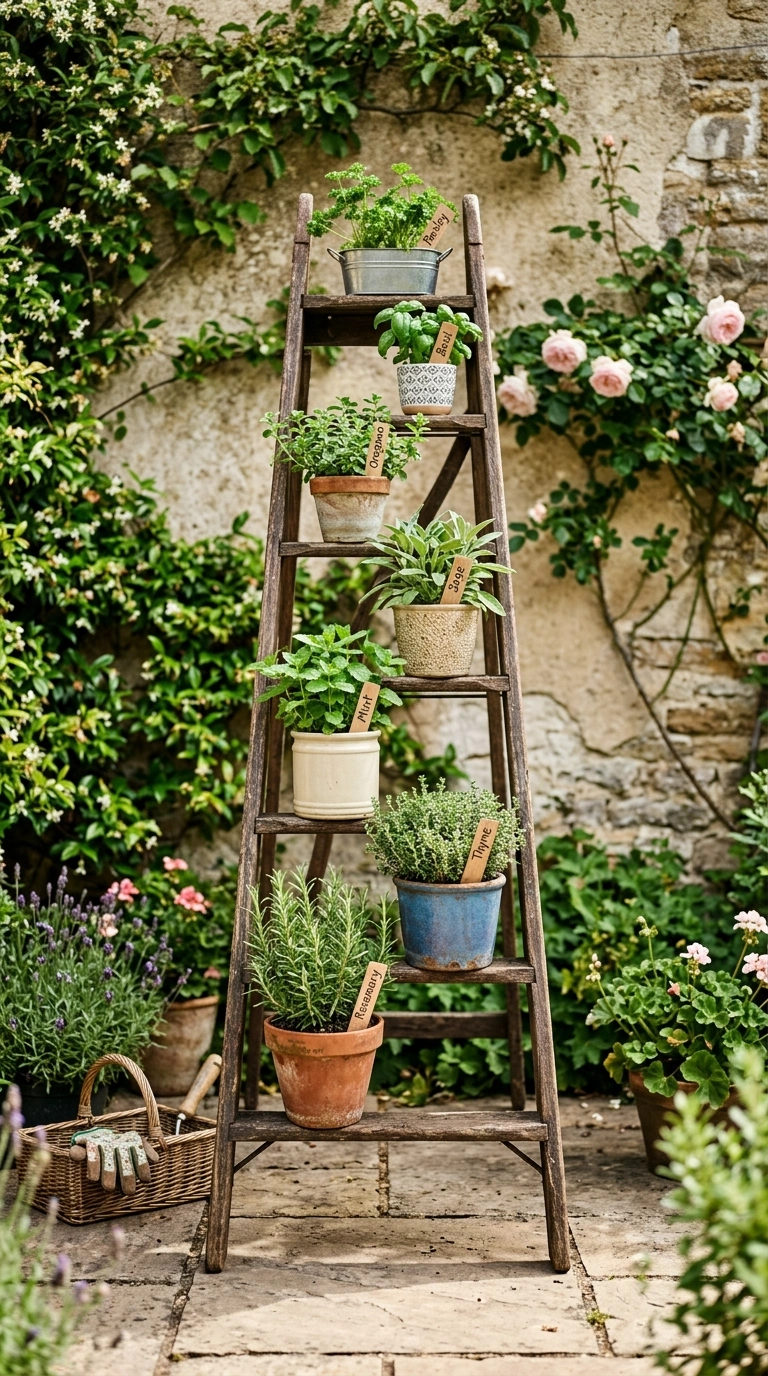
A wooden ladder, either a vintage orchard ladder or a simple A-frame step ladder, used to display herb pots at various heights creates a styled herb garden display that looks like a piece of garden furniture. Position the ladder against an exterior wall, on a patio, or in a sunny kitchen corner. Place herb pots on each step at different positions for a casual, unstudied arrangement. The warm wood of the ladder suits the organic quality of growing herbs, and the vertical display uses significantly less floor space than the same number of pots arranged on a flat surface.
15. Pergola Hanging Display
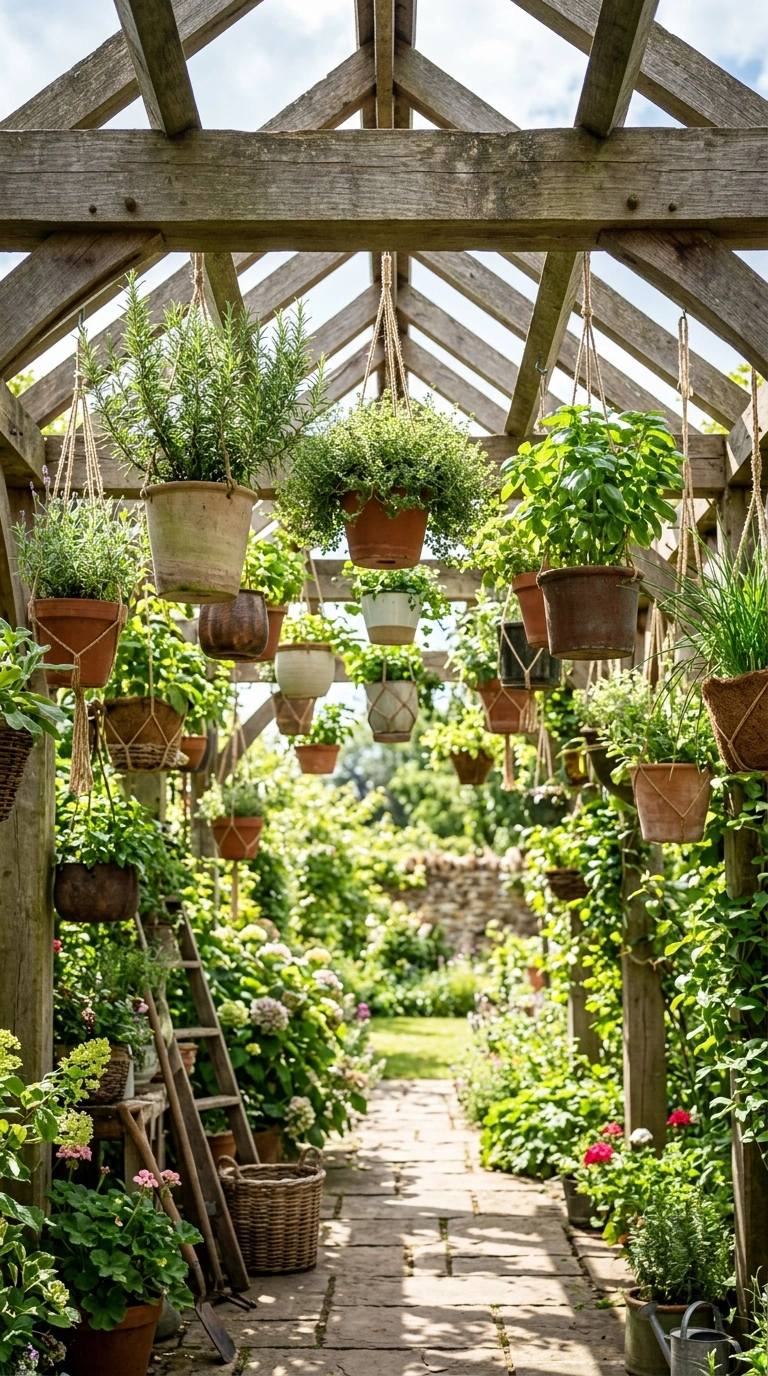
Herbs in hanging pots suspended from a garden pergola, a patio beam, or an arbor create an overhead garden canopy that provides both growing space and dappled shade below. Hang the herbs at different heights for visual interest and position the most aromatic herbs, rosemary, lavender, mint, where their scent will be released by passing below them. The overhead display keeps the herbs at a convenient harvesting height and creates a fragrant green ceiling that transforms the space below into something genuinely garden-like.
16. Tiered Planter Stand
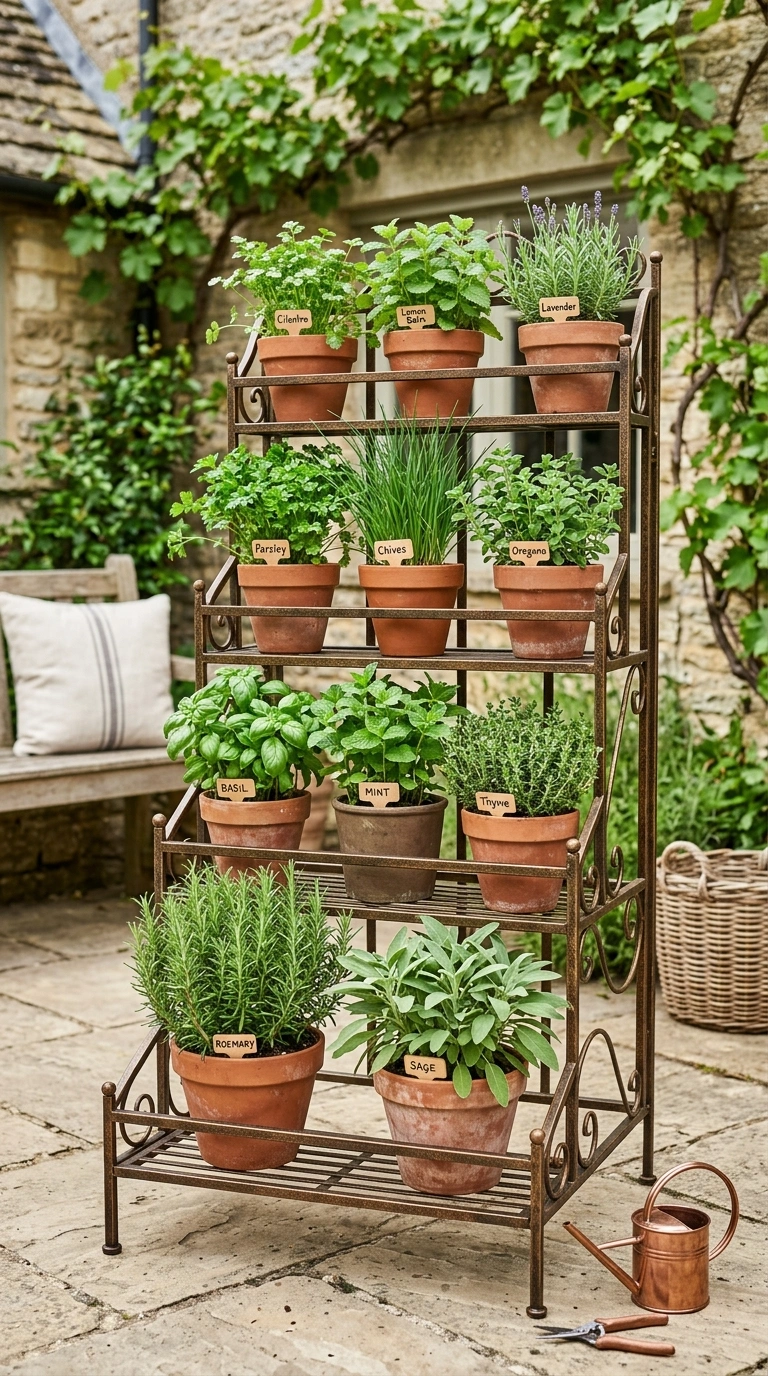
A tiered metal or wooden planter stand with three or four shelves at staggered heights holds a complete herb collection in a compact footprint that reads as a piece of styled garden furniture. Position the stand on a patio, a balcony, or beside the kitchen door where the herbs receive adequate light and are accessible during cooking. The tiered format shows each herb at a different height, which creates visual interest and ensures adequate light reaches all levels. Choose a stand in a finish that suits the surrounding space: matte black or aged bronze for modern settings, natural wood for rustic or cottage settings.
17. Kitchen Counter Tray
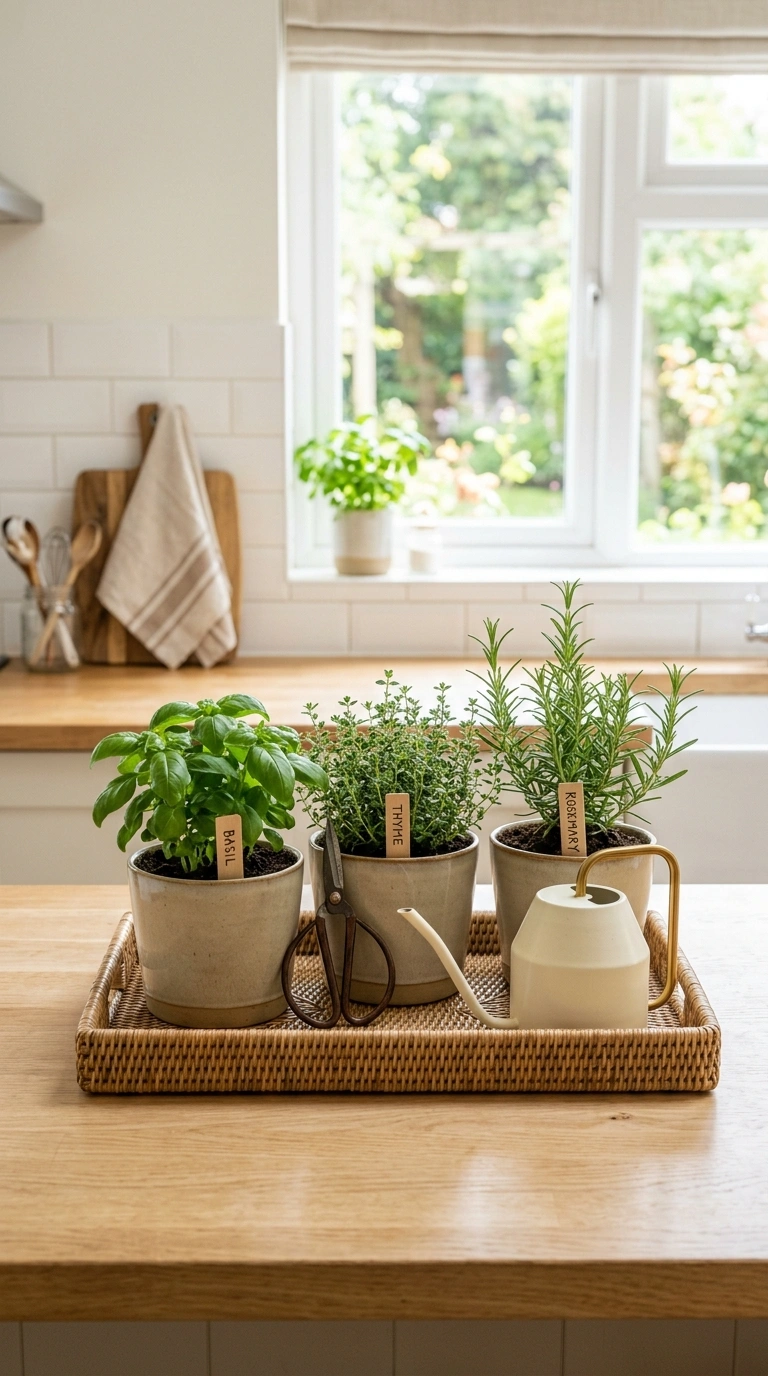
A simple wooden or ceramic tray on the kitchen counter holding three to five herb pots, a small watering can, and a pair of scissors creates a contained herb station that is both functional and attractive. The tray contains any water drips and keeps the herb setup organized as a single visual unit rather than scattered pots. Move the entire tray to follow the sunlight during the day or to clear the counter for meal prep. A tray in a warm material, natural wood, woven rattan, or warm ceramic, adds a designed quality to the herb station that loose pots on a bare counter cannot achieve.
18. Formal Knot Garden Style
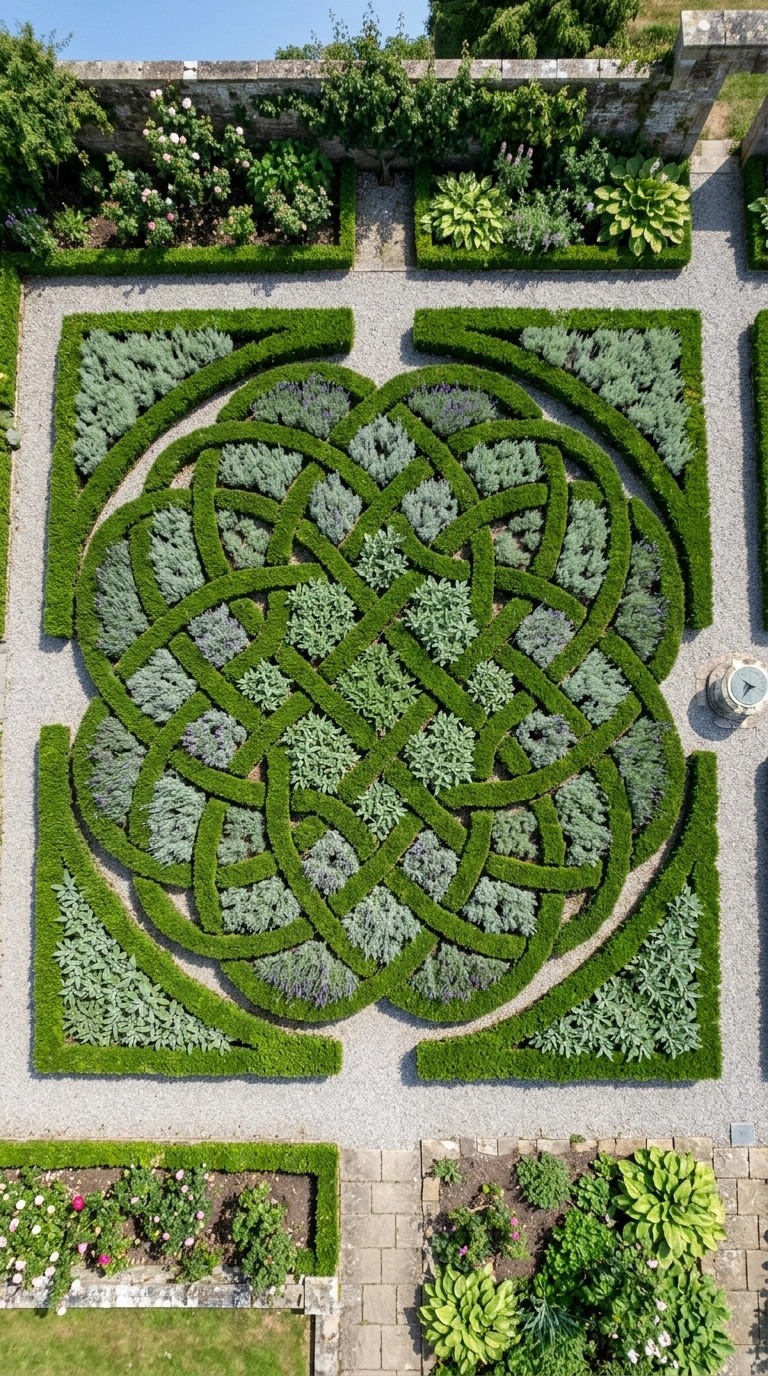
A formal knot garden layout, where herbs are planted in geometric interlocking patterns within a defined bed, creates a traditional garden design feature that has been used for centuries. Use small hedging herbs like box-leaf basil or compact thyme to create the lines of the knot pattern, and fill the spaces between with taller herbs like lavender, sage, and rosemary. The formal knot garden works best as a dedicated outdoor feature visible from above, such as from a kitchen window or a second-story balcony, where the geometric pattern can be appreciated fully. Even a very small knot garden of three by three feet creates a striking design moment.
19. Succulent and Herb Mix
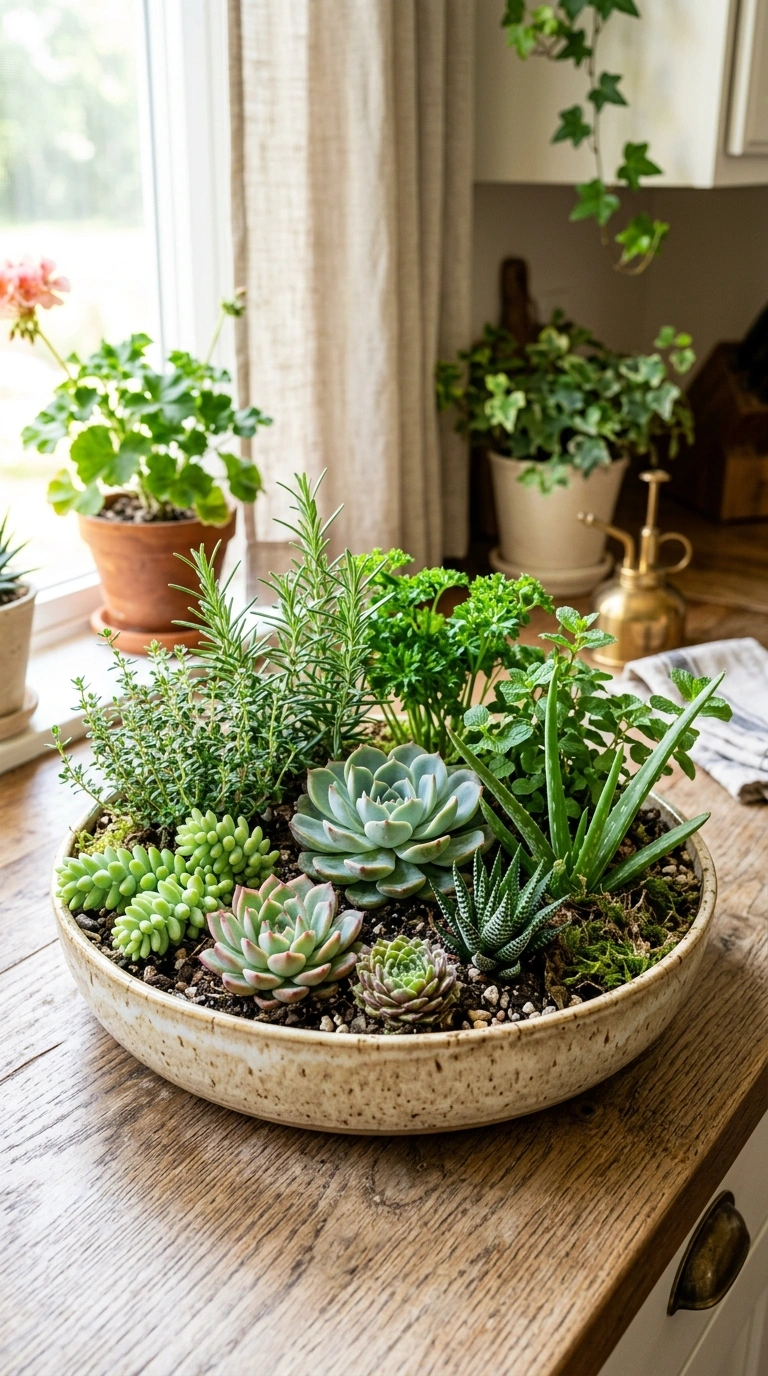
Combining small herb plants with succulents in a single mixed arrangement creates a visually rich container garden that has more textural variety than herbs alone. The succulents add unusual shapes, muted blue-green and purple tones, and a low-maintenance element that stays attractive even when the herbs are between harvests. Plant the herbs and succulents together in a large shallow dish or a long trough, mixing the heights and textures for maximum visual interest. This works particularly well on a kitchen counter or a patio table where the arrangement is viewed from close range.
20. Night-Lit Garden Display
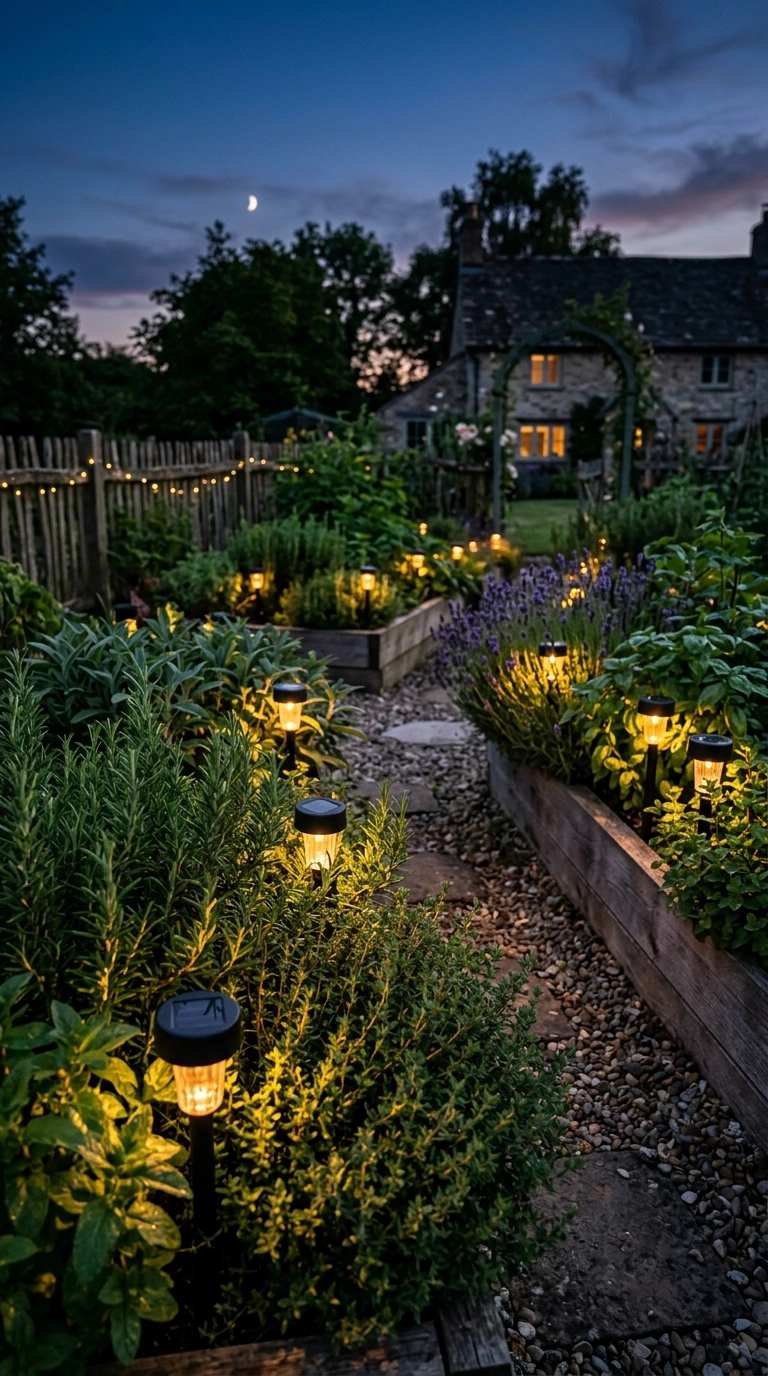
Adding small solar-powered garden lights or warm LED string lights to an outdoor herb garden creates an atmospheric evening quality that daytime herb gardens cannot match. The warm light illuminates the herbs from below or from within the arrangement, creating shadows and a glowing quality that makes the herb garden a visual feature even after dark. Solar path lights positioned among the herbs, warm string lights woven through a vertical herb wall, or a small solar-powered lantern placed in the center of a raised herb bed all work depending on the garden setup.
21. Seasonal Color Rotation
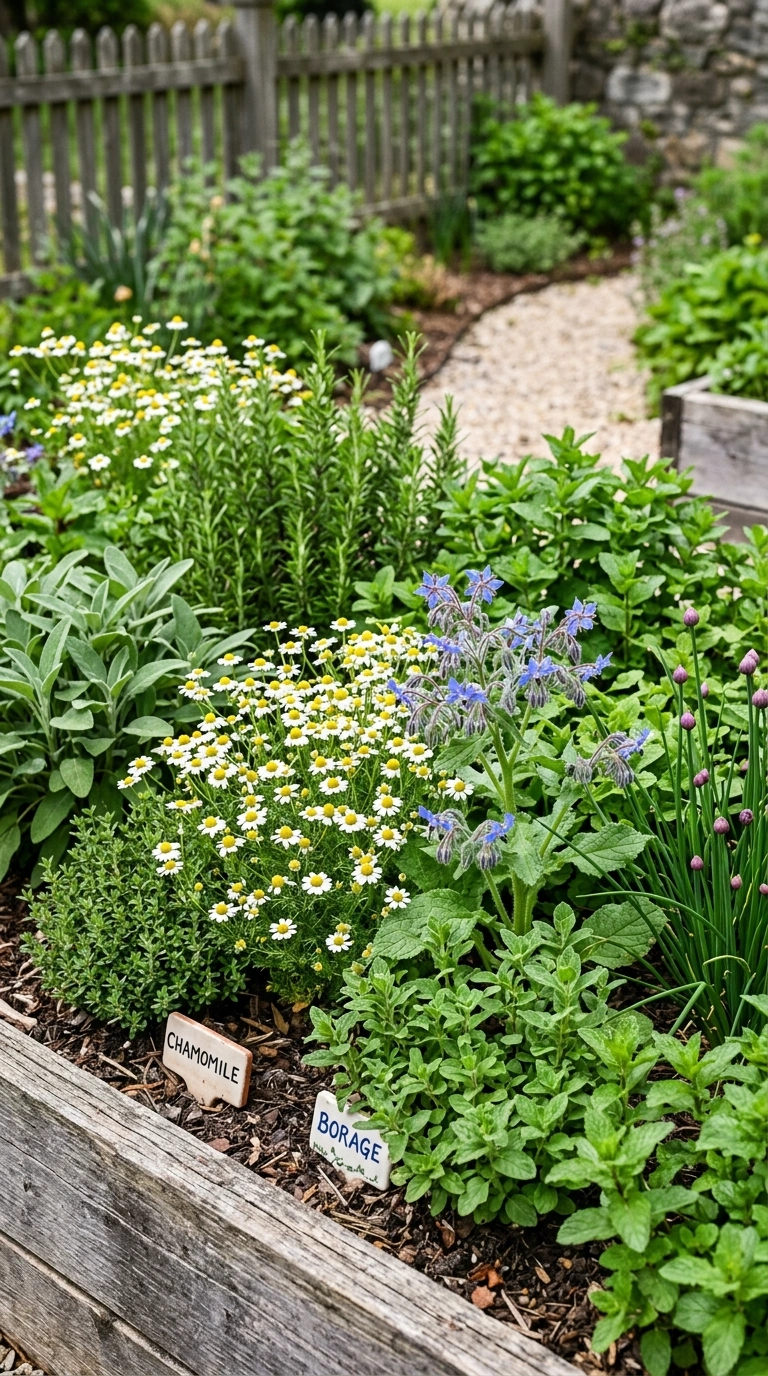
Designing the herb garden to change with the seasons keeps it looking alive and current throughout the year. In spring, add flowering herbs like chamomile, borage, and nasturtiums alongside the culinary herbs for color. In summer, let the Mediterranean herbs bloom, rosemary’s blue flowers and sage’s purple spikes add color to the green. In autumn, add ornamental varieties of basil with purple or ruffled leaves. In winter, bring the hardiest herbs indoors and replace the outdoor garden with evergreen herbs like rosemary and bay laurel. The seasonal rotation keeps the garden visually interesting year-round. For the practical side of keeping herbs productive indoors during winter months, the DIY herb garden projects guide covers buildable setups that work in indoor light conditions.
22. Let It Look Alive
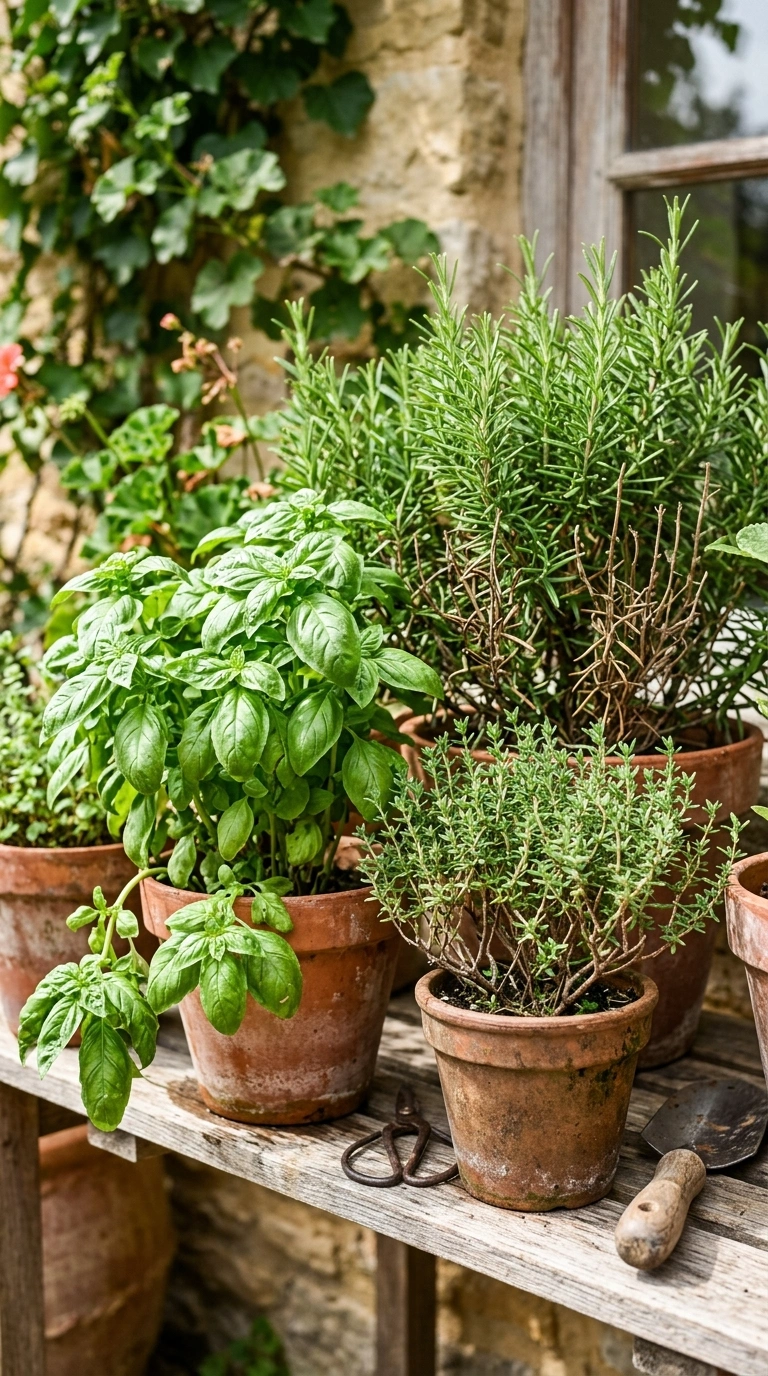
The most beautiful herb gardens are not the ones where every plant is perfectly trimmed and every pot is spotlessly clean. They are the ones where the herbs look like they are being actively grown, harvested, and used. A slightly overgrown basil plant spilling over the edge of its pot, a thyme plant that has been pinched back and is growing in three directions, a rosemary plant with a few dried stems mixed in with the fresh green growth, these are the signs of a herb garden that is part of a real kitchen rather than a photo set. Let the herbs look alive, a little wild, and a little imperfect, and the garden will read as genuine and beautiful rather than staged.
A herb garden that looks as good as it tastes is built on matching or coordinated containers, intentional arrangement, a few small styled accessories, and the willingness to let the herbs grow naturally rather than trimming them into perfection. The best-looking herb gardens are the ones that are also the most used, because the regular harvesting, the occasional imperfection, and the changing growth through the seasons are exactly what makes them look genuinely alive and loved rather than decorative.