20 Indoor Herb Garden Ideas That Actually Keep Herbs Alive and Growing
Most indoor herb gardens die within three weeks. The basil gets leggy and yellow, the cilantro bolts immediately, and the rosemary dries out despite being watered every day. The problem is almost never the herbs themselves. It is the setup. The pot is wrong, the light is insufficient, the watering is off, and the herbs were placed somewhere that looks good in a photo but does not actually work for growing. These 20 ideas focus on the practical side of indoor herb gardening, the setups, the techniques, and the specific choices that keep herbs alive and productive for months rather than weeks. A few of them cost almost nothing. All of them work in real kitchens and real apartments with real light conditions.
1. South-Facing Windowsill
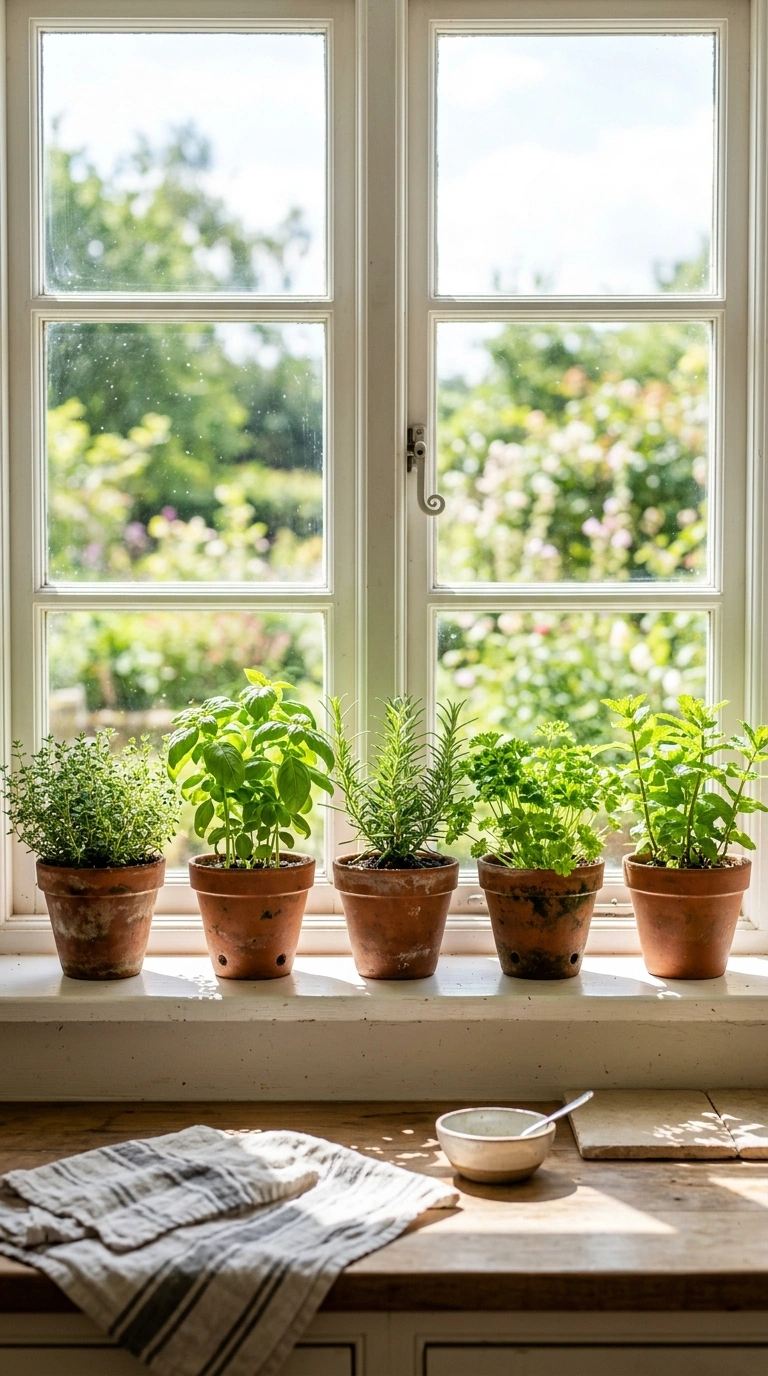
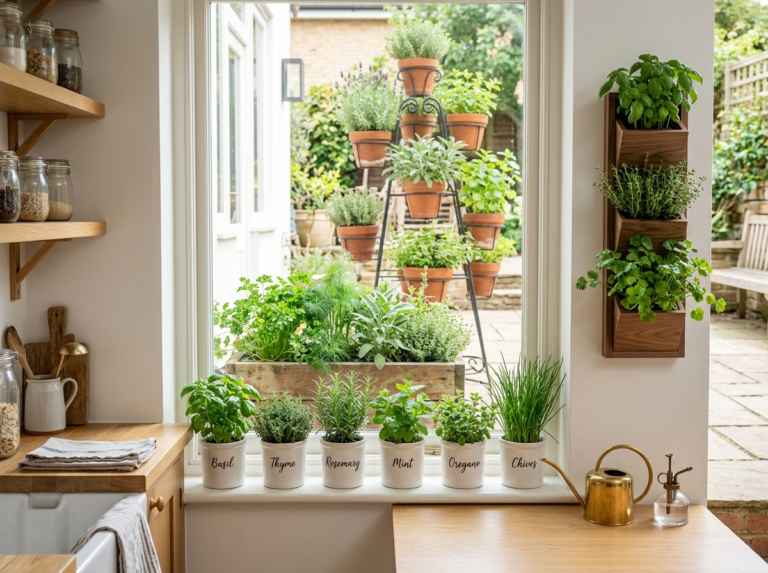
The single most important factor in keeping indoor herbs alive is light, and the best indoor light comes from a south-facing window that receives at least six hours of direct sunlight daily. A south-facing windowsill is the closest thing to outdoor growing conditions that an indoor setup can provide. Place the herbs as close to the glass as possible without the leaves touching it, since the light intensity drops dramatically even a few inches back from the window. If you have a south-facing kitchen window, that is your herb garden location. Everything else, the pots, the soil, the watering schedule, works around that light source.
2. Proper Drainage Pots
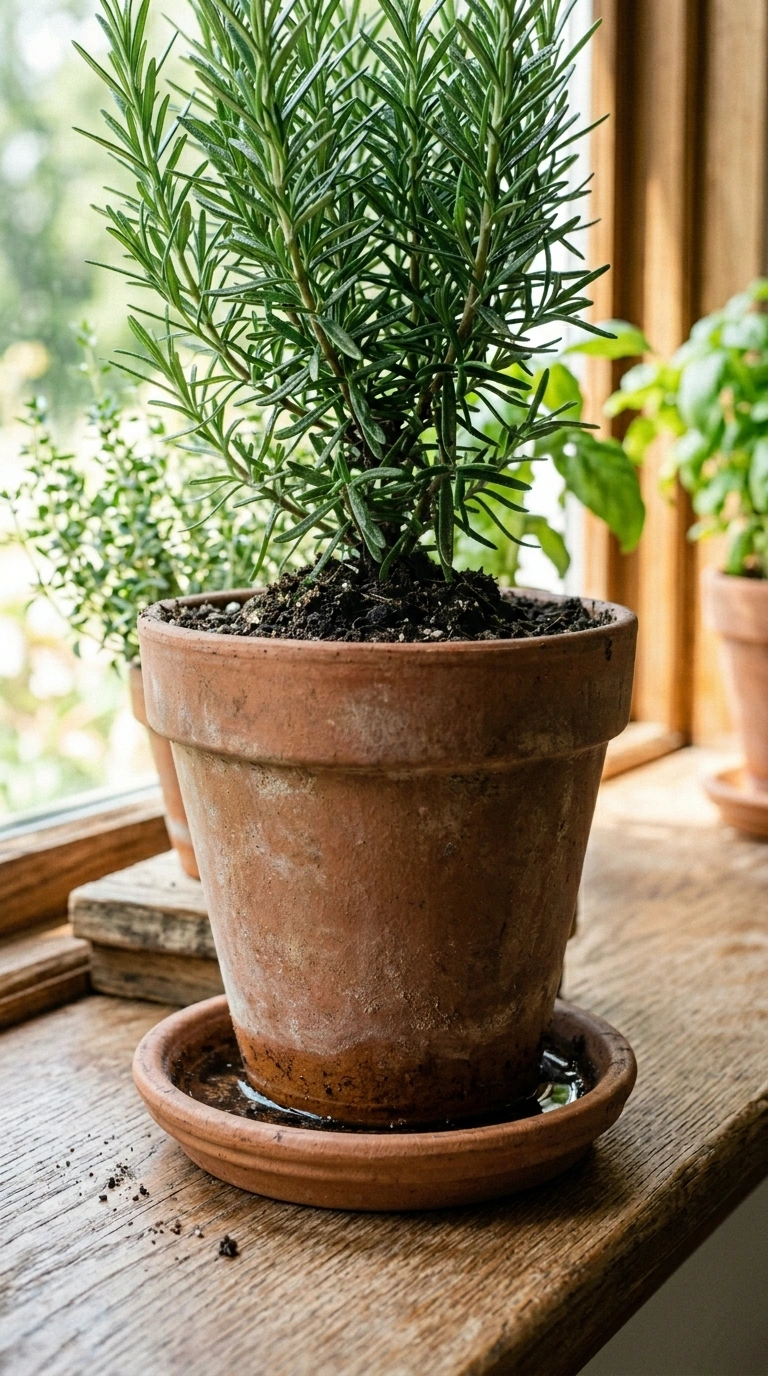
The most common reason indoor herbs die is overwatering, and the most common cause of overwatering is pots without drainage holes. Herbs need soil that dries out between waterings, and a pot without a drainage hole traps water at the bottom of the soil where the roots sit in constant moisture and rot. Use pots with drainage holes and a small saucer underneath to catch the excess water. Empty the saucer after watering so the pot is not sitting in standing water. Terracotta pots are particularly good for herbs because the porous clay wicks moisture away from the soil and allows the roots to breathe, which prevents the waterlogging that kills more indoor herbs than any other factor.
3. Best Beginner Herbs
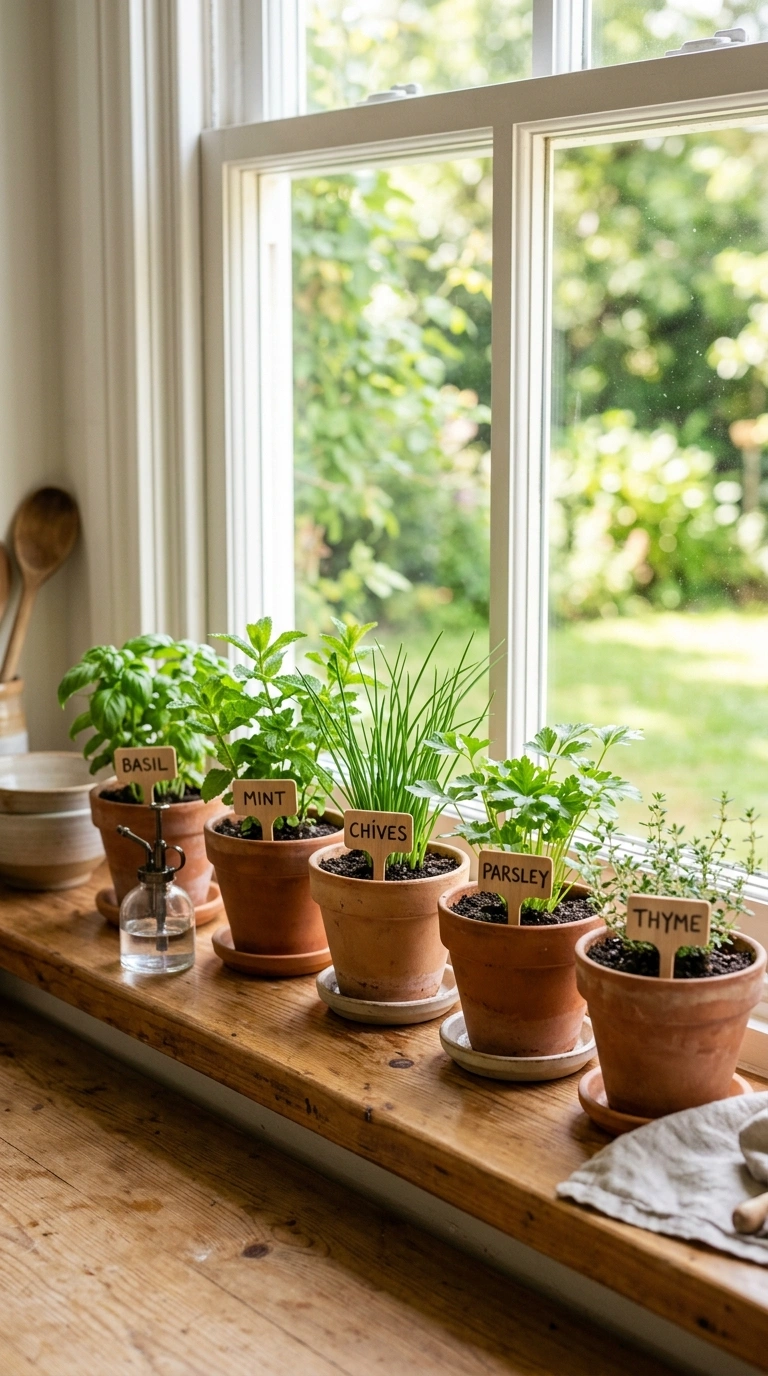
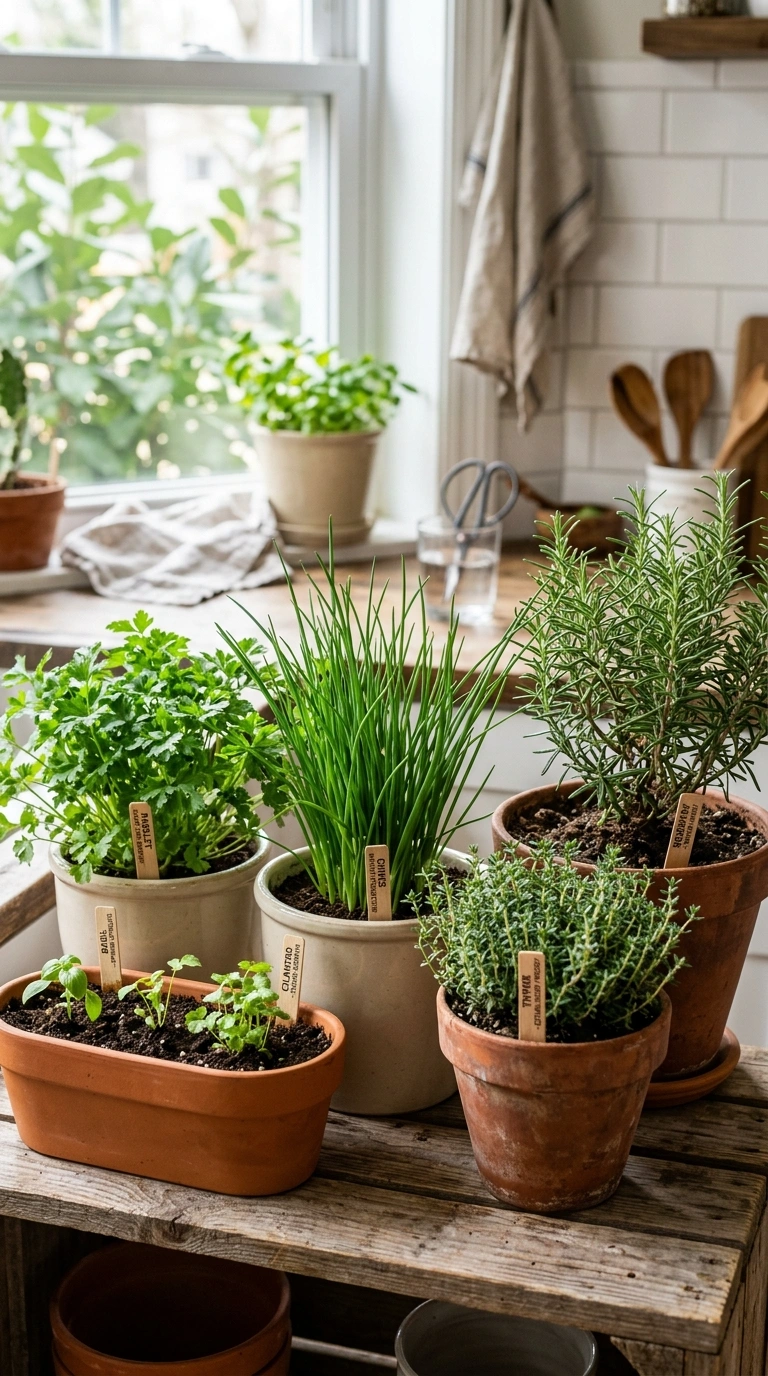
Not all herbs grow equally well indoors. The easiest herbs to grow on an indoor windowsill are basil, mint, chives, parsley, and thyme. These five tolerate the slightly lower light and drier air of indoor conditions better than most other herbs. Cilantro tends to bolt quickly indoors and is better grown in successive small batches. Rosemary needs very bright light and prefers cooler conditions than most heated homes provide. Dill grows tall and leggy without strong outdoor-quality light. Start with the easy five, build confidence and a working system, and then experiment with the more challenging herbs once the basics are established.
4. Self-Watering Planter System
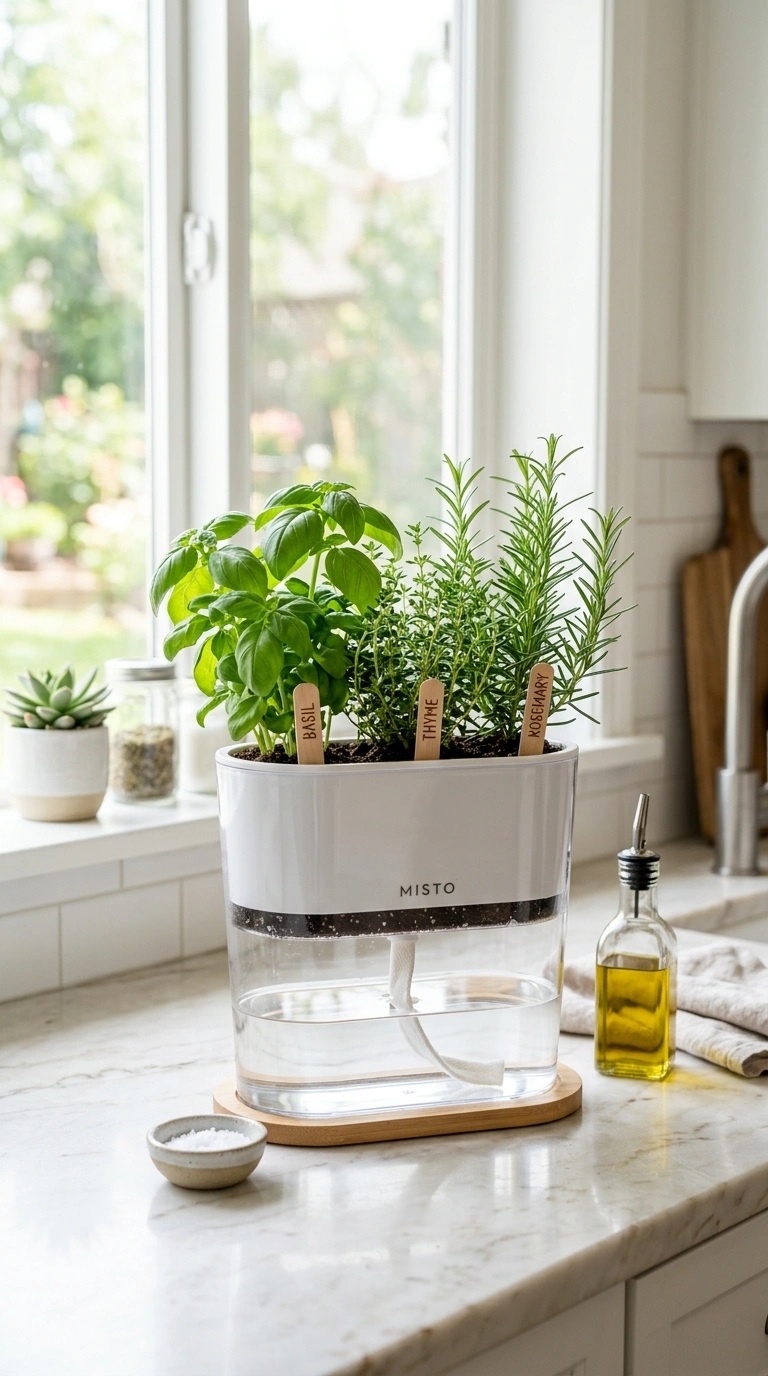
A self-watering planter with a built-in water reservoir at the base delivers moisture to the soil from below through a wicking mechanism, which keeps the soil consistently moist without the fluctuation of manual watering. Self-watering planters are particularly useful for herbs that prefer consistent moisture, like basil and parsley, and for households where watering schedules are inconsistent. The reservoir typically holds enough water for several days, which means the herbs survive weekends and short trips without drying out. Many self-watering planters are designed specifically for windowsill herb gardens and include multiple compartments for different herbs.
5. Grow Light Supplement
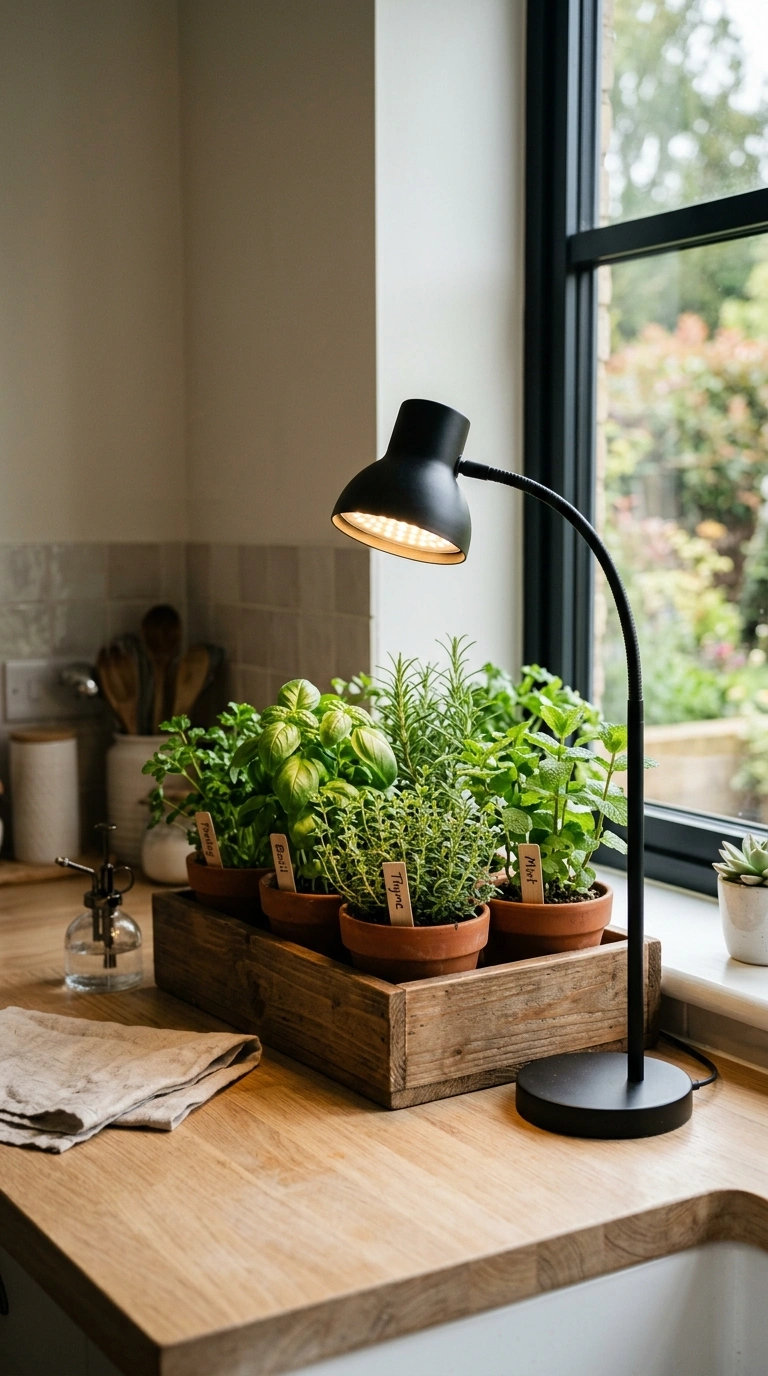
For kitchens and apartments without a south-facing window, or for any indoor location where the natural light is insufficient for six or more hours daily, a small grow light provides the supplemental light that keeps herbs productive. Modern LED grow lights are compact, energy-efficient, and available in designs that look like standard desk lamps rather than industrial equipment. Position the grow light six to twelve inches above the herbs and run it for twelve to fourteen hours daily on a simple timer. The grow light extends the growing season to year-round regardless of the natural light available in the room and makes indoor herb gardening possible in apartments and rooms that face north or are shaded.
6. Kitchen Counter Planter Box
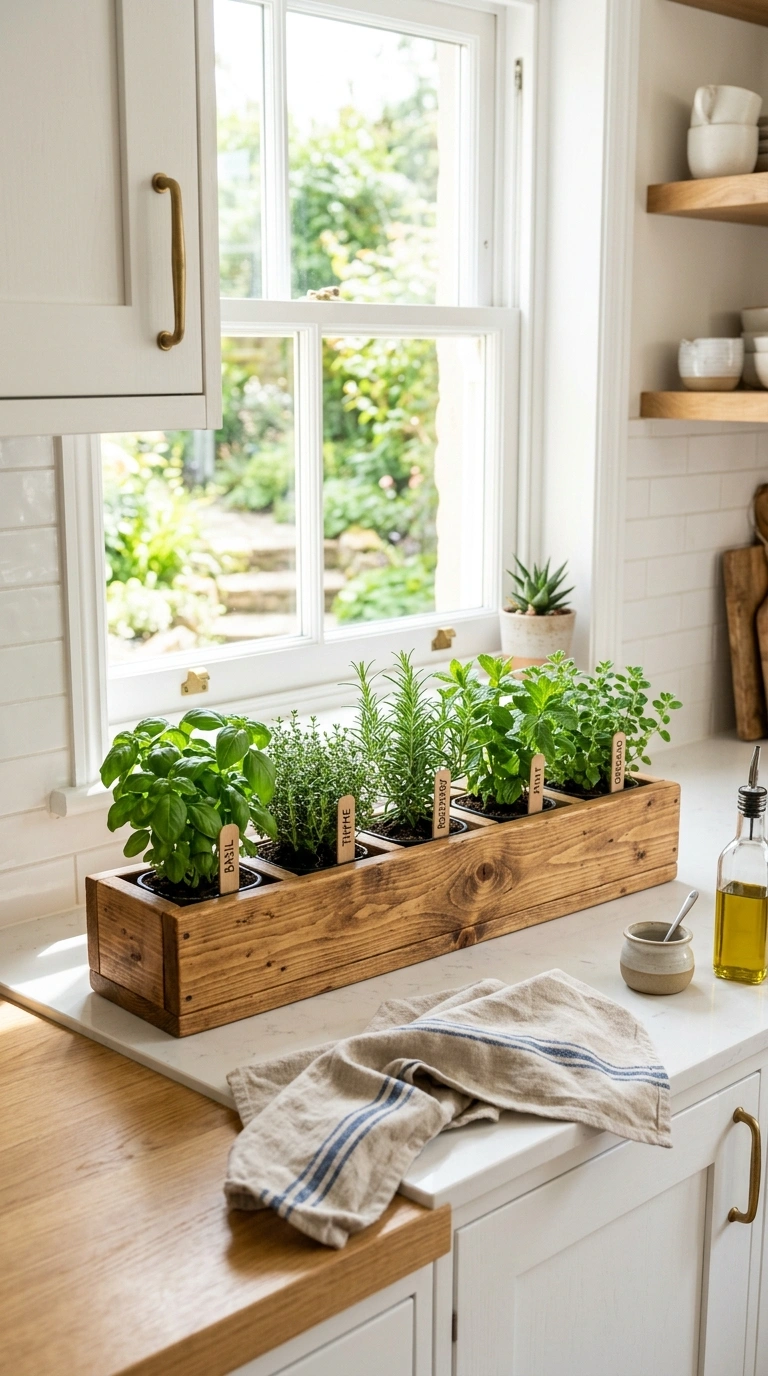
A long narrow planter box on the kitchen counter, positioned near the window where the best light is, holds three to five herbs in a single unified container rather than in separate individual pots. The planter box is easier to move as a unit to follow the light, easier to water consistently, and takes up less visual space than the same number of individual pots scattered across the counter. Choose a planter box in a warm material that suits the kitchen, natural wood, terracotta, or matte ceramic, and line the bottom with small stones for drainage before adding the soil and herbs.
7. Hydroponic Countertop Garden
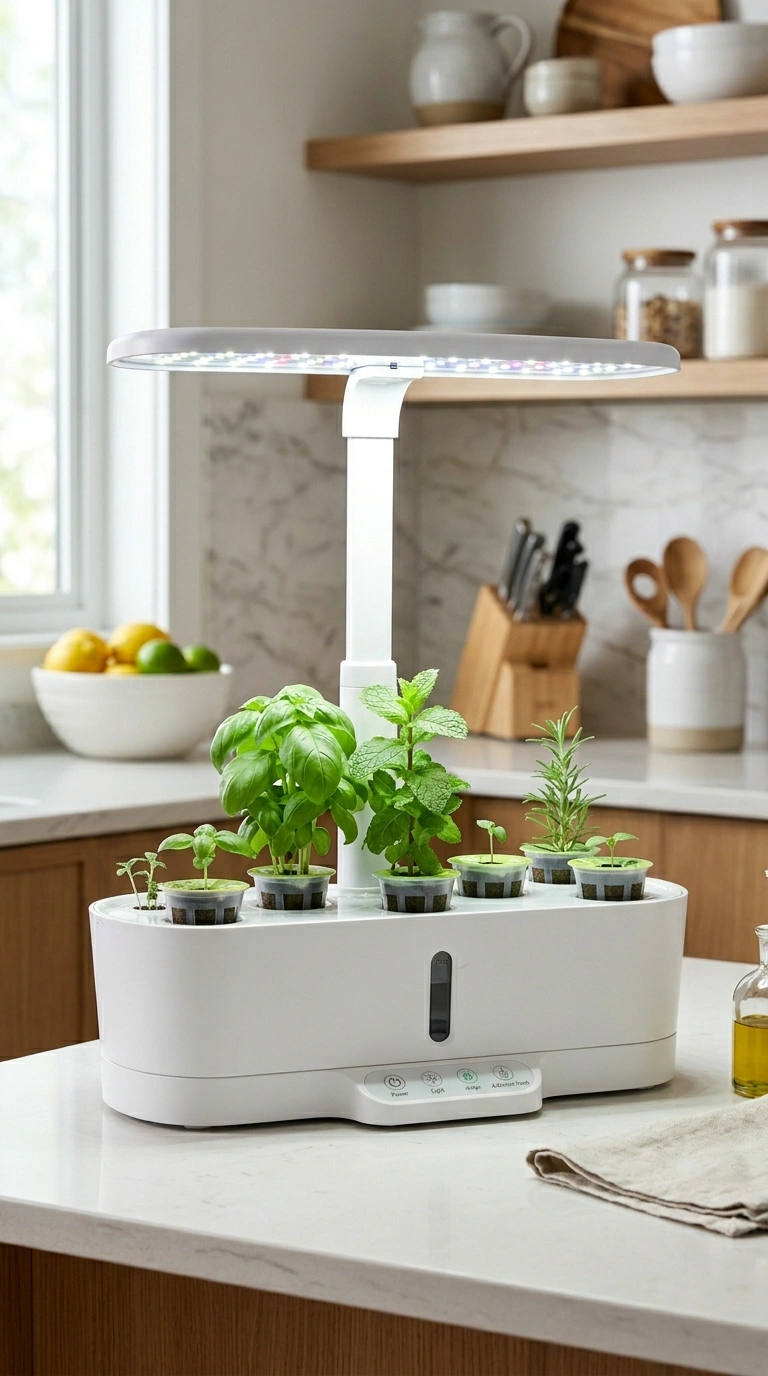
A countertop hydroponic system grows herbs in water rather than soil, with a built-in LED grow light that eliminates the need for any natural window light at all. The hydroponic system delivers nutrients directly to the roots through the water, which produces faster growth and higher yields than soil-based growing in most cases. Modern countertop hydroponic gardens are designed to look clean and attractive on a kitchen counter, with sleek designs in white, black, or natural wood finishes. They typically hold six to twelve herb pods and produce usable harvests within three to four weeks of planting. The systems are more expensive than traditional pots but require significantly less daily attention.
8. Tiered Window Shelf
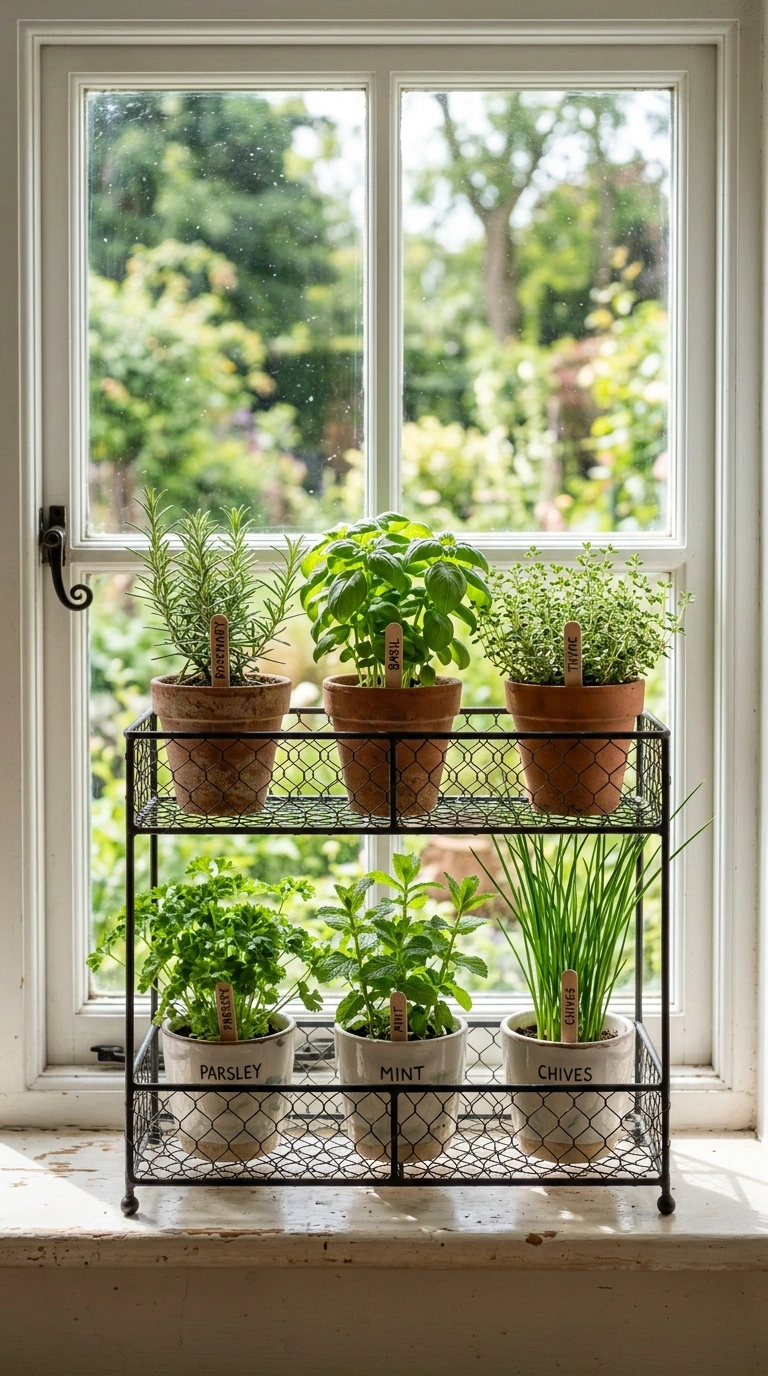
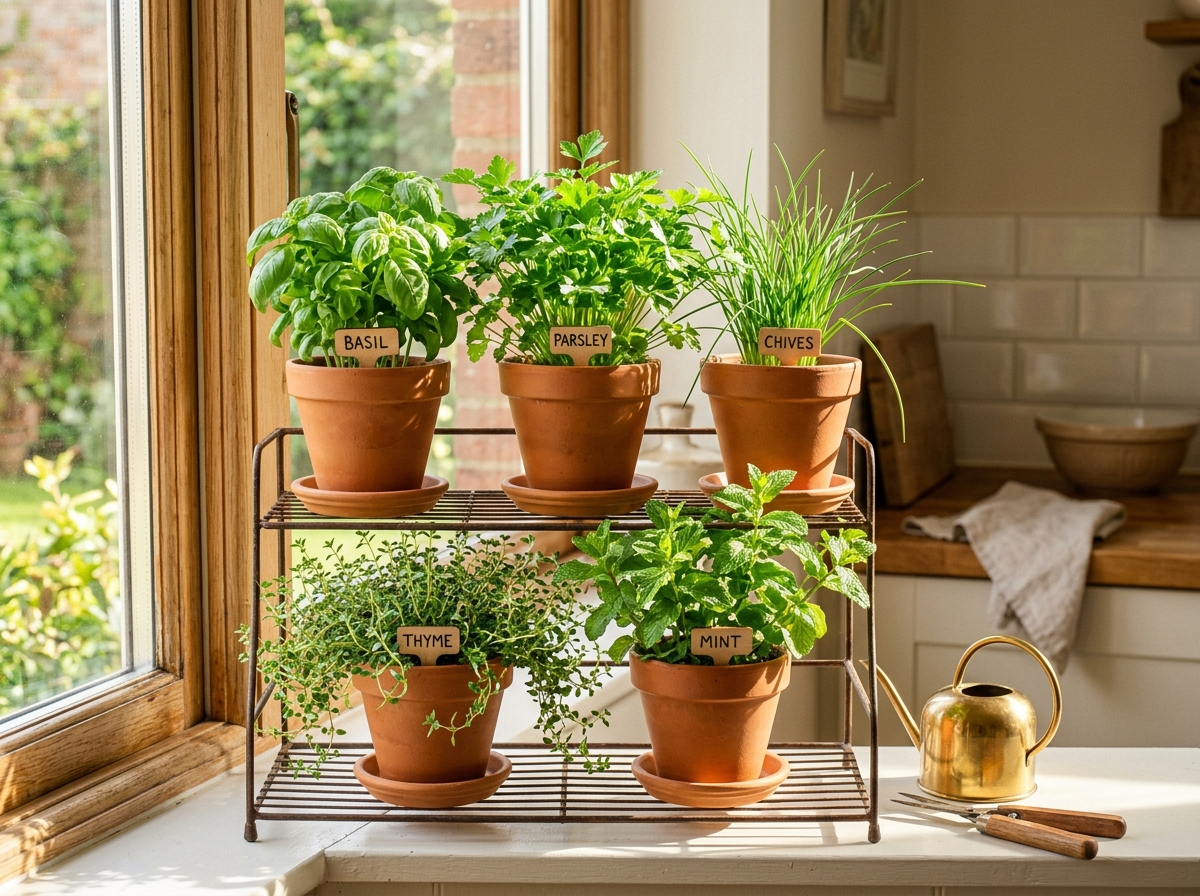
A small tiered shelf placed inside the window frame or directly in front of the window multiplies the growing space available in a single window by stacking herbs on two or three levels. Each level receives some direct light, though the lower levels receive less than the top. Place the most light-hungry herbs on the top shelf and the more shade-tolerant ones below. A simple two-tier wire or wooden shelf that fits inside a standard window frame typically holds six to eight small pots and turns a single windowsill into a genuinely productive indoor herb garden. The tiered arrangement also looks more styled and intentional than a flat row of pots on the windowsill.
9. Mason Jar Herb Setup
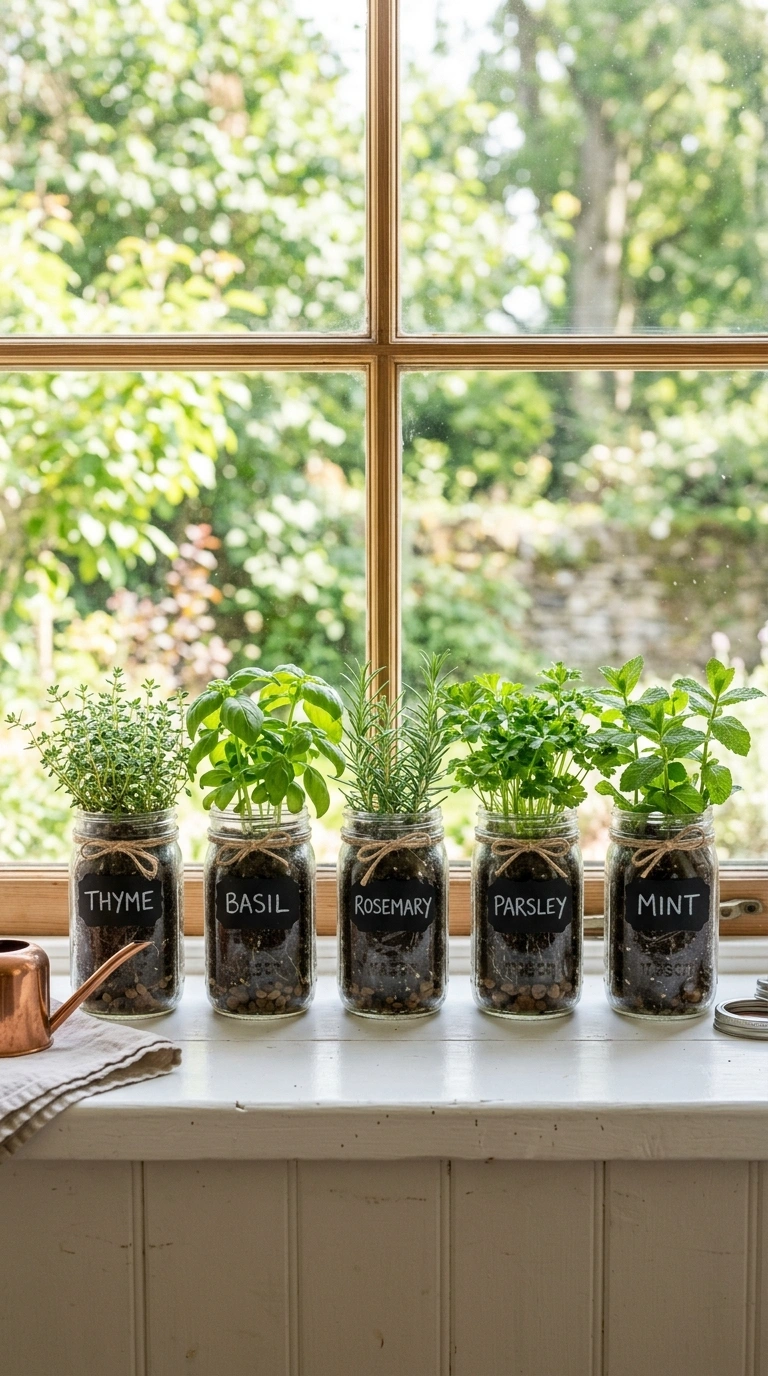
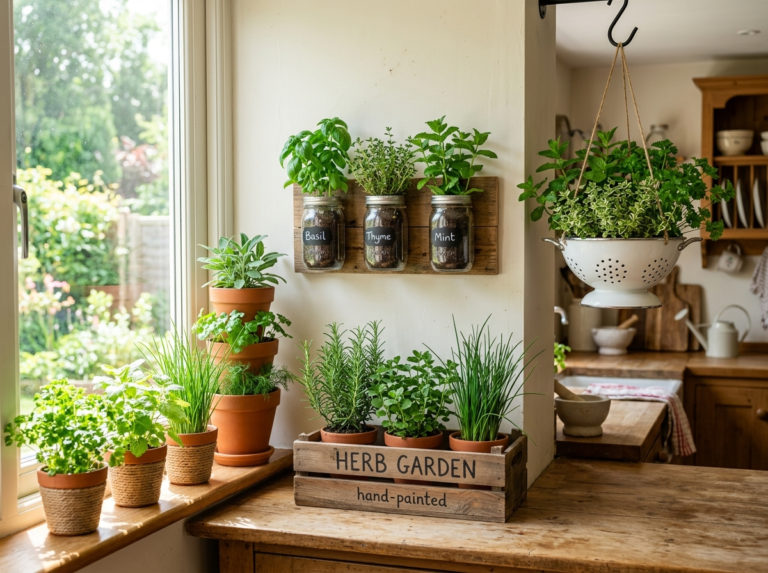
Clear glass mason jars used as herb planters let you see the soil moisture level through the glass, which makes it easier to know when to water. The jars also look clean and uniform on a windowsill, which gives the herb garden a styled quality. Drill a drainage hole in the bottom of each jar or add a deep layer of small stones at the bottom to create a drainage zone. Fill with a well-draining potting mix and plant one herb per jar. Label each jar with a small tag or a chalk marker directly on the glass for a clean organized look. A row of five labeled mason jars on a sunny windowsill is one of the most photographed indoor herb garden setups because it looks as good as it functions.
10. Hanging Planter Herbs
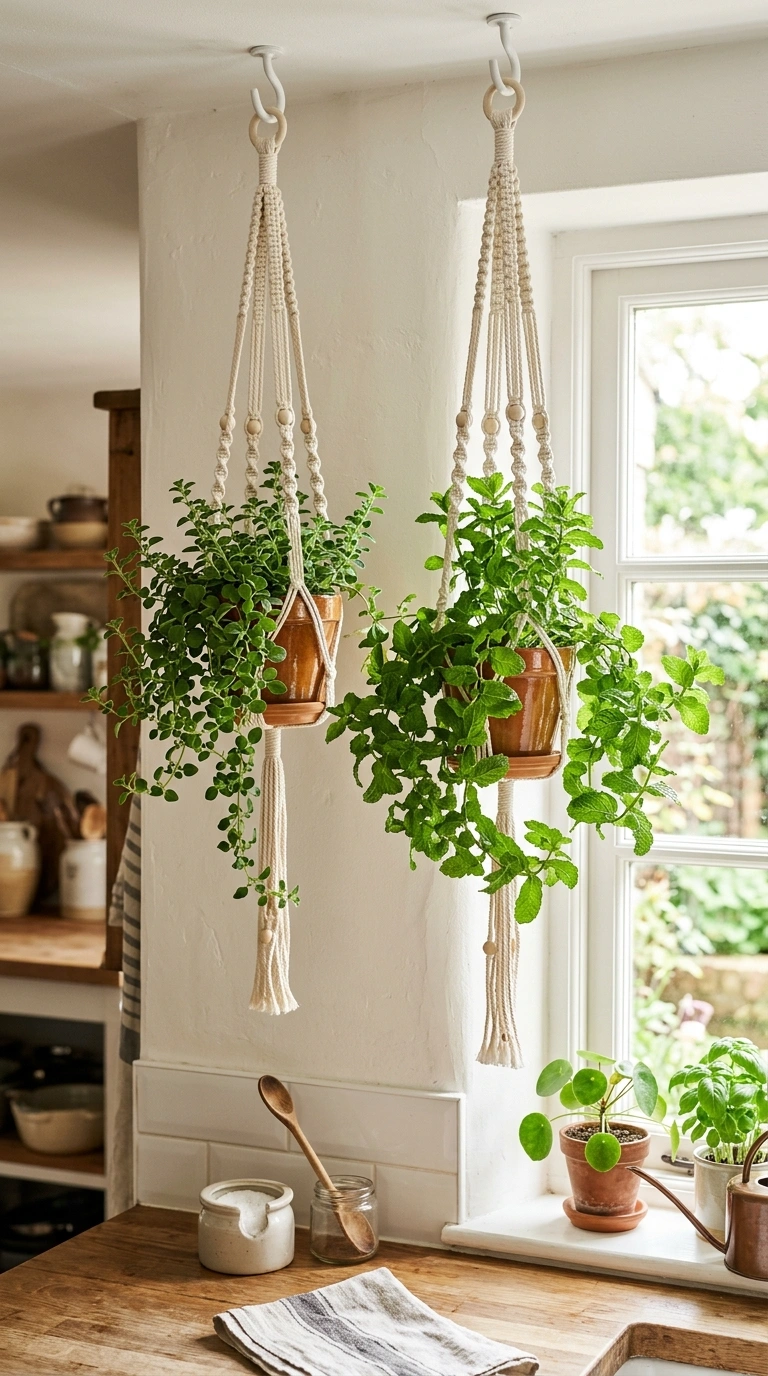
Hanging planters suspended from a curtain rod, a ceiling hook, or a wall-mounted bracket near the kitchen window grow herbs in the vertical space that countertop setups leave unused. Trailing herbs like oregano, thyme, and mint work particularly well in hanging planters because the stems cascade over the edge of the pot in a visually appealing way. Macrame hangers in natural cotton cord suit kitchen aesthetics particularly well and connect the herb garden to the same warm organic material palette used in bohemian kitchen designs where hanging plants are a central styling element. Position the hanging planters where they receive adequate light without blocking the view through the window.
11. Windowsill Herb Rotation
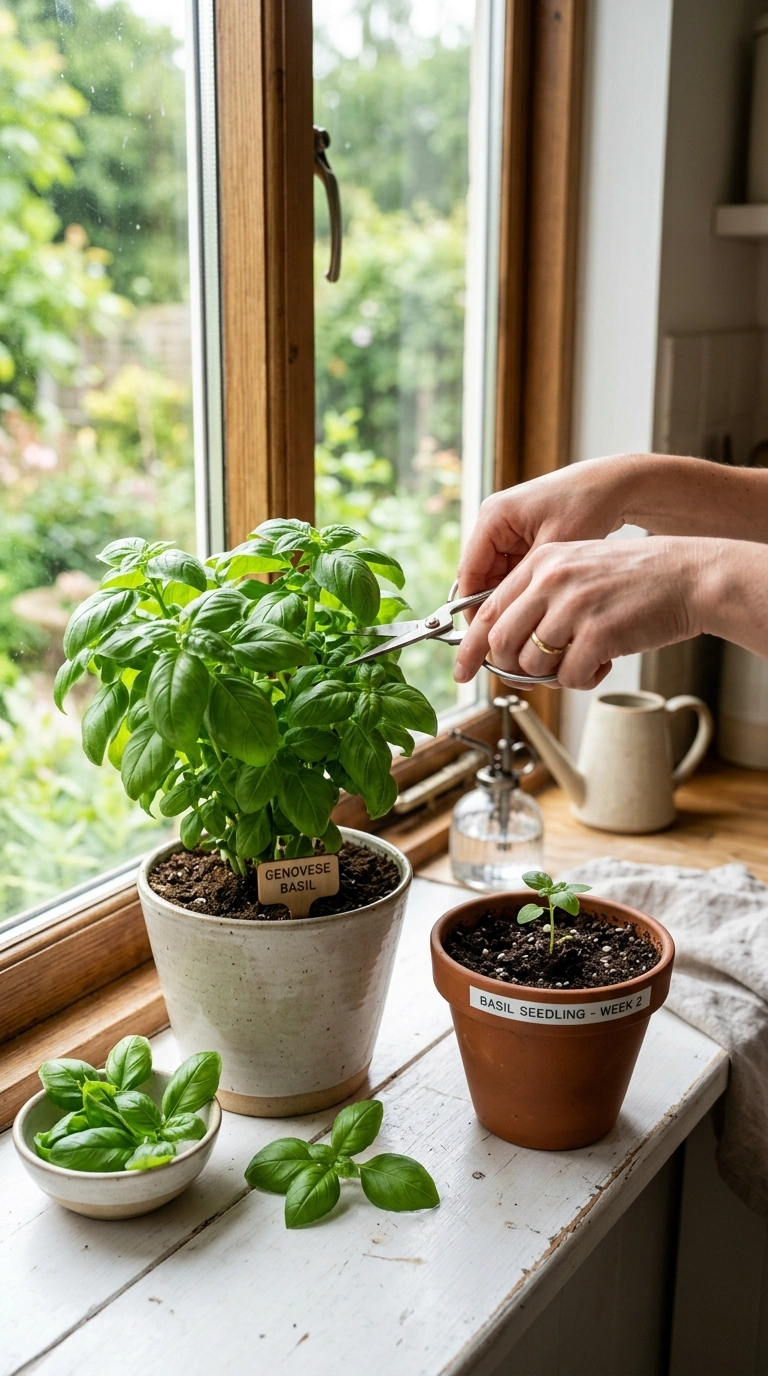
Rather than trying to keep the same herb plants alive indefinitely, a rotation system where new herbs are started in fresh soil every six to eight weeks ensures a constant supply of productive young plants. Most herbs are at their most flavorful and most productive in the first two months of growth. After that, they become woody, leggy, or less productive. Starting a new batch of basil, cilantro, or parsley every month or two means there is always a young productive plant ready to replace the one that has aged out. Keep a few small pots of seedlings growing in a bright spot while the mature plants are in the primary kitchen window position.
12. Proper Soil Choice
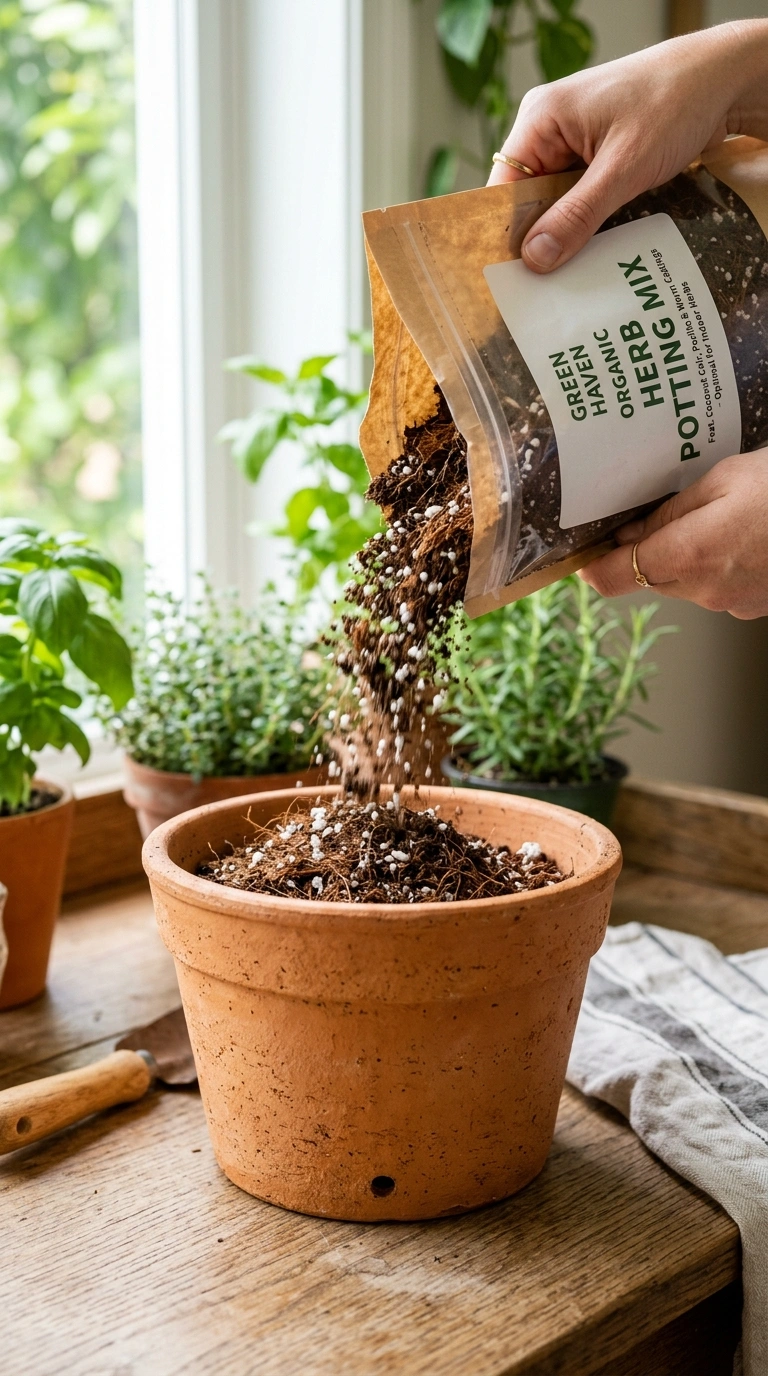
Standard garden soil is too heavy and retains too much moisture for indoor herb pots. Use a potting mix specifically formulated for containers, which is lighter, drains faster, and allows more air to reach the roots. A good indoor herb potting mix typically contains peat moss or coconut coir for moisture retention, perlite for drainage and aeration, and a small amount of comite or worm castings for nutrients. Many garden centers sell potting mixes labeled specifically for indoor herbs or for container gardening. The right soil makes a genuinely significant difference in how long indoor herbs survive and how well they produce.
13. Herb Cluster Arrangement
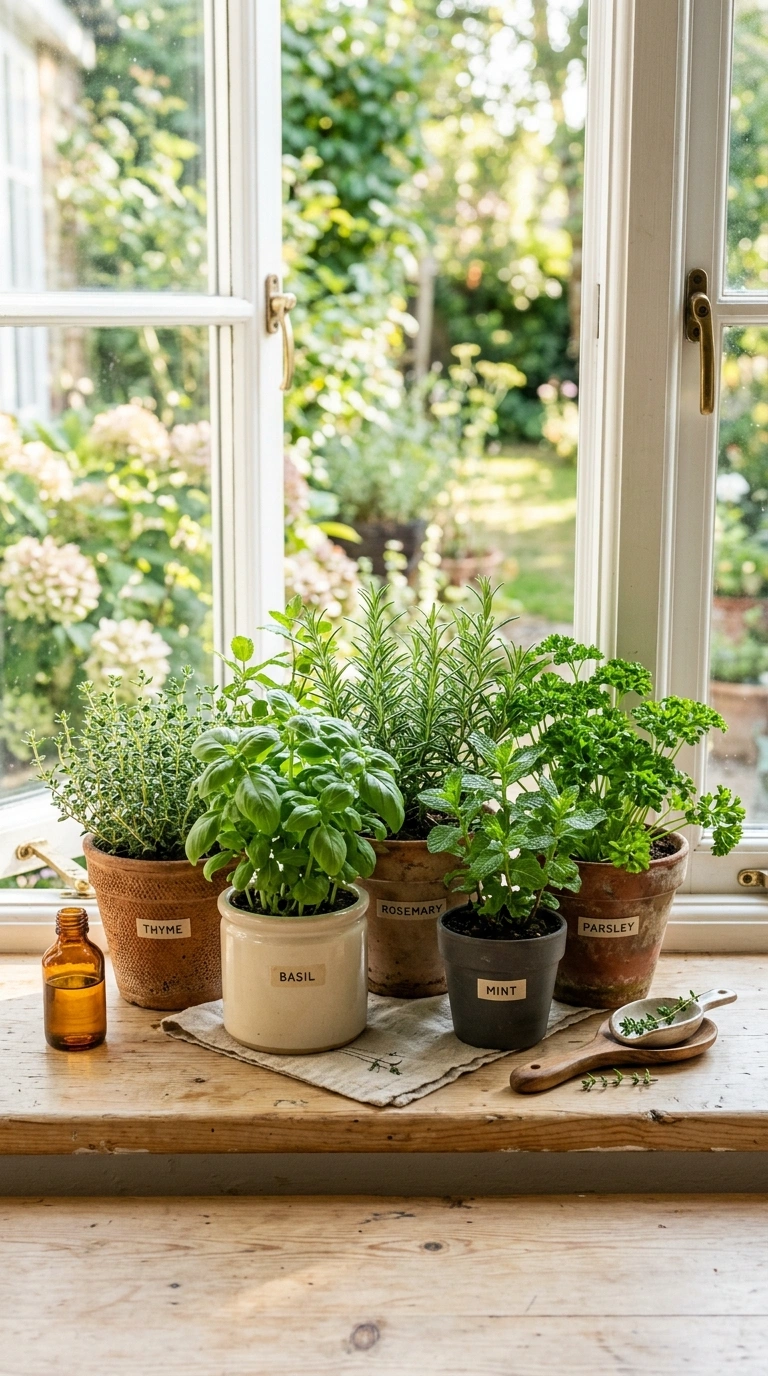
Grouping herb pots in a tight cluster rather than spacing them out individually across a windowsill or counter creates a small microclimate where the plants benefit from shared humidity and the soil retains moisture more consistently. The cluster also looks more intentional and more like a designed herb garden rather than a few random pots. Group herbs with similar water needs together: basil, parsley, and cilantro together in one cluster, rosemary, thyme, and oregano in another. The Mediterranean herbs in the second group need less water and more drainage than the first group, so keeping them separate prevents overwatering the dry-loving herbs.
14. Labeled Plant Stakes
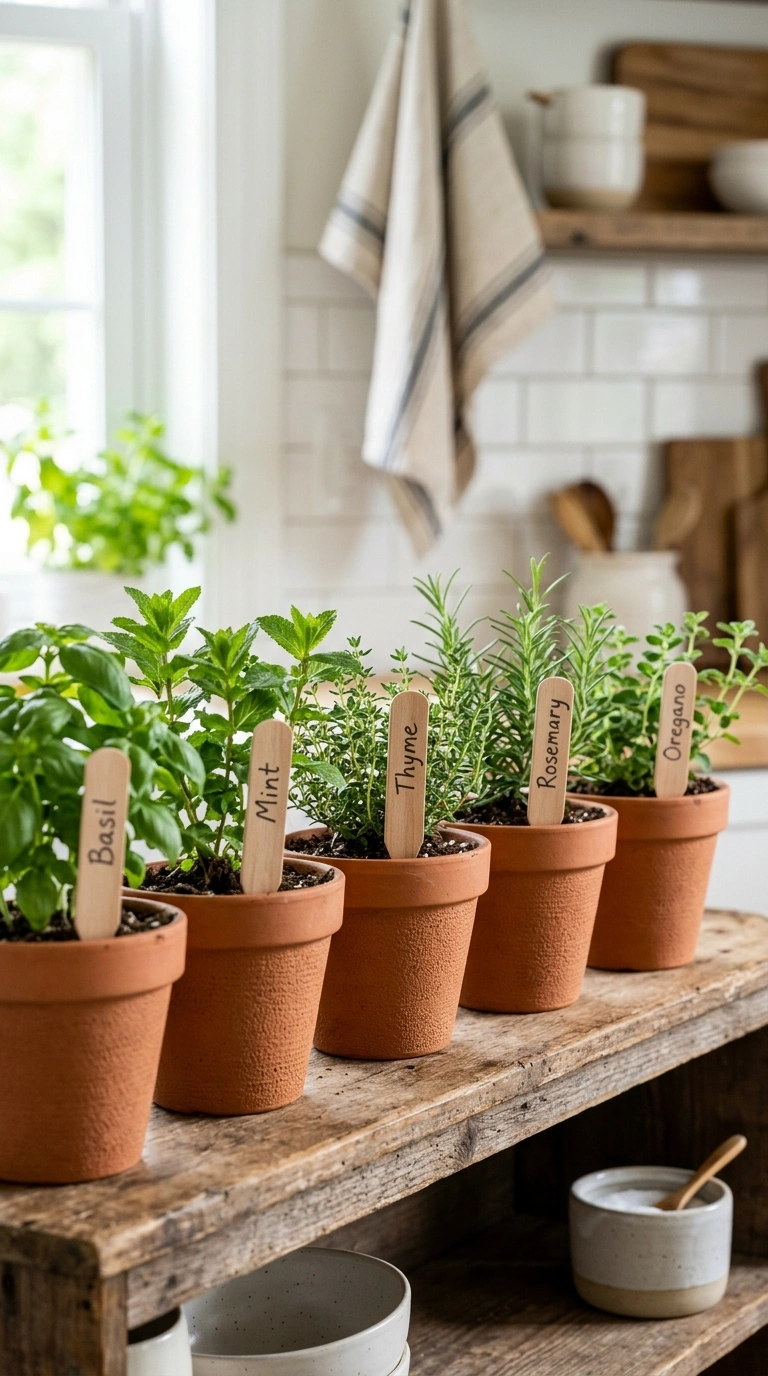
Small wooden or ceramic plant stakes pushed into the soil of each herb pot and labeled with the herb name add a small styling detail that also serves a genuine practical purpose. When herbs are young or recently trimmed, it can be difficult to distinguish between parsley and cilantro or between different varieties of basil without a label. Simple wooden craft sticks with handwritten labels in waterproof marker cost almost nothing and look charming in a row of small herb pots. Printed ceramic labels pushed into the soil are a more permanent and more attractive option for herb gardens that are on display in the kitchen year-round.
15. Regular Harvesting Technique
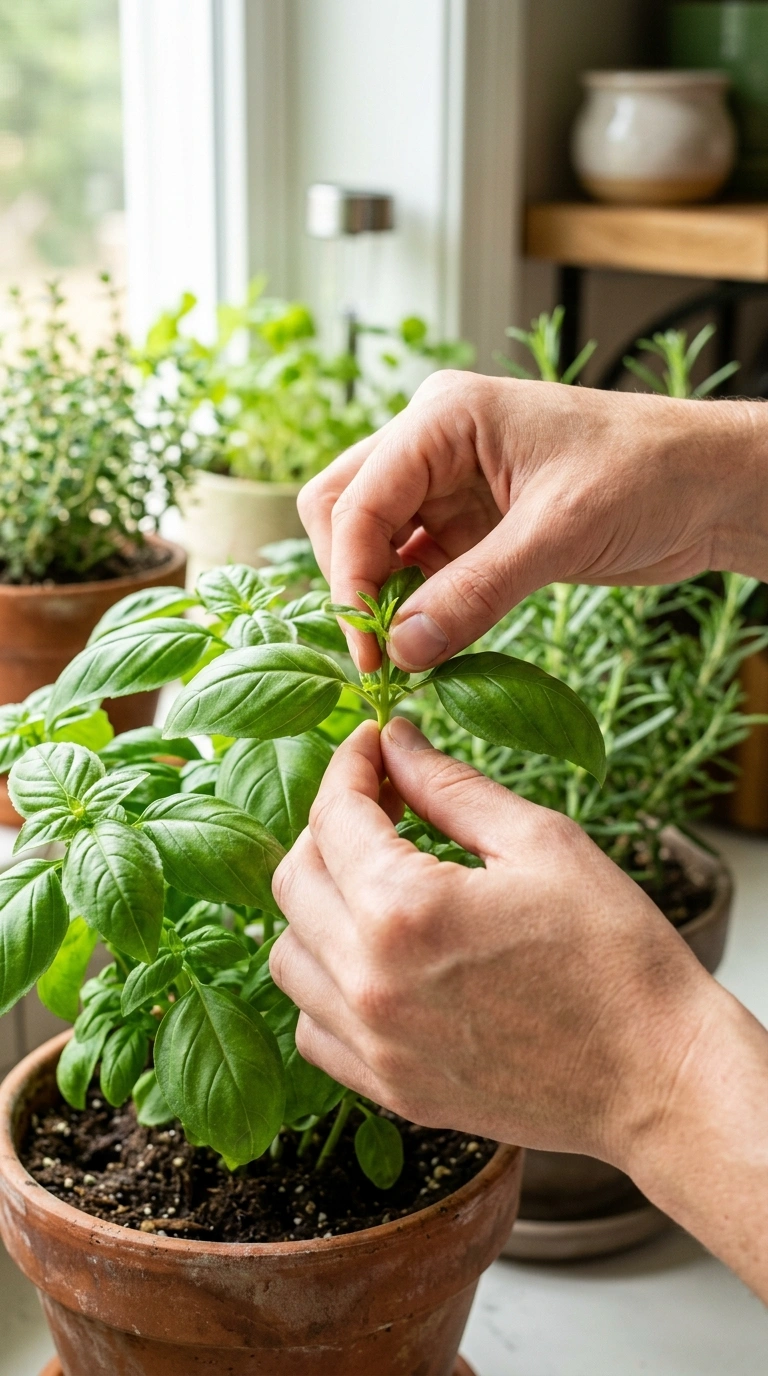
The most counterintuitive thing about keeping indoor herbs alive is that cutting them regularly makes them grow more rather than less. Herbs that are left to grow without harvesting become tall, leggy, and less productive over time. Regular harvesting, pinching off the top few inches of each stem every week or two, forces the plant to branch from the cut point and produce more stems below, which results in a bushier, more productive plant. Always cut just above a pair of leaves, never below, and never remove more than one-third of the plant at a time. The regular harvesting keeps the herbs compact, bushy, and productive for much longer than plants that are left to grow uncut.
16. Right Pot Size Selection
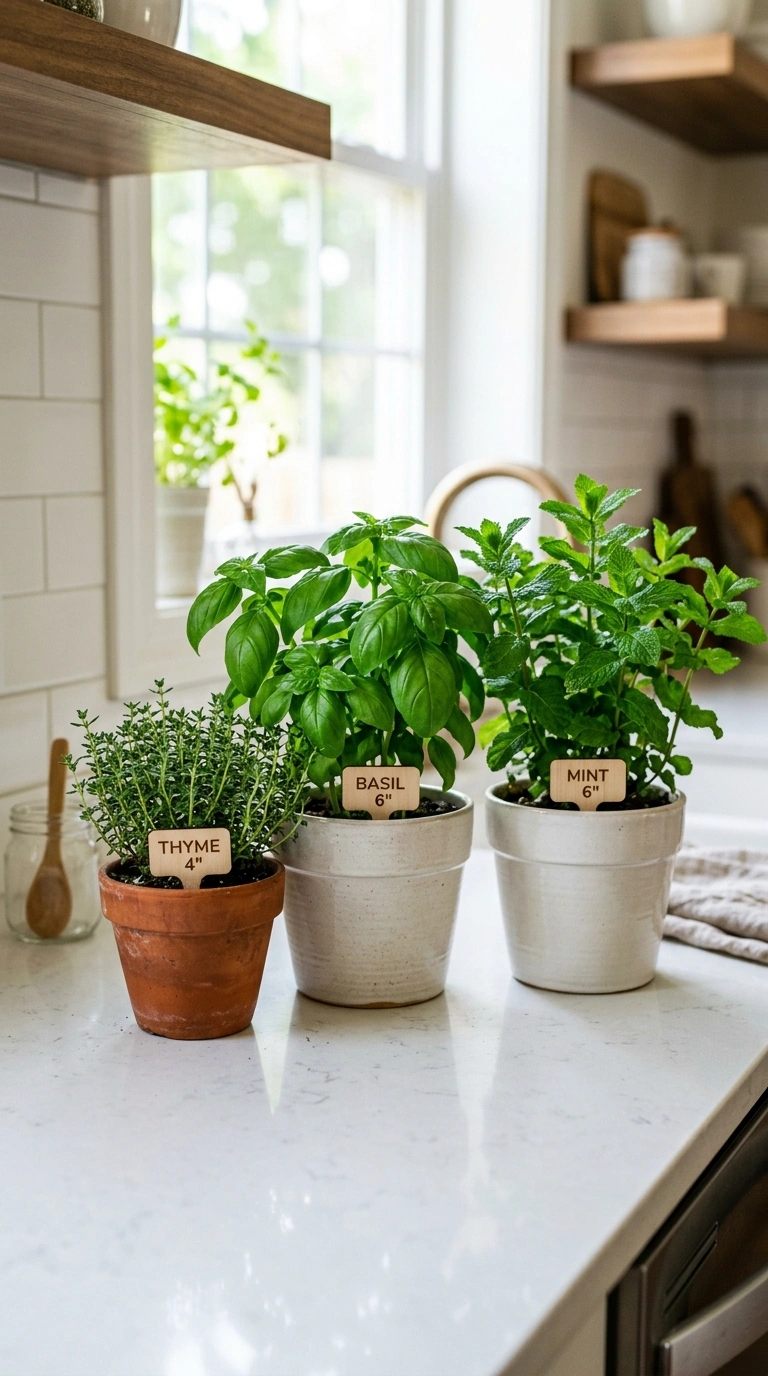
Herbs in pots that are too large sit in soil that stays wet for too long because the roots cannot absorb the moisture fast enough. Herbs in pots that are too small dry out constantly and become root-bound within weeks. The right pot for most individual kitchen herbs is four to six inches in diameter, large enough to hold adequate soil and moisture but small enough that the roots can absorb the water before it stagnates. Basil and parsley do well in six-inch pots. Thyme, oregano, and chives are fine in four-inch pots. Mint needs at least a six-inch pot and will happily fill a larger one since it grows aggressively.
17. Temperature Awareness
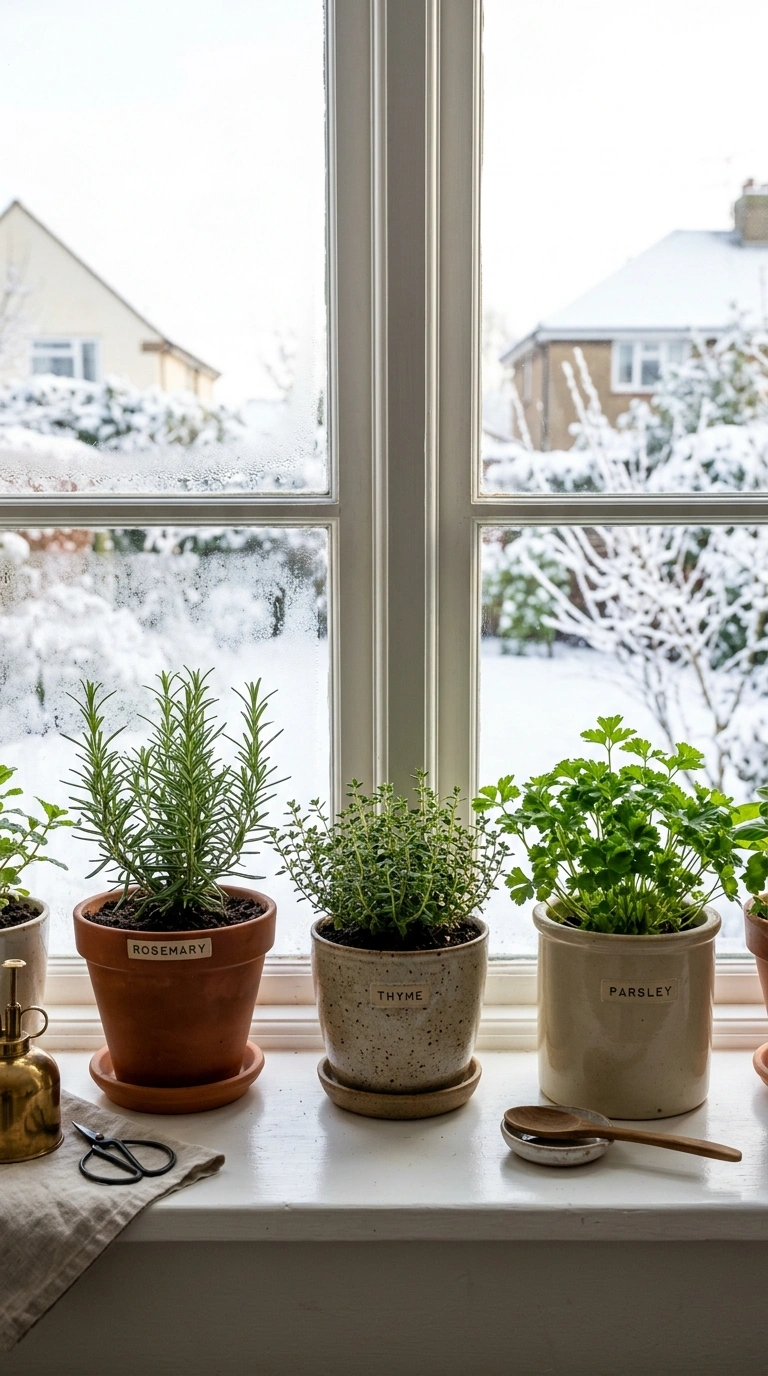
Indoor herbs need temperatures between 60 and 75 degrees Fahrenheit during the day and can tolerate slightly cooler temperatures at night. The common problem in heated homes during winter is that the air temperature near a south-facing window can fluctuate dramatically: warm during sunny midday and cold when the window radiates cold air at night. Avoid placing herbs directly against cold glass in winter, since the contact can damage the leaves. Move the pots back from the glass by an inch or two during cold months, or place a thin insulating layer between the pots and the glass. In summer, extremely hot south-facing windows can overheat herbs in the afternoon, so monitor for wilting during heat waves.
18. Mint in Its Own Pot
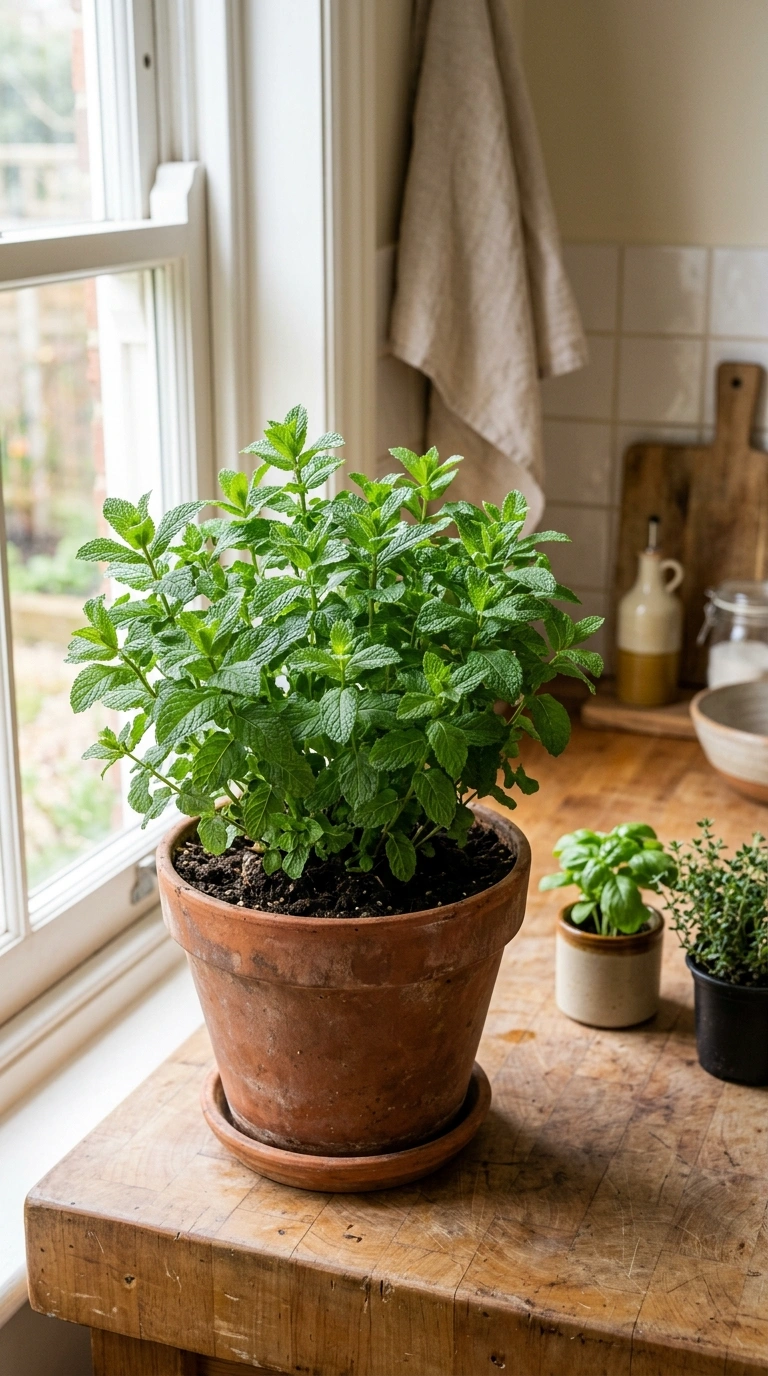
Mint is one of the easiest and most productive indoor herbs but it must be grown in its own pot, never combined with other herbs in a shared planter. Mint sends out aggressive root runners that will overwhelm and crowd out any other plant sharing the same container within a few weeks. Give mint its own dedicated pot, at least six inches in diameter with good drainage, and it will produce abundantly with minimal care. Mint also tolerates lower light than most other herbs, which makes it a good choice for windows that do not get the full six hours of direct sun that basil and parsley need.
19. Window Box Style Indoors
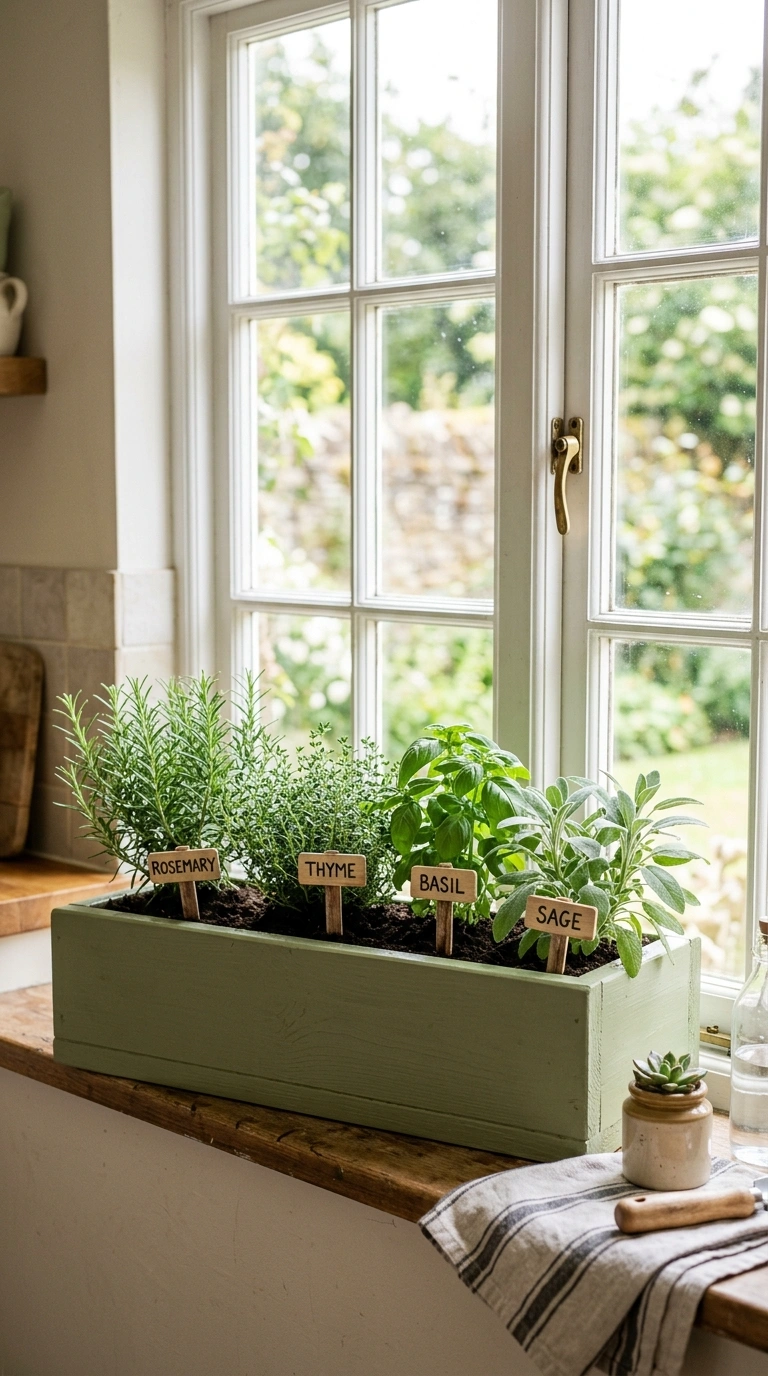
A traditional wooden window box, the kind normally mounted outside a window, can be placed on an indoor windowsill or mounted on brackets inside the window frame to create a substantial indoor herb garden with the charming visual quality of an outdoor planting. The long narrow shape holds three to five herbs in a row and the wooden box adds warm natural material quality to the kitchen window. Paint the box in a cottage color, warm white, muted sage, or a faded blue, for a particularly charming result. For more on creating herb gardens that double as genuine design features in a kitchen, the herb garden design ideas guide covers the styling approaches that make a functional herb garden look like intentional kitchen decor.
20. Year-Round Growing Calendar
The key to a truly year-round indoor herb garden is understanding that different herbs peak at different times and planning the garden accordingly. Start basil and cilantro from seed in early spring when natural light increases. Grow parsley, chives, and mint through the summer and into fall. Switch to the hardier Mediterranean herbs, rosemary, thyme, sage, and oregano, for winter when light levels drop. Supplement with a grow light during the shortest winter days to keep everything productive. The rotating calendar means there is always something ready to harvest and always something new getting started, which keeps the herb garden genuinely useful and alive throughout the entire year.
An indoor herb garden that actually stays alive comes down to the right light, the right pots with drainage, the right soil, and the habit of regular harvesting. Get those four things right and the herbs take care of themselves with minimal daily attention. Start with the easiest herbs, build a system that works in your specific kitchen light, and the herb garden becomes one of those small daily pleasures that genuinely improves how you cook and how your kitchen feels.