18 Easy DIY Herb Planter Ideas You Can Build This Weekend
A DIY herb garden does not need woodworking skills, expensive tools, or a full workshop weekend to produce something that looks genuinely good and grows real herbs. The best DIY herb gardens are the ones built from simple, accessible materials with straightforward construction that anyone can complete in a few hours. The result should look like something you are proud to have in your kitchen rather than something that looks like a first attempt at a school project. These 18 projects range from the simplest no-tools-required setups to slightly more involved builds that produce genuinely impressive results. All of them use materials that are easy to find and none require specialized skills.
1. Mason Jar Wall Planter
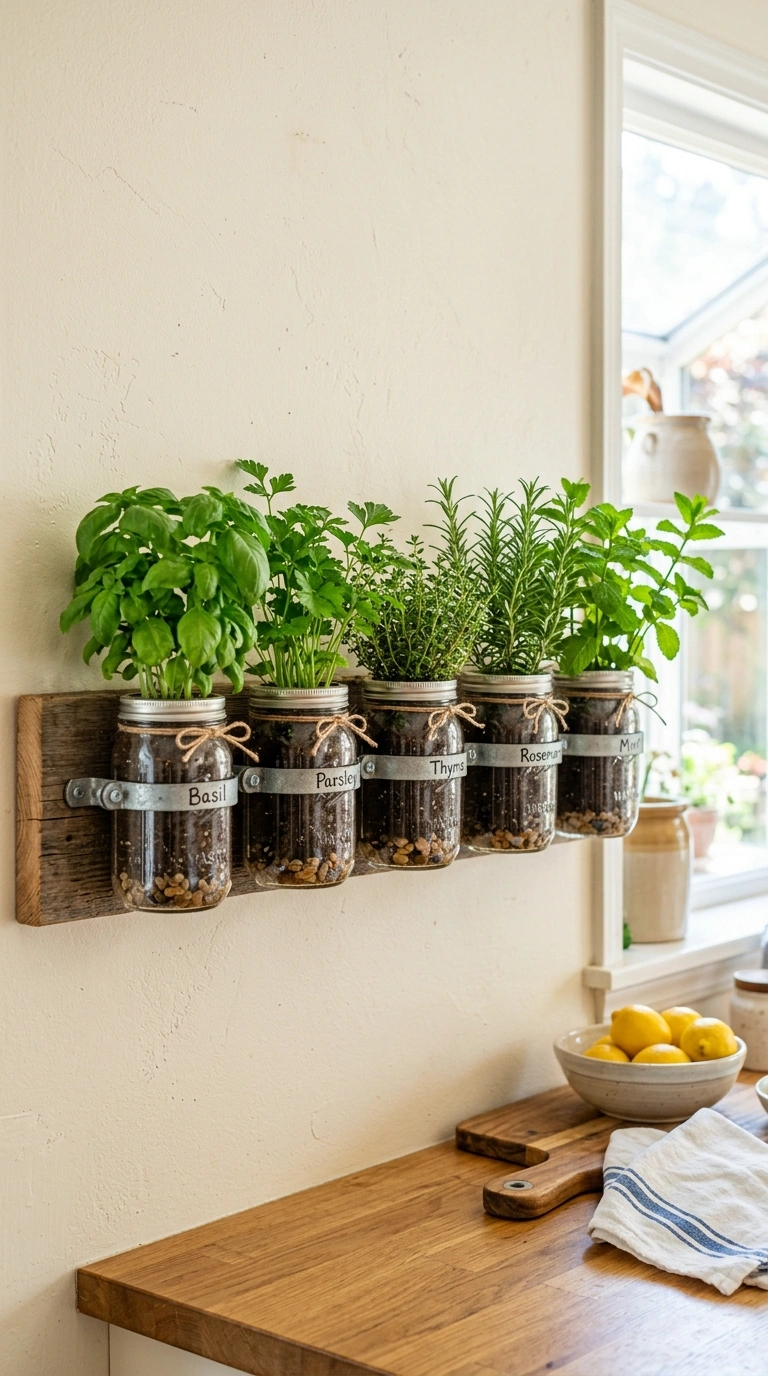
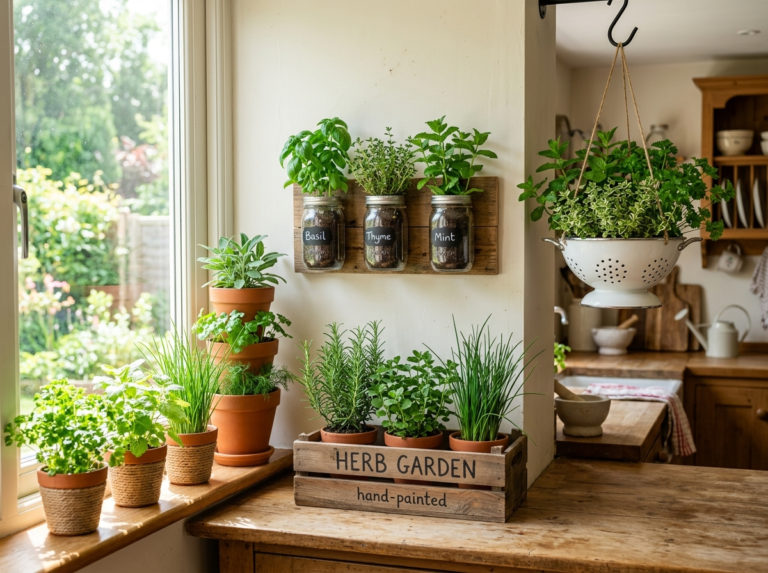
A row of mason jars mounted on a wooden board with pipe clamps creates a wall-mounted herb garden that holds three to five herbs vertically without using any counter space. The build requires a single wooden plank, five pipe clamps sized to fit the jars, ten screws, and a screwdriver. Mount the clamps to the board at even intervals, slide the jars into the clamps, and tighten. Fill the jars with a drainage layer of small stones, then potting mix, then the herbs. Mount the completed board to the kitchen wall with two screws into wall studs. The total build time is under an hour and the cost is under twenty dollars for all materials.
2. Wooden Crate Herb Box
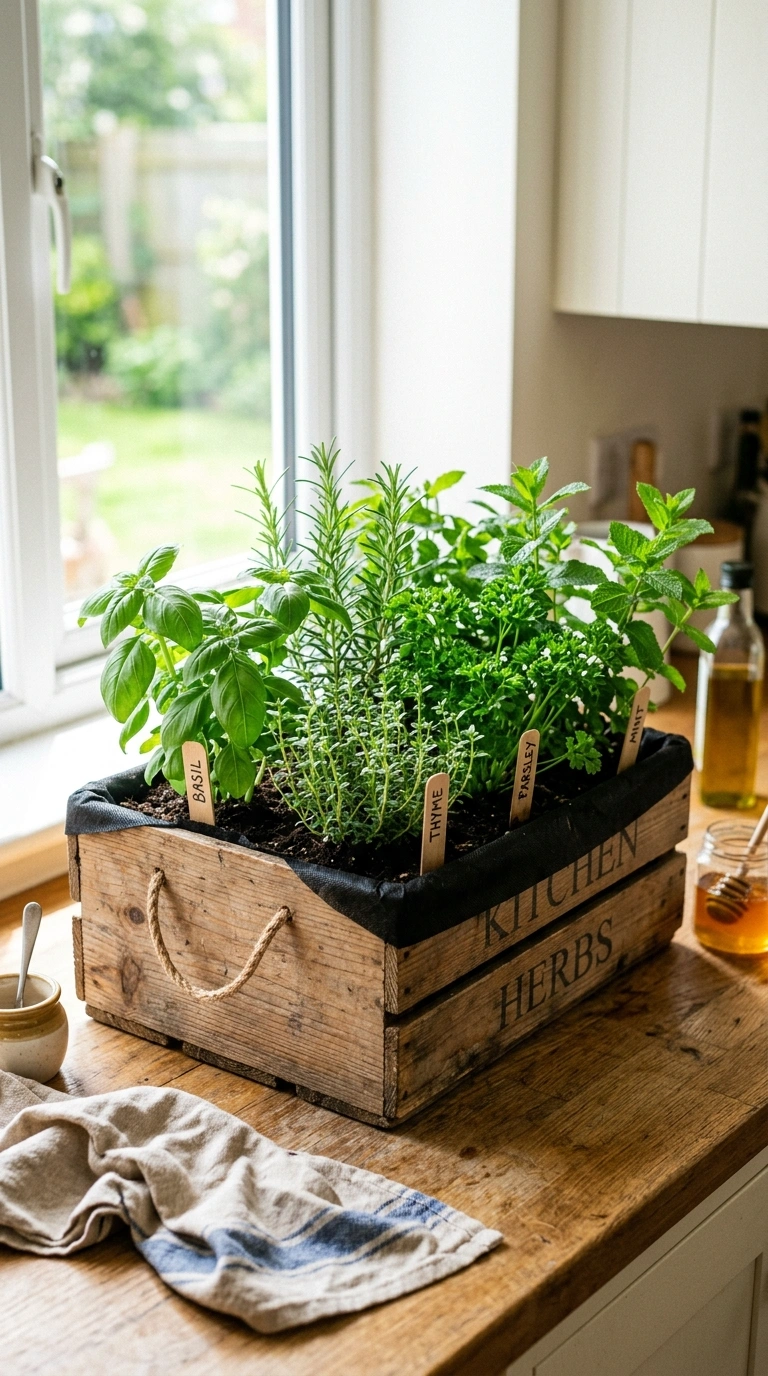
An old wooden fruit crate or wine crate lined with landscape fabric and filled with potting mix creates a rustic planter box that holds four to six herbs in a single charming container. Line the inside with landscape fabric to retain the soil while allowing drainage through the natural gaps in the crate boards. Fill with potting mix, plant the herbs, and label them with small wooden stakes. The crate can sit on a counter, on the floor of a sunny porch, or on a windowsill if the size fits. Wooden crates are available from craft stores and wine shops for a few dollars each and the aged wood has exactly the right warm character for a kitchen herb garden.
3. Terracotta Pot Tower
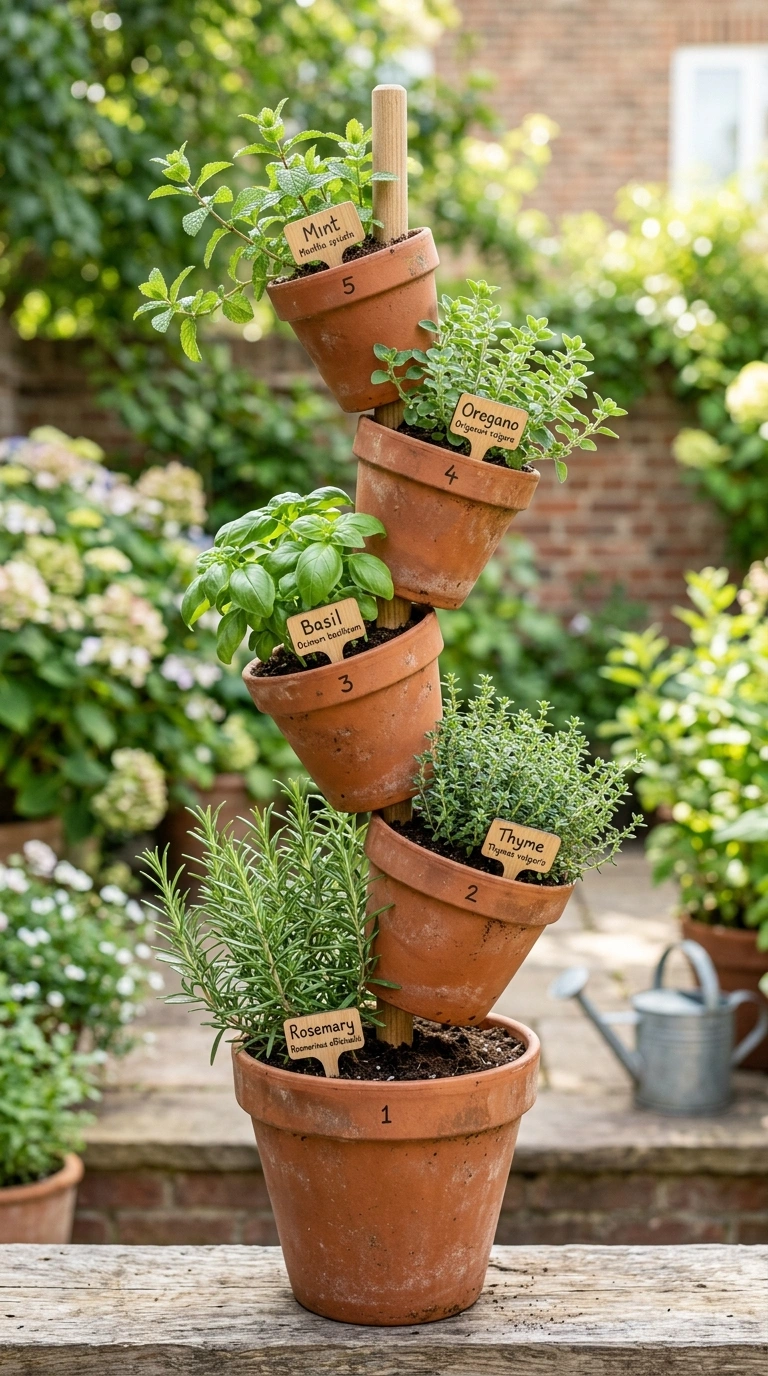
Stacking terracotta pots on a single central rod creates a vertical tiered herb garden that holds five to seven herbs in the floor space of a single pot. Thread a wooden dowel or a metal rod through the drainage hole of the largest bottom pot, fill with soil, then stack progressively smaller pots above it, each threaded onto the rod and tilted slightly to one side so all the soil surfaces are accessible. Plant herbs in each tier. The finished tower looks sculptural and holds a complete herb collection in a footprint smaller than a dinner plate. The build takes about thirty minutes and costs under fifteen dollars in terracotta pots and a single dowel.
4. Pallet Herb Garden Wall
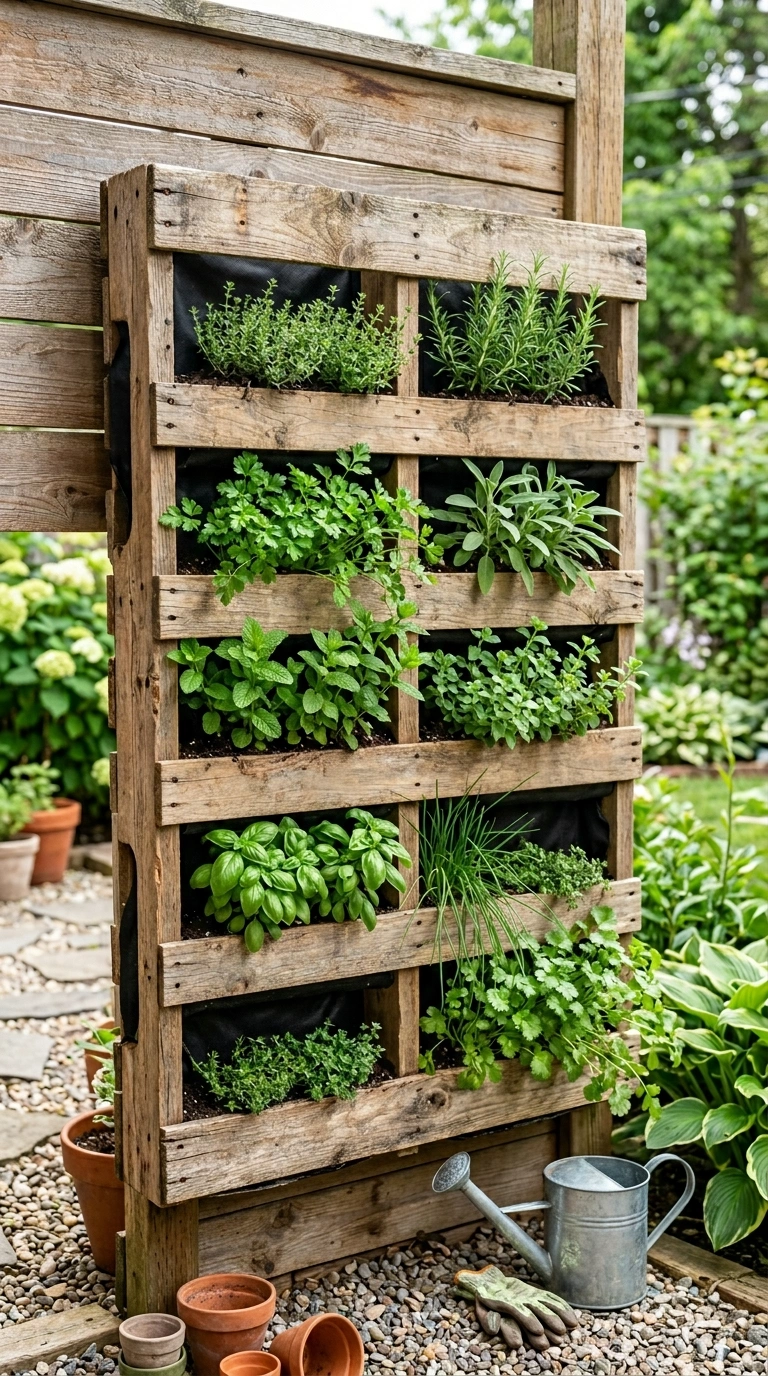
A wooden pallet stood upright against an outdoor wall or fence and fitted with landscape fabric stapled across the back and bottom of each slat gap creates a vertical planting wall that holds a dozen or more herbs in a single recycled pallet. Staple landscape fabric to the back and bottom of each horizontal gap between the slats, fill the gaps with potting mix from the front, and plant herbs into each pocket. Water from the top and the water cascades down through the levels. The pallet herb garden is one of the most popular DIY herb projects because the pallet itself is often free from local businesses and the finished result looks like a professional vertical garden. For more on keeping the herbs in a pallet garden actually alive and productive, the indoor herb garden guide covers the soil, light, and watering fundamentals that apply to any herb growing setup.
5. Tin Can Herb Planters
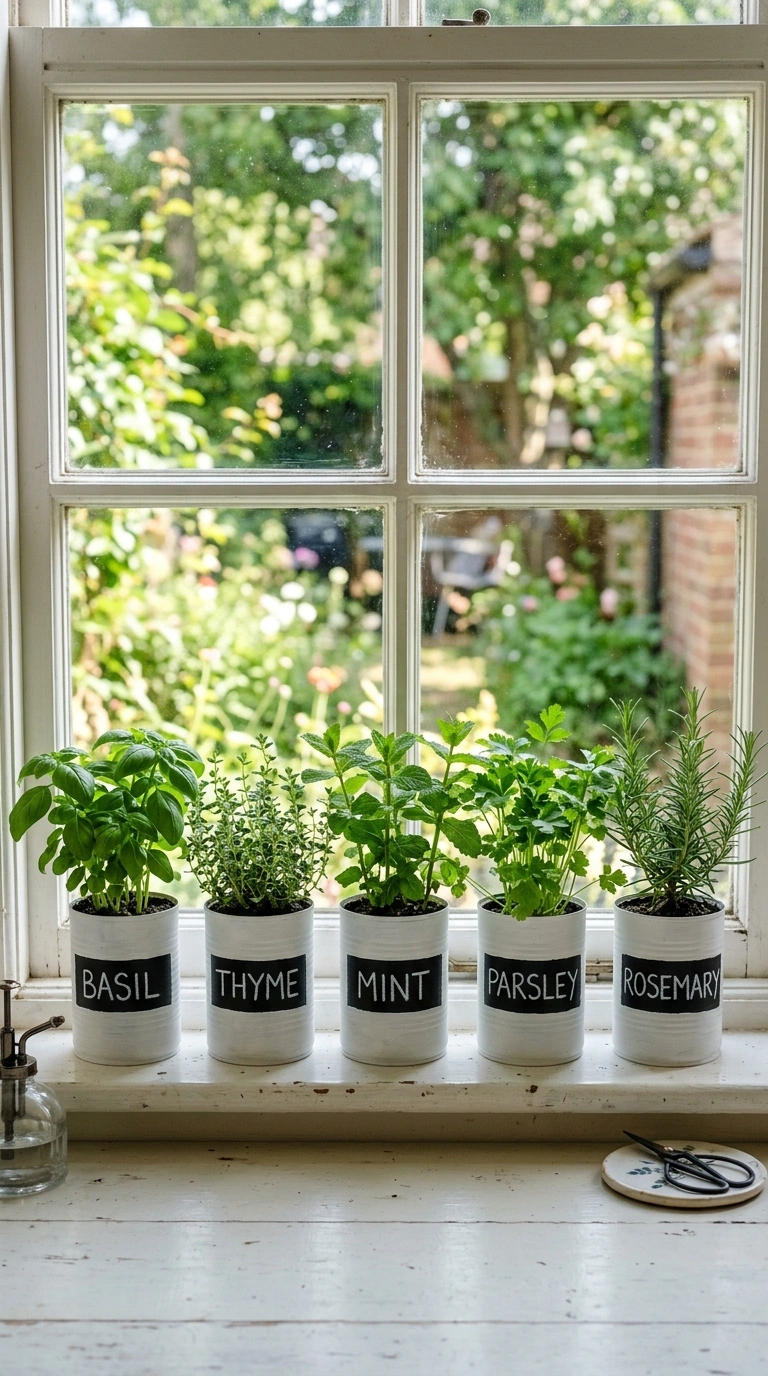
Clean recycled tin cans, the large twenty-eight ounce size from canned tomatoes or beans, make simple and surprisingly attractive herb planters when the labels are removed and the cans are either left in their natural silver finish or painted in a coordinated color. Drill three or four small drainage holes in the bottom of each can with a nail and a hammer. Fill with potting mix and plant one herb per can. Label each can with a chalk marker or a simple adhesive label. A row of five matching tin can planters on a sunny windowsill costs essentially nothing and produces a clean, uniform herb garden that looks intentional.
6. Hanging Gutter Planter
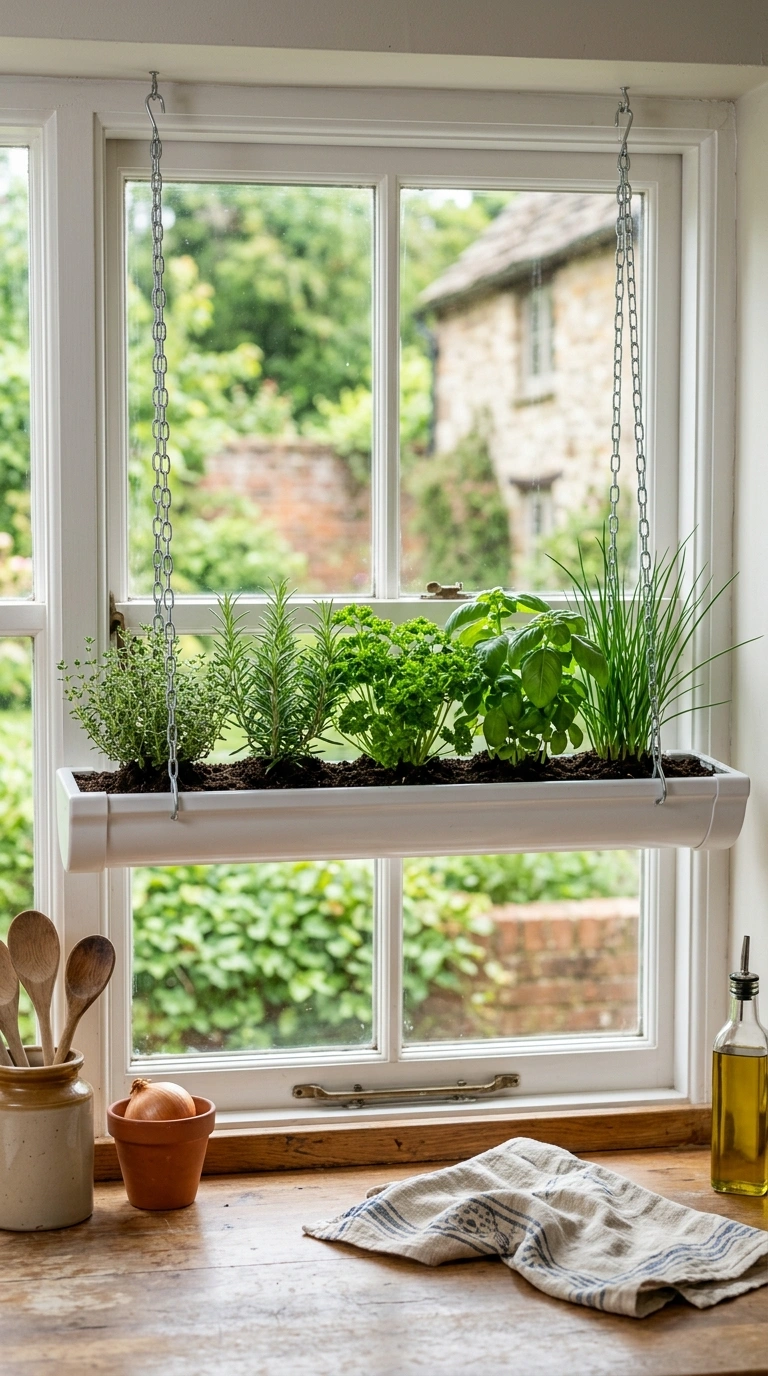
A section of vinyl rain gutter cut to the width of a window, capped at both ends with gutter end caps, and suspended from the ceiling or window frame with chain or rope creates a long narrow planter that holds a full row of herbs at window height. Drill drainage holes along the bottom of the gutter section, cap the ends with standard gutter end caps sealed with silicone, fill with potting mix, and plant. Suspend the gutter at the desired height using small hooks and chain. The long narrow shape suits kitchen windows particularly well and the suspended position keeps the herbs at a convenient harvesting height without using any counter space.
7. Concrete Block Planter
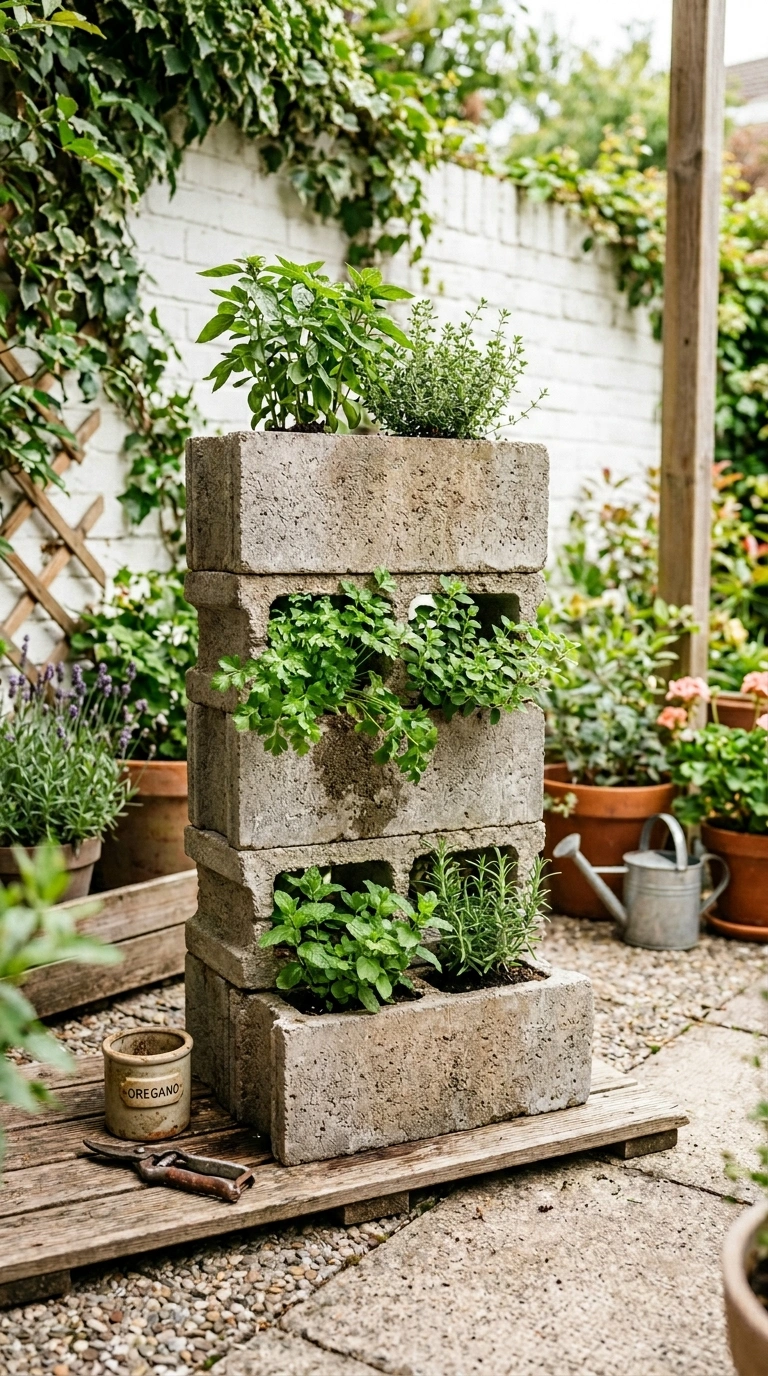
Standard concrete cinder blocks arranged in a row or stacked in a small wall create individual planting pockets in each of the two holes in each block. Fill the holes with potting mix and plant one herb per hole. The concrete retains moisture and provides thermal mass that keeps the roots cool during hot days. A row of three concrete blocks holds six herbs and creates a small industrial-style herb garden that suits modern outdoor spaces and patios. Paint the blocks in a warm neutral or leave them in their natural gray depending on the surrounding aesthetic. The blocks cost a few dollars each and the build requires no tools at all.
8. Ladder Shelf Herb Display
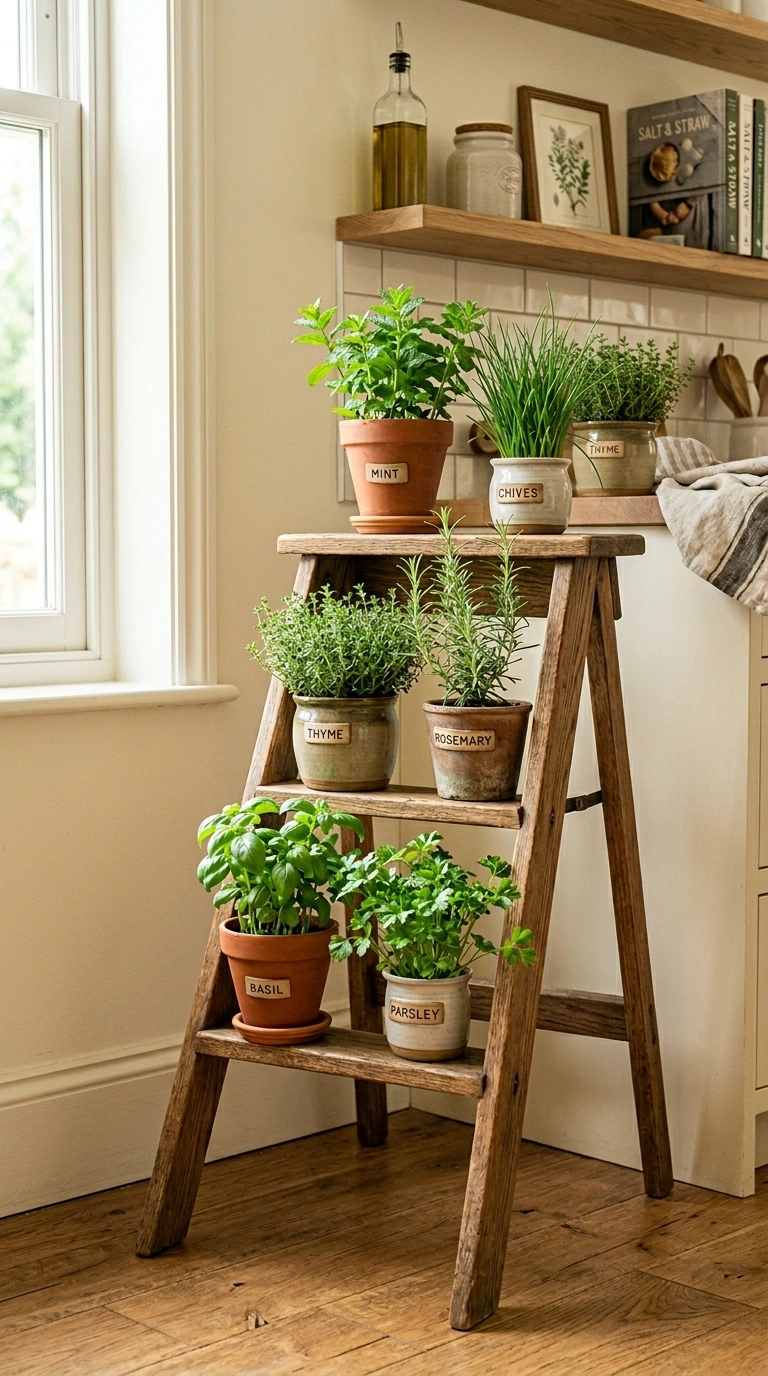
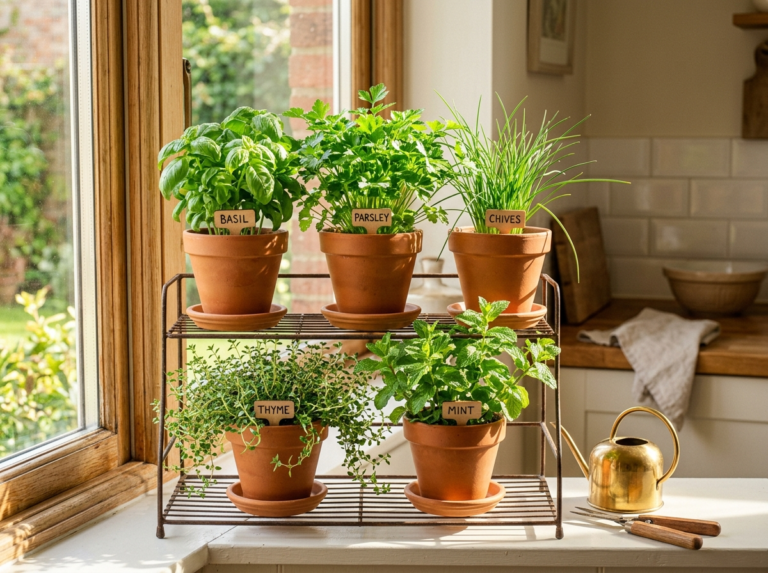
A small wooden stepladder or an A-frame plant stand used to display herb pots at multiple heights creates a tiered herb garden that looks like a piece of styled furniture rather than a collection of random pots. Place the herbs on the ladder steps at different heights, with the tallest plants on the lowest step and the shortest on the highest for even light access. The ladder can sit against a wall, in a corner of the kitchen, on a balcony, or beside a sunny window. A simple two-step wooden ladder holding four to six herb pots costs under twenty dollars from a thrift store and creates a complete and attractive herb display.
9. Window Box Build
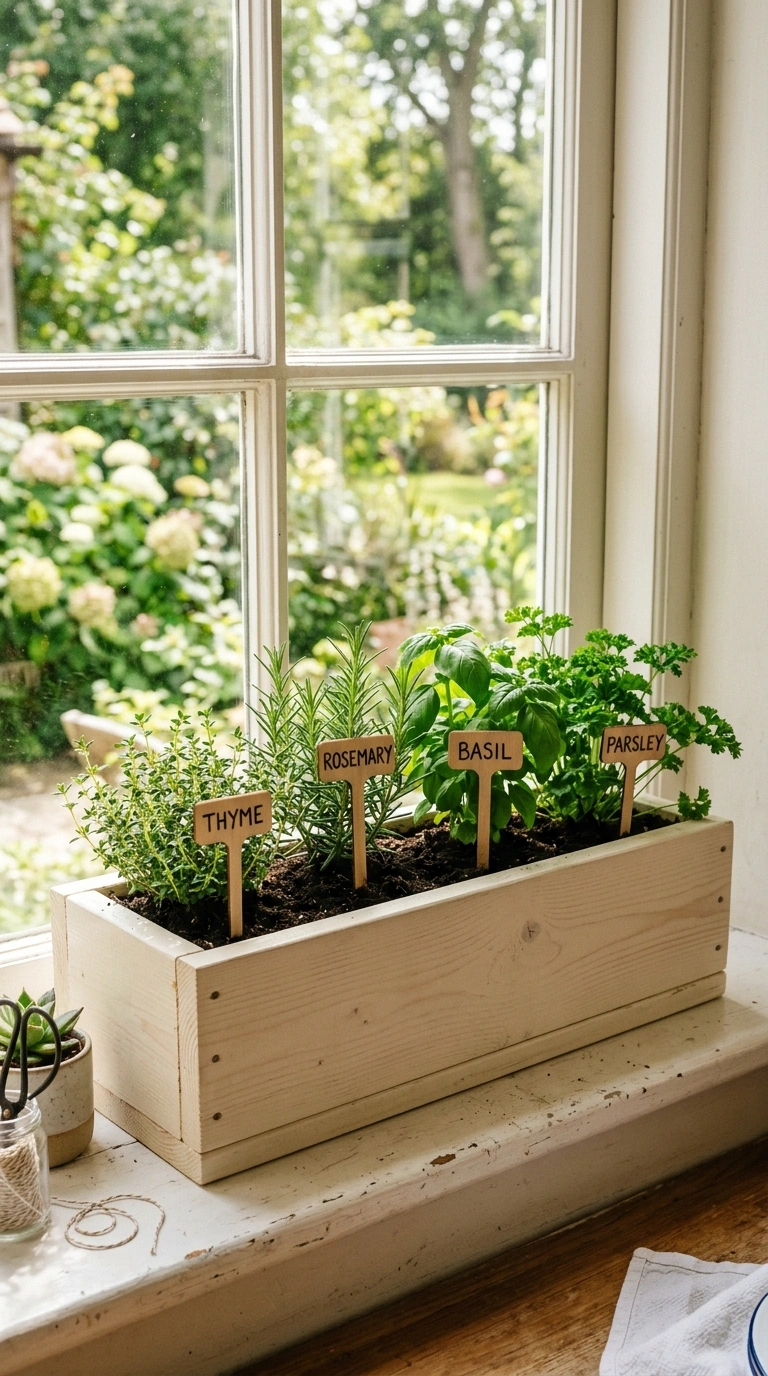
A simple wooden window box built from five pieces of standard lumber, two sides, two ends, and a bottom, creates a classic rectangular planter that fits on a windowsill or mounts on brackets below a window. Cut the pieces to the desired length, nail or screw them together with basic wood screws, drill drainage holes in the bottom, and seal the interior with a wood sealer or line with landscape fabric. Paint or stain the exterior in a color that suits the kitchen. The whole build takes under an hour with basic tools and produces a planter that looks custom and holds three to five herbs. A window box on the kitchen windowsill is one of the most classic and most effective herb garden formats.
10. Shoe Organizer Herb Wall
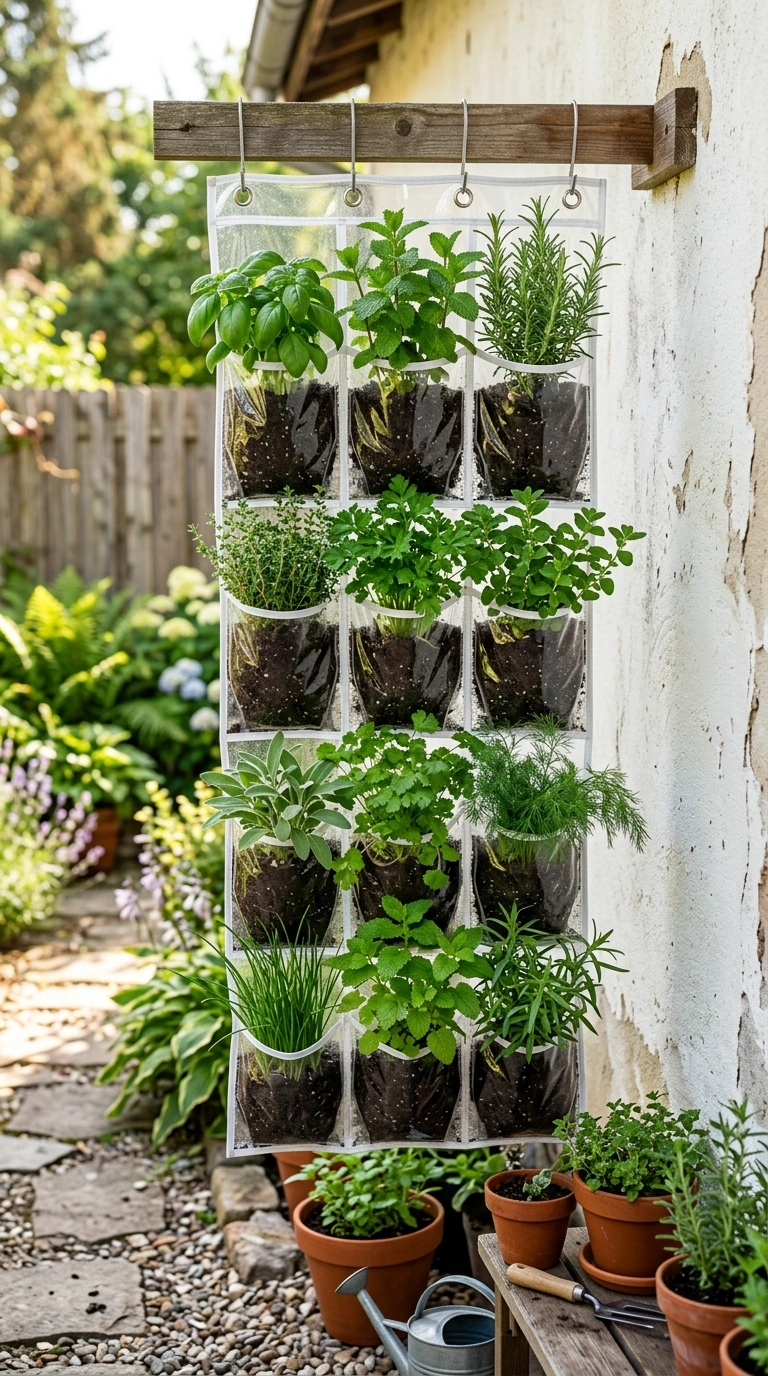
A clear pocket shoe organizer, the type designed to hang over a door, hung on a sunny wall or fence creates an instant vertical herb garden with individual pockets for each plant. Cut small drainage slits in the bottom of each pocket, fill with potting mix, and plant herbs in the pockets at a density of one herb per pocket. Water from the top and the water filters down through the pockets. The organizer is one of the cheapest and quickest herb garden setups available and works particularly well on an outdoor fence or a sunny balcony wall where the plants receive adequate light. Replace the organizer every year or two as the fabric wears from moisture exposure.
11. Colander Hanging Planter
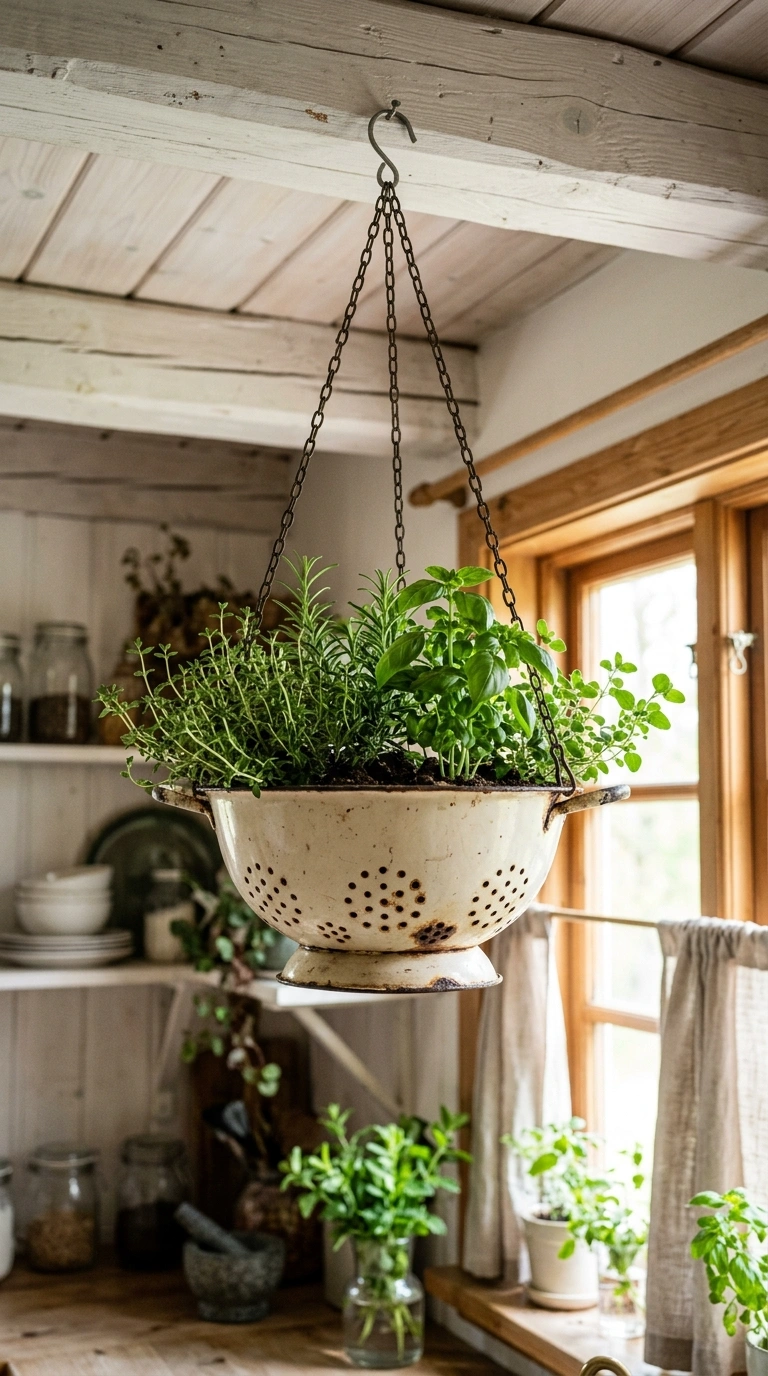
A kitchen colander with its built-in drainage holes makes a ready-made hanging planter that requires zero modification. Line the colander with a thin layer of sphagnum moss or coconut coir to retain the soil, fill with potting mix, and plant. Attach three chains or ropes to the rim at even intervals and hang from a ceiling hook or a wall bracket. The colander drains naturally through its existing holes, which makes overwatering nearly impossible. A vintage or colorful colander adds a charming kitchen-appropriate character to the hanging herb garden.
12. Stacked Planter Pyramid
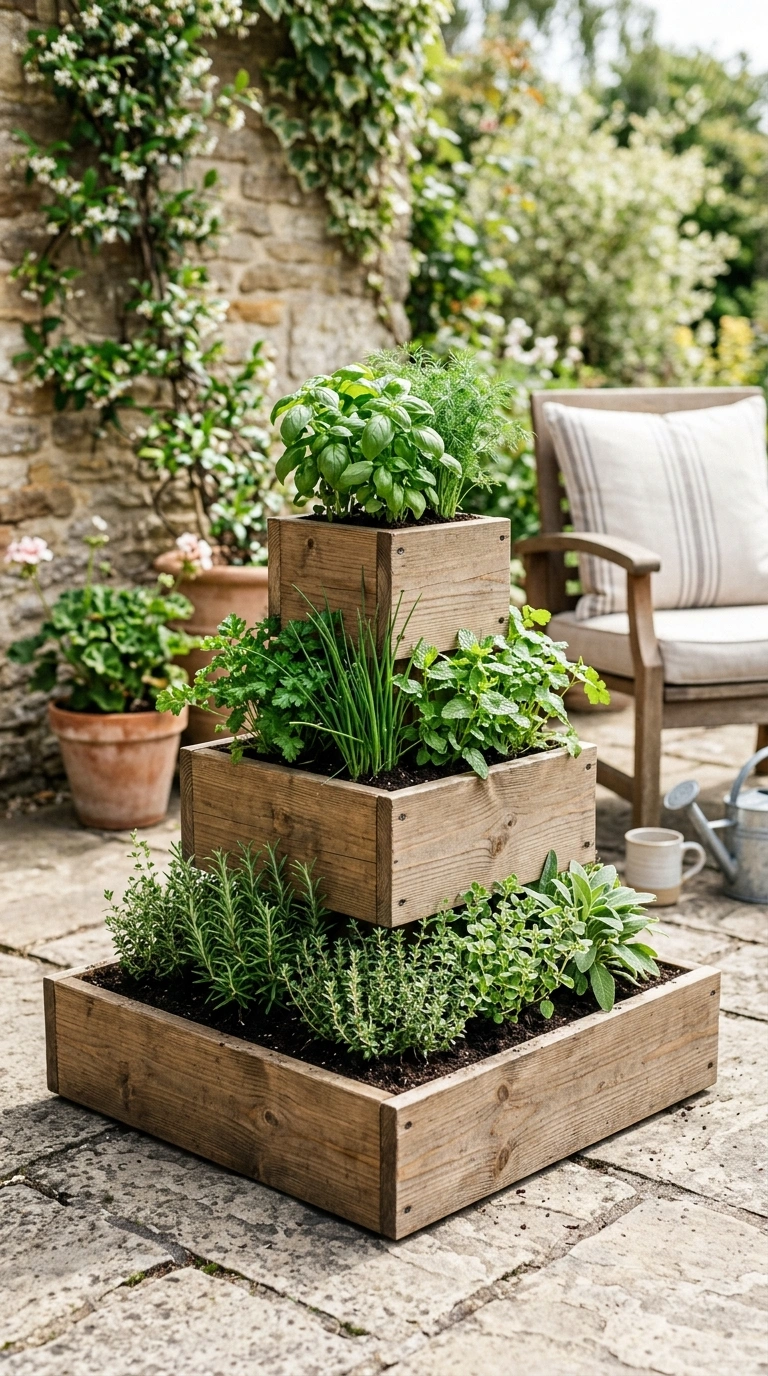
Three or four square planter boxes in progressively smaller sizes, stacked on top of each other with soil between each level, create a pyramid planter that holds herbs on each exposed step. Build the boxes from simple lumber in four sizes, place the largest on the bottom, fill with soil, center the next smaller box on top, fill again, and continue until the pyramid is complete. Plant herbs around the exposed soil ring of each level. The pyramid sits on a patio, a porch, or a sunny kitchen floor and holds a surprising number of herbs in a compact vertical footprint.
13. Magnetic Tin Planters
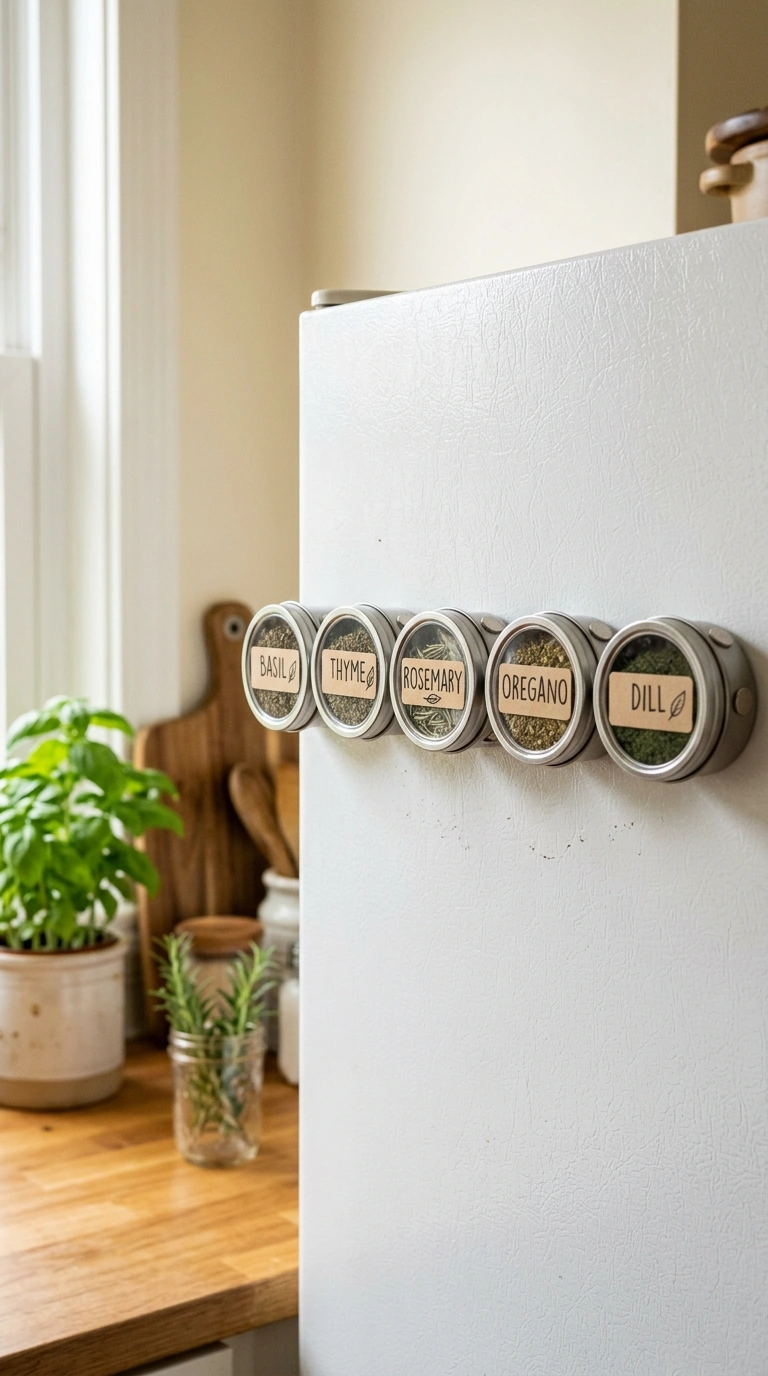
Small metal tins with magnets glued to the back, filled with soil and planted with small herbs like chives, thyme, or small basil, stick to the side of the refrigerator and create a herb garden on a surface that is otherwise completely unused. Drill a small drainage hole in the bottom of each tin, glue a strong magnet to the back with industrial adhesive, fill with soil, and plant. The tins hold small herbs that are harvested frequently enough to stay compact. A row of five labeled magnetic herb tins on the refrigerator side is a space-saving setup that works in even the smallest kitchens.
14. Rope Wrapped Pot Set
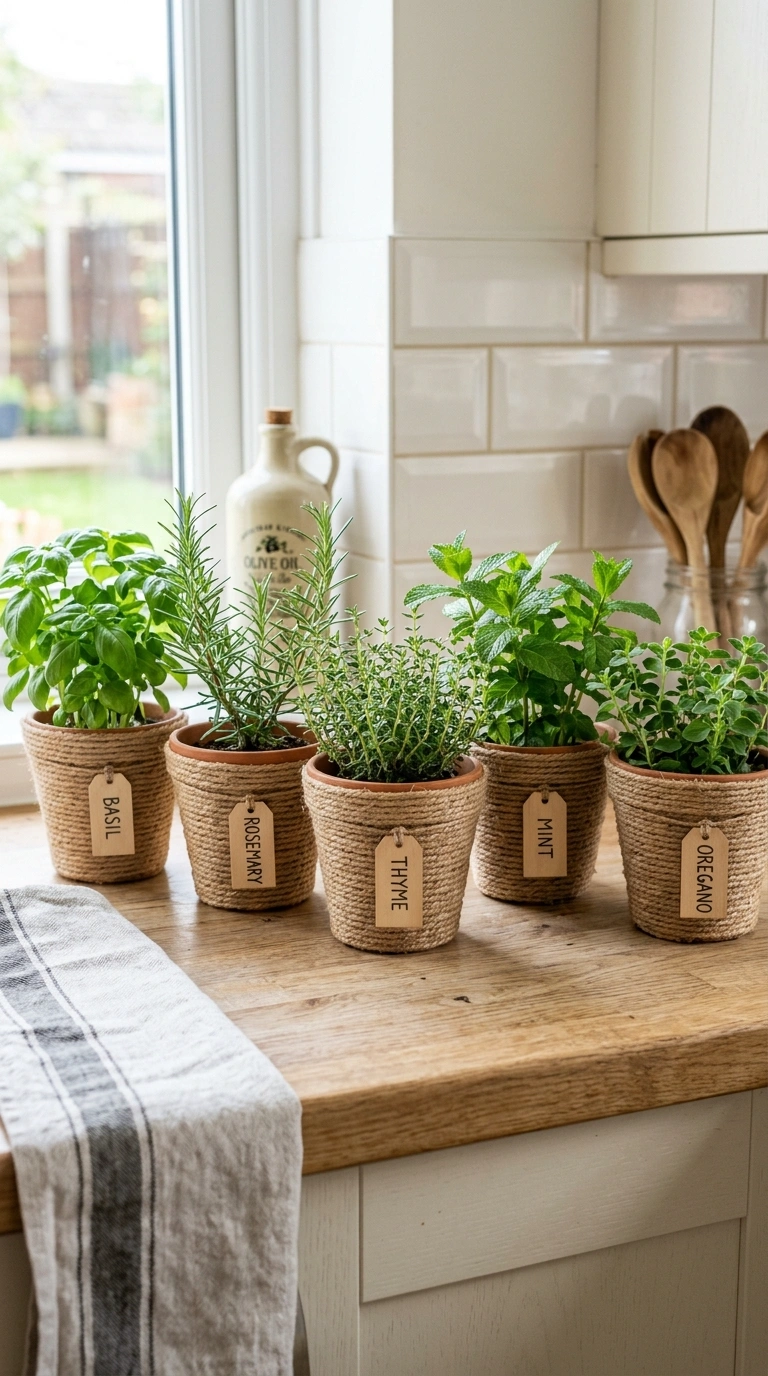
Plain terracotta or plastic pots wrapped in natural jute or cotton rope transform inexpensive basic pots into styled containers that suit boho, coastal, and organic kitchen aesthetics. Apply hot glue in a line around the pot from bottom to top while wrapping the rope tightly in a continuous spiral. The rope completely covers the original pot surface and creates a warm, textured container that looks handmade. A set of five matching rope-wrapped pots holding different herbs creates a coordinated herb garden for the cost of five basic pots and a length of rope.
15. Raised Bed Mini Garden
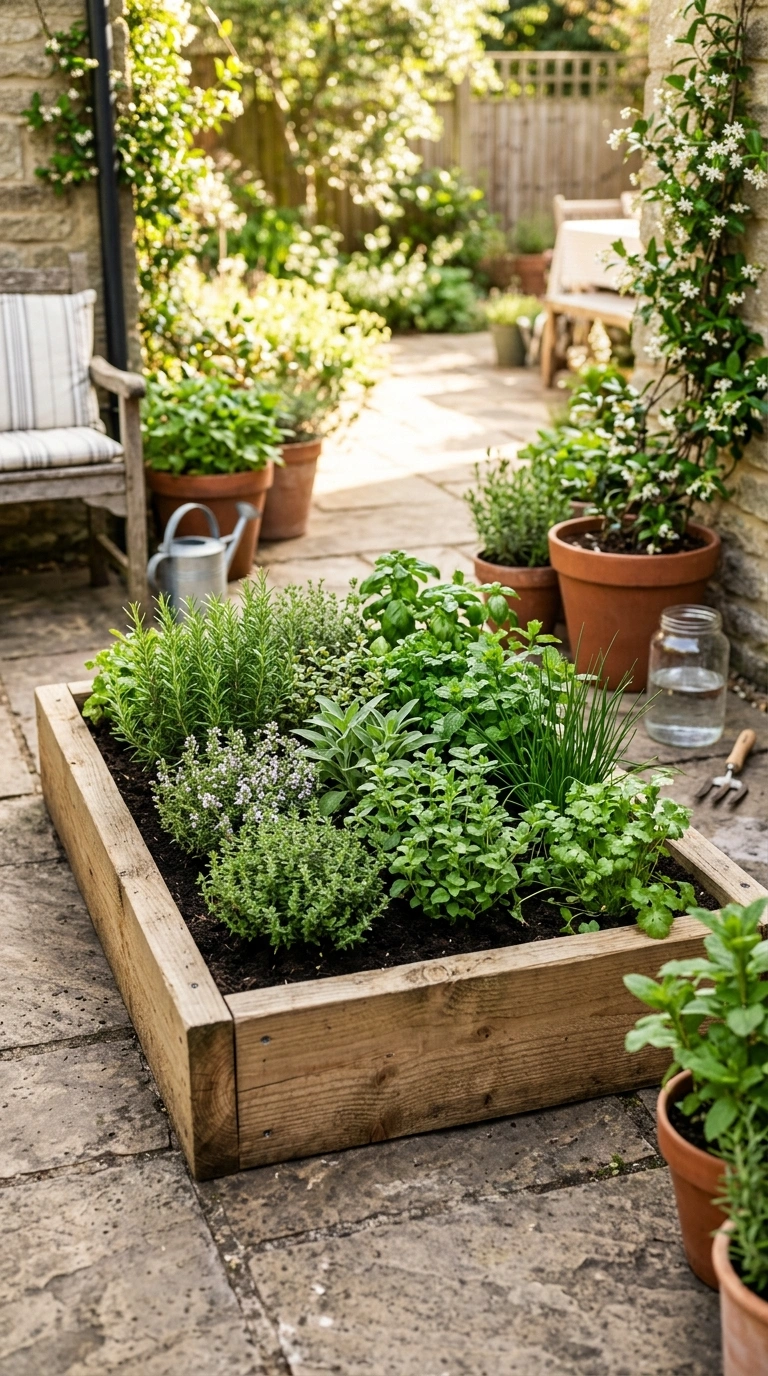
A small raised bed built from four lengths of timber, anywhere from twelve inches to three feet square depending on the available space, creates an outdoor herb garden at a comfortable working height that makes planting, harvesting, and maintenance significantly easier than ground-level gardening. Build the frame from two-by-six or two-by-eight lumber screwed together at the corners, position it in a sunny spot, fill with a quality raised bed mix, and plant. Even a very small raised bed of twelve by twelve inches holds four herbs and provides better drainage and warmer soil than ground planting.
16. Tea Cup Herb Garden
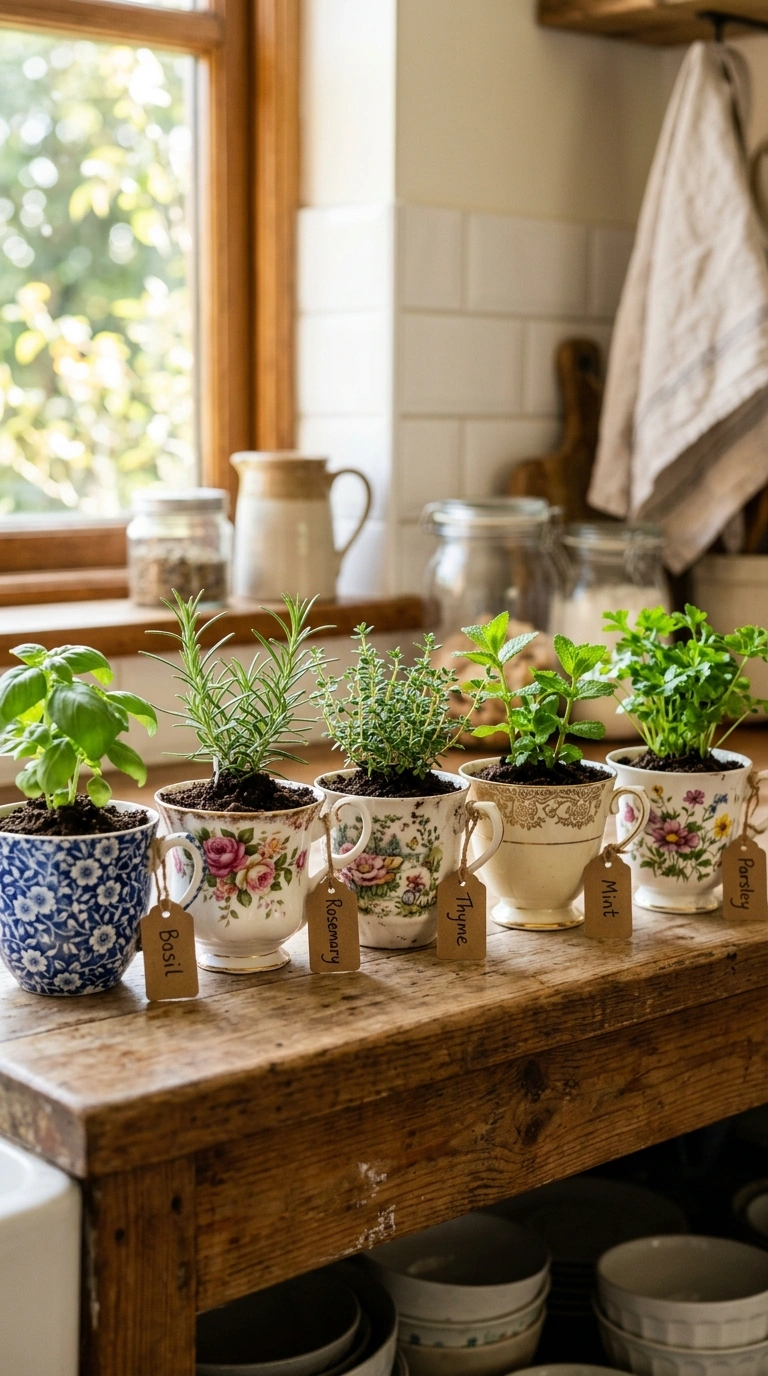
Vintage teacups from thrift stores and estate sales, each planted with a single small herb, create a charming and unique herb garden display on a kitchen shelf or windowsill. Drill a small drainage hole in the bottom of each cup, or add a deep layer of small stones for drainage. Fill with potting mix and plant a small herb, labeling each cup with a small tag. The cups should be mismatched in pattern but coordinated in size for the most charming collected look. A row of five vintage teacup herbs on a kitchen shelf costs almost nothing in materials and looks like nothing that can be purchased from a store.
17. PVC Pipe Vertical Garden
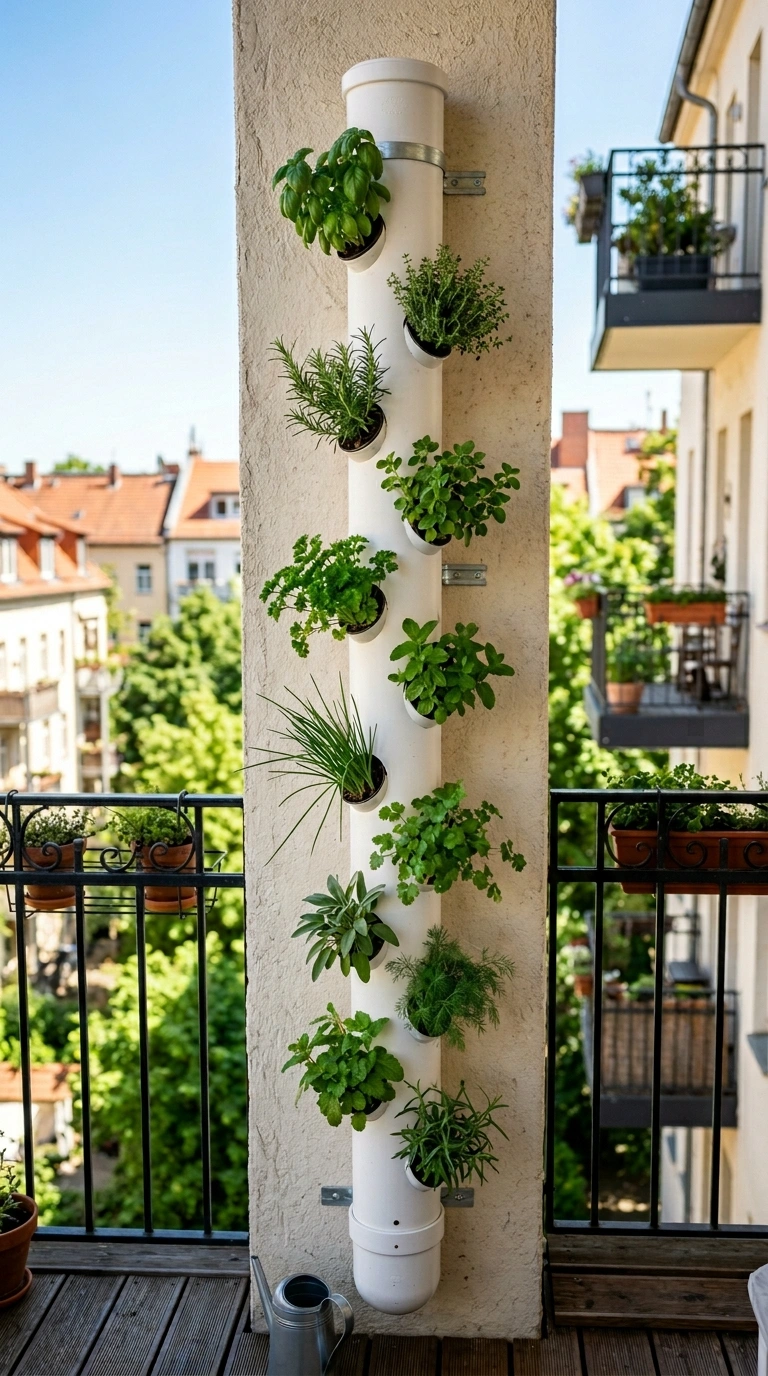
A length of large-diameter PVC pipe mounted vertically with holes cut at intervals along its length creates a space-efficient vertical herb garden for patios, balconies, and small outdoor spaces. Cut circular openings in the pipe at staggered heights using a hole saw, cap the bottom, fill with potting mix through the top while planting herbs into each opening as the soil level reaches it. Water from the top and the water filters down through the column. The PVC vertical garden holds ten or more herbs in the floor space of a single pipe. For guidance on which herbs to choose for a vertical setup based on their light and water needs, the herb garden design guide covers placement and herb pairing strategies that work across different garden formats.
18. Repurposed Drawer Planter
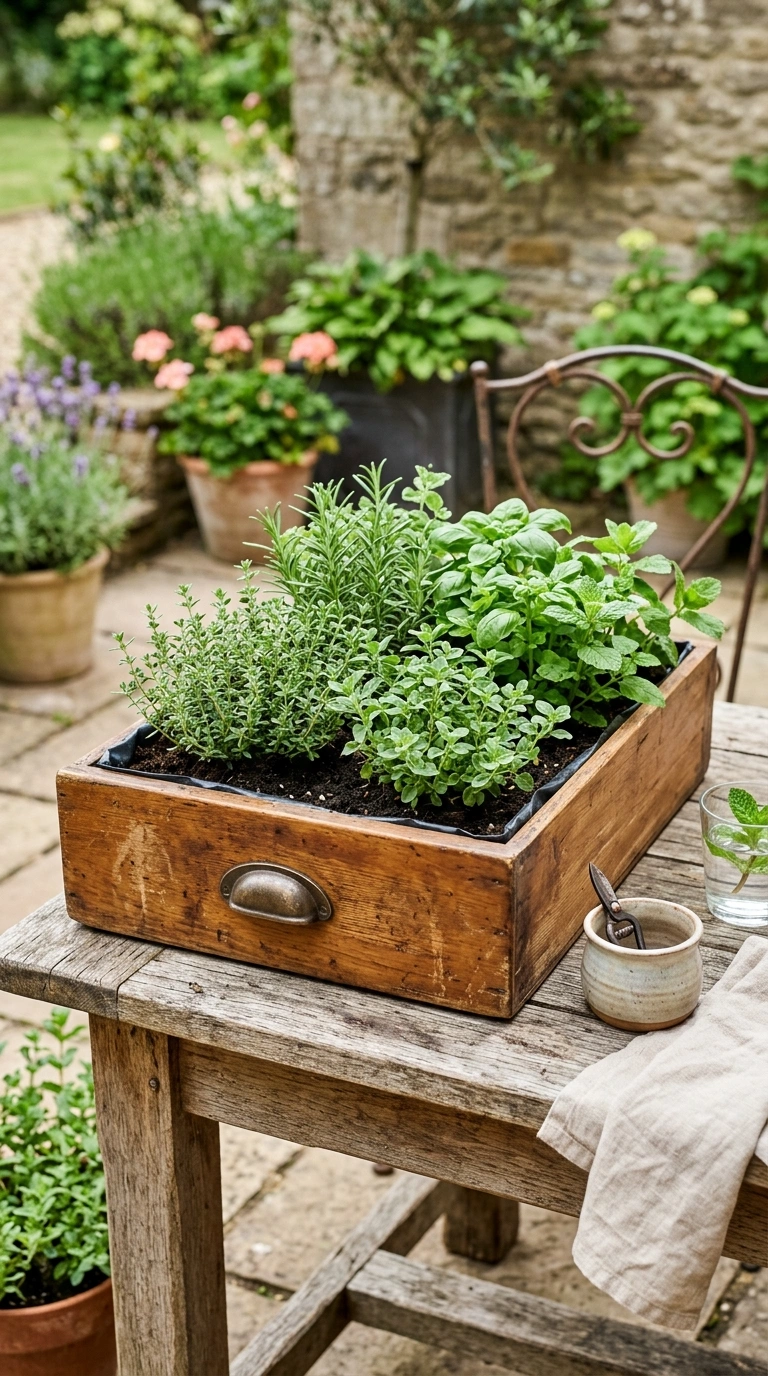
An old dresser drawer, a kitchen drawer, or a wooden tool box repurposed as a shallow planter creates a ready-made herb bed that sits on a table, a bench, or a porch. Line the drawer with heavy plastic sheeting, poke drainage holes through the plastic and the drawer bottom, fill with potting mix, and plant herbs across the full surface. The aged wood of a vintage drawer adds warmth and character that new planters cannot match. Label each herb with a small wooden stake. The drawer planter sits flat on any surface and holds a generous collection of herbs in a contained format that looks charming and deliberate.
The best DIY herb garden is the one that actually gets built rather than the one that stays as a saved idea on a phone. Pick the project that suits your space, your tools, and your weekend schedule, and build it. Most of these projects take under two hours and cost under twenty dollars. The result is a herb garden you built yourself, which makes the first harvest of fresh basil from it taste noticeably better than anything from a store.