20 Small Laundry Room Ideas That Maximize Every Inch of Space
A small laundry room is not a problem to be solved. It is a constraint that forces better decisions. The large laundry rooms in magazines have space for separate sorting stations, full-size folding counters, and cabinets for every supply the household owns. A small laundry room has space for the machines and very little else, which means every inch that is used needs to earn its place through genuine daily function. The good news is that laundry does not actually require much space. It requires a washer, a dryer, a surface for folding, somewhere to hang items, and storage for supplies. All of that fits into a closet, a hallway alcove, or a room barely wider than the machines themselves when the layout is right. These 20 ideas focus specifically on the space-maximizing strategies that make small and tiny laundry rooms genuinely functional without feeling cramped.
1. Stacked Washer and Dryer
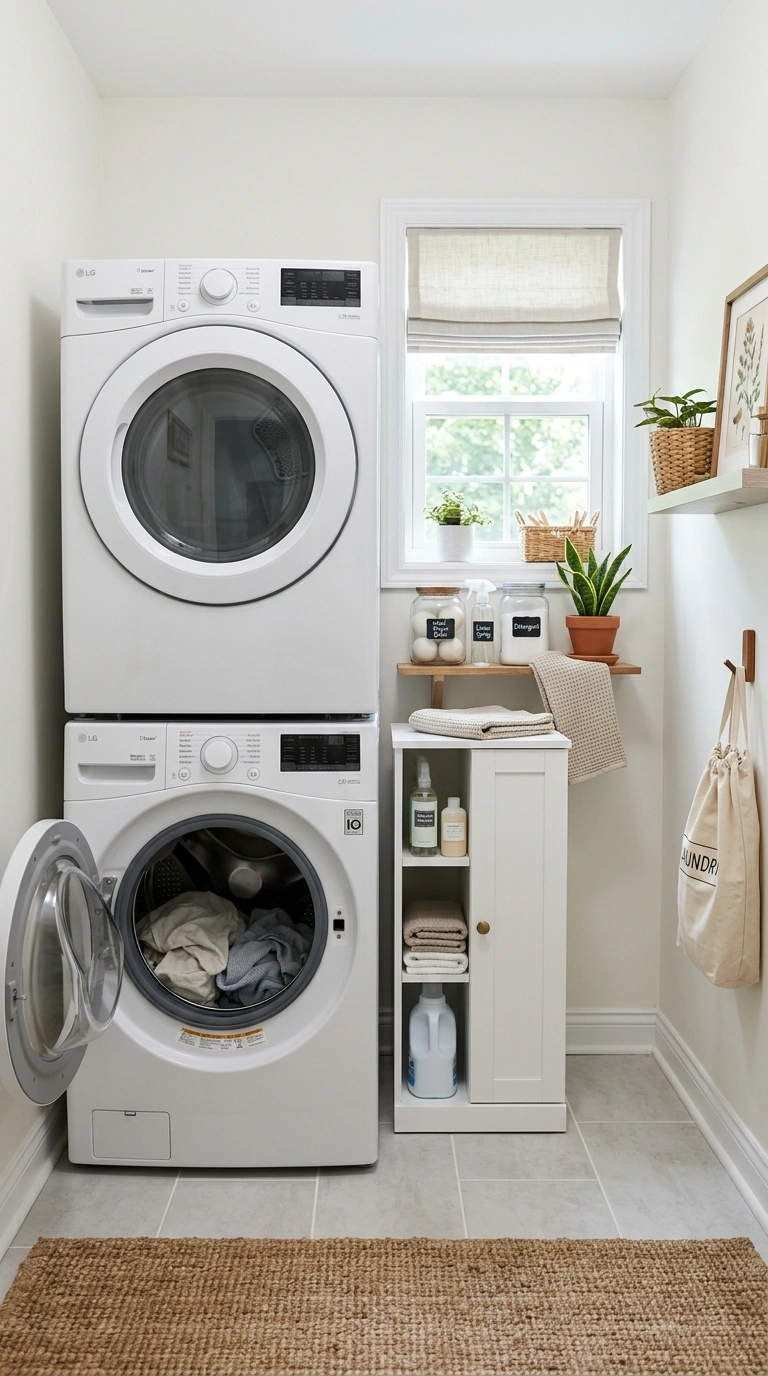
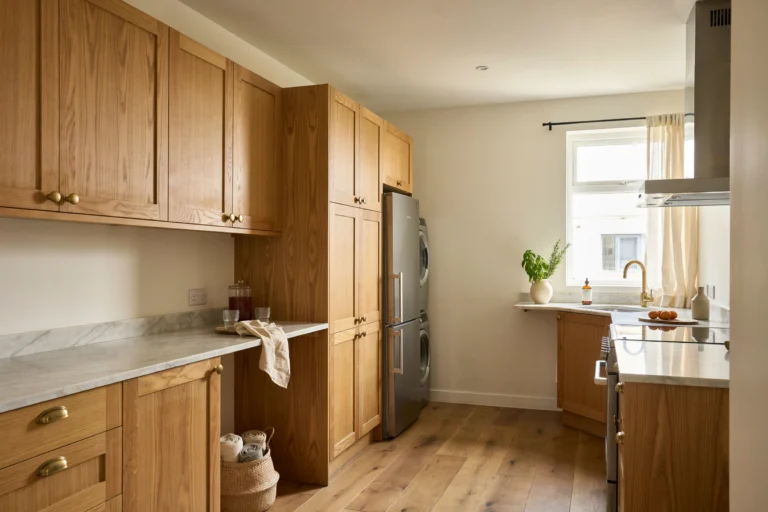
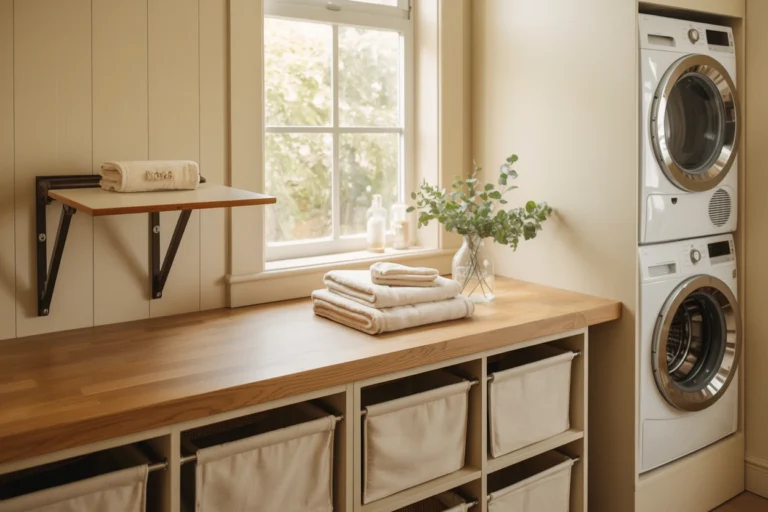
Stacking a front-loading dryer on top of a front-loading washer cuts the floor footprint of the two machines in half, which is the single most impactful space-saving decision in any small laundry room. The stacked configuration frees the adjacent floor space for a storage cabinet, a hamper, or simply clear walking room that side-by-side machines would have consumed. Use a manufacturer-approved stacking kit to secure the dryer safely on top of the washer. The stacked format works in closets, narrow hallways, and rooms as small as three feet wide by three feet deep, which means a dedicated laundry space is possible in almost any home or apartment.
2. Closet Laundry Conversion
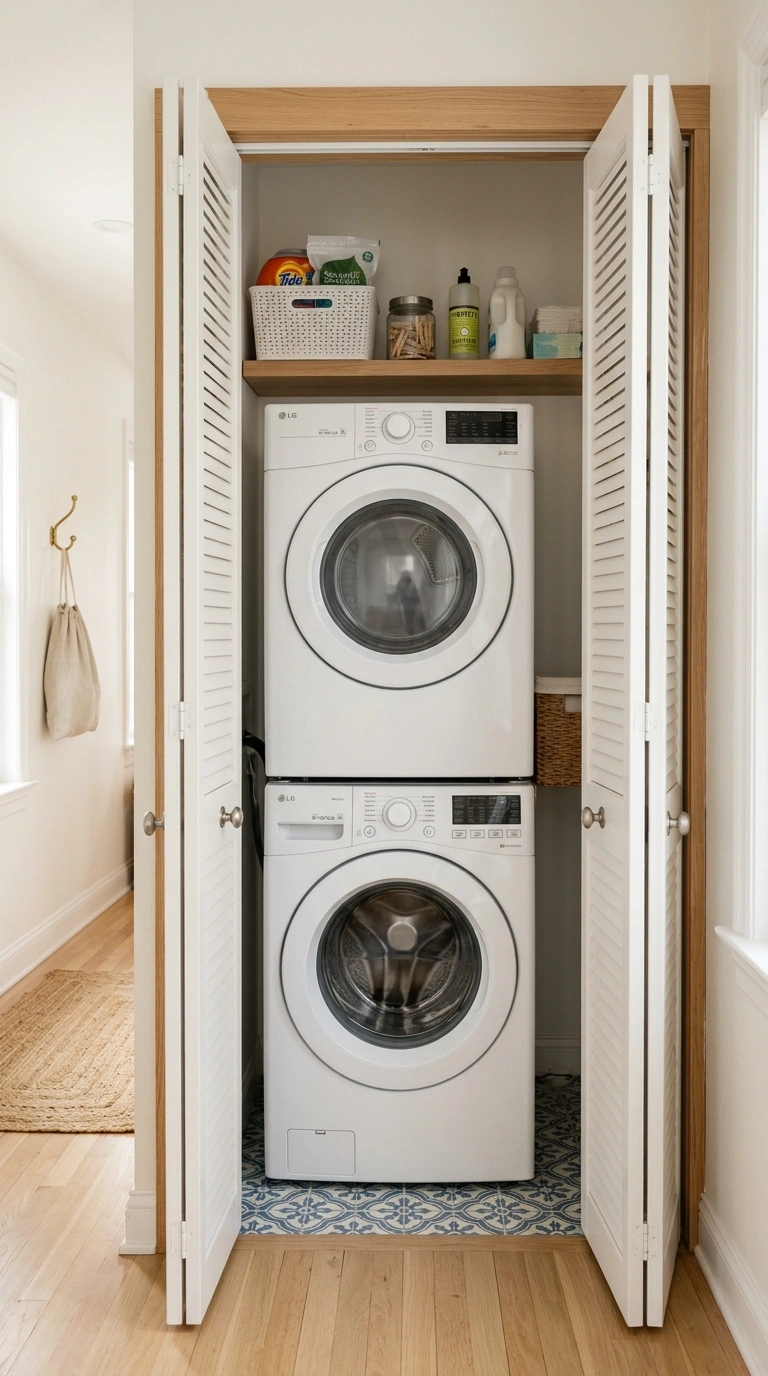
A standard reach-in closet of approximately two feet deep by five feet wide accommodates a stacked washer and dryer with room for a narrow shelf or storage beside them. Remove the closet rod and any existing shelving, install the plumbing and electrical connections, position the stacked machines, and add a small shelf above or beside them for supplies. Bi-fold doors or a curtain conceals the laundry when not in use, which allows the closet laundry to exist in a hallway, a bathroom, or even a bedroom without dominating the room. The closet conversion is one of the most common laundry solutions in apartments and small homes.
3. Counter Over Front Loaders
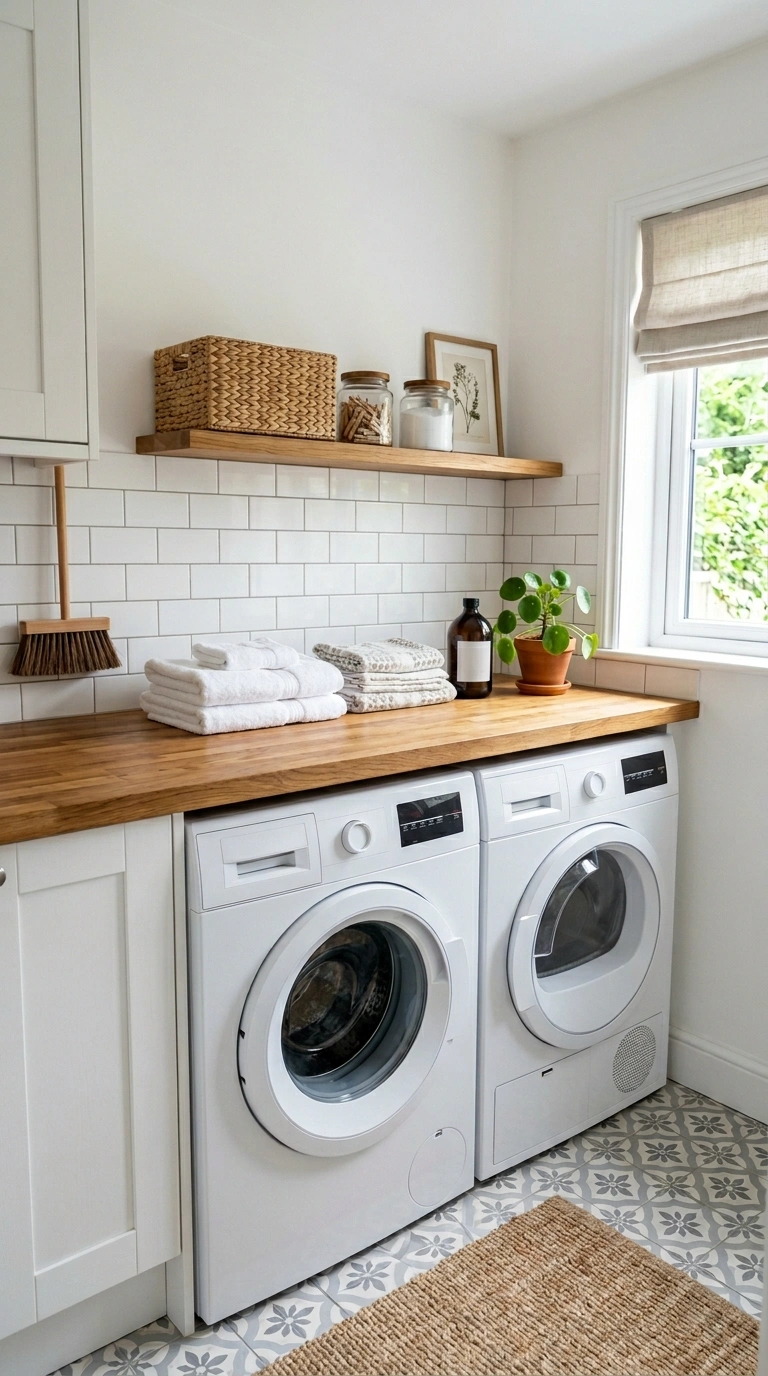
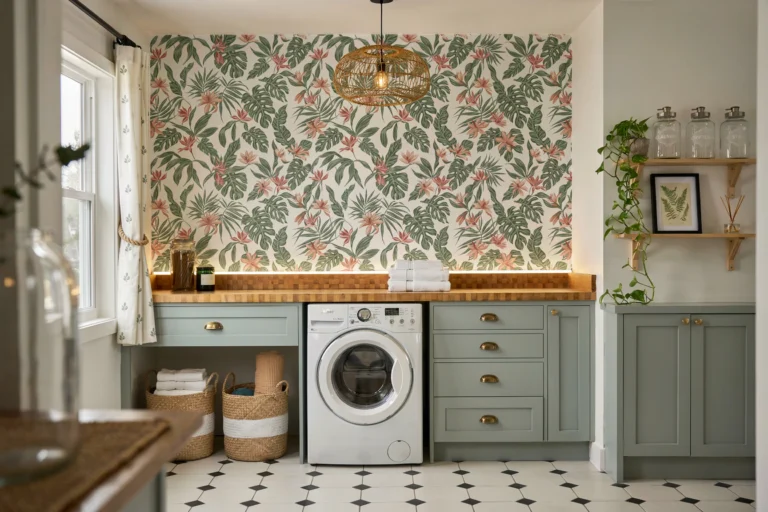
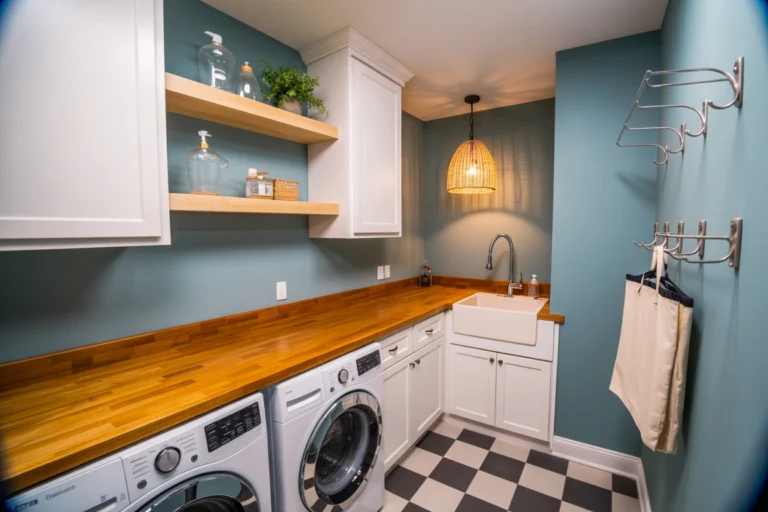
A continuous counter installed directly over side-by-side front-loading machines creates a folding and sorting surface that uses the dead space above the machines without consuming any additional floor area. The counter can be a simple plywood slab, a butcher block piece, or a laminate counter cut to fit the width of the two machines. Secure the counter to the wall with brackets or L-brackets so it is stable for folding and sorting. The counter surface transforms the top of the machines from unused dead space into the most functional work surface in the room. The same approach to creating usable surfaces from unused space also works in small bathroom layouts where every surface needs to serve a genuine function.
4. Vertical Wall Storage
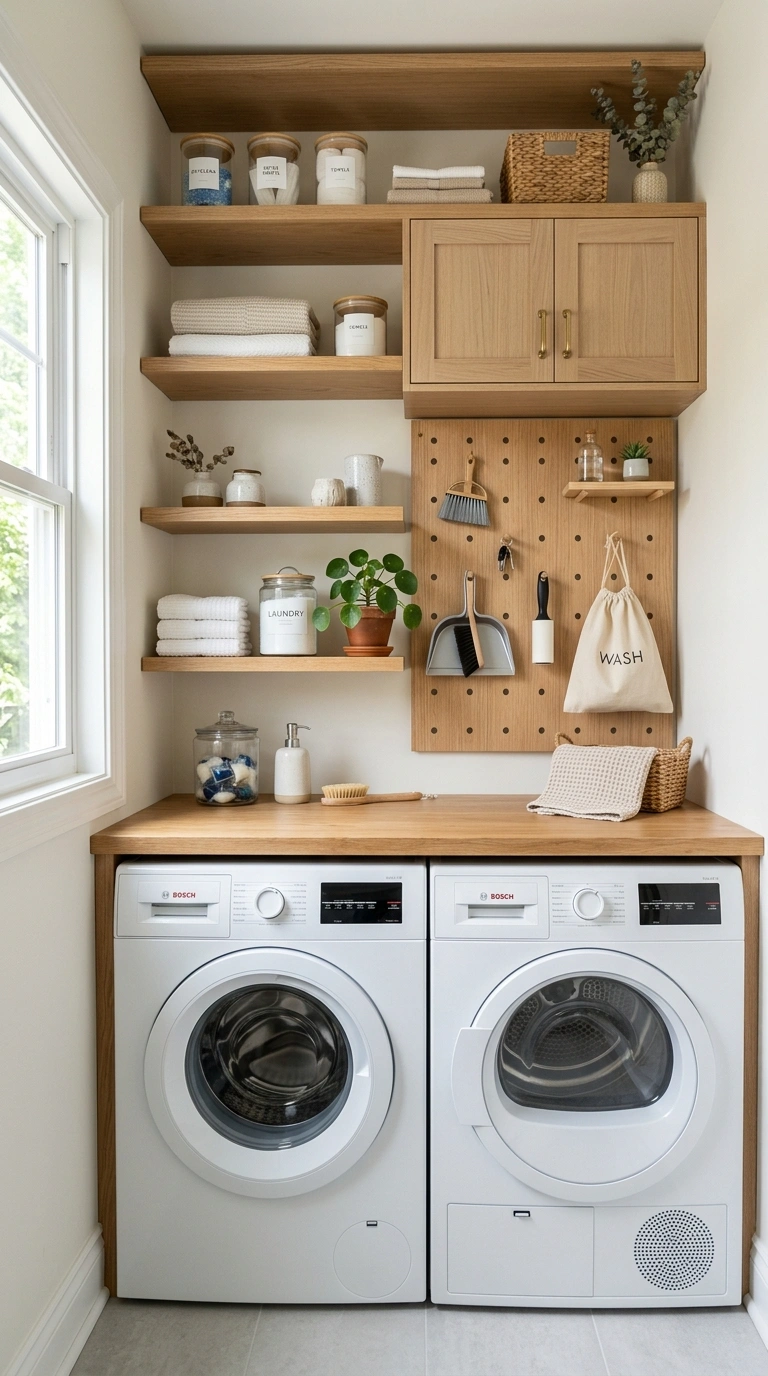
In a small laundry room, the walls from counter height to the ceiling are the only available storage space once the machines occupy the floor. Install shelving, cabinets, or a pegboard on every available wall surface above the machines and above the counter. Open shelves hold frequently used supplies within easy reach. Closed cabinets hide less attractive items and cleaning products. A pegboard section holds hooks for brooms, dustpans, and hanging items. The vertical storage strategy means the small laundry room holds as many supplies as a large one, just distributed upward rather than outward.
5. Fold-Down Ironing Board
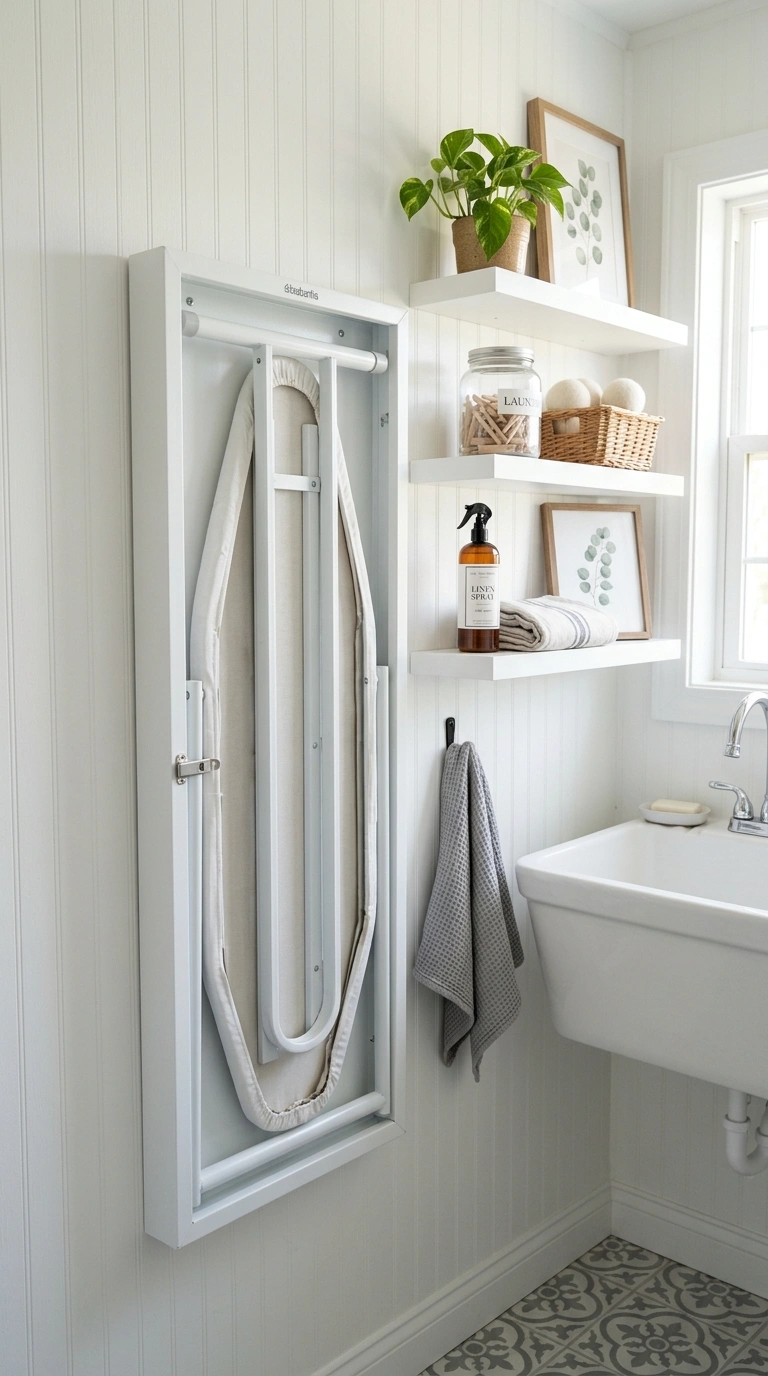
A wall-mounted fold-down ironing board that swings out for use and folds flat against the wall when finished takes up zero floor space in its stored position. The fold-down board is typically mounted inside a shallow wall cabinet or on a hinge bracket on the wall at the correct ironing height. When folded away, the board disappears entirely, which is critical in a small laundry room where a freestanding ironing board would block the entire walking path. The fold-down board costs more than a basic freestanding board but the space savings justify the investment in any laundry room under about fifty square feet.
6. Pull-Out Folding Surface
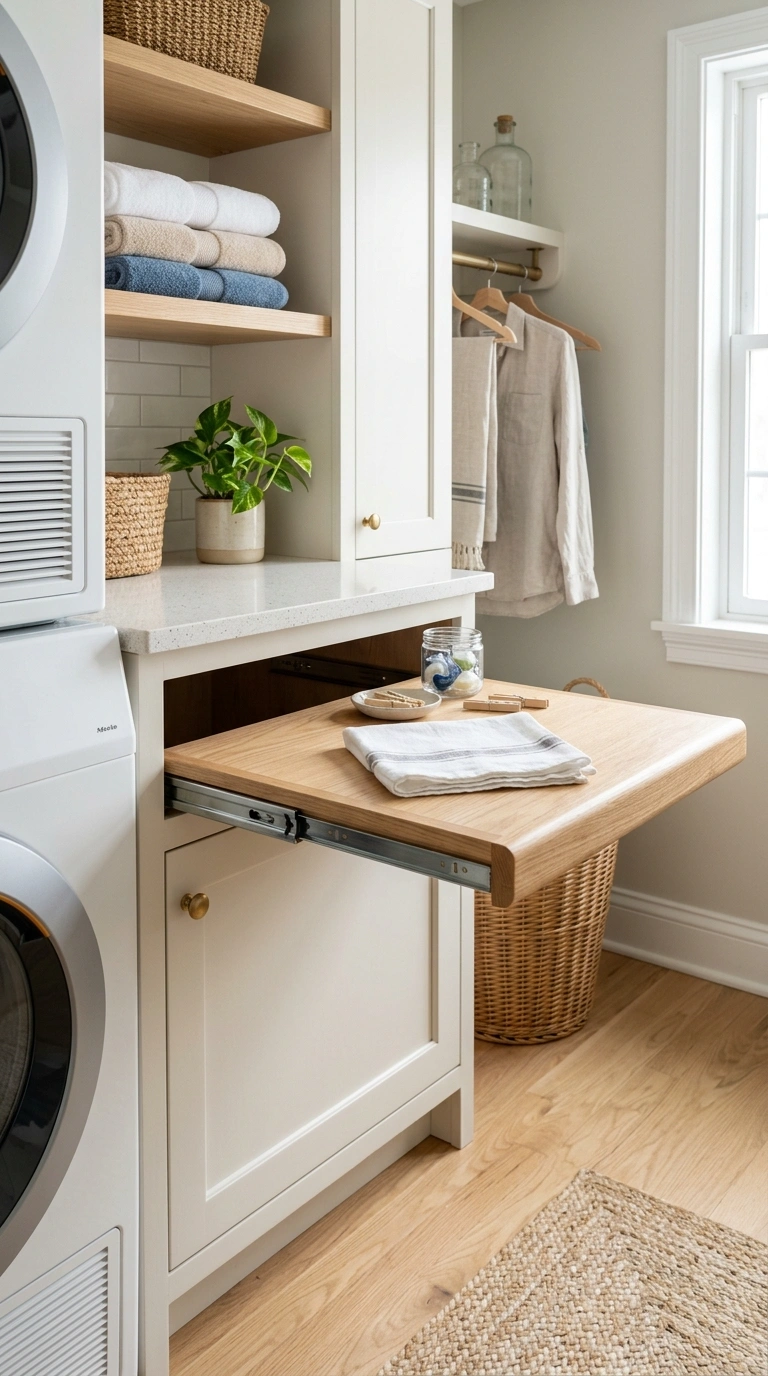
A pull-out shelf installed in a cabinet or mounted on drawer slides below the counter creates a folding surface that extends when needed and slides back when finished, taking up zero space in its retracted position. The pull-out shelf should be at least twenty inches deep and as wide as the cabinet allows to provide a meaningful folding surface. Mount it at a height that is comfortable for standing fold work, approximately thirty-four to thirty-six inches from the floor. The pull-out surface is one of the best space-saving solutions for laundry rooms where a permanent folding counter would block the walkway.
7. Retractable Clothesline Indoor
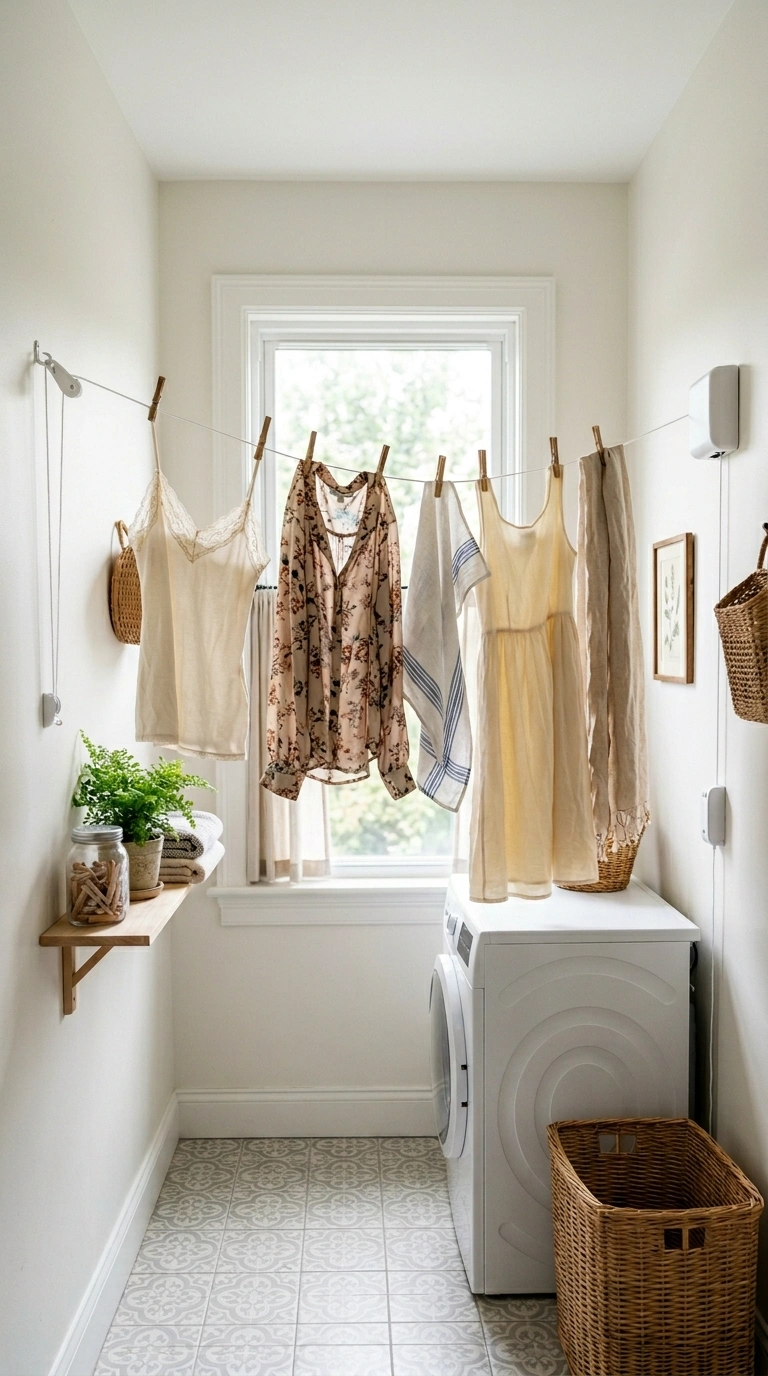
A retractable clothesline mounted between two opposite walls of the laundry room provides a drying line for delicate items and air-dry garments that extends across the room when in use and retracts into a compact housing when not needed. The retractable mechanism means the line is invisible when retracted and the full width of the room is available for walking. Mount the line at a height that allows the hanging garments to clear the floor and the machines below. A retractable line that spans four to five feet holds a surprising number of items and solves the problem of where to air-dry clothes in a home without outdoor drying space.
8. Over-Door Storage Rack
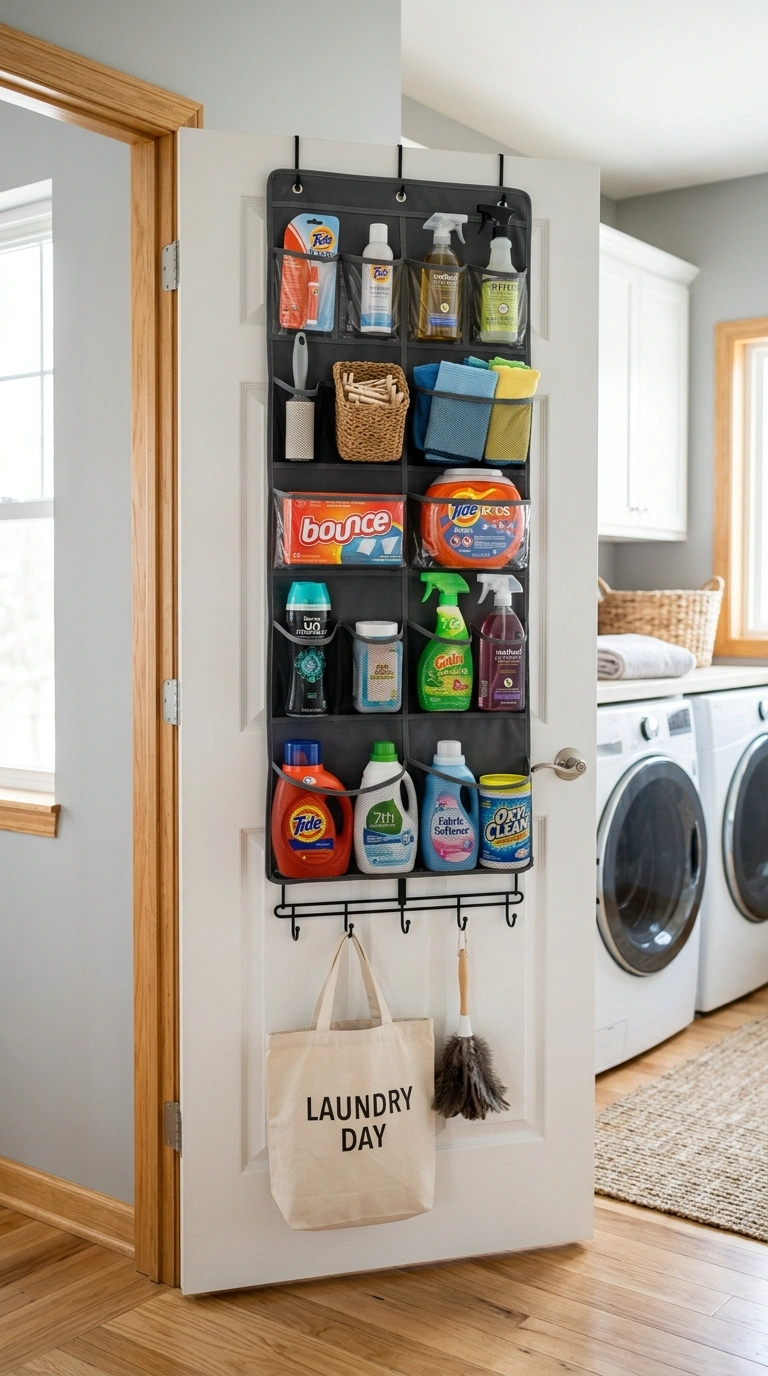
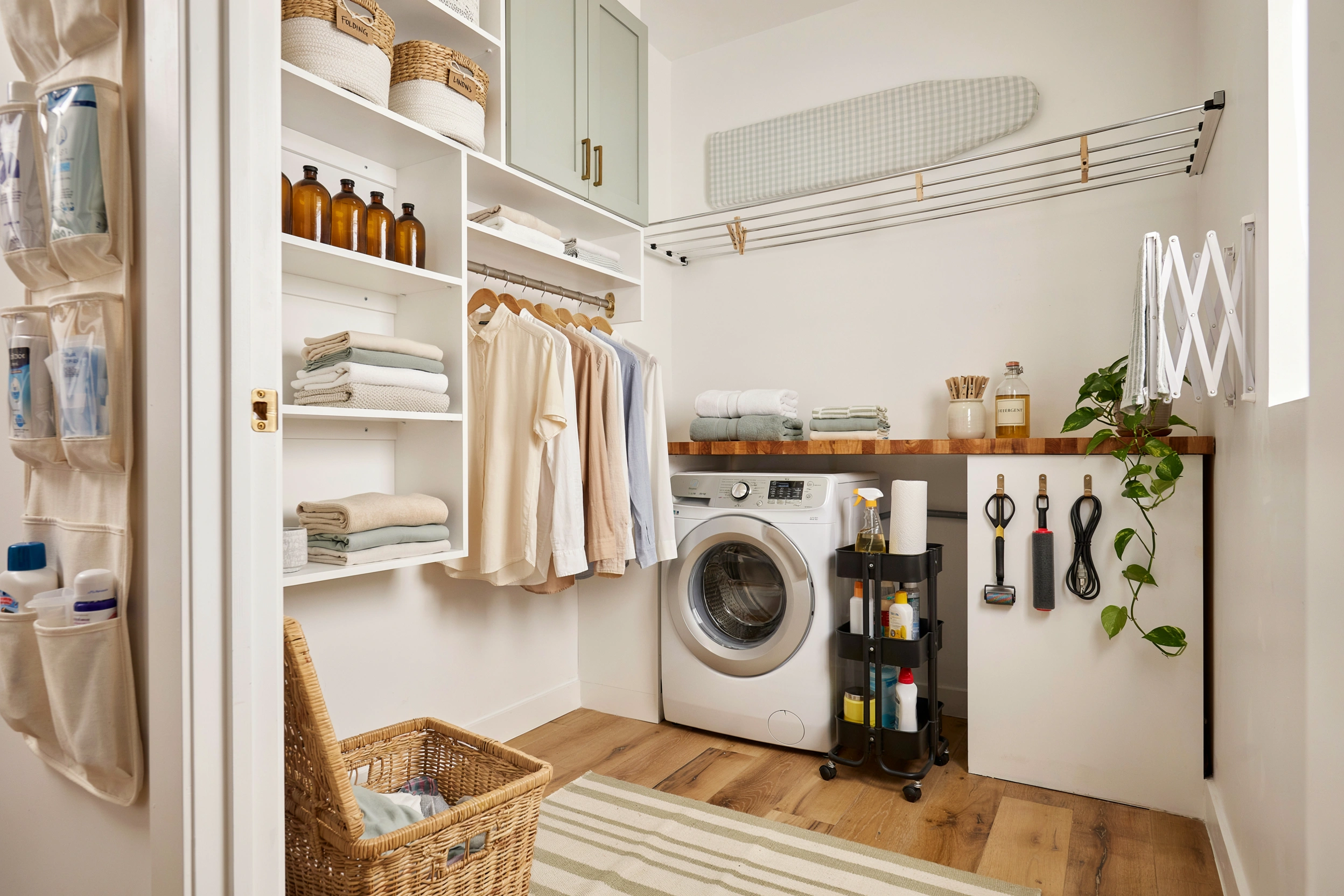
The back of the laundry room door is an often-overlooked storage surface that holds a significant amount of supplies when fitted with an over-door rack or a set of hooks. An over-door organizer with pockets or shelves holds cleaning products, dryer sheets, stain removers, and small supplies. A set of hooks on the door holds a broom, a dustpan, a mesh laundry bag, and other hanging items. The door storage uses a surface that would otherwise contribute nothing to the room’s function, and the supplies stored on the door are accessible whenever the door is closed.
9. Narrow Rolling Cart
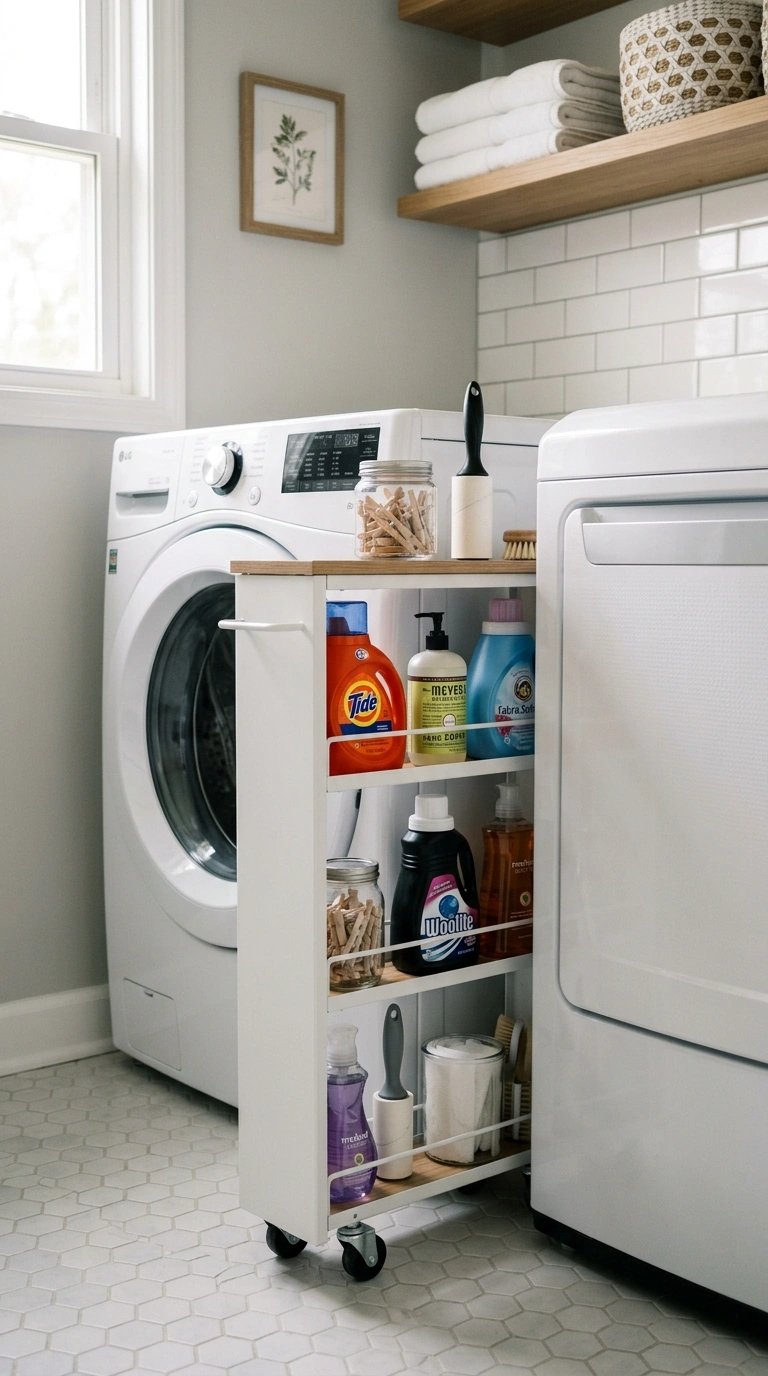
A slim rolling cart, typically ten to twelve inches wide, fits into the narrow gap between the washer and dryer or between a machine and the wall, providing a vertical storage column that slides out for access and slides back to disappear. The rolling cart holds bottles of detergent, cleaning supplies, dryer sheets, stain removers, and other items on multiple narrow shelves. The cart rolls on casters for easy access and tucks completely out of sight when pushed back into the gap. This is one of the most effective small-space storage solutions because it uses a gap that would otherwise be entirely wasted.
10. Stacked Shelf Above Machines
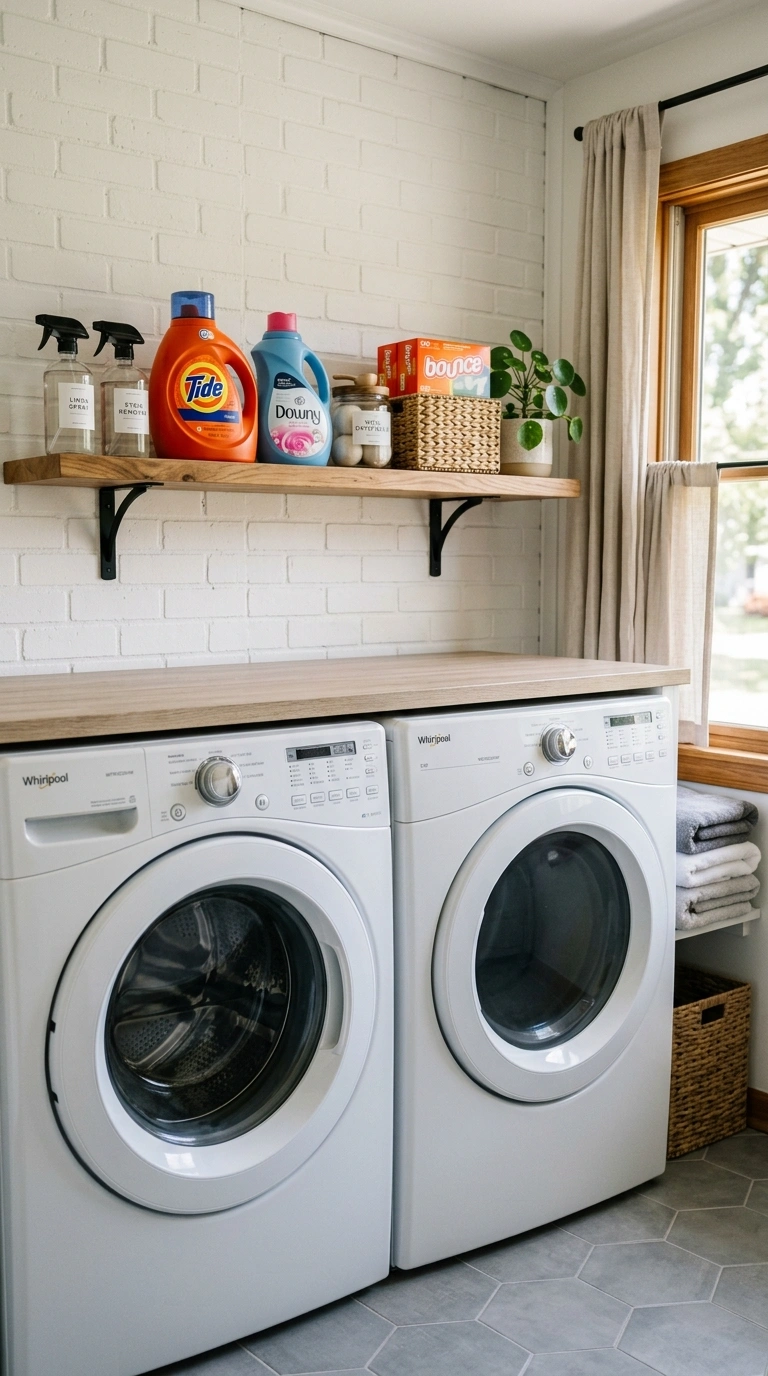
A single sturdy shelf mounted on the wall directly above the washer and dryer, at a height that clears the machine lids or doors, provides the most essential supply storage in the simplest possible format. The shelf holds the detergent, the fabric softener, a small basket of dryer sheets, and one or two other frequently used supplies, all within arm’s reach during the laundry process. A single well-organized shelf is often all the supply storage a small laundry room genuinely needs. Choose a shelf wide enough to span both machines and deep enough to hold the largest detergent bottle securely.
11. Pocket Door Installation
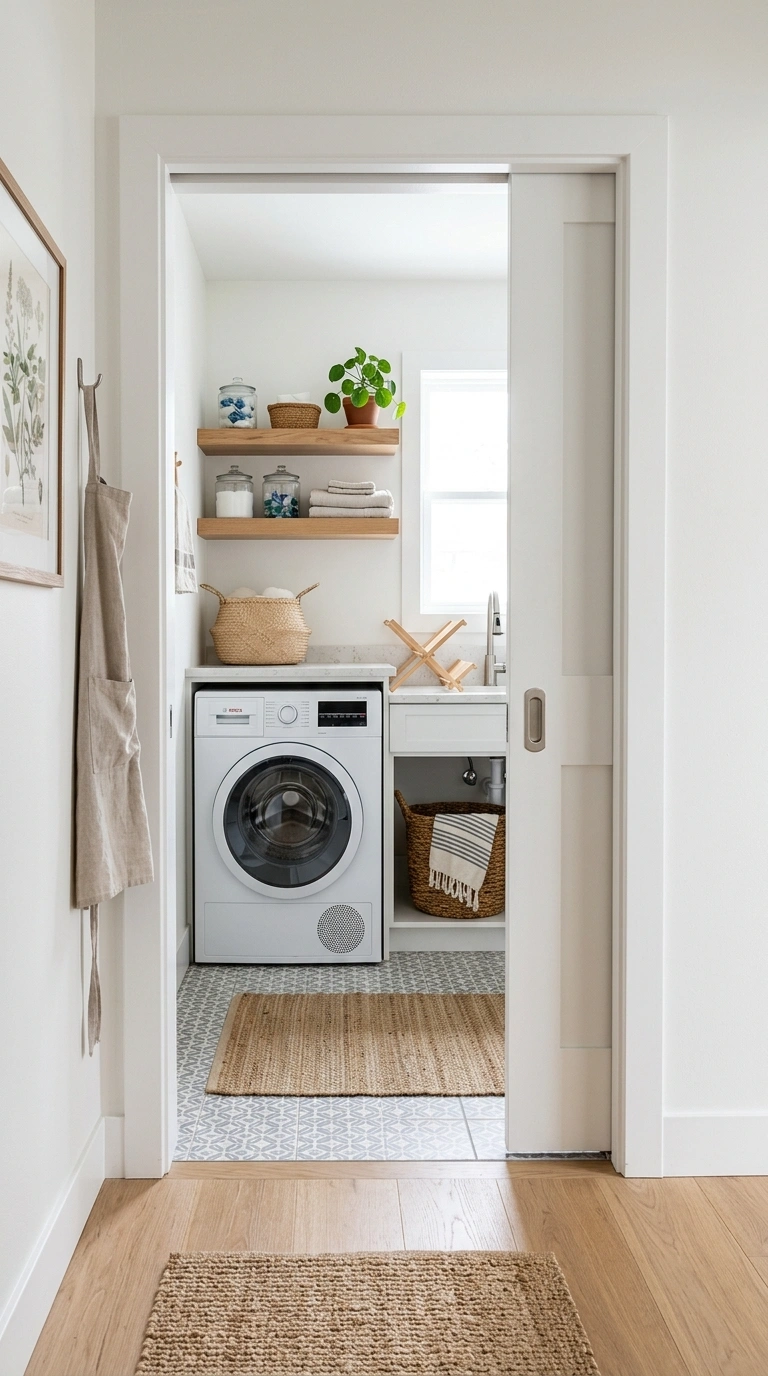
Replacing a standard swing door with a pocket door that slides into the wall eliminates the floor space that the door arc requires when opening and closing. In a small laundry room, the door swing can consume up to nine square feet of usable floor area, which is a significant percentage of the total room. A pocket door opens and closes without using any floor space at all, which frees that area for a hamper, a small cart, or simply clearer walking room. The pocket door installation requires opening the wall to install the track housing, which is a moderate renovation project but one with an outsized payoff in a tight laundry room.
12. Wall-Mounted Drying Rack
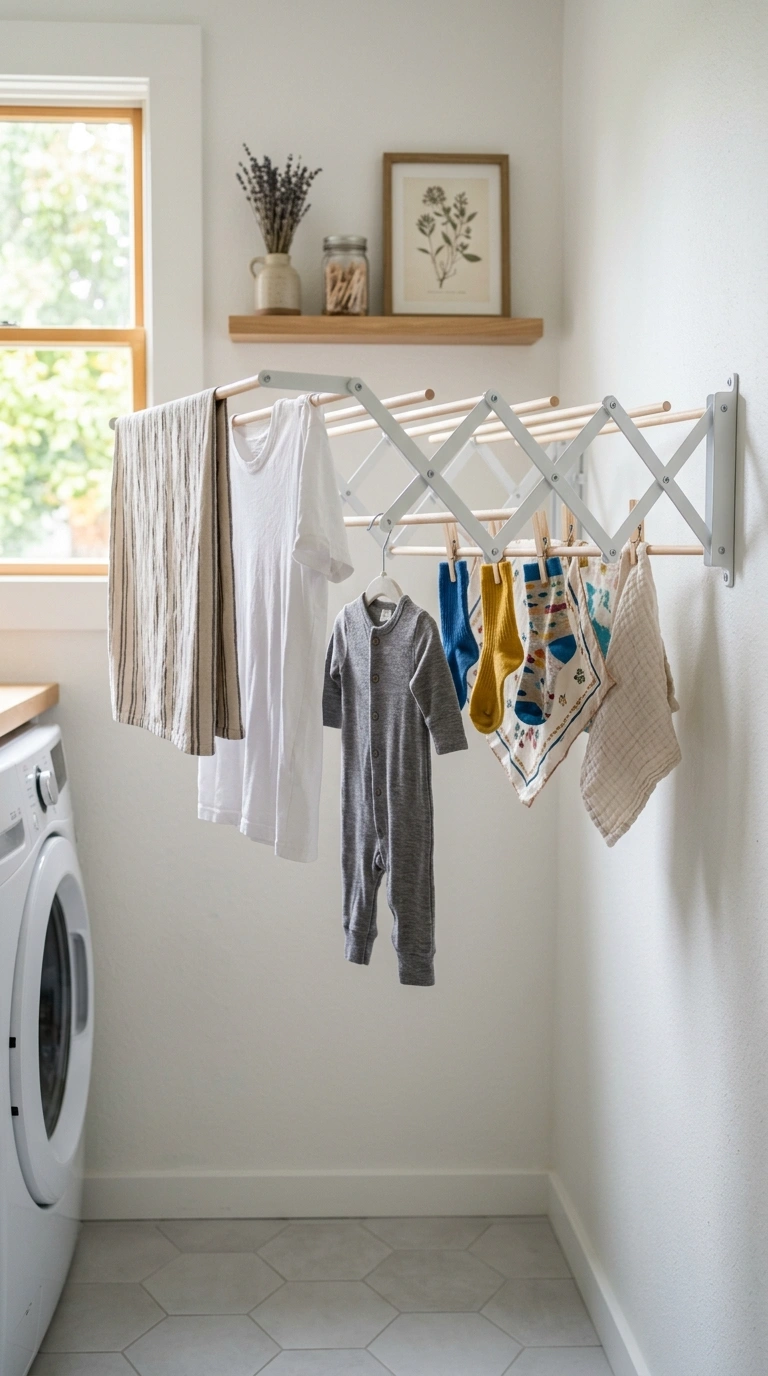
A wall-mounted accordion-style drying rack folds flat against the wall when not in use and extends outward to provide multiple drying bars when needed. The accordion rack mounts at whatever height suits the room and provides a drying surface without consuming any floor space in its folded position. A rack that extends twelve to eighteen inches from the wall when open provides enough hanging space for a full load of delicate items. The wall-mounted rack is more space-efficient than a freestanding rack, which would block the walking path in a small laundry room, and more permanent than a retractable clothesline, which handles fewer items.
13. Under-Shelf Hanging Bar
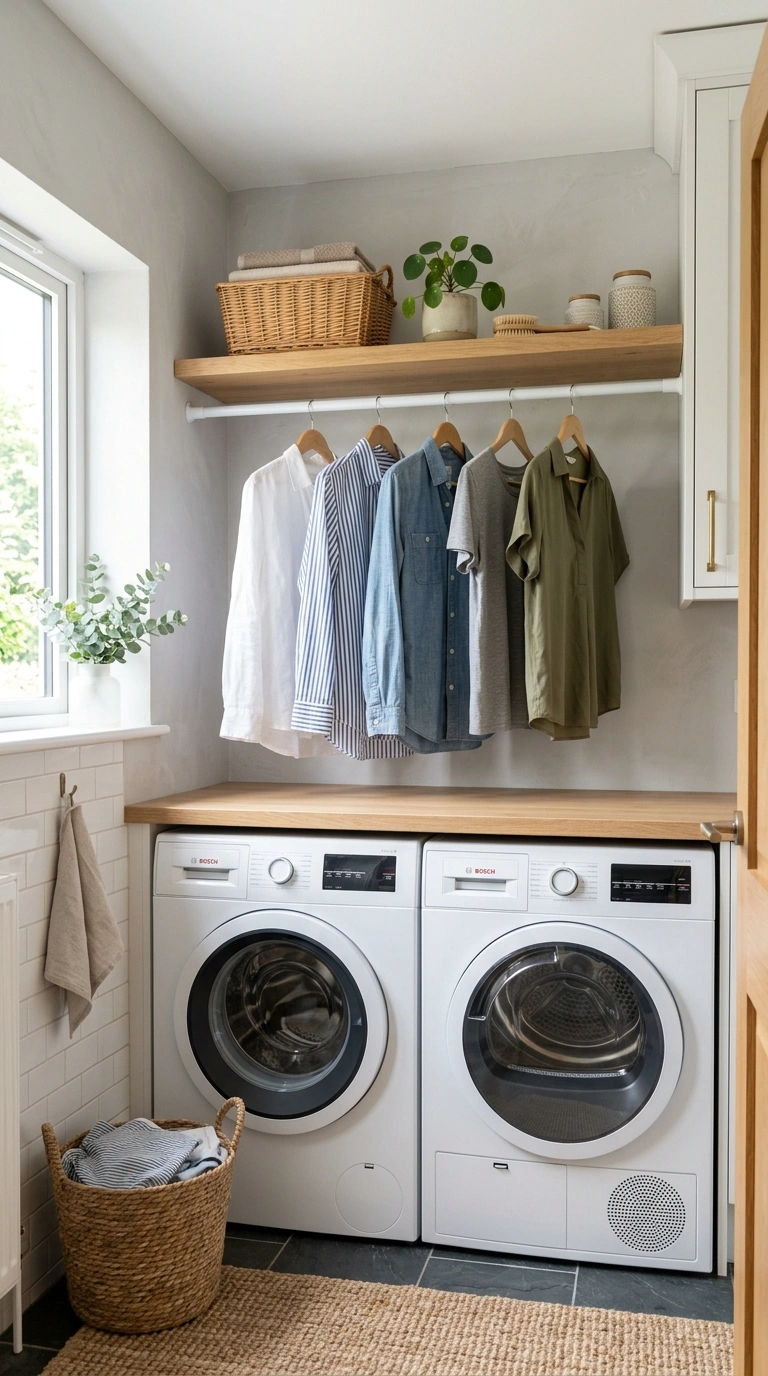
A tension rod or a small hanging bar installed under a shelf above the machines creates a space for hanging shirts, blouses, and items that should not be folded directly out of the dryer. The hanging bar uses the vertical space between the shelf above and the machines below, which is otherwise empty air. Hang the items on hangers directly from the dryer onto the bar, which eliminates wrinkles and the need for a separate ironing step. The under-shelf hanging bar is one of the simplest and most effective small laundry room additions and costs under ten dollars for a basic tension rod.
14. Washer-Dryer Combo Unit
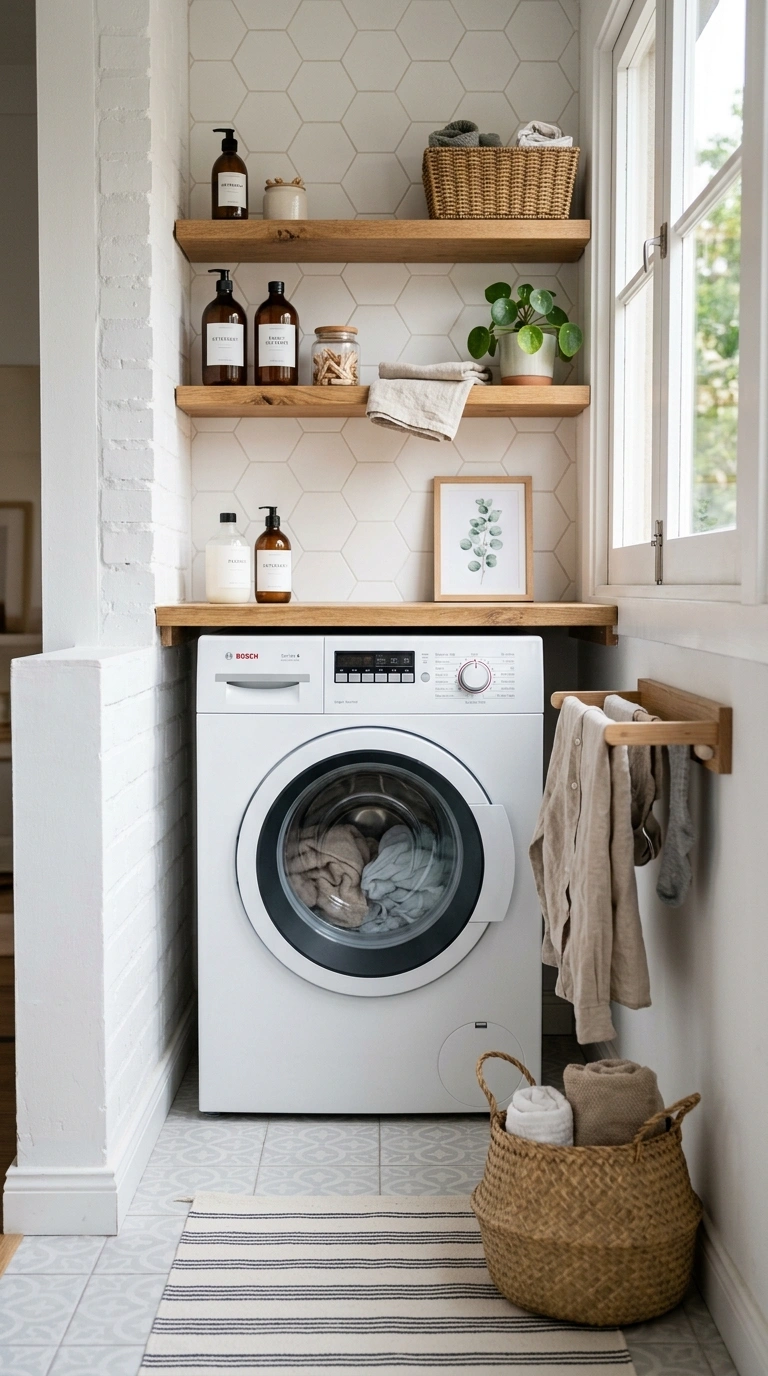
An all-in-one washer-dryer combo unit that washes and dries in a single machine reduces the equipment to a single appliance footprint, which is the ultimate space-saving option for the very smallest laundry setups. Combo units are available in compact sizes that fit into standard closets and small alcoves. The trade-off is longer cycle times and smaller load capacity compared to separate machines, but for small households where space is the primary constraint, the single unit makes a dedicated laundry area possible in spaces as small as a kitchen cabinet depth. The combo unit eliminates the need for stacking hardware and works with a single set of connections.
15. Shelf Risers for Supplies
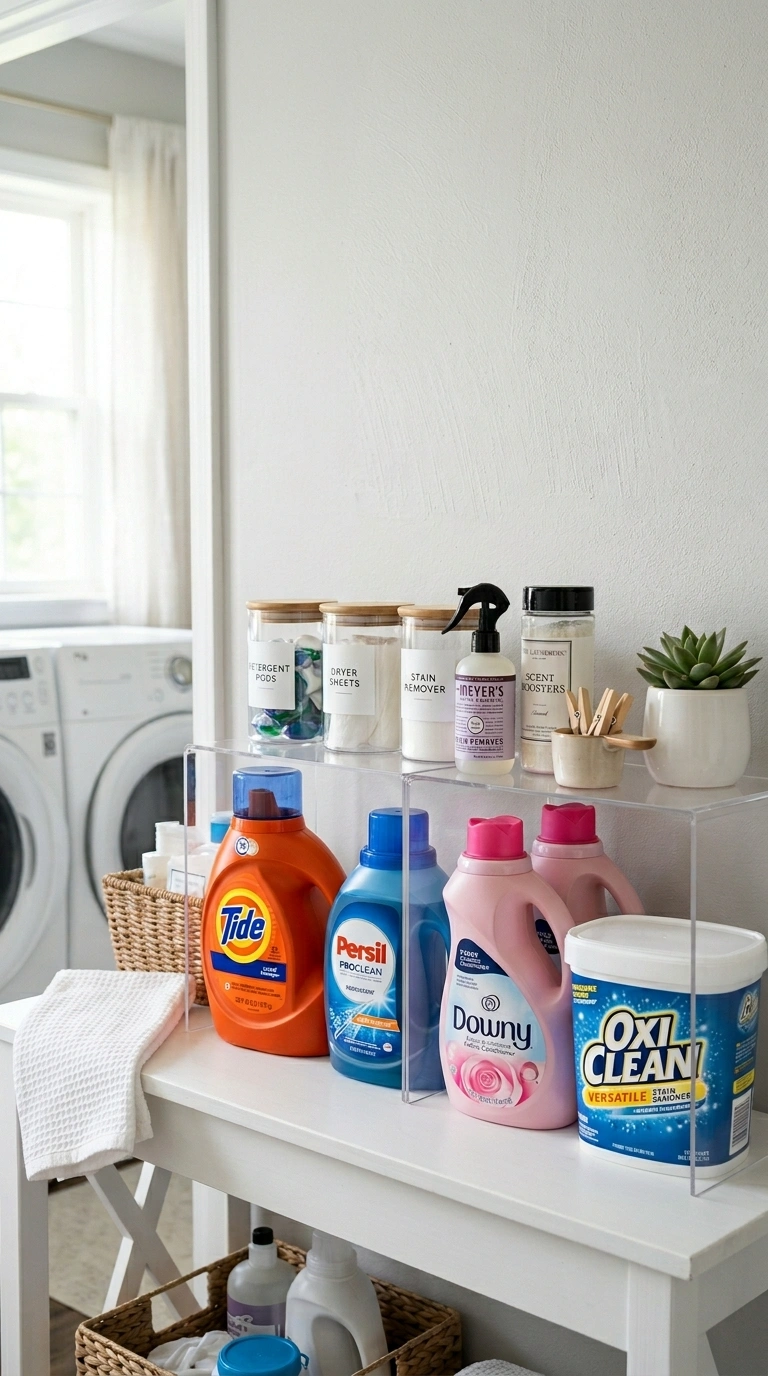
Small shelf risers, essentially a small elevated platform, placed on the shelf above the machines create a second level of storage on the same shelf surface. The riser holds smaller items like dryer sheets and stain remover pens on the upper level while the taller items like detergent bottles sit on the shelf below at their full height. The shelf riser effectively doubles the usable surface area of a single shelf without mounting additional shelving on the wall. Shelf risers are available inexpensively and can also be improvised from small boxes or stacked wooden blocks.
16. Magnetic Organizer on Machine
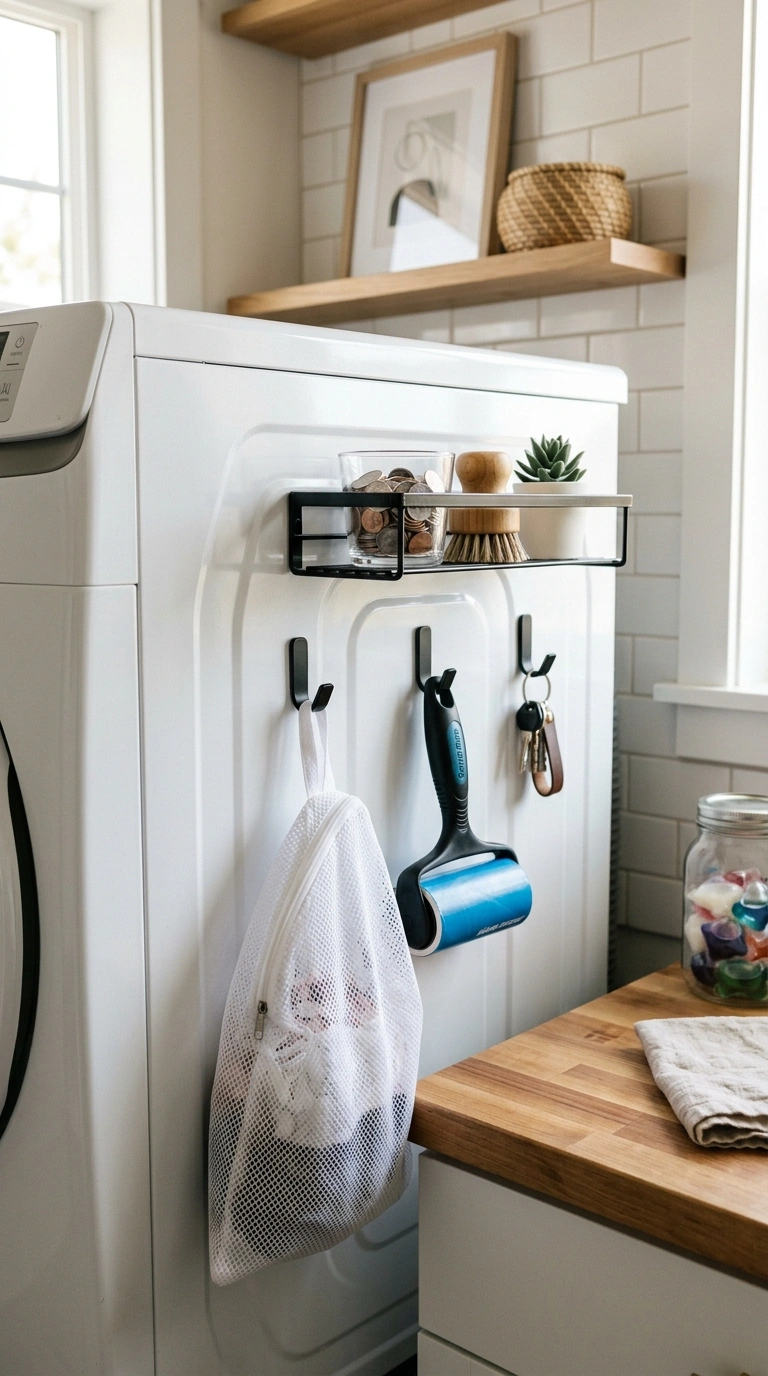
The metal sides of the washer and dryer accept magnetic organizers, hooks, and small shelves that attach without drilling or mounting hardware. A magnetic shelf on the side of the washer holds a small cup of loose change collected from pockets. Magnetic hooks hold a mesh bag for delicates, a lint roller, or small cleaning tools. A magnetic organizer strip holds safety pins, buttons, and small sewing supplies that accumulate during laundry sorting. The magnetic organizers use the machine surfaces themselves as storage, which is a surface that no other room has available.
17. Ceiling-Mounted Drying Rack
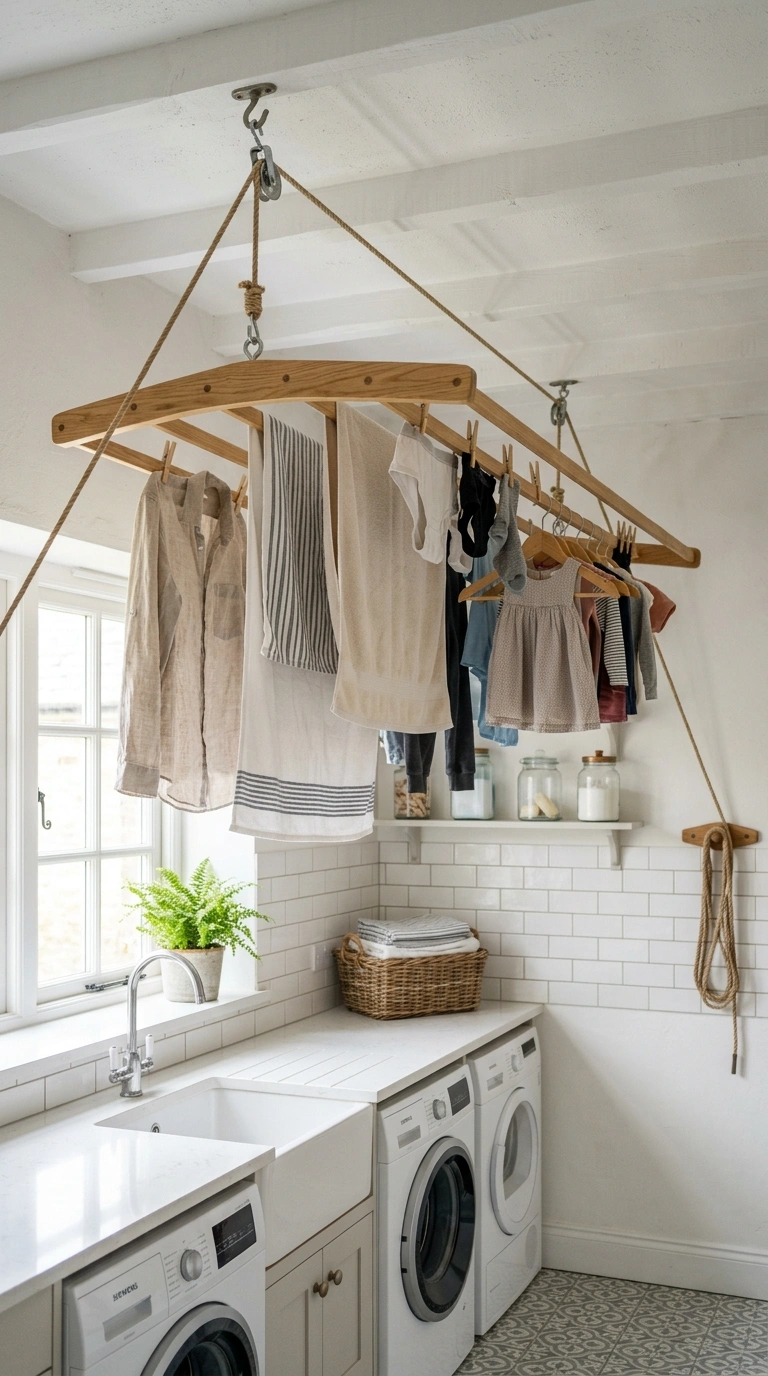
A ceiling-mounted drying rack that lowers on a pulley system provides a full-width drying surface that hoists up to the ceiling when not in use, completely clearing the room below. The pulley rack is one of the most space-efficient drying solutions available because it uses the ceiling area, which is the only surface in a small laundry room that is never needed for anything else. Lower the rack, hang the items, hoist it back up, and the drying happens overhead while the room below remains fully functional. Ceiling-mounted pulley racks are available in various widths and are installed with simple ceiling brackets.
18. Stackable Storage Bins
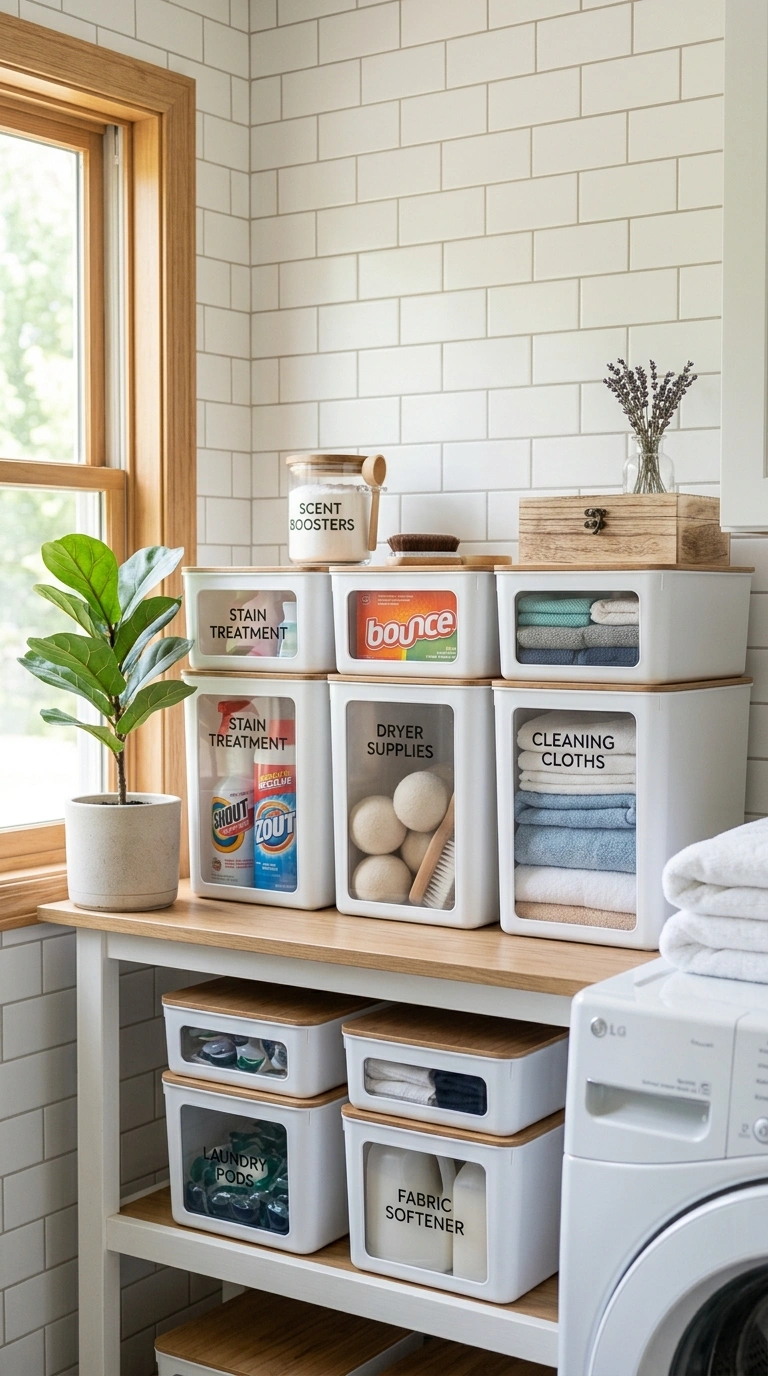
Stackable labeled storage bins on the shelf or in a narrow cabinet beside the machines hold sorted laundry supplies in organized, accessible containers. Label each bin by category: stain treatment, dryer supplies, specialty detergents, cleaning cloths, and mending supplies. The stackable format uses the vertical space efficiently and the labels make every supply findable in seconds. Choose bins that fit the shelf depth so they do not stick out past the shelf edge and that stack securely without sliding off each other.
19. Door Curtain Instead of Door
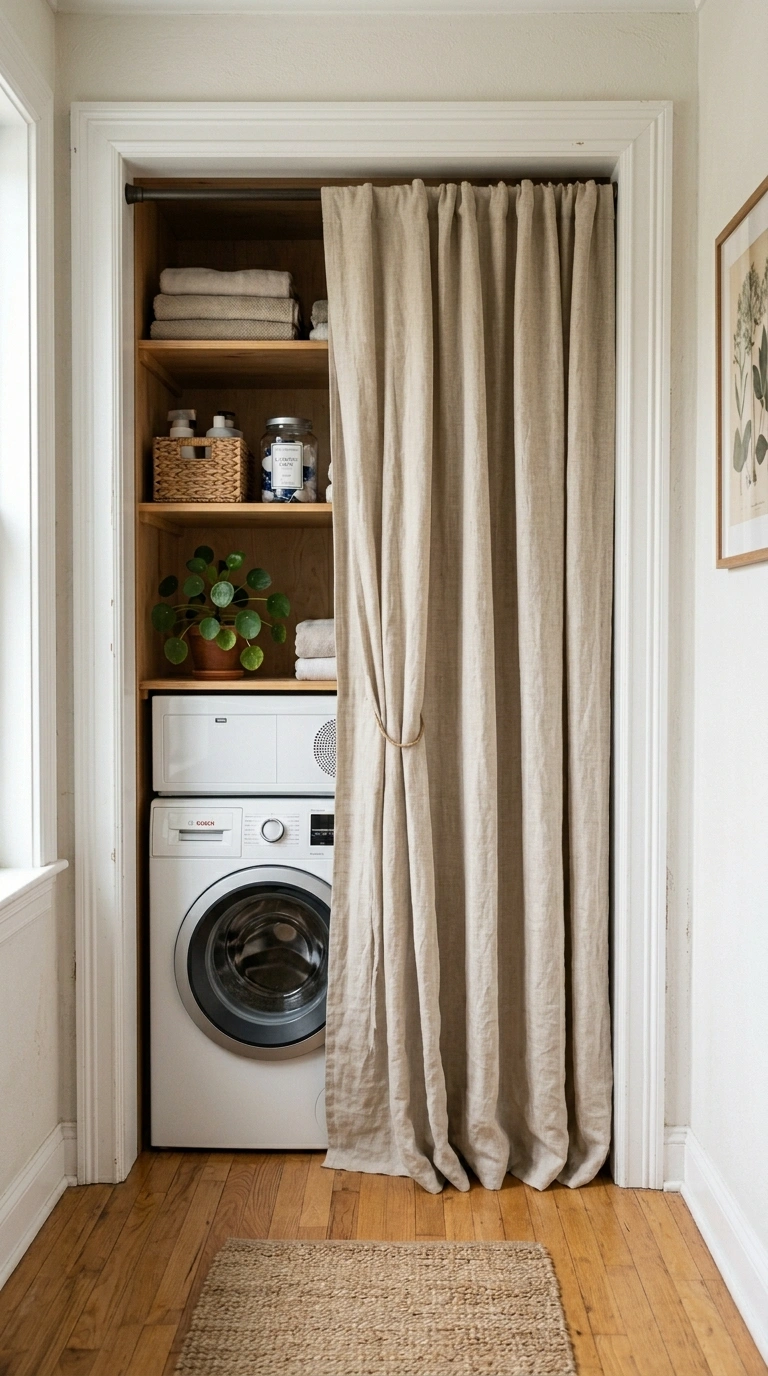
For laundry closets and alcoves where a door takes up too much space, a simple curtain on a tension rod or a ceiling-mounted rod provides visual concealment without the space penalty of a swinging or sliding door. The curtain pulls aside fully for working access and closes to hide the machines and supplies when the laundry is not in use. Choose a curtain in a warm fabric, linen, cotton, or a simple stripe, that coordinates with the surrounding room since the curtain is visible when closed. The curtain solution costs under twenty dollars and installs in minutes. For the styling side of making a small laundry room look designed rather than purely functional, the laundry room decor guide covers the visual details that transform a utility closet into a styled space.
20. Use Every Gap and Surface
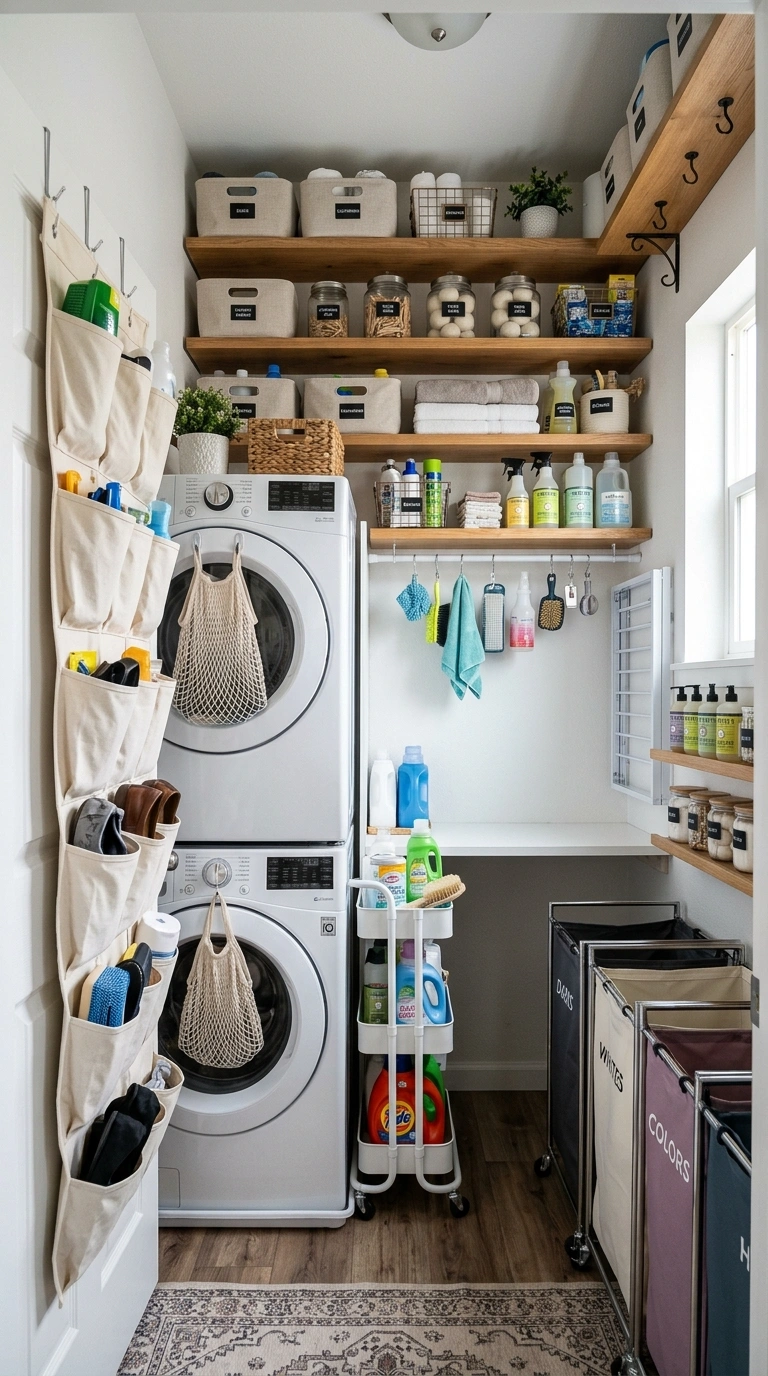
The most effective small laundry room is one where no gap, no surface, and no wall space is wasted. The gap between machines holds a rolling cart. The wall above the machines holds shelves or cabinets. The back of the door holds an organizer. The ceiling holds a pulley rack. The machine sides hold magnetic accessories. The space under a shelf holds a hanging bar. When every surface serves a function, a laundry room of twenty-five square feet holds everything a large laundry room holds, just distributed vertically and into the gaps rather than spread across a large floor. The small room forces efficiency, and the efficiency produces a space that actually works better than many larger rooms where supplies spread across unused surfaces and the workflow is loose and inefficient.
A small laundry room maximizes every inch by stacking the machines, using the walls from counter to ceiling, filling every gap with purpose-built storage, and choosing fold-away solutions for surfaces that are needed only during active laundry work. The constraint of limited space forces decisions that larger rooms never bother making, and those forced decisions often produce a laundry room that is more efficient, more organized, and more pleasant to use than its larger counterpart.