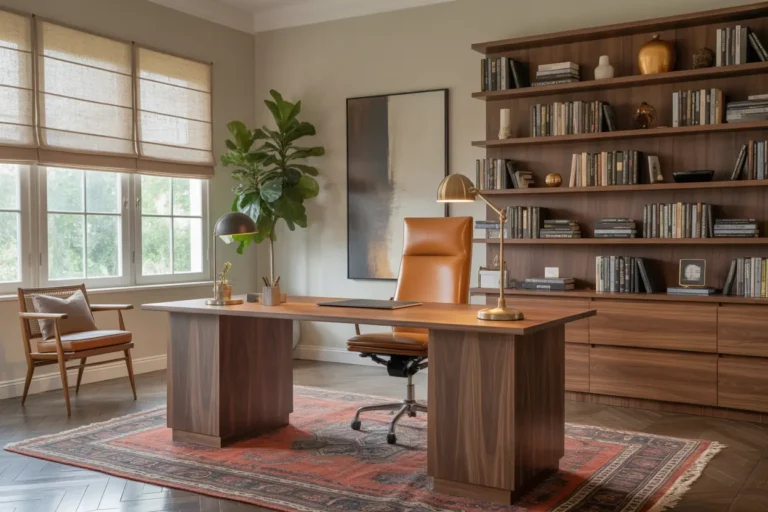
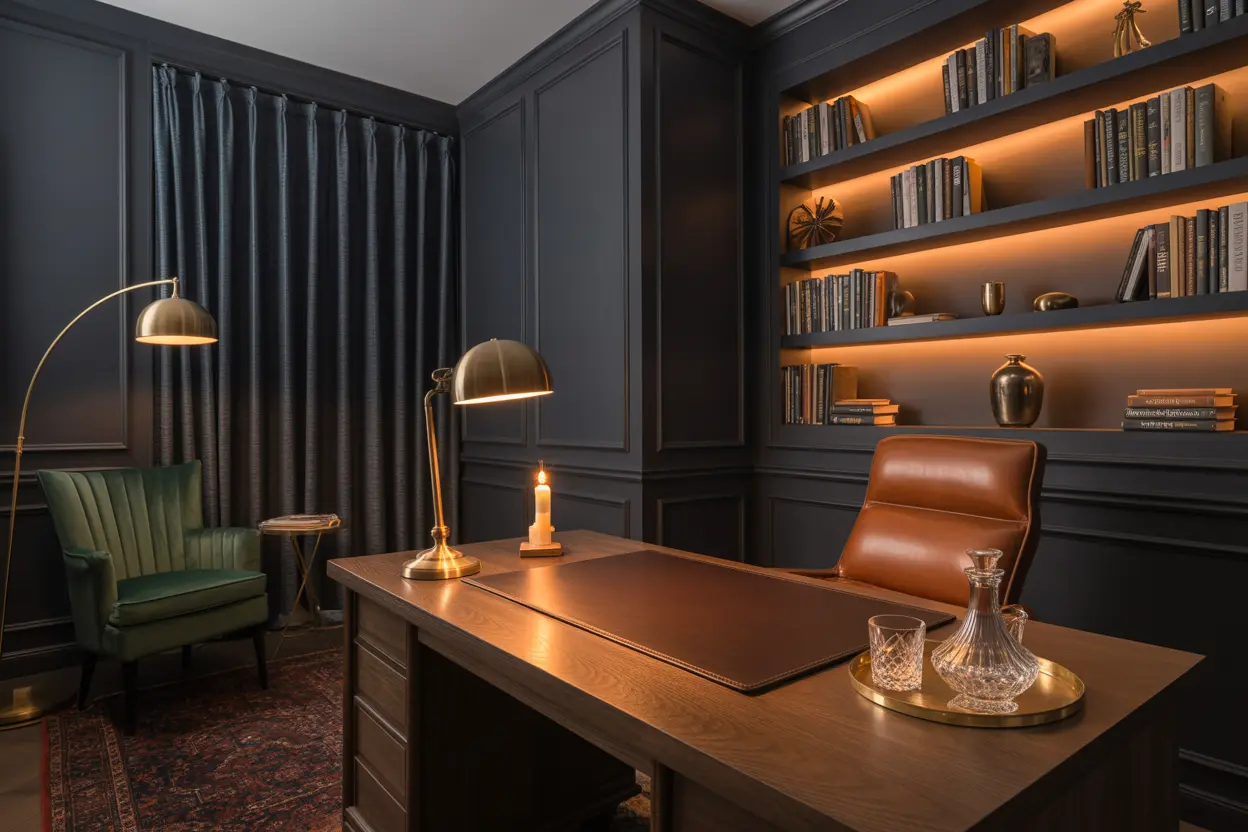
19 Moody Office Decor Ideas That Make Working From Home Feel Better
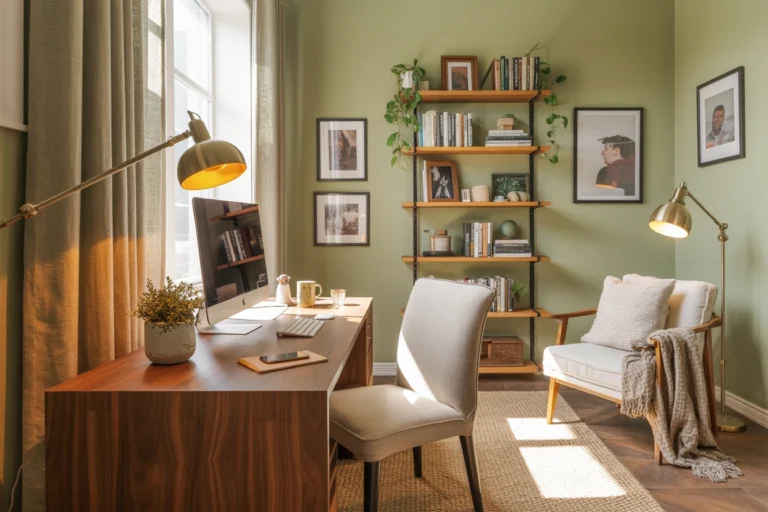
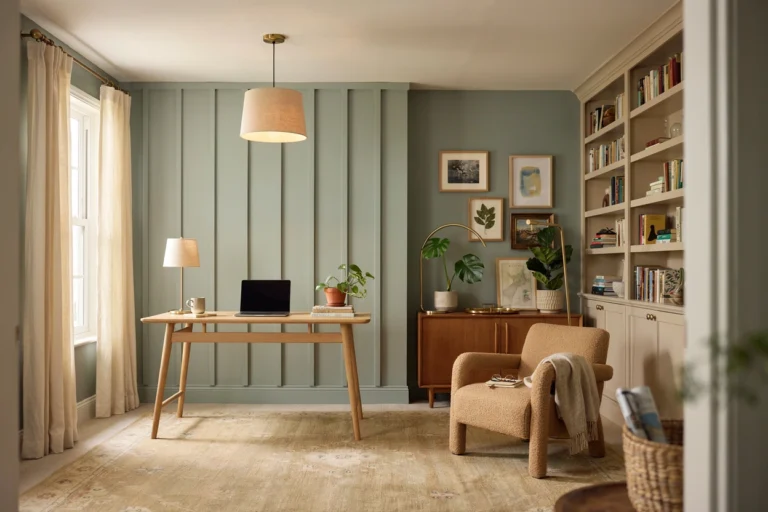
A moody office replaces the bright, clean, everything-visible approach of standard home office design with something more atmospheric, more enclosed, and more focused. The dark walls absorb visual noise rather than reflecting it. The warm lighting creates pools of focus rather than flat, even illumination. The materials feel heavier, richer, and more substantial than the light surfaces of a typical workspace. The result is an office that feels like a dedicated creative sanctuary rather than a room that happens to have a desk in it. These 19 ideas cover the core decisions that create the moody office atmosphere and the small details that prevent it from feeling oppressive or depressing, rather than intentionally dark and warm.
1. Deep Dark Wall Color
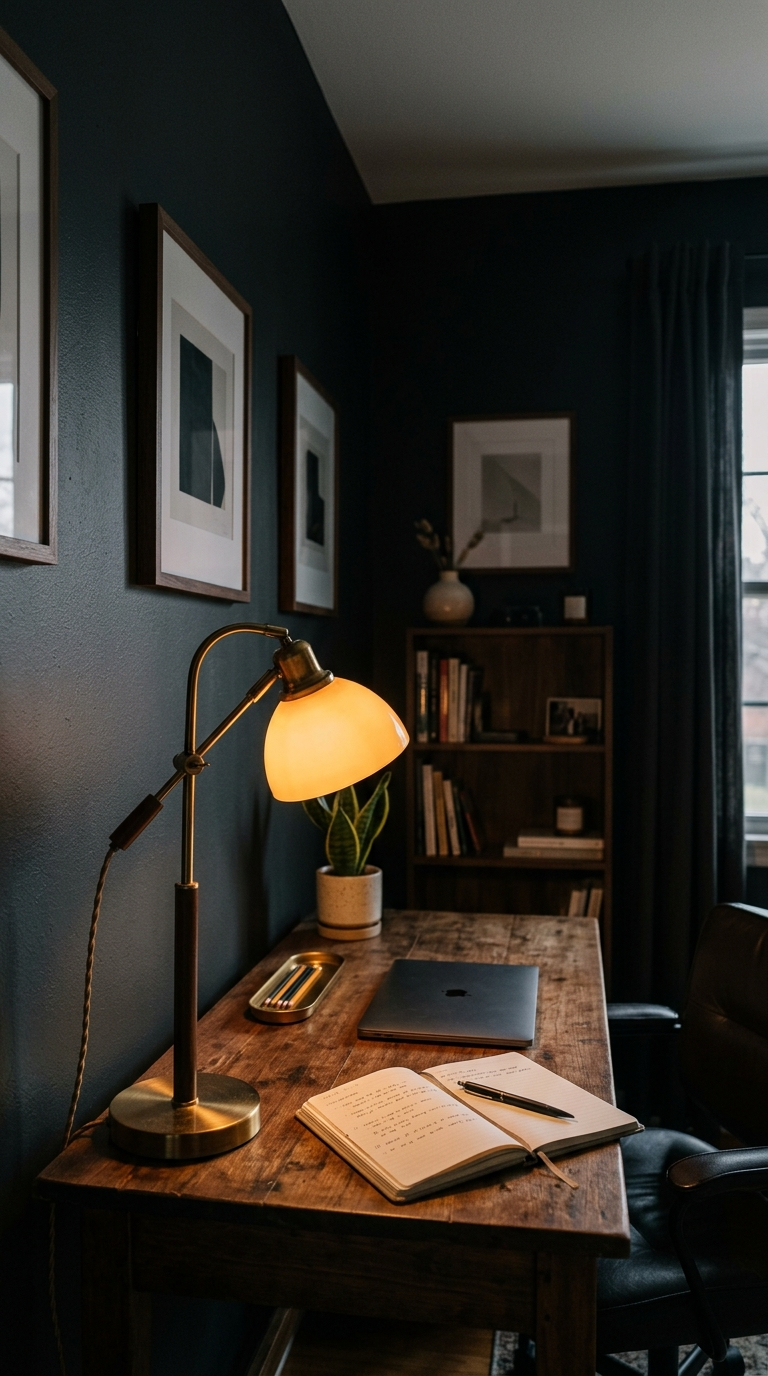
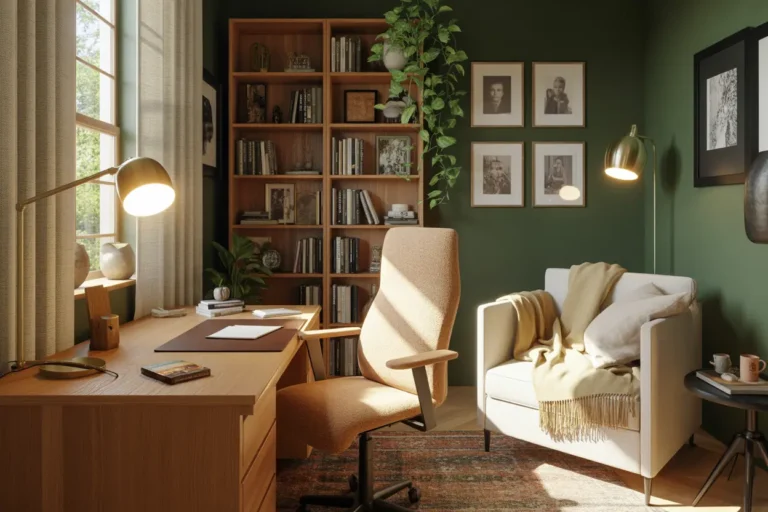
The foundation of any moody office is a dark wall color that absorbs light and creates the enclosed, focused quality the aesthetic depends on. Deep charcoal, dark navy, forest green, rich burgundy, warm almost-black, or deep warm brown all work depending on the rest of the palette. Use a paint with some sheen, eggshell or satin, to catch the warm light from lamps and prevent the dark walls from reading as flat or dead. The dark color should wrap the full room rather than appearing on a single accent wall, since the enveloping quality is what creates the mood. A single dark wall against three light walls reads as an accent rather than as an atmosphere.
2. Warm Task Lighting
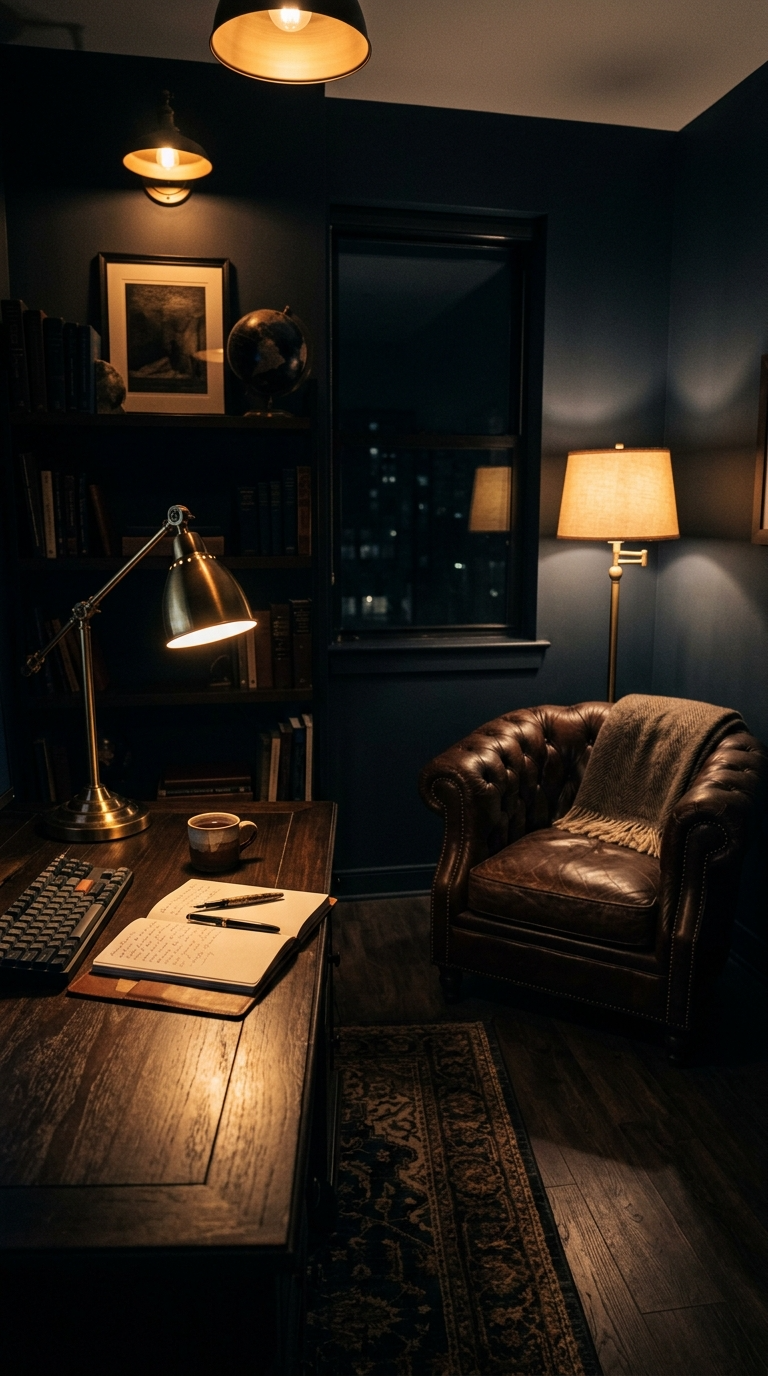
In a moody office where the walls absorb rather than reflect light, the lighting strategy becomes more important than in a bright room. The overhead ambient light should be warm-toned at 2700K and on a dimmer so it can be set low without being turned off entirely. The primary work light comes from a focused desk lamp with an adjustable arm, pointed precisely at the work surface. A floor lamp beside the reading chair provides a third pool of warm light. The combination of low ambient overhead, focused desk light, and a secondary reading lamp creates the dimensional, pooled-light quality that gives moody offices their atmospheric character.
3. Rich Material Palette
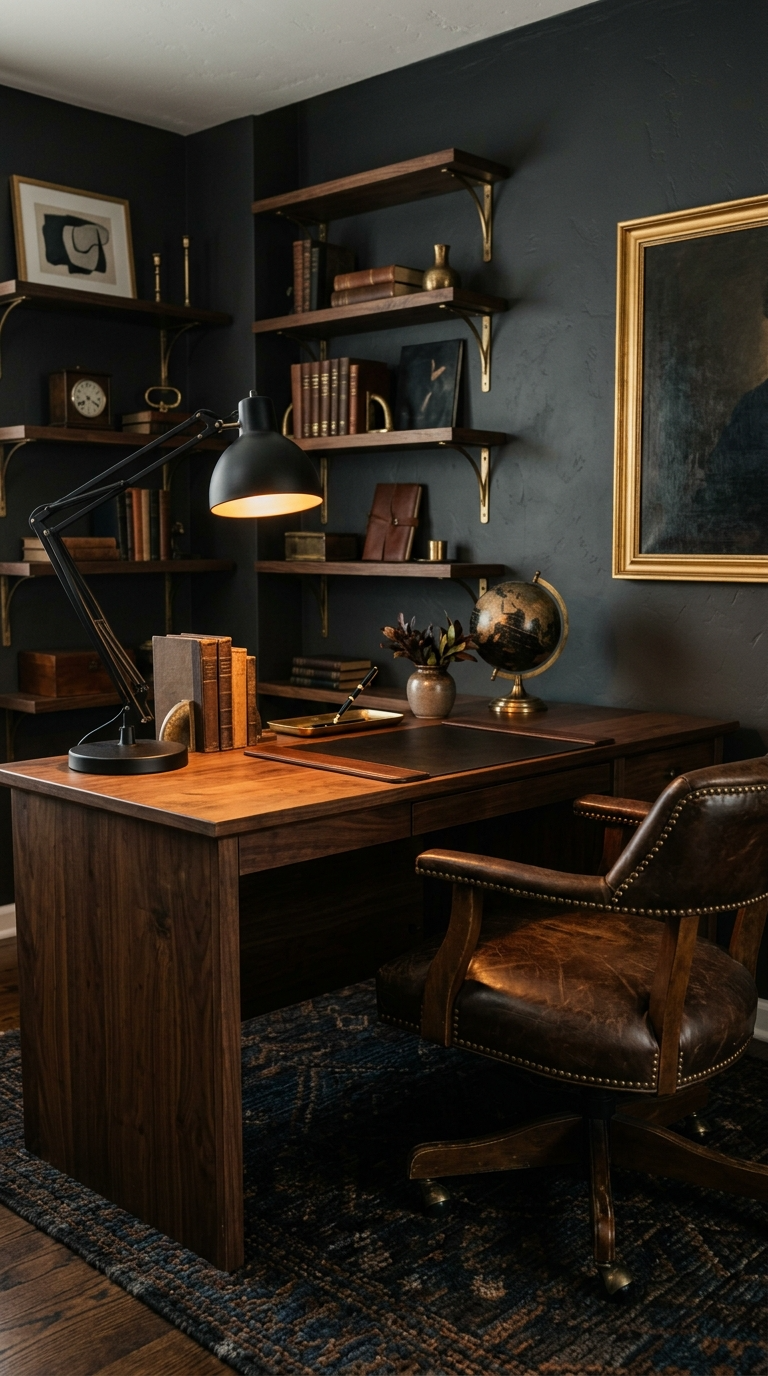
A moody office depends on materials that feel heavy, warm, and substantial. Dark leather upholstery, dark stained or natural walnut wood, matte black metal hardware, aged brass fixtures, dark stone or marble accents, and heavy natural fiber textiles in deep tones all contribute to the visual weight that the moody aesthetic requires. Avoid light woods, shiny chrome, and thin synthetic materials which undermine the atmosphere by reading as too lightweight for the dark walls. Every material in a moody office should feel like it has been chosen for its substance and warmth.
4. Dark Wood Desk
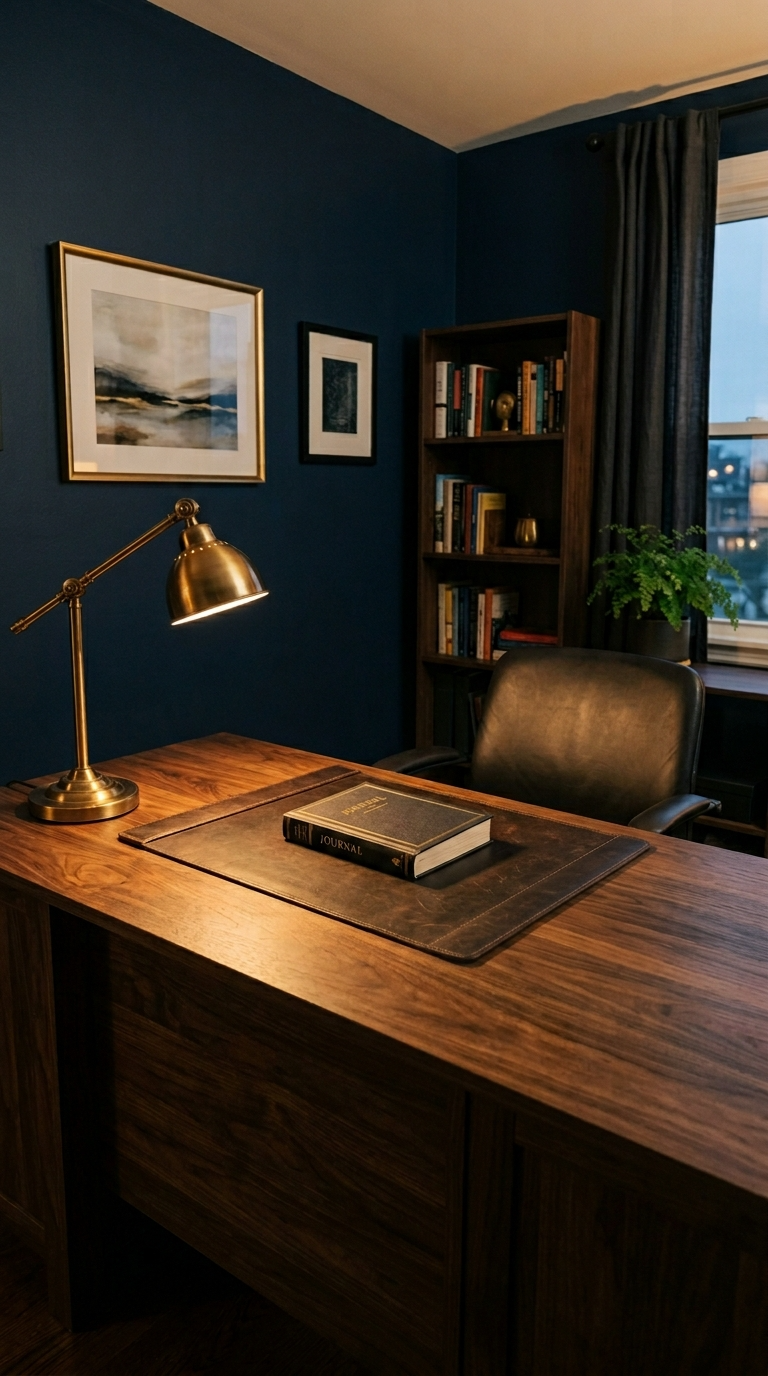
A dark wood desk, whether solid walnut with its natural deep brown tone, a desk stained to a dark espresso, or a vintage dark oak piece with character, anchors the moody office with a substantial work surface that suits the dark walls. The desk should be large enough for real work, at least forty-eight inches wide, and heavy enough to read as a genuine piece of furniture rather than a lightweight modern writing table. A dark desk against dark walls creates a continuous dark palette that is unified rather than contrasted, which is what gives the moody office its cohesive atmospheric quality.
5. Leather Desk Chair
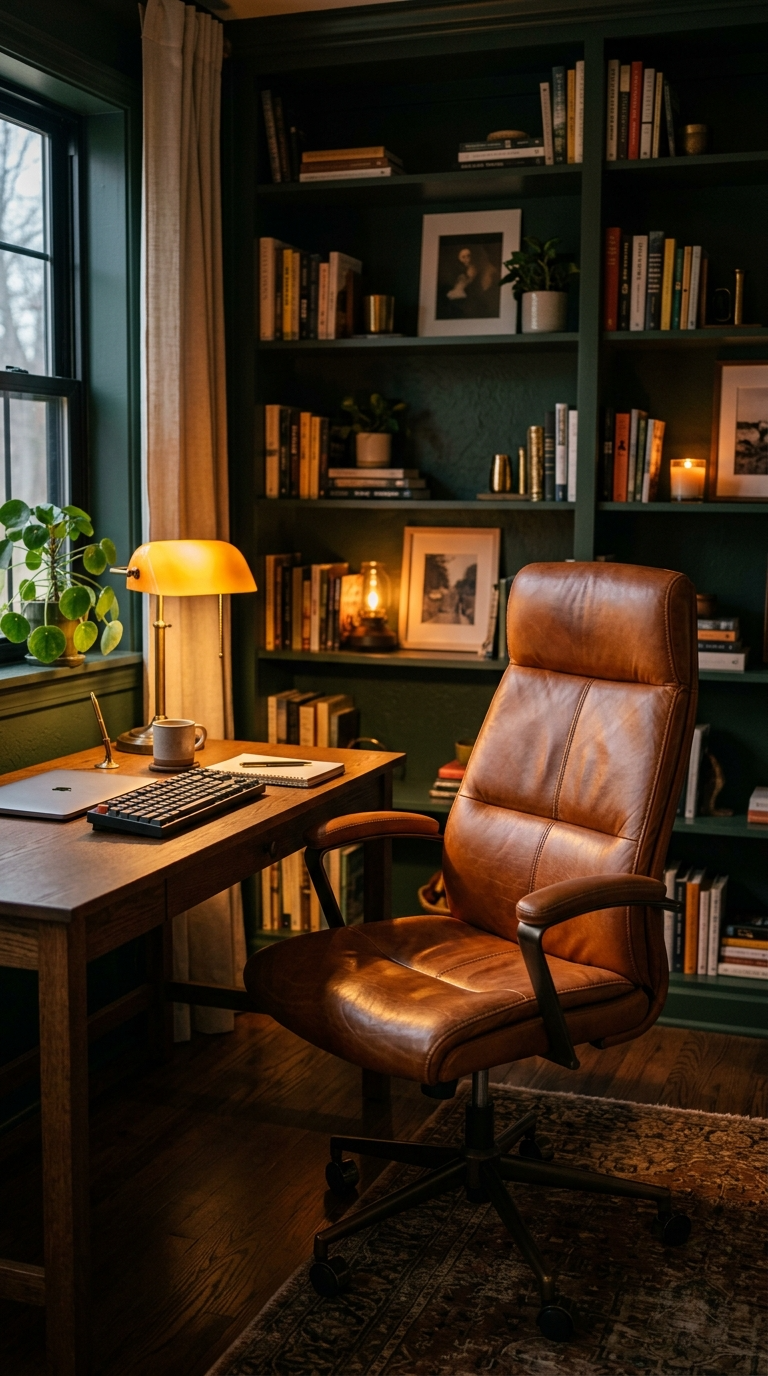
A leather office chair in a deep cognac, rich dark brown, or matte black reads as both substantial and sophisticated in a moody office. The leather develops patina with use, which adds character over time rather than showing wear, and the warm tone of natural leather contributes the organic warmth that prevents dark offices from feeling cold or sterile. Choose a chair with proper ergonomic support since the chair still needs to function for full working days. The upholstery is the difference between a corporate office chair and a piece of furniture that belongs in an atmospheric home office.
6. Gallery Wall in Dark
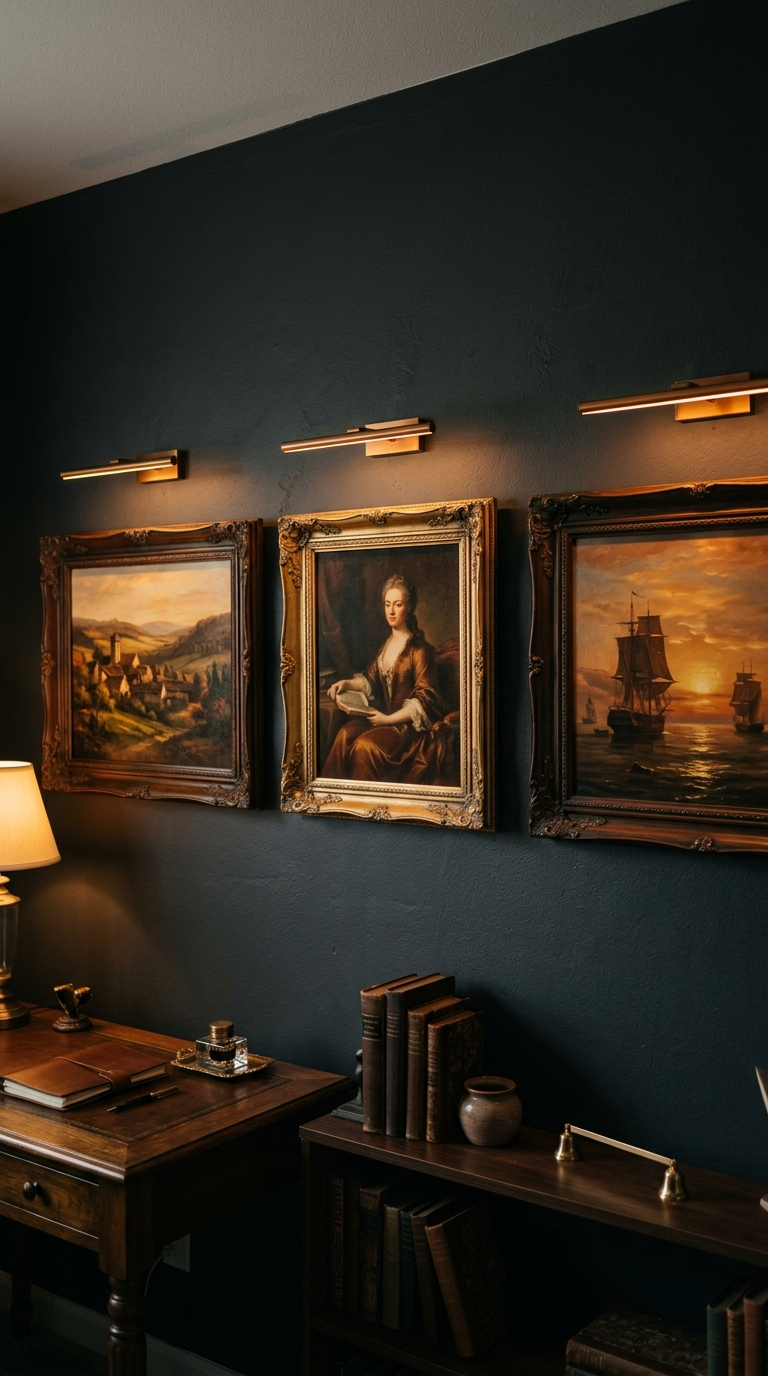
Art on dark walls reads differently than art on light walls. In a moody office, artwork stands out more dramatically because the dark wall functions as a neutral backdrop rather than competing with the art. Choose art with warm tones that glow against the dark walls: vintage oil paintings with warm palettes, sepia-toned photographs, botanical prints in aged frames, or abstract work in warm earth tones. The gallery arrangement does not need to be symmetrical or perfectly organized; a slightly organic arrangement suits the moody aesthetic. For more on creating gallery and bookshelf walls that add warmth and character to a workspace, the chic home office guide covers curated shelf and art arrangement in detail.
7. Dark Bookshelf Wall
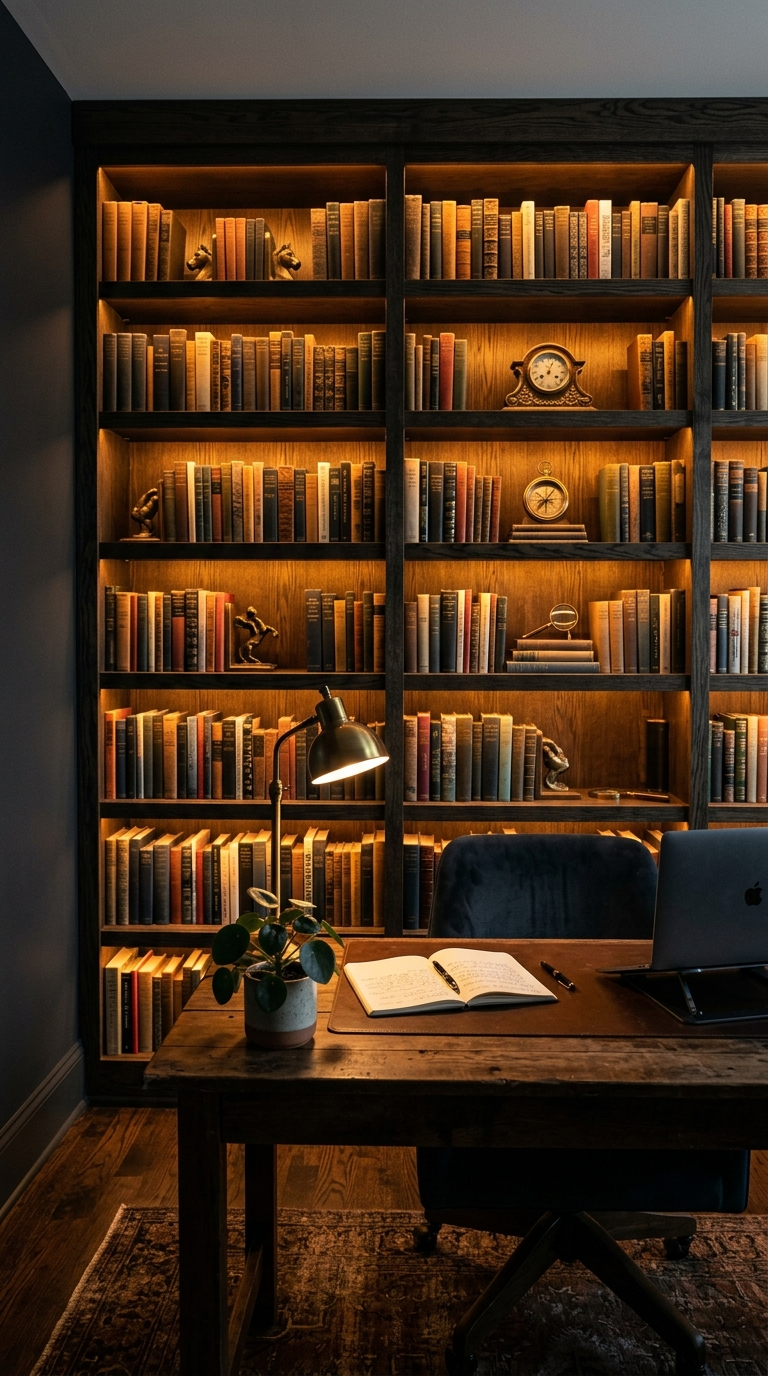
A dark-stained or painted bookshelf wall behind or beside the desk creates the signature visual of the moody office: a rich dark surface filled with books, objects, and personal artifacts lit by warm shelf lighting. The combination of dark shelves, varied book spines, small brass or warm-toned objects, and warm LED shelf lighting is deeply atmospheric and creates a visual depth that light shelving cannot achieve. Style the shelves with breathing room between groupings rather than packing them solid, so the dark shelf surface is visible between the items and contributes to the overall dark palette.
8. Aged Brass Accents
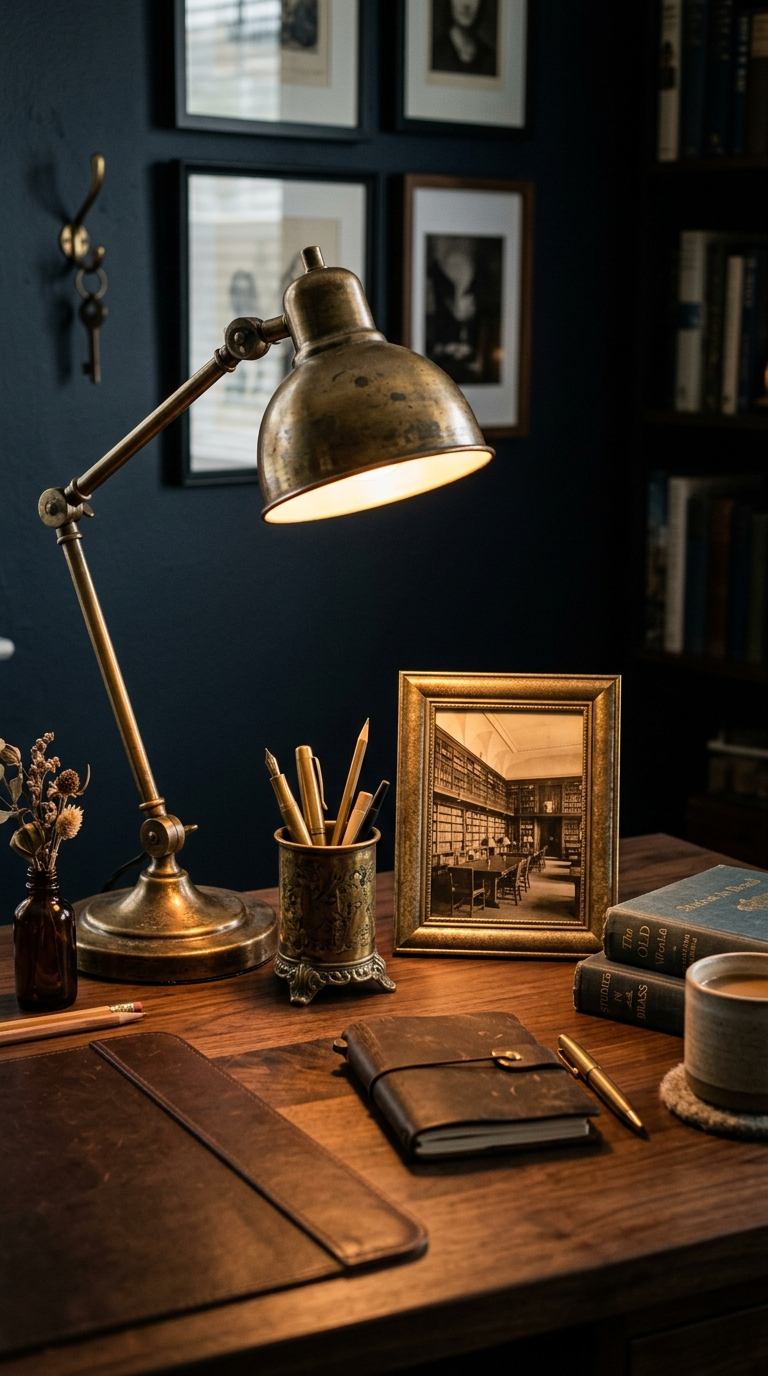
Aged brass fixtures and accessories, a desk lamp with a brass shade, brass cabinet pulls, a brass picture frame, a brass pen holder, add warm metallic points of light that catch the warm ambient light and create small glowing accents across the dark room. Aged or unlacquered brass has the depth and patina that polished brass lacks, and the warmth of brass against dark walls is one of the most reliably sophisticated material pairings in interior design. The brass does not need to be used extensively. A few deliberate brass moments across the desk, the shelves, and the hardware are sufficient to establish the warm metallic counterpoint.
9. Velvet Upholstery Detail
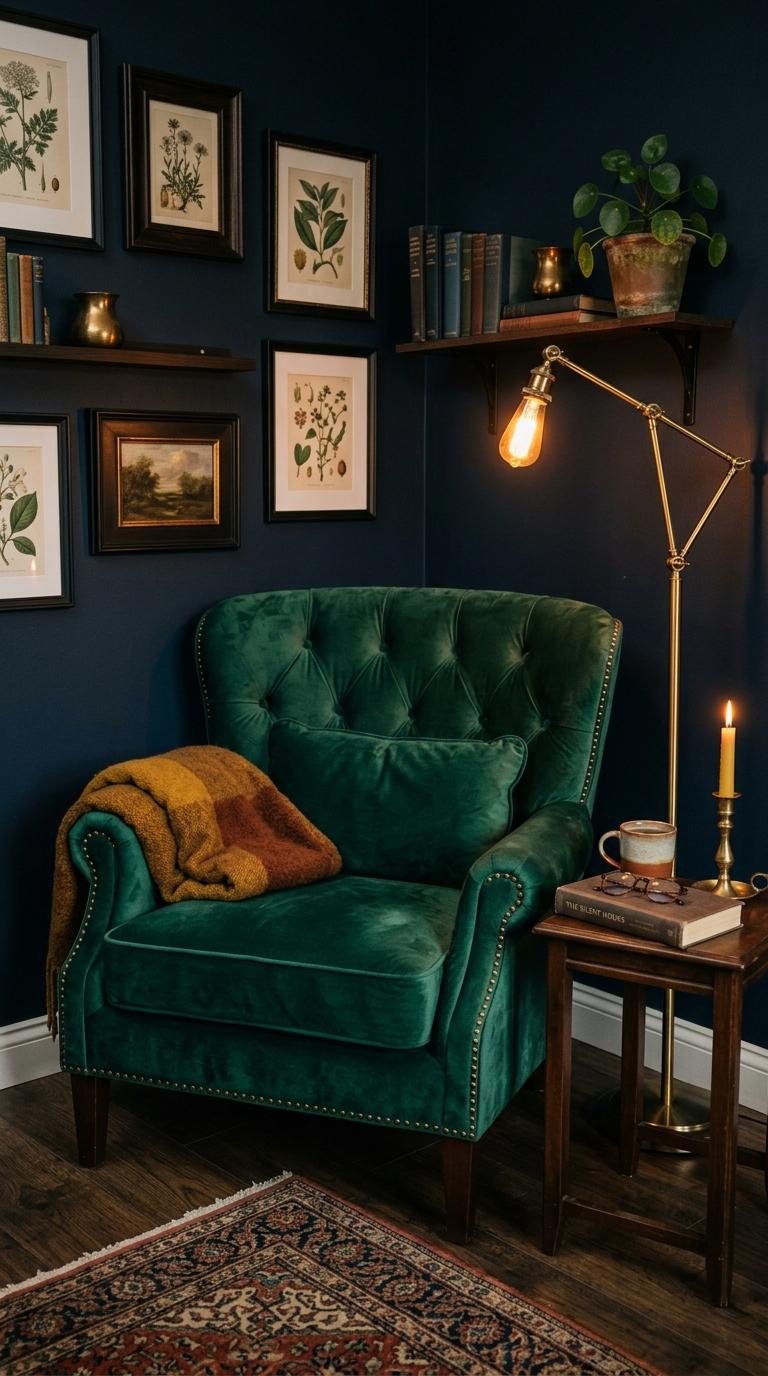
Velvet upholstery on the reading chair, a throw pillow, or a small stool introduces a tactile richness that other fabrics cannot match in a moody office setting. The pile of velvet catches light differently from every angle, which creates a subtle visual movement on the surface that reads as luxurious and warm. Deep jewel tones, emerald, navy, burgundy, deep mustard, and rich forest green, all work in velvet against dark walls. Even a single velvet throw pillow on a leather chair adds the soft richness that balances the heavier materials in the room.
10. Heavy Window Treatment
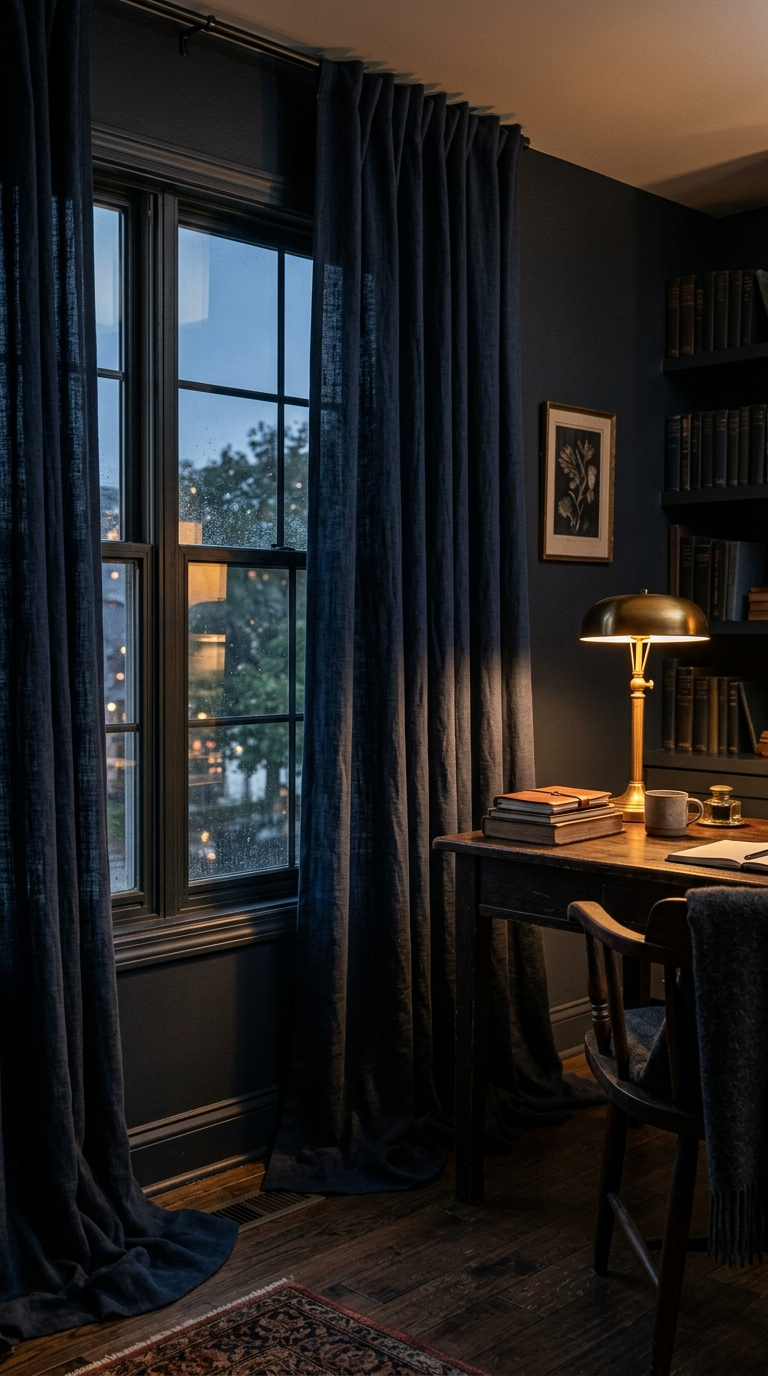
Heavy curtains in a dark fabric, deep navy linen, charcoal wool, or a rich green cotton, frame the office windows and contribute to the enclosed atmospheric quality of the moody office. The curtains should pool slightly on the floor and be hung from ceiling height for the most substantial effect. They also serve a practical function: blocking bright glare during work hours and providing privacy during evening sessions. The weight and color of the curtains are part of the moody palette rather than a neutral background element, so choose them as deliberately as the wall color.
11. Floor Lamp Statement
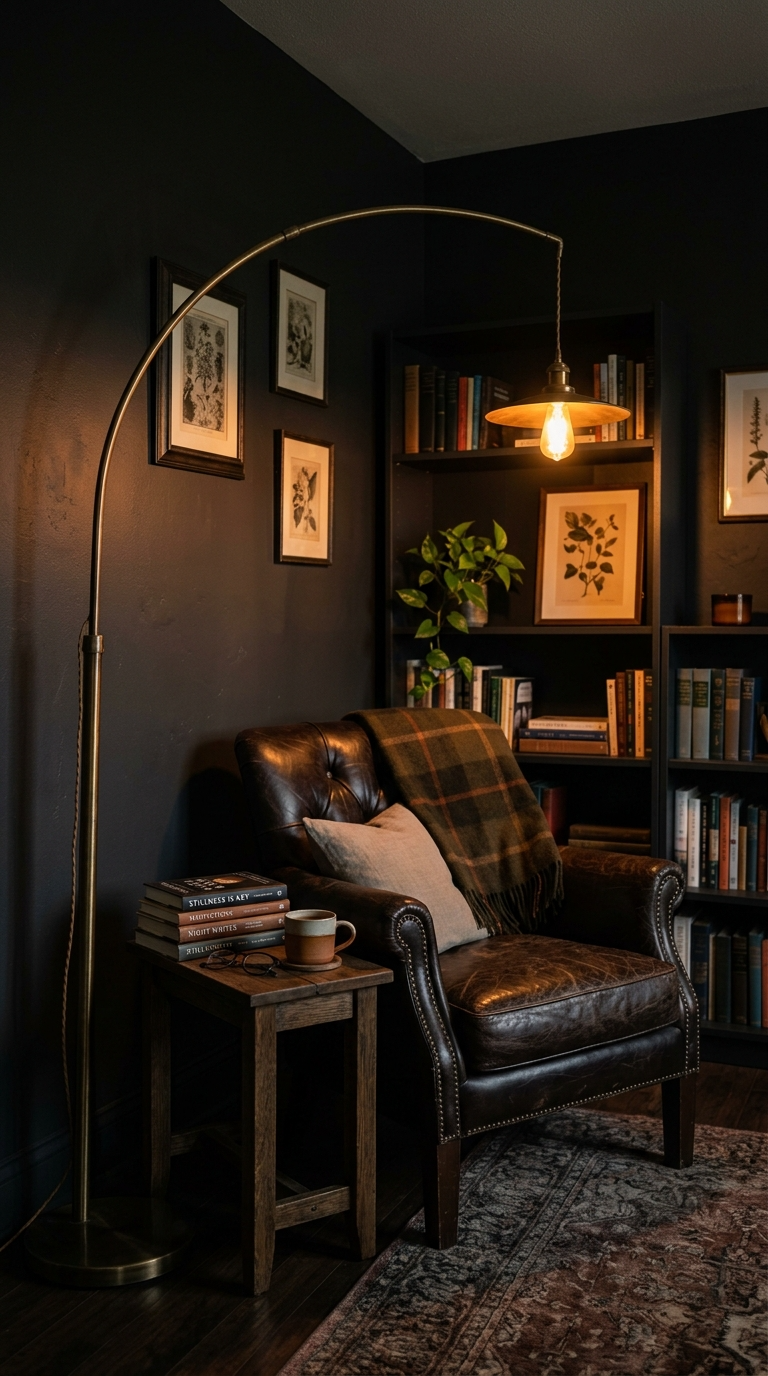
A statement floor lamp in the moody office serves as both a functional light source and a sculptural design element. An arcing brass floor lamp, a tall matte black tripod lamp, or a simple aged brass pharmacy lamp all suit the dark atmospheric office. Position it beside the reading chair or in a corner where it provides warm ambient light without competing with the desk lamp. The warm pool of light from a floor lamp in a dark room creates exactly the kind of focused atmosphere that moody offices aim for.
12. Dark Leather Accessories
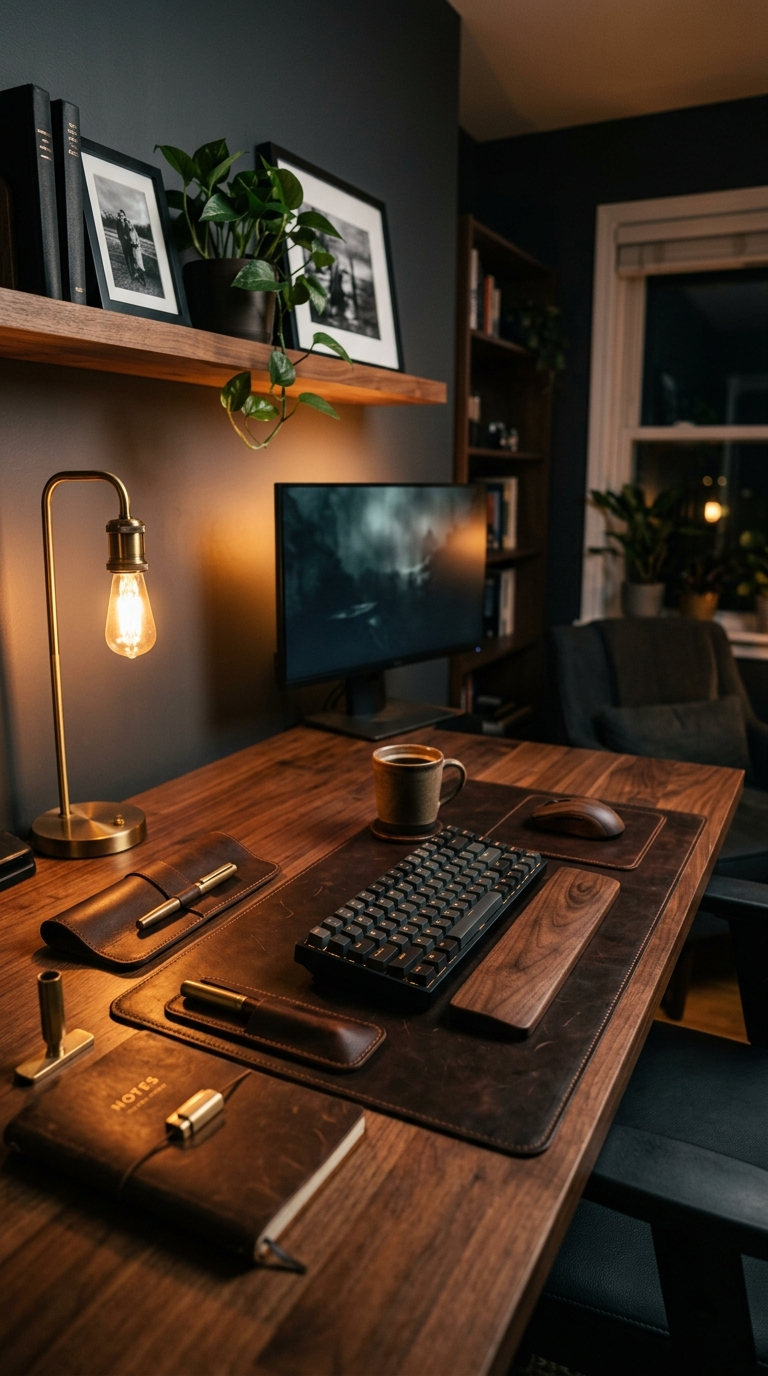
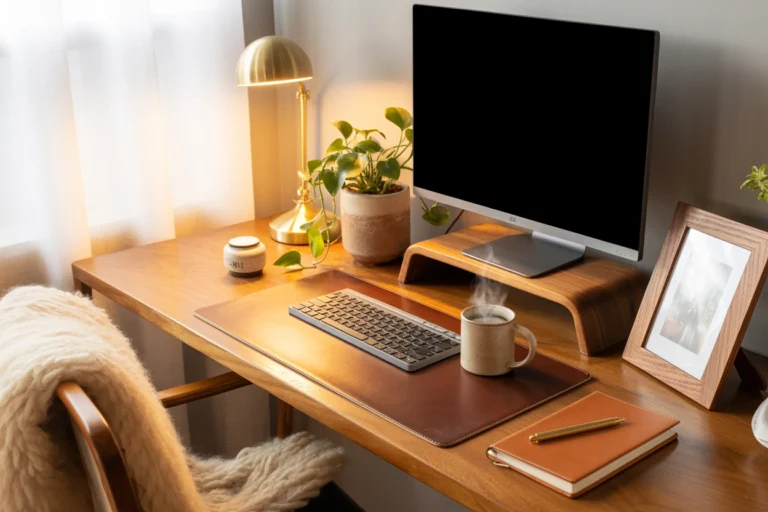
Leather desk accessories in dark tones, a dark brown or black leather desk pad, a leather pen case, a leather mouse pad, a leather cable organizer bring a unified warm material to the desk surface that coordinates with the leather chair and the dark wood. The leather ages beautifully and develops the kind of patina that suits the moody office over time. Choose accessories in a consistent leather tone rather than mixing colors, since the material consistency across the desk surface is what creates the cohesive, considered quality.
13. Small Bar or Drinks Corner
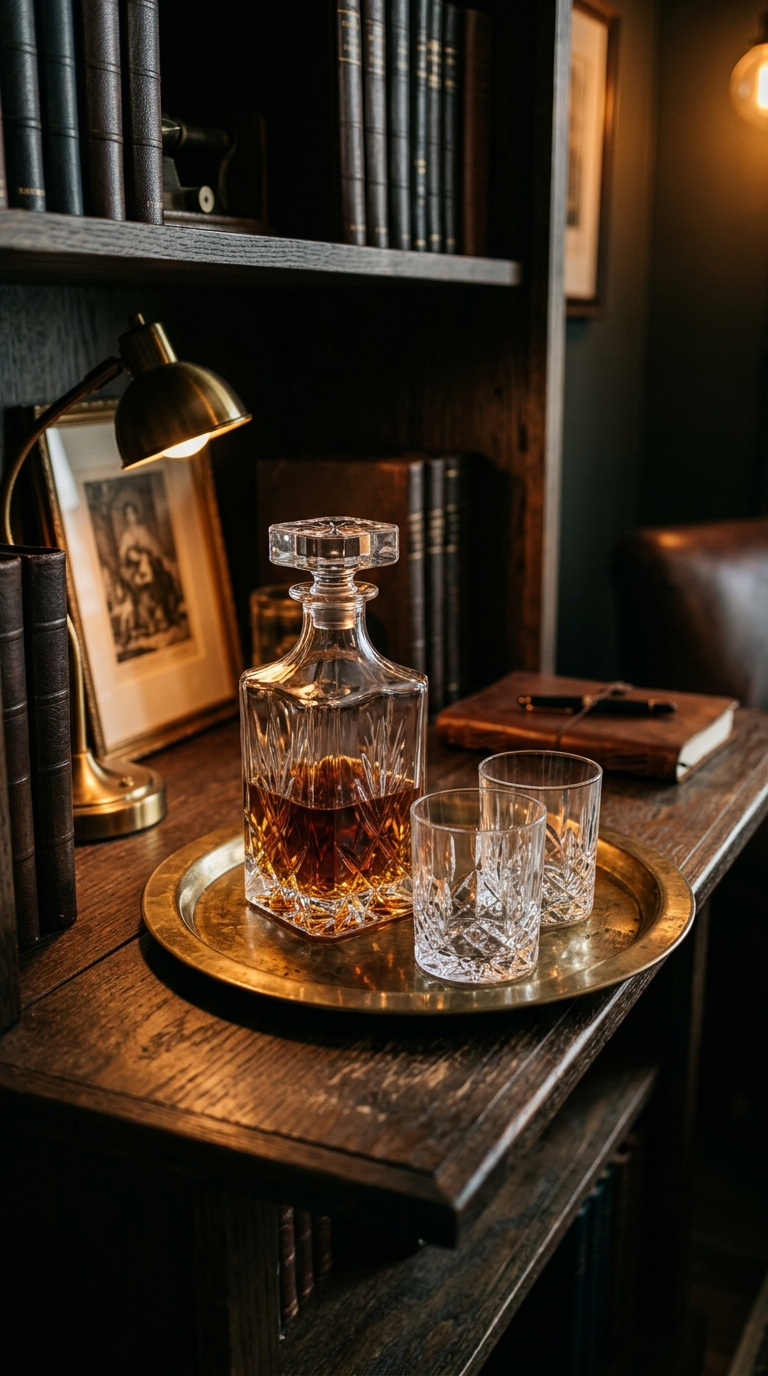
A small drinks setup in the moody office, a single decanter with a glass on a brass tray, a small bar cart in a corner, or a shelf dedicated to a single bottle and two glasses, adds the quality of a private club rather than a standard workspace. The drinks corner signals that the office is a personal sanctuary where the workday includes moments of ritual and pleasure rather than just productivity. The setup does not need to be elaborate: a single beautiful decanter, one or two glasses, and a brass tray create the effect in a single small vignette.
14. Textured Dark Rug
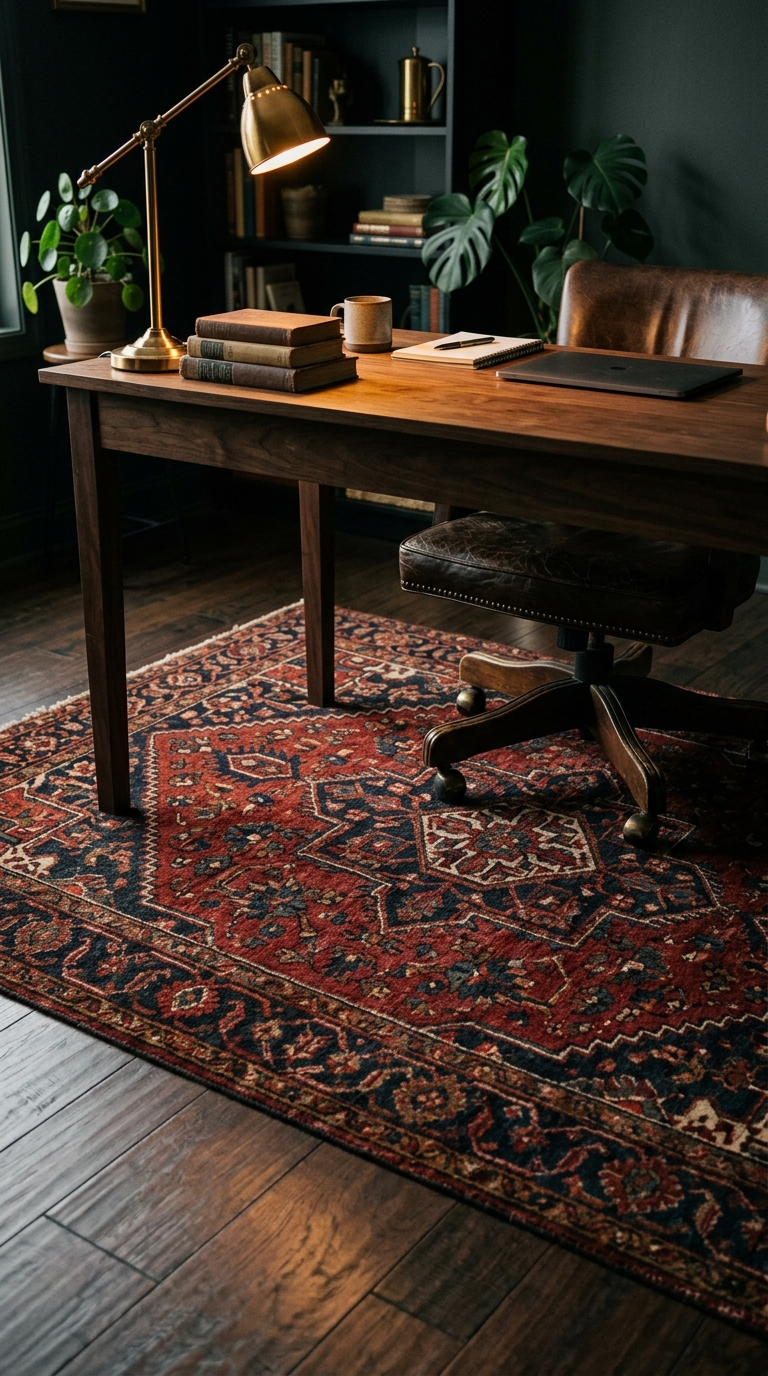
A dark rug in a substantial texture, a deep-toned Persian, a charcoal or dark navy wool, a dark jute or sisal, defines the desk zone and adds a warm tactile layer to the floor. In a moody office where the walls and desk are dark, the floor should continue the palette rather than introducing a jarring light contrast. A dark rug on a medium-toned wood floor or a dark rug on a dark floor both work. The rug adds physical warmth underfoot and visual warmth to the overall composition of the room.
15. Warm Metallic Hardware
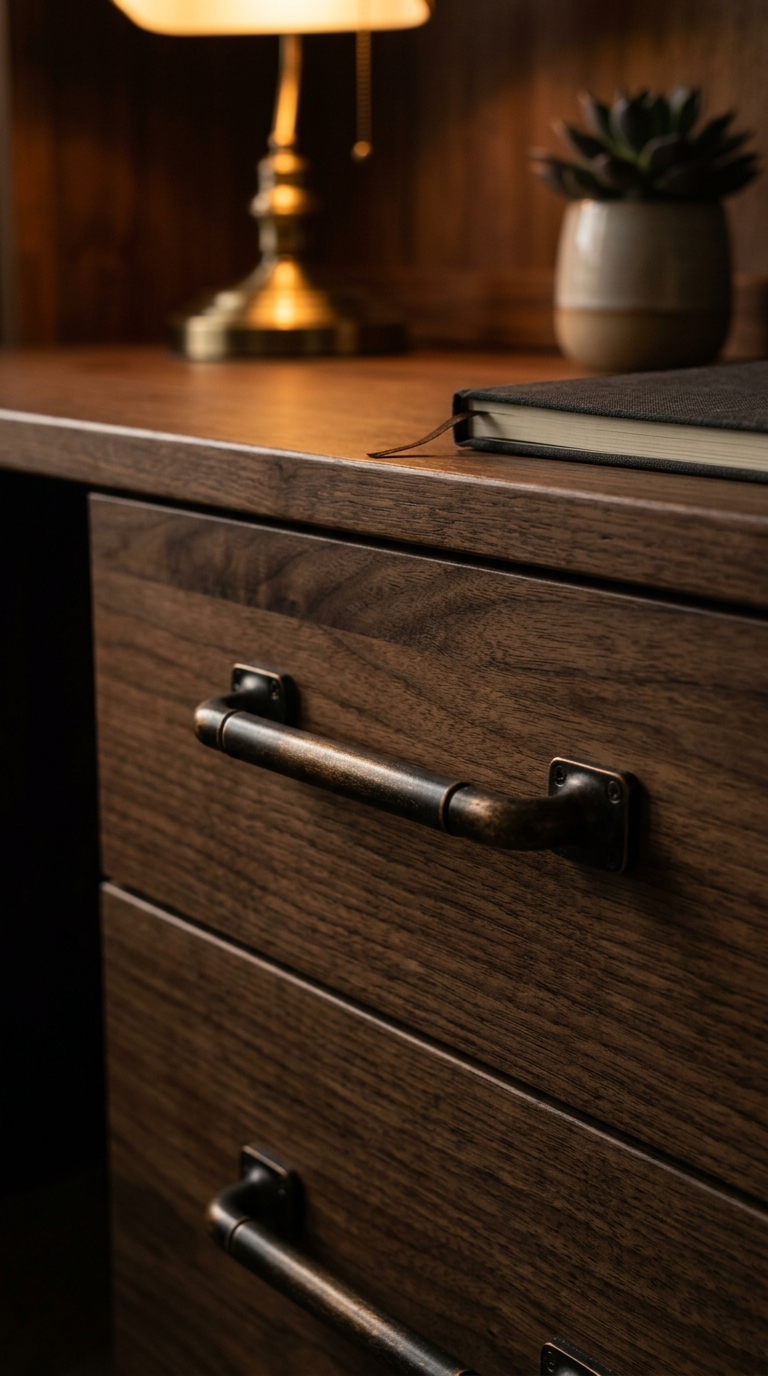
Cabinet pulls, drawer handles, towel bars for the office, and small hardware fittings in warm metallic finishes, aged brass, oil-rubbed bronze, or antique gold, contribute warm, glowing points of light throughout the dark room. Each piece of hardware catches the warm ambient light and creates a small accent that reinforces the warm-within-dark quality of the moody palette. Avoid chrome and brushed nickel, which read as cool and modern rather than warm and atmospheric. Coordinate the hardware finish across the room for a consistent metallic story.
16. Dark Paint on Trim
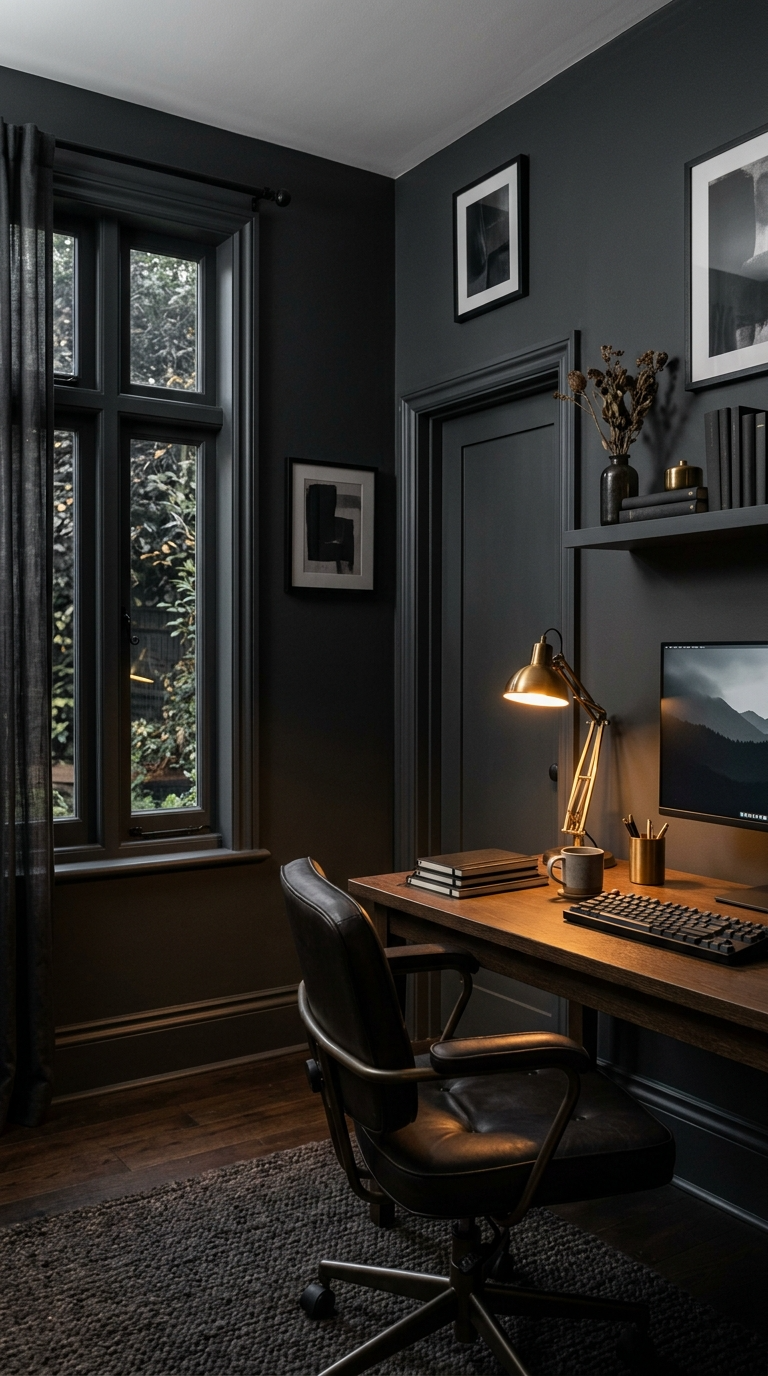
In a moody office, painting the trim, baseboards, door frames, and window frames in the same dark color as the walls rather than leaving them in standard white creates a seamless enveloping effect where the room reads as one continuous dark surface. White trim on dark walls draws the eye to every joint and transition, which breaks the atmospheric continuity. Dark trim disappears and lets the wall color flow uninterrupted around the room. This single detail is one of the most impactful differences between a moody office that feels fully committed and one that feels like a room that just had its walls painted dark.
17. Vintage or Antique Pieces
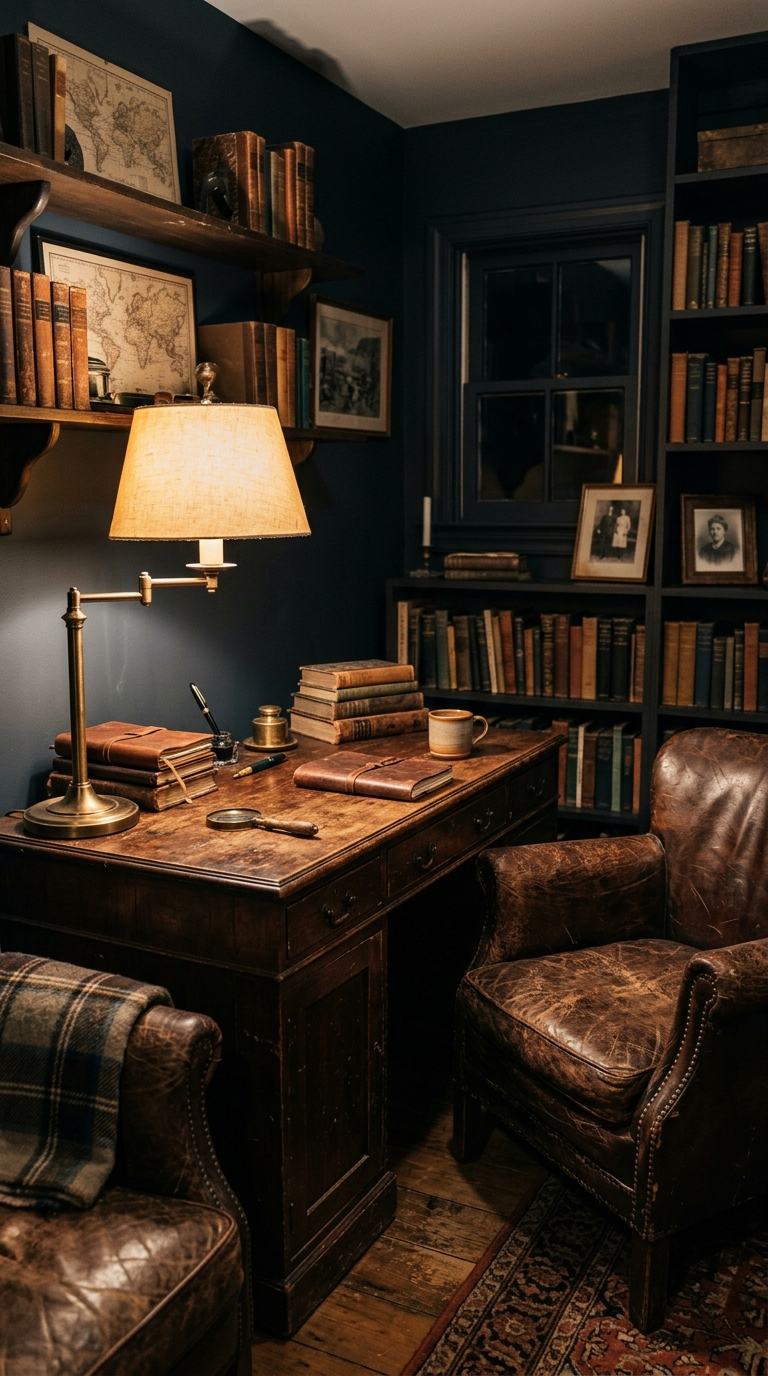
Vintage furniture and accessories suit the moody office particularly well because aged objects carry a visual weight and character that new manufactured items lack. A vintage desk with decades of patina, an antique brass lamp with a cloth shade, a secondhand leather chair that has softened with years of use, a vintage globe, an old clock, all feel more at home in a dark atmospheric room than their new equivalents. The vintage quality adds historical depth that makes the office feel layered and accumulated rather than recently assembled from a single shopping trip.
18. Candle or Warm Light Ritual
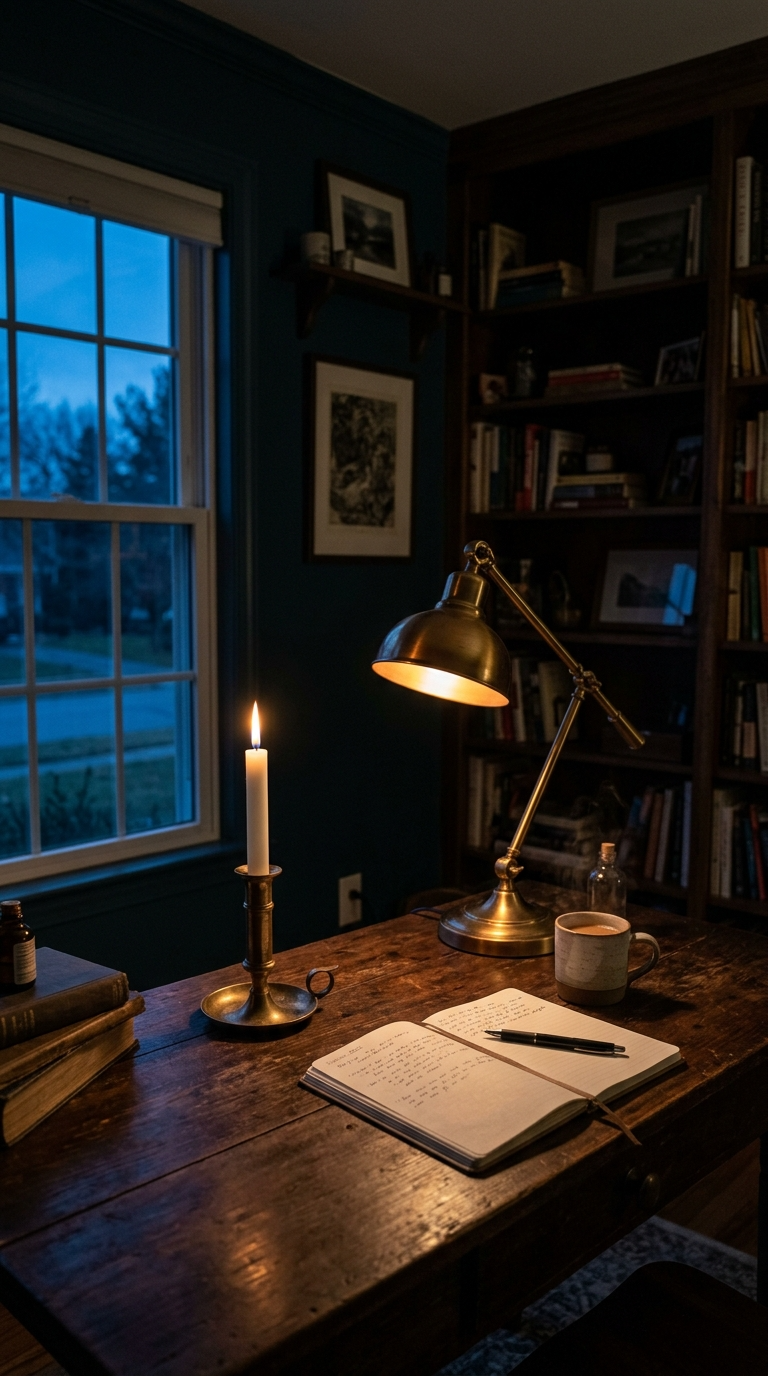
Lighting a candle at the start of the workday, or switching on the warm desk lamp and dimming the overhead light, creates a small ritual that transitions the room from a dark empty space into a warm working sanctuary. The ritual signals the beginning of focused work and the atmospheric shift from dark room to warm lit room is one of the most rewarding daily moments in a moody office. The candle or the warm light creates a pool of warmth that the rest of the dark room frames. This small daily transition ritual is what makes the moody office feel like a deliberate creative choice rather than simply a dark room. The same principle of warm layered lighting creating atmosphere applies in cozy home office designs where the light quality is the primary driver of the room’s emotional character.
19. Moody Does Not Mean Dark
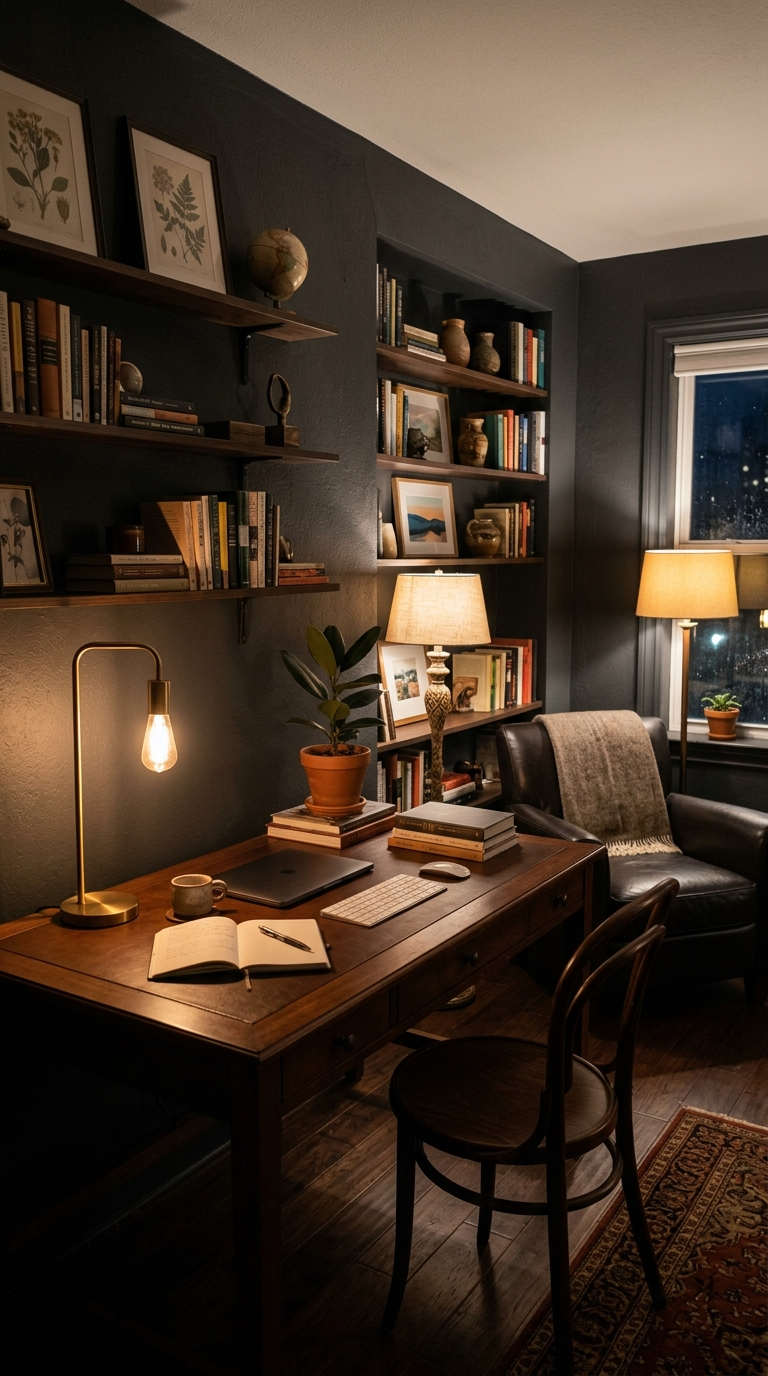
The most important distinction in a moody office is between genuinely atmospheric and simply poorly lit. A moody office has dark walls but warm, well-placed light. It has heavy materials but also textural variety and small bright points of brass and art. It feels enclosed but not oppressive, focused but not claustrophobic. The difference is in the quality and placement of the light: a moody office with good warm lighting from multiple sources feels like a private club or a sophisticated library. The same room without adequate lighting feels like a room where someone forgot to turn on the lights. Invest in the lighting as much as the paint and the result is a workspace with genuine atmosphere.
A moody office is one of the most rewarding design directions for a home workspace because it creates an environment that feels genuinely different from the rest of the house and from the bright open-plan offices that most work-from-home setups try to replicate. The dark walls, the warm light, the rich materials, and the small ritual touches create a workspace that feels like a deliberate creative choice. The key is in the lighting: dark walls need warm, well-placed light to feel atmospheric rather than depressing. Get the lighting right and the rest of the moody palette falls into place naturally.