20 Nature Inspired Nursery Ideas That Bring Calm Into a Baby’s Room
A nature-inspired nursery connects a baby’s first room to the natural world through materials, colors, and imagery drawn from forests, gardens, and open skies. The connection is not decorative. It is genuine. The furniture is real wood rather than painted particleboard. The textiles are natural cotton and linen rather than synthetic fabrics. The colors reference soil, sky, leaves, and stone rather than manufactured pastels. The result is a nursery that feels calm and grounded in a way that theme-based nurseries with cartoon animals and primary colors rarely achieve. These 20 ideas cover the full range of nature-inspired nursery decisions, from the major material choices to the small details that bring the natural world into the room where a baby spends the most important hours of each day.
1. Natural Wood Crib Foundation
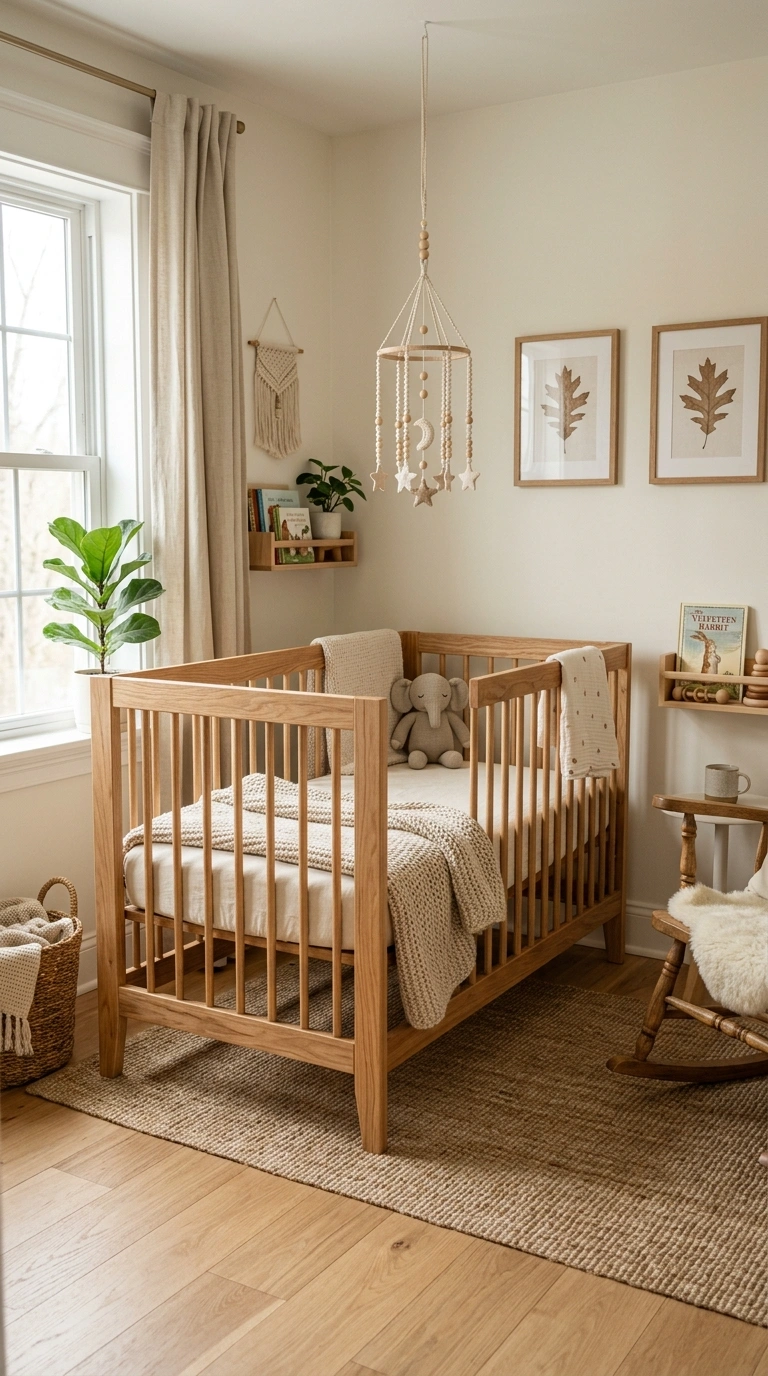
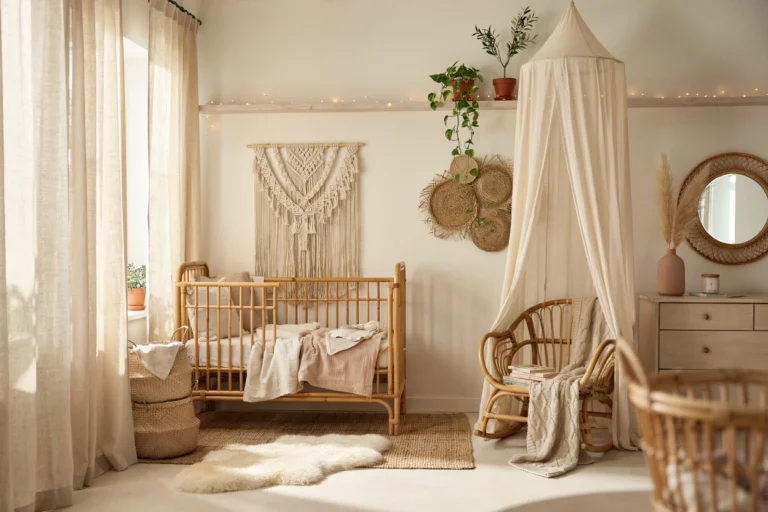
A crib in natural, unpainted wood in a warm tone, light oak, honey pine, warm birch, or natural walnut, establishes the nursery’s connection to the natural world from its most central and most visible piece of furniture. The visible grain, the warm color, and the natural imperfections of real wood communicate a fundamentally different quality than white-painted or brightly colored cribs. The natural wood crib reads as a piece of nature brought into the room rather than as a manufactured baby product. Choose a crib with a simple clean shape that lets the wood itself be the design feature rather than one with ornate detailing that distracts from the material.
2. Earthy Green Wall Color
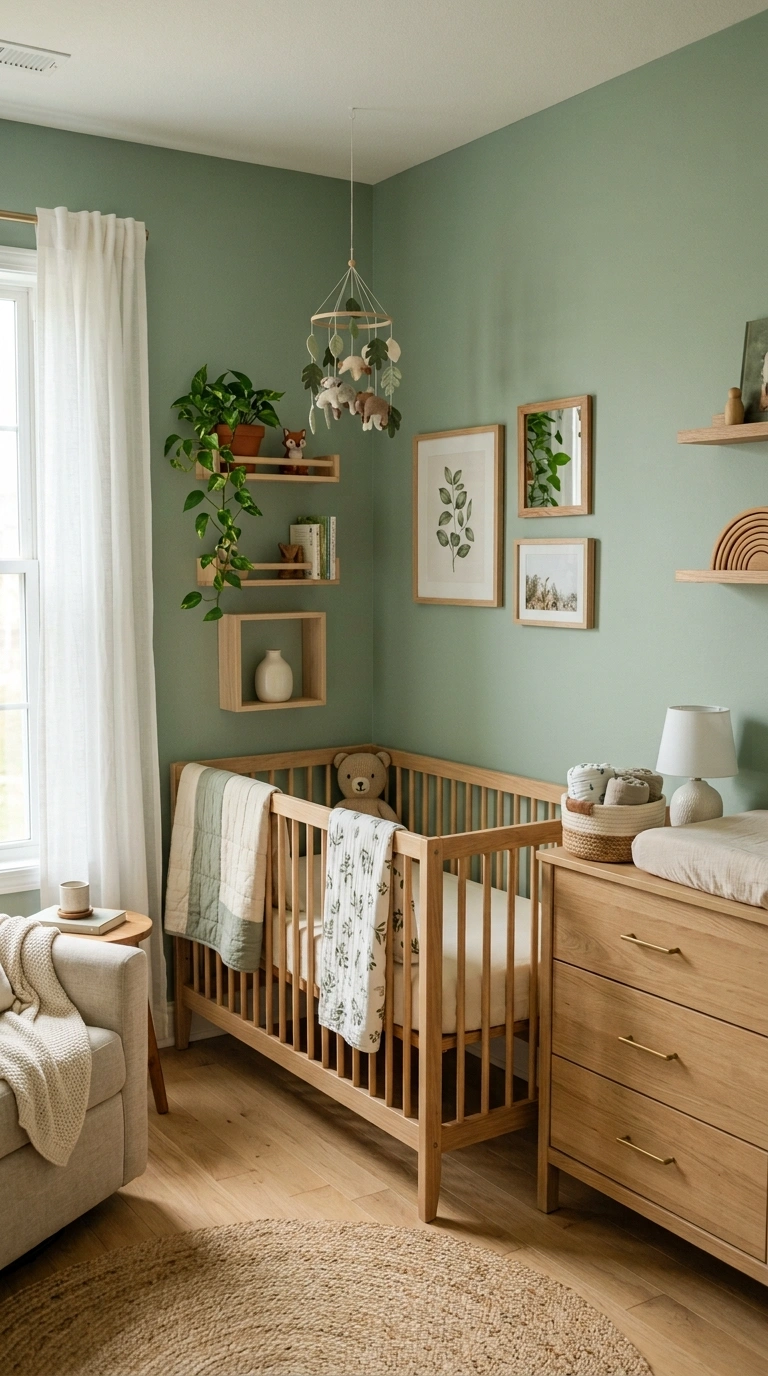
Soft sage, muted olive, gentle eucalyptus, or warm forest moss on the nursery walls creates the most direct visual connection to the natural world. Green is the color most associated with nature and the most calming color for a room where a baby needs to feel settled and safe. Choose a muted, slightly gray-toned green rather than a bright or saturated one. The muted quality makes the green feel like a natural landscape color rather than a paint store color. Apply the green to all four walls for the most immersive effect or to a single feature wall behind the crib with warm cream on the remaining walls.
3. Natural Fiber Rug Foundation
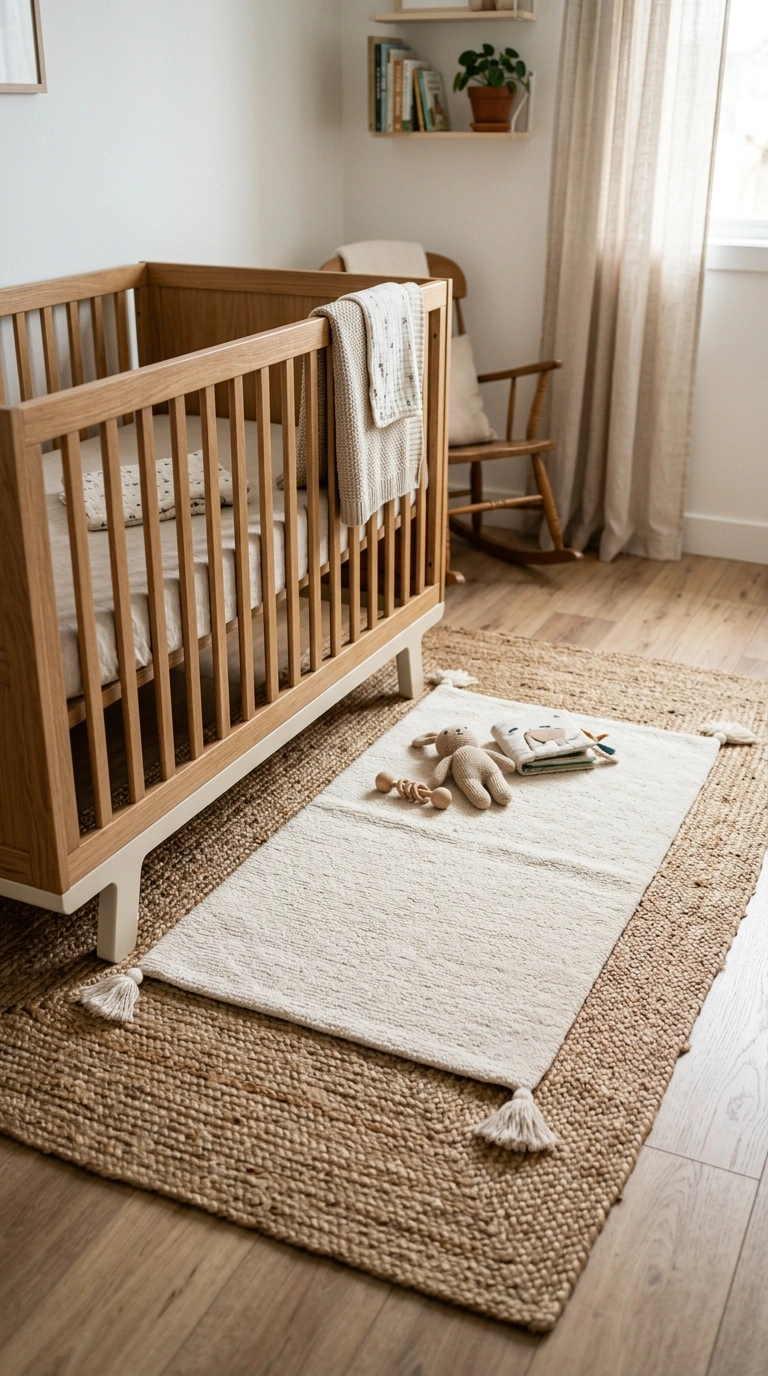
A natural fiber rug in warm jute, soft wool, or organic cotton placed beside the crib or in the main floor area provides the soft organic surface that babies need when they begin tummy time, crawling, and sitting independently. The natural fiber adds warm texture underfoot that synthetic carpets cannot match and connects the floor to the same natural material palette as the wood furniture and linen textiles. Choose a rug with a tight weave that is comfortable on bare skin and easy to clean. A warm cream or natural-toned rug in a simple solid or subtly textured design suits the nature-inspired palette without adding visual complexity.
4. Botanical Wall Art Collection
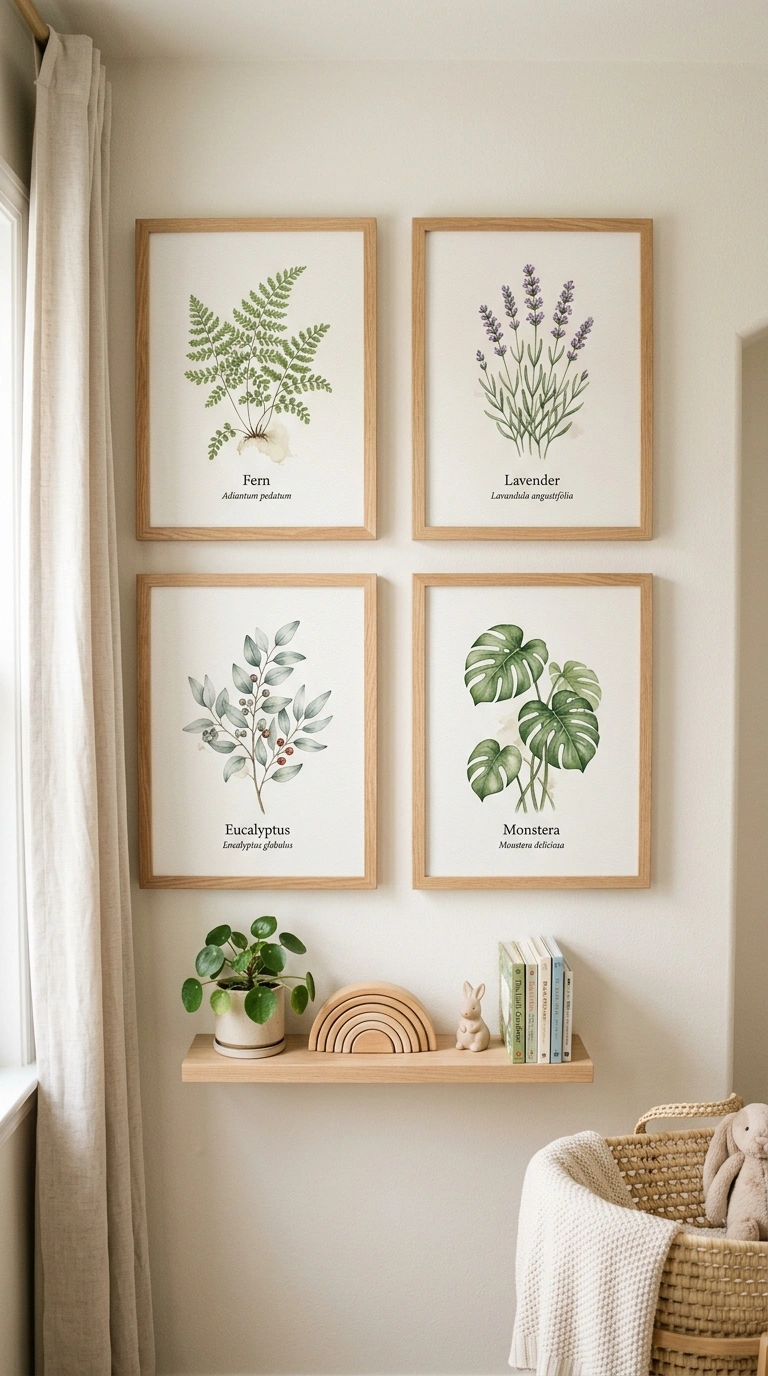
A collection of botanical prints, whether vintage botanical illustrations, watercolor plant paintings, pressed flower frames, or simple leaf prints, hung on the nursery walls adds the specific imagery of the natural world in a way that abstract or geometric art does not. The botanical art connects the nursery to gardens, forests, and fields through detailed accurate imagery of real plants and flowers. Frame the prints in natural wood frames for the most cohesive result. A grouping of three to five botanical prints reads as a curated collection that belongs in the room permanently. The same botanical art approach creates calm beauty in wildflower nursery designs where the floral imagery is the primary design element.
5. Linen Bedding and Textiles
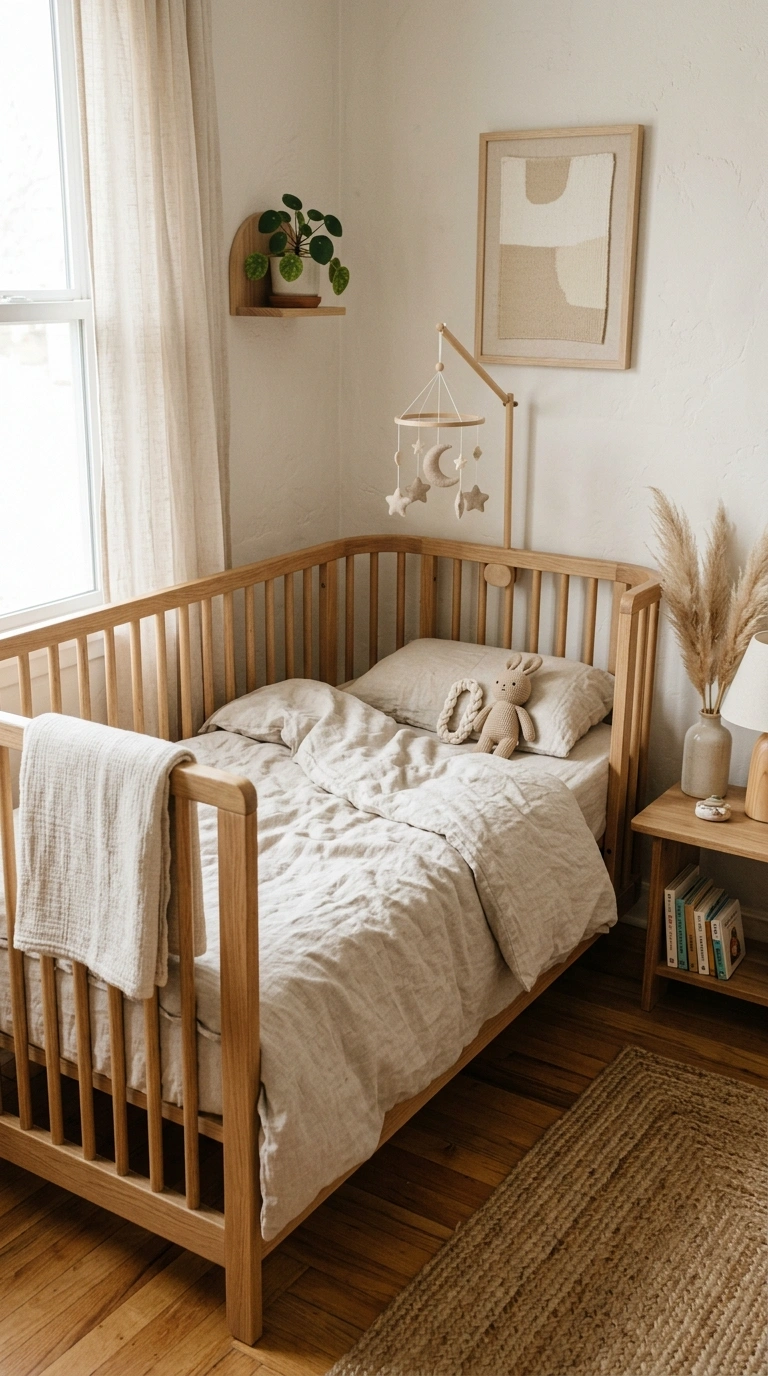
Linen crib bedding, linen curtain panels, and linen accessories in undyed natural tones, warm cream, soft oatmeal, natural flax, provide the organic textile quality that synthetic and heavily processed cotton fabrics lack. Linen softens with every wash and develops the gentle rumpled quality that reads as naturally beautiful rather than manufactured perfect. The natural color of undyed linen suits the earthy palette of a nature-inspired nursery perfectly. Use linen for the crib sheet, the curtains, and a light blanket for a consistent textile quality throughout the room.
6. Woodland Animal Accents
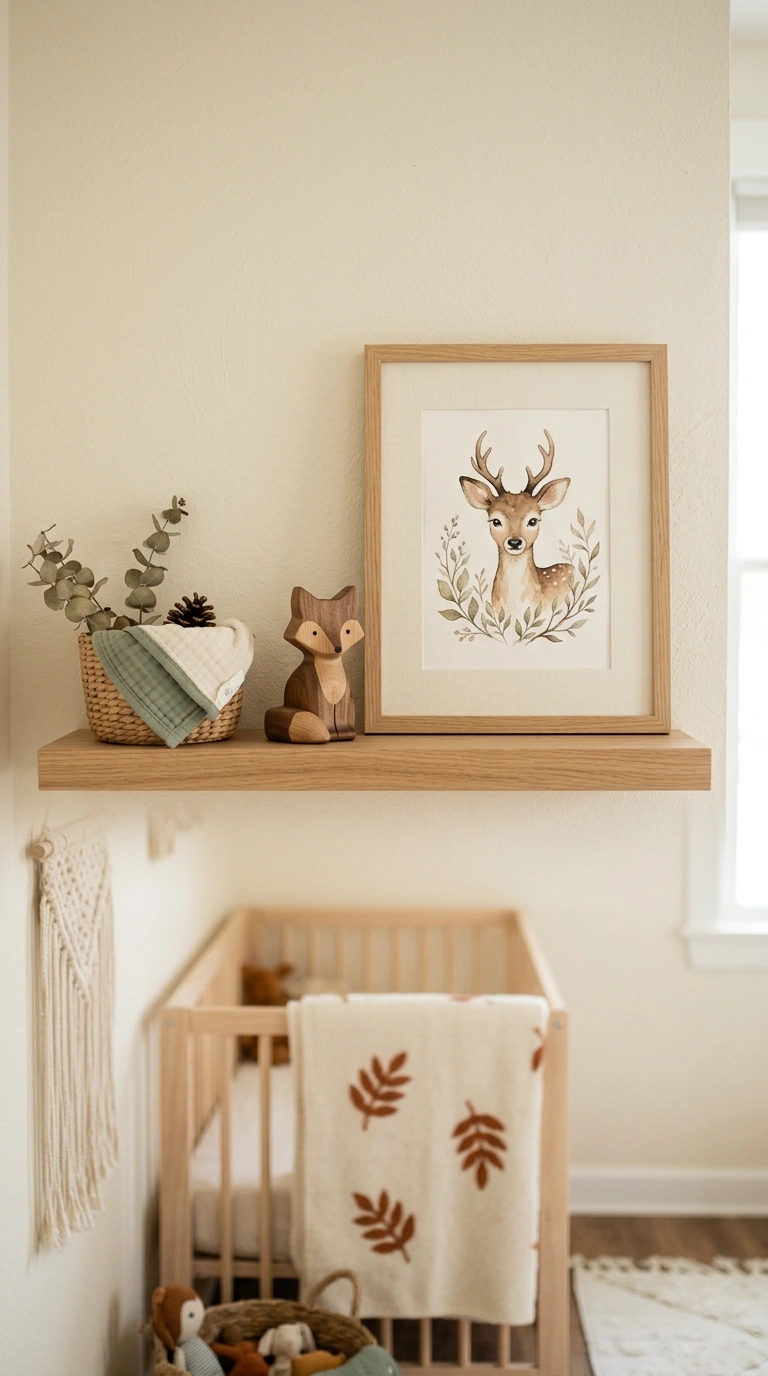
Subtle woodland animal accents, a small wooden fox figurine on the shelf, a framed print of a deer in a forest, a soft toy owl, a tiny ceramic hedgehog, add the gentle creature quality that connects the nursery to forest life without turning the room into a cartoon woodland theme. Use the animal accents as small individual moments on shelves and surfaces rather than as a repeating motif across every element. A single beautifully made wooden animal on a shelf reads as a thoughtful design detail. Woodland animals printed on the crib sheet, the wallpaper, the curtains, and the mobile simultaneously reads as a theme that overwhelms rather than charms.
7. Tree or Branch Mural
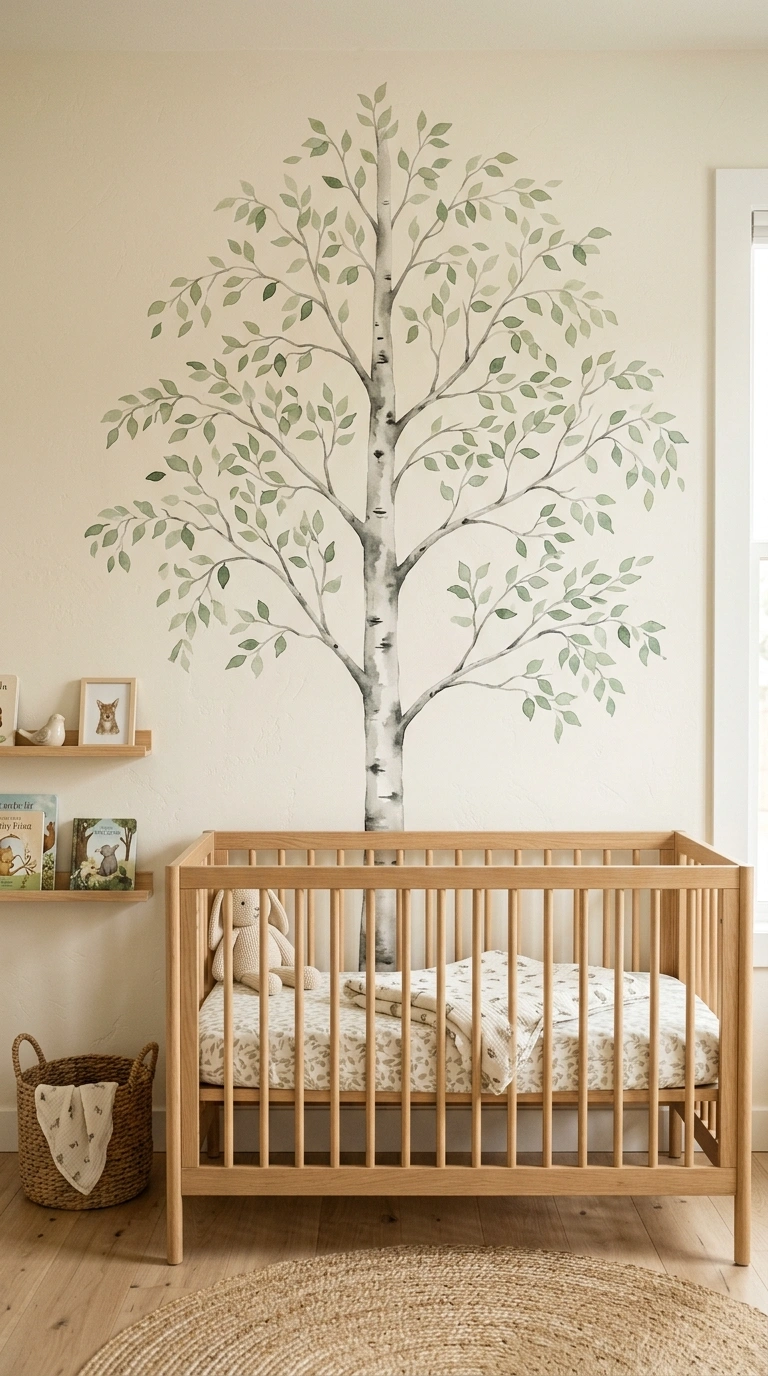
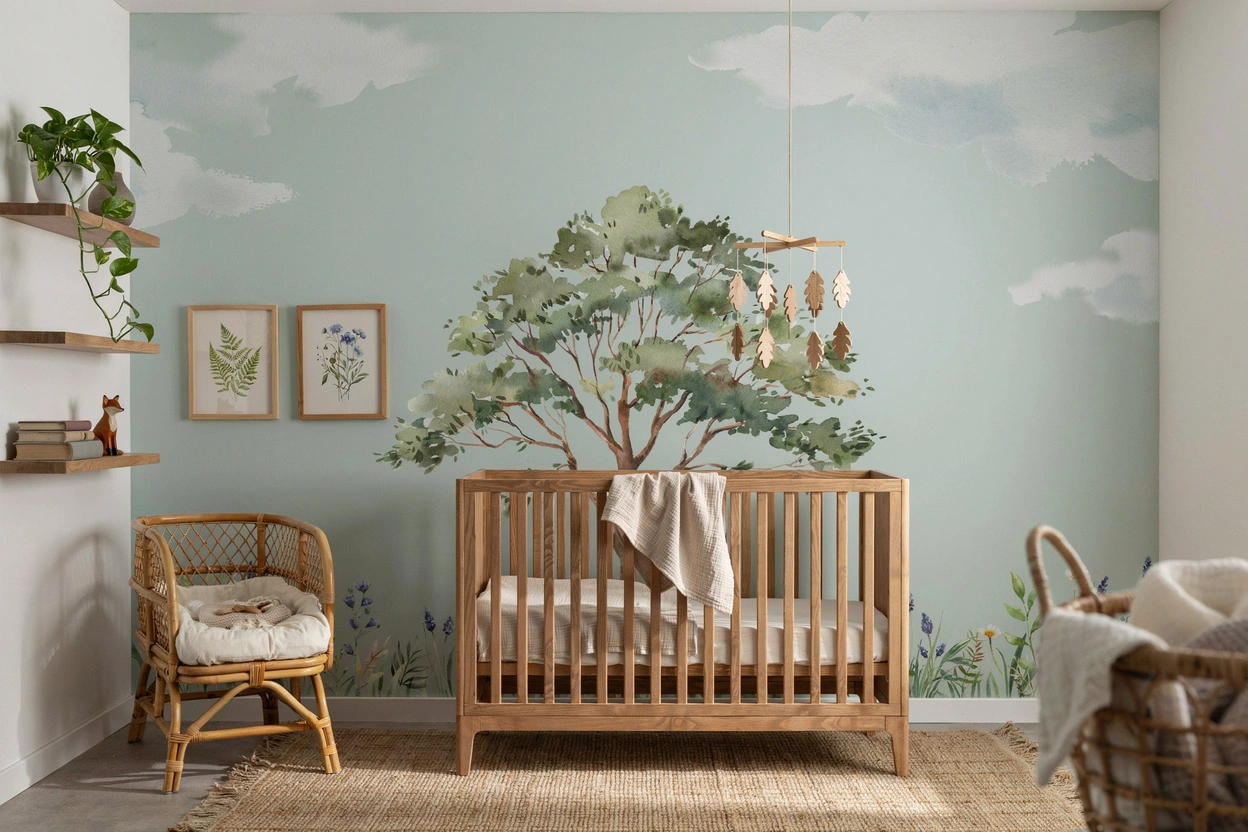
A mural of a single tree, a forest scene, or a branch with leaves painted on or applied to the wall behind the crib creates the most dramatic nature element available in the nursery. A soft watercolor tree with gentle green leaves on a cream or white background, a single birch tree trunk with delicate branches, or a full forest scene in muted tones all work depending on how bold the nature reference should be. Apply the mural to the crib wall only and keep the remaining walls in a solid coordinating color so the mural reads as a window into nature rather than as wallpaper covering every surface.
8. Rattan and Woven Furniture
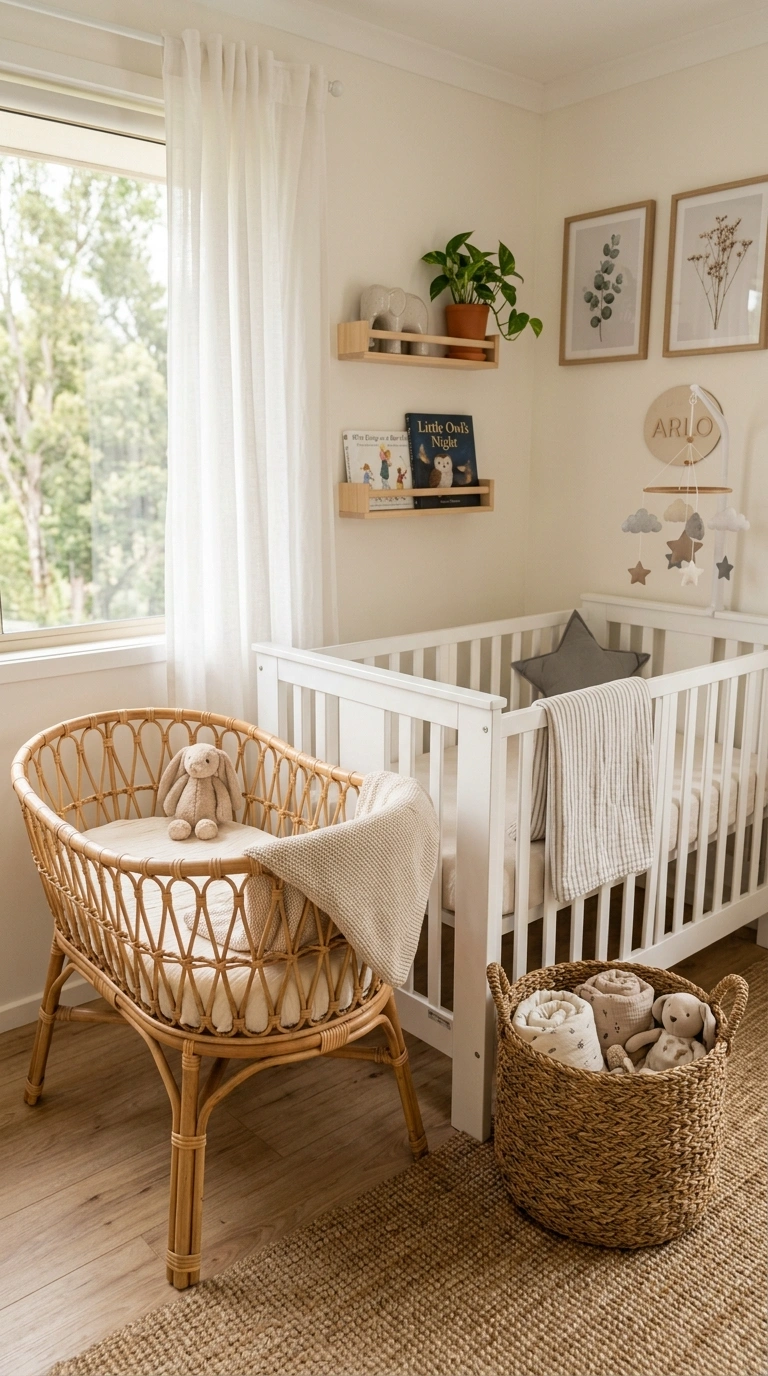
Rattan, wicker, and woven natural fiber furniture pieces, a rattan bassinet, a wicker storage basket, a rattan side table, or a woven changing basket, bring the organic handwoven quality that connects the nursery to craft traditions that use natural materials directly from the natural world. The warm honey tone of natural rattan suits the earthy palette of a nature-inspired nursery and adds textural variety that smooth surfaces lack. A rattan bassinet beside the crib for the first months, or a woven changing basket on the dresser, introduces the woven quality as a functional and decorative element simultaneously.
9. Real Plant Presence
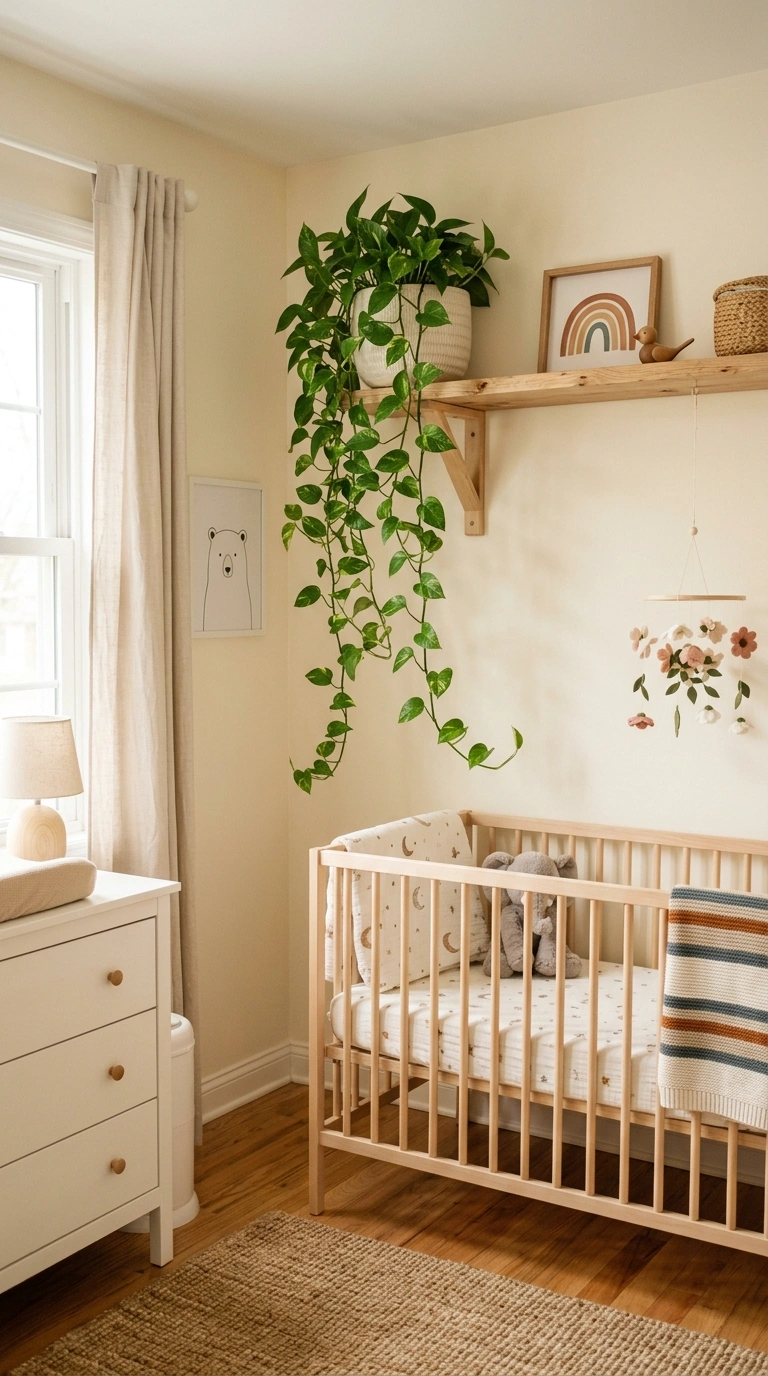
One or two real plants in the nursery add the living, breathing, growing quality that no manufactured decor can replicate. A small fern on a high shelf, a trailing pothos out of the baby’s reach, or a snake plant in a simple pot on the floor in the corner all thrive in typical nursery conditions and add genuine green to the room. Choose plants that are non-toxic to babies in case a curious toddler eventually reaches them. The real plants connect the nature-inspired nursery to actual nature rather than to a representation of it, which is a distinction that makes a genuine atmospheric difference in the room.
10. Natural Stone or Wood Accents
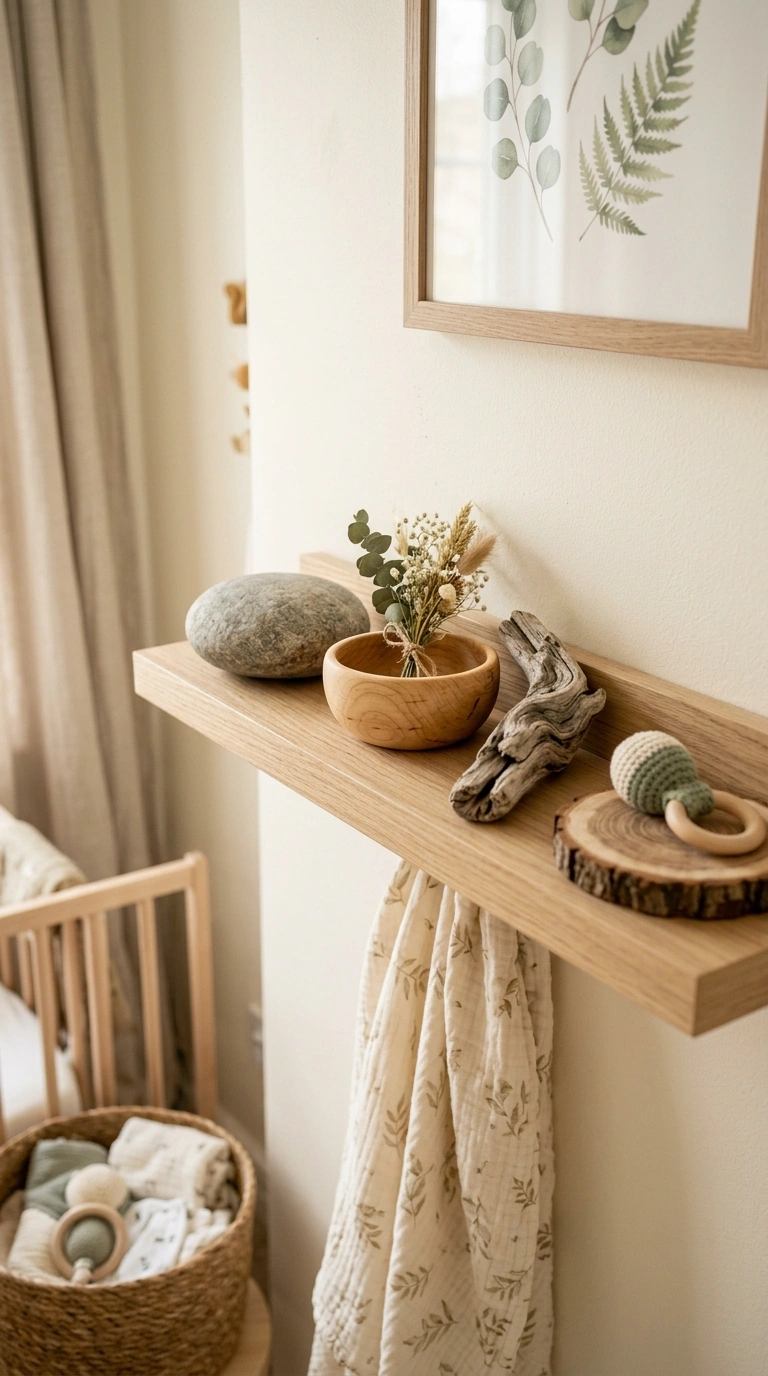
Small natural objects, a smooth river stone on the shelf, a piece of driftwood as a decorative element, a small wooden bowl holding tiny treasures, a slice of a tree trunk used as a coaster on the dresser, bring actual pieces of the natural world into the nursery as tactile, real objects. These natural objects are not representations of nature. They are pieces of nature itself, which gives them a quality and a weight that manufactured nature-themed decor cannot match. Display them on shelves and surfaces where they can be seen and eventually touched as the baby grows old enough to explore.
11. Cloud or Sky Ceiling
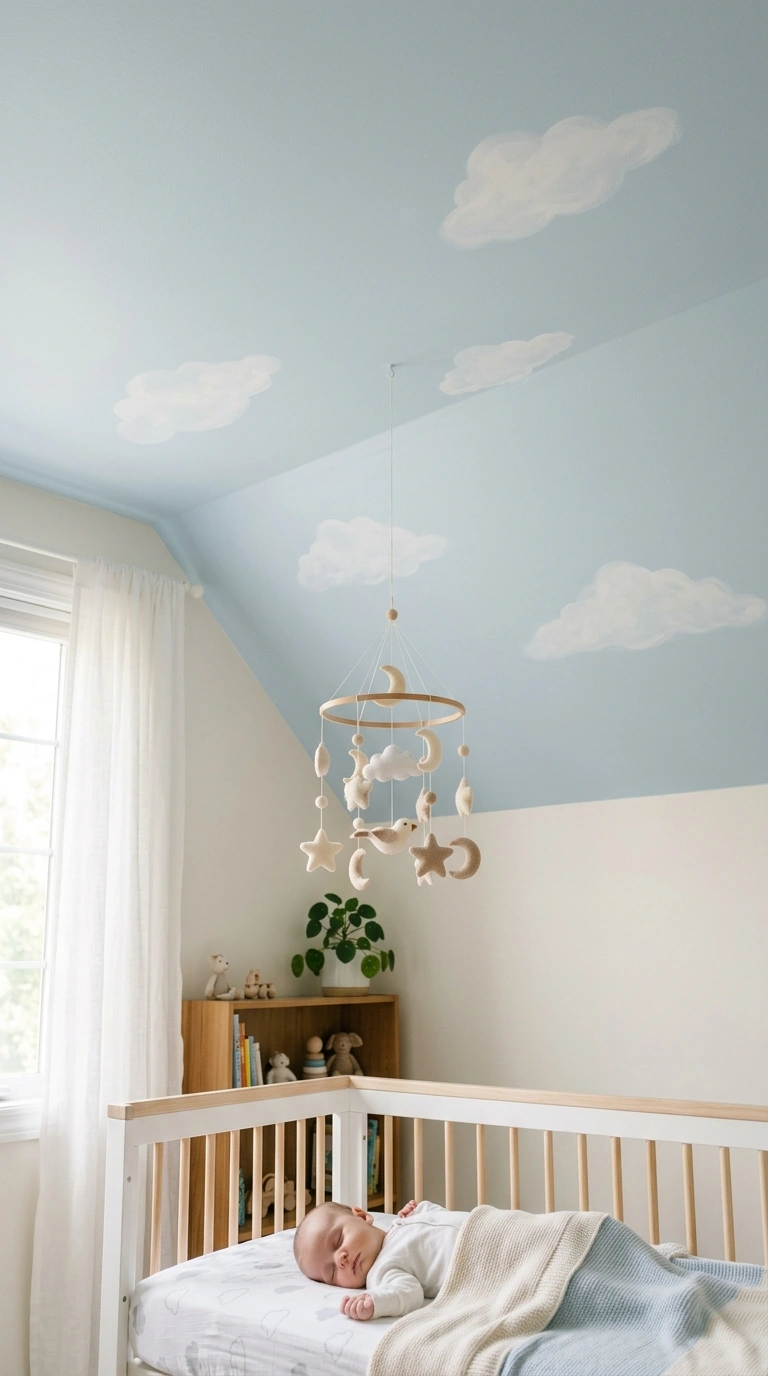
Painting the nursery ceiling in a soft sky blue or applying a subtle cloud pattern to the ceiling creates a sky above the crib that the baby looks up at during every nap and every waking moment spent on their back. The sky ceiling is one of the most calming and most nature-connected ceiling treatments available for a nursery. A soft pale blue with no clouds reads as a clear gentle sky. A pale blue with a few soft white cloud shapes painted on reads as a slightly whimsical but still serene sky. Keep the blue very pale and the clouds very soft so the ceiling reads as atmospheric rather than decorative.
12. Earthy Neutral Color Palette
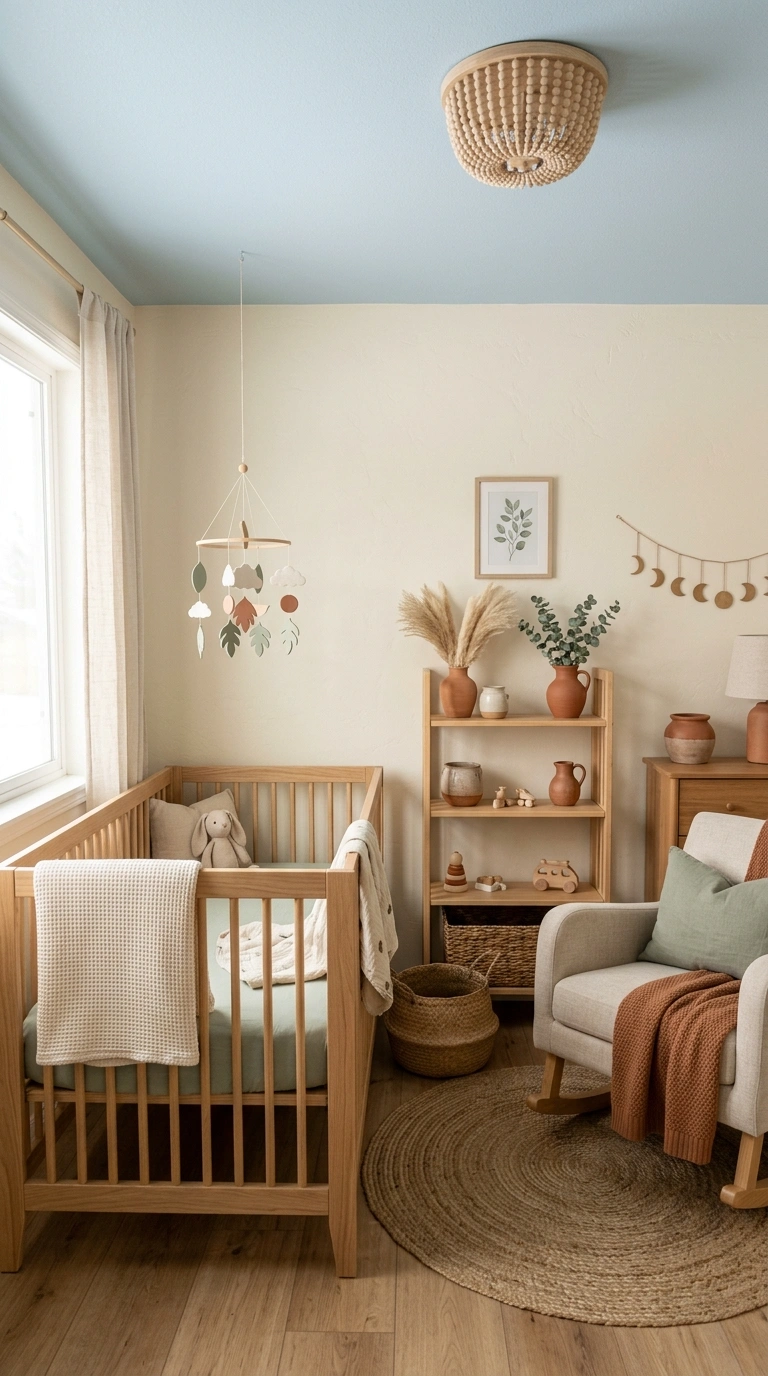
A nature-inspired nursery color palette draws exclusively from the natural world: warm cream like birch bark, soft sage like fresh leaves, warm clay like dried earth, gentle sky blue like a morning horizon, warm brown like tree bark, and natural linen like sun-dried grass. Every color in the palette should be answerable to the question where does this color exist in nature. The natural palette creates a room that feels fundamentally calm because the colors are the ones the human eye has evolved to find restful across thousands of generations of living in the natural world.
13. Organic Cotton Crib Mattress
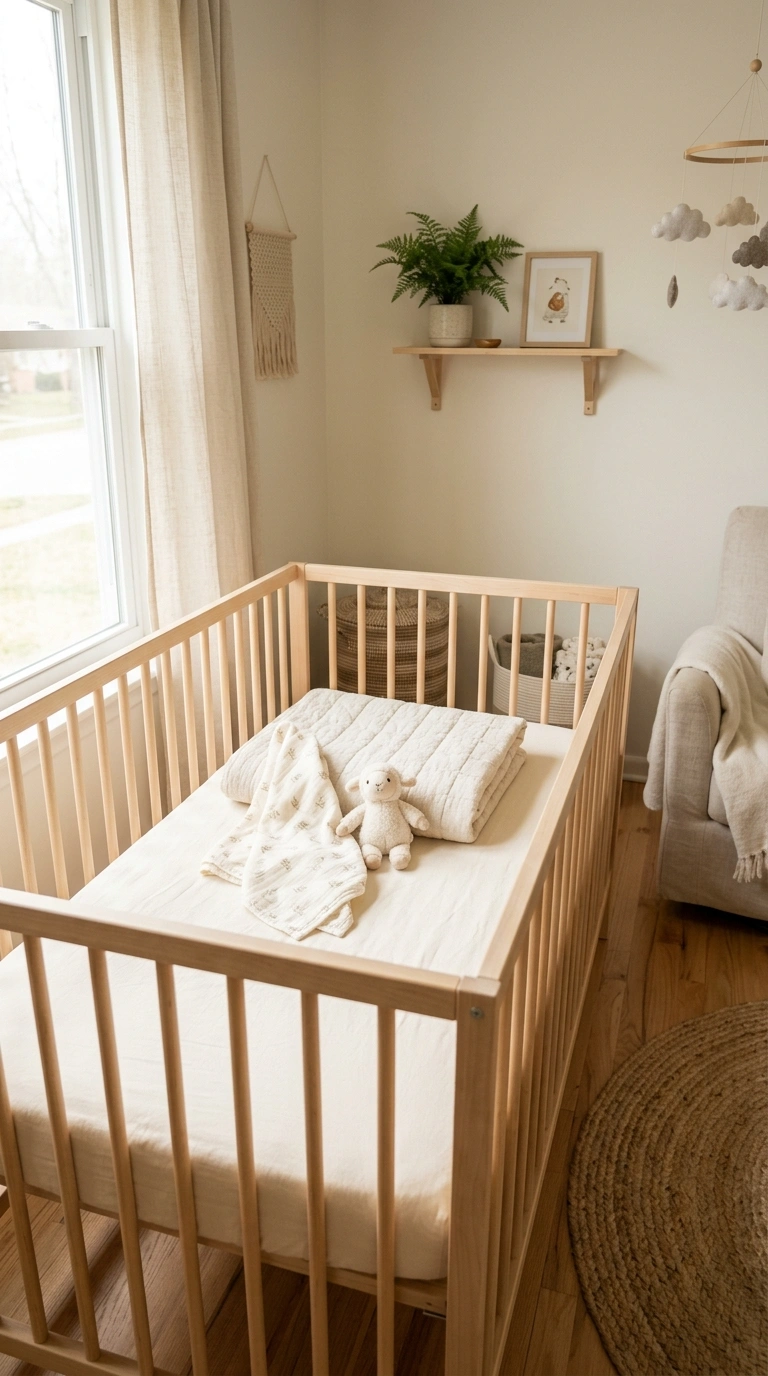
An organic cotton crib mattress and organic cotton bedding provide the closest contact with natural rather than synthetic materials during the hours a baby spends sleeping. The organic cotton is grown without pesticides and processed without synthetic chemicals, which means the surface closest to the baby’s skin is as natural as possible. Organic crib mattresses are available at various price points from multiple manufacturers and the investment in organic materials at the mattress level is the most functionally meaningful natural-materials decision in the nursery since it affects the baby’s sleep environment directly.
14. Leaf or Fern Mobile
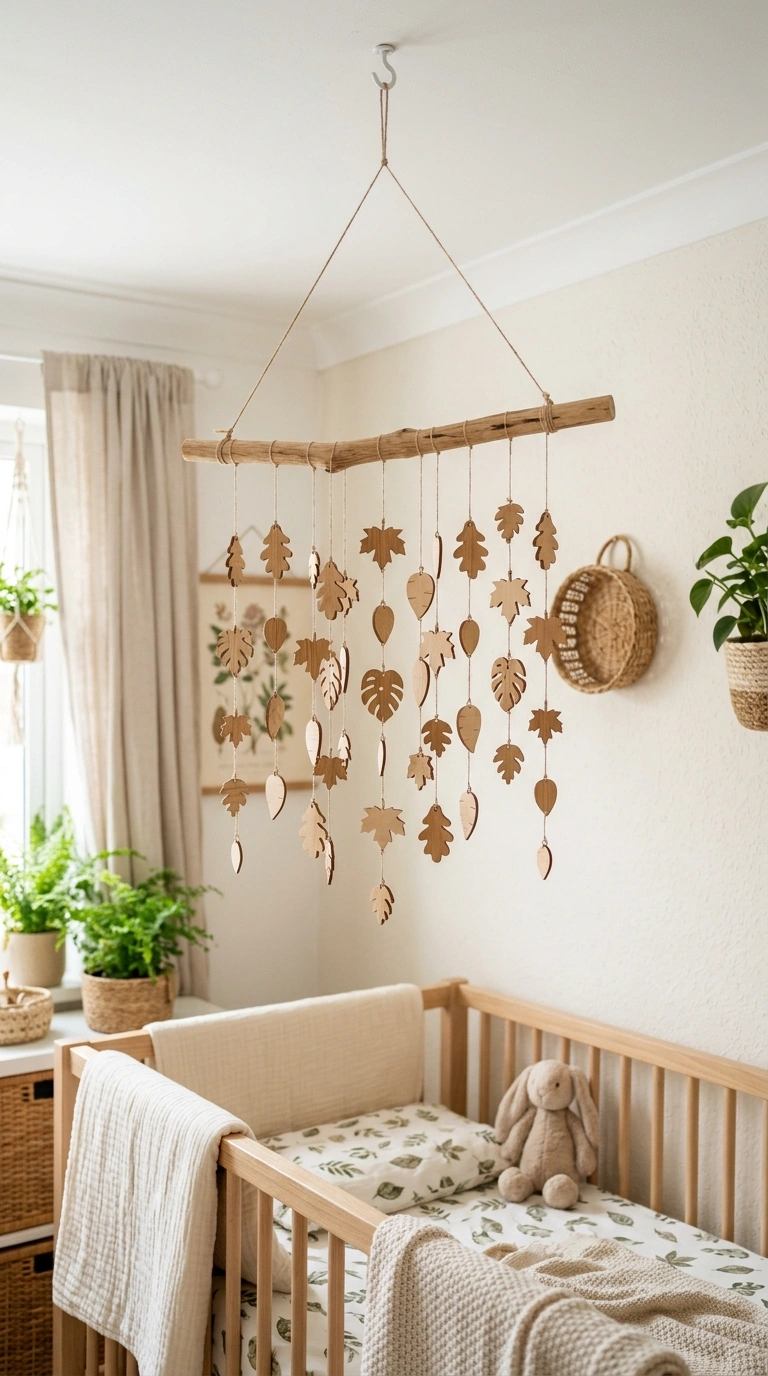
A mobile made from dried pressed leaves, small wooden leaf cutouts, or fabric fern shapes suspended from a wooden or metal ring above the crib provides the overhead visual stimulation babies need in a nature-specific format. The gentle movement of the leaf shapes in air currents mimics the way actual leaves move in a breeze, which is a calming and naturally rhythmic visual experience. Use leaves in muted green tones or in the warm browns and golds of autumn leaves depending on the nursery’s overall palette. Hang the mobile high enough to be completely out of reach and securely fastened.
15. Mountain or Landscape Art
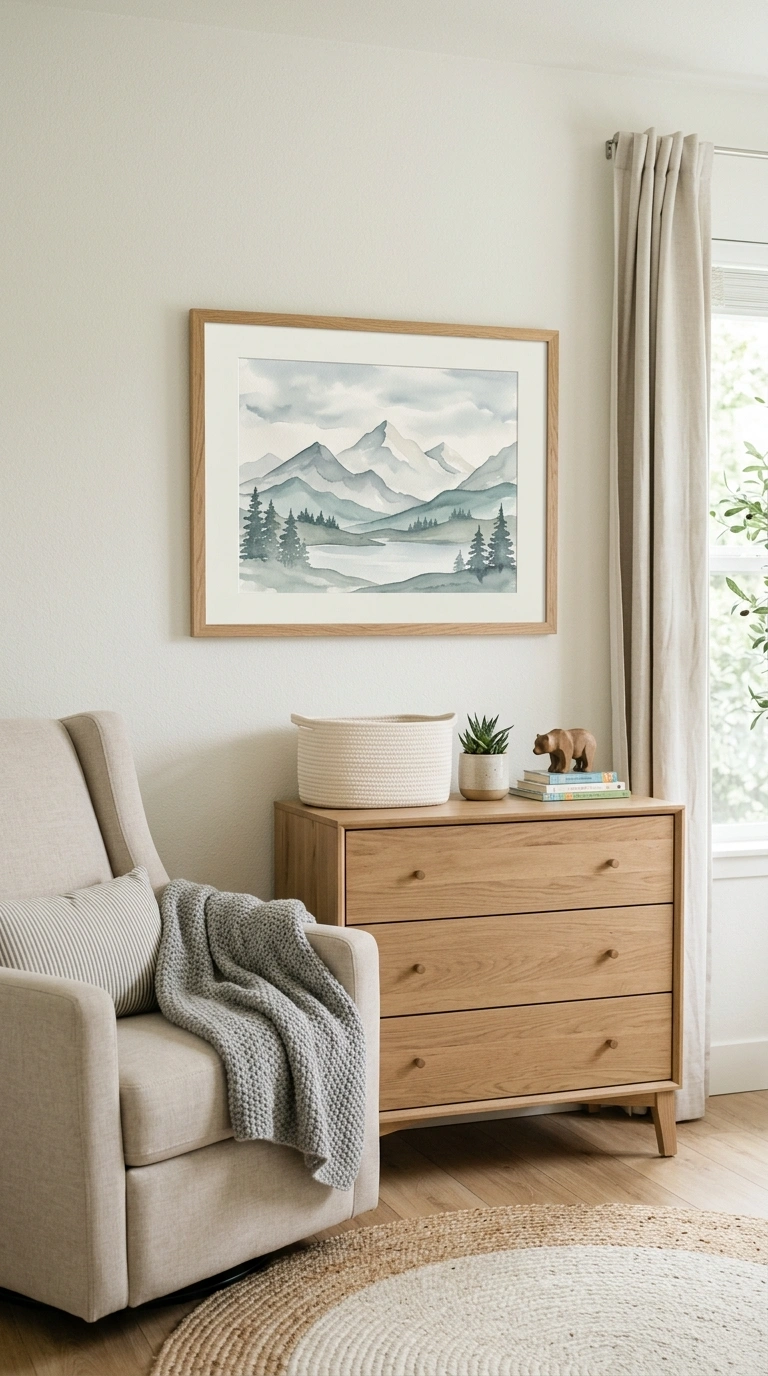
A simple mountain landscape, a rolling hill scene, or a calm lake illustration on the nursery wall adds the sense of open natural space that the nursery’s four walls do not provide. The landscape does not need to be photographic or detailed. A simple watercolor mountain range in muted blue-gray tones, a gentle rolling hillside in soft green, or a calm lake scene in warm neutral tones all create the impression of open nature beyond the room. Position the landscape art opposite the crib or beside the rocking chair where it serves as a calm visual rest point during feeding and settling.
16. Natural Wood Shelving
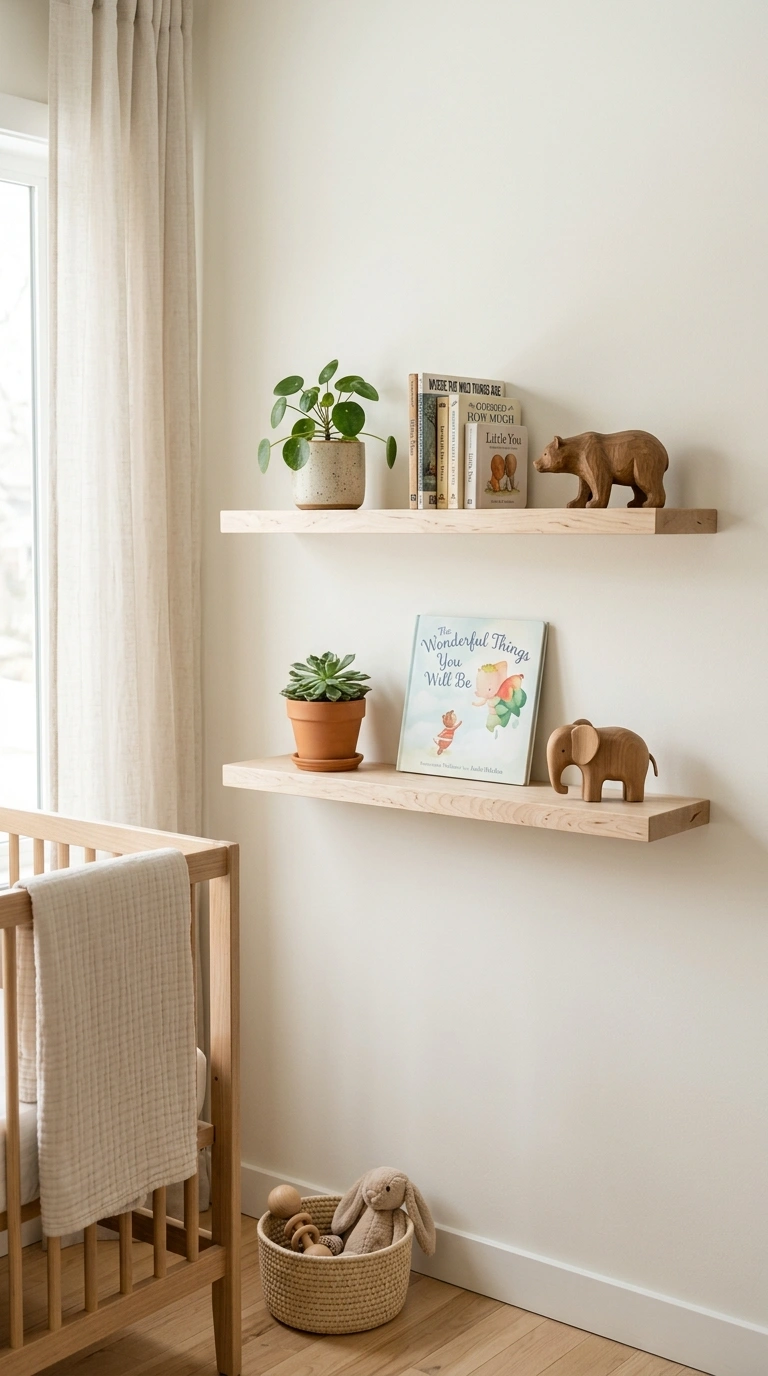
Floating shelves in natural wood, whether light birch, warm oak, or a simple pine, mounted on the nursery wall provide display surfaces for the small objects, books, and plants that populate the nature-inspired nursery. The natural wood of the shelves contributes to the organic material palette and adds warmth to the walls. Style each shelf with a combination of a small plant, a book or two, and one or two natural objects or small wooden toys. Keep the shelves lightly styled with significant empty space so the display reads as curated rather than cluttered.
17. Nature Sound Machine
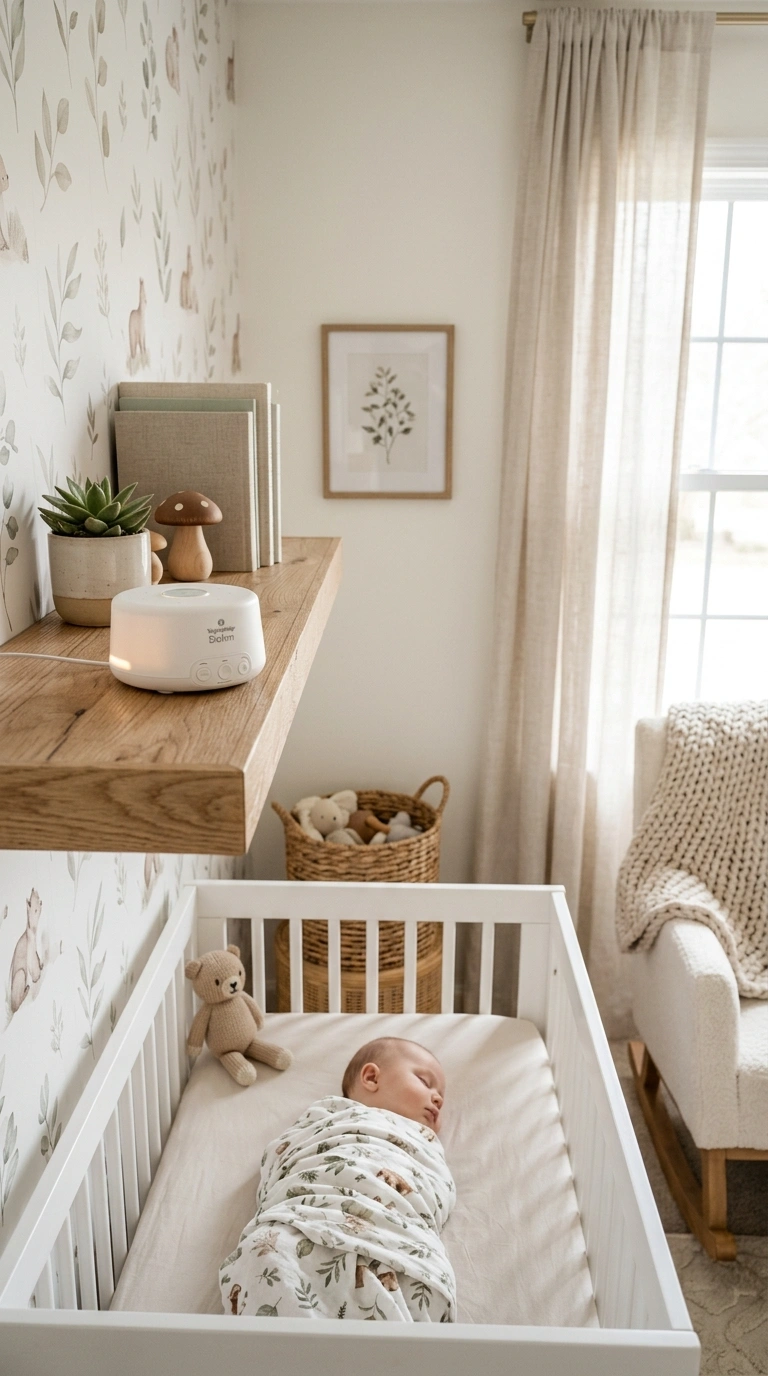
A white noise machine or a sound machine that plays natural sounds, gentle rain, forest birdsong, ocean waves, or a babbling brook, provides an auditory connection to the natural world that supports sleep and creates a calm atmosphere in the nursery. The natural sounds mask household noise that can disrupt the baby’s sleep and provide a consistent soothing background that becomes associated with rest and comfort. Position the sound machine on a shelf across the room from the crib rather than directly beside it, and set the volume to a level that is audible but not loud.
18. Seasonal Nature Display
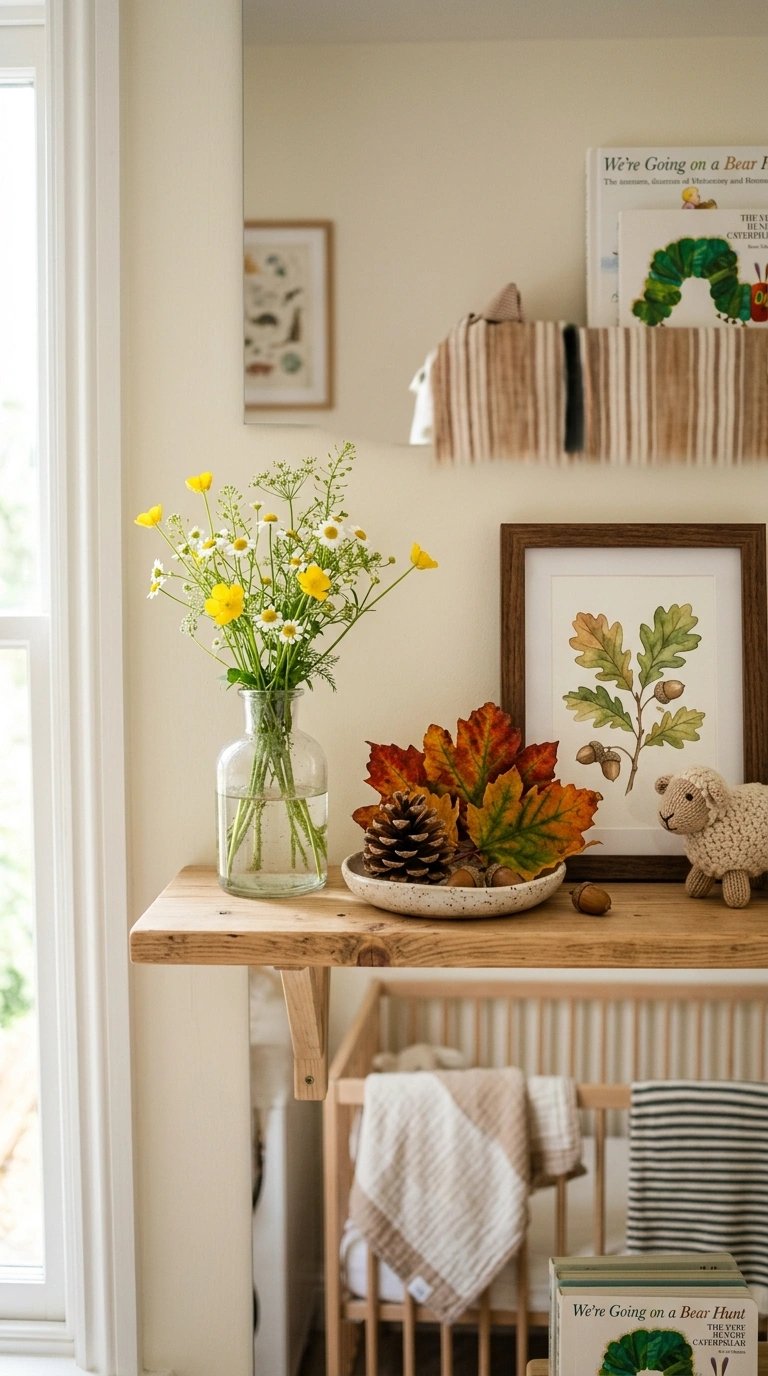
A small display on a shelf that changes with the seasons, a spring flower in a bud vase, a summer shell collection, an autumn leaf arrangement, a winter pinecone cluster, connects the nursery to the actual natural calendar outside and gives the room a living, changing quality that static decor lacks. The seasonal display teaches the growing child about the changing natural world in the most gentle and direct way possible. Refresh the display at the change of each season as a small ritual that maintains the nursery’s connection to the real natural world beyond the window.
19. Simplicity as Nature Principle
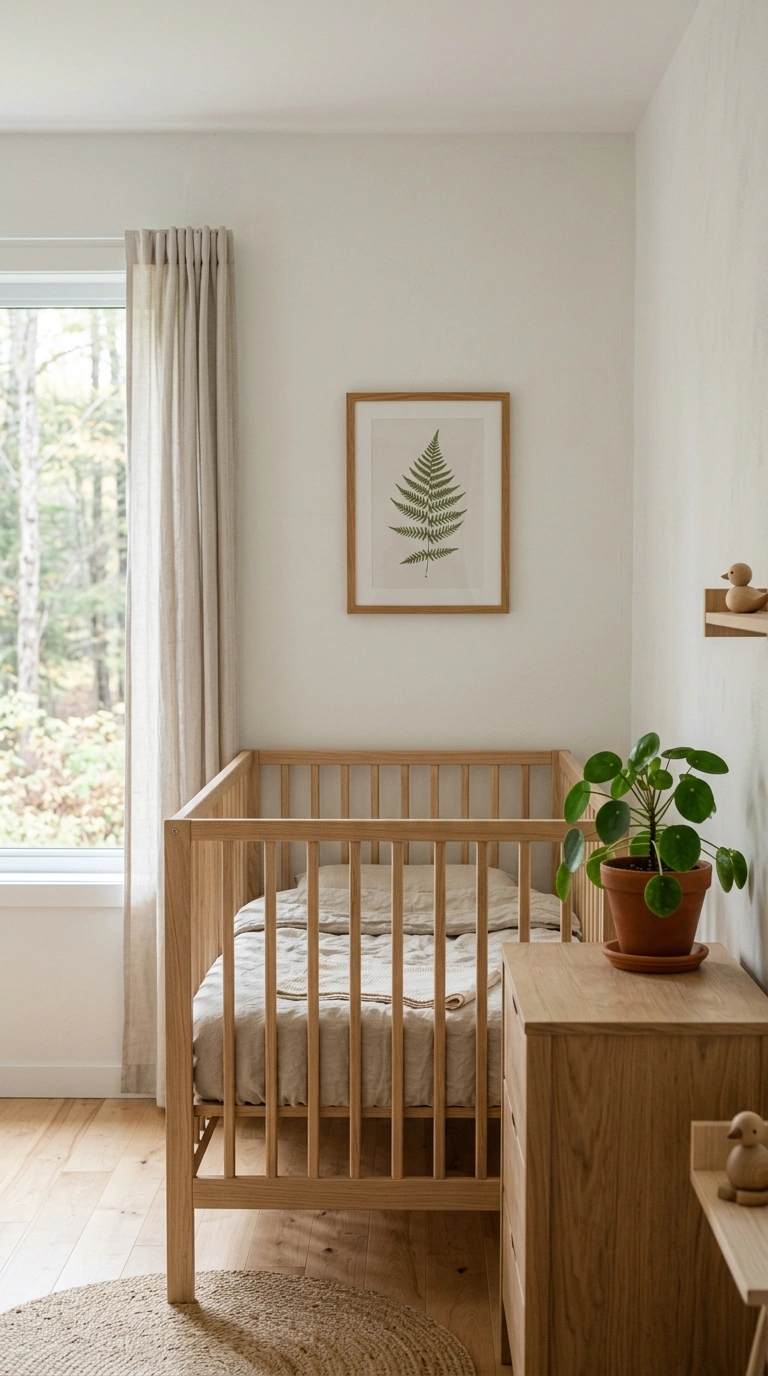
The most important design principle in a nature-inspired nursery is simplicity. Nature is not busy. A forest is calm. A meadow is open. A clear sky is empty. The nursery should mirror this quality by keeping surfaces uncluttered, walls mostly bare, and the overall room feeling spacious and restful rather than packed with decorative elements. The natural materials and the earthy colors provide the warmth. The simplicity provides the calm. Together they create a room that feels like a quiet clearing in a gentle forest, which is exactly the atmosphere a baby needs for rest and growth.
20. Room to Grow Naturally
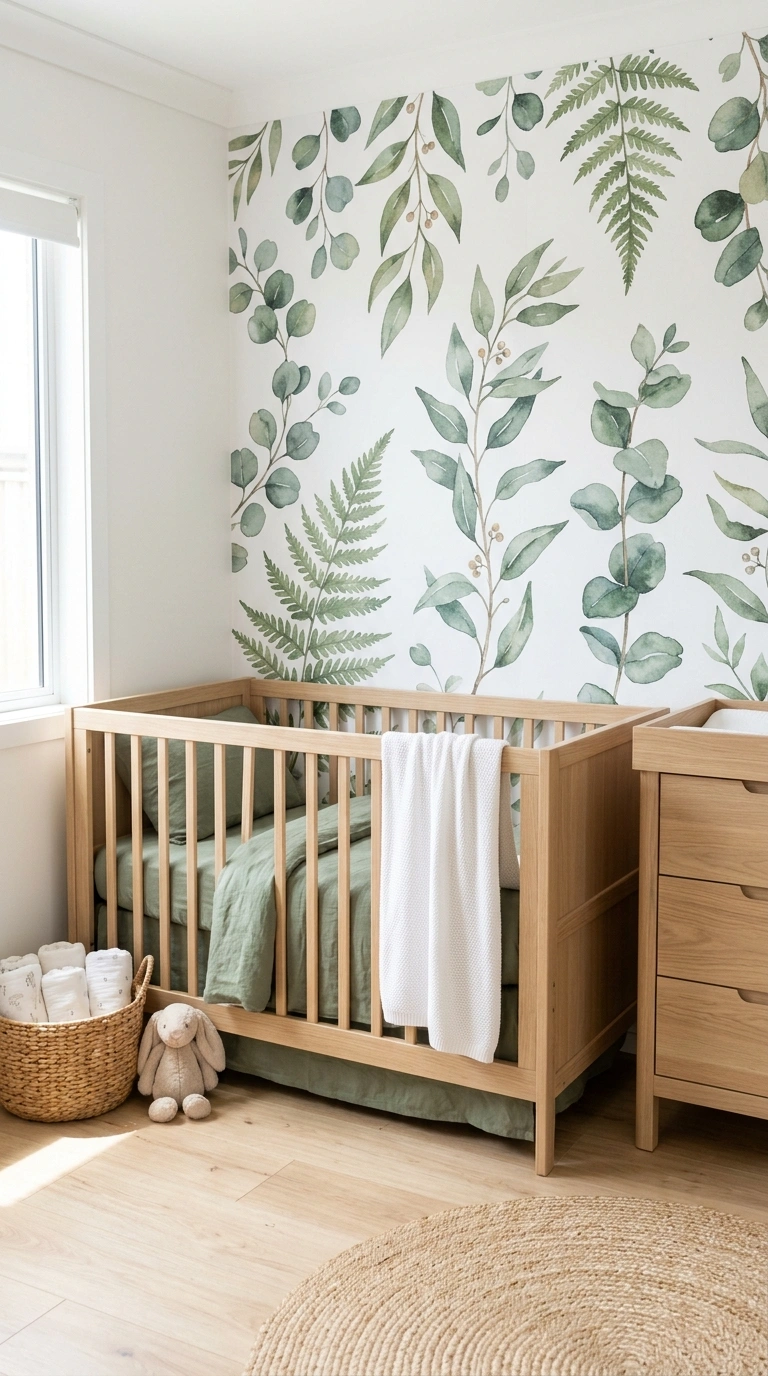
A nature-inspired nursery grows with the child more naturally than most themed nurseries because the natural world does not age out the way cartoon characters and trend-based themes do. The wooden furniture, the botanical art, the earthy colors, and the natural materials remain appropriate and beautiful as the baby becomes a toddler, then a young child, then an older child. Update the bedding, rotate the books, and refresh the small accessories as the child grows, but the fundamental natural foundation of the room remains the backdrop for every stage. For another approach to nursery design that ages gracefully alongside the child, the boho nursery ideas guide covers the layered natural aesthetic that transitions seamlessly from baby room to toddler room to young child’s space.
A nature-inspired nursery that brings genuine calm into a baby’s room is built on real natural materials, earthy colors drawn from the natural world, and the simplicity that mirrors the calm of nature itself. The wood, the linen, the plants, and the muted earth tones together create a room that feels fundamentally restful. The nature connection is not decorative. It is built into the materials the baby touches, the surfaces the baby sees, and the sounds the baby hears during the most important hours of each day.