19 Vintage Nursery Ideas That Feel Sweet Without Being Old-Fashioned
A vintage nursery walks a narrow line between charming and dated. Lean too far into the period elements and the nursery looks like a museum exhibit of a room from another era. Lean too far into the modern and the vintage touches feel random rather than intentional. The nurseries that get the balance right are the ones where the vintage elements feel chosen rather than inherited, where the old pieces are mixed with enough current simplicity to keep the room feeling fresh, and where the overall sweetness comes from genuine quality rather than from fussy decoration. These 19 ideas cover the furniture, the textiles, the wall treatments, and the small details that create a vintage nursery with real charm that a baby can grow into for years rather than one that needs a full redesign by the child’s second birthday.
1. Vintage Crib Character Piece
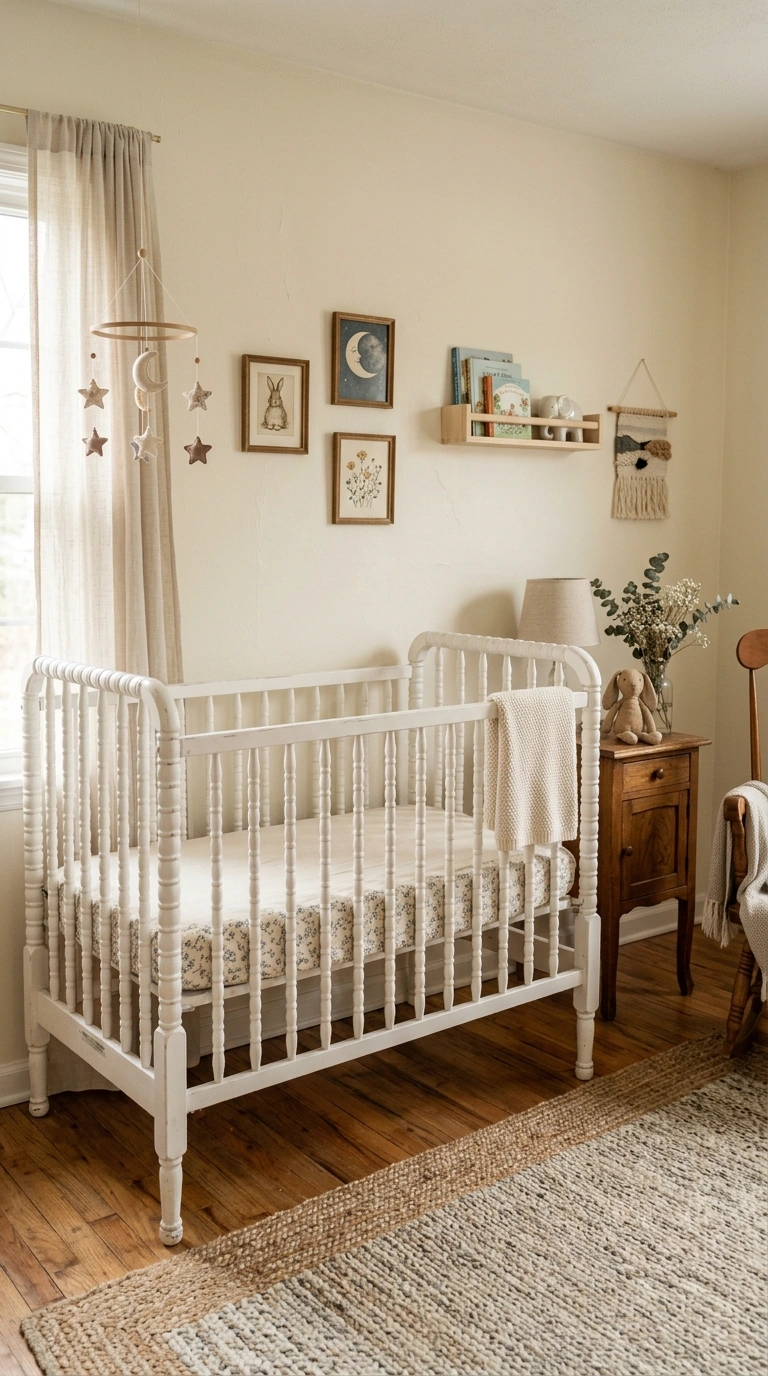
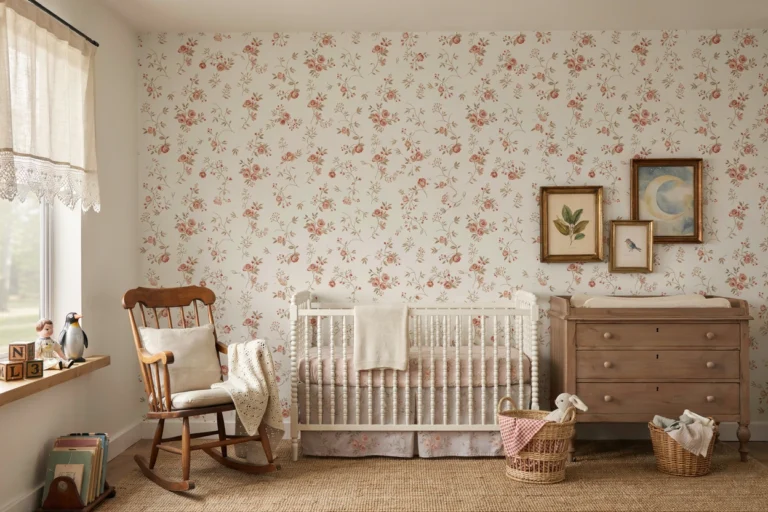
A genuine vintage or vintage-reproduction crib with turned spindles, curved lines, or a Jenny Lind silhouette becomes the nursery’s centerpiece and establishes the vintage direction immediately. Vintage cribs sourced from antique shops or family members need to be checked carefully against current safety standards: the slat spacing must be no more than two and three-eighths inches, and the mattress must fit snugly with no gaps. If a genuine vintage crib does not meet safety standards, vintage-style reproduction cribs from current manufacturers provide the same aesthetic with certified safety compliance. A white or natural wood vintage-style crib against a simple wall reads as both classic and entirely appropriate for a current nursery.
2. Warm Cream Wall Color
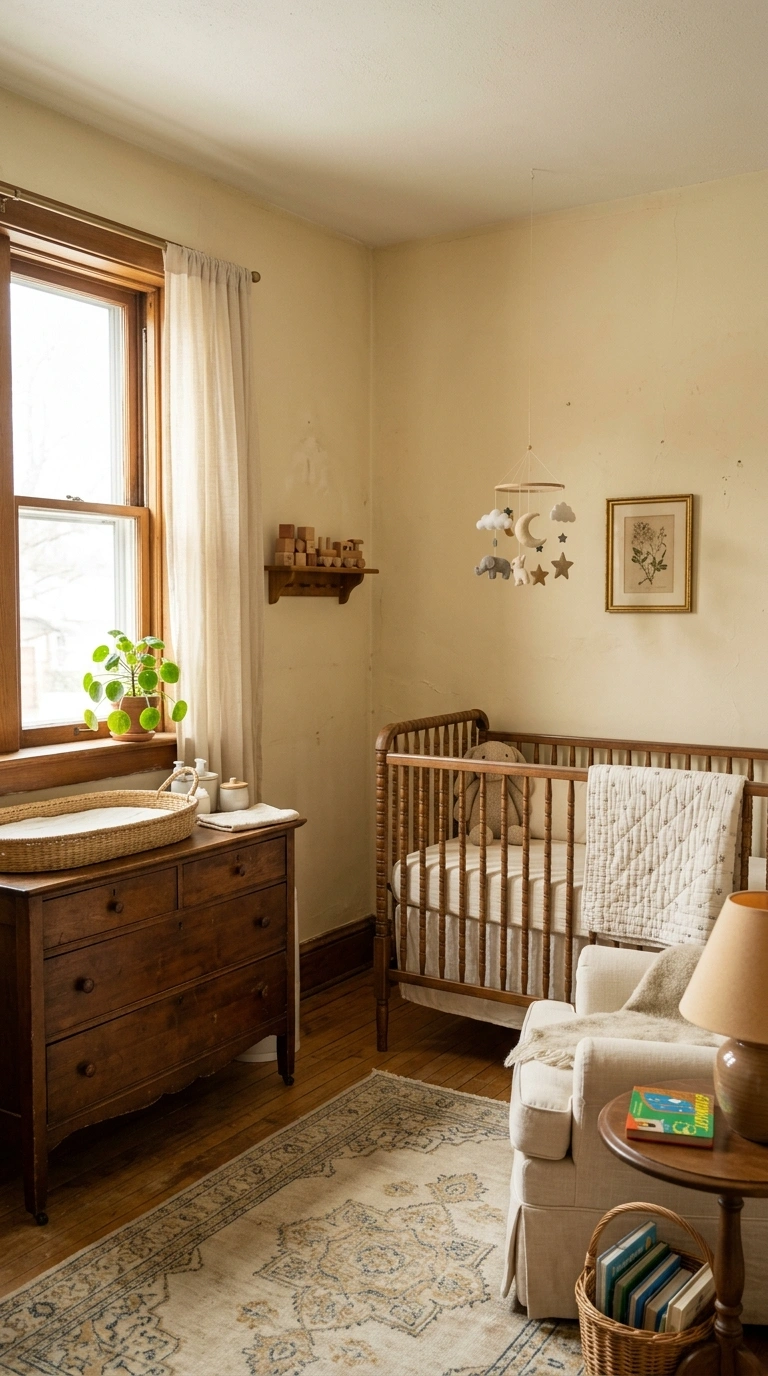
The wall color in a vintage nursery should be warmer and softer than standard nursery whites and pastels. A warm cream with a slight yellow undertone, a soft antique white, or a barely-there blush creates the aged, gentle quality that bright pure white walls cannot achieve. The warm cream reads as a room that has been loved for years rather than one that was freshly painted last week, which is the quality that genuine vintage rooms naturally have. Paint all four walls in the same warm cream for the most enveloping and restful result. The warm walls make everything placed against them, the furniture, the art, the textiles, look warmer by association.
3. Antique Dresser as Changing Table
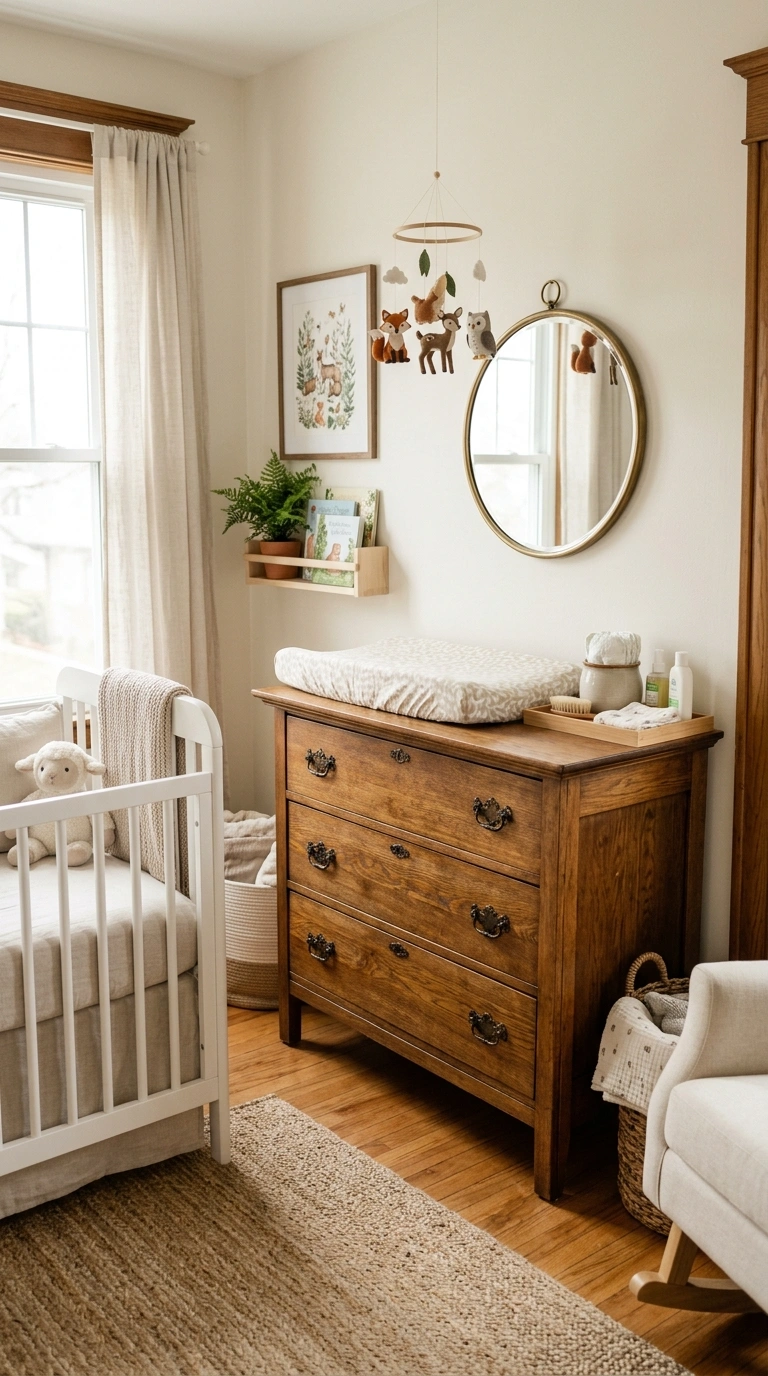
A refinished antique dresser used as the changing table provides the most substantial vintage furniture piece in the nursery alongside the crib. The dresser offers more storage than a standard changing table and transitions naturally from nursery use to a child’s regular dresser once the changing pad is removed. Source a sturdy low dresser from an antique shop, a vintage marketplace, or a family member. Sand and repaint in a soft warm tone or leave the original finish if it is in good condition. Add a quality changing pad to the top and the vintage dresser serves double duty as both a period furniture piece and a genuinely functional changing station.
4. Heirloom Textile Display
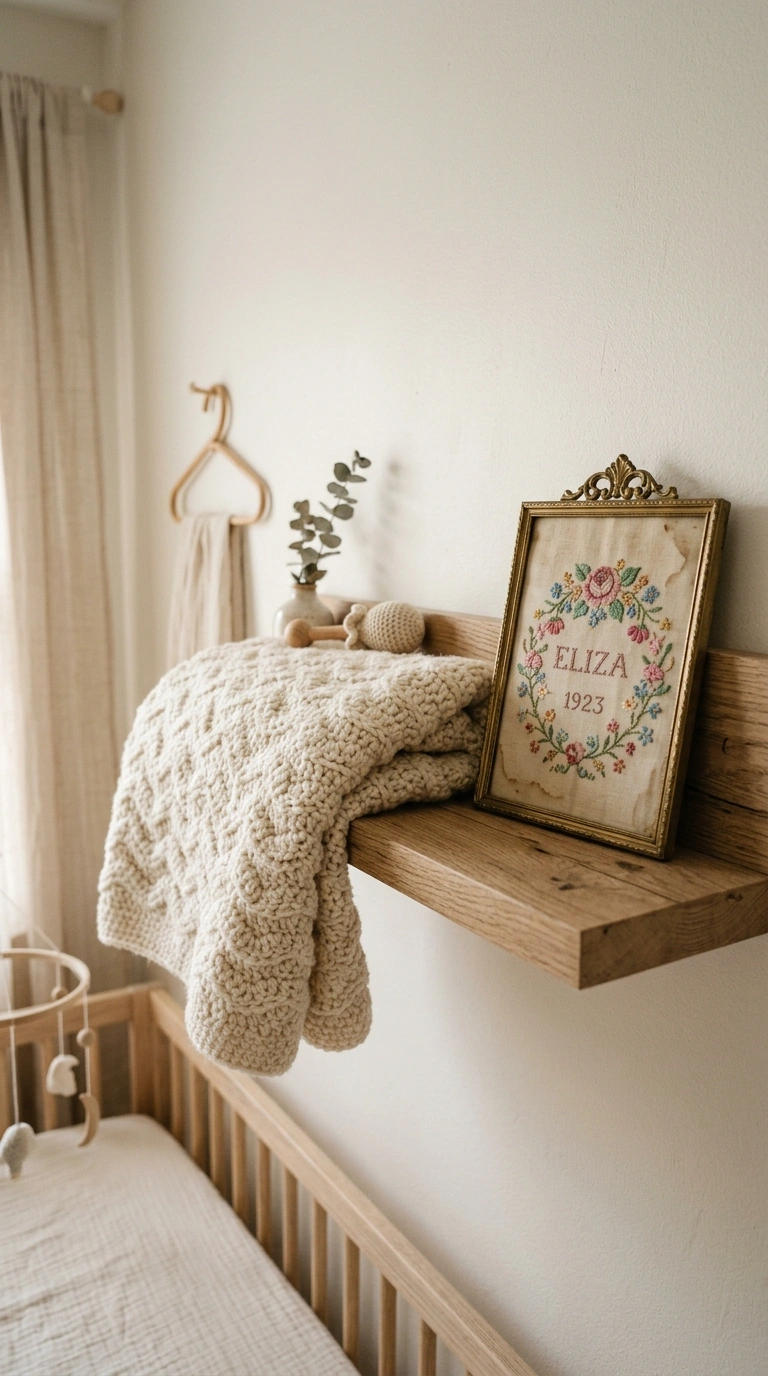
A handmade heirloom textile, a crocheted blanket from a grandmother, a hand-embroidered pillow, a vintage quilt found at an estate sale, or a knitted bonnet from a family collection, displayed in the nursery connects the baby’s room to the family’s history in a way that purchased decor cannot. Drape the heirloom blanket over the crib rail, frame a piece of vintage embroidery on the wall, or display a collection of tiny hand-knitted items on a shelf. The heirloom textile tells a story that no new purchase can tell and gives the nursery its most emotionally meaningful vintage element. The same appreciation for genuine vintage pieces bringing warmth and character to a room also defines the approach in retro bathroom designs where authentic period details distinguish a real vintage room from a styled approximation.
5. Vintage-Style Wallpaper Accent
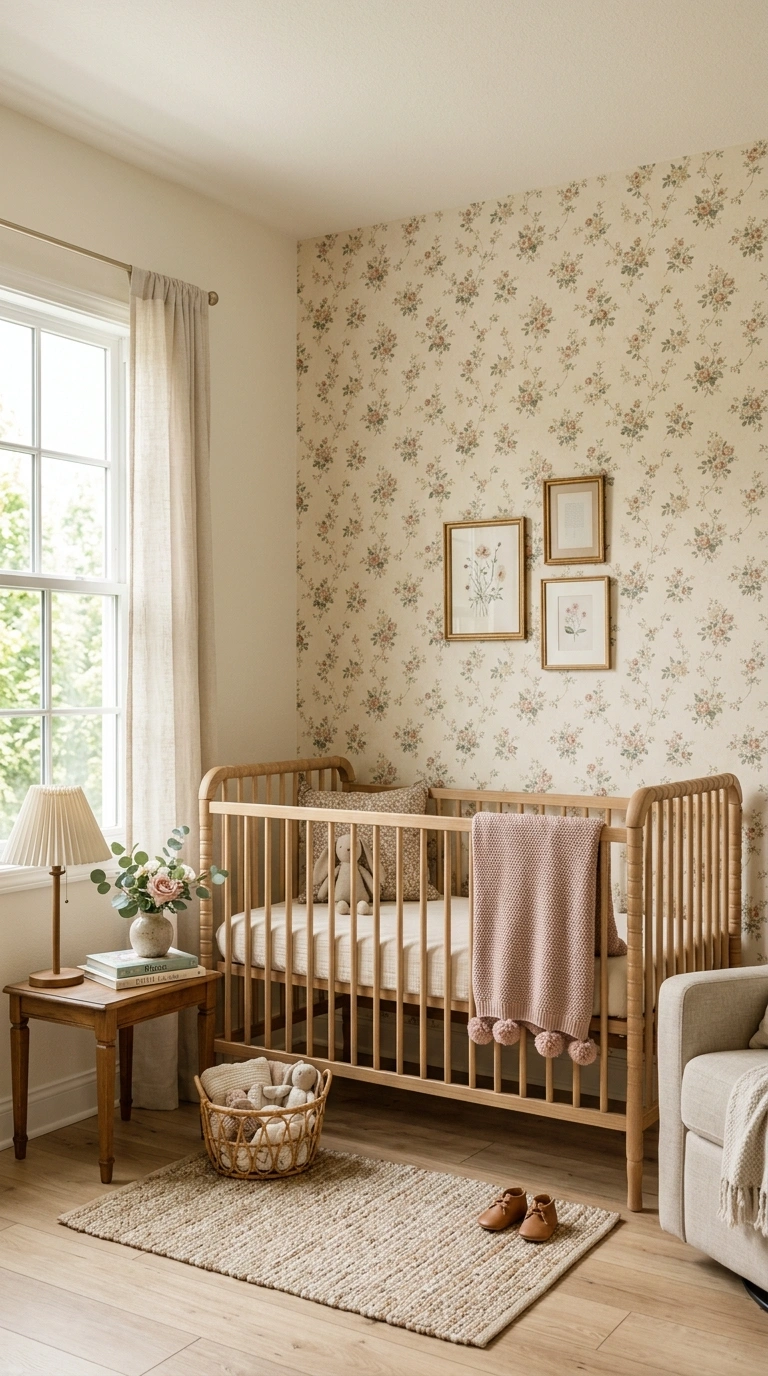
A gentle vintage-pattern wallpaper on one accent wall, a small floral in muted tones, a delicate toile, a soft stripe, or a tiny animal print in a heritage style, adds period character to the nursery without overwhelming the room. Modern peel-and-stick wallpapers in vintage-inspired prints make this approach accessible and fully reversible. Apply the wallpaper to the crib wall only and keep the remaining walls in warm cream for the most balanced result. Choose prints in soft muted colors rather than bright contemporary interpretations of vintage patterns, since the muted palette is what gives the wallpaper its authentic aged quality.
6. Classic Rocking Chair
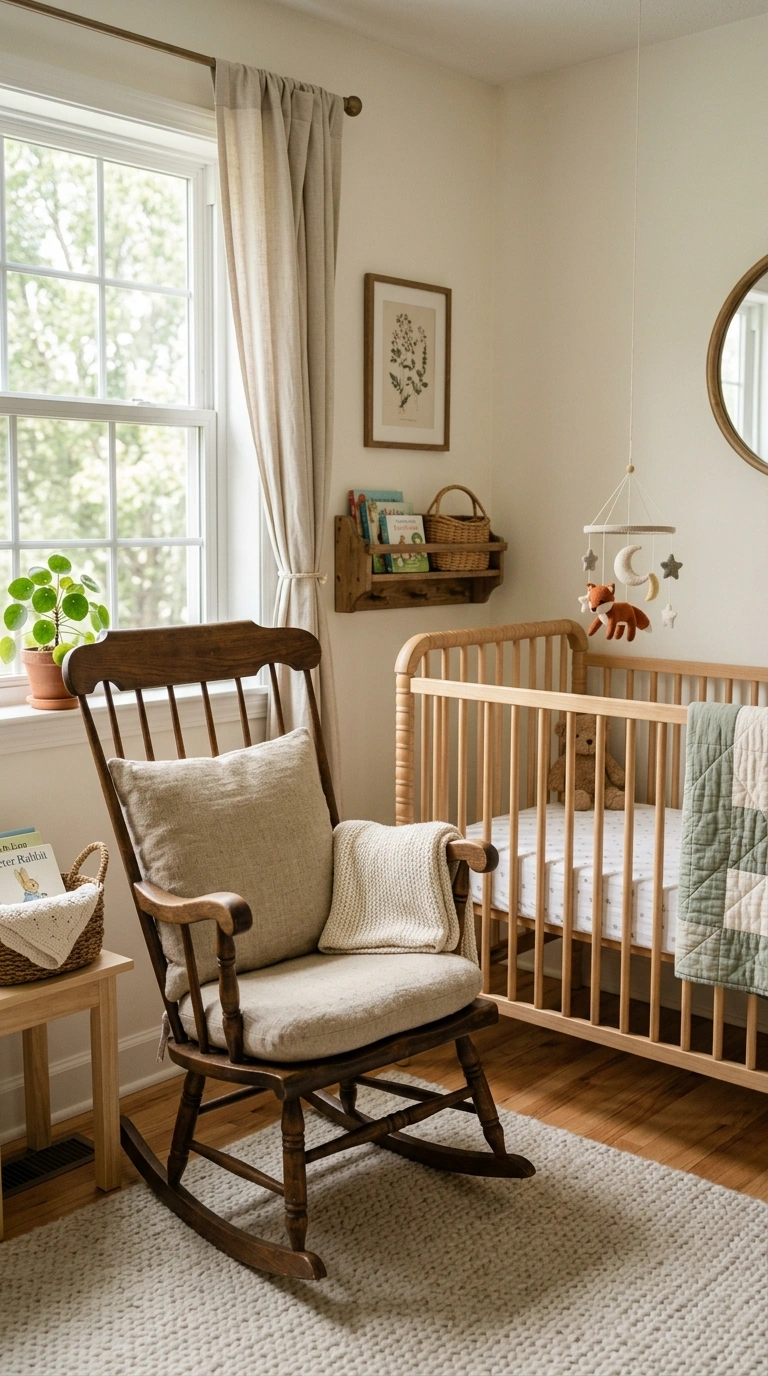
A traditional wooden rocking chair or an upholstered glider in a classic shape provides the nursing and soothing seating that every nursery needs in a form that references generations of nursery rocking chairs before it. A simple wooden rocker with a cushion tied on, a vintage-style wingback glider in a warm linen, or an actual antique rocking chair restored with new upholstery all suit the vintage nursery. The rocking chair is the piece of furniture most closely associated with nurseries across every generation, and its presence in the room immediately reads as both functional and deeply traditional.
7. Vintage Art and Prints
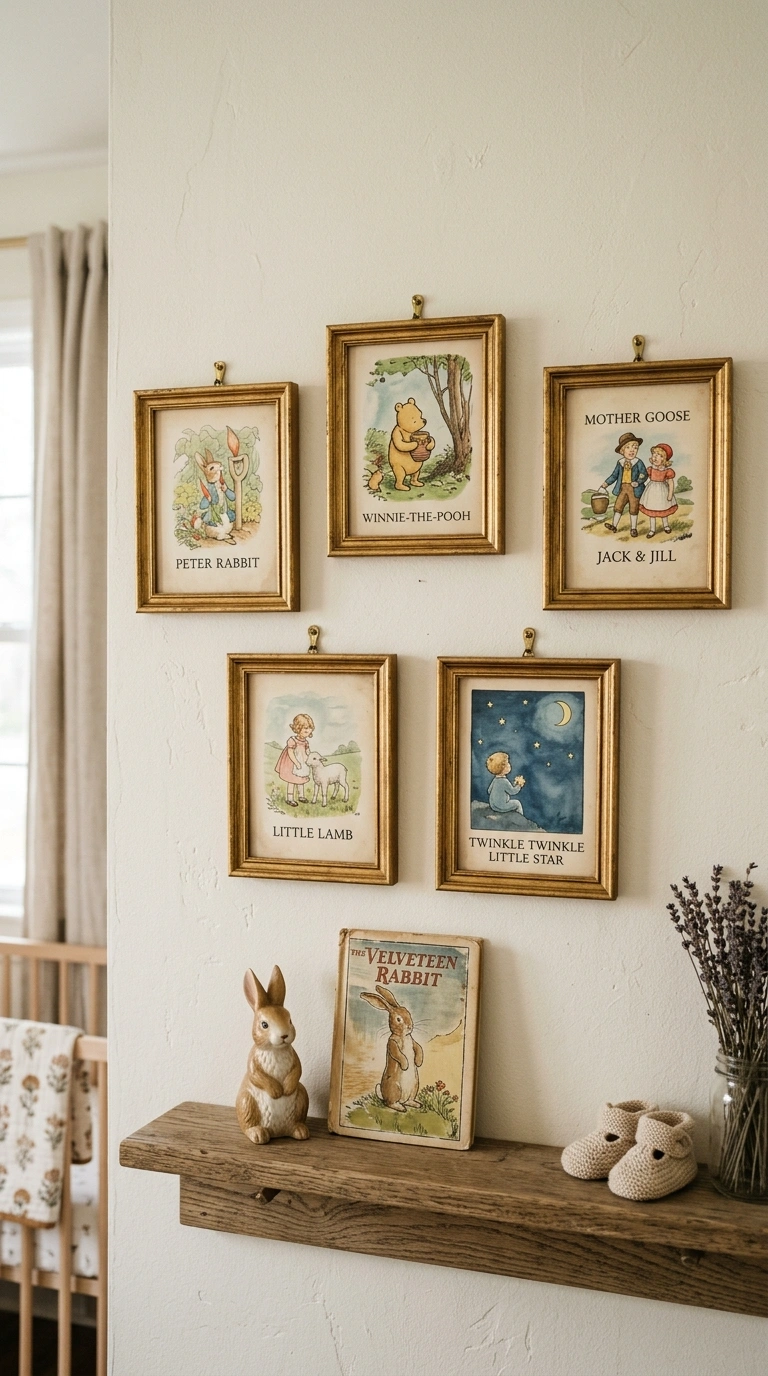
Vintage-style nursery art, whether actual vintage prints sourced from antique shops or reproductions of classic children’s illustrations, adds the visual sweetness that modern graphic prints cannot match. Vintage Beatrix Potter illustrations, classic nursery rhyme prints, antique botanical illustrations, or simple watercolor animal paintings in aged-looking frames all suit the vintage nursery wall. Frame the prints in warm wood or slightly aged gold frames rather than modern black or white frames to maintain the period quality. A grouping of three to five small vintage prints reads as a curated collection rather than a single decorative gesture.
8. Soft Lace or Crochet Detail
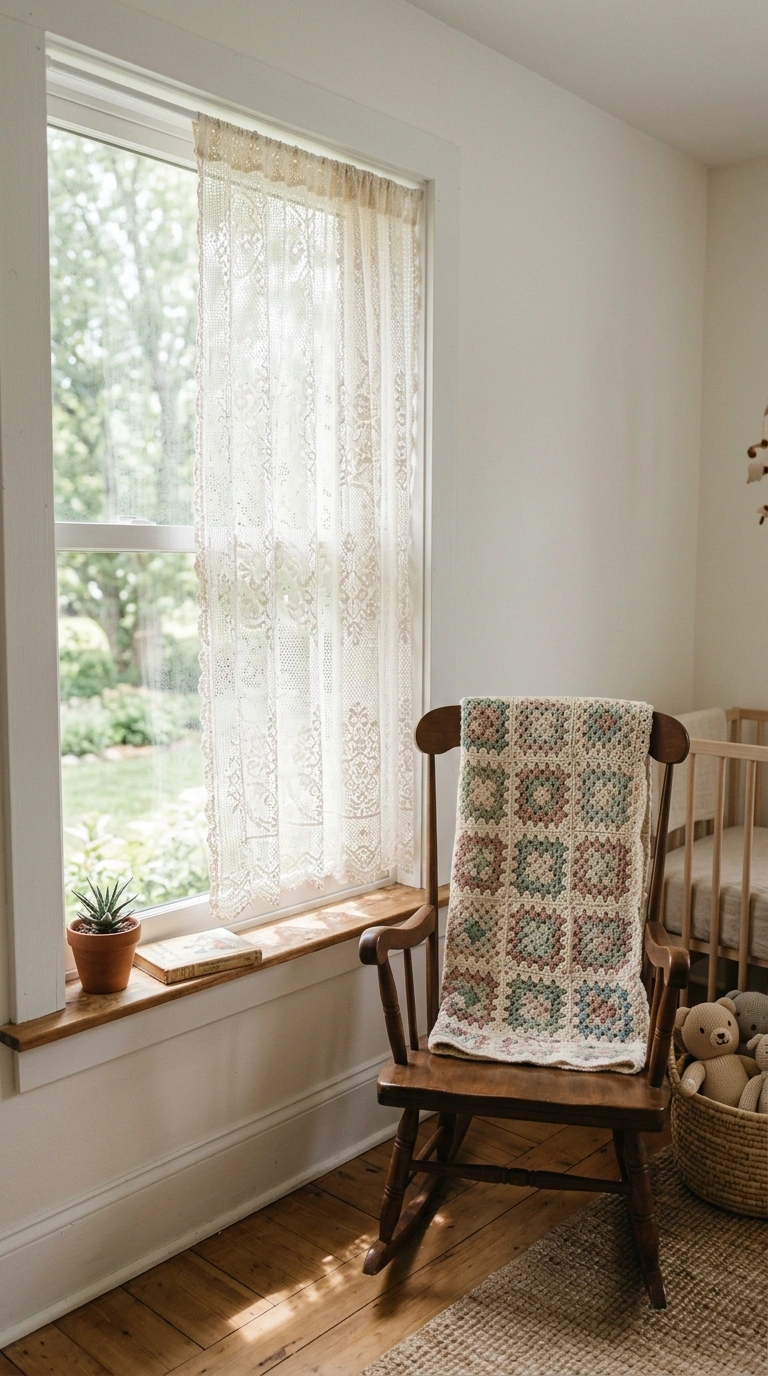
A small lace or crochet element in the nursery, a lace curtain panel, a crocheted blanket draped on the rocking chair, a small doily under a lamp on the dresser, or a crochet mobile hanging above the crib, adds the handmade textile quality that is central to vintage charm. The lace or crochet should be used sparingly rather than across every surface, since too much lace tips the nursery toward overly fussy rather than gently sweet. A single lace curtain panel at the window paired with a crocheted throw on the chair is enough to establish the textile quality without overwhelming the room.
9. Porcelain or Ceramic Accents
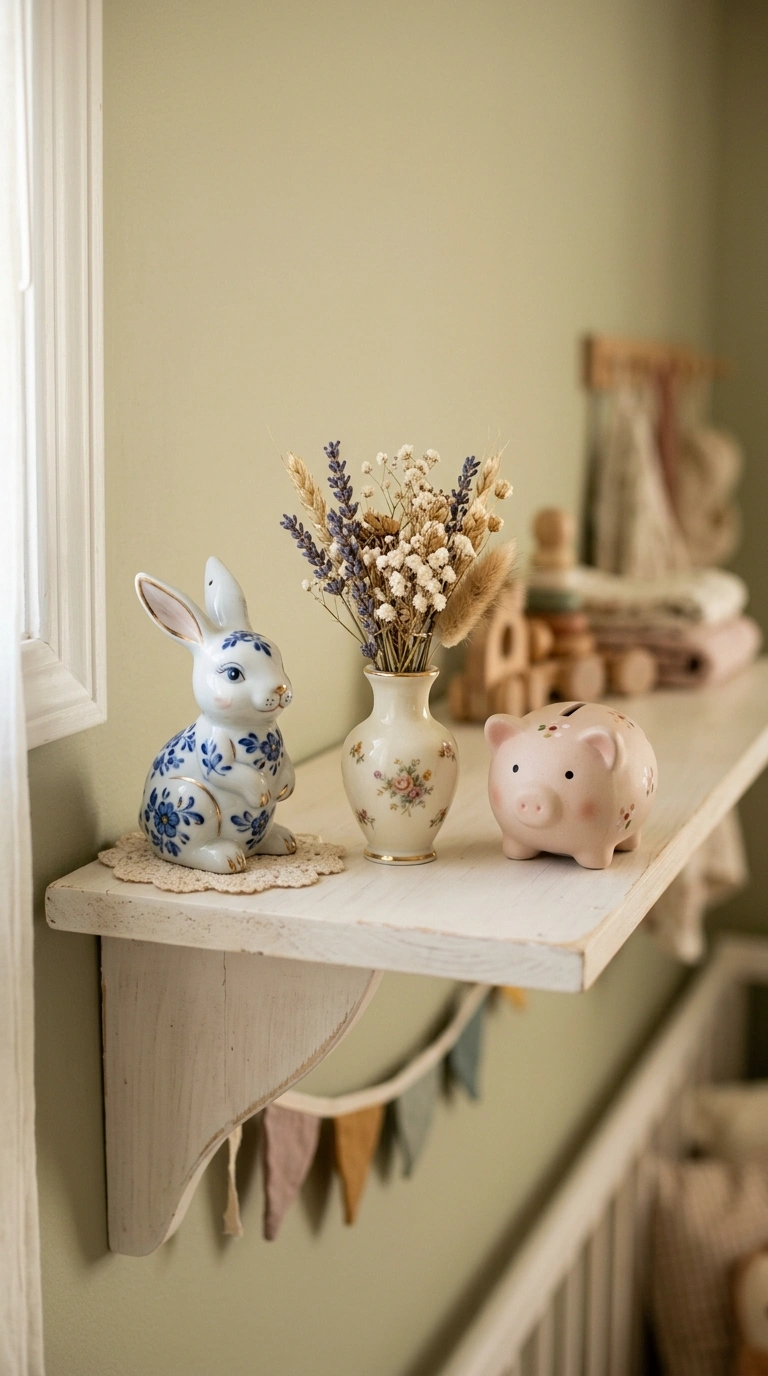
Small porcelain or ceramic figurines, a vintage bunny figurine on the shelf, a ceramic piggy bank on the dresser, a small porcelain vase holding dried flowers, or a set of ceramic alphabet blocks displayed as decor, add the delicate charm that plastic and wooden toys lack. The porcelain accents should be positioned on high shelves out of the baby’s reach and treated as decorative elements rather than as toys. A few carefully chosen ceramic pieces in soft pastel glazes or classic white porcelain add the gentle, slightly precious quality that defines vintage nursery charm at its best.
10. Natural Wicker Furniture
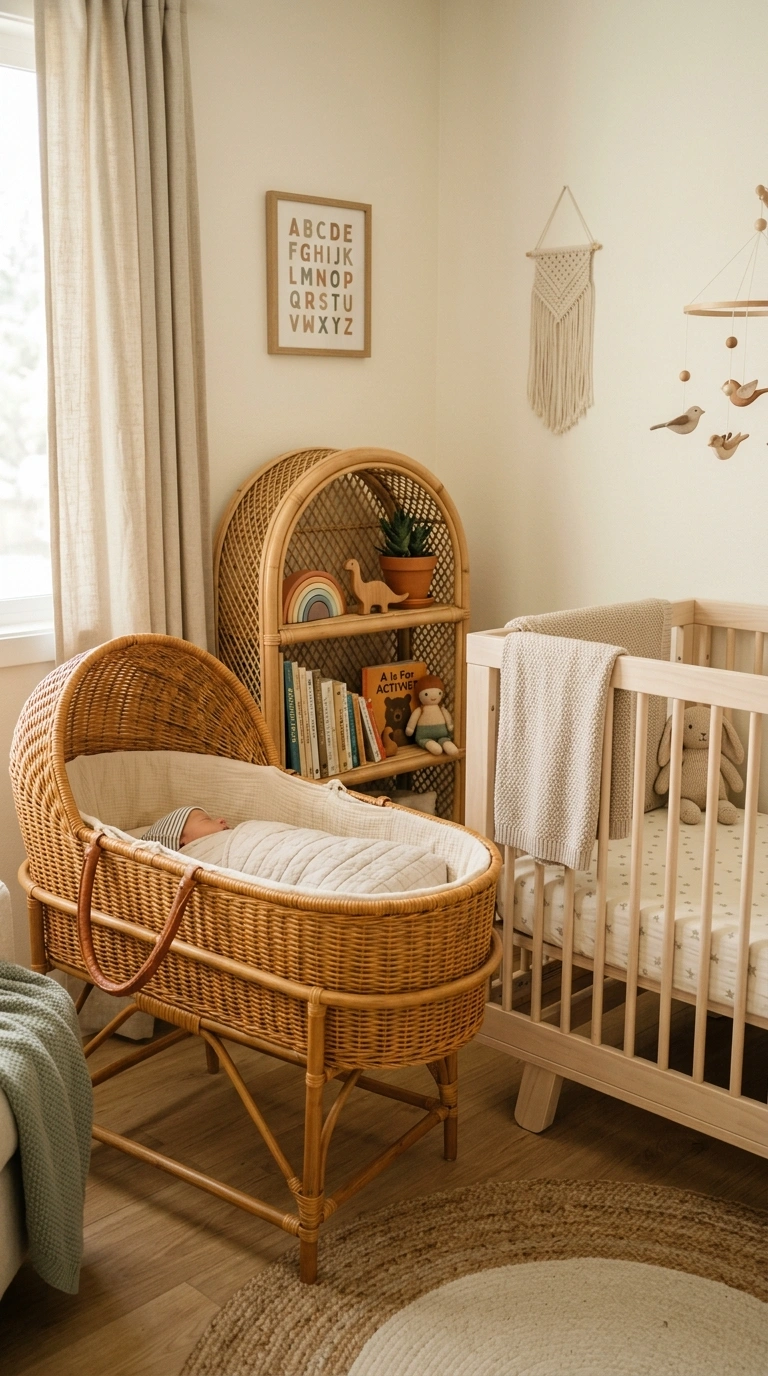
Wicker or rattan nursery furniture, a wicker bassinet, a rattan changing basket, a wicker storage trunk, or a small rattan bookshelf, introduces the warm woven natural texture that has appeared in nurseries for over a century. The natural wicker reads as both vintage and organic, connecting the nursery to both the period aesthetic and the natural world. A wicker Moses basket or a rattan bassinet beside the crib provides the first bed for a newborn in a format that has been used across generations and cultures. The warm honey tone of natural wicker suits the warm cream walls and the soft textile palette of the vintage nursery.
11. Vintage Toy Display
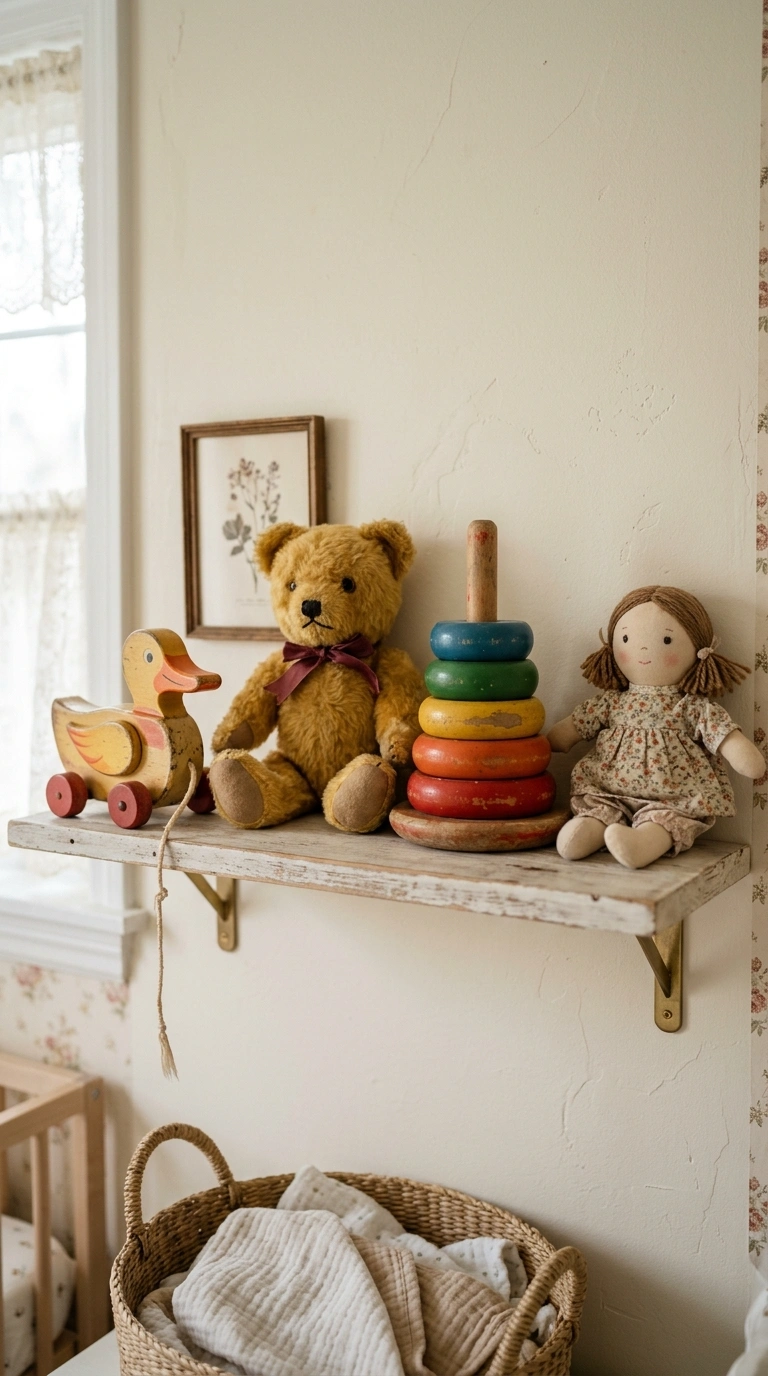
A curated display of vintage or vintage-style toys on a shelf or in a glass-front cabinet adds the playful sweetness that vintage nurseries are known for. A wooden pull toy, a small stuffed bear in a traditional style, a set of stacking wooden rings, a tiny porcelain tea set, or a vintage-style cloth doll all read as charming and sweet when displayed with care. The toys should look like they were loved rather than like they were purchased as decoration. Source actual vintage toys from antique shops or choose new reproductions in classic styles that reference the originals.
12. Floral Crib Bedding Muted
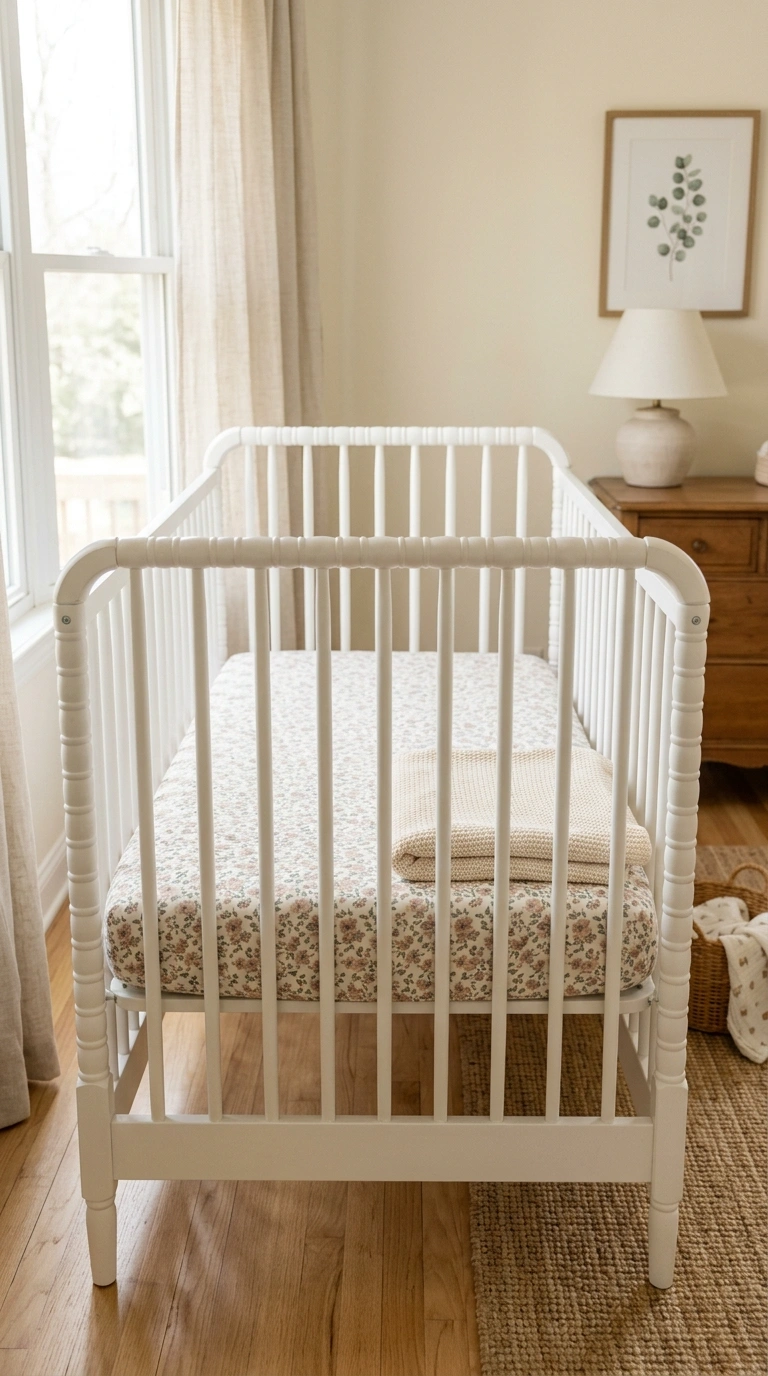
A crib sheet in a small muted floral print, the kind of soft faded floral that appears on vintage tea cups and old wallpaper, provides the vintage pattern at the center of the room on the most-viewed surface. Choose a floral with soft faded colors rather than bright contemporary florals: dusty blush, muted sage, faded lavender, and warm cream are the tones that read as genuinely vintage rather than as modern prints in old-fashioned patterns. Keep the rest of the crib bedding in solid warm tones so the floral sheet is the pattern focus and the baby has visual calm from the surrounding solid surfaces.
13. Warm Wood Furniture Mix
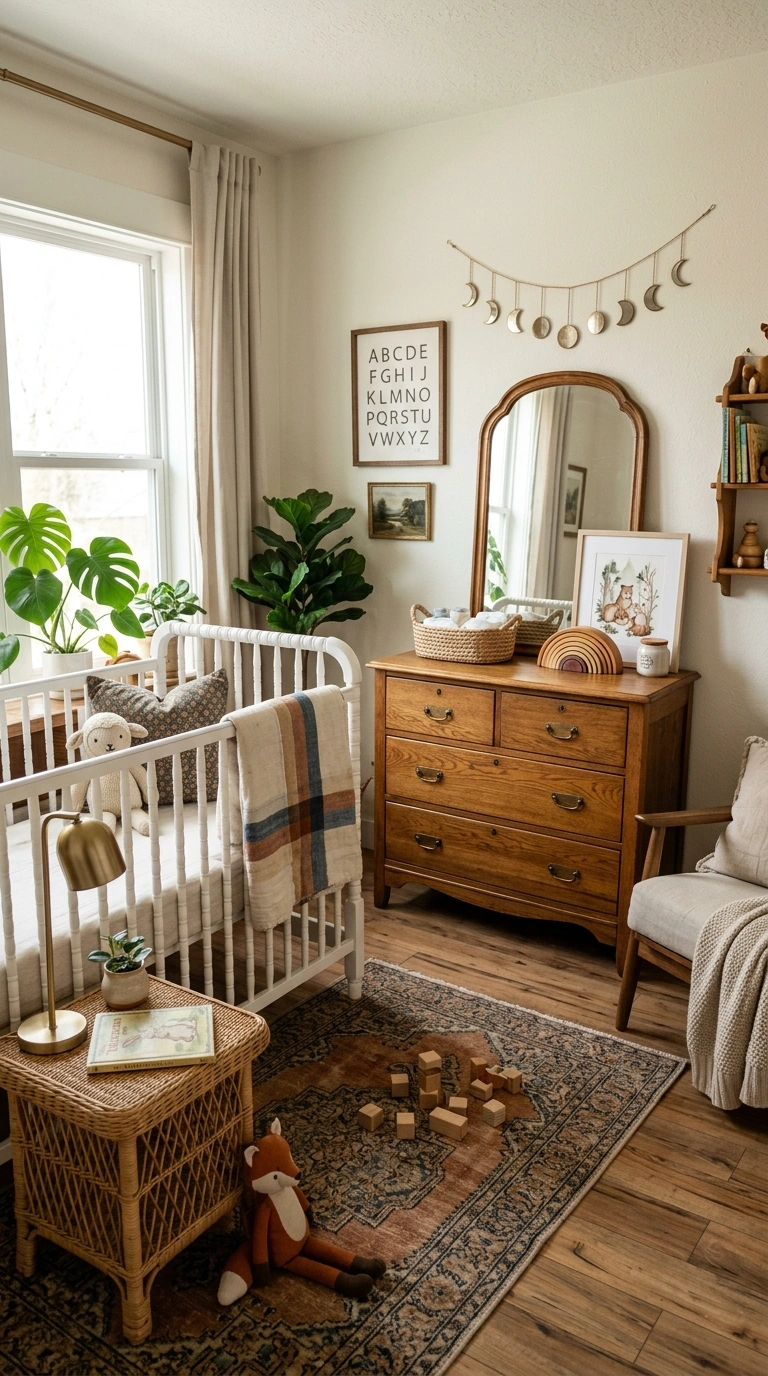
Mixing warm wood furniture pieces from different sources rather than buying a matching nursery set gives the room the collected quality that vintage rooms naturally have. A white vintage-style crib, a warm oak dresser refinished from an antique shop, and a natural wicker side table together read as a room assembled with care over time rather than purchased as a single package. The mix of wood tones and finishes should stay within the warm family, honey, oak, walnut, warm white, so the pieces feel related despite coming from different sources.
14. Ruffle or Gathered Detail
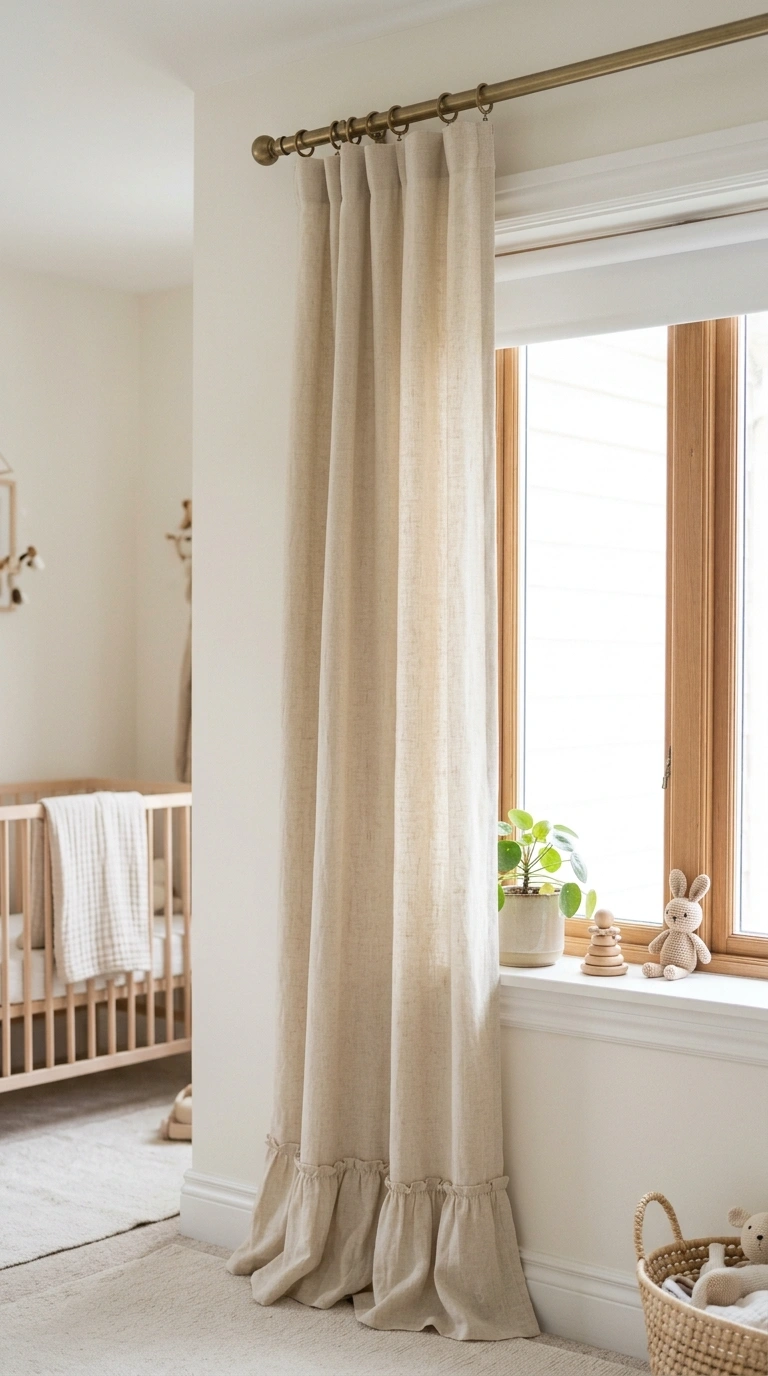
A small ruffle or gathered detail on a curtain panel, a crib skirt, or a pillow adds the soft feminine quality that is associated with traditional nurseries. The ruffle should be subtle and restrained rather than large and elaborate: a narrow gathered edge on a linen curtain, a small ruffle on a crib pillow, or a gently gathered crib skirt in a warm solid tone. The restrained application is what keeps the ruffle reading as sweet rather than as fussy, which is the distinction that separates a vintage nursery with genuine charm from one that feels like a costume.
15. Small Bookshelf Library
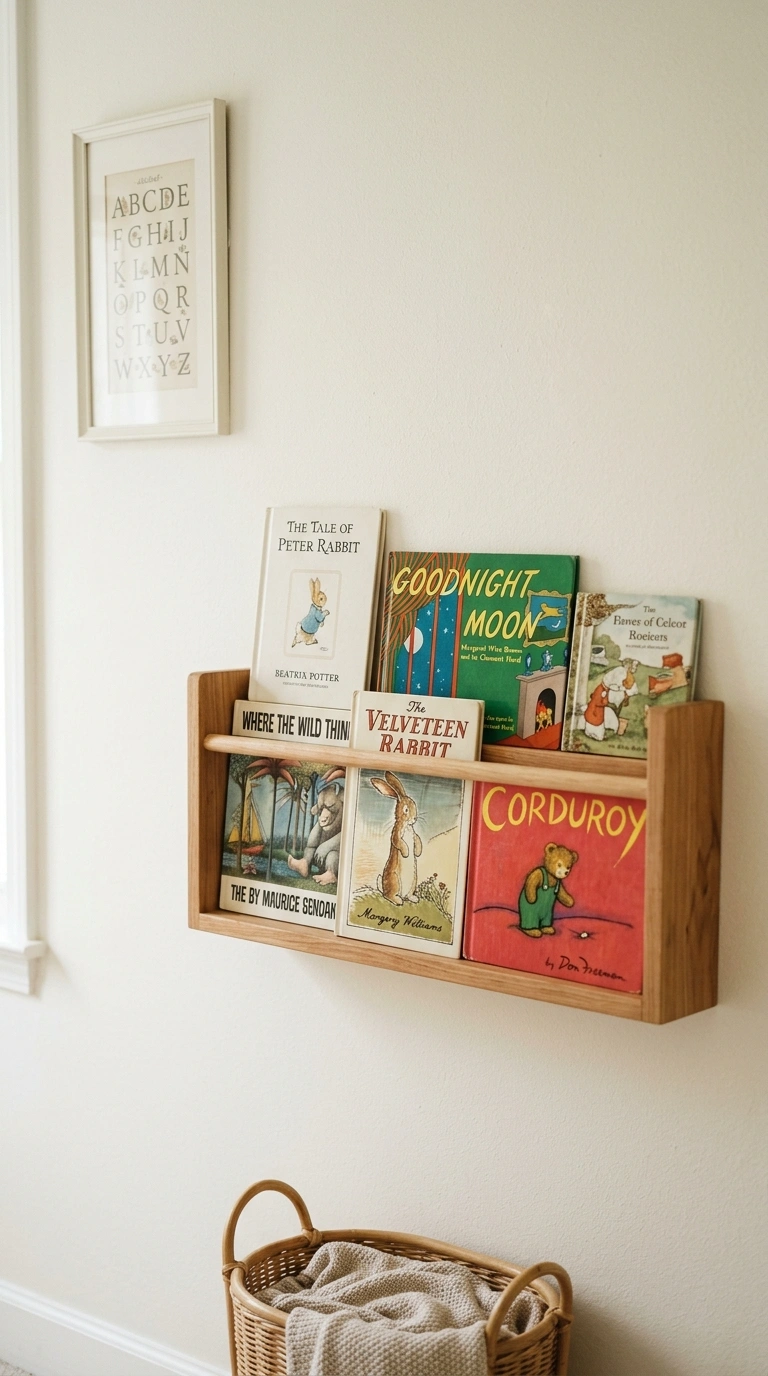
A small bookshelf or a set of forward-facing book ledges holding classic children’s books with visible covers creates a mini library that is both decorative and functional. Choose editions with beautiful cover illustrations that suit the vintage aesthetic: classic Peter Rabbit, original Winnie-the-Pooh, vintage fairy tale collections, and other titles with illustrated covers in warm heritage art styles. The visible book covers become part of the nursery’s wall decor while introducing the baby to books as familiar beautiful objects from the earliest age. The forward-facing display reads as a curated vintage library. A similar approach to curated display works in nature-inspired nursery designs where the books and objects on display are chosen to support the room’s overall design story.
16. Warm Ambient Lighting
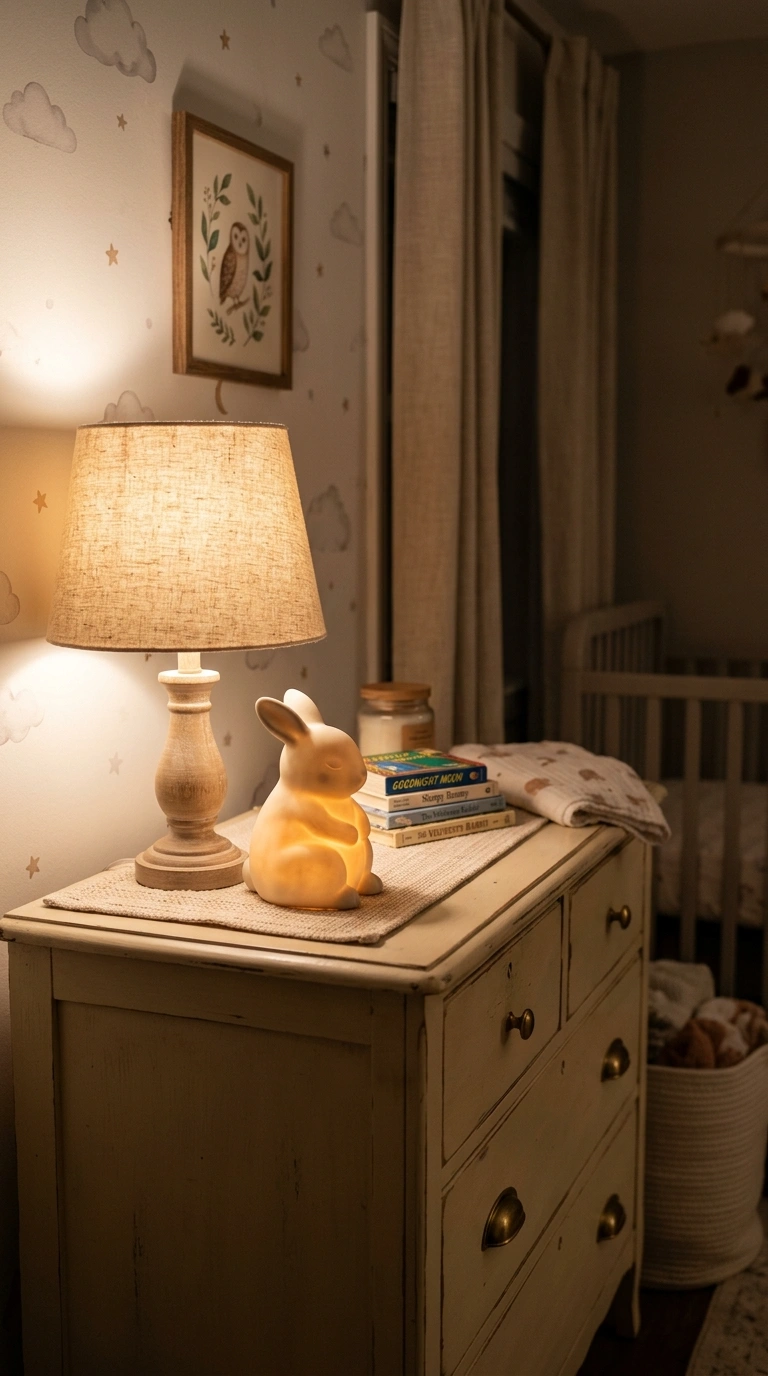
The lighting in a vintage nursery should be warm and soft rather than bright and clinical. A table lamp with a fabric shade on the dresser provides warm focused light for nighttime changes. A small night light in a ceramic or porcelain housing provides the minimal light needed for midnight checks without fully waking the baby. Avoid cool-toned overhead lights that create a flat, institutional quality. A warm pendant or a simple flush mount fixture on a dimmer provides adjustable overhead light that can shift from bright for daytime activity to dim for evening settling. Use warm bulbs in the 2700K range throughout.
17. Vintage-Style Name Display
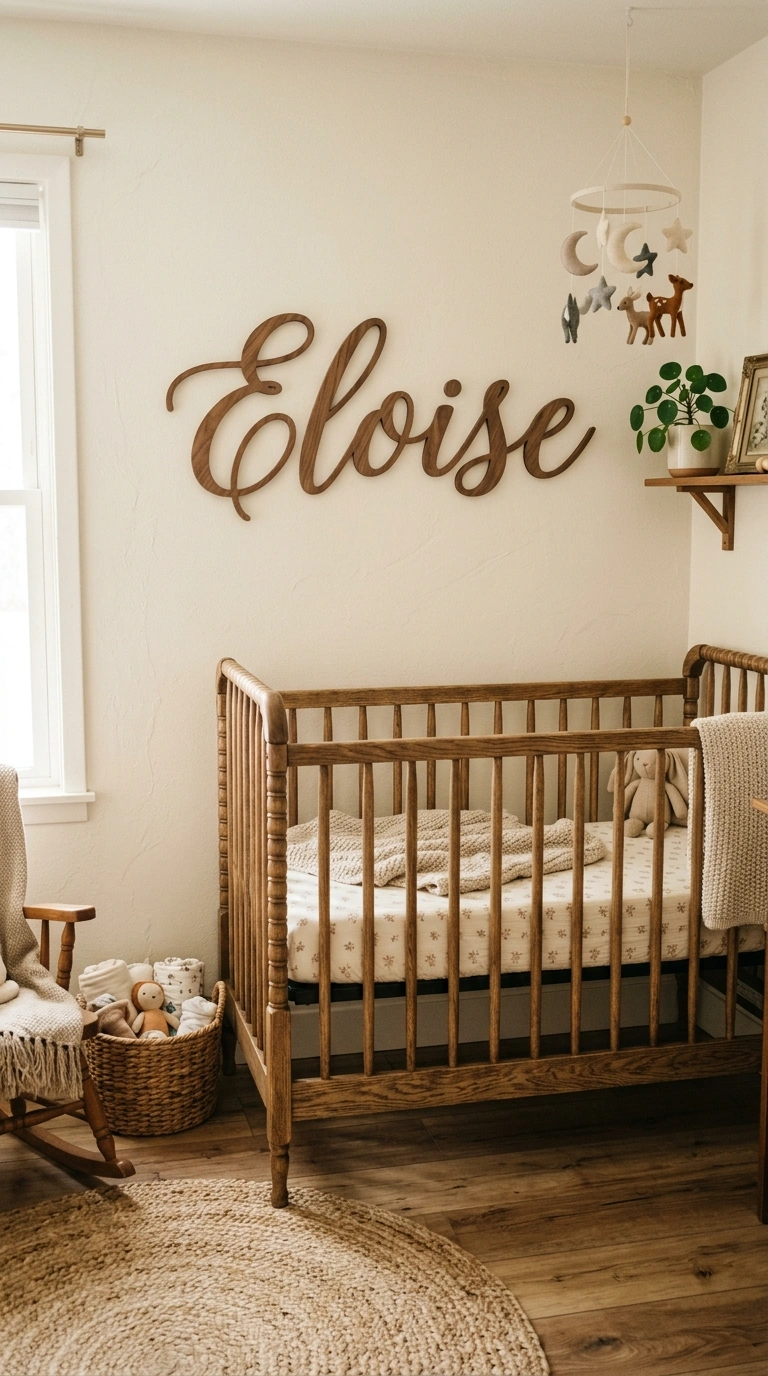
The baby’s name displayed on the wall in a vintage-appropriate style, simple wooden letters in a warm finish, a calligraphic print in an ornate gold frame, or hand-embroidered letters on a fabric banner, adds the personal touch that makes the nursery belong specifically to this baby rather than being a generic vintage room. The font and display style should suit the vintage aesthetic: a delicate serif, a flowing script, or hand-embroidered letters all read as more period-appropriate than bold modern sans-serif typography.
18. Floral Garland Soft Touch
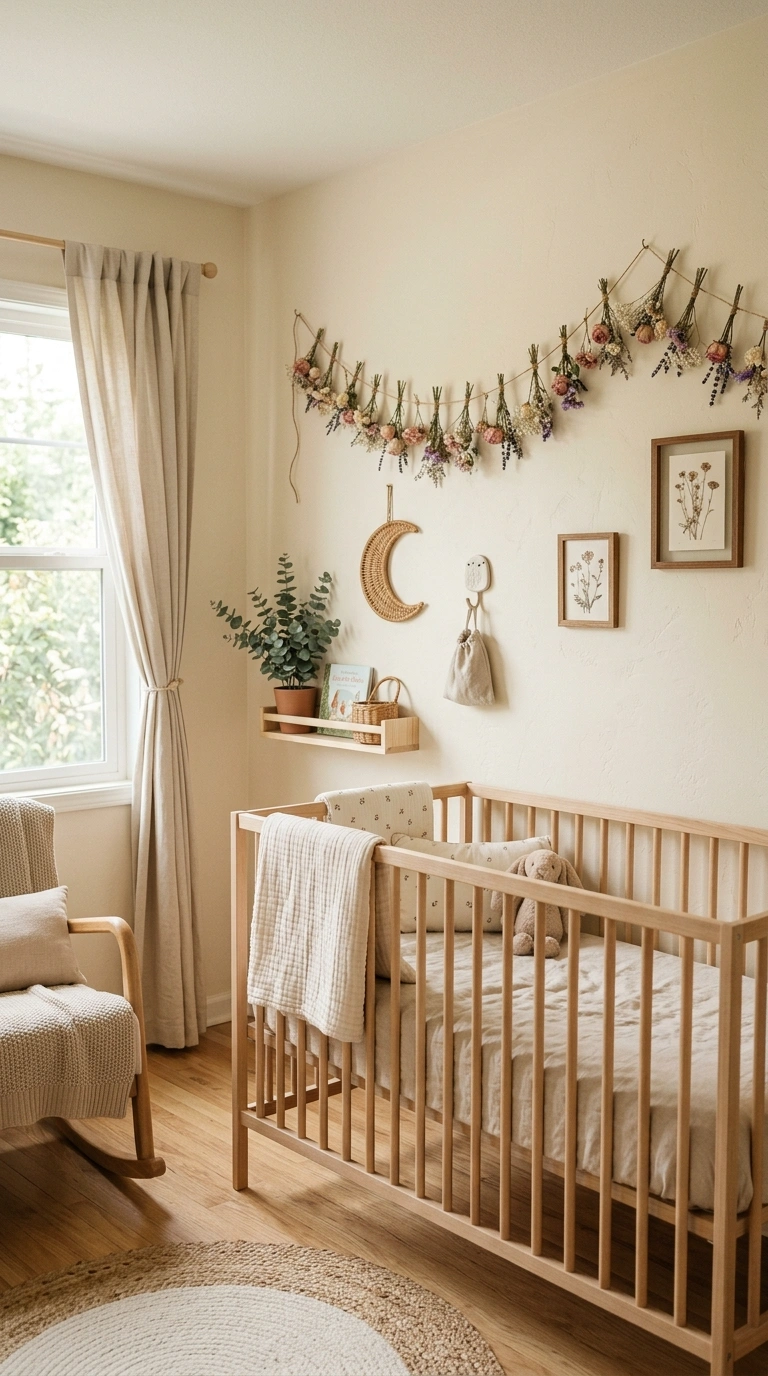
A simple garland of dried or faux flowers in soft vintage tones draped across the top of the crib wall, along a shelf, or across a window frame adds a gentle decorative detail that extends the vintage floral quality in three dimensions. Use small delicate flowers in muted blush, cream, lavender, and sage rather than large bold blooms. The garland should look like a trailing piece of a garden rather than a formal floral arrangement. Position it securely out of the baby’s reach and ensure no small pieces can detach.
19. Grow-With Design Approach
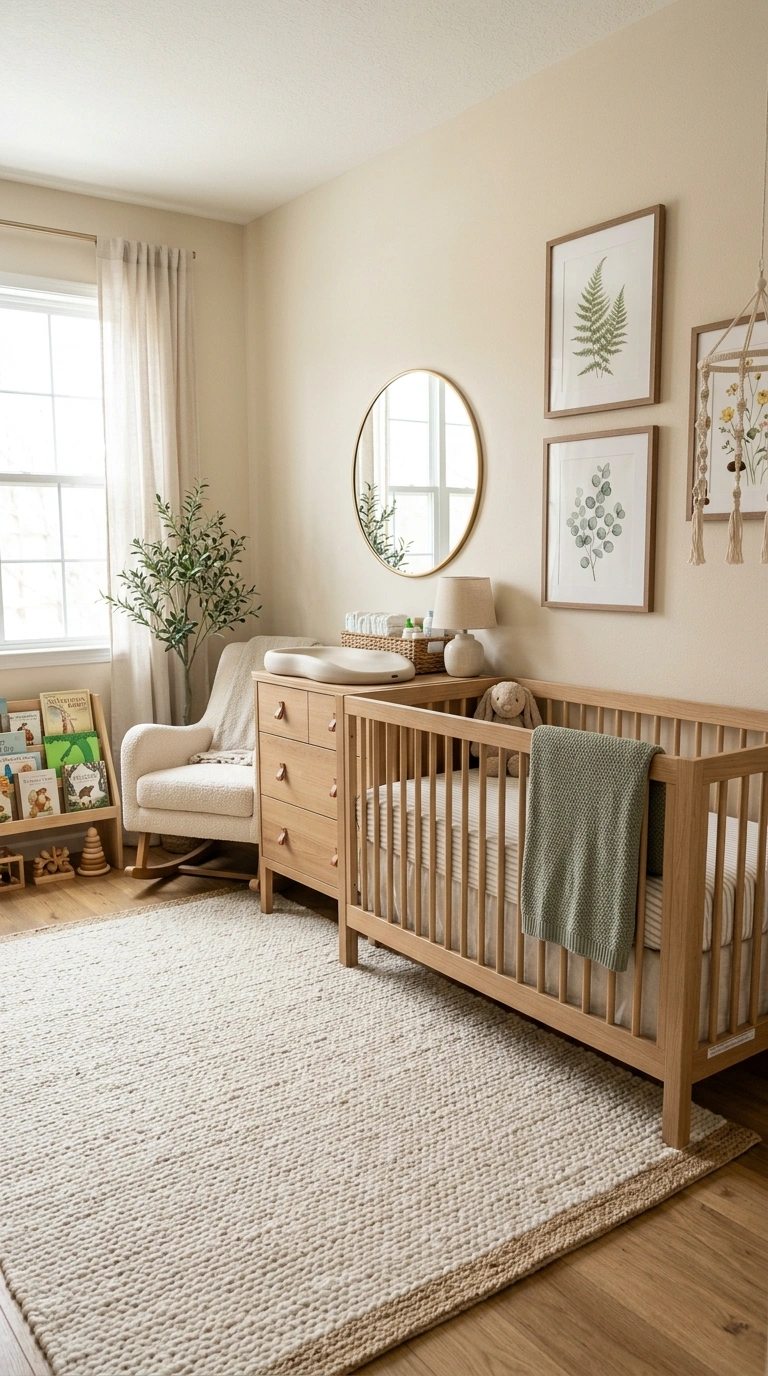
The most successful vintage nursery is one designed to age gracefully alongside the child rather than one that needs a complete redesign when the baby becomes a toddler. Choose furniture that transitions from nursery to toddler room: a convertible crib, a dresser that serves any age, a bookshelf that holds bigger books as the child grows. Choose art and wall treatments that suit a young child as well as a baby. The vintage aesthetic, because it draws from genuine quality and timeless style rather than from baby-specific trends, naturally ages better than most nursery themes and can remain the room’s foundation for years with only minor updates to the bedding and accessories.
A vintage nursery that feels sweet without being old-fashioned is built on genuine quality pieces mixed with enough current simplicity to keep the room feeling fresh. The vintage elements, the antique dresser, the heirloom textile, the classic rocking chair, the period art, provide the charm and the character. The warm cream walls, the simple crib bedding, and the restrained decoration provide the calm backdrop that lets the vintage pieces shine without competing. The result is a nursery that feels timeless rather than trendy, which is what every parent hopes a nursery will be.