18 DIY Clay Tray and Bathroom Accessory Ideas That Look Handmade and Expensive
Clay trays and handmade bathroom accessories have become one of the most popular DIY projects because they produce results that look like they came from an expensive design store rather than from a kitchen table on a Saturday afternoon. The materials cost under ten dollars. The techniques require no prior experience. The projects take a few hours from start to finish. And the finished pieces, small trinket trays, soap dishes, candle holders, ring dishes, and decorative objects, add the genuine handmade quality to a bathroom that mass-produced accessories cannot match. These 18 ideas cover the specific projects, the techniques, and the finishing details that produce clay bathroom accessories with the quality and the character of pieces that would cost fifty dollars or more in a boutique.
1. Oval Trinket Tray Basic
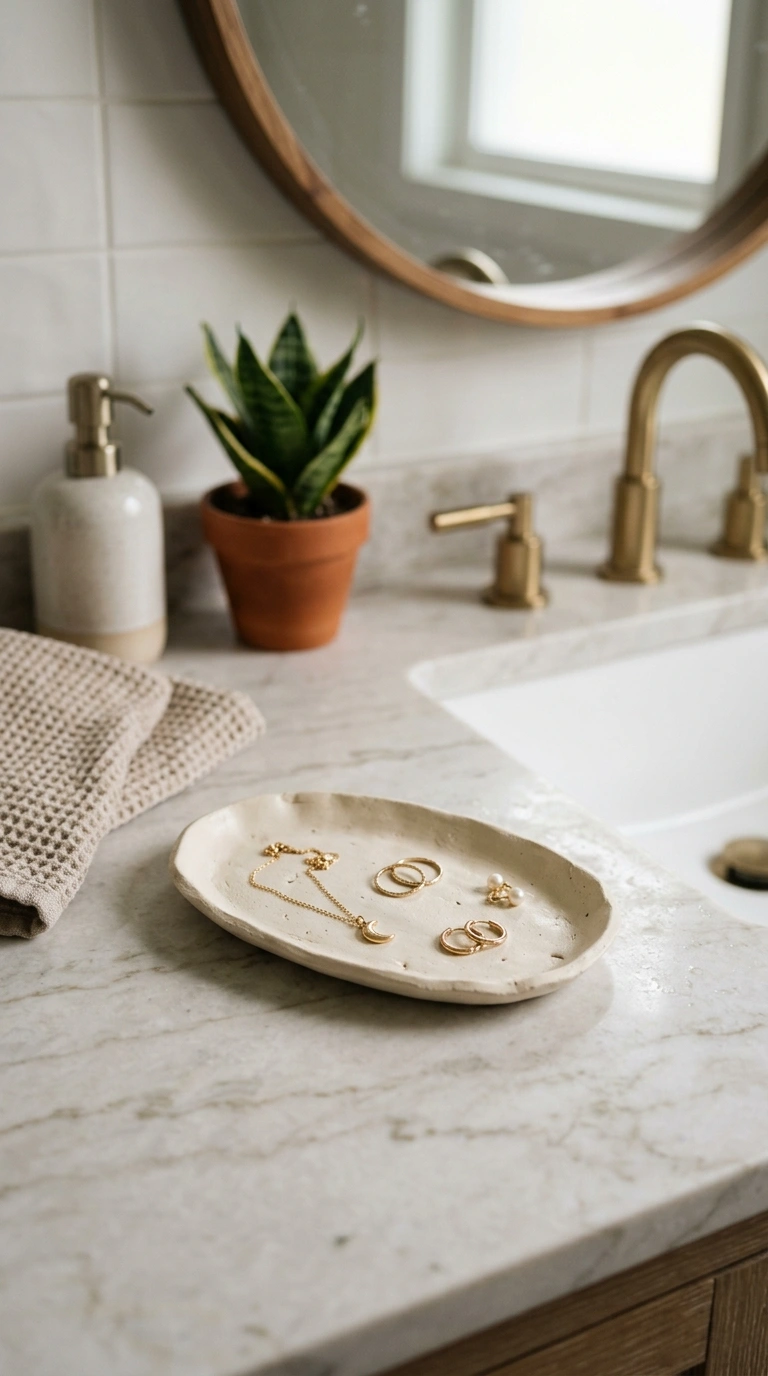
The simplest and most useful clay tray project is a small oval trinket tray that holds jewelry removed before showering, hair clips, a small bar of soap, or the daily small objects that live on the bathroom counter. Roll air-dry clay to about a quarter inch thick, cut an oval shape about five inches long and three inches wide, gently press the edges upward to create a shallow rim, and let it dry for twenty-four to forty-eight hours. Sand the dried surface smooth with fine sandpaper and seal with a matte clear coat. The total material cost is about three dollars and the finished tray looks like a handmade ceramic piece that would cost twenty dollars or more in a home store.
2. Leaf Impression Dish
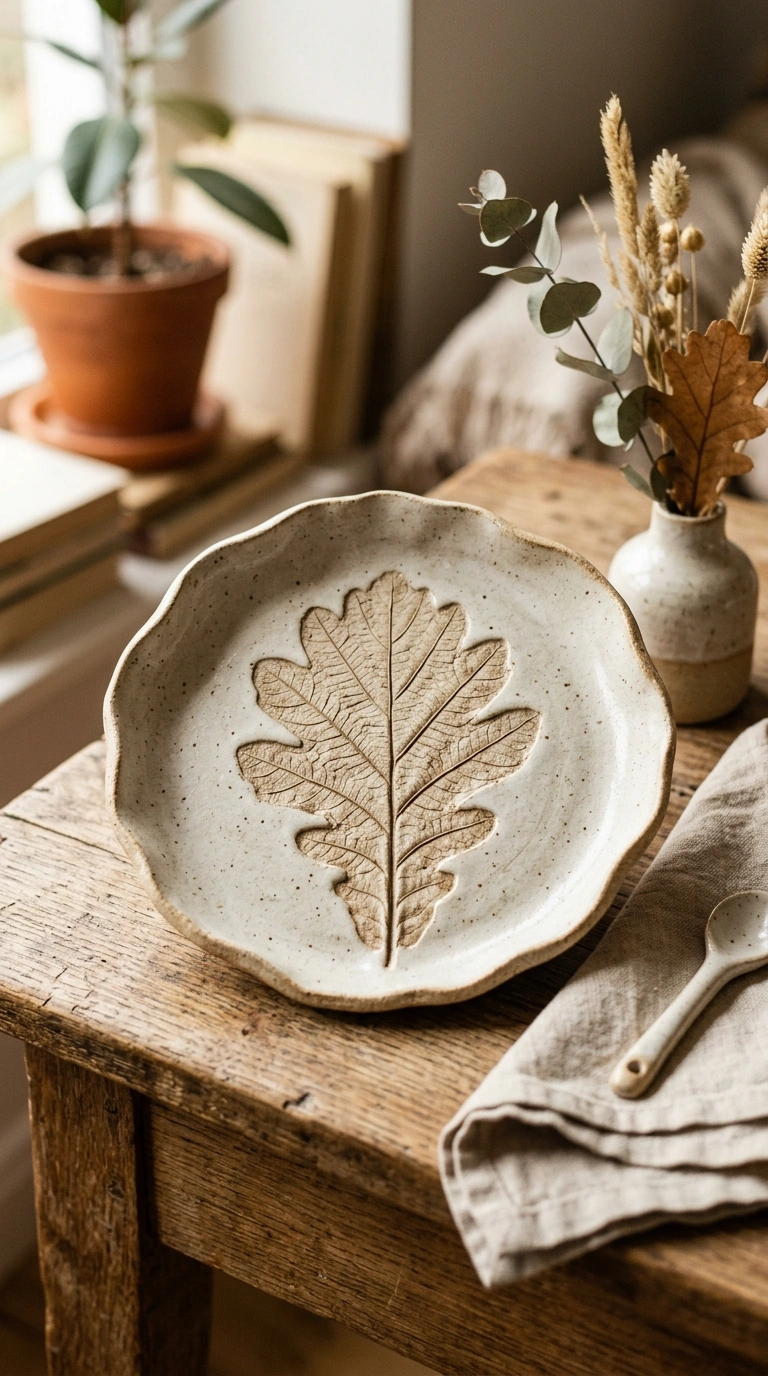
Pressing a real leaf into the surface of a flat piece of air-dry clay before shaping it into a small dish creates a detailed botanical impression that adds texture and natural beauty to the finished piece. Choose a leaf with prominent veins and an interesting shape: a monstera leaf, a fern frond, a large sage leaf, or a fig leaf all produce beautiful impressions. Press the leaf firmly into the clay, remove it carefully, then shape the clay into a shallow dish and let it dry. The leaf impression gives the finished piece a quality that looks like it required advanced ceramic skills but actually requires only pressing a leaf into soft clay.
3. Terrazzo Pattern Tray
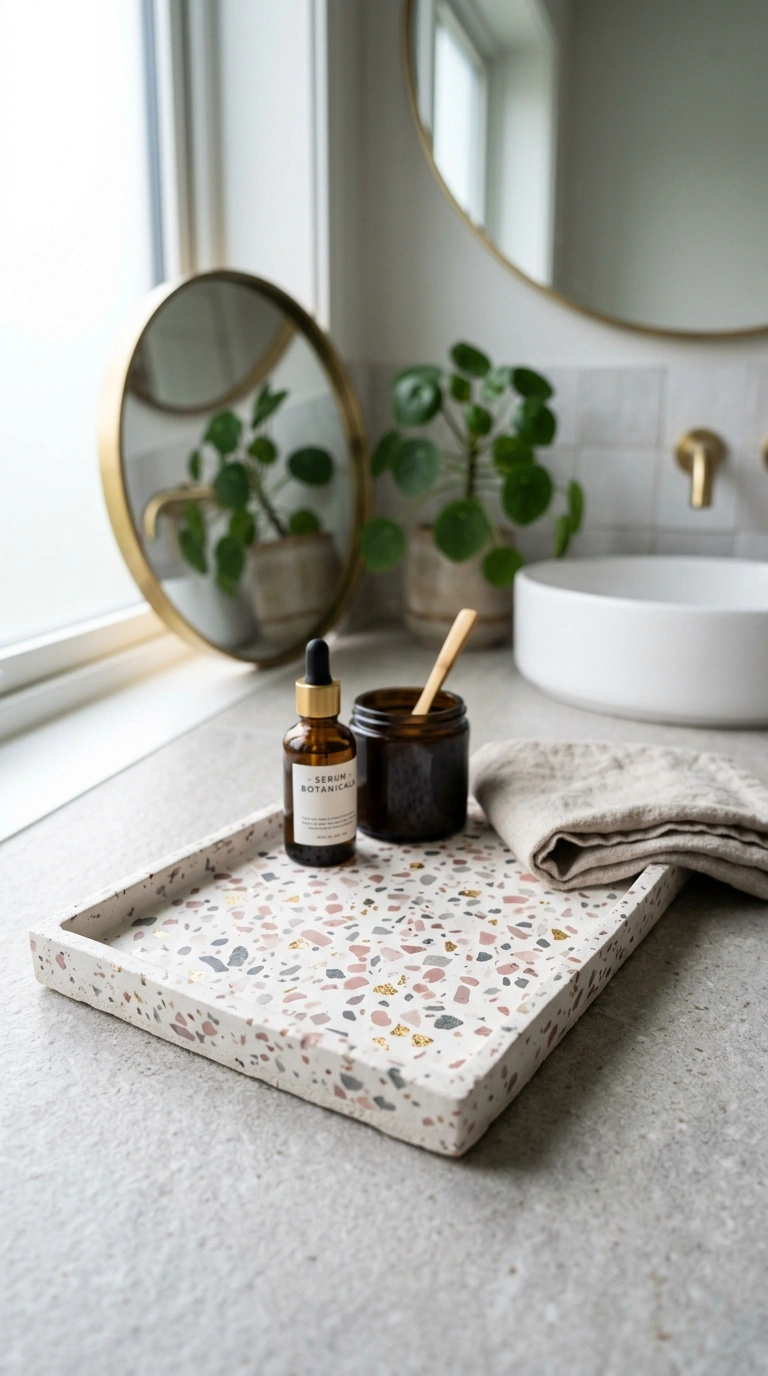
A terrazzo-pattern clay tray made by pressing small chips of colored polymer clay into white or cream air-dry clay creates the popular speckled stone effect that real terrazzo provides at a fraction of the cost. Roll small pieces of colored polymer clay, pink, black, gray, gold, into thin sheets and cut or tear them into small irregular chips. Press the chips into the surface of a flat piece of white air-dry clay, roll smooth, then shape into a tray or dish. The terrazzo effect produces one of the most photogenic and most contemporary-looking handmade bathroom accessories available.
4. Ring Holder Cone Shape
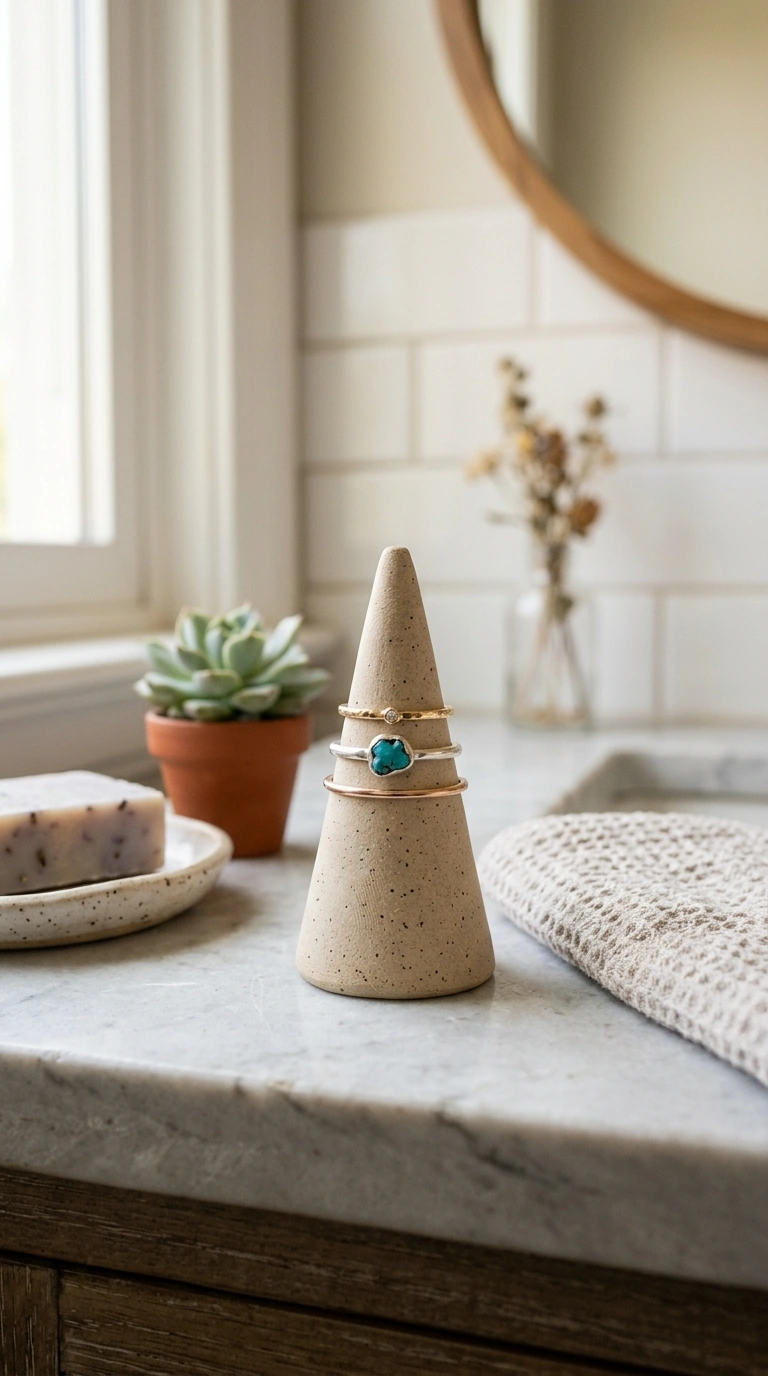
A small cone-shaped ring holder made from clay provides a dedicated spot on the bathroom counter for rings removed before hand washing or showering. Roll a small piece of air-dry clay into a cone about three inches tall and an inch wide at the base. Smooth the surface with damp fingers. Let it dry, sand smooth, and paint or seal as desired. Attach the cone to a small clay base for stability. The ring cone holds multiple rings stacked along its height and keeps them visible and accessible on the counter rather than lost in a drawer or left in a soap puddle beside the sink.
5. Scalloped Edge Detail
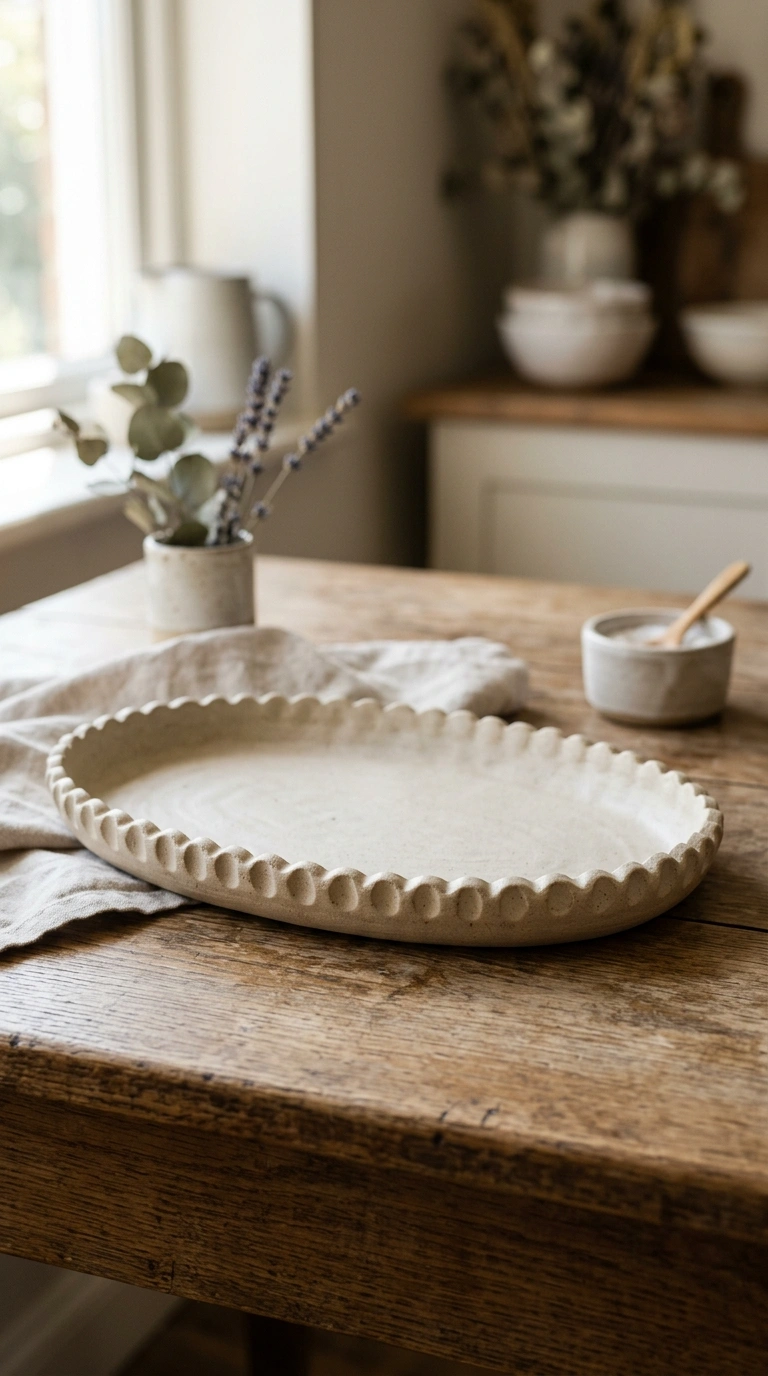
Adding a scalloped or wavy edge to a clay tray by pressing the rim with a small round tool, the cap of a pen, the handle of a spoon, or a small cookie cutter, creates a decorative edge detail that elevates the tray from a flat basic shape to a finished-looking piece with genuine design character. The scalloped edge adds visual interest without requiring any painting or additional decoration, which means the shape alone carries the design. Press the scallops evenly around the entire rim for a consistent pattern. The scalloped edge is one of the simplest techniques that produces the most significant visual upgrade to a basic clay tray.
6. Soap Dish With Drainage
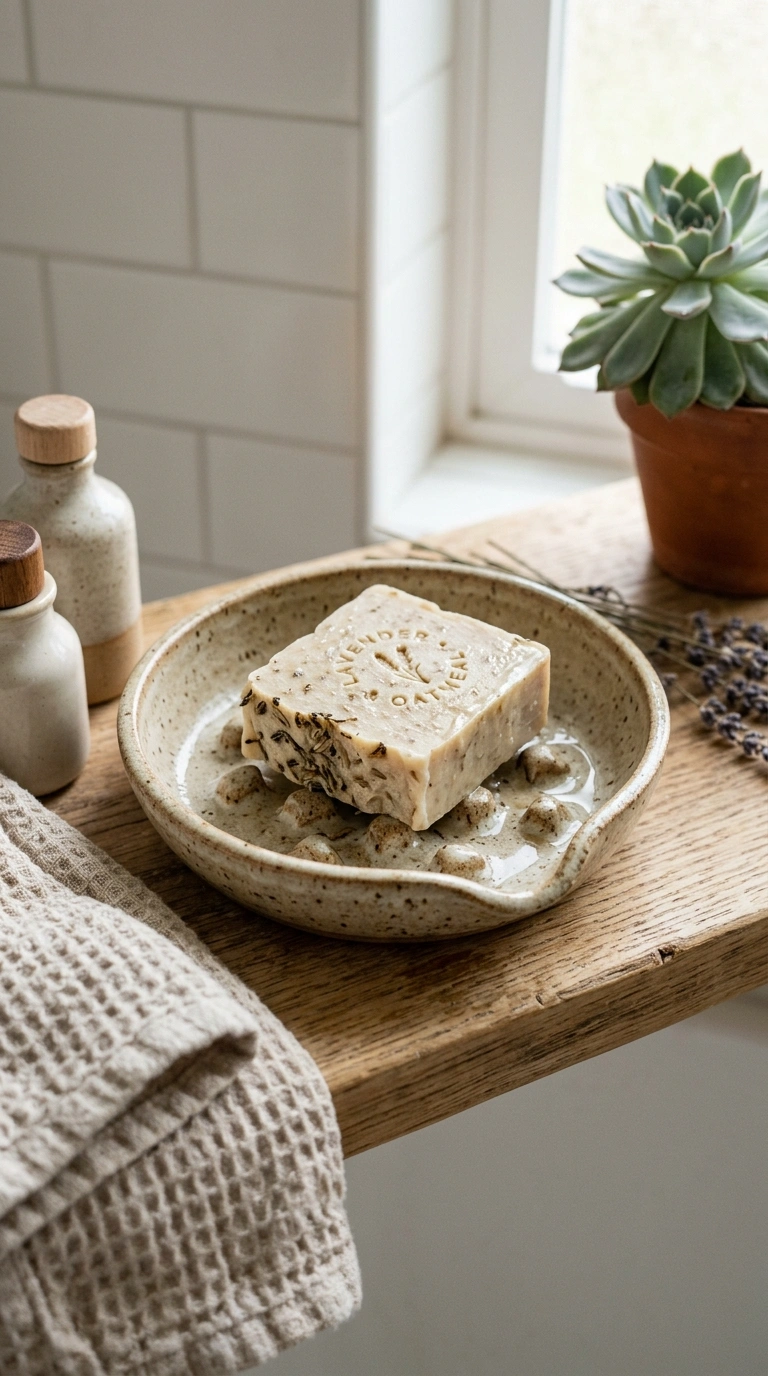
A clay soap dish with small drainage holes or raised bumps on the interior surface keeps a bar of soap elevated above the water that pools in the dish, which extends the soap’s life and prevents the mushy mess that flat soap dishes create. Create the drainage by pressing small holes through the base with a straw or by pressing small balls of clay onto the dish interior to create raised bumps. The drainage feature is genuinely functional and signals that the maker thought about how the piece would actually be used, which is the kind of practical-meets-beautiful quality that makes handmade accessories feel truly considered.
7. Marble Effect Clay
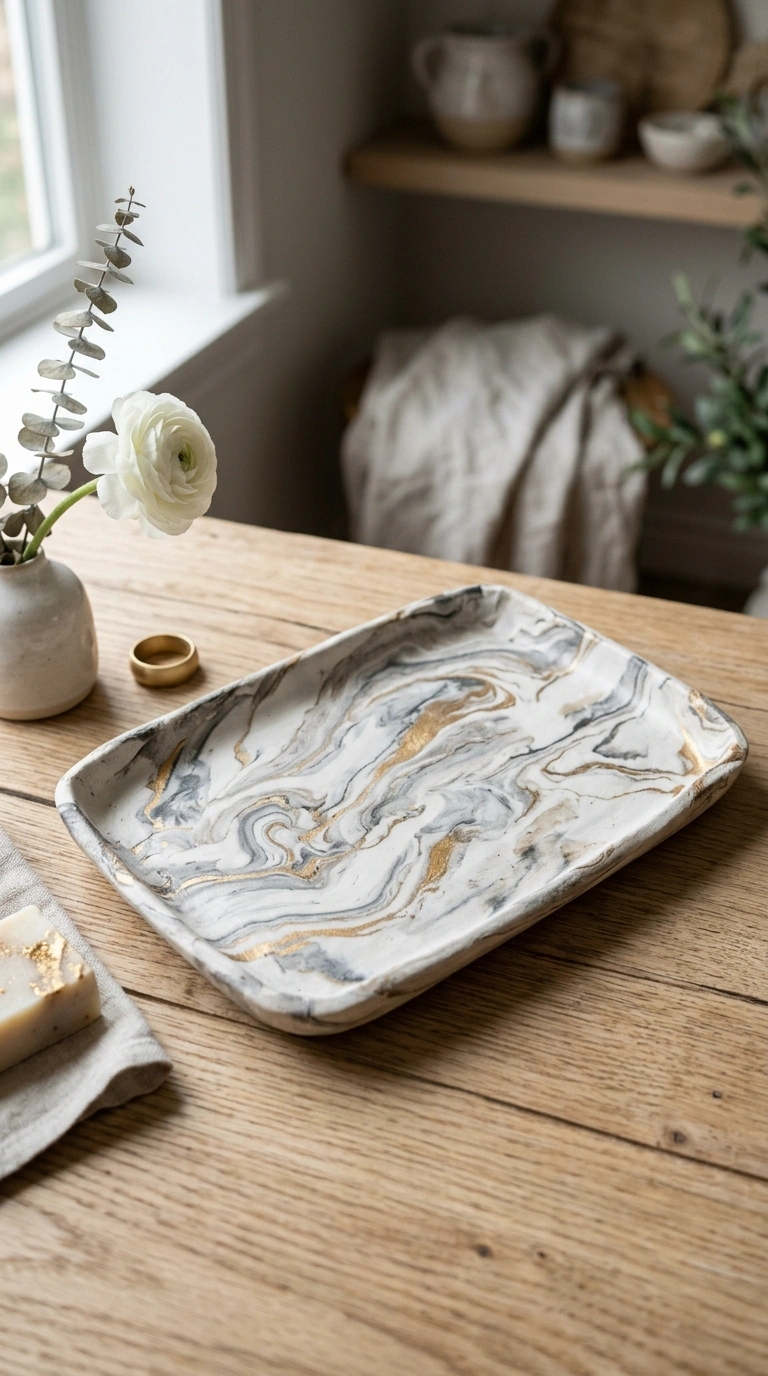
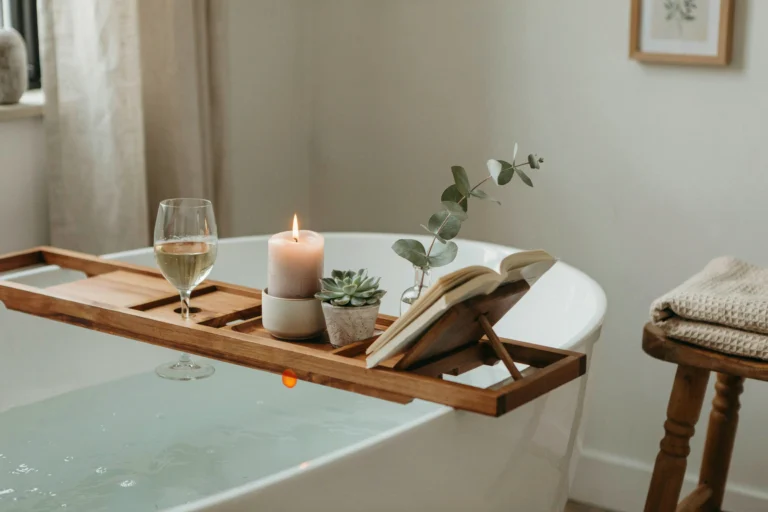
A marble effect in clay is achieved by partially mixing two or three colors of clay together without fully blending them, then rolling and shaping the multicolored clay into a tray or dish. The incomplete mixing creates swirled veining that mimics the natural veining of real marble. White clay with small amounts of gray and gold produces the most realistic marble effect. Roll the marbled clay flat, shape it into the desired form, and the finished piece looks like it was carved from actual marble. The marble effect works on trays, soap dishes, ring holders, and any flat or shallow form. The same appreciation for genuine material quality in bathroom accessories also defines the approach in bathtub tray styling where the quality of materials directly affects how luxurious the bath experience feels.
8. Candle Holder Simple
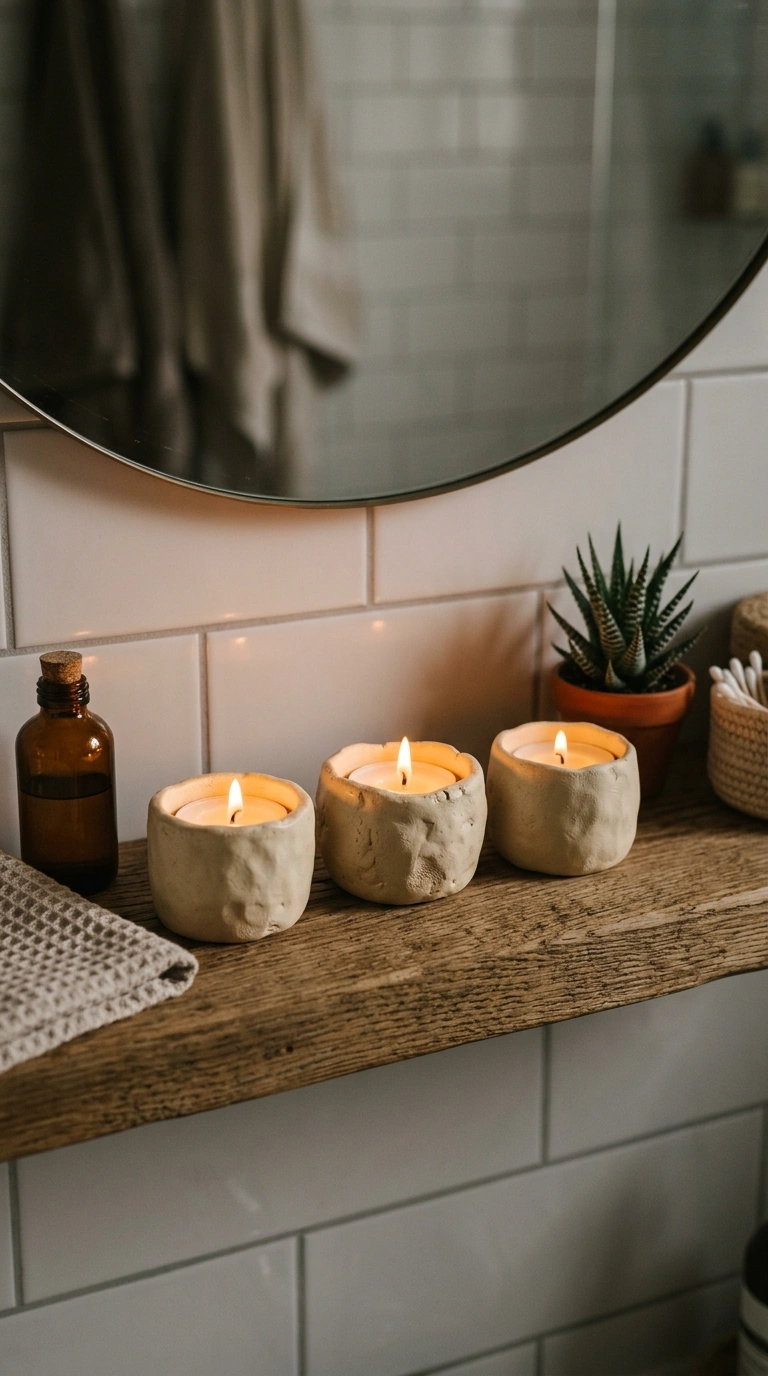
A small clay candle holder shaped to fit a standard tea light or a small pillar candle provides a handmade vessel for the bathroom candle that mass-produced glass holders cannot match. Roll the clay into a small bowl shape about three inches in diameter and one inch deep, smooth the interior, and let it dry. The handmade bowl holds a tea light securely and the slightly irregular shape of the handmade vessel adds the artisan quality that manufactured holders lack. Make a set of three in matching sizes for a coordinated candle display on the bathroom shelf or the tub tray.
9. Textured Rolling Pin Pattern
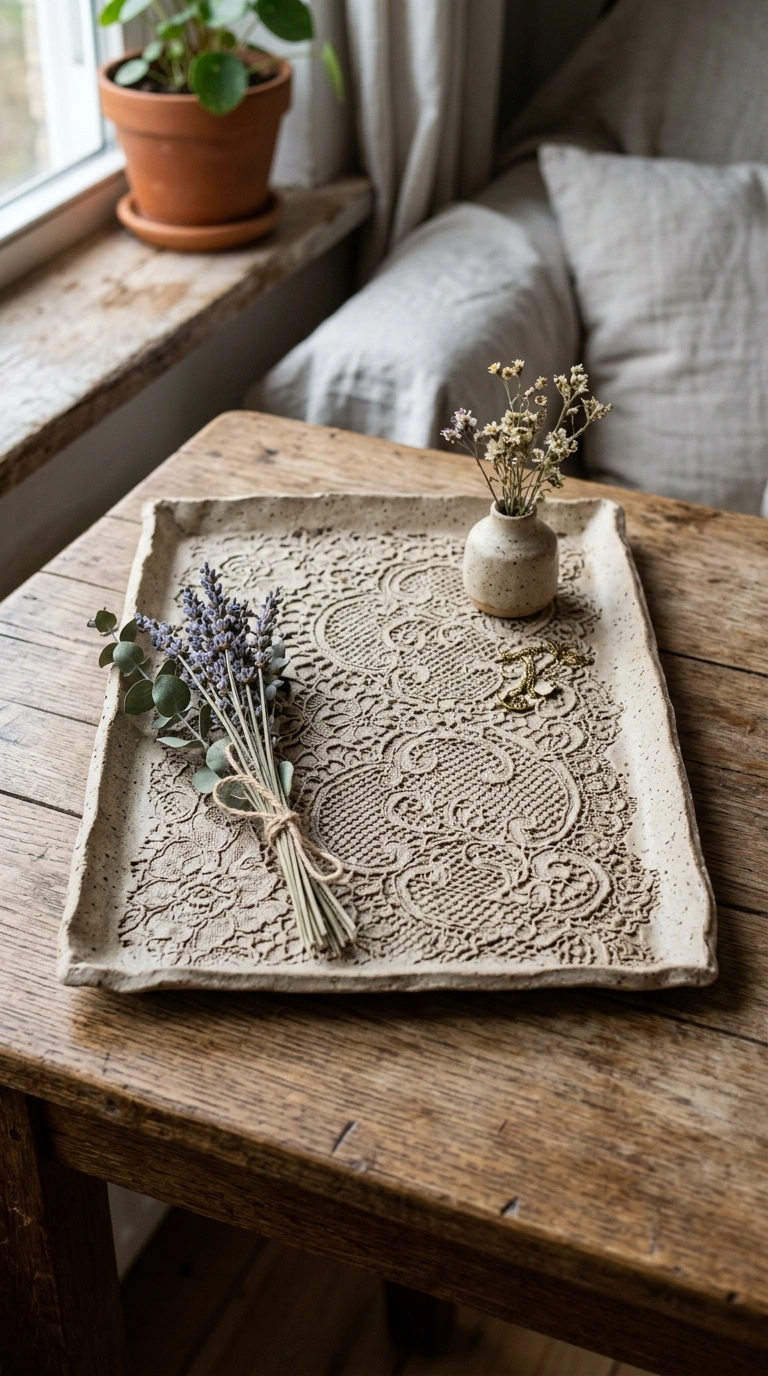
Rolling a textured surface over the flat clay before shaping it creates an all-over pattern that adds visual complexity to the finished piece without any painting. A piece of lace pressed into the clay creates a delicate lace pattern. A woven fabric creates a burlap texture. A rubber stamp creates a repeating motif. A piece of embossed wallpaper creates a damask pattern. The impressed texture gives the finished tray or dish a surface quality that reads as deliberately designed rather than accidentally smooth.
10. Gold Painted Edge Finish
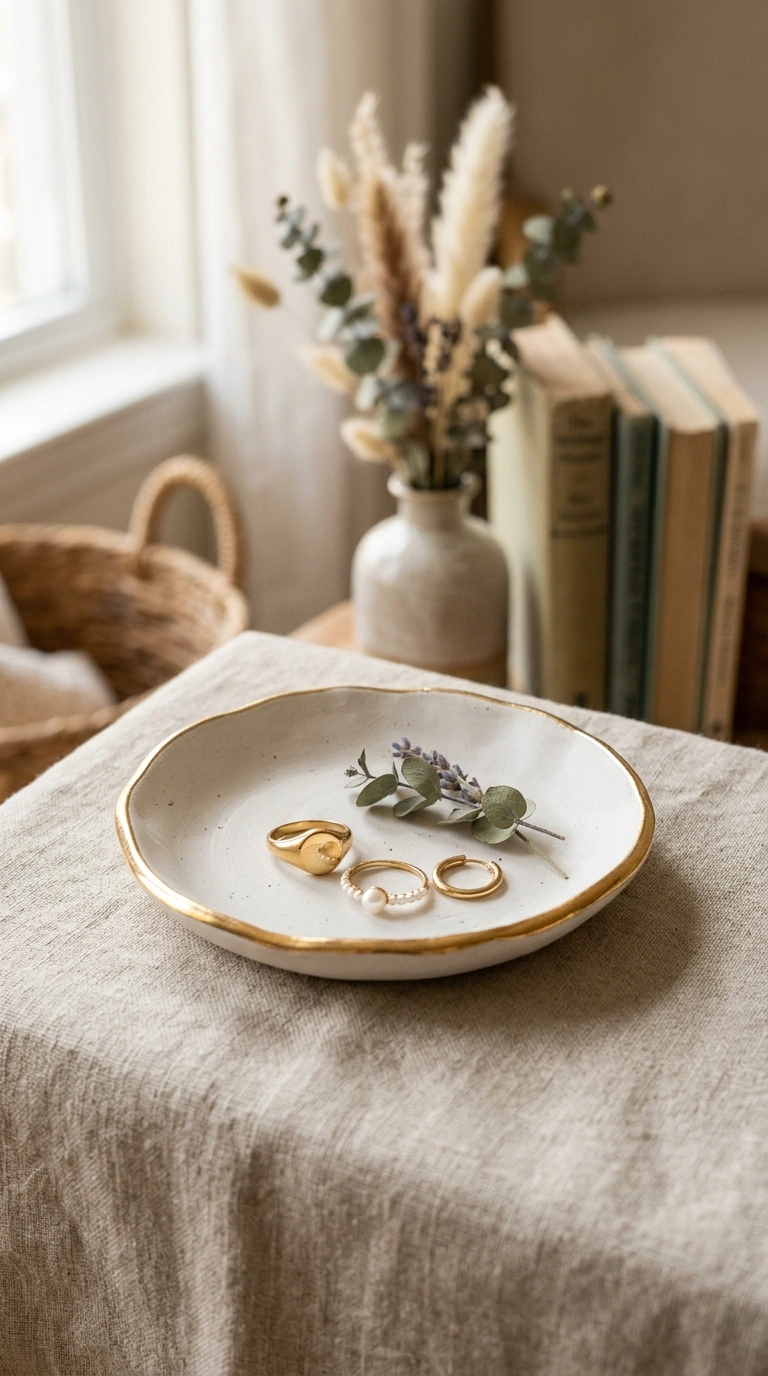
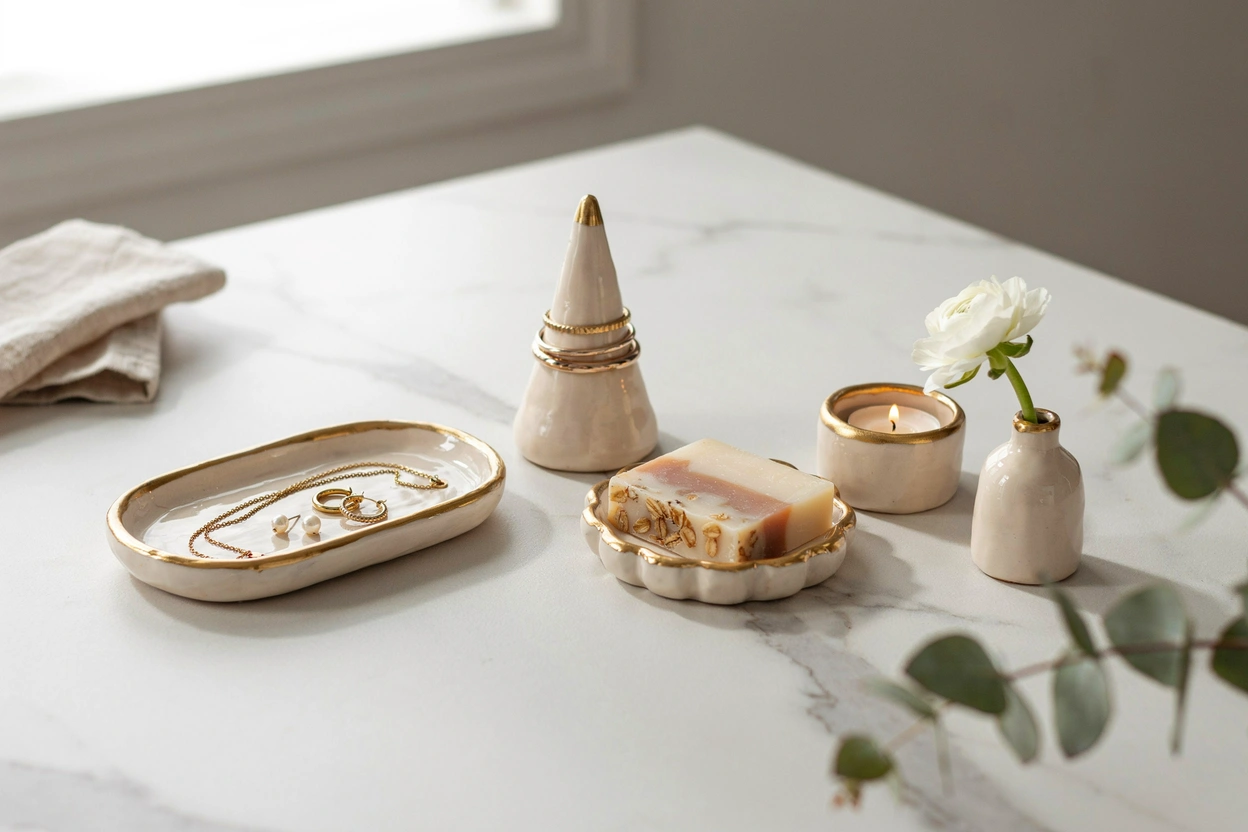
Painting the edge of a finished clay tray or dish with gold metallic paint adds a luxurious detail that immediately elevates the piece from a craft project to a designed accessory. Use a small brush to paint a thin line of gold along the rim, the inside edge, or the entire outer surface of the piece. The gold edge against a matte white or cream clay body creates the kind of elegant contrast that expensive ceramic studios use on their premium pieces. Gold-edged trays look particularly sophisticated holding jewelry on a bathroom counter or holding a small candle on a shelf.
11. Bathroom Set Collection
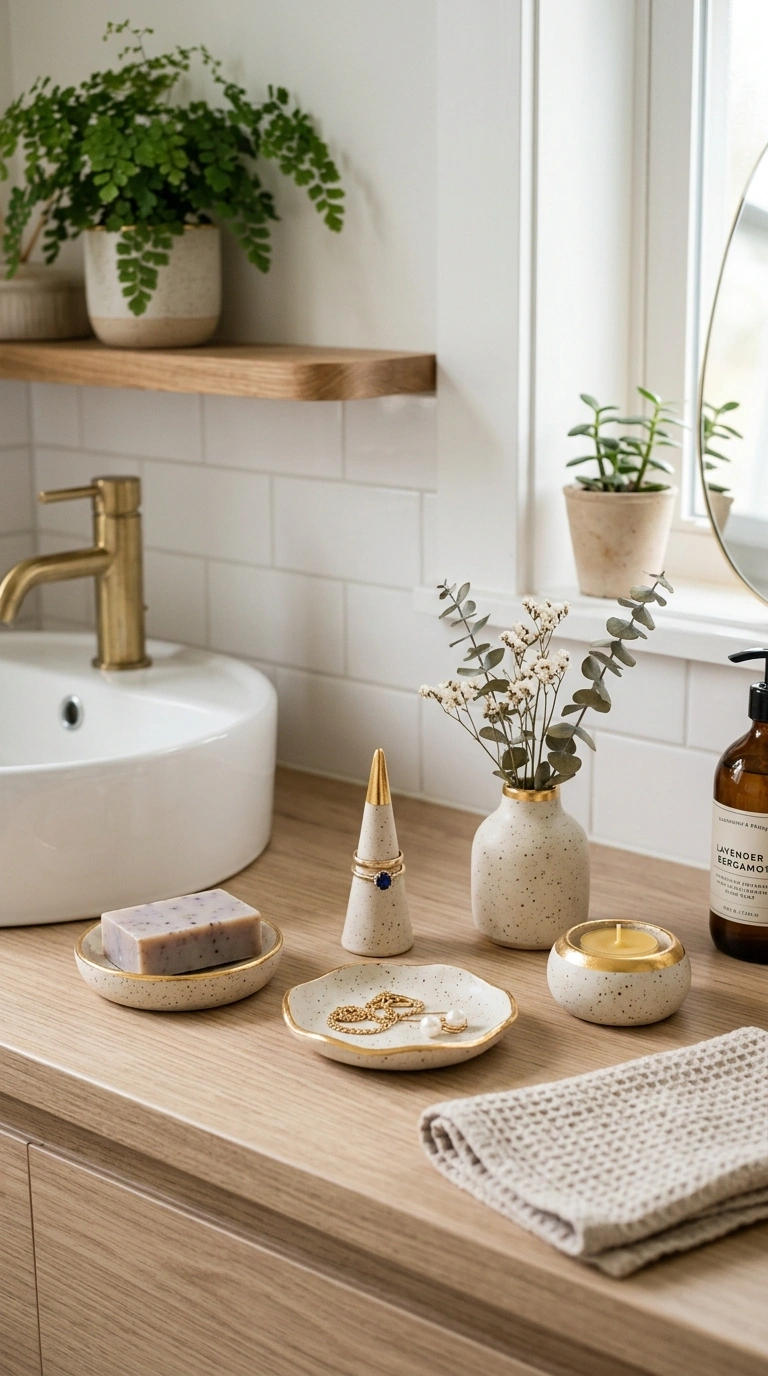
Making a coordinated set of three to five matching clay accessories, a soap dish, a trinket tray, a ring holder, a small vase, and a candle holder, all in the same clay color and style, produces a complete bathroom accessory collection that reads as a designed set rather than individual random pieces. The matching quality comes from using the same clay, the same technique, and the same finishing treatment across all pieces. A coordinated set of five handmade clay accessories costs under ten dollars in materials and replaces a purchased set that would typically cost fifty to a hundred dollars.
12. Speckled Paint Finish
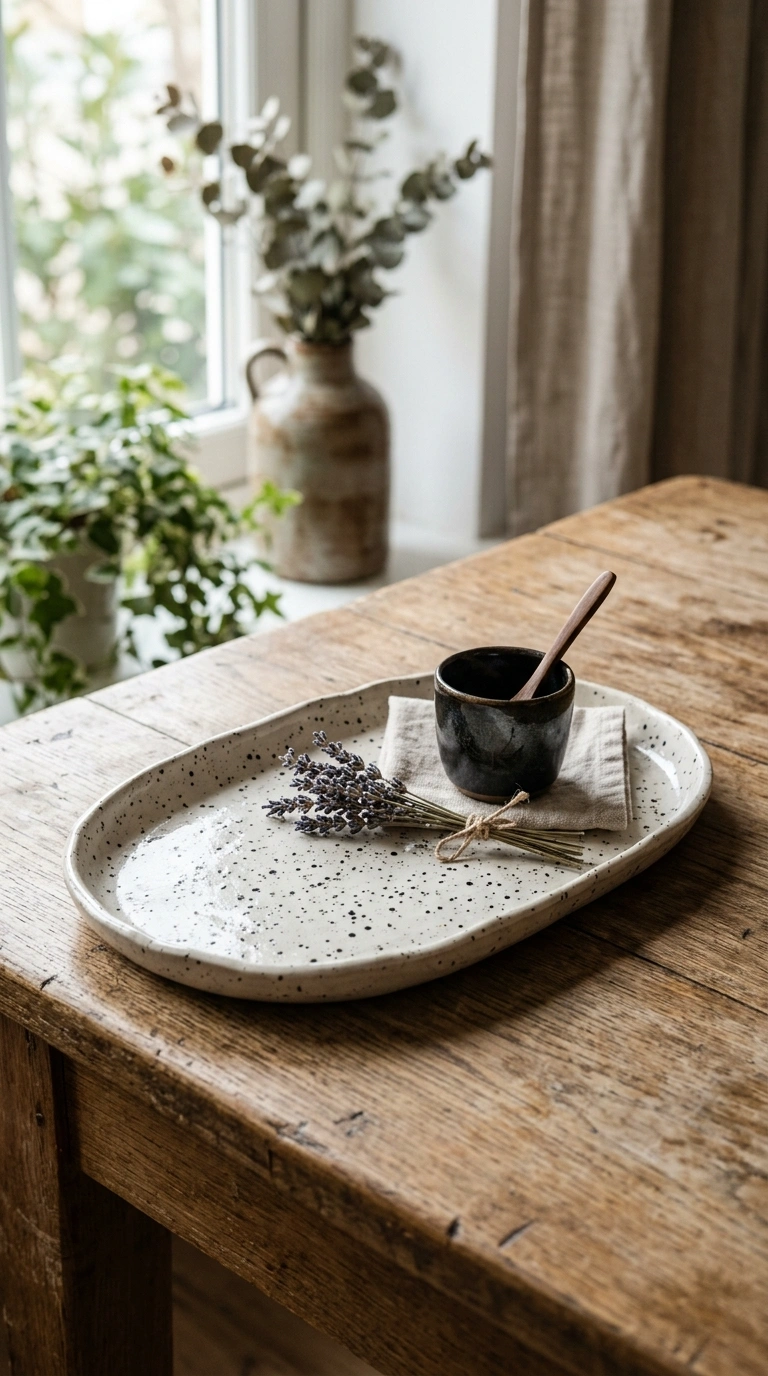
Flicking a loaded toothbrush or a stiff paintbrush over the finished sealed clay piece to create a fine speckle of tiny paint dots produces the speckled ceramic finish that is popular in current pottery studios. Black speckles on white clay mimics the Japanese ceramic tradition. Gold speckles on cream clay adds luxury. Brown speckles on terracotta-toned clay creates an earthy organic quality. The speckled finish is extremely simple to execute and produces a result that looks like a professional ceramic technique applied by hand in a pottery studio.
13. Natural Terracotta Color
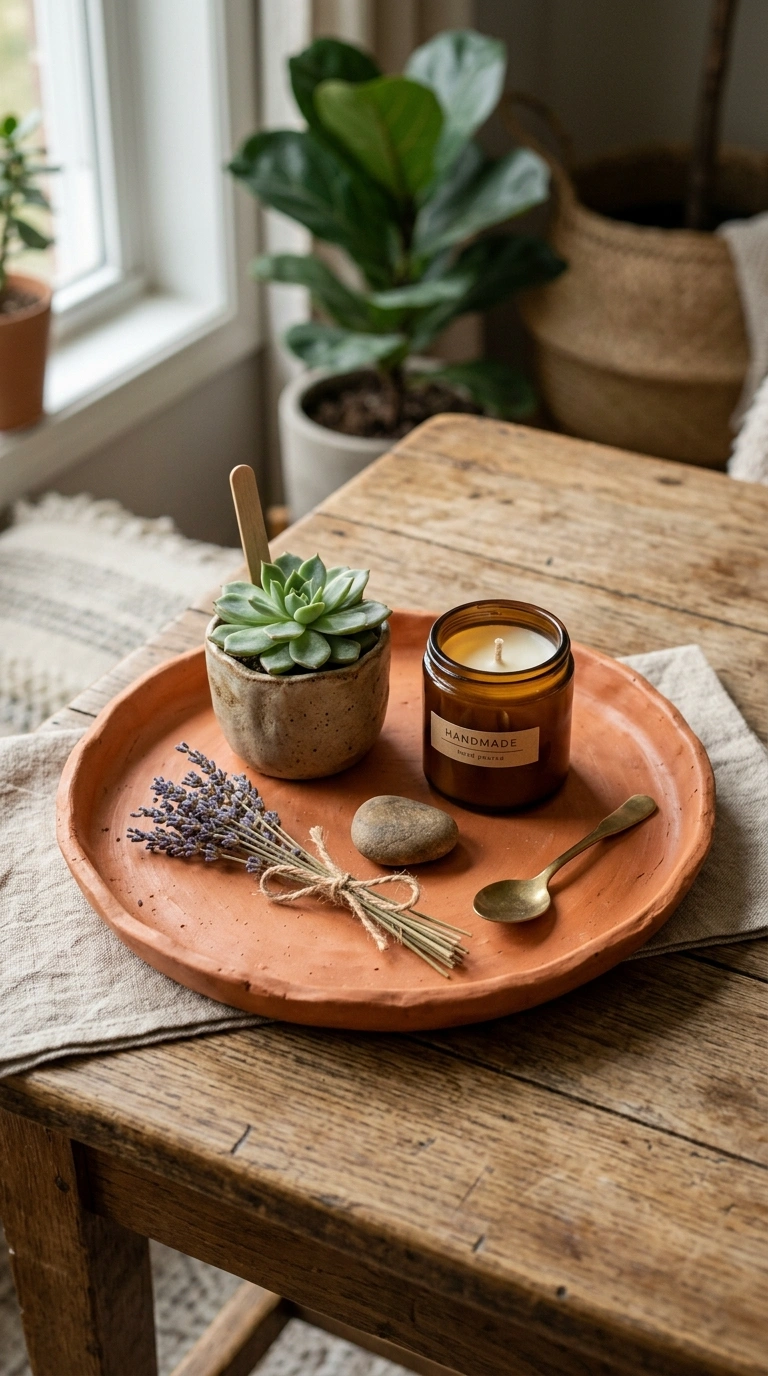
Leaving air-dry clay in its natural terracotta color rather than painting it white or cream produces a warm earthy tone that suits organic, earthy, and boho bathroom aesthetics particularly well. Seal the natural terracotta clay with a matte clear coat to protect the surface from moisture while preserving the warm natural color. The terracotta tone of natural clay coordinates beautifully with warm wood, brass, and warm textiles in the bathroom. The unpainted clay also shows the subtle surface textures and slight imperfections of the handmade process more clearly than painted surfaces do.
14. Polymer Clay Earring Dish
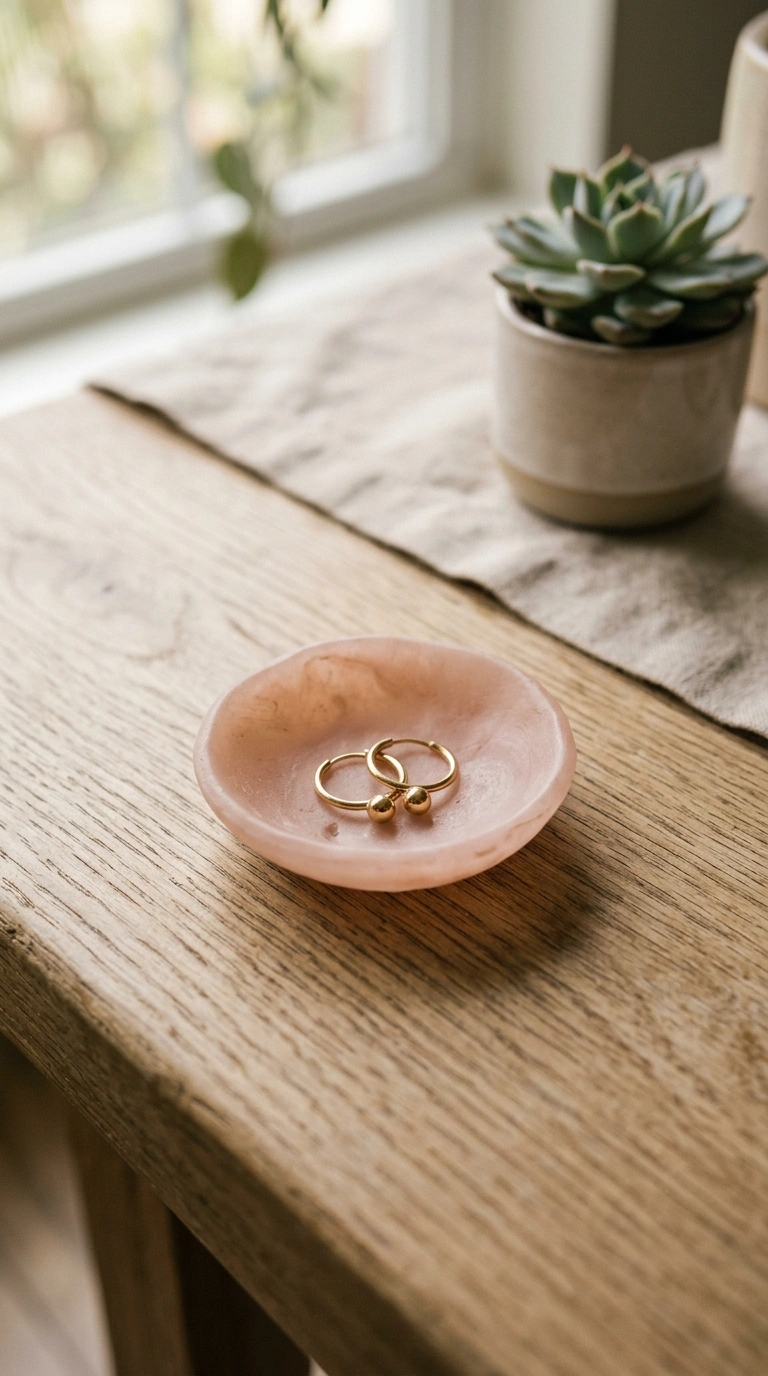
A small polymer clay earring dish, about two inches in diameter and half an inch deep, provides a dedicated spot on the bathroom counter for earrings removed during showering or face washing. Polymer clay fires in a standard home oven at about 275 degrees for about fifteen minutes, which makes it significantly harder and more durable than air-dry clay. The small earring dish can be made in any color, including translucent and metallic finishes, and can include tiny embedded details like gold leaf or glitter for a more decorative result.
15. Stamped Initial Personalization
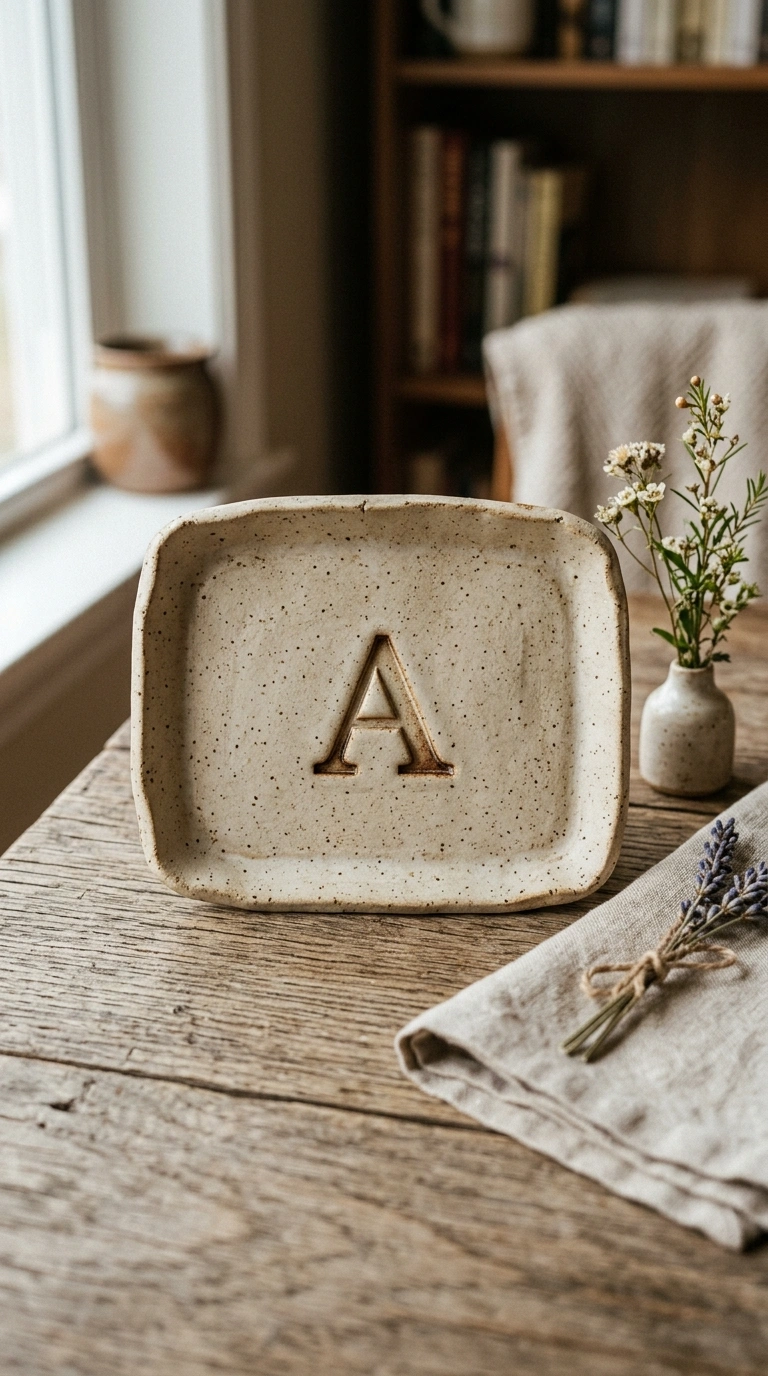
Pressing a letter stamp into the clay surface to imprint an initial or a short word, like BATH, HOME, or the homeowner’s initial, adds personalization that transforms the piece from a generic tray into a custom one-of-a-kind accessory. Use a small rubber stamp or a set of metal letter stamps to press the letters into the soft clay before drying. The stamped impression catches shadows and reads as a subtle engraved detail in the finished piece. A personalized clay dish also makes a thoughtful handmade gift for a housewarming, a birthday, or a holiday.
16. Wavy Organic Shape
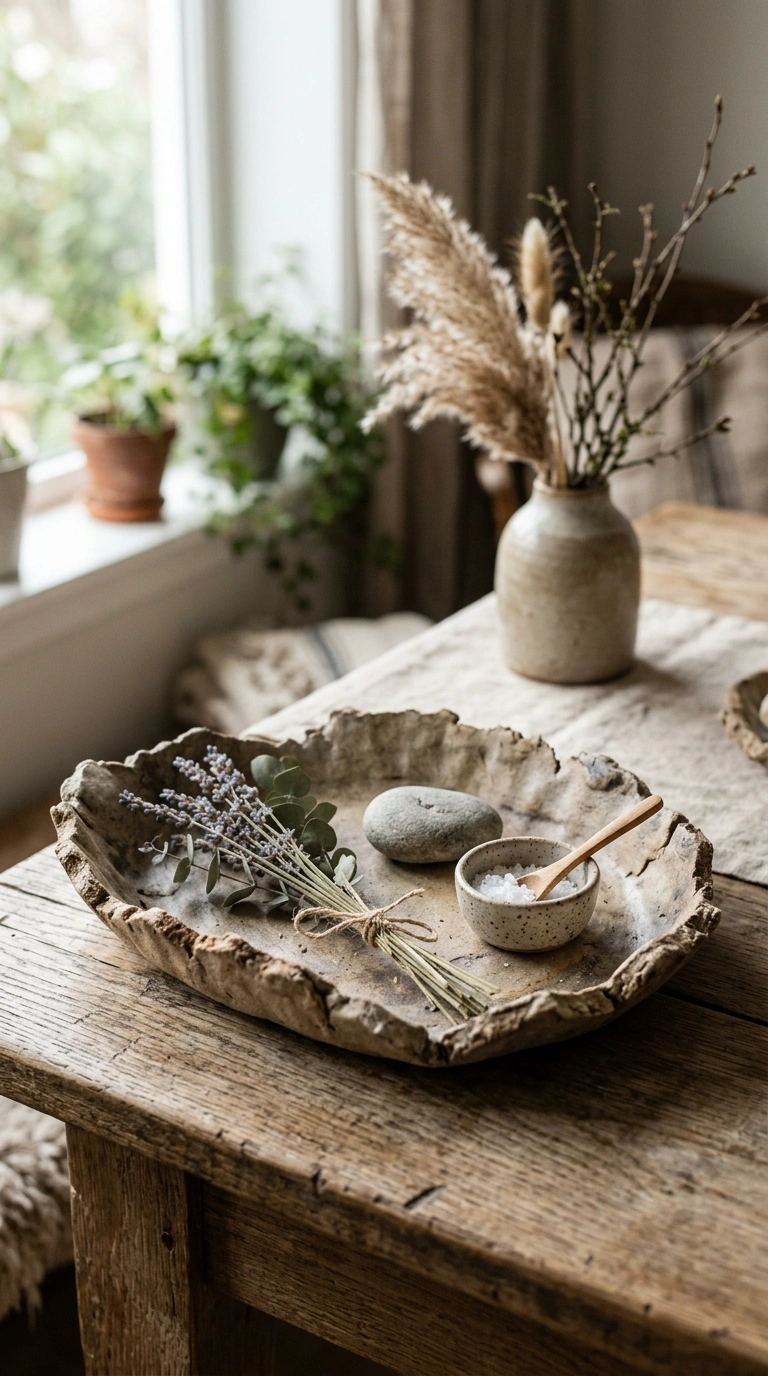
Instead of cutting the clay into geometric shapes, tearing or cutting the edges freehand into an irregular organic shape produces a piece that looks like a natural stone or a piece of driftwood rather than a manufactured product. The organic shape reads as more artistic and more intentional than a perfect circle or rectangle because the irregularity suggests the maker chose the shape deliberately rather than defaulting to a geometric template. Organic-shaped trays and dishes look particularly beautiful in bathrooms with a natural, earthy, or organic modern aesthetic.
17. Layered Stack Display
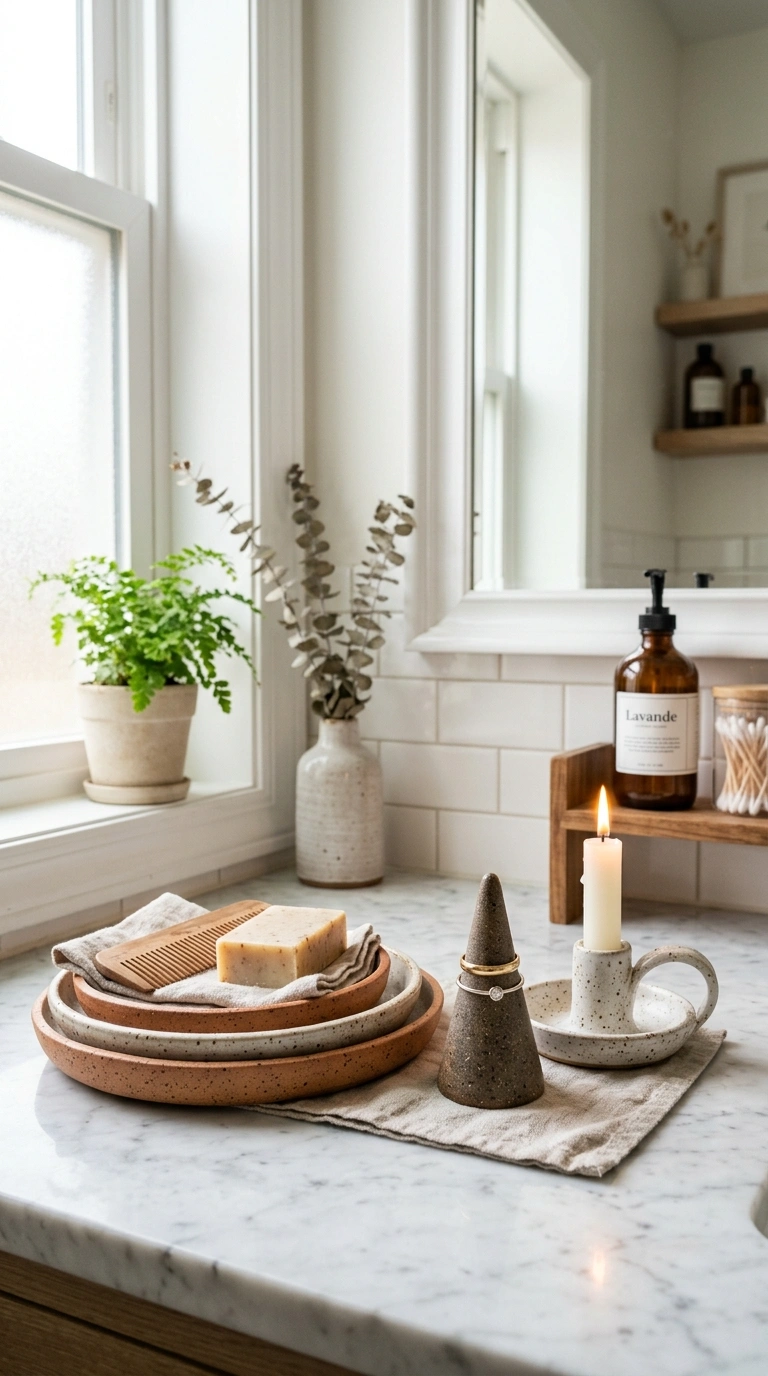
Displaying multiple handmade clay pieces stacked or arranged as a small collection on the bathroom counter or shelf creates a mini gallery of handmade accessories that reads as a curated design feature. A stack of three nesting trays in graduated sizes, a row of small dishes in matched colors, or a cluster of different shapes in the same finish all create the visual impact that a single piece alone cannot achieve. The collection tells a story of deliberate craft and gives the bathroom counter the kind of artisan quality that mass-produced accessories cannot replicate.
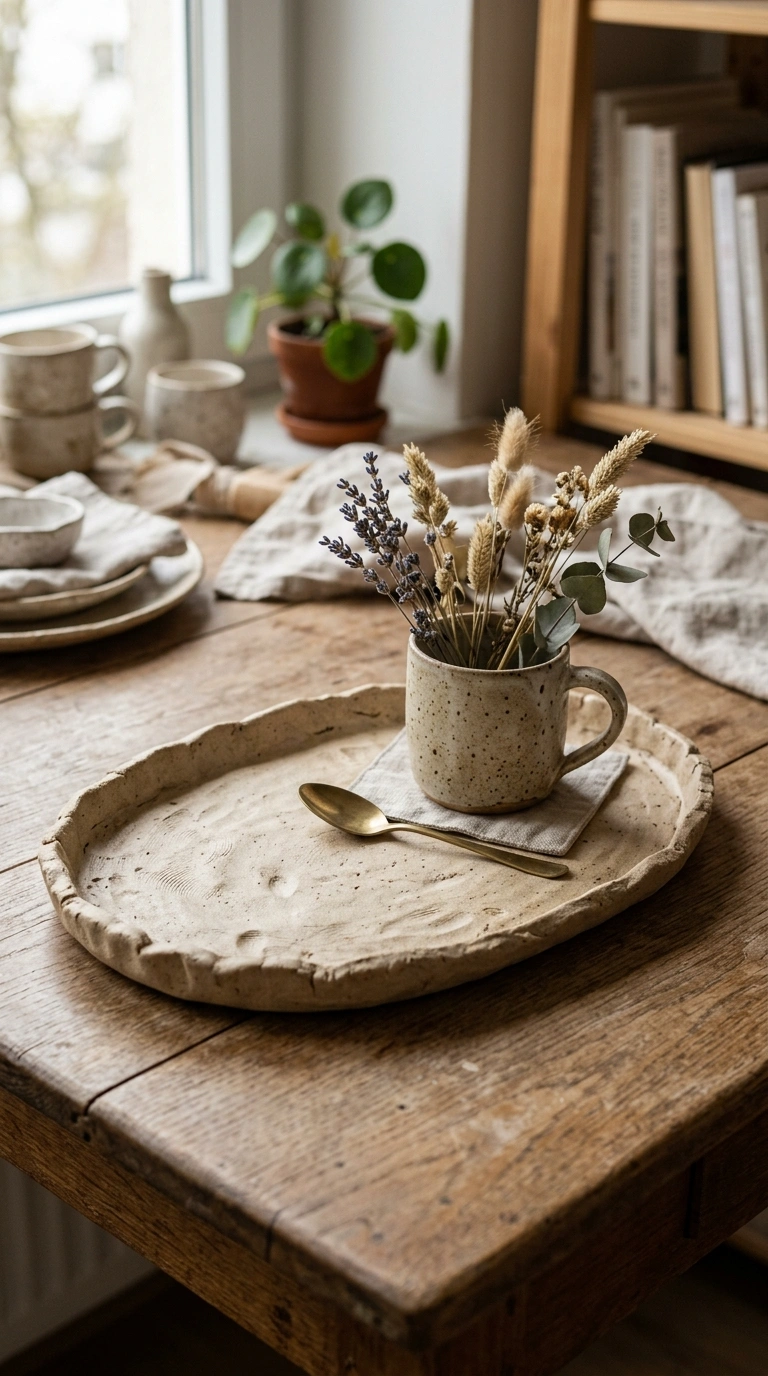
18. Imperfection Is the Point
The most important thing to understand about DIY clay bathroom accessories is that the slight imperfections, the uneven edges, the small fingerprint marks, the tiny variations in thickness, are not flaws. They are the evidence of handmaking that distinguishes the piece from a factory product and that gives it the genuine artisan quality that makes handmade objects more interesting and more valuable than perfect ones. The imperfections are what buyers pay premium prices for at pottery markets and ceramic studios. Embrace them rather than trying to smooth them away. The handmade quality is the entire point. For ideas on where to display handmade clay pieces alongside other bathroom accessories for the most styled result, the bathtub decor ideas guide covers shelf styling, tray arrangements, and the small details that make the tub area a showcase for beautiful objects. DIY clay trays and bathroom accessories look handmade and expensive because they are handmade, and the quality comes from the slight irregularities, the considered shapes, and the simple finishing details that transform a lump of ten-dollar clay into a set of accessories that reads as genuine artisan quality. Start with the simplest project, a basic oval trinket tray, and build from there. Each piece adds to the collection and each project builds the confidence and the skill that makes the next one better. The bathroom benefits from every piece because the handmade quality is something that no amount of shopping can replicate.