15 Garage Laundry Room Ideas That Feel Like a Real Room, Not a Garage Corner
Putting your laundry in the garage is way more common than most people think. Newer American homes often build the laundry hookup along the garage wall, especially in warmer states like California, Texas, and Florida. But garage laundry setups usually look rough because most people never actually finish that spot. Bare concrete floors, exposed studs, and cold lighting make even a working laundry feel unwelcoming.
Good news is a garage laundry can absolutely feel like a real finished room with the right choices. Cabinets, flooring, lighting, and a little heat control can turn that ugly wall into a bright pretty space you actually want to use. These 15 garage laundry ideas focus on real transformations you can pull off without a full home renovation. Each one addresses real garage challenges most homeowners deal with.
1. Sealed Concrete Floor
Bare concrete floors are cold, dusty, and stain easily. Sealing your garage laundry floor is the single most important improvement you can make. A sealed floor also looks intentional instead of like you never finished the space.
Use an epoxy floor kit from Rust-Oleum or Behr for about one hundred and fifty dollars covering up to two hundred and fifty square feet. Two coats give you a smooth durable finish that resists water, oil, and detergent stains. Neutral grey or warm cream are the best colors for a laundry space.
Prep matters more than the epoxy itself. Clean and etch the concrete first using the acid solution that comes in the kit. Skipping prep is the biggest reason epoxy floors peel later.
Avoid painting concrete with regular latex paint. It will peel within a year in a laundry area with moisture from the washer and dryer. Also avoid sealing on days over 85 degrees since the epoxy dries too fast and gets brittle.
2. Full Wall Cabinet Bank
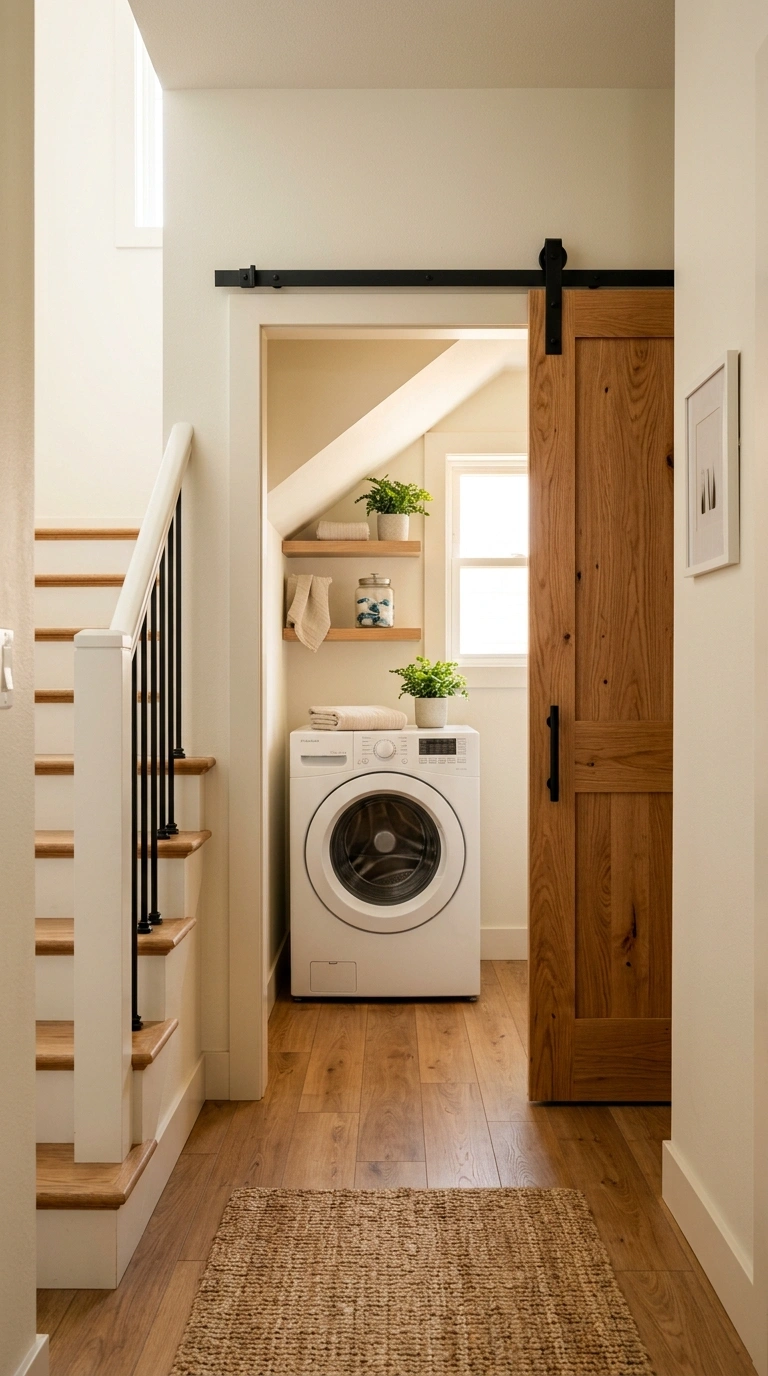
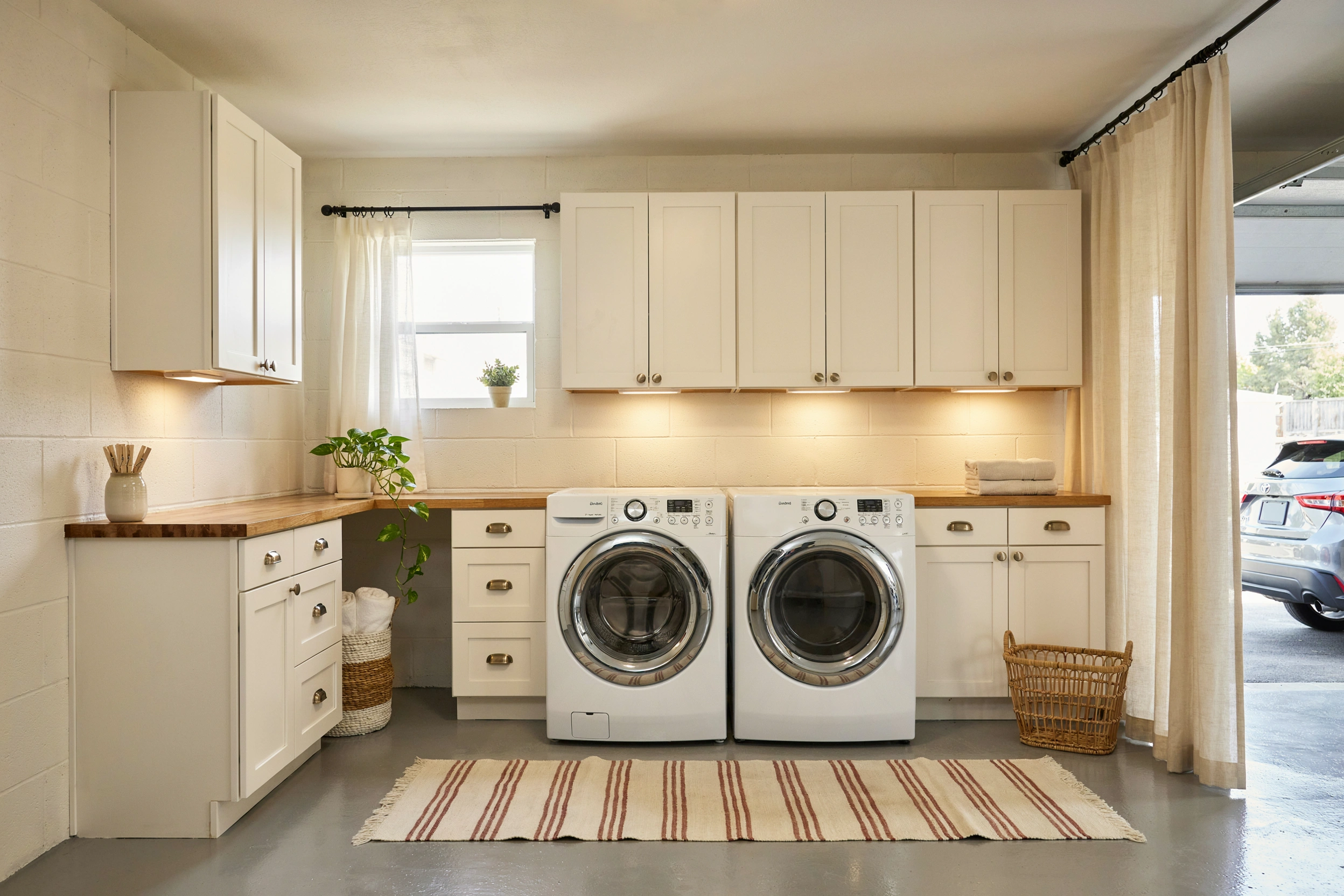
Installing a full wall of cabinets above and beside your machines instantly makes the garage corner look like a designed laundry room. This is one change that hides all the ugly detergent bottles and gives the space real polish.
Box store cabinets from IKEA, Home Depot, or Lowes cost around eight hundred to fifteen hundred dollars for a full wall unit. Shaker style in cream, sage, or warm oak looks best in garage laundry setups. Pair with brass or matte black hardware.
Install the upper cabinets at least twenty inches above the top of the machines so you have working room. Lower cabinets on either side of the machines give you tons of storage. A slim counter across the top connects everything.
Avoid installing cabinets directly against exposed cinderblock or unfinished garage walls, since these surfaces are usually uneven. Add plywood or drywall backing first. Also avoid particle board cabinets since garage humidity swings warp them over time. Solid wood or plywood construction lasts much longer for around two hundred more dollars total.
3. Drop Ceiling Install
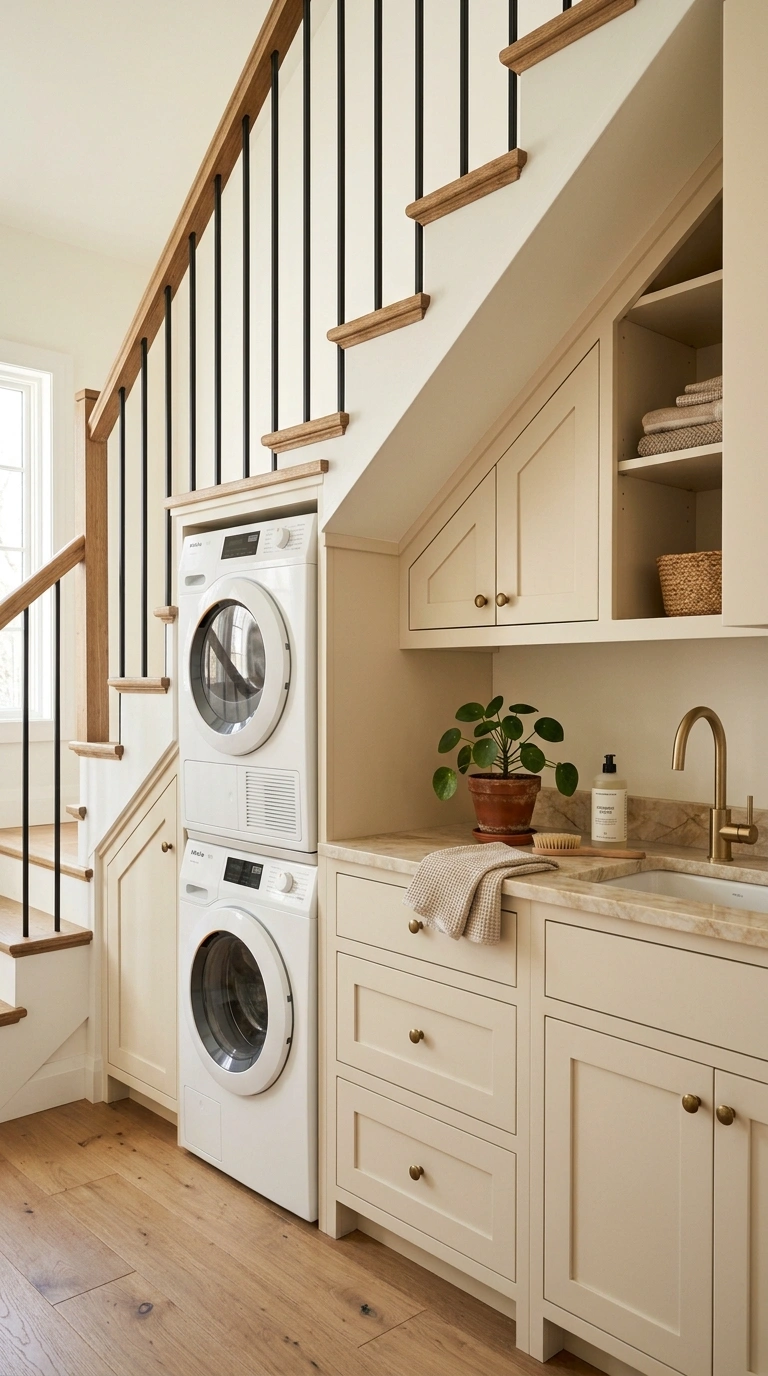
Most garage laundries have exposed rafters or unfinished ceilings that look industrial. A drop ceiling instantly makes the space feel like a real room instead of a garage.
A basic drop ceiling grid kit runs around three to five dollars per square foot at Home Depot. For a typical seven by ten foot laundry area, expect around two hundred to four hundred dollars in materials. Basic install takes a weekend for someone comfortable with tools.
Choose acoustic ceiling tiles in soft white or cream. Some tiles also help reduce noise from the washer spin cycle bouncing off garage walls, which is a nice bonus.
Avoid basic industrial fiberglass tiles that look like an old office. Modern textured ceiling tiles from Armstrong look much prettier for a small upcharge. Also avoid installing a drop ceiling in a garage with less than eight feet of clearance, since drop ceilings take four to six inches of height. Your finished ceiling should still leave enough room to open your dryer door comfortably.
4. Insulated Wall Panels
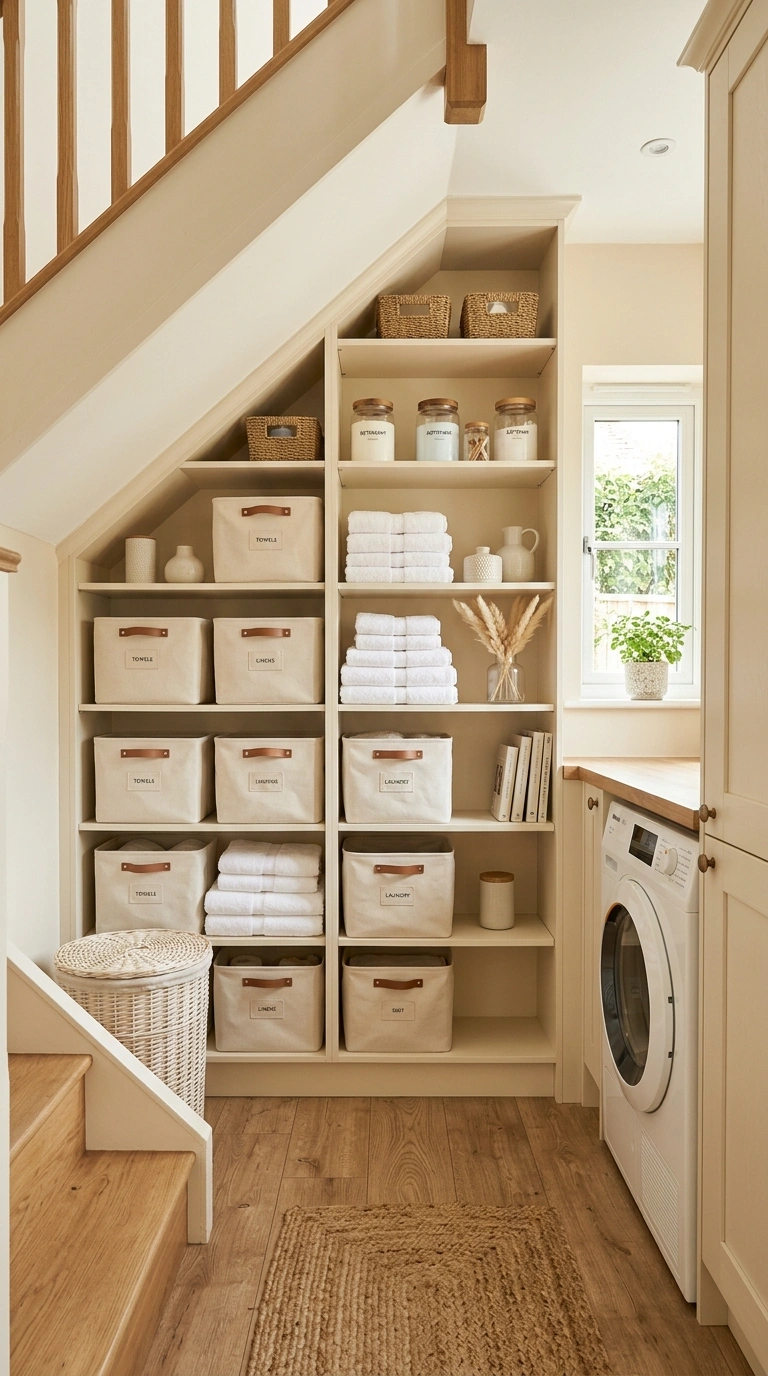
Garage laundries are notoriously cold in winter and hot in summer because most garage walls have no insulation. Adding insulation panels behind your laundry wall is a smart mid renovation move.
Foam board insulation panels from Home Depot cost about twenty dollars per four by eight foot sheet. R-5 rated foam board handles most home climates. Attach the panels directly to the studs with construction adhesive.
Cover the foam board with drywall or plywood painted a warm color like cream or soft sage green. This gives you a smooth finished wall to install cabinets against and much better temperature control year round.
Avoid using fiberglass batts in an exposed garage wall since these need proper vapor barriers to work right. Foam board is a much simpler DIY project. Also avoid installing insulation without checking your local building code, especially in older homes. Some areas require permits for wall insulation work that affects garage fire ratings between the house and the garage.
5. Portable Space Heater
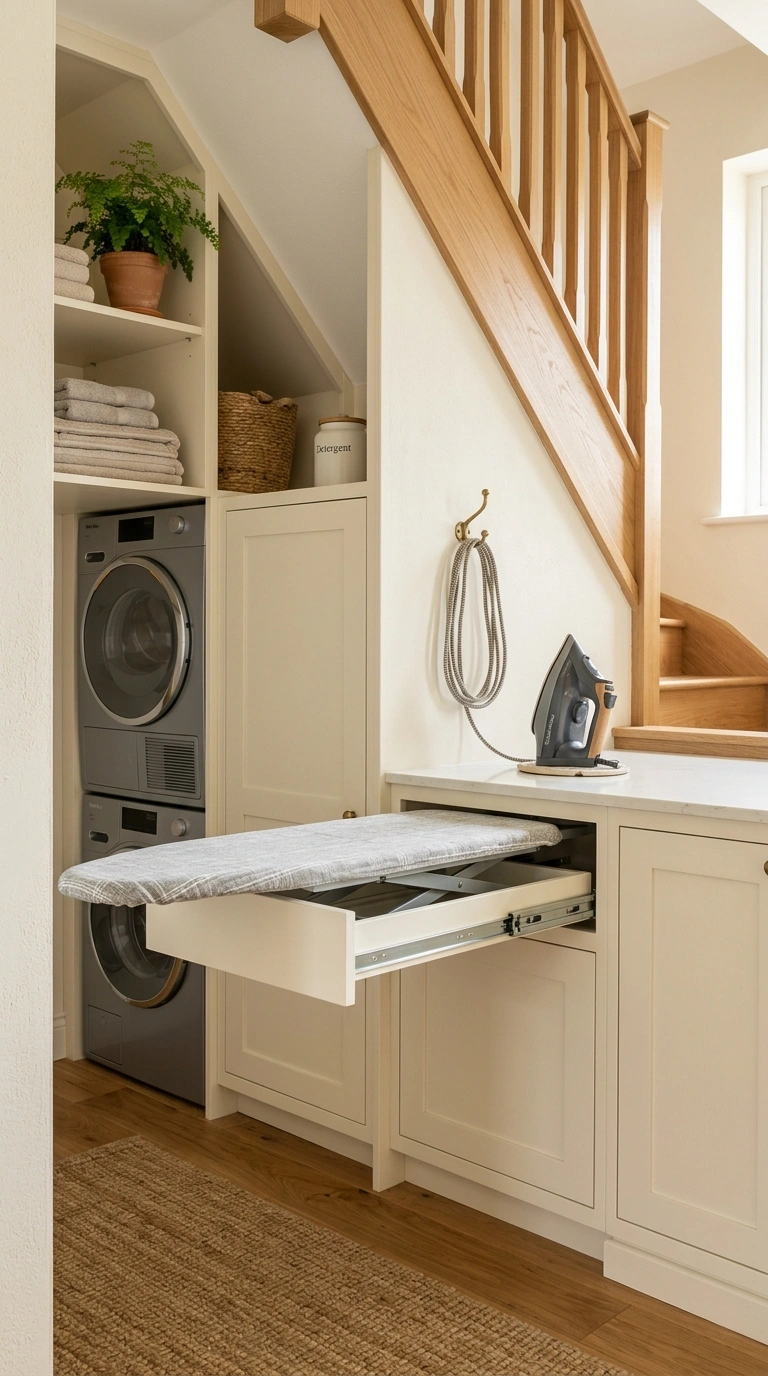
Adding a small space heater to your garage laundry makes winter loads feel less painful. Nobody wants to fold clothes in a fifty degree garage when it is snowing outside.
A small oil filled radiator style heater from DeLonghi or Honeywell runs around eighty to one hundred and fifty dollars. These heat quietly, without a loud fan, and stay safe to leave running for hours.
Place the heater in the corner opposite the machines so warm air circulates around the whole space. Use a smart plug on a timer so the heater kicks on thirty minutes before you plan to do laundry.
Avoid using ceramic space heaters that run at full blast in an insulated garage since these can overheat the small enclosed area. Also avoid propane or kerosene heaters indoors even if the space is technically in a garage. These give off carbon monoxide, which can build up in an insulated laundry area. Only use electric heaters for indoor garage laundries. A small heater bill is worth the winter comfort.
6. Utility Sink Install
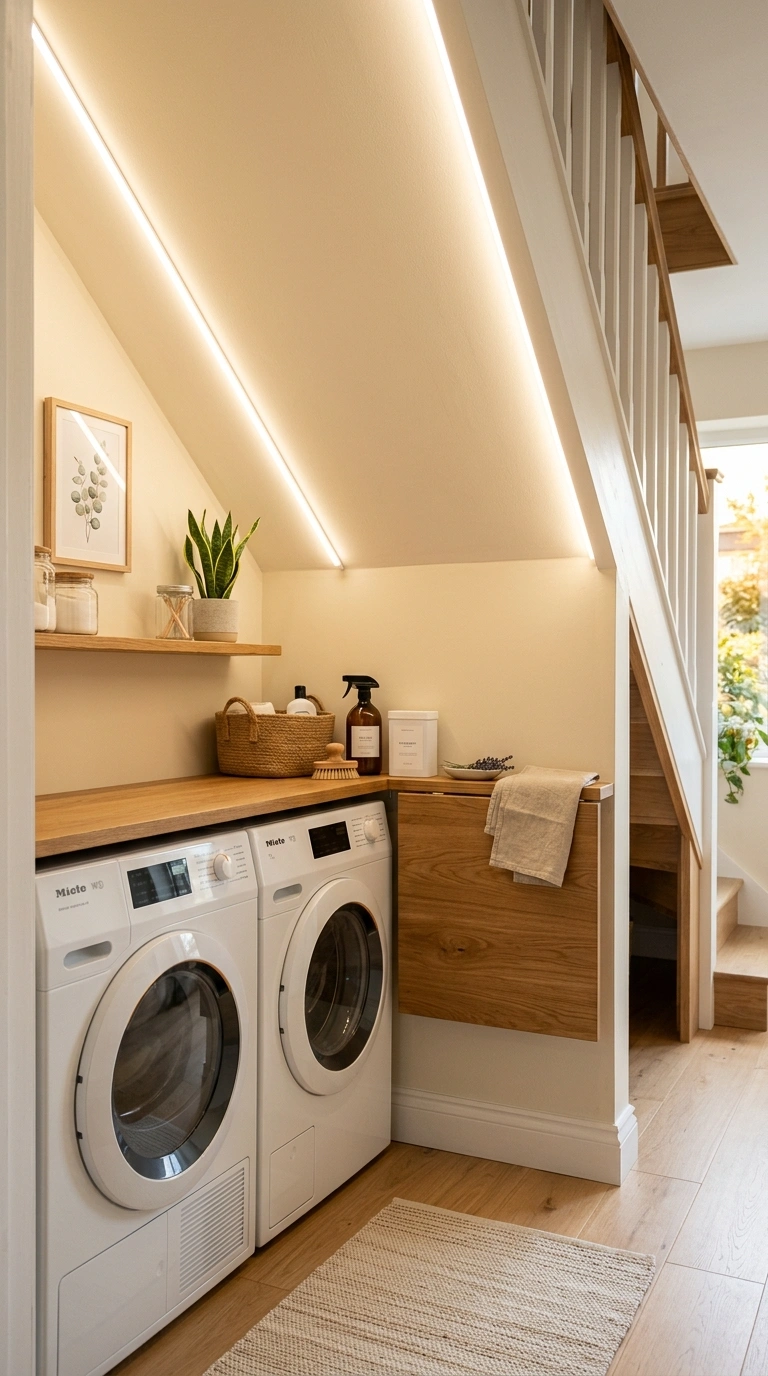
A utility sink in your garage laundry lets you rinse muddy shoes, hand wash big items, and clean paint brushes without dragging the mess into the house. This addition often makes the garage laundry more useful than an indoor one.
Mustee and Fiat both make solid utility sink kits for around one hundred and fifty dollars at Home Depot. Freestanding models fit anywhere and just need cold water, hot water, and a drain line.
Install the sink next to the washer if plumbing allows, since the washer already has water and drain lines you can tap into. A licensed plumber usually charges four hundred to eight hundred dollars for the water and drain connections.
Avoid installing a utility sink without checking whether your garage floor drain can handle the extra water. Some older homes have limited drain capacity that a sink plus a washer will overwhelm. Also avoid plastic utility sinks in garages that get below freezing, since these can crack. Choose fireclay or heavy stainless steel instead for cold climates.
7. Rubber Interlocking Mats
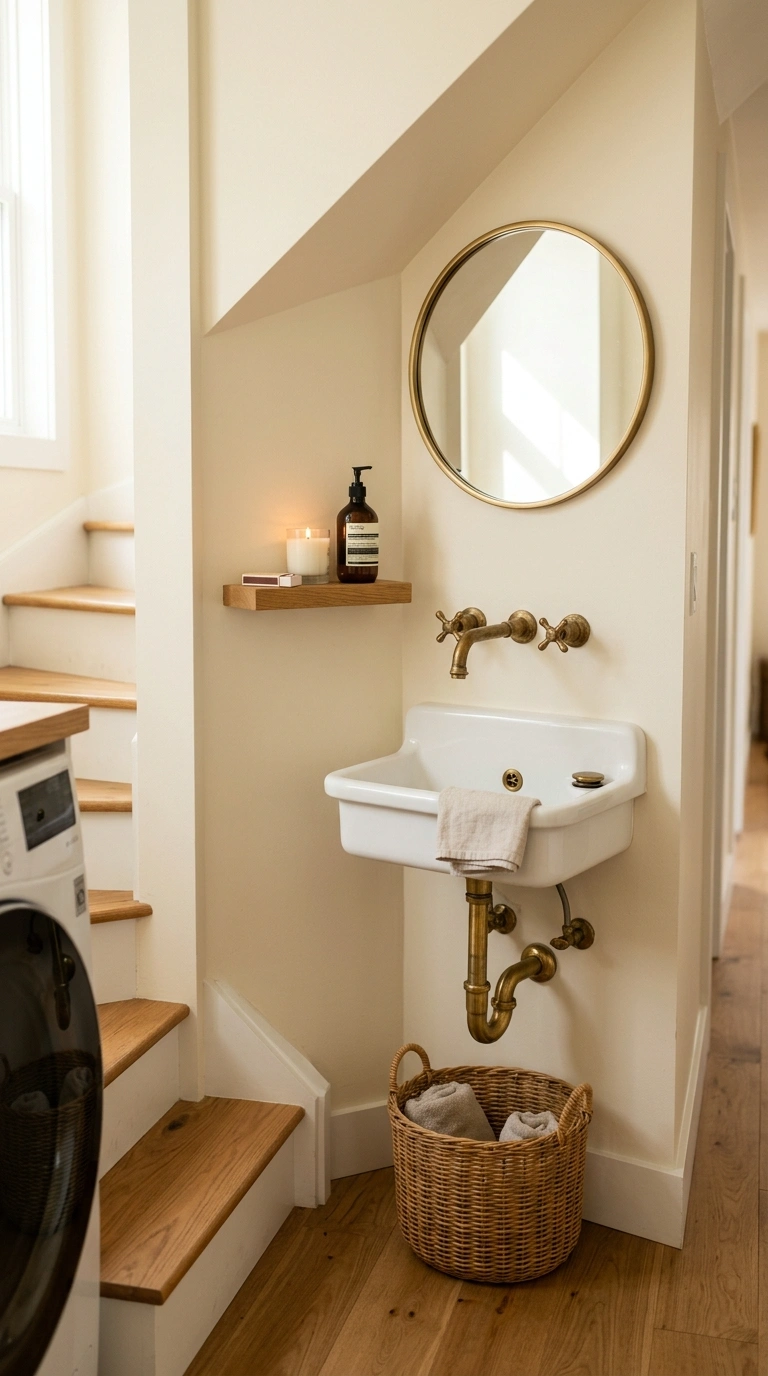
If sealing your concrete floor feels like too much work, interlocking rubber mats give you a softer warmer surface with almost no effort. These are the puzzle piece style mats you see in gyms.
A typical eight by eight foot area covered in rubber mats costs around one hundred to two hundred dollars at Costco or Amazon. Choose thicker mats around half an inch thick for the best cushion underfoot.
The rubber surface also cuts down on noise from washer vibrations and gives you a warmer surface to stand on in winter. Way more comfortable than bare concrete when you are standing to fold clothes.
Avoid interlocking foam mats since these compress permanently under heavy machines and tear easily. Stick with real rubber. Also avoid installing mats directly under the machines themselves, since these can shift over time from vibration. Instead cut the mats to fit around the machine base, or slide small anti vibration pads under the machines and cover the surrounding floor with rubber.
8. Fluorescent Light Swap
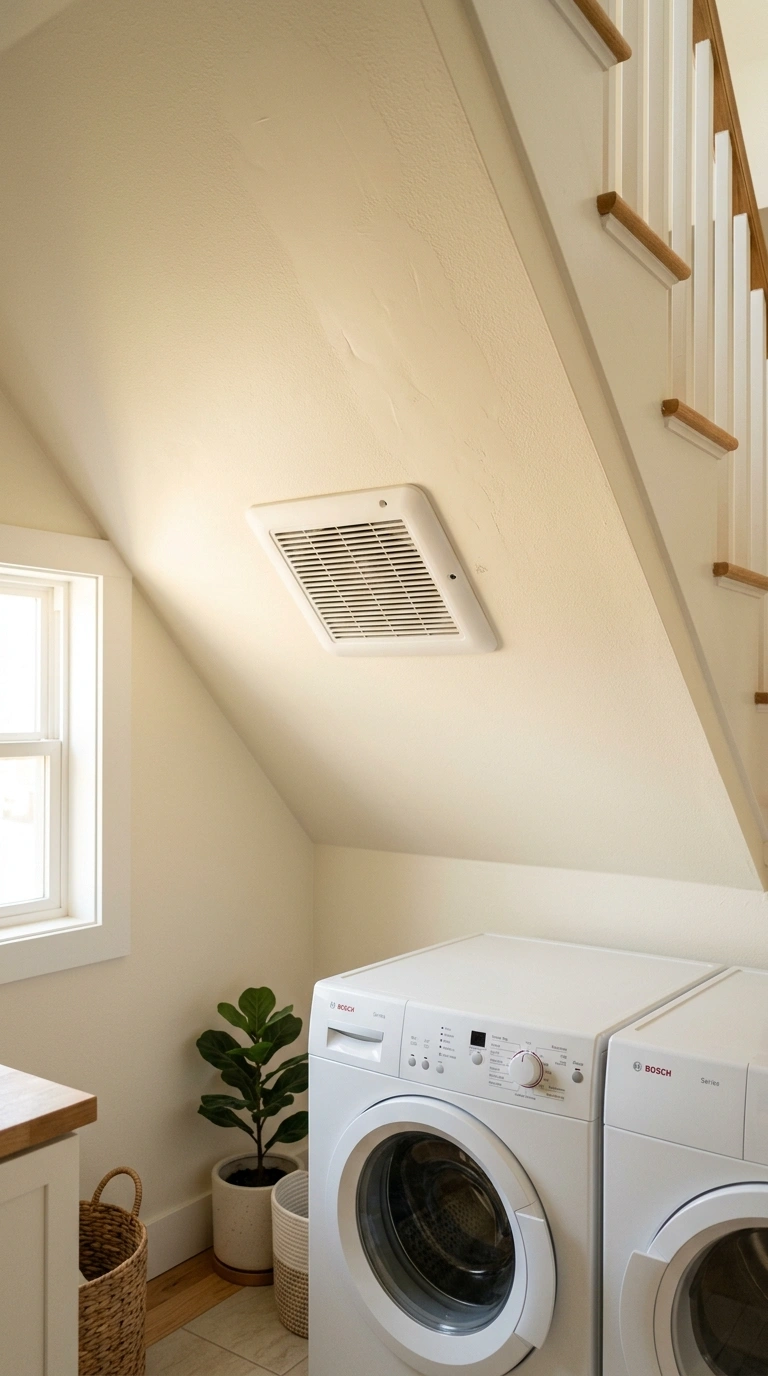
The cold blue fluorescent tubes in most garages make even a nice laundry setup feel like a hospital hallway. Swapping these for warm LED lights instantly makes the space feel like a real room.
One for one LED tube swaps that fit existing fluorescent fixtures cost around fifteen to twenty five dollars per tube at Home Depot. Choose warm white bulbs rated at 3000K to 3500K for the coziest light without going too yellow.
Even better, swap the whole fixture for a modern LED flush mount light. Basic LED flush mounts start around forty dollars at Amazon. Look for ones rated for garage use since they handle temperature swings better.
Avoid keeping any old cool white bulbs mixed with new warm ones since the mismatched color temperatures look off. Also avoid installing lights under 3000K unless you like a cozy amber glow that feels a bit dim for laundry work. The 3000K to 3500K range hits the sweet spot for both a warm feel and enough light to see stains and colors clearly.
9. Painted Cinderblock Wall
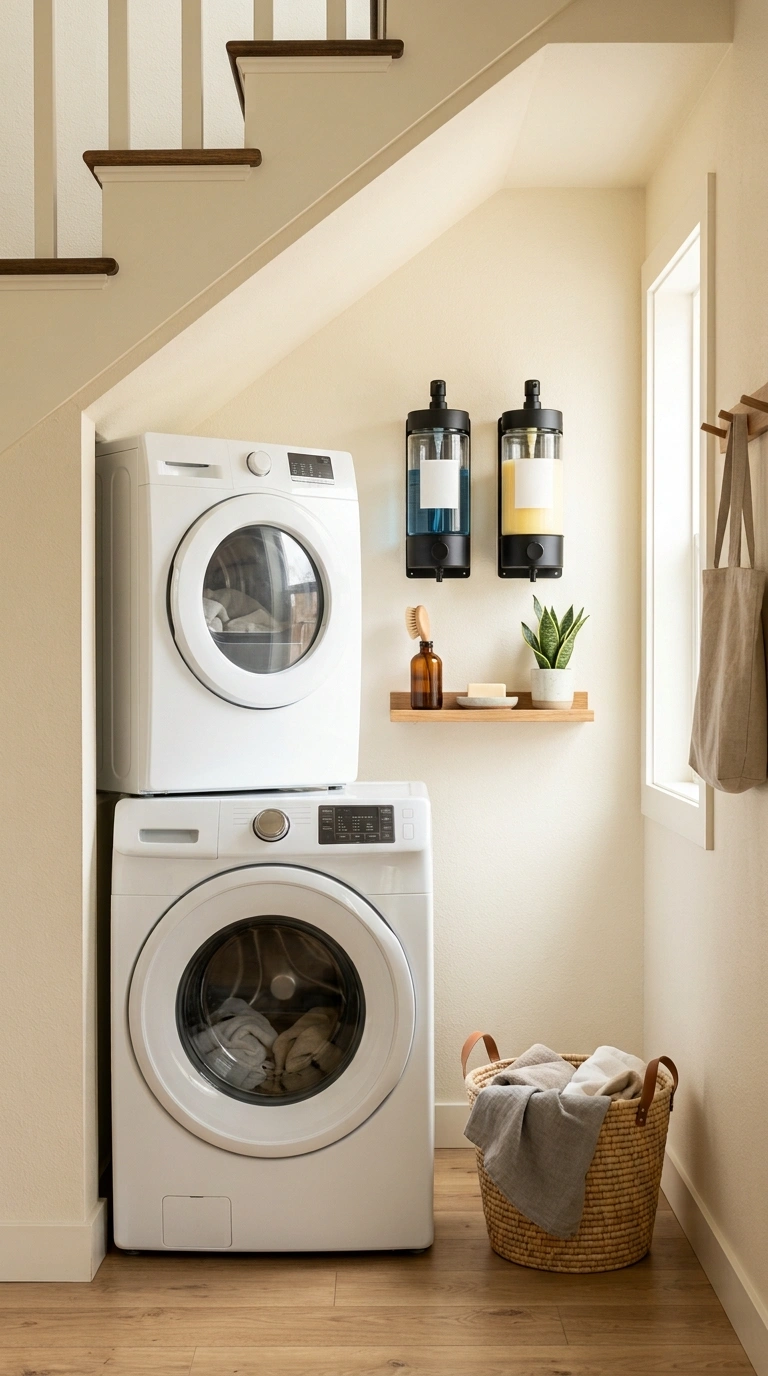
Exposed cinderblock walls in a garage laundry look industrial and cold. A coat of paint transforms them into a real finished wall for less than fifty dollars.
Use masonry primer first, then a semi gloss latex paint made for concrete surfaces. Behr and Sherwin Williams both make good options. Warm white, soft cream, or a rich sage green all work in garage laundry spaces.
Paint fills in the small pores of the cinderblock and gives you a wipe clean surface. This matters in a laundry area where detergent and water splashes happen. A roller with a thick nap of at least three quarters of an inch works best for pushing paint into the block texture.
Avoid regular flat interior paint on cinderblock since it soaks in and looks patchy. Also avoid painting cinderblock without primer, since the paint will peel within months. Two coats of good masonry paint over primer last for five to ten years. Total materials for a small garage laundry wall come to around forty to sixty dollars.
10. Curtain Room Divider
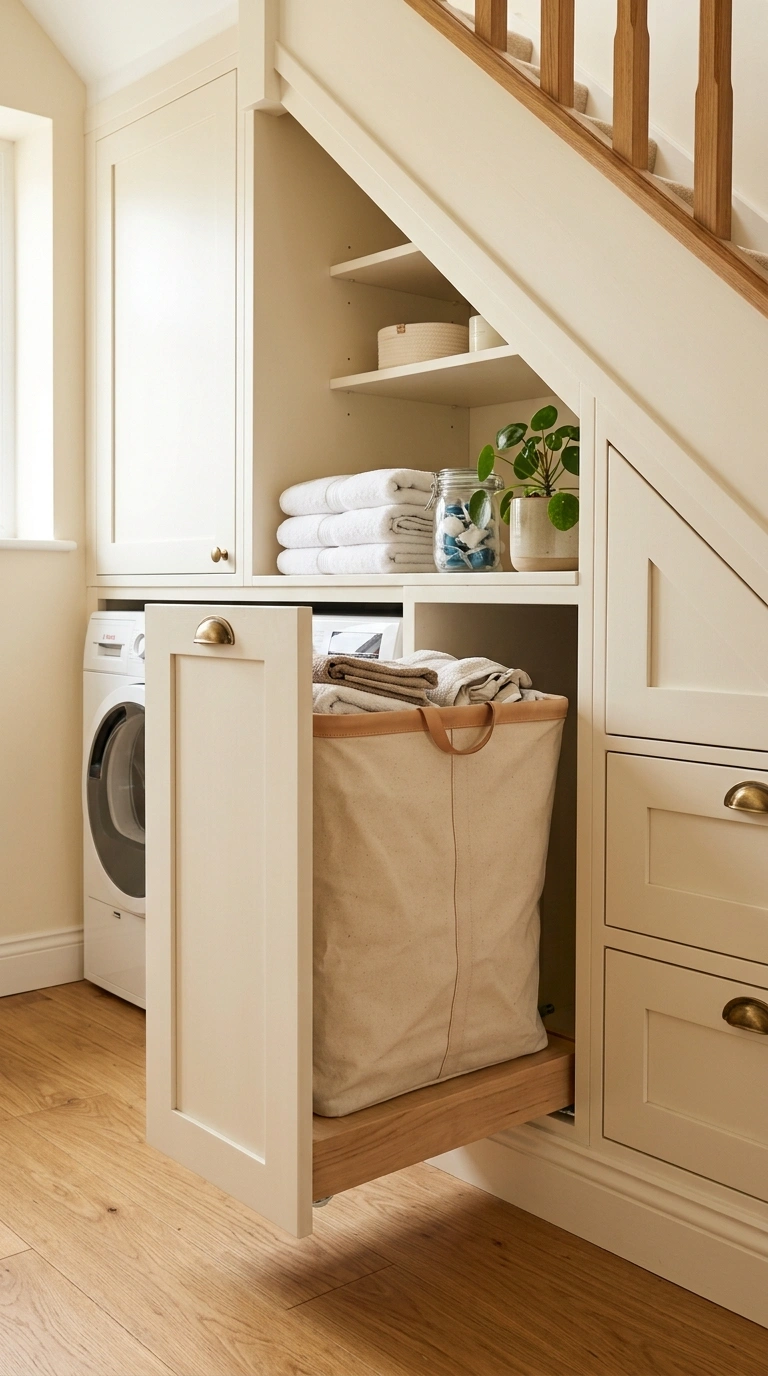
If your garage laundry sits inside an active garage where you still park cars, a floor to ceiling curtain divides the space visually and keeps car exhaust and dust away from your clean laundry.
Use a heavy duty ceiling mount curtain track rated for outdoor or garage use. Around fifty to one hundred dollars at Amazon. Heavy canvas or duck cloth curtains in cream or warm sage work best since these block dust and look pretty at the same time.
Hang the curtains so they fully cover the laundry area when closed. This creates a private room feel and keeps cold air from blowing across the space every time the garage door opens.
Avoid using thin decorative curtains here since these do not block enough dust or air. Also avoid installing a curtain track over a garage door opener chain, since the moving parts can tangle with the curtain. Position the track at least eighteen inches away from any moving garage machinery. This division also keeps your kids from running into the laundry area while chasing balls in the garage.
11. Overhead Storage Rack
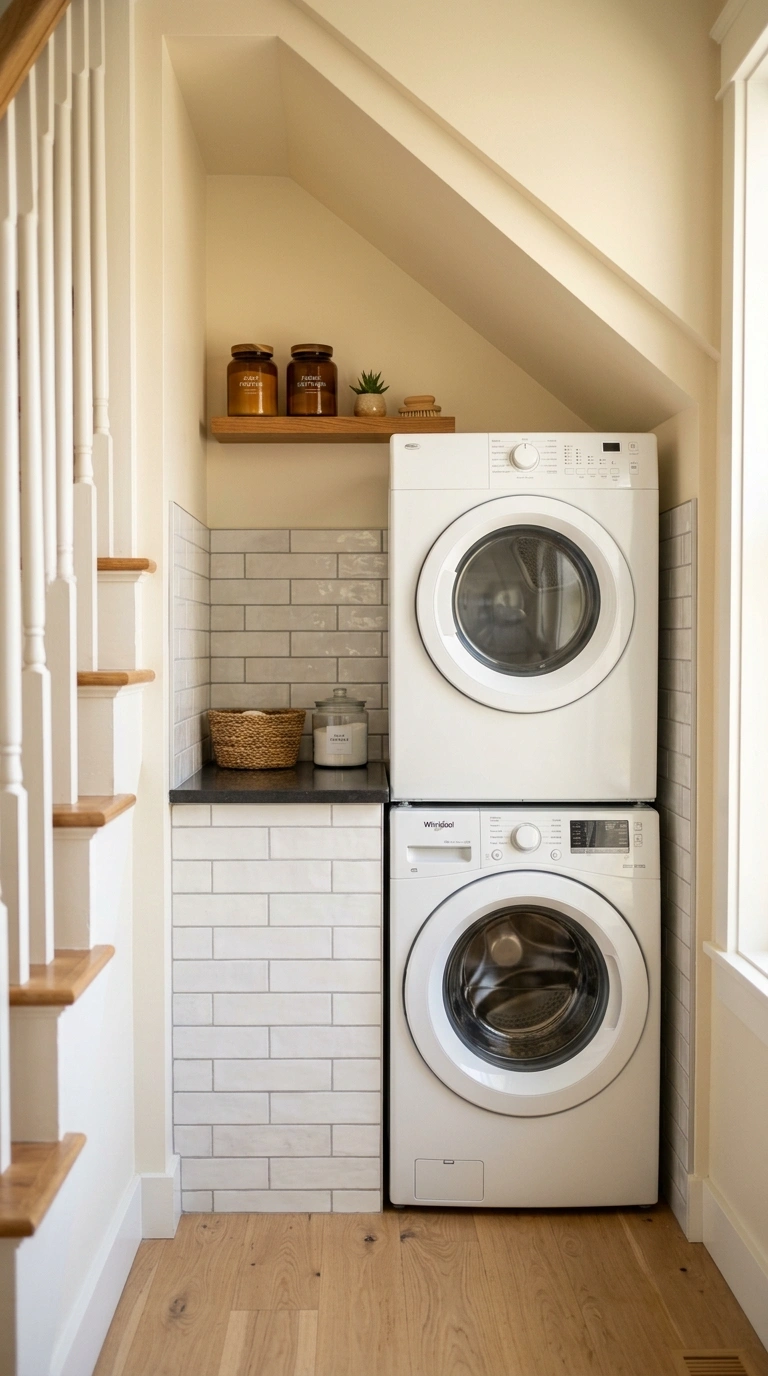
The ceiling above your garage laundry is prime storage real estate that most people ignore. Overhead racks let you store seasonal items, extra laundry supplies, and rarely used gear without eating into your working space.
HyLoft and FLEXIMOUNTS both make overhead storage racks for garages that hold up to six hundred pounds. Around one hundred and fifty to three hundred dollars for a four by eight foot rack at Home Depot or Amazon.
Install the rack at least twenty four inches above your tallest cabinet so you can still open cabinet doors. Store lightweight items you rarely need up here, like Christmas decorations or extra bedding.
Avoid overhead racks in garage laundries with less than nine feet of ceiling clearance, since these racks take up twelve to eighteen inches of height. Also avoid storing heavy items like paint cans overhead, especially above where you stand to fold clothes. If one bracket ever failed, heavy items could injure someone below. Stick with soft or lightweight items in overhead storage for safety.
12. Wall Mounted Drying Rack
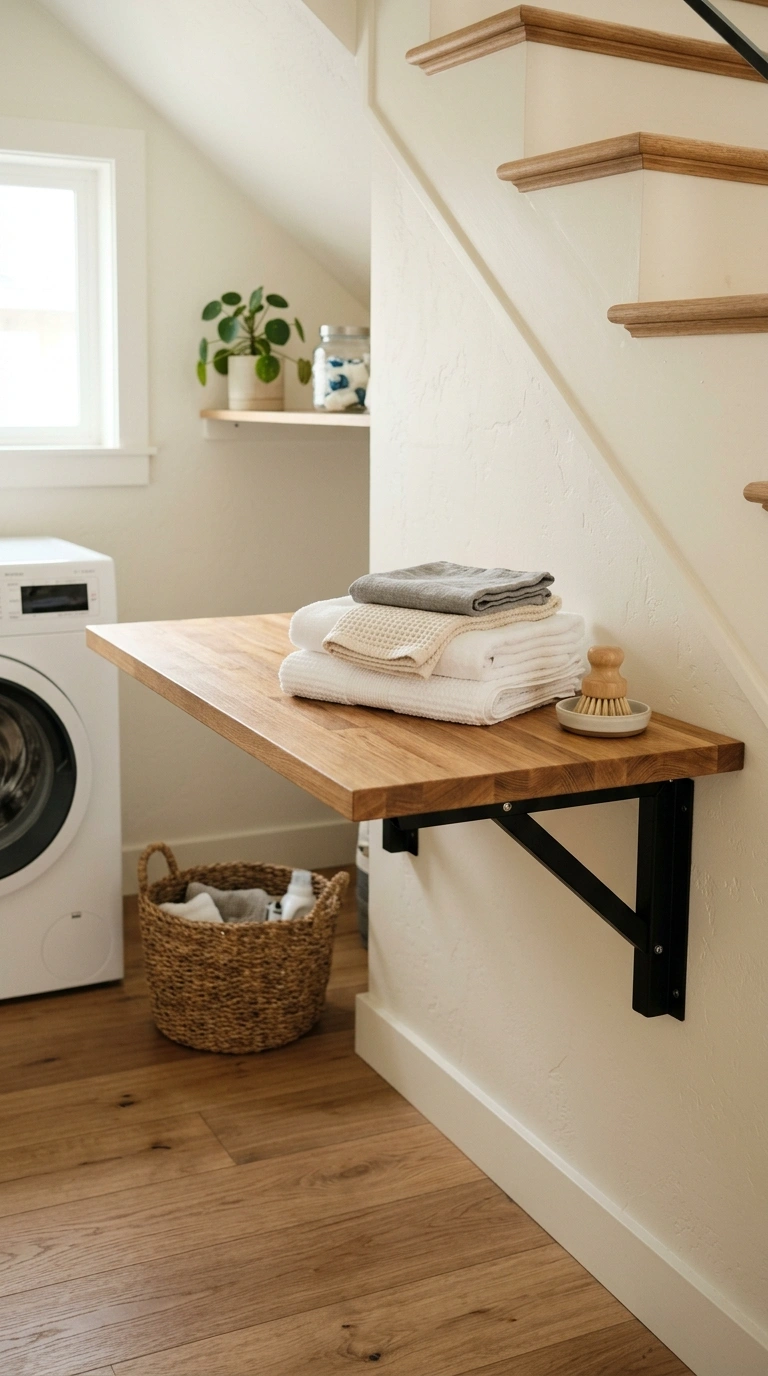
Garage laundries usually have plenty of wall space for a big drying rack, more than most indoor laundry rooms have. This lets you air dry clothes without needing an outdoor clothesline.
Gladiator and IKEA both make wall mount folding drying racks for about forty to eighty dollars. Look for ones that hold at least twenty five pounds of wet clothes and fold flat against the wall when not in use.
Mount the rack on a wall stud at about sixty inches from the floor. When you need to dry a load, pull the arms out and hang clothes on wooden hangers. When you are done, fold it flat and it disappears into the wall.
Avoid installing drying racks directly on cinderblock walls without proper masonry anchors, since these need to hold the weight of wet clothes. Use hammer drive anchors rated for at least forty pounds. Also avoid mounting drying racks in a spot that gets direct sunlight from a garage window, since UV rays fade dark clothes over time. Position the rack on an interior wall for safest drying.
13. Splash Zone Waterproofing
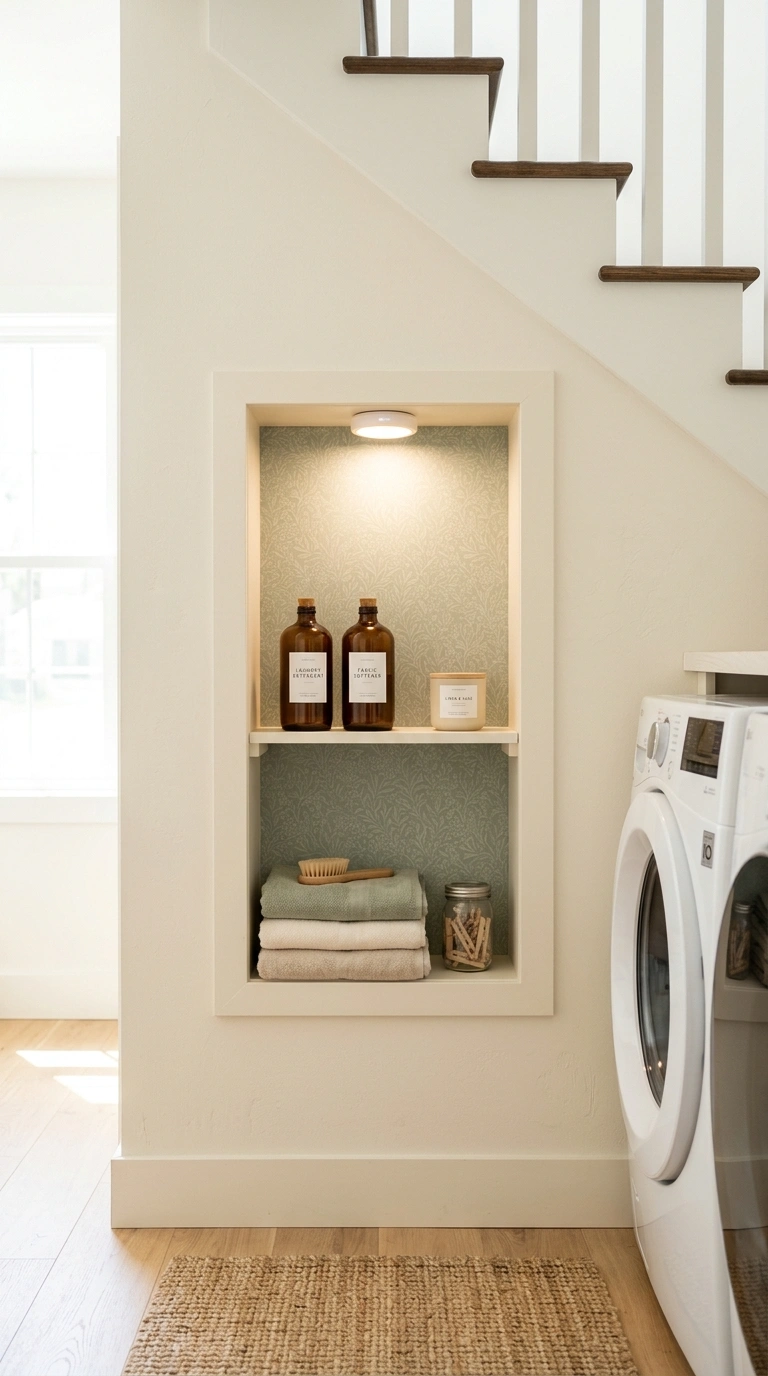
Garage laundries near a garage door face a splash risk from rain, snow, and car runoff that regular indoor laundries never deal with. Adding waterproofing to this splash zone protects your machines and cabinets from damage.
Use a waterproof membrane sheet like Schluter Kerdi on the wall behind and beside the machines. About sixty dollars for enough membrane to cover a small area at Home Depot. Cover with tile or waterproof paneling for a finished look.
Add a small floor threshold or water dam near the garage door opening. This blocks water from flowing across the floor toward your laundry area during heavy rain. Around thirty dollars for a good weather threshold.
Avoid using regular drywall in the splash zone even if you paint it well, since drywall absorbs water and grows mold. Use greenboard or cement board instead. Also avoid parking wet cars near the laundry area during winter, since melting snow creates constant humidity that damages appliances and cabinets over time. Position the laundry away from the garage door entrance if you have the choice.
14. Slat Wall System
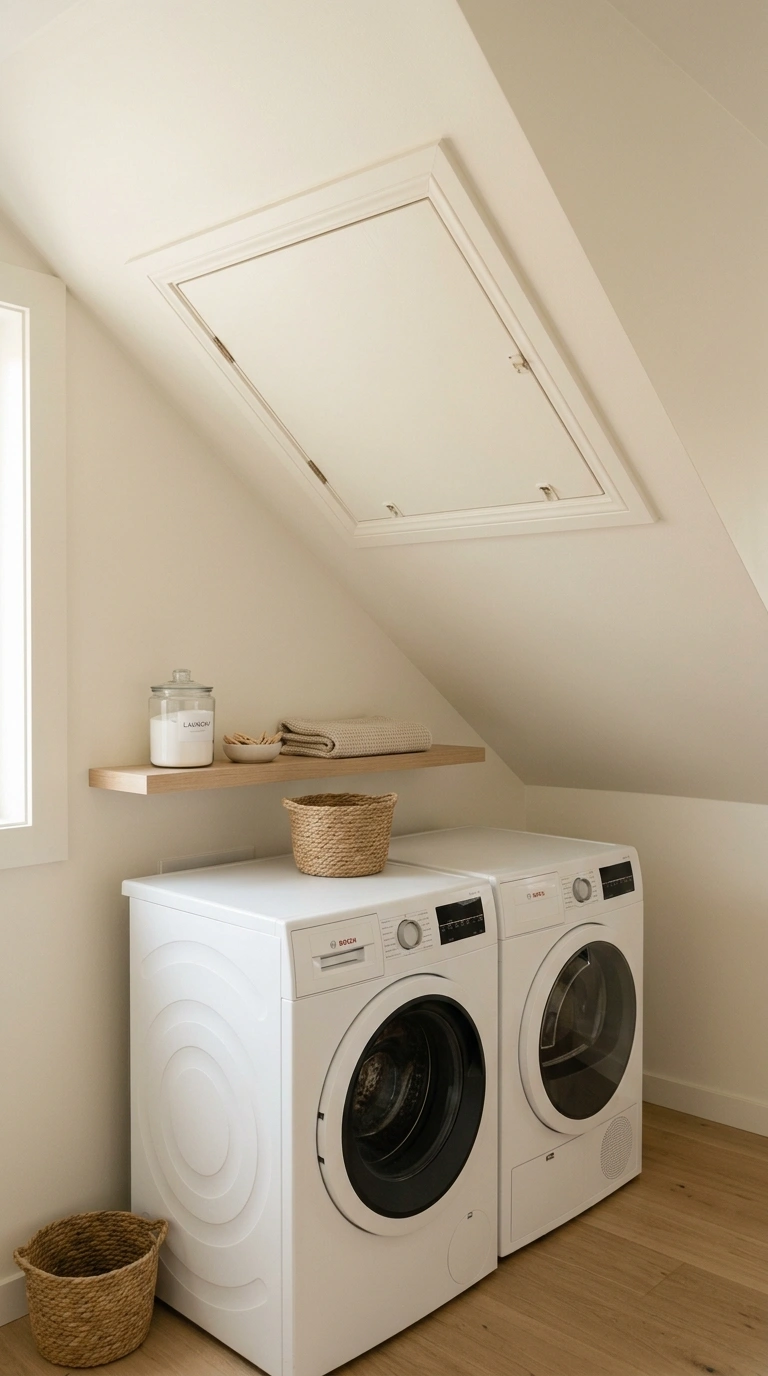
Slat wall panels give you flexible modular storage that works perfectly in garage laundries. This is a paneled wall system with horizontal grooves that hold hooks, shelves, and baskets you can rearrange anytime.
Gladiator and Proslat both make slat wall kits for around one hundred to two hundred dollars for a full wall setup. Available in cream, grey, or graphite colors that look modern in a garage laundry.
Add hooks for brooms and mops, wire baskets for detergent bottles, and small shelves for jars. You can move things around anytime without leaving nail holes in the wall. Perfect for busy families whose storage needs keep changing.
Avoid cheap plastic slat wall systems since these bow and crack under heavy loads. Stick with PVC or metal slat wall for real durability. Also avoid installing slat wall over drywall alone without hitting studs. The wall system needs to anchor into wood or the panels will pull out when loaded with heavy items. Locate studs with a magnetic stud finder before mounting anything.
15. Small Rug or Runner
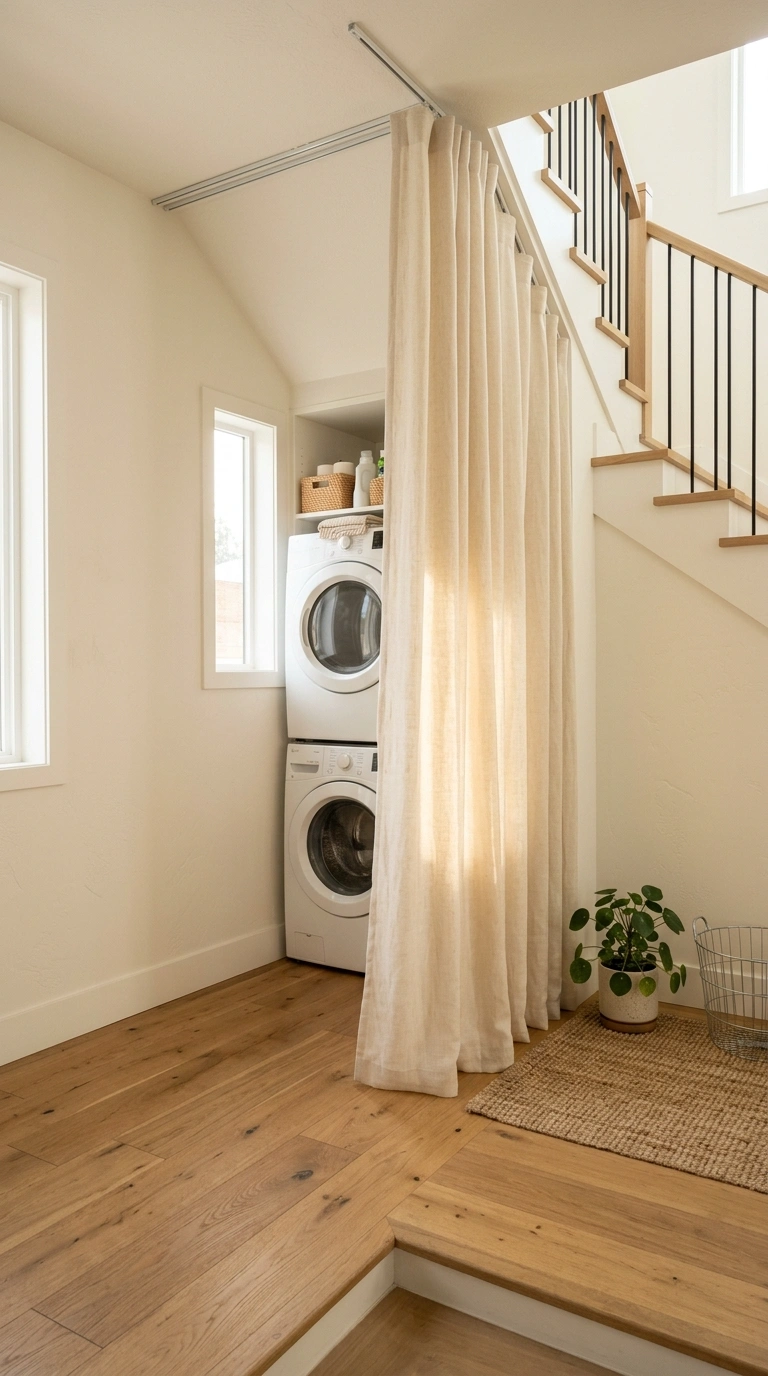
A soft rug or runner in front of the machines is one of the easiest upgrades that instantly makes a garage laundry feel less like a garage. This simple change adds warmth to the whole space.
Choose an indoor outdoor rug rated for garage or patio use. These handle moisture, dirt, and temperature swings better than regular indoor rugs. Around forty to eighty dollars for a two by six foot runner at Ruggable, Target, or Amazon.
Warm patterns in muted terracotta, cream, and dusty blue add color and hide dirt between cleanings. Place the rug directly in front of the machines where you stand most often.
Avoid regular wool or delicate cotton rugs in a garage laundry since these absorb detergent spills and get moldy in humid conditions. Also avoid rugs without rubber backing, since garage floors get slick from moisture and the rug will slide when you step on it. A rug with a proper rubber grip backing stays safely in place. Wash the rug every few months to keep it looking fresh.
Final Thoughts
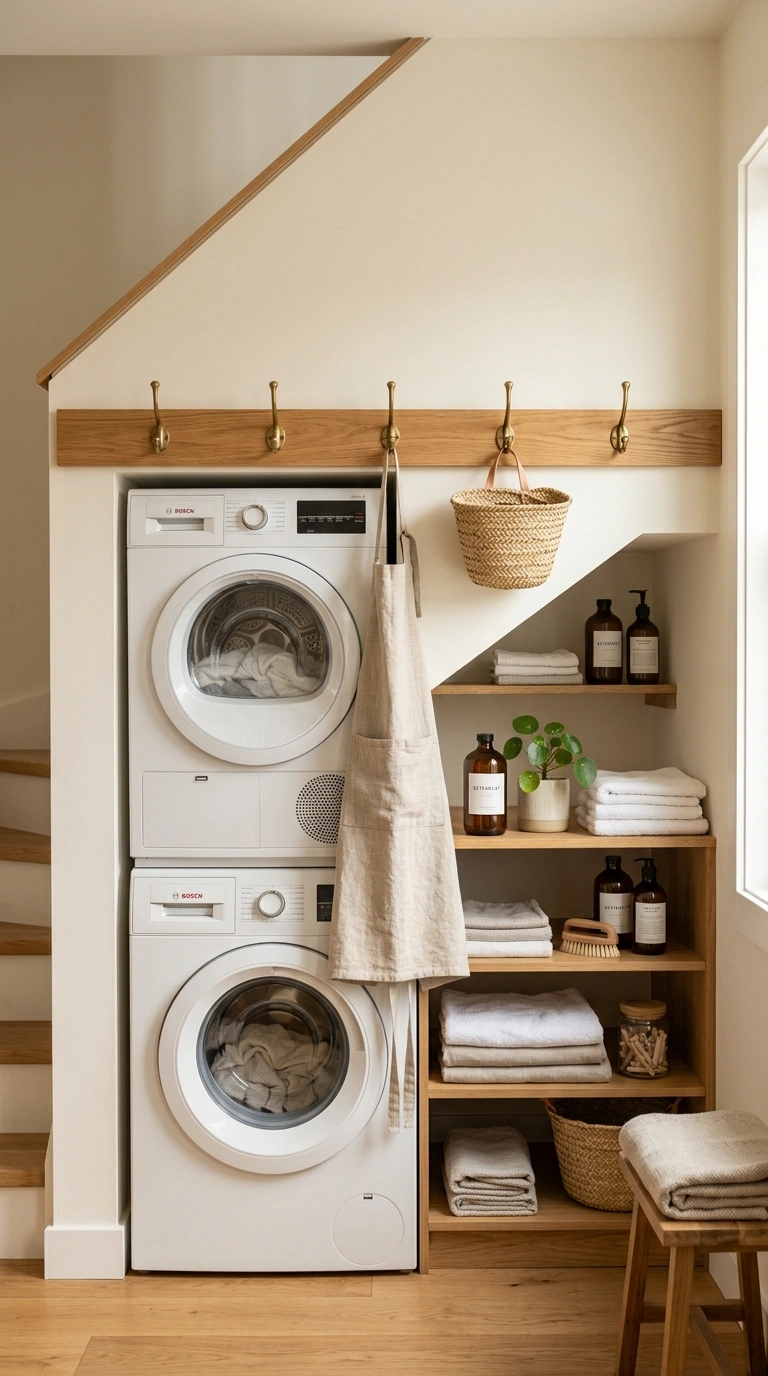
A garage laundry can absolutely feel like a real room once you address the four biggest garage problems: cold floors, unfinished walls, harsh lighting, and dust from the rest of the garage. Start with the sealed floor and wall cabinets if you can only pick two upgrades. Everything else builds on that foundation. A well finished garage laundry actually gives you more storage and workspace than most indoor laundry rooms ever could.