21 Sage Green Bathroom Ideas That Feel Calm and Genuinely Stylish
Sage green is one of the most reliably flattering colors a bathroom can take on. It reads as natural and calm in almost any light, pairs effortlessly with white, brass, marble, and natural wood, and avoids both the flatness of pure white bathrooms and the heaviness of darker greens. The key to using sage well is choosing the right shade for your specific bathroom light, and applying it in proportions that suit the layout. Sage on every surface can read as flat. Sage as the dominant color with quiet supporting elements reads as designed and serene. These 21 ideas cover the full range of sage green bathroom approaches and the small details that make the difference between a sage bathroom that looks fresh for years and one that ages out quickly.
1. Soft Sage Painted Walls
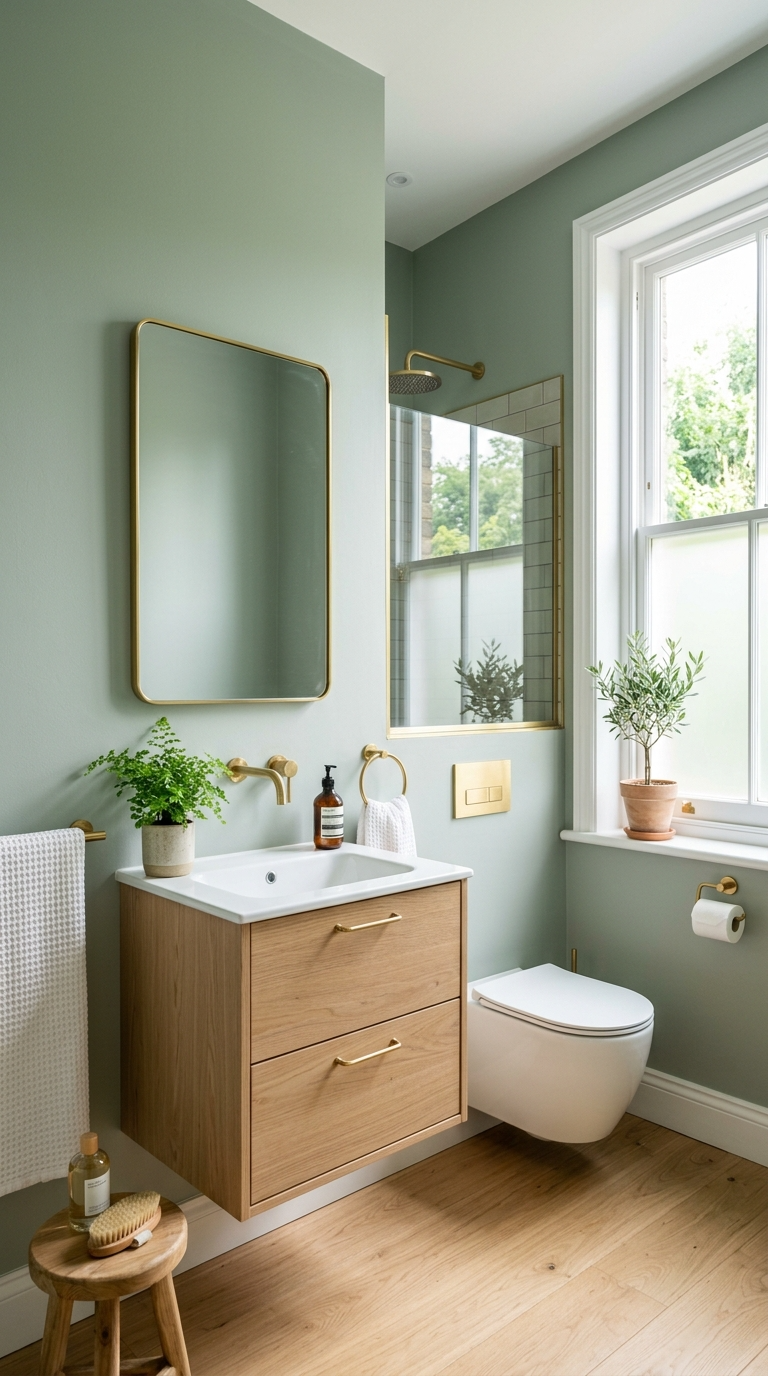
Painting all four walls of a bathroom in a soft sage green with a slight gray base creates the most universally flattering sage application. The muted gray-green tone reads as fresh in cooler natural light and warms slightly in afternoon sun, which means the room maintains its calm quality across changing daily light conditions. Pair sage walls with white ceramic fixtures, a marble or marble-look counter, and brass or aged gold hardware for a complete cohesive palette that suits both small and large bathrooms. The painting itself is the lowest-cost sage application and one of the highest-impact, since the walls are the largest visible surface in any bathroom.
2. Sage Painted Vanity
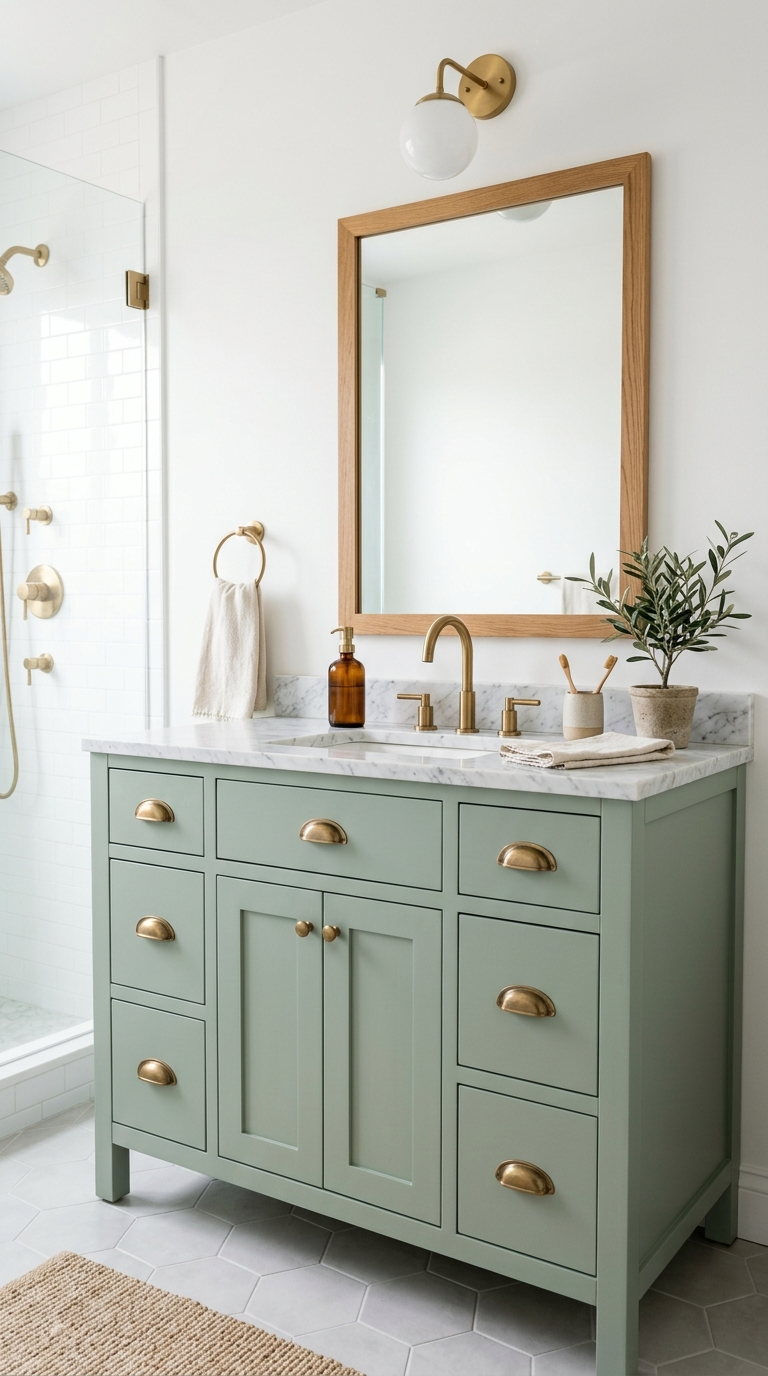
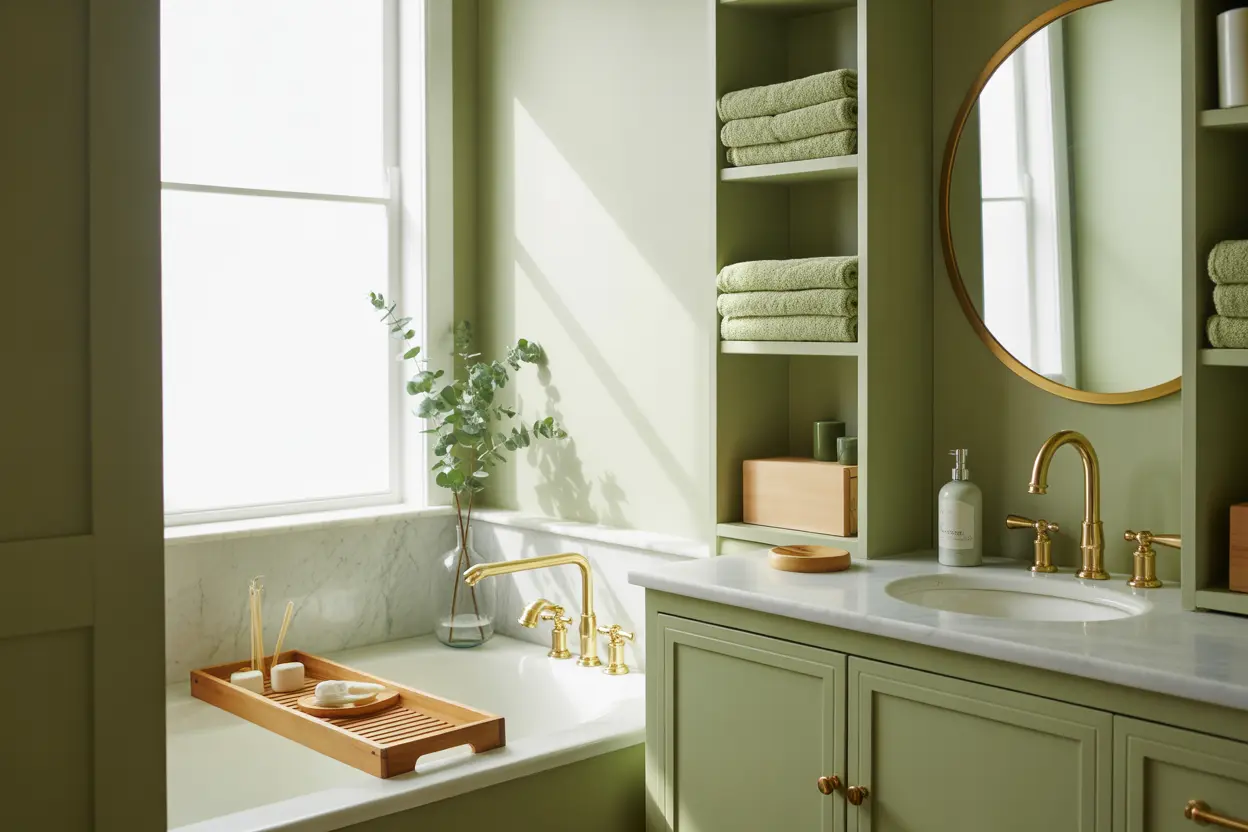
A bathroom vanity painted in sage green with the rest of the room in clean white walls is one of the most popular sage green bathroom configurations because the vanity becomes the visual centerpiece while the bathroom stays bright. Repainting an existing vanity with cabinet paint or chalk paint takes a single weekend and costs under fifty dollars in materials. Pair the sage vanity with brass cabinet pulls, a white marble or marble-look counter top, and a wood-framed mirror above for a complete vignette that reads as designed and intentional. The contained sage application also makes this approach accessible for renters who can repaint a freestanding vanity without affecting the rest of the bathroom.
3. Sage Subway Tile
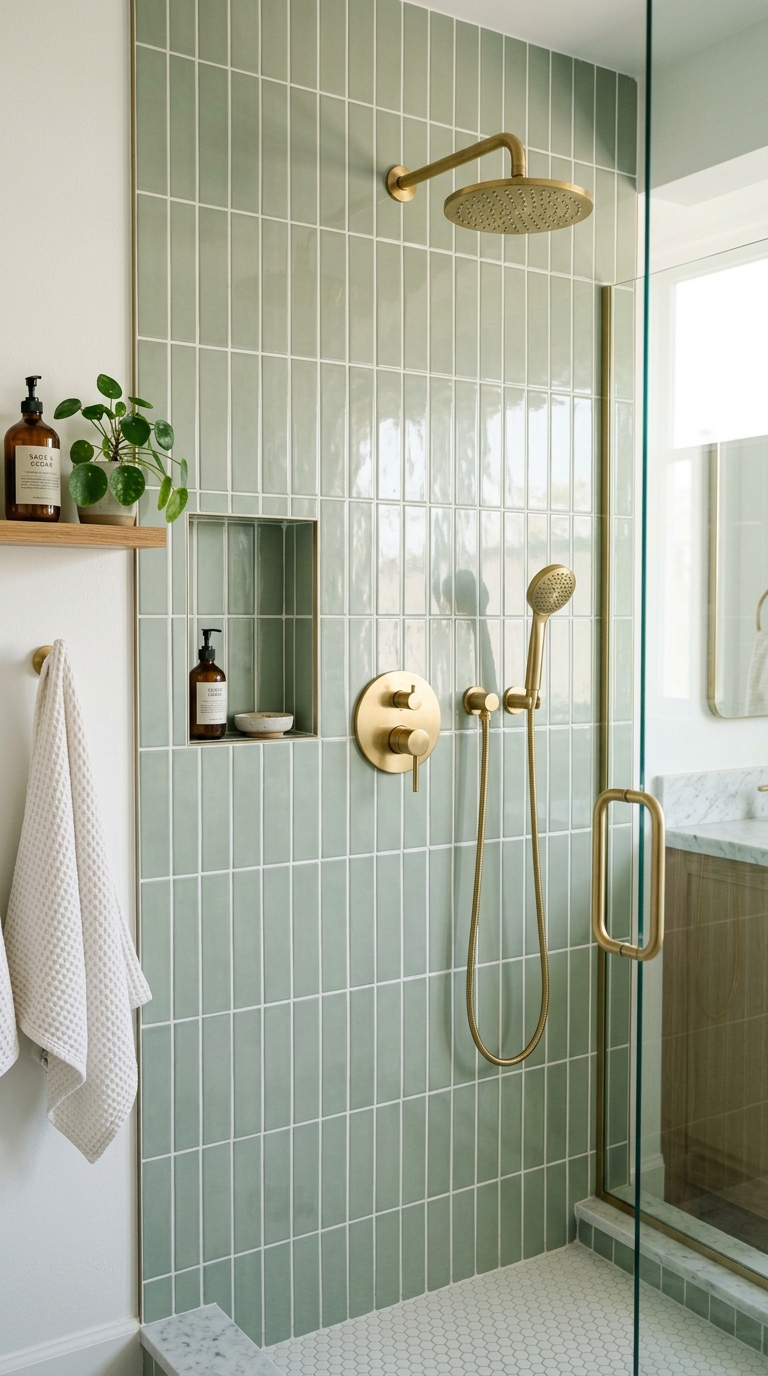
Subway tiles in a soft sage green color, installed in either the standard horizontal brick pattern or vertically for added height, give the bathroom shower or feature wall a strong but calm color presence. Sage subway tile pairs beautifully with chrome, brushed nickel, or brass fixtures and looks particularly good against white grout. The classic subway shape keeps the colored tile from feeling trendy, since the format itself has been continuously fashionable for over a century. Use sage subway tile on the shower walls, as a kitchen-style backsplash strip behind the vanity, or as a feature wall behind the tub for the most contained but impactful applications.
4. Sage With Brass Hardware
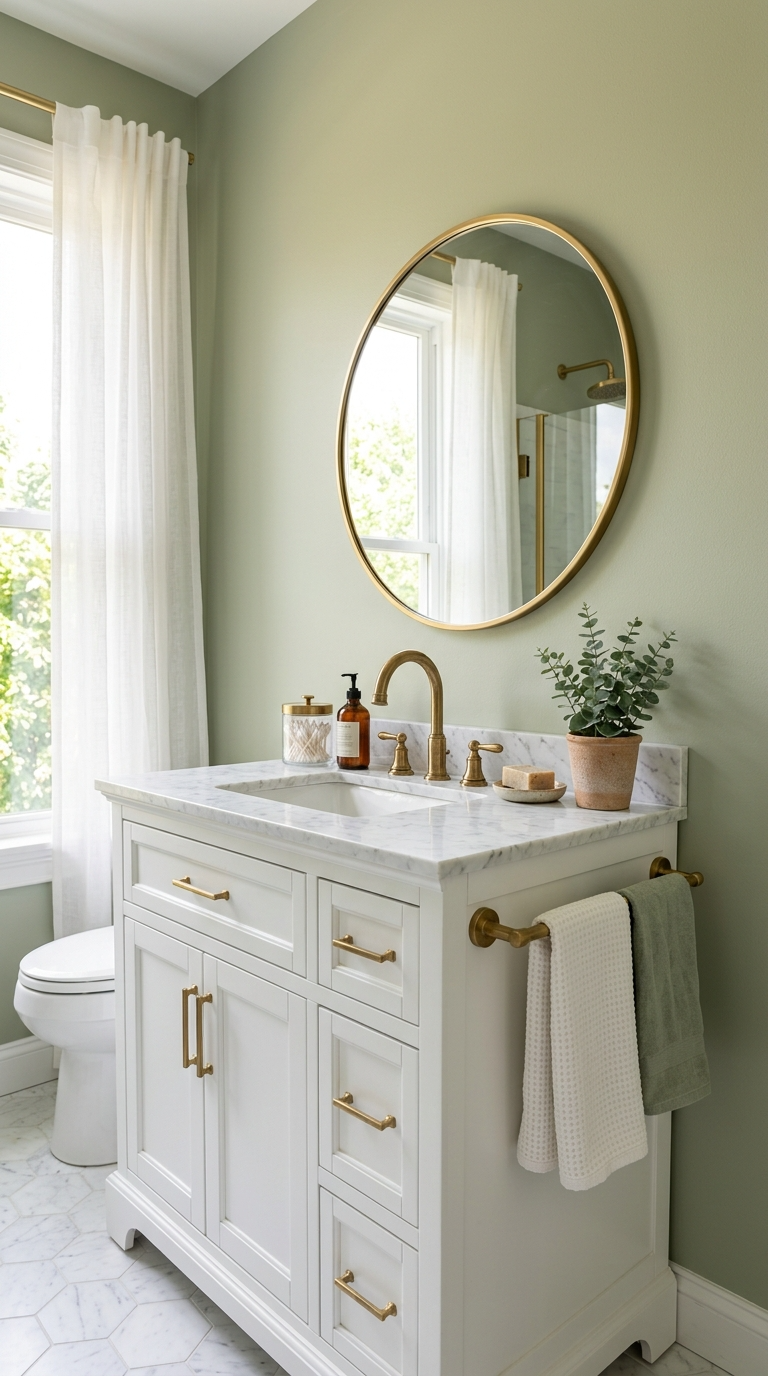
The combination of sage green with brass hardware is one of the most reliably elegant bathroom palettes in current design. The cool natural quality of sage and the warm metallic tone of brass balance each other beautifully and create a bathroom that reads as both fresh and rich at the same time. Use brass for the faucet, the towel bars, the cabinet pulls, the mirror frame, and the small fittings throughout the bathroom for a fully coordinated metal palette. The combination works equally well with light sage walls, sage vanities, and sage tile applications. For a deeper exploration of green bathroom palettes that work in different lighting conditions, the 20 green bathroom ideas guide covers how to choose the right shade of green for your specific bathroom layout and natural light.
5. Sage and White Marble
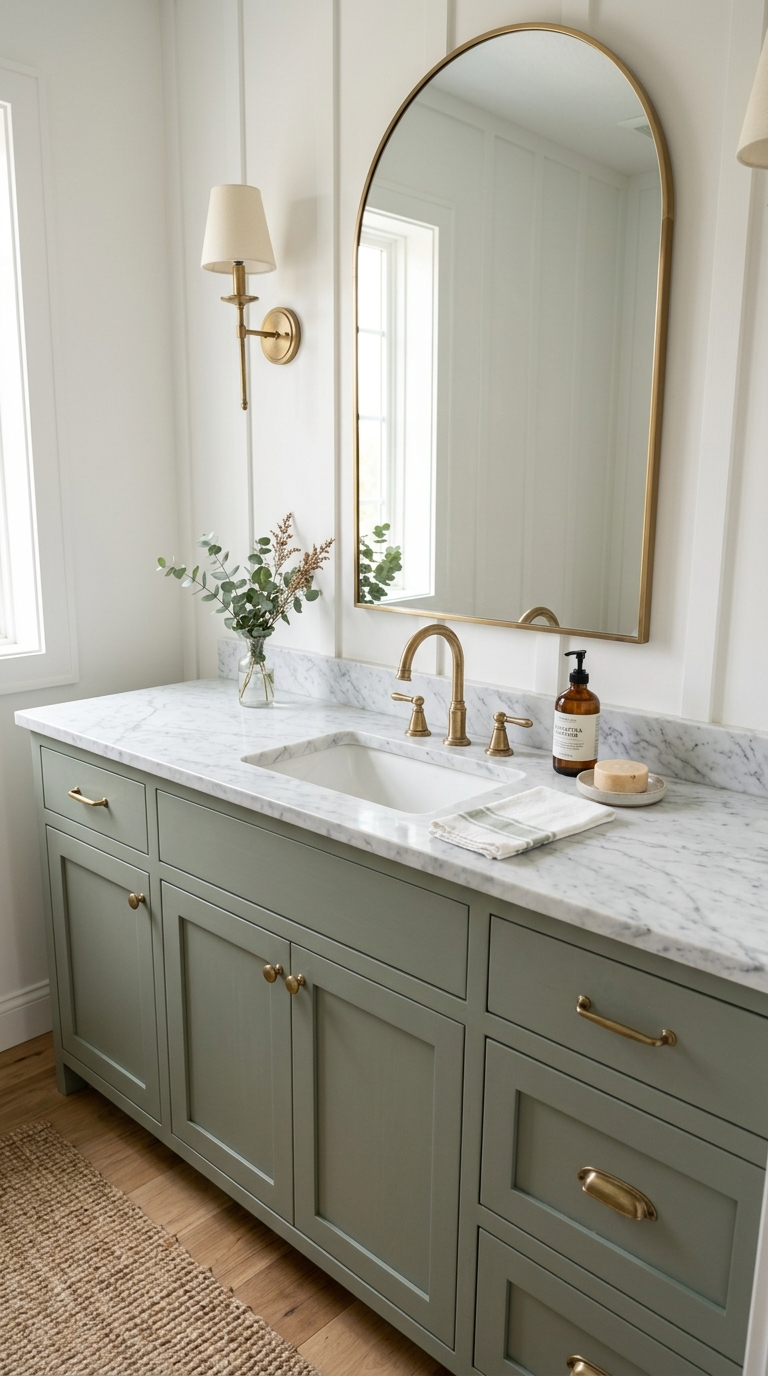
Marble with subtle gray veining as a counter surface or shower wall accent against sage green walls or sage cabinetry creates a refined material combination that has been popular in luxury bathroom design for years. The cool tones of the marble pick up on the cool quality of the sage, while the white field of the marble provides visual relief and brightness. Choose marble with soft minimal veining rather than dramatic high-contrast patterns for the most calming result. Carrara marble, white quartzite, and pale marble-look porcelain all work depending on budget. The marble and sage combination reads as both classic and current.
6. Sage Painted Ceiling
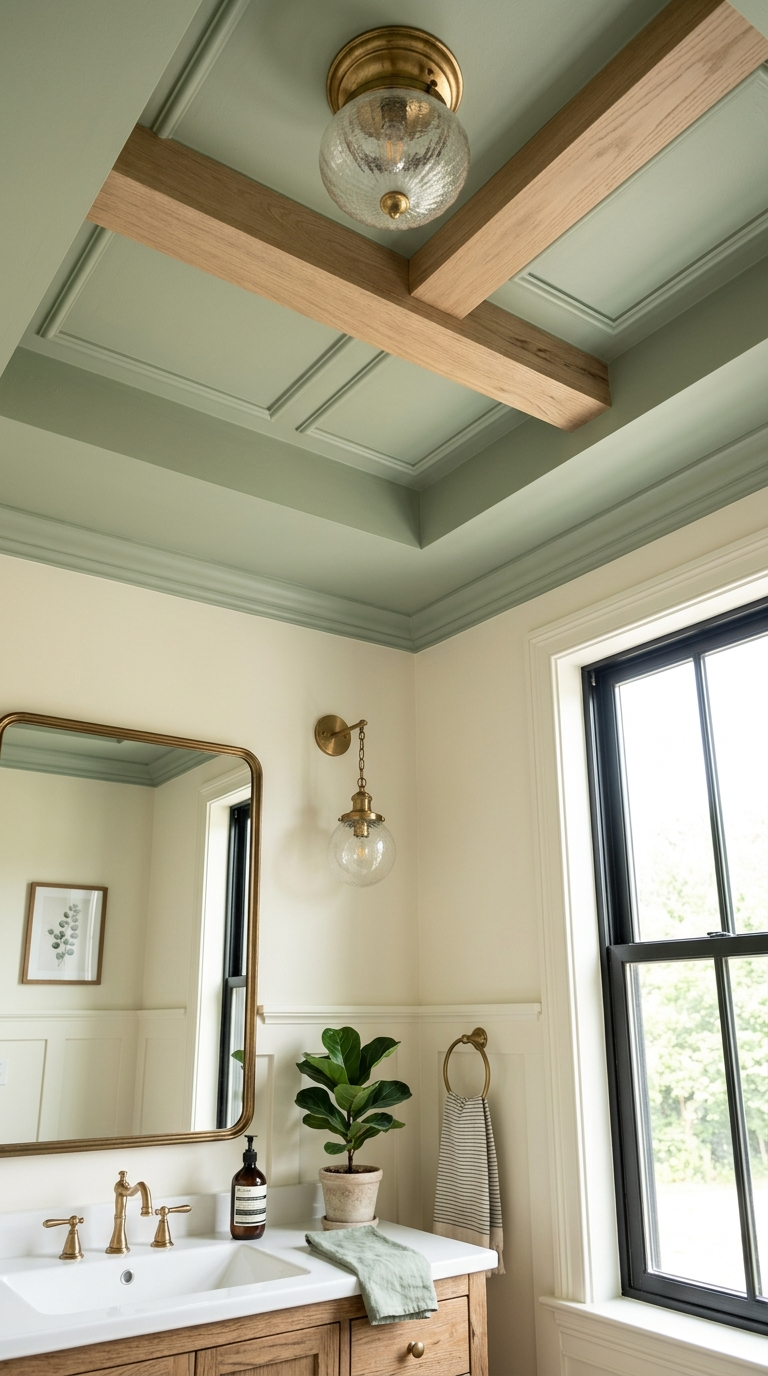
For an unexpected sage application, painting just the bathroom ceiling in a sage green tone while keeping the walls in a warm white or cream creates a soft canopy effect overhead that reflects subtle green tones onto the white walls below. The result is a bathroom that feels fresh and slightly garden-like without committing the walls to colored paint. This works particularly well in bathrooms with high ceilings where the painted ceiling becomes a deliberate design choice rather than feeling oppressive. Use a soft sage rather than a deep saturated tone for the most pleasant overhead application.
7. Sage Cabinetry Mix
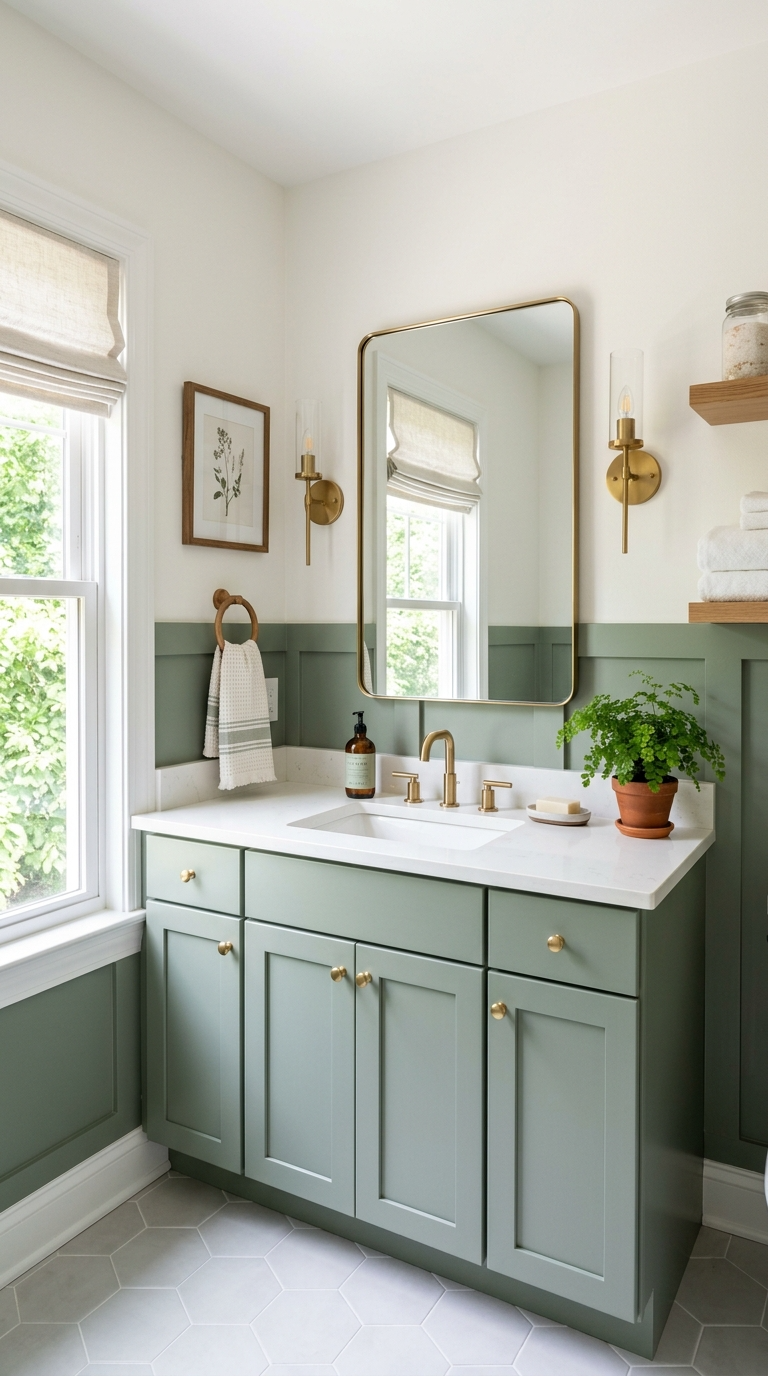
Mixing sage green lower cabinets with white upper wall surfaces is a classic two-part bathroom configuration that works in almost any bathroom layout. The visual weight of the sage at the lower level grounds the room, while the lighter upper walls keep the bathroom feeling open and bright. This mirrors a popular kitchen configuration and works the same way in a bathroom: sage vanity, sage lower wainscoting, or sage built-in linen storage at the lower wall level, paired with simple white walls above. The two-part treatment provides visual interest without committing the entire room to a single color.
8. Sage Bath Accessories
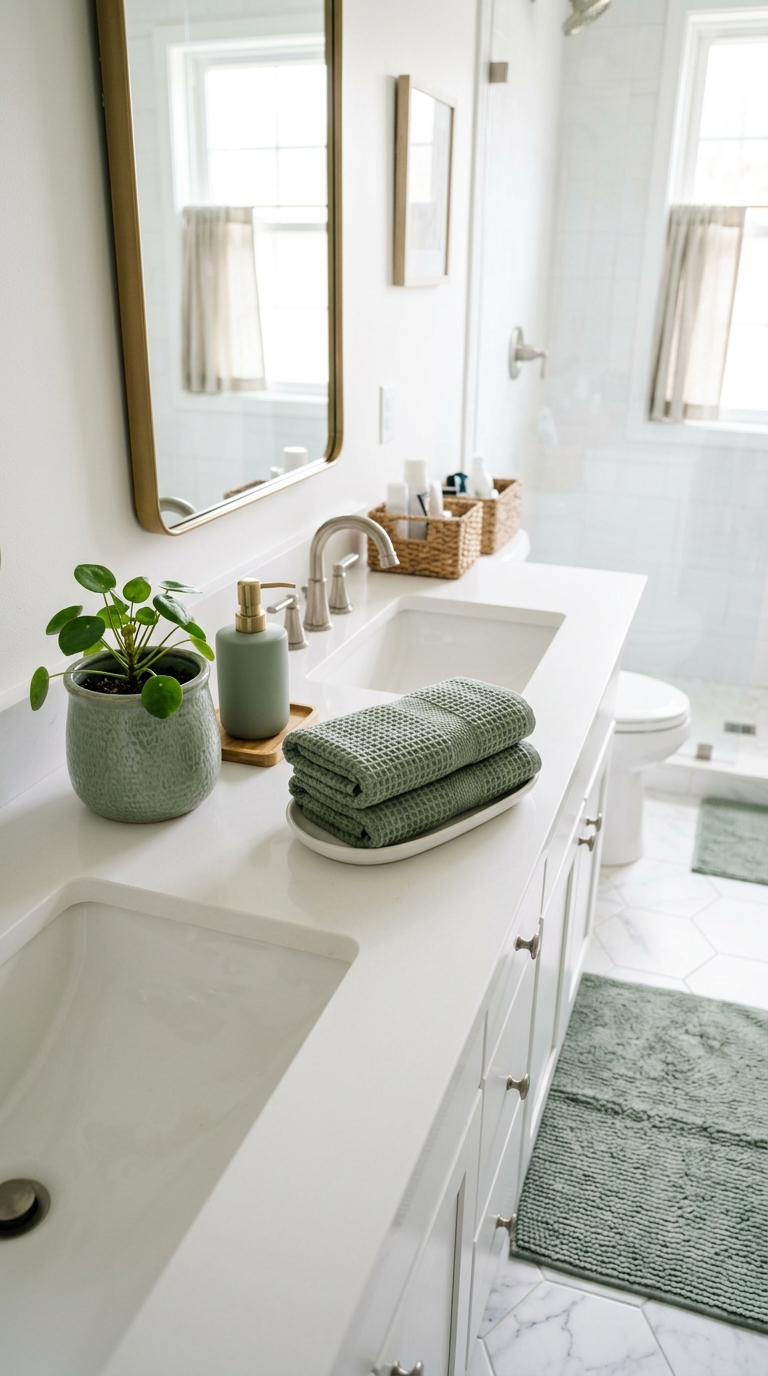
For renters or anyone wanting to test sage in a bathroom before committing to paint or tile, a coordinated set of sage accessories, sage hand towels, a sage bath mat, a small green plant in a sage ceramic pot, sage ceramic soap dispensers, brings the color into the room through swappable items rather than permanent surfaces. Choose sage in a muted tone rather than a bright kelly or lime green for the most sophisticated and adaptable result. The accessories can be rotated seasonally if you want to refresh the bathroom palette without doing any actual decorating work, which is a flexibility that paint and tile cannot provide.
9. Sage Wallpaper Botanical
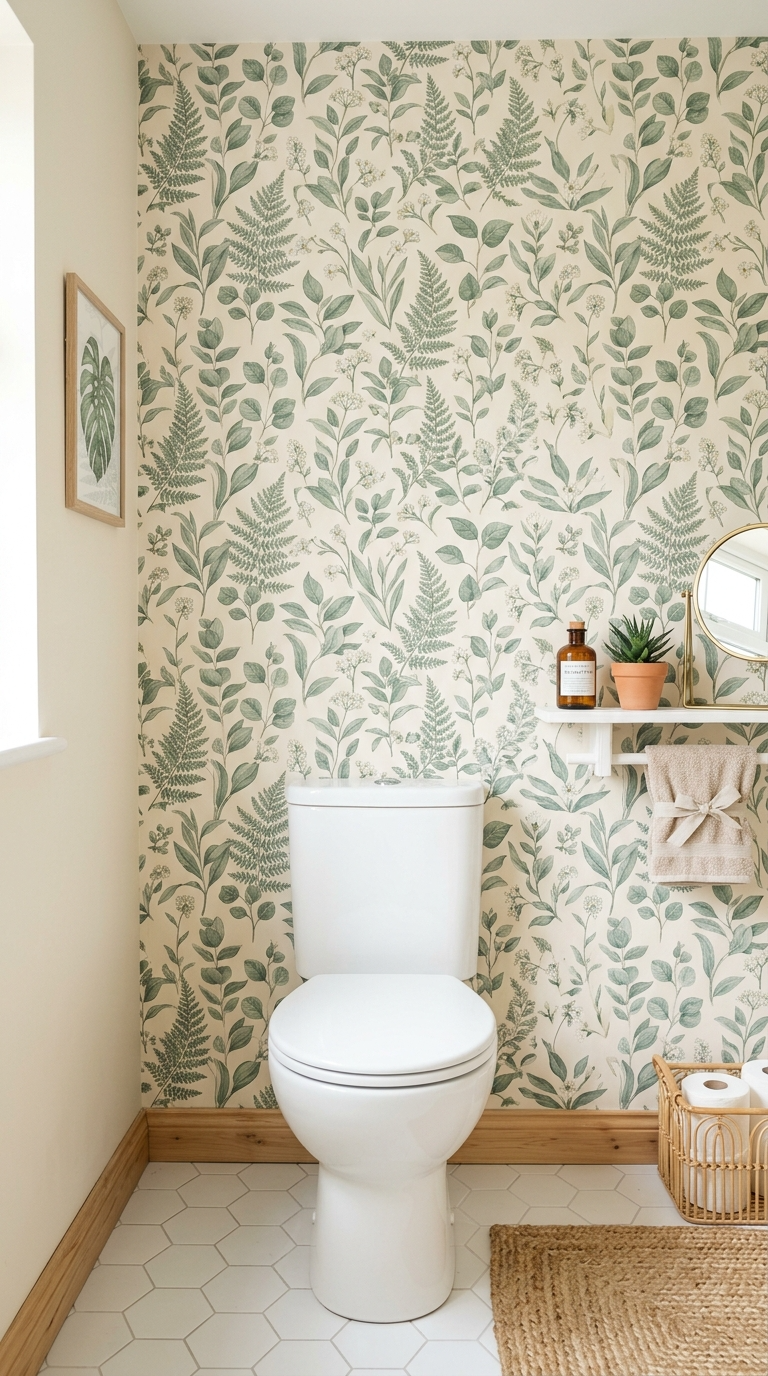
A botanical wallpaper featuring sage green leaves on a cream or white background applied to one feature wall of the bathroom adds pattern and color in a controlled way that suits bathrooms of any size. The white or cream background keeps the wallpaper from feeling heavy in low light, while the sage botanical pattern provides the calm green presence. Modern peel-and-stick wallpapers make this approach accessible without permanent installation. Apply the wallpaper to the wall above the toilet, the wall behind a freestanding tub, or the wall opposite the door for the most visible impact.
10. Sage Half Bath Treatment
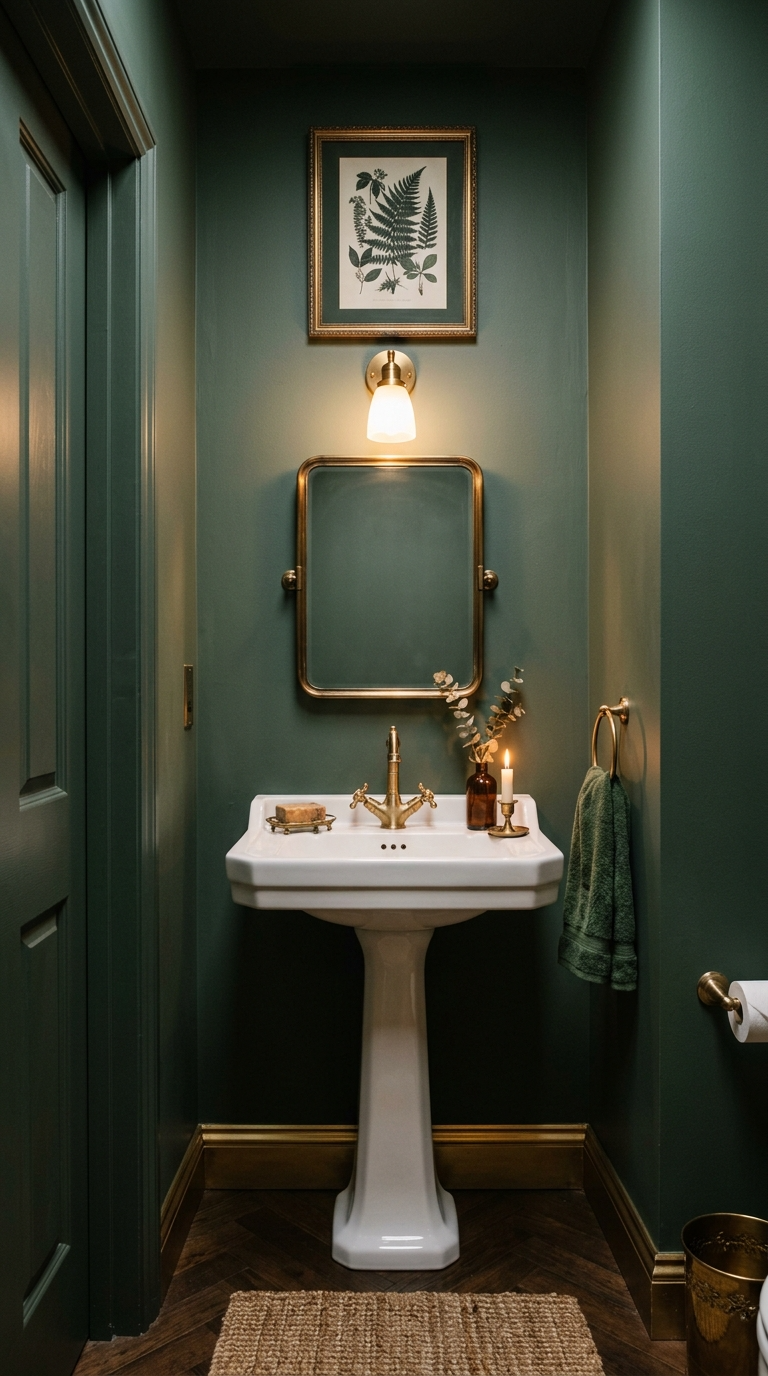
A small powder room or half bath painted in a deeper saturated sage tone, almost approaching a soft eucalyptus or hunter green at the deepest end, creates an intimate jewel-box quality that lighter sage cannot achieve. The small size of a powder room means the deeper color creates an enveloping rather than oppressive effect, especially when paired with good warm lighting and bright contrasting fixtures. Pair the deeper sage walls with a white pedestal sink, brass fixtures, and a single piece of art for a complete sophisticated half bath.
11. Sage Floor Tile Accent
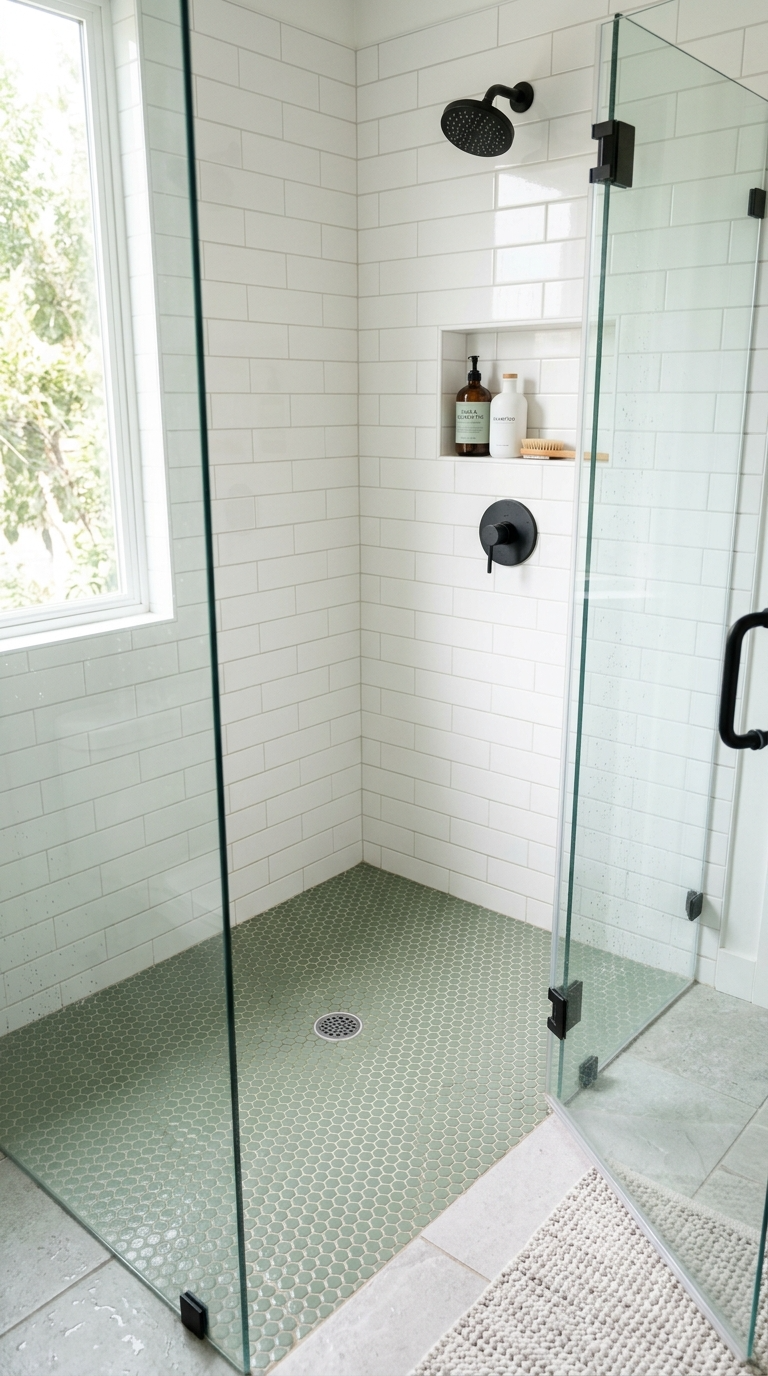
Small format sage green tiles, perhaps one or two inch square mosaics, used specifically on the bathroom floor or shower floor while the walls remain in white tile creates a contained sage moment from below that grounds the room without dominating it. The small format also provides better grip than larger tiles, which makes the sage floor both attractive and practically functional. The floor tile reads as a deliberate accent rather than as a primary color choice, which suits bathrooms where the wall surfaces need to stay neutral for other reasons.
12. Sage and Natural Wood
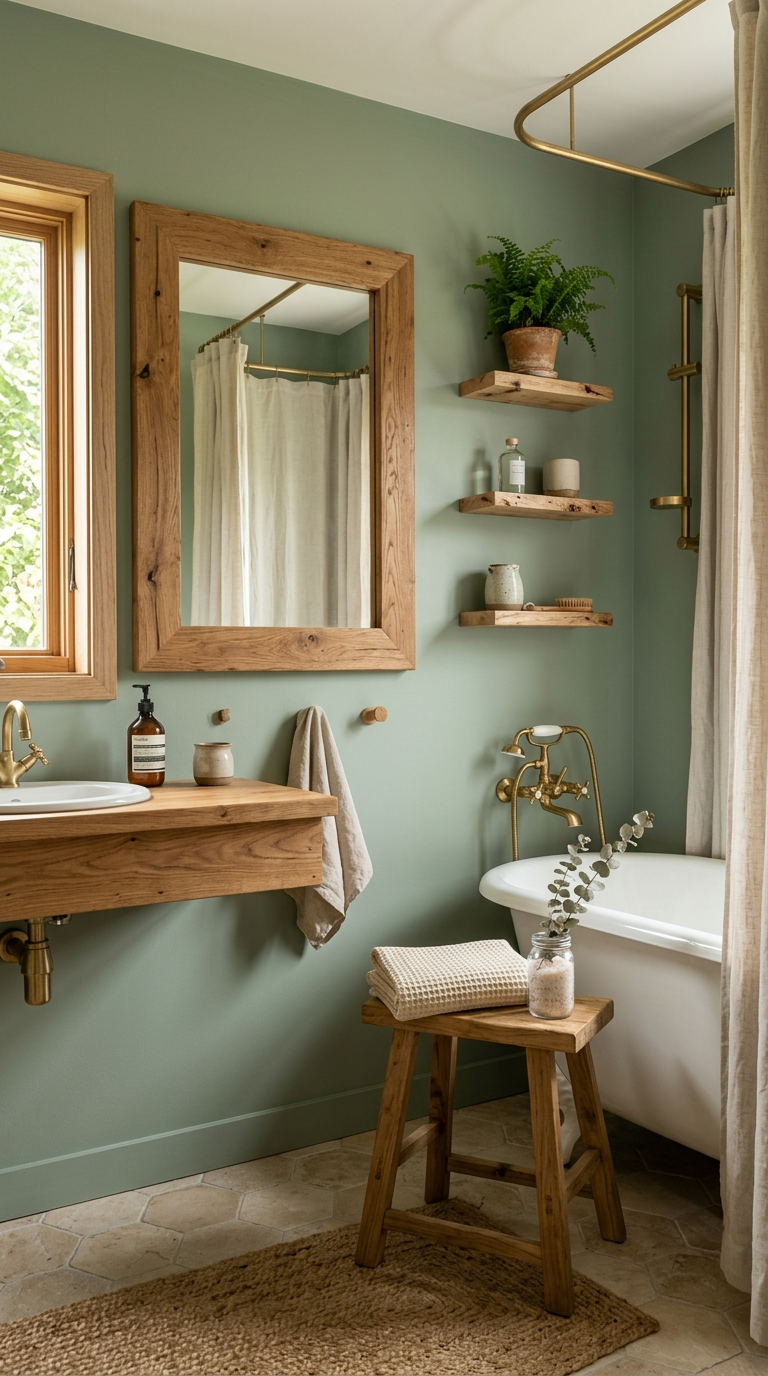
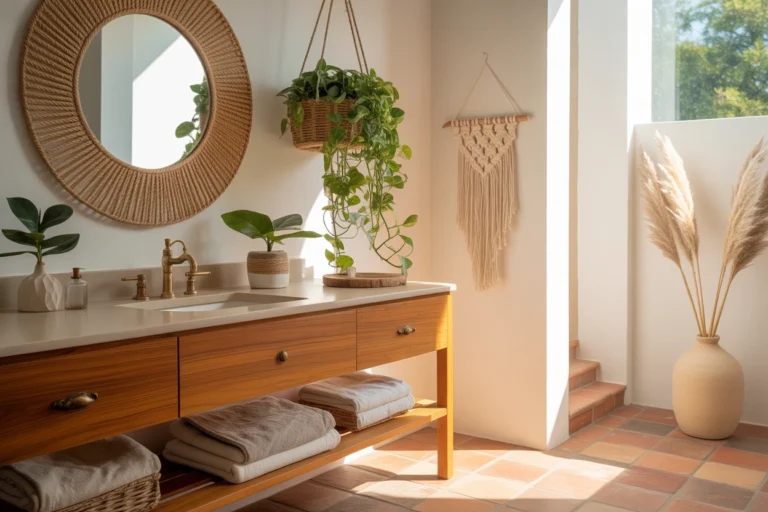
Pairing sage green walls or cabinetry with natural wood elements, a wood-framed mirror, a wooden bath stool, wooden shelves, a teak bath tray, creates a warm organic palette that connects the bathroom to nature in the most direct way possible. The natural grain and warm tones of unstained or lightly stained wood complement the cool natural quality of sage beautifully. Use wood in proportions that suit the bathroom: too much wood reads as cabin or rustic, while too little misses the warmth that wood provides. A few well-placed wood elements alongside the sage is the right balance for most bathrooms.
13. Sage Towel Set
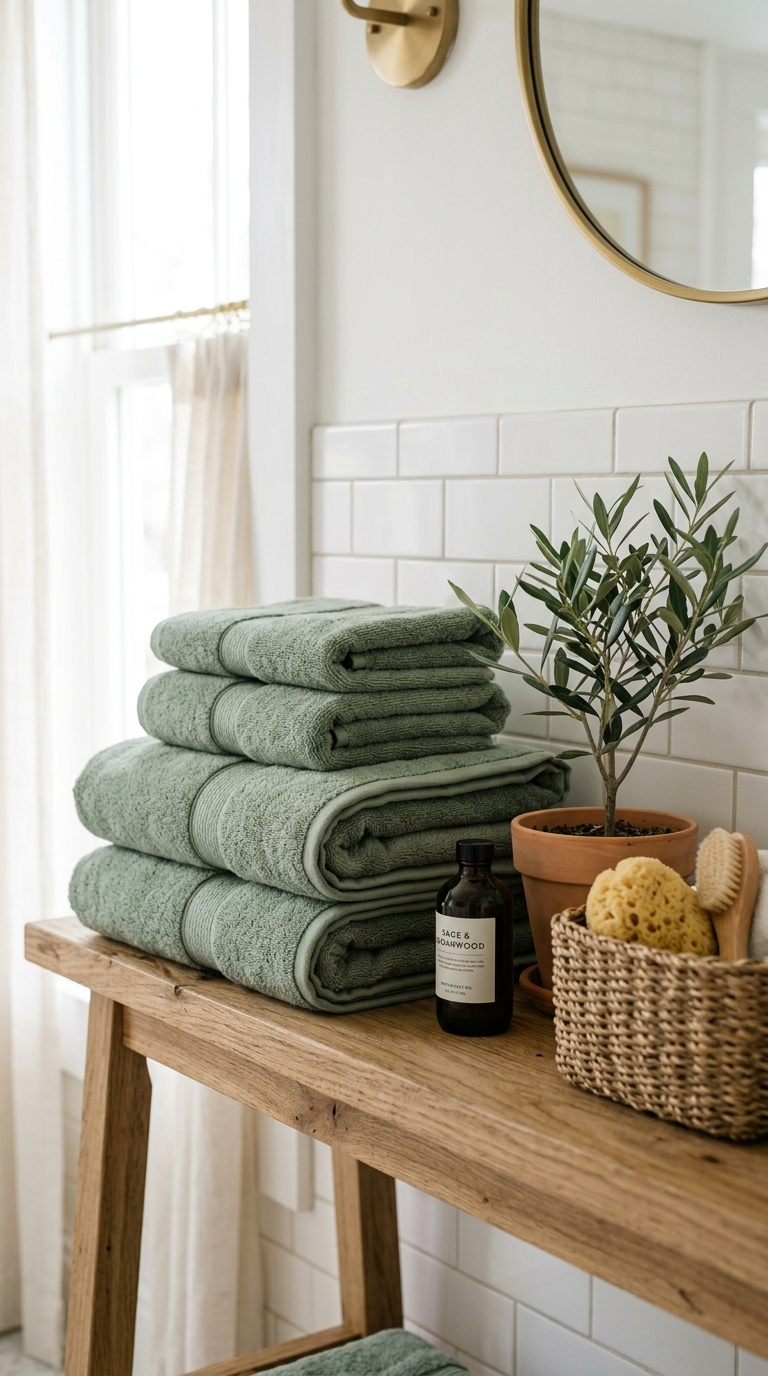
A coordinated set of sage green bath towels in a substantial weight, around four hundred grams per square meter, displayed folded or rolled on an open shelf adds the color in textile form without requiring any permanent commitment. The towels read as a deliberate styled element when matched as a set rather than mixed with random colors. Choose sage towels in a single tone rather than mixing different sage variations, since the consistency is what gives the towel display its considered quality. Replace the towel set every couple of years to keep the color and texture fresh.
14. Sage Tiled Niche
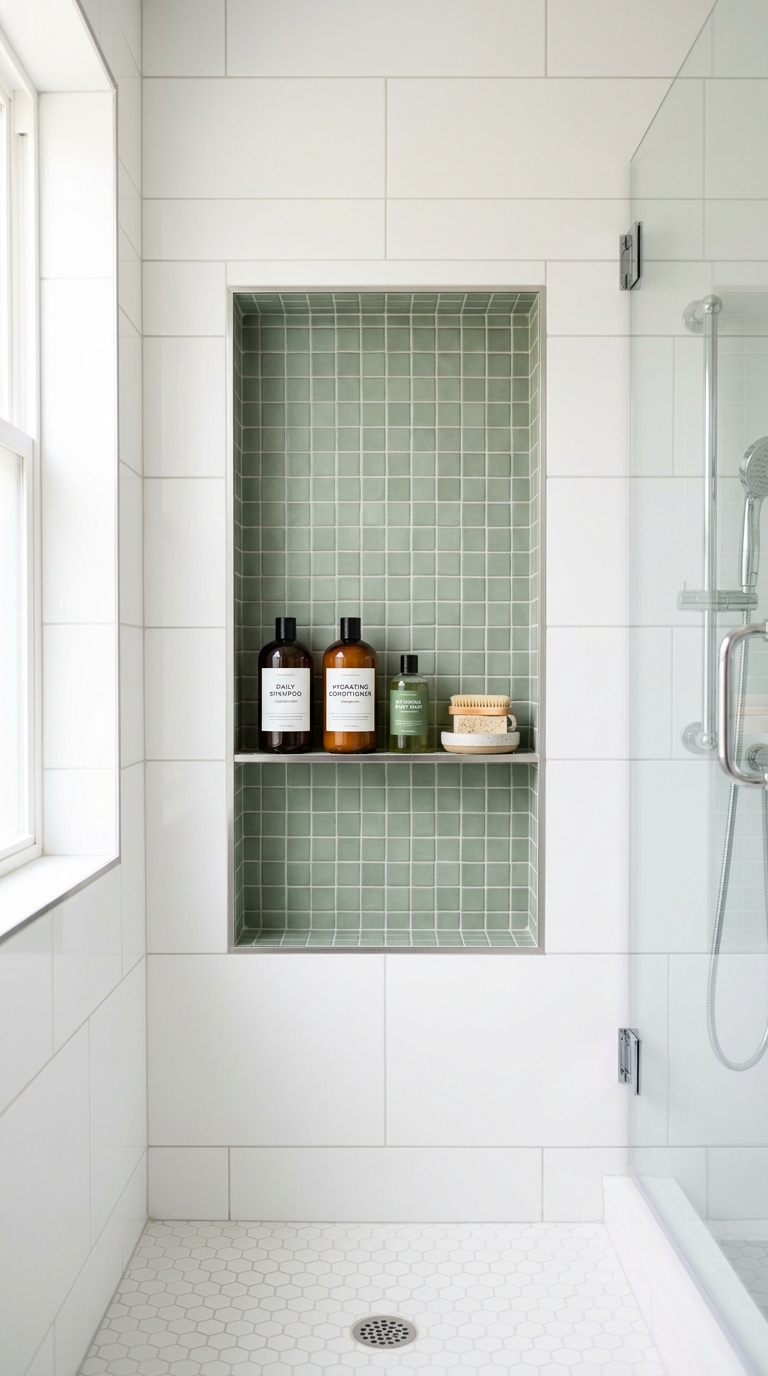
A recessed shower niche tiled in a sage green tile while the rest of the shower is in white tile creates a small contained sage moment that adds visual interest to the shower without committing the entire shower wall. The niche tile becomes a small focal point that frames the shower products inside it. Use small format sage tile in the niche for the most decorative effect. Coordinate the niche tile color with other sage elements in the bathroom for a unified palette.
15. Sage Painted Door
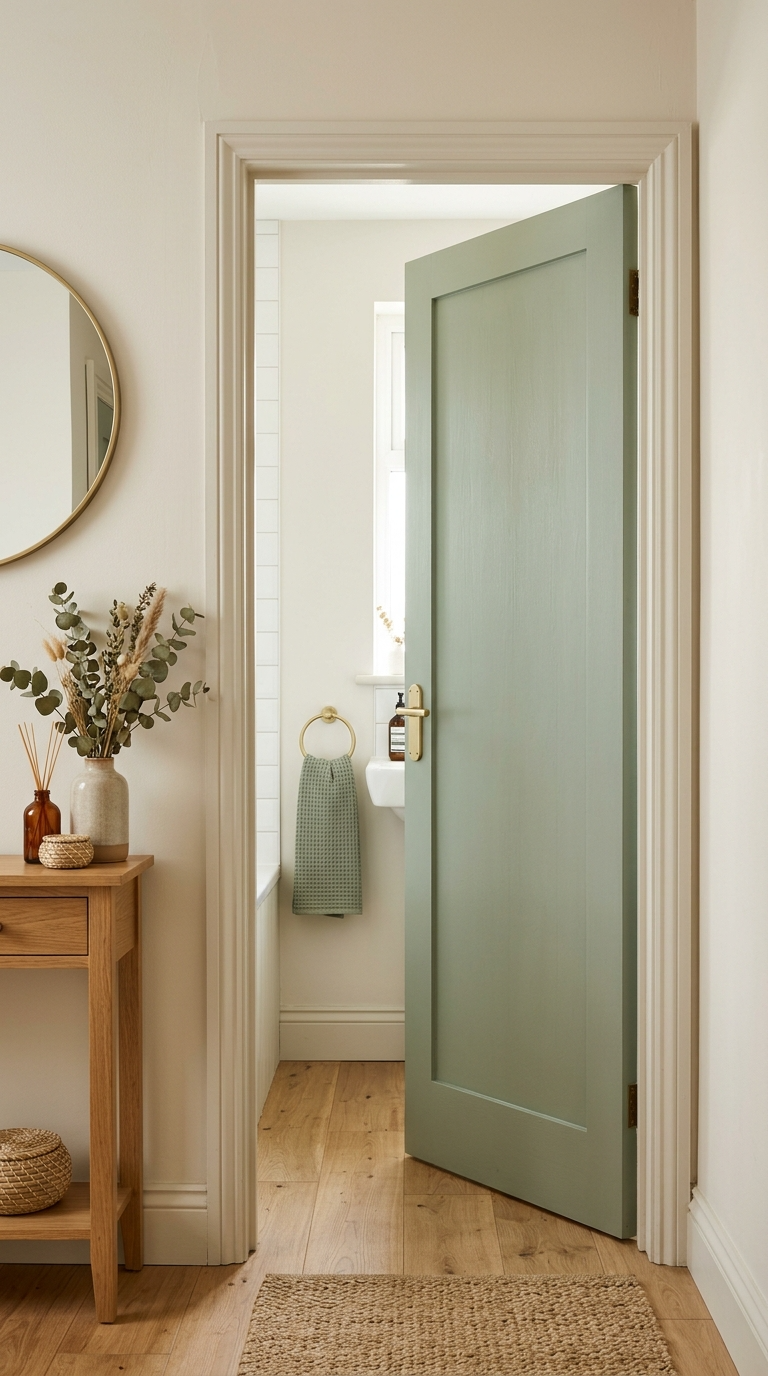
For the lowest-commitment sage application possible, painting just the bathroom door in a sage green tone while leaving the walls and other surfaces in their existing colors adds a single small sage moment that signals seasonal styling without any major commitment. The door is repainted easily if the color does not work, and the contained application means the rest of the bathroom can stay neutral. This approach works particularly well in bathrooms where structural color changes are not feasible but where some color personality is desired.
16. Soft Sage Linen Curtain
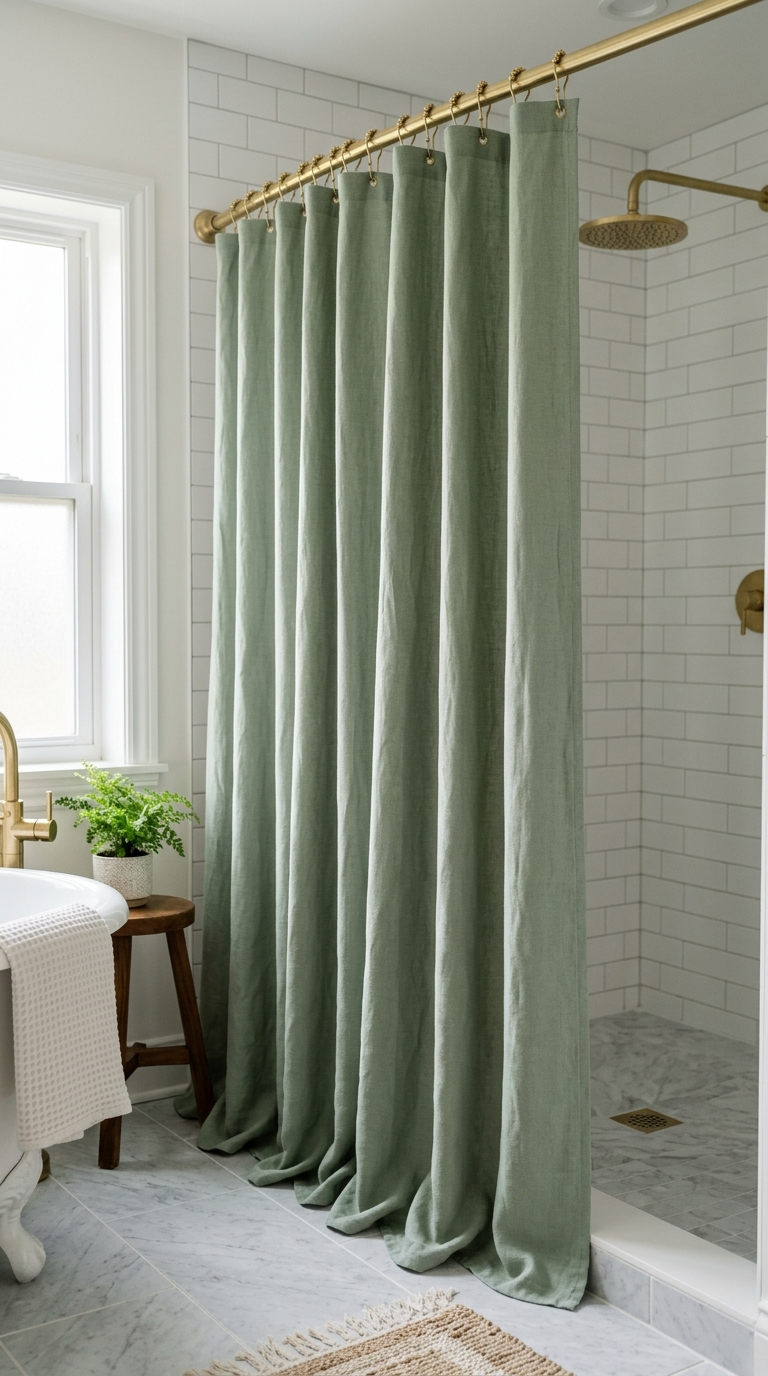
A linen shower curtain in a soft sage green tone, hung from matching curtain rings, brings sage into the bathroom through one of the largest single textiles in the room. The fabric softens the visual hardness of tile and ceramic surfaces while introducing the calm sage color in a substantial way. Choose curtains in heavyweight linen rather than thin polyester for the most refined result. A solid sage curtain reads as more sophisticated than printed sage patterns, and the simple solid color allows the rest of the bathroom decor to shine without competition.
17. Sage Painted Trim Detail
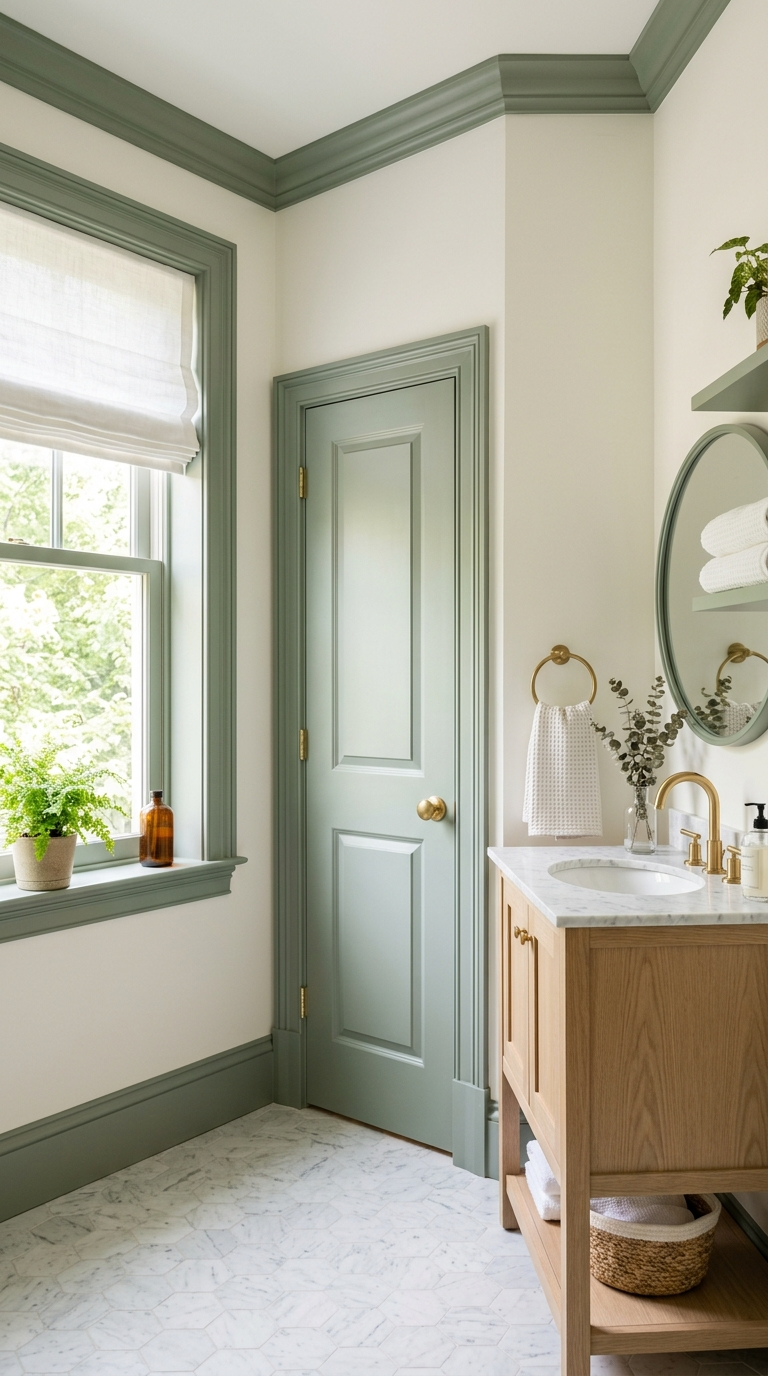
Painting just the bathroom trim, the baseboard, the door frame, the window frame, in a sage green tone while the walls stay in a warm white or cream creates a subtle architectural detail that reads as deliberate design rather than as a statement application of color. The contained trim application introduces sage in a small but consistent way that frames the room rather than dominating it. This approach works particularly well in bathrooms with strong existing architectural character that would be obscured by full sage walls.
18. Sage Bath Tray Detail
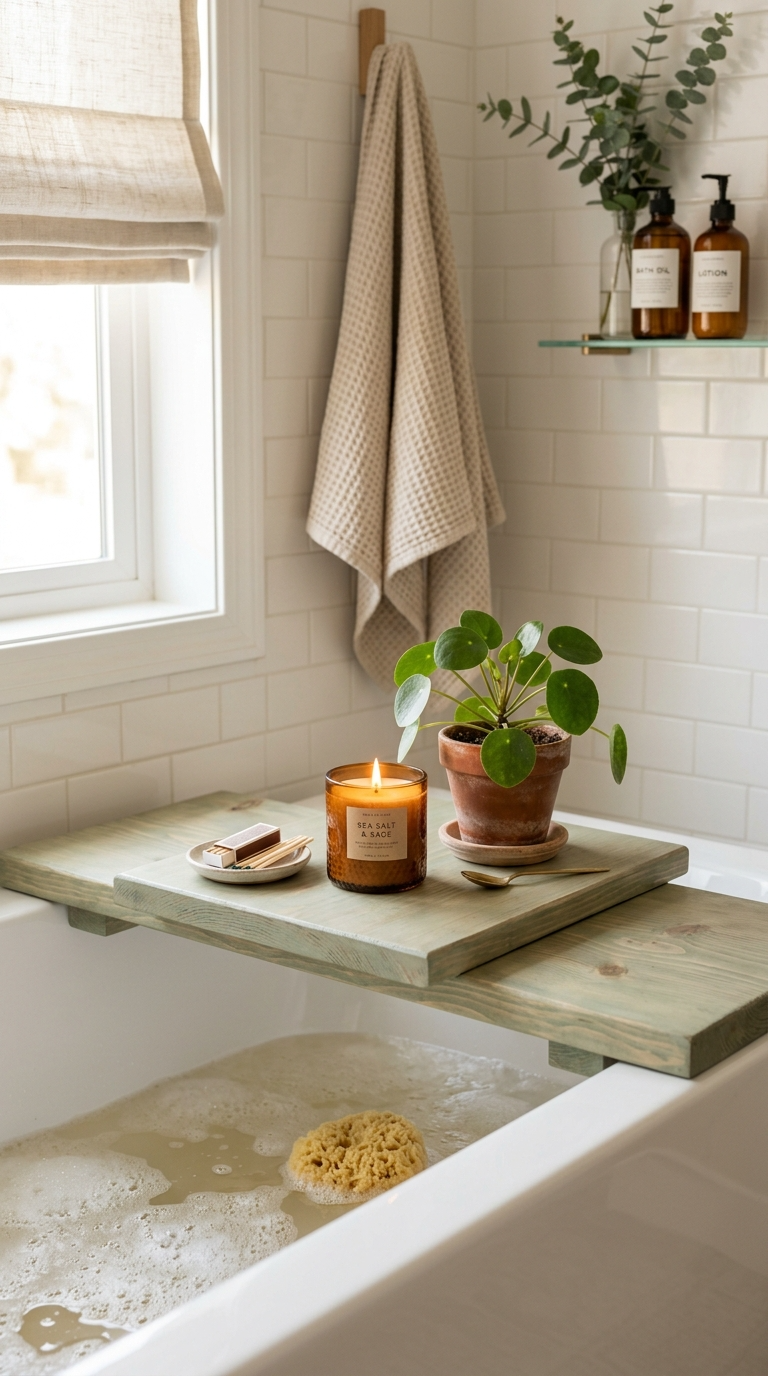
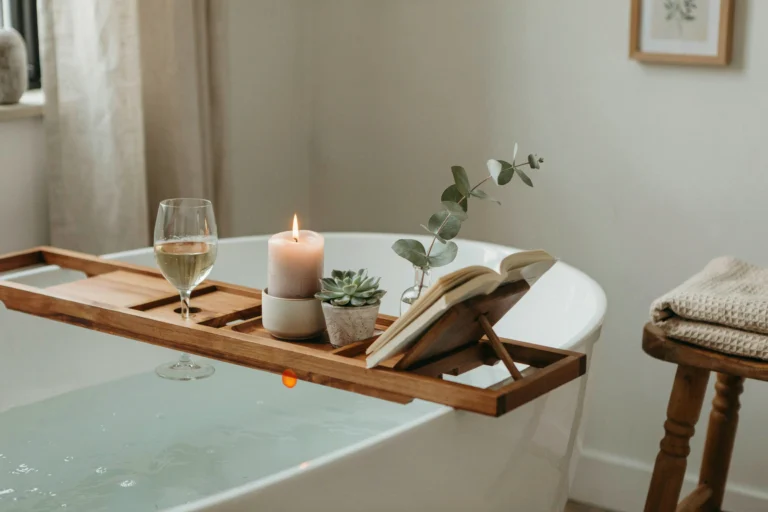
A small wooden bath tray painted in a soft sage green or stained in a green wash, laid across the bathtub holding a single candle and a small plant, brings sage into the bathroom through a single small accessory. The bath tray reads as a styled detail rather than as a permanent color decision and can be refreshed seasonally. The combination of warm wood underneath, the soft sage finish on top, and the candle and plant on the surface, creates a complete styled vignette across the bath in a single object.
19. Plants in Sage Tones
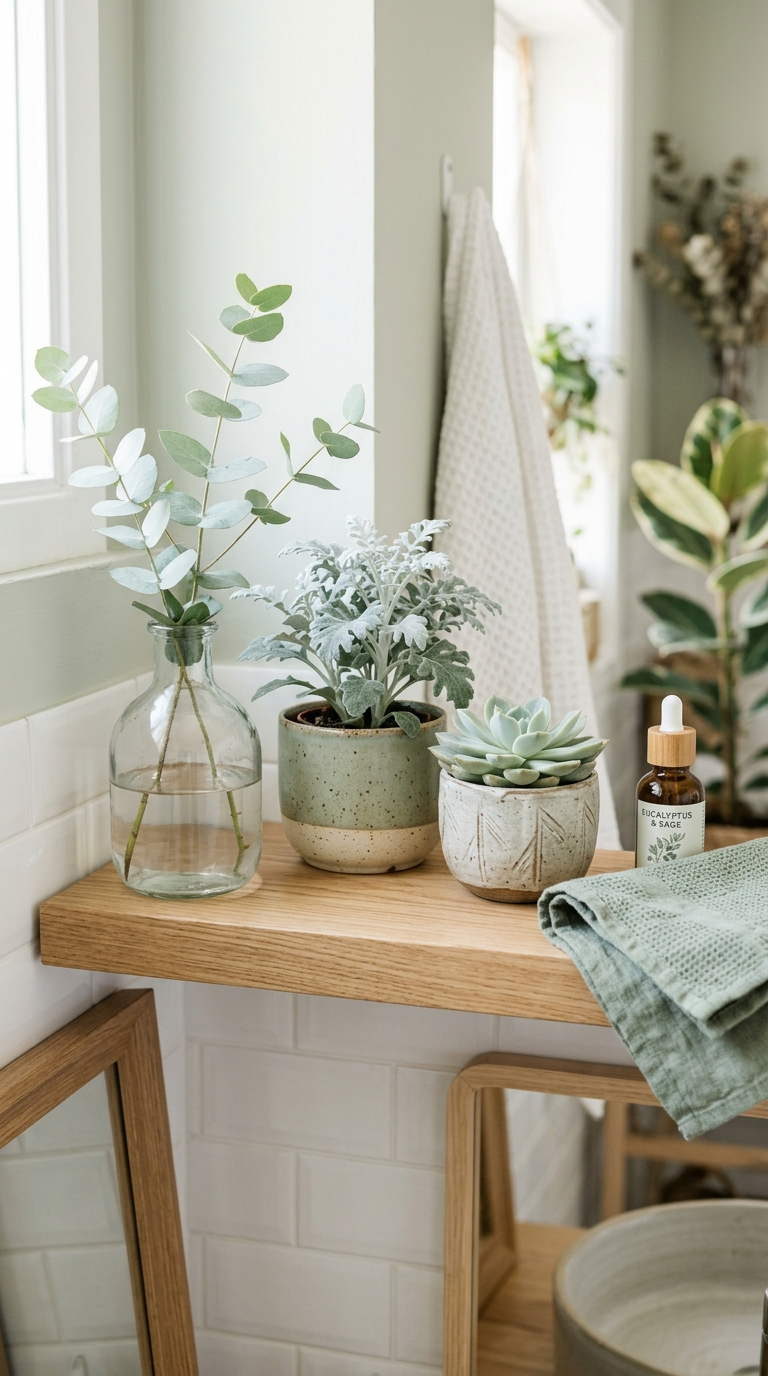
Living plants with naturally sage-toned foliage, eucalyptus, dusty miller, lavender, succulents in sage tones, displayed on the bathroom shelf or windowsill bring the actual color of sage into the room through living material. The connection between the painted or styled sage in the room and the natural sage in the plants creates a coherent palette story that purchased decor cannot quite match. Bathrooms with high humidity actually suit several of these plants particularly well, which means the plant collection often thrives in the bathroom environment.
20. Sage Mosaic Backsplash
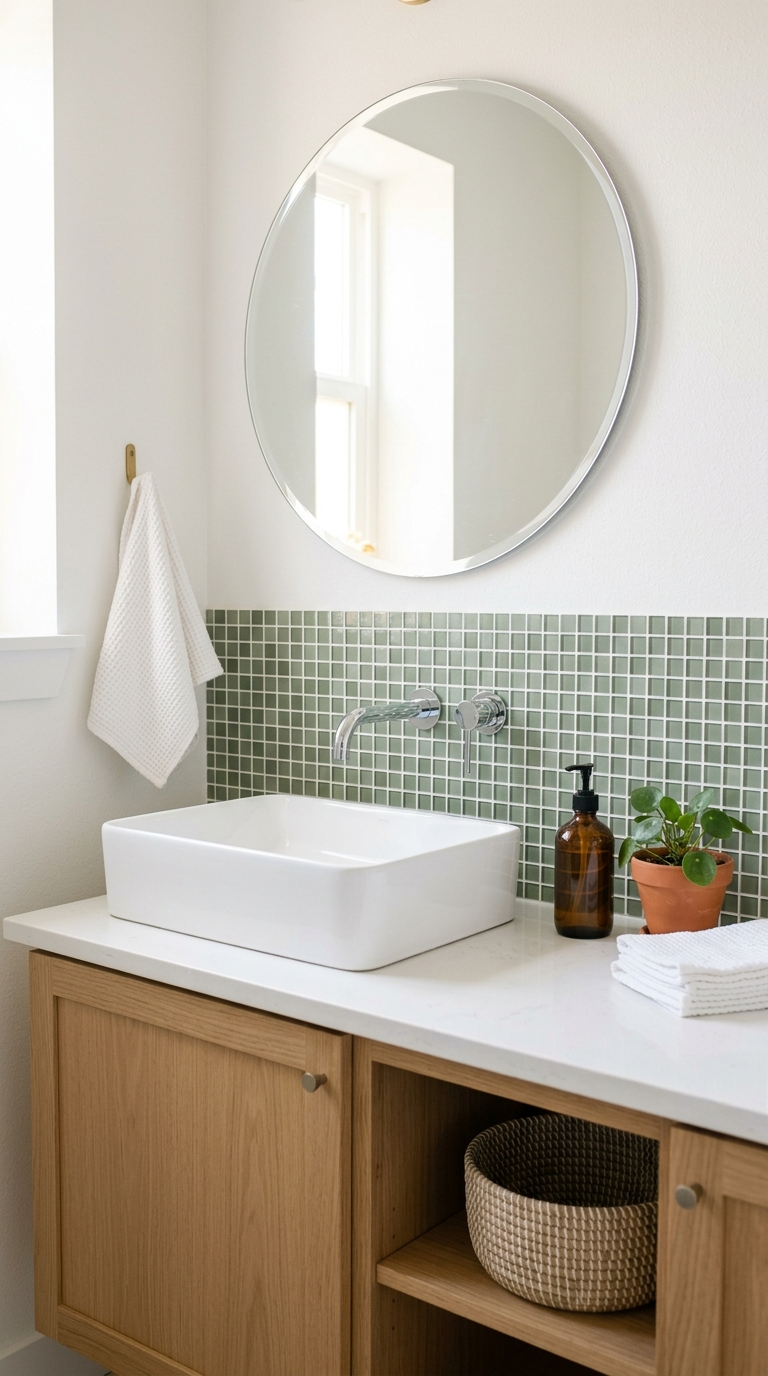
A small format sage green mosaic tile used as a backsplash strip behind the vanity, in a defined band rather than across the full wall, introduces sage in a controlled and very accessible application. The mosaic format adds visual texture beyond just color, and the contained application keeps the strong sage from overwhelming the rest of the bathroom. The backsplash strip becomes a deliberate horizontal band of sage across the vanity area that frames the sink without committing the surrounding walls to color.
21. Restraint With Sage
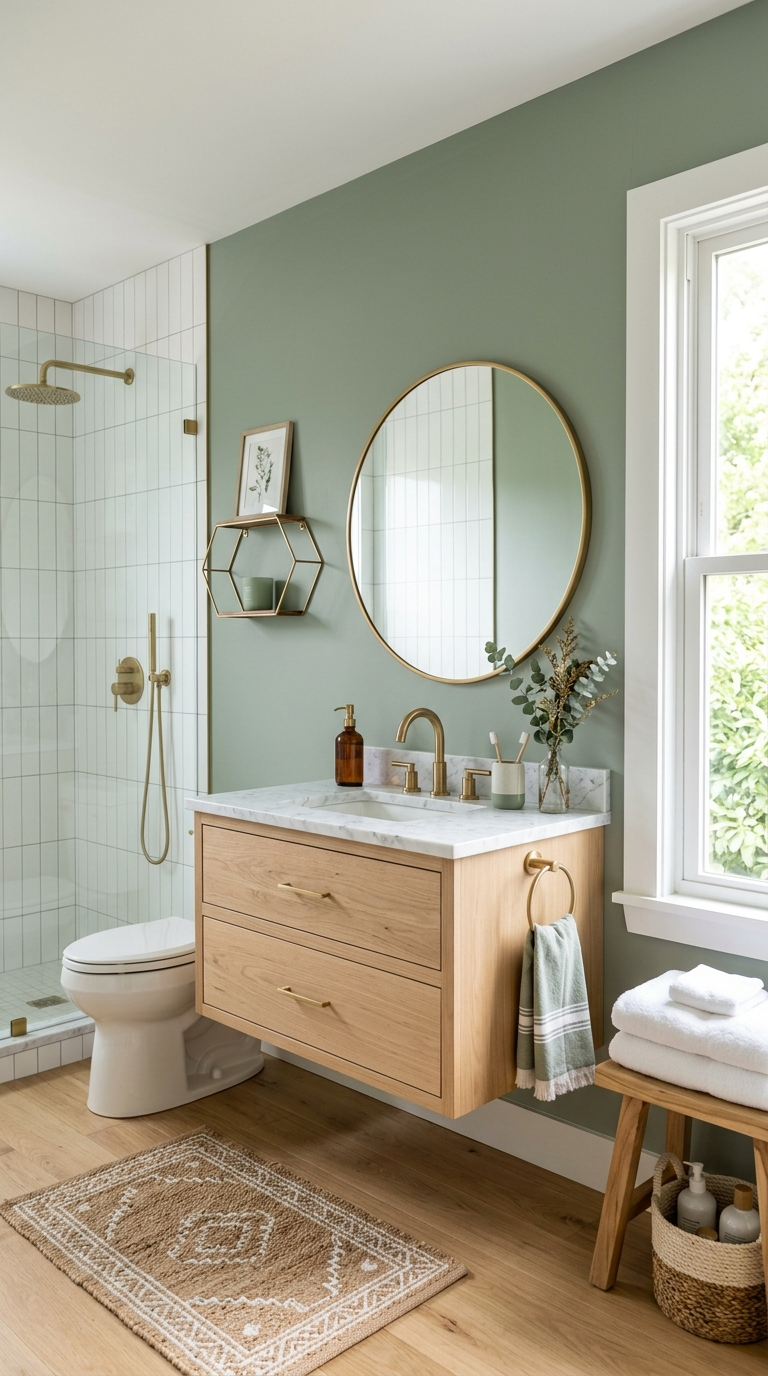
The most reliable principle for using sage green well in a bathroom is restraint. Sage on every surface, sage walls, sage tile, sage cabinetry, sage ceiling, and sage accessories all together can flatten out into a single monochromatic plane that loses all the freshness and calm that sage offers when used more selectively. The most successful sage bathrooms use sage as the dominant note balanced by white, marble, brass, and natural wood in supporting roles. Choose two or three of these ideas for a single bathroom rather than trying to incorporate all of them, and the sage will read as designed and intentional rather than as overwhelming.
Sage green works in any bathroom that needs more calm and natural quality without going dark or dramatic. The shade is forgiving across different lighting conditions, pairs effortlessly with the materials that bathrooms typically use, and remains stylish across changing trends. Choose the application that suits your specific bathroom and the rest of the design comes together naturally around it.