18 Plant Decor Ideas That Make Any Room Feel Alive and Styled
Plants are the only decor element that is actually alive. They grow, they change with the seasons, they respond to care, and they add a quality of organic warmth and gentle movement that no manufactured object can replicate. But a room with plants scattered randomly across every surface does not look styled. It looks like a plant store. The difference between plants as clutter and plants as genuine decor is the same as the difference between random furniture and designed furniture: it comes down to placement, proportion, and the intentional coordination of the plants with everything else in the room. These 18 ideas cover how to use plants as real design features in living rooms, bedrooms, kitchens, and bathrooms, with the styling principles that make the green feel deliberate rather than accidental.
1. Statement Floor Plant
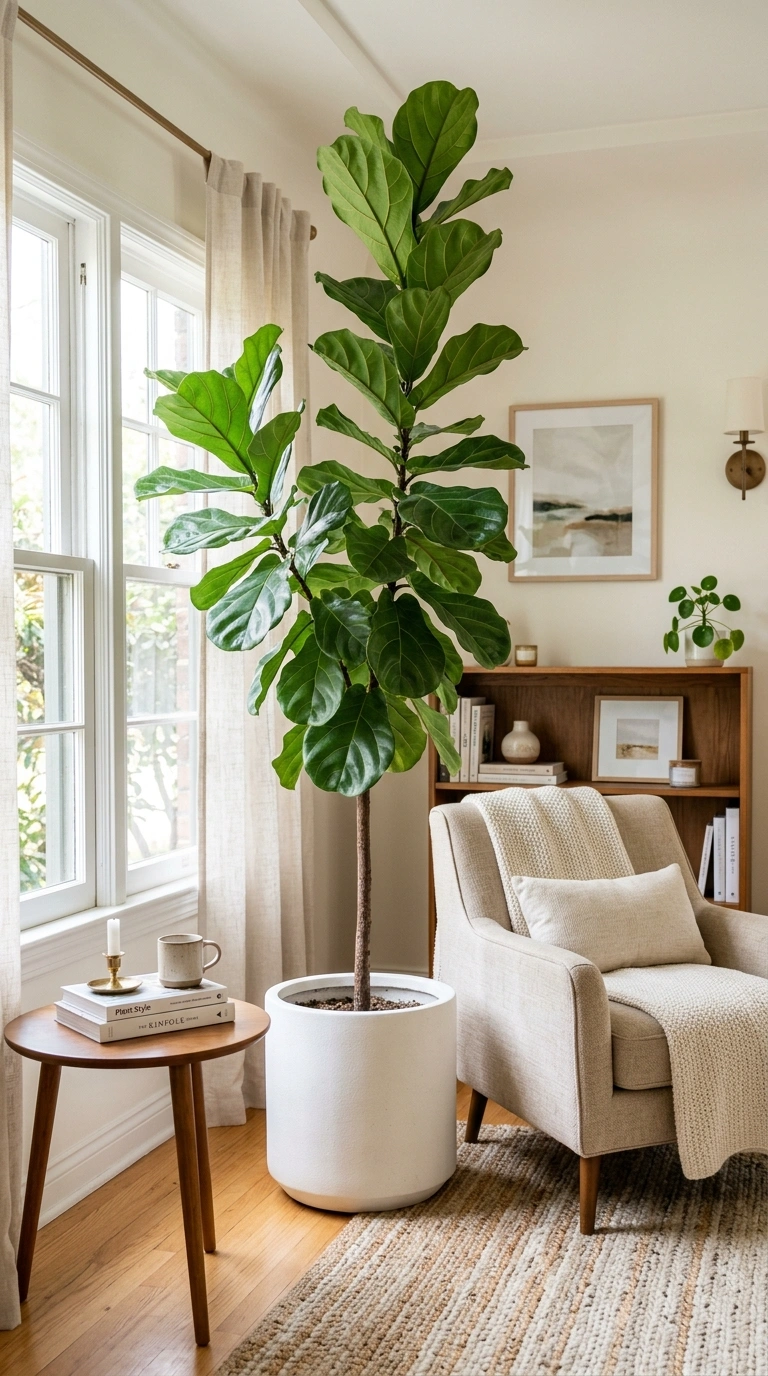
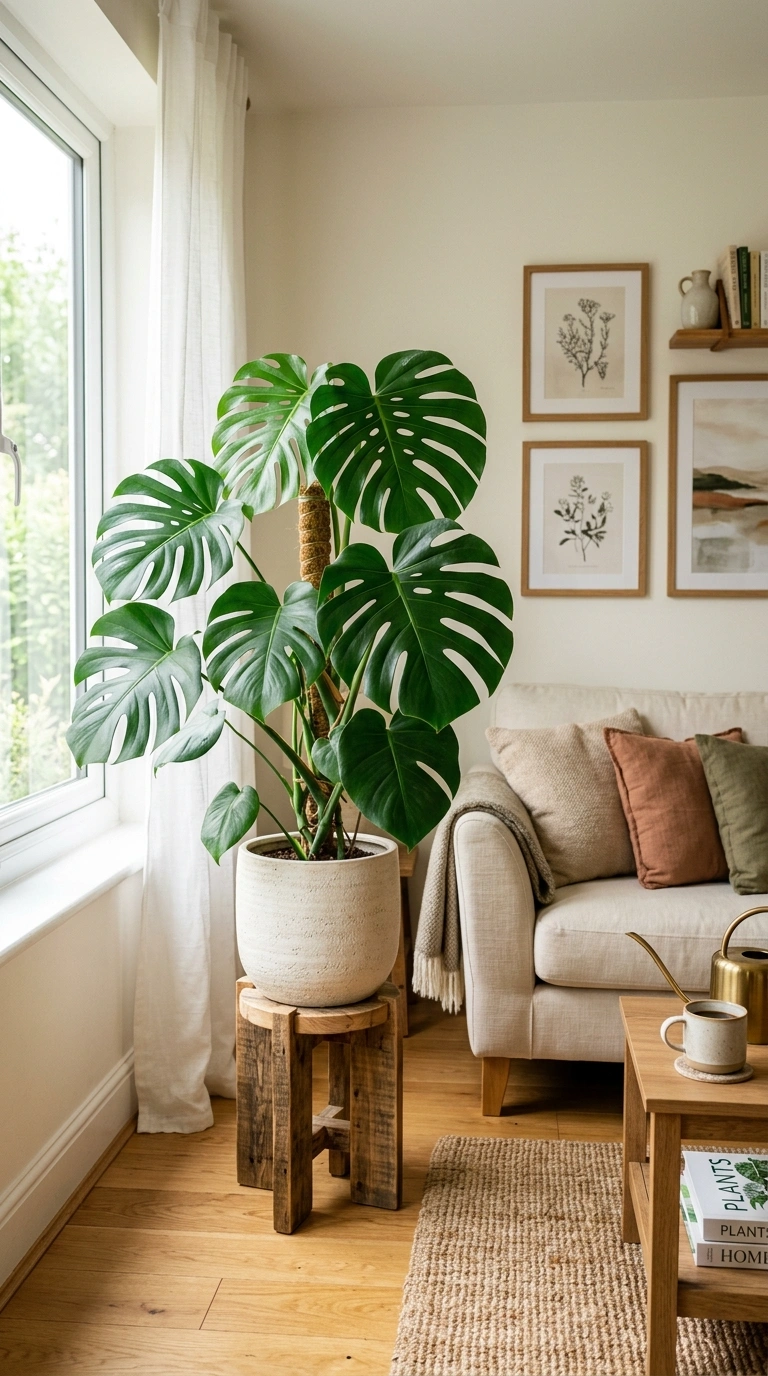
Every room that uses plants as decor needs one large statement plant that is substantial enough to read as a design element rather than a small accessory. A tall fiddle-leaf fig, a large monstera, a mature snake plant, or a big bird of paradise in a simple substantial pot positioned in a corner, beside furniture, or in front of a window becomes a living sculpture that anchors the room’s green presence. The statement plant should be at least three feet tall to have genuine visual impact. Choose a pot that is proportionate to the plant and that coordinates with the room’s material palette. The single statement plant does more for a room than ten small plants scattered across shelves.
2. Trailing Shelf Edge Plants
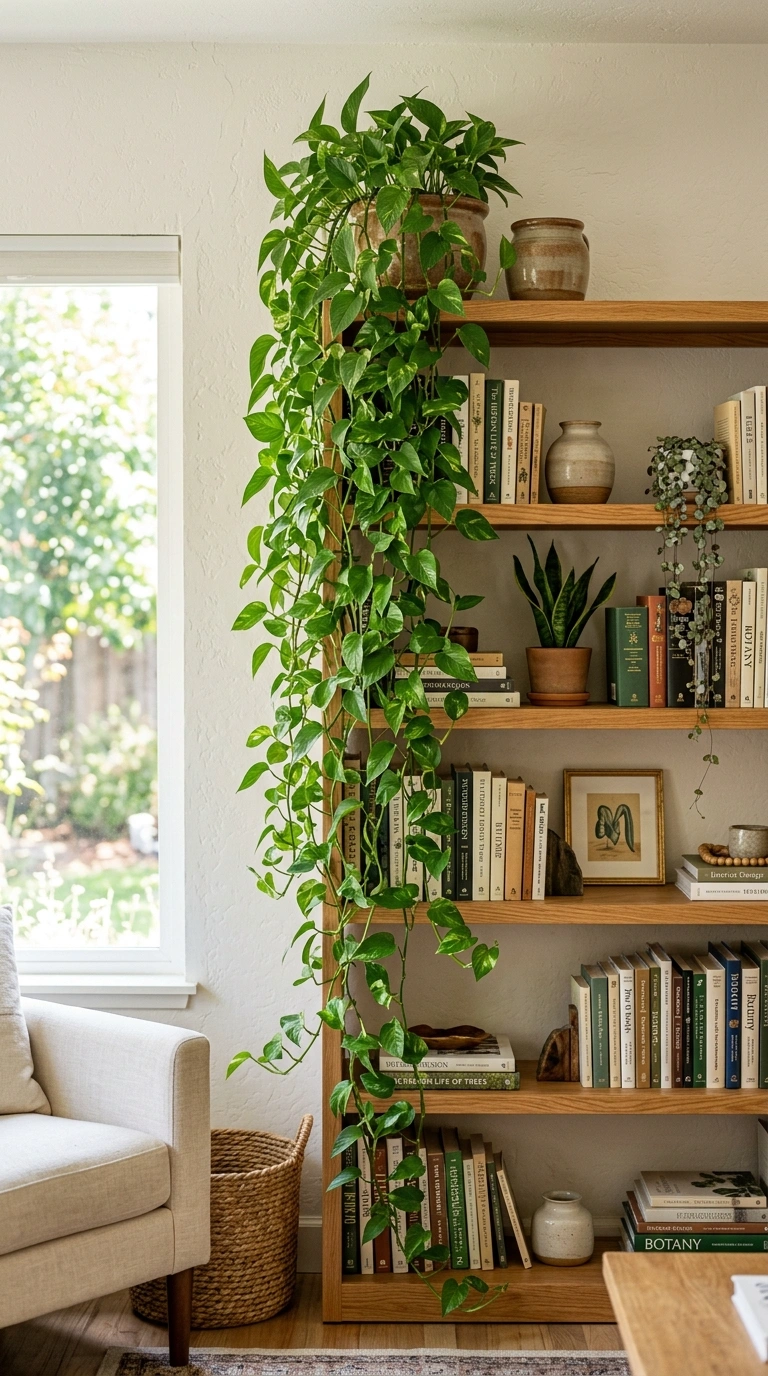
Plants with trailing growth habits, pothos, string of pearls, string of hearts, ivy, philodendron, look their best when positioned on a shelf edge where the vines can cascade downward over the front of the shelf. The trailing growth adds vertical green movement that upright plants cannot provide and creates a natural waterfall effect that draws the eye from the shelf down toward the floor. Position trailing plants on the highest shelf available so the cascading vines have the maximum distance to grow. The longer the trails, the more dramatic and the more lush the display becomes over time.
3. Coordinated Pot Strategy
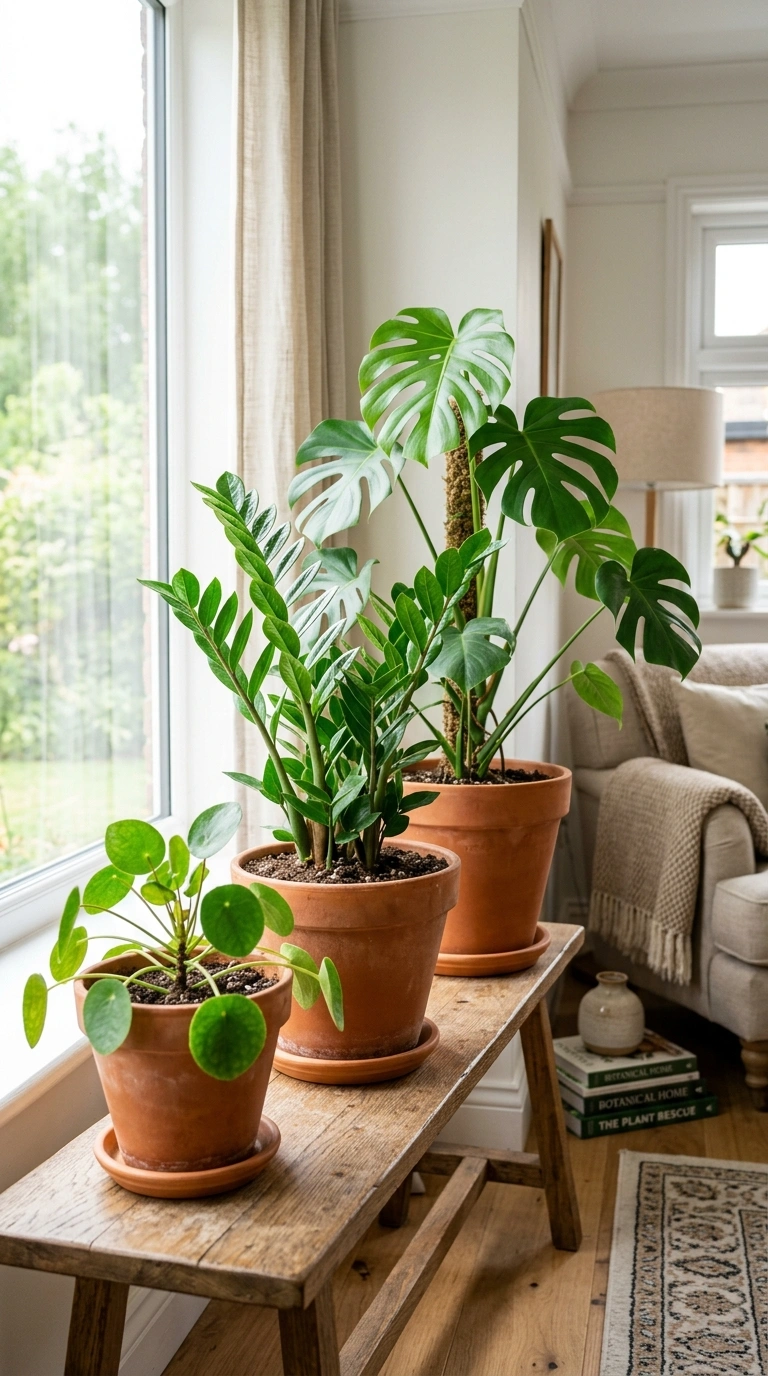
The pots that plants sit in have as much design impact as the plants themselves. A room where every plant sits in a matching or coordinating pot style, all matte white, all warm terracotta, all woven baskets, or all matte black, reads as deliberately styled. A room where every plant sits in a different random pot, some plastic nursery pots, some mismatched ceramics, some novelty shapes, reads as a collection of individual purchases rather than a designed interior. Choose one pot style and material for the entire room and buy pots in different sizes within that style to accommodate different plants.
4. Three-Height Layering Rule
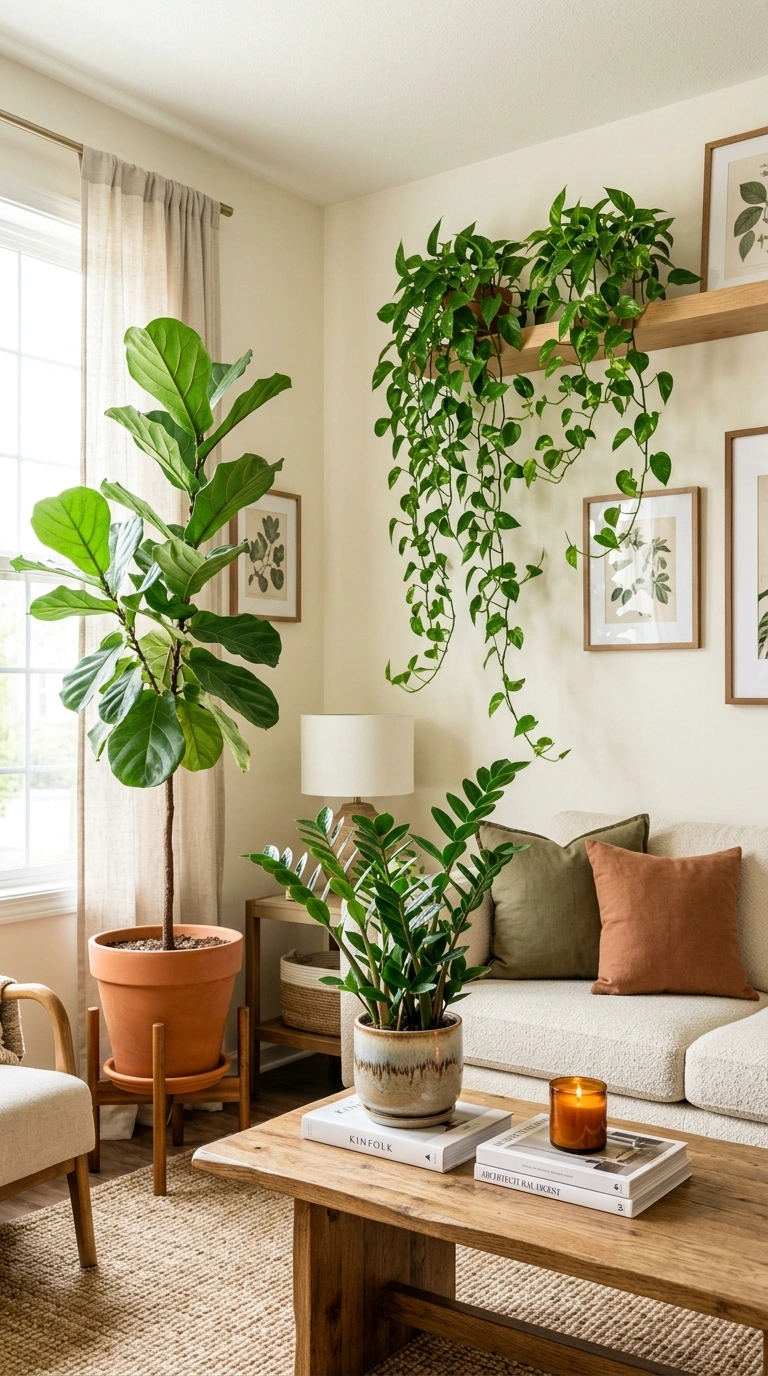
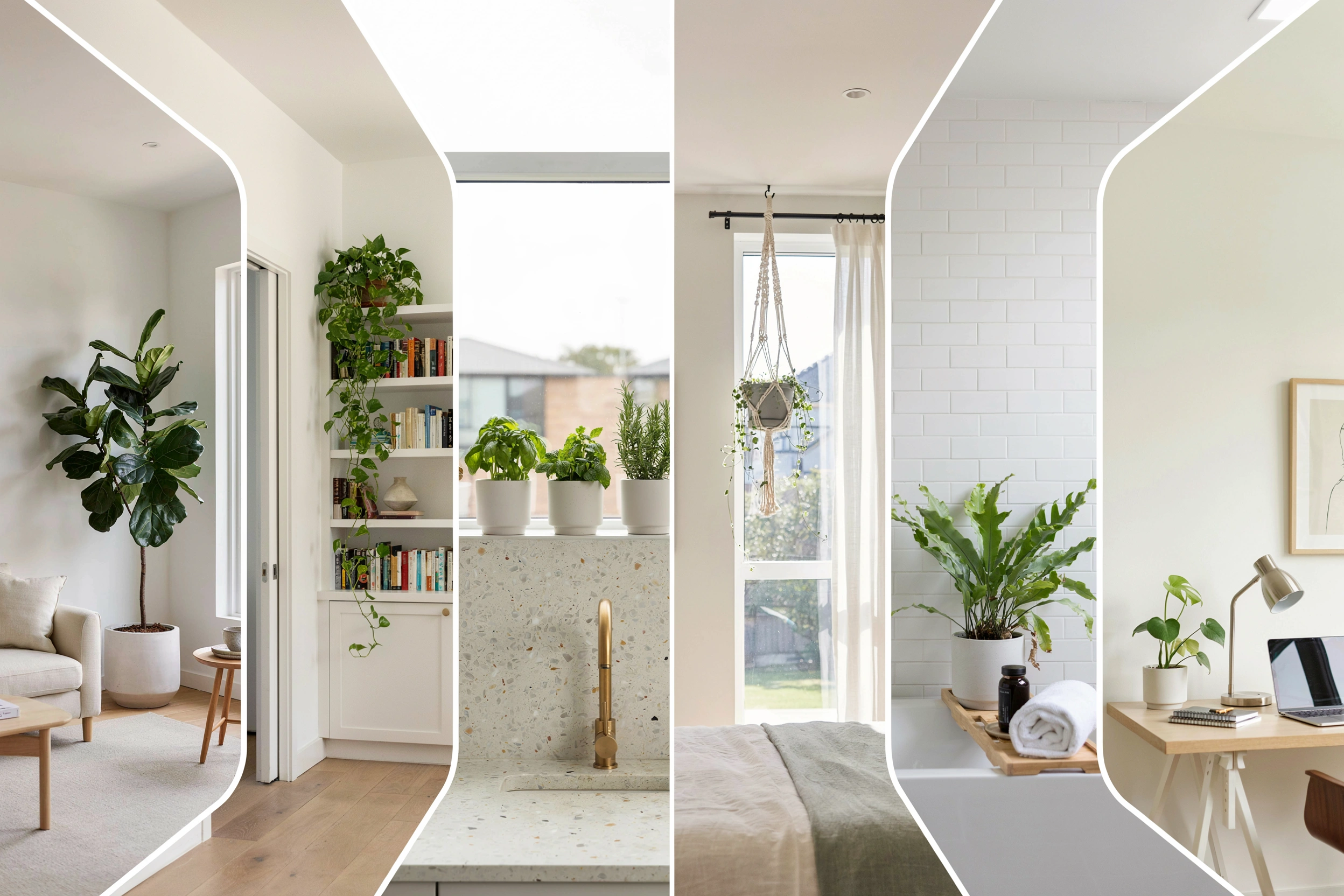
The most effective plant arrangement in any room places plants at three different heights: one tall floor plant, one medium plant on a table or shelf, and one high plant on a top shelf, mounted on the wall, or hanging from the ceiling. The three heights distribute green across the full vertical range of the room and create the canopy-like quality of being surrounded by vegetation. A room with all plants at the same height looks flat. A room with plants at three heights feels immersive and layered. Apply the three-height rule in living rooms, bedrooms, and bathrooms for the most impactful green presence.
5. Living Room Green Anchor
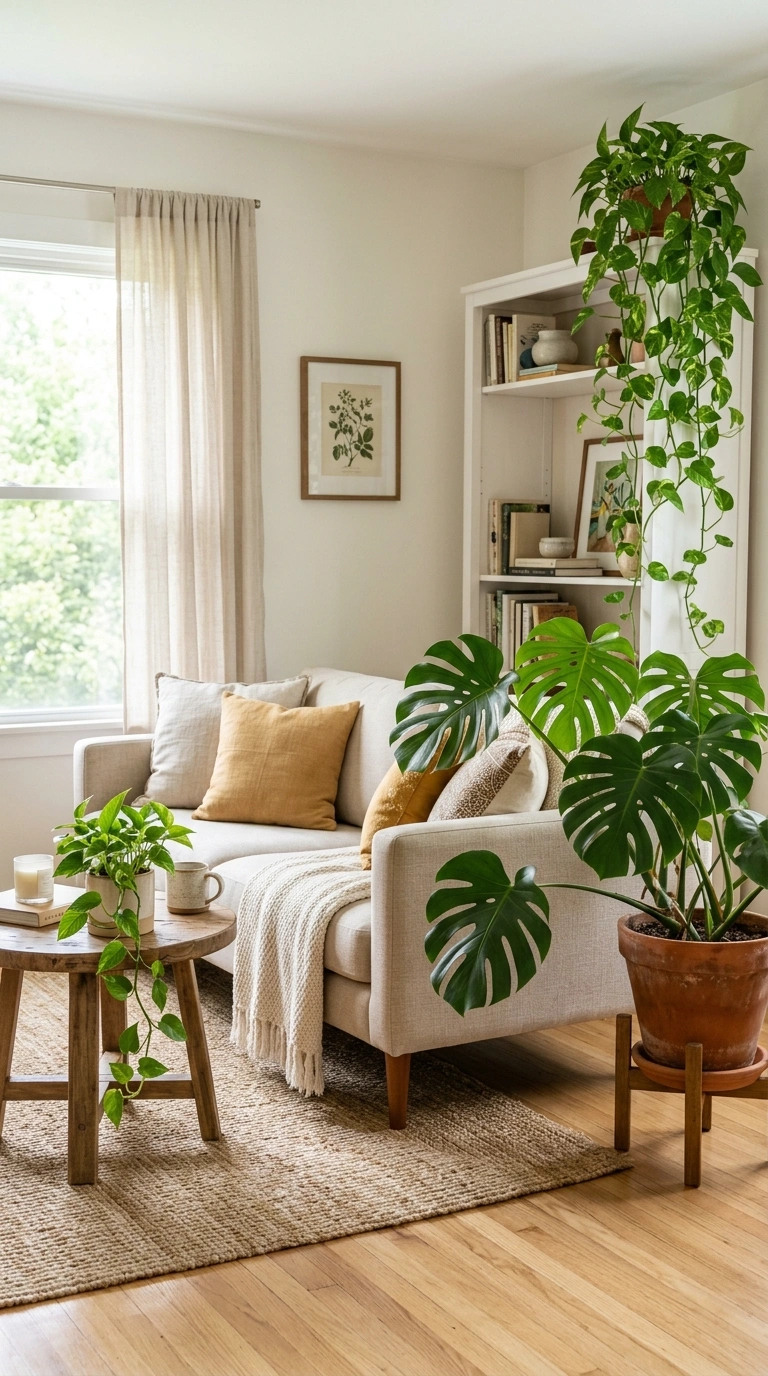
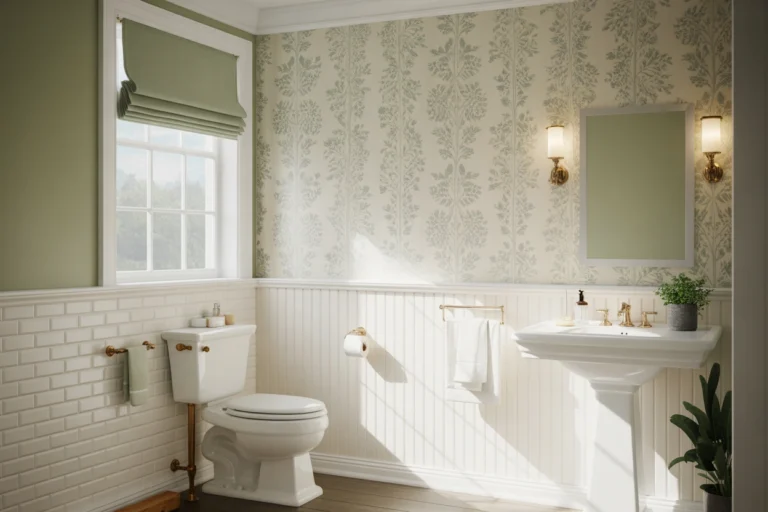
In a living room, position the largest plant in the corner behind or beside the sofa where it rises above the sofa back and adds height and green to the seating area. A second medium plant on the coffee table or a side table adds green at the seated eye level. A trailing plant on the bookshelf or a high floating shelf adds the third height. The three plants together create a green environment around the seating area without cluttering the surfaces. The same principle of using a limited number of well-placed plants rather than many scattered ones applies across rooms, including bathroom plant decor where the humidity actually helps the plants thrive while the placement makes them a design feature.
6. Bedroom Calming Green
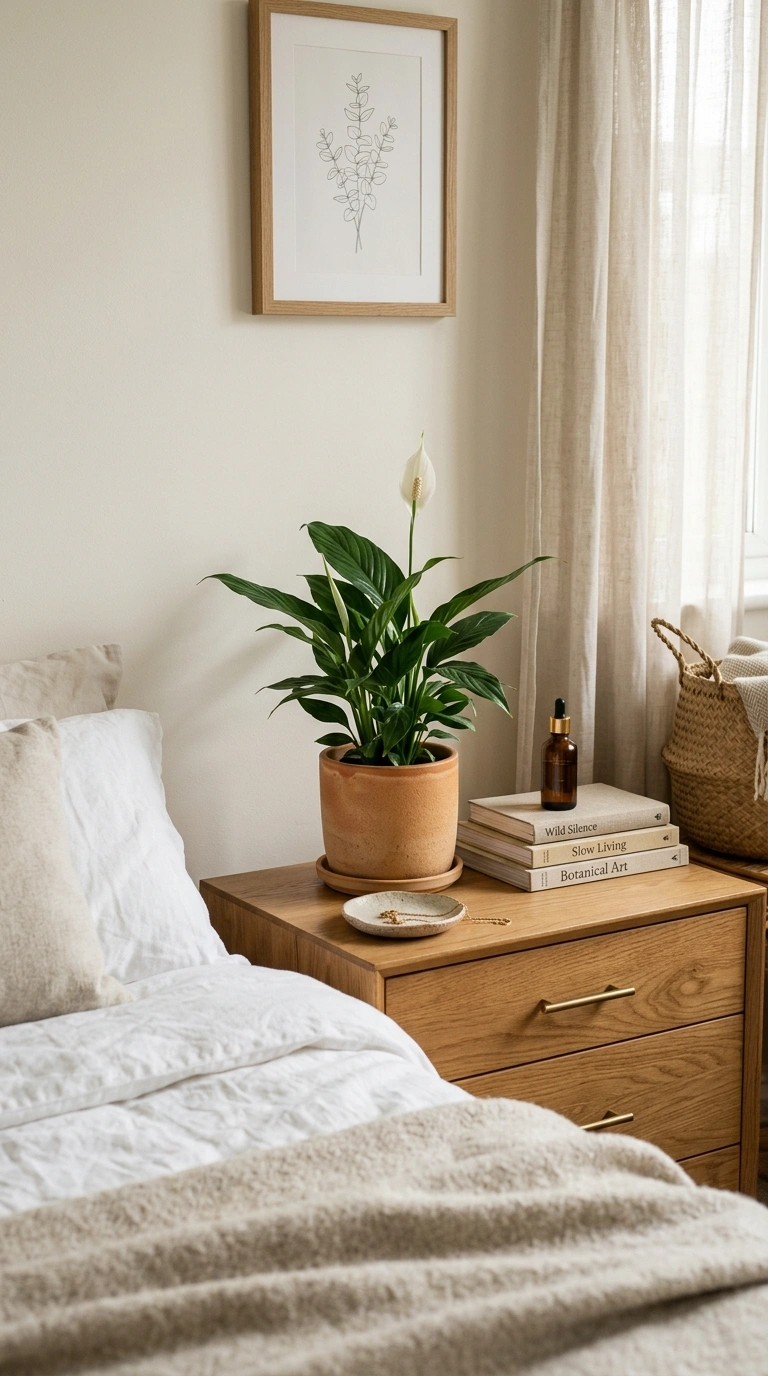
Plants in a bedroom should be positioned where they add calm green presence without creating visual complexity near the sleeping area. A single plant on the dresser across from the bed, a small plant on the nightstand, or a tall floor plant in the corner beside the window all work. Avoid placing large or busy plants directly beside the bed where they might feel encroaching during sleep. The bedroom plant presence should be calm and peripheral rather than lush and overwhelming. One or two plants in quiet positions contribute to the restful quality the bedroom needs.
7. Kitchen Herb Garden Display
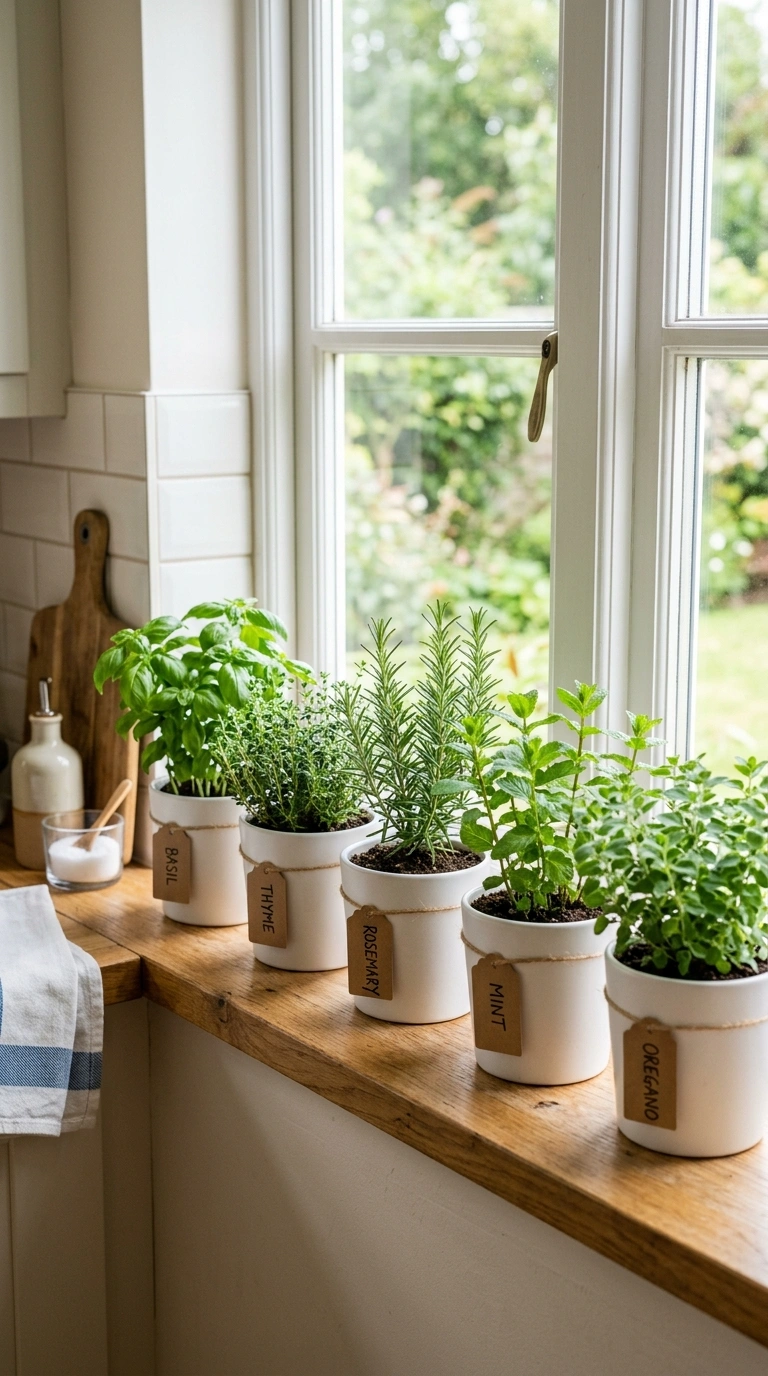
In the kitchen, herbs growing on the windowsill serve as both plant decor and a functional cooking ingredient. A row of three to five herbs in matching pots on the kitchen windowsill, each labeled with a small tag, provides the green presence that decorative plants would provide while also contributing fresh basil, thyme, mint, and parsley to daily cooking. The herb garden display bridges the gap between decorative and functional in a way that is unique to the kitchen. The herbs should look actively growing and healthy rather than leggy and neglected, which means regular harvesting and occasional replanting.
8. Bookshelf Plant Integration
Tucking small plants between book groupings on a bookshelf adds green variety to the shelf display and prevents the bookshelf from reading as purely intellectual rather than alive and organic. A small trailing pothos between two stacks of books, a tiny succulent on top of a horizontal book pile, or a small fern in a ceramic pot beside framed photographs all integrate green into the shelf styling without dominating it. The plants should be small enough to fit among the books without crowding and should be in pots that coordinate with the other shelf objects for visual cohesion.
9. Entryway Welcome Green
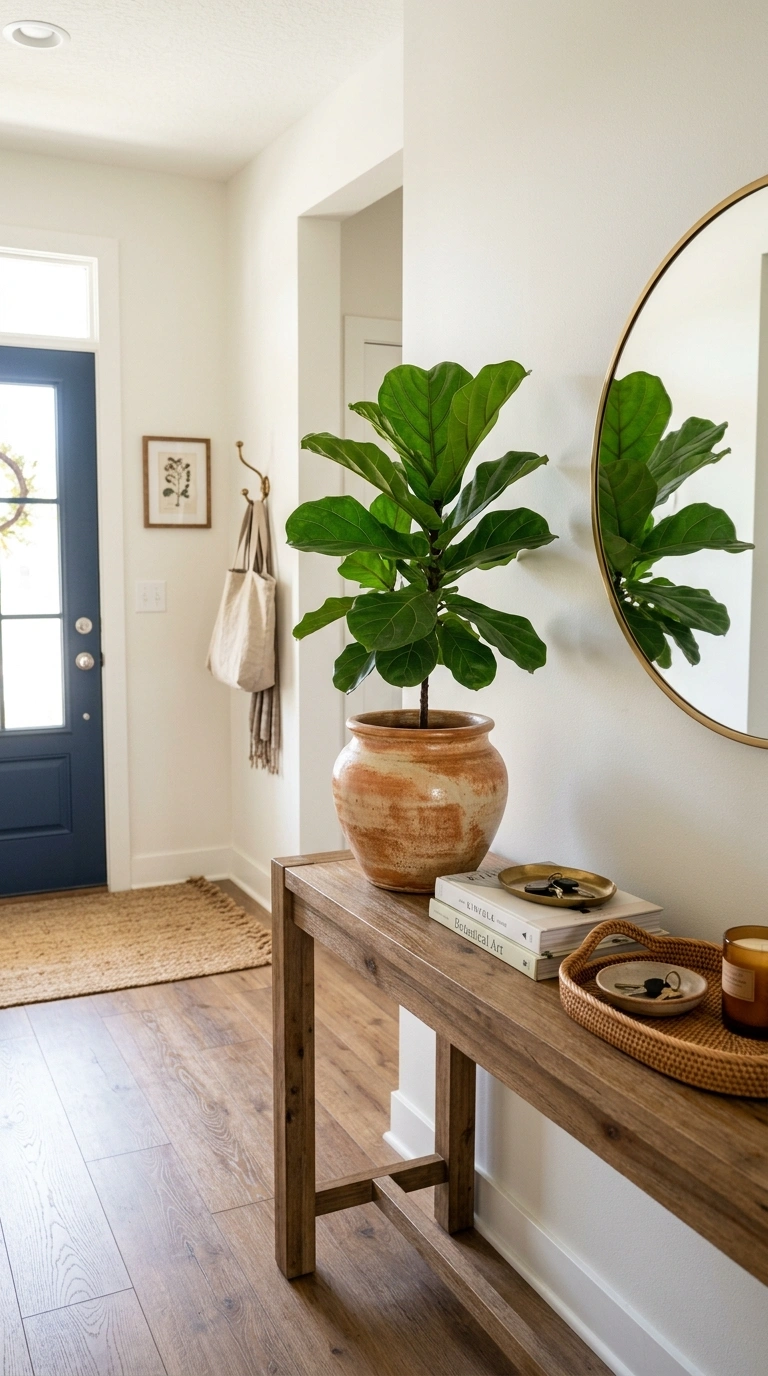
A plant positioned at the home’s entrance, beside the front door, on a console table in the entryway, or on a small shelf near the entrance, provides the first living element guests see when entering. The entryway plant signals that the home is cared for and alive from the first step through the door. A medium-sized plant in a substantial beautiful pot is the most effective single entryway green element. Choose a plant that tolerates the light conditions of the entry, which is often indirect or limited, and that maintains an attractive form without constant grooming.
10. Hanging Planter Overhead
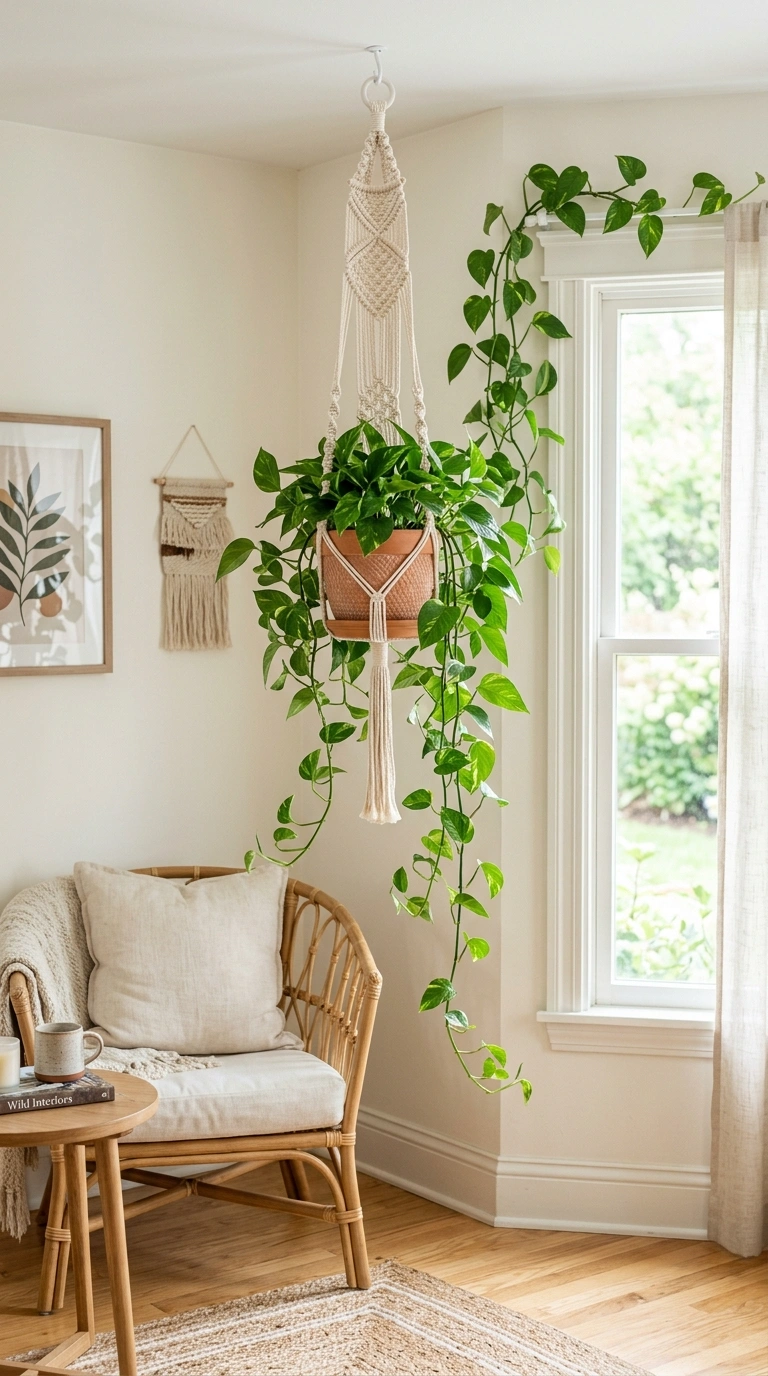
Hanging planters suspended from ceiling hooks or wall brackets add green from above, which is a position most rooms never use. The overhead green creates a sense of being under a garden canopy that floor-level and shelf-level plants cannot achieve. Hanging plants work in every room: above the kitchen sink, above the bathtub, in a living room corner, or beside a bedroom window. Choose trailing plants that cascade downward from the hanging position for the most dramatic effect. The hanging planter itself should be attractive, whether a macrame holder, a simple ceramic hanging pot, or a brass hanger, since it is visible at eye level during daily use.
11. Empty Corner Solution
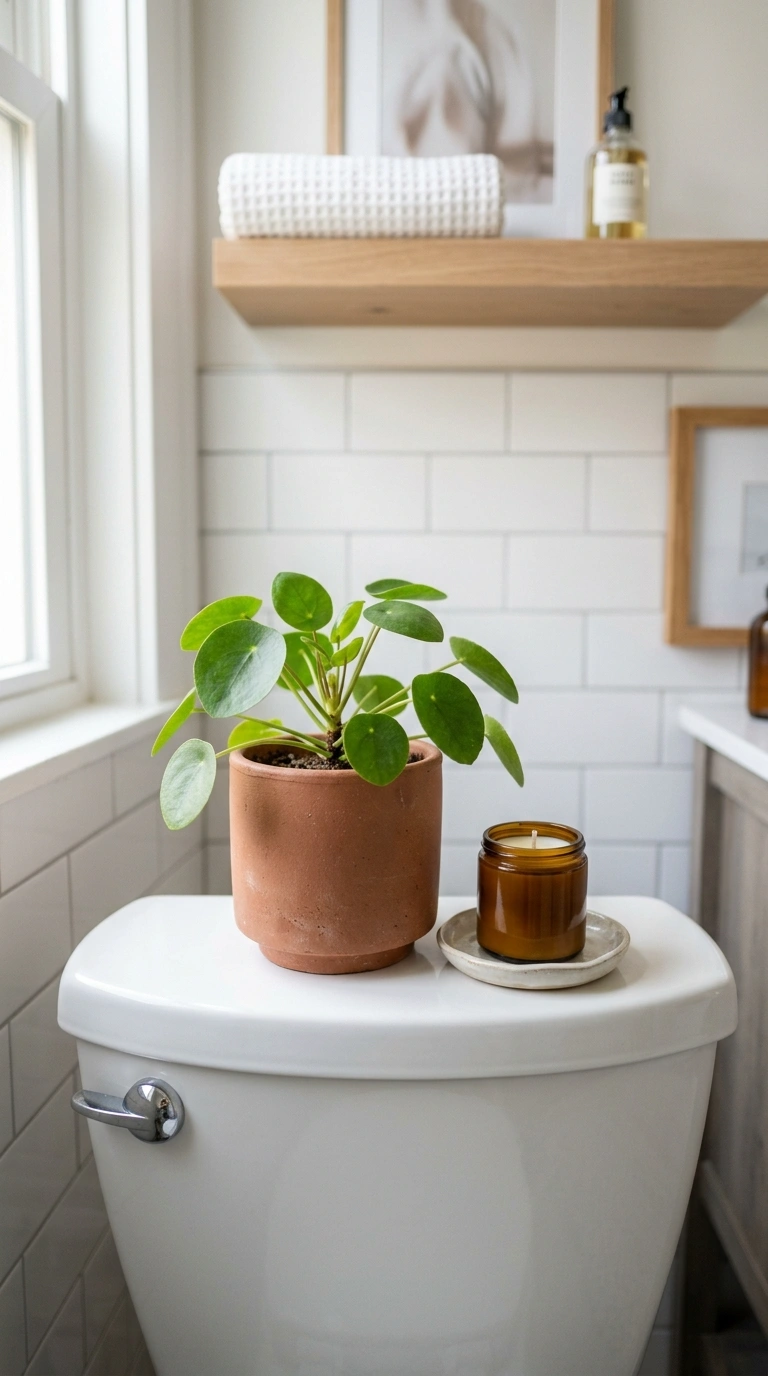
Every home has at least one empty corner that accumulates random items or simply stays bare. A large floor plant in that corner instantly solves the empty-corner problem and provides a living element that fills the space with green rather than with furniture. The corner plant should be tall enough to fill the vertical space, at least three to four feet, and substantial enough that it reads as a deliberate placement rather than a plant pushed into a corner because there was nowhere else to put it. A beautiful floor pot and a healthy, well-shaped plant transform a dead corner into one of the most visually rewarding spots in the room.
12. Dining Table Living Centerpiece
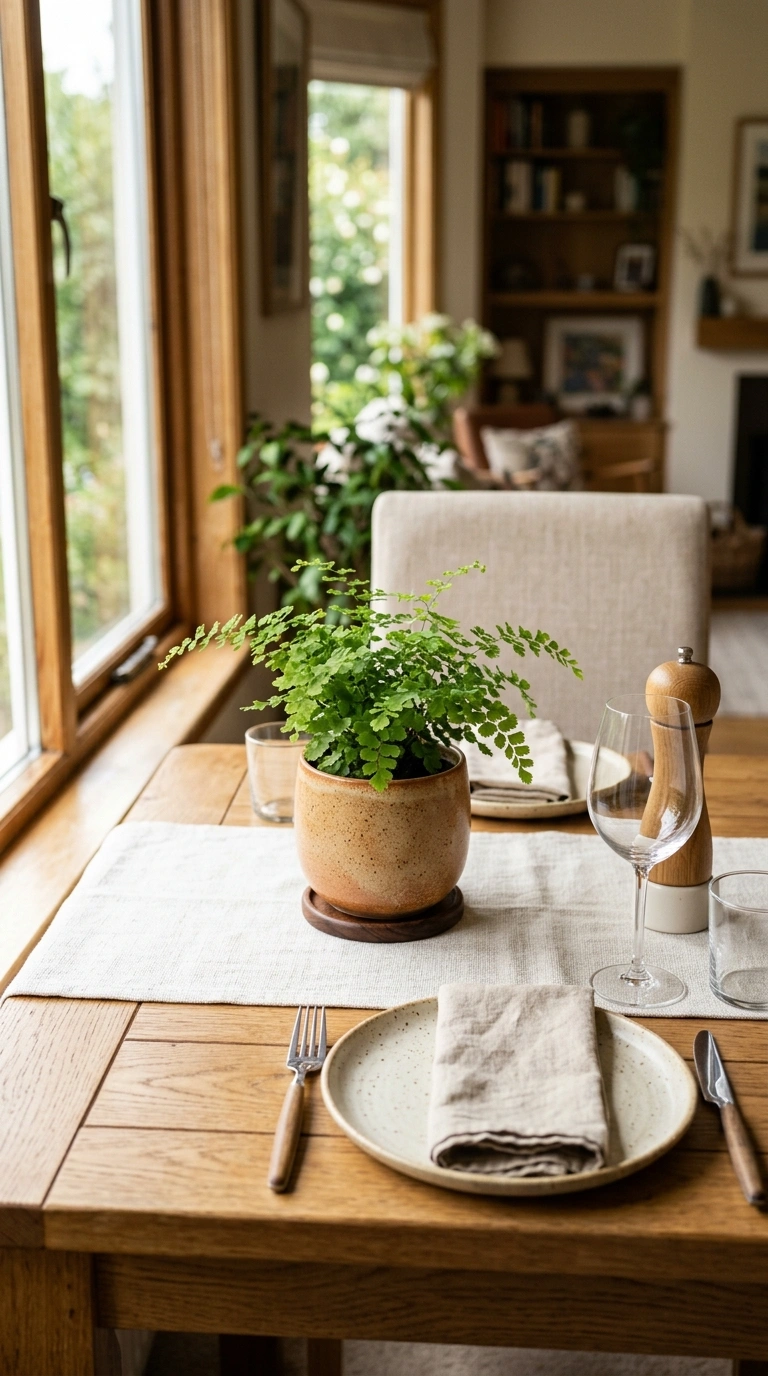
A small plant or a collection of tiny plants used as the dining table centerpiece provides a living alternative to cut flowers that lasts indefinitely and changes with the seasons. A small fern in a warm ceramic pot, a trio of tiny succulents in a shallow dish, or a small herb plant in a beautiful container all work as dining table centerpieces. The plant centerpiece should be low enough not to obstruct conversation across the table, no more than eight to ten inches tall. The living centerpiece means the table always has a green element without the weekly cost and waste of fresh cut flowers.
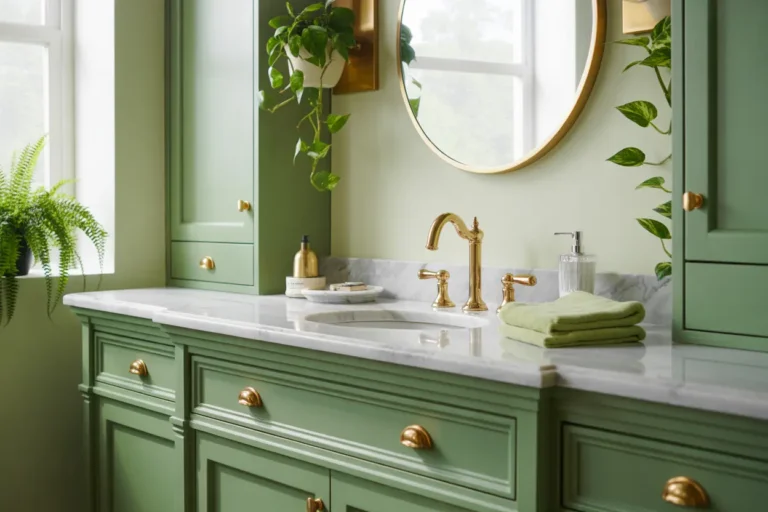
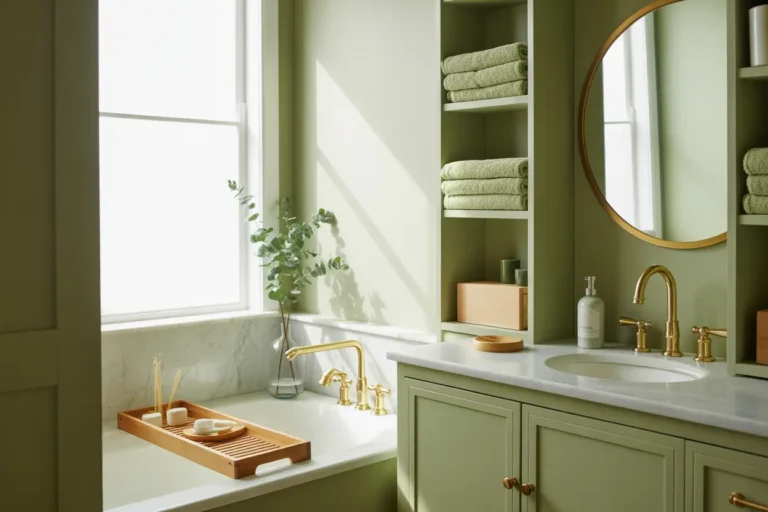
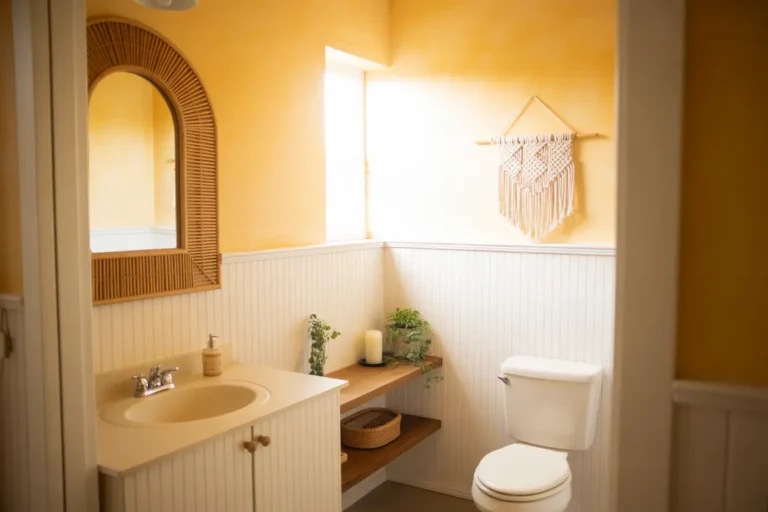
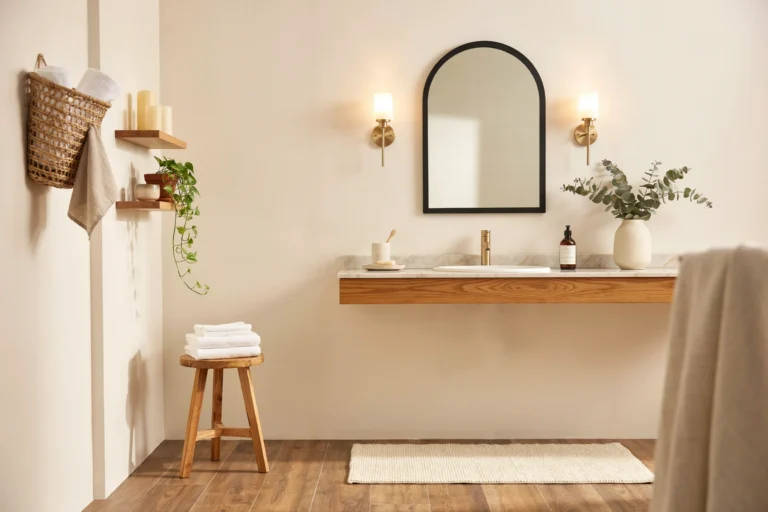
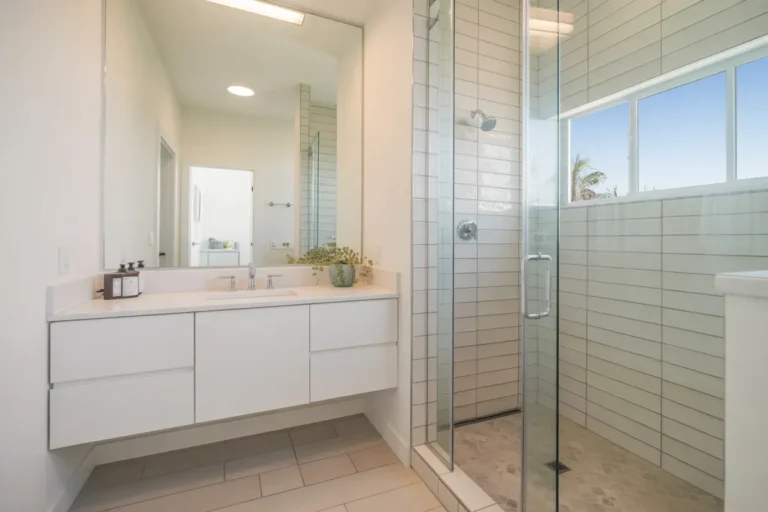
13. Bathroom Spa Greenery
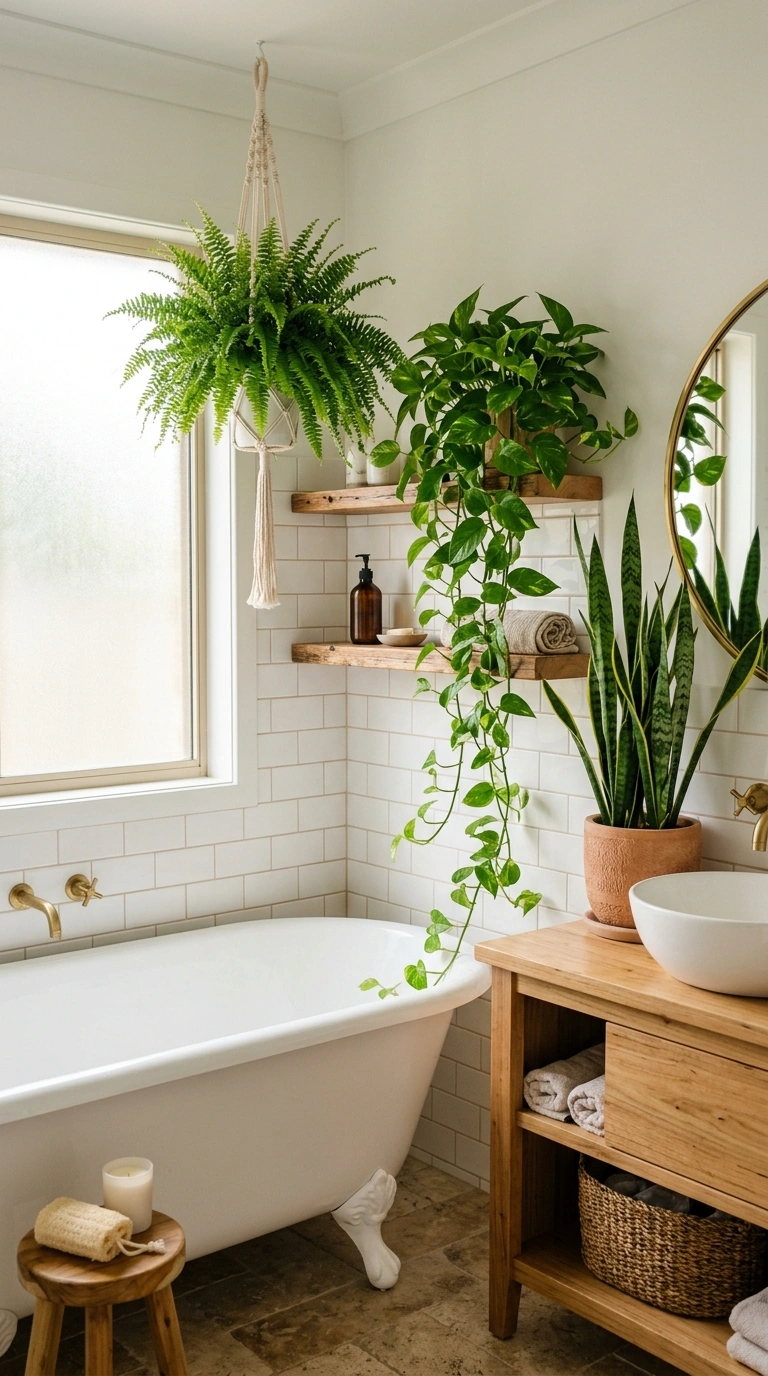
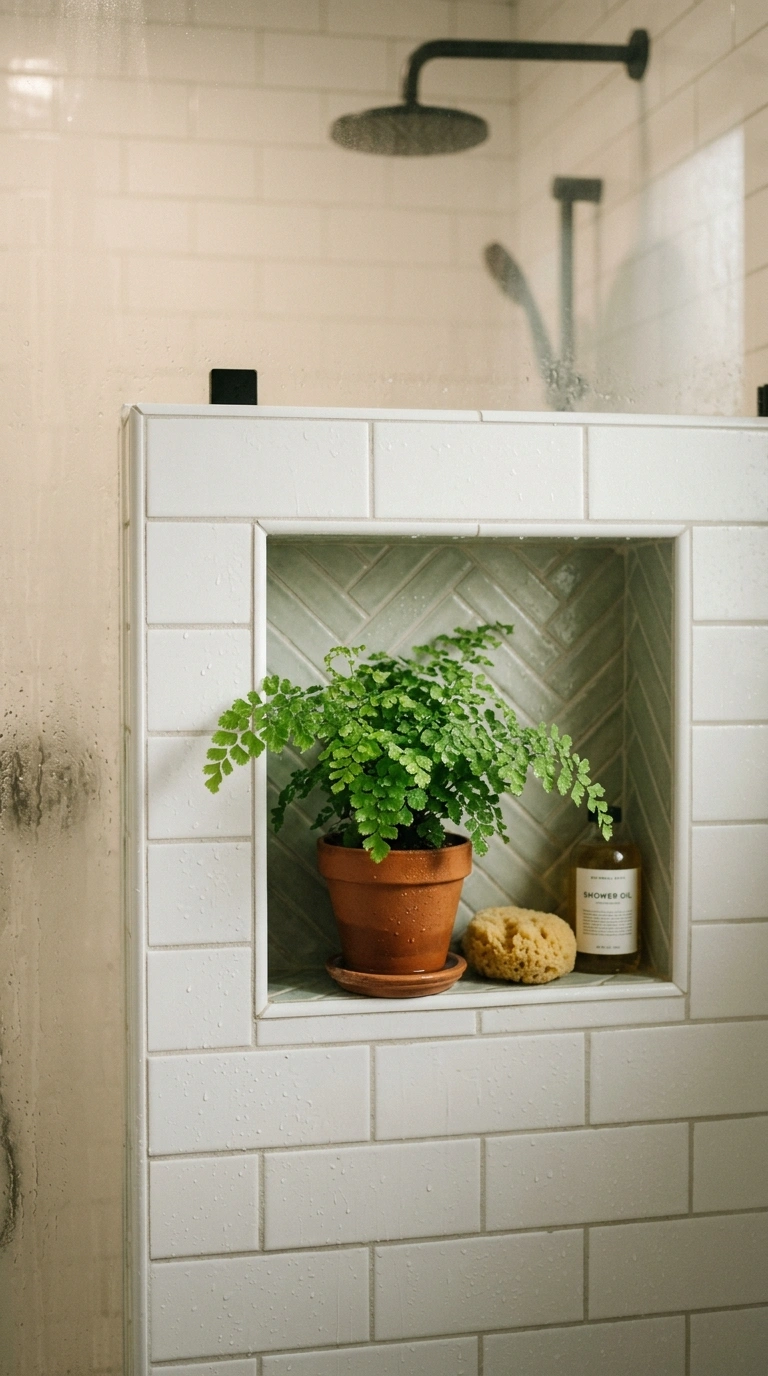
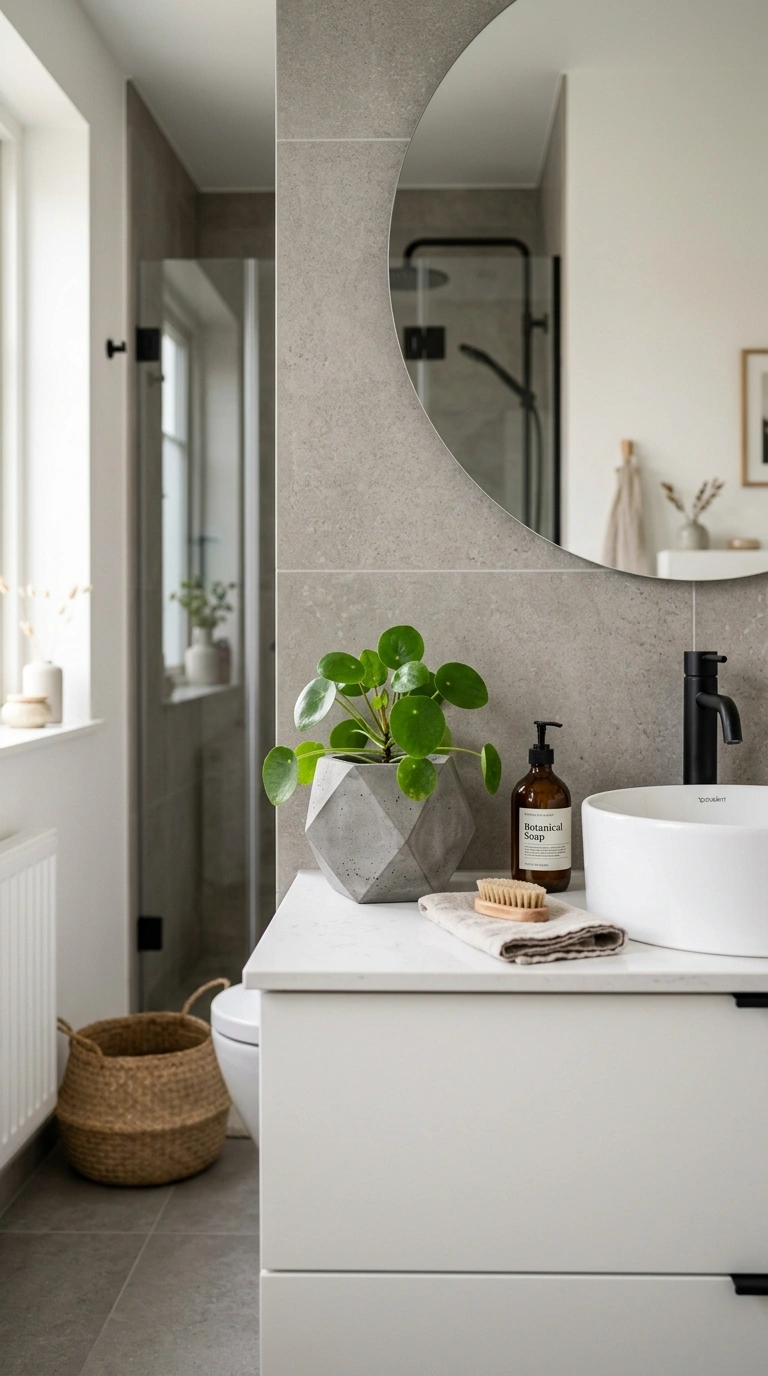
Bathrooms benefit from plants more than most rooms because the humidity from daily showers creates ideal growing conditions for tropical species. A pothos trailing from a shelf, a fern hanging above the tub, or a snake plant on the floor beside the vanity all thrive in bathroom conditions. The green plants against the white tile and ceramic of a bathroom create the spa-like quality that bathrooms without plants struggle to achieve. Position the plants where they receive the shower humidity and whatever indirect light the bathroom provides.
14. Home Office Focus Plant

A plant on the home office desk or beside the desk provides a small natural rest point for the eyes during screen breaks, which reduces eye strain and provides a brief connection to the natural world during the workday. A small pothos, a snake plant, or a succulent on the desk in a pot that coordinates with the desk accessories adds green to the work surface without taking up excessive space. A larger floor plant beside the desk adds the same natural presence at a larger scale. The office plant is one of those small additions that meaningfully improves the daily experience of working from home.
15. Seasonal Plant Styling
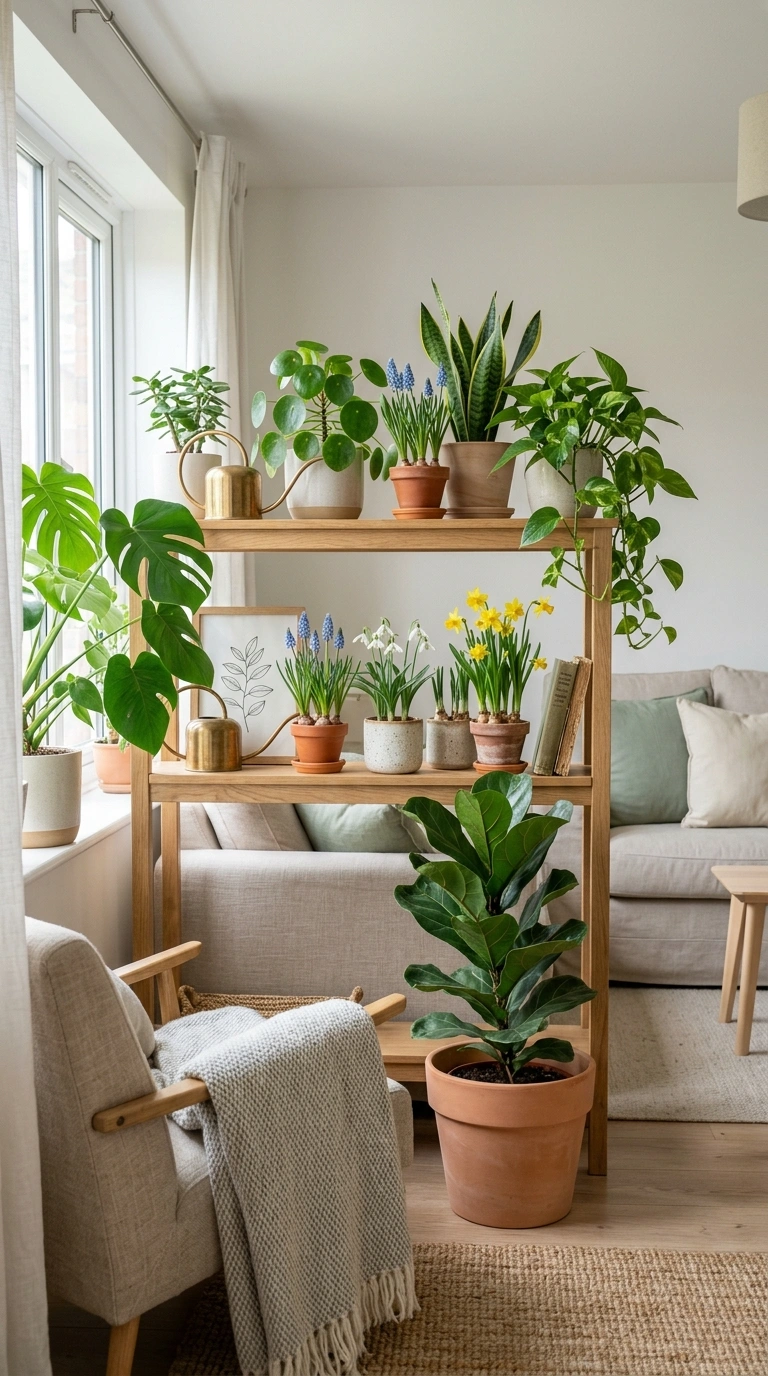
Rotating the plant display seasonally keeps the green decor feeling alive and responsive. In spring, add a few small flowering plants, tiny orchids, small African violets, or forced bulbs, to the collection. In summer, move plants closer to windows for maximum growth. In autumn, add a few dried stems or branches alongside the living plants. In winter, focus on the hardiest species and supplement with preserved greenery. The seasonal adjustments keep the plant decor feeling intentional and current rather than static and gradually declining.
16. Single Stem or Branch
A single tall stem or branch in a simple vase provides the botanical presence that a full potted plant provides without any ongoing care. A single eucalyptus stem, a branch of cherry blossom in spring, a tall dried grass stem, or a piece of curly willow in a clear glass or ceramic vase adds height, organic shape, and green or natural color to any surface. The single stem reads as a deliberate artistic choice. Change it seasonally or whenever the current stem fades for a constantly refreshed botanical element.
17. Plant as Room Divider
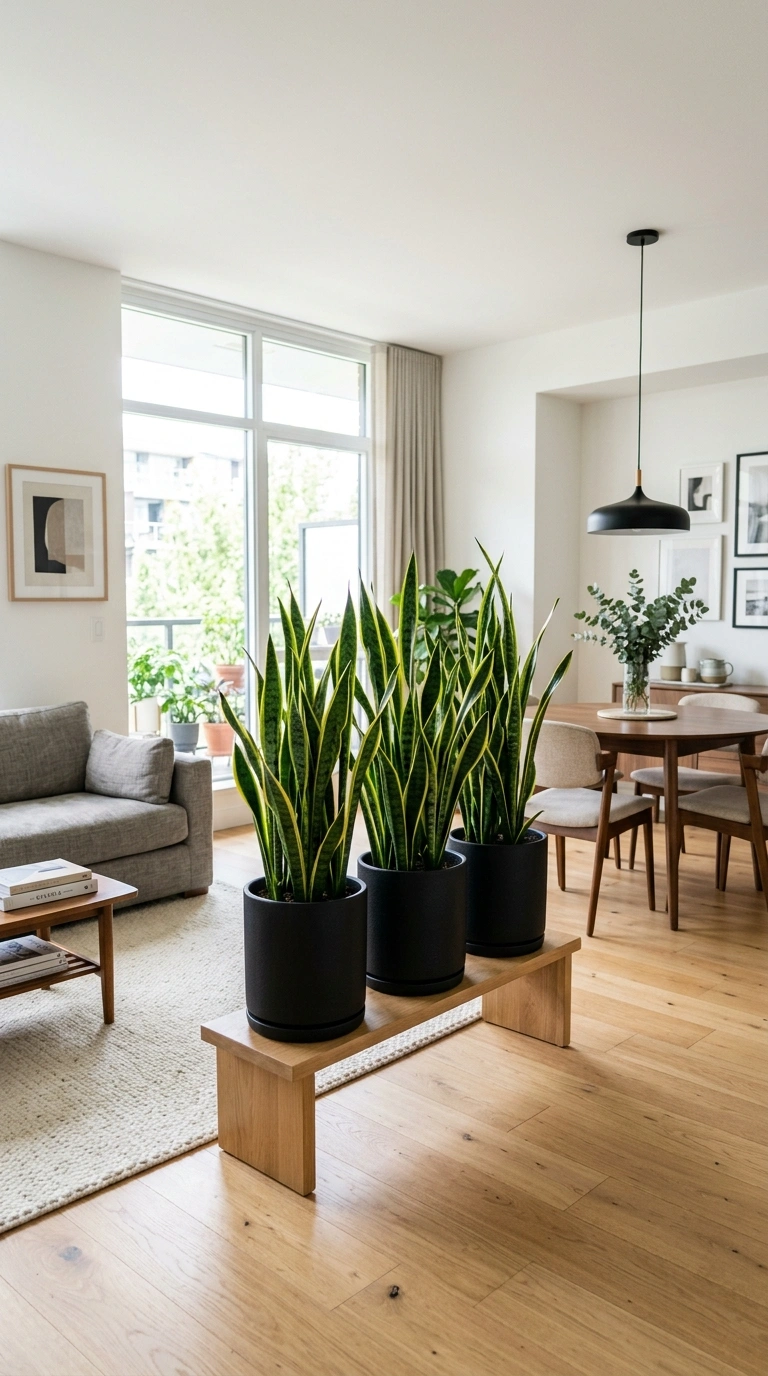
In open floor plans where rooms flow into each other without walls, a row of tall plants in matching pots creates a living divider that separates zones without blocking light or sightlines. A row of three or four tall snake plants, fiddle-leaf figs, or bamboo palms in substantial floor pots positioned between the living room and the dining area, or between the kitchen and the living room, defines separate zones with green rather than with walls or furniture. The plant divider adds privacy, green, and spatial definition simultaneously.
18. Plants Reflect Your Care
The most important thing to understand about using plants as decor is that their condition reflects the care they receive, and that reflected care communicates something about the home and the person who lives there. Healthy, actively growing plants with clean leaves and good form communicate attention, intention, and genuine care. Neglected plants with yellow leaves, dust, and leggy growth communicate the opposite. A single thriving plant makes more design impact than a dozen struggling ones. Start with a species you can succeed with, give it the light and water it needs, and the plant will repay the care by making your home look and feel more alive.
Plants as room decor work best when they are treated as genuine design elements rather than afterthoughts. The right pot, the right placement, the right height variation, and the simple weekly care that keeps them healthy together create a home that feels alive in a way that no other decor category can achieve. Start with one good plant in one deliberate position and build from there. The green grows on you, in both senses of the word.