
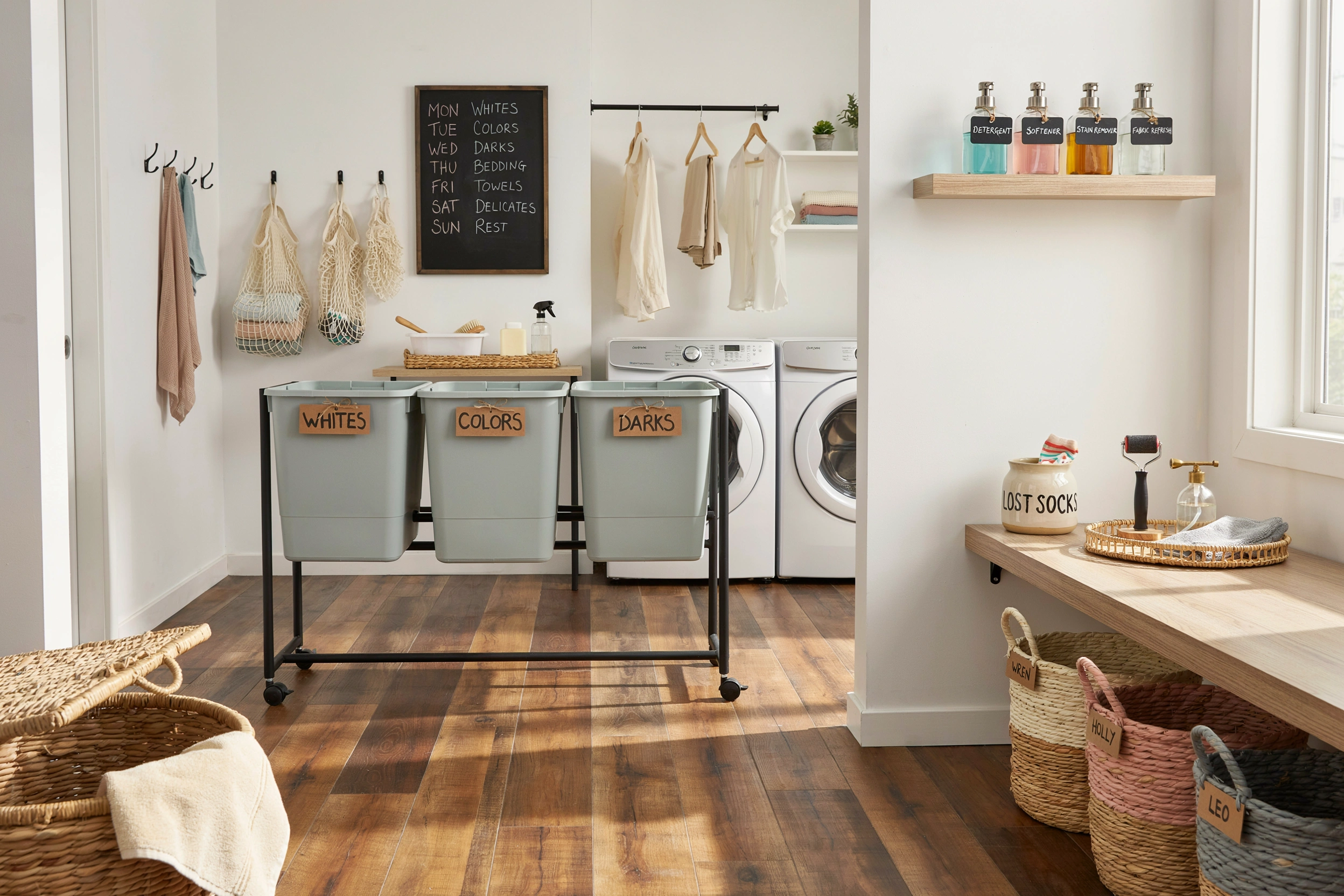
18 Laundry Room Organization Ideas That End the Detergent and Sock Chaos
Most laundry rooms start organized and gradually descend into chaos. The detergent bottle migrates from the shelf to the top of the dryer to the floor. The stain remover disappears into a drawer. The lost socks accumulate in a pile that nobody deals with. The ironing board leans against the wall blocking the walkway. The hampers overflow because nobody empties them until the pile becomes impossible to ignore. The problem is not that people are disorganized. The problem is that the room lacks the specific systems that make staying organized easier than becoming messy. These 18 ideas provide the specific organizational systems, the sorting stations, the storage solutions, and the small habits, that keep a laundry room genuinely tidy through real daily use rather than just on the day it was first organized.
1. Three-Bin Sorting Station
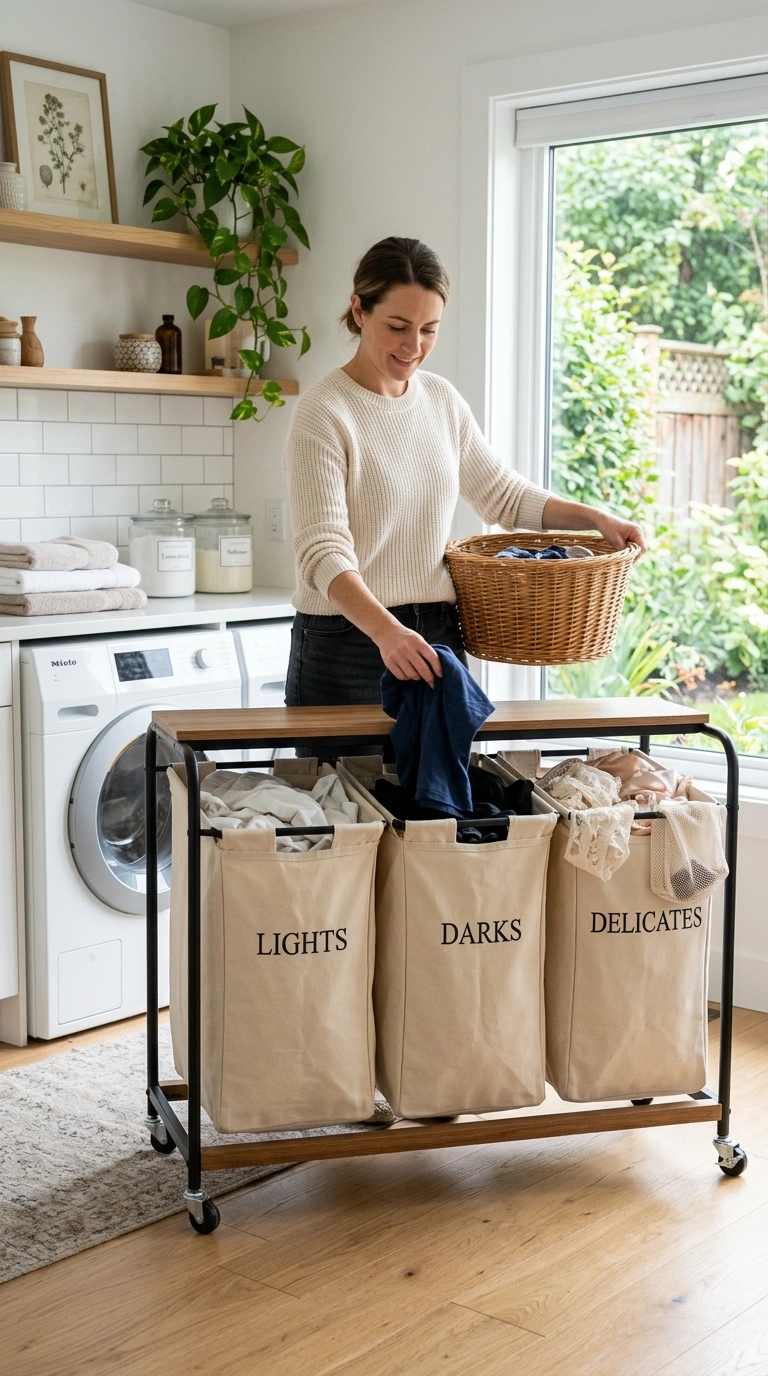
A three-bin sorting station with clearly labeled bins for lights, darks, and delicates, positioned where dirty laundry enters the room, eliminates the pre-wash sorting step entirely because the sorting happens as clothes are placed in the bins rather than as a separate task on laundry day. Each bin should be large enough to hold about one full machine load so the visual fullness of the bin signals when it is time to run that load. Use bins on a rolling frame so the full bin can be rolled to the machine for loading. Label each bin clearly with a permanent tag or a painted label that does not wear off with use.
2. Detergent Decanting System
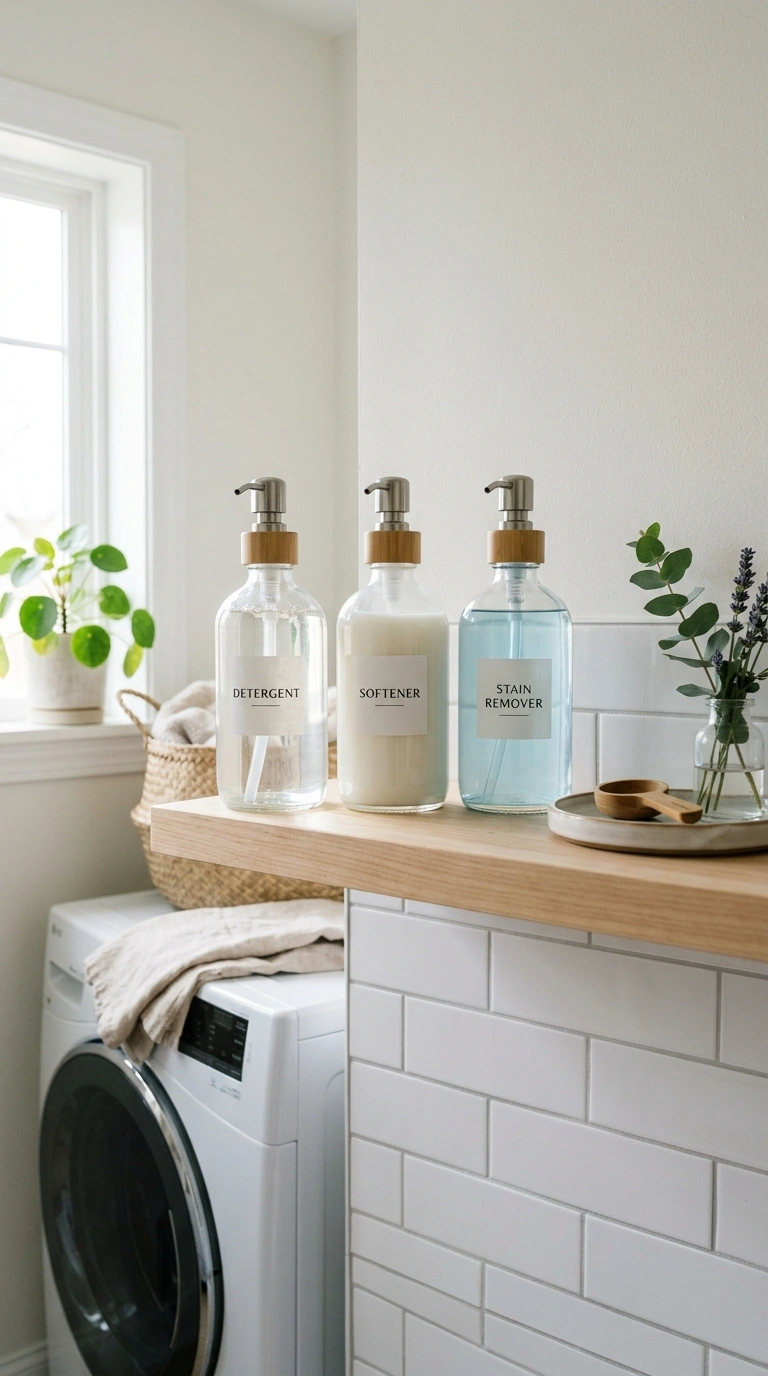
Transferring liquid detergent, fabric softener, and other laundry products from their branded plastic bottles into matching labeled dispensers creates visual order on the shelf and makes the supply area look intentional rather than like a grocery store shelf. Use clear glass dispensers with simple pour spouts for liquids, and labeled ceramic or glass canisters for powder detergent and pods. The matching dispensers take up less space than the original bottles because they can be sized to the actual quantity used rather than the manufacturer’s oversized packaging. Label each dispenser clearly so household members use the right product without guessing.
3. Lost Sock Container
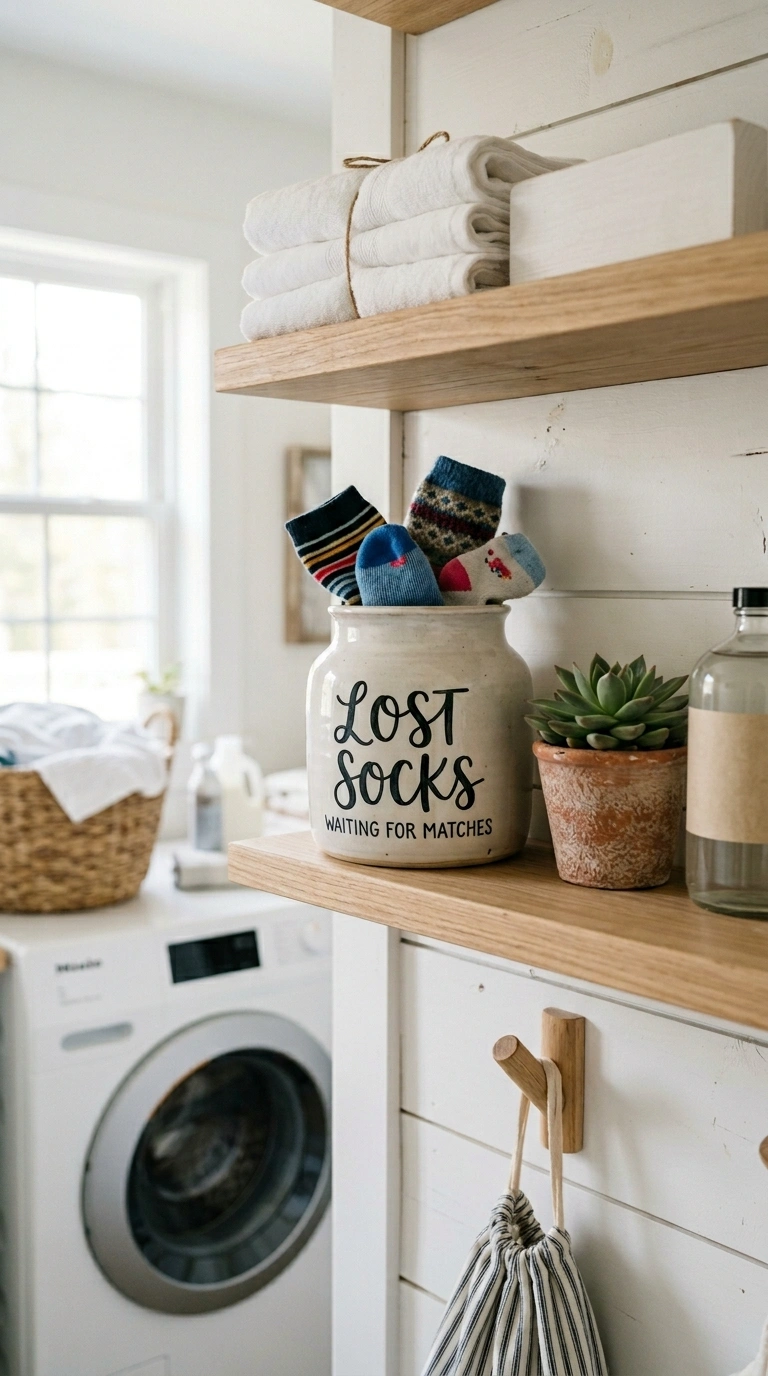
A dedicated small basket or jar labeled Lost Socks positioned on the shelf or beside the machines gives orphaned socks a designated waiting spot rather than accumulating in random piles across the laundry room. When the matching sock eventually appears, it reunites with its partner in the lost sock basket. Review the basket monthly and discard any socks that have waited more than two months without a match. The lost sock container is a small organizational detail that solves one of the most persistently annoying laundry problems and prevents single socks from migrating across the room and into drawers where they never find their match.
4. Lint Roller Station

A lint roller, a small clothes brush, and a bottle of wrinkle release spray, grouped together on a small tray or in a small basket on the counter or shelf, create a touch-up station for garments that need quick attention before wearing. The touch-up station handles the small maintenance tasks that would otherwise require pulling out the iron or sending something to be cleaned. The grouped supplies on a tray read as a designed station rather than as random products scattered across the surface. Position the station where it is accessible during the final step of the laundry process, after folding and before returning clothes to closets.
5. Labeled Shelf Organization
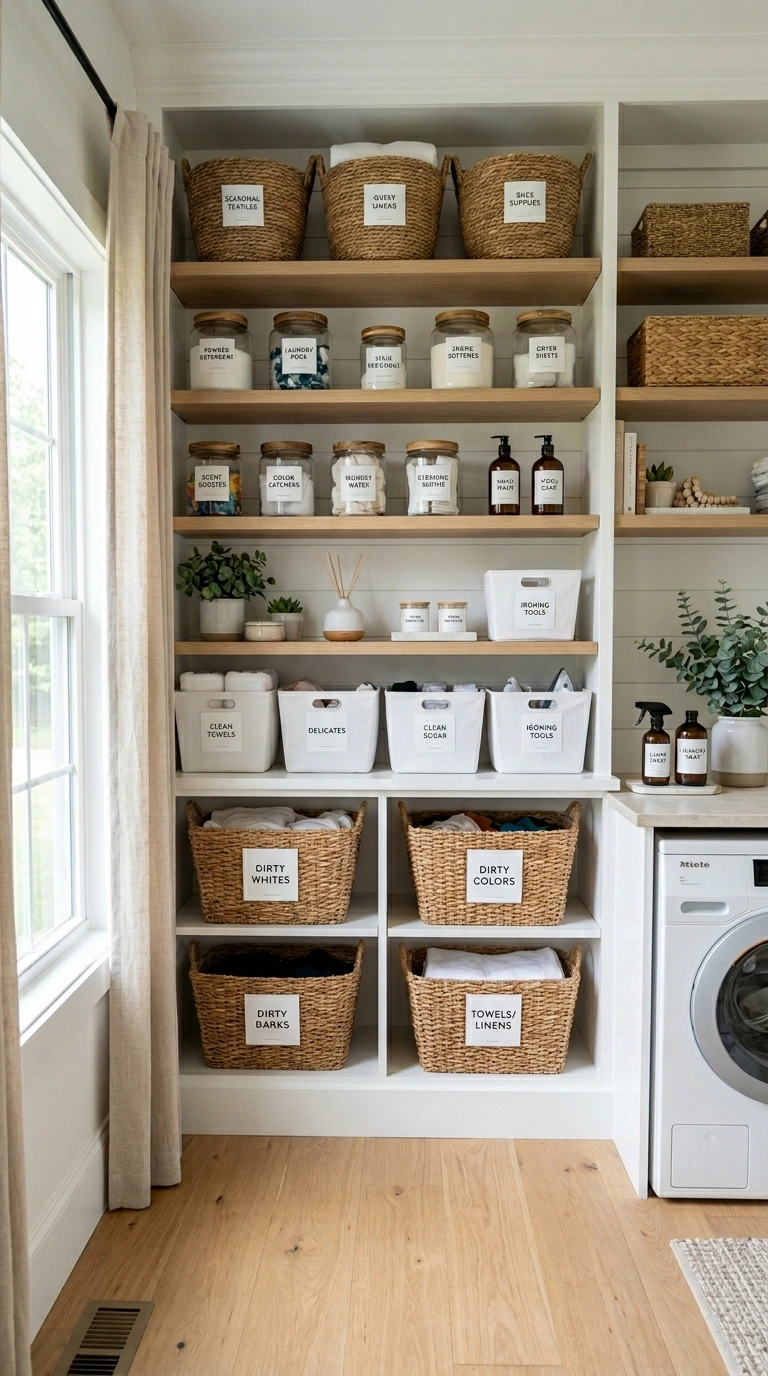
Every shelf, bin, and container in the laundry room should be labeled clearly enough that any household member can find and return any supply to the correct location without asking. Labels prevent the gradual drift of items from their assigned spots that causes most laundry room disorganization over time. Use consistent label formatting across the entire room, whether handwritten on matching tags, printed on adhesive labels, or written on chalkboard tags. The consistent labeling system is what allows the organizational structure to be maintained by everyone in the household rather than depending on one person who knows where everything goes. The same labeling discipline that keeps a laundry room organized works across other utility rooms, including the mudroom organization systems where labeled cubbies and baskets serve the same accountability function.
6. Hanging Bar for Air Dry
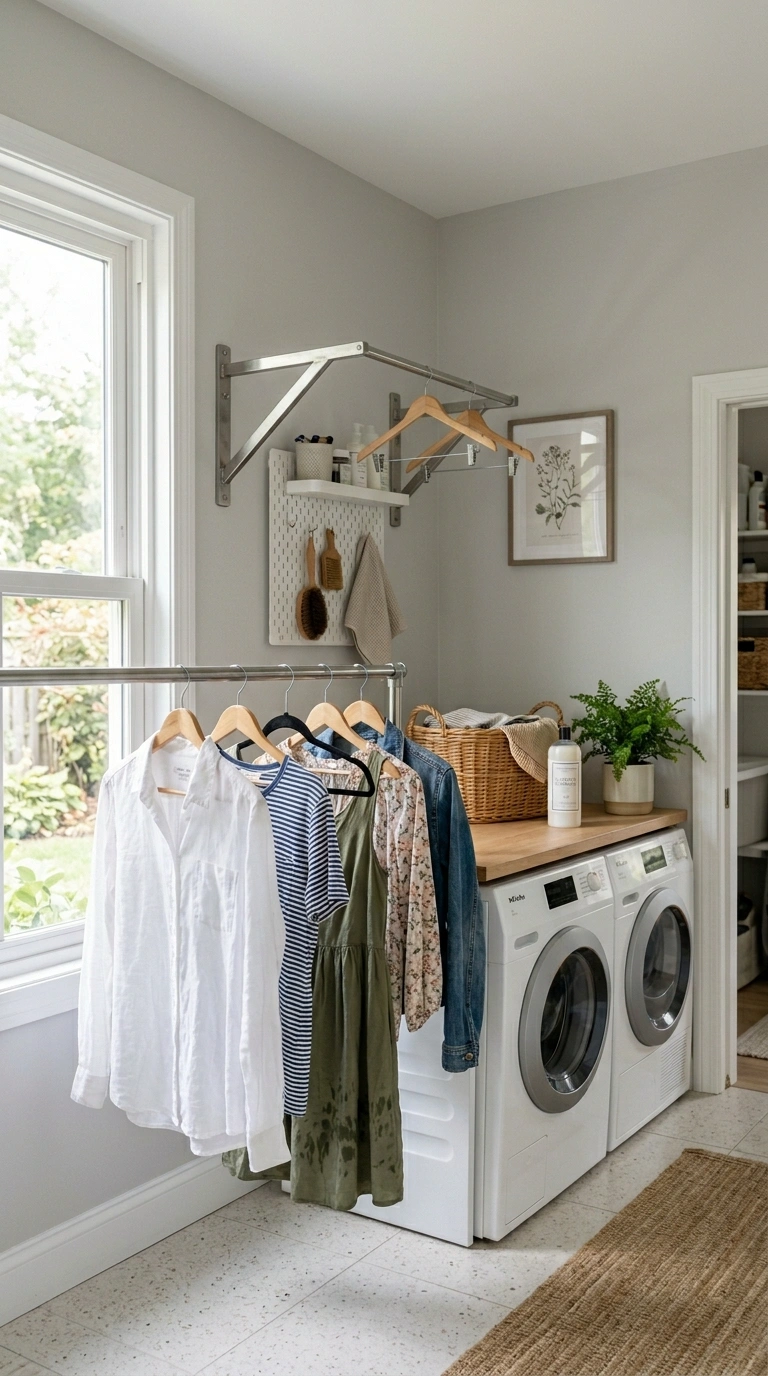
A sturdy hanging bar or rod mounted at a convenient height in the laundry room provides a dedicated spot for items that need to air dry on hangers rather than going into the dryer. The hanging bar should be positioned where the hanging garments have clearance below and where they do not block the walkway or the access to the machines. Mount the bar in a permanent position on brackets or install a retractable version that folds against the wall when not in use. The dedicated air-dry bar prevents the common practice of draping wet clothes over chair backs and door frames throughout the house.
7. Stain Treatment Kit

A small organized stain treatment kit containing the essential stain removal products, a stain remover spray, a stain stick, a small brush for scrubbing, hydrogen peroxide, and baking soda, grouped in a small caddy or basket on the shelf, makes stain treatment fast and accessible rather than a multi-step search for scattered products. When a stained garment arrives in the laundry room, the kit provides everything needed in one grab. Label the caddy clearly and return all products to it after each use. The organized kit means stains get treated immediately rather than being thrown in the hamper untreated because the products could not be found quickly.
8. Folding Counter System
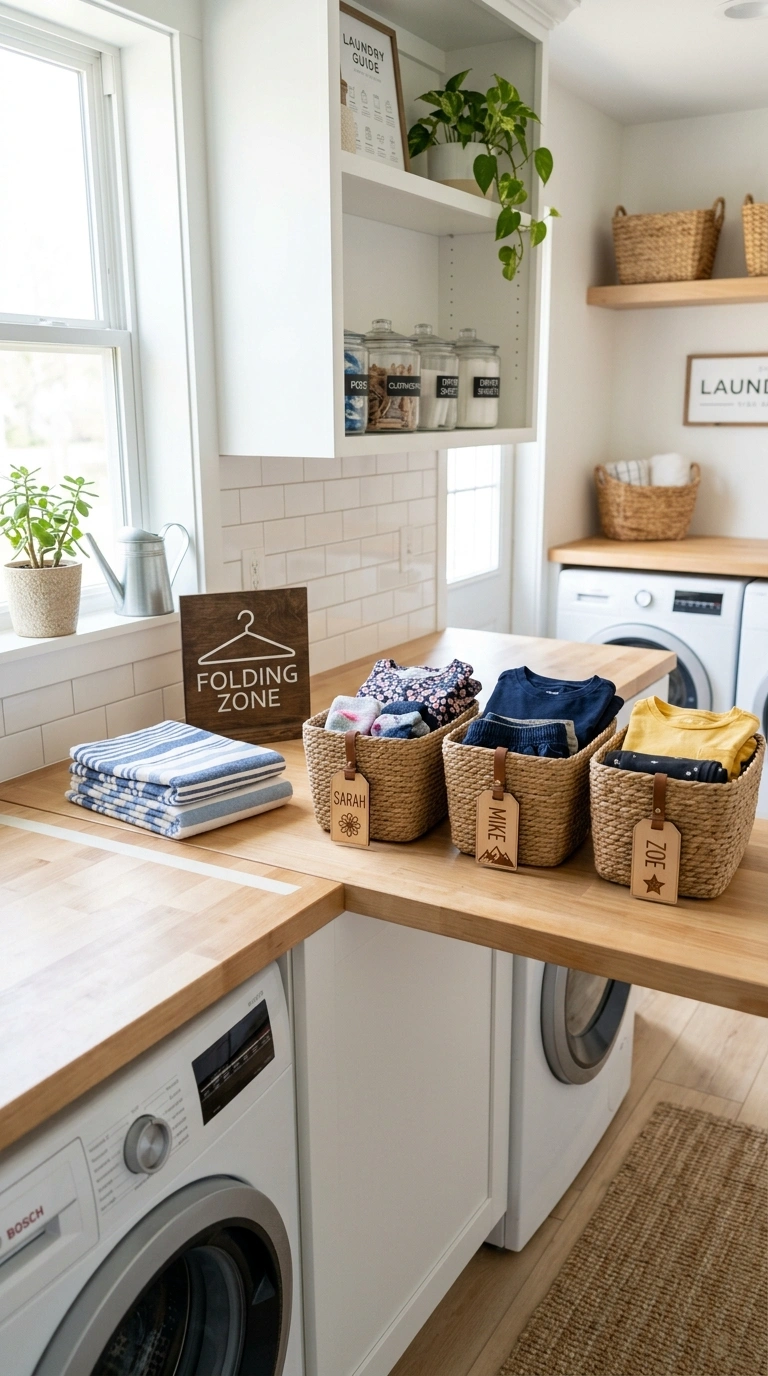
The folding surface in the laundry room should have a clear zone for folded items waiting to be put away, a small basket or bin for items that need mending, and a designated spot for items that belong to each household member. The zoning system on the folding counter prevents the common pile-up of folded clothes that sit on the counter for days because nobody takes them to their rooms. A small labeled basket for each family member, where their folded items are placed immediately after folding, makes the distribution step clear and accountable.
9. Supply Inventory Checklist
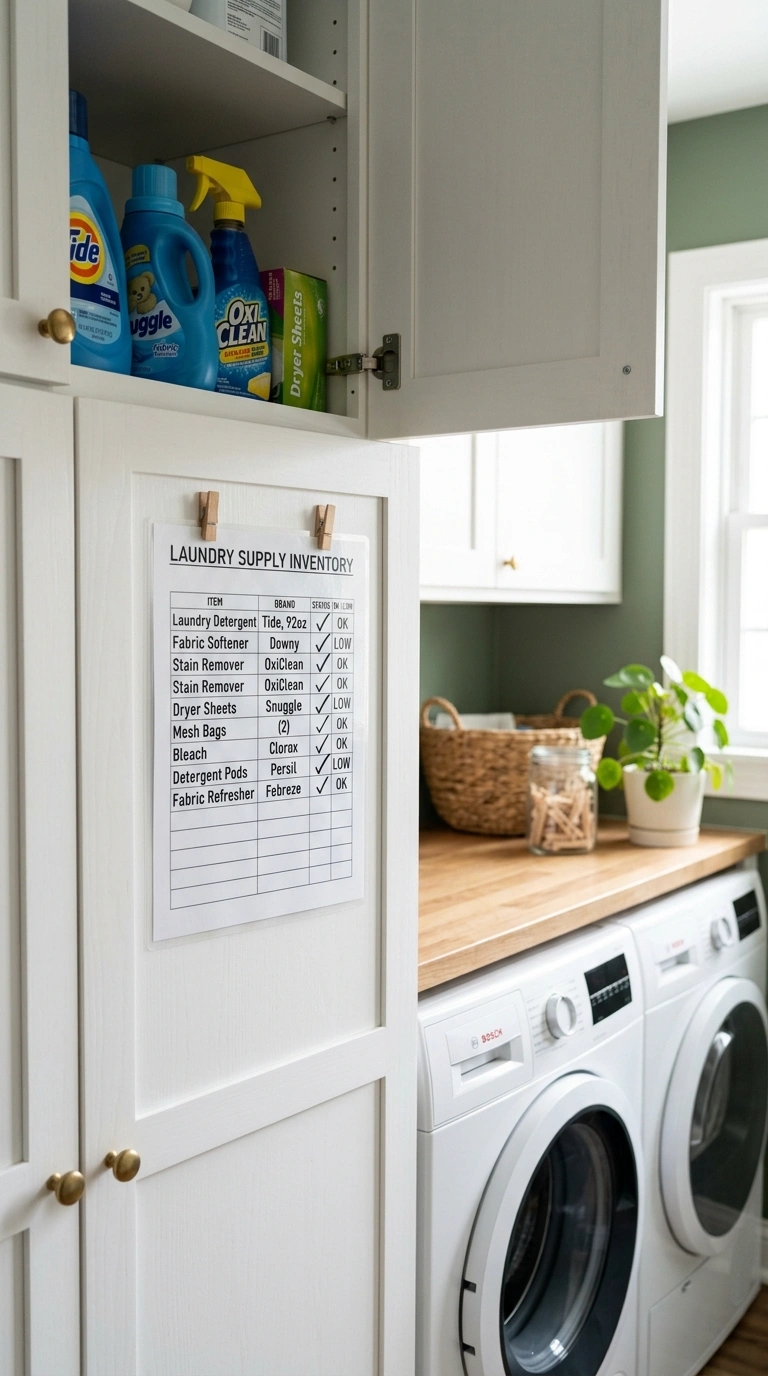
A small laminated checklist attached to the inside of a cabinet door or on the wall listing all laundry supplies with a space to mark when each is running low prevents the frustrating experience of running out of detergent mid-load. Review the checklist weekly and add low items to the household shopping list. The checklist takes thirty seconds to check and prevents the specific annoyance of being mid-laundry and discovering the essential supply is empty. A simple handwritten list laminated with clear packing tape works as well as a printed version and can be updated with a dry-erase marker.
10. Ironing Board Storage Solution
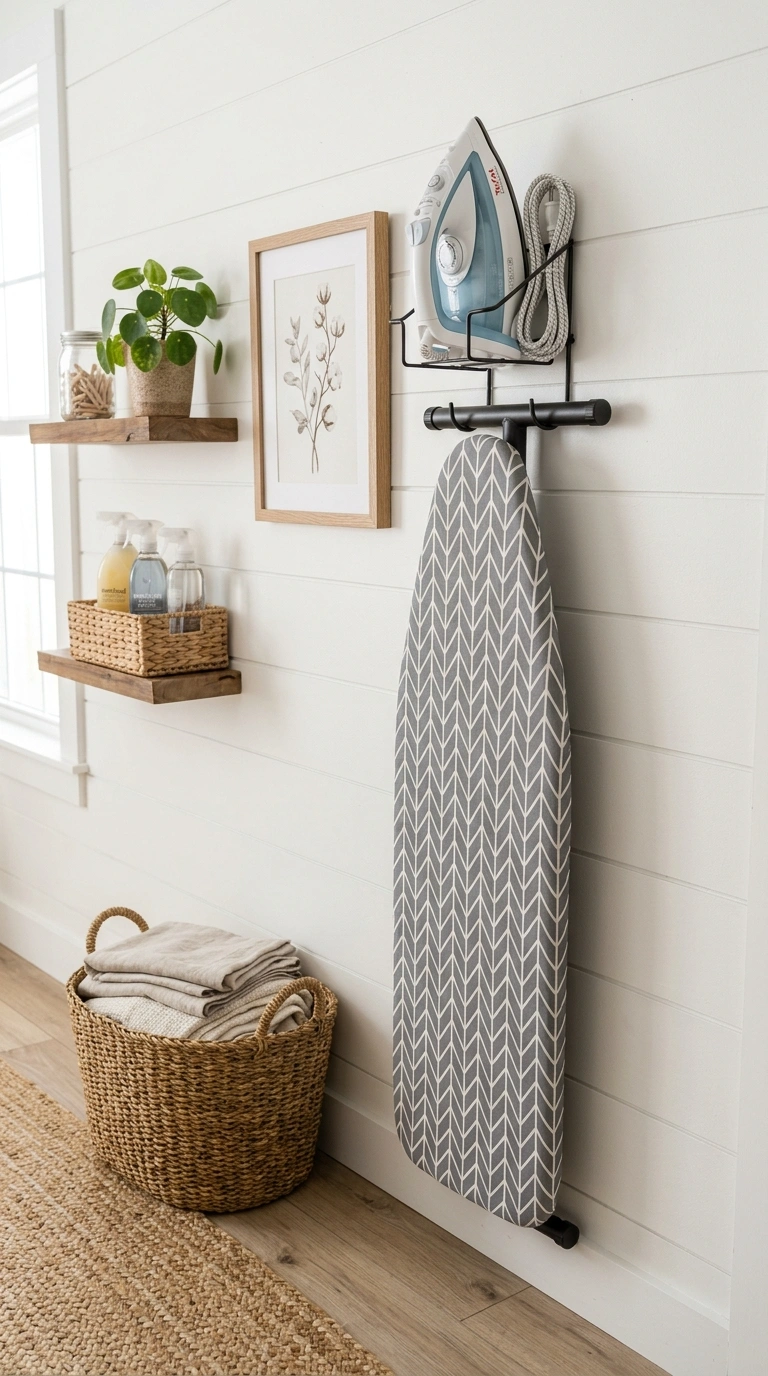
The ironing board needs a storage position that is accessible but not blocking the walking path when stored. A wall-mounted ironing board hook that holds the board vertically against the wall, a fold-down ironing board cabinet that opens to reveal the board, or a narrow storage slot between the wall and the machines all keep the board stored upright and out of the way. The iron itself should be stored on a designated shelf or in a small cabinet rather than sitting on the counter or the dryer top where it takes up surface space and creates a safety concern.
11. Mesh Bag System
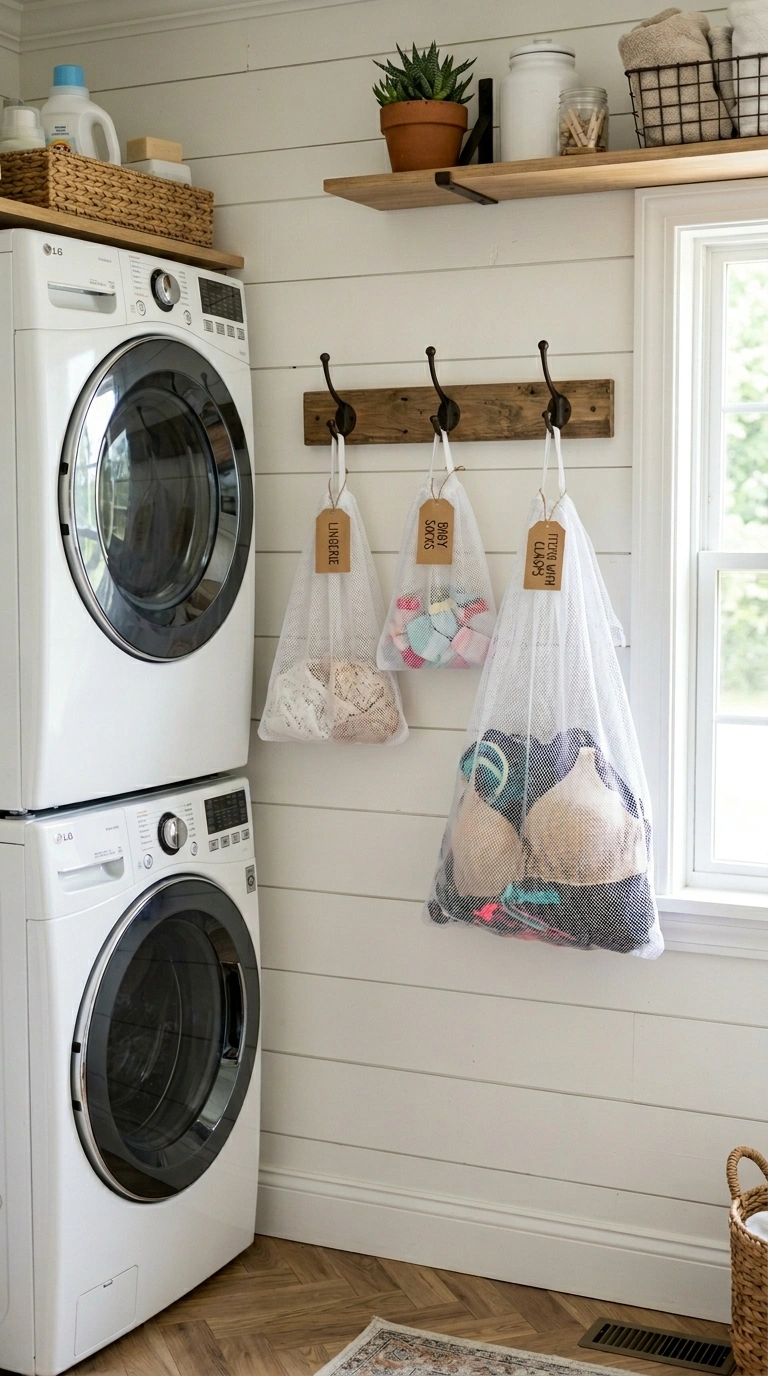
A set of mesh laundry bags in different sizes, each designated for a specific use, keeps delicate items, small items, and items that tangle together separated during the wash cycle. A large mesh bag for lingerie, a medium bag for baby socks, and a small bag for items with hooks or clasps that catch on other garments together prevent the damage and loss that comes from washing these items loose. Hang the empty mesh bags on hooks beside the machines so they are accessible at loading time. The mesh bag system is one of the simplest organizational tools and one that prevents genuine damage to clothing.
12. Weekly Laundry Schedule
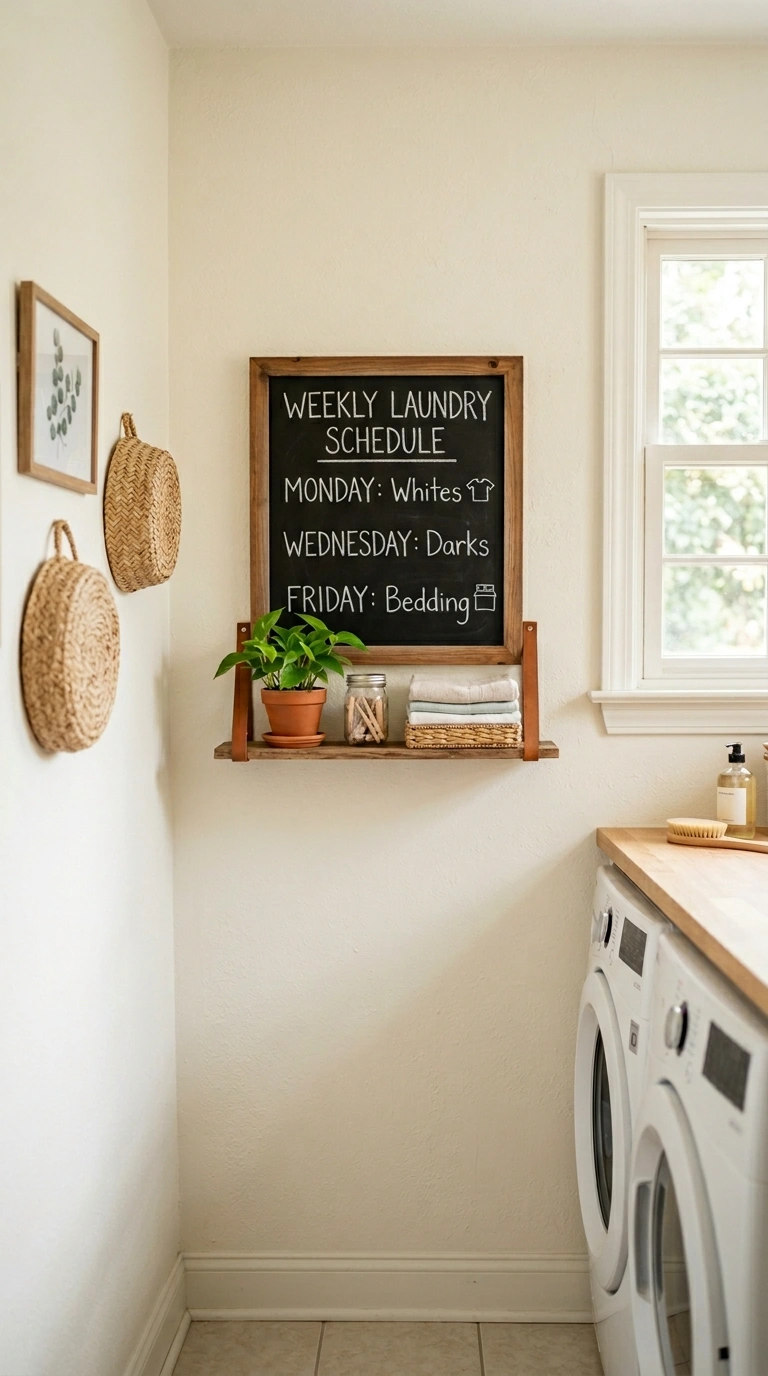
A posted weekly schedule that assigns specific laundry types to specific days prevents the overwhelming pile-up that happens when laundry is done only when the hampers are overflowing. A simple system might assign whites to Monday, darks to Wednesday, bedding and towels to Friday, and delicates to Sunday. The schedule distributes the laundry work across the week in manageable loads rather than concentrating it into a single exhausting laundry day. Post the schedule on the wall or the inside of a cabinet door where it is visible during laundry room use.
13. Dryer Sheet and Lint Station
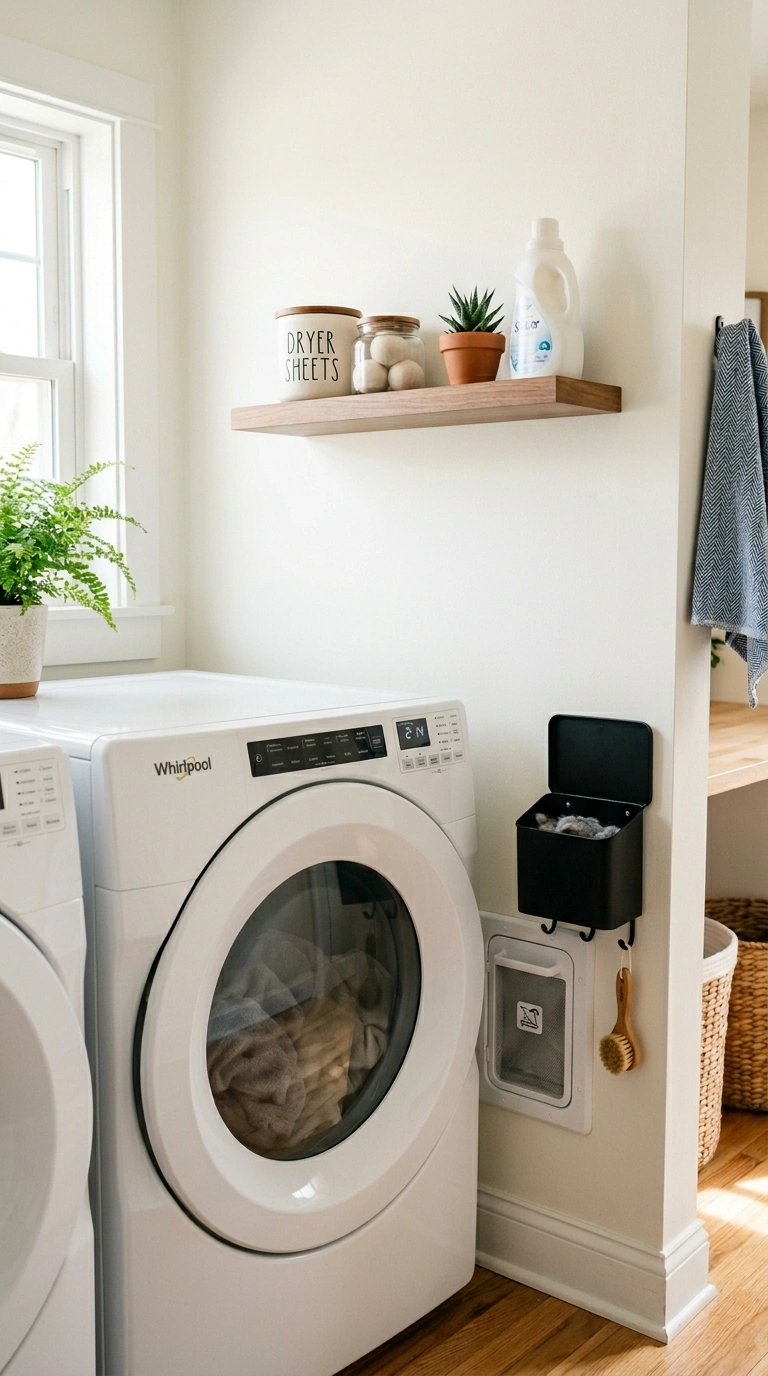
A small container for dryer sheets positioned on top of or beside the dryer, and a small trash container or lint bin mounted on the wall near the dryer lint trap, together handle the two most frequent dryer-related tasks without requiring a trip to the trash can across the room. The dryer sheet container should be a small covered box or jar that keeps the sheets contained and accessible. The lint bin should be emptied regularly but positioned so the lint can be tossed directly from the trap into the bin in one motion.
14. Cleaning Cloth System
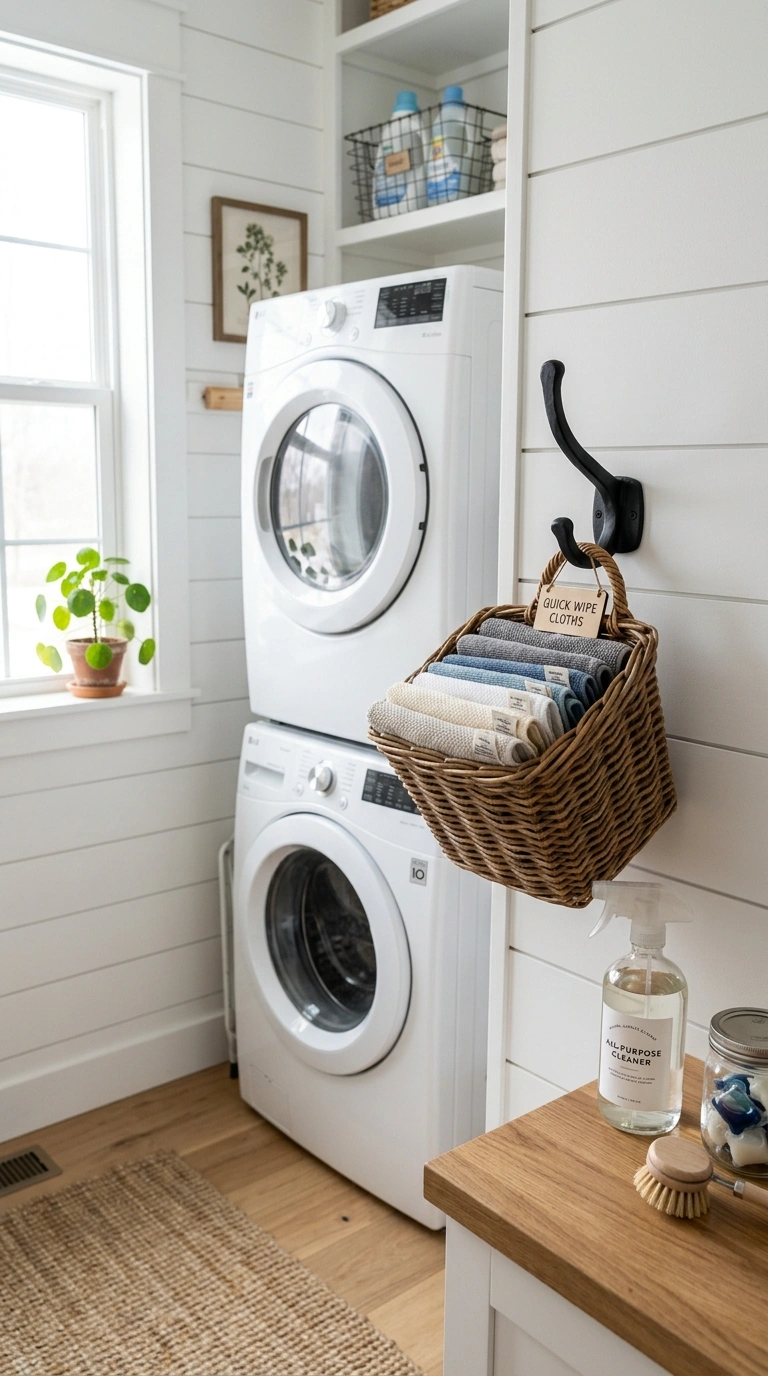
A dedicated set of cleaning cloths used exclusively for laundry room maintenance, wiping machine surfaces, cleaning the lint trap area, wiping the counter, stored in a small basket or on a hook near the machines makes quick cleanups happen regularly rather than being delayed until a cloth can be found. The dedicated cloths stay in the laundry room and cycle through the wash with the regular laundry. A set of five to seven cloths ensures a clean one is always available while the used ones wait for the next wash cycle.
15. Return Basket by Door
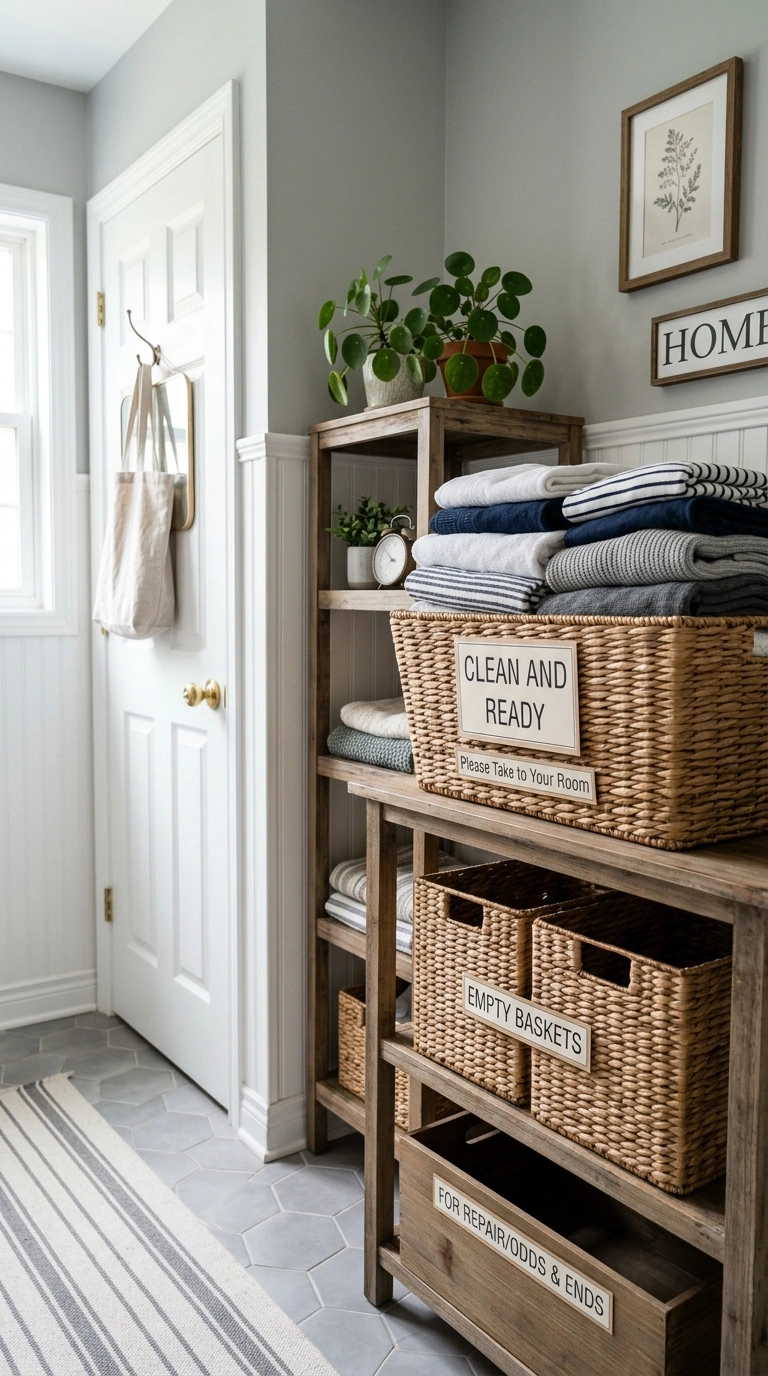
A single basket or bin positioned by the laundry room exit, labeled with each family member’s name or with a general label like Clean and Ready, holds the completed folded laundry waiting for each person to take it to their room. The return basket makes the transition from laundry room to closet a single grab rather than a multi-trip process. When the basket for a family member is full, that person takes it to their room and returns the empty basket. The system creates clear accountability and prevents clean folded laundry from sitting indefinitely on the folding counter. For a broader overview of how design and daily habits work together to make laundry genuinely manageable, the 23 laundry room ideas guide covers the complete approach to creating a laundry room that functions as a real room.
16. Pocket Emptying Tray
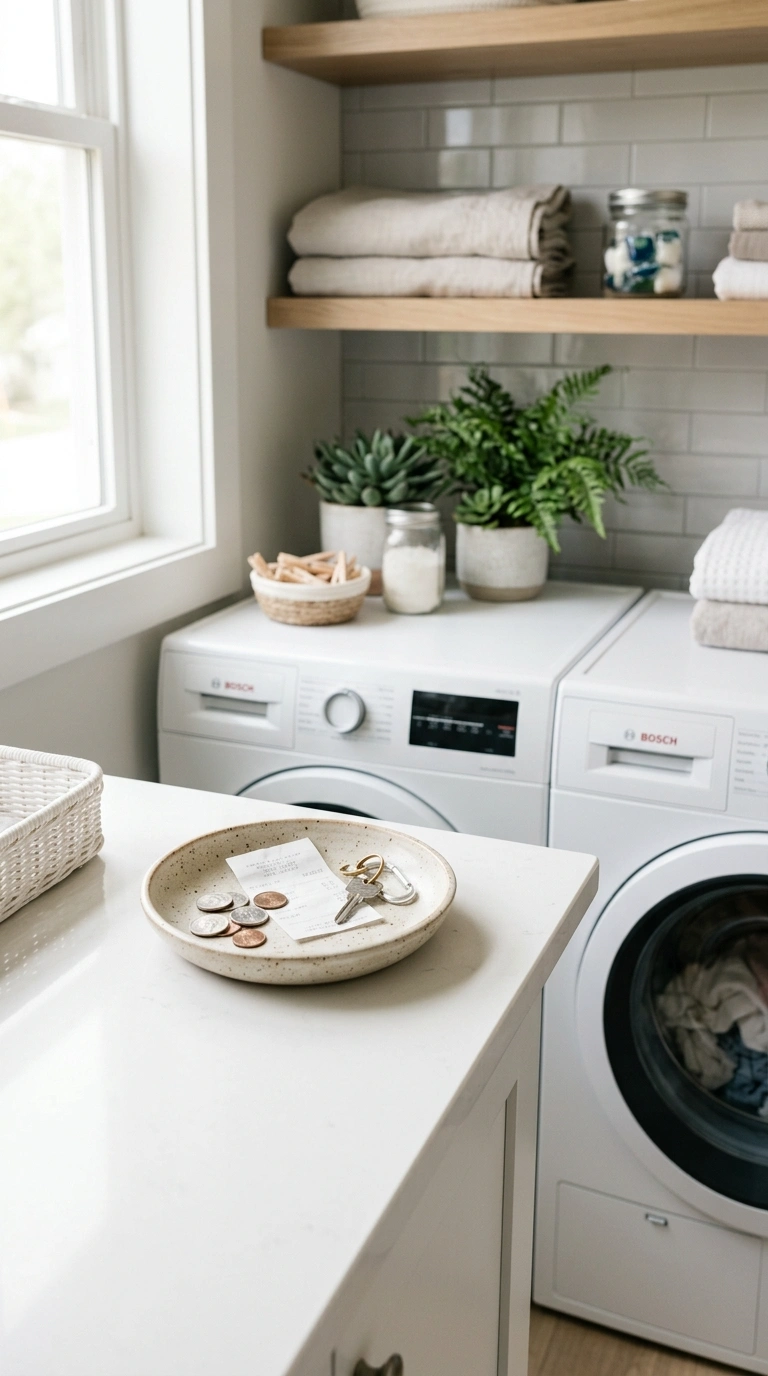
A small tray or shallow dish positioned on the counter or on a shelf near the machines catches the contents emptied from pockets before clothes go into the wash: coins, receipts, chapstick, keys, and the small items that cause problems when they go through a wash cycle. The tray prevents coins from damaging the machine drum, prevents tissues from shredding across an entire load, and prevents keys and small tools from denting the dryer. Empty the tray weekly and return items to their owners. The small tray is one of those simple organizational details that prevents genuine laundry disasters.
17. Seasonal Supply Rotation
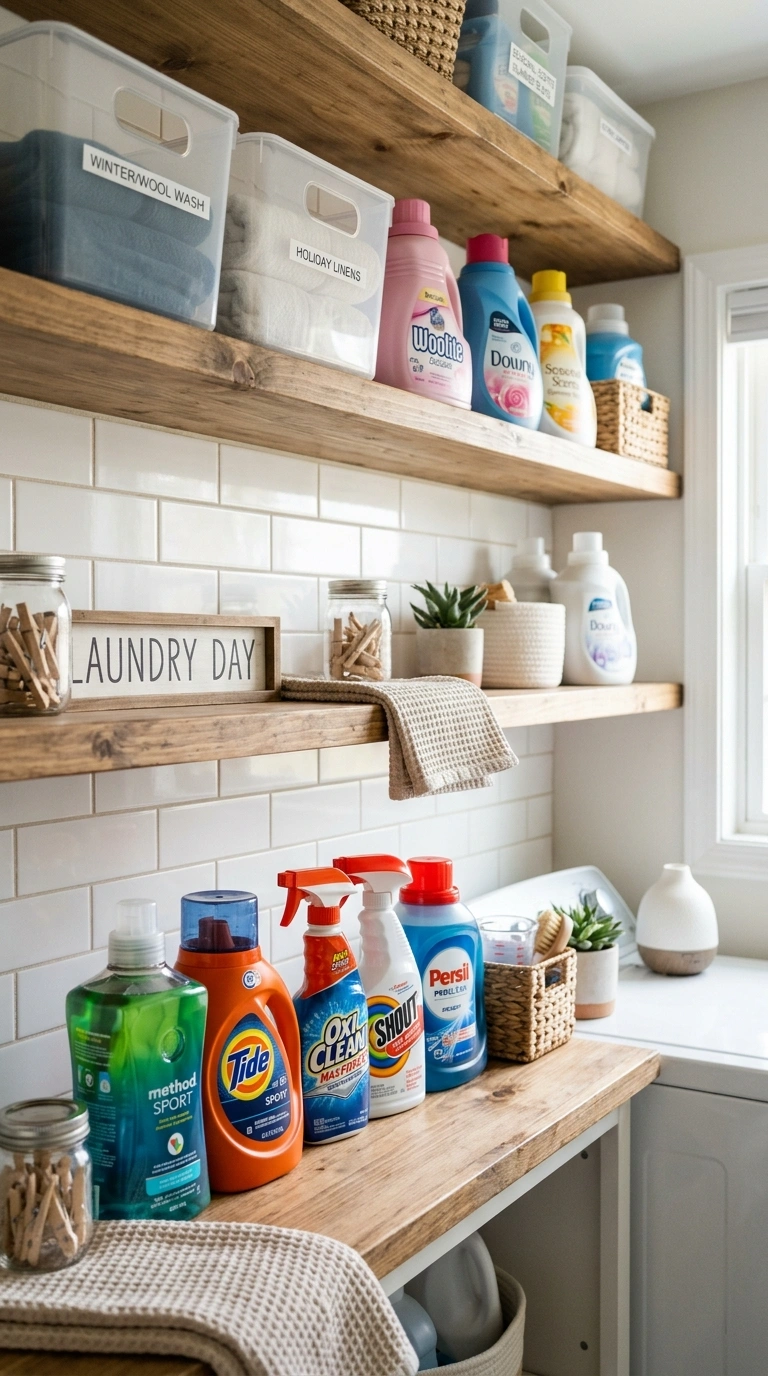
The laundry supplies needed in summer are different from those needed in winter. Summer requires more stain removers for grass and sunscreen stains, sport-specific detergent, and lighter fabric care. Winter requires wool wash, anti-static products, and heavier stain treatment for mud and salt. Rotating the front-shelf supplies seasonally so the current season’s products are immediately accessible and the off-season products are stored in a less accessible location keeps the working shelf relevant and uncluttered throughout the year.
18. Five-Minute Weekly Reset
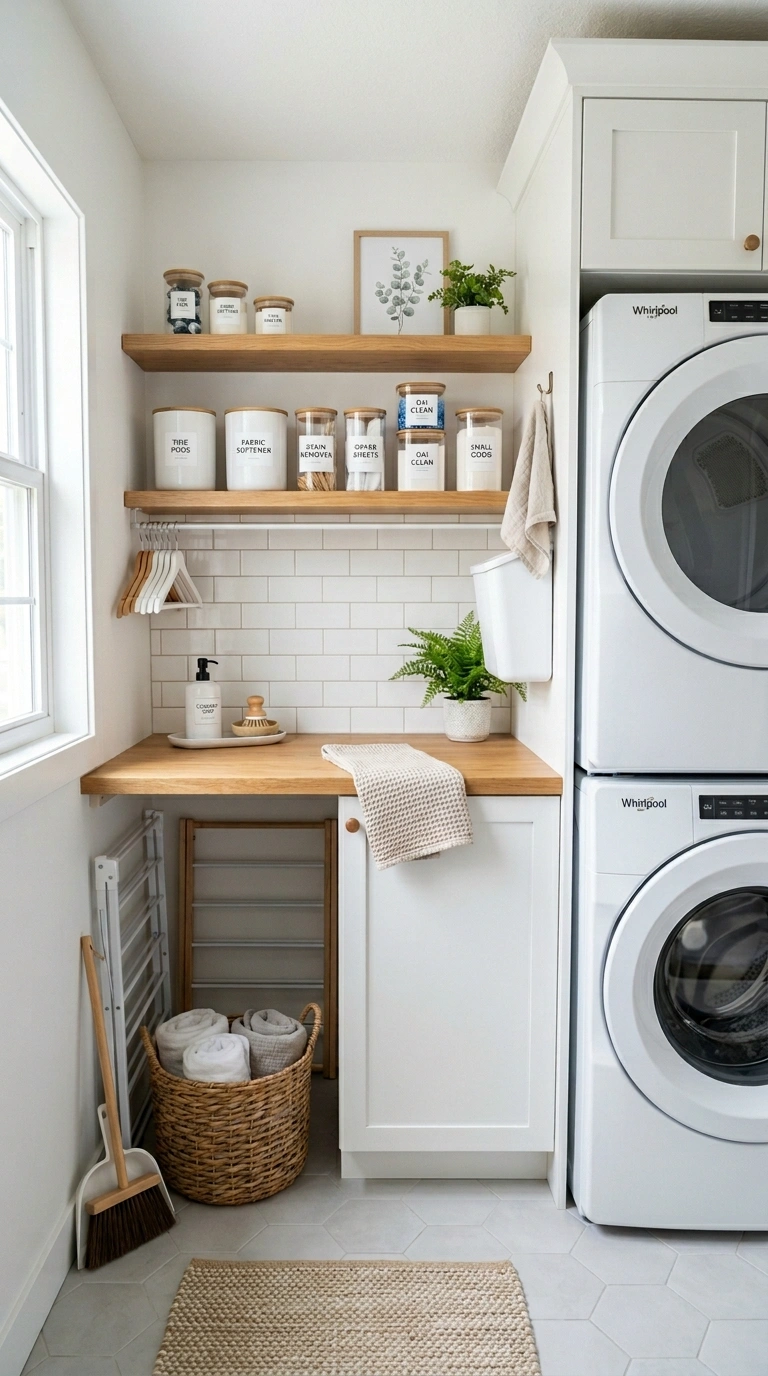
The most organized laundry room stays organized because of a simple five-minute weekly reset. Once a week, return every product to its labeled spot, wipe down the counter and machine surfaces, empty the lint bin, check the supply inventory, and sweep or vacuum the floor. The weekly reset prevents the gradual drift from organized to chaotic that happens when maintenance is skipped for weeks at a time. Schedule the reset as part of the weekly cleaning routine and the laundry room maintains its organized quality indefinitely rather than requiring a major reorganization every few months.
A laundry room that stays organized is built on specific systems, sorting bins, labeled storage, dedicated stations for each task, and the simple weekly habit of resetting everything to its designated position. The systems create the infrastructure and the weekly reset maintains it. The five-minute reset is the smallest investment of time with the largest return in ongoing laundry room function.