18 Home Office Decor Ideas That Make Working From Home Feel Designed
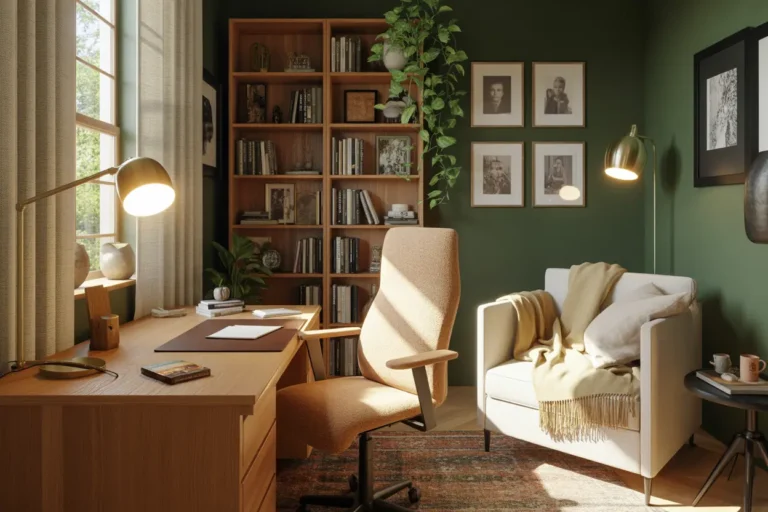
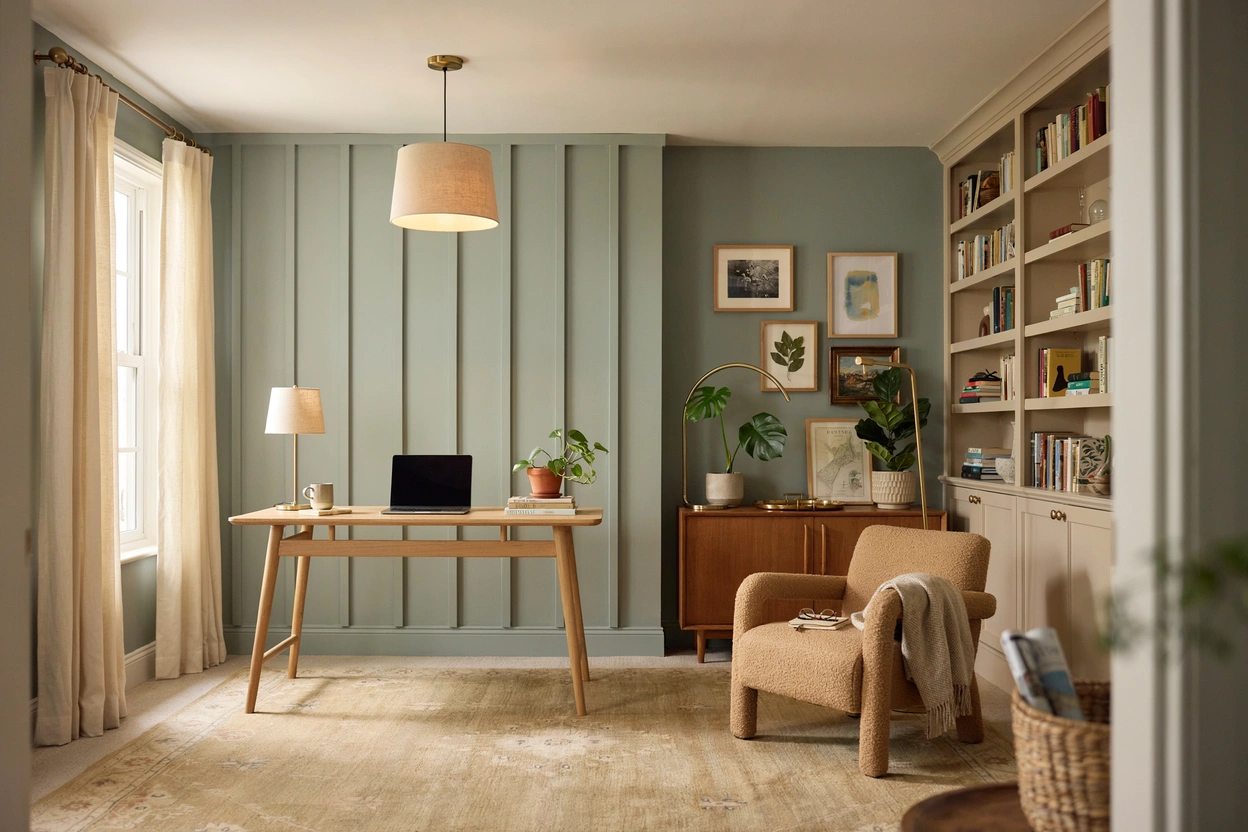
Most home offices look like spare bedrooms with a desk in them because that is exactly what they are. The bed was removed, the desk went in, and nothing else changed. The walls are still the same generic color. The lighting is still the same single overhead fixture. The floor is still the same bare carpet. The room functions as a workspace but it does not feel like a designed room that someone deliberately chose to spend eight hours a day in. Styling a home office means applying the same design attention to it that you would apply to a living room or a bedroom: the wall treatment, the lighting, the rug, the art, the shelving, and the small accessories that together make the room feel genuinely styled and intentionally designed rather than reluctantly converted. These 18 ideas cover the room-level design decisions that transform a default spare room into a workspace that feels like a real room.
1. Statement Wall Treatment
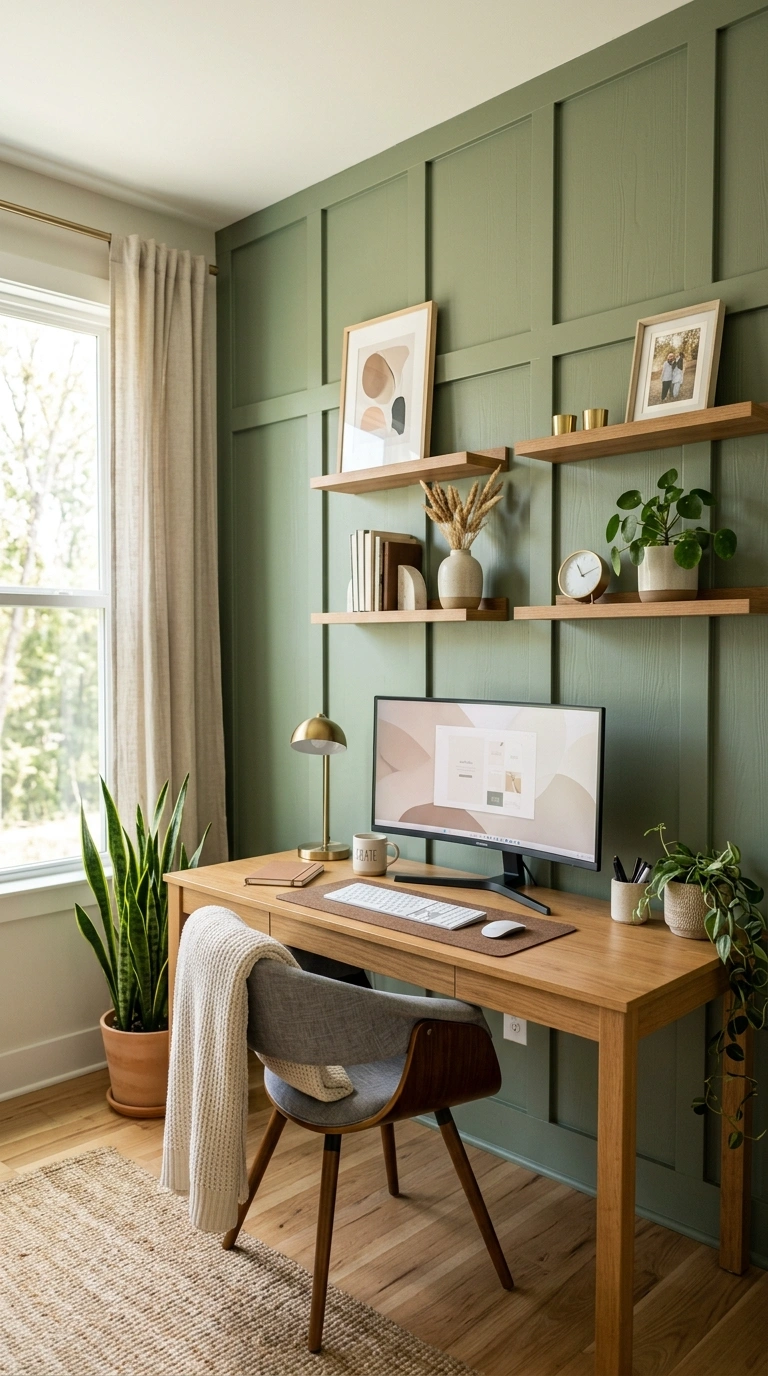
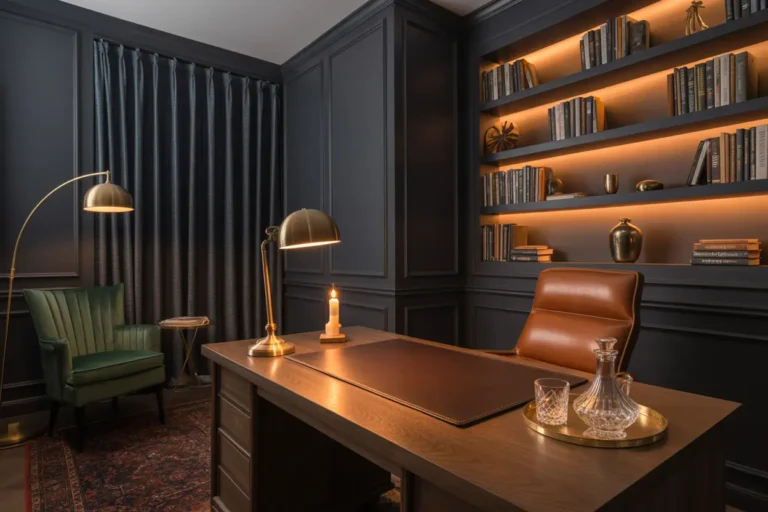
A feature wall behind the desk, whether painted in a confident warm color, covered in a sophisticated wallpaper, or treated with a simple architectural detail like board and batten, creates a designed backdrop for the workspace that transforms the most-viewed wall from generic to deliberate. The statement wall is visible during video calls, which means it represents you to colleagues and clients as well as affecting your own daily experience. Choose a treatment that suits both your personal taste and the professional impression you want to communicate. A warm sage, a rich navy, or a subtle textured wallpaper all read as both personal and professional.
2. Proper Overhead Lighting
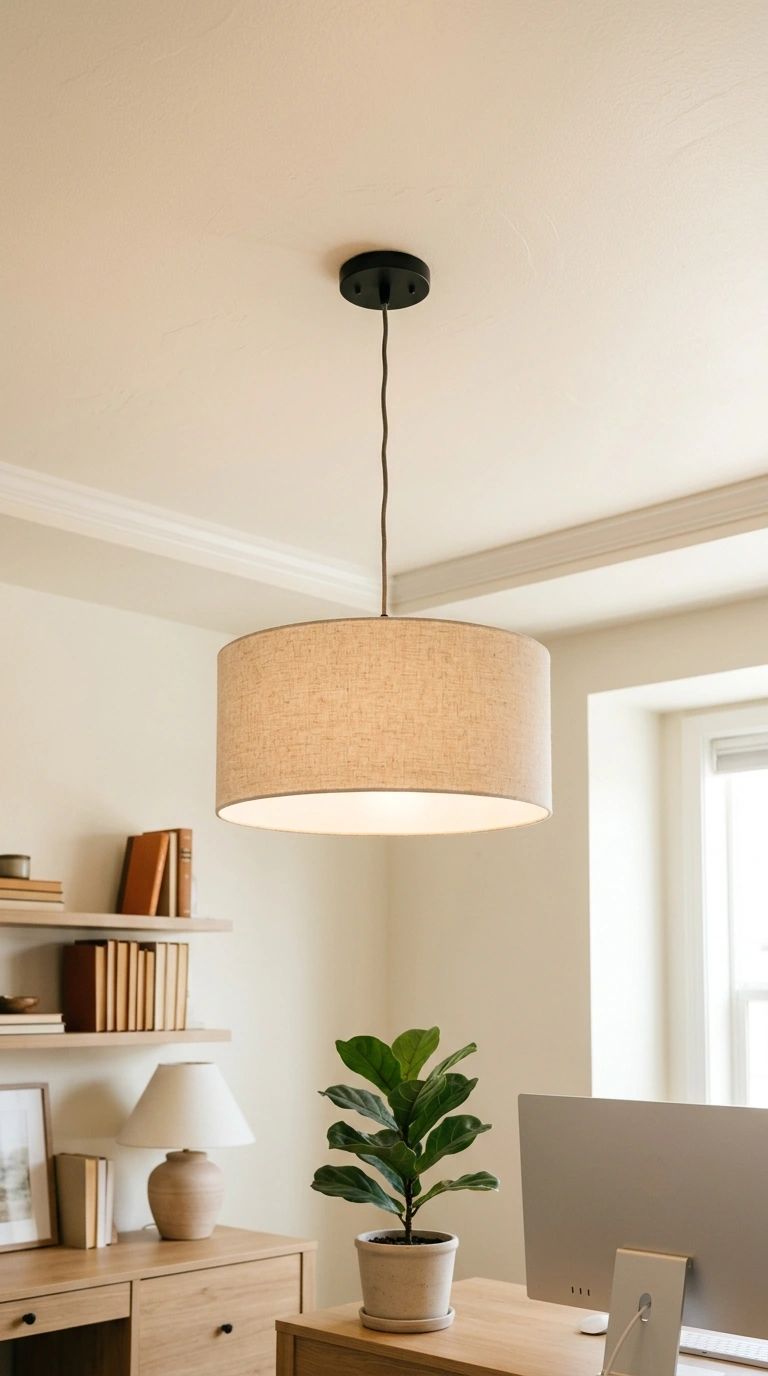
Replacing the single builder-grade flush mount ceiling fixture with a pendant, a semi-flush, or a set of track lights that provide better quality and more designed-looking overhead illumination immediately changes how the office feels. A warm linen pendant, a brass semi-flush fixture, or a simple set of adjustable track lights all provide better light quality and more visual design character than a standard ceiling dome. The overhead fixture is visible in the peripheral vision during every working hour and its quality subtly affects the perceived quality of the entire room. Use warm-toned bulbs on a dimmer for maximum atmospheric control.
3. Large Rug for Room Definition
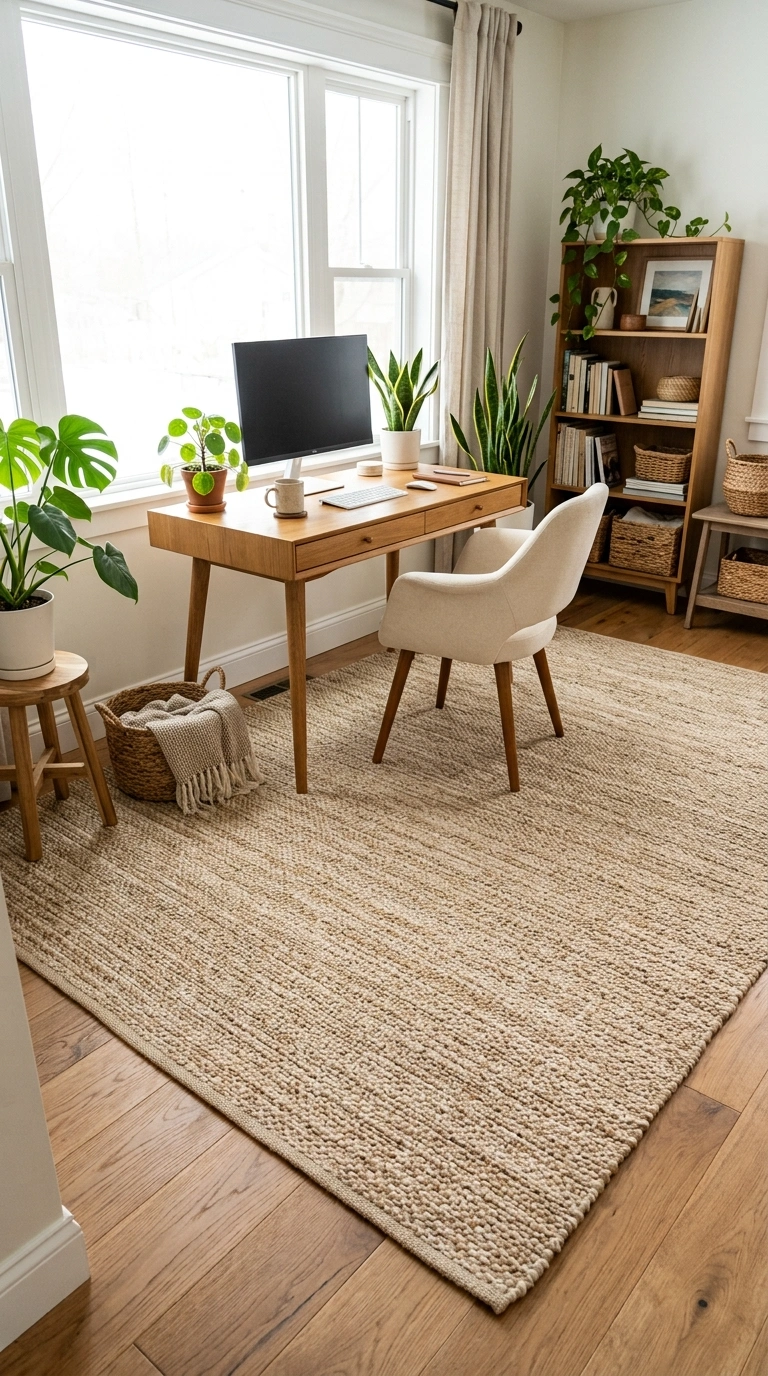
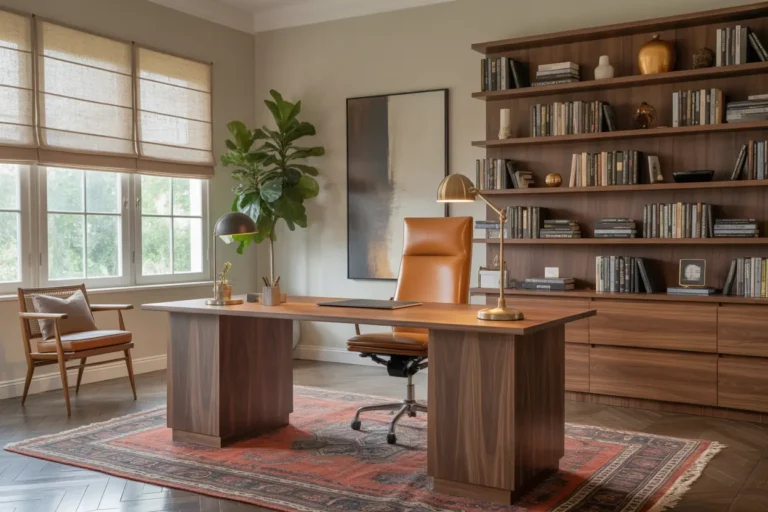
A large rug that covers most of the office floor defines the room as a furnished, designed space rather than a bare converted bedroom. The rug adds warmth, color, sound dampening, and the visual signal that someone has invested in making this room feel complete. Choose a flat-weave rug so the desk chair rolls smoothly, in a warm tone or a subtle pattern that complements the wall color and the furniture. The rug should be large enough that the desk and chair sit fully on it, which makes the entire work zone feel cohesive and grounded.
4. Styled Bookshelf Wall
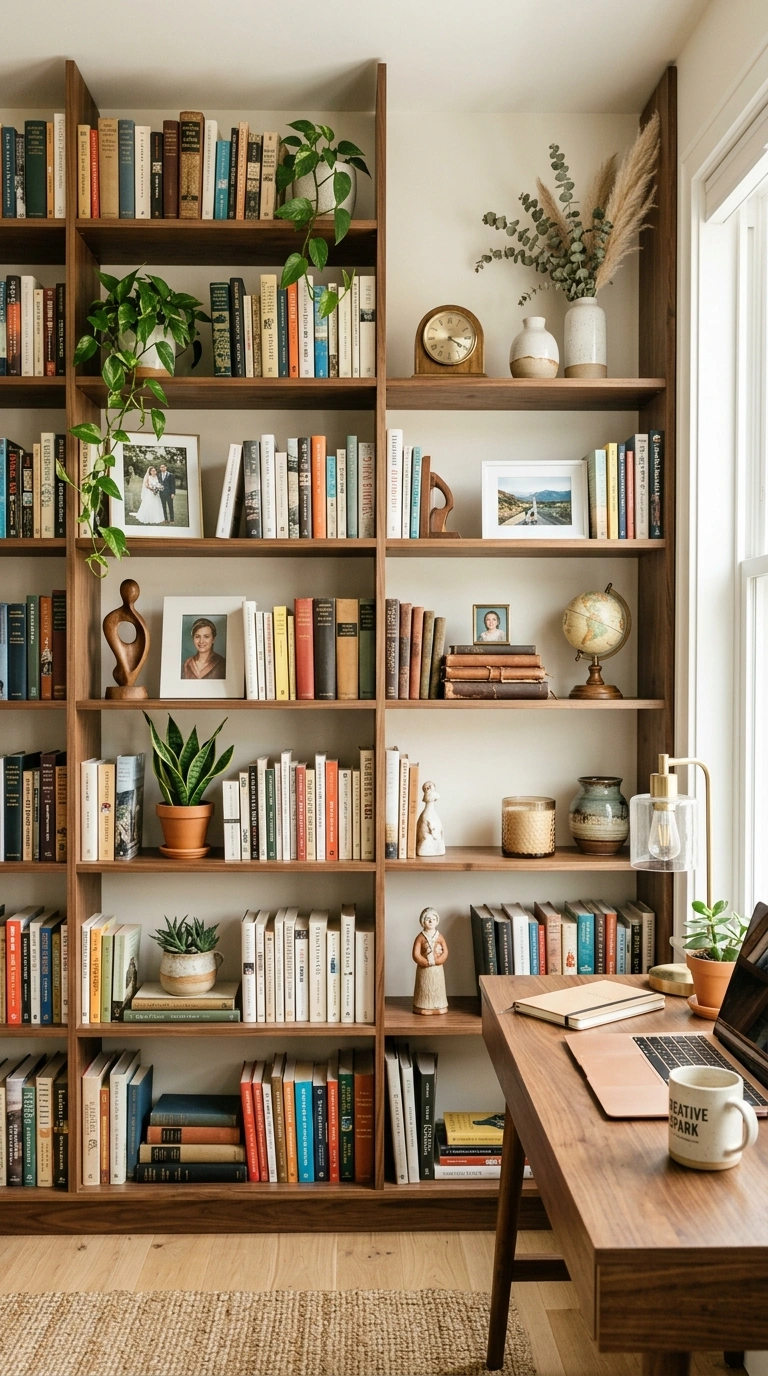
A bookshelf or a set of shelves styled with books, plants, personal objects, and a few decorative items creates the most visually rich and most personal feature in the home office. The styled bookshelf provides the visual depth, the personal character, and the intellectual warmth that blank walls and generic prints cannot match. Style the shelves with a mix of vertical and horizontal book arrangements, small plants between groupings, a few personal photographs, and one or two warm-toned decorative objects. Leave about thirty percent of each shelf empty so the display reads as curated rather than crowded. The bookshelf often becomes the background for video calls and the visual signature of the home office. For a broader approach to furnishing the office with warm comfortable elements, the warm home office ideas guide covers materials, lighting, and the atmosphere-level decisions that make the room feel genuinely warm.
5. Window Treatment Upgrade
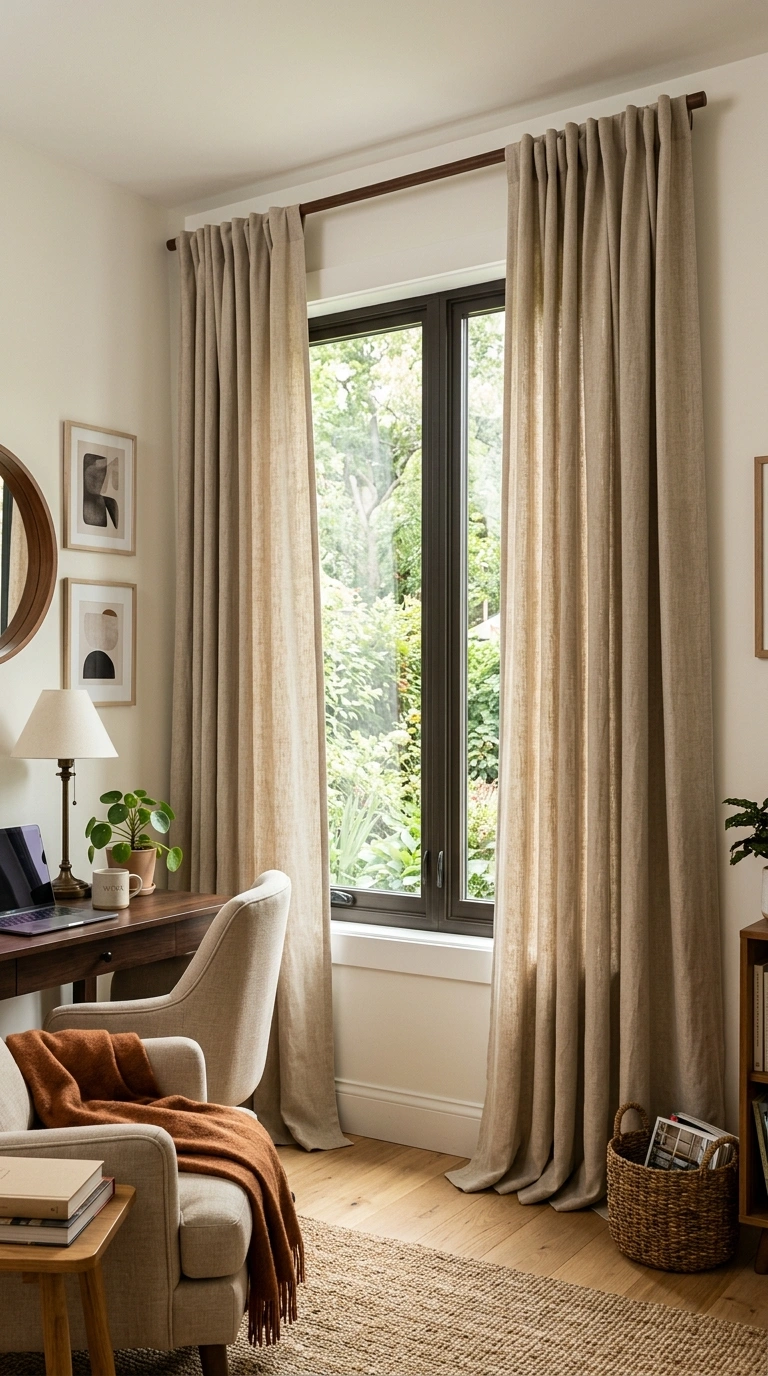
Replacing bare windows or basic plastic blinds with proper curtain panels in a warm natural fabric immediately makes the home office feel like a designed room. Floor-length linen or cotton panels in a warm tone hung from a simple rod near the ceiling add softness, light control, and the visual finish that bare windows lack. The curtains frame the view, filter the natural light, and add the textile element that offices with only hard surfaces are missing. Choose a curtain weight that provides privacy and light control without darkening the room completely during working hours.
6. Art Gallery Wall Curated
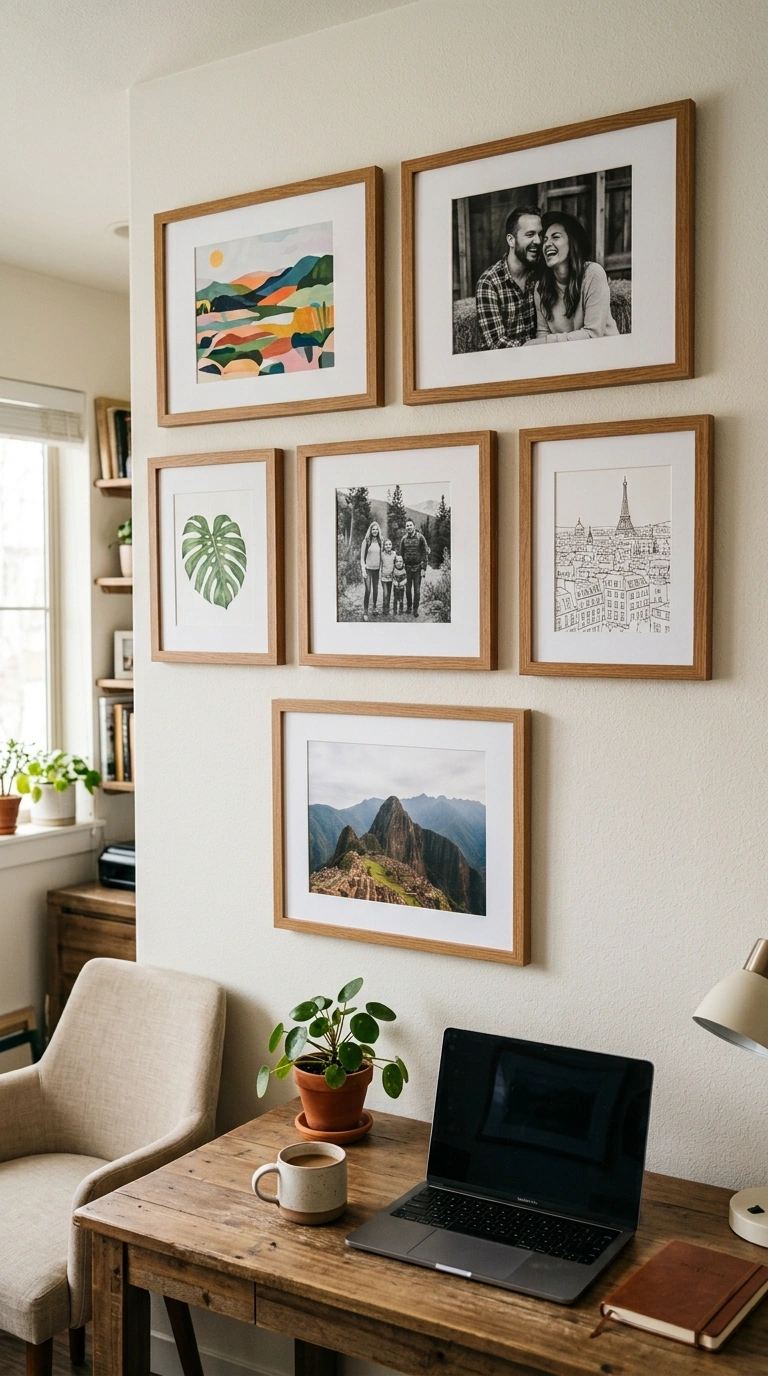
A curated gallery wall of five to seven framed pieces, mixing art prints, photographs, and perhaps one or two small dimensional objects, creates a visual focal point that gives the office genuine personality. The gallery should include pieces that are personally meaningful rather than generically decorative. Mix frame sizes and styles within a warm coordinated palette, warm wood frames, warm gold frames, or black frames depending on the room’s style. Position the gallery on the wall that is most visible during the workday, whether that is facing the desk or on the wall that serves as the video call background.
7. Console or Credenza Addition
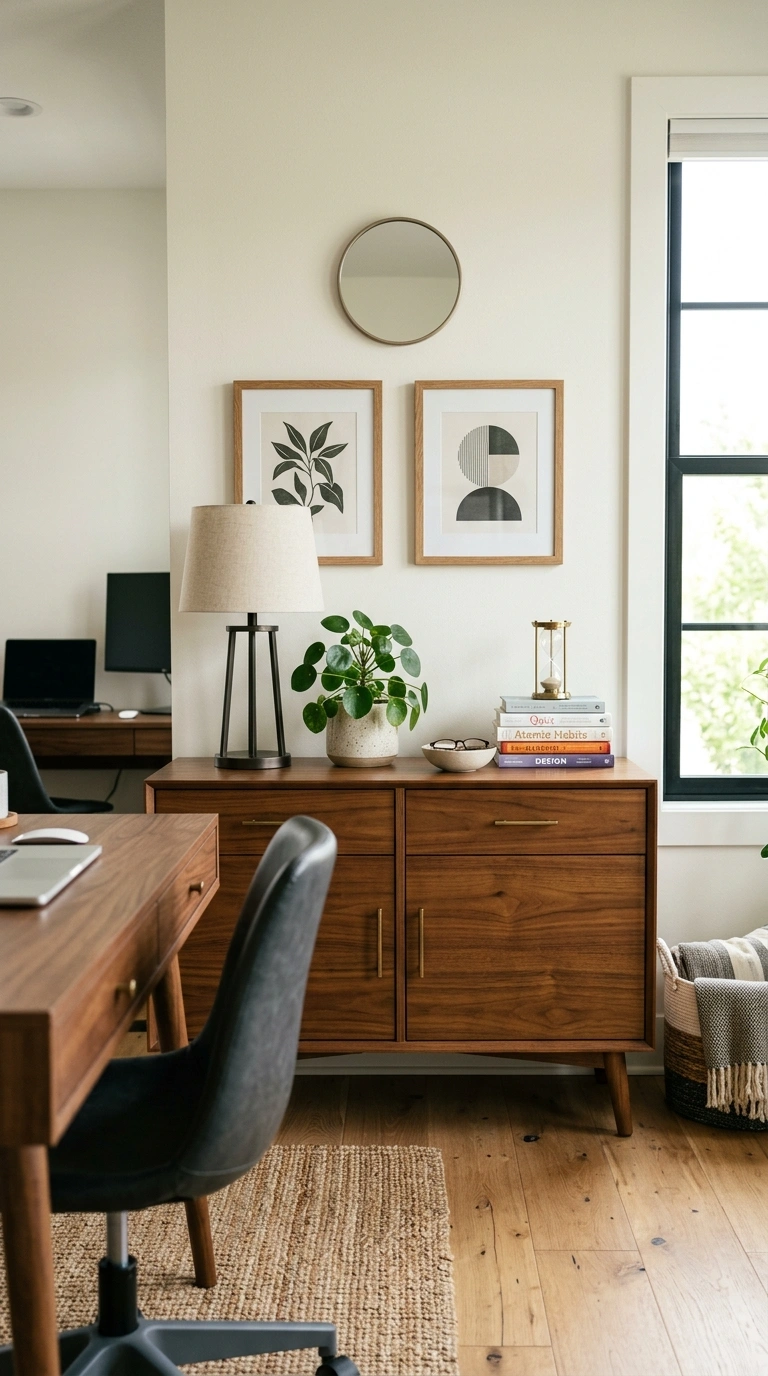
A console table, a credenza, or a low bookshelf positioned against a wall opposite the desk provides additional surface area for styled displays, storage for office supplies, and a visual anchor on the non-desk side of the room. The console holds a styled vignette on top, a lamp, a plant, a few books, and perhaps a small tray for daily items, and provides concealed or semi-concealed storage below. The console makes the room feel like it has furniture rather than just a desk, which is the distinction between a room and a workstation.
8. Comfortable Reading Corner
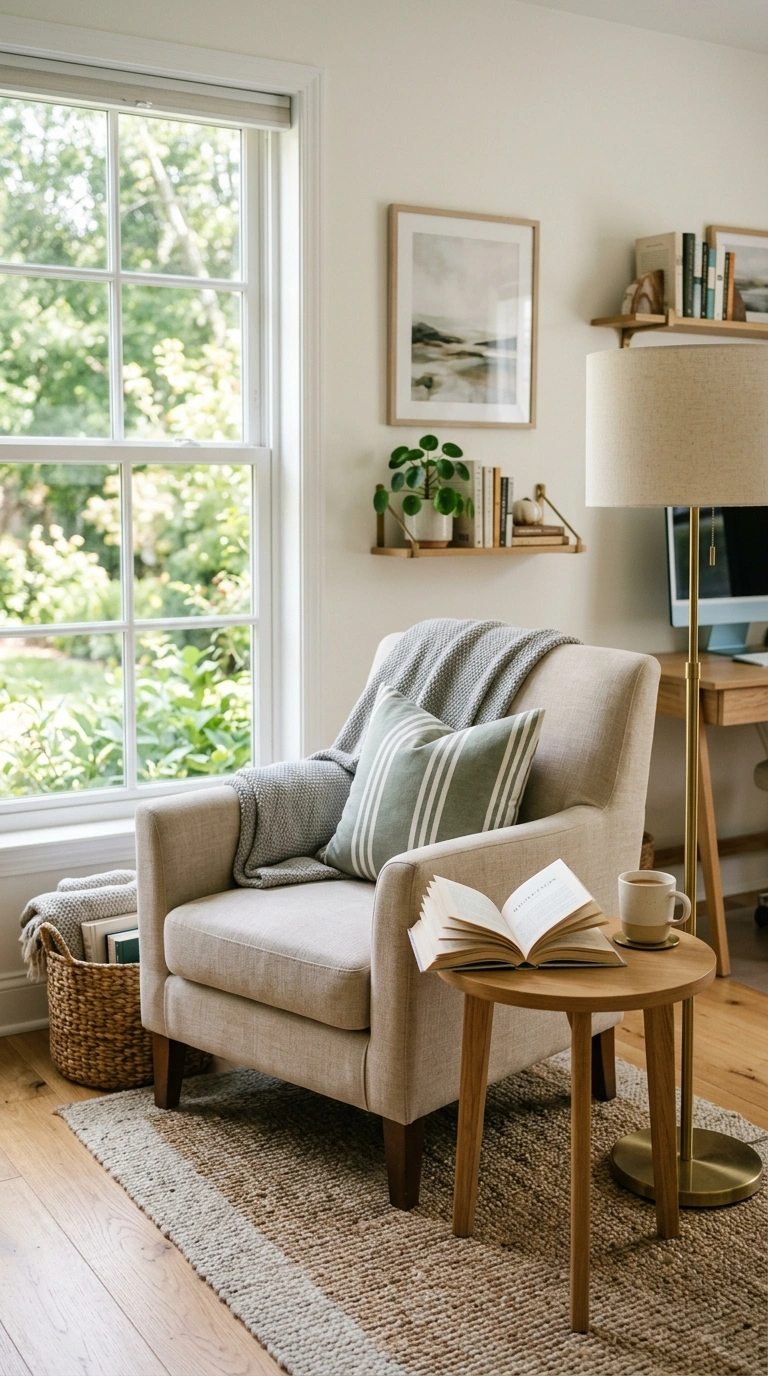
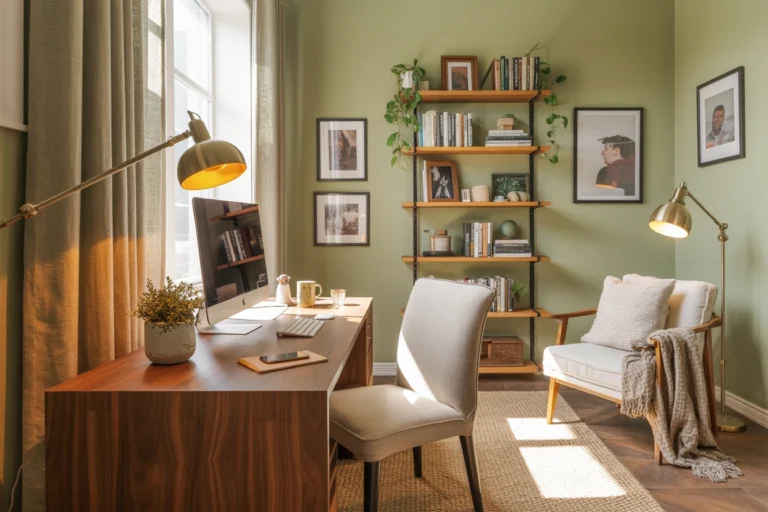
A comfortable armchair positioned in a corner with a floor lamp, a small side table, and perhaps a throw blanket creates a reading and thinking zone within the office that provides an alternative to the desk for tasks that do not require the screen. The reading corner makes the office feel like a room with multiple functions rather than a single-purpose workstation. Use the corner for reading documents, taking phone calls, brainstorming in a notebook, or simply resting the eyes during a break. The corner should be comfortable enough to genuinely enjoy sitting in.
9. Warm Paint Color Commitment
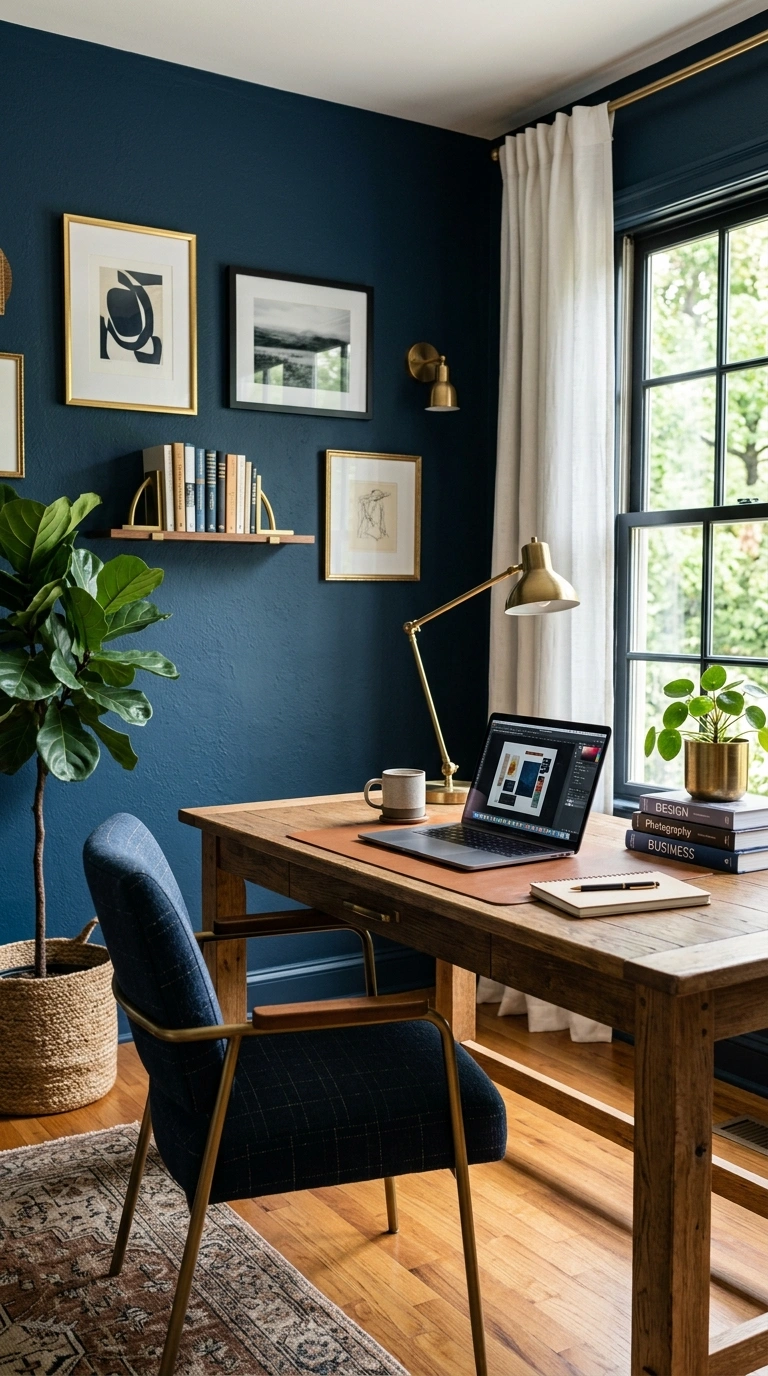
The wall color in a styled home office should be a deliberate choice rather than whatever the previous occupant or the builder left behind. Choose a color that makes you genuinely happy to walk into the room: a warm sage that feels calm and focused, a rich navy that feels confident and professional, a soft terracotta that feels warm and creative, or a warm cream that feels bright and welcoming. The paint is the cheapest and most impactful single change available and it affects every other element in the room by changing the overall color and light quality.
10. Desk Position for Flow
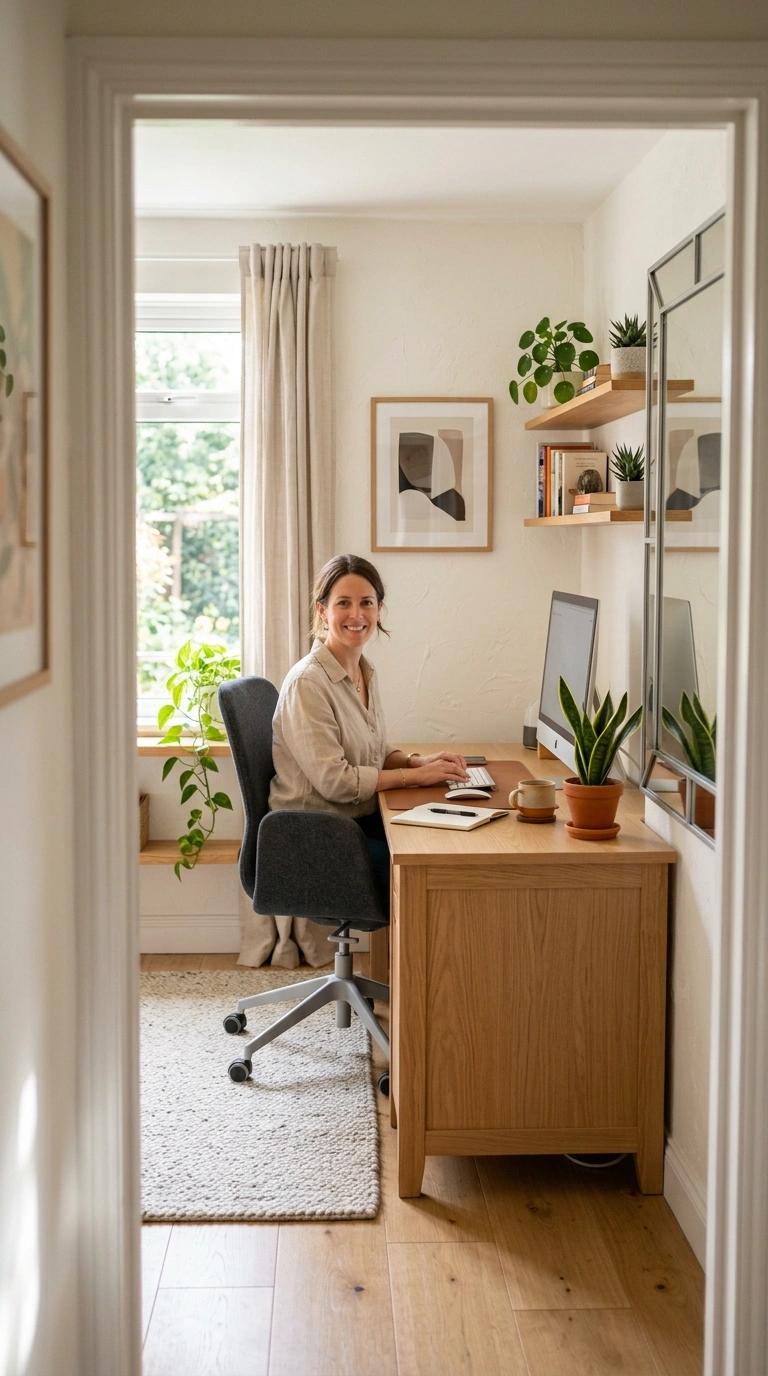
The position of the desk within the room affects how the entire office flows and how the room feels when you walk in. A desk facing the room with the back to a wall, rather than facing a wall with the back to the room, creates a commanding position that feels more open and more confident. A desk positioned perpendicular to the window catches natural light on the work surface without screen glare. A desk centered on the main wall creates a symmetrical, designed appearance. The desk position should be chosen for both function and how the room looks and feels from the doorway, since the first impression of the office from the entrance affects how you feel walking into it at the beginning of every workday.
11. Ceiling to Floor Curtains
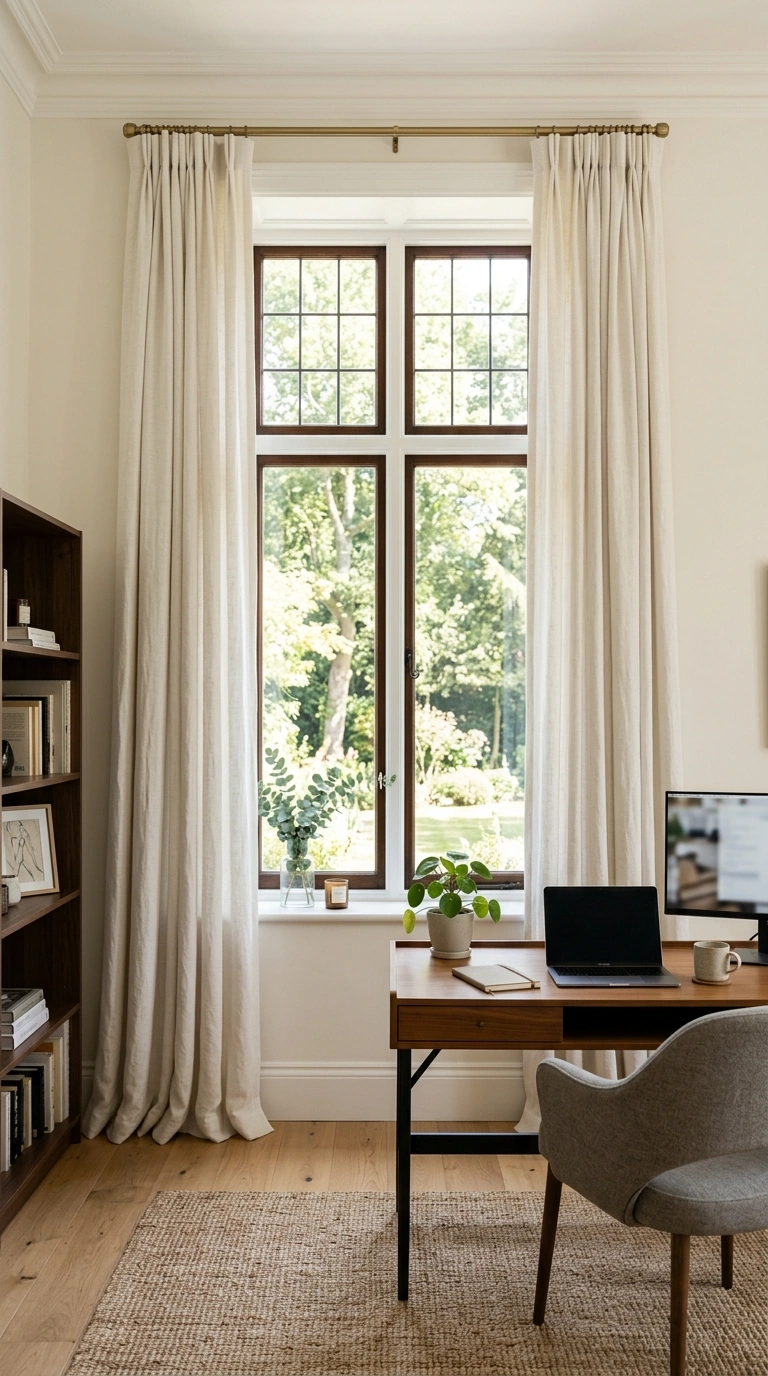
Hanging the curtains from as close to the ceiling as possible and letting them fall to the floor creates the most generous and most designed curtain proportion. The ceiling-to-floor installation makes the windows look taller and the room look more substantial than curtains hung at the window frame height. The proportional difference between curtains that start at the window and curtains that start at the ceiling is dramatic and is one of the simplest tricks for making any room feel more designed and more deliberate.
12. Desk Accessories as Decor
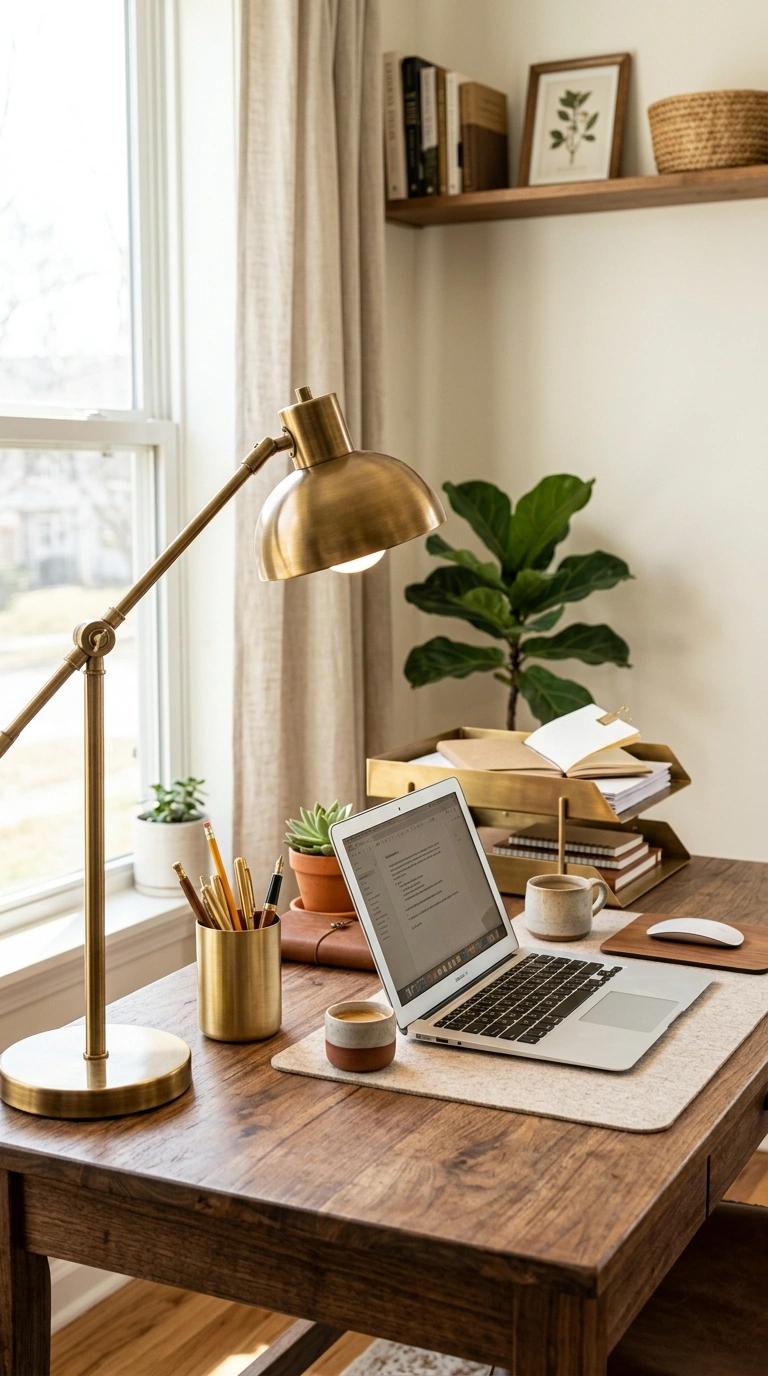
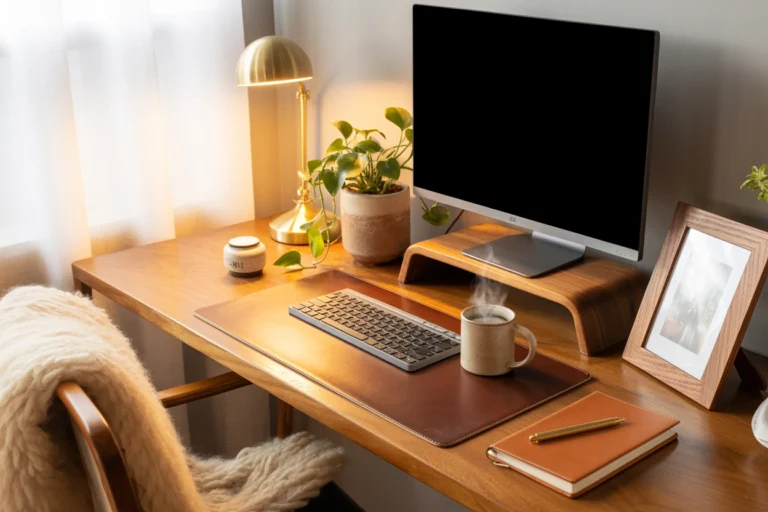
The accessories on and around the desk, the lamp, the pen holder, the clock, the small trays and containers, should be chosen with the same design attention given to accessories in a living room. Warm brass, natural wood, warm leather, matte ceramic, and warm stone all provide material quality that plastic office supplies lack. Each accessory on the desk is visible for the full working day and contributes to or detracts from the styled quality of the room. Replace any generic plastic desk supplies with versions in materials that suit the office’s design direction.
13. Mirror for Light and Space
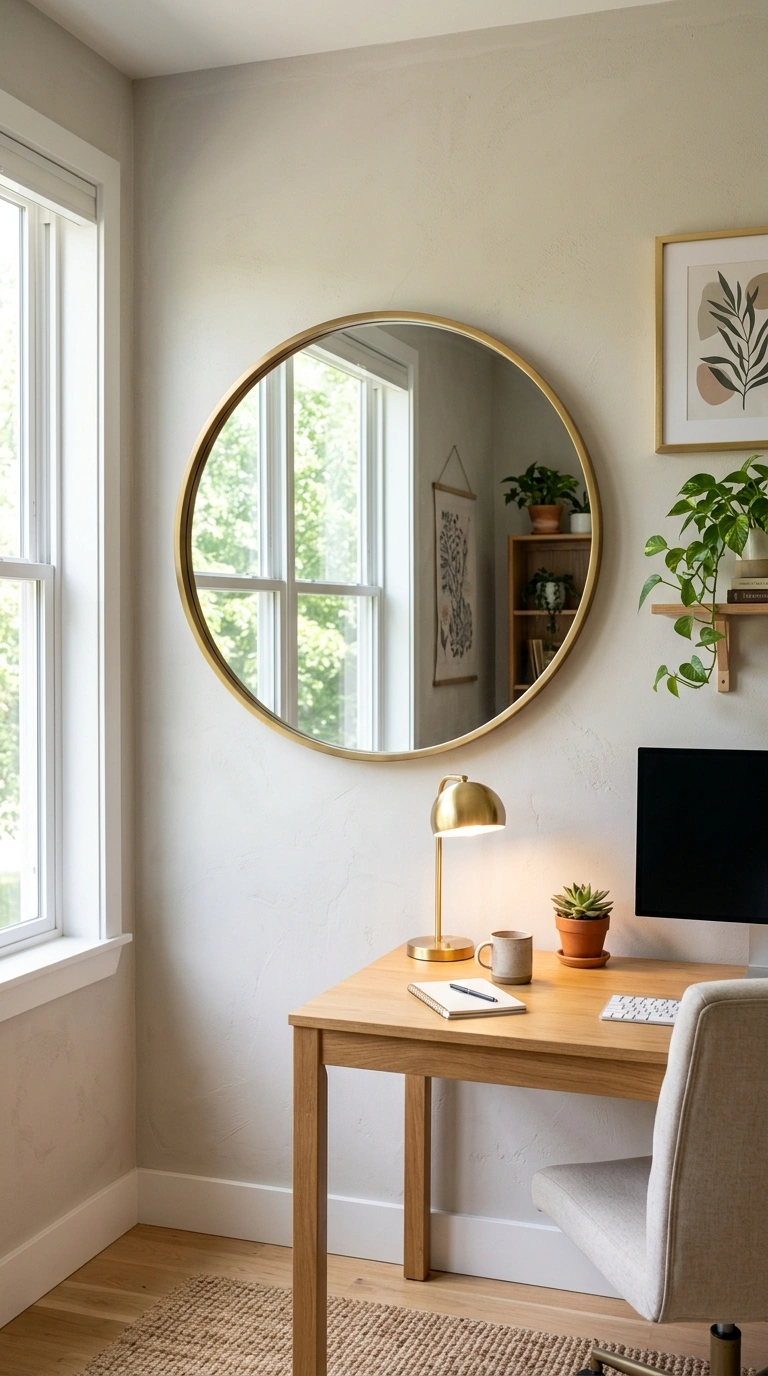
A mirror on a wall opposite a window reflects natural light deeper into the room and makes the office feel larger and brighter than its actual dimensions. A round mirror in a warm frame, a large rectangular mirror leaned against a wall, or a decorative mirror above a console all add both the practical light-reflecting benefit and a designed decorative element. The mirror is particularly valuable in smaller offices and in rooms with limited natural light where the reflected light can meaningfully brighten the working environment.
14. Small Rug Layering
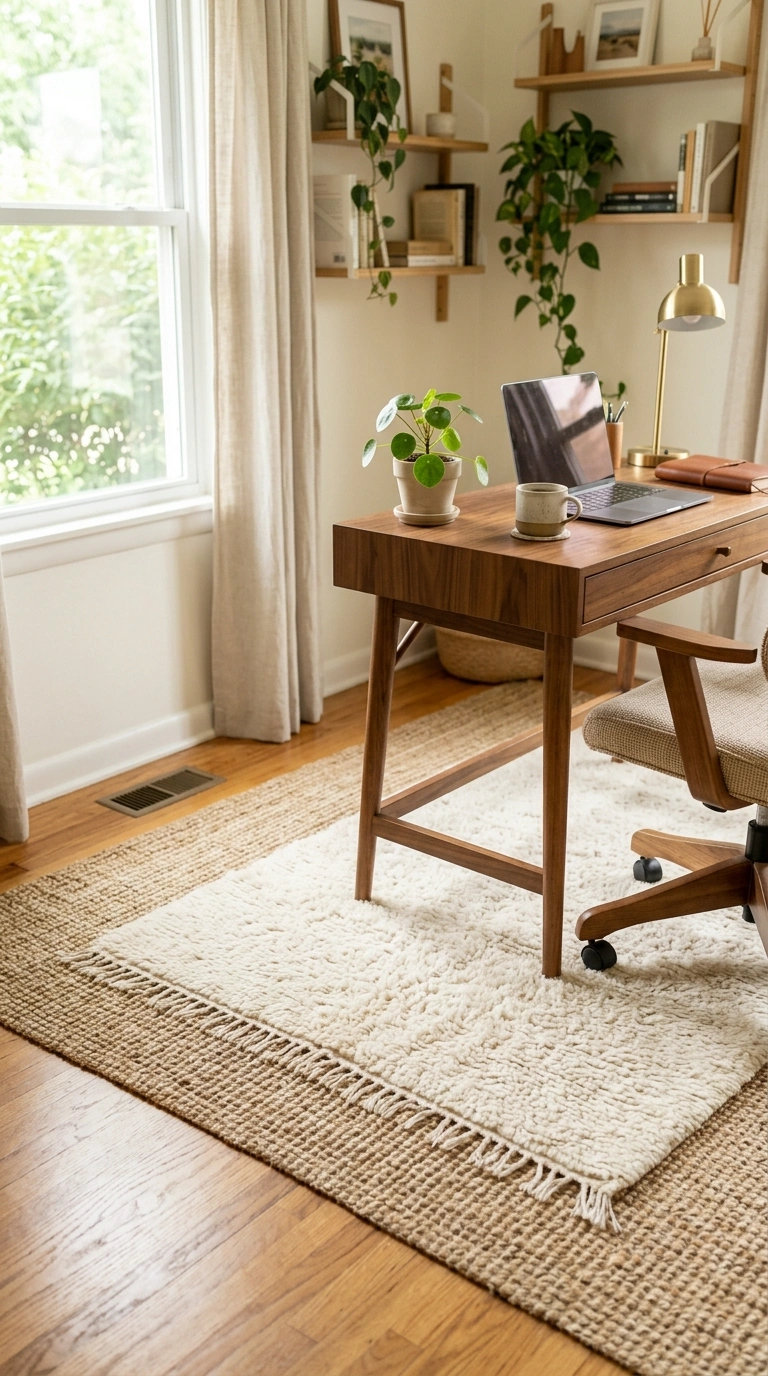
Layering a smaller, softer rug on top of a larger base rug beside the desk or under the reading chair adds the textural depth that single-rug floors lack. A sheepskin on top of a jute rug, a small patterned rug on top of a solid base, or a soft wool runner beside the desk on top of a larger floor rug all add the layered quality that makes a room feel more richly furnished. The layering should stay within the room’s warm color palette for the most cohesive result.
15. Clock as Wall Feature
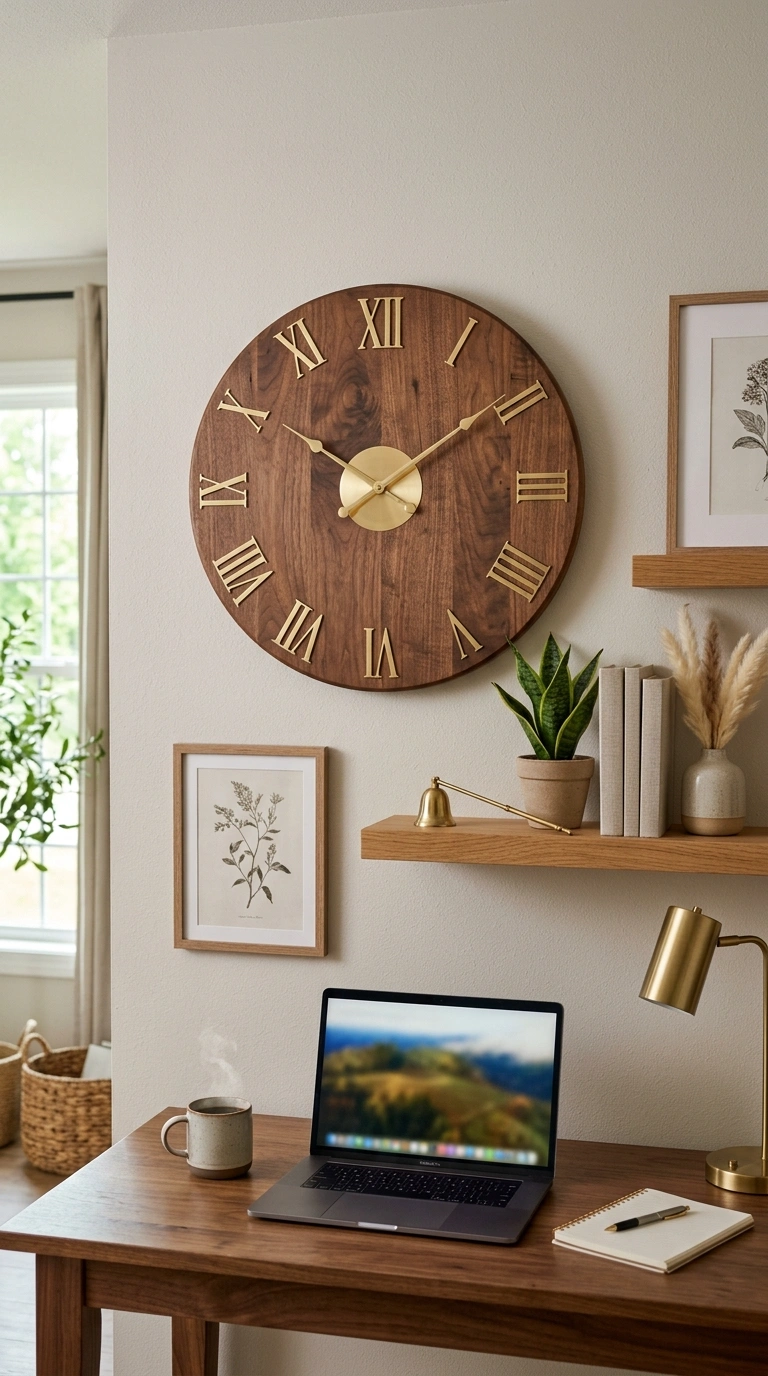
A single substantial wall clock in a warm material, natural wood, warm brass, or a simple clean design, provides both the practical function of time awareness during the workday and a designed wall element that adds to the office’s visual character. Position the clock where it is visible from the desk without requiring the phone or computer as a time reference. A quality clock reads as a deliberate design choice and its steady presence on the wall adds the furnished quality that blank walls lack.
16. Floating Shelf Vignette
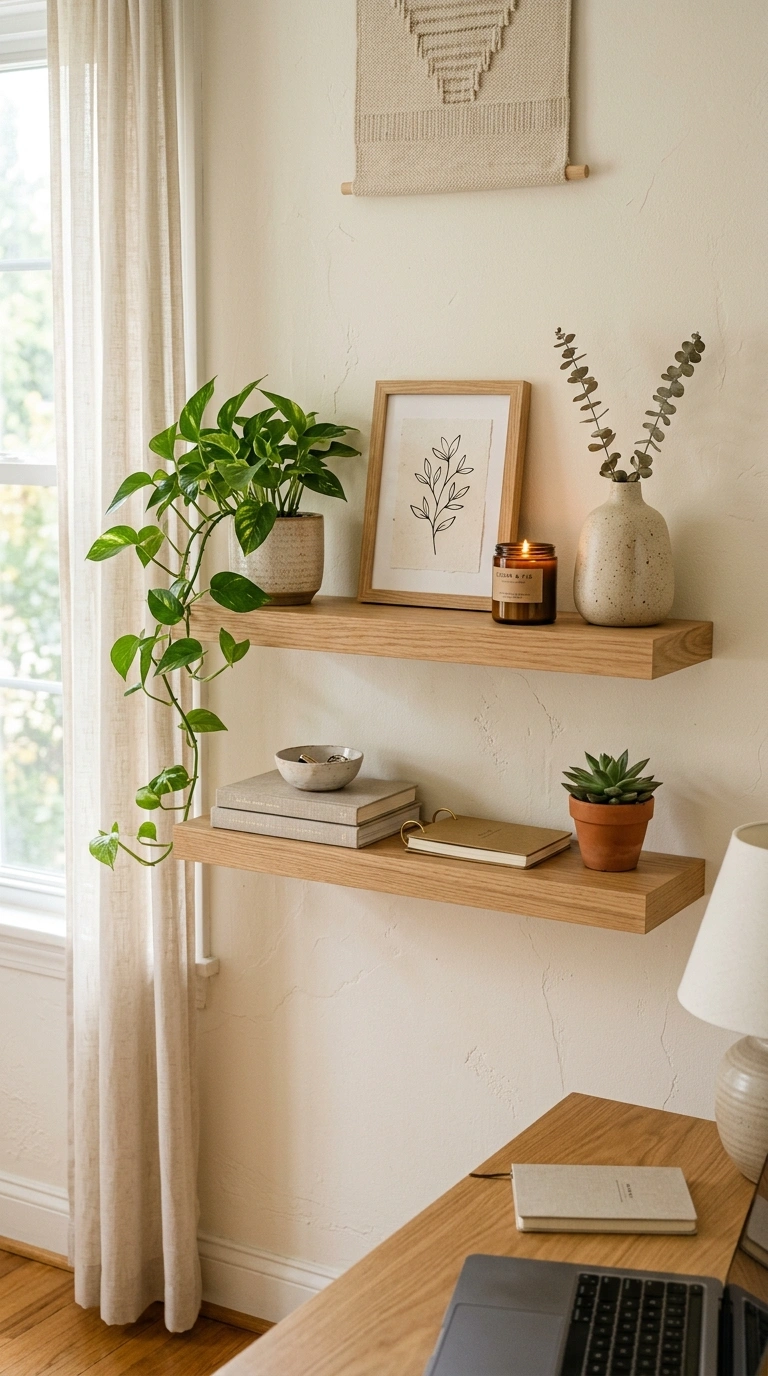
A floating shelf or a set of two floating shelves on an otherwise empty wall holds a small styled vignette that adds visual content without consuming floor space. Each shelf holds two or three objects: a small plant, a framed print, a candle, a small ceramic, or a meaningful personal object. The shelf vignette provides a wall feature that is lighter and less committed than a full gallery wall and that can be updated easily as taste and preferences change. Position the shelves at a height where they are visible from the desk for maximum daily impact.
17. Warm Metals Throughout
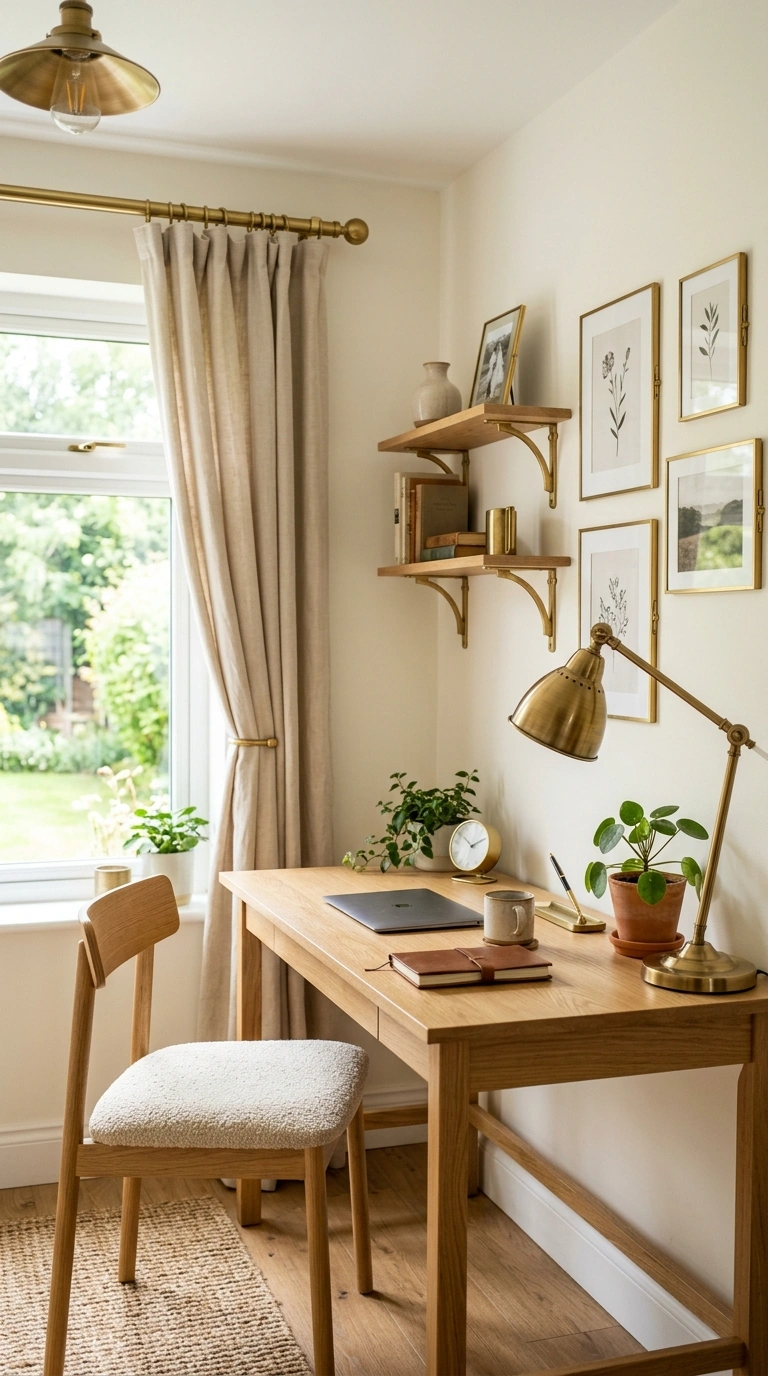
Using a consistent warm metallic finish, warm brass, gold, or oil-rubbed bronze, across the room’s hardware and accessories creates a subtle visual thread that ties the individual elements together. The desk lamp, the curtain rod, the shelf brackets, the picture frame hardware, and the small desk accessories should all share the same warm metal finish. The consistency is what makes the room look designed rather than assembled from random individual purchases.
18. Room Not Just Workspace
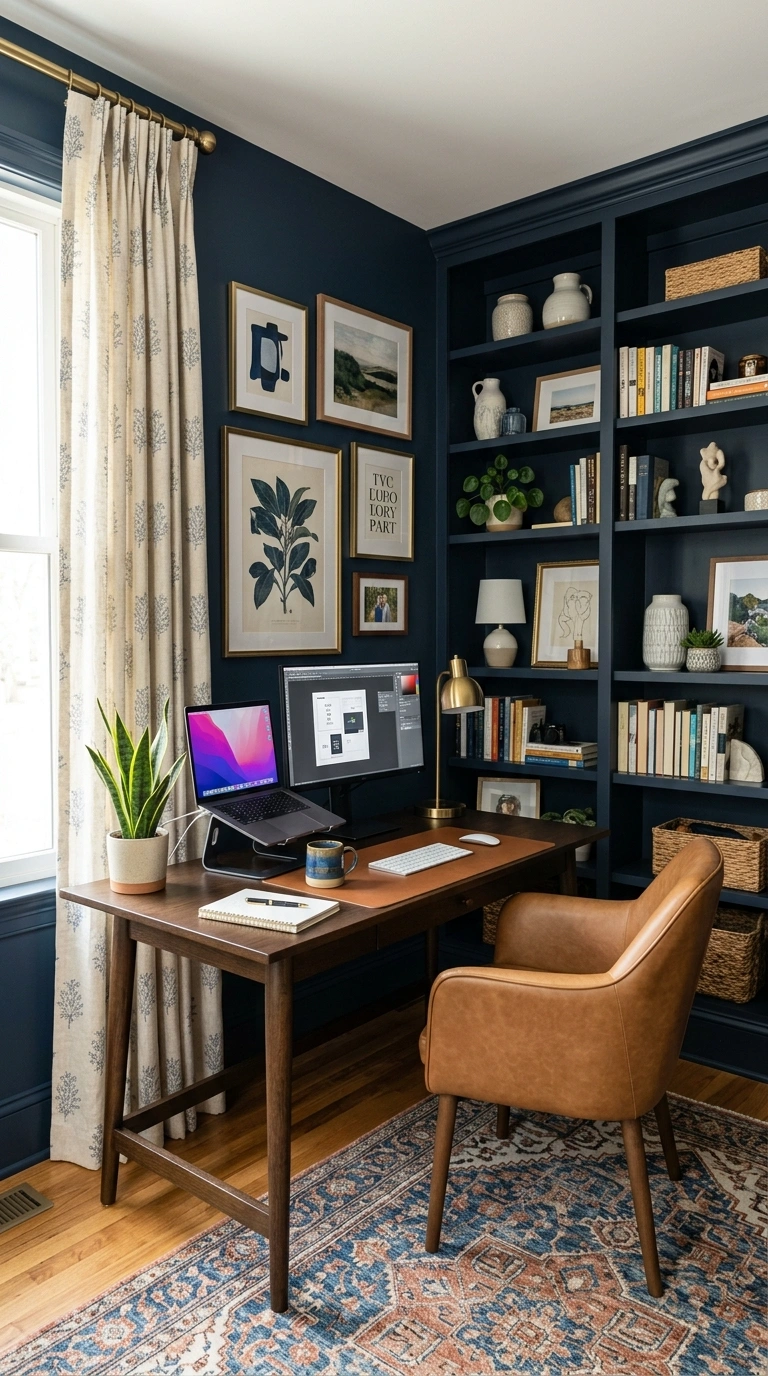
The most important styling decision for a home office is treating it as a real room rather than as a workspace that happens to be in a room. Every room in the home except the office typically receives deliberate attention to wall color, lighting, textiles, art, and accessories. The office deserves the same. When the office is styled with the same care given to the living room or the bedroom, the daily experience of working in it improves proportionally. The investment is modest because the room is typically small. The return is felt for every hour of every working day.
A home office that feels like a room you actually choose to work in is styled with the same attention to walls, lighting, textiles, art, and accessories that any other room in the home receives. The wall treatment, the proper lighting, the rug, the curtains, the styled shelves, and the warm personal touches together transform a converted spare room into a genuine workspace with real design character. The styling takes a weekend. The daily payoff lasts for years.