20 Warm Home Office Ideas That Make Remote Work Feel Less Isolating
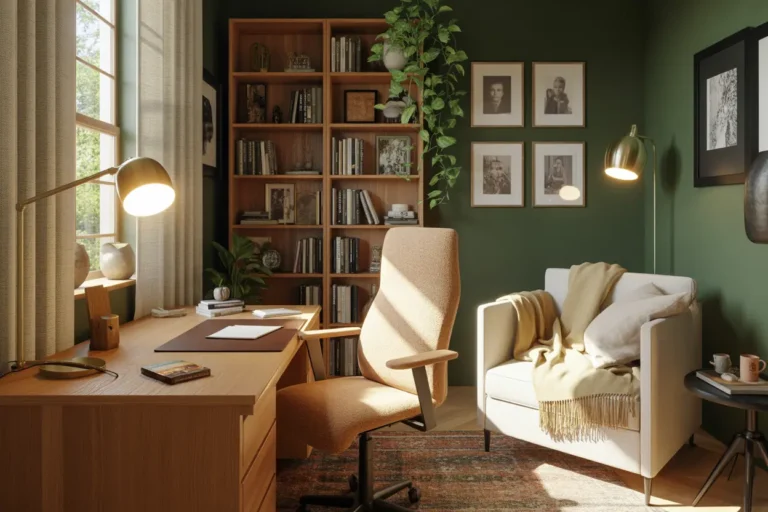
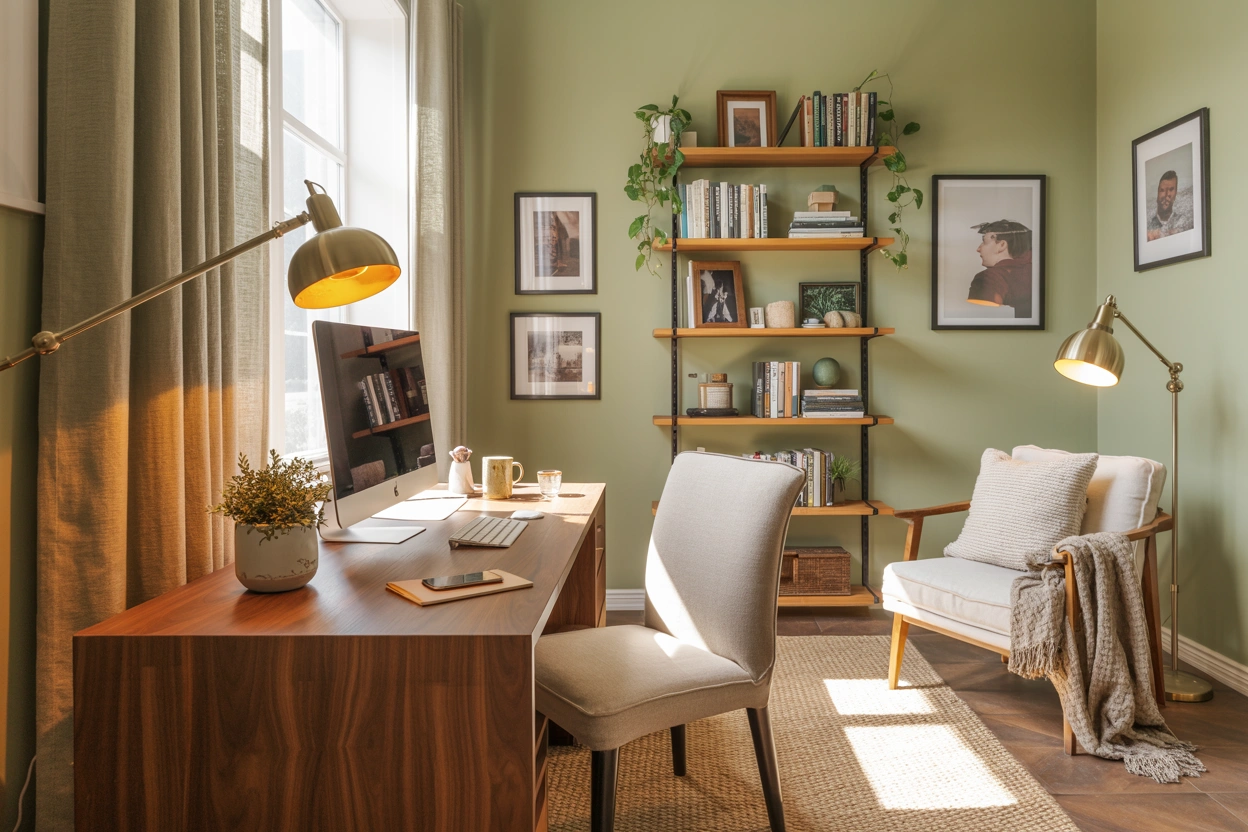
The biggest problem with most home offices is not the desk or the chair or the internet speed. It is the loneliness. A spare bedroom with a desk pushed against the wall, a blank screen, and nothing else in the room creates a workspace that is efficient but emotionally flat. The work gets done but the hours spent doing it feel isolated rather than productive. A warm home office addresses this problem through design: the materials are warm rather than cold, the lighting is human rather than institutional, the room contains objects that connect you to life outside of work, and the overall atmosphere makes the space feel like a room you chose rather than one you were assigned. These 20 ideas cover the specific design decisions that make a home office feel warm and genuinely inhabited rather than sterile and solitary.
1. Warm Wood Desk Foundation
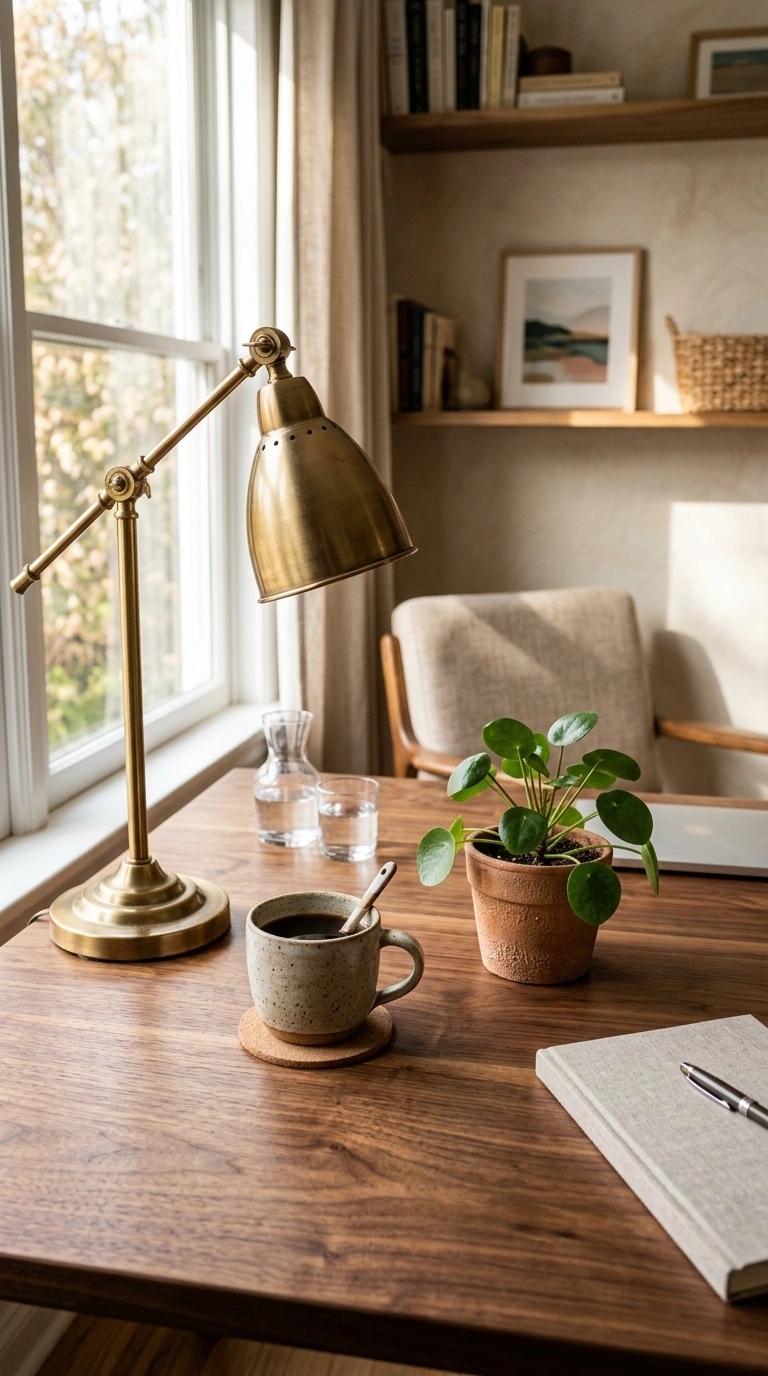
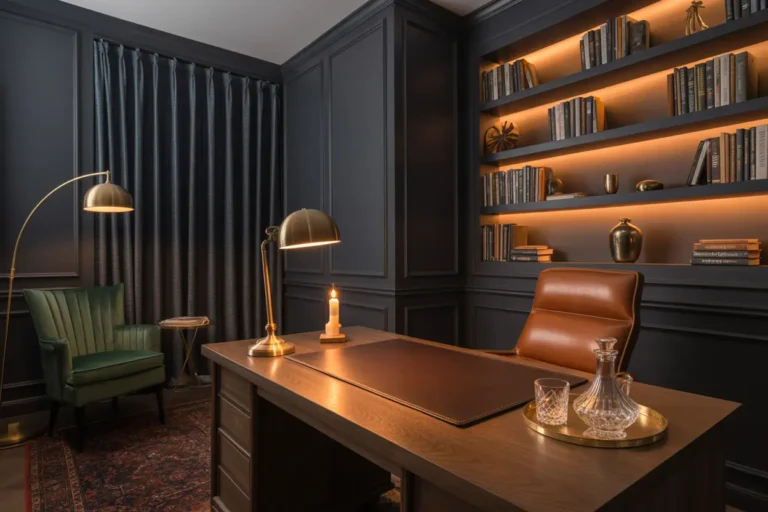
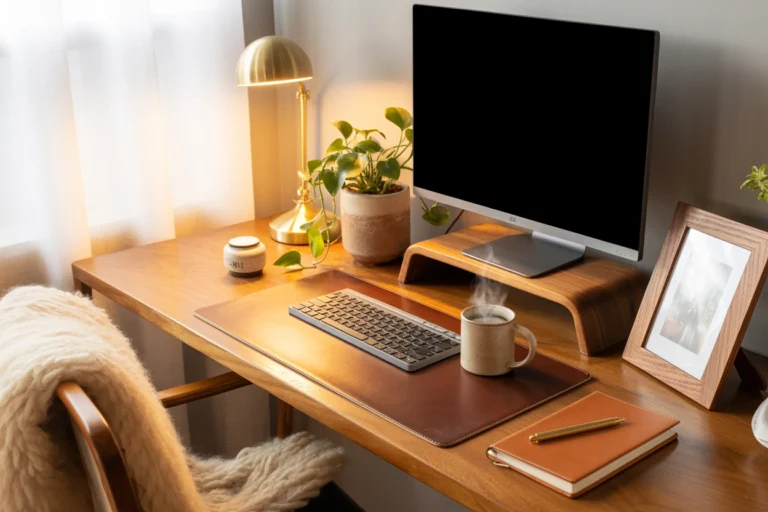
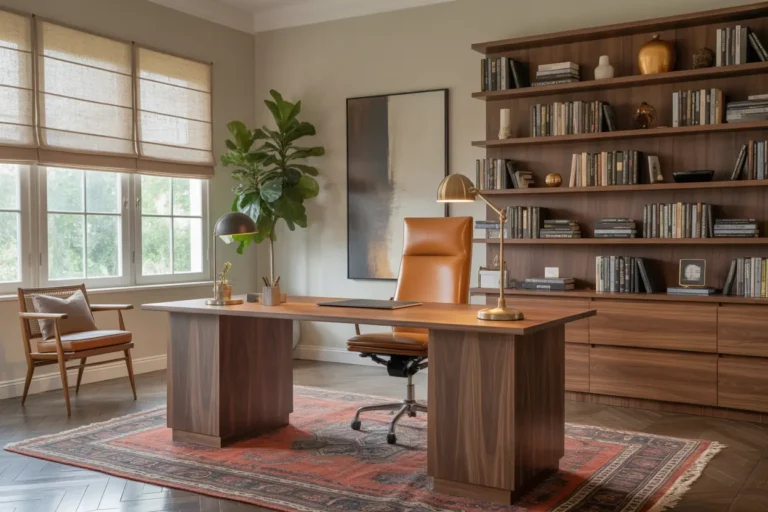
The desk surface is the single largest element in the visual field during working hours, and a warm wood desk creates a fundamentally different working experience than a white laminate or a glass one. A solid walnut desk, a warm oak desk, a reclaimed wood desk, or even a warm butcher block slab on simple legs all provide the organic warmth that manufactured surfaces lack. The visible grain, the warm color, and the slight natural imperfections of real wood add the living quality that makes the desk feel like furniture in a home rather than equipment in a corporate office. The warm desk surface also makes the objects placed on it, the keyboard, the mug, the small plant, look warmer by association.
2. Warm Layered Lighting
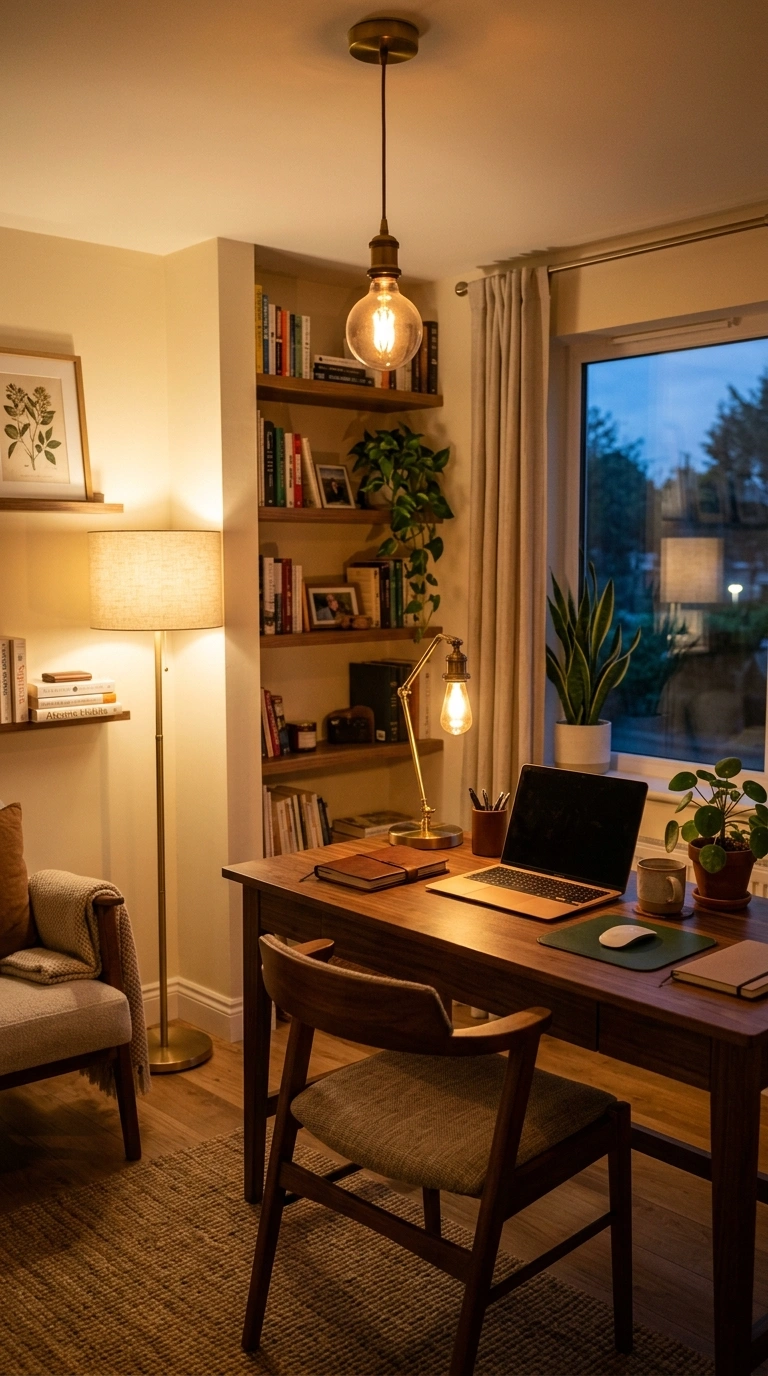
The lighting in a warm home office should come from multiple warm sources rather than a single bright overhead fixture. A quality desk lamp in warm brass or natural wood provides focused task lighting on the work surface. A floor lamp in the corner provides ambient fill light that prevents the rest of the room from falling into shadow. A warm overhead fixture on a dimmer provides adjustable general illumination. Together the three sources create the layered, dimensional quality of light that makes a room feel inhabited rather than utilitarian. Use warm bulbs in the 2700K to 3000K range throughout for the most genuinely warm quality.
3. View From the Desk
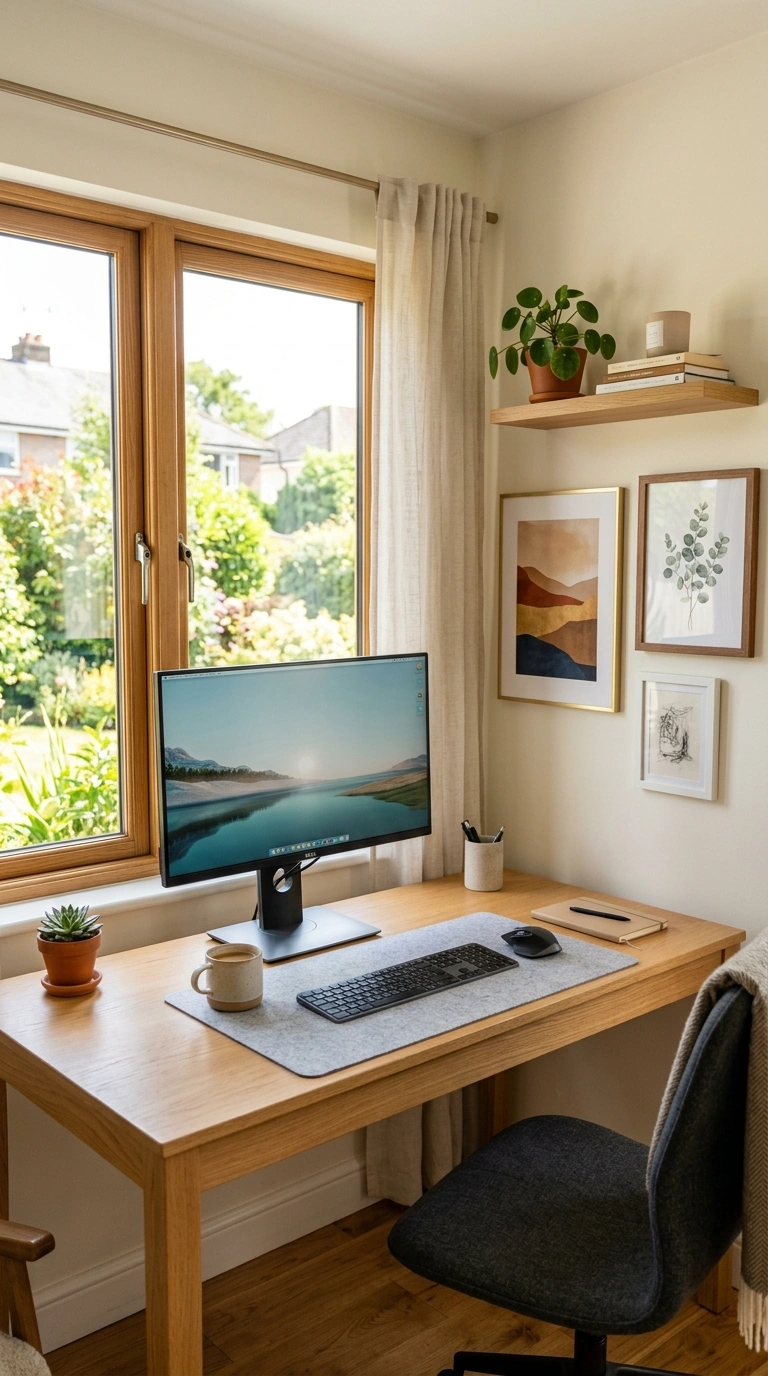
What you see from the desk during working hours affects how the room feels more than any other single design decision. Position the desk so the view includes a window with natural light, a wall with art that you genuinely enjoy looking at, or a bookshelf with objects that connect you to life outside of work. Avoid positioning the desk facing a blank wall with nothing to rest the eyes on, since the blank wall creates the feeling of being boxed in that contributes to the isolation. If the room layout requires the desk against a wall, hang art, a mirror, or a shelf with plants and personal objects on that wall so the view includes something warm and human.
4. Comfortable Real Chair
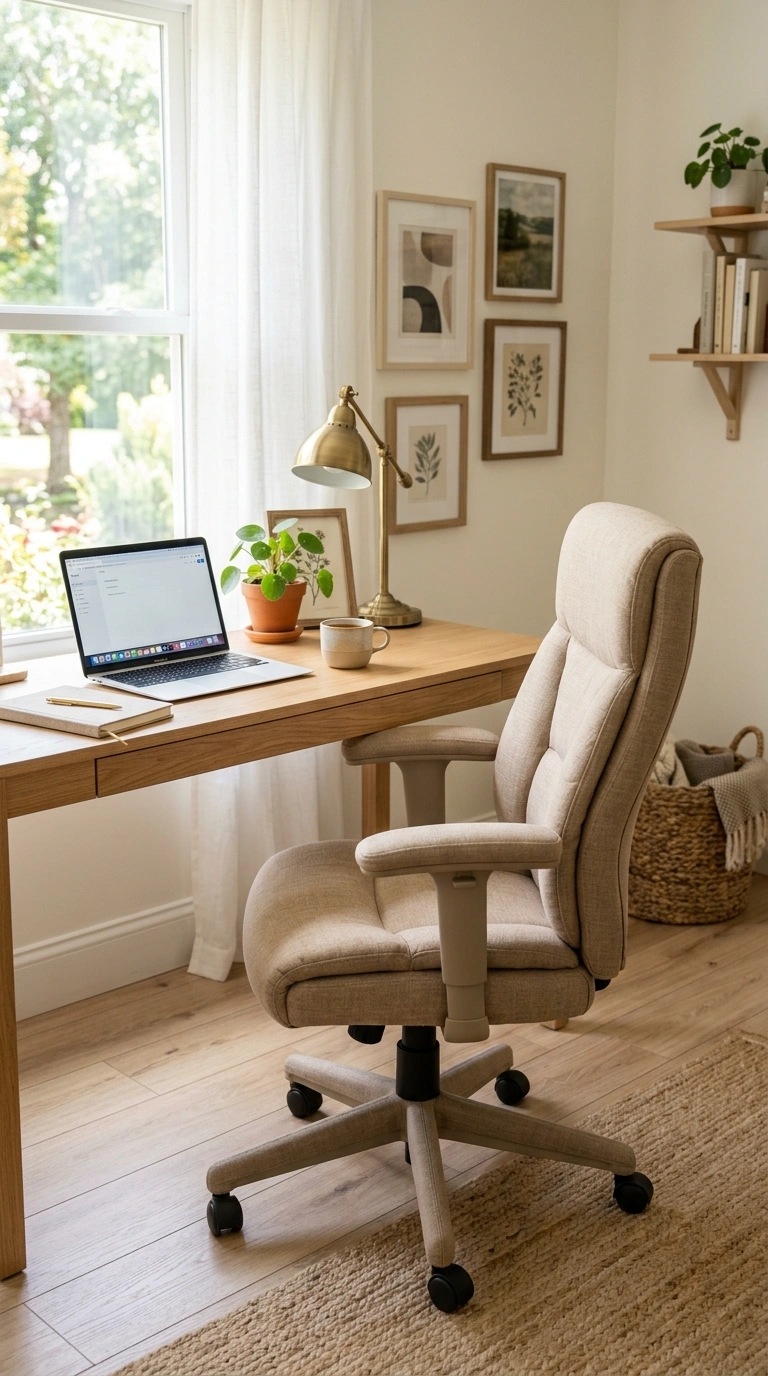
A genuinely comfortable desk chair with proper lumbar support, adjustable height, and a seat that is comfortable for four or more hours of continuous sitting is the single most important investment in a home office. The chair affects posture, energy, focus, and physical comfort for every hour of every working day. Choose a chair that is comfortable for real extended sitting rather than one that looks good in a photograph but causes back pain after an hour. If the available office chairs are too corporate for the room’s aesthetic, an upholstered task chair in a warm fabric or a comfortable wooden chair with a quality cushion provides both comfort and visual warmth.
5. Natural Materials Throughout
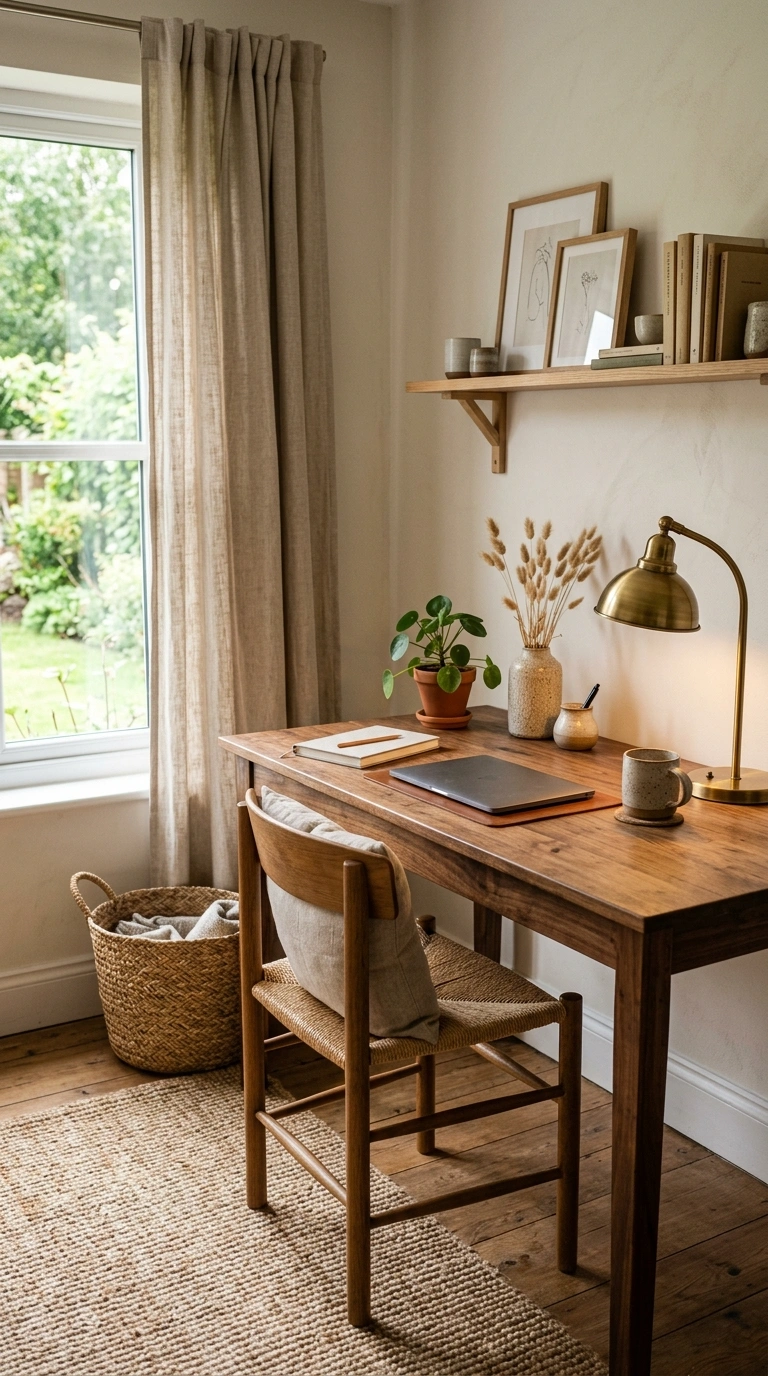
The materials in a warm home office should reference the natural world: warm wood on the desk and shelves, natural fiber in the rug and curtains, ceramic or stone in the small accessories, and warm metal in the lamp and hardware. The natural materials provide the organic warmth that plastic, laminate, and manufactured surfaces lack. Each natural material adds a slightly different warm quality: wood adds grain and warmth, linen adds softness and texture, ceramic adds weight and craft, and brass adds a warm metallic glow. The natural material palette is what makes the office feel like a room in a home rather than a workstation in a building. The same approach to natural materials creating warmth applies in cozy reading spaces where the organic materials are what make the difference between a chair and a genuine retreat.
6. Personal Objects on Display
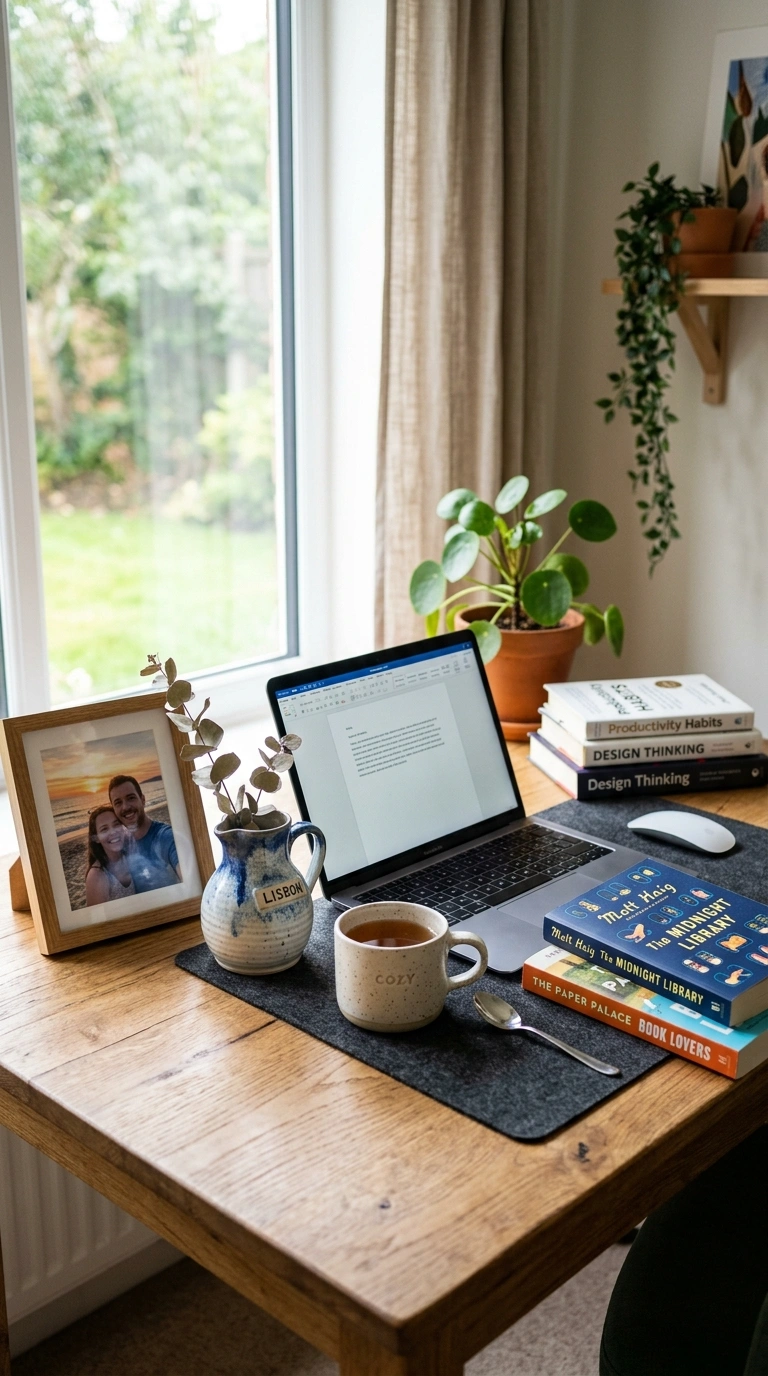
A home office that contains nothing personal, no photographs, no meaningful objects, no books unrelated to work, no evidence of a life outside the screen, feels like a corporate workspace transplanted into a house. The personal objects are what make the home office feel like a room where a specific person works rather than a generic workstation. A framed photograph of a meaningful moment, a small souvenir from a trip, a book you are currently reading, a ceramic made by a friend, or a plant you have been growing for years all add the personal warmth that transforms the office from a functional space into a genuine room.
7. Bookshelf With Personality
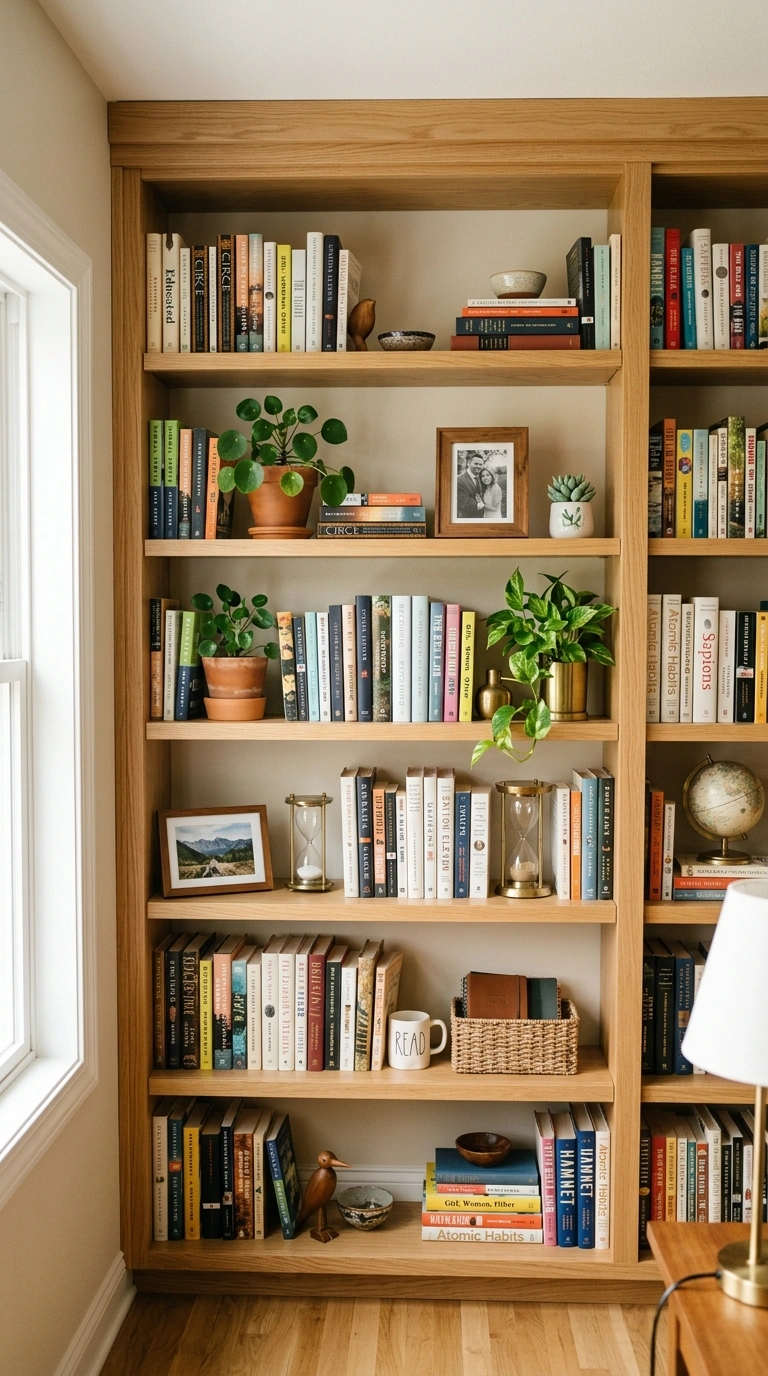
A bookshelf in the home office that holds both work reference materials and personal books, displayed alongside small plants, personal objects, and a few styled decorative items, provides the visual richness and personality that a blank wall or a purely functional filing cabinet cannot. The bookshelf should look like a personal library rather than a corporate resource shelf. Mix the work books with novels, travel guides, art books, and cookbooks. Add small plants between the book groupings. Include one or two personal photographs or meaningful small objects. The resulting shelf reads as the collection of a specific person with specific interests, which is what makes the room feel genuinely human.
8. Warm Wall Color Choice
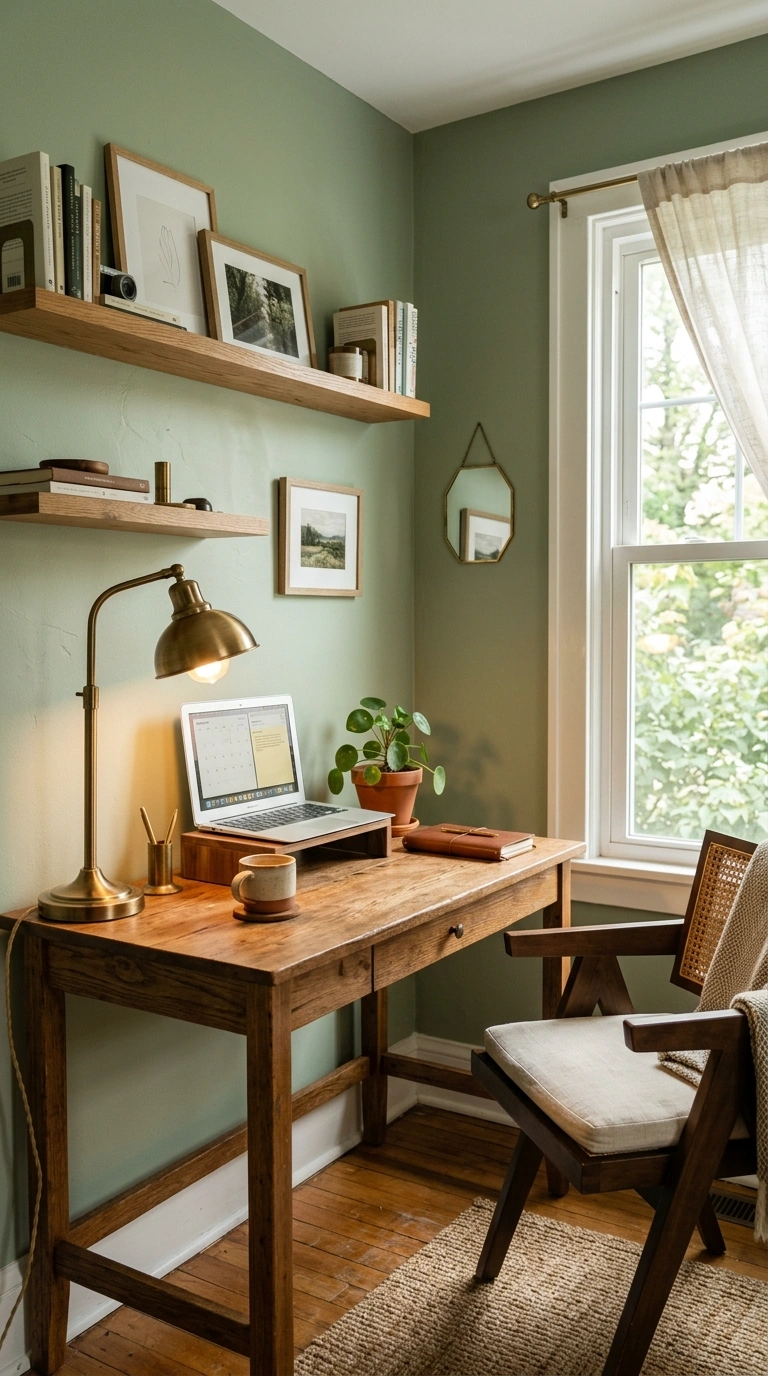
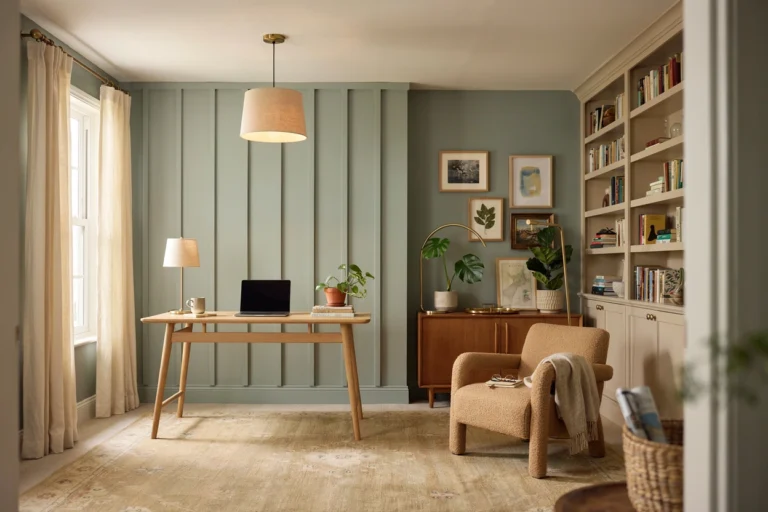
The wall color in a warm home office should create an atmosphere that supports both focus and emotional comfort. Warm cream, soft sage, dusty terracotta, warm gray with brown undertones, or a gentle warm blue all create rooms that feel inviting rather than clinical. Avoid bright white which reads as institutional, and avoid cool gray which reads as corporate. The warm wall color affects how every object in the room looks and how the light reads throughout the day. Choose a color you genuinely enjoy spending eight hours looking at, since the wall color is the largest continuous surface in your daily visual field.
9. Rug for Floor Warmth
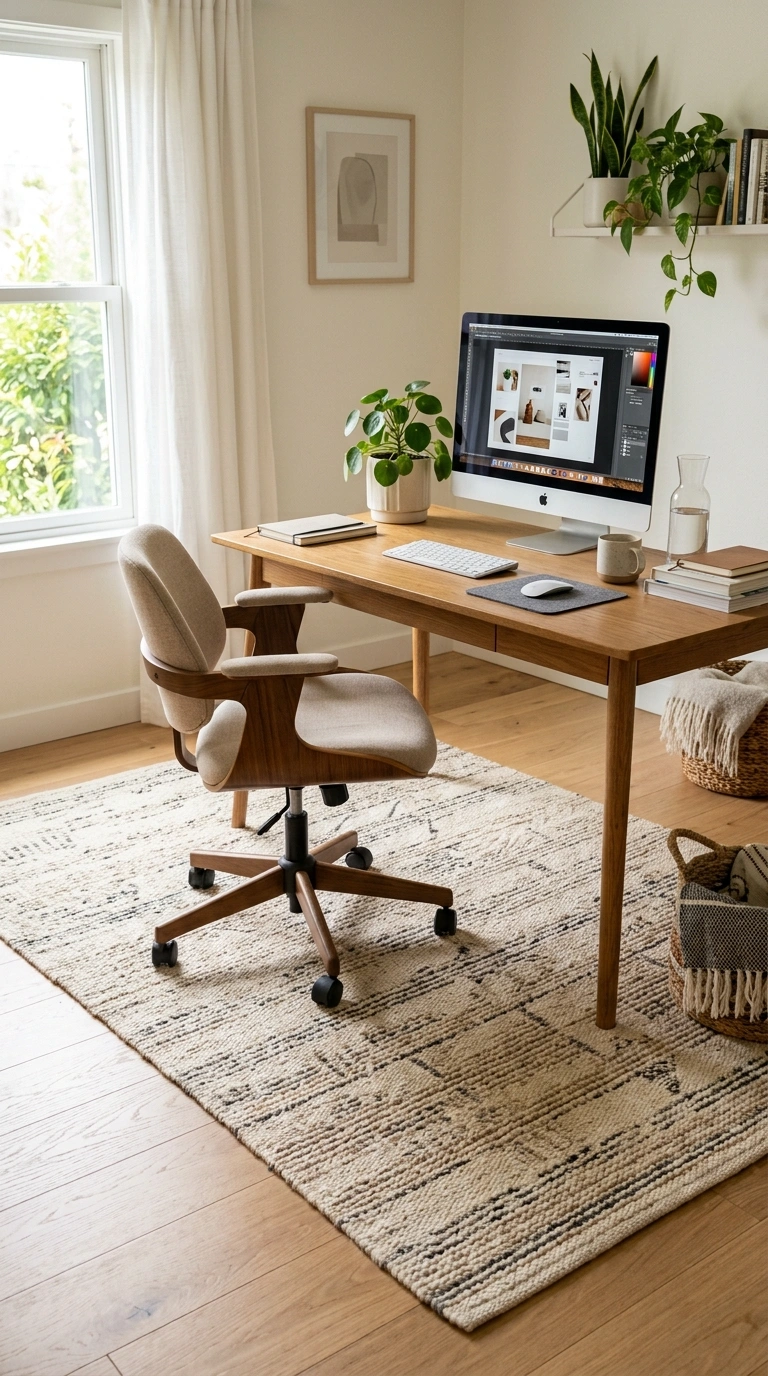
A rug in the home office, positioned under the desk and chair or in the center of the room, adds warmth underfoot, visual warmth in the room, and sound dampening that reduces the hollow echo that hard floors create. A warm-toned wool rug, a natural jute rug, or a simple patterned rug in warm colors all suit home offices. The rug defines the work zone within the room and creates the sense that the office is a furnished room rather than a workspace with equipment on a bare floor. Choose a rug with a flat weave so the desk chair rolls smoothly across it.
10. Window Treatment for Light Control
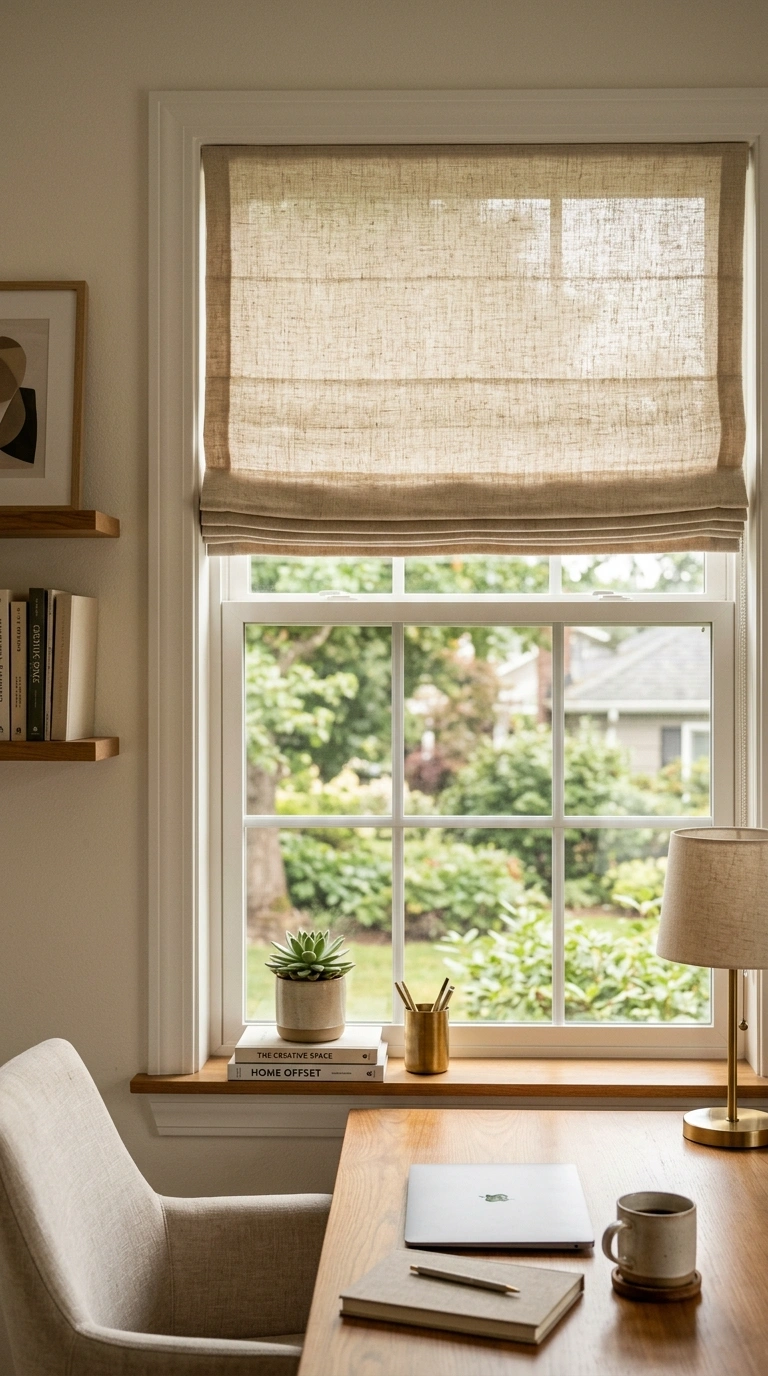
A window treatment that provides adjustable light control without blocking the outside view during working hours is essential for a comfortable home office. A sheer linen panel that filters glare while maintaining the connection to outside, a warm Roman shade that can be adjusted to different heights, or a combination of sheers and a heavier curtain for different times of day all provide the control needed. The window treatment also adds the soft textile element that softens the room and contributes to the warm atmosphere. Choose a warm fabric that coordinates with the room’s palette.
11. Music or Ambient Sound
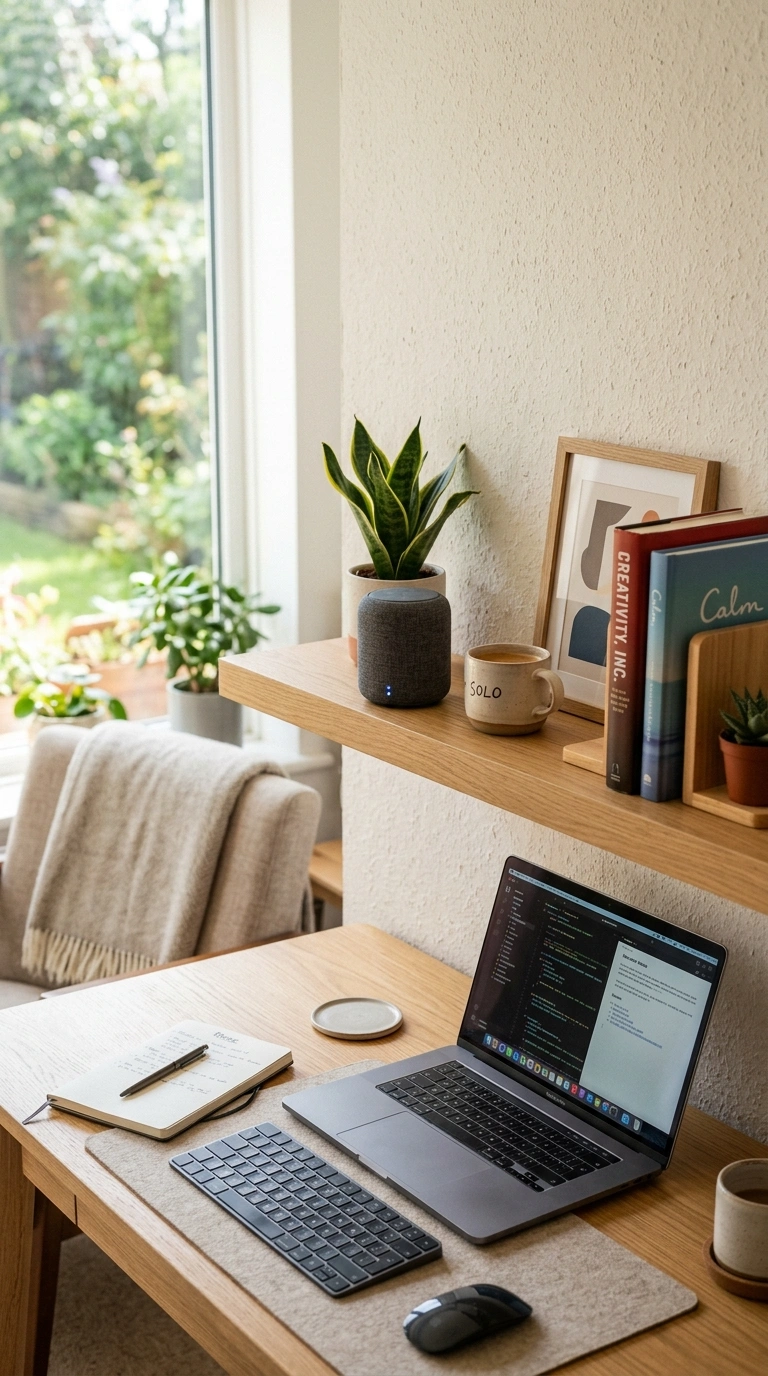
Background audio in the home office, whether gentle music, ambient sounds, or a specific focus playlist, fills the silence that makes working alone feel isolating. The audio provides the sense of a shared atmosphere that working in a public space or a shared office provides naturally. A small quality Bluetooth speaker on the desk or a shelf provides better audio quality than laptop speakers and can play throughout the working day without distraction. The sound layer is invisible but its contribution to making the room feel inhabited and warm rather than silent and solitary is significant.
12. Plant Life in the Room
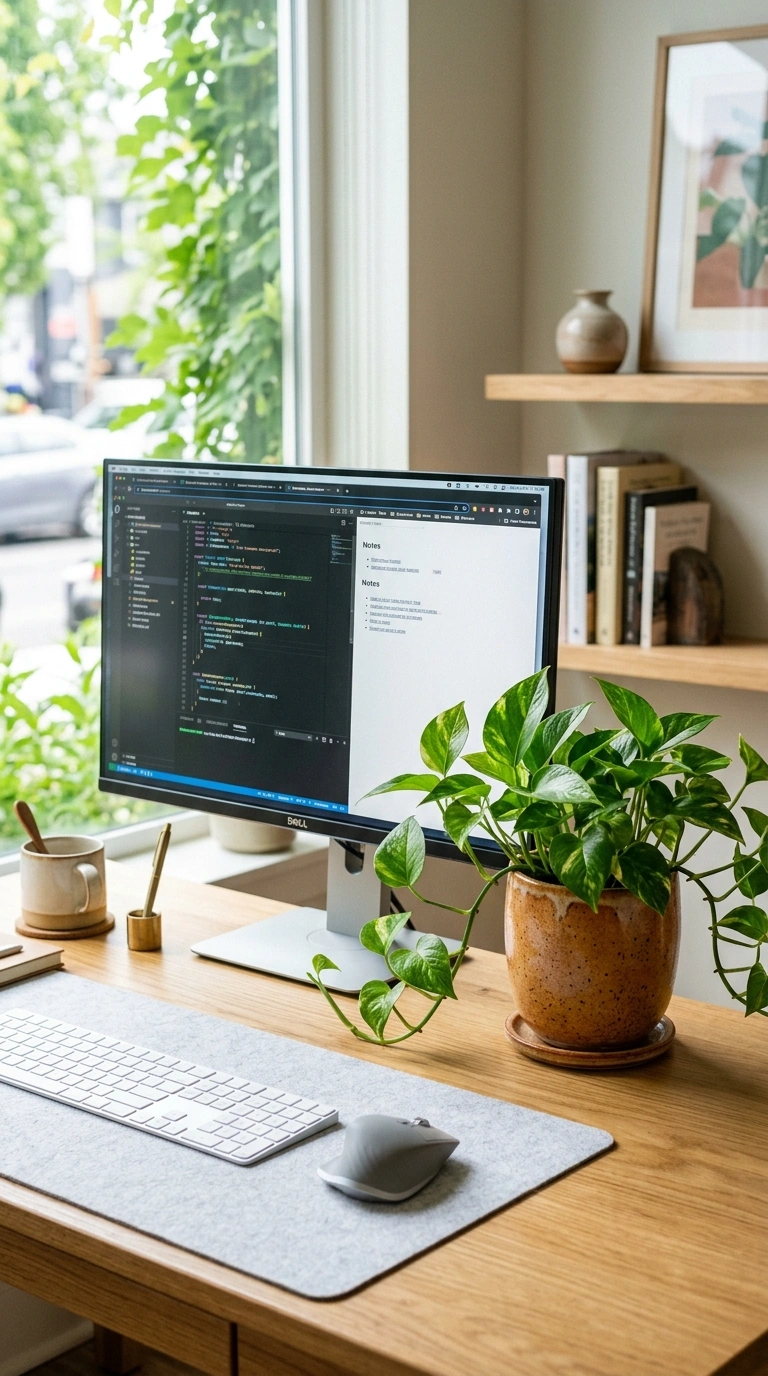
One or two plants in the home office add the living organic element that makes the room feel alive rather than static. A desk plant provides a small green rest point for the eyes during screen breaks. A larger floor plant in the corner adds height and presence. A trailing plant on a shelf adds organic movement. The plants should be healthy and actively growing, which communicates care and attention in the room. Choose plants that suit the office’s light conditions: a pothos for low light, a snake plant for indirect light, or a fiddle-leaf fig for bright indirect light near a window.
13. Warm Drink Station Nearby
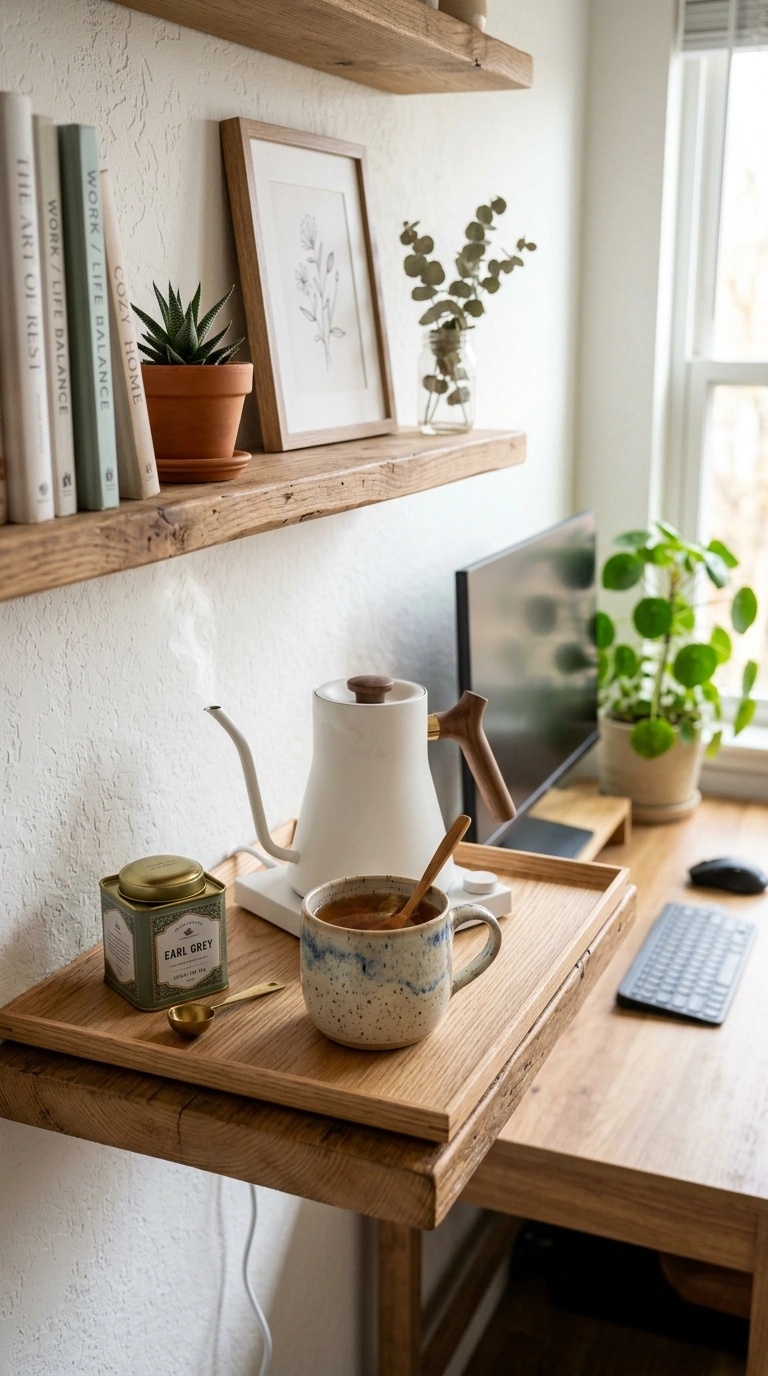
A small area on a shelf, a side table, or a console where a kettle, a mug, and a small container of tea or coffee supplies live provides the ritual of making a warm drink during breaks without leaving the room. The warm drink ritual creates natural pause points in the working day and the act of making and sipping a warm drink is one of the most reliably comforting human rituals available. The drink station also adds a small domestic detail to the room that connects it to the home rather than to a workplace.
14. Comfortable Secondary Seating
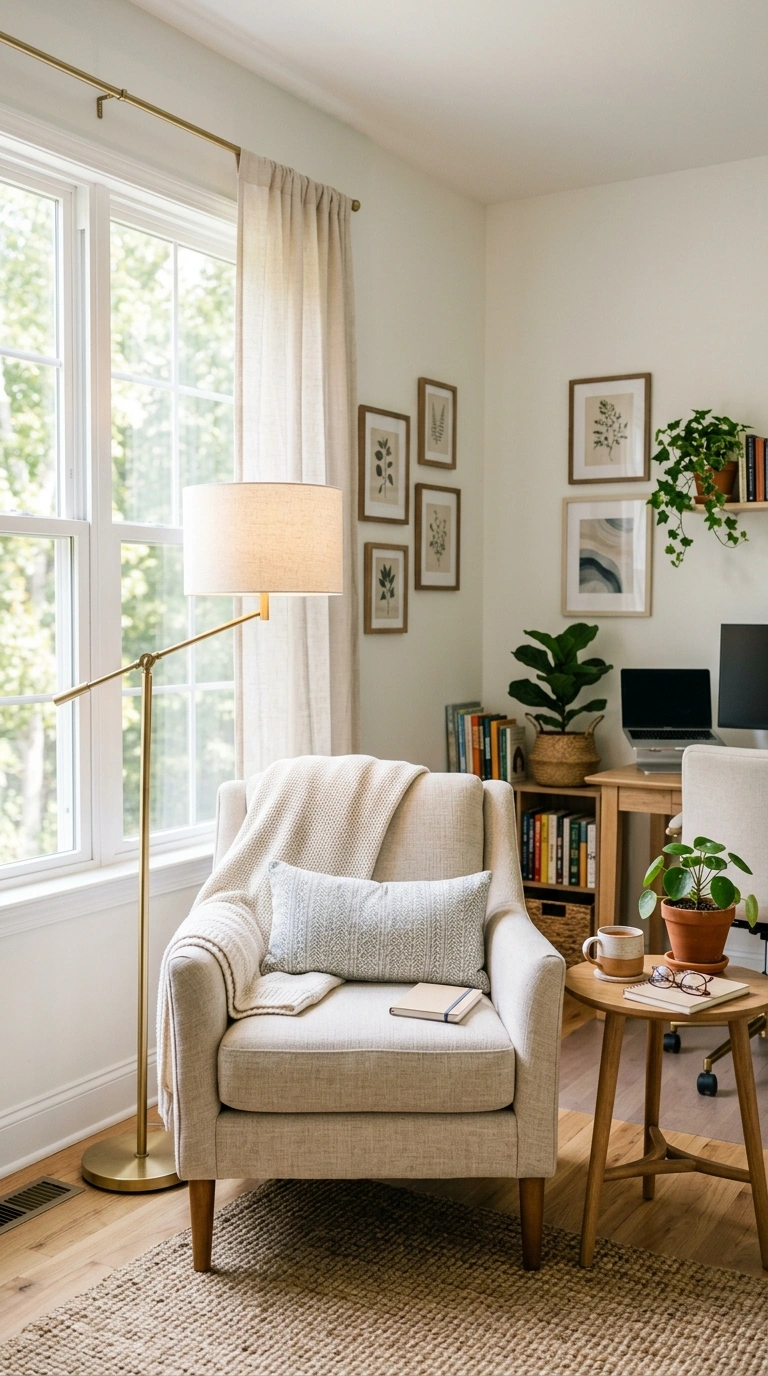
A comfortable armchair, a small loveseat, or a reading chair positioned away from the desk provides a second seating option for reading, thinking, phone calls, or simply taking a break from the desk without leaving the room. The secondary seating makes the office feel like a room with multiple functions rather than a single-purpose workstation. A comfortable chair with a small side table and a floor lamp creates a complete secondary zone within the office. The secondary seating is where the office starts to feel genuinely like a room rather than just a workspace. For broader ideas on furnishing the non-desk portion of a home office with warm styled elements, the home office styling guide covers the design decisions that make the entire room feel designed rather than converted.
15. Art That You Love
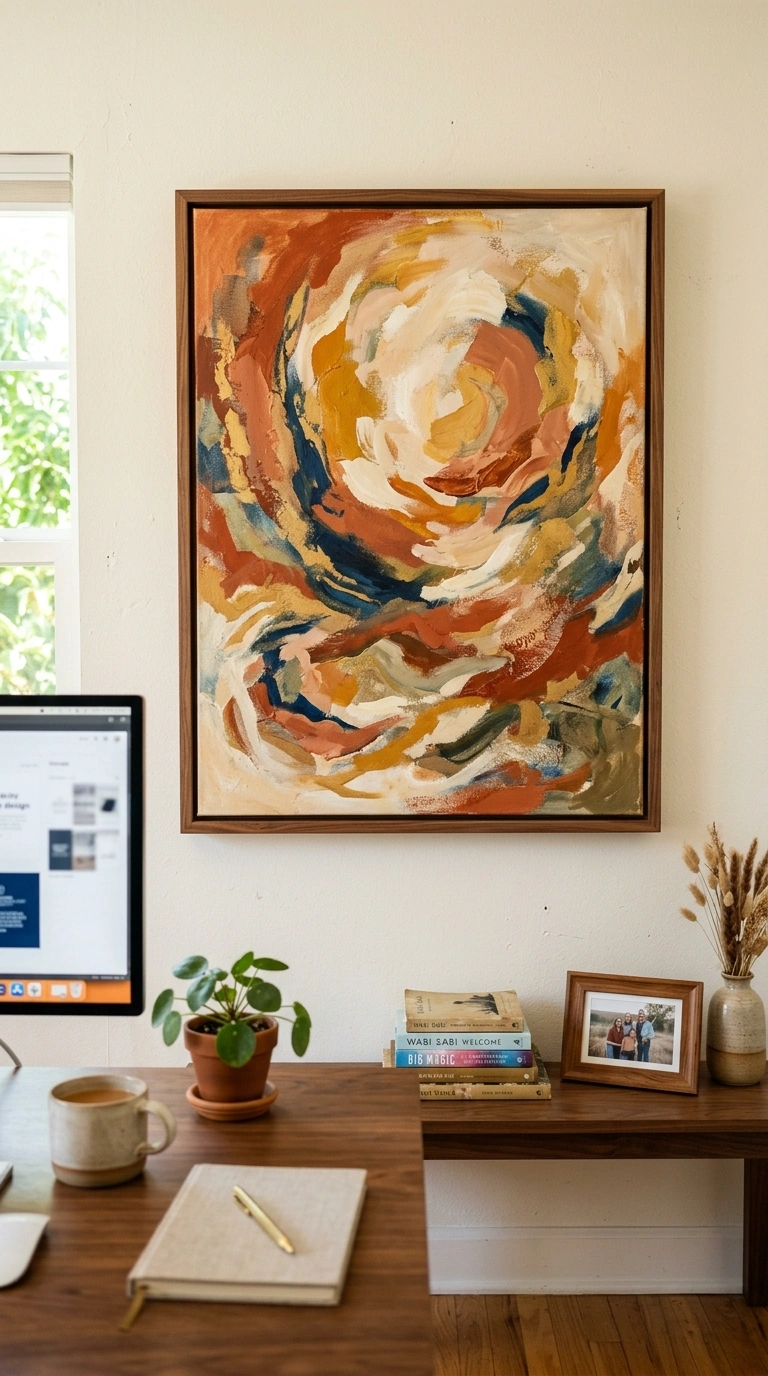
The art on the home office walls should be work you genuinely love looking at rather than generic office-appropriate prints. A painting from a favorite artist, a photograph from a meaningful trip, a print that makes you smile, or a simple abstract that provides color and visual rest all serve the purpose of making the room feel personal and emotionally warm. Position the art where you see it regularly during the workday, whether that is directly ahead of the desk, beside the monitor, or above the secondary seating area.
16. Warm Metal Desk Accessories
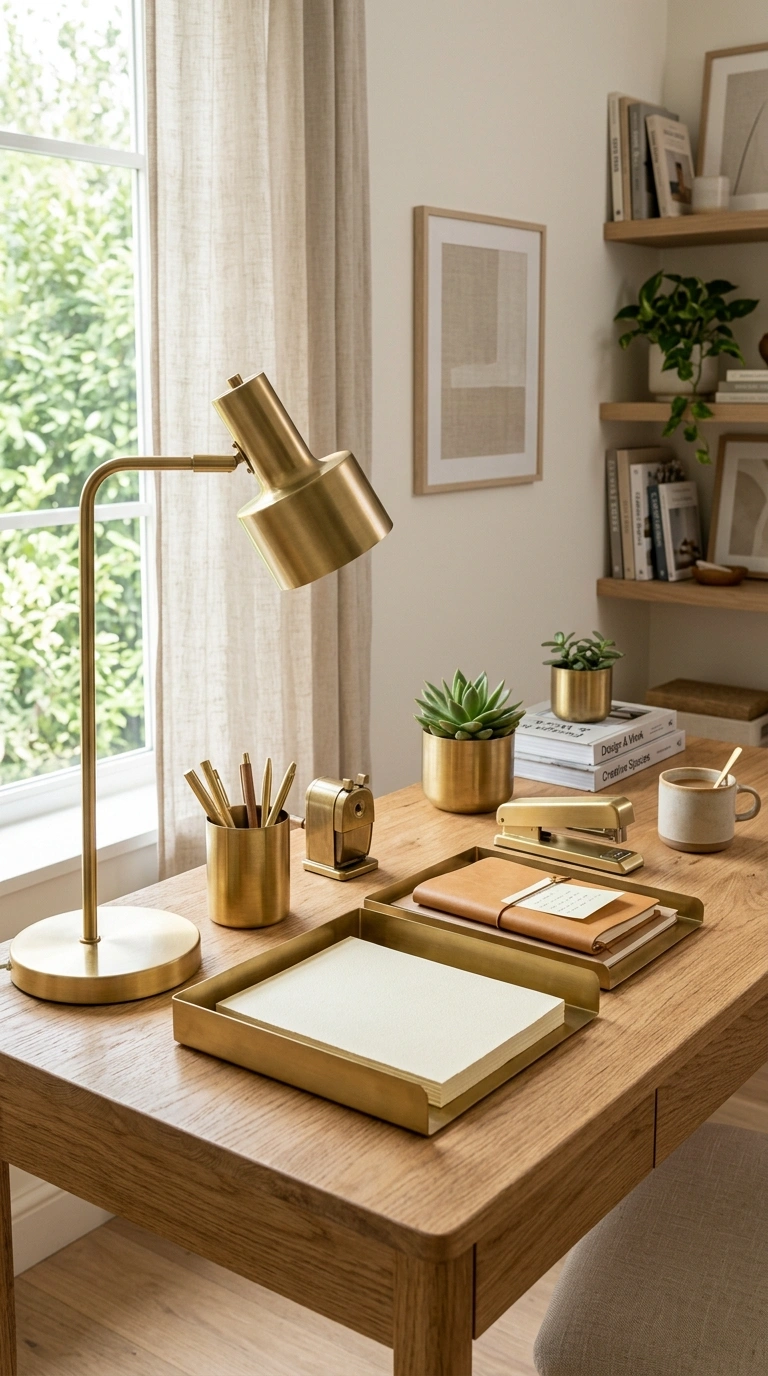
The small metal accessories on the desk, the lamp, the pen holder, the paper tray, the stapler, the small hardware, should be in a warm metallic finish that coordinates across the desk surface. Brushed brass, warm gold, or oil-rubbed bronze all add warmth that chrome and polished silver lack. The coordinated warm metal creates a subtle visual consistency across the desk that reads as designed rather than randomly assembled. The warm metal catches the desk lamp light and creates small glowing warm accents across the work surface.
17. End-of-Day Boundary Ritual
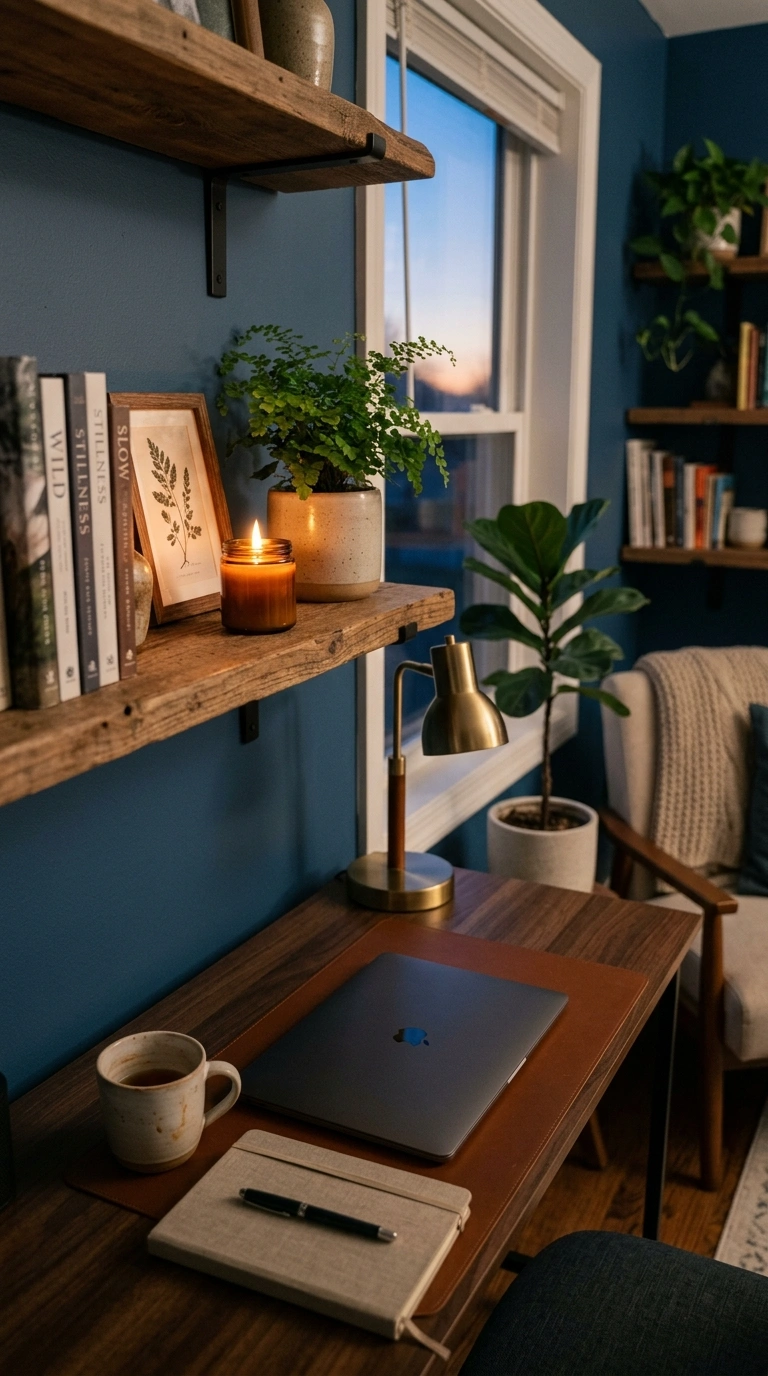
A warm home office includes a deliberate end-of-day ritual that signals the transition from work to home life. Closing the laptop, turning off the desk lamp, lighting a candle on the shelf, putting on different music, or simply closing the office door creates the psychological boundary that commuting used to provide automatically. The physical act of changing the room’s state from work mode to rest mode is what makes the home office feel like a room you work in rather than a room that works on you. The boundary ritual is a design decision for the daily experience rather than for the physical space, but it affects how the room feels more than many physical changes would.
18. Natural Light Priority
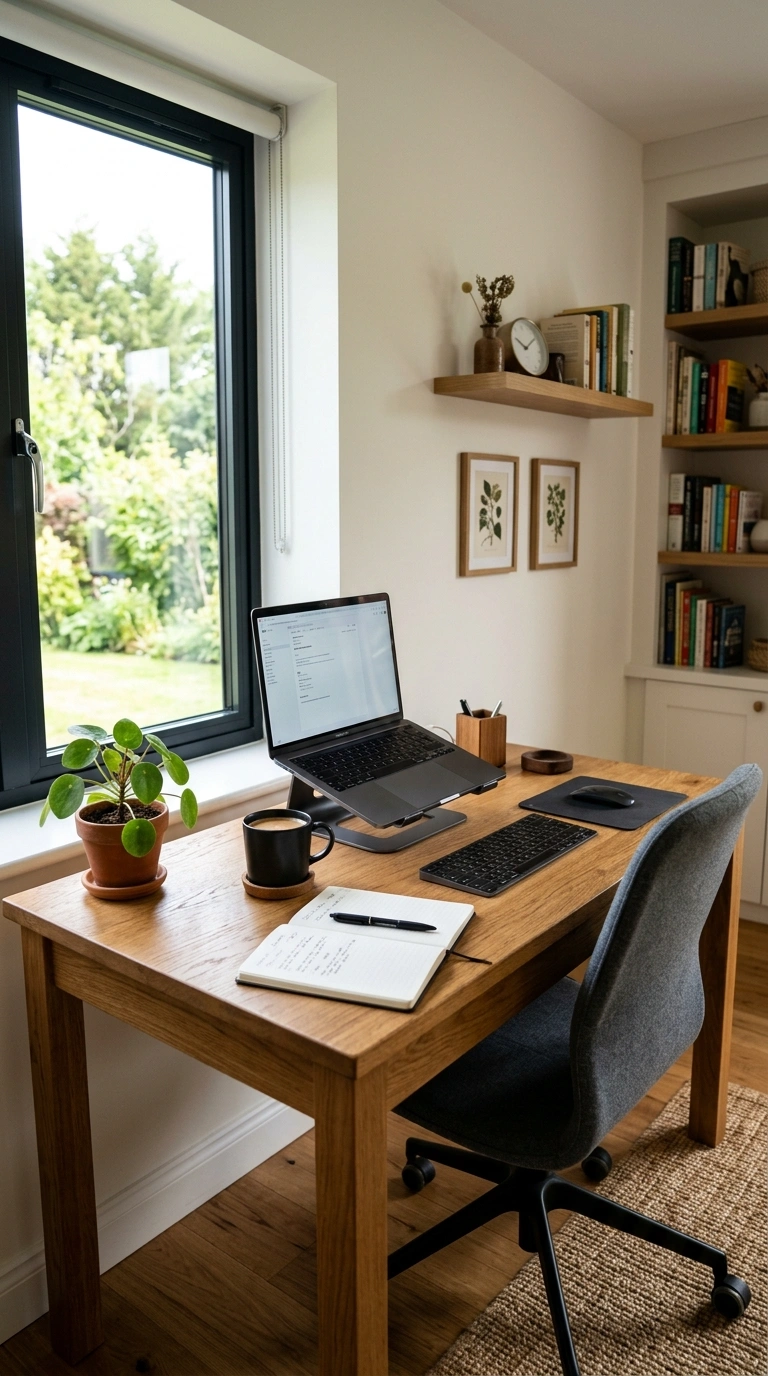
Natural light is the most important atmospheric element in a home office because it changes throughout the day, provides genuine warmth, and connects the worker to the time and weather outside. Position the desk where natural light reaches the work surface without creating glare on the screen. A desk perpendicular to the window rather than directly facing it provides the best combination of natural light on the work surface and a comfortable screen viewing angle. Natural light also provides the vitamin D and circadian rhythm support that artificial light cannot replicate, which directly affects energy and mood during the working day.
19. Scent for Atmosphere
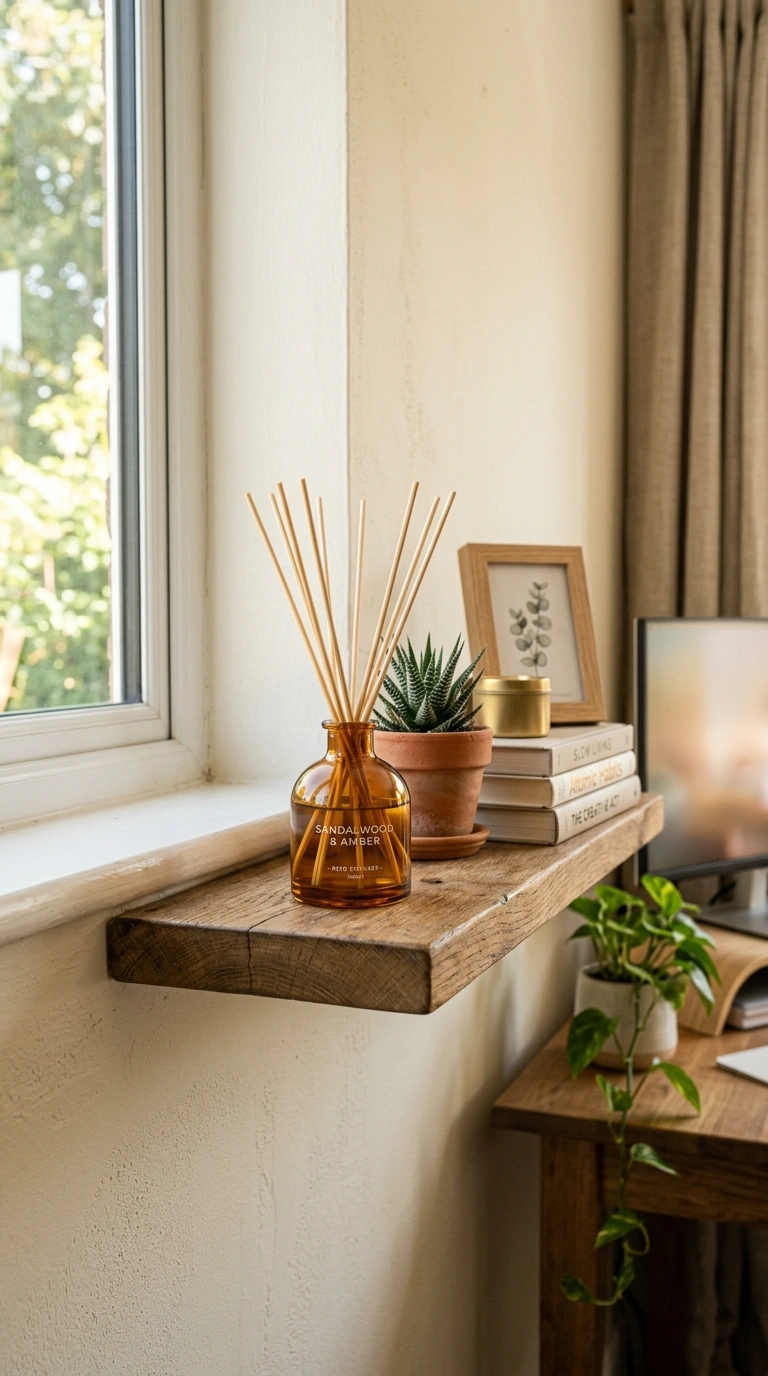
A gentle warm scent in the home office, from a small candle, a reed diffuser, or a few drops of essential oil, adds an invisible atmospheric layer that subtly affects how pleasant the room feels during working hours. Warm, grounding scents like cedarwood, sandalwood, or vanilla create a cozy quality. Clean, focusing scents like eucalyptus, peppermint, or lemon create an alert quality. Choose the scent based on the working mood you want to support. The scent is one of the few design elements that affects the room experience without being visible, which gives it a disproportionate impact on how the room feels.
20. Room That Knows You
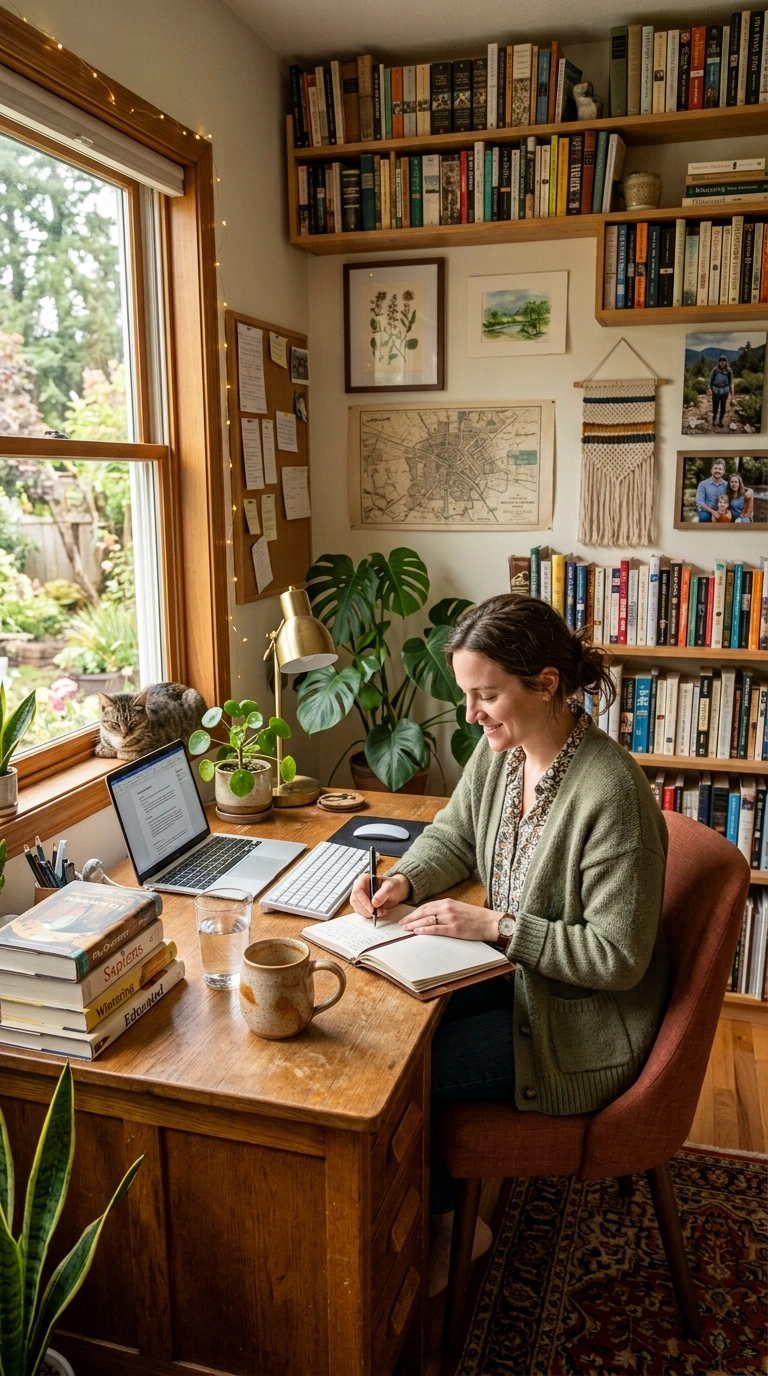
The warmest home office is ultimately one that feels like it knows the person who works in it. The desk height is right for your body. The chair supports your specific back. The art reflects your actual taste. The books are ones you have actually read. The mug is one you chose because it feels good in your hand. The plant is one you have kept alive for months. Every element is there because it works for you specifically rather than because it looked good in a styled photograph of someone else’s office. The personal fit is what makes the room warm in the most genuine sense, and it develops through daily use rather than through a single decorating session.
A warm home office that makes remote work feel less isolating is built on warm natural materials, warm layered lighting, personal objects that connect you to life outside the screen, and the small rituals that make the daily working experience feel human rather than mechanical. The warmth comes from genuine care for the room and for the hours spent in it. Start with the changes that would make the biggest difference to your daily experience and build from there. The room gets warmer as you inhabit it more fully.