18 Wildflower Nursery Ideas That Feel Soft and Gently Whimsical
A wildflower nursery done well feels like a gentle garden room that a baby can grow into for years. Done poorly, it looks like a printed fabric swatch exploded across every surface. The difference comes down to restraint, palette, and the quality of the floral elements chosen. The most beautiful wildflower nurseries use the flowers as a supporting element rather than the only element, mixing the floral patterns with plenty of solid neutral surfaces, natural wood, and soft warm textures so the flowers feel like part of a composed room rather than the sole decoration. These 18 ideas cover the walls, the textiles, the furniture, and the small details that create a wildflower nursery with genuine softness and charm that lasts beyond the first year.
1. Wildflower Mural Wall
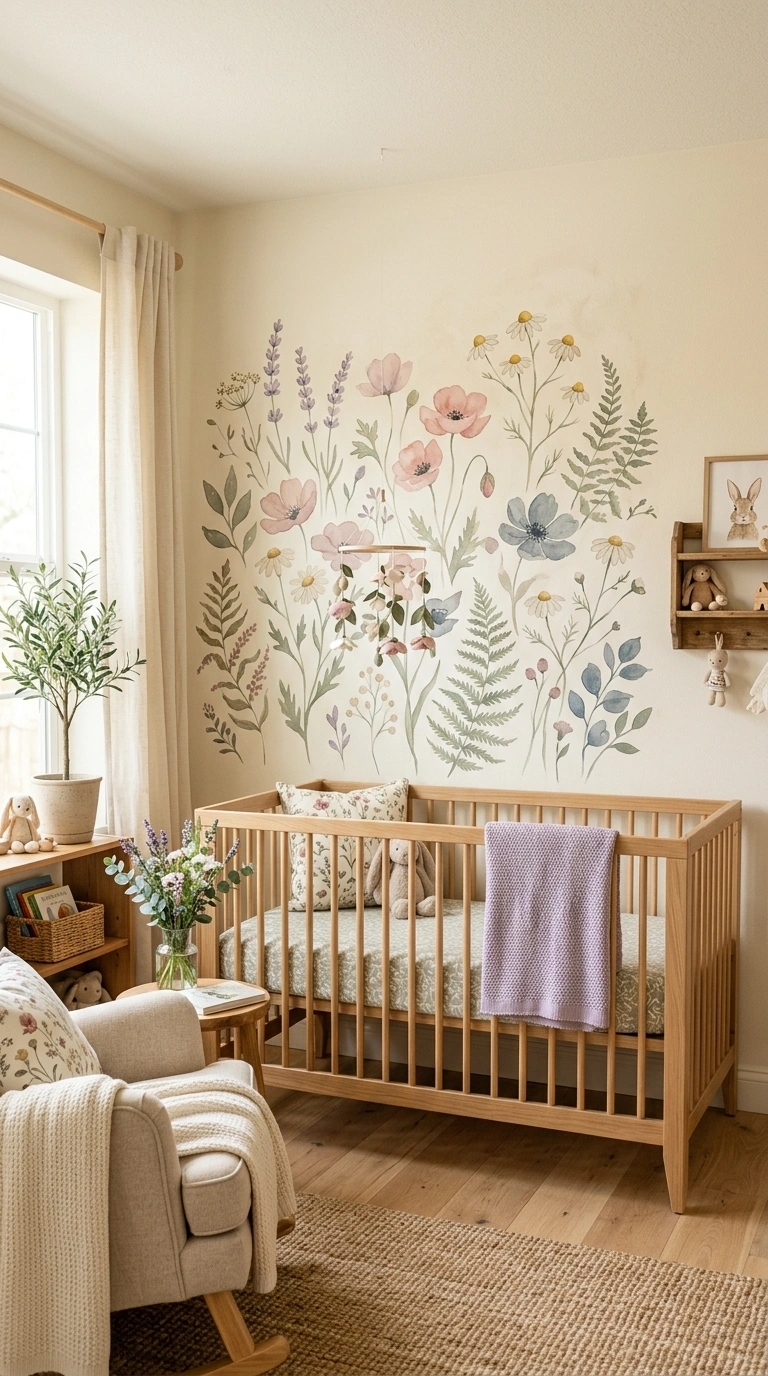
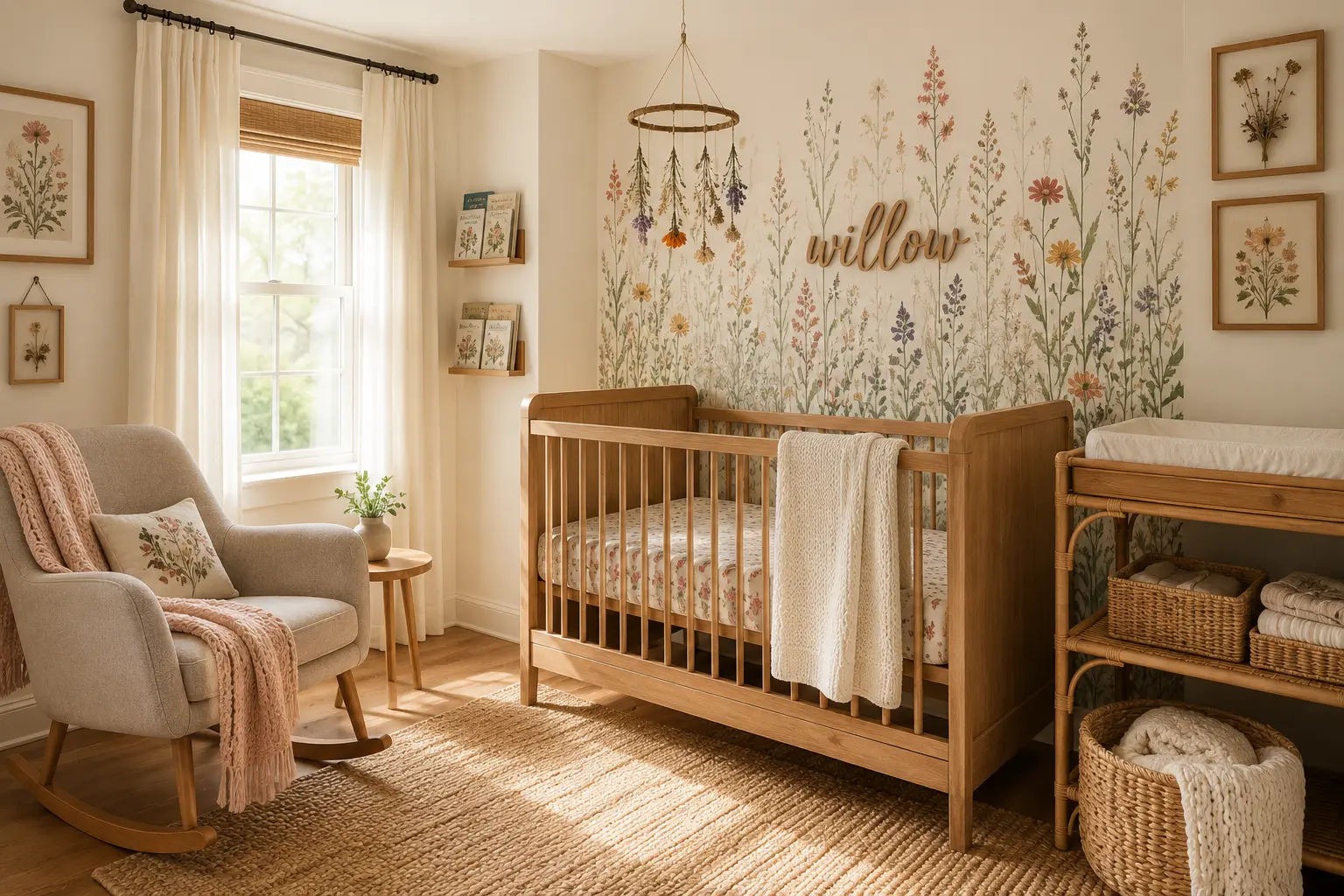
A hand-painted or wallpaper mural of wildflowers on the wall behind the crib is the most impactful single element in a wildflower nursery and the one that sets the tone for everything else. Choose a mural with a light or white background so the flowers float across the surface rather than sitting on a heavy colored ground. Soft watercolor-style wildflowers in muted pinks, lavenders, warm yellows, and greens look more timeless than bright saturated florals. Apply the mural to just the crib wall and keep the remaining three walls in a soft solid color that matches the background of the mural for the most balanced and restful result.
2. Muted Floral Color Palette
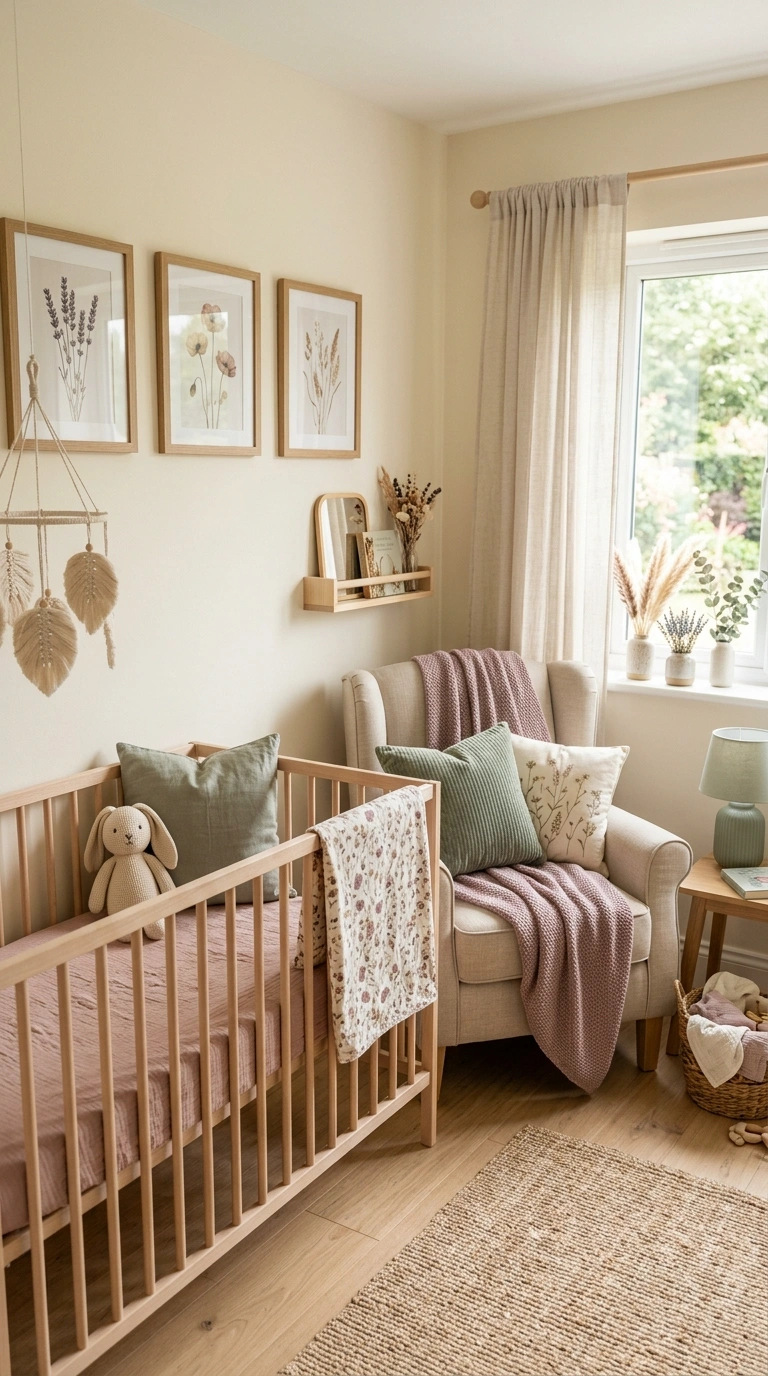
The color palette of a wildflower nursery should reference actual wildflower colors rather than bright nursery pastels. Real wildflower colors are softer and more complex than the standard pinks and purples of mass-produced baby decor: dusty blush, soft mauve, warm cream, faded sage, muted lavender, gentle buttercup yellow, and warm peach. Pull three or four of these tones from the mural or the primary floral element and use them consistently across the room’s textiles, art, and accessories. The muted palette keeps the room feeling calm and restful, which is what a nursery needs to do above all else.
3. Natural Wood Crib
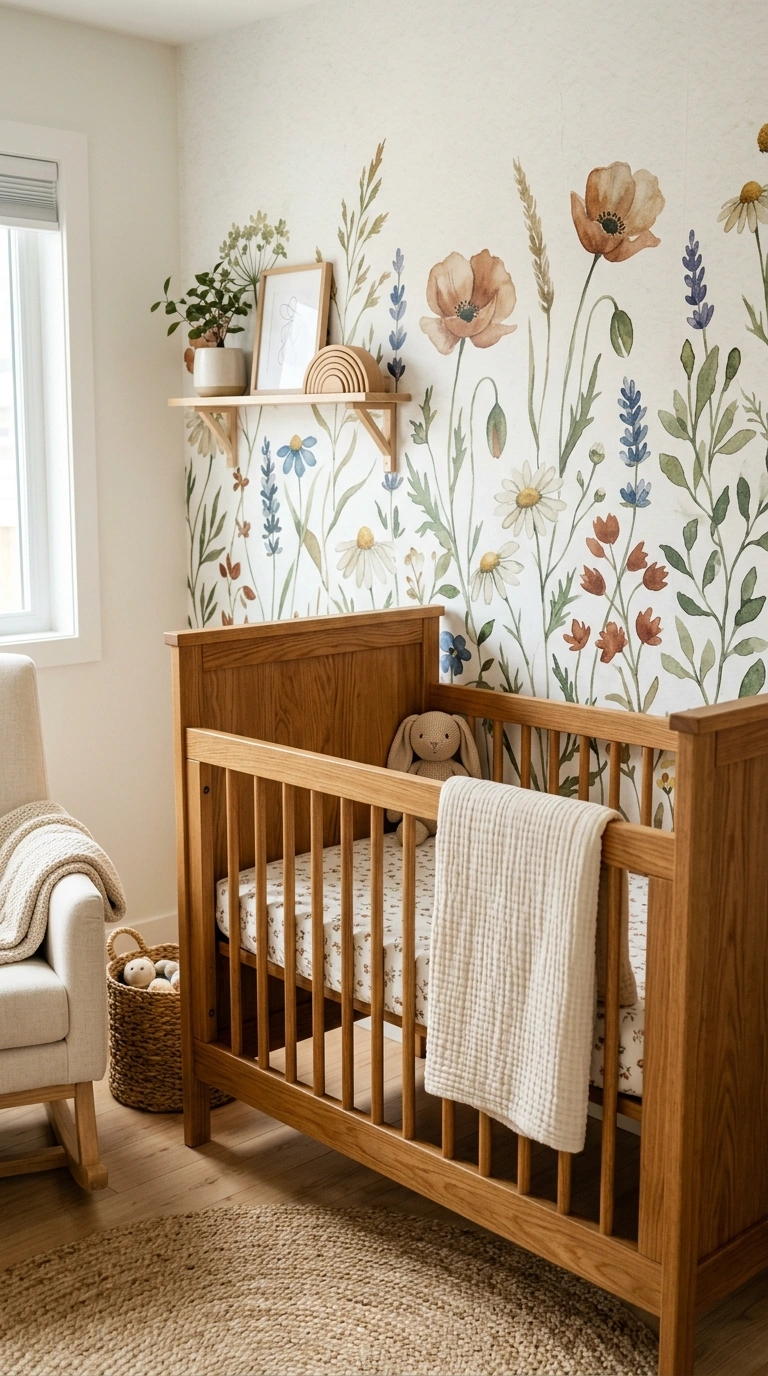
A crib in natural warm wood rather than painted white or bright color grounds the wildflower nursery in an organic material quality that the floral elements complement beautifully. The visible grain and warm tone of natural wood, whether light oak, warm pine, or honey-toned birch, adds a strength and permanence that white-painted cribs lack. The wood crib against the floral mural wall reads as a garden setting where the flowers provide the softness and the wood provides the structure. Many current nursery crib manufacturers offer natural wood finishes specifically for this organic, botanical nursery direction.
4. Floral Crib Bedding
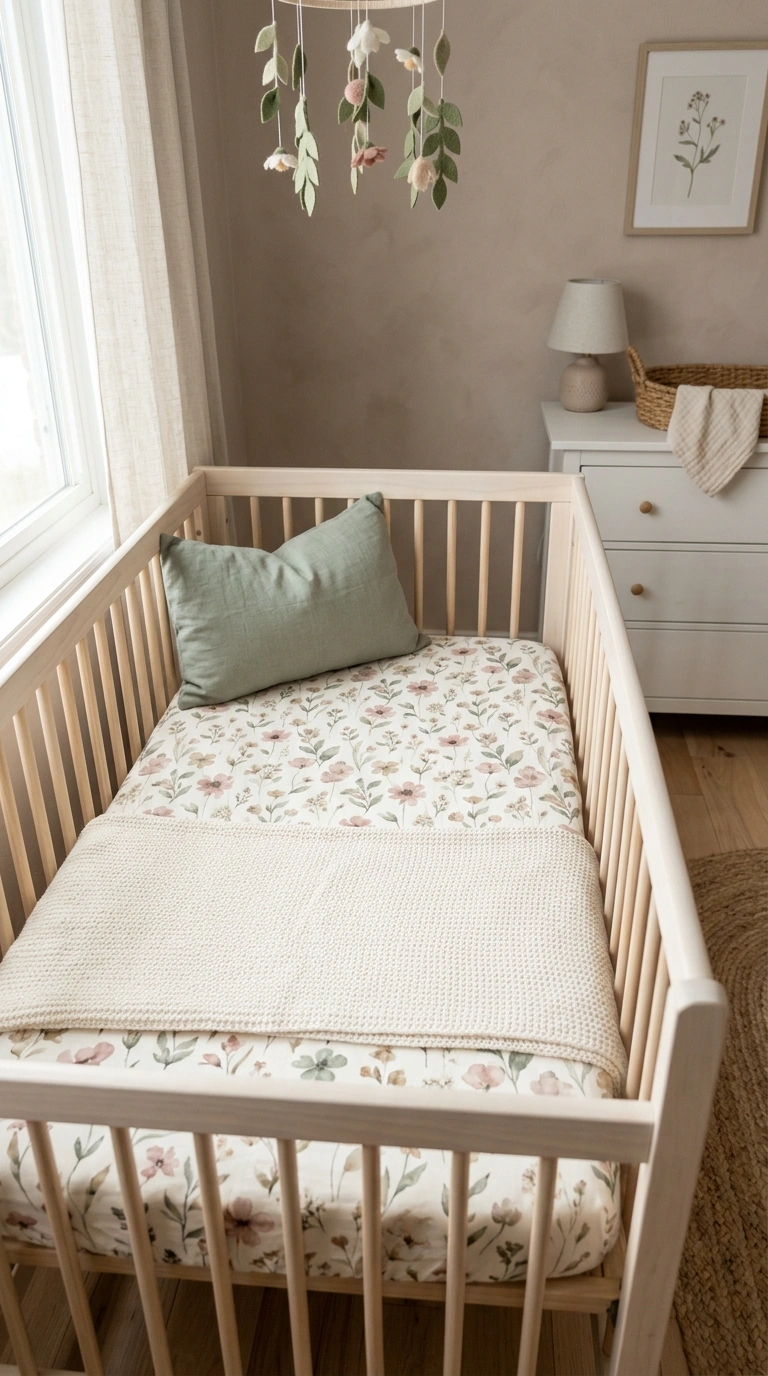
A single piece of floral crib bedding, whether a small wildflower print on the fitted sheet or a floral crib skirt around the base, adds the floral pattern at the center of the room where it matters most. The temptation is to use floral everything on the crib: floral sheet, floral bumper, floral blanket, floral skirt. The successful version uses one floral element on the crib and keeps the rest in coordinating solids. A wildflower print fitted sheet with a plain cream or soft sage knit blanket reads as designed and gentle. Floral on every surface reads as overwhelming and gives the baby no visual rest.
5. Soft Linen Curtains
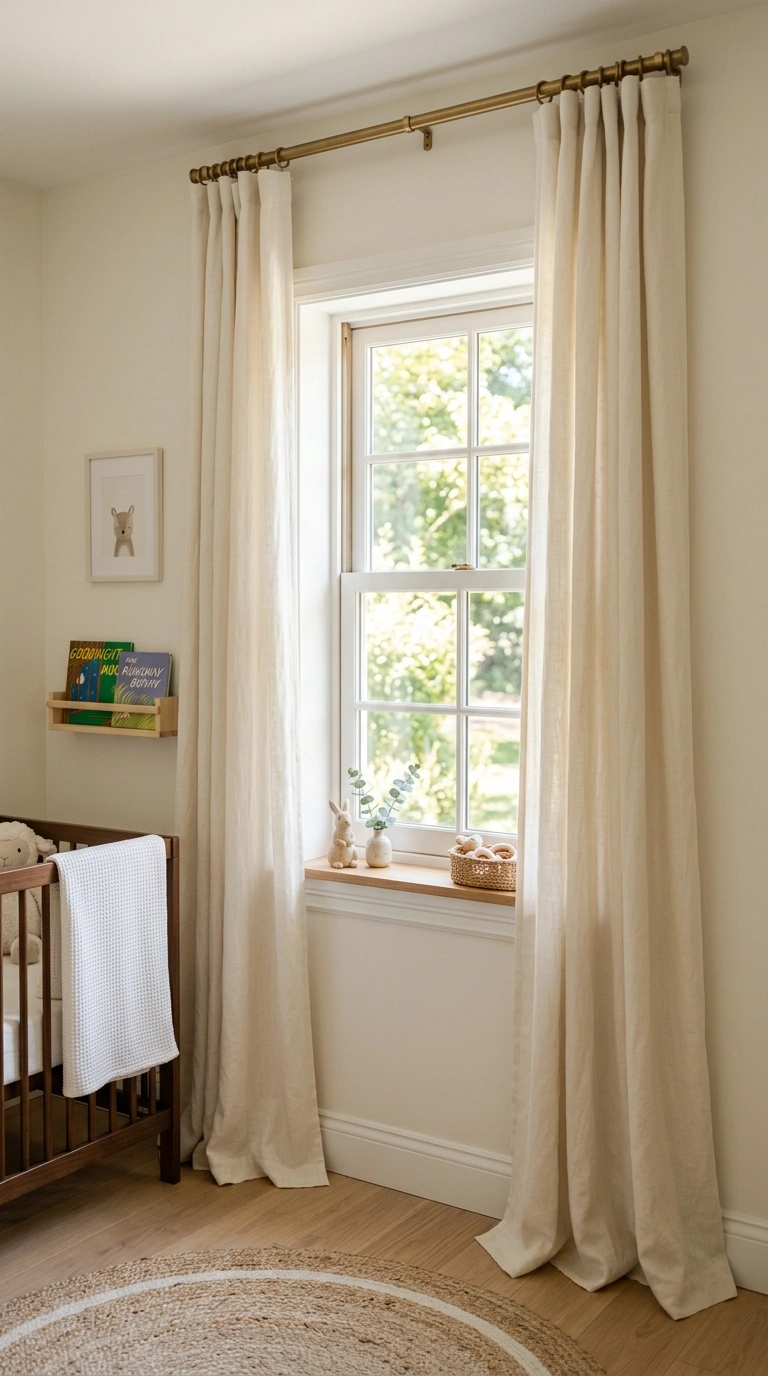
Soft linen curtain panels in a warm cream or very pale blush, hung from ceiling height to the floor, add the soft flowing textile element that every nursery needs for both light control and visual warmth. The linen should be thick enough to soften the daylight during naps but not so heavy that the room feels dark during waking hours. The natural slight rumple of linen reads as organic and gentle, which suits the wildflower theme perfectly. Keep the curtains in a solid color rather than a floral print, since the mural wall provides the floral visual and the curtains provide the calm neutral balance.
6. Pressed Flower Art
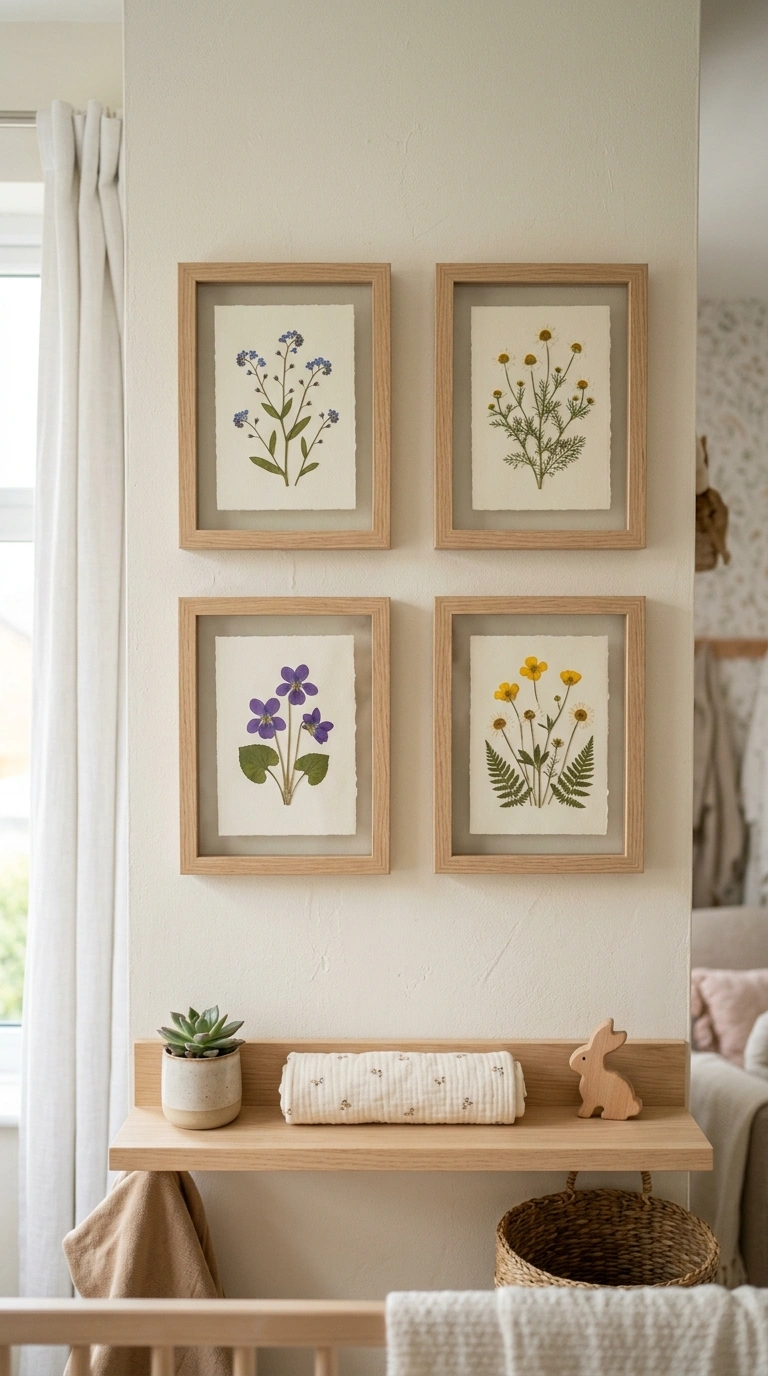
Framed pressed flowers and botanicals hung on the nursery walls add the wildflower theme in a delicate, real, three-dimensional way that printed art cannot match. Press actual wildflowers between the pages of a heavy book for two to three weeks, then mount them on watercolor paper and frame behind glass in simple thin frames. A grouping of three to five pressed flower frames arranged beside the window or above the changing table creates a genuine botanical display that feels handmade and personal. The pressed flowers connect the nursery to the real natural world rather than to a manufactured version of it. The same approach to genuine natural details creating warmth also applies in reading nook designs where small personal touches distinguish a real space from a styled one.
7. Woven Natural Fiber Rug
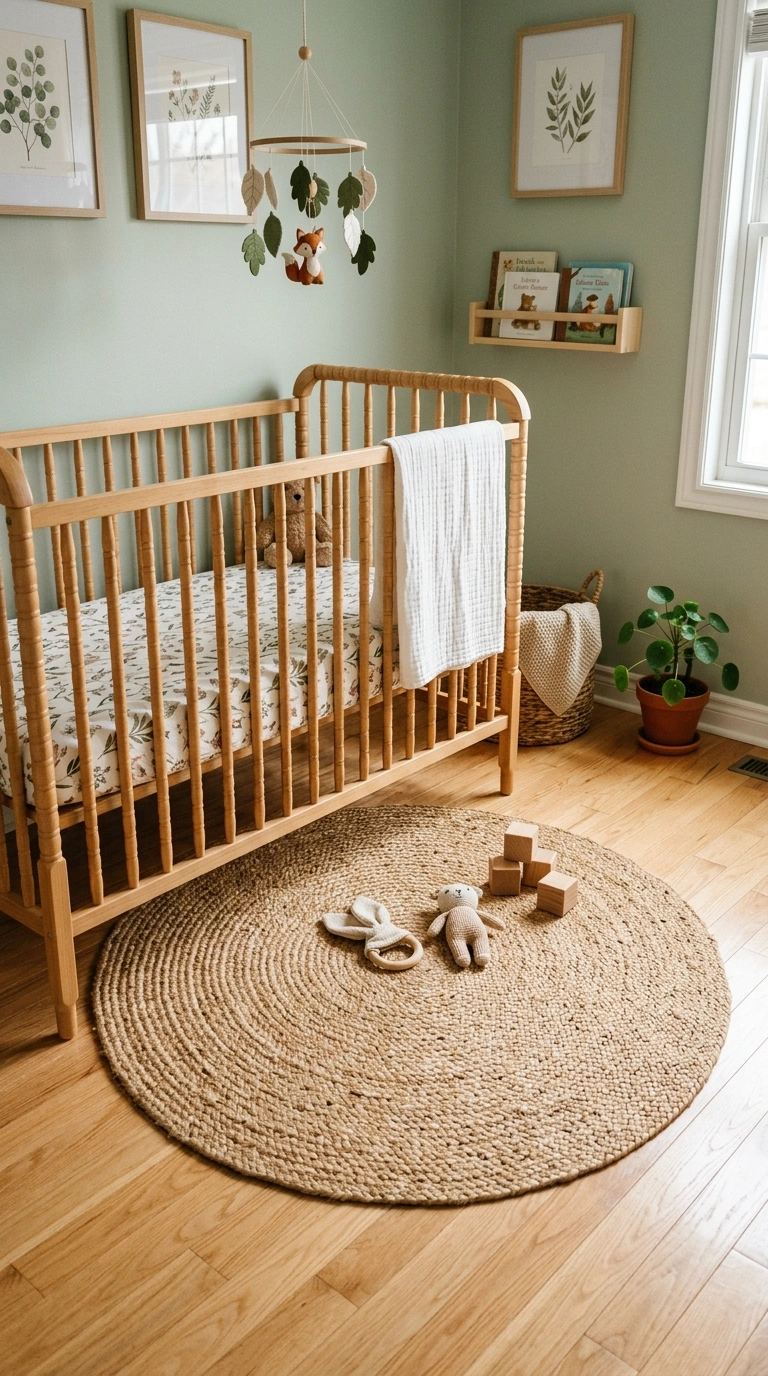
A natural fiber rug in warm jute, soft wool, or a cotton blend placed beside the crib or in the main play area adds the soft floor layer that babies need when they begin crawling and sitting independently. Choose a rug in a warm neutral tone, natural jute, cream wool, or a soft muted stripe, rather than a floral print rug which would compete with the mural. The natural fiber adds organic texture to the floor that complements the botanical theme while keeping the pattern restraint that the room needs to feel calm rather than busy.
8. Floating Shelves Styled
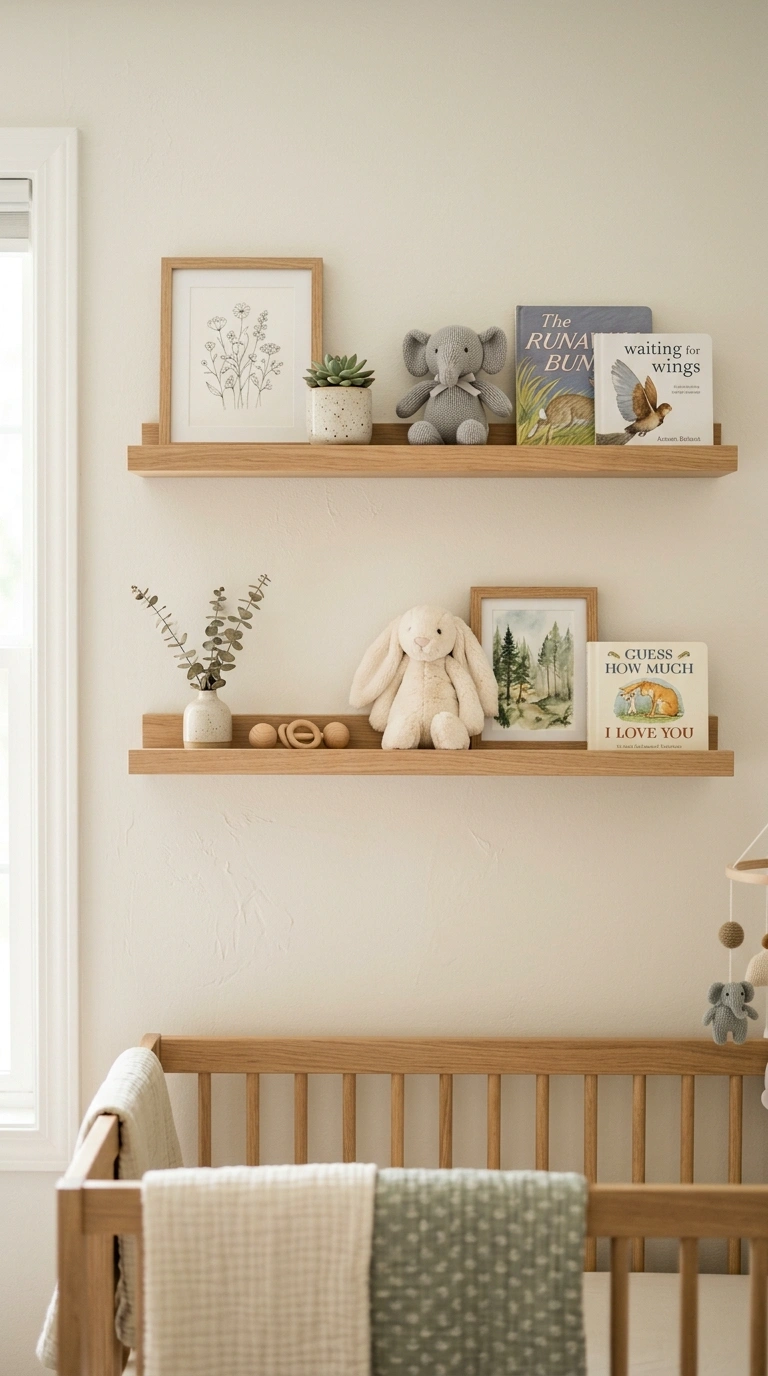
Two or three floating shelves on a nursery wall hold a mix of soft toys, small books stood upright, tiny potted succulents or dried flowers, and one or two small botanical prints leaned against the wall. The combination of functional nursery items and small decorative pieces creates the styled quality that distinguishes a designed nursery from a utilitarian baby room. Keep the shelves lightly styled with breathing room between items rather than packing them full. A few carefully chosen objects on each shelf have more visual impact than crowded shelves where nothing stands out.
9. Rattan Nursery Furniture
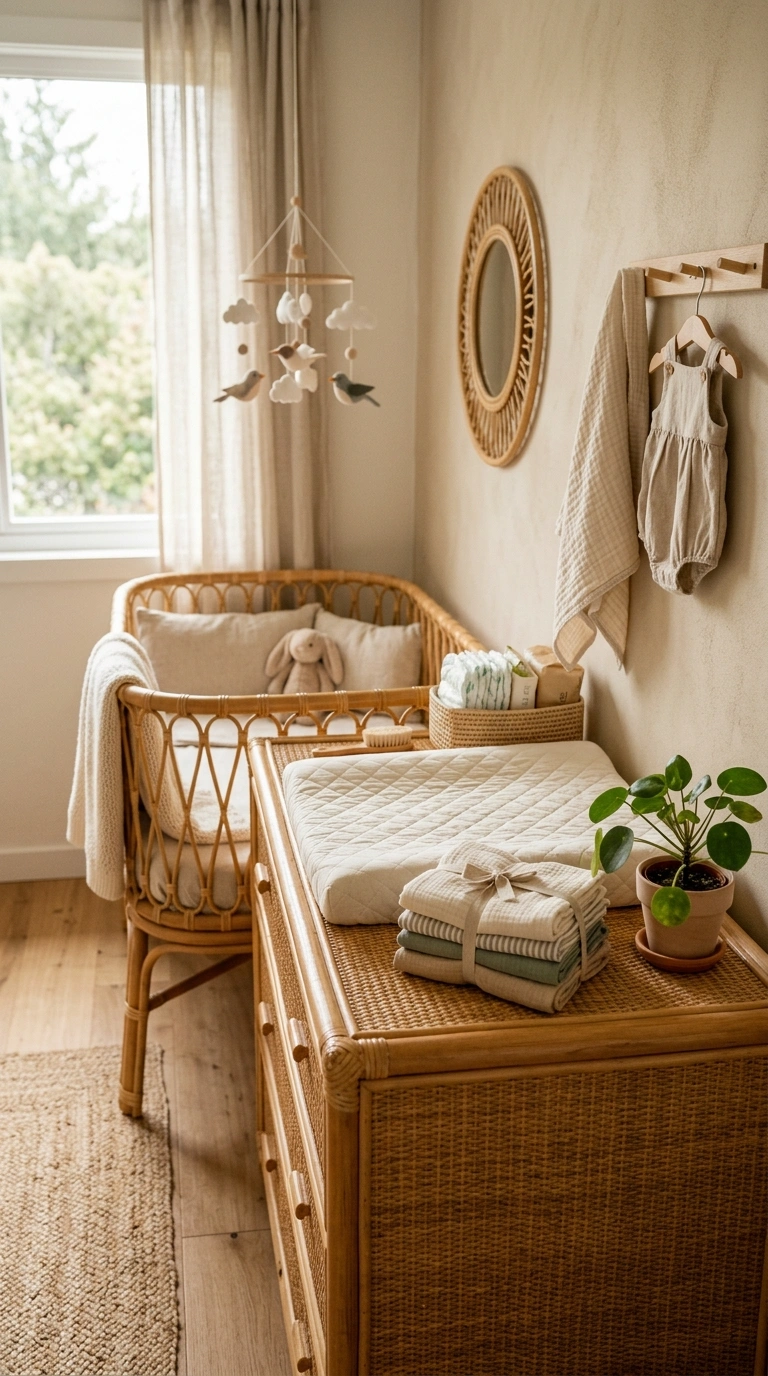
A rattan changing table, a rattan side table, a small rattan bookshelf, or a rattan bassinet introduces the warm woven natural texture that grounds the wildflower theme in genuine organic material rather than printed pattern alone. The warm honey tone of rattan suits the muted wildflower palette perfectly and adds visual warmth that white-painted furniture lacks. Rattan nursery furniture is widely available from current nursery furniture manufacturers in styles specifically designed for modern nurseries. The natural material ages beautifully and transitions easily to a toddler room when the nursery phase ends.
10. Dried Flower Mobile
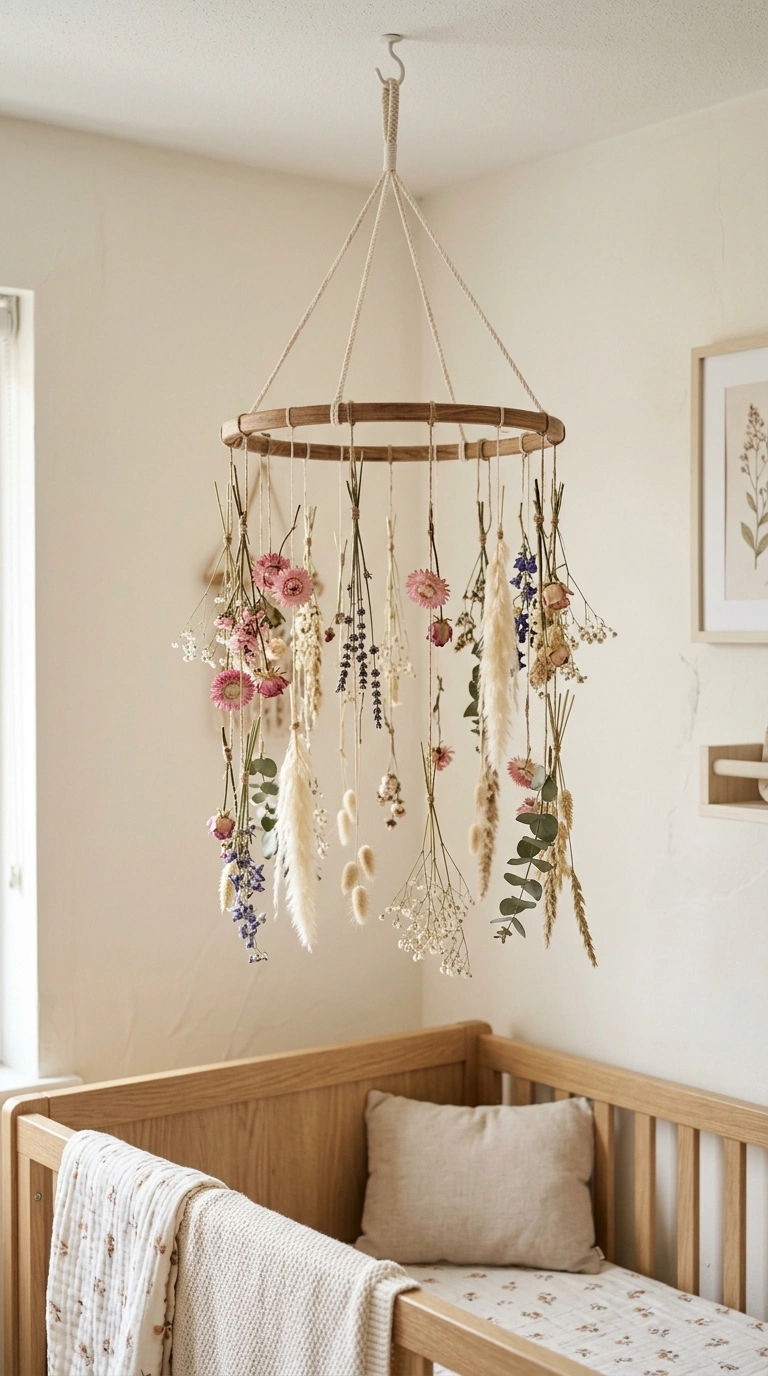
A mobile hanging above the crib made from dried flowers, dried grasses, and small botanical elements suspended on a simple wooden or metal ring provides the overhead visual stimulation that babies need during crib time while continuing the wildflower theme in three dimensions. Use dried flowers in muted, safe tones that coordinate with the nursery palette. The mobile should hang high enough to be completely out of reach and should be attached to the ceiling or a ceiling hook securely. A dried flower mobile adds gentle movement and natural texture that plastic and fabric mobiles cannot match.
11. Garden Inspired Bookshelf
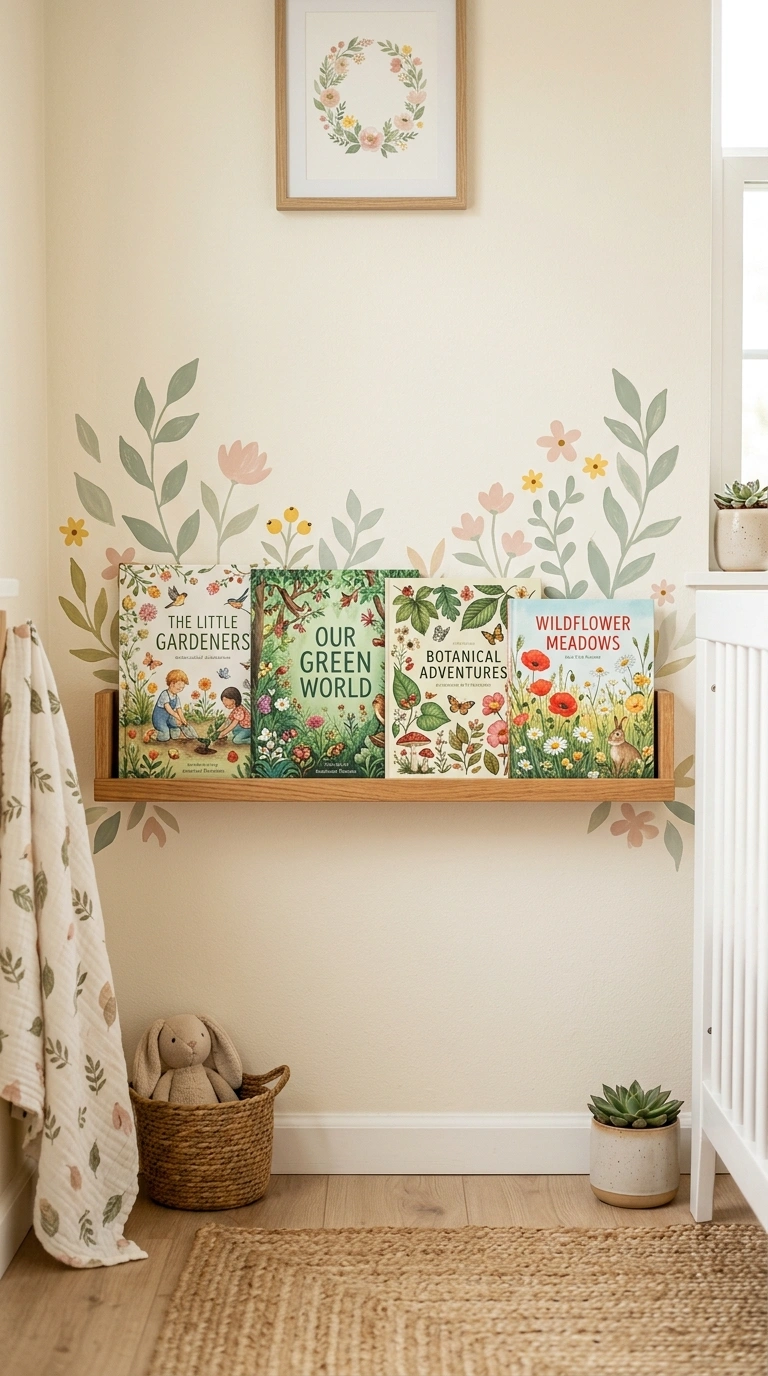
A small forward-facing bookshelf or book ledge mounted at low height on the nursery wall displays children’s book covers as wall art while keeping the books accessible as the baby grows into a toddler. Choose books with covers that feature botanical illustrations, garden scenes, and nature imagery to reinforce the wildflower theme through the reading collection. The visible covers become part of the room’s decor and introduce the baby to books as familiar and attractive objects from the earliest stage. Three or four books in botanical tones displayed face-out on a low shelf add genuine visual warmth to the nursery wall.
12. Warm Knit Throw
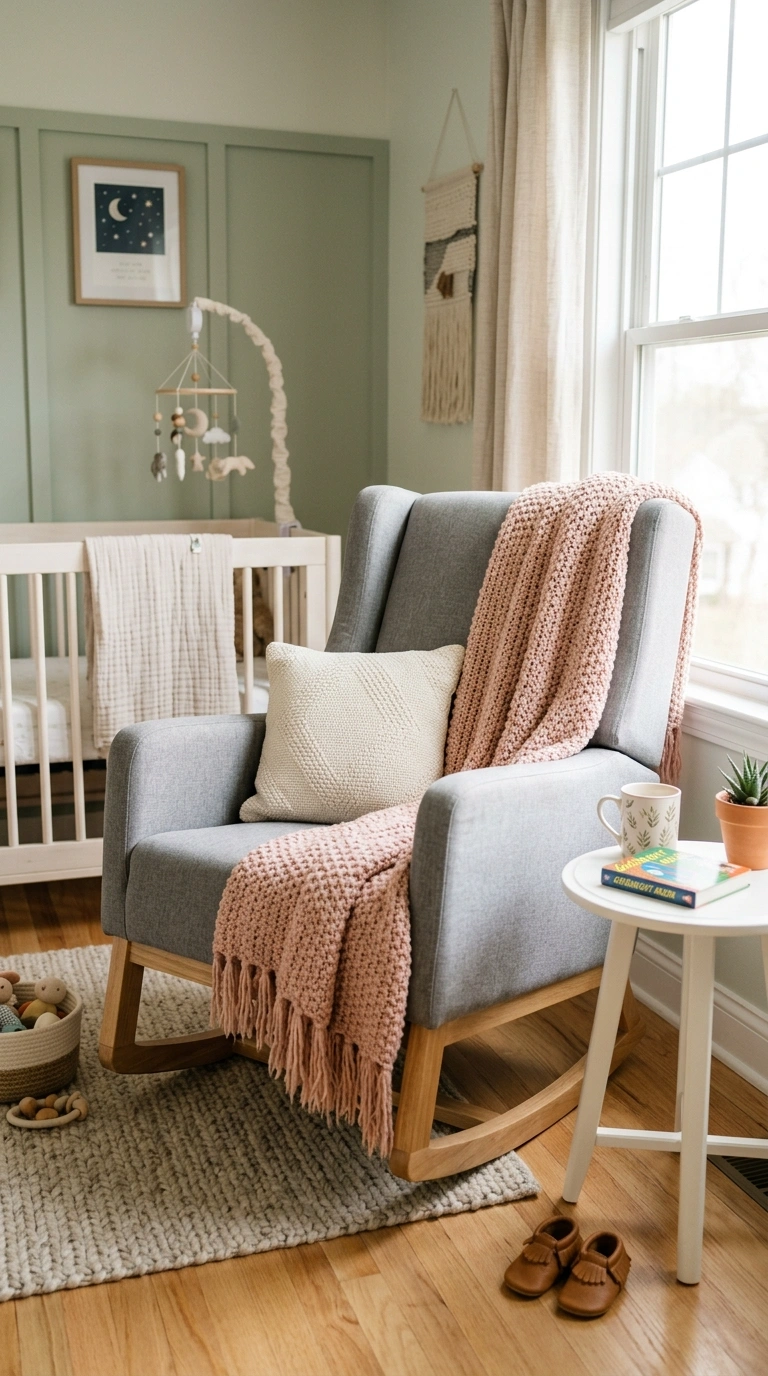
A soft knit throw blanket in a warm cream, soft blush, or muted sage draped over the nursing chair adds the cozy textile layer that makes the nursing area of the nursery feel comfortable for the long midnight feeding sessions. Choose a throw in a warm natural fiber, cotton, wool blend, or cashmere blend, that feels genuinely soft against skin. The throw is one of the most-used items in any nursery and choosing one in a warm solid color that coordinates with the wildflower palette ties it into the room’s design while serving its primary practical purpose.
13. Botanical Print Nursery Art
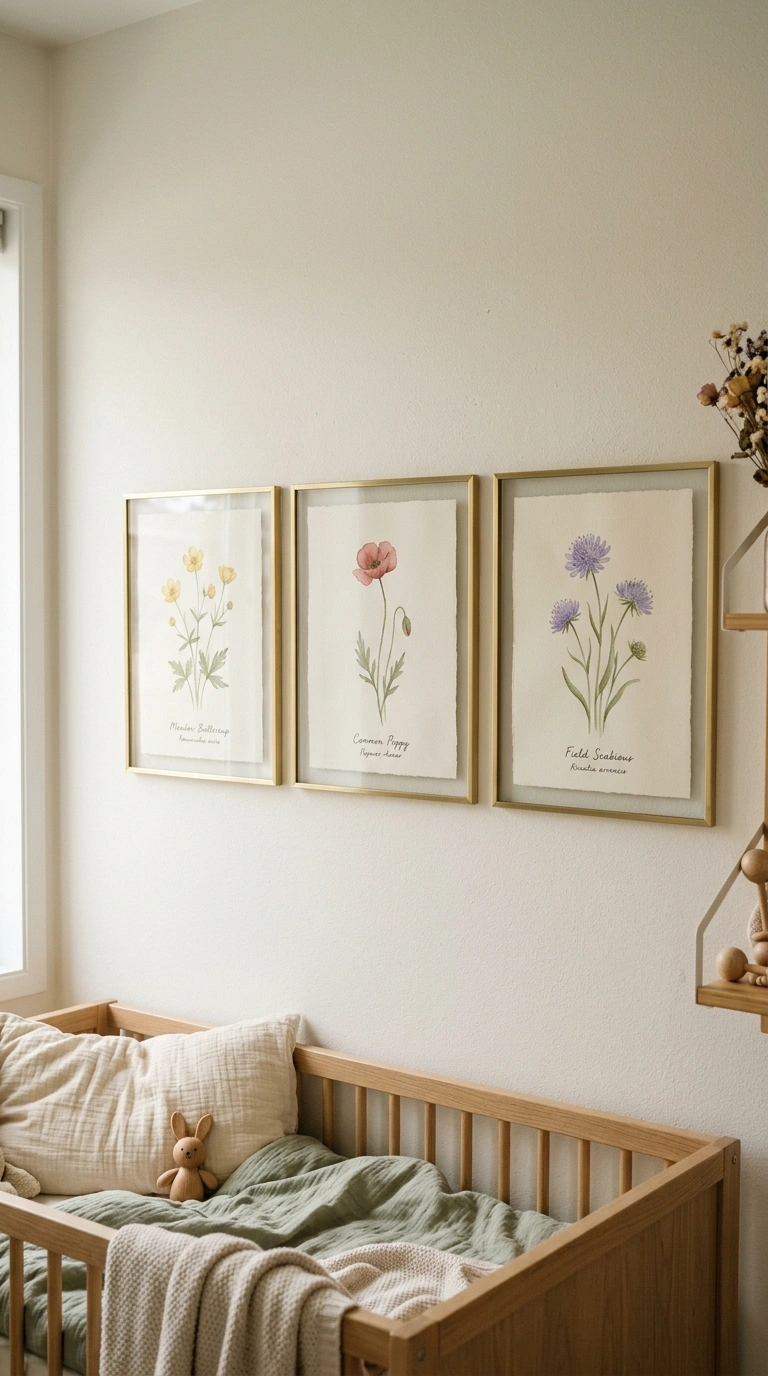
Two or three framed botanical prints, whether vintage botanical illustrations, watercolor wildflower paintings, or simple line drawings of garden flowers, hung on the nursery walls add the floral theme in a contained and sophisticated way. Choose prints with a consistent color palette that coordinates with the room and frame them in matching simple frames. The botanical prints should read as art rather than as baby decor, since genuinely beautiful prints will still look appropriate as the baby grows into a toddler and eventually a young child. Quality botanical prints last through multiple nursery phases without needing to be replaced.
14. Neutral Rocking Chair
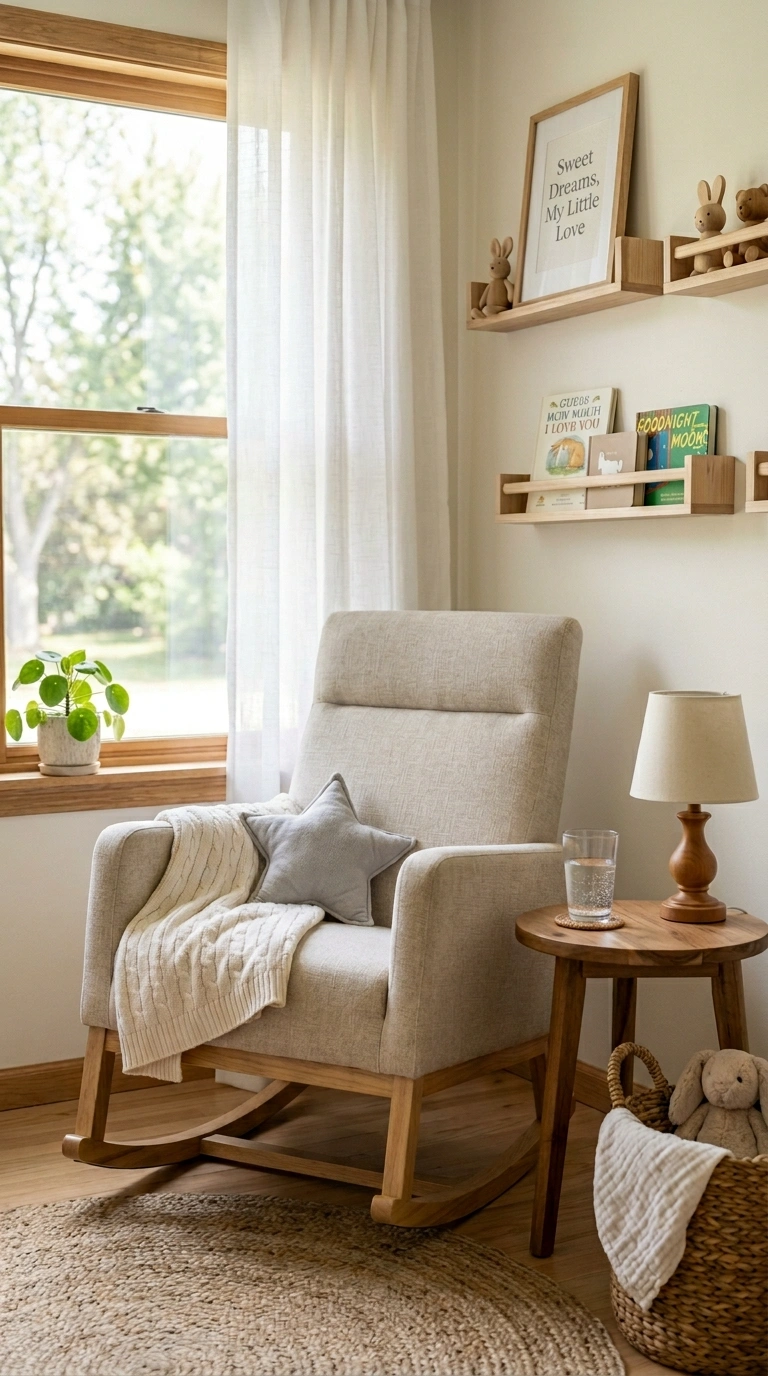
A rocking chair or glider in a warm neutral upholstery, soft cream, oatmeal linen, or warm gray, provides the comfortable nursing and soothing spot that every nursery needs. Choose a chair with proper arm support for holding a baby and a gentle rocking motion that soothes rather than jolts. The neutral upholstery keeps the chair from competing with the floral elements on the walls and the bedding. Position the chair near the window for natural light during daytime feedings and add a small side table for a water glass and a night light for nighttime sessions.
15. Wildflower Garland Detail
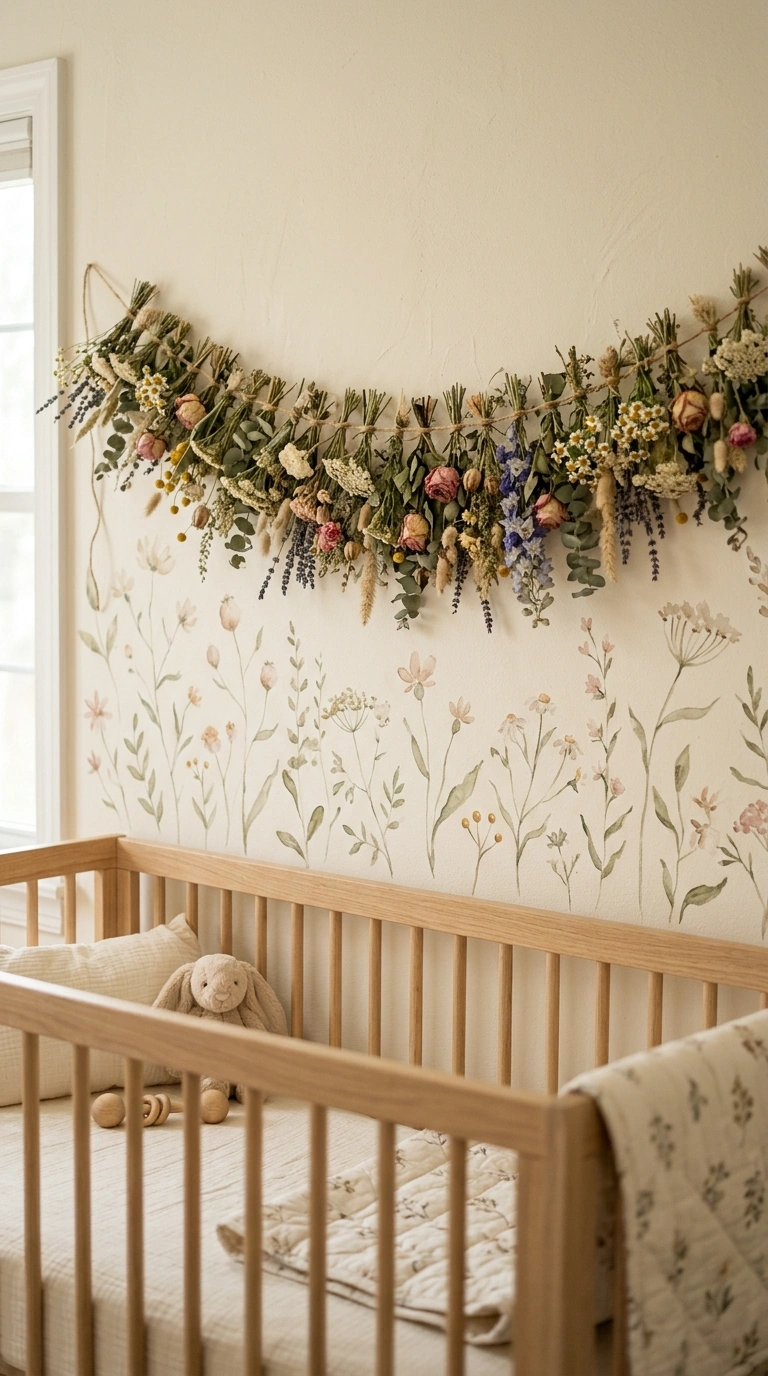
A simple garland of dried or faux wildflowers draped along the top of the crib wall, across the front of a floating shelf, or along the frame of the nursery window adds a small but charming floral detail that extends the wildflower theme in three dimensions. Use a garland with small, delicate flowers in muted tones rather than large showy blooms. The garland should look like a trailing section of a wildflower meadow rather than a formal floral arrangement. Position it out of baby’s reach and ensure it is secured properly so no small pieces can detach.
16. Soft Lighting Choices
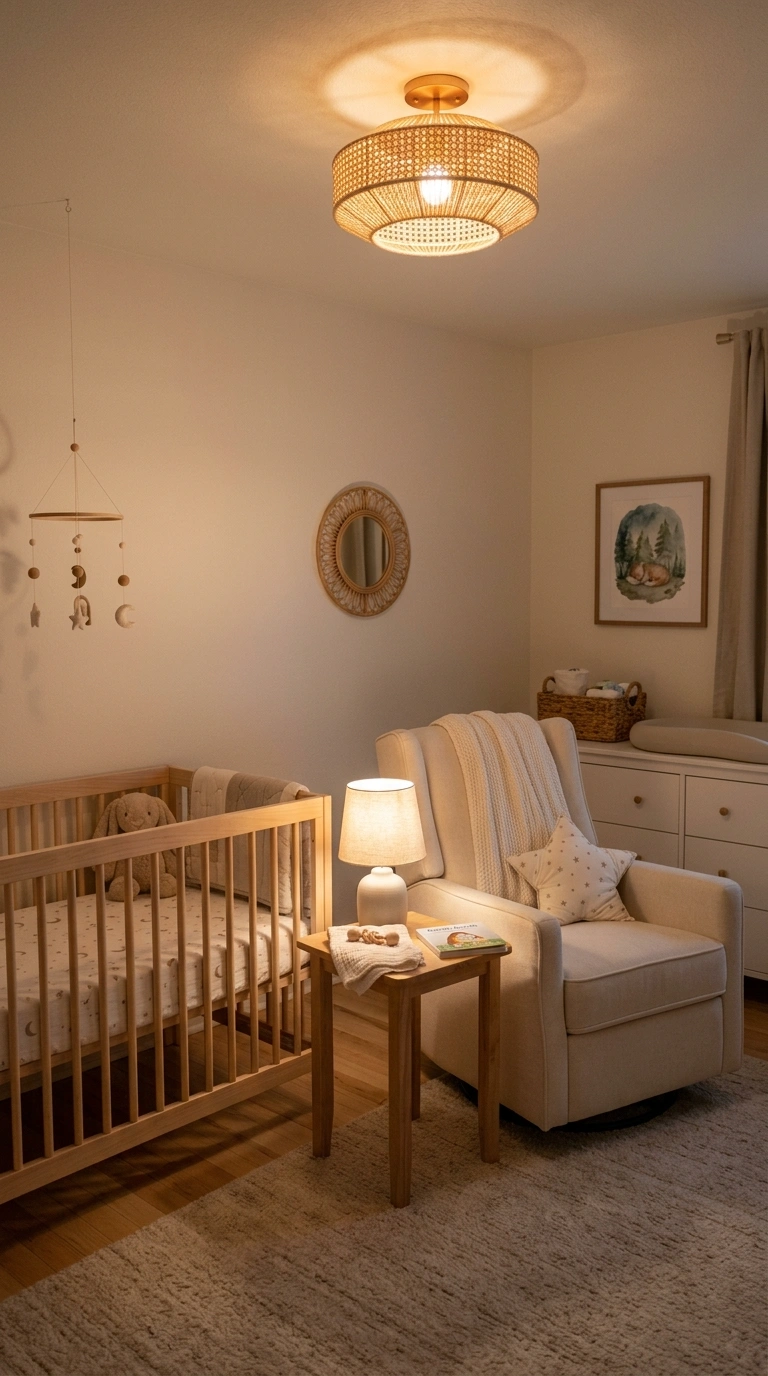
The nursery lighting should be warm and dimmable for the multiple purposes the room serves: bright enough for diaper changes, dim enough for nighttime feedings, and somewhere in between for playtime and reading. A simple ceiling fixture on a dimmer provides the adjustable overhead light. A small table lamp on the side table beside the nursing chair provides the soft focused light for nighttime sessions. Use warm bulbs in the 2700K range for the most soothing quality. Avoid cool or bright white bulbs that create an awake, clinical feeling when the goal is to keep the baby drowsy.
17. Personal Name Detail
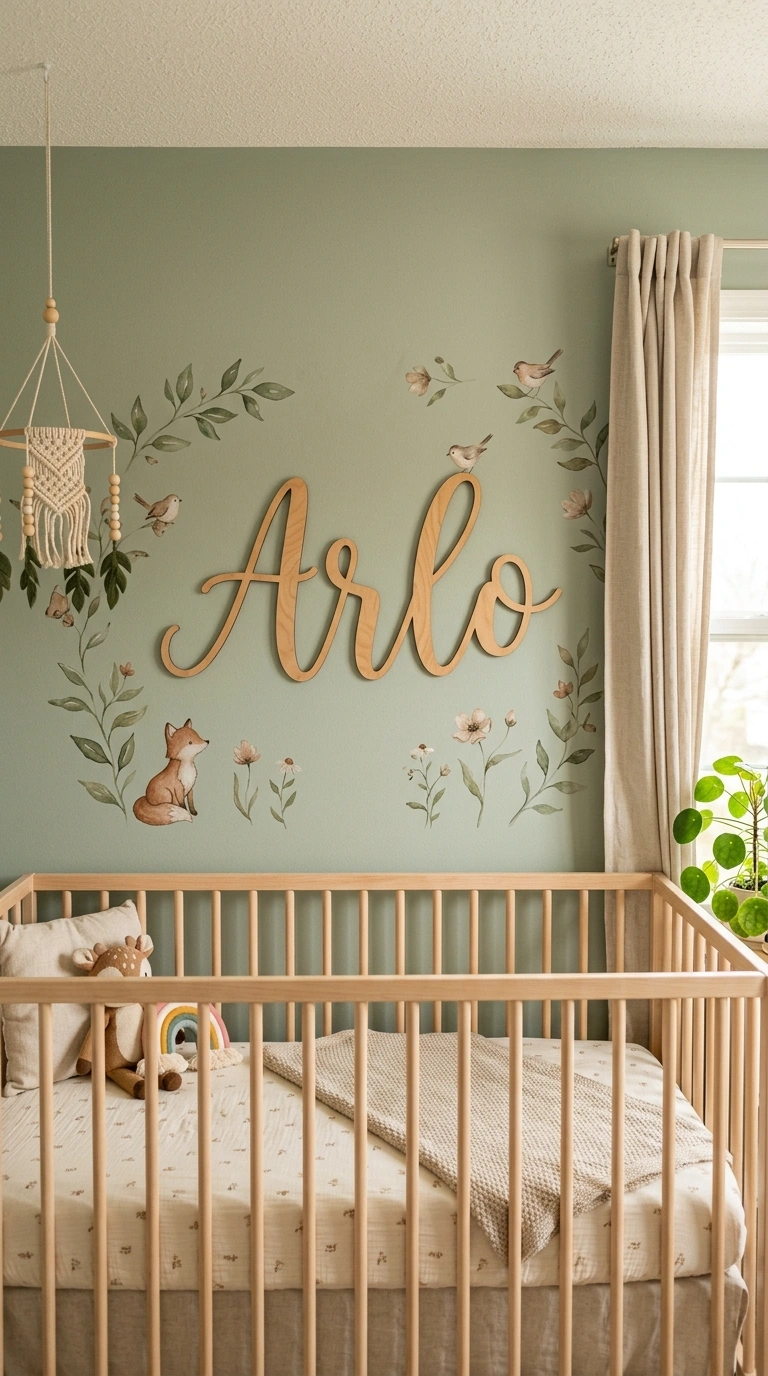
The baby’s name displayed on the nursery wall, whether in simple wooden letters, in a small framed print, in a banner of fabric letters, or in a calligraphic print, adds the personal touch that makes the room belong specifically to this baby rather than being a generic floral room. Position the name above the crib or on the wall beside it where it is visible from the nursery entrance. Choose a font or style that suits the soft, gentle quality of the wildflower aesthetic: a delicate script, a simple serif, or handwritten calligraphy on a cream card all work better than bold graphic typography.
18. Room to Grow Design
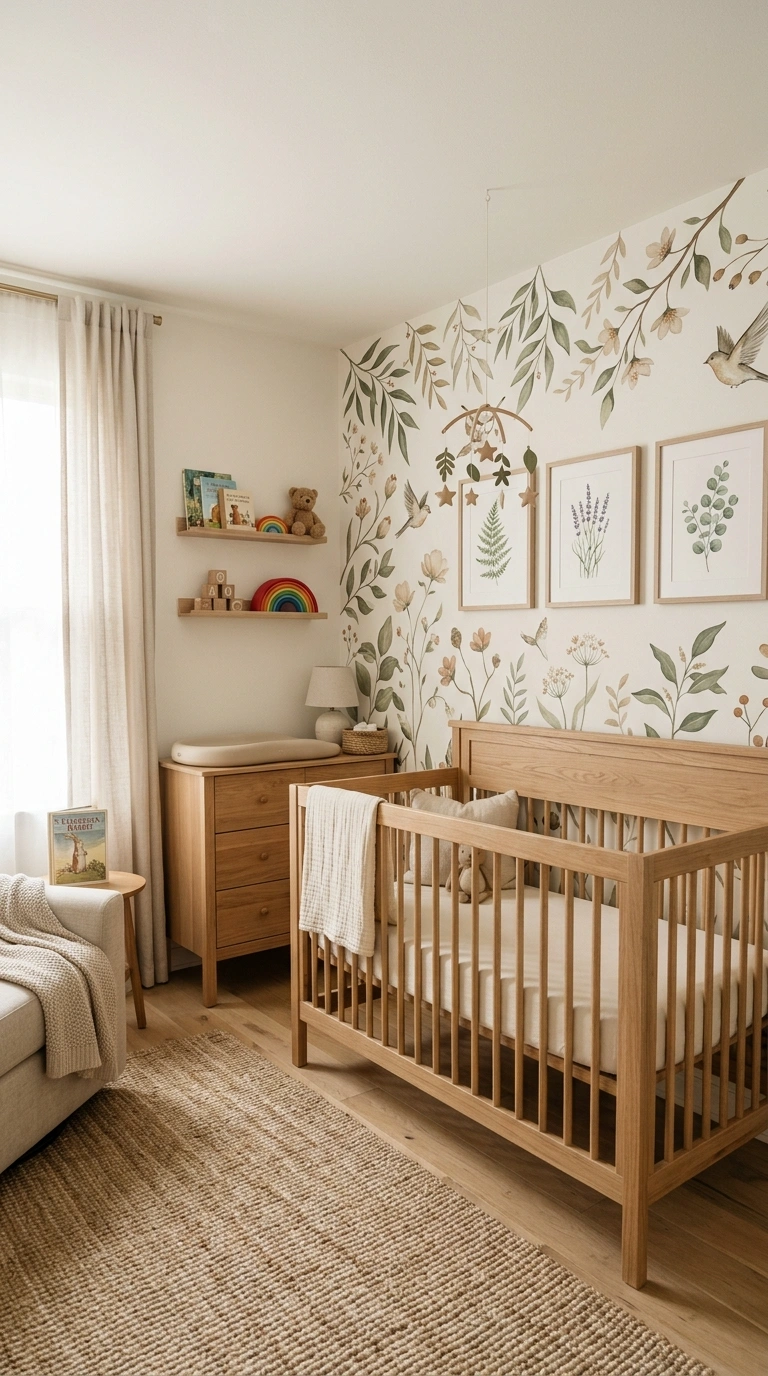
The most successful wildflower nursery is one designed to grow with the child rather than one that needs to be completely redone when the baby becomes a toddler. Choose furniture in natural finishes that transition to a toddler room. Use art that is genuinely beautiful rather than babyish. Keep the mural in a style that suits a young child’s room as well as a baby’s. The wildflower theme, because it is drawn from the natural world rather than from a specific baby trend, ages better than most nursery themes and can remain the backdrop for the room’s first four or five years with only minor updates to the bedding and the accessories as the child grows.
A wildflower nursery that feels genuinely soft and whimsical is built on a single beautiful floral statement, whether a mural or a wallpaper, surrounded by solid neutral surfaces, natural warm materials, and the restraint to let the flowers be special by not putting them on everything. The muted color palette, the natural wood, and the warm textiles create a room that is both beautiful enough for a parent to enjoy during the long nursery hours and gentle enough for a baby to rest peacefully in.